



Twenty minutes of HIIT workouts can leave your shirt soaked, your calves buzzing, and your excuses gone.
That’s the appeal. Short hard bursts, short rests, then repeat until your breathing gets loud enough to bother you. When the work is dense and the rest is short, you can rack up a serious conditioning hit without spending an hour staring at a cardio machine.
The sweaty part matters, but it isn’t the whole story. Fat loss still comes down to the bigger picture — food, sleep, weekly movement, and whether you can keep showing up. HIIT earns its place because it pushes effort high, keeps the clock tight, and gives you enough variety that a treadmill, a bike, a rower, or a patch of pavement can all do the job.
Cold starts are a bad idea. Warm up for 5 to 8 minutes first, move your joints through a few easy ranges, then build into the first round instead of lunging at it cold. That tiny bit of patience saves hamstrings, backs, and egos.
Some of the sessions below are machine-based. Some need nothing but floor space and a timer. A few are rude in the best way. Pick the one that matches your gear, your joints, and your mood, then get after it.
1. Treadmill Sprint Intervals
A treadmill is boring right up until the moment the belt starts moving too fast for comfort.
This is the classic hard-easy setup: 30 seconds of fast running, 90 seconds of walking, repeated for 8 to 10 rounds. Keep the incline at 1 to 2 percent if you want a more natural stride, and resist the urge to death-grip the rails. If you need the rails, the speed is already too high.
How to make it work
Set the first sprint at a pace you could hold for only that short burst. Not a gentle jog. Not a casual shuffle. The last 5 seconds should feel like you’re counting them out in your head.
A good treadmill round should feel sharp, then sharp again. The walk needs to be long enough to let your breathing settle, but not so long that you cool off completely.
- Best for: runners who want a clean, simple interval day
- Good cue: your feet should land quick and light, not heavy and slappy
- Common mistake: starting too fast and turning round three into a survival crawl
- Easy swap: fast incline walk instead of a run if impact bothers you
Pro tip: if you can talk through the sprint, you’re not sprinting.
2. Bodyweight 30/30 Circuits
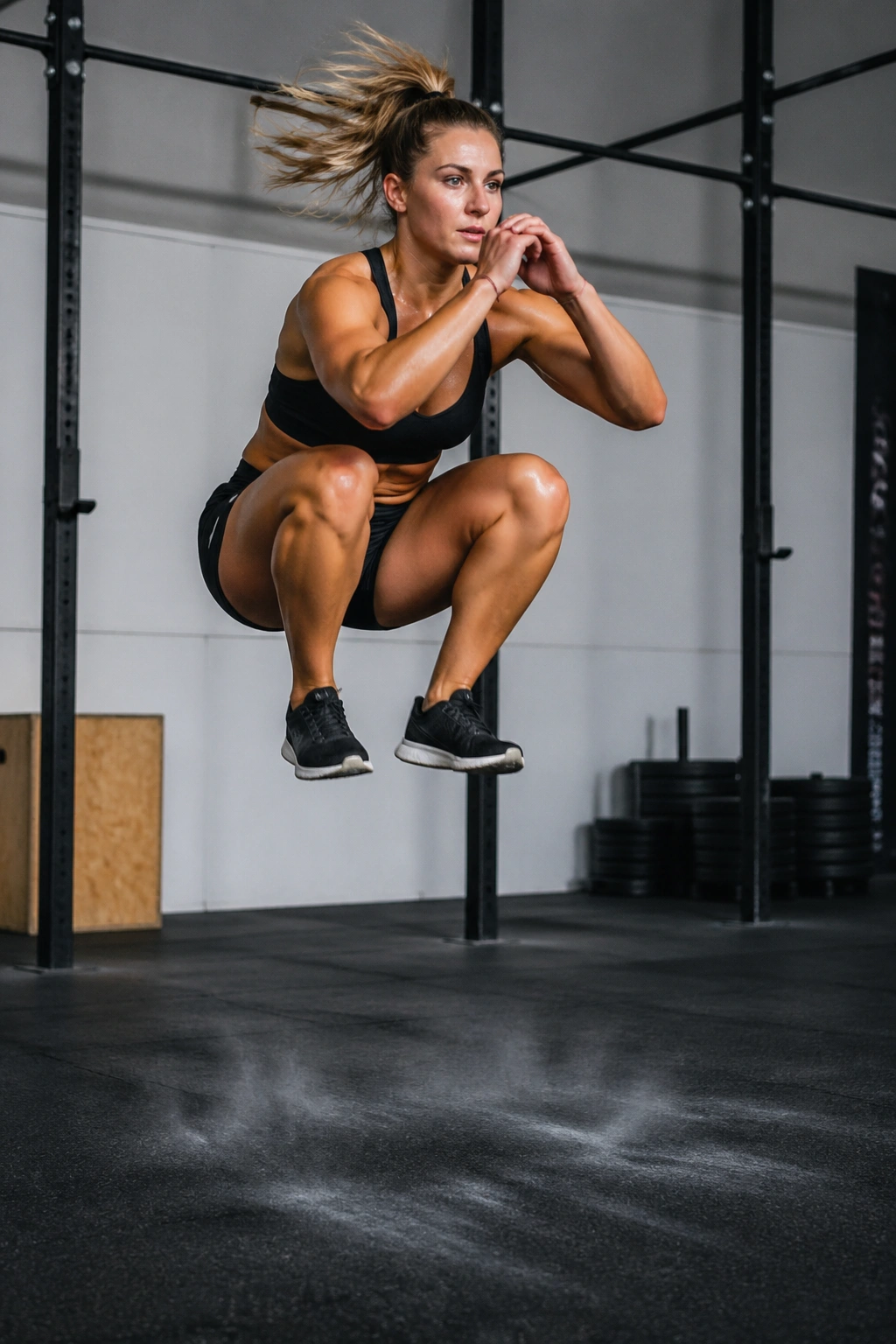
Can you get a hard HIIT session with no equipment at all? Yes. And it can be nasty.
Use 30 seconds of work, 30 seconds of rest, moving through 5 exercises for 4 rounds. A clean setup looks like squat jumps, push-ups, reverse lunges, mountain climbers, and plank jacks. That gives you 20 minutes total, but the work is compressed enough that the sweat shows up fast.
How to scale it without turning it into mush
Start with crisp reps and stop each set before your shape falls apart. If squat jumps feel too hot for your knees, step into air squats. If push-ups collapse at the hips, use an incline on a bench or couch.
A bodyweight circuit works best when you keep the transitions tight. Don’t wander. Don’t scroll. Keep a timer beside you and move when it chirps.
Good substitutions
- Step-ups instead of jump squats
- Hand-release push-ups instead of full push-ups
- Slow mountain climbers instead of sprinting knees
- Dead bug holds instead of plank jacks if your wrists complain
A clean bodyweight session should leave your lungs burning before your form gets ugly. If the form gets ugly first, shorten the round.
3. Jump Rope Speed Rounds

A jump rope is still one of the meanest little cardio tools around.
Thirty seconds can feel harmless. Then the rope starts singing against the floor, your shoulders wake up, and your calves begin sending angry little messages. Try 20 seconds fast, 40 seconds easy for 10 to 15 rounds if you want a quick session that stays snappy. Boxer step, alternating feet, or tiny two-foot hops all work.
The trick is not to arm-wrestle the rope. Your wrists do the turning. Your shoulders stay down. And your jumps stay low, almost skim-the-floor low, because high jumps waste energy fast.
If you’re new to it, the rope is forgiving as long as you stay patient. Miss a turn. Reset. Keep moving. The workout is still there.
Best place to do it: a smooth surface with enough ceiling height and a rope that isn’t too long.
Best pace cue: if the rope starts clapping the floor unevenly, your rhythm is already drifting.
Best use: home workouts, travel days, or gym days when every machine is taken.
A jump rope doesn’t look serious. That’s part of the joke.
4. Rowing Machine Power Bursts
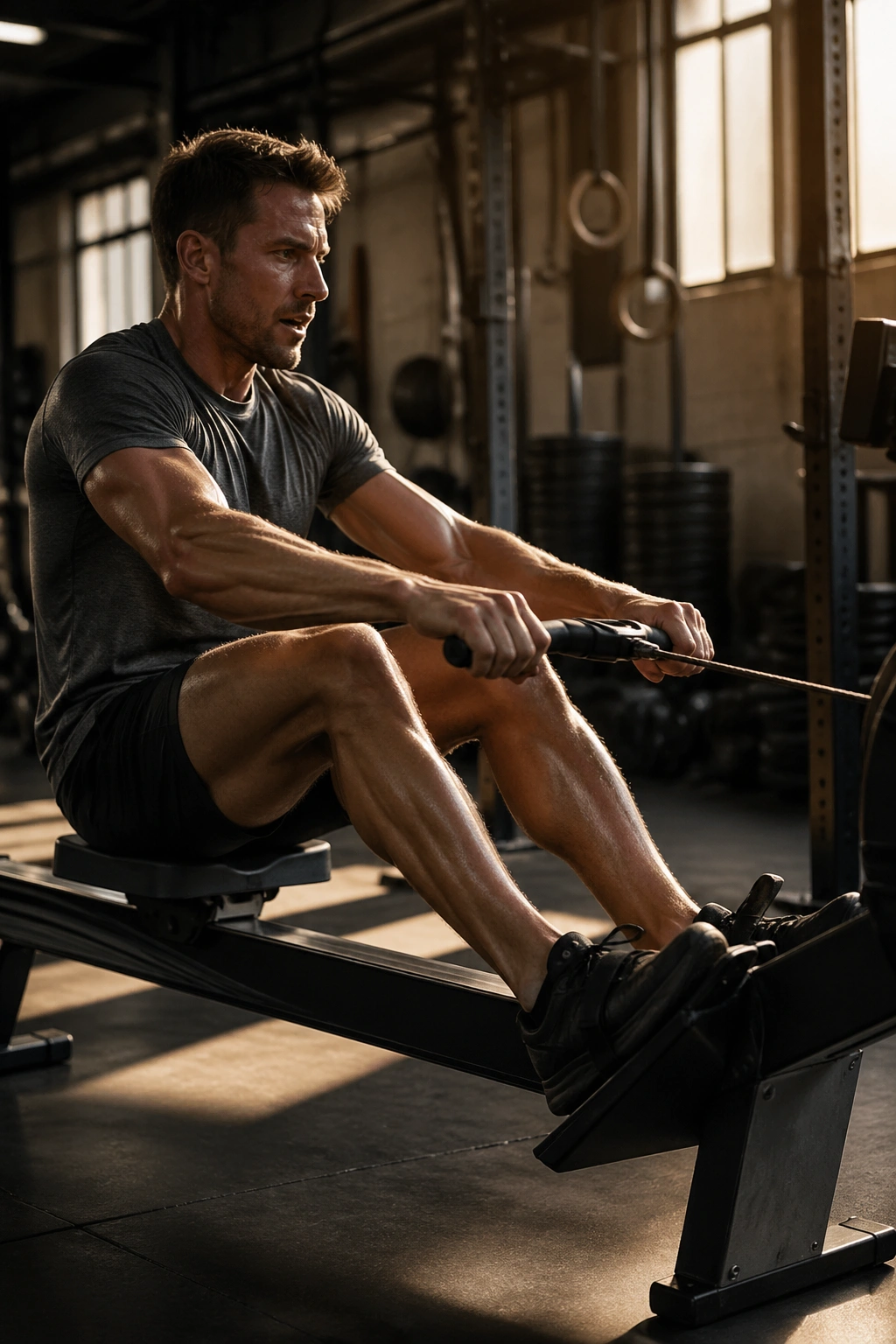
Walk into a gym and watch the rower for ten seconds. Somebody is usually either attacking it with purpose or pretending they’re resting while the flywheel remembers their name.
Use 250 meters hard, then 90 seconds easy for 6 to 8 rounds. If distance feels awkward, switch to 30 seconds hard / 90 seconds easy and let the machine dictate the pace. The stroke should begin with the legs, then the back, then the arms. Reverse that order on the way back.
What makes rowing so effective
It’s a full-body pull, but it isn’t a sloppy arm tug. The push through the feet matters most. If you yank with the arms first, the stroke gets weak and your lower back starts doing work it shouldn’t.
Medium resistance is usually enough. Cranking the damper up because it “feels harder” is a common mistake. Heavier isn’t always better. Heavier can just mean slower.
- Watch for: smooth chain movement and strong leg drive
- Feel for: your quads and glutes doing the ugly part
- Avoid: shrugging up into your neck
- Use it when: you want hard cardio without pounding your joints
The best rowing intervals feel like a powerful shove followed by a gasping reset. Anything else is just expensive sitting.
5. Kettlebell Swing EMOM
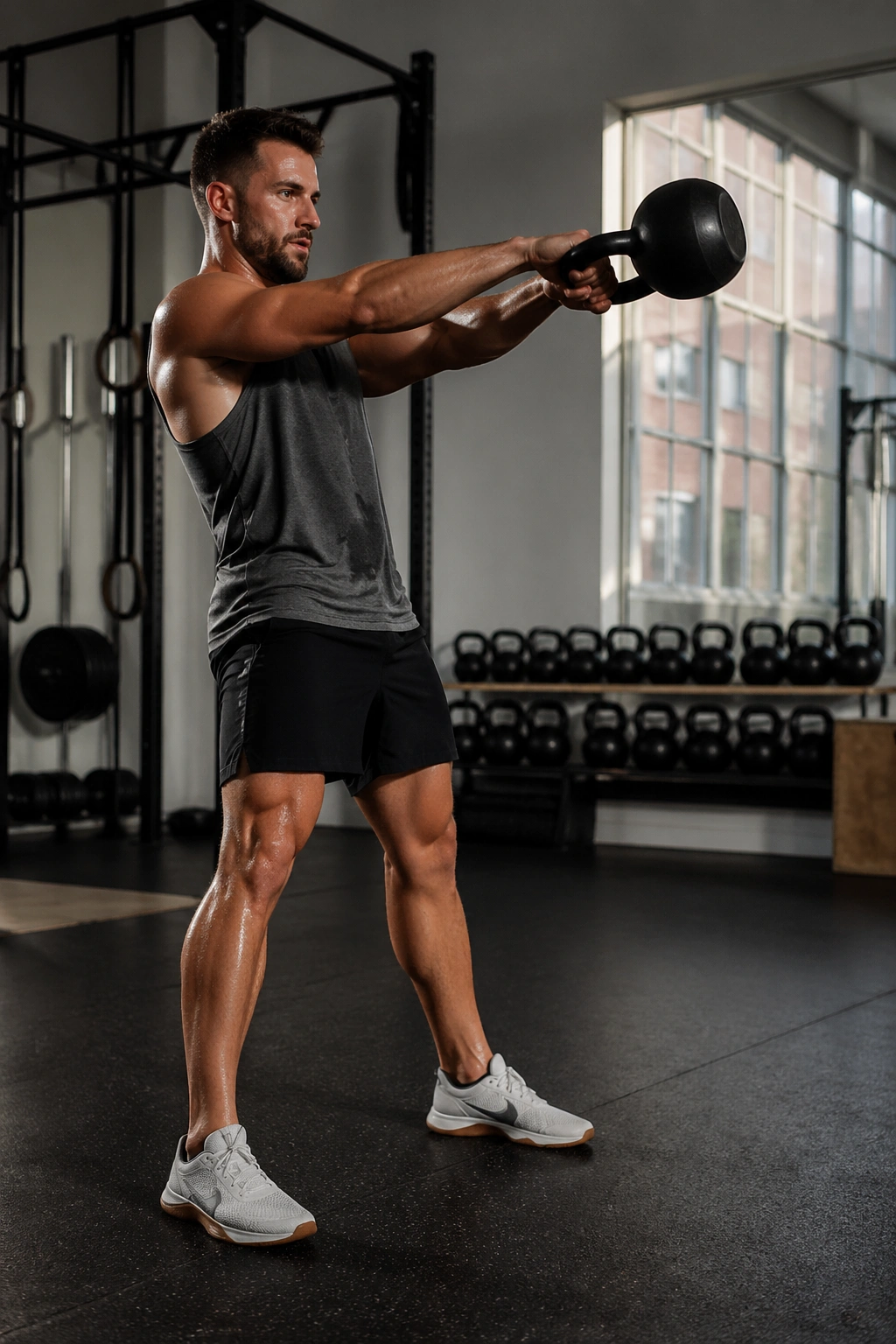
This one looks simple. It isn’t.
An EMOM means “every minute on the minute.” Set a timer for 10 minutes and do 15 to 20 kettlebell swings at the start of each minute. Rest for the remaining seconds, then repeat. If you finish your set in 20 seconds, you get 40 seconds to breathe. If it takes 50 seconds, the bell is too heavy or the reps are too many.
The swing should be a hip hinge, not a squat. Snap the hips, squeeze the glutes, and let the bell float up from that power. Your arms guide it. They do not lift it.
This is one of my favorite quick sessions because it teaches honesty. A too-heavy bell shows up fast. Grip goes first. Then your lower back starts grumbling. Then the timer feels mean.
A solid starting point
- Beginner: 10 swings per minute for 10 minutes
- Intermediate: 15 swings per minute for 10 minutes
- Advanced: 20 swings per minute for 10 minutes
If your breathing is calm and your hips still feel fresh after minute 6, the load is too easy. If you’re holding your breath and grinding every rep, back off. The bell should challenge you, not flatten your hinge.
6. Stair Sprints

Stairs are free, rude, and effective.
Find a stairwell, a stadium, or a sturdy set of outdoor steps and do 10 to 15 seconds up, then walk back down until your breathing settles. Repeat for 6 to 12 rounds. The climb should feel aggressive but controlled. You want power, not panic.
The nice thing about stairs is the built-in resistance. The bad thing is also the built-in resistance. Your calves, glutes, and lungs all show up at once, which is why stairs can leave you toast without a long workout.
How to keep it safe
Do not charge down the steps like you’re late for a train. Walk down carefully. Use a rail if you need it, especially if the stairs are narrow, slick, or poorly lit.
- Keep your torso tall
- Drive through the whole foot, not just the toes
- Take one or two steps at a time, depending on control
- Stop the set when your knees start slamming inward
Stairs are one of the best no-equipment HIIT options for power, but they punish sloppy foot placement. Clean steps. Sharp effort. Easy descent.
7. Stationary Bike Tabata
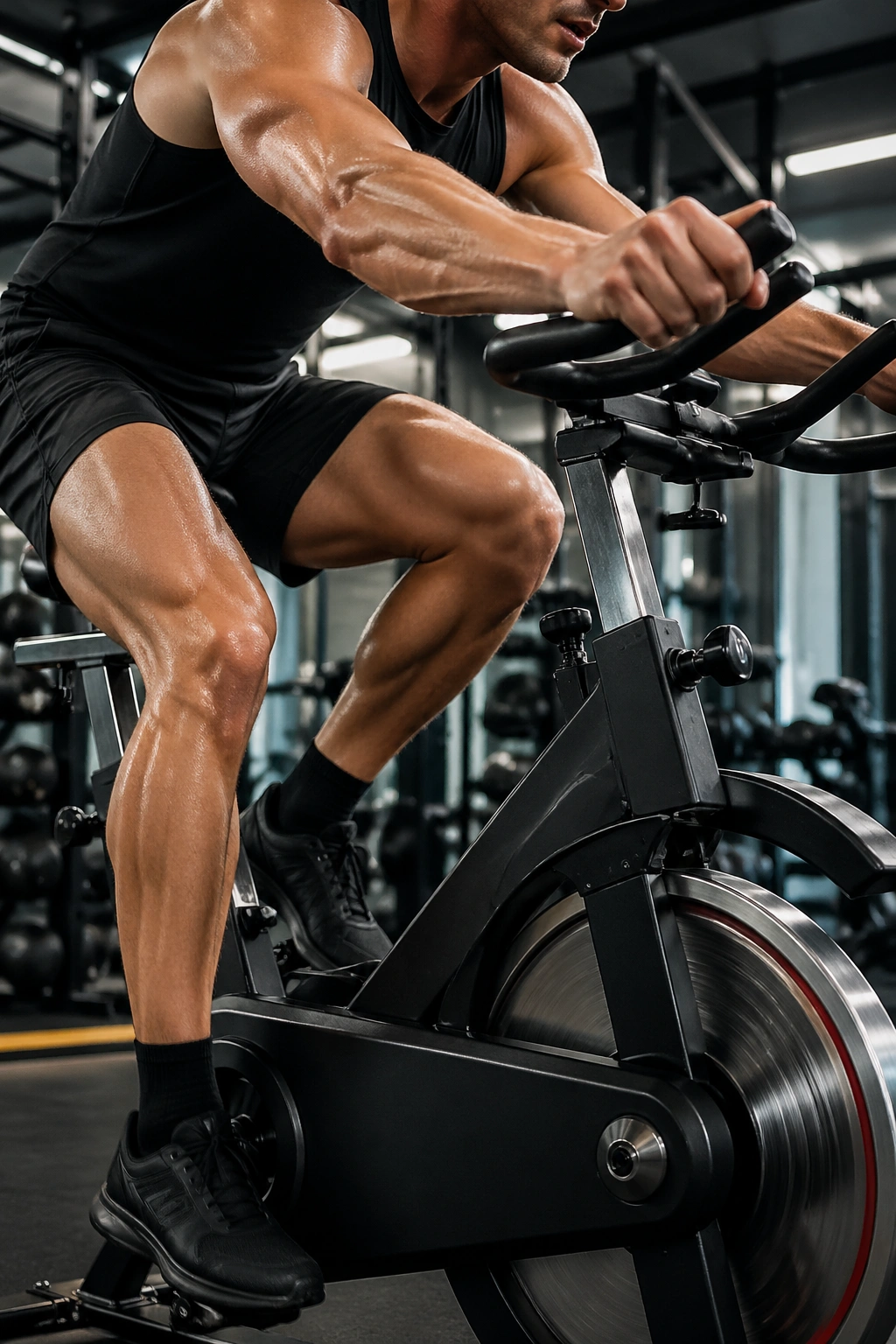
If running beats up your shins, the bike does the same job with less pounding.
The Tabata format is short and brutal: 20 seconds all-out, 10 seconds easy, repeated for 8 rounds. That gives you 4 minutes of work. Rest 3 to 5 minutes, then do a second round if you want a bigger session. The resistance should be heavy enough to matter but light enough that your legs can keep turning fast.
Bike sprints are sneaky. The first two rounds feel manageable, and then your quads start filling with acid like someone opened a valve. Keep your torso steady and let your legs spin. Don’t mash so hard that the pedals stall.
This format works well when you want a hard conditioning hit without impact. It also works on days when your brain wants the shortest possible workout. Four honest minutes is not nothing.
A decent bike sprint should look smooth from the outside and feel ugly from the inside. That’s the right ratio.
8. Burpee Ladder
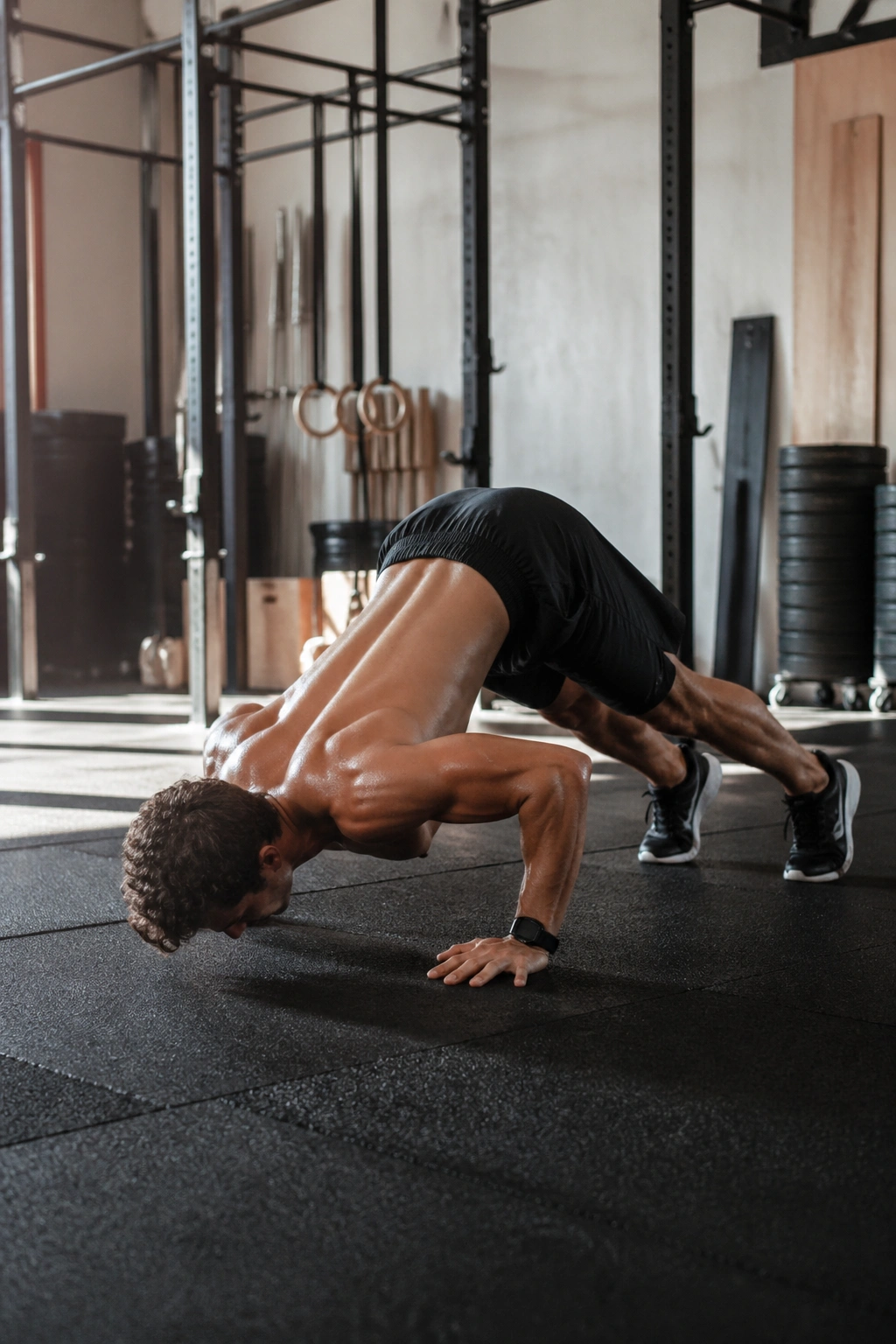
Burpees are ugly. That’s why they work.
A simple ladder goes 2 burpees, 4, 6, 8, 10, then back down with 20 to 30 seconds between rungs. You get a rising demand, then a little bit of relief on the way back down. If you’re short on time, do the ladder for 10 minutes and see how far you get without rushing the shape.
The big mistake is turning burpees into floppy chaos. Step back if you need to. Step up instead of jumping if your wrists or knees are irritated. The workout is still hard if the transitions stay honest.
One good rule: your chest should touch the floor only if you can keep the rest of your body under control. Sloppy burpees are just sloppy fatigue. Clean burpees are work.
If you want a more structured version, try this:
- 1 minute to complete 5 burpees
- Rest the remainder of the minute
- Add 1 burpee each minute until you hit 10
- Then work back down
It’s a mean little ladder. It also gets your whole body involved in a way that machines sometimes miss.
9. Dumbbell Complex
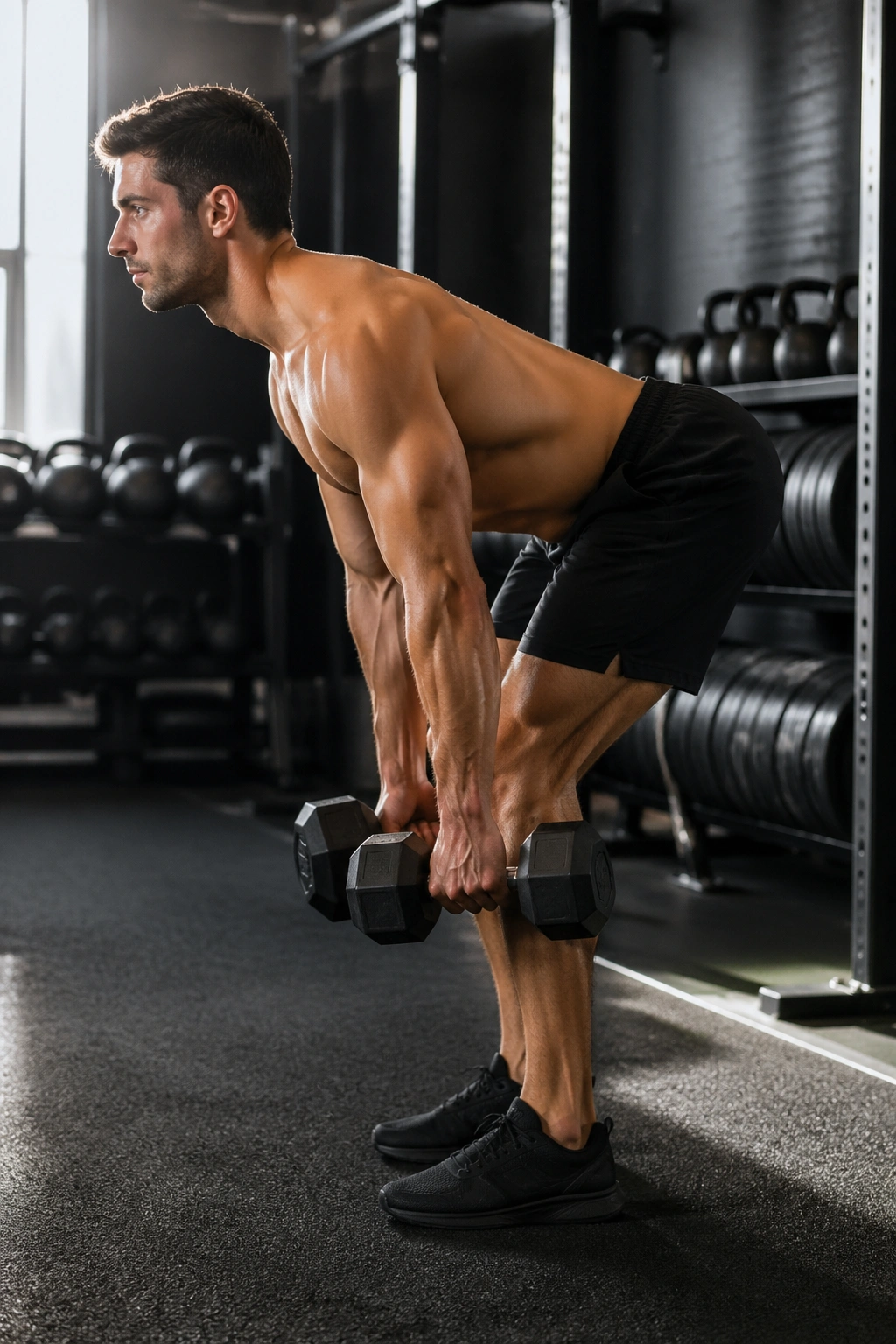
Unlike stop-and-start cardio, a dumbbell complex keeps tension on the muscles while your heart rate climbs and stays there.
Pick one pair of dumbbells and run this sequence without putting them down: 6 Romanian deadlifts, 6 bent-over rows, 6 hang cleans, 6 front squats, 6 push presses. Rest 90 seconds, then repeat for 4 to 6 rounds. Choose a weight you can handle for the weakest move in the chain, not the strongest one.
Why complexes hit hard
The load never disappears. Your grip starts to complain, then your breathing changes, then the front rack position turns into a little trap for your shoulders and core. That is the point.
Keep the reps crisp. If the clean gets sloppy, lower the weight. If the squat turns into a wobble, lower the weight. A complex works because it keeps you moving with decent form, not because you survive ugly reps.
What to watch for
- Flat back on the RDL
- Elbows tight on the clean
- Elbows high in the front squat
- Smooth dip and drive on the press
This one is a favorite when you want strength and cardio in the same package. It’s efficient. It’s also exhausting in a way that feels earned.
10. Hill Sprints

A short hill is a mean coach.
Find a moderate slope and sprint for 12 to 20 seconds, then walk back down. Do 6 to 10 rounds. Hills cut some of the impact, but they raise the demand on glutes, hamstrings, and calves fast. They also make you honest about your stride, because bad mechanics show up quickly when the slope starts biting.
A good hill sprint is not a lurch. Lean slightly from the ankles, pump the arms, and keep the feet landing under you. If the hill is so steep that your stride turns into a scramble, back off a little. Steeper isn’t always better. Better is a slope you can attack without losing shape.
- Short hill, not a mountain
- Walk back fully before the next rep
- Stop when your form gets noisy
- Use spikes or grippy shoes if the ground is loose
There’s a clean cruelty to hill work. The effort is short, but the legs remember it. If you like training that feels straightforward and rude, this one belongs near the top.
11. Battle Ropes
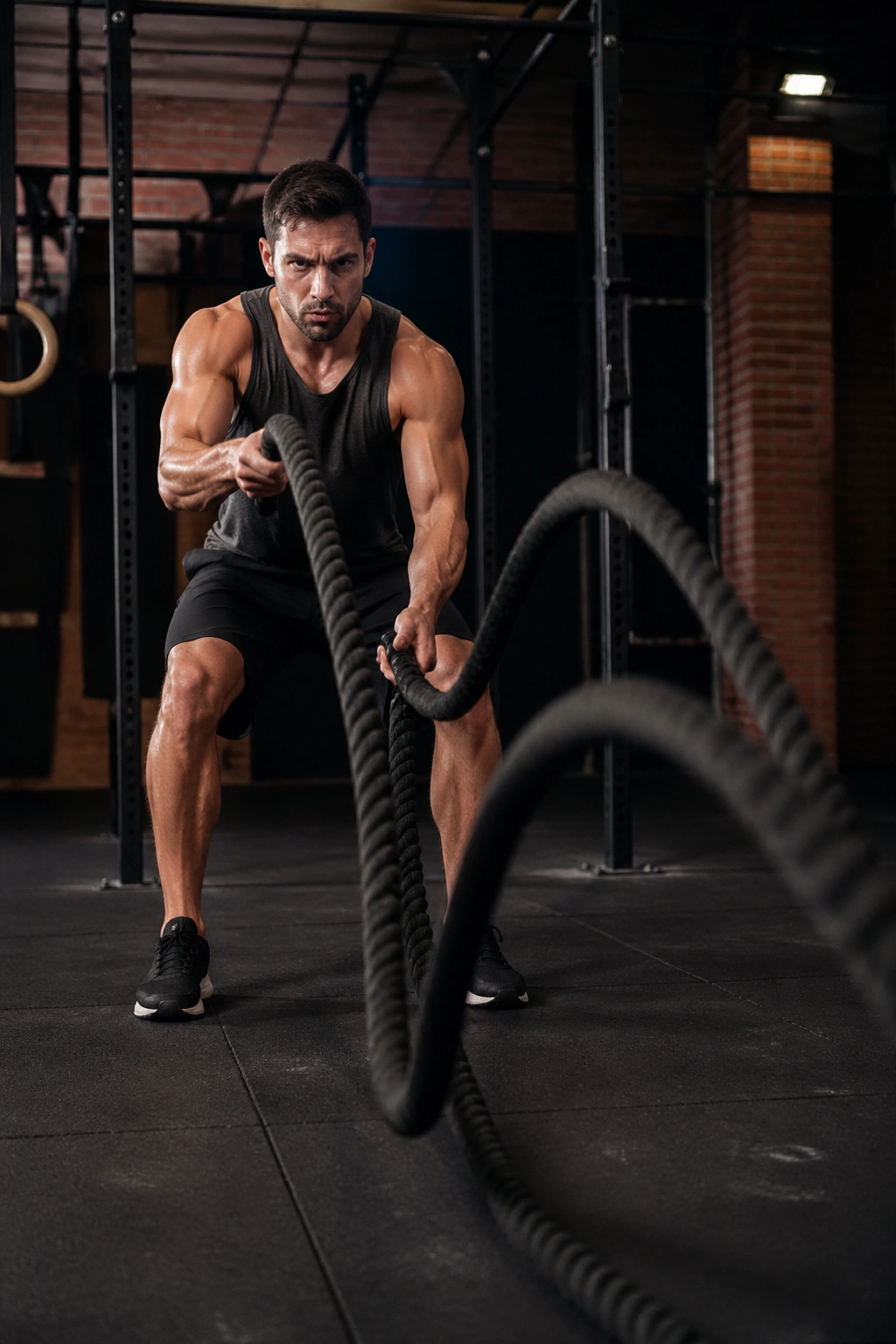
Battle ropes punish lazy shoulders.
Stand with your knees soft, core braced, and ribs down. Then drive 20 to 30 seconds of hard waves, slams, or alternating whips, followed by 30 to 45 seconds of rest. Repeat for 8 to 12 rounds. Keep the wave coming from the whole body, not just the arms. If your hands are moving and your trunk is dead, you’re missing the point.
The rope is a funny tool because it looks like upper-body work, then your lungs get involved and the whole thing turns into a fight for rhythm. Alternating waves are the most common pattern, but double-arm slams and side-to-side waves are excellent too.
A useful cue: if your shoulders climb toward your ears, reset them. Shrugging turns the drill into neck fatigue.
Another cue: breathe out with the hard part. It helps more than people expect.
Battle ropes shine in short, dense intervals. They’re loud, a little primal, and very hard to fake.
12. Sled Push Intervals
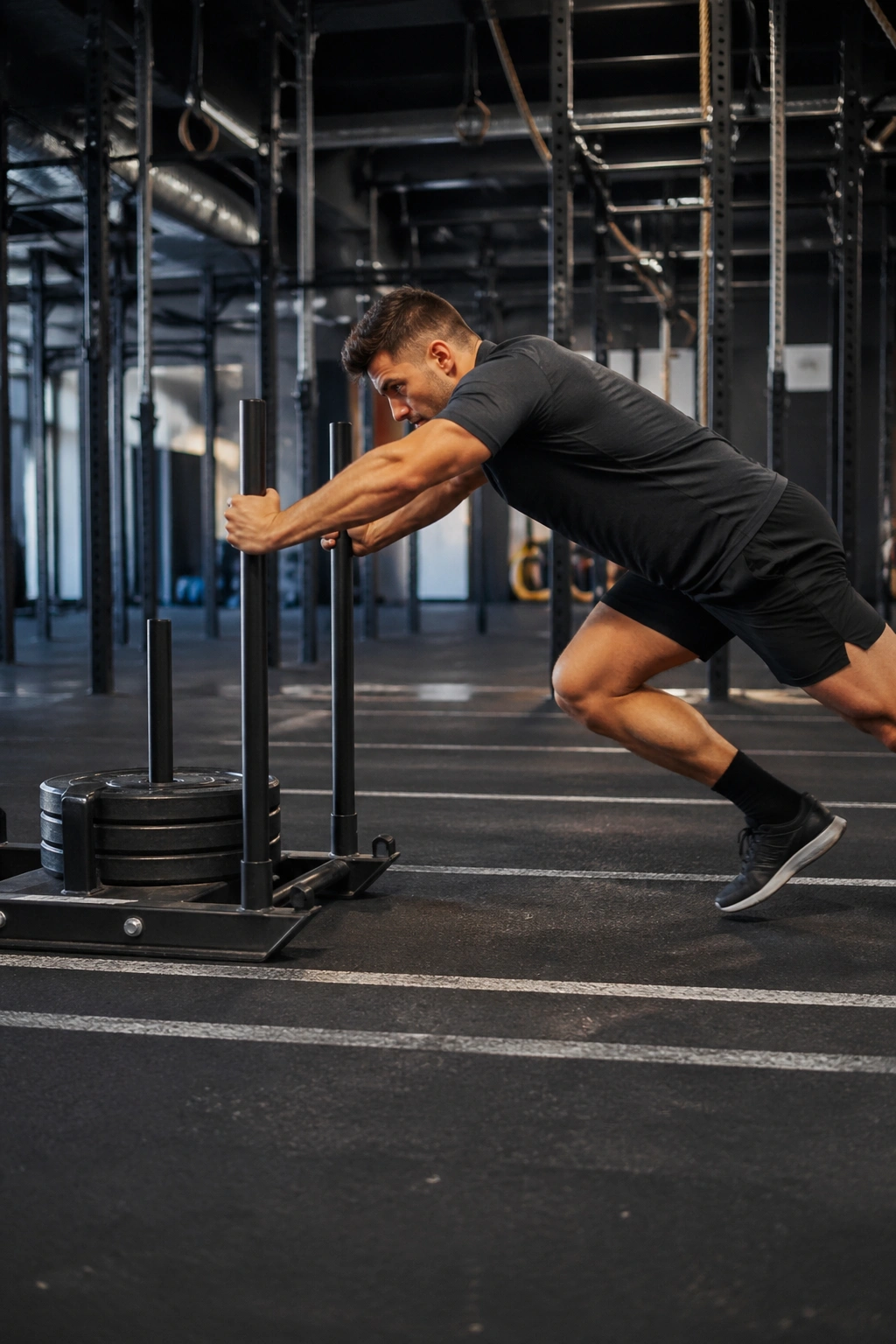
Looking for a hard session that doesn’t beat up your joints? The sled is hard to beat.
Load it light enough that you can keep moving and push 15 to 25 meters, then walk back and rest 45 to 75 seconds. Do 6 to 10 rounds. If the sled won’t budge until you grind your face off, it’s too heavy for interval work. You want work, not a static deadlift contest on a carpet.
The sled is useful because there’s almost no eccentric lowering. Your muscles work hard, but they don’t get the same kind of pounding that running gives you. That makes it useful for bigger athletes, older athletes, and anyone whose knees prefer less drama.
How to judge the load
The last third of the push should feel like effort, not panic. If the first five meters are a fight, drop the weight a little. If you can chat while moving it, add plates.
Sled pushes are brutally simple. Drive the floor away, keep your torso angled forward, and take short powerful steps. That’s it. That’s the whole game.
13. Medicine Ball Slams and Shuttle Runs

Hard claim: medicine ball slams are better than they look.
A clean pairing is 10 hard slams, then a 10 to 20 meter shuttle run, repeated for 6 to 10 rounds. Use a ball that lands with a solid thud but doesn’t bounce so wildly that you spend half the workout chasing it. Rubber flooring helps. Concrete does not.
Slams are excellent because they combine trunk force, shoulder work, and a violent exhale. The shuttle run adds the cardio punch and keeps you from settling into a rhythm. That stop-start feel is exactly what makes this one sting.
A better way to do the slam
Raise the ball overhead, brace your stomach, and rip it down through your core. Don’t just drop it. The whole point is active force.
If your lower back feels it more than your abs and lats, the movement is too loose. Shorten the range a bit and keep your ribs tucked. The power comes from the center of the body, not the arms alone.
This workout is easy to set up, easy to understand, and weirdly satisfying when you’re in the mood to throw something hard.
14. Incline Treadmill Walk Intervals
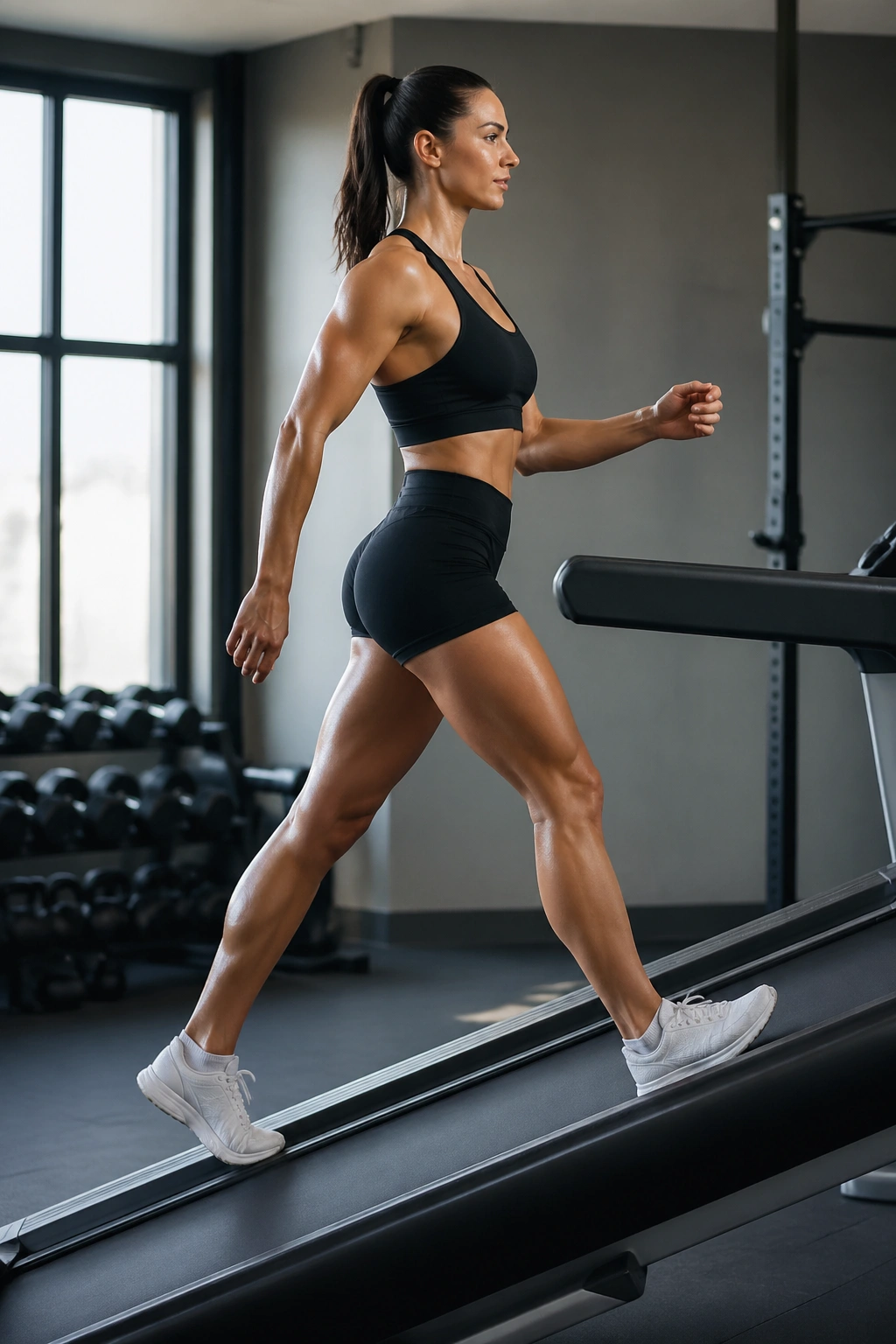
Walking does not sound savage. Raise the incline to 10 to 15 percent, and it stops sounding gentle.
Use 1 minute at a steep incline, then 1 minute at a low incline or flat for 10 to 15 rounds. Keep the speed brisk enough that you’re working, but not so fast that you start hanging on the handrails. That rail-grip is a shortcut that changes the whole session.
This is one of the best HIIT options for people who want fat-burning cardio with less impact. It also plays nicely on days after heavy leg training, when running feels like a bad joke. Your calves and glutes still get hammered, but the landing forces stay low.
A few good cues:
- Stay tall instead of folding at the waist
- Drive the arms
- Keep the steps short and steady
- Let the incline do the work instead of leaning on the handles
It’s not flashy. It works. And on days when your joints feel a little cranky, that matters more than looking heroic.
15. Shadow Boxing Rounds

Shadow boxing in a small room can be a surprisingly serious cardio session.
Set a timer for 3-minute rounds with 30 seconds rest. Throw jab-cross combinations, slip, pivot, weave, then keep your feet moving. The pace should rise and fall naturally. You’re not just punching. You’re building a flow where the feet, hips, and shoulders all stay busy.
This one feels different from machine cardio because it asks your brain to stay awake. You have to think about distance, rhythm, and balance while your heart rate climbs. That extra bit of coordination can make a session feel shorter than it is, which is one reason fighters use it so often.
What a strong round looks like
A good round has shape. You’re not swinging wildly for three straight minutes. You’re snapping clean punches, moving off the line, then resetting.
Keep your hands up between combinations. Rotate through the hips instead of reaching with the shoulders. And if you want more intensity, throw 10 seconds of fast flurries near the end of each round.
It’s quiet, cheap, and hard in a way that sneaks up on you. I like that part.
16. SkiErg Intervals
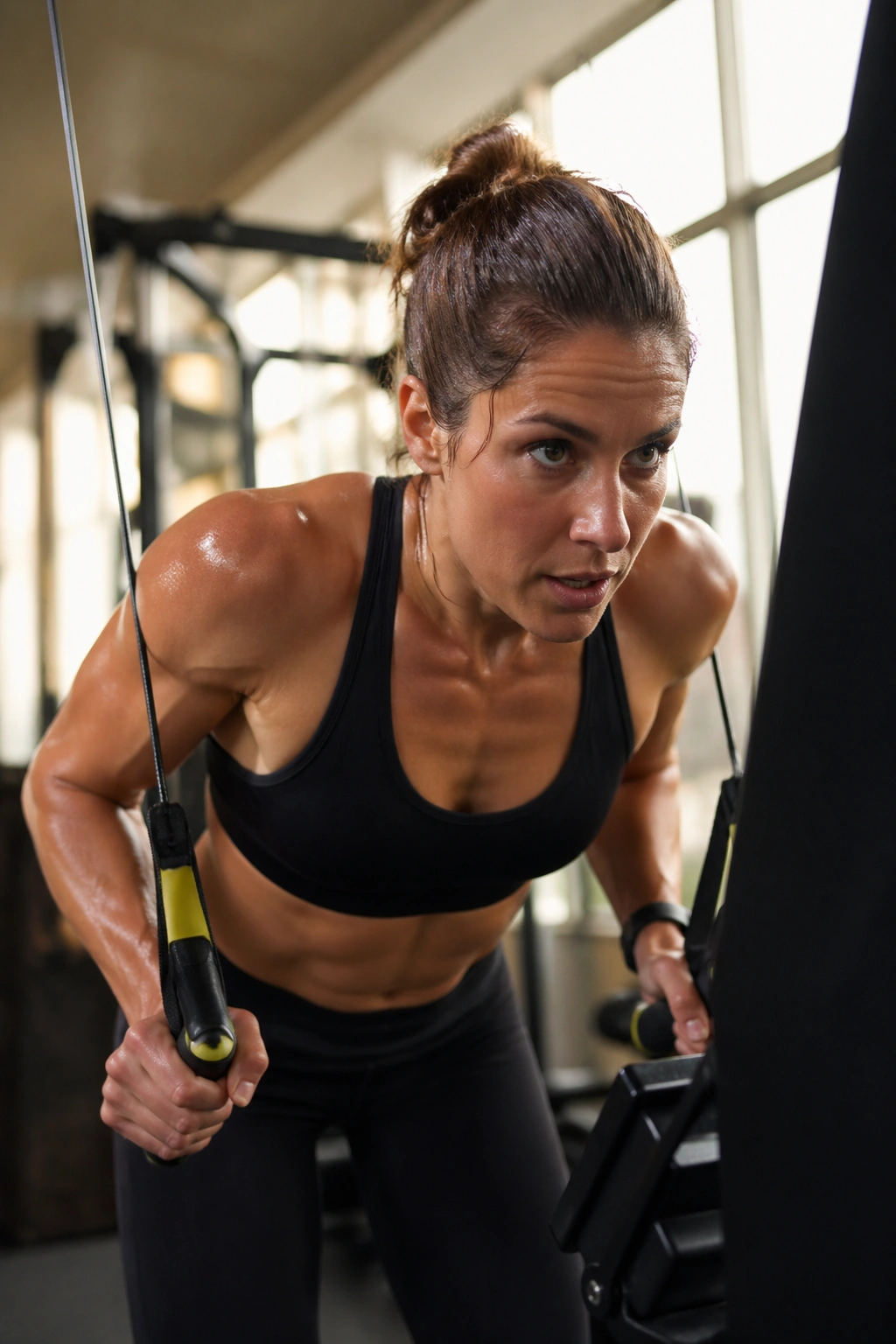
The SkiErg looks calmer than it is.
Use 30 seconds hard, 90 seconds easy for 8 to 10 rounds. Or go with 15 hard pulls, then a full minute easy if that fits your machine and your breathing better. The movement should come from a strong hinge and a forceful pull through the lats and core, not a sloppy arm yank.
Your hands finish near your ribs. Your ribs stay down. Your shoulders stay away from your ears. If you lean back too far on each pull, the machine will start to feel like a lower-back contest, and that is not the goal.
A good SkiErg session feels smooth, fast, and slightly desperate. The handles should come down with purpose. The recovery should be honest. And the final few rounds? Those are where your breathing gets loud enough to notice.
If you want a machine-based cardio option that doesn’t copy the rower or bike exactly, this one gives you a different kind of upper-body burn.
17. Full-Body AMRAP
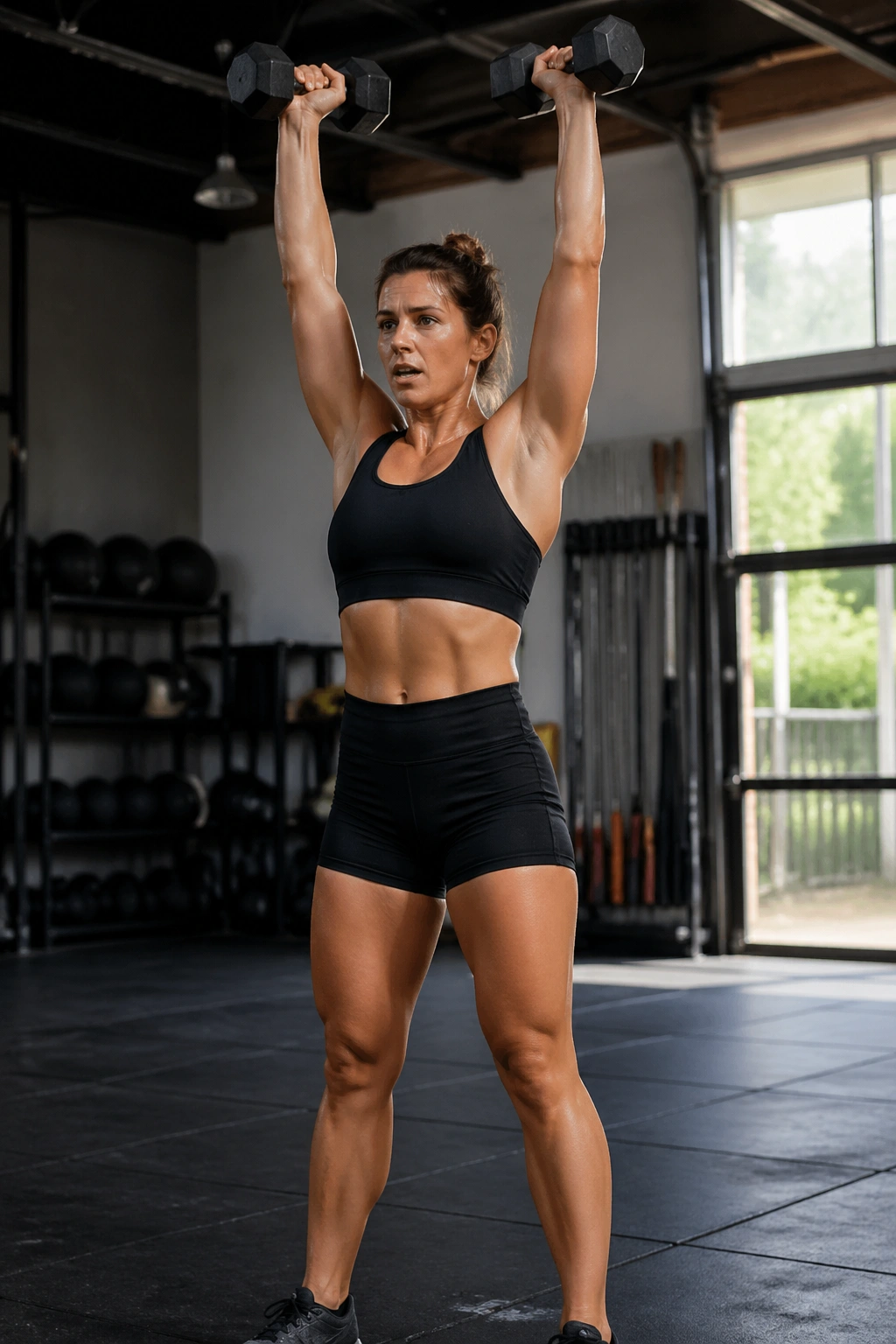
An AMRAP means “as many rounds as possible.” It sounds friendly. It rarely is.
Set a clock for 12 minutes and cycle through 6 thrusters, 8 push-ups, 10 kettlebell deadlifts, and 12 box step-ups. Move steadily, not wildly. The goal is to keep the round quality decent while the timer gnaws at you. If you need a lighter load on the thrusters, use it. If push-ups vanish after round two, elevate your hands.
How not to go out too fast
The first round always feels too easy. That is the trap.
Start at about 80 percent of what you think you can do. It feels conservative, and then the second half hits. If your breathing is wrecked before minute 4, you’ve overshot the pace. The workout should build pressure, not collapse immediately.
- Thrusters: light enough to move without grinding
- Push-ups: a rep range you can repeat under fatigue
- Kettlebell deadlifts: crisp hinge, no tugging
- Step-ups: controlled feet, no bouncing off the box
This format is useful because it blends strength and cardio without a lot of setup. It’s also brutally honest about pacing. The timer doesn’t care about your intentions.
18. Sprint-Finish Circuits

Strength first, sprints last. That’s the whole trick.
Do 3 rounds of a simple circuit: 10 goblet squats, 10 dumbbell rows per side, 30 seconds on the rower, 30 seconds on the bike. Rest 90 seconds between rounds. The weights should be moderate, not heroic, because the real finish comes from the cardio pieces.
This setup is different from a pure conditioning workout because the first half is about muscle output and the second half is about speed under fatigue. That mix keeps the session from feeling one-note. You get a little strength stimulus and then a hard cardiovascular tail.
The best part is pacing. If the rows and bike sprints are done well, your heart rate climbs without wrecking your form on the strength work. If the lifting gets sloppy, cut the load, not the effort.
A few practical rules:
- Put the heaviest work before the fastest work
- Keep transitions short
- Don’t race the squats
- Save your ego for the final sprint, where it belongs
It’s a tidy session. It also feels longer than it looks on paper.
19. Elliptical Resistance Sprints
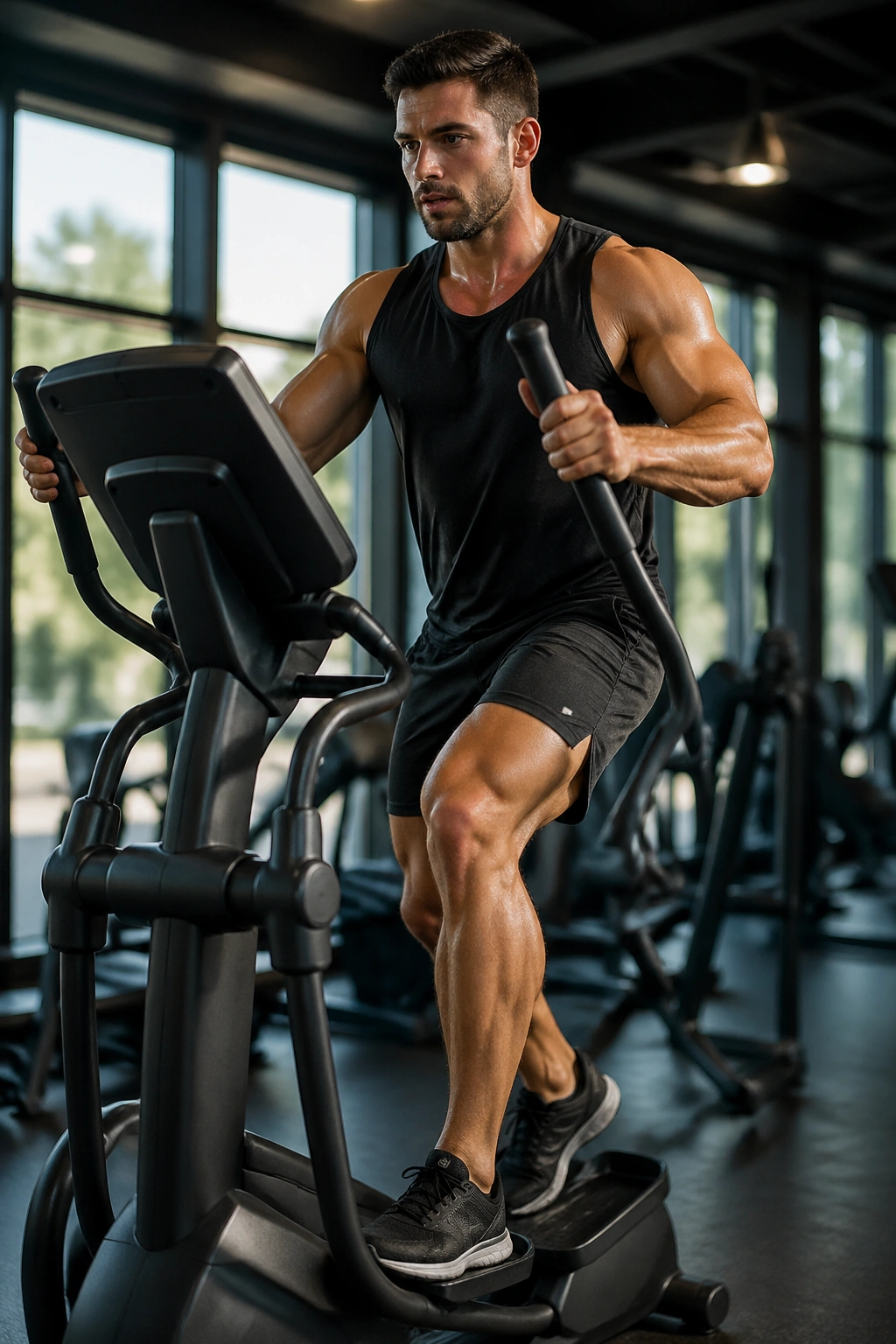
The elliptical will never be the cool kid in the gym. Fine. It still gets the job done.
Use 30 seconds of high resistance, then 60 seconds easy, repeated for 10 to 12 rounds. Stand tall, drive through the heels, and resist the urge to lean on the handles like you’re waiting for a bus. The machine should feel like work, not a casual glide.
This is a useful option when running feels like too much impact or when the gym floor is packed and every treadmill is gone. You can push hard without the same landing stress you’d get from sprinting, and the resistance can be tuned up enough to make your legs burn.
Best uses for the elliptical sprint format
- Coming back from a run-heavy week
- Needing a lower-impact hard day
- Wanting a quick session before strength training
- Training while the weather outside is miserable and the sidewalks are slick
The machine rewards posture. Keep your torso stacked, your stride smooth, and your hands relaxed. If your hips start rocking side to side, the resistance is probably too high.
It isn’t glamorous. It’s efficient.
20. Mixed-Modality HIIT Ladder
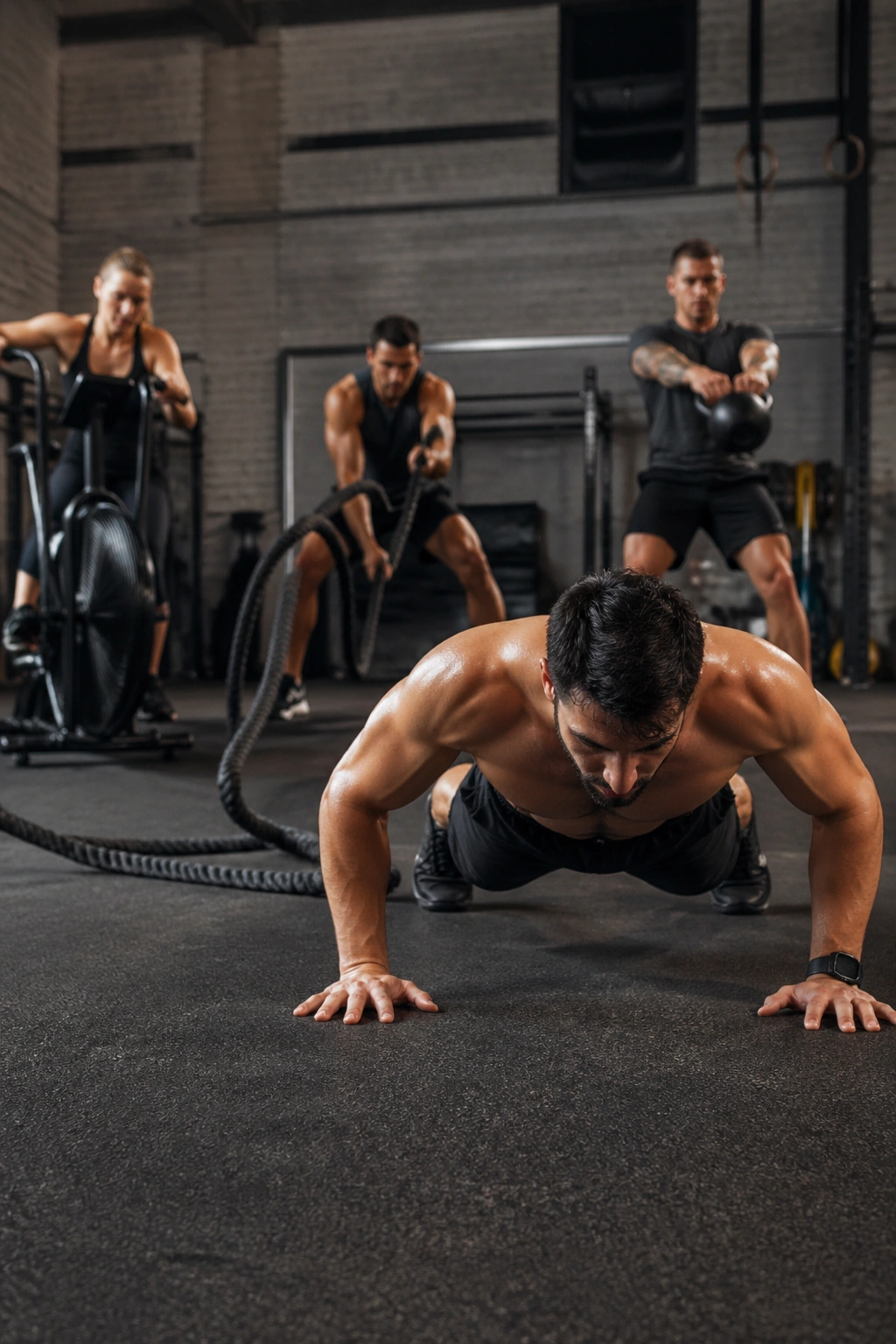
If you get bored fast, this is the one.
Build a four-station ladder with a bike, battle ropes, kettlebell swings, and burpees. Start with 40 seconds work / 20 seconds rest at each station. On the next pass, drop to 30 seconds work / 15 seconds rest. Then 20 seconds work / 10 seconds rest. Move through the same order each time.
How to set it up
- Station 1: bike sprint
- Station 2: battle rope waves
- Station 3: kettlebell swings
- Station 4: burpees
The beauty of a ladder is that the shorter work bouts let you hit the later rounds harder. The downside is obvious: if you blow yourself up on round one, the rest of the ladder gets messy fast. Keep the bike fast but controlled, the ropes crisp, the swings snappy, and the burpees clean.
Why this one works so well
Each station hits a slightly different engine. Legs. Shoulders. Hips. Full-body fatigue. There’s enough variety that boredom never gets a seat at the table, but not so much variety that the workout turns into chaos.
If you want a sweaty finisher, do one ladder. If you want a full conditioning day, do two ladders and rest 2 minutes between them. That’s a lot of work. Respect it.
Final Thoughts

The best HIIT workouts are the ones you can repeat with decent form and real effort, not the ones that look brutal on paper and fall apart after two rounds.
If you want the cleanest entry point, start with the bike, incline walk, rower, or sled. If you want no equipment and no excuses, the bodyweight circuit, burpee ladder, and stair sprints will sort you out fast. Pick one, keep the rest short, and track the work honestly. That part matters more than people admit.
And one small thing: don’t chase exhaustion for its own sake. Chase repeatable hard work. That’s the version that keeps paying off next week, and the week after that.
