



The fastest way to waste a gym day is to drift from machine to machine and call it training. Gym days that build muscle need a plan, not a mood.
Boring works. A solid split, enough hard sets, and a little patience beat clever tricks almost every time. If you press, pull, squat, hinge, and repeat those patterns with small jumps in load or reps, muscle usually follows.
The sweet spot sits in plain sight: a few hard sets for the main lift, a couple of accessory moves, and enough rest that the next set still feels heavy. Too little volume, and you stall. Too much, and your form starts to wobble before the muscles do.
That is why the best workout plans for gym days that build muscle are the ones you can repeat without overthinking every dumbbell on the floor. The first split below is the one I’d hand to someone who wants a hard push day without turning the session into a marathon.
1. Push Day With Heavy Compounds for Muscle

Push day is where chest, shoulders, and triceps get most of their growth stimulus. The trick is not doing everything. It’s choosing one heavy press, one incline pattern, one overhead move, then a couple of isolation lifts that let you pile on clean reps.
A Clean Push-Day Template
- Barbell bench press: 4 sets of 5 to 6 reps
- Incline dumbbell press: 3 sets of 8 to 10 reps
- Seated dumbbell or barbell overhead press: 3 sets of 6 to 8 reps
- Cable or dumbbell lateral raise: 3 sets of 12 to 20 reps
- Rope pressdown or overhead cable extension: 3 sets of 10 to 15 reps
Rest 2 to 3 minutes on the bench and overhead press. Use 60 to 90 seconds on raises and triceps work.
If chest is the weak link, put bench first and keep the incline angle around 20 to 30 degrees. If shoulders need more work, start with overhead pressing and keep the bench a little lighter. Either way, the last set should feel hard without turning into a full-body grind.
Loose elbows. Bad idea.
The rest of the session is where people get sloppy. Keep your shoulder blades set on pressing moves, let the dumbbells travel in a smooth arc, and do not turn lateral raises into a shrug contest. Small, clean reps beat ugly heaves every time.
2. Pull Day for Back Thickness and Stronger Biceps

A lot of people think pull day is pull-ups and a curl. That’s not a back plan. That’s a warm-up with an ego problem.
Back thickness comes from rows that load the mid-back hard enough to make you brace, hold, and row with intent. Chest-supported rows are a gift here because they keep the lower back from turning into the weak link before the lats and rhomboids have done their job.
What this day should feel like
The first big row should feel heavy in the middle of your back, not just your hands. Then you stack a vertical pull, usually a pull-up or lat pulldown, and finish with rear delts and a biceps move or two. That mix builds width and thickness without letting one pattern hog all the work.
A simple version looks like this: a chest-supported row for 4 sets of 6 to 8, neutral-grip pulldowns for 3 sets of 8 to 12, single-arm dumbbell rows for 3 sets of 10, face pulls for 3 sets of 15, then a barbell or incline curl for 3 sets of 8 to 12. The rows should be strict. The curl can get a little ugly near the end, but only near the end.
3. Leg Day Built Around Squats

Why do some leg days leave you wrecked without growing much, while others build real size? Usually because the workout is too random. Squat-focused training works when the quad, glute, and hamstring work all point in the same direction.
Start with a squat pattern you can actually load. Back squat is the classic choice, but front squat, safety bar squat, and hack squat all do a fine job if your torso or hips hate the standard barbell setup. From there, you want one secondary quad move, one unilateral movement, and something that keeps the hamstrings honest.
A straightforward lower-body setup
- Squat variation: 4 sets of 4 to 6 reps
- Hack squat or leg press: 3 sets of 8 to 12 reps
- Bulgarian split squat: 3 sets of 8 to 10 reps per leg
- Leg curl: 3 sets of 10 to 15 reps
- Standing calf raise: 4 sets of 10 to 15 reps
The best leg days feel organized, not chaotic. The first squat should be the heaviest work of the session, and the accessory lifts should fill in what the squat misses. If your knees prefer a hack squat or leg press, use them. If your ankles are tight, give yourself a slightly elevated heel and stop pretending mobility will fix itself between sets.
4. Upper/Lower Split for Four Gym Days
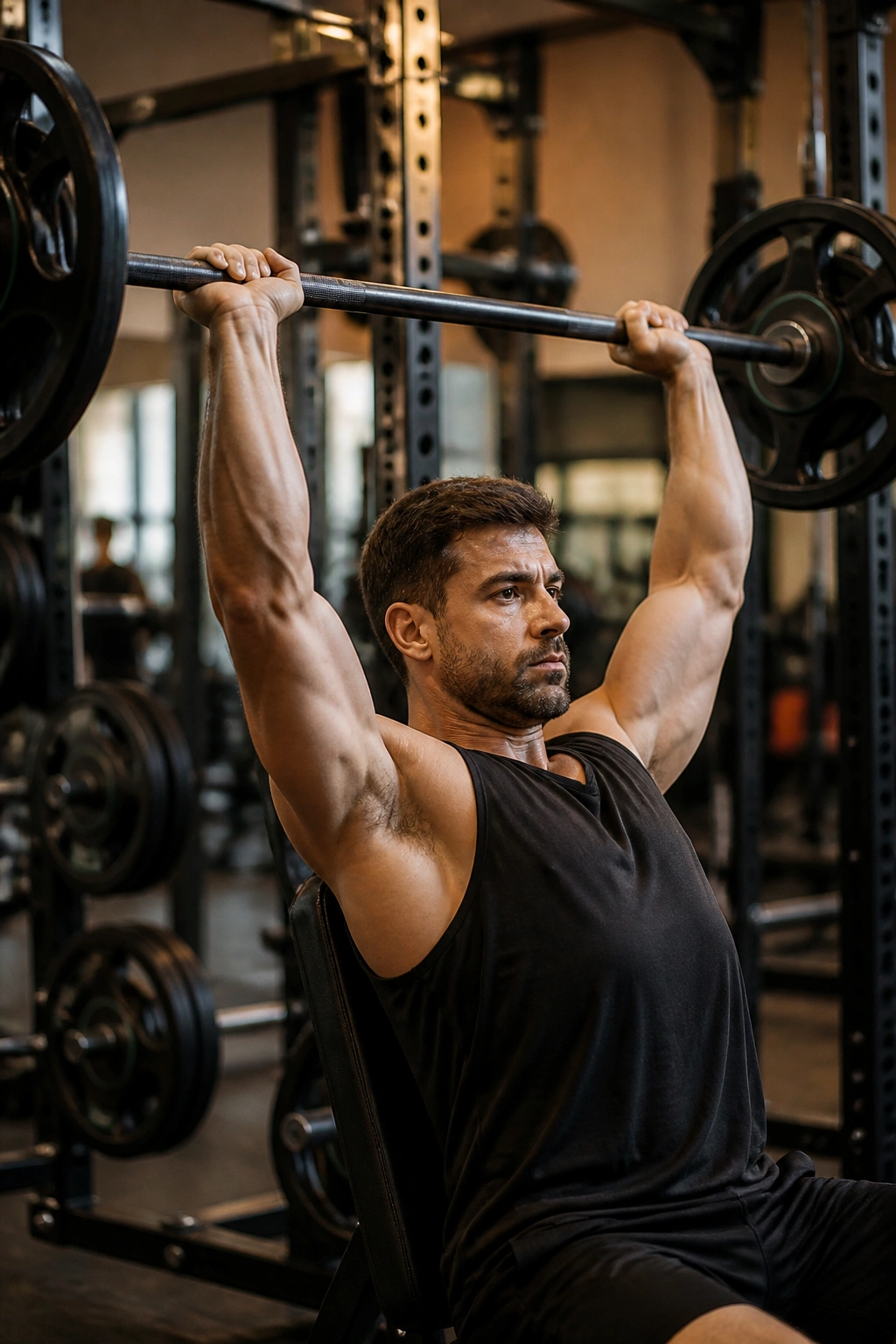
Four gym days is where a lot of people start training like adults. You get enough frequency to grow, but the sessions still stay manageable if you don’t waste time talking to the mirror.
The split is simple: two upper days and two lower days, one heavier, one more volume-focused. That gives your joints a break from repeating the same exact stress pattern, and it keeps each muscle group close to twice-weekly work.
Upper A and Lower A
Upper A should lean heavy. Bench press, weighted row, overhead press, and one pull-down or pull-up variation are enough to make it count. Add one chest isolation and one arm movement if you still have gas.
Lower A is the squat-centered day. Use a back squat or front squat, then a leg press or hack squat, then hamstring curls and calves. Keep the rest periods honest. You want crisp reps, not a cardio test with plates.
Upper B and Lower B
Upper B shifts toward volume. Incline dumbbells, machine rows, lateral raises, rear delts, and arms work well here. This day is less about moving the biggest number and more about stacking quality sets.
Lower B should hinge more. Romanian deadlifts, split squats, leg curls, hip thrusts, and calves make a strong finish. That second lower day often grows glutes and hamstrings better than another squat-heavy session would, because the back side gets to work without the same amount of spinal loading.
5. Full-Body Plan for Three Gym Days

If you only have three gym days, full-body training solves a lot of problems. You hit each muscle often, each session gets enough work to matter, and you avoid the trap of waiting a full week to touch a lift again.
The clean version is one squat or hinge, one press, one pull, then one or two smaller lifts. That’s it. No circus.
Day A, Day B, Day C
Day A can start with squats, bench press, and a row. Day B can swap in Romanian deadlifts, overhead press, and pulldowns. Day C can lean on leg press, incline dumbbells, and a chest-supported row. The point is not to make every day look different for the sake of it. The point is to keep the movement patterns rotating while the muscles get hit again and again.
A lot of lifters like this because fatigue stays under control. You do not walk out of the gym feeling like you got hit by a truck, yet the weekly volume still adds up. That matters more than people want to admit.
If you like shorter sessions and steady progress, this split is hard to beat. Just keep the sets honest and stop turning every workout into a max-effort day.
6. Chest and Back Antagonist Supersets

Supersets are not for cardio junkies. They’re for lifters who want more work in less time without turning the session into a marathon.
Chest and back pair well because one side gets to work while the other rests. A bench press set followed by a row is a smart little trick: the pressing muscles rest while your upper back works, and the shoulder joint tends to feel happier than it does under endless pressing.
Pairings that actually make sense
- Barbell bench press with chest-supported row
- Incline dumbbell press with lat pulldown
- Cable fly with reverse pec deck
- Dips with single-arm cable row
Keep the load moderate enough that form does not crumble when the heart rate rises. After the paired exercises, take 90 seconds or so before you repeat the superset. That is enough for most people to keep quality up without killing the time savings.
This plan works best for lifters who need a solid upper-body day in 60 to 70 minutes. It also suits people who get bored easily, which is a real thing whether anyone wants to admit it or not. The movement variety keeps the session lively, but the structure stays tight.
7. Shoulder and Arm Specialization Day

On a good arm day, the first curl feels easy and the last one feels like your forearms are full of gravel. That is the point. Small muscles grow when they get enough focused work, not when they’re dragged along after a brutal squat session.
Shoulders and arms deserve their own day if they lag behind the rest of your body. Side delts, rear delts, biceps, triceps — those muscles often respond well to fresh training and a little extra weekly volume. Fresh means they are not already tired from heavy pressing or pulling.
What goes first
Start with lateral raises or a shoulder press, depending on which part of your shoulders needs more help. Then hit rear delts, because most people undertrain them and it shows. Finish with one biceps curl, one triceps extension, then repeat the pattern with a different angle.
A practical order looks like this:
- Seated dumbbell shoulder press: 3 sets of 6 to 8
- Cable lateral raise: 4 sets of 12 to 20
- Reverse pec deck: 3 sets of 15
- Incline dumbbell curl: 3 sets of 8 to 12
- Rope pressdown: 3 sets of 10 to 15
- Overhead cable triceps extension: 2 sets of 12 to 15
Keep the rests short on raises and moderate on the arm work. The pump matters here, but only if the reps stay clean. Slinging weights around is just noise.
8. Deadlift-First Posterior Chain Day

Deadlifts build a lot of muscle, but they also eat fatigue for breakfast. That’s why this day works best when you treat the deadlift as the main event, not the whole movie.
The posterior chain is the back side of your body: glutes, hamstrings, spinal erectors, upper back, traps. A deadlift-first day lights up all of them, but you need to be smart after the main lift because the lower back can run out of gas long before the target muscles do.
Keep the volume tight
Use one heavy hinge — conventional deadlift, trap-bar deadlift, or Romanian deadlift — then move to hip thrusts, hamstring curls, and back extensions. That gives you more muscle-building volume without turning the whole workout into a lower-back survival test.
- Deadlift variation: 3 to 5 sets of 3 to 5 reps
- Romanian deadlift or hip thrust: 3 sets of 6 to 10 reps
- Seated or lying leg curl: 3 sets of 10 to 15 reps
- Back extension: 2 to 3 sets of 10 to 15 reps
If your lower back is the thing that always quits first, swap conventional deadlifts for RDLs or trap-bar pulls. That’s not cheating. It’s adjusting the plan so the hamstrings and glutes actually get trained instead of merely surviving the session.
9. Machine Day for Joint-Friendly Volume

Machines are not lesser. They’re cleaner.
That sounds blunt, but it’s true. A machine-based workout lets you push close to failure with less setup, less balance demand, and usually less joint irritation. For muscle gain, that’s a useful trade. Stable path, easy load jumps, and no wasted energy keeping the bar from wobbling.
Best use case
This is the day for lifters who need volume without extra chaos. It’s also excellent after a heavy week of free-weight work, when you still want to train hard but your elbows, knees, or lower back are asking for a little mercy.
A solid machine day can look like this: chest press, seated row, hack squat, leg curl, pec deck, lateral raise machine, and a triceps pressdown. Keep the reps in the 8 to 15 range on most lifts and use slow, controlled lowering. That part matters more than people think. A machine rep done with control is worth far more than a sloppy one with extra plates.
Some gyms are loaded with good machines. If yours is, use them. They can make a training block feel smoother, and smooth usually means more recoverable work.
10. Dumbbell-Only Free-Weight Day
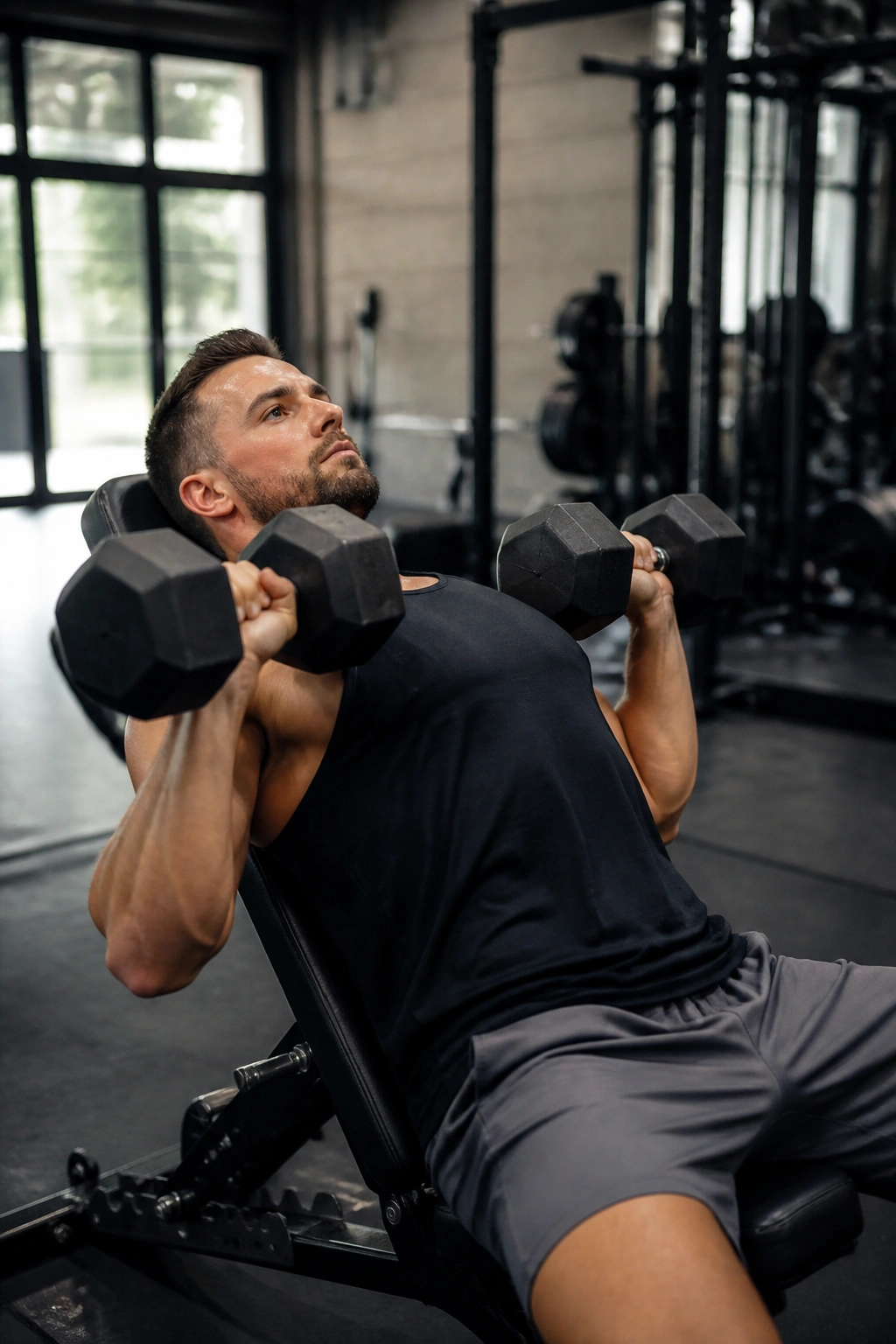
Crowded gym. One adjustable bench. A pair of dumbbells. That is enough.
A dumbbell-only day is useful because it forces you to train through a full range of motion, and the unilateral work exposes left-right gaps fast. It also keeps the setup simple, which helps on days when you want to train hard without waiting for half the room to clear out.
A simple free-weight pattern
Use a lower-body move, a press, a row, and then a shoulder or arm finisher. Goblet squats, Bulgarian split squats, incline dumbbell press, single-arm rows, Romanian deadlifts, and standing dumbbell shoulder press all fit neatly here. Farmer carries are a nice bonus if you want traps and grip work without adding a lot of time.
- Goblet squat: 3 sets of 10 to 12
- Incline dumbbell press: 4 sets of 8 to 10
- Single-arm dumbbell row: 3 sets of 10 per side
- Dumbbell Romanian deadlift: 3 sets of 8 to 12
- Standing dumbbell shoulder press: 3 sets of 6 to 10
- Farmer carry: 3 walks of 30 to 40 meters
Progress by adding reps first, then weight. Dumbbells can jump awkwardly, so chasing a clean rep PR before you bump the load often works better than forcing bigger jumps too soon.
11. Push/Pull/Legs Five-Day Rotation

Five days is where push/pull/legs stops being a beginner split and starts looking like a real muscle-building setup. The extra day gives you room to bring up weak points without wrecking recovery.
A clean five-day PPL rotation usually looks like push, pull, legs, push, pull one week, then legs, push, pull, legs, push the next. That means the schedule keeps cycling instead of freezing into a rigid calendar. Smart setup. Less boredom, more balanced volume.
How the five days change
Push A can be heavier, with barbell bench and overhead press. Push B can lean on incline work, machine presses, lateral raises, and triceps volume. Pull A can focus on vertical pulling, while Pull B leans into rows and rear delts. Legs gets one heavy squat or hinge emphasis and one accessory-heavy finish.
That setup lets you repeat movement patterns often enough to improve them, but not so often that every session feels the same. It’s also a good fit for people who like seeing a body part twice in a week without doing a full-body plan.
If you recover well and enjoy training, this split is one of the most straightforward ways to stack muscle over time.
12. High-Volume Bro Split for Advanced Lifters

People make fun of the bro split until they watch an advanced lifter recover from it.
One body part per day can work well when you already have a training base, you sleep enough, and you eat enough to support the workload. The reason it works is simple: you can pile a lot of high-quality sets onto one muscle without worrying about preserving energy for three more body parts.
A typical week
Chest day, back day, shoulders day, legs day, arms day. That is the shape. The exact exercise list can change, but the weekly idea stays the same — one muscle gets the spotlight, and the session leans into it hard.
This style is not the best pick for everyone. If you miss sessions often, the split gets messy fast. If recovery is weak, the high set count can turn into junk volume. But for lifters who know how to push hard and recover well, it gives each muscle a lot of focused work and a clear target to beat next time.
The biggest mistake is turning every day into random machine hopping. Keep the plan tight. One or two main lifts, a few solid accessories, and enough effort to make the sets matter.
13. Strength-to-Muscle Hybrid Day

You do not need to choose between strength work and muscle work. A hybrid day gives you both, as long as you keep the loading honest.
The cleanest version uses a top set on a big lift, then back-off sets in a more muscle-friendly rep range. So you might squat for one heavy set of 3 to 5 reps, then do 3 sets of 6 to 8 with a little less weight. Same lift. Different purpose.
How the loading works
The top set teaches you to handle heavier weight and keeps the nervous system sharp. The back-off sets create the bigger training volume that muscles tend to like. Bench press, squat, row, and overhead press all fit this approach well.
A session might look like this:
- Squat: 1 top set of 3 to 5, then 3 back-off sets of 6 to 8
- Bench press: 1 top set of 3 to 5, then 3 back-off sets of 6 to 8
- Barbell row: 1 top set of 5, then 2 to 3 sets of 8 to 10
- Lateral raise or triceps pressdown: 3 sets of 12 to 15
Do not turn the top set into a max attempt. Leave a rep in the tank. The back-off work is where the size comes from, and the top set just keeps the weight moving upward over time.
14. The 45-Minute Muscle Plan

Forty-five minutes. That’s enough if you stop wasting time.
Short sessions work when every minute has a job. You need one big lift, one second big lift, a smart superset, and a cap on rest. No wandering. No scrolling. No “one more warm-up set” on every machine.
A simple timed setup
- Main lift 1: 4 sets of 5 to 6 reps
- Main lift 2: 3 to 4 sets of 6 to 8 reps
- Superset: 3 sets of 10 to 15 reps each
- Optional finisher: 5 minutes of abs, sled pushes, or carries
A good version might be squat, bench press, chest-supported row, then lateral raises paired with curls. Another day could swap in leg press, incline dumbbells, pulldowns, and triceps work. Keep the first two exercises heavy enough to matter and the accessory work fast enough to fit the clock.
This plan is great when life is crowded and your training window is narrow. It is not flashy. It just gets done. And some weeks, that is the whole game.
15. The Flexible Rotation That Keeps Muscle Growing

The nicest plan on paper means nothing if you skip it.
That is why the best workout plan is usually the one you can actually keep repeating. If you train three days, full body makes sense. If you train four, upper/lower is clean and easy to recover from. If you train five, push/pull/legs or a hybrid split gives you more room for volume. If one body part is lagging, give it its own day and stop pretending it will catch up by accident.
Choose the split that matches your life
- 3 days: full-body training with one squat or hinge, one press, one pull each session
- 4 days: upper/lower split with one heavier day and one volume day for each half of the body
- 5 days: push/pull/legs rotation or a hybrid plan with weak-point work
- 6 days or more: only if recovery, food, sleep, and schedule can actually support it
The part people skip is progression. Muscle grows when loads, reps, or set quality creep upward while recovery keeps up. That means enough protein, enough sleep, and enough honesty about how hard the sets really are. If your last three reps look like a car crash, the plan probably needs a small adjustment.
Pick the split you can repeat without dreading the second week. Then keep feeding it better numbers. That’s the real trick, and it’s not much of a trick at all.
