



If you’ve ever finished a long ab workout, felt your neck more than your stomach, and still wondered why your waist and bra-line area looked the same, you’re not imagining it. The best belly and back fat workouts for women are rarely built around endless crunches. They work because they combine calorie-burning movement, muscle-building strength work, and core training that teaches your trunk to stay strong under tension.
That part matters more than most people realize. Your body does not peel fat off one small area because you trained that spot for 12 minutes. Belly fat, lower-back softness, and fullness around the upper back come off through total fat loss, which means your training has to ask more of your whole body. Rows, hinges, carries, intervals, and smart core drills do that job far better than random ab burnouts.
I’ve seen the same pattern over and over: women hammer side bends and crunches, skip back work, and then wonder why their posture slumps, their lower back aches, and their midsection still feels loose. Add pulling movements, glute work, and a few short conditioning bursts, and things start to change—sometimes in the mirror before the scale says much at all.
There’s also a visual piece people underrate. A stronger upper back opens your chest, better glute strength keeps your pelvis from dumping forward, and a better brace makes your waist look tighter even before body fat drops much. Start with the moves you can do cleanly, then build from there.
How Belly and Back Fat Workouts for Women Actually Work
Crunches are not the star here.
When women want to lose belly fat and back fat, the training plan has to do three things at once: burn energy, build lean muscle, and improve movement quality. That is why a smart routine mixes brisk cardio, strength training, and core stability. A 20-minute incline walk plus rows and dead bugs will usually do more for your shape than 200 rushed sit-ups.
Exercise labs have tested spot reduction again and again. Train the abs, and your abs can get stronger. Train the arms, and your arms can get stronger. Fat loss, though, still happens across the body. That’s the annoying part, maybe, but it is also freeing because it means you do not need gimmicks. You need work that your body cannot ignore.
Public health guidelines have long landed in the same neighborhood: regular cardio plus muscle-strengthening work at least twice a week. For women trying to lean out around the waist and back, that combo tends to work because muscle helps keep daily calorie burn higher, and cardio helps create the energy gap that fat loss needs.
Food, sleep, and stress still matter. No way around that. If your workouts are solid but recovery is a mess, fat loss around the midsection often drags its feet.
A Weekly Plan for Belly and Back Fat Workouts for Women
You do not need all 20 moves in one giant session. That sounds ambitious on paper and miserable in real life.
A better plan is to pick 4 to 6 movements per workout and rotate them through the week. Three focused sessions can move the needle fast if you actually stick to them.
A simple weekly setup
- Day 1: Incline walking intervals, bent-over dumbbell rows, dead bugs, glute bridge marches, reverse crunches
- Day 2: Step-ups with knee drive, resistance band lat pulldowns, plank shoulder taps, wood chops, shadow boxing intervals
- Day 3: Romanian deadlifts, renegade rows, plank knee tucks, superman W-pulls, jump rope intervals
Add two easy walks on non-lifting days—20 to 40 minutes is enough to help with recovery and total calorie burn.
Three good sessions beat seven half-done ones.
Progress the plan in plain, boring ways. Add 2 reps, or one extra round, or 5 pounds on a dumbbell, or 2 extra minutes to your interval work. That kind of progress is not flashy. It works anyway.
Form Rules for Belly and Back Fat Workouts at Home

A sore lower back after “core work” usually means your abs stopped doing their job and your spine took over. You can fix that.
Before almost every move in this list, think ribs down, exhale, brace, then move. The brace should feel like you are tightening around your waist in all directions, not sucking your stomach in. If your ribs flare and your lower back arches hard, you’ve lost the position.
Three cues that clean up most mistakes
- Stack your ribs over your hips. That single cue improves planks, dead bugs, rows, and overhead moves.
- Move from the hips, not the lower back. In bridges and deadlifts, the fold should happen where your legs meet your torso.
- Slow down the hard part. Lowering your leg in a dead bug for 3 seconds tells you more than 20 fast reps ever will.
Sharp pain is a stop sign. Pelvic floor pressure, leaking, or a dragging feeling during impact work is also a sign to scale back and swap in lower-impact options like incline walking or shadow boxing while you rebuild.
Now for the good stuff.
1. Incline Walking Intervals
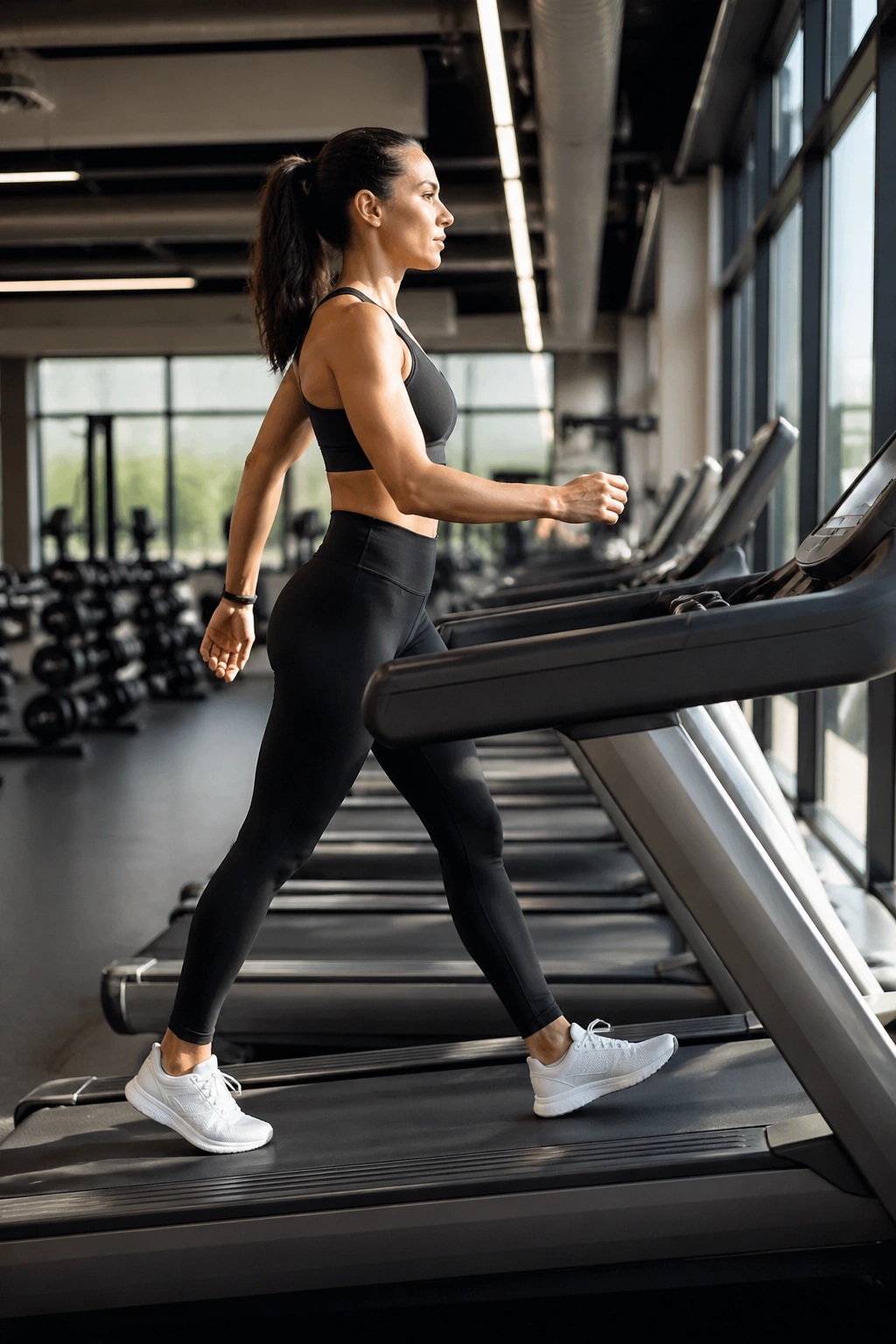
If I had to pick one fat-loss tool that most women can recover from, it would be incline walking. It is low impact, easy on the joints, and far less punishing than sprint intervals, yet it still drives your heart rate up and asks a lot from your glutes and core.
Walking uphill changes the demand fast. Your stride shortens, your calves and hips work harder, and your torso has to stabilize so you do not tip forward. That means a treadmill hill session can help with belly and back fat loss without wrecking your knees or making you dread the next workout.
Try this setup:
- Warm up for 5 minutes at 0 to 2 percent incline
- Walk 1 minute hard at 6 to 10 percent incline
- Recover for 2 minutes at 3 to 5 percent incline
- Repeat for 8 rounds
Keep your hands off the rails unless balance is an issue. Once you grab the front bar, the workout gets easier in all the wrong ways. A brisk outdoor hill walk works too, and I like it even better if you’re tired of gym walls.
2. High Plank Shoulder Taps
Want an ab move that trains your shoulders, chest, and upper back at the same time? This is one of the cleanest options.
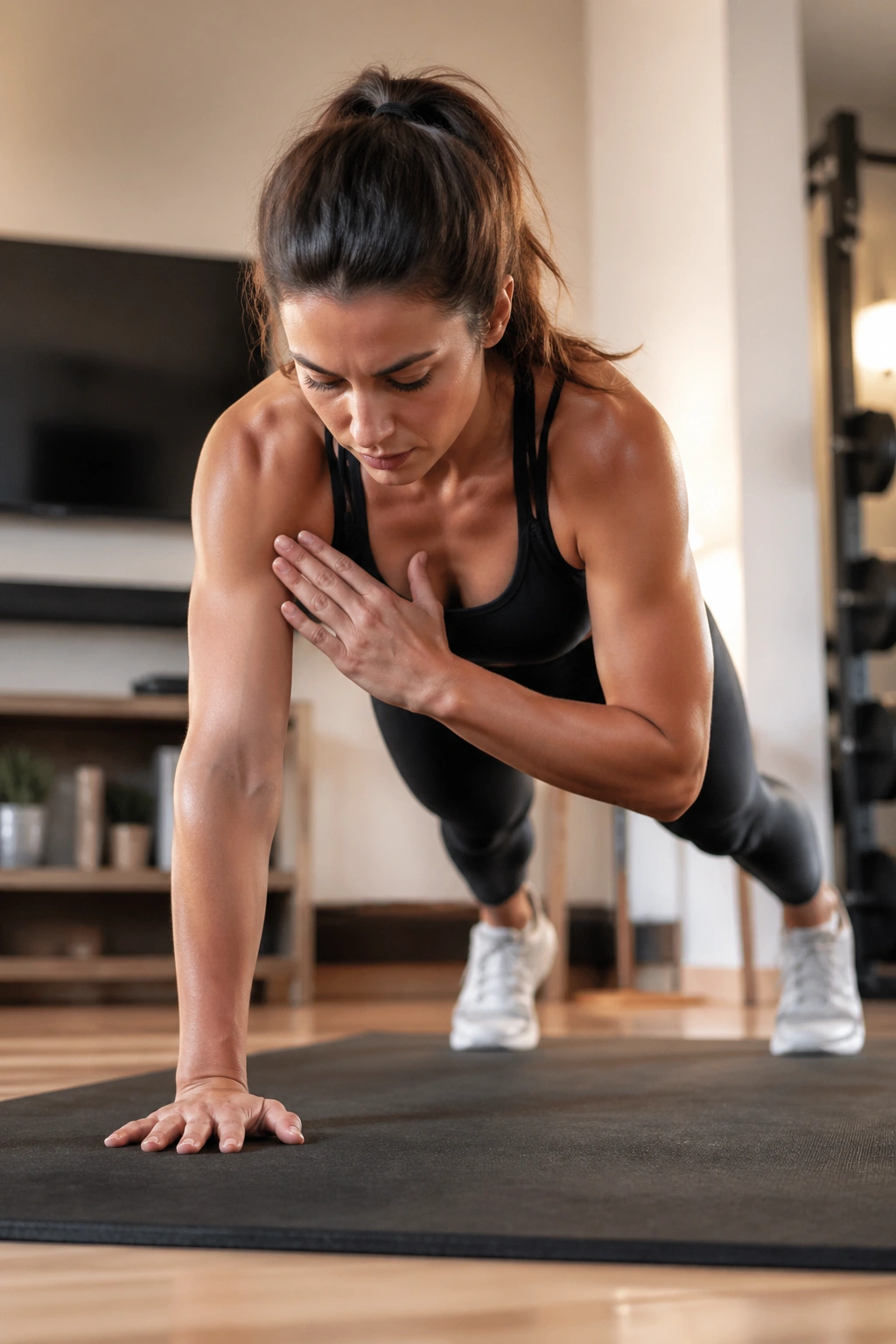
Plank shoulder taps are an anti-rotation drill, which means your core works to stop your body from twisting as one hand leaves the floor. That matters for a tighter waist because the deep trunk muscles—the ones that help flatten and support the midsection—light up when you resist motion, not only when you curl forward.
Form before speed
Set up in a high plank with your hands under your shoulders and your feet a little wider than hip-width. Squeeze your glutes, press the floor away, and tap one shoulder at a time without letting your hips rock side to side. If your water bottle on your lower back would slide off, slow down.
A solid starting point is 3 sets of 16 to 20 total taps. Count both sides together. If full plank feels shaky, elevate your hands on a bench, sofa edge, or sturdy countertop and keep the same rules.
You should feel your abs working like a belt around your waist. If all you feel is wrist strain, raise the surface and start there.
3. Dead Bug
The name is goofy. The exercise is not.
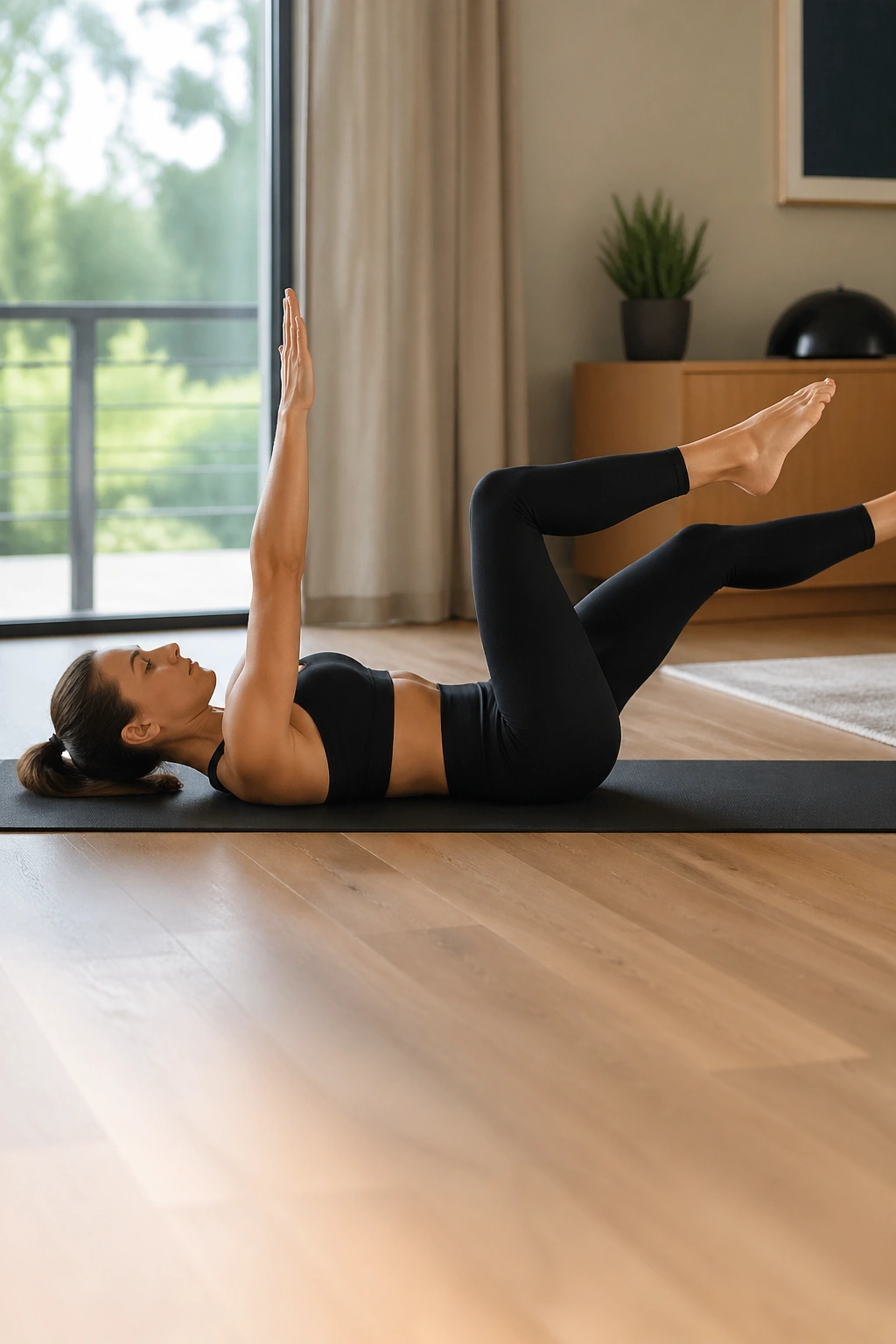
Dead bugs are one of the best lower-belly exercises around because they teach your abs to hold your spine still while your arms and legs move. That’s the part many women miss. They pull their legs up and down, their lower back pops off the floor, and then they wonder why the move hits the hip flexors more than the core.
Lie on your back with your knees bent over your hips and your arms straight above your chest. Press your low back gently into the floor—not a huge smash, just enough to take the space out—then exhale as you lower the opposite arm and leg.
Quick setup checklist
- Keep your ribs tucked down
- Lower each limb for 3 slow seconds
- Stop the leg before your back lifts
- Return to the start and switch sides
Do 3 sets of 8 to 10 reps per side. If that feels easy, pause for 1 second when the arm and leg are fully extended. Done well, this move lights up the deep core in a way that carries over to planks, step-ups, and even walking posture.
4. Bent-Over Dumbbell Rows
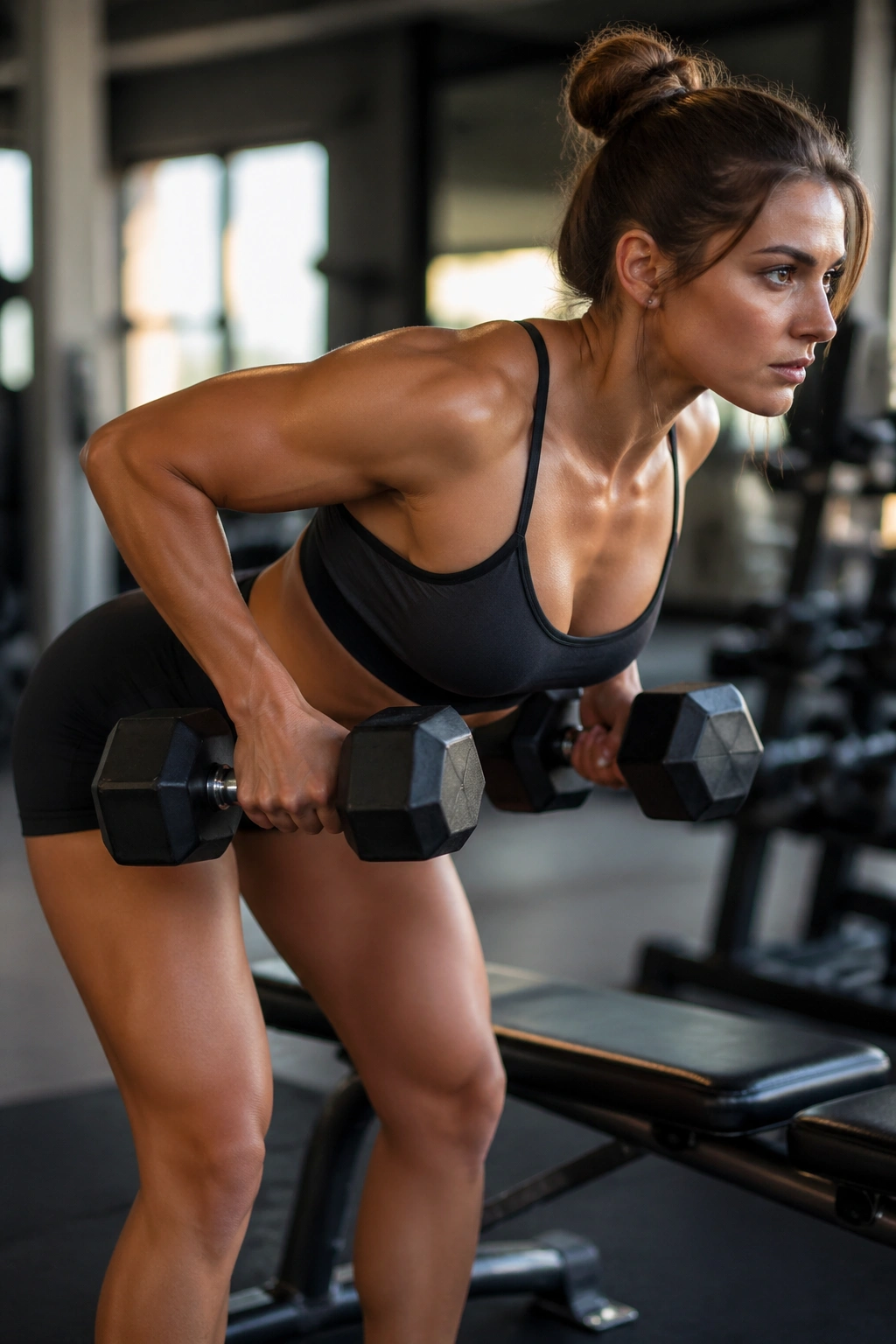
Unlike endless light “toning” moves, rows train the big muscles that change how your upper body sits and looks. That matters if you carry softness around the bra line or feel rounded through the shoulders by the end of the day.
The bent-over row targets your lats, rhomboids, rear shoulders, and mid-back. Those muscles do more than add strength. They help pull your shoulders back, support a taller posture, and give your torso better shape from the side and the back. When people say their waist looks smaller after they start training their back, this is a big reason why.
Hinge forward so your chest is angled toward the floor, keep a flat back, and pull the dumbbells toward your lower ribs. Pause for a beat at the top. Then lower them under control. The lowering part matters almost as much as the pull.
Use 3 to 4 sets of 10 to 12 reps with a weight that makes the last 2 reps hard without turning the move into a shrug. If your lower back gets tired first, prop one hand on a bench and row one side at a time. That setup is often cleaner.
5. Mountain Climbers
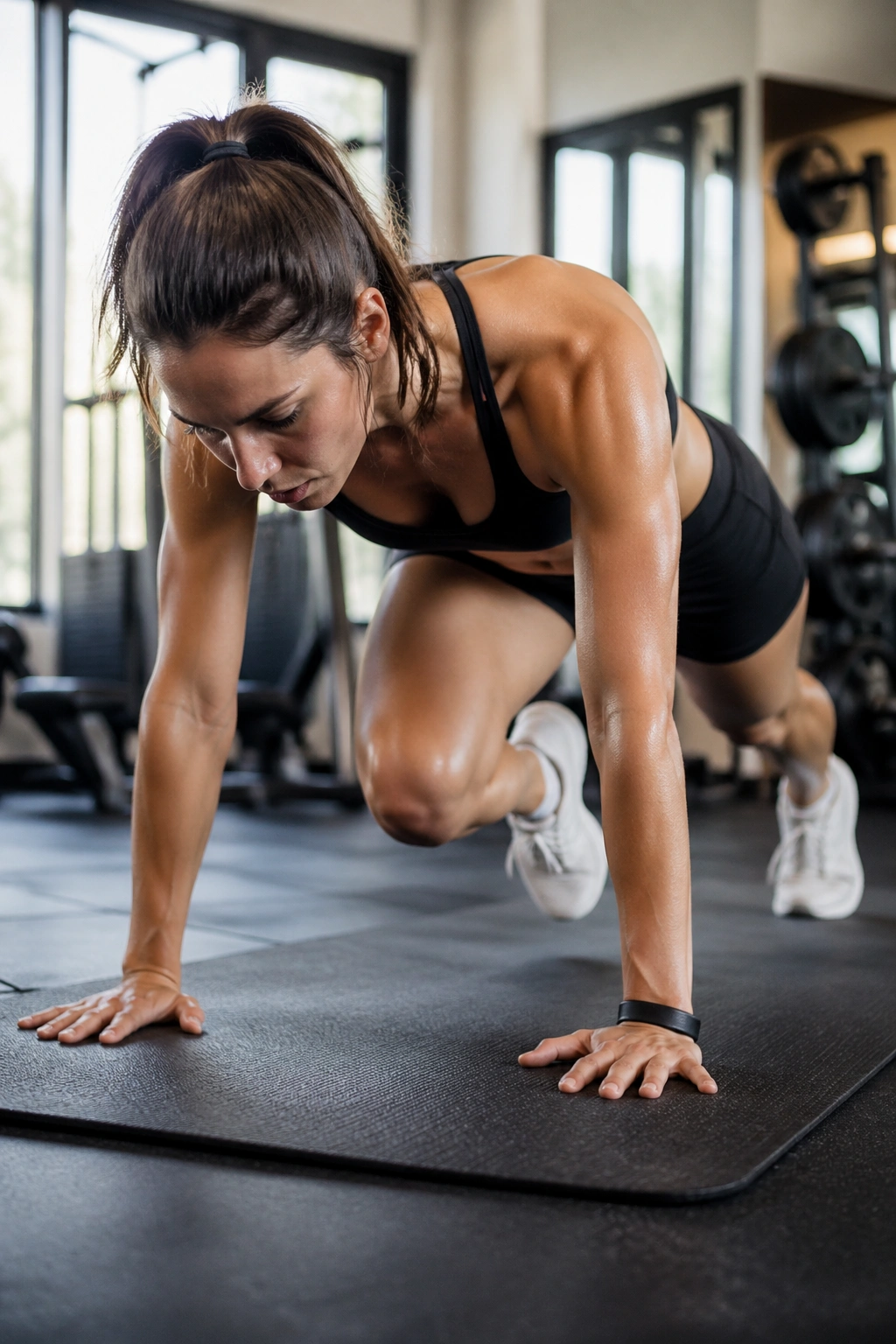
Done fast and sloppy, mountain climbers turn into knee-flinging chaos. Done well, they are a sharp little mix of cardio and core work.
Your shoulders stay loaded, your abs brace to keep the pelvis from bouncing, and your heart rate climbs fast. That combo is why mountain climbers show up in so many belly fat workouts for women. They are not magic. They are efficient.
Make each rep look the same
Start in a strong high plank. Drive one knee toward your chest, switch legs, and keep the floor pushed away the whole time. Your body should not sag through the lower back or pike up into a triangle.
Try either of these interval options:
- 20 seconds on / 40 seconds off for 6 to 8 rounds
- 30 seconds on / 30 seconds off for 5 rounds if you already have a base level of fitness
A towel under each foot on a smooth floor can make the move cleaner because you slide instead of stomp. That also lowers impact, which some women prefer. If your hips bounce like crazy, go slower. Speed only counts when the shape stays intact.
6. Glute Bridge March
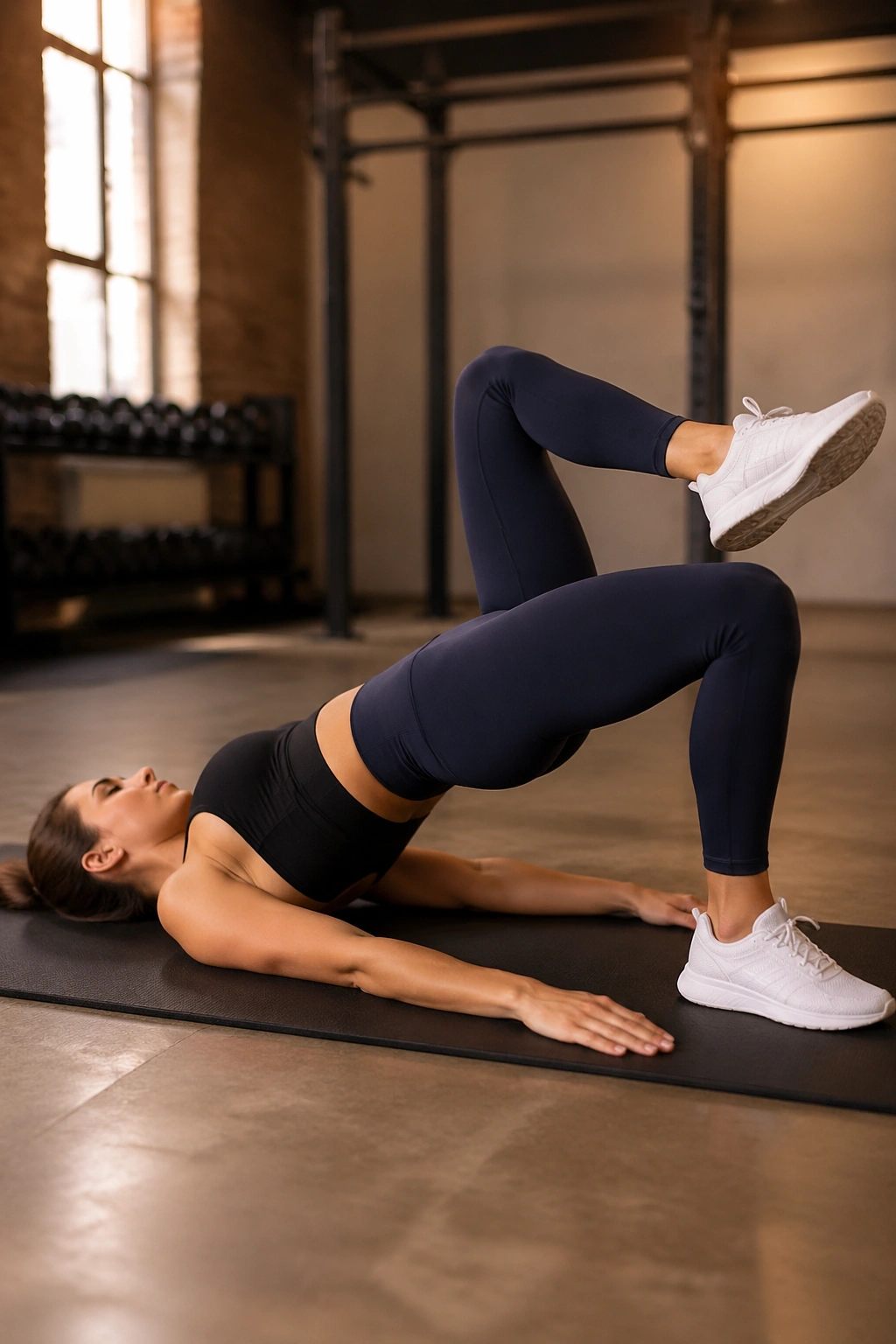
Here’s a move people underestimate until their hamstrings start shouting at them. The glute bridge march looks calm, yet it asks your glutes, lower abs, and pelvis stabilizers to work together in a way that cleans up plenty of lower-back trouble.
Set up on your back with your knees bent and feet planted. Lift into a bridge, squeeze your glutes, and then pick one foot up a few inches while keeping your hips level. Put it down, switch sides, and keep the pelvis as steady as a table. No dipping. No twisting.
This matters because weak glutes and poor pelvic control often make the lower belly stick out more than it needs to, even when body fat is not the whole story. The bridge march teaches you to hold hip extension while one leg moves, which carries over to walking, climbing stairs, and single-leg work.
Aim for 3 sets of 12 marches per side. If your hamstrings cramp, bring your feet a little closer to your hips and think about pushing through the middle of the foot instead of the toes.
7. Bicycle Crunches
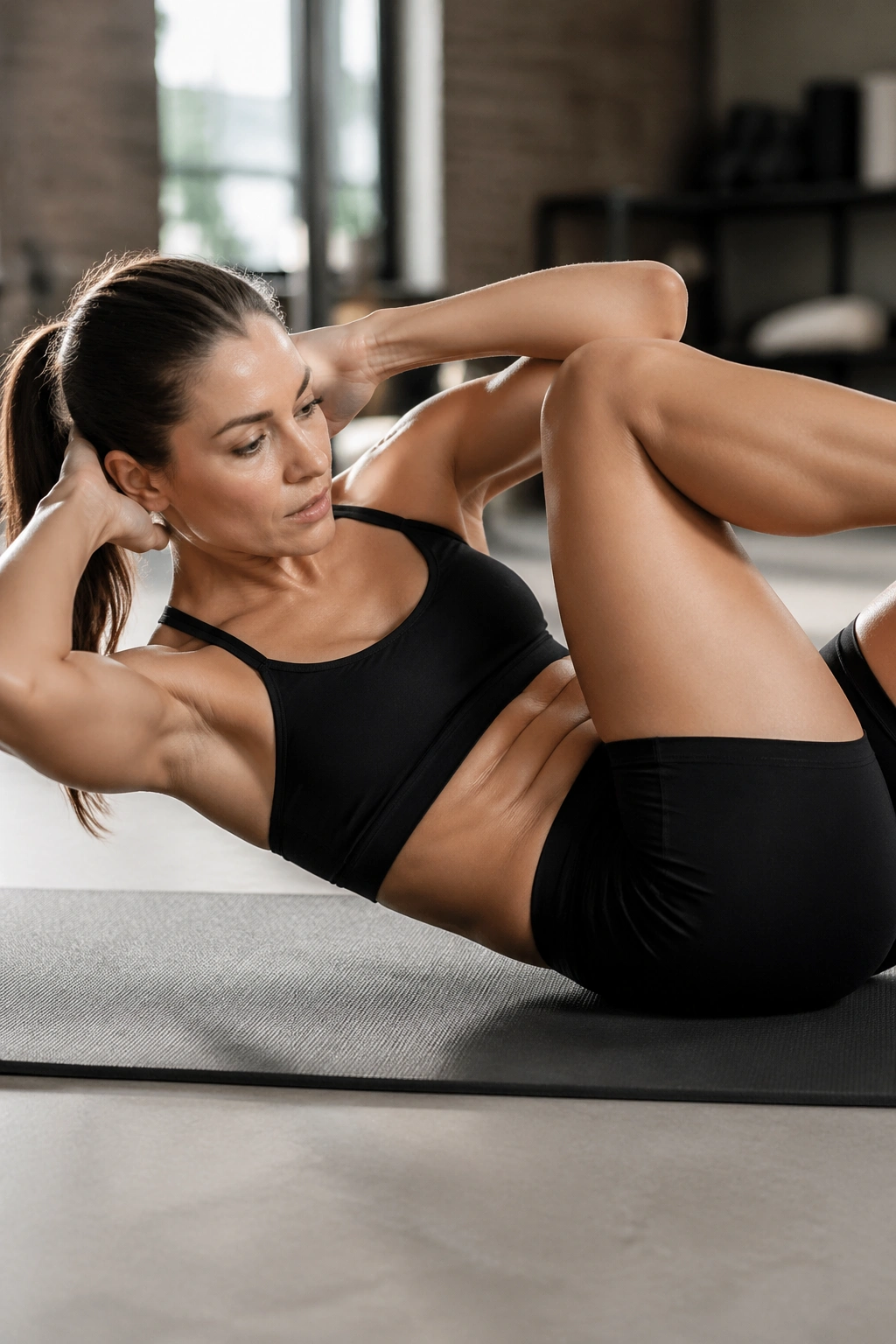
Are bicycle crunches overrated? Only when they’re rushed.
A slow bicycle crunch can train the rectus abdominis and obliques far better than the frantic version most people do. The trick is to rotate from the ribs and shoulders while keeping control through the pelvis, not to yank your neck and throw an elbow across the room.
Lie on your back, bring your hands lightly behind your head, lift your shoulder blades, and extend one leg while rotating toward the other knee. Move like you mean it. Pause for a half-second at each side. If you cannot keep the lower back down while the leg extends, raise the extended leg a little higher.
How to make them count
Use 2 to 3 sets of 10 to 15 reps per side. Exhale as you rotate. Keep your elbows wide. Think shoulder toward knee, not elbow toward knee.
There’s a reason I keep harping on control. Fast bicycle crunches often turn into hip-flexor work with neck strain. Slow ones feel different—harder, cleaner, more honest.
8. Superman W-Pulls
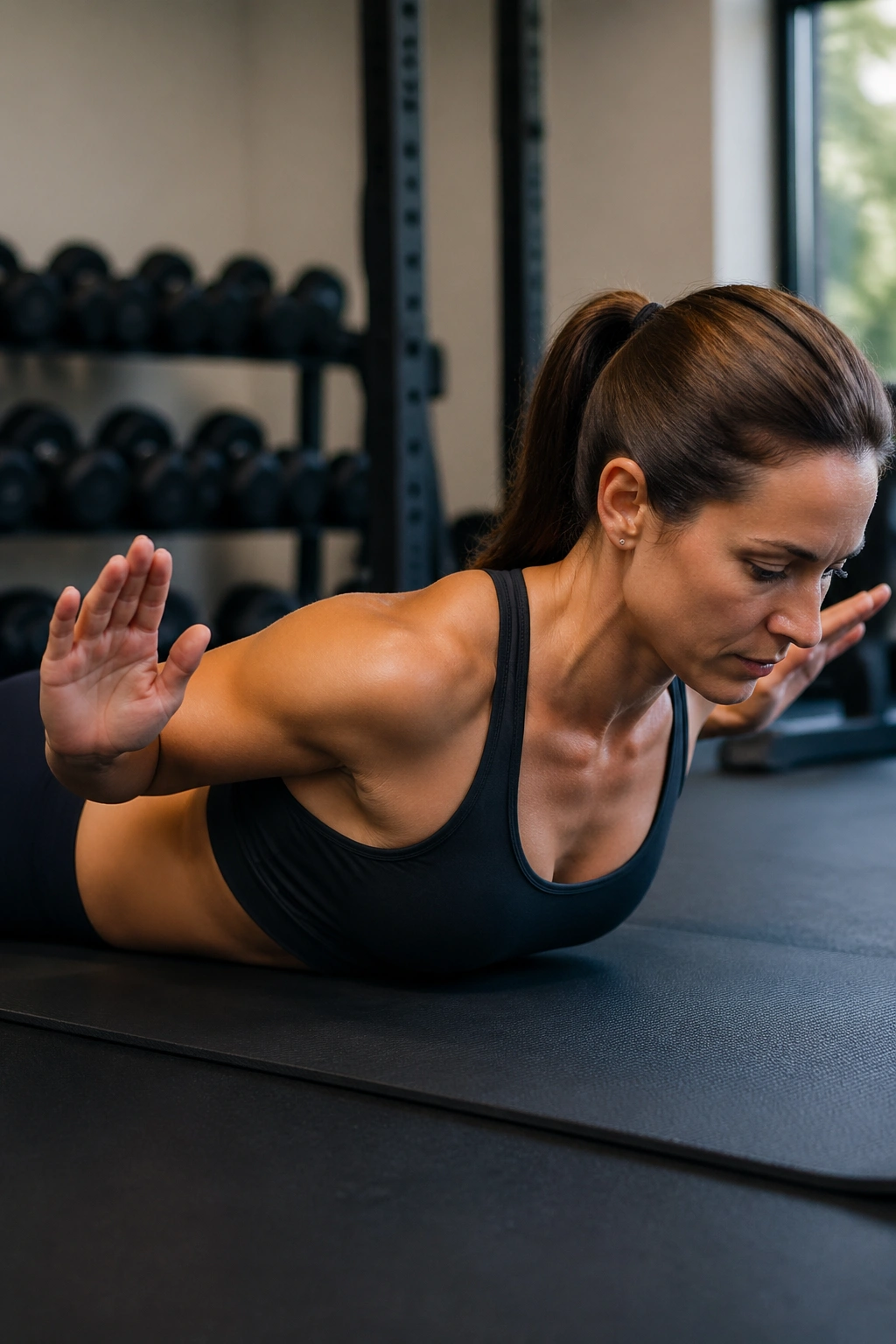
If your upper back rounds forward after hours at a desk, this move belongs in your week.
Lie face down with your arms extended overhead. Lift your chest slightly, pull your elbows down and back into a W shape, squeeze the shoulder blades, then reach the arms long again. The motion is small. That is fine. You do not need to heave yourself off the floor.
This exercise trains the rear shoulders, mid-back, and lower traps—muscles that help hold the shoulders in a better position. It is not a huge calorie burner, but it earns its spot because it supports posture and balances all the front-side work people do.
A clean set looks like this:
- Lift your chest 1 to 3 inches off the floor
- Keep your chin tucked instead of craning your neck
- Pull elbows toward your ribs for a clear W
- Hold the squeeze for 1 second
Do 2 to 3 sets of 10 to 12 reps. If lying face down bothers your lower back, place a folded towel under your ribs or switch to band pull-aparts.
9. Dumbbell Thrusters
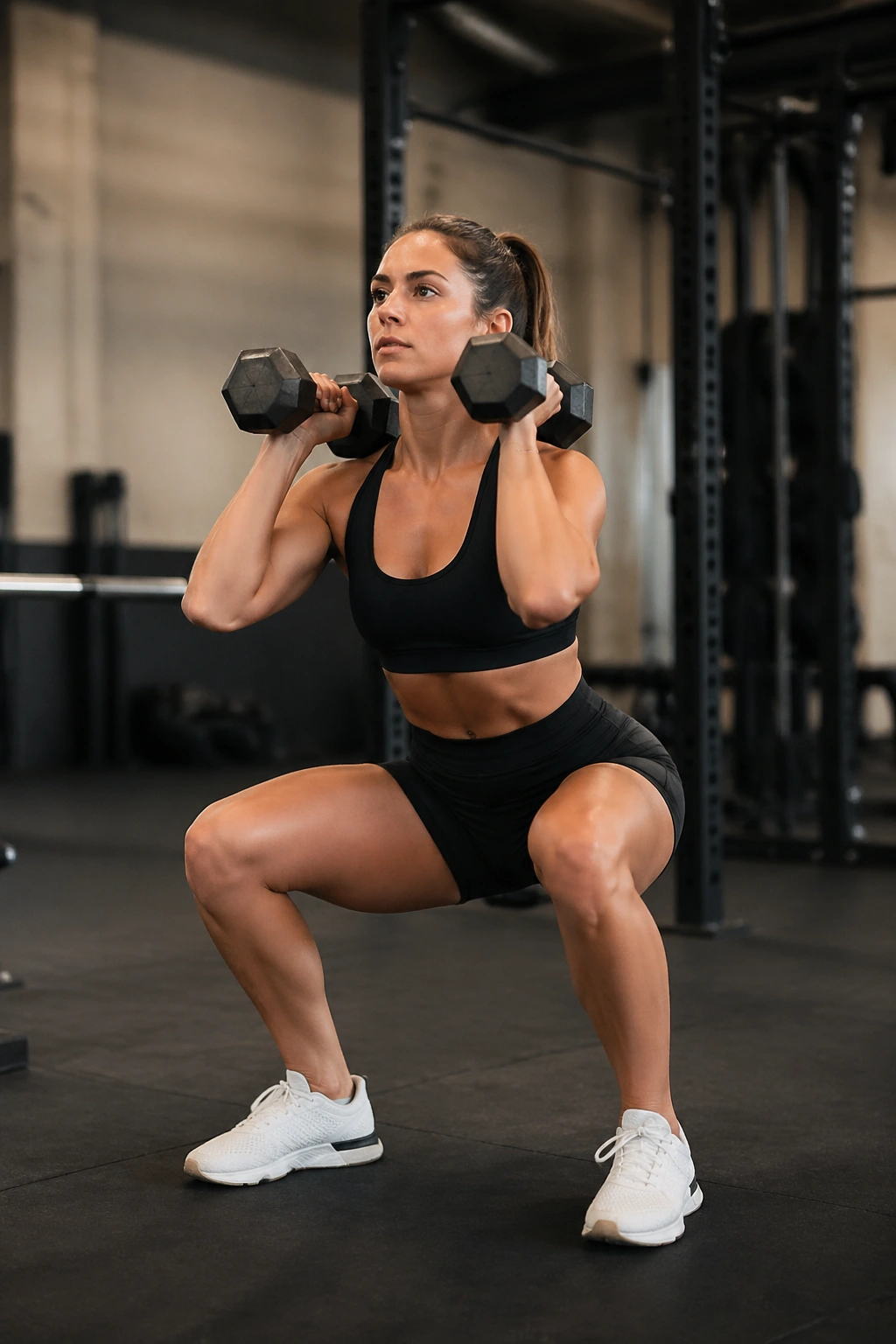
This one gets ugly fast, and that is part of the appeal. A dumbbell thruster combines a squat and an overhead press, so your legs, shoulders, core, and lungs all have to work at once.
Because it is a compound move, it burns more energy than isolated ab work and asks your trunk to brace hard while the weight moves overhead. That makes it one of the better choices when your goal is belly and back fat loss, not just a local muscle burn.
Hold two dumbbells at shoulder height, squat until your thighs are near parallel to the floor, then stand up hard and press the weights overhead in one smooth drive. Lower back to the shoulders and repeat. Keep your ribs from popping up at the top. That little detail decides whether this is a strong full-body move or a lower-back annoyance.
Use 4 rounds of 8 to 12 reps, resting 45 to 75 seconds between rounds. Start lighter than your ego wants. The jump from “solid set” to “sloppy circus” happens quickly with thrusters.
10. Resistance Band Lat Pulldowns
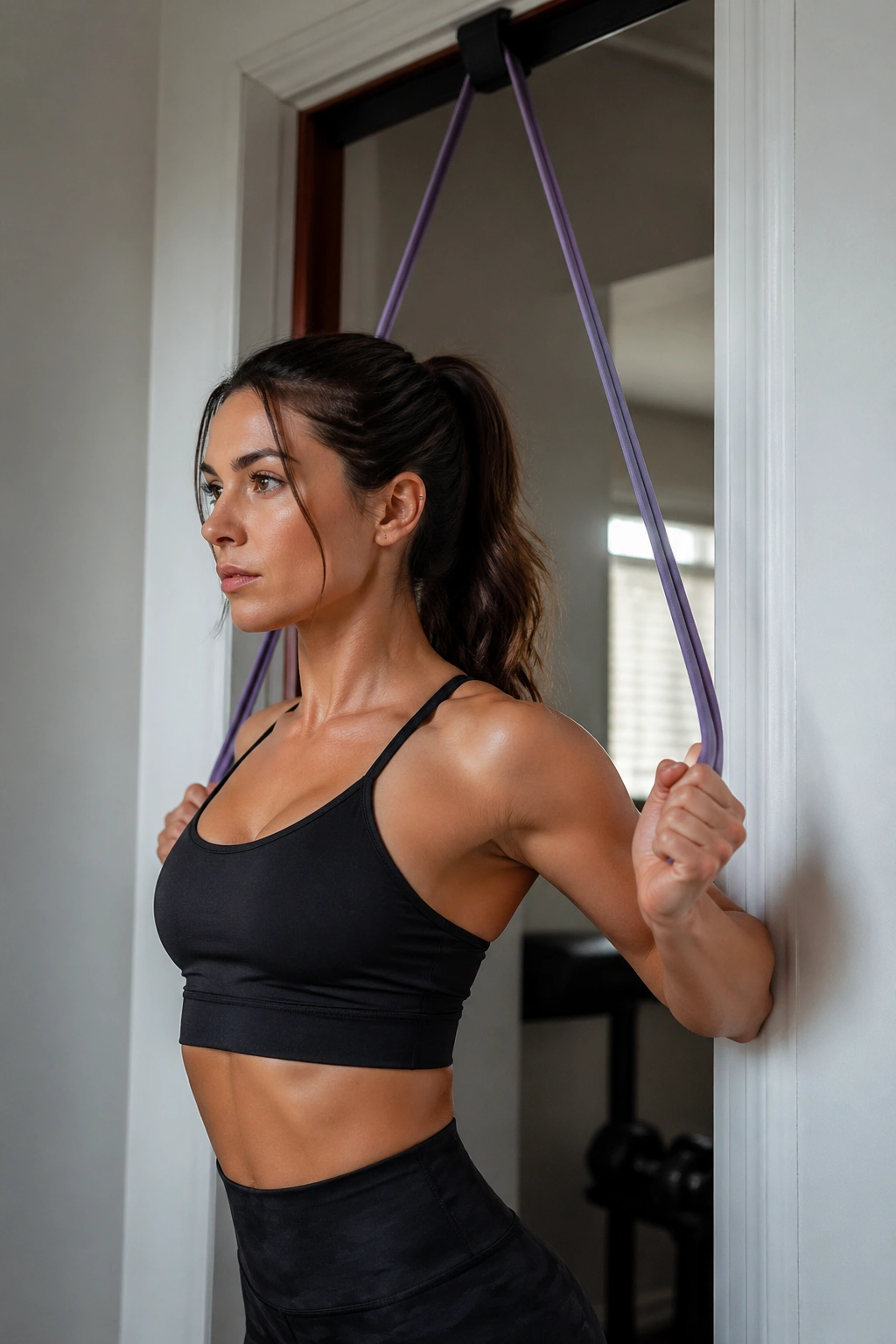
You do not need a cable machine to train your lats. A resistance band looped over a door or beam can do the job well enough to make your back work.
Lat pulldowns matter here because the lats are big muscles. Big muscles cost energy to train, help shape the torso, and support better posture. A stronger upper back will not melt fat off the bra-line area by itself, but it often changes how fitted tops sit across the back and waist.
Get the line of pull right
Kneel or sit facing the anchor point. Start with your arms overhead, then pull your elbows down toward your sides. Think elbows into back pockets. Your chest stays tall, and your ribs do not flare forward.
Common mistakes
- Pulling with bent wrists and tense forearms
- Leaning back to turn the move into a row
- Stopping short instead of finishing with the elbows near the ribs
- Letting the band snap back up
Go for 3 sets of 12 to 15 reps. If the band is light, add a 2-second squeeze at the bottom. That extra pause makes a cheap band feel far less polite.
11. Standing Wood Chops
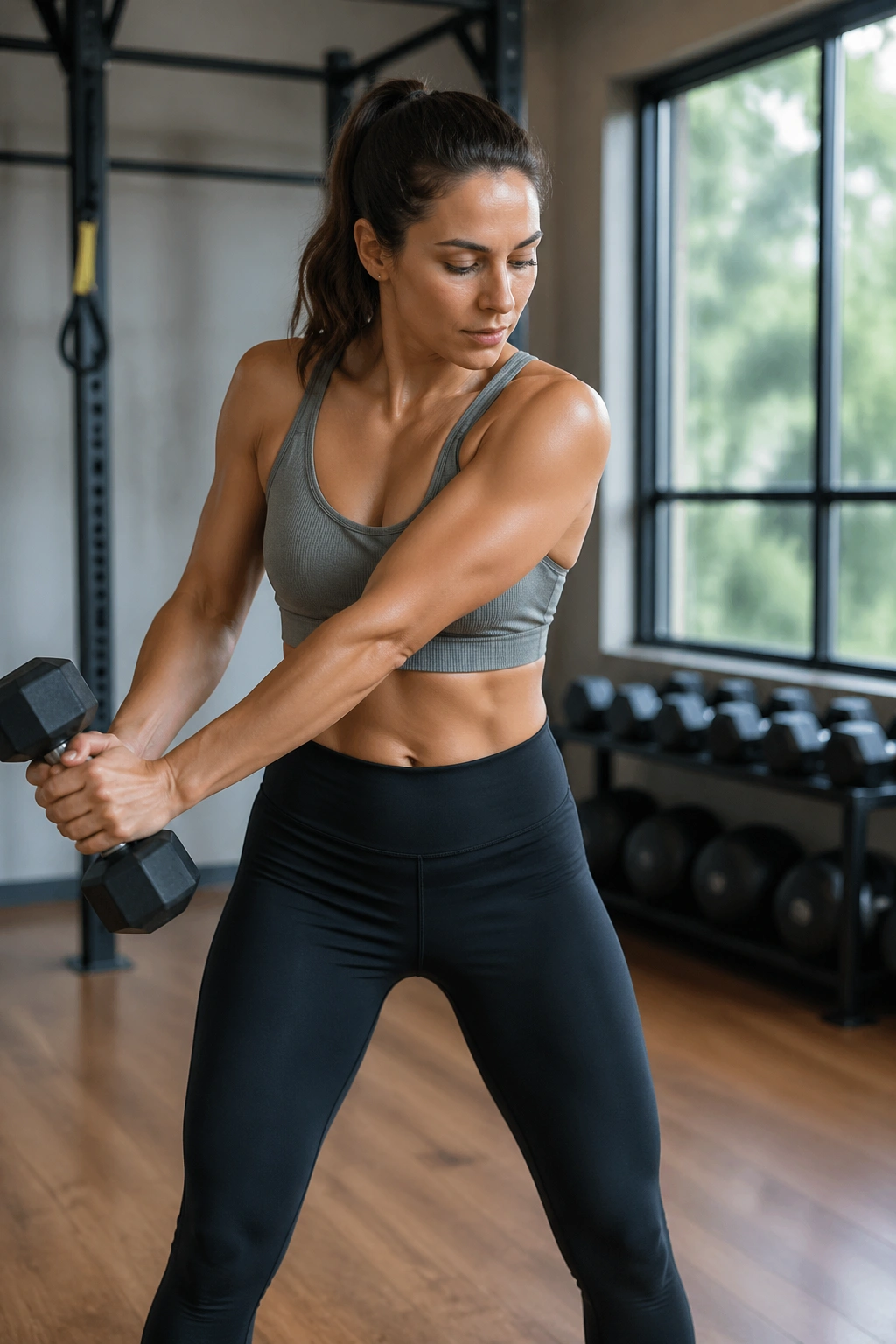
A strong waist is not only about bending forward. It is also about resisting and controlling rotation.
Standing wood chops train the obliques, shoulders, hips, and deep core in a diagonal pattern that feels more athletic than most floor ab work. They also teach your torso to transfer force from the lower body through the upper body, which is a fancy way of saying your core learns to do its job during real movement.
Hold one dumbbell or a cable handle with both hands. Start high near one shoulder and pull diagonally across your body toward the opposite hip, or reverse the path and go low to high. Your hips can turn a little, though your torso should not whip around out of control.
Two useful versions
- High to low: good when you want more “pull down across the ribs” feeling
- Low to high: good for teaching upward rotation and control through the trunk
Use 3 sets of 10 to 12 reps per side. I like these best when the weight is moderate and the motion stays crisp. Too heavy, and the move turns into an awkward swing.
12. Renegade Rows
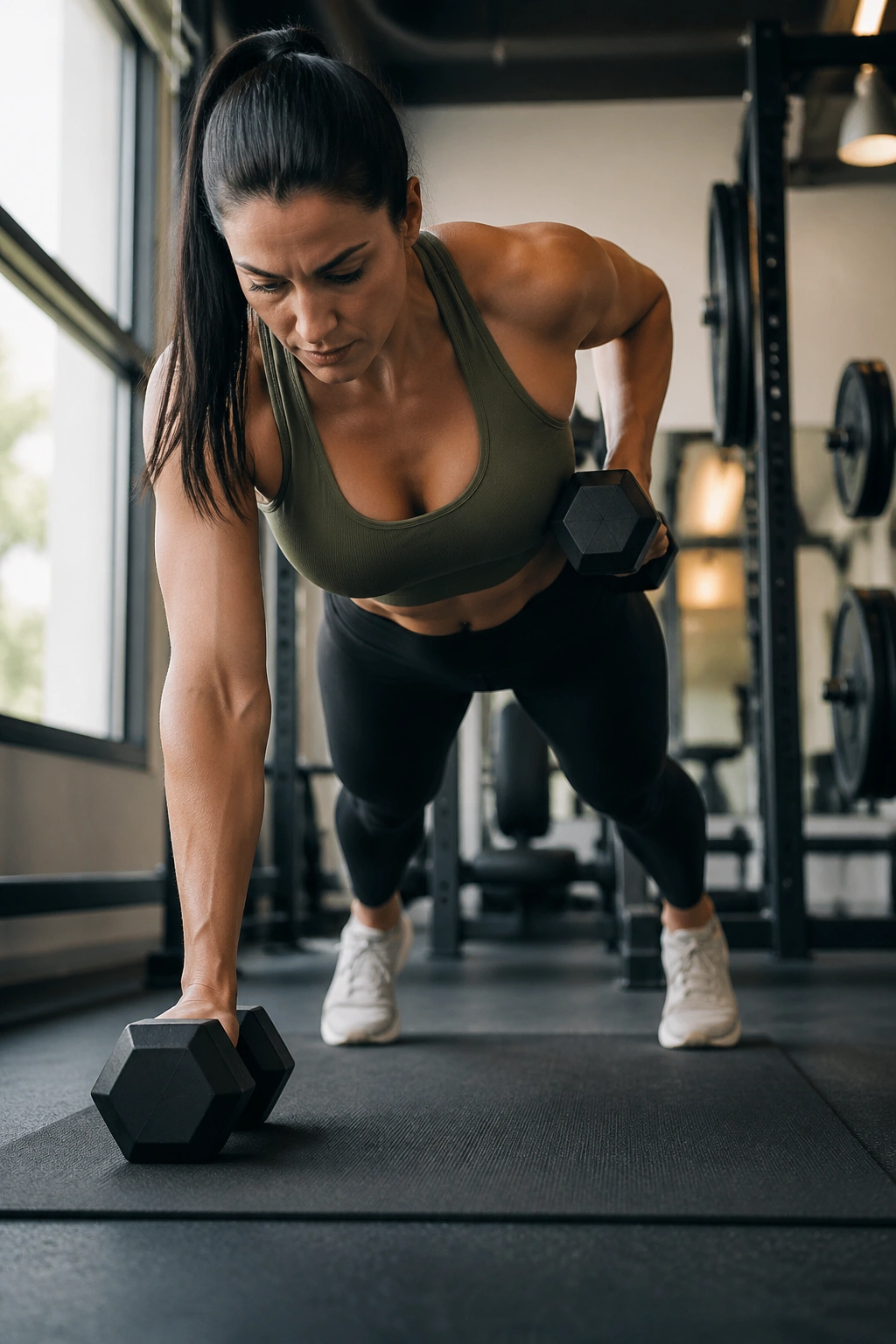
Few exercises expose a weak core faster than a renegade row.
You set up in a plank with both hands on dumbbells, row one side, lower it, then row the other. While one arm moves, your abs, glutes, and back have to stop your body from twisting. That anti-rotation demand is what makes the exercise so useful for women trying to tighten the waist while also building the back.
The row itself trains the lats and mid-back. The plank trains the front side of the core. Put them together and you get a move that is short on glamour, high on payoff.
If the full version is too much, raise your hands on a bench or sofa edge. Another option is to do the row from your knees while keeping a straight line from shoulders to knees.
A strong starting dose is:
- 3 sets of 6 to 8 rows per side
- Rest 45 to 60 seconds
- Use hex dumbbells if you have them so the setup stays stable
Do not rush these. The goal is not to yank the weight up. The goal is to row without your hips dancing around.
13. Reverse Crunches
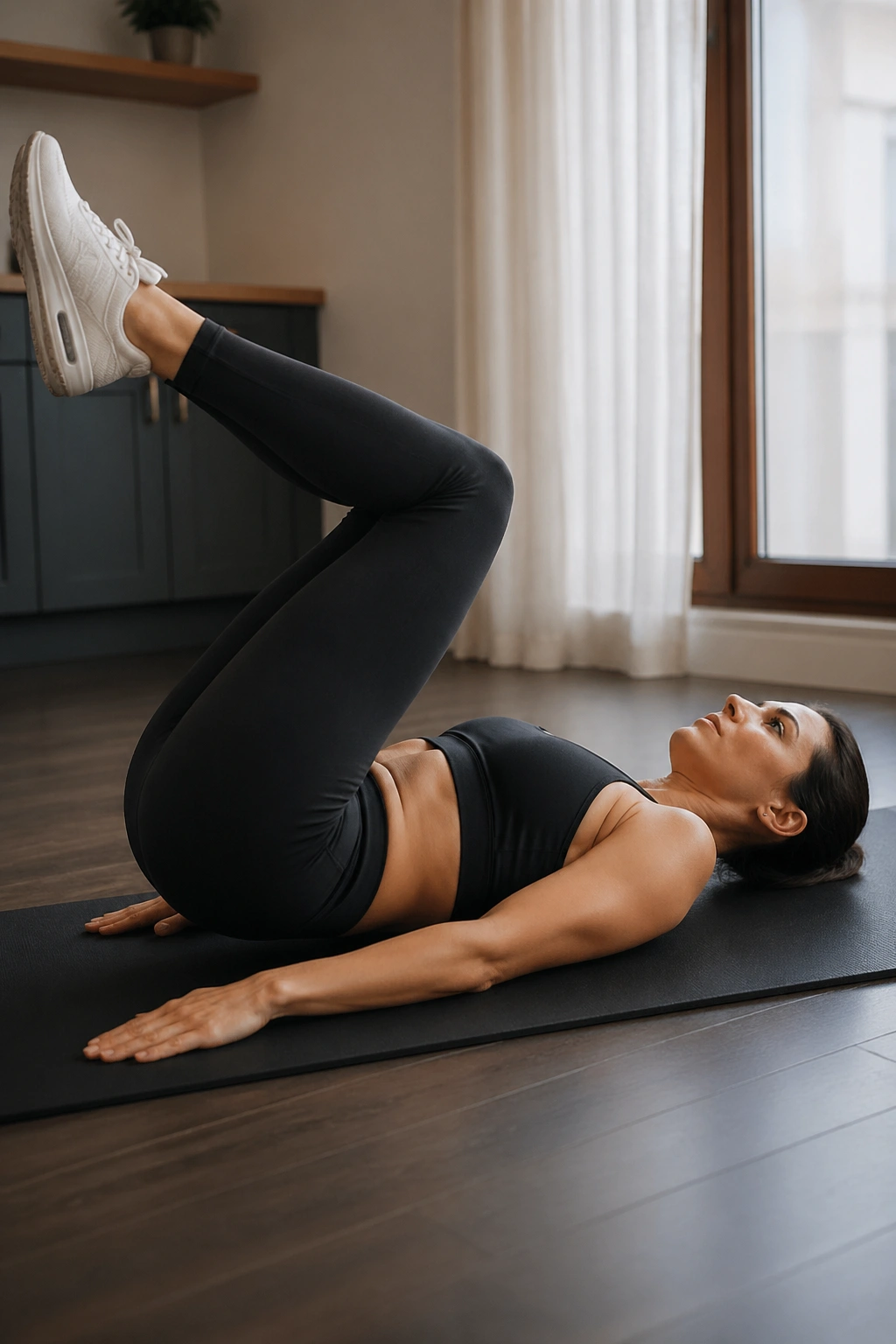
Unlike standard crunches, reverse crunches teach you to curl the pelvis toward the ribs, which is the piece many women miss when they talk about stubborn lower-belly softness. The move does not spot-reduce fat, but it does train the lower portion of the abs in a way that feels more direct than a lot of classic ab drills.
Lie on your back with your knees bent to 90 degrees. Bring the knees toward your chest, then curl your tailbone off the floor by a few inches. That last little pelvic roll is the rep. If you just swing your legs and call it done, your abs are not getting the full benefit.
Keep the movement compact. Small is good here. Think curl, not launch. Your lower back should peel lightly from the floor, then come back down with control.
Start with 3 sets of 10 to 15 reps. If you feel your hip flexors more than your abs, slow the lowering phase to 3 seconds and reduce the range. The slower version is harder and cleaner.
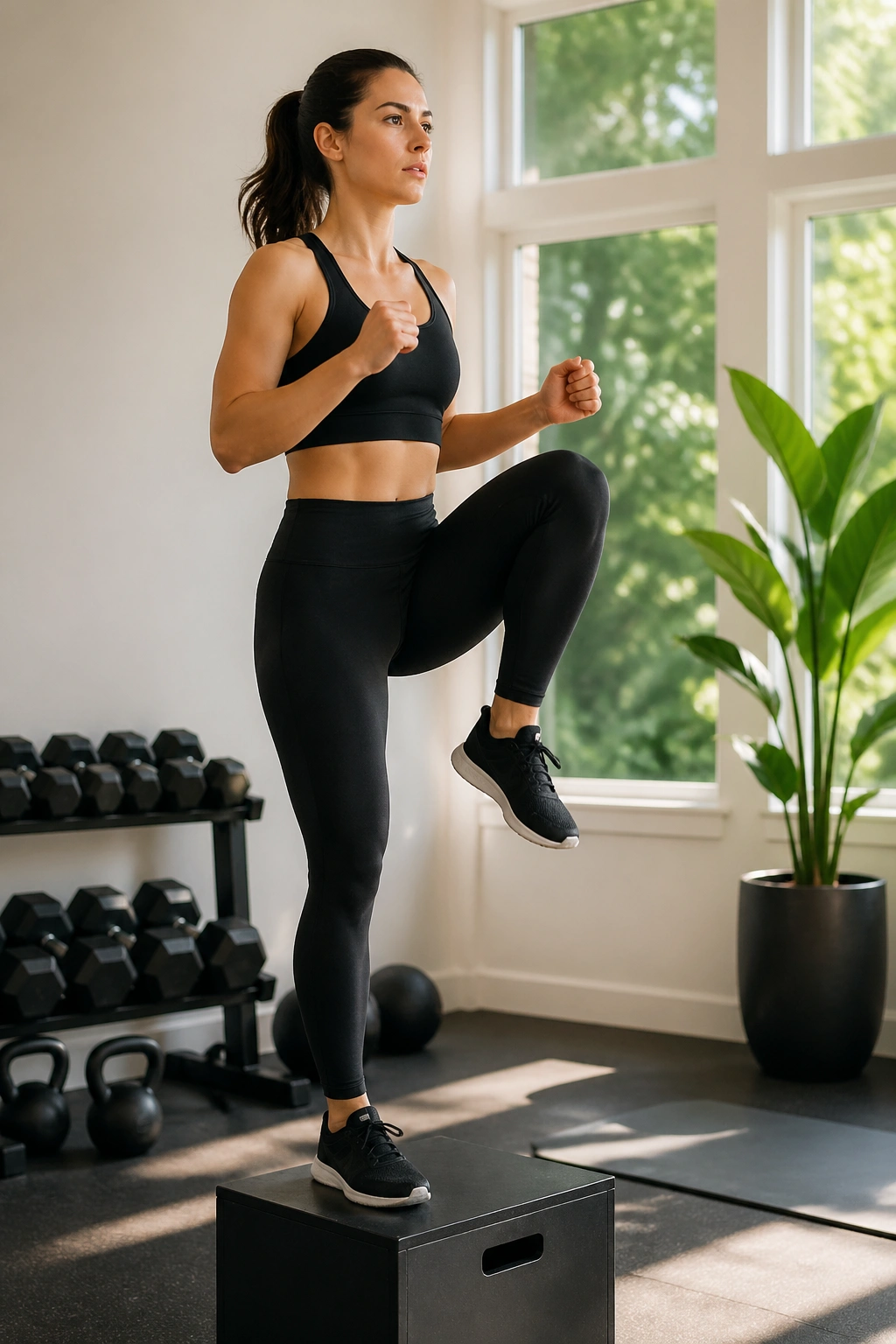
14. Step-Ups with Knee Drive
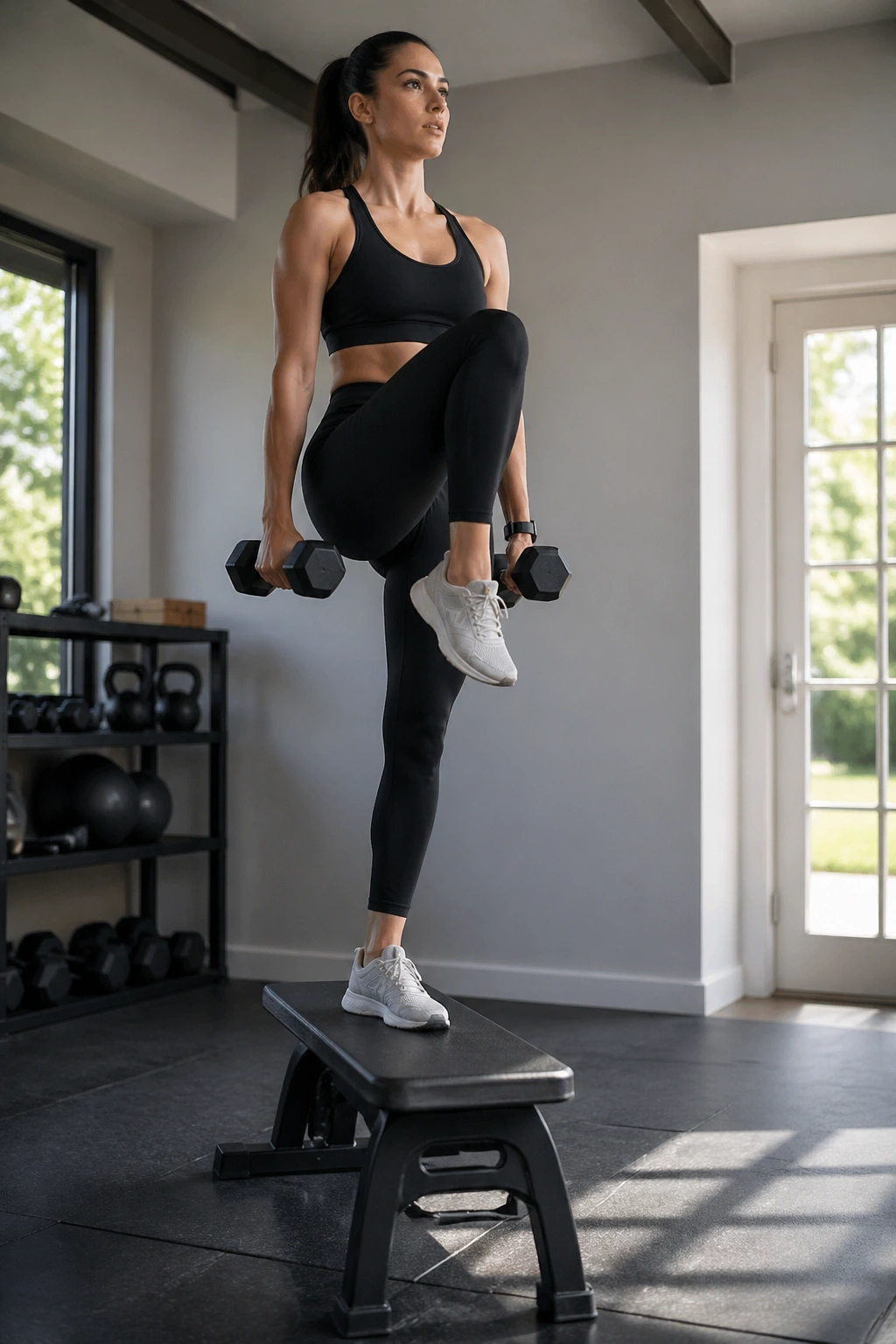
Benches beat gimmicks.
A step-up with knee drive trains glutes, quads, core balance, and heart rate in one shot. It also works one leg at a time, which often exposes side-to-side weakness that gets hidden during squats. That matters for posture and for the way your pelvis and lower back behave during daily movement.
Use a bench or sturdy box that puts your thigh at about parallel to the floor, or a little lower if you’re new to the move. Step through the whole foot, stand up, and drive the opposite knee to hip height without leaning back. Lower slowly and repeat.
This one fits almost anywhere. Use bodyweight for a cardio feel, or hold dumbbells by your sides to make it a strength move.
Try 3 sets of 10 reps per leg. If balance is shaky, tap a wall lightly with one hand and keep working. I would rather see a controlled step-up with a light assist than a wobbly circus rep on a taller box.
15. Bear Crawl
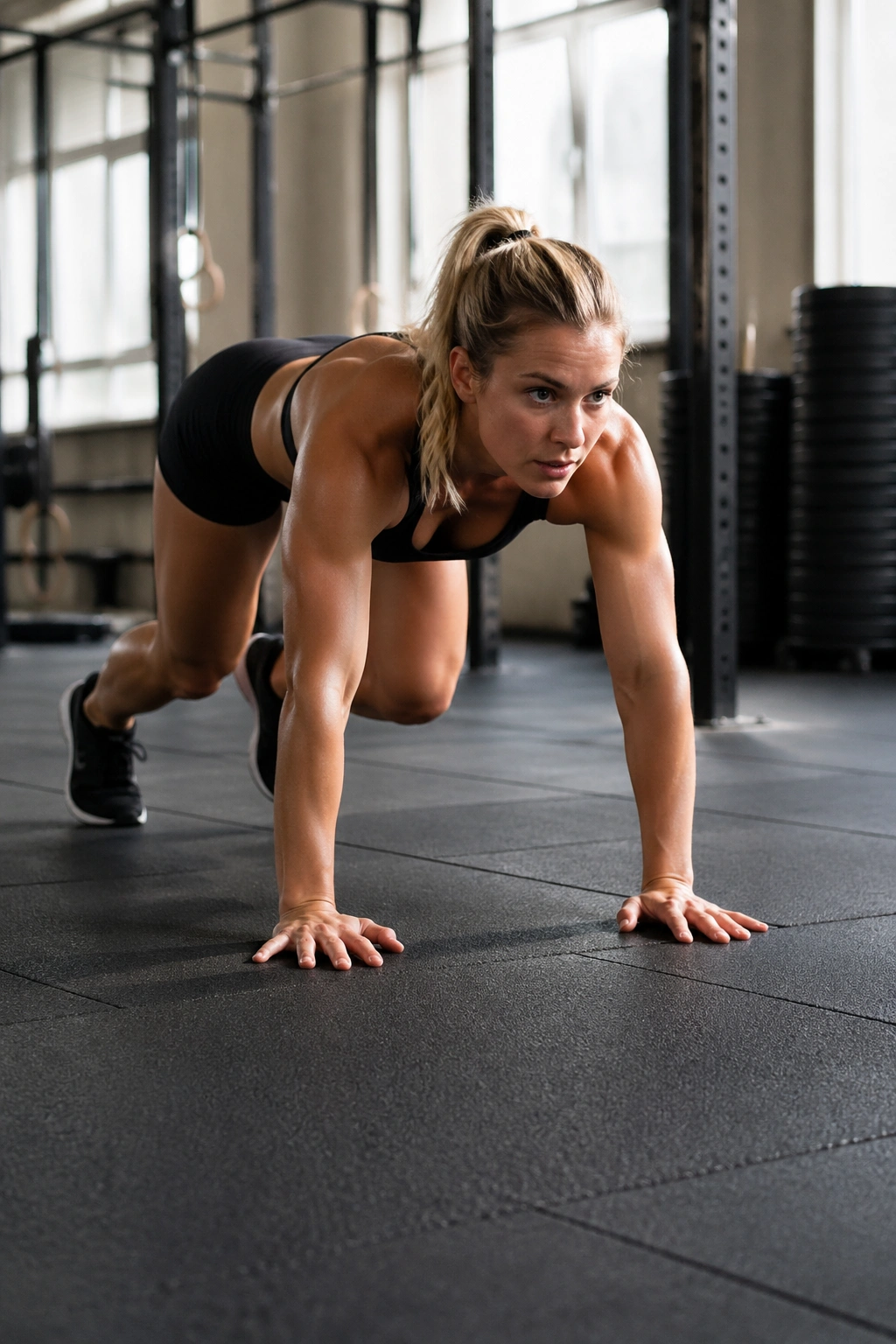
You’ll feel bear crawls in your shoulders by the second trip, and in your abs right after that.
Set up on hands and toes with your knees hovering an inch or two off the floor. Crawl forward with opposite hand and foot moving together. Stay low. Stay quiet. If your hips bob up and down, shorten the distance.
Bear crawls are sneaky. They raise your heart rate, train shoulder stability, smoke the deep core, and ask your back to hold a strong position while your limbs move. That combination is why they fit so well in back fat and belly fat workout plans.
Short distances beat long slogs
Use 15 to 20 feet per trip, or crawl for 20 to 30 seconds. Rest, then repeat for 4 to 6 rounds. Quality falls off fast once fatigue hits, so cut the set before you start moving like a tired toddler.
A hover hold works too. Stay in place with the knees off the floor for 20 seconds if your space is tight or the crawl pattern feels messy.
16. Jump Rope Intervals
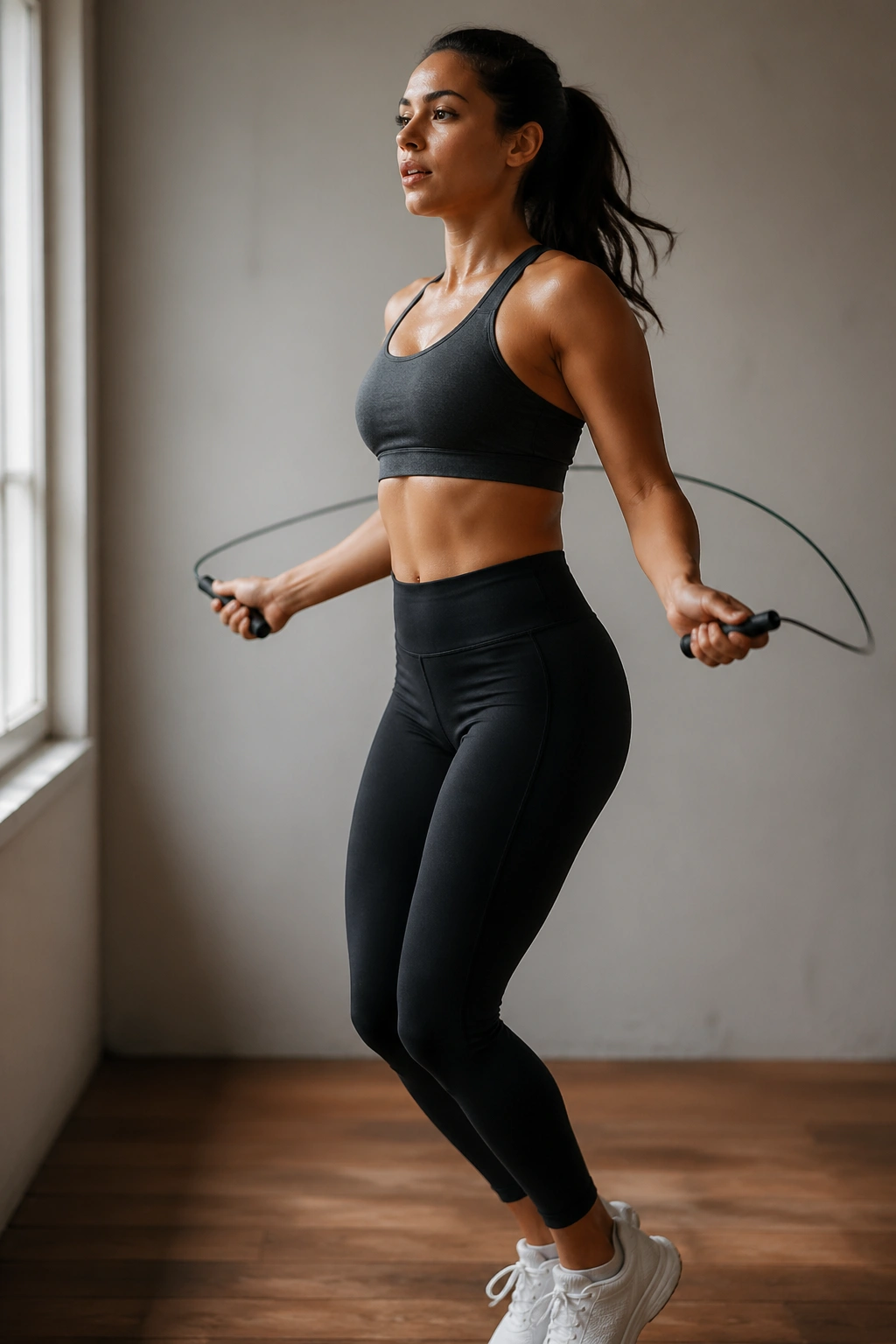
Need hard cardio in a tiny space? Jump rope does the job.
It is quick, cheap, and surprisingly demanding. A few rounds can push your heart rate up faster than most people expect, and the rhythm forces you to stay light on your feet. That makes it a strong option for women who want a calorie-burning finish without a machine.
The catch is impact. If your calves, ankles, or pelvic floor do not love repeated hops, use a boxer step, alternate-foot step, or even an invisible rope with the same timing. You still get the rhythm and arm action without as much pounding.
A clean beginner setup
- Jump for 30 seconds
- Rest for 30 seconds
- Repeat for 8 to 10 rounds
Land softly. Keep the jumps low—an inch off the floor is enough. Your elbows stay near your ribs while the wrists turn the rope. If you’re hearing loud thuds, you are jumping higher than you need to.
And if impact is a hard no, swap this for shadow boxing. No points lost.
17. Romanian Deadlifts
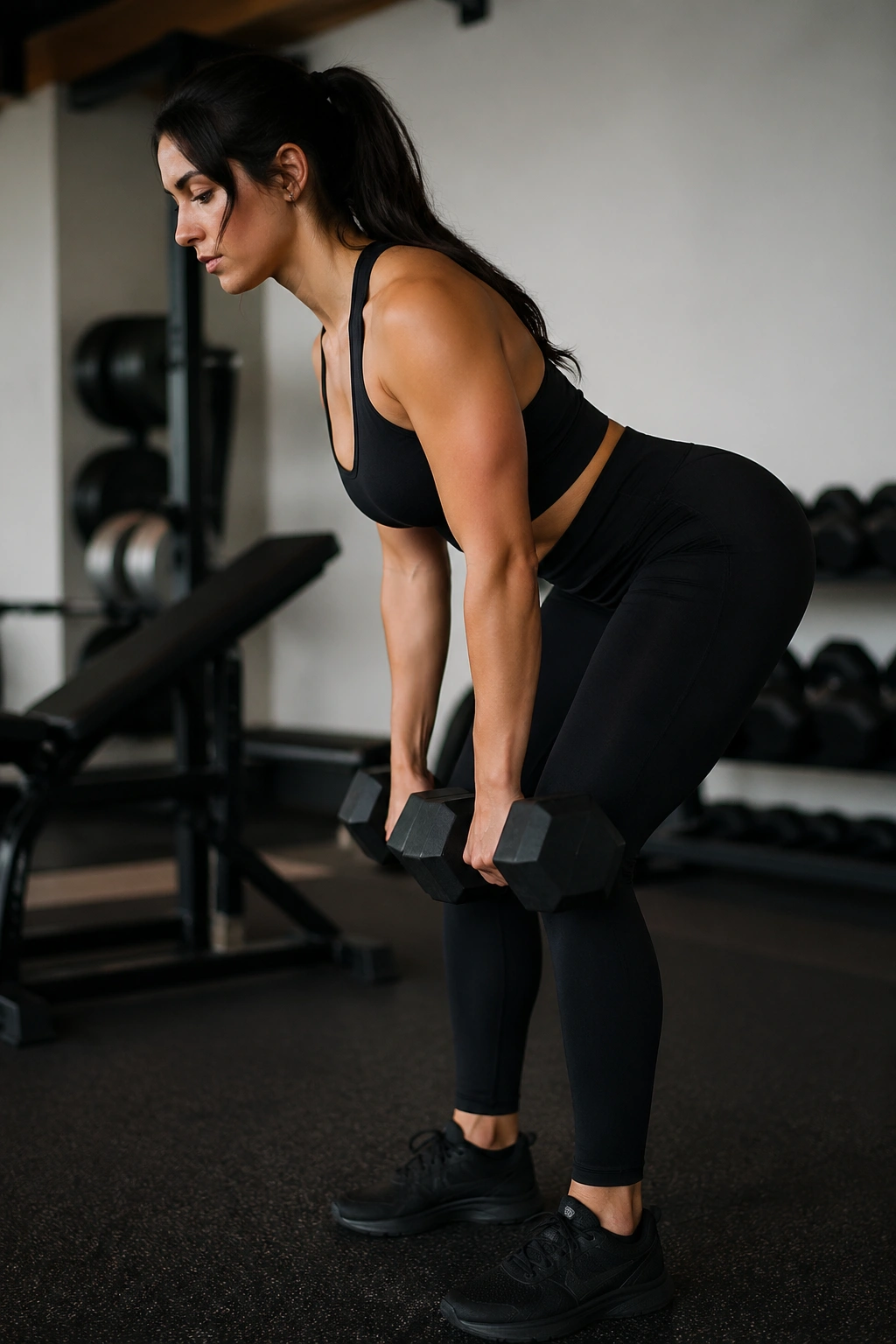
If you want your waist to look tighter, train your backside harder. I keep coming back to that because it matters.
Romanian deadlifts build the hamstrings, glutes, and spinal erectors—the whole posterior chain that gives your body support from the back side. When those muscles get stronger, posture often improves, hips move better, and lower-back discomfort during workouts tends to calm down. It is not dramatic. It is useful.
Hold a pair of dumbbells in front of your thighs, soften your knees, and push your hips back as the weights slide down your legs. Stop when you feel a strong hamstring stretch and your back is still flat. Then stand by driving the hips forward.
This is a hip hinge, not a squat. Your knees do not travel far forward. Your shins stay close to vertical. That detail changes everything.
Use 3 to 4 sets of 8 to 10 reps. If you only feel your lower back, the weight is probably drifting away from your legs or you are going lower than your hamstrings will allow. Shorten the range and own it.
18. Plank Knee Tucks with Sliders or Towels
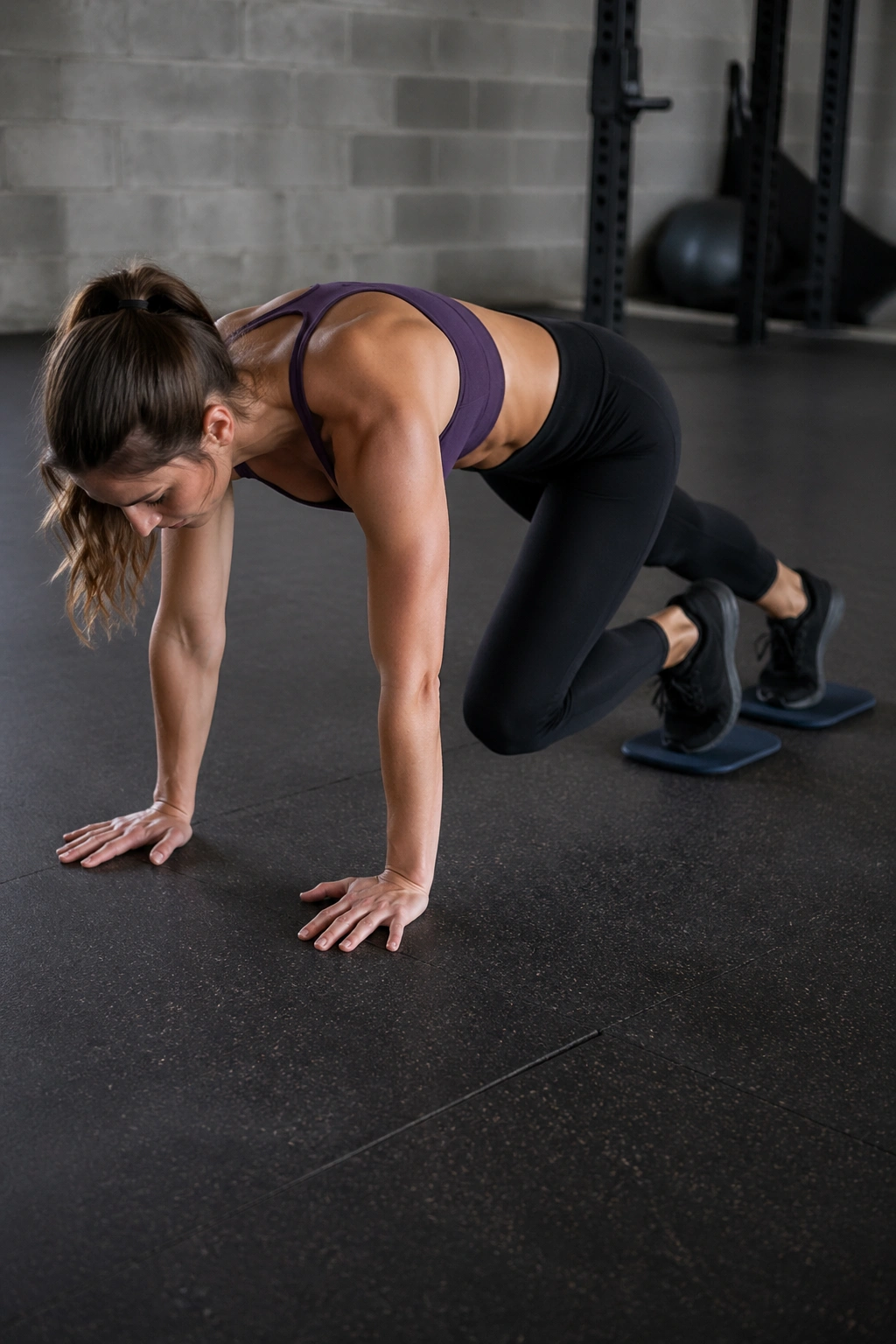
Put towels under your feet on a smooth floor and this move gets rude fast.
Start in a high plank with each foot on a slider or small towel. Pull both knees toward your chest, pause, then slide them back out without letting your lower back sag. The sliding action keeps tension on the abs the whole time, and the return phase is where the deep core really has to work.
This is one of my favorite lower-belly exercises because it feels direct without asking you to fling your legs around. Your shoulders also stay loaded, so the upper body gets some work too.
A few form cues clean it up right away:
- Push the floor away hard through your hands
- Keep the tuck controlled, not jerky
- Stop the slide-out before your lower back drops
- Exhale as the knees come in
Aim for 3 sets of 8 to 12 reps. Fewer clean reps beat a bigger number with a sagging spine. Always.
19. Seated Band or Cable Rows
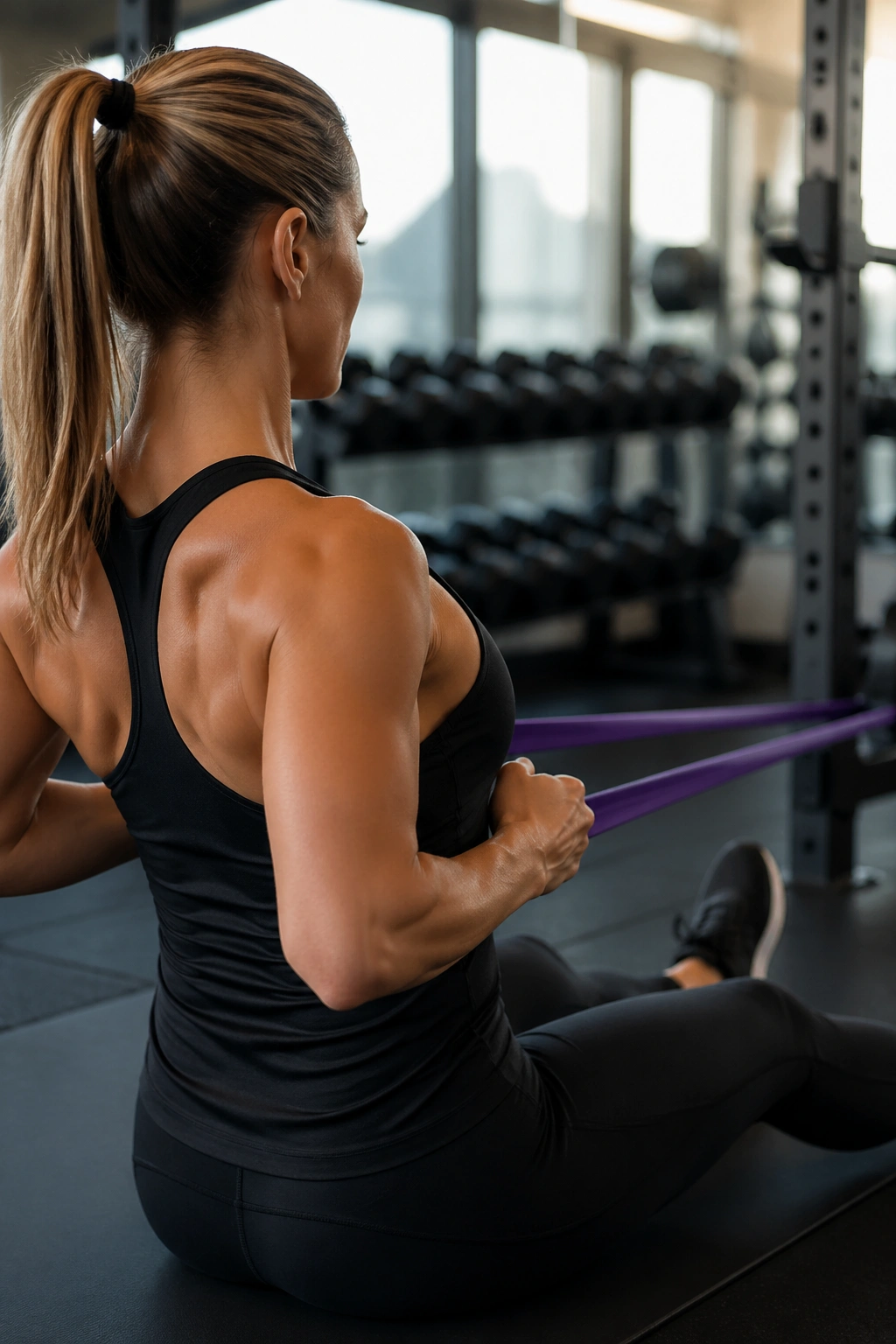
Rows deserve as much attention as crunches. Maybe more.
A seated row trains the mid-back, rear shoulders, and lats while giving you a bit more support than a bent-over position. That makes it a strong choice for women who want back-shaping work without loading the lower back as much. It also helps balance all the pushing, typing, driving, and phone hunching that life piles on.
Sit tall, hold the handle or band, and row your elbows back toward your ribs. Pause. Then return slowly until the shoulder blades spread a little at the front. That last part—letting them move apart again—keeps the reps honest.
The feel you want
You should feel the squeeze between the shoulder blades and along the sides of the back, not all up in the neck. If your shoulders creep toward your ears, lower the resistance and try again.
Go with 3 sets of 12 to 15 reps. On the final rep of each set, hold the squeeze for 2 seconds. Tiny change. Big difference.
20. Shadow Boxing Intervals

On days when you cannot deal with burpees, throw punches.
Shadow boxing is one of the most underrated conditioning options for women. It drives heart rate up, trains shoulder endurance, wakes up the core through rotation, and lets you work hard in a small space with no equipment. It also feels a lot less boring than staring at a wall during another round of high knees.
Stand in an athletic stance with your knees soft and your hands up. Throw clean jab-cross combinations, add hooks and uppercuts, and move your feet between combos. Keep your core braced so the punches come from the hips and torso, not only the arms.
A good starter session looks like this:
- Round 1: jab-cross for 2 minutes
- Round 2: jab-cross-hook for 2 minutes
- Round 3: uppercut-cross-hook for 2 minutes
- Rest 45 seconds between rounds
- Repeat for 2 total cycles
Punch with speed, not wild force. The goal is crisp, fast work that leaves you breathing hard and standing taller when you finish.
Final Thoughts

Pick four moves from this list and do them well before you try to use all twenty. A strong belly-and-back routine usually needs one cardio piece, one row or pulldown, one lower-body strength move, and one core drill that teaches control.
If I were building a no-nonsense session for belly and back fat loss, I’d start with incline walking intervals, bent-over rows, Romanian deadlifts, and dead bugs. That mix covers a lot of ground without wasting your time.
Consistency changes shape. Not one heroic workout, not one “ab blast,” not one sweaty afternoon where you do every move you know. Train your back as hard as your abs, keep your form clean, and let the boring work do what flashy routines often fail to do.
