



Your jeans can feel tighter at the waist even when the scale barely moves. That’s the part that throws so many women off. Losing belly fat for women over 40 is rarely about doing more crunches or sweating harder for 30 minutes and hoping the middle shrinks first.
Midlife changes the math. Estrogen starts shifting, sleep gets lighter, stress has a longer hangover, and muscle mass slips if you do not train it on purpose. Your body also gets a little more willing to store extra energy around the abdomen, especially as visceral fat—the deeper kind that sits around the organs. A waist measurement above 35 inches in women is one marker clinicians use when they look at higher metabolic risk.
No, you cannot spot-reduce your stomach with ab work alone.
What you can do is lower total body fat while keeping muscle, steadying blood sugar, and dialing down the habits that push more fat storage to the middle. The pattern that works is less flashy than most people want: lift hard enough to matter, walk more than you think you need, eat enough protein, sleep like it counts, and stay with one plan long enough to see it through.
1. Lift Heavy Enough to Keep Your Muscle
Muscle is your insurance policy during fat loss. If you try to drop belly fat with light weights, random cardio, and a steep calorie cut, you often lose scale weight without changing your shape much. The waist may shrink a little, but you also lose lean tissue—and that makes the whole process slower.
After 40, preserving muscle is not optional. Age-related muscle loss starts earlier than many women expect, and it picks up speed when life gets busy, protein runs low, and strength training gets replaced by “toning” workouts that never progress. A body with more lean mass handles carbs better, burns more energy across the day, and holds its shape far better during a calorie deficit.
Not heavier for ego. Heavier in the sense that the last 2 reps of a set ask something from you.
A smart starting target is 3 full-body strength sessions each week, using loads that let you do 6 to 10 reps with solid form. Finish most sets with 1 to 2 reps left in the tank. If you could easily do 8 more, the weight is too light. Machines, dumbbells, barbells, kettlebells—they all work.
And yes, the number on the dumbbell matters more than the word “sculpt” on a class description.
2. Center Your Workouts on Squats, Rows, Presses, and Hinges

What should take up the most room in your training week? Big lifts that use a lot of muscle at once. These moves ask more from your legs, back, chest, glutes, and core, which means more work done per minute and a better return than tiny isolation moves done forever.
The movement patterns that pay rent
Build your workouts around these:
- Squat pattern: goblet squat, leg press, split squat
- Hinge pattern: Romanian deadlift, kettlebell deadlift, hip thrust
- Row pattern: seated cable row, dumbbell row, chest-supported row
- Push pattern: push-up on bench, dumbbell bench press, machine press
- Carry pattern: farmer carry, suitcase carry
- Pull-down pattern: lat pull-down or assisted pull-up
A beginner-friendly session might look like this: 3 sets of goblet squats, rows, Romanian deadlifts, and incline dumbbell presses, then finish with carries for 30 to 40 seconds. Rest 60 to 90 seconds between sets. That is enough to change your body when you stick with it.
Why these beat endless “ab classes”
Your trunk has to brace during all of those lifts. Your heart rate climbs. Your legs and back—your biggest muscle groups—do the heavy work. Compare that with 25 minutes of side bends and floor twists, and the difference is hard to ignore.
If time is short, start here. Cut the fluff first.
3. Walk for 10 to 20 Minutes After Meals

Picture dinner ending at 7:00. Instead of sinking into the couch, you head outside for 12 minutes at a brisk pace. You do not need special shoes, a playlist, or a perfect mood. You only need to move.
That tiny walk can help more than people think. Post-meal walking helps your muscles pull glucose out of the bloodstream, which can soften the big blood sugar rise that often leaves you sleepy, snacky, and hungry again later. Over time, better glucose control helps with appetite, insulin response, and abdominal fat loss.
This habit shines after dinner because that is when many women stack the least movement and the most mindless eating into the same two-hour window.
Aim for 10 to 20 minutes after your largest meal, or after two meals if your schedule allows. Pace matters a little. You want a walk that feels purposeful—fast enough that you feel warm and your breathing picks up, slow enough that you can still talk in short sentences.
It looks too easy. That is part of why it works: you will keep doing it.
4. Build a Zone 2 Cardio Base

Sweating buckets is not the goal here. Steady cardio done at the right pace burns energy, helps recovery, improves heart health, and makes it easier to handle harder workouts without feeling wrecked for two days.
Zone 2 is the effort where you can still speak in short phrases, though a full chat starts to feel annoying. On a treadmill, that might mean a brisk walk with 3 to 8 percent incline. On a bike, it is the pace where your legs are working but not screaming. Most women over 40 do well with 30 to 45 minutes, 2 to 3 times a week.
This type of cardio tends to be kinder on joints and the pelvic floor than repeated all-out efforts. That matters. If every workout leaves your knees aching, your lower back tight, or your sleep worse, the plan will not last.
Zone 2 also fills a gap that strength training does not fully cover. Lifting improves body composition. Steady cardio builds aerobic capacity and gives you a low-drama way to push calorie burn higher without lighting up stress the way daily hard intervals can.
Boring? Maybe. Effective? Yes.
5. Use Short Interval Sessions, Not Daily HIIT
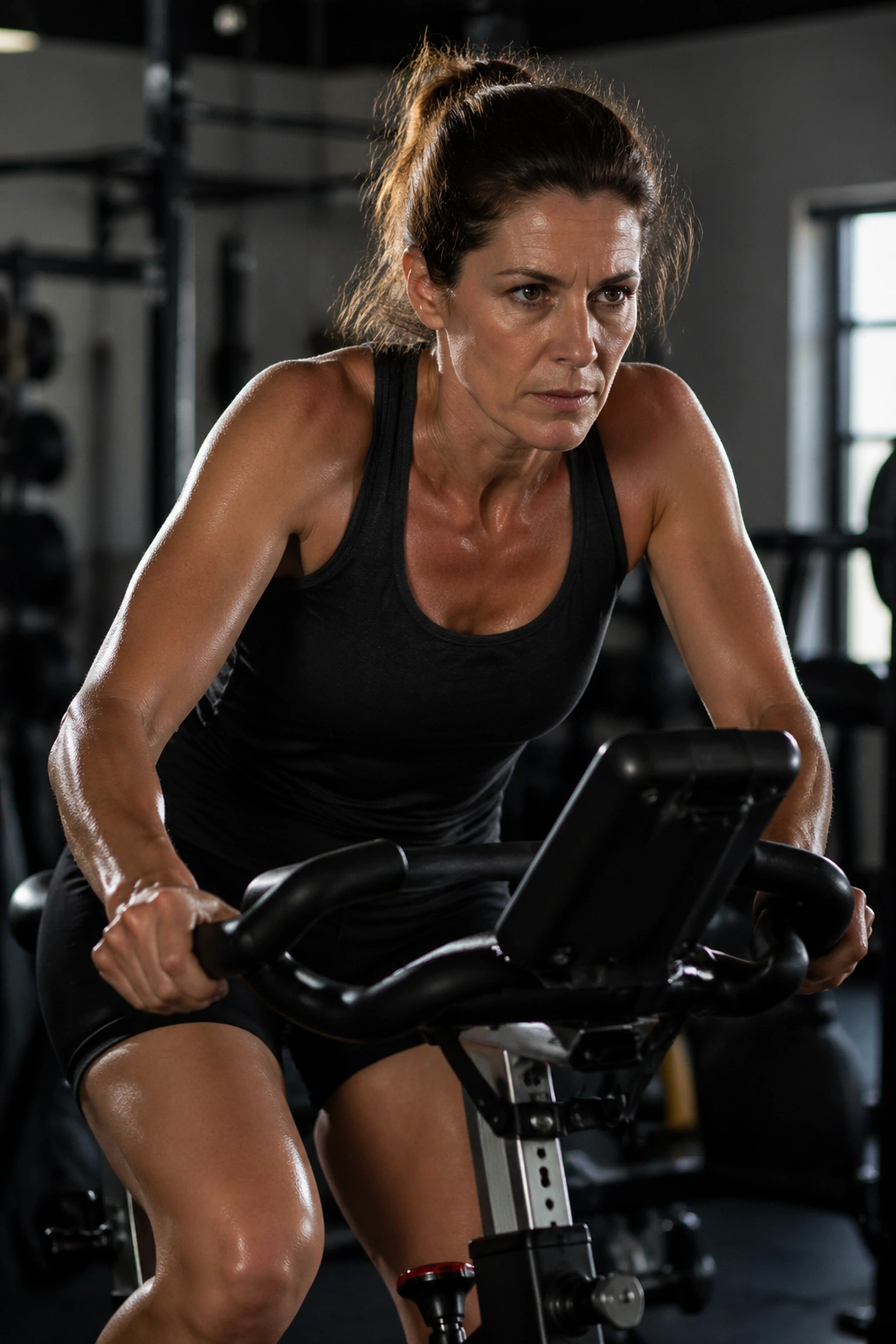
Hard breathing has a place. Daily HIIT does not.
A lot of women over 40 get pulled toward boot-camp logic: if some intensity is good, more must be better. Then the warning signs show up—sore feet, fried appetite, restless sleep, elevated hunger, and workouts that start feeling slower instead of stronger. One or two interval sessions a week is usually the sweet spot.
Why intervals still matter
Short bursts of hard work can improve fitness fast and push energy output up in a short window. They also help break up the monotony of steady cardio. The key is dose. Your body needs time to absorb hard training, not pile stress on top of stress.
A joint-friendlier setup
Try this on a bike, rower, elliptical, or uphill walk:
- Warm up for 5 to 8 minutes
- Push hard for 20 to 30 seconds
- Recover for 60 to 90 seconds
- Repeat 6 to 10 rounds
- Cool down for 5 minutes
If you are sleeping poorly, dealing with hot flashes, or your joints hate impact, keep the intervals low-impact. Bike sprints beat hobbling through jump squats with aching knees.
You should finish feeling challenged, not flattened.
6. Turn Two Workouts a Week Into Metabolic Circuits
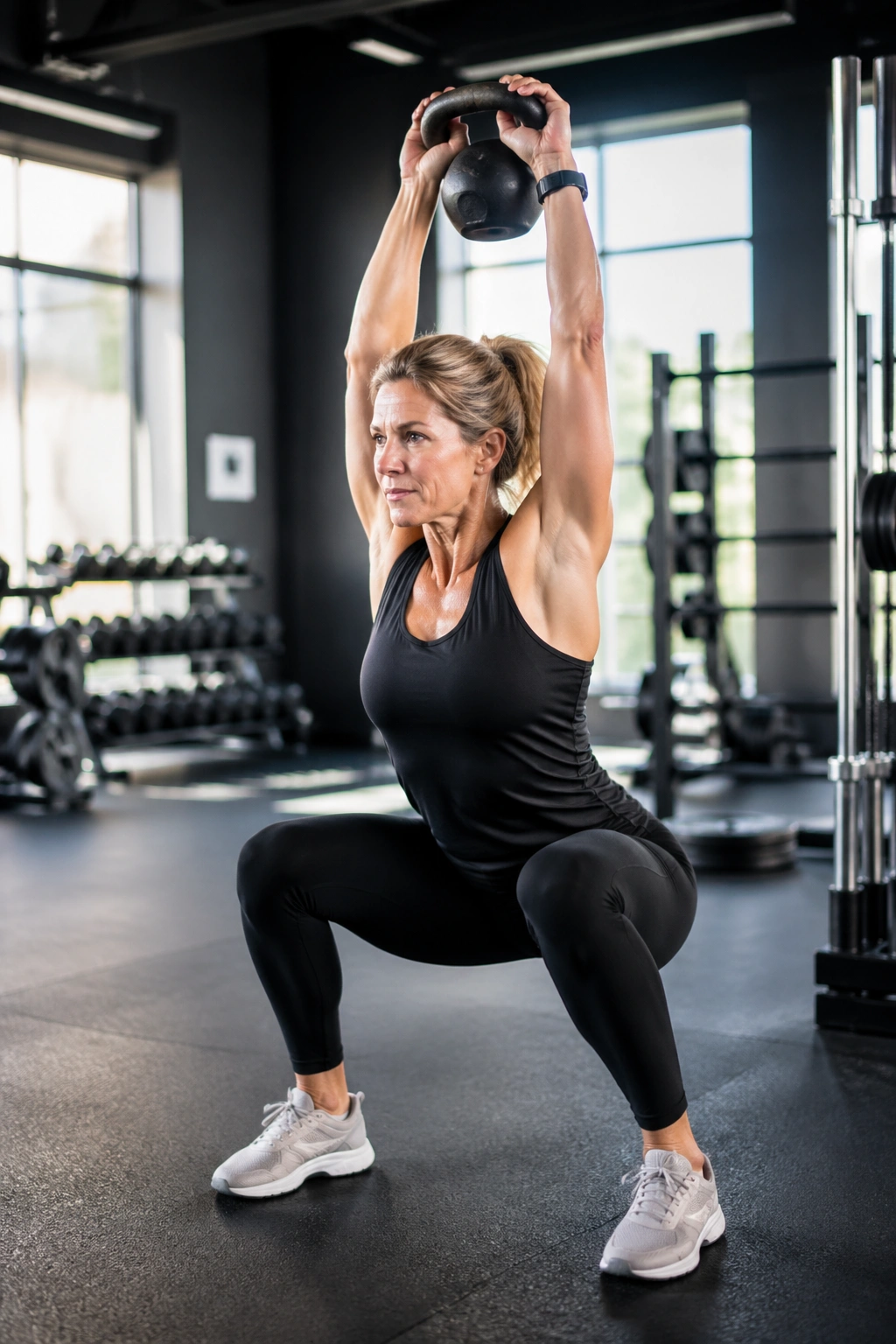
Short rests. Big movements. Done.
Metabolic circuits work well when you want a workout that feels athletic, keeps your heart rate up, and still gives your muscles a reason to stay. They are also a good answer for women who hate the treadmill but still want a strong calorie-burning session.
Here is where circuits beat long, slow machine time: you get strength work and conditioning in the same block. A dumbbell squat into a row, a hinge, a press, and a loaded carry will ask more from your body than strolling through 45 minutes of low-effort cardio while checking your phone.
Try 4 moves, one after the next, resting 15 to 30 seconds between exercises and 60 to 90 seconds between rounds. Use weights that let you finish 8 to 12 reps with clean form. Do 3 to 5 rounds.
One sample circuit:
- Goblet squat — 10 reps
- Dumbbell row — 10 reps each side
- Romanian deadlift — 12 reps
- Farmer carry — 40 steps
This style works well twice a week, especially on days when you only have 25 to 35 minutes. If your form starts falling apart, slow down. Sloppy circuits are cardio wearing a strength costume.
7. Train Your Core to Brace, Not Burn

Two hundred crunches will not peel fat off your stomach. What they can do is leave your neck sore and convince you that core training is pointless.
A better approach is to train the core the way it works in real life: resisting motion, bracing the spine, and transferring force between your upper and lower body. That kind of trunk strength helps your posture, makes heavy lifts safer, and often makes the waist look firmer even before major fat loss shows up.
Core drills that earn their spot
Use moves like these 2 to 4 times a week:
- Front plank: hold 20 to 45 seconds
- Side plank: hold 15 to 30 seconds each side
- Dead bug: 6 to 10 controlled reps each side
- Pallof press: 8 to 12 reps each side
- Bird dog: 6 to 8 slow reps each side
- Suitcase carry: walk 20 to 40 steps with one dumbbell
What to skip
If your lower back feels jammed after sit-ups, or your hip flexors take over every ab workout, stop forcing high-rep flexion drills. They are not mandatory. They are only familiar.
Women dealing with pelvic floor symptoms also tend to do better with controlled bracing work than with endless jumping, twisting, and aggressive crunching. That matters more than most fitness plans admit.
8. Push Your Daily Step Count Higher Than You Think

The least glamorous fat-loss tool is often the one doing the most work. Daily movement outside the gym can be the missing link when training is solid but the waist still will not budge.
Here is the trap: you crush a workout for 45 minutes, feel proud of it, then sit for the next 10 hours. Belly fat does not care how hard you trained if the rest of the day is motionless. Non-exercise movement—walking, standing, stairs, errands, cleaning, carrying groceries—adds up in a big way across a week.
A useful target for many women is 7,500 to 10,000 steps a day. If that sounds miles away, do not jump there on day one. Add 1,500 steps to your current average and hold that for two weeks. Then add another 1,000 to 1,500. Slow increases beat one heroic week followed by a shin splint.
Phone calls can be walking calls. Grocery trips can start with one lap around the store. You can park on the far side of the lot, take one extra staircase, and pace while dinner cooks. None of that feels like training. It still counts.
9. Eat 25 to 35 Grams of Protein at Each Meal
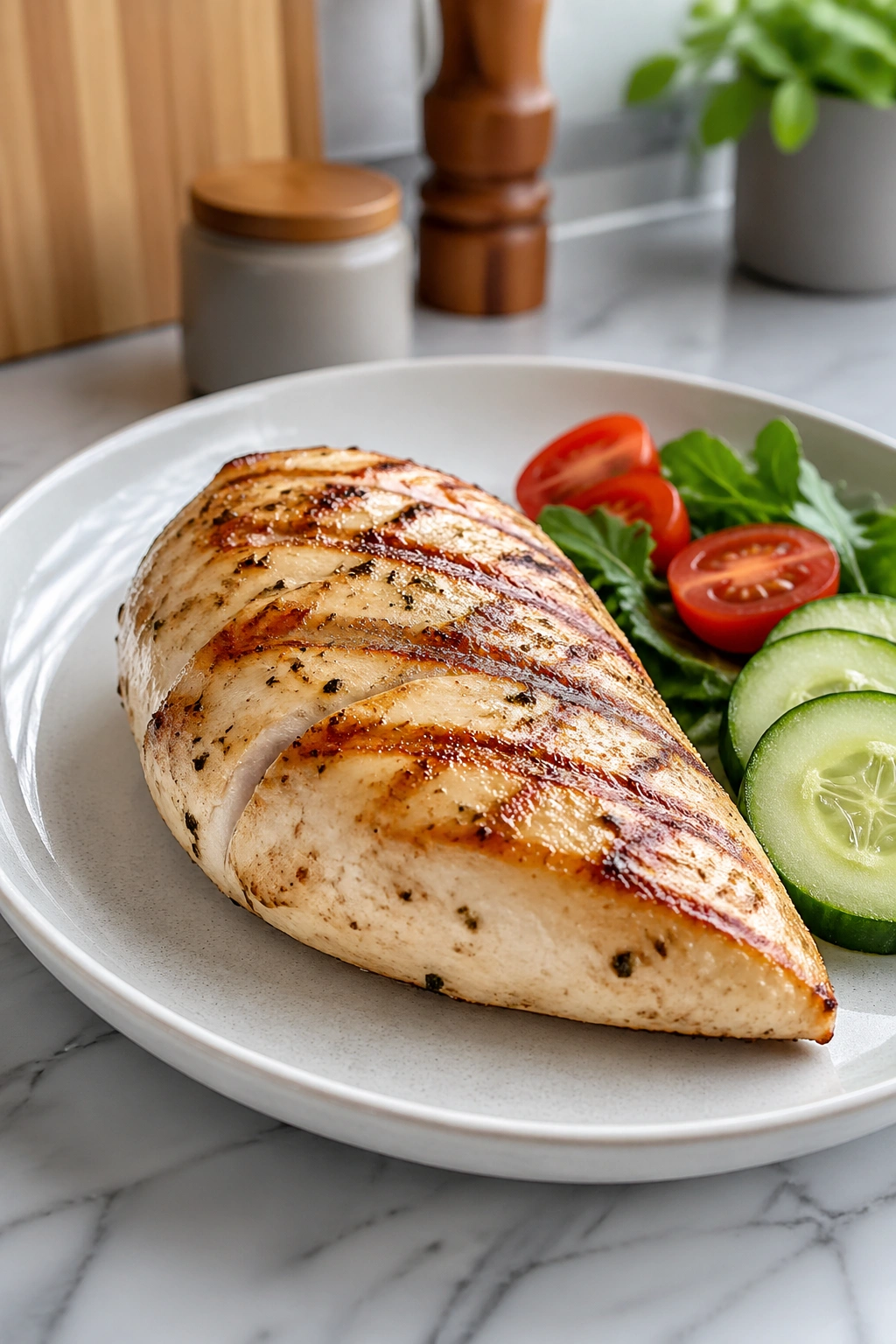
Breakfast is where this usually falls apart. Coffee, a bite of toast, maybe a banana, then hunger crashes in at 10:30 and the snack hunt begins.
Protein changes that pattern fast. It helps you keep muscle while losing fat, slows digestion, raises fullness, and supports recovery from the lifting you should be doing. Women over 40 often do far better when they stop treating protein like a dinner-only nutrient and start spreading it across the day.
A strong target is 25 to 35 grams per meal, landing somewhere around 90 to 130 grams per day for many women, depending on body size and training load.
What about 30 grams actually looks like?
- 1 cup Greek yogurt + 1 scoop whey = about 30 to 35 grams
- 3 eggs + 4 egg whites = about 30 grams
- 4 to 5 ounces chicken breast = about 30 to 35 grams
- 1 cup cottage cheese = about 25 to 28 grams
- 5 ounces salmon = about 30 grams
- 200 grams extra-firm tofu = about 24 to 28 grams
Breakfast matters here—maybe more than any other meal. Start the day with protein, and the rest of the day often gets easier. Skip it, and hunger tends to drive the schedule.
10. Chase Fiber Before You Cut More Calories
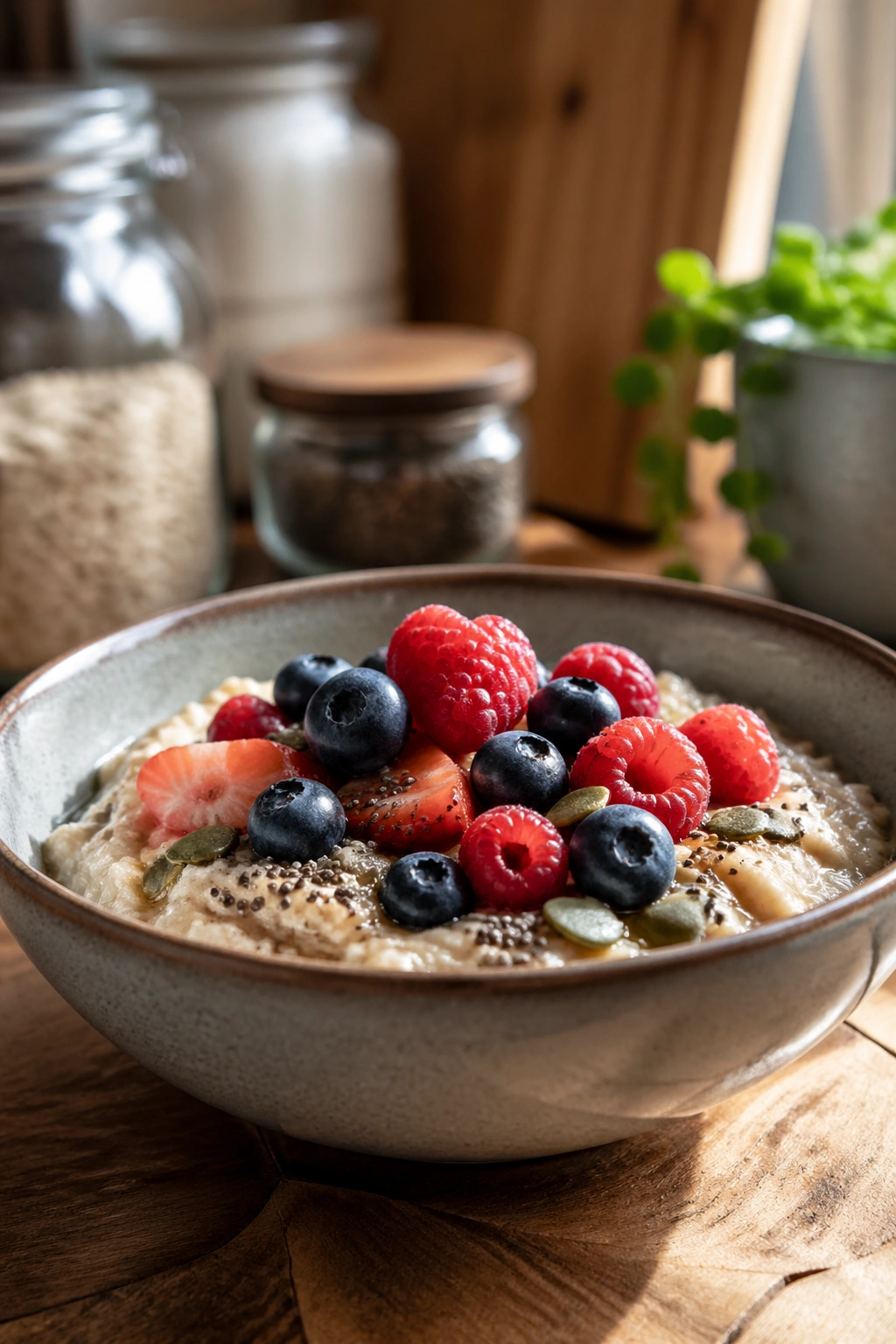
Salads are not the answer if they leave you hungry an hour later. Fiber is the part that makes fat loss more livable, especially when belly fat tends to rise alongside blood sugar swings, cravings, and late-night snacking.
Women over 40 often land low on fiber without noticing it. Protein gets some attention. Calories get all the attention. Fiber gets forgotten, even though it helps with fullness, digestion, cholesterol, and steadier energy. Soluble fiber also slows how fast food leaves the stomach, which helps tame the constant “I could eat again” feeling.
Aim for 25 to 35 grams a day. If you are under 15 grams right now, build up over a week or two and drink more water while you do it. A sudden jump from almost no fiber to giant bowls of bran cereal is a good way to feel bloated and annoyed.
Easy wins count. Add 1 cup of berries to breakfast, 1 tablespoon of chia seeds to yogurt, ½ cup beans to lunch, and 2 cups of vegetables to dinner. Oats, lentils, apples, pears, edamame, avocado, and potatoes with the skin on all help.
You do not need a “clean eating” speech. You need enough fiber to stop prowling the kitchen at 9:00 p.m.
11. Keep Your Calorie Deficit Small and Boring
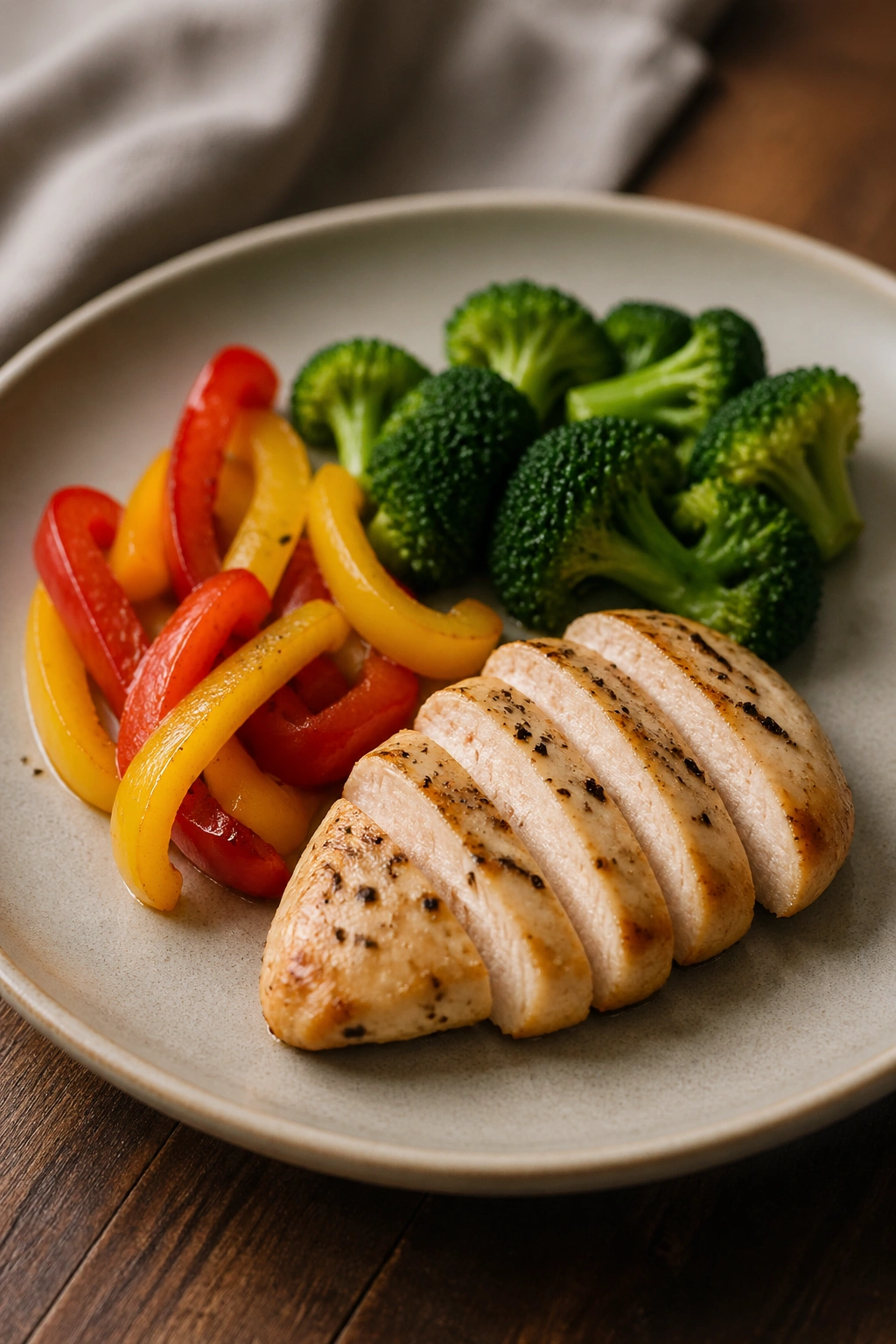
A mild deficit beats a hard one for belly fat loss after 40. That sounds less exciting than a 14-day reset, but it works better in the real world, where hunger, hormones, sleep, workouts, and family meals all collide.
Aggressive cuts often backfire in the same pattern: energy drops, lifting numbers slide, steps drop without you noticing, and one rough weekend erases the whole week. A smaller deficit keeps training quality higher and makes it easier to hold onto muscle.
For many women, trimming 300 to 400 calories a day is enough. That can come from one snack, one drink, and slightly tighter portions at one meal. It does not need to look dramatic.
A plain way to set it up
- Track your normal intake for 7 days without trying to eat less.
- Find the repeat extras—liquid calories, handfuls of snack food, oversized nut butter, second servings.
- Remove or shrink 2 to 3 of those repeat extras and hold the plan for 14 days.
Then check your waist, your average body weight, and your gym log. If you are stronger, walking more, and your waist is down ½ inch over a month, you are on the right path even if the scale is slow.
12. Put Most of Your Starches Near Your Workouts
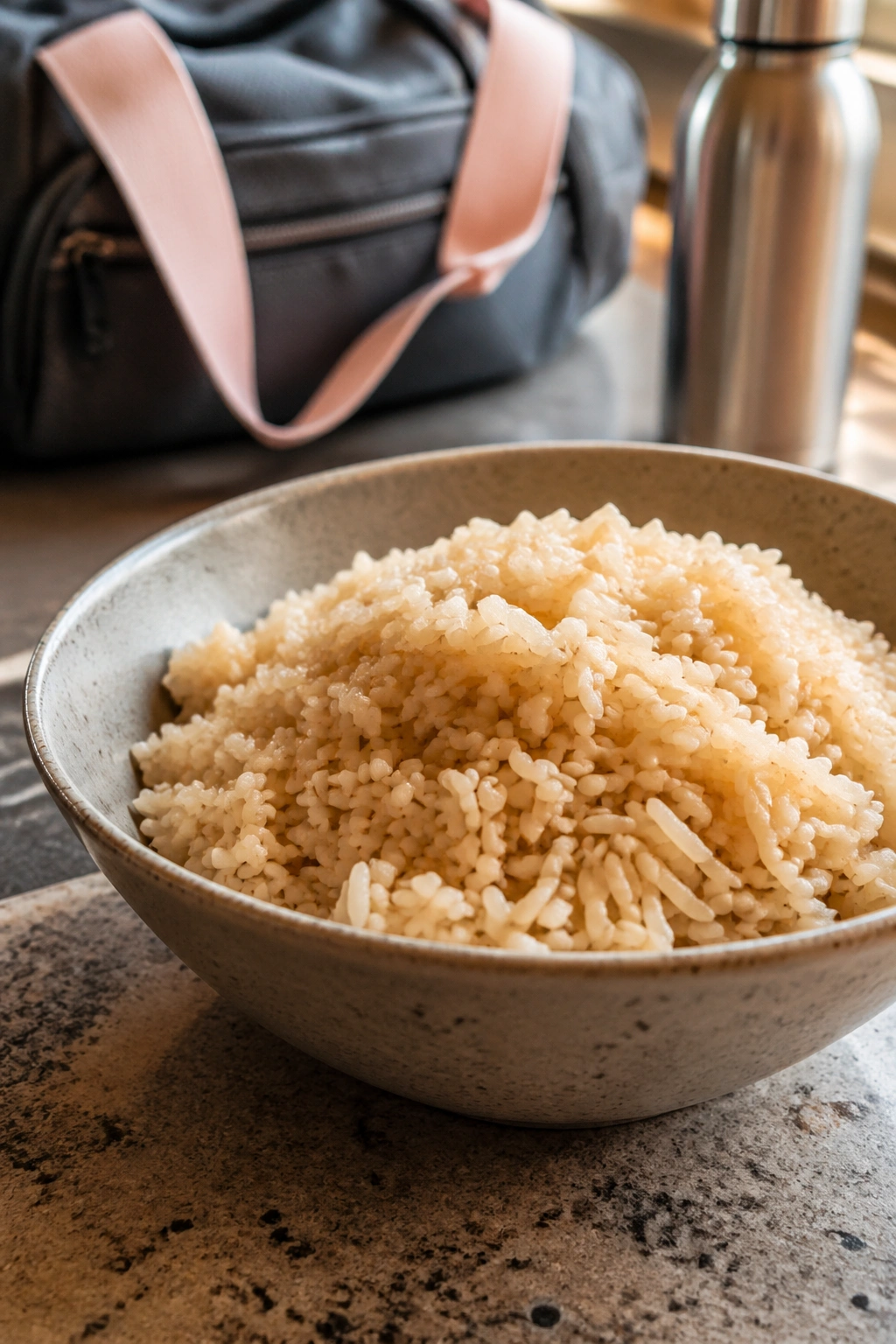
Unlike the old food fights about carbs being good or bad, this one is practical: place more of your starches where your body can use them well. That usually means before or after training, not spread mindlessly across the whole day.
Carbs support hard work. If you lift at 6:00 p.m. after eating almost none all day, your workout often feels flat and your hunger later can swing hard. A better move is a small serving of rice, oats, fruit, potatoes, or sourdough around training—enough to fuel the session and calm the rebound appetite that follows.
A useful range is 25 to 50 grams of carbs in the meal before training or the meal after, depending on body size and session length. A banana and Greek yogurt before a workout works. Rice with salmon after works. A bowl of oats with whey and berries works.
This is not a magic trick. Belly fat still comes down from the same old rules: calorie balance, muscle retention, activity, recovery. Carbs timed around training simply make those rules easier to follow because you train harder and snack less later.
Night carbs are not the enemy, either. If you lift in the evening, dinner is a smart place for them.
13. Cut Back on Alcohol and Sweet Drinks

Two glasses of wine and one cocktail can wipe out the calorie gap you built all week. That is not moral judgment. It is math.
Liquid calories are sneaky because they do not fill you the same way solid food does. Alcohol adds another layer: it can lower sleep quality, stir up appetite, and make the “I do not care, pass the chips” voice a lot louder. Women in midlife often feel that hit more sharply, especially when sleep is already shaky.
Where the calories hide
- 5 ounces wine: about 120 to 150 calories
- 12 ounces regular beer: about 140 to 180 calories
- Margarita: often 250 to 400 calories
- Sweet coffee drink: often 180 to 350 calories
- Fruit juice, 12 ounces: about 150 to 180 calories
- Regular soda, 12 ounces: about 140 to 160 calories
You do not need a lifetime ban. You do need honesty. If belly fat loss has stalled, cut alcohol for 3 to 4 weeks and watch what happens to your sleep, hunger, and waist measurement. The change is often bigger than people expect.
Water, sparkling water, unsweetened tea, black coffee, or coffee with measured milk—not a free-pour situation—make the calorie budget much easier to manage.
14. Protect Your Sleep Like a Training Session

You know that wired-tired feeling—eyes heavy, brain buzzing, body hot, mind scrolling? That state wrecks fat loss faster than many women realize.
Short sleep changes appetite in a nasty direction. Hunger climbs, cravings rise, workout drive drops, and blood sugar control gets worse. Belly fat tends to hang on in that setting. Add perimenopause or menopause, and the problem gets sharper because hot flashes, night waking, and early-morning wake-ups can chip away at sleep night after night.
A few fixes carry more weight than they seem to. Keep a consistent wake time, get 5 to 10 minutes of outdoor light soon after waking, stop caffeine 8 to 10 hours before bed, and keep your room cool—many women sleep better around 60 to 67°F. If your bedroom is warm and stuffy, you are making the job harder.
Do not turn bedtime into another performance test. Start with one change. The morning light habit is a strong place to begin, especially if your sleep feels shifted later and later.
And if you snore hard, wake with headaches, or feel exhausted despite enough time in bed, get checked for sleep apnea. That one gets missed far too often in women.
15. Bring Stress Down Before Cortisol Runs the Show

Your body cannot tell the difference between a hard workout, a work deadline, family strain, poor sleep, and three coffees on an empty stomach. It reads all of that as stress.
Cortisol is not the villain. You need it. Trouble starts when stress stays high all day, food gets erratic, sleep drops, and exercise becomes another hammer. That mix can drive hunger up, recovery down, and fat loss into the ditch—especially around the middle, where many women over 40 already store more easily.
The answer is not “relax more” written on a sunset quote. It is small, repeatable actions that lower the stress load enough for your body to respond better. Five minutes of slow breathing after work helps. So does a phone-free walk, a lighter training day after two hard ones, and one evening a week that does not end with wine and scrolling.
Try this breathing pattern for 3 to 5 minutes: inhale through the nose for 4 seconds, exhale for 6 to 8 seconds. Long exhales tend to settle the nervous system fast.
Some weeks, the best fat-loss choice is skipping the boot camp and going to bed an hour earlier. Not glamorous. Still the right call.
16. Ask Whether Hormones, Thyroid, or Meds Are Holding Belly Fat in Place

What if your plan is solid, your steps are up, your protein is on point, and your waist still keeps creeping higher? Then it is time to widen the lens.
Perimenopause and menopause can shift body fat toward the abdomen, even when scale weight has not changed much. Thyroid issues can sap energy and slow the whole system down. Insulin resistance can make hunger and blood sugar swings harder to manage. Some medications—certain antidepressants, steroids, and others—can nudge appetite or weight upward.
Signs worth discussing with a clinician
- Rapid waist gain without a clear change in food or activity
- Heavy fatigue, cold intolerance, constipation, or hair thinning
- Loud snoring, gasping, or crushing daytime sleepiness
- Irregular bleeding or major cycle changes that come with weight shifts
- Rising fasting glucose or a history of prediabetes
- Medication changes that matched the timing of weight gain
This does not mean your hormones are “broken.” It means context matters. Belly fat after 40 is shaped by training and food, yes, though medical pieces can also matter more than the average gym plan admits.
If something feels off, say it out loud in the appointment. Bring your symptom pattern, your waist change, your sleep notes, and your food or training log. Specific details help.
17. Track Your Waist, Strength, and Photos Instead of Scale Drama
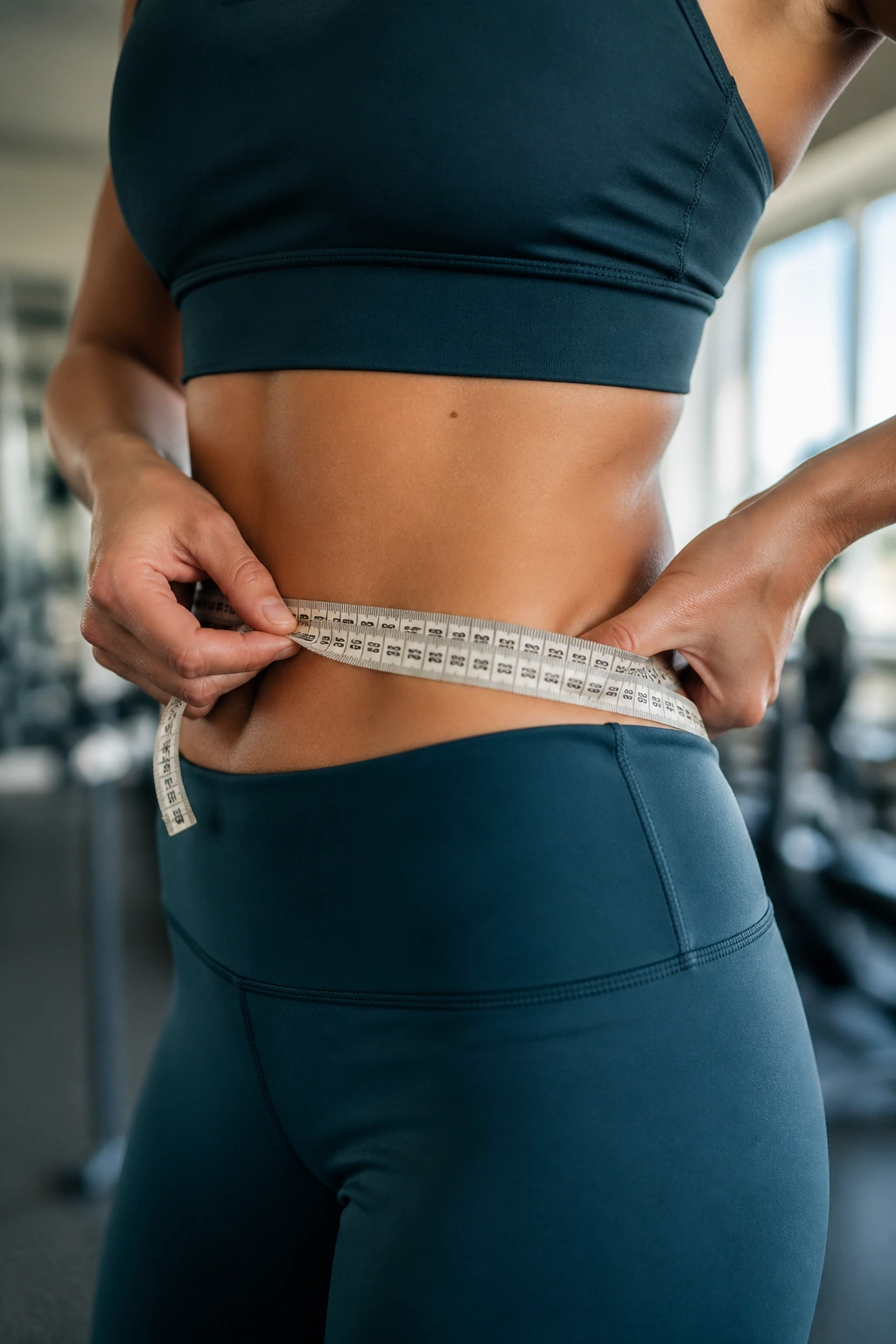
Some weeks the scale jumps 3 pounds because you had salty takeout, a hard leg workout, and a rough night of sleep. That is water, not failure.
The scale is one data point. Belly fat loss shows up better in your waist measurement, progress photos, how your jeans fit, and what you can lift for reps. Women over 40 can also gain a little lean tissue while losing fat, which makes the scale slower than the mirror.
A tracking setup that keeps you sane
- Weigh yourself 3 to 4 mornings a week, then use the weekly average
- Measure your waist once a week at the navel, after a normal exhale
- Take front and side photos every 4 weeks in the same light
- Log your key lifts: squat, hinge, row, press, carry
- Note sleep hours and daily steps
If your waist has not moved after 4 to 6 weeks, and you have been following the plan at least 80 percent of the time, make one adjustment: trim 150 to 200 calories a day or add 1,500 to 2,000 steps. One change. Then wait.
Do not slash calories, add two HIIT classes, and panic-buy detox tea. That is how people lose the plot.
18. Stay With One Plan Long Enough for Your Body to Change
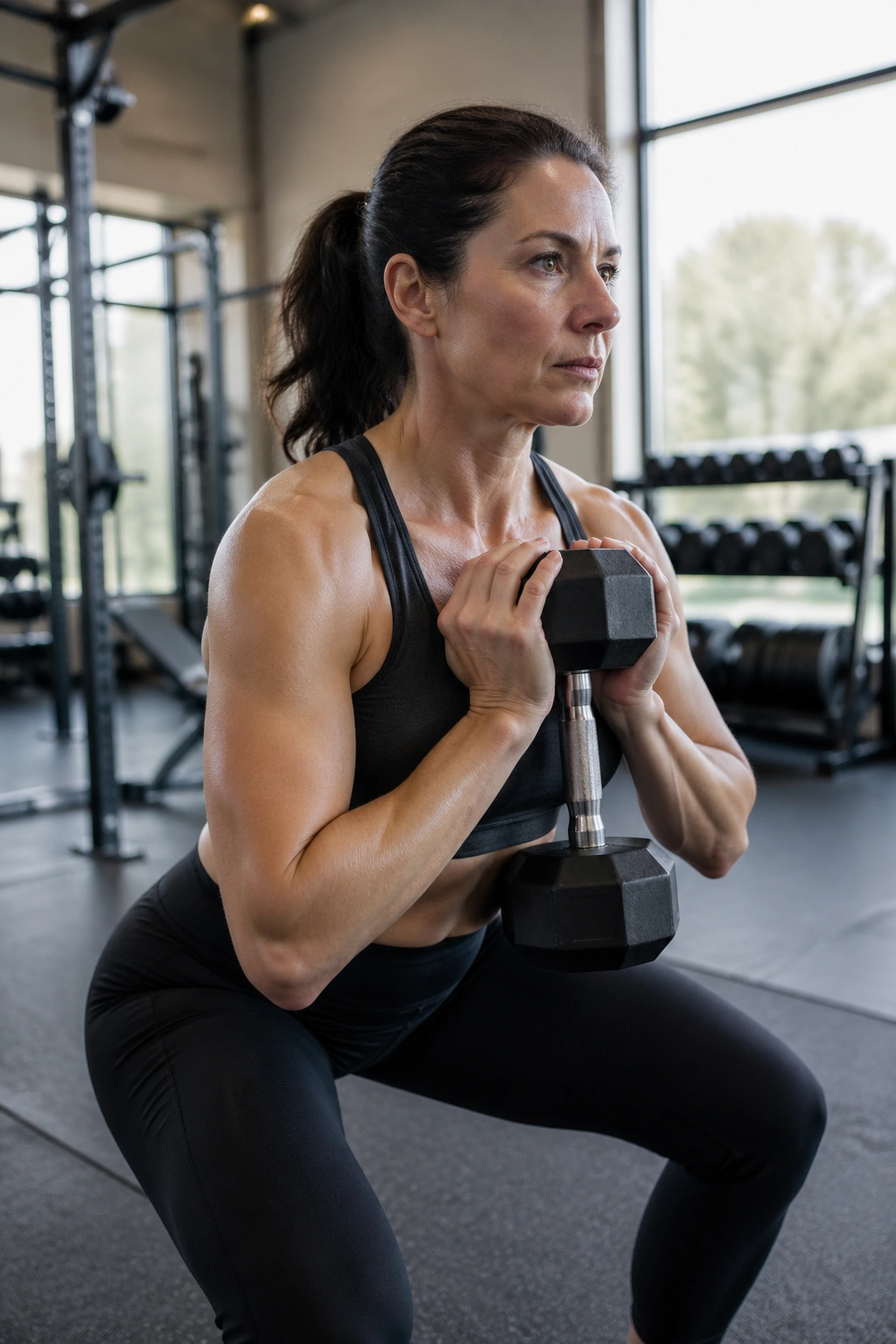
The women who change their midsection most often are not the ones chasing a new workout every Monday. They are the ones repeating the basics long past the point when novelty wears off.
Belly fat is often among the last places to shrink. Annoying, yes. Common too. Your face may lean out first, then your arms, then your waist, then the lower belly takes its sweet time. If you keep switching plans every 10 days, you never gather enough proof to know what was working.
A week that works for a lot of women over 40
- Monday: full-body strength, 45 minutes
- Tuesday: 30 to 40 minutes Zone 2 + post-dinner walk
- Wednesday: full-body strength
- Thursday: steps goal + core work for 10 minutes
- Friday: full-body strength or metabolic circuit
- Saturday: Zone 2 or short interval session
- Sunday: longer walk, meal prep, early night
Hold a structure like that for 8 to 12 weeks. Adjust the weights upward when you can. Keep protein high. Walk after meals. Sleep like it counts.
Then look at the full picture: waist down, lifts up, energy steadier, fewer cravings, waistband looser. That is how belly fat loss usually looks in real life—not dramatic for 6 days, then gone. More like a slow leak from a tire.
Final Thoughts

Belly fat after 40 is not a character flaw, and it is not a sign that your body stopped responding. It is usually a sign that the old shortcuts stopped working. You need muscle, movement, food quality, and recovery pulling in the same direction.
If you only change three things, start here: lift 3 times a week, walk 10 to 20 minutes after meals, and hit 25 to 35 grams of protein at each meal. Those three habits cover more ground than most “fat-burning” gimmicks ever will.
Then give the plan enough time to speak. A month is a start. Two or three steady months tell the truth.
