



Most people waste hours in the gym performing low-intensity cardio, wondering why their reflection in the mirror never seems to change. They hop on an elliptical for forty minutes, scroll through social media, and leave feeling like they accomplished something. But the truth is, if your goal is fat loss and metabolic conditioning, you need intensity, and you need resistance. Adding weights to High-Intensity Interval Training (HIIT) creates a perfect storm for your physiology. It forces your heart rate into that anaerobic zone while simultaneously demanding muscle recruitment, which spikes your calorie burn not just during the workout, but for hours after you step off the floor.
You don’t need a fancy facility to make this happen. A set of adjustable dumbbells or a couple of kettlebells is enough to turn your living room into a high-octane fat-burning lab. The key is structural integrity and effort. If you aren’t breathless by the middle of the circuit, you aren’t moving fast enough or lifting heavy enough. This is not about mindless repetition; it is about controlled, explosive movement that respects your joints while pushing your cardiovascular capacity to the absolute limit.
Stop worrying about the perfect training split or counting every single calorie. Start focusing on the density of your work—how much quality movement you can pack into a short window. The following eighteen protocols are designed to be brutal, efficient, and transformative. Grab a timer, pick a weight that challenges your form but allows you to maintain speed, and get to work.
1. The Goblet Squat Thruster Pyramid
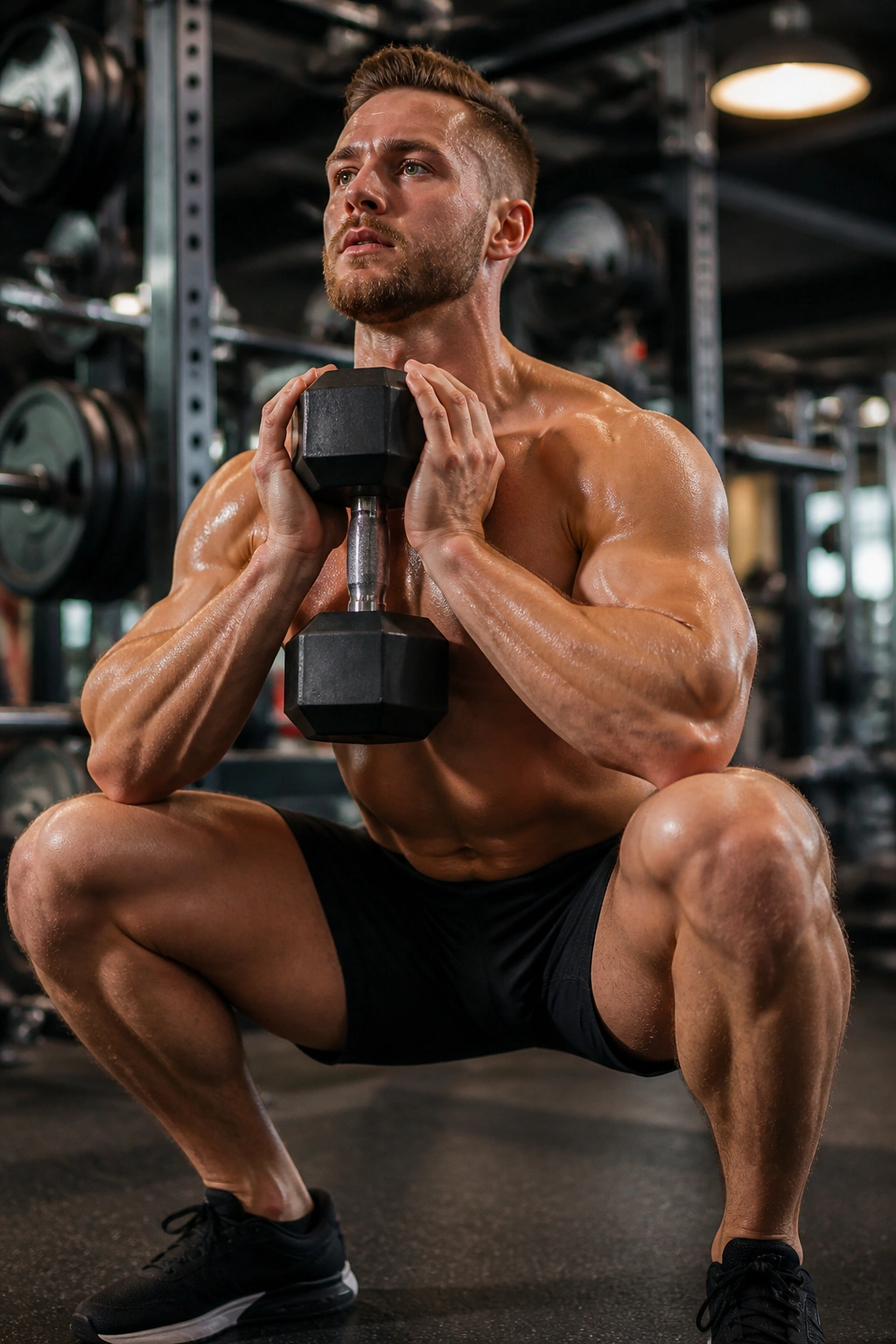
This circuit combines the lower body intensity of a deep squat with the overhead power of a shoulder press. By holding a single heavy dumbbell or kettlebell against your chest, you force your core to stabilize against an uneven load, which is a major bonus for ab definition.
The Setup
You will perform these in a descending ladder: 10 reps, 8 reps, 6 reps, 4 reps, and 2 reps. Between each set, you perform a 30-second weighted plank hold. There is no rest between the squat thrusters and the plank. You only get to breathe when you transition between rounds.
Why It Works
Holding the weight at chest level keeps your spine neutral. When you squat down, your core has to work overtime to keep you from falling forward. Then, as you drive up and press the weight overhead, you engage your shoulders and triceps. It is a full-body movement that prevents blood from pooling in one area, forcing your heart to work harder to move oxygen to your legs, then your arms, and back again.
Pro Tip: Choose a weight that feels heavy for the 10-rep round. If you pick something you can press easily, the 4 and 2-rep rounds will be too light to provide a challenge.
2. Renegade Row Pushup Combo
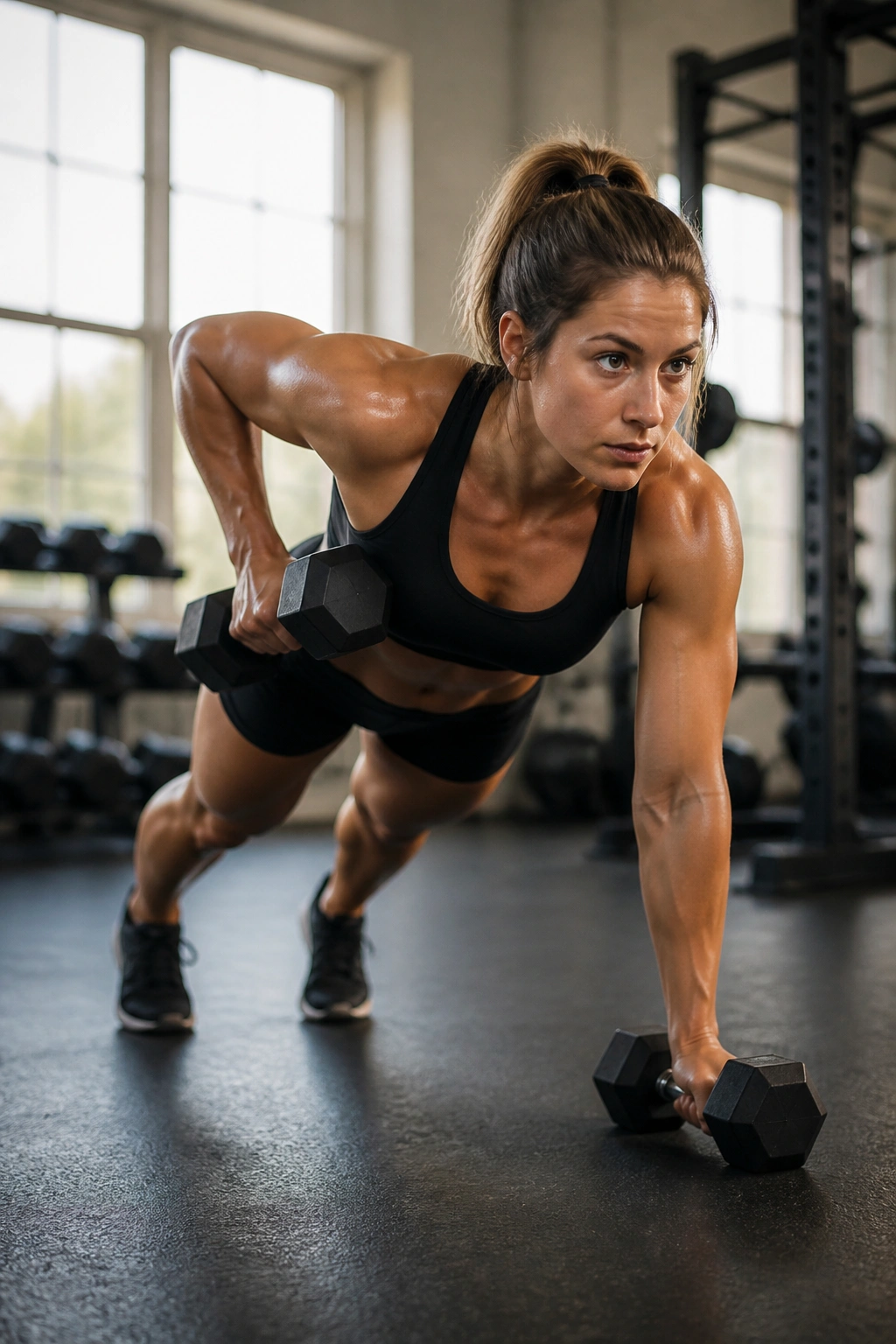
The renegade row is arguably the king of core-focused dumbbell movements. By performing a pushup between each row, you are essentially asking your body to maintain a perfect plank while your limbs are moving in ways that defy gravity.
You start in a pushup position with your hands gripping the handles of two dumbbells. Perform a pushup, keeping your elbows tucked at a 45-degree angle. Once you reach the top of the pushup, pull the right dumbbell toward your hip while stabilizing with your left arm. Reset, pushup again, and pull the left dumbbell.
The Mechanics
- The Pushup: Keep your hips locked. Do not let your lower back sag.
- The Row: Imagine crushing a walnut between your shoulder blades. Your elbow should graze your ribcage.
- The Stability: Your feet should be shoulder-width apart or wider. The wider your feet, the easier it is to balance.
This is a 20-minute EMOM (Every Minute on the Minute) workout. You perform 8 total reps (4 rows per side) within the minute. Whatever time remains, you rest. If you finish in 40 seconds, you get 20 seconds of rest. If you are struggling to finish in the minute, use lighter weights or decrease the rep count.
3. Kettlebell Swing Tabata Intervals
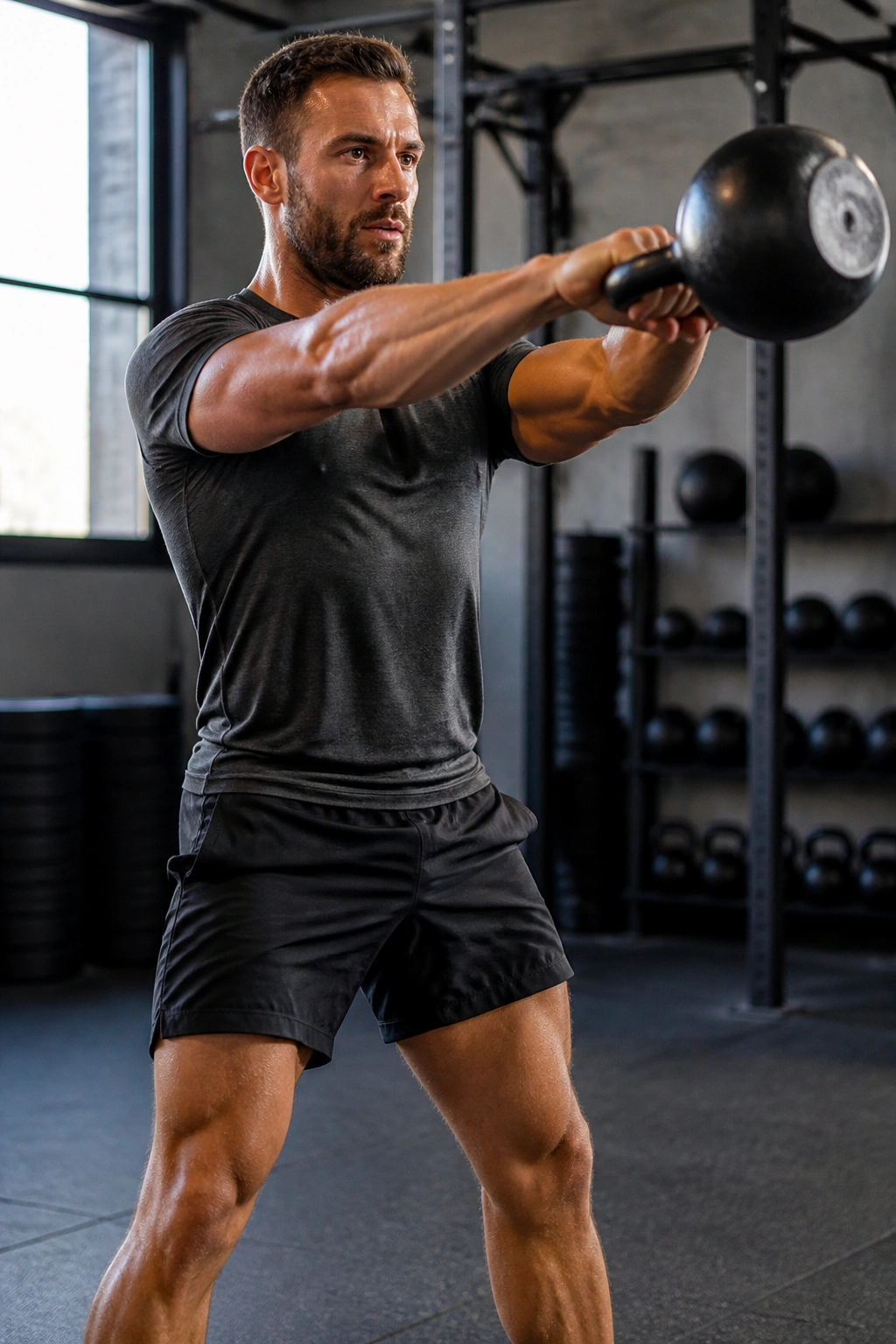
Tabata is the gold standard for HIIT. You go for 20 seconds of max effort, followed by 10 seconds of rest. You repeat this for eight cycles. When you add a heavy kettlebell swing into this protocol, you turn your posterior chain into a furnace.
Start with a kettlebell that allows for explosive hip hinge movement. This isn’t a squat; it is a snap. Drive your hips forward forcefully, letting the momentum swing the bell to chest height. Squeeze your glutes at the top of the movement. During the 10 seconds of rest, stand tall and inhale deeply through your nose.
Common Pitfalls
People often turn this into a front raise. Your arms are just ropes; they do not lift the bell. If you are feeling this in your lower back, you are likely using too much back and not enough hip drive. Reset your stance, hinge deeper, and snap harder. If your grip starts to fail before your hips, chalk your hands or take a breath, but do not sacrifice the hinge.
4. Weighted Mountain Climber Burnout
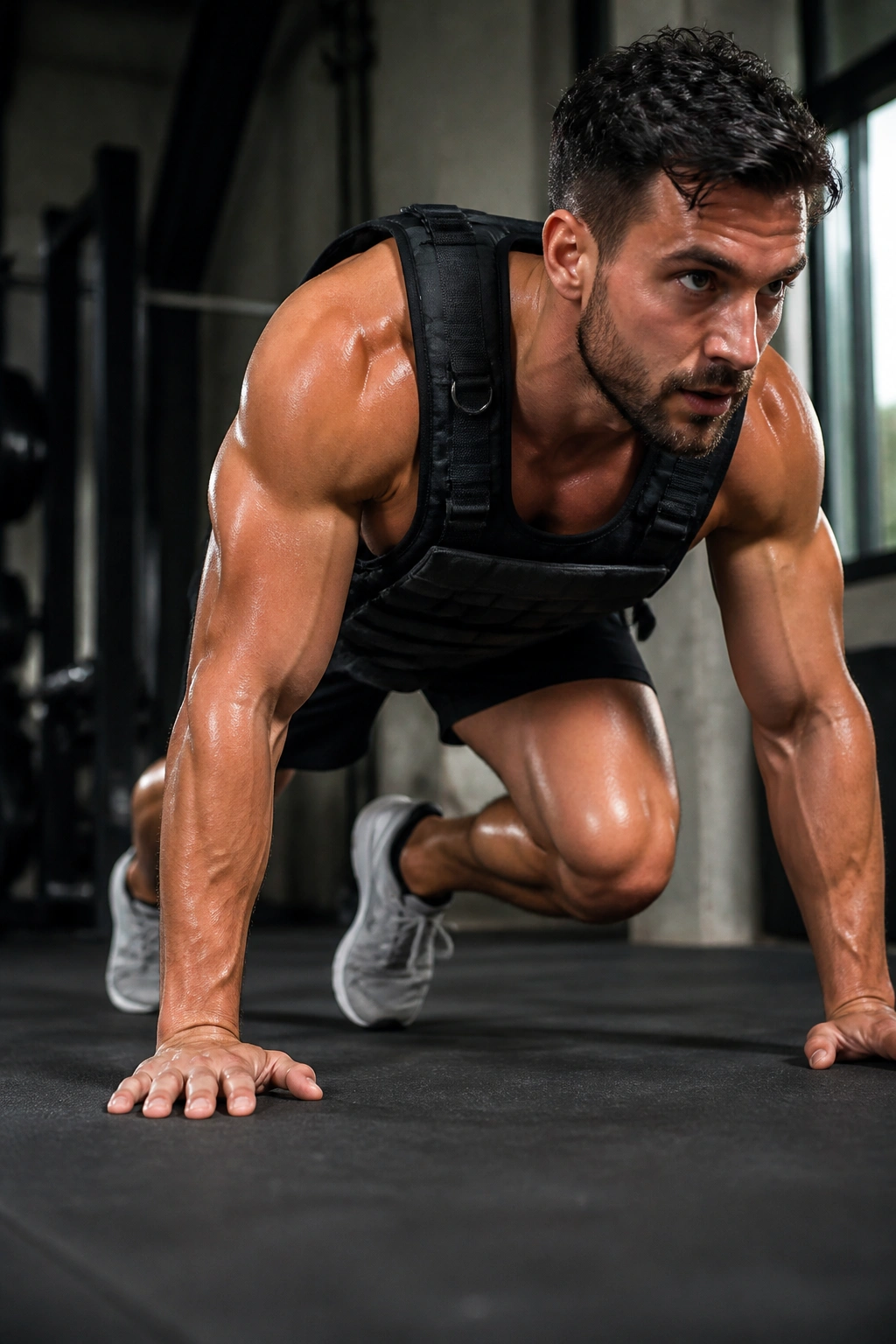
Standard mountain climbers are great, but wearing a weighted vest or holding small dumbbells makes them exponentially more difficult. This works the rectus abdominis, the obliques, and the hip flexors simultaneously.
Perform this as a 4-minute continuous block. No rest. Move your knees toward your chest as fast as possible while maintaining a flat back. If you hold dumbbells on the floor, it increases the range of motion and prevents wrist strain.
Why This Protocol Stays Effective
By keeping the tension constant for four minutes, you are hitting high-intensity metabolic stress. Your abs will feel like they are on fire by the two-minute mark. This is exactly what you want. Do not stop. If you need to slow down, slow down, but do not put your knees on the floor. That is the only rule.
5. Dumbbell Snatch Ladders
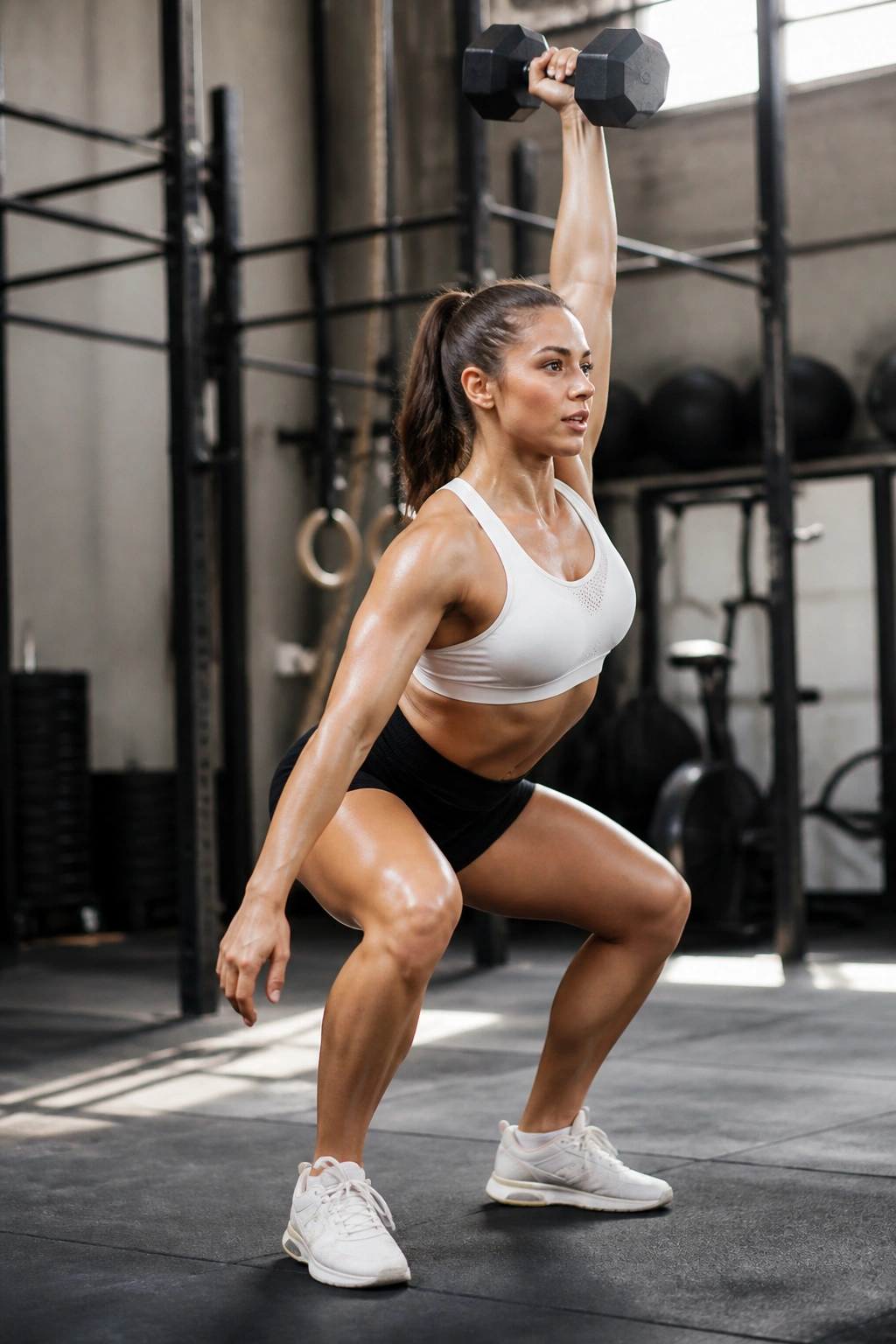
The snatch is a technical move, but once you master it, it is unparalleled for explosive power and fat loss. You move a weight from the floor to overhead in one single, fluid motion.
Start with a light dumbbell between your feet. Squat down, grab the bell, and drive up through your heels. As the bell passes your face, punch the ceiling and lock your elbow. Alternate arms every single rep.
The Ladder Format
- Minute 1: 10 total reps (5 per side).
- Minute 2: 12 total reps.
- Minute 3: 14 total reps.
- Minute 4: 16 total reps.
- Minute 5: 18 total reps.
If you cannot maintain form, drop the count. The goal is speed without losing the lock-out. Keep your core braced as if someone is about to punch you in the stomach.
6. Thruster and Burpee Circuit
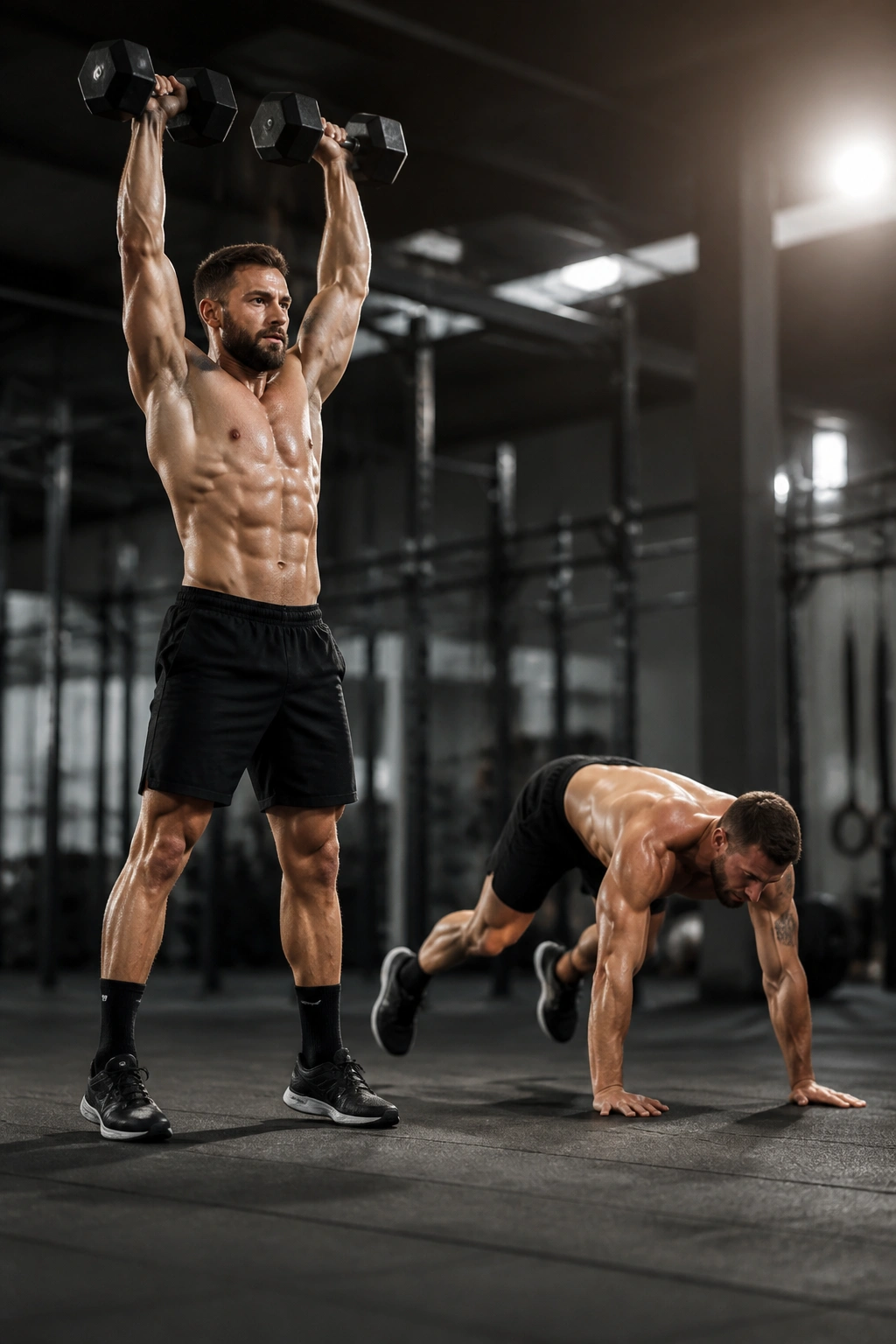
This is for the days when you want to question your life choices. It is simple, it is brutal, and it works. Combine a standard dumbbell thruster with a burpee.
Perform 10 Thrusters (squat to overhead press), then immediately drop the weights and perform 10 Burpees. Rest for 60 seconds. Repeat this for five full rounds.
Mental Strategy
The first round will feel easy. The second round will feel manageable. By the fourth round, your shoulders will scream and your lungs will burn. That is the point. When you do the burpee, do not try to speed through it. Use the burpee to catch your breath just a little bit, then explode back into the thrusters. The thruster is the primary mover; the burpee is just there to spike your heart rate.
7. Weighted Lunge Jumps
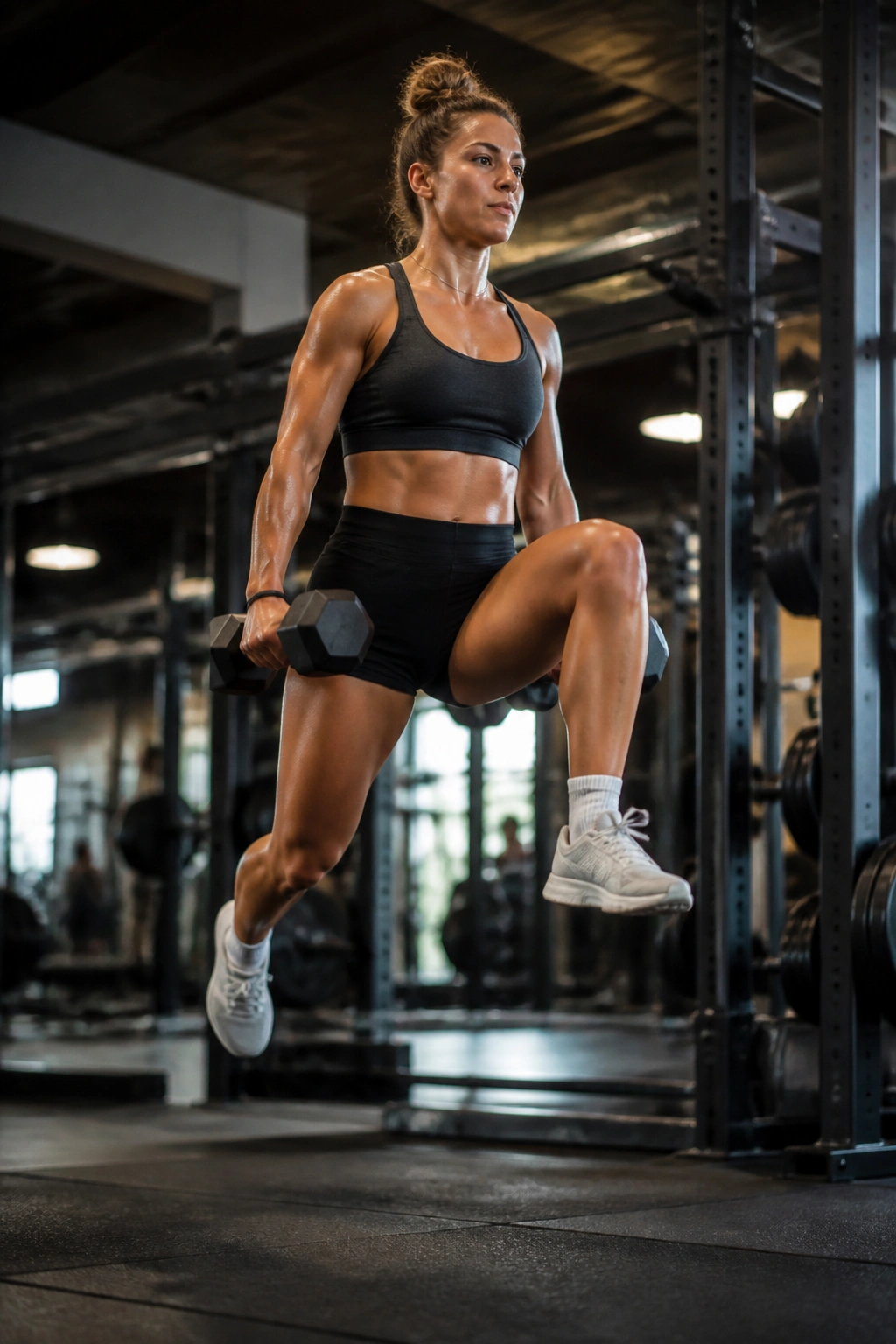
Lunges are effective, but adding a jump makes them plyometric, and holding dumbbells makes them resistance training. It is the ultimate combination for glute and quad development.
Hold two dumbbells at your sides. Step back into a reverse lunge. From the bottom position, explode upward, jump, and switch legs in the air, landing in a lunge on the opposite side. If the jump is too much for your knees, just do a rapid-fire lunge switch without the jump.
Safety First
Landing is where people get hurt. Ensure your front knee is tracking over your toes, not caving inward. If you cannot stabilize the landing, the weight is too heavy. Drop the dumbbells and master the movement with body weight first. Once you can do 20 repetitions with perfect balance, pick up those weights again.
8. Sumo Deadlift High-Pulls
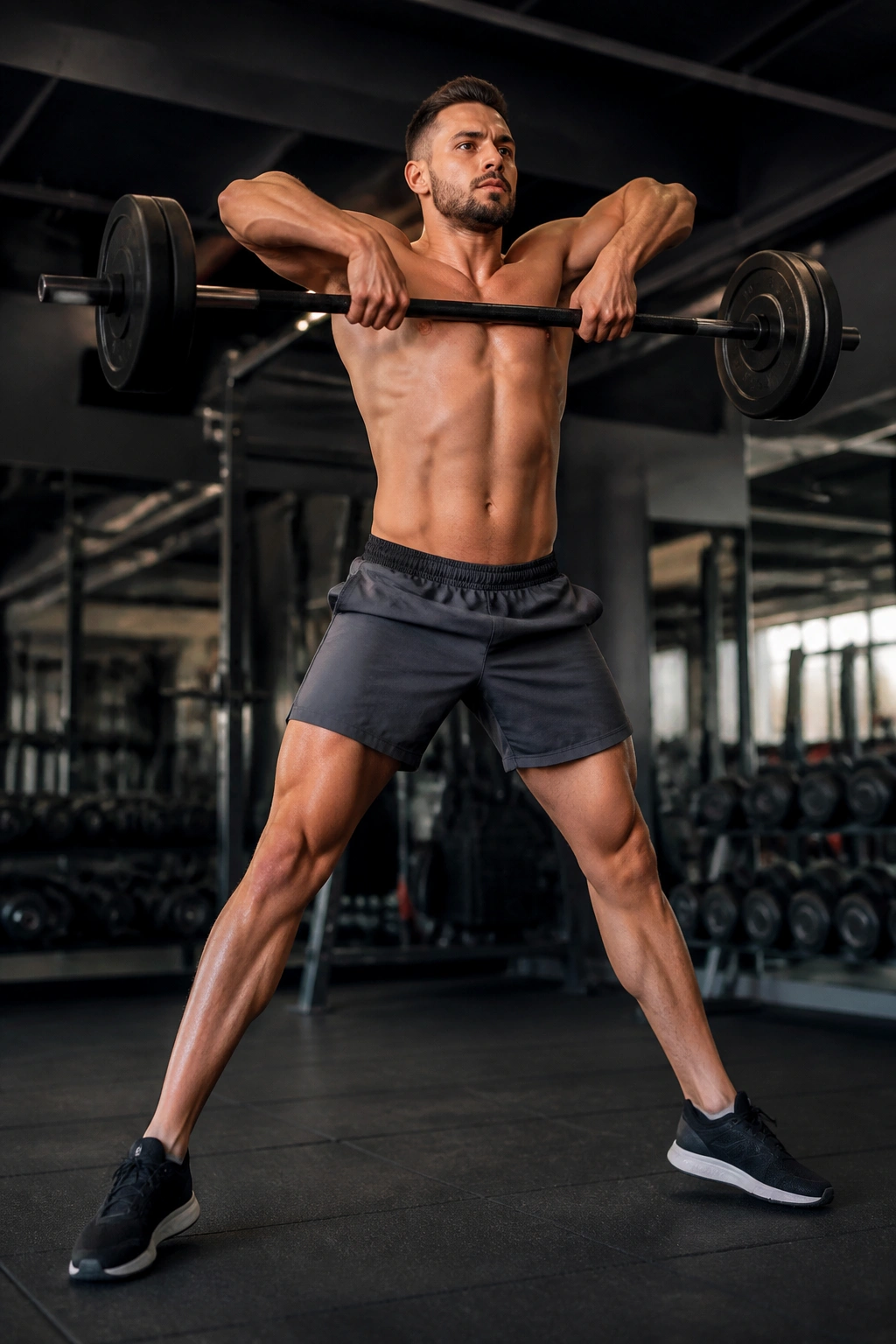
This is a classic metabolic conditioning movement. Take a wide stance, wider than shoulder-width, with your toes pointed out. Place a kettlebell or a heavy dumbbell between your legs.
Hinge at the hips, grab the weight, and pull it explosively toward your chin. Keep your elbows high and outside the line of your shoulders. As the weight comes up, come up onto your toes to add extension.
Why It Spikes Metabolism
This move recruits the entire posterior chain—hamstrings, glutes, and lower back—along with the traps and deltoids. It is a massive compound movement. Because you are using so many large muscle groups at once, your body requires a huge amount of oxygen to keep going. Do 30 seconds of work, 30 seconds of rest, for 10 minutes straight.
9. Weighted Bear Crawls
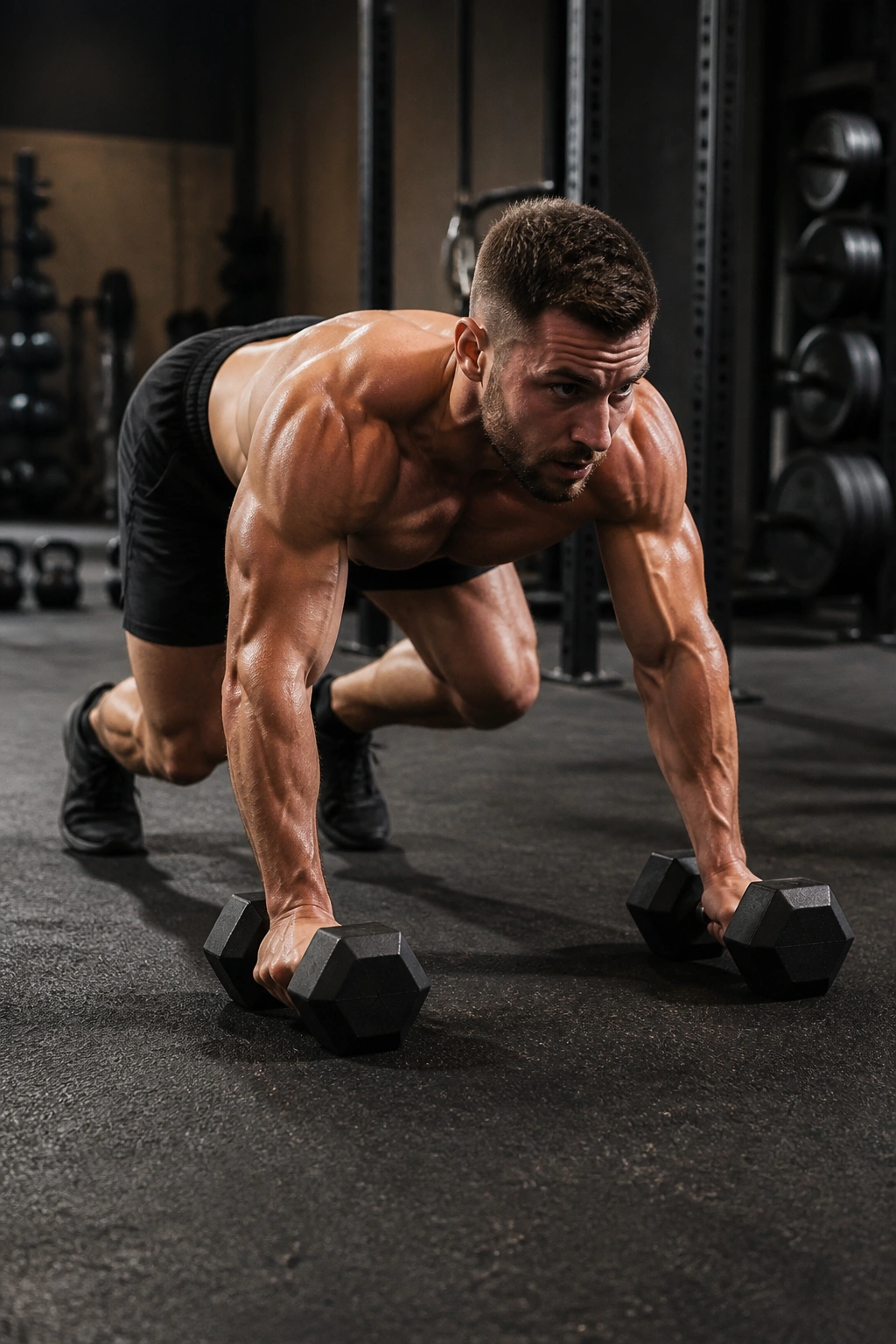
This looks ridiculous, but it is one of the most demanding core exercises in existence. Hold a small dumbbell in each hand. Get into a tabletop position, knees hovering just an inch off the floor.
Crawl forward by moving your right hand and left foot, then your left hand and right foot. The dumbbells in your hands add instability, forcing your shoulders and core to fight for balance every time you lift a hand off the ground.
Duration vs. Distance
Don’t worry about distance. Crawl for 60 seconds, rest for 30, and repeat for 6 rounds. Keep your back flat. If your butt starts to rise toward the ceiling, you are losing the core tension. Drop your hips. Keep the “table” level. This is non-negotiable for getting the full benefit.
10. Dumbbell Step-Up Complex
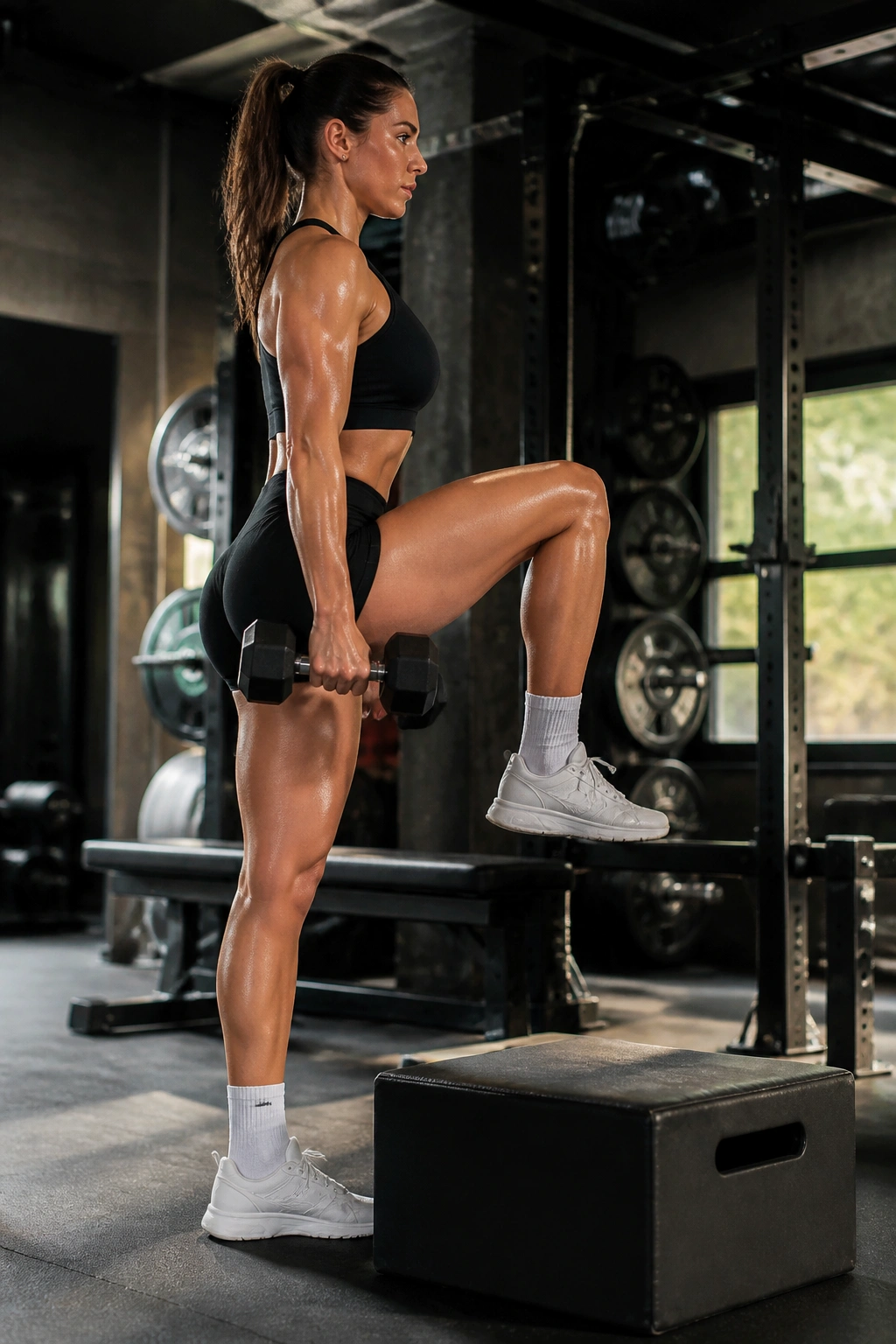
Step-ups are often overlooked, but they are fantastic for unilateral leg strength. Find a sturdy box, bench, or step. Hold dumbbells in your hands.
Step onto the box with your right foot, driving through your heel. As you stand up, drive your left knee toward your chest. Step back down and repeat. Do 10 reps on the right, then 10 on the left.
The Intensity Factor
To make this HIIT, move as fast as possible without losing control. The knee drive is the key—it activates the hip flexors and forces your core to snap into balance. If you are moving slowly, you are just doing leg exercises. If you are moving with purpose and intensity, you are doing a HIIT workout.
11. Weighted Plank Drags
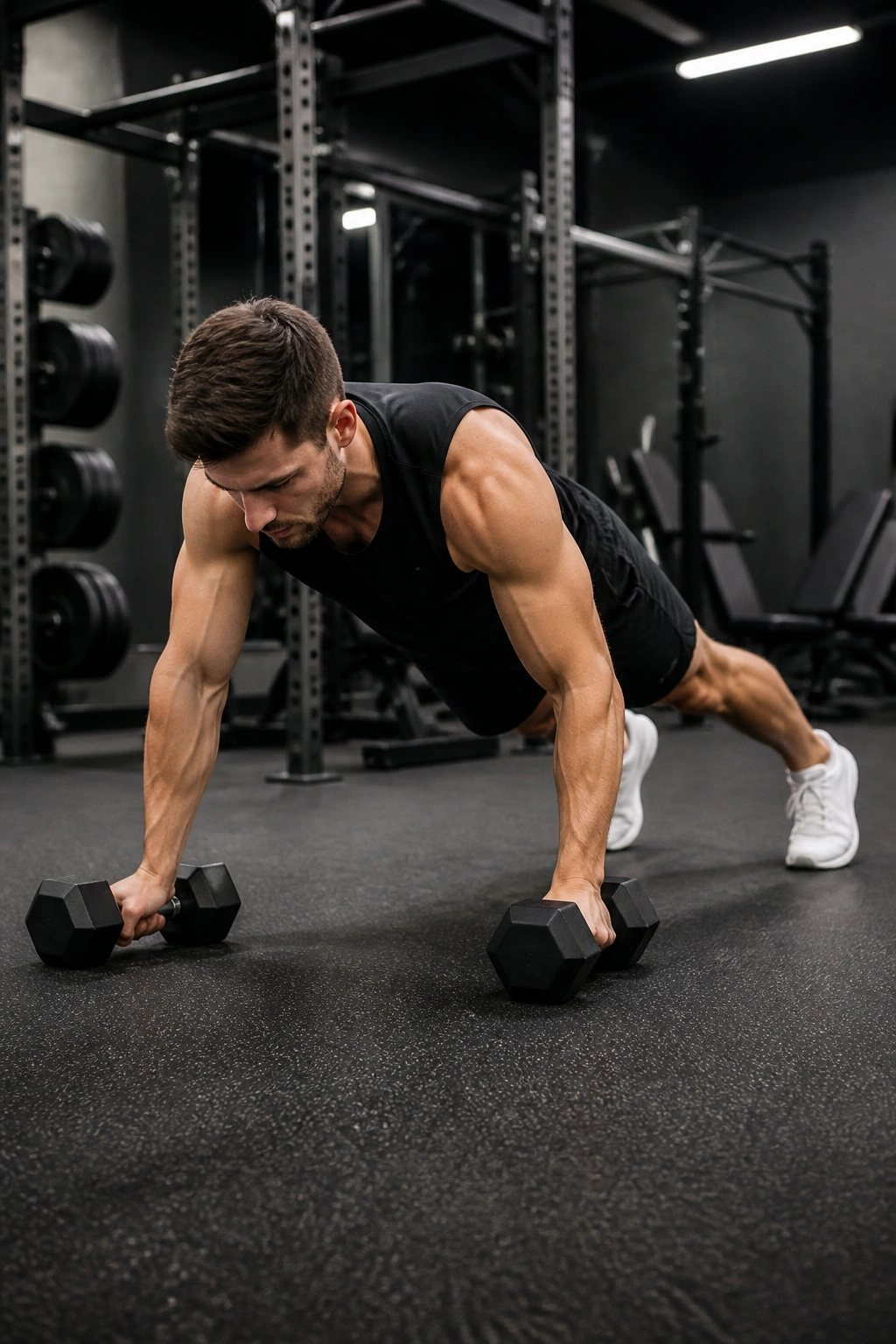
This movement targets the obliques and helps tighten the waistline. Get into a high plank position with a dumbbell sitting on the floor to the outside of your left hand.
Reach your right hand underneath your body, grab the dumbbell, and drag it across to the outside of your right hand. Place your hand back on the floor, then repeat with your left hand.
Controlling the Rotation
Your hips should stay perfectly still. If your hips are rocking back and forth as you pull the weight, you are failing the purpose of the exercise. Squeeze your glutes and tighten your abs. The goal is to move the weight without moving your torso. This is the definition of anti-rotational core training.
12. Russian Twist Circuit

The Russian twist is a staple for a reason. Sit on the floor, knees bent, feet hovering slightly off the ground. Hold a dumbbell with both hands.
Twist your torso to the right, tapping the weight to the floor, then twist to the left. Focus on the rotation coming from your mid-back, not just your arms.
Adding Intensity
To turn this into a HIIT circuit, keep a tempo. 45 seconds of work, 15 seconds of rest. For the work period, move the weight as fast as you can safely rotate. If 15 seconds of rest feels like too much, shorten it to 10. Your obliques should feel like they are about to cramp if you are doing this correctly.
13. Weighted Lateral Burpees
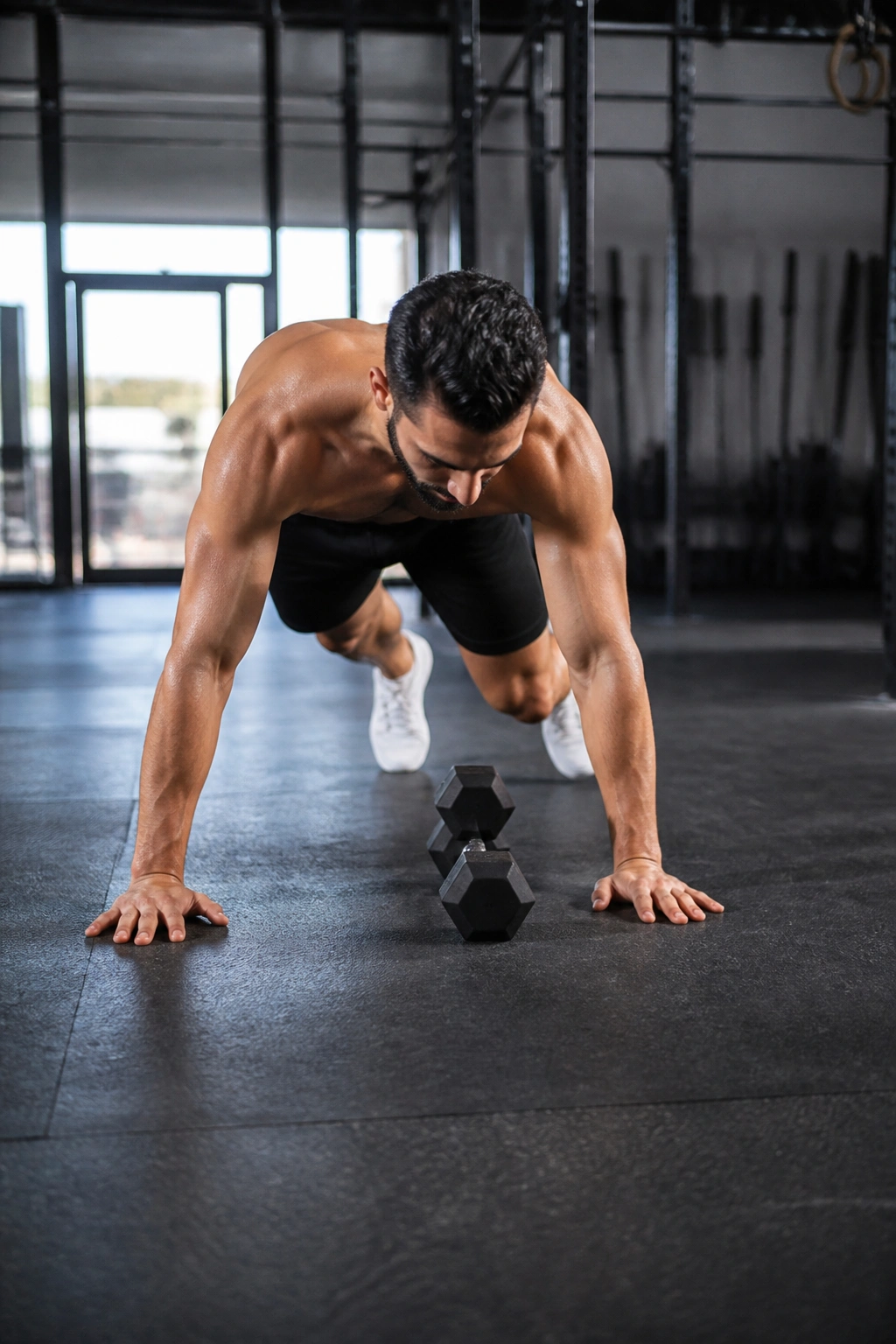
Standard burpees are great, but lateral burpees add a lateral jump, which works the smaller stabilizer muscles in your legs. Holding dumbbells makes it a strength-endurance challenge.
Place a dumbbell on the floor. Stand to the side of it. Perform a burpee. As you jump back up, jump laterally over the dumbbell. Repeat the burpee on the other side.
Why This Matters
Most people only move in the forward-and-backward plane. Adding lateral movement challenges your coordination and burns significantly more calories because your body isn’t used to moving this way. It forces your stabilizer muscles in the hips and ankles to engage, which is crucial for athletic performance and longevity.
14. Dumbbell Clean to Overhead

The clean is a powerhouse movement. It teaches you how to generate force from the ground up.
Start with dumbbells on the floor. Explode upward, shrugging your shoulders and pulling the weights to your shoulders in a smooth motion. From the shoulders, press the weights overhead.
The Technique
- The Pull: Keep the weights close to your body. If they swing out, you lose leverage.
- The Catch: Use your legs to absorb the weight as you bring it to your shoulders.
- The Press: Ensure your core is braced so you don’t arch your back.
This is a high-skill movement. If you are a beginner, master the clean without weight first. Once you are comfortable, use light dumbbells and focus on the snap of the hips.
15. Weighted Wall Balls
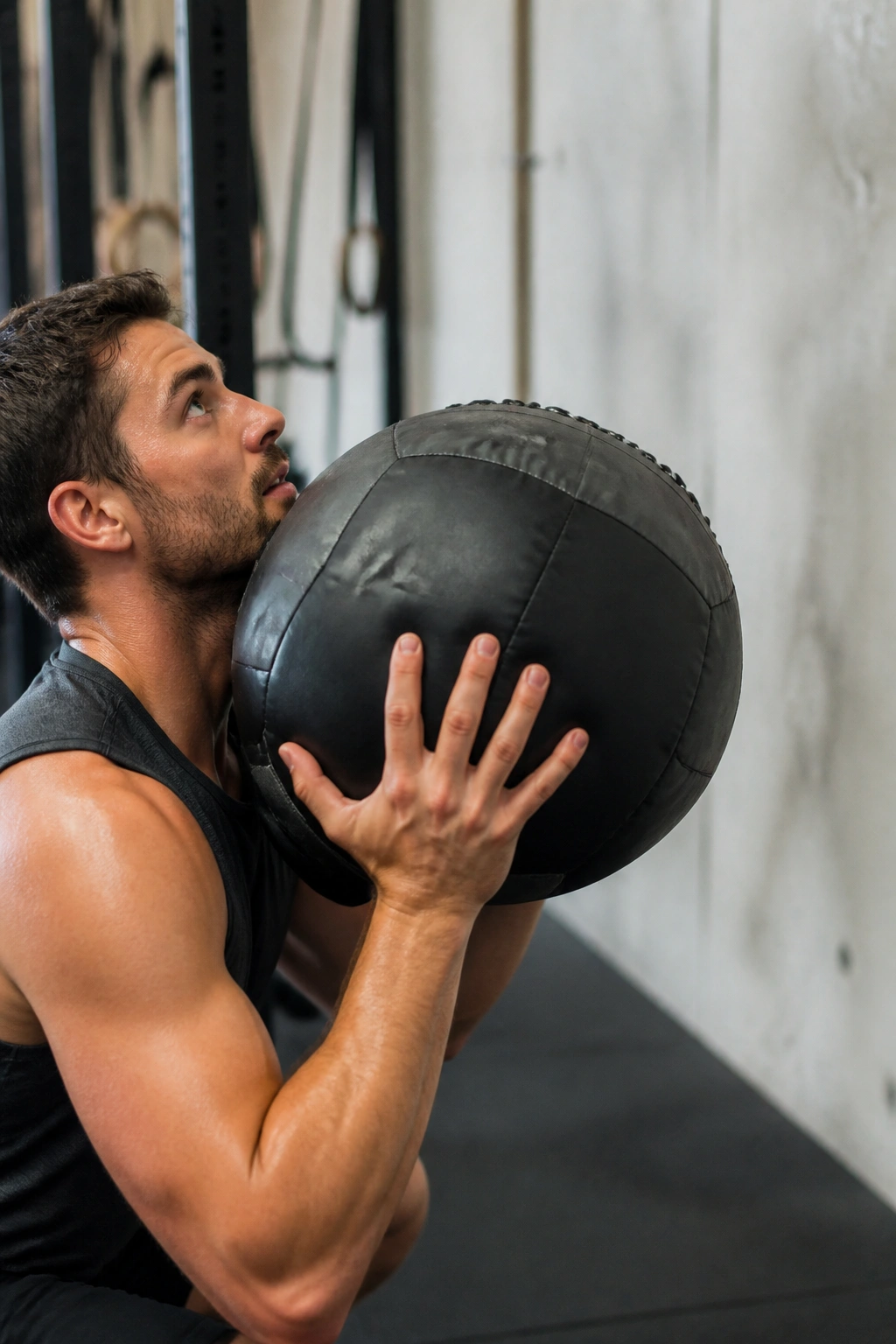
If you have a medicine ball or a heavy sandbag, use it. If not, a single heavy dumbbell held at the chest works.
Stand about two feet from a wall. Hold the weight at your chest. Squat down and, as you stand up, toss the weight against the wall at chest height. Catch it and go immediately into the next squat.
The Tempo
This is all about rhythm. Squat, throw, catch, squat, throw, catch. If you get into a flow, you can keep your heart rate elevated for the entire duration of the set. Try 45 seconds on, 15 seconds off, for 8 rounds. It will be the longest 8 minutes of your life.
16. Weighted Plank Jacks
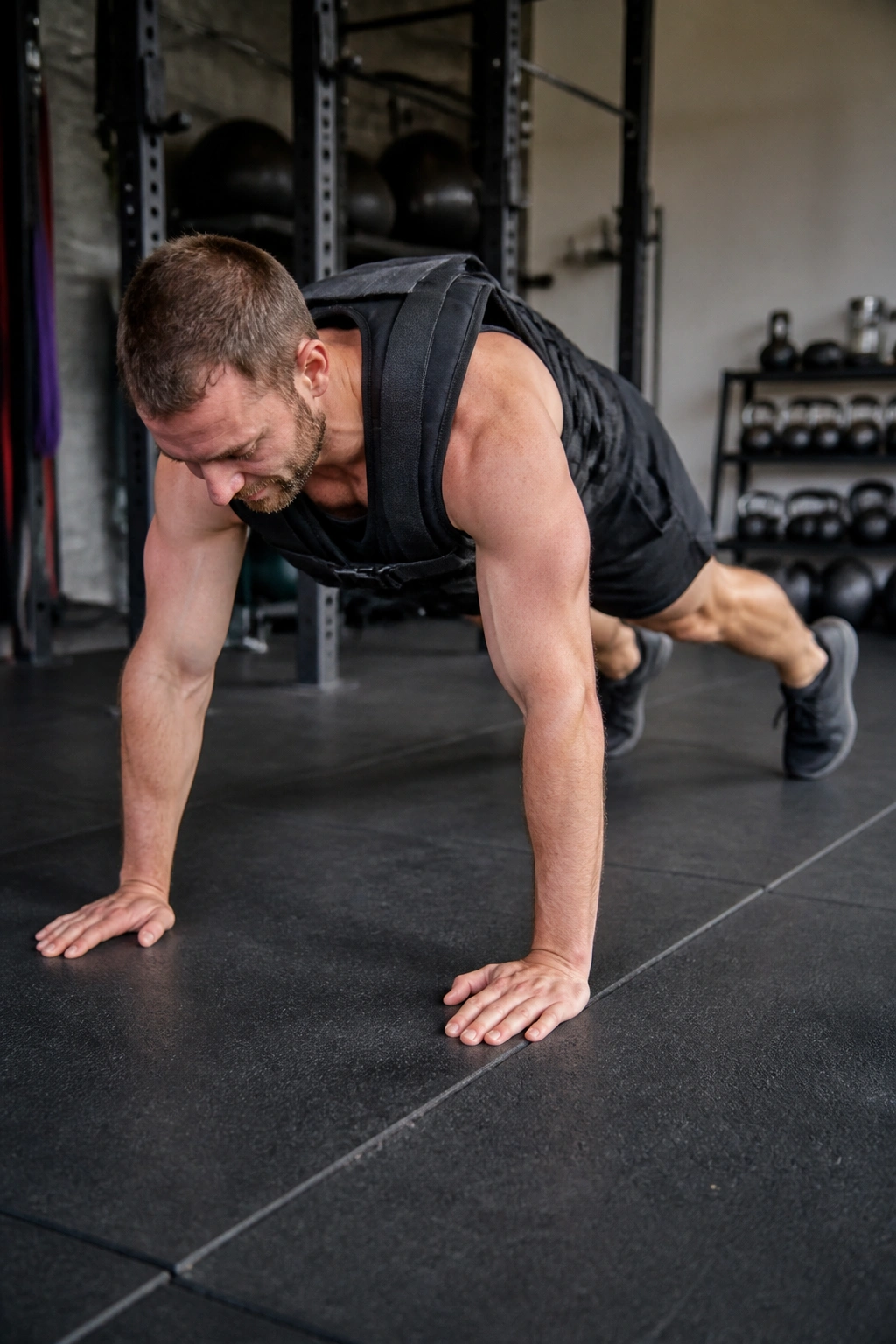
Plank jacks are essentially jumping jacks in a plank position. They are a nightmare for your abs if you add a small amount of weight.
Wear a weighted vest, or place a very light plate on your upper back. Get into a pushup position. Jump your feet out and in, just like a jumping jack, while keeping your torso completely still.
Why It Is Effective
The movement of the legs creates massive instability, and the weight on your back forces the stabilizers to work twice as hard to maintain the plank. Do not arch your back. If the plate is sliding around, you are likely too bouncy. Control the jump. It should be a crisp, clean movement, not a sloppy hop.
17. Dumbbell Deadlift and Row
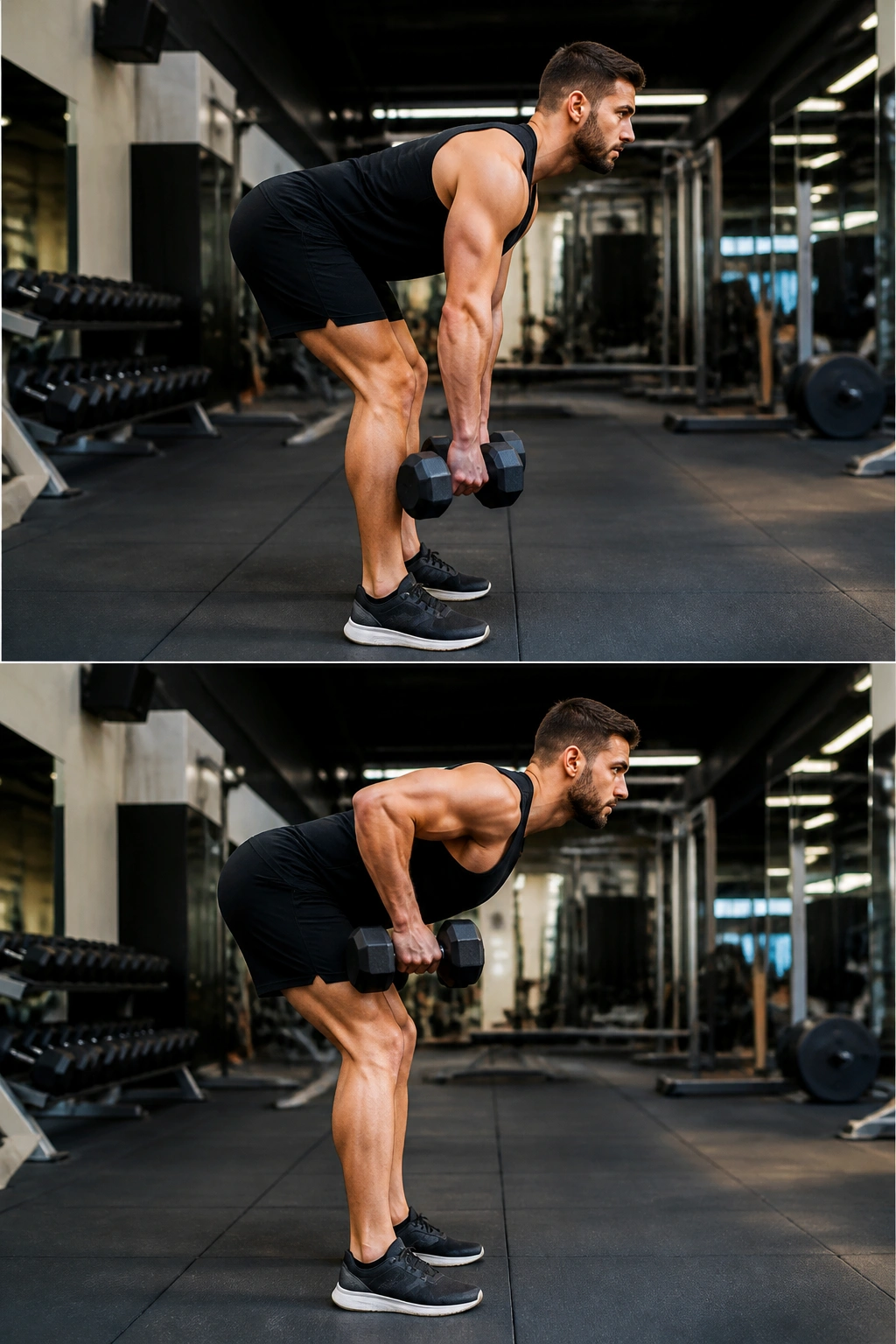
Combine these two to hit the entire backside of the body. Stand with feet hip-width apart, holding dumbbells.
Hinge at the hips, keeping your back flat, until the weights are below your knees. Perform a row, pulling the weights to your hip. Return the weights, then stand back up.
The Efficiency
By combining a hinge and a pull, you are shortening the time between sets. This keeps the heart rate high. It is a fantastic movement for correcting the rounded shoulders that come from sitting at a desk all day. Keep your head neutral. Looking up at a mirror will strain your neck. Pick a spot on the floor about six feet in front of you.
18. Weighted Bicycle Crunch Finisher
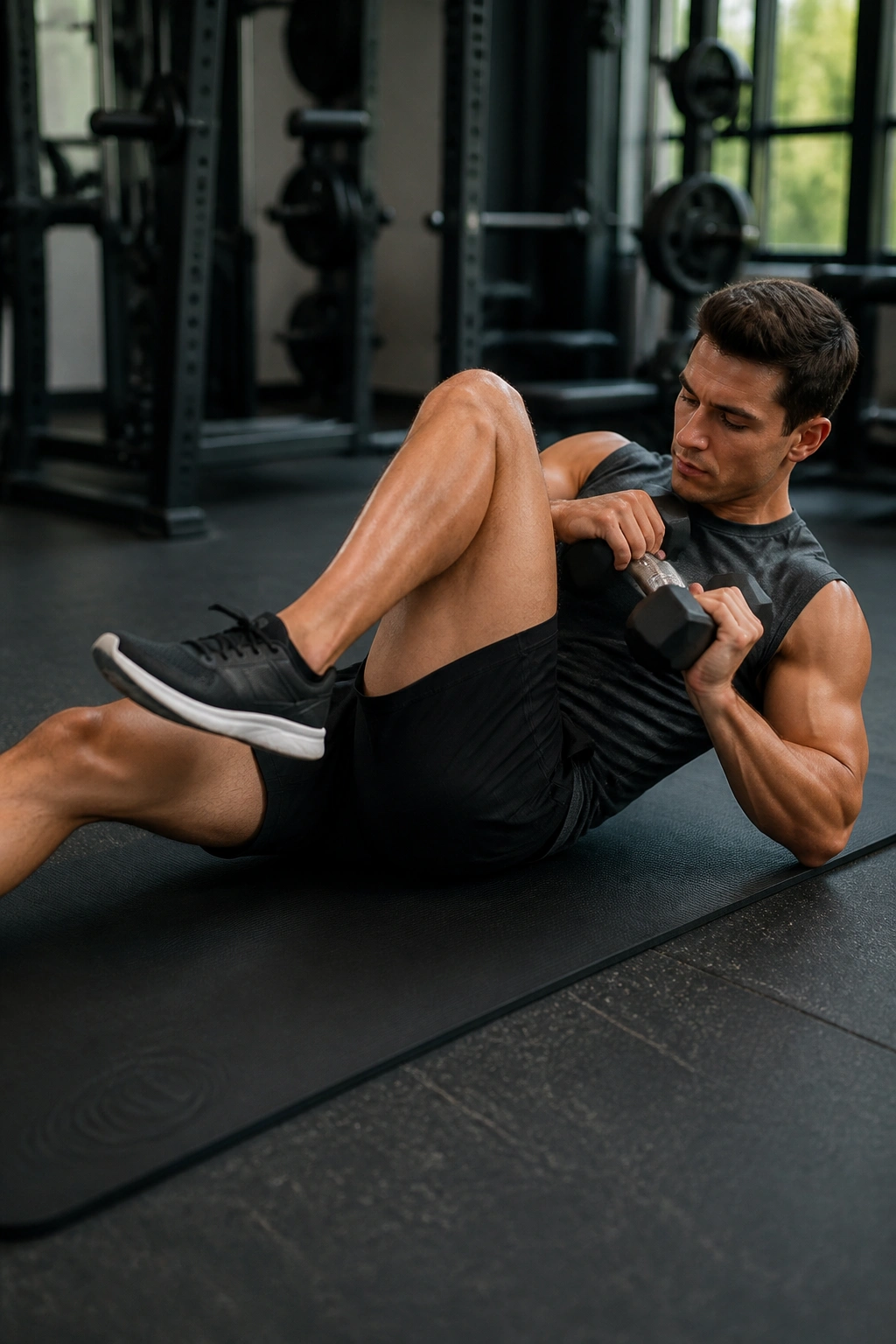
Finish strong with the most effective ab isolation movement. Lie on your back, holding a single, light dumbbell in your hands.
Extend your legs, bring your right elbow to your left knee while crunching up. Hold the dumbbell in your hands to add resistance to the core rotation. Rotate, switch, and repeat.
The Goal
Go for time, not reps. Set a timer for 3 minutes. The goal is to keep moving the entire time. If you need to rest, drop the weight, but keep moving. This is your final chance to empty the tank. By the end of the three minutes, your core should be completely exhausted. That is how you finish a session.
Final Thoughts
You now have a massive library of high-intensity protocols. Do not feel the need to do them all at once. Pick one or two, master them, and cycle them into your routine. Consistency beats intensity for one day, but high intensity consistently applied is what builds a physique that is both functional and lean.
Listen to your body. If a movement causes sharp pain, stop immediately. Discomfort and muscle burn are expected; joint pain is a warning sign. Adjust the weight, fix your form, or choose a different protocol. Remember, the weight you pick should be heavy enough to challenge you, but not so heavy that it forces you to sacrifice your form. Safety and technique are the foundations upon which all results are built. Go forth and put in the work.
