



If you are looking for a miracle move that melts fat directly off your hips while you binge-watch a series, I have to be honest: that exercise does not exist. The fitness industry loves to sell the idea of “spot reduction”—the belief that if you perform a specific movement enough times, your body will prioritize burning fat in that exact region. Biological reality, however, works differently. When you work a muscle group, you strengthen the tissue beneath the skin. You improve your tone, your posture, and your metabolic rate. But to lose fat, you need to put your body into a position where it uses stored energy—fat—as fuel.
This means the most effective approach to reshaping your hips involves a two-pronged strategy. First, you need exercises that target the muscles in the hip, glute, and thigh area. This builds shape and definition. Second, you need movements that get your heart rate up or challenge your muscles enough to create a metabolic demand. When you pair these targeted movements with a nutrition plan that keeps you in a slight caloric deficit, your body will eventually tap into those fat stores. Consistency is the only secret weapon here.
These twenty movements focus on the hip abductors, the gluteus medius, and the surrounding musculature. They require nothing more than a bit of floor space and maybe a resistance band if you have one lying around. You do not need to do all twenty at once. Pick five or six, create a circuit, and repeat it three times. Let’s get into the mechanics of the work.
1. Side-Lying Leg Lifts
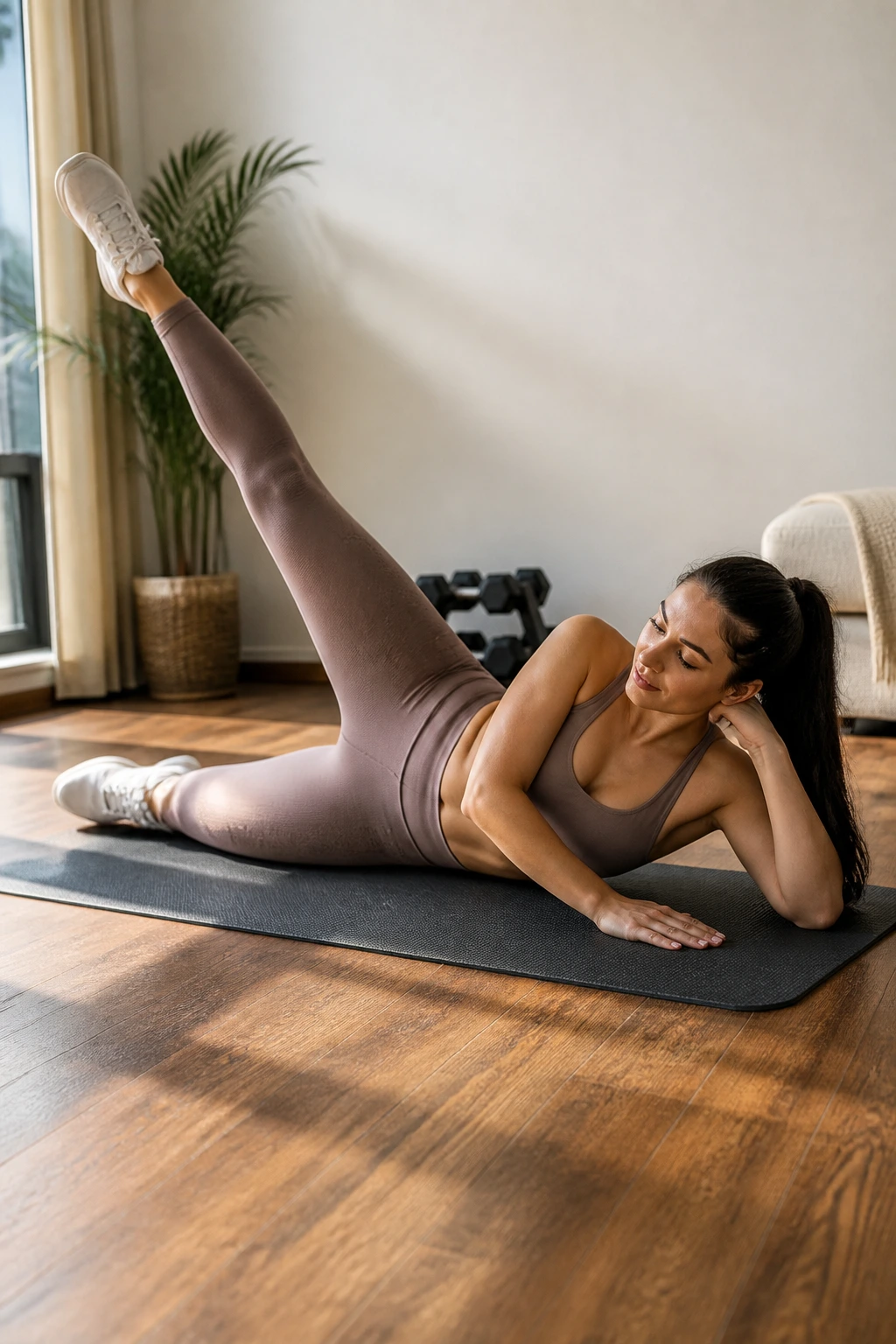
This is a classic for a reason. It isolates the gluteus medius, the muscle on the side of your hip that gives the area its shape. If you aren’t feeling this in the side of your hip, you are probably letting your hips roll backward.
Lie on your side with your legs stacked, your body in a straight line from heels to head. Support your head with your bottom arm. The trick is to keep your top hip stacked directly over the bottom one. If you tilt backward, you shift the load to your hip flexors and lower back. Slowly lift your top leg toward the ceiling. Hold for one second at the top, feeling that squeeze in the side of the hip, then lower it with control. Do not just let gravity drop the leg. Control the descent. If you want to increase the challenge, pause at the top for three seconds.
2. Clamshells
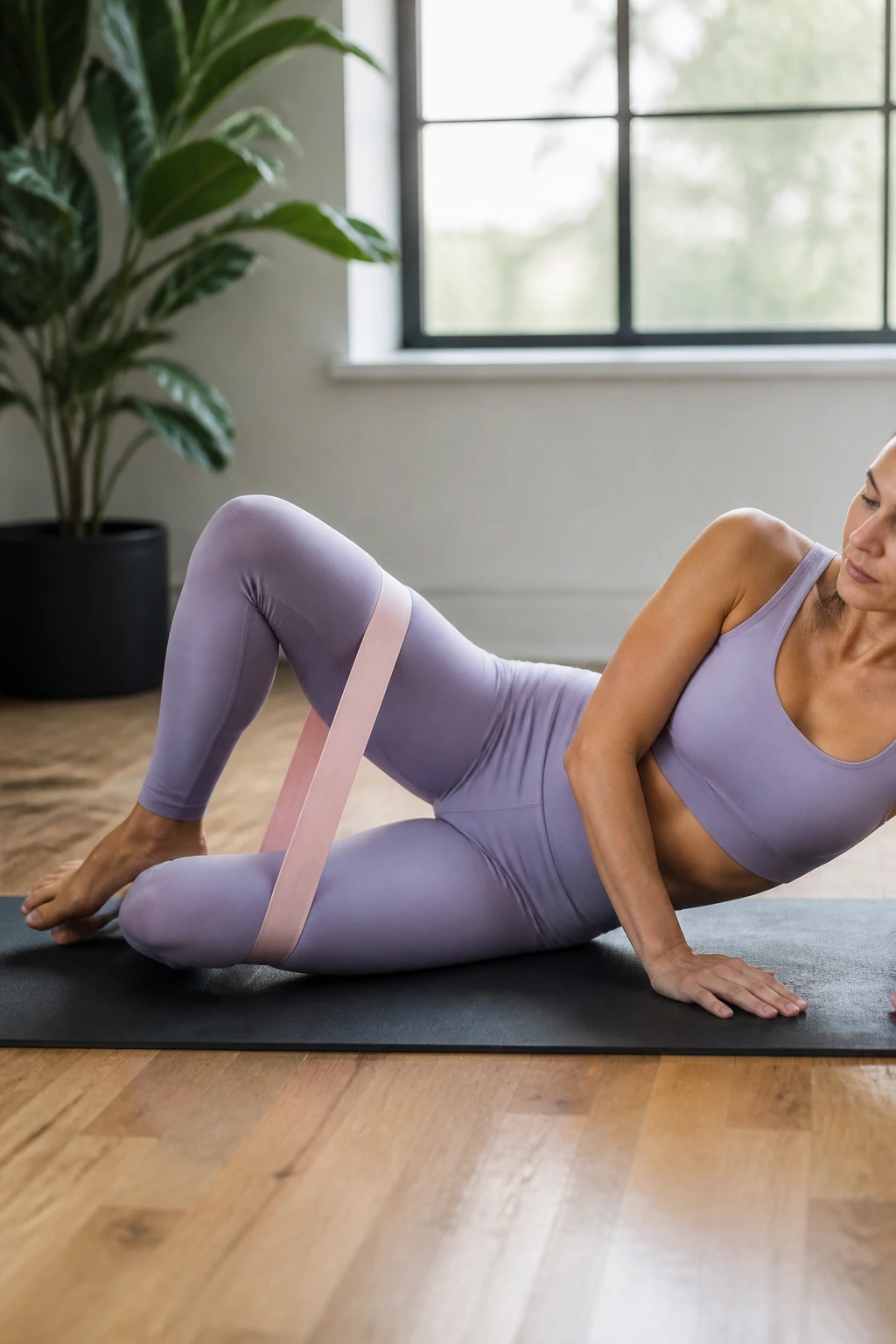
The clamshell is deceptive. It looks incredibly simple, but if you do it with proper form, it becomes one of the most effective ways to fatigue the hip abductors. It is a favorite among physical therapists for a reason.
Lie on your side, knees bent at a 45-degree angle. Keep your feet touching. Open your top knee like a clam opening its shell. Keep your feet glued together throughout the movement. Focus on the rotation coming from the hip joint, not the lower back. You should feel a deep burn in the upper glute area. To make this harder, place a light resistance band just above your knees. Perform fifteen reps on each side before switching. Do not rush. This is not a movement meant for speed.
3. Curtsy Lunges
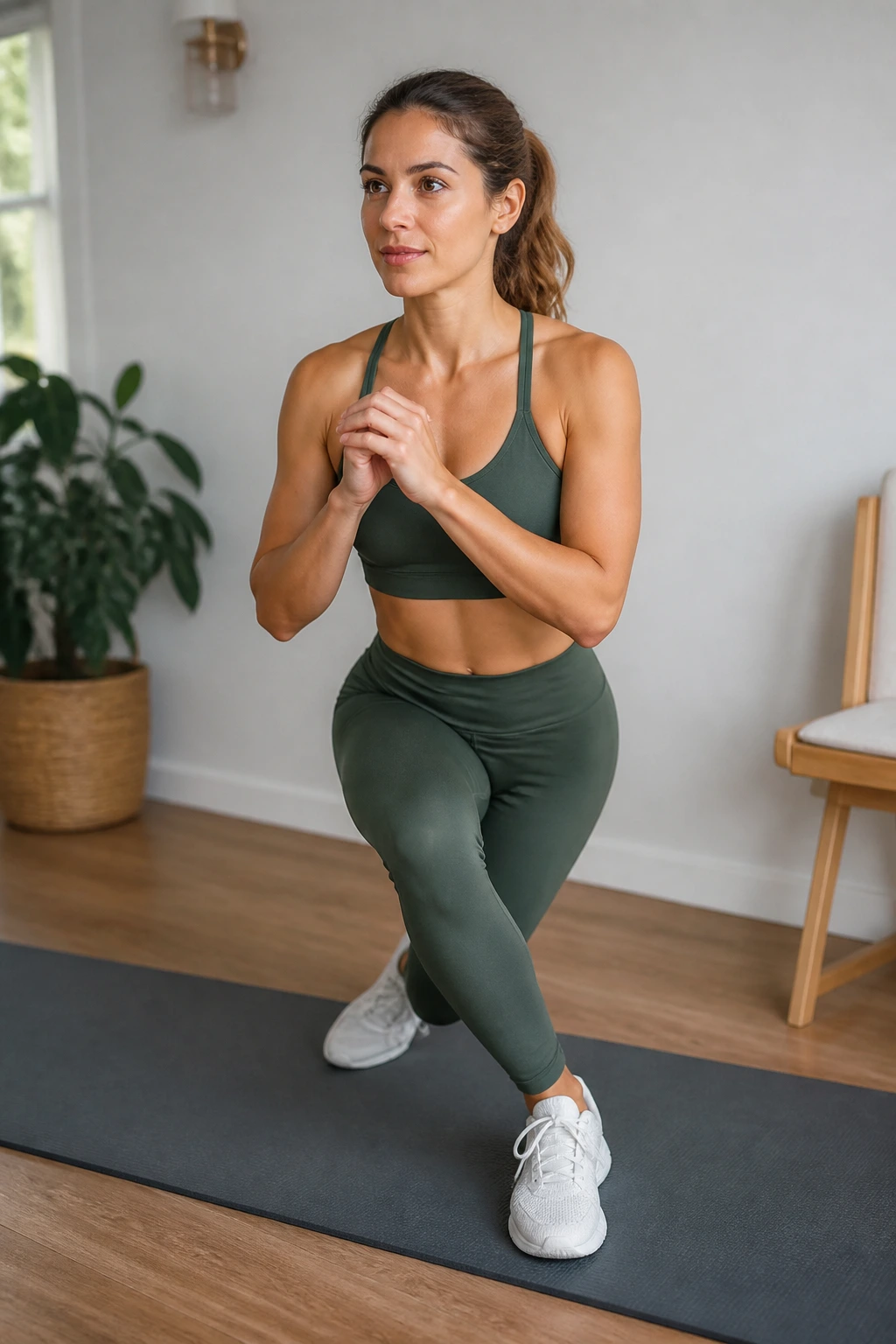
Curtsy lunges add a diagonal element to a standard lunge, which forces your hips to stabilize in a different plane of motion. This recruits the outer glutes and the hip stabilizers much more than a standard reverse lunge.
Stand with your feet hip-width apart. Take a big step backward with your right foot, crossing it behind your left leg as if you are performing a polite bow or a curtsy. Lower your hips until your front thigh is parallel to the floor. Keep your torso upright. Push off your front foot to return to standing. You will notice your hips firing to maintain balance during the transition. If you struggle with balance, perform this movement near a wall or a sturdy chair you can lightly touch.
4. Sumo Squats
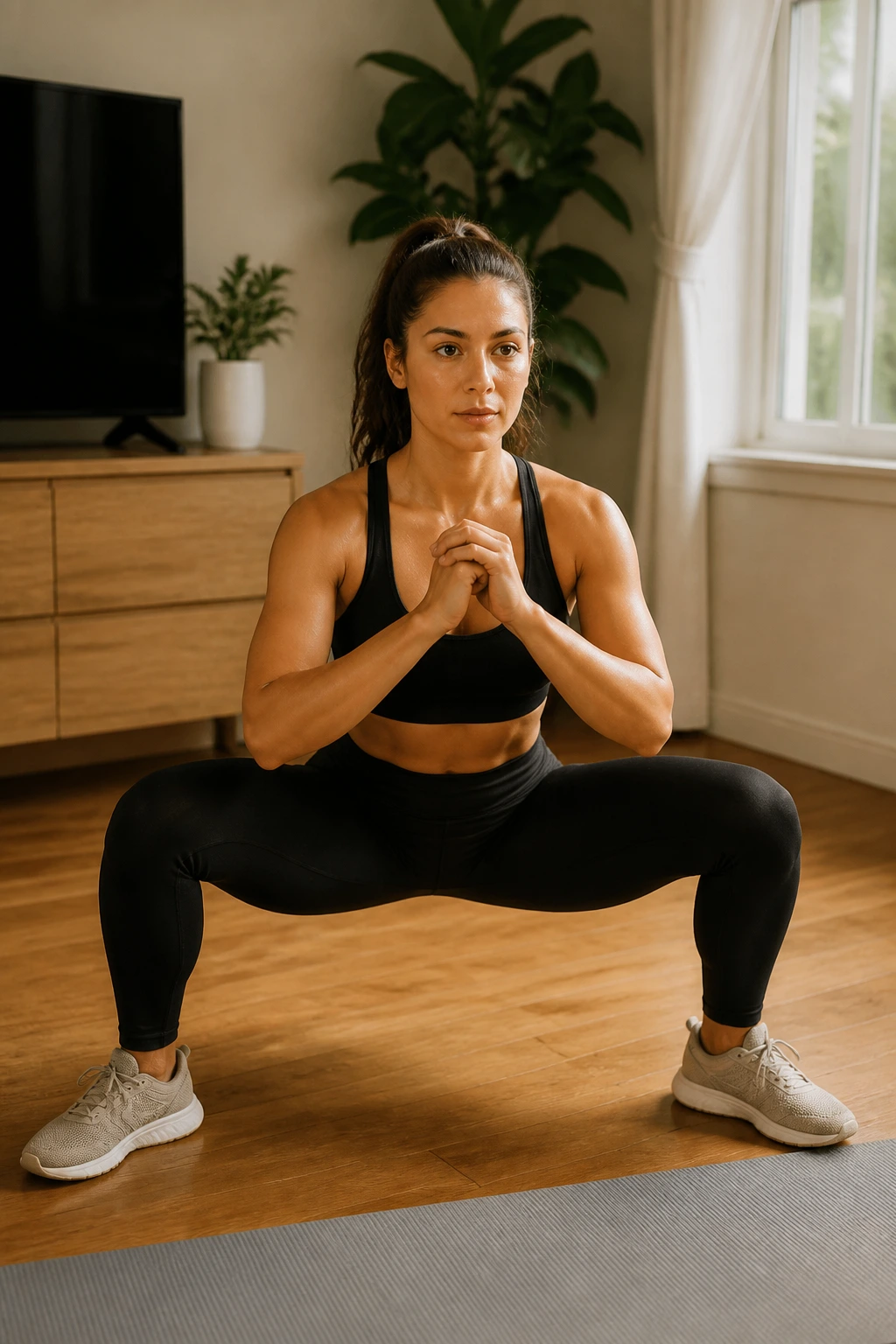
A standard squat is great, but a sumo squat shifts the emphasis. By widening your stance and turning your toes out, you engage the inner thighs (adductors) and the glutes differently. This helps create a more toned appearance in the hip and thigh area.
Set your feet wider than shoulder-width, toes pointed out at about 45 degrees. Drop into a squat, keeping your chest tall and your knees tracking over your toes. Do not let your knees cave inward—this is a common form error that can cause knee pain. Squeeze your glutes hard as you push through your heels to stand back up. The deeper you go, the more you will feel this in the inner hips.
5. Fire Hydrants
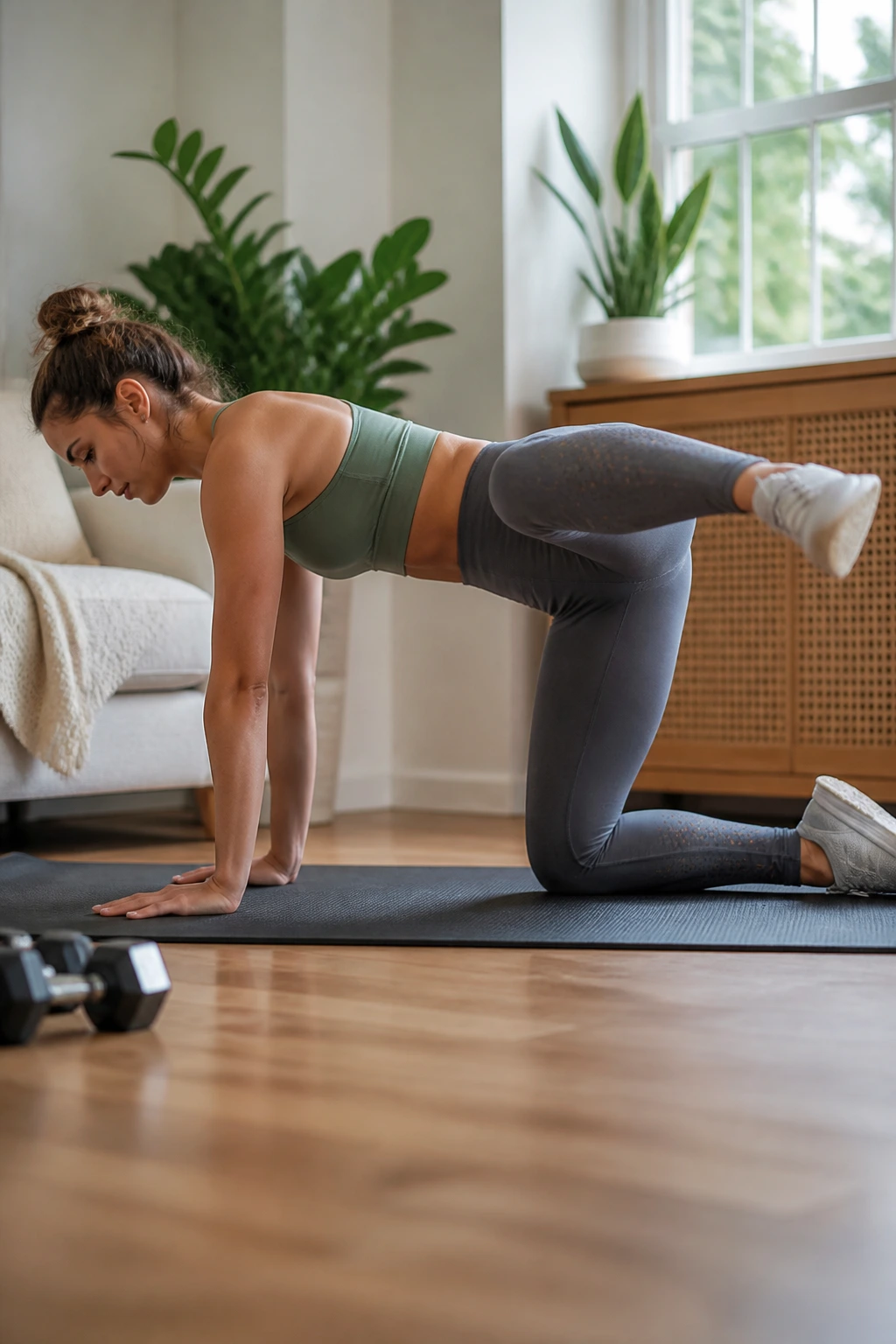
This move mimics a dog at a fire hydrant, hence the name. It isolates the hip muscles by placing the body in a quadruped position, which removes the stability of the floor underneath your hips.
Get on your hands and knees in a tabletop position. Keep your back flat and your core engaged. Without shifting your weight to the side, lift your left knee out to the side until your thigh is parallel to the floor. Imagine you are trying to push your knee toward the wall. Return to the starting position without touching the floor between reps if you want to keep the muscle under constant tension. Do twenty reps on one side, then twenty on the other. You will likely feel this in the supporting hip as much as the moving one.
6. Side Lunges
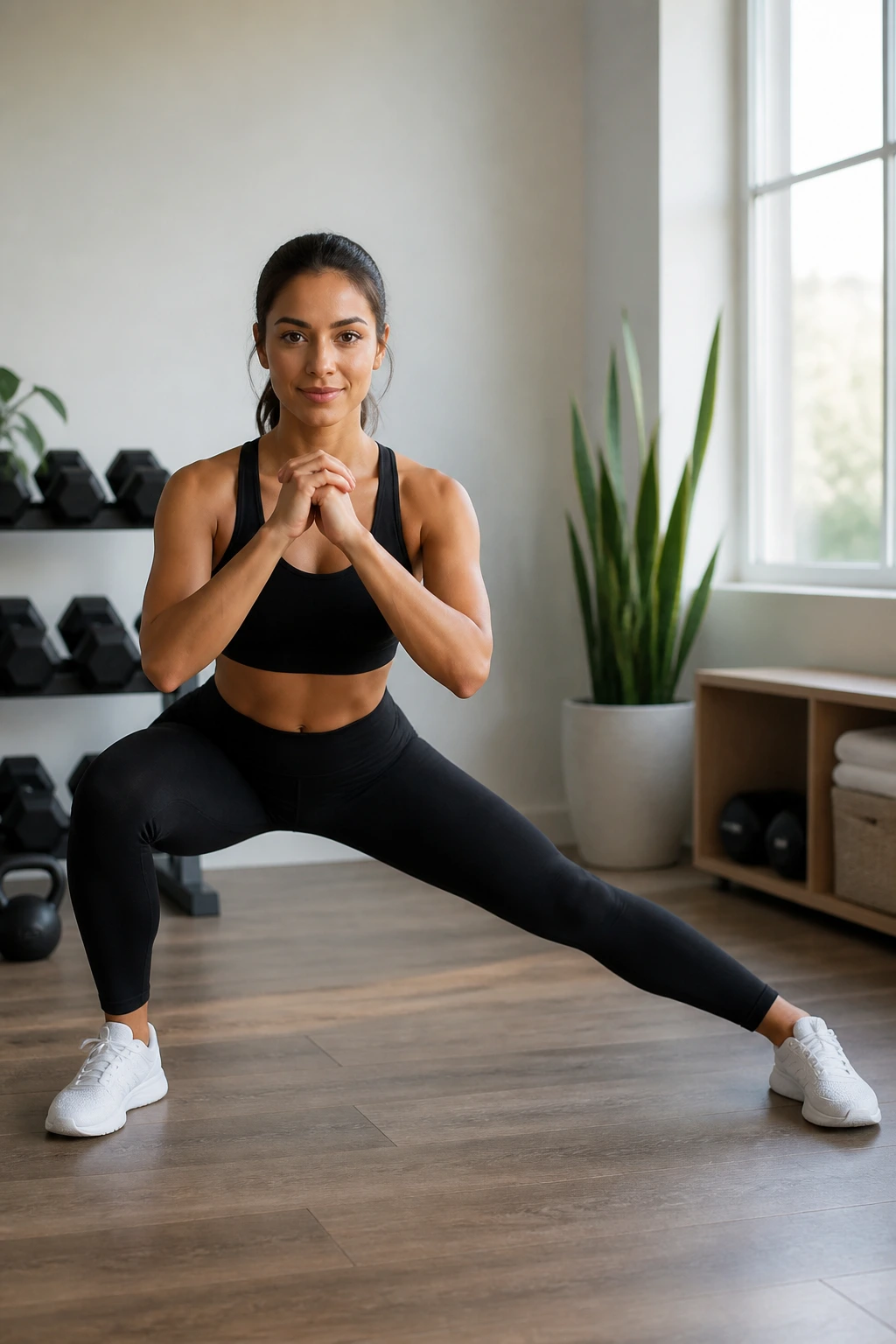
Side lunges, or lateral lunges, work the hips through a lateral plane. Most of our daily movement happens forward and backward; we rarely move side-to-side. This exercise corrects that imbalance.
Stand with your feet together. Take a wide step to the right. Sink your hips back and down, keeping your left leg straight. Your right knee should bend, but try to keep it from extending too far past your toes. Your torso will naturally lean forward slightly, but keep your chest up. Push off your right foot to snap back to the center. You will feel a deep stretch in the inner thigh of the straight leg and a massive glute contraction in the lunging leg.
7. Glute Bridges
The glute bridge is the foundational exercise for anyone who wants to target the backside. It is gentle on the lower back while being highly effective at firing up the gluteal muscles.
Lie on your back with your knees bent and feet flat on the floor, about hip-width apart. Lift your hips toward the ceiling. At the top of the movement, squeeze your glutes as hard as you can. Your body should form a straight line from your shoulders to your knees. Do not overarch your back. Hold for a count of two, then lower back down. If this becomes easy, perform it with one leg extended in the air—this is called a single-leg glute bridge, and it doubles the difficulty instantly.
8. Lateral Band Walks
If you have a mini resistance band, this is the move that will leave your hips burning. It forces constant tension on the hip abductors, which are often the weak link in hip and glute training.
Place the resistance band around your ankles or just above your knees. Get into a half-squat position, keeping your chest up. Take a controlled step to the right, then follow with your left foot, maintaining tension on the band the whole time. Don’t let your feet come together completely, or you will lose the tension. Walk ten steps to the right, then ten steps to the left. Keep your knees pushed outward against the resistance of the band throughout the entire set.
9. Donkey Kicks
Donkey kicks target the gluteus maximus, the largest muscle in the glute complex. They are highly effective at isolating the movement to the hip joint.
Start on your hands and knees. Keep your core tight to prevent your lower back from arching as you lift. Lift your right leg, keeping your knee bent at a 90-degree angle, and push your heel toward the ceiling. Squeeze at the top of the movement. Make sure your hip doesn’t rotate—keep your pelvis square to the floor. Lower the leg without touching your knee to the ground. This keeps the glute engaged for the entire set.
10. Cossack Squats
Cossack squats are essentially a deep side lunge, but they require significant mobility. They are excellent for hip flexibility and strength.
Stand with a wide stance, much wider than a normal squat. Shift all your weight to your right side, bending your right knee and keeping your left leg perfectly straight. Your left toes will naturally point toward the ceiling as you sink low into your right hip. Go as low as your mobility allows. Push off your right heel to return to the center, then immediately switch to the left side. These are challenging, so focus on the range of motion before you worry about speed.
11. Standing Hip Abductions
You can do these anywhere—while waiting for the coffee to brew or while watching TV. They are low impact but effective for endurance in the hip abductors.
Stand tall, holding onto a chair or wall for balance if necessary. Engage your core. Keep your leg straight and lift it out to the side. Do not lean your torso to the opposite side to compensate. The goal is to isolate the movement to the hip joint. Your range of motion might not be huge, and that is okay. It is better to have a smaller, controlled movement than a large swing that uses momentum. Do twenty reps on each side.
12. Rainbow Leg Raises
These are called rainbow leg raises because your leg traces an arc in the air. This movement works the glutes from multiple angles, hitting the upper and lower fibers of the muscle.
Start in a quadruped position on all fours. Extend your right leg straight out behind you. Lift the leg and arc it to the right side of your body, tapping the floor. Lift it back up and over, arcing it to the left side of your body. Think of it like drawing a rainbow with your toe. Keep your torso completely still; only the leg should be moving. This is a great move for core stability in addition to hip work.
13. Plank Jacks
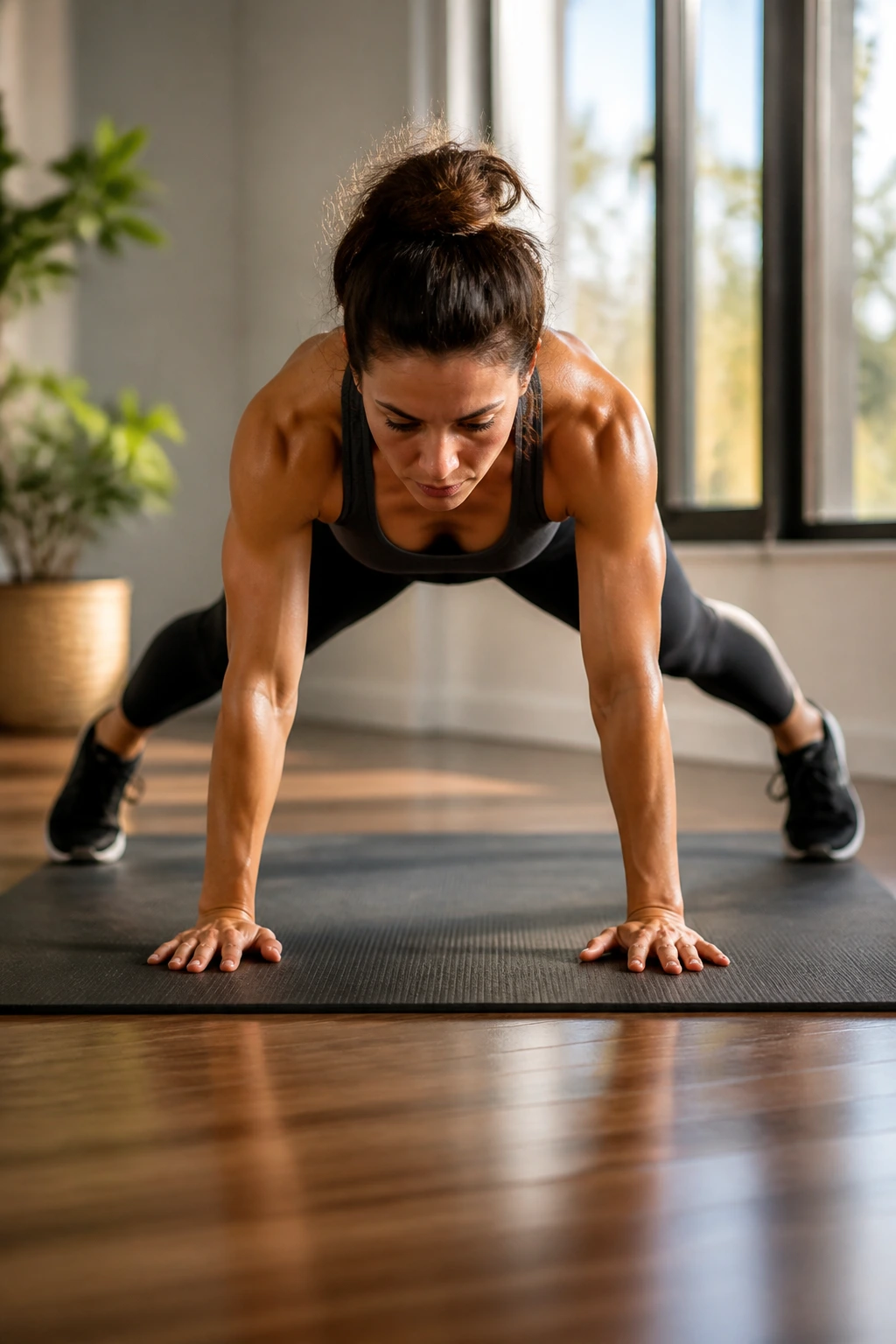
Sometimes you need a cardiovascular element to help burn fat, and plank jacks are perfect for this. They keep your core stable while forcing the hips to work during the jumping motion.
Start in a high plank position, hands directly under your shoulders. Keep your body in a straight line. Jump your feet out wide, like a jumping jack, and then jump them back together. Keep your hips low—do not let your butt pike up toward the ceiling. The faster you move, the higher your heart rate will climb. This engages the hip abductors repeatedly with every jump.
14. Mountain Climbers
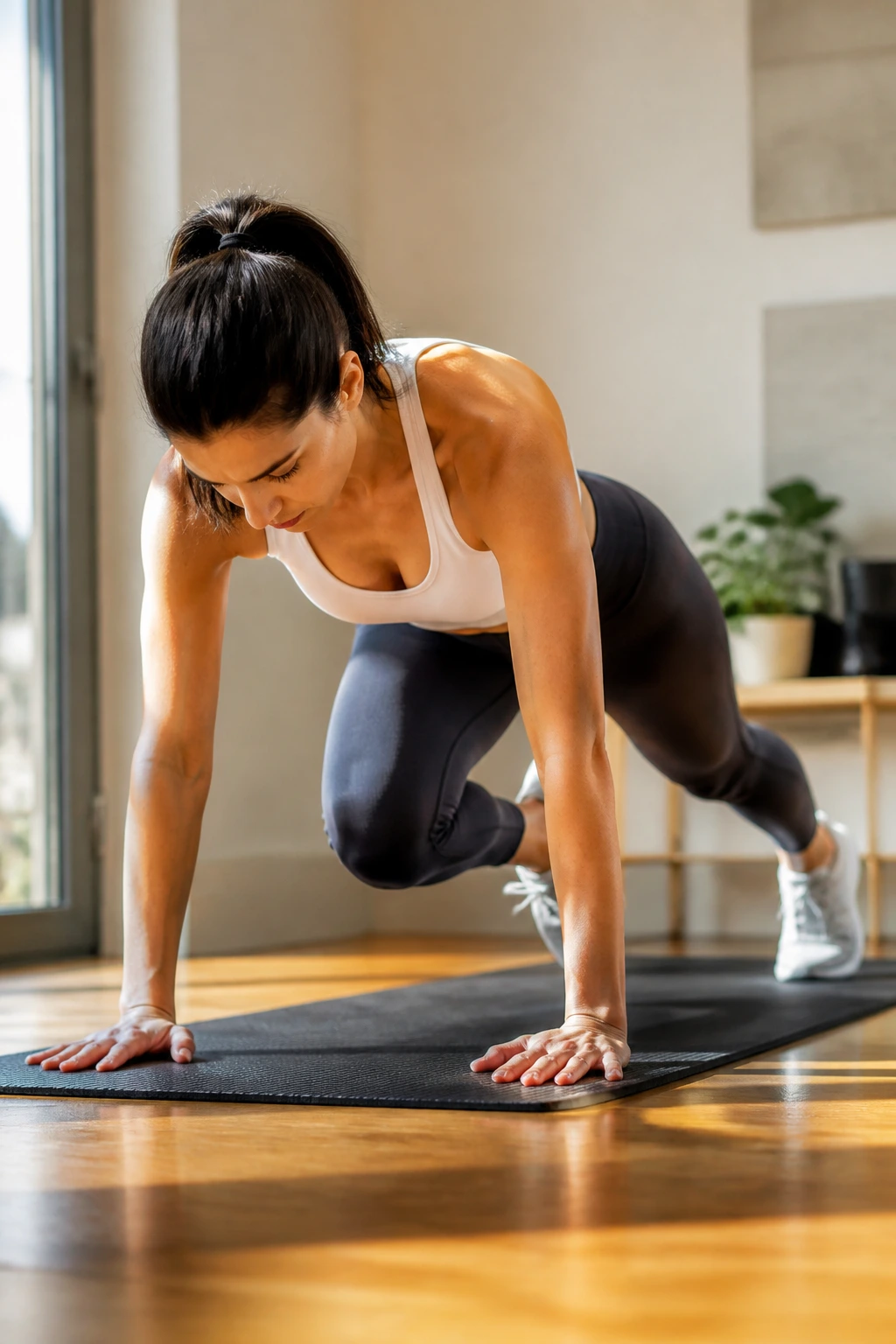
Mountain climbers are deceptive. They are often thought of as a core exercise, but they require significant work from the hip flexors and stabilizing muscles in the hips.
Start in a high plank position. Drive your right knee toward your chest, then quickly switch and drive your left knee toward your chest. Keep your back flat and your hips level. Don’t bounce your hips up and down as you switch legs. The goal is a steady, running-in-place rhythm. If you perform these for forty-five seconds, your hips and core will feel the fatigue.
15. Bicycle Crunches
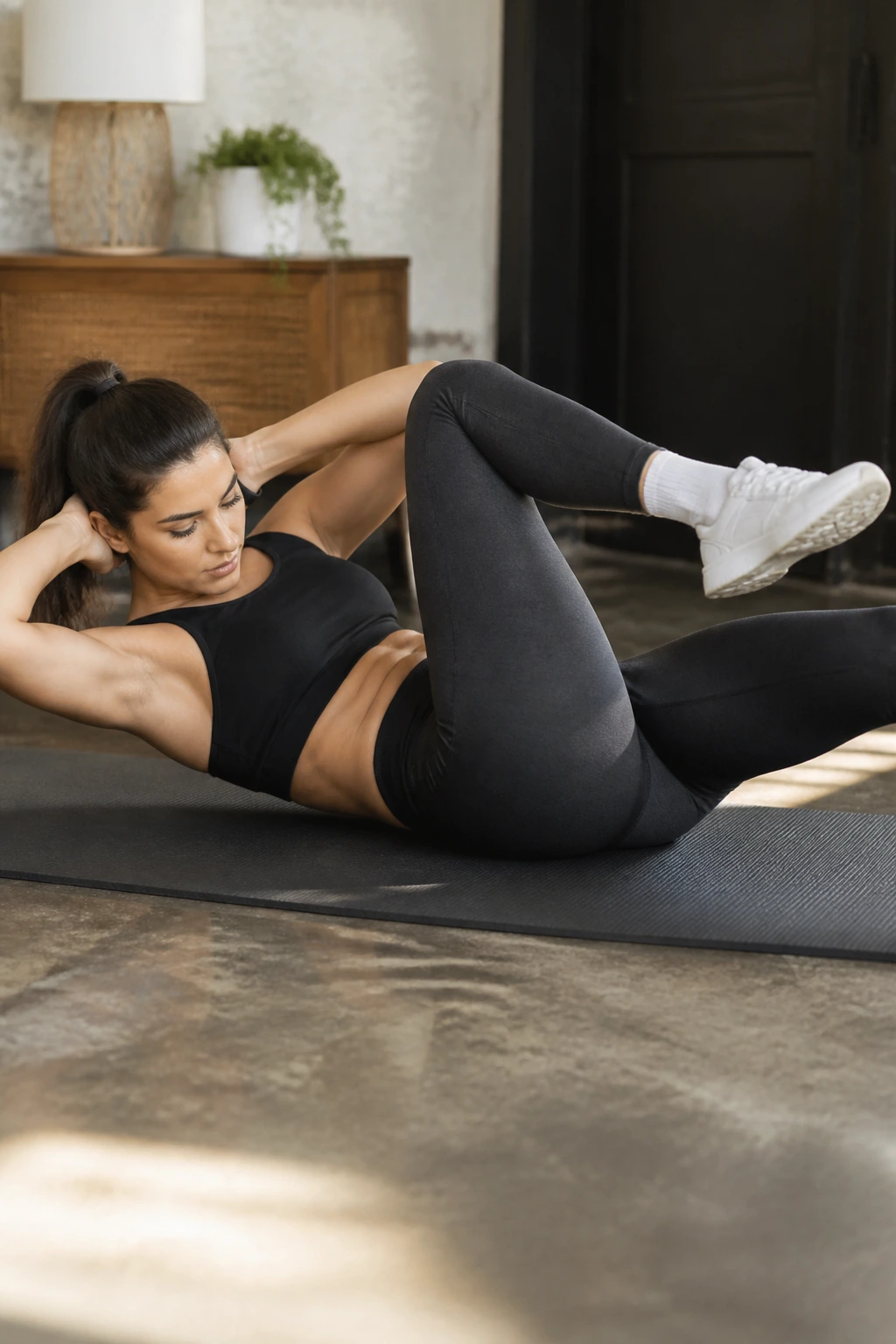
While these are famously an abdominal exercise, the twisting motion requires your hips to stabilize, and the leg extension engages the hip flexors and deep core muscles.
Lie on your back, hands behind your head. Lift your shoulders off the ground. Bring your right elbow toward your left knee while extending your right leg straight out. Switch sides in a fluid, cycling motion. Do not pull on your neck. The intensity comes from the slow, deliberate rotation of the torso and the extension of the leg. This works the entire midsection, which contributes to a leaner look overall.
16. Weighted Hip Thrusts
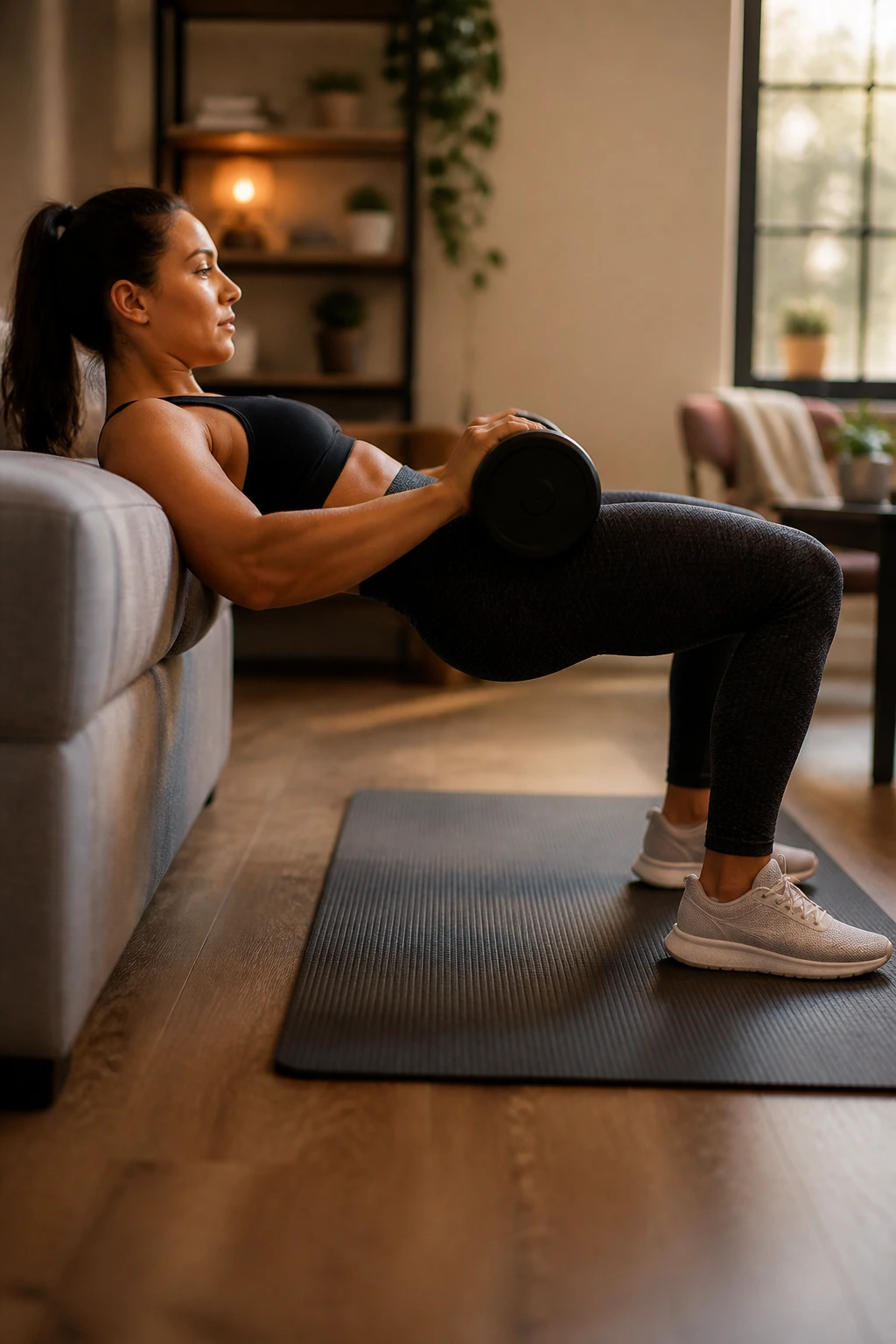
If you want to build the glutes and hips, you eventually need to add load. You do not need a gym for this; a backpack filled with books or a heavy jug of laundry detergent will suffice.
Sit on the floor with your upper back against a couch or sturdy chair. Place your weight across your hips. Feet should be flat on the floor. Drive your hips upward, squeezing your glutes. The goal is to reach full hip extension. Hold for a second at the top, then lower. The couch provides the elevation you need to get a deeper range of motion than a floor bridge. This is arguably the most effective move for glute growth.
17. Step-Ups
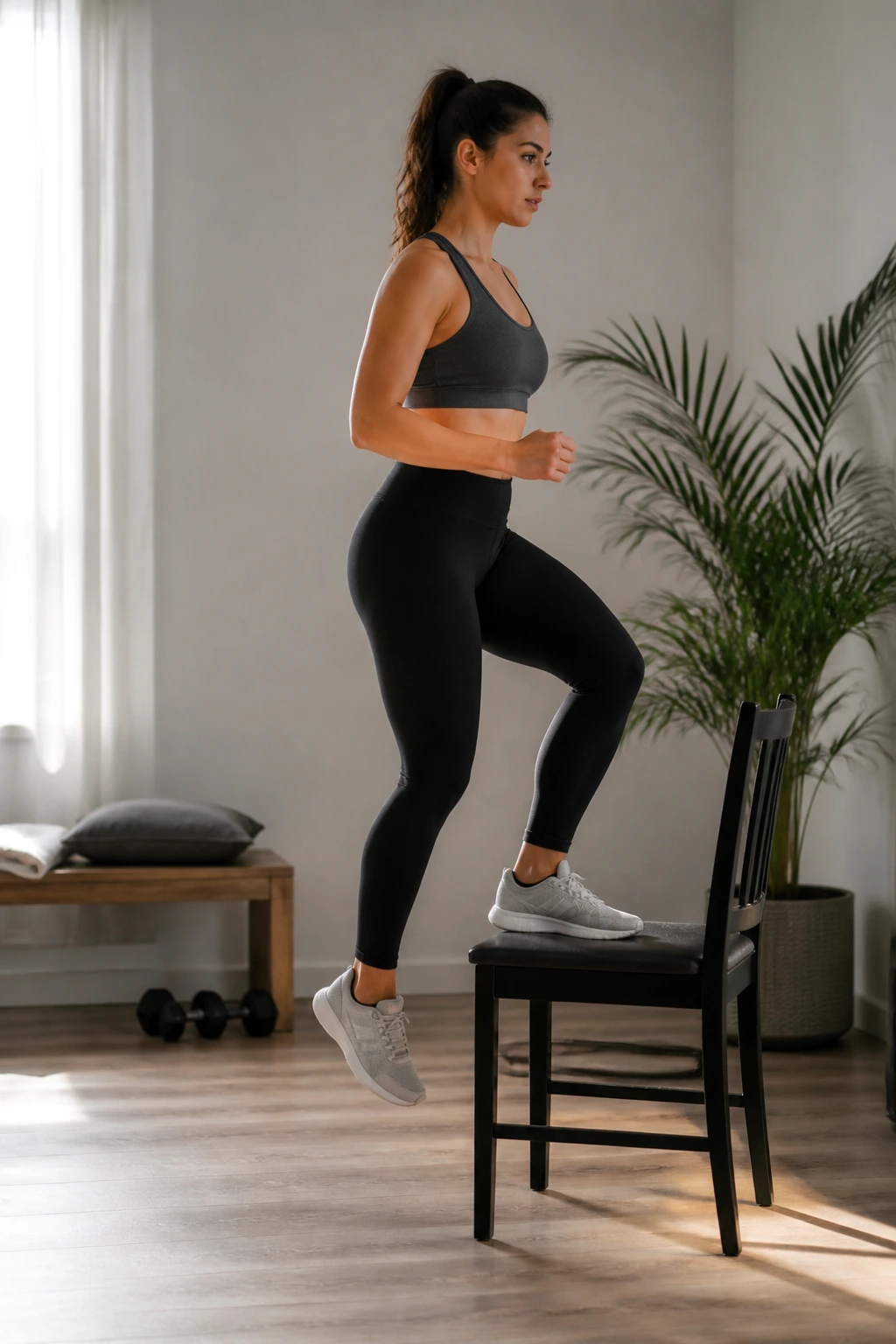
Step-ups are an underrated unilateral movement. Because you are working one leg at a time, you have to stabilize your entire pelvis, which lights up the hip stabilizers.
Find a chair or a bench that is sturdy. Step onto it with your right foot, driving through your heel to bring your left foot up to meet it. Control your descent—step down slowly. Do not let your body plummet to the floor. The “eccentric” phase, or the way down, is where a lot of muscle building happens. Focus on using your glutes to lift you, not just your calf muscles.
18. Skating Lunges
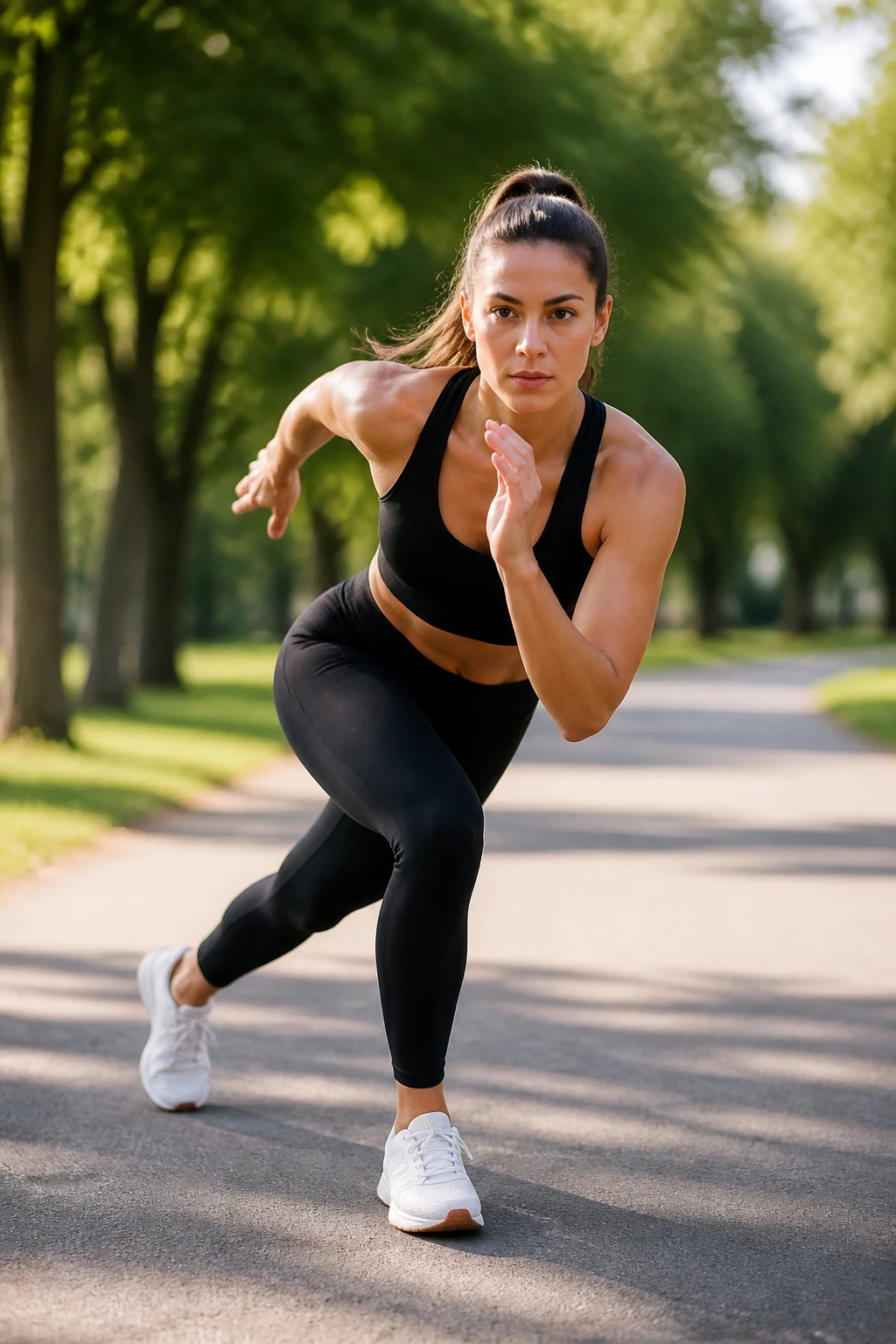
This movement adds an explosive component to your hip workout. It mimics the motion of a speed skater.
Start in a standing position. Jump to the right, landing on your right foot with your left leg sweeping behind you. Immediately jump to the left, landing on your left foot with your right leg sweeping behind. Use your arms to help with momentum. This side-to-side explosive movement hits the glute medius hard. It also gets your heart rate up, which helps with the calorie burning you need for fat loss.
19. Pilates Leg Circles
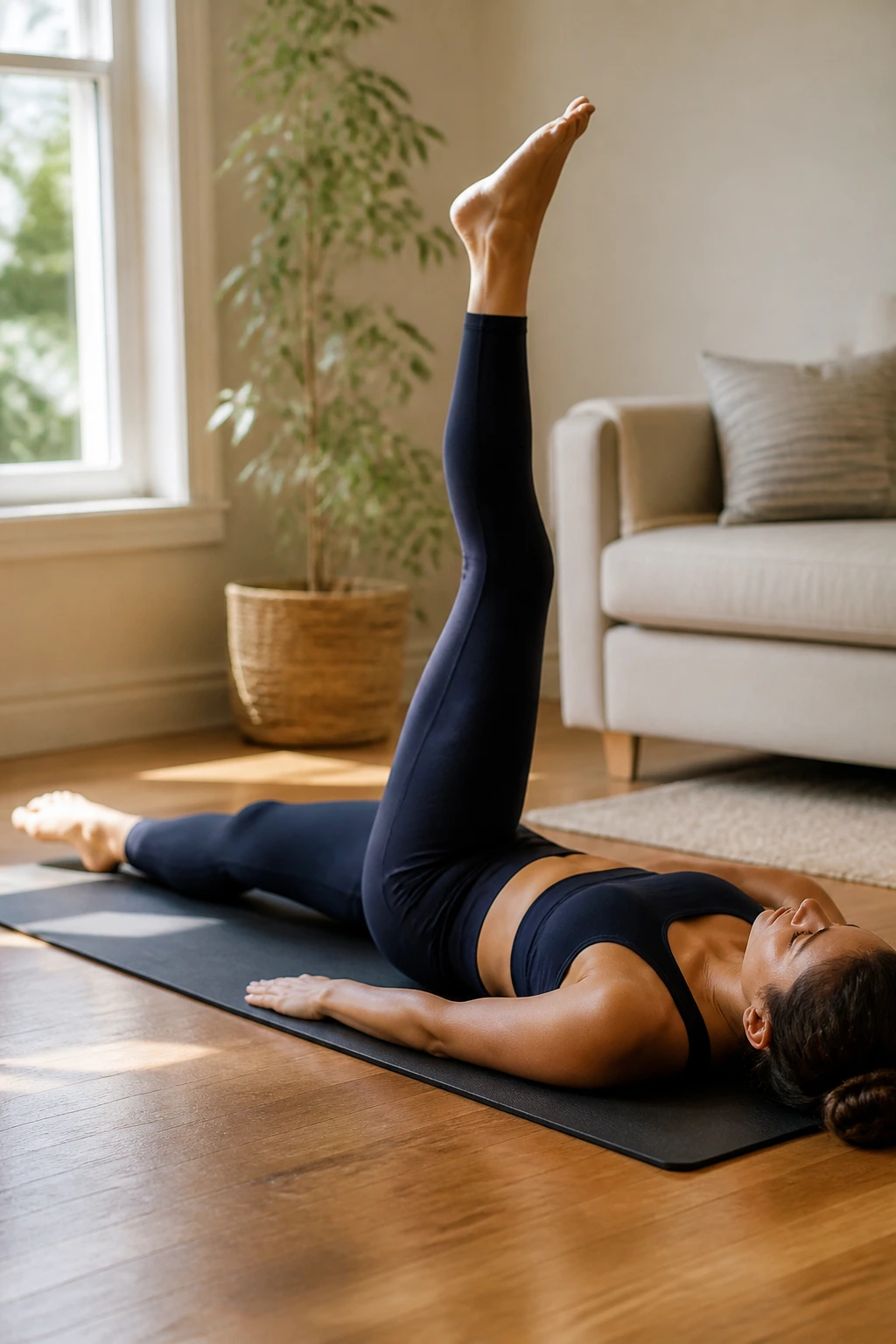
Pilates moves are excellent for “burnout.” They rely on small, precise movements that target the smaller stabilizing muscles in the hip joint.
Lie on your back, arms by your sides. Extend one leg toward the ceiling. Keeping the other leg on the floor, draw a small circle with the lifted leg. Keep your pelvis completely glued to the floor. Do not let your hips rock as you circle your leg. Perform ten circles in one direction, then ten in the other, before switching legs. It sounds easy, but by the end of ten circles, your hip flexors and deep stabilizers will be shaking.
20. Reverse Lunge with Twist
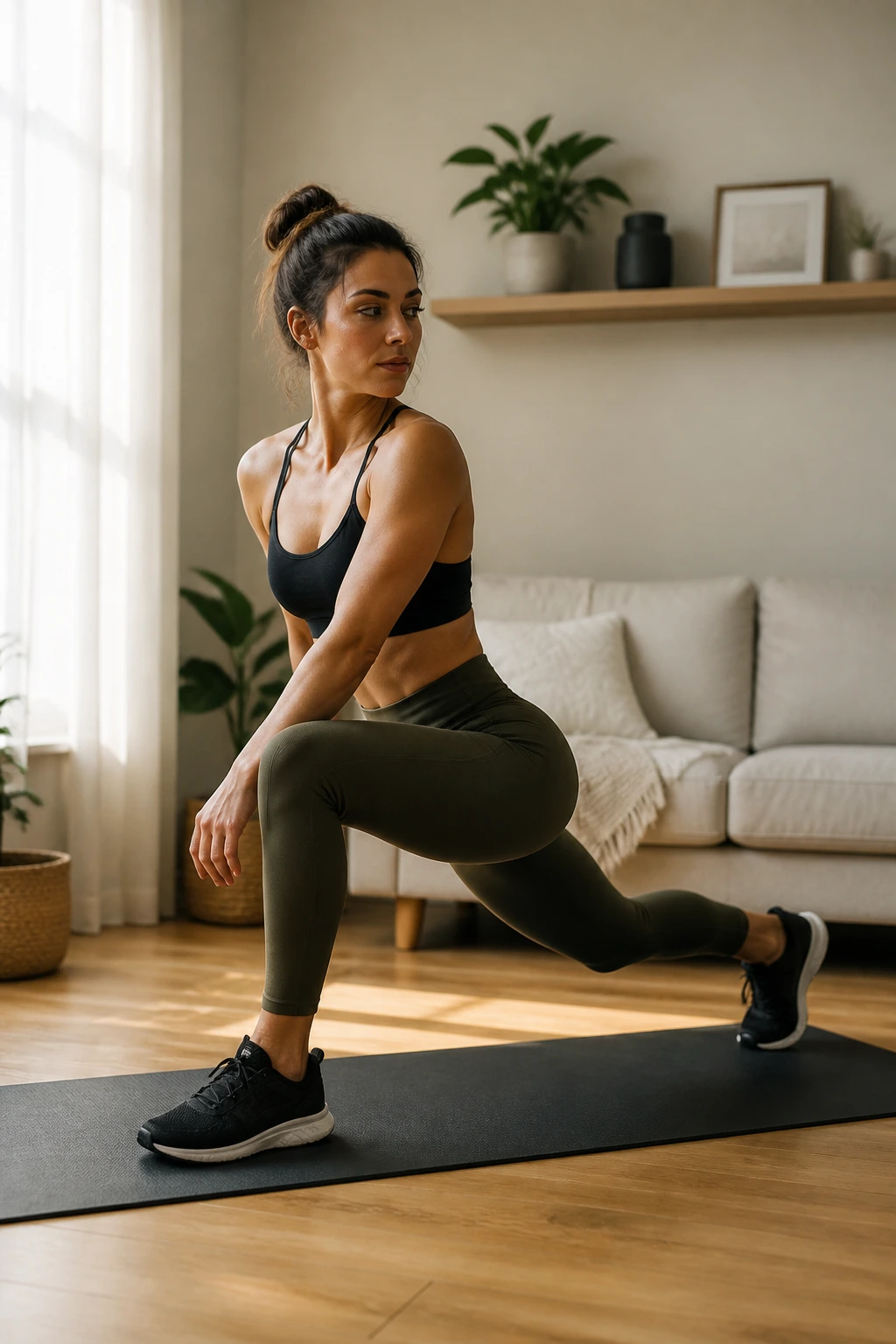
By adding a rotation to a reverse lunge, you force your hips to resist rotation, which recruits the deep hip stabilizing muscles.
Step back into a reverse lunge. As you sink into the lunge, rotate your torso toward the front knee. If your right leg is forward, rotate to the right. This requires balance, core strength, and hip stability. Return to standing and alternate legs. The twist adds an extra challenge for the oblique muscles and forces the hips to work harder to keep you upright. It is a fantastic functional movement.
Final Thoughts
The key to seeing changes in your hip area is not to pick one single “best” exercise, but to build a habit of movement. Your body does not know the difference between a workout done at home and one done in a state-of-the-art gym. It only knows demand and recovery. If you consistently put your hip and glute muscles through these movements, your body will have no choice but to adapt.
Remember that nutrition plays a massive role here. You can do thousands of reps of the exercises listed above, but if your caloric intake is constantly exceeding your needs, the layer of fat covering those muscles will remain. Focus on high-protein meals to help your muscles recover and stay satiated, and prioritize consistent activity. Try to perform a circuit of these exercises four or five days a week, and over time, the tone and strength in your hips will speak for themselves. Progress is rarely linear, so keep showing up even when you don’t feel like it. That is where the real work happens.
