



Dragging yourself to a gym, dealing with traffic, waiting for the squat rack, and navigating crowded locker rooms is enough to drain your motivation before you even pick up a weight. Most people skip their workouts simply because the friction of leaving the house is too high. You do not need a commercial gym membership to incinerate body fat. In fact, some of the most effective conditioning work happens in the living room, the garage, or a small corner of your bedroom.
The secret to losing body fat isn’t found in a specific piece of expensive machinery. It is found in metabolic intensity. You need to elevate your heart rate, keep it there, and force your muscles to work through fatigue. When you combine compound movements with minimal rest, you create an environment where your body has no choice but to tap into its energy reserves. This is the physiological reality of effective fat loss training. You are not looking for comfort; you are looking for that specific threshold where you are breathing hard enough that you can only say a few words at a time.
These workouts rely on your body weight, basic tools, and, more importantly, your own grit. The following list breaks down fifteen distinct approaches to training at home. Each one targets fat loss through slightly different mechanisms—some rely on pure metabolic conditioning, while others prioritize muscular tension to burn calories long after the session finishes. Pick one, commit to the intensity, and remember that consistency beats perfection every single time.
1. The AMRAP Circuit
AMRAP stands for “As Many Rounds As Possible.” This is the gold standard for home training because it scales perfectly to your fitness level. You aren’t chasing a specific number of sets; you are chasing the clock. If you have 20 minutes, you do as much quality work as you can squeeze into those 20 minutes without compromising form.
Why It Works for Fat Loss
The beauty of this method is that it removes the guesswork. You set a timer, and you go. There is no standing around checking your phone or debating whether to do another set. The psychological pressure of the ticking clock keeps your heart rate elevated, which is exactly what you want for burning fat.
- 10 Push-ups (drop to knees if needed)
- 15 Air Squats (focus on depth)
- 20 Mountain Climbers (10 per leg)
- 30-second Plank
Pro tip: Do not sprint the first round. You need to find a sustainable, rhythmic pace that you can maintain for the entire duration. If you go too hard at the start, you will hit a wall at the five-minute mark and waste the rest of your session catching your breath.
2. Jump Rope HIIT

Jumping rope is widely regarded as one of the most efficient forms of cardio ever created. It forces coordination, core stability, and calf endurance all at once. You do not need a massive space—just enough clearance so you aren’t hitting the ceiling fan.
The interval structure here is simple: 60 seconds of jumping, 30 seconds of rest. Repeat this cycle 10 to 15 times. If you are a beginner and cannot string more than five jumps together without tripping, do not get discouraged. Keep the movement continuous. Even “fake” jumping—mimicking the motion without the rope—elevates the heart rate significantly.
As you get better, introduce variations. Try jumping on one foot, alternating feet, or performing “double unders” where the rope passes twice per jump. The moment you stop tripping is the moment you can push the intensity into the red zone. Always land softly on the balls of your feet to protect your knees.
3. Dumbbell Complexes

If you have a pair of dumbbells at home, you have a gym. A “complex” is a series of exercises performed back-to-back without putting the weights down. You do all the reps for one movement, then immediately transition to the next, and only rest after the entire circuit is finished.
This approach creates massive muscular density. Because you are holding onto weight, your heart has to work overtime to pump blood to your extremities. It is essentially strength training and cardio combined into one brutal block.
Recommended Complex:
- 6 Dumbbell Deadlifts
- 6 Dumbbell Rows
- 6 Dumbbell Front Squats
- 6 Overhead Presses
Perform this sequence four times. Rest for 90 seconds between rounds. You will notice that your grip strength often fails before your legs do—this is a normal part of the process. If you have to drop the weights, take a ten-second breather, pick them back up, and finish the set.
4. Burpee-Based Tabata
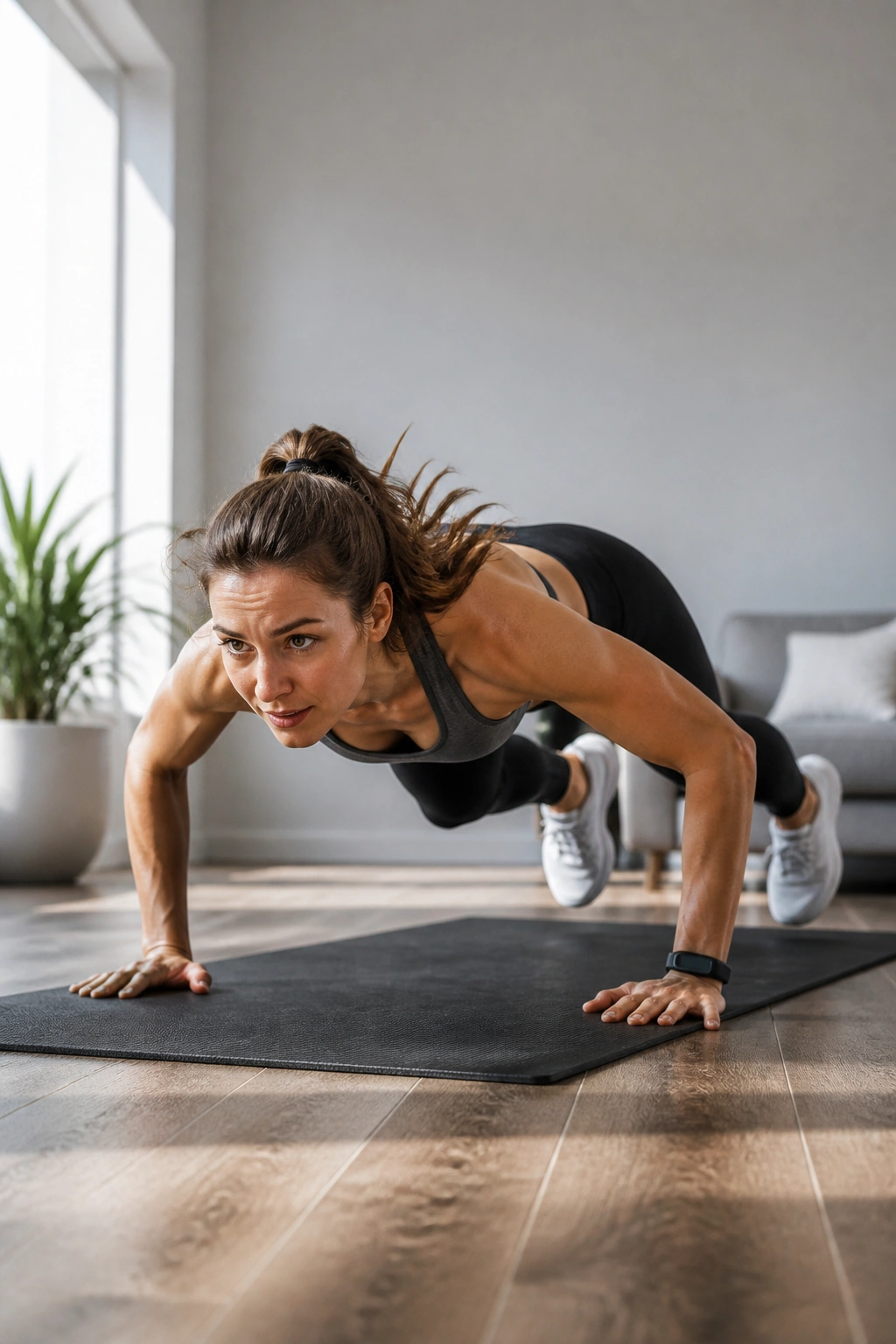
There is no exercise more polarizing than the burpee. Some people love them; most people despise them. Regardless of where you stand, they are unmatched for fat loss. They combine a squat, a push-up, and a jump into one fluid, exhausting movement.
Tabata protocol is a specific type of HIIT: 20 seconds of maximum effort followed by 10 seconds of rest. Perform this for 8 rounds, which totals 4 minutes. It sounds easy on paper. It is anything but easy in practice.
The first two rounds will feel fine. By round five, your chest will burn, your shoulders will feel like lead, and your lungs will be screaming. Do not stop. That internal dialogue—the one telling you that you’ve done enough—is the voice of the plateau. Push through the final three rounds, and you will understand why this method is effective.
5. Kettlebell Swings
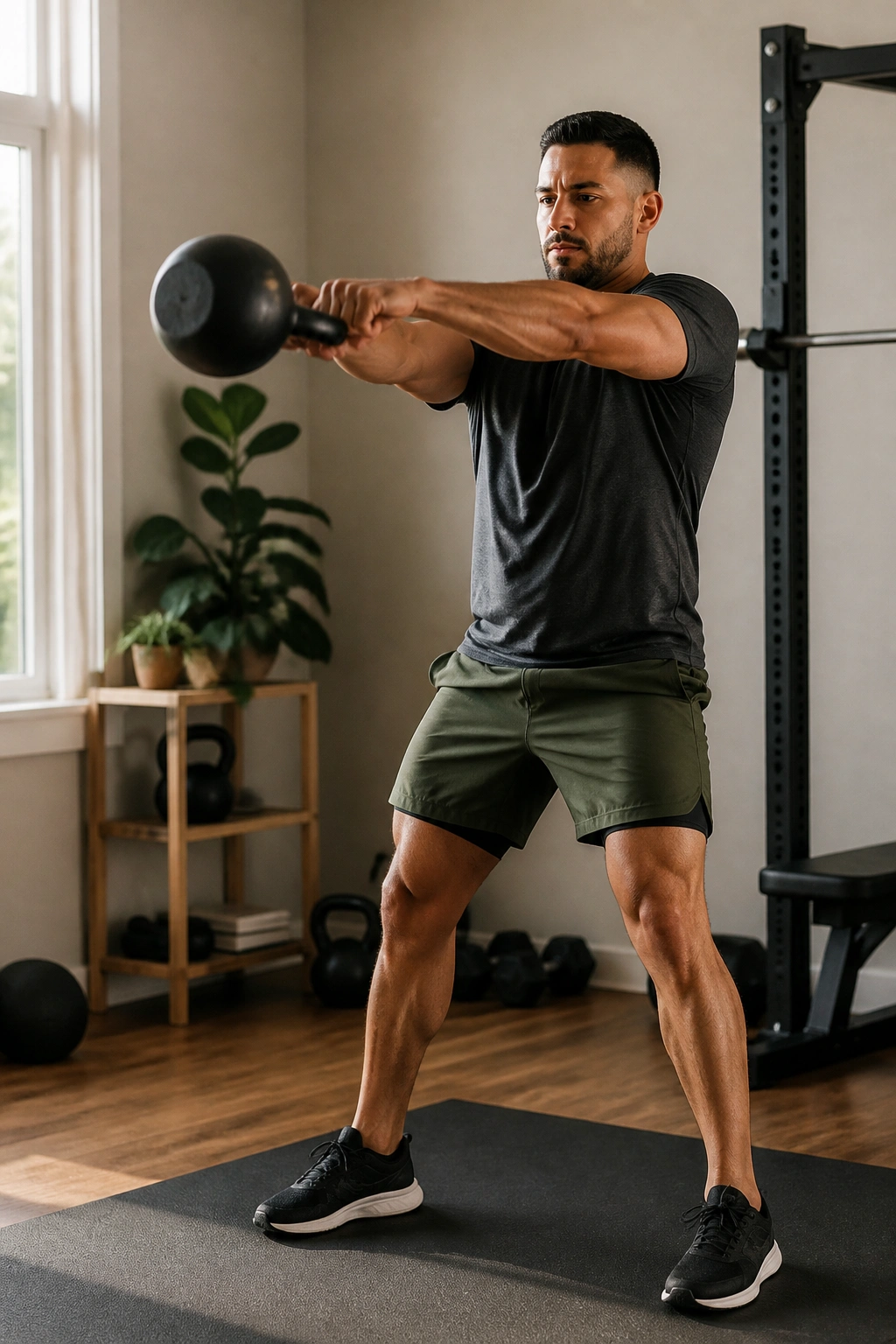
The kettlebell swing is a hinge-based movement, not a squat. You are using your glutes, hamstrings, and lower back to create explosive power. This is the ultimate “posterior chain” developer, and it burns through glycogen stores at an incredible rate.
The goal is rhythm. You want to snap your hips forward to propel the weight, not lift it with your shoulders. If your shoulders are tired, you are probably trying to “lift” the kettlebell. Stop. Let the hips do the heavy lifting.
If you don’t have a kettlebell, a heavy dumbbell works just fine. Hold it by one end with both hands. Aim for 20 swings, rest for 30 seconds, and repeat for 10 sets. This workout is deceptive; it feels manageable until the fourth or fifth set when your grip starts to fade and your core begins to shake.
6. Plyometric Power Intervals
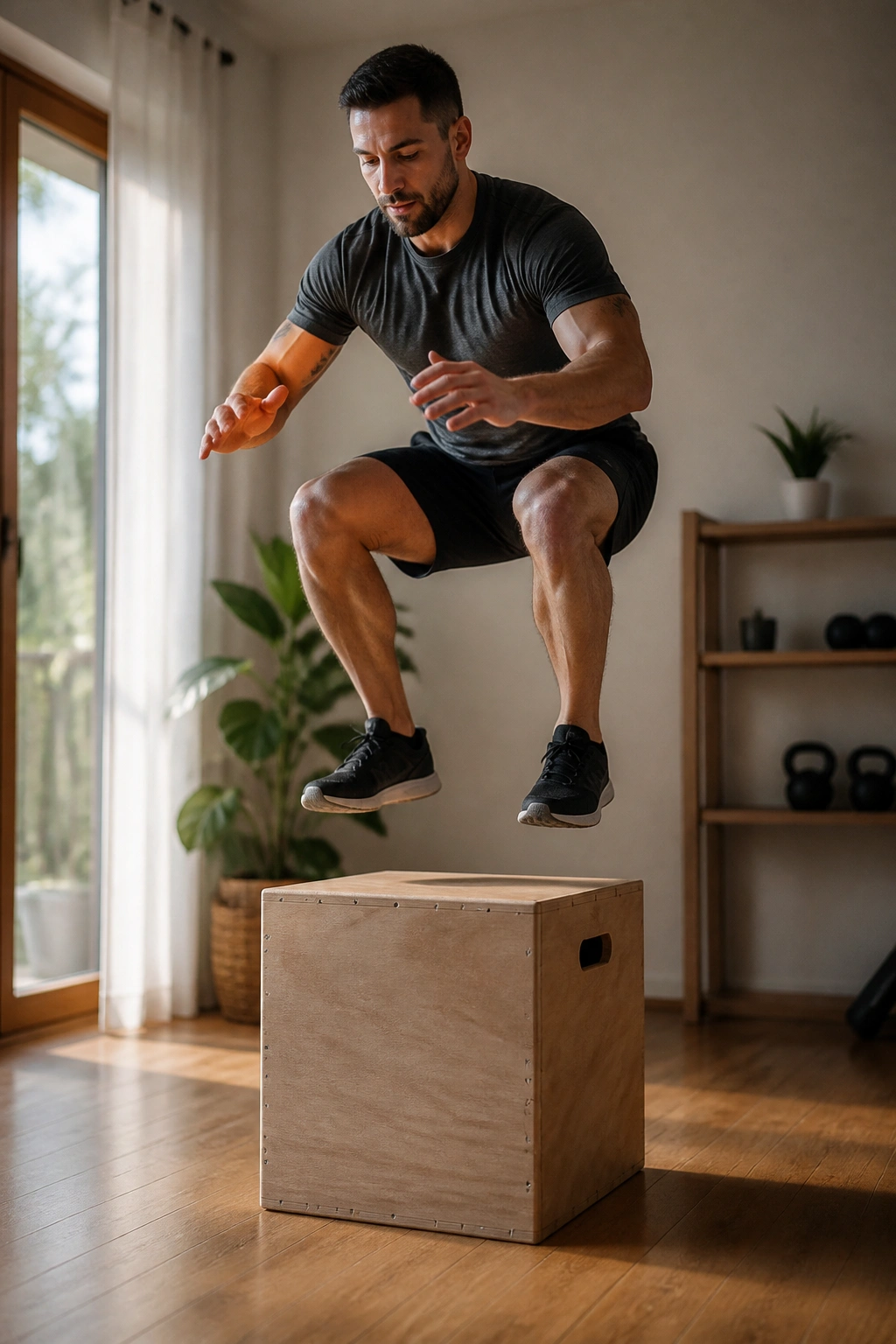
Plyometrics are explosive movements designed to improve speed and power. They are high-impact, so if you have bad joints, approach this with caution. However, if you are cleared for movement, there is no better way to torch body fat than jumping.
Think about box jumps, broad jumps, and skater jumps. The key to fat loss here isn’t the number of repetitions; it is the velocity of each rep. You want to be as explosive as possible.
A sample session:
- 30 seconds of Jump Squats
- 30 seconds of Skater Jumps
- 30 seconds of Tuck Jumps
- 60 seconds rest
Repeat this three to four times. The recovery phase is where the adaptation happens. Keep your movements controlled, even when you are tired. Sloppy plyometrics lead to twisted ankles and sprained knees. Always focus on a soft landing.
7. The Core Finisher

Many people focus on crunches for fat loss. This is a mistake. Crunches target the rectus abdominis but do very little to elevate your heart rate or burn substantial calories. Instead, use your core training as a metabolic finisher.
Focus on movements that require total-body bracing. Think of Bear Crawls, Renegade Rows, or Dead Bugs. These movements force your entire torso to stabilize your limbs under load.
- 1 minute Bear Crawl (forward and backward)
- 1 minute Plank (focus on squeezing your glutes)
- 1 minute Bicycle Crunches (slow and controlled)
- 1 minute Hollow Body Hold
Do this three times through without resting. If you feel like your form is failing—especially in the plank—stop, reset, and hold for 10 seconds. Quality core work prevents injury in your other movements, which allows you to train harder and more often.
8. Mountain Climber Variations
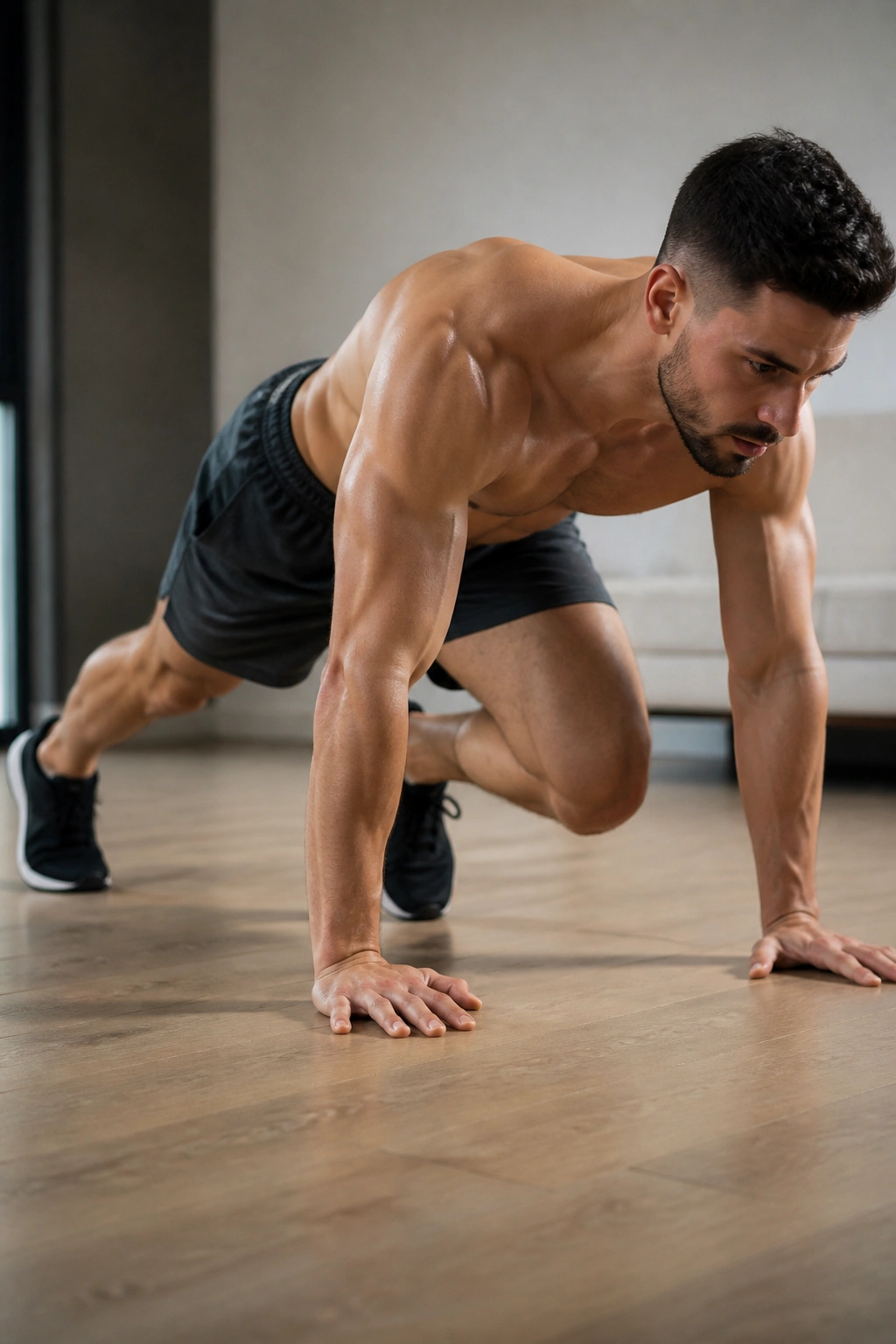
Mountain climbers are a staple for a reason. They keep you in a push-up position, which forces your shoulders to work, while the knee drive engages your abs and gets your heart rate up. To make these more effective for fat loss, you need to vary the tempo and the angles.
Do 30 seconds of standard mountain climbers, where you drive your knees straight to your chest. Then, immediately switch to “cross-body” climbers, driving your right knee toward your left elbow. This targets the obliques. Finally, finish with “wide” climbers, driving the knees toward the outside of your elbows.
This “continuous tension” approach prevents your heart rate from dropping. You are constantly moving your center of mass, which requires a huge amount of energy. If you find your hips sagging, lift them higher. A mountain climber is not a race to see who can move their legs the fastest; it is a race to see who can maintain the best form under the most fatigue.
9. The Squat & Lunge Pyramid
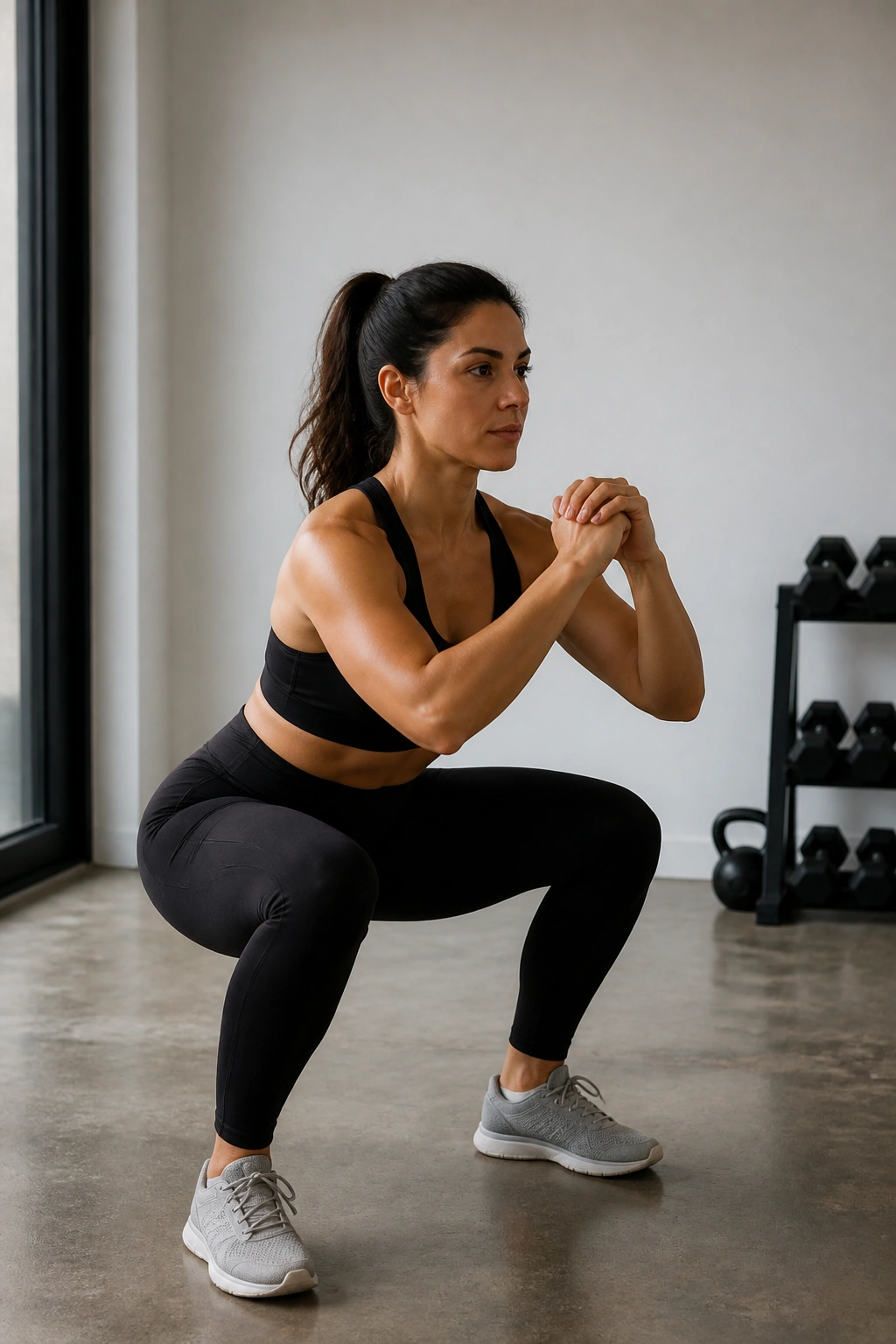
Leg work is mandatory for fat loss. Your legs contain the largest muscle groups in your body. Working them requires more oxygen and fuel than doing arm curls. This pyramid structure builds volume and endurance.
Start with 2 bodyweight squats and 2 lunges (1 per leg). Then move to 4 squats and 4 lunges. Continue adding by 2 reps (6, 8, 10) until you reach 20 of each. Then, work your way back down (18, 16, 14…).
You will be moving for quite a while. The mental hurdle here is the “way up” the pyramid. It feels never-ending. But the “way down” provides a strange sense of relief, even though your muscles are burning. By the time you reach the final 2 reps, your legs will feel like jelly. That is the feeling of progress.
10. Shadow Boxing Intervals

You don’t need a heavy bag to get a boxer’s workout. Shadow boxing forces you to keep your core engaged, your shoulders moving, and your feet light. It is one of the most underrated forms of aerobic conditioning.
The secret is to never stop moving your feet. If you are just standing there punching the air, you are only doing half the work. You need to bob, weave, and step.
The Drill:
- 3 minutes of continuous movement (jab, cross, hook, upper-cut combinations).
- 1 minute of active recovery (marching in place, light bouncing).
- Repeat for 5 rounds.
If you don’t know boxing combos, just throw straight punches and focus on speed. Keep your core tight. Every time you throw a punch, exhale sharply. This engages your transverse abdominis and keeps your heart rate spiked.
11. Bear Crawls and Animal Flow
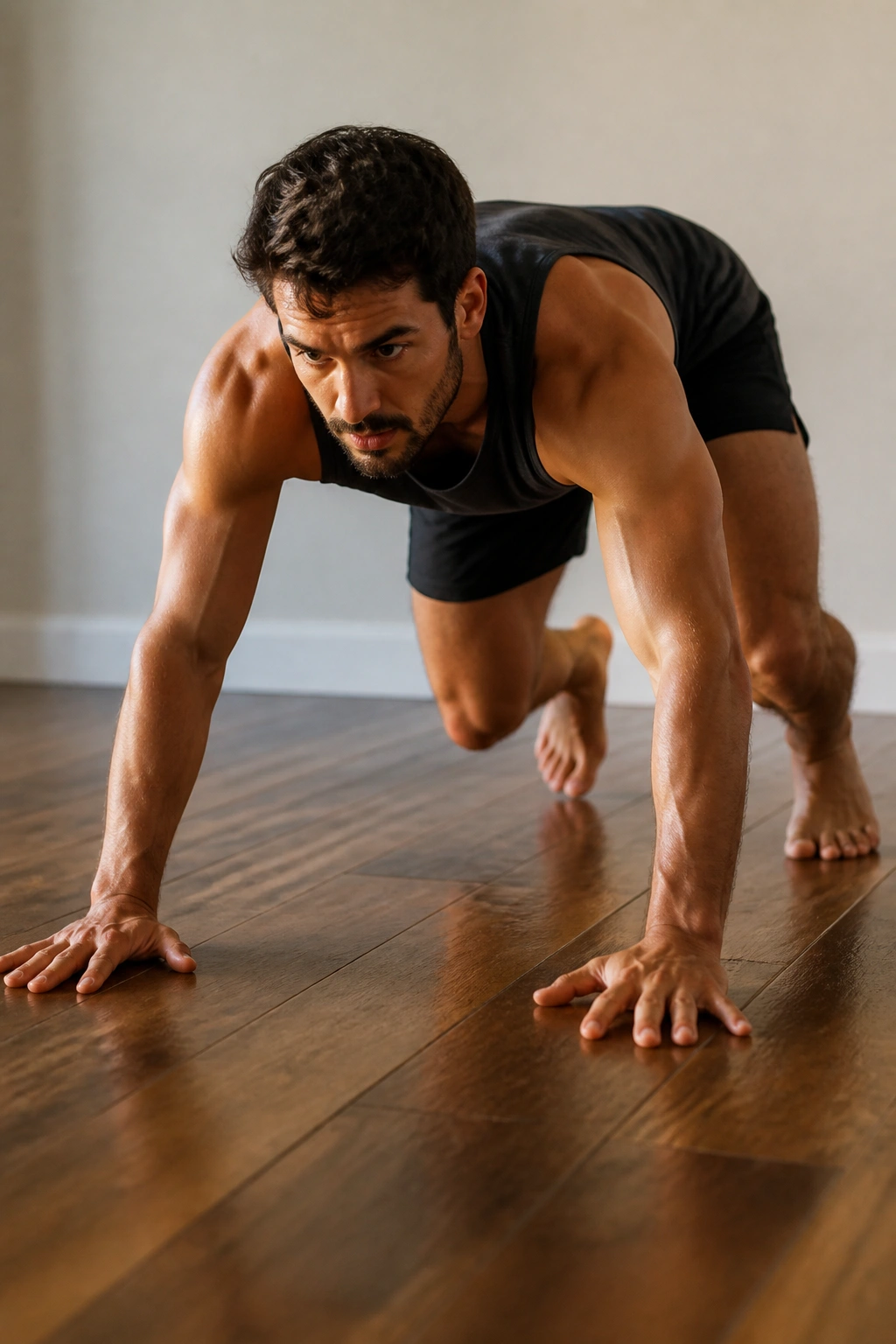
There is something primal about moving on all fours. Animal flow movements, such as the bear crawl, the crab walk, and the deep-squat ape walk, require total body coordination. They are fantastic for fat loss because they are metabolically expensive—meaning your body has to spend a lot of energy to keep you moving this way.
Pick a length of space—even 10 feet is enough—and crawl across it. Turn around, crawl back. Do this for 3 minutes without stopping.
Why this helps:
- It strengthens your joints (shoulders, hips, wrists).
- It builds incredible shoulder endurance.
- It forces you to focus on movement quality rather than just banging out reps.
It might feel awkward at first, especially if you haven’t done it since you were a child. Push past that embarrassment. The benefits to your conditioning and mobility are worth it.
12. Jump Squat & Lateral Skater Intervals

This workout is about explosive power in two planes of motion: vertical and lateral. We usually move forward and backward, but lateral (side-to-side) movement taxes your stabilizer muscles and glutes in a unique way.
Perform 15 jump squats. Immediately go into 15 skater jumps per leg. The skater jump involves jumping sideways from one foot to the other, like a speed skater. Land softly, sink into the hip, and explode to the other side.
Rest for 60 seconds. Do 5 rounds of this. By the end of the session, your glutes will be on fire. This lateral movement is essential for balance and fat loss because it recruits muscle fibers that are rarely used in standard running or walking.
13. Chair-Based Dips and Elevated Pushups
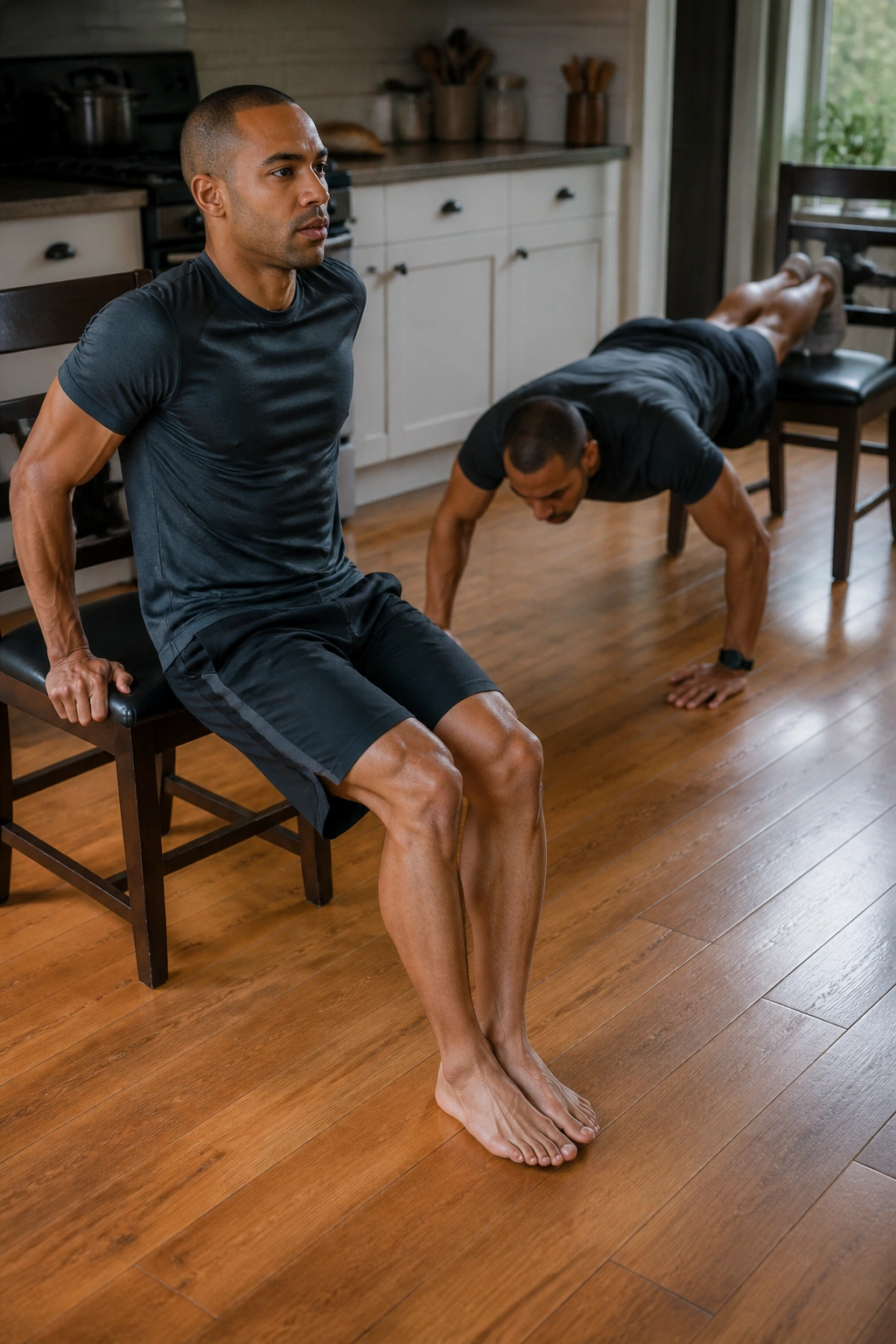
You don’t need a pull-up bar or specialized machines to work your upper body. A sturdy kitchen chair or a couch is perfect. Use the edge of the chair for dips and place your feet on it for elevated push-ups.
The Circuit:
- 12 Chair Dips
- 12 Elevated Pushups
- 30 seconds of rest.
The key to fat loss here is minimizing the rest. Upper body work burns calories, but when you combine push-ups (chest/shoulders) with dips (triceps), you create a massive amount of fatigue in the pushing muscles. If the elevated push-ups are too hard, move your feet to the floor. If the dips are too hard, bend your knees to take some weight off. Keep the volume high to keep the heart rate up.
14. Glute Bridge and Hip Thrust Superset
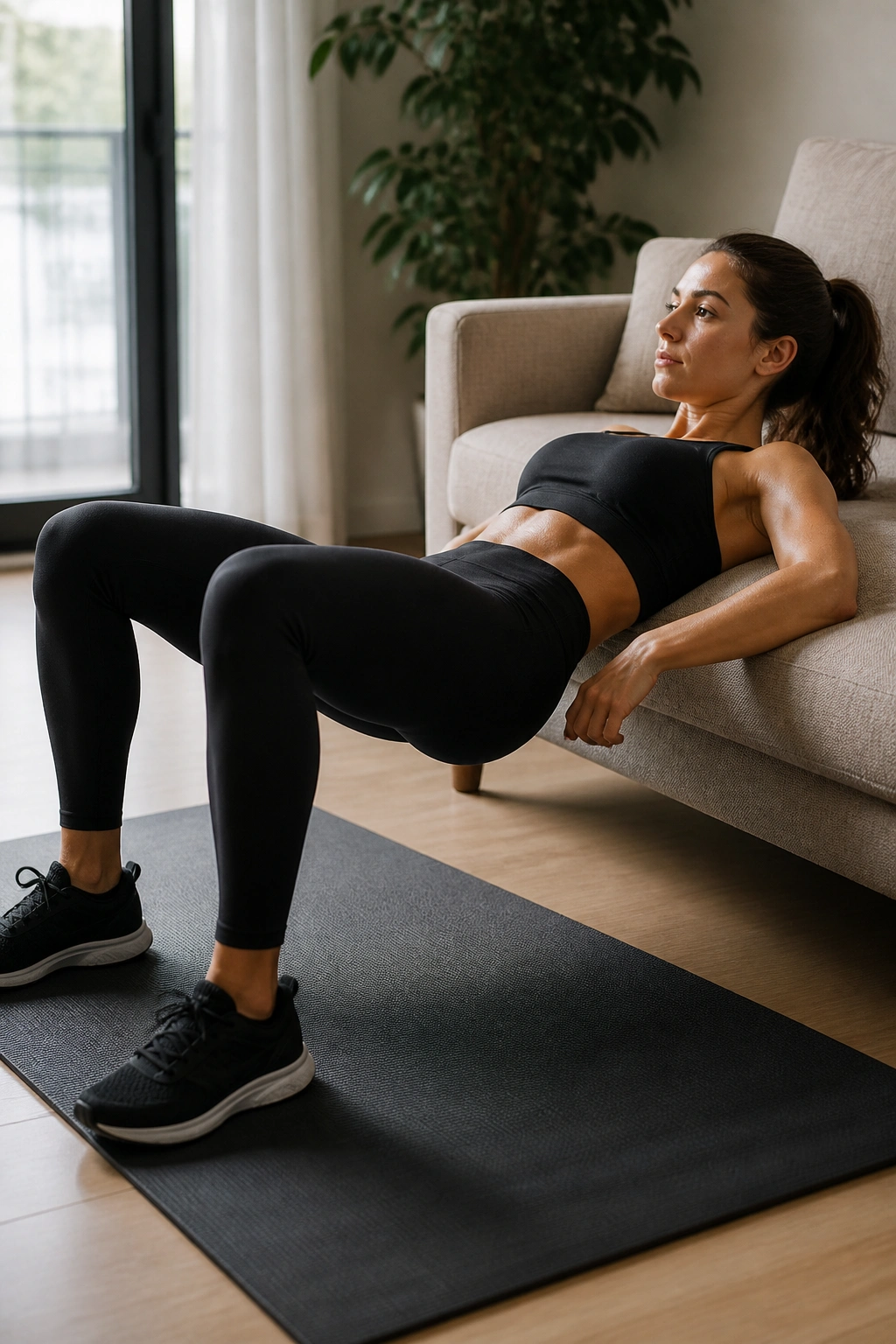
Many people struggle with “sleepy glutes” from sitting all day. Activating your glutes is crucial for fat loss because the glutes are the biggest calorie-burning engine in your body. When your glutes are weak, your back and knees compensate, leading to pain and reduced workout intensity.
Perform 20 glute bridges (lie on your back, knees bent, lift your hips toward the ceiling). Squeeze the glutes at the top for a full two seconds. Immediately follow this with 15 hip thrusts, which are the same movement but with your shoulders elevated on a chair or couch.
Do this for 4 rounds. The “squeeze” at the top is the most important part. Do not rush through the reps. Fat loss is about muscular recruitment; the harder you contract the muscle, the more energy you are burning.
15. The EMOM Challenge

EMOM stands for “Every Minute On the Minute.” This is the ultimate tool for time management and intensity. At the start of every minute, you perform a set number of repetitions. Whatever time is left in that minute is your rest. If the reps take 40 seconds, you get 20 seconds of rest. If they take 50 seconds, you get 10 seconds of rest.
Try this 20-minute EMOM:
- Minute 1: 15 Burpees
- Minute 2: 20 Kettlebell Swings (or dumbbell swings)
- Minute 3: 15 Air Squats
- Minute 4: 15 Push-ups
Repeat this cycle 5 times. The beauty of the EMOM is the psychological pressure. You must finish your reps before the minute is up, or you get no rest. It forces you to maintain a consistent speed. If you start too slow, you will get buried as the fatigue accumulates. If you start too fast, you will be gasping for air by the third round. Find your tempo and stick to it.
Final Thoughts

Getting into shape at home is not about buying the flashiest equipment or finding the “perfect” routine. It is about understanding that fat loss is a product of intensity and consistency. You have to be willing to get uncomfortable. You have to be willing to sweat, shake, and push past the moment where your brain tells you to quit.
Choose one of these workouts and do it until you can perform it with perfect form and controlled breathing. Then, increase the intensity—add a rep, decrease the rest, or add a bit of weight. Progression is the mechanism that forces your body to adapt. Your metabolism is not a fixed number; it is a furnace, and these workouts are the fuel. Stop looking for reasons to delay and start where you are, with what you have. The work you do in the privacy of your own home is often the work that pays the biggest dividends.
