



The idea that you need rows of expensive machines and a dedicated membership to lose body fat is perhaps the most persistent myth in the fitness world. You do not need a cable pulley system, a treadmill with an incline motor, or heavy iron plates to create a calorie deficit or improve your metabolic health. What you do need is the ability to move your own body weight through space—repeatedly, intensely, and with proper form. When you rely solely on your own mass, you are forced to engage more stabilizing muscles than you would on a guided machine, which often leads to a higher caloric burn per minute.
Some of the most effective workouts I have ever done happened in a hotel room or a quiet corner of a living room with nothing but a few square feet of floor space. The secret isn’t in the equipment; it’s in the density of the work. By stringing together compound movements that target multiple muscle groups at once, you keep your heart rate elevated throughout the entire session. This approach creates an environment where your body has to work overtime to supply oxygen to those working muscles, effectively turning your own anatomy into the resistance.
If you are just starting out, the sheer simplicity of this might feel underwhelming. Do not let the lack of gear fool you into thinking it will be easy. High-intensity, equipment-free training is demanding because there is nowhere to hide. You cannot adjust a dial to lower the weight; you cannot lean on the handles of a machine to cheat your way through the last few reps. When the muscles fatigue, you have to find the grit to keep going, which is exactly why this type of training is so effective for shedding fat and building functional strength.
1. Burpees
The burpee is universally loathed and universally respected for a reason: it touches everything. You move from a standing position to a plank, perform a push-up, jump back to a squat, and finish with an explosive leap. It hits your chest, shoulders, core, quads, and glutes while sending your heart rate through the roof in a matter of seconds.
The Mechanics of the Move
To get the most out of a burpee, you need to focus on the transitions. Most people treat the movement as four separate, disjointed parts. Instead, try to think of it as one fluid wave. Drop your hands to the floor, kick your feet back into a strong plank—do not let your hips sag—and then immediately return to the squat.
Avoiding Common Mistakes
- Hips sagging: This puts unnecessary strain on your lower back. Keep your core braced as if someone is about to punch you in the stomach.
- Lazy landings: When you jump up, land softly with your knees slightly bent. Do not land with locked-out knees. This is a fast track to joint pain.
- Rushing the tempo: It is better to do five burpees with perfect form than fifteen with sloppy, dangerous mechanics.
Pro Tip: If you are a beginner, skip the push-up at the bottom until your core strength builds up. Focus on the hip hinge and the jump first.
2. Mountain Climbers
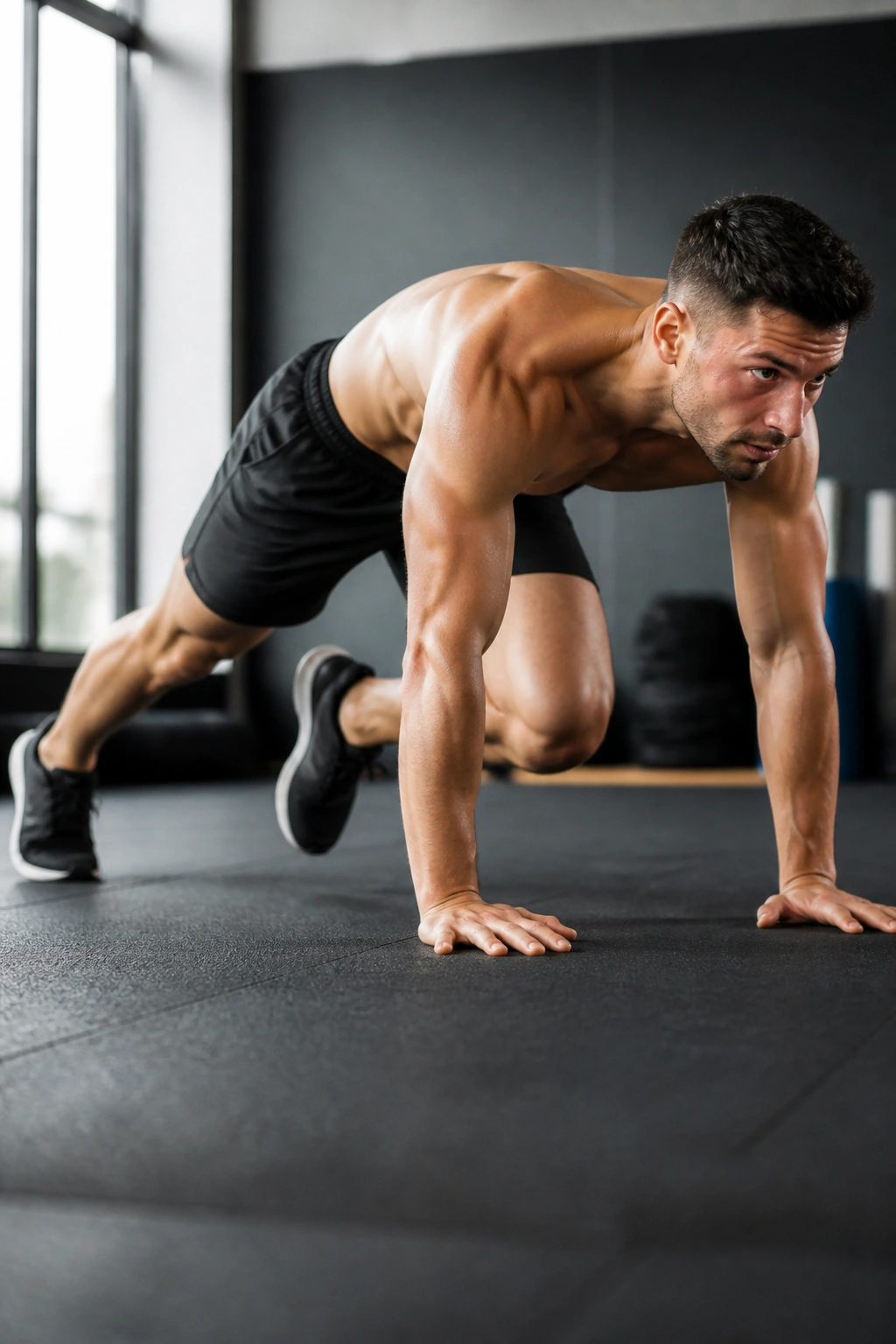
Think of mountain climbers as a running plank. You are essentially engaging in a sprint while maintaining a static upper body position. This exercise is elite for fat loss because it forces you to hold an isometric contraction in your shoulders and core while simultaneously driving your cardiovascular system with rapid leg movements.
Why They Work
The constant tension in your midsection makes this an unintentional core workout. Every time you drive a knee toward your chest, your abs have to stabilize your pelvis to prevent your back from arching. It is a dual-purpose movement that torches calories while tightening the waistline.
How to Maximize Intensity
- Don’t bounce: Keep your hips as level as possible. Your butt should not be bobbing up and down.
- Drive with intent: Imagine you are trying to push an object away with your foot as you drive your knee forward.
- Hand placement: Keep your wrists directly under your shoulders. If they drift forward, you lose the leverage needed to maintain speed.
3. Jump Squats
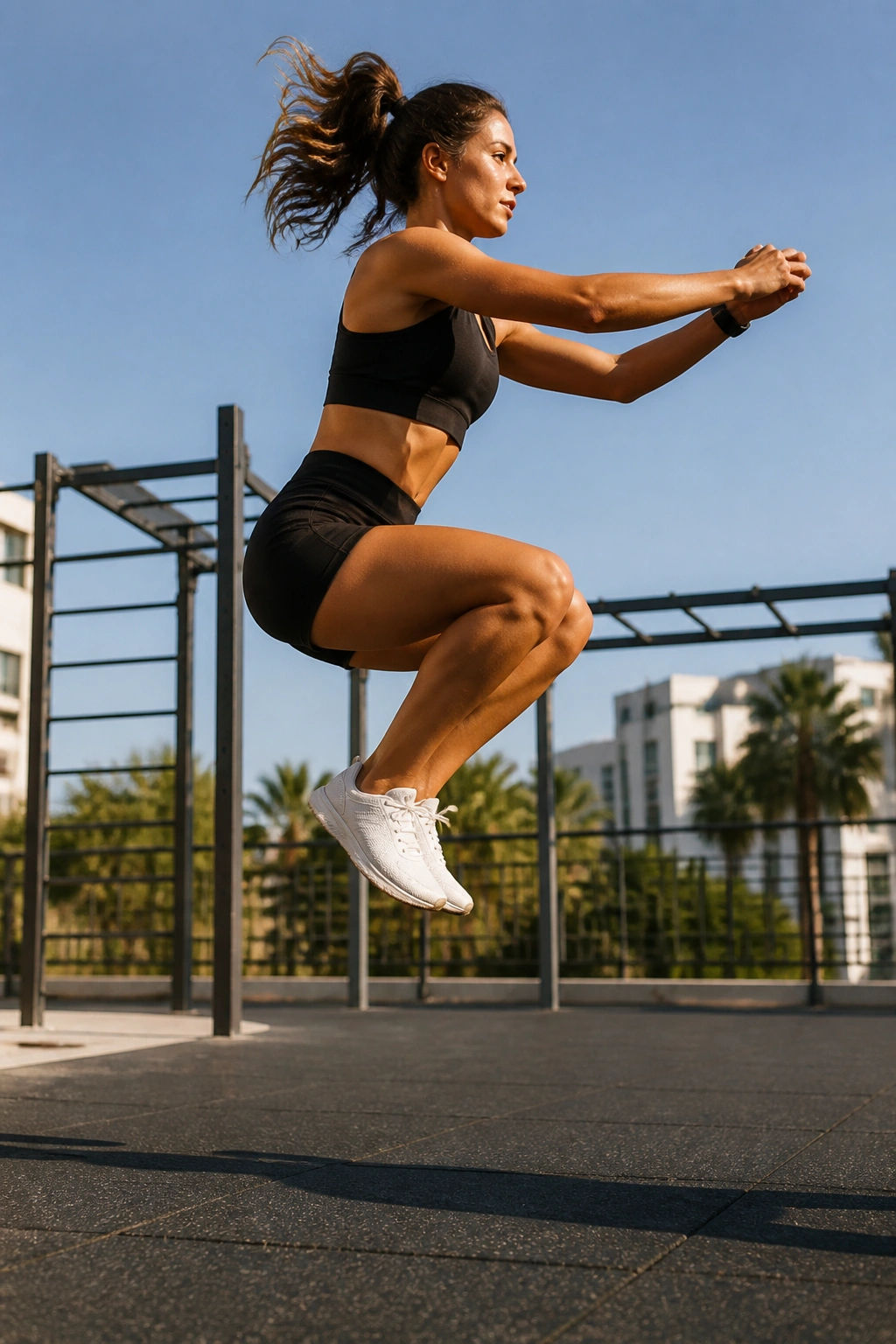
Squats are great for building leg strength, but jump squats are the secret weapon for metabolic conditioning. By adding an explosive vertical component, you shift from simple resistance training to plyometrics. This requires significantly more energy to perform, which equates to more fuel being pulled from your energy stores.
The Power Phase
The goal is height, but the real benefit happens upon landing. Your muscles have to rapidly decelerate your body weight as you hit the ground, which requires massive recruitment of motor units. This “eccentric loading” is fantastic for muscle definition and burning through stubborn fat.
Form Checklist
- Chest up: Do not let your torso collapse forward as you squat down.
- Knee tracking: Ensure your knees point in the same direction as your toes. If they cave inward, stop and reset.
- The landing: Think of yourself as a coiled spring. Land on the balls of your feet and immediately sink back into the next squat to maintain momentum.
4. High Knees
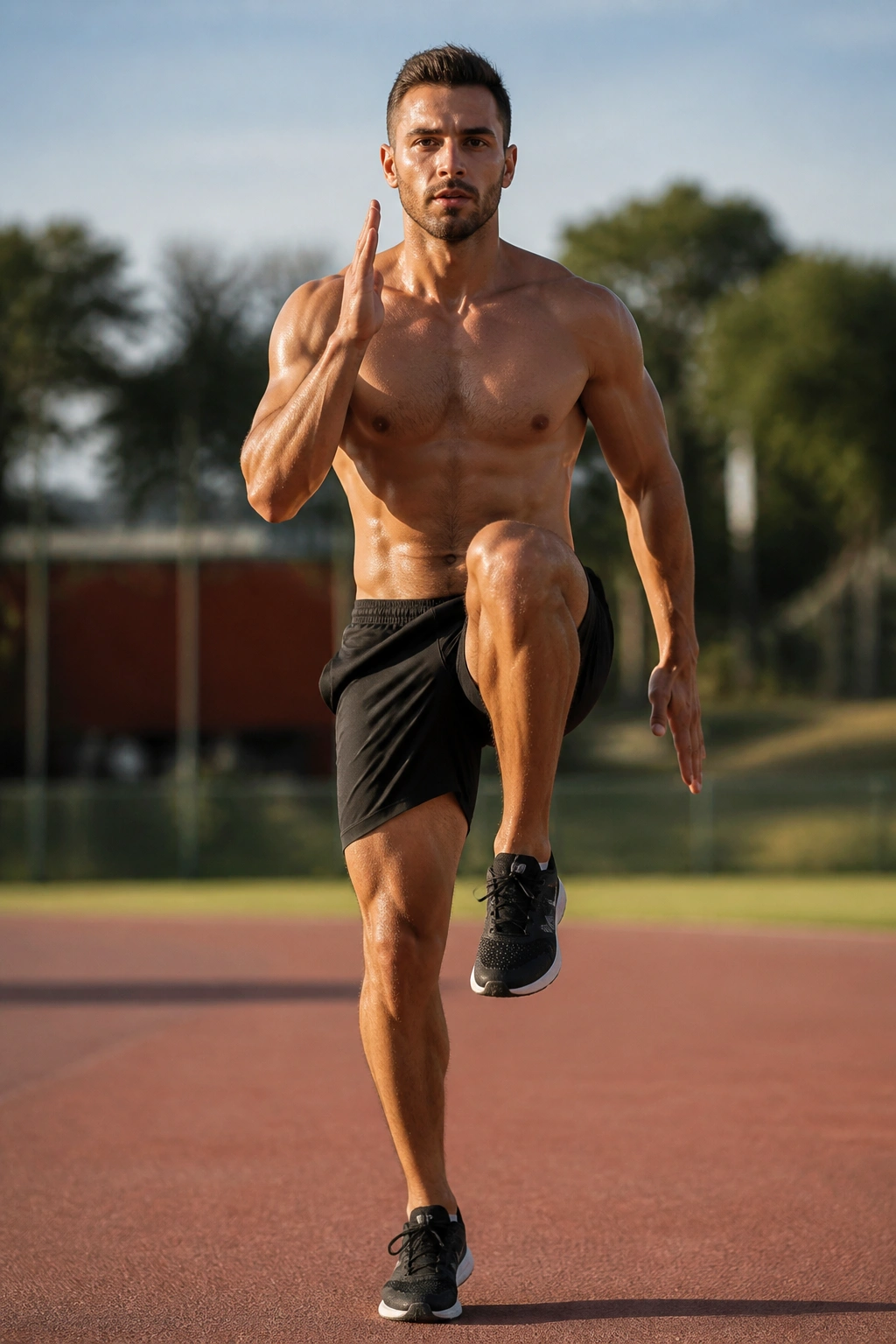
High knees look simple, but they are incredibly taxing if you do them with the right level of intensity. This is about cadence and hip flexor strength. You are effectively running in place, but with an exaggerated range of motion that prevents you from just “jogging.”
Mastering the Cadence
The key here is not just speed, but height. Your knees should consistently reach at least hip level. If your knees are only coming up to your mid-thigh, you aren’t doing high knees; you are just doing a fast jog. Get them up high and keep them there.
Structural Tips
- Stay upright: It is tempting to lean back as you get tired. Fight this. Keep your torso vertical to keep your core engaged.
- Use your arms: Pump your arms in sync with your legs. This creates a full-body rhythm that burns more energy than just moving your legs alone.
- Breath control: Because this exercise is high-intensity cardio, you will be tempted to hold your breath. Don’t. Find a rhythmic pattern—inhale for three steps, exhale for three steps.
5. Push-Ups
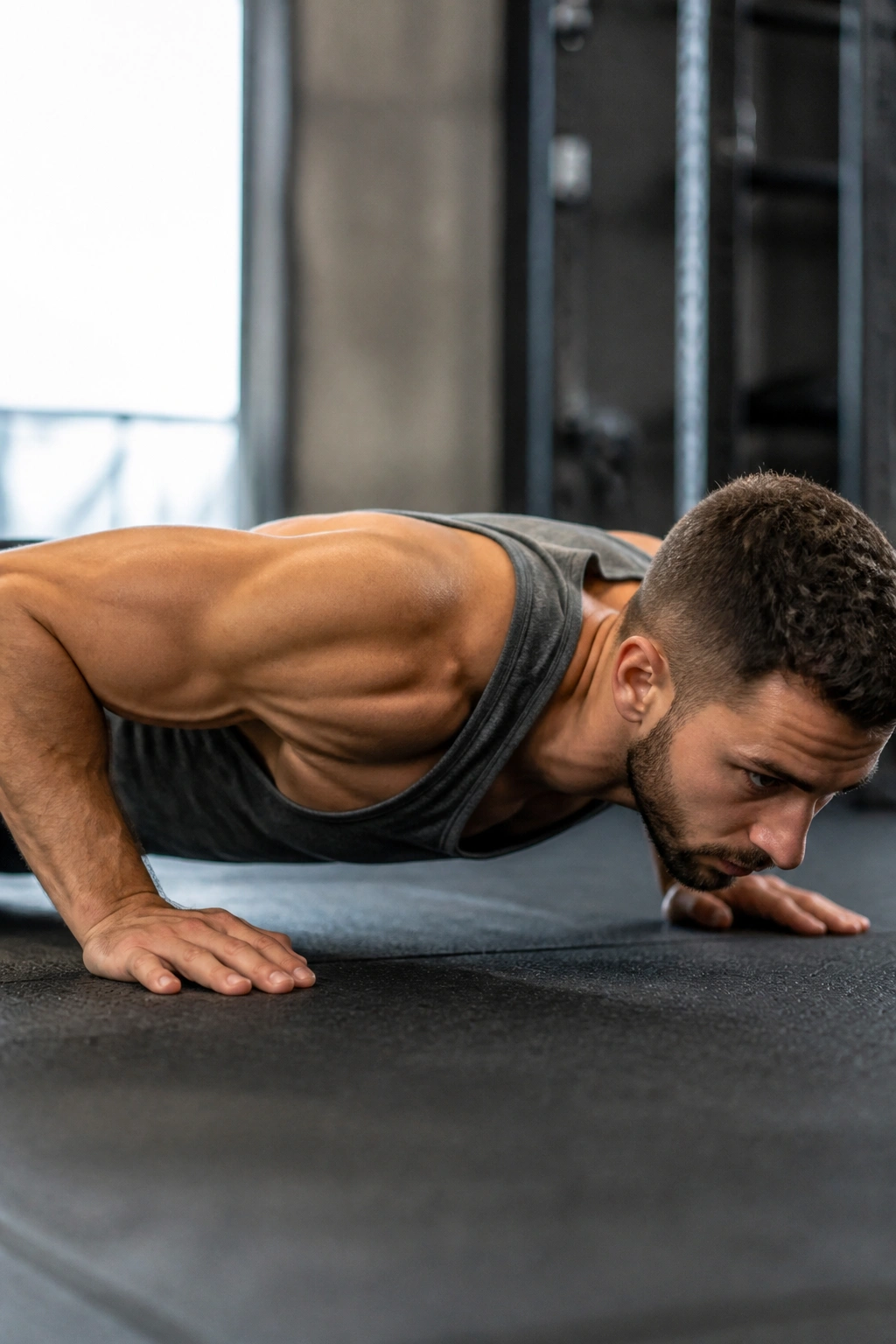
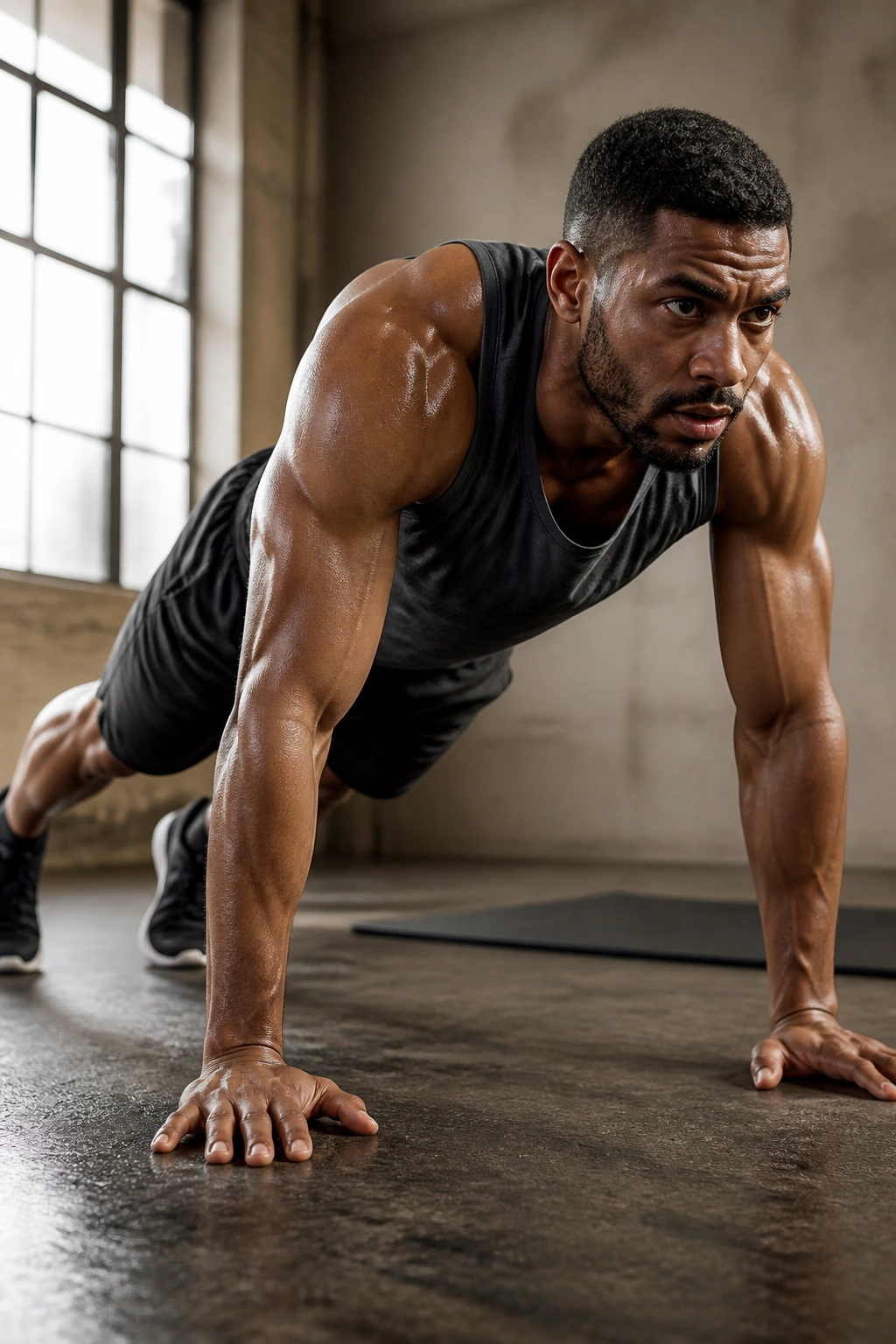
Push-ups are often underrated, but they are the foundational movement of upper body strength. They work the chest, shoulders, triceps, and the entire core. If you find them easy, you aren’t doing them correctly. A perfect push-up is a plank in motion.
The Perfect Push-Up
Many people do “half” push-ups, where they only go halfway down. To see real fat loss and muscle toning, you need the full range of motion. Chest to floor, then lock out at the top.
Variations for Every Level
- On your knees: A great way to build the habit without compromising form.
- Standard: The benchmark for upper body endurance.
- Diamond push-ups: Bring your hands together so your thumbs and index fingers form a diamond. This shifts the focus heavily onto the triceps.
Warning: If you feel pain in your shoulders, widen your hand placement slightly or turn your hands out just a few degrees.
6. Plank Jacks
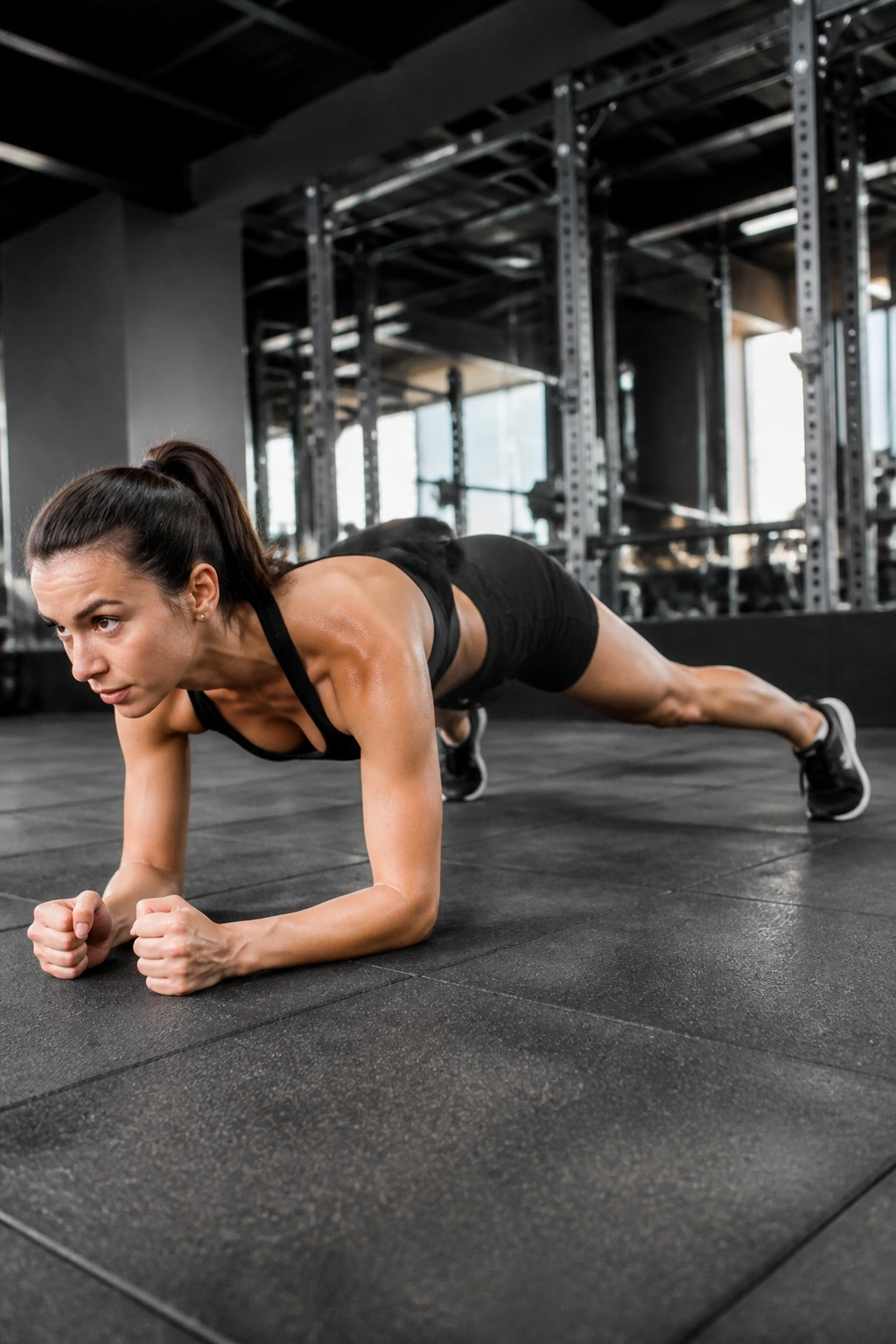
If you take a standard plank and combine it with a jumping jack, you get the plank jack. It is a fantastic way to introduce lateral movement to a stationary position. It challenges your stability because every time your legs move outward, your core has to work extra hard to keep your torso from shifting side-to-side.
Why the Core Loves It
You are constantly shifting your center of gravity. Your oblique muscles, which are responsible for preventing rotation, are constantly firing to keep you square to the floor. This provides a level of abdominal engagement that you just don’t get from standard crunches.
Technical Cues
- Steady shoulders: Your upper body should feel like it is floating above the floor. If your shoulders are jerking around, slow down the leg movement.
- Feet width: You don’t need to jump your feet incredibly wide. A modest hop is enough to create the required instability.
- Tight glutes: Squeezing your glutes throughout the movement keeps your pelvis tucked and saves your lower back from taking the load.
7. Jumping Lunges
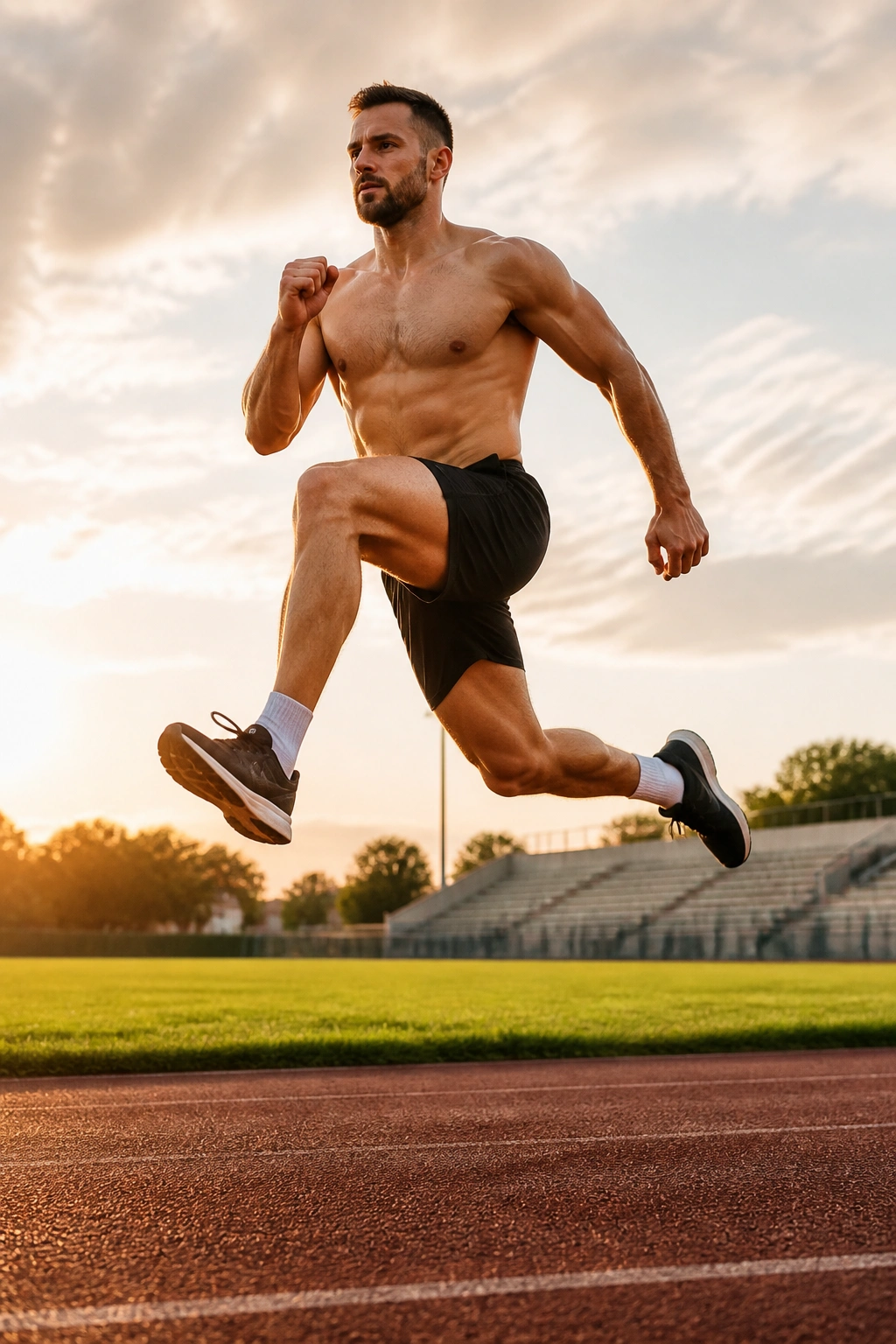
Jumping lunges are the ultimate test of balance, power, and endurance. They force you to stabilize your body in a split stance, explode upward, switch your legs mid-air, and land perfectly in the opposite position. It is incredibly effective for fat loss because it creates a high demand for oxygen.
The Switch
The hardest part is the switch. Many beginners struggle to find their balance upon landing. If you find yourself wobbling, reduce the height of your jump. It is better to have a fast, controlled switch than a high, shaky one.
Essential Form Notes
- 90/90 rule: Aim for a 90-degree angle in both knees at the bottom of the lunge.
- Back knee: Let it hover just an inch or two above the floor. Do not slam it into the ground.
- Core bracing: If your core is loose, you will fall over. Keep your belly button pulled toward your spine throughout the entire switch.
8. Bicycle Crunches
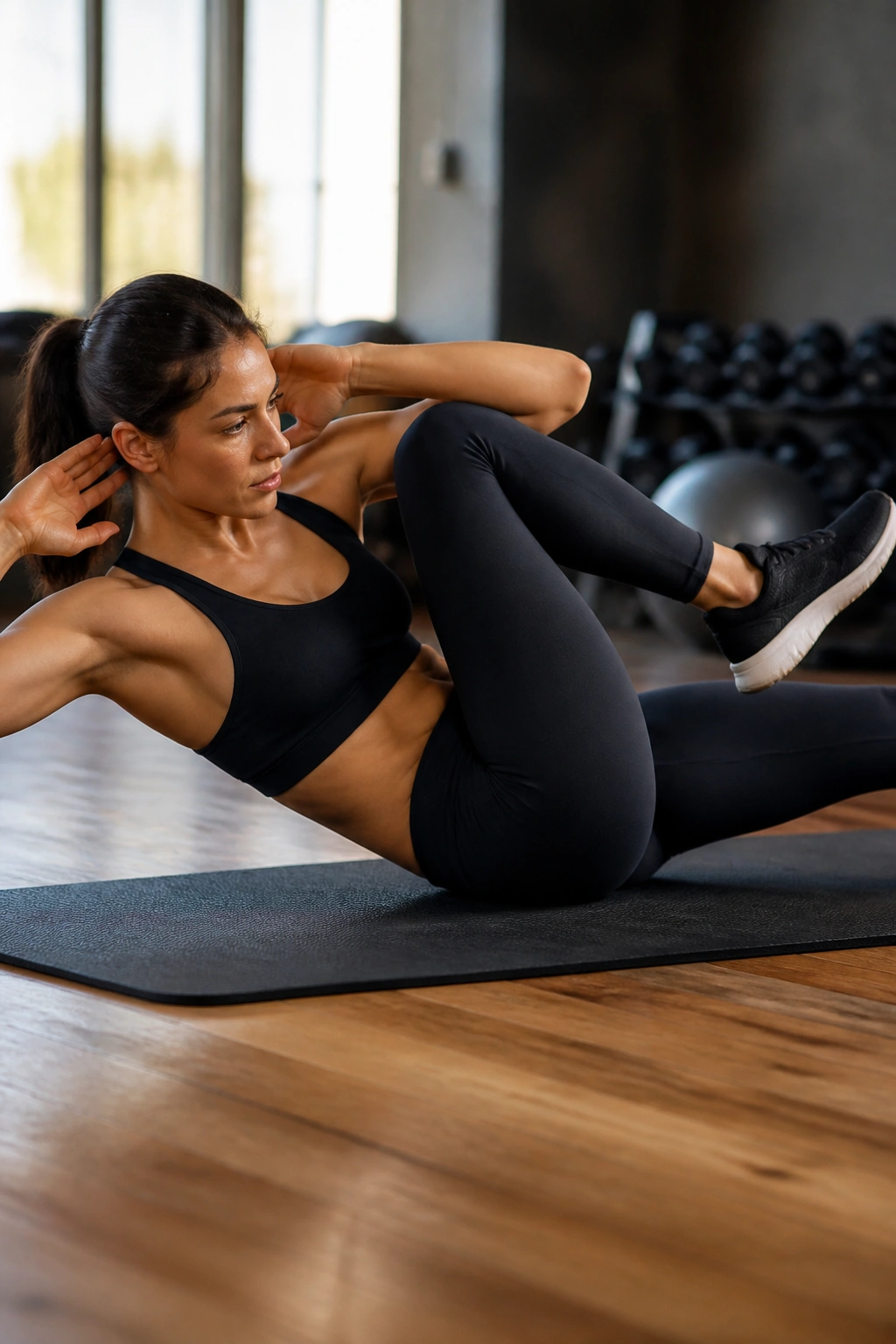
Bicycle crunches are arguably one of the most effective abdominal exercises for targeting the rectus abdominis and the obliques. The key is in the slow, controlled nature of the movement. This isn’t a race to see how many you can do; it is a test of how much tension you can maintain.
The Rotation Factor
You want to bring your shoulder toward your knee, not just your elbow. If you only move your elbow, you aren’t engaging your obliques fully. You need the torso rotation to make it work.
Avoiding Neck Strain
- Don’t pull: Do not clasp your hands behind your head and pull on your neck. Use your fingertips to lightly touch your ears or temples.
- Eyes on the ceiling: Picking a spot on the ceiling to stare at can help prevent you from tucking your chin and straining your neck.
- Full extension: Extend the non-working leg all the way out until it is straight. This forces the lower abs to work harder to stabilize the weight of your leg.
9. Skaters
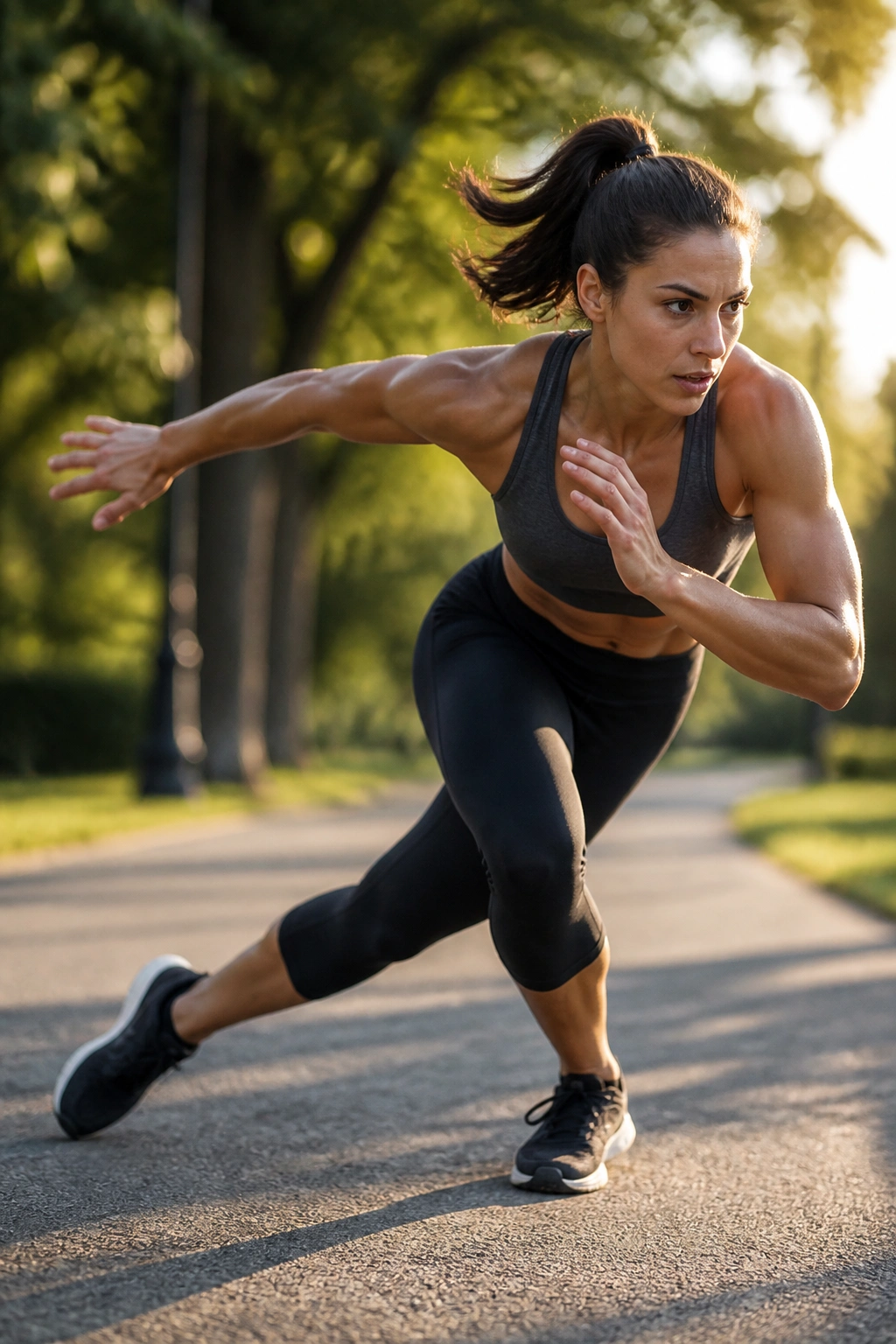
Skaters mimic the lateral movement of a speed skater. This is a brilliant exercise because most traditional exercises only move you forward and backward (the sagittal plane). Skaters move you side-to-side (the frontal plane), which engages entirely different stabilizer muscles in your hips and glutes.
The Lateral Push
You want to explode off one leg and land on the other. The wider the jump, the more you will engage your glutes. This movement is excellent for sculpting the hips and thighs while keeping your heart rate very high.
Proportionality
- Stay low: The lower your center of gravity, the more you will feel the burn in your quads and glutes.
- Arm swing: Let your arms swing naturally across your body; this helps with momentum and coordination.
- Soft landings: Like the jump squats, do not land stiff-legged. Absorb the impact.
10. Inchworms
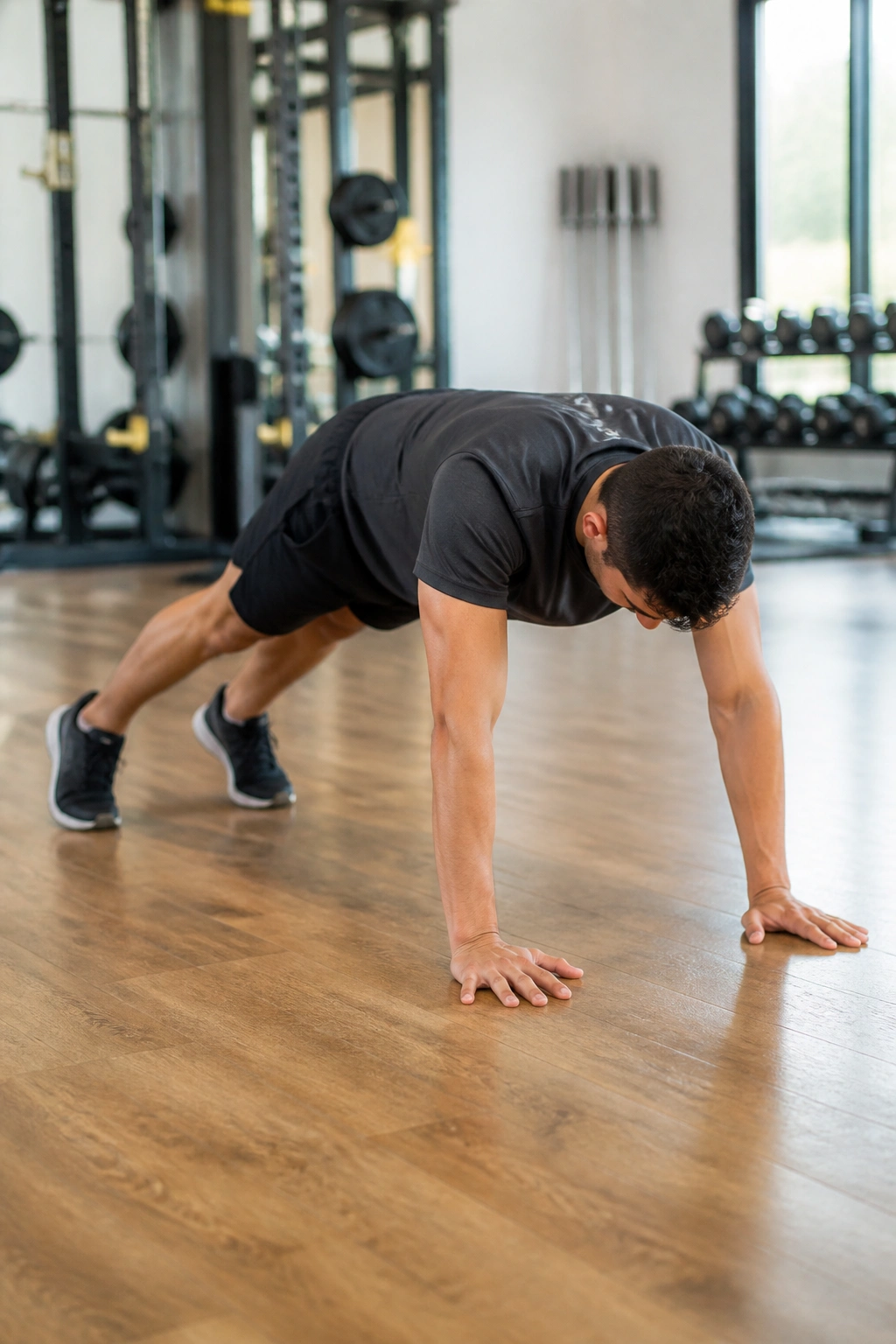
Inchworms are a deceptively simple movement that combines a deep hamstring stretch with a high-intensity plank walkout. They are fantastic for warming up, but when performed quickly and repeatedly, they become a serious conditioning tool.
Walking the Hands
Start standing, hinge at your hips to touch the floor, and walk your hands out until you are in a plank. Then, walk your hands back to your feet and stand up. It forces your hamstrings to lengthen and your core to hold the weight of your body.
Making It Harder
- The push-up: Add a push-up once you reach the full plank position to turn this into an even more comprehensive full-body movement.
- The walk back: Try to keep your legs as straight as possible as you walk your hands back to your feet. This maximizes the stretch in the posterior chain.
- Pacing: Don’t rush the hand-walk. Control the descent.
11. Shadow Boxing
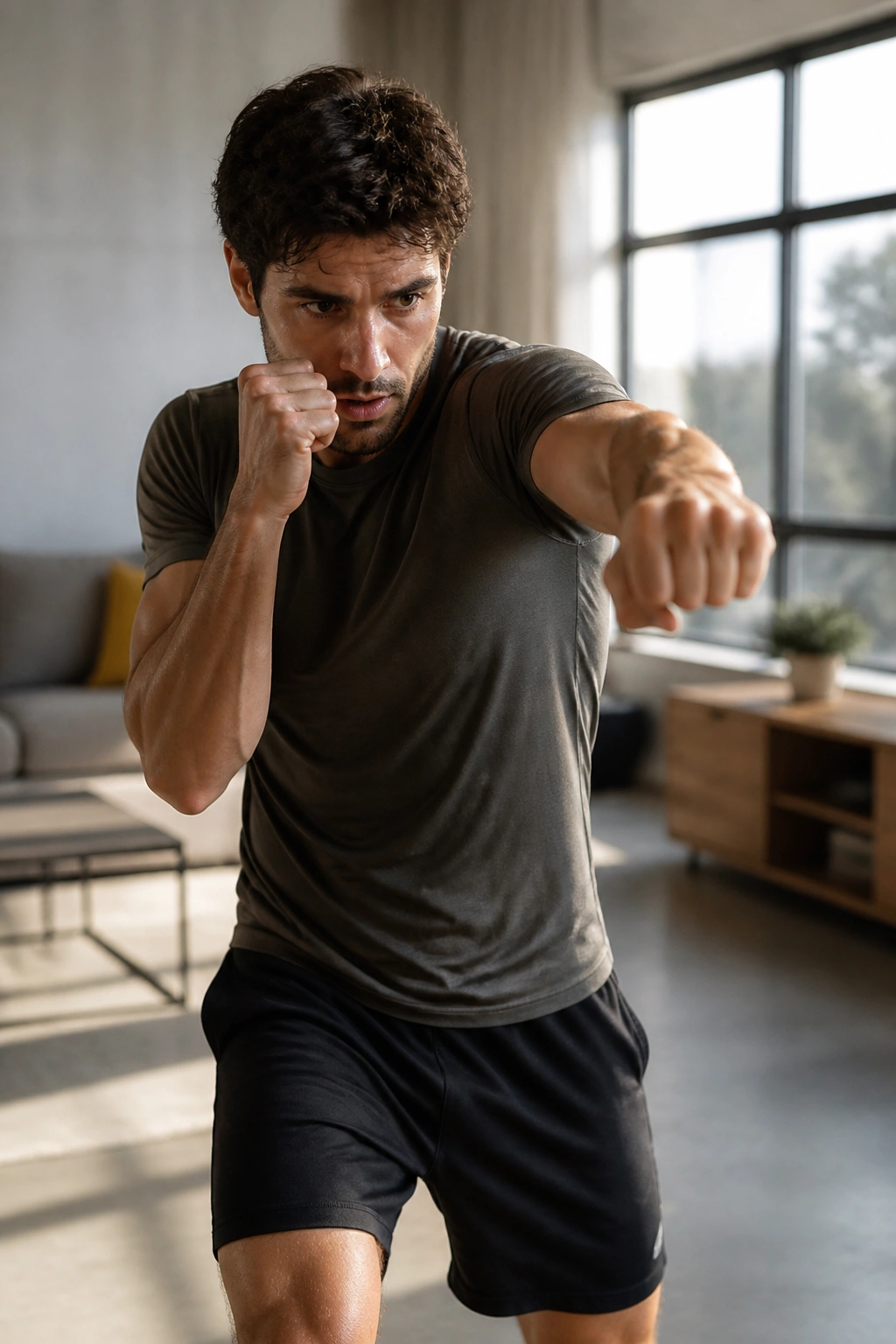
You don’t need a heavy bag to get the benefits of boxing. Shadow boxing is an incredible aerobic workout that forces you to constantly rotate your core to generate power for your punches. It’s also great for coordination and agility.
Engaging the Core
Every punch should start from your feet, travel through your legs, rotate through your core, and finally extend through your arm. If you are just waving your arms around, you aren’t boxing. You need the torso twist.
The Cardio Component
- Constant motion: Do not stand still. Bounce slightly, move your feet, and keep your hands up.
- Combinations: Create simple patterns—left, right, left, hook. Keep the combos short and fast.
- Breath: Boxers breathe sharply on every punch. This helps maintain a high, steady aerobic output.
12. Plank to Push-Up
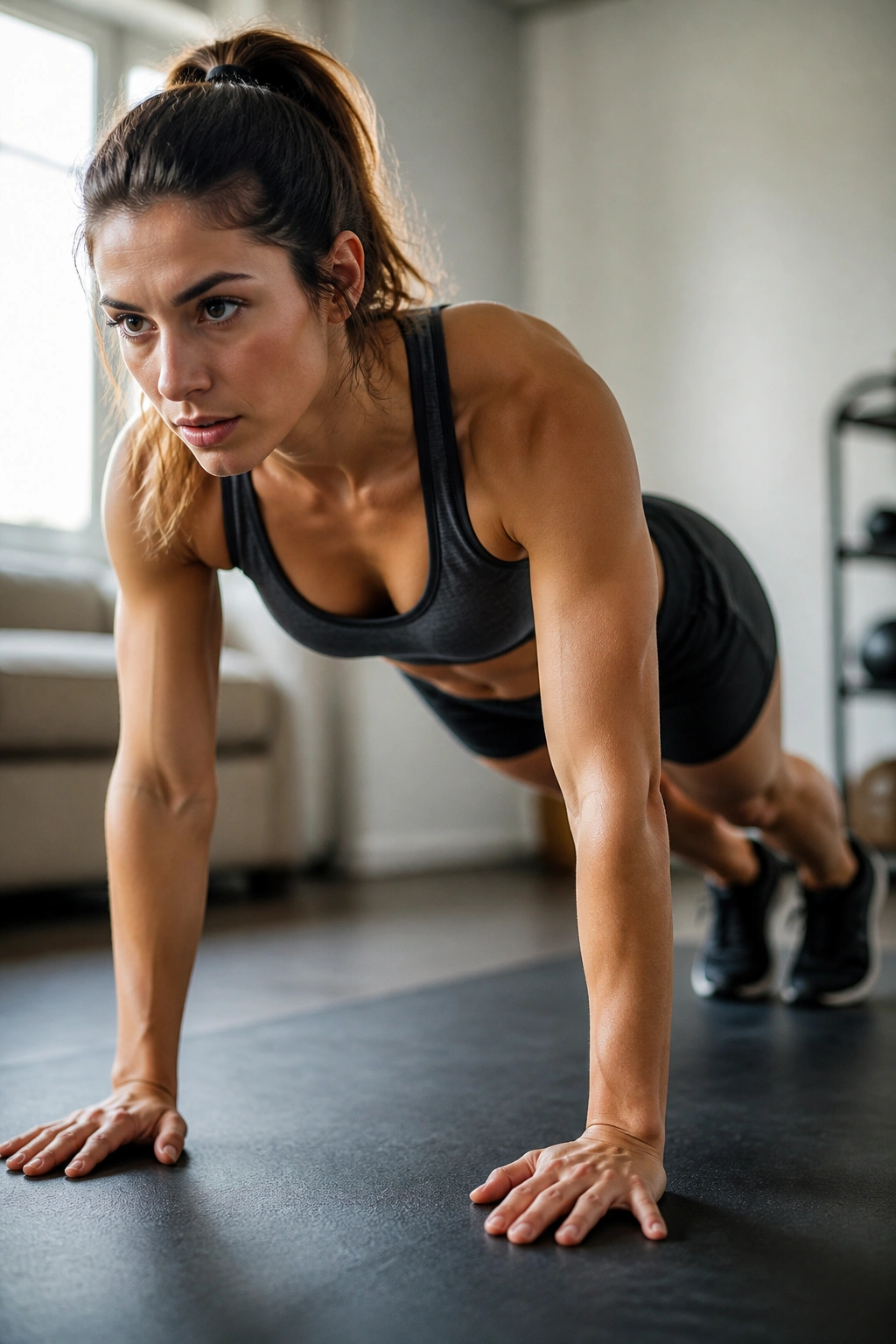
This exercise, sometimes called “Commando Planks,” is a test of upper body endurance and core stability. You start in a forearm plank, then press yourself up into a high push-up position, and then lower back down.
The Shift in Center
The challenging part here is keeping your hips level as you press up. Most people tend to rock their hips side-to-side as they switch arm positions. You must fight that urge. Keep your hips locked in place.
Why This Is Great for Fat Loss
It forces your body to maintain a plank position for an extended period, which keeps your core constantly engaged, while the pushing motion keeps your heart rate elevated. It’s a fantastic way to bridge the gap between static holds and explosive movements.
13. Tuck Jumps
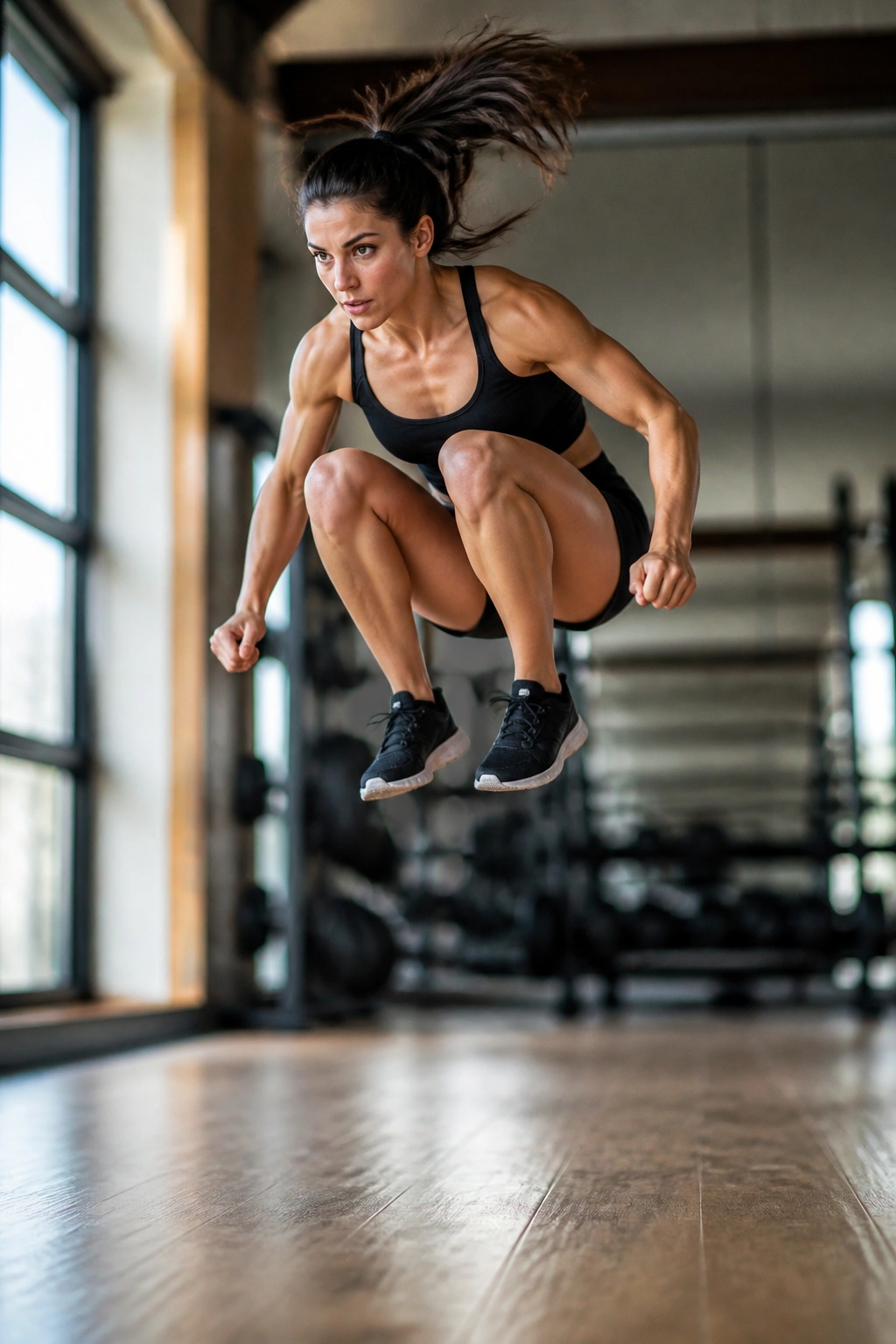
Tuck jumps are high-intensity plyometrics. You are essentially jumping as high as you can and pulling your knees up toward your chest at the peak of the jump. This is not for beginners, and it is certainly not for the faint of heart, but it is one of the most effective ways to burn calories in a short time.
Explosive Power
This movement recruits the fast-twitch muscle fibers in your legs. It requires immense power, and because of that, you will burn through glycogen stores quickly.
Critical Safety Rules
- Land softly: This is even more important with tuck jumps because you are jumping higher. Aim for a silent landing. If your feet make a loud thud, you are landing too hard.
- Core engagement: Pull your knees up using your abs, not just your hip flexors.
- Frequency: Because this is so demanding, keep your sets short. 5 to 8 jumps at a time are plenty to start.
14. Flutter Kicks
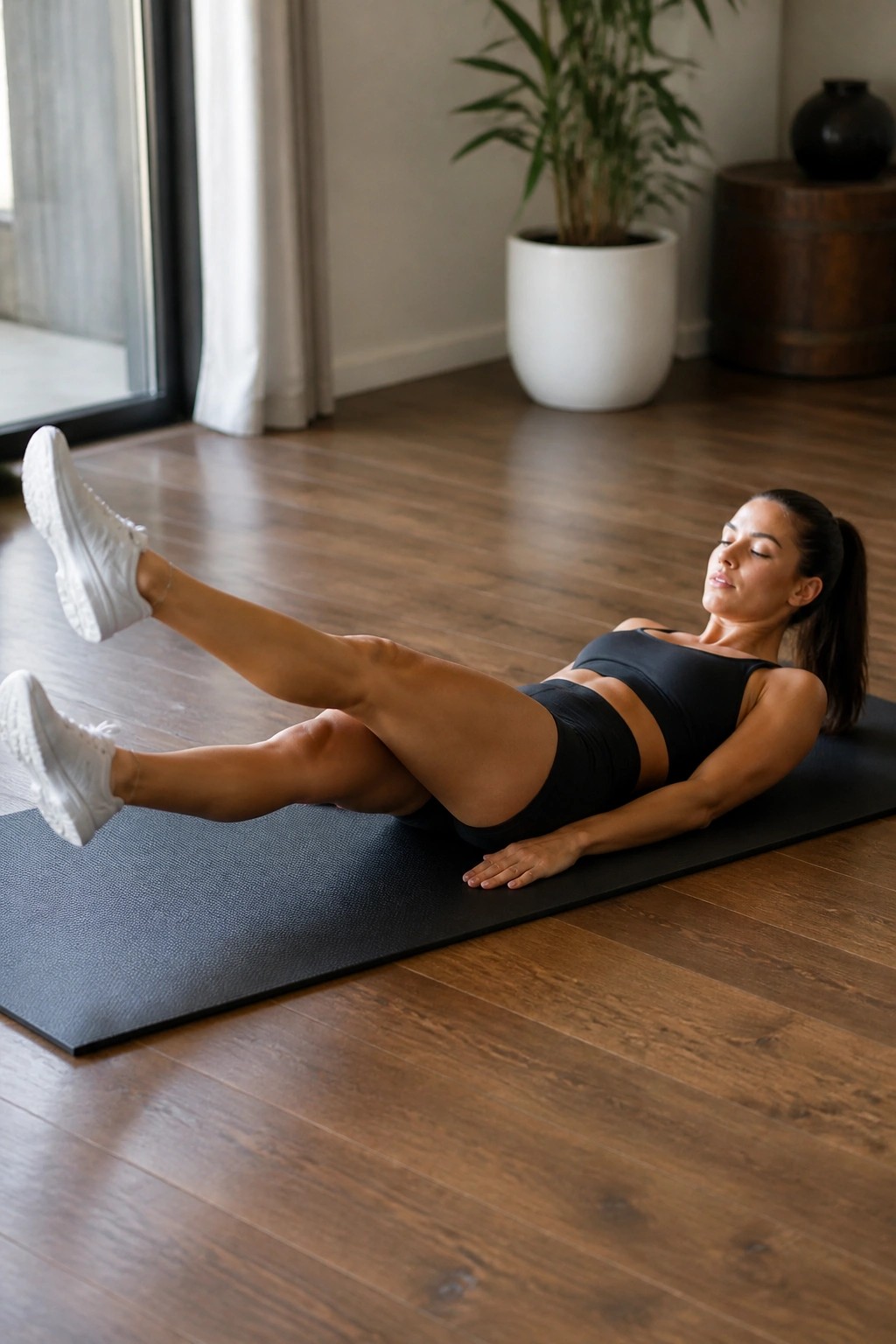
If you want to target the lower abdominals—the area that is often the last to lean out—flutter kicks are a classic choice. You lie on your back, lift your legs slightly, and kick them in a small, rapid motion.
Managing the Lower Back
The biggest mistake people make with flutter kicks is letting their lower back arch off the floor. This puts all the stress on your lumbar spine instead of your abs.
The Solution
- Press the spine: Actively push your lower back into the floor. If you cannot do this, lift your legs higher (towards the ceiling) rather than keeping them close to the floor.
- Control the legs: The kicks should be small and controlled, not wide, sweeping, and sloppy.
- Neck position: Keep your head down or slightly lifted, but do not strain it forward.
15. Glute Bridges
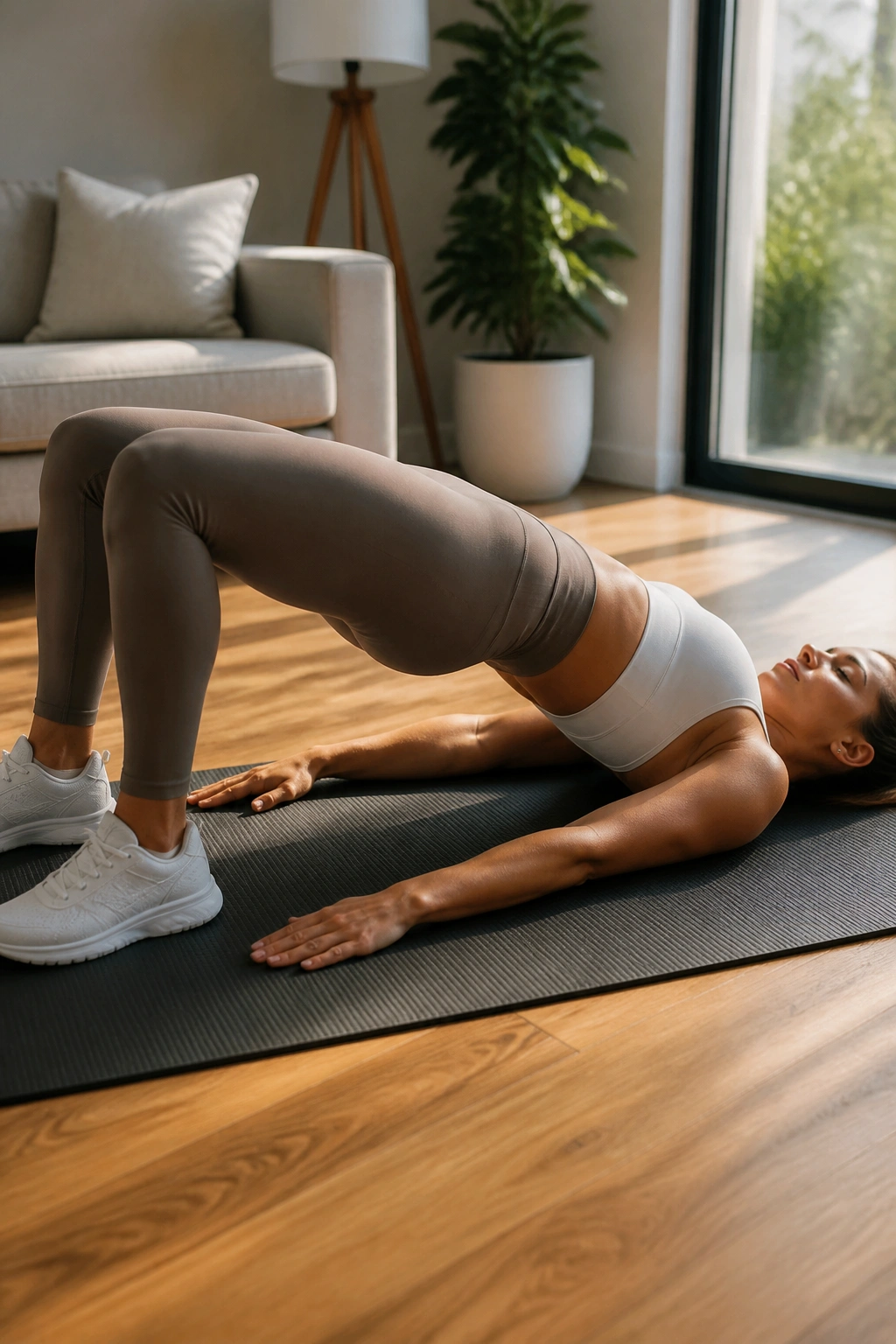
The glute bridge is the unsung hero of the posterior chain. It targets the glutes and hamstrings, which are often underdeveloped in people who sit for long periods. Strengthening these muscles helps with posture and burns significant calories during the movement.
The Squeeze
Don’t just lift your hips; squeeze your glutes at the very top of the movement. Hold that squeeze for a second before lowering back down. That pause makes all the difference in muscle activation.
Variations for Intensity
- Single-leg bridge: Lift one leg off the ground and perform the bridge with just one side. This doubles the intensity and forces your core to stabilize against the imbalance.
- Tempo: Slow down the descent. Take three seconds to lower your hips back to the floor. This “time under tension” is excellent for building muscle tone.
Final Thoughts
The path to fat loss does not require a complex, expensive setup. It requires consistency, intensity, and the willingness to push through the discomfort of fatigue. When you use your own body weight, you strip away the distractions of dials, weights, and machines, leaving you with nothing but your own determination to complete the next repetition.
Start by mixing and matching these exercises into a circuit that suits your current fitness level. You don’t have to perform all fifteen in one go—try picking five, performing them for 45 seconds each with 15 seconds of rest, and repeating that cycle three times. As you get stronger, you can increase the duration of the work intervals or add more exercises to the mix.
Remember that movement is only half of the equation; your daily habits outside of these exercises matter just as much. Stay hydrated, prioritize protein-rich foods, and ensure you are getting enough sleep to allow your body to recover. You have the tools, the technique, and the freedom to train anywhere. Now, you simply need to clear a little space on the floor and get started.
