



Ten minutes sounds too short to matter—right up until minute six, when your breathing gets loud, your shirt starts to stick to your back, and your core is working harder than it ever does during a lazy set of crunches. The best belly fat workouts are not endless ab routines. They’re short, repeatable sessions that push big muscle groups, raise your heart rate, and force your midsection to brace the whole time.
There’s a part people do not love hearing, though it matters: you cannot pick where fat leaves first. Your body decides that. Belly fat comes down through a mix of steady activity, strength work, food intake, sleep, and stress control—not because you did 200 sit-ups while staring at the ceiling. Still, the right workouts can help a lot, especially when they train your legs, hips, shoulders, and trunk together instead of isolating the abs and calling it a day.
Waist fat also isn’t all the same. The soft layer under the skin is one thing. Visceral fat, the deeper fat packed around the organs, is the one tied more closely to health risk. That’s why short sessions that improve fitness, burn energy, and build muscle are worth your time even when the clock is stingy.
I like 10-minute workouts for one plain reason: people actually do them. A timer, a patch of floor, maybe one dumbbell—that setup removes half the friction before you start. And once the format is tight, the excuses get thin fast.
Why Short Belly Fat Workouts Can Still Work
A hard 10 minutes beats a skipped 45 every single time.
If you stack one 10-minute session each day, that gives you 70 minutes of training across a week. Pair that with walking, a few longer sessions when you have room for them, and the minutes add up faster than most people think. Public health guidance from groups like the CDC has long put adults at 150 minutes of moderate activity a week, plus strength work on two days. Ten-minute blocks are one clean way to build toward that.
Short workouts also carry less mental drag. You’re not staring down an hour. You’re asking your body for one focused effort, then you move on with your day. That matters more than fitness culture likes to admit.
Intensity is the hinge. A 10-minute belly fat workout has to do one of two things well: push your heart rate up, or challenge enough muscle that your body keeps spending energy after the timer stops. The strongest sessions do both. Think squats, thrusts, fast step-ups, loaded carries, crawling, rope work, and planks done under fatigue.
And no, that does not mean every session has to end with you flat on the floor.
A brisk 10-minute circuit at a 7 or 8 out of 10 effort can be plenty. You should feel warm within 90 seconds, able to speak in short phrases, and glad when the rest interval comes. That’s the zone where these workouts start pulling their weight.
Crunches Alone Are Weak Belly Fat Workouts

A sore stomach is not the same thing as fat loss.
Crunches train spinal flexion. They can help build some ab strength and awareness, and I’m not here to pretend they’re useless. But if your goal is to shrink your waistline, doing crunch after crunch is one of the least efficient ways to spend 10 minutes. The calorie cost is low, the muscle demand is narrow, and most people end up yanking on their neck or arching their lower back halfway through.
The better move is to treat your core like it behaves in real life. Your trunk resists motion, transfers force, and keeps you stable while your arms and legs move. That means the strongest belly fat workouts often include:
- Carries, where the core has to fight side-bending and rotation
- Plank variations, which teach bracing under load
- Lunges and squats, where the abs help control the pelvis and rib cage
- Fast cardio bursts, which burn more energy in less time
- Crawling patterns, which light up the shoulders, hips, and midline all at once
If I had to cut one common move from most fat-loss plans, it would be the endless lying twist done at speed. People fling their knees side to side, feel a burn, and assume the waist is melting. It isn’t. Controlled work with larger movements gets you farther.
A 90-Second Warm-Up Before the Timer Starts
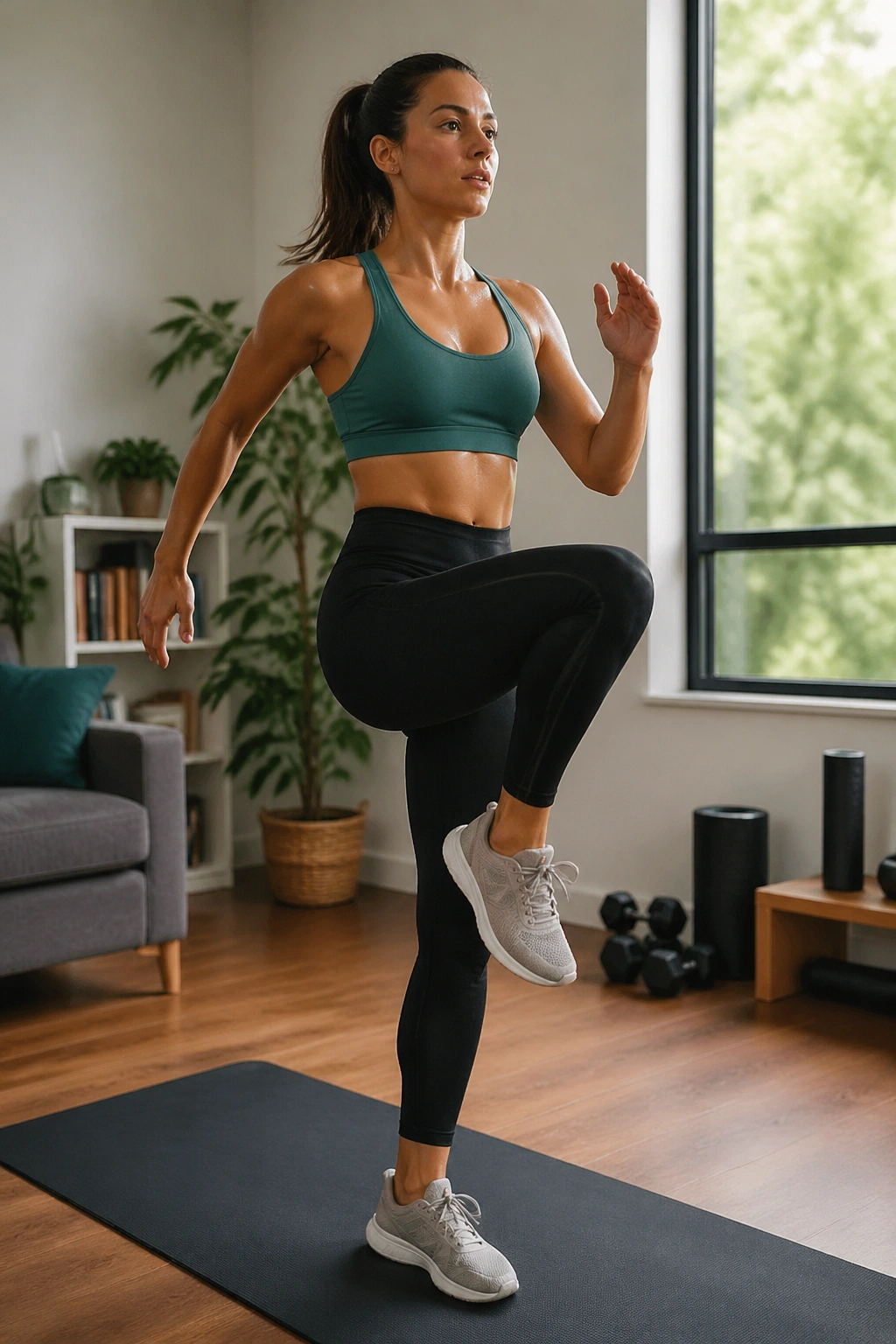
You do not need a 15-minute prep routine before a 10-minute workout.
You do need 90 seconds that wake up your hips, shoulders, and breathing. That’s enough to make the first round feel smoother and cut down on the ugly reps that show up when your body is still half asleep.
Try this before any of the sessions below:
-
30 seconds of march-in-place with arm swings
Lift your knees to hip height if you can, swing your arms from the shoulders, and land softly. -
30 seconds of hip hinge reaches
Push your hips back, keep your spine long, and reach your hands toward your knees or shins. You should feel your hamstrings wake up. -
30 seconds of high plank to downward dog
Move from a straight-arm plank to a hips-up position, then back. Press the floor away and let your shoulder blades move.
That’s it.
If your knees are cranky, add 30 seconds of bodyweight squats to a chair. If your wrists complain, swap the plank move for wall push-ups. Your warm-up should make you feel looser, not delayed.
1. March-and-Sprint Interval Circuit
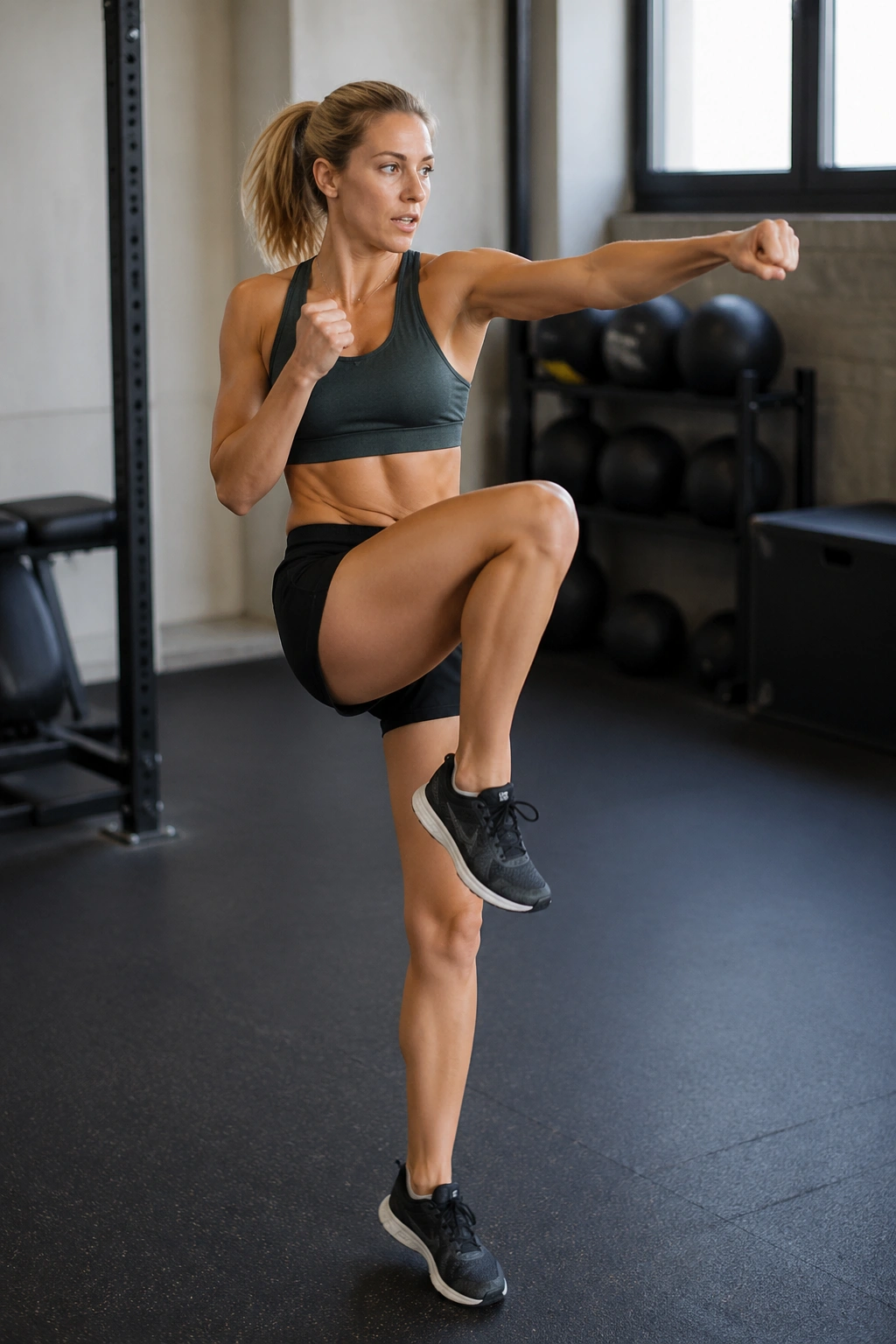
Start here if you want one of the simplest belly fat workouts that still leaves you sweaty. There’s no floor work, no equipment, and no jumping unless you want it. It also works well in a hotel room, a small office, or that weird corner of the house where the laundry basket usually lives.
The reason this one works is sneaky: you spend all 10 minutes upright and braced. The abs have to stabilize while the arms pump, the knees drive, and the pace changes. For beginners, that’s a strong place to begin because the movements are easy to learn but the effort can still climb fast.
Set the timer like this
Repeat this 2-minute round five times:
- 30 seconds march in place
- 30 seconds high knees or fast knee drives
- 30 seconds straight punches at chest height
- 30 seconds recovery march
Round one should feel controlled. By round three, aim to pump your arms harder and snap the knees up with more intent. On the punch interval, rotate from your ribs and hips a little—without flinging yourself around like you’re in a movie montage.
Quick form checks
- Keep your chest tall during the march.
- Land on the balls of your feet during high knees, then let the heel kiss the floor.
- Exhale sharply every few punches to keep the core switched on.
- If your lower back starts to tighten, slow the knee drive and lift through the crown of your head.
Tip: If you live in an apartment with thin floors, turn the high-knee section into a fast march and push the arm speed instead.
2. Squat Thrust and Mountain Climber Circuit
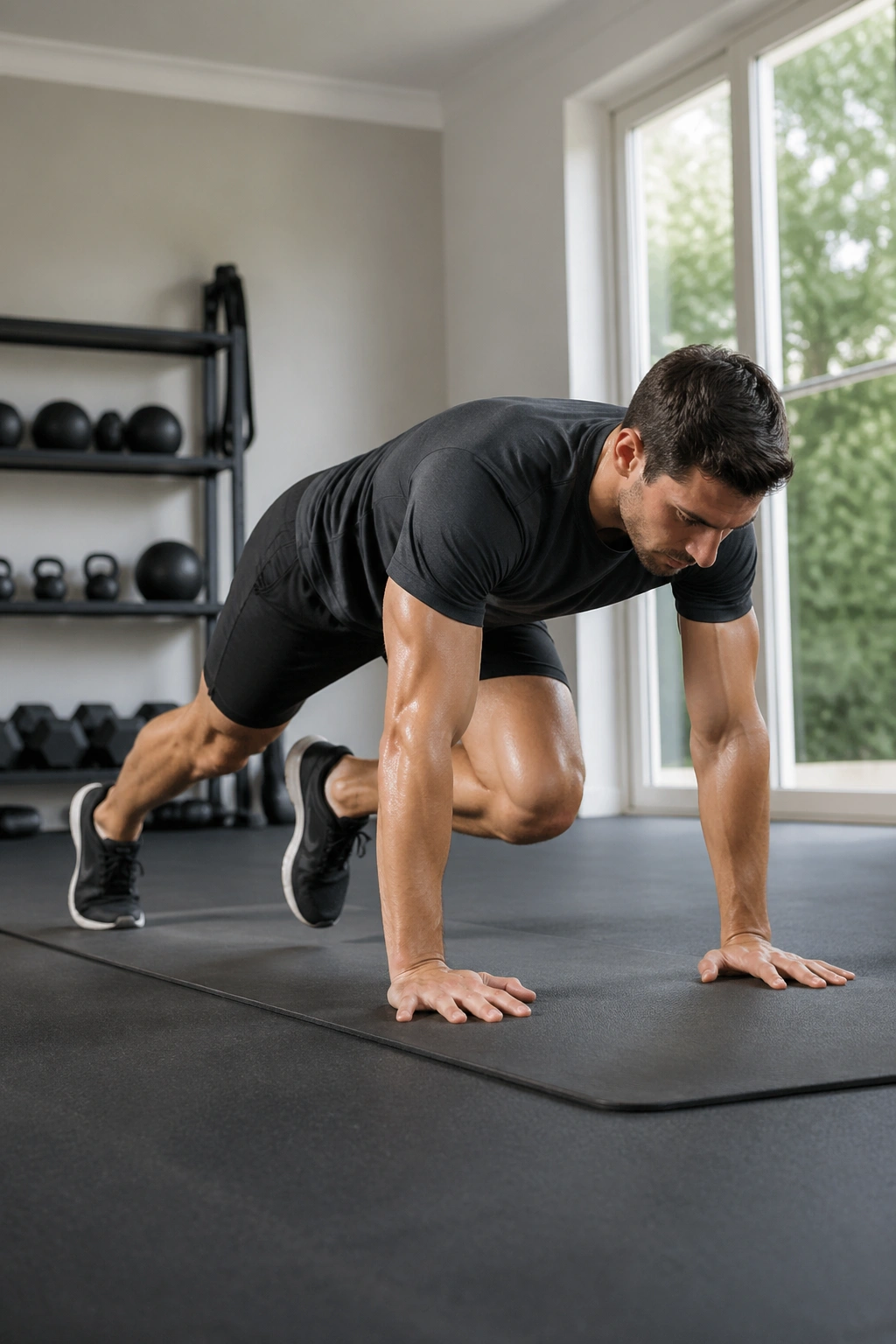
If you have floor space and a mild taste for suffering, this session earns its keep.
A squat thrust is the no-push-up cousin of the burpee. Hands to floor, feet jump or step back, feet return, stand up. It gets your heart rate high without the slop that ruins a lot of full burpees. Pair it with mountain climbers and bodyweight squats, and you’ve got one of the strongest 10-minute belly fat workouts for pure density.
Run a 2-minute round five times: 30 seconds of squat thrusts, 30 seconds of mountain climbers, 30 seconds of bodyweight squats, 30 seconds of rest or slow standing walk. Keep the transitions clean. The point is not to collapse, stare at the timer, and bargain with it.
Your core job here is bracing. During the thrust, keep the ribs from flaring as the feet shoot back. During climbers, keep the shoulders stacked over the hands and drive the knees under the body without bouncing the hips up and down. The squat gives you a breather, though not much of one, and keeps the legs doing enough work that the whole circuit stays expensive from an energy standpoint.
Skip the jump-back if your back feels shaky. Step one foot back, then the other. Same on the return. You lose some speed, though the movement often gets cleaner—and clean reps beat messy fast ones every time.
By the fifth round, your breathing should feel rough, your thighs should be warm, and your shoulders should have that dull burn that says you’re no longer coasting.
3. Reverse Lunge to Knee-Drive Core Circuit
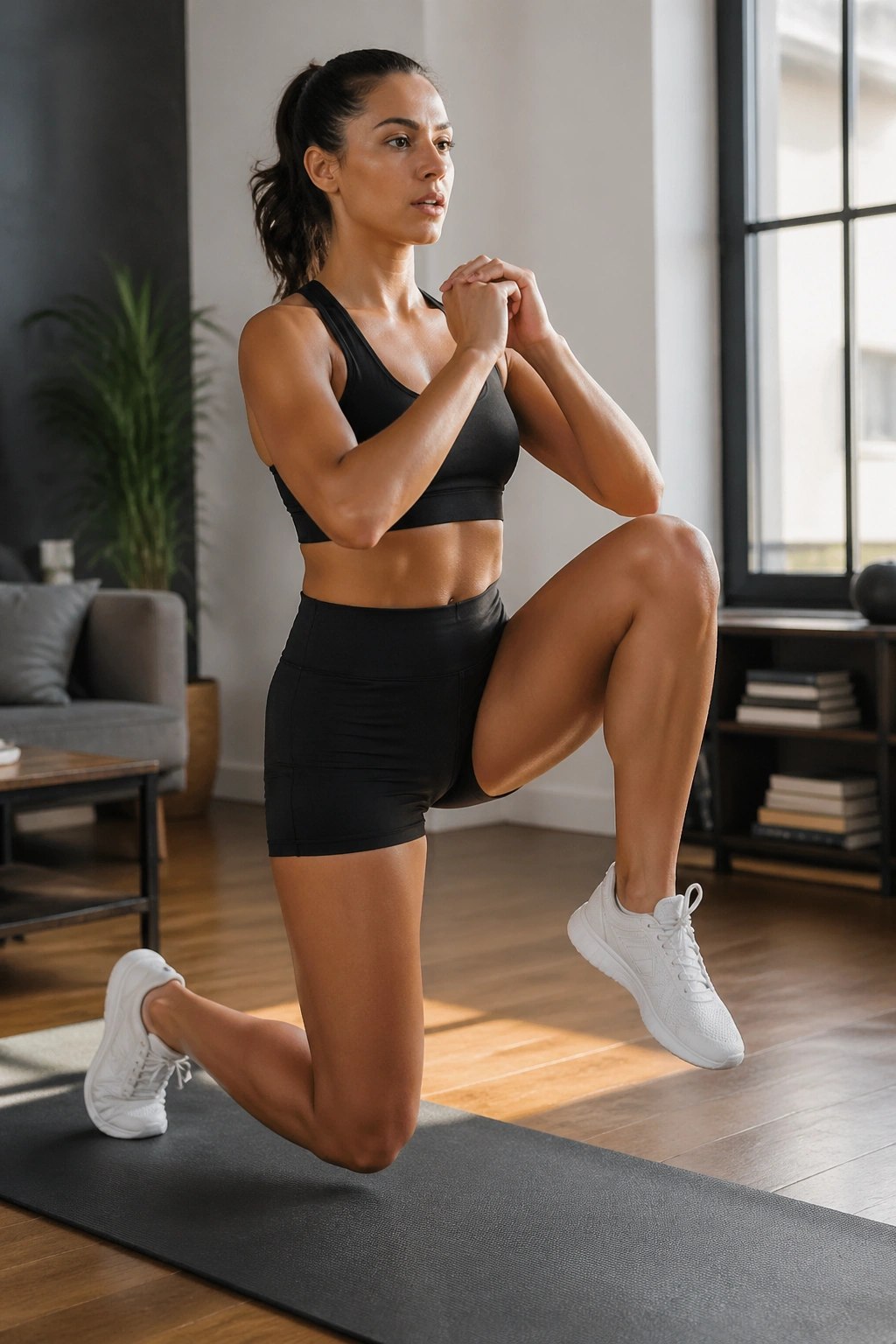
Why use lunges when the goal is belly fat?
Because single-leg work forces your torso to stabilize, and that turns a leg move into a core move without any gimmicks. Reverse lunges are kind to the knees compared with some forward-stepping patterns, and the knee drive at the top adds balance, control, and a burst of effort.
How to run it
Set your timer for 40 seconds of work and 20 seconds of transition. Move through these five stations, then repeat the full list once:
- Reverse lunge on the right leg
- Reverse lunge on the left leg
- Alternating knee drives with hands overhead
- Skater step or side-to-side reach
- Forearm plank with slow exhale
That gives you 10 minutes exactly.
On the lunge, step back far enough that the front heel stays planted and the front knee tracks over the middle toes. Push through the whole front foot to stand, then drive the back knee up until your thigh gets close to hip height. Pause for half a beat at the top. That little pause is where your abs and glutes have to earn the rep.
What makes this one different
Unlike a jump-heavy circuit, this workout taxes balance and control as much as speed. You’ll feel the standing leg, the side of the hip, and the lower abs trying to keep you from tipping. If you wobble, good. That means your body is working.
No shame in tapping a wall with two fingers during the knee drive.
If you want more challenge, hold one dumbbell in a goblet position at your chest during the lunge rounds. If you want less, drop the knee drive and stand tall between reps.
4. Walk-Out Plank and Shoulder-Tap Ladder

The first time people do this one, they often make the same mistake: they rush it. Then the hips twist, the shoulders shrug toward the ears, and the plank turns into a tired mess. Slow it down and it becomes one of the more honest belly fat workouts on this list.
A 10-minute version I like uses five 1-minute blocks repeated twice. You work for 40 seconds, then take 20 seconds to breathe and set up the next move.
- Block 1: Inchworm walk-outs from standing to high plank, then back up
- Block 2: High plank shoulder taps, alternating sides
- Block 3: Plank step-outs or plank jacks
- Block 4: Side plank on the right
- Block 5: Side plank on the left
Repeat the ladder one more time.
The inchworm is more than a warm-up move here. When you fold forward, walk the hands out, and brace in plank, the trunk has to control the change in body angle. The shoulder taps pile on anti-rotation work—your waist has to stop your hips from rocking like a metronome.
A few details matter a lot:
- Hands under shoulders, not 6 inches ahead
- Feet wider than hip-width on shoulder taps if you need more stability
- Glutes squeezed in side plank so the lower back doesn’t sag
- Neck long; look at the floor, not forward
If wrist pressure builds up, prop your hands on a sturdy bench, couch edge, or countertop. Same workout. Less joint grumbling.
5. Low-Impact Boxing and Standing-Core Combo

Not everyone wants to jump, crawl, or fling themselves onto the floor before breakfast. Fair. This one stays upright the whole time, makes almost no noise, and still drives the heart rate high enough to count as work.
Set a timer for 10 one-minute rounds. On odd minutes, throw 45 seconds of boxing combinations followed by 15 seconds of easy marching. On even minutes, do 30 seconds of standing right knee-drive crunches and 30 seconds on the left. Keep switching until you hit 10 minutes.
The boxing rounds are where the pace lives. Jab, cross, hook, uppercut. Or jab-cross-jab-cross if you want less to think about. Pull each fist back to guard after the punch, rotate through the rib cage, and let the back heel pivot on the cross and hook. Done right, it hits the shoulders, upper back, obliques, and lungs at once.
The standing crunch rounds look tame on paper. They are not, at least not when you do them with intent. Drive the knee up, pull the elbow down, and meet them in the middle with a sharp exhale. Then reset your posture before the next rep. Do not hunch and yank. Tall torso first, then crunch.
I recommend this workout a lot for people with downstairs neighbors, tender knees, or days when motivation is flimsy. There’s less setup, less dread, and more chance you’ll hit start instead of talking yourself out of training.
6. Dumbbell Thruster and Dead-Bug Pairing
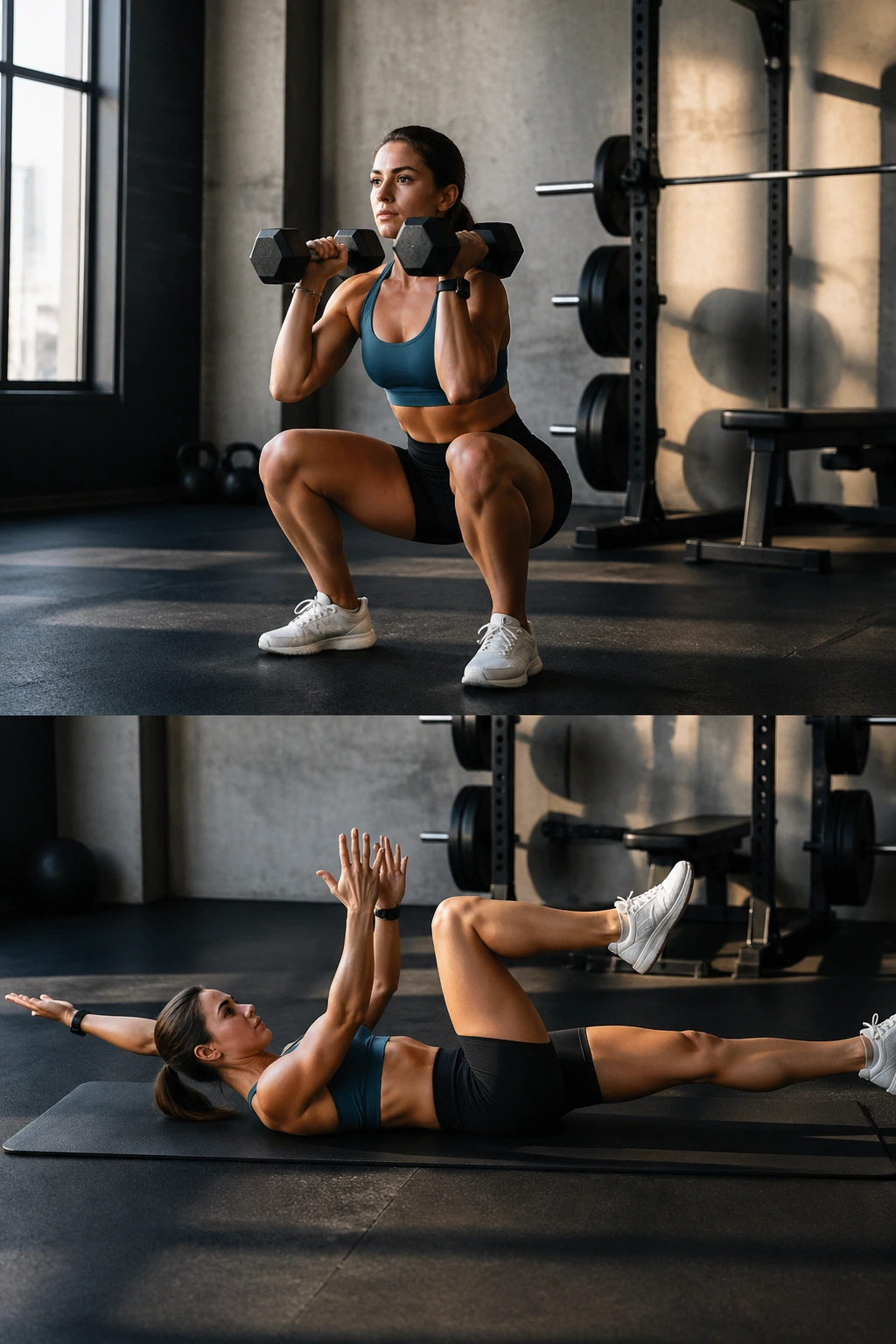
Unlike crunch-only ab sessions, this one gives you a loaded leg drive plus direct trunk control. That pairing is hard to beat if you want a short workout that feels athletic and leaves the midsection worked without trashing the neck.
You need one or two dumbbells. If you’re new, start with 5 to 15 pounds in each hand, or one dumbbell held vertically at the chest. If you’ve trained for a while, go heavier—as long as the squat stays clean and the press does not turn into a backbend.
Here’s the whole plan:
40 seconds of dumbbell thrusters, 20 seconds rest, 40 seconds of dead bugs, 20 seconds rest. Repeat that round five times.
The thruster is one fluid rep. Squat down, stand hard, and use that leg drive to help press the weight overhead. Lower the weights back to shoulder height before the next rep. Your heart rate climbs fast because your legs, shoulders, and trunk are all working at once.
Then you drop to the floor and slow the pace down. The dead bug is your check on control. Lower the opposite arm and leg away from each other while keeping your lower back gently pressed into the floor. If the back pops up, shorten the range. There’s no prize for lowering the heel all the way down if your ribs fly open.
This is a good fit for people who want a strength bias in their belly fat workouts. It will not feel as frantic as squat thrusts or stair sprints, though it often leaves you more drained 20 minutes later. Different flavor. Same goal.
7. Jump-Rope Speed Rounds
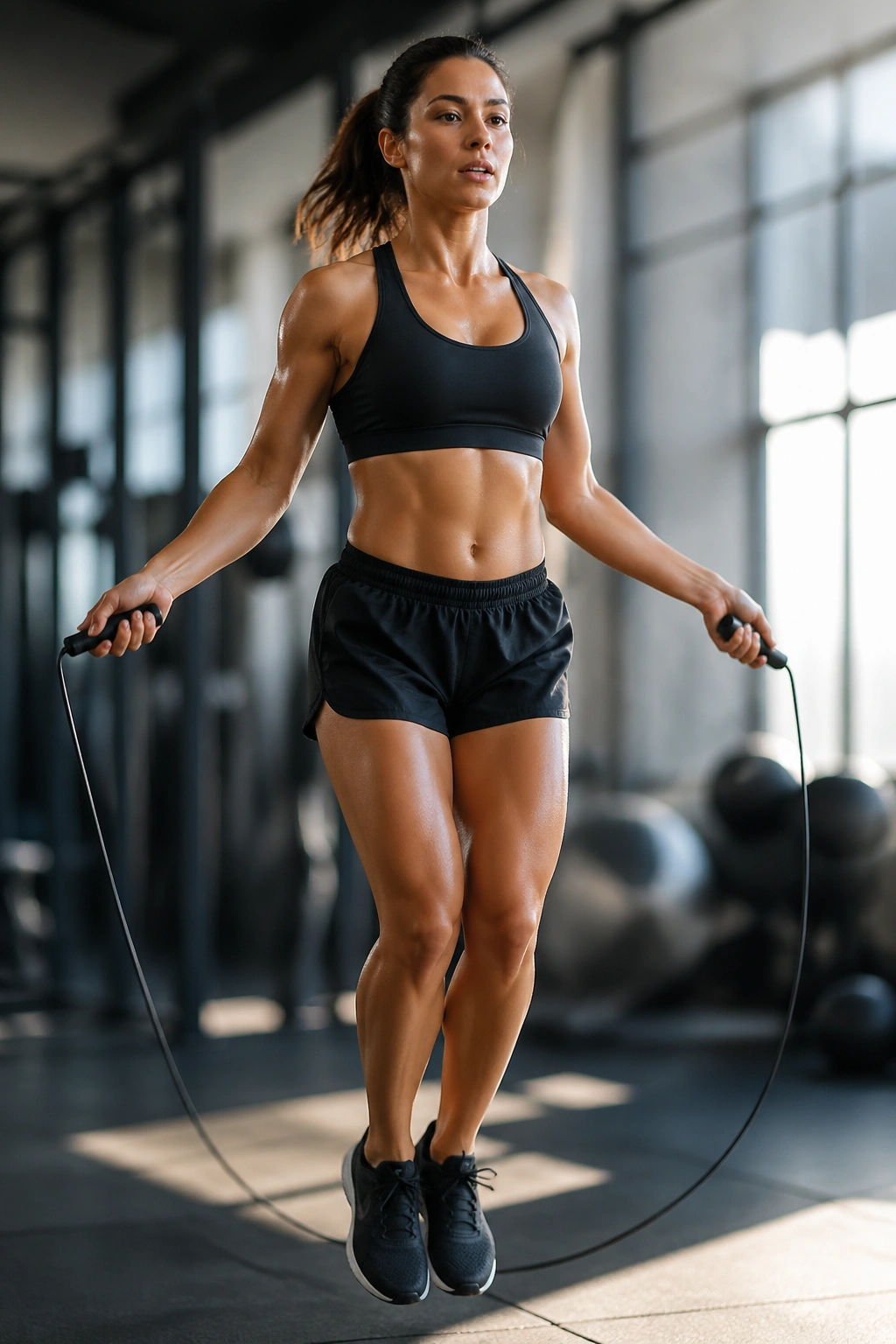
A jump rope has a way of exposing weak pacing in under a minute. Go out too hard and your calves light up, your timing falls apart, and the rope starts clipping your toes. Find a steady rhythm, though, and 10 minutes becomes a sharp conditioning tool.
The 10-minute rope format
Set a timer for 20 rounds of 20 seconds fast and 10 seconds easy. That adds up to 10 minutes on the nose.
Your “fast” interval should look crisp, not frantic. Small jumps. Elbows close to the ribs. Wrists turning the rope. Land softly enough that the sound stays light and quick rather than heavy and flat.
If you do not own a rope, mimic the same pattern with air rope—same wrist action, same foot rhythm. You lose some coordination demand, though the conditioning effect is still there.
Where the belly-fat piece comes in
This is not magic. It works because rope intervals can drive a high training density in a short window, and the trunk has to stay organized while the feet cycle beneath you. The rebound through the ankles and the constant brace through the midline make it more than a calf drill.
A few cues I keep repeating because they matter:
- Jump half an inch to 1 inch off the floor, not 4 inches
- Keep your gaze forward
- Breathe every few reps instead of holding your breath
- If the rope keeps catching, slow down and reset the rhythm
One hard truth: rope work is rough on angry calves and irritated Achilles tendons. If that sounds like you, pick the boxing circuit or the stair session instead.
8. Bear Crawl and Crab Reach Floor Flow
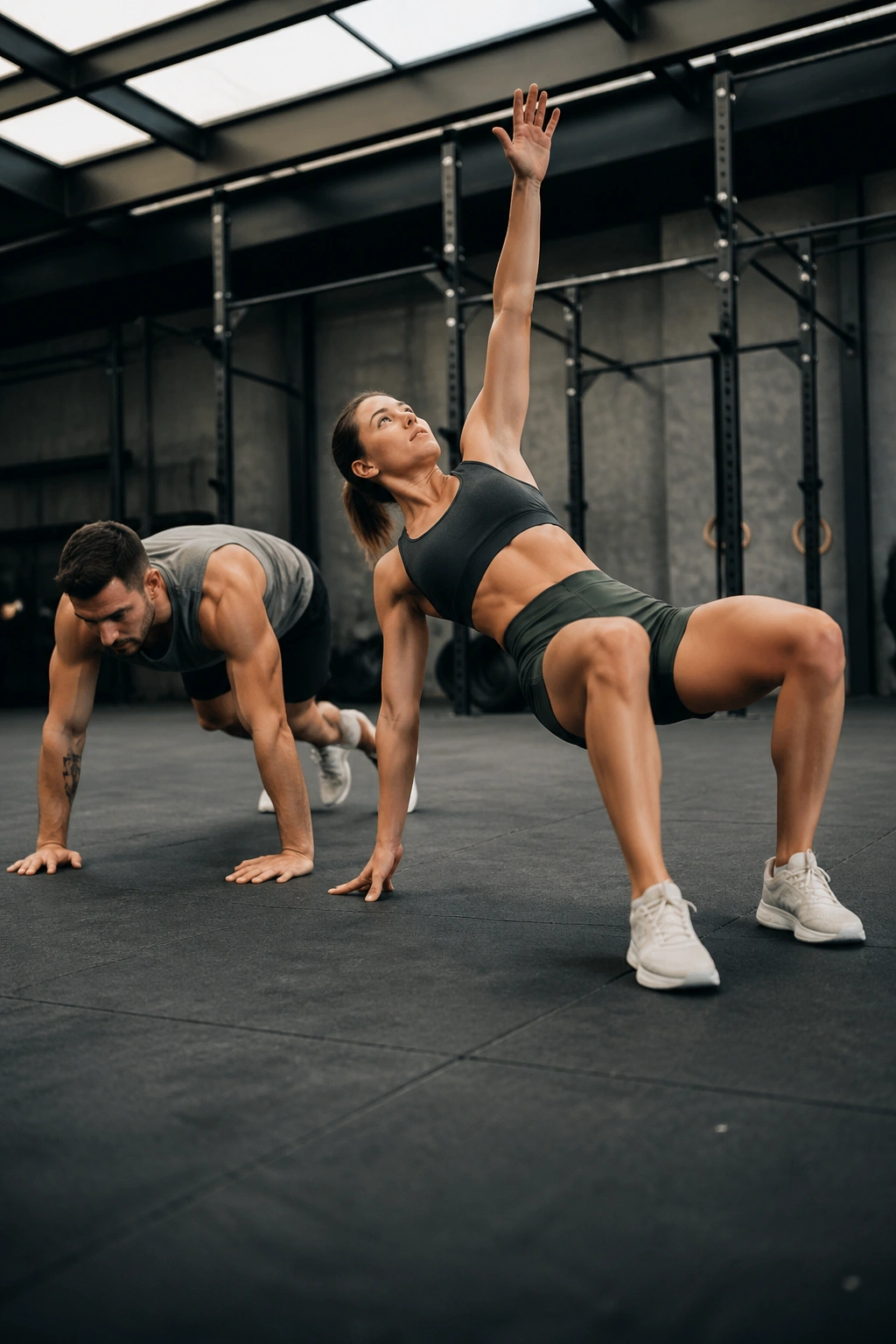
This one looks playful from across the room. Up close, it feels like work.
Bear positions put your knees an inch or two off the floor, your shoulders loaded, and your core braced while your limbs move in awkward little patterns. Crab reaches open the front of the body and challenge shoulder stability from the other direction. Put them together and you get a whole-body session that makes 10 minutes feel busy.
Use 45 seconds of work and 15 seconds to switch. Do these five moves, then repeat once:
- Bear crawl forward and back for 3 steps each way
- Beast hold shoulder taps
- Crab reach, alternating sides
- Bear toe taps from a hover
- Forearm plank with long exhales
The bear crawl round should stay low. Hips level. Knees close to the floor. Tiny steps. People tend to pop the hips high when they get tired, which shifts the move away from the abs and into a lopsided pike. Keep the back flat enough that a water bottle could sit there for two seconds without rolling off.
Crab reaches feel strange at first, and that’s part of the point. Plant both feet and one hand, lift the hips, then reach the free arm overhead and behind you. You’ll feel the glutes, hamstrings, shoulder, and side body all wake up at once. Then you drop back down and switch.
This session is one I bring out when someone is bored with standard cardio. It’s still conditioning. It just hides it inside movement that feels less repetitive.
9. Kettlebell Swing and Suitcase Carry Session
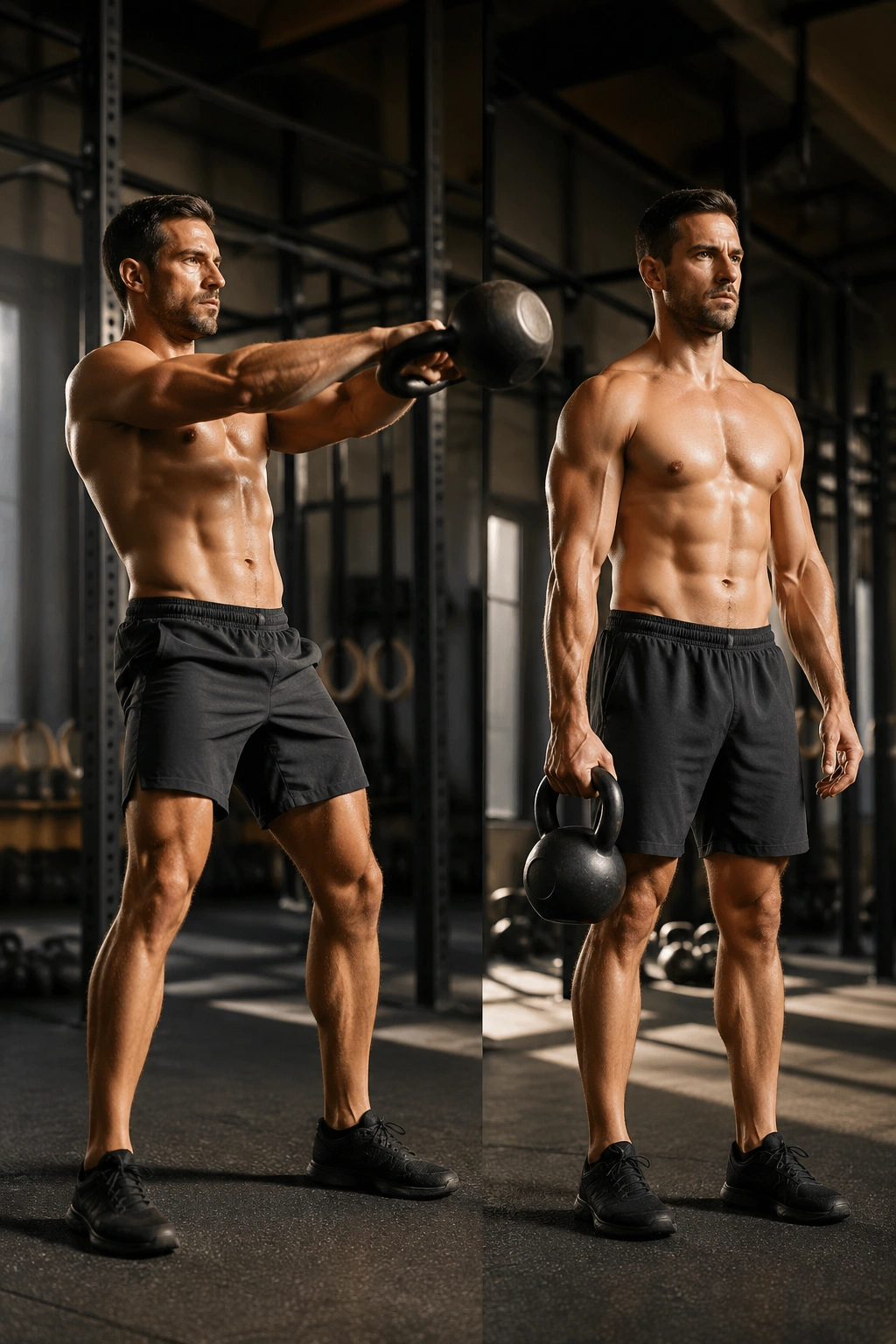
If you own one kettlebell—or one dumbbell heavy enough to matter—this might be the most efficient 10 minutes on the page. Swings train the hip snap. Suitcase carries train anti-side-bend strength. Together they hit the glutes, grip, lats, abs, and lungs with almost no wasted motion.
Run it as five 2-minute rounds
Each round looks like this:
- 30 seconds kettlebell swings
- 30 seconds suitcase march holding the weight in the right hand
- 30 seconds kettlebell swings
- 30 seconds suitcase march holding the weight in the left hand
Five rounds. No extra rest unless your form starts to slide.
Form checks that matter
- Hinge at the hips; do not squat the swing
- Let the bell float to chest height from the hip snap
- Keep the shoulder packed, not yanked up to your ear
- On the suitcase march, stand tall and do not lean away from the weight
- Lift each knee to about hip height without losing posture
The carry may look too easy written out. It isn’t. One-sided loading makes the obliques and deep trunk muscles fight to keep you upright. That is the kind of core work that carries over to daily life—carrying groceries, climbing stairs, even walking with better posture.
A loaded backpack can stand in if you do not have a kettlebell. Hold it by the top handle for the carry and hug it to swing? No. Do not swing a backpack unless it’s packed tightly and you trust the straps. Use the backpack for the carry and pick another workout for the power portion if needed.
10. Stair Climb and Step-Up Finisher

If you want a workout that feels harder than the timer suggests, stairs are unfair in the best way. They drive the heart rate high, load the legs, and ask your core to keep the torso stable while you move upward under fatigue. That’s a strong recipe for a short fat-loss session.
A simple format works best. Repeat this 2-minute block five times:
- 40 seconds fast stair climb
- 20 seconds walk down or easy recovery
- 40 seconds alternating step-ups
- 20 seconds full rest
You can use one flight of stairs and keep turning around, or a single sturdy step if that’s what you have. On the climb, pump the arms and place the whole foot down when possible. On the step-ups, drive through the working leg instead of pushing off the trailing foot like a scooter.
This is one of the few sessions here where people often undersell their pace. They start too gently because stairs feel familiar. By round three, they realize familiar does not mean easy. Push harder than your instincts want on the work segments, then take the recovery seriously so the next round has some life in it.
Use the railing if balance is sketchy. There is no medal for wobbling.
No stairs at home? Use a low bench, aerobic step, or even a bottom stair only. The movement does not need to look fancy. It needs to stay sharp for 10 minutes.
How to Rotate These Sessions Through the Week
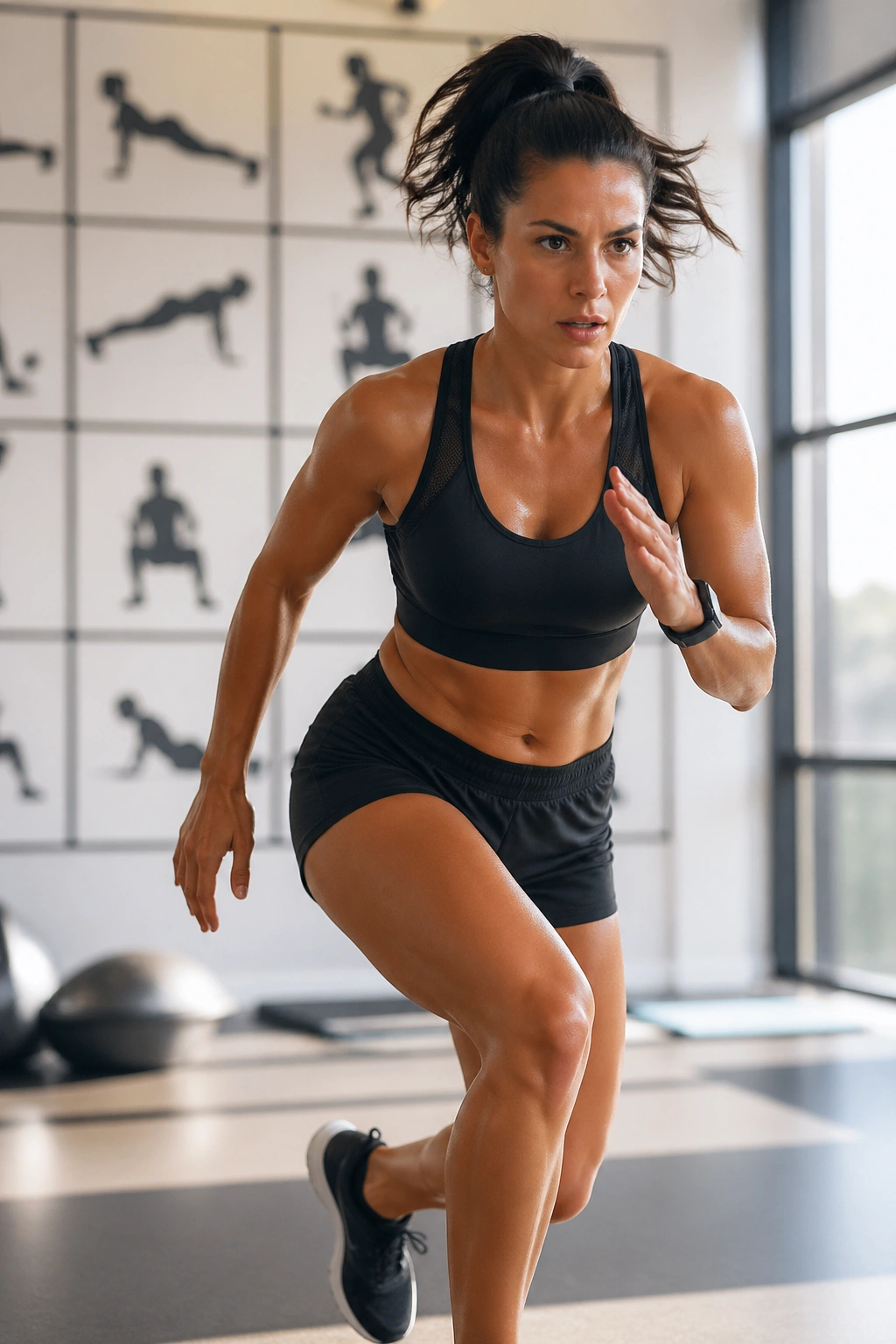
You do not need to do all 10 belly fat workouts in one week. You probably should not.
The cleaner way is to alternate hard days with lower-impact days so your joints, calves, and lower back stay happy enough to keep showing up. A sample rhythm could look like this:
- Day 1: Squat thrust and mountain climber circuit
- Day 2: Low-impact boxing and standing-core combo
- Day 3: Dumbbell thruster and dead-bug pairing
- Day 4: Easy walk or mobility work
- Day 5: Jump-rope speed rounds
- Day 6: Stair climb and step-up finisher
- Day 7: Rest or a long walk
If recovery is weak, trim that down to four sessions a week. That is still enough to move the needle when the effort is honest and your food intake supports fat loss. Sleep matters here too—more than people like admitting. A tired body chases easier choices, trains with less punch, and hangs onto stress in ugly ways.
Walking still counts.
I keep coming back to that because it gets dismissed far too often. A 10-minute workout is strong. A 10-minute workout plus 20 to 30 minutes of brisk walking done later in the day is stronger. That combo helps with calorie burn, blood sugar control, and stress without beating you up.
Final Thoughts

If I had to strip this down to three ideas, they’d be these: short sessions count, crunches are not the answer, and consistency beats drama. A sharp 10-minute circuit done four or five times a week can do more for belly fat than a heroic workout you only manage once every 10 days.
Pick two workouts from this list that feel doable, one that pushes you, and one that feels almost too easy to skip. That mix works. It keeps training from turning into a punishment ritual, which is where a lot of good plans go to die.
Then start the timer. The first round will tell you plenty.
