



Upper body stretches before a workout do not need to feel like a yoga class.
They need to feel useful. A little shoulder warmth. A little chest opening. A little movement through the upper back so the first pressing, pulling, or overhead rep does not feel like it is being dragged through mud.
Stiff shoulders can ruin a clean first set. So can a locked-up thoracic spine, tight lats, and wrists that never got the memo that you’re about to load them.
The first rep tells the truth.
If your warm-up leaves you sleepy, floppy, or yanked into weird end ranges, it is doing the wrong job. What you want before training is motion that wakes up the joints, not long holds that make everything feel a little too relaxed. That difference matters a lot more than most people think, especially if your session includes bench press, rows, pull-ups, overhead press, push-ups, or anything that asks the shoulder blades to move well under load.
Why Upper Body Stretches Before a Workout Should Stay Dynamic
Before lifting, motion beats long holds. That’s the simple version, and it holds up in real life. A shoulder that has moved through range tends to feel ready; a shoulder that has been parked in a 30-second stretch often feels loose in the wrong way, almost sleepy.
The trick is not to avoid stretching. It’s to use the right kind. Pre-workout upper body stretches should wake up the rotator cuff, the shoulder blades, the chest, the lats, and the upper back without draining the tension you need for a solid first set.
A good warm-up usually does three things at once: it raises temperature, it improves range, and it teaches control. That last part gets ignored all the time. Your shoulder is not just a ball-and-socket joint floating in space. The shoulder blade has to glide, your rib cage has to stay stacked, and your upper back has to rotate a little when you reach overhead. If one of those pieces is stiff, the whole chain feels clunky.
You should feel warmer, smoother, and more connected after these stretches. Not tired. Not pulled apart. Not shaky.
- Your reach overhead should feel easier.
- Your chest should stop fighting every arm swing.
- Your shoulder blades should feel like they can slide instead of jam.
- Your wrists should stop complaining the moment your palms touch the floor.
Sharp pain is not stretch discomfort. If a movement pinches, catches, or sends a zing through the shoulder or neck, back off fast. A little stretch sensation is fine. A hard stop is the point where you change the drill or skip it.
How Long to Spend on Upper Body Stretches Before a Workout

How long is enough? Shorter than most people think.
For a normal gym session, 4 to 8 minutes is usually plenty if you pick the right moves and keep them moving. If you are about to do heavy overhead work, a pull-up session, or a pressing day after sitting all day, 6 to 10 minutes makes more sense. You do not need to turn the warm-up into a second workout.
I like a simple rule: 6 to 10 reps per movement, or 10 to 20 seconds of light, controlled range. That gives you enough time to feel the joints wake up without sinking into a sleepy hold. If you prefer timers, keep the whole sequence brisk. One round if you are in a hurry. Two rounds if your shoulders feel rusty.
A bad warm-up usually goes too hard too soon. People yank on their arms, sink deep into chest stretches, then wonder why their first set feels weird. That is the trap. Keep the effort around a 3 or 4 out of 10. You should feel like you are preparing to work, not auditioning for a recovery day.
If you only have two minutes, do this:
- 20 arm circles
- 15 band pull-aparts
- 8 scapular push-ups
- 8 wall slides
- 5 slow thoracic rotations per side
That little sequence wakes up a lot without asking for much. It is not fancy. It works.
A Simple Order for Upper Body Stretches Before a Workout

A warm-up flows better when it starts with big, easy motions and ends with the parts that need a little more precision.
For push days, I like to begin with arm circles or band pull-aparts, then move into wall slides, scapular push-ups, and a chest opener. For pull days, thoracic rotation and lat work usually come earlier, because the upper back and lats love to act stiff when you need them most.
If you want a quick order that feels sane, try this:
- Push day: arm circles, band pull-aparts, wall slides, doorway pec pulses, wrist rocks
- Pull day: arm circles, open books, thread the needle, lat side bends, band pass-throughs
- Mixed upper-body day: arm circles, scapular push-ups, wall slides, open books, wrist rocks, chin tucks
That’s enough. Seriously.
Once you know the order, the stretches below slot in much more easily. Some are better for shoulders. Some are better for the upper back. A few are there because wrists and necks tend to complain when people ignore them, and that complaint shows up fast under a barbell.
1. Arm Circles That Wake Up the Shoulder Joints

Arm circles look almost too basic. They aren’t.
They get blood moving through the shoulder, they remind the joint how to move, and they show you pretty fast whether one side feels different from the other. I like them because they are easy to scale. You can keep them tiny and controlled, then open them up once things start to feel warmer.
How to Do Them
Start with 10 small forward circles and 10 small backward circles. Keep your ribs stacked over your hips. If your shoulders creep up toward your ears, the circles are too big or too fast.
Then switch to a slightly larger range for another 10 reps each direction. The goal is smooth motion, not dramatic movement. You should feel the shoulder socket and upper arm working together, not the neck taking over.
What to Watch For
- Keep the motion light.
- Don’t swing from the lower back.
- Stop widening the circles if the shoulder pinches.
- Move one arm at a time if both sides feel sloppy.
One clean round is often enough. If your shoulders feel cold, do a second round with a slower tempo and a little more control.
2. Band Pull-Aparts for a Stronger Upper Back

Band pull-aparts are tiny, and they punch above their weight. That’s why I keep them in so many warm-ups. They wake up the rear delts, mid-back, and the muscles that help your shoulder blades sit in a better place before pressing or rowing.
Hold a light band at chest height, arms straight but not locked hard, and pull it apart until it touches your chest line or nearly reaches it. The movement is small. The feel is real. You should feel the middle of your back work, not a shrug creeping into the neck.
If you want a clean rep, think about spreading the band instead of yanking it. That tiny mental change helps.
A few useful variations:
- Palms down to feel the rear shoulders more.
- Palms up if you want a slightly different pull through the upper back.
- Very light band tension if your shoulders are cranky or tired.
Do 12 to 15 reps with a calm tempo. If the band is so heavy that your ribs flare and your shoulders rise, it is too much. Use a thinner band. That is the whole fix.
3. Scapular Push-Ups That Teach the Shoulder Blades to Glide

Why do a push-up with straight elbows before a workout?
Because the movement is not about your chest. It is about the shoulder blades. Scapular push-ups teach the shoulder blades to move apart and back together without the rest of the body turning into a mess. That helps a lot before benching, push-ups, dips, planks, and even overhead work.
Start in a high plank or with your hands on a bench if the floor feels too aggressive. Keep the elbows straight. Let the chest sink a little between the shoulder blades, then press the floor away so the upper back rounds just enough to spread the blades.
How to Feel It
You should feel the movement around the rib cage, upper back, and the front side of the shoulder blade, not in the elbows. If your elbows bend, you have turned it into a push-up. That is a different drill.
Do 8 to 10 smooth reps. No rushing. No bouncing.
If your wrists hate the floor, use an incline. If the neck tightens, lower the effort and shorten the range a little. This one is supposed to make the shoulders move better, not create a new problem.
4. Wall Slides for Overhead Reach

If overhead pressing feels sticky, wall slides are one of the first things I’d reach for.
Stand with your back against a wall, feet a few inches forward, lower back gently supported, and elbows bent like a goalpost. Slide your arms upward while keeping as much of your forearms and wrists connected to the wall as you can. Then come back down with control.
The magic is not in going high. It’s in staying organized. Your ribs should not flare. Your lower back should not arch like a bridge. The shoulder blades should move up and around the rib cage without the whole torso helping too much.
Try 6 to 8 reps with a slow rhythm. If your hands come off the wall a little, fine. If your entire rib cage pops forward, shorten the range and work smaller.
A clean wall slide can tell you a lot. Tight lats? You’ll feel it. Stiff upper back? You’ll feel that too. It’s a simple drill, but it does a lot of honest work.
5. Cross-Body Arm Swings for the Back of the Shoulder

If the back of your shoulder feels sticky after a day of typing, driving, or carrying bags, cross-body arm swings are a nice fix.
Let one arm swing gently across the front of your chest, then open it wide to the side. Keep it smooth. The movement should feel loose and easy, not forced. This is not an aggressive rear-shoulder stretch where you haul the arm across and twist the torso with it.
The point is to wake up the posterior shoulder, not jam it.
I like 10 to 12 swings per side. Keep the torso mostly still and let the arm move. If you find yourself cranking hard with the opposite hand, back off. That usually means the range is too deep for a pre-workout warm-up.
This stretch is useful before rows, pull-ups, rear-delt work, and even pressing if your shoulders live in a rounded position. It is small. It matters.
6. Band Pass-Throughs for Better Shoulder Flexion

Unlike a static chest stretch, band pass-throughs give you range without stealing your tension. That is why they are so useful before training. They ask the shoulders to move overhead while the chest and lats open a little at the same time.
Hold a light band with a wide grip, arms straight, and bring it from in front of your thighs up and over your head, then behind you, and back again. If the band is too tight, widen the grip. Wide is better than grimacing. Every time.
A towel or a light dowel works if you do not have a band, though the band usually feels smoother because it gives you just enough feedback. The key is to keep the motion controlled and your ribs from flaring up like they are trying to escape.
What to Feel
- A smooth opening through the shoulders
- Mild stretch through the chest
- Less friction at the top of the reach
- No pinch in the front of the shoulder
Do 8 to 10 passes. If the last few reps turn clunky, your grip is too narrow or the band is too stiff.
7. Open Book Rotations for the Upper Back
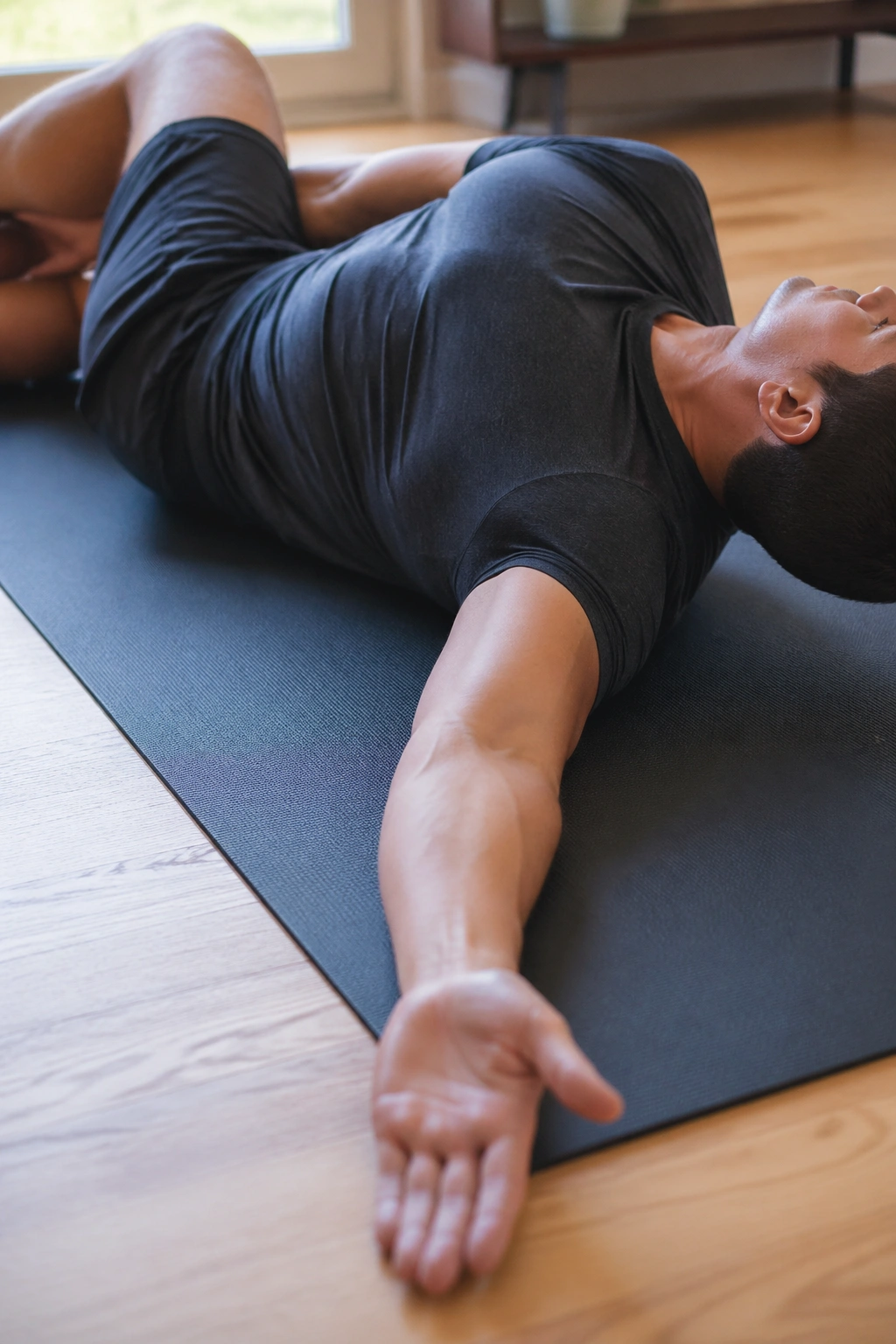
Your shoulders often feel tight because your upper back is stiff. People miss that all the time. Open book rotations help because they work the thoracic spine, which is the part of the back that should rotate when you reach, press, or pull.
Lie on one side with your knees bent. Reach both arms out in front of you, then sweep the top arm open toward the floor behind you while your chest rotates. Keep the movement slow enough that you can breathe into it. That breath matters. It helps the ribs move, which helps the upper back move.
Do 5 to 8 reps per side. Let your eyes follow your hand. That small detail tends to make the rotation cleaner.
If your low back wants to twist hard, pin the knees a little more and keep the motion higher through the chest. You want rotation from the upper torso, not a messy crank through the lumbar spine.
8. Thread the Needle for Tight Shoulder Blades
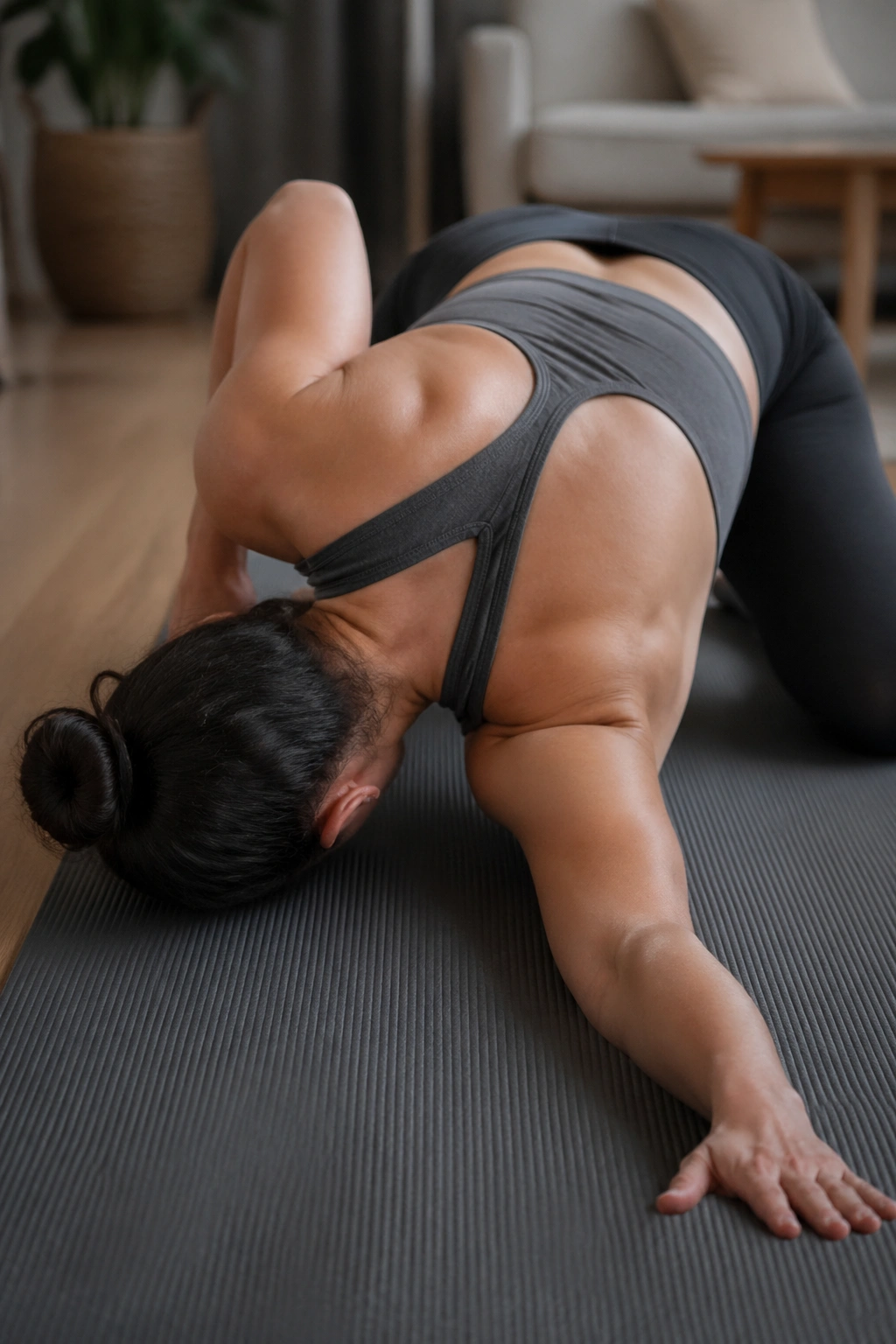
You should feel this one between the shoulder blade and the spine.
From hands and knees, slide one arm under your body and reach across the floor, then rotate back open and lift the chest a bit. It is a great drill when the upper back feels glued together, especially if one side is tighter than the other.
The move can feel almost too small at first. That’s fine. Small is not a flaw here. Small is often the point, because the area between the shoulder blade and ribs tends to get neglected until it starts stealing range from bigger lifts.
I usually do 5 reps per side and keep them slow. If the stretch turns into a lower-back twist, shorten the reach and keep the hips more steady. If the shoulder feels pinchy in the fully open position, do not force the chest higher.
This drill pairs well with open books. One works from the floor and one opens a little more toward rotation. They’re a nice team.
9. Cat-Cow With Overhead Reach
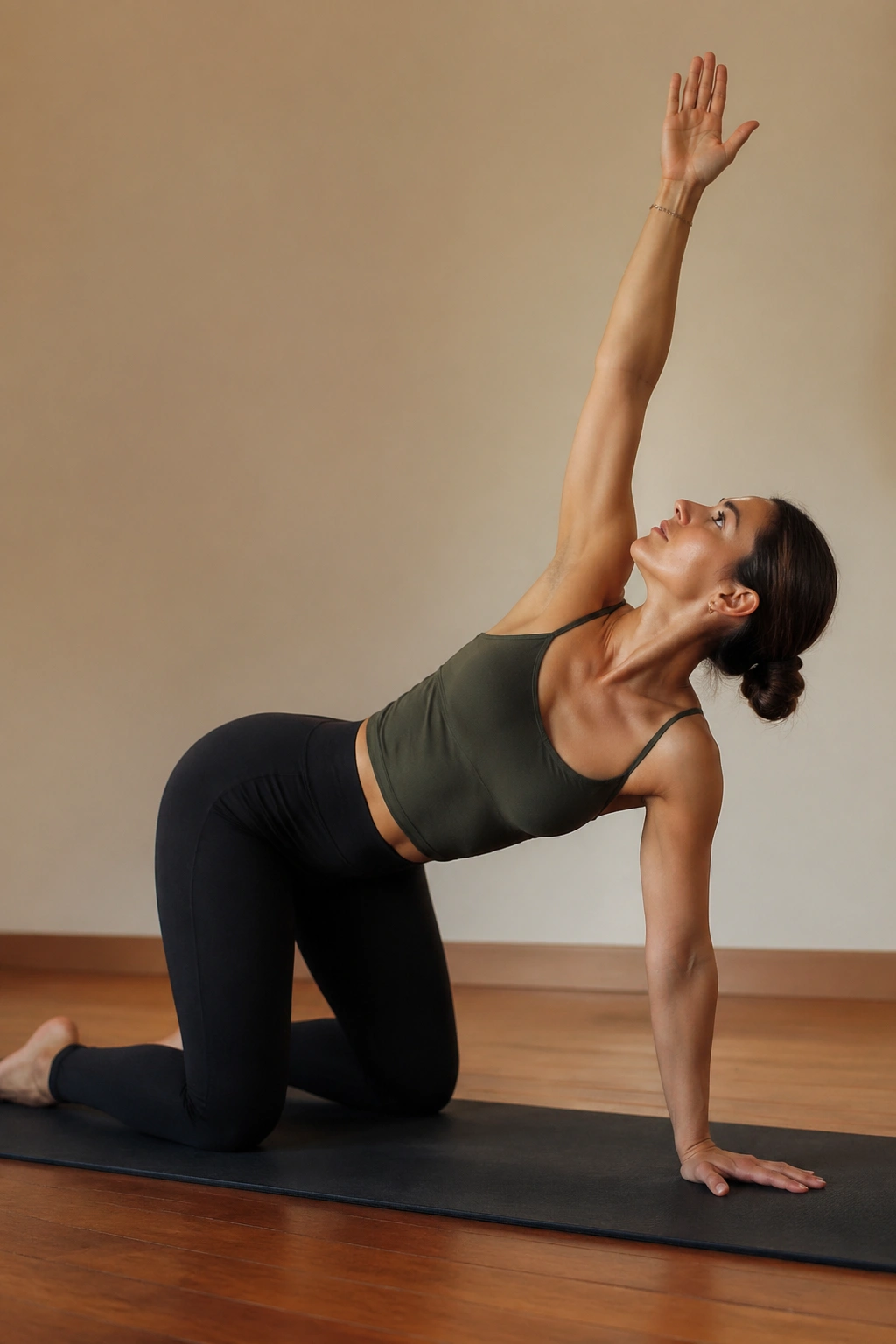
Cat-cow is a classic for a reason, but the overhead reach makes it more useful before upper-body work.
Start on hands and knees. Round the spine on the exhale, then let the chest open on the inhale. On the open phase, reach one arm forward or slightly overhead if the shoulder feels good there. The body gets a little more length through the upper back, shoulder, and side body all at once.
Breath and Reach
- Exhale as you round.
- Inhale as you open.
- Keep the neck long.
- Move slowly enough to feel the ribs shift.
Do 5 to 6 rounds. The goal is not a giant spinal wave. The goal is smooth movement through the rib cage and upper back so your shoulders are not doing all the work alone.
If you only have time for one floor-based mobility drill, this one earns a strong look. It wakes up more than people expect.
10. Doorway Pec Pulses for a Less Tight Chest

A tight chest is sneaky.
It shows up as rounded shoulders, shallow arm reach, and a weird feeling in the front of the shoulder when you press. Doorway pec pulses help because they open the front of the chest in a controlled way without asking you to sink into a long, sleepy hold.
Stand in a doorway with your forearm against the frame and your elbow around shoulder height. Step one foot through the doorway until you feel a gentle stretch across the chest. Then do tiny forward-and-back pulses, just a few inches each way.
I like 8 to 10 small pulses. Nothing dramatic. If your shoulder rolls forward or the front of the joint complains, raise or lower the elbow a little and make the movement smaller.
A couple of useful tweaks:
- Keep the shoulder blade lightly set, not yanked back hard.
- Switch arm height if one angle feels better.
- Use less range on a cranky day.
This is a good one before bench, push-ups, dips, and front rack work. The chest should feel opened, not pinned.
11. Side-Bending Lat Reach for Overhead Freedom

If pull-ups or overhead pressing make you feel glued at the top, your lats may be part of the problem.
Stand tall, lift one arm overhead, and lean gently away from that side. The stretch should run down the side of the torso, into the armpit, and a little into the rib cage. Keep the hips square. Do not turn it into a backbend just to make it look bigger.
This one is useful because the lats attach into the upper arm and also influence overhead range. When they are stiff, the shoulder often pays the price.
Hold for 3 to 5 breaths on each side, or make small side-to-side pulses if you prefer motion over a long hold. I usually favor the pulses before training because they keep the body awake.
If you feel the low back taking over, shorten the reach and keep the pelvis more neutral. The stretch should feel long and clean, not compressed or sharp.
12. Overhead Triceps Stretch With a Walkout

This stretch earns its place before pressing and climbing work.
Reach one arm overhead, bend the elbow, and let the hand drop behind the head or upper back. Then take a small side lean away from that arm, or walk the opposite hand down the leg a little to create a cleaner line through the triceps and lat. It should feel like the back of the upper arm is opening, not like your neck is being shoved sideways.
I prefer a gentle 10-second hold or 5 slow side leans. Long holds can feel nice, but before a workout I want the movement to stay crisp.
Keep the Elbow Happy
- Don’t force the elbow straight down the spine.
- Keep the chin neutral.
- Ease off if the shoulder joint feels compressed.
- Switch sides evenly.
This one matters more than people think for overhead triceps work, dumbbell pressing, and any session where the arms need to go up without resistance.
13. Clasped-Hand Chest Opener for Rounded Shoulders

If you spend hours with your shoulders curled forward, this stretch can feel like a reset.
Interlace your hands behind your back, straighten the arms a little, and let the shoulders roll back just enough to open the chest. If the range feels tiny, that’s normal. Some people can barely get the palms to meet; some can easily lift the hands a bit. Do not chase the bigger version just because it looks better.
I like this one because it tells the truth fast. Tight front shoulders show up immediately. So do cranky elbows and grumpy wrists.
A towel between the hands works if the fingers do not interlace comfortably. That simple fix keeps the movement clean without forcing your shoulders into a bad position.
Do 3 to 4 breaths or 6 to 8 small pulses. Either works. The important part is that the chest opens without the lower back turning into a substitute.
14. Wrist Rocks and Circles for Push Days

Do not skip the wrists if your workout has planks, push-ups, handstands, or front rack holds.
Start on all fours with the palms flat and fingers spread. Rock forward and back a few inches. Then shift the hands so the fingers point slightly out or even back, if that feels okay, and repeat with a smaller range. Finish with a few wrist circles or gentle flexion and extension pulses.
The wrists often get ignored until they bark in the middle of a set. That is a bad time to find out they were cold.
A few good options:
- Palms flat, fingers forward: 8 rocks
- Palms turned slightly out: 6 rocks
- Hands in fists if the wrists hate full extension
- Wall version if floor pressure feels rough
Keep it light. The goal is to warm the joint, not grind it. If one wrist feels very different from the other, that is useful information, not a reason to force symmetry.
15. Chin Tucks and Neck Side Bends

Big neck circles look loose. They often feel sloppy.
I prefer chin tucks and small side bends instead. Draw the chin straight back a little, as if making a double chin, then hold for a second or two and release. After a few reps, tilt one ear gently toward the shoulder to open the side of the neck. Keep the motion small. That is what makes it useful.
Neck tension can creep into every upper-body lift. It shows up on the bench, on overhead work, and even on rows if you tend to shrug when the set gets hard.
What Not to Do
- Do not whip the head around in big circles.
- Do not jam the chin down.
- Do not force a side bend if it catches.
- Do not use speed.
Try 5 chin tucks and 3 to 5 gentle side bends per side. If a headache, nerve symptom, or sharp pull shows up, skip the drill and move on. A warm neck is useful. A cranky one is not.
Final Thoughts

Pick 5 to 7 stretches from this list and repeat them well. That is usually enough. More matters less than doing the right things with clean form and a little patience.
The best upper body stretches before a workout should leave you feeling ready to press, pull, reach, and brace. Not sleepy. Not stretched out in the sloppy sense. Ready. That difference shows up in the first set, and it usually shows up again in the second one.
