



Your alarm goes off, and your body gives you the same rude answer it gave yesterday: stiff neck, sleepy hips, lower back that feels like it slept in a folded-up suitcase. That first stretch under the blanket — arms overhead, toes pointed, jaw still half-closed — tells you a lot about how the rest of the morning is going to feel. A few bed yoga stretches can change that story fast, and they do not have to be dramatic to work.
The smartest way to start is small. Morning joints are a little dry, muscles are not eager, and forcing a deep fold before you’ve moved around is a good way to make yourself grumpy before breakfast. Gentle breathing, spinal length, and slow hip openers do more than most people expect, especially when you’re still half in dream mode.
A bed helps in a useful way. It supports the body, gives you a place to ease in, and removes the friction that keeps a lot of people from doing anything at all. A soft mattress can make balance trickier, though, so the best first movements are the ones that keep your pelvis heavy and your shoulders loose.
Start with length, then add a little rotation, then open the hips and shoulders. By the time you reach the last stretch, your body should feel less folded up and more ready to stand.
1. Full-Body Bed Yoga Reach
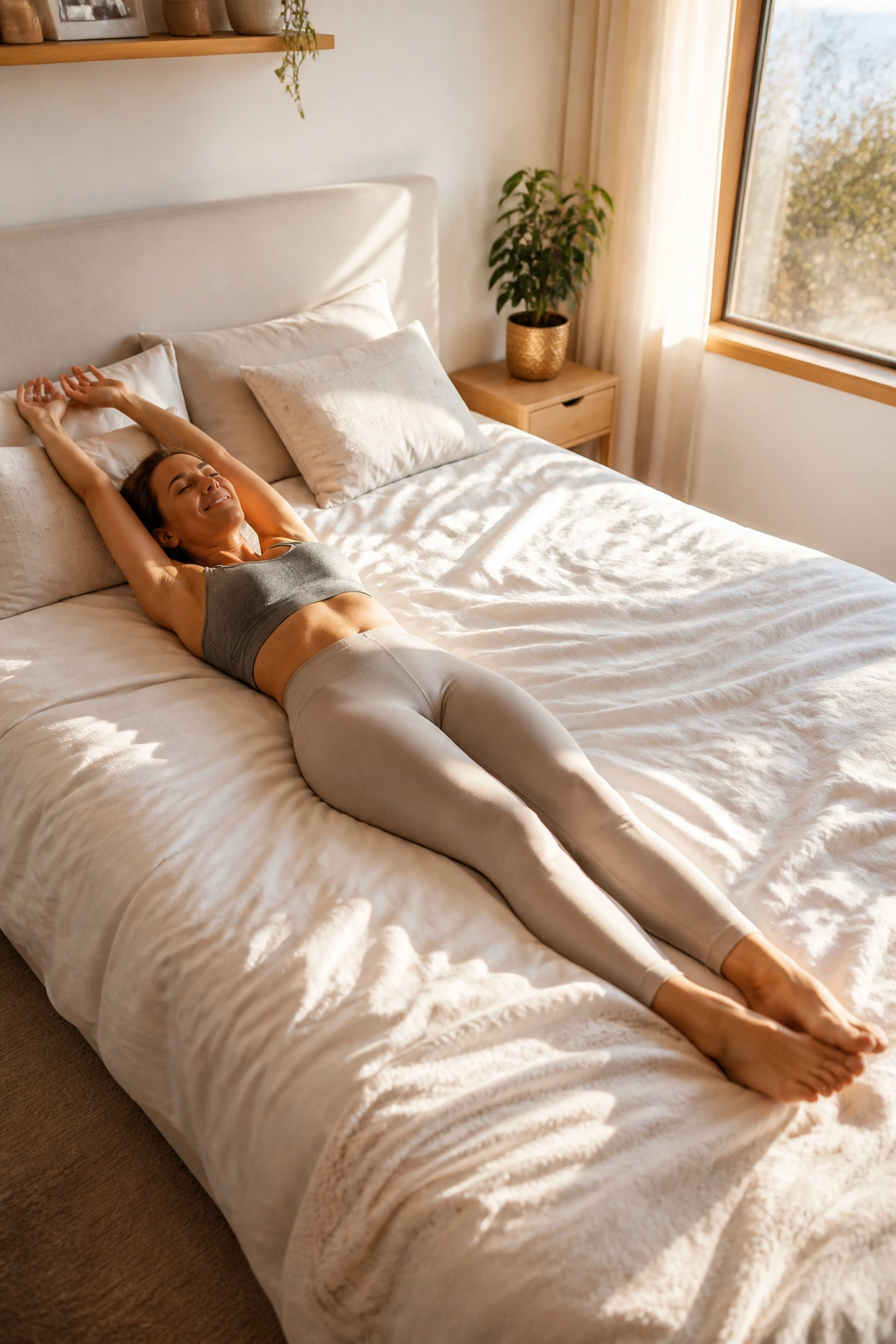
The least glamorous stretch in the bunch is often the one that feels the best. Lie on your back, lengthen your arms overhead, and reach your heels away from your hips like you’re trying to make yourself two inches taller without leaving the mattress.
Why It Works First Thing
This move gives your spine a clean, simple line before you ask it to twist or bend. It wakes up your rib cage, shoulders, and hip flexors at the same time, which is a nice return for almost no effort. Hold the reach for 5 slow breaths, then relax for 2 breaths and do it again once.
A lot of people rush past this and jump straight into bigger shapes. Bad idea. If the body feels compressed from sleep, a long, honest reach can smooth out that “I slept wrong” feeling before it turns into a full complaint.
What To Feel
- Your fingers lengthening past the pillow.
- Your heels pressing away, not digging into the mattress.
- Your lower ribs settling down instead of flaring up.
- A mild pull through the front of the thighs.
Tip: Keep your face soft. If your jaw is clenched, the stretch is too tense, even if the body position looks fine.
2. Knee-to-Chest Hug
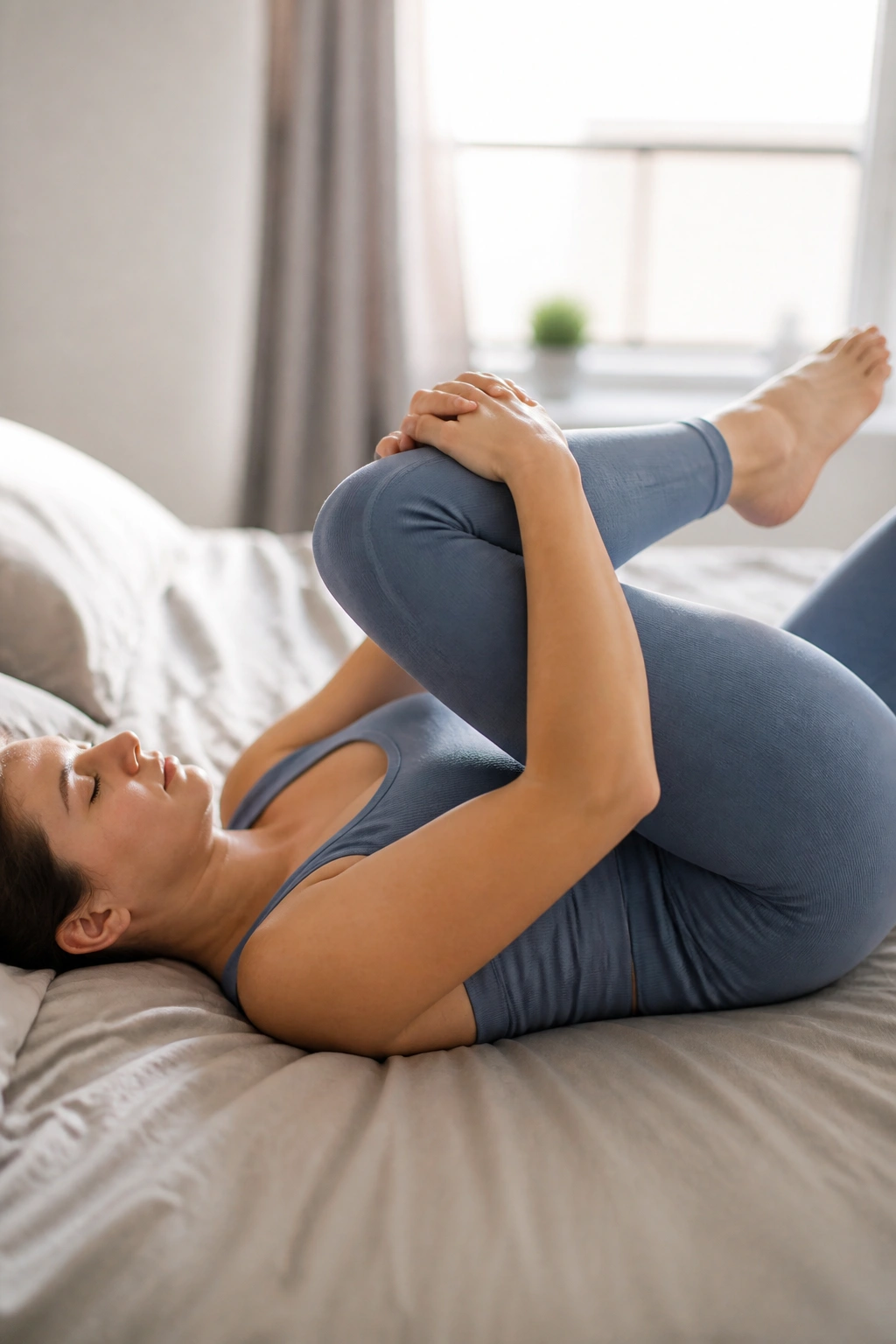
If your lower back feels tight, this is usually the first stretch worth doing. Lie on your back and draw one knee toward your chest, holding it just below the shin or behind the thigh. Keep the other leg bent with the foot on the bed if your back wants a little more support.
Easy does it.
Hold the first side for 20 to 30 seconds, then switch. After both sides, bring both knees in together for 3 to 5 breaths. That two-step version works better than going straight to the double-knee hug, especially if your back likes to complain before it warms up.
The goal is a gentle release, not a hard squeeze. If you pull so much that your shoulders lift or your tailbone tucks aggressively, back off a little. The stretch should feel like space, not strain.
This one is especially nice if sleep left your spine feeling a bit jammed. It quiets that stiff, protective feeling around the low back and gives your body a clear signal that the day has started slowly, not suddenly.
3. Windshield Wipers
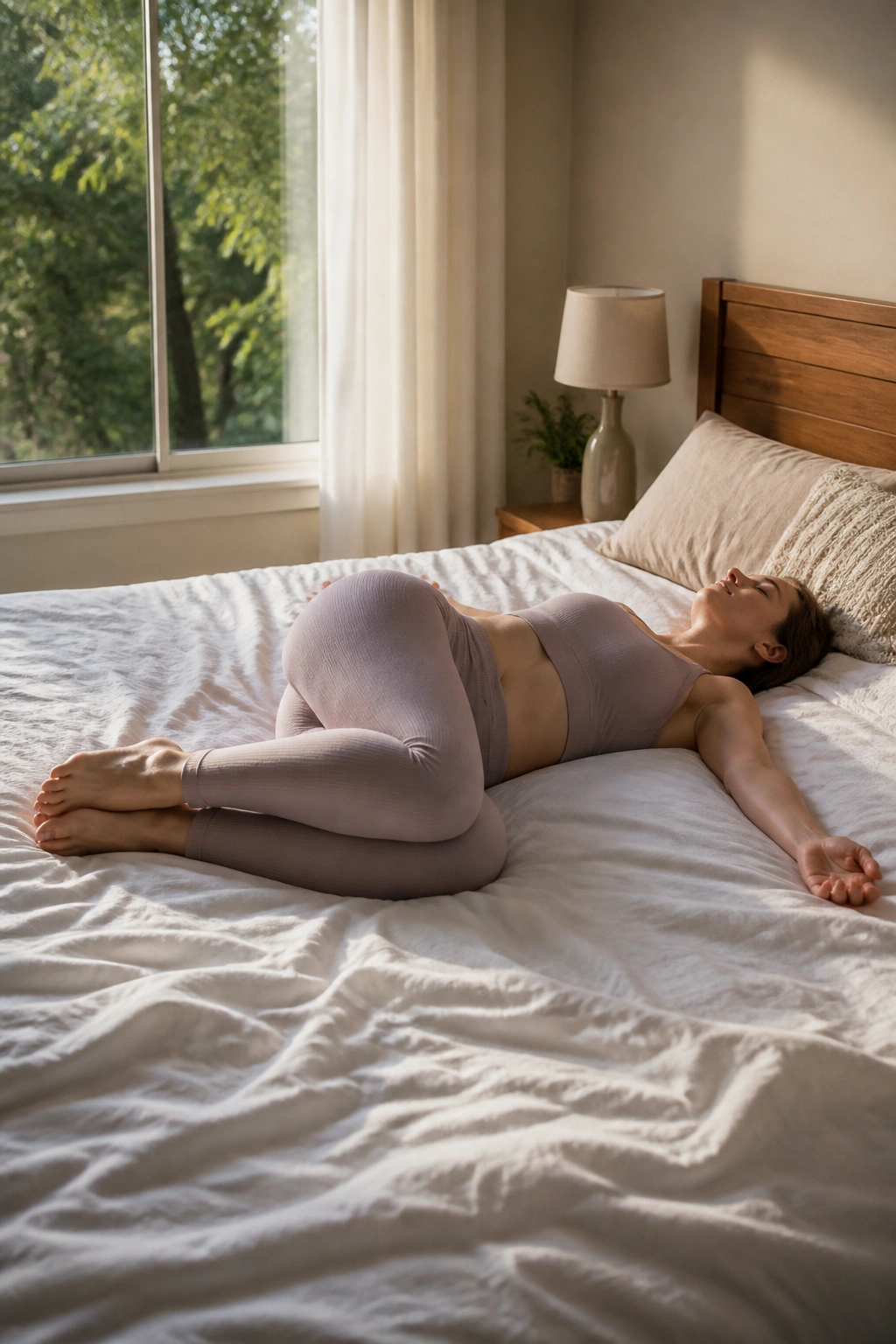
The first time you sway bent knees from side to side after waking, you may notice how much your back wanted that tiny bit of movement. Lie on your back with both knees bent, feet on the bed, then let the knees fall a few inches to one side and back through center to the other.
Keep It Small At First
The motion should be smooth, not dramatic. Let the knees move only as far as your shoulders stay relaxed and your low back feels easy. If the mattress is soft, the range may be smaller than you expect. That’s fine.
Do 8 to 10 slow side-to-side passes, pausing for one breath on each side if that feels good. This is not a deep twist. It’s more of a lubricating move, the kind that says, “Wake up, spine,” without making the spine sulk.
What To Watch For
- Both shoulders stay heavy.
- The knees don’t have to touch the bed.
- The breath stays steady.
- Your feet can stay planted, or lift slightly if that feels smoother.
A one-sentence rule: if the movement feels snappy, make it smaller. Slow sways are the whole point here.
4. Supine Spinal Twist
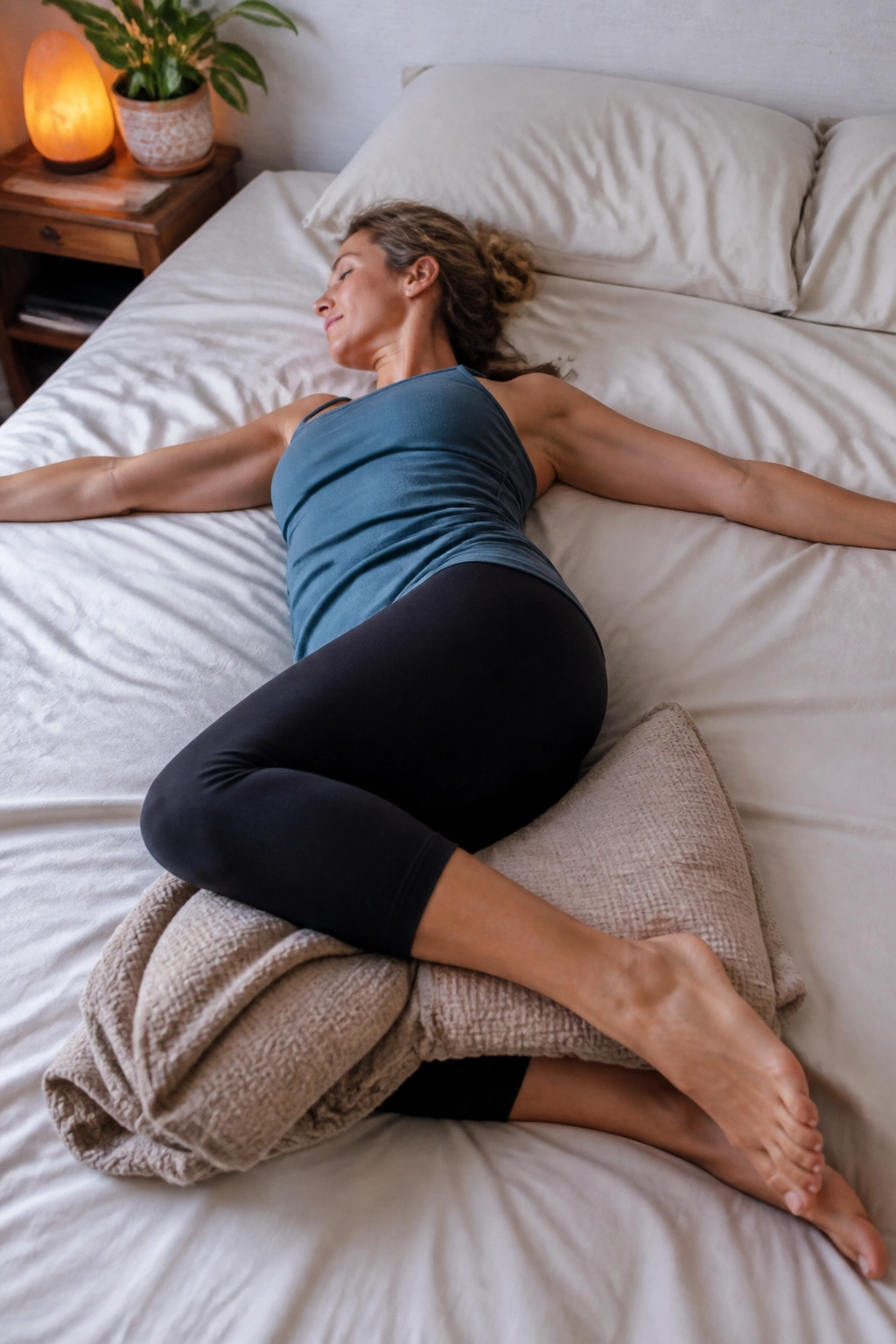
What if your back feels stiff and the windshield wipers were not enough? Then it’s time for a more specific twist. Bring one knee toward your chest, guide it across the body, and let it rest on the opposite side of the bed while your arms stretch out into a loose T.
If your knee doesn’t reach the mattress, place a pillow or folded blanket under it. That little support matters more than people think. Without it, you end up gripping through the belly and hip to “hold the pose,” which defeats the whole point.
How To Set It Up
- Keep both shoulders close to the bed.
- Turn your head the same direction as your bent knee if your neck likes that.
- Stay for 3 to 5 breaths on each side.
- Back out a little if the low back pinches or the knee feels cranky.
Some mornings call for a big twist. Most do not. In bed, the cleaner move is a mild spiral through the spine with the lower body supported enough to soften the effort. You want a slow unwind, not a corkscrew.
The nice thing about this stretch is how complete it feels. Lower back, hips, ribs, and even the side waist all get a say.
5. Figure-Four Hip Stretch
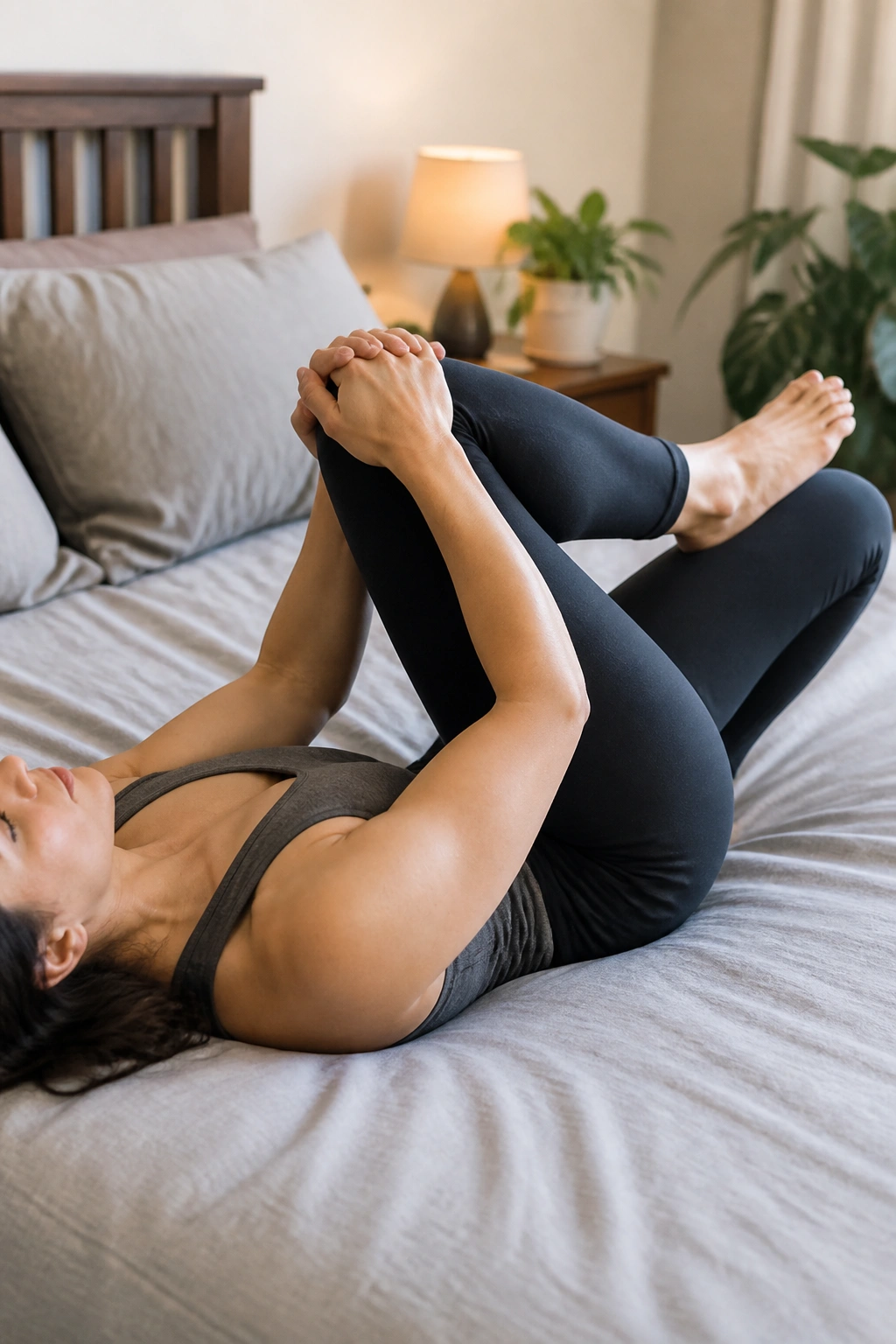
This one gets deep fast, so don’t rush it. Lie on your back, place your right ankle over your left thigh just above the knee, and gently draw the left thigh toward you. The shape looks simple, but the stretch reaches right into the outer hip and the glute area that tends to hold on after a long sleep.
If your knees are sensitive, flex the crossed foot instead of letting it dangle. That tiny adjustment keeps the ankle and knee happier. A pillow under the supporting head can also make a difference if your neck feels cranky when you look up.
A Better Way To Think About It
You are not trying to force the crossed knee open. You’re inviting the hip to soften. Hold for 20 to 40 seconds, then switch sides. If one side feels much tighter, do that side twice. No need to make it poetic.
A small exhale helps here. The moment you feel the glute stop fighting and start yielding, stay there. That tiny shift is the stretch.
This is one of those bed yoga stretches that pays off later in the day too. Sit too long, drive too long, stand too long — the outer hip remembers all of it.
6. Hamstring Stretch with a Towel
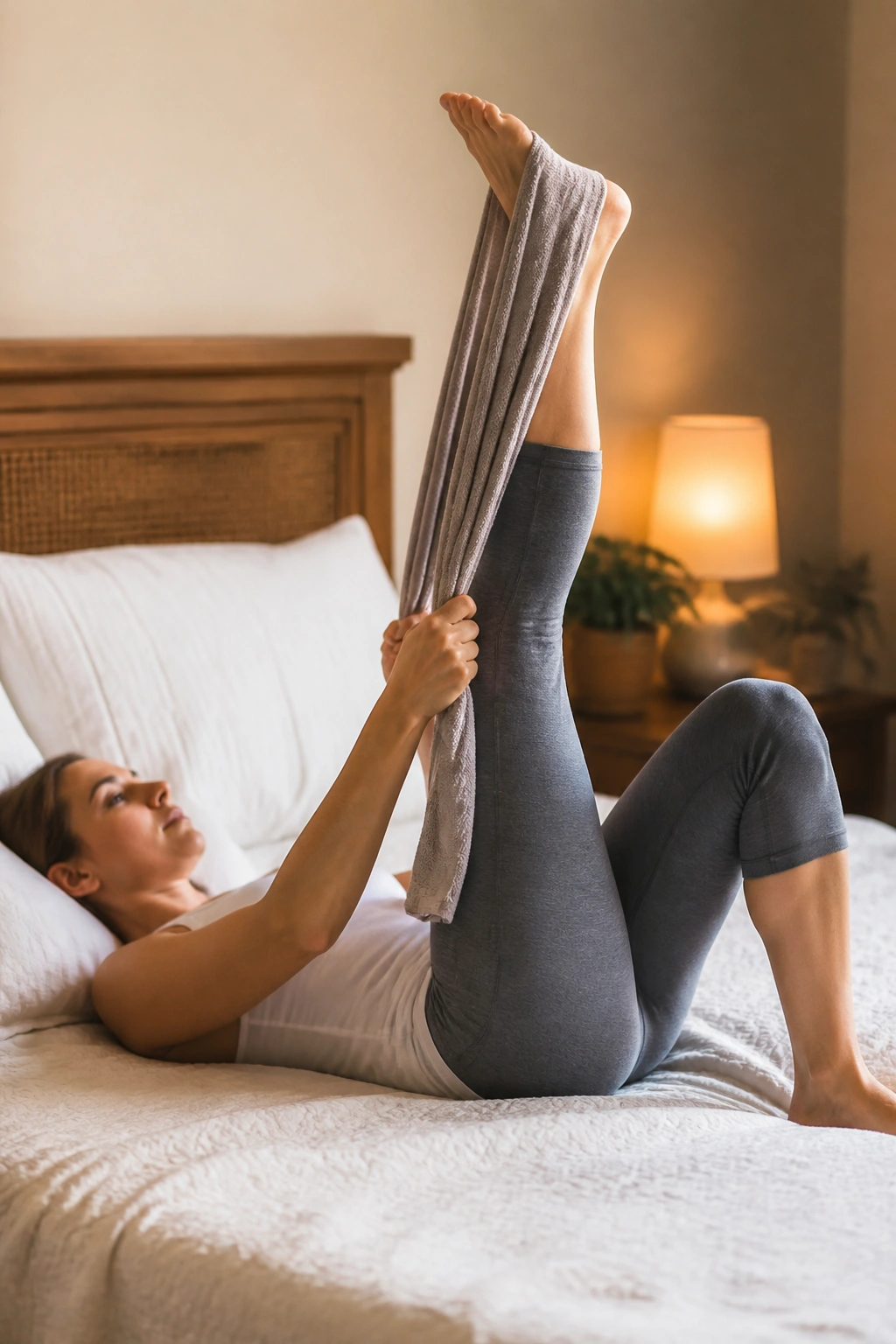
A towel beats yanking your leg with bare hands. Loop a bath towel, scarf, or yoga strap around one foot while lying on your back, then slowly raise that leg until you feel a mild pull along the back of the thigh. Keep the opposite leg bent if your lower back starts to arch.
Why The Strap Matters
The strap gives you control. Plain and simple. You can keep the leg high enough to stretch the hamstring without pulling your pelvis off the bed, and that matters because a tugged-up pelvis usually turns a hamstring stretch into a low-back complaint.
Hold for 20 to 30 seconds, then lower and switch sides. If your hamstrings are tight, keep the knee slightly bent at first and straighten it only a little as the muscles warm. Straightening the leg all the way is not a prize; it’s optional.
- Keep the foot relaxed or lightly flexed.
- Use both hands on the towel ends.
- Stop when the back of the leg feels long, not sharp.
- Lower the leg slowly.
One quiet detail people miss: the first inch of release matters more than the last inch of reach. If you can feel the hamstring lengthen without the pelvis creeping, you’re doing it right.
7. Side-Lying Mermaid Stretch

If one side of your body feels shorter when you wake up, a side-body stretch can feel like a mercy. Lie on your right side, stack your legs, and sweep your left arm overhead while the left side of your rib cage opens toward the ceiling. You’ll feel a long line from the fingertips down through the waist and hip.
This version is friendly because it does not ask for much. No deep fold. No big twist. Just a quiet lengthening through the side body, which is where a lot of people carry a sneaky amount of morning stiffness.
A Few Helpful Tweaks
- Slide a pillow between the knees if the hips feel jammed.
- Keep the top shoulder from collapsing forward.
- Breathe into the side ribs for 3 to 5 breaths.
- Repeat on the other side.
If you want a little more, bend the bottom knee slightly and press it into the mattress for a steadier base. That small anchor makes the stretch feel less wobbly, especially on a soft bed.
Mermaid stretches are underrated. They wake up the waist in a way that forward folds don’t, and they make standing feel less crooked afterward.
8. Bed Yoga Cat-Cow on the Mattress
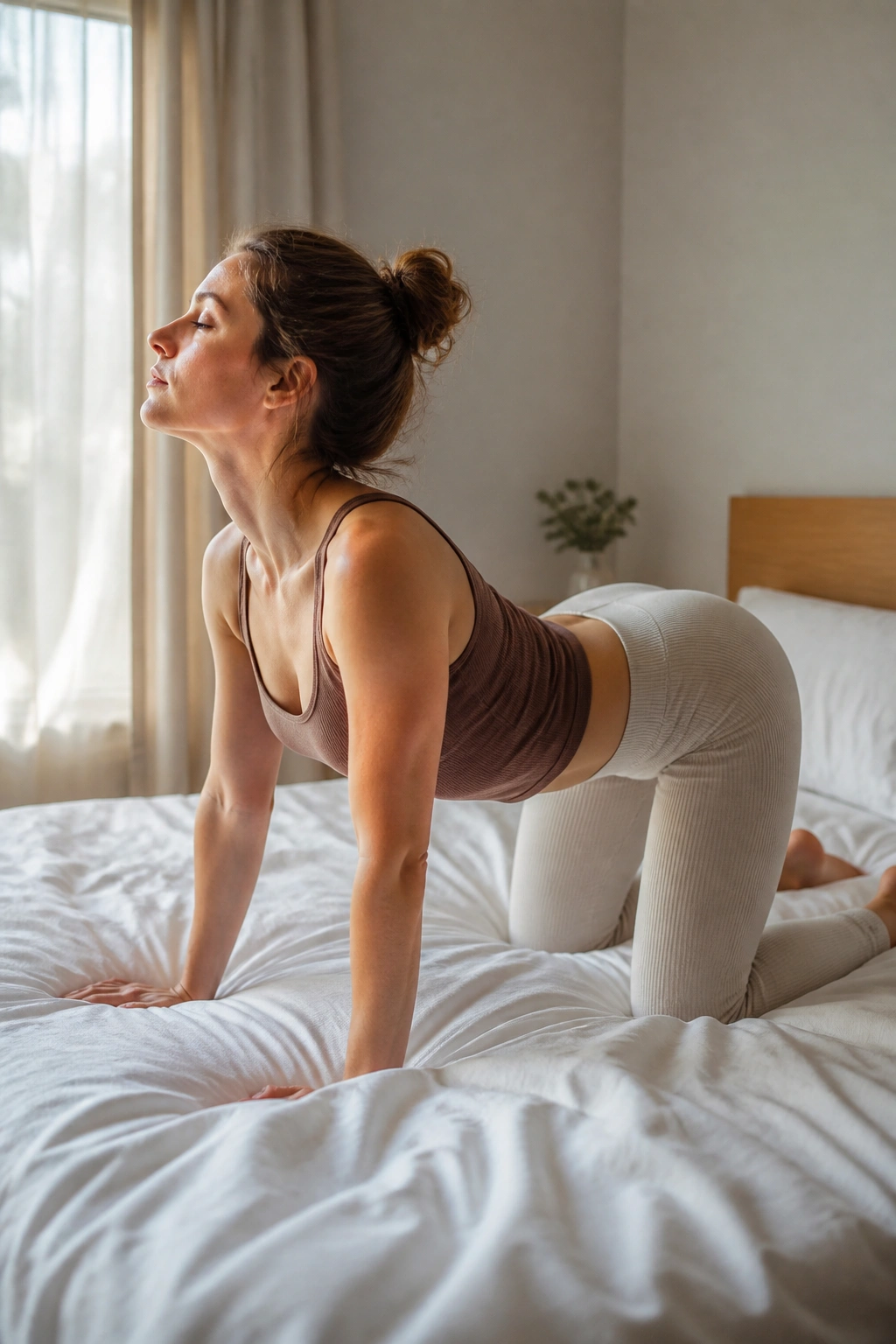
This wakes up the spine fast. Get onto hands and knees on the bed, or stay near the edge if that feels steadier, then alternate between rounding your back like a sleepy cat and dropping the belly while lifting the chest. On a firm mattress, the movement feels smooth. On a very soft one, keep it small.
How To Keep It Kind To Your Wrists
Place your hands under your shoulders and spread your fingers wide. If the wrists are fussy, make fists or rest on forearms instead. Pain in the wrists is a signal to adjust, not to push harder. That part gets ignored all the time.
Move through 6 to 8 rounds. On the inhale, let the chest open a little and the tailbone lift. On the exhale, press the floor of the bed away and round the upper back. The motion should look calm, almost sleepy.
What You’re Looking For
- The neck follows the spine, not the other way around.
- The shoulders stay away from the ears.
- The movement flows from the pelvis through the middle back.
- The breath sets the pace.
Some people think cat-cow needs a huge range to count. It does not. A small, clean wave through the spine is often better, especially first thing in the morning when everything feels a little sticky.
9. Thread the Needle
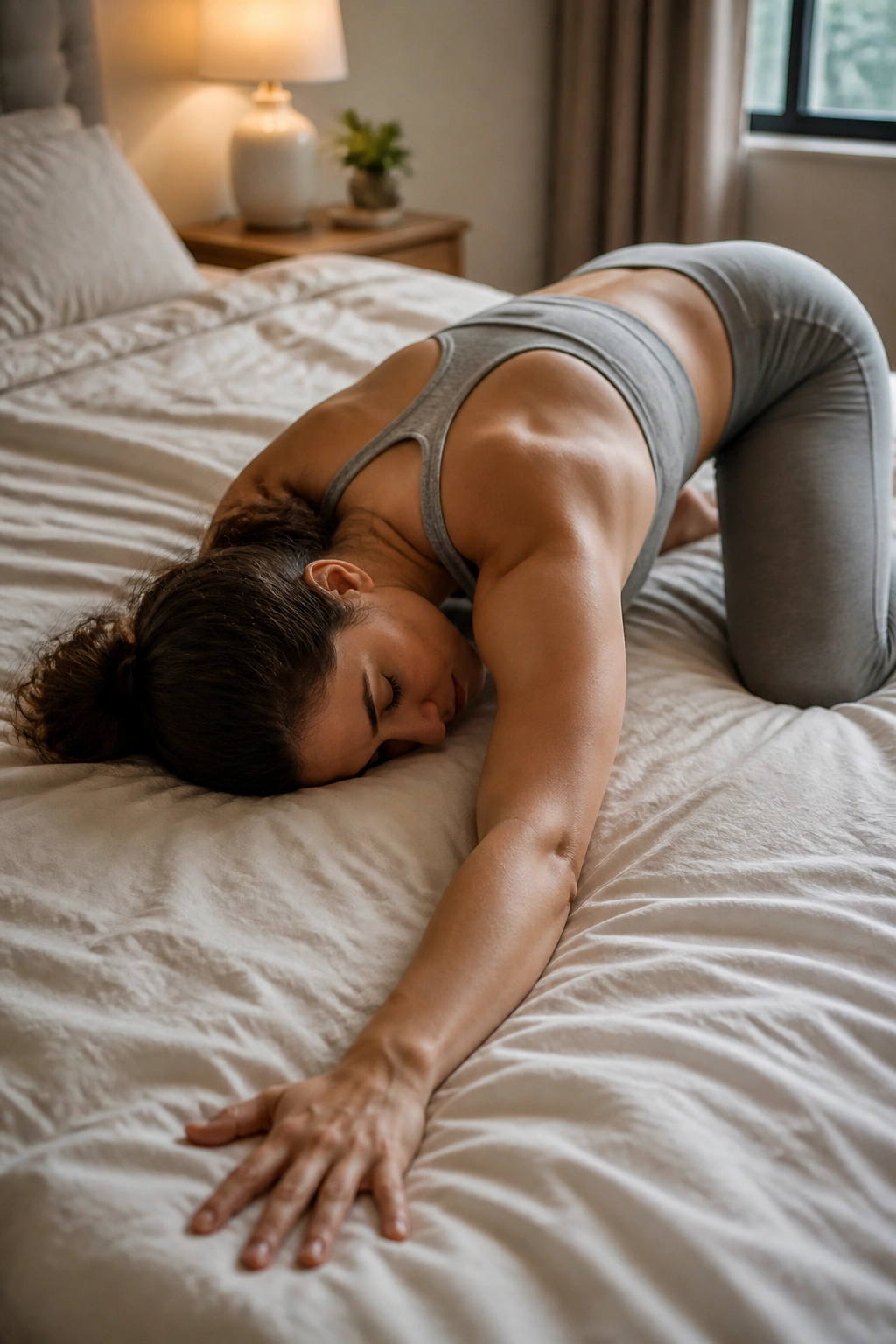
Need a shoulder stretch that also quiets the upper back? Thread the needle is the move. Start on hands and knees, slide your right arm under your left arm, and let your right shoulder and the side of your head rest on the mattress. Your left hand can stay planted in front or move a little farther away for balance.
Hold for 3 to 5 breaths, then switch. If the bed is soft, widen your knees a bit so the body feels less likely to tip. That tiny adjustment makes the whole shape feel safer and calmer.
How To Make Room For The Shoulder
A good version of this stretch should feel like the upper back opens and the shoulder blade slides away from the spine. If your neck feels crunched, place a folded towel under your head. If your bottom shoulder protests, reduce the twist by moving the top hand closer.
This stretch is sneaky. It looks small, but it reaches the back of the shoulder, the side ribs, and the upper spine in one shot. If you type all day, drive a lot, or sleep with your shoulders rolled forward, you’ll probably notice the difference right away.
I like this one when cat-cow warms things up but the upper back still feels stuck. It gives the shoulder something more specific to do.
10. Child’s Pose with a Pillow
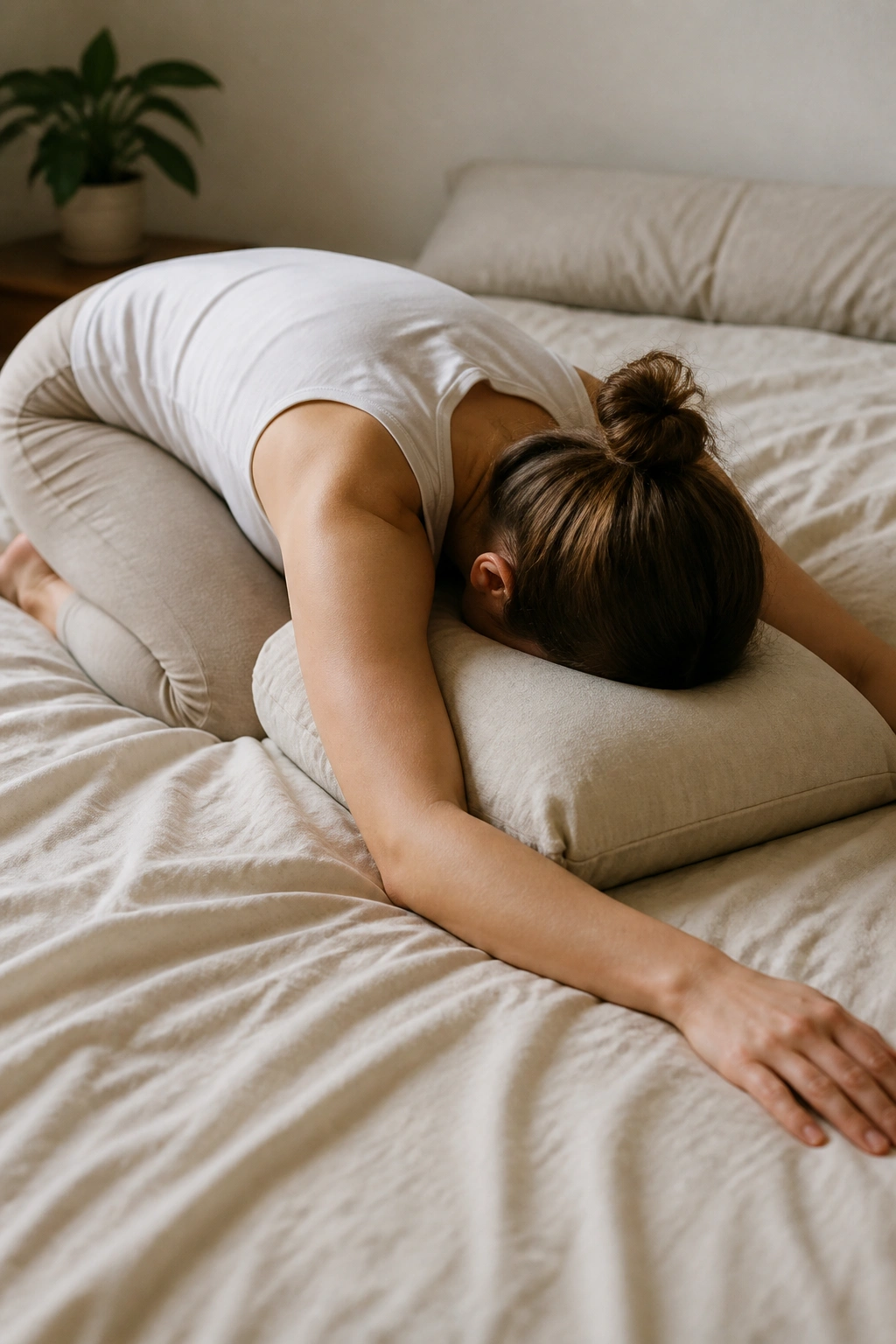
Not every morning wants a deep stretch. Some mornings want to hide under a blanket and be left alone. Child’s pose with support is the compromise.
Kneel on the bed, sit your hips back toward your heels, and place a pillow or folded blanket under your chest or forehead. If your knees prefer space, let them open wide. If they prefer being closer together, keep them narrow.
Pillow Placement That Actually Helps
- Under the chest for a longer spine.
- Under the forehead for neck relief.
- Between the hips and heels if the knees are sensitive.
- Under the belly if a gentler rest feels better than a deep fold.
Stay here for 5 slow breaths, or longer if the body is asking for it. The point is not to collapse. The point is to let the back lengthen while the shoulders stop doing all the work.
This is one of the best bed yoga stretches for anyone who wakes up feeling a bit wrung out. It calms the nerves, softens the lower back, and gives the body a chance to land before the day starts pushing back.
A quiet note: if your knees dislike kneeling on the mattress, skip it. Use a floor later. No stretch is worth a cranky knee.
11. Butterfly Stretch
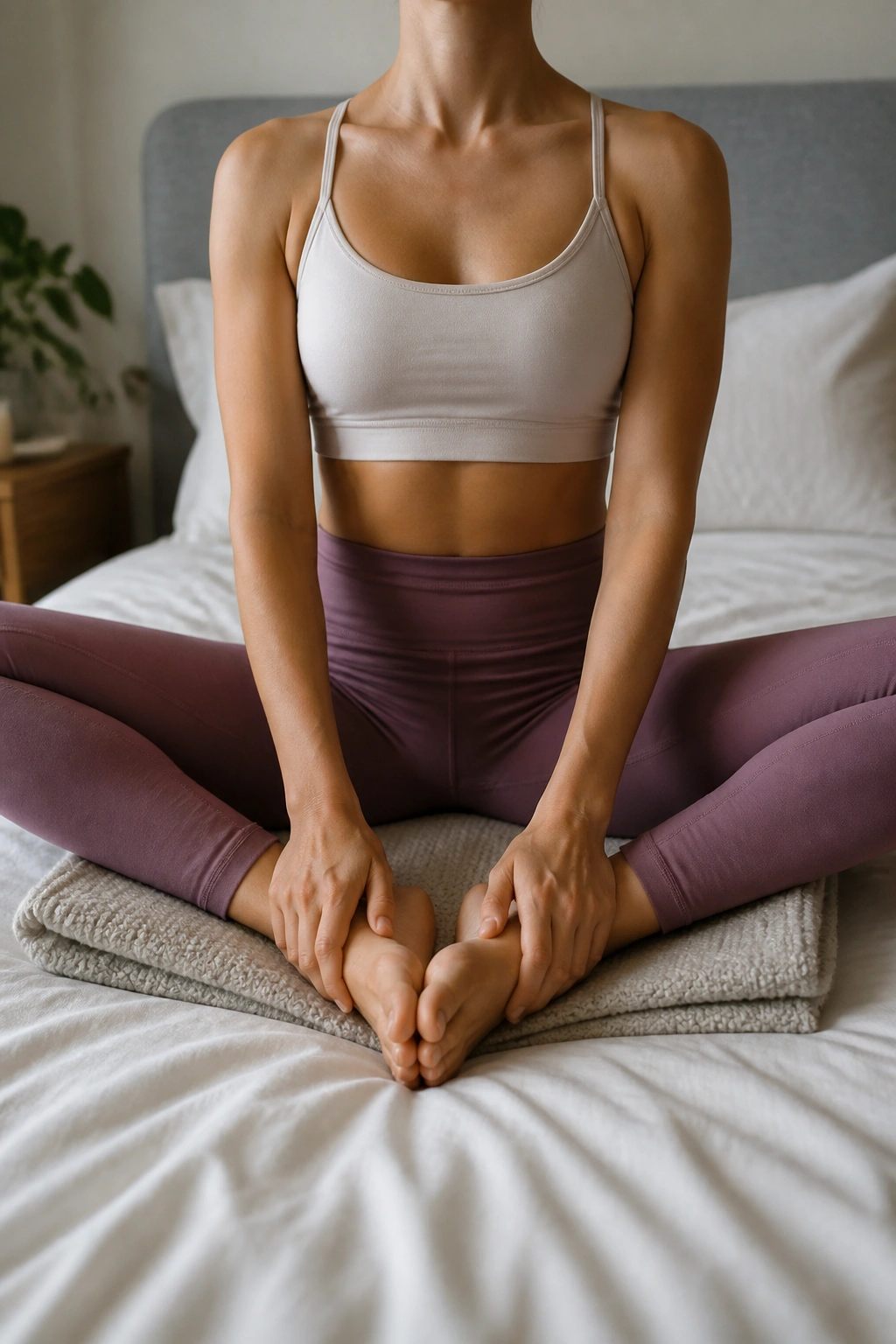
Butterfly in bed is simple, but it has a way of getting your attention. Sit upright with the soles of your feet together and let your knees fall outward. On a bed, it’s often easier to sit on a folded blanket so your hips tilt forward just a touch.
The stretch lands in the inner thighs and groin, but it also changes how the lower back feels. When the pelvis can tip forward a little, the spine stops bracing so hard. That’s useful first thing, when the whole system still feels half-asleep.
How Far Should You Go?
Not far. That’s the honest answer. Let the knees drift down until you feel a steady stretch and then stop. If you press the knees toward the mattress with your hands, use almost no force. A gentle weight is enough.
Hold for 20 to 30 seconds, then sit taller and release. You can repeat once more if it feels good. The stretch should be easy to breathe through. If your breath gets choppy, back off a bit.
This pose is a nice bridge between lying-down work and anything more upright. It helps you sit up, stand up, and move into the rest of the morning without feeling welded shut.
12. Seated Forward Fold with Bolsters
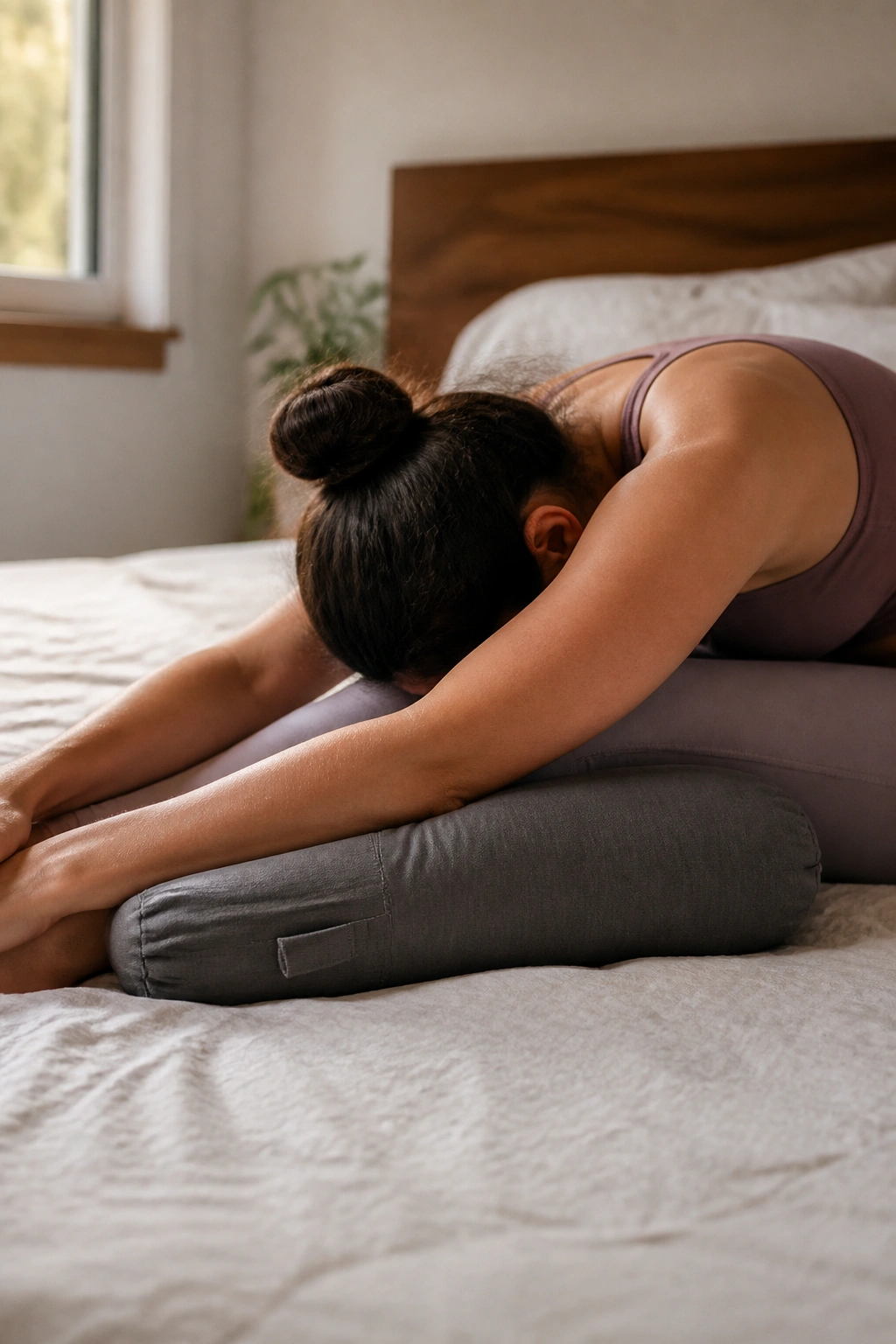
A seated forward fold on the bed is not the same thing as touching your toes standing up, and that’s exactly why it works. Sit with your legs straight or slightly bent in front of you, then slide a pillow, bolster, or folded blanket under your knees if the hamstrings are tight.
Fold forward from the hips, not by rounding the whole spine at once. That part matters. A lot of people yank themselves toward their feet and end up with a stiff lower back and a breath they’re trying to hold. Better to lengthen first, then soften.
Why This Version Feels Better In Bed
The bed gives you room to settle. You are less likely to force the fold, and the support under the knees can keep the back of the legs from complaining too loudly. If your feet are flexed, the stretch will feel more active. If they relax, it will feel softer.
Try 3 slow breaths, then come up halfway, lengthen the spine again, and fold once more. That little reset usually produces a cleaner stretch than trying to stay jammed down the whole time.
My preference: keep the knees a little bent if the back pulls. You lose a small amount of hamstring length, but you gain a much friendlier stretch overall.
13. Neck Side Bend and Chin Tucks
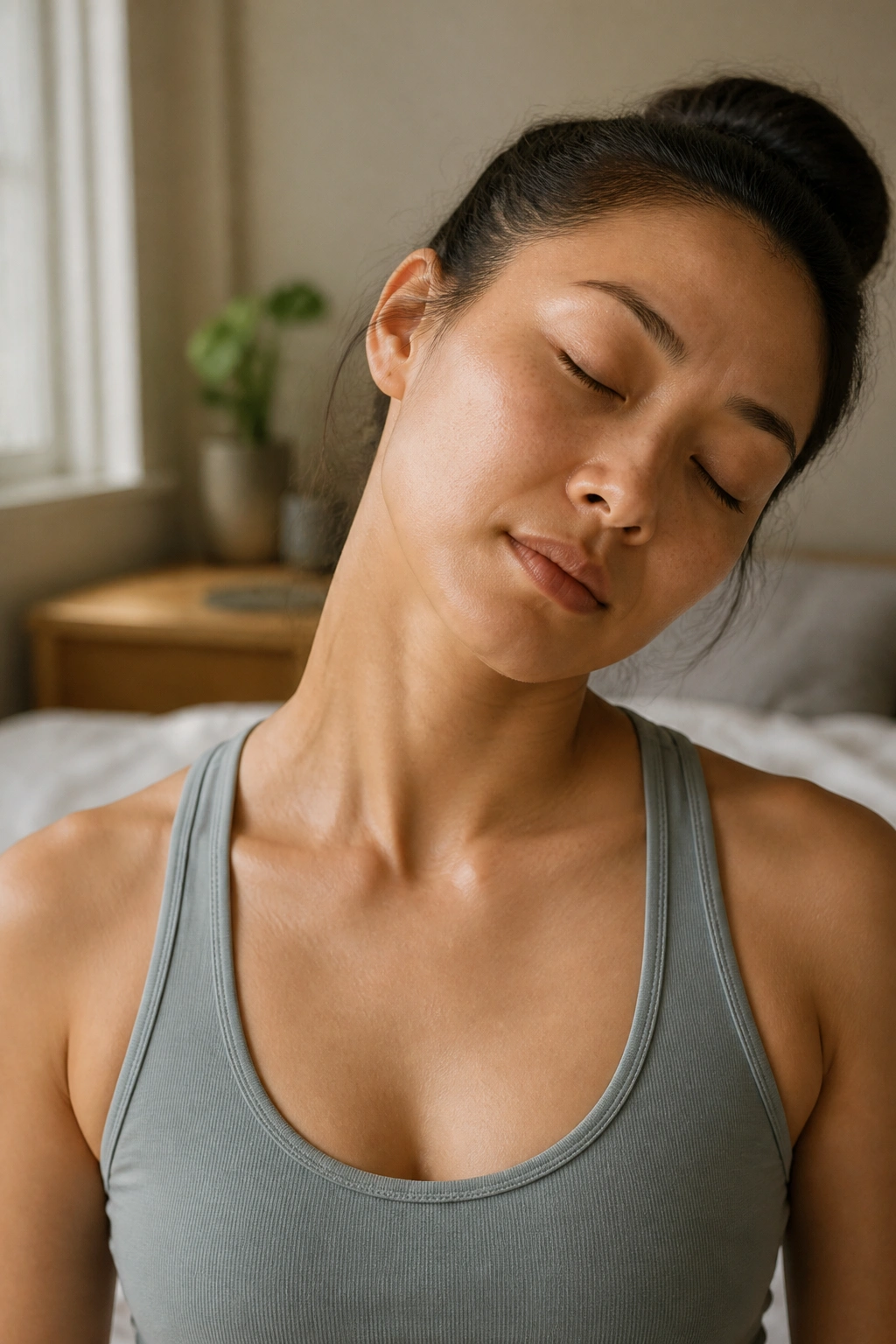
If your neck is the first thing to complain in the morning, this is the section to pay attention to. Sit tall in bed, let your right ear drift toward your right shoulder, and keep the opposite shoulder heavy. Hold for 2 to 3 breaths, then switch sides. After that, bring your chin straight back for 5 gentle chin tucks.
The Order Matters
Side bends open the outer neck. Chin tucks help the front of the neck and the back of the skull settle into a better line. Doing both is useful because sleep often leaves the head a little forward and the upper traps a little tense.
- Keep the movement slow.
- Do not roll the head in circles.
- Stop if you feel pinching, dizziness, or a sharp pull.
- Use a mirror later in the day if you want to check head position.
A lot of neck work looks bigger than it needs to be. Tiny motions are enough here. The goal is to reduce tension, not to audition for a dramatic stretch video.
If you wake with one side tighter than the other, spend one extra round there. That one detail can make the rest of the morning feel less lopsided.
14. Eagle Arms Shoulder Opener
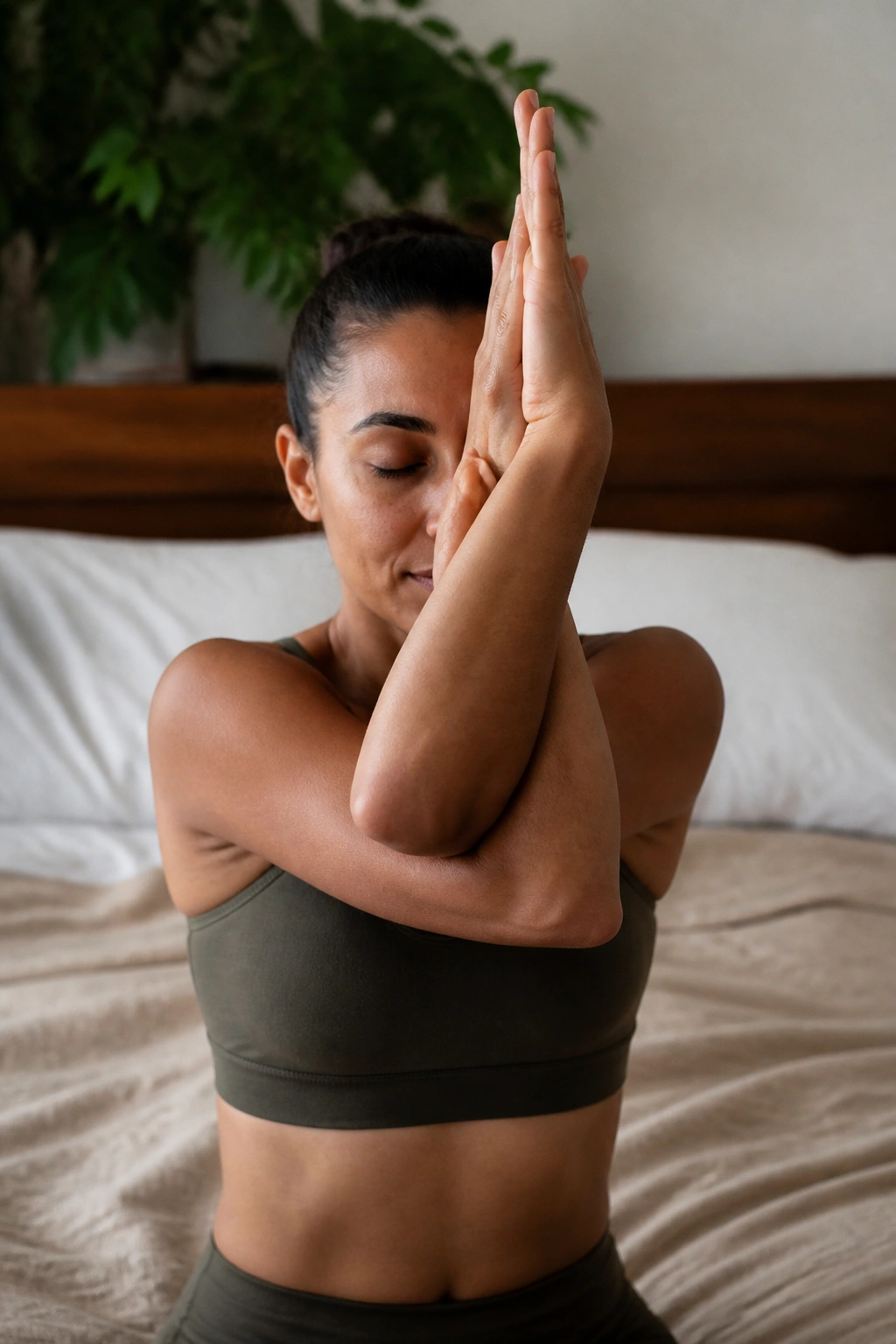
Are your shoulders glued forward when you wake up? Then eagle arms can help. Sit cross-legged in bed or with your legs stretched out, wrap your right elbow under your left, and either press your palms together or hold opposite shoulders if the hands do not reach.
Lift the elbows a few inches, then let the shoulder blades spread apart. You should feel the stretch across the upper back, between the shoulder blades, and into the back of the shoulders. Hold for 3 to 5 breaths, then switch the wrap.
A Simple Modification
If the full wrap feels like a wrestling match, skip the hands and just hug yourself. Seriously. That version still opens the upper back and gives the shoulders a place to let go.
This stretch works well after sleeping with the arms above the head or curled tightly under the pillow. The upper back can get stubborn overnight, and eagle arms is one of the few moves that reaches that area without needing much space.
Keep your ribs stacked over your hips. If you lean forward, the shoulders lose the benefit and the stretch starts to drift into a slump. Lift first, then soften.
A few slow breaths here can change the way your chest feels when you stand up.
15. Happy Baby Hold
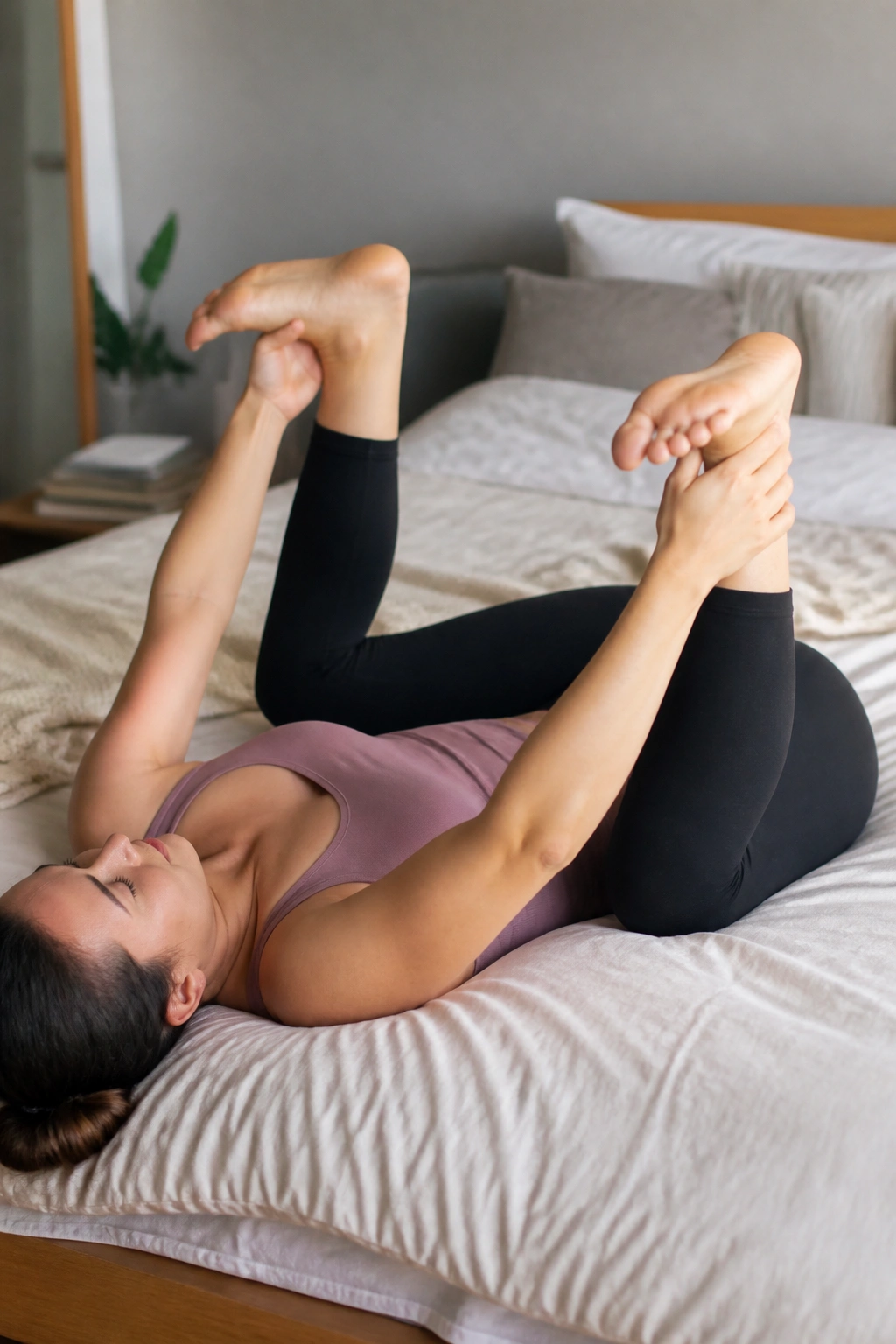
Happy baby is the stretch that makes people laugh a little, and then keep doing it because it feels so good. Lie on your back, bend both knees toward your chest, and hold the outside edges of your feet or the backs of your thighs. Let the knees open slightly wider than the ribs, and keep the tailbone heavy on the bed.
If your feet are hard to reach, holding behind the thighs is perfectly fine. In fact, it’s often the better choice first thing in the morning because it keeps the shoulders from straining. Rock gently side to side if that feels natural. A few inches of movement is enough.
Why It Belongs At The End
This stretch pulls together a lot of what the earlier moves have started: hips, inner thighs, low back, and breath. It’s a friendly place to linger for 5 to 8 breaths, especially if the body still feels half asleep. You can soften the knees a little if the groins feel intense, or widen the feet if the lower back wants less pull.
A nice cue is to keep the face loose and the jaw unclenched. People forget that part. The body can be in a stretch while the nervous system is still braced; that’s usually why a pose feels less useful than it should. A softer face often makes the pose work better.
If you only have room for two moves, pick this one and the full-body reach from the top of the list. Those two alone can change the shape of the morning in a way that feels obvious by the time you stand up.
