



Most store-bought pre-workout drinks have the same problem: they hit your tongue like melted candy and your stomach like a dare. If you’ve ever slammed one on the drive to the gym and spent the first 15 minutes burping blue-raspberry fumes, you already know why DIY pre workout drink recipes at home keep earning a place in the rotation.
The appeal is not thrift alone. You control the caffeine, the sugar, the salt, the texture, and—this part matters more than people admit—the way the drink sits in your stomach once you start moving. A blender full of chia seeds, peanut butter, and flax may look wholesome on a countertop. Twenty minutes before squats, it can feel like a brick.
Pre-workout is not one thing, either. A quick lifting session before breakfast asks for something different than a humid treadmill run, a long bike ride, or an evening class when you do not want caffeine hanging around in your system at bedtime. People lump all of that under one label, and that’s where homemade drinks usually go wrong.
I’ve made the mistake of chasing the buzz instead of the benefit. The drinks that keep coming back are the easy ones: a little caffeine if I want it, a little salt if I’ve been sweating hard, fast carbs when the session is long, and flavors I won’t resent at 6 a.m. That’s the sweet spot.
What a Homemade Pre Workout Drink Should Actually Do
A good pre-workout drink has one job: help you train better without picking a fight with your stomach.
That sounds obvious, but plenty of homemade mixes miss it. They pile in fiber, fat, powders, and random “healthy” add-ins until the drink turns into a meal. Meals have their place. A pre-workout drink is usually better when it is lighter, easier to digest, and built around what your session actually needs.
Sports nutrition guidance from groups like the American College of Sports Medicine has long centered on a few basics: start hydrated, replace sodium when sweat losses are high, and use carbohydrate when the workout is hard or runs long. The International Society of Sports Nutrition has also noted that caffeine can help performance for many people, often in the range of about 3 to 6 mg per kilogram of body weight. Still, plenty of gym-goers feel a lift with far less. You do not need to go straight to the high end.
Here’s the practical version I use:
- Fluid: Start with 12 to 20 ounces for most sessions, more if you wake up dry-mouthed or train in the heat.
- Carbs: 15 to 30 grams is often enough for a short, hard workout; longer endurance work may call for more.
- Caffeine: 60 to 200 mg is enough for many people. A small coffee often lands around the lower end.
- Sodium: 1/8 teaspoon of table salt gives roughly 290 mg sodium. Heavy sweaters may do better with a little more.
- Fiber and fat: Keep both modest if you’re drinking within 15 to 45 minutes of training.
Taste matters, too.
If a drink is technically “ideal” but you dread it, you will stop making it. That is why citrus, maple, coffee, tea, banana, and fruit juice show up so often below. They are easy to work with, cheap in small amounts, and forgiving when you want to tweak the formula.
The Three Mistakes That Ruin Most Homemade Pre Workout Drinks
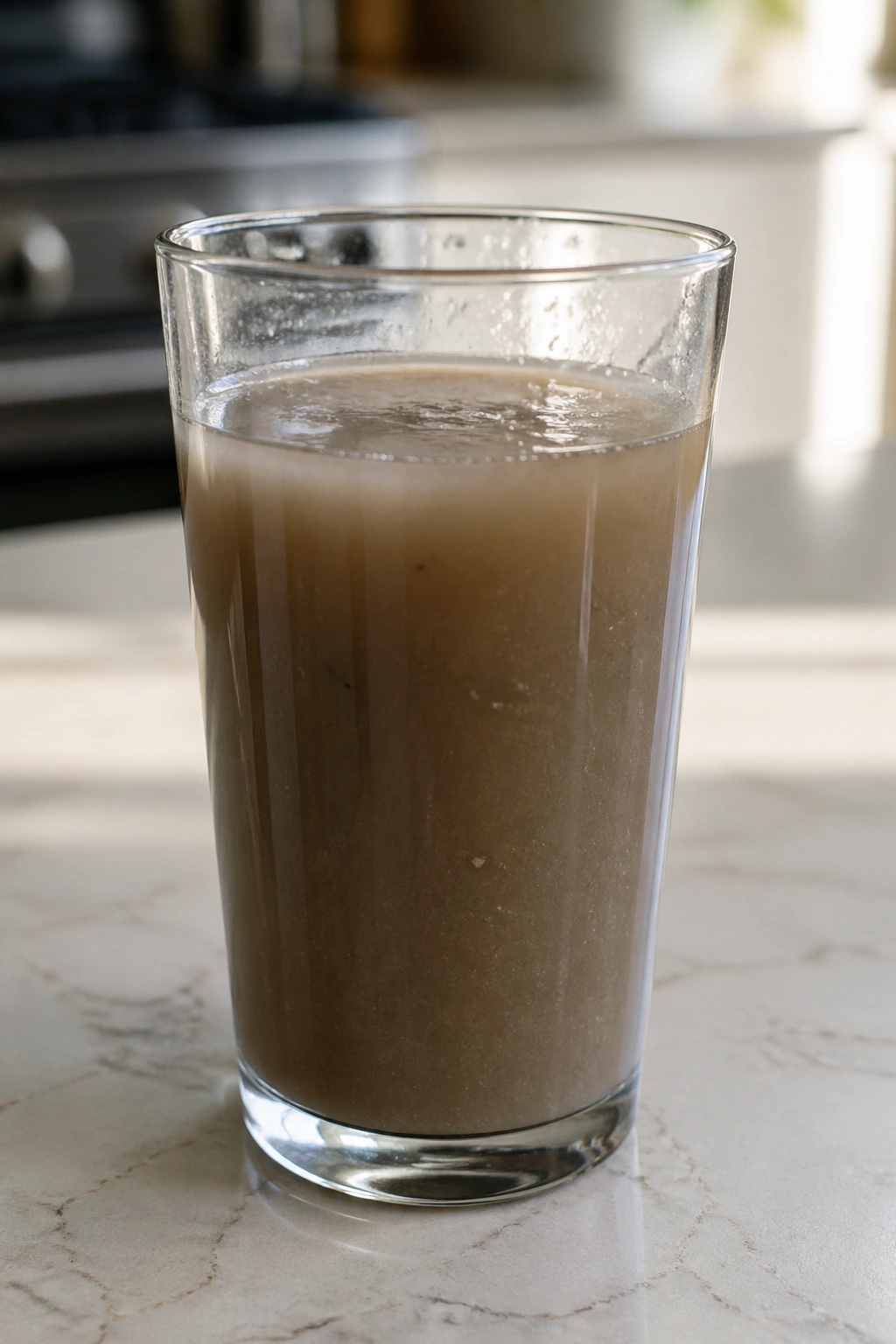
A homemade pre-workout drink can fail in three different ways: it can be too heavy, too stimulating, or too weak to matter.
Too Much Fiber and Fat Right Before Training
This is the classic health-food mistake. Oats, nut butter, seeds, whole fruit skins, and full-fat dairy are all fine foods. Timing is the issue. Put too much of them into a drink you slam 20 minutes before deadlifts, and you may spend the first part of your workout feeling the liquid roll around in your gut.
Banana works. A small amount of oats can work. Greek yogurt can work if you drink it 60 to 90 minutes before training. But a thick smoothie loaded with 2 tablespoons peanut butter, 1 cup oats, and a fistful of chia is not a pre-workout drink anymore. It is breakfast.
Caffeine Without a Number Attached to It
A lot of people say they are “fine with caffeine” when what they mean is that they have never measured it. Coffee strength swings all over the place. Cold brew can be much stronger than regular drip coffee. Matcha looks gentle, yet two packed teaspoons can bring more kick than you expected.
Start lower than your ego wants. Half a cup of strong coffee or 1 shot of espresso is enough for plenty of people, especially first thing in the morning. If caffeine makes your hands shaky, your chest fluttery, or your focus weirdly scattered, back off. More is not always better.
No Salt, No Water, No Real Fuel
Some homemade drinks are basically flavored water. Fine if you ate recently. Not enough if you woke up depleted, sweat hard, or train for more than a short burst. A pinch of salt can make a bigger difference than another trendy ingredient. So can 1 tablespoon honey or 4 ounces of juice when you need quick carbs.
And yes, I keep coming back to salt because it matters.
A drink that gives you fluid + sodium + a little carbohydrate often beats a complicated recipe full of “performance” extras that do not move the needle much in a normal gym session.
1. Cold Brew, Maple, and Sea Salt DIY Pre Workout Drink
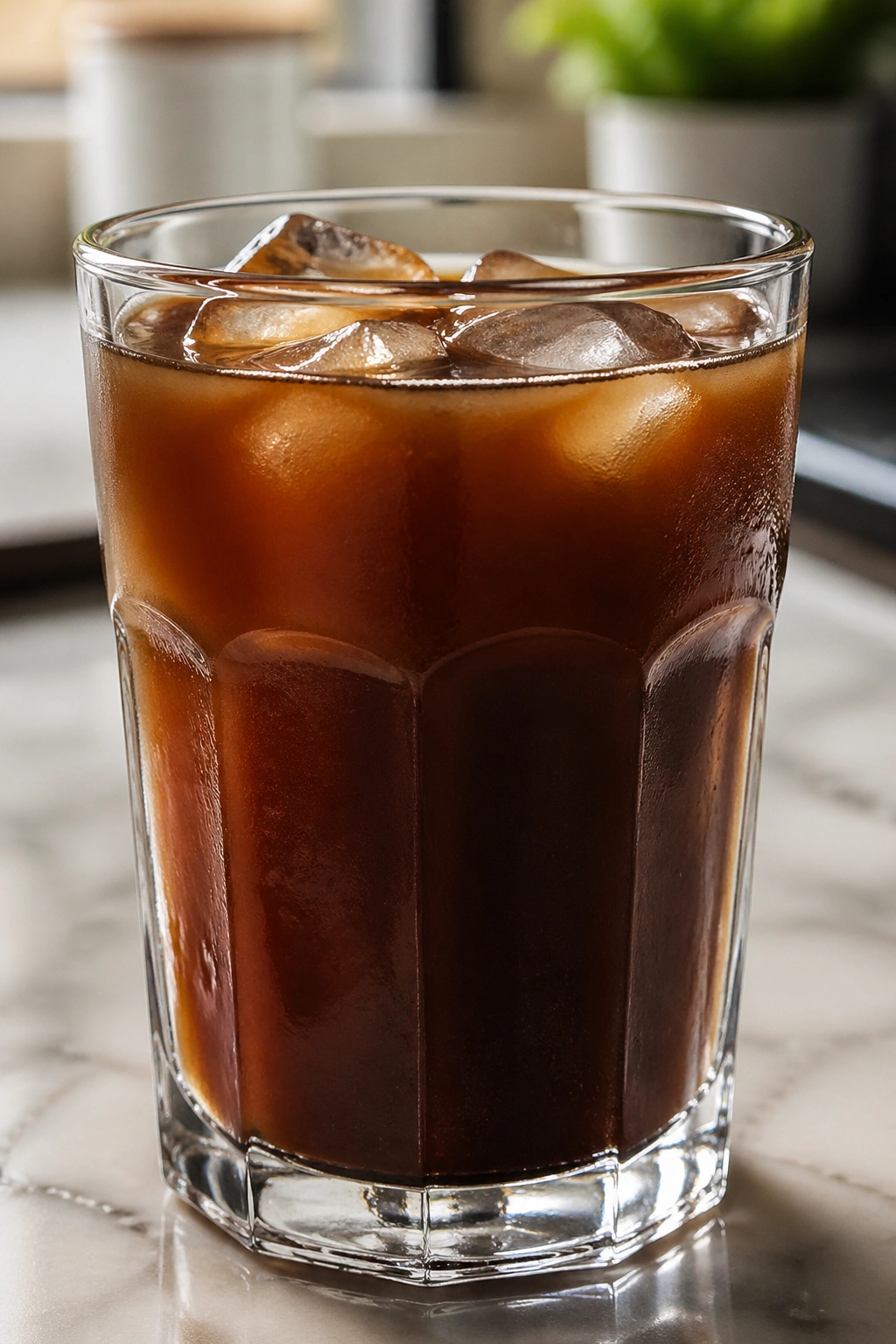
If you want the closest homemade cousin to a commercial pre-workout, start here. It is cold, sharp, lightly sweet, and thin enough to drink on the way out the door without feeling weighed down.
I like this one for early lifting sessions because it does not ask much of you. No blender. No foam. No chalky powder. Maple brings quick carbs, coffee brings the wake-up call, and the small pinch of salt rounds off the bitterness better than most people expect.
Yield: 1 serving
Prep Time: 3 minutes
Cook Time: 0 minutes
Total Time: 3 minutes
Difficulty: Beginner — no blender, no cooking, and the whole drink comes together in one shaker.
Best Served: Ice-cold, 20 to 30 minutes before training
- 8 ounces cold brew coffee
- 4 ounces cold water
- 1 tablespoon pure maple syrup
- 1/8 teaspoon fine sea salt
- 1 tablespoon fresh lemon juice
- Ice cubes, optional
Shake and Serve:
- Fill a shaker bottle or jar with a few ice cubes, if using, so the drink chills fast without sitting around.
- Pour in the cold brew coffee, cold water, maple syrup, sea salt, and lemon juice.
- Shake for 15 to 20 seconds, until the syrup and salt fully dissolve and the drink feels cold all the way through the bottle.
- Taste and add 1 to 2 more ounces water if the coffee is stronger than you like. If you rarely use caffeine, start with half the serving first.
Best use: morning strength sessions, garage-gym workouts, and days when you want a clean coffee hit without a candy-store flavor.
2. Banana Oat Espresso Smoothie
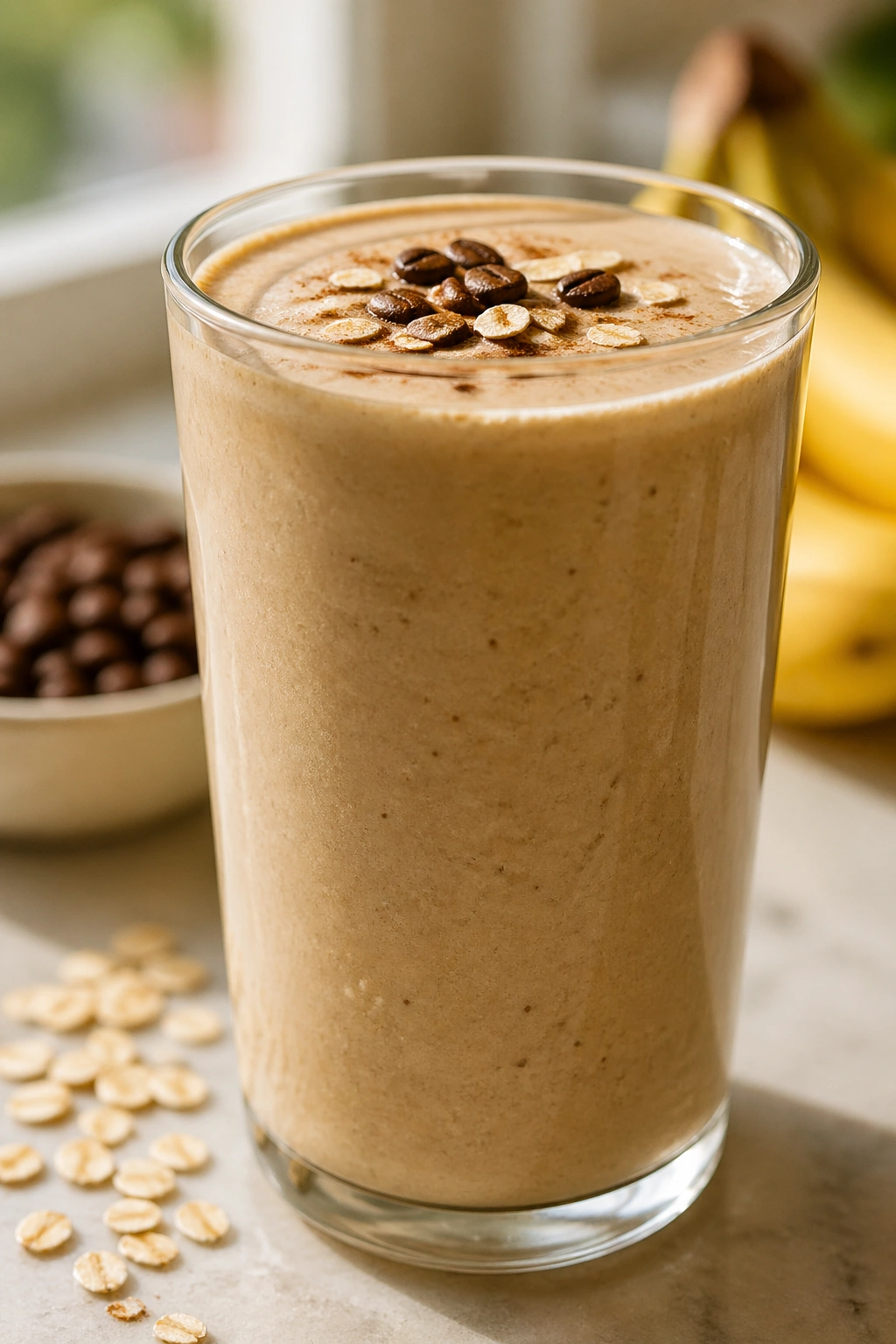
Need something a little more filling because breakfast never happened? This one lands in the middle ground between drink and snack.
The trick is restraint. A small banana and 1/4 cup oats give it body without turning it into paste. Espresso lifts the flavor, cinnamon makes it taste finished, and the pinch of salt keeps the sweetness from getting dull.
Yield: 1 serving
Prep Time: 5 minutes
Cook Time: 0 minutes
Total Time: 5 minutes
Difficulty: Beginner — a standard blender handles this easily if the banana is sliced before freezing.
Best Served: 30 to 60 minutes before training
- 1 small banana, sliced and frozen
- 1/4 cup rolled oats
- 1 shot espresso, cooled
- 3/4 cup milk or unsweetened soy milk
- 1 teaspoon honey
- 1/8 teaspoon ground cinnamon
- Pinch of fine salt
- 3 ice cubes, optional
Blend the Smoothie:
- Add the frozen banana, rolled oats, cooled espresso, milk, honey, cinnamon, salt, and ice cubes to a blender.
- Blend on high for 30 seconds, then stop and let the oats absorb liquid for 1 minute so the texture smooths out.
- Blend again for 20 to 30 seconds, until the drink is creamy and no oat flakes remain visible.
- Pour into a glass and drink while cold. If your workout starts in less than 30 minutes, cut the oats down to 2 tablespoons so it digests faster.
Quick swaps
- Use soy milk if you want a little more protein.
- Add 1 teaspoon cocoa powder if you want a mocha edge.
- Skip the espresso and use decaf for evening training.
3. Beet, Orange, and Ginger Shot
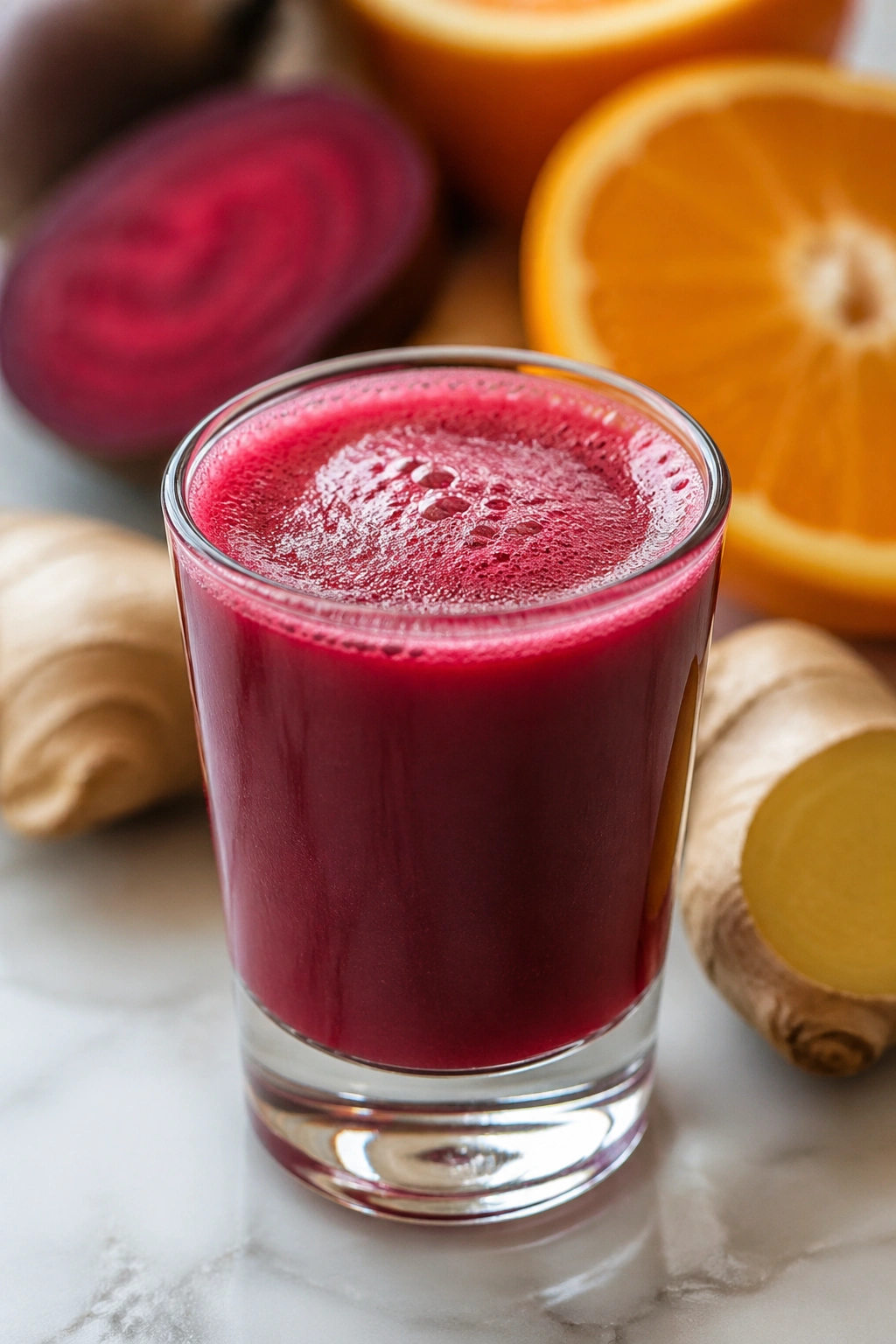
Earthy, bright, slightly peppery—that’s the profile here. If you’ve only had bottled beet juice that tastes like damp soil, do not hold that against this version.
Cooked beet is easier on the blender and easier on your face, your shirt, and your cutting board. Orange juice softens the earthiness, ginger brings some bite, and the whole thing goes down fast. That matters because most people do not want a full glass of beet drink before moving.
Why endurance athletes keep coming back to beetroot
Peer-reviewed work on dietary nitrate has found that beetroot can help some people during hard endurance efforts by raising nitric oxide availability. Translation: for certain workouts, it may help blood flow and exercise efficiency. The timing is slower than coffee, though. Many people use beet juice 90 to 150 minutes before training rather than right before the first rep.
Yield: 1 small serving
Prep Time: 7 minutes
Cook Time: 0 minutes
Total Time: 7 minutes
Difficulty: Beginner — the ingredients are easy, though straining helps if your blender is weak.
Best Served: Chilled, 90 to 150 minutes before hard cardio or circuit work
- 1/2 cup cooked beet, chilled and chopped
- 1/2 cup orange juice
- 1 teaspoon fresh ginger, finely grated
- 1 teaspoon honey
- Pinch of fine salt
- 2 to 4 tablespoons cold water, as needed
Blend the Shot:
- Add the cooked beet, orange juice, grated ginger, honey, salt, and 2 tablespoons cold water to a blender.
- Blend on high for 40 to 60 seconds, until the mixture is smooth and deep ruby in color.
- Strain through a fine-mesh sieve if you want a thinner shot; press gently with the back of a spoon to extract the liquid.
- Chill for 10 minutes if you have time, then drink. Do not test this for the first time before a race or a major session—beet can bother some stomachs.
4. Green Tea Citrus DIY Pre Workout Drink
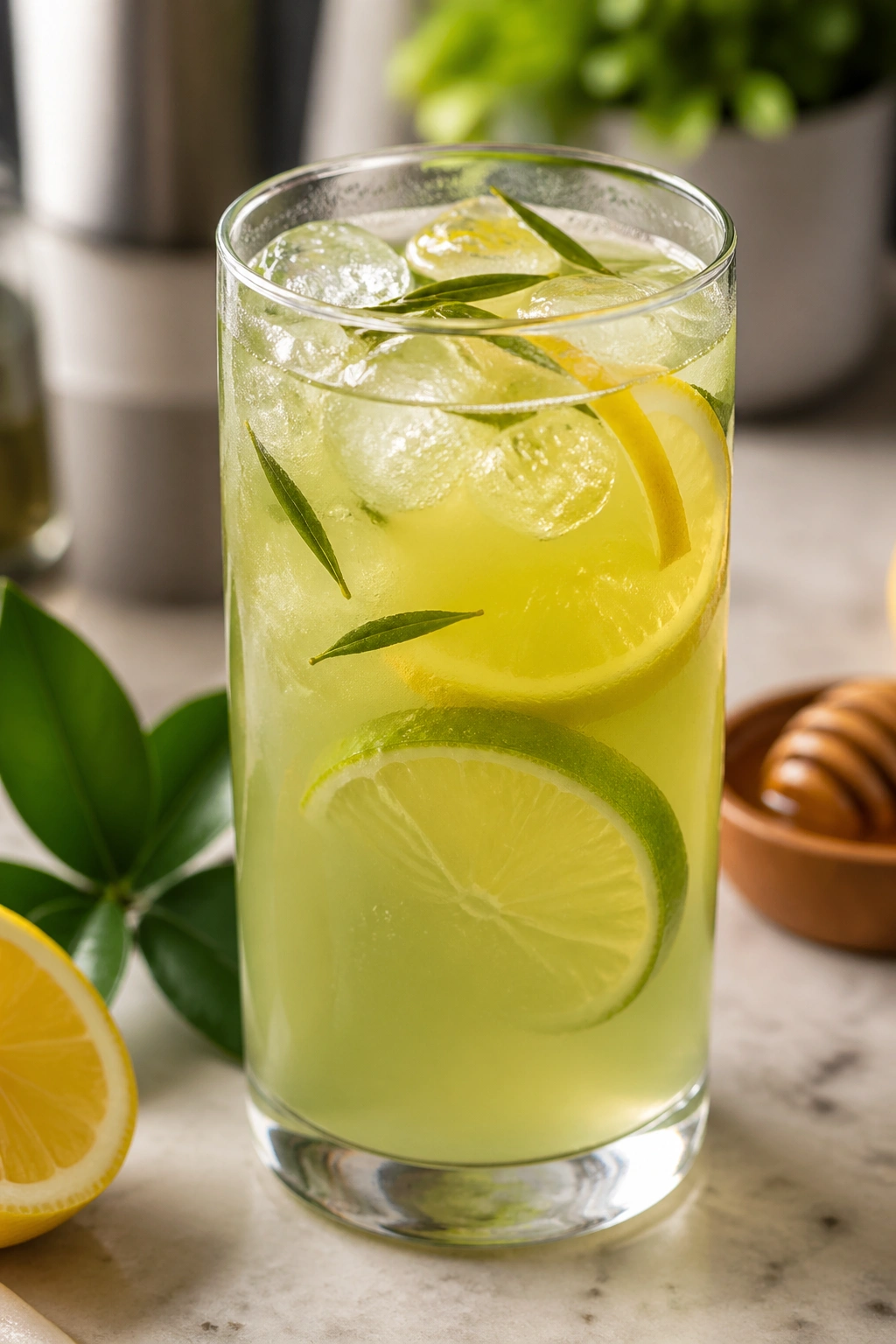
Coffee is not mandatory. Plenty of people train better with a smaller caffeine bump and fewer nerves.
Green tea works well when you want alertness without that hard edge some strong coffees bring. Honey adds quick fuel, lemon and orange sharpen the flavor, and the salt keeps the drink from tasting flat once the ice melts.
Yield: 1 serving
Prep Time: 3 minutes
Cook Time: 5 minutes
Total Time: 8 minutes
Difficulty: Beginner — the only cooking step is steeping tea.
Best Served: Lightly chilled, 20 to 40 minutes before training
- 1 green tea bag
- 8 ounces hot water
- 1 tablespoon honey
- 1 tablespoon fresh lemon juice
- 1 tablespoon fresh orange juice
- Pinch of fine salt
- 4 ounces cold water
- Ice cubes
Brew and Chill:
- Steep the green tea bag in 8 ounces hot water for 3 minutes. Remove the bag before the tea turns tannic and harsh.
- Stir in the honey while the tea is warm so it dissolves fully, then add the lemon juice, orange juice, and salt.
- Pour the tea over ice and add the 4 ounces cold water. Stir until the drink is cold and lightly diluted.
- Sip or pour into a bottle for the trip to the gym. If you are caffeine-sensitive, start with a 2-minute steep instead of 3.
Why this one works
You get fluid, a modest dose of caffeine, and easy carbs without the heaviness of a smoothie. It is a good fit for afternoon training when you still want sleep later.
5. Coconut Water Lime Sprint Mix
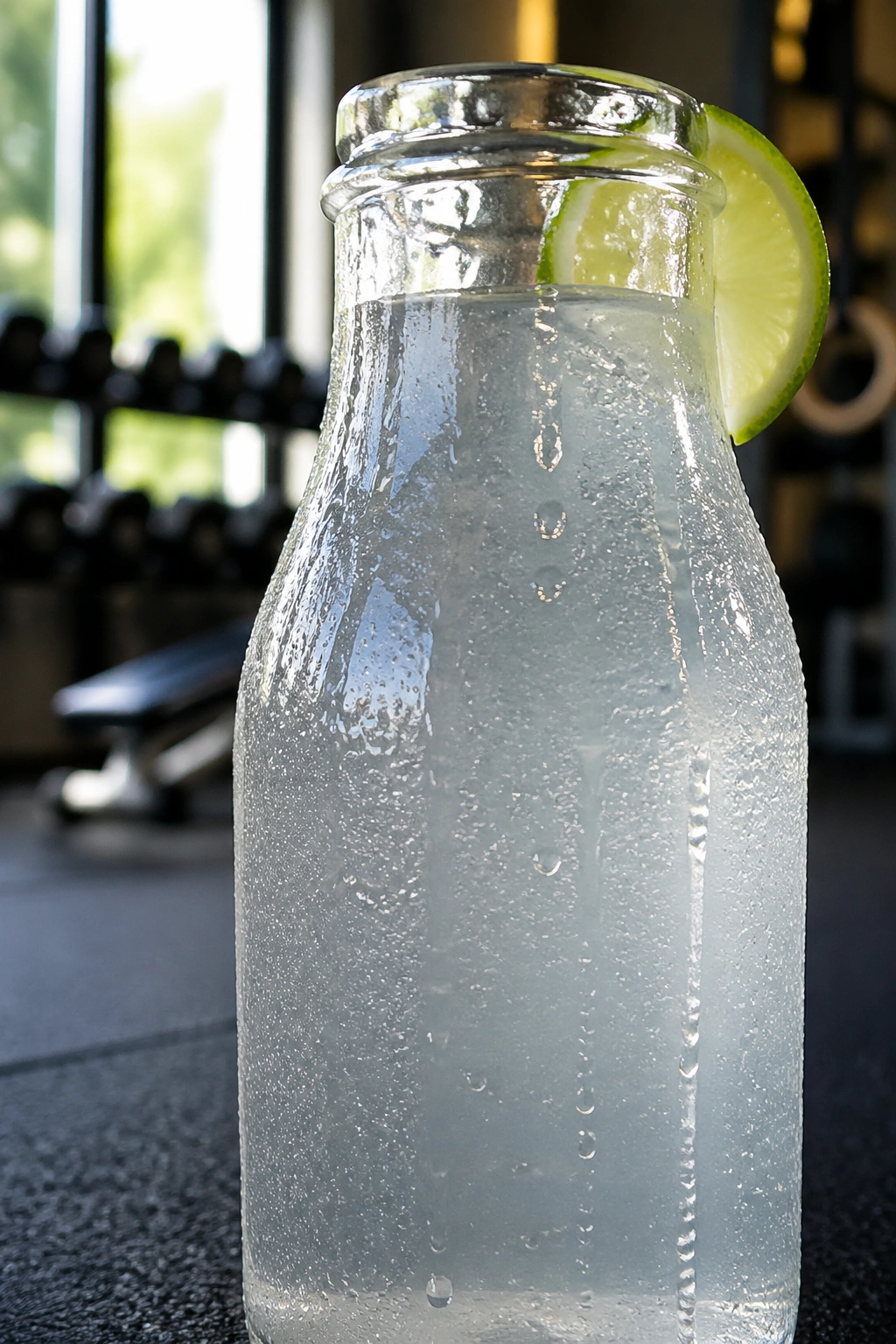
Hot gym. Fast intervals. Sweat starting before the warm-up ends. That’s the moment for this drink.
Coconut water gives potassium and a softer sweetness than straight juice, lime keeps it sharp, and a little honey plus salt makes it behave more like a proper sports drink instead of glorified flavored water. It is one of the best choices here for cardio sessions in sticky weather.
Yield: 1 serving
Prep Time: 3 minutes
Cook Time: 0 minutes
Total Time: 3 minutes
Difficulty: Beginner — stir, shake, drink.
Best Served: Well chilled, 15 to 30 minutes before training
- 10 ounces plain coconut water
- 4 ounces cold water
- 1 tablespoon fresh lime juice
- 1 teaspoon honey
- 1/8 teaspoon fine sea salt
- 1 tablespoon pineapple juice, optional
- Ice cubes
Mix the Drink:
- Add the coconut water, cold water, lime juice, honey, sea salt, and pineapple juice, if using, to a shaker bottle.
- Shake for 15 seconds, until the honey dissolves and the salt no longer collects at the bottom.
- Pour over ice or drink straight from the bottle while cold.
- Taste once. If you want more bite, add 1 extra teaspoon lime juice. Do not skip the pinch of salt if you sweat heavily—it is carrying more of the load here than the coconut water.
- Best for: treadmill intervals, hot-yoga holdouts who also lift, long warm-ups
- Flavor note: bright, clean, lightly tropical
- Pair with: half a banana or a rice cake if you need more carbs
6. Tart Cherry and Apple Juice Lift Drink
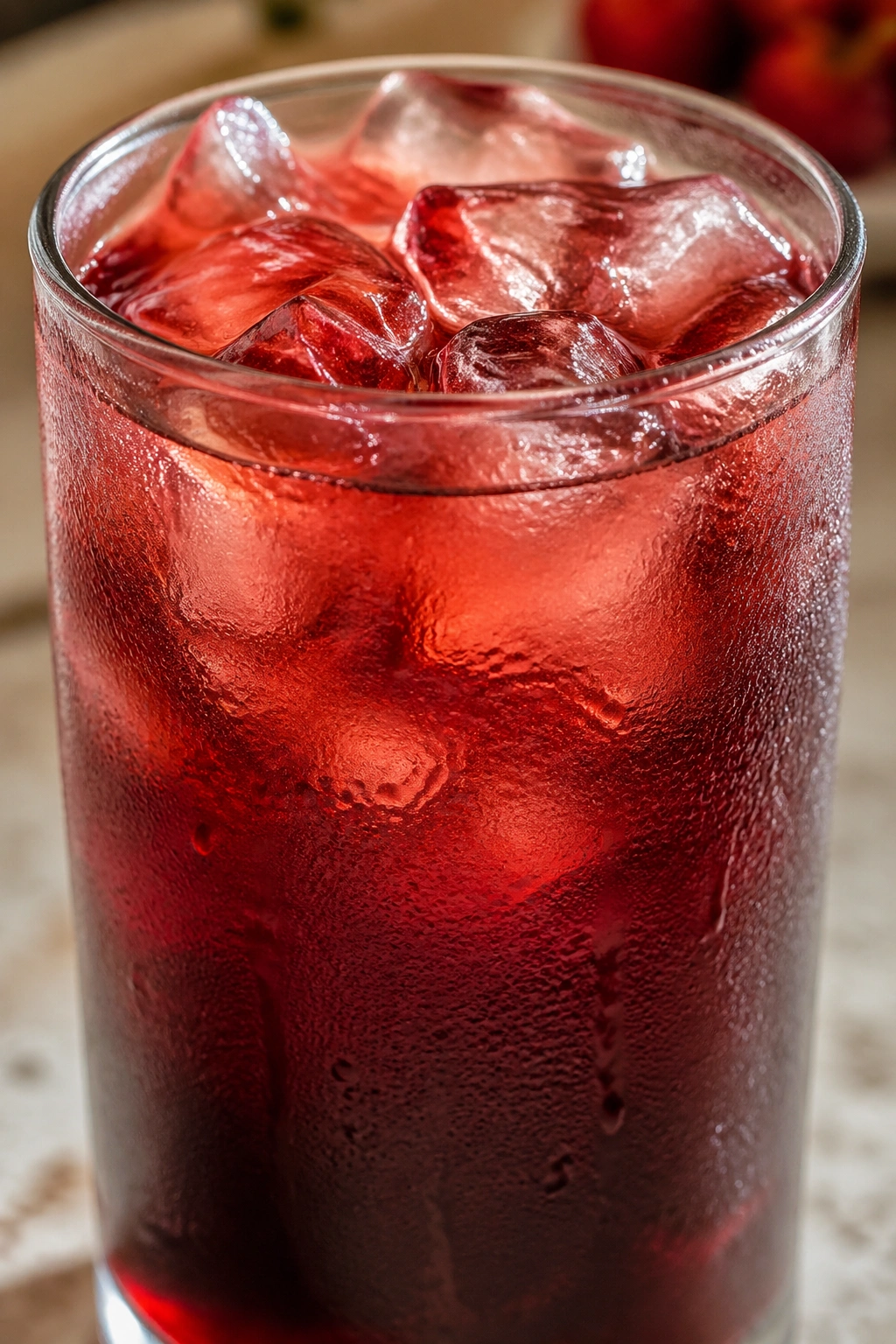
Not every pre-workout drink needs caffeine.
This one is for evening sessions, for people who already had enough coffee, and for anyone who wants a fast-carb drink that tastes like actual fruit. Tart cherry has earned attention in sports nutrition conversations for its possible role in recovery, but even before you get into that, it makes a smart base because it is punchy enough to stand up to dilution.
Yield: 1 serving
Prep Time: 2 minutes
Cook Time: 0 minutes
Total Time: 2 minutes
Difficulty: Beginner — no tools beyond a glass and spoon.
Best Served: Cold, 20 to 30 minutes before training
- 4 ounces tart cherry juice
- 6 ounces unsweetened apple juice
- 4 ounces cold water
- 1/8 teaspoon fine salt
- 1 teaspoon fresh lemon juice
- Ice cubes
Stir and Drink:
- Fill a glass or bottle with ice, then pour in the tart cherry juice, apple juice, cold water, salt, and lemon juice.
- Stir or shake for 10 to 15 seconds, until the salt dissolves fully.
- Taste the drink. If it feels too sweet, add 2 more ounces cold water.
- Drink within 15 minutes of mixing for the freshest flavor. If you are doing a long session, bring a second bottle of plain water along with it.
When to use it
Use this one when you want energy from carbohydrate, not a stimulant. I also like it on days when my sleep was rough and I know another big caffeine hit will only make me feel wired and tired at the same time.
7. Pineapple Salt Electrolyte Slush
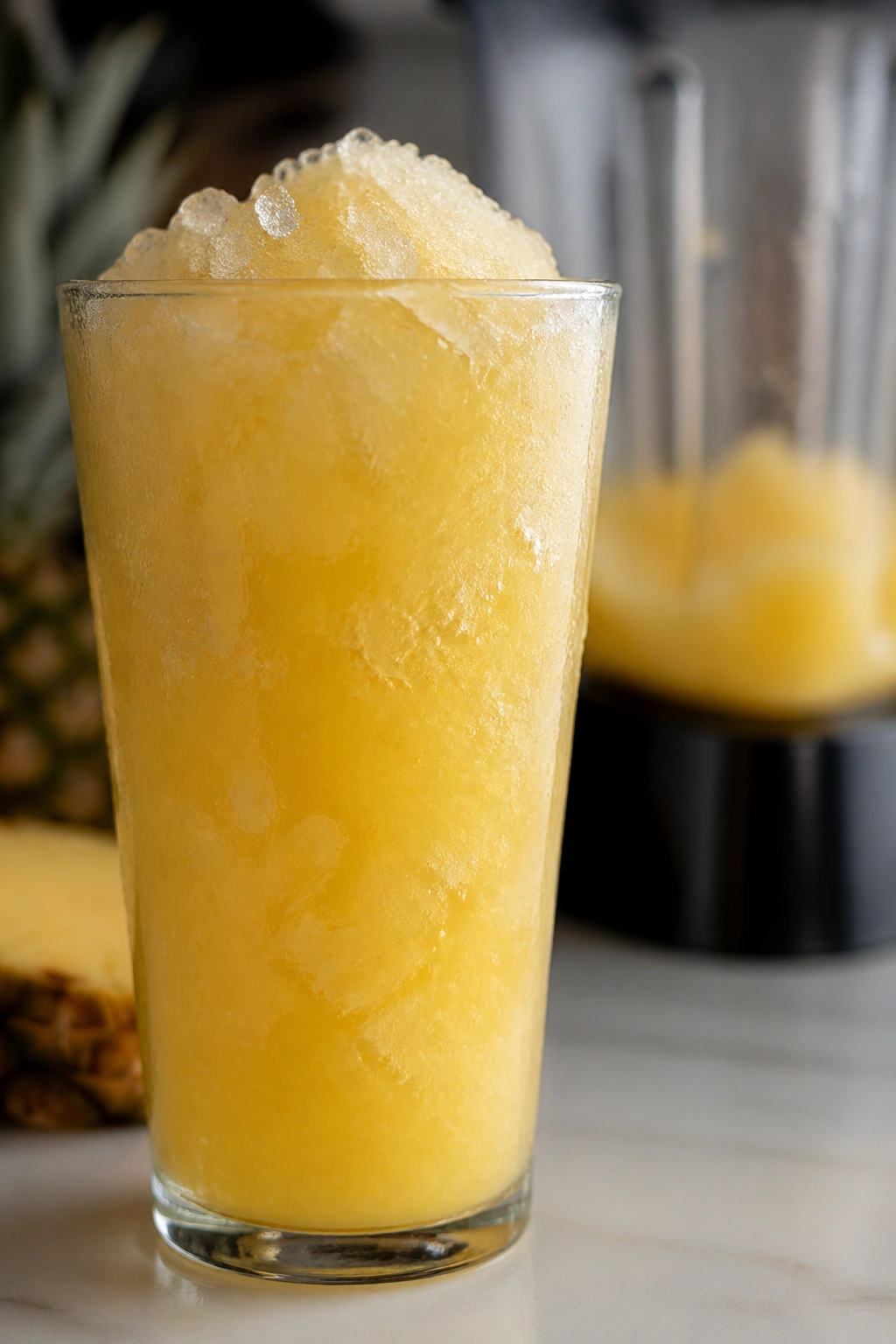
Cold matters.
A slushy drink can feel better than a flat liquid when the room is hot or your appetite is low. Pineapple gives sweetness and acid, the salt pushes it toward sports-drink territory, and the crushed-ice texture makes it easier to sip slowly if you are still waking up.
Yield: 1 serving
Prep Time: 5 minutes
Cook Time: 0 minutes
Total Time: 5 minutes
Difficulty: Beginner — any blender that can handle frozen fruit will work.
Best Served: Immediately after blending, 15 to 25 minutes before training
- 1 cup frozen pineapple chunks
- 6 ounces coconut water
- 4 ounces cold water
- 1 tablespoon fresh lemon juice
- 1/8 teaspoon fine sea salt
- 1 teaspoon honey
Blend the Slush:
- Add the frozen pineapple, coconut water, cold water, lemon juice, sea salt, and honey to a blender.
- Blend on high for 30 to 45 seconds, stopping once to scrape the sides if the pineapple sticks.
- Add 1 to 2 tablespoons cold water if the mixture is too thick; it should pour slowly, like a loose frozen drink, not sit in the blender like sorbet.
- Pour into a tall glass and drink right away. If you let it sit too long, the ice crystals melt and the texture gets flat fast.
The smell alone helps. Pineapple has that bright, almost candy-like aroma, but the drink still tastes clean because the lemon and salt keep it from going syrupy.
8. Cocoa Date Mocha Shake
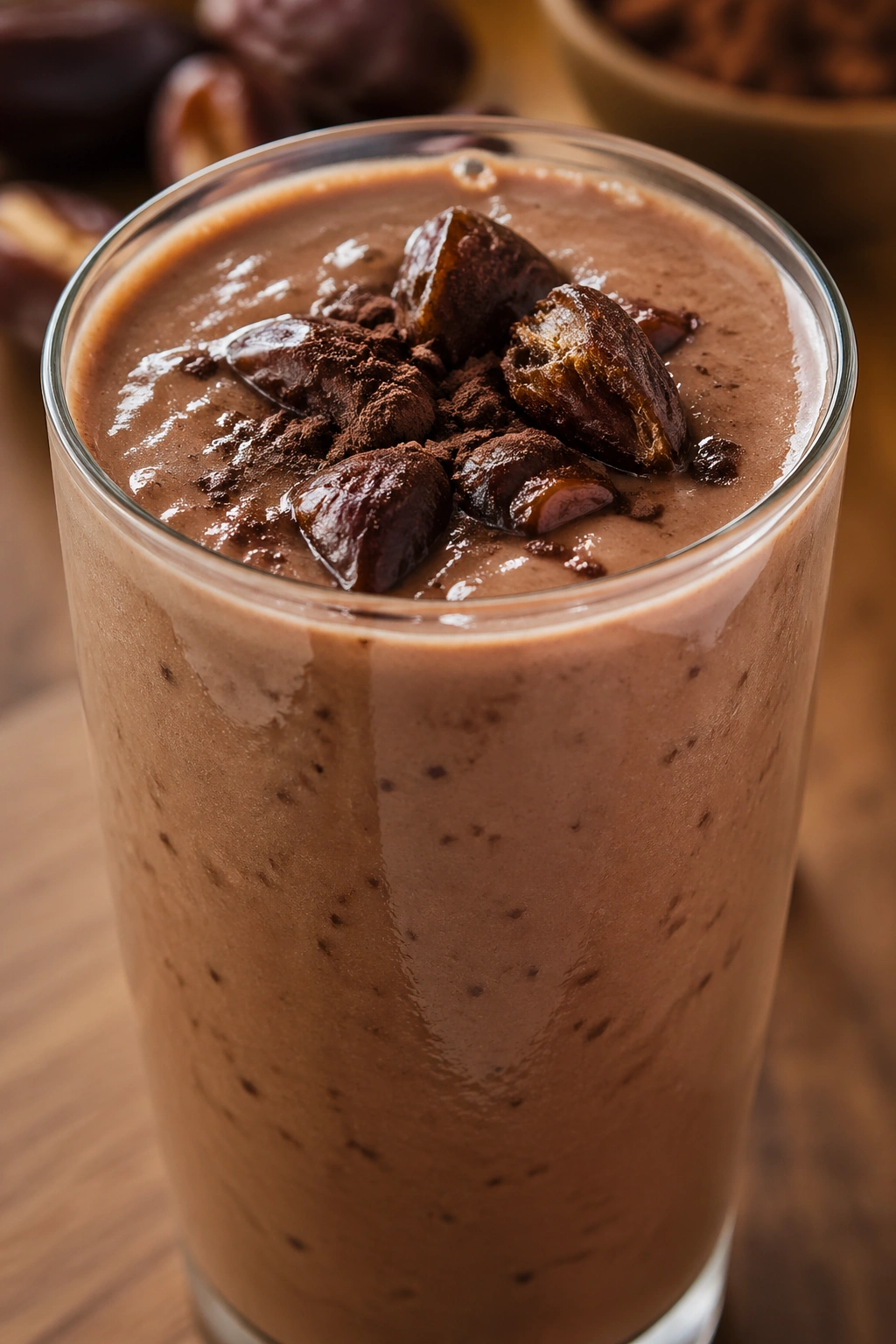
I make this when I want a pre-workout drink that feels a little indulgent without crossing into dessert. It tastes like a café drink got smarter and lighter.
Dates bring sweetness plus carbohydrate, cocoa adds bitterness and depth, and the half banana makes the texture silky without tipping into milkshake territory. If your blender struggles with dates, soak them first. Save yourself the rattling, under-blended mess.
Yield: 1 serving
Prep Time: 7 minutes
Cook Time: 0 minutes
Total Time: 7 minutes
Difficulty: Intermediate — easy ingredients, but weak blenders may need the dates softened first.
Best Served: Chilled, 30 to 45 minutes before training
- 1 shot espresso, cooled
- 3/4 cup milk or unsweetened soy milk
- 2 Medjool dates, pitted
- 1 tablespoon unsweetened cocoa powder
- 1/2 frozen banana
- Pinch of fine salt
- 3 ice cubes
Prepare and Blend:
- Soak the pitted dates in warm water for 5 minutes if your blender is not powerful, then drain them.
- Add the cooled espresso, milk, dates, cocoa powder, frozen banana, salt, and ice cubes to the blender.
- Blend for 45 seconds, until the drink is smooth and the cocoa is fully mixed in with no dry pockets.
- Pour and drink cold. Do not add extra cocoa without more liquid—cocoa thickens the drink faster than people expect.
- Best for: upper-body days, morning garage workouts, people bored with plain coffee
- Easy tweak: add 1 teaspoon maple syrup if you want more quick carbohydrate
- Not ideal for: last-second drinking on the walk into class; it is a little richer than the thinner options
9. Watermelon Mint Pump Drink
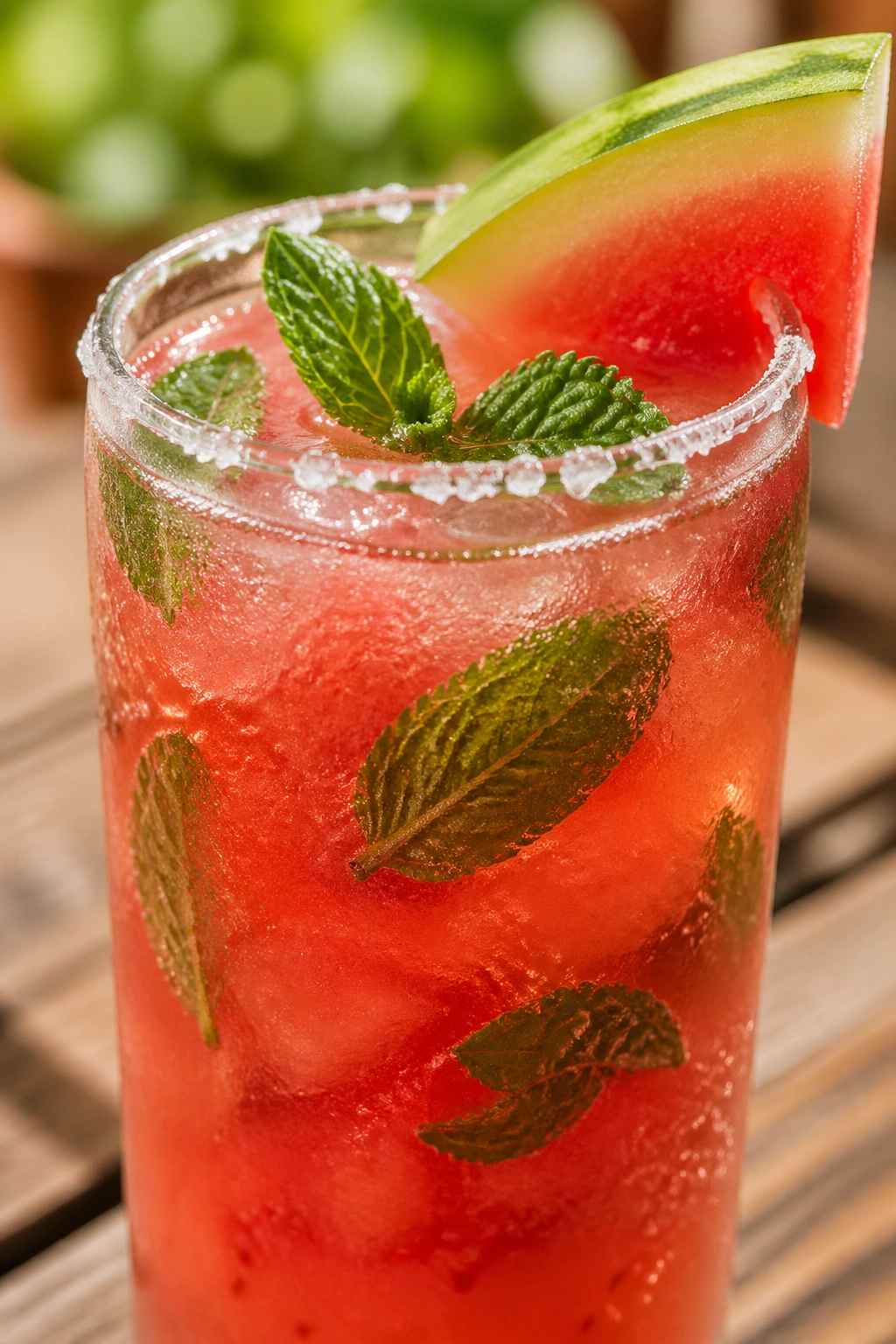
Watermelon is mostly water, which sounds too obvious to mention—until you notice how many pre-workout drinks forget hydration and chase stimulation instead.
This one is crisp, light, and easy to finish. Mint cools the aftertaste, lime sharpens it, and the pinch of salt keeps it useful rather than merely refreshing. There is also a reason watermelon keeps showing up in performance talk: it contains citrulline, though the amount in fruit is nowhere near a concentrated supplement dose.
What watermelon can and cannot do
A watermelon drink is not a replacement for a measured citrulline supplement if you are chasing a specific dose. What it can do is give you fluid, a little carbohydrate, and a fresh flavor that goes down easily before training. Sometimes that is the real win.
Yield: 1 serving
Prep Time: 6 minutes
Cook Time: 0 minutes
Total Time: 6 minutes
Difficulty: Beginner — strain it if you want a smoother finish.
Best Served: Very cold, 20 to 40 minutes before training
- 1 1/2 cups seedless watermelon cubes, chilled
- 1 tablespoon fresh lime juice
- 4 fresh mint leaves
- 1/8 teaspoon fine sea salt
- 2 ounces cold water
Blend the Drink:
- Add the chilled watermelon cubes, lime juice, mint leaves, salt, and cold water to a blender.
- Blend for 20 to 30 seconds, until the mint is broken up and the mixture is smooth and frothy.
- Strain through a fine sieve if you dislike pulp, pressing lightly to extract the liquid without forcing too much foam through.
- Pour over ice and drink right away. If your watermelon is not sweet, add 1 teaspoon honey rather than overloading the drink with extra fruit.
10. Greek Yogurt Berry Fuel Smoothie
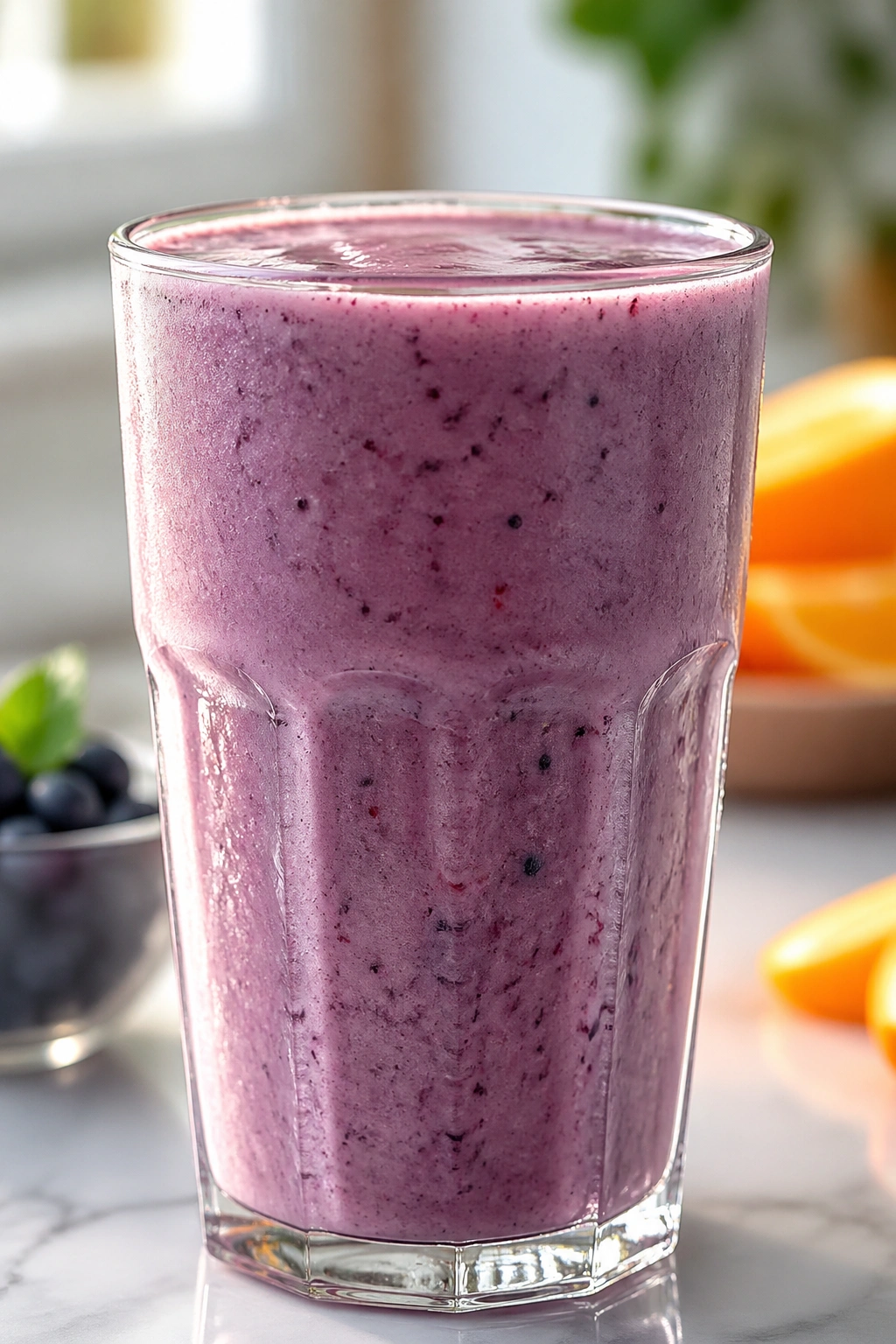
Picture a morning when you need more than a stimulant. You slept late, there is no time for eggs or toast, and lifting on an empty stomach usually feels flat. That is where this one earns its keep.
Greek yogurt gives protein and tang, berries add flavor without too much thickness, and orange juice loosens the texture so it stays drinkable. I would not use this ten minutes before sprints. Give it a little room. For a session starting in about an hour, though, it works well.
Yield: 1 serving
Prep Time: 5 minutes
Cook Time: 0 minutes
Total Time: 5 minutes
Difficulty: Beginner — a straightforward smoothie with familiar ingredients.
Best Served: 45 to 75 minutes before training
- 1/2 cup plain Greek yogurt
- 1/2 cup frozen mixed berries
- 1/2 small banana
- 1/2 cup orange juice
- 1/4 cup cold water
- 1 teaspoon honey
- Pinch of fine salt
Blend and Sip:
- Add the Greek yogurt, frozen berries, banana, orange juice, water, honey, and salt to a blender.
- Blend for 30 to 40 seconds, until the berries are fully broken down and the mixture is smooth.
- Add 1 to 2 tablespoons more water if you want a thinner drink that is easier to sip quickly.
- Drink cold. If your workout starts in less than 30 minutes, reduce the yogurt to 1/4 cup or choose a thinner recipe instead.
A small but useful note
Protein before training is fine for many people. Too much thickness is the bigger issue. That is why the liquid ratio matters here more than the berry choice.
11. Matcha Pear Vanilla Blender
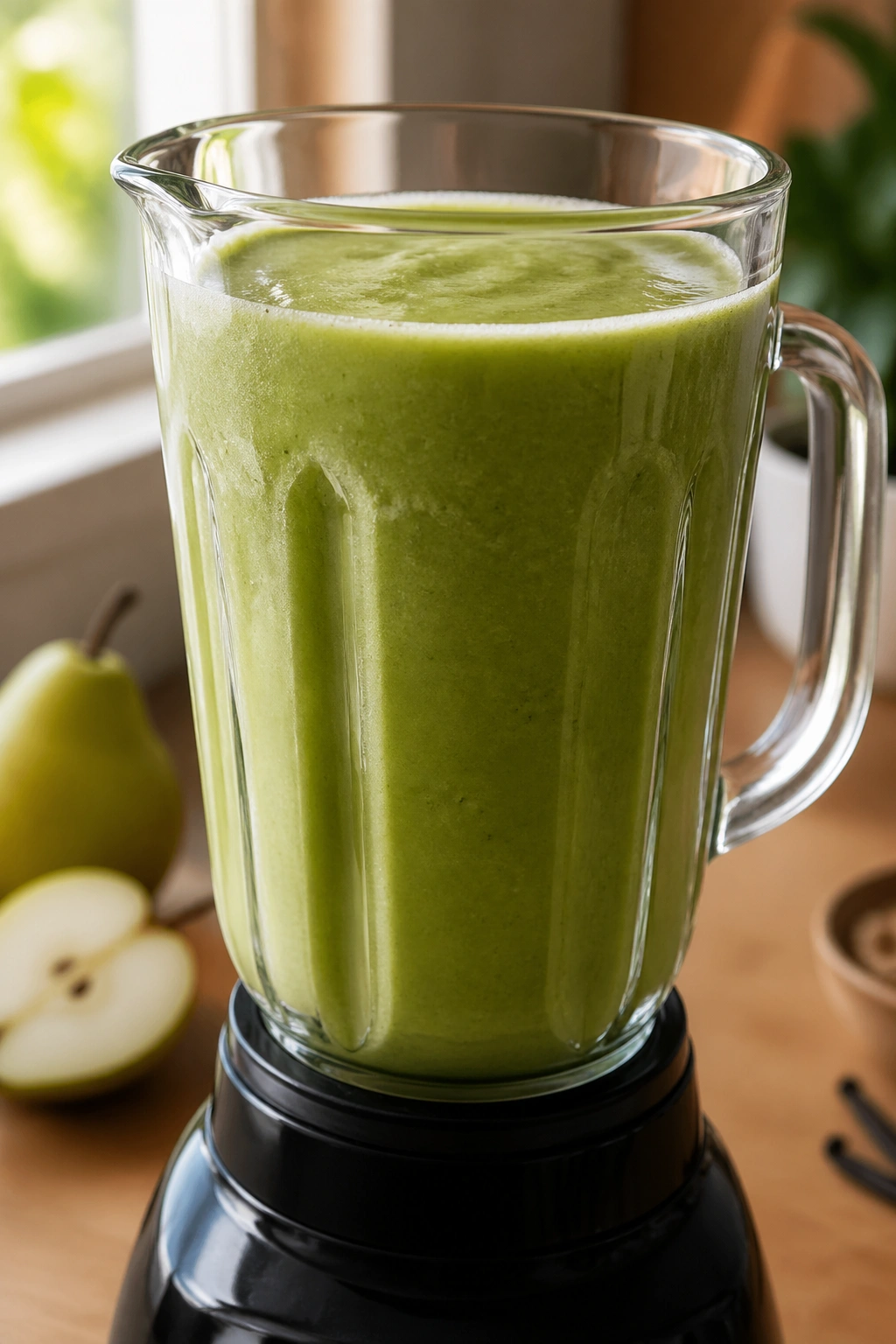
Matcha gives a gentler climb than coffee for a lot of people. Not weaker, exactly. Smoother. Less of that sudden shove.
Pear may seem like an odd pick, but peeled ripe pear blends into a soft, lightly floral base that works with matcha better than banana does. Banana tries to take over. Pear stays in its lane. Vanilla rounds the grassy edge, and lemon keeps the drink from feeling muddy.
Yield: 1 serving
Prep Time: 6 minutes
Cook Time: 0 minutes
Total Time: 6 minutes
Difficulty: Beginner — peel the pear and the texture becomes much easier to manage.
Best Served: Chilled, 30 to 45 minutes before training
- 1/2 teaspoon culinary-grade matcha powder
- 1 ripe pear, peeled, cored, and chopped
- 3/4 cup cold water or oat milk
- 1 teaspoon honey
- 1/2 teaspoon vanilla extract
- 1 tablespoon fresh lemon juice
- Pinch of fine salt
- 4 ice cubes
Blend the Matcha Drink:
- Add the matcha powder, chopped pear, cold water or oat milk, honey, vanilla extract, lemon juice, salt, and ice cubes to a blender.
- Blend for 40 to 50 seconds, until the pear is fully broken down and the matcha is evenly dispersed with no green clumps.
- Strain if you want a smoother texture; ripe pear can leave a little grain.
- Serve cold. If you are new to matcha, do not double the powder right away—the grassy bitterness builds quickly.
12. Lemon Honey DIY Pre Workout Drink
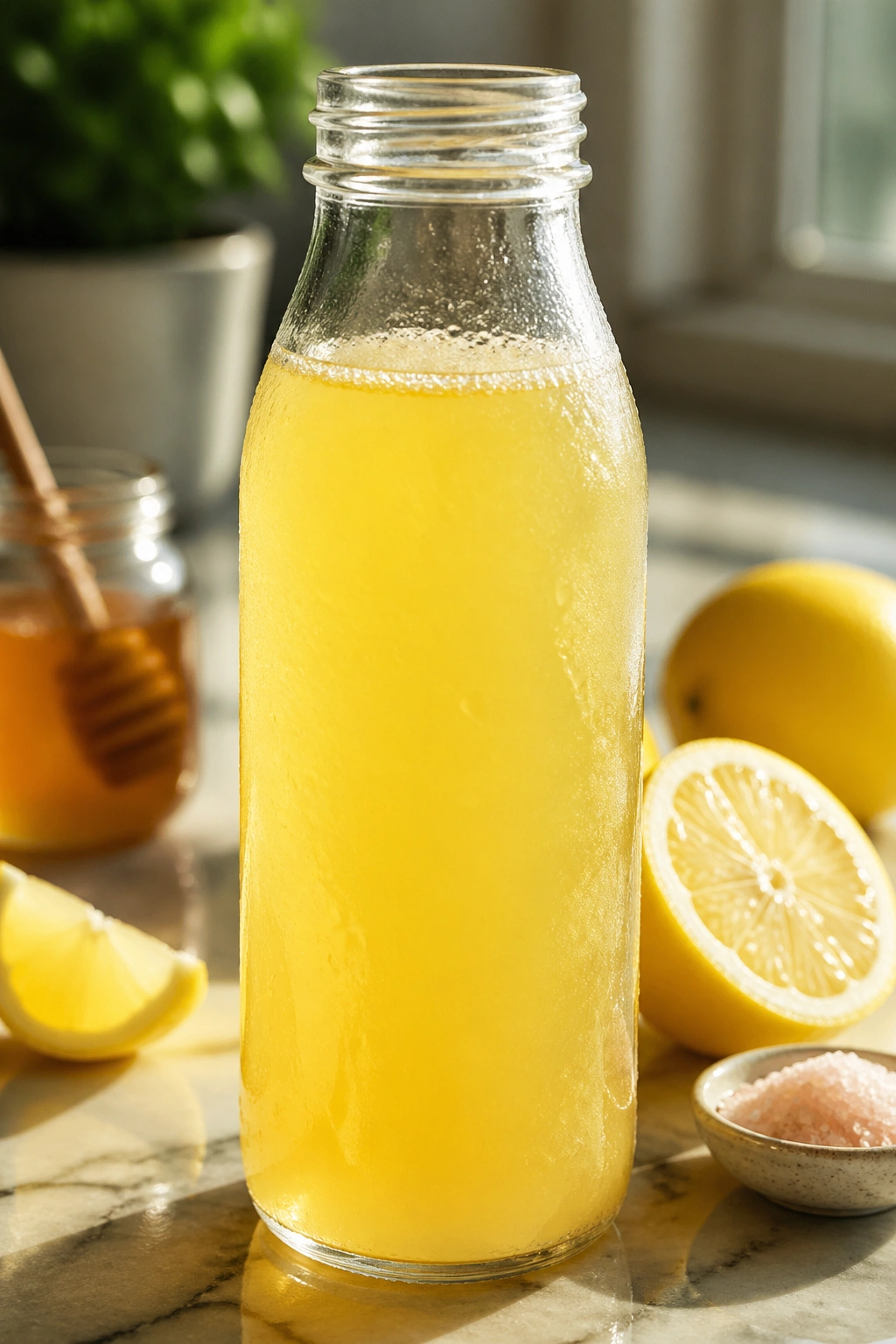
Old-school works.
This is the simplest bottle here, and I would argue one of the most useful. It is basically a homemade sports drink: water, honey, lemon, salt. Nothing fancy. Nothing to explain away. When the session is long, sweaty, or wedged between other meals, plain solutions often hold up best.
Yield: 1 serving
Prep Time: 2 minutes
Cook Time: 0 minutes
Total Time: 2 minutes
Difficulty: Beginner — no blender, no brewing, and almost impossible to mess up.
Best Served: Cold, 15 to 30 minutes before training or sipped into the first part of a longer session
- 12 ounces cold water
- 2 tablespoons honey
- 2 tablespoons fresh lemon juice
- 1/8 teaspoon fine salt
- 2 tablespoons orange juice, optional
Mix the Bottle:
- Pour the cold water into a bottle with a tight lid, then add the honey, lemon juice, salt, and orange juice, if using.
- Shake hard for 20 seconds, until the honey dissolves and the liquid turns clear rather than streaky.
- Chill for 10 minutes if you want a colder drink, or pour over ice and serve right away.
- Sip before training, or bring it with you for the first 30 to 45 minutes of a longer workout. If the drink tastes too sharp, add 1 tablespoon more water at a time rather than more honey.
It is not glamorous. It is useful. I trust useful.
Timing Your Glass So It Helps Instead of Sloshing
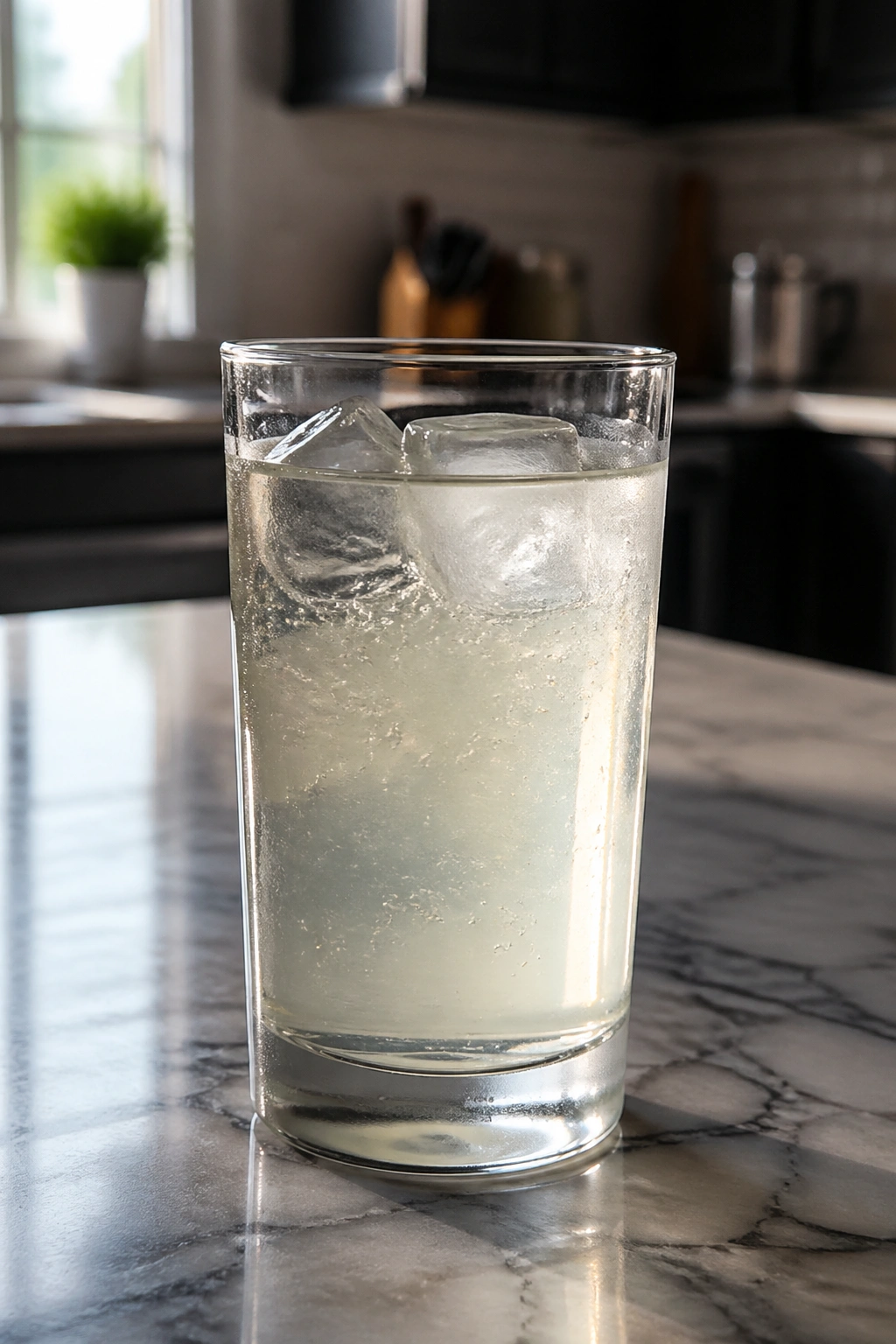
The same drink can feel smart or miserable depending on when you take it. That part gets ignored all the time.
If you are drinking 10 to 20 minutes before training, go thin. Water, juice, tea, coffee, honey, salt, citrus—those are your friends. Choose the cold brew, green tea citrus, coconut water lime, or lemon honey options from the list above.
For a window of 30 to 60 minutes, you can move into light smoothies and slightly heavier blends. The banana oat espresso, cocoa date mocha, watermelon mint, and matcha pear drinks all fit here, depending on how your stomach behaves. Some people can handle dairy in this slot. Some cannot. Your first test should happen on a normal training day, not on your hardest session of the month.
Push out to 60 to 90 minutes, and the thicker choices make more sense. That is where the Greek yogurt berry smoothie is strongest. Beet drinks sit in their own timing lane; many people like them 90 to 150 minutes before hard endurance work rather than right before warm-up.
A quick cheat sheet helps:
- Need caffeine fast? Coffee or green tea drinks, 20 to 40 minutes before.
- Need hydration first? Lemon-honey, coconut-water, pineapple slush, or watermelon drinks, 15 to 30 minutes before.
- Need fuel because you skipped food? Banana-oat or Greek-yogurt smoothies, 45 to 75 minutes before.
- Need a stimulant-free option? Tart cherry apple or lemon-honey, depending on how much carbohydrate you want.
Easy Swaps for Dairy-Free, Lower-Caffeine, and Higher-Carb Needs
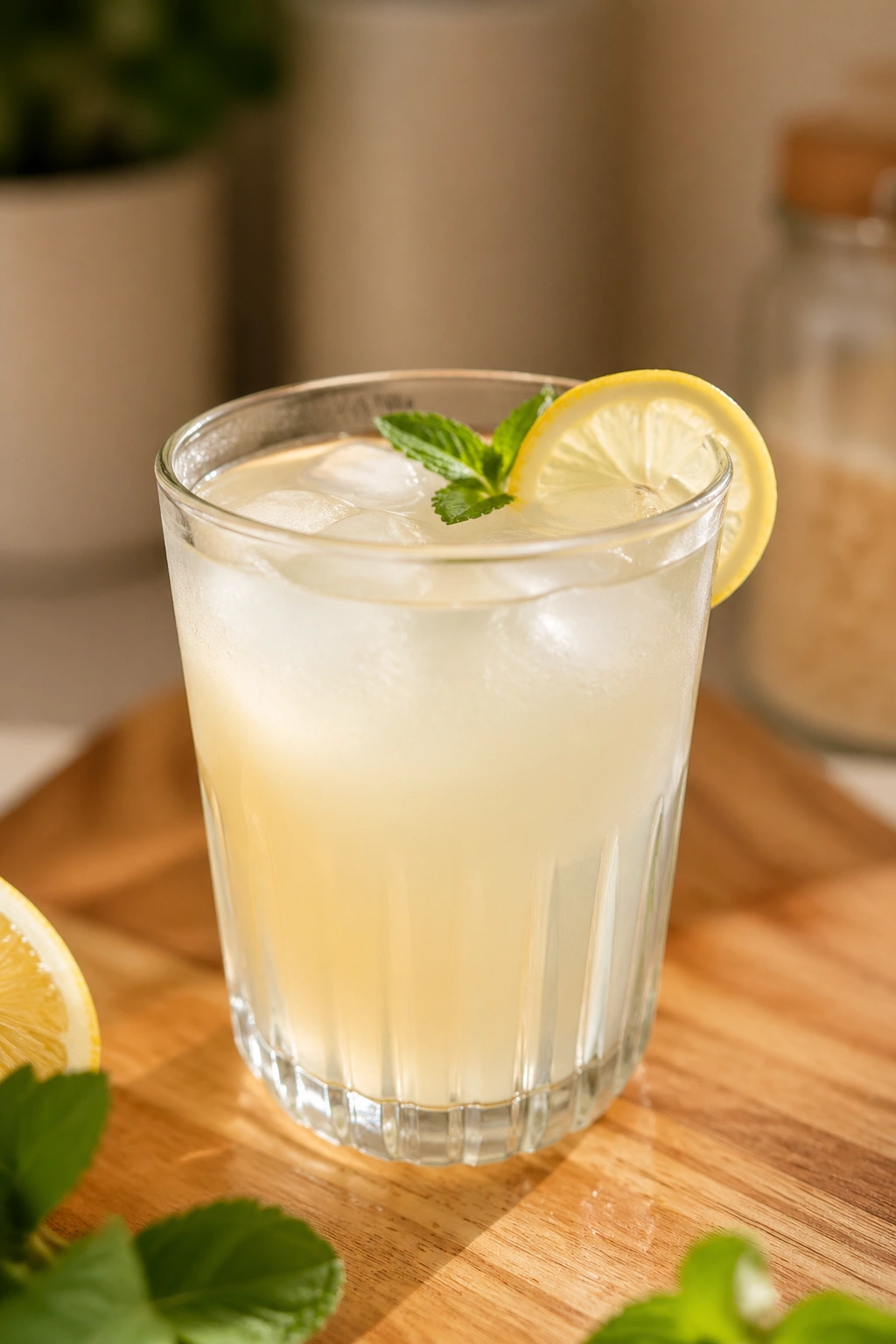
Once you know the skeleton of a good pre-workout drink, swapping pieces gets easy.
Need dairy-free? Use soy milk when you want more protein, oat milk when you want a softer texture, or plain water when you want the lightest result. Coconut milk from the carton works better than canned coconut milk here; canned is often too rich before training.
Need less caffeine without losing the ritual? Cut coffee with cold water, steep green tea for 2 minutes instead of 3, use decaf espresso, or drop matcha down to 1/4 teaspoon. Small changes go a long way when you train early or already had caffeine earlier in the day.
Need more carbohydrate because your session runs long or you have not eaten? Add one of these:
- 1 tablespoon honey for about 17 grams carbs
- 1 tablespoon maple syrup for about 13 grams carbs
- 4 ounces fruit juice for about 12 to 15 grams carbs, depending on the juice
- 1/2 banana for about 13 grams carbs, though that also thickens the drink
Salt is another easy dial to turn. 1/8 teaspoon is a good starting point. If you are a salty sweater—the white streaks on your shirt give it away—you may prefer closer to 1/4 teaspoon in a full bottle. Taste should guide you a little here. The drink should taste brighter and more alive, not like soup.
Make-Ahead Bottles and Freezer Packs That Save Time
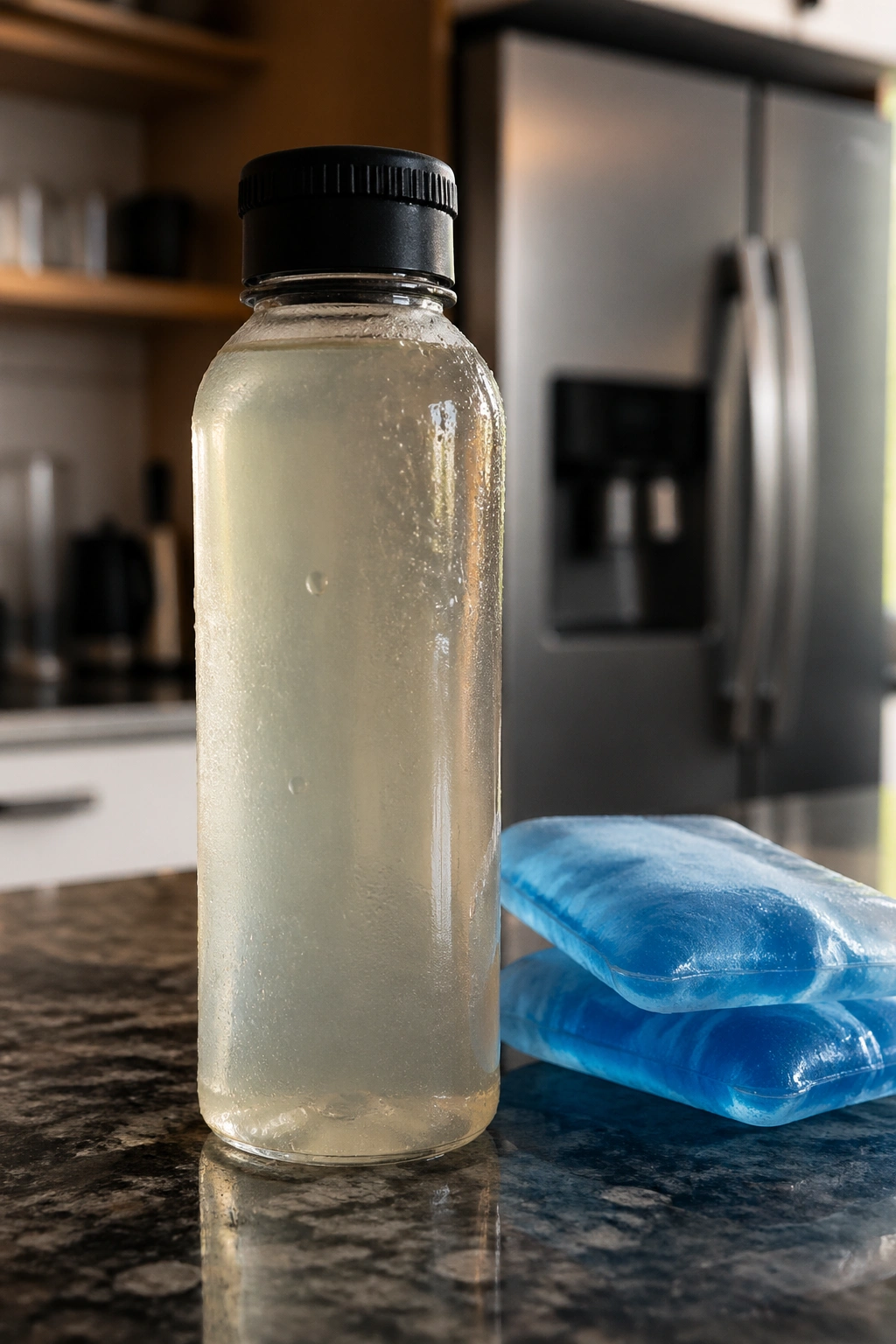
Morning workouts reward prep the night before. That is not a romantic sentence, but it is true.
Thin drinks hold up better than smoothies. Coffee, tea, lemon-honey, tart cherry, and coconut-water mixes can be made ahead and kept in the fridge without much trouble. Blended fruit drinks are fussier. Banana darkens. Oats swell. Watermelon separates. Still drinkable, sure, but not at their best.
Fridge life by drink style
- Coffee and tea drinks: up to 24 hours in the fridge
- Lemon-honey and juice-based bottles: up to 48 hours
- Coconut-water mixes: best within 24 hours
- Banana, yogurt, oat, or pear smoothies: best within 12 hours
- Watermelon and beet blends: best within 8 to 12 hours, shaken again before drinking
Freezer packs make life easier. Portion the fruit, oats, dates, or cooked beet into bags or containers so you only need to add liquid in the morning. I do this most often with the banana oat espresso, pineapple slush, and Greek yogurt berry recipes. It cuts the prep down to about 2 minutes.
None of these drinks need reheating. If you want a warm version during colder months, the green tea citrus mix can be served warm after steeping, and the maple coffee drink can be made with hot coffee instead of cold brew. Keep the water warm, not scalding. A drink meant for quick sipping should still be easy to drink fast.
Smart Pairings When a Drink Alone Is Not Enough
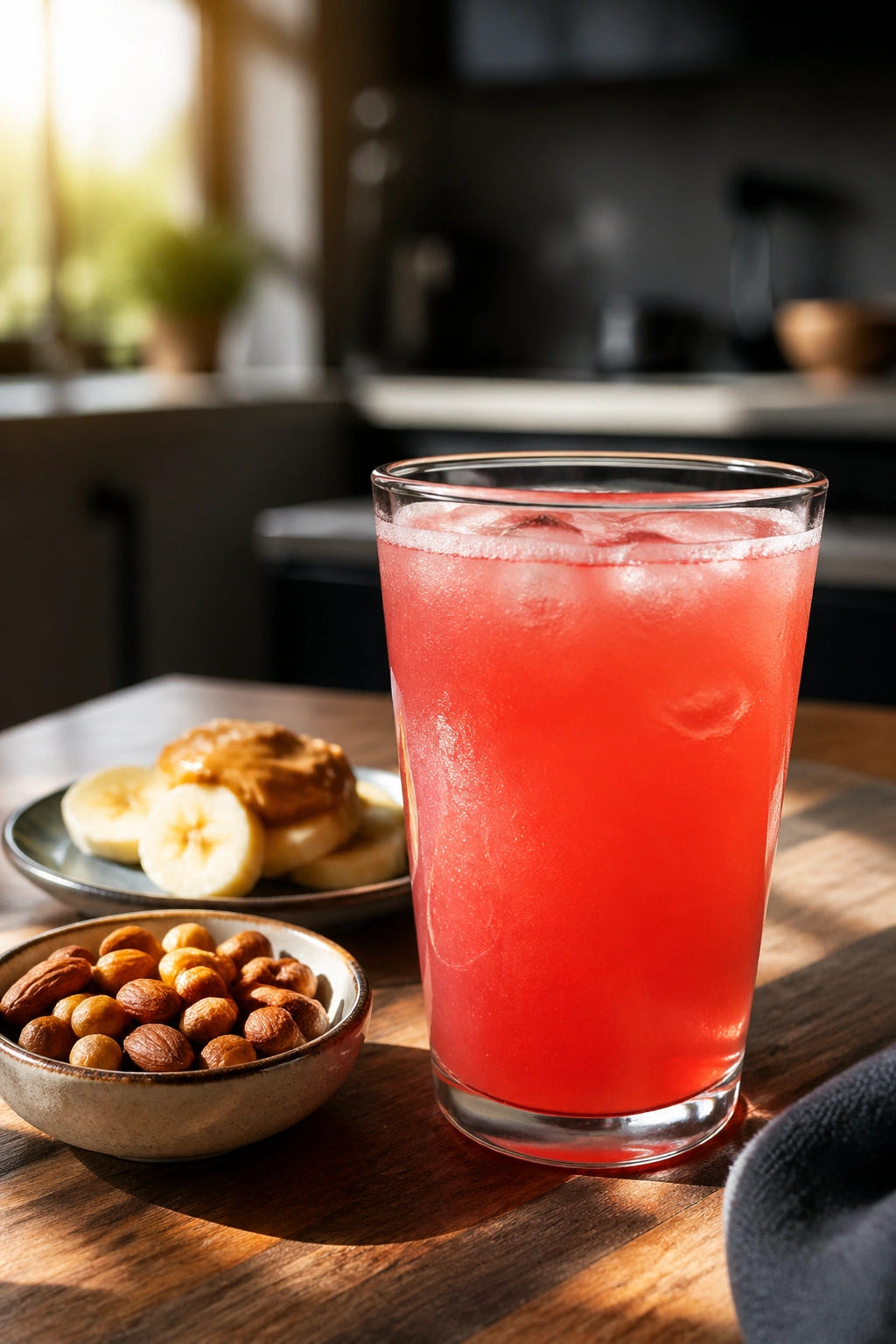
Sometimes the drink is enough. Sometimes it is not.
If you are heading into a longer session, or you know you train better with a little chew in your stomach, pair the drink with something low-fuss and easy to digest. I’m not talking about a full breakfast buffet. I mean one rice cake with jam, half a bagel with honey, a banana, an applesauce pouch, or a small handful of salted pretzels.
Good pairings by drink style look like this:
- Coffee or green tea drinks: banana, toast with jam, plain crackers
- Hydration-focused drinks: pretzels, half a bagel, a fig bar
- Thicker smoothies: often enough on their own, though a small piece of toast works if the workout is long
- Beet shot: pair with a light carb like toast or a banana if you need more fuel
Skip the foods that digest slowly right before training: big servings of cheese, bacon, greasy breakfast sandwiches, heavy nut butter, giant salads. Healthy food, wrong timing. That distinction saves a lot of bad workouts.
Final Thoughts
Homemade pre-workout drinks work best when they solve a plain problem. You need a little fuel. You need a little hydration. Maybe you need caffeine, maybe you do not. Once you stop asking one drink to do ten jobs, building a good one gets easier.
If you’re new to this, start with the cold brew maple, green tea citrus, or lemon honey bottle. Those are the fastest to make, the least risky on the stomach, and the easiest to adjust after one try. Then move into the thicker blends once you know how much time your body wants before training.
And if one recipe misses for you, change one thing at a time—the salt, the caffeine, the thickness, the timing. That’s how homemade drinks become useful instead of random.
