



A tight pair of hips can make the first set of squats feel like you’re starting in wet cement. The fix is not to stand around and pull on your foot for a minute while you scroll your phone. The best leg stretches before a workout should wake up the hips, hamstrings, quads, calves, and ankles without making you sluggish.
That is why I lean hard toward dynamic leg stretches before training. Controlled swings, lunges, rock-backs, and ankle drills raise tissue temperature, move the joints through real ranges, and remind your body how to organize itself under load. Long static holds still have a place, but I’d save them for after lifting, running, or jumping is done.
The ankle gets ignored more than it should. So does the hip flexor, especially if you sit a lot, and both can make the knees complain long before the knees are the real problem. The stretches below are the ones I like because they’re simple, easy to repeat, and easy to scale up or down depending on whether you’re heading into a heavy lower-body session or a short run.
If you only have five minutes, you do not need to do all of them with perfect ceremony. Pick one swing, one lunge, one ankle drill, and one full-chain move, then get on with the workout. That’s usually enough to make the first working set feel smoother.
1. Front-to-Back Leg Swings
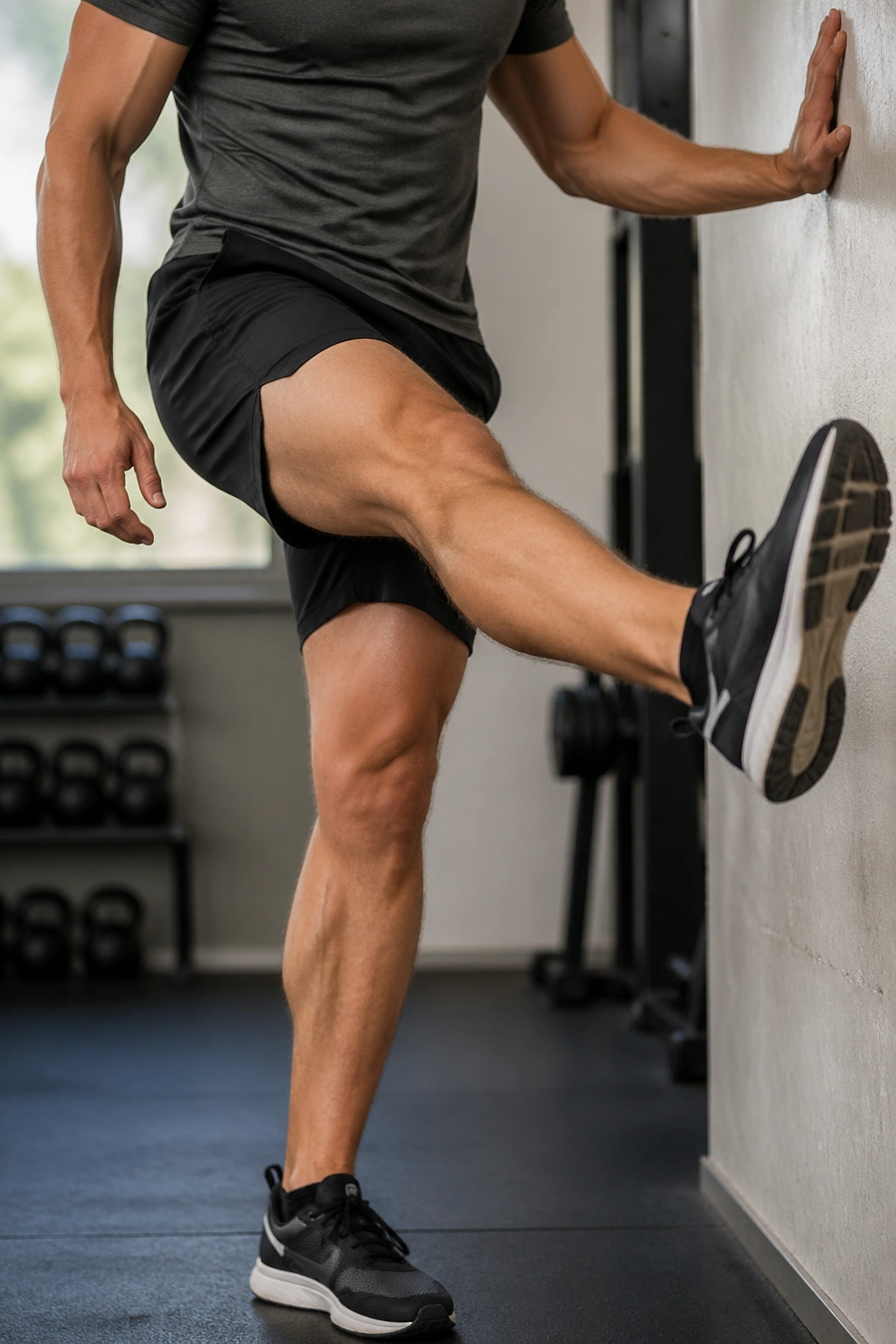
Stand next to a wall, rack, or post and let one leg swing forward and back like a pendulum. That’s the whole drill, and it works because it gives the hip joint a clean, controlled rehearsal before you ask it to squat, sprint, or hinge.
Keep the movement small at first. Ten to 15 swings per side is plenty, and the leg should rise from the hip, not from a wild fling of the lower back. If your torso starts leaning and twisting to help the motion, the swing is too big.
I like this one because it is honest. No drama. Your standing leg gets a little wake-up too, especially around the glute and ankle, and that matters more than people think before a workout.
Watch for two things: a firm standing foot and a quiet rib cage. If your heel lifts every rep, slow down. If your lower back starts arching to fake extra range, cut the height in half and keep going.
One clean set can tell you a lot about how your hips feel that day.
2. Side-to-Side Leg Swings
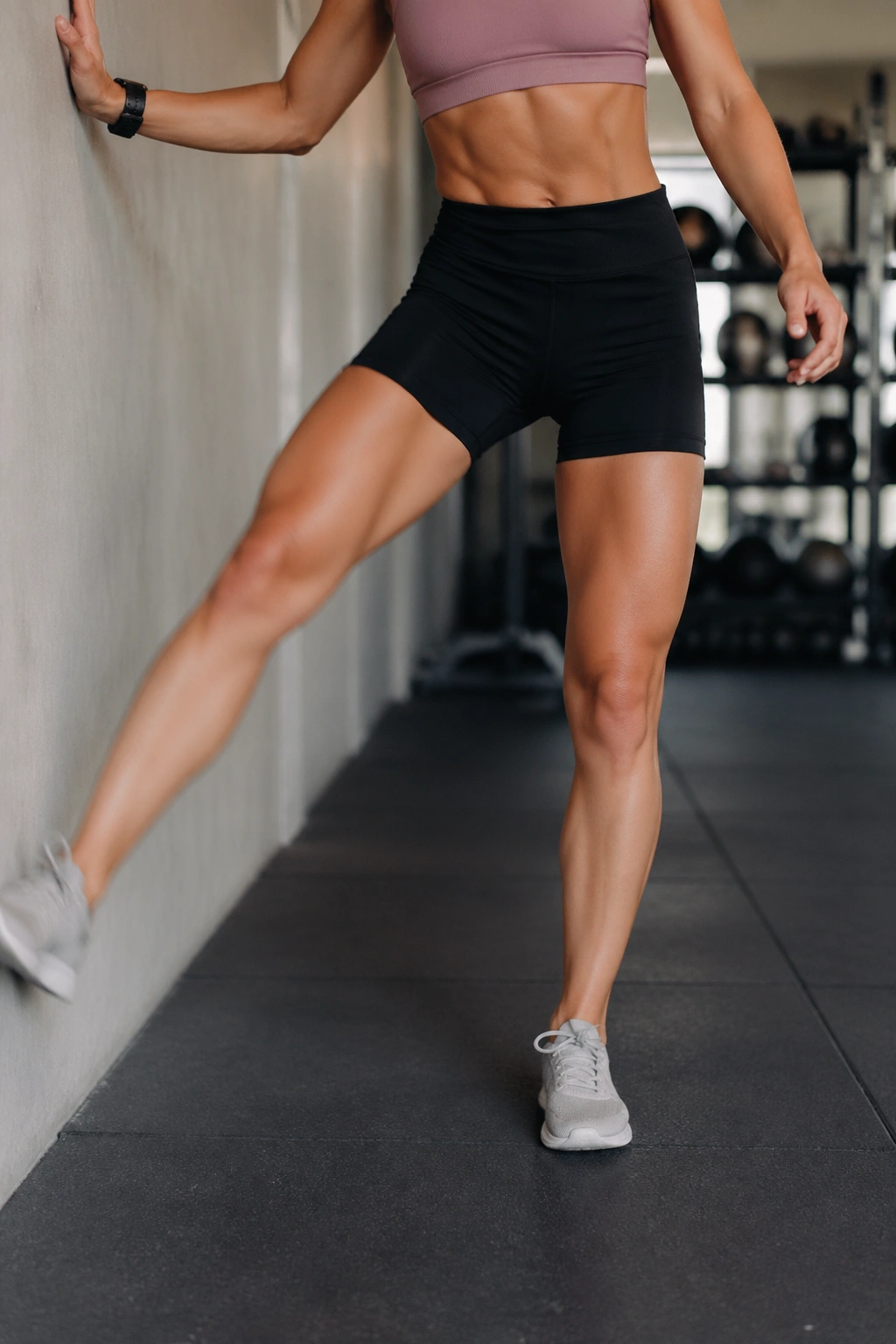
Why do side swings matter if you already did front-to-back swings? Because the body doesn’t move only in one plane, and a lot of groin and outer-hip irritation shows up when side movement is ignored. This drill wakes up the adductors, glute medius, and the muscles that help your knees track well when you cut, land, or change direction.
Stand tall, hold onto support, and swing the working leg across the body and then out to the side for 8 to 12 controlled reps. The motion should feel smooth, not snappy. If the hips swivel with every rep, the swing is too large.
How to Keep the Torso Quiet
- Keep the standing toes pointed forward.
- Brace your midsection lightly, like you’re about to be nudged.
- Let the leg move; do not chase it with your shoulders.
- Stop at the point where control starts to slip.
A little range is enough here. You do not get extra points for kicking the wall or jerking through a huge arc.
Tip: If straight side-to-side feels pinchy, angle the swing slightly forward. The goal is easy hip motion, not a wrestling match with your pelvis.
3. Walking Quad Pulls
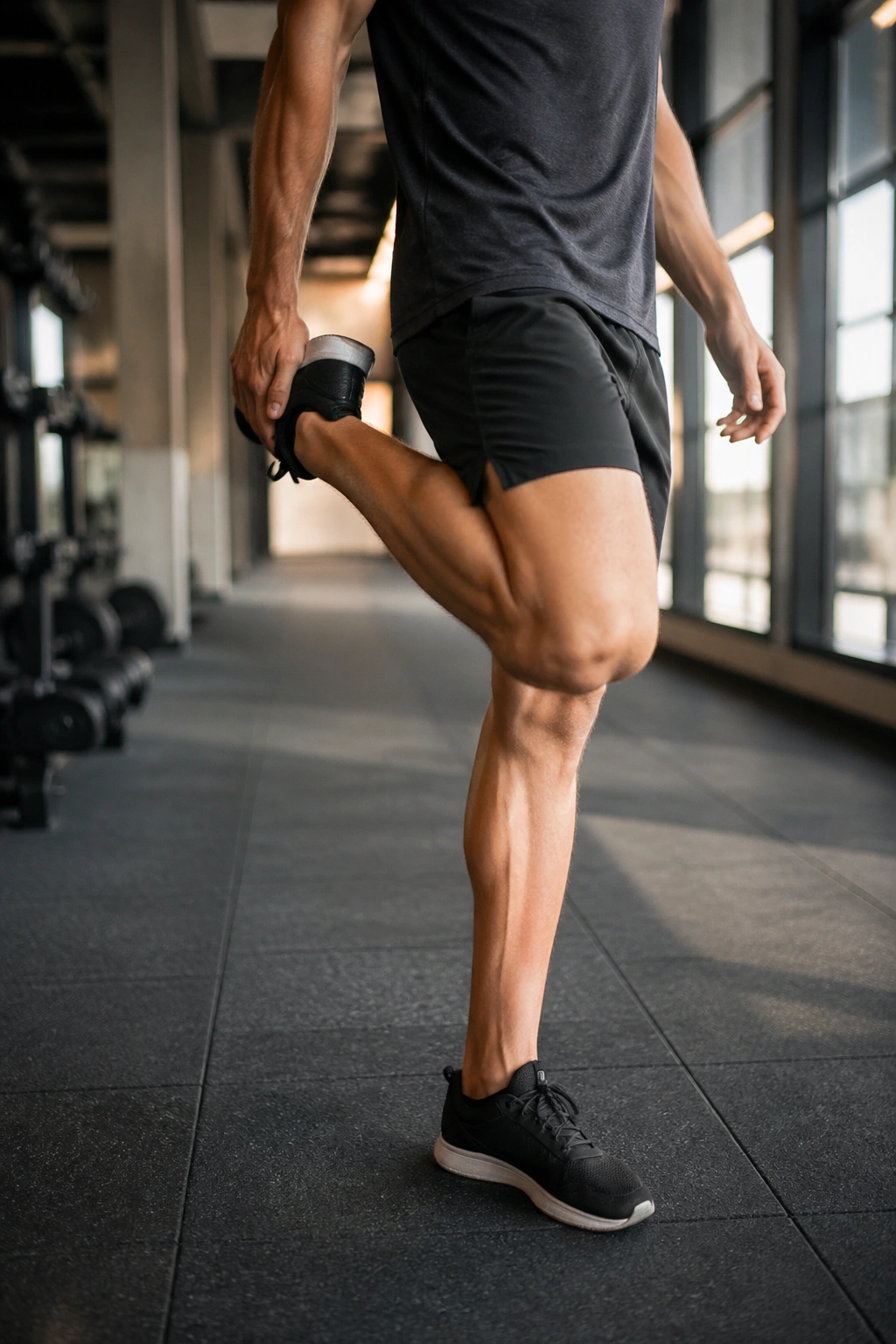
The first time someone does walking quad pulls well, it usually looks almost boring. That is a good sign. The heel comes up, the knee points down, the hips stay tall, and the person keeps moving instead of turning the stretch into a balance stunt.
Here’s what matters most: the standing glute stays engaged, the ribs stay stacked over the hips, and the knee of the lifted leg points near the floor rather than flaring out to the side. That keeps the stretch in the front of the thigh and hip flexor, where you want it, instead of yanking on the low back.
- Grab the ankle lightly, not hard.
- Pull the heel toward the glute only until you feel the quad open.
- Take one small step forward between reps.
- Aim for 6 to 10 reps per side.
If you’re short on room, do them in place. Walking is nice, but not mandatory. I also like them before running because they make the first few strides feel less chopped up.
Do not bounce. One calm pull per step is enough.
4. Walking Hamstring Sweeps
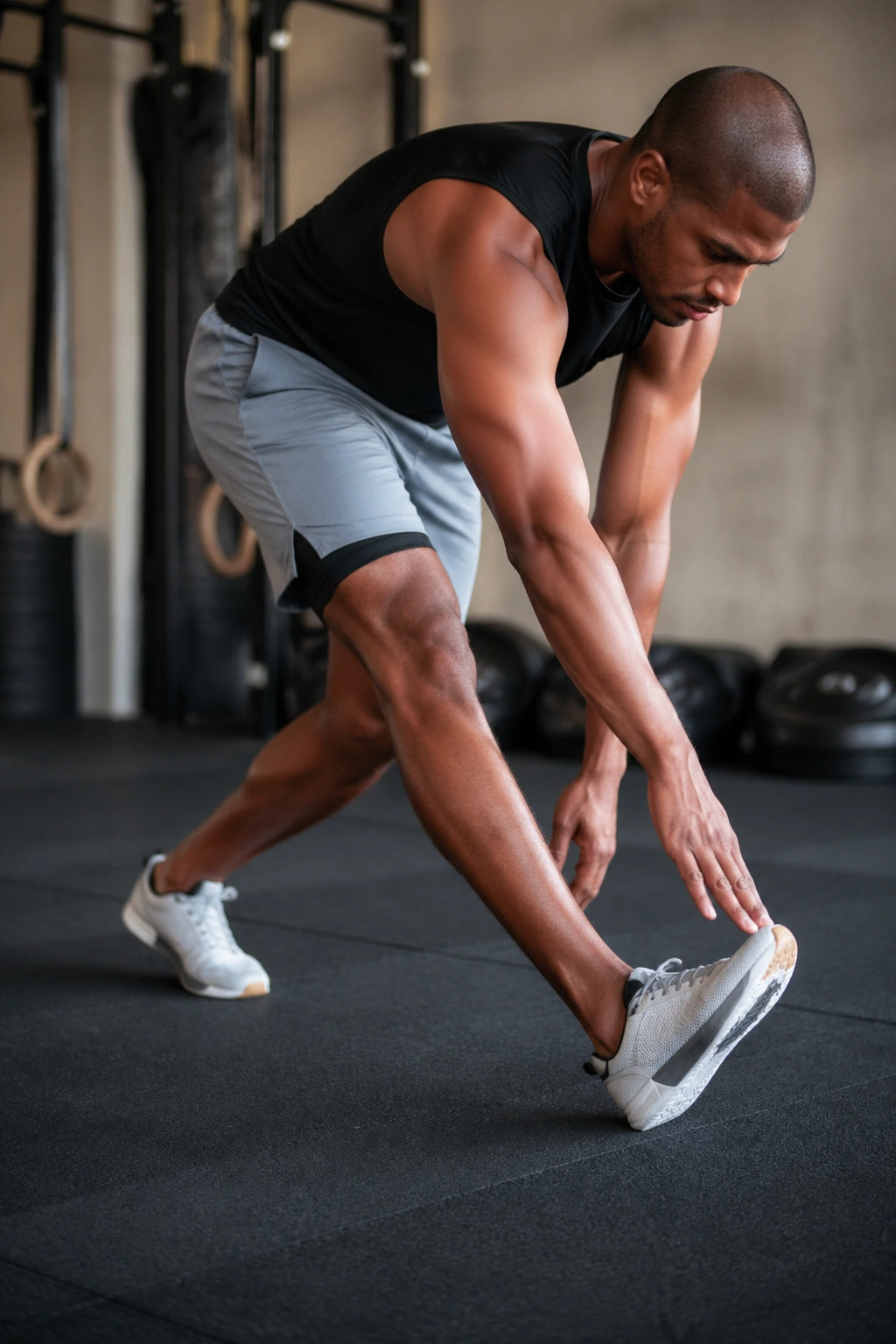
A sweeping hamstring stretch beats a dead-still toe touch before most workouts. The reason is simple: the hamstring likes motion when it’s about to be asked for motion, and a controlled sweep gets you there without turning your warm-up into a nap.
Step forward, hinge at the hip, and send one straight leg out in front with the heel touching lightly or the toes lifted. Reach the opposite hand toward the toes as the chest folds over the front thigh, then come back up and switch sides. Six to eight sweeps per leg is usually enough.
If your hamstrings are cranky, keep a soft knee. Seriously. A tiny bend is not cheating; it’s how you keep the stretch honest and avoid tugging on a nerve-y, over-protected backside.
This one does two jobs at once. It opens the hamstring line, and it teaches the hip to fold without collapsing the spine. That matters before deadlifts, jumps, and even hill sprints.
A smooth sweep should feel like a controlled fold, not a frantic reach.
5. Reverse Lunge with Overhead Reach
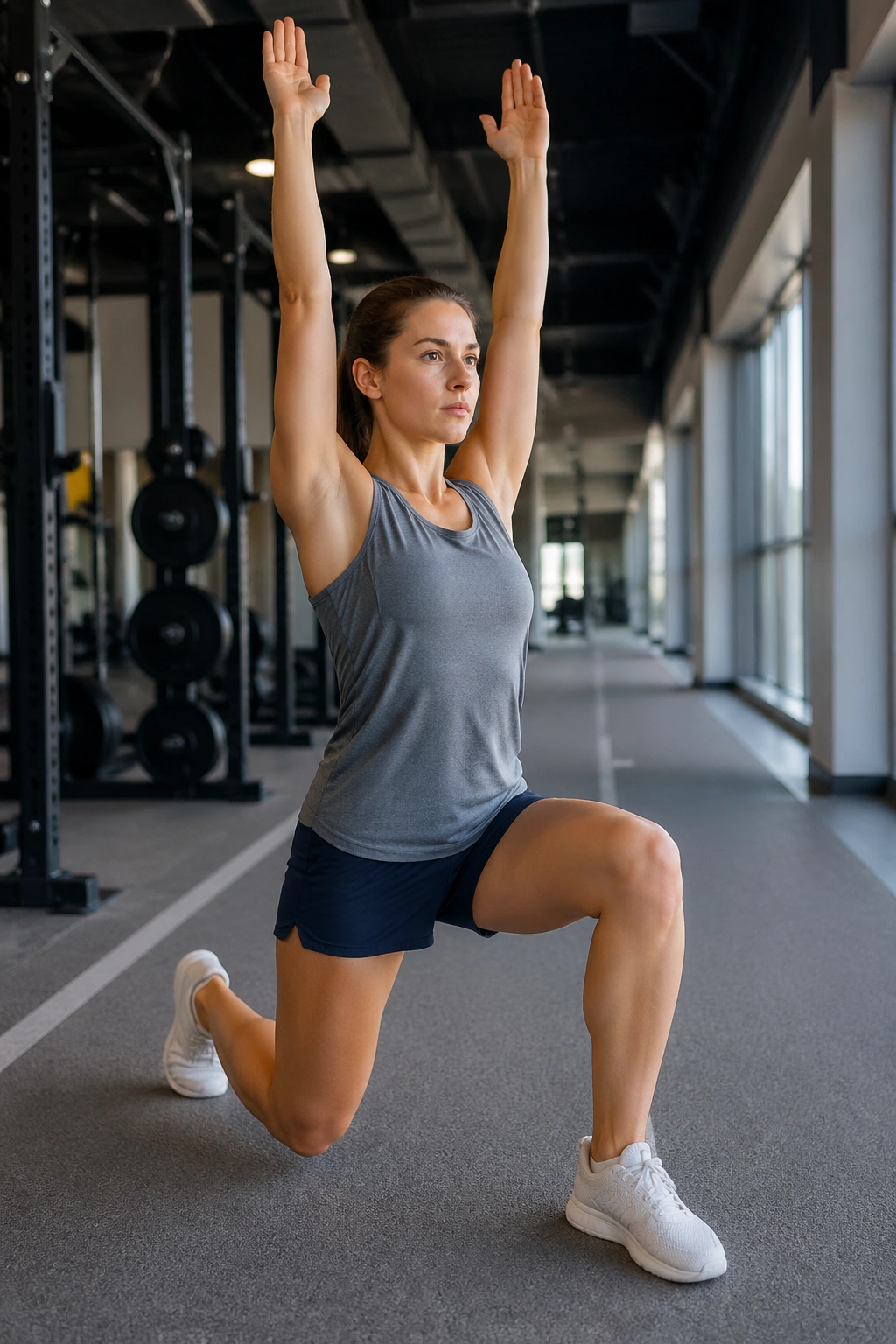
This is one of those drills that looks plain until you do it with care. Then it starts hitting the quads, glutes, hip flexors, calves, and the long line through the torso in one go, which is exactly why I like it before lower-body training.
Step one foot back into a reverse lunge. Keep the front foot flat, drop the back knee toward the floor, and reach both arms overhead as you settle into the bottom position. Stand back up, switch sides, and keep the motion slow enough that each rep feels deliberate. Five to six reps per side is enough for most people.
The overhead reach matters because it stops you from living only in the legs. It asks the ribs to stack, the hips to open, and the front leg to bear load without wobbling around. That is useful preparation, not filler.
Clean and boring beats deep and sloppy. Every time.
If your knee dives inward, shorten the stance. If your low back arches hard on the reach, lower the arms a little and keep the chest quiet.
6. Side Lunge Shifts
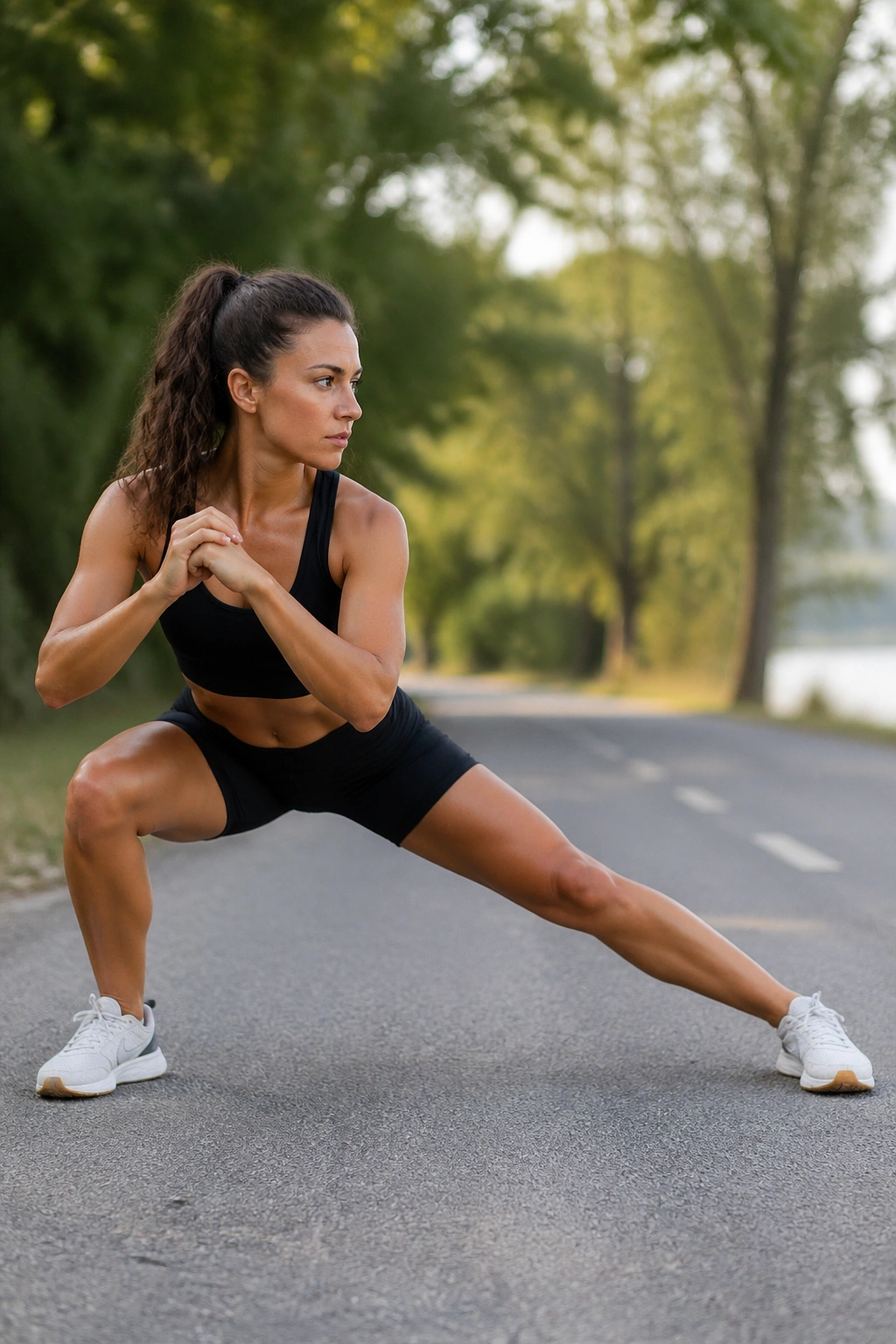
Unlike a narrow toe-touch stretch, a side lunge shift opens the inner thigh in a way that maps better to real movement. You are not just lengthening the adductors; you’re teaching the hips how to accept load on one leg while the other leg stays long and awake.
Step out to one side, bend that knee, and sit the hips back while the other leg stays straighter. Shift your weight from side to side in a smooth rhythm for 6 to 8 reps per side. Keep both feet heavy on the floor if you can, and don’t let the bent knee crash inward.
I like to think of this one as a clean reset for skaters, runners, and lifters who feel glued in the groin. It also gives the ankles a small dose of movement if you keep the heel down and let the knee travel forward a bit.
What to Feel
- A stretch along the inside thigh of the straight leg.
- A grounded foot on the bent side.
- The hips moving back, not just dropping down.
- Control at the bottom, not a bounce.
If you’re stiff, make the stance narrower. If it feels easy, sit a little deeper.
7. World’s Greatest Stretch
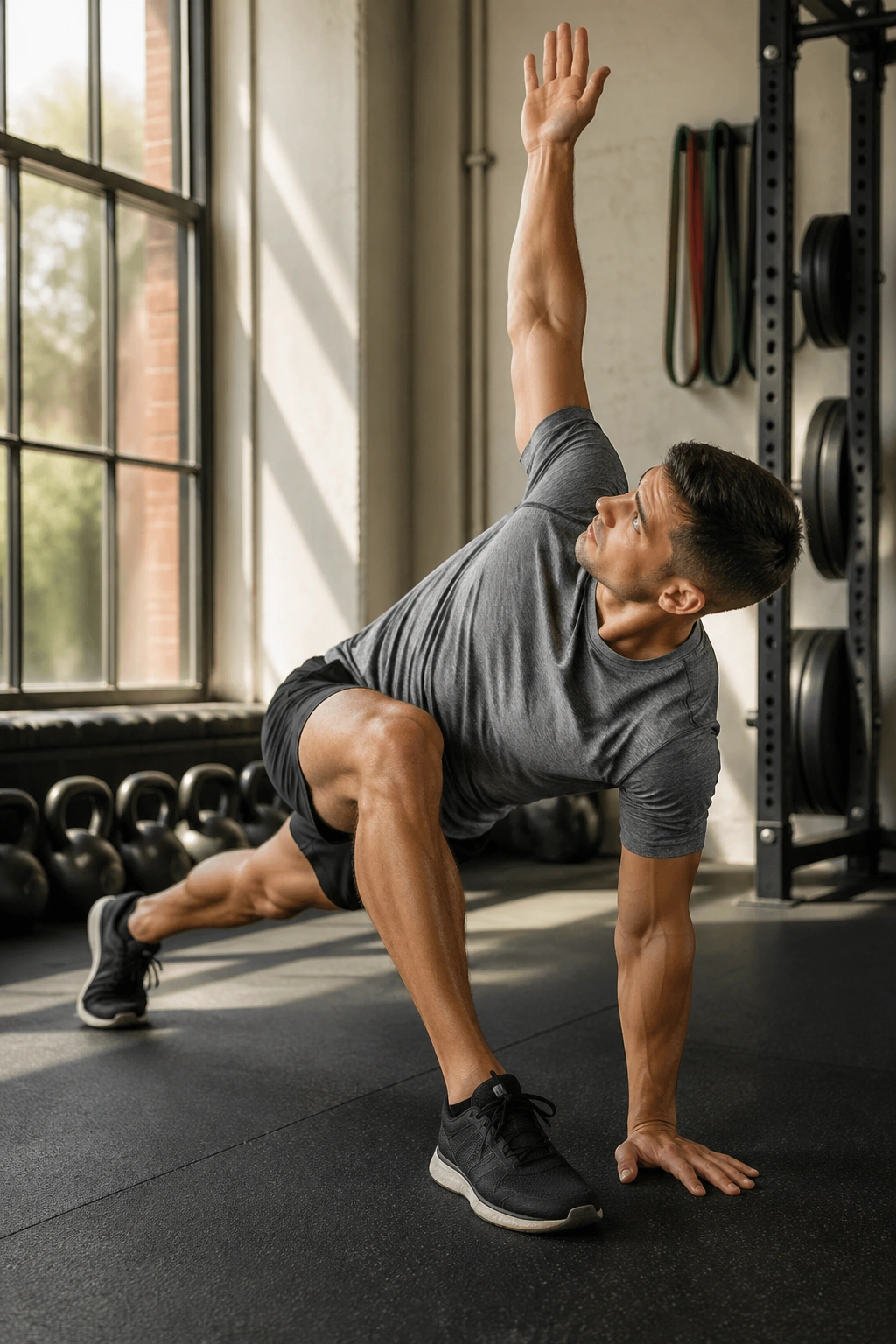
Do you need a fancy routine before training? No. But if I had to keep one mobility drill in my back pocket, this one would be near the top because it opens the hip, hamstring, thoracic spine, and ankle all in one pass.
Start in a high plank or a long lunge, step one foot outside the hand, drop the back knee if needed, and bring the elbow of the same-side arm toward the instep. Then reach that arm up toward the ceiling and rotate through the chest. Three to five reps per side is enough if you move slowly.
Where People Rush It
Most people fly through the bottom position and skip the pause. That misses the point. Take a second in the lunge, let the front heel stay down if it can, and breathe once before the rotation.
The body likes a little patience here. If the back hip feels tight, keep the back knee down. If the ankle feels jammed, shorten the stance until the front foot can stay planted.
This one earns its reputation when it is done with control, not speed.
8. High Knees to Heel Flicks
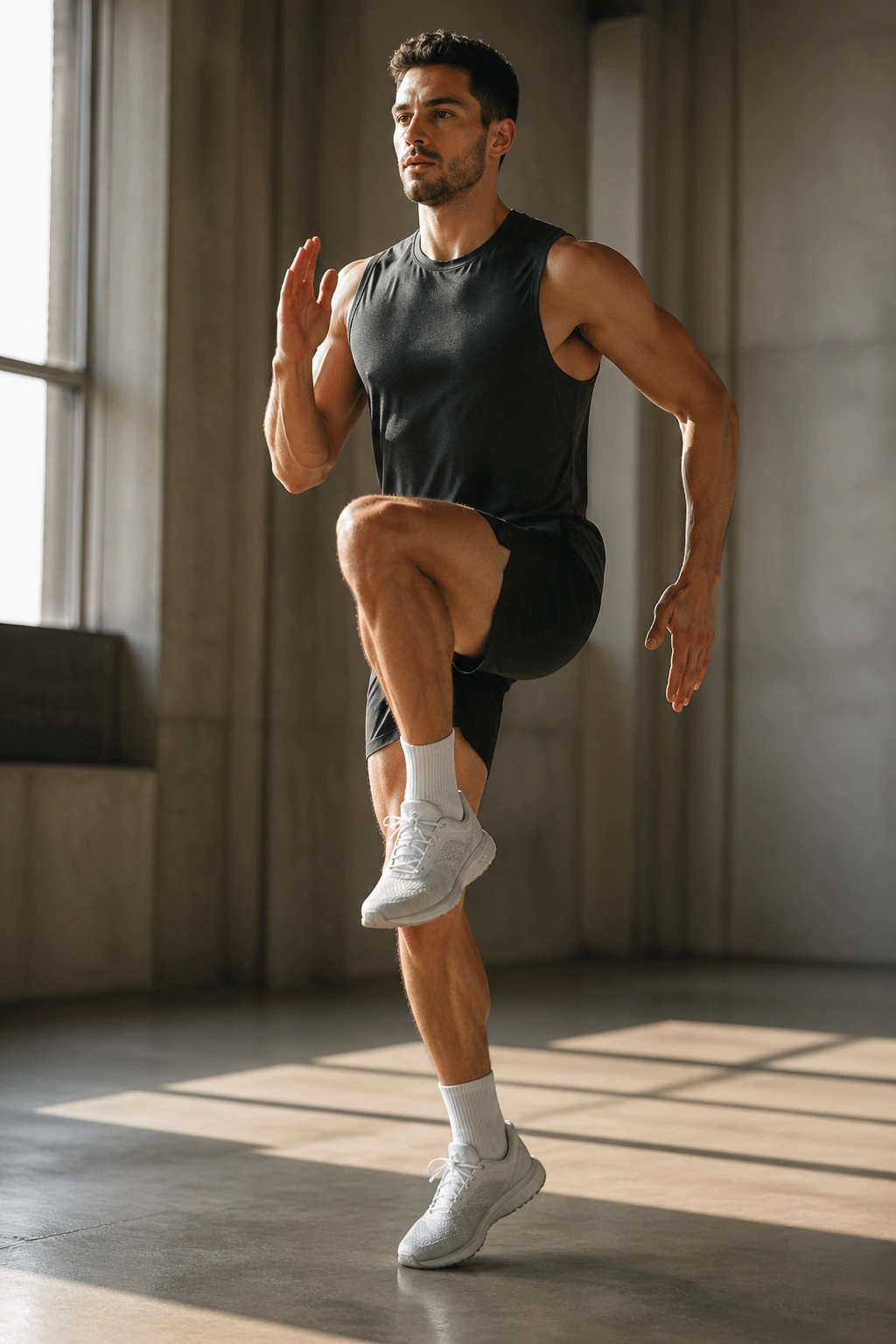
A runner who only stretches in place often misses the warm, bouncy feel that the legs need before faster work. That’s where this combo helps: high knees get the front of the hips moving, and heel flicks bring the quads into the conversation without a hard stop.
Do 10 to 15 meters of high knees, then switch to heel flicks for the same distance. If you’re in a small space, use 20 seconds of each instead. Keep the arms active, the posture tall, and the feet quick. This is less about stretching like a yoga pose and more about reminding the legs how to move.
- Stay tall through the crown of the head.
- Land softly.
- Keep the ankles springy.
- Do not throw the knees up so high that the low back arches.
I like this as a middle step between gentle mobility and actual training intensity. It wakes up the nervous system without turning the warm-up into a second workout.
A little bounce goes a long way here.
9. Ankle Rockers Against the Wall
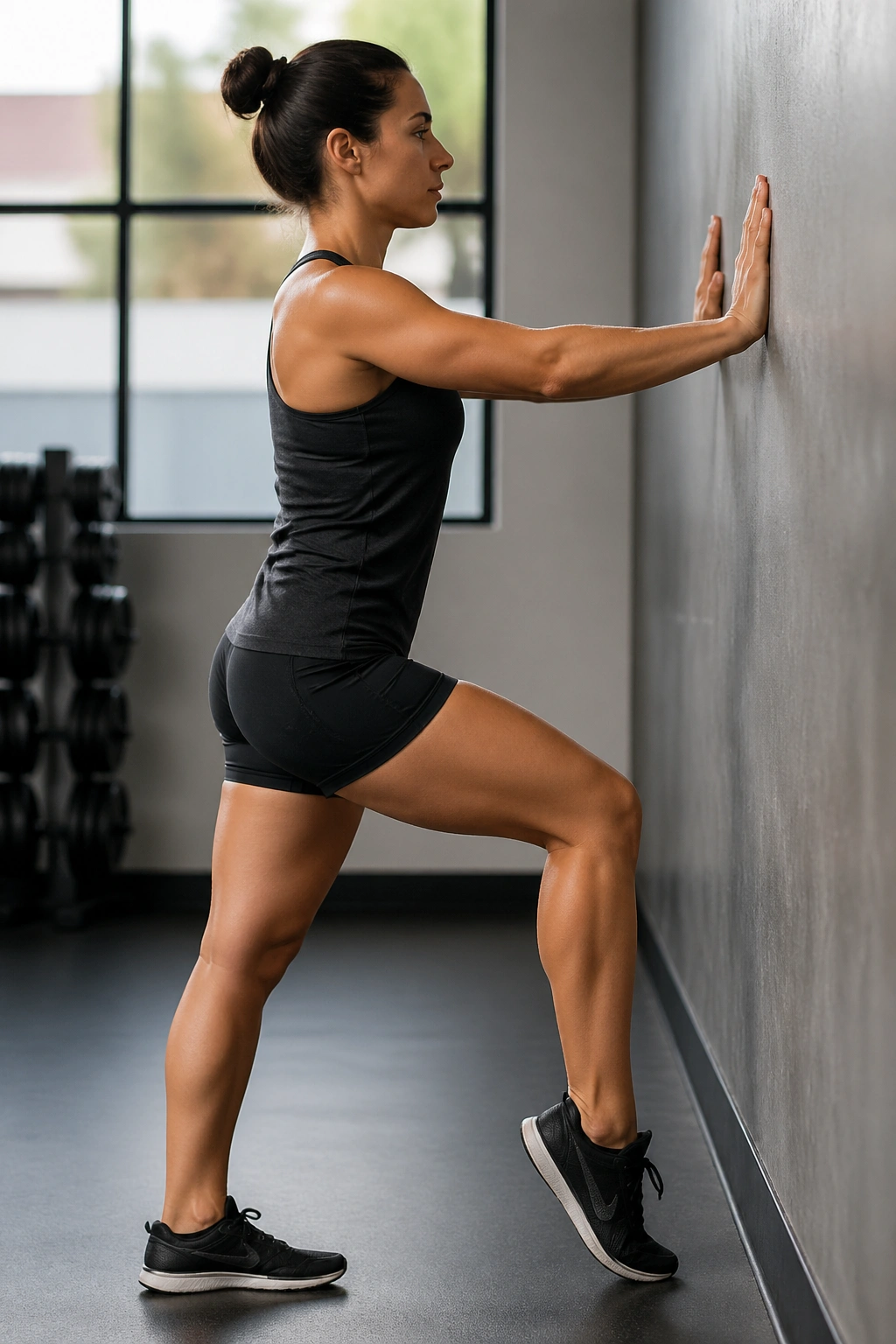
If your ankles don’t move, your knees and hips pay for it. That’s the blunt version, and it’s true more often than people want to admit. A stiff ankle can make squats shallow, lunges awkward, and runs feel like you’re landing on bricks.
Face a wall, place one foot a few inches away, and drive the knee forward over the toes while keeping the heel down. Rock in and out for 10 to 15 reps per side. If the heel pops up immediately, move the foot a little farther from the wall and try again.
This drill is not flashy. It is, however, one of the most useful pre-workout leg stretches you can do because ankle dorsiflexion affects almost everything below the belt line. Better ankle motion often means cleaner squat depth and less compensation higher up.
Keep the foot tripod grounded — big toe, little toe, heel. That stable base helps the knee glide forward in a way that feels controlled rather than wobbly.
Short range is fine. Pain is not.
10. Cossack Squats
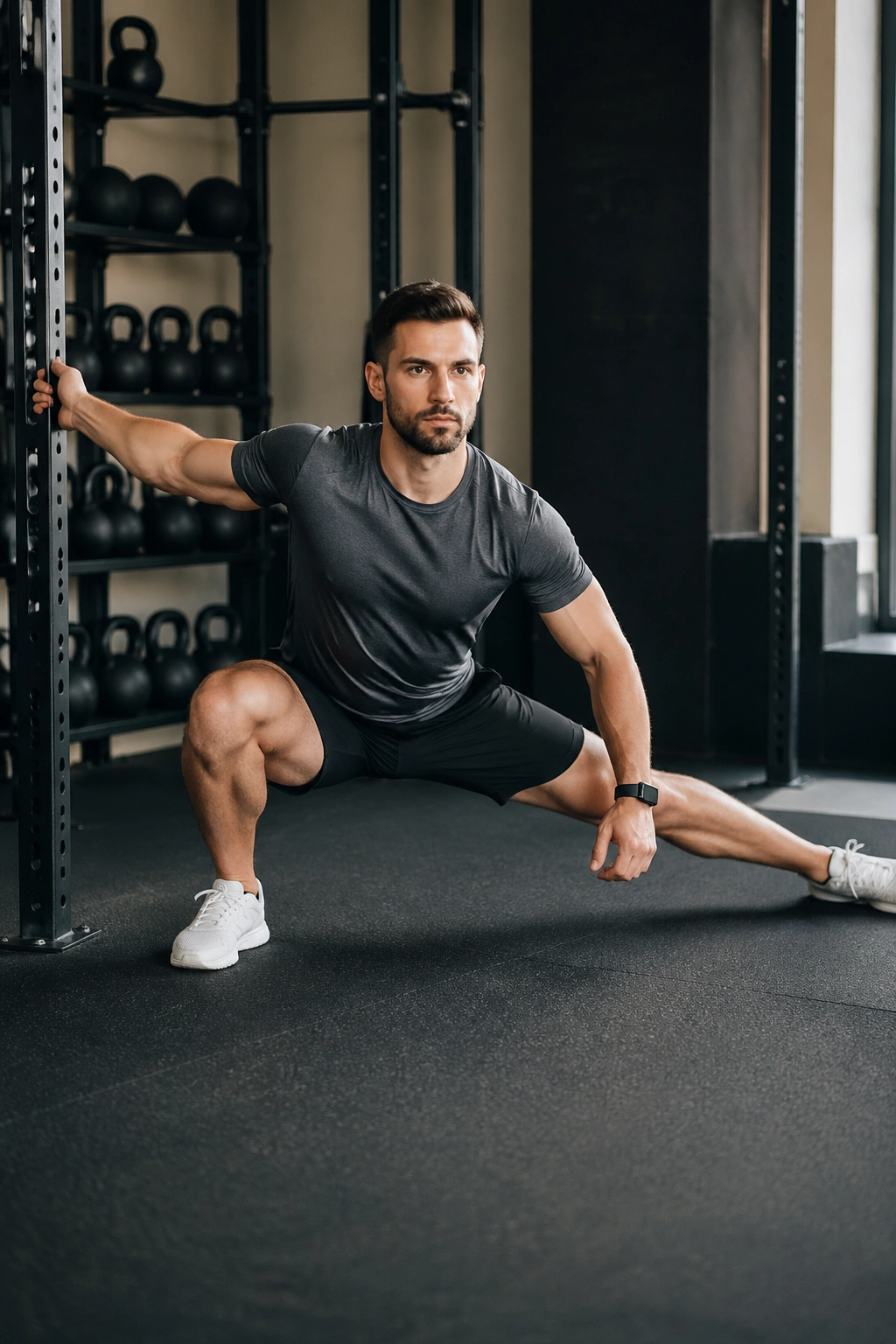
The Cossack squat is what happens when a side lunge and a deep squat have a useful little argument. It goes deeper than a regular side lunge, asks more of the adductors, and gives you a good look at how each hip handles load in a side-to-side pattern.
Shift into one bent leg while the other leg stays long, toes up if mobility allows. Keep the chest lifted and the back flat enough that you are folding at the hips instead of curling into a ball. Four to six reps per side is plenty before a workout.
Unlike a standard side lunge, the Cossack squat demands more control at the bottom. That is why I like it for lifters and athletes who need real lateral strength, not just a casual inner-thigh stretch.
If the full range feels rough, hold onto a rack with one hand and cut the depth by half. That does not make it less useful. It makes it usable.
The exercise should open the groin, not light up the knees.
11. Kneeling Hip Flexor Rocks
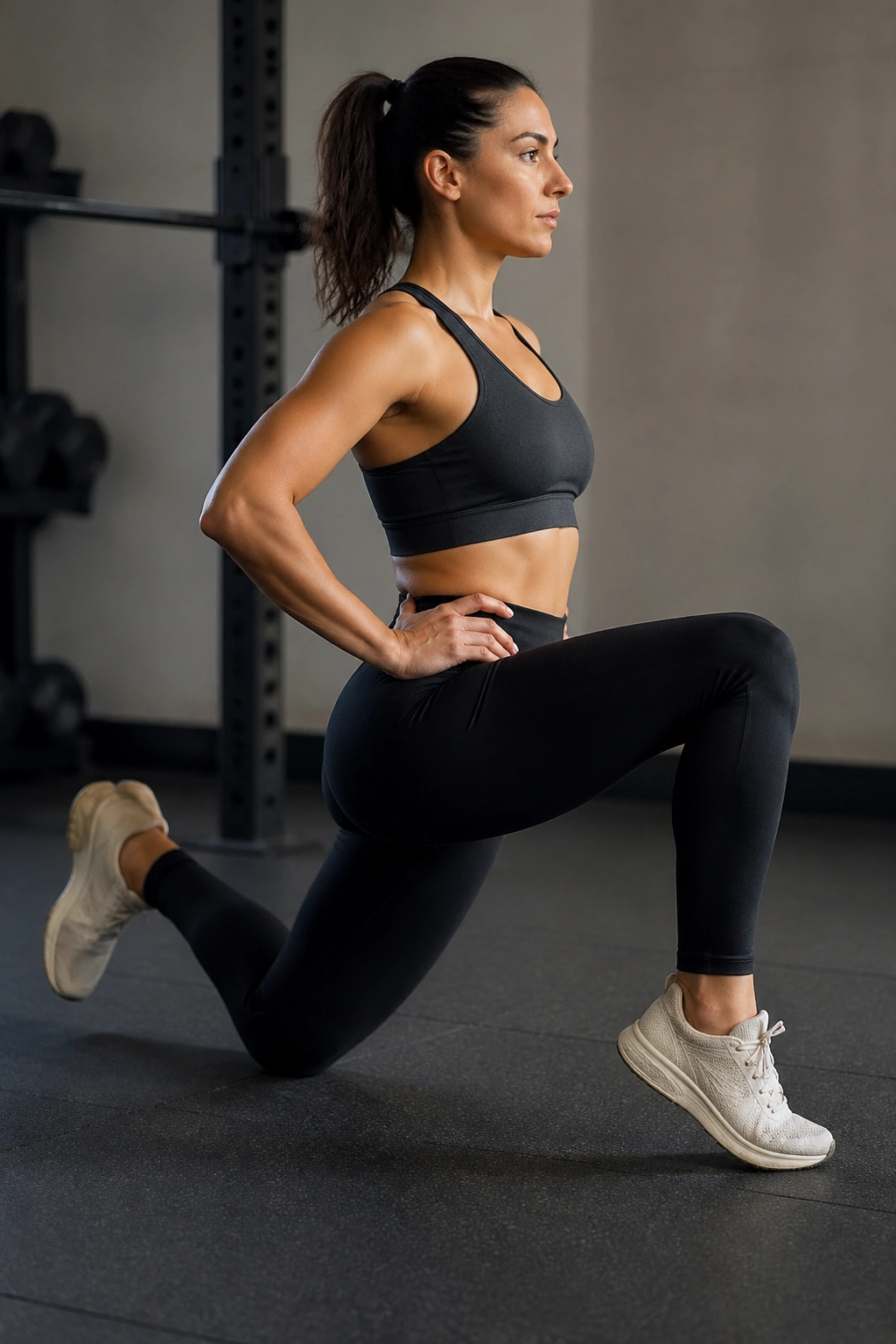
A tight hip flexor is sneaky. It can make the front of the hip feel pinched, pull the pelvis forward, and turn a simple lunge into a back-arching mess. This kneeling rock fixes a lot of that by putting the stretch where it belongs: across the front of the hip, with the glute doing a little work.
Drop into a half-kneeling position, tuck the pelvis slightly, and squeeze the glute of the back leg. Then rock the hips forward an inch or two and back again for 8 to 10 controlled reps. You should feel the stretch climb into the front of the hip and upper thigh, not dump into the low back.
What Makes It Work
- The pelvis stays tucked just enough to stop the back from arching.
- The front foot stays flat and stable.
- The move stays small.
- The glute squeeze stays on.
I’m picky about this one because people cheat it constantly. They shove the hips forward, flare the ribs, and call it a stretch. That is not the same thing.
If you feel pinching at the front of the hip socket, shorten the range and stay lighter. Small rocks beat big ugly ones.
12. Standing Figure-Four Pulls
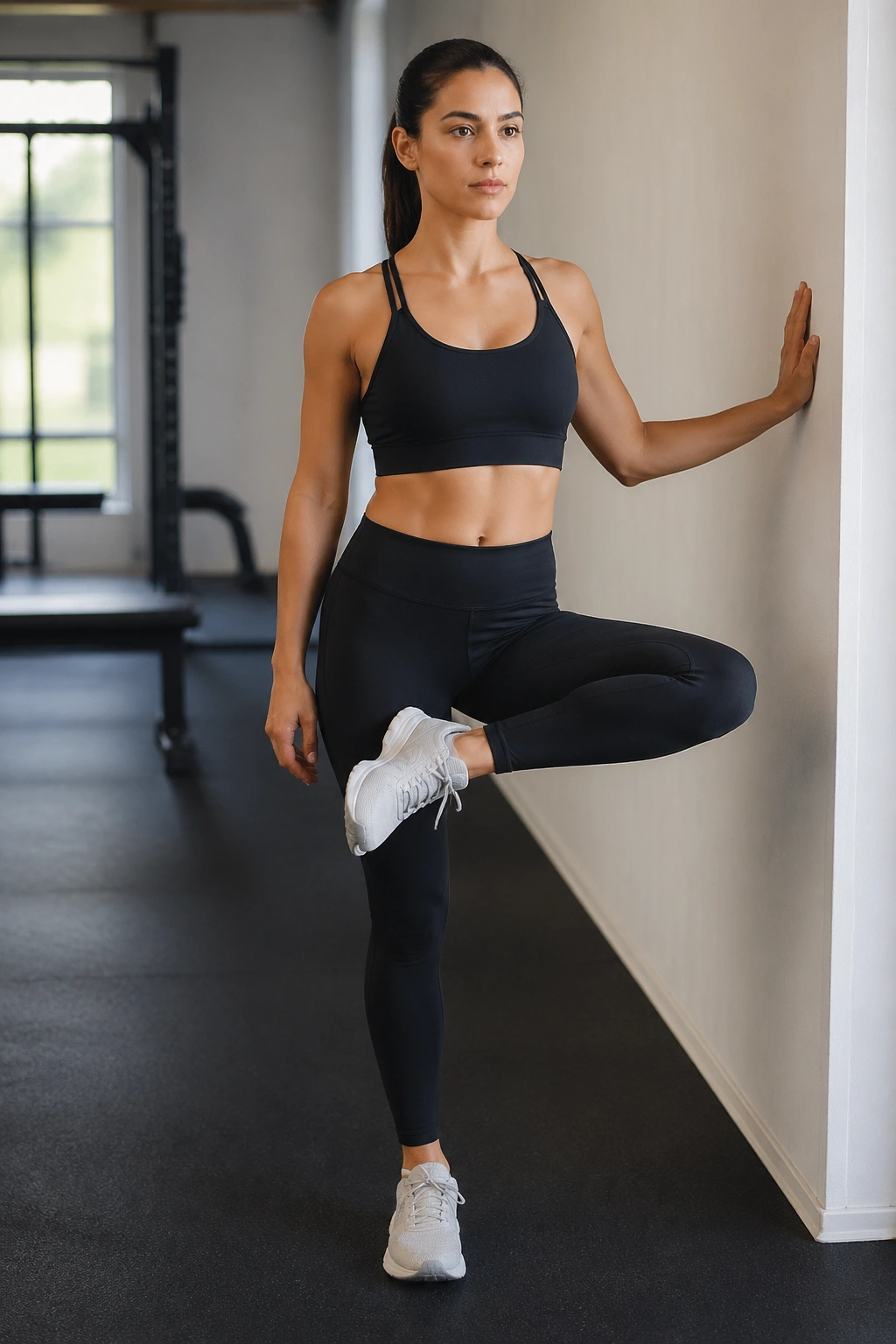
Why use a standing figure-four before training? Because the glutes and outside hip often need a gentle nudge, especially after long sitting or after a heavy lower-body day that left everything a little sticky. The standing version keeps you upright and ready to move, which is what you want before a workout.
Cross one ankle over the opposite thigh, sit the hips back a little, and hold onto a wall or rack for balance. You should feel the outer hip and glute of the crossed leg. Spend about 20 to 30 seconds per side if you like a brief hold, or pulse gently in and out of the position for 5 to 6 slow reps.
When to Skip It
If the knee on the crossed leg feels cranky, back off or switch to a seated version. The stretch should hit the hip, not torque the knee.
This one is good for people who feel packed up in the glutes before squats, split squats, or runs. It is not a hero move. It is a quiet, useful one.
Hold the breath steady. If you’re clenching your jaw, you’re probably forcing it too hard.
13. Toe Walks and Heel Walks
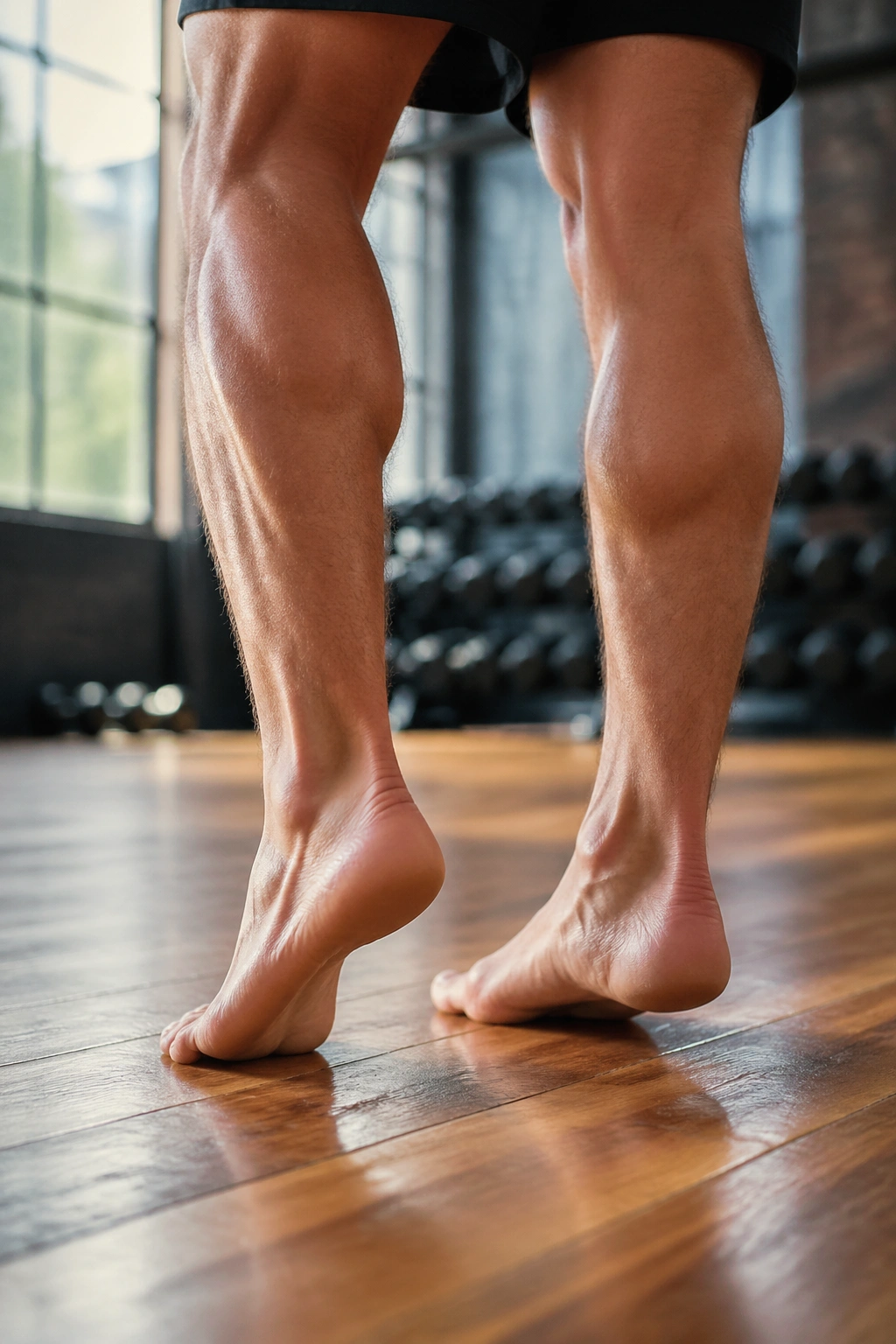
This combo looks almost too simple to matter. Then you do it for 20 steps on the toes and 20 steps on the heels, and the lower legs remind you they were part of the plan all along.
Toe walks wake up the calves and foot muscles. Heel walks light up the shins and force the ankle to work in a different way. Together, they prep the lower leg for running, jumping, squatting, and any workout where the ankles have to hold up their end of the bargain.
- Walk on the balls of the feet with the heels high.
- Keep the ribs stacked and the steps short.
- Switch to heel walks with the toes lifted.
- Stay tall; don’t lean back.
I like these before plyometrics and runs because they make the lower leg feel more awake without much fatigue. They also help people who always skip the feet and wonder why their calves feel clunky by the third set.
No drama. Just useful work.
14. Inchworms to Down Dog Pedals
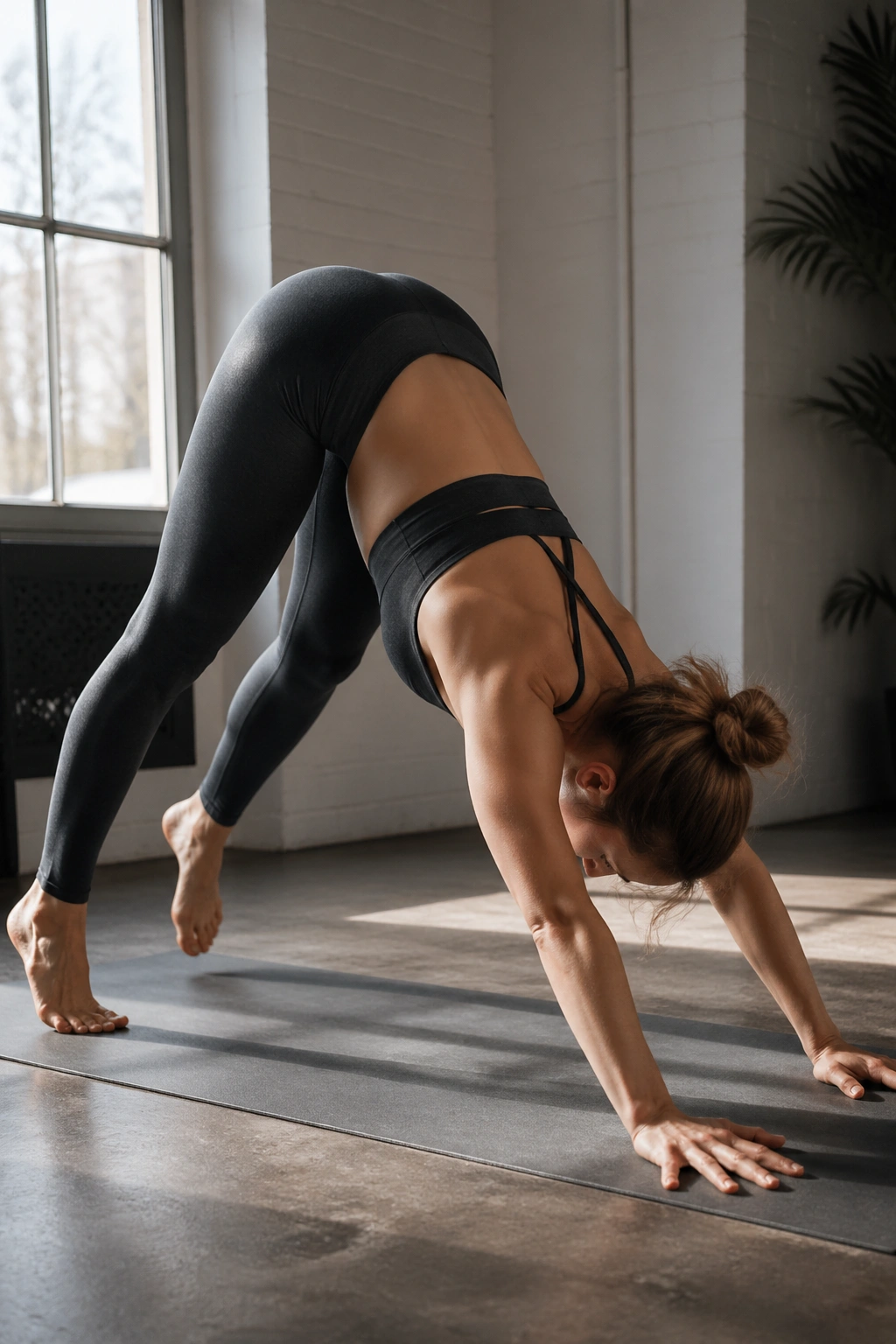
This one stretches a little of everything, and that’s part of its charm. You walk your hands out, fold into a plank, then drift into downward dog where the hamstrings, calves, and shoulders all get a say.
Start standing, hinge forward, place the hands on the floor, and walk them out until you reach a strong plank. From there, push the hips back and up into downward dog. Pedal the heels for 4 to 6 slow reps, then walk the hands back in and stand tall. Three to five rounds is plenty for most pre-workout warm-ups.
The nice part is the transition. You move from a loaded core position into a longer back-of-body stretch without ever getting sloppy. If the hamstrings are tight, bend the knees. If the calves are glued down, pedal one heel at a time and keep breathing.
I think this drill earns its place because it feels like a bridge, not a trick. You start grounded, go long, then come back ready to move again.
That’s a better warm-up than trying to force flexibility with a grim face.
15. Kickstand Hamstring Hinge
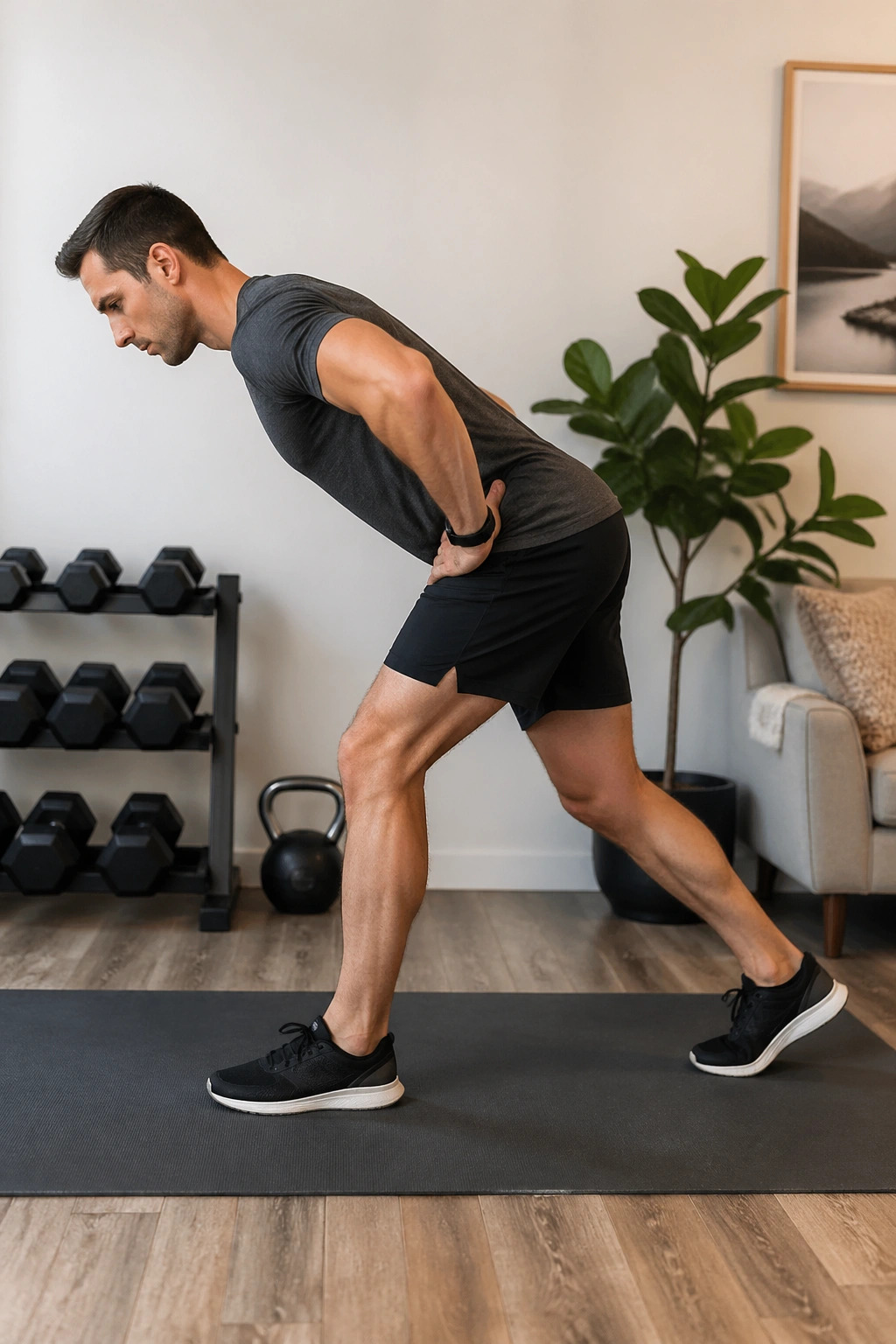
A kickstand hamstring hinge is the quiet cousin of the standing toe touch, and I prefer it before workouts because it keeps the hamstring stretch under control while still teaching the hip how to fold. One leg stays mostly loaded, the back foot rests lightly behind you, and the hips shift back like you’re closing a car door with your glutes.
Keep the front knee soft, hinge until you feel the stretch in the hamstring, then come back up. Six to eight reps per side is enough. If your back rounds hard, you’ve gone too far. If you feel the pull mostly behind the knee, ease off and shorten the hinge.
Unlike a static hold, this version lets you groove the pattern you’ll actually use in deadlifts, sprints, and hinging work. That matters. A lot.
What to Watch For
- The spine stays long.
- The weight sits in the front heel and midfoot.
- The back leg only helps with balance.
- The movement comes from the hips, not the lower back.
If your workout leans heavy on hinging, this is a smart last stop before the first working set.
The best pre-workout leg stretches do one thing well: they make movement feel less like a fight and more like a plan. Keep the warm-up short, keep the reps clean, and save the long, sleepy holds for later.
