



Waking up with muscles that feel like rusted iron hinges is a universal experience. You reach for the bedside table, and your lower back gives a sharp reminder of the chair you sat in for eight hours yesterday. We often think that “getting fit” means jumping straight into high-intensity cardio or heavy lifting, but the real secret to long-term mobility is much quieter. It is about reclaiming your range of motion, one slow breath at a time.
Yoga and intentional stretching aren’t reserved for people who can already touch their toes or fold themselves into complex shapes. They are tools for the rest of us—the office workers, the commuters, the parents, and anyone else who feels their body tightening up as the days blur together. You do not need expensive gear, a studio membership, or even much floor space to begin. You just need a willingness to stop, pay attention to where you are holding tension, and let it go.
The routines below are designed to be accessible. Some take five minutes, others a bit longer, but they all share a common goal: helping your body feel a little more like a home and a little less like a prison. We are focusing on consistency over intensity here.
1. Morning Wake-Up Flow
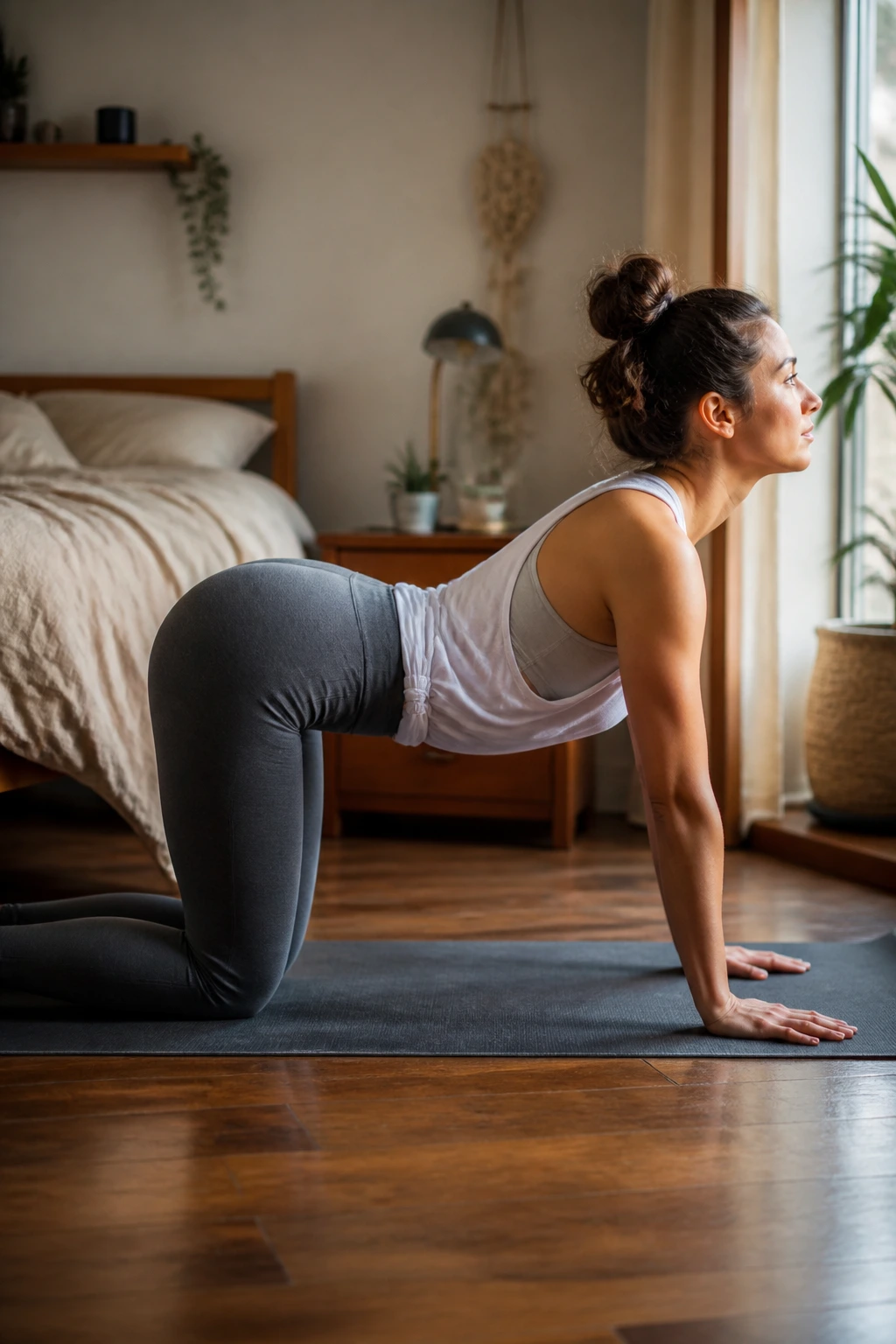
Waking up is often the hardest part of the physical day. Your joints have been static for hours, and your blood flow is at a baseline. This routine focuses on gentle spinal articulation to signal to your nervous system that it is time to move.
The Focus: Spinal Mobility
Start on your hands and knees in a tabletop position. Move through Cat-Cow poses, arching your spine toward the ceiling on an exhale, then dropping your belly toward the floor on an inhale. Focus on the sensation of every single vertebra moving.
Key Movements
- Cat-Cow (10 rounds): Do not rush. Match the movement to your breath.
- Child’s Pose (hold for 1 minute): Walk your hands forward and let your forehead rest on the mat.
- Downward Dog (walk it out): Pedal your feet slowly, one heel toward the mat, then the other.
Pro tip: Keep your knees bent in Downward Dog if your hamstrings are tight. You do not need straight legs to get the benefits of the stretch.
2. Post-Office Neck and Shoulder Release
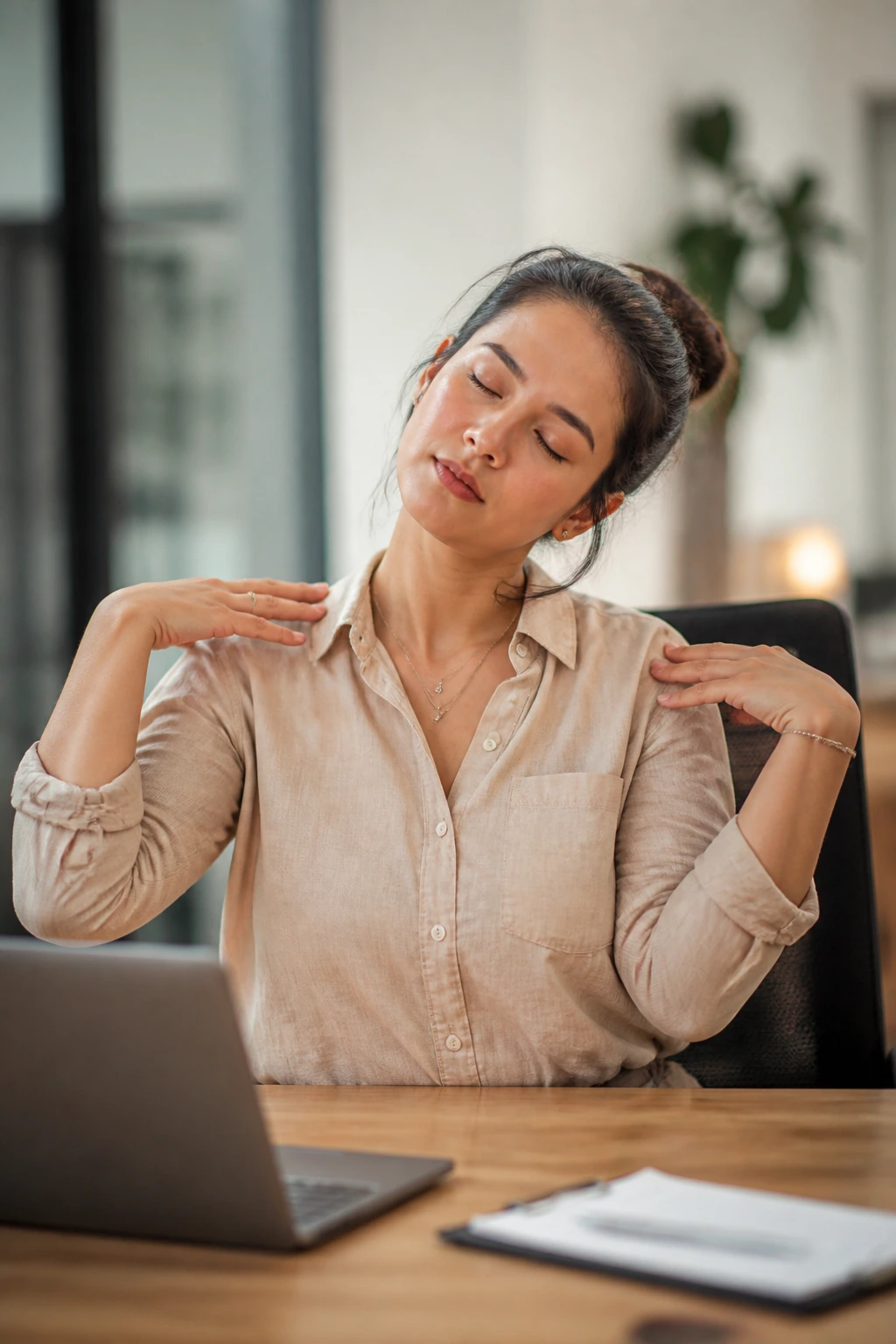
Slumping over a keyboard creates a specific kind of tension that settles right between the shoulder blades and at the base of the skull. This routine takes less than five minutes and can be done right next to your desk.
Why This Works
You are counteracting the “forward-head” posture that comes from screen time. By opening the chest and dropping the shoulders, you reset your resting position.
The Sequence
- Neck Rolls: Slowly tilt your head to the right, then roll it forward and to the left. Avoid rolling it all the way back, as that can compress the cervical spine.
- Shoulder Shrugs: Inhale as you pull your shoulders up to your ears; exhale forcefully as you drop them down. Repeat five times.
- Chest Opener: Interlace your fingers behind your back and gently pull your knuckles down toward the floor, lifting your chest to the ceiling.
3. Pre-Run Leg Priming
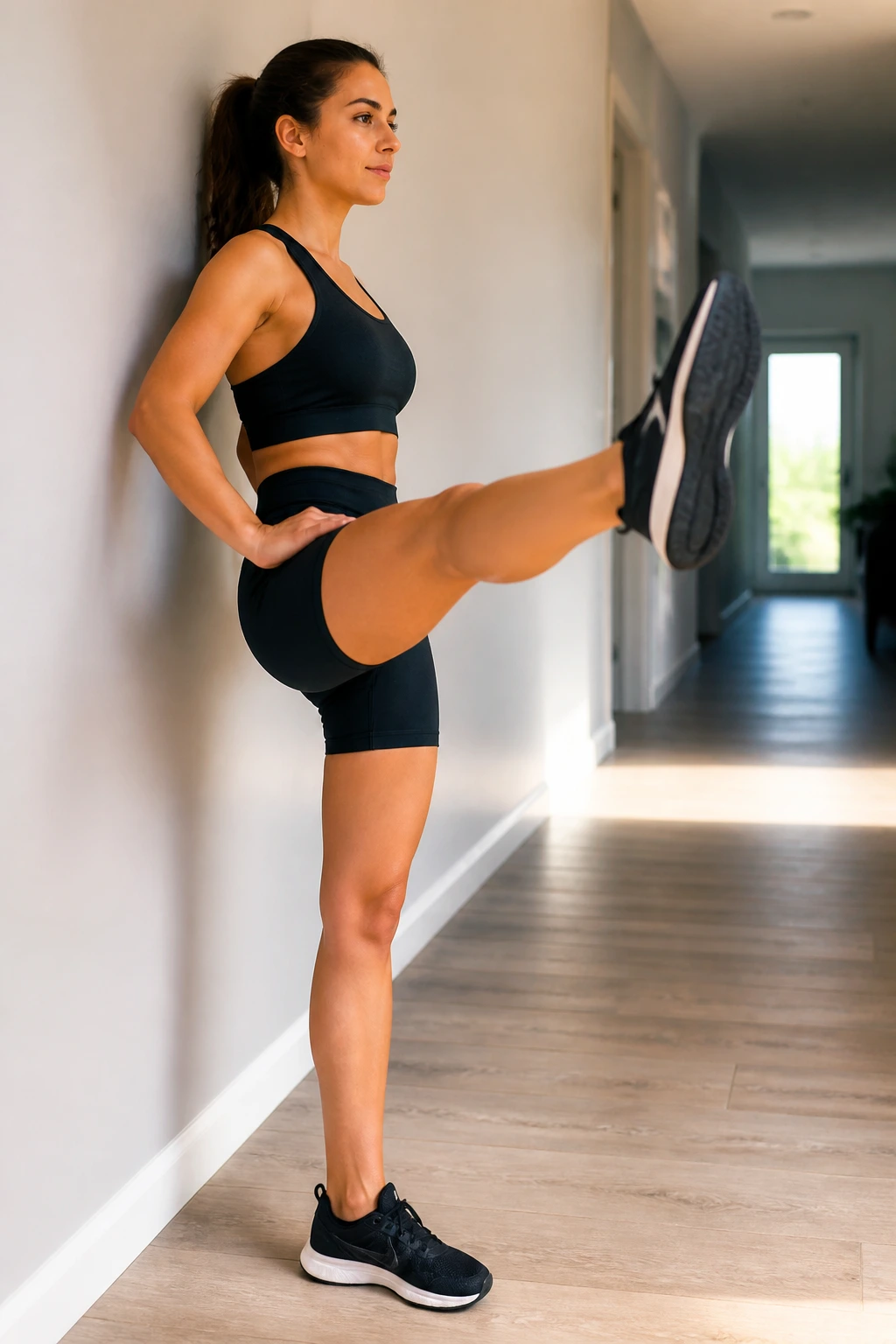
Heading out for a run with cold, tight legs is a recipe for shin splints and calf strains. This routine primes the muscles by moving them through a dynamic range of motion rather than static holding.
Dynamic Movements for Warm-Ups
- Leg Swings: Find a wall for balance. Swing one leg forward and backward, gradually increasing the height.
- Walking Lunges: Keep your torso upright and focus on engaging your glutes.
- Calf Raises: Rise onto your toes slowly, then lower your heels below the level of the step or floor.
Warning: Do not bounce. Use controlled, fluid movements to signal your muscles that they need to wake up, not snap into gear.
4. Post-Workout Deep Glute Stretch
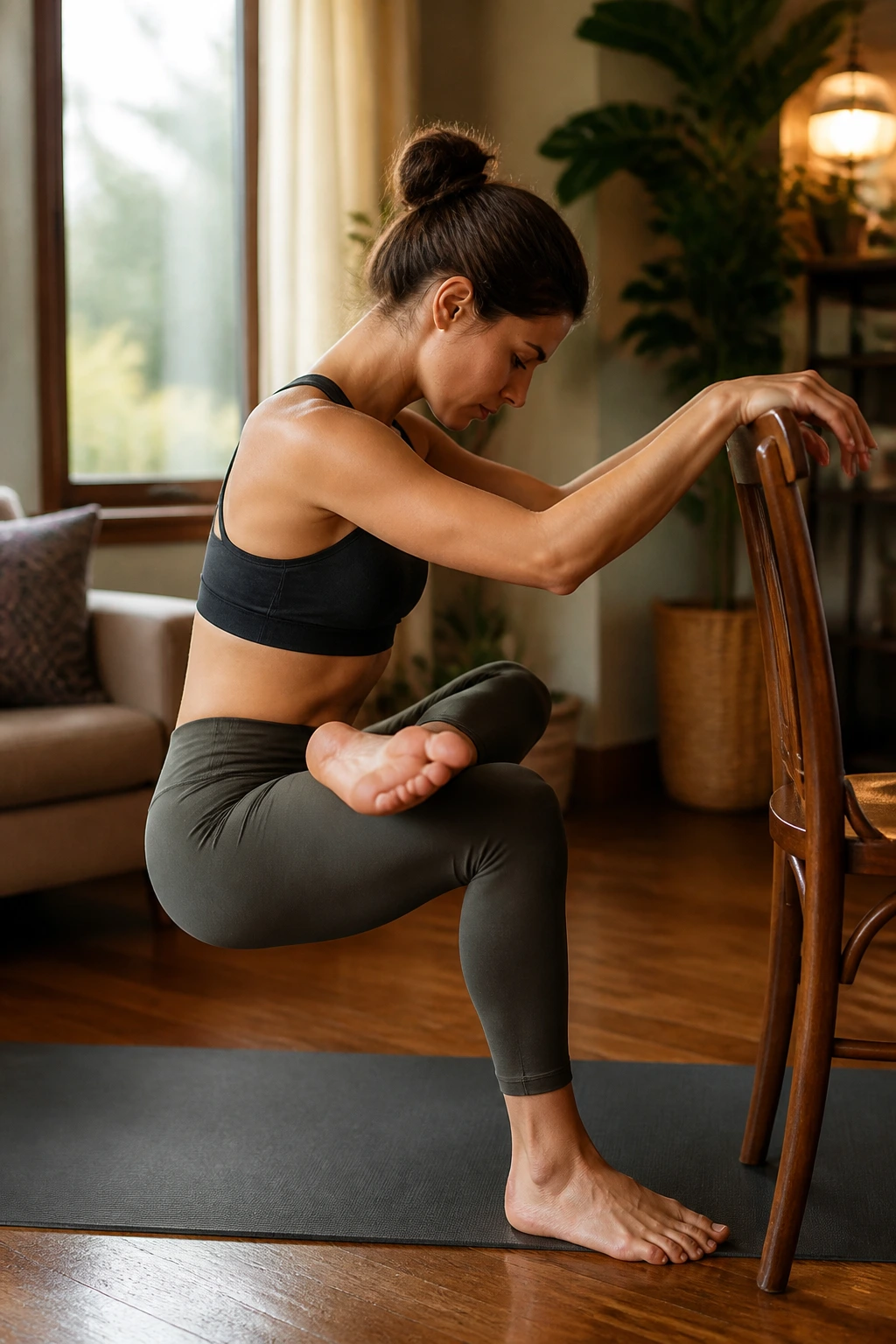
After a workout, especially one involving squats or running, your glutes are often tight and overworked. This routine helps prevent that “soreness set-in” feeling the next morning.
The Pigeon Pose Variant
If full Pigeon Pose is too intense, use a chair or a bench. Place your right ankle on your left knee while seated, then gently lean your chest forward. You will feel an immediate release in the outer hip and glute area.
Supporting Stretches
- Seated Forward Fold: Extend your legs and reach for your shins.
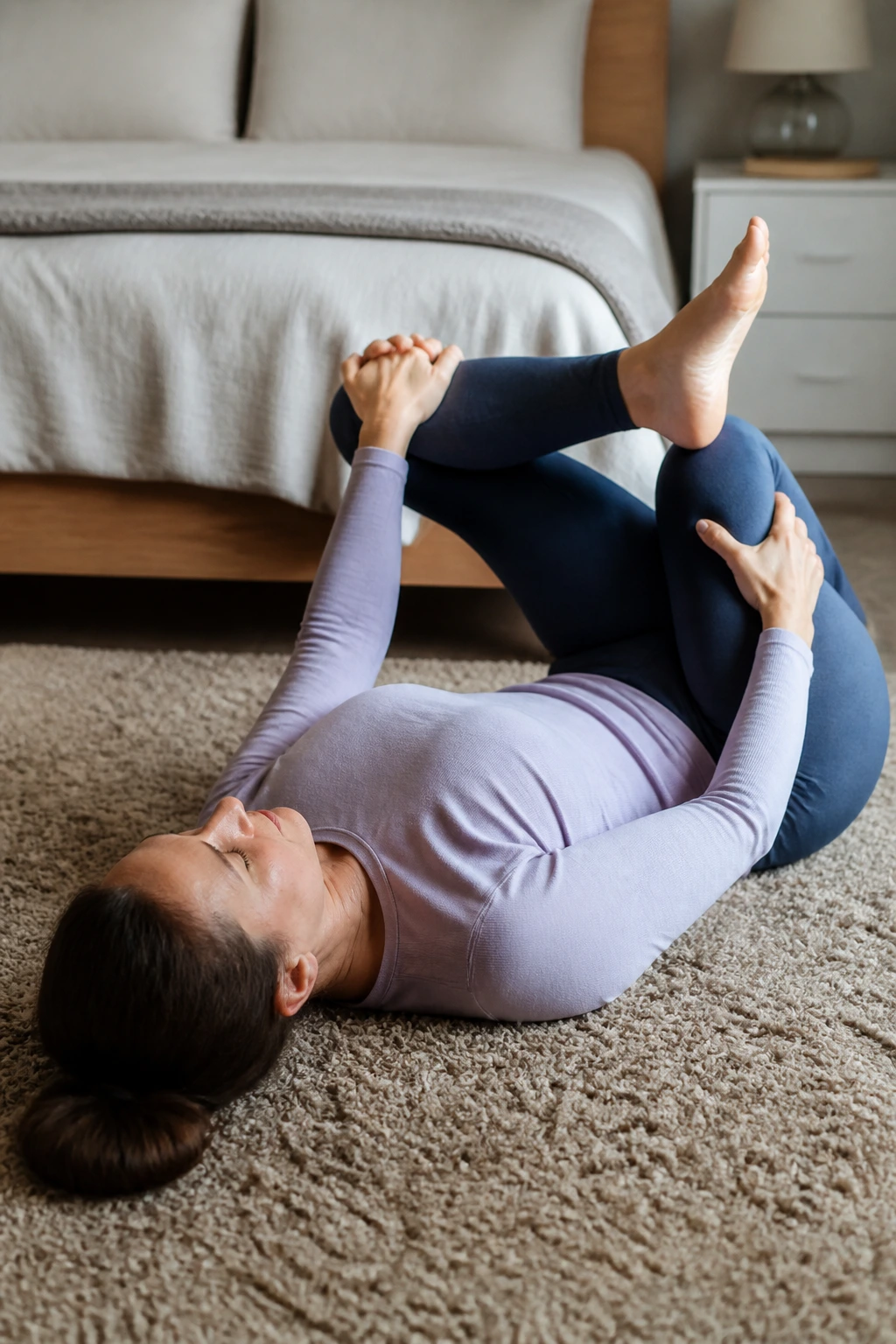
- Figure-Four Stretch: Lie on your back, cross one ankle over the opposite knee, and pull your legs toward your chest.
5. Bedtime Wind-Down for Deeper Sleep
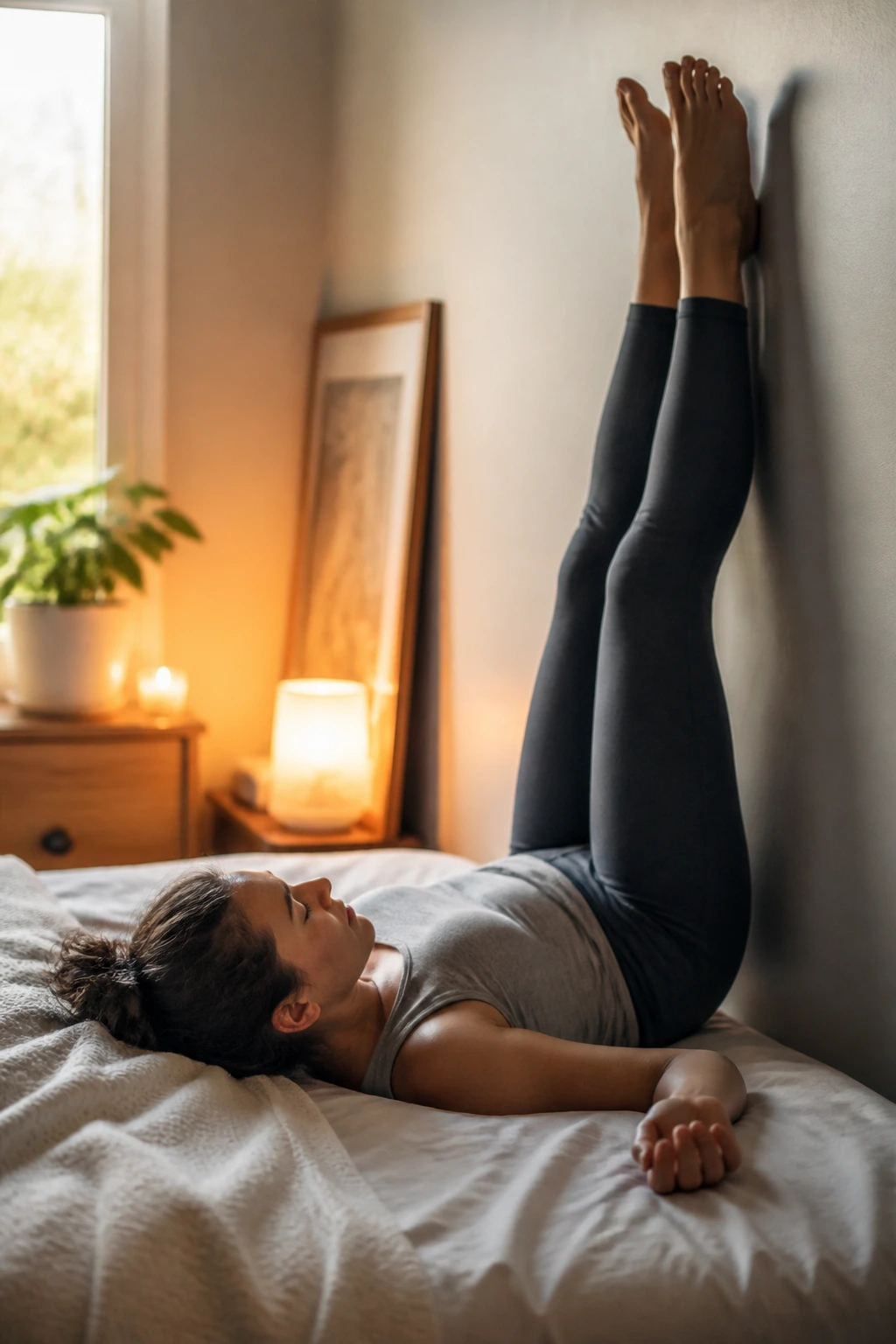
Your parasympathetic nervous system—the “rest and digest” side—needs to be activated before you can get high-quality sleep. This routine uses static holds and deep breathing to bring your heart rate down.
The Sequence
- Legs-Up-The-Wall: Lie on the floor and swing your legs up against a wall. Hold for three to five minutes. This helps with circulation and calms the mind.
- Butterfly Pose: Sit with the soles of your feet together, knees dropping outward. Use pillows under your knees if the stretch is too strong.
- Supine Twist: Lie on your back, draw your knees into your chest, and let them fall to the right while you look left. Repeat on both sides.
6. Desk-Bound Back Relief

If you work in an office, your lower back is likely taking the brunt of your daily routine. This short routine targets the lumbar region to combat the crushing weight of gravity you experience while sitting.
The Gentle Twist
While seated, place your right hand on the outside of your left knee and your left hand on the back of your chair. Gently rotate your torso to look over your left shoulder. Breathe into your ribs, not just your chest.
Additional Moves
- Seated Cat-Cow: Keep your feet planted and arch/round your spine while sitting.
- Side Stretch: Reach one arm over your head, leaning your body to the side to open up the intercostal muscles between your ribs.
7. Hip-Opening Sequence for Flexibility
Hips are where we hold much of our stress and physical rigidity. This routine is excellent for people who feel “stuck” when they try to sit cross-legged or move laterally.
The Lizard Pose
Step your right foot forward between your hands and drop your left knee to the ground. Walk your right foot to the outer edge of your mat. You can stay on your hands or lower down to your forearms.
Why This Sequence Matters
The hips are a complex joint. By spending time in these deep, uncomfortable-feeling poses, you allow the connective tissue to slowly release. Do not fight the sensation; focus on exhaling into it.
8. Wrist and Forearm Relief for Typists
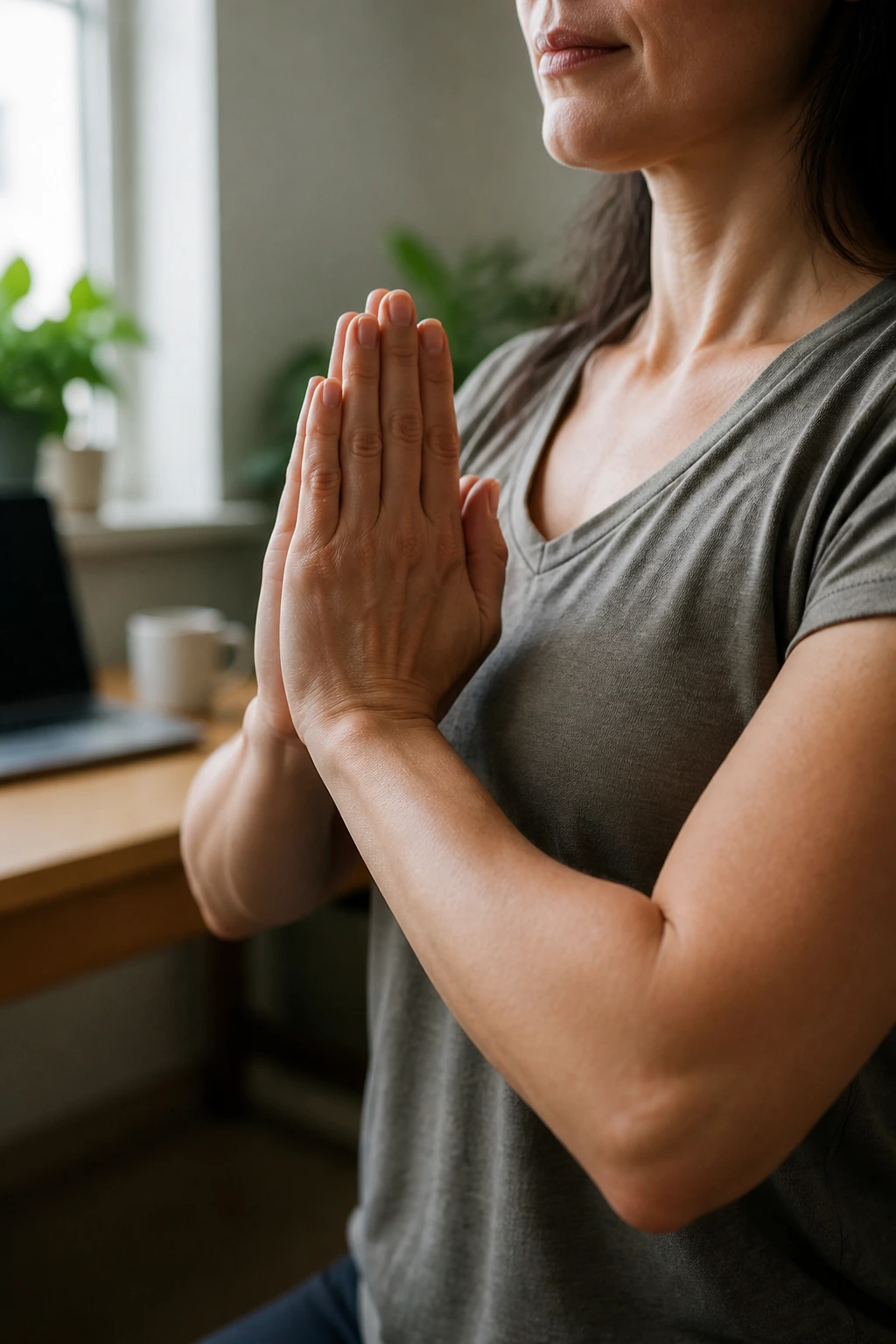
We spend hours gripping phones and mice, yet we rarely stretch the very muscles that operate our fingers. This is a crucial routine if you deal with forearm tightness.
Simple Wrist Drills
- Prayer Hands: Place your palms together in front of your chest and slowly lower them toward your waist until you feel a stretch in your forearms.
- Wrist Extension: Extend your right arm forward, palm facing up. Use your left hand to gently pull your fingers back toward your body.
- Wrist Circles: Roll your wrists in both directions to loosen the joint.
9. Full-Body Decompression Flow
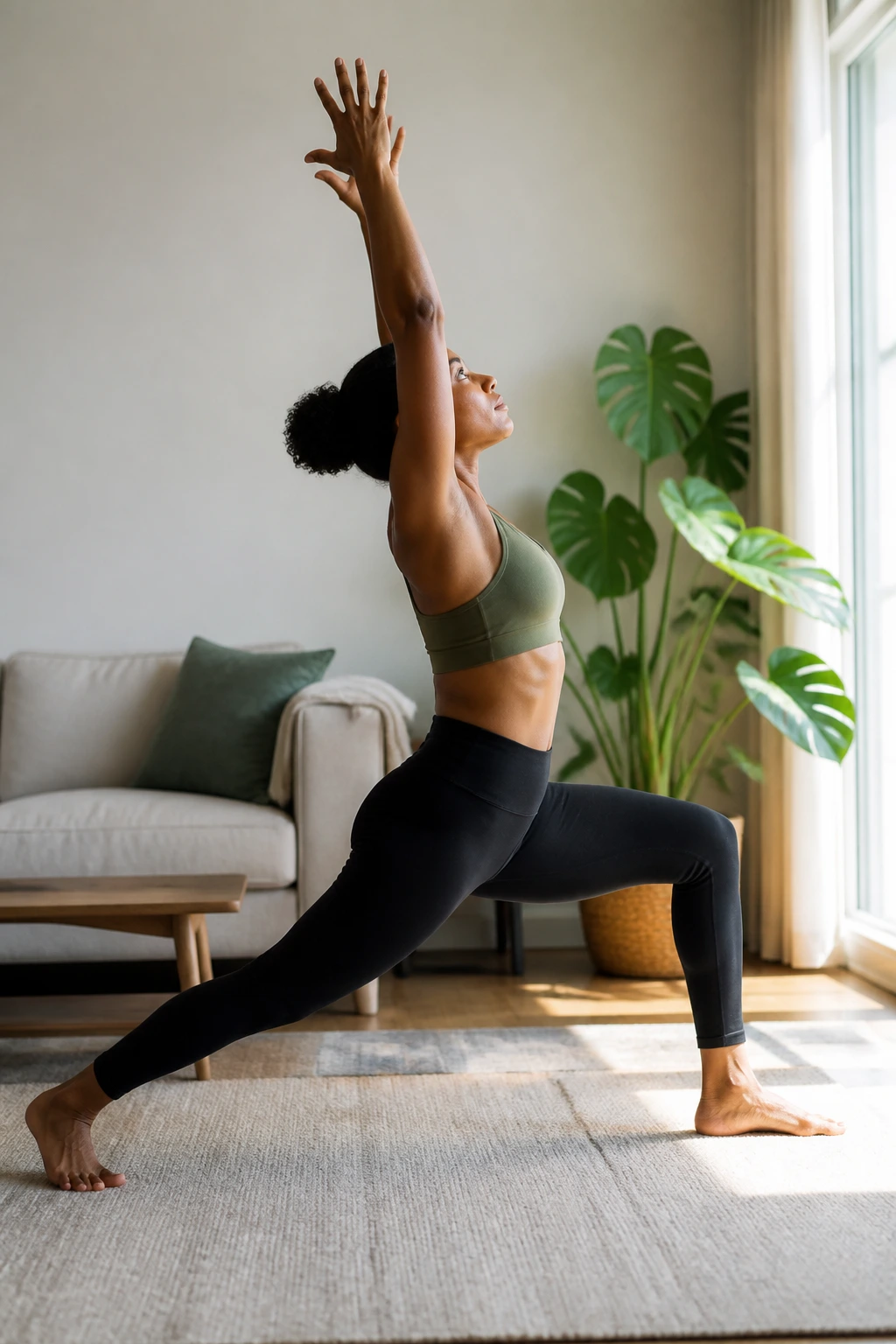
Sometimes you just need to pull your body in every direction to feel human again. This flow touches on every major muscle group, making it an ideal “reset” routine.
The Routine
- Mountain Pose: Stand tall, feet hip-width apart, arms at your sides.
- Forward Fold: Keep a generous bend in your knees as you drape your upper body over your legs.
- High Lunge: Step back with one foot and reach your arms toward the sky.
- Plank to Cobra: Drop your hips and lift your chest to stretch the abdominals.
10. Standing Balance for Core Engagement
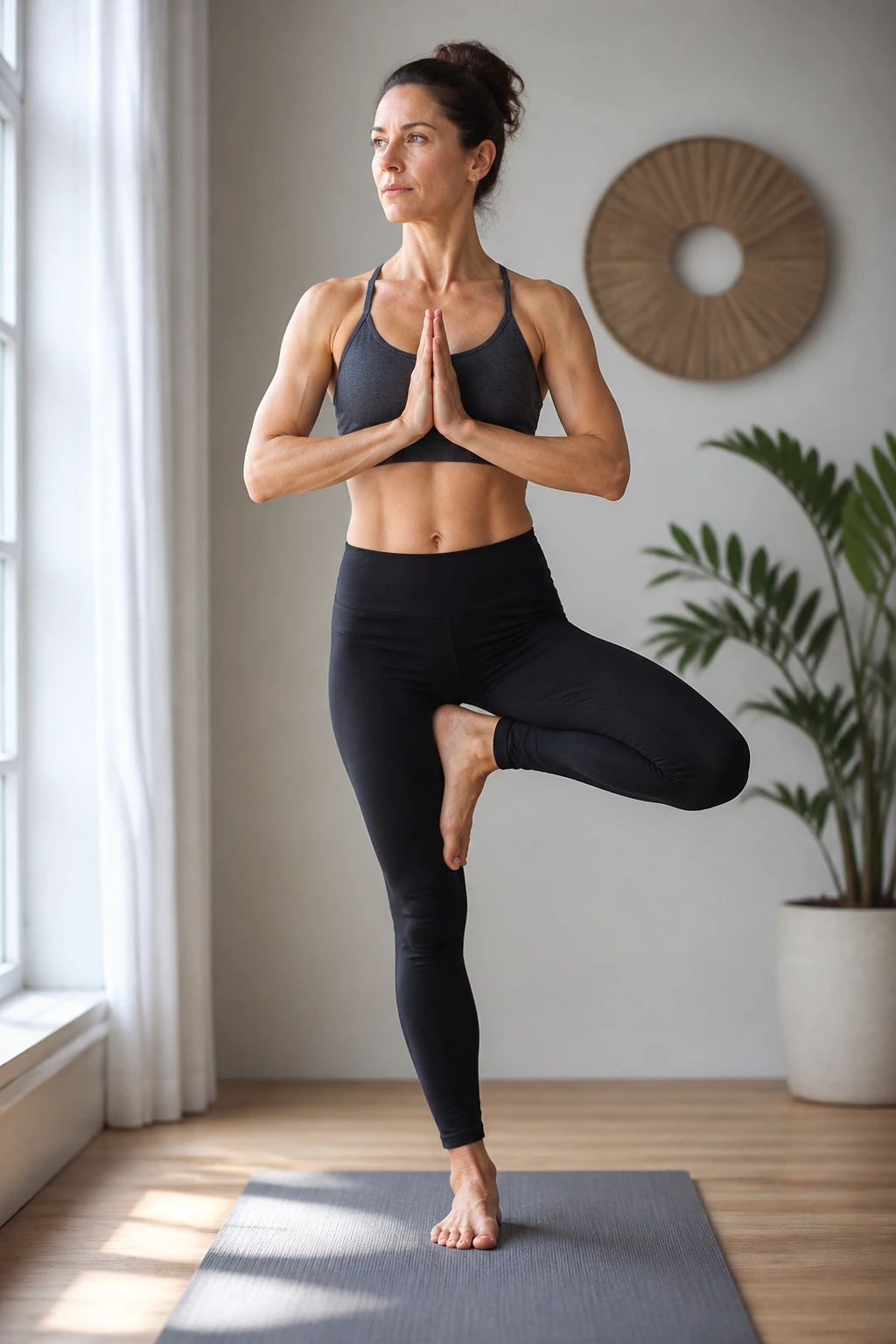
Balance is a skill, not a static trait. It requires your core to engage and your stabilizing muscles to fire. This routine is great for building the foundation needed for more complex movements.
The Tree Pose
Shift your weight onto your left foot. Bring the sole of your right foot to your inner calf or thigh—never your knee. Find a focal point on the wall and stare at it, breathing steadily.
Why Balance Matters
If you cannot balance, you are likely not using your core effectively. This simple routine forces your brain to wake up your stabilizing muscles, which protects your joints during daily movement.
11. Lower Back Tension Release
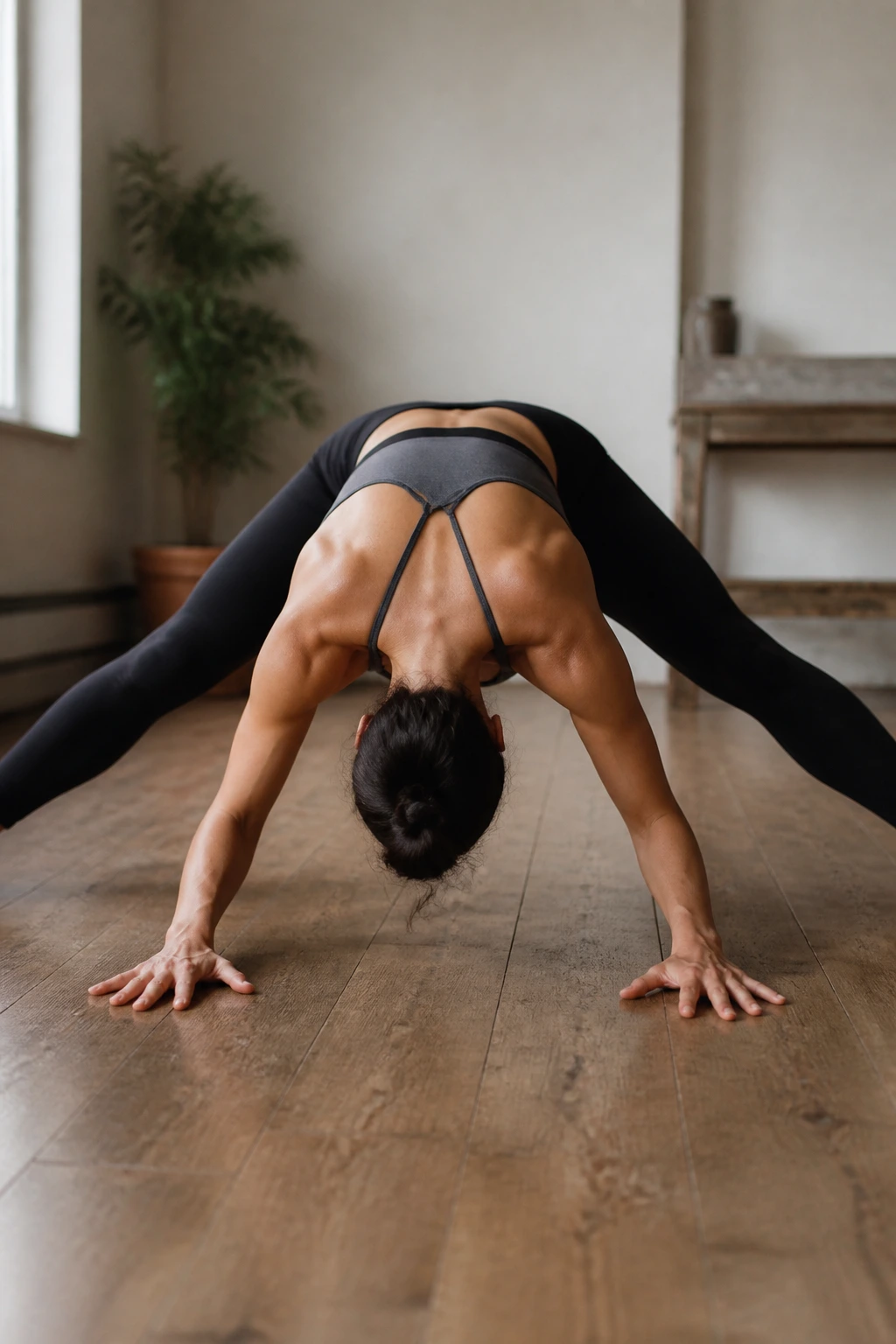
Lower back pain often stems from tight hamstrings and weak glutes. This routine focuses on the posterior chain—the muscles running down the back of your legs and torso.
Forward Fold Variations
- Wide-Legged Fold: Step your feet wide and fold forward, letting your head hang heavy.
- Half-Splits: From a lunge, shift your hips back and straighten your front leg, flexing your front toes toward your face.
Note: Always keep your back straight during the Half-Split. If you find yourself rounding, grab a stack of books to use as yoga blocks.
12. Ankle and Foot Mobility Drill
We cram our feet into shoes that don’t move, and then we wonder why our balance is poor. Your feet are your base; keeping them mobile is essential for knee and hip health.
Exercises to Try
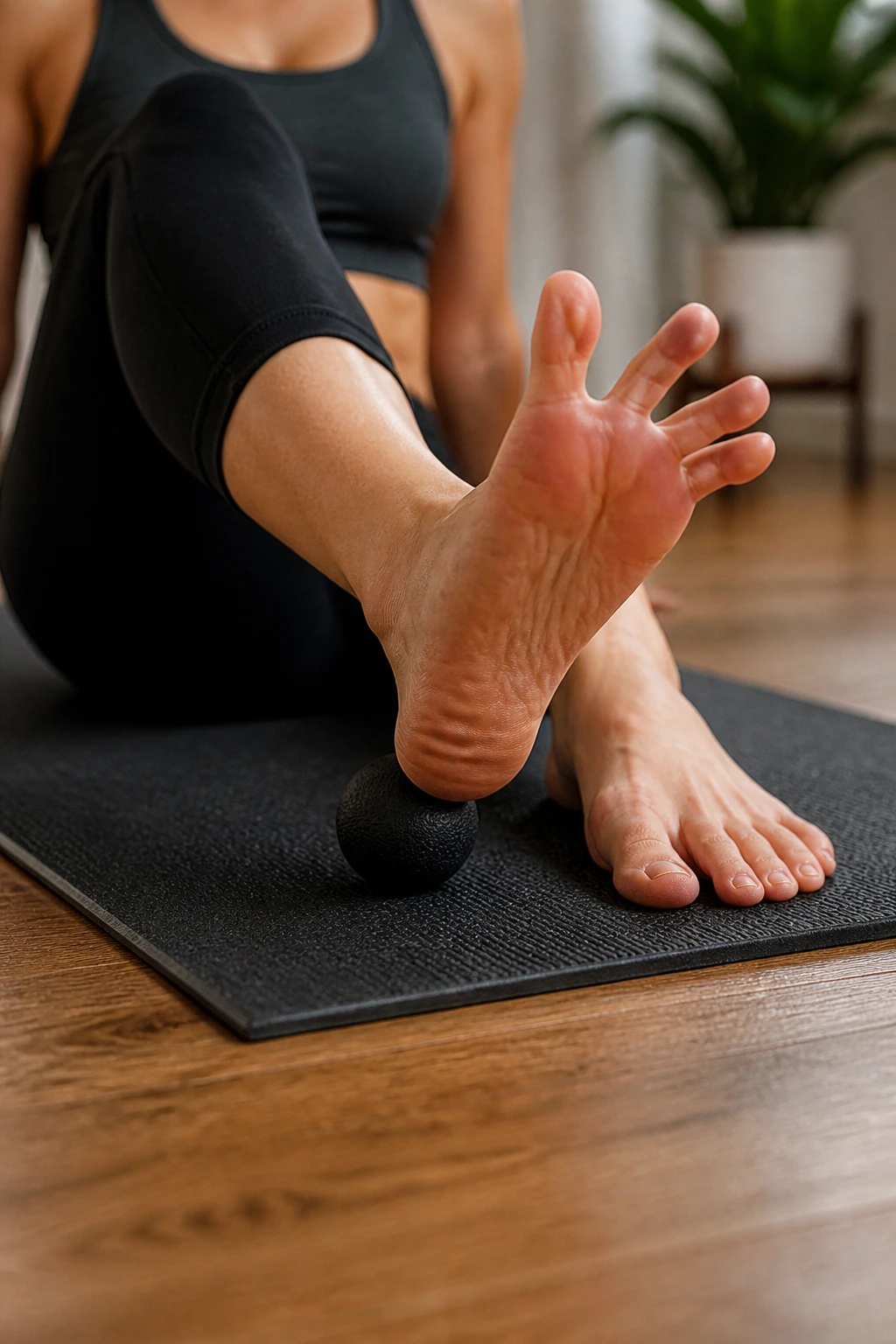
- Ankle Rolls: Sit down, lift one foot, and rotate the ankle in big, slow circles.
- Toe Spreading: Try to splay your toes as wide as possible. It sounds simple, but it is surprisingly hard for most people.
- Ball Roll: Stand on a tennis ball and roll it under the arch of your foot to release the plantar fascia.
13. Chest-Opening Sequence for Posture
We spend our lives rounded forward. This routine is the antidote. It pulls your shoulders back and opens the front of your chest, improving your breathing capacity in the process.
The Doorway Stretch
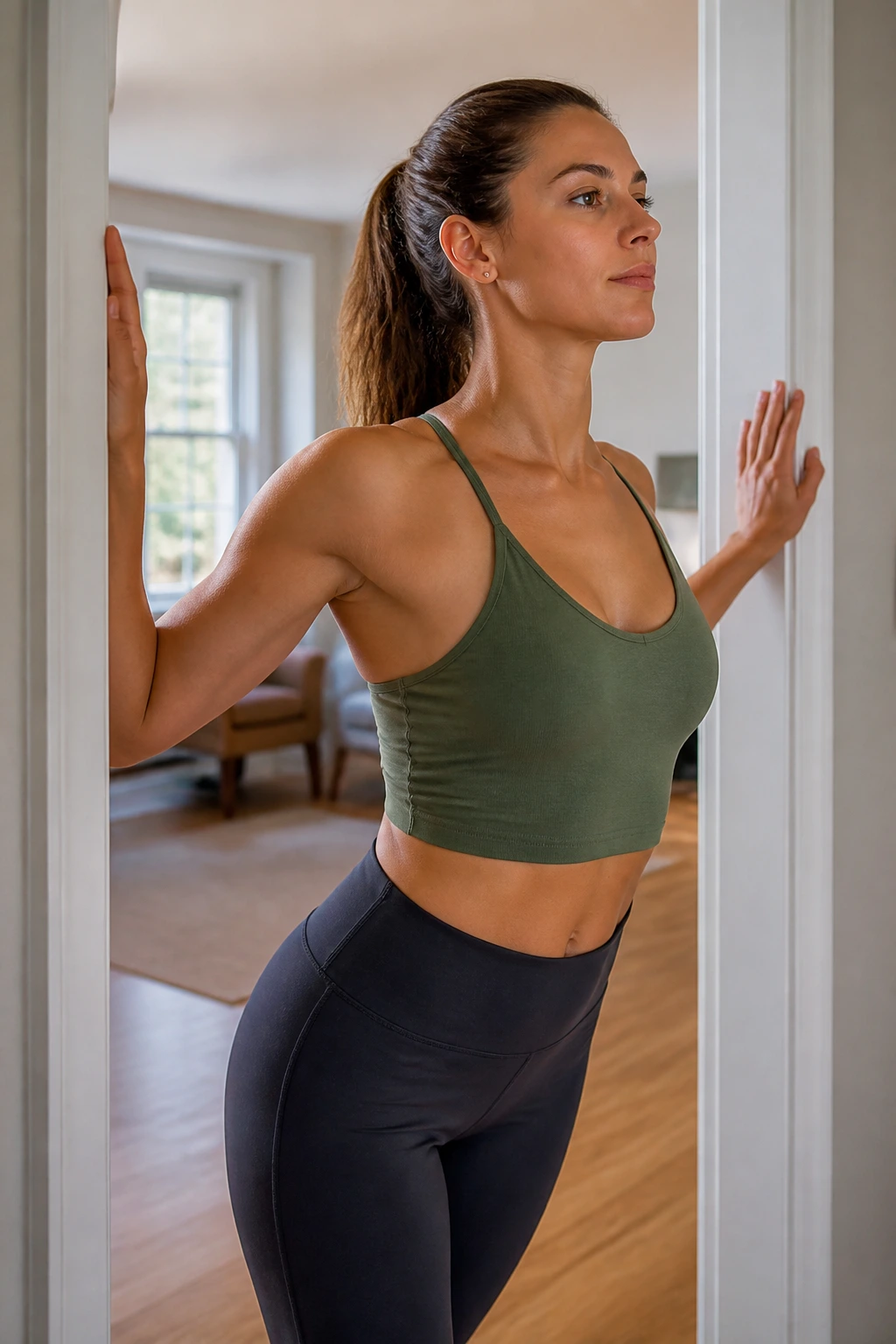
Find a doorway. Place your forearms on the frame and step one foot through, leaning your chest forward until you feel a pull across your pectoral muscles. Hold this for 30 seconds.
The Benefits
Improved posture isn’t just about looks. It’s about being able to take a full, deep breath. A tight chest literally restricts how much oxygen you can bring in.
14. Gentle Spinal Twist Routine
Twists are like a massage for your internal organs and a release for your spine. They help wring out the tension that accumulates in the middle of your back.
The Sequence
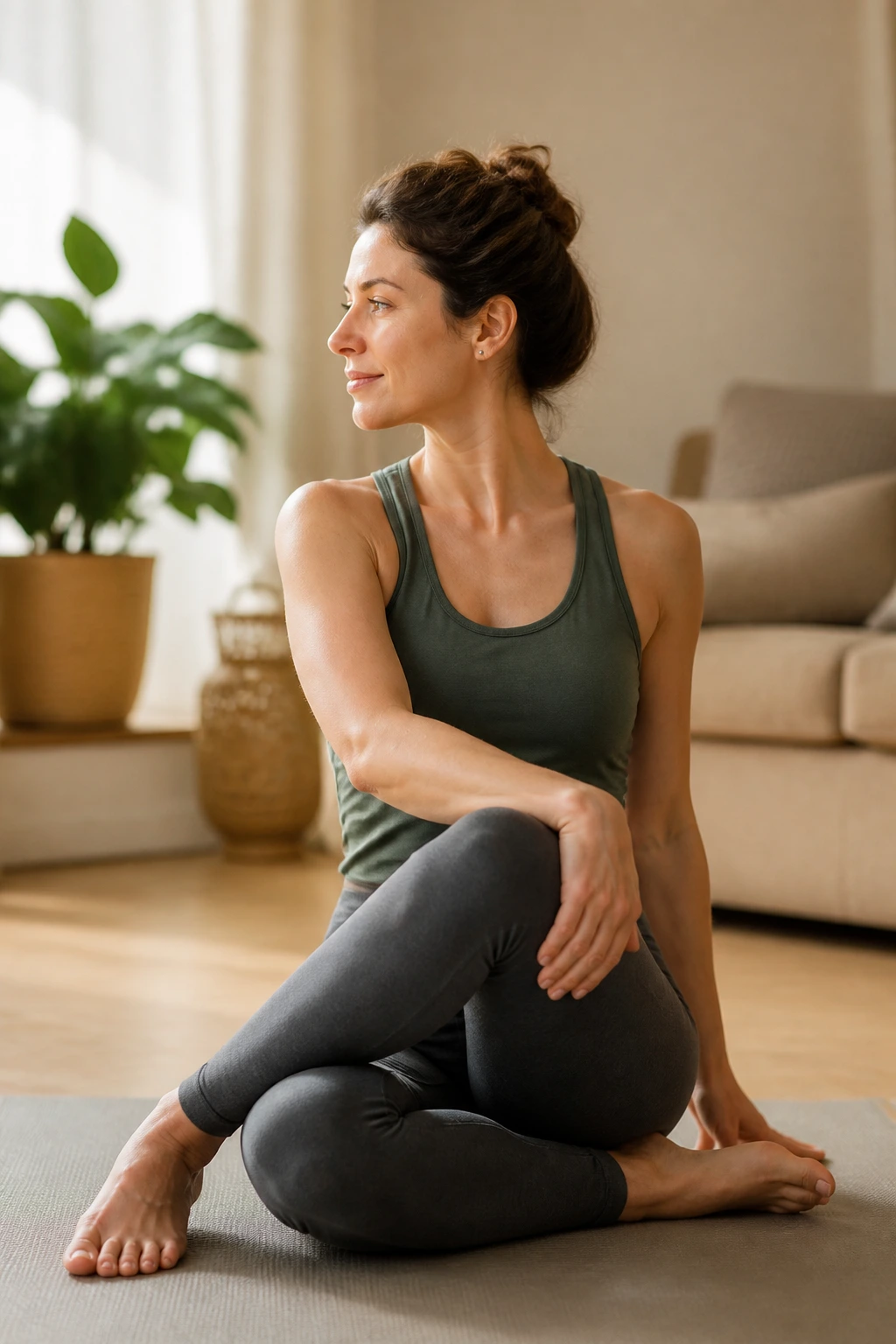
- Easy Pose Twist: Sit cross-legged, inhale to lengthen your spine, exhale to rotate.
- Reclined Twist: Lie on your back, knees bent. Let them fall to one side while you keep your shoulders pinned to the floor.
- Standing Twist: Place your hands on your hips and gently rotate your ribcage from side to side.
15. Hamstring-Focus Flexibility Drill
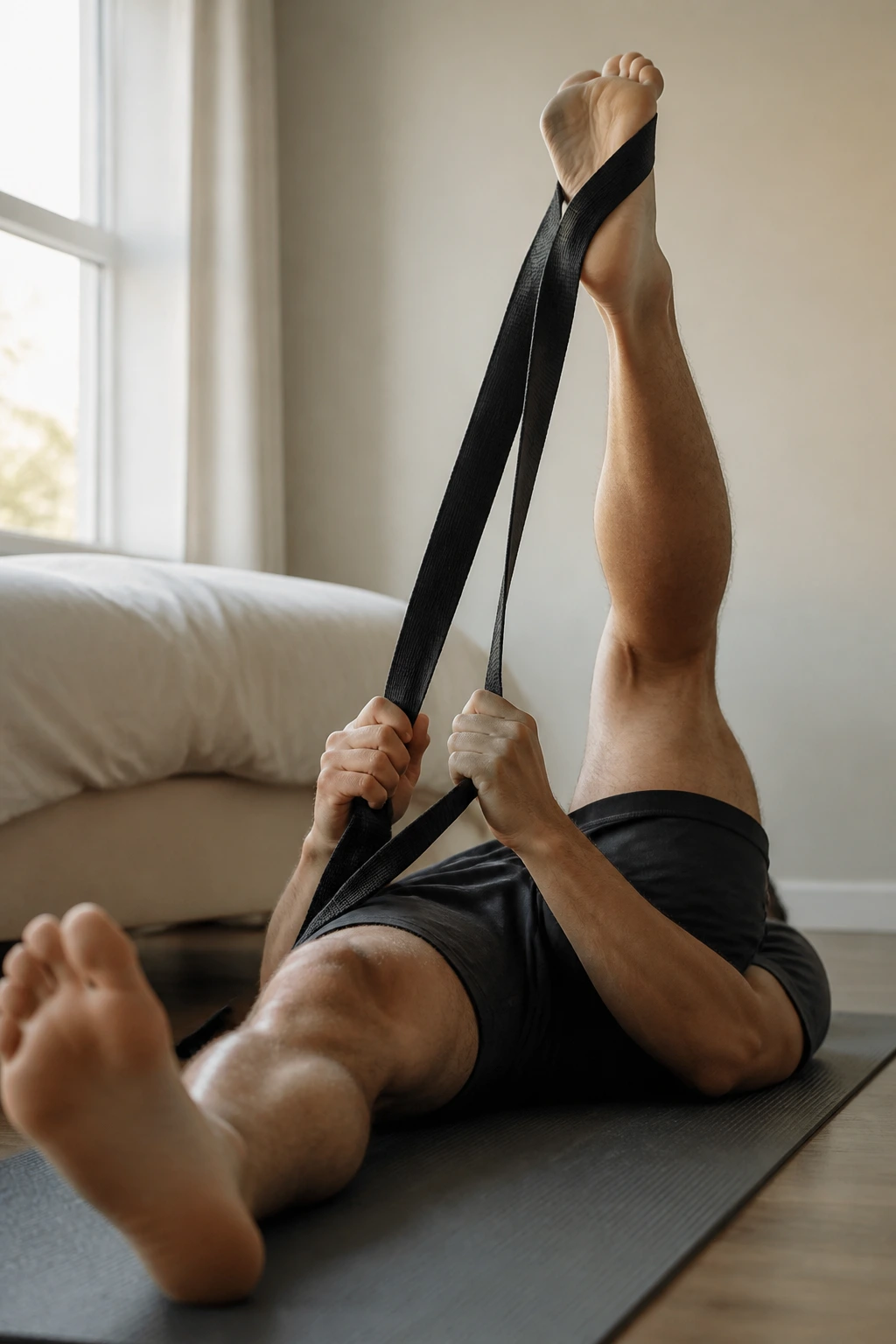
Tight hamstrings are the classic villain of the movement world. They pull on your pelvis, which causes your lower back to ache. This routine is specifically for those who struggle to reach their toes.
The Strap Technique
If you cannot reach your feet, use a towel or a belt. Loop it around the ball of your foot while lying on your back, then slowly straighten your leg until you feel a stretch in the back of the thigh.
Important Reminder
Do not push through sharp pain. A “good” stretch feels like a dull, pulling sensation. Sharp, shooting pain is your body telling you to back off immediately.
16. Calming Breath-Centered Yin Practice
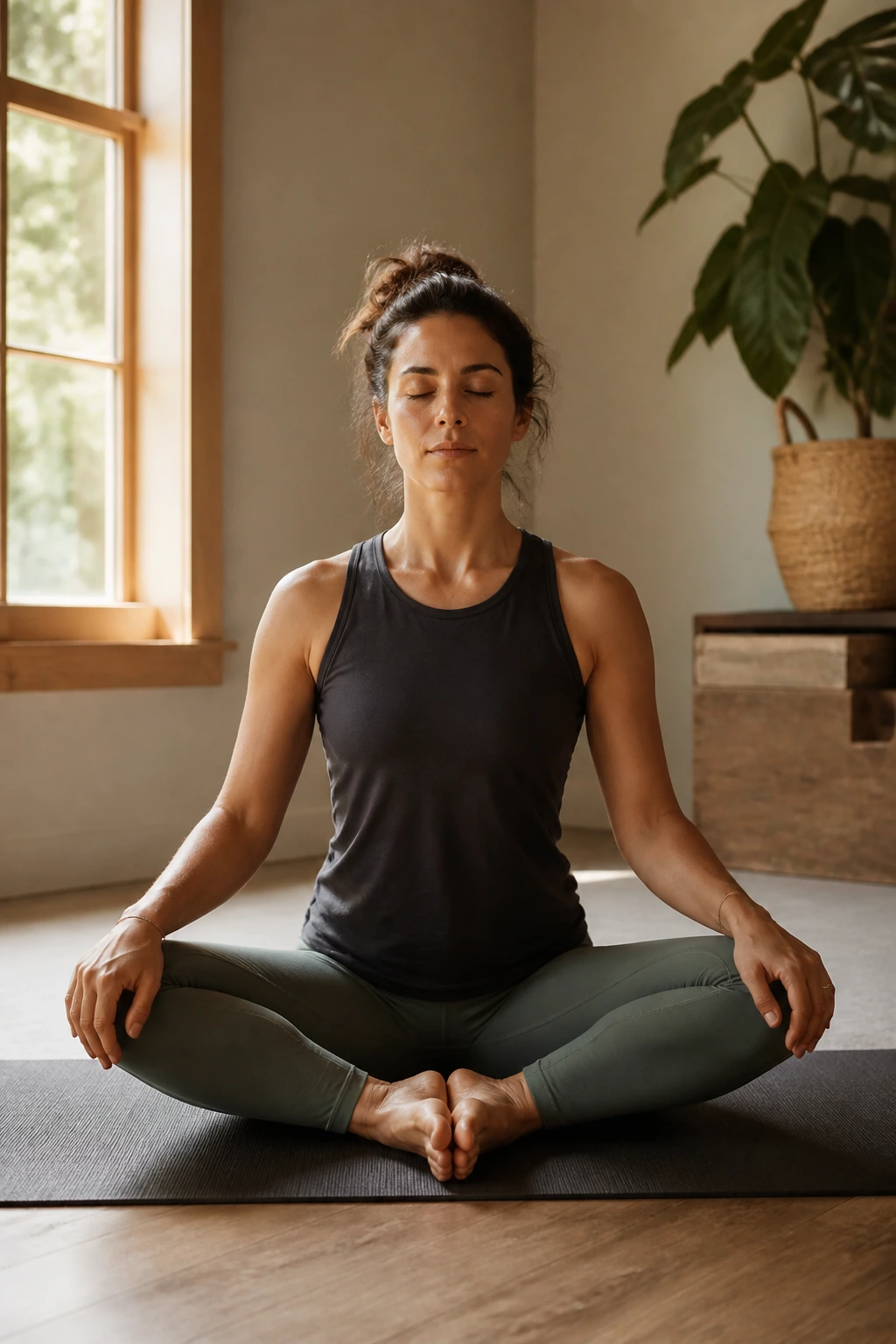
Yin yoga is about holding poses for long periods to get into the deep connective tissue. This is not about building muscle; it is about softening everything.
The Practice
Choose three poses—like Child’s Pose, Butterfly, and a simple seated fold. Hold each for three minutes. Focus on long, slow exhales. Your mind will try to wander; gently bring it back to your breathing every single time.
17. Mid-Day Energy Booster Flow
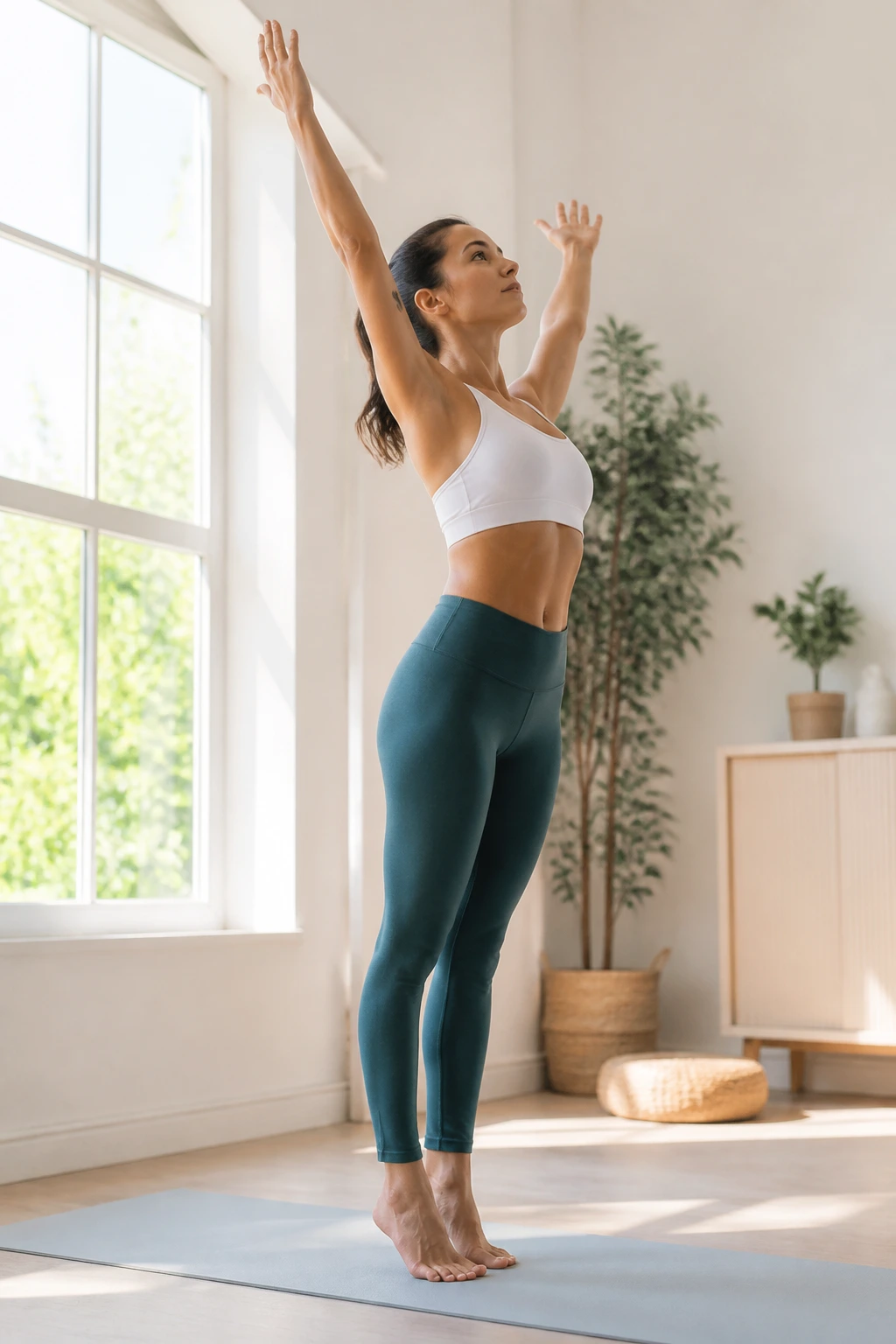
When the 2:00 PM slump hits, you don’t need another cup of coffee. You need to move your blood. This flow is fast-paced and gets the heart rate up slightly to shake off the mental fog.
The Sequence
- Sun Salutations: Reach up, fold down, halfway lift, step back to plank, lower down, lift up, downward dog. Repeat five times.
- Mountain Pose: Stand and reach tall, engaging your whole body.
- Chair Pose: Squat down slightly, as if sitting in a chair, and hold.
18. Sciatica-Friendly Gentle Routine
If you deal with sciatica, sudden movements or deep folds can be counterproductive. This routine is cautious and focused on gentle glute and piriformis releases.
What to Avoid
Do not do deep, aggressive forward folds that cause nerve pain. Instead, focus on gentle external rotation of the hip. The “Figure-Four” stretch mentioned earlier, performed very slowly and carefully, is often the gold standard here.
19. Quad-Opening Stretch Series
Sitting all day shortens your hip flexors and quads, which effectively “tugs” on your pelvis. This routine helps to lengthen those front-of-thigh muscles.
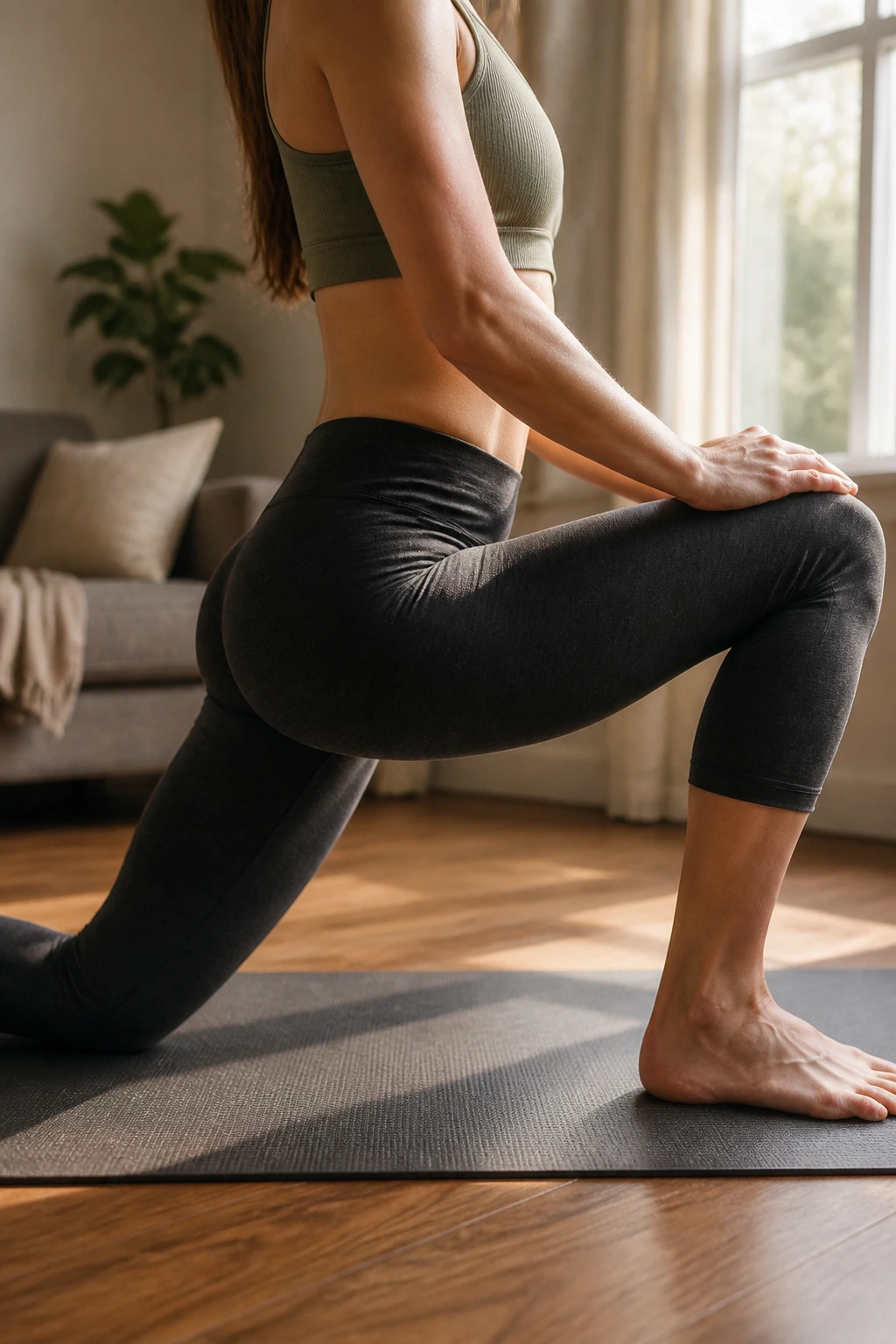
The Kneeling Quad Stretch
Kneel on one knee, the other foot forward. Tuck your tailbone—this is the secret—and gently push your hips forward. You should feel an intense stretch in the front of the kneeling thigh.
Pro tip: Don’t just arch your back to get the stretch. If you don’t tuck your tailbone, you aren’t actually targeting the quad.
20. Side-Body Lengthening Stretch
We move mostly in the forward-and-back plane. We rarely stretch laterally. This routine opens up the side-body, which can do wonders for your breathing and shoulder mobility.
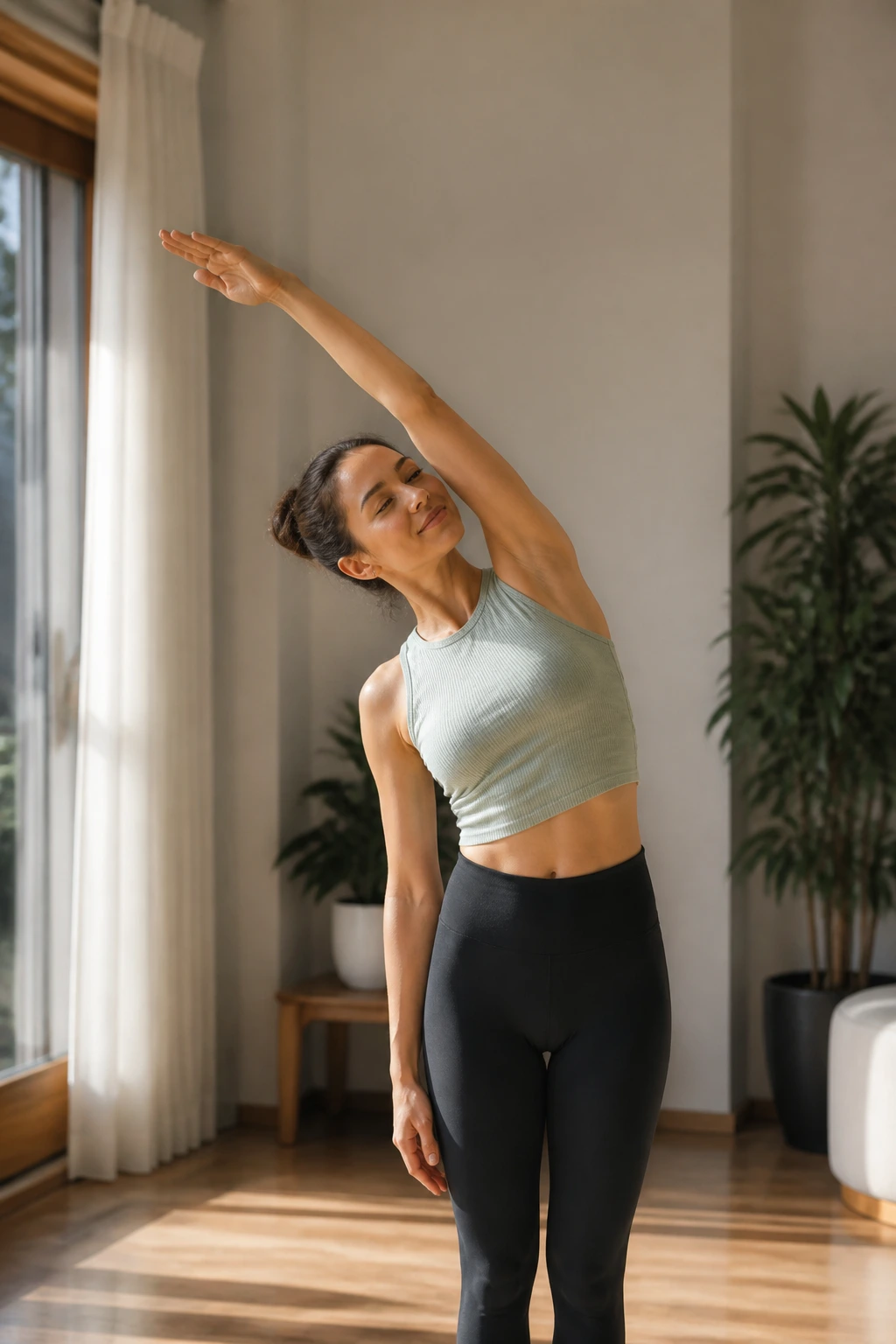
The Standing Side Reach
Reach your right arm straight up toward the ceiling, then lean your whole body to the left. Imagine you are trying to reach for something on a shelf just out of reach. Do not let your chest collapse forward; keep it open.
21. Gentle Inversion Routine for Lymphatic Flow
Inversions—where your heart is above your head or your feet are elevated—help with circulation and lymphatic drainage. They don’t have to be handstands.
Simple Inversions
- Legs-Up-The-Wall: (Already mentioned, but worth repeating.)
- Downward Dog: Your head is lower than your heart.
- Forward Fold: Let gravity take the weight of your head.
22. Core-Strengthening Yoga Sequence
Yoga is not just stretching; it is also about control. These poses require your core to work hard to hold you steady.
The Poses
- Boat Pose: Sit on the floor, lift your legs, and keep your spine straight.
- Plank Hold: Keep a straight line from your head to your heels.
- Warrior II: Keep your front knee bent and your core engaged, arms reaching out to the sides.
23. IT Band Release Routine
The iliotibial (IT) band runs down the side of your leg, and when it’s tight, it causes knee issues. Stretching it directly is hard, but you can target the muscles that pull on it.
The Sequence
- Cross-Legged Fold: While standing, cross your right leg over your left. Keeping both feet flat, fold forward.
- Side Lunge: Step wide and lunge to one side, keeping the other leg straight. This helps stretch the inner thigh, which can provide relief to the outer leg.
24. Total Body Mobility Maintenance
This is your “all-in-one” routine for days when you want to hit everything. It is a slow, methodical circuit that takes about fifteen minutes from start to finish.
The Rotation
- Neck rolls (1 minute)
- Shoulder openers (1 minute)
- Cat-Cow (2 minutes)
- Downward Dog (2 minutes)
- High Lunge (2 minutes)
- Seated Fold (2 minutes)
- Child’s Pose (2 minutes)
- Final resting breath (3 minutes)
25. Sunday Restorative Deep Stretch
This is the routine for the end of the week. It is slow, it is quiet, and it involves lots of props. If you have blocks, bolsters, or blankets, use them all.
Why This Matters
Restorative yoga is about holding poses for 5-10 minutes. You want to be completely supported. Use blankets to fill the gaps between your body and the floor. This routine isn’t about “getting a stretch”; it’s about signaling to your body that it is safe to completely let go.
Final Thoughts
The routines above are just starting points. You don’t have to follow them perfectly or even complete all 25 in any specific order. The most effective routine is the one you actually do. If you have five minutes while the coffee brews, do the neck stretches. If you have ten minutes before bed, do the Legs-Up-The-Wall routine.
Stop waiting for a “perfect” time to start. Your body isn’t waiting for a specific day or a new set of clothes; it’s waiting for you to notice the tension and give it a little space to breathe. Consistency will change more for your movement patterns than any single, intense session ever could. Take it slow, listen to what your body is telling you, and stay with it.
