



Not every cardio session has to sound like a basketball drill in a gym.
A good walking workout can be almost invisible to everyone else and still leave your legs warm, your breathing a little deeper, and your head less cluttered than it was twenty minutes earlier. That matters if you live above someone, share walls, work odd hours, or just hate the feeling of bouncing around for no reason.
Walking is also sneakier than people give it credit for. Pace, stride length, incline, arm drive, and interval timing can change the feel of the workout more than most people expect. A brisk walk done well can land around 100 to 120 steps per minute for many walkers, but the number is only a rough guide. The real test is simpler: your breath should work harder, your form should stay clean, and your footfalls should stay soft.
Quiet daily cardio movement does not need drama. It needs repeatability. The walking workouts below are built for small spaces, busy days, tired brains, and the kind of movement you can keep doing without dreading it.
1. The 10-Minute Brisk Loop
A ten-minute brisk loop is boring in the best way. You can do it before coffee, between meetings, after dinner, or whenever your brain feels sticky and your body needs a reset. The goal is not to impress anyone. The goal is to move with enough purpose that your pulse climbs, while your steps stay light enough that nobody downstairs notices.
Keep the route simple. One block, a hallway circuit, the perimeter of a park, or even a repeated path around a building works fine. Shorter strides help a lot here. Big reaching steps look dramatic and sound dramatic, and neither one helps much.
What It Should Feel Like
- Your breathing should deepen, but you should still be able to speak in short sentences.
- Your shoulders should stay loose, not lifted toward your ears.
- Your feet should land under your body, not far out in front.
- The pace should feel brisk, not rushed.
Keep the stride short. That single change does more for quiet, clean walking than almost anything else. Long strides tend to slap the floor and waste energy.
2. One-Minute Fast, One-Minute Easy Intervals
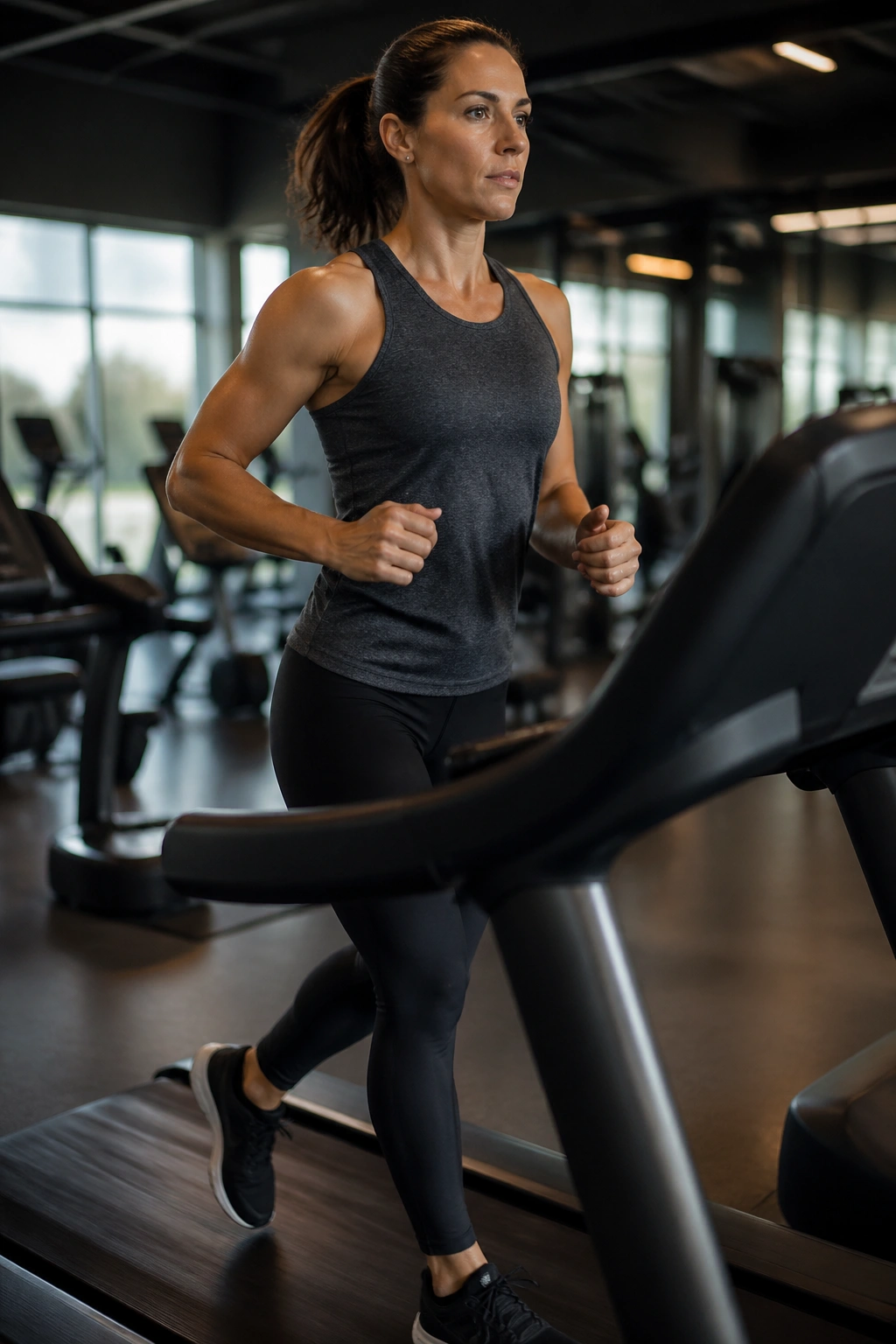
Intervals are the fastest way to make walking feel like a workout. One minute of fast walking, one minute of easy walking, repeated for 10 to 20 minutes, gives you a simple structure without turning the session into a slog. The fast minute should feel punchy. The easy minute should feel like you’re catching your breath without coming to a full stop.
This pattern is useful because it keeps you honest. If you go too hard, the fast minute starts to look sloppy. If you go too easy, the workout stops asking much from your body. Somewhere in the middle sits the sweet spot.
How to Use It
- Beginner version: 6 rounds after a 3-minute warm-up.
- Middle-ground version: 8 to 10 rounds.
- Harder version: 12 rounds, or 15 if the pace stays clean.
A treadmill, a hallway, or a quiet sidewalk all work. The important part is the change in gears. Fast. Easy. Fast. Easy. It keeps the mind awake, which is useful on days when a long steady walk feels endless.
3. The Post-Meal Walk
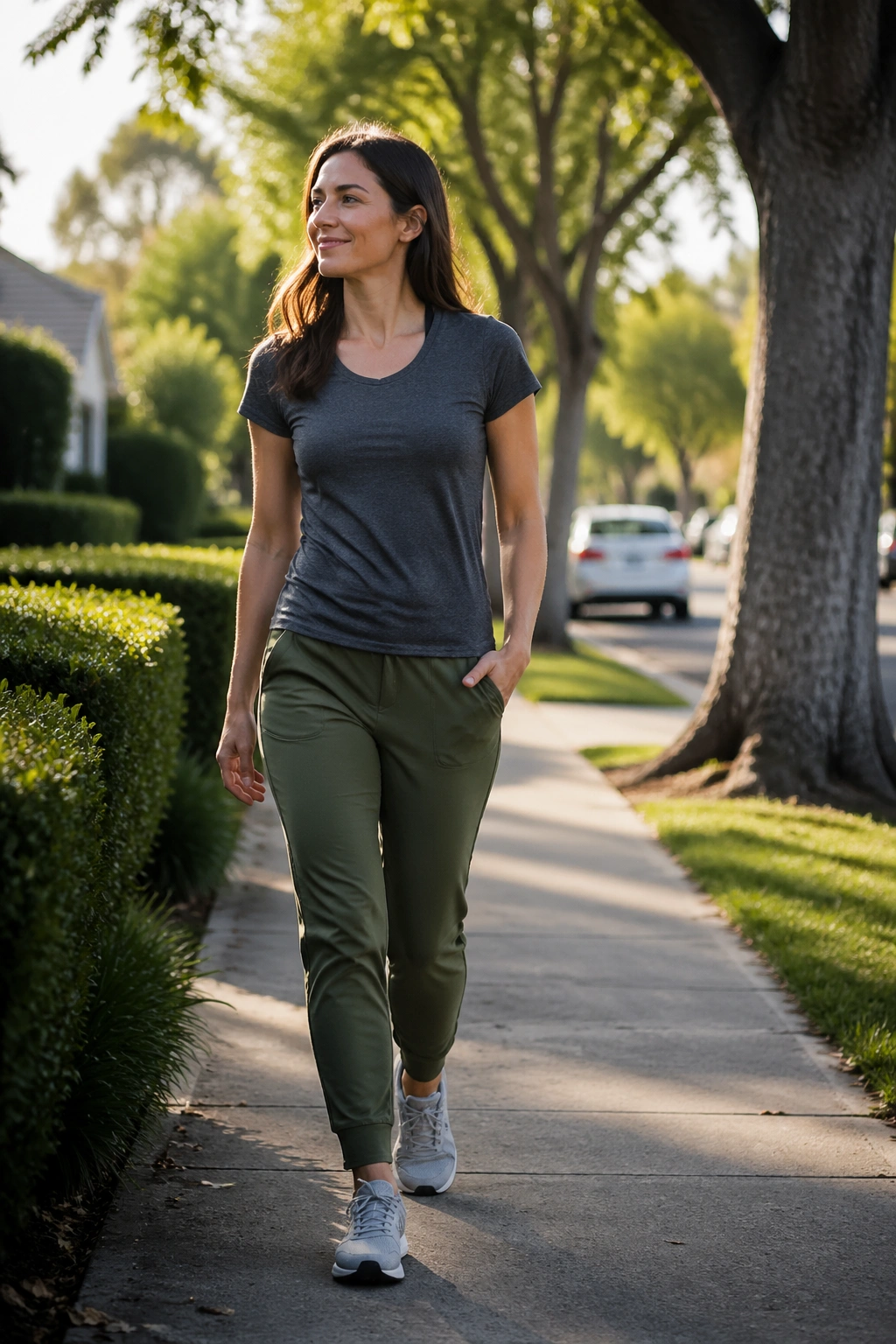
Why does a short walk after a meal feel so useful? Because it solves a very specific problem: that heavy, sleepy slump that shows up when dinner is over and your couch starts looking suspiciously comfortable. A 10 to 15 minute post-meal walk is not about crushing calories or chasing some heroic pace. It’s about giving your body a gentle transition instead of dropping straight from the chair to the cushion.
Keep this one easy. You want a pace that feels smooth, almost lazy, but still counts. The walking workout works because it lowers the stiffness that comes from sitting right after eating. It also makes the evening feel less like a dead end.
Best Timing
- Start 10 to 20 minutes after eating if your stomach feels settled.
- Keep the walk easy enough that your breathing stays quiet.
- Use a loop close to home so the walk feels effortless to start.
- If you ate a big meal, begin slower than you think you need.
A small note, because it matters: do not turn this into a sprint just because you feel good halfway through. The point is gentle movement, not a sudden fitness challenge.
4. The Hallway Out-and-Back Walk
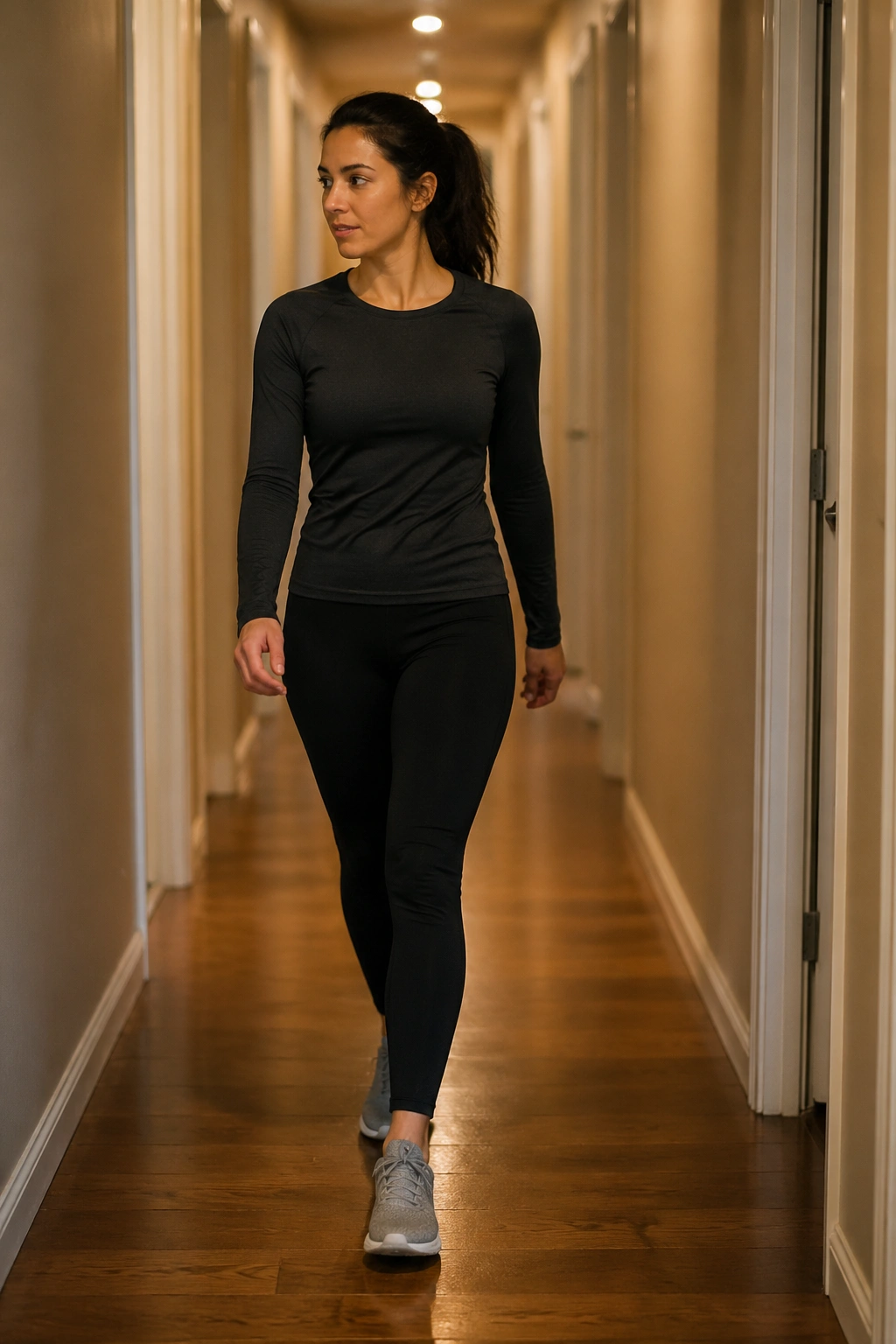
If you live in a small apartment, the hallway walk is your friend. So are office corridors, basement paths, and any narrow stretch of floor where you can walk to one end, turn, and come back without thinking too hard. The magic here is friction control. You remove the need for a big route, a perfect schedule, or outdoor weather.
This workout works well when the hardest part is simply starting. Set a timer for 12 or 15 minutes. Walk from one marker to another. Turn smoothly. Repeat. That’s the whole thing.
A Clean Setup Helps
- Pick two fixed points so you never wonder where to stop.
- Wear shoes with a soft sole, not stiff clunkers.
- Keep your turns gentle; no sharp pivots.
- Use a rug, mat, or clear floor strip if you’re indoors.
Quiet footwork matters more here than speed. If the floor starts talking back to you, shorten the stride and slow the push-off. The workout should feel almost tidy.
5. The Treadmill Hill Walk
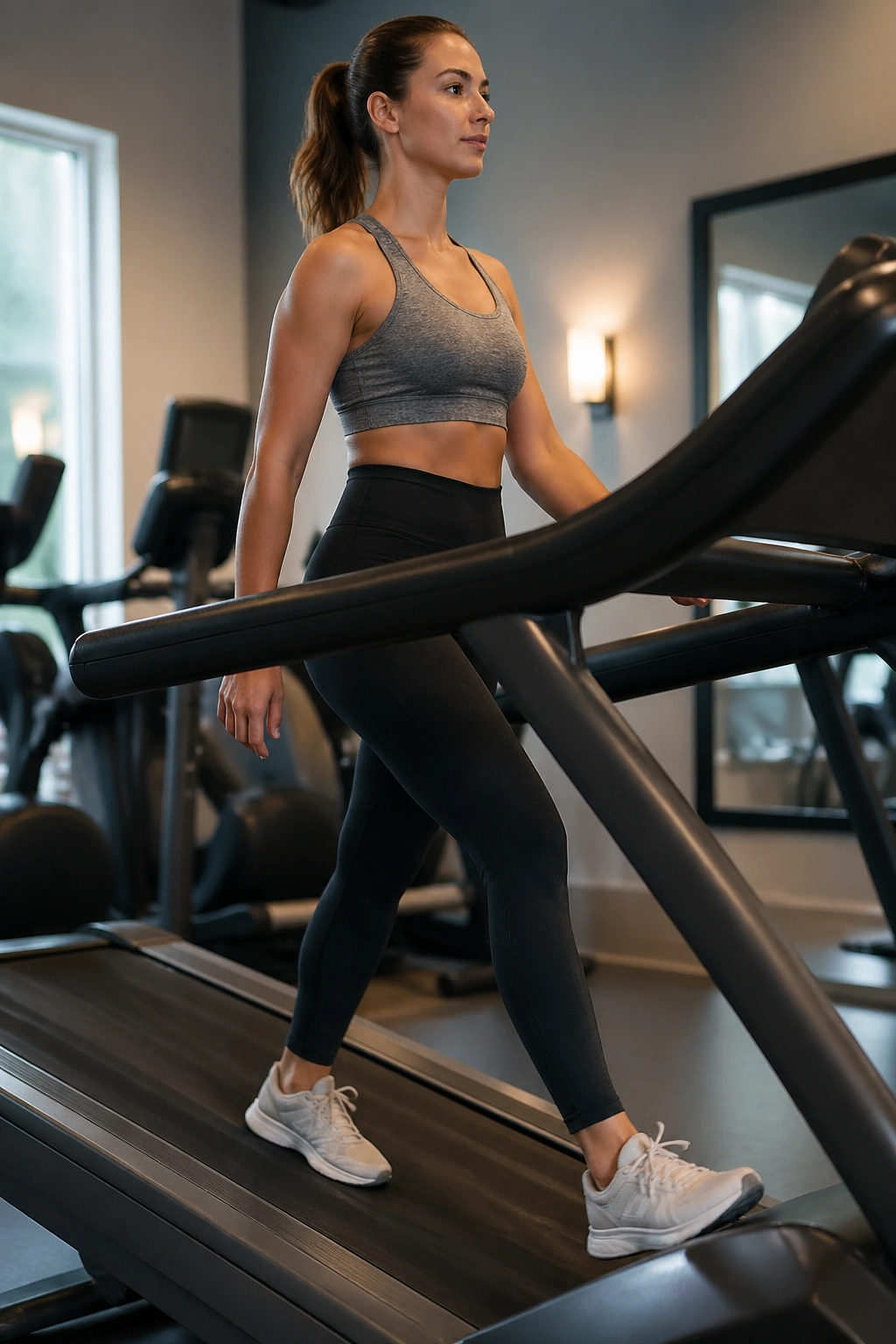
Unlike a flat stroll, incline walking asks more from the calves and glutes without adding impact. That is why treadmill hills have such a loyal following. You can stay in a walking pattern, keep the noise down, and still make your heart work harder than it would on level ground.
Start with a modest incline, not a heroic one. For many people, 3 to 6 percent is enough to change the feel of the session. Pace matters too, but the incline is the real lever. If you need to grab the rails, the slope is too steep or the speed is too fast.
What to Watch For
Your torso should stay tall. Don’t fold at the waist to chase the belt. That usually shifts the effort into your lower back and makes the whole thing feel awkward.
A good hill walk feels strong in the back of the legs, steady in the breathing, and quiet underfoot. It’s a good choice when you want a walking workout that feels more like training than a stroll around the block.
6. The Cadence Ladder Walk

A cadence ladder feels like changing gears on a bike. You start easy, build pressure in small steps, then back off before the effort turns messy. It’s a smart option when you want variety without needing a complicated route or a lot of space.
Try 2 minutes easy, 2 minutes moderate, 2 minutes brisk, 2 minutes very brisk, then work back down in the same pattern. The whole session can last 16 to 24 minutes depending on how many rounds you choose. The shifts keep your attention on the body, which helps you notice when your steps get loud or your shoulders start creeping up.
The ladder shape also keeps the workout from feeling flat. That matters more than people admit. Repeating the same pace for twenty minutes can feel endless on tired days, while a ladder gives your brain a series of small tasks to finish.
The cleanest version of this walk is the one where each gear change feels smooth, not sudden. Think small adjustments, not giant jumps.
7. The Marching Arm-Drive Walk
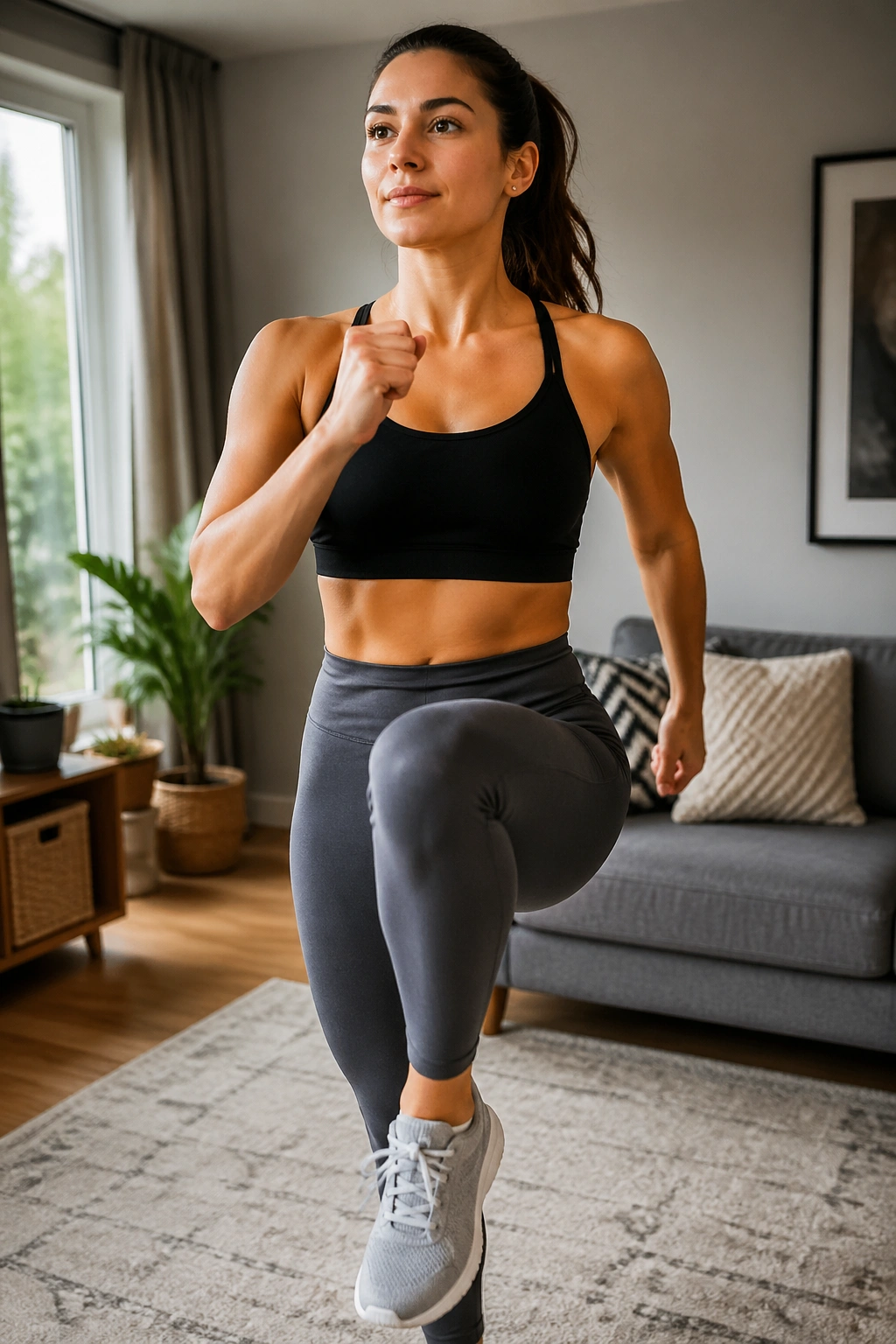
Marching in place sounds tiny. It is not. When you add purpose to the arm swing and keep the knees moving rhythmically, marching becomes a real cardio tool for small spaces and quiet floors. You can do it beside a desk, next to the kitchen counter, or in a clear patch of living room space.
Why It Works
The body responds to rhythm. A steady march with active arms raises effort fast without needing much room. It’s especially handy when you want to wake up the legs but don’t want the extra noise that comes from faster outdoor walking.
A simple pattern works well:
- 30 seconds marching in place.
- 30 seconds easy walking.
- Repeat for 8 to 12 rounds.
- Keep your steps light and close to the floor.
If you want more challenge, drive the elbows back a little harder. If you want less, lower the knees and keep the motion smoother. The workout should feel tidy, not bouncy.
8. The Nose-Breathing Recovery Walk
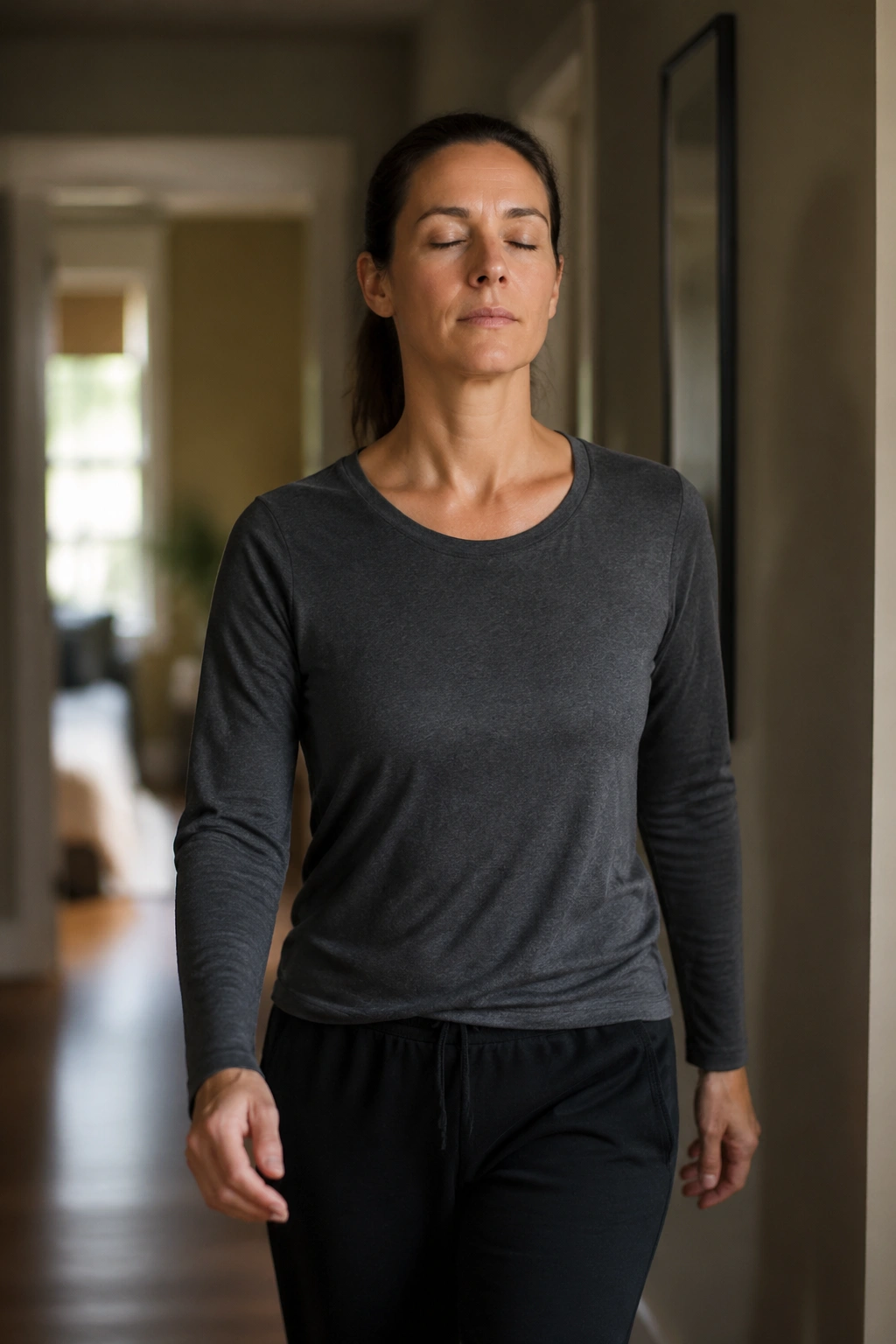
Can a recovery walk still count as cardio? Yes, if the pace and duration are honest. Easy doesn’t mean useless. A quiet, nose-breathing walk is one of the easiest ways to add movement on days when your body feels cooked but you still want to do something useful.
This is not the walk where you chase pace. It’s the walk where you keep your mouth closed, your breath calm, and your shoulders low while your legs keep turning over. Fifteen to thirty minutes is a solid range. If your nose closes up and you start gulping air through your mouth, back off a little.
What It Should Feel Like
- Breathing should stay smooth and mostly nasal.
- Your legs should feel active, not battered.
- Your mind should settle instead of revving up.
- Conversation should feel easy if someone joins you.
This kind of walk is good on the edges of harder training days. It helps you keep moving without stacking stress on top of stress, and that’s a useful habit for long-term consistency.
9. The Short-Strides Power Walk
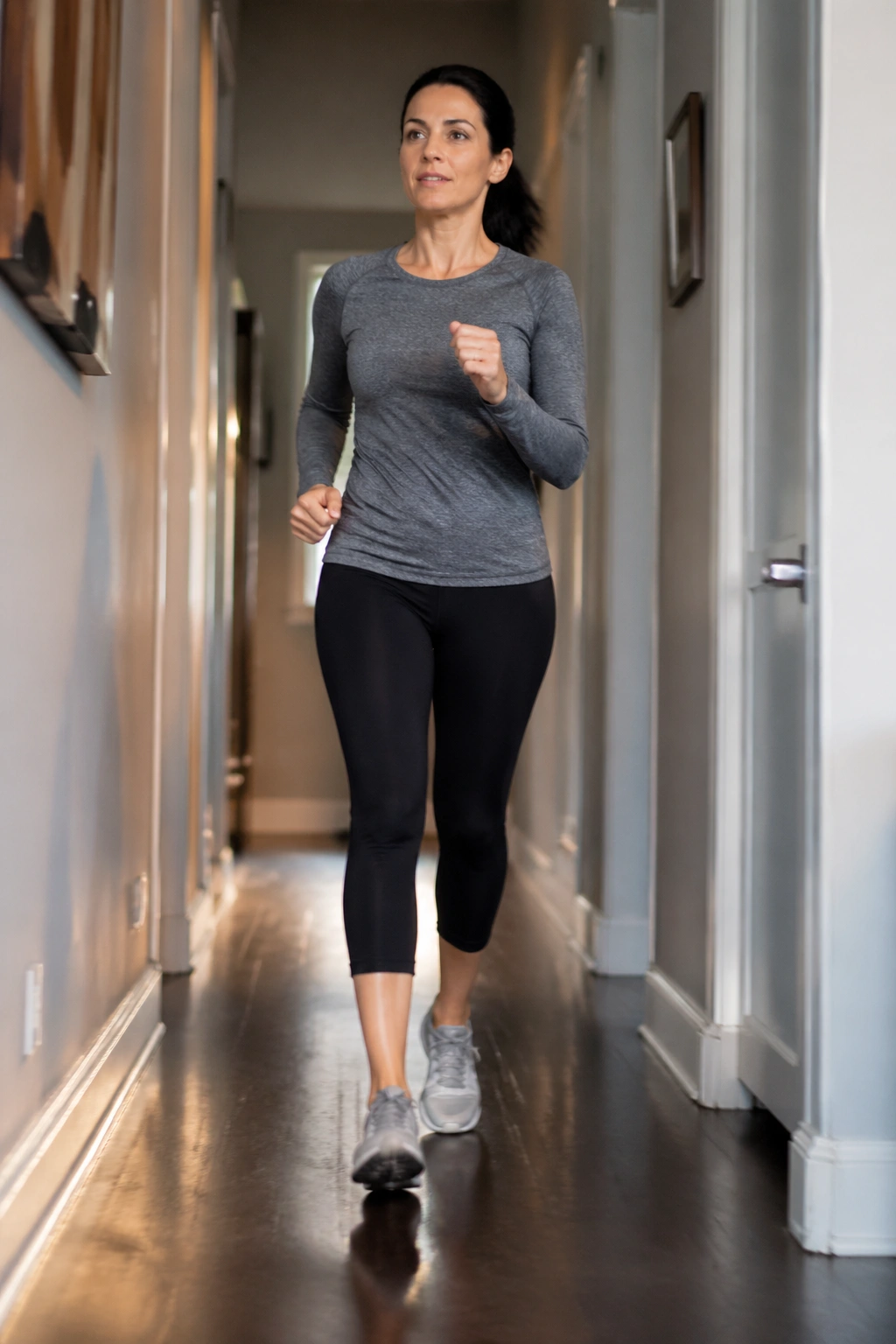
A power walk works better when the stride gets shorter, not longer. That sounds backward until you try it. Big steps usually waste energy and make the feet slap harder. Shorter steps can turn the same path into a cleaner, faster, quieter session.
This workout is about form first. Stand tall. Bend the elbows naturally. Move the arms with intent. Let your feet land beneath you instead of reaching far ahead. The pace should feel brisk enough to change your breathing, but not so aggressive that the movement turns choppy.
Three Form Checks
- Your footfalls stay soft.
- Your hips stay level.
- Your upper body does not lean forward like you’re late for a train.
A useful cue is this: if you can hear yourself from across the room, shorten the stride and quicken the rhythm. Power walking does not need stomping to feel serious. It needs clean mechanics.
10. The Phone-Call Pace Walk
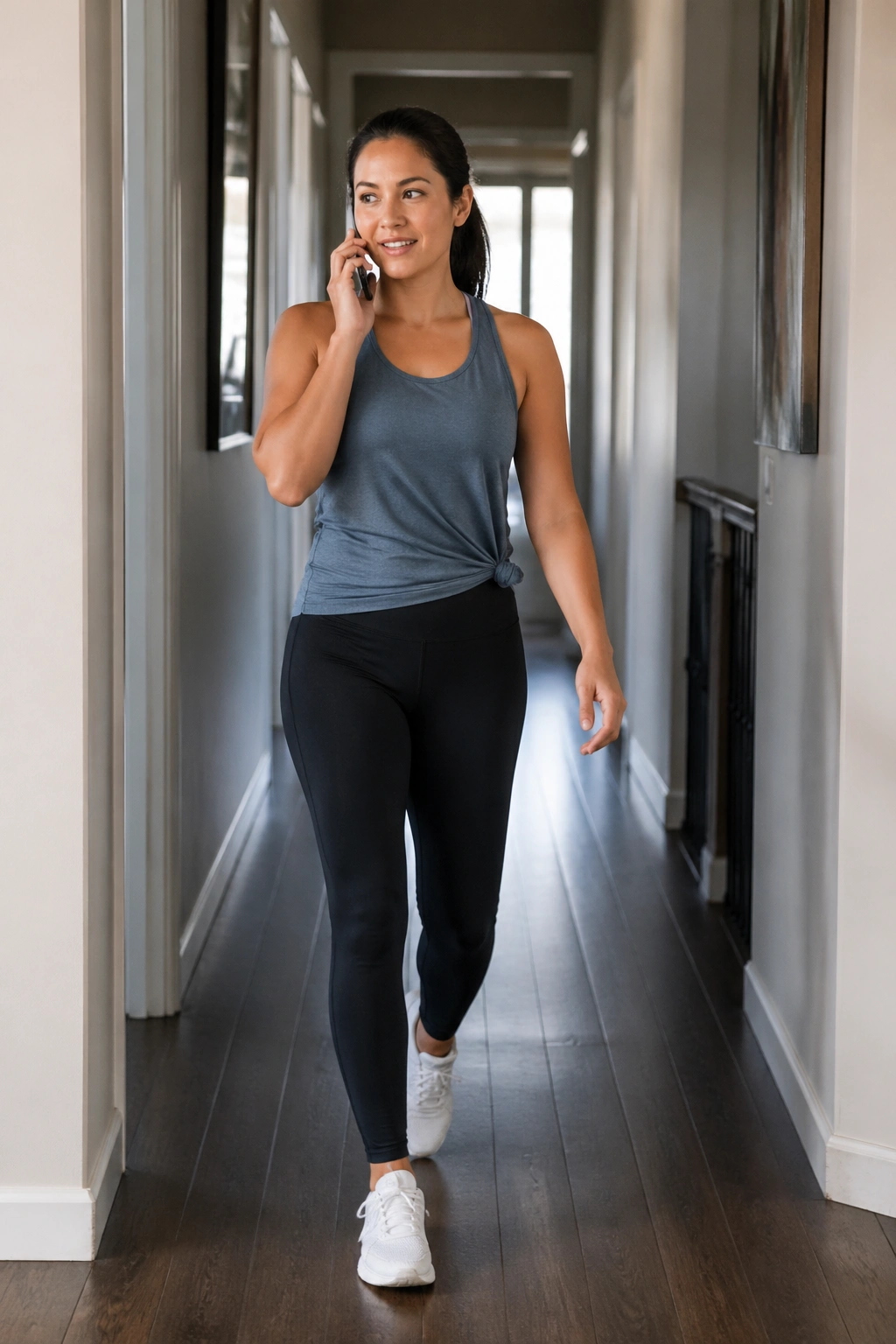
Phone-call walking turns dead phone time into steps, and that’s worth more than it sounds. A quick call to a friend, a check-in with family, a voice note you need to record, or even a long voicemail you should have listened to while standing still can all become part of your daily movement.
The pace here is usually moderate, almost casual. That is the point. You are not trying to turn every conversation into a hill sprint. You’re turning scattered minutes into a walking habit that feels painless enough to repeat.
A few smart boundaries help:
- Don’t use this for busy intersections.
- Keep one ear open if you’re outside.
- Use it for 5 to 15 minute chunks.
- Let the walk stay easy if the call gets mentally heavy.
It’s a simple trick, and honestly, simple is why it works. You do not have to carve out a separate workout block every time your phone rings.
11. The Figure-Eight Indoor Walk
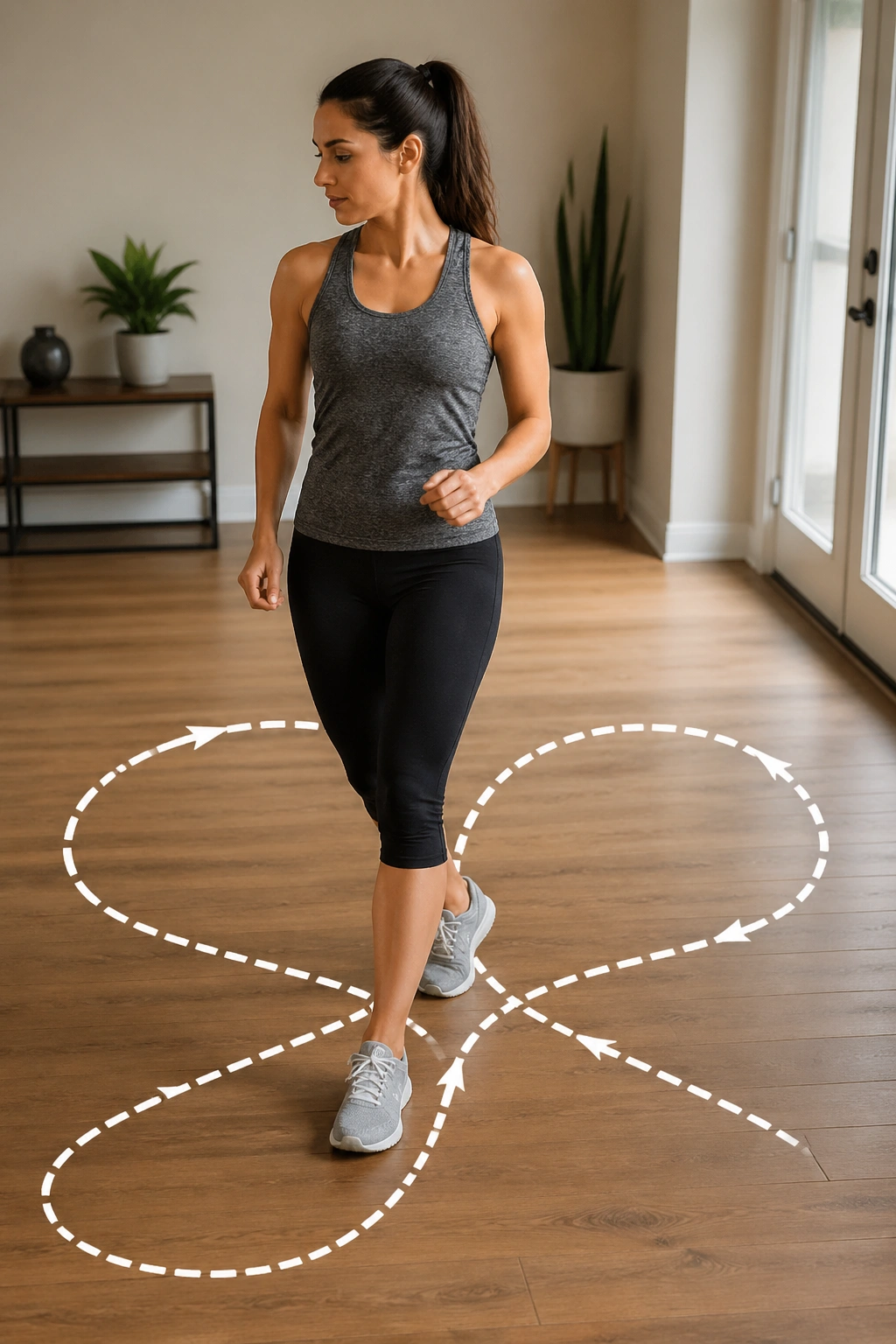
Two chairs, a timer, and a small patch of floor are enough. That’s all you need for a figure-eight indoor walk. Set the objects several feet apart and walk around them in a smooth loop that never quite stops. It’s a good choice for bad weather, late evenings, or homes where straight-line space is limited.
The figure-eight pattern keeps your body moving without the hard start-stop feeling of pacing back and forth. It also adds gentle steering work, which keeps the session a little more interesting than marching in one place. You can keep it soft and quiet by using small turns and steady foot placement.
Good Setups
- Two markers about 6 to 10 feet apart.
- A timer set for 10 to 20 minutes.
- Shoes that grip but don’t squeak loudly.
- Enough clear floor that you never clip a table leg.
This is one of those workouts that feels almost too small to count. It counts.
12. The Backward-and-Forward Balance Walk
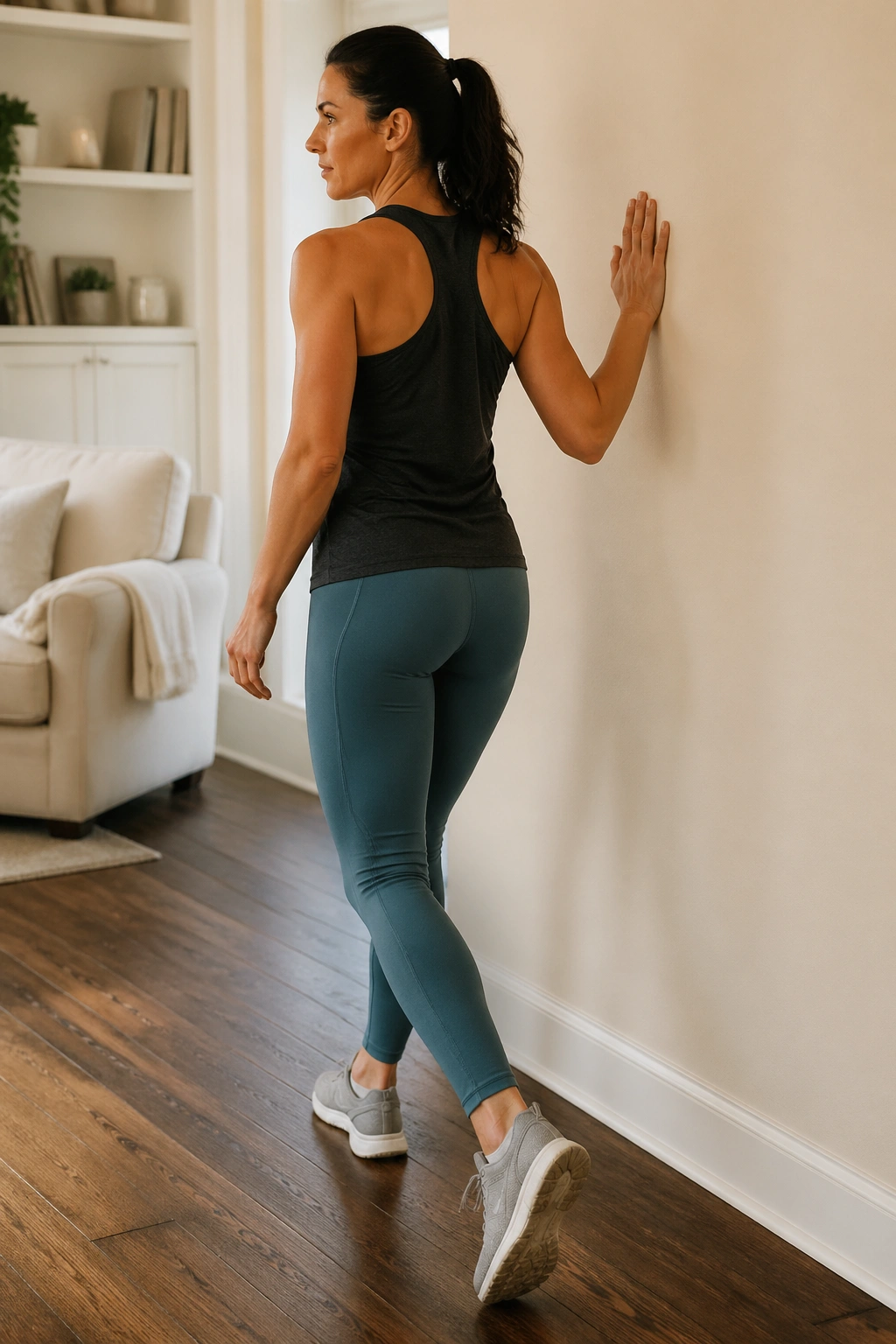
Backward walking is awkward, which is exactly why it earns a spot here. It changes the load on the lower legs, asks more from balance, and wakes up muscles that forward walking can leave half asleep. The quiet part is a nice bonus. Backward steps are usually short and controlled, so the floor noise stays low.
Do this slowly. Seriously. Pick a clear space, keep a wall nearby, and avoid clutter. Start with 5 to 10 backward steps, then turn and walk forward for the same number. Repeat for 5 to 8 rounds.
A few things make it safer and more useful:
- Keep your chest lifted.
- Look where you’re going before each set.
- Use short steps, not long reaches.
- Stop if the floor feels uneven or busy.
This is not the workout for multitasking. It rewards attention. Give it that.
13. The Three-Slice Day Walk

Three ten-minute walks beat one perfect 30-minute plan when your day keeps interrupting you. That’s not a compromise. It’s a tactic. Small walk slices are easier to protect, easier to repeat, and much less likely to get erased by a single bad meeting or a tired afternoon.
You can stack them however you like. One in the morning to wake up. One after lunch to break the slump. One in the evening to unwind. Or two short walks and one longer one if your schedule loosens up. The point is to stop treating movement like an all-or-nothing event.
A Simple Way to Stack Them
- Morning: easy pace, 8 to 10 minutes.
- Midday: brisker pace, 10 minutes.
- Evening: relaxed cooldown walk, 10 to 15 minutes.
This approach is especially useful when you want daily cardio movement without a big mental lift. The setup is simple. The payoff is mostly in consistency.
14. The Light Backpack Power Walk

A light backpack turns an ordinary walk into a load-bearing session. You do not need much weight to feel the difference. Start with a few pounds, not a full bag stuffed with random junk. The goal is steady resistance, not a shoulder ache.
Keep the backpack high and snug against your back. If it bounces, it’s too loose or too heavy. The pace can stay moderate, but your body has to work a little harder to carry the extra load, especially through the hips and upper back.
Good Rules for a First Try
- Start with 5 to 10 pounds.
- Use a bag with a firm back panel if you have one.
- Keep the walk to 15 to 30 minutes.
- Stop if your lower back starts complaining.
This is a quiet workout because you do not need to move faster to make it harder. The extra load does the work. That’s useful on days when you want a stronger session without a louder one.
15. The Long Easy Evening Walk
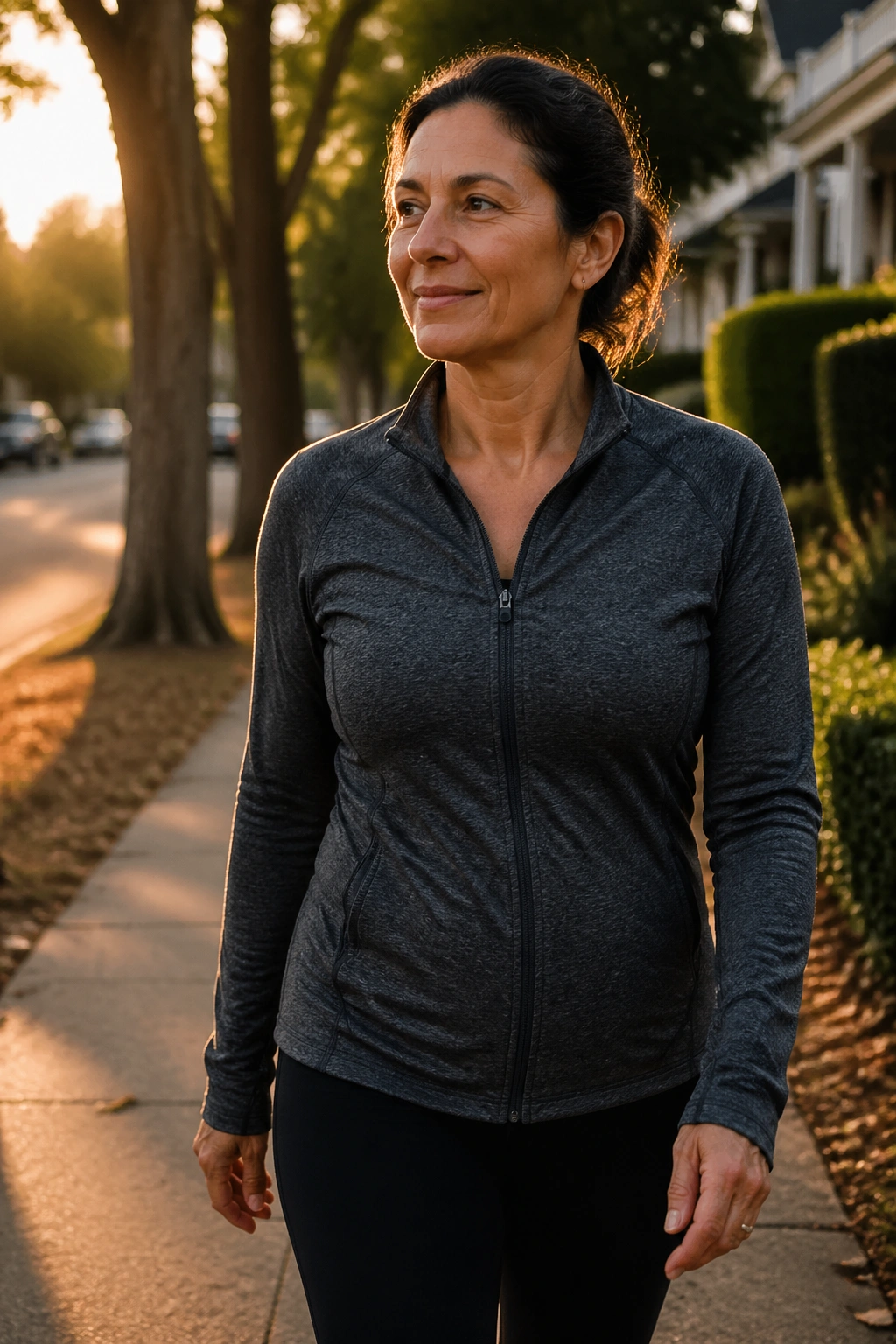
The long easy evening walk is the one people skip, then miss most. It’s not flashy. It doesn’t feel urgent. And because of that, it often becomes the walk that settles the whole day down in a way faster workouts can’t match.
Aim for 30 to 60 minutes at a conversational pace. Keep the route familiar if that helps you stay relaxed. Keep the pace soft enough that your feet don’t get loud when you’re tired. This is the session where you let the body move and the mind wander a little.
How to Make It Stick
- Pick a route with a clean start and finish.
- Wear shoes that feel fine after the first ten minutes, not only the first two.
- Leave the pace alone if the walk starts to feel smooth.
- Use it after dinner, after work, or after a crowded day.
A walk like this does not need much ceremony. It asks for a door, a pair of shoes, and a little willingness to keep going once the first five minutes are done.
Final Thoughts
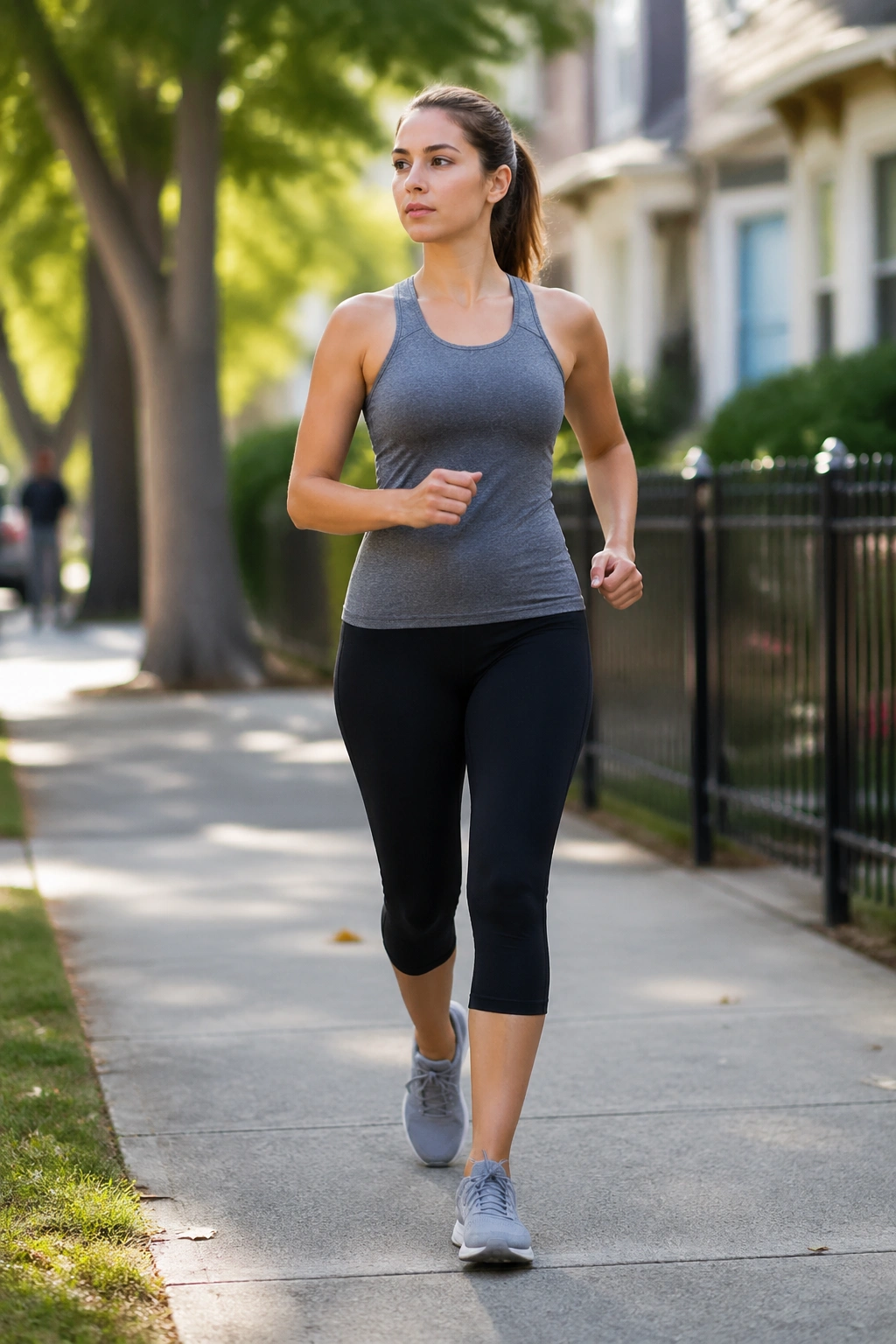
If you want cardio that doesn’t rattle floors or leave you feeling wrung out, walking is hard to beat. The trick is not finding one perfect version and clinging to it. It’s having a small menu: one brisk option, one interval option, one easy recovery option, and maybe one indoor backup for the days when leaving the house feels like too much.
Start with the walking workout that fits your space and your mood today. Then keep it simple enough to repeat tomorrow. That part matters more than the fancy bits.
A quiet routine can still be a real training routine. Sometimes especially then.
