



A good cardio workout at home does not need a treadmill humming in the corner or a row of shiny machines collecting dust. A hard floor, a little space, and 8 to 12 minutes are enough to leave you breathing hard and checking the clock. The trick is not doing random jumping until you hate your life. It is choosing moves that raise your heart rate fast, then giving yourself just enough recovery to do the next round with clean form.
That is why short home cardio works so well when time is tight. You are not trying to win a medal for suffering. You are trying to stack enough hard effort into a small window that your body has no choice but to notice.
Constant motion isn’t the goal.
And if jumping around isn’t your favorite thing, good. You do not need to like every move on this list. You only need a few that get loud in a hurry, feel doable in a living room, and leave your shirt stuck to your back by the end. A stair step, a hallway, a yoga mat, even a patch of floor beside the couch — those are enough.
Pick the version that fits your space and your joints, then start with item 1.
1. Jumping Jack Sprints
Jumping jacks are the old reliable of cardio workouts at home, and they still earn their keep because they are fast, simple, and brutally efficient when you do them in sprints. The magic is in the pace. Ten lazy reps won’t do much. Thirty seconds of crisp, snappy jacks with short rests can light up your whole body in a way that feels unfair for such a basic move.
How to Pace It
Try 30 seconds on, 15 seconds off for 8 rounds if you want a quick sweat. If you’re easing in, start with 20 seconds on, 20 seconds off and keep the jumps smaller. Land softly, keep your ribs stacked over your hips, and let your arms travel all the way overhead instead of half-heartedly waving somewhere near ear level.
Little Details That Matter
- Keep your feet landing about hip-width apart on the way down.
- Breathe out on the jump.
- If the room is noisy, switch to step jacks and move fast.
- Stop before your shoulders start shrugging toward your ears.
Best tip: think “quick and springy,” not “big and dramatic.” That keeps the rhythm up and your calves from turning into concrete.
2. High-Knee Power Ladder
High knees are one of the fastest ways to make a small room feel like a track meet. They don’t need much space, and they punish sloppy posture in a hurry, which is exactly why they work. Done right, they challenge your hips, your core, and your lungs at the same time.
Start with a 20-second burst and a 20-second march. Then climb to 30 seconds hard, then 40, then back down if you want a ladder feel. The knees do not need to fly up to your chest. They just need to come high enough that your torso stays tall and your feet keep moving with purpose.
A lot of people lean back on this one. Don’t. Keep your chest lifted, drive one knee at a time, and pump the opposite arm like you mean it. That little arm action matters more than people think. It keeps your balance cleaner and makes the pace easier to hold.
If your floor is unforgiving, do the same pattern as a marching drill with a fast tempo. It still counts. Your heart won’t care that it was polite.
3. Mountain Climber Rounds
Why do mountain climbers show up in almost every decent home cardio plan? Because they do a lot at once. Your shoulders hold a plank, your core keeps your hips from wobbling, and your legs keep driving like they’re late for something. That combination makes them ugly in the best way.
How to Use Them in a Tight Room
Put your hands on the floor, a couch, or a sturdy bench if your wrists like a little mercy. Run 20 seconds hard, 20 seconds easy for 8 to 10 rounds. Cross-body climbers — bringing the knee toward the opposite elbow — give your obliques a bit more work. Straight climbers are easier to keep fast.
If your hips jump around like a dog on hardwood, shorten the range and slow the first 5 reps. You want your shoulders quiet and your belly braced, not your whole body bouncing off the floor.
A clean set of mountain climbers feels more like a controlled scramble than a sloppy run. That’s the sweet spot. Speed matters, but so does not collapsing at the middle.
4. Burpee Interval Blocks
Nobody ever says, “Great, burpees.” And then they do them for 6 rounds and remember why the move refuses to leave fitness plans. Burpees squeeze a squat, a plank, and a jump into one nasty little package. That is exactly why they work so well when you want a fast sweat at home.
Do 5 to 8 burpees per round and rest for 30 to 45 seconds. Keep the rep count low enough that every one looks the same. Once the push-up turns into a snaking collapse, the workout gets worse and the benefits get fuzzier. Clean reps beat frantic ones.
- Standard burpee: squat, hands down, jump or step back, return, stand, jump.
- Low-impact version: step back to plank instead of jumping.
- No-push-up version: leave the chest dip out and focus on speed.
That last version is underrated. It’s easier to keep moving, and sometimes that matters more than making the move look heroic.
5. Skater Hop Sprints
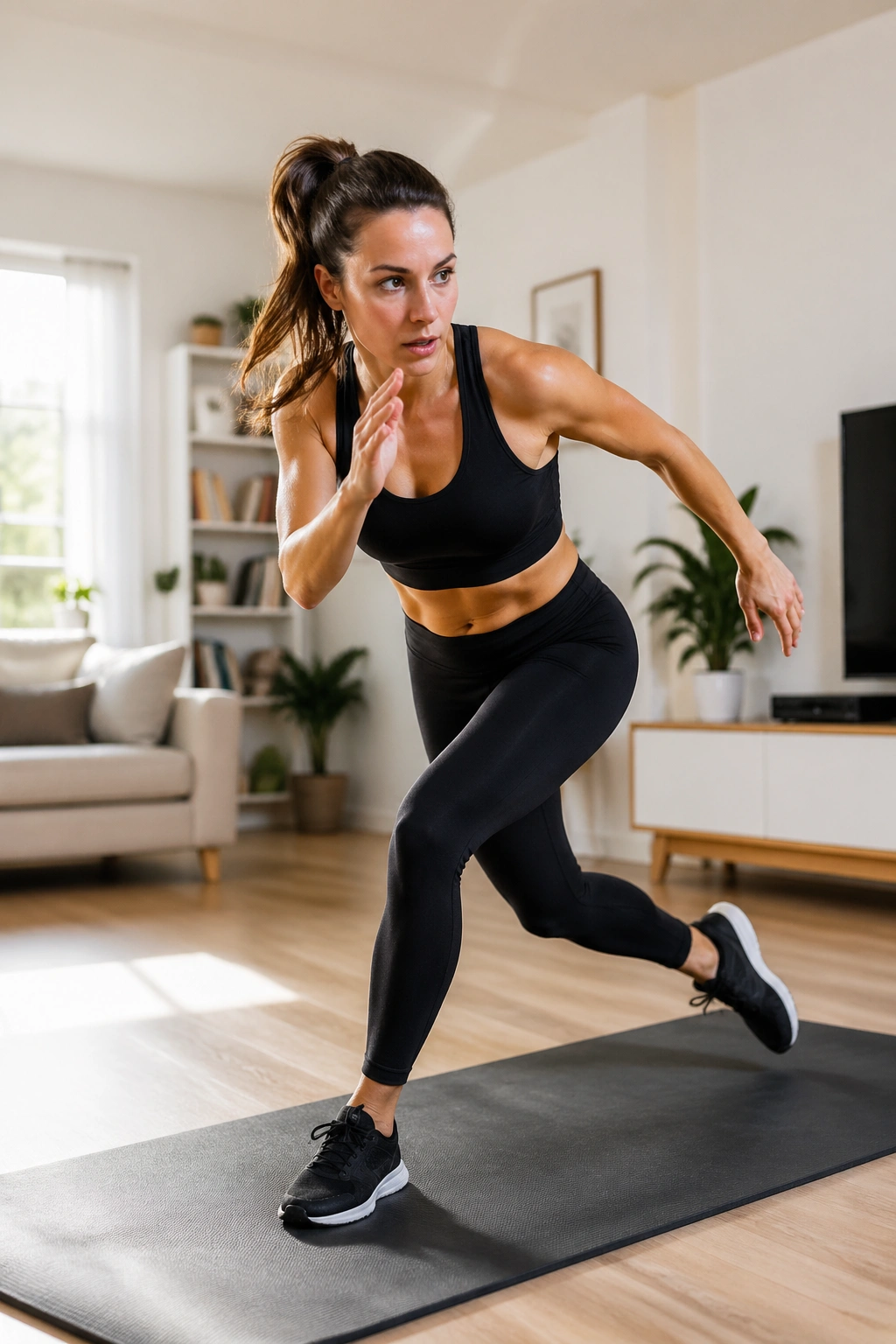
Skater hops give you the side-to-side sting that straight-ahead moves miss. That matters. Your body lives in more than one plane, and when you move laterally, the glutes, thighs, and stabilizers wake up in a way that keeps things interesting.
I like these when I want a workout that feels athletic instead of just busy. Start with 30 seconds of skater hops and 15 seconds to breathe, then repeat for 8 to 10 rounds. Reach behind you with the back leg, but don’t turn it into a giant flying leap unless you’ve got the space and the knees for it. Smaller, quicker hops can be just as hard.
A lot of people land stiff on this drill. Bend the standing knee a little and let the arms swing naturally across the body. That tiny bend softens the impact and makes the next hop quicker.
If you want a quieter version, stay low and keep the hop short. You’ll still feel your heart rate climb. Loud isn’t the point.
6. Squat Jump EMOM
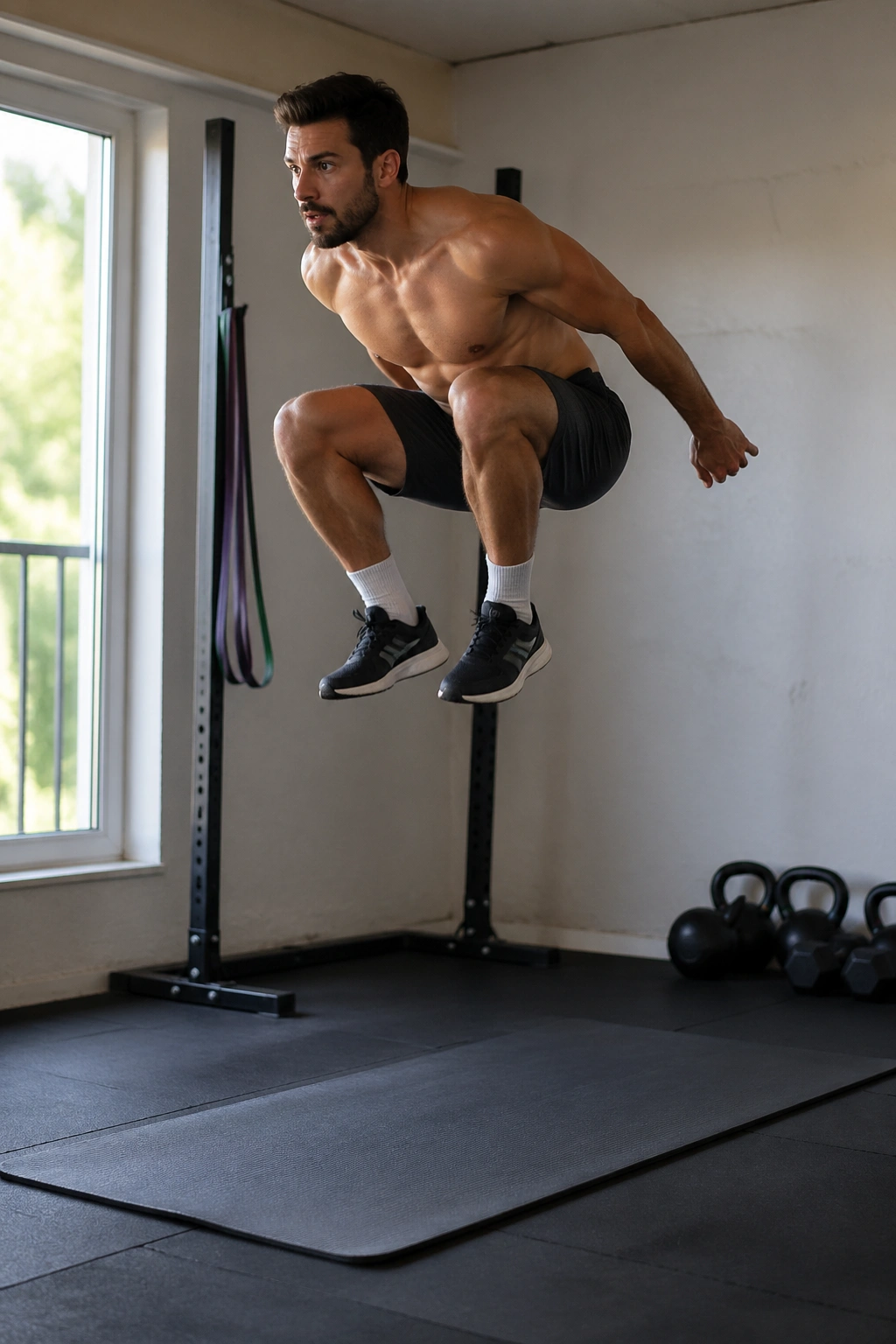
A squat jump EMOM is one of those sessions that looks almost too simple on paper. Every minute on the minute, you do a set number of squat jumps, then rest for whatever time is left in the minute. The rest is built in. That’s what makes it useful.
Try 8 to 12 jumps each minute for 8 minutes. If you’re newer to jumping, start with 6 to 8 and see how your legs handle it. The goal is to land with control, sit back into the squat, and explode up again without turning the movement into a noisy crash.
Unlike regular air squats, squat jumps ask for power, not just leg endurance. That means your heart rate jumps faster and your legs feel heavier sooner. If your knees are cranky, swap in fast bodyweight squats and keep the same timer. You’ll lose a bit of pop, but not the cardio effect.
This one is best when you want a short, aggressive session and you know your landing mechanics are solid. If the landings get sloppy, stop. No workout is worth angry knees.
7. Plank Jack Finishers
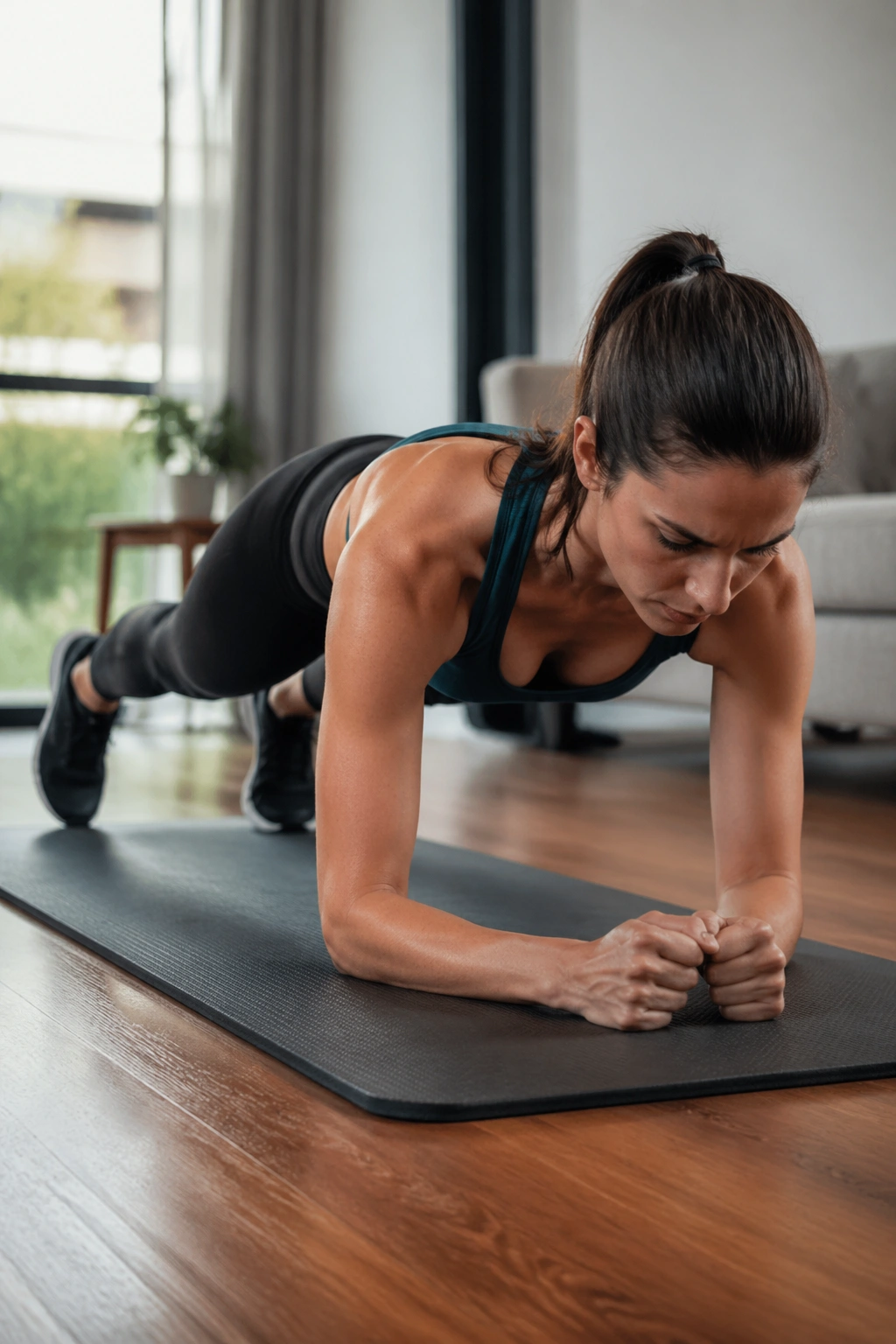
Plank jacks are sneaky. They look like a core move, and they are, but they also hit your shoulders hard enough to make your arms feel hot after a few rounds. That’s why they work so well as a finisher when you want one last spike before you’re done.
The Small-Space Version
Set a timer for 20 seconds on, 20 seconds off and do 6 to 8 rounds. Keep your hands under your shoulders and step the feet in and out if hopping feels too loud or too hard on the wrists. If you can hop, great. If not, the step version still gets the heart rate moving.
What to Watch For
- Keep your hips level instead of swaying side to side.
- Brace your belly like someone is about to poke it.
- Don’t let your neck crane forward.
- Stop if your lower back starts sagging.
A plank jack is not a race to see how wild you can get. It’s more useful when the body stays organized and the feet just keep tapping out the rhythm.
8. Shadowboxing Rounds

Shadowboxing is one of the best home cardio options because it does not need gear, and it does not punish your floor. You can throw punches in a bedroom, a hallway, or a tiny living room without much noise. That makes it perfect for quick sessions when jumping around feels like too much.
Work in 2-minute rounds with 30 seconds of rest, or keep it punchier with 45 seconds on, 15 seconds off for 10 rounds. The combos do not need to be fancy. Jab-cross, jab-cross-hook, slip, reset. Add knee lifts if you want more lower-body work. The key is staying active the whole time instead of posing between punches.
Hands should come back to your face every time. Exhale on the punch. Rotate through the torso a little so the movement comes from the whole body, not just the shoulders flapping around. That keeps the round more athletic and less like air-drumming.
A good shadowboxing round can feel almost like dancing with an argument. Fast, messy, fun, and somehow exhausting.
9. Stair Climb Intervals
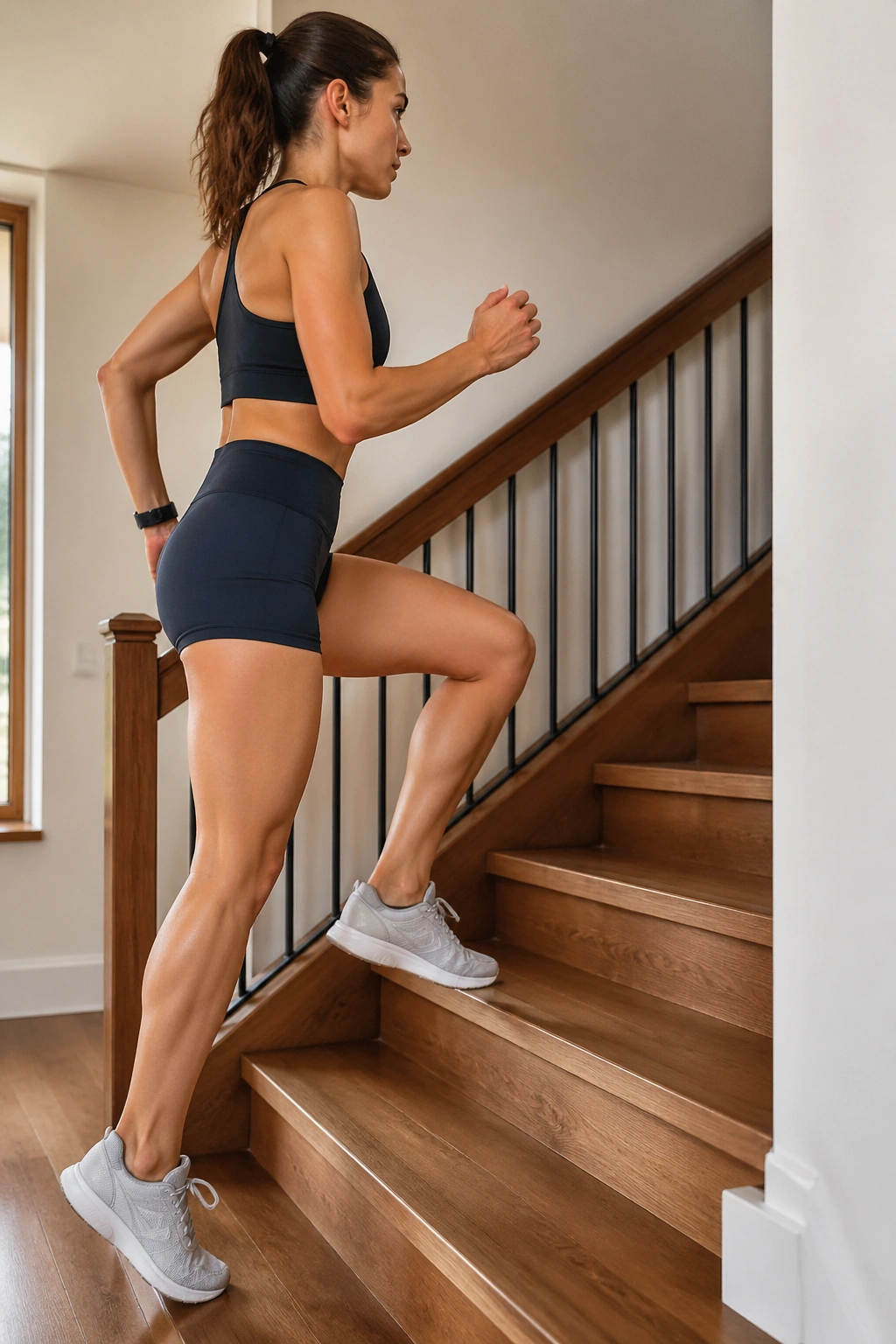
If you have stairs, use them. Not because they’re glamorous — they aren’t — but because they are one of the fastest ways to make a home workout feel serious. Even a single sturdy step can work if you don’t have a full staircase. The combo of leg drive and heart rate spike is hard to beat.
How to Structure It
Go up and down for 30 to 60 seconds, then recover for 30 seconds. Repeat for 8 to 12 rounds. Keep your foot placement safe and deliberate. If the stairs are narrow, don’t try to sprint like you’re in a movie scene. Fast, controlled steps are better than one dramatic slip.
A Few Practical Details
- Use the full foot on each step.
- Hold the rail only if you need to.
- Turn around slowly at the top.
- If knees complain, take the stairs at a brisk walk instead of a run.
There’s something satisfying about this drill. It feels plain. Then it doesn’t. By round 5, the same staircase that looked harmless starts asking for respect.
10. Bear Crawl Shuttles
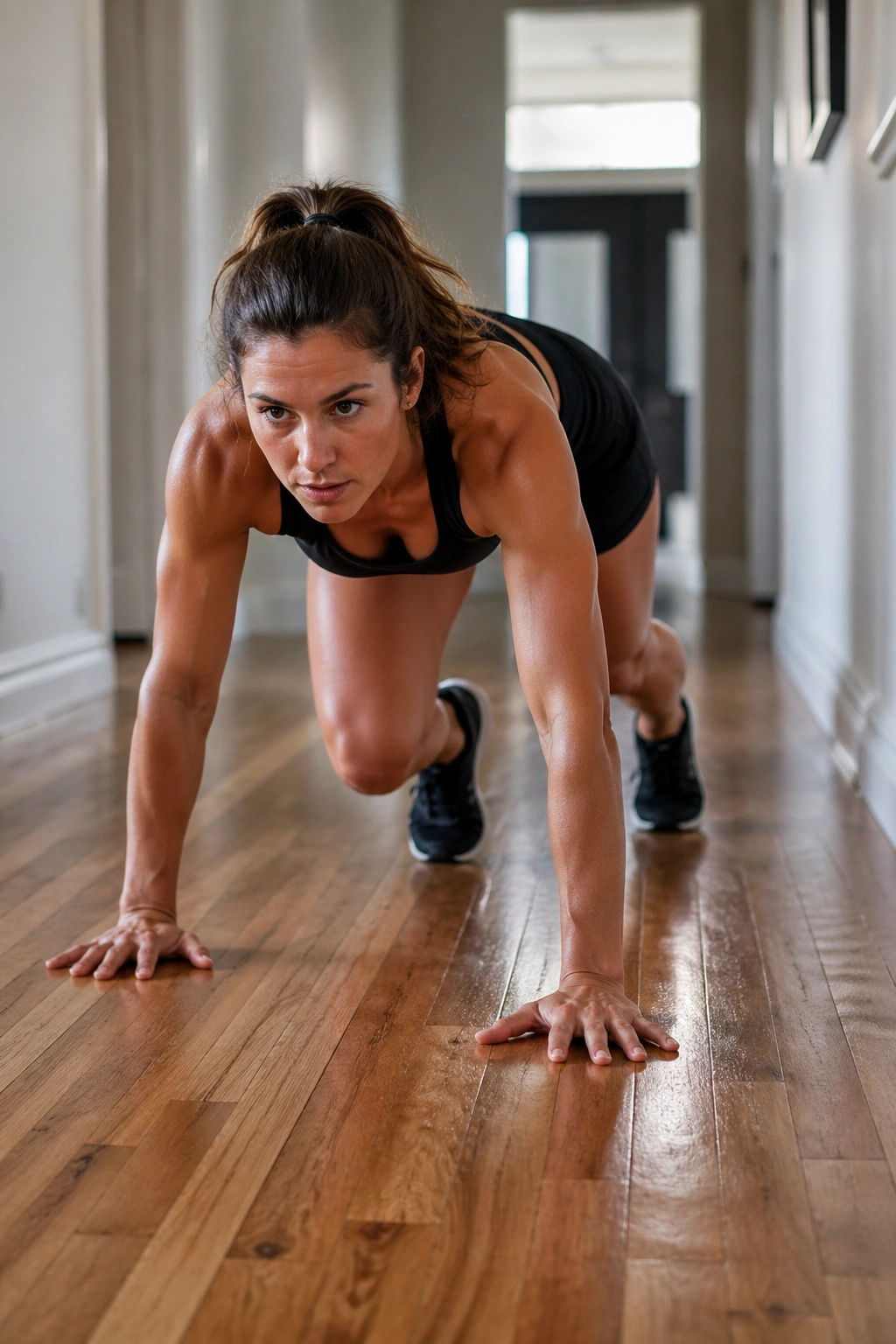
Bear crawls look a little ridiculous. That’s part of the charm. Get down on hands and feet, keep the knees low, and crawl forward for 3 to 5 steps, then back up and do it again. The heart rate climbs fast because your shoulders, core, and hips all have to work while your body moves in a weird, tiring way.
I like this one for hallways or open spaces where straight-line movement is possible. Do 20-second shuttles with 20 seconds of rest. If that feels too smooth, use a longer crawl distance. If it feels too brutal, shorten the steps and keep the knees a little higher off the floor.
The hardest part is staying controlled. People often let the hips shoot up and turn it into a weird crouched walk. Keep the torso low and the steps deliberate. It will feel slower, and it will work better.
Bear crawls are one of those moves that remind you how much cardio lives outside of jumping. Not elegant. Very effective.
11. Reverse Lunge Drive Intervals
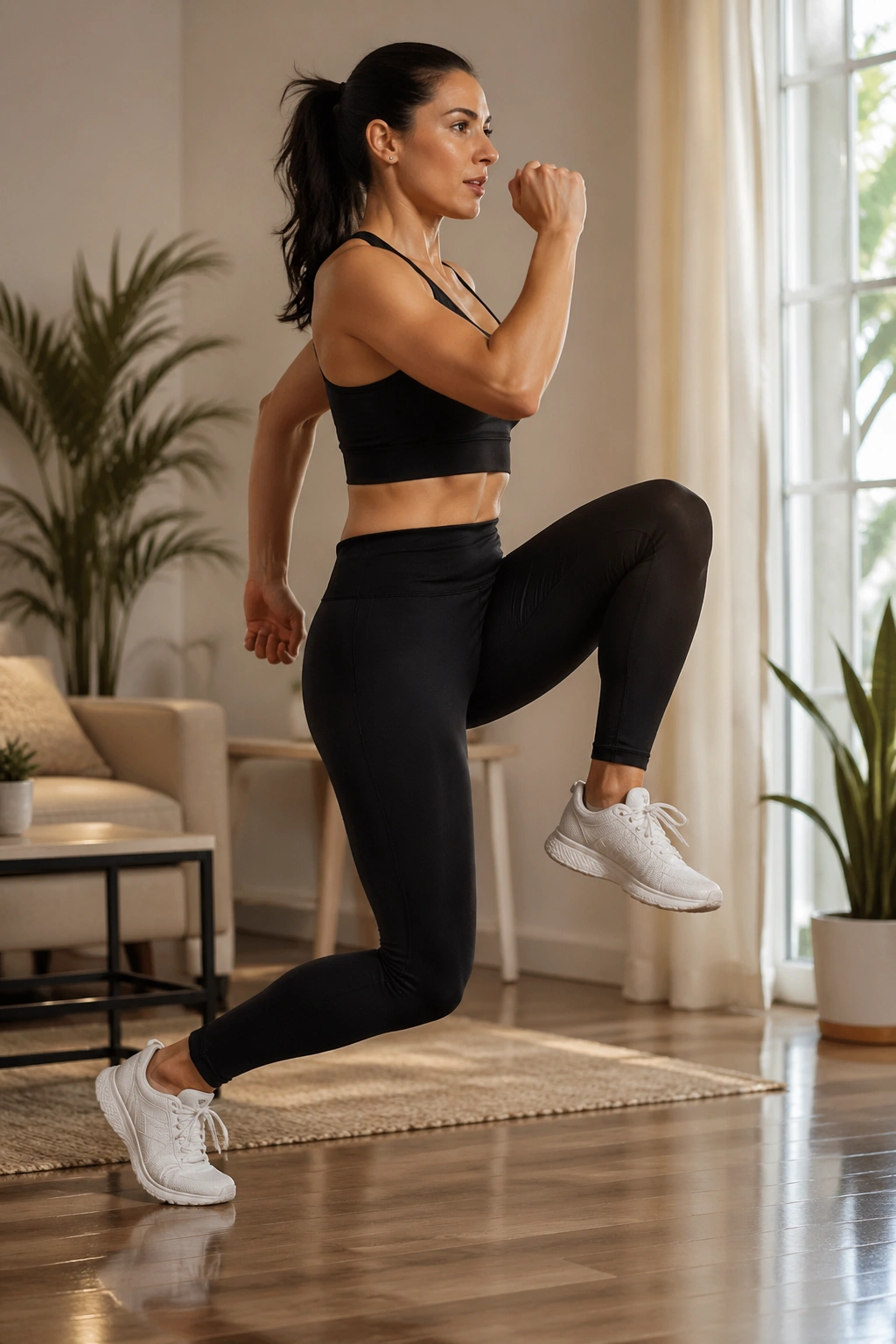
Why put lunges in a cardio list? Because when you speed them up, they stop being a strength-only move and start behaving like a heart-rate drill. The reverse step gives your knees a little more room than a forward lunge, which is why I prefer it for quick home sessions.
How to Keep It Crisp
Do 20 seconds on each leg, then rest for 20 seconds. Drive the front knee up as you stand, but don’t fling yourself backward to the point where balance falls apart. The motion should feel springy, not chaotic. If you have room, travel a step or two across the floor. If not, stay in place and keep the rhythm clean.
A few points worth watching:
- Keep the front heel planted on the way down.
- Let the torso stay tall.
- Use a shorter step if your knees feel cranky.
- Add a knee drive at the top for more speed.
The knee drive is the part that turns this into cardio. Without it, you’re mostly just doing lunges. With it, the whole thing gets warmer, faster.
12. Frogger Jump Circuits
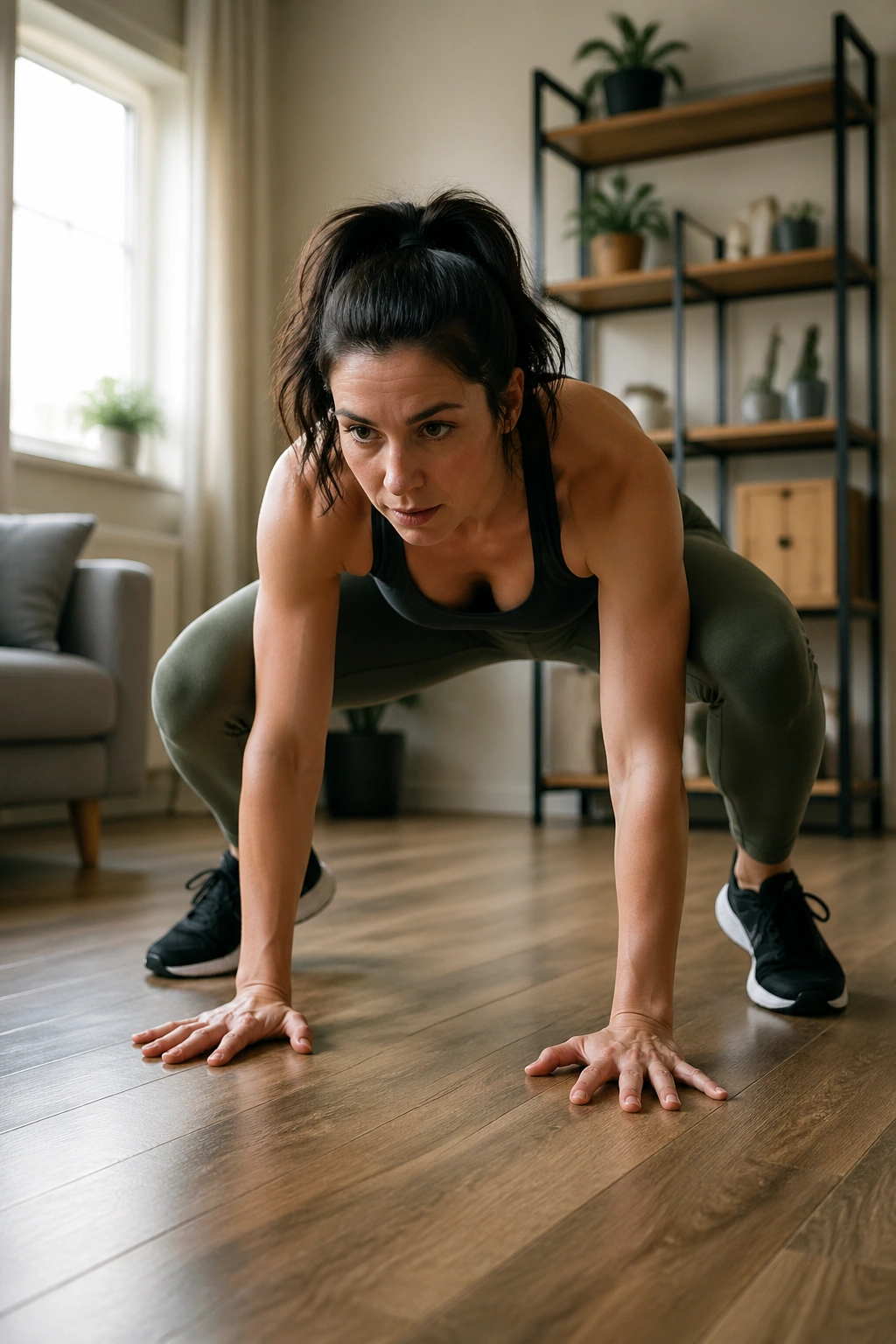
Frogger jumps are messy, athletic, and a little ugly. I mean that as praise. You start in a squat, place your hands on the floor, jump both feet outside your hands, and then stand or hop back to start. The up-down-up pattern gets your lungs moving fast.
Run 5 to 8 reps per set and rest for 30 to 45 seconds. If the room is tight, keep the jump small and land softly. You do not need a giant leap. You need a quick transition from low to high and back again. That transition is where the burn shows up.
This move works because it interrupts your rhythm. Your legs have to absorb force, then push again immediately. That’s tiring in a hurry. It also sneaks in a little mobility if your hips and ankles are stiff from sitting all day.
If you want a home cardio drill that feels like you’re getting away with something, this is one of them. It looks simple right up until it doesn’t.
13. Fast-Foot Line Drills
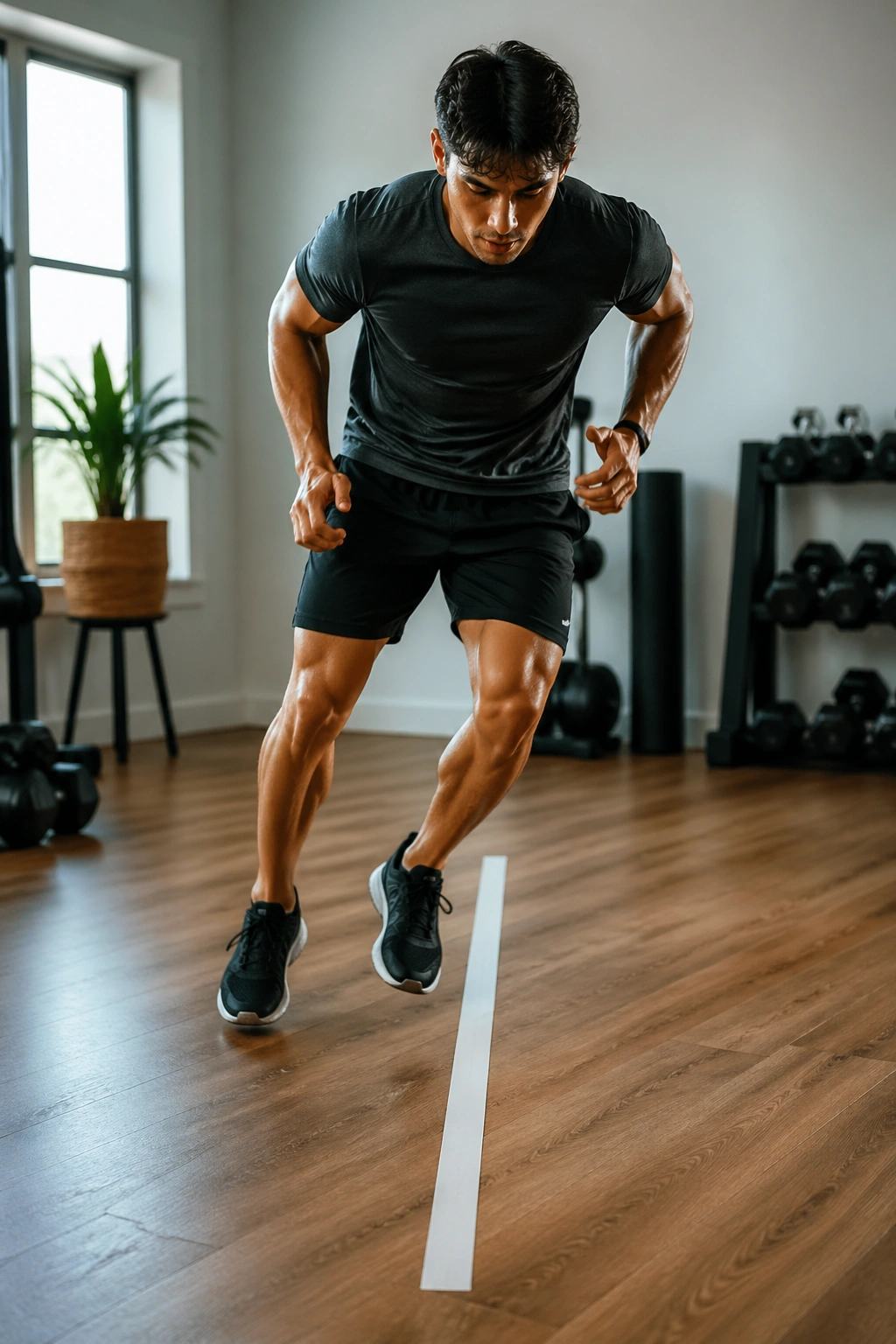
A tape line on the floor turns into a decent cardio tool fast. Fast-foot line drills are tiny, quick hops over a line or seam, and the lack of big movement is exactly why they belong in a home setting. You stay light, fast, and annoyingly out of breath.
Basic Setup
Stand with both feet on one side of the line. Hop side to side for 15 seconds, rest for 15 seconds, and repeat 10 times. Keep the knees soft and the ankles springy. The goal is not height. The goal is speed.
Ways to Change It Up
- Hop forward and back across the line.
- Move one foot at a time for a lower-impact version.
- Use a towel, chalk mark, or tile seam if you don’t want tape.
- Add arm swings to drive the tempo.
The drill feels almost too small to matter. Then the lungs start fighting back. That’s the whole point.
14. Inchworm to Push-Up Flow
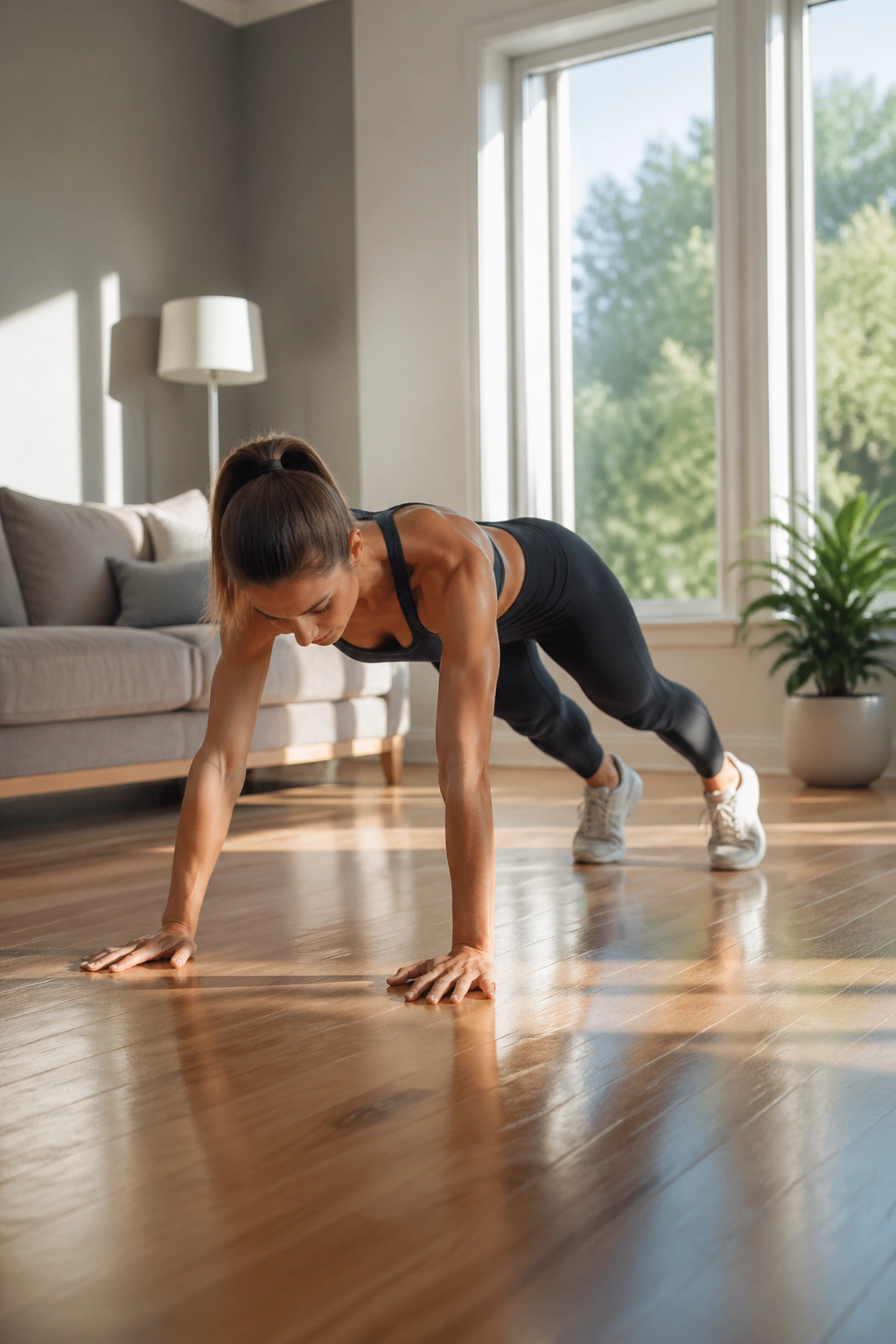
Inchworms are a nice change of pace when you want cardio without constant jumping. Walk your hands out to a plank, do a push-up if your shoulders are up for it, then walk your hands back and stand. Simple enough. Harder than it looks, too.
Unlike pure squat-and-jump work, this flow keeps the upper body busy while your hamstrings and core stretch and brace at the same time. That makes it a good pick if your body feels stiff but you still want to sweat. Do 6 to 10 reps and keep the pace steady instead of racing through the movement like a bad burpee.
If the push-up feels too ambitious, leave it out and use the walk-out only. You’ll still get a clean cardio hit. If your wrists hate the floor, place your hands on the edge of a sofa or a solid bench for a raised version.
The nice thing here is rhythm. There’s a pattern to it, and once it clicks, the workout feels smooth instead of frantic.
15. Alternating Lunge Jumps
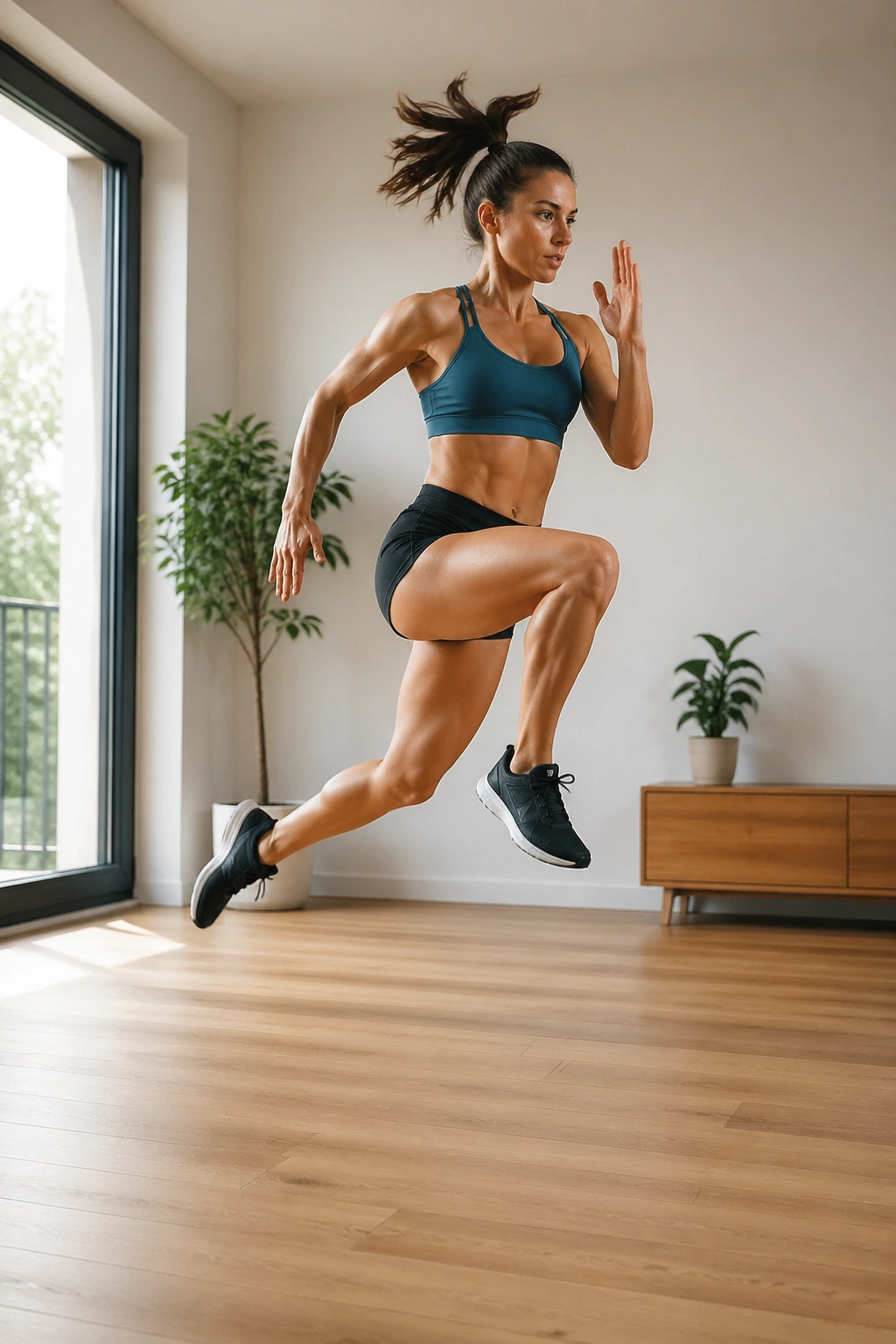
Alternating lunge jumps are for days when your legs are warm and your neighbors are either kind or far away. Step into a split stance, drop into a lunge, then jump and switch legs in the air. It’s a mouthful, and it earns every part of that description.
Start with 5 jumps per side and build slowly. If your balance is shaky, use reverse lunges instead and move faster. The jump version asks for coordination, not just power. That means your torso needs to stay upright and your front knee needs to track over the foot instead of caving inward.
A lot of people try to make these huge. That’s a mistake. Smaller jumps usually mean better control and less pounding on the joints. If you can keep the rhythm steady, the workout will do its job without turning into a joint audit.
I’d save this one for short blocks, not long marathons. It’s sharp, not gentle.
16. Step-Up Power Sets
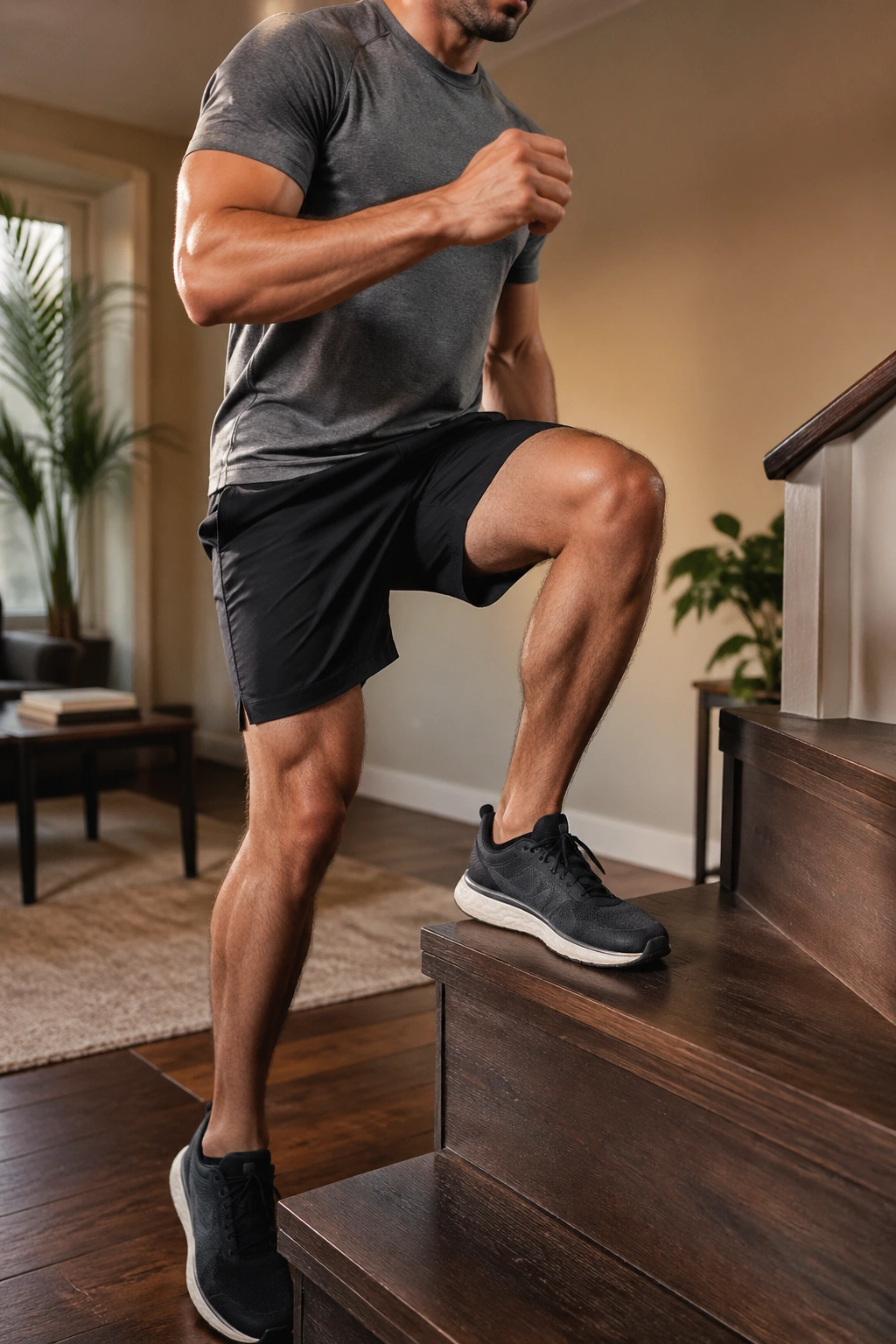
Step-ups deserve more respect than they get. A sturdy stair, bench, or low platform can turn into a very good home cardio tool if you move with purpose. The nice part is that the impact stays lower than jump-heavy moves, but the heart rate can still climb fast.
Set It Up
Choose a step that lets your whole foot land on top. Too high and you start cheating with the back leg. Too low and the workout gets sleepy. Aim for 30 to 45 seconds of continuous step-ups, then rest for 15 to 30 seconds.
Keep the Rhythm Honest
- Drive through the standing leg.
- Bring the opposite knee up at the top.
- Step down with control instead of dropping.
- Switch the lead leg each set.
If you want more heat, move your arms like you’re running up a hill. That’s the difference between a mild leg drill and a sweaty cardio set. Not fancy. Just useful.
17. Dance Cardio Bursts
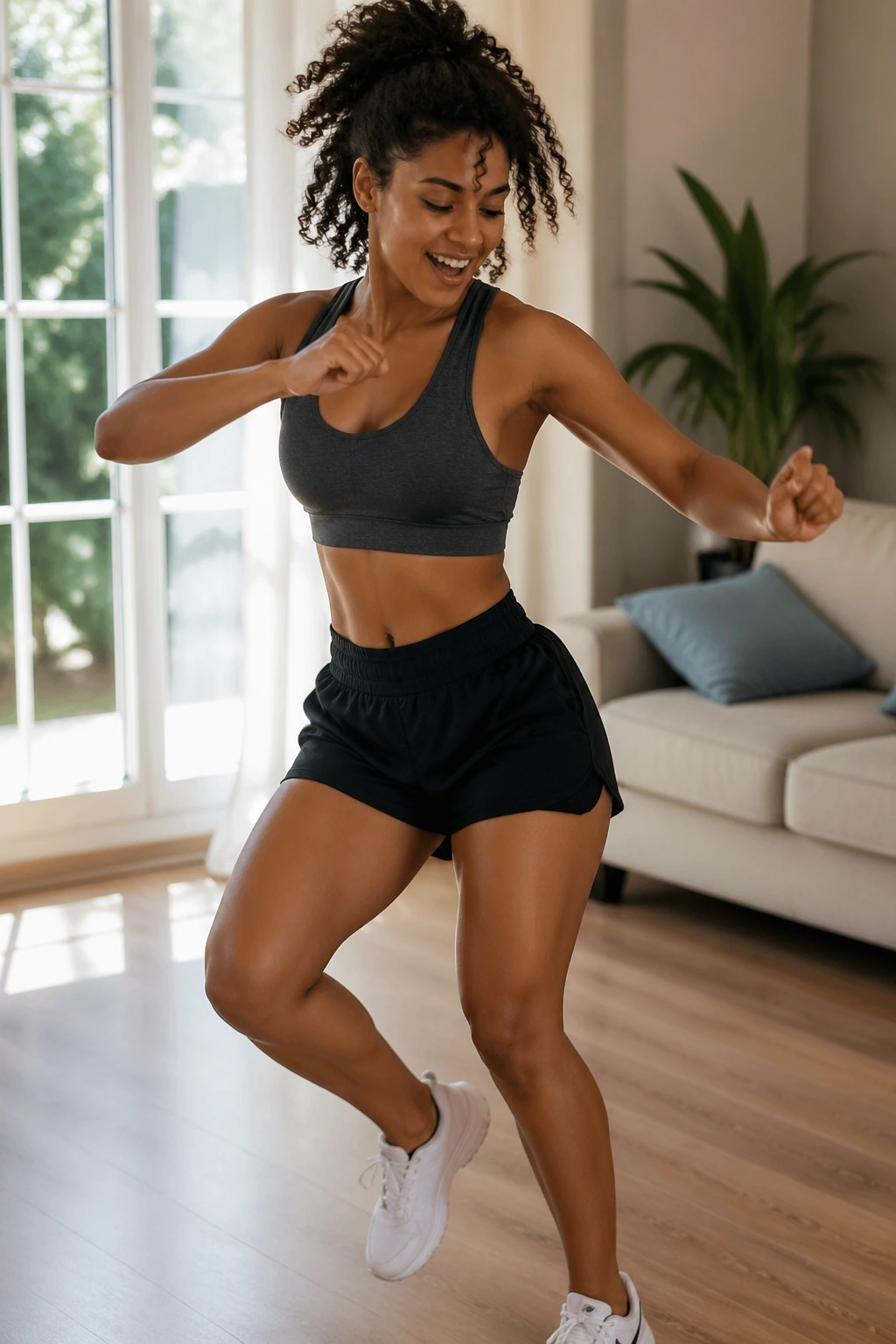
Dance cardio works because people stop overthinking once the music gets moving. You do not need choreography. You need a few repeatable patterns and enough willingness to look slightly foolish for 8 minutes. That’s all.
Pick 3 or 4 moves — side steps, knee lifts, grapevine steps, quick punches, little turns — and cycle them for 45 seconds on, 15 seconds off. Keep the steps simple enough that your brain doesn’t have to negotiate with your feet. The more you have to think, the less cardio you do.
This kind of session is underrated for home use because it adapts to mood. Low energy? Keep it looser and smaller. Feeling sharp? Make the steps faster and the arms bigger. Either way, the room stays the same and the sweat still shows up.
The best dance bursts feel a little playful and a little clumsy. That’s fine. Nobody is grading your footwork.
18. Cross-Body Knee Drive Rounds
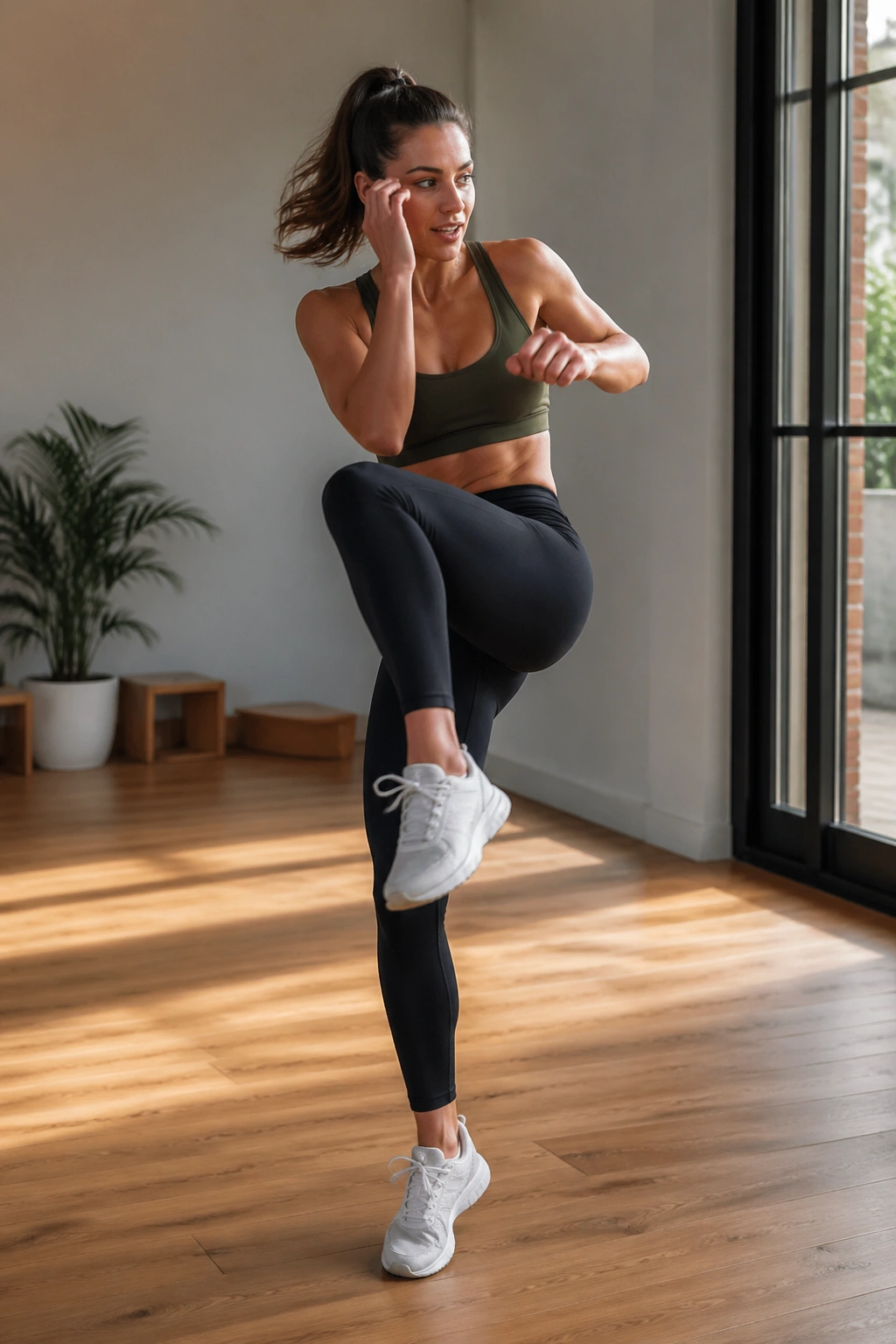
Why do cross-body knee drives feel harder than they should? Because they sneak rotation into a move that looks almost like marching. When your opposite knee and elbow or hand move toward each other, the core has to brace, and the torso can’t just float along for free.
Do 30 seconds of work and 15 seconds of rest for 10 rounds. Keep the standing leg grounded, drive the opposite knee across the body, and reach the opposite elbow down with a little twist. If balance gets wobbly, slow down rather than leaning back. The point is to stay tall while you turn the midsection on.
This is one of my favorite low-jump options for a sweaty session. It gets the heart rate up without making the floor sound like a drum solo. It also plays well as a bridge between harder intervals, since your breathing stays active even when the impact stays low.
Sharp, compact, and a little sneaky. That’s the whole appeal.
19. Tuck Jump Countdowns
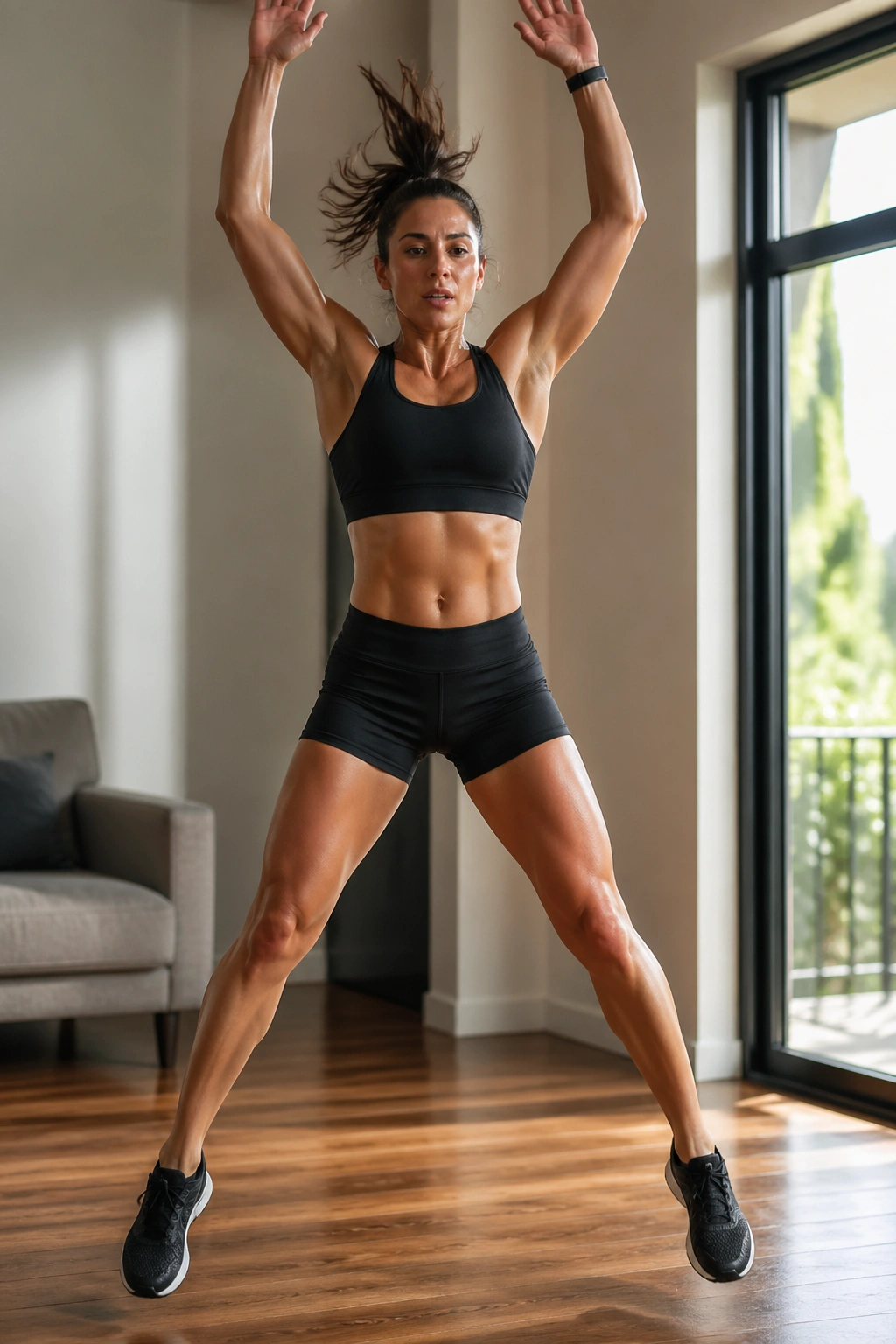
Tuck jumps are not a move to improvise when you’re already cooked. They are short, explosive, and best treated like a tiny power test. Bring the knees up as you jump, land softly, and stop before your form starts to fall apart.
I like countdowns for these: 10 reps, then 8, then 6, then 4, then 2. Rest for 20 to 30 seconds between rounds. That structure keeps the session short and honest. If your landings get loud, reduce the height and focus on the snap upward.
The lower body takes the hit, but the lungs feel it too. That’s why tuck jumps belong in a “sweaty quick” session instead of a long grind. They give a lot back in a little time, and they do not hide bad mechanics.
Use them when you’re already warm. Cold tuck jumps are a bad idea. Warm ones are a different story.
20. Low-Impact March and Punch
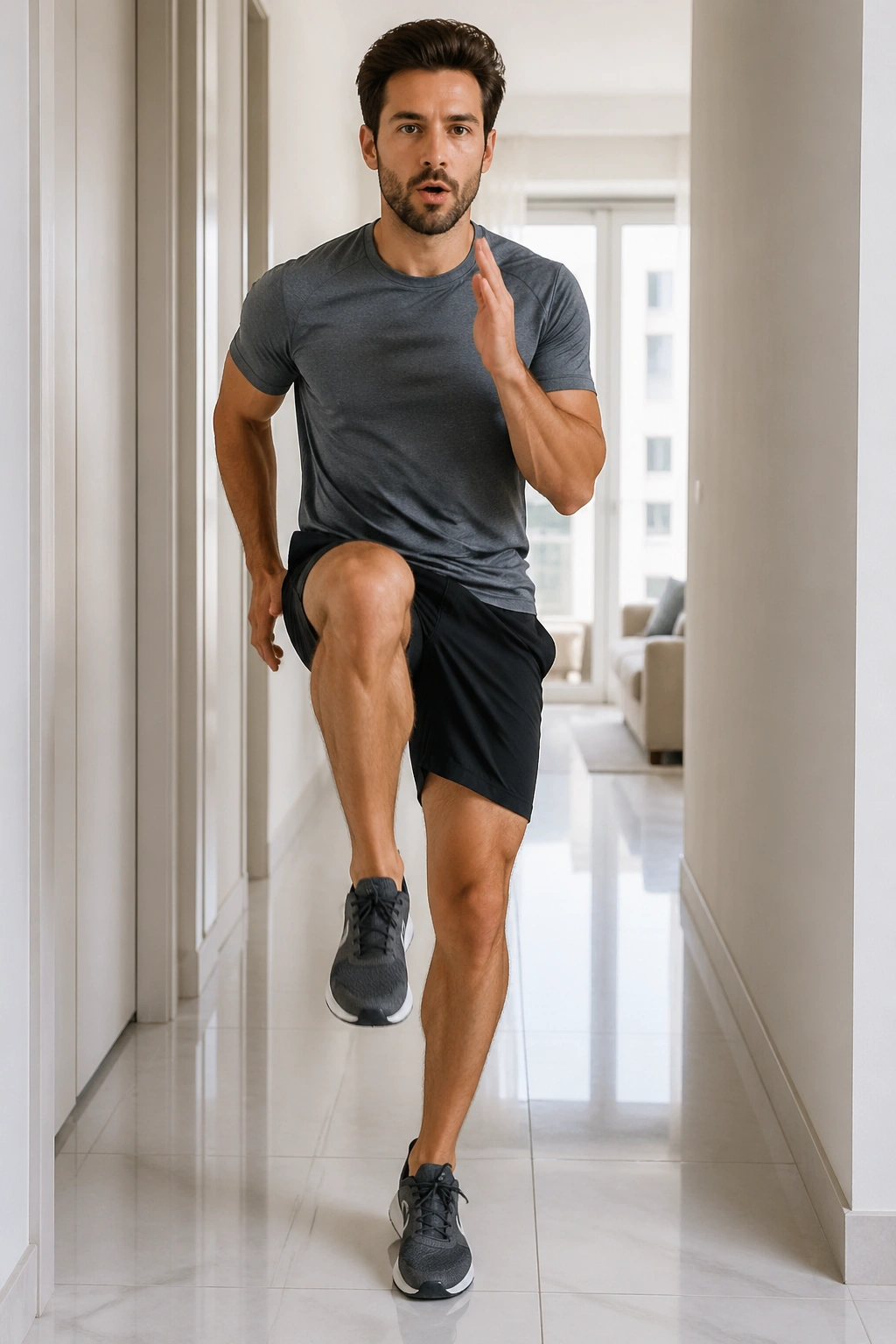
Not every home cardio workout has to bounce. A low-impact march and punch session keeps one foot grounded most of the time, which makes it a smart pick for noisy floors, tired knees, or days when you want to move hard without feeling rattled.
Who This Fits Best
- Beginners who want a simpler start.
- People with cranky joints.
- Anyone working out in a shared space.
- Days when your legs feel flat but you still want your heart rate up.
Set a timer for 40 seconds on, 20 seconds off and march with fast arm punches, overhead reaches, or cross-body punches. You can layer in knee lifts, side steps, and torso turns. The session stays honest if your arms keep moving with intent. Lazy arms make a lazy workout.
Unlike jump-heavy options, this one lets you breathe a little easier while still building heat. That’s not a downgrade. It’s a useful tool, and honestly, it keeps more people consistent.
21. Shuttle Sprints in Hallway
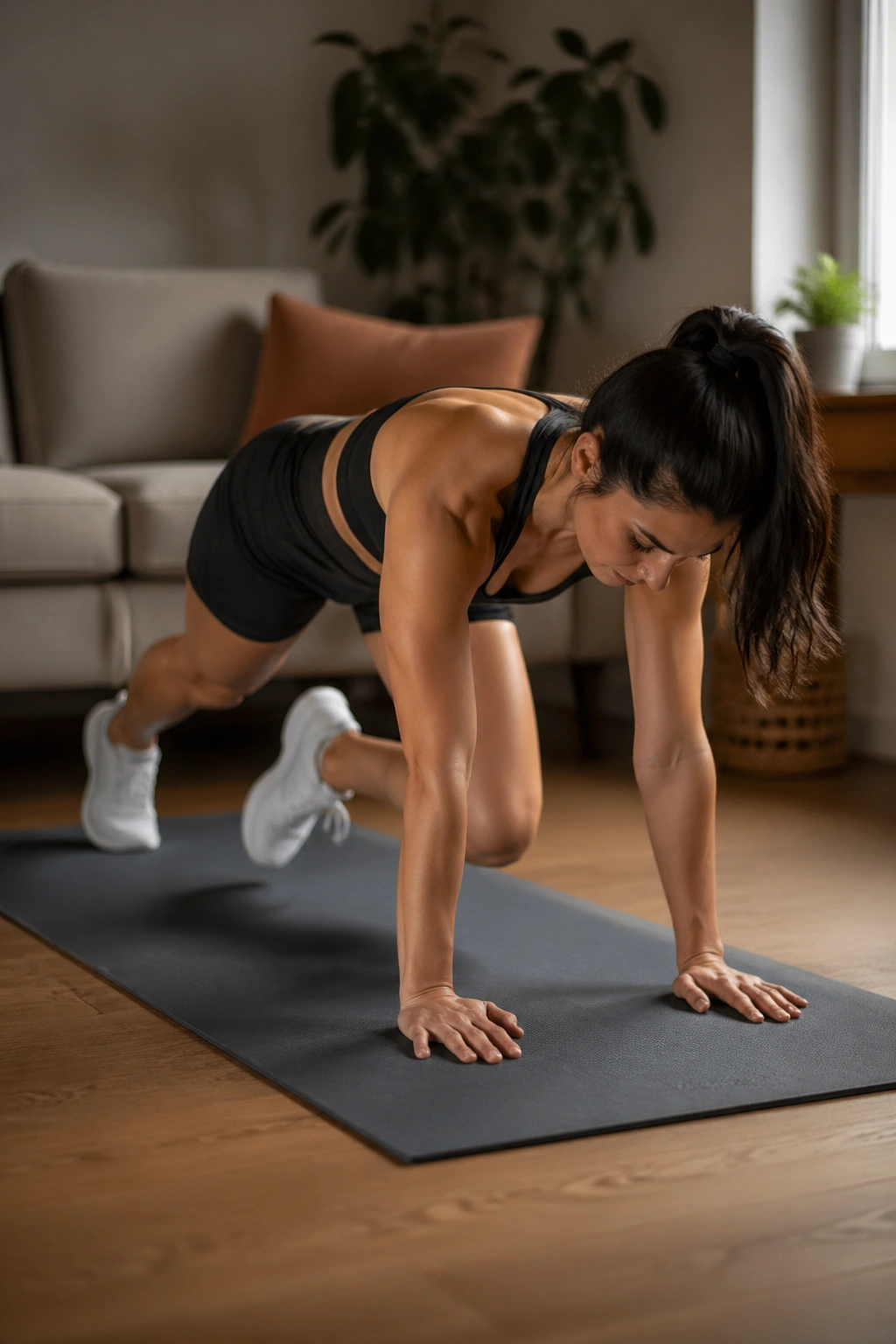
A hallway is enough. Two markers, a doorway, a rug edge, even a pair of shoes on the floor can turn into a shuttle lane. Sprint to one end, tap, come back, and repeat. Fast direction changes make this harder than a straight jog, and they keep the brain awake too.
A Simple Setup
Use a distance of about 8 to 12 feet if space is tight. Go for 20 seconds hard, 40 seconds easy for 8 rounds. If you want more of a challenge, add lateral shuffles or backpedals on alternate rounds. Just make sure the floor isn’t slick. Hallway pride is not worth a fall.
Small Things That Help
- Stay light on the toes.
- Touch the marker with one hand or one foot.
- Turn with control instead of skidding.
- Keep your chest up on the way back.
Shuttles are especially nice when steady-state cardio feels boring. There’s a tiny burst of purpose every time you touch the line, and that keeps the workout from drifting.
22. Mixed 10-Minute Cardio Ladder
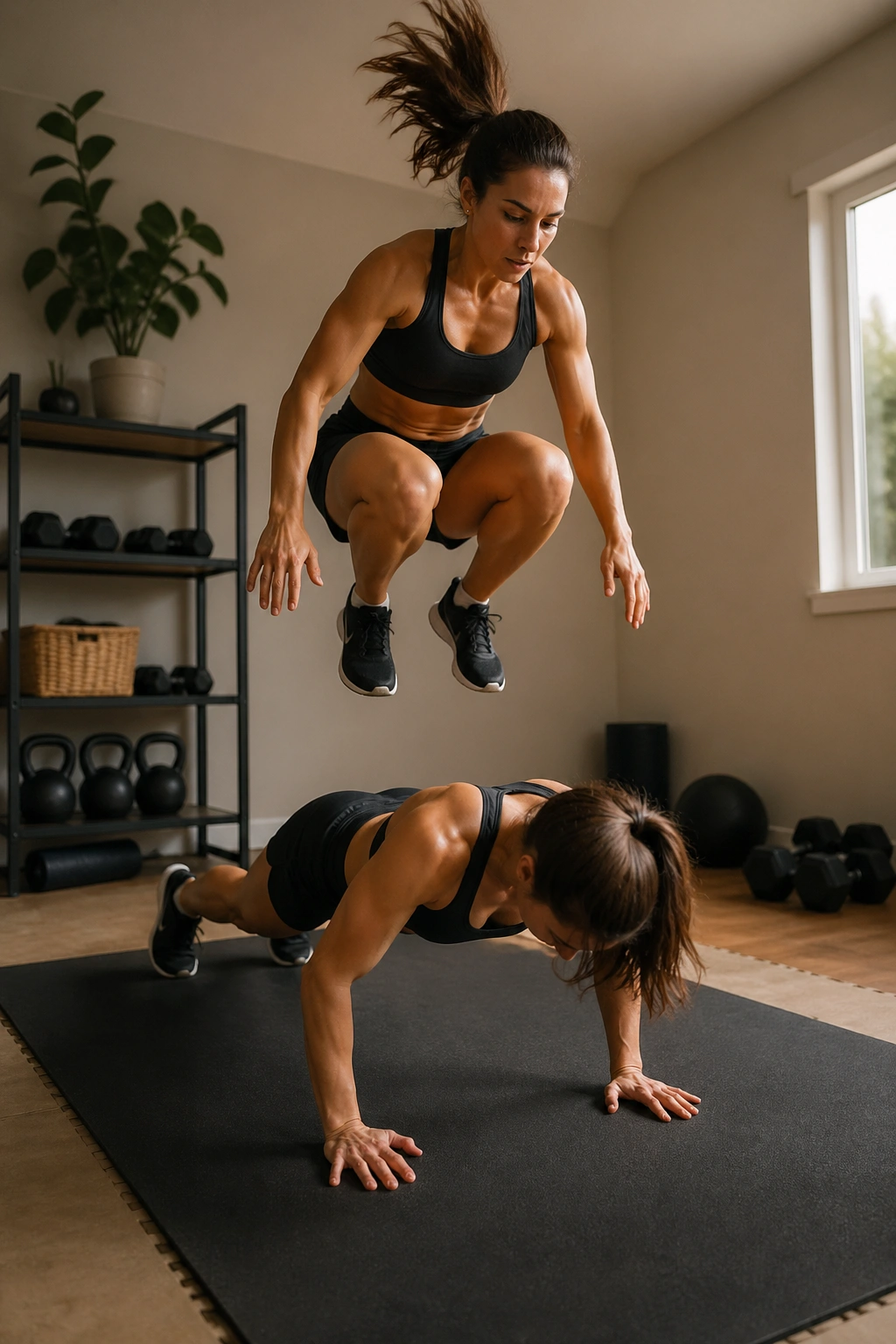
This is the session I’d bookmark if you want one home workout that covers a lot of ground without turning into a planning problem. A mixed ladder lets you borrow the best parts of the moves above — a little jumping, a little punching, a little core work — and string them together into a hard 10 minutes.
Try this pattern: 30 seconds jumping jacks, 15 seconds rest, 30 seconds mountain climbers, 15 seconds rest, 30 seconds shadowboxing, 15 seconds rest, 30 seconds squat jumps, 15 seconds rest, 30 seconds high knees, 15 seconds rest, 30 seconds plank jacks, 15 seconds rest. That gives you one round. Repeat it once if you want a longer push, or keep it to a single round on days when you only have one good window.
The nice thing about a ladder is that no single movement gets to dominate. Your heart rate stays up, but different muscles get a turn. That means less boredom and fewer places for form to fall apart. If jumps are off the table, swap in step jacks, march-and-punch, or fast step-ups. Keep the timer. That matters more than the exact move.
End the session standing tall, breathing hard, and not hunting for a complicated cool-down. Walk around the room for a minute, sip some water, and let the work land. Then next time, pick a different route through the list and make it your own.
