



A full face of foundation and a hard workout rarely end well. By the time you’ve finished a few burpees, a treadmill incline, or a heavy set of squats, the mirror can start to tell a different story. Gym makeup tips only matter if they can handle sweat, friction, heat, and the sneaky oil that shows up the second your heart rate climbs.
The mistake most people make is piling on more product. That usually backfires. A thinner base, smarter placement, and formulas that dry down instead of staying slick on the skin will survive far longer than a thick layer of anything pretty. A pea-sized amount of primer in the center of the face often does more than a full-face coat, and a light skin tint usually behaves better than a heavy foundation once you start moving.
That does not mean you have to show up bare-faced every time. A little coverage can still make you feel pulled together, especially if you’re heading from the gym straight to errands, brunch, or work. The point is to build a face that can bend with the workout instead of fighting it.
The best workout makeup is boring in the smartest way. Fewer layers. Better formulas. Less touching. And yes, a blotting paper beats a panic-addition of powder almost every time.
1. Start With a Clean, Lightly Moisturized Face
A clean face sounds basic. It isn’t. If there’s leftover sunscreen, overnight oil, or yesterday’s moisturizer sitting on the skin, gym makeup slides around faster and breaks up in strange little patches around the nose and mouth.
The sweet spot is a face that feels clean, not stripped. Use a gentle cleanser, then apply a lightweight moisturizer in a thin layer. If your skin is oily, a gel cream usually behaves better than a rich balm. If your skin is dry, use a small amount of a cream that sinks in fast and doesn’t leave that slippery, glossy film behind.
What to do before the first swipe
- Wash with a mild cleanser and pat the face dry.
- Apply a pea-sized amount of moisturizer.
- Wait 5 to 10 minutes before makeup so the surface stops feeling tacky.
- If you use sunscreen, let it settle before adding anything else.
A lot of people rush this part because it feels boring. Don’t. Rushing skincare is one of the easiest ways to make your base separate halfway through class. If your face is already damp or greasy, primer and foundation have less to cling to, and sweat only makes that worse.
One small detail matters more than people think: press a tissue along the sides of the nose and upper lip before makeup if those spots get shiny quickly. That tiny move gives your first layer a fighting chance.
2. Use a Grippy Primer Only Where You Need It
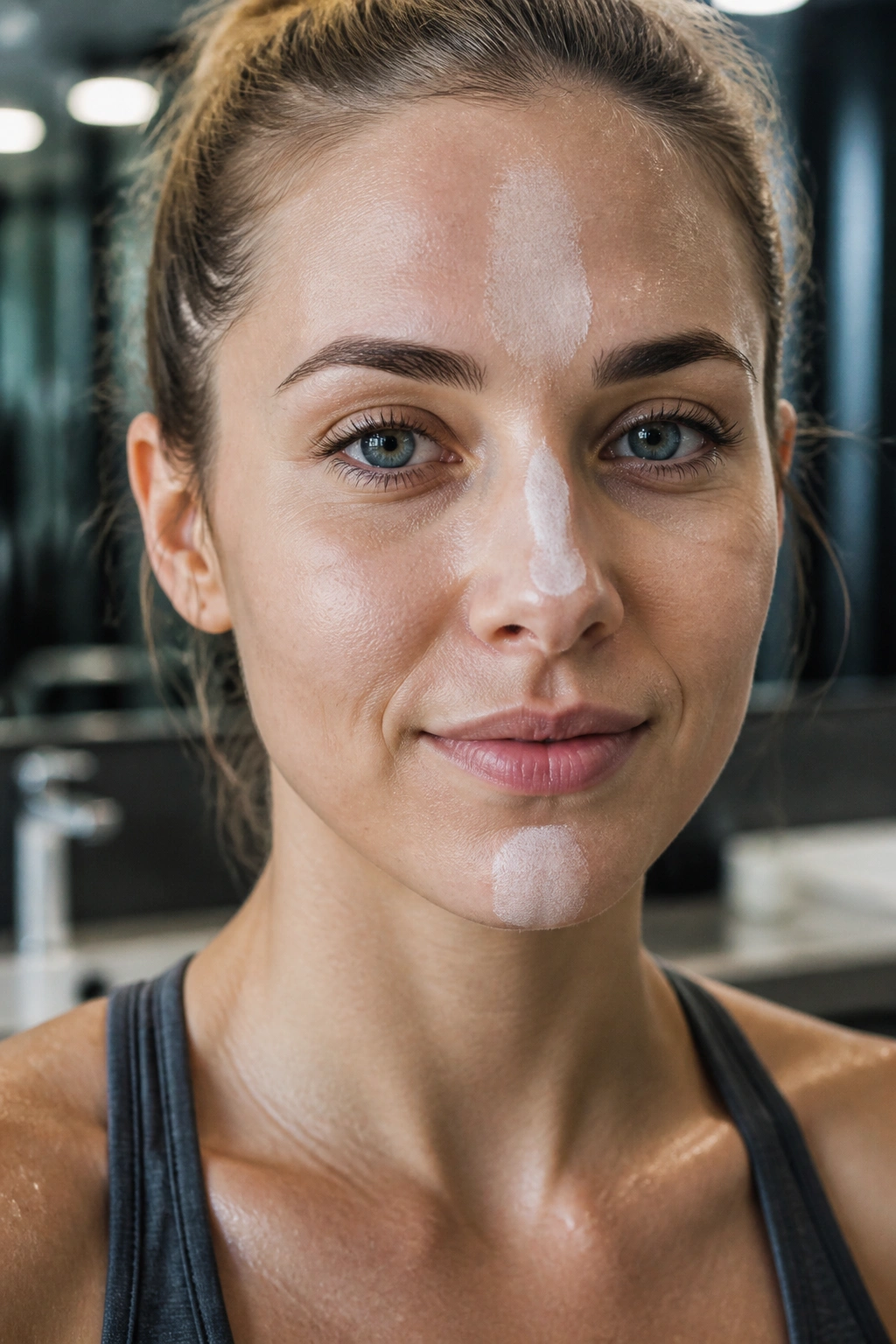
Primer only helps when it has somewhere to grip. Smearing it everywhere can make makeup feel heavy, and in sweaty conditions, that heavy feeling usually turns into slip.
Focus on the places that move the most: the center of the forehead, around the nose, the chin, and maybe the space between the brows. Those are the zones that tend to separate first because they collect oil and sweat, then get wiped by a towel or a hand. A small amount of gripping primer in those areas can keep your base from breaking apart so fast.
Silicone-heavy pore fillers are fine if texture is your main concern, but they are not always the best choice for a workout. A lighter gripping primer or a thin mattifying formula often wears better because it dries down without creating a slick layer underneath your makeup. If you wear sunscreen, give it a few minutes to set first. Primer laid on top of wet SPF tends to pill.
Keep the layer thin
- Use about a rice-grain to pea-sized amount for each area.
- Press it in with fingers instead of rubbing it all over.
- Wait 30 to 60 seconds before foundation or skin tint.
- Skip dry cheeks if they already feel tight.
That last point is the one people ignore. If your cheeks are dry and you prime them like the rest of your face, the makeup can grab too hard and look flaky once you start sweating. Better to treat the face in zones than to coat every inch the same way.
3. Choose a Skin Tint Instead of Heavy Foundation
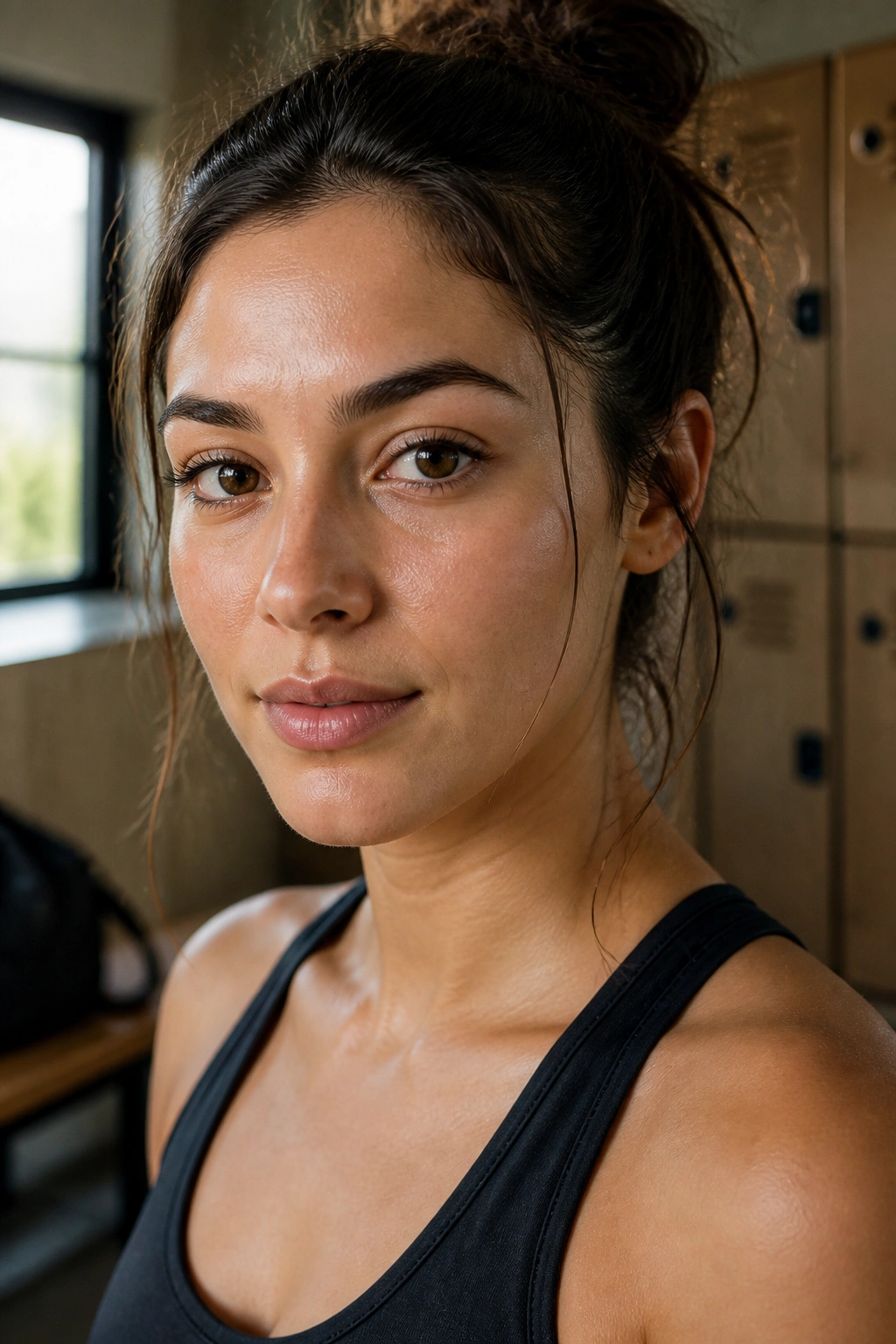
If you want coverage that survives a treadmill sprint, a skin tint usually beats a thick foundation. Heavy bases can look polished at first, but they often break into obvious streaks once sweat gets involved. A lighter formula gives you a better chance of keeping things even.
A good skin tint, tinted moisturizer, or sheer long-wear foundation should even out redness and tone without sitting like makeup. You want something that moves with the skin. One pump is often enough for the whole face, and if you need more, add it only where the redness or discoloration actually lives. That keeps the finish thin and more believable.
How to keep it from getting patchy
- Start with half a pump and build only where needed.
- Blend with a damp sponge for a softer finish, or fingertips if you want less product absorption.
- Match your jaw and neck, not your hand.
- Let the first layer settle for a minute before deciding whether you need more.
A full-coverage base can look great in a still mirror. Under gym lights, though, it often reveals every streak. That’s especially true on the upper lip and around the nostrils, where sweat and movement are constant.
There’s another benefit people miss. Thin layers dry faster, so you’re less likely to smear everything by accident when you adjust a ponytail or wipe your forehead. That matters more than a lot of beauty tutorials admit.
4. Keep Concealer Small and Strategic
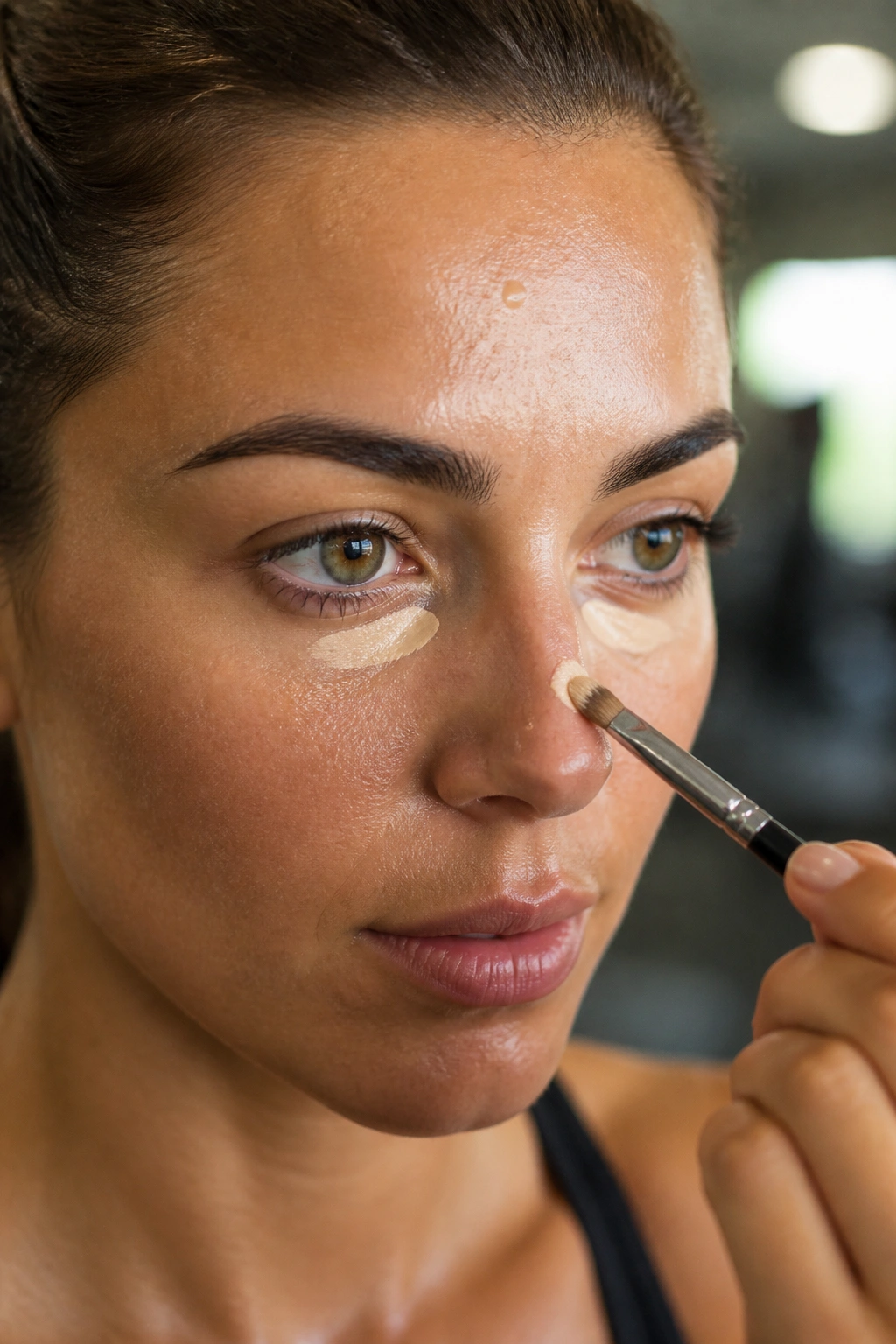
Do you actually need concealer at the gym? Sometimes yes. But you probably need less than you think.
The smartest use of concealer during a workout is spot work, not full coverage. Dab a tiny amount under the eyes where darkness is deepest, around the nose if redness shows there, and directly on a blemish if it bothers you. Blend the edges until they disappear, but keep the center of the spot covered. That way, you get correction without creating a thick patch that cracks when you sweat.
Pick a long-wear, creamy concealer that sets on its own or with a whisper of powder. Very thick, high-coverage concealer tends to crease fast under heat, especially under the eyes. If you put too much there, it can sink into fine lines the second your face warms up.
A small brush gives more control than fingers. So does restraint.
Where concealer actually helps
- Under the inner corners of the eyes.
- Around the nostrils.
- On a single blemish, not the whole cheek.
- Along the chin if redness shows there.
If you like the bright under-eye look, keep it subtle for workouts. A heavy brightening triangle can turn into a chalky mess once the skin starts moving. Spot coverage looks cleaner, lasts longer, and doesn’t scream, “I had 14 minutes to get ready and made a decision I now regret.”
5. Reach for Cream Products That Dry Down
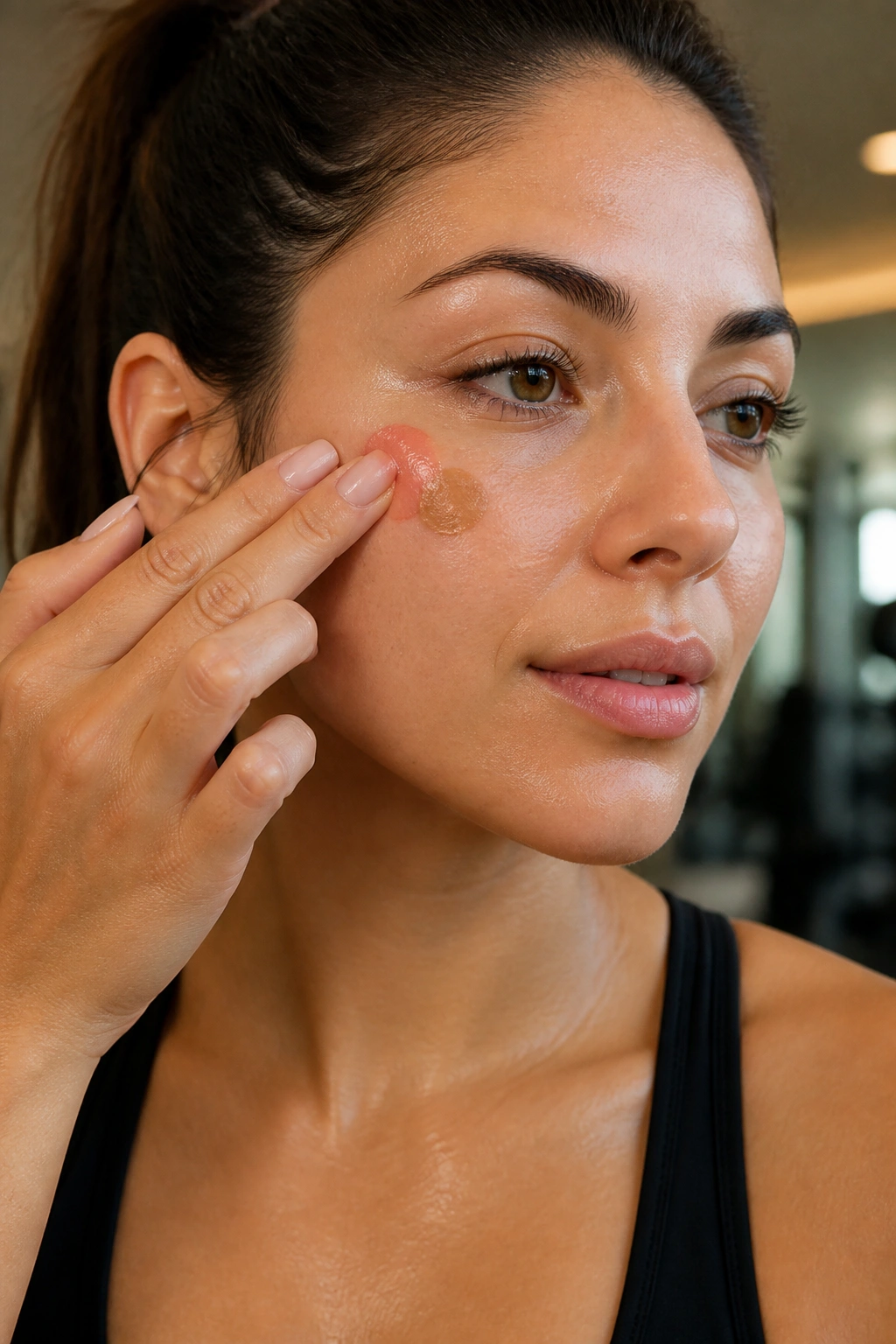
I’ve never met a thick cream blush worn in a spin class that looked better after 20 minutes. Thin cream formulas can be lovely, though, because they melt into the skin instead of sitting on top of it like paint.
The trick is choosing products that dry down to a satin or soft matte finish. Cream blush, cream bronzer, and liquid tints can all work if you use a small amount and press them into the skin rather than dragging them around. A little warmth from your fingers helps the product merge with the base, but if you keep swiping, you’ll lift the makeup underneath.
What makes a cream formula gym-friendly
- It starts creamy and settles, rather than staying glossy.
- The pigment is buildable, so one tap is enough.
- The finish is satin or matte, not shiny.
- It doesn’t contain chunky shimmer that turns muddy with sweat.
Skip anything that leaves a wet sheen for too long. That sheen can look nice in a bathroom mirror and terrible under heat. A cream product that dries down fast is a better bet if you want color without slippage.
This is also the section where less really means more. One small dot on each cheek is plenty. You can always add a second layer after it sets, but if you start with too much, you’ll spend the rest of the workout trying to blend your way out of trouble.
6. Set the T-Zone, Not Your Whole Face
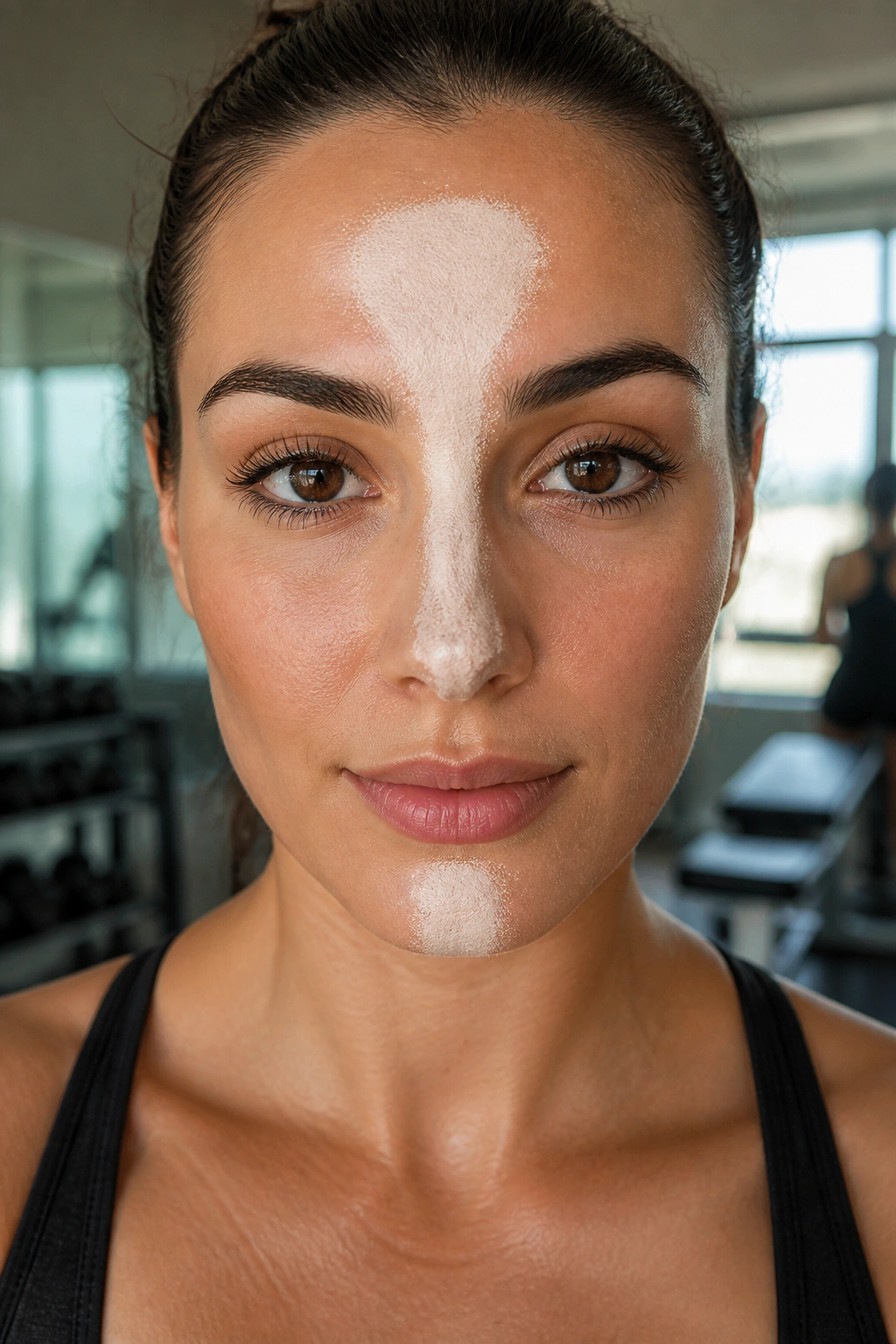
Powder is useful, but only in the places that actually get greasy. Dusting it everywhere can leave skin looking chalky before your warm-up is even over.
The T-zone usually needs the most help: forehead, nose, center of the chin, and sometimes the crease under the eyes. Those are the spots where sweat and oil team up fast. A small fluffy brush and translucent powder are enough. You don’t need to bake, and you do not need a thick coat.
Best places to set
- The bridge and sides of the nose.
- The center of the forehead.
- The chin.
- The under-eye crease, if concealer tends to move there.
Press the powder in with the brush rather than sweeping it around. That keeps the base underneath from shifting. If you see the face getting flat or dusty, stop. More powder is not going to rescue the look; it will only show texture sooner.
A lot of gym makeup fails because the whole face is treated like an oil slick. That’s lazy application, not smart setting. Keep the cheeks a little freer if they’re normal or dry, and let them look like skin. The face can still look polished without being sealed into a porcelain mask.
7. Keep Eyes Simple, Sharp, and Smudge-Resistant
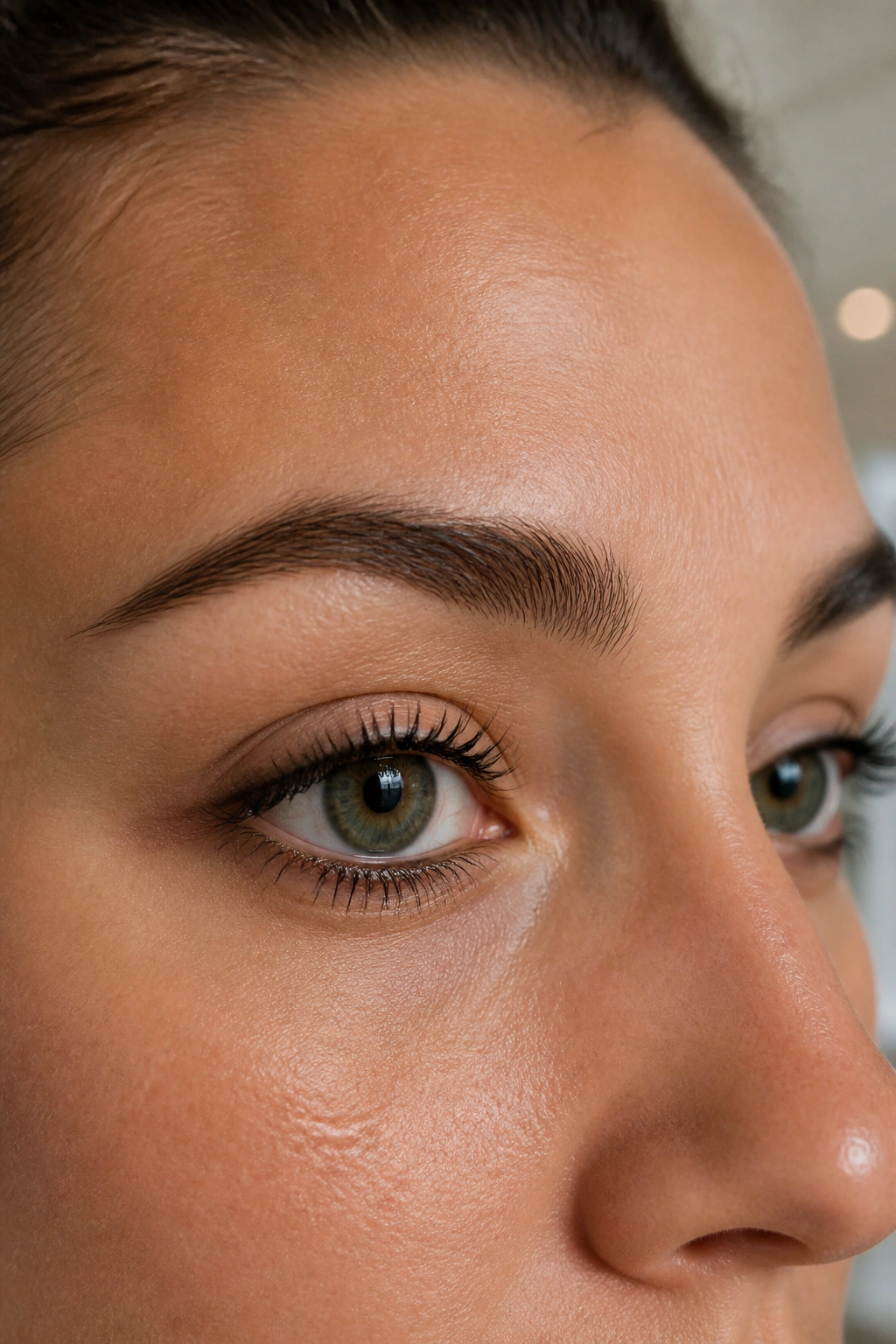
Why do eyes give away a workout face so fast? Because the skin there is thin, and heat makes mascara and liner move faster than people expect.
The safest eye look is pared down. Waterproof mascara on the top lashes, a tiny bit of tightlining if you like definition, and maybe a matte neutral shadow if you really want shape. That’s enough. Heavy cream shadow, glitter, and soft black liner on the lower lid tend to drift once sweat or humidity shows up.
What lasts best around the eyes
- Waterproof mascara on the top lashes.
- A brown or black pencil tightlined close to the lash root.
- Matte taupe, brown, or soft caramel shadow.
- An eyelash curler before mascara, not after.
Tubing mascara is worth knowing about if your eyes water or smudge easily. It forms little tubes around the lashes and tends to come off with warm water and gentle pressure, which is helpful after the gym. Waterproof mascara is stronger, but it can be harsher to remove. Sensitive eyes may prefer tubing formulas.
Skip falsies for a sweaty workout unless you enjoy living dangerously. Lash glue and heat do not have a peaceful relationship. A clean lash line and a little curl usually do more for the face than a dramatic eye that starts shedding halfway through class.
8. Tame Brows With a Waterproof Gel or Tint
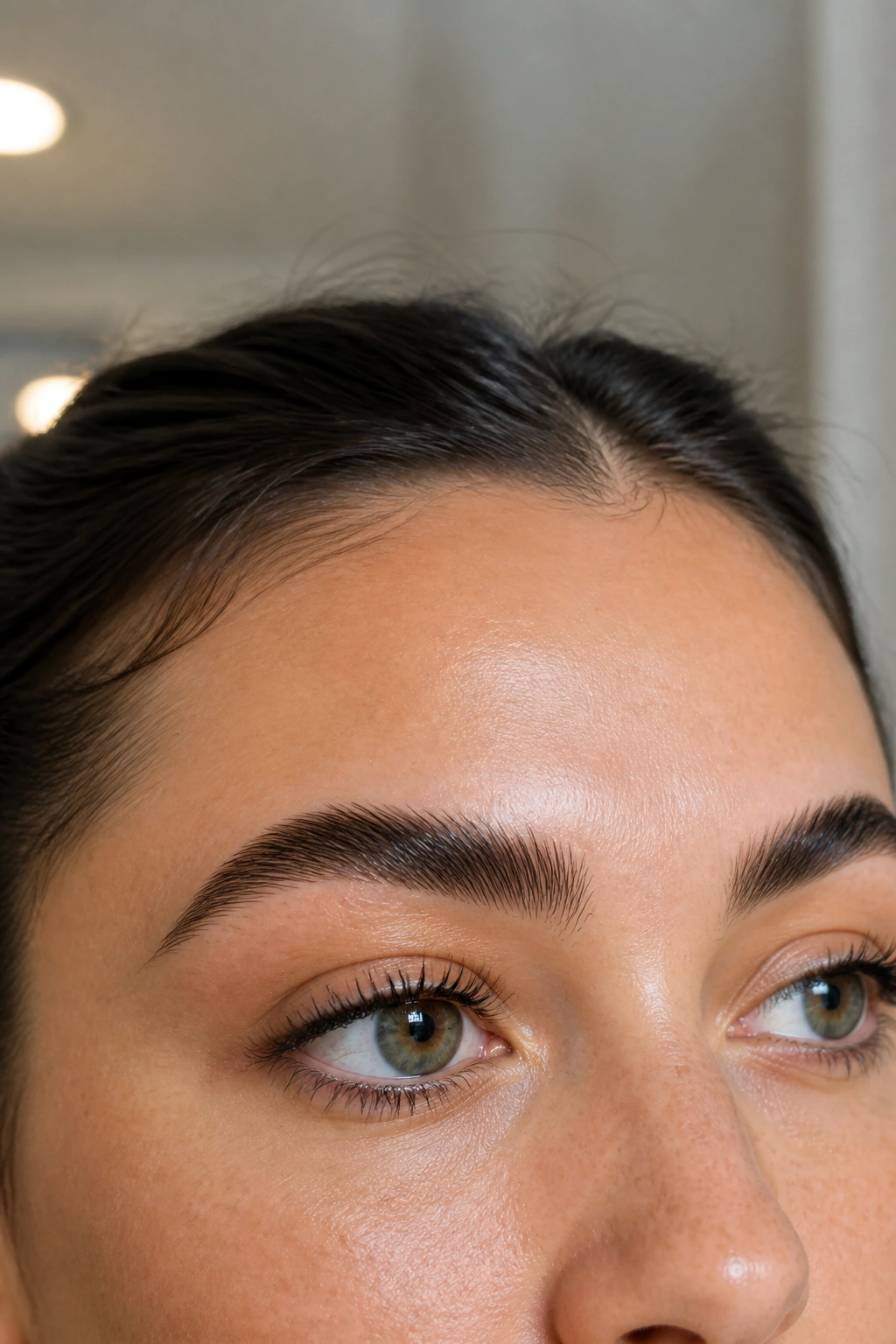
Brows tell on you. Fast.
If everything else is holding up but your brows are sliding flat or disappearing into sweat, the face suddenly looks unfinished. A waterproof brow gel or a light tint is usually enough to keep them in place without giving that hard, painted look. Brush the hairs up and slightly outward, then let them set. If you need fill, use a pencil with tiny hairlike strokes, not a heavy block of color.
The front of the brow deserves restraint. That area is easy to overfill, and once sweat loosens the product, the front can look muddy or stamped on. Focus more on the tail and the sparse middle sections. That gives shape without making the brows feel like they were drawn on with a marker.
Brow products that tend to behave well
- Clear waterproof gel for naturally full brows.
- Tinted gel if you want a little color and hold.
- Fine-tip pencil for sparse spots only.
- Tiny spoolie brush to soften the front.
If your brows are stubborn and downward-growing, brush them up first, then press them flat into place with the spoolie. It looks neater and lasts longer. One quick pass is enough. Overworking the brow hairs can make them clump when they get warm.
9. Choose Blush and Bronzer That Melt In, Not Slide Around
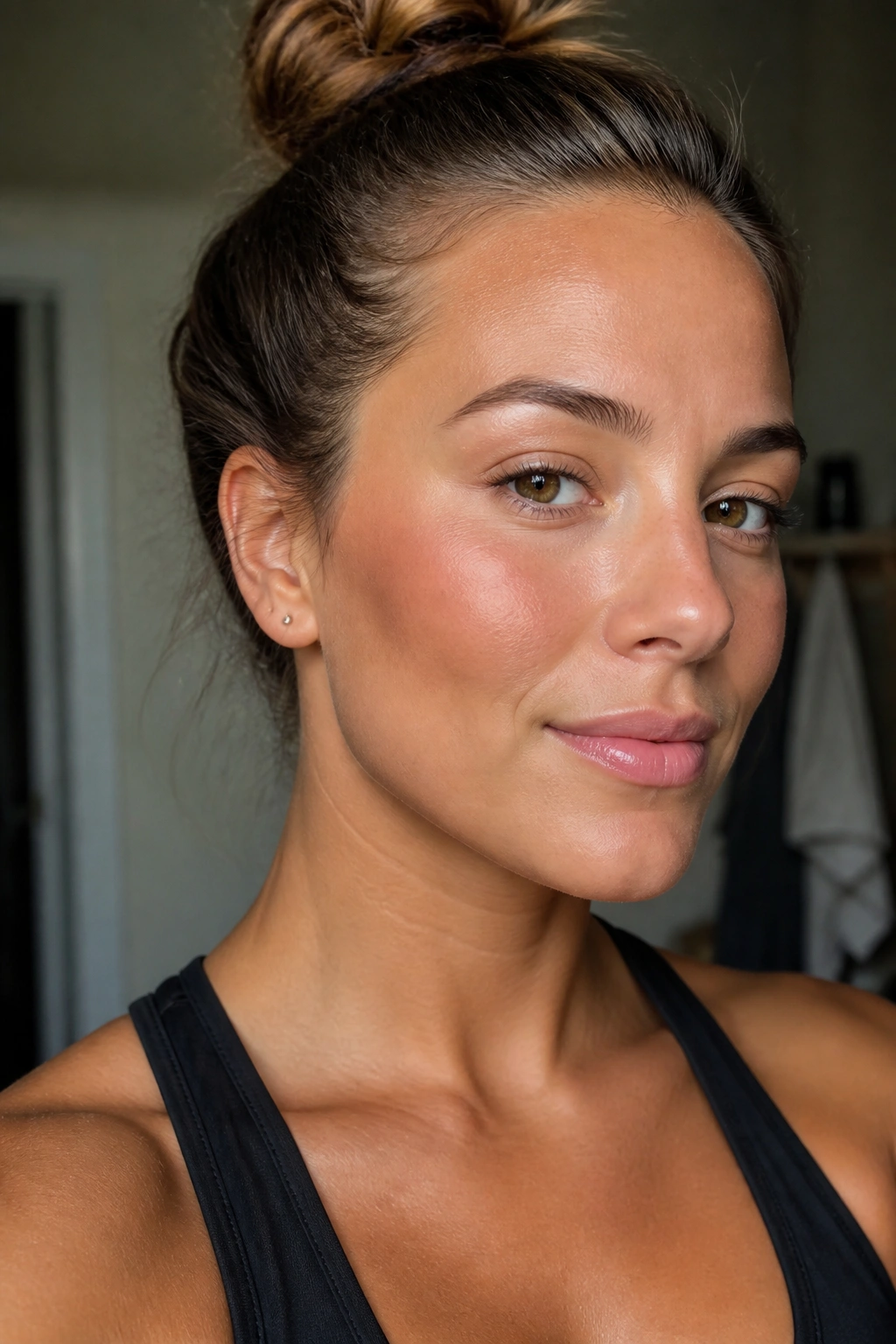
A peach cream blush tapped high on the cheek can still look fresh after a fast workout. A shiny, slippery one often ends up moving into the wrong parts of the face and making you look flushed in places you never intended.
For gym wear, the best cheek color tends to be subtle and matte-adjacent. Cream-to-powder formulas, soft liquid blushes, and a bronzer with a natural finish all behave well if you use them lightly. You want the face to look warm, not contoured into stripes that will soften and smear the second sweat hits.
Where to place color so it holds
- Blush on the upper cheek, angled slightly toward the temple.
- Bronzer around the hairline and lightly under the cheekbone.
- A tiny bit across the nose only if you like a sun-kissed look.
- Skip glittery highlighter on high-sweat days.
Here’s the part people miss: placement matters as much as formula. If you put blush too low on the cheek, sweat and friction can drag it downward and make the face look tired. Higher placement gives you more room for movement.
I also prefer a muted shade for workouts. Deep berry or bright coral can look beautiful in a studio bathroom, but they’re harder to control once the skin warms up. A softer peach, rose, or muted bronze looks more like skin and less like makeup on the move.
10. Seal the Whole Thing With Setting Spray
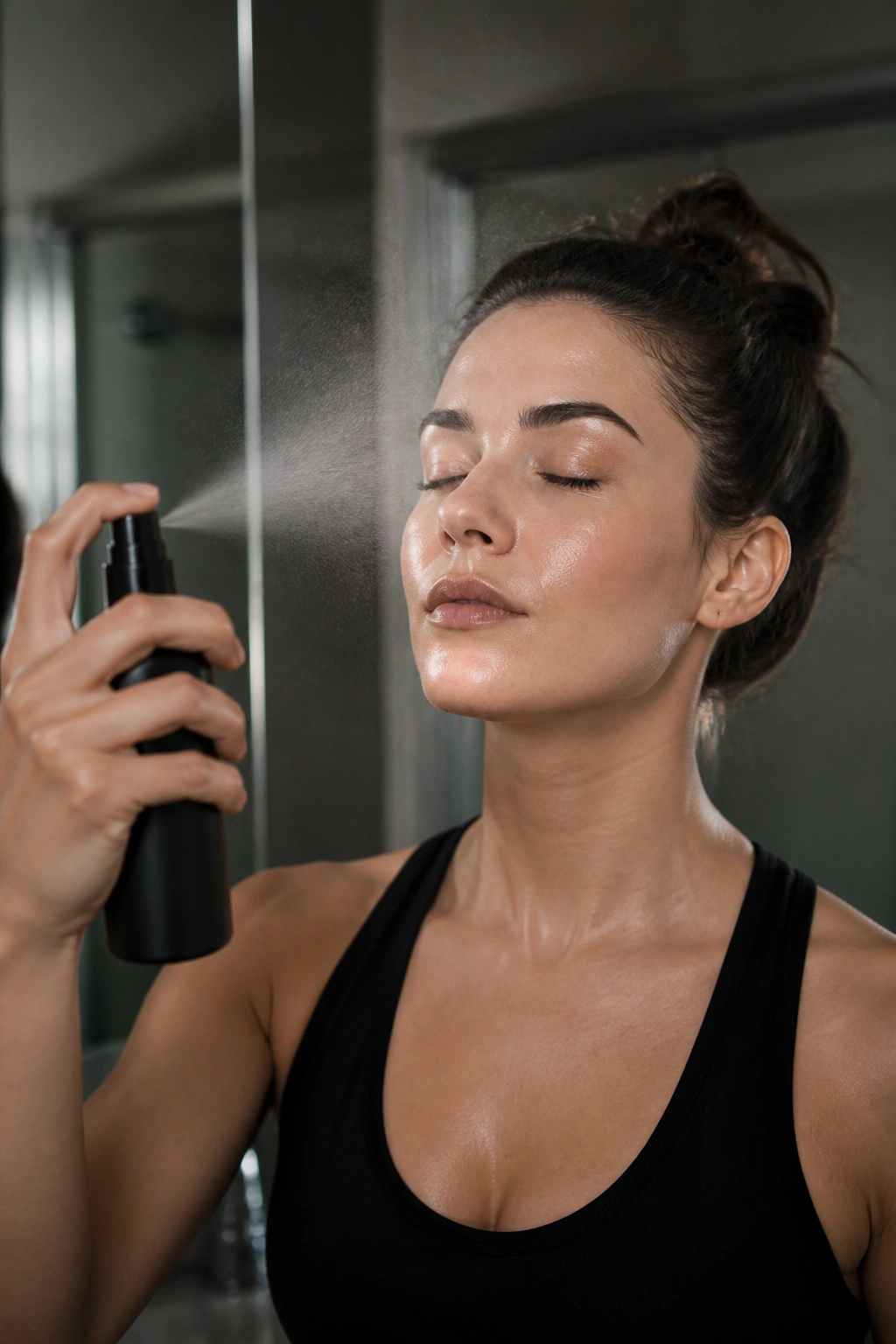
Setting spray is the last thing you put on, not the thing that magically saves a messy face. That said, a good long-wear spray does help products knit together so they don’t sit as separate layers on the skin.
Hold the bottle about 8 to 10 inches away and mist in an X and T pattern so the center of the face gets covered without getting drenched. Two to four sprays are usually enough. If the face looks wet, you used too much. Let it dry on its own for 60 to 90 seconds before you go anywhere near a towel or a bottle of water.
What to look for in a setting spray
- A long-wear or matte finish if your skin gets oily.
- A fine mist that doesn’t leave beads on the skin.
- A formula that dries down fast.
- A bottle size you can actually fit in a gym bag.
Setting spray is useful, but it is not armor. It won’t rescue a full glam base that was overloaded from the start. It works best when the makeup underneath is already thin, calm, and well-placed.
A tiny caution: some dewy sprays feel beautiful for an office day and terrible before cardio. If your face gets shiny quickly, choose a formula that controls sheen rather than adding it. Sweat plus dewy spray is a combination I would not trust on a treadmill.
11. Blot Sweat, Don’t Stack on More Powder
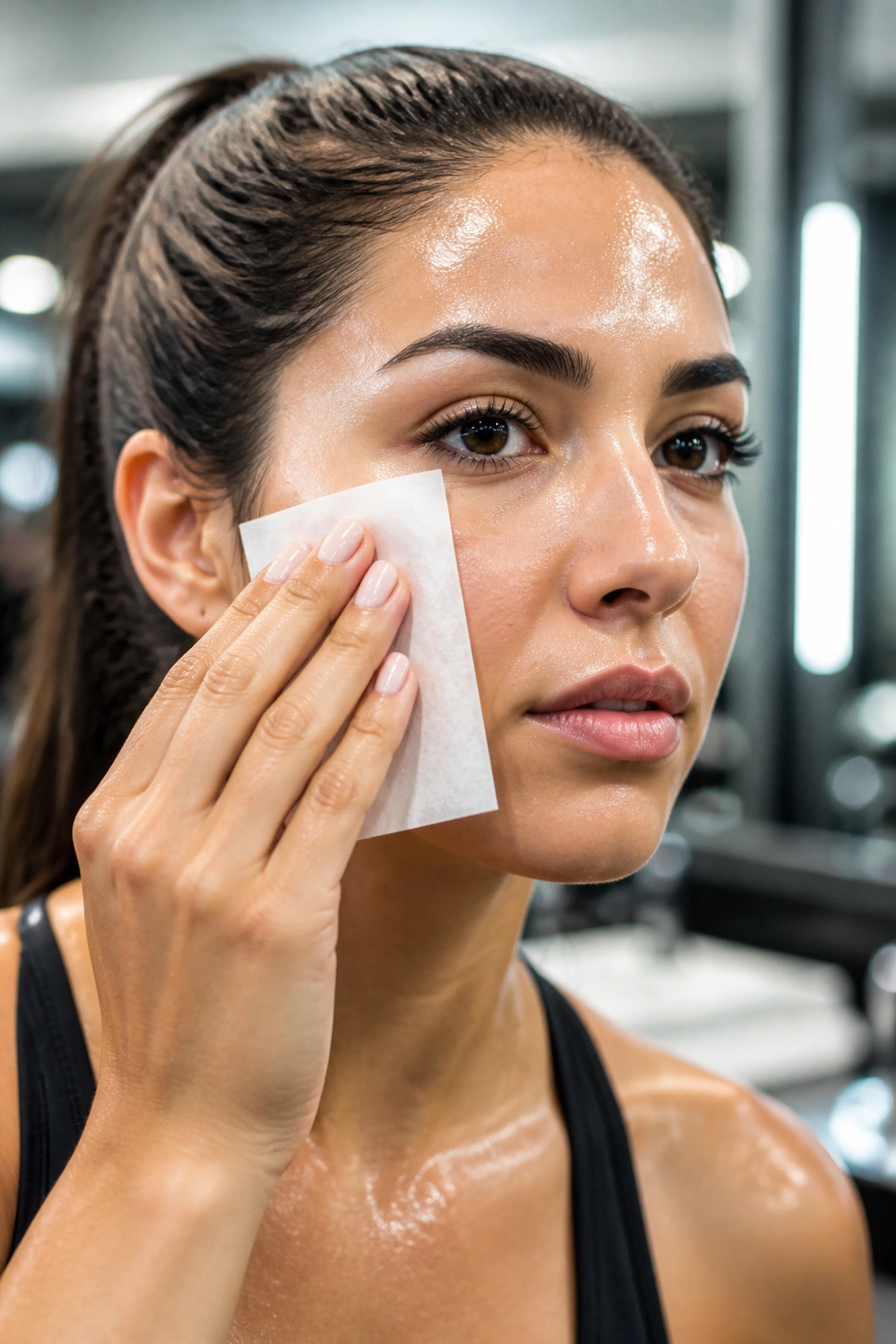
Sweat appears. What then?
Reach for blotting papers or a clean tissue first. Press them onto the shiny area and lift straight off. Don’t rub. Rubbing moves the makeup around, which turns a small sweat spot into a bigger smudge and usually makes you want to fix the whole face when only one patch needed help.
If you still need a touch of powder afterward, use the smallest amount possible on the exact area that’s shiny. Usually that means the nose, upper lip, or center of the forehead. One soft tap is enough. More than that, and the skin starts looking dry in the places that were fine to begin with.
Rubbing is the enemy.
A lot of people make the mistake of powdering a sweaty face before blotting. That traps moisture and gives you a pasty patch. Press first, powder second, and only if needed. If you can, keep a compact mirror in the bag so you can fix the problem instead of guessing in bad locker-room lighting.
This is one of those habits that feels tiny but saves the whole look. A few clean presses can keep the face from sliding into the “I tried too hard” zone. Better still, it takes less than 30 seconds.
12. Pack a Tiny Touch-Up Kit That Fits in One Pouch
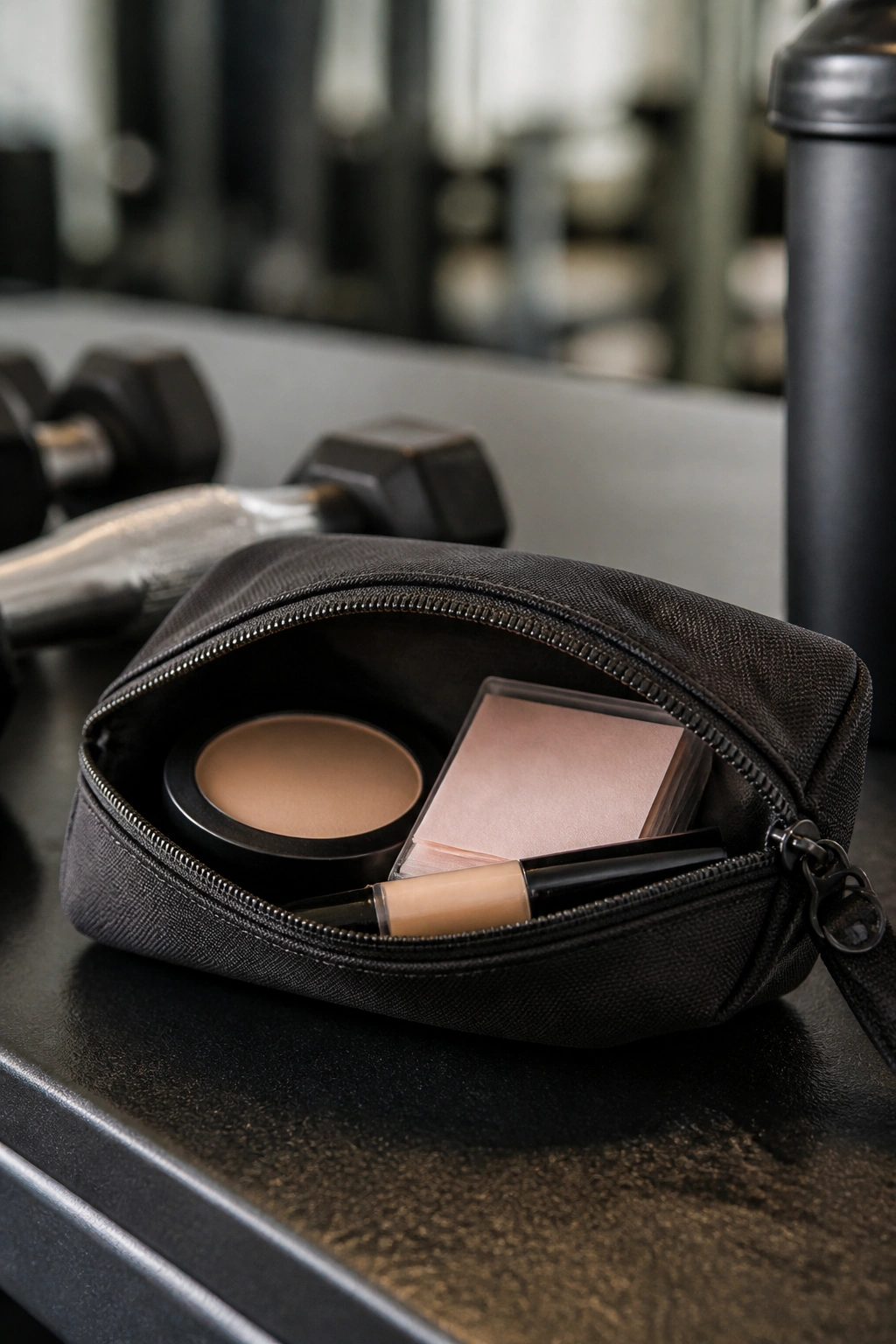
A tiny pouch beats a full makeup bag. Every time.
You do not need to haul your entire vanity to the gym. A small zip pouch with a few smart items will cover most problems without making your bag heavy or turning touch-ups into a production. Think tiny, not impressive.
The only things worth carrying
- Blotting papers for oil and sweat.
- A small pressed powder or mini compact.
- A travel-size concealer.
- A brow gel or pencil, if your brows are fussy.
- Lip balm or a soft tinted balm.
- Cotton swabs for mascara cleanup.
If your makeup tends to smudge under the eyes, a cotton swab can save you from making the correction bigger than the problem. Tap away the mess, then leave it alone. Reworking the whole eye area usually makes it worse.
I would skip carrying a heavy foundation or a big brush set. They sound useful until you’re balancing a water bottle, keys, a towel, and the urge to leave the gym as fast as possible. Keep the kit small enough that you’ll actually use it. That’s the test.
A touch-up kit should solve the one or two issues that show up most often for you. If brows fade first, carry brow gel. If the nose gets shiny first, keep blotting papers. Build for your real face, not a beauty-bag fantasy.
13. Match Your Makeup to the Type of Workout
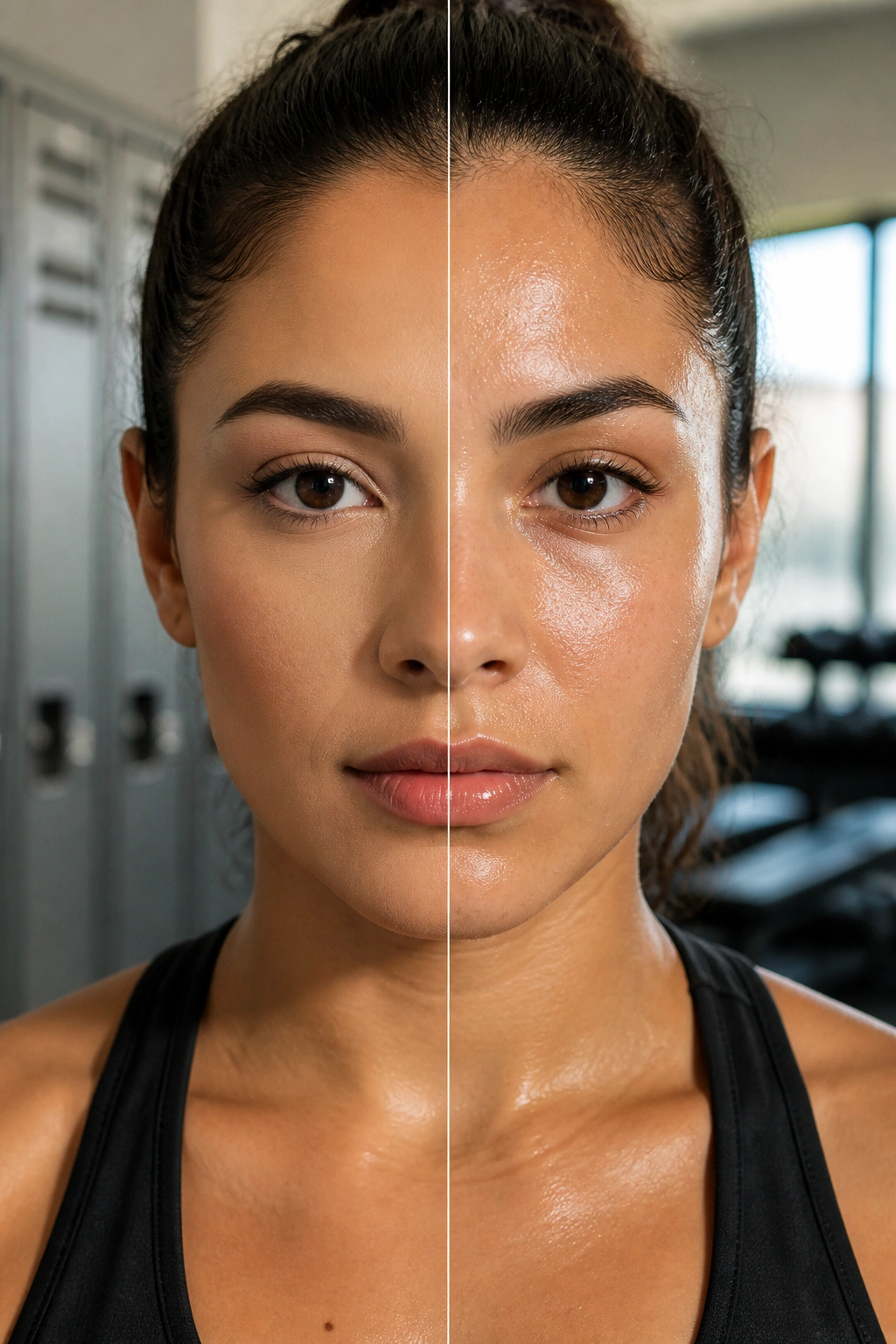
The best gym makeup depends on the workout, and that annoys people who want one perfect routine for everything.
A lifting session is not the same as a hot yoga class. A steady incline walk is not the same as interval sprints. The more sweat, heat, and face-towel contact you expect, the less makeup you should wear. That sounds blunt because it is. The routine has to match the reality of the session.
For strength training, you can usually keep a little more coverage because the face may not get drenched right away. For cardio or HIIT, a sheer base and waterproof brows are enough. For yoga, the main issue is heat and friction, so simple products that do not slip can save you trouble. Outdoor workouts need another layer of thought because sweat and sun are both in the mix.
A simple way to adjust
- Low-sweat lifting: skin tint, brow gel, mascara.
- Cardio or HIIT: skin tint or tinted sunscreen, brows, maybe concealer.
- Hot yoga: tinted sunscreen, brows, lip balm.
- Outdoor training: sweat-resistant base plus sunscreen that’s already comfortable on the skin.
The point is not to wear less for the sake of it. The point is to wear what survives the conditions. If you know a workout will get messy, start lighter. You’ll spend less time fixing your face and more time getting on with the actual workout, which is probably the whole reason you’re there.
14. Remove Gym Makeup Quickly After You Cool Down
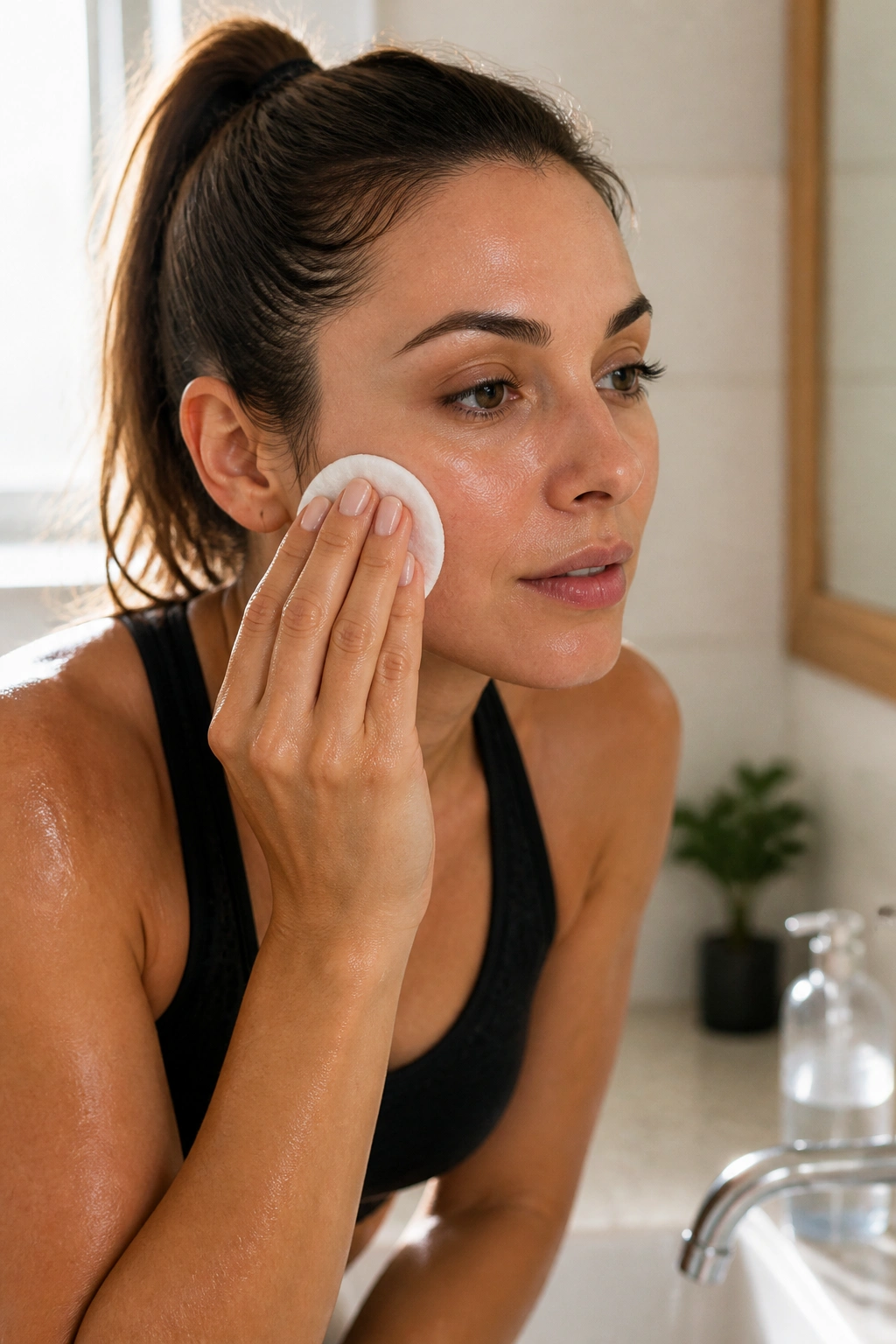
Take it off sooner than you think.
Sweat, sebum, sunscreen, and makeup sitting together on the skin for hours can clog pores and leave your face feeling grimy long after the workout ends. If you wore waterproof mascara or long-wear base, a quick cleanse matters even more. Waiting until much later usually means you have to scrub harder, and scrubbing is how skin gets annoyed.
A gentle micellar water, cleansing balm, or oil cleanser can break down the first layer fast. Follow with a mild face wash if you used heavier products or a lot of sunscreen. Pay attention to the hairline, sides of the nose, chin, and lash line. Those are the sneaky spots people miss.
A clean-down routine that works
- Remove eye makeup first if it was waterproof.
- Wipe away base and cheek color with micellar water or a cleansing balm.
- Wash with a gentle cleanser for 30 to 60 seconds.
- Pat dry and use a light moisturizer.
If your skin gets acne-prone, this step matters even more. Sweat alone is not the villain, but makeup plus sweat plus time is a rough mix for clogged pores. A fast cleanse after the gym is one of the easiest ways to keep the whole routine comfortable enough to repeat.
15. Know When Bare Skin Is the Smarter Call
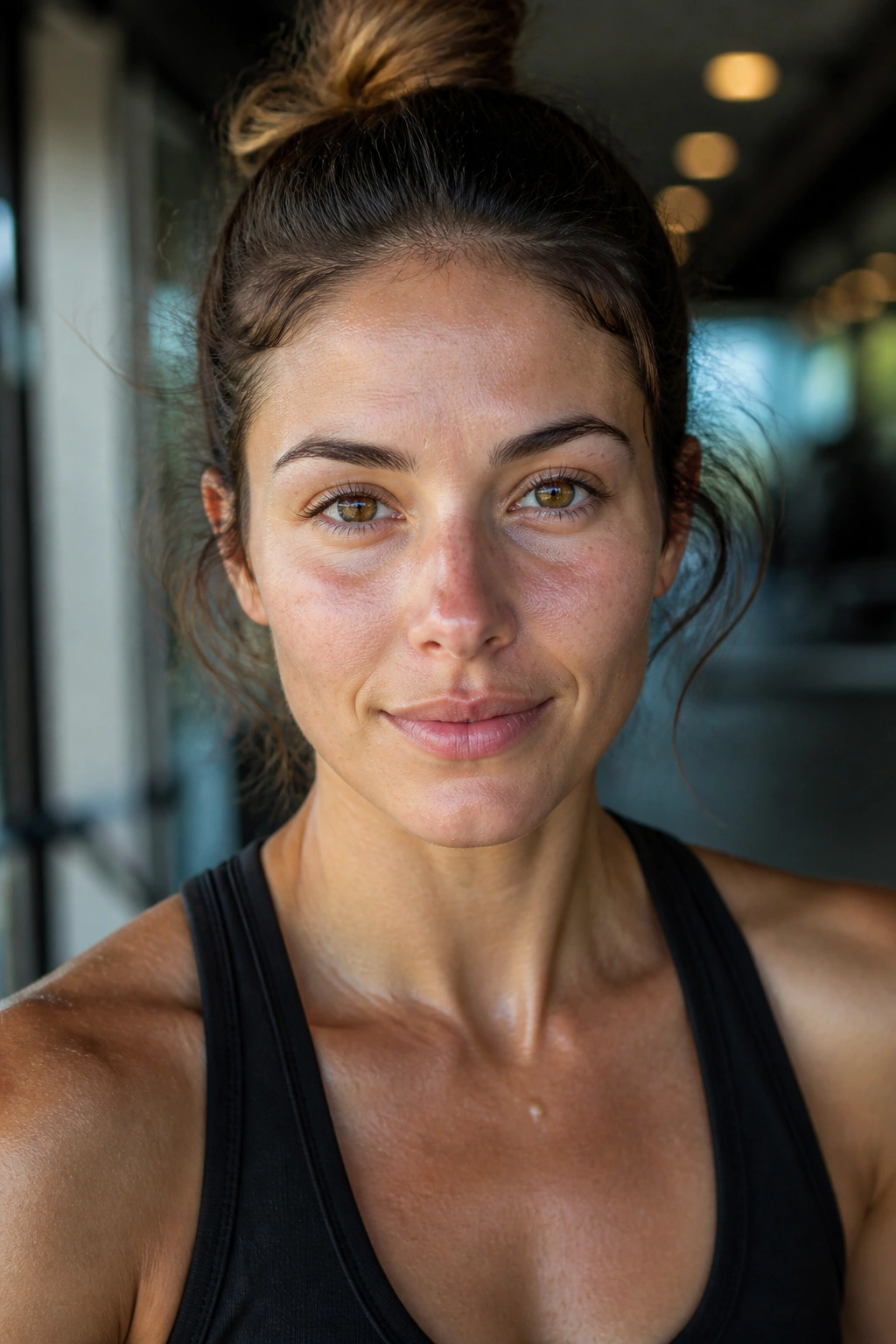
Sometimes the smartest workout face is no makeup at all.
That can be hard to admit if you like looking pulled together, but there are sessions where even the best sweat-resistant products fight a losing battle. Hot classes, long cardio blocks, outdoor runs in humid air, and anything where you know you’ll be wiping your face every few minutes are all decent times to go lighter. Sometimes a clean face, sunscreen, brow gel, and lip balm are the whole story.
A bare or near-bare face also makes sense if your skin is irritated, breaking out, or recovering from overuse. The less friction and product you put on it, the happier it usually is. That does not mean you have to give up your routine forever. It just means you stop pretending every day needs the same amount of makeup.
There’s a freedom to this choice that people underestimate. You don’t have to chase a perfect face through a workout. You just need a face that feels comfortable and can handle the session without turning into a maintenance project.
And honestly, that is usually the better look anyway.
Final Thoughts
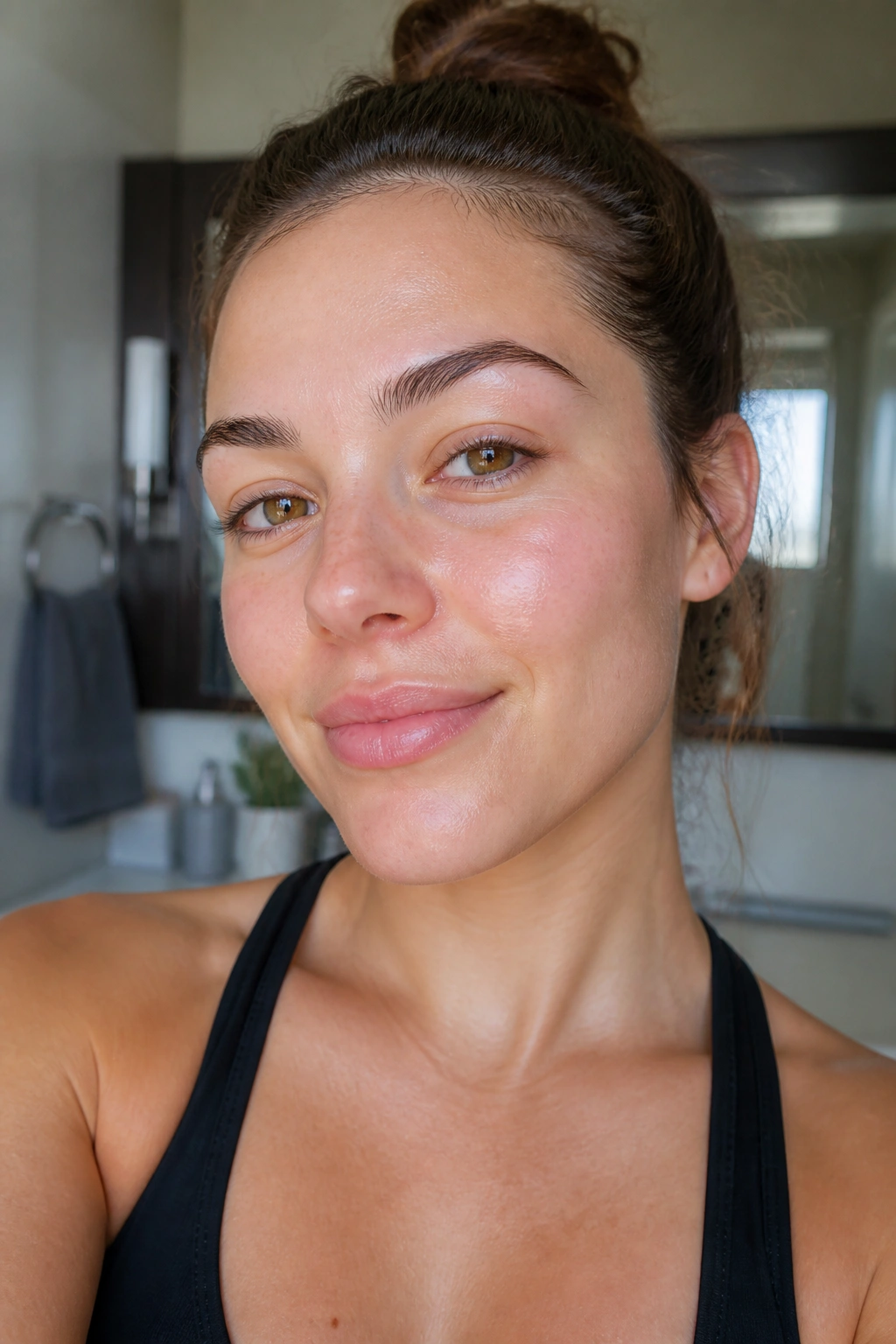
Gym makeup works best when it acts like gear, not decoration. Thin layers, targeted products, and quick cleanup habits will get you farther than a heavy face that looks polished for eight minutes and then starts melting off in pieces.
If you remember only one thing, make it this: keep the base light and place products where they actually need to live. Everything else gets easier after that.
A workout face should survive movement, sweat, and the awful locker-room mirror without making you baby it every five minutes. That’s the real win.
