



Getting a serious sweat session in your living room sounds like a compromise to many people. They think unless they have a full rack of Olympic weights or a high-end cardio machine, they are just “going through the motions.” That is a massive misconception. You can strip body fat, build functional strength, and spike your heart rate in less time than it takes to drive to a gym and park your car.
The beauty of home training lies in intensity, not equipment. When you eliminate the commute and the social performance aspect of a gym, you gain back focus. You start paying attention to your heart rate, your muscle engagement, and the specific way your body responds to fatigue. It is just you, a few square feet of floor space, and gravity.
If you are ready to stop making excuses, you have plenty of tools right here. These workouts require nothing but your body weight and perhaps a piece of furniture you already own. Focus on the quality of your movement, keep your intensity high, and do not worry about the lack of chrome-plated machinery.
1. Burpees
Burpees are the exercise everyone loves to hate, but they are arguably the single most efficient way to tax every major muscle group in one go. You drop into a plank, do a push-up, jump your feet forward, and explode into the air. It is a full-body movement that demands coordination and explosive power.
Why They Work for Fat Loss
The constant transition between floor and standing position spikes your heart rate almost instantly. Your legs are doing a squat, your arms are handling the push-up, and your core is bracing for the plank. Because so much muscle is involved, your metabolic rate stays elevated long after you finish the set.
- Start by focusing on the plank position; do not let your lower back sag.
- Exhale sharply as you jump up.
- Keep the motion fluid. Pro Tip: If you are a beginner, skip the push-up portion until your chest strength builds up. Just get down to the floor, get your feet back, and get up. The speed of the movement matters more for calorie burn than the depth of the push-up.
2. Jump Rope
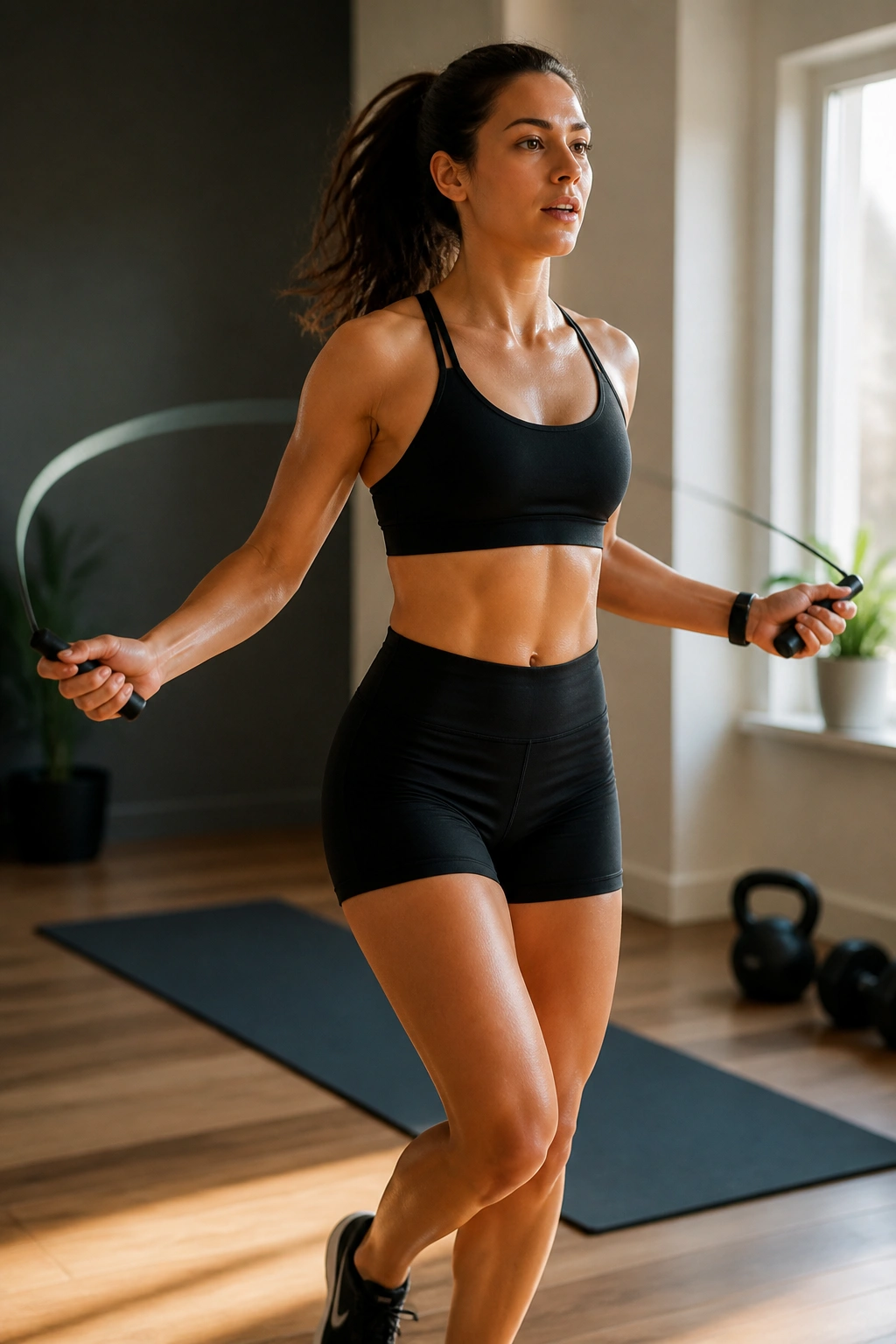
Think back to the playground. Jumping rope is not just for kids; it is the secret weapon of boxers and endurance athletes who need to torch body fat without spending hours on a treadmill. It is high-impact, rhythmic, and incredibly demanding on your calves and shoulders.
Getting the Rhythm Right
The trick here is to keep your movements small. Many beginners jump far too high, wasting energy and burning out their shins before they make a dent in their calorie goals. Keep your elbows tucked close to your ribs and let your wrists handle the rotation of the rope. If you trip, just reset and keep going. Do not stop because you hit your shoes.
Essential Training Tips
- Aim for 30-second intervals of maximum speed.
- Focus on light landings on the balls of your feet.
- Maintain an upright posture throughout. Warning: If you have sensitive knees, do not jump on concrete. Use a rubber mat or a wooden floor to absorb some of the impact.
3. Mountain Climbers
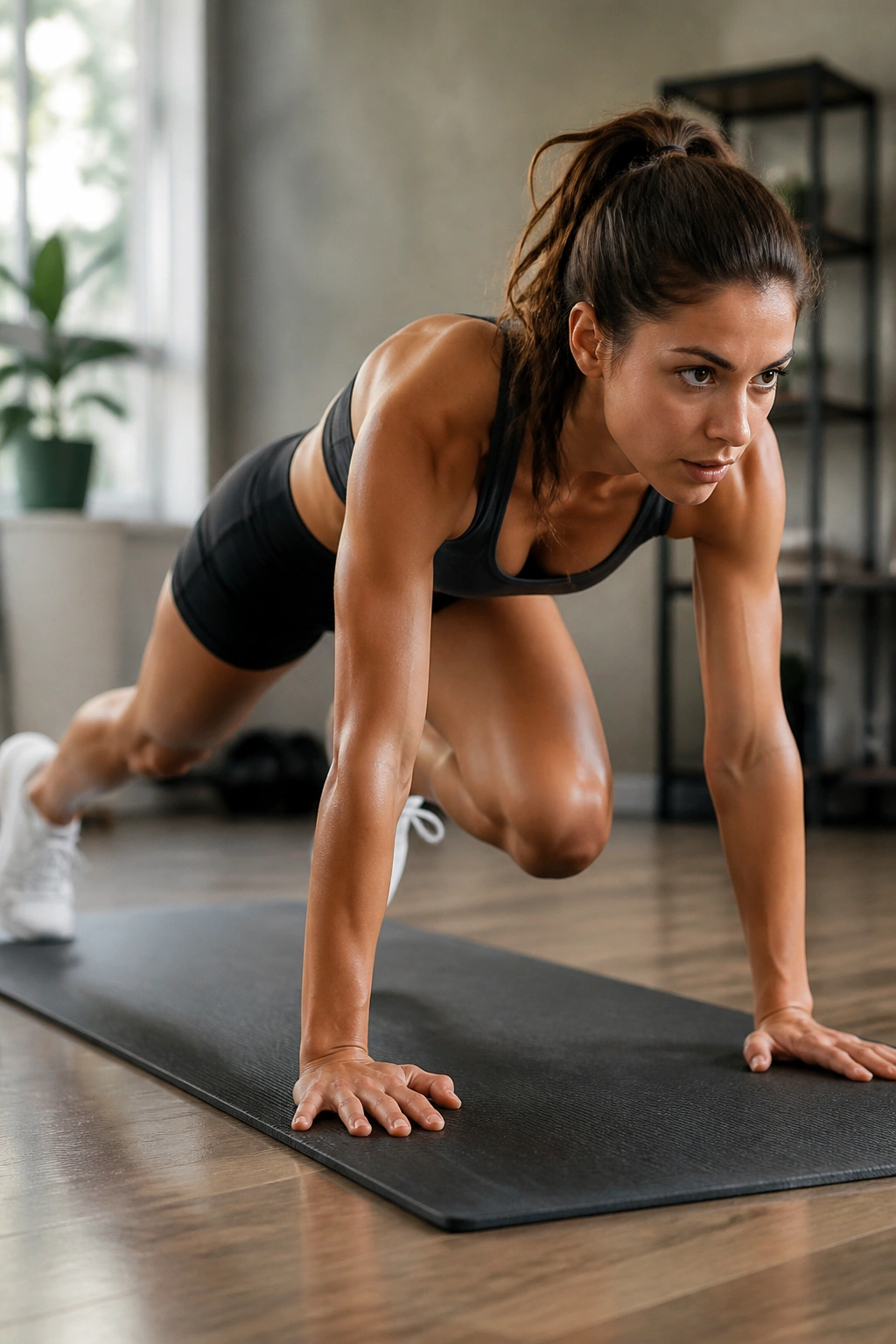
Mountain climbers are deceptive. They look like a simple variation of running in place, but if you do them with intention, they are a brutal core and cardio hybrid. You are essentially doing a plank while your legs drive forward, which forces your abs to stabilize your torso against constant movement.
The Technique That Matters
The biggest mistake people make is hiking their hips toward the ceiling. Your body should form a straight line from your head to your heels, just like a standard plank. When you drive the knee toward your chest, squeeze your abs hard. Think of it as a crunch performed in a horizontal position.
Making It Harder
Do not just go through the motions. Drive your knees as fast as you can. If you want to increase the difficulty, bring your knee across your body toward the opposite elbow. This engages your obliques and adds a rotational component that hits the sides of your core.
4. Jumping Jacks
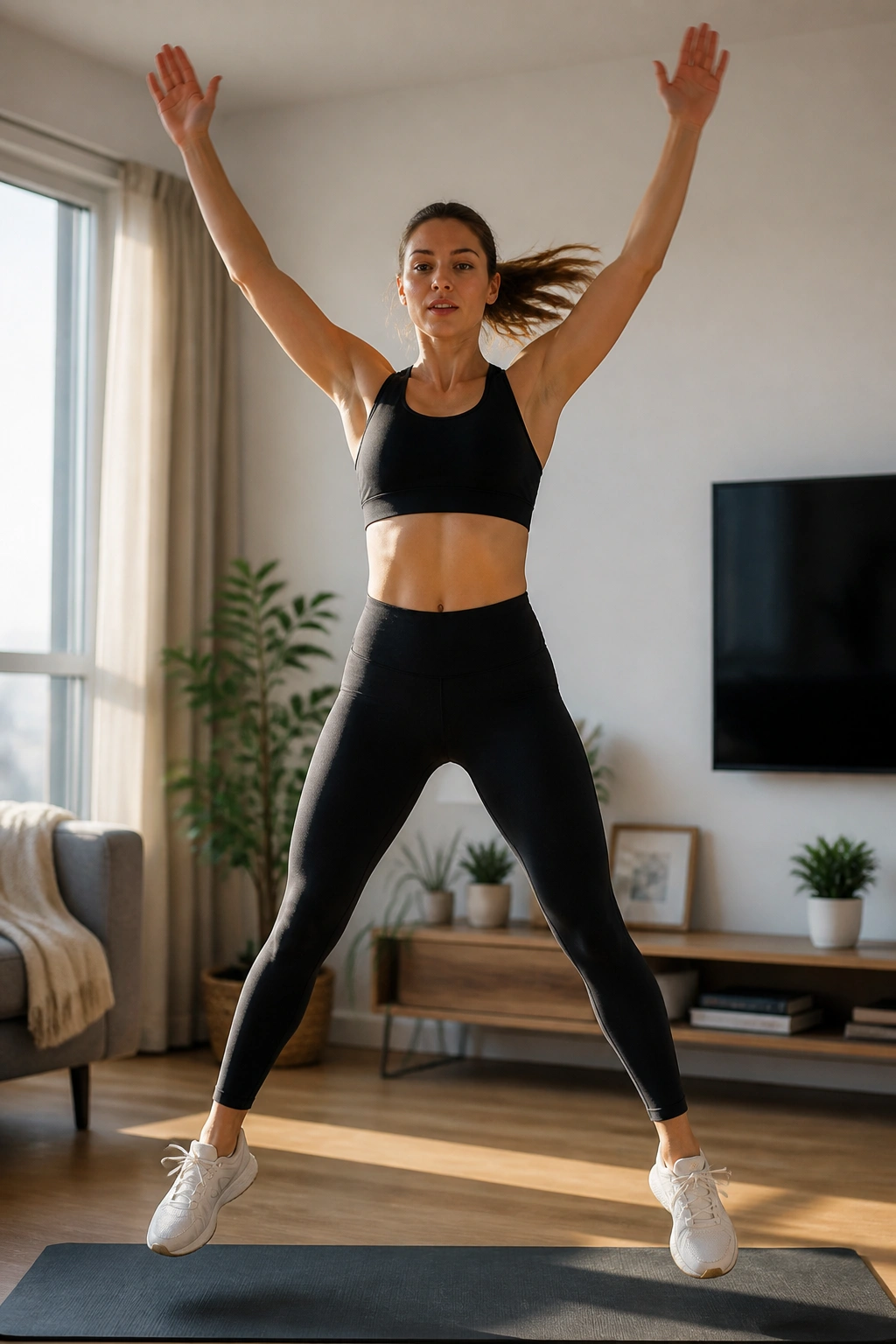
Jumping jacks are the ultimate “no-excuses” workout. You can do them in a hotel room, a basement, or even a small apartment. They provide a full range of motion that works your shoulders, hips, and heart all at once. People often ignore them because they seem too basic, but try doing 500 of them and tell me if they are “too easy.”
Why They Deserve a Spot in Your Routine
They improve your coordination and get your blood pumping immediately. They are excellent for warming up, but if you increase the speed and volume, they become a legitimate fat-burning tool. Treat them as a high-intensity interval move rather than a slow, lazy warmup.
- Keep your back straight.
- Ensure your arms fully extend overhead.
- Land softly on your toes, never flat-footed. Pro Tip: Use them as an “active rest” movement. If your high-intensity interval is squats, use jumping jacks to keep moving during the rest period.
5. High Knees
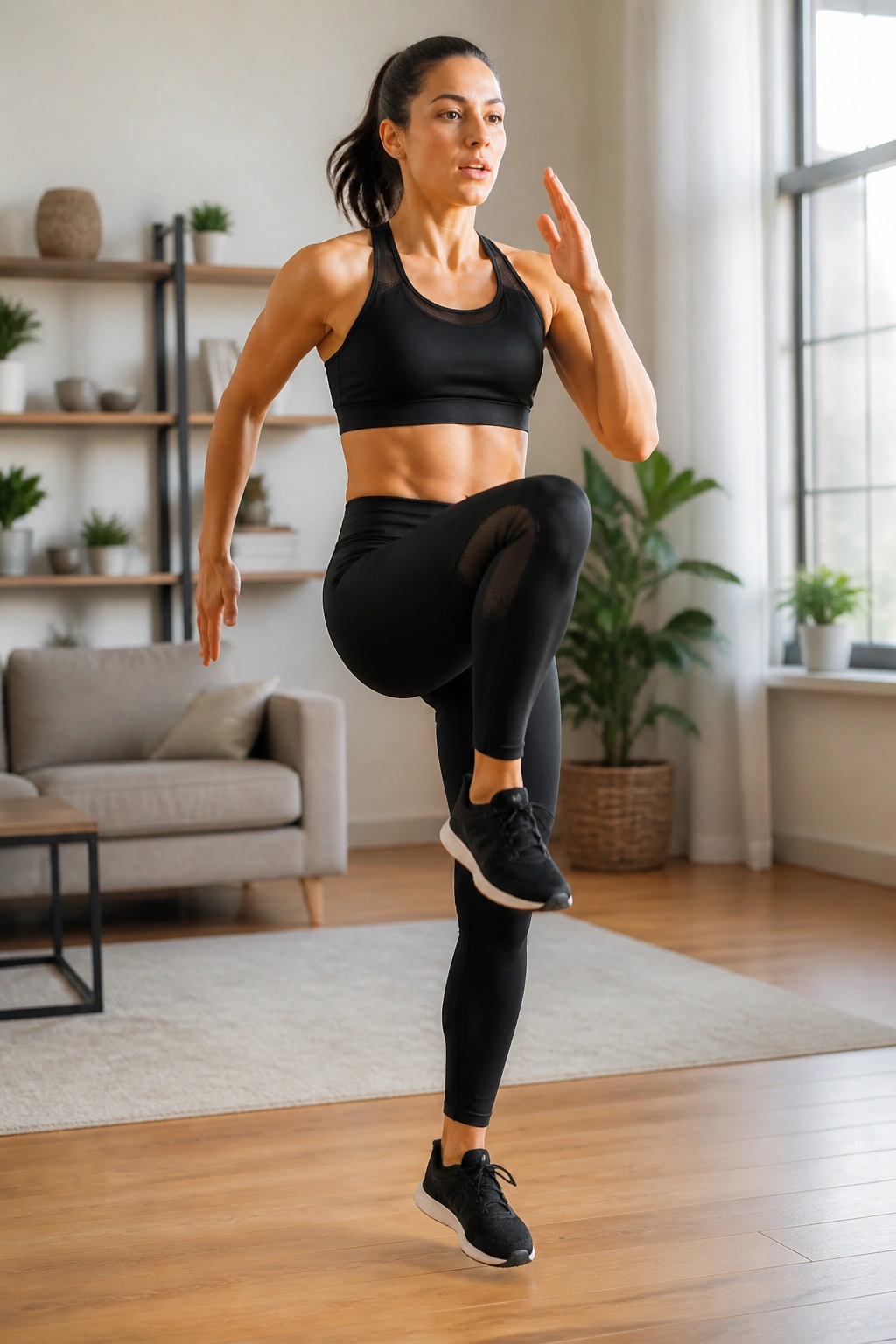
This is essentially sprinting while running in place. High knees engage the hip flexors and require you to drive your core inward to keep your balance. It is an explosive movement that increases your heart rate faster than almost any other steady-state exercise.
How to Execute Properly
Bring your knees up to at least waist height. If you are just tapping your shins, you are not doing the work. Use your arms to drive the pace. Imagine you are running a race and need to pick your feet up off the hot pavement.
Why the Intensity Counts
This move is all about speed and power. If you go slow, you are just marching. Marching does not burn fat—sprinting does. Keep the tempo high and aim for short, intense bursts of 20 to 30 seconds followed by equal rest.
6. Lateral Skaters
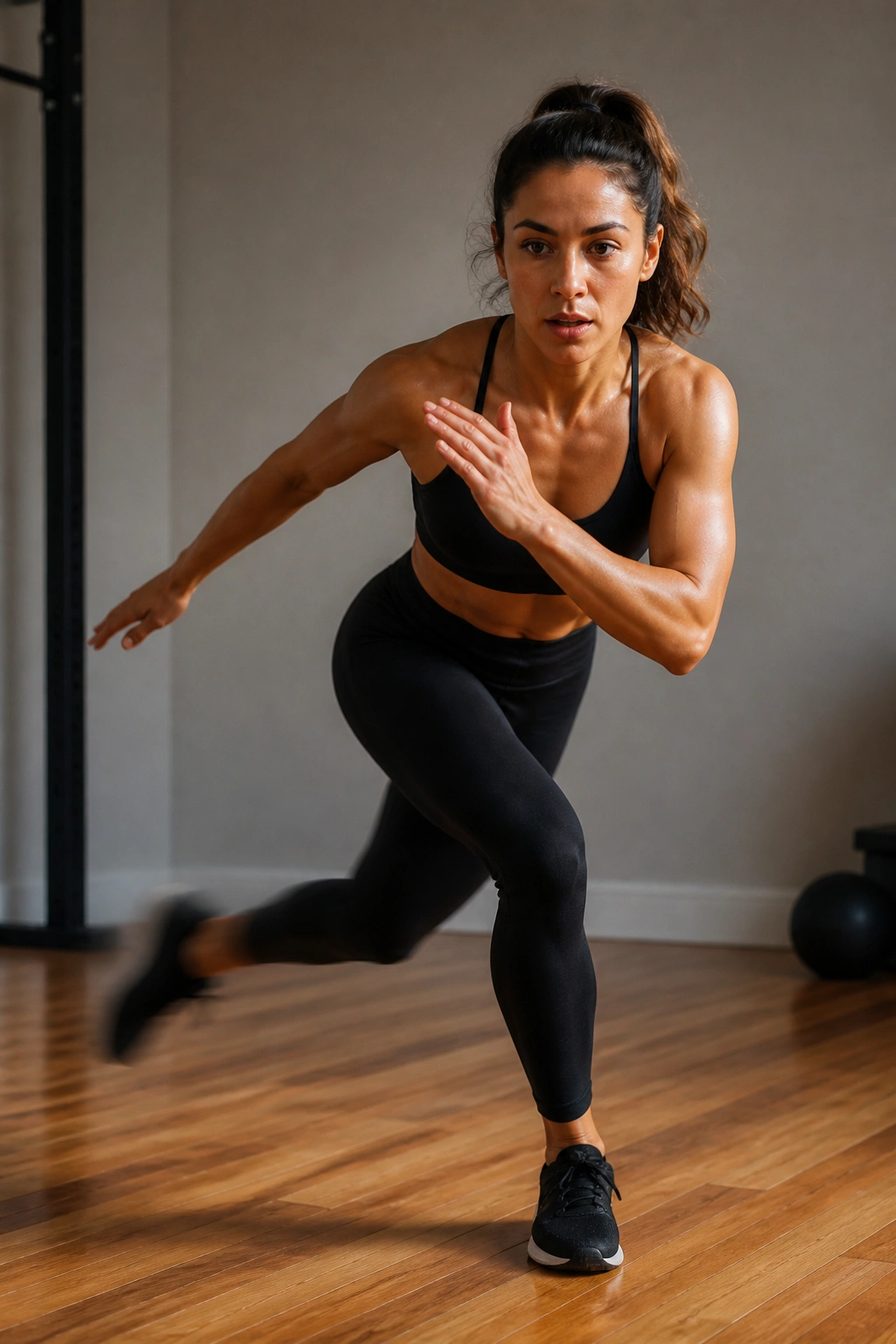
Skaters mimic the side-to-side motion of a speed skater. This is a fantastic way to target the muscles that stabilize your hips, specifically the gluteus medius. It is also a lateral movement, which most people completely neglect in their typical forward-and-backward workout routines.
Improving Your Stability
When you land on one leg, hold the position for a split second. This forces your ankle, knee, and hip to stabilize your body weight. You will feel this in the outer part of your glutes the next day. It is an excellent functional movement that makes your legs stronger for real-life activities.
Common Mistakes
- Don’t let your knee cave inward when you land.
- Keep your chest up rather than hunched over.
- Push off hard with the outside foot to create power.
7. Plank Jacks
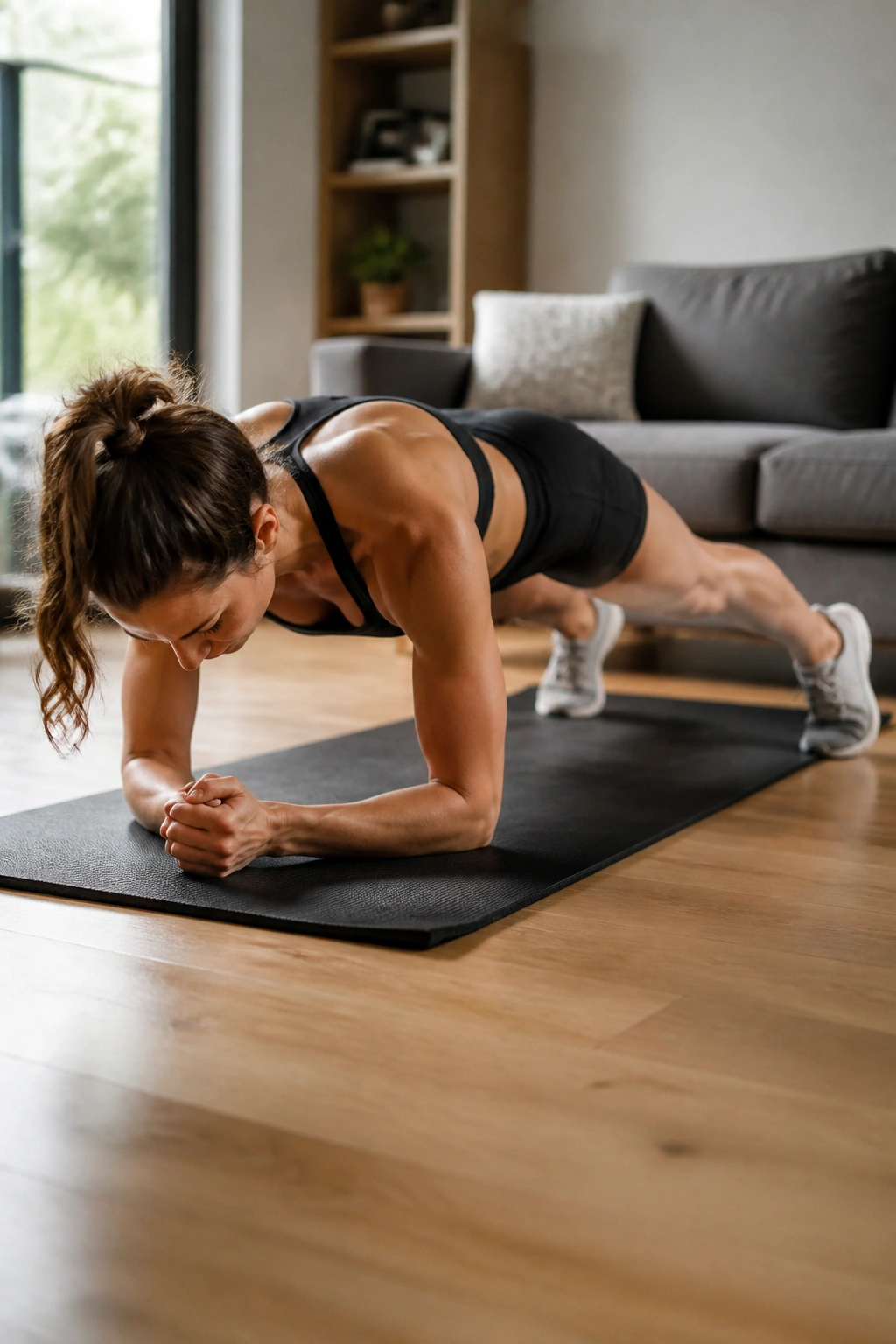
Take a traditional plank and add a jumping jack movement with your feet. You are holding your body weight up on your forearms while your legs move in and out. This creates a massive amount of tension in your deep core muscles because they have to fight the rocking motion caused by your legs.
The Secret to Success
The goal is to keep your torso completely still. If your hips are bouncing up and down, you are losing the engagement. Squeeze your glutes and press your forearms into the floor. Imagine you are trying to pull your belly button toward your spine the entire time your feet are moving.
Why This Is Different
Most core exercises hit the surface muscles. Plank jacks force your deep transverse abdominis to work overtime to stabilize your spine. It is efficient, tough, and requires zero equipment.
8. Jump Squats
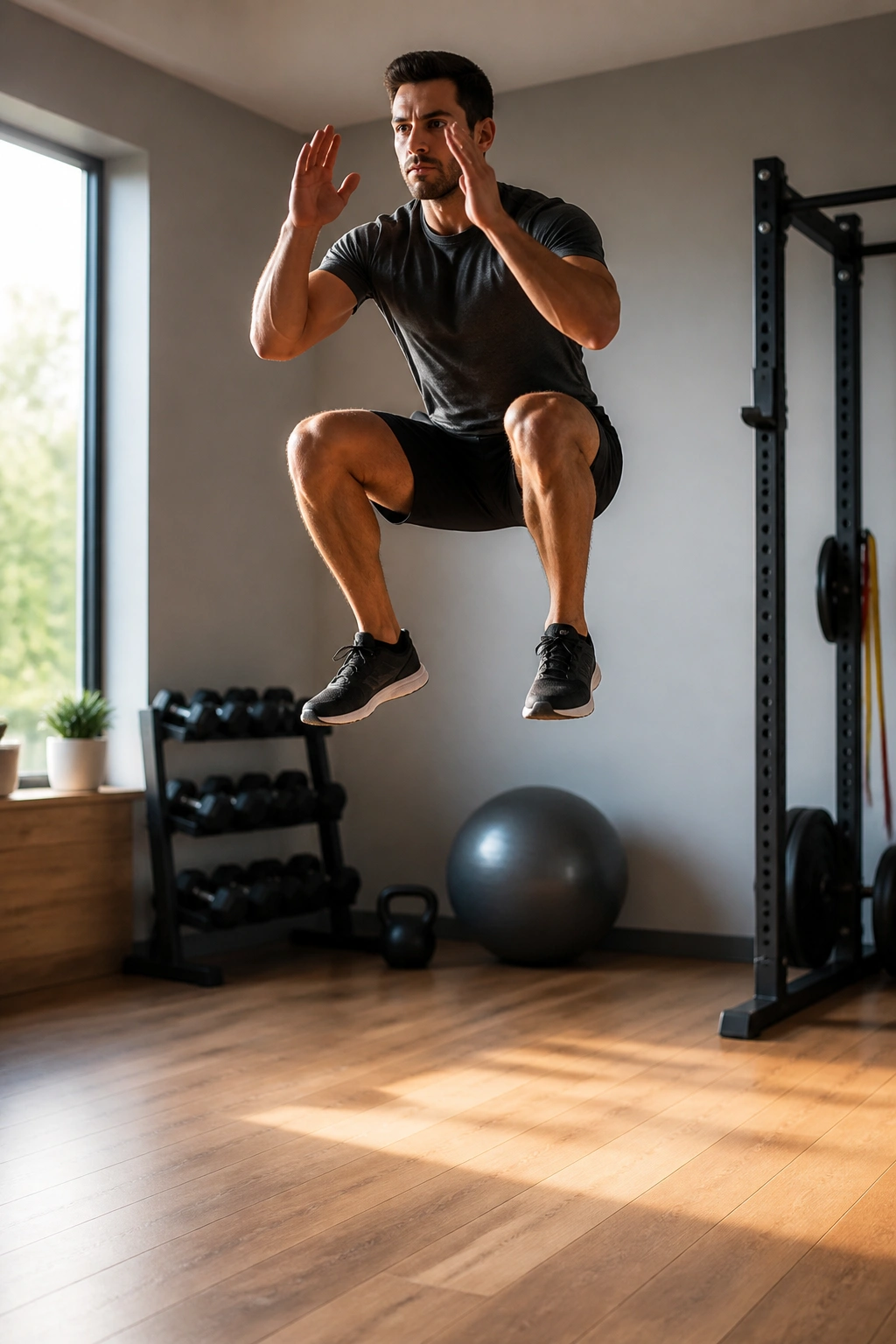
Standard air squats are great, but jump squats take them to an explosive level. By adding the jump, you are training your fast-twitch muscle fibers, which are responsible for power and speed. This is a high-impact move that should be done with plenty of control.
How to Land Safely
The landing is more important than the jump. You must land on the balls of your feet and immediately sink into a squat to absorb the shock. Do not land with straight, stiff legs. That is a recipe for joint pain.
Pushing Your Limits
If you want to make it harder, pause for one second at the bottom of the squat before you explode upward. This eliminates any momentum you might have gained and forces your legs to generate all the force from a dead stop.
9. Renegade Rows
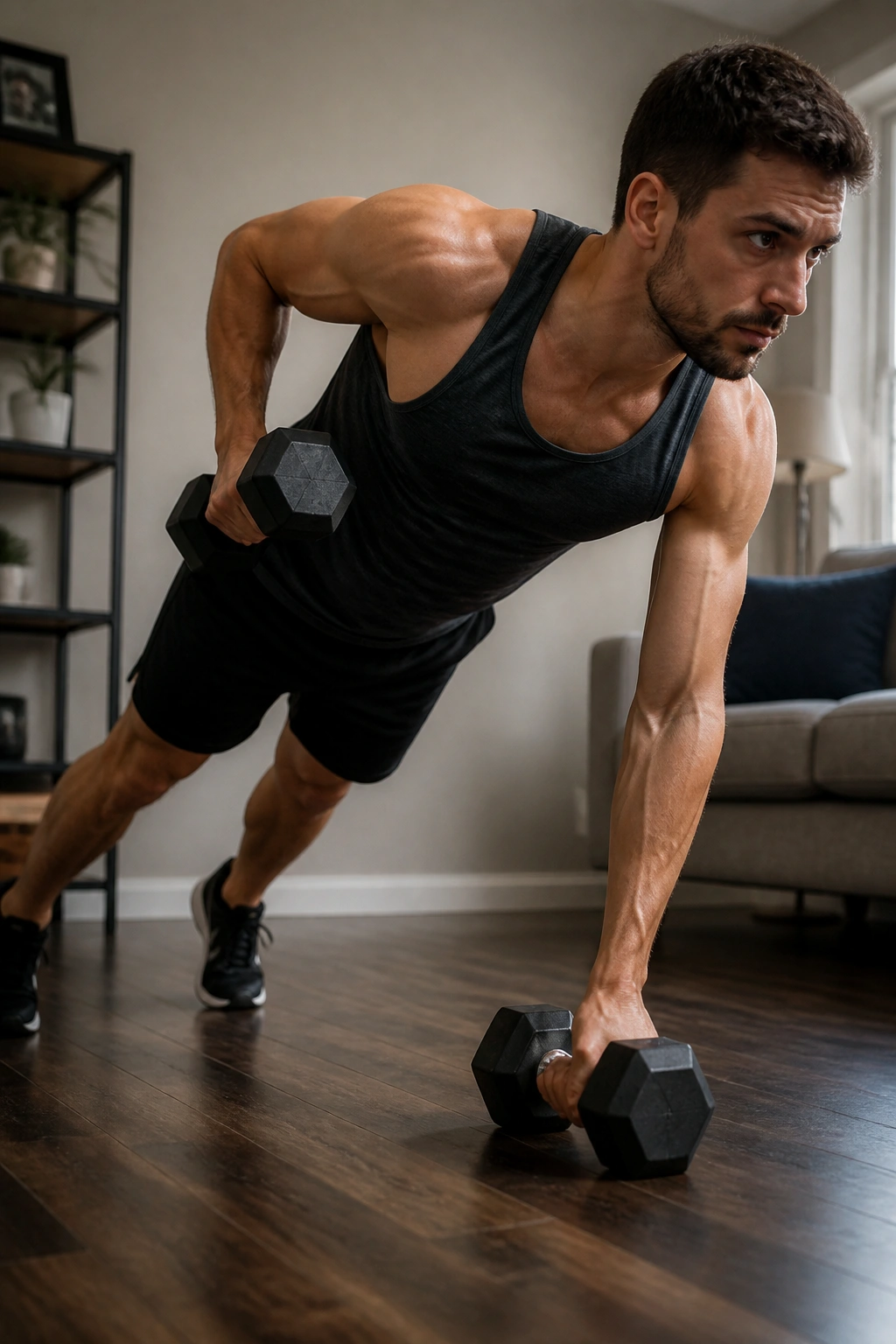
You need a pair of dumbbells for this, but if you do not have them, two heavy water bottles will work in a pinch. You hold a plank position with your hands on the weights and row one arm up toward your ribs while stabilizing with the other. This is a brutal combination of core stability and upper-back work.
Why It Hits Fat Hard
It forces multiple muscle groups to work simultaneously. Your back, biceps, shoulders, and core are all firing at once. Because you are essentially doing a one-armed plank, your core muscles get a major workout just from trying to keep you from tipping over.
- Keep your feet slightly wider than usual to help with balance.
- Do not rotate your hips as you row.
- Focus on pulling with your elbow, not your hand.
10. Bicycle Crunches

These are arguably the most effective abdominal exercise for hitting the rectus abdominis and the obliques. You lie on your back and bring your elbow to the opposite knee, alternating sides. The key is in the slow, controlled rotation, not the speed.
Avoiding the Neck Strain
People often yank on their head, which leads to neck pain. Interlace your fingers gently behind your head or just touch your fingertips to your ears. Let your core do the lifting. If your neck hurts, you are pulling with your arms instead of twisting with your abs.
The Tempo Trick
Do these slowly. If you whip back and forth, you are using momentum. If you pause at the top of the twist and really squeeze your oblique, you will feel the difference immediately. It is one of the few exercises where slower is actually better.
11. Walking Lunges
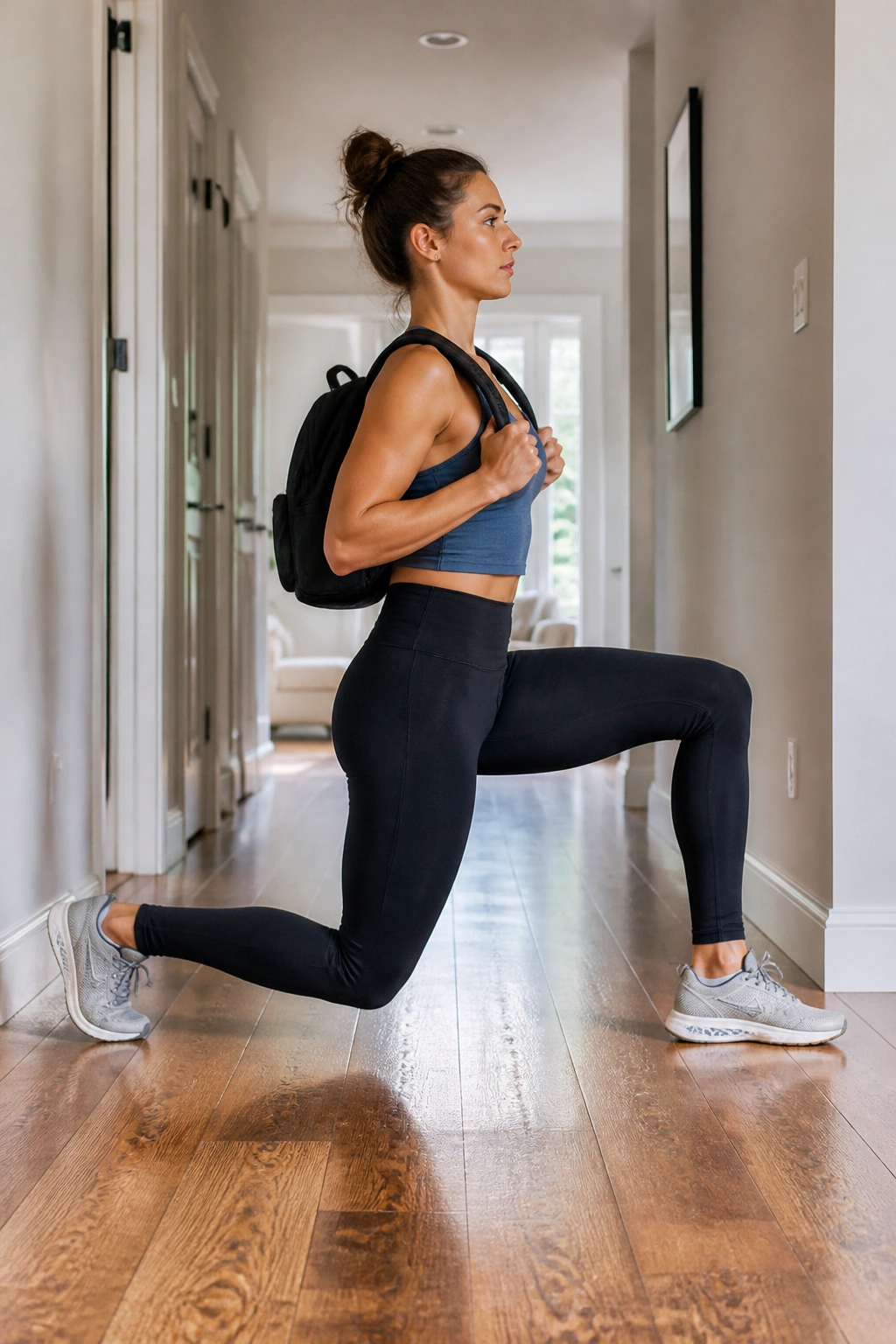
Walking lunges are functional, challenging, and great for burning calories because they require constant balance. As you step forward, your legs have to adjust to your body weight and maintain stability. This is much harder than a stationary lunge.
How to Keep It Balanced
Find a long hallway or a clear path in your house. Take a step long enough that your front knee does not extend past your toes. Keep your chest tall and your core tight. If you feel like you are going to fall over, you probably need to step slightly wider, not just forward.
Increasing the Intensity
If you have a backpack, put some books in it and wear it while you lunge. It adds resistance without needing any special gym equipment. It turns a bodyweight movement into a true strength-building exercise.
12. Weighted Swings
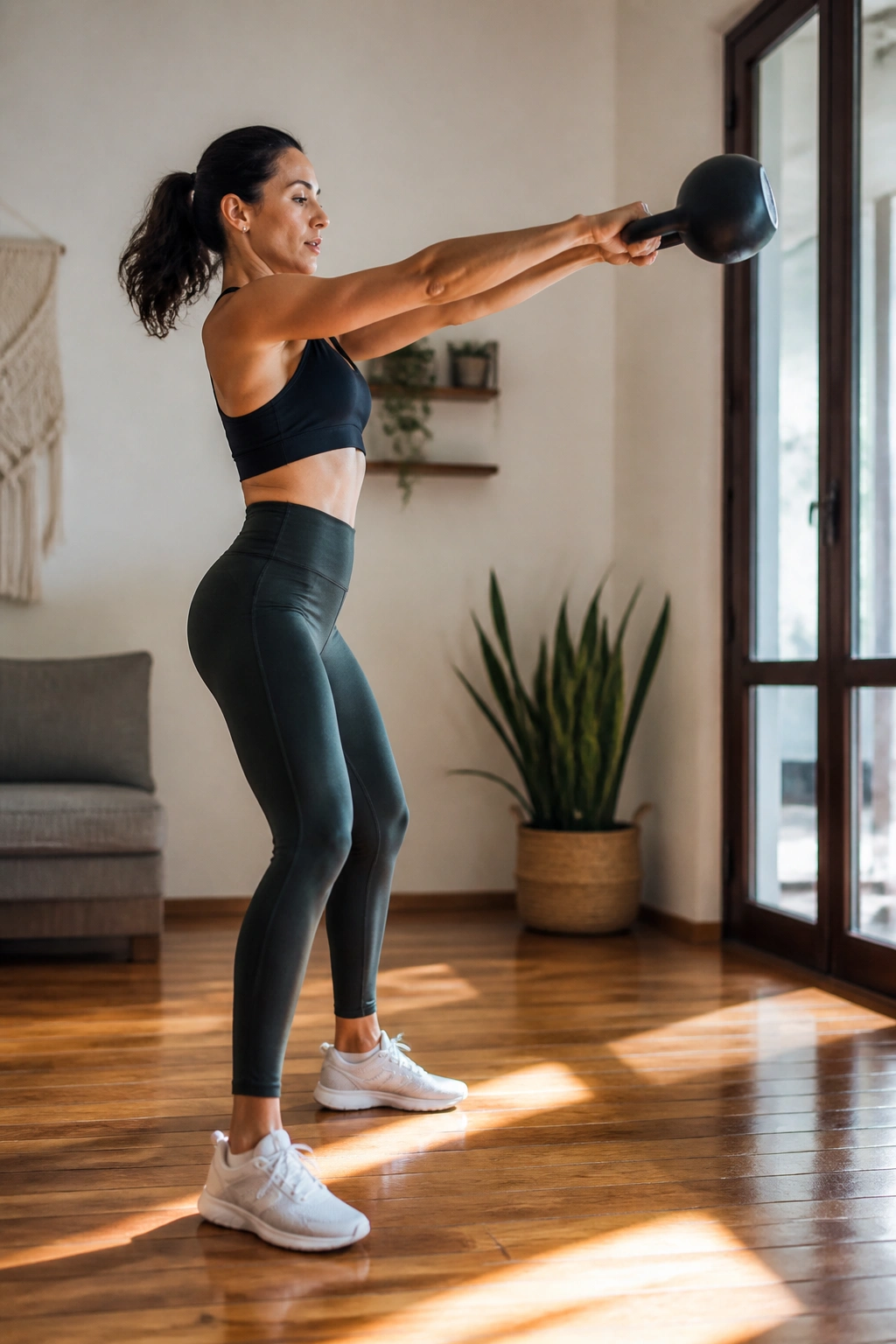
Whether you use a kettlebell, a dumbbell, or even a gallon jug of water, the swing is a powerful movement for your posterior chain—the hamstrings, glutes, and lower back. It is a hinge movement, not a squat. You are pushing your hips back and snapping them forward to swing the weight.
The Power Mechanism
The weight should move because of your hip snap, not because you are lifting with your arms. Think of your arms as ropes and your hips as the engine. When you snap your hips forward, the weight floats up. If you feel this in your shoulders, you are doing it wrong.
Why It’s Efficient
This movement spikes your heart rate incredibly fast. It is perfect for short, high-intensity bouts. You can do 20 swings, rest for 30 seconds, and repeat. It hits almost every muscle in the back of your body.
13. Shadow Boxing

Shadow boxing is a fantastic way to burn fat because it demands total focus and constant movement. You aren’t just punching the air; you are moving your feet, rotating your torso, and keeping your guard up. It is a full-body cardio workout that doesn’t feel like traditional “exercise.”
Creating a Routine
You can create your own combos. Jab-cross-hook, then weave. Jab-jab-cross, then shuffle. The key is to never stop moving. If you stand still, you lose the cardio benefit. Keep your knees soft and your core active to facilitate the rotation in your punches.
The Mental Aspect
Shadow boxing requires concentration. You have to visualize your opponent. This helps the time pass much faster than just staring at a clock while you run in place. It keeps your mind engaged, which means you are more likely to finish the session.
14. Inchworms
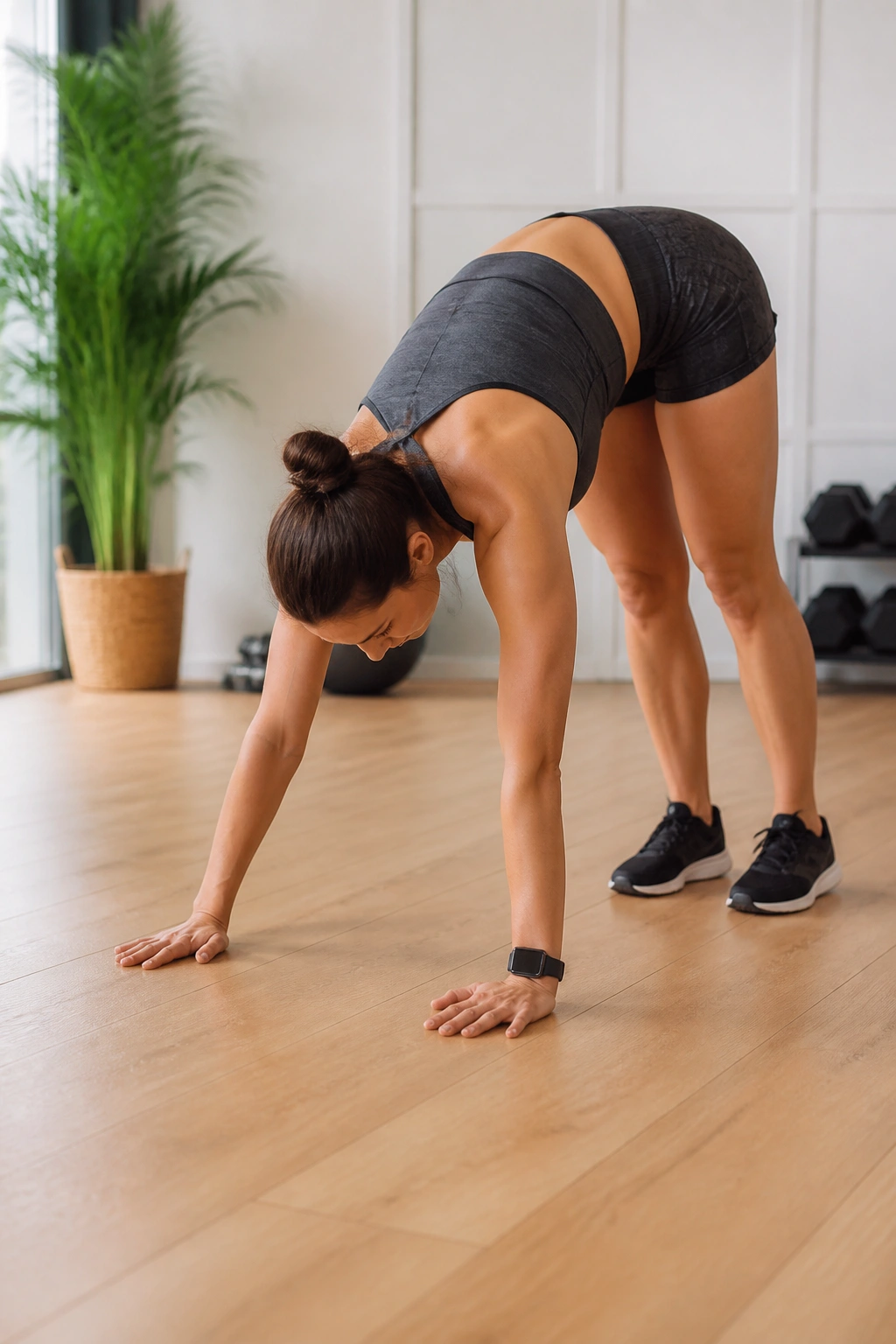
The inchworm is a dynamic movement that stretches your hamstrings while firing up your shoulders and core. You stand tall, fold at the waist to touch the floor, walk your hands out into a plank, and then walk your feet back to meet your hands.
Why Your Body Needs This
Most people spend their day hunched over a screen. Inchworms force your spine into extension and your shoulders into a stabilized position. It is both a strength move and a mobility exercise. You will feel your hamstrings loosening up with every rep.
Variation for Difficulty
When you get out into the plank position, add a push-up before you walk your feet back. This makes it a much harder move that hits your chest and triceps. It turns a simple mobility drill into a full-blown strength exercise.
15. Bear Crawls
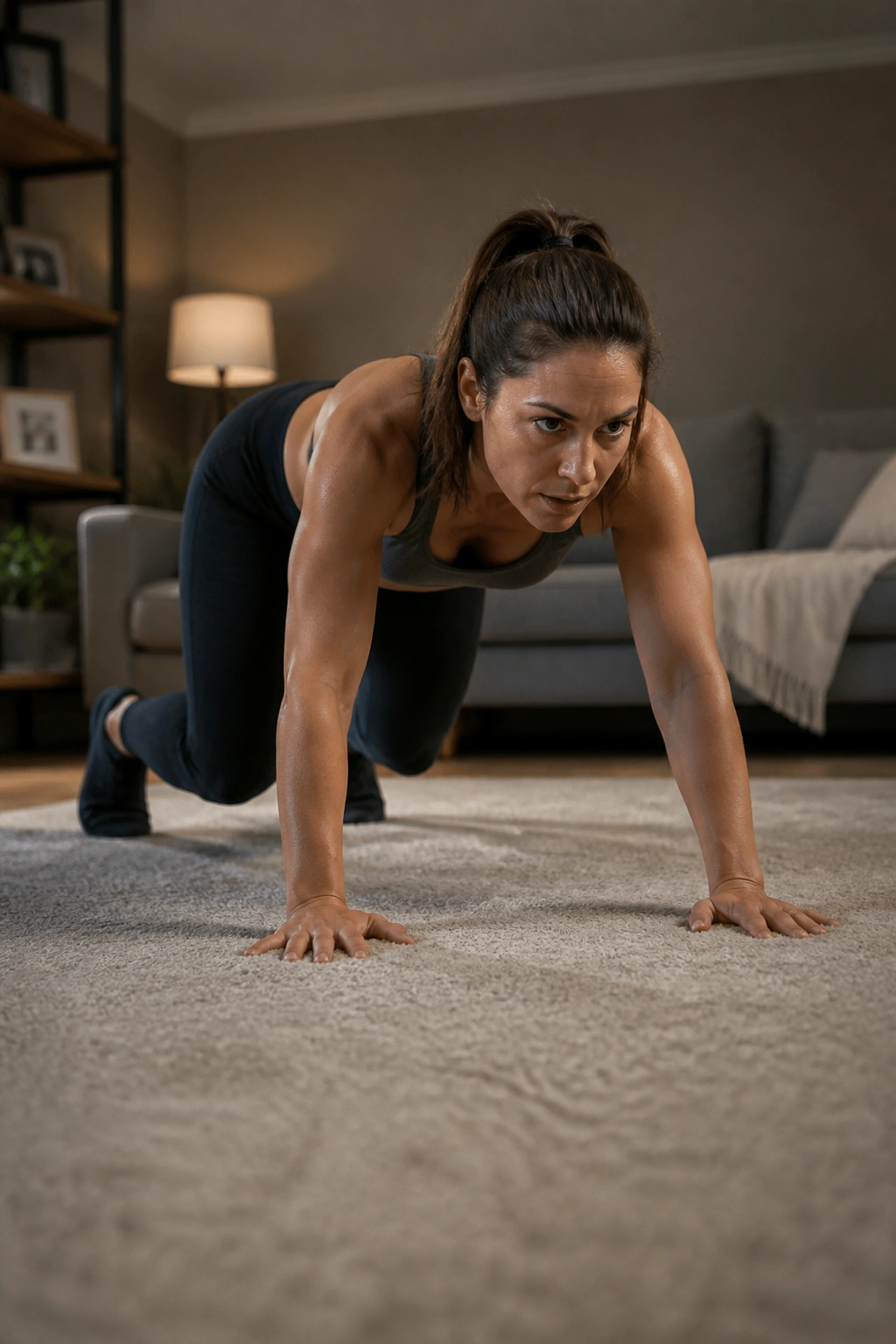
Bear crawls are humbling. You get on all fours, lift your knees just an inch off the floor, and crawl forward, backward, or sideways. It seems simple until you try to do it for 60 seconds straight. Your quads, shoulders, and core will light up.
The Importance of Form
Keep your back flat, like a table. If your butt is in the air, you are making it too easy. The closer your knees are to the floor, the harder your abs have to work. Move slowly and deliberately. Do not rush the steps.
Why This Is Great for Fat Loss
This is a total-body endurance move. It requires coordination and stabilization while you are breathing hard. It forces your muscles to stay under constant tension, which is exactly what you want for a fat-burning home workout.
16. Thrusters
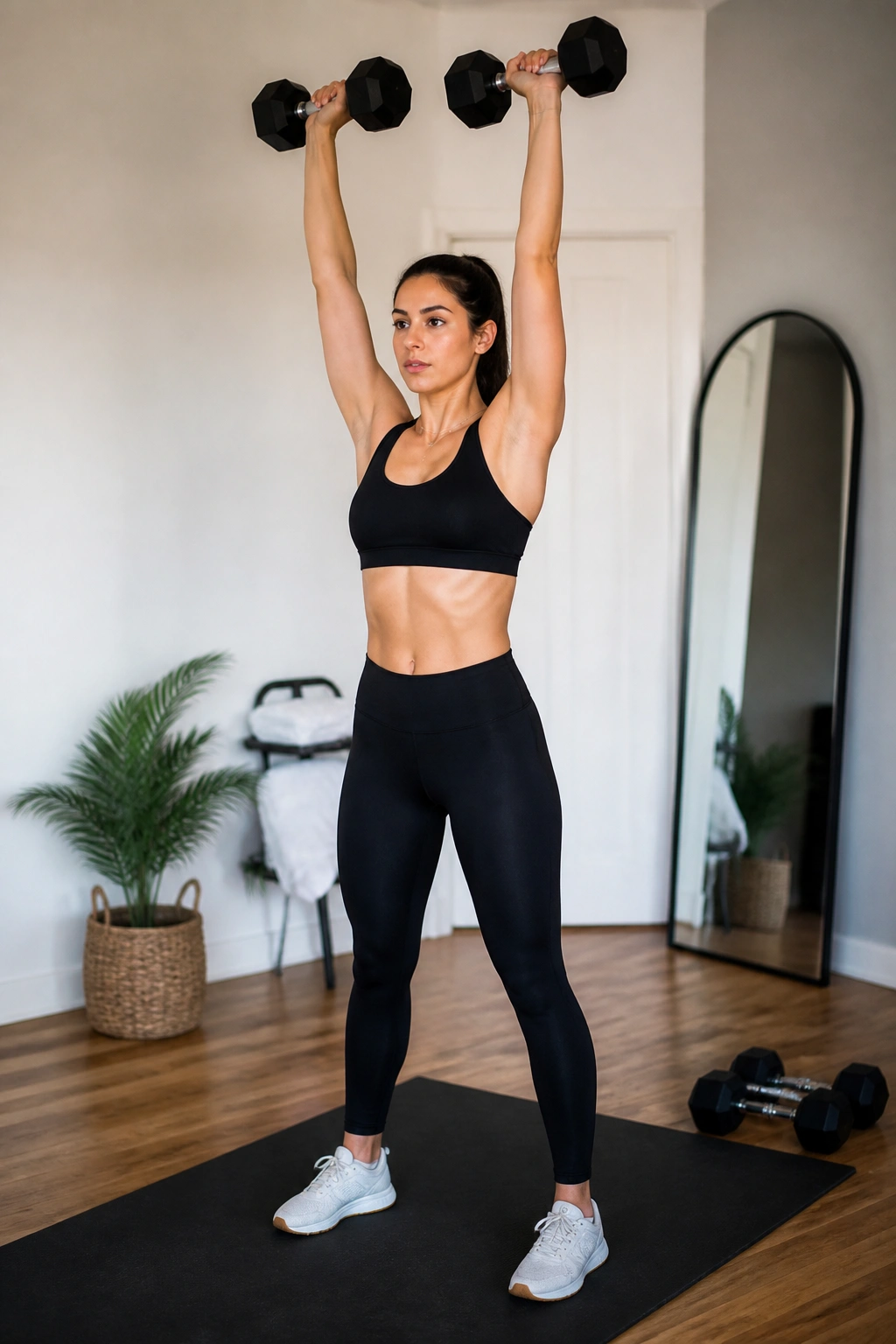
A thruster is a squat combined with an overhead press. This is arguably the best “bang for your buck” exercise in existence. It hits your legs, core, and shoulders in one fluid motion. You can do these with dumbbells, water bottles, or even just body weight if you go fast enough.
The Flow of Movement
The key is to use the power from your squat to push the weight overhead. It should be one continuous motion. When you reach the top of the squat, the momentum should naturally help you drive your arms up. It is not a squat, then a press. It is a squat into a press.
Staying Consistent
Because this is so taxing, don’t try to go too heavy too fast. Start with a weight that allows you to maintain perfect form for 10-15 reps. If you are struggling to keep your balance, drop the weight and focus on the speed of the movement.
17. Jumping Lunges
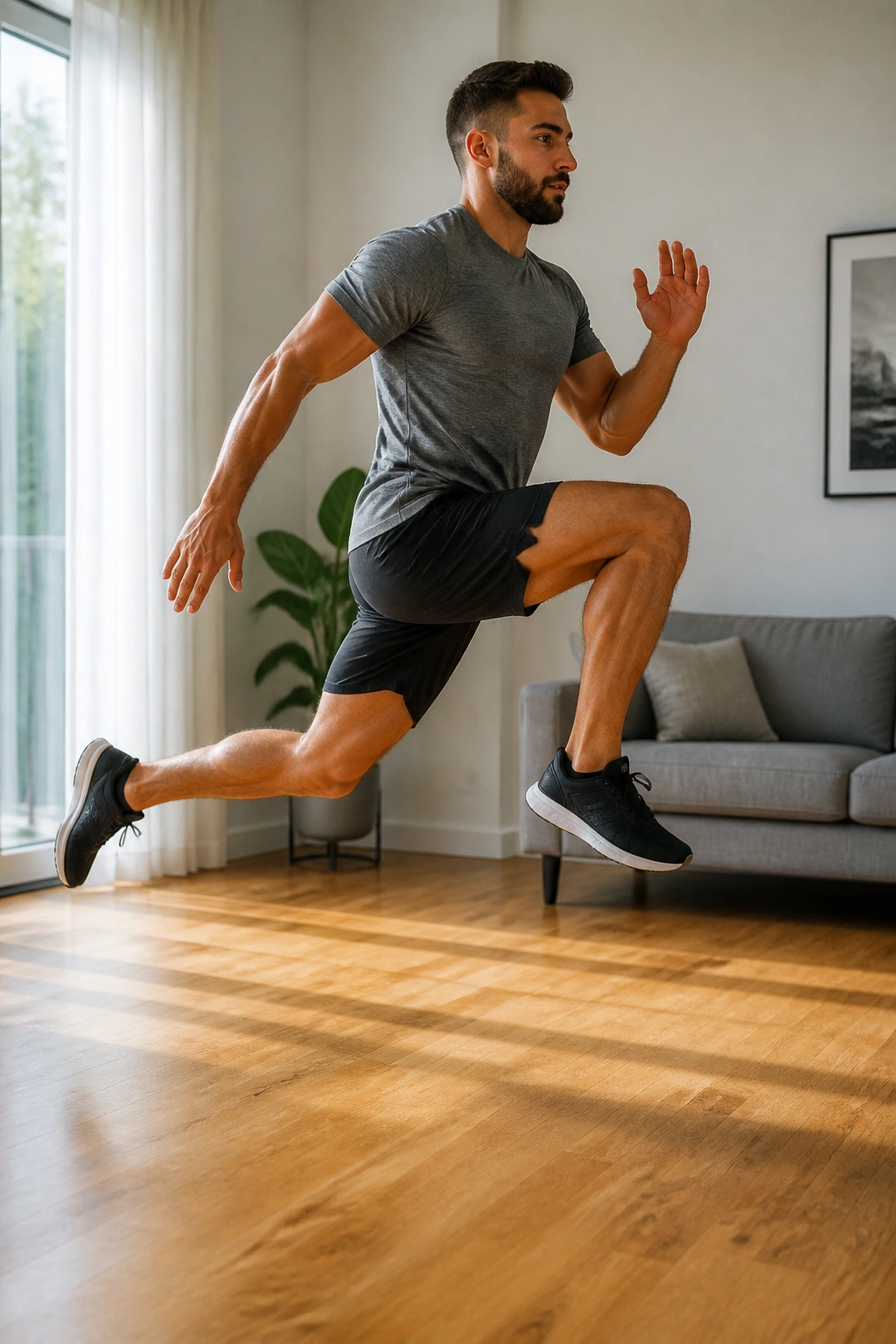
If you thought walking lunges were hard, jumping lunges take the difficulty to a completely different level. You jump up from the lunge position and switch your legs in mid-air, landing into a lunge on the other side. This is an explosive, high-impact plyometric move.
Handling the Impact
Just like the jump squats, the landing is critical. You need to control your descent so you don’t slam your knee into the ground. If this is too hard, you can step quickly instead of jumping, but make sure to keep the intensity high.
Why It Works
This move forces your body to absorb force and immediately generate it again. It builds massive amounts of power in the glutes and quads. It is one of the fastest ways to get your heart rate through the roof in a living room setting.
18. Flutter Kicks
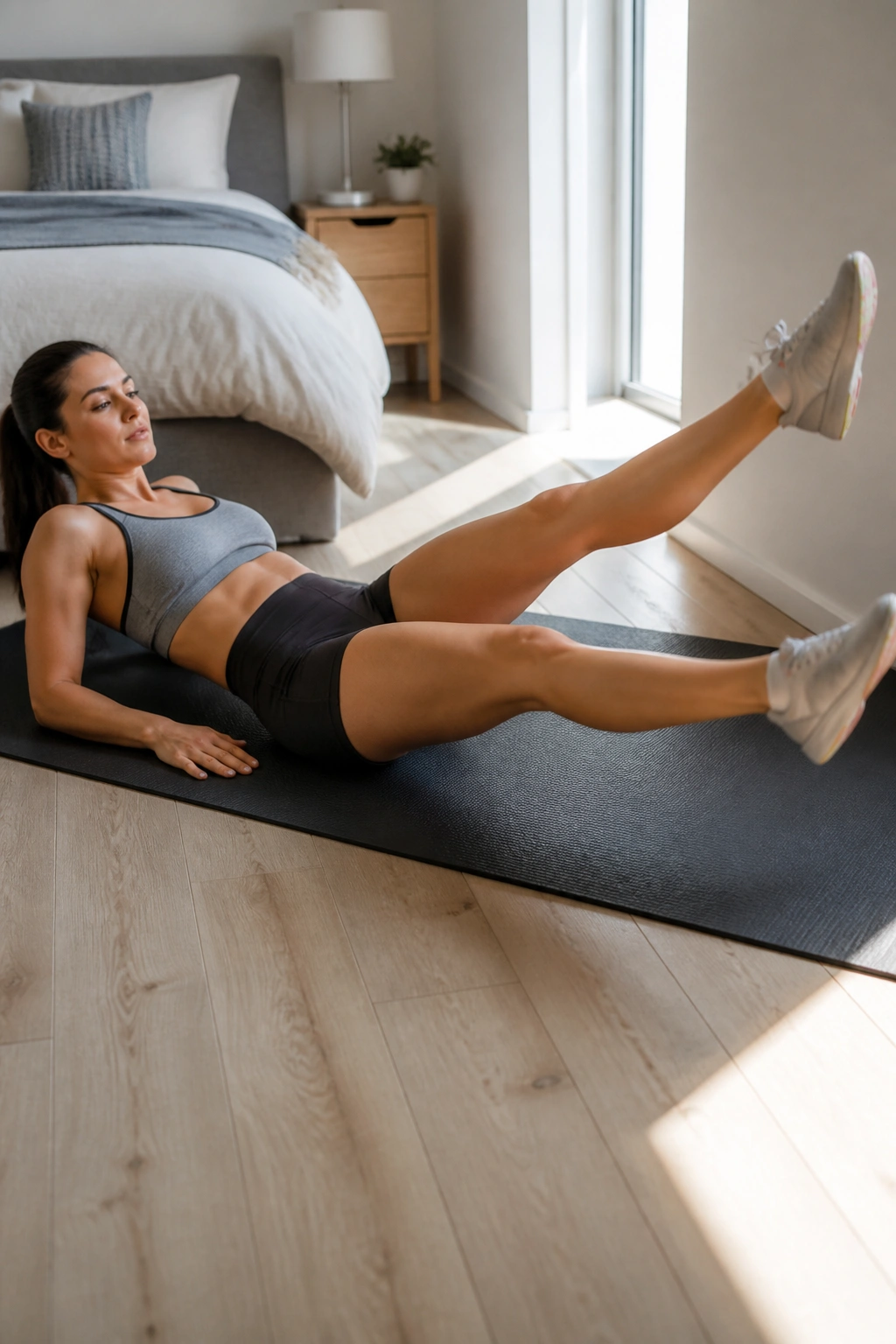
Flutter kicks are great for targeting the lower abs, which are notoriously difficult to isolate. You lie on your back, press your lower spine into the floor, and rapidly kick your legs up and down. The lower your legs are to the ground, the harder the exercise becomes.
The Spinal Rule
Your lower back must stay glued to the floor. If you feel it arching, lift your legs higher. If you let your back arch, you are using your hip flexors more than your abs, and you risk putting unnecessary strain on your spine.
Why This Matters
Building core strength helps with every other exercise on this list. A strong core acts as a stabilizer for your entire body, making you more efficient at burning calories when you do high-intensity work.
19. Star Jumps
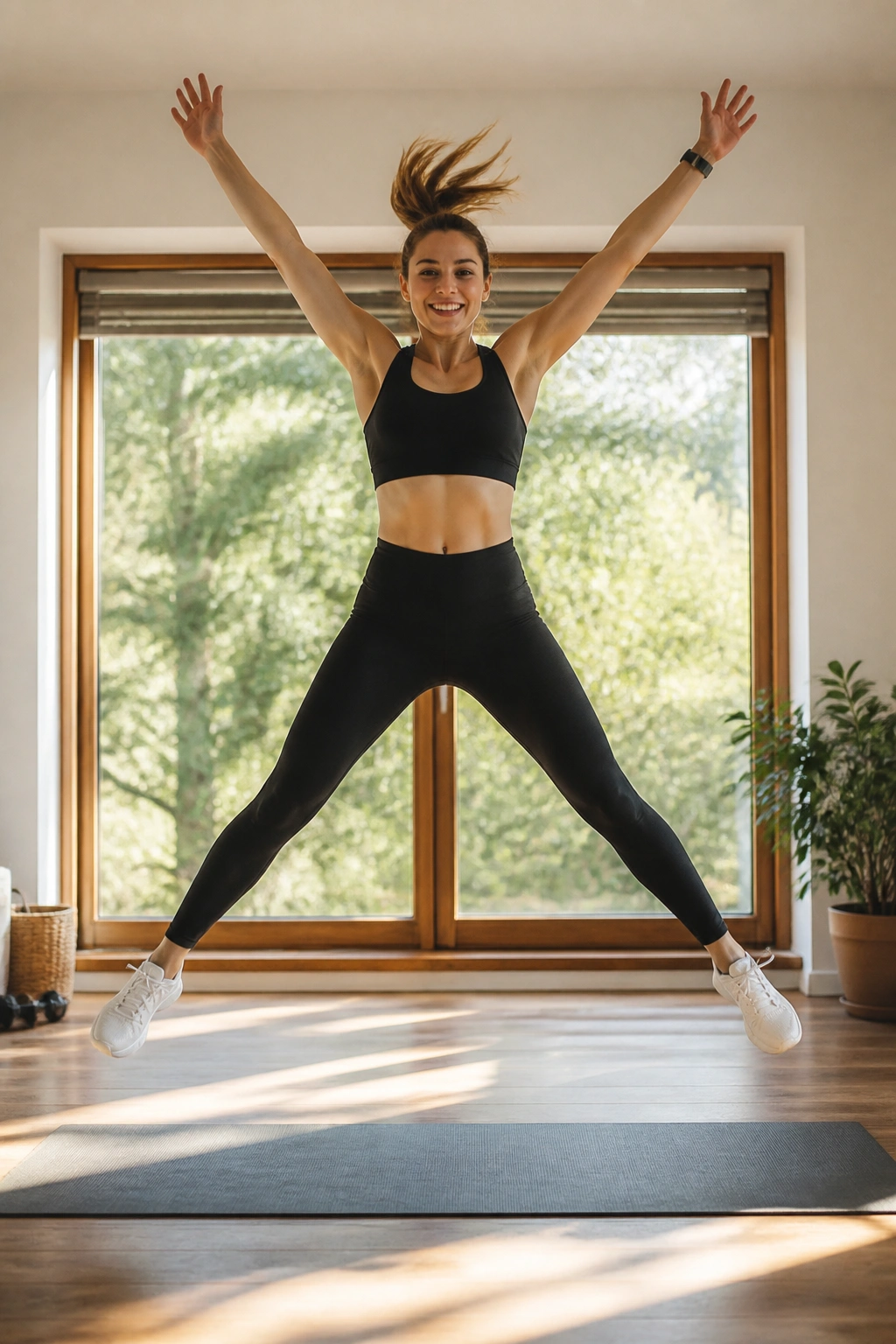
Star jumps are like jumping jacks on steroids. Instead of just tapping your feet out, you jump into the air and explode your arms and legs outward like a star. It is a total-body explosive movement that burns a huge amount of calories.
The Intensity
These are exhausting. Do not expect to do hundreds of these in a row. They are meant to be done in short bursts, maybe 10 to 20 seconds, followed by rest. Treat them as a peak intensity move to finish off a circuit.
Proper Form
When you jump, bring your knees up slightly as you extend your legs. Land softly and immediately prepare for the next rep. You will find your lungs burning faster than your muscles, which is exactly what you want for cardio-based fat loss.
20. Walkouts
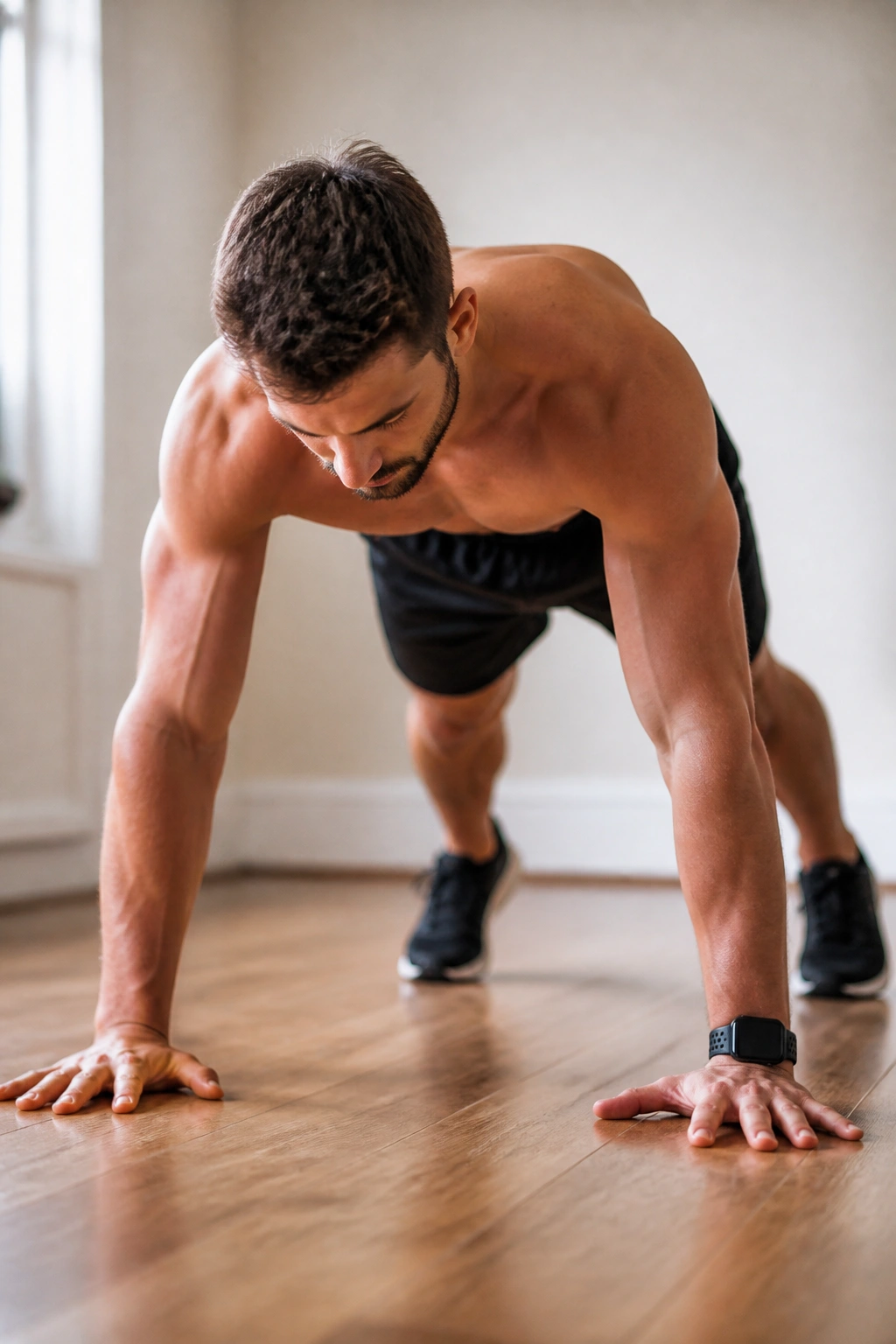
Stand with your feet hip-width apart and fold your body forward to place your hands on the ground. Walk your hands out until you are in a plank, hold for a count, and walk your hands back to your feet. This is excellent for shoulder stability and core control.
The Shoulder Focus
Unlike inchworms, where you walk your feet to your hands, walkouts keep your feet planted. This isolates your shoulders and upper back. It is a fantastic way to develop shoulder strength without ever touching a weight.
Controlling the Core
As you walk your hands out, do not let your hips sag. Keep your core tight the entire way out. The moment you lose tension, you stop getting the core-strengthening benefit. Think of it as a moving plank.
21. Sprawls
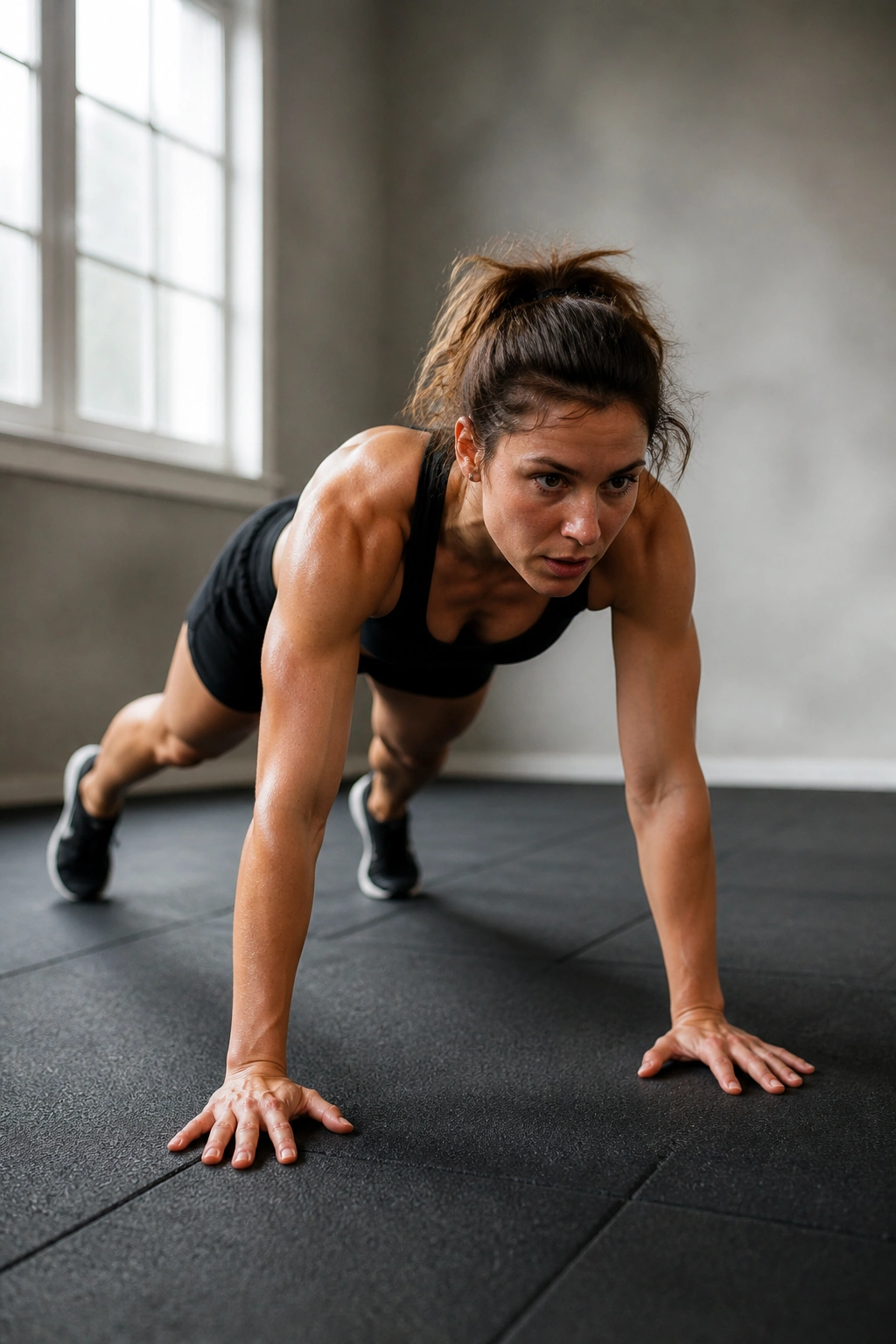
A sprawl is essentially a burpee without the push-up and without the jump. You jump your feet back into a plank, drop your hips, and then jump your feet forward again. It is faster than a burpee and allows you to keep a higher tempo.
Why It’s Effective
Because you aren’t doing the push-up, you can maintain a much faster heart rate. This is great for interval training. You can do 45 seconds of sprawls and have very little time for your heart rate to recover.
The Goal
Go for speed. The purpose of a sprawl is to get your feet back and forth as quickly as possible. Keep your head up and your chest proud, even though you are moving fast. It is a brutal test of speed.
22. In-Place Sprints
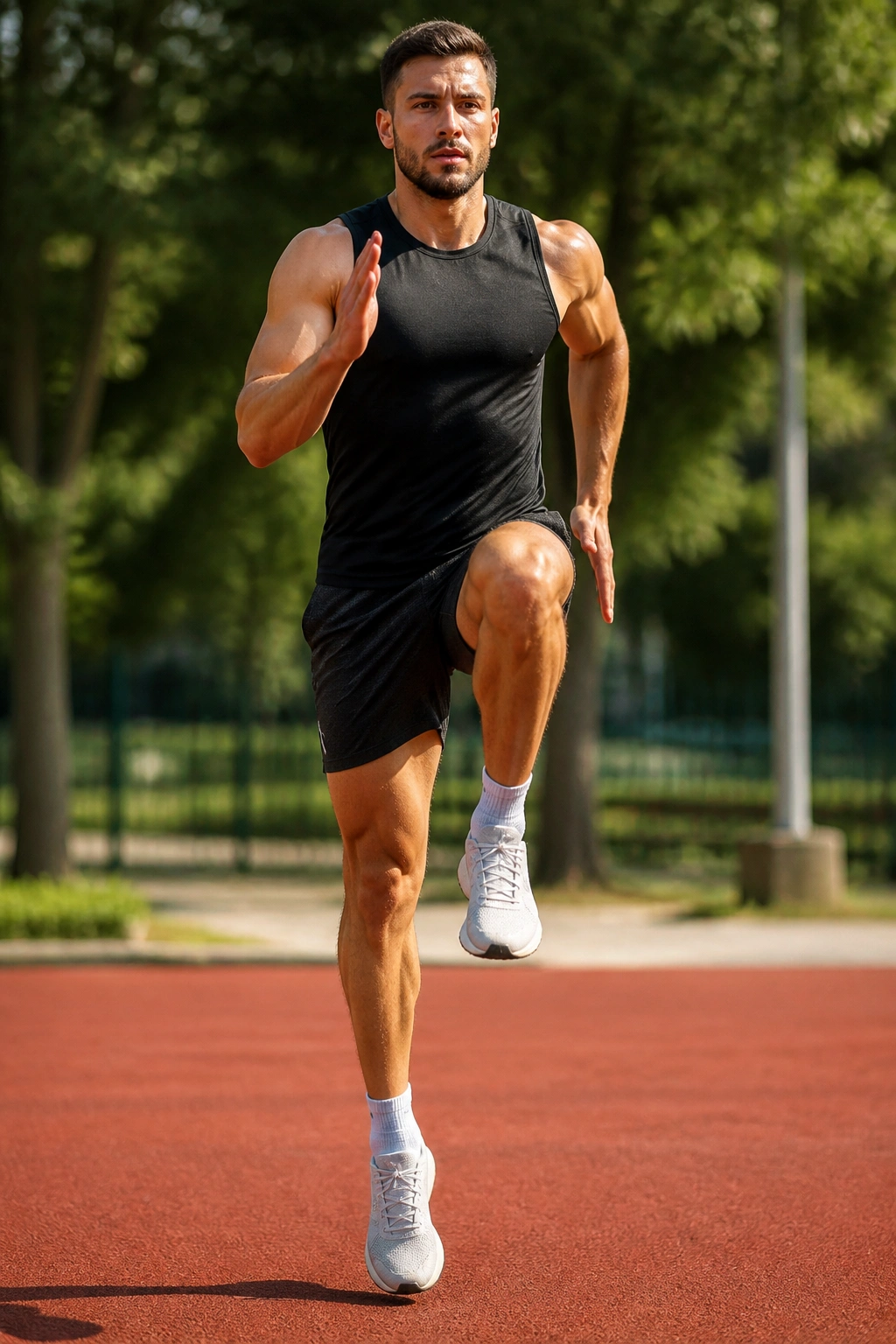
Sometimes the simplest moves are the most effective. Just run in place as fast as you can. Drive your arms, pump your legs, and keep your torso tight. It is the ultimate way to finish a workout when you are too tired to do anything complex.
How to Make It Hard
If you just jog, you won’t get much out of it. You need to treat it like a 100-meter dash. Push yourself to the point of breathlessness. If you can talk while doing this, you are not working hard enough.
The Final Push
Use this as a finisher. When you have finished your circuit, set a timer for one minute and sprint as hard as you can. It will empty the tank and ensure you leave everything on the floor. It is simple, effective, and requires no explanation.
Final Thoughts
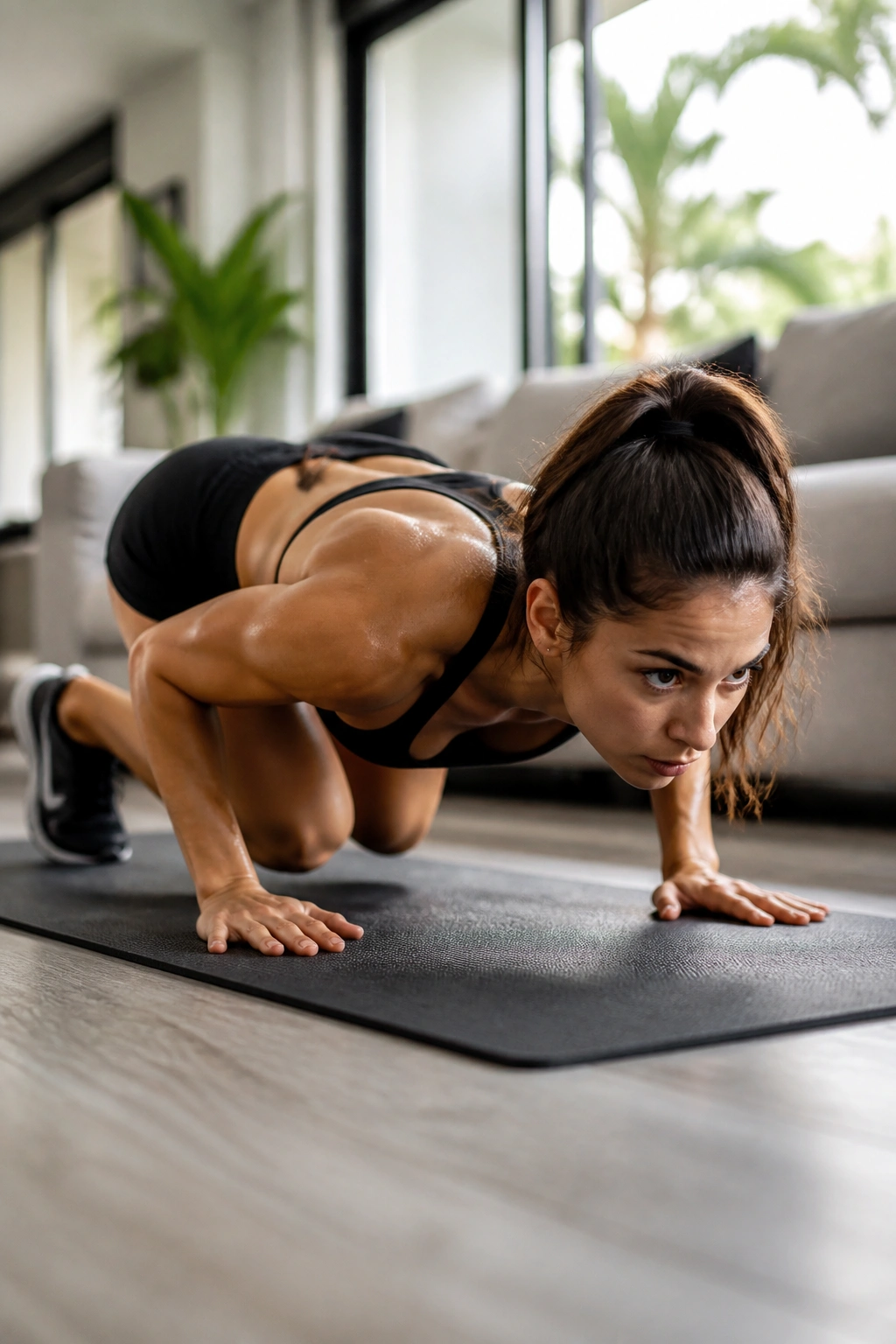
The real secret to fat burning at home isn’t the specific sequence of moves you choose; it is your consistency and your willingness to push the intensity. You can do these exercises with perfect form and total dedication, but if you stop the second your heart rate rises, you are leaving results on the table. Embrace the discomfort. That feeling of breathlessness and muscle fatigue is the mechanism of change.
Do not worry about having the perfect home gym setup. Most of the time, that is just a way to procrastinate. You have enough space in your living room to build the body you want, provided you are willing to do the work. Start with three or four of these exercises, combine them into a quick circuit, and repeat it until you are drenched in sweat.
The most effective workout is the one you actually do. If you have 20 minutes, use it. If you have 10, use it. The intensity is what dictates the outcome, not the amount of time you spend, nor the equipment you have on hand. Keep your movements sharp, keep your effort high, and trust that the consistency will pay off.
