



Stress eating usually doesn’t show up after a calm, tidy day. It shows up when your shoulders are tight, your brain feels noisy, and the kitchen starts looking like the easiest place to get relief. That’s where belly fat workouts earn their keep — not because any workout melts fat from one spot on command, but because movement can lower stress, burn energy, and interrupt the snack loop before it runs the night.
No workout targets belly fat alone. Annoying, yes. True, also yes. The useful part is the combination: enough movement to matter, enough structure to repeat, and enough intensity to make your body feel like it has done something useful without turning the whole thing into punishment.
You do not need a brutal routine to get there. A 20-minute walk after dinner, a short rowing set, or a few hard rounds on a bike can change the shape of an evening fast. Public-health baselines usually point to about 150 minutes of moderate aerobic work a week plus two strength sessions, and that’s a sane place to build from if stress eating has been wearing grooves into your habits.
The workouts below are built for real life. Some are low impact. Some are sweaty and loud. One or two can be done in a small room when you are too irritated to think straight. Start with the move that matches the mood that usually sends you toward food. That part matters more than people admit.
1. Brisk Walking After Dinner
A 20-minute walk after dinner is one of the easiest ways to break the stress-eating cycle. It gives you a clean transition out of the kitchen, raises your heart rate without beating up your joints, and often blunts that restless “I need something else” feeling that shows up after a long day.
Walking also has a nice side effect: it feels ordinary. Not dramatic. That’s a good thing here. When a workout feels too intense, stressed people tend to skip it. When it feels manageable, they repeat it. Repetition is the whole game.
How to do it
- Walk for 15 to 30 minutes at a pace where you can talk, but you’re breathing a little harder than usual.
- Start 10 to 20 minutes after dinner if that’s when cravings usually hit.
- Keep your arms loose and your shoulders down.
- If the weather is bad, walk laps inside your building, around a mall, or on a treadmill at a slight incline.
Pro tip: put your shoes by the door before dinner. Tiny setup. Big difference.
2. Incline Treadmill Walking
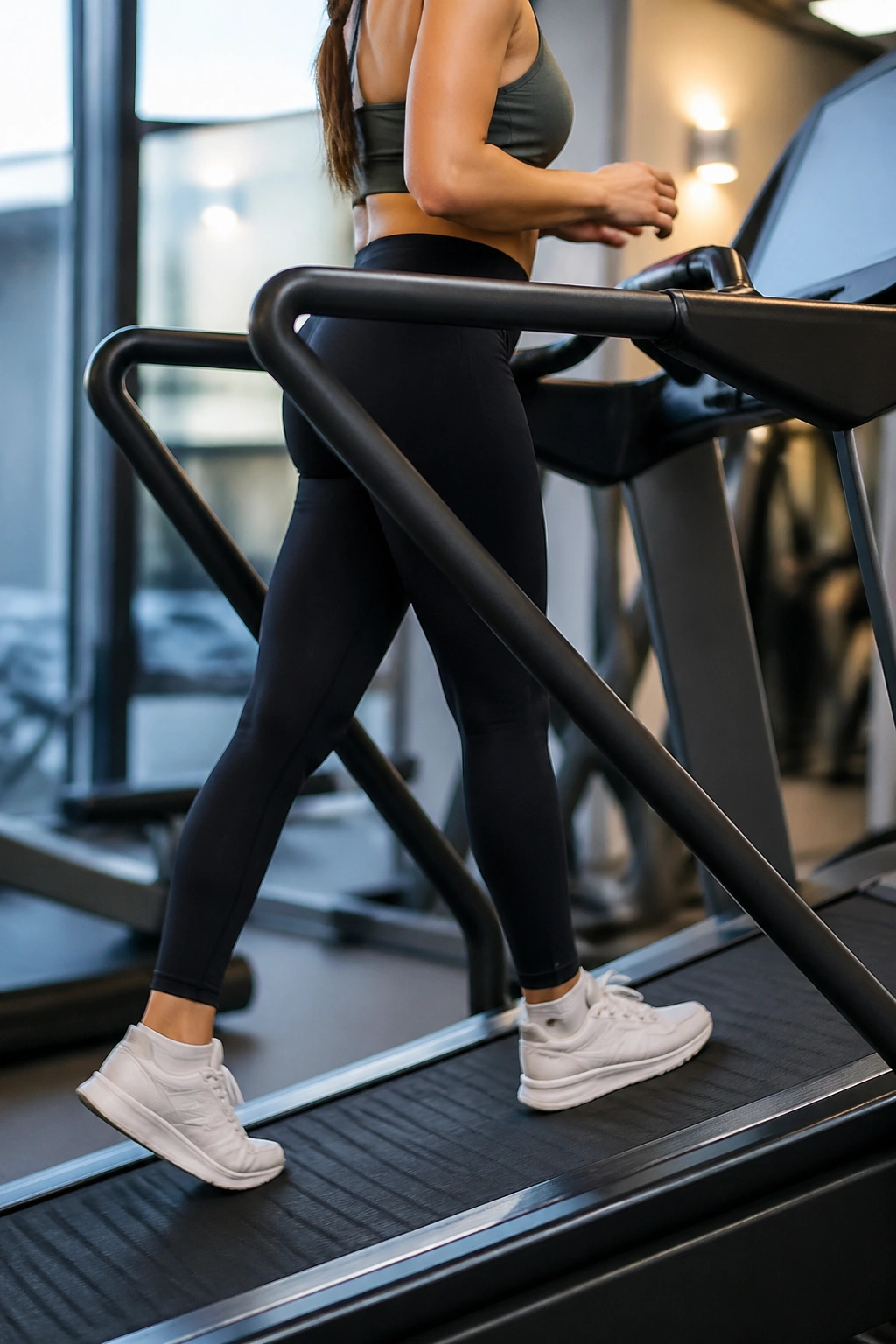
Why does a 5% to 8% incline feel so much tougher than flat ground? Because it turns a plain walk into a real workload without forcing you into a run. Your glutes, calves, and hamstrings do more of the work, and your heart rate climbs faster at the same speed.
That matters for stress eating because incline walking gives your brain a job. The rhythm is steady, the effort is real, and you do not end up spiraling the way you sometimes do when the workout feels too easy to “count.”
A lot of people like this one because it lands in a useful middle zone. Harder than a stroll. Easier than intervals. If you’re hungry, irritated, and not in the mood for impact, this is a smart pick.
What to watch for
- Keep the speed around 2.8 to 3.5 mph if you’re using a treadmill.
- Avoid leaning on the rails. That kills the work.
- Take shorter steps and press through the heel and midfoot.
- If your lower back starts arching, lower the incline before you make it worse.
3. Rowing Intervals
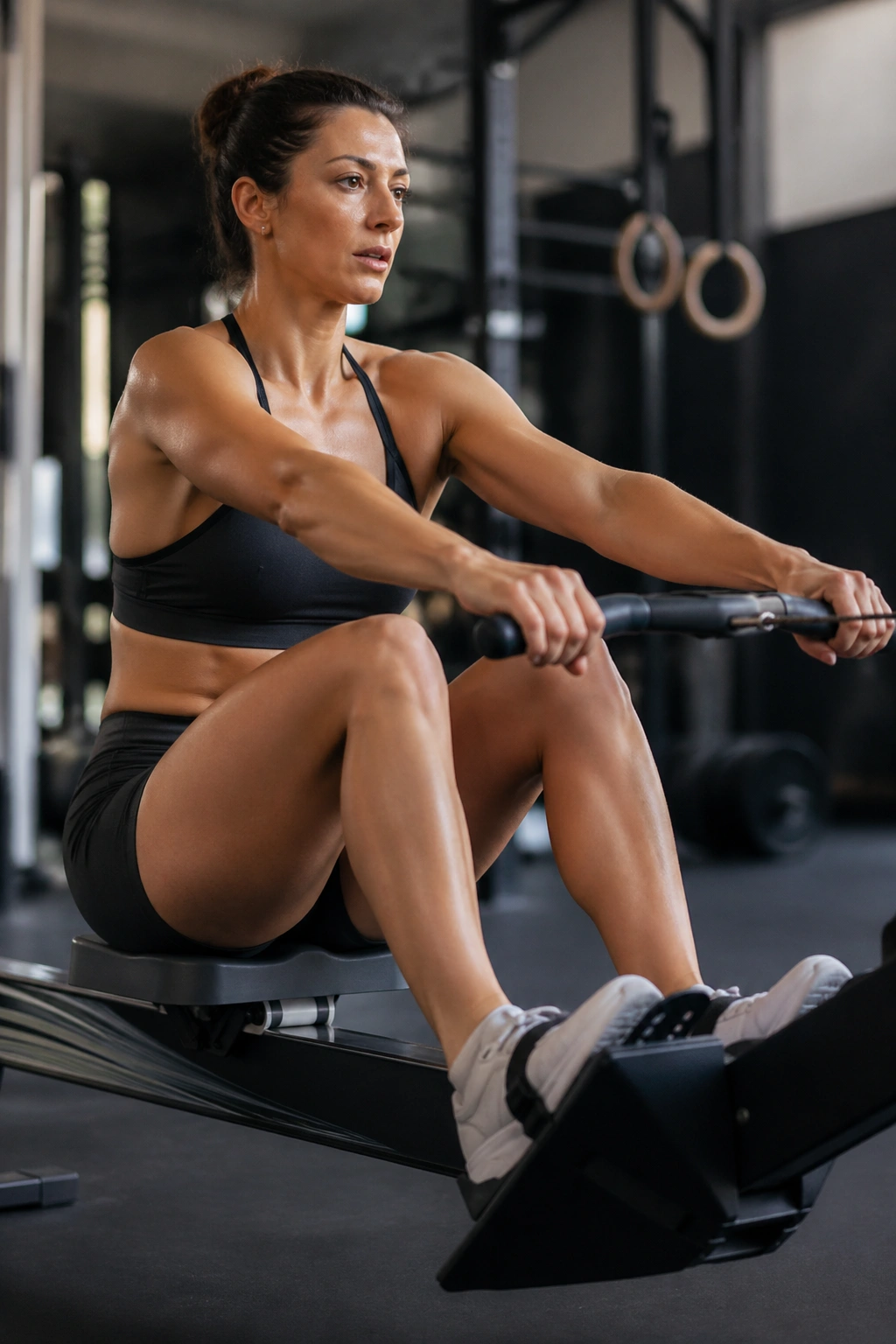
Rowing is a full-body fix when you feel wound up and don’t want to pound your knees. Every pull uses the legs, back, and arms in one smooth chain, which is why a short rowing session can feel like it hits more of you than a jog ever could.
It’s also honest. You can’t fake a rower for long. The handle, the slide, the breathing — all of it tells you when you’re coasting. That makes it a good option on days when stress has turned you a little sloppy with effort.
Use the damper setting in the middle range, not maxed out. A higher damper is not better; it just makes the stroke heavier and uglier for most people. Middle range is enough.
Sample 12-minute set
- Row 30 seconds hard.
- Row 90 seconds easy.
- Repeat for 6 rounds.
- Finish with 2 minutes of easy rowing until your breathing settles.
If your form falls apart by round three, the sprint is too hard. Pull smooth. Drive with the legs first. That sequence matters more than raw speed.
4. Dumbbell Circuits for Belly Fat Workouts
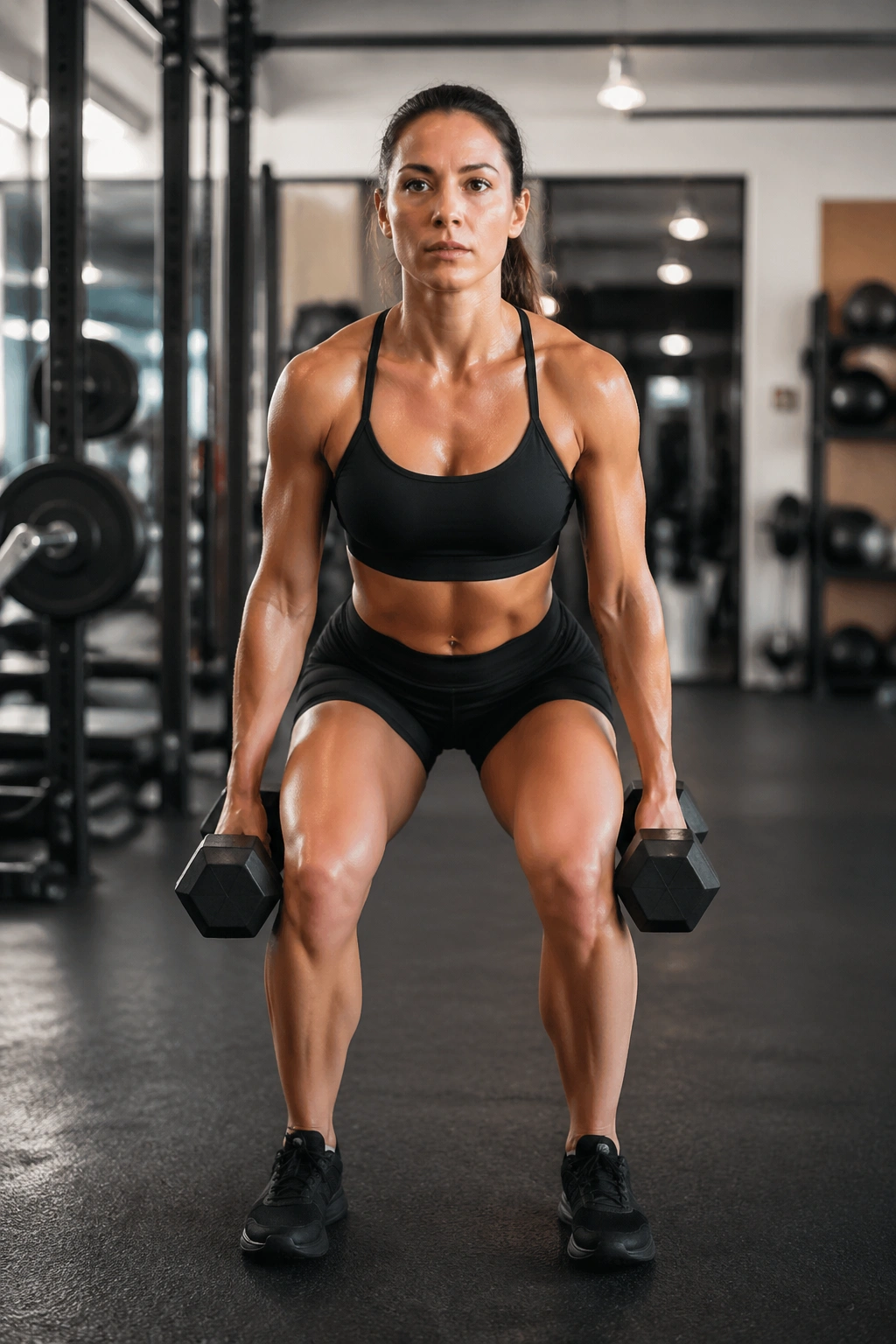
This is the section for people who get bored fast. A dumbbell circuit keeps your heart rate up, hits big muscles, and gives you a clear finish line, which is useful when stress eating comes from feeling mentally scattered.
A clean circuit beats a random gym wander. You know what’s next. You know when you’re done. That little bit of certainty can calm a frazzled brain more than people expect.
Use 4 basic moves: a squat, a push, a pull, and a hinge. That covers a lot of ground without turning the session into a complicated puzzle. Keep the weights moderate enough that your last rep is challenging but not ugly.
A solid structure is 3 rounds of 8 to 12 reps for each move, with 30 to 45 seconds of rest between exercises. Move from one station to the next with purpose. No wandering. No phone scrolling between sets.
If the workout starts feeling too easy, add one round before you add more weight. That usually works better than jumping straight to heavier dumbbells and turning the session into a grind.
5. Kettlebell Swings and Goblet Squats
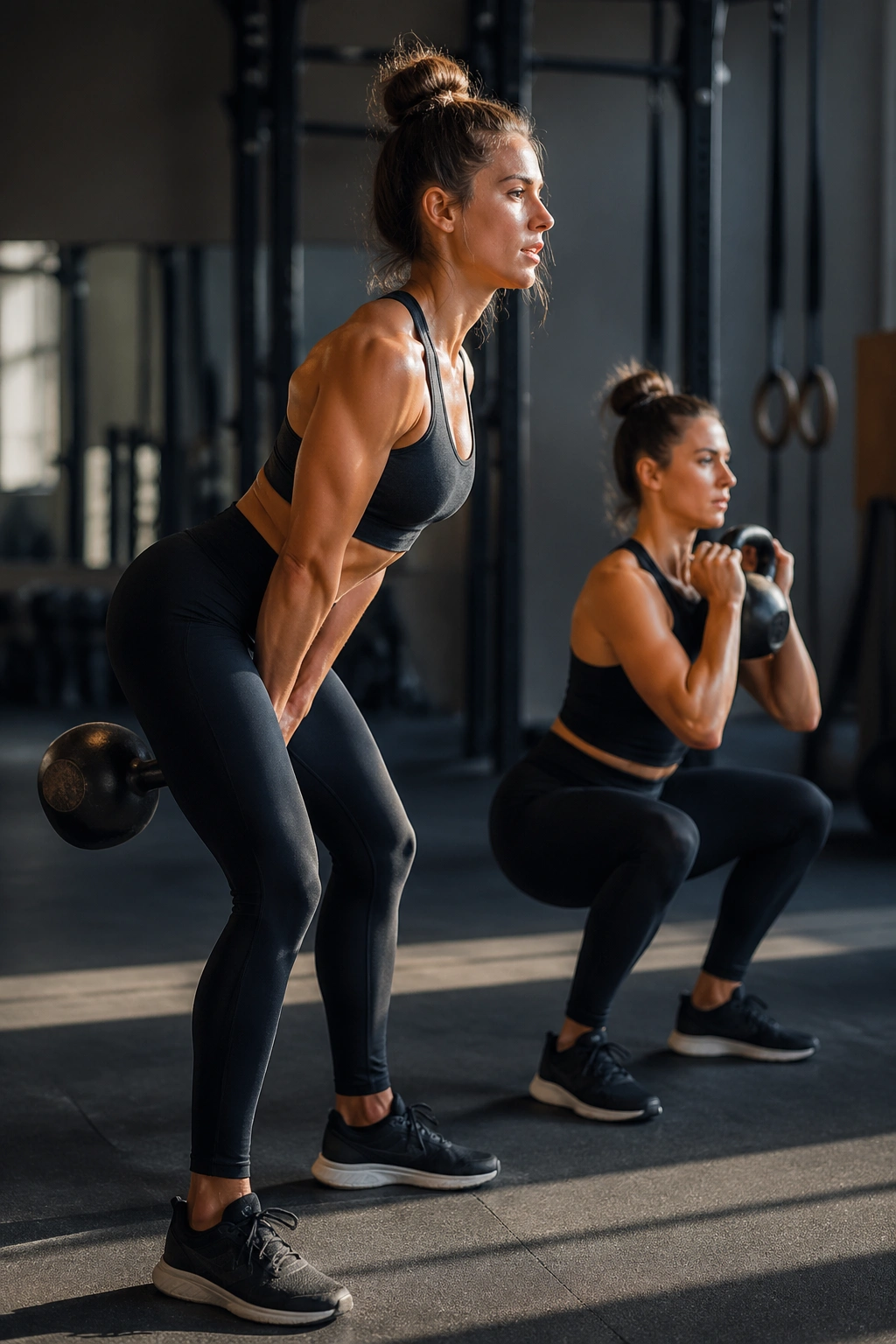
Jogging is fine. Kettlebells are more interesting. And on a day when your head feels crowded, a short power session with a bell can give you a blunt, satisfying kind of relief.
Swings are fast hip snaps, not arm lifts. Goblet squats are upright and controlled, with the weight held at chest level. Together, they create a workout that feels athletic without needing a long setup.
This pairing is good for people who want a harder session in less time. Ten swings can light up your posterior chain fast. Five goblet squats bring the legs back into it. Repeat the pair for 6 to 10 rounds and you’ve got a session that leaves little room for snack drama afterward.
Form matters here. If your lower back feels it more than your hips do on swings, the hinge pattern is off. Push your hips back. Snap them forward. Don’t squat the bell.
6. Jump Rope Intervals
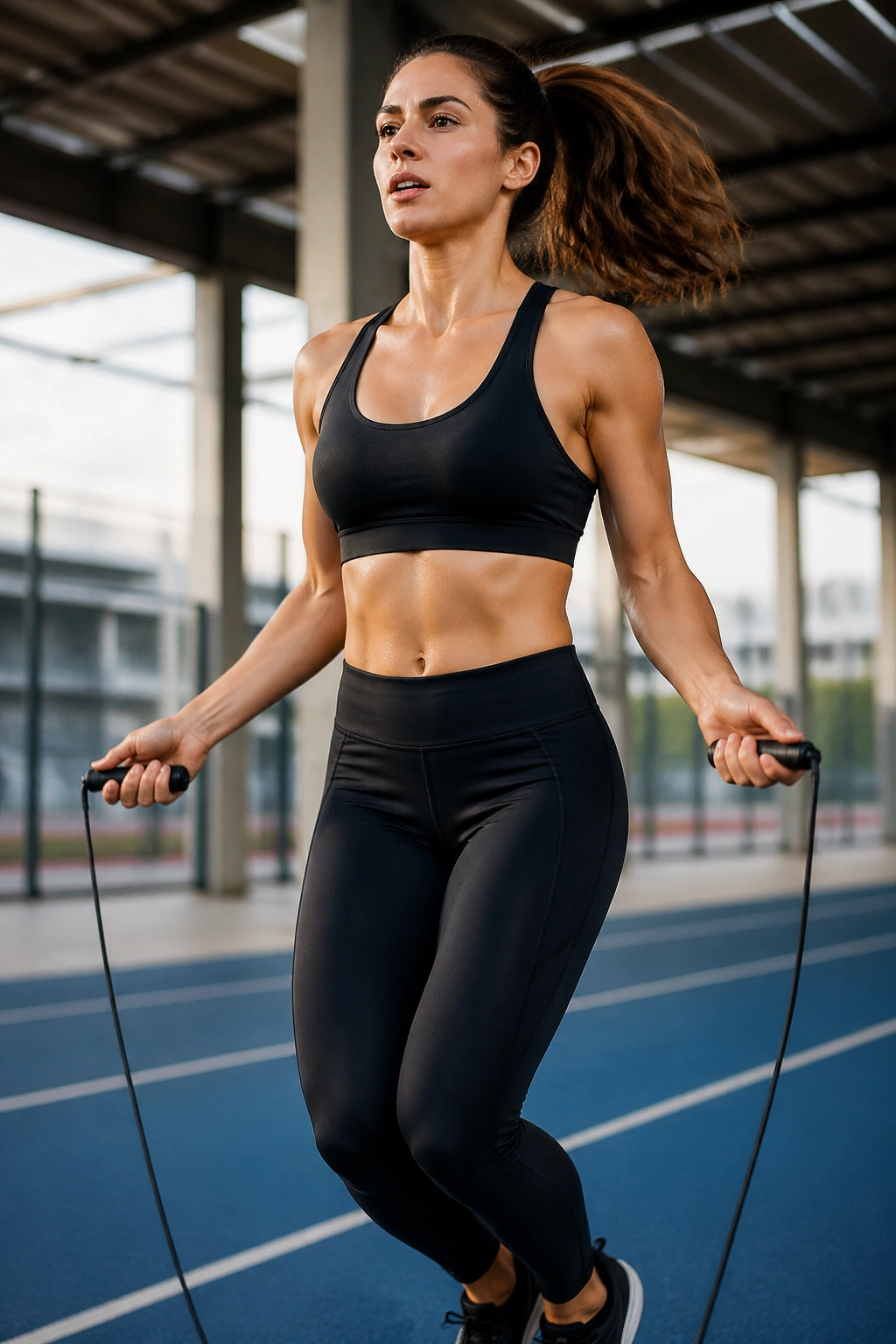
The rope snaps the floor. Your calves know immediately. Your breathing changes fast, and that’s the point.
Jump rope is one of those old-school moves that still works because it doesn’t waste time. In 10 to 15 minutes, you can get a real cardio hit, and the quick rhythm helps some people shake off the jittery edge that leads to mindless eating. It’s also small-space friendly, which helps when stress is already making you feel trapped.
What to watch for
- Start with 20 seconds on, 40 seconds off for 8 to 10 rounds.
- Keep your jumps low — just enough to clear the rope.
- Turn the rope with your wrists, not huge arm circles.
- Wear supportive shoes and use a mat if your floor is hard.
If you trip often, slow down before you quit. Most people try to jump too high. Tiny hops work better. Less bounce. More control.
7. Boxing Rounds

Three minutes feels longer than it looks. That’s part of why boxing works so well for stress eating. It gives your frustration a target, and it does not care whether you had a rough meeting, a messy commute, or a day that turned sour around noon.
Shadowboxing is enough if you don’t have gloves or a bag. You can throw jabs, crosses, hooks, and uppercuts in combinations while moving your feet. If you do have a heavy bag, keep your strikes crisp and your rounds short enough to stay sharp.
Round structure
- Warm up for 3 minutes with easy punches and light footwork.
- Work 6 rounds of 2 to 3 minutes.
- Rest 1 minute between rounds.
- Finish with 1 round focused only on quick jabs and head movement.
A bag round should sound snappy, not sloppy. If your shoulders are burning halfway through round two, loosen your grip and stop muscling every punch. Good boxing is snappy. Tense boxing just gets you tired.
8. Stair Climbing
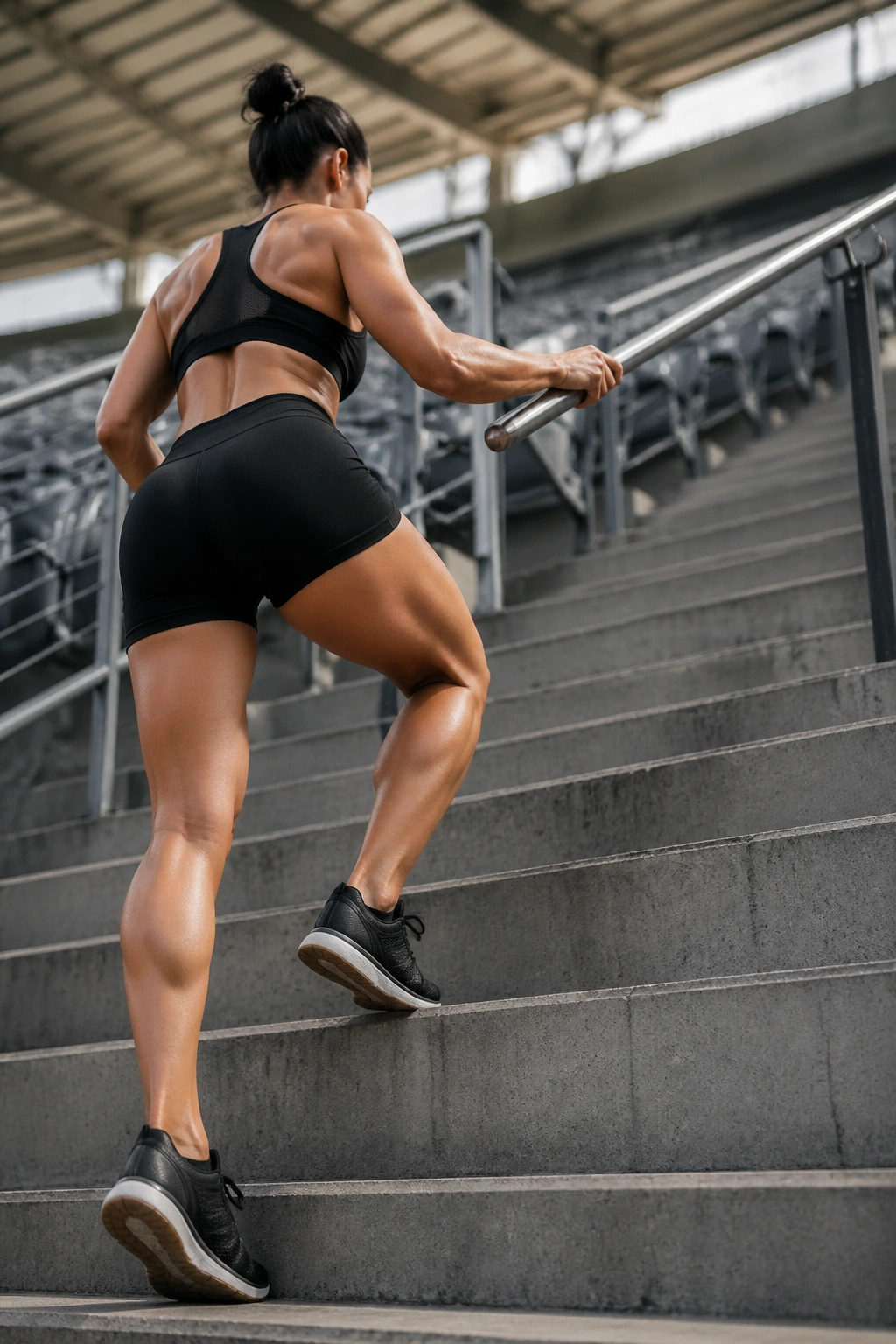
Stairs are rude in the best possible way. They raise your heart rate fast, use the legs hard, and make it impossible to pretend you are not exercising. That honesty is useful when stress eating has made you a little too good at cutting corners.
You can use stadium stairs, a stair machine, or even a regular apartment stairwell if that is what you have. The motion is simple, but the work piles up quickly. Your glutes and quads do most of the heavy lifting, and your lungs catch up fast.
Keep the session short if you are new to it. 8 to 12 minutes is enough to matter. If you want more, add a second block later in the day instead of trying to turn one session into a suffering contest.
Hold the rail lightly if you need it. That is fine. What you do not want is leaning so much that the legs stop working. If your knees complain, shorten the session and use a slower pace.
9. Cycling Intervals for Belly Fat Workouts

A steady bike ride is fine. Intervals are better when your brain wants relief fast.
Cycling is one of the easiest ways to raise output without pounding the joints. That’s a nice fit for people who stress eat after work because the workout can feel hard without feeling punishing. You can push hard for a short burst, back off, then do it again without the sharp impact you get from running.
This is also a good choice if you tend to carry tension in your shoulders or lower back. The seated position can feel safer than jumping into plyometrics or sprint work.
Try 20 seconds hard, 100 seconds easy for 8 rounds, or 45 seconds hard, 75 seconds easy for 6 rounds. Keep the hard effort honest. Not casual. Not all-out either. You should finish tired, not wrecked.
If the bike seat is torture, fix the fit first. Bad setup ruins a good workout. Small saddle adjustments matter more than people think.
10. Sled Pushes and Pulls
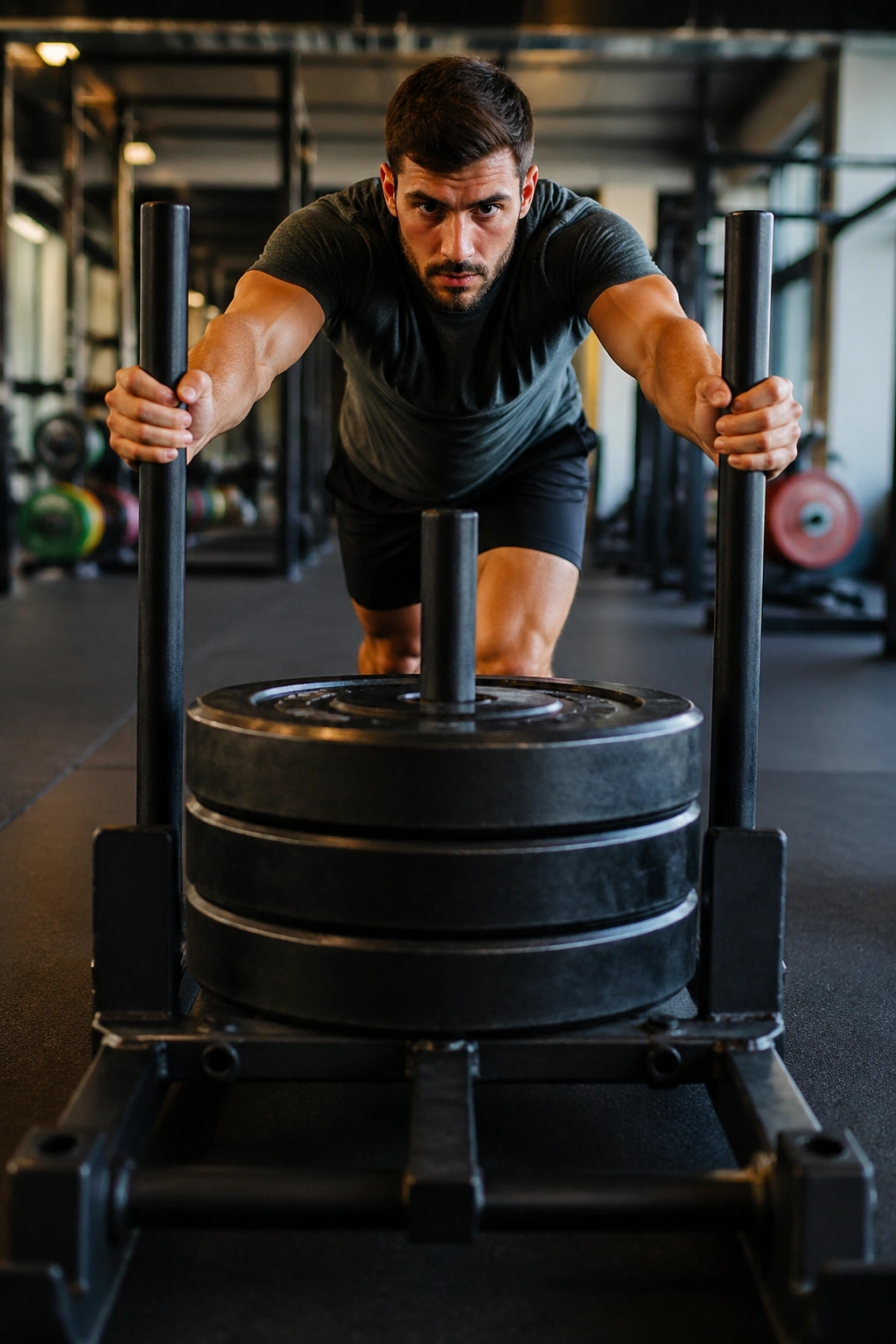
If your gym has a sled, use it. Seriously. It’s one of the cleanest ways to turn stress into work without much technique drama.
Sled pushes and pulls tax the legs, hips, and trunk at the same time. The load is there, but the movement pattern is simple. That makes it a good fit for people who want a hard session without needing to learn ten different lifts first.
A basic session looks like this:
- 6 to 10 pushes of 10 to 20 meters
- Rest while you walk back
- Keep your chest tall and your torso braced
- Use a moderate load first, then add weight only if your speed stays steady
The sled should feel heavy, but not dead. If each push turns into a slow grind from the first rep, the load is too much. You want power, not a stalled engine.
No sled nearby? Skip ahead to farmer’s carries. They scratch a similar itch and need less equipment.
11. Farmer’s Carries
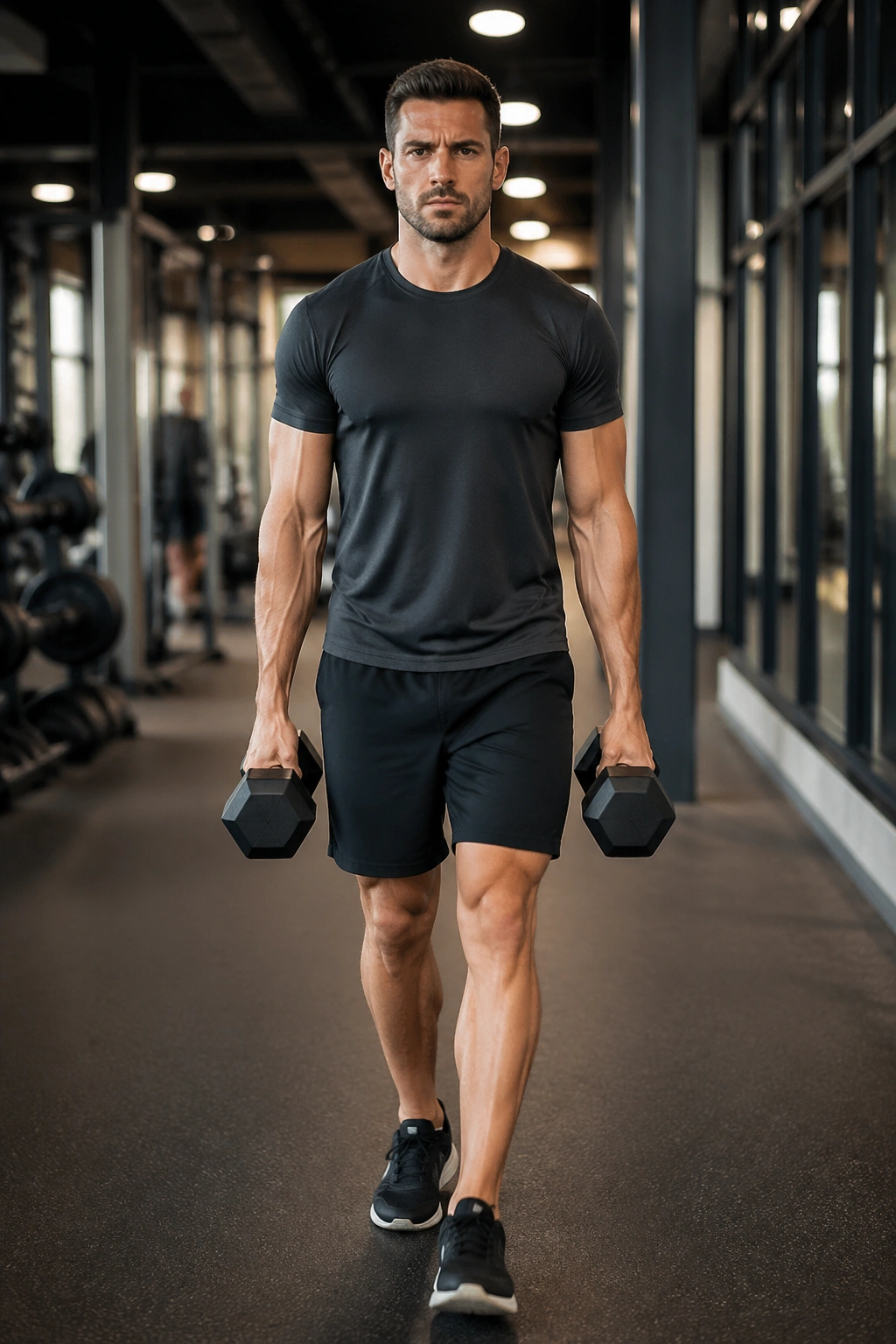
What if the workout looked like walking with purpose and carrying something heavy? That’s basically the farmer’s carry, and it works far better than it sounds.
Pick up a pair of dumbbells or kettlebells and walk. That’s it. The catch is that your torso has to stay tall while your grip, shoulders, and core keep you from wobbling. It feels simple for about four steps. Then it gets honest.
How it helps stress eating
- It gives your brain one clear task: don’t drop the weight.
- It forces steady breathing instead of frantic effort.
- It lights up the trunk without endless crunches.
- It’s easy to dose in short rounds.
Try 4 to 6 carries of 30 to 60 seconds each. Walk slowly and keep your ribs stacked over your hips. If you start leaning one way, the weight is probably too heavy or your grip is fading.
This one is good on days when you feel scattered. There is something grounding about carrying weight in each hand and moving in a straight line. Not flashy. Very effective.
12. Swimming Intervals
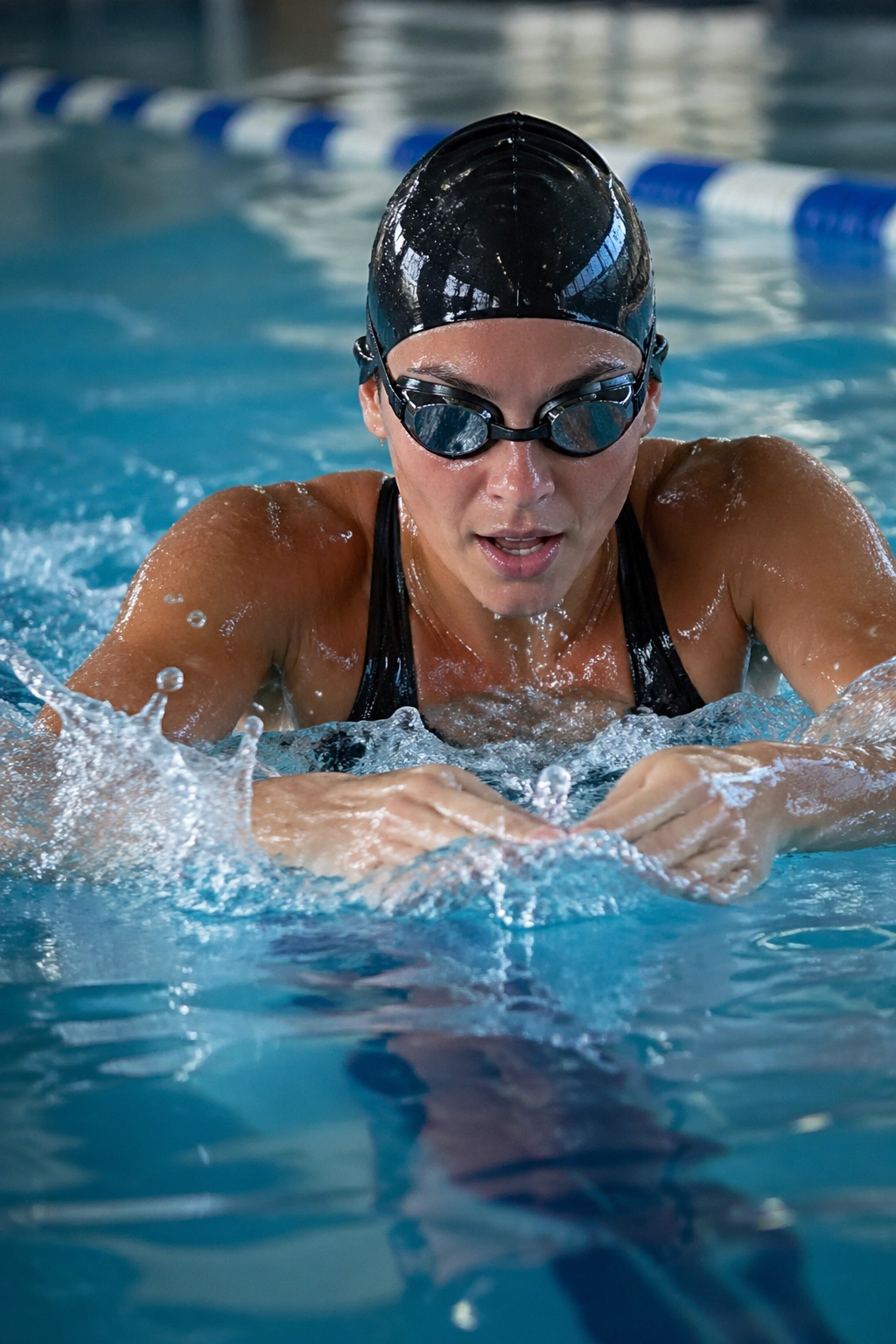
The pool changes the mood fast. Cool water, less joint stress, and enough resistance to make every stroke count.
Swimming is a strong option when stress shows up in your body as tension. Your breathing has to settle into a rhythm, your strokes need coordination, and the water takes away some of the impact that makes other workouts feel rough. It’s hard to snack while you’re in a lap lane, which is a small but real bonus.
If you’re new to swim intervals, keep them short. 25 meters hard, 25 meters easy for 8 to 12 repeats is enough to get the point across. If the pool is long and you’re not tracking distance well, use 30 seconds fast, 60 seconds easy and ignore the rest.
A clean stroke matters more than speed. If your shoulders are flaring and your form is falling apart, back off. Sloppy swimming just makes you tired in a bad way. Smooth first. Fast second.
13. Low-Impact Dance Cardio
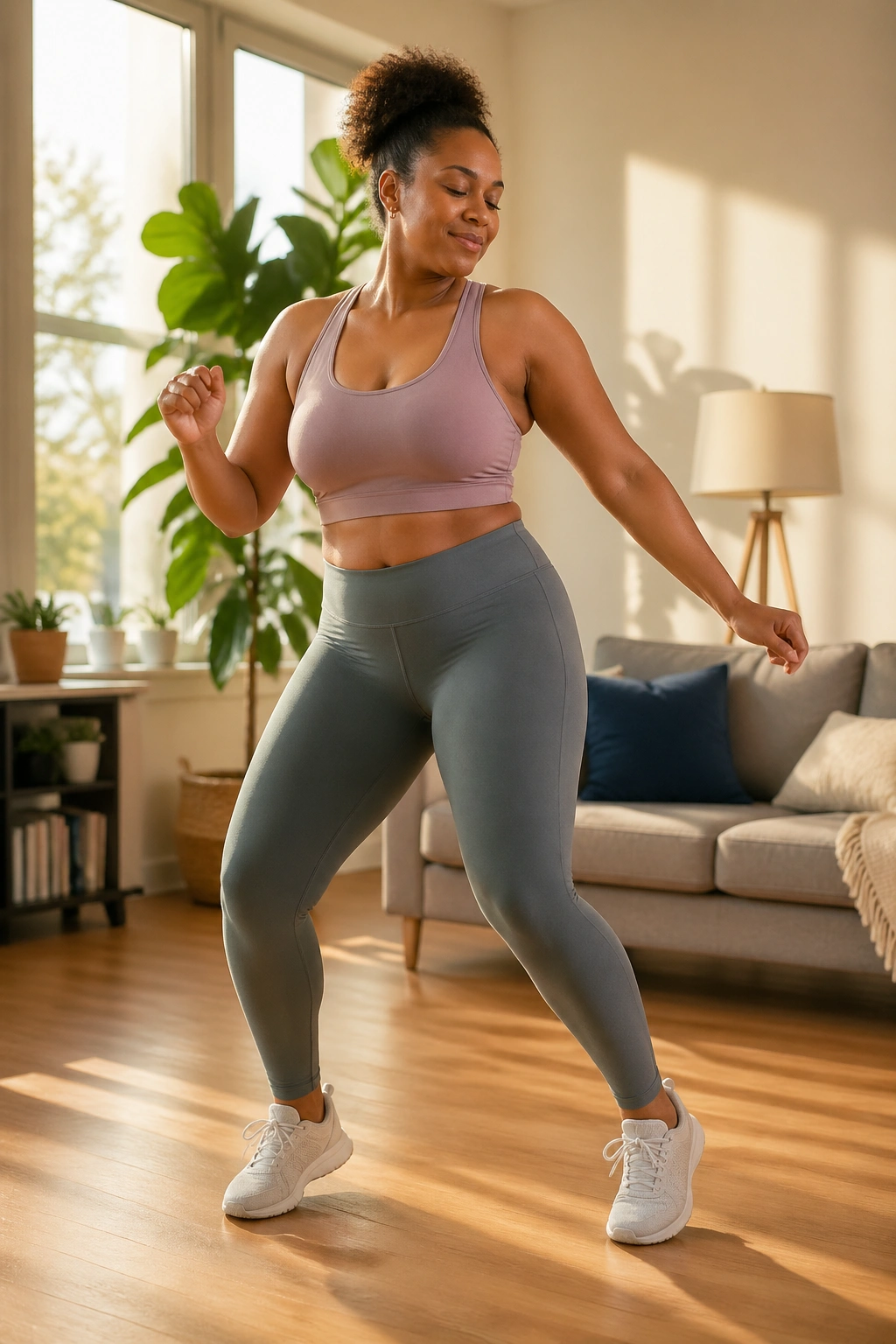
You do not need to hop like a boot camp video to get useful work done.
That’s the mistake a lot of people make. They think cardio has to look hard to count. Low-impact dance cardio says otherwise. The rhythm, the music, and the repeated steps can raise your heart rate while also making the session feel less like a chore — which helps a lot when stress eating comes from mental fatigue more than hunger.
The best part is that you can keep one foot on the floor more often than not. Step-touch patterns, grapevines, knee lifts, and side steps can all add up. If you’re on a bad day, that’s enough.
Try 20 to 30 minutes with two or three short bursts of faster movement built in. Keep the moves simple. If you need to think too much about the choreography, the workout starts fighting you. Use songs you actually like. The wrong playlist can sink this whole thing.
14. Core Stability Trio
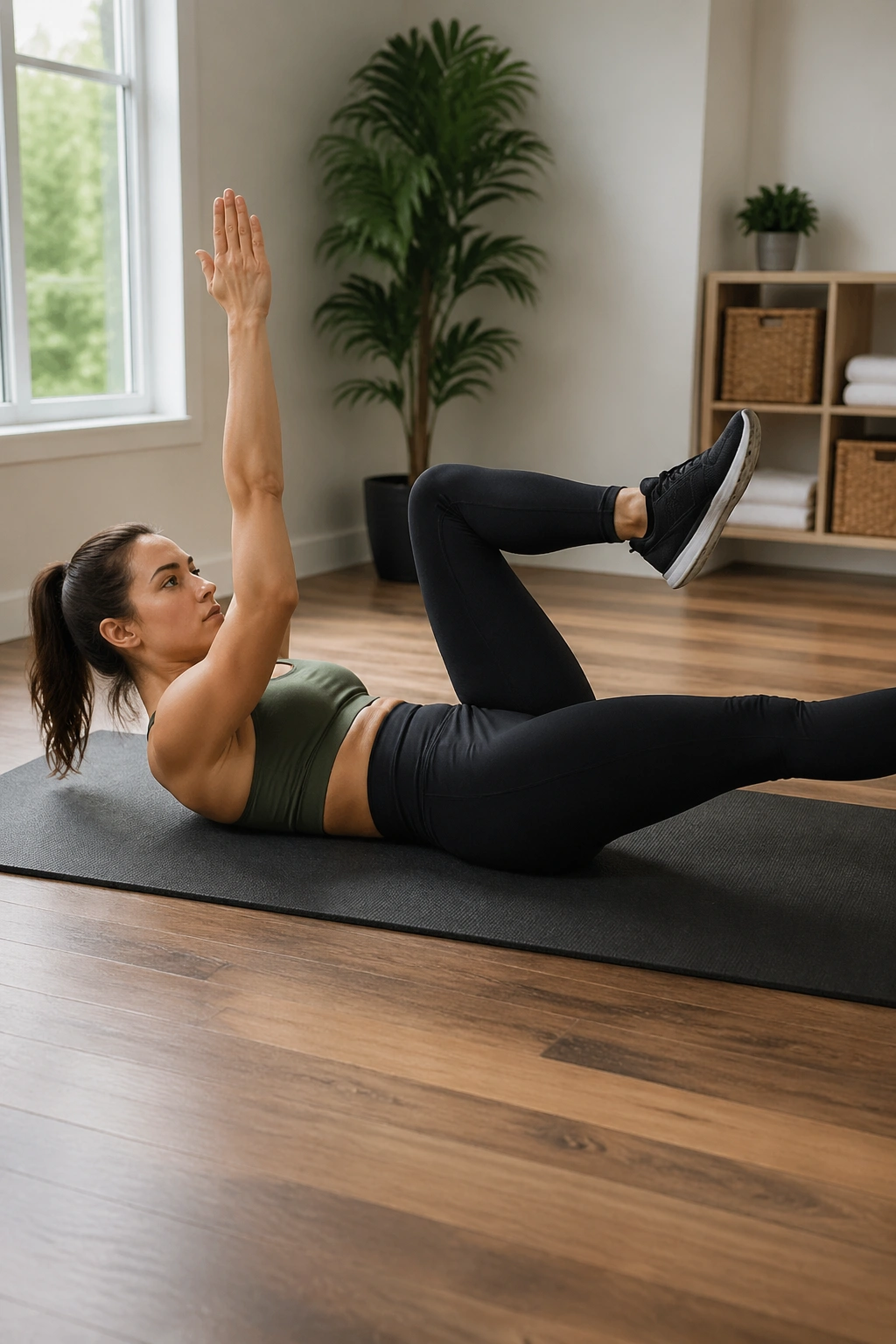
Dead bugs, side planks, and bird dogs will not melt belly fat by themselves. They will, though, make your middle stronger, cleaner, and more stable so the bigger workouts feel better.
That distinction matters. Core work is not a fat-loss trick. It is support work. A stronger trunk helps you brace during rows, carries, squats, and bike intervals. It can also make your posture less sloppy when you are tired, which is no small thing if stress tends to show up as a slumped, drained body.
Why core work still matters
The midsection is not just about crunches. It’s about control. If your back arches during a plank or your hips twist during a bird dog, the muscles are not doing their job yet.
A simple circuit:
- Dead bug: 6 to 8 reps per side
- Side plank: 20 to 30 seconds per side
- Bird dog: 6 to 8 reps per side
- Repeat for 2 to 3 rounds
Move slowly. If you rush, you miss the point. The goal is steady control, not fatigue for its own sake.
15. Yoga Flow and Breath Reset
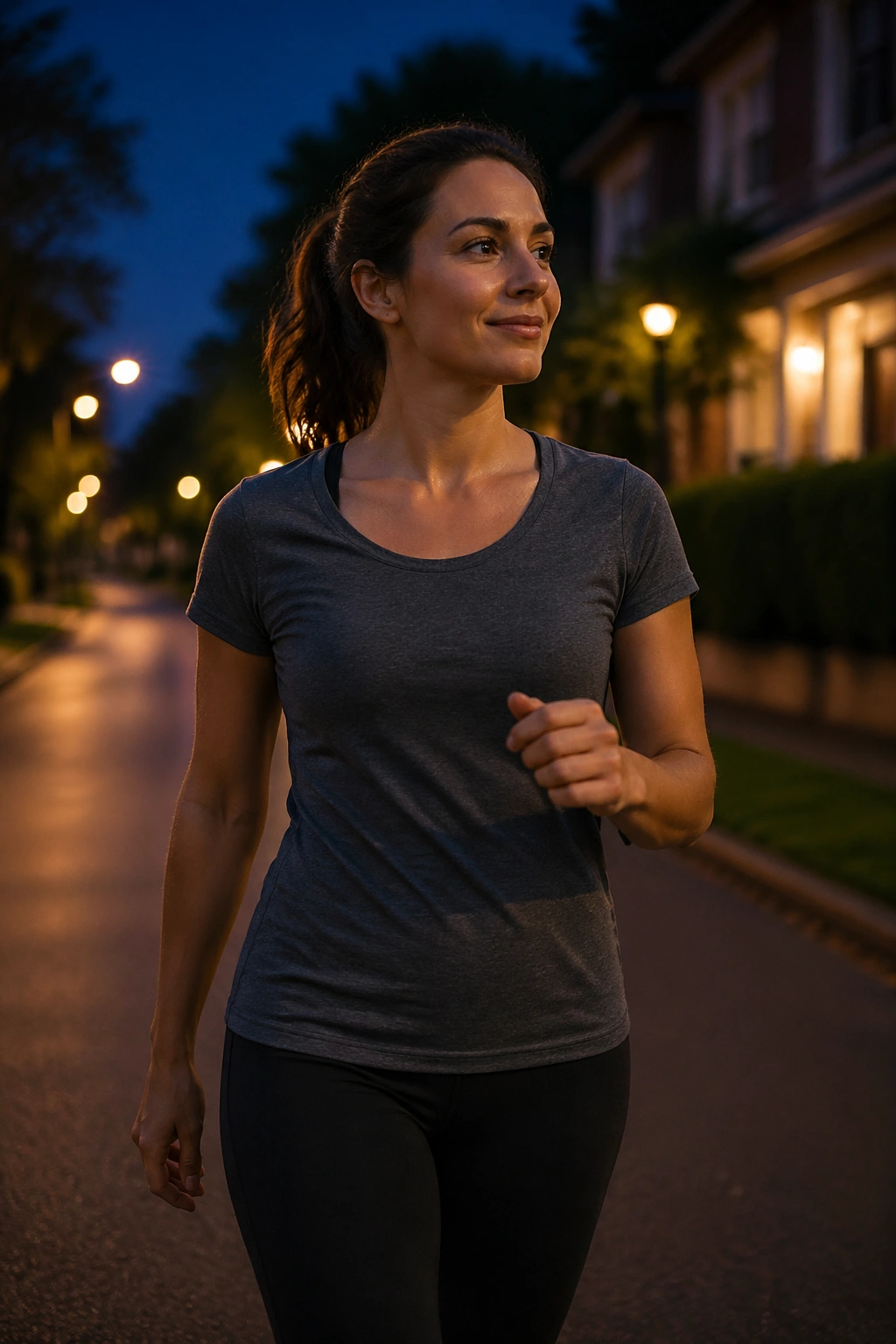
The workout that keeps you out of the snack drawer after a rough day may be the quiet one.
A short yoga flow does not look dramatic, and that is part of why it works for stress eating. It gives your body movement, but it also gives your nervous system a clear downshift. When cravings are tied to anxiety, tension, or pure exhaustion, that matters as much as calorie burn.
Use a flow that stays simple: cat-cow, downward dog, low lunge, half forward fold, child’s pose, then a few slow rounds of nasal breathing. Spend 15 to 20 minutes here. Longer if you need it. Shorter if that is all you can handle. The point is to lower the noise, not perform a perfect routine.
This is the one I’d keep for nights when you feel close to the edge and want to eat because your head is full, not because your stomach is empty. Do the flow before the pantry raid starts. If that sounds dramatic, fine. Sometimes the honest move is the small one done on time.
A practical rhythm helps: pick one harder workout for the days you have energy and one calming workout for the days you don’t. That keeps you moving without turning exercise into another source of stress. And that’s the real win here — not a magic move, not a miracle burn, just a routine that makes the next decision a little easier.
