



Most people treat stretching like an optional chore—something you do for thirty seconds if you remember, or skip entirely when you are tired. Real performance and daily comfort depend on more than just training load; they rely on your body’s ability to move through its full range without restriction. If you have ever felt stiff after sitting for a few hours, or noticed that your squat depth decreases as your training week goes on, you are missing a key piece of the puzzle.
You do not need an hour of gymnastics to change your baseline mobility. You need consistency, intent, and a set of routines that actually fit into your life. This list covers twenty-five distinct ways to move, release tension, and prime your body for whatever comes next, whether that is a heavy lifting session or simply standing up from your desk.
1. Morning Wake-Up Flow
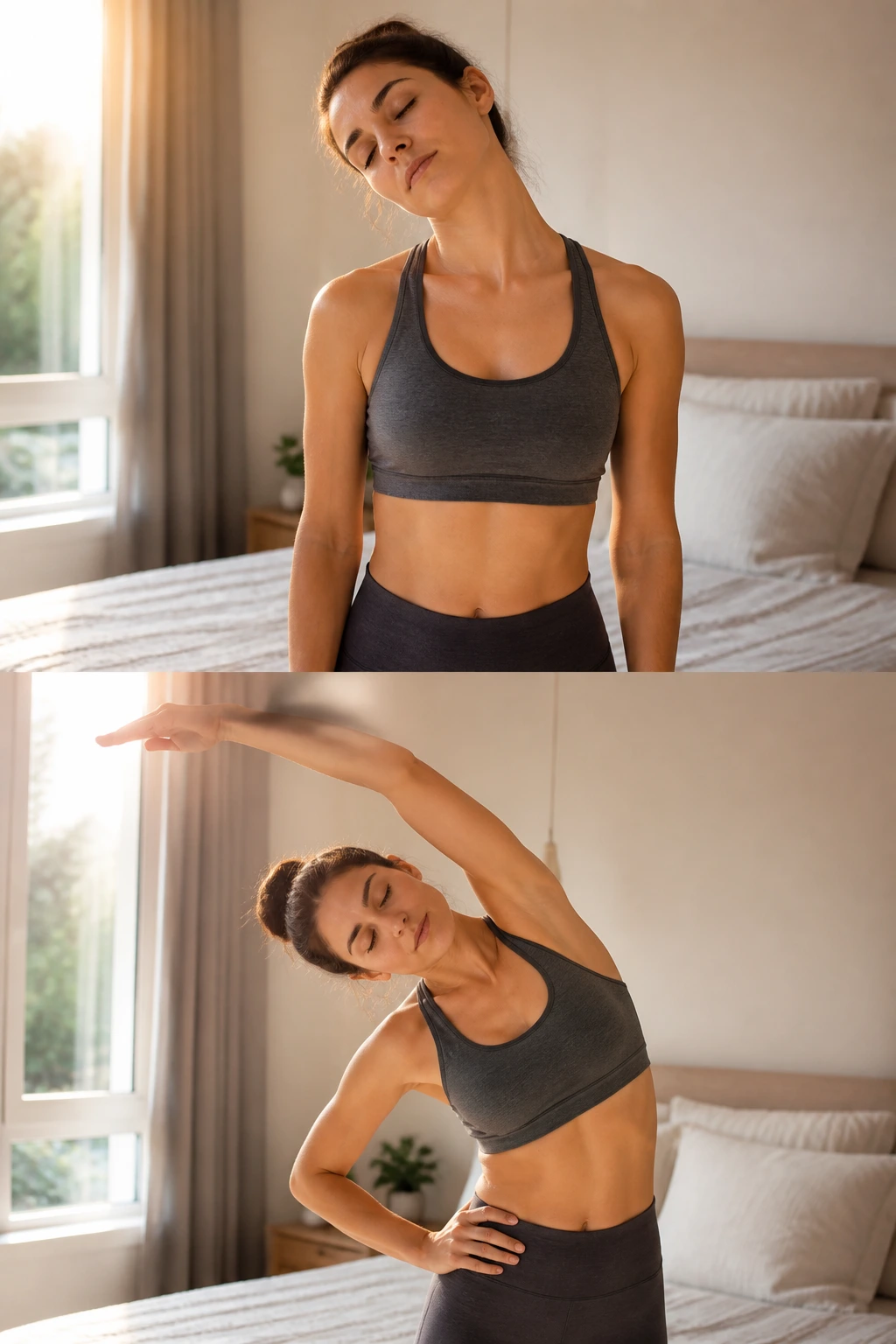
You start the day with stiff joints and tight connective tissue. This five-minute sequence is designed to lubricate your joints and wake up your nervous system. Do not force anything; think of this as a gentle way to signal to your body that it is time to be active.
The Sequence
- Neck Rolls: Start standing, drop your chin to your chest, and slowly roll your ear to your shoulder. Repeat 5 times per side.
- Arm Circles: Extend your arms out to your sides and rotate them in small circles. Gradually increase the size of the circles until your shoulders feel warm.
- Standing Side Bend: Reach one arm overhead and lean to the opposite side, feeling a stretch through your obliques. Hold for 15 seconds per side.
Pro tip: Perform this sequence while your coffee brews. If you can make it a habit, you will find it much easier to get out of bed on colder days when your muscles feel tight.
2. Pre-Workout Dynamic Warmup
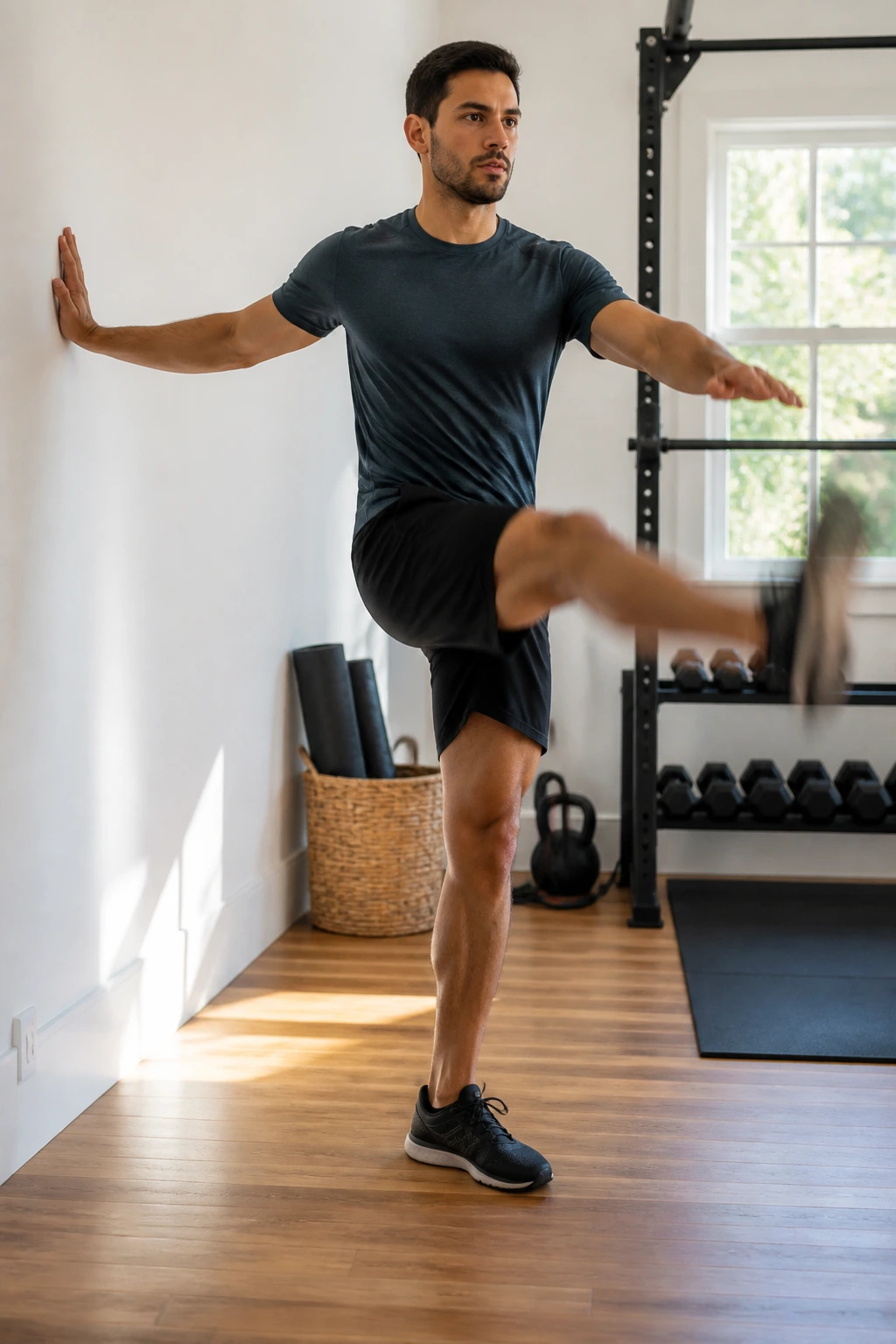
Static stretching before a heavy workout can actually dampen your performance. You need dynamic movement to increase blood flow and prepare your tissues for the load you are about to put on them. This routine moves through the hips, knees, and ankles.
The Movements
- Leg Swings: Find a wall for balance and swing one leg forward and backward, then side to side. 15 reps each way.
- Torso Twists: Stand with feet wide and rotate your trunk, allowing your arms to swing freely and tap your opposite hip.
- World’s Greatest Stretch: Step into a deep lunge, place the opposite hand on the floor, and rotate the other arm toward the ceiling. 5 reps per side.
Focus on controlled movement rather than speed. Your goal is to feel your muscles engage, not to overstretch them.
3. Post-Workout Cool Down
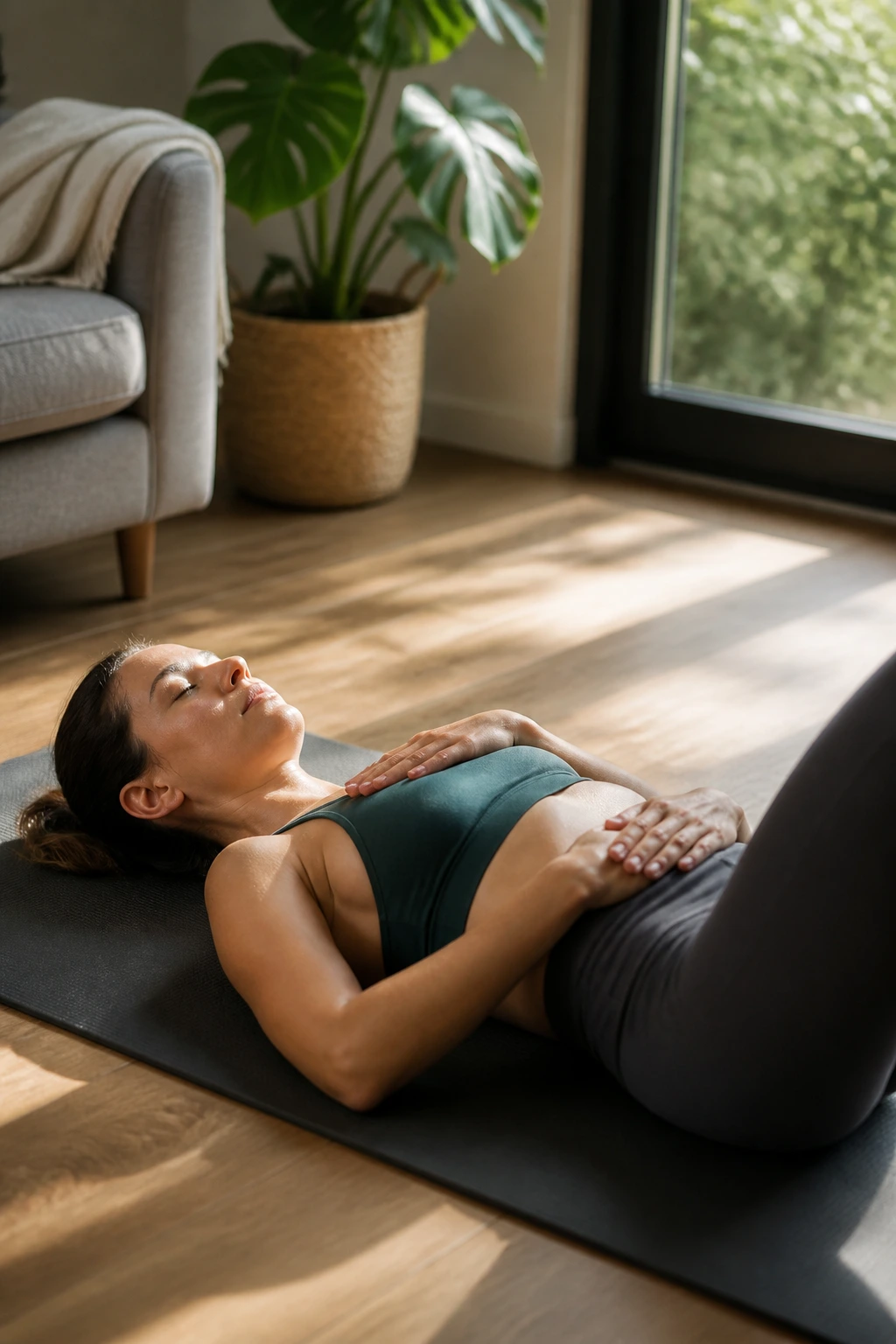
After the intensity of a training session, your heart rate is elevated and your muscles are primed for recovery. This routine focuses on down-regulating your nervous system and preventing immediate stiffness. The goal here is to return your body to a resting state.
Start by finding a quiet spot on the gym floor or in your living room. You do not need equipment.
- Deep Breathing: Lay flat on your back, place one hand on your chest and one on your belly. Breathe into your stomach for 2 minutes.
- Hamstring Floor Stretch: While on your back, loop a towel or strap around one foot and pull the leg toward your chest. Keep the knee straight but not locked.
- Pigeon Pose: This is the gold standard for hip release. If the full version is too difficult, start by laying on your back and pulling one ankle toward the opposite shoulder.
Hold each static stretch for at least 60 seconds to signal to your muscles that they can safely relax.
4. Desk Worker Relief Routine

Sitting for hours causes specific patterns of tightness: rounded shoulders, compressed hip flexors, and a stiff lower back. This routine is intended for the middle of your workday, right next to your chair.
Targeted Areas
- Chest Opener: Stand in a doorway, place your forearms on the frame, and gently lean forward until you feel a pull across your pecs.
- Seated Glute Stretch: Sit at the edge of your chair, cross one ankle over the opposite knee, and hinge forward with a flat back.
- Neck Retraction: Pull your chin straight back as if creating a double chin to reset your head position.
Why this works: You are reversing the hunched-over posture that defines office life. Do these for three minutes every two hours to stop the tension from building up.
5. Lower Back Tension Release
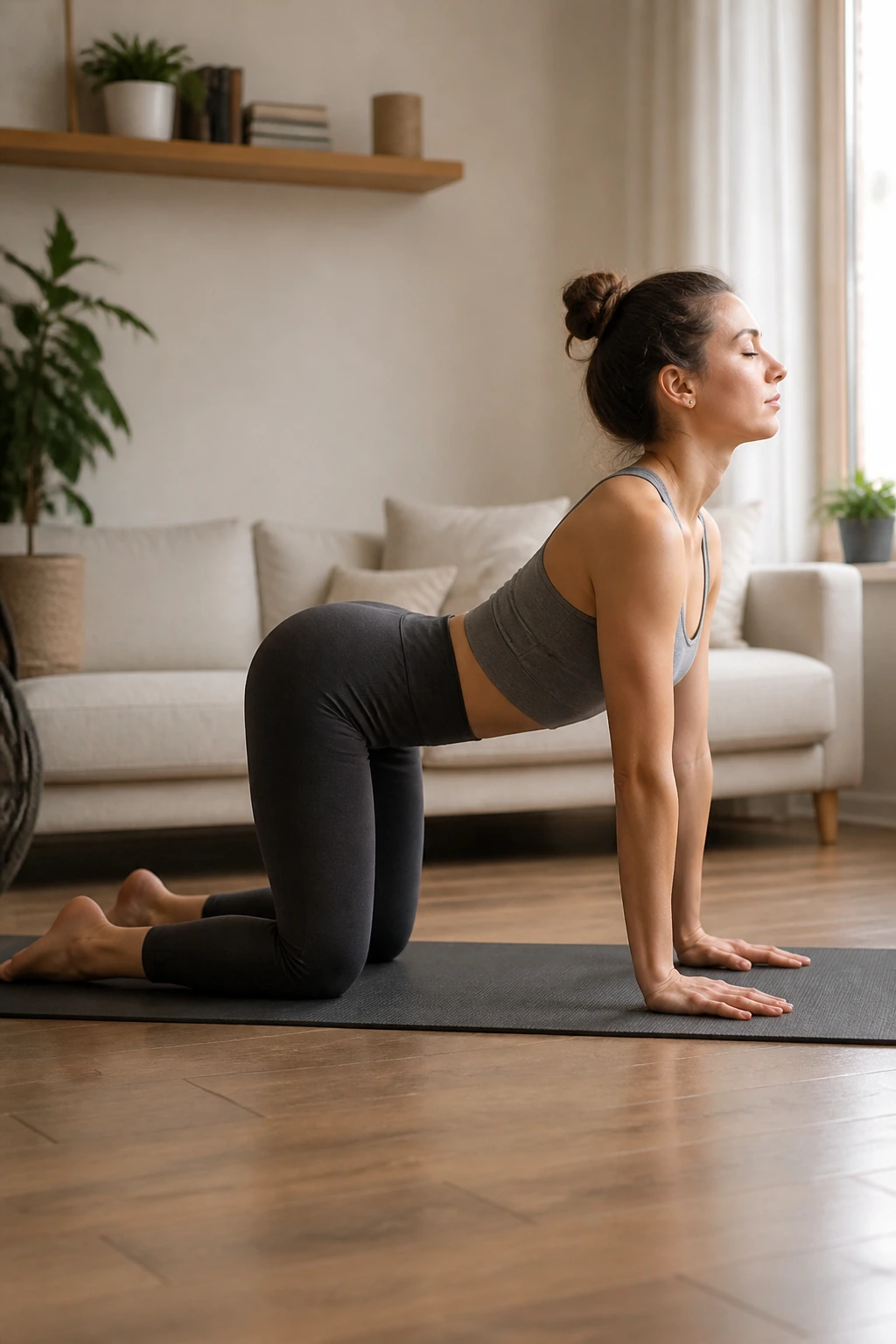
Back pain is frequently a symptom of tight hips and a weak core, rather than an issue with the back itself. This routine focuses on decompressing the spine and relaxing the muscles surrounding the lumbar region.
Do these moves carefully. If you feel sharp pain, stop immediately and reduce your range of motion.
- Cat-Cow: On hands and knees, inhale to drop your belly and lift your chin; exhale to round your spine toward the ceiling.
- Child’s Pose: From hands and knees, push your hips back toward your heels and extend your arms forward. Keep your forehead on the floor.
- Supine Spinal Twist: Lay on your back, bring your knees into your chest, and let them fall to one side while keeping your shoulders pinned to the floor.
Consistent practice of these three moves can significantly reduce the “locked up” feeling that many people experience after a long day of standing or sitting.
6. Full-Body Mobility Session
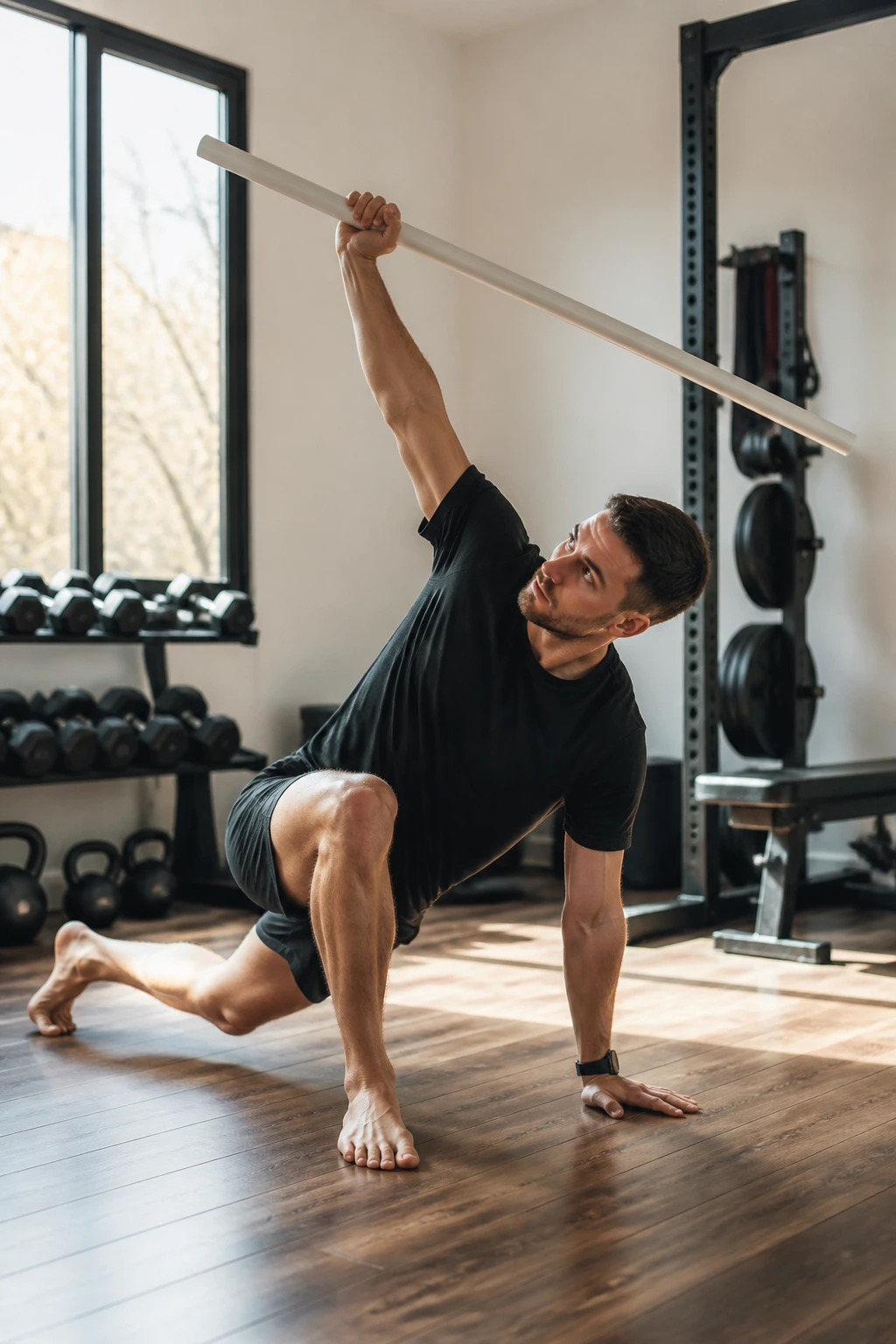
This is a more intensive routine meant to be performed on a dedicated “off day.” It takes about 20 minutes and hits everything from your calves to your shoulders.
Start with your feet and work your way up to your head.
- Calf Drops: Stand on the edge of a stair and let your heel drop down.
- Lizard Lunge: A deep lunge with both hands on the floor inside the front foot.
- Shoulder Dislocates: Use a broomstick or PVC pipe to move from your thighs, over your head, and back to your glutes with straight arms.
Mobility is not the same as flexibility. Flexibility is how far your joints can move; mobility is your ability to control that movement under tension. This session improves both.
7. Neck and Shoulder Stress Buster

We carry our stress in our traps and neck. If you have tight shoulders, you likely also have tension headaches. This routine is simple enough to do in your car (when parked) or at your desk.
The Steps
- Trapezius Stretch: Drop your right ear to your right shoulder, then use your right hand to gently pull your head further into the stretch. Hold for 30 seconds.
- Shoulder Shrugs: Shrug your shoulders as high as you can toward your ears, hold for 3 seconds, then drop them forcefully.
- Wall Slides: Stand with your back against a wall, arms in a ‘W’ shape, and slide them up overhead without your elbows losing contact with the wall.
You might be surprised how much range you regain after just a few minutes of focused trap release.
8. Hip Opener Sequence
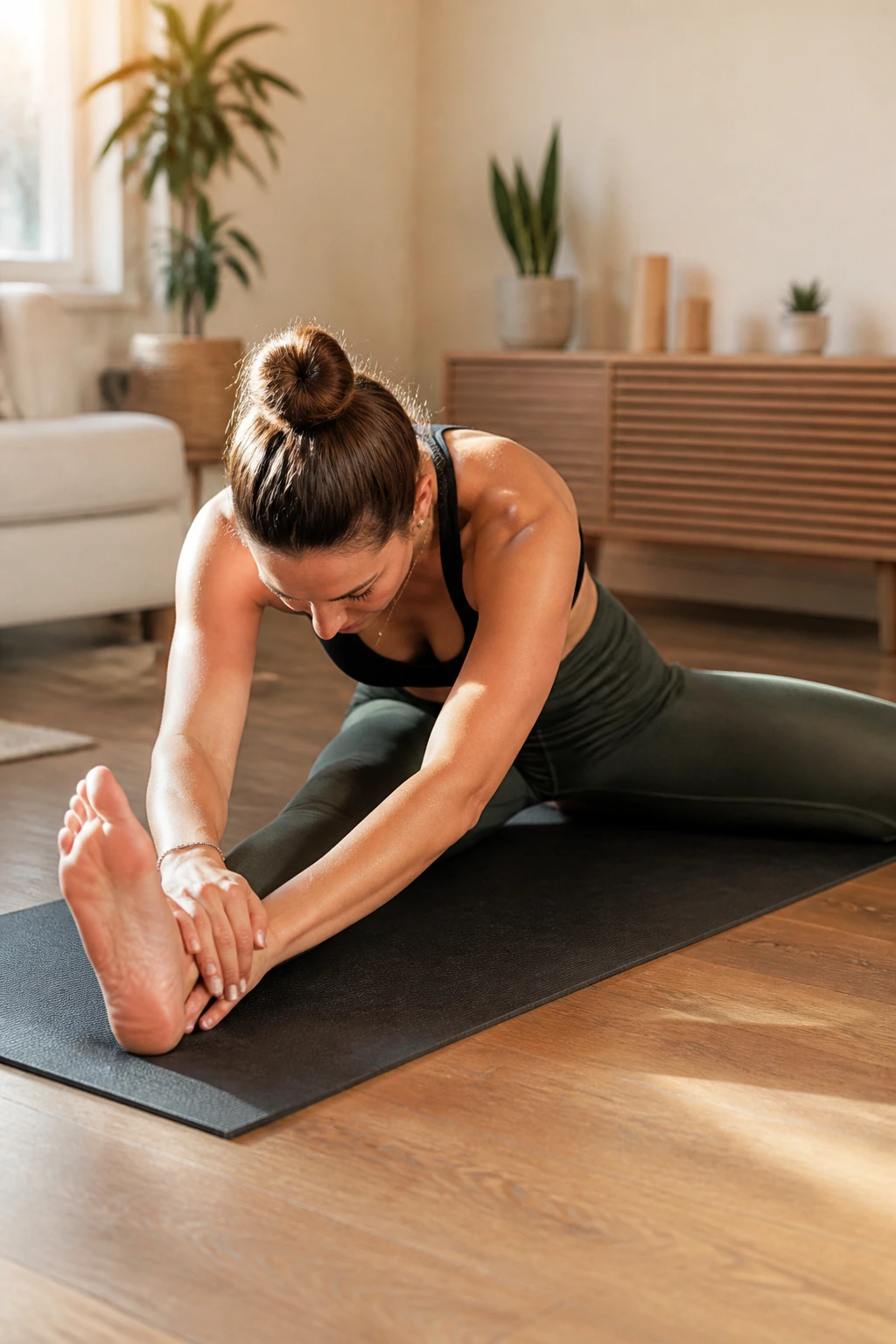
Tight hips are arguably the most common issue for modern adults. Whether you run, lift, or sit, your hips need attention. This sequence focuses on internal and external rotation.
- 90/90 Stretch: Sit on the floor with both knees bent at 90-degree angles—one in front of you, one to your side. Lean over the front leg.
- Butterfly Stretch: Sit with the soles of your feet together and knees wide. Gently press your knees toward the floor.
- Frog Pose: Start on hands and knees, widen your knees as far as comfortable, and push your hips back.
Do not force your knees to the floor. The goal is a gentle, persistent stretch that allows the connective tissue to release over time.
9. Hamstring and Glute Focus
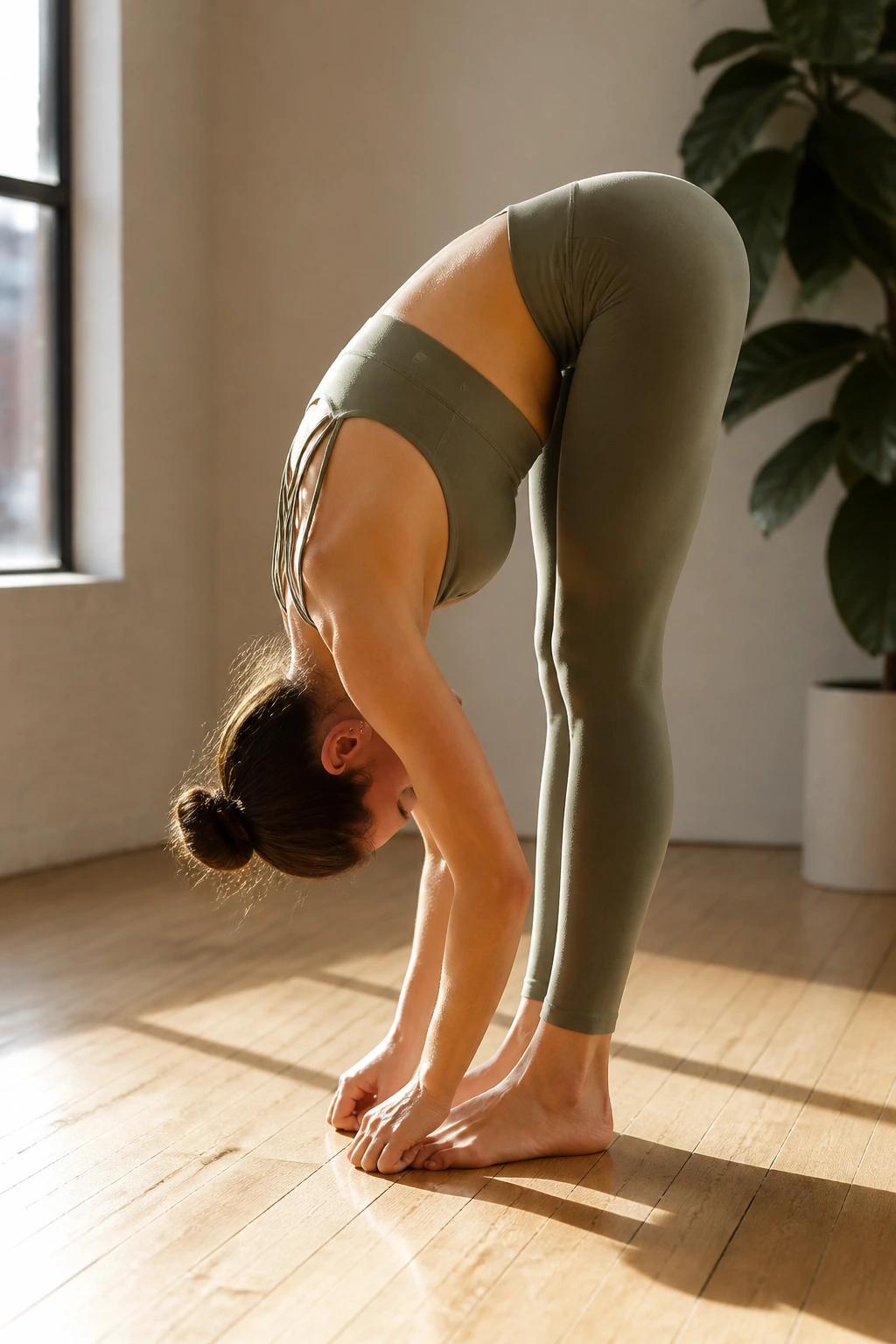
If you have ever felt like your hamstrings are constantly tight, they might actually be overstretched or weak. This routine focuses on eccentric lengthening, which is safer and more effective than pulling on a tight muscle.
- Standing Forward Fold: Keep your knees soft—do not lock them out—and fold forward, letting gravity take your upper body.
- Glute Bridges: Lay on your back and drive your hips up. This activates the glutes, which often relaxes the hamstrings by reciprocal inhibition.
- Single-Leg Reach: Balance on one leg and hinge forward, tapping your toe to the ground in front of you.
Pro tip: Strengthening your glutes is often the fastest way to “fix” tight hamstrings.
10. Post-Run Leg Recovery
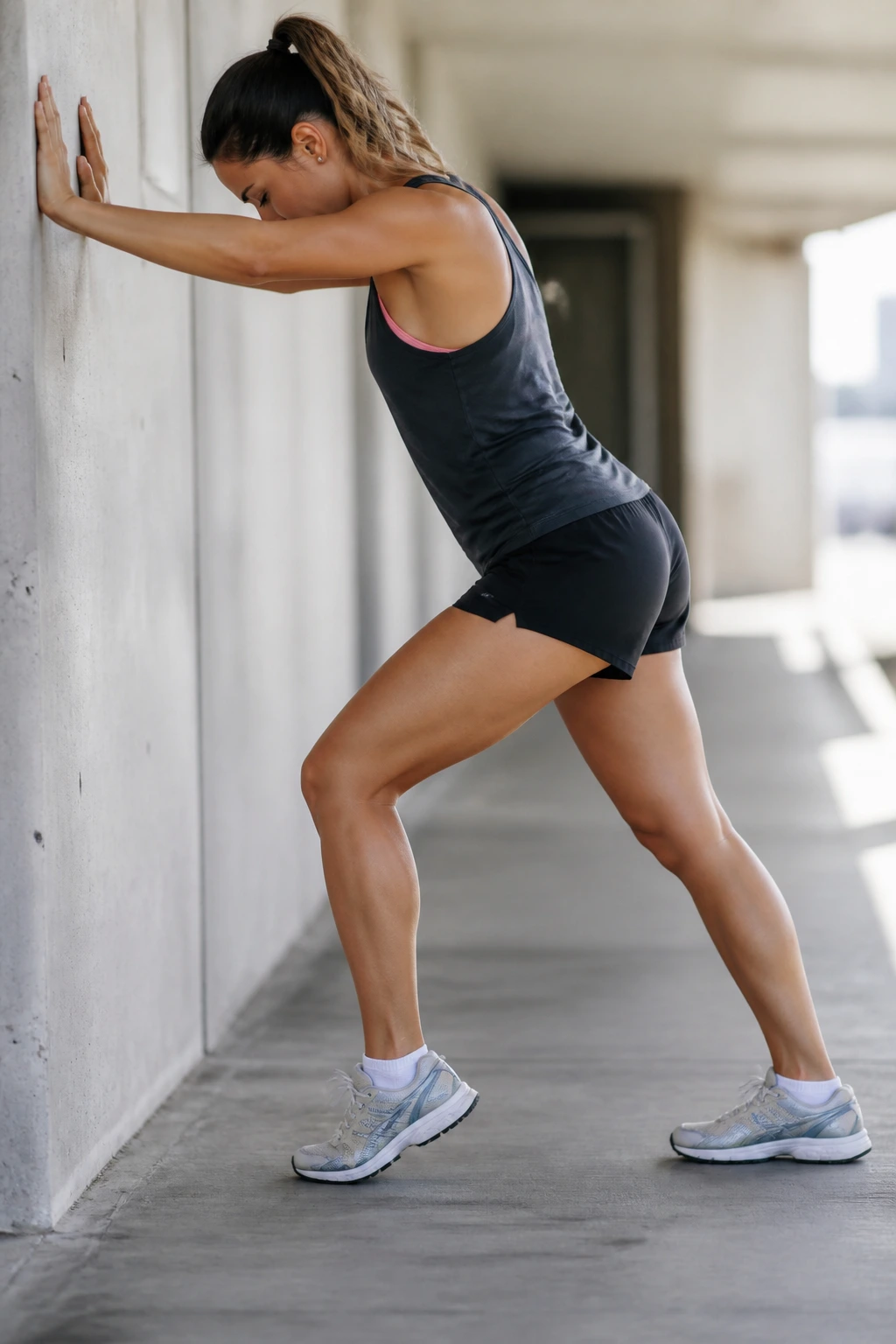
Running is repetitive and high-impact. Your calves, quads, and hips take the brunt of the work. This routine ensures you do not wake up with “heavy legs” the next morning.
- Calf Stretch against a wall: Keep your back heel on the ground.
- Standing Quad Stretch: Grab your ankle and pull the heel toward your glute. Keep your knees close together.
- Foam Rolling (optional but recommended): If you have a roller, work on your quads and IT bands.
Focus on breathing. If you are holding your breath, your nervous system is in a “fight or flight” state, which prevents muscles from relaxing.
11. Gentle Bedtime Stretch
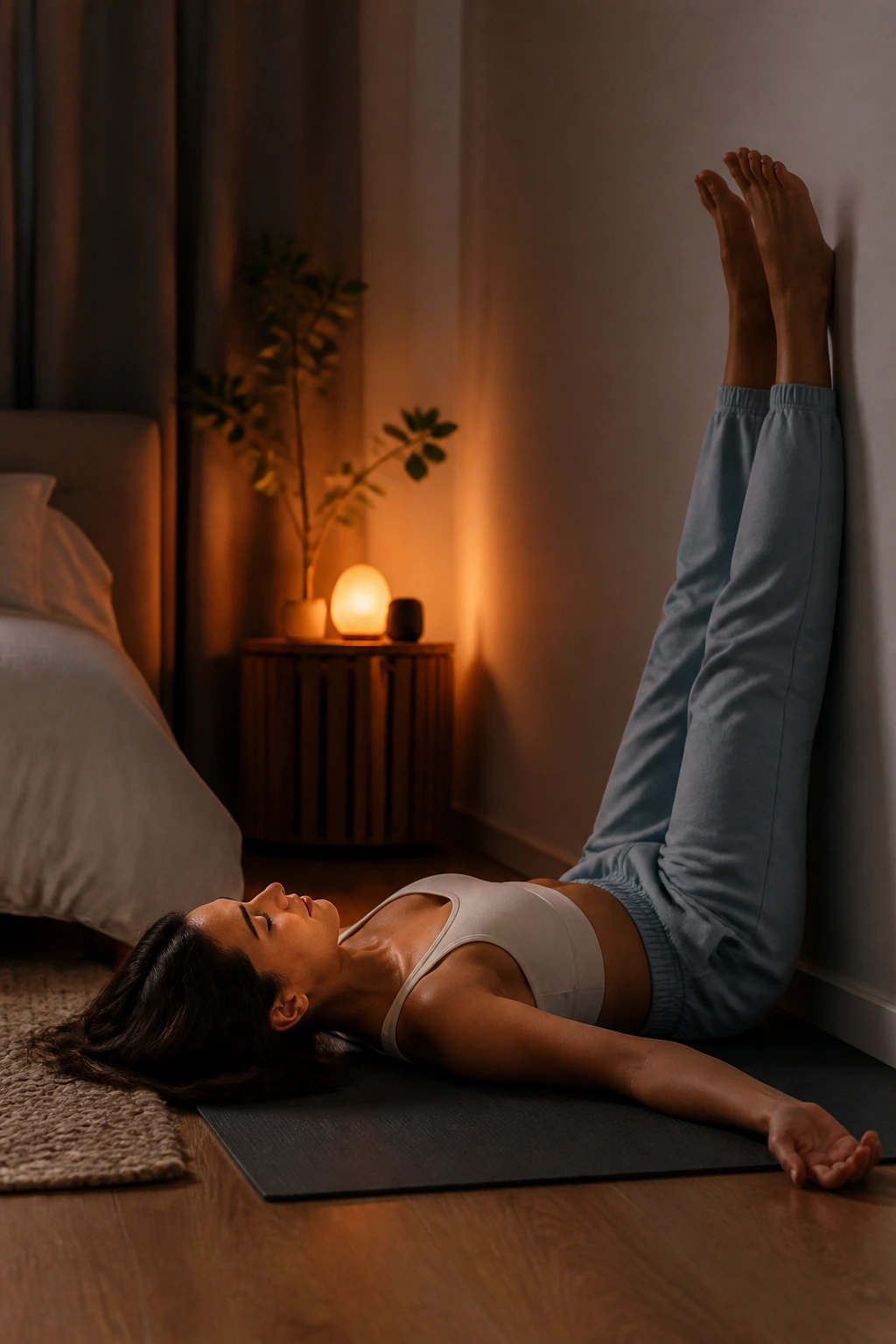
This routine is designed to calm your central nervous system before sleep. It uses restorative poses that require zero effort to hold, allowing your body to sink into the stretch.
- Legs Up the Wall: Literally, put your legs up the wall and lay on your back. This helps with blood return and lymphatic drainage.
- Corpse Pose: Lay flat, palms up, and focus on relaxing every muscle from your toes to your jaw.
- Neck Release: Gentle side-to-side head turns.
Keep the room dim. The goal is to prepare your mind for sleep, not to get a workout in.
12. Standing-Only Routine

Sometimes you just don’t want to get on the floor—maybe you are in the gym, in the office, or wearing clothes you don’t want to dirty. This routine can be done entirely from a standing position.
- Cross-Body Shoulder Stretch: Pull one arm across your chest.
- Standing Calf Stretch: Use a wall for support.
- Standing Chest Stretch: Clasp your hands behind your back and pull your shoulder blades together.
- Side Reach: Lean to the side with one arm overhead.
Consistency matters more than the complexity of the moves. If you can do this routine in 3 minutes while waiting for a meeting, you are ahead of the curve.
13. Floor-Only Core and Back Stretch
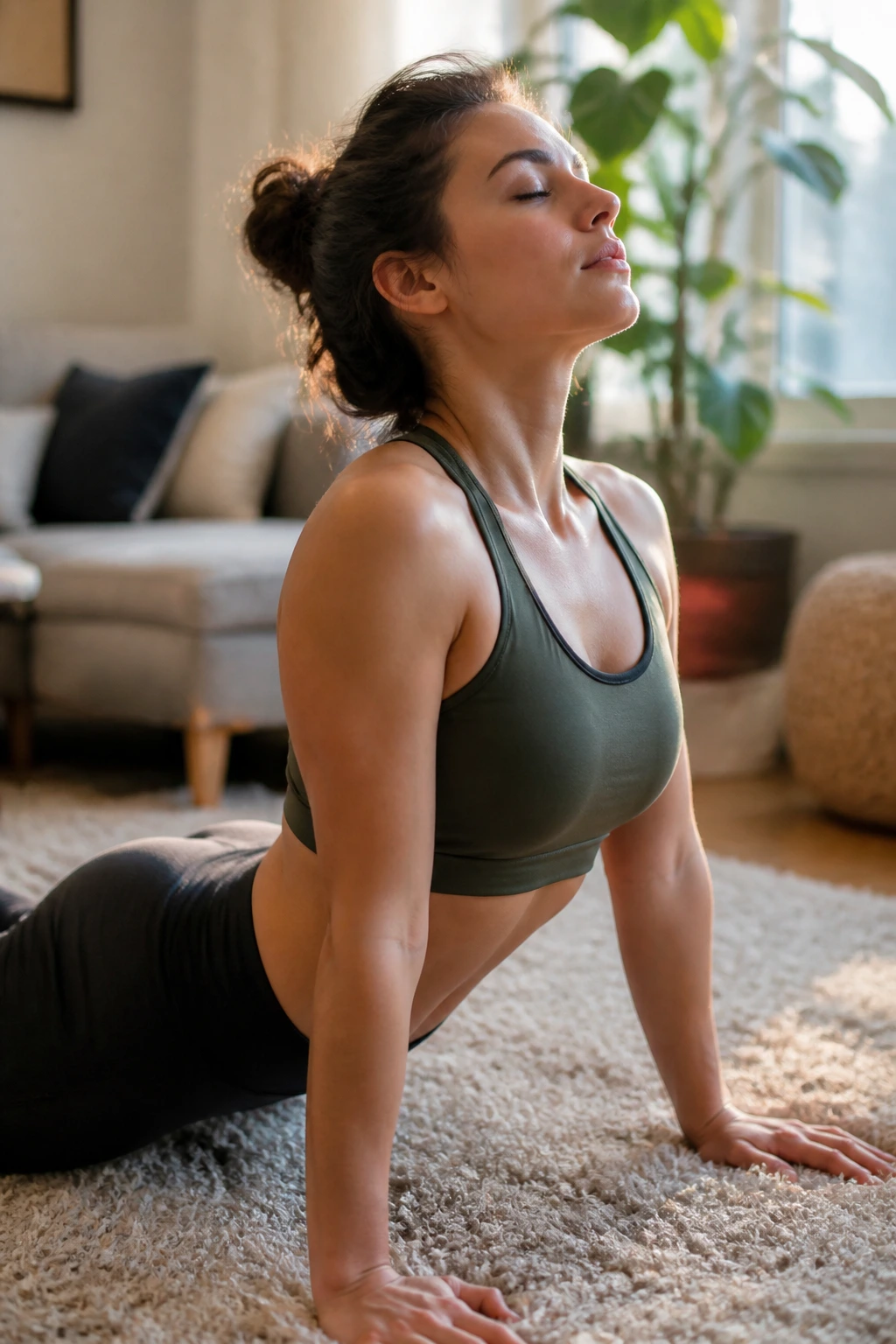
This is the inverse of the standing routine. It is great for when you are watching television or relaxing on a rug.
- Cobra Pose: Lay on your stomach, hands under shoulders, and press your chest off the floor. Keep your hips pinned down.
- Dead Bug Prep: Lay on your back, knees in the air, and focus on pressing your lower back into the floor.
- Knee-to-Chest: Hug both knees to your chest.
This routine is excellent for decompressing after a day of being upright.
14. The “I’ve Been Sitting All Day” Fix
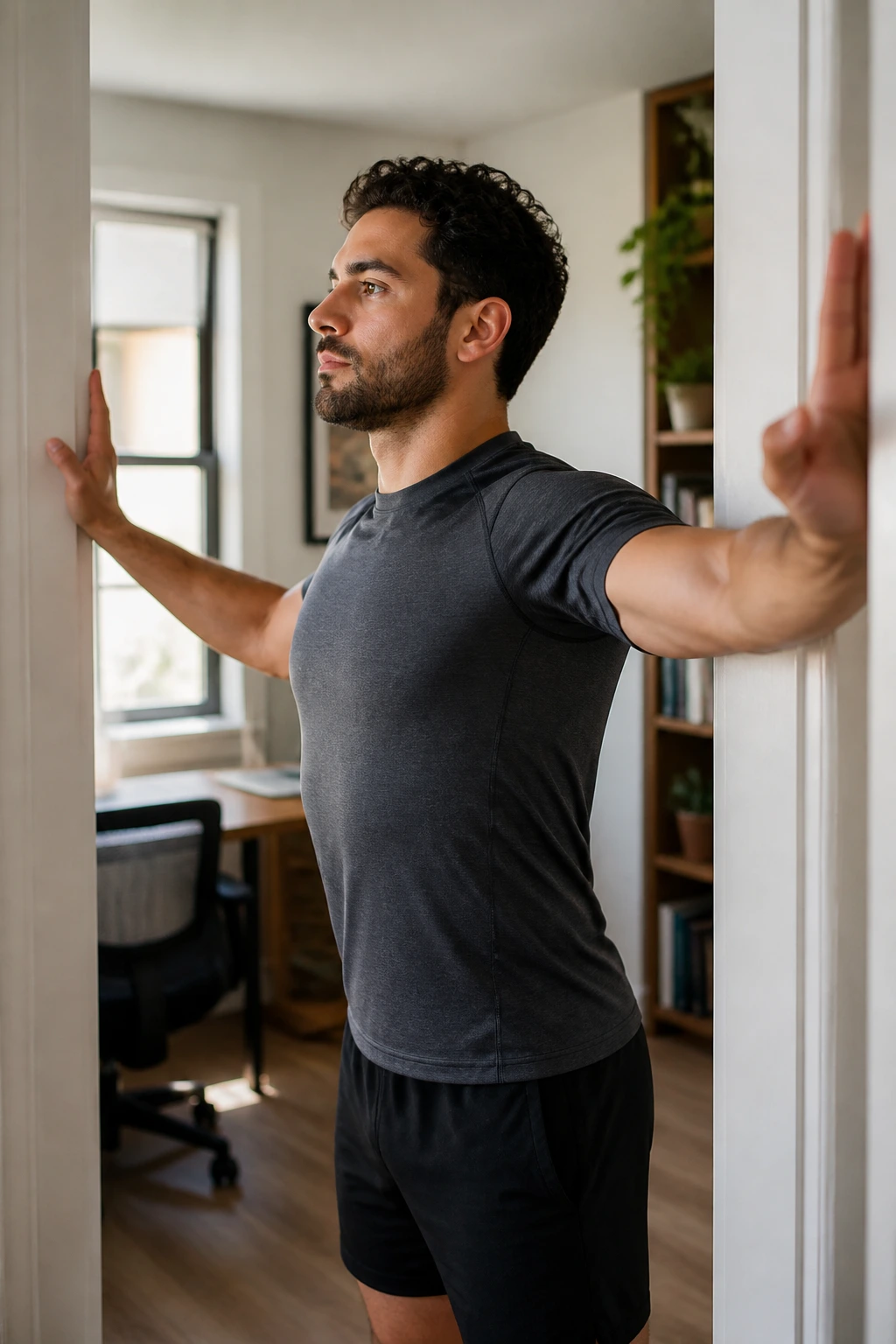
If you work at a computer, your hip flexors are shortened and your glutes are “off.” This routine is designed to reset that posture immediately.
- Lunge Matrix: Step forward, then side, then back with the same leg. This hits the hip from three angles.
- Thoracic Rotation: On hands and knees, place one hand behind your head and rotate your elbow toward the ceiling.
- Wall Chest Stretch: As previously mentioned, this is mandatory for desk workers.
Do these for 5 minutes and you will feel an immediate change in your posture.
15. Post-Strength Training Full Body
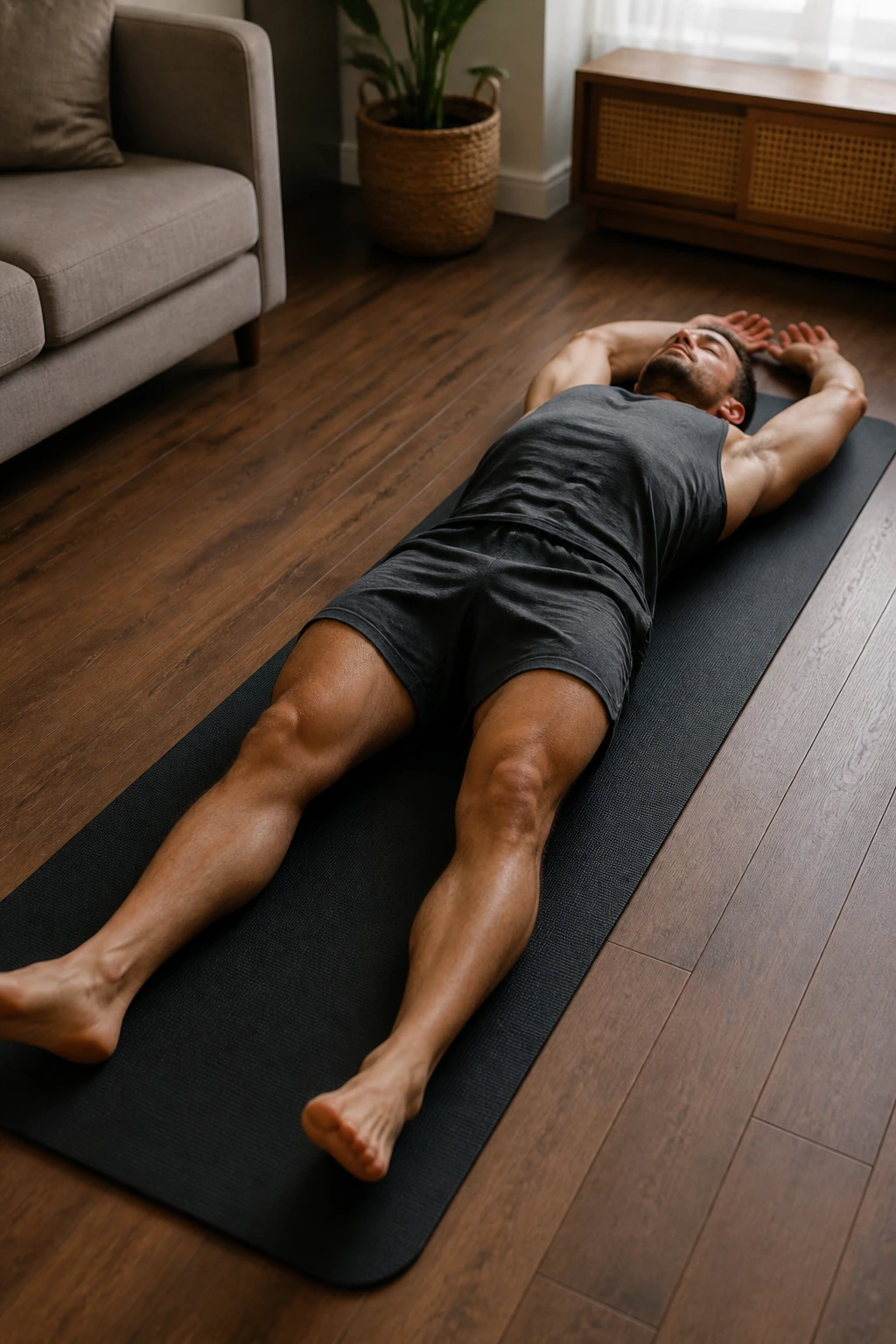
After lifting heavy, your muscles are tight and inflamed. This routine is about gentle recovery, not extreme flexibility.
- Bicep/Forearm Stretch: Extend your arm, palm up, and pull your fingers back.
- Lat Stretch: Reach across a doorway to pull your side body.
- Quad/Hip/Hamstring sequence: Keep it slow.
The intensity of your stretching should be inversely proportional to the intensity of your workout. Light lifting means deeper stretching; heavy lifting means gentle, supported stretching.
16. Weekend Decompression Flow
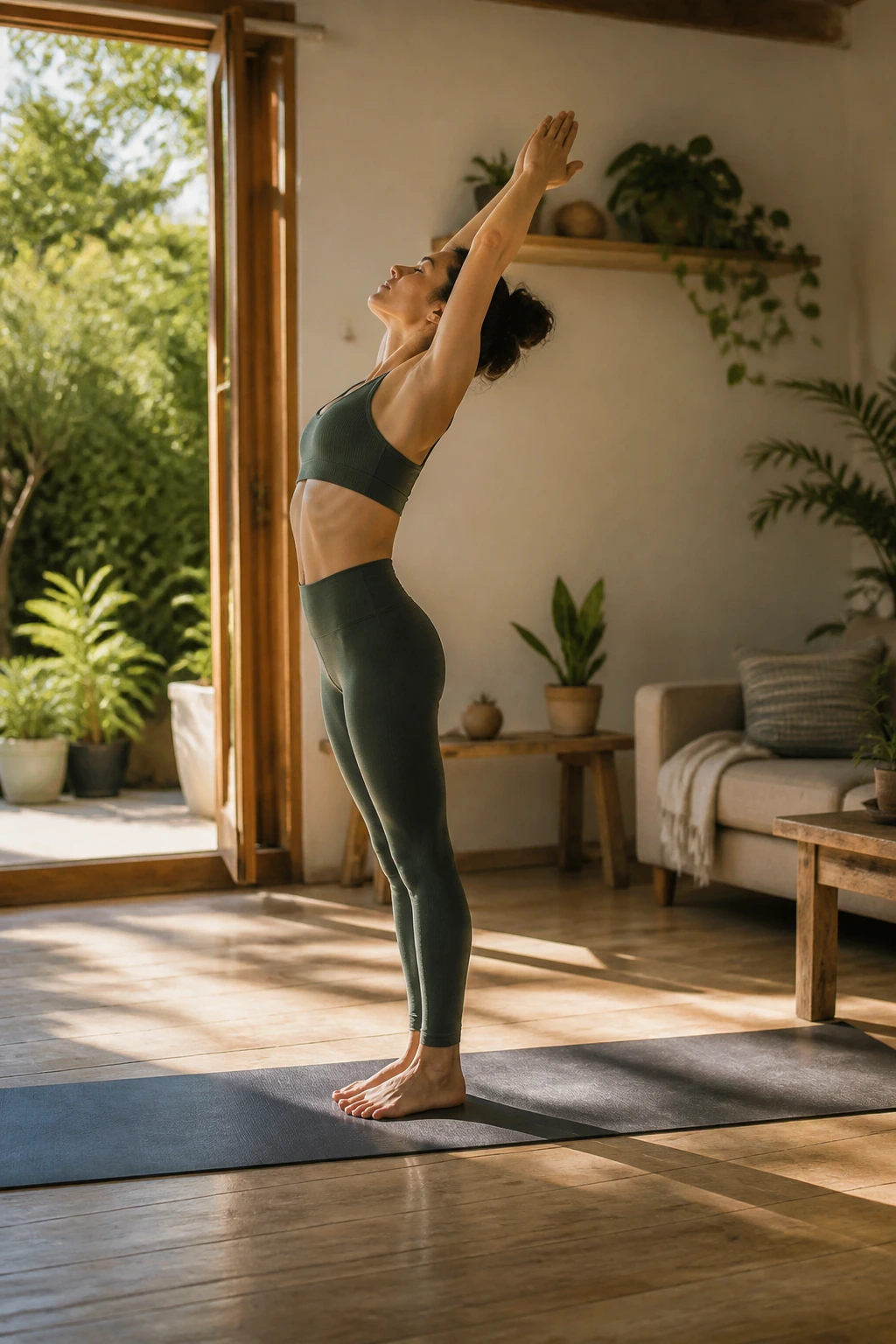
You have more time on the weekends. This is a longer, 15-minute sequence that mimics a gentle yoga flow.
- Start with Sun Salutations (slowly).
- Move into Downward Dog (pedal your feet to stretch the calves).
- Finish with Pigeon Pose and Child’s Pose.
Use this time to check in with your body. Where are you tight? What feels good? Your body is an expert at telling you what it needs if you just listen.
17. Ankle and Calf Mobility Routine
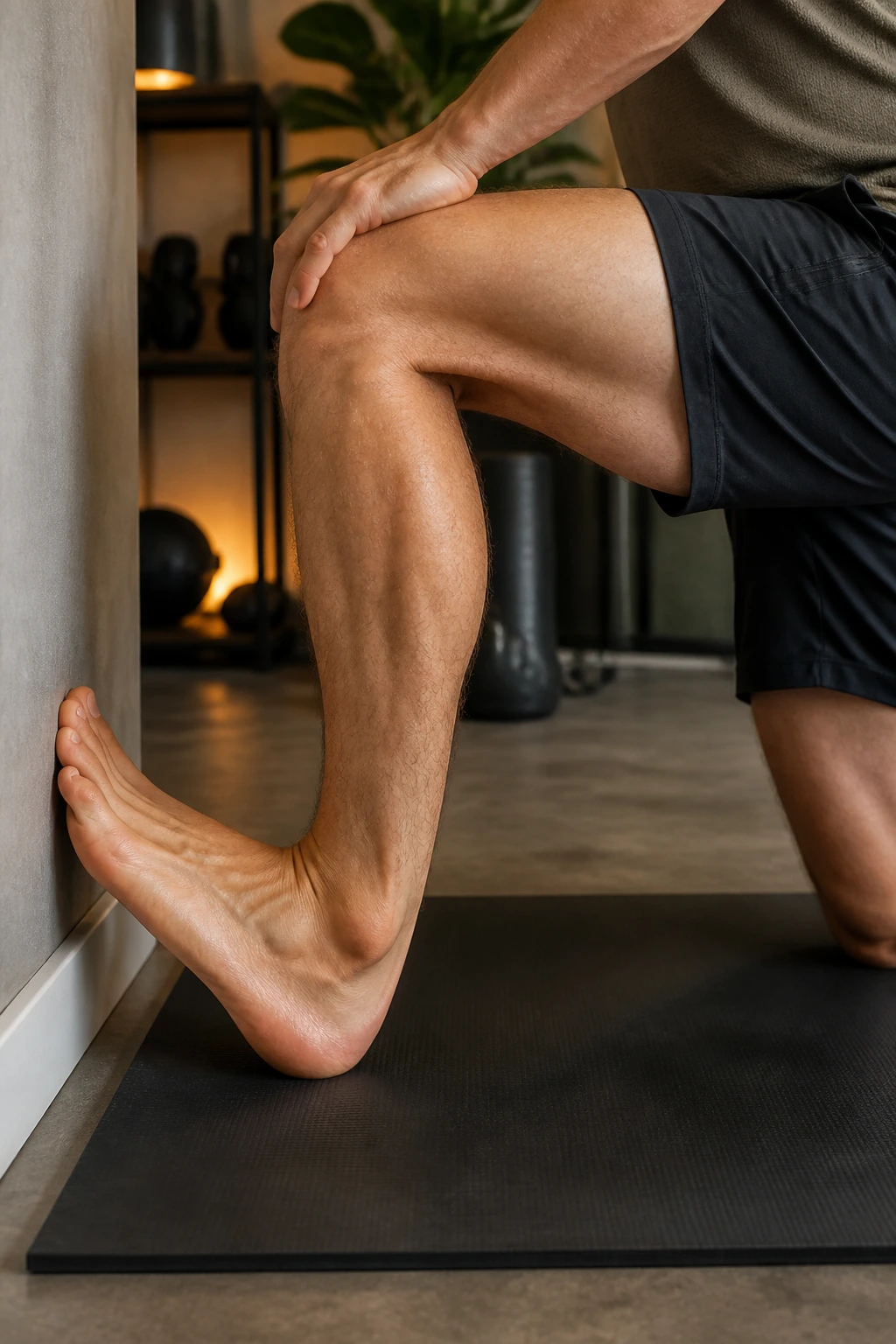
Ankle mobility is the secret to good squat depth and a pain-free gait. Most people ignore their ankles until they have a sprain or shin splints.
- Ankle Circles: Rotate the foot clockwise and counter-clockwise.
- Dorsiflexion Stretch: Kneel with one foot in front, toes against a wall, and push your knee toward the wall.
- Soleus Stretch: Similar to the calf stretch, but with a slight bend in the knee.
If you can improve your ankle range of motion, your squats, lunges, and running form will improve automatically.
18. Chest and Posture Alignment

We live in a world that pulls us forward—phones, laptops, steering wheels. This routine pulls you back, literally.
- Doorway Pec Stretch: High arm position and low arm position.
- Reverse Clasp: Hands behind the back, chest proud.
- Wall Angels: A challenging movement where you keep your elbows, wrists, and back flat against the wall.
Pro tip: Do 10 wall angels every morning. It is the most effective way to remind your shoulders where they belong.
19. Full-Body Yoga-Inspired Stretch
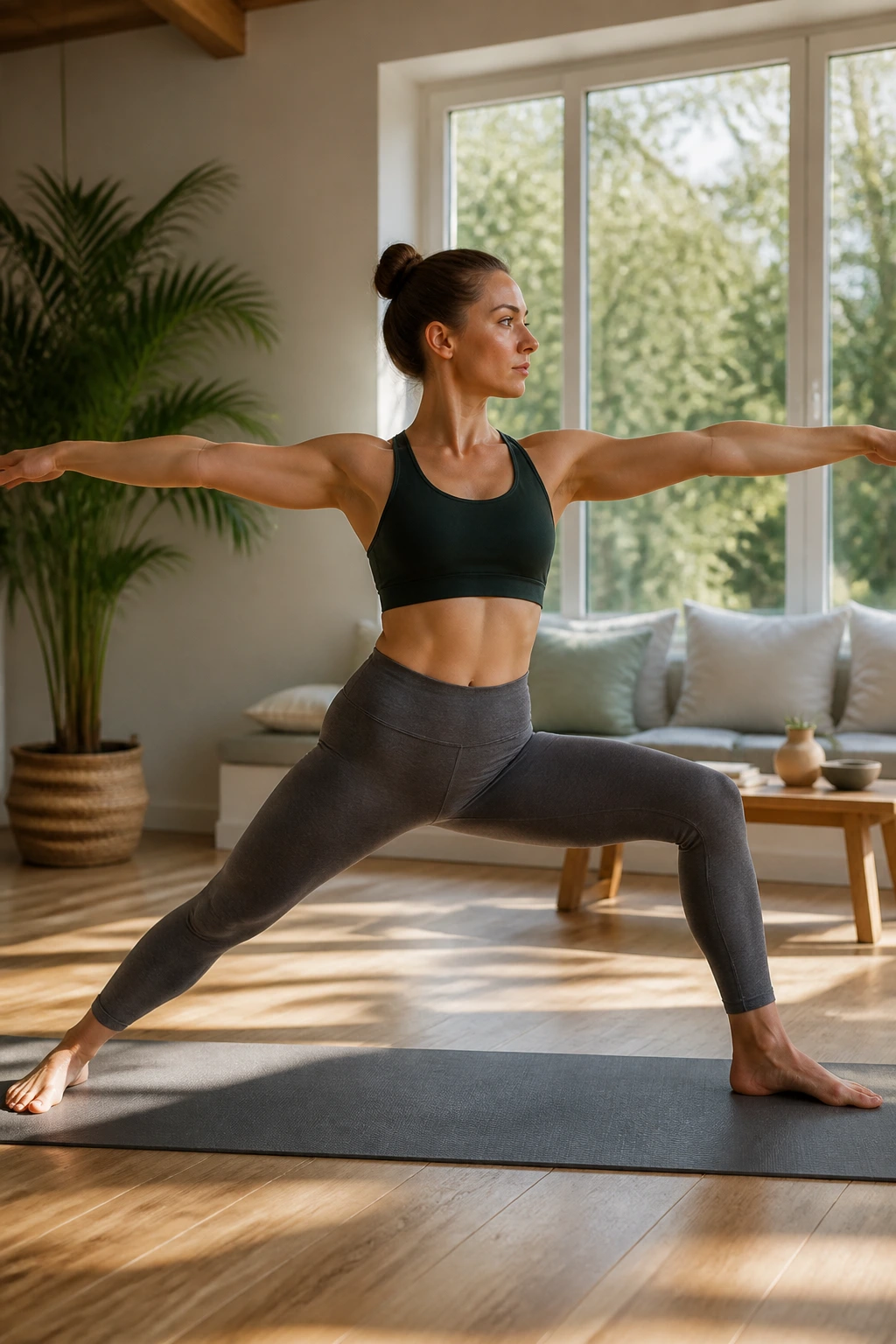
You do not need to be a yogi to benefit from these movements. This routine focuses on linking breath to motion.
- Cat-Cow
- Downward Facing Dog
- Warrior II (great for hip stability and leg strength)
- Forward Fold
The key here is the breathing. Inhale as you extend, exhale as you contract or fold deeper.
20. The “Five-Minute” Quick Reset
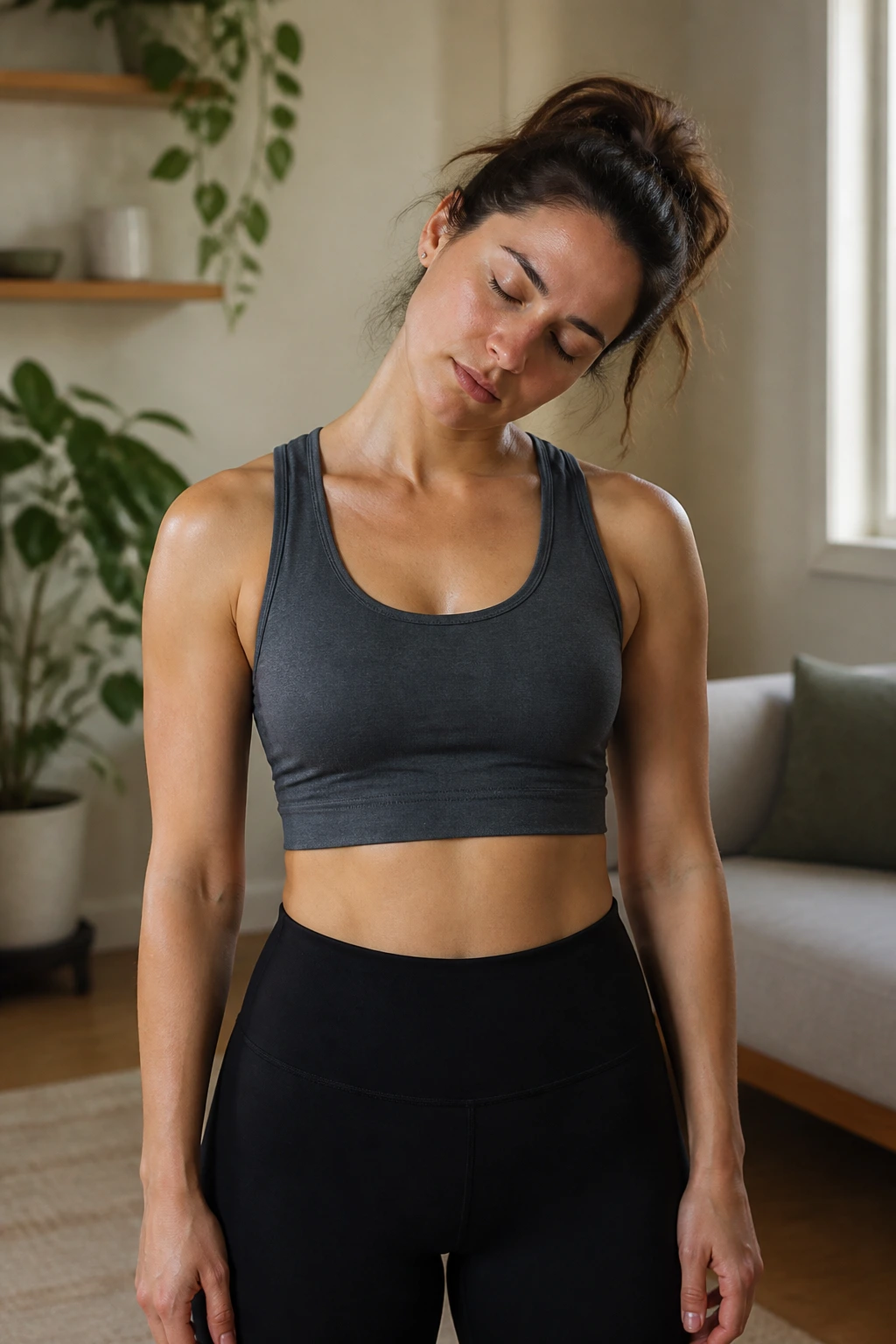
Sometimes you don’t have time for a full session. This is your “get it done” routine.
- 1 minute of Neck Rolls
- 1 minute of Arm Swings
- 1 minute of Standing Side Bends
- 1 minute of Lunge Matrix
- 1 minute of Forward Fold
If you do this every single day, you will maintain more mobility than someone who does a huge hour-long session once a week.
21. Lower Limb Recovery Series
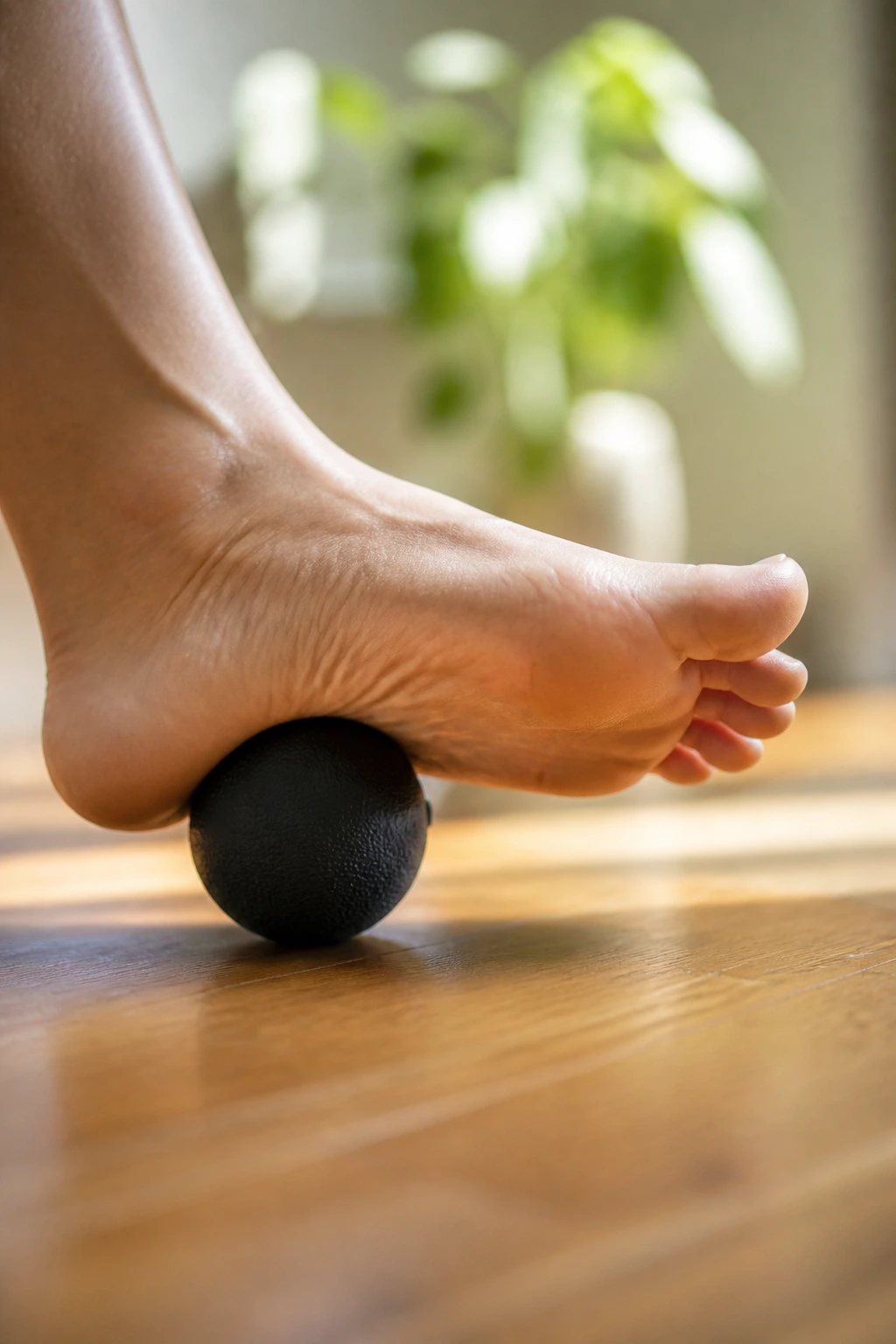
This is specifically for people who spend a lot of time on their feet. If you are a server, nurse, or retail worker, this is for you.
- Calf Raises: Do 20 reps to get blood into the lower leg.
- Toes Crunches: Curl your toes into the floor to activate the arches.
- Foot Massage: Use a tennis ball or lacrosse ball to roll out the bottom of your feet.
Your feet are your foundation. A 5-minute foot-care routine can change your entire evening.
22. Upper Body Tension Release
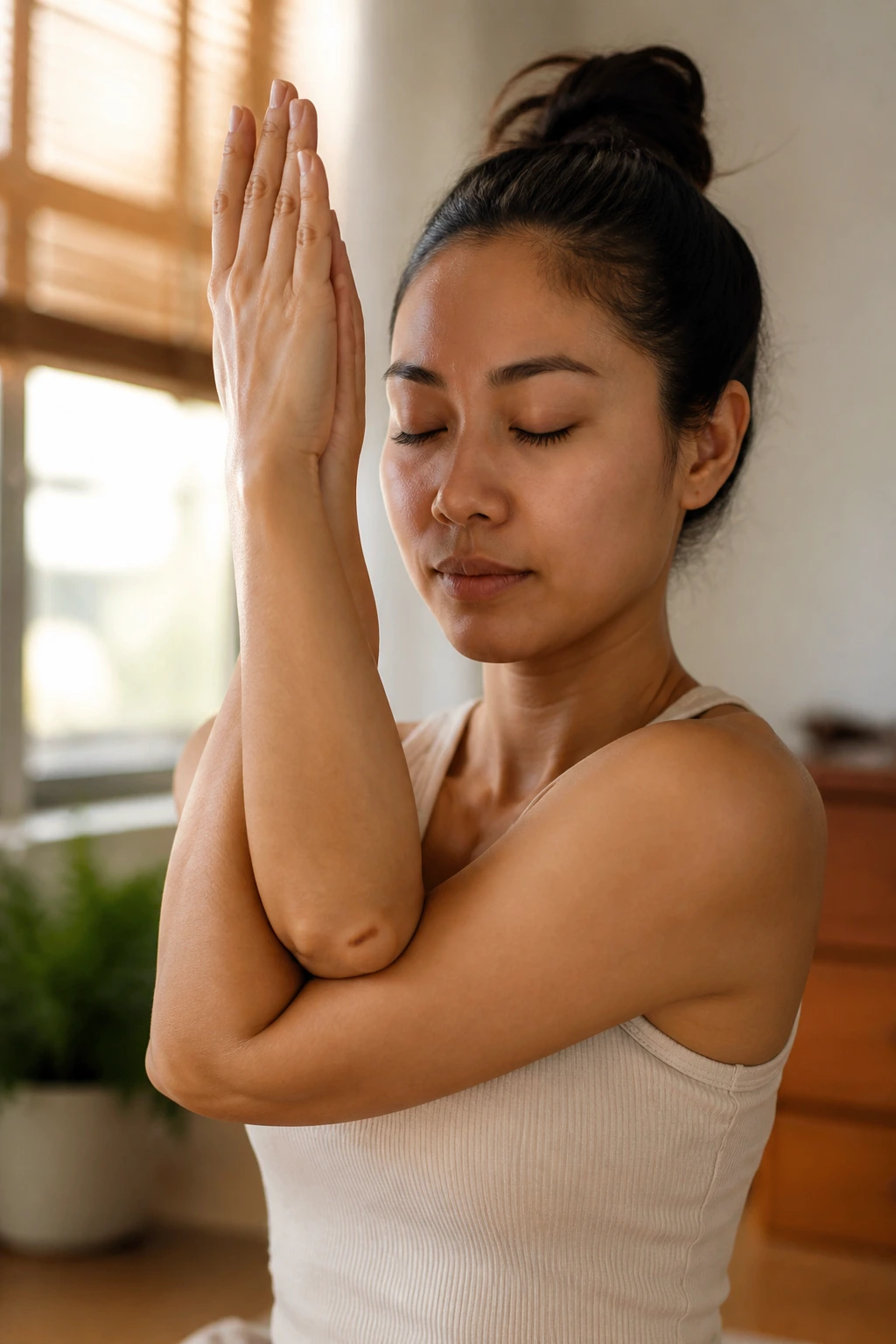
This routine targets the neck, shoulders, and chest, specifically for people who hold tension in their upper back.
- Eagle Arms: Wrap your arms around each other and lift the elbows.
- Neck Retraction
- Shoulder Shrugs
This is very similar to the stress buster routine but adds the Eagle Arms pose, which provides a deep stretch to the muscles between the shoulder blades.
23. Glute and Lower Back Integration
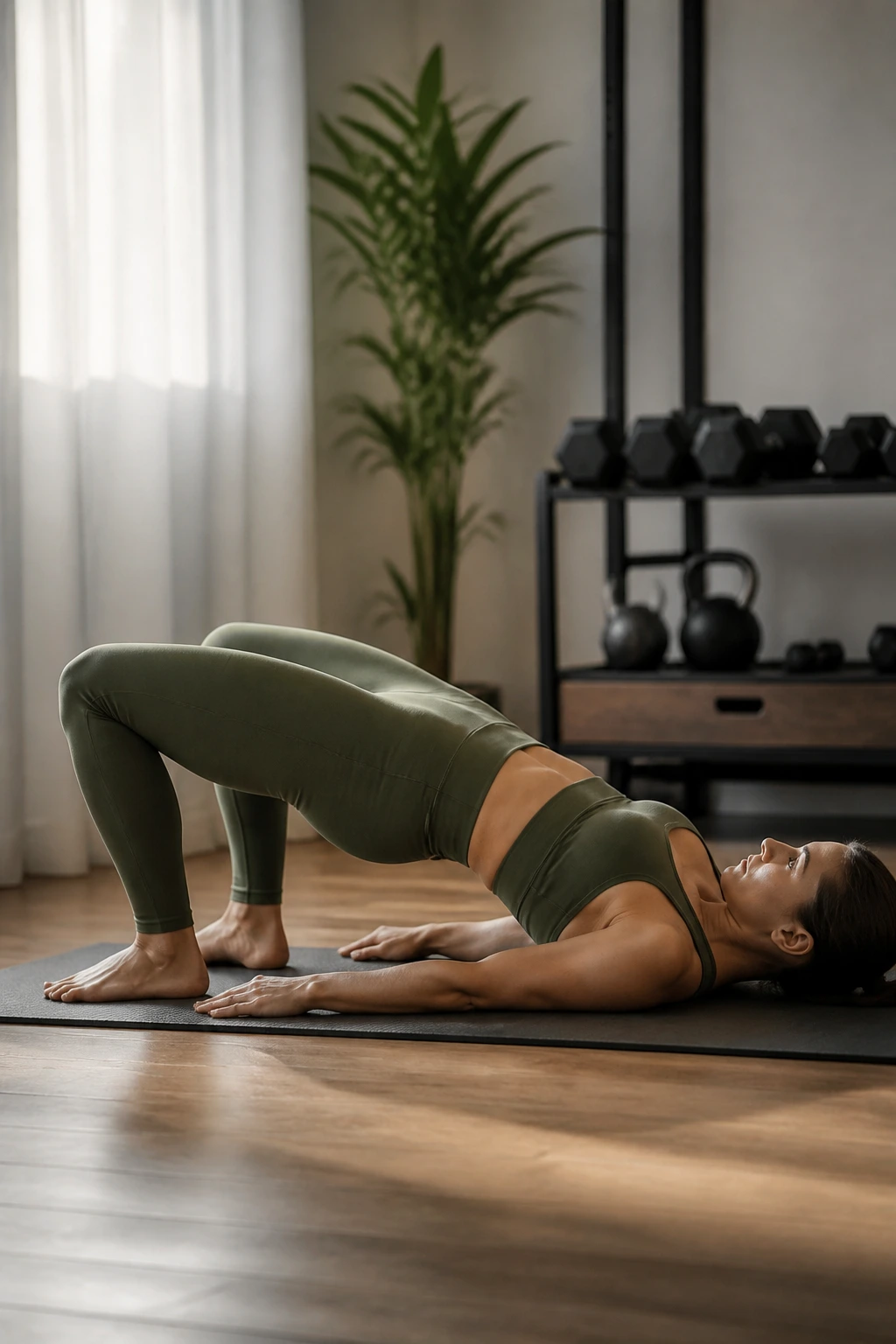
This is a more technical routine. It helps “turn on” your glutes, which is essential for stabilizing the lower back.
- Glute Bridges (hold at the top)
- Bird-Dog: Hands and knees, extend opposite arm and opposite leg.
- Dead Bug
By strengthening the glutes and core, you provide a natural back brace that supports your spine through all of life’s movements.
24. Full Spinal Decompression
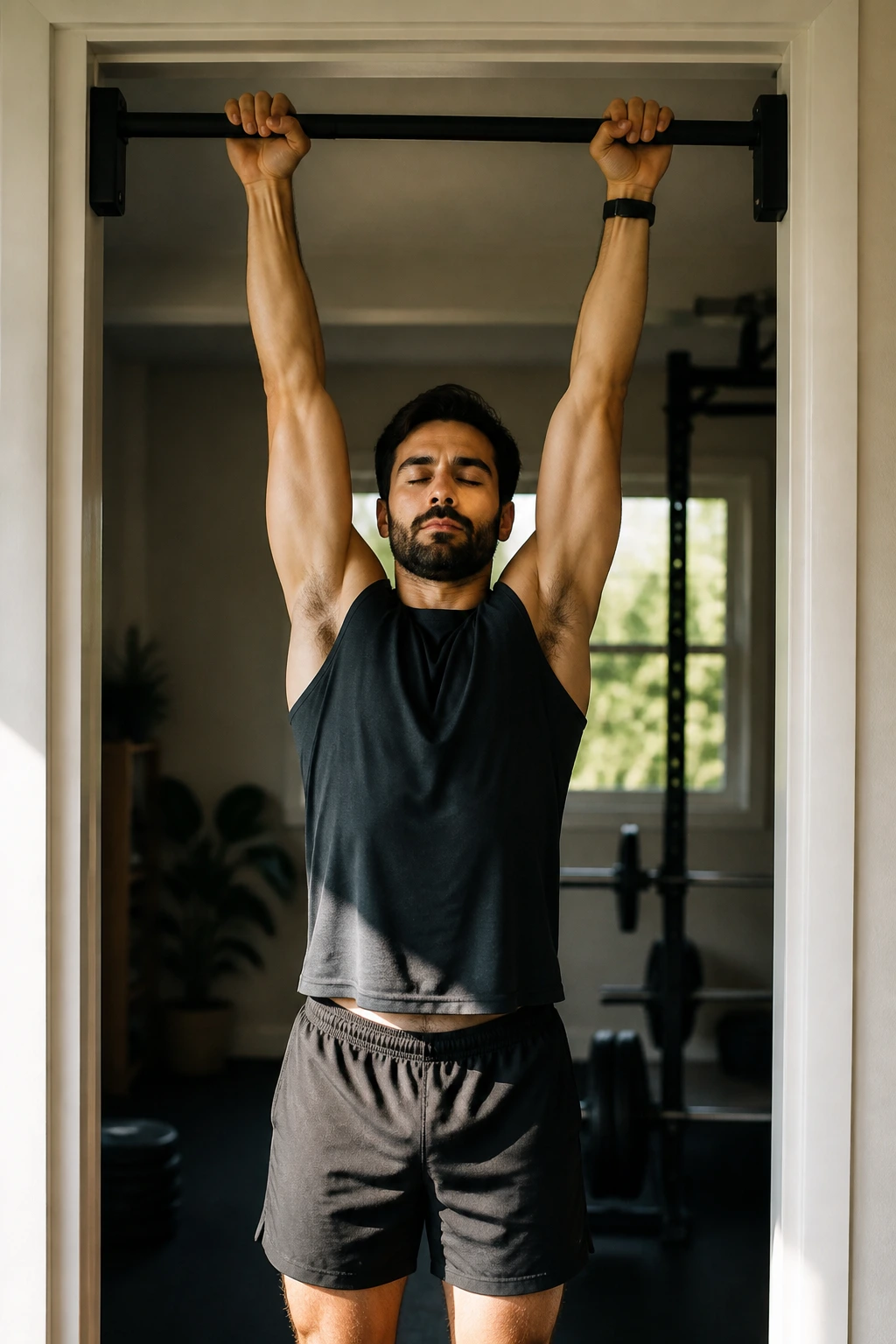
Gravity compresses us all day long. This routine is about creating space between the vertebrae.
- Hanging (if you have a pull-up bar): Simply hang and relax the shoulders.
- Child’s Pose (with active reach): Stretch your fingers as far forward as possible.
- Cobra Pose: Gently arch back.
Use this routine at the end of a long day of standing. It feels like a literal sigh of relief for your spine.
25. Total Body Flexibility Maintenance
This is your “safety net.” If you do nothing else, do these four things to keep your body healthy as you age.
- Hamstring Stretch
- Hip Flexor Stretch
- Chest Opener
- Calf Stretch
Keep these four exercises in your mental toolkit. They cover the four areas that almost every human loses range of motion in as they move through life. Master these, and you will move well for a long time.
Final Thoughts
You do not need to become a flexibility expert or commit to an hour of stretching daily to see results. The secret, as is the case with most physical habits, is simply doing it. Start by picking two routines from this list and rotating them throughout your week. Pay attention to how your body feels after you move—the feedback loop of “stiff to loose” is usually enough to keep you coming back.
Avoid the temptation to compare your flexibility to others or to push into pain. Stretching should feel like a relief, not a battle. If you find yourself holding your breath or gritting your teeth, back off. True range of motion is earned through relaxed, persistent effort, not through force. Keep it simple, stay consistent, and let your body recover at its own pace.
