



Stiff mornings have a way of making simple things feel weirdly hard. A mug feels heavier. A shoulder checks out. Even turning your head to find your phone can feel like the body is protesting the terms of the day.
Good morning stretch routines don’t need to be fancy to work. They need to be gentle, specific, and easy enough that you’ll actually do them when your brain is still half asleep. The best ones wake up the neck, ribs, hips, and ankles without yanking on cold muscles like you’re trying to win an argument with your own body.
The other mistake is going too hard, too early. Long holds can feel nice later in the day, but first thing in the morning, a little motion often beats a heroic reach. Small circles, slow bends, and clean breathing patterns usually get you moving faster than a dramatic toe-touch ever will.
If your back feels wooden, your hips feel sticky, or your shoulders seem welded in place, start with one routine and let the rest of the day get easier from there.
1. A Morning Stretch Routine for the Neck and Shoulders at the Sink
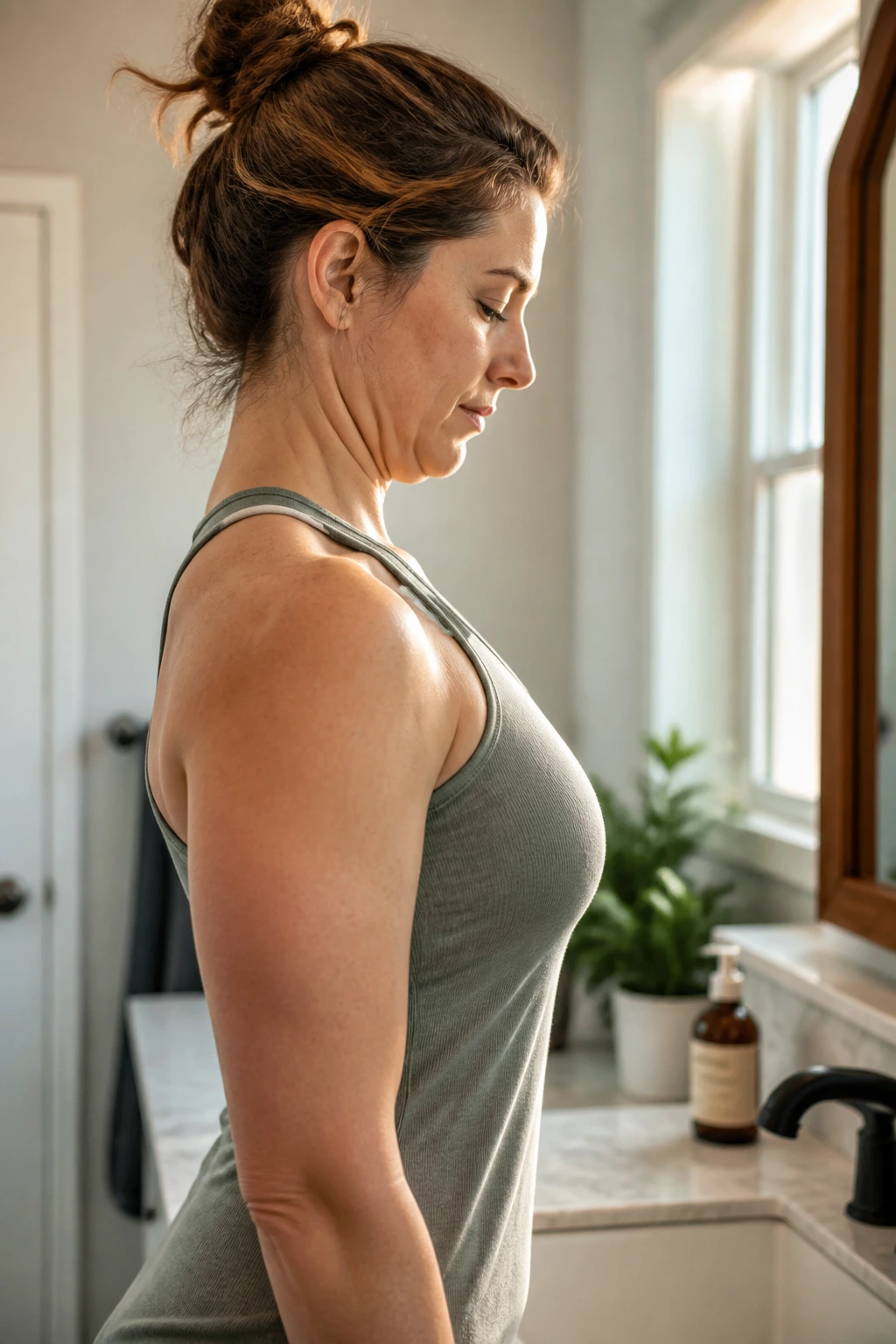
A stiff neck makes the whole morning feel crowded. One of the best fixes is also one of the simplest: stay standing, keep your feet planted, and move the head and shoulders in small, clean ranges before you ever sit down.
How to do it
Start with 5 chin tucks, pulling your chin straight back like you’re making a double chin, not dropping your head. Then roll your shoulders 8 times backward, pause, and open your chest by clasping your hands behind you or placing your palms on the counter edge and gently hinging forward. Hold that chest opener for 15 to 20 seconds.
The point is not to stretch hard. It’s to remind the upper body that motion is allowed. Tight necks often come from sleeping with the head turned one way, then waking up and immediately staring down at a screen. Small resets work better than big ones here.
Quick facts:
- Best for: desk workers, phone neck, tense traps
- Time needed: 1 to 2 minutes
- Good cue: your shoulders should feel lower, not forced down
- Skip the move if: you get sharp pain when turning your head
Pro tip: keep your jaw loose. People clench their jaw while “stretching” the neck all the time, and it ruins the whole thing.
2. Cat-Cow on Hands and Knees
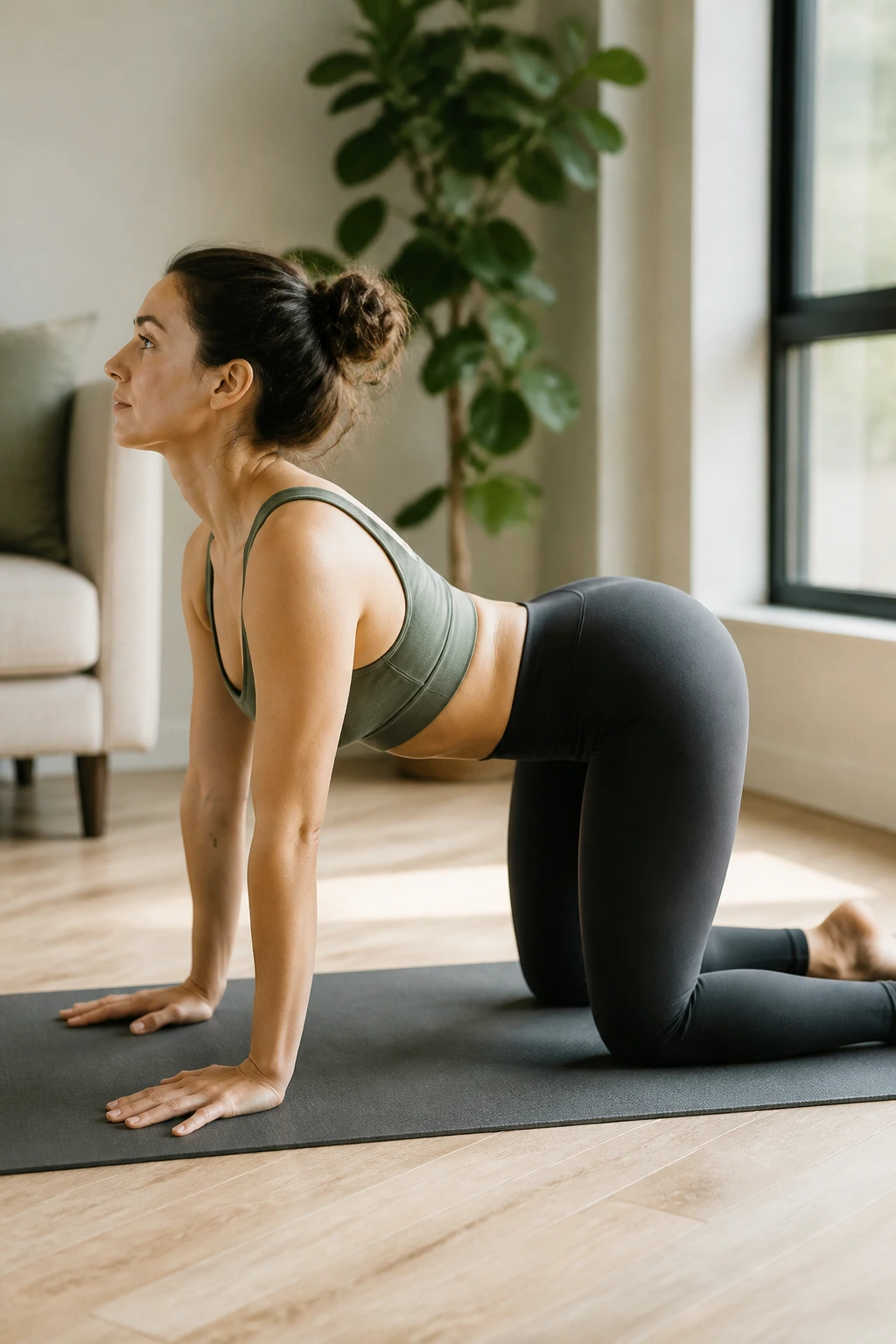
Why does cat-cow feel so good when everything else feels glued together? Because it moves the spine through flexion and extension without asking for drama.
Drop to hands and knees, hands under shoulders and knees under hips. On the exhale, round your back and tuck your tailbone into cat. On the inhale, tip the sit bones up, lift the chest, and let the belly soften into cow. Move through 6 to 8 slow rounds, and let each breath set the pace.
The sweet spot is smoothness. If you rush it, cat-cow turns into a shrugging exercise with no real benefit. If you move slowly, it starts to warm the middle of the back, wake up the ribs, and make the low back feel less cranky.
What your spine is asking for
A lot of morning stiffness lives in the thoracic spine, the part between the neck and the low back. Cat-cow gives that area a clean, low-load start.
That matters more than people think. A back that won’t move well often makes the hips and neck do extra work later.
3. Standing Side Bends with a Slow Reach
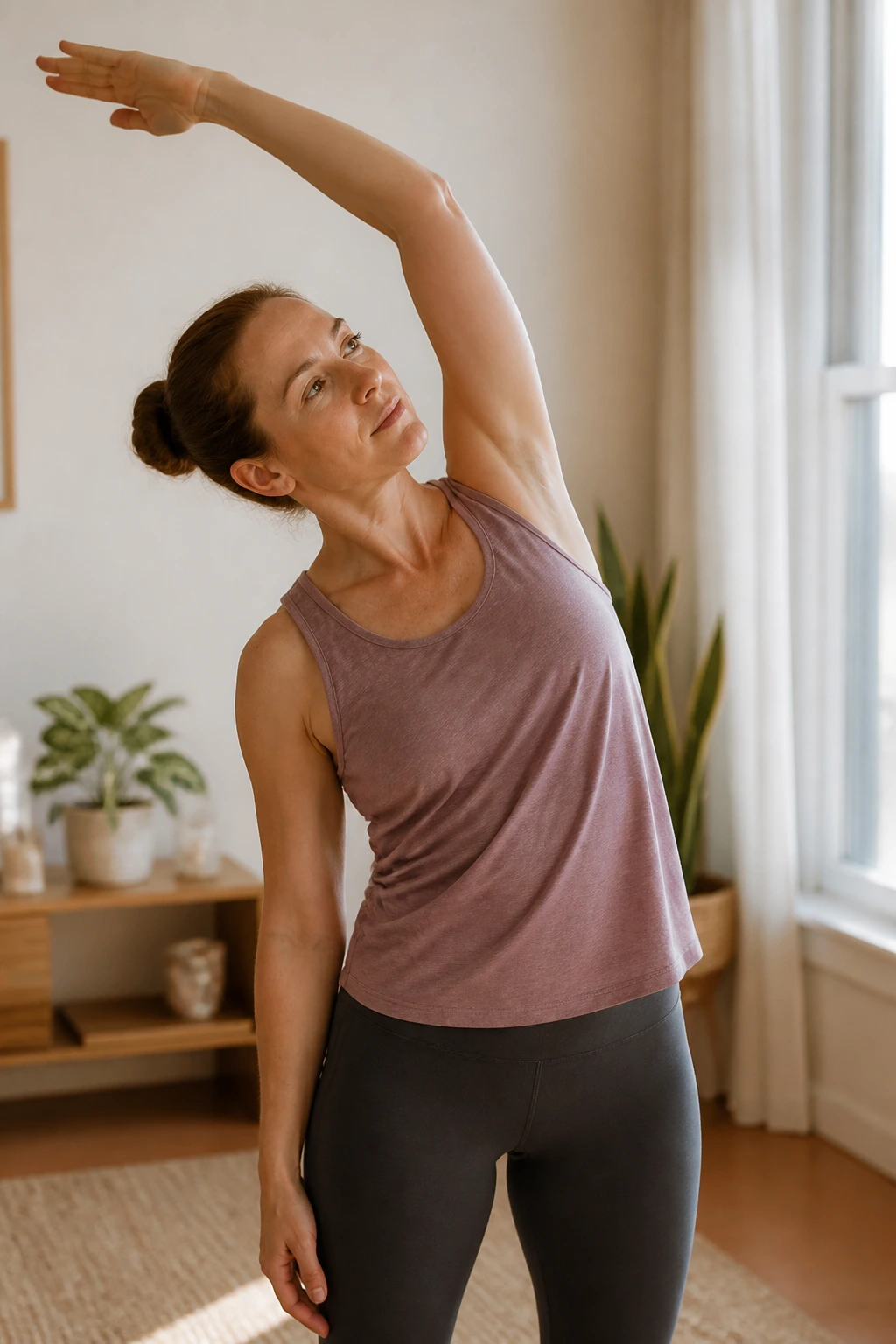
Reach one arm overhead and you can almost feel the side of your body lengthen. That’s the whole trick here, and it’s a good one.
Stand with your feet about hip-width apart. Reach your right arm up, keep the left hand on your hip, and slide gently to the left. Hold for 3 slow breaths, then switch sides. Keep both feet heavy on the floor and avoid twisting forward. You want a clean side bend, not a sneaky lean.
The move opens the space between the ribs and the pelvis, which can feel especially useful if you wake up with a tight lower back or a pinched feeling through the sides of the torso. It also pairs well with a quick walk to the kitchen because it doesn’t require getting down on the floor.
You don’t need to go far. If the stretch is visible in the mirror, it is probably too much. A small lean with a steady breath does more than a giant reach with bent knees and a flared rib cage.
4. Hamstring Flosses with a Bent-Knee Start
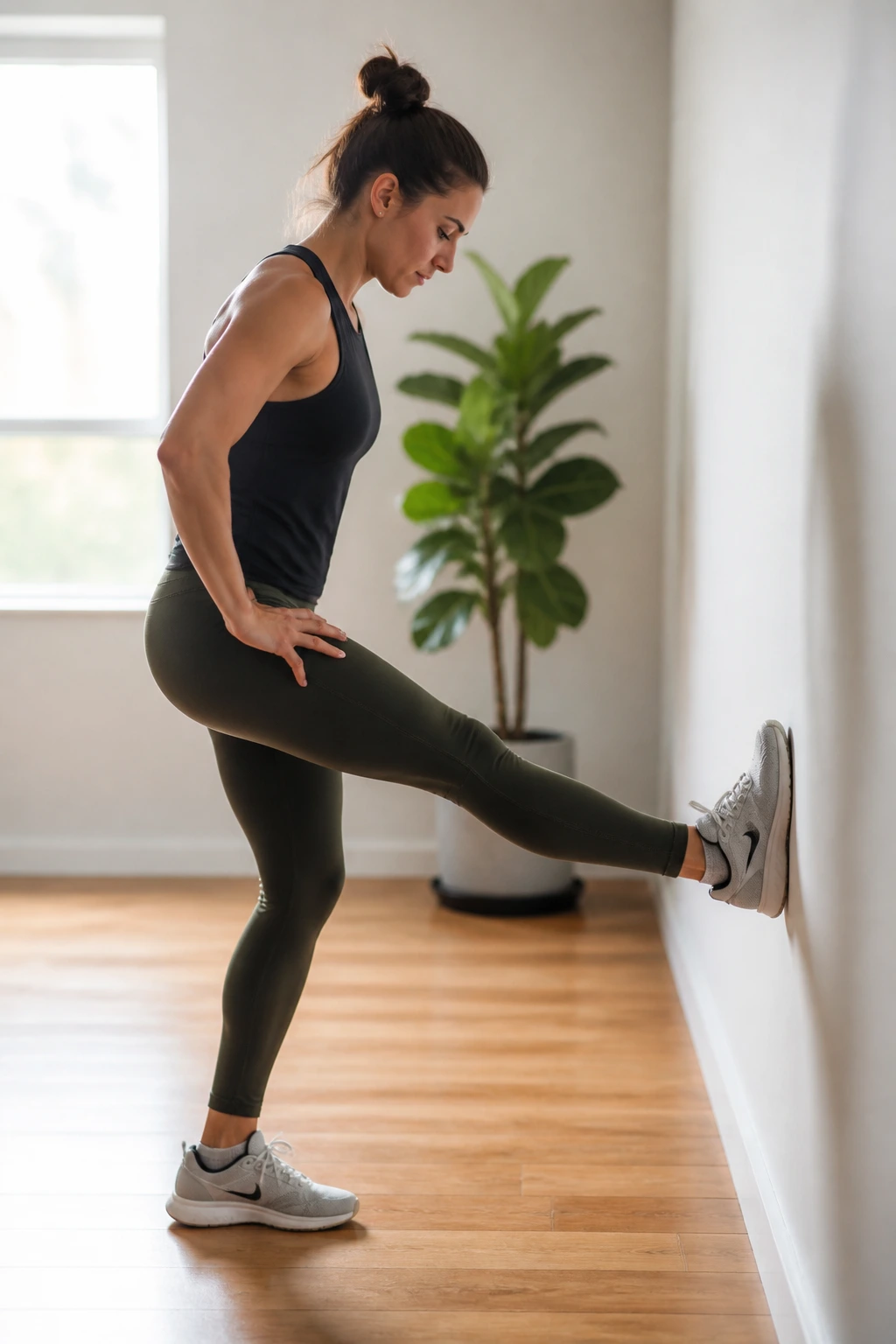
I keep coming back to hamstring flosses for one reason: they respect the morning. They give the back of the legs movement without asking for a deep hold when the tissue still feels cold and moody.
Stand tall, put one heel forward with the knee slightly bent, and hinge at the hips until you feel a mild pull behind the thigh. Then straighten the knee a little, bend it again, and repeat for 8 to 10 smooth reps. Switch sides.
Why it works better than a hard stretch
A lot of people wake up and yank straight into a toe-touch. That’s usually a bad bargain. The hamstrings often respond better to repeated motion than to a long, aggressive hold first thing.
The bent-knee start keeps the stretch friendly. It also teaches the hips to hinge instead of rounding the lower back, which matters if you have a long commute, a lifting session later, or just a body that gets grumpy after sleep.
- Keep the spine long
- Soften the standing knee
- Stop when you feel tension, not strain
- Use a wall if balance feels shaky
One useful cue: think “fold at the hips,” not “reach for the floor.”
5. Low Lunge Hip Openers
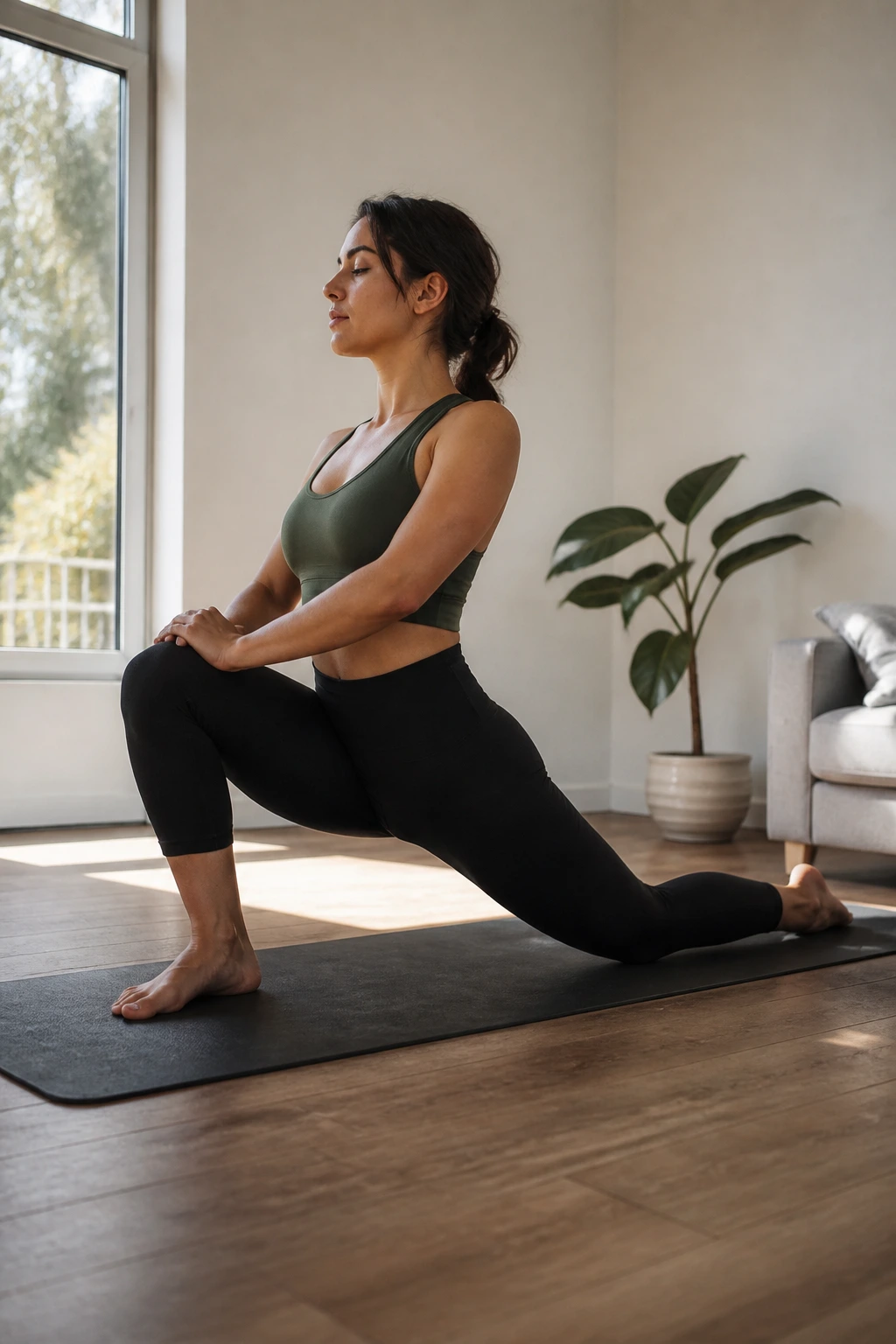
If your hips are the problem, start here. A low lunge gets at the front of the hip, the place that often feels short and tight after hours of sleeping curled up or sitting the day before.
Step one foot forward into a lunge and lower the back knee to the floor or a folded towel. Tuck the tailbone slightly, squeeze the glute on the back leg, and shift forward until you feel the stretch across the front of that hip. Hold for 20 to 30 seconds, then switch sides.
The glute squeeze matters. Without it, people often dump into the low back and miss the hip flexor entirely. With it, the stretch lands where you want it.
This is a nice one if your first steps in the morning feel stiff or if you know your hips are going to complain during a workout. It also gives the body a solid “we’re moving now” signal. Not a reckless one. Just enough to wake things up.
6. Ankle Circles and Calf Pumps
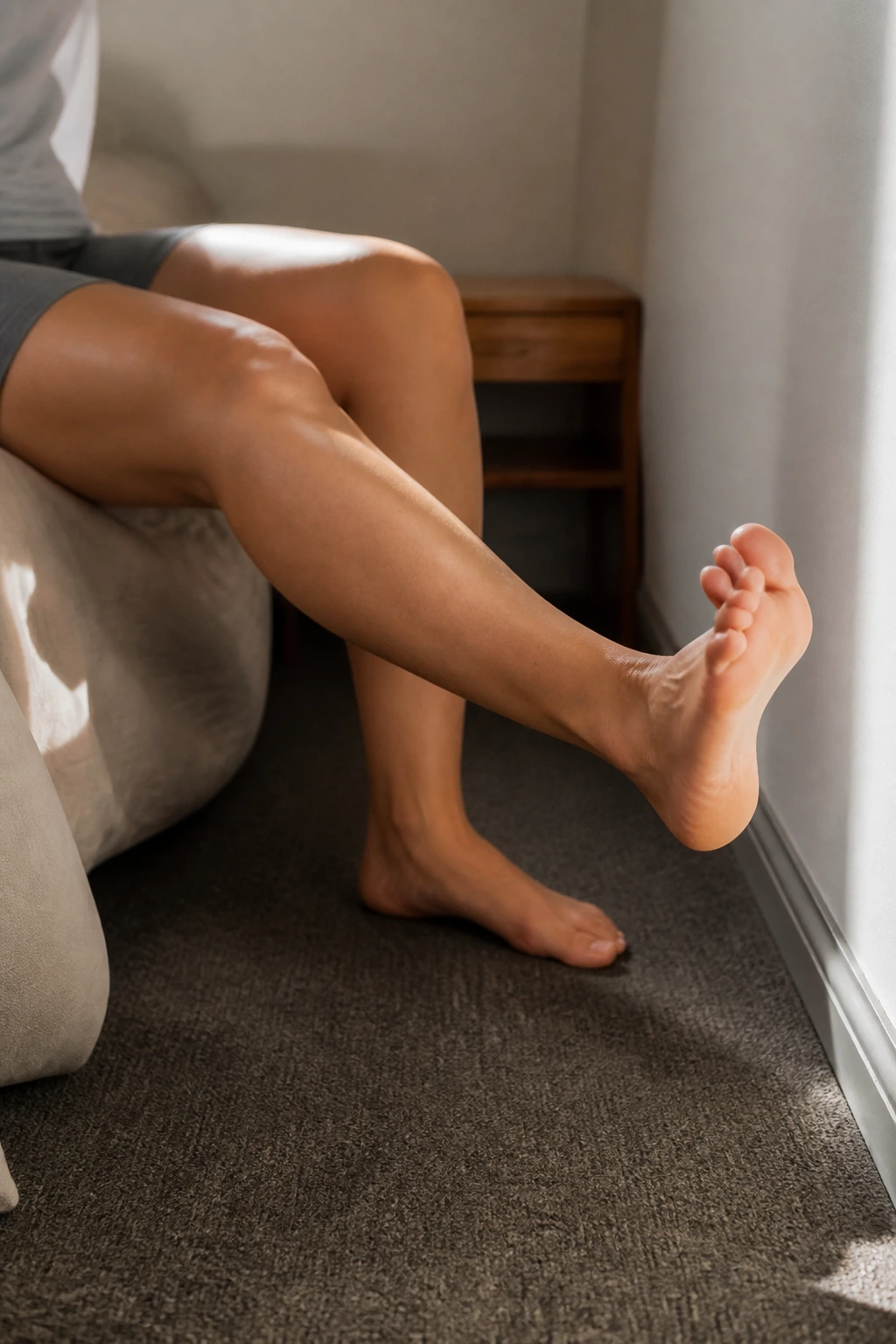
Ankles get ignored until they complain. Then every stair, squat, and brisk walk starts to feel awkward.
Sit on the edge of the bed or stand near a wall. Lift one foot and make 10 ankle circles in each direction. Follow that with 15 calf pumps, pressing the toes away and pulling them back toward the shin. Switch sides. If standing feels better, do the same thing while lightly holding a counter.
This routine is less glamorous than hip openers, but I like it because it pays off everywhere else. Better ankle motion helps with squats, lunges, and even simple walking. Tight calves also pull on the feet and can make the whole lower leg feel boxed in.
Compared with a long calf hold
A static calf stretch has its place, but the morning often favors movement. Circles and pumps warm the ankle joints and wake up the small muscles around the foot.
If you run, lift, or stand for work, this one earns its keep quickly.
7. Seated Spinal Twists on the Bed Edge
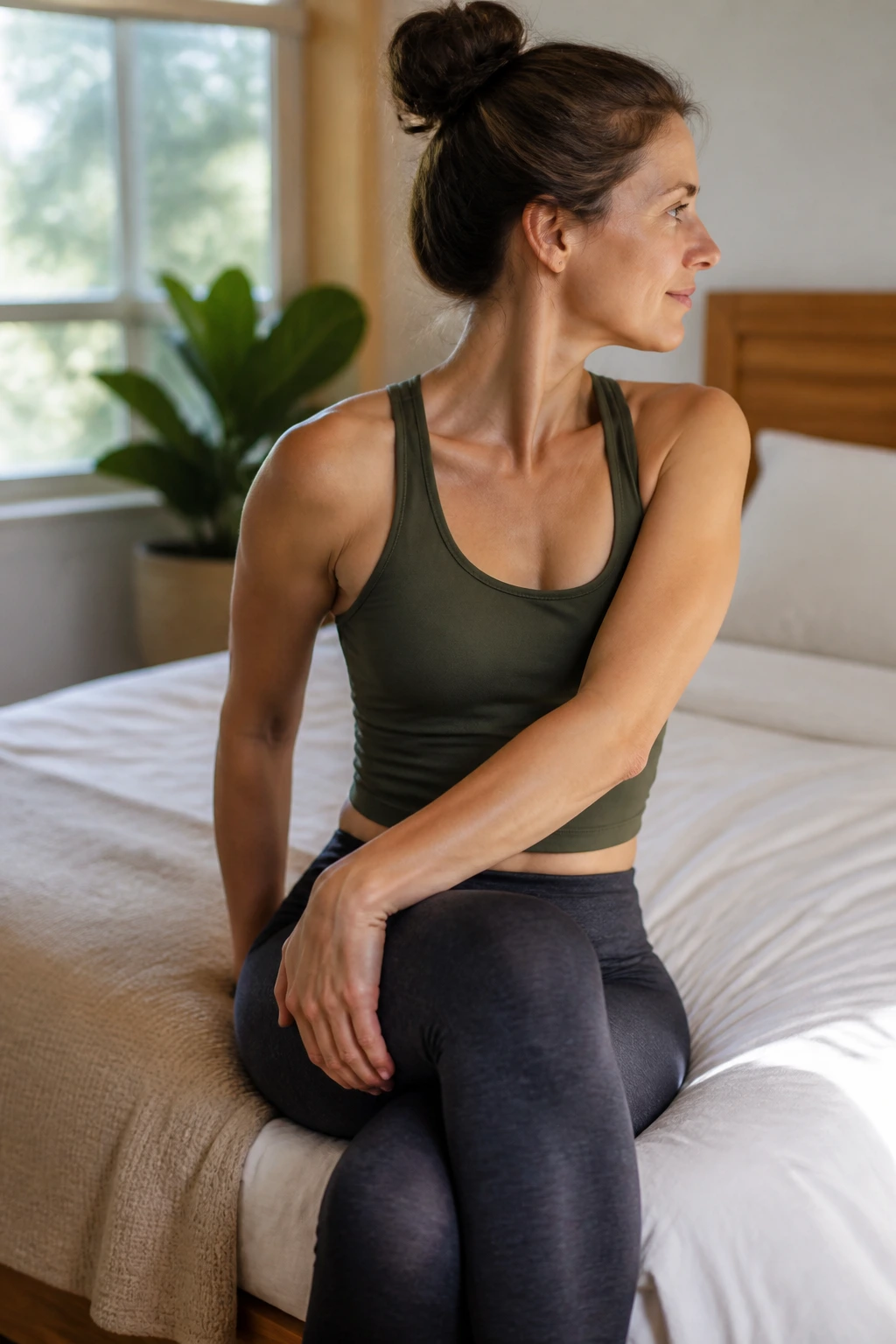
Seated twists look mild, but they wake up the middle of the back fast. That makes them a smart choice when you want something easy on the joints and kind to sleepy muscles.
Sit tall on the edge of your bed or a chair. Cross your right knee over your left, plant the right foot, and place your left elbow against the outside of the right thigh if that feels comfortable. Twist gently to the right and hold for 3 breaths. Switch sides.
Do not wrench yourself around. That’s the bad version. The better version feels like the ribs are turning a little more with each exhale. The spine likes that rhythm.
This stretch is also nice if your sleep position leaves you feeling twisted or if your lower back feels stiff after waking. Keep the movement small and let the breath do some of the work. The stretch should feel like a release, not a test.
8. The World’s Greatest Stretch
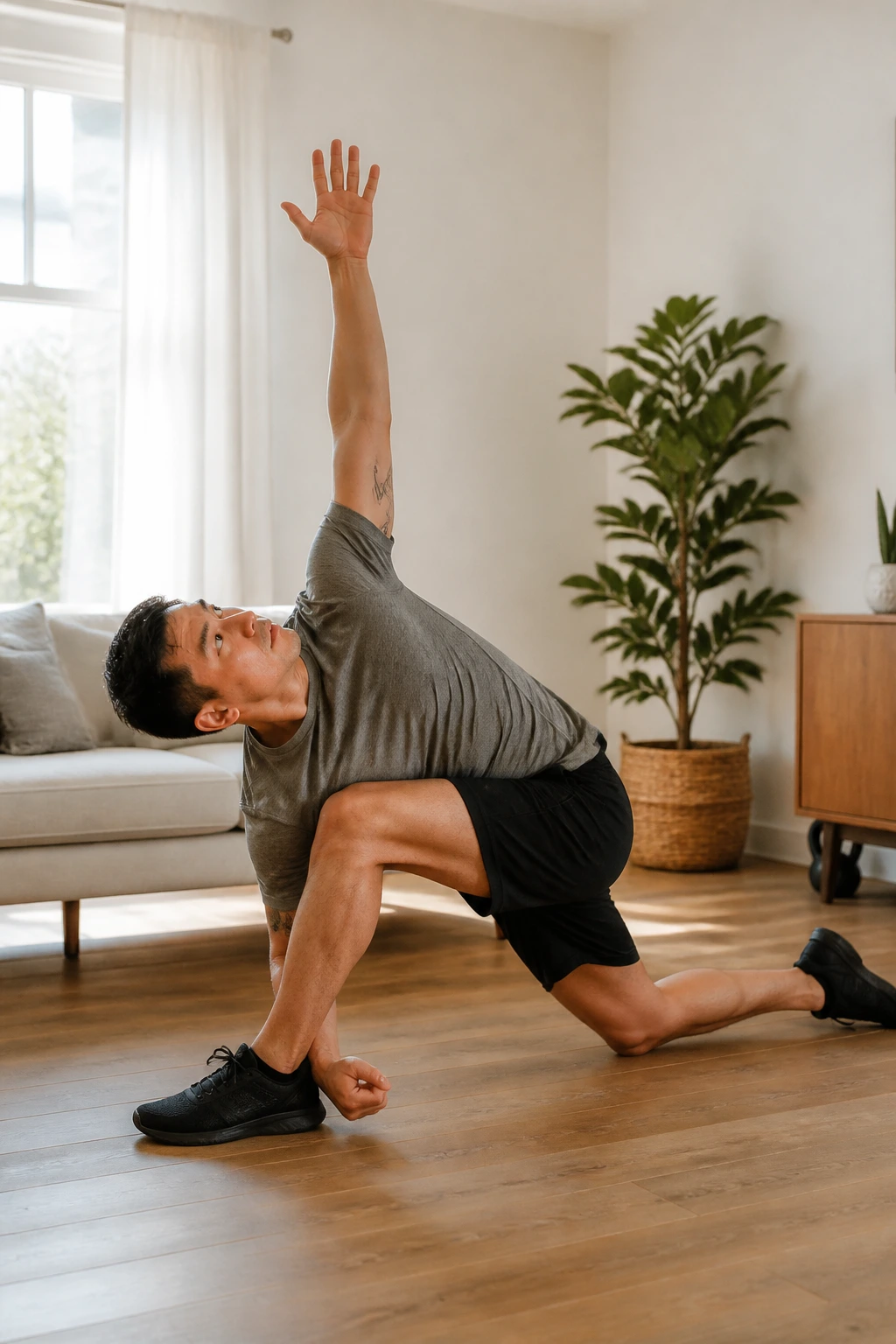
The world’s greatest stretch earned its name by doing a little of everything. It hits the hips, hamstrings, upper back, and groin in one compact flow, which is why so many people use it before a workout.
Start in a high plank or step one foot forward into a deep lunge. Drop the back knee if you want a gentler version. Bring the same-side elbow toward the floor near the front foot, then rotate the chest open toward the front leg and reach that arm toward the ceiling. Come back down and repeat on the other side for 2 to 4 rounds.
How to use it before exercise
- Move slowly through the first rep on each side
- Keep the front heel down if possible
- Pause at the rotated position for 1 full breath
- Use the kneeling version if your hips feel tight
The reason it works is simple: it asks several joints to wake up together. That is useful when you don’t want separate stretches for everything. A little messy? Sure. Also efficient. And mornings tend to reward efficient.
9. Child’s Pose to Cobra Flow
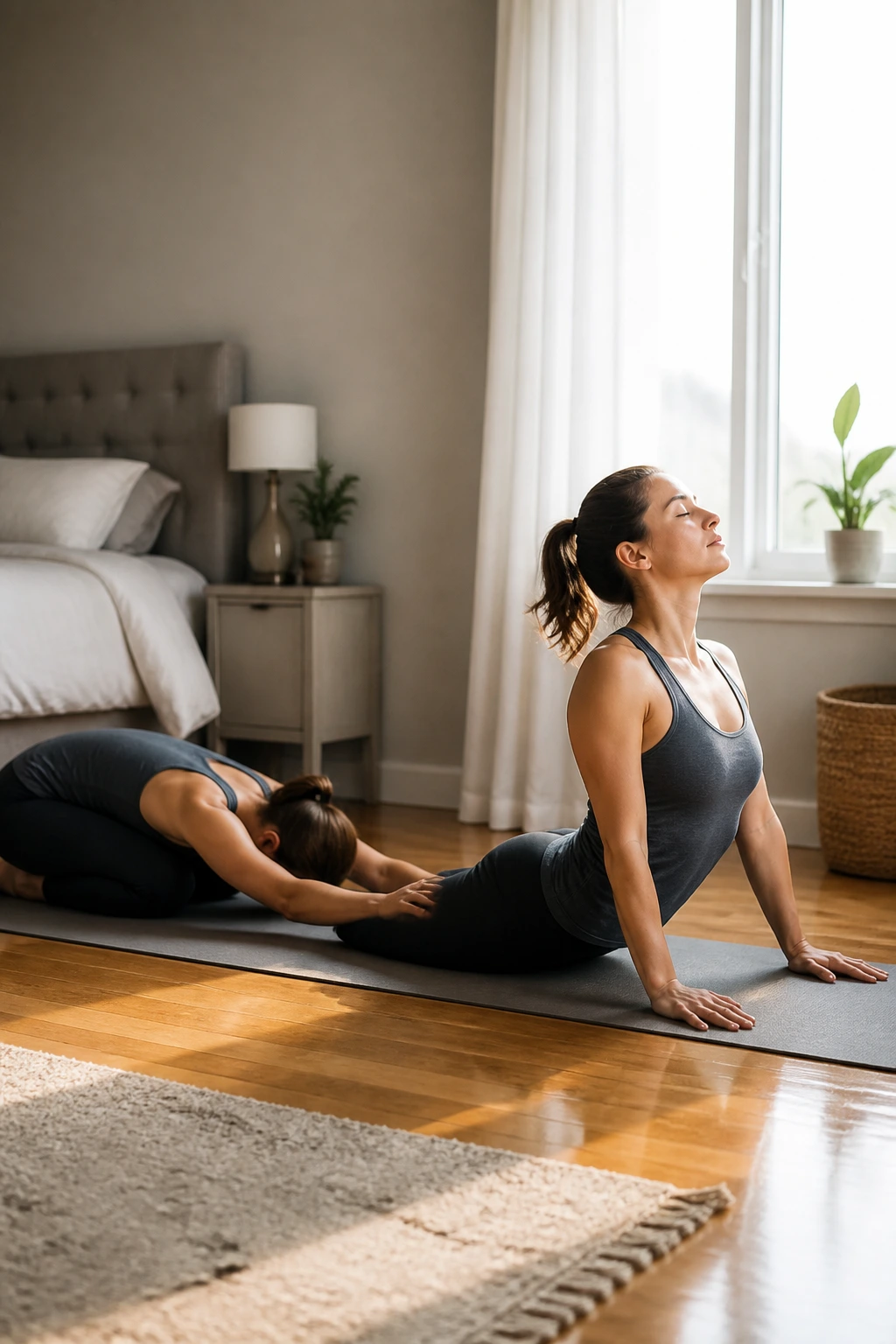
This is one of those flows that looks simple and feels smarter than it looks. The back gets both rounding and extension, which helps shake off the stiffness that settles in overnight.
Begin in child’s pose with your hips resting toward your heels and your arms stretched forward. Take a breath there, then glide forward and lower into a gentle cobra, with the chest lifting and the elbows soft. Move back and forth for 5 slow rounds.
The key is not height. A tiny cobra done well beats a giant backbend with compressed shoulders. Keep the neck long, press the tops of the feet into the floor, and stop if your low back complains. It should feel like your spine is waking up segment by segment.
My bias: flows like this are more useful than they get credit for. They turn stiffness into motion without making the body defensive.
10. Wall Angels for an Easy Morning Stretch Routine
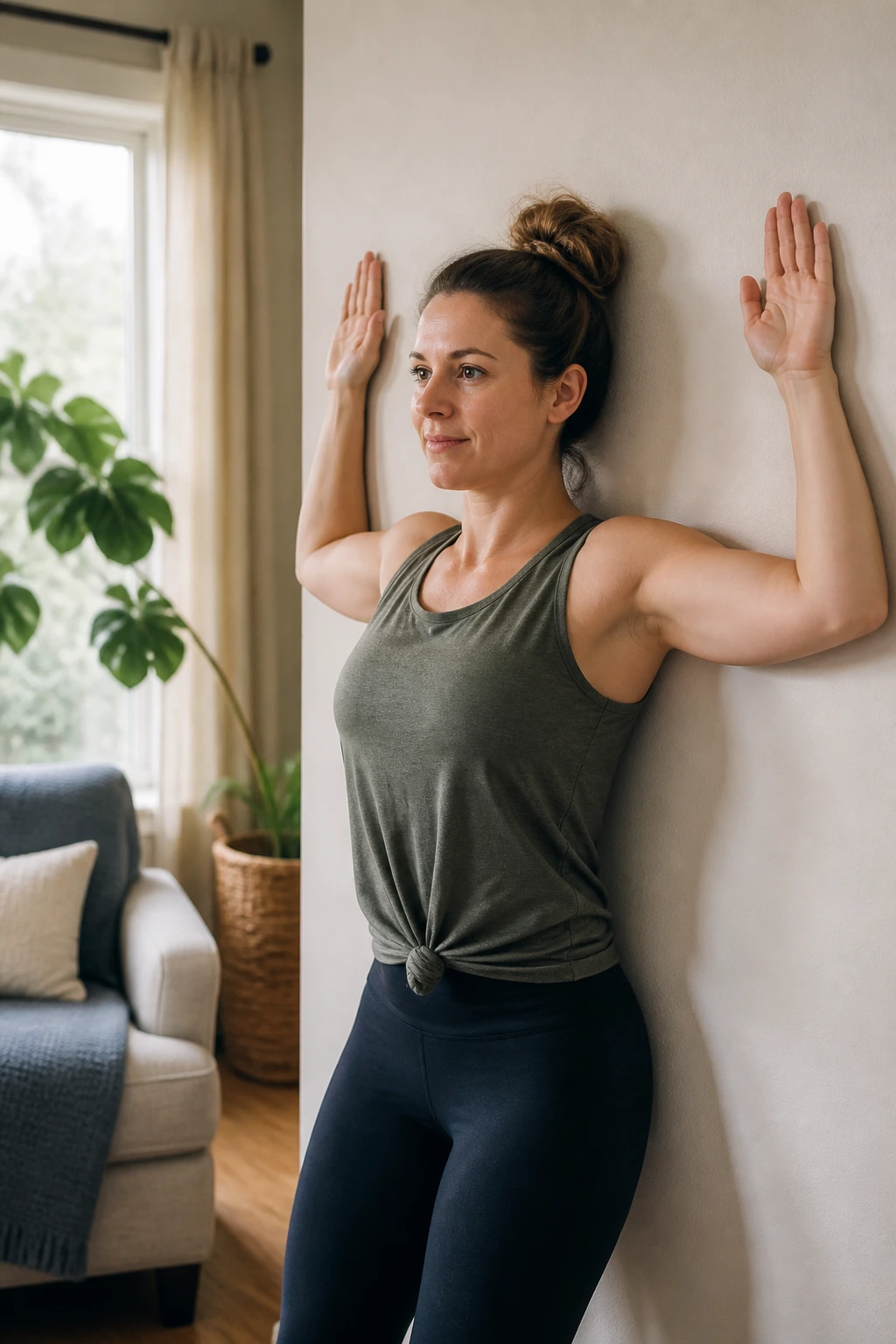
Can your shoulder blades slide around a wall before you have coffee? If not, wall angels may be the exact complaint your upper back needs to file.
Stand with your back against a wall, feet a few inches forward, ribs pulled down, and lower back gently touching or close to the wall. Raise your arms into a goalpost shape, then slide them upward and back down for 5 to 8 slow reps. Keep the backs of the hands as close to the wall as your shoulders allow.
The move asks for a mix of shoulder mobility and posture control. That combination matters because a lot of morning tightness isn’t just “tight muscles.” It’s stiffness from being folded up all night, then starting the day in the same slumped shape.
If your hands can’t touch the wall, that’s fine. Don’t force it. Work with the range you have, and let the reps do the loosening.
11. Figure-Four Glute Stretch on the Floor
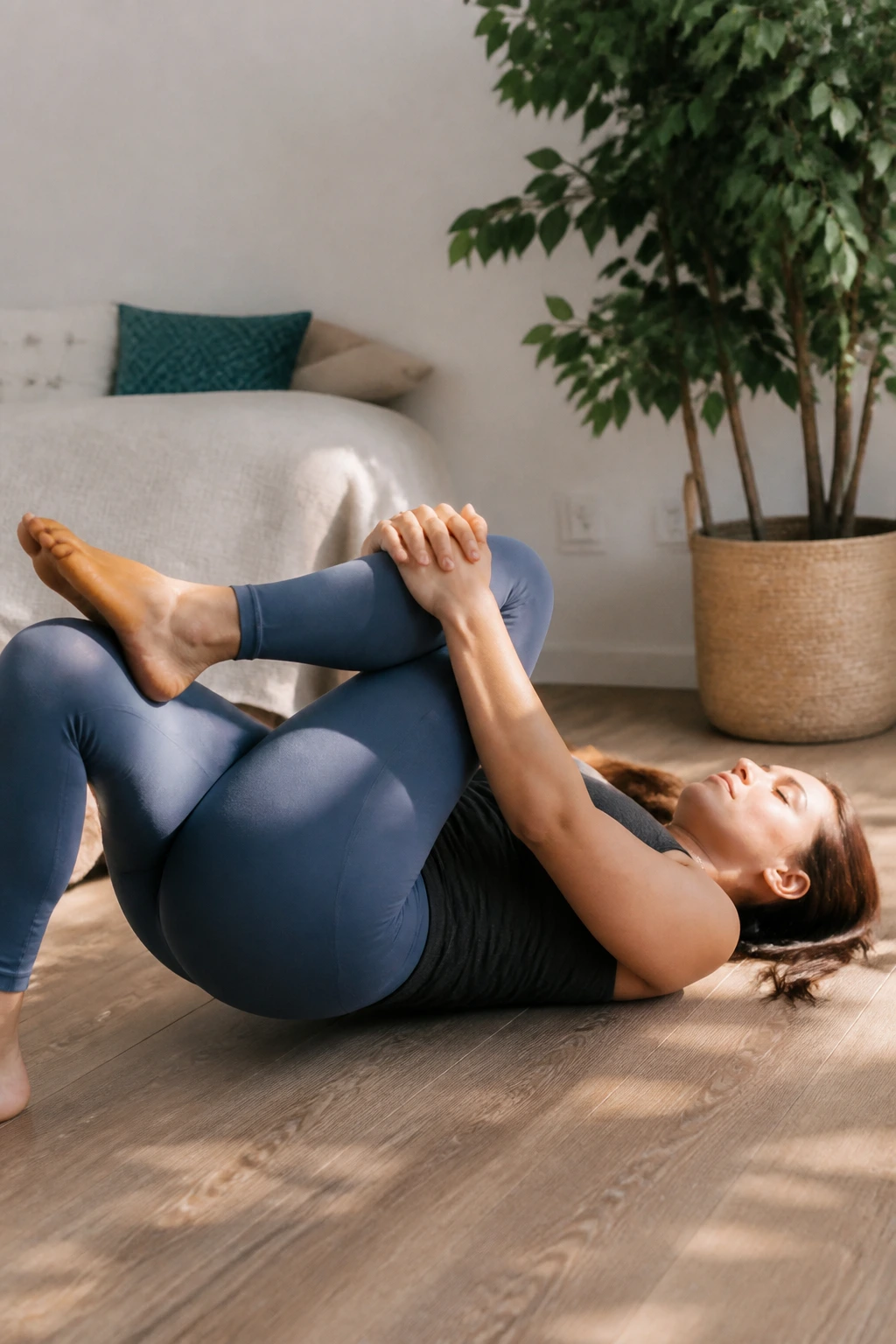
One crossed ankle can expose a tight hip almost immediately. That’s the magic of the figure-four stretch, and it’s one of the best ways to find the outer hip without needing a deep floor routine.
Lie on your back, cross your right ankle over your left thigh, and draw the left leg toward you. You should feel the stretch in the right glute and outer hip. Hold for 20 to 30 seconds, then switch sides.
A couch works too if the floor feels like too much before breakfast. Just keep the foot on the crossed leg flexed, not floppy, so the knee stays protected. If the stretch feels too sharp, back off a little and let the hip settle.
This one helps people whose hips feel jammed up from sitting, driving, or sleeping in one position too long. It can also calm the feeling that one side of the pelvis is doing all the work.
A nice bonus: it often makes walking feel smoother right after.
12. Thoracic Extensions Over a Rolled Towel
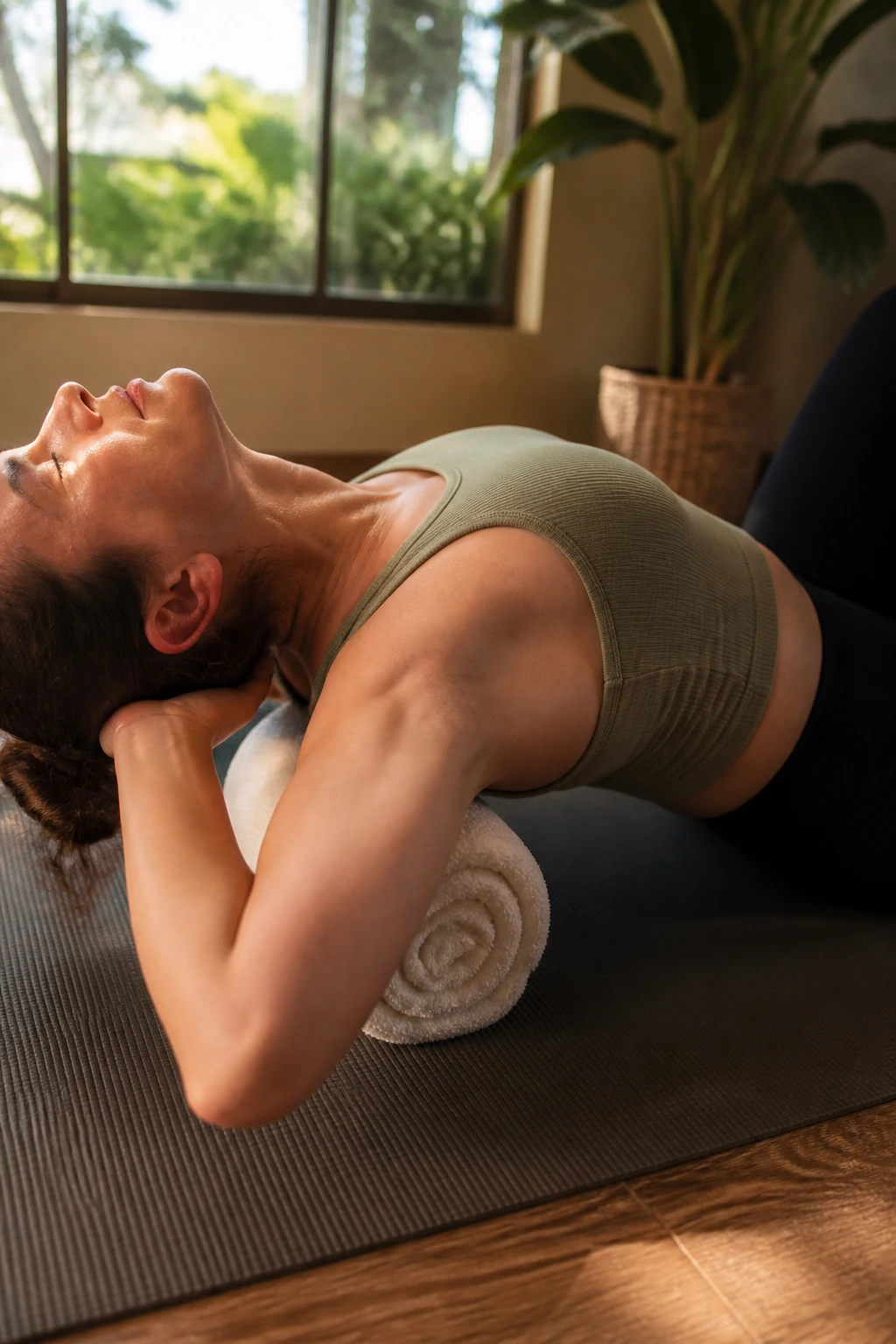
A rolled towel under the upper back does more than people expect. It helps the thoracic spine extend, which is useful if your upper body feels rounded and stubborn when you wake up.
Place a rolled towel across the upper back, just below the shoulder blades, and lie down with your knees bent. Support your head with your hands and gently lean back over the towel for 3 to 5 slow breaths. Move the towel up or down a little if one spot feels too intense.
Compared with twisting
Twists are good, but extension hits a different problem. If you wake up feeling caved in through the chest or hunched around the shoulders, extension is often the cleaner fix.
Keep your ribs from flaring wildly. That’s the trap. The movement should come from the upper back, not from turning the stretch into a giant low-back arch.
If a foam roller is around, use it. If not, the towel version works fine and is less intimidating. Sometimes the simple tool is the one that gets used.
13. Standing Quad Stretches with a Pelvic Tuck
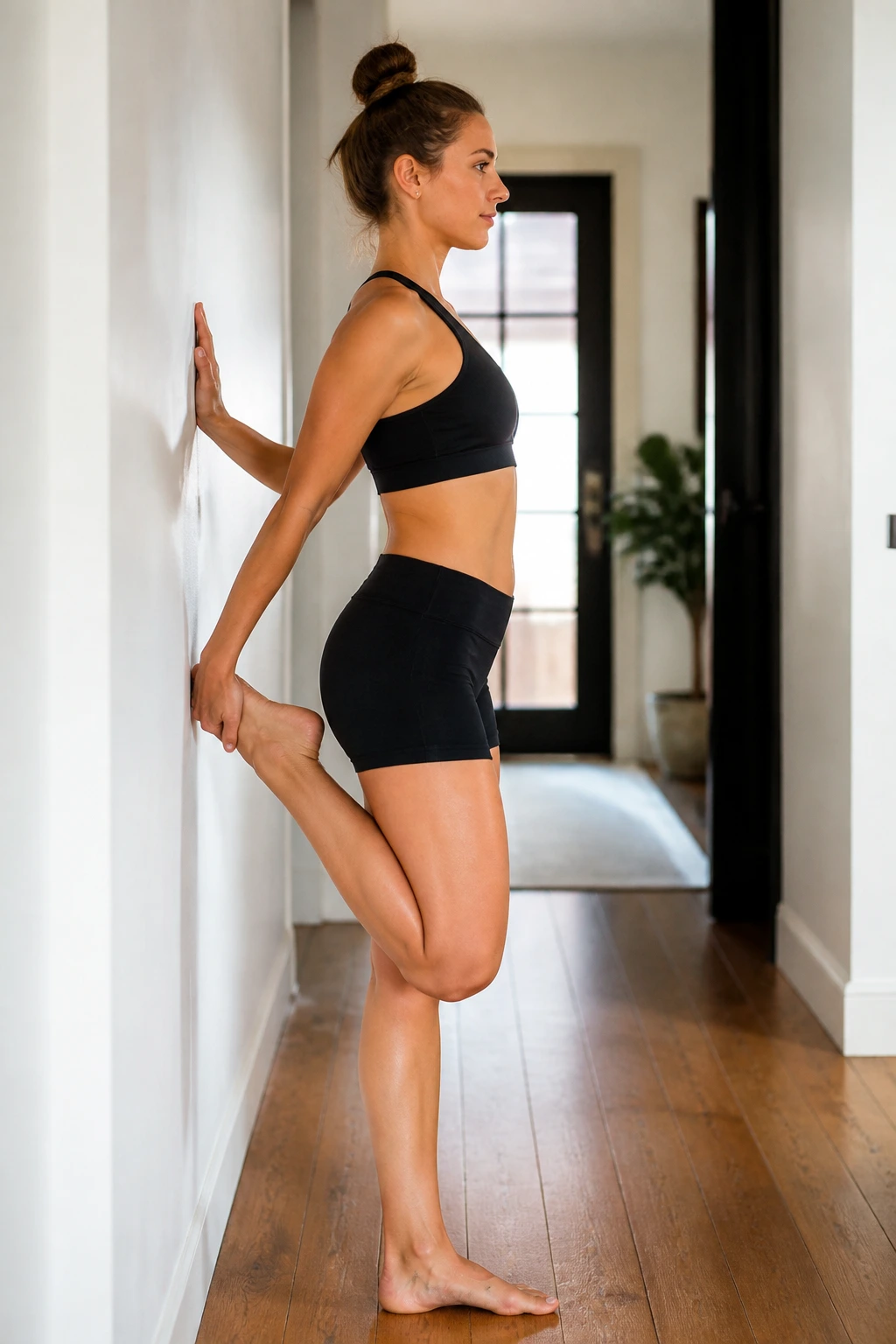
Standing quad work is easy to rush. People grab the ankle, pull hard, and call it a stretch. That’s not enough if the front of the thigh and hip are both tight.
Stand near a wall, bend one knee, and hold the ankle behind you. Before you pull, tuck the pelvis slightly and squeeze the glute on the standing side. Then draw the heel in until you feel the stretch through the front of the thigh. Hold for 20 seconds per side.
The pelvic tuck matters because it stops the lower back from stealing the movement. It also gives you a more honest quad stretch, which is useful if you spend a lot of time sitting or running. Keep the knees close together and don’t let the bent knee drift far out to the side.
This is a plain stretch. Nothing fancy. Still, it does a good job of waking up the front line of the body without making you feel like you need another coffee first.
14. Downward Dog Pedal and Heel Drop
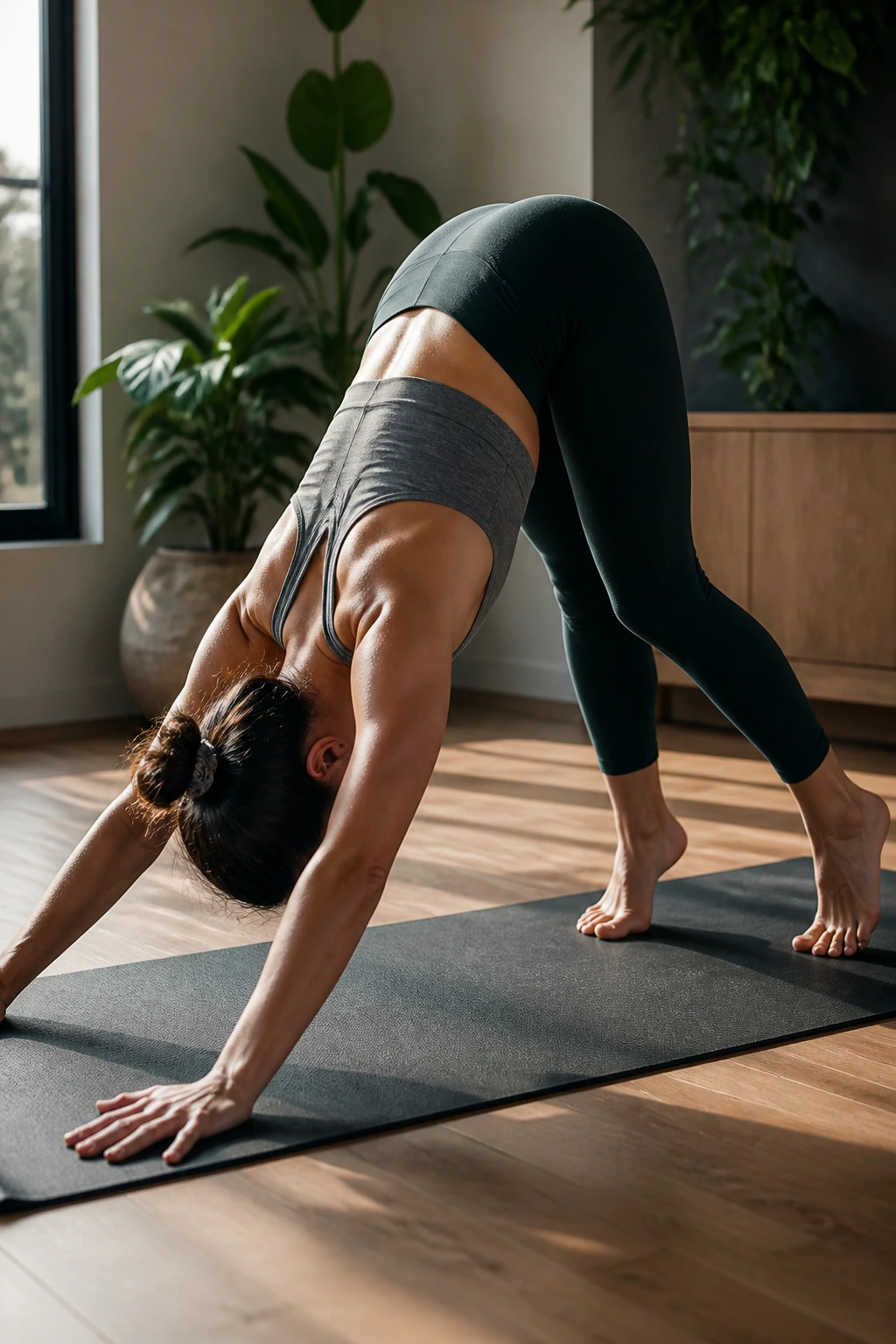
Need one move that hits calves, hamstrings, and shoulders at once? Downward dog with a pedal is the shortcut I’d start with.
From hands and knees, lift the hips up and back into downward dog. Keep the knees bent as much as you need. Then alternate pressing one heel toward the floor while bending the other knee, almost like walking in place with the feet. Do this for 30 to 45 seconds.
Why it works
The bend in the knees keeps the stretch from turning aggressive. That matters because a tight morning body often hates straight-leg hamstring work. Pedaling lets the legs loosen gradually while the shoulders stay active.
Reach through the hands and keep the neck relaxed. If the back of the legs feel short, that’s fine. If the wrists feel cranky, use a wall version or come out of the pose sooner.
I like this one before walks and workouts because it feels like the whole back side of the body gets a polite nudge awake.
15. Wrist and Forearm Openers for Desk Days
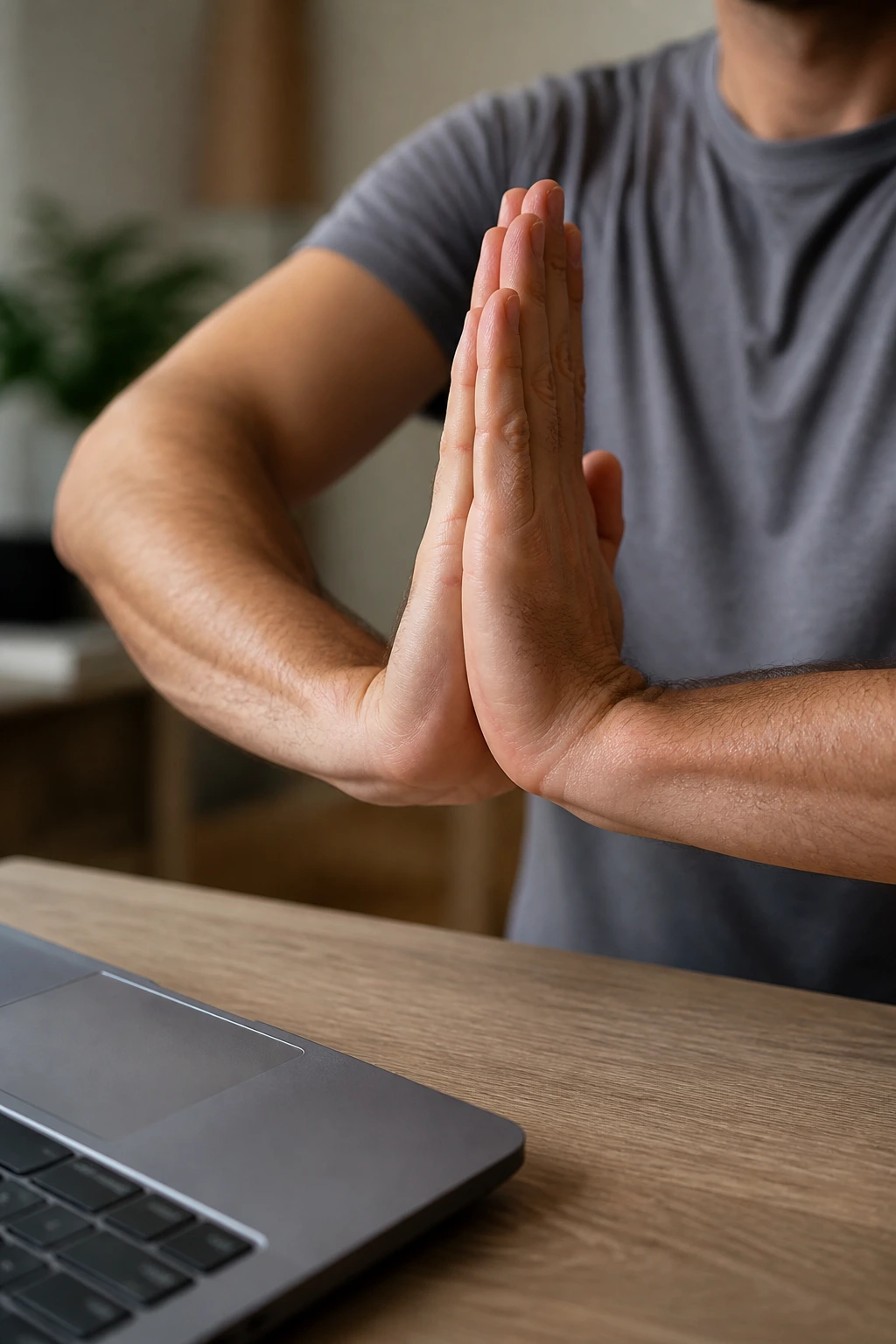
Desk hands have a way of staying clenched after sleep. If you type, scroll, lift, or hold a steering wheel for long stretches, your wrists may be stiff before the rest of you even notices.
Start with palm circles, 5 each way. Then press your palms together in front of your chest and slowly lower them until you feel a mild stretch in the forearms. Hold for 15 seconds. Turn the hands over, press the backs of the hands together if that feels comfortable, and breathe there for another 10 to 15 seconds.
The goal is to open the fingers, wrists, and forearms without forcing them into strange angles. People often ignore these small joints because they seem minor. They are not minor if you want your upper body to feel easy all day.
Best use: before push-ups, yoga, kettlebells, or a long day on a keyboard.
If one wrist feels pinchy, skip the deep bend and stick with circles and gentle hand opens.
16. Knees-to-Chest Rocking on Your Back
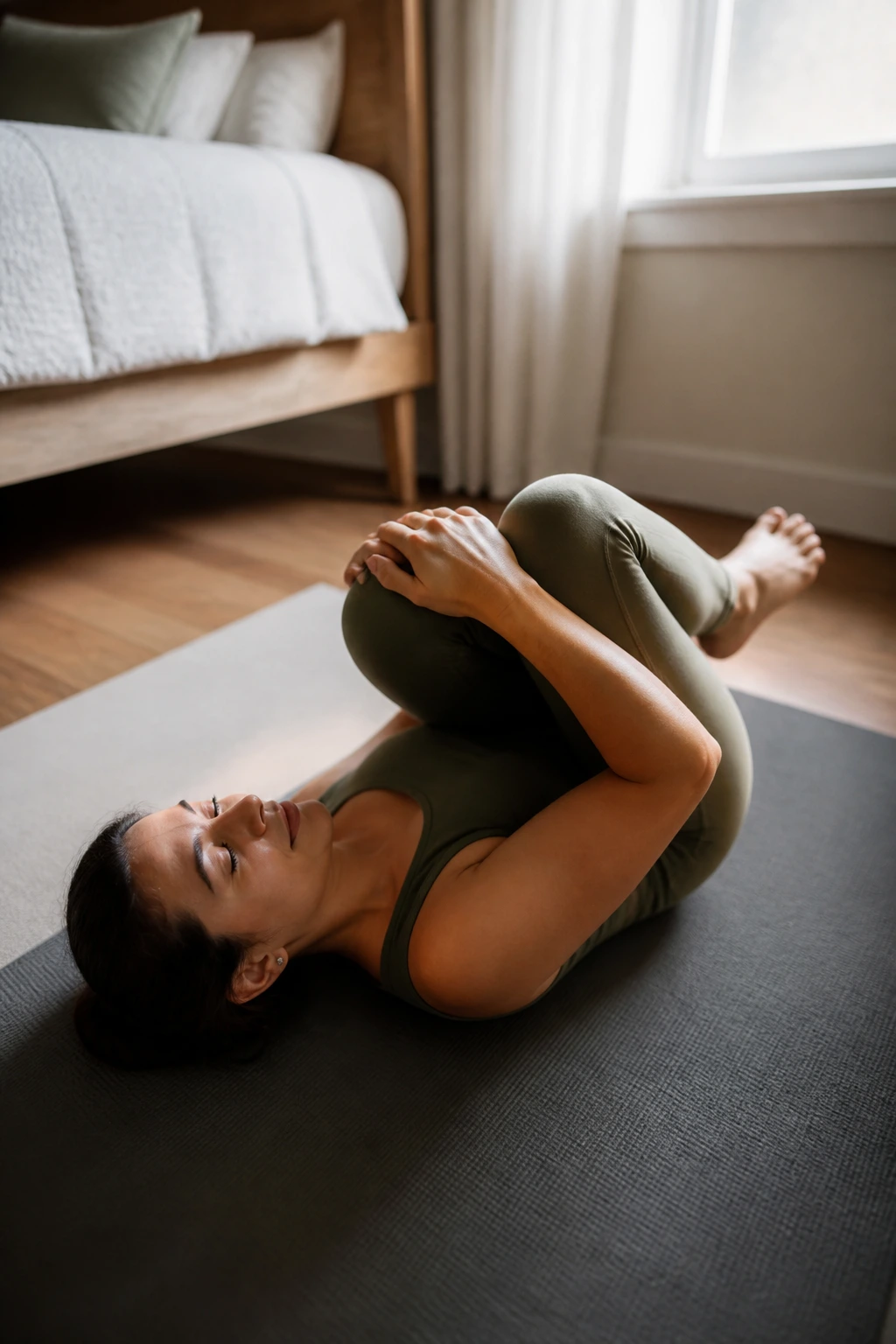
Nothing fancy here. Sometimes the back wants less “stretch” and more “stop holding everything so tightly.”
Lie on your back and draw both knees toward your chest. Hold behind the thighs or shins, then rock gently side to side for 20 to 30 seconds. You can also pull one knee in at a time if that feels better.
The motion gives the low back a break without demanding a strong shape from the hips. It’s a good first move if you wake up feeling compressed, especially after sleeping on your back or curled on one side all night.
What to watch for
- Keep the neck soft
- Don’t yank the knees hard into the chest
- Stop if the low back feels cramped, not relieved
- Use one leg at a time if both legs feels too much
This is also a nice bridge into more active stretches. It calms the nervous system a bit, which sounds vague until you actually feel your body unclench.
17. Breath-Led Full-Body Reaches
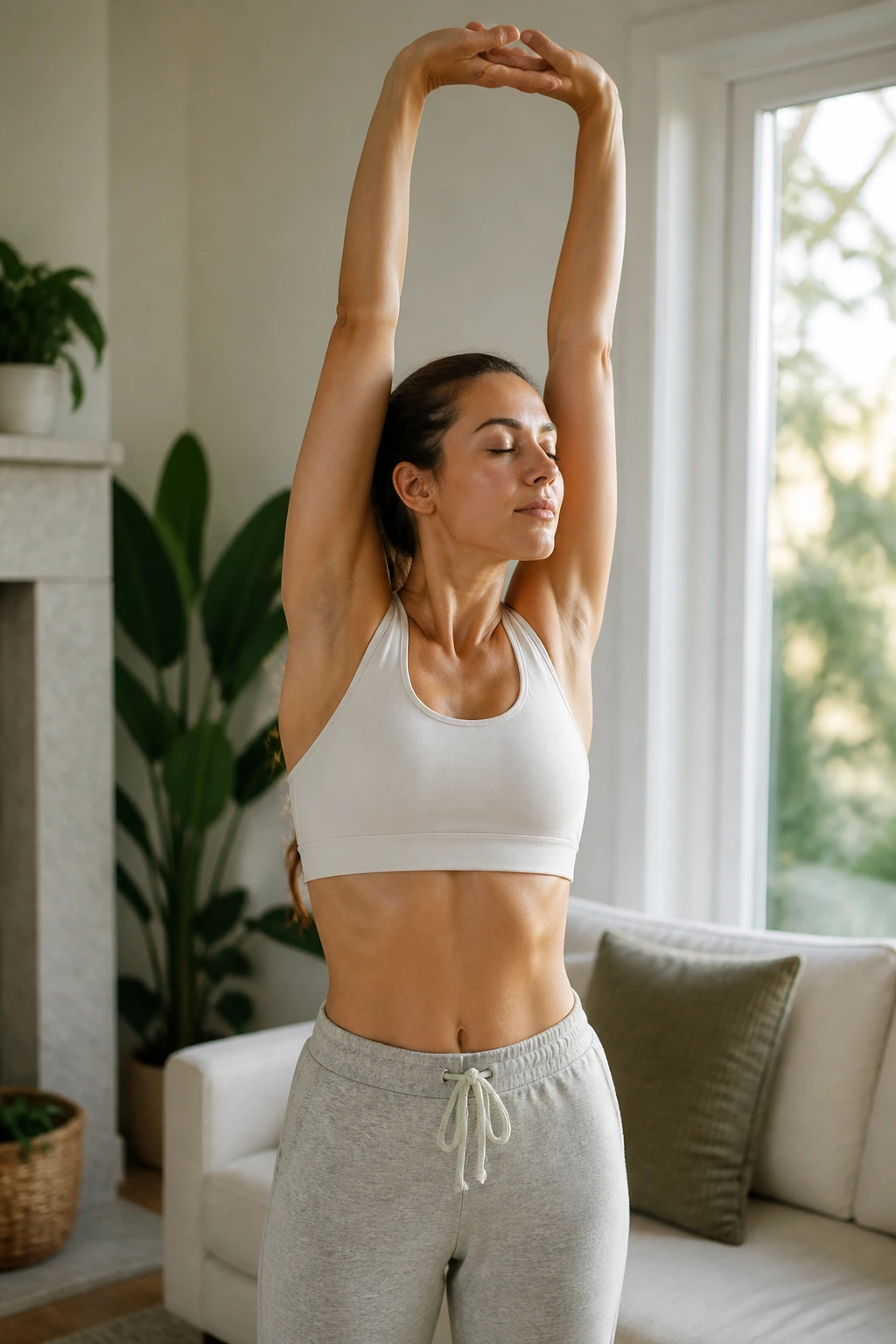
Breath changes the whole routine. Without it, morning stretching can feel like a set of disconnected moves. With it, even a basic reach starts to feel organized.
Stand tall and inhale as you lift both arms overhead. Exhale as you lower the arms and hinge forward a little at the hips. Repeat for 5 to 6 rounds, letting each breath set the pace rather than rushing through like you’re late for the train.
The real value here is rhythm. You are pairing motion with breath so the body stops bracing. That can make the shoulders less jumpy and the rib cage less fixed. It also helps if you wake up feeling a little scattered, which happens more than people admit.
Keep the knees soft. Keep the exhale long. If the forward fold feels too deep, stop at a halfway hinge and let the arms hang there for a beat.
A small sequence like this can feel almost too simple, and then you notice your posture is better.
18. A Five-Minute Morning Stretch Routine for Groggy Mornings
Save this one for the mornings when you feel half awake and slightly annoyed. It is the routine I’d use if I had to pick a few moves and move on with the day.
Start with 30 seconds of cat-cow, then go straight into a low lunge on each side for 20 seconds, followed by wall angels for 6 reps. Finish with hamstring flosses and a standing side bend. That’s enough to cover the spine, hips, shoulders, and legs without turning the morning into a full workout.
A simple order that works
- Cat-cow: 30 seconds
- Low lunge: 20 seconds each side
- Wall angels: 6 slow reps
- Hamstring flosses: 8 reps each side
- Standing side bend: 3 breaths each side
The value here is not perfection. It’s consistency. A short routine done most mornings tends to beat a long routine done once in a while, because stiffness likes repetition and attention.
If you want to make this easier to remember, keep the same order for a few weeks. Same moves. Same timing. Less thinking. That’s usually what makes a routine stick.
Final Thoughts
You do not need a big stretch session to feel better in the morning. A few minutes of smart movement usually does more than a long, half-hearted hold while you’re still staring at the kettle.
The best routine is the one that matches the problem you feel most: neck, hips, back, ankles, or shoulders. Pick three or four moves, keep the pace slow, and let the body warm up before you ask it to do more.
If a stretch feels sharp, skip it. If it feels boring but useful, keep it. That’s often the sweet spot.
