



If your lower stomach is the last place to lean out, you are not imagining it. The best lower belly fat workouts for women are rarely the flashy ones; they are the moves that teach the deep core to hold, brace, and stop dumping pressure into the front of the waist.
Fat does not leave one tiny patch because you want it to. Annoying, yes. But that is the game. A tighter-looking lower belly usually comes from a mix of core training, full-body movement, daily steps, and food that is not fighting you at every meal.
For women who sit a lot, carry stress in the shoulders, or have gone through pregnancy, the lower abdomen can look softer even when the body is otherwise strong. Posture matters. So does bloating. So does the way you breathe when you train.
The trick is to use moves that flatten the ribs, tuck the pelvis, and make the abs do their share without letting the hip flexors steal the show. Dead bugs. Reverse crunches. Standing knee drives. A few of these look easy on paper and turn nasty in the first honest set.
1. Dead Bug With a Slow Exhale
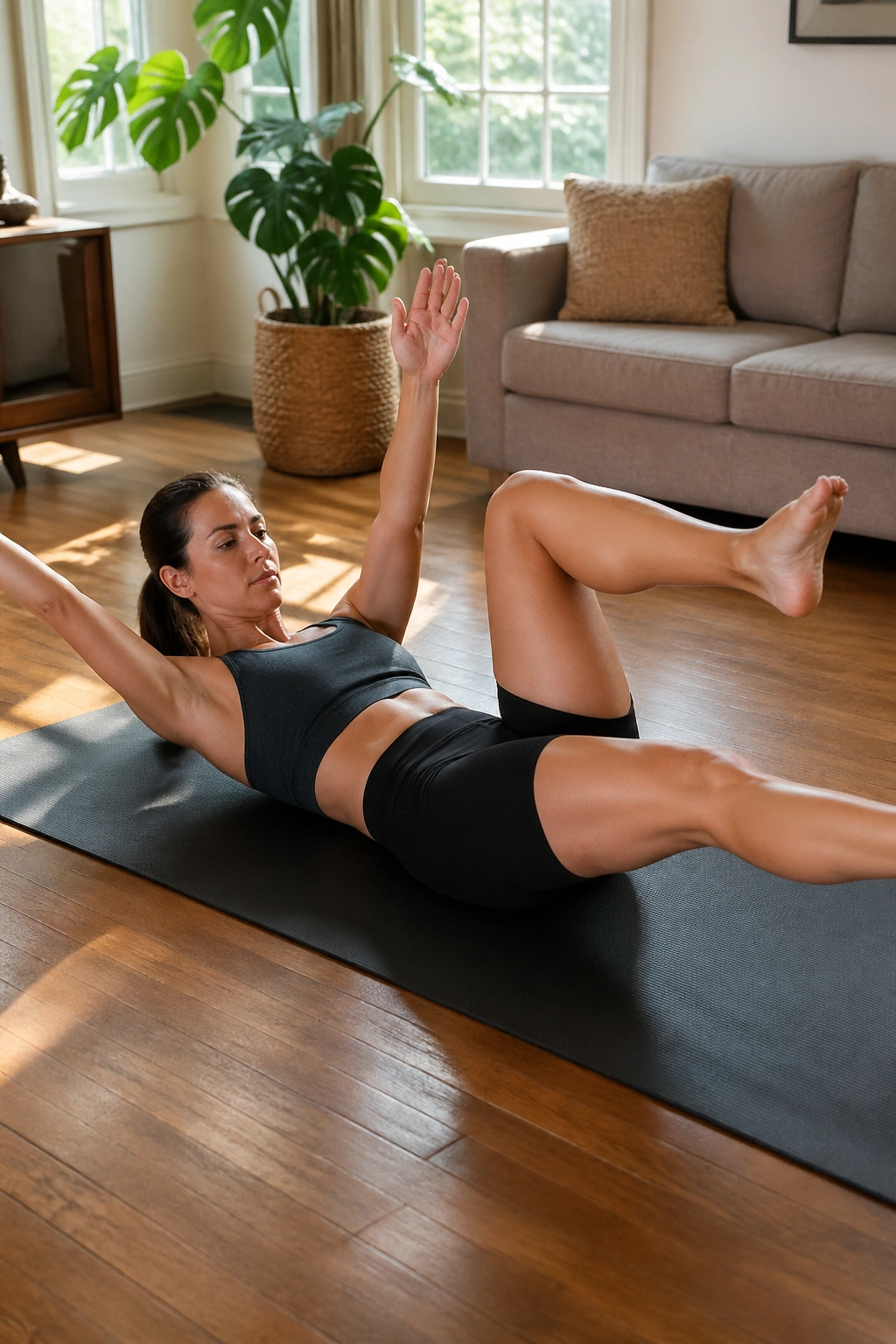
If you only pick one floor move, make it this one. The dead bug teaches the deep abdominal wall to stay on while your arms and legs move away from the centerline, which is exactly the kind of control most people miss when the lower belly feels loose.
Why It Works
Your lower back should stay heavy on the mat. That is the whole point. When your ribs flare and your back arches, the hip flexors take over and the abs stop doing the job.
A slow exhale changes the drill. Blow the air out before you extend the opposite arm and leg, then keep the belly flat as if someone is about to poke you. That small breathing cue makes the move far harder, and far better.
- Do 8 to 10 reps per side.
- Keep the low back glued down.
- Move one limb at a time.
- Stop the rep the second your ribs pop up.
Best tip: if you feel this in your neck, you are going too fast. Slow it down until it feels almost boring. Then it starts working.
2. Reverse Crunches
Why do reverse crunches beat endless sit-ups here? Because they train the pelvis to curl upward instead of yanking the neck and chest around. That pelvic curl is what gets the lower abs involved in a real way.
Lie flat, bend your knees, and lift the hips a few inches off the floor. Tiny range. Big burn. If you swing the legs or throw momentum into it, the move turns into a sloppy leg lift and the abs stop getting the message.
This is a cleaner choice than classic crunches for a lot of women, especially if the front of the hip already feels tight. It also tends to be friendlier on the neck. Keep your hands light on the floor, not behind your head like you are trying to drag yourself upward.
A solid starting dose is 3 sets of 12 slow reps. Pause for one second at the top. That pause matters more than people think.
3. Heel Taps
You can be sweating hard and still keep this move honest. Heel taps look small, which is exactly why they punish sloppy core control so well.
What Makes It Different
Lie on your back with your knees bent at about 90 degrees. Keep your ribs pulled down and tap one heel to the floor, then the other. The lower abs have to stay tight or the back arches and the whole thing falls apart.
How to Keep It Clean
- Exhale as the heel lowers.
- Keep the movement short.
- Stop before the low back lifts.
- Use a mat, because your spine will notice every hard floor edge.
A lot of women rush heel taps and miss the point. Don’t. The slower version is better, and it builds the kind of control that carries into planks, running, and just standing with better posture.
Quick note: if your lower back starts to chatter, shorten the range before you quit the set.
4. Hollow Body Hold
Gymnasts use a version of this for a reason. It is brutal in the best way, because it asks the front line of your body to stay tight while the limbs reach long and the ribs want to pop.
Lie on your back, press the low back into the floor, and lift the shoulders and legs a few inches off the mat. Hold. That is the clean version. If your back arches, bend the knees and keep the shape smaller.
This is not a move you power through. It is a hold, and holds have a way of exposing every weak link fast. Your abs, yes. Your breath, too. If you can keep a small controlled breath while staying braced, you are doing better than the person racing through twenty shaky reps.
- Hold for 15 to 25 seconds.
- Repeat for 3 to 5 rounds.
- Bend the knees if needed.
- Stop before the low back lifts.
One honest rep beats three messy ones. Every time.
5. Mountain Climbers for Lower Belly Burn
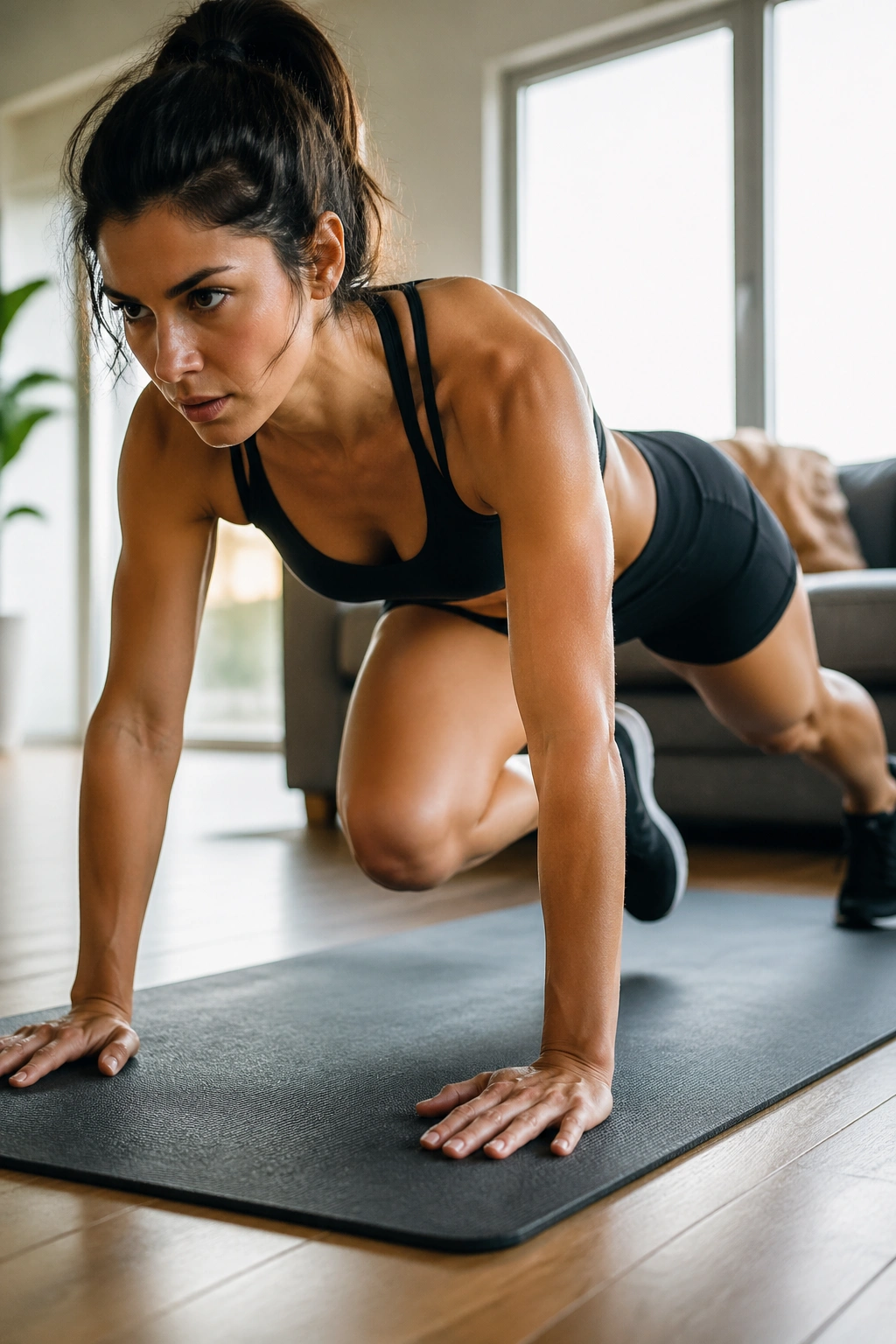
Mountain climbers punish sloppy form. That is why they belong here.
They raise the heart rate fast, but they also force the core to hold steady while the knees drive in and out under load. If you keep your hips from bouncing, the lower abs work harder than they do in most floor crunches. That is the part people miss. The sweat is not the whole story.
Try a 20-second hard burst, 40 seconds easy pattern for 6 to 8 rounds. Keep your shoulders stacked over your wrists and your gaze a little ahead of your hands, not straight down at the mat. When the hips start swinging side to side, the set is gone. Reset. Start again. No shame in that.
Slow mountain climbers can be even tougher than fast ones. Weird, but true. A controlled knee drive with a one-count pause under the chest will light up the deep core in a way that feels almost unfair.
6. Glute Bridge March
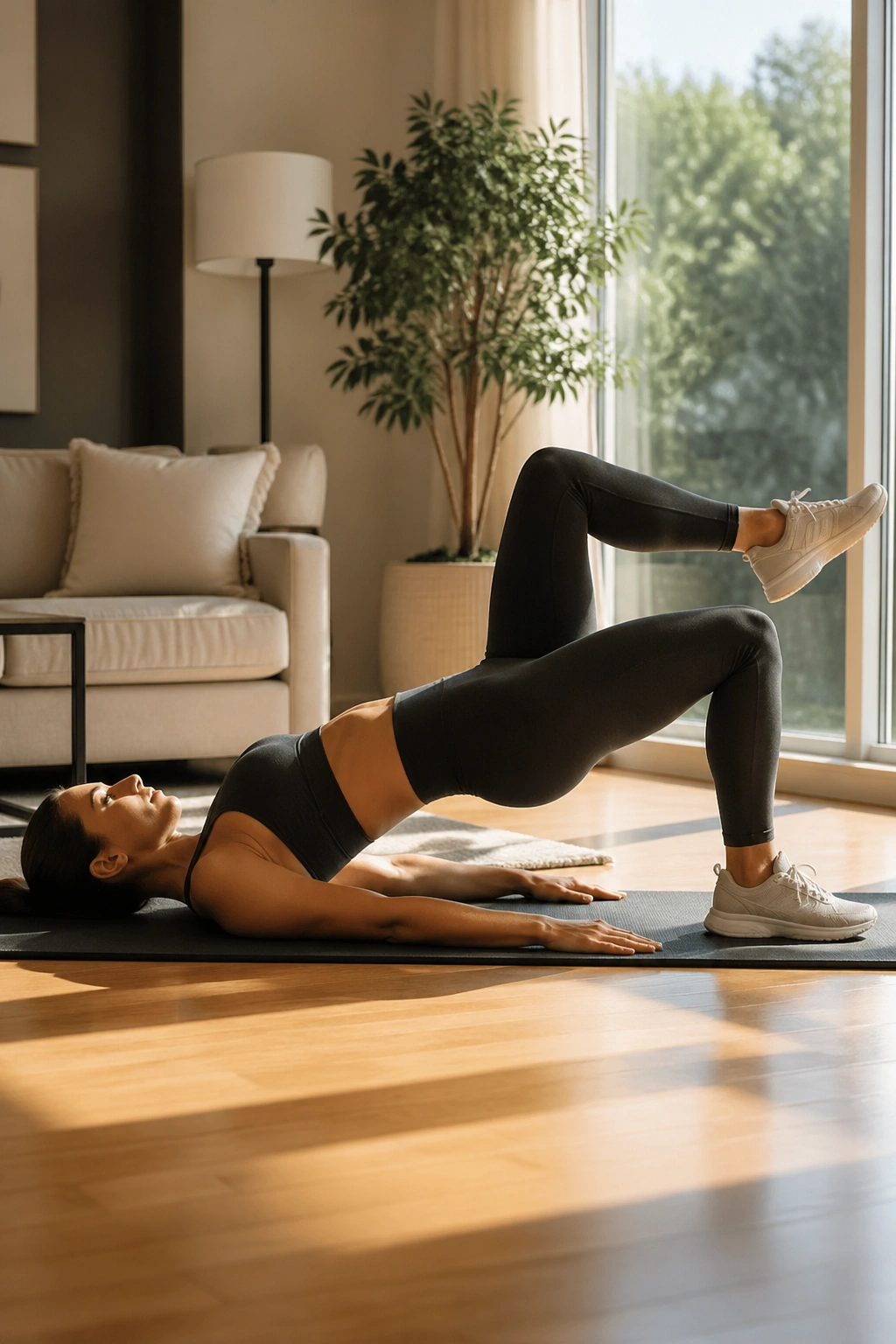
Unlike crunches, this one wakes up the glutes and teaches the pelvis not to dump forward. That matters more than people think, because a tilted pelvis can make the lower belly look softer even when the waist is not changing much.
Set up in a bridge with your hips lifted, then march one foot off the floor and set it back down without letting the hips wobble. Switch sides. The movement is small. The challenge comes from keeping the pelvis level while one leg leaves the ground.
Women who sit a lot usually feel this right away in the glutes and the lower abs. Good. That means the right muscles are talking. If your hamstrings cramp, lower the hips a little and shorten the hold.
Use 2 to 3 sets of 8 marches per side. Keep the ribs quiet and the glutes active. That combo is the whole point.
7. Bird Dog Reach
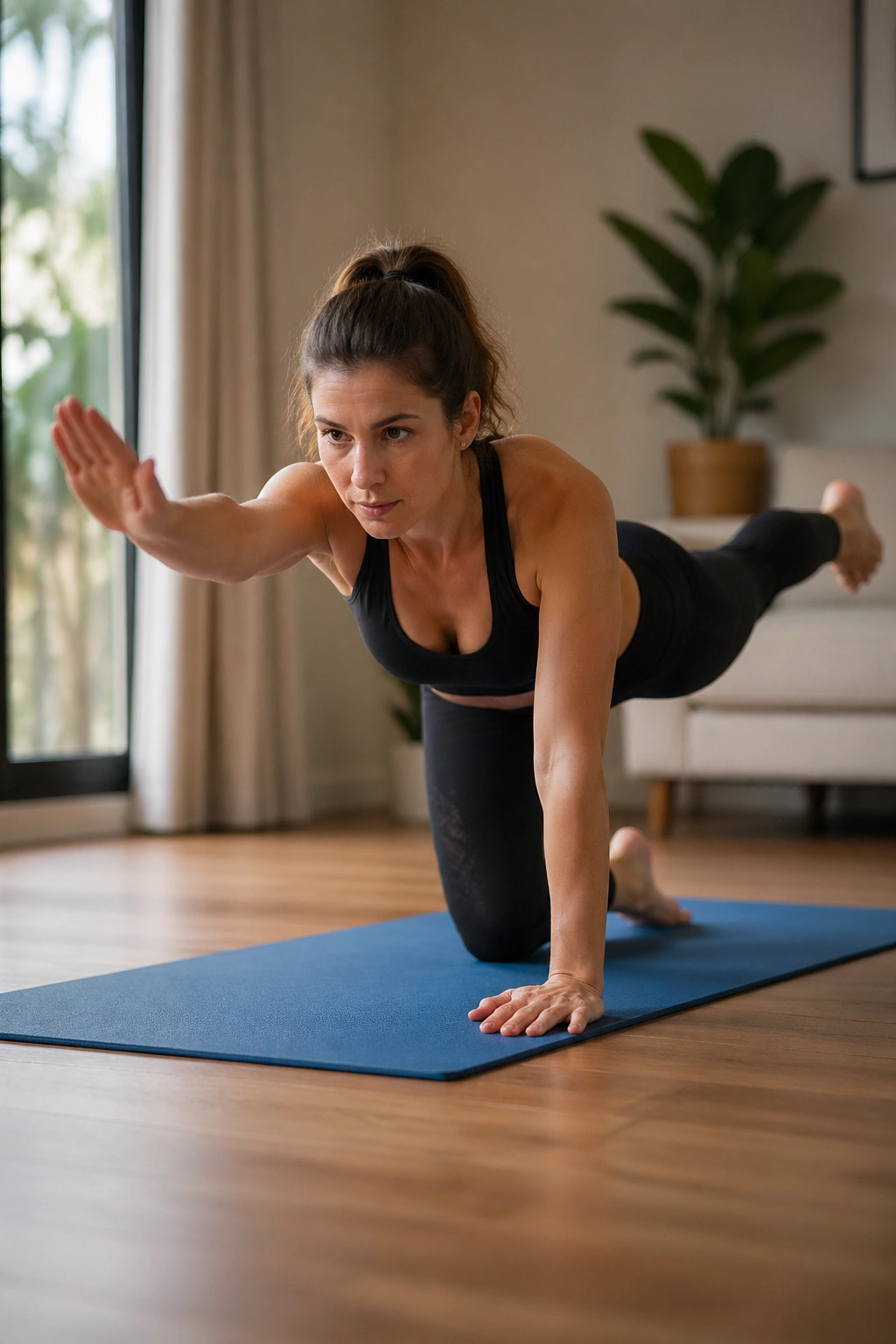
A bird dog looks easy. Then you try to keep the spine still while one arm and the opposite leg reach long, and it gets honest in a hurry.
Why It Helps
This move trains cross-body stability. The trunk has to resist twisting, which is useful if your lower belly tends to pop forward when you stand, walk, or lift something heavy off the floor.
How to Do It Well
- Start on hands and knees.
- Reach one arm and the opposite leg long.
- Pause for 2 seconds before switching.
- Keep the hips square to the floor.
If you want more challenge, add a slow exhale at the end of the reach. That little breath cue keeps the core from going slack.
Useful rule: if you cannot keep your pelvis level, make the reach shorter. A smaller range with better control wins every time.
8. Side Plank Hip Dips
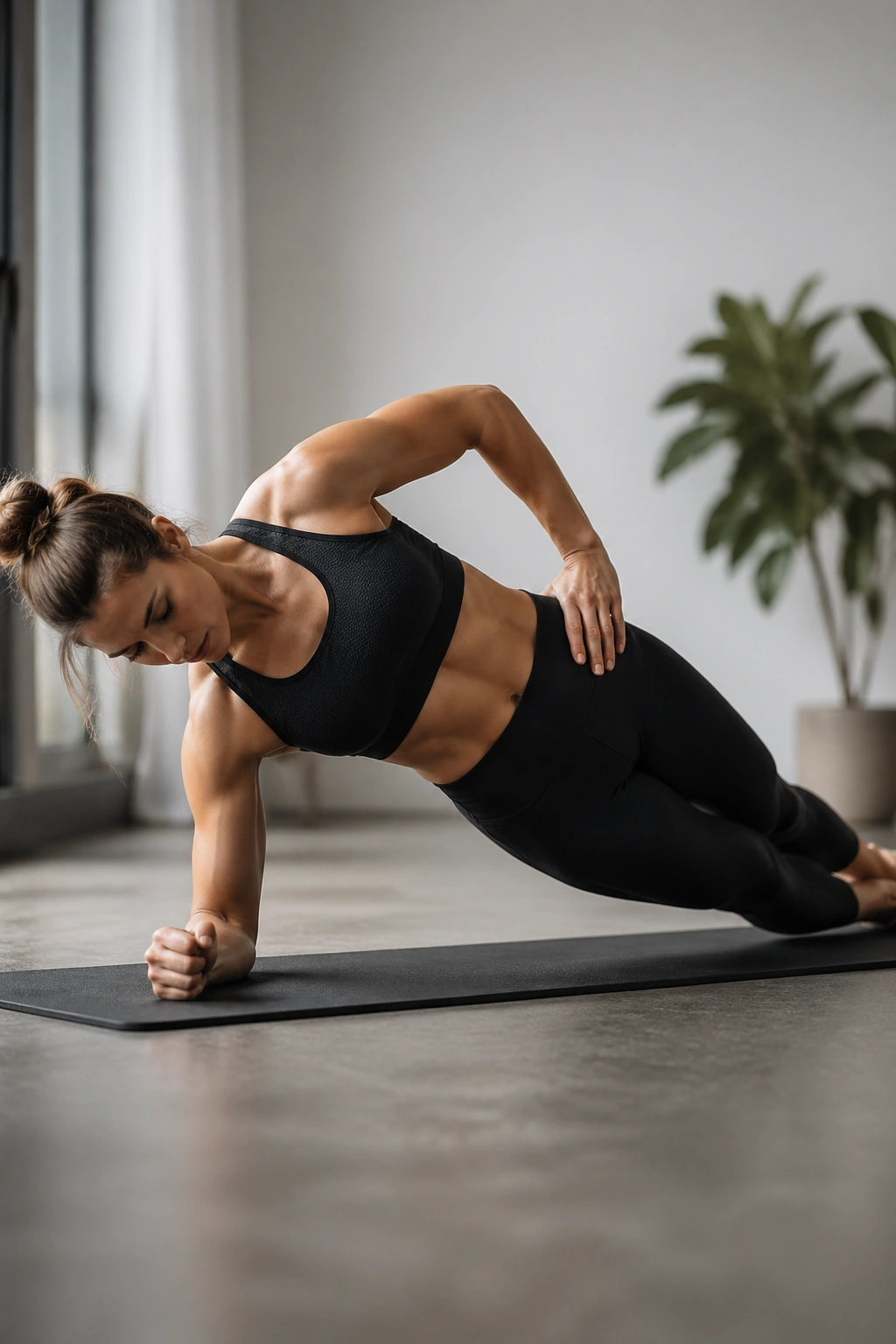
Side plank hip dips are not subtle. They hit the obliques, which help tighten the sides of the waist and support the lower torso when you move.
Start on one forearm with your feet stacked or staggered. Lower the hip toward the floor, then lift it back up. No swinging. No collapsing the shoulder. You want a clean up-and-down line, not a collapse-and-flail situation.
This move is especially good if your waist looks softer from the side. It also pairs well with lower-body training because it teaches the trunk to stay stable while the hips work. If the full version feels too spicy, drop the bottom knee to the floor and keep the same motion.
A good target is 2 sets of 10 to 12 dips per side. Move slowly enough that each rep feels deliberate. Fast side planks are usually messy side planks.
9. Leg Raises With a Pelvic Tilt
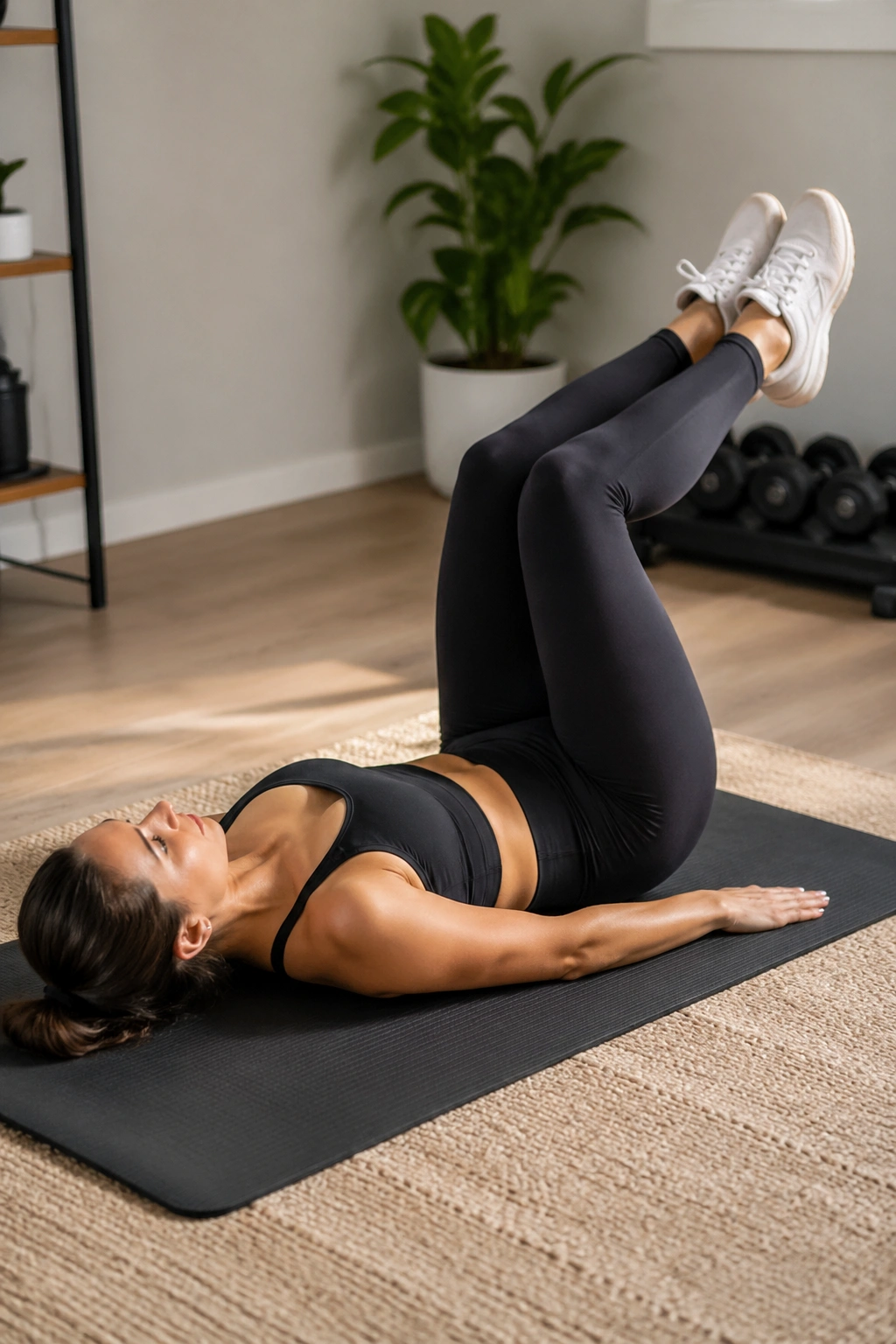
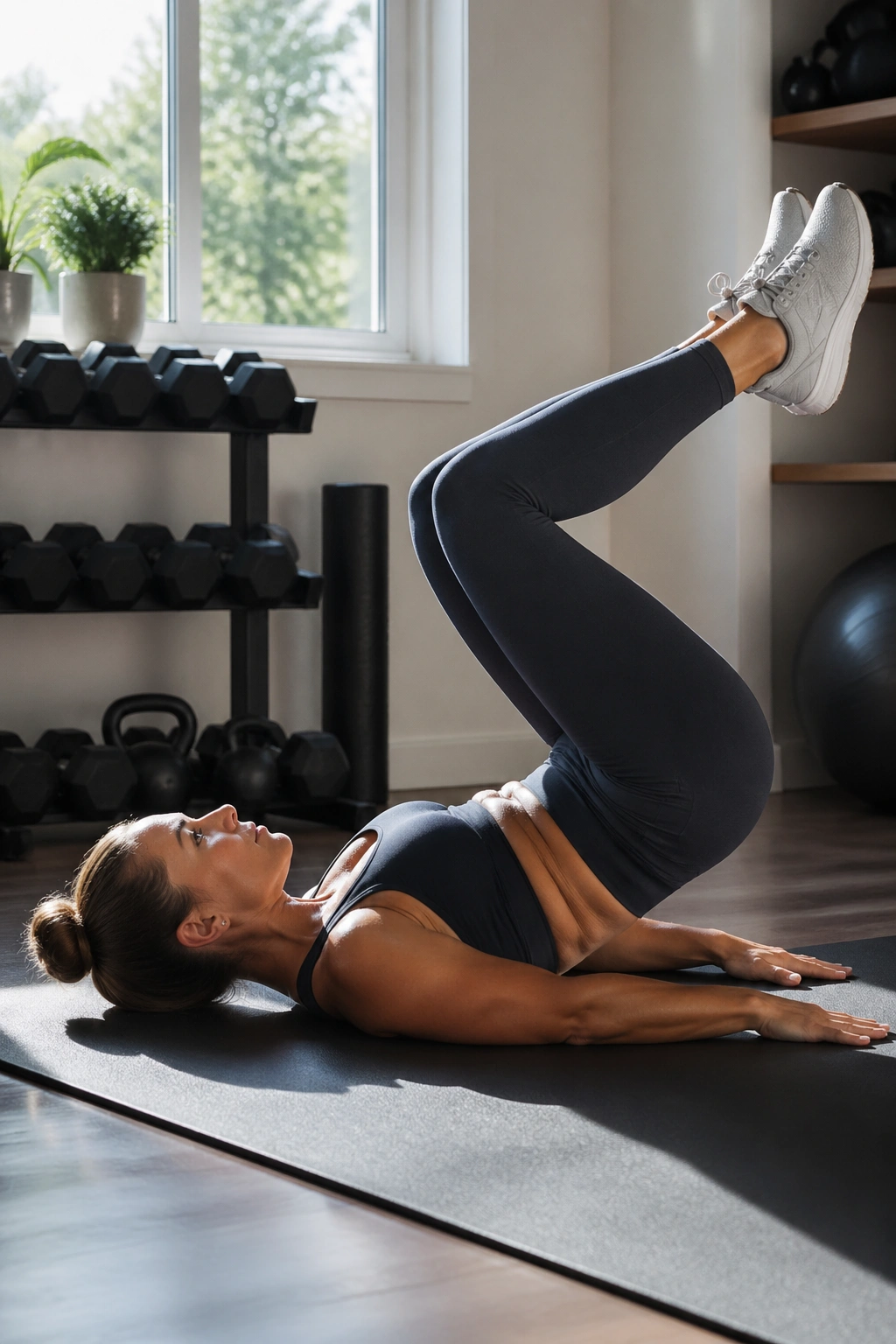
Why do leg raises make some women feel their hip flexors more than their abs? Because the pelvis is tipping forward and the lower back is peeling off the mat.
The fix is simple, but it is not always easy: tuck the pelvis first. Press the low back down, then lift the legs only as far as you can control without arching. If straight legs are too much, bend the knees. That is not a failure. It is a smarter regression.
How to Use It
Work for 8 to 10 slow reps and stop the set the moment your back starts to lift. Lowering the legs is usually harder than lifting them, so don’t rush that part. People love to fling the legs up and call it core work. It is not. It is momentum.
If you feel a pinch in the front of the hip, shorten the range or switch to bent-knee raises. Your lower belly will thank you later.
10. Skater Hops
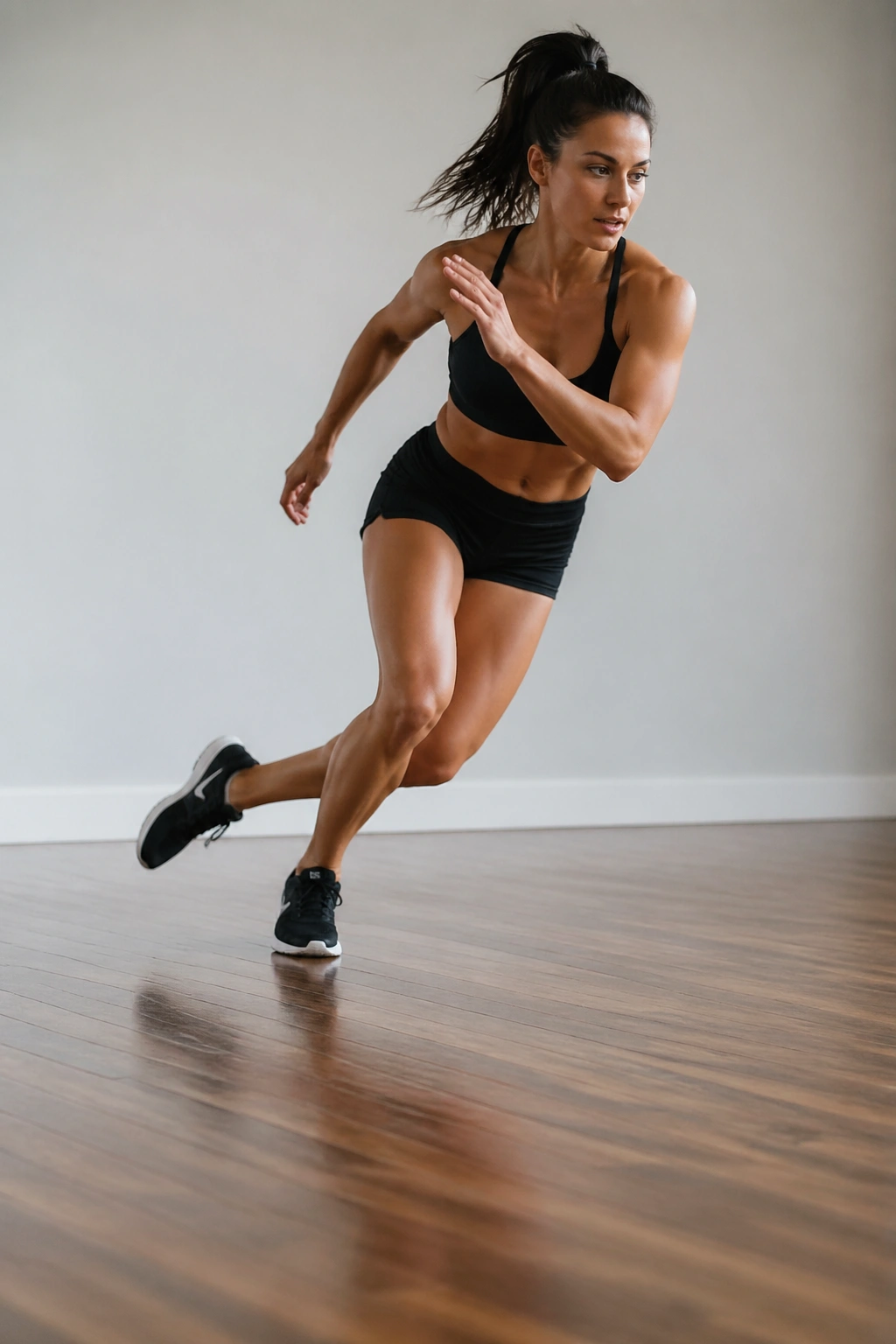
If you hate lying on the floor, this one earns its spot. Skater hops bring in the legs, glutes, and core all at once, while the side-to-side movement spikes the heart rate faster than a lot of people expect.
Land softly. That is the whole deal. Push off one foot, hop laterally, and stick the landing on the other side with a bent knee and a braced midsection. The more quietly you land, the better the control. Loud feet usually mean sloppy hips.
Quick Form Cues
- Keep your chest slightly forward.
- Swing the opposite arm for balance.
- Land on a bent knee.
- Go for 30 seconds on, 30 seconds off.
This move works well in a fat-loss circuit because it burns energy without needing equipment. It also makes the core do anti-rotation work, which is a fancy way of saying your trunk has to resist twisting while the legs move.
11. Standing Cross-Body Knee Drives
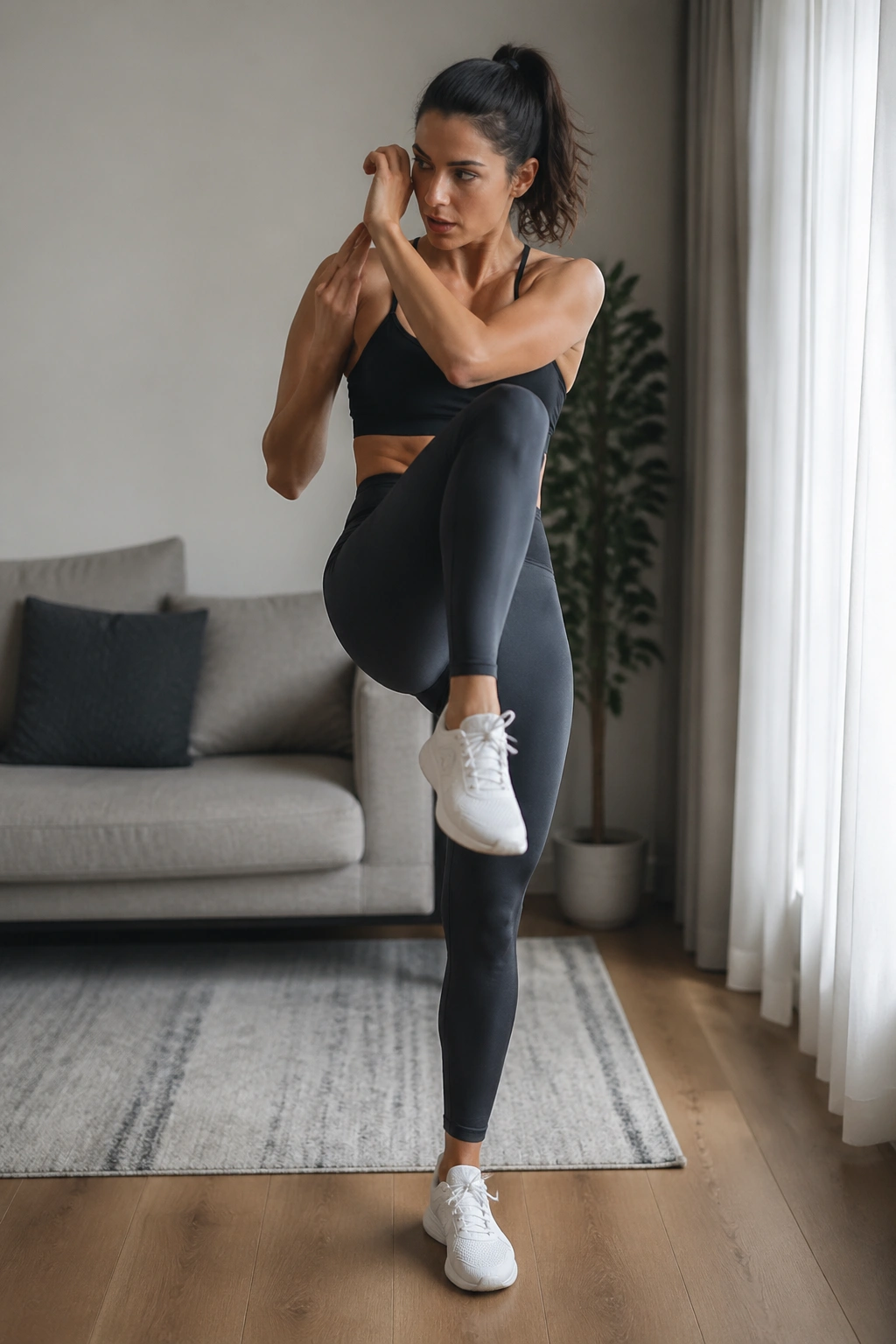
Standing knee drives are the move for days when the floor is not happening. They are simple, quiet, and far more useful than they look.
Bring one knee up toward the opposite elbow, then lower it with control and switch sides. The key is not speed. The key is the pause at the top, where the abs have to brace before the foot returns to the ground. If you add a strong arm drive, the heart rate climbs fast enough to matter.
I like this move for women who want lower-belly work without a bunch of crunching. It also fits into a living-room workout, which matters more than the gym crowd likes to admit. A move you will actually do beats a perfect move you keep skipping.
Try 3 rounds of 40 seconds with 20 seconds rest. Keep the torso tall and avoid leaning way back. That lean turns the drill into a hip-flexor show.
12. Stair Intervals
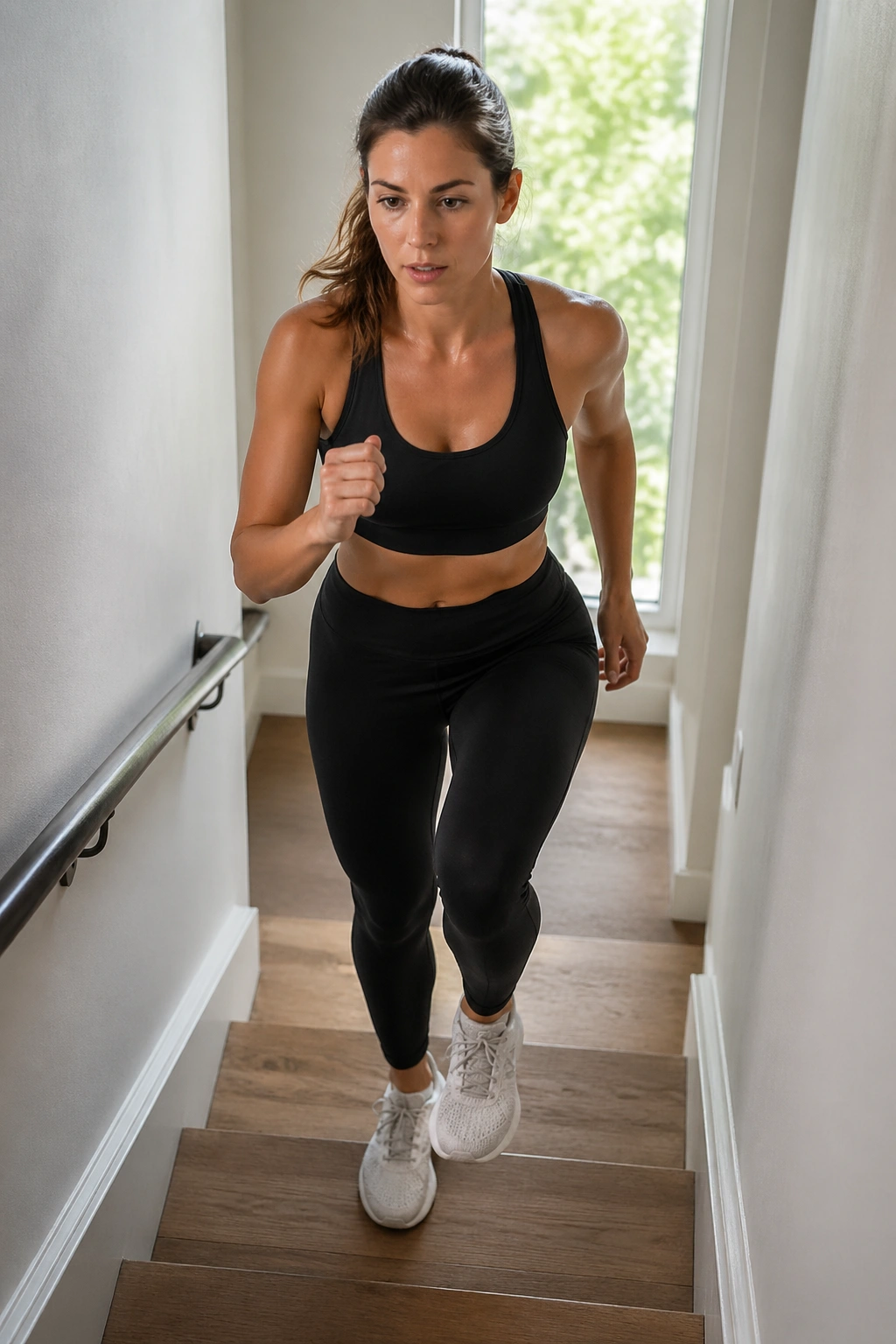
Stair intervals do one thing fast: raise your heart rate. That makes them useful when the goal is overall fat loss, which is the part that eventually reveals the lower belly.
Walk, don’t sprint, if your knees do not love stairs. Even a brisk climb at a steady pace can be enough. The trick is repeatability. Ten hard minutes you can recover from is better than one brutal minute that leaves you cooked for the rest of the day.
A simple format works well: climb for 30 to 45 seconds, then walk slowly for 60 to 90 seconds before repeating. Five to ten rounds is plenty. If you are breathing through your mouth and your thighs feel warm, you are in the right zone.
This is not a glamorous workout. It is a useful one. Big difference.
13. Plank Shoulder Taps
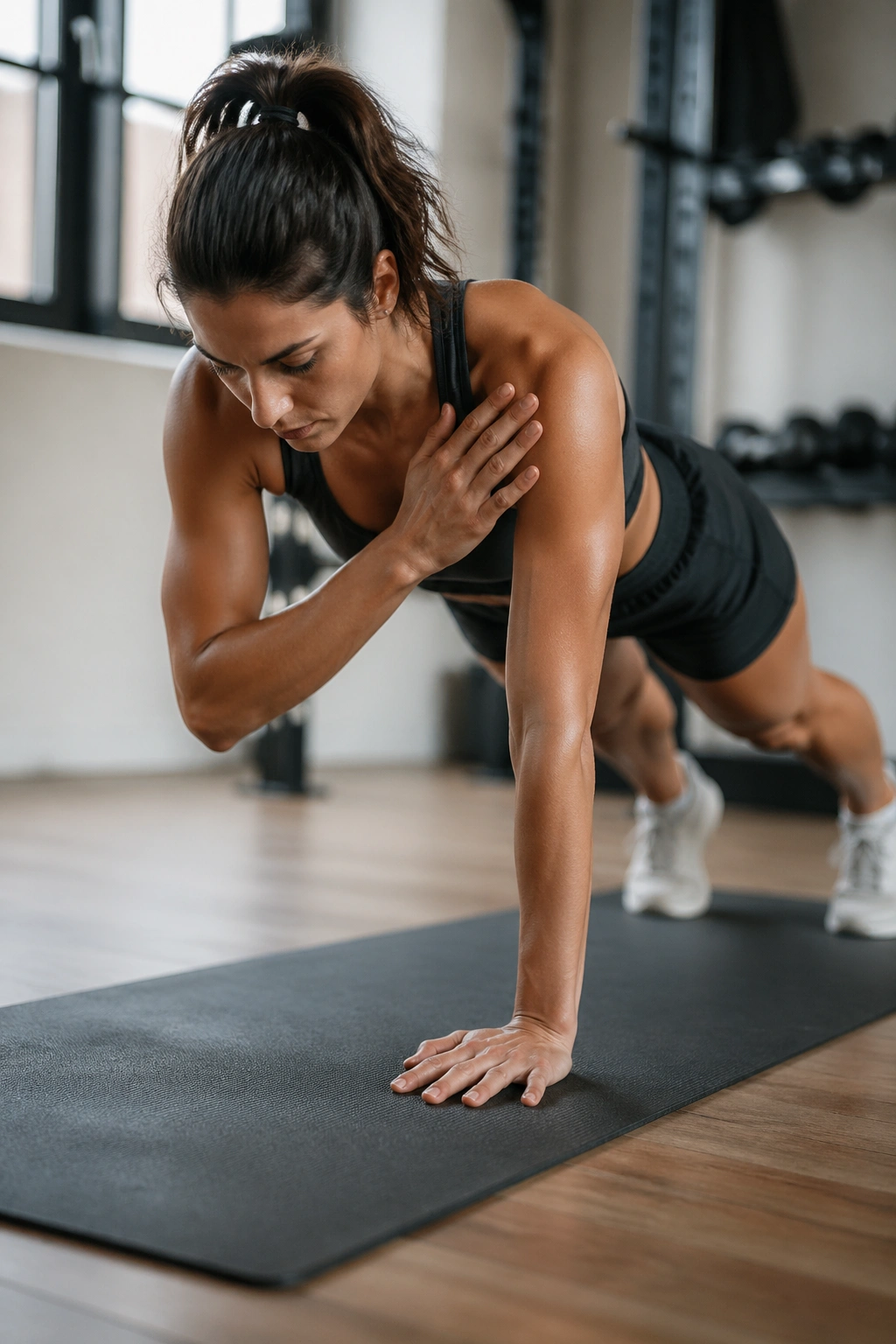
Plank shoulder taps look calm until your hips start swinging like a loose gate. Then the whole point becomes obvious.
What Makes It Different
You are not just holding a plank. You are teaching the core to resist rotation while one hand leaves the floor. That anti-rotation piece is gold for a flatter-looking midsection because it improves how your torso braces under real-life movement.
What to Watch For
- Feet wider than hip-width if needed.
- Tap the opposite shoulder slowly.
- Keep the hips level.
- Stop the set when the lower back sags.
A lot of people tap too fast and turn it into a balance drill. Slow taps are the real work. If you want more challenge, bring the feet closer together. If your wrists complain, use dumbbells as handles or do the move on a bench.
My take: this is one of the best “quiet hard” core exercises around.
14. Bear Crawls
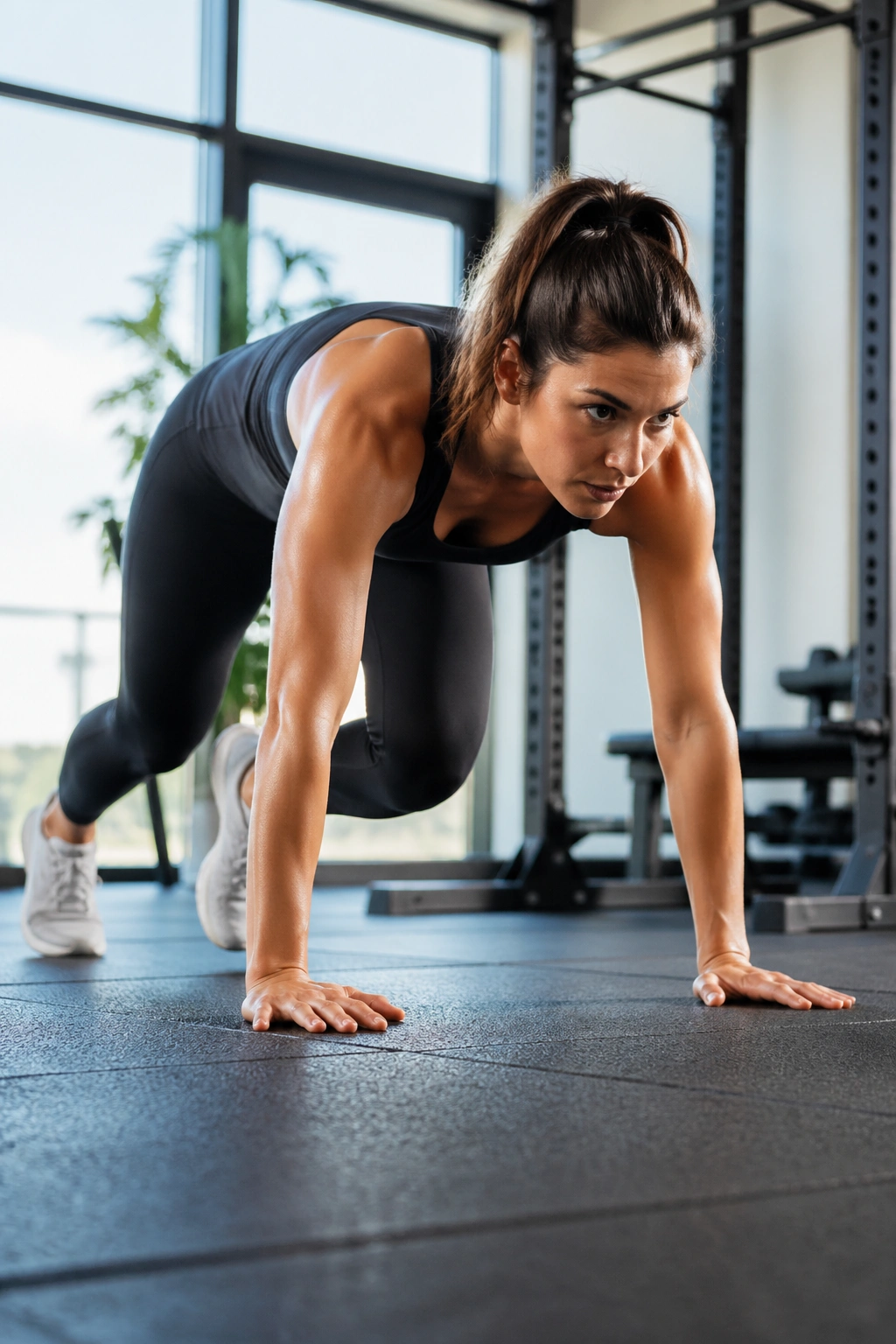
Bear crawls are awkward on purpose. They make you brace, breathe, and move at the same time, which is harder than it sounds when the knees hover an inch off the floor.
Stay low. Hands under shoulders, knees under hips, and move the opposite hand and foot forward together. The moment your hips shoot up, the drill turns into a weird walk instead of a core exercise. Slow, controlled steps hit harder than the fast, sloppy version.
This move is great if you want a full-body conditioning piece that still asks the midsection to work. It also wakes up the shoulders and quads, which helps burn more energy than a floor-only crunch session. If you are short on space, crawl forward three steps, then crawl back. That is enough.
Try 4 trips of 20 to 30 seconds. Rest for half a minute between trips. You will feel it.
15. Pilates Hundred
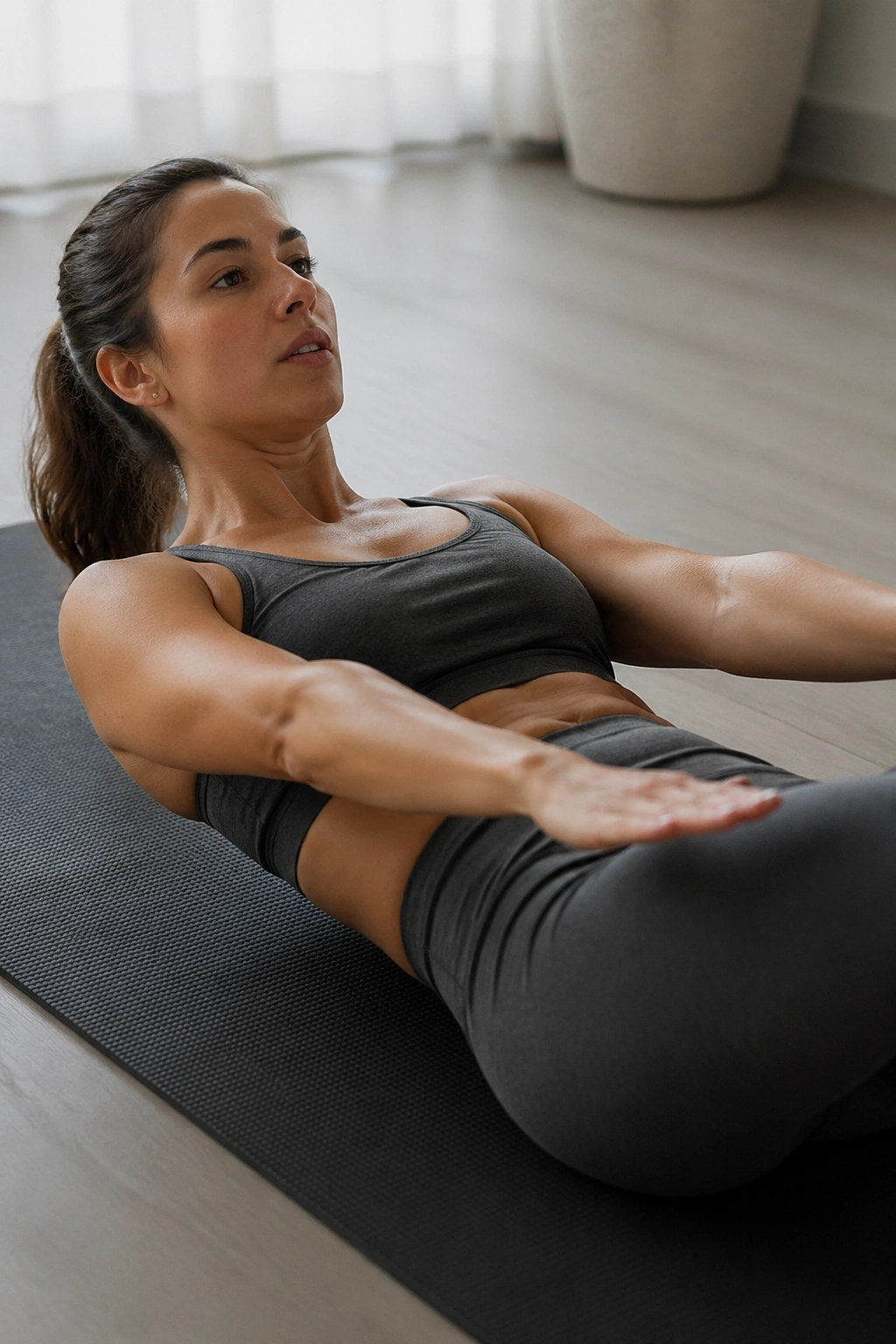
Can a Pilates hundred still earn its place in a lower belly fat workout plan? Yes, if you do it with real control and not the breezy half-effort version people sometimes rush through.
Lie on your back, lift the head and shoulders slightly, and pump the arms while keeping the ribs tucked and the legs in the position you can actually control. Bent knees are fine. Straight legs are not a prize for suffering. The lower abs should stay engaged from the first breath cycle to the last.
How to Use It
- Aim for 5 breath cycles at first.
- Keep the neck long.
- Stop if the back arches.
- Lower the legs sooner, not later, if form slips.
The hundred is sneaky. It looks rhythmic, almost graceful, and then your core starts shaking halfway through. That shake is the point. It means the deep abdominal wall is doing more than your hip flexors want it to do.
16. Goblet Squat to Knee Drive
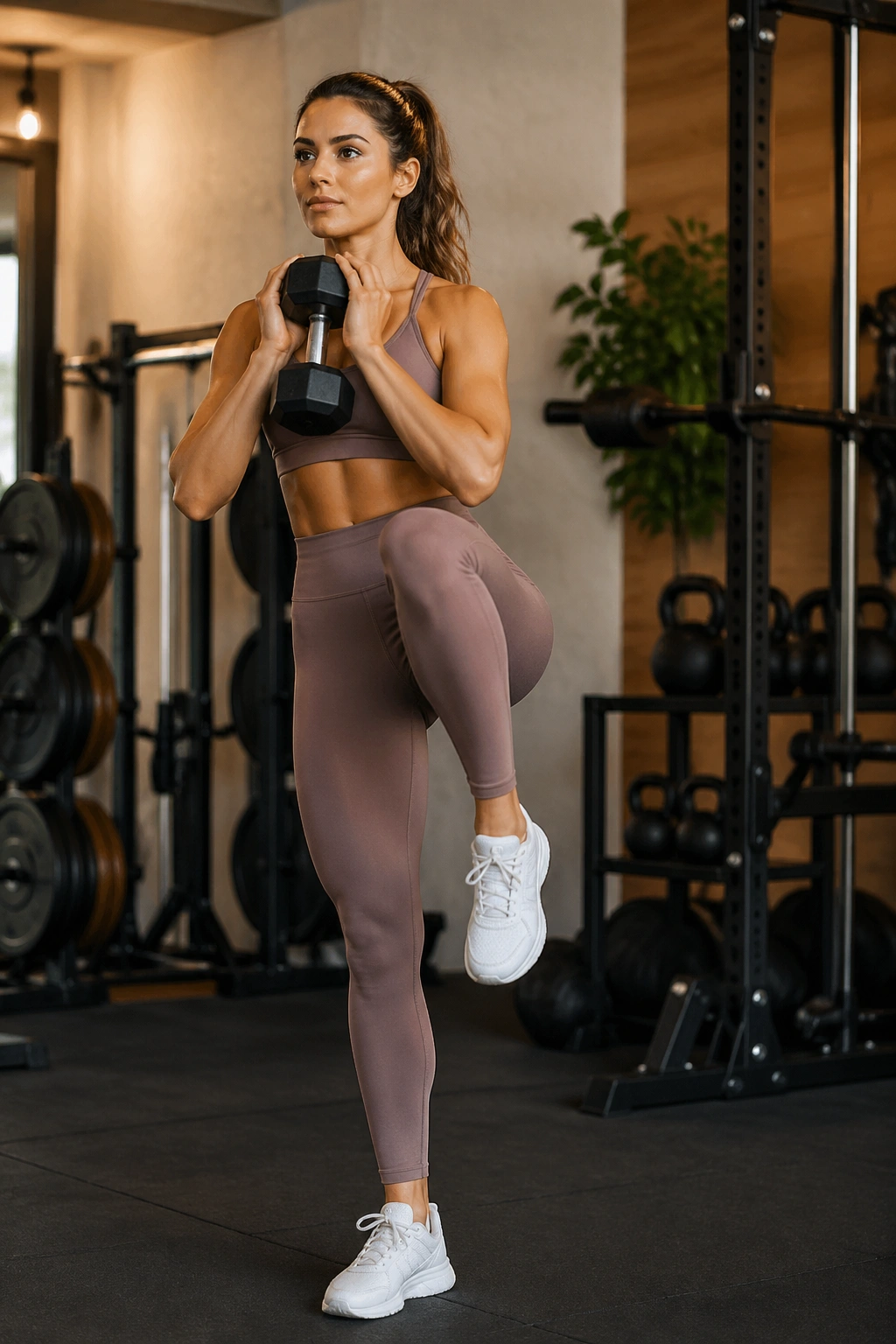
A goblet squat is not a classic lower-ab move. That is exactly why it belongs here.
Hold a dumbbell at chest height, squat down, stand up, then drive one knee upward as you finish. The squat builds legs and glutes, the knee drive asks the torso to brace, and the whole sequence burns more energy than a tiny floor routine. More muscle groups. More work. More payoff.
This is a smart pick if you want your workout to feel athletic instead of delicate. It also works well for women who get bored fast. Two minutes of this move can feel more alive than twenty careful crunches, and I mean that in the best way.
- Use a light to moderate dumbbell.
- Keep the chest up.
- Do 8 reps per side.
- Pause at the top before the knee drive.
If your lower back arches on the stand, the weight is too heavy or your stance is too narrow.
17. Stability Ball Rollouts
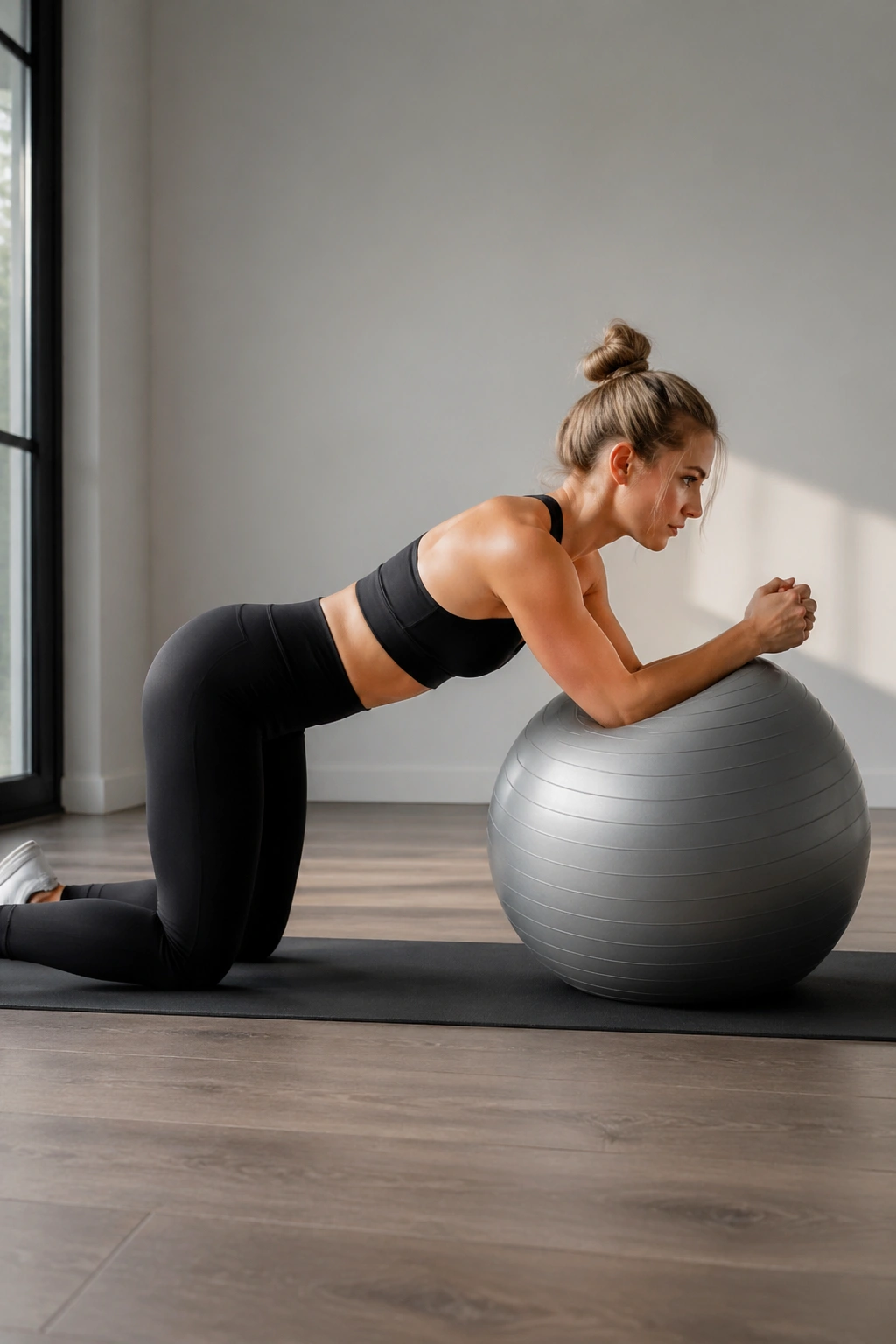
A stability-ball rollout is the closest thing to a core honesty test. If your midsection is not braced, the ball will tell on you fast.
Kneel in front of the ball, place your forearms on top, and roll forward a few inches while keeping the ribs pulled in. Then pull back. Do not reach too far on the first try. People love to chase a big range and then wonder why the low back complains. Small rollouts done cleanly are better.
This move trains anti-extension, which means the core has to stop the spine from arching as the body lengthens. That is exactly the kind of strength that makes the lower abdomen look tighter in real life, not just in a mirror after a workout.
Start with 2 to 3 sets of 6 to 8 reps. If no ball is available, a towel on a smooth floor can stand in, though it will be less forgiving.
18. Incline Walk Intervals
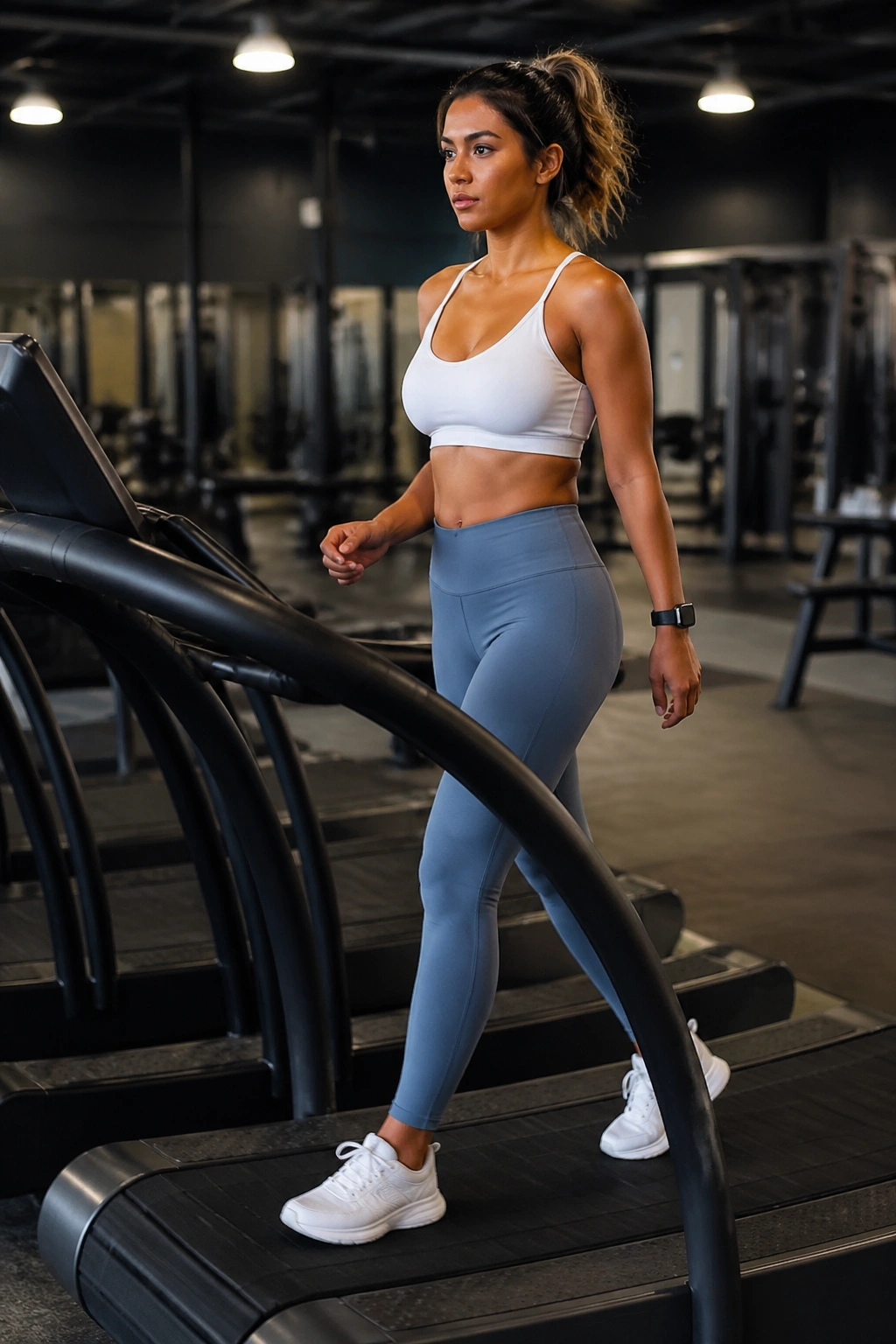
An incline walk looks too easy on paper. Then you set the treadmill to a proper slope and your breathing tells the truth.
This is one of the most useful lower belly fat workouts for women because it is repeatable. You can do it often, recover well, and stack up a lot of calorie burn without beating up your joints. That matters. A workout you can repeat four times a week beats a heroic one you can only survive once.
Set the incline at 6 to 12 percent and walk at a pace that keeps you working but not hanging on the rails. Use 2-minute pushes followed by 1-minute easier segments. If your stride shortens and your glutes start working, you are in the right zone. If you are gripping the handrails, the speed is too high.
This is boring in the nicest way. Boring gets results when consistency is the thing you can actually keep.
19. Rowing Machine Intervals
Rowing is one of the few machines that makes your core earn every stroke. Legs drive, back swings, arms finish, and the trunk has to stay organized through the whole chain.
Why It Works
The lower abdomen has to stabilize the body while force moves through the hips and shoulders. That is a better use of your energy than mindless cardio that lets the torso go floppy.
How to Row Well
- Push with the legs first.
- Keep the handle close to the body.
- Finish tall, not hunched.
- Use 20-second hard efforts with 40 to 60 seconds easy.
If your lower back rounds at the catch, shorten the stroke a little and slow the pace. Ugly rowing is common. Clean rowing is worth learning. The difference shows up fast in how your core feels afterward.
20. Kettlebell Swings
Can a kettlebell swing help the midsection more than a dozen crunches? In the right hands, yes, because it trains the hips to do the work while the trunk stays locked in.
The movement is a hinge, not a squat. The bell floats from hip power, not from lifting with the arms. That hip snap raises heart rate fast and asks the lower abs to brace so the spine stays safe. If you feel it in your lower back, the bell is probably too heavy or your hinge is off.
How to Use It
Start with 10 to 15 swings per set and rest long enough to keep the reps crisp. The kettlebell should not yank your shoulders forward at the bottom. Hips back. Chest proud. Strong snap.
A swing is not gentle. It should feel sharp, fast, and controlled. That is why it fits here so well.
21. Toe Tap Ladder
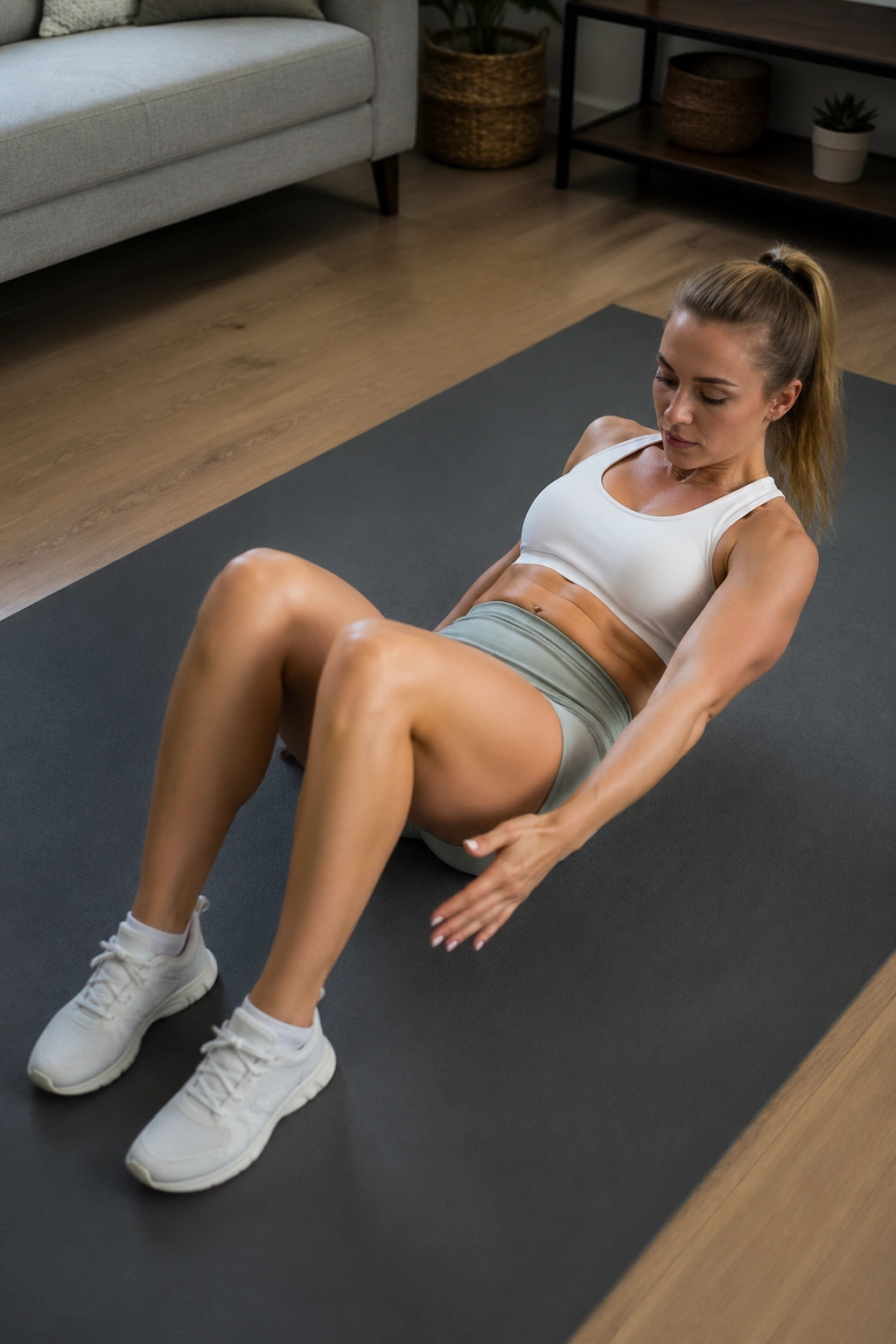
Toe taps are tiny, and that is the point. The smaller the motion, the harder it is to cheat with momentum.
Lie on your back, lift your legs into tabletop, and lower one foot to tap the floor before bringing it back up. Alternate sides. Keep the low back pressed down and the ribs quiet. If your abdomen domes or your back arches, shorten the range. There is no prize for touching the floor if the torso falls apart.
A ladder format works nicely here: 10 taps per side, then 8, then 6, then 4. Or keep it simple and do 3 rounds of 20 total taps. The move becomes especially useful near the end of a workout, when the core is tired and less willing to fake it.
It is not flashy. It is precise. That precision is what makes it useful.
22. The 10-Minute Lower Belly Finisher
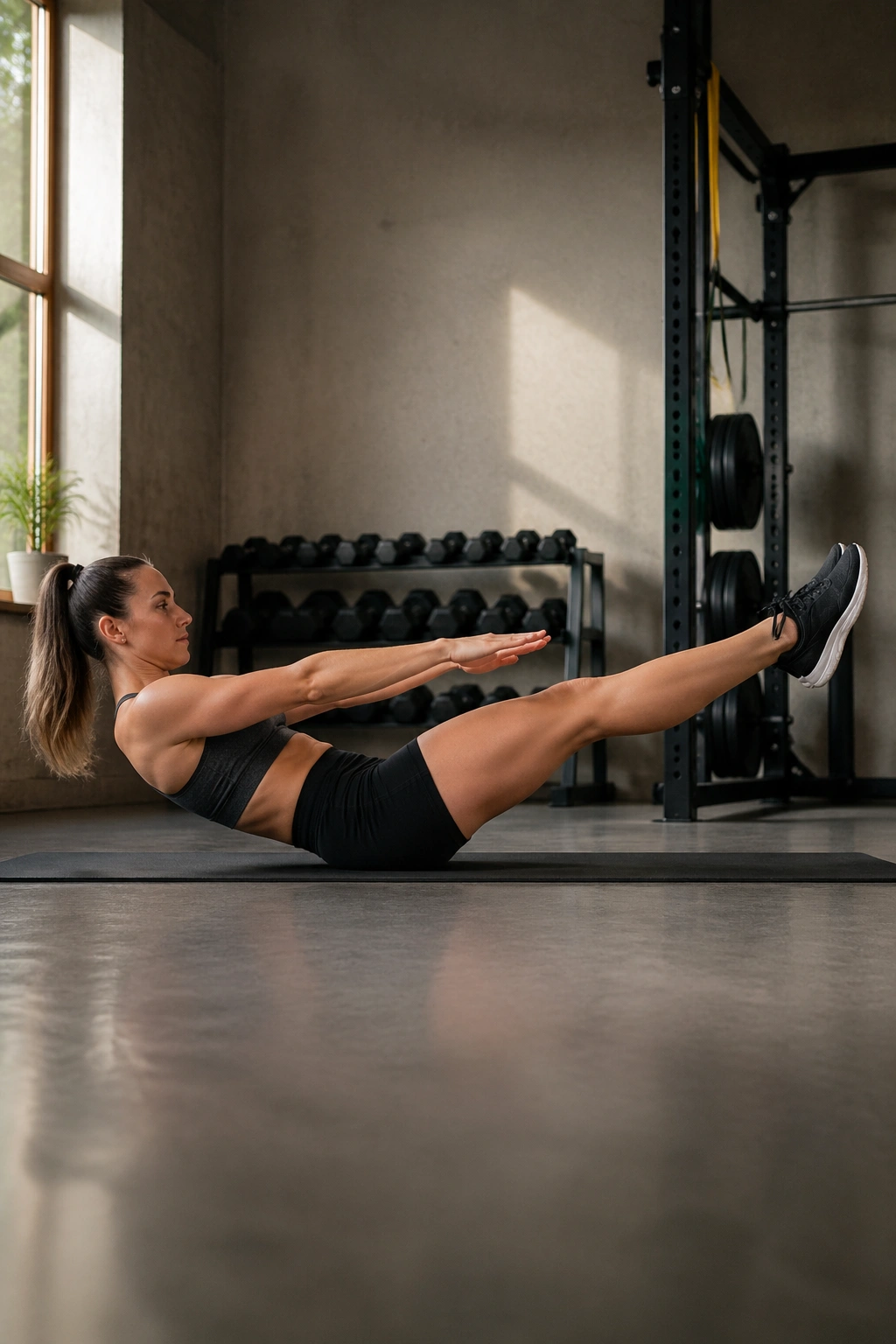
Some days, you do not need a fancy split routine. You need ten honest minutes, a mat, and enough focus to stop the body from cheating.
Finish with a circuit like this:
- 30 seconds dead bug
- 30 seconds reverse crunches
- 30 seconds mountain climbers
- 30 seconds plank shoulder taps
- Rest 30 seconds, then repeat for 2 to 3 rounds
Keep the quality high. If the plank taps get sloppy, slow them down. If the reverse crunches start swinging, cut the range. If you are breathing hard by the second round, that is fine. If your lower back hurts, that is not fine.
This little circuit works because it mixes control, anti-rotation, and a dose of heart-rate work. That combination is what the lower belly usually responds to better than endless one-note ab drills. It also respects real life. You can do it at home, after a walk, or at the end of a strength session when your energy is low but you still want to do something useful.
A good core workout should leave you braced, not wrecked. That is the standard I like, and it’s a better one than chasing soreness for its own sake.
