



Belly fat exercises get oversold all the time, mostly by people who want a shortcut.
Crunches have a place. So do squats, lunges, planks, and the plain old sweaty moves that make your breathing louder and your legs heavier by the final round. The annoying truth is that a flatter waist comes from total-body effort, not a single move that magically peels fat off your stomach.
This 21-day plan leans on exercises that raise heart rate, train the core from different angles, and keep your body honest. Some days are low impact. Some days feel rude by the end. All of them are built so you can do them with a timer, a small patch of floor, and a little stubbornness.
Use the rep ranges and time blocks as a starting point, then nudge them up only when your form stays clean. If your lower back arches, your knees cave in, or your shoulders creep toward your ears, the exercise has already gotten sloppy. Fix that first. The rest gets easier.
1. High-Knee March
Start with the move people dismiss because it looks too simple.
A high-knee march wakes up your hips, your core, and your breathing without beating up your joints. Stand tall, pump your arms, and drive one knee up at a time as if you’re power-walking through a crowded station and refuse to look rushed. Thirty seconds of sharp, controlled marching can raise your heart rate more than people expect.
Use this on day one for 30 to 40 seconds, then rest 20 to 30 seconds and repeat for 3 to 4 rounds. Keep the steps light. No stomping.
Form cues that save your knees
- Keep your chest tall and your ribs down.
- Lift the knee as high as you can without leaning back.
- Land softly on the ball of the foot.
- Drive the opposite arm forward with intent, not flailing.
Best cue: if you can hear your feet slap the floor, you’re making the move louder than it needs to be.
2. Jumping Jacks
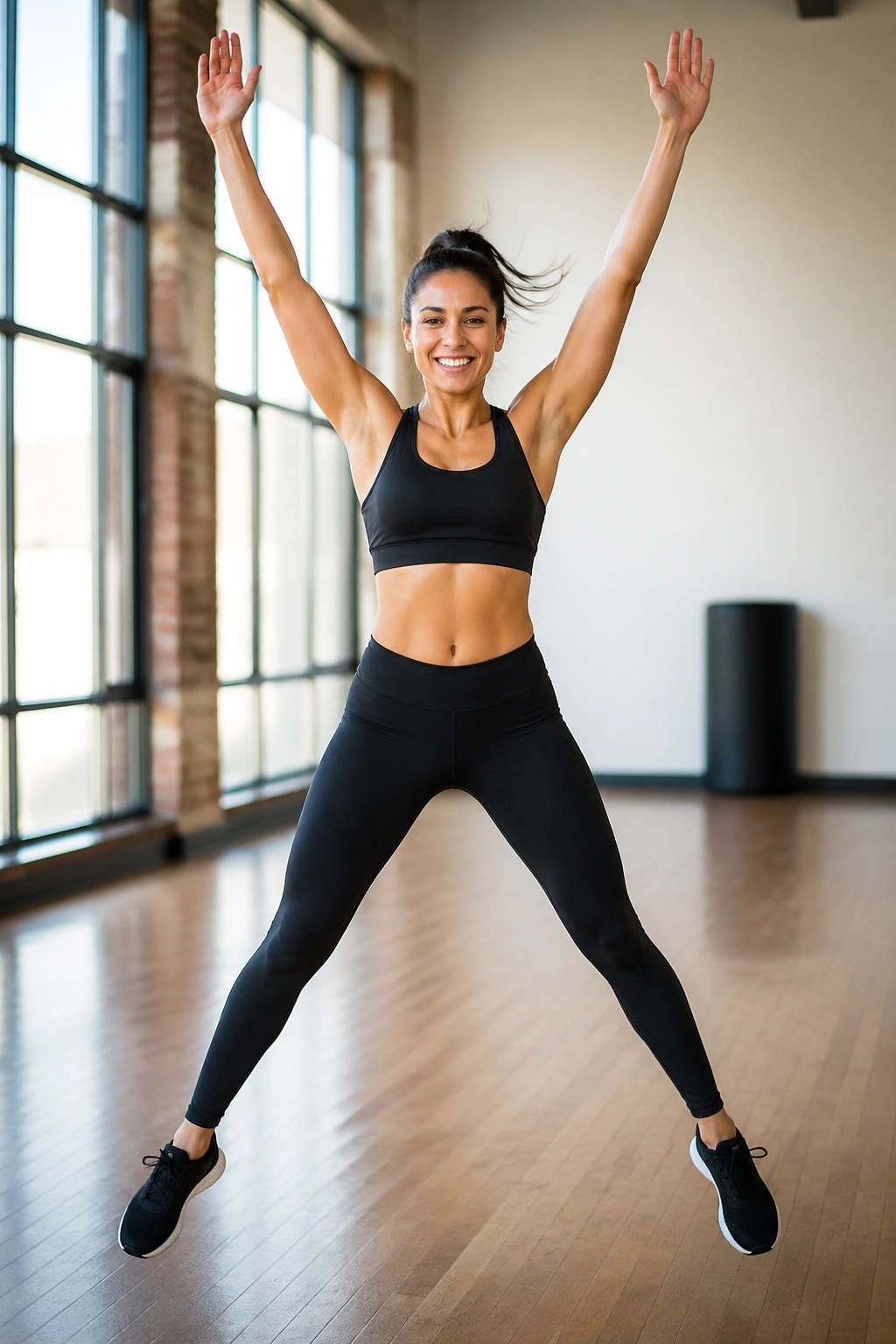
Simple doesn’t mean soft.
Jumping jacks are one of those old-school moves that still earn their place because they get a lot done in a short time. Your shoulders move, your calves work, your heart rate climbs, and your body has to coordinate all of it at once. That matters when you want a fat-loss routine that actually burns energy instead of feeling like a lazy warm-up.
Do them for 30 to 45 seconds with 20 to 30 seconds of rest. Keep your knees slightly bent on the landing and think about bouncing off the floor, not crashing into it. A good set should leave you warm, a little breathless, and ready for something more demanding.
If jumping bothers your joints, step one foot out at a time and keep the same arm pattern. Slower. Cleaner. Still useful.
3. Bodyweight Squats
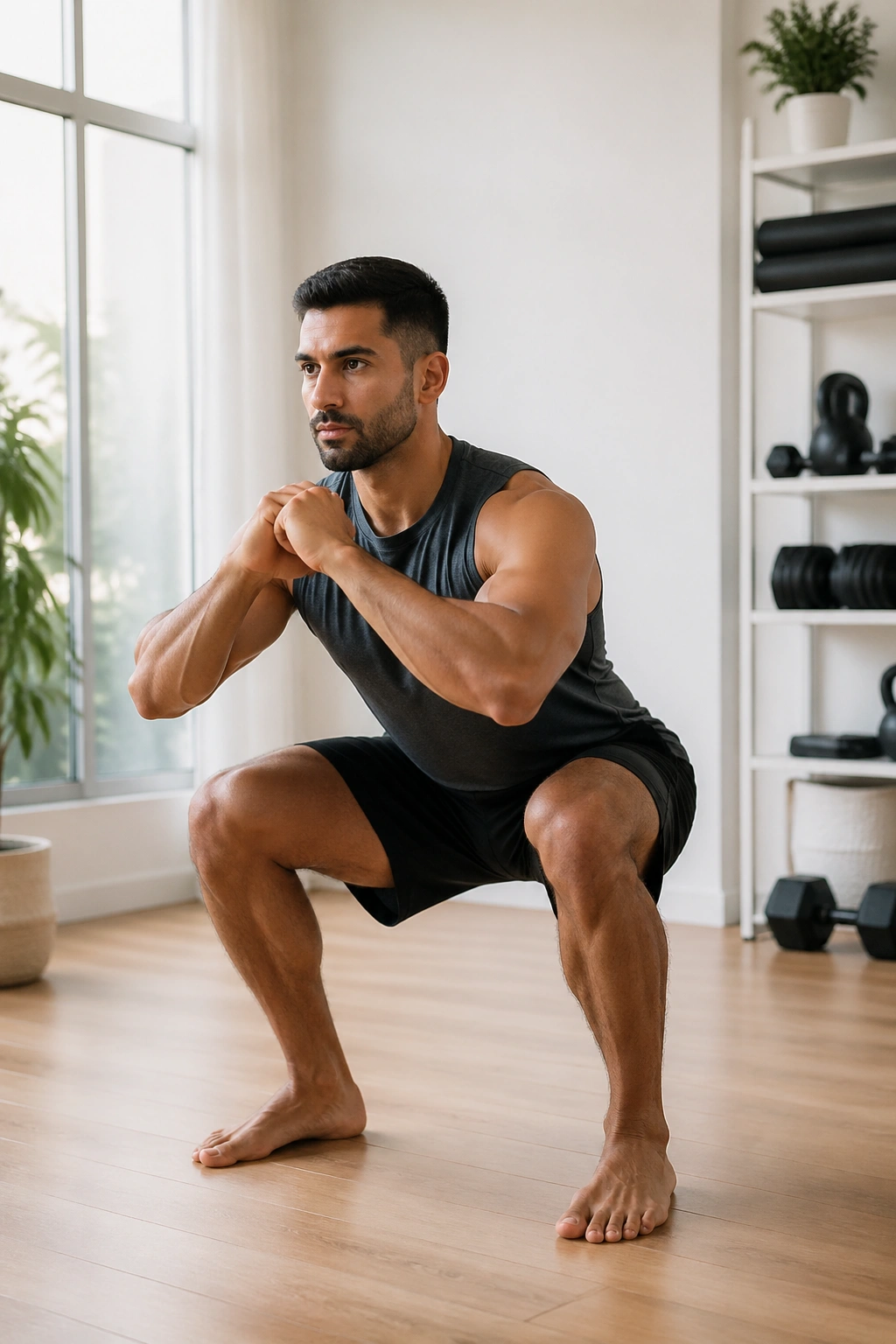
Why put squats in a belly fat plan?
Because your biggest muscles are part of the job. Squats recruit your glutes, quads, and core all at once, which means you get more work for every rep than you do from tiny isolated moves. If your goal is to burn more calories while building a body that feels sturdier, squats belong near the front of the line.
Aim for 12 to 15 reps and do 3 sets with 45 to 60 seconds of rest. Sit back as if you’re reaching for a chair, keep your heels planted, and stop the descent before your lower back rounds. The bottom should feel like a controlled pause, not a collapse.
The mistake that ruins squats
People rush them and turn the movement into a half-squat, half-bounce. That wastes the exercise. Go down with control, stand up with force, and keep your knees tracking in the same direction as your toes.
4. Mountain Climbers
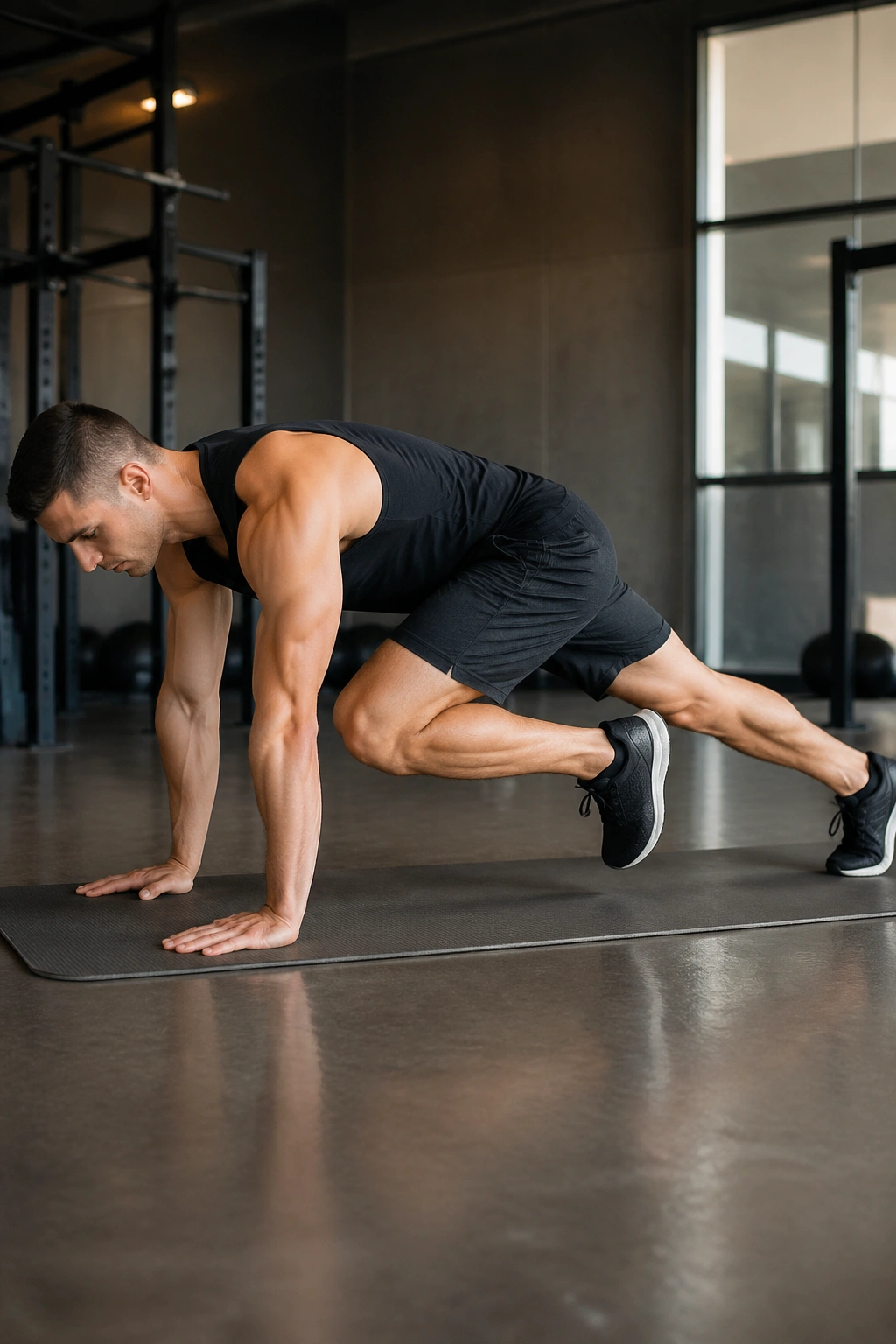
If you ever feel your shirt sticking to your back after 20 seconds, you’re doing them right.
Mountain climbers are messy in the best way. They mix cardio and core work, and they ask you to keep your shoulders steady while your legs move fast underneath you. That little conflict is where the work happens. Your abs brace, your hips stay level, and your breathing starts to sound a bit louder than you planned.
Use 20 to 30 seconds of fast, clean climbers, then rest for 20 to 40 seconds. Repeat for 4 to 6 rounds. Keep your shoulders stacked over your wrists and drive each knee toward your chest without letting your hips bounce like a trampoline.
- Hands planted directly under shoulders.
- Back flat, not sagging.
- Knees move fast, but the torso stays quiet.
- Short, sharp exhales help you keep rhythm.
A sloppy climber is just fast flailing. A clean one is hard work.
5. Forearm Plank
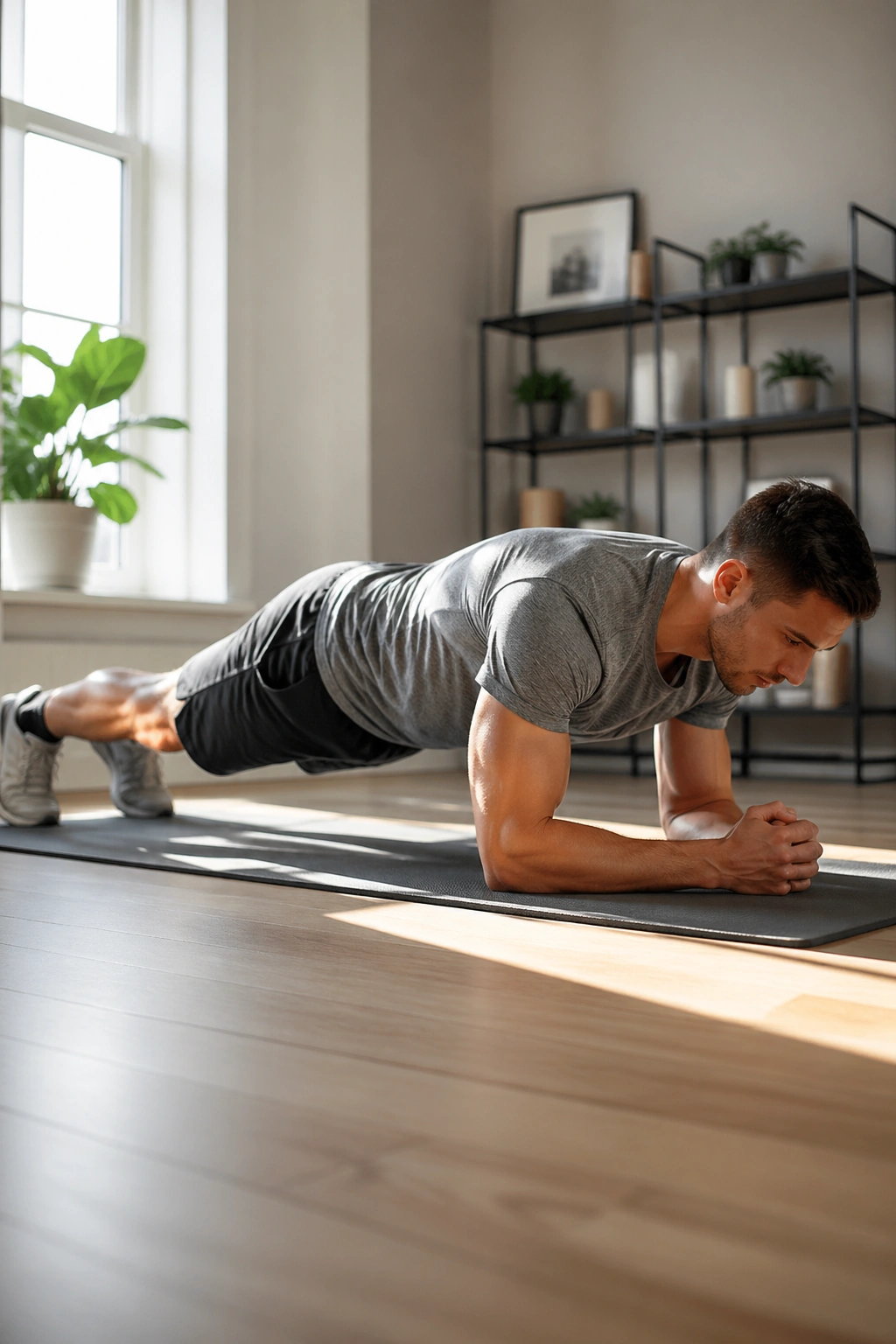
A plank will not torch fat by itself, and that is fine.
What it does give you is deep core endurance. That matters because a strong midsection helps you move better in everything else on this list, from burpees to step-ups. A good plank teaches your body how to resist sagging through the middle. It’s boring on paper. In practice, it gets honest fast.
Hold for 20 to 45 seconds and do 3 rounds. Set your elbows under your shoulders, squeeze your glutes, and pull your belly button in slightly without holding your breath. Your body should look like one straight line from head to heels.
Breathe.
If your lower back starts to pinch, shorten the hold or drop to your knees. A crisp 20-second plank beats a shaky 60-second grind every time. Clean form wins here.
6. Reverse Lunges
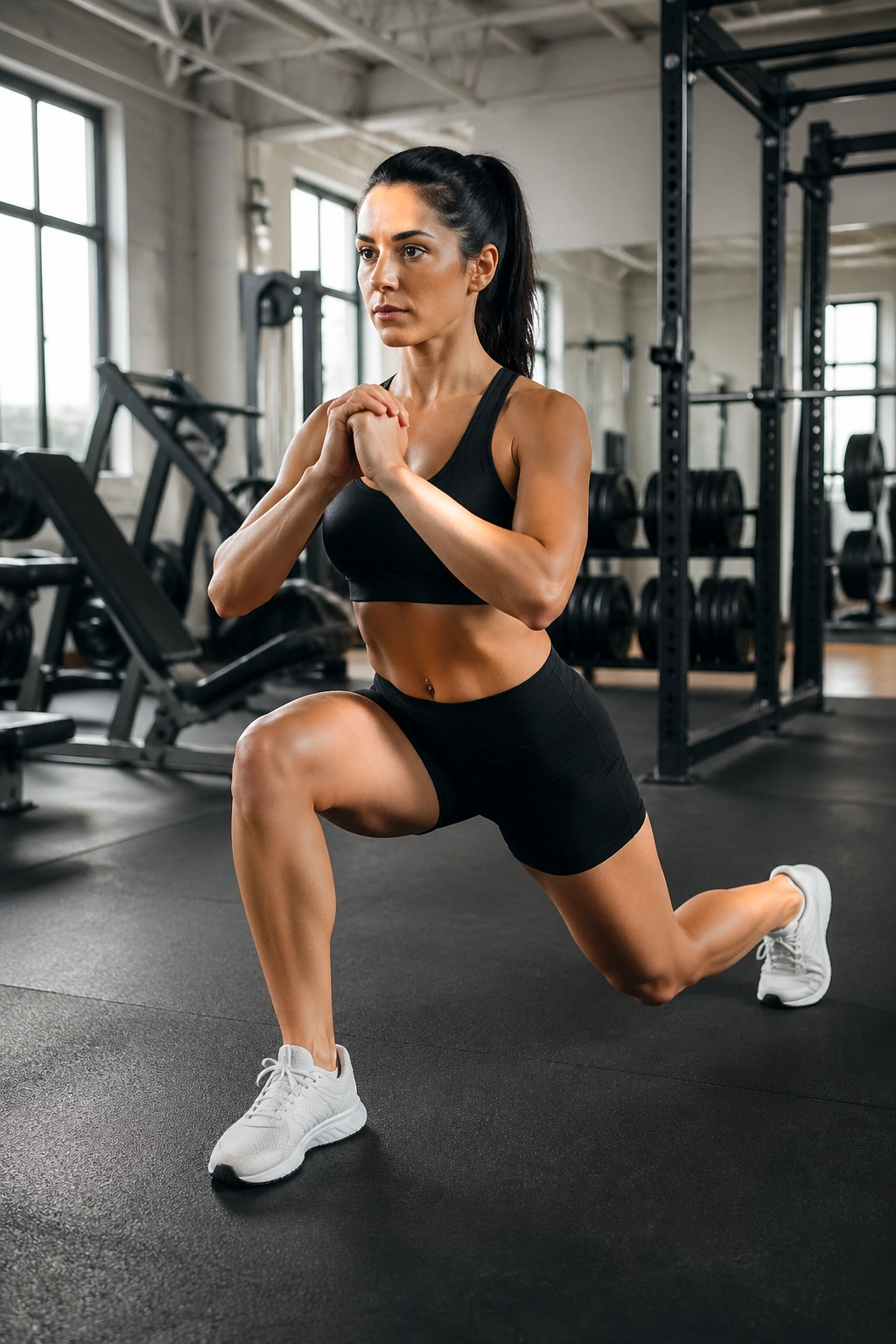
Unlike forward lunges, reverse lunges tend to feel kinder on the knees.
That back-step changes the loading pattern. You still work your glutes, quads, and balance, but the movement often feels smoother if you’re new to single-leg work or if your joints dislike aggressive forward stepping. It also forces you to pay attention, which is good. Lazy lunges show up fast.
Do 8 to 10 reps per leg for 3 sets. Step back far enough that both knees can bend without your front heel popping up. Keep your torso upright and push through the front foot to stand back up.
If your balance is shaky, keep one hand on a wall or the back of a sturdy chair. That little support is not cheating. It lets you train the muscles instead of wasting energy trying not to topple over.
7. Bicycle Crunches
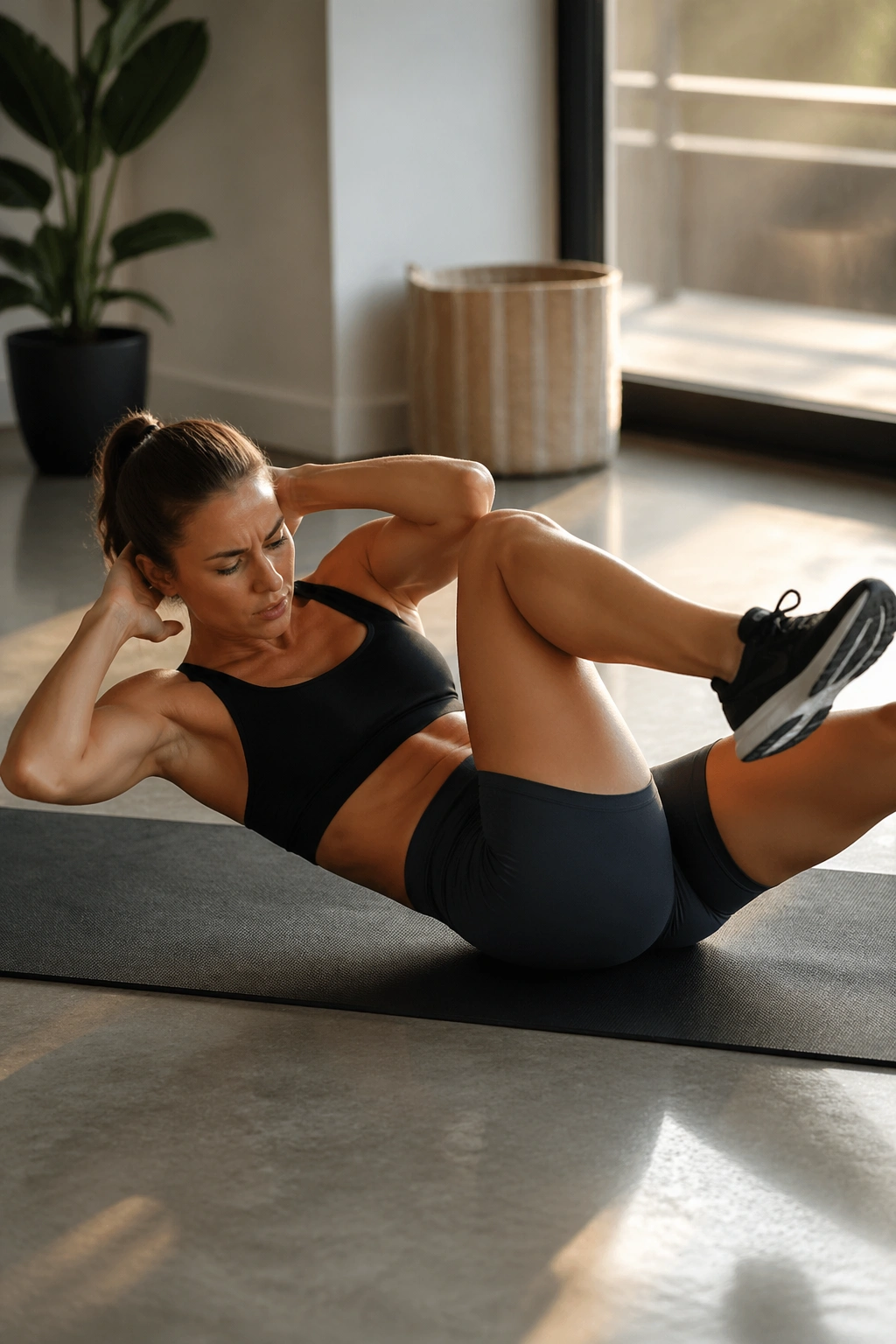
Do bicycle crunches burn belly fat on their own? No.
They do, however, train the rectus abdominis and the obliques in a way that makes the center of your body work hard. Done well, they also teach coordination. Done badly, they become a neck-pulling contest with terrible timing. The difference is control.
Use 15 to 20 reps per side and keep the movement slow enough that you can rotate from your rib cage, not from a frantic elbow swing. One knee draws in while the opposite shoulder lifts and rotates across. Your lower back should stay pressed toward the mat.
How to get more from it
Keep the non-working leg long but not rigid. Exhale as you twist. If your neck starts to ache, stop yanking your head forward and place your hands lightly at the sides of your skull instead.
A controlled bicycle crunch feels deliberate. A rushed one feels like a bicycle accident.
8. Burpees
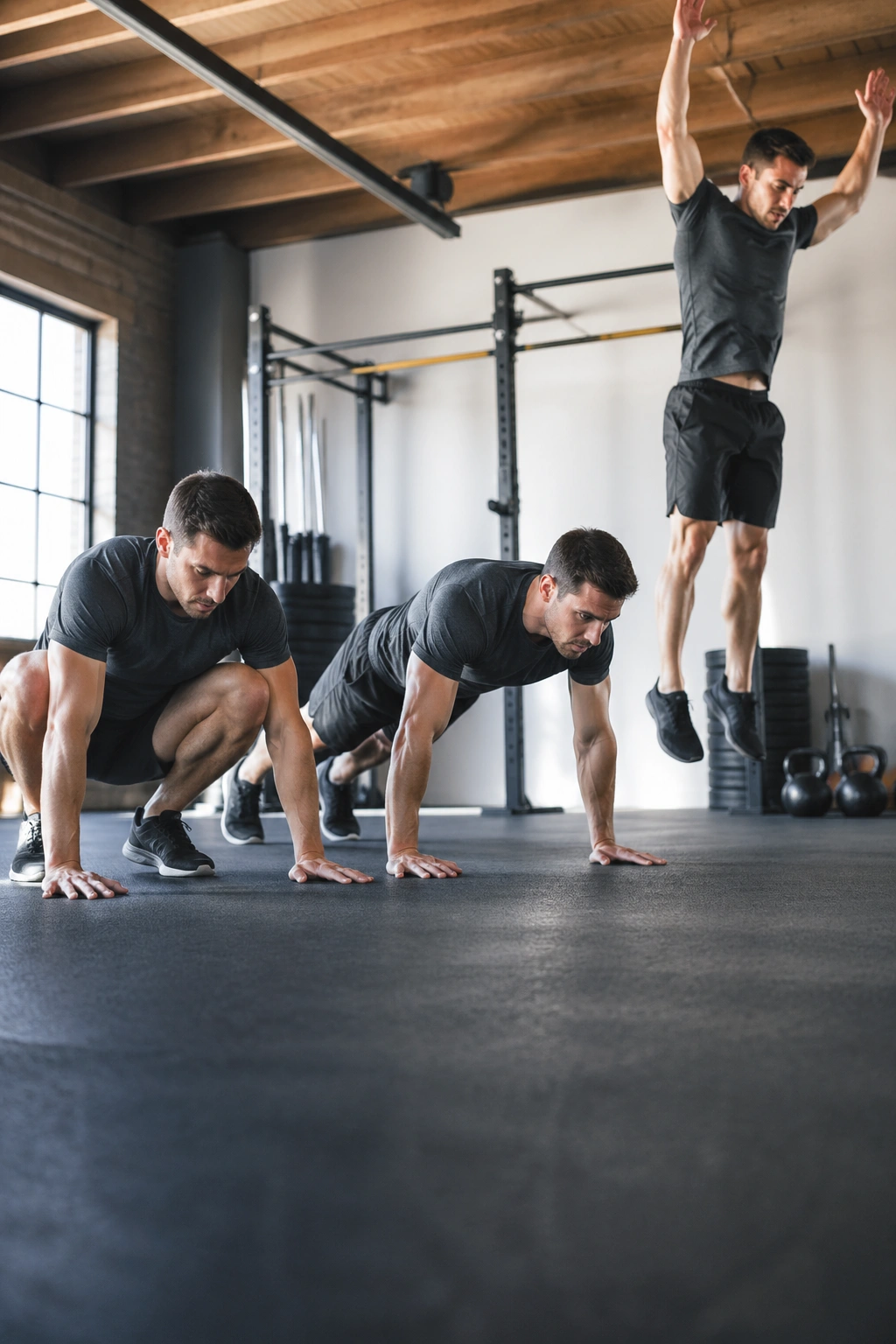
Burpees are rude, and that is exactly why they earn a spot here.
They combine a squat, a plank, and a jump into one compact little insult, which means your heart rate climbs fast and your whole body has to participate. That makes them useful when you want a move that feels like it’s doing a lot of work in very little time. They also expose shortcuts fast. You cannot fake a burpee for long.
Start with 5 to 8 reps and take plenty of rest. Quality matters more than speed. Step back to plank if jumping back is too much, and skip the push-up if your shoulders or lower back are not happy with it. A clean, steady burpee beats a frantic one that turns into a dog pile on the floor.
If you only have energy for five good reps, use five good reps. That’s enough.
9. Glute Bridge March
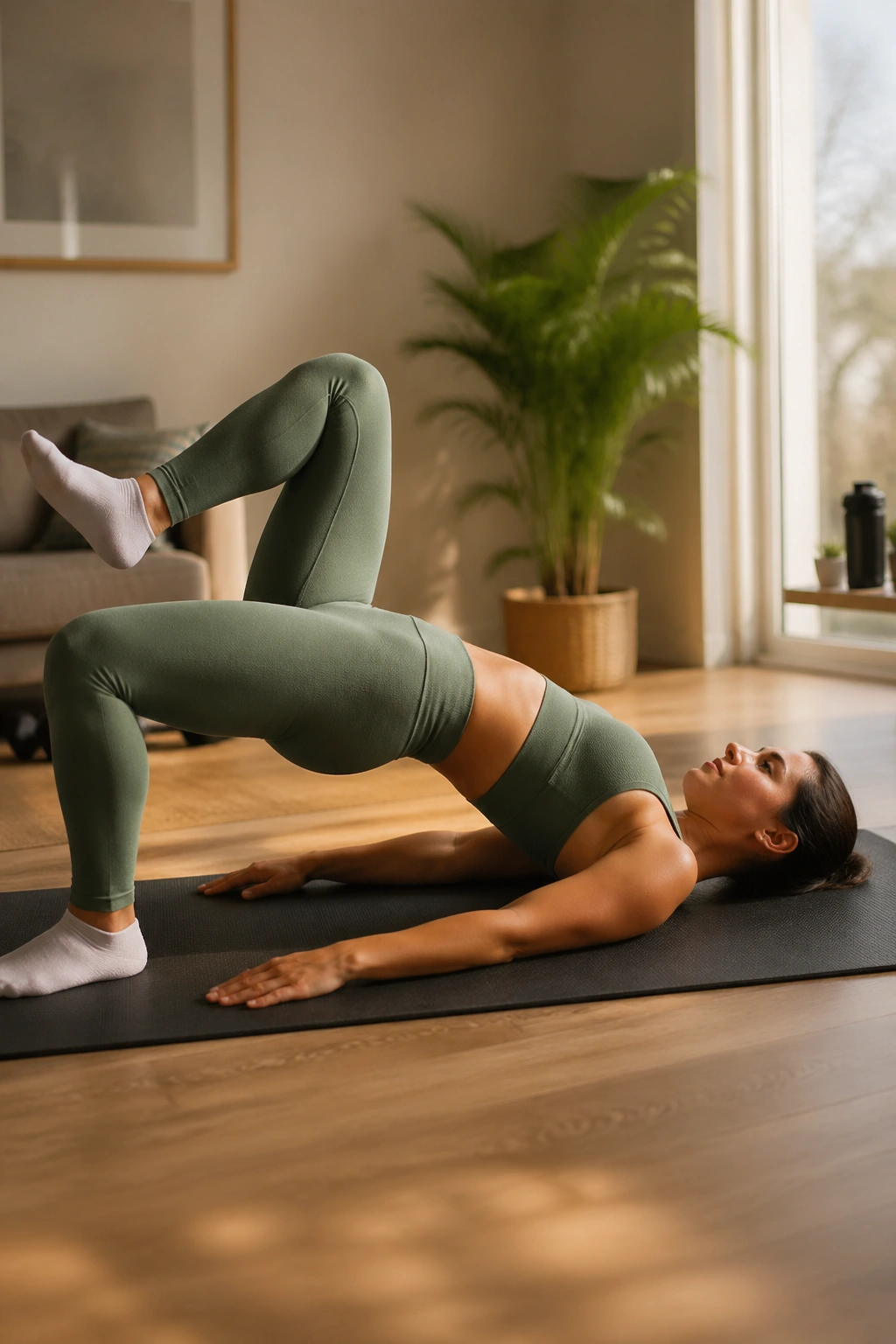
If your lower back tends to take over core work, this one can feel like relief.
Lie on your back, plant your feet, and lift your hips until your body forms a straight line from shoulders to knees. Then march one foot up at a time without letting your hips wobble. The work lands in your glutes and deep core, not in the small of your back. That’s the point.
Do 10 to 12 marches per side for 3 sets. Move slowly enough that the pelvis stays level. If it shifts side to side, shorten the lift or bring the feet closer to your hips. The exercise should feel like steady control, not a balancing act.
What to feel
You want your glutes to switch on first. The hamstrings should help. Your lower back should stay quiet. If your back is doing most of the shouting, you’ve gone too high.
10. Russian Twists
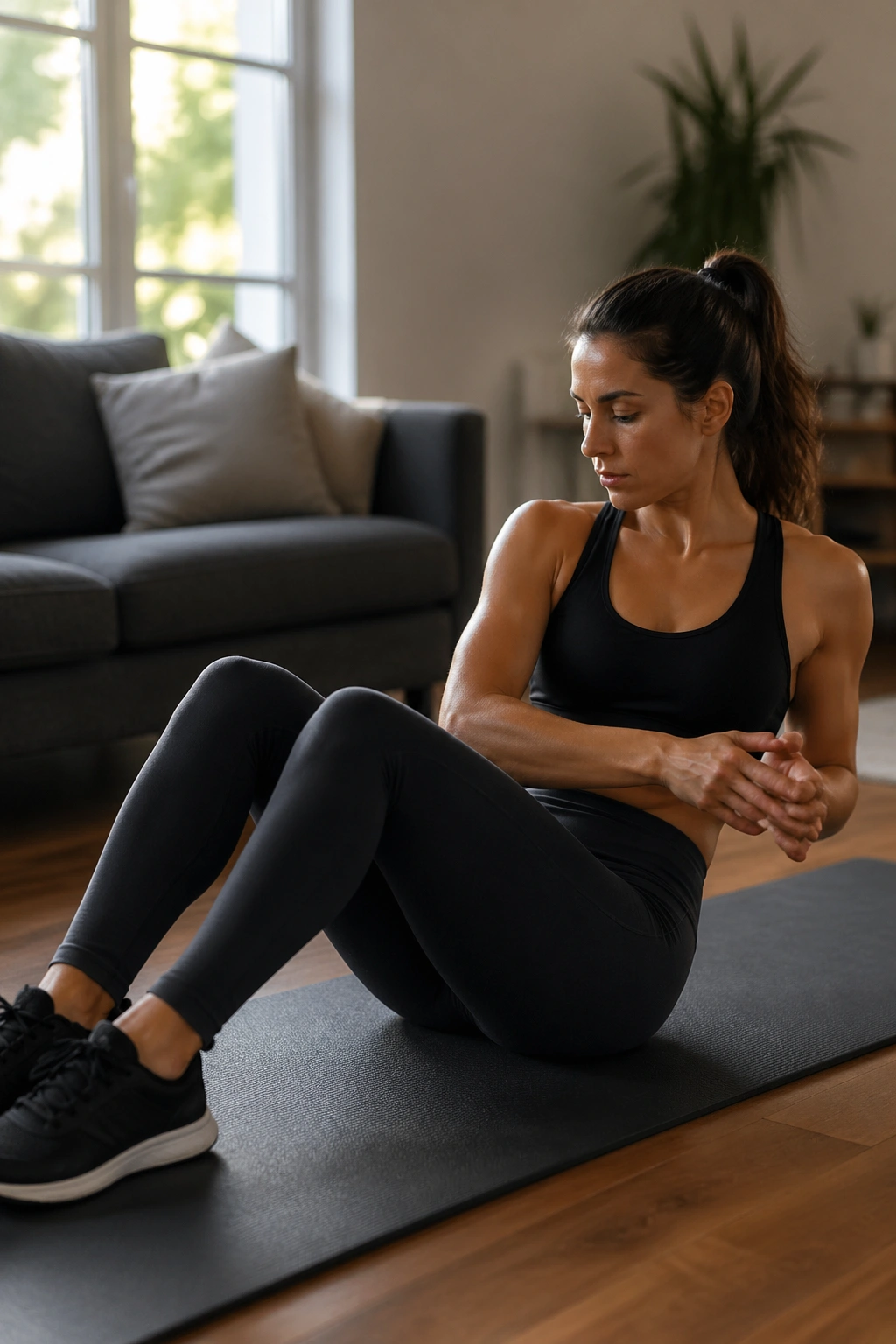
Twisting fast with a heavy weight is a quick way to make this exercise worse.
Keep it lighter than your ego wants. Sit with your knees bent, lean back a little, and rotate from side to side in a controlled rhythm. You should feel your obliques working, your hips steady, and your torso staying long instead of collapsing into a hunch. A solid set of Russian twists can light up the sides of your core without requiring any fancy equipment.
Aim for 20 total twists for 3 rounds. If your feet have to stay planted, do that. If lifting them makes you arch your back, put them down immediately. The floor is not judging you.
A smooth twist looks almost calm from the outside. Inside, your midsection is doing a lot more than it looks like.
11. Side Plank
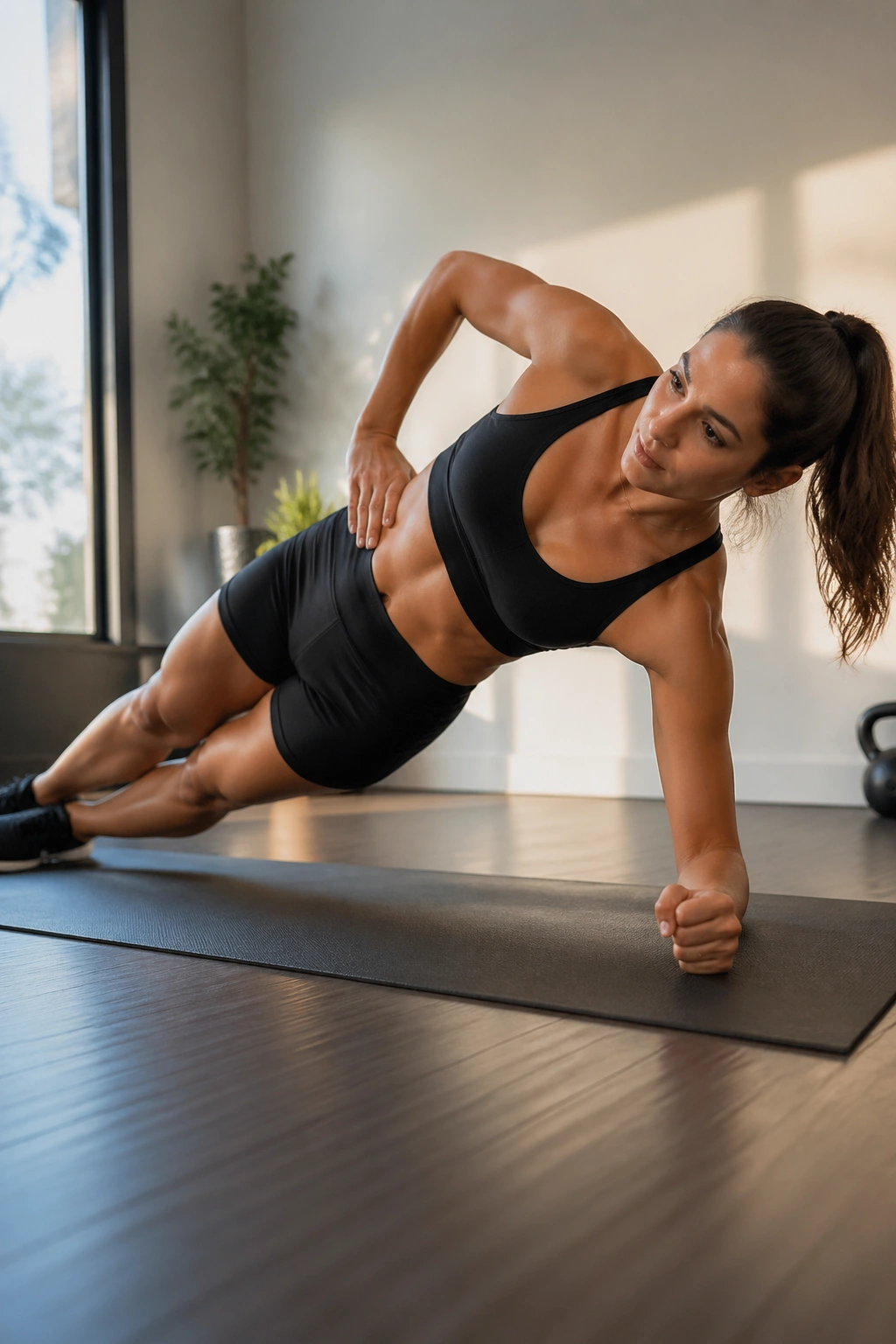
A side plank asks different muscles to show up than a front plank does.
That is the whole reason it belongs on this list. Your obliques work hard, but so does the hip on the bottom side, and that combo helps with waist stability, posture, and the kind of strength that makes standing around feel easier. It’s also one of the better bodyweight moves if you sit a lot and your sides feel dead by the end of the day.
Hold 15 to 30 seconds per side for 2 to 3 rounds. Drop the lower knee if you need to. Keep the shoulder stacked over the elbow and lift the hips until your body makes one clean line.
If one side shakes more than the other, that’s useful information. Don’t hide from it. Spend a little extra attention there next time.
12. Standing Cross-Body Knee Drives
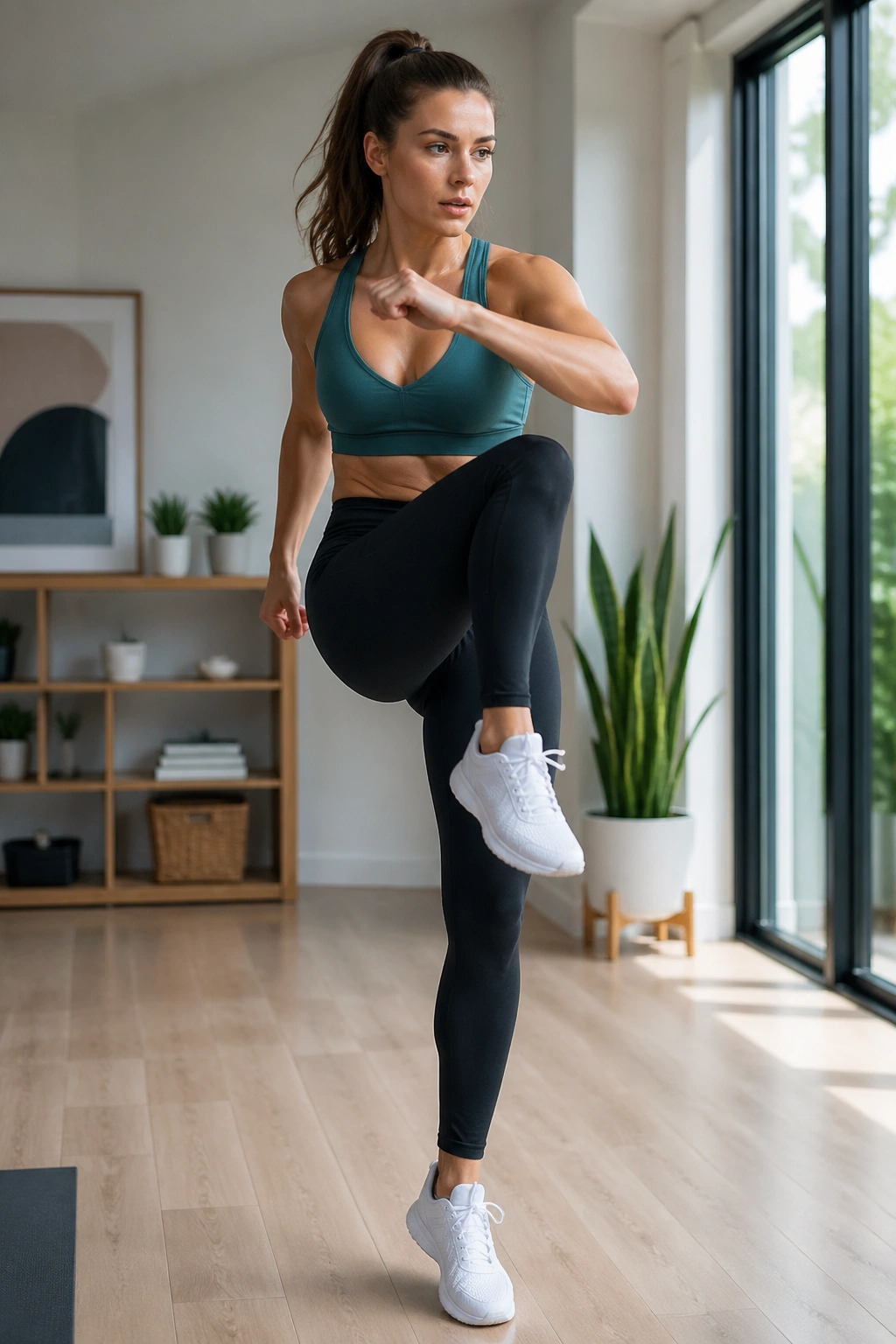
Need a low-impact option that still gets the pulse up?
This is the one you keep when your joints want less jumping but your body still needs work. Stand tall, drive one knee across toward the opposite elbow, and switch with a steady rhythm. The rotation wakes up your core while the leg drive keeps your heart rate moving. It’s a smart bridge between gentle marching and harder cardio.
Use 30 seconds per round, rest 20 to 30 seconds, and repeat 4 times. Keep your torso tall. Don’t crunch so hard that you fold in half. The movement should feel athletic, not cramped.
- Exhale as the knee comes up.
- Keep the standing foot rooted.
- Let the arms guide the rhythm.
- Move briskly, not wildly.
This is a good morning move, a good warm-up move, and a good late-day move when you do not want to think too hard.
13. Dead Bug
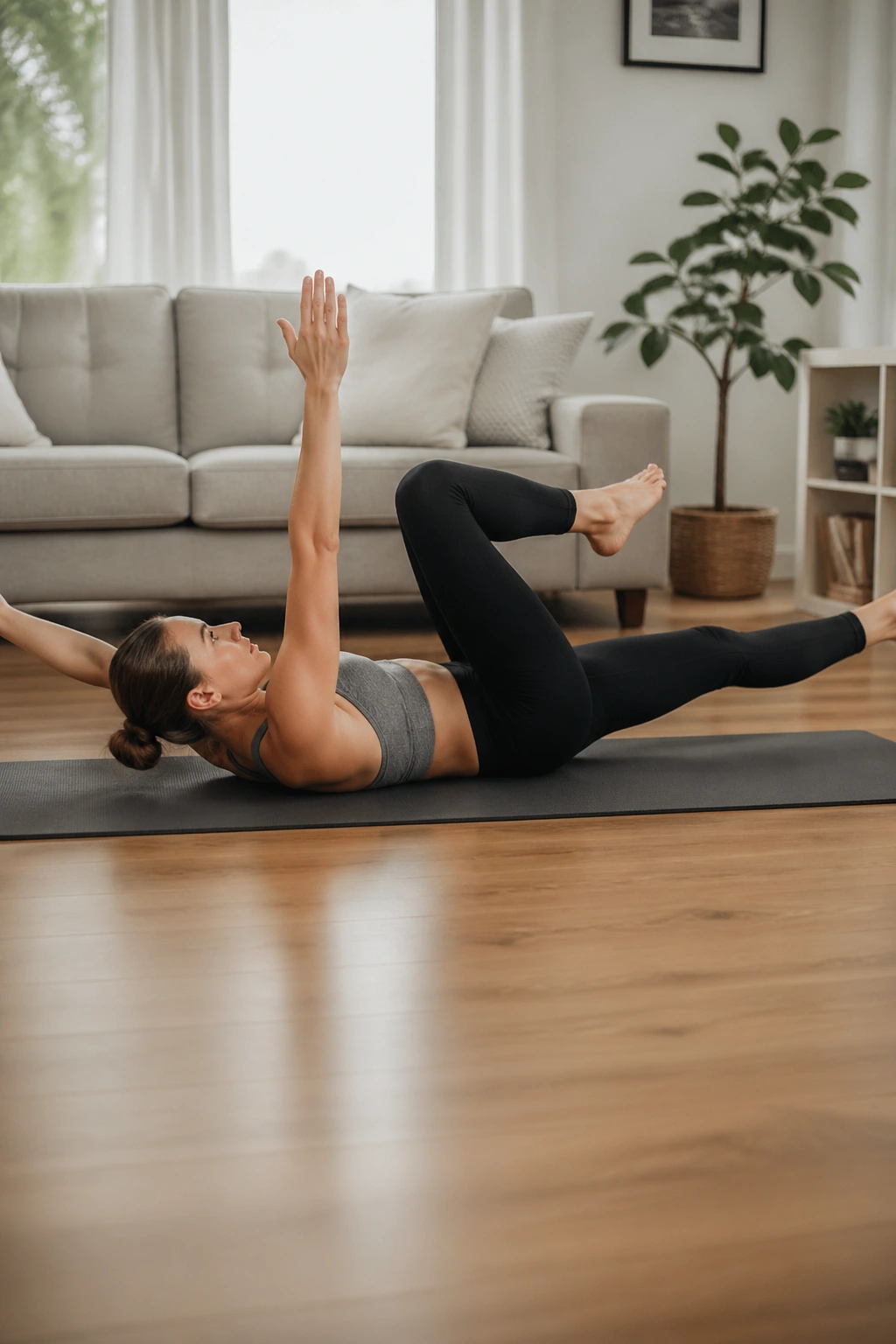
The dead bug looks awkward until it starts making your core honest.
Lie on your back with arms up and knees bent over your hips. Extend the opposite arm and leg slowly while keeping your lower back pressed into the mat, then return and switch sides. That brace against spinal movement is the real work. You are teaching your core to stay controlled while your limbs move around it.
Do 8 to 10 reps per side for 3 sets. Move like the mat has something fragile under your lower back. If your back arches, shorten the reach. If your shoulders tense up, slow down and breathe.
- Lower back stays glued to the floor.
- Reach out long, not fast.
- Keep the motion small if needed.
- Stop the set when the arch starts.
A dead bug done well feels almost quiet. That quiet is the challenge.
14. Skater Steps
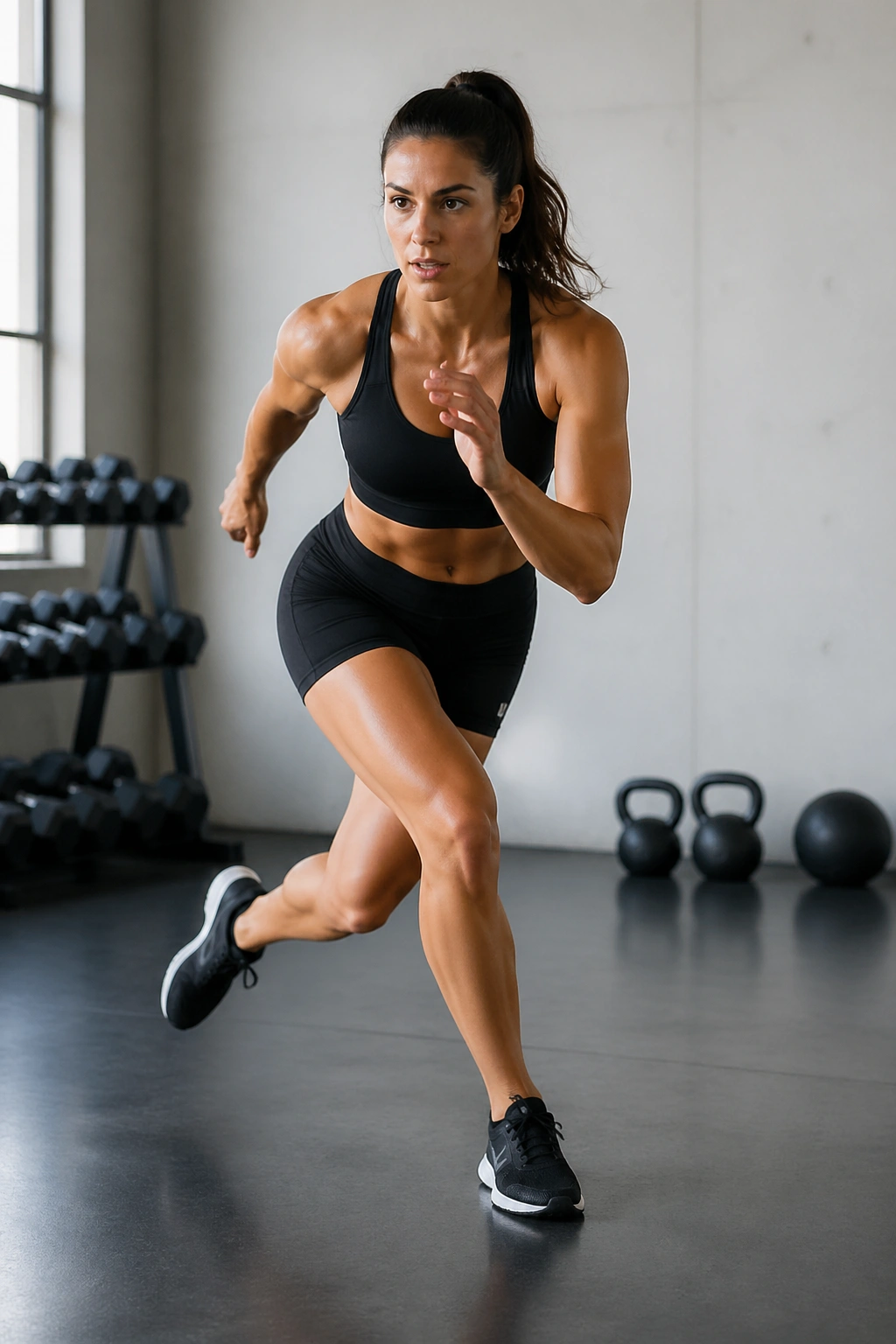
Side-to-side work wakes up the hips in a way straight-ahead marching misses.
Skater steps train lateral movement, which most people neglect until their knees or ankles complain about it. Step or hop from one side to the other, land softly, and let the opposite leg swing behind you a little like a speed skater settling into a turn. Your outer hips work, your legs burn, and your breathing rises without needing a machine.
Do 30 seconds for 4 rounds. If jumping feels rough, keep it as a quick step with a reach across the body. The point is the shift, not the height. A quiet landing is a good landing.
One clean set should leave your thighs awake and your balance a little sharper than before. That’s the sign it’s doing its job.
15. Push-Ups
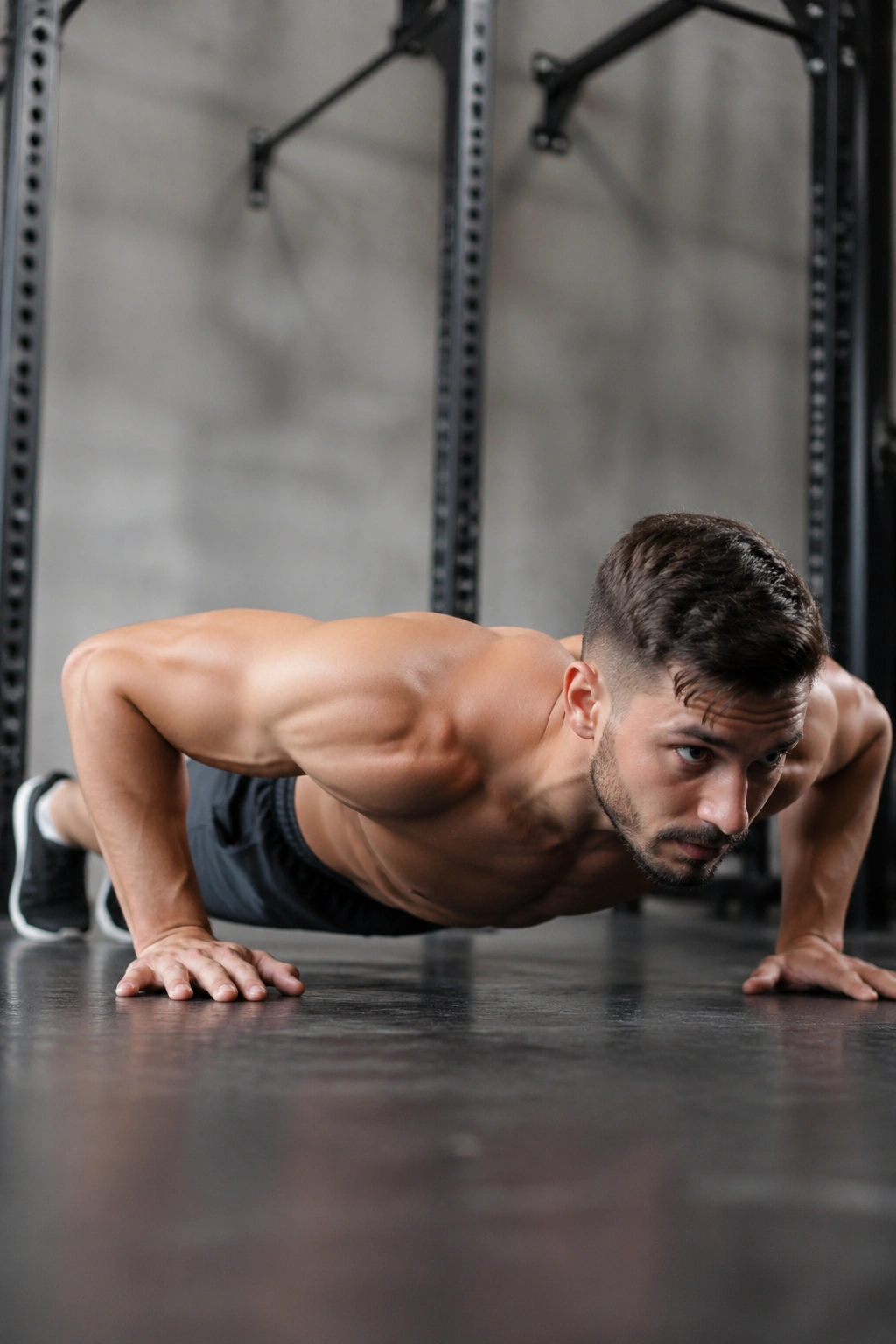
Push-ups do not look like a belly move, and that is exactly why they belong here.
They ask your chest, shoulders, arms, and core to work together, which makes them a smart whole-body choice for fat-loss training. A good push-up also exposes weak links fast. If your hips sag or your neck cranes forward, the problem is plain to see. That’s useful. The exercise gives you feedback on the spot.
Do 5 to 12 reps for 3 sets. Keep your body in one line, lower under control, and press the floor away. If the floor version is too much, use a wall, a counter, or a bench.
Best scale if the floor version is too much
- Wall push-up: easiest starting point.
- Incline push-up on a bench or couch: middle ground.
- Knee push-up: useful if you can keep the line straight from knees to head.
Clean reps matter more than a bigger number.
16. Step-Ups
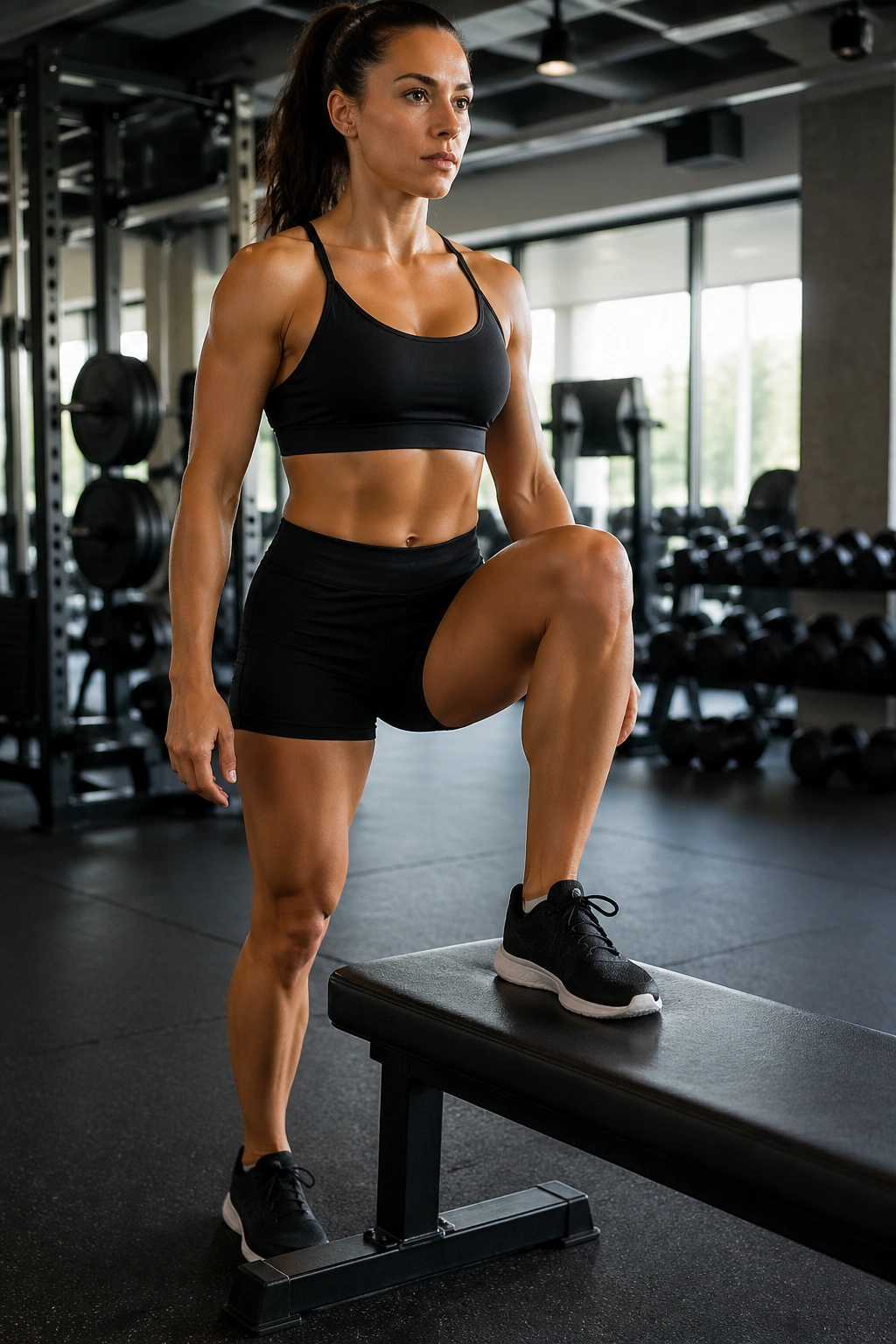
Can a staircase replace a gym machine? Sometimes, yes.
Step-ups load one leg at a time, raise your heart rate, and train balance in a way that feels practical. Use a sturdy step or bench that lets your knee bend without your hip collapsing inward. Drive through the whole foot, stand tall at the top, then lower yourself with control instead of dropping.
Aim for 10 reps per leg for 3 sets. You can hold dumbbells later if bodyweight starts to feel tame. Until then, keep your hands at your sides and focus on steady mechanics. The back leg should help a little, but it should not be doing the work.
A good step-up leaves your thighs warm and your breathing deeper. A bad one looks like a hop and feels like a knee complaint waiting to happen.
17. Bear Crawl
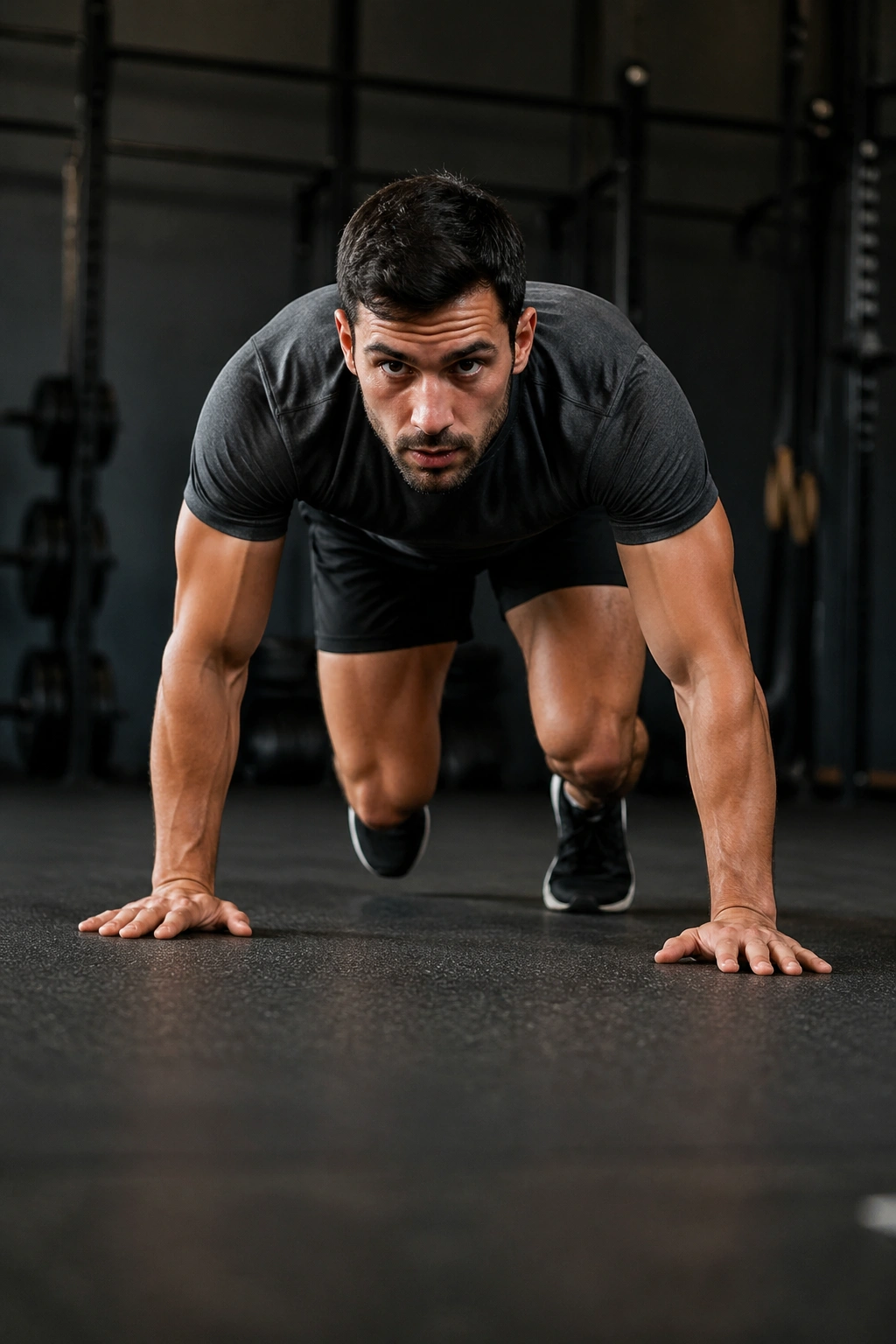
Few moves make you feel like a kid and a tired adult at once.
Bear crawls ask your shoulders, core, hips, and hands to cooperate while your knees hover just off the floor. Move opposite hand and foot together, keep the back flat, and stay low enough that your body has to brace. It looks simple from across the room. Then you try it for 20 seconds and start respecting it.
Crawl 10 to 20 steps forward and back, or work for 20 to 30 seconds in place if your space is tight. Keep your knees a few inches above the floor and your steps quiet. If your hips shoot up, slow down.
- Hands under shoulders.
- Knees hovering, not resting.
- Back flat.
- Move in small, controlled steps.
This is one of those exercises that gets more useful the more honest you are with it.
18. Hollow Hold
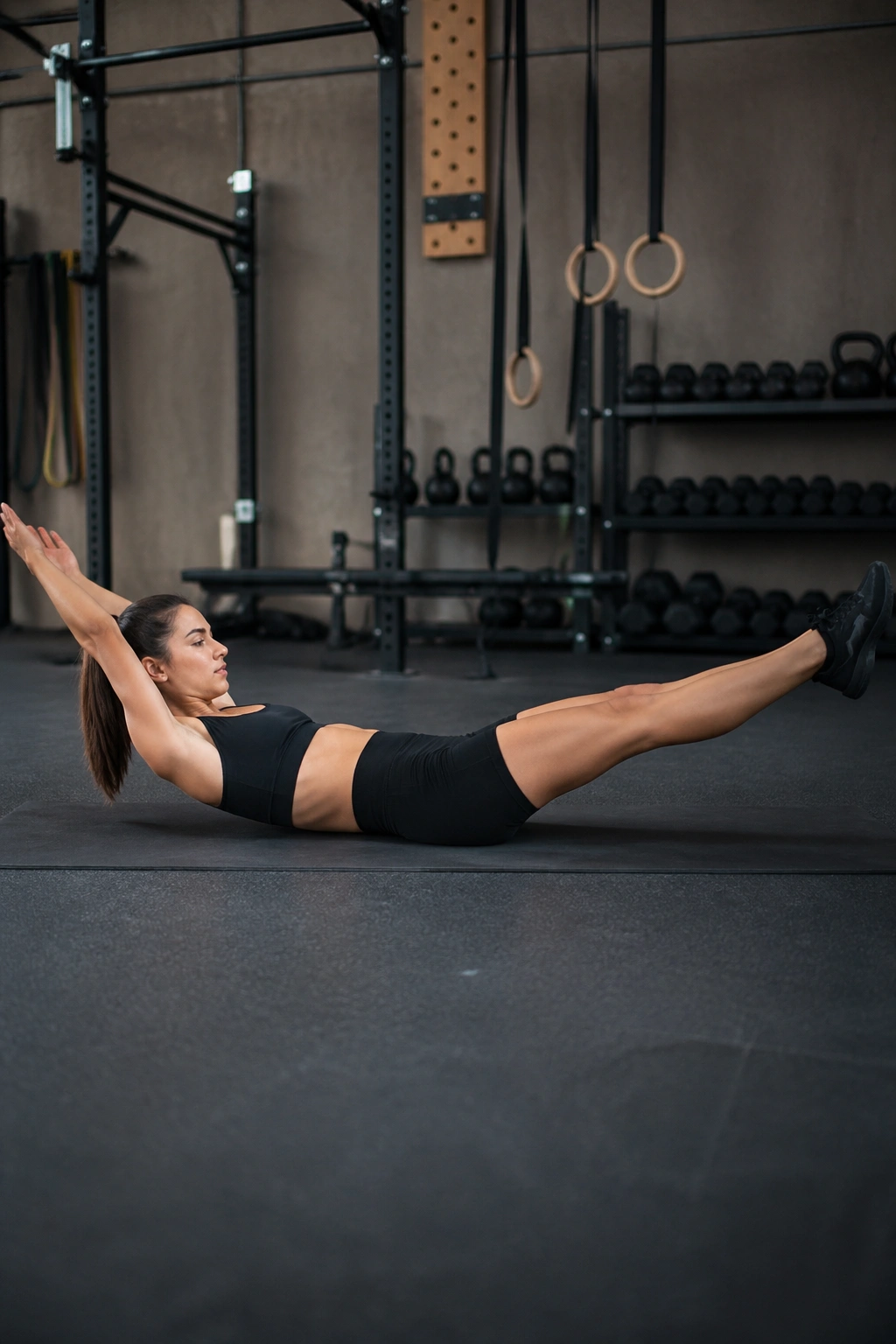
Small move. Nasty feeling.
The hollow hold trains your core to resist arching, which matters more than most people think. Lie on your back, press your lower back toward the floor, lift your shoulders slightly, and extend your legs to whatever level you can manage without losing that back contact. Your abs should feel braced, your ribs tucked, and your breathing short and controlled.
Hold for 15 to 30 seconds and do 3 rounds. If your back pops off the floor, bend the knees. That is not a downgrade. That is the correct version for where you are right now. You can make it harder later.
Breathe in tiny, steady pulls through the nose if you can. The hold gets ugly fast when you start flaring your ribs or shaking your head around. Keep it tidy.
19. Plank Shoulder Taps
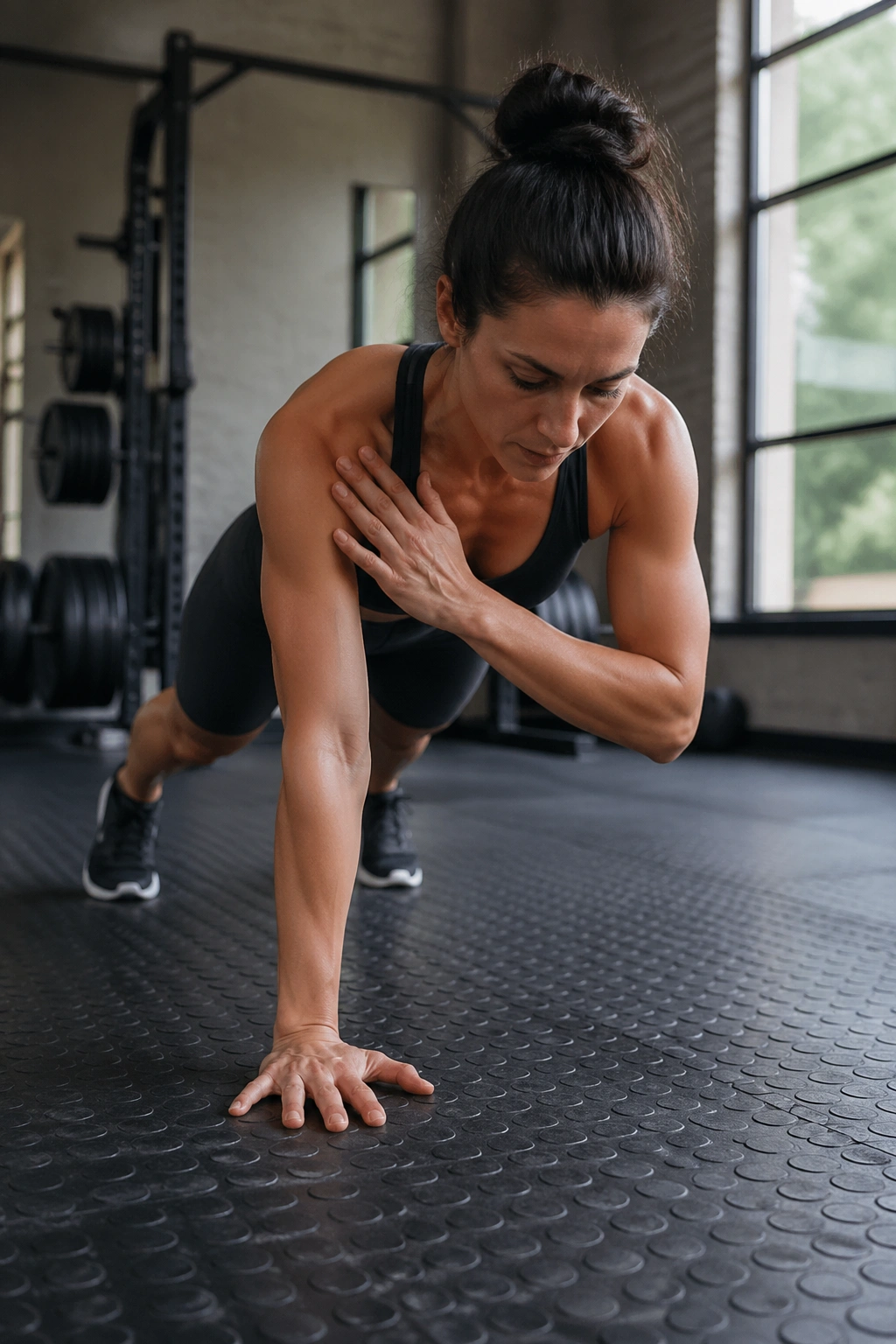
Unlike a plain plank, shoulder taps punish any sway.
That is what makes them useful. You start in a high plank, tap one shoulder with the opposite hand, then switch sides while keeping your hips as still as you can. The core has to resist rotation, the shoulders stay packed, and the body learns not to wobble every time a hand leaves the floor. That’s a skill worth training.
Do 10 to 20 taps per side for 3 sets. Set your feet a little wider if needed. Go slower than you think. Fast taps turn into hip wiggles, and hip wiggles are not the goal.
If you want more challenge, bring the feet in. If you want less, widen them and shorten the range. The best version is the one that keeps your torso quiet.
20. Flutter Kicks
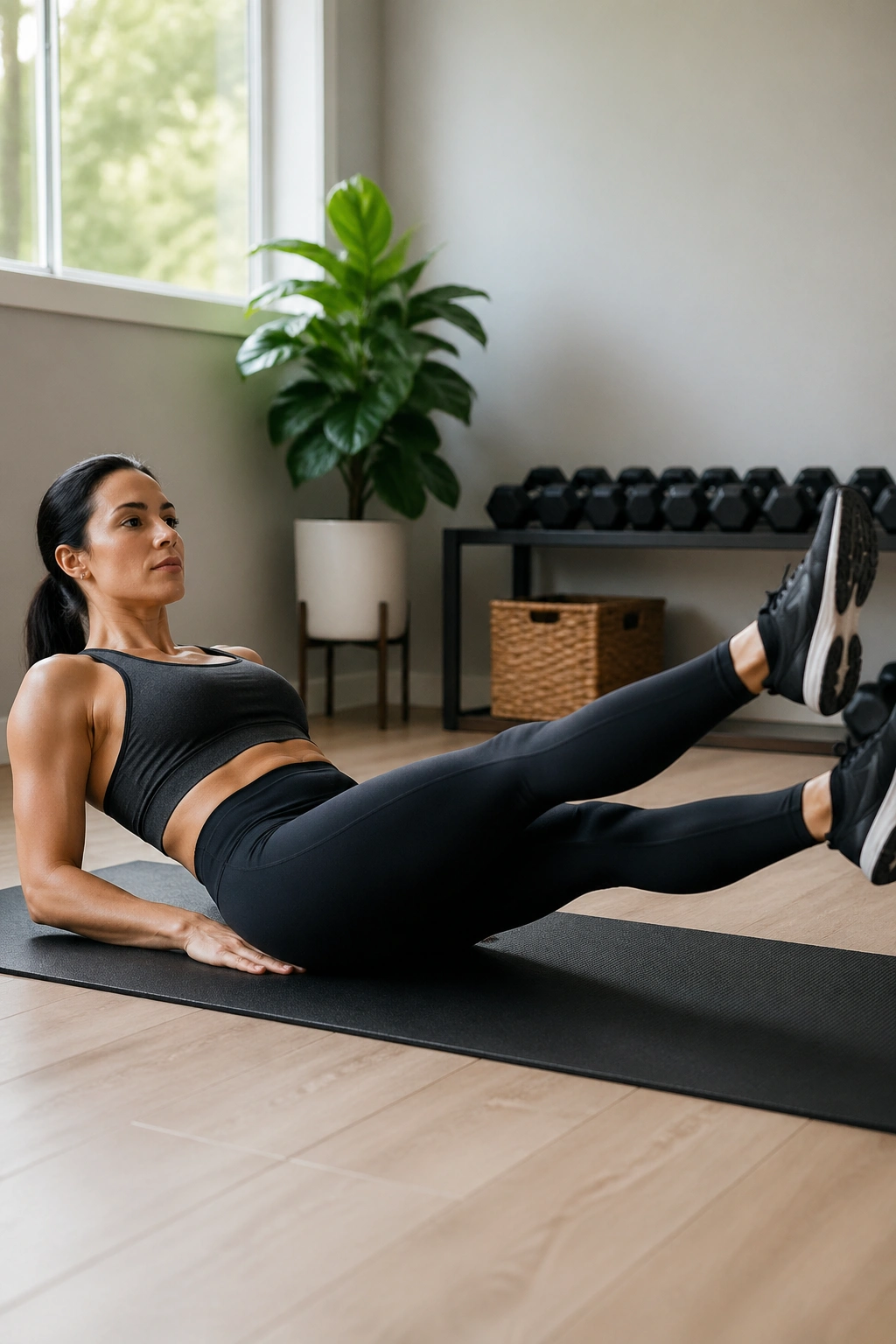
Why do flutter kicks feel easy for four seconds and awful after that?
Because they are sneaky. The movement is small, but your lower abs and hip flexors have to keep working without letting your low back arch off the floor. Lie down, brace your core, lift your legs a little, and kick in short, controlled beats. If the kicks get too big, your back starts complaining. Shrink them.
Use 20 to 30 seconds for 3 rounds. Place your hands under your hips if your back needs support. Keep your neck relaxed and your toes pointed if that feels natural.
What to avoid
- Don’t kick so high that the move turns sloppy.
- Don’t yank your head forward.
- Don’t let your lower back lift away from the floor.
- Don’t hold your breath through the set.
This one rewards patience. It also punishes vanity fast.
21. Shadow Boxing Intervals
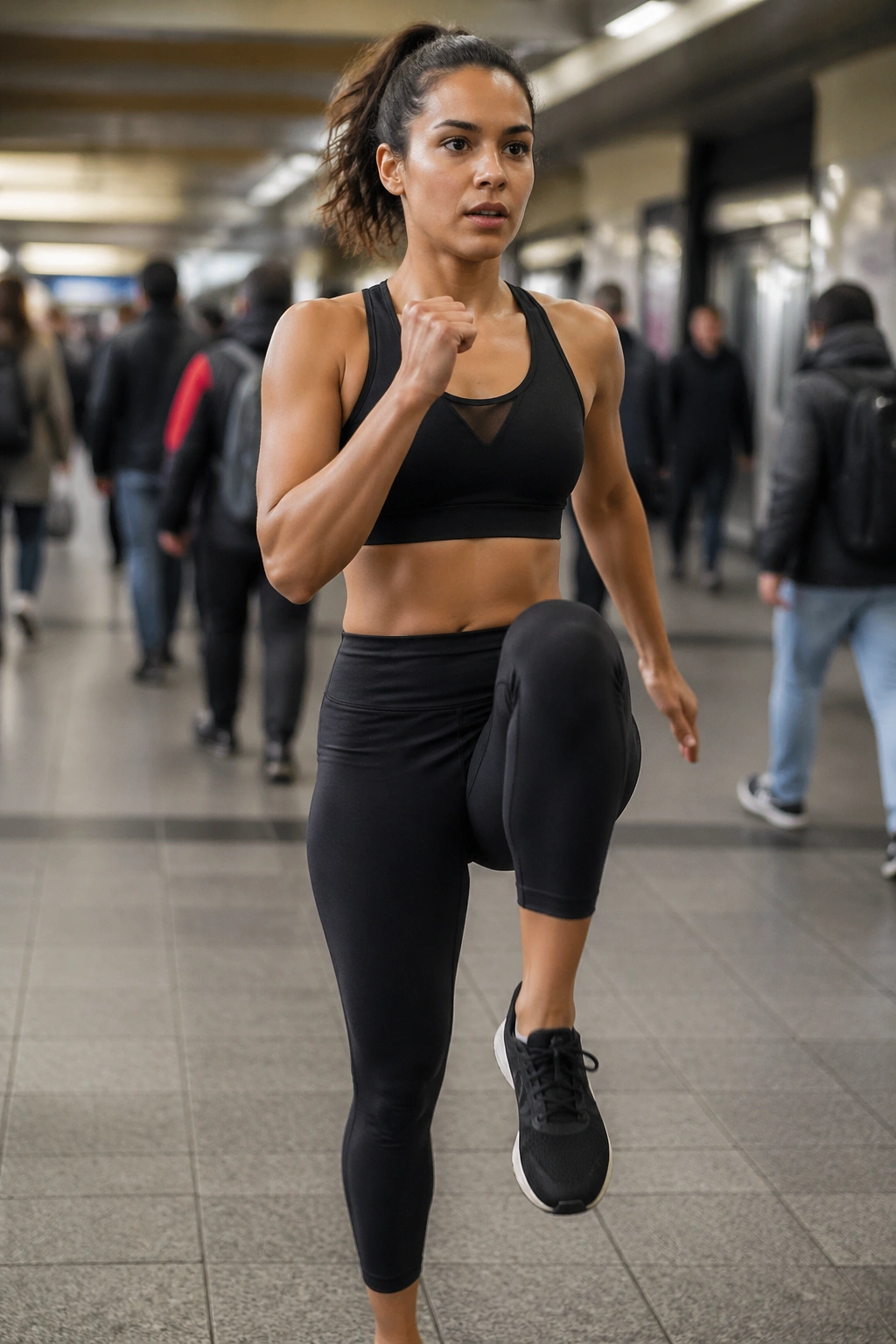
If you want a finisher that looks harmless and behaves like cardio, shadow boxing is hard to beat.
Punch combinations force your upper body, core, and feet to work together while your heart rate climbs. Jab-cross, jab-cross-hook, slip, repeat. Keep your hands moving back to guard, rotate through your torso, and stay light on the balls of your feet. It is cleaner than a lot of people expect and more tiring than they think.
Work for 2 minutes, rest for 30 to 45 seconds, and repeat for 2 to 3 rounds. Keep the punches crisp. Don’t swing from loose shoulders like you’re swatting flies. A sharp, steady combo makes the whole thing feel athletic instead of random.
After day 21, loop back to the days that felt strongest and keep the ones your body actually likes. That matters more than doing every move forever. A plan you repeat is worth more than a perfect one you abandon.
