



You have probably been there: the alarm goes off, you lace up your shoes, step out the front door, and immediately start running at your goal pace. Your muscles are cold, your joints feel a bit stiff, and that first half-mile feels like a slow, uncomfortable grind as your body struggles to catch up to the demand you are placing on it. It takes time for the synovial fluid in your joints to lubricate them and for your blood flow to shift from your digestive system to your working muscles. Jumping straight into a run without prep is like cold-starting an engine on a freezing winter morning; you might make it work, but you are creating unnecessary wear and tear.
A proper warm-up does more than just prevent injury; it changes the quality of the run itself. When you prep your body, you find your rhythm faster. Your breathing settles sooner. That heavy, sluggish feeling in your legs during the first ten minutes? It disappears. The goal is to move from a state of rest to a state of activity with purpose and intention. You do not need to spend forty-five minutes in a gym to get ready for a jog. Five to ten minutes of dynamic movement is usually enough to signal to your nervous system that it is time to perform.
1. Forward Leg Swings
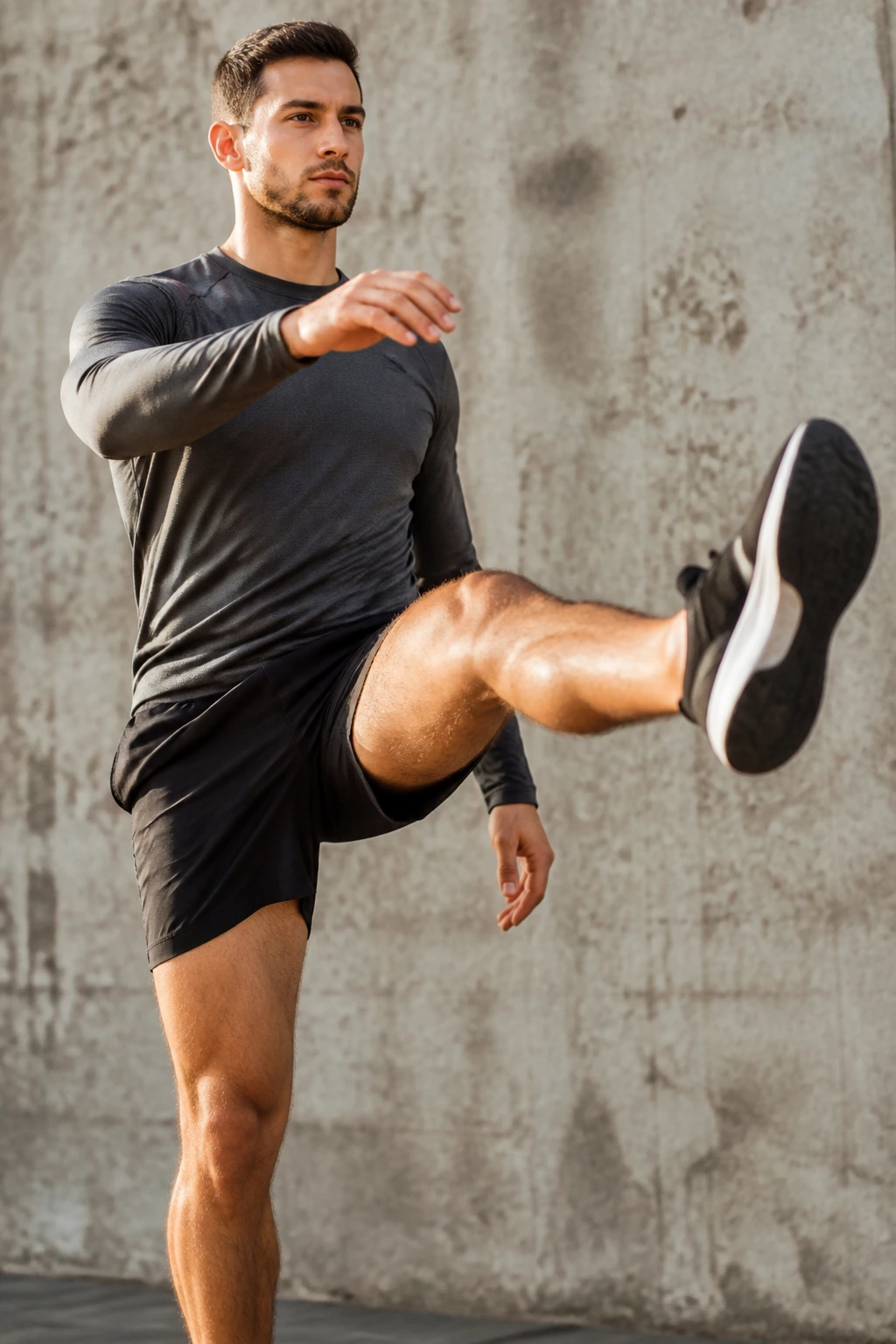
These are a staple for a reason. Most of us spend hours sitting in chairs, which shortens our hip flexors and puts our glutes to sleep. Forward leg swings help wake up that posterior chain while opening the front of the hip. Find a stable surface—a wall, a tree, or a lamp post—and brace yourself. Keep your upper body tall. Do not let your back arch or round.
The Mechanics of the Swing
You want the movement to come from the hip joint, not the lower back. Swing one leg forward and backward in a controlled, rhythmic motion. Aim for about ten to fifteen swings per leg. Let momentum do a little of the work, but keep the core engaged so your torso remains completely still. If your back is swaying back and forth, you are missing the point. Keep it isolated.
Pro tip: Focus on the “back” part of the swing. That is where you get the hip extension, which is critical for a powerful running stride. Squeeze your glute at the apex of the backward swing to really feel the engagement.
2. Lateral Leg Swings
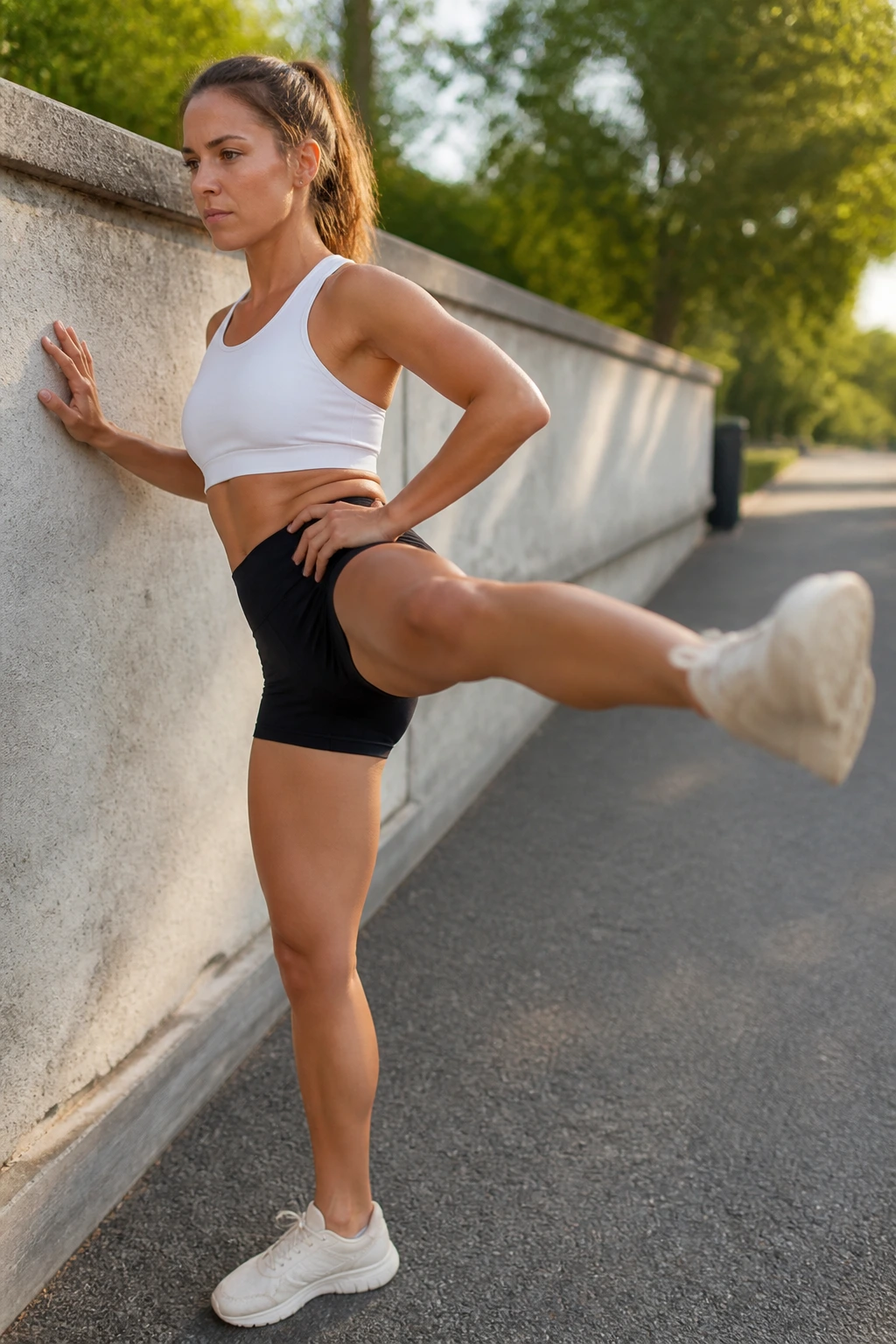
While forward swings handle the sagittal plane, lateral swings open up the adductors and abductors—the inner and outer thighs. Runners often experience tightness in these areas, which can lead to knee instability if left unaddressed. Face your support surface and swing one leg side-to-side across your body, like a pendulum.
Why Runners Need This
Running is almost entirely a linear activity, but your hips need to function in multiple planes of motion to remain resilient. Tight adductors can pull on the pelvis, creating imbalances that radiate down to the knees. By swinging the leg laterally, you are gently stretching the inner thigh and waking up the muscles on the outside of the hip, such as the gluteus medius.
- Keep the hips square to the front.
- Don’t let the swinging leg rotate outward at the top of the arc.
- Keep the movement fluid; don’t jerk the leg.
- You should feel a gentle, dynamic stretch, never sharp pain.
3. Walking Lunges

Walking lunges are fantastic because they combine balance, core activation, and a deep stretch for the hip flexors. Unlike static lunges, the walking version forces you to stabilize your body in transition, which mimics the instability of running. Take a long step forward, drop your back knee toward the ground, and push off the front heel to bring your back leg forward into the next step.
Don’t let your front knee collapse inward. It should track directly over your second toe. If you feel wobbly, that is good—it means your stabilizing muscles are working. If you cannot maintain your balance, slow down the tempo. This isn’t a race; it is about waking up the nervous system. By the time you hit twenty lunges total, your legs will feel significantly warmer and more responsive.
4. High Knees
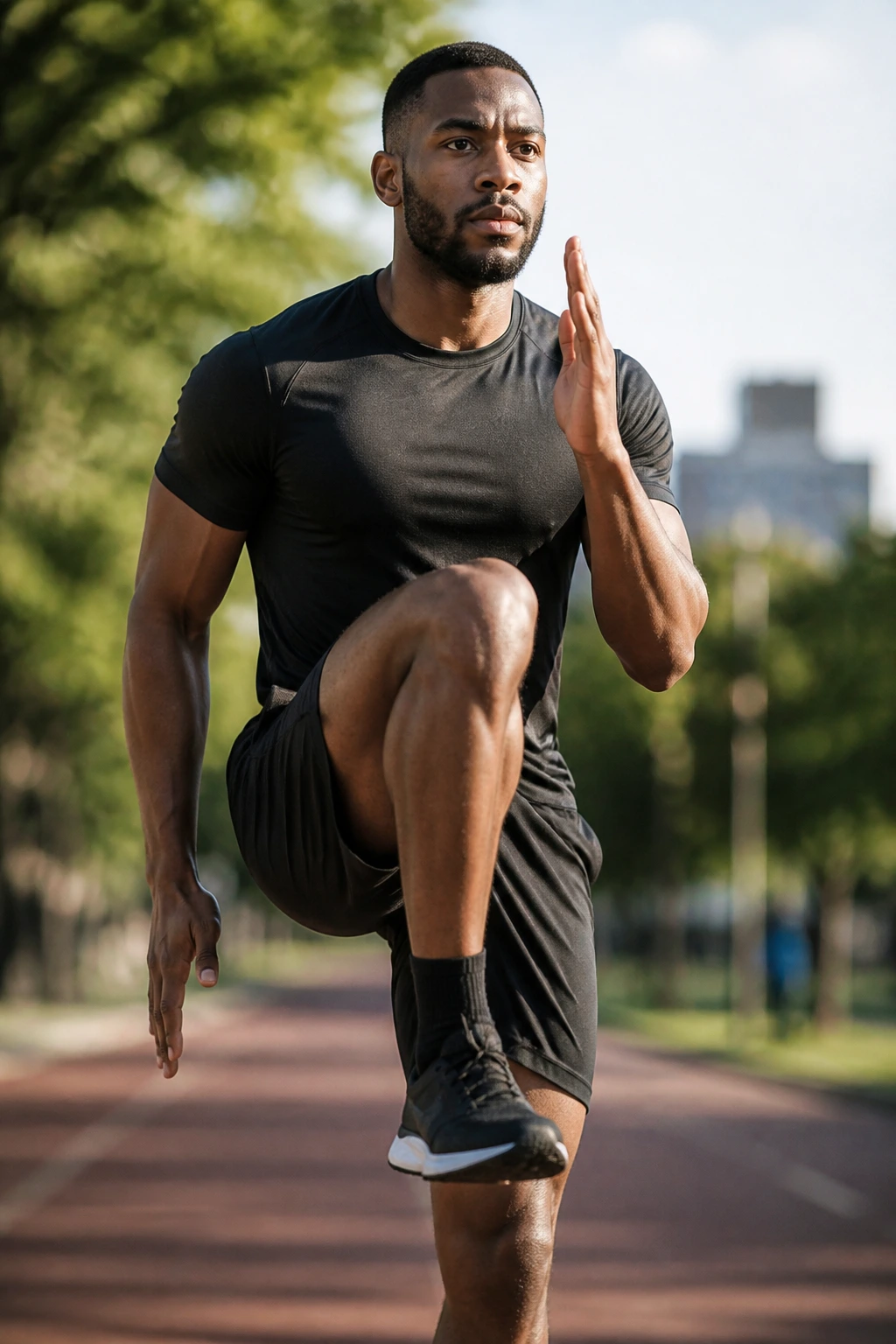
This is a classic drill, but it is often performed incorrectly. High knees are meant to be an explosive, dynamic movement that elevates your heart rate and engages your core. You aren’t just bringing your knees up; you are actively driving them toward your chest while keeping your back straight.
The Coordination Factor
Many runners struggle with high knees because it requires coordination between the arms and legs. Drive the opposite arm to the opposite knee. Think of yourself as a piston. The contact time with the ground should be minimal. You want to bounce off the balls of your feet, not plod heavily on your heels.
Common Mistake: Leaning backward. It is tempting to tilt the torso to help get the knees higher, but that disengages your core. Stay upright. If you cannot get your knees to waist height while staying vertical, lower the height and focus on the speed of the turnover.
5. Butt Kicks
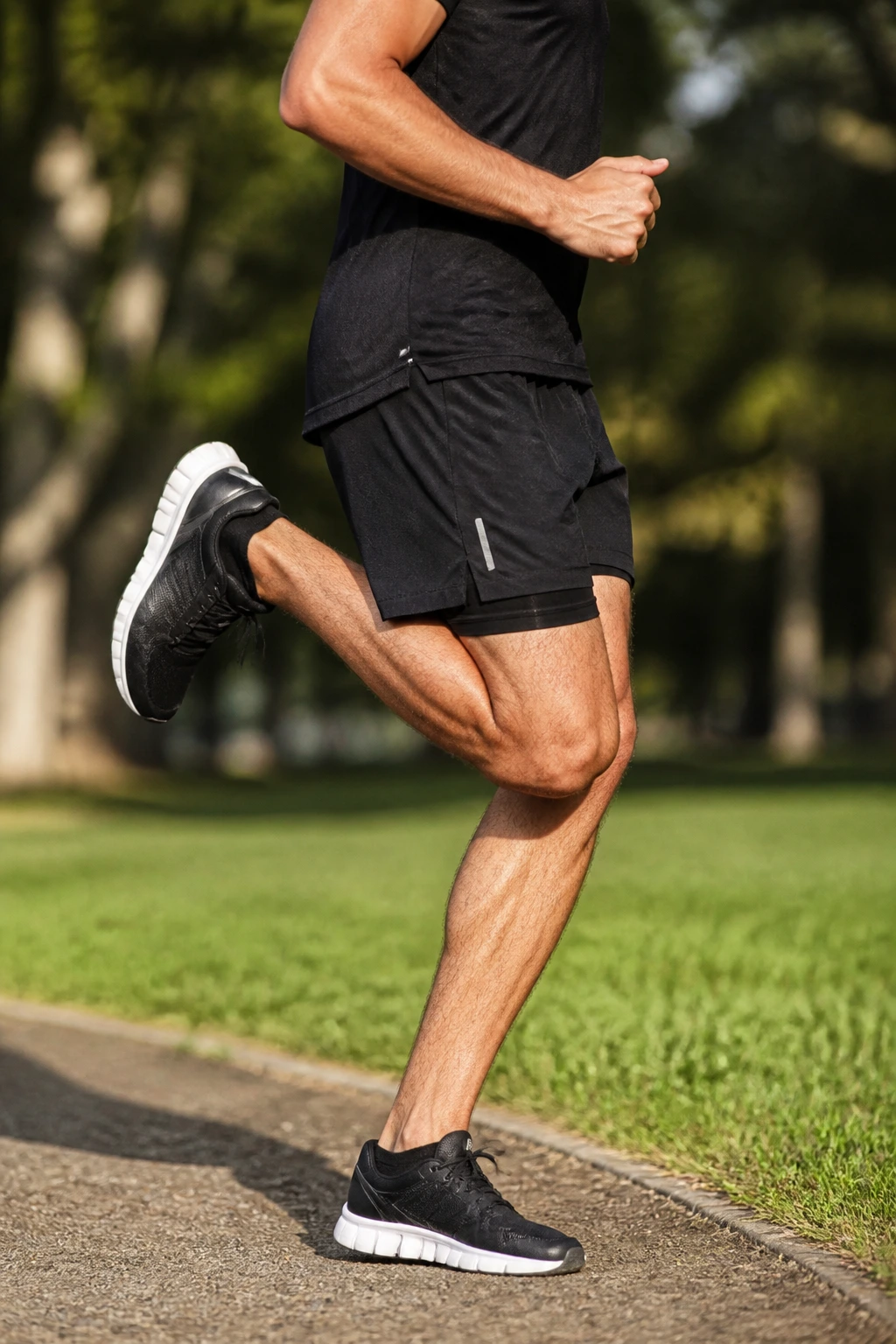
Butt kicks are the counterpart to high knees. They target the hamstrings and help reinforce the correct recovery phase of your running stride—the moment your foot leaves the ground and your heel comes up toward your glute.
- Keep your torso upright.
- Focus on flicking the heel directly toward your glute.
- Don’t let your knees drift forward; keep them under your hips.
- Engage your abs so your pelvis doesn’t tilt forward.
This exercise is excellent for reminding your brain to “pick up the foot” rather than dragging it. Dragging feet leads to tripping and inefficient mechanics. Perform these for about thirty seconds, focusing on a quick, rhythmic snapping motion. It should feel like your heels are dancing against your glutes.
6. Torso Twists
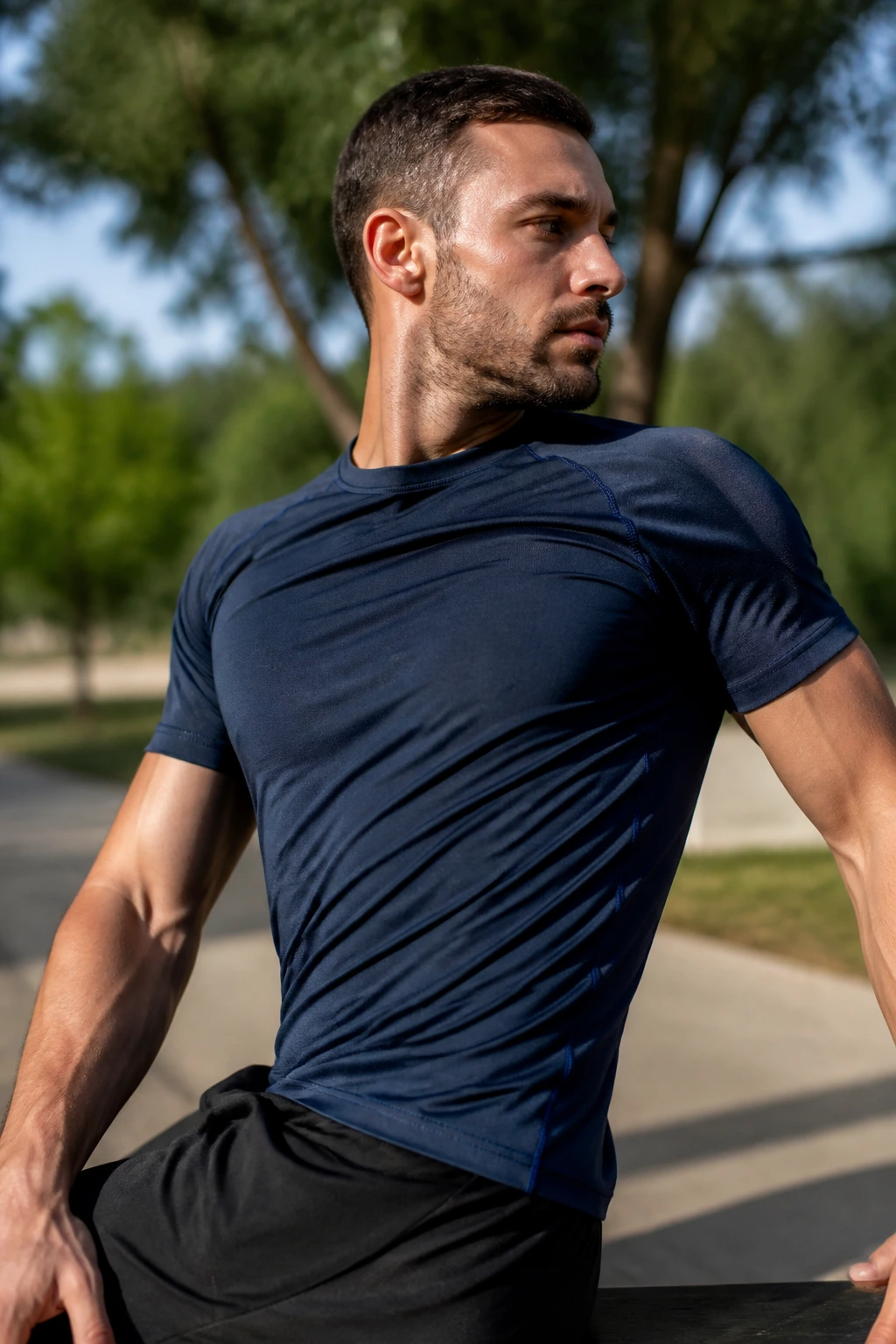
Running is a whole-body sport. If your core is locked and your upper body is stiff, your running economy suffers. Torso twists loosen up the thoracic spine and help you develop a more natural, relaxed arm swing. Stand with your feet shoulder-width apart, knees slightly bent. Let your arms hang loosely by your sides or hold them out at chest height.
Rotate your torso from left to right, letting your arms swing freely with the momentum. Keep your feet planted, but allow your trailing heel to pivot off the ground so you don’t torque your knees. This should feel like a gentle release through the mid-back. If you sit at a desk all day, this movement is non-negotiable before a run. It literally helps you “unwind” from the day.
7. Inchworms

Inchworms are a total-body wake-up call. They combine a hamstring stretch with a core and shoulder engagement exercise. Start standing, then hinge at the hips and place your hands on the ground. Walk your hands out until you are in a high plank position. Hold for a brief second, feeling your core tighten.
Now, instead of walking your feet to your hands, walk your hands back toward your feet while keeping your legs as straight as possible. This forces a deep, active stretch in the hamstrings. Roll up slowly to the starting position. Do five to seven of these. They are slow, methodical, and incredibly effective at integrating your upper and lower body before you start logging miles.
8. Calf Raises
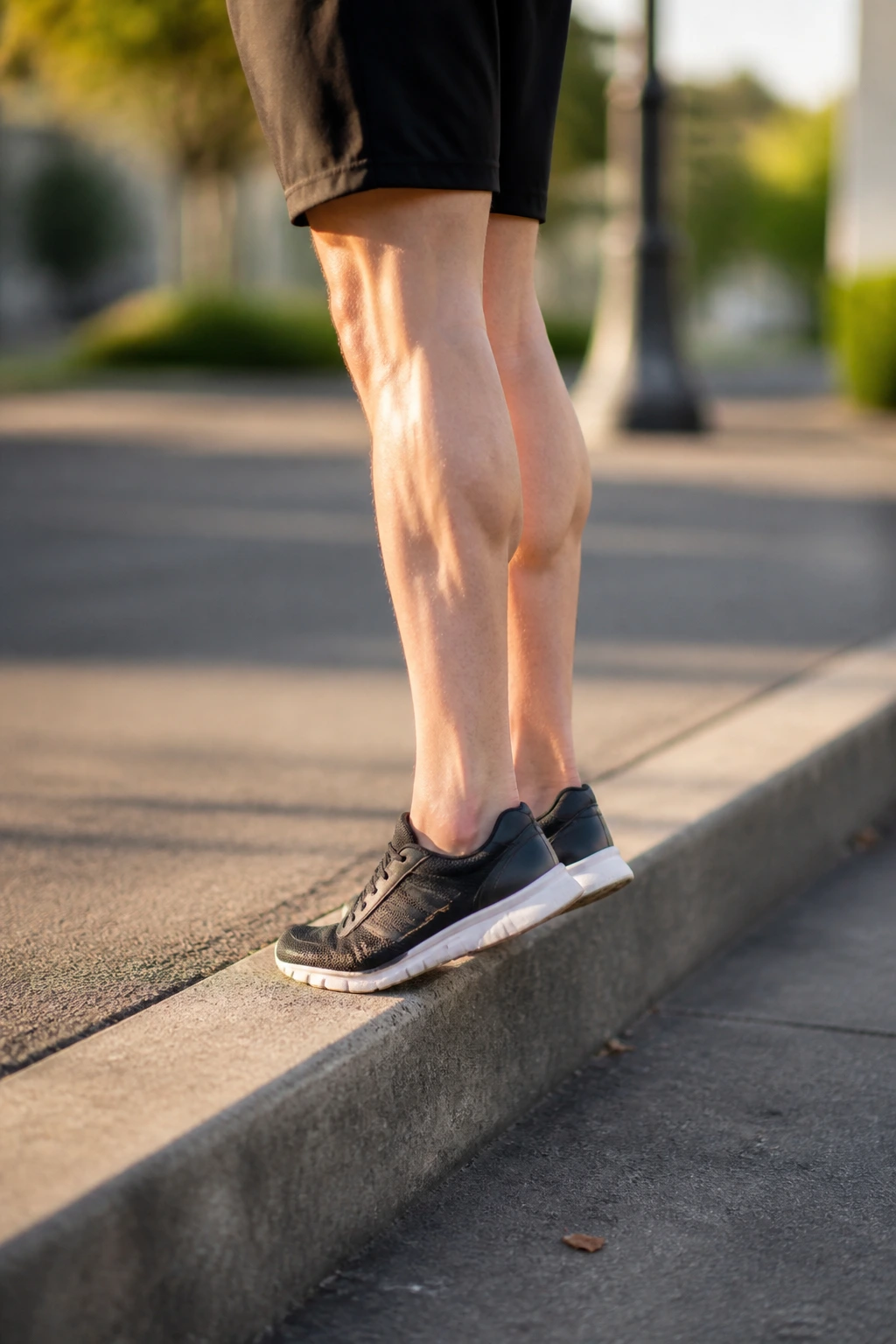
Your calves are the shock absorbers and propulsion engines of your running stride. Warming them up is essential for avoiding dreaded issues like Achilles tendonitis or calf strains. Stand on the edge of a curb or step if you have one, or just flat ground if you don’t.
Rise up onto the balls of your feet, hold for a second, and then lower your heels back down. If you are on a step, let your heels drop slightly below the level of the step to get a full range of motion. Do about twenty reps. This isn’t about hypertrophy; it is about blood flow. You want to feel a gentle burn, which indicates that the muscles are primed and ready to handle the impact of the road.
9. Lateral Shuffles
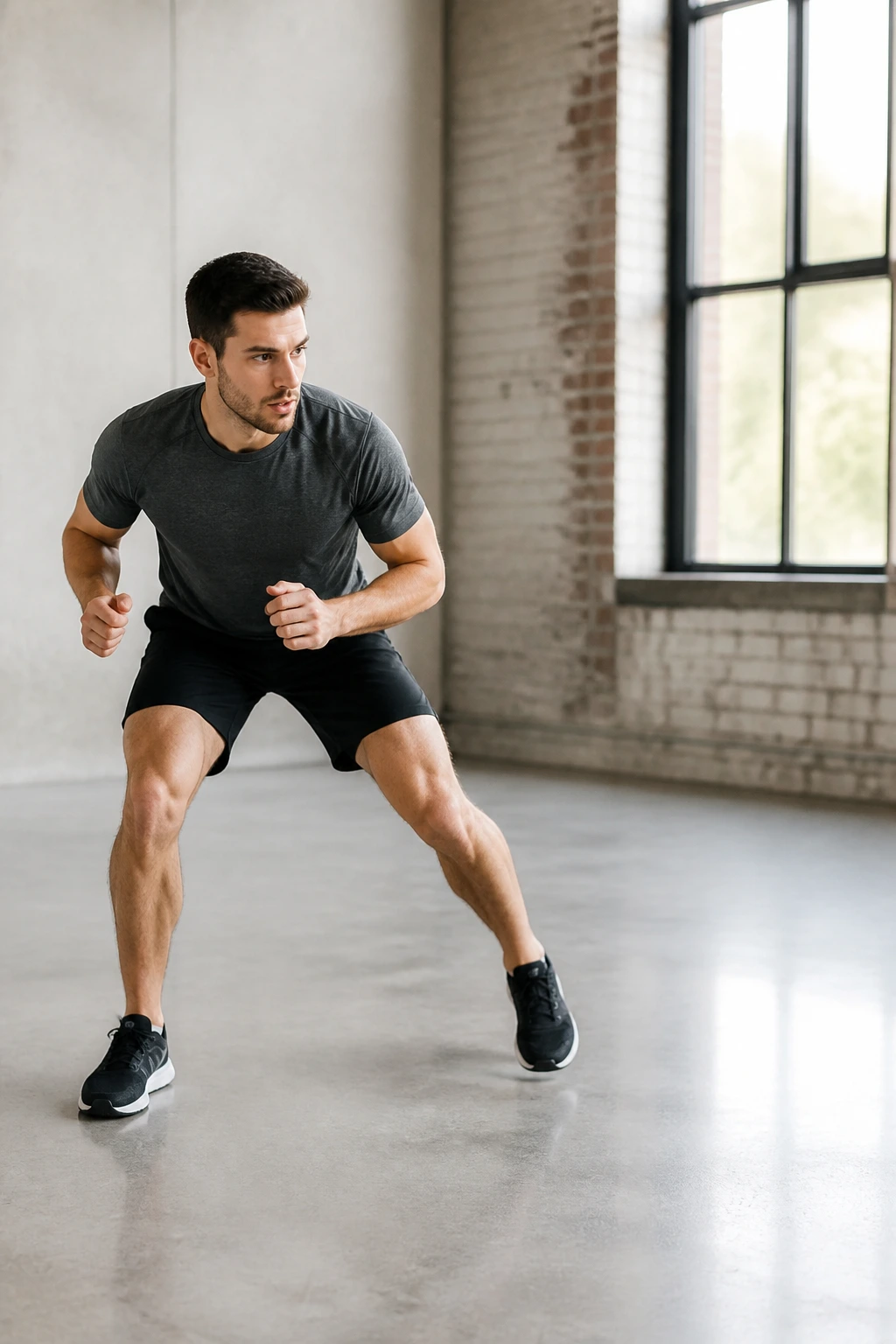
We tend to live in the sagittal plane—moving forward and backward. Shuffling sideways breaks that habit. It engages the gluteus medius and improves your balance. Get into a slight athletic crouch, knees bent, butt back. Take quick, choppy steps to the right for ten feet, then shuffle back to the left.
Why This Matters
Running on uneven terrain or cornering requires lateral stability. If your stabilizer muscles are weak, your ankles and knees bear the brunt of the forces. Lateral shuffles force those smaller, stabilizing muscles to fire. By the time you start your run, your hips will feel more “solid,” and you’ll find it easier to keep your legs in alignment through the gait cycle.
10. Reverse Lunges with a Twist
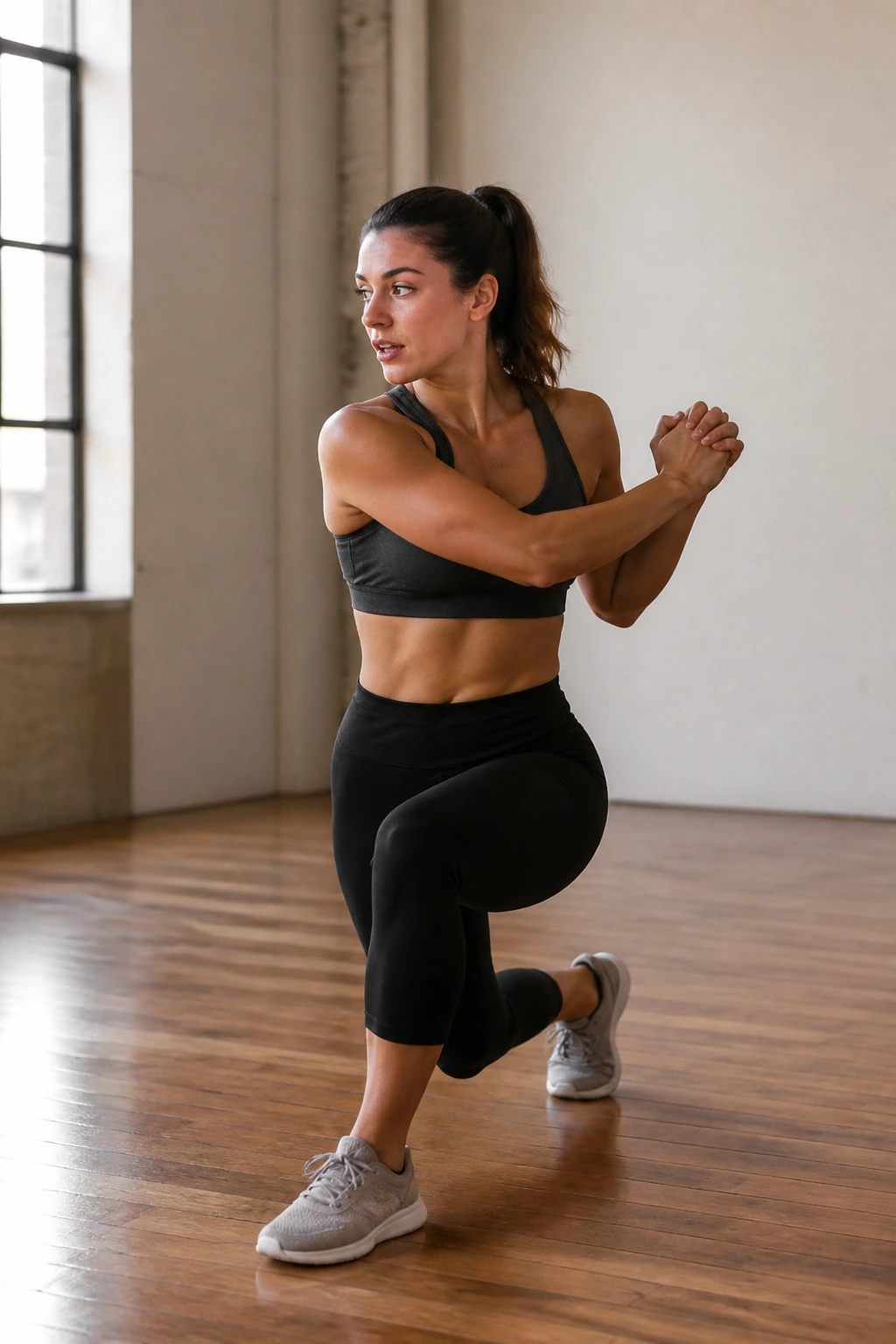
This exercise upgrades the standard reverse lunge by adding a rotational component. Step back into a lunge, and as you drop your back knee, rotate your torso toward the front leg. This creates a diagonal pull through your core and hips.
It forces you to stabilize while in a compromised position—which is exactly what running requires when you are navigating uneven ground or dealing with fatigue. It also stretches the hip flexor on the trailing leg while firing up the glute on the leading leg. Alternate legs for about twenty reps total. It feels awkward at first, but once you get the coordination down, it becomes one of the most efficient movements you can do.
11. Hip Circles
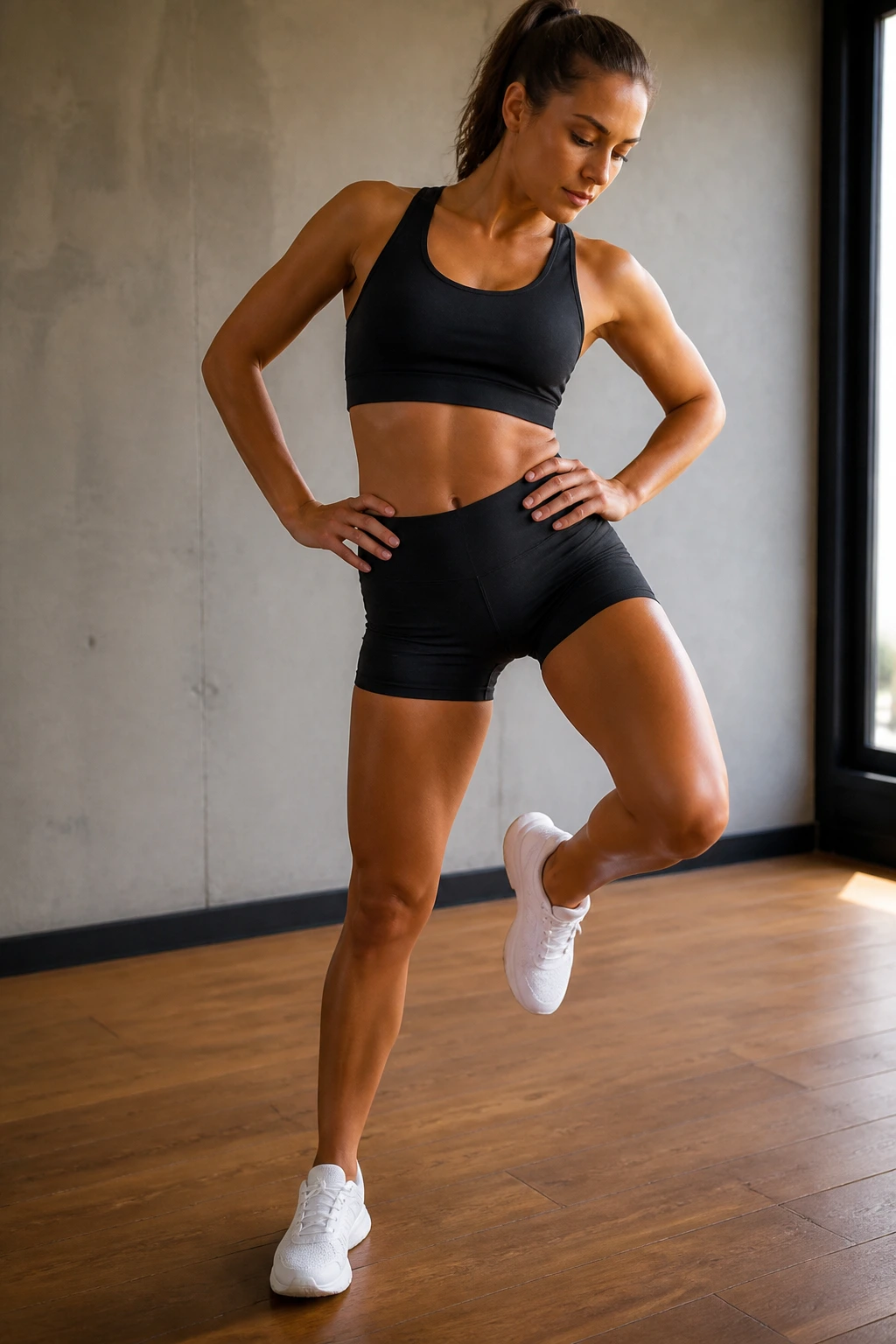
Hip circles are deceptively simple. Stand with your feet hip-width apart and place your hands on your hips. Begin to make large, slow circles with your pelvis, as if you are using a hula hoop. Do ten circles in one direction, then ten in the other.
This movement encourages synovial fluid to move into the hip capsule. When you have been immobile, the fluid can become viscous; moving it around makes it more fluid, reducing friction in the joint. It is a subtle exercise, but if you have ever felt “stuck” or “tight” in the hip socket during the first mile of a run, this is exactly what you need to fix that.
12. Ankle Circles
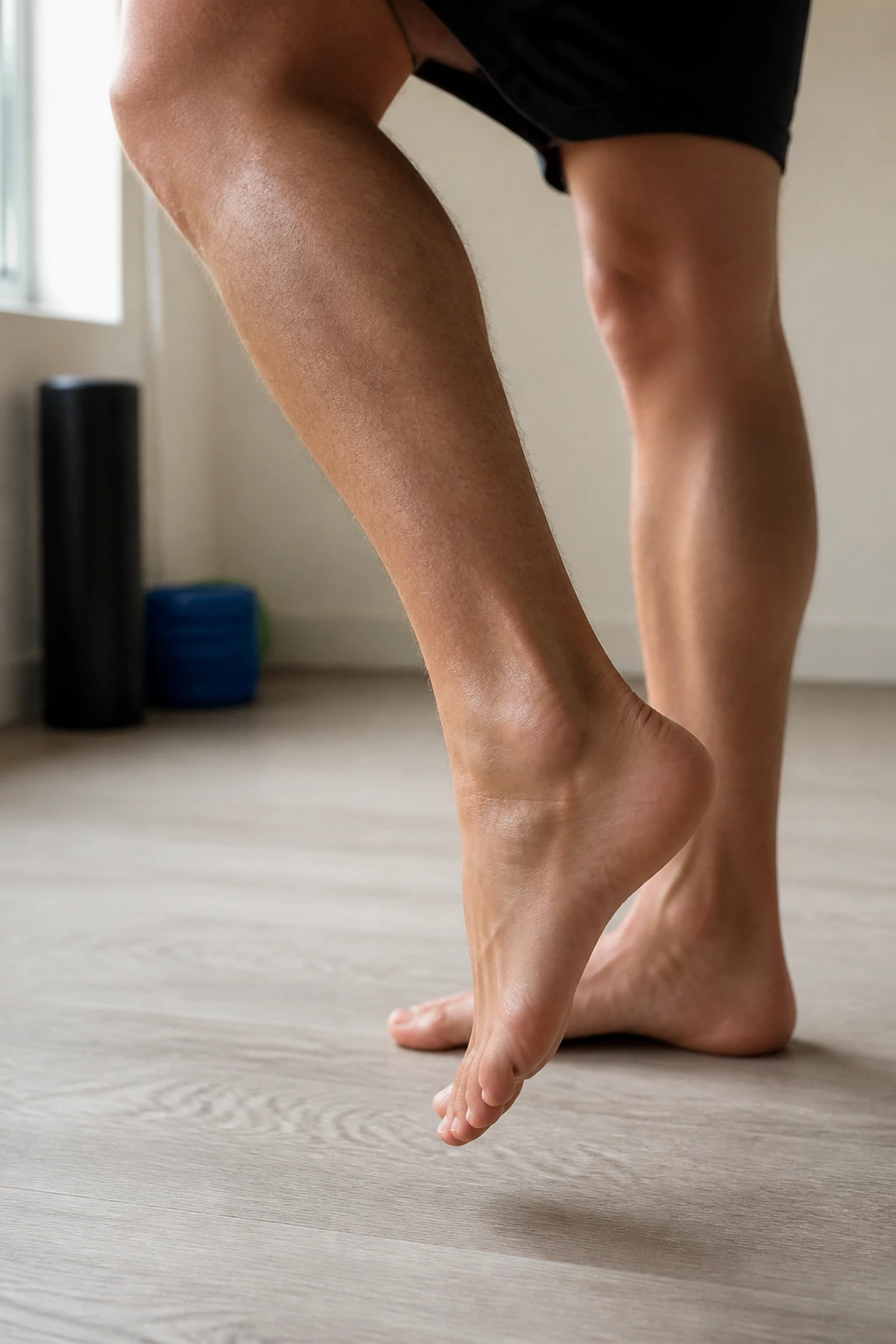
Runners often obsess over their hips and knees but forget the ankles—the very first point of contact with the ground. Ankle stiffness can travel up the kinetic chain, contributing to shin splints and knee pain. Lift one foot off the ground and rotate the ankle in a circle, making the movement as wide as possible.
- Clockwise: 10 circles.
- Counter-clockwise: 10 circles.
- Repeat on the other foot.
Make sure you are moving the foot itself, not just swinging the lower leg. You want to feel the muscles around the ankle joint working. This is especially important if you are prone to rolling your ankles on trails or uneven pavement. It warms up the tendons that stabilize your gait.
13. Toy Soldiers
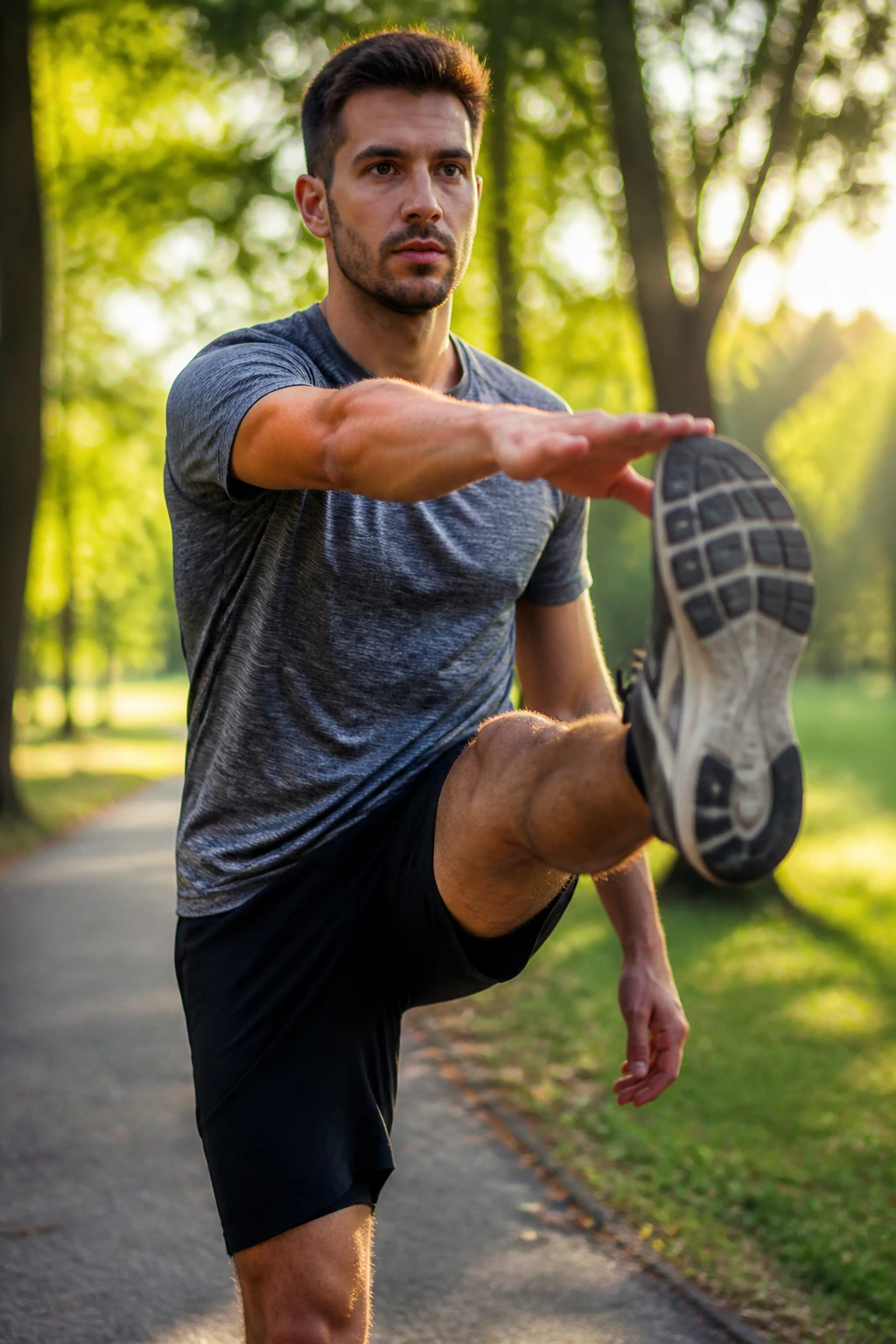
Also known as “Frankensteins,” this dynamic stretch hits the hamstrings and the core. Stand tall and kick one leg straight out in front of you while reaching for your toes with the opposite hand. Don’t worry about actually touching your toes; worry about keeping your leg straight and your back upright.
This is a dynamic hamstring stretch, meaning you are stretching the muscle while it is active, rather than holding it in a static position. Static stretching before a run can actually decrease muscle power, but dynamic stretching like this prepares the muscle fibers to handle the rapid lengthening and shortening they will endure during the run.
14. Glute Bridges
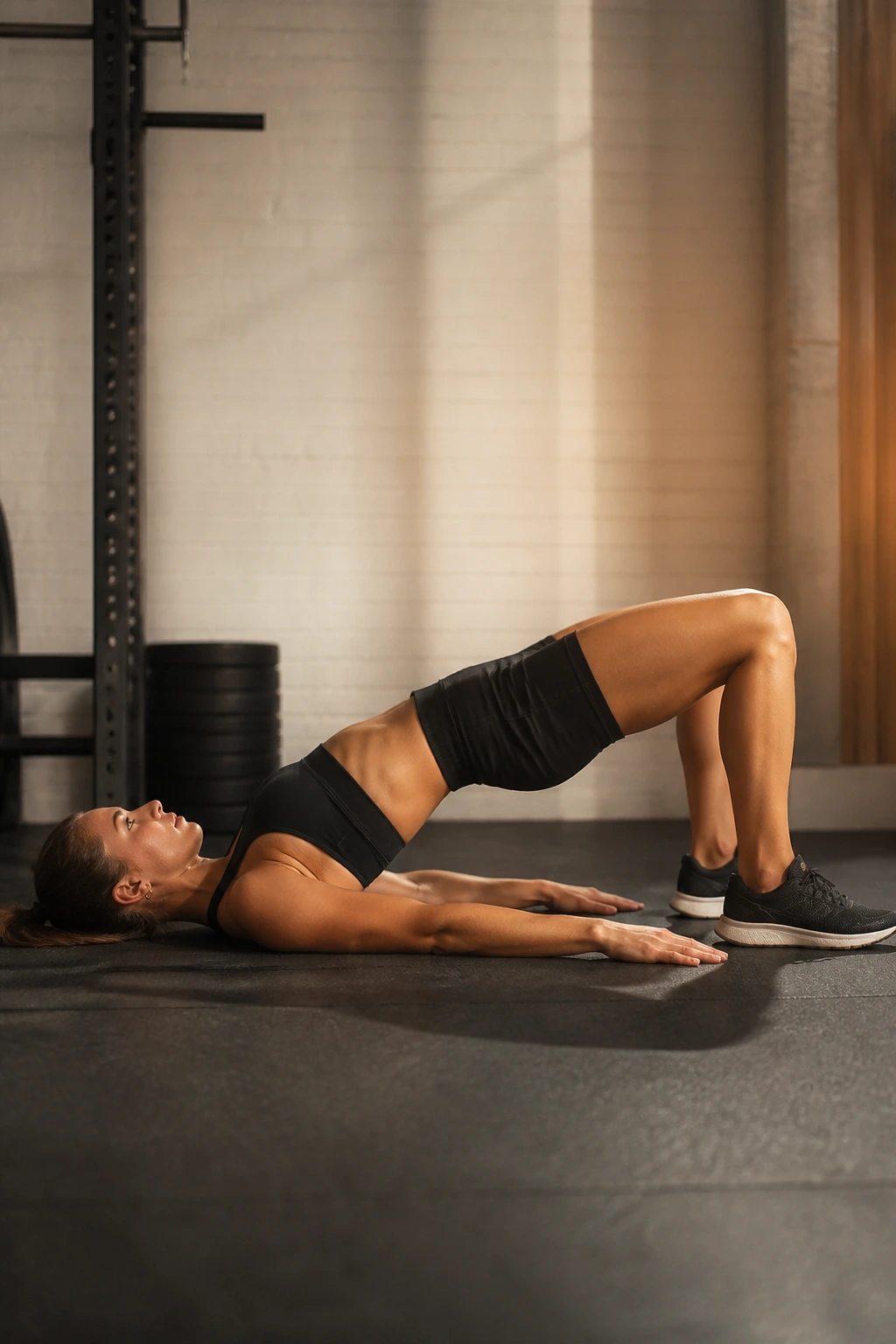
Sometimes, the glutes are “dormant” after a long day of sitting. If your glutes aren’t firing, your hamstrings and lower back end up doing the work, which is a recipe for strain. Lie on your back, knees bent, feet flat on the floor. Lift your hips toward the ceiling, squeezing your glutes at the top.
Lower back down with control. Do fifteen reps. You should feel your glutes working, not your lower back. If you feel this in your lower back, adjust your foot position—try bringing your heels closer to your glutes or pushing your hips more through your heels. This simple move acts as an “on switch” for your posterior chain.
15. Side Leg Raises (Standing)
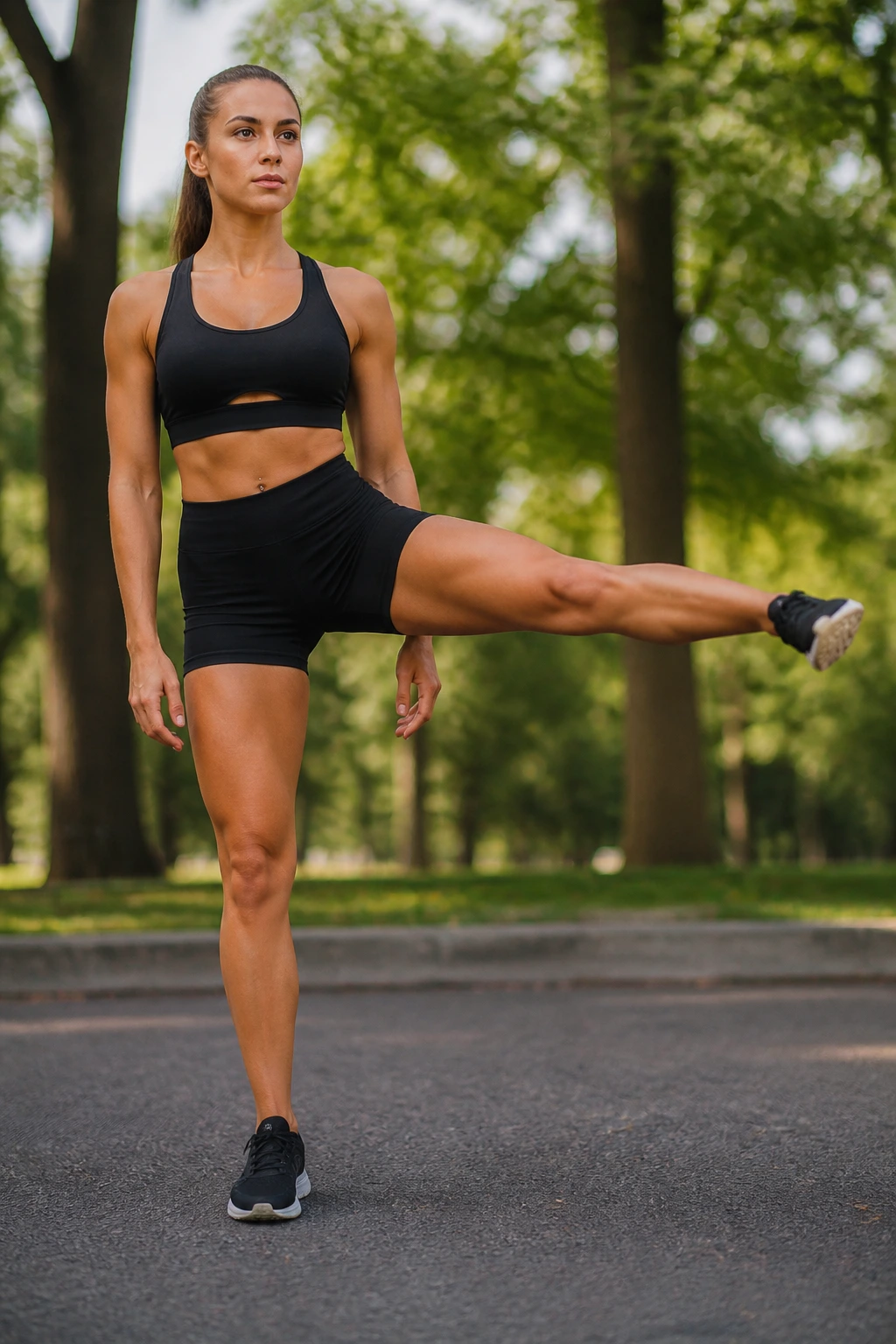
This focuses entirely on the gluteus medius, the muscle responsible for keeping your pelvis level when you are on one leg. Stand straight, hold onto something for balance if needed, and lift one leg out to the side, keeping it straight. Do not let your torso lean to the opposite side to compensate.
The Stability Test
If you feel your hip burning, that is the gluteus medius working. You want that muscle strong because every time you land on one foot during a run, that muscle is the only thing preventing your pelvis from dropping on the unsupported side. A strong glute medius prevents the “crossover” gait that leads to many common running injuries.
16. Knee-to-Chest Hugs
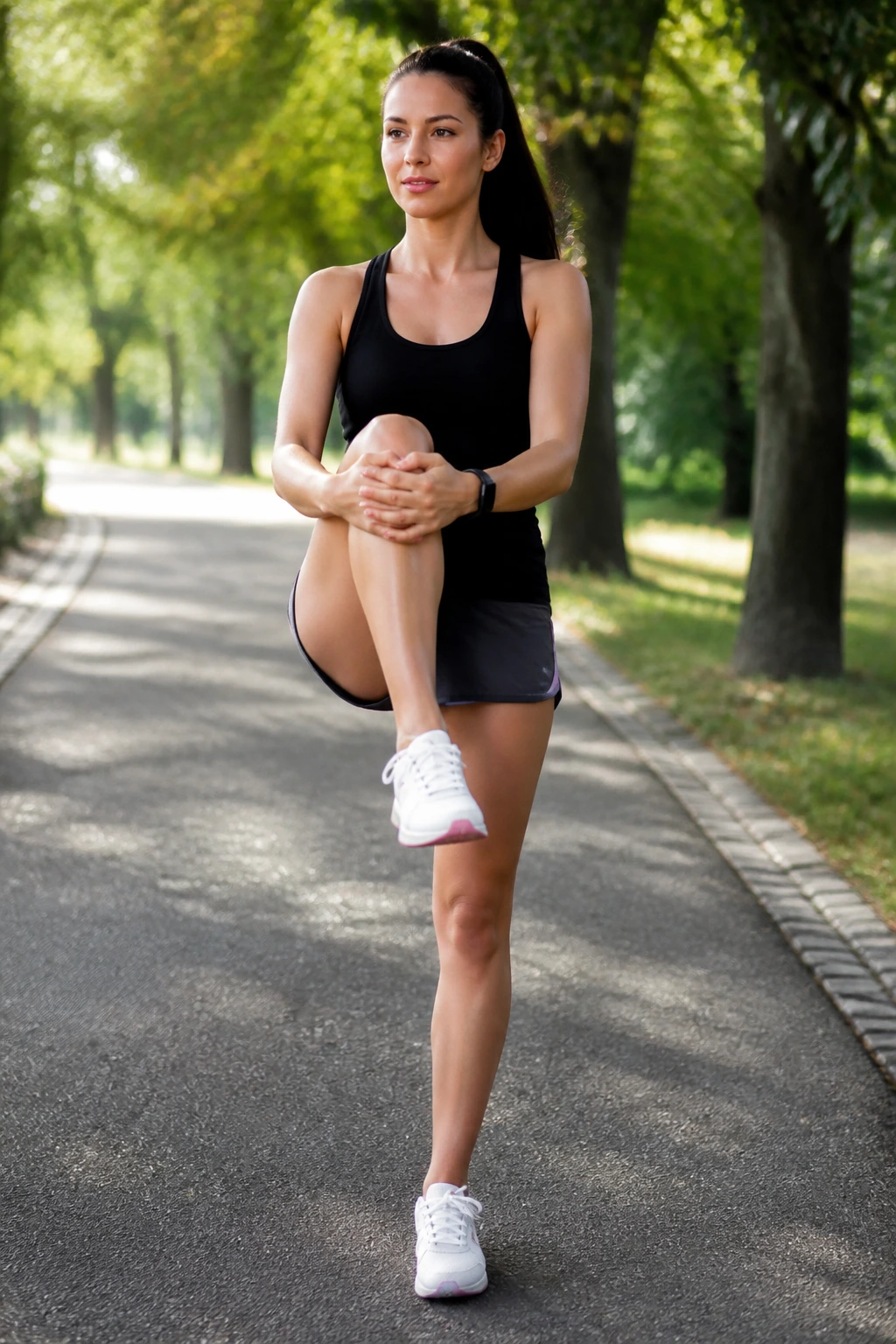
This is a gentle way to loosen the lower back and activate the hip flexors. While standing, lift one knee toward your chest and hug it with both hands, pulling it gently but firmly. Hold for a second, then release and step forward.
Repeat this while walking forward. This is a “walking” knee-to-chest stretch. It forces you to balance on one leg while actively stretching the glutes and lower back on the other side. It is a fantastic way to check in with your body. If one side feels tighter than the other, give that side an extra beat. Use this time to pay attention to any aches or stiffness before you start pushing the pace.
17. Skater Hops

Skater hops add a bit of power and athleticism to your warm-up. Start in a standing position, then hop laterally from one foot to the other, landing on one leg and absorbing the weight with a slight knee bend. Imagine you are speed skating on ice.
These are great for developing explosive lateral power and balance. Since running is linear, your body rarely gets to practice absorbing force from a lateral angle. Skater hops train your ankles and knees to be stable under pressure. Keep it controlled; you don’t need to jump for distance, just focus on the landing and the push-off.
18. Air Squats
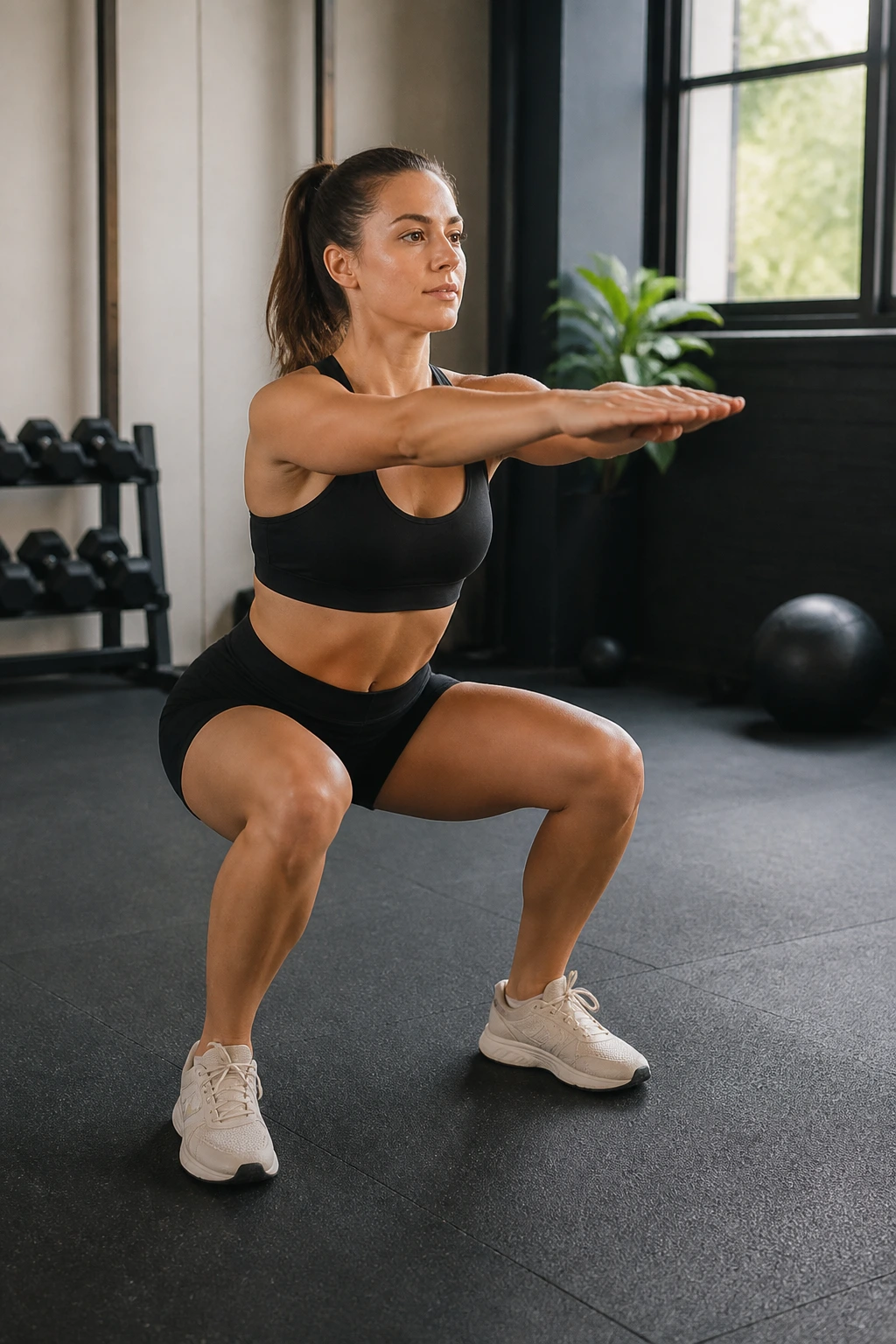
Air squats are the gold standard for full-body leg engagement. Keep your feet shoulder-width apart, toes slightly turned out. Lower your hips back and down, as if you are sitting in a chair, keeping your chest up and your heels planted.
Why You Should Include Them
They hit the quads, hamstrings, and glutes all at once. By performing these before a run, you increase blood flow to the largest muscle groups in your legs. Make sure to go deep enough to feel the muscles engage, but do not sacrifice form for depth. If your heels lift off the ground, widen your stance or work on your ankle mobility.
19. Gate Openers
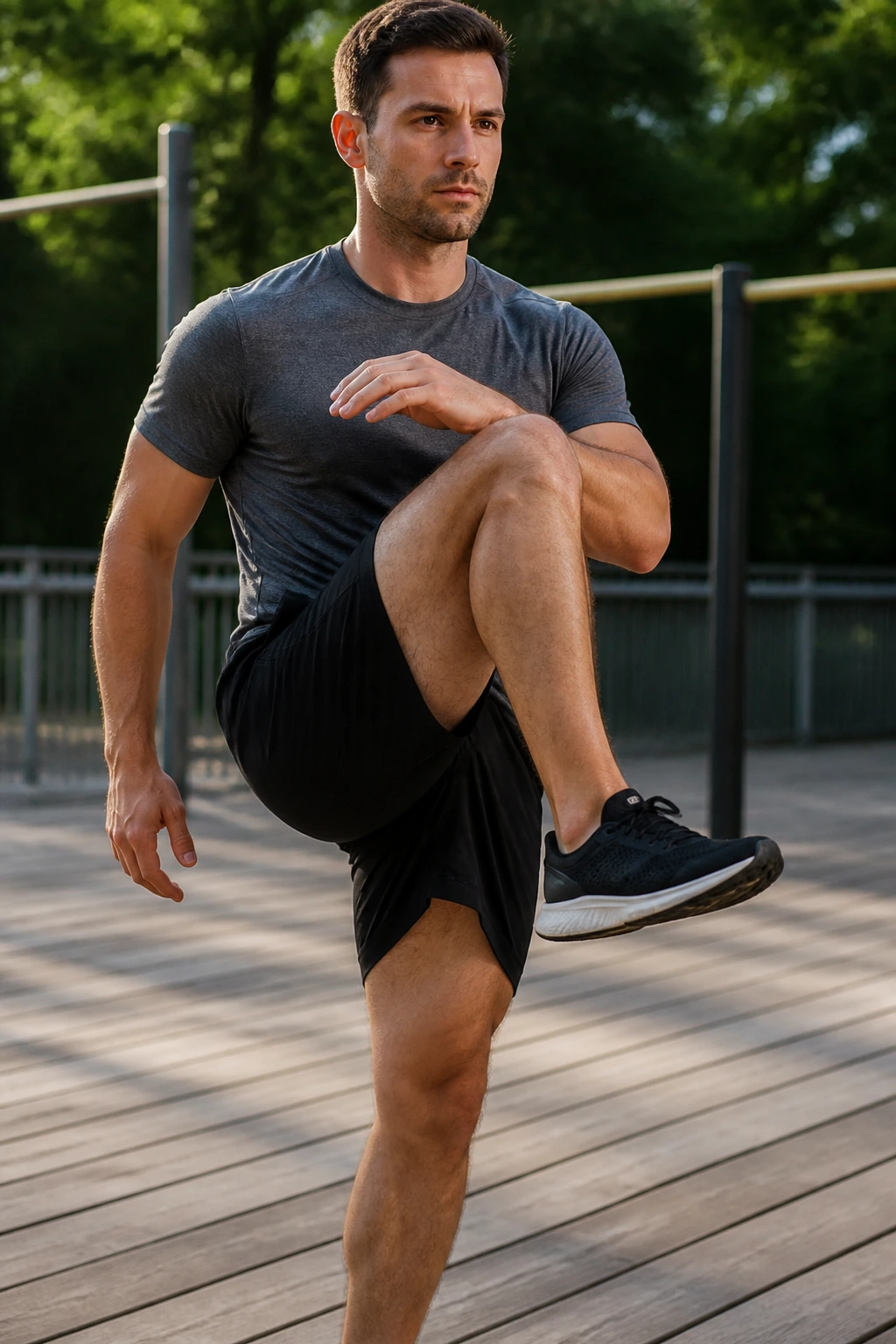
This movement is specifically for hip mobility. Stand tall and lift your right knee toward your chest. Then, rotate your hip outward, opening the leg to the side, and place the foot back down. Repeat on the left.
It is called a “gate opener” because the movement mimics swinging a gate open. This is crucial for loosening up tight hips, which are often the culprit behind limited stride length. When your hips are loose, your stride naturally becomes more fluid and efficient. Do about ten “openers” per leg. You will feel a distinct difference in how much easier it is to initiate your stride once you start running.
20. Carioca

Carioca, or the grapevine drill, is an agility move that improves footwork and hip mobility. Cross your right leg in front of your left, step your left leg out to the side, cross your right leg behind your left, and step out again. Move with a rhythm.
It involves hip rotation and quick foot placement. It is fantastic for waking up the nervous system and getting your brain engaged in the movement pattern. It is harder than it looks, and that is the point—it requires focus. By the time you finish a few laps of carioca, you will be alert, your heart rate will be elevated, and your legs will be fully prepared for the miles ahead.
Final Thoughts
Running is a demanding sport, and how you start sets the tone for how you finish. You do not need to turn your pre-run routine into a massive project, but you do need to acknowledge that your body requires transition time. Pick three or four of the routines mentioned above and mix them up. Some days you might need more focus on the hips, other days more on the ankles.
Listen to your body. If something feels particularly stiff, spend an extra minute there. The goal is to move with purpose, to lubricate your joints, and to activate your muscles so they are ready to work. Once you start warming up, you will realize that those first few miles of your run stop feeling like a chore and start feeling like the smooth, effortless rhythm you were aiming for all along. Get out there, move, and enjoy the miles.
