



Tight sore muscles have a way of turning ordinary movement into a small argument. Getting out of a car hurts. Standing up from a chair hurts. Even reaching for a mug can feel weirdly expensive. That’s why stretching routines for tight sore muscles matter more than people sometimes admit. Done well, they don’t force the body open. They give it a chance to settle, lengthen, and stop bracing quite so hard.
The mistake most people make is going too hard, too soon. They grab a stretch, crank into it, and then wonder why the muscle feels crankier afterward. That’s not a stretch routine. That’s a tug-of-war. A better approach is slower, more specific, and tied to how the muscle got tight in the first place — sitting, lifting, running, sleeping badly, or just carrying tension all day.
Sharp pain is a stop sign.
A good stretch should feel like pressure, warmth, or a mild pull that eases as you breathe. If it feels pinchy in a joint, numb, electric, or hot in a bad way, back off. The routines below are built for the sort of tightness that shows up after training, after long days, or after one too many hours hunched over a screen. Start where your body complains first. For a lot of people, that means the neck.
1. Neck and Upper Trap Release After Screen Time

The neck is where a lousy day collects. Shoulders creep up, jaw tightens, and before you know it your upper traps are doing the work of a stressed-out parking brake. This routine is one of my favorites for tight sore muscles because it’s gentle enough to do almost anywhere, yet it changes the feel of your whole upper body fast.
How to do it
Sit tall or stand with your feet flat. Let your right ear drift toward your right shoulder for 20 to 30 seconds, keeping the left shoulder heavy. Then turn your nose slightly toward your armpit and hold that angle for another 15 to 20 seconds. Switch sides. Finish with 5 slow shoulder rolls back and down.
Keep the stretch small. You’re after release, not strain. If you start shrugging or clenching your jaw, the stretch is too aggressive. I like this one before upper-body training too, because it takes the edge off that stiff, armored feeling without making you sleepy.
2. Doorway Chest Opener for Rounded Shoulders
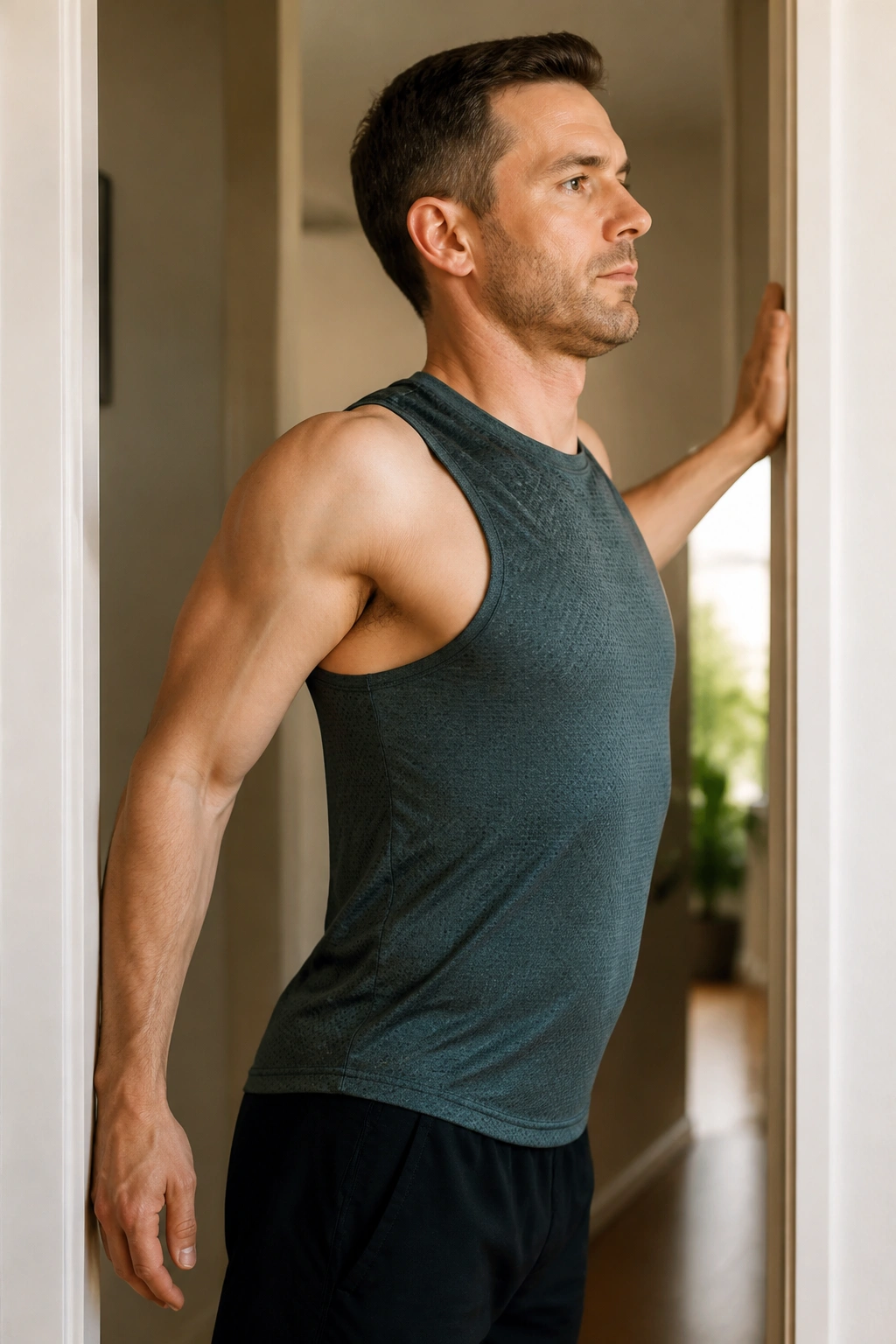
Why do your shoulders feel glued forward after pressing work, typing, or even driving for an hour? Because the front of the chest gets short and protective, while the upper back does too much holding. A doorway stretch helps reverse that pattern without needing any equipment beyond a wall and a frame.
Stand in a doorway and place one forearm on the frame with your elbow at roughly shoulder height. Step the same-side foot forward and lean through until you feel a stretch across the chest and front shoulder. Hold for 20 to 30 seconds, then switch sides. Lowering the elbow a few inches changes the angle, and that matters more than people think.
Where you should feel it
You want the stretch across the pectoral muscle, not a pinch in the front of the shoulder. If the joint feels pinchy, move your elbow lower and reduce the lean. A little goes a long way here. Overdoing doorway stretches is one of the fastest ways to turn a useful routine into something irritating.
3. Cat-Cow and Thread-the-Needle for a Stiff Mid-Back
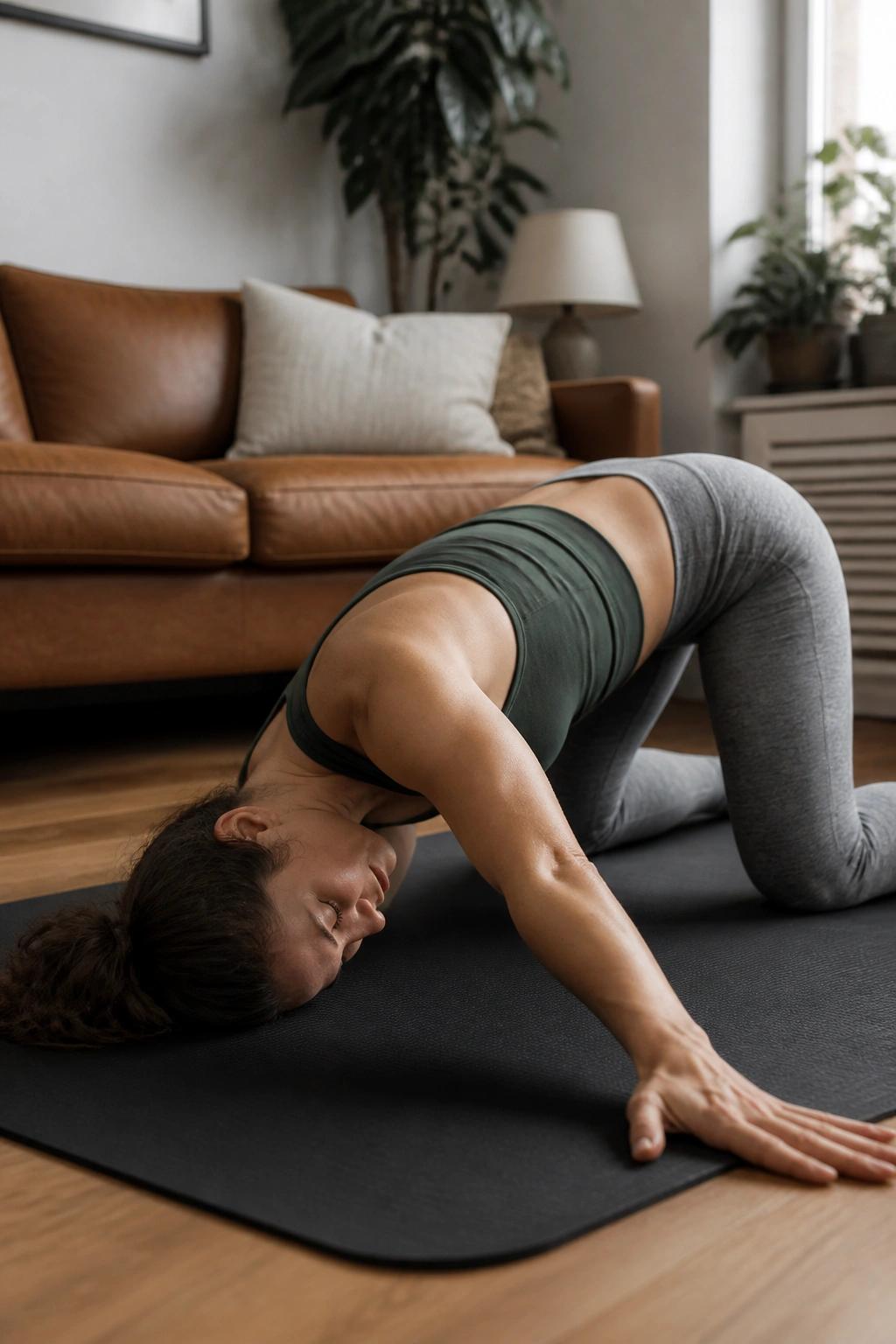
A stiff upper back feels like a board between the shoulder blades. Breathing gets shallow. Rotating to check a blind spot feels clunky. This is where a floor-based spinal mobility sequence earns its keep, especially after long desk days or after pulling-heavy workouts.
Start on hands and knees. Move through 6 slow cat-cow reps: round the spine on the exhale, then arch gently on the inhale. After that, slide one arm under the other for thread-the-needle and rest one shoulder and cheek toward the floor for 20 to 30 seconds per side. Keep your hips stacked over your knees if you can.
- Move slowly enough that the breath stays smooth.
- Stop short of any low-back pinch.
- Let the stretch live between the shoulder blades, not in the neck.
This one works better when you do less. Big dramatic motion is not the goal. The goal is to remind the thoracic spine that it can rotate without a fight.
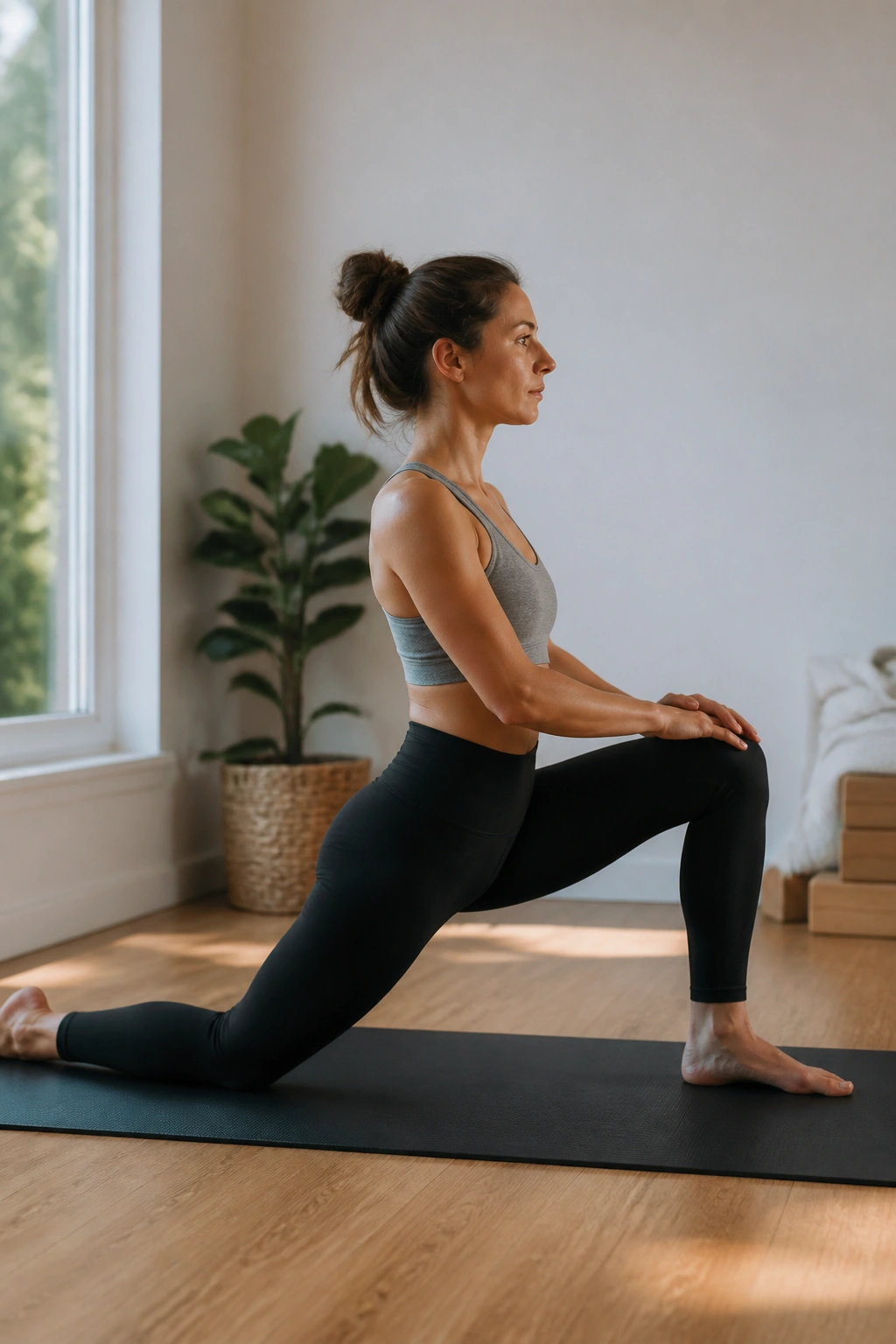
4. Half-Kneeling Hip Flexor Stretch for Tight Sore Muscles
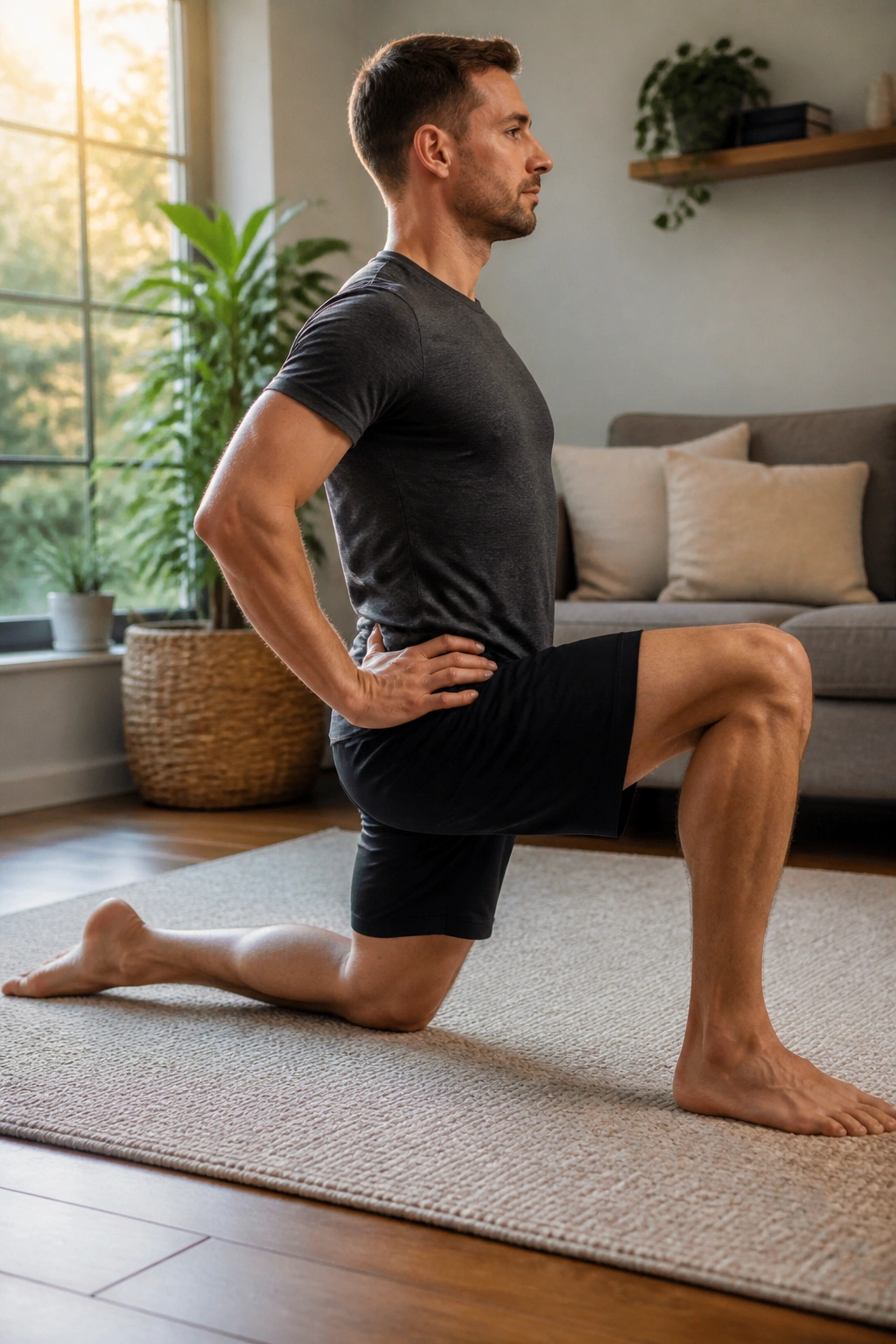
After sitting for hours, the front of the hip can feel short and grumpy. After sprinting, lunging, or hill work, it can feel even tighter. That’s why the half-kneeling hip flexor stretch shows up so often in stretching routines for tight sore muscles: it targets the exact area that gets shortened when you spend a day folded at the waist.
Drop one knee to the floor and keep the front foot flat. Tuck the pelvis slightly under — think of drawing your belt buckle up — then squeeze the glute on the kneeling side. Shift forward only a few inches. Hold for 25 to 40 seconds, then switch sides.
How to keep it honest
If you feel it in the low back, you’ve gone too far. Pull back and re-tuck the pelvis. The stretch should live in the front of the hip and upper thigh. No one gets extra credit for sinking deeper. A controlled 30-second hold with good form beats a sloppy minute every time.
5. Supine Hamstring Stretch with a Strap
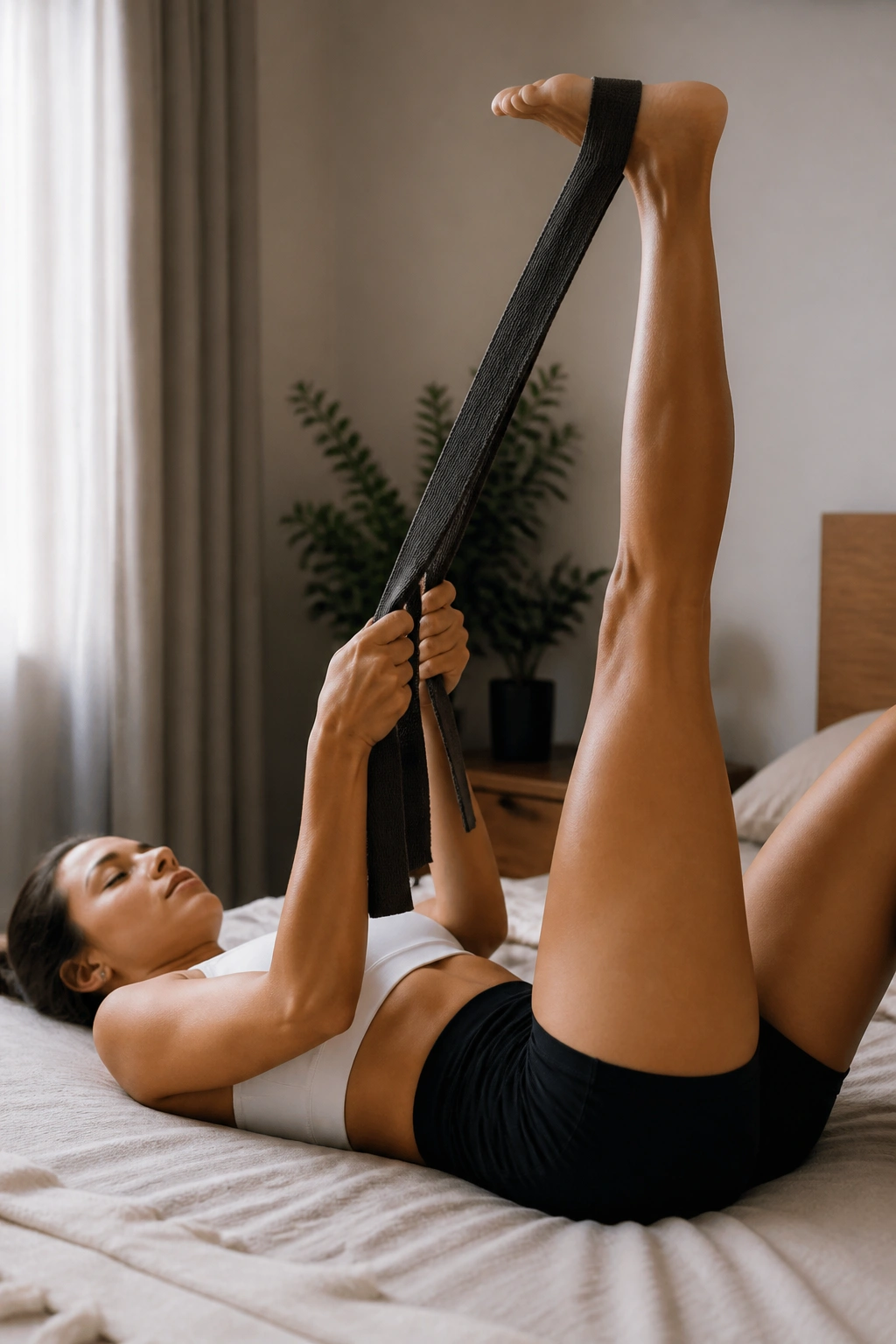
The hamstring stretch people rush is the one that usually backfires. They yank the leg up, lock the knee, and chase a bigger range than their body is ready for. A lying hamstring stretch with a strap gives you more control, which is exactly what sore backs, cranky hamstrings, and tired runners tend to need.
Lie on your back, loop a strap or towel around one foot, and raise the leg until you feel a stretch along the back of the thigh. Keep the other leg bent if your lower back arches easily. Hold for 20 to 30 seconds, then soften the knee a little and breathe. Repeat on the other side.
- Keep the foot relaxed, not violently flexed.
- Use a micro-bend in the knee if the stretch feels too sharp.
- Lower the leg a little if your pelvis starts to tip.
A hamstring stretch should feel long, not forceful. If it feels like your body is bracing against you, it probably is.
6. Figure-Four Glute Stretch for Deep Hip Tightness
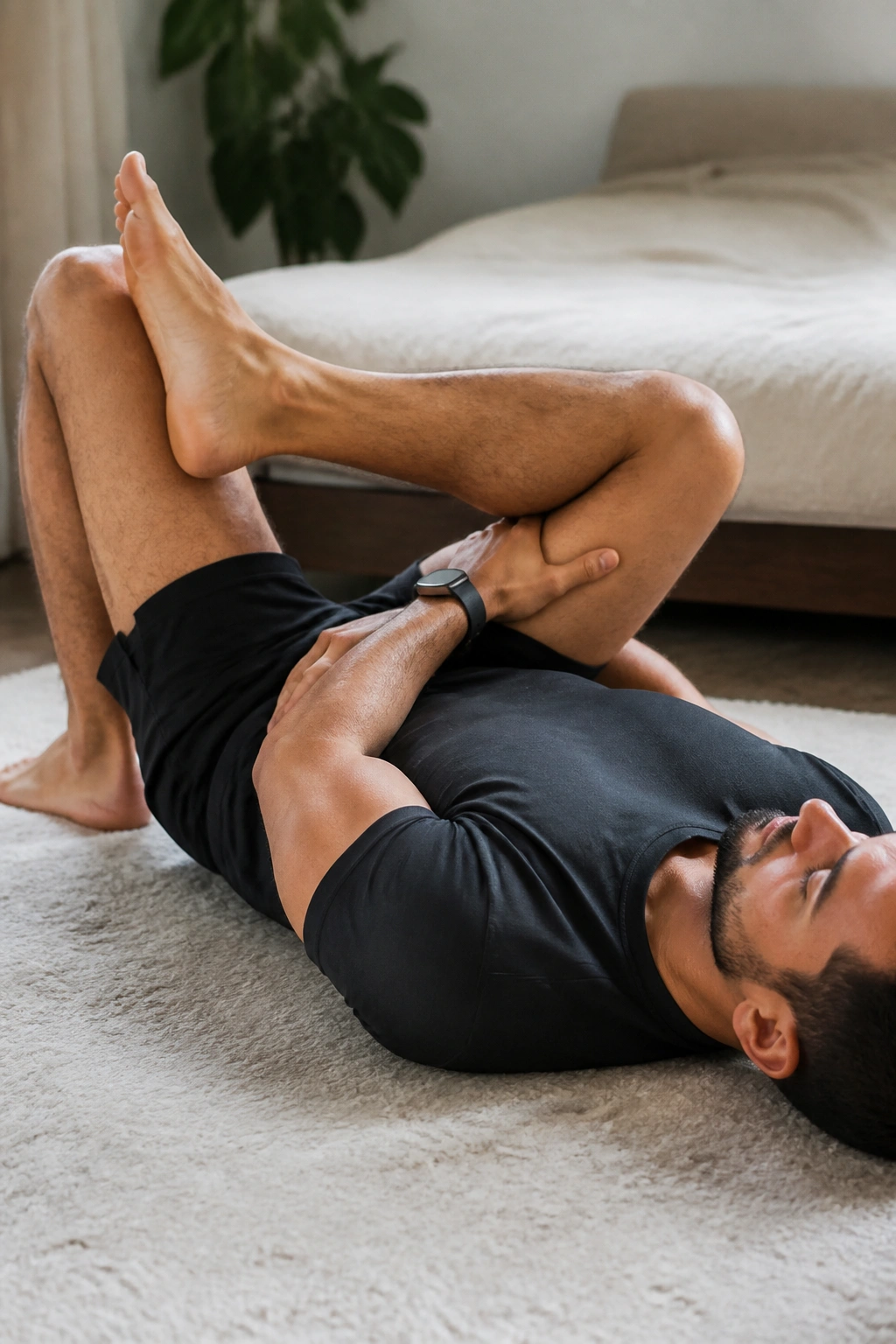
Why does your hip feel stuck after deadlifts or long drives? Often it’s the glutes and deep rotators holding on tighter than they need to. The figure-four stretch is one of those plain-looking positions that earns its place quickly, especially when the outer hip feels jammed or you can’t get comfortable sitting.
Lie on your back and place one ankle across the opposite knee, making a loose figure four. Thread your hands behind the supporting thigh and draw it toward you until you feel a stretch through the glute and outer hip. Hold for 25 to 35 seconds. Switch sides and breathe slowly through the whole thing.
If your knee complains, don’t force it. Keep the crossed leg higher on the shin, or do the same shape seated in a chair. The stretch should open the hip, not irritate the knee. That’s a line worth protecting.
7. Standing Quad Stretch for Front-of-Thigh Relief
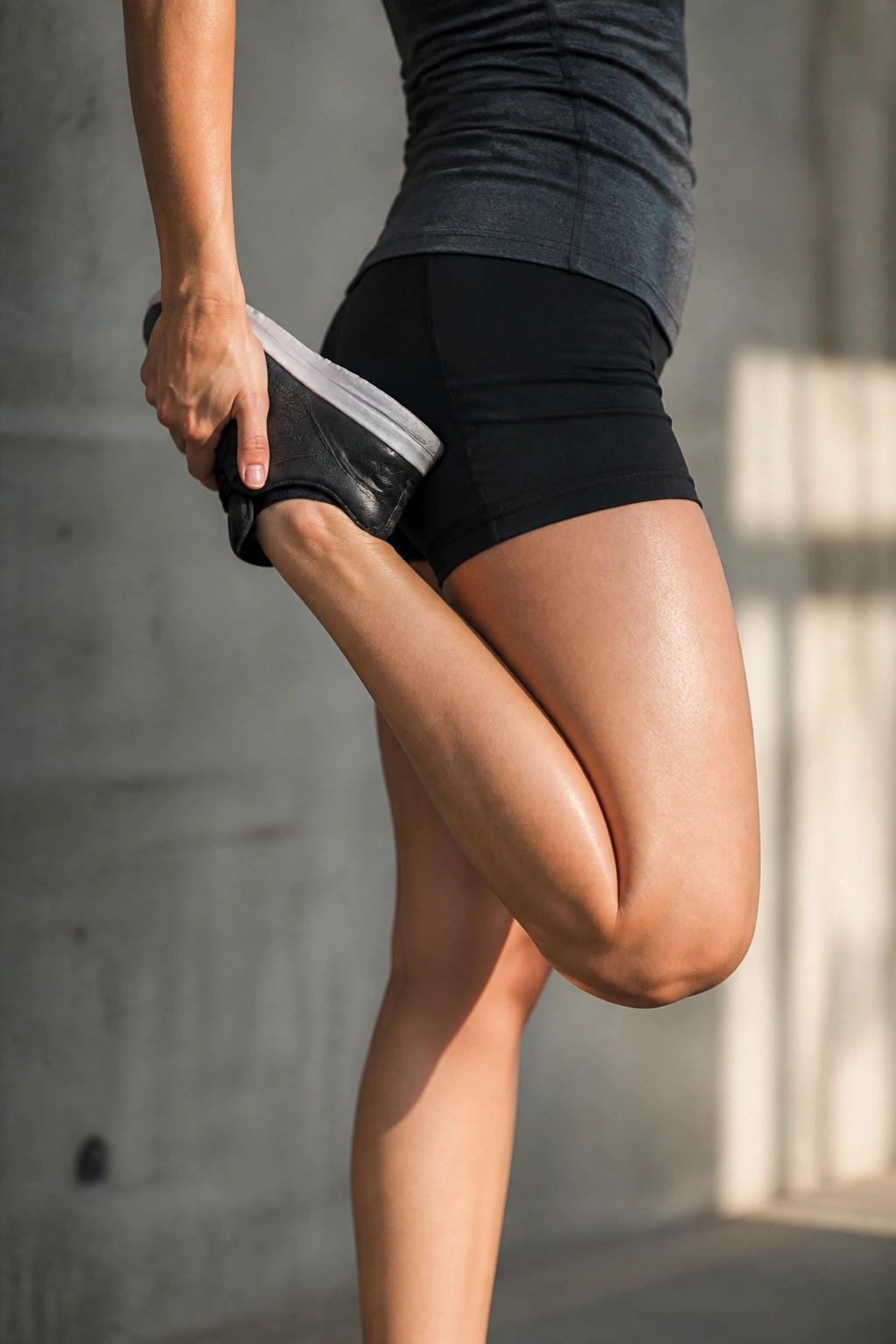
The first time you try this after lunges, stairs, or a long run, it can feel a little awkward. That’s normal. The quadriceps are strong, and when they’re tired they can feel more like cable than muscle. A standing quad stretch helps if the front of your thighs are the problem, especially after lots of knee bend work.
Stand near a wall or chair for balance. Grab one ankle and pull the heel toward the glute, keeping the knees close together. Tuck the pelvis slightly and avoid flaring the ribs. Hold for 20 to 30 seconds on each side.
A small detail matters here: squeeze the glute on the stretching side. That helps the hip flexor and quad lengthen together instead of letting the low back steal the movement. If your knee doesn’t love being bent fully, grab the foot lower on the ankle or use a strap.
8. Wall Calf Stretch for Cramped Lower Legs
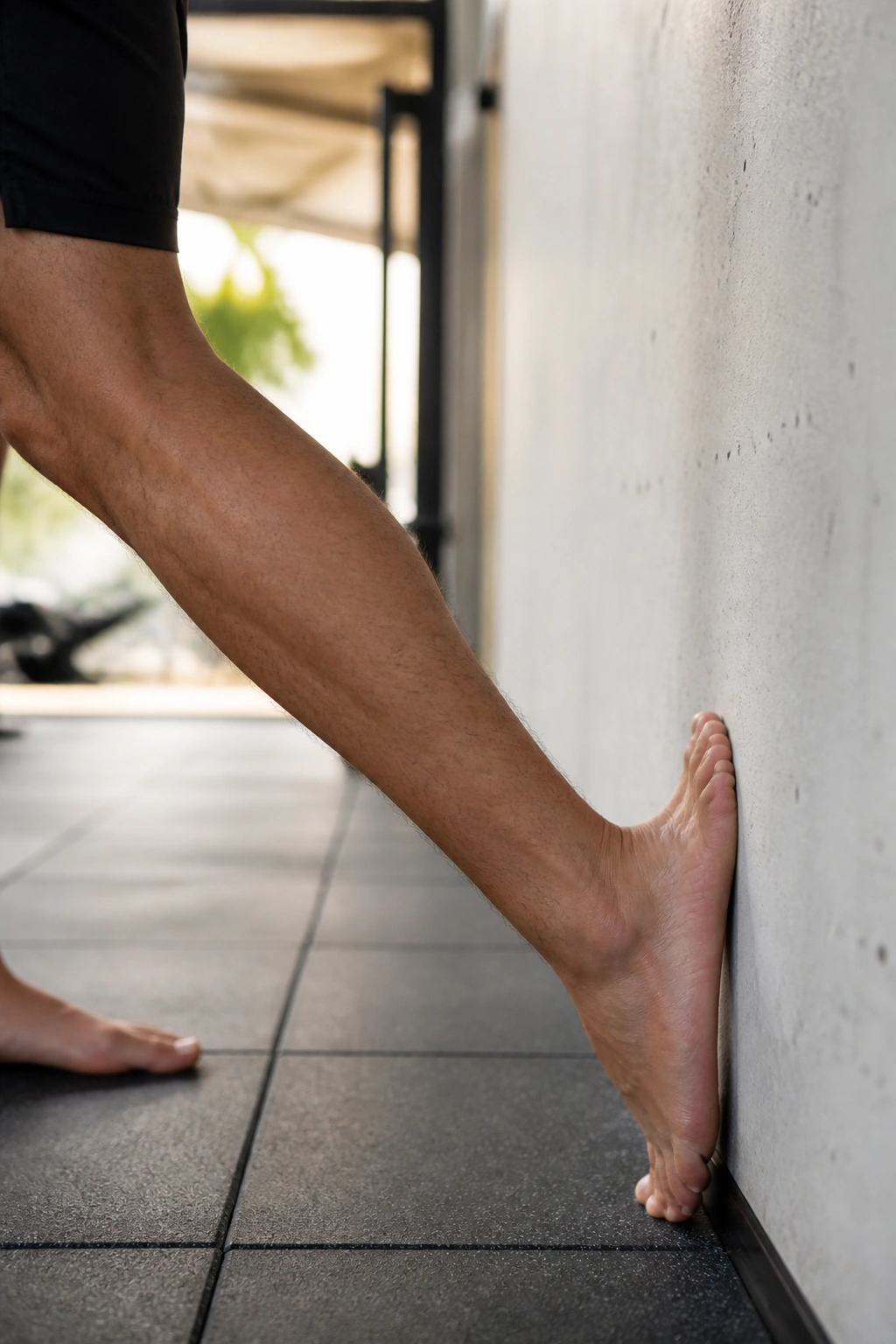
A straight-knee calf stretch hits one part of the lower leg. A bent-knee version hits another. You need both if your calves feel like they’ve been packed with gravel after walking, running, jump training, or a day on your feet.
Stand facing a wall and step one leg back. Keep the back heel down and the back knee straight for the first round, holding 20 to 30 seconds. Then bend that back knee slightly while keeping the heel rooted for another 20 to 30 seconds. Switch legs.
What to watch for
You want a stretch through the calf, not a collapse into the arch or ankle joint. If the foot rolls outward, reset the back heel and press the big toe mound into the floor. Straight-knee and bent-knee both matter. One reaches the gastrocnemius; the other gets deeper into the soleus. That’s the part many people miss.
9. Bent-Knee Soleus Stretch for Runners and Walkers
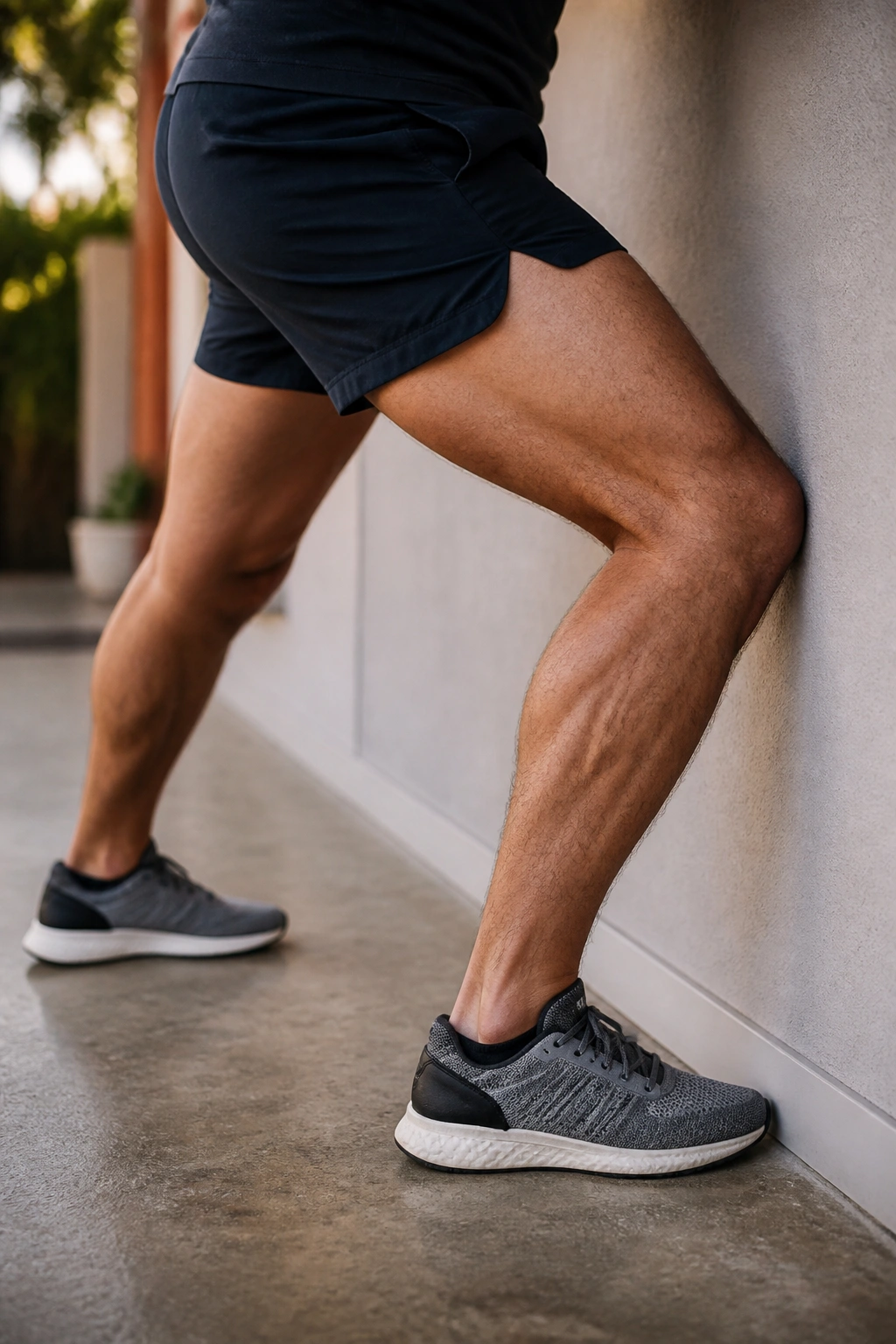
If your lower legs feel like wood after a lot of walking, this is usually the missing piece. The soleus sits under the larger calf muscle, and it often gets ignored because a standard calf stretch looks similar from the outside. It is not the same thing.
Step into a lunge near a wall, keep the back heel planted, and bend both knees a little more than you would for a normal calf stretch. Stay upright and hold for 20 to 30 seconds. You should feel the lower calf, closer to the Achilles area, working into a long pull. Switch sides and repeat once more if the area feels stubborn.
This one pairs well with the wall calf stretch above, but I’d keep the order the same: straight knee first, bent knee second. That sequencing tends to feel better. The deeper work lands more cleanly when the outer layer is already a bit looser.
10. Child’s Pose and Side Reach for a Cranky Lower Back
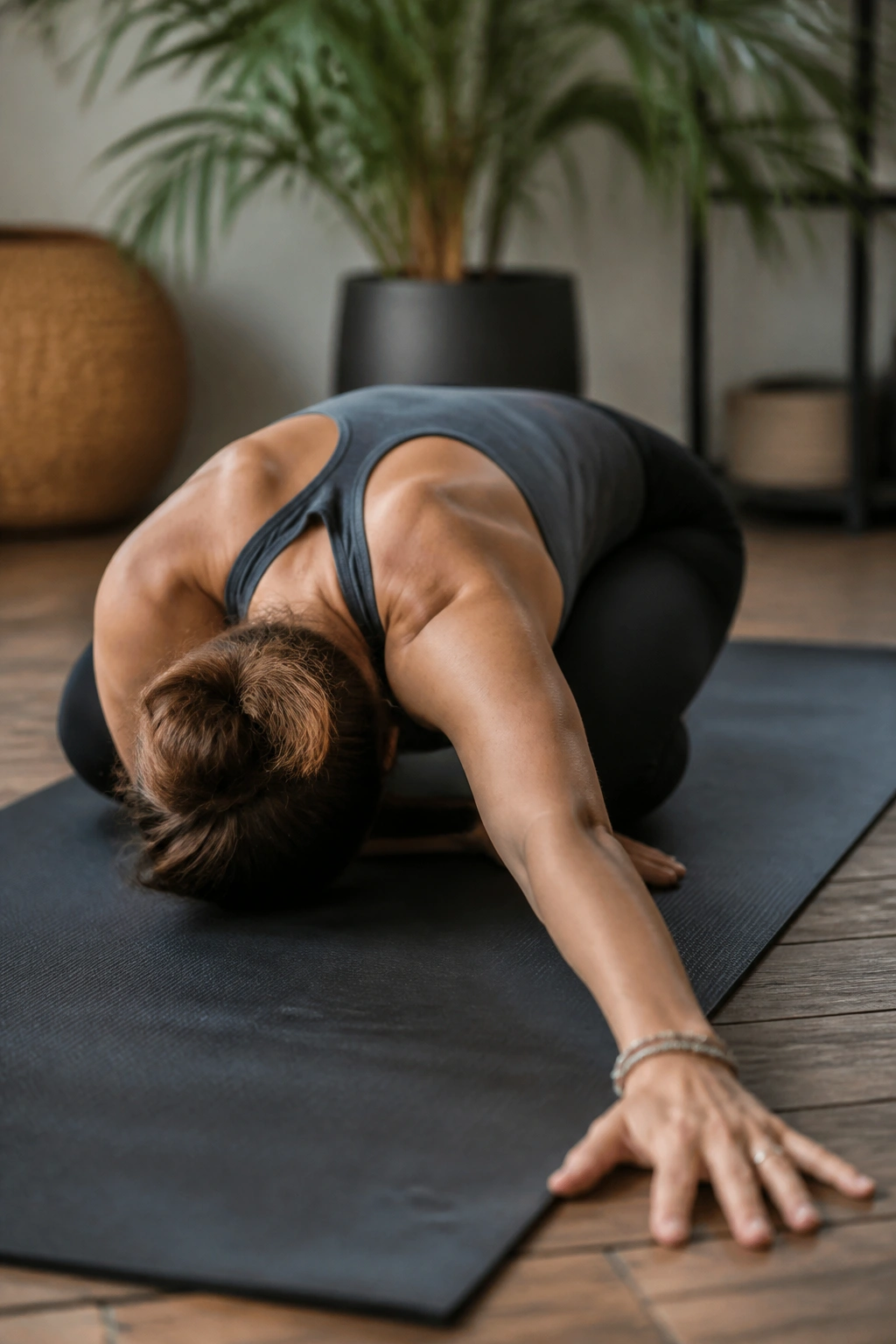
What do you do when your lower back feels irritated but not injured, stiff but not sharp? I reach for child’s pose with side reach. It’s quiet, simple, and often better than forcing the spine into a bigger shape than it wants.
Kneel and sit your hips back toward your heels, then walk your hands forward until your chest lowers. Take 5 slow breaths there. Walk both hands a little to the right for 3 to 4 breaths, then a little to the left for the same amount of time. Keep the neck relaxed and the forehead soft.
Why the side reach helps
The side reach gets into the lats and the side body, which can tug on the lower back more than people realize. If your back feels pinchy in deep flexion, skip this one. Lower back relief should feel calm, not forced. That’s the whole point.
11. Five-Minute Dynamic Warm-Up Before You Train
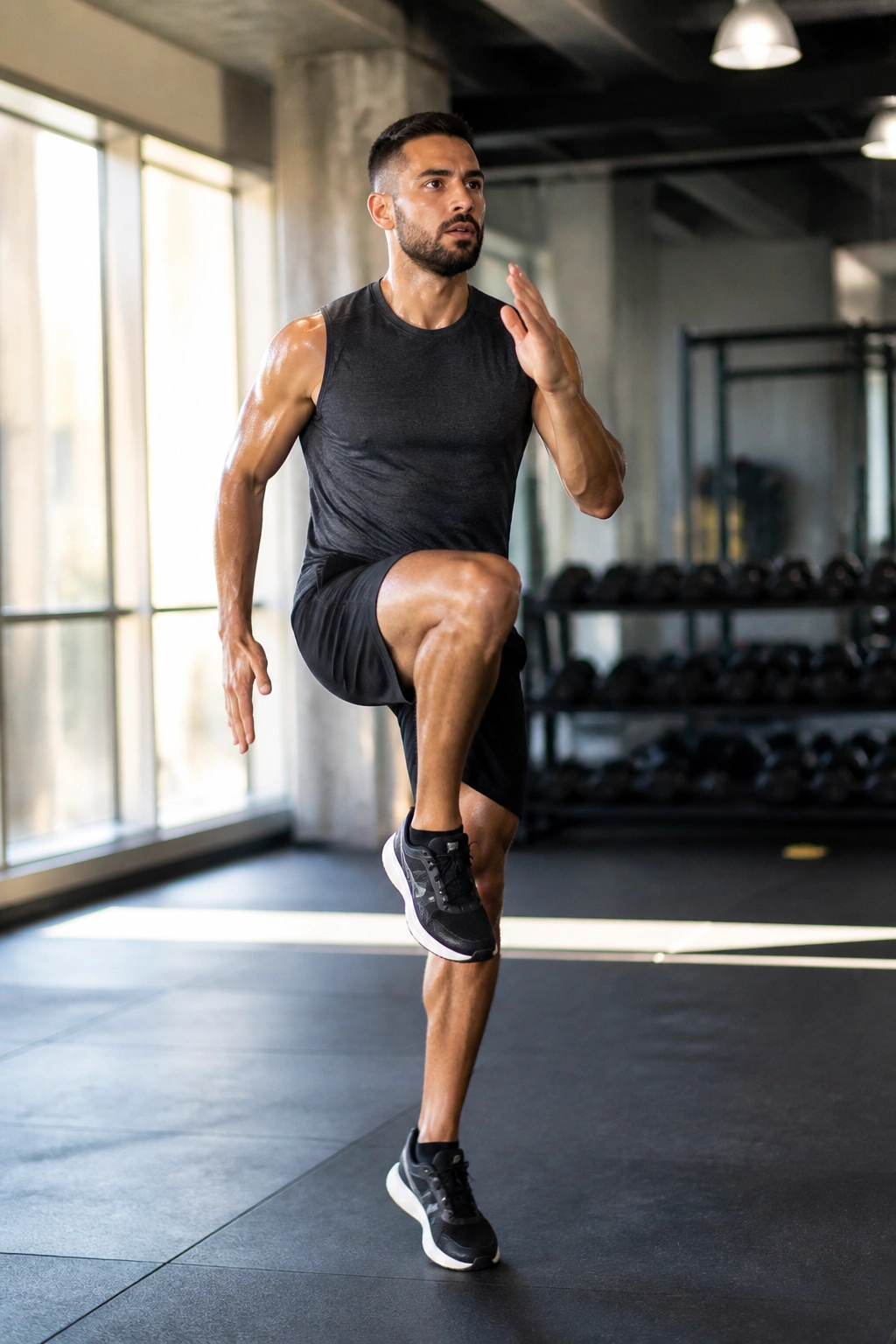
Pre-workout stretching should wake muscles up, not sedate them. Long holds before lifting can leave some people feeling a little flat, especially if the session is about power or speed. A short dynamic routine is a better match when you need movement, not a nap.
Try this sequence: 20 seconds of marching in place, 8 bodyweight squats with a reach overhead, 6 reverse lunges per side, 10 arm circles each direction, and 8 inchworms if your hamstrings and shoulders feel tight. Keep the pace smooth, not rushed.
Best use before lifting
- Use 1 round before strength work.
- Add a second round before running.
- Skip any move that makes you feel loose in a sloppy way.
The feel should be springy, not sleepy. That distinction matters. Dynamic movement gets blood moving and joints talking to each other, which is exactly what you want before a hard session.
12. Post-Run Leg Reset for Heavy, Tight Calves
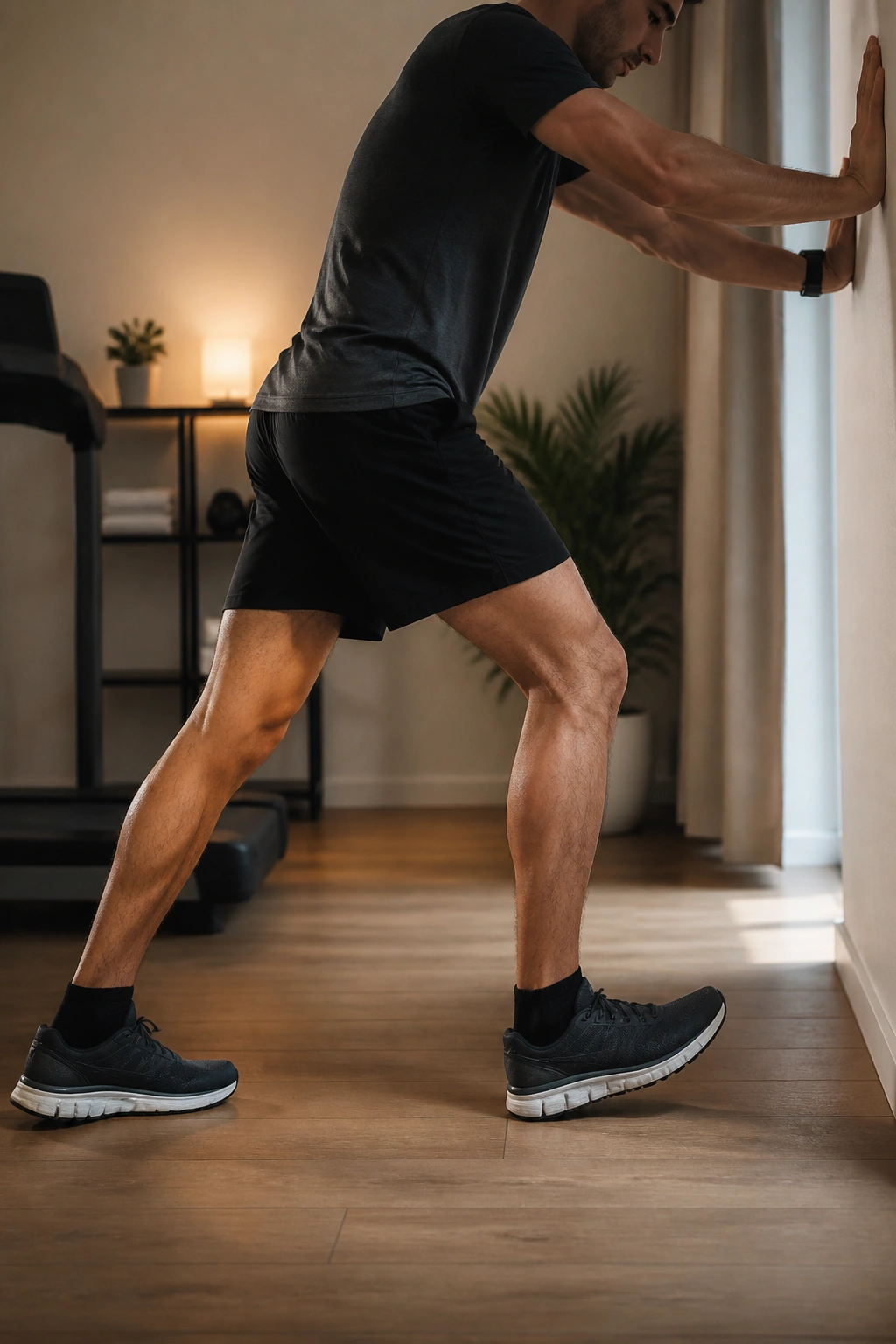
After a run, the calves often complain first, then the hamstrings, then the hips join the conversation. A good post-run routine should bring the heart rate down first and then stretch, not the other way around. I’d rather see you walk for 3 to 5 minutes than jump straight into deep holds.
Start with a standing calf stretch for 30 seconds each side, then move to a hamstring strap stretch for 20 to 30 seconds each side, and finish with a figure-four hold for 30 seconds. If you ran hills or speed work, add a second round for the calves. Keep the pressure mild.
Do not chase the deepest stretch right after a hard run. The tissue is warm, but it’s also a little irritated. A calm reset usually helps more than a heroic hold. Your legs should feel easier when you stand up again, not yanked in different directions.
13. Upper-Body Release After Pressing and Pulling Work
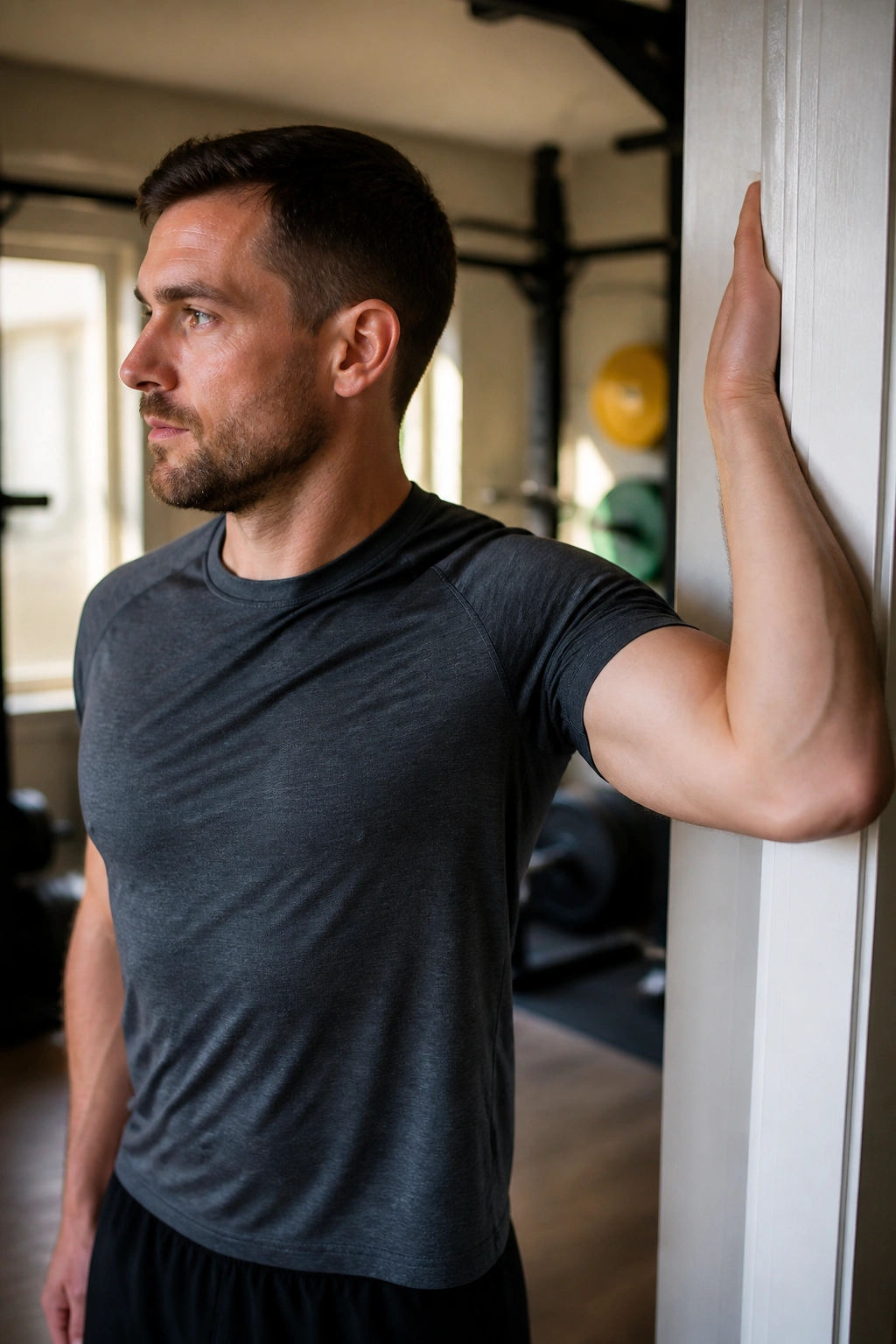
Pressing tightness and pulling tightness don’t feel the same, and treating them the same is lazy. Bench pressing leaves the chest, front shoulder, and triceps feeling crowded. Rows and pull-ups can leave the lats and forearms gripping harder than they should. A solid upper-body recovery routine should hit both sides of that equation.
Start with a doorway chest opener for 20 to 30 seconds per side. Then reach one hand overhead against a wall or bench edge for a lat stretch and hold for another 20 seconds. Finish with a forearm flexor stretch by extending one arm straight and gently pulling the fingers back.
- Chest first if pressing dominated the session.
- Lats first if your overhead position feels blocked.
- Forearms matter more than people admit.
The shoulders usually feel better when the lats get some attention too. That’s the part many lifters skip, and it shows.
14. Seated Travel Stretch Routine for Hips and Hamstrings
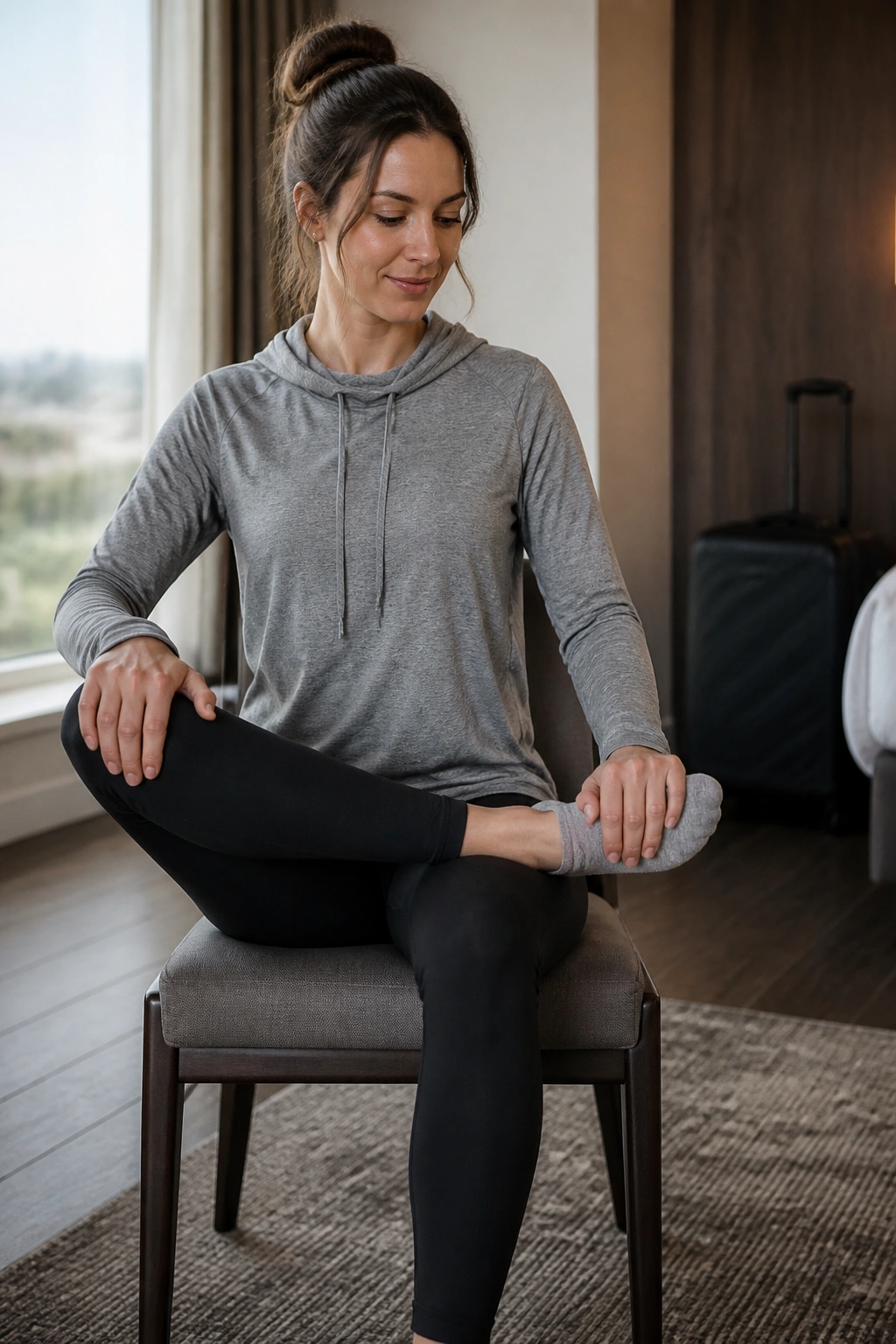
After a long car ride, the hips are usually the first place to complain. After a flight, the hamstrings and low back often join in. You do not need a floor mat to fix that. A chair, bench, or even the edge of a bed can do the job.
Sit tall and cross one ankle over the opposite knee for a seated figure-four stretch. Hold 20 to 30 seconds, then hinge forward slightly if it feels good. Next, extend one leg and lean toward it for a seated hamstring reach, keeping the spine long. Add 10 ankle pumps per side before you stand up.
A tiny detail: keep the stretch modest on travel days. Sitting for hours already leaves tissues a little cranky. Gentle movement works better than trying to “make up for it” in one hard session. That usually just makes the body clamp down again.
15. Morning Stiffness Wake-Up for the Whole Spine
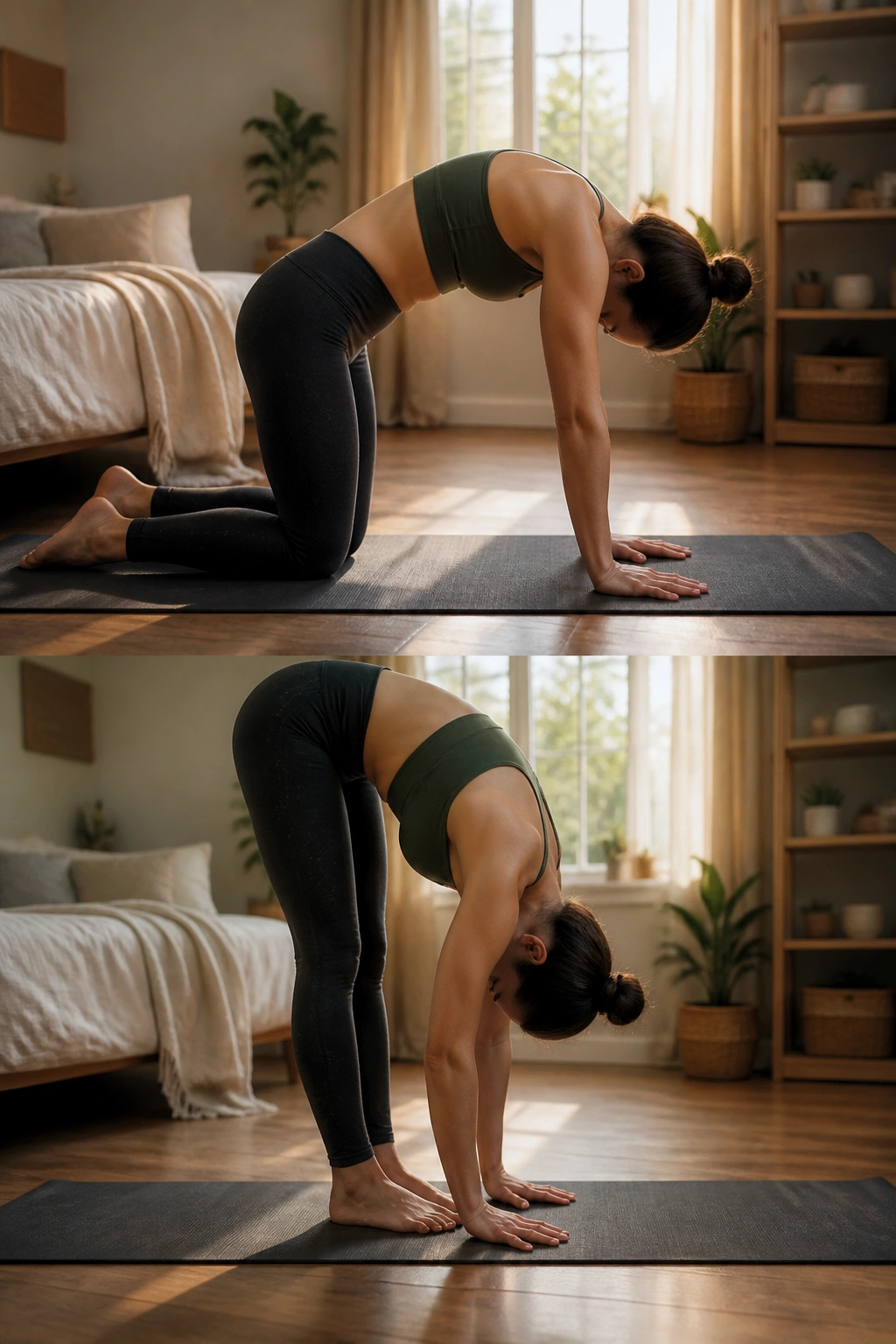
Why do you feel like you’re made of hinges and sand in the morning? Because the body spends hours not moving, and the first few minutes after waking are often about convincing the spine that motion is safe again. A morning routine should be light, predictable, and short.
Start with 5 slow cat-cows on hands and knees. Stand up and do 5 controlled forward folds, letting the knees bend if needed. Add 20-second hip flexor stretches on each side and finish with 5 shoulder rolls plus 5 gentle torso twists.
One thing I would not do first thing: a deep, long static hold that makes you grimace. Morning is for easing in. If the movement feels better after two rounds, you’re on the right track. If it feels worse, cut the range and keep it smaller.
16. Evening Downshift Routine for Tight Sore Muscles
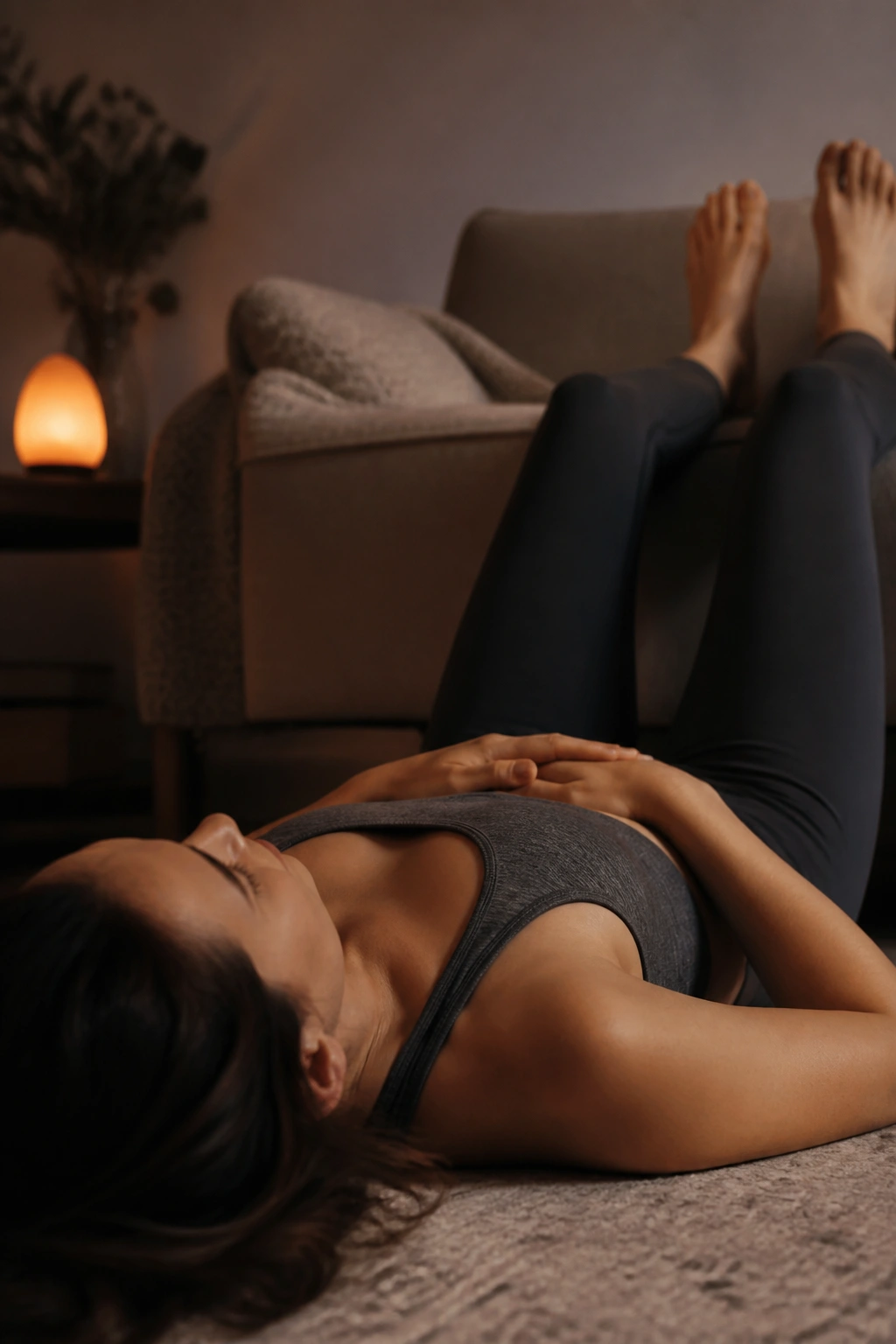
A hard stretch right before bed can be too much. What usually works better is slow, low-force movement and a longer exhale, especially if the day left you wound up and physically tense. Evening stretching is as much about telling the nervous system to unclench as it is about lengthening muscle.
Lie on your back with your feet up on a chair or couch. Hold a strap hamstring stretch for 20 seconds per side, then do a gentle supine twist for 4 to 5 breaths each side. Finish with legs on the couch and one hand on your belly, breathing out longer than you breathe in.
Why the exhale matters
A longer exhale can take the edge off the “stay alert” feeling that keeps some muscles guarded. It’s not magic. It’s a nudge. Slow down the breath, and the body usually follows. That’s a more useful target than chasing the deepest possible stretch before sleep.
17. Standing Mobility Circuit You Can Do in Tiny Spaces
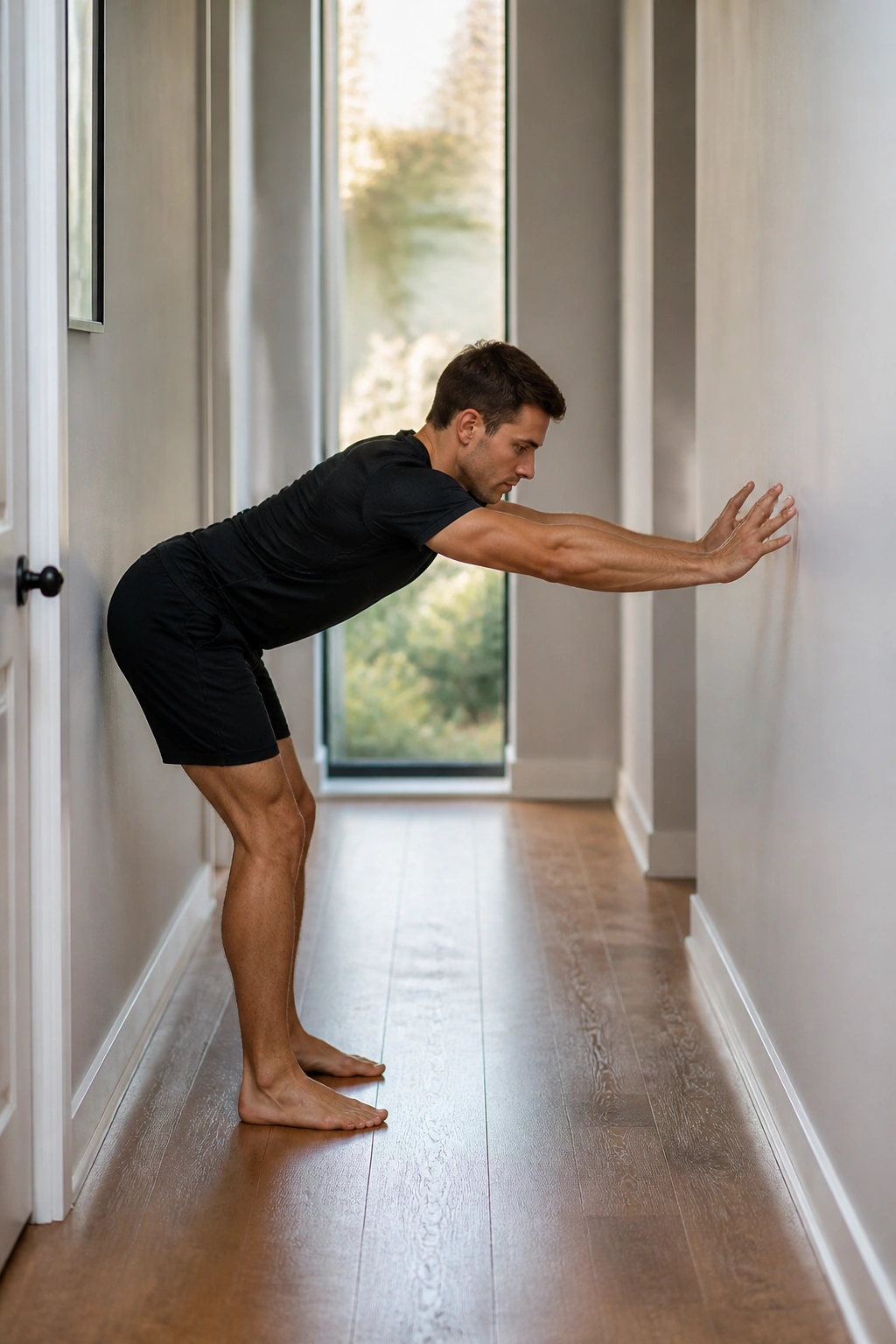
Hotel room. Office corner. Parking lot. Tiny spaces can still hold a decent stretch routine if you keep it practical. This is the one I’d use when the day is messy and the floor is out of the question.
Do 5 neck turns each side, 20 seconds of doorway or wall chest opening, 8 slow hip hinges with arms reaching forward, 20 seconds of standing quad stretch per side, and 20 seconds of wall calf stretch per side. Move straight from one piece to the next with almost no rest.
- Keep the movements controlled.
- Hold each stretch long enough to breathe once or twice.
- Don’t turn it into a workout.
The value here is consistency, not drama. A small routine done often beats a perfect routine you never repeat. That’s true in strength work, and it’s true here too.
18. Breathing-First Reset for Tension That Keeps Coming Back

Sometimes the muscles are not really short. They’re braced. Stress, shallow breathing, and poor sleep can leave the neck, jaw, ribs, and hips feeling locked even when the tissue itself is not the main problem. In those moments, I start with breathing before I start stretching.
Lie on your back with knees bent and feet on the floor. Place one hand on your chest and the other on your belly. Inhale through the nose for 4 counts, then exhale for 6 to 8 counts. Do 5 to 8 rounds. After that, add a gentle knee hug or easy figure-four hold.
The point is to lower the guard first. Then the stretch lands better. If you skip the breathing and go straight to force, the body often fights back. I’ve seen that pattern too many times to ignore.
19. Recovery Day Flow for When Everything Feels Grumpy
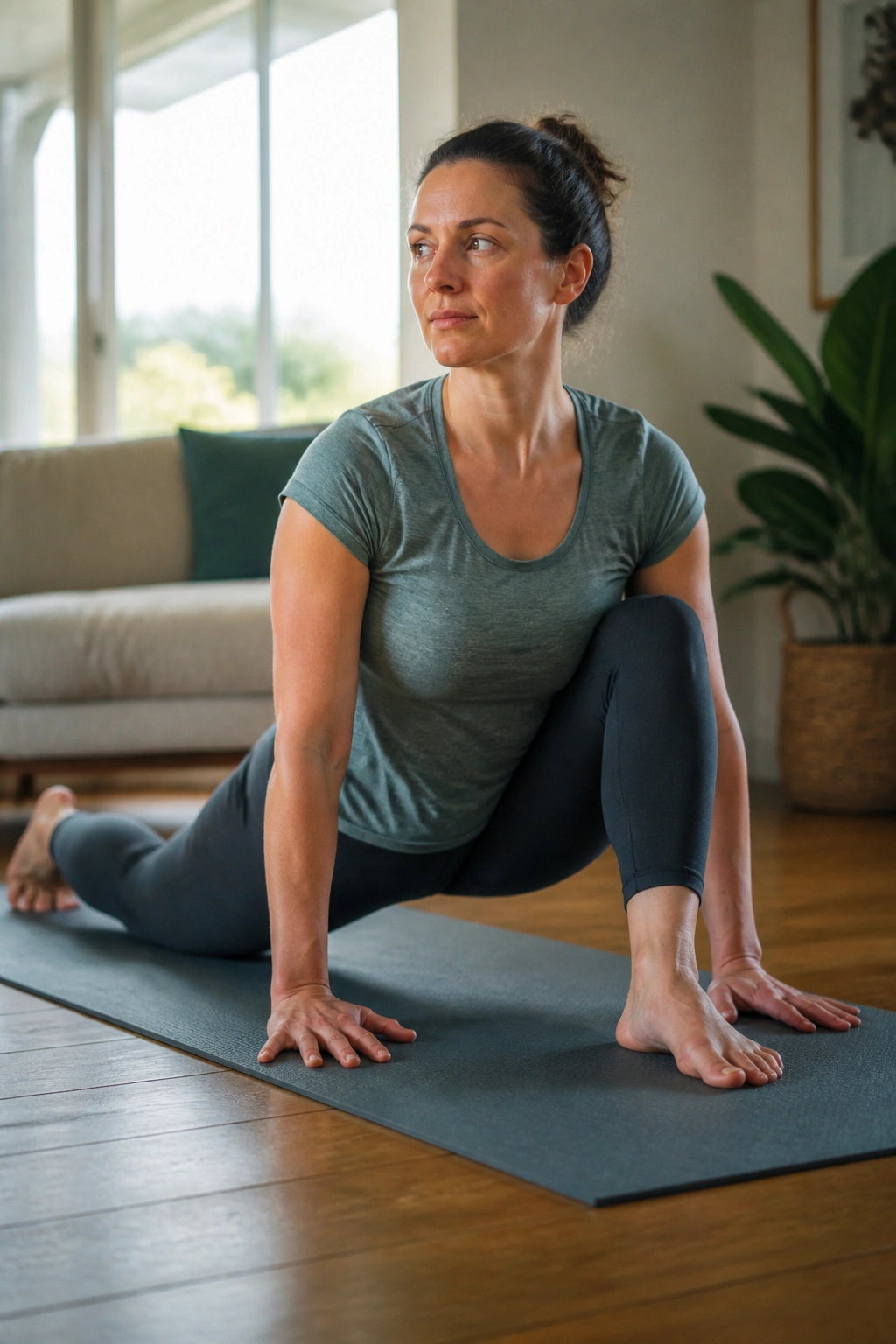
Recovery day is not about chasing depth. It’s about getting some motion back into places that have been under load, then stopping before you make them grumble louder. This is the routine I’d pick when the whole body feels a little stale after hard training.
Start with child’s pose for 5 breaths, then move into half-kneeling hip flexor stretches for 30 seconds per side. Add a doorway chest opener, a figure-four glute stretch, and a wall calf stretch. If you want, repeat the whole circuit once. Keep the whole thing at a mild effort, around 3 out of 10.
How hard to push
- Mild pull: good.
- Sharp edge: too much.
- Better after you stand up: ideal.
The nice part is that you don’t need to choose one “problem muscle” on a recovery day. You can touch the whole chain, from ankles to shoulders, and let the body decide what it wants most.
20. The Ten-Minute Total-Body Reset That Covers the Bases
If you only want one routine to keep in your pocket, make it this one. It’s the easiest way I know to deal with tight sore muscles when the day has been long, the gym session was harder than expected, or your body feels like it was assembled slightly off.
Do 5 cat-cows, 20 seconds of half-kneeling hip flexor stretch on each side, 20 seconds of doorway chest opener on each side, 30 seconds of figure-four on each side, 30 seconds of wall calf stretch on each side, and finish with 5 slow breaths lying on your back. That’s it. No drama. No circus.
The best part is how adaptable it is. Swap the order if your shoulders are the main complaint. Spend a second round on the hips if you sat all day. Give the calves more time after running. Use the routine that matches the day you actually had. That’s the version that keeps paying off when the next workout shows up, and when you do not feel like thinking too hard, this one still gets the job done.
