



Cold shoulders have a funny way of acting fine until you ask them to press, pull, sprint, or squat. Then the elbows start talking, the hips feel boxed in, and the first working set turns into a negotiation.
A short set of warm up stretches before any workout changes that fast. Not by making you “more flexible” in some vague, magical way. By getting joints moving, waking up the nervous system, and making the first rep feel like a continuation instead of a shock.
The best warm-ups are rarely dramatic. They’re small, controlled, and specific: a few neck reps, a handful of shoulder circles, some spinal rotation, a little hip work, then enough leg and ankle movement to remind your body what comes next. You should finish feeling warmer, looser, and more alert. Not tired. Not stretched out to the point of wobbling.
These 15 moves are the ones I trust when the goal is simple: get ready for the session without wasting time or overdoing it. Start at the top, move down the body, and keep the pace brisk but calm.
1. Chin Tucks and Gentle Neck Rolls
A tight neck can make everything else feel off. Pressing overhead feels awkward. Pulling gets messy. Even a simple squat can start with that weird, braced feeling in the upper traps.
I almost never like big, fast neck circles before training. They look loose. They feel sloppy. A better choice is a mix of chin tucks and slow, half-circle neck rolls that stay small and controlled.
How to do it well
- Sit or stand tall.
- Pull your chin straight back, like you’re making a double chin.
- Hold that position for 1 second.
- Repeat 5 to 8 times.
- Then tip one ear toward one shoulder, roll gently forward, and stop before the head dumps all the way back.
- Do 3 slow half-circles in each direction.
The goal is to keep the movement smooth, not dramatic. If you feel a pinch, shorten the range. If your shoulders creep up toward your ears, reset and start again.
Pro tip: keep these light. You’re waking up the neck, not auditioning for a mobility contest.
2. Arm Circles That Wake Up the Shoulders
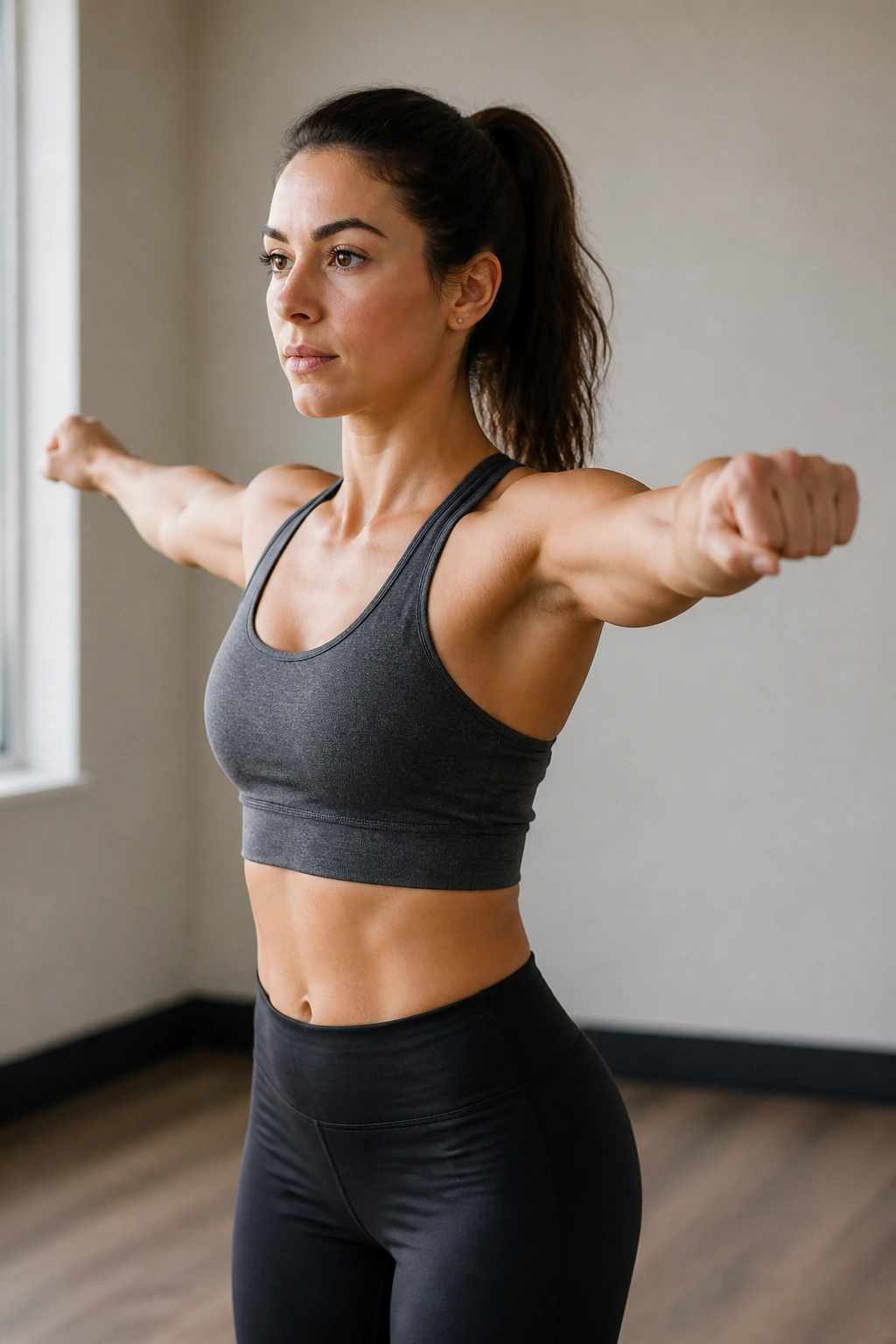
Arm circles are one of those boring-looking moves that pay rent fast. They warm the shoulder joint, get blood moving through the delts, and help your arms remember how to travel overhead without stiffness.
Start small. That matters more than people think. Ten tiny forward circles, then ten tiny backward circles, and only then move into medium and large circles. If you go huge right away, the movement gets sloppy and your shoulders do more shrugging than circling.
A good sequence is 10 forward, 10 backward, 10 bigger forward, 10 bigger backward. Keep your ribs down and your neck long. If you’re about to train pressing, overhead work, or even something as simple as push-ups, this sets the tone nicely.
One thing I like here: you can feel right away whether one shoulder is grumpier than the other. That’s useful information. If one side feels rough, slow that side down and keep the circle smaller for a few rounds.
3. Chest Openers Across the Body

After a day of sitting, driving, typing, or staring at a screen, the front of the shoulders tends to shorten up. Chest openers help undo that forward pull without turning the warm-up into a long stretch session.
Stand tall and sweep one arm across your chest at shoulder height. Use the other arm to guide it just above the elbow, hold for a second, then release and switch sides. Do 6 to 8 reps per side. The movement should feel like a gentle hug and release, not a hard yank.
What makes this one useful
- It opens the front of the shoulder.
- It asks the upper back to stay awake.
- It helps if you bench, row, throw, or do any overhead work.
- It also feels good before a run, oddly enough, because the arms start swinging more freely.
Keep the torso facing forward. That’s the detail people miss. If you twist your whole body to fake a bigger stretch, you’re not opening the chest as much as you think you are.
Best cue: exhale as the arm crosses the body, then inhale as it opens back out.
4. Thoracic Spine Rotations on All Fours
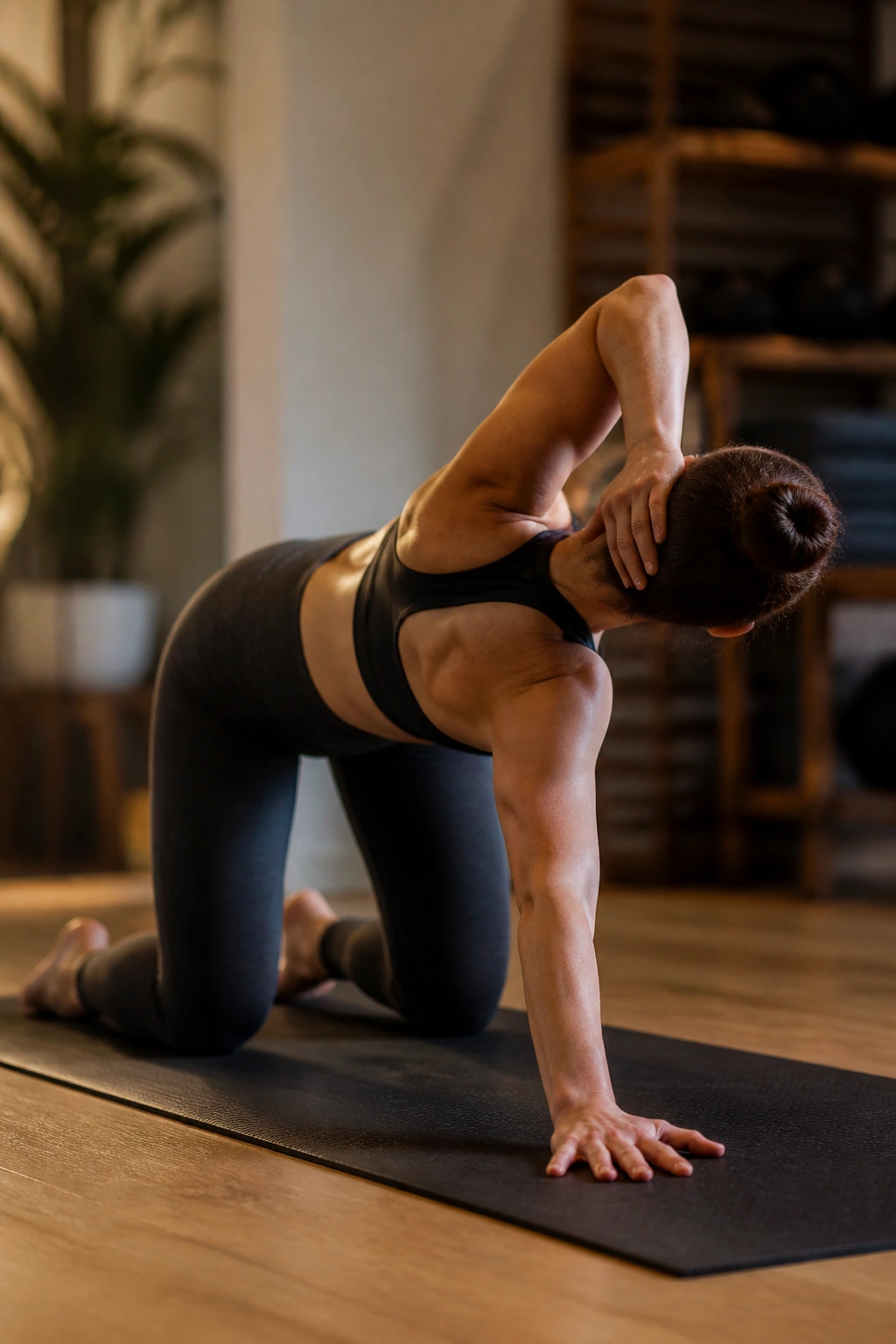
Why do the low back and neck end up doing all the work? Usually because the middle of the back has gone quiet. Thoracic rotations fix that by teaching your spine to twist where it should twist, not where it shouldn’t.
Get on all fours. Place one hand behind your head. Rotate that elbow toward the floor, then open it up toward the ceiling. Keep the hips steady. Do 5 to 6 slow reps per side and pause for a second at the top.
How to use it before lifting or running
The more locked-up your upper back feels, the more this matters. Squats, deadlifts, overhead presses, and even a good running posture all benefit from thoracic motion. If your rib cage feels stiff, this is one of the first things I’d put in the warm-up.
A few things help here:
- Keep the weight centered over the hands.
- Don’t rush the opening.
- Let the eyes follow the elbow.
- Stop if you feel the motion dumping into the low back.
Simple rule: rotate through the upper back, not the hips.
5. Cat-Cow to Loosen the Middle Back
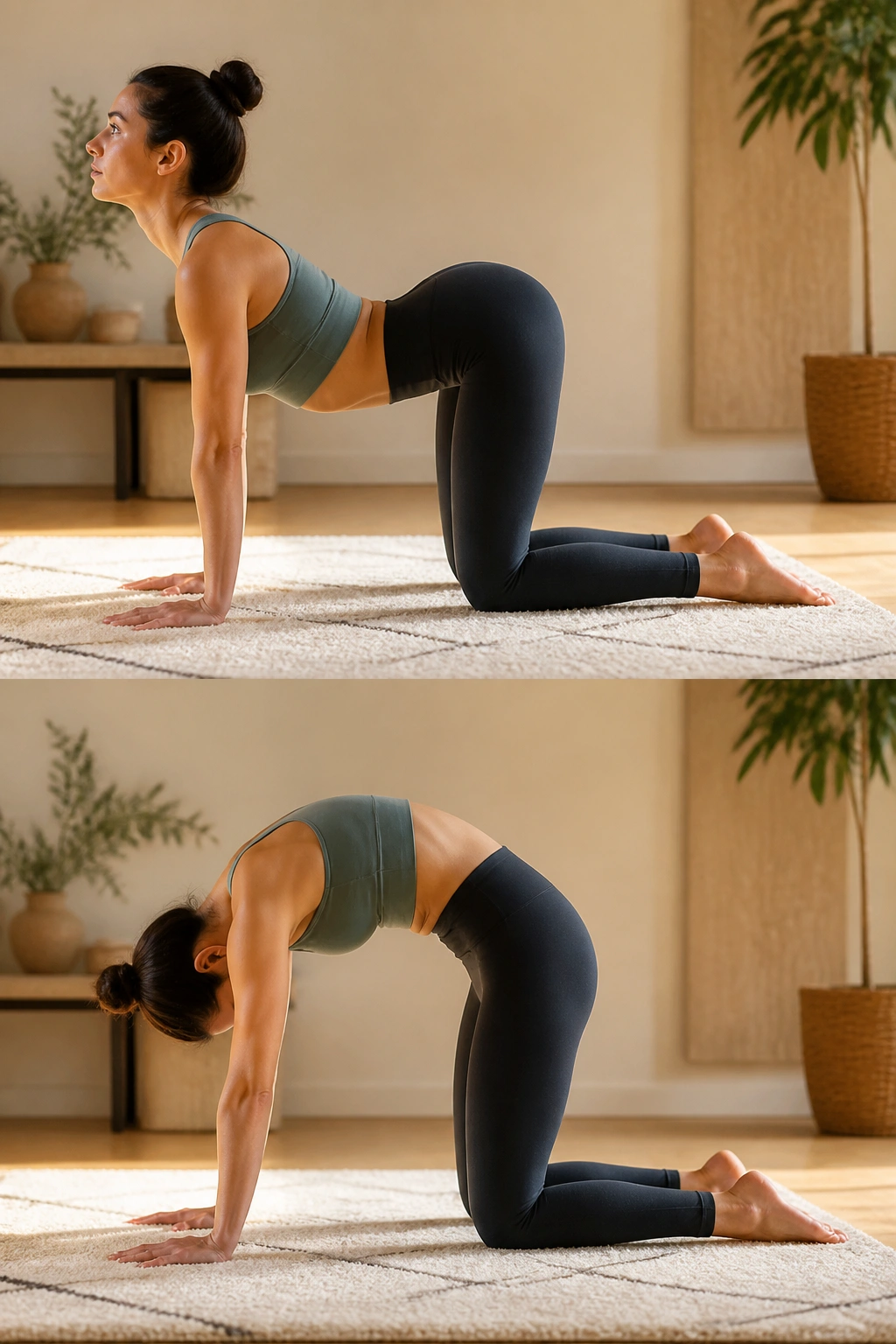
Cat-cow gets dismissed because it shows up in yoga classes and beginner videos. That’s a mistake. It’s one of the cleanest ways to move the spine through flexion and extension without forcing anything.
On hands and knees, inhale as you drop the belly and lift the chest. Then exhale as you round the back and tuck the tail. Move slowly enough that you can feel the entire spine participate. Six to eight rounds is plenty for a warm-up.
The best part is the breath. People skip this and turn cat-cow into a fast spine wiggle. That’s not the point. The inhale should open the front of the body, and the exhale should help you round and brace. If your back feels stiff at the start, shorten the range and keep the motion smooth.
I like cat-cow before lower-body days and push days alike. It seems simple, because it is. But simple moves are often the ones that tell you the most about how your body is showing up that day.
One sentence is enough here: if it feels crunchy, slow down.
6. Inchworm Walkouts
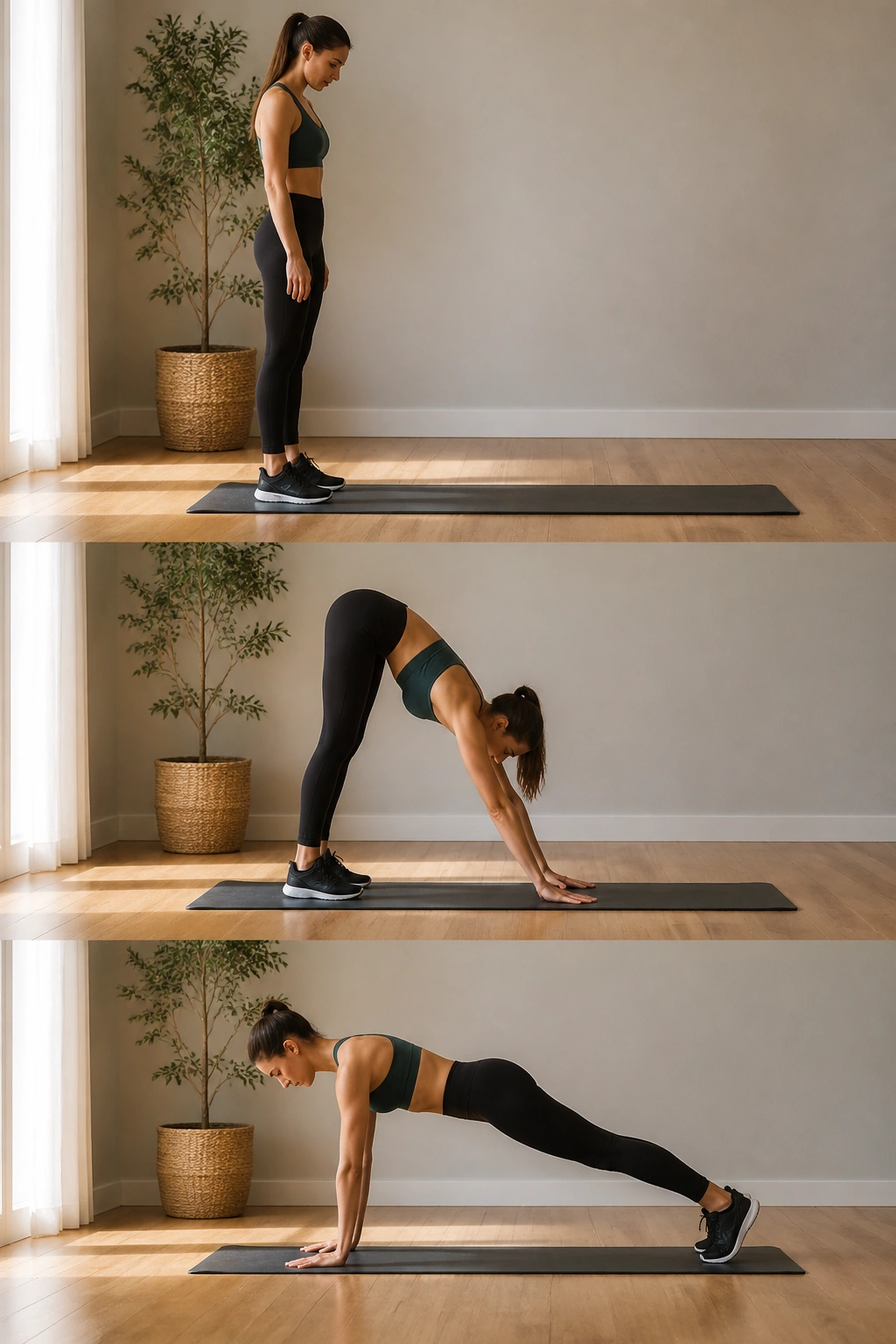
Inchworms are a sneaky little full-body reset. Unlike toe touches, they don’t just pull on the hamstrings and call it a day. They make the shoulders, core, and posterior chain cooperate.
Stand tall, fold at the hips, walk your hands out to a plank, then walk them back in and stand up. That’s one rep. Do 4 to 6 slow reps, with a small knee bend if your hamstrings are tight. If the floor is cold or dirty, hands can go to a bench or box instead.
Why they work so well
- The hamstrings lengthen under control.
- The shoulders warm up in a loaded position.
- The core has to keep the trunk steady.
- You get a bit of cardio without turning the warm-up into a workout.
Don’t race through these. The value comes from clean positions, not speed. If your hips sag in the plank, shorten the walkout. If your back rounds hard on the way down, bend the knees a little more.
Good cue: think “walk out long, walk back strong.”
7. The World’s Greatest Stretch
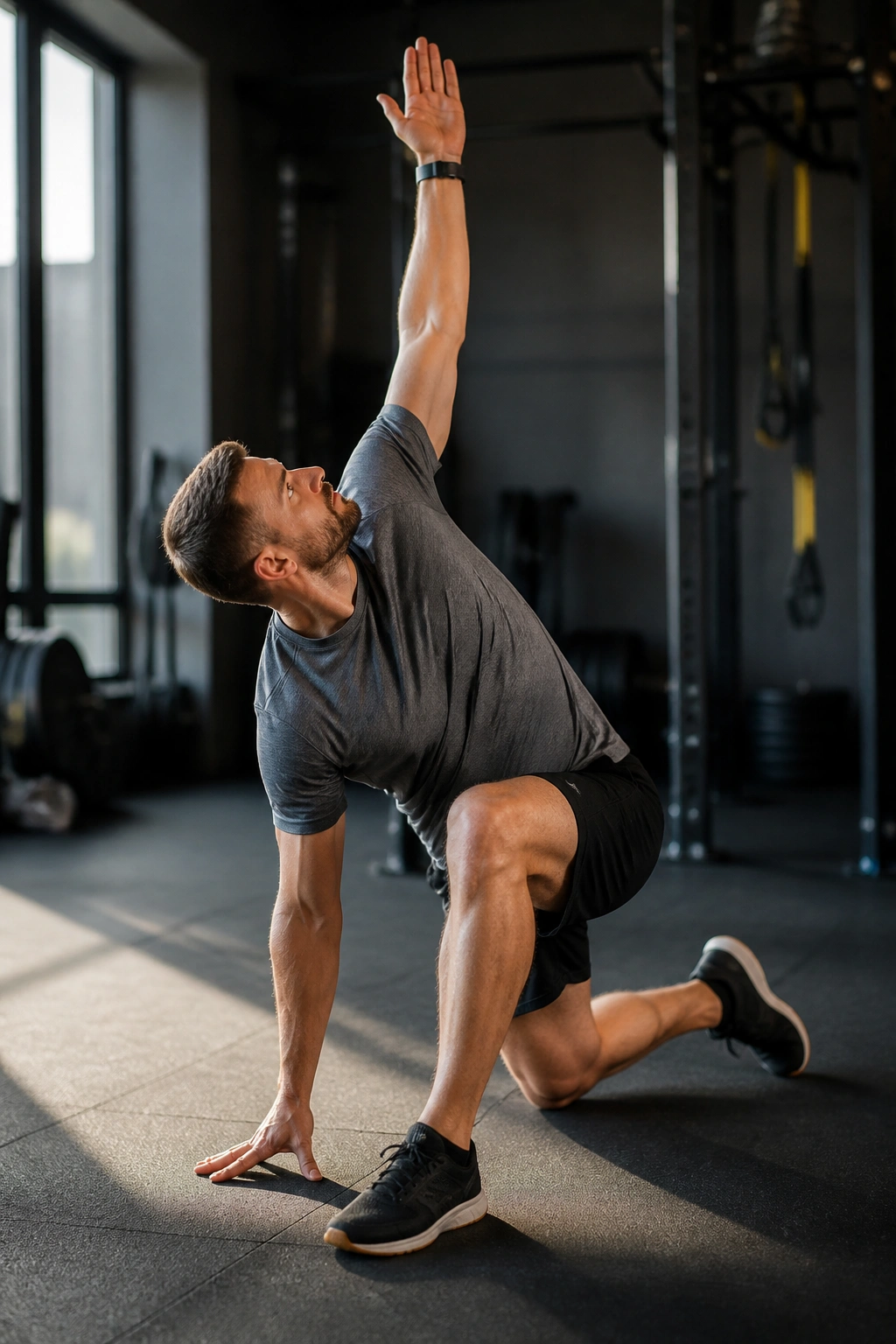
This one earns the name because it covers a lot at once. Hip flexors, glutes, adductors, hamstrings, and upper back all get touched in one flowing pattern, which is exactly why it shows up in so many real warm-ups.
Step into a lunge. Lower the inside hand to the floor, bring the elbow toward the inside of the front foot, then rotate the same-side arm up toward the ceiling. Come back down, step through, and switch sides. 3 to 5 reps per side is enough if you keep the motion honest.
What makes it worth the time
The hip opening feels good, but the rotation is the part people usually need more. A lot of tightness around the hips is really stiffness from the trunk not moving well enough. This move handles both.
If the floor version feels too deep, keep the back knee up or put the back knee down on a pad. If the lunge collapses inward, make the stance a little shorter and keep the front knee tracking over the toes.
Best for: lifting days, running days, and any session where the hips feel like they’ve forgotten their job.
8. Hip Circles and Pelvic Halos
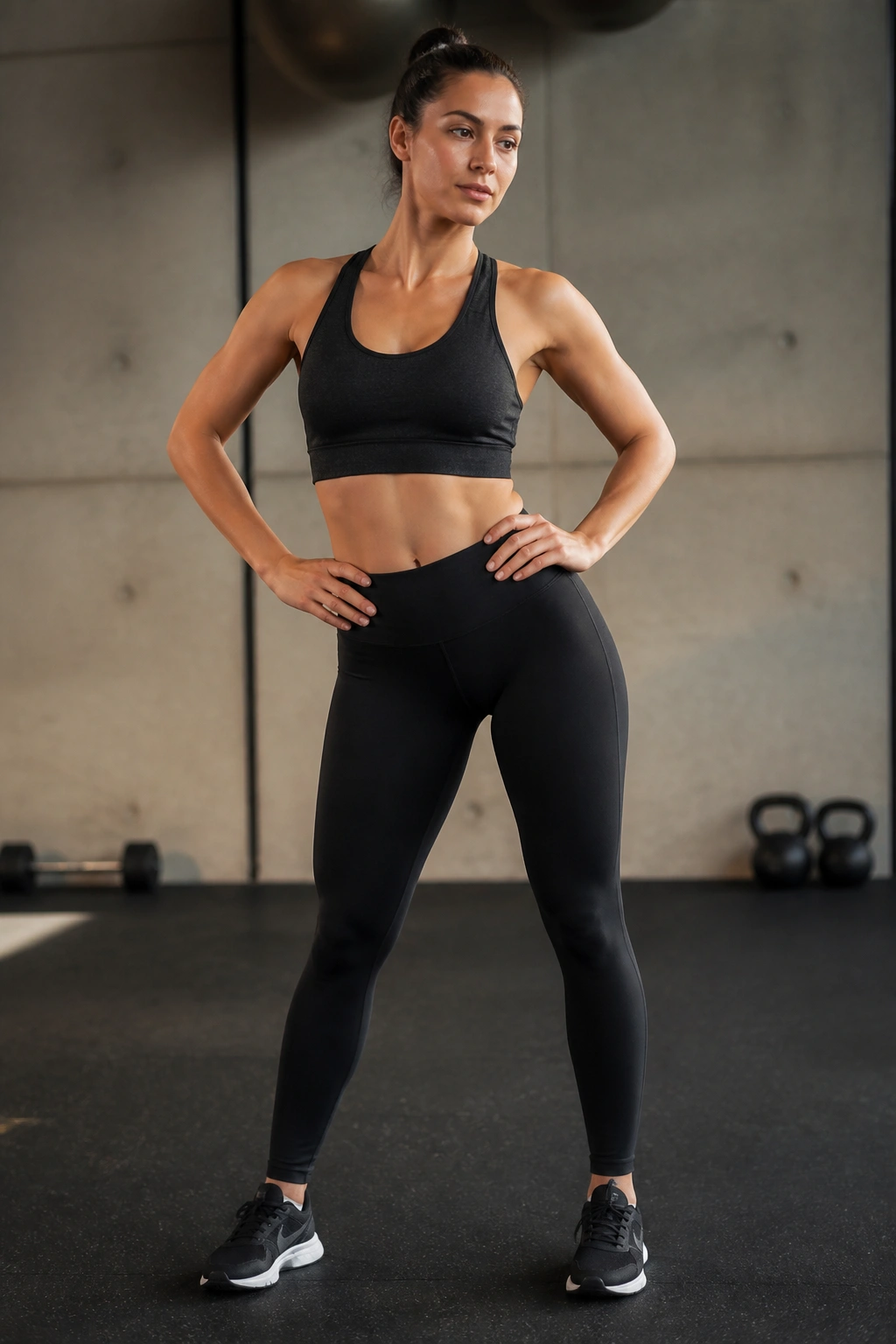
Ever notice how some people warm up their legs but still move like their hips are bolted shut? Hip circles are one of the easiest fixes. They help the pelvis move around the hip joint instead of locking everything in one plane.
Stand with your feet about hip-width apart and hands on your hips. Make slow circles with the pelvis, first clockwise, then counterclockwise. Keep the upper body as still as possible. 5 circles each way is a good start.
How to get the motion from the hip, not the waist
- Keep your feet flat.
- Soften the knees.
- Imagine drawing a circle with your belt buckle.
- Use a wall or rack for balance if needed.
The movement should feel smooth, not like you’re trying to hula-hoop your spine loose. If one direction feels much tighter, spend an extra round there. That asymmetry shows up in squats, lunges, and even walking.
A small detail, but a useful one: don’t clamp the glutes. Let the pelvis travel. That’s the whole point.
9. Front-to-Back Leg Swings
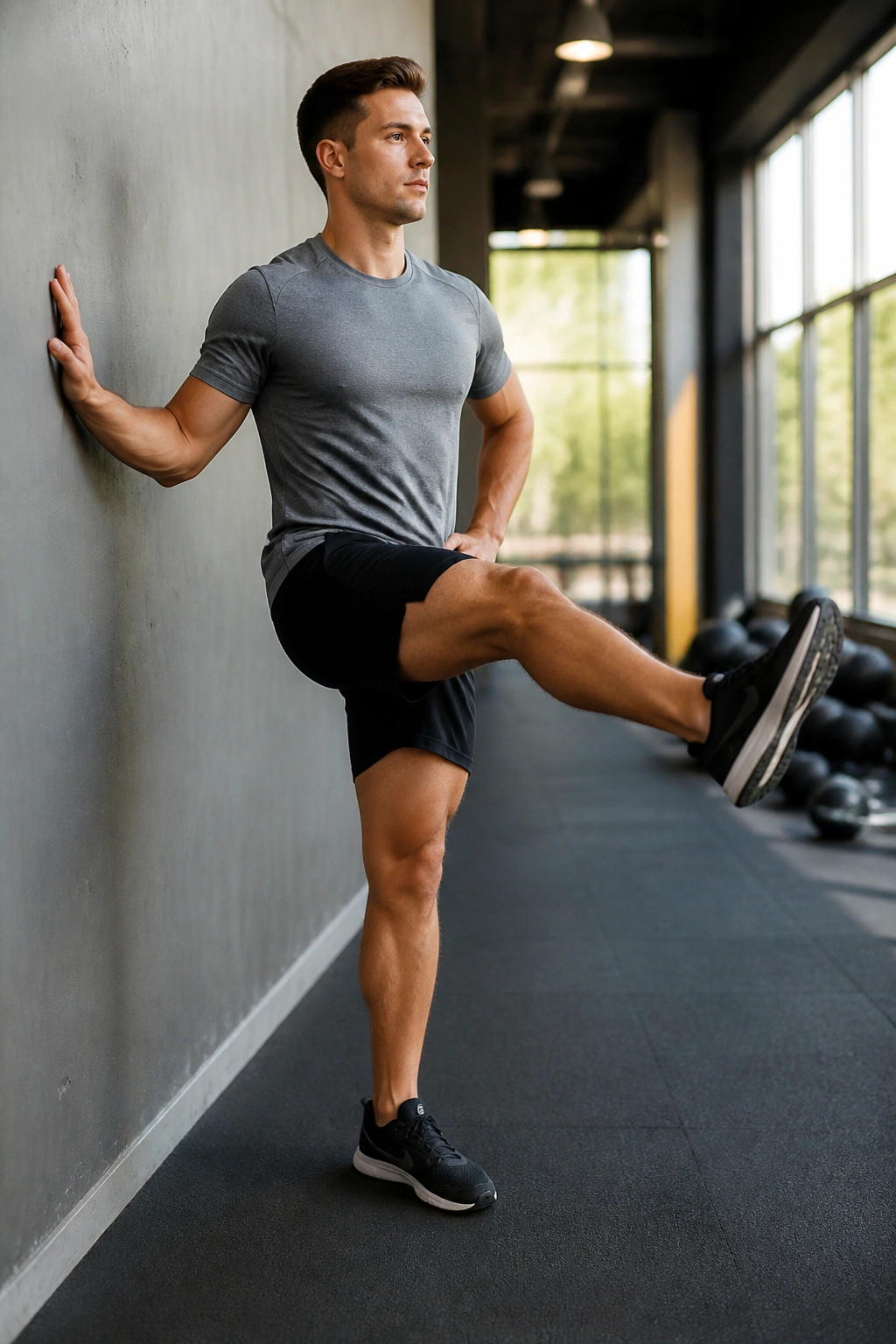
Leg swings are one of the fastest ways to wake up a stiff lower body. They’re also one of the easiest to do badly. If the leg is flinging around like a pendulum, the stretch gets noisy and the control disappears.
Hold onto a wall or post. Swing one leg forward and back in a smooth arc, keeping the torso upright. Start with a modest range and let it grow a little as the hip opens. Do 10 to 15 swings per leg.
The first few reps should feel conservative. By rep eight or nine, the hip often opens up enough to give you a bigger arc without forcing it. That’s the sweet spot.
One sentence matters here: do not arch the lower back to fake a bigger swing. Keep the ribs stacked and the core lightly braced. If your foot is smacking the floor or the movement gets jerky, shorten the range and slow down.
I like this one before squats, deadlifts, sprints, and anything with a lot of leg drive.
10. Side-to-Side Leg Swings
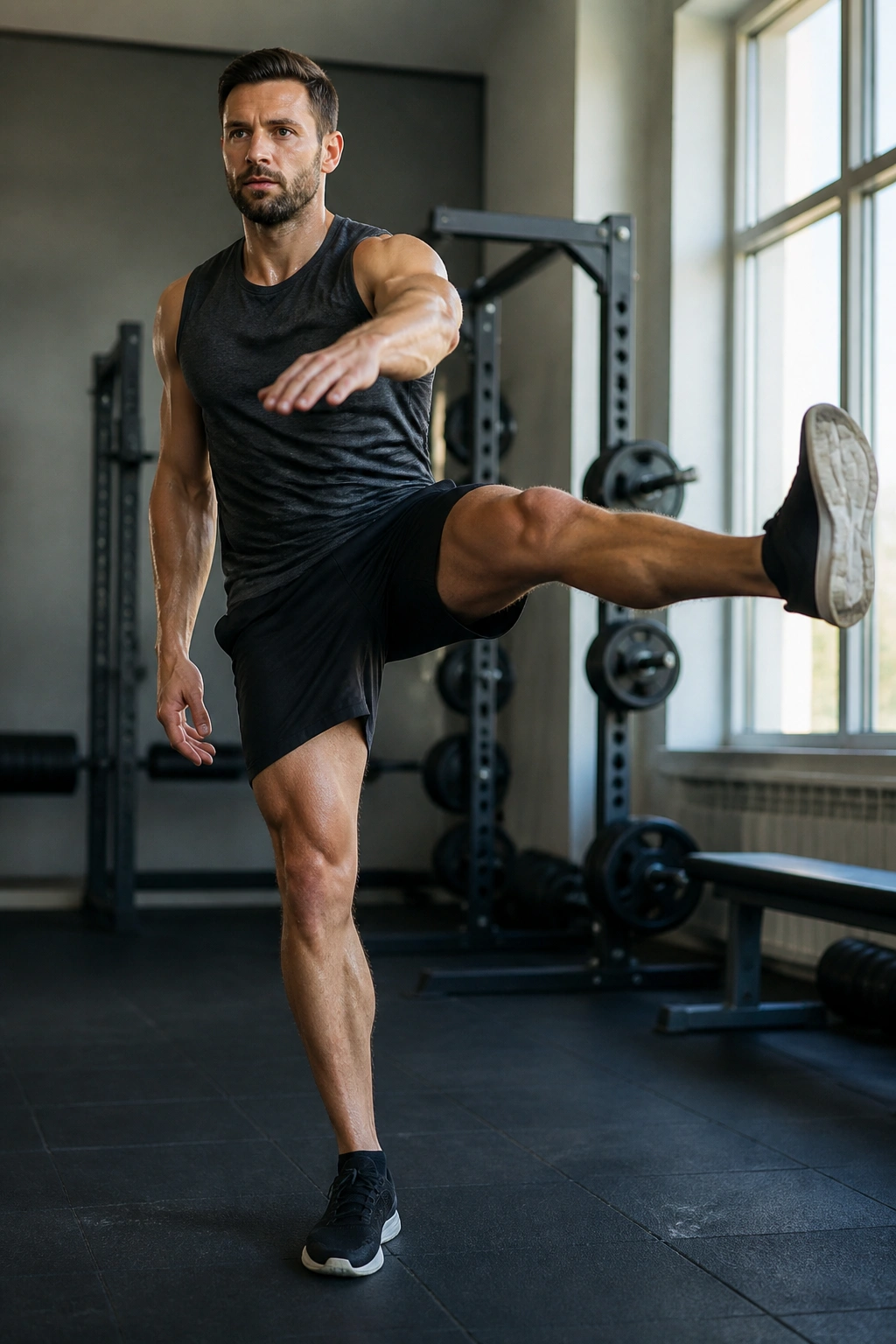
Forward-and-back swings wake up the hip flexors and hamstrings. Side-to-side swings hit the adductors and outer hip in a different way, and that matters more than people give it credit for.
Stand tall, hold something stable, and swing one leg across the body and then out to the side. Keep the standing leg slightly bent. 8 to 12 swings per side is usually enough.
Quick cues that make a difference
- Point the toes forward or slightly up.
- Keep the pelvis facing front.
- Let the swing stay controlled.
- Shrink the arc if the inner thigh grabs.
Runners often like this one after they’ve learned to stop fighting it. So do people who play court sports or change direction a lot. The groin and outer hip get a clean wake-up without needing a long floor stretch.
If one side feels wooden, do two extra swings there. Not forever. Just enough to remind it that moving side-to-side is part of the job.
11. Walking Lunges with an Overhead Reach
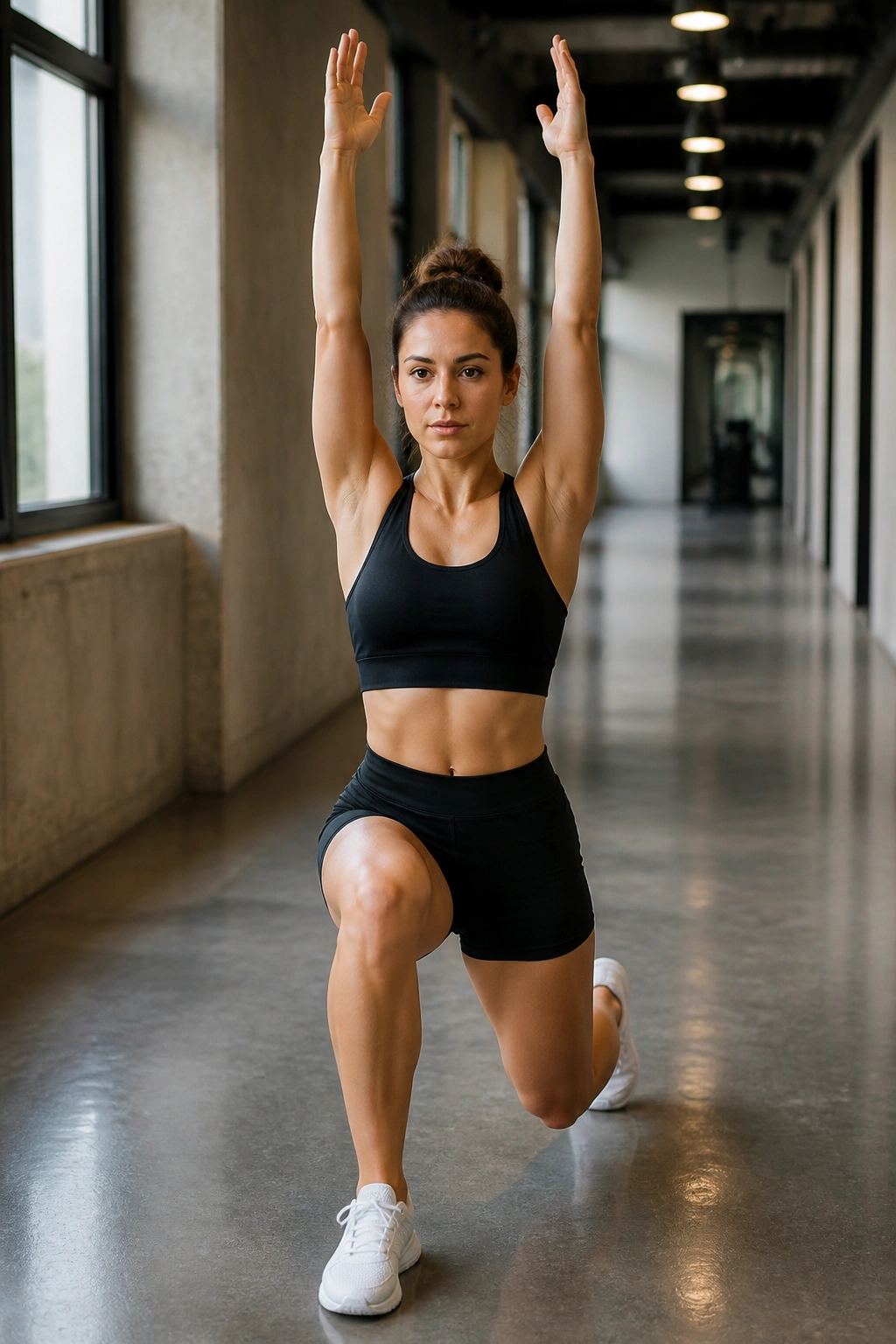
This is where the warm-up starts to feel like actual movement instead of a checklist. Walking lunges with an overhead reach ask for hip extension, balance, trunk control, and a little shoulder mobility all at once.
Step forward into a lunge. Drop the back knee close to the floor, then reach both arms overhead as you come up and step through into the next rep. Do 6 to 8 steps per side. If the overhead reach feels awkward, keep the hands at chest level and focus on the lower body first.
The stride length matters. Too short and the front knee gets jammed forward. Too long and the back leg turns into a wobbly mess. You want a stride that lets both knees bend cleanly while keeping the torso tall.
One nice thing about this drill: it exposes sloppy alignment fast. If the knee caves in or the torso folds over, you’ll see it right away. That’s not a failure. It’s useful. Adjust the step, slow the pace, and keep going.
A warm-up that feels like preparation usually does its job better than one that feels like stretching homework.
12. Side Lunges for the Inner Thighs
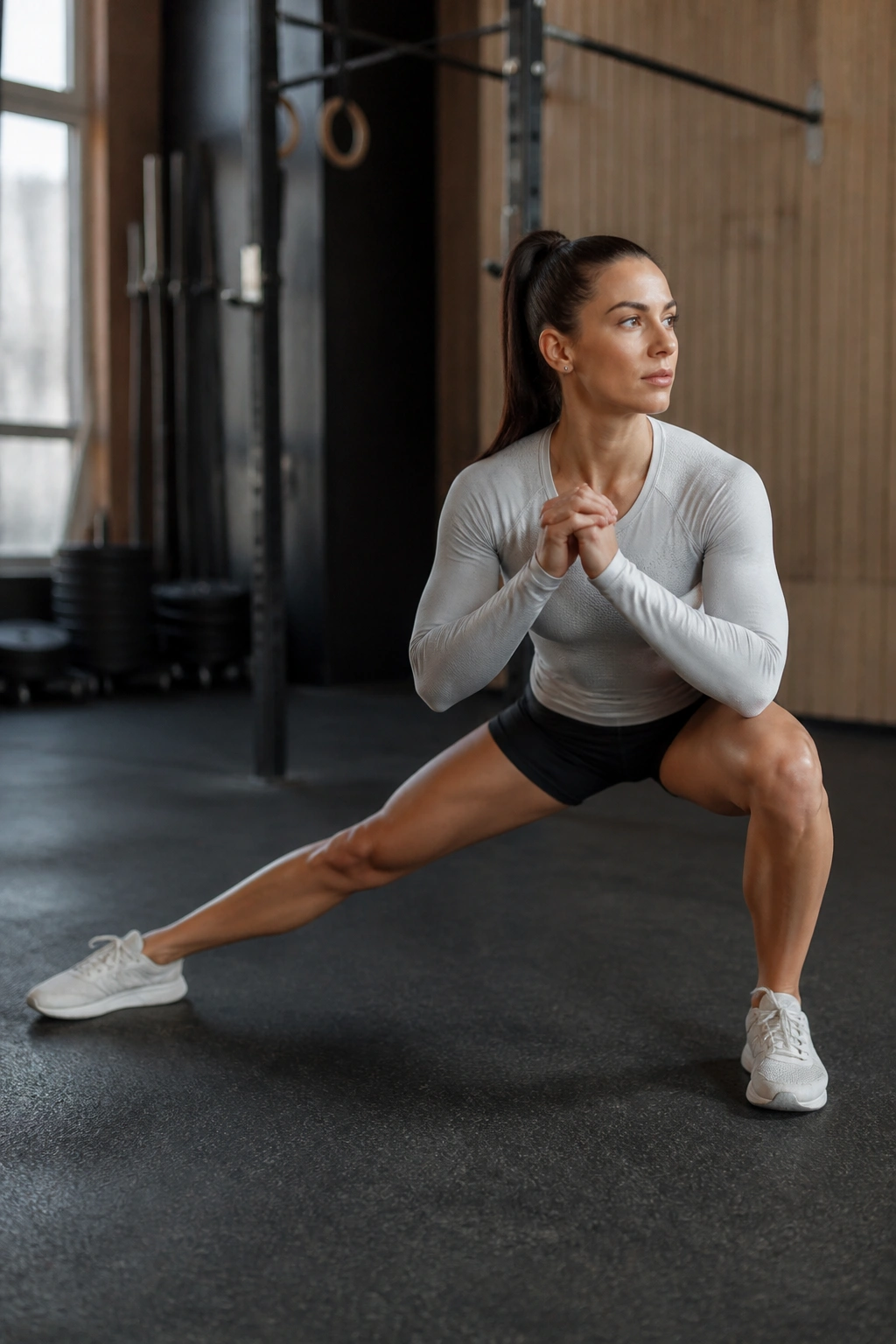
Regular lunges move you forward and back. Side lunges add a different demand, which is why they’re so useful before anything involving lateral motion, loaded squats, or lower-body training in general.
Step out to one side, sit the hips back, and keep the other leg straighter as the stepping knee bends. Push the floor away and return to center. Do 5 to 8 reps per side.
Why I like them before lower-body training
- They wake up the adductors.
- They help the hips move in the frontal plane.
- They show you whether one hip feels sticky before the workout starts.
- They can smooth out the first few squat reps.
Keep the planted foot flat. That’s the big one. If the heel lifts or the knee caves in, shorten the step and stay more upright. You do not need to sink into a dramatic side split.
This move is especially handy before basketball, tennis, field work, or strength sessions with deep squats. It also has a habit of making people aware of how one side feels compared with the other. Again, useful information.
13. Glute Bridges to Switch On the Hips
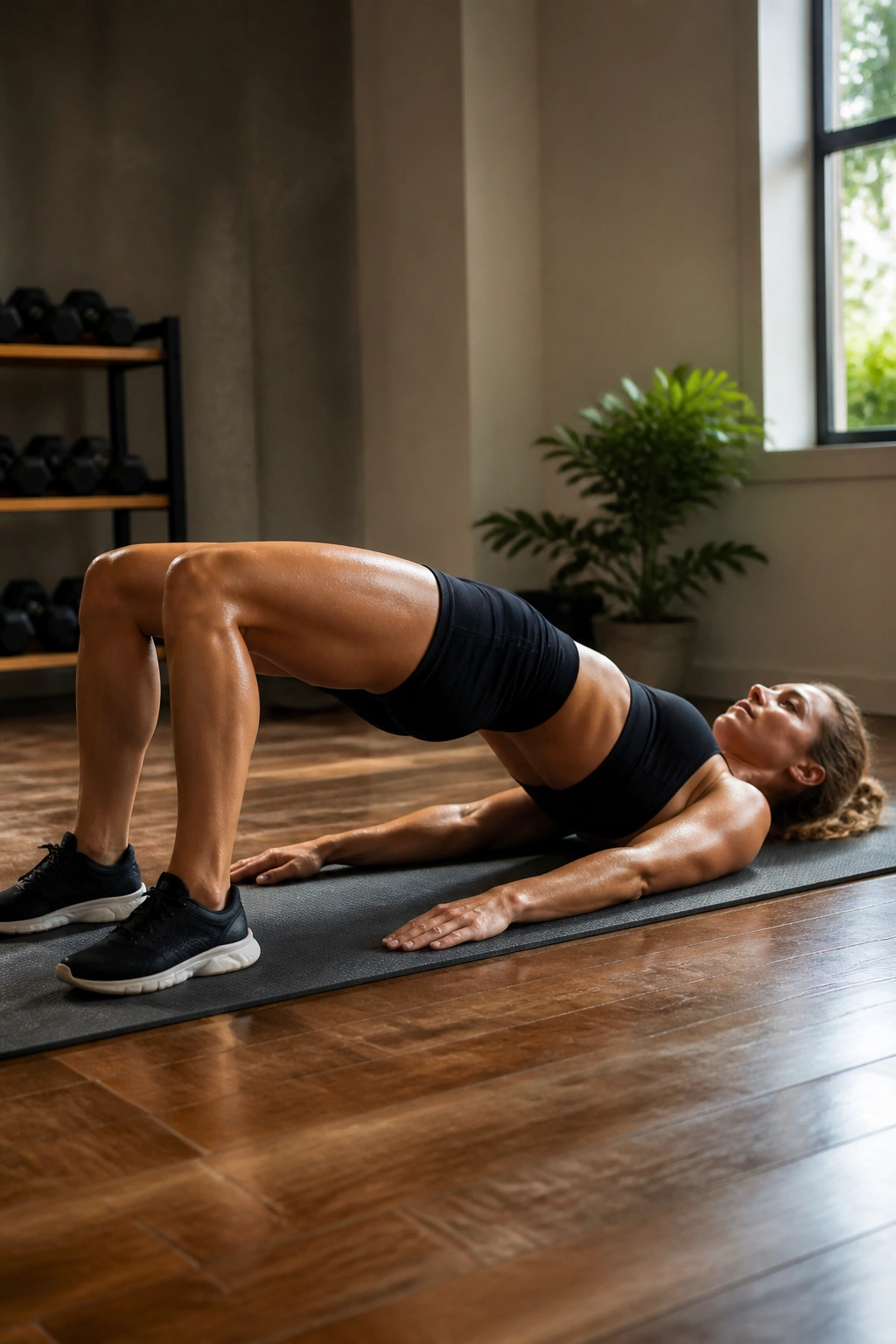
Do your glutes disappear before lower-body training? They do for a lot of people. Glute bridges bring them back online without pounding the joints.
Lie on your back, knees bent, feet flat. Press through the heels, squeeze the glutes, and lift the hips until the body forms a straight line from shoulders to knees. Pause for 2 seconds at the top, then lower with control. Try 8 to 12 reps.
What you should feel
You want the work in the butt, not the low back. If the hamstrings cramp, move the feet a little closer to the hips. If the lower back takes over, tuck the ribs down and make the lift smaller.
I like bridges before squats, deadlifts, running, and any session where the hips need to help but tend to be lazy at the start. They also pair well with leg swings if you need a tiny bit more activation before loading anything.
A quick version works fine. Two sets of eight, slow enough to feel each rep, is enough for most warm-ups.
14. Ankle Circles and Calf Raises
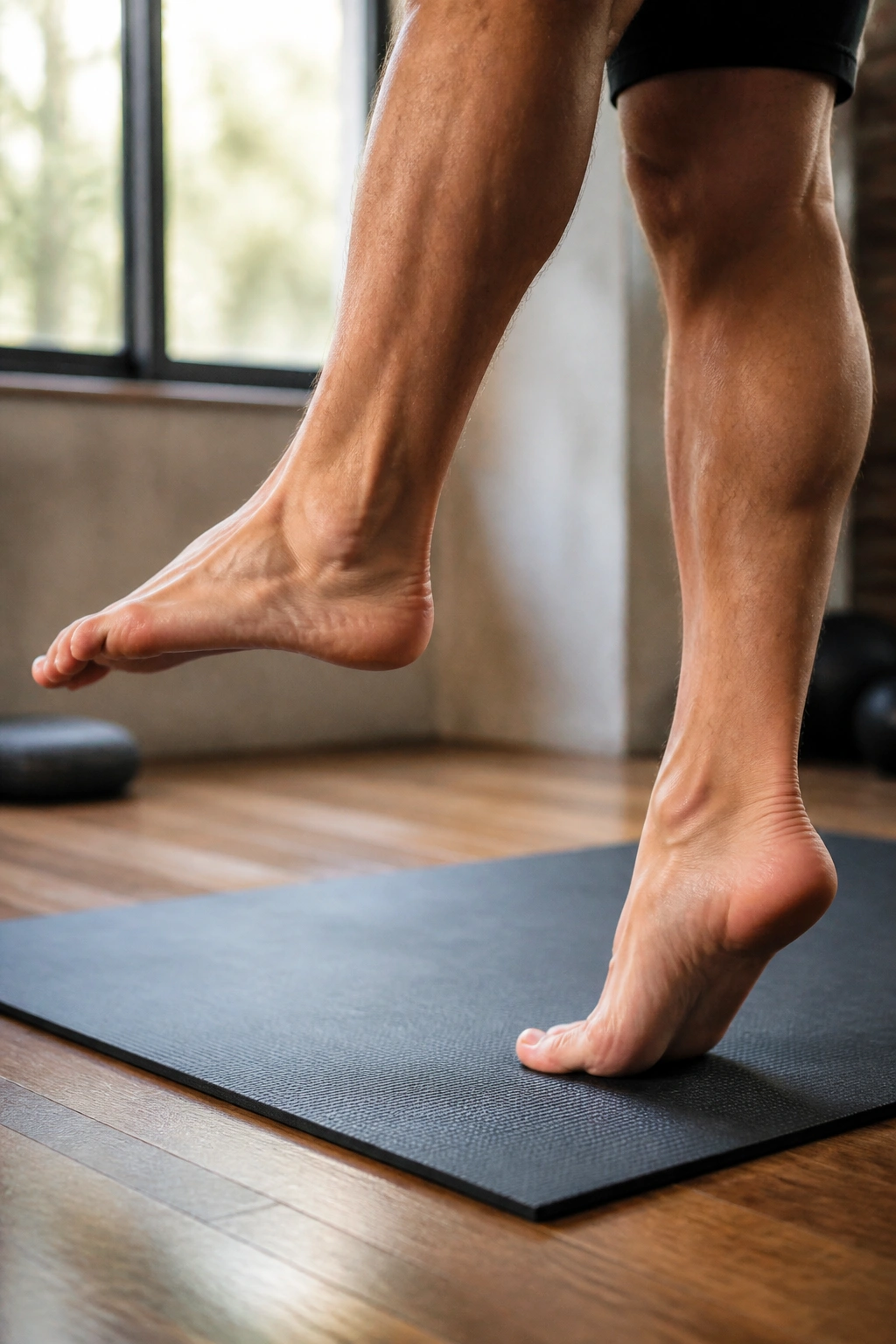
Ankles get ignored until they complain. Then everyone acts surprised when squats feel unstable or runs feel heavy in the first mile.
Start with ankle circles. Lift one foot off the floor and draw 5 to 8 circles each direction. Then switch sides. After that, stand for calf raises: rise onto the balls of the feet, pause for a second at the top, and lower slowly. 12 to 15 reps is a solid warm-up dose.
Quick details that help
- Keep the standing foot rooted through the big toe, little toe, and heel.
- Don’t bounce through the calf raises.
- Move the ankle through a full circle without forcing it.
- If balance is rough, hold a wall or machine.
The ankle work matters more for squats and running than people think. Tight calves or stiff ankles can make the knees track badly and the whole lower body feel clunky. This tiny bit of prep often cleans that up.
One sentence, because it deserves its own space: strong feet start with awake ankles.
15. Marching High Knees or Light Jumping Jacks
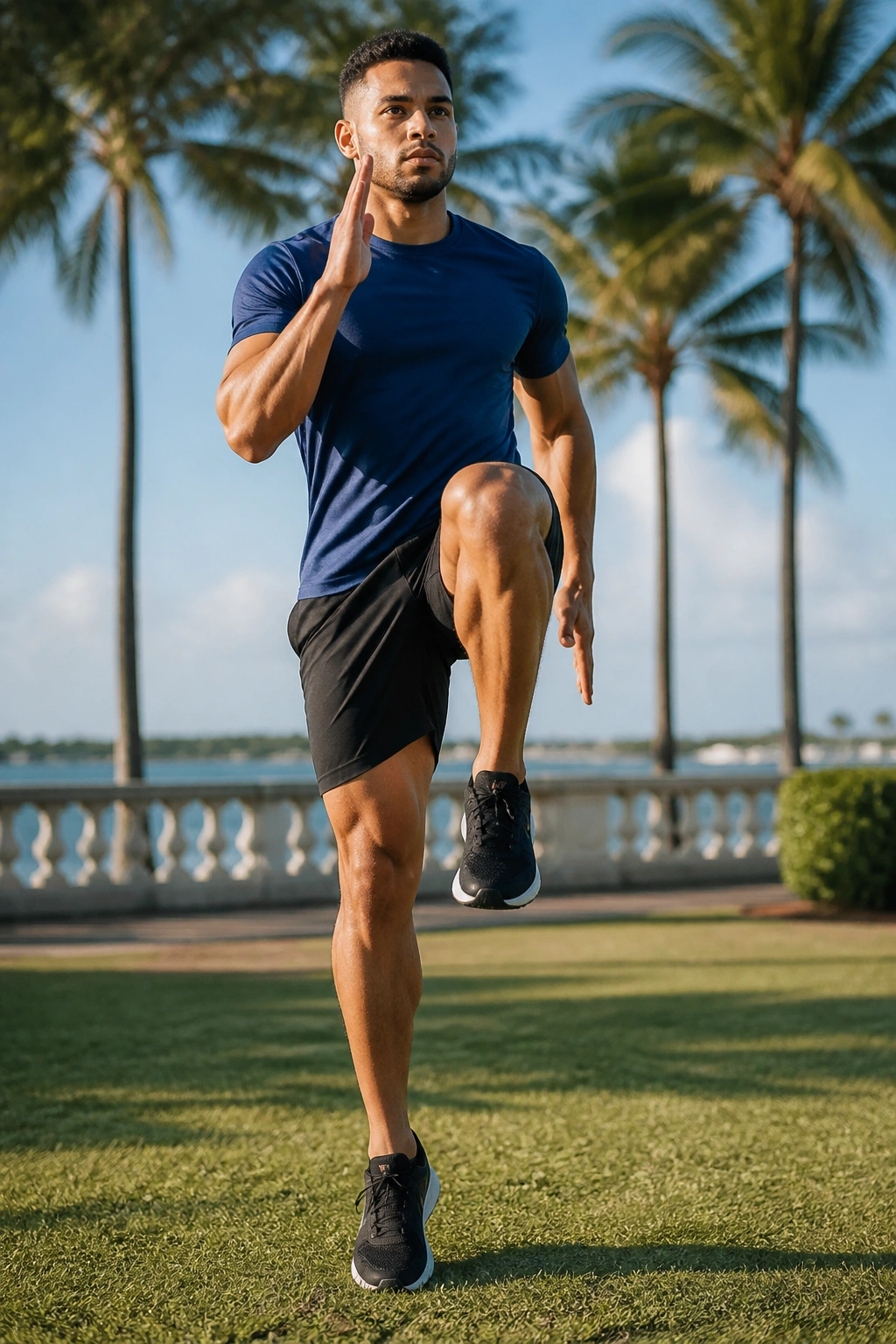
A warm-up should do more than stretch. It should raise temperature, wake the heart up, and make the body feel ready to move faster if the workout asks for it.
Marching high knees are the easier option. Lift one knee at a time to hip height, drive the opposite arm, and keep the posture tall. Light jumping jacks are the slightly bouncier version. Pick the one that feels smooth on your joints and do 30 to 60 seconds.
If the knees or Achilles feel touchy, march instead of jump. If you’re headed into a lifting session and don’t want to spend gas too early, marching is often enough. If you’re going into a cardio workout or sport practice, the jacks can bridge the gap between mobility work and real effort.
I like this move near the end of the warm-up, not the start. By then the joints are open and the body is ready to accept a little pulse. That’s where it earns its place.
Final Thoughts
A good warm-up doesn’t need to feel long. It needs to feel useful. If you pick five to seven of these moves and do them with control, you’ll usually get more out of them than someone who hurries through fifteen reps of everything with no focus.
The smartest order is simple: start with the neck and shoulders, move into the spine, then work down through the hips, legs, and ankles. Finish with a light pulse if the workout is about to get serious. That sequence works for lifting, running, classes, and most mixed training days without much fuss.
One last thing: the best sign that your warm-up worked is not sweat. It’s readiness. Your joints feel less rusty, your first set feels less rude, and your body settles into the workout faster. That’s the sweet spot.
