



We’ve all been there. You are ready to get a workout in, you lace up your sneakers, and before you even finish the first set of lunges, your knees send a sharp, unwelcome reminder of their existence. It is frustrating. It makes you want to quit before you start. But the secret to strengthening your legs isn’t about pushing through joint pain; it is about finding movements that stress the muscle fibers without grinding the cartilage.
The knee is a hinge joint, trapped between the hip and the ankle. When those two joints are weak or immobile, the knee takes the brunt of the abuse. If you are dealing with sensitivity, inflammation, or just general creakiness, you cannot afford to ignore the muscles around the joint. Your quadriceps, hamstrings, glutes, and calves act like the suspension system for your body. If the suspension is shot, the frame suffers.
The goal here is not to burn a thousand calories in twenty minutes. The goal is to build a foundation that lets you walk, climb stairs, and move throughout your life without feeling like your joints are filled with gravel. We are looking for stability, alignment, and controlled tension. If you feel sharp pain—not the good “muscle burn” but a stinging, structural pain—stop immediately. Modify the range of motion, reduce the resistance, or skip the move. Let’s get into the movements that respect your joints while doing the work.
1. Glute Bridges
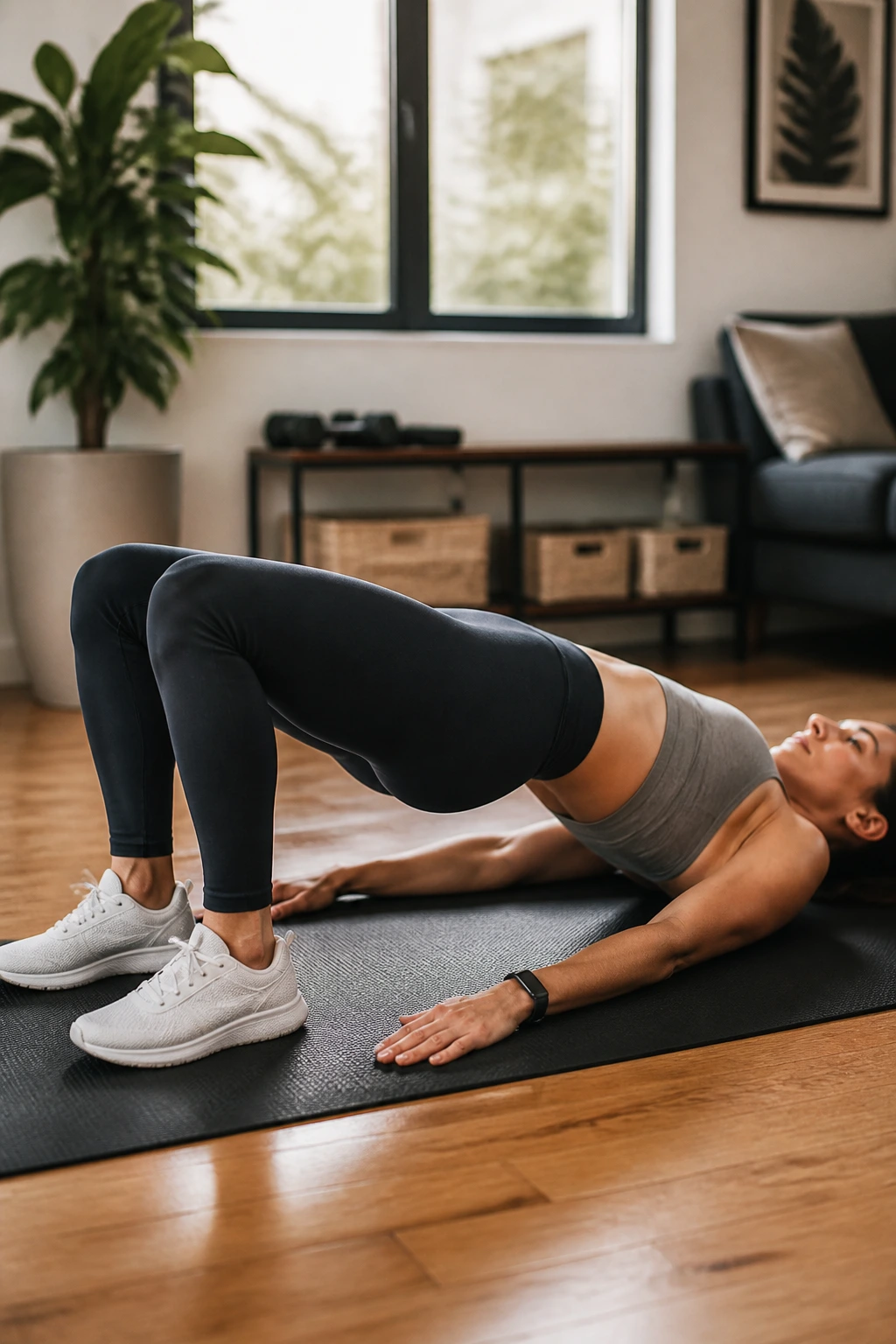
The glute bridge is the foundational movement for anyone struggling with knee pain. Most people ignore their glutes and over-rely on their quads to push through movements, which puts unnecessary shearing force on the knee cap. By lying on your back, you take gravity out of the equation for the joint, allowing you to isolate the posterior chain.
Why It Works for Sensitive Knees
When you lift your hips, you force your glutes and hamstrings to do the work. If your knees hurt during squats, it is often because your glutes aren’t firing properly. This movement teaches you how to engage the back of your legs to support your standing posture later on.
How to Execute
- Lie flat on your back with knees bent and feet hip-width apart.
- Keep your arms at your sides for stability.
- Squeeze your glutes—do not just arch your back—and lift your hips toward the ceiling.
- Pause at the top for a two-count.
- Lower slowly, vertebrae by vertebrae.
Pro tip: Imagine you are holding a tennis ball between your knees throughout the entire motion. This engages your inner thighs and keeps your knees tracking straight, preventing them from wobbling inward, which is the primary cause of knee discomfort during this move.
2. Wall Sits
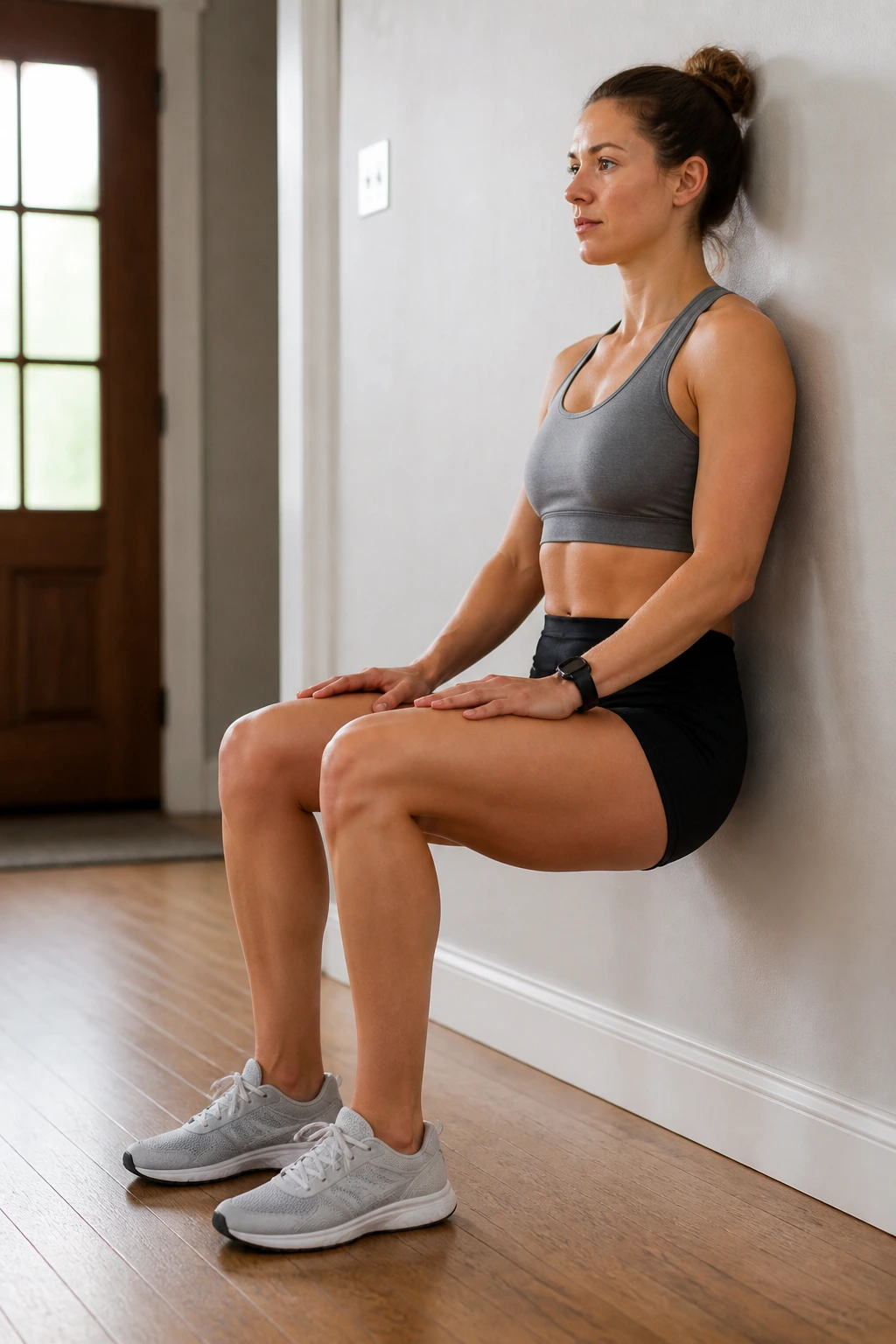
Isometrics are arguably the most effective tool for knee rehab. An isometric hold, like a wall sit, allows you to load the quad muscles without the grinding motion of bending and straightening the joint under weight. You create tension without the friction.
The Mechanism of Strength
By staying static, you teach your quads to stabilize the patella without the risk of moving through a painful range. You are essentially building a muscular brace around your knee.
Proper Form Essentials
- Find a smooth wall and lean your back against it.
- Slide down until your thighs are roughly parallel to the floor, or higher if that causes pain.
- Keep your knees aligned with your ankles—do not let them cave in.
- Press your heels into the floor.
- Hold for 30 to 60 seconds.
If you find that your knees are trembling, that is perfectly normal. Focus on keeping your breathing steady. If you hold your breath, your blood pressure spikes, and your muscles will fatigue faster.
3. Seated Leg Extensions
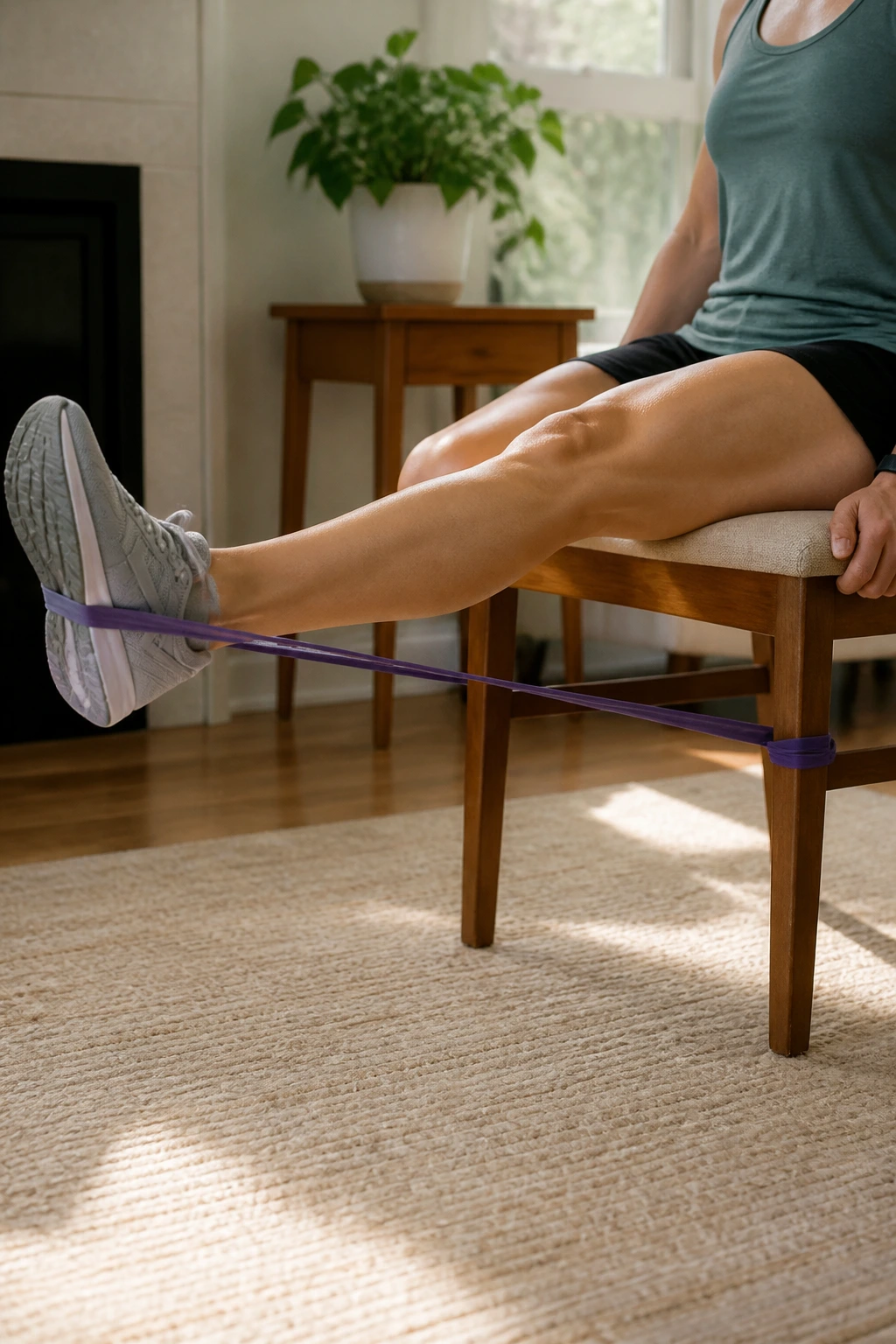
If you have access to a resistance band, you can mimic a gym leg extension machine without the heavy, clunky equipment that often causes issues. The seated position removes the weight of your entire body, making this extremely low-impact.
Setting It Up
- Sit in a sturdy chair with your back straight.
- Loop a resistance band around the back of the chair and tie the ends around your ankle.
- Extend your leg slowly until it is straight.
- Squeeze your quad hard at the top.
- Lower your foot back to the starting position with control.
This movement isolates the vastus medialis—that teardrop-shaped muscle on the inner part of your quad. This muscle is critical for tracking the knee cap correctly. When this muscle is weak, the knee cap drifts, causing that annoying “grinding” sensation.
4. Side-Lying Leg Lifts
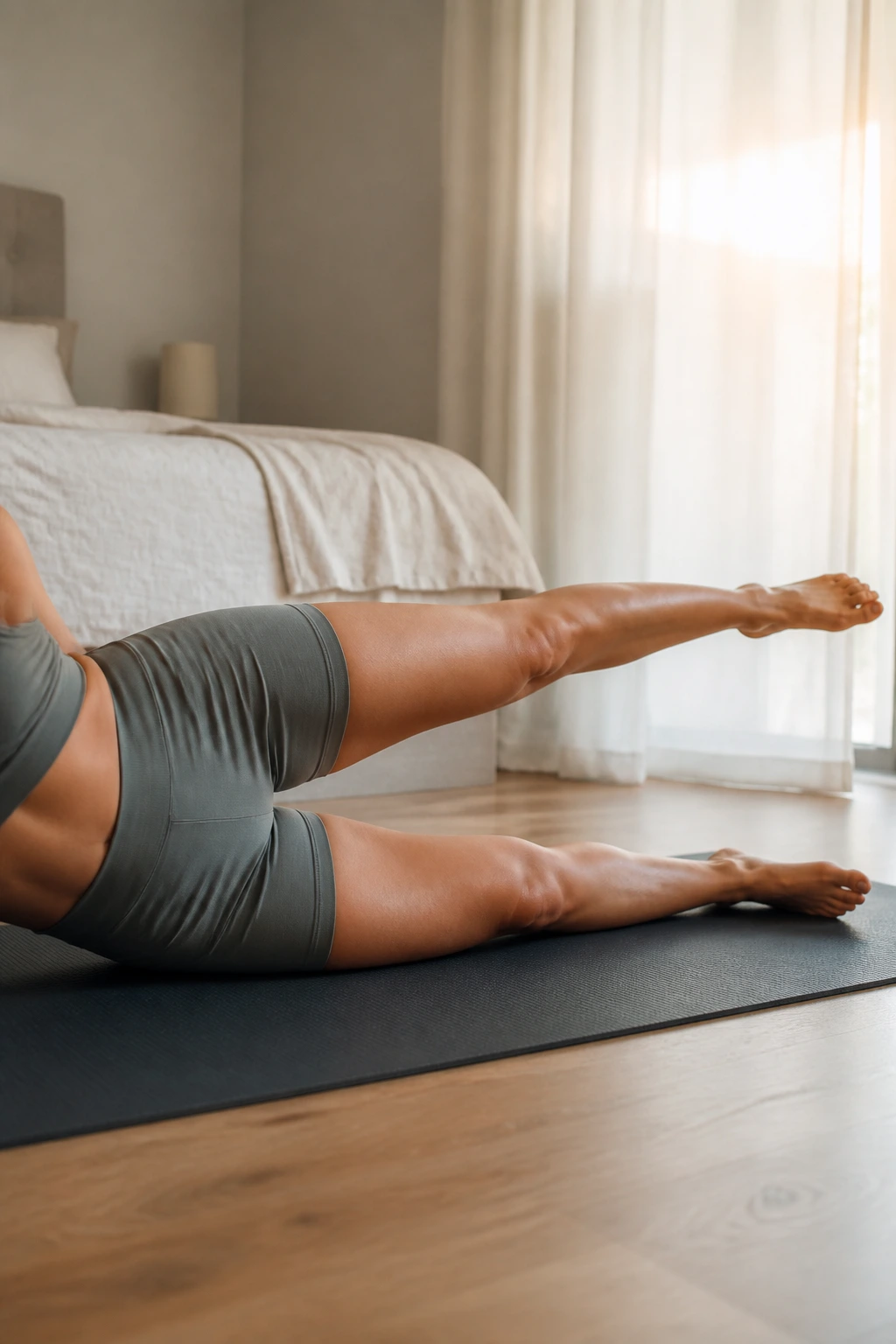
We often focus too much on the front and back of the legs and forget the sides. The gluteus medius, a small muscle on the side of your hip, is the unsung hero of knee health. If this muscle is weak, your hip drops when you walk, forcing the knee to take the impact.
How to Get It Right
- Lie on your side with your legs stacked perfectly on top of each other.
- Keep your top leg straight, engaging the quadricep.
- Lift the top leg toward the ceiling about 12 to 18 inches.
- Ensure your toes point forward, not toward the ceiling.
- Lower back down slowly.
If you feel this in your hip, you are doing it right. It should not hurt your knee at all. This is pure hip stabilization work that makes every step you take in daily life safer for your knees.
5. Clamshells
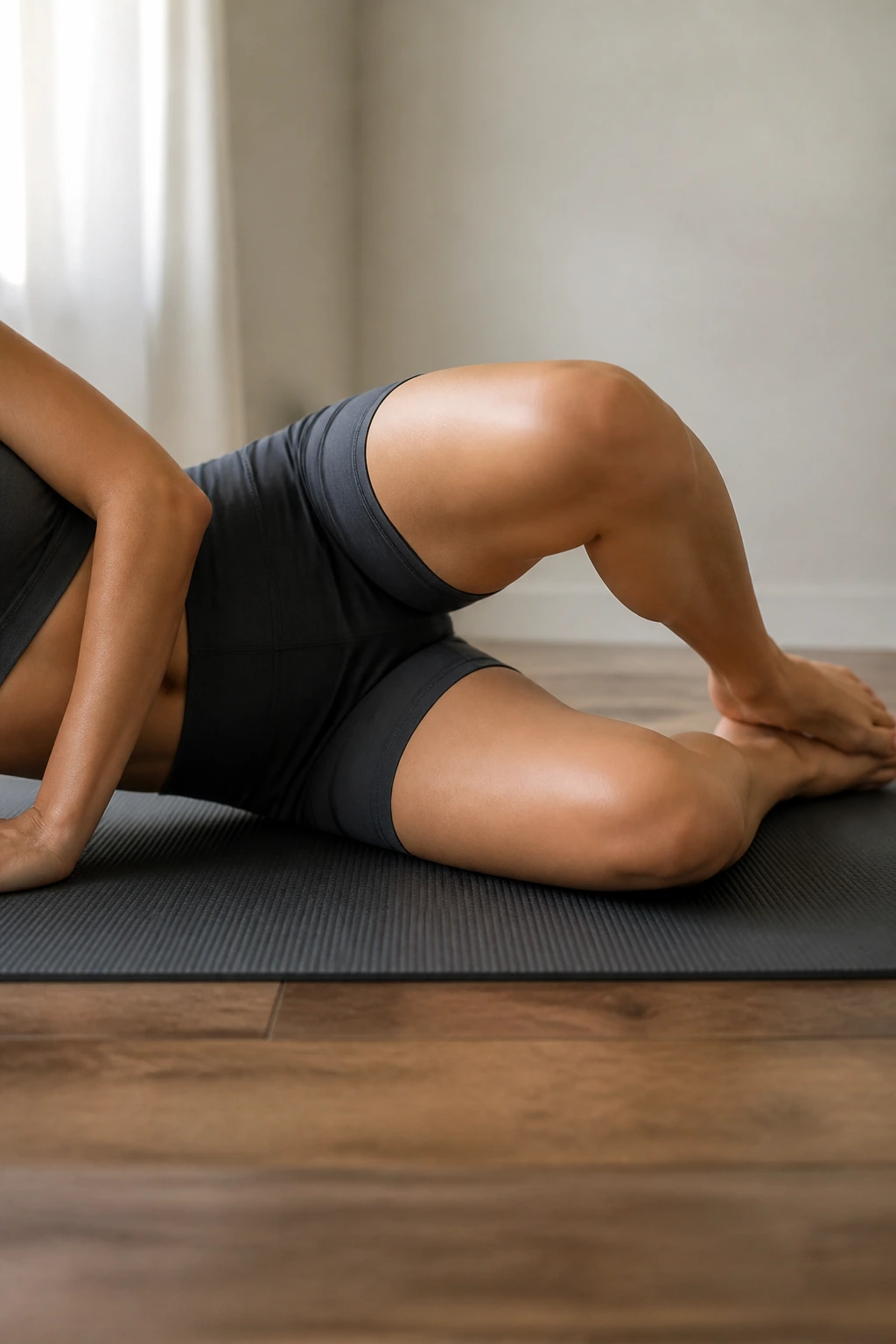
This is another move that targets the hip, but it does so through rotation rather than abduction. It is a fantastic exercise because it is nearly impossible to mess up, provided you keep your hips stacked.
Performing the Movement
- Lie on your side, knees bent at a 45-degree angle.
- Keep your feet touching.
- Lift your top knee while keeping your heels connected.
- You should look like a clam opening its shell.
Key constraint: Your top hip should not roll backward. If you roll your hips, you lose the isolation. Place a hand on your top hip to ensure it stays pointing straight ahead. You will feel a burn in the side of your buttock, which is exactly what you want for stabilizing the knee joint.
6. Bird-Dogs
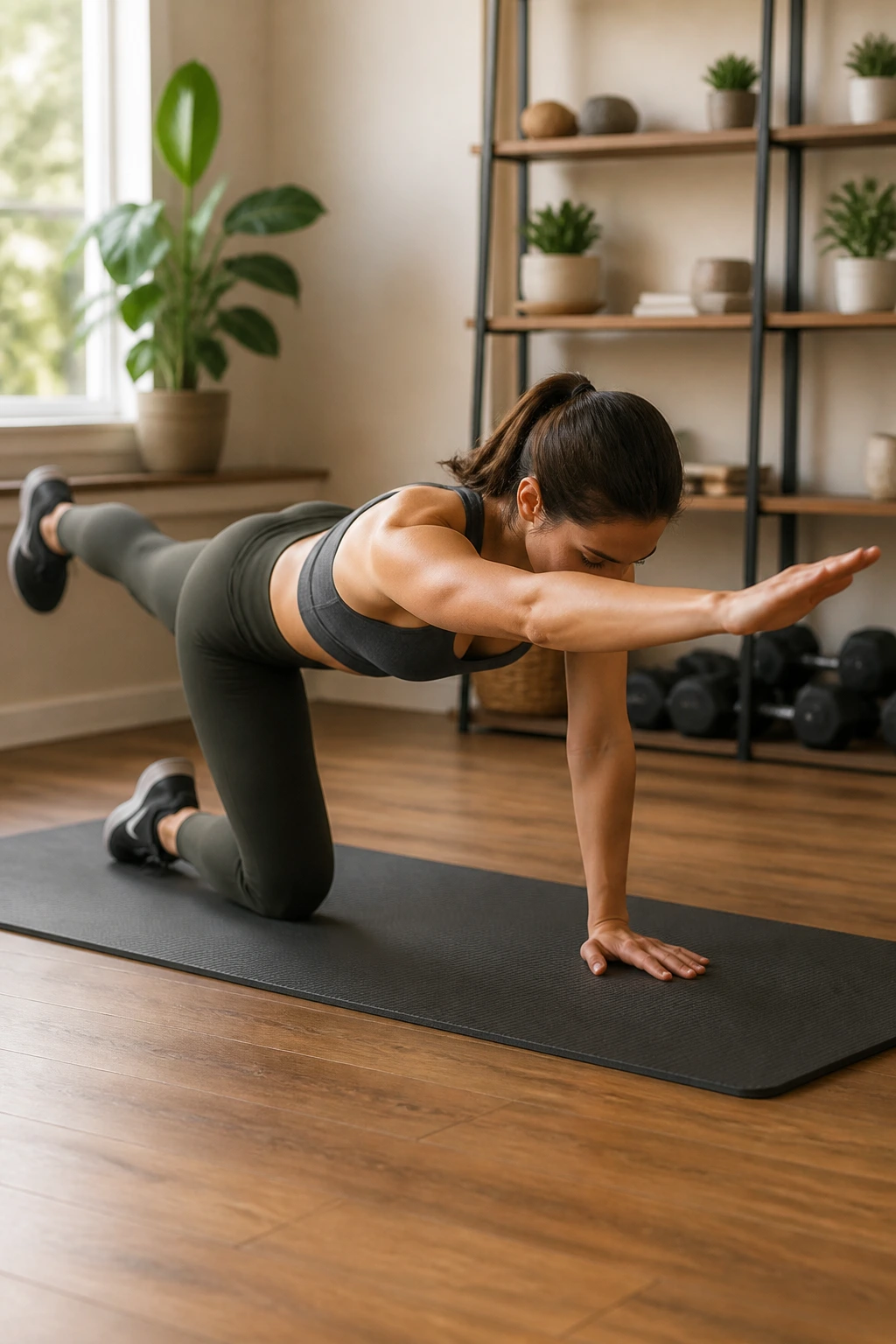
While this looks like a core exercise, it is vital for balancing the pelvis. When your core is weak, you tend to compensate by shifting weight onto your joints. The bird-dog forces you to stabilize your spine while moving your limbs, which carries over to better gait mechanics.
The Execution
- Start on your hands and knees in a tabletop position.
- Extend your right arm forward and your left leg backward simultaneously.
- Keep your back flat—do not let it arch.
- Hold for a moment, then return to center.
- Switch to the left arm and right leg.
Think of yourself as a balanced table. If you tilt, you lose the stability. This move is gentle on the knees because you are supporting your weight on all fours, distributing the load, while engaging your posterior chain.
7. Standing Hamstring Curls
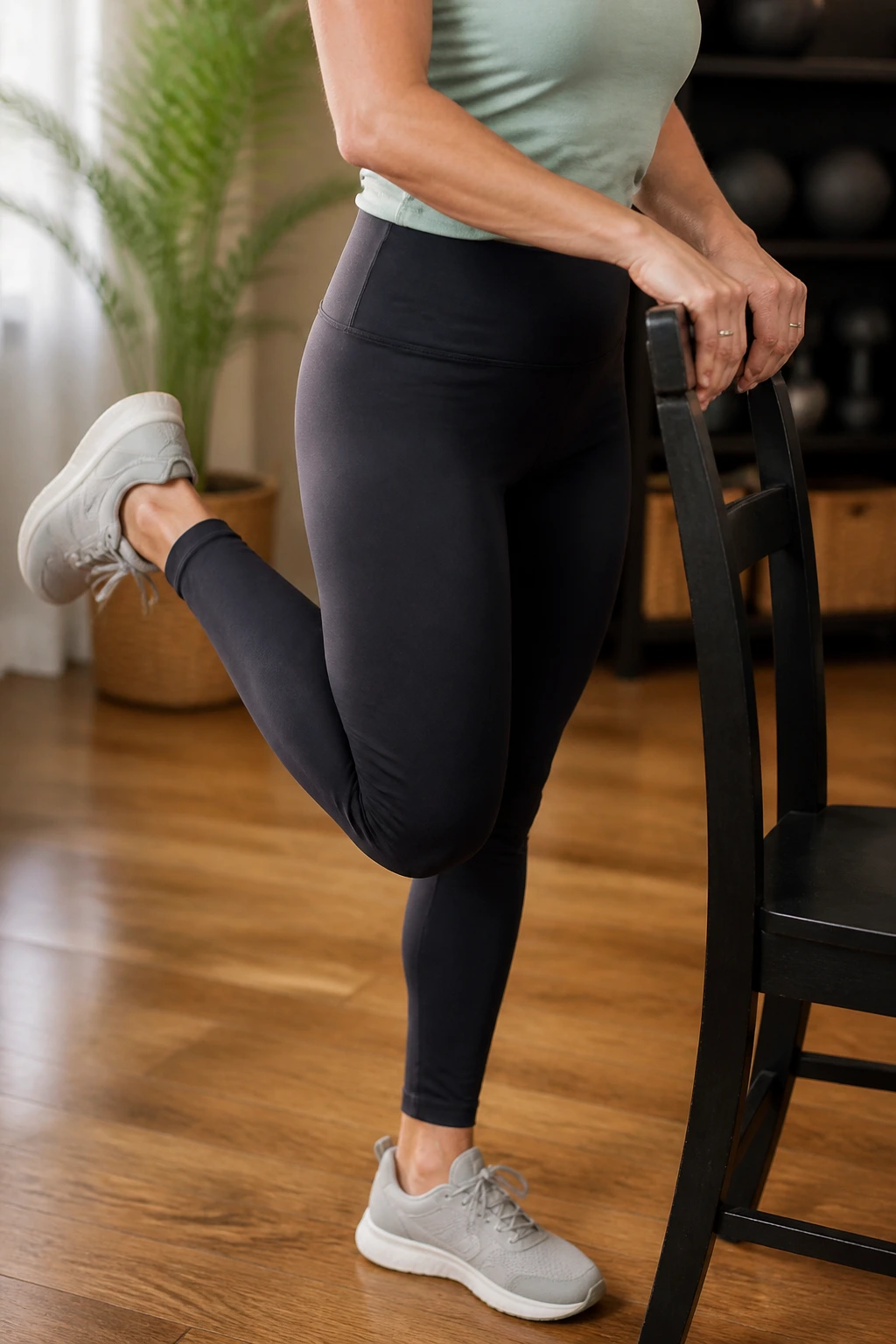
Sometimes, just standing can be a workout if you have sensitive joints. This movement is purely about isolating the hamstring without involving the knee hinge in a weighted squat or lunge.
How to Do It
- Stand behind a sturdy chair or countertop for support.
- Keep your feet together.
- Bend one knee to bring your heel toward your glute.
- Squeeze the back of your leg hard at the peak of the movement.
- Return to the floor slowly.
Do not swing your leg. Momentum is the enemy of joint health. If you are swinging, you are letting gravity do the work instead of your hamstring. Keep the movement slow and deliberate.
8. Box Squats
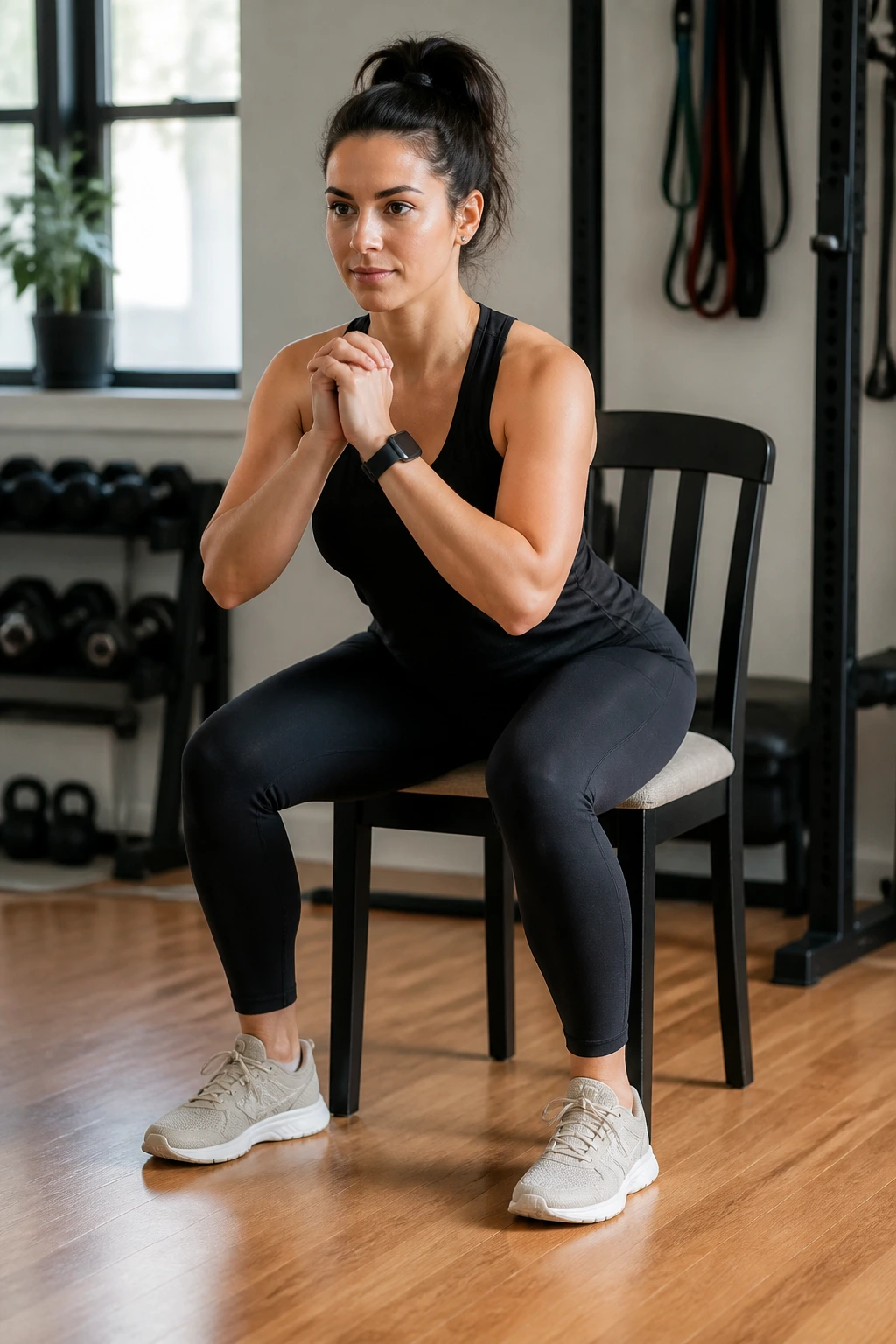
Squatting is natural, but doing it wrong destroys knees. A box squat—or chair squat—is the perfect way to retrain the pattern. It forces you to sit back rather than down, which keeps the shins vertical and takes the pressure off the kneecaps.
The Setup
- Place a chair or a sturdy box behind you.
- Stand with feet shoulder-width apart.
- Begin the squat by pushing your hips back as if you are reaching for the chair with your glutes.
- Once you lightly touch the chair, stand back up.
Crucial detail: Do not plop down. Control the descent. You should barely tap the surface before pushing through your heels to return to a standing position. This teaches your body to load the hips and glutes instead of the knees.
9. Straight Leg Raises
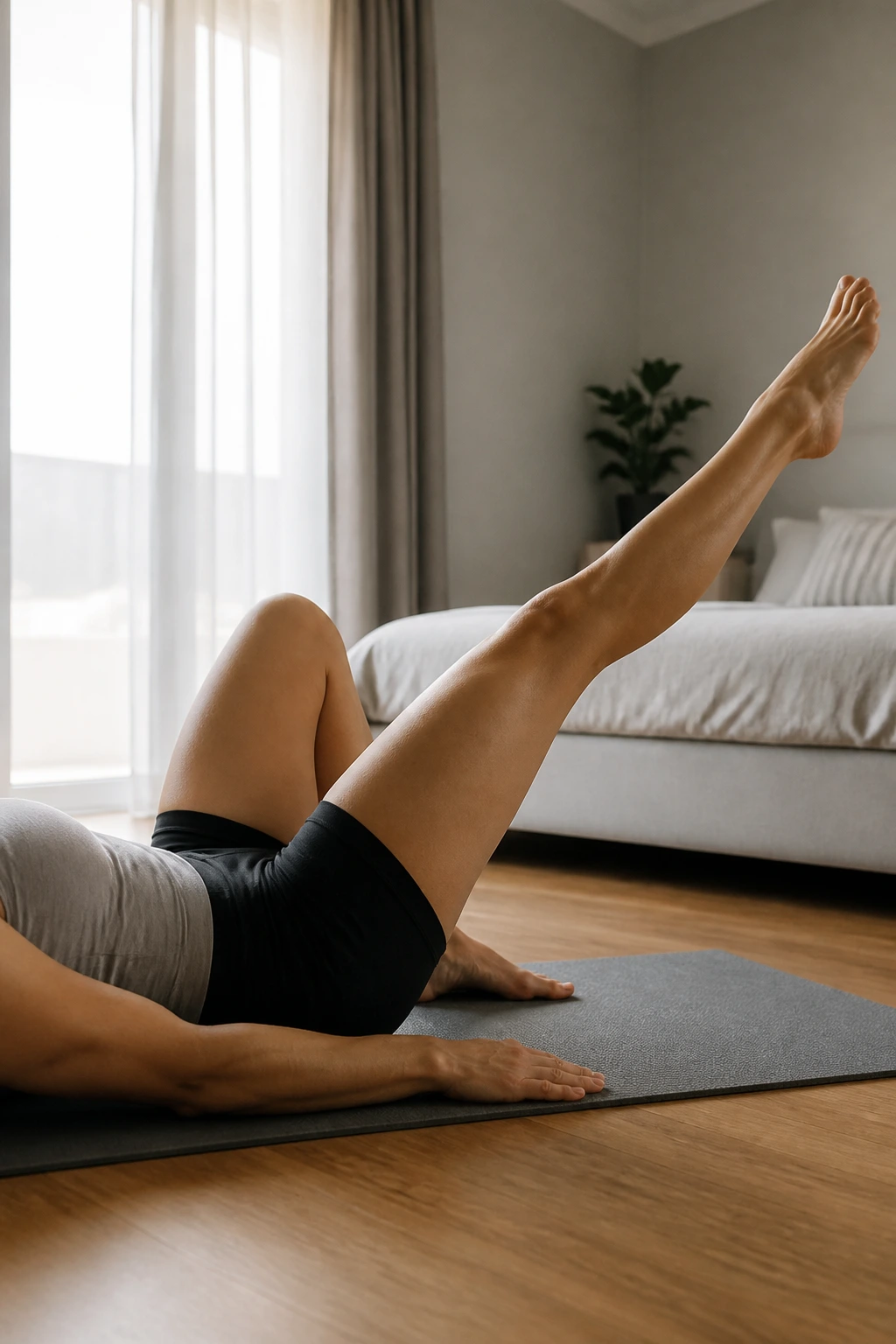
If you have ever been to physical therapy for a knee injury, this was likely the first exercise you were given. It is incredibly simple, but it is one of the most effective ways to strengthen the quads without bending the knee under load.
Step-by-Step
- Lie flat on your back with one leg bent and the other straight.
- Tighten the quad muscle on the straight leg as hard as you can.
- Lift the straight leg until it is level with the bent knee.
- Lower it with complete control—do not let it flop.
This strengthens the muscle without any friction in the joint. It is a fantastic move to do on days when your knees feel particularly flared up and you cannot tolerate any bending.
10. Lateral Step-Outs
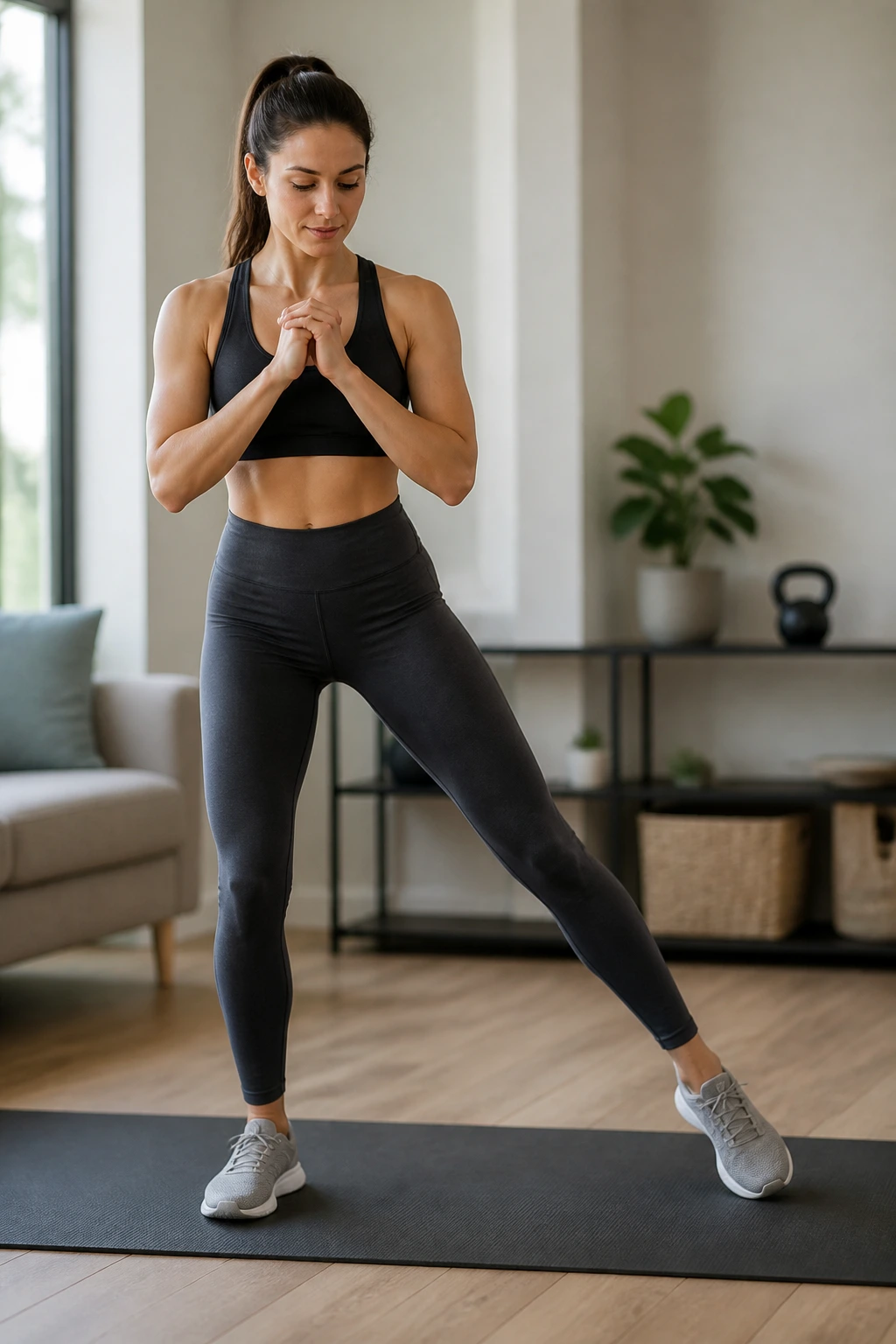
This move targets the abductors and glutes in a standing position, which helps with lateral stability. We rarely move perfectly straight in life; we step sideways, turn, and pivot. This move helps prepare your knees for those random, everyday stresses.
How to Move
- Stand with your feet together.
- Take a small, controlled step to the right.
- As you land, ensure your weight is in your heel.
- Step back to the center.
- Repeat on the other side.
Keep the steps small. If you take a giant lunge, you increase the torque on the knee. Keep it compact and focused on pushing off the floor to engage the muscles of the outer hip.
11. Inner Thigh Lifts
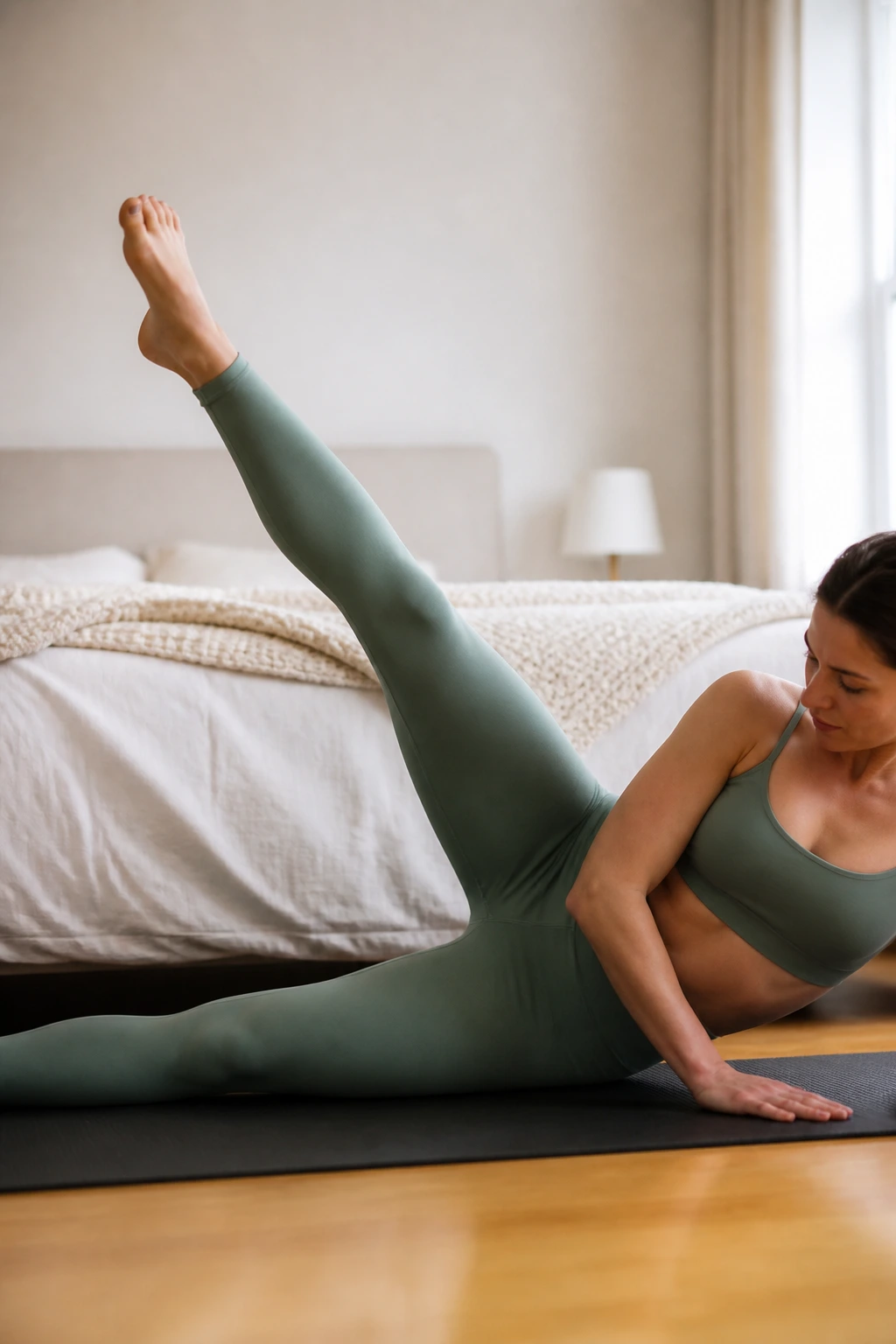
Often ignored, the adductors (inner thighs) are crucial for supporting the knee. If these are weak, the knee tends to collapse inward. By strengthening them, you provide a counter-force to the outer glutes, creating a balanced, stable joint.
Technique
- Lie on your side, but this time, cross the top leg over the bottom leg so the foot is flat on the floor in front of your bottom knee.
- Keep the bottom leg straight.
- Lift the bottom leg upward toward the ceiling.
- Feel the tension in the inner thigh.
- Lower slowly.
This is a subtle movement. You do not need to lift your leg very high to feel it. In fact, a smaller range of motion often keeps the engagement better than a large, swinging lift.
12. Donkey Kicks
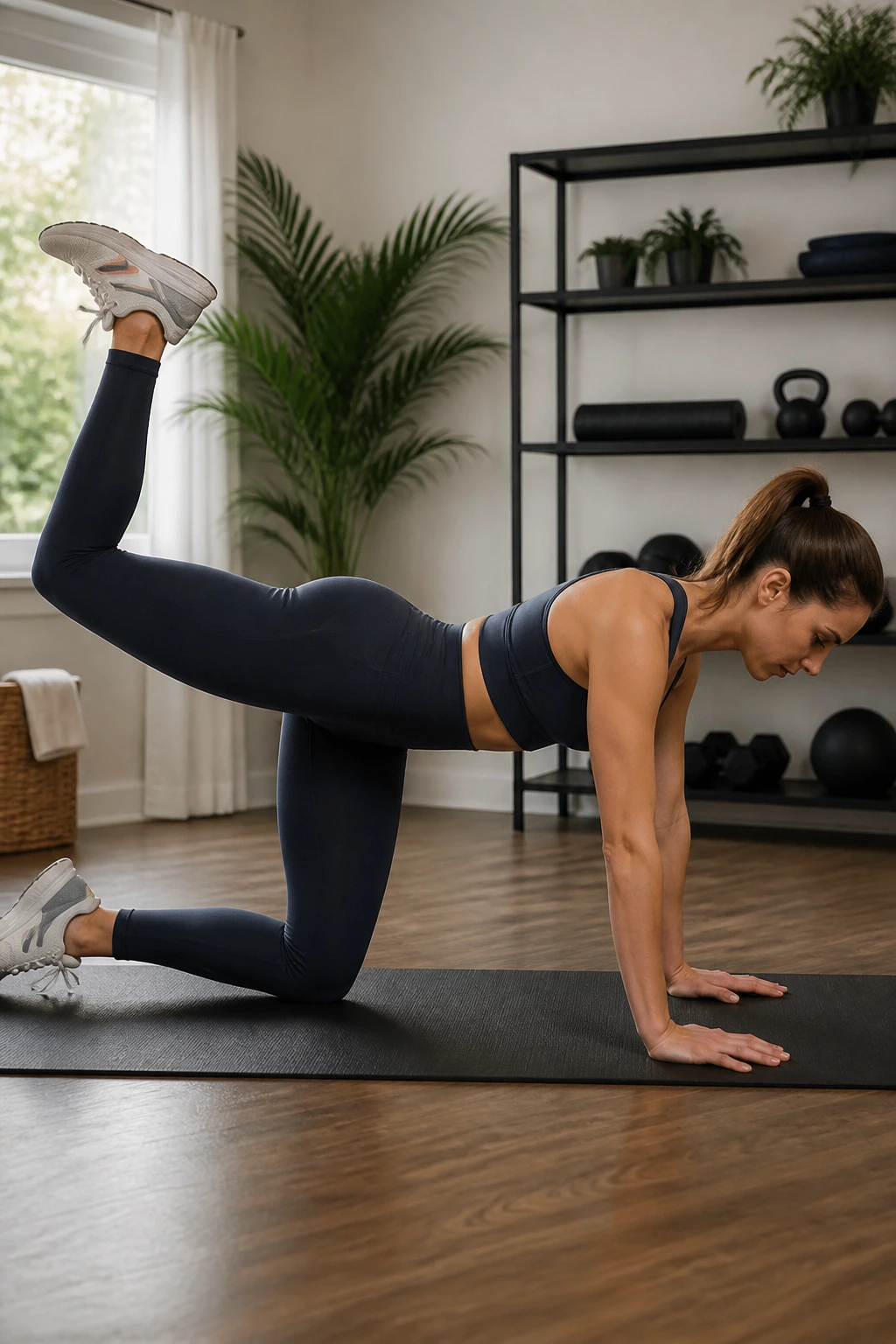
This is a classic for a reason. It targets the glute maximus—the biggest muscle in your body—without putting any weight on the knee joints. It’s an effective way to fatigue the posterior chain safely.
The Execution
- Start on your hands and knees.
- Keep your knee bent at a 90-degree angle.
- Lift one leg up, pushing the sole of your foot toward the ceiling.
- Squeeze your glute hard at the top.
- Return to the starting position without letting your knee touch the floor if you want to keep the tension high.
Keep your lower back absolutely still. If your back moves, you are compensating with your spine rather than using your glutes. Focus on pushing the heel up, not just lifting the leg.
13. Seated Knee Extensions with Resistance Band
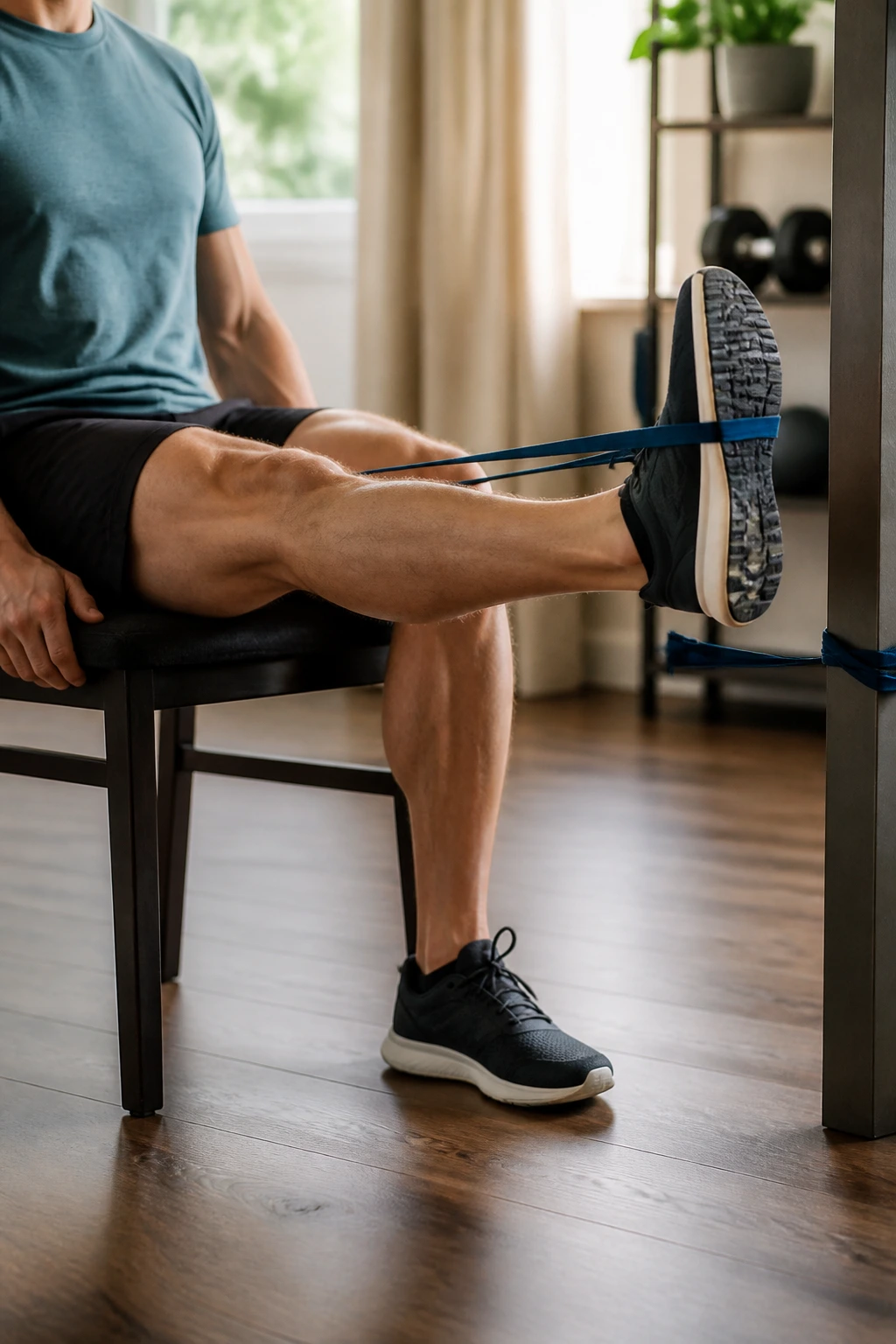
This variation differs from the previous seated extension because it uses a resistance band tied to a fixed anchor, providing constant tension throughout the range of motion.
Why This Is Different
By tying the band to a door anchor or a sturdy table leg, you create a line of pull that forces the quad to work even harder to hold the leg straight at the top. It mimics a leg extension machine but allows you to control the angle to avoid any pain.
Safety Note
If you feel a pinching sensation behind the kneecap, you are likely extending too far or the resistance is too heavy. Decrease the range of motion or use a lighter band. The goal is muscle fatigue, not joint strain.
14. Glute Kickbacks
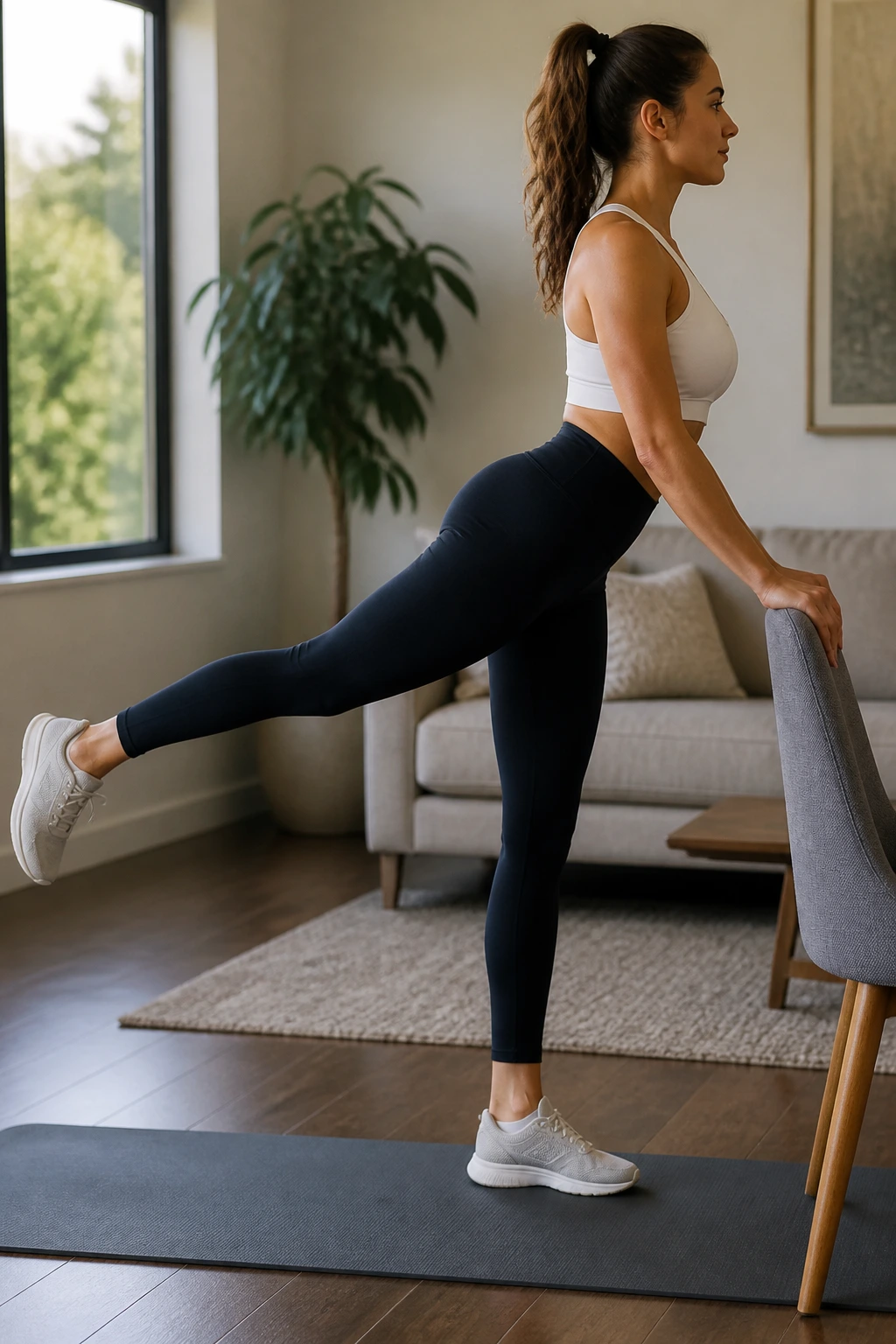
This is similar to the donkey kick but is performed standing. Because you are upright, it also challenges your balance, which requires the stabilizing muscles of your leg to work extra hard.
Technique
- Stand holding onto a chair for balance.
- Keep your spine tall and core engaged.
- Kick one leg back, squeezing the glute.
- Keep the leg straight, not bent.
- Return to center.
Do not lean forward as you kick back. If you have to lean forward to get your leg up, you are using your back. Stay upright. The range of motion will be smaller, but the glute activation will be significantly better.
15. Pilates Leg Circles
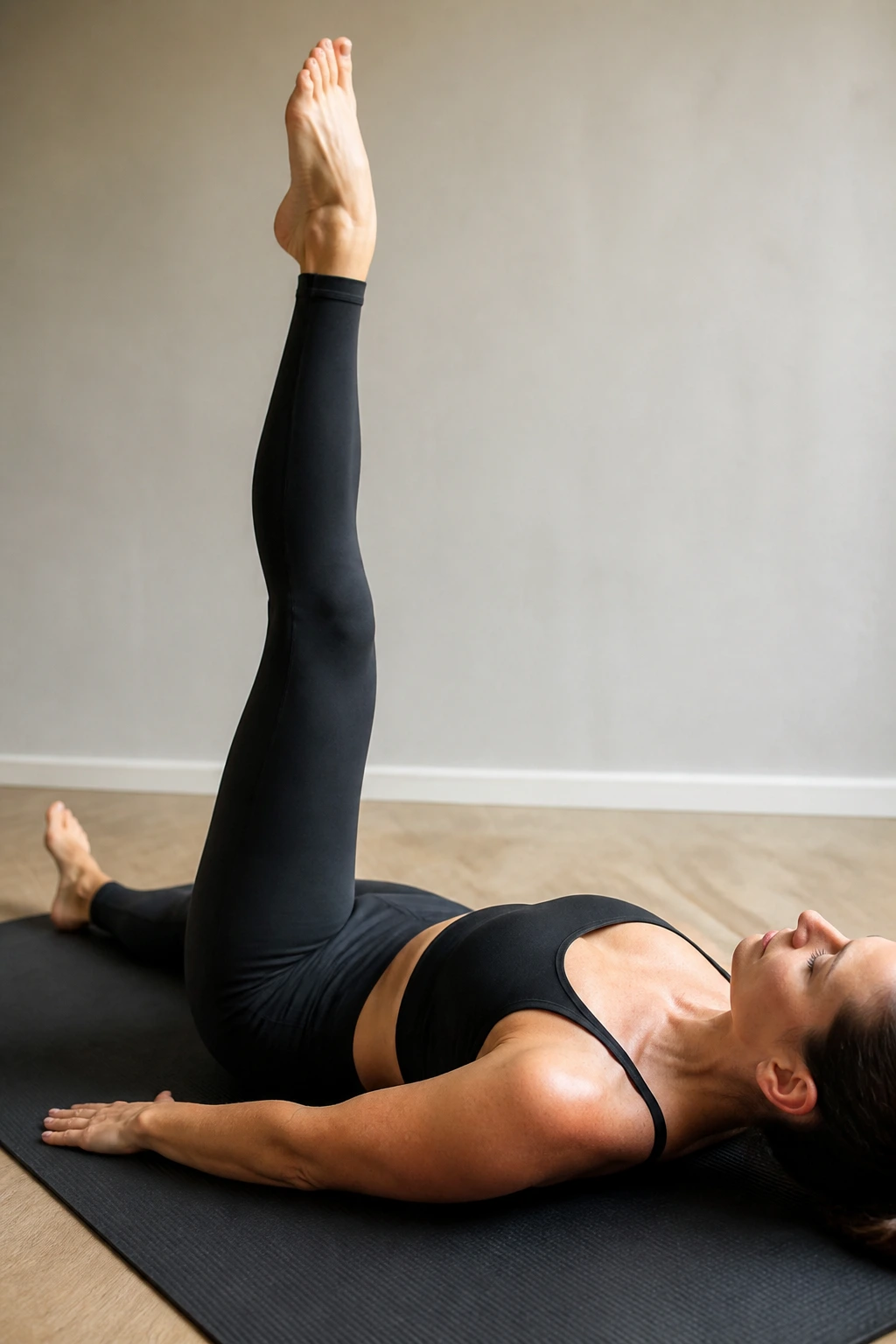
This move is all about control. It strengthens the hip flexors and the core while keeping the knee in a stable, straight position. It’s a great way to build endurance in the muscles surrounding the hip without putting any weight on the knee.
How to Perform
- Lie on your back, legs straight.
- Lift one leg straight toward the ceiling.
- Draw a small circle in the air with your foot.
- Keep your hips glued to the floor.
- Switch directions after a few reps.
The size of the circle is irrelevant. Keeping your pelvis stable is what matters. If your hips are rocking, your core isn’t engaged, and your knee is likely twisting to compensate. Keep it small and precise.
16. Resistance Band Abduction
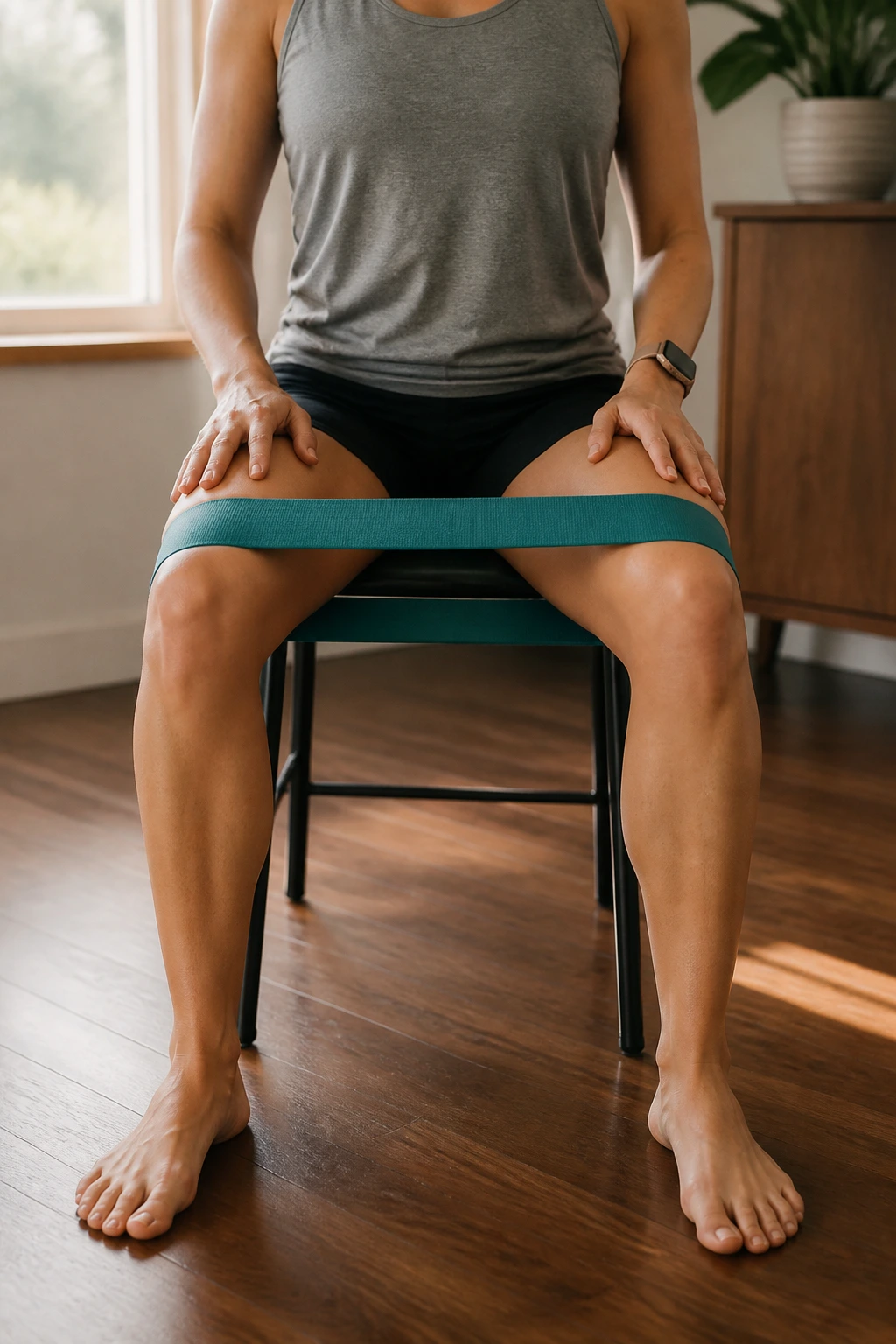
While side-lying lifts are great, doing this seated adds a different type of resistance. By using a band around your knees while sitting, you are forcing the hips to drive the movement.
The Setup
- Sit on a chair.
- Place a resistance loop band around your knees.
- Press your knees outward against the resistance of the band.
- Release slowly.
This is a fantastic “burnout” move. You can do higher reps here (15 to 20) because the movement is so localized to the glute medius and tensor fasciae latae. It builds the lateral stability that protects your knee from buckling during daily activities.
17. Quad Sets (Isometric)
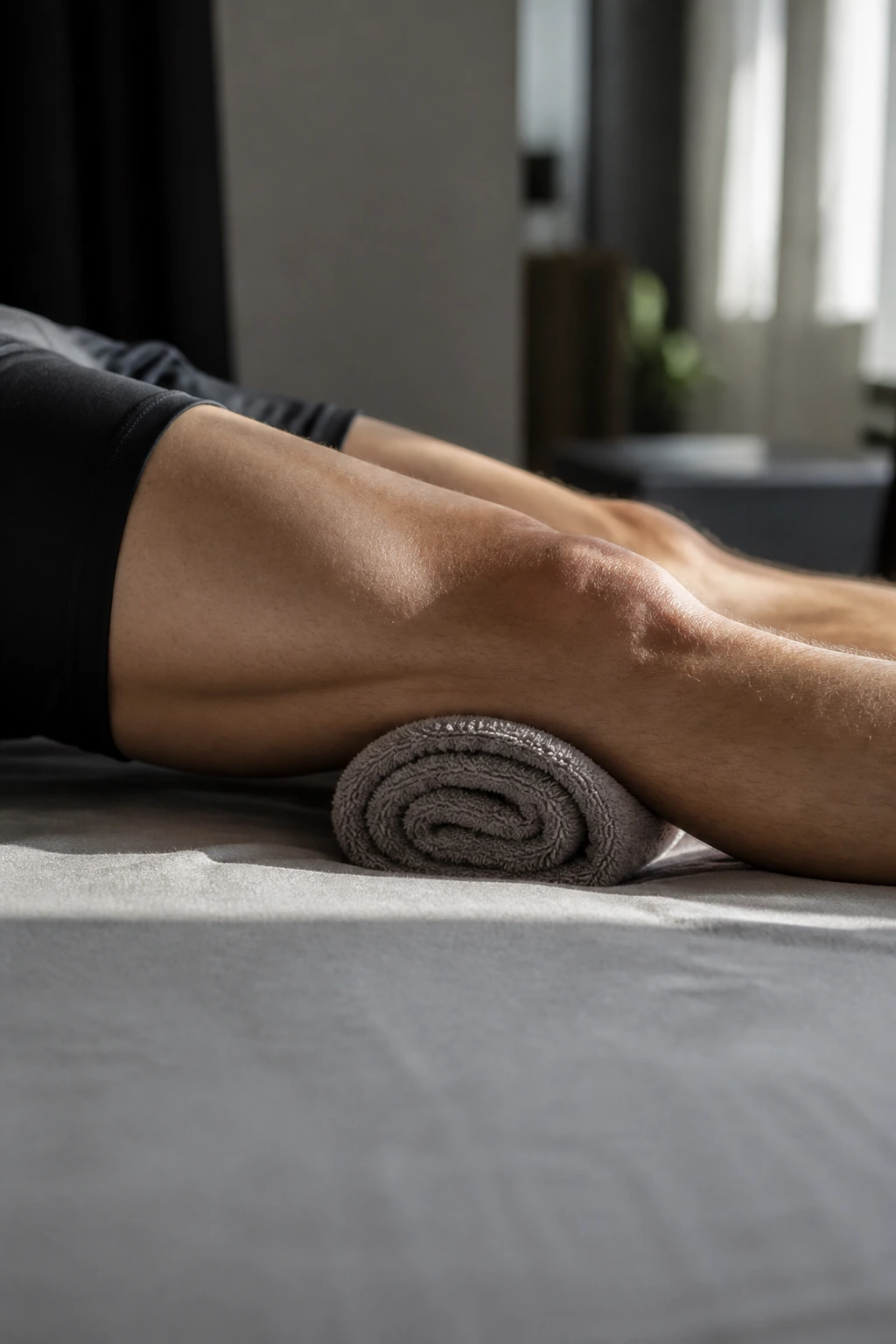
This is the simplest, safest, and arguably the most important move on this list. It is purely an isometric contraction of the quadriceps. You can do this lying in bed, sitting at your desk, or while watching television.
How to Do It
- Lie down or sit with your legs straight.
- Place a rolled-up towel under your knee.
- Tighten your thigh muscle as if you are trying to push the back of your knee through the towel into the floor.
- Hold the contraction for 5 to 10 seconds.
- Relax.
That is it. It seems too easy, but for someone with significant knee pain or post-surgery recovery, this is the “reset” button for the quad muscle. It reminds the brain how to fire the quad properly.
18. Seated Calf Raises
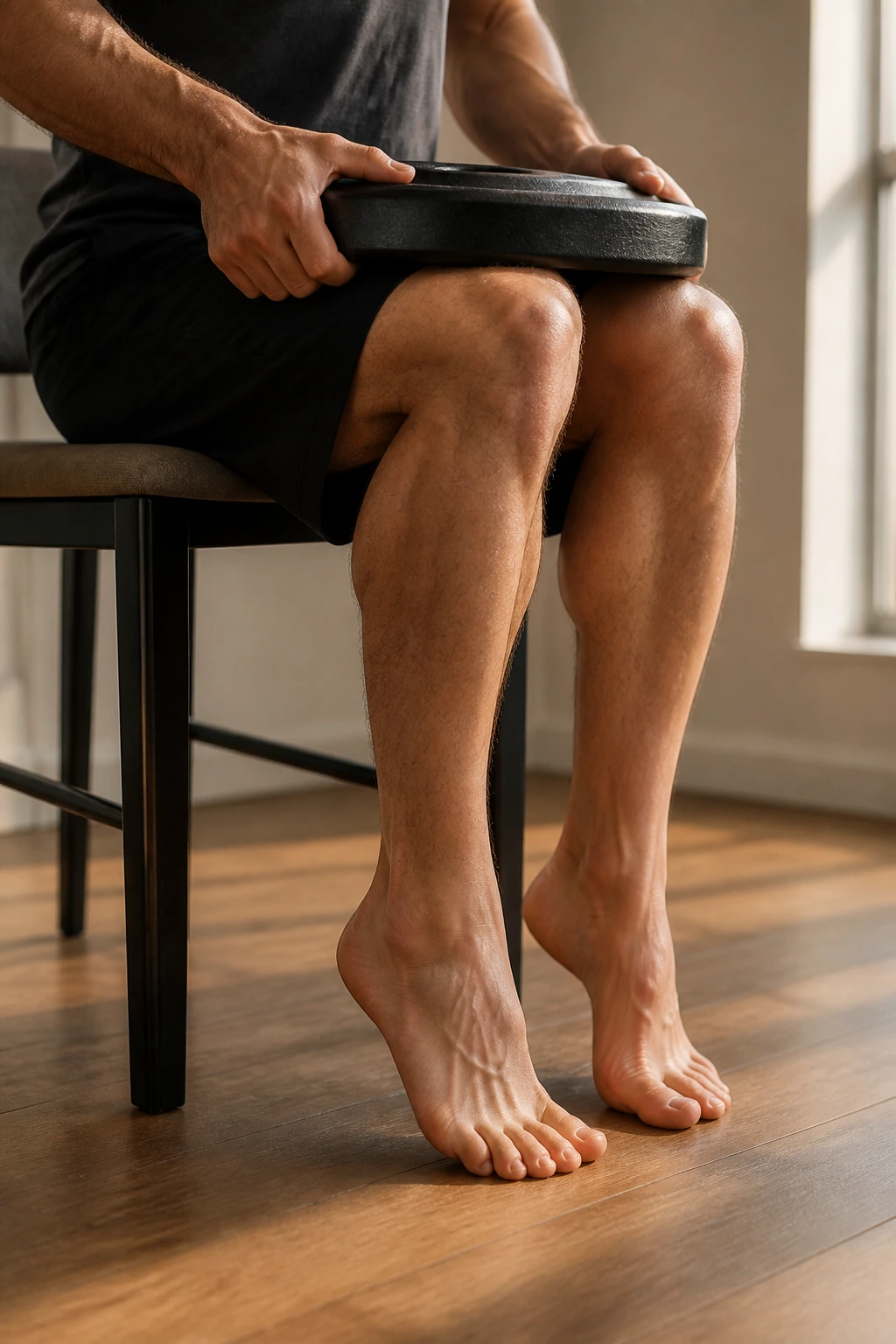
We rarely think of calves in relation to knee pain, but they play a major role. If your calves are tight, your ankle mobility is restricted, which forces the knee to compensate. Strengthening them helps maintain proper lower leg mechanics.
Technique
- Sit on a chair with feet flat.
- Place a heavy book or weight on your thighs for resistance.
- Lift your heels as high as possible.
- Lower them back down.
Doing these seated removes the pressure of your body weight, which is often helpful if you have ankle or foot issues alongside your knee sensitivity. It is a simple, controlled way to build lower leg durability.
19. Swimming Flutter Kicks
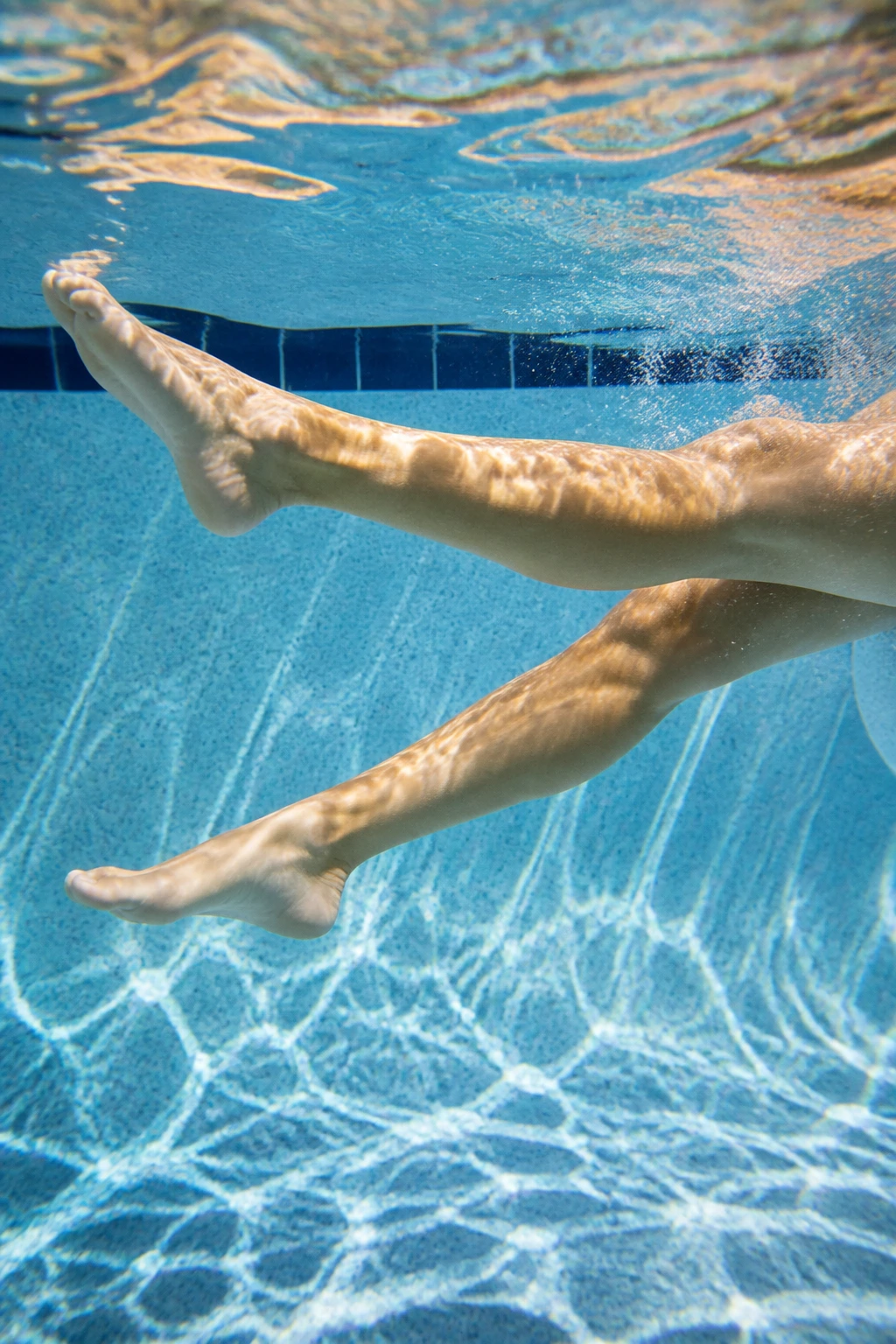
If you have access to a pool, this is perhaps the best exercise you can do. The buoyancy of the water removes almost all impact, while the resistance of the water provides a challenging, steady load on the muscles.
Implementation
- Hold onto the edge of the pool with your arms extended.
- Perform flutter kicks, keeping your legs relatively straight but not locked.
- Focus on initiating the movement from the hip, not just the knee.
The hydrostatic pressure of the water can also help reduce inflammation in the joint, making this a doubly beneficial activity. It is the gold standard for “no-impact” training.
20. Single-Leg Balance Holds
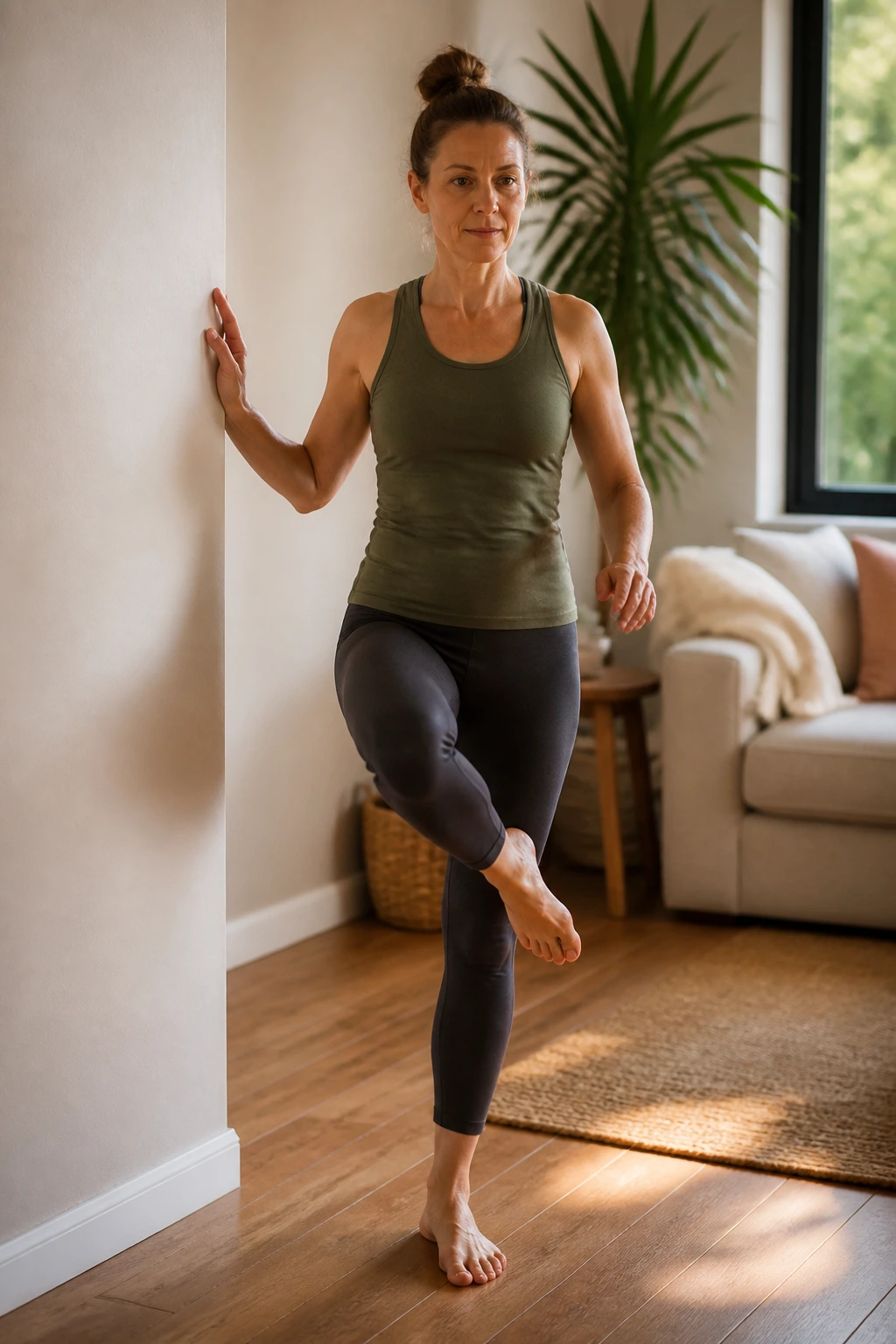
Balance is a function of the muscles around the ankle, knee, and hip working in concert. When you stand on one leg, your brain constantly micro-adjusts the muscles to keep you upright. This strengthens the stabilizers that prevent the knee from wobbling.
How to Practice
- Stand next to a wall for safety.
- Lift one foot off the ground.
- Try to hold for 30 seconds.
- Keep your standing knee slightly “soft”—never locked out.
If you wobble, that is good. That wobbling is your muscles learning how to stabilize the joint. As you get better, try closing your eyes. It makes the challenge exponentially harder for your nervous system.
21. Yoga-Inspired Leg Extensions
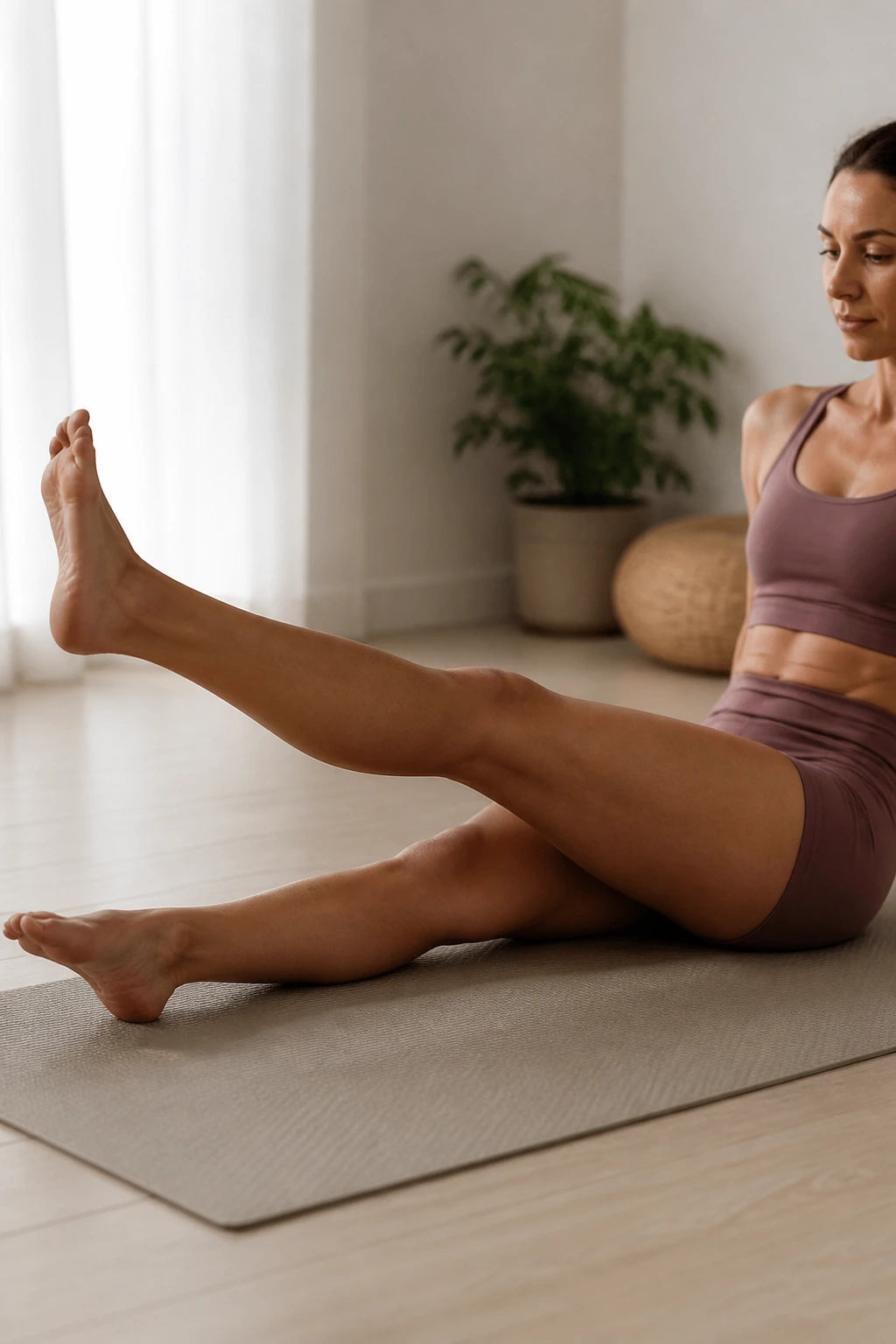
These are gentle, slow-motion movements designed to mobilize the joint and strengthen the supporting musculature through a full range of motion.
The Movement
- Start in a seated position on the floor, legs extended.
- Engage your core.
- Slowly lift one leg, focusing on the quad contraction.
- As you lower, extend the movement into a gentle stretch.
This is less about “working out” and more about “greasing the gears.” It helps improve synovial fluid circulation within the joint, which is essential for reducing that “stiff” feeling in the mornings.
22. Stability Ball Leg Curls
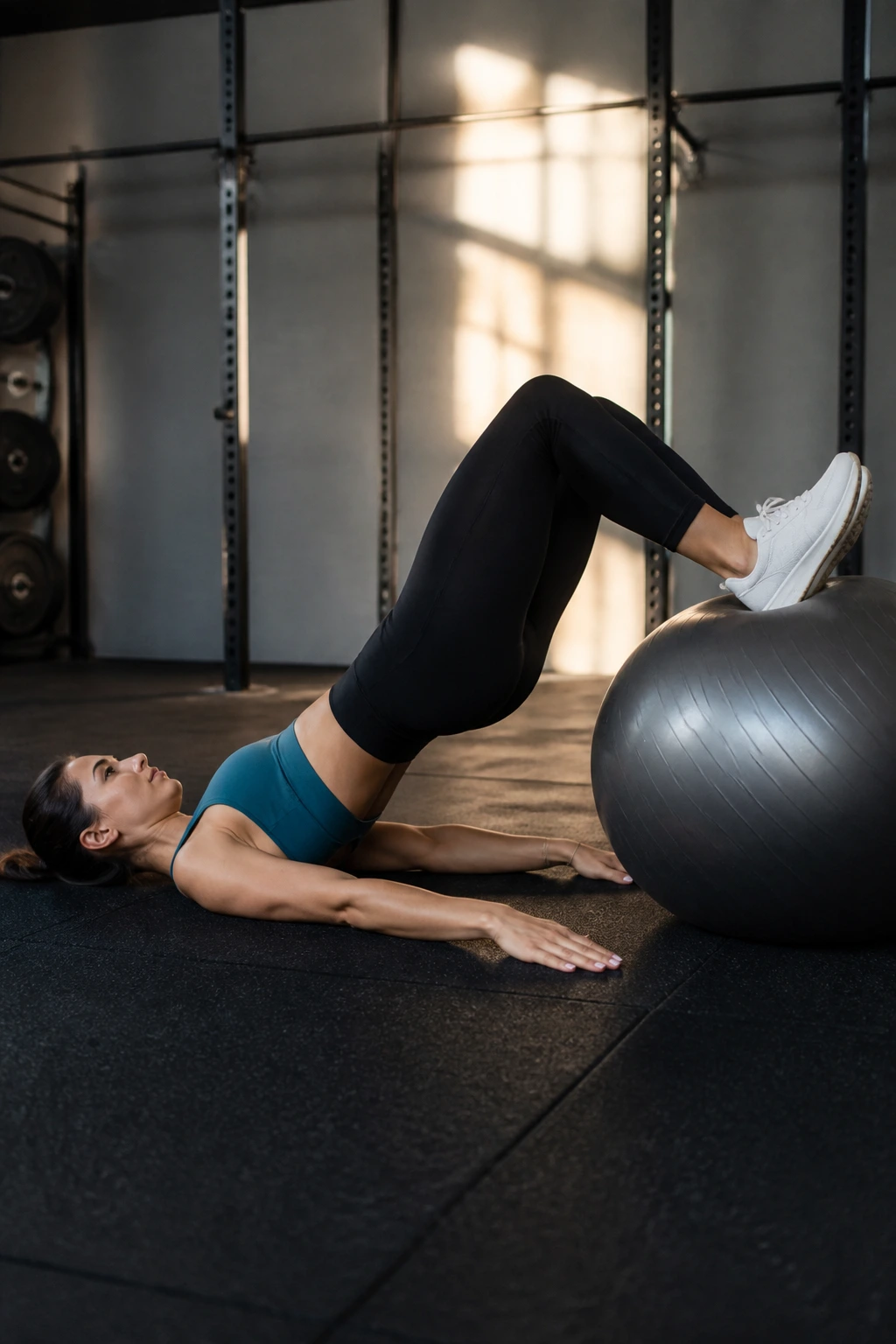
This is a more advanced move, but it is excellent for the hamstrings. The instability of the ball forces your core and glutes to fire to keep you steady, which takes the pressure off the knee joint.
Technique
- Lie on your back, feet on top of a stability ball.
- Lift your hips.
- Pull your heels toward your glutes, rolling the ball.
- Extend your legs back out.
If this causes knee pain, stick to the floor-based hamstring curls first. This move is for when you have built a baseline of strength and want to challenge your stabilization.
23. Stationary Cycling (Low Resistance)
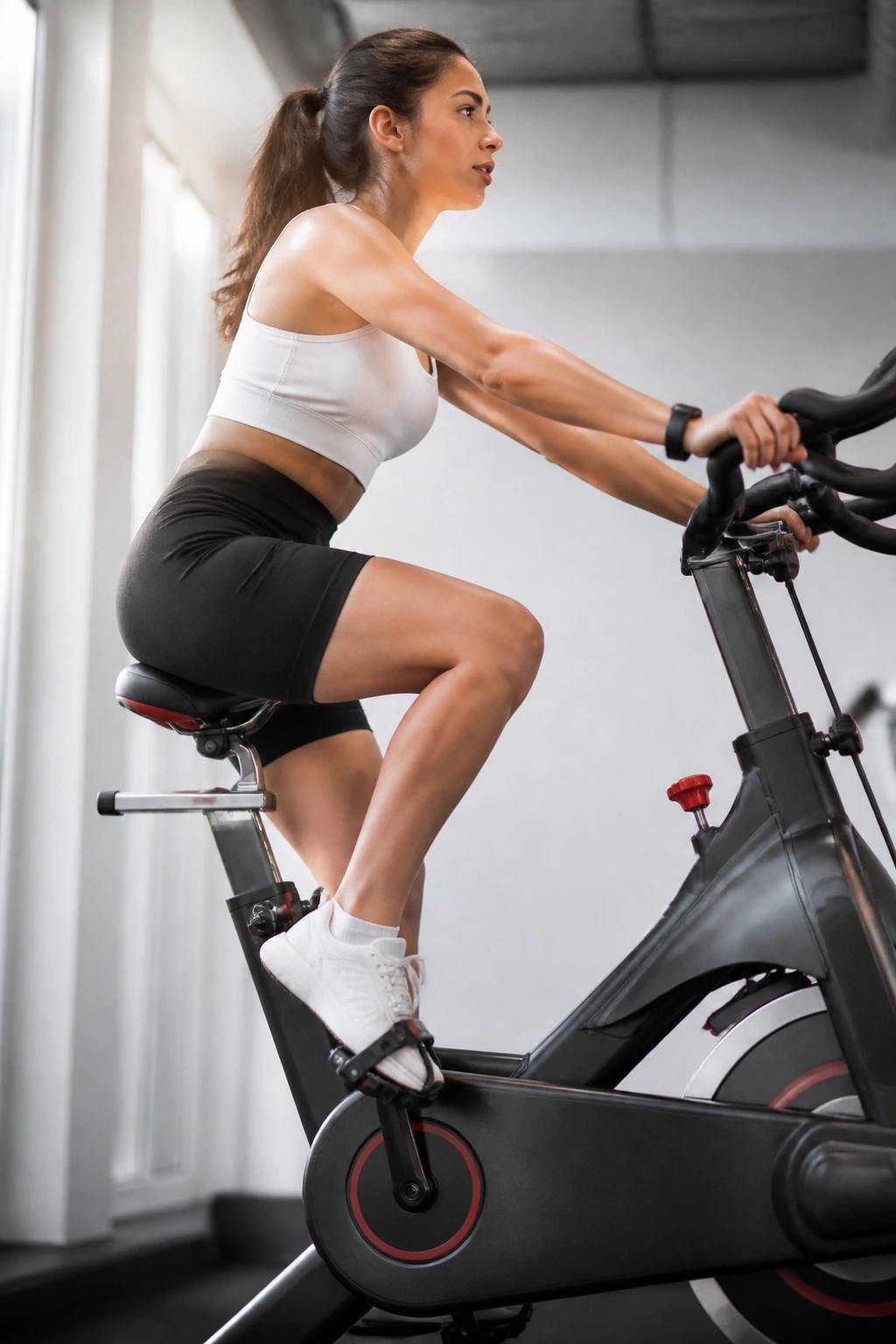
There is a reason why stationary bikes are the cornerstone of knee rehabilitation. The circular motion is smooth, predictable, and allows for varying levels of resistance.
The Keys to Success
- Adjust your seat height so your knee is only slightly bent at the bottom of the pedal stroke.
- If the seat is too low, you put too much pressure on the kneecap.
- Keep the resistance low and the RPM (revolutions per minute) high.
- You want “spin,” not “grind.”
High resistance is for building power, which is fine, but for sensitive knees, high repetitions with low resistance is better for blood flow and endurance.
24. Water Walking
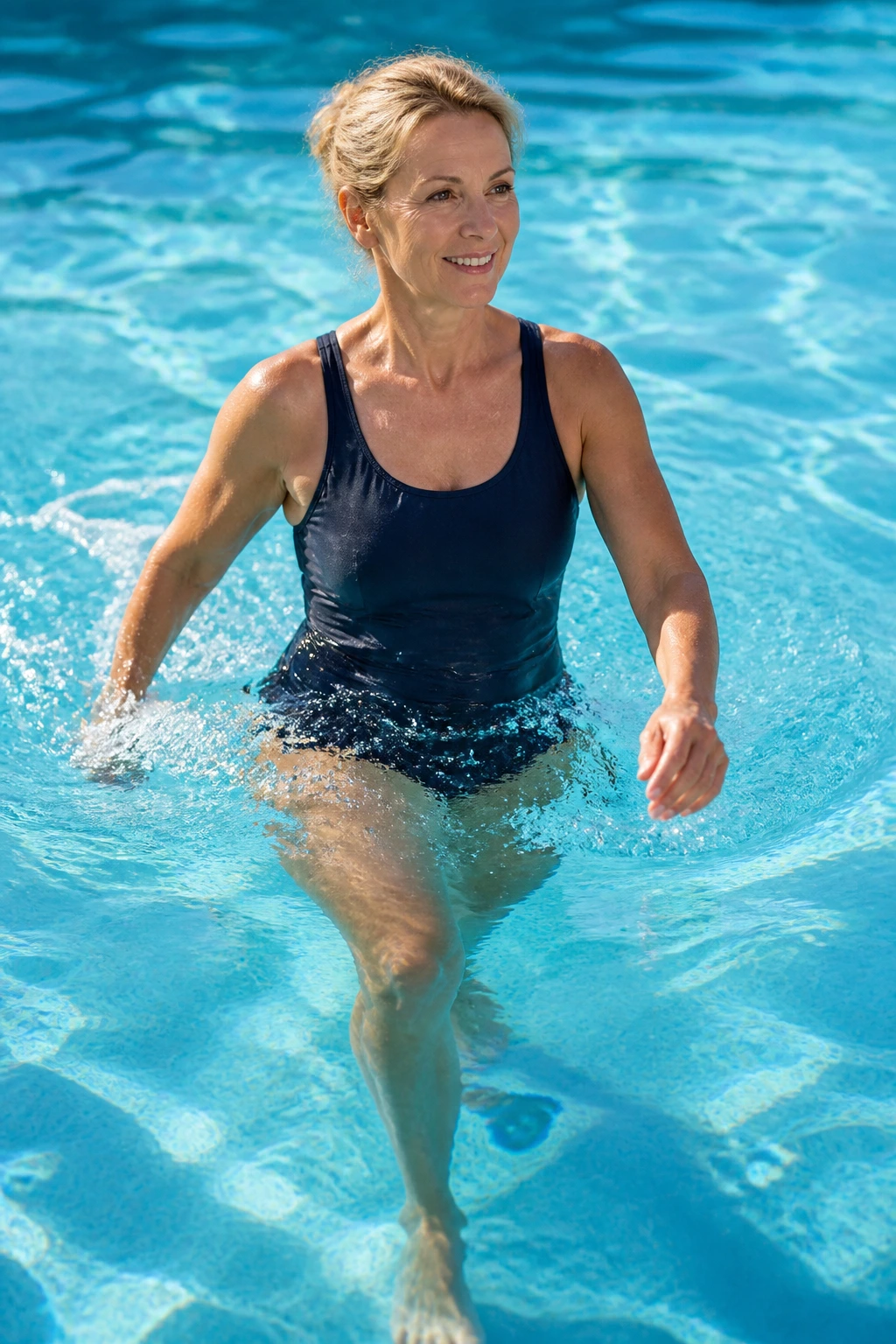
Walking is often painful for people with sensitive knees. Water walking provides the benefits of the movement without the jarring impact of the pavement.
How to Do It
- Walk in chest-deep water.
- Focus on your stride.
- Engage your core to stay upright against the water resistance.
You can walk forward, backward, and sideways. The water acts as a gentle, multidirectional resistance that forces your stabilizers to engage without the risk of gravity-induced impact.
25. Step-Ups (Low Box)
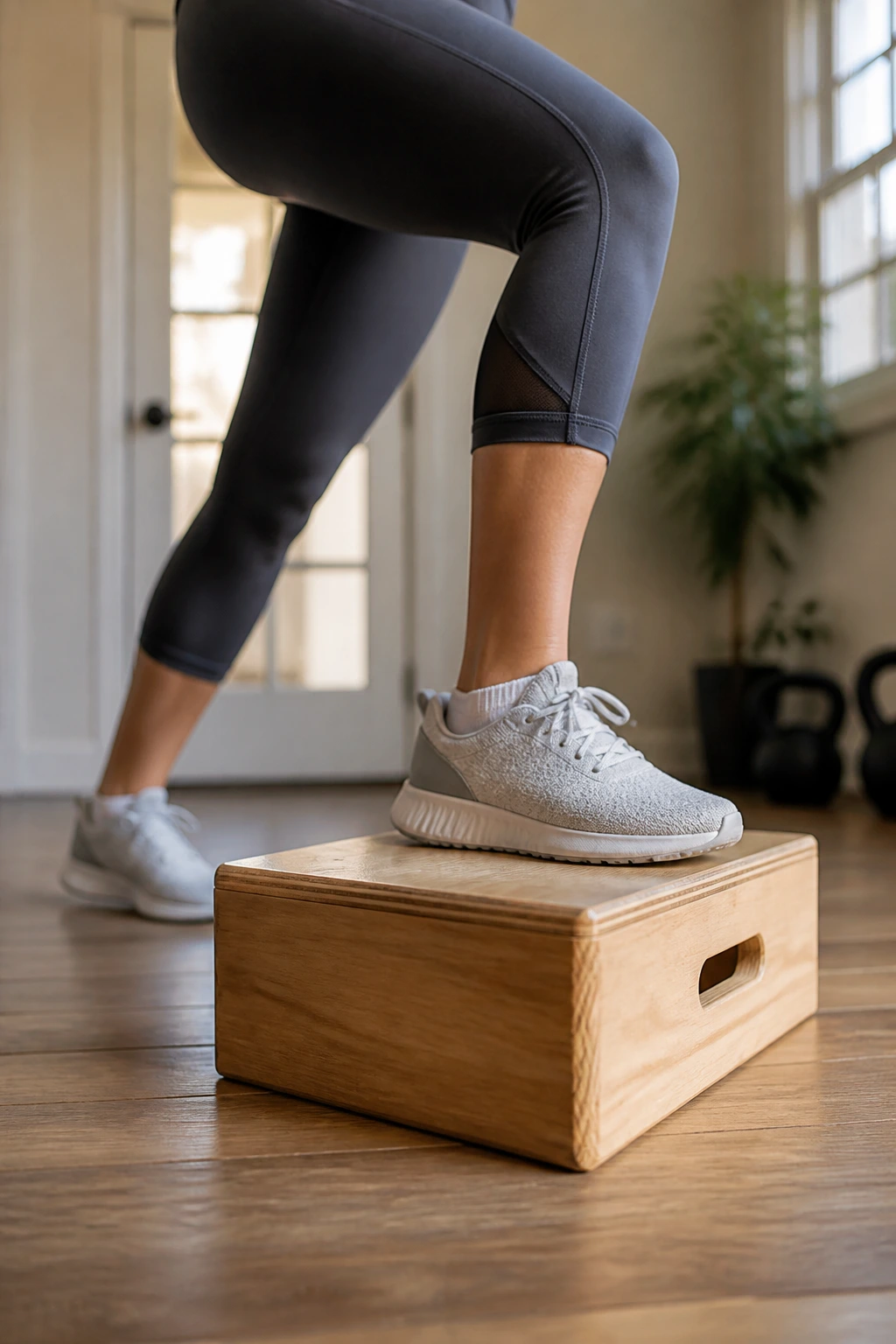
This is the functional end-game. We need to be able to step up stairs. The key here is the height of the step. If you use a standard chair, it might be too high and cause pain.
How to Modify
- Use a very low step—even a single stair or a sturdy book stack will do.
- Step up, plant your heel, and push through the glute.
- Step back down with control.
The goal is to maintain a controlled, vertical posture. If you find yourself leaning forward or pushing off your toes, the step is too high. Drop the height until you can do it with perfect form, then progress to higher surfaces over time.
Final Thoughts
Strengthening sensitive knees is a slow game. There is no magic pill, and there is no “get fit fast” scheme that will fix chronic joint pain. It requires patience. If you rush, you flare up. If you flare up, you stop. If you stop, you get weaker.
Instead, think of this as maintenance. You are lubricating the joint, feeding the cartilage through movement, and building the muscular walls that protect your structure. Pick three or four of these movements and integrate them into your routine a few times a week. Listen to your body—it is usually telling you the truth, even when you do not want to hear it. Respect the pain, modify the movement, and stay consistent. Your knees will thank you.
