



Side belly fat has a nasty habit of sticking around after everything else starts to lean out. That’s why oblique exercises get so much attention in weight loss workouts: they help build the muscles along the sides of your waist, they train your torso to brace harder, and they can raise the calorie cost of a session when you program them with a little sense.
No movement melts fat from one exact patch of skin. That part matters. If you want the waist to look smaller, you need overall fat loss, and that comes from a calorie deficit, enough daily movement, and strength work that keeps your body from going soft while the fat comes down. Oblique training helps with the shape of the area. Walking, lifting, and not eating like a raccoon after dark handle the rest.
The best side-waist moves do more than fling your torso around. They teach your obliques to twist, resist twist, and stay tight under load. That’s where the payoff is. A smart mix of rotation, anti-rotation, side bending, and conditioning work can make your midsection feel stronger within a few weeks, and the visual change follows once body fat starts to drop.
1. Standing Dumbbell Side Bends
A side bend looks almost too easy until you do it with control. Then you notice exactly where your obliques live, because the side of your waist has to pull you back upright without letting your lower back steal the job.
Stand tall with one dumbbell in one hand. Keep your feet about hip width apart, your other hand at your side or on your ribs, and let the weight slide down the outside of your thigh. Go only as far as you can without leaning forward. Come back up by squeezing the side of your waist, not by jerking your shoulder.
How to keep it honest
Use a load that lets you move slowly for 10 to 15 reps per side. If your torso starts to tip forward or your hips drift, the dumbbell is too heavy. This move is more useful when it feels controlled and a little boring. That sounds unglamorous, but it works.
- Lower for 2 to 3 seconds.
- Pause at the bottom for 1 second.
- Keep your ribs stacked over your hips.
- Stop before the dumbbell brushes the floor.
Best use: a home workout, a short finisher, or a warm-up before heavier core work.
2. Side Plank
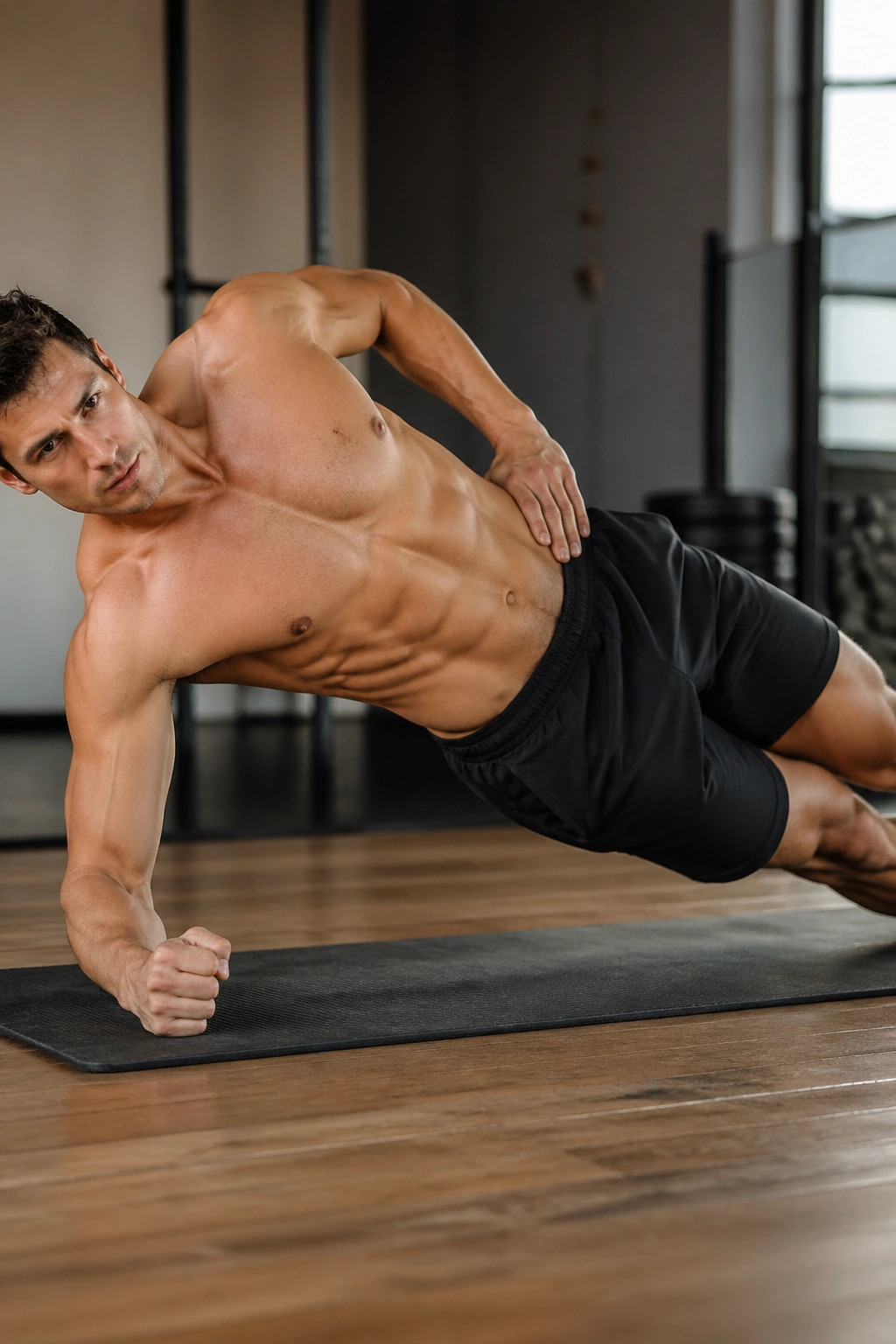
Why does a move where you hold still matter so much? Because the obliques spend most of their time resisting motion, not cranking out dramatic twists.
A side plank trains your waist to keep the spine straight when gravity wants to pull the hip down. That makes it one of the cleanest oblique exercises for building real torso strength. Set your elbow under your shoulder, stack your feet, and lift your hips until your body forms a long line. You should feel the side of the bottom waist light up fast.
Hold for 20 to 45 seconds per side. If your shoulder starts to shrug toward your ear, reset. If your lower back sags, stop the set. Those two mistakes show up fast, and both steal the work away from the obliques.
Short version?
The best side plank feels solid, not shaky.
Start with bent knees if you need to. There’s no prize for doing the full version badly.
3. Cable Woodchop
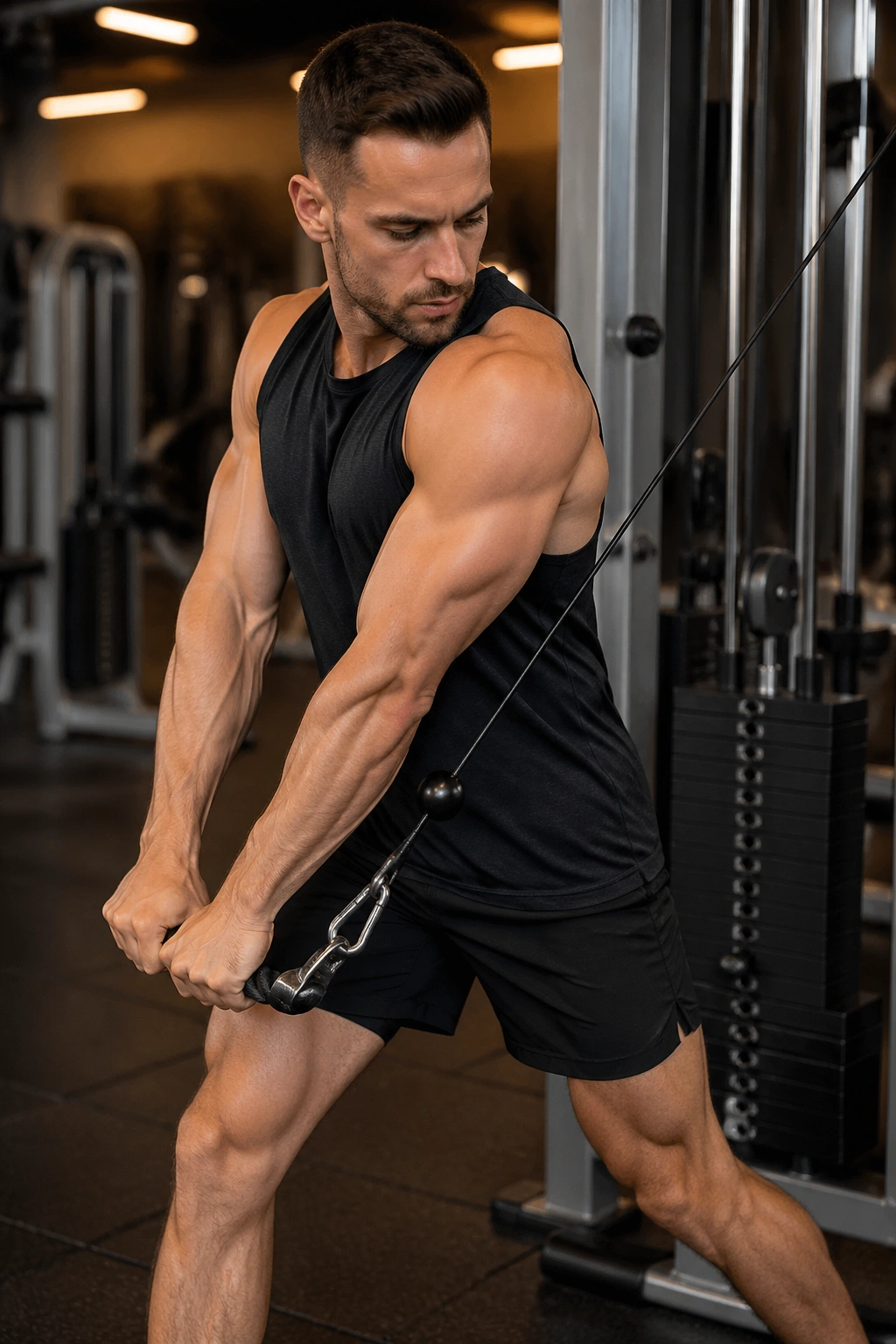
Picture a cable stack, a rope handle, and a diagonal pull that starts above your shoulder and finishes near your opposite hip. That’s the woodchop, and it’s one of the best ways to train the waist through a real-life rotation pattern.
Set the pulley high, grab the handle with both hands, and step away until the cable has light tension. Rotate through your torso as you pull the handle down and across your body. The hips can turn a little, but they should not spin wildly. The ribs should do the work first.
Why the cable helps
The cable keeps tension on the obliques the whole way through the rep. Free weights lose tension in parts of the arc; cables do not. That steady pull is why the move feels so smooth and so unforgiving at the same time.
- Use 8 to 12 reps per side.
- Keep your arms long but not locked.
- Finish with your hands near the opposite front pocket.
- Exhale as you chop down.
If your goal is a tighter waistline, pair this with brisk walking or incline work after lifting. The chop builds muscle and coordination. The walking handles more of the calorie burn.
4. Reverse Cable Woodchop
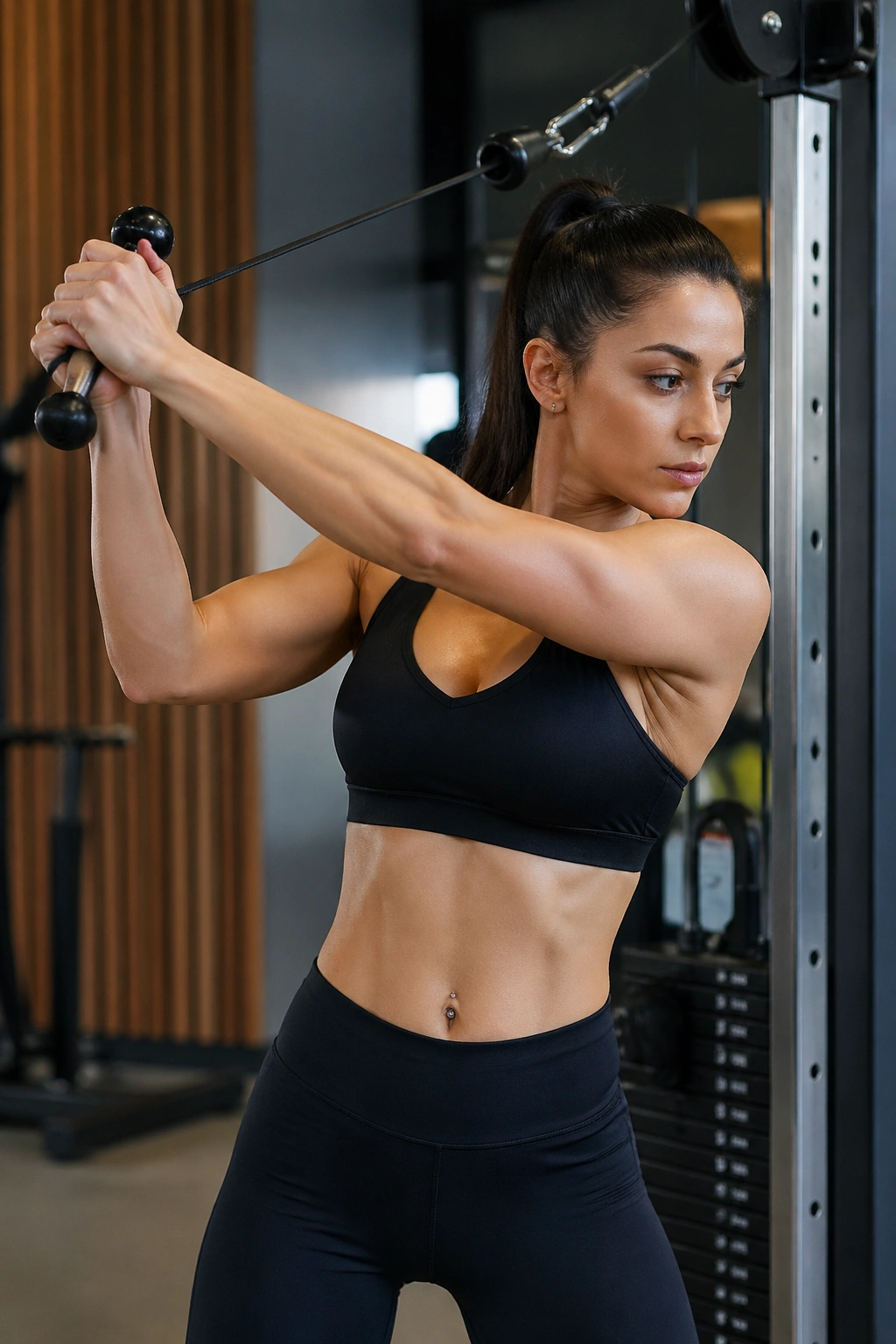
Most people think of twisting from high to low first. Reverse woodchops flip that pattern and hit the obliques from a different angle, which is useful if your waist training has gone stale.
Set the cable low, grab the handle with both hands, and drive it up across your body toward the far shoulder. Your ribs should turn together, not flare apart. Keep the movement smooth. If the cable yanks your shoulders open, the weight is too heavy or your stance is too narrow.
This version feels especially good when you want the lower half of the trunk to work harder. The upward path asks the obliques to control the finish instead of just acting like a latch on the way down. That’s a small difference on paper. In the gym, it feels different fast.
Use 2 to 4 sets of 8 to 10 reps per side. Do not rush the lowering phase. The slow return is where a lot of the useful tension lives, and that’s the part people skip because it looks less dramatic.
5. Russian Twist
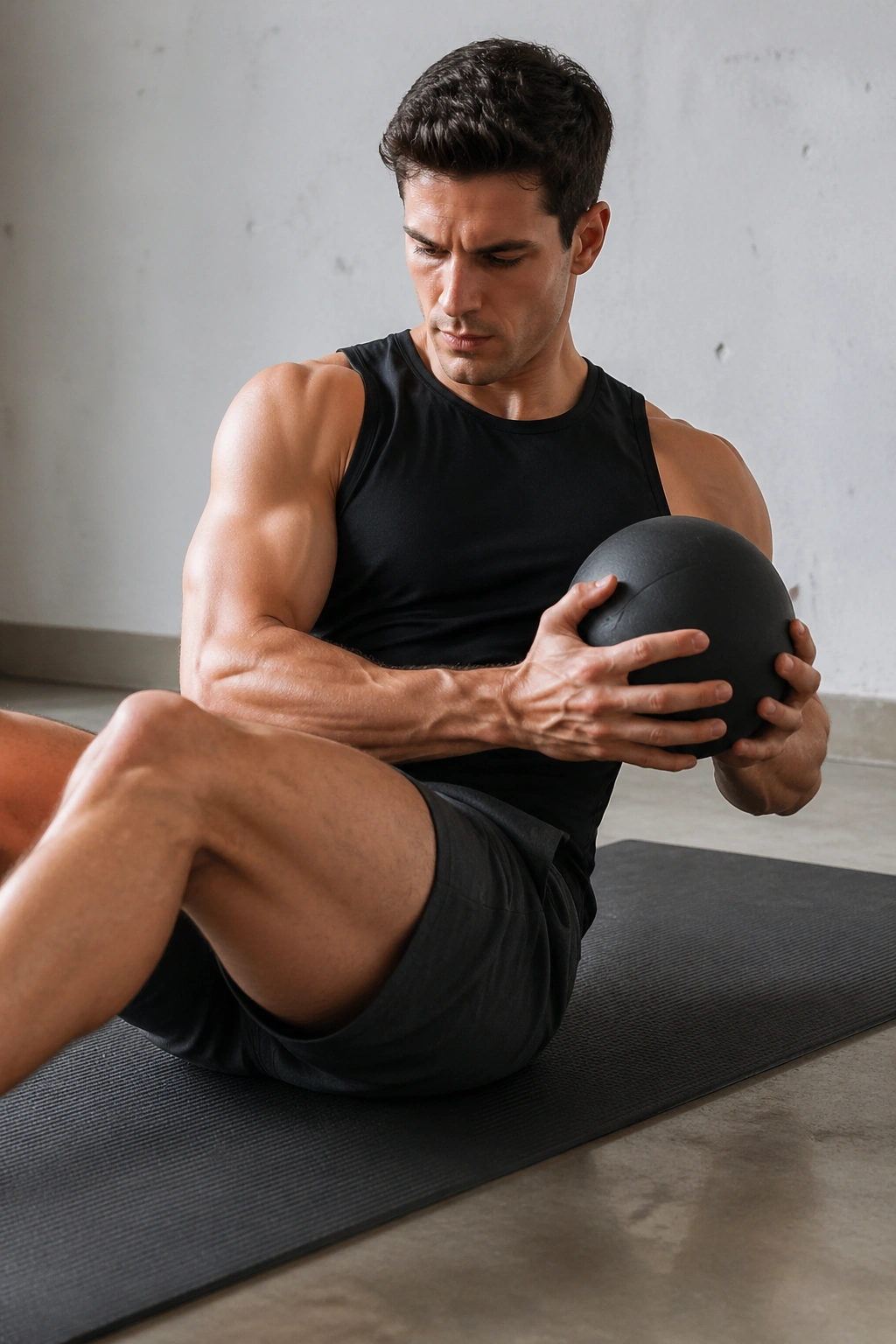
Russian twists get yelled at a lot, and some of that criticism is fair. Done carelessly, they turn into fast hip flops with the lower back doing more than it should. Done well, they train the obliques to rotate under control.
Sit on the floor, lean back a little, and lift your feet only if you can keep your spine long. Hold a dumbbell, plate, or medicine ball at your chest and turn from rib to rib. The hands should travel because the torso turns, not because the arms are tossing the weight around like a kitchen towel.
The move works best when the twist is deliberate. Slow reps build more control than frantic reps. If your lower back rounds, put your heels down and shorten the range. That is not a downgrade. It’s a correction.
Use 10 to 16 total twists per side. Keep the chest open and the neck relaxed. The point is to feel the side waist, not to hunt for a dizzy feeling.
6. Bicycle Crunch
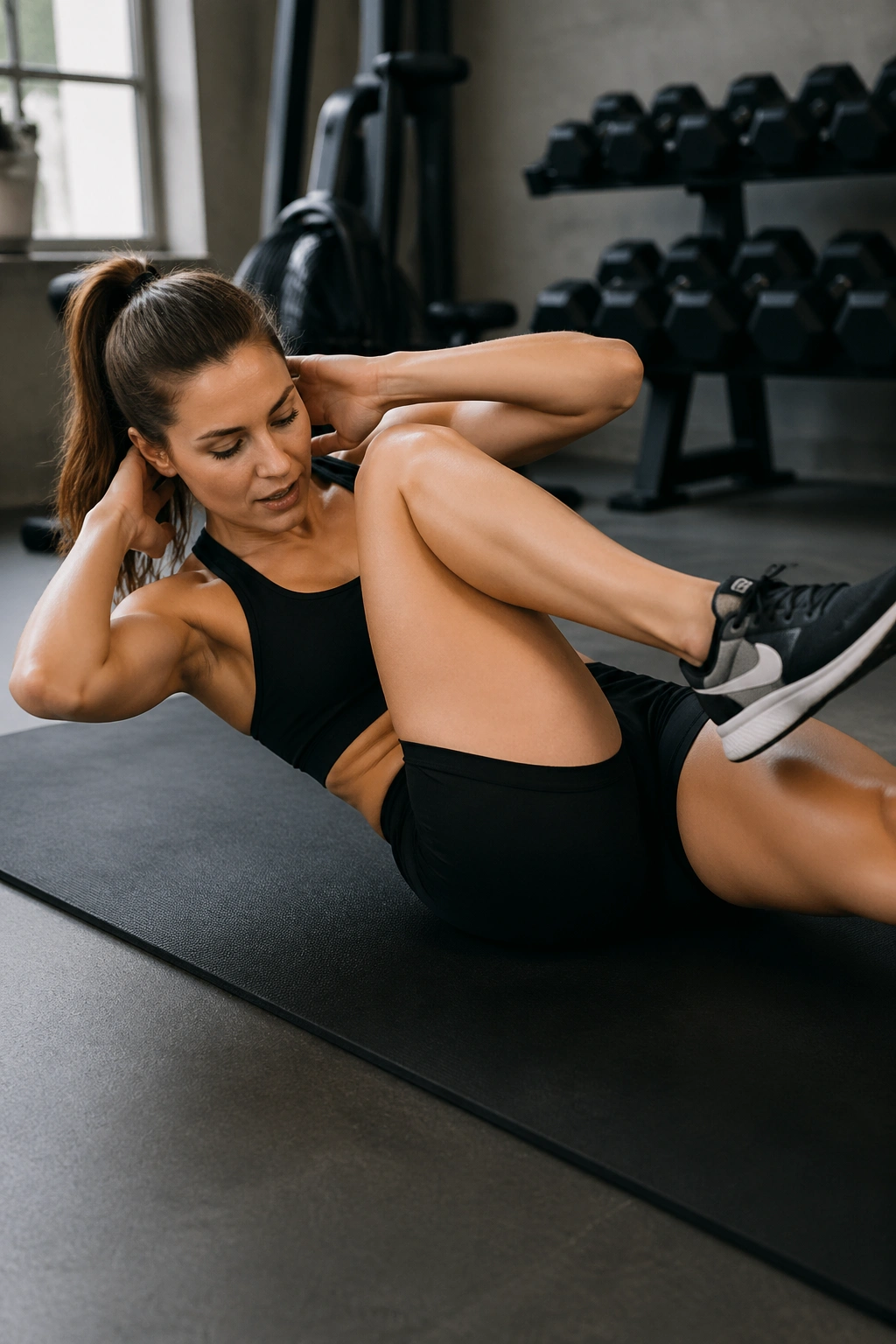
The bicycle crunch is old-school for a reason. It combines trunk rotation with a bit of spinal flexion, which makes the obliques work while the rectus abdominis joins the party.
Lie on your back, hands lightly behind your head, and bring one elbow toward the opposite knee while the other leg extends. Then switch. The motion should feel rhythmic, not frantic. If your elbows are yanking your neck forward, stop and reset. That bad habit is everywhere.
What makes it useful
The cross-body pattern teaches your torso to connect the upper and lower body. That matters in sports, walking, lifting, and any movement where your midsection has to transfer force without wobbling.
- Keep your lower back pressed down.
- Rotate the rib cage, not the elbow.
- Extend the straight leg fully.
- Work for 20 to 40 total reps.
A lot of people make this move harder by speeding it up. That is backwards. Slower bicycle crunches usually hit the obliques better and irritate the neck less. Win-win.
7. Side Plank Hip Dips
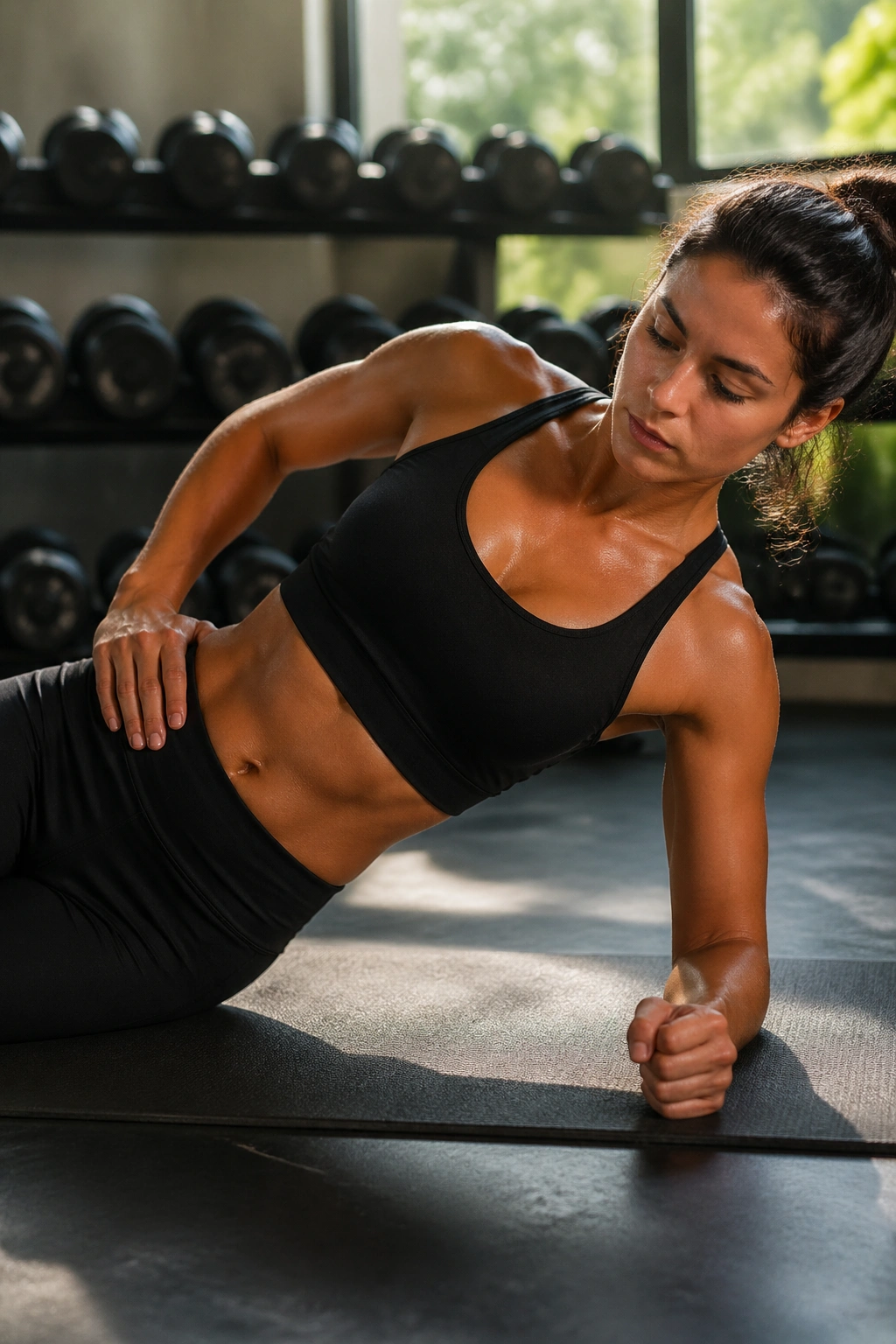
The floor gets loud with this one. Hips down, hips up, then down again, and the obliques have to keep catching your body before gravity pulls it apart.
Start in a side plank on your elbow. From the top position, lower your hips a few inches toward the floor, then drive them back up. The range does not need to be huge. In fact, a smaller, cleaner dip often hits the side waist harder than a sloppy deep drop.
The sensation is easy to spot. The side of the bottom waist will burn, the top hip will stay lifted, and your shoulder will begin to complain if you let it shrug. Keep the elbow planted and the chest open. Don’t roll forward.
Use 8 to 15 dips per side. If you want more challenge, straighten the top arm overhead or put the top foot in front of the bottom foot for less stability. Good form matters more than speed here.
This is one of those exercises that looks modest and then steals your breath. I like that in a core move.
8. Pallof Press
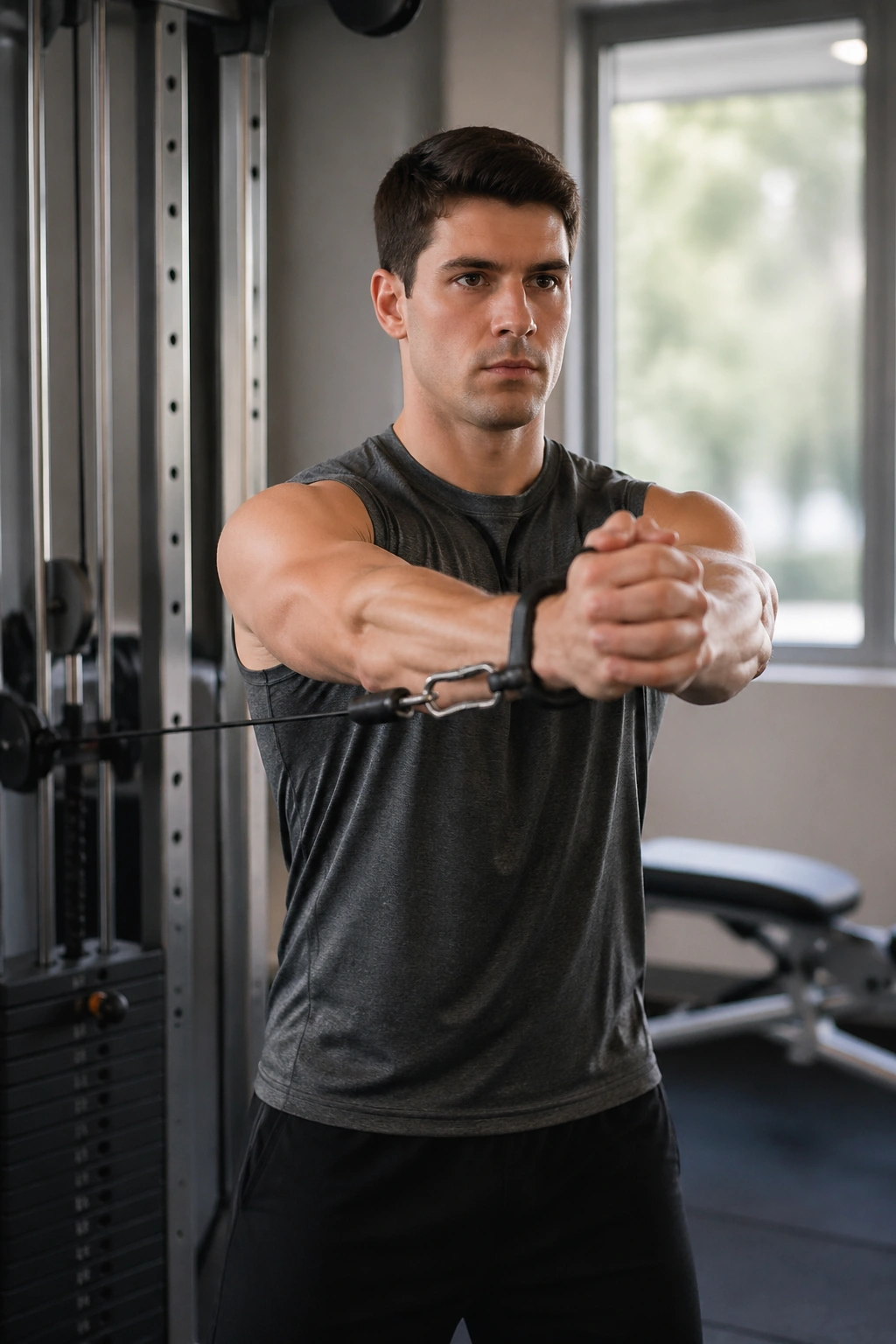
If twisting makes your obliques work, resisting twist may be even more useful. The Pallof press is the anti-rotation move that teaches your waist to stay quiet while a cable or band tries to drag you around.
Stand sideways to a cable or band anchor, hold the handle at your chest, and press straight out in front of you. Your torso should fight the pull without leaning, spinning, or arching. That’s the whole game. Boring? A little. Effective? Absolutely.
Why it belongs here
The Pallof press does not chase the obvious burn people expect from ab work. It builds the kind of trunk control that makes everything else look cleaner, from squats to carries to running.
It’s also friendly for beginners because the motion is small and easy to learn. If side bends feel too aggressive on your lower back, this is a smarter first stop.
- Hold the press for 2 to 3 seconds.
- Do 8 to 12 reps per side.
- Use a light band first.
- Exhale as the arms extend.
Best for people who want a tighter waist without beating up the spine.
9. Suitcase Carry
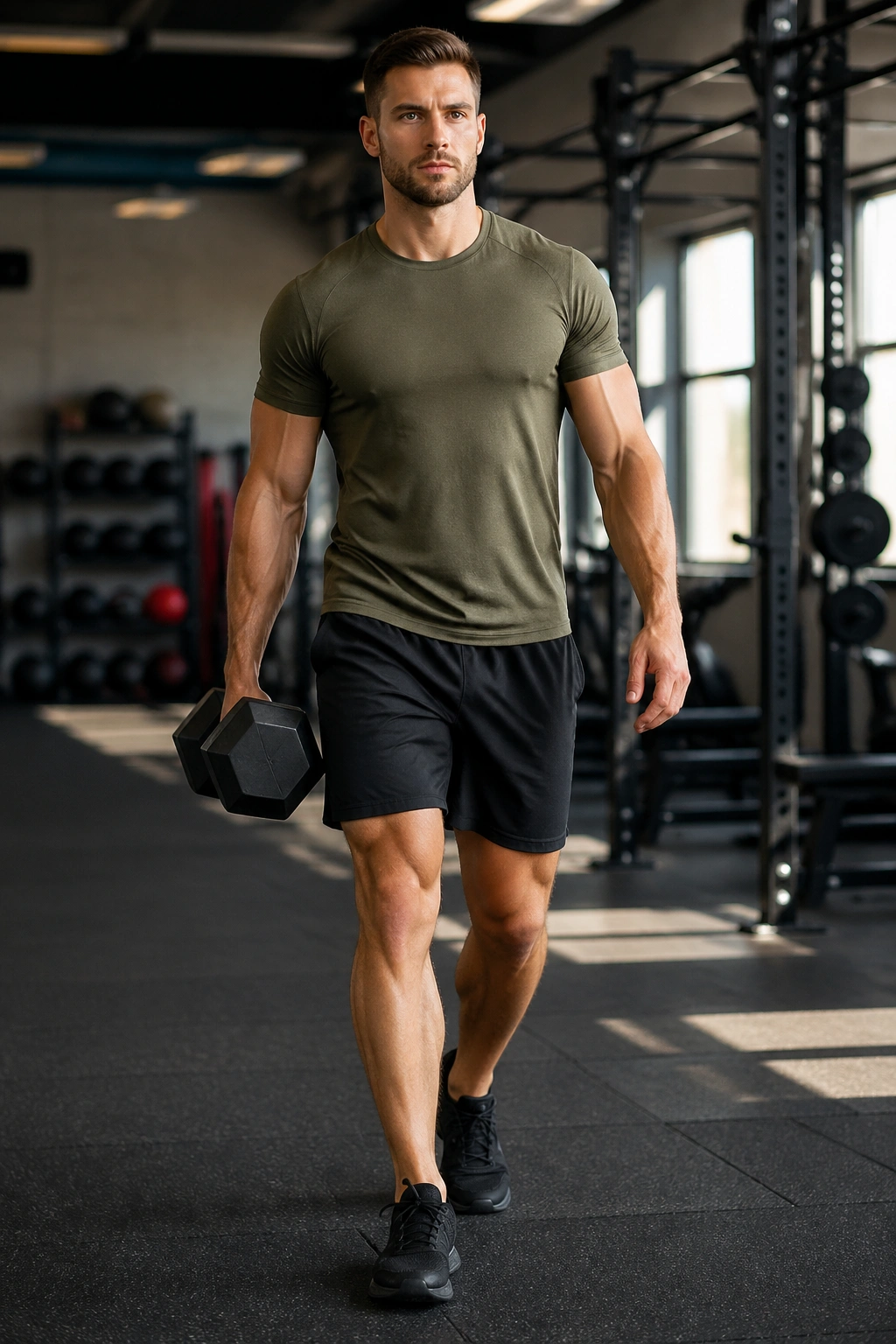
A suitcase carry is brutally simple. Pick up one heavy dumbbell or kettlebell, stand tall, and walk without leaning toward or away from the weight. Your obliques have to fight every step.
That loaded walk hits the waist in a way crunches cannot. The body wants to tilt. The obliques answer by locking the ribs over the pelvis and stopping the side bend before it starts. That makes this one of the smartest oblique exercises for real-world strength and fat-loss workouts, because it also raises heart rate.
Walk for 20 to 40 yards per side or 20 to 60 seconds per side. Keep your shoulders level. If the weight drags you into a crooked march, it’s too heavy.
One sentence is enough here: If your trunk shakes, the set has already started to matter.
I love carries because they feel honest. No spin, no gimmick, no way to fake it.
10. Mountain Climbers
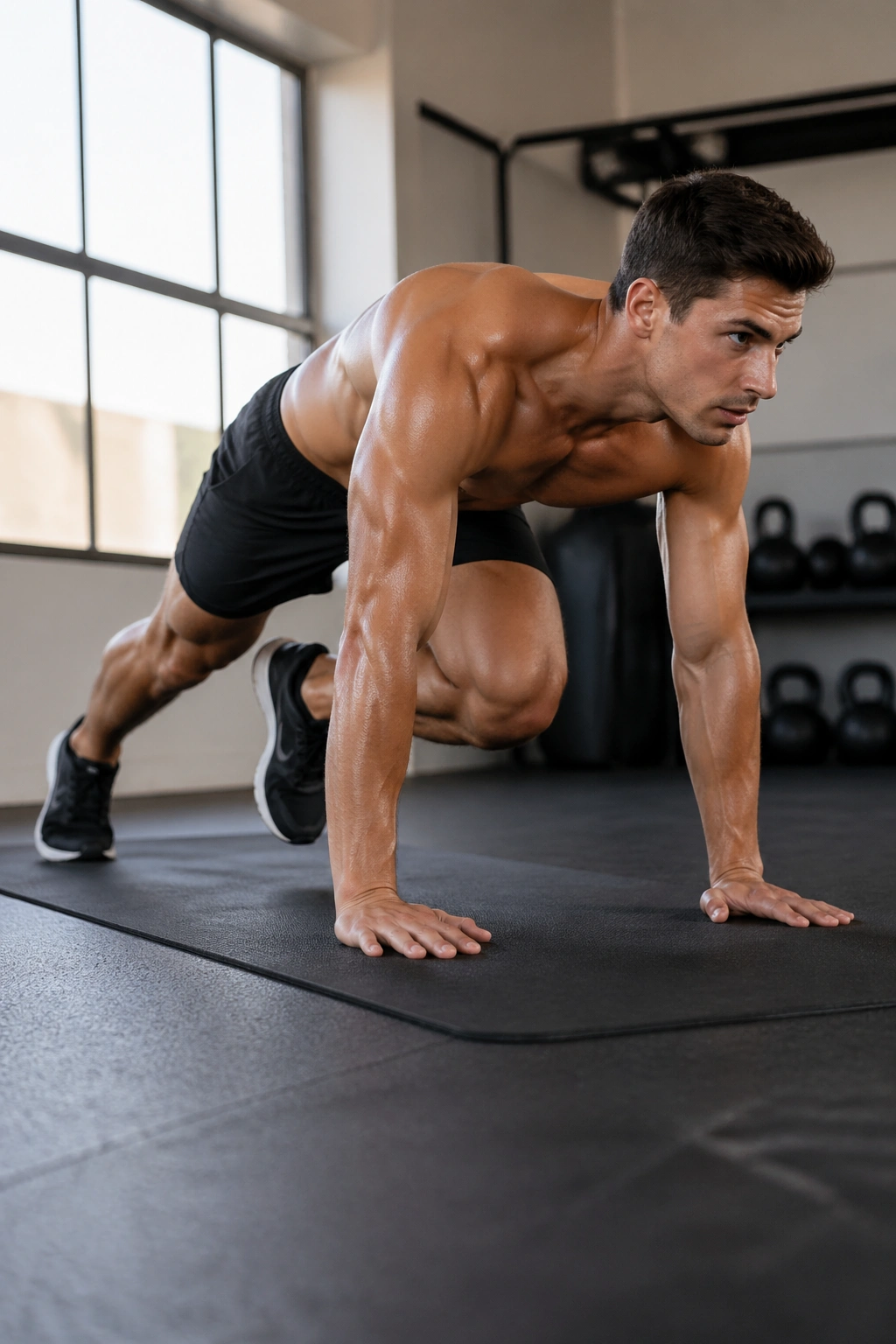
Want a move that wakes up the obliques and gets your breathing up fast? Mountain climbers do both, and they do it without fancy equipment.
Set up in a strong plank. Drive one knee toward the opposite elbow, then switch legs in a steady rhythm. Keep the shoulders stacked over the wrists and the hips low enough that your back does not fold. The cross-body drive is what brings the obliques in; the pace is what pushes the calorie burn.
Use this as a finisher for 20 to 40 seconds. Fast is fine, sloppy is not. If your hips bounce like a trampoline, slow down and shorten the stride. The work should come from the core and hips, not from throwing your body around the floor.
- Keep your hands planted under your shoulders.
- Drive the knee across, not just straight forward.
- Breathe hard, but keep the back flat.
- Rest 30 to 45 seconds between rounds.
It’s a sweaty move. That’s part of the charm.
11. Hanging Knee Raise with Twist
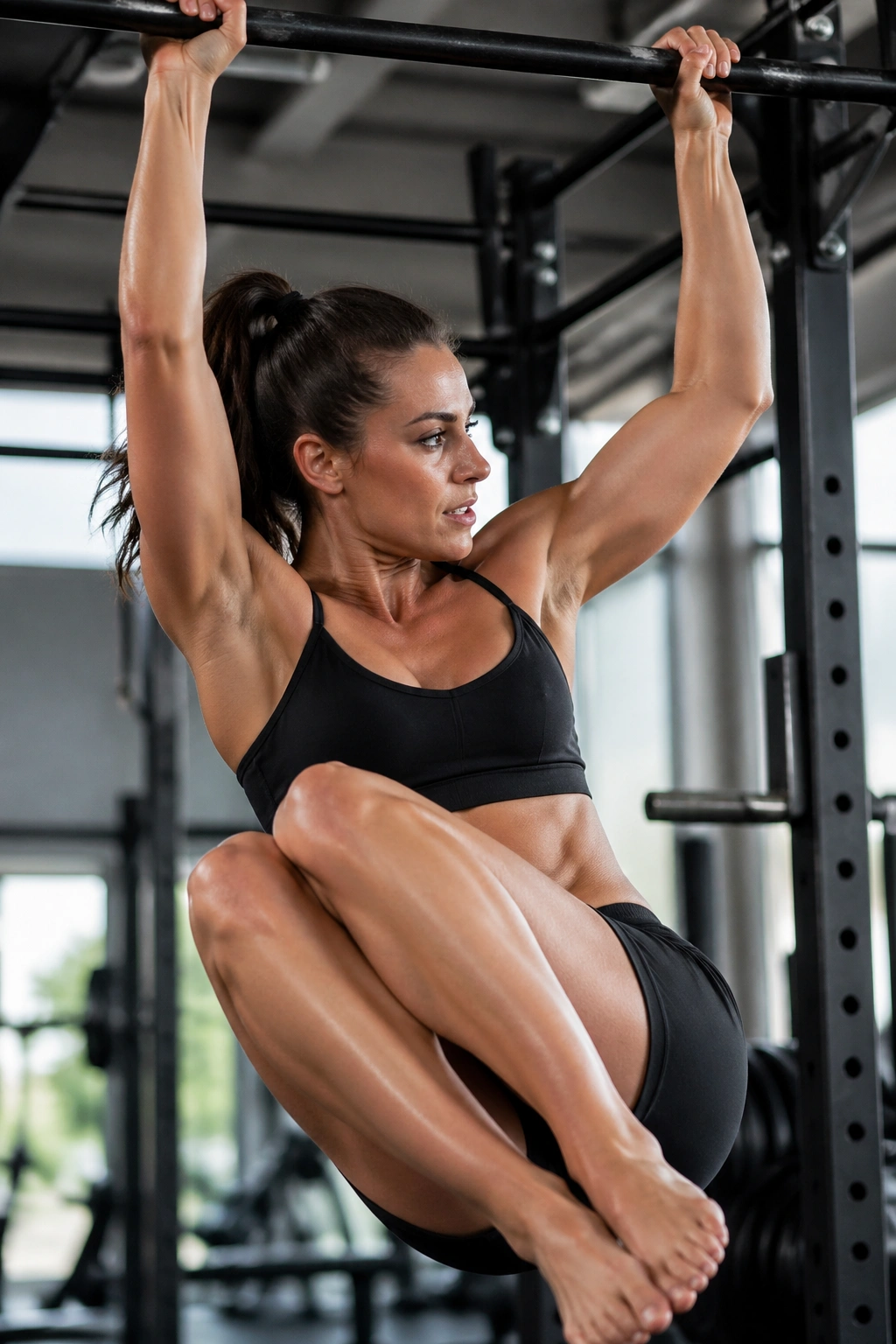
This one is hard to fake. If you hang from a bar and try to twist your knees toward one side, the obliques tell on you immediately.
Grab a pull-up bar with an overhand grip, let your body settle, and lift your knees toward your chest while turning them slightly to one side. Lower with control. The swing can get ugly fast, so keep the movement slow enough that your torso stays mostly still. The twist should come from the trunk, not from a wild leg fling.
The hanging position loads the entire midsection, which is why this move feels different from floor work. Your grip, lats, and hip flexors join the session too. That extra demand makes the waist work harder to keep everything tidy.
Try 6 to 10 reps per side if you’re new to it. More advanced lifters can push toward 12 to 15 with a pause at the top. If swinging takes over, stop the set before your form turns into a pendulum.
This is a strong choice when you want oblique work that feels athletic, not decorative.
12. Standing Band Rotations
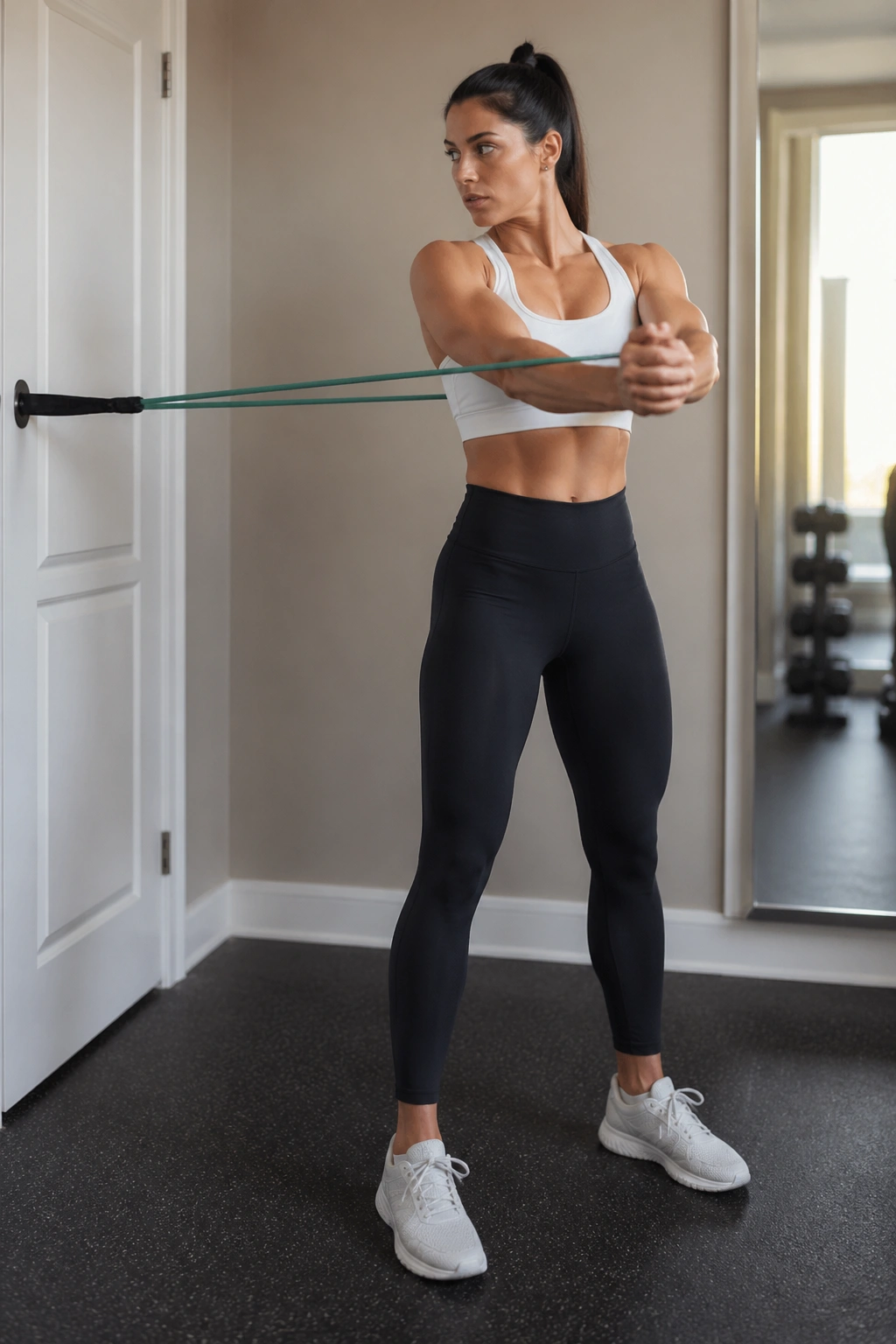
A resistance band can be sneaky. It looks harmless in your hands, then it starts pulling your torso sideways and your obliques have to clamp down to keep the spin under control.
Anchor the band at chest height, stand sideways to the anchor, and hold the handle with both hands in front of your chest. Rotate your torso away from the anchor in a slow arc, then return under control. The feet stay planted. The hips can follow a little, but the waist should stay engaged the whole time.
What to watch for
The band wants to yank your arms instead of your core. That is the trap. Keep your elbows softly bent and move from the ribs, not from the shoulders.
- Use a light to medium band.
- Perform 10 to 15 reps per side.
- Pause for 1 second at the end range.
- Keep the chin level, not jutting forward.
This move works well before heavier work because it warms up the obliques without frying them. If your lower back tends to act up during loaded rotation, start here.
13. Medicine Ball Rotational Slam
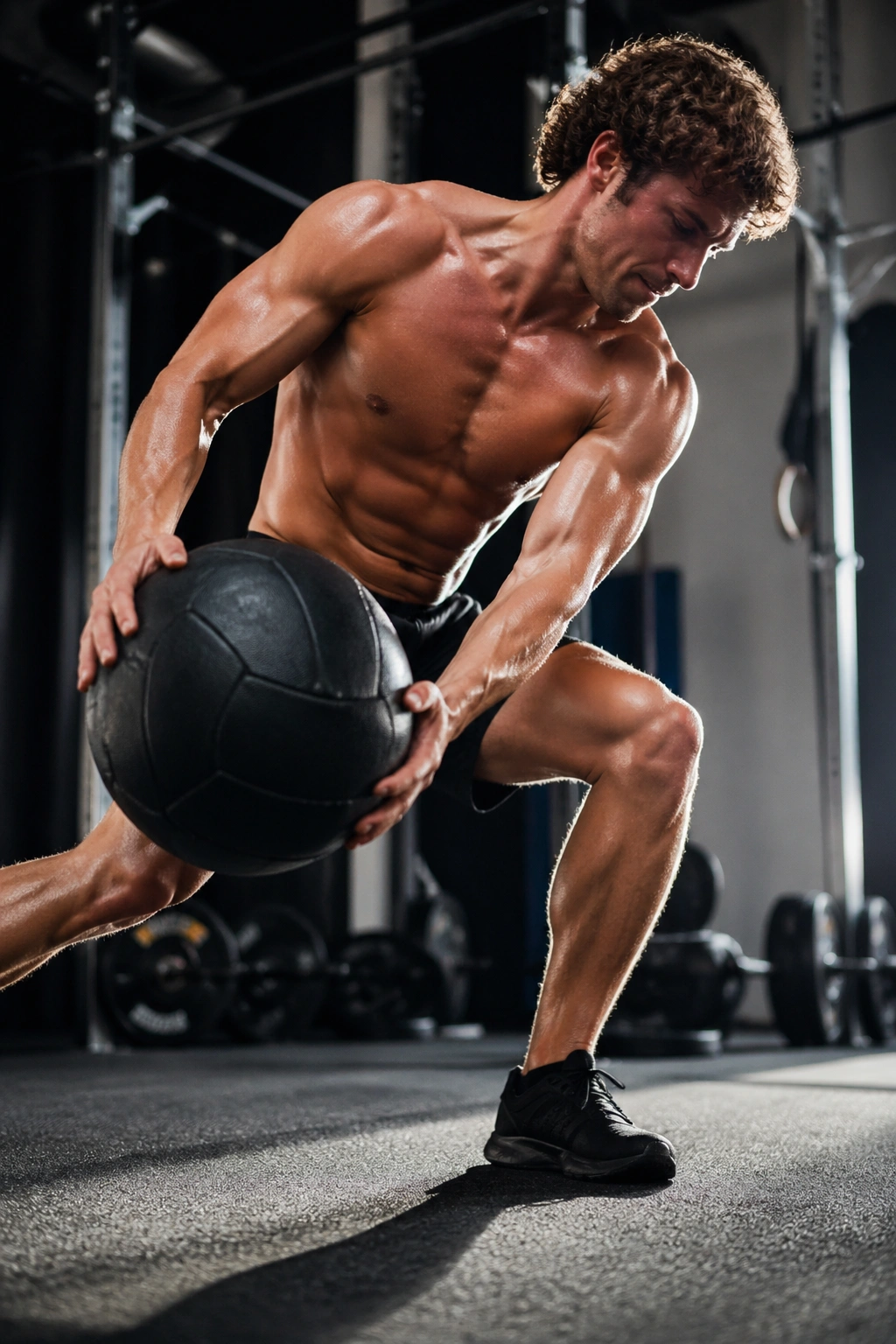
This is the loud one. The medicine ball rotational slam lets you train the obliques while also building power, and power work tends to make a waist session feel less like a clinic and more like training.
Hold a medicine ball at chest height, rotate into one side, then slam the ball down across your body toward the floor. Catch it on the rebound if the ball is meant for that, or pick it up and reset. Keep the knees soft and the trunk tight. The slam should come from the torso and shoulders working together, not from yanking the spine around.
How to make each rep count
The best reps are crisp. You rotate, brace, and release force. Then you reset. If the lower back feels twisted or jammed, the load is too heavy or the range is too wide.
Use 5 to 8 slams per side for power, or 20 to 30 seconds for conditioning. Rest enough to keep each throw sharp. Sloppy slams just become awkward lifting.
This is a strong finisher for people who want their oblique training to feel athletic and a little aggressive.
14. Dead Bug with Reach
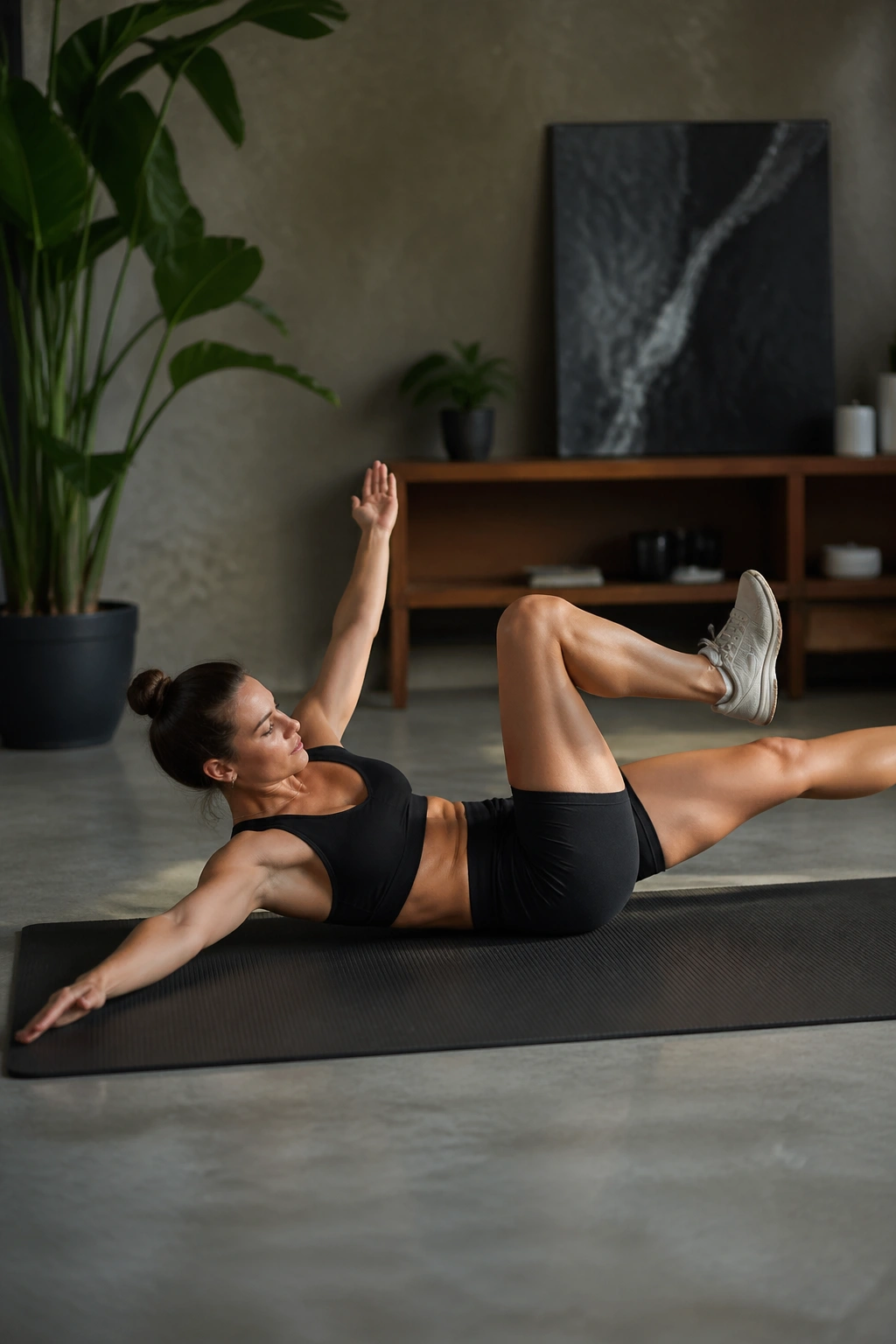
Most people chase twisting and forget the obliques also work when the torso refuses to move. The dead bug with reach fixes that gap.
Lie on your back with your knees bent over your hips and your arms pointed toward the ceiling. Extend one leg and the opposite arm slowly until they hover above the floor, then return to center and switch sides. The lower back should stay glued down. If it arches, shorten the reach.
That small, quiet fight against extension is where the obliques do a lot of their useful work. They help keep the ribs from flaring and the pelvis from tipping forward. That matters more than most people think, especially if your belly tends to pop out when you brace.
Use 6 to 10 reps per side and move slowly enough that you can feel the abdominal wall holding tension the whole time. This is not a flashy move. It is a useful one.
I’d put it near the front of a core session, especially if your lower back gets cranky from too much twisting.
15. Bird Dog Knee-to-Elbow
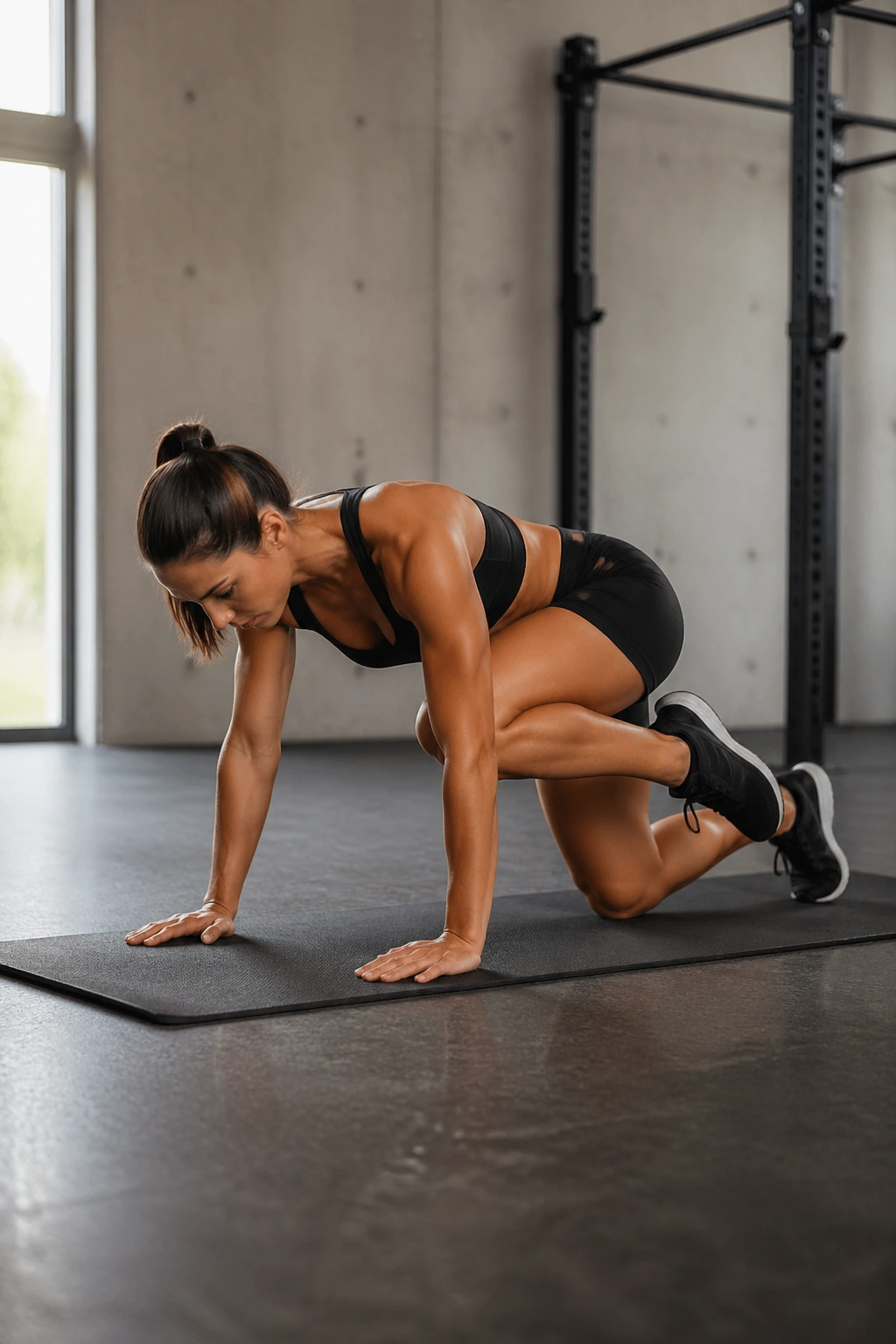
A bird dog should look controlled enough that a glass of water would survive on your back. The knee-to-elbow version adds a cross-body squeeze that wakes up the obliques without beating them up.
Start on hands and knees. Extend opposite arm and leg, then bring the knee and elbow toward each other under your torso. Pause briefly, then reach back out. Keep the hips level. If your waist collapses and your torso rocks from side to side, you’ve lost the point of the drill.
This movement is smaller than many people expect, and that’s the point. The obliques do a lot of their best work in subtle ways: stabilizing, controlling, and stopping unwanted motion. Not every effective exercise needs to make you grimace.
Try 8 to 12 reps per side with a 1-second pause in the tucked position. Move slowly enough to feel the midsection tighten on both the reach and the return.
A clean bird dog makes a stronger plank. A stronger plank makes everything else easier.
16. Landmine Rotations
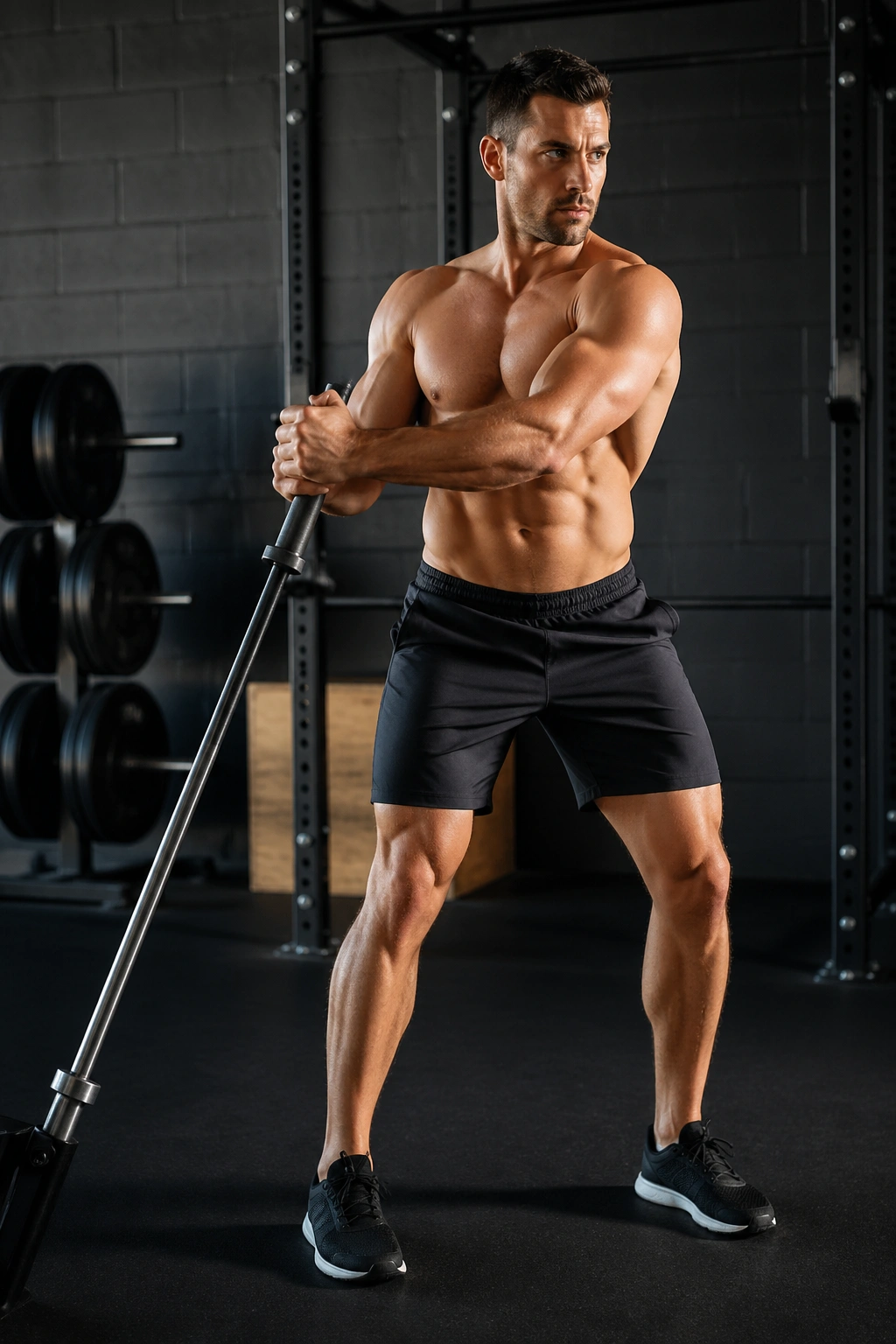
If a cable woodchop feels too free-form and a barbell twist feels too rough, the landmine rotation sits in a nice middle spot. The bar path is controlled, but the obliques still have to work for every inch.
Load one end of a barbell into a landmine base or a corner protected with a towel. Hold the free end with both hands, stand in a half-squat, and rotate the bar from side to side in an arc. Keep the core braced and the ribs tucked. The bar should move smoothly, not jerk around like it’s trying to escape.
Compared with Russian twists, this version gives you a more natural standing stance and a stronger load path. Compared with cable chops, it often feels a bit more grounded and heavy. That makes it a good fit for people who like strength work that still hits the waist hard.
Use 6 to 10 reps per side with control. Keep the feet planted unless you’re intentionally using a stepping variation. If your lower back starts doing the turning, the weight is too much.
17. Heel Touches
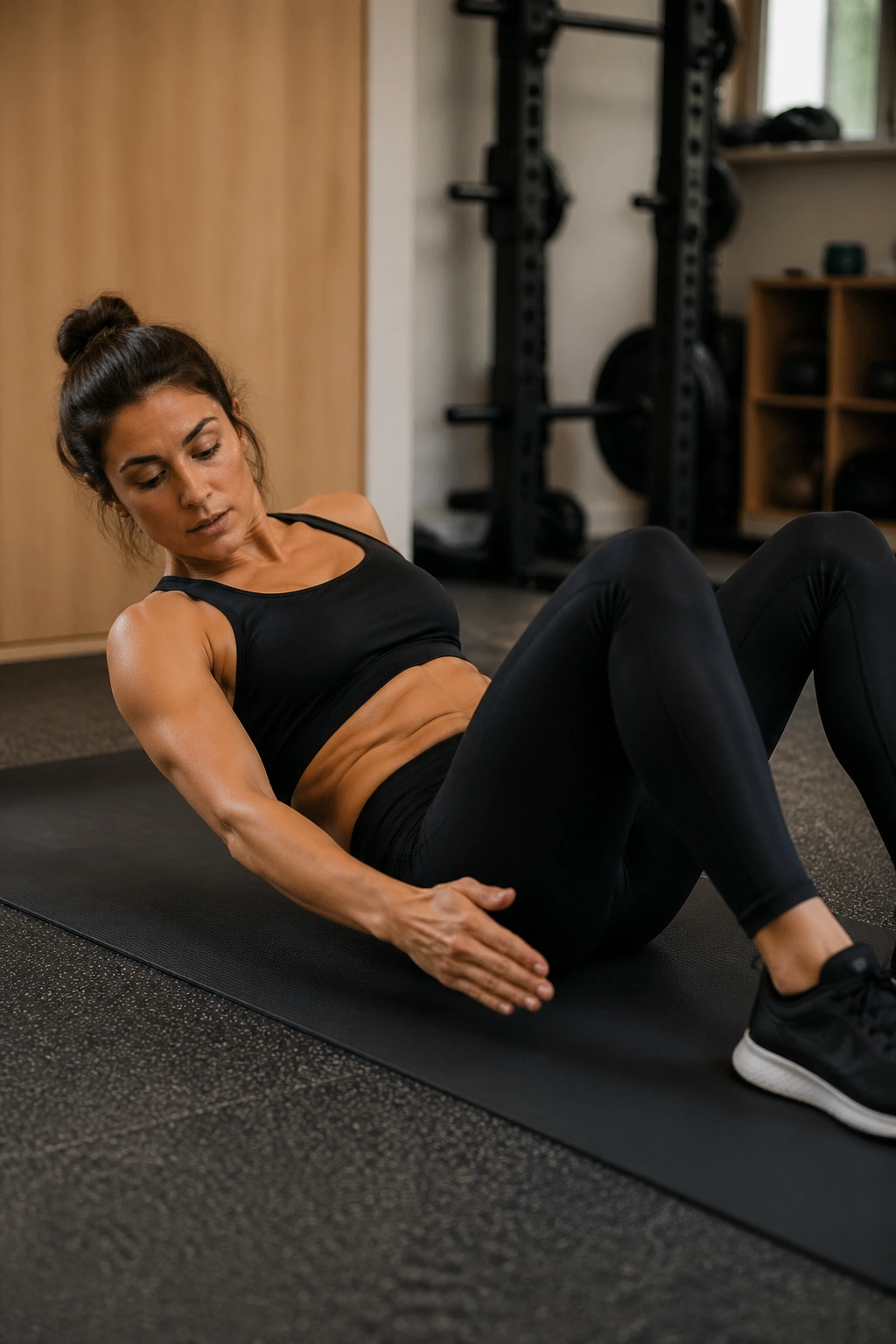
Heel touches are almost too simple, which is exactly why they show up in so many good core sessions. They target the side waist with a short, repeated crunch that’s easy to feel.
Lie on your back, knees bent, feet flat, and arms reaching along your sides. Lift your shoulders slightly off the floor and reach one hand toward the same-side heel, then the other. The motion should be small and sharp. You’re not trying to sit up. You’re trying to shorten the side waist over and over.
The burn arrives fast because the range is short and the obliques stay under tension the whole time. If your neck starts taking over, support your head lightly or reduce the height of the shoulders.
- Keep the chin slightly tucked.
- Exhale on each reach.
- Aim for 20 to 40 touches total.
- Stop if the lower back arches.
This one works well as a finisher when your abs are already warm and you want a simple drill that does not need much setup.
18. Skater Hops
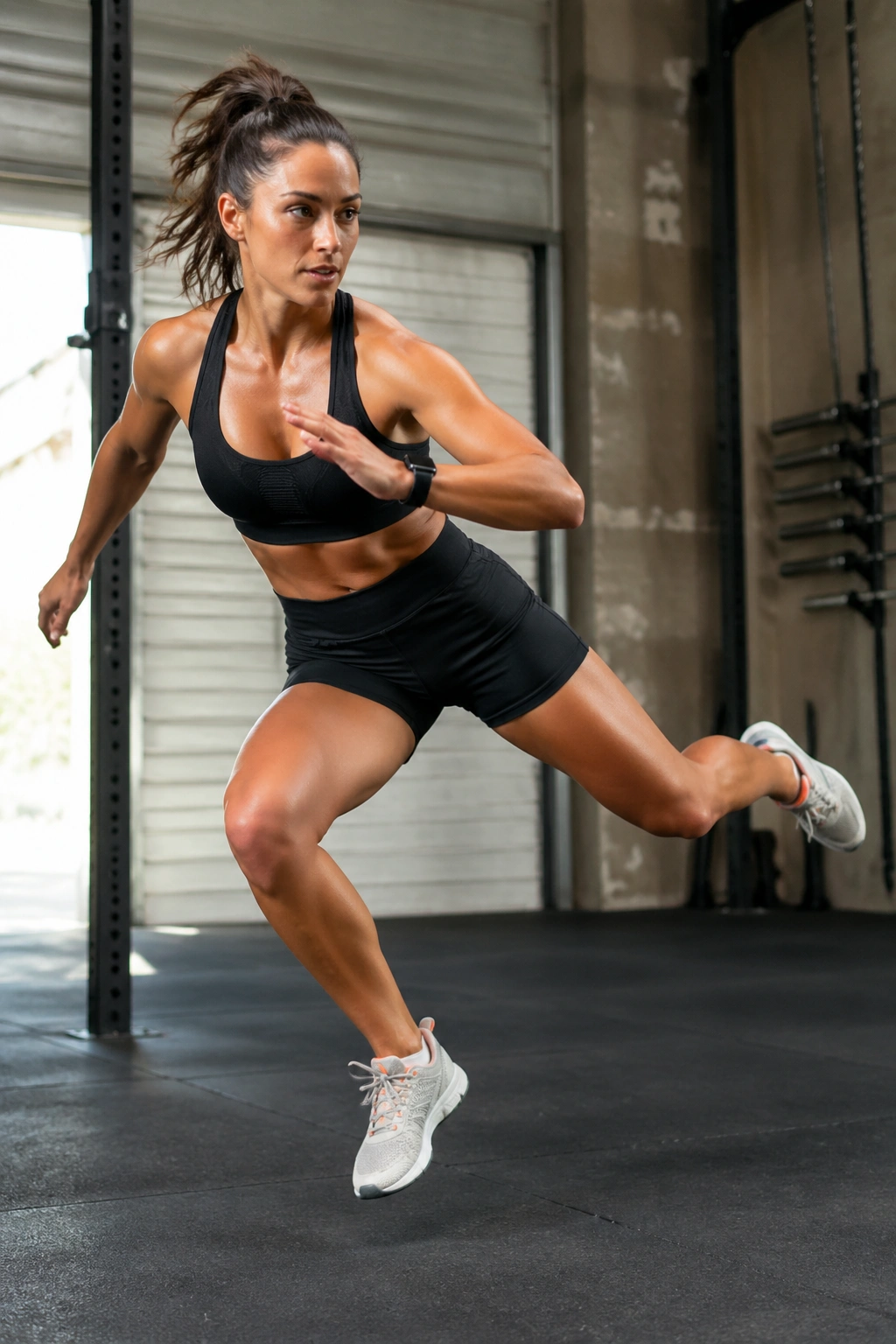
Skater hops bring a more athletic feel to oblique training. They are not just about side-to-side movement. They ask your waist to stabilize while your body shifts, lands, and absorbs force.
Push off one foot and jump sideways to the other, landing on a bent knee with the opposite leg sweeping behind you. Keep the torso slightly forward, but not rounded. The obliques help control the landing so your chest does not collapse and your hips do not wobble all over the place.
What the landing should feel like
Quiet.
If the landing sounds loud, the knees are probably taking too much of the hit.
- Land on a soft knee.
- Keep the chest proud.
- Hold the landing for a split second.
- Use 20 to 30 seconds for conditioning sets.
Skater hops are useful when you want a move that burns more calories than a floor crunch and still makes the waist work hard. They’re also a good bridge between pure core work and full-body conditioning.
19. Seated Knee Tucks with Reach
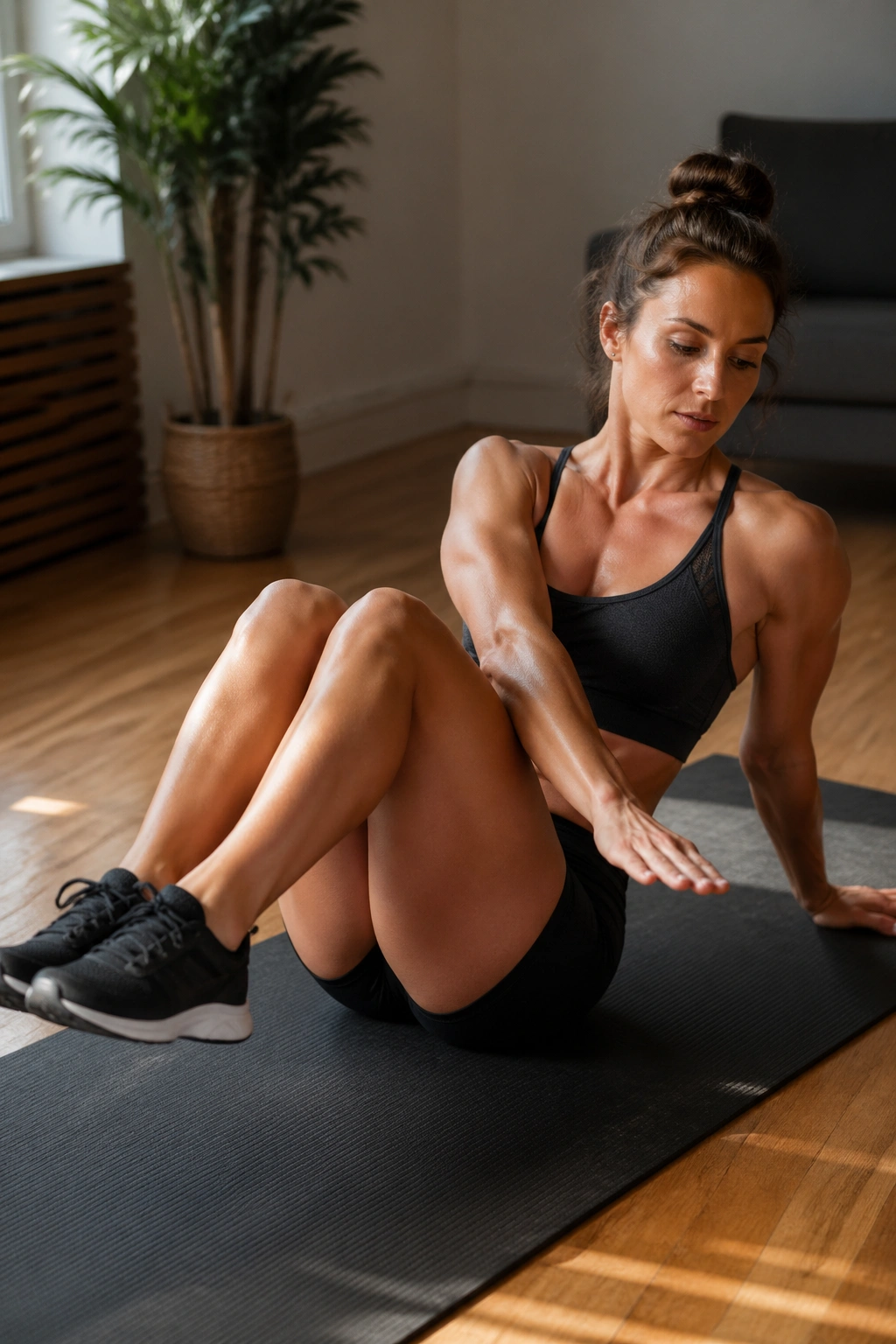
What if you want a tighter waist drill that sits somewhere between crunches and full athletic work? Seated knee tucks with a reach do that job neatly.
Sit on the floor, lean back slightly, and hold your legs off the ground if you can keep your back long. Bring your knees in as you reach your hands toward one side, then switch. The side reach adds a rotation element that makes the obliques work harder than a plain tuck.
Keep the movement compact. If the lower back rounds into a C-shape, place your hands behind you for support or set your feet down between reps. A smaller range done well beats a bigger range done badly every time.
How to keep it clean
The torso should fold and rotate together. The shoulders should not fling side to side like loose hinges.
Use 10 to 14 reps per side at a controlled pace. This is a solid home-friendly move when you want something that feels more active than a static plank but less chaotic than a fast crunch sequence.
20. Cross-Body Plank Knee Drives
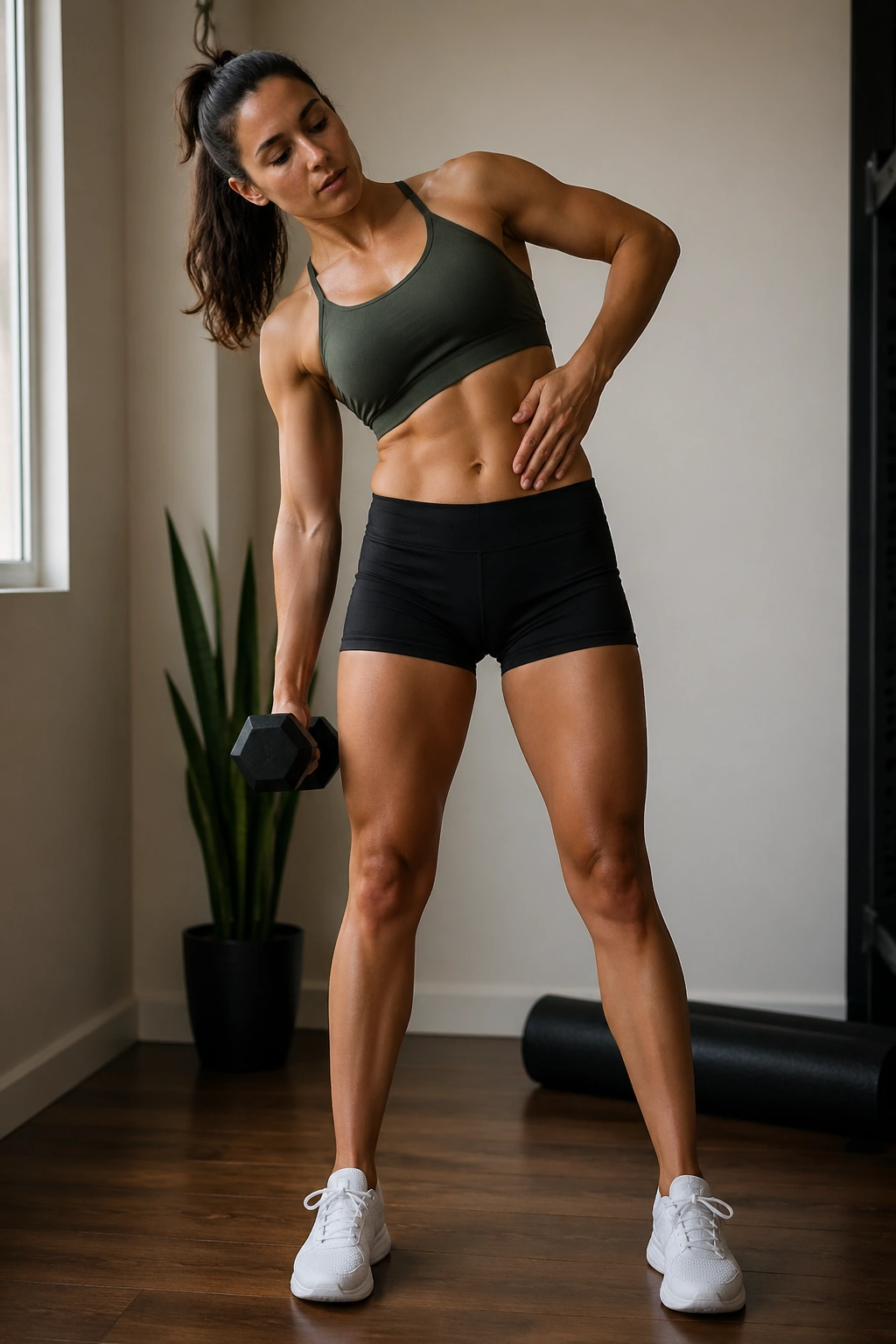
If I had to pick one finisher from this whole list, this would be near the top. Cross-body plank knee drives are simple, mean, and efficient, which is a decent formula for a waist workout.
Start in a strong high plank. Drive one knee toward the opposite elbow, return it, then switch sides. The slower you do this, the more the obliques have to brace against the twist. Speed has a place too, but only after you can keep your hips from swinging side to side like a gate in the wind.
Use 20 to 40 seconds or 8 to 12 reps per side. Keep the shoulders over the hands and the neck long. If your hips rock hard with each drive, shorten the motion and make the rep cleaner.
The nice part is that this move ties everything together. You get anti-rotation, a cross-body crunch pattern, and enough heart-rate work to make it useful for fat loss workouts without needing a pile of equipment.
Stack a few rounds of this with carries, planks, and a woodchop, and you’ve got a core session that actually earns its place.
A tighter waist does not come from chasing one magical ab move. It comes from building oblique strength, keeping the trunk tight under load, and pairing that work with enough total-body activity that body fat can drop. That part is annoyingly simple, which is probably why people try to complicate it.
Pick five or six moves from this list, train them hard but clean, and keep your weekly walking or conditioning work high enough that the waist has a reason to change. The side-belly area usually gives up slowly. Fine. Let it.
