



There is nothing quite as frustrating as stepping into the gym, ready to tackle leg day, only to be stopped dead in your tracks by that sharp, stabbing sensation in your knee during the first lunge. You know the feeling. It is not a “good” burn; it is a warning light flashing on your dashboard, signaling that the sheer force of a lunge is simply too much for your patellar joint to handle right now. Many people assume that skipping lunges means skipping leg gains, but that is a myth. You can build significant strength, stability, and muscle without subjecting your knees to the high-impact, shear-heavy mechanics of a standard forward or reverse lunge.
The secret lies in changing the vector of resistance and the range of motion. Lunges are notoriously “knee-dominant” exercises that require immense stability from the patella tracking. When your knees are compromised, you need to shift the focus to the hips and glutes—the powerhouses that should be doing the heavy lifting anyway. By offloading the knee and prioritizing the posterior chain, you create an environment where you can train hard, hit personal bests, and come back for another workout without needing a bag of frozen peas on your joints afterward.
It is time to look at the alternatives that respect your anatomy. These exercises focus on closed-chain movements, eccentric control, and glute isolation, all of which are much kinder to sensitive knees. Let’s break down the best moves to keep your training intensity high while keeping your joints happy.
1. Glute Bridges
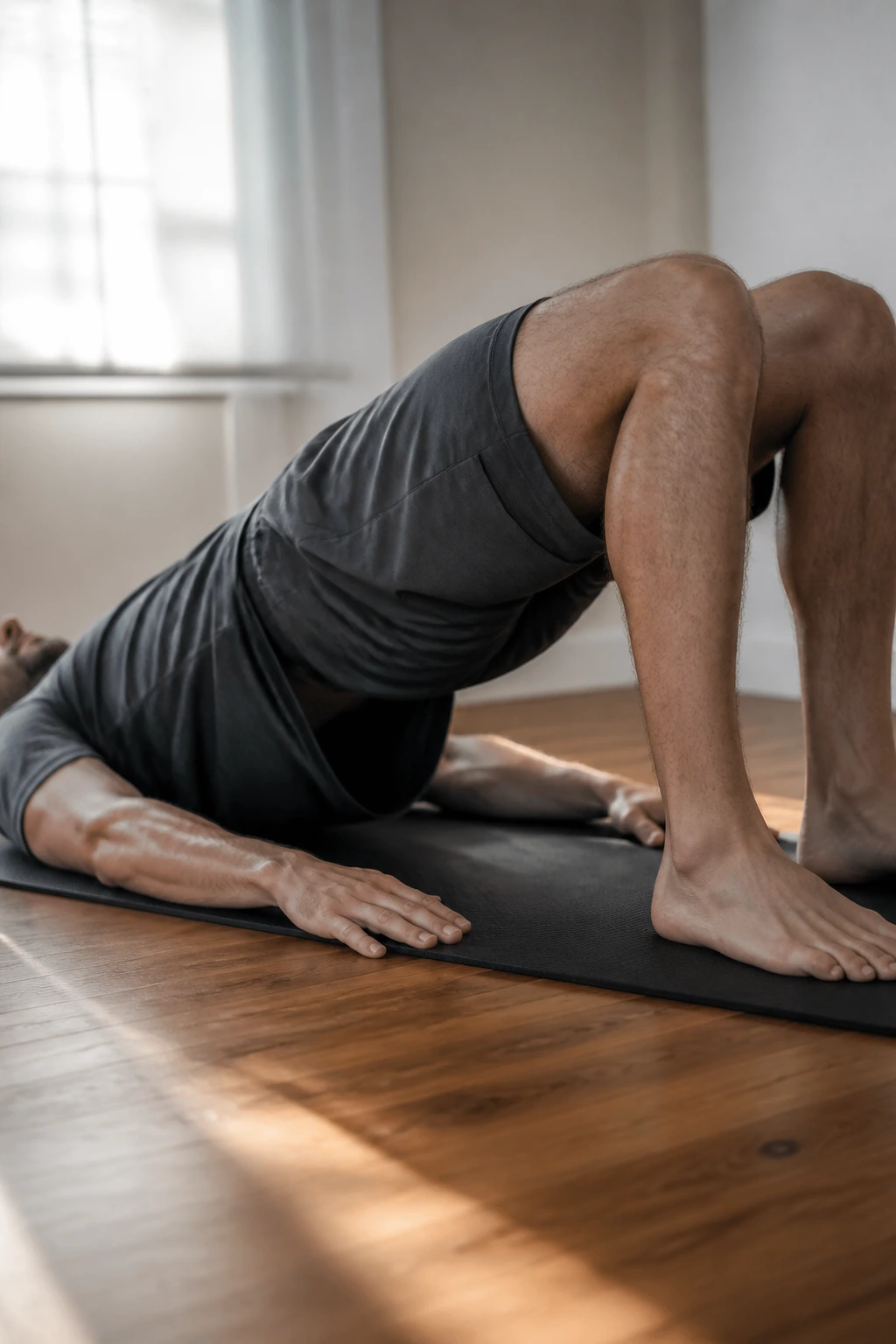
The glute bridge is the gold standard for anyone with knee pain. Because you are lying flat on your back, the gravity-induced load on your knee joint is practically zero. You are placing the tension exactly where it belongs: the glutes and hamstrings.
Why It Saves Your Knees
When you stand, your knee joint acts as a hinge bearing your entire body weight. In a bridge, that weight is distributed across your hips and torso. This allows you to work the posterior chain to exhaustion without any shearing force on the cartilage.
How to Get the Most Out of It
- Keep your feet roughly hip-width apart.
- Drive through your heels, not your toes.
- Squeeze your glutes at the very top of the movement for a solid two seconds.
- Avoid arching your lower back; think about tucking your pelvis toward your ribcage.
Pro tip: Once bodyweight bridges feel easy, add a resistance band around your knees to engage the abductors, or use a dumbbell on your hips to increase the load.
2. Low-Box Step-Ups
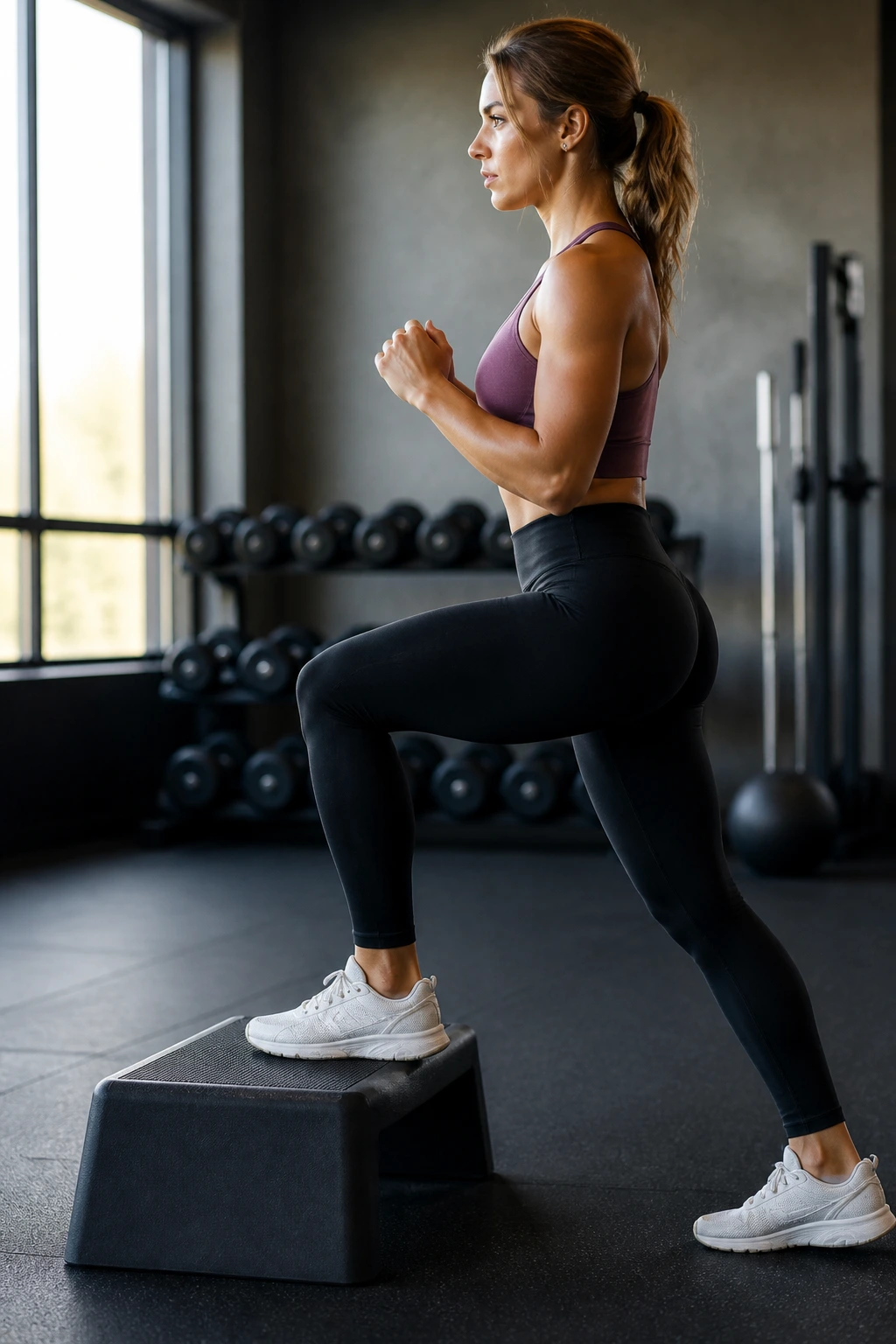
Step-ups are often criticized for being hard on the knees, but that is only true if the step is too high. If you use a box that is just a few inches off the ground, you can reap the benefits of single-leg training without the aggressive angle that triggers pain.
Controlling the Mechanics
The goal here is not to climb a mountain; it is to engage the glute of the working leg. By keeping the box low—even as low as a sturdy plate or a six-inch step—you limit the knee flexion required to lift your body, which keeps the pressure off the kneecap.
Making It Effective
- Step up firmly, driving through the heel of the elevated foot.
- Keep your torso upright; leaning forward excessively shifts the load back to the knee.
- Lower yourself with control. Do not just drop back down.
- Focus on the eccentric portion of the lift to build real strength.
3. Sit-to-Stand
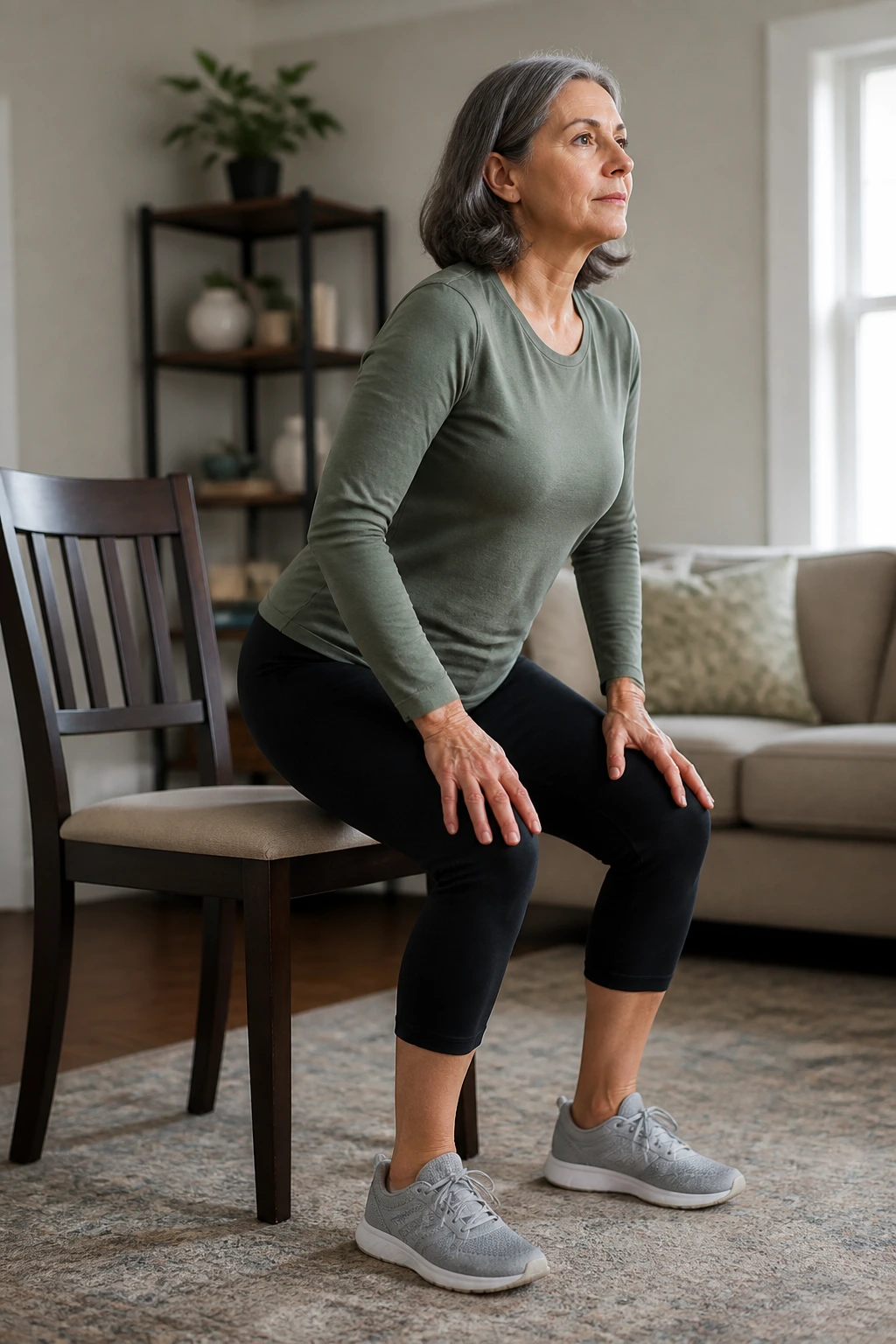
This is the most functional movement you can perform. It is essentially a squat that removes the fear of falling and allows you to find your perfect alignment. Many people struggle with squats because they cannot control the descent; the chair acts as a reliable guide.
Why It Works for Bad Knees
Most knee pain during squats happens because people lose balance or let their knees cave inward at the bottom of the movement. Using a chair gives you a specific target, allowing you to master your form before attempting free-standing squats.
Refining Your Technique
- Pick a chair height that allows your thighs to be parallel to the floor.
- Keep your chest up throughout the entire motion.
- Push through your mid-foot to stand up.
- If it hurts, use a slightly higher surface until your strength improves.
4. Clamshells
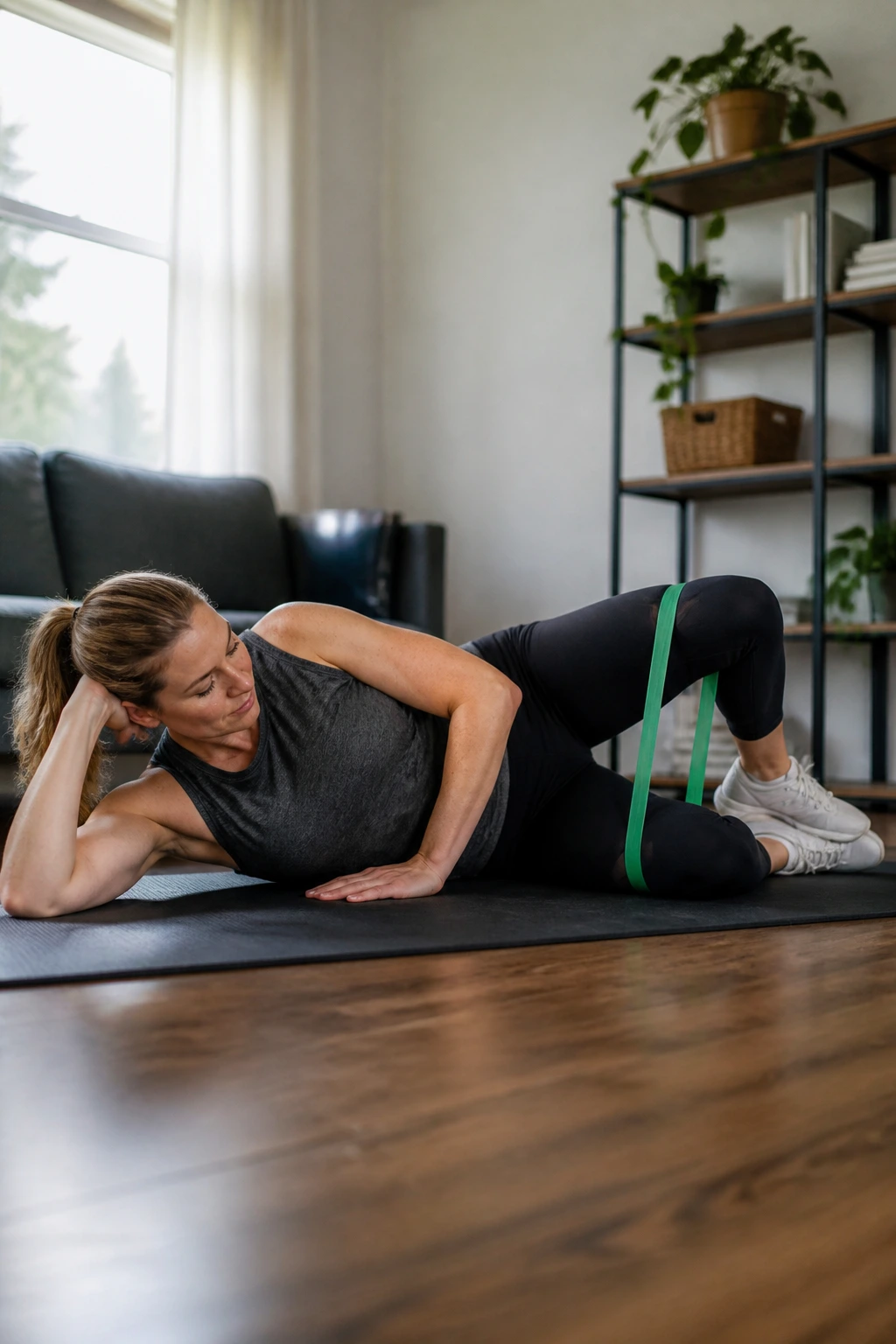
While not a heavy compound lift, the clamshell is essential for knee health. Most knee tracking issues are actually hip issues. If your glute medius is weak, your knee will collapse inward, causing pain. This exercise addresses that instability directly.
The Science Behind the Move
The glute medius stabilizes your femur. When this muscle is strong, your knee stays in a neutral, safe path. The clamshell isolates this small but critical muscle, forcing it to work in isolation without any vertical load.
Proper Execution
- Lie on your side with knees bent at a 45-degree angle.
- Keep your feet touching throughout the movement.
- Lift your top knee as high as you can without rotating your torso.
- Move slowly. The burn should be felt deep in the side of your hip.
5. Side-Lying Leg Lifts
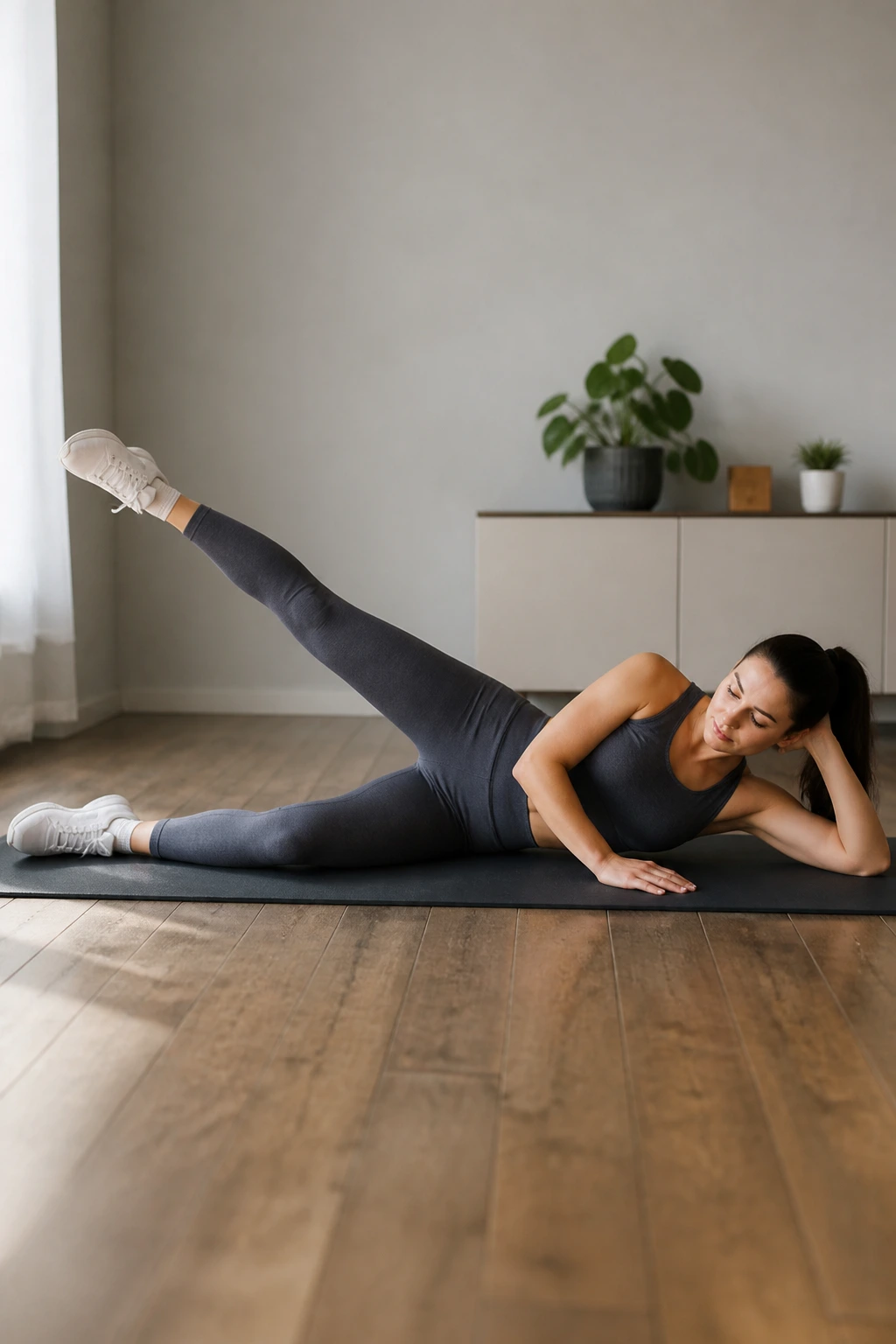
Similar to the clamshell, this move strengthens the hip abductors. Strengthening these muscles provides a protective “corset” for the leg, helping the knee joint stay centered during more strenuous activity.
Simple but Effective
- Lie on your side, legs fully extended.
- Lift your top leg toward the ceiling, keeping the toe pointed slightly downward to ensure the glute is firing.
- Do not let your pelvis rock back and forth.
- Keep the movement controlled; do not use momentum to swing the leg up.
Pro tip: Add an ankle weight as you get stronger to increase the intensity without ever stressing the knee.
6. Wall Sits
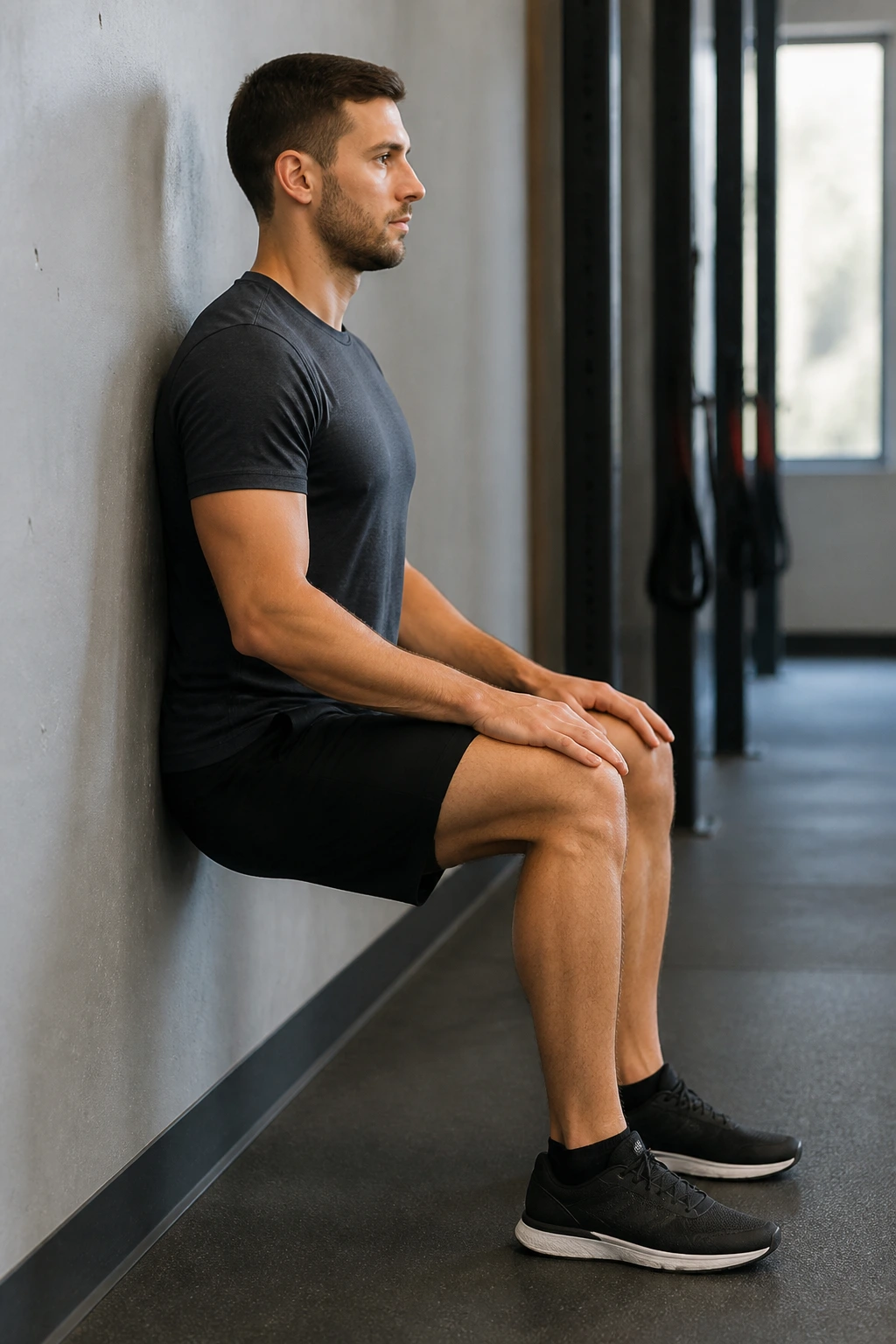
Isometric training is an incredible tool for joint recovery. The wall sit forces your muscles to contract and hold without any moving parts, which minimizes friction and irritation within the knee joint.
Why It’s a Staple
Because there is no movement, you remove the “grinding” sensation that often occurs in a moving squat. It is simply about holding your position, which builds muscular endurance without the wear and tear of repetitive motion.
How to Hold It
- Press your back firmly against the wall.
- Keep your knees aligned over your ankles, not pushing forward past your toes.
- Stop at a 90-degree angle, or higher if that causes pain.
- Keep your weight in your heels.
7. TRX Assisted Squats
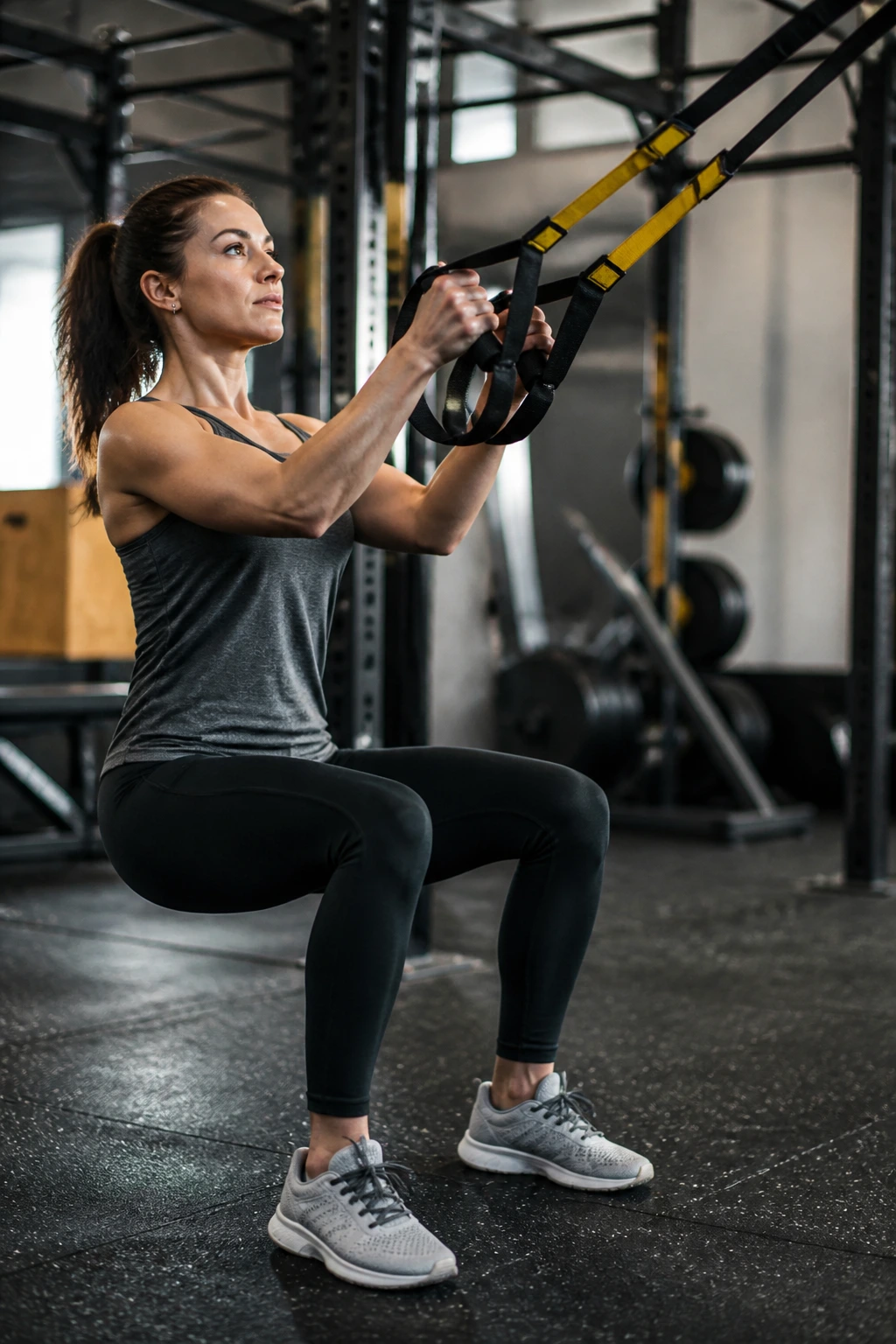
If you have access to a suspension trainer, use it. The straps act as a counterbalance, allowing you to shift your hips way back and take the pressure off your knees.
Removing the Fear
For many, the fear of knee pain creates tension that causes bad form. The TRX removes that fear because you have straps to hold onto, which helps you stay balanced. You can literally lean back into the movement, forcing the glutes to do the work.
Using the Straps
- Stand facing the anchor point, holding the handles.
- Lean back slightly, putting your weight into your heels.
- Squat down while keeping your arms relatively straight.
- If you feel knee pain, pull more on the straps to assist your legs.
8. Box Squats
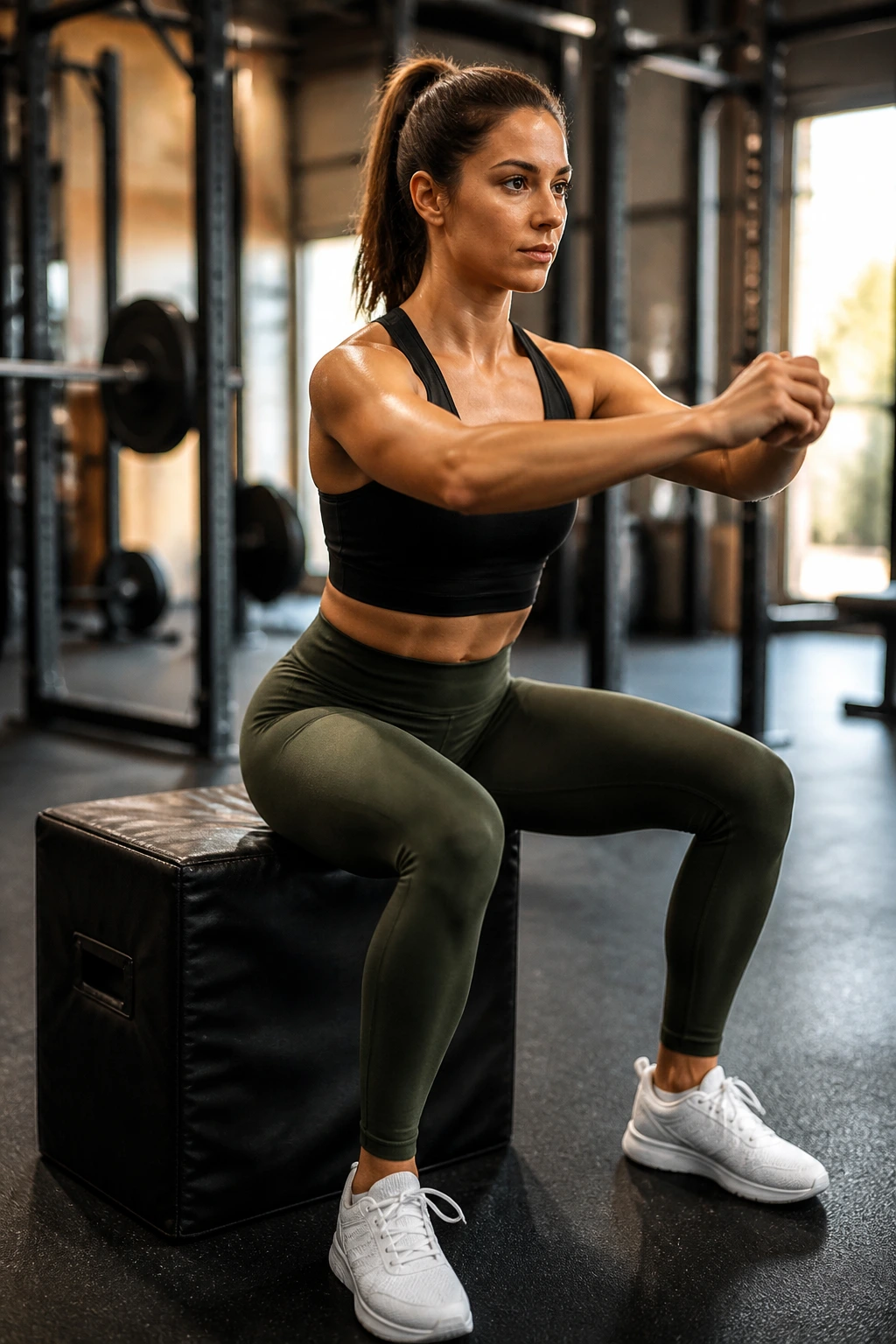
The box squat is the secret weapon of powerlifters who want to save their knees. By sitting back onto a box, you break the eccentric-concentric chain. You are forced to pause, which kills the momentum that often causes bad form and knee stress.
The Mechanics of the Move
By sitting back onto the box, you force your shins to stay vertical. Vertical shins mean the knees are not traveling forward, which significantly reduces the stress on the patellar tendon. It is a game-changer for anyone who has been squatting with knees that travel too far forward.
Keys to Success
- Choose a box that puts your thighs at or slightly below parallel.
- Sit back, do not just drop down.
- Relax your hips for a split second on the box, then explode upward.
- Never bounce off the box; keep it controlled.
9. Kettlebell Deadlifts
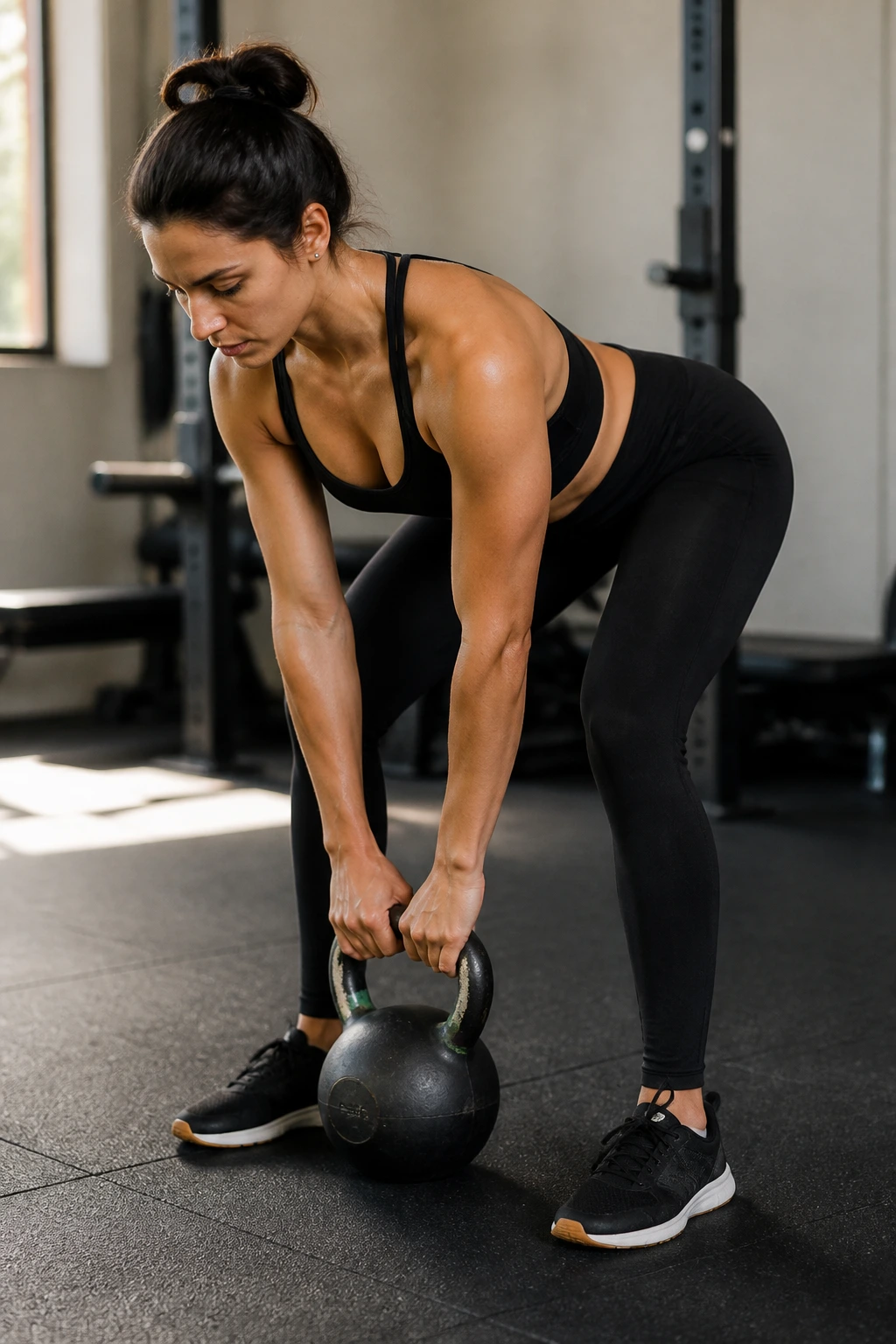
The deadlift is a hinge movement, meaning the focus is on the hips, not the knees. The kettlebell, specifically, allows you to keep the weight centered between your feet, which is generally more comfortable for the joints than a heavy barbell.
Hinge Over Squat
In a lunge or squat, the knee flexes significantly. In a deadlift, the knee stays relatively stable while the hip does the bending. This makes it an ideal way to load the legs without taxing the knee joint.
The Setup
- Place the kettlebell between your feet.
- Bend at the hips, keeping your back flat.
- Grab the handle and drive through your heels to stand up.
- Keep the weight close to your body the entire time.
10. Romanian Deadlifts (RDLs)
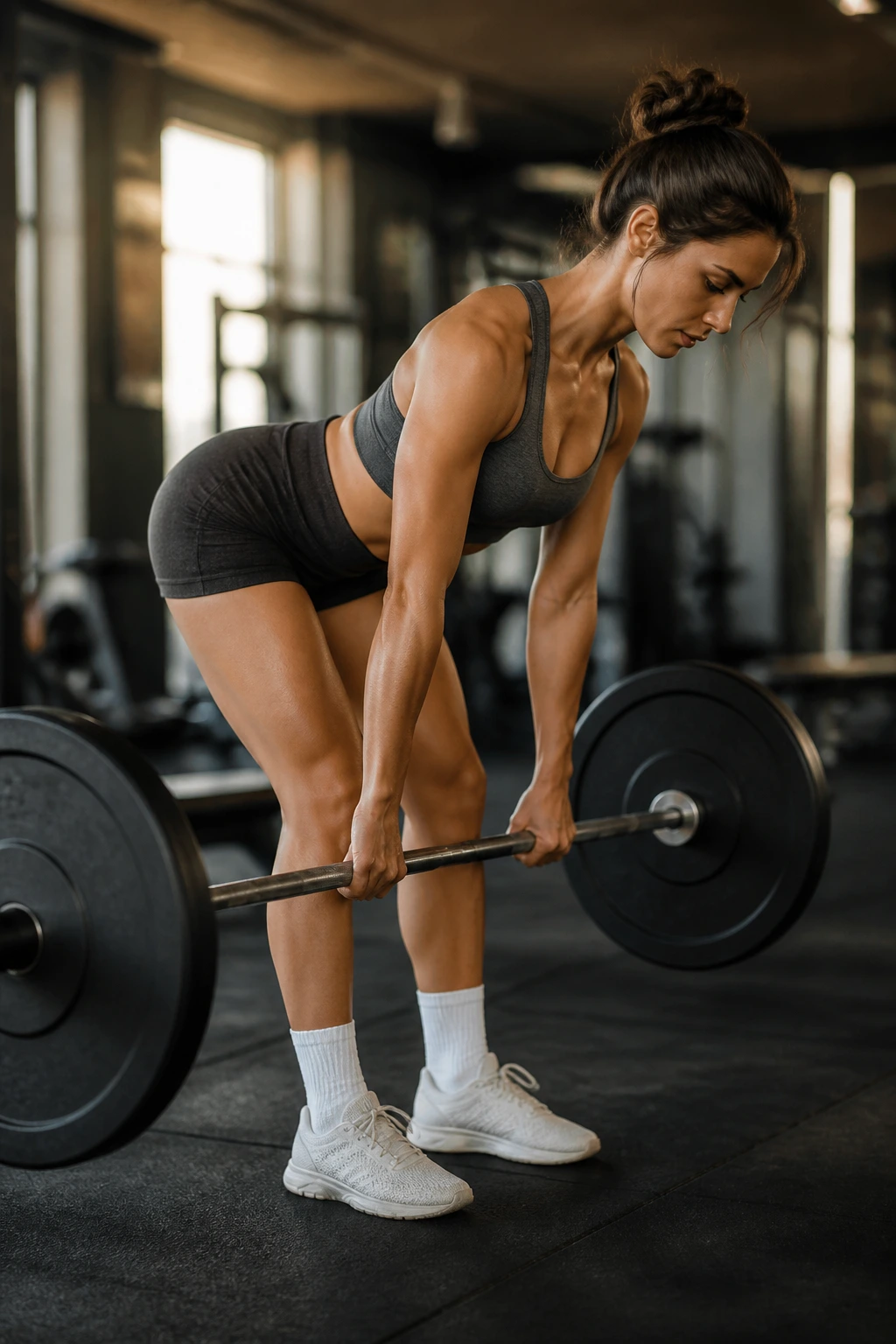
The RDL is the ultimate posterior chain exercise. It targets the hamstrings and glutes while keeping the knees in a “soft,” fixed position. You are essentially just stretching your hamstrings and pulling them back to center.
Why It Works
By keeping the knees slightly bent and motionless, you ensure that the load is held by the muscles, not the joint. You can go quite heavy with RDLs, providing the muscle-building stimulus of a lunge without the joint-killing mechanics.
Avoiding Common Mistakes
- Do not round your back. Think of your spine as a stiff rod.
- Lower the weight only until you feel a deep stretch in your hamstrings.
- If you feel it in your lower back instead of your glutes, you are probably going too deep or using too much weight.
11. Reverse Hyperextensions
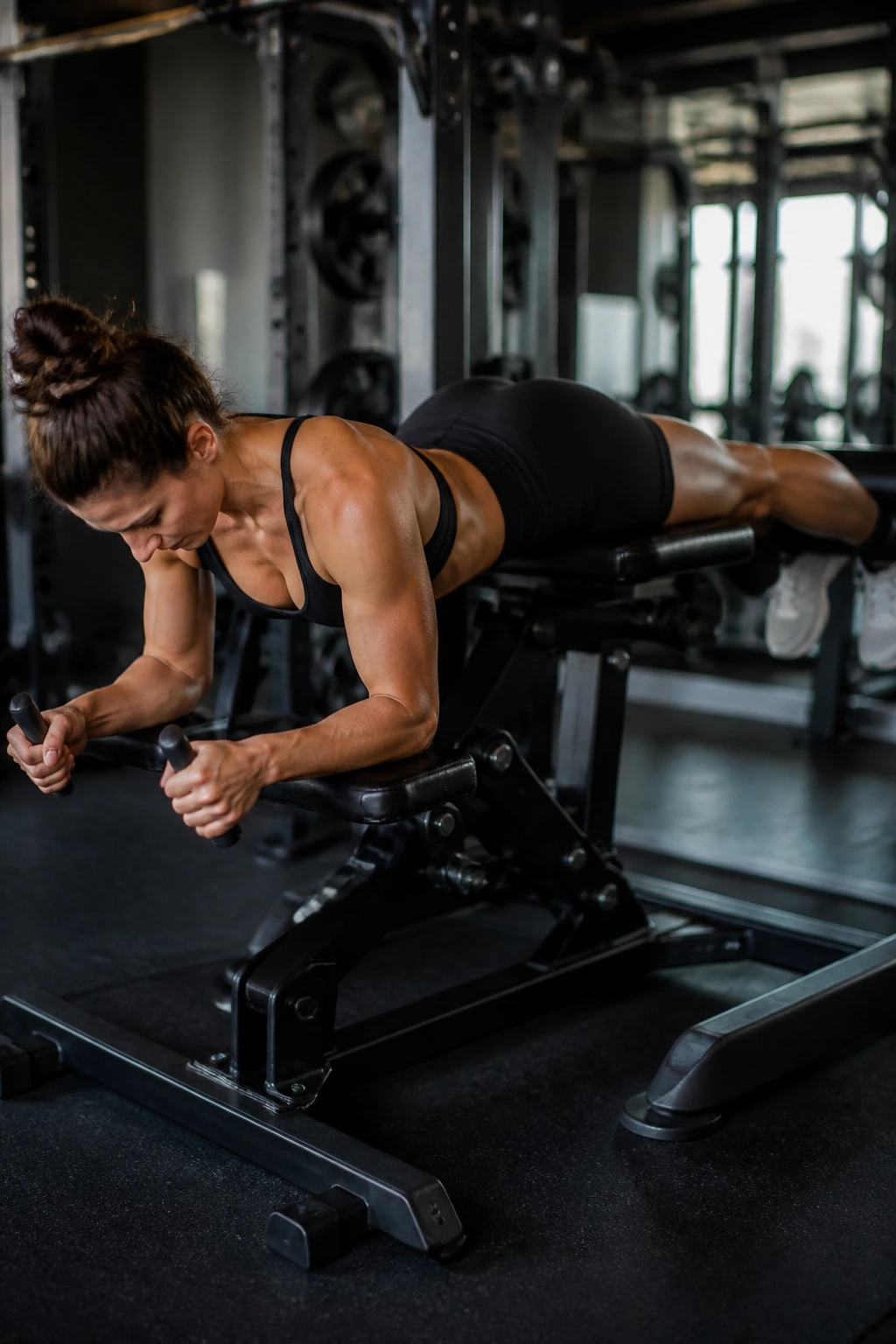
If you are lucky enough to have access to a reverse hyper machine, use it. It is arguably the best machine for posterior chain development that places zero load on the knees.
The Logic
Your legs are hanging, and you are lifting them using your glutes. The knee is essentially locked out or slightly bent throughout, meaning there is no dynamic load on the joint. It is pure muscle isolation.
If You Don’t Have the Machine
- Lie face down on a bench with your hips at the edge.
- Hold onto the bench for stability.
- Lift your legs until they are in line with your back.
- Lower them back down with total control.
12. Leg Press (Machine)
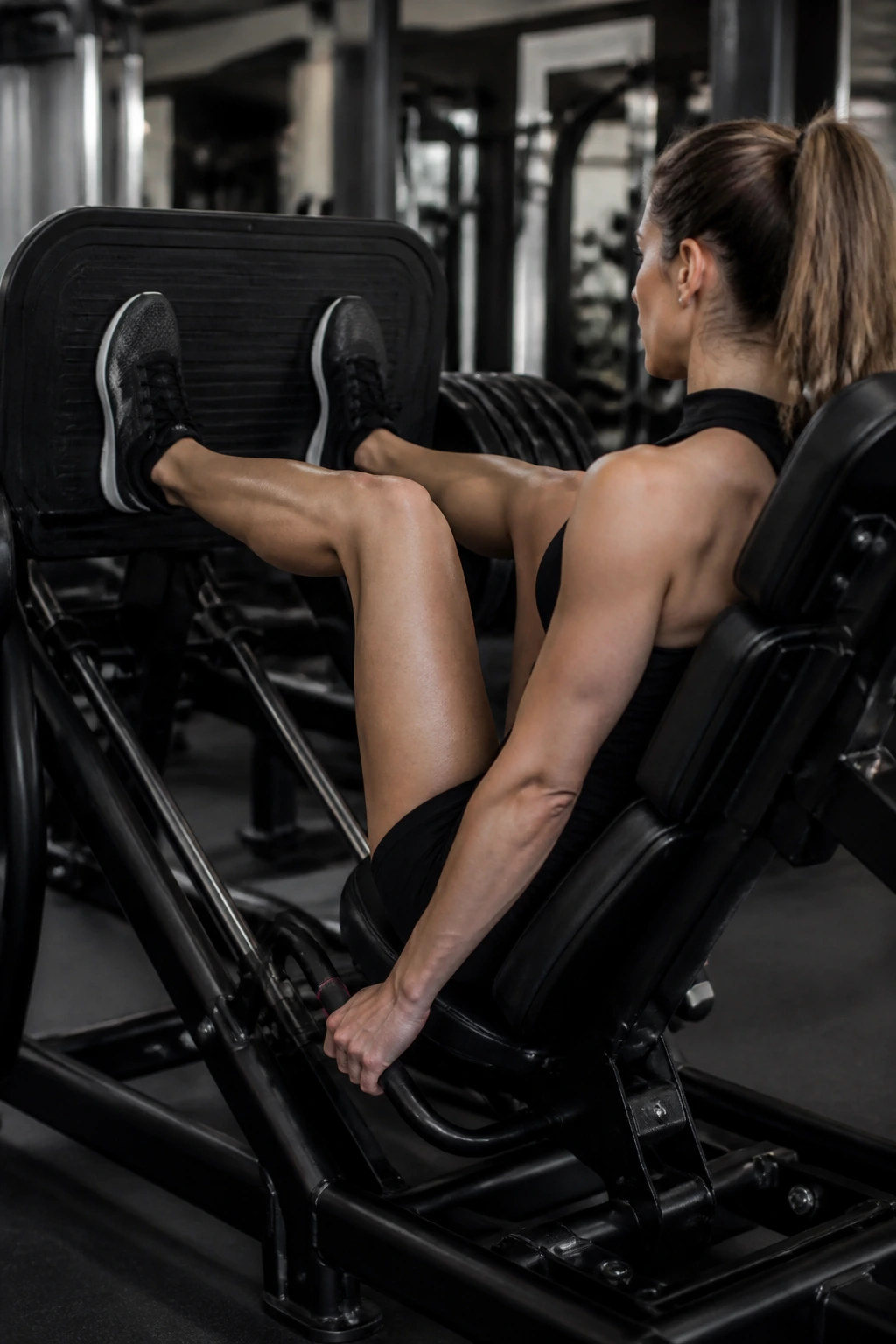
The leg press is often misunderstood. Some say it is bad for knees, but that is usually because people load it with way too much weight and lower it until their knees are at their chest. Used properly, it is a safe way to build leg strength.
Setting It Up Right
- Place your feet higher on the platform. This increases the range of motion for the hips and decreases the range for the knees.
- Do not lock your knees at the top of the movement; keep a soft bend.
- Use a weight that allows you to control the speed. Slow down the descent.
Pro tip: A wider stance on the platform often helps with hip engagement and reduces the “cramped” feeling in the knees.
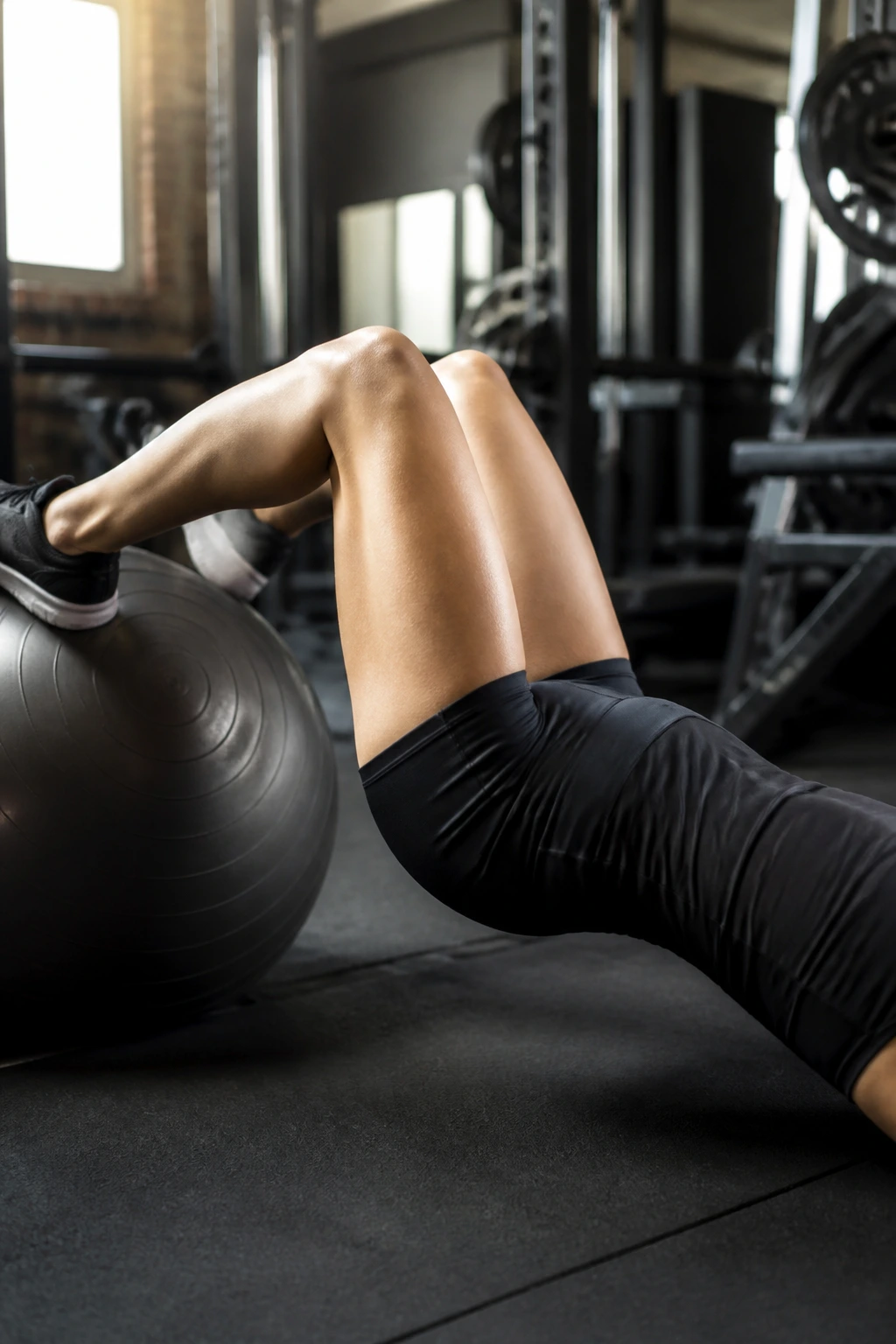
13. Hamstring Curls (Machine or Stability Ball)
Hamstring strength is critical for knee stability. The hamstrings act as a brake for the lower leg. If they are weak, the knee joint takes more of a beating. Curls isolate the hamstrings without any weight-bearing stress on the knee.
The Stability Ball Variation
- Lie on your back with your heels on a stability ball.
- Lift your hips off the floor.
- Curl your heels toward your glutes, rolling the ball with you.
- Return slowly. This creates immense stability and strength without ever standing up.
14. Resistance Band Crab Walks
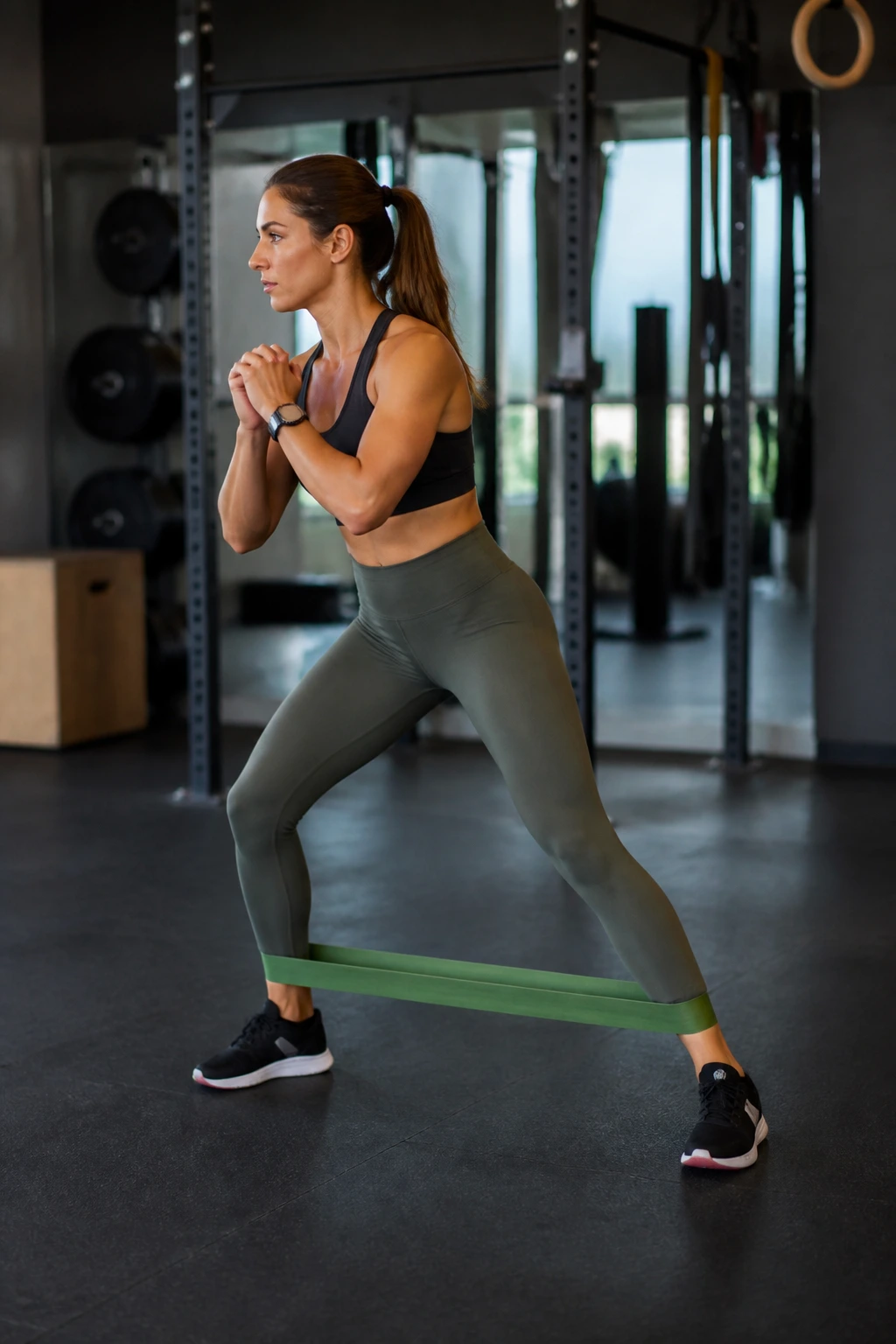
This is a small movement with huge results. By placing a resistance band around your ankles or just above your knees, you force the glutes to stabilize the hips against the resistance.
Protecting the Joint
When you walk laterally with a band, your knees are kept under constant tension in a stable position. You aren’t doing deep squats; you are maintaining a shallow, athletic stance. This builds the muscles surrounding the knee, which acts like a natural brace.
How to Do It
- Maintain a slight, athletic bend in your knees.
- Step to the side, maintaining tension on the band.
- Never let your knees collapse inward.
- Keep your toes pointing forward.
15. Single-Leg RDLs (Kickstand Variation)
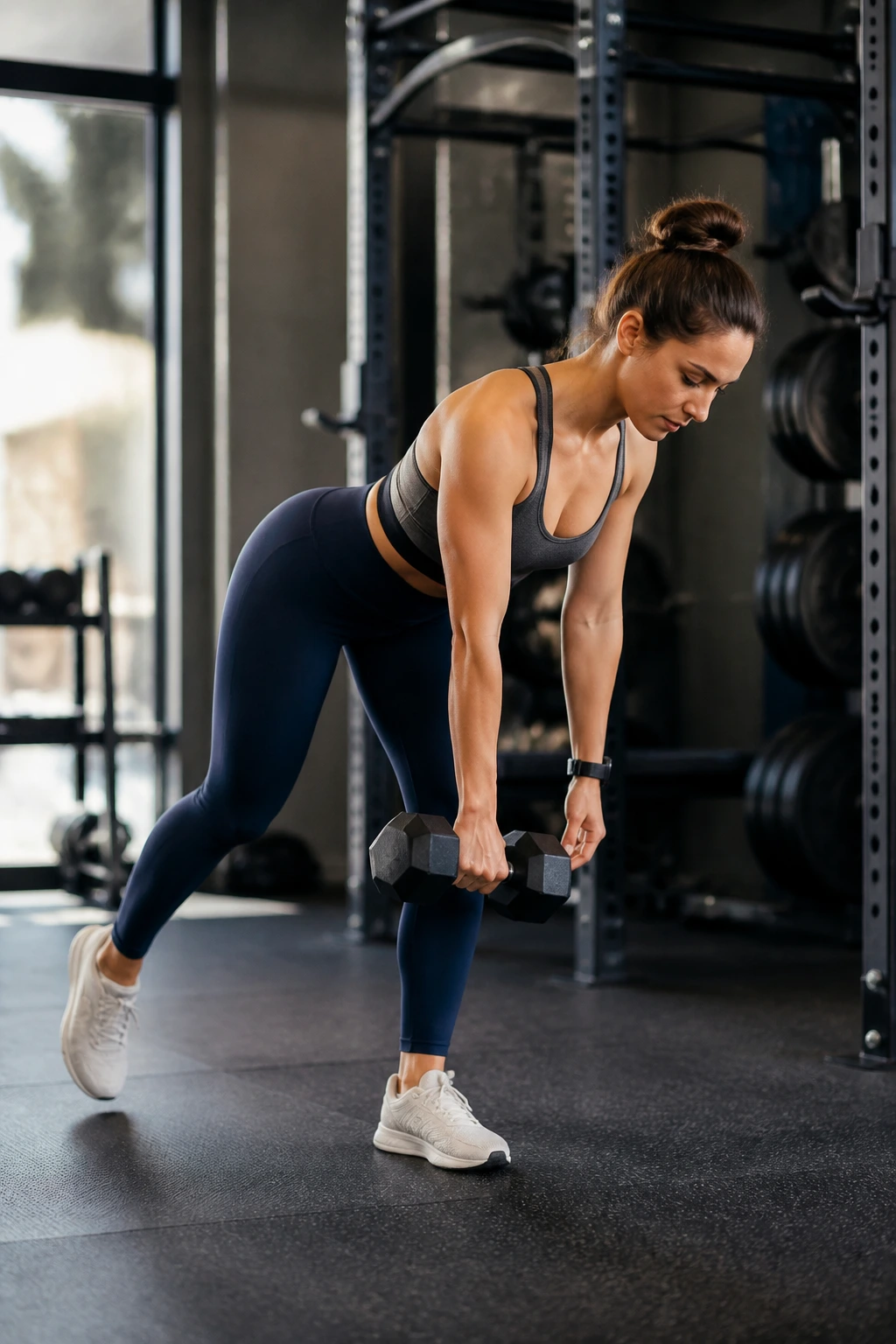
Standard single-leg RDLs are hard for everyone. Using a “kickstand” (placing the toes of your non-working leg on the ground for balance) makes it accessible while still isolating the working leg.
The Benefits
You get the benefits of unilateral (single-leg) training—which is great for correcting imbalances—without the fear of losing your balance and twisting your knee. You still get that deep stretch in the hamstring and glute.
Getting the Form
- Stand with one foot in front of the other, back foot on its toes.
- Hinge at the hips, keeping all your weight in the front leg.
- Keep the front knee slightly bent.
- Drive through the front heel to return to standing.
16. Bird-Dogs
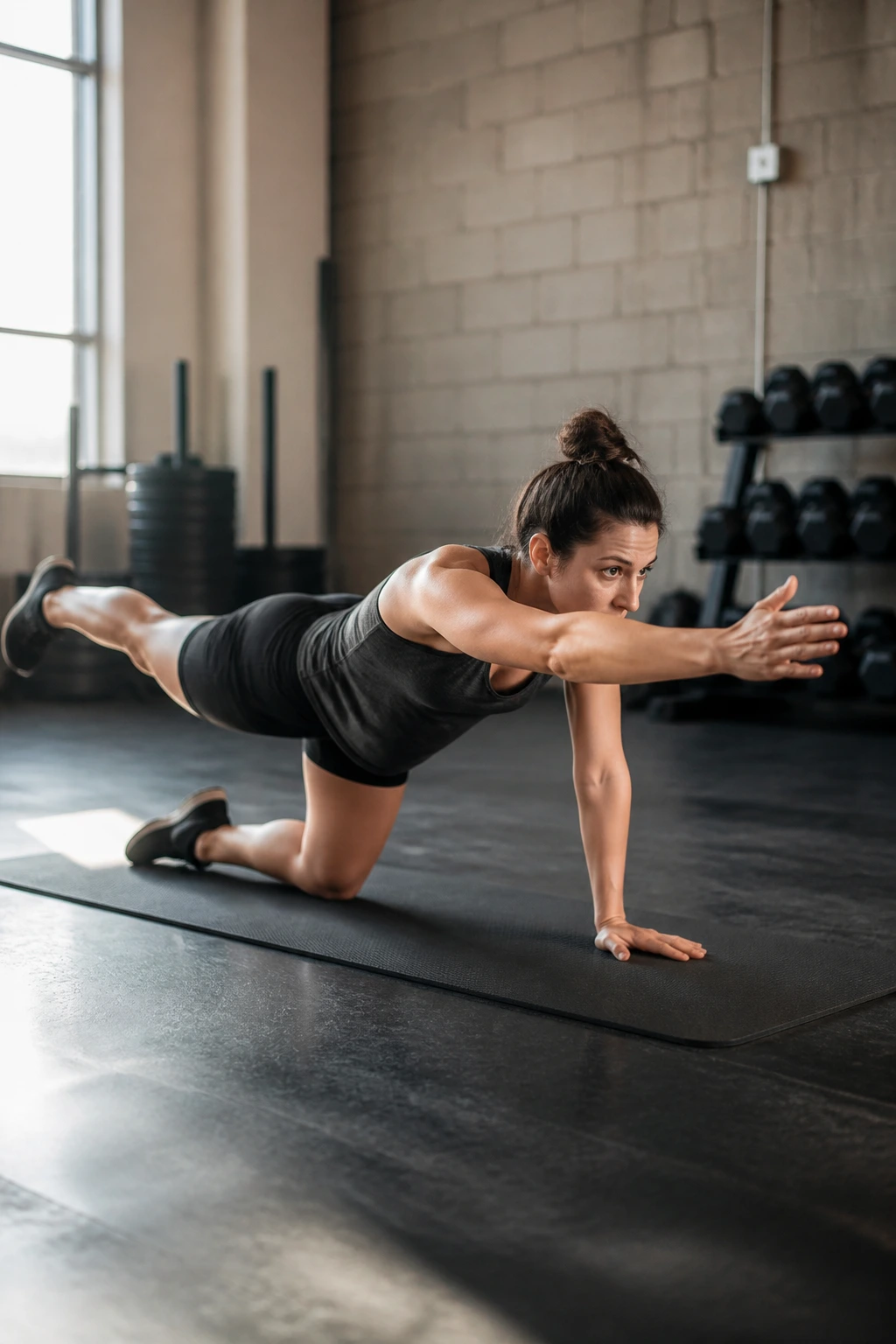
This is an anti-rotation core exercise, but it also trains glute activation. While you aren’t lifting heavy, you are learning how to fire your glutes while your spine remains stable—a skill that carries over to every other movement on this list.
Why It Matters
A strong core and glute complex takes the pressure off the knees. If your torso is unstable, your knees end up doing the work to keep you upright. This exercise fixes that instability from the floor up.
The Execution
- Start on all fours.
- Extend your opposite arm and opposite leg simultaneously.
- Focus on reaching long rather than high.
- Keep your back flat as a board throughout the entire motion.
17. Fire Hydrants
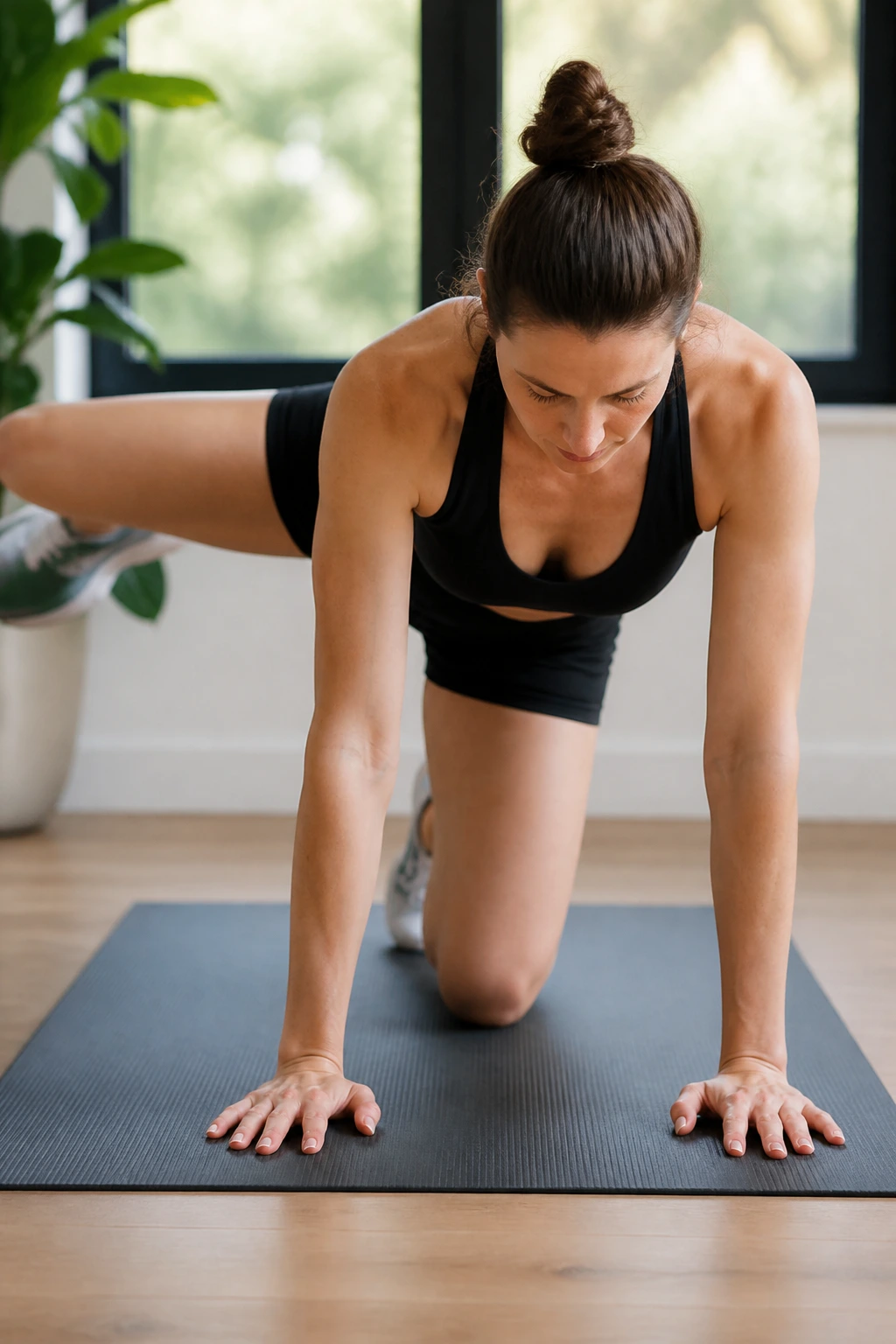
Another hip isolation move that directly benefits knee stability. By working the hip abductors and rotators, you are teaching your legs to stay aligned during every other activity.
The Movement
- On all fours, keep your knee bent at 90 degrees.
- Lift your knee out to the side like a dog at a fire hydrant.
- Keep your pelvis square to the floor.
- It’s not about how high you lift; it’s about the muscle tension in your hip.
18. Stability Ball Wall Squats
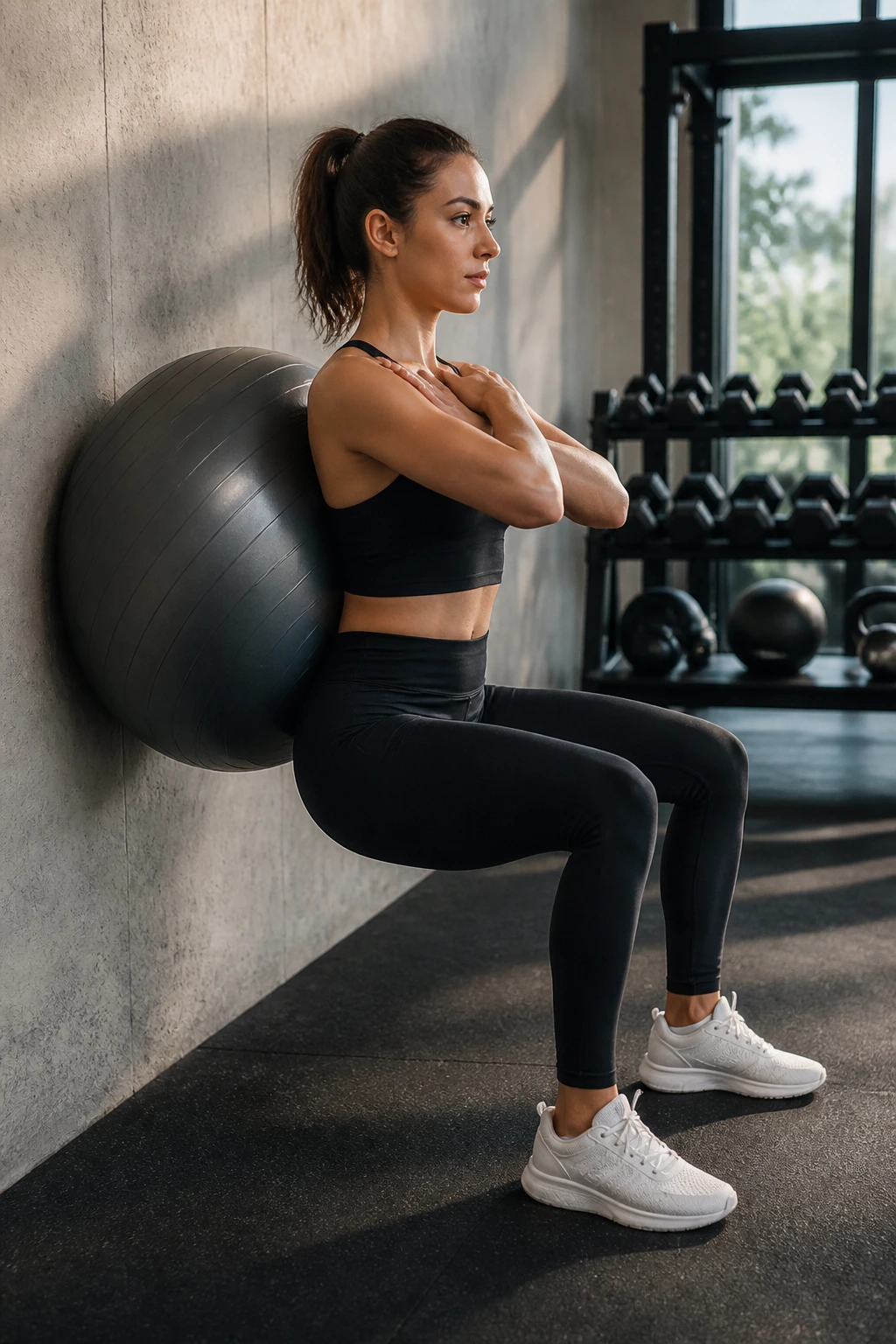
This variation is fantastic because the ball rolls with your back, which prevents you from doing a “bad” squat. It forces your back into the correct position and keeps your shins vertical.
Why It’s Unique
The ball encourages you to lean into the movement, which keeps your weight back. You cannot lean too far forward because you’d lose the ball. This forces the posterior chain to take the brunt of the load.
How to Use It
- Place the ball between your lower back and the wall.
- Walk your feet out slightly.
- Squat down, letting the ball roll up your back.
- The ball acts as a massage and a stabilizer at the same time.
19. Cable Glute Kickbacks
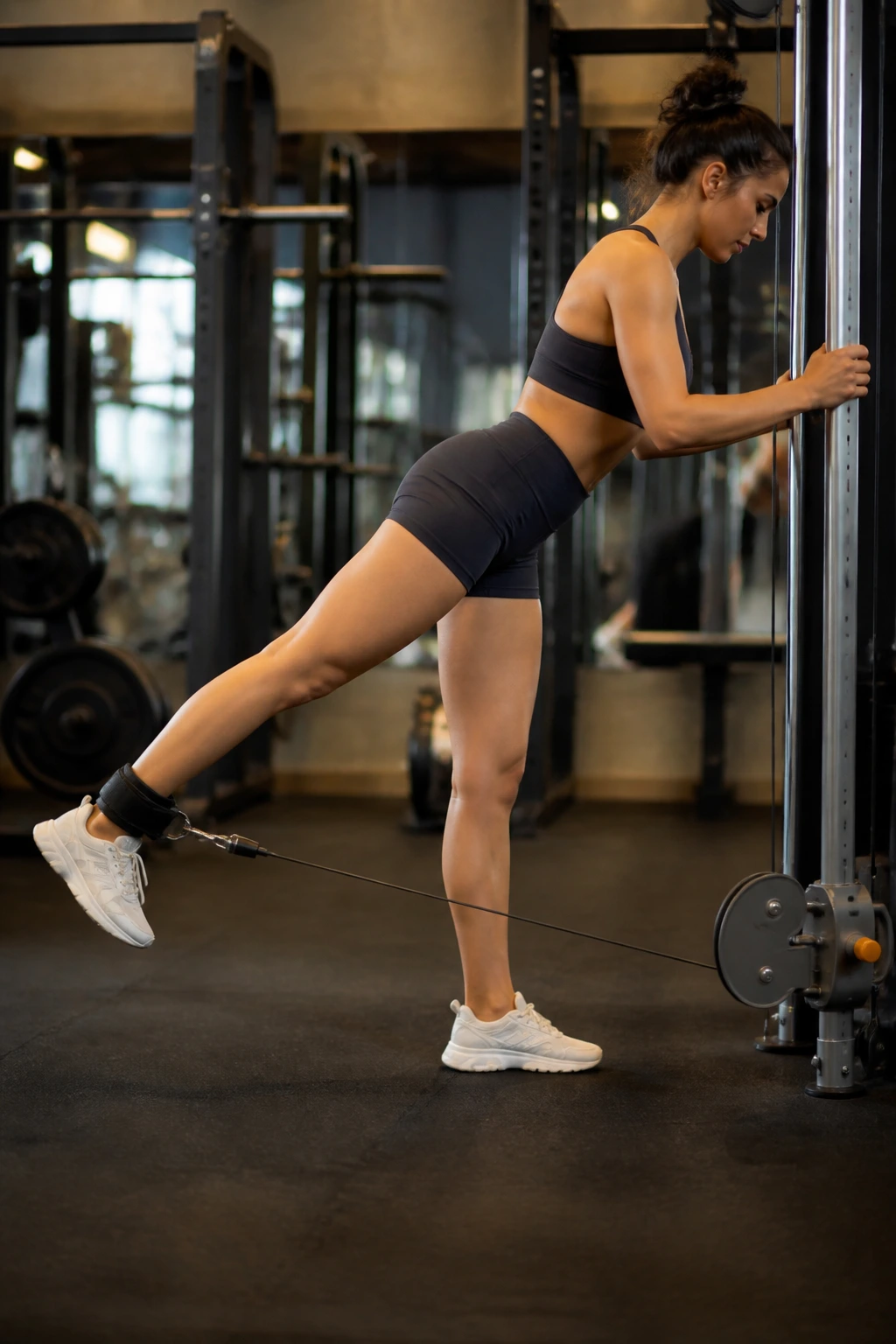
Cables offer constant tension throughout the entire range of motion, which is something dumbbells cannot provide. This is purely for glute isolation, and it requires zero knee flexion.
Focusing on the Glute
- Attach the cuff to your ankle.
- Stand facing the cable machine, holding onto the frame.
- Kick your leg back, squeezing your glute hard.
- Do not arch your lower back; keep your torso stable.
- The knee of the working leg should remain mostly straight, making this completely knee-friendly.
20. Swimming (or Water Aerobics)
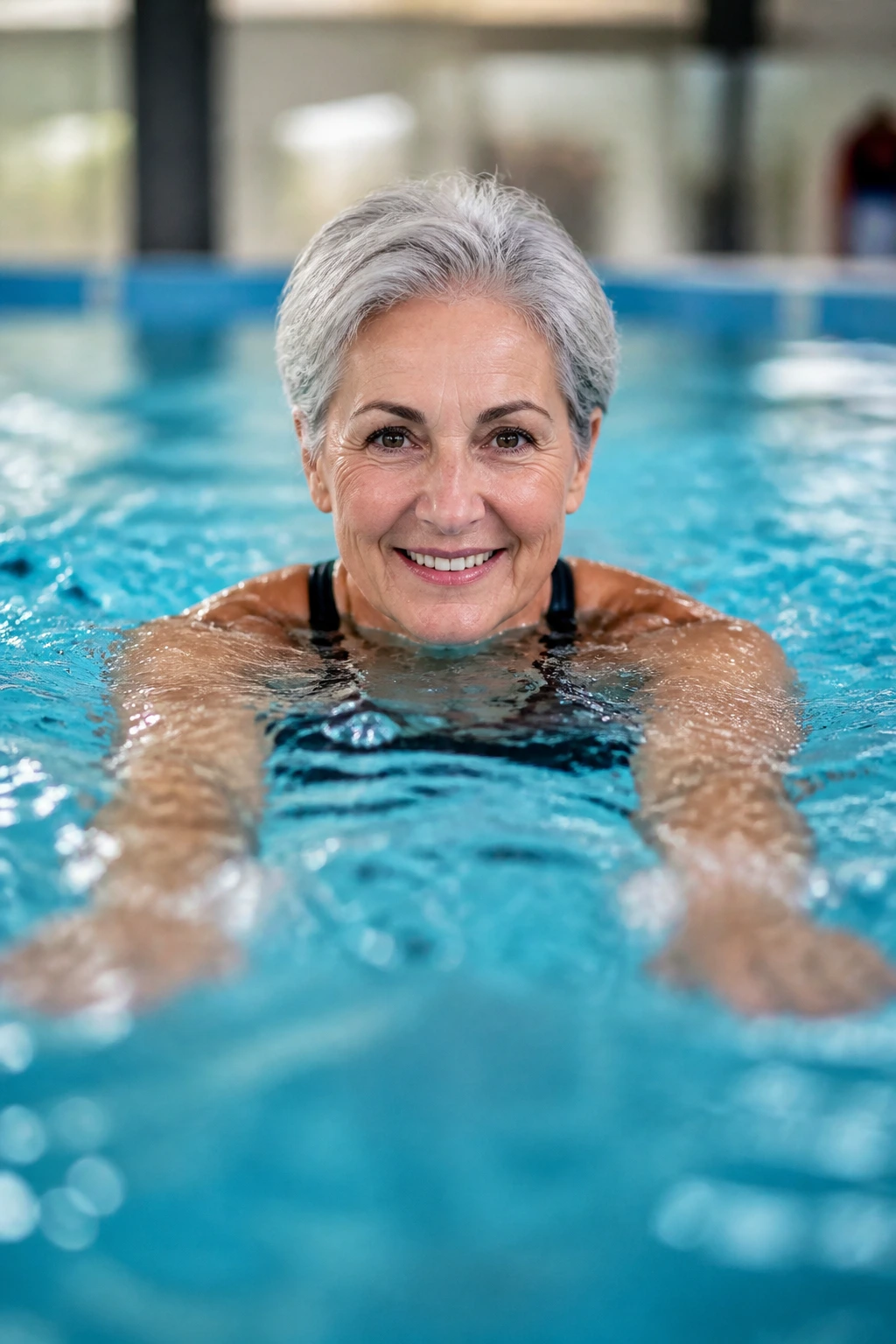
Sometimes the best alternative to a lunge is getting out of the gravity-heavy environment altogether. Swimming is the ultimate knee-saver because the water provides resistance without impact.
Why It Belongs Here
Water provides “isotonic” resistance—it resists you in every direction. You can perform leg kicks, lunging motions, or high knees in the pool without a shred of impact. It is the best way to get a high-intensity workout if your knees are having a particularly bad week.
Making It Effective
- Use a kickboard to isolate your legs.
- Focus on powerful, consistent kicks.
- If you have access to a deep end, “running” in place in the water is an incredible strength and conditioning tool that puts zero stress on your joints.
Final Thoughts
Knee pain does not mean your fitness journey has to end; it just means you need to be smarter about your programming. The lunge is just one exercise in a massive toolbox. By prioritizing movements that focus on the posterior chain, eccentric control, and hip stability, you can build a lower body that is not only strong but resilient.
Remember that progress in the gym is about consistency, not just intensity. If an exercise hurts, stop. There is always an alternative that works the same muscles in a different way. Take the time to master these movements, listen to your body, and you will find that you can continue pushing your limits while keeping your joints safe and healthy for the long haul.
