



Most runners dread the first mile. The muscles feel like stiff cables, the joints pop with a protesting click, and your breath doesn’t quite want to settle into a rhythm. We often call this the “warm-up period,” but in reality, your body is just asking for a gentle invitation to move. You do not need to spend an hour on a yoga mat to see the benefits. Five to ten minutes of targeted movement can completely change the tone of your run, turning that sluggish, heavy start into a fluid, responsive glide.
The goal here isn’t to hold deep, long stretches that fatigue your muscles before you’ve even started the clock. Instead, think of this as an active mobilization sequence. You are waking up the neuromuscular pathways, lubricating the joints, and reminding your hamstrings and calves that they are about to be put to work. When you move through these shapes with awareness, you aren’t just loosening up; you are building a better foundation for every stride that follows.
1. Cat-Cow Pose
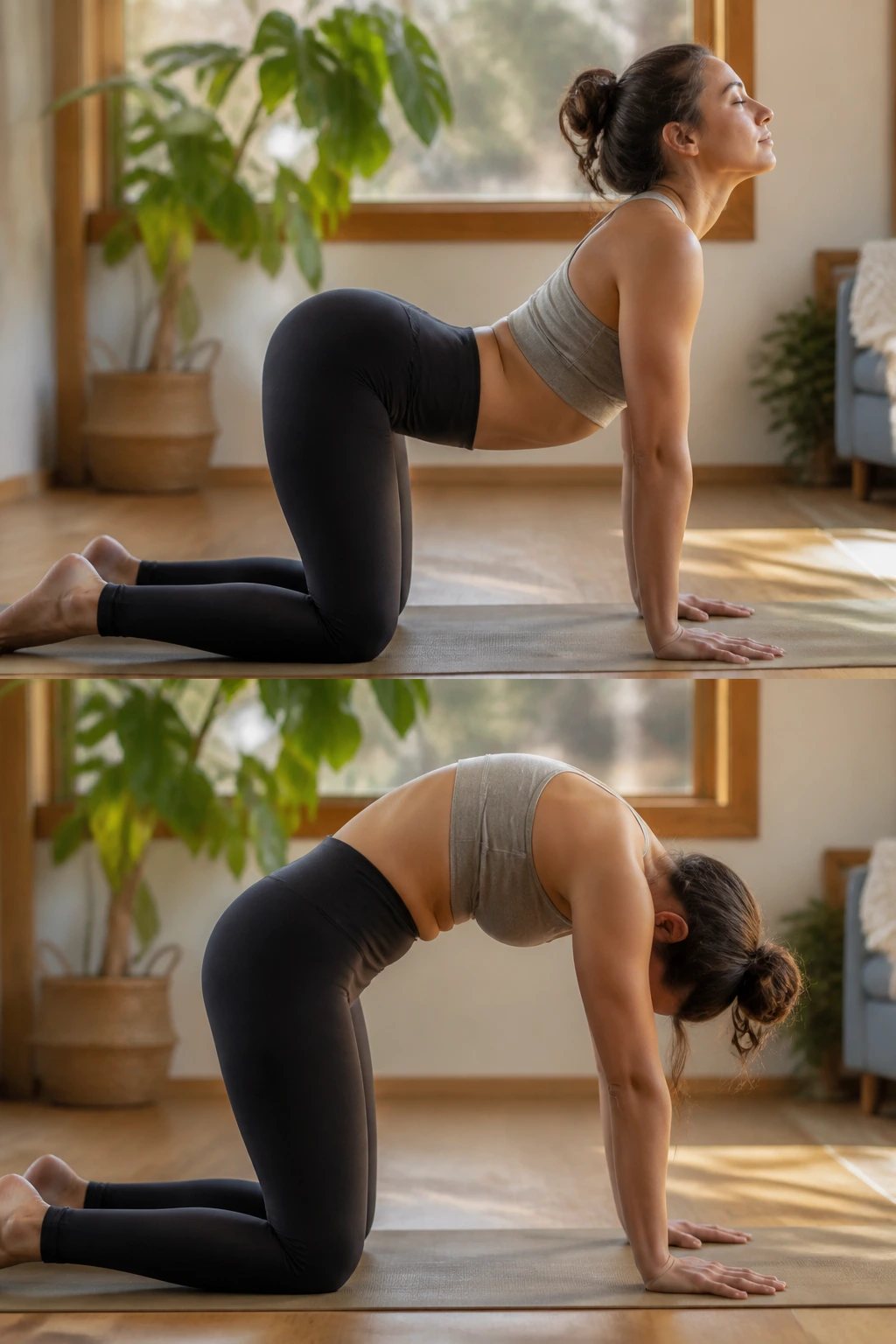
This is the quintessential spine-opener, and for good reason. Before you start pounding the pavement, your spine needs to remember its range of motion. Most of us spend our hours hunched over keyboards or steering wheels, which locks the upper back and rounds the shoulders. Cat-Cow helps to reverse that posture.
Why Your Spine Needs This
When you move into “Cow” (dropping the belly and lifting the gaze), you create space in the front of your torso. When you round into “Cat” (tucking the chin and arching the back), you engage your core and stretch the muscles along the spine. This creates a fluid wave of movement that signals to your nervous system that it is time to wake up.
Pro tip: Do not just move your spine. Coordinate the movement with your breath. Inhale as you drop the belly, exhale as you round the back. This rhythmic breathing acts as a natural metronome for your upcoming run.
2. Downward-Facing Dog
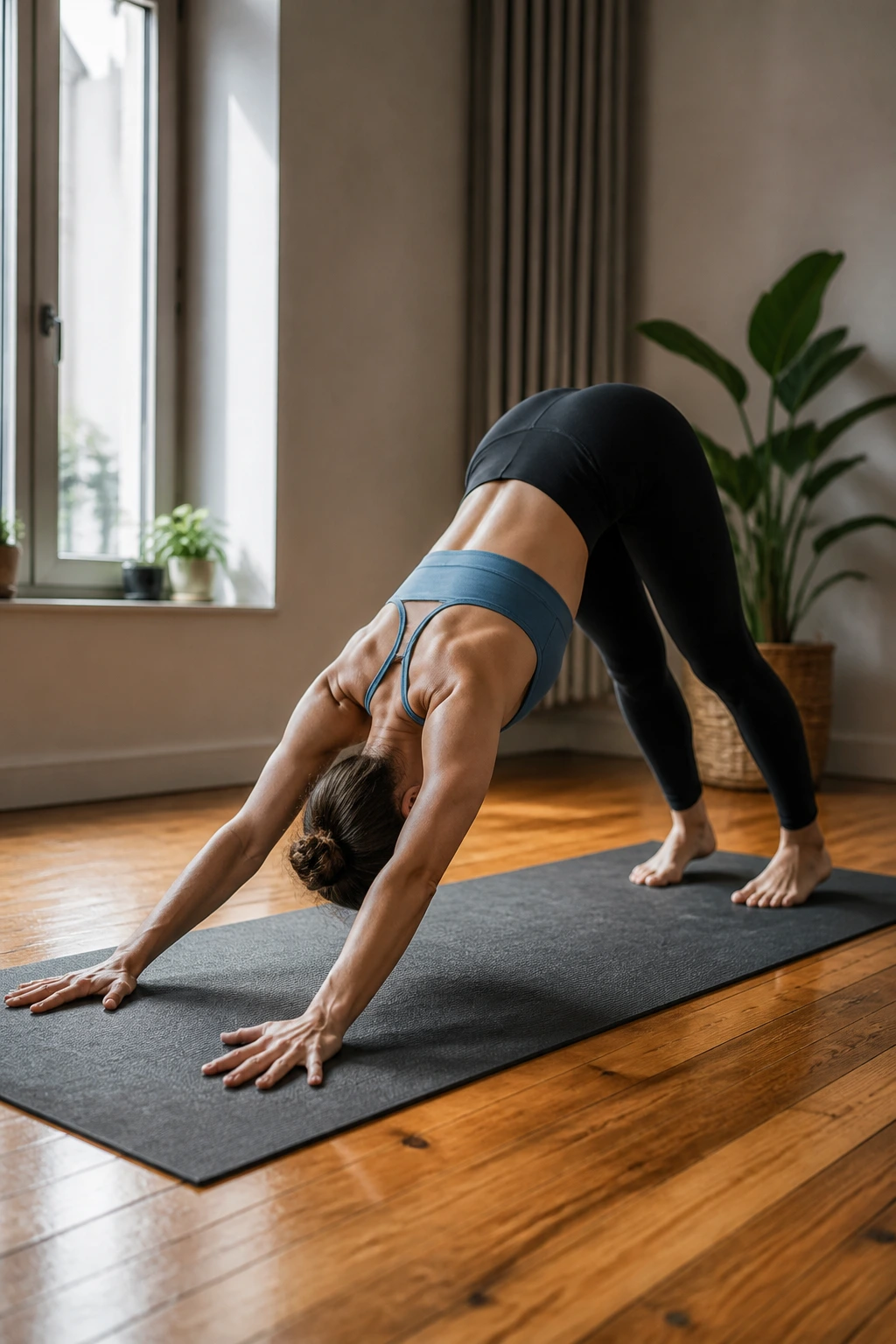
If you only have time for one move, make it this one. This pose is a full-body reset. It targets the hamstrings, the calves, and the entire posterior chain, which are the primary engines of your running gait.
The Pedaling Technique
Many beginners try to force their heels to the floor immediately. Don’t worry about that yet. Instead, bend one knee while pressing the opposite heel down, then switch. This “pedaling” motion is much more effective than holding a static stretch, as it helps the muscles lengthen dynamically.
- Keep your fingers spread wide to protect your wrists.
- Focus on pushing the mat away from you.
- Let your head hang heavy to release the neck.
3. Mountain Pose
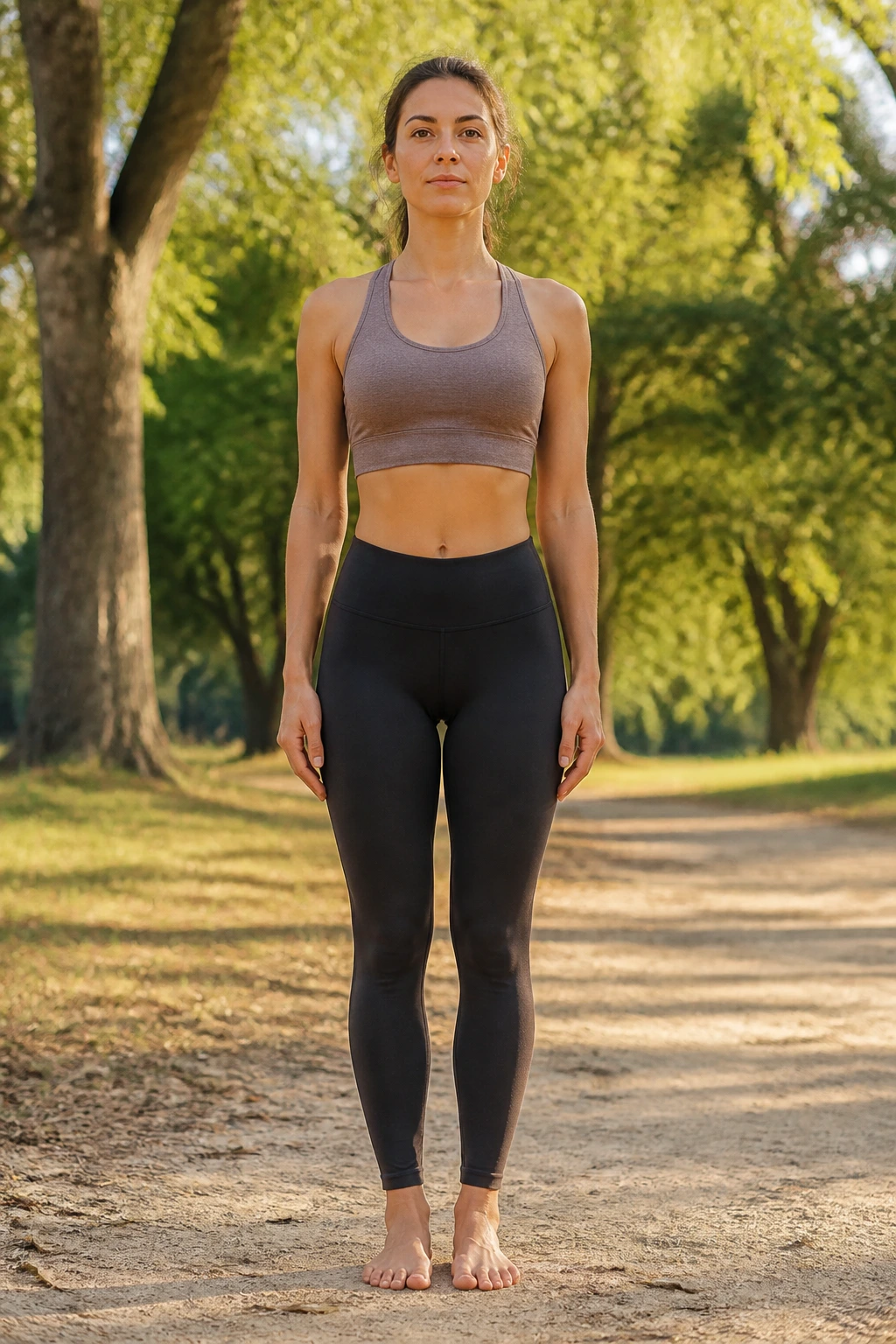
It looks like you are just standing there, but Mountain Pose, or Tadasana, is about active, intentional alignment. For a runner, this is the blueprint for good form. If you cannot find neutral alignment while standing still, you certainly won’t find it while running at a faster pace.
Stand with your feet hip-width apart and ground all four corners of your feet into the floor. Engage your quadriceps by pulling the kneecaps up, tighten your core slightly, and roll your shoulders back and down. You should feel tall, sturdy, and ready to move. This pose forces you to check your posture from the ground up, identifying any tendency to slouch or lean before you start your workout.
4. Standing Forward Fold
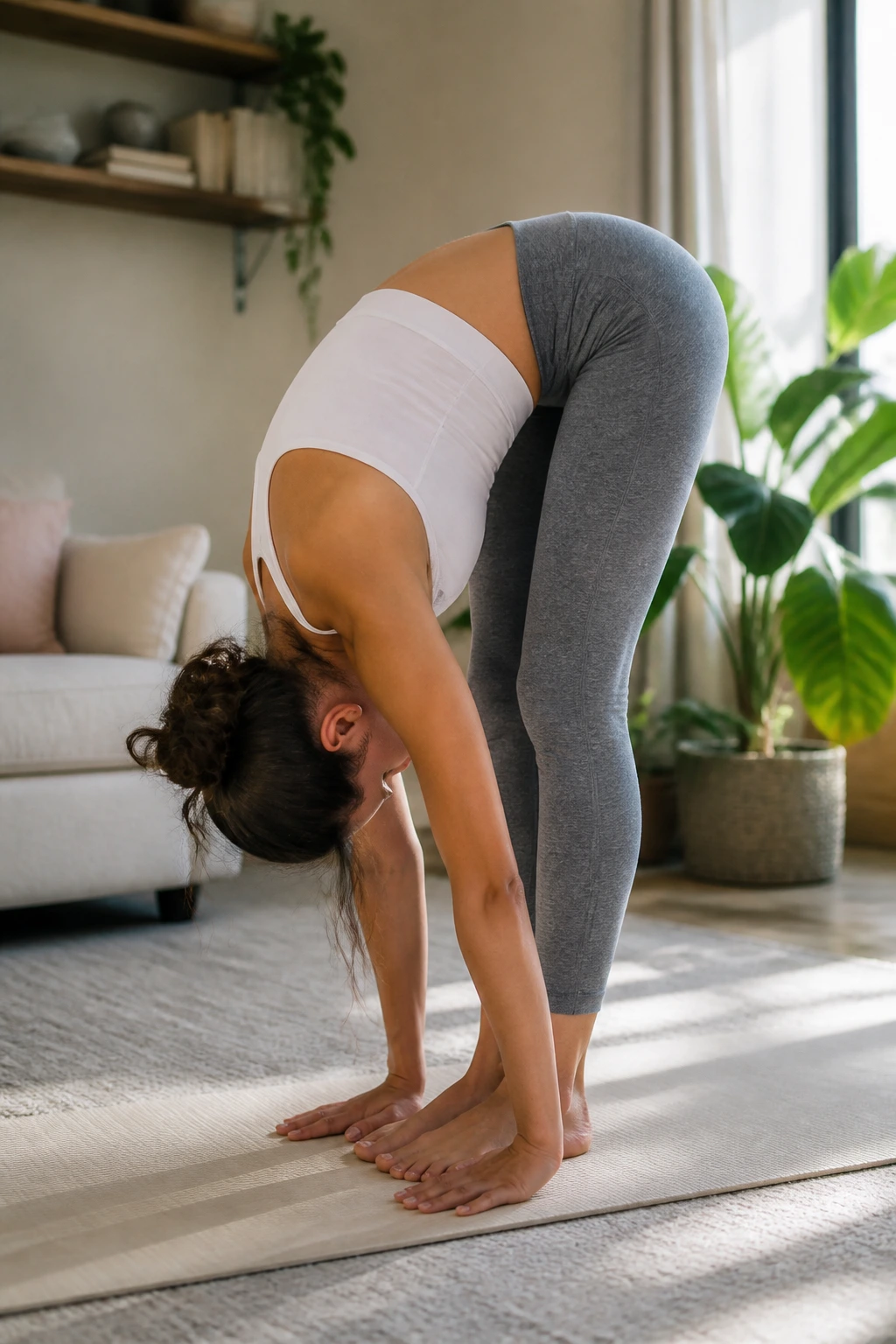
Runners are notorious for having tight hamstrings. This pose offers a gentle, gravity-assisted way to lengthen them without the risk of overstretching. The key here is to keep a slight bend in your knees. You are not trying to touch your toes with straight legs; you are trying to fold your torso over your thighs.
When you fold, let your upper body be heavy. You can grasp opposite elbows and sway side to side—this is known as Ragdoll pose. The slight swaying helps to loosen the lower back muscles, which often tighten up during the first mile of a run. Breathe deeply into the back of your legs and let the tension drain out of your spine.
5. Low Lunge
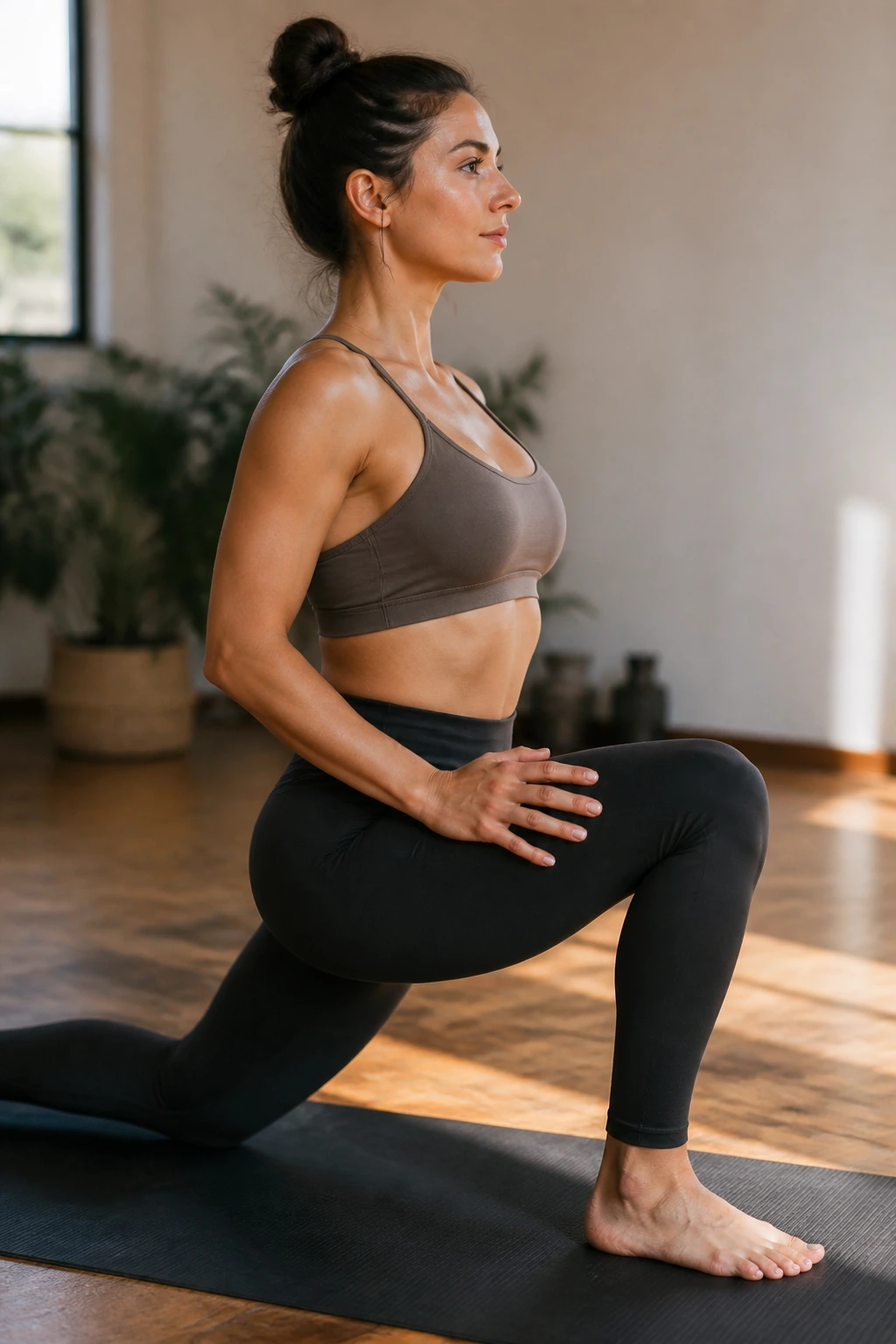
Tight hip flexors are the enemy of speed and efficient stride length. If your hips are locked from sitting, your glutes cannot fire properly, which forces your lower back to compensate. The Low Lunge is the antidote.
Step one foot forward and drop the back knee to the ground. Keep your front knee stacked directly over your ankle. Sink your hips forward and down, keeping your torso upright. You should feel a deep, delicious stretch in the front of the back hip. If you want to increase the intensity, gently squeeze the glute of the back leg—this engages the reciprocal muscle and encourages the hip flexor to relax.
6. Warrior I
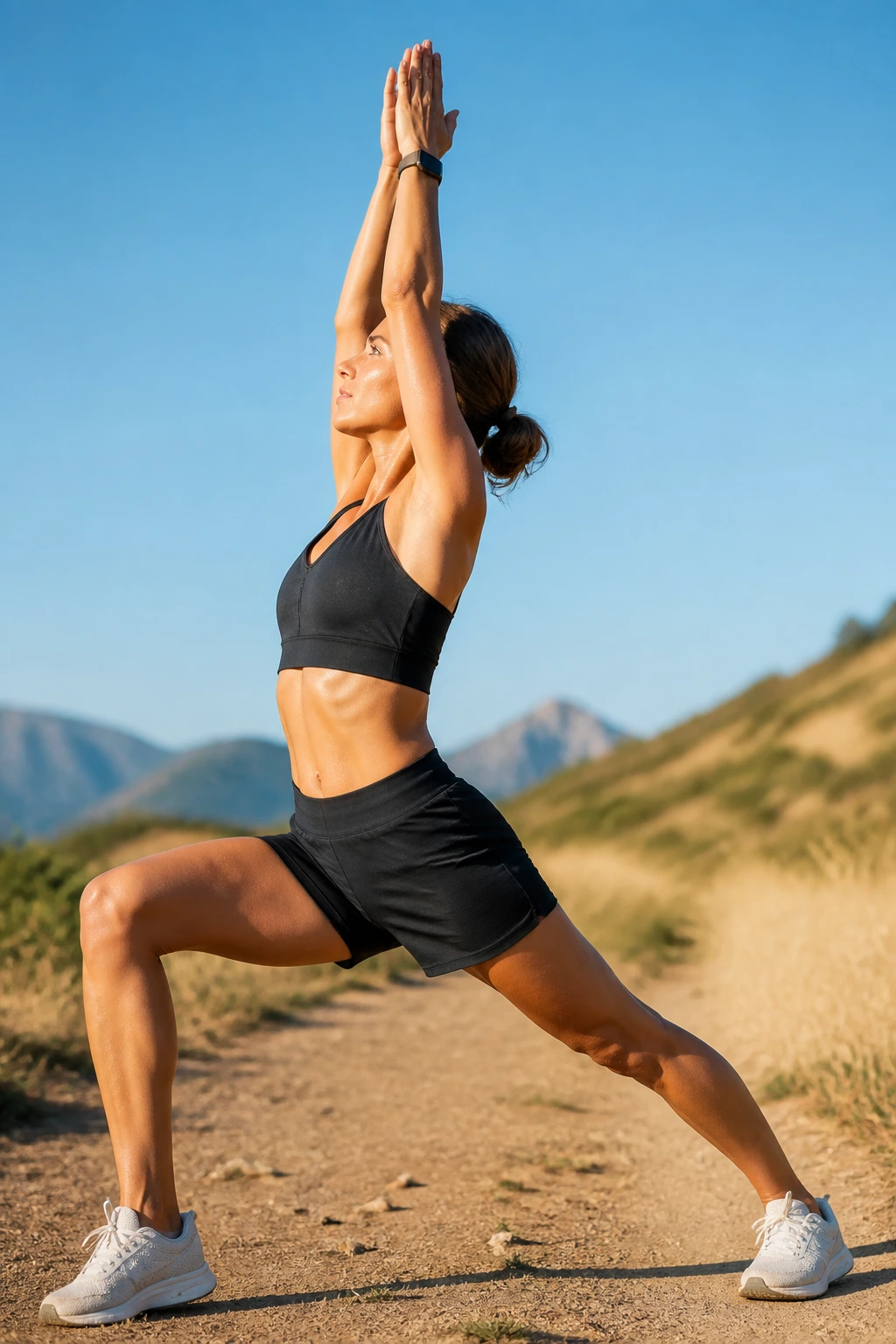
This is a strength-building pose that also serves as a fantastic stretch for the calves and the front of the hips. It teaches you how to keep your torso upright and your hips square, which is exactly how you want to be positioned when you are running uphill.
Step one foot back into a lunge, but keep the back heel grounded at about a 45-degree angle. Bend your front knee deeply and reach your arms toward the sky. The stretch in your back calf will be significant, and the engagement in your front quad will prepare you for the propulsion phase of your stride.
7. Tree Pose
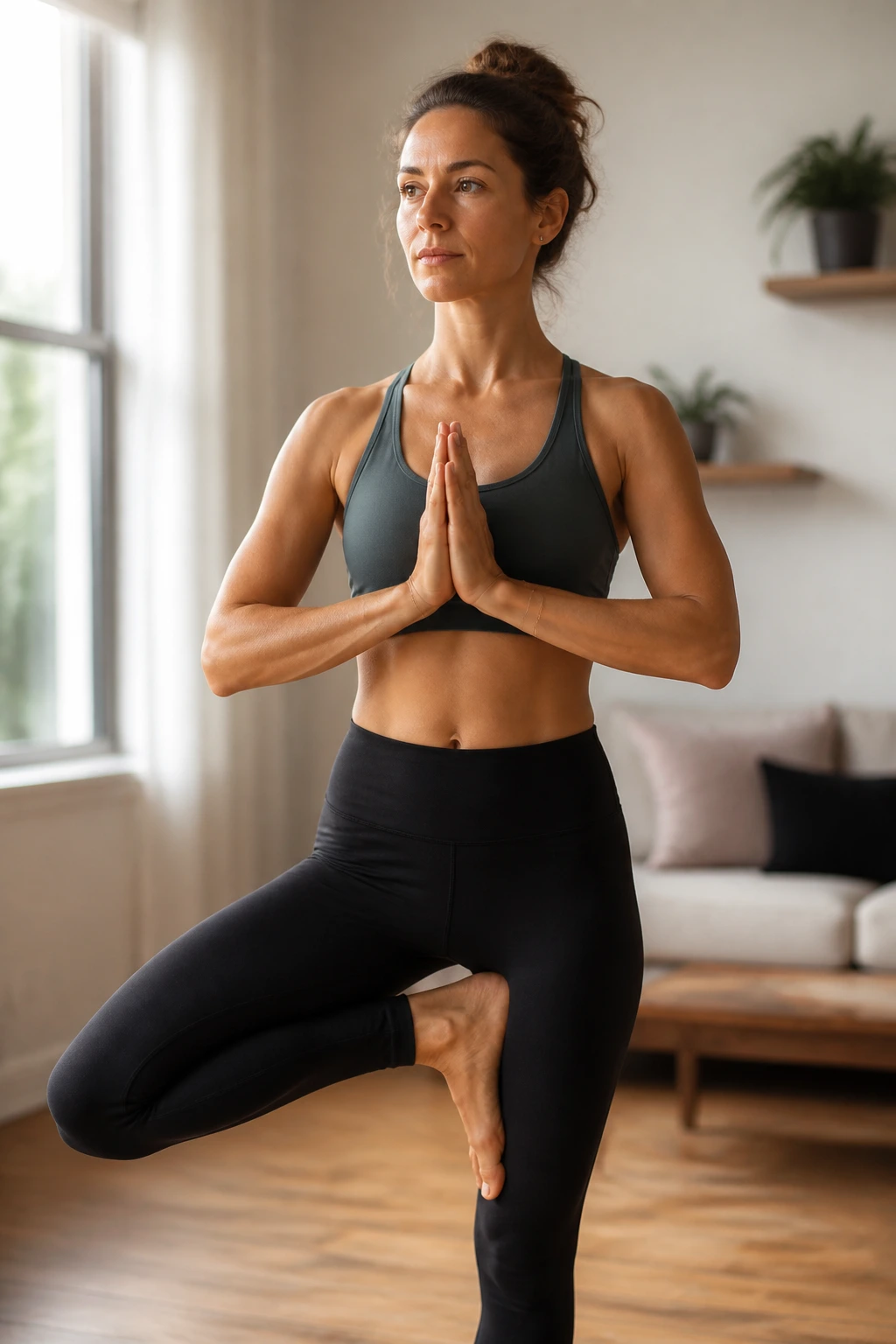
Balance is rarely discussed as a component of warm-ups, but it is critical. Every running stride is essentially a series of one-legged hops. If you cannot stabilize your body on one leg, you are losing energy to side-to-side wobble.
Bring one foot to the inside of your opposite calf or thigh—never directly on the knee joint. Stand tall and find a focal point in front of you. This forces your standing ankle, calf, and hip stabilizers to wake up and hold you steady. If you feel shaky, that is good; it means your stabilizer muscles are firing.
8. Wide-Legged Forward Fold
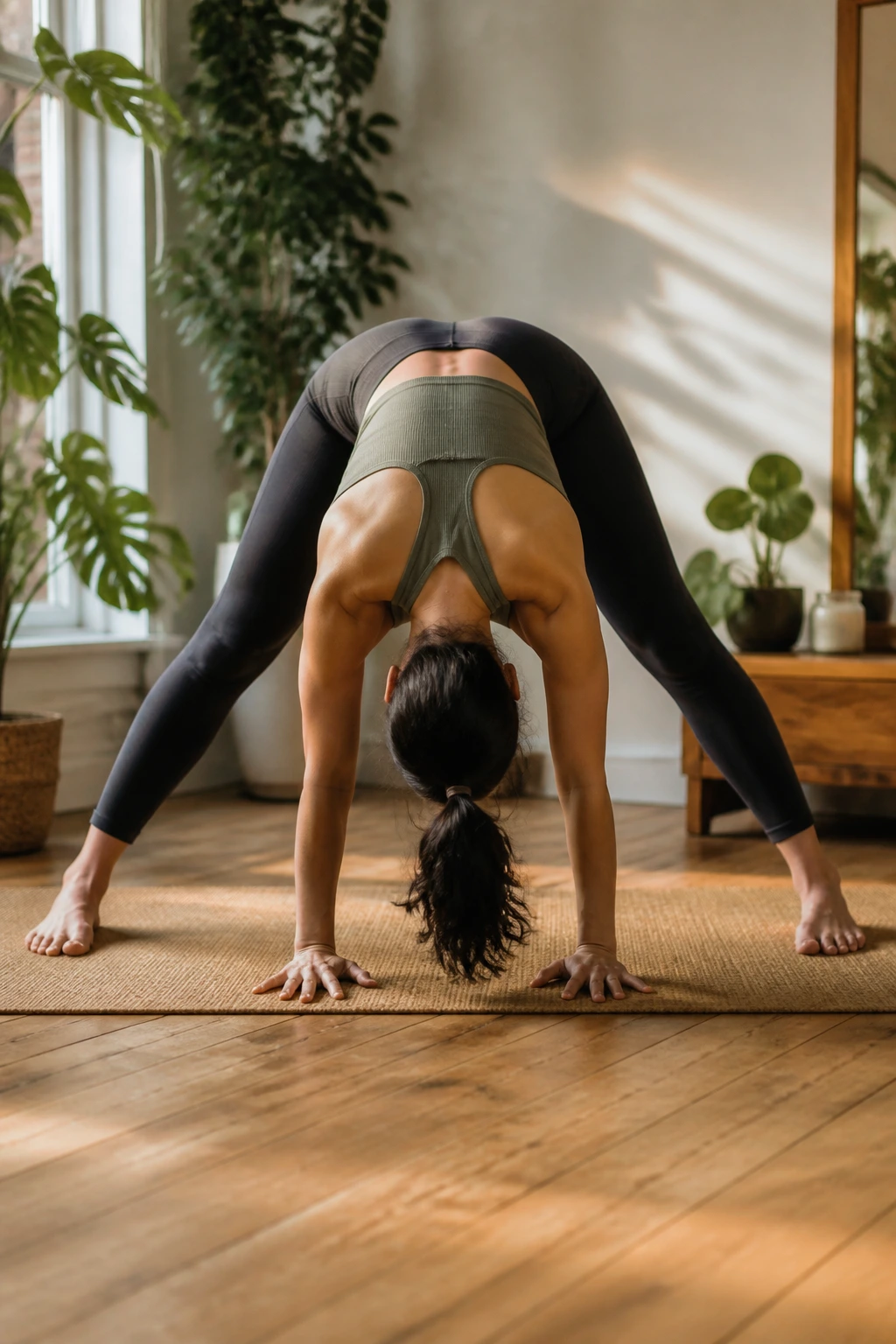
Your adductors (inner thighs) do a lot of work to stabilize your pelvis. When they get tight, your knees and hips can feel the strain. This wide-legged stance provides a deep stretch to the inner legs and groin.
Stand with your feet wider than your shoulders, toes pointed slightly inward. Fold forward from the hips, bringing your hands toward the floor or a yoga block. Let the weight of your head draw your spine long. You will feel this stretch along the inner seams of your legs. To make it more dynamic, shift your weight gently from the right foot to the left foot, exploring the different tension points in your hips.
9. Standing Quad Stretch
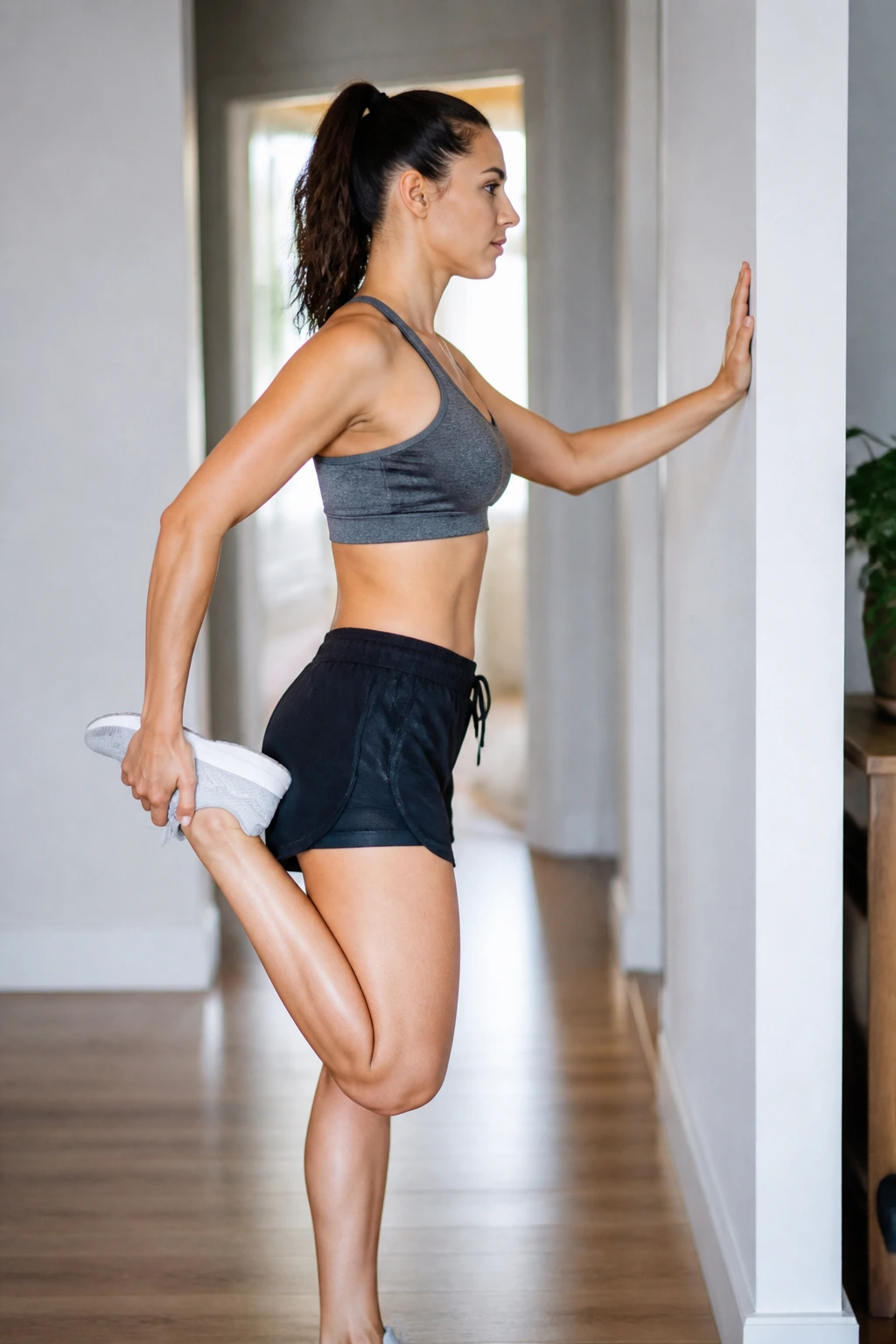
You have probably seen this before, but you might be doing it wrong. The common mistake is to pull the heel toward the glute while arching the back. This does nothing for the quad and can irritate your lumbar spine.
Stand near a wall for balance. Grab your ankle and pull the heel toward your glute, but here is the trick: tuck your tailbone and squeeze your glute muscle. By pushing your hips forward while holding the foot, you isolate the quadriceps perfectly. You will feel a much stronger stretch without putting unnecessary pressure on your lower back.
10. Cobra Pose
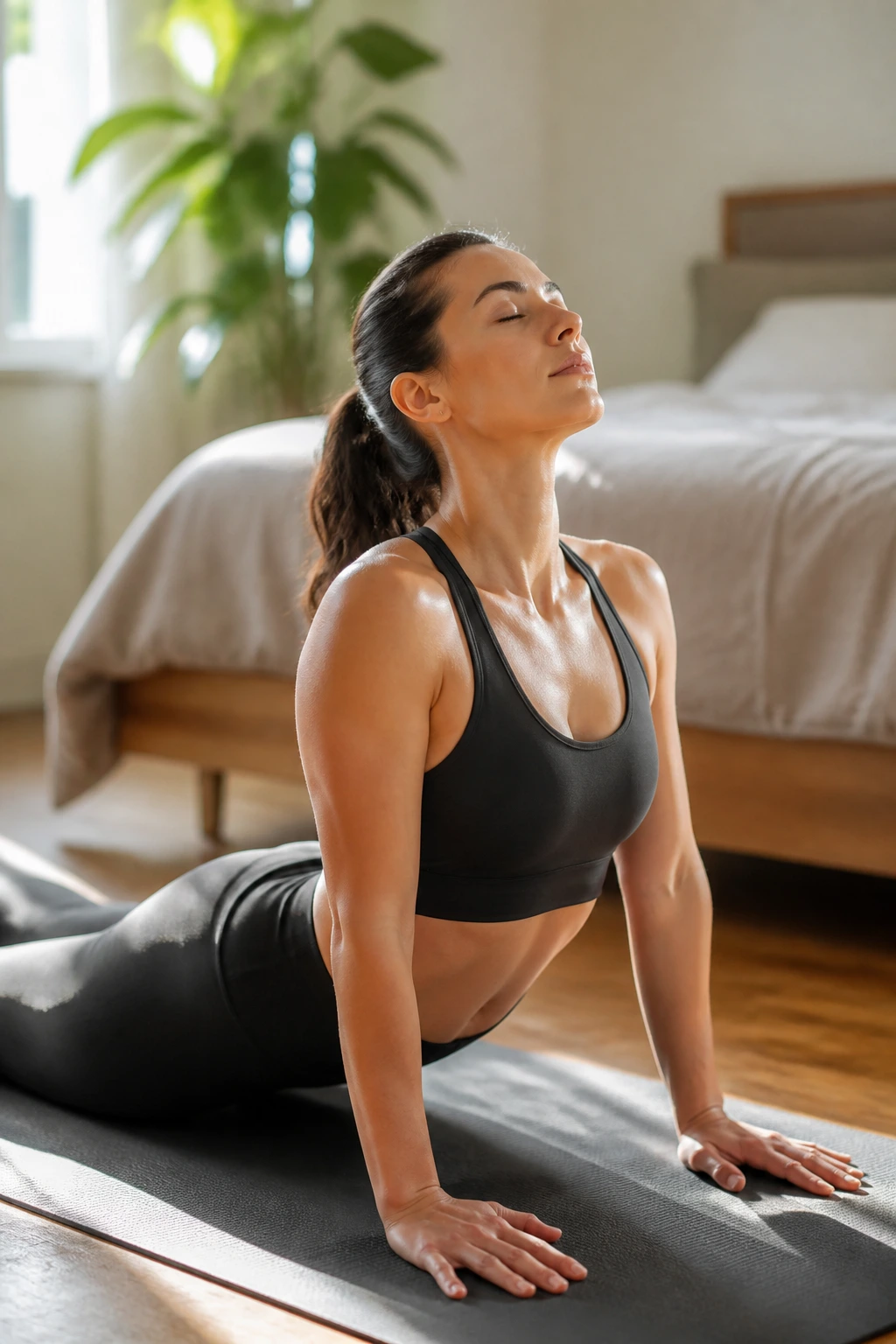
After a run, your abs are often exhausted, but before a run, they are often dormant. Cobra pose gently stretches the abdominal wall while strengthening the muscles that support your spine.
Lie on your stomach with your hands under your shoulders. Press into your hands to lift your chest off the floor, keeping your elbows slightly bent and tucked close to your ribs. You aren’t looking to crank your back into a deep arch; you just want to feel a gentle lengthening of the belly. This wake-up call for the core helps you maintain a strong, upright posture once you start hitting the pavement.
11. Butterfly Pose
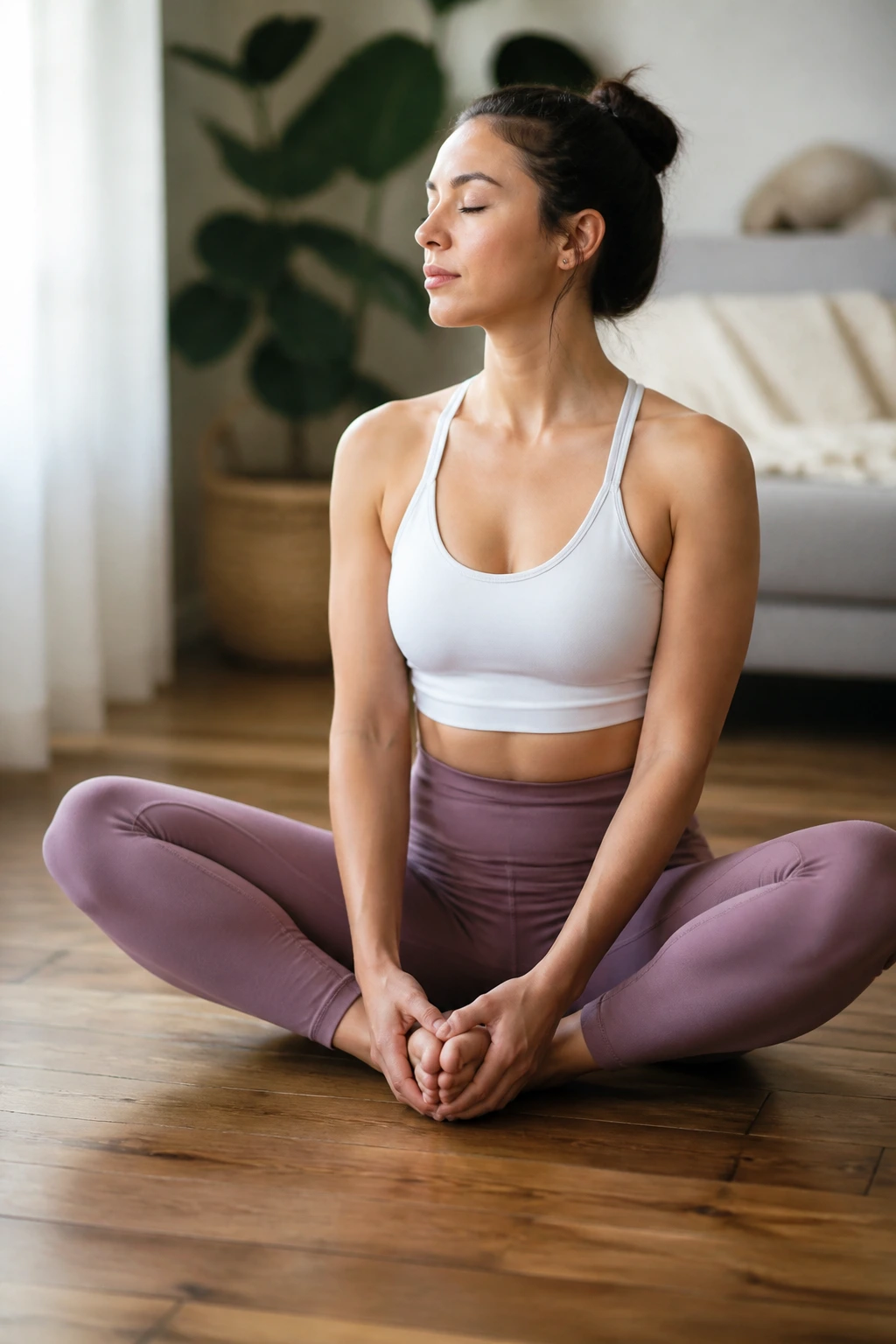
This is one of the most effective ways to open the hips in a seated position. If you have been sitting at a desk all day, your hips are likely feeling very restricted. This pose encourages the knees to fall open and the hips to soften.
Sit on the floor, bring the soles of your feet together, and let your knees drop outward. Hold onto your ankles or feet and sit up tall. If you want a deeper stretch, gently hinge forward from the hips with a flat back. This opens the pelvic floor and releases the tension that often causes runners to feel “tight” in the groin area during the first few miles.
12. Pigeon Pose (Modified)
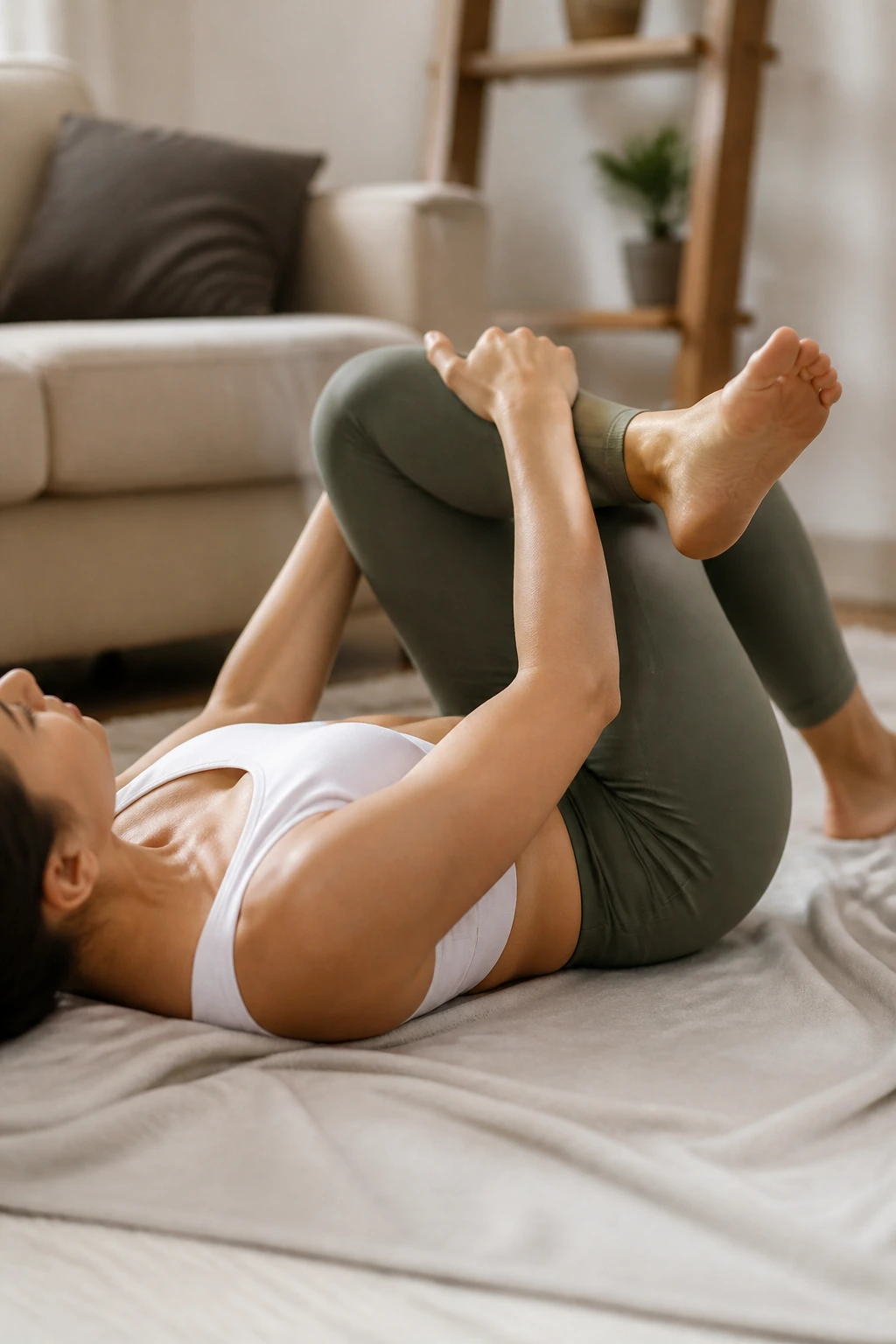
Full Pigeon can be intense on the knees, so we use a modified approach. Lie on your back, cross your right ankle over your left knee, and pull your left thigh toward your chest. This is often called Figure-Four stretch.
This hits the gluteus medius and piriformis, the small, pesky muscles that often cause sciatica-like pain in runners. By doing this on your back, you remove the balance challenge and can focus entirely on the sensation in your outer hip. It is a fantastic way to ensure your glutes are ready to handle the impact of the run.
13. Runner’s Lunge
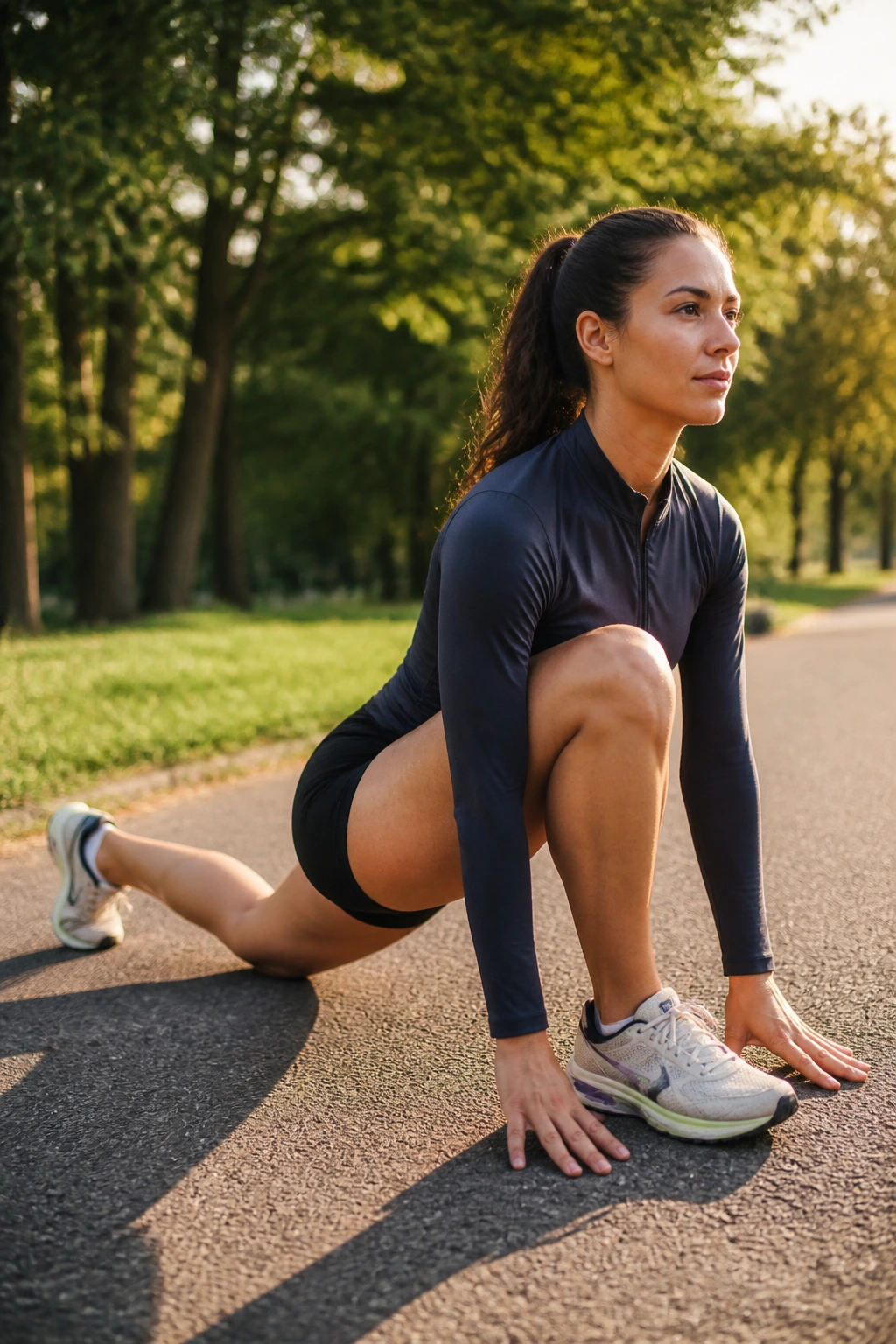
The name says it all. This is essentially a deeper, more active version of the Low Lunge. Start in a lunge position, but instead of keeping your back knee down, lift it up so your leg is straight and active.
Place your hands on the inside of your front foot. This shifts the focus from the hip flexor to the deep hip opener and the hamstring of the front leg. Gently rock your hips back and forth, pulsing into the stretch. This movement helps to lubricate the hip joint, which is the ball-and-socket mechanism that powers your entire running stride.
14. Garland Pose (Malasana)
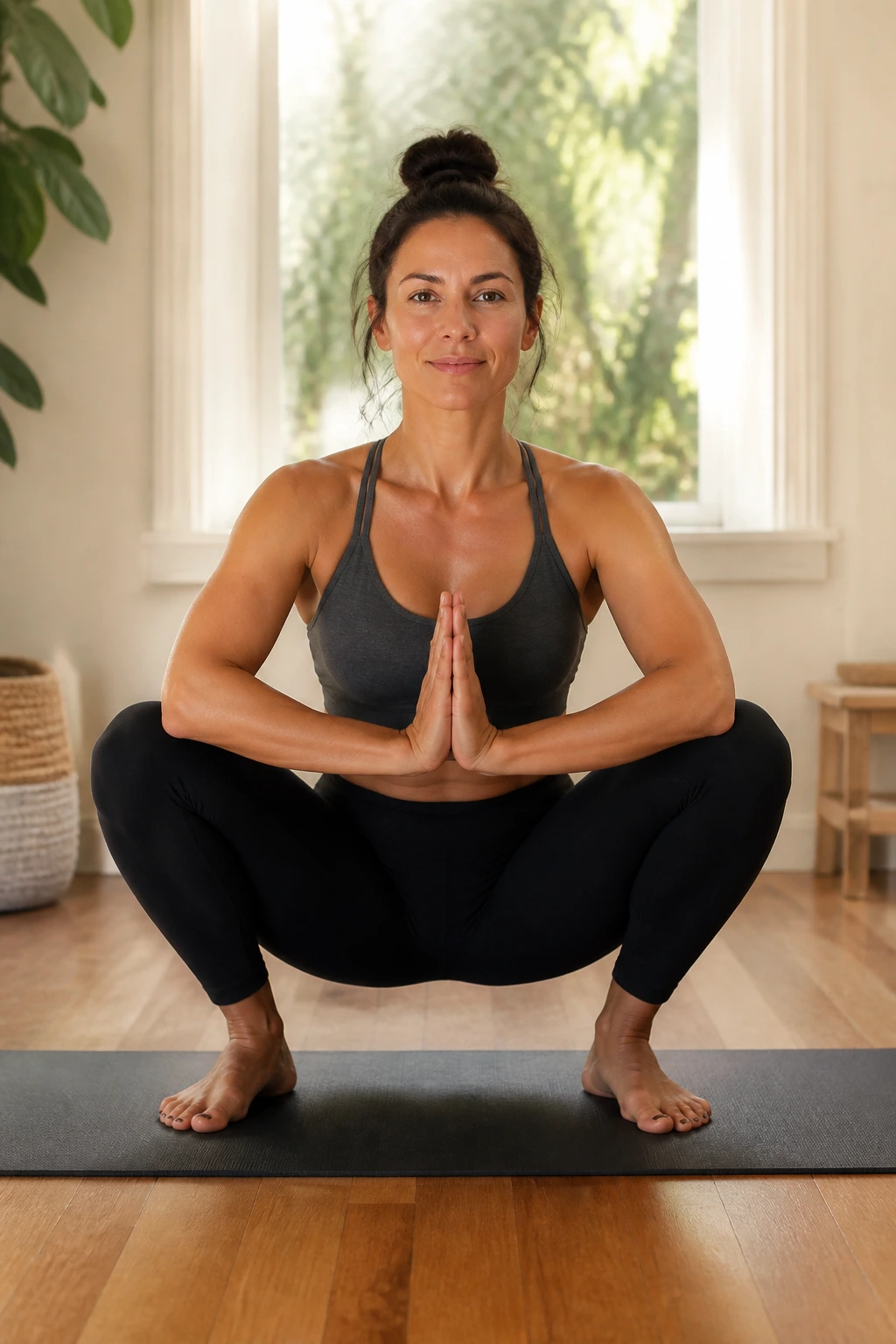
Squatting is a fundamental human movement, and it is the best way to open the ankles and hips simultaneously. If your ankles are tight, your calves will pull, and your stride will be choppy.
Step your feet slightly wider than your hips and lower your hips down into a deep squat. If your heels lift off the ground, that is perfectly fine—place a rolled-up towel under them for support. Use your elbows to gently press your knees open. This pose improves your dorsiflexion, which is the ability to flex your foot toward your shin—a vital motion for preventing calf strains.
15. Child’s Pose
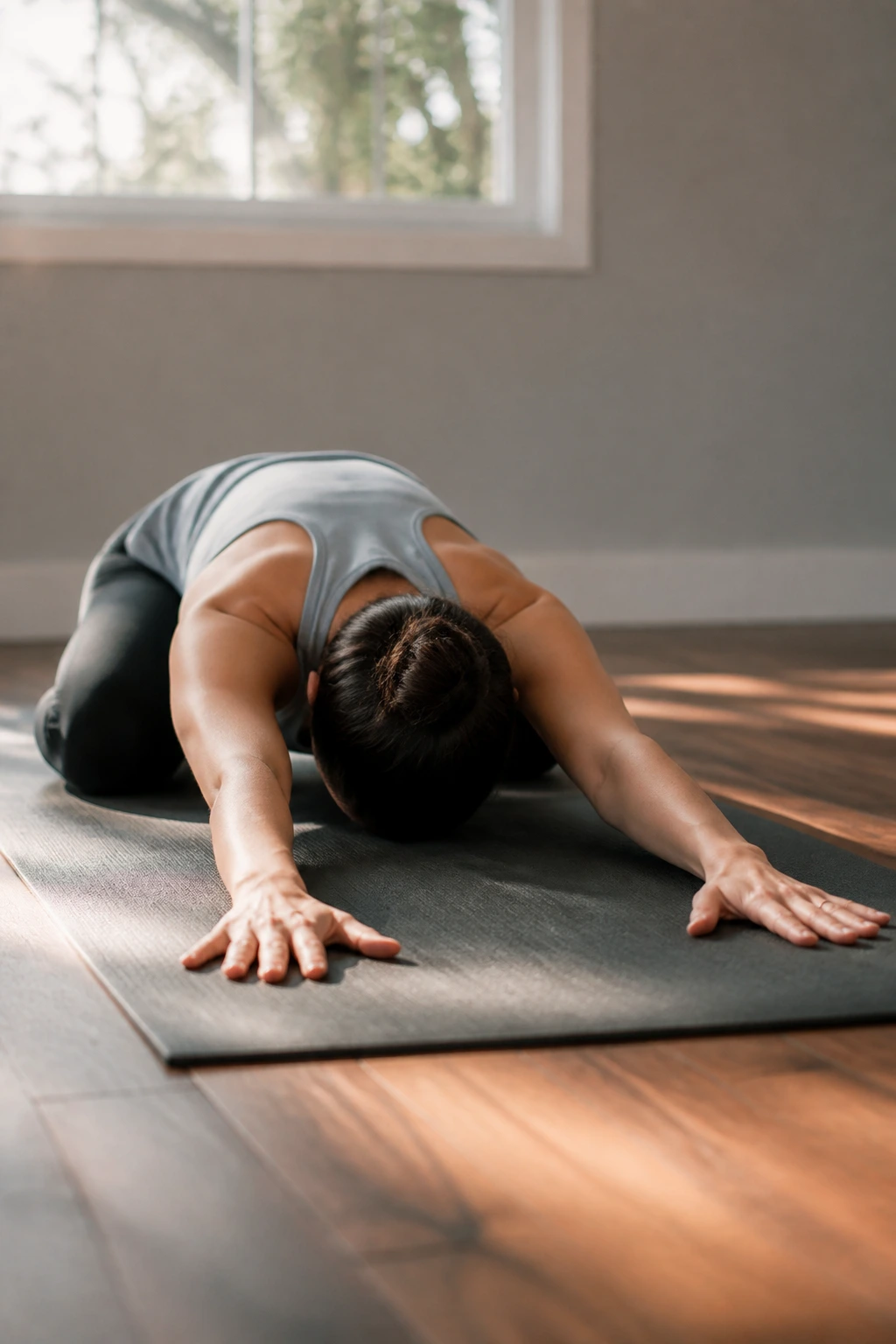
This isn’t just a resting pose; it is a way to decompress the spine and open the hips. Kneel on the floor, bring your big toes together, and separate your knees wide. Walk your hands forward and rest your forehead on the floor.
As you reach your arms forward, you get a beautiful stretch through the lats—the muscles that run down the side of your back. This helps with arm carriage while running. As you sink your hips back, you get a deep hip release. Use this pose to take three deep, intentional breaths before you stand up to start your run.
16. Thread the Needle
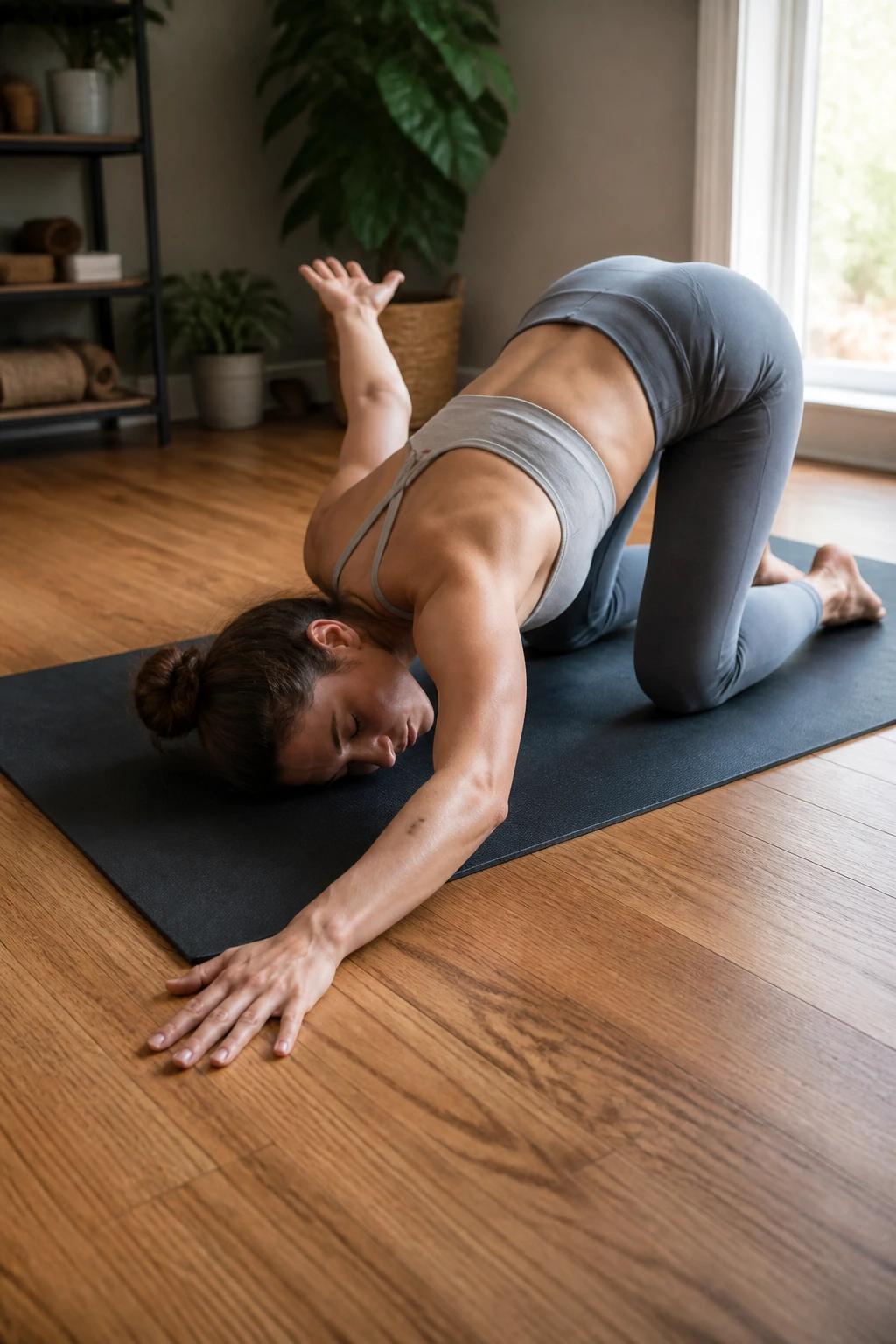
Upper body mobility is a secret weapon for runners. Your arms need to swing rhythmically, and if your thoracic spine (the middle of your back) is stiff, your gait will be inefficient.
Start on your hands and knees in a tabletop position. Slide your right arm underneath your left arm, resting your right shoulder and ear on the floor. Reach your left arm toward the top of the mat or behind your back. This creates a rotation in the thoracic spine that feels incredibly refreshing. Perform it on both sides to ensure your torso is ready to rotate and absorb impact.
17. Gate Pose
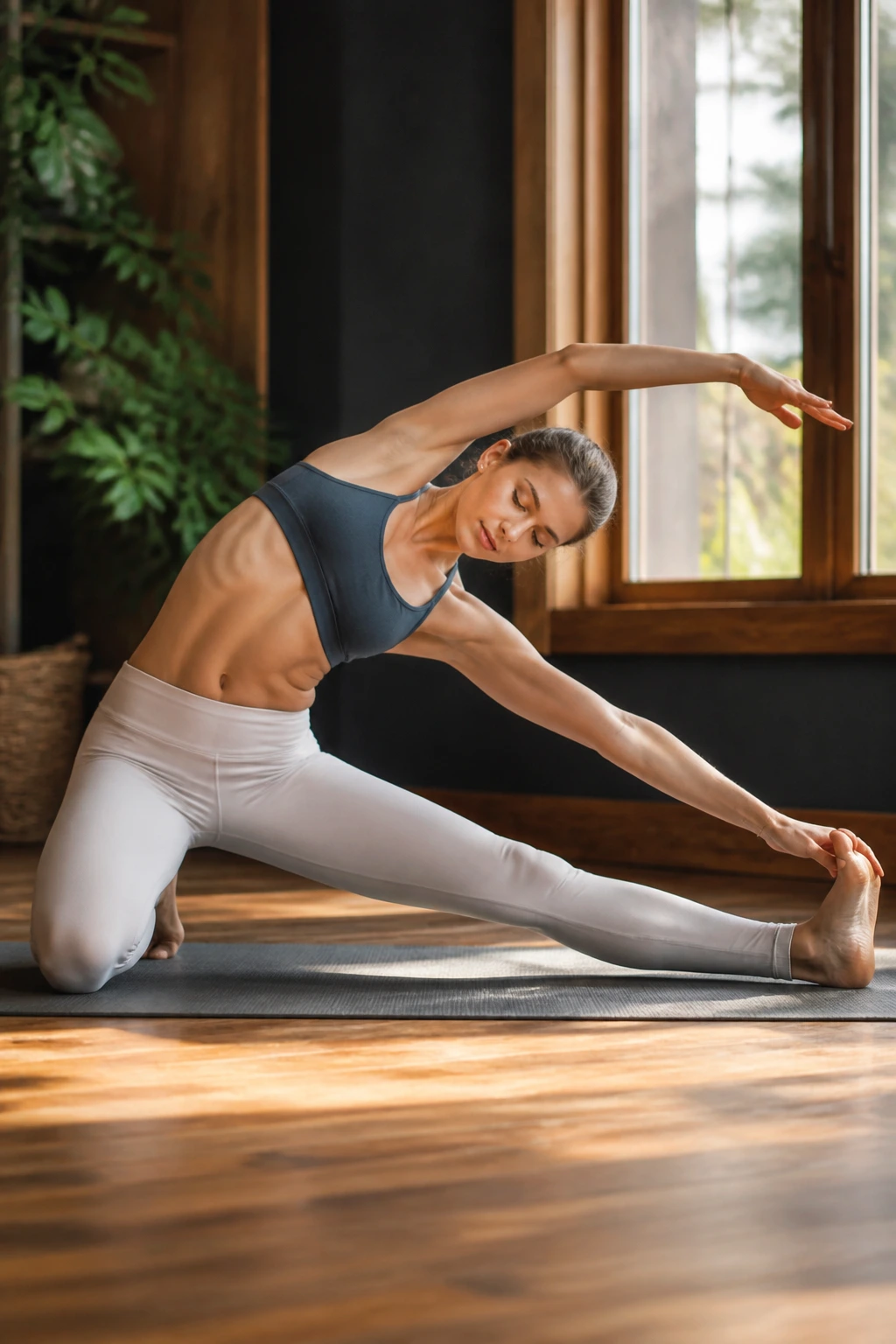
Most runners only think about moving forward and backward. We ignore the lateral (side-to-side) plane. Gate pose stretches the intercostal muscles between your ribs, which can improve your breathing capacity.
Kneel on the floor and extend your right leg out to the side. Keep the foot flat on the ground. Reach your left arm up and over toward your right foot, creating a long line from your left knee to your left fingertips. This side-body stretch opens up the diaphragm, making it easier to take those deep, rhythmic breaths when you start climbing hills.
18. Pyramid Pose
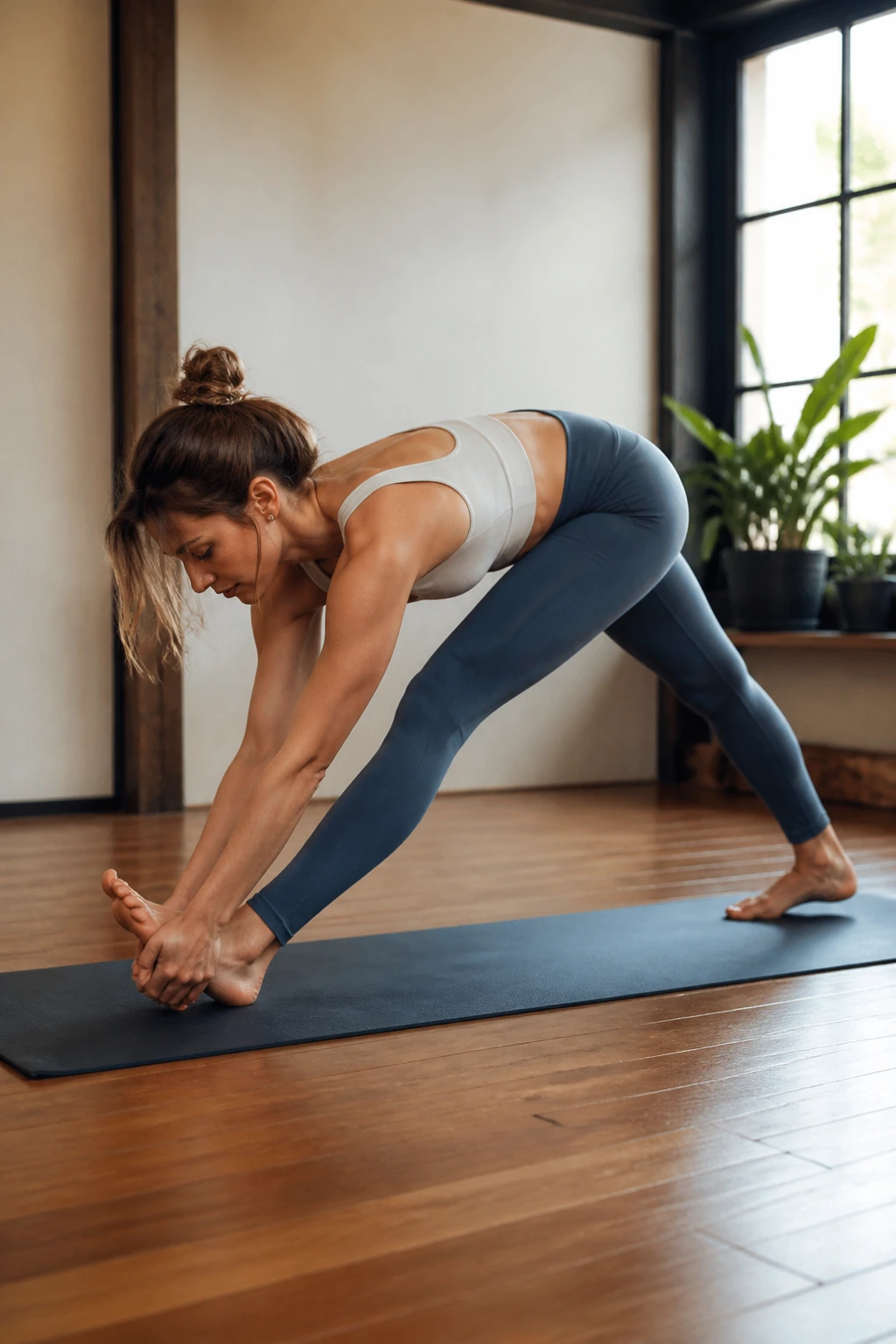
If you need a really focused hamstring stretch, this is your go-to. Unlike the forward fold, this targets one leg at a time and allows you to square your hips, which makes the stretch significantly more effective.
Step one foot forward and the other back, about three feet apart. Keep both feet flat. Fold over your front leg, keeping your spine long. You will feel a strong, direct pull in the hamstring of the front leg. Because your hips are square, you cannot “cheat” the stretch. This is brilliant for runners who have a dominant side or have noticed that one hamstring feels tighter than the other.
19. Crescent Lunge
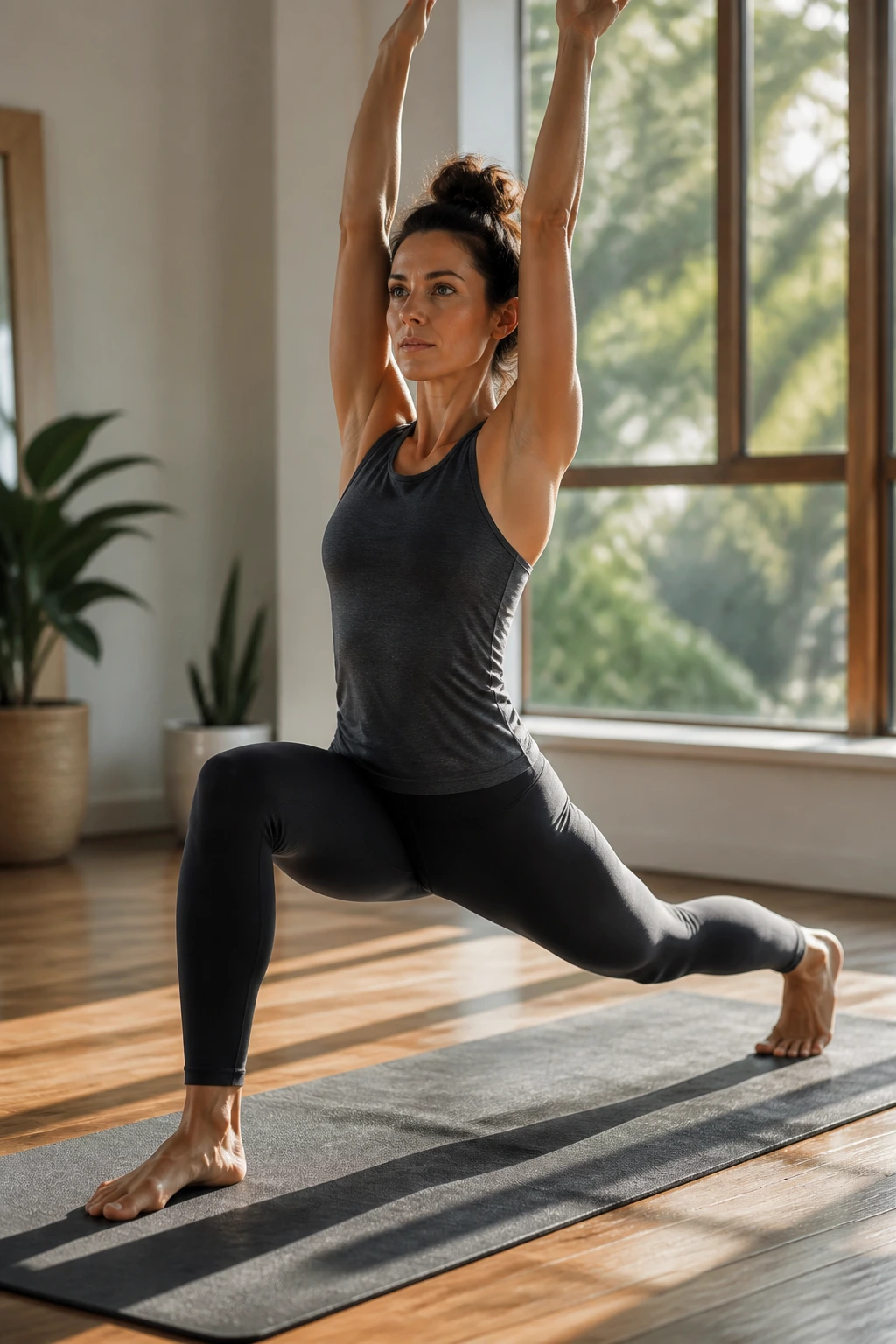
This builds upon the Low Lunge by requiring more balance and core engagement. It is a powerful way to heat up the body and prepare the legs for explosive movement.
Step back into a lunge but keep the back knee lifted. Reach your arms to the sky and sink your hips low. The intensity here is in the stability. Your front leg has to work to stay balanced while your back leg is getting a deep stretch in the hip flexor. Holding this for thirty seconds will get your heart rate up slightly and your muscles primed for the effort of running.
20. Seated Spinal Twist
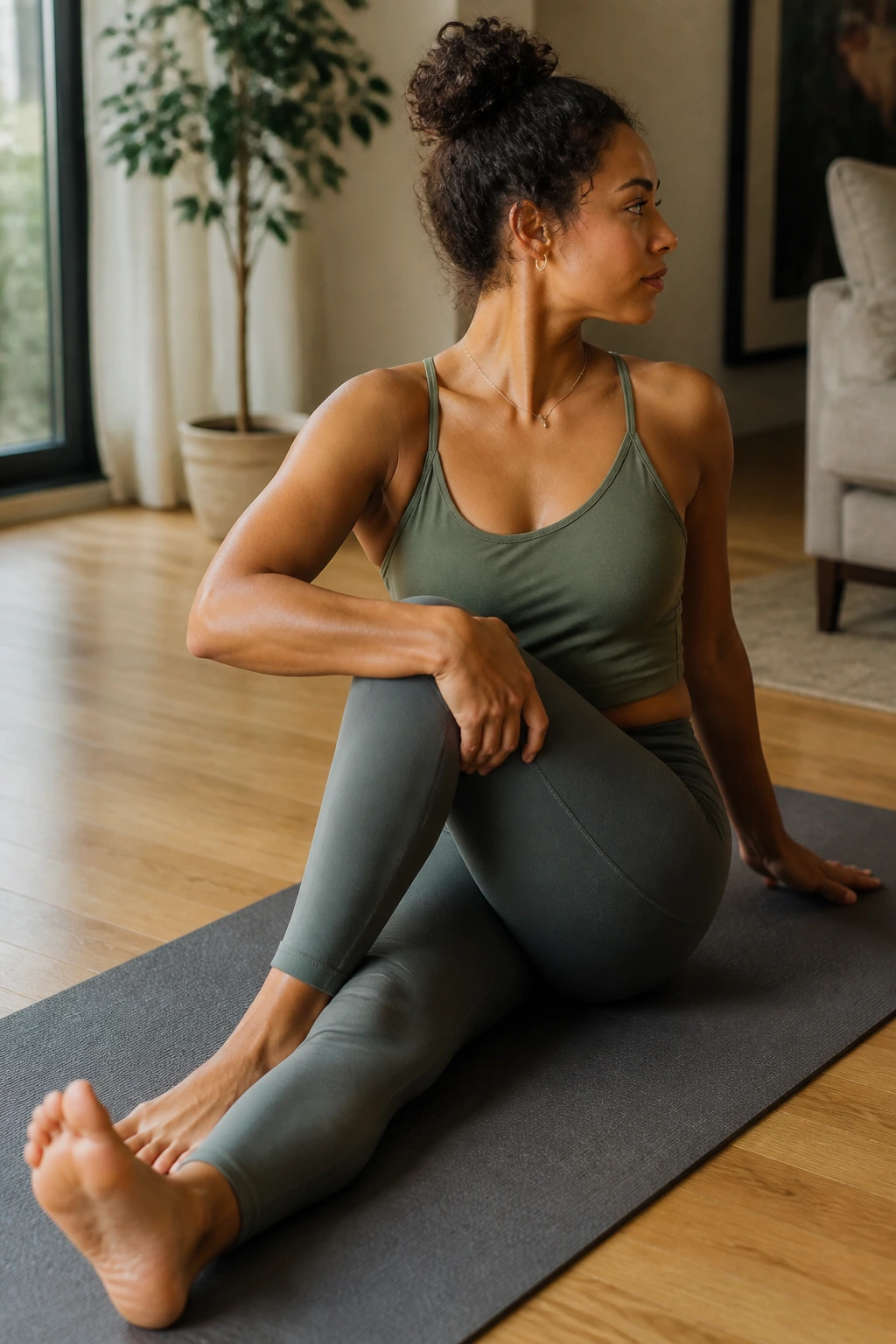
We end here because it is a calming, integrative way to finish the warm-up sequence. A seated twist wrings out the tension in the spine and shoulders one last time before you head out the door.
Sit with both legs extended. Cross your right foot over your left knee. Hug your right knee with your left arm and twist your torso toward the right, placing your right hand behind you for support. This creates a gentle rotation that helps realign the spine. Do both sides. Once you release this pose, you are standing up from the mat feeling long, tall, and genuinely ready to run.
Final Thoughts
You do not have to perform every single one of these stretches every single time. That is the beauty of a list like this—you can pick and choose based on how your body feels that day. If your calves are screaming, spend more time on Downward Dog and Garland Pose. If your hips feel locked from a long day at the office, focus on the Lunges and the Butterfly Pose.
Consistency matters more than perfection. The act of checking in with your body for five minutes is a practice in itself. It turns running from a chore you force yourself to do into a conversation you have with your own physical self. Pay attention to what feels good, notice where you are tight, and move into those areas with patience. Your muscles will thank you at mile two.
