



Tight hip flexors are sneaky. A short walk after sitting for hours can feel awkward, a lunge can pinch in the front of the hip, and the first rep of a run can feel like your pelvis forgot how to move. Good hip flexor exercises help, but the useful ones are a mix of stretch, control, and a little strength — not random toe touches.
The trouble is that “hip flexors” is shorthand. The psoas, iliacus, and rectus femoris all tug on the front of the hip in slightly different ways, so one position rarely fixes everything. If you spend a lot of time seated, or your workouts are heavy on sprinting, cycling, hills, or deep squats, the front line of the hip tends to clamp down and the glutes get lazy.
The best approach is boring in the best way. Start with a few moving drills to wake up the joint, add a stretch or two that keeps the ribs stacked over the pelvis, then finish with activation so your body remembers what full hip extension feels like. A dull pull is fine. A sharp pinch is not.
Use the list below as a menu. Before a workout, pick the dynamic pieces and the activation work; after training, spend more time on the longer holds and the slower release drills. The first move is usually the one that changes how the rest feel.
1. Half-Kneeling Hip Flexor Stretch
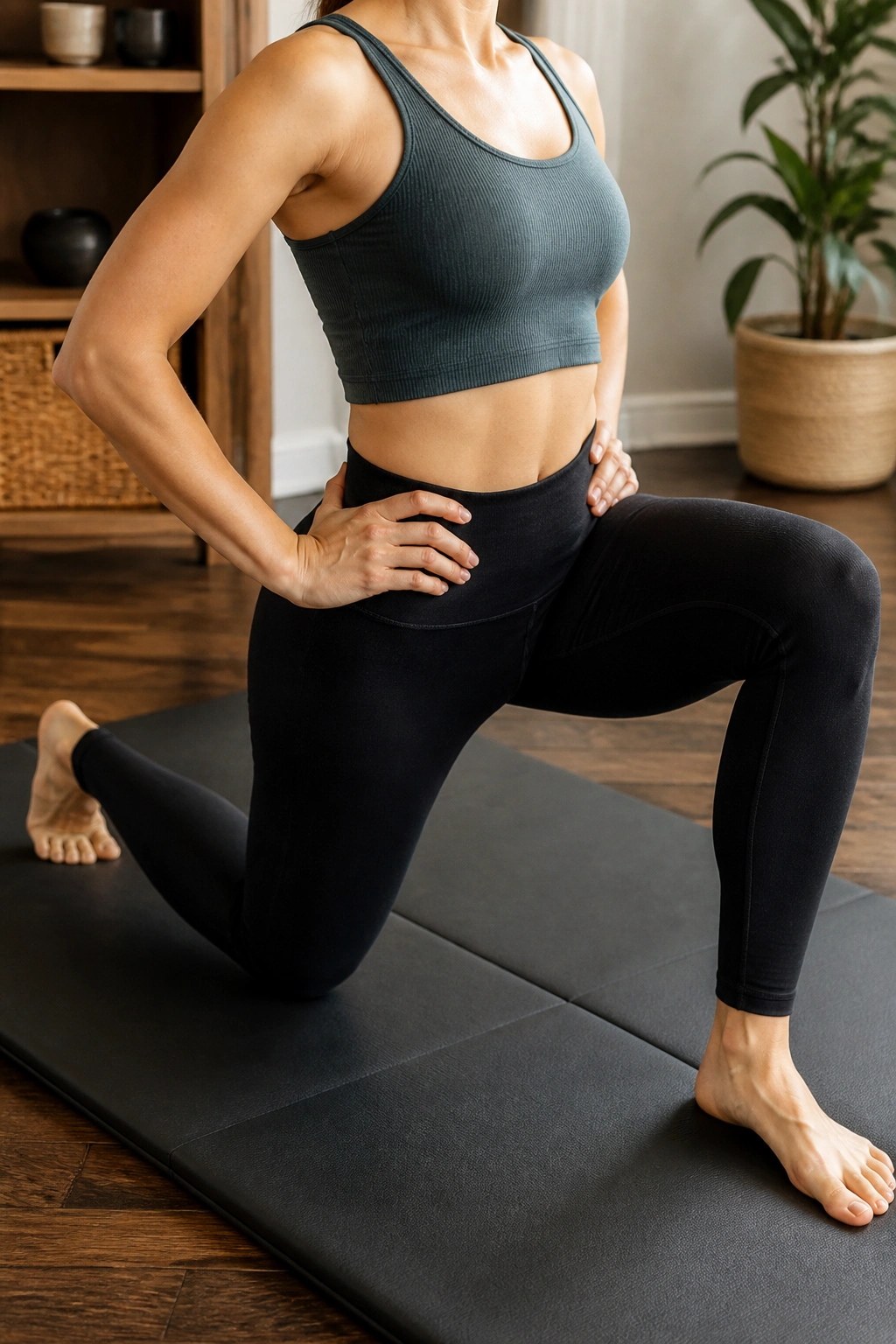
The classic half-kneeling stretch earns its keep because you can control the pelvis, which is where most front-of-hip stretches fall apart. If you stand and yank one foot back, your low back often takes over. In half-kneeling, you can tuck the pelvis a little and keep the stretch where you want it.
How to Set It Up
- Place one knee on a padded surface.
- Put the other foot flat in front, knee over ankle.
- Squeeze the glute on the kneeling side first.
- Shift forward only an inch or two.
- Reach the arm on the kneeling side overhead if it feels good.
That last part matters. The reach helps open the front line of the body, not just the front of the hip. If you feel this mostly in your low back, you’re leaning too far forward or arching too hard. Back off and make the movement smaller.
Hold for 20 to 30 seconds per side, then breathe out fully before each small shift forward. That little exhale matters. It tells the ribs to come down and gives the hip flexor a cleaner stretch.
2. Couch Stretch
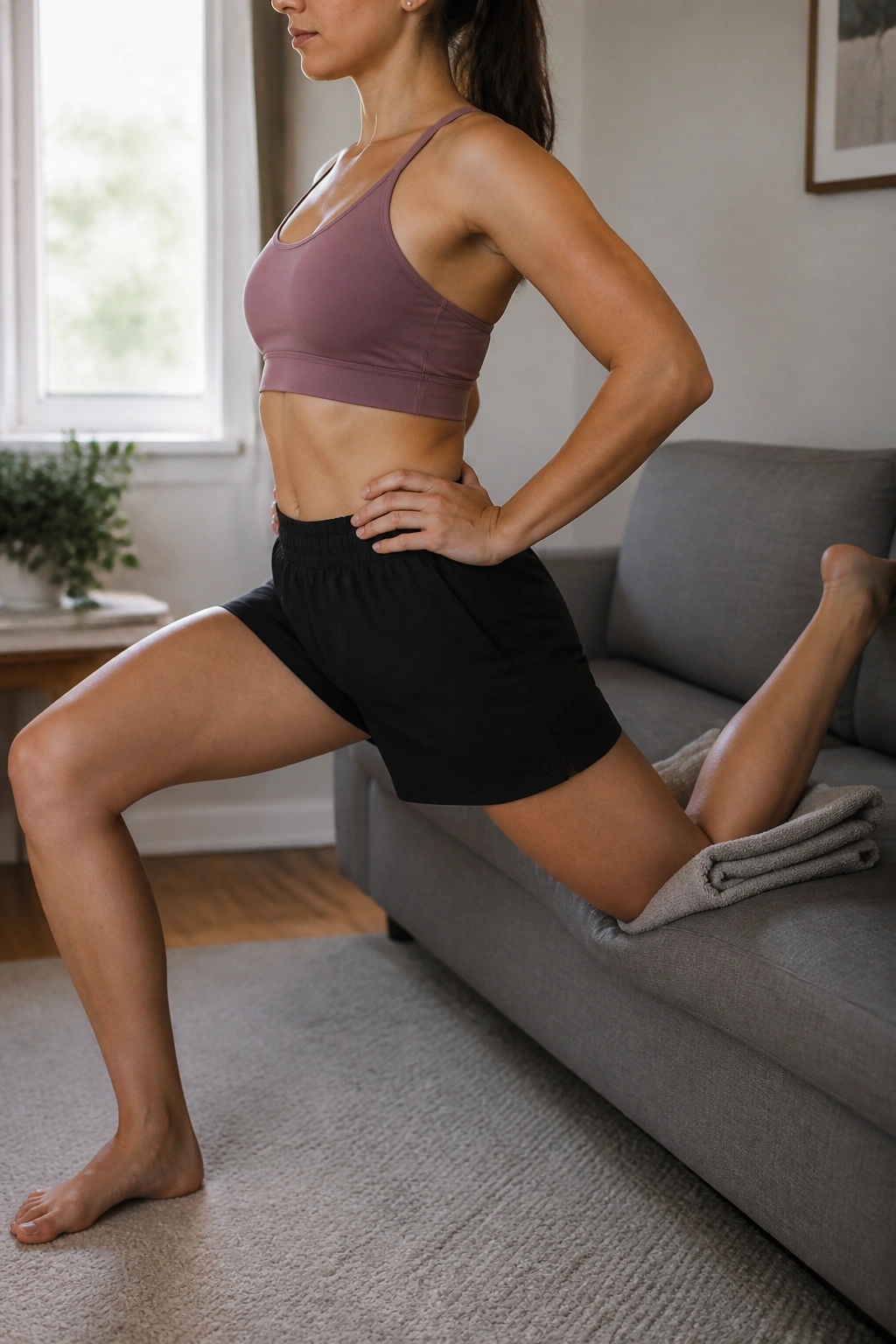
A couch stretch is rude, in the nicest possible way. It hits the rectus femoris hard — that’s the quad muscle that crosses the hip and the knee — so it often feels deeper than a basic lunge stretch. If your thighs are roasted after squats, this one will tell you the truth fast.
I like it after training, not before. The position can be intense, and if you go in cold you’ll spend too much time fighting the shape instead of breathing through it. Put a folded towel, pad, or yoga mat under the back knee, then work into the position slowly. No heroics.
Keep the torso tall and the ribs stacked over the pelvis. If your lower back arches, you’ve turned a hip stretch into a back bend. That’s the mistake people make most often. Aim for a steady 20- to 40-second hold, and shorten the stretch if the knee feels irritated.
3. Glute Bridge With Posterior Pelvic Tilt
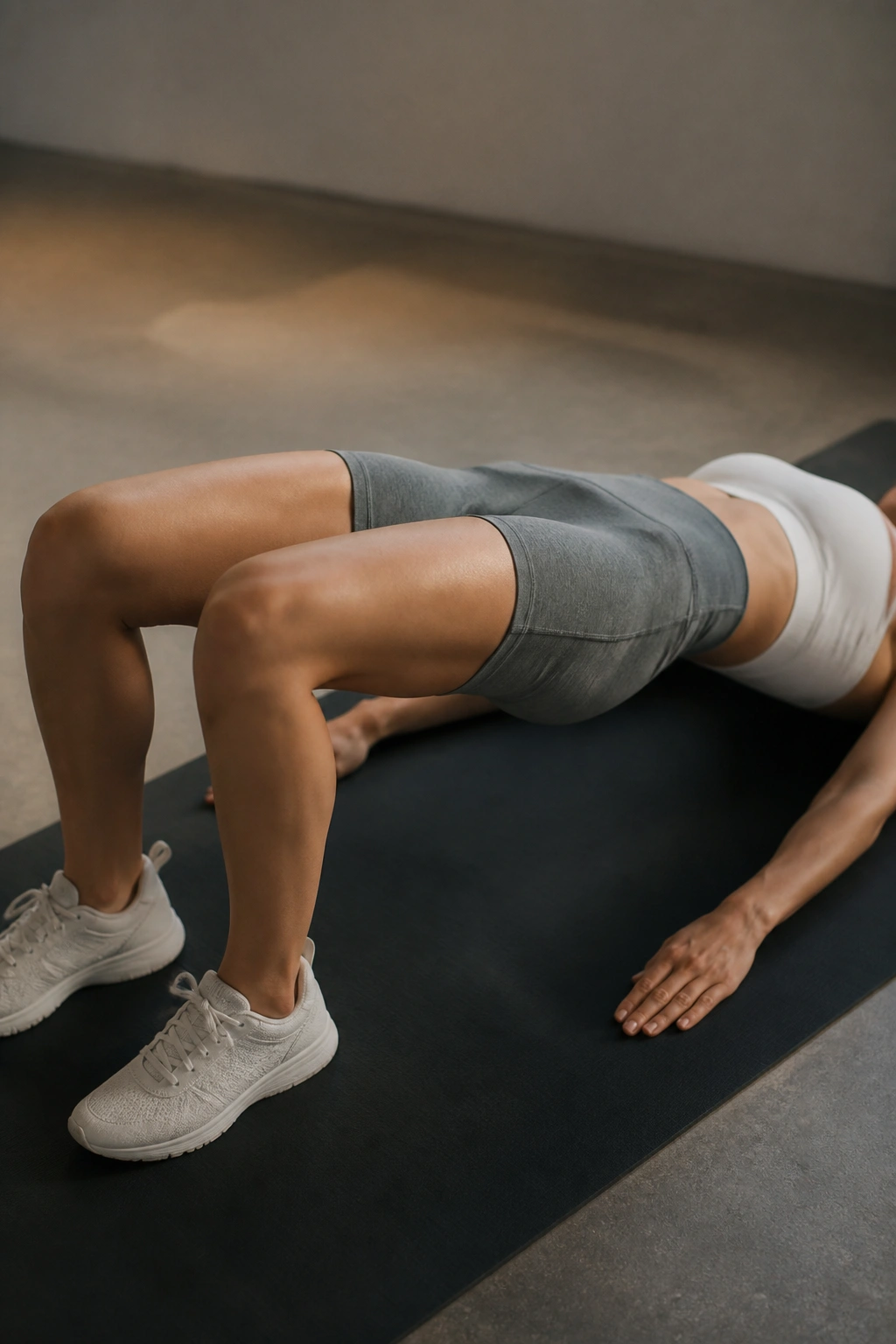
Why put a bridge in a hip flexor list? Because a lot of “tight” hip flexors are really overworked hip flexors. If the glutes aren’t doing their share, the front of the hip stays on all day, and the area never gets a break.
Start on your back with feet flat and heels close enough that you can graze them with your fingertips. Before you lift, exhale and flatten your low back gently into the floor. That small tuck is the whole point. Then press through the heels and lift the hips until you feel the glutes, not the low back.
Do 8 to 12 slow reps, and pause for two seconds at the top. If you cramp in the hamstrings, bring your feet a little closer. If you feel it in your back, reset and make the pelvic tuck cleaner.
4. Standing Knee Drive March
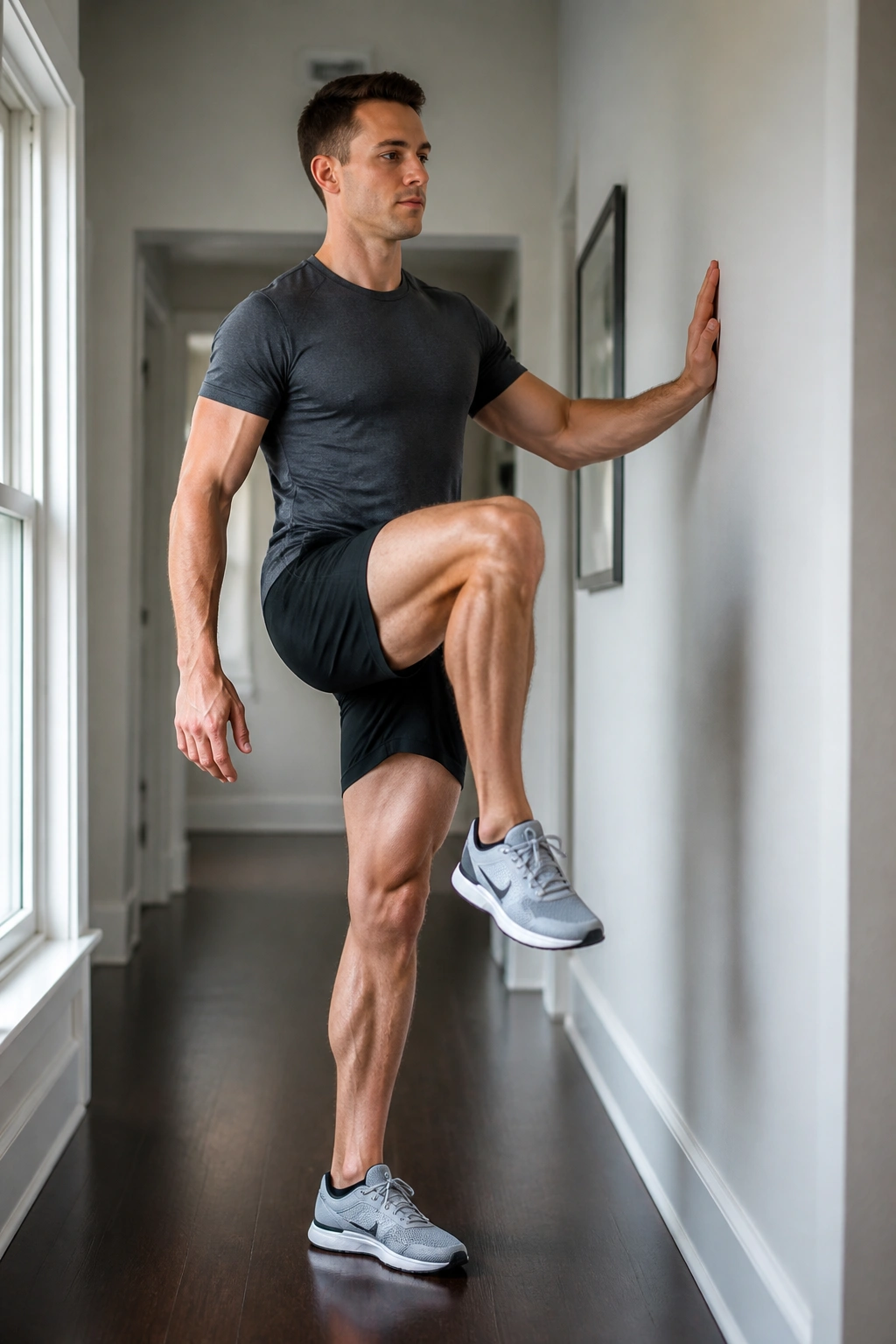
This one looks simple. It isn’t. A clean standing knee drive teaches the hip flexors to lift without the whole torso wobbling around like a shopping cart with a bad wheel. That matters before running, hiking, or anything that asks for repeat leg lift.
Stand tall near a wall if balance is shaky. Lift one knee until the thigh is roughly parallel to the floor, pause for one second, then lower it slowly. Don’t lean back. Don’t swing the leg. Just pick the knee up and place it down with control.
Best Use
- Before runs
- Before lower-body lifting
- After long sitting
- As a quick desk break
Do 6 to 8 reps per side. If the motion feels too easy, add a light mini-band around the feet or press one hand into a wall to keep the ribs from drifting. The goal is a crisp lift, not a huge one.
5. Low Lunge Rock-Backs
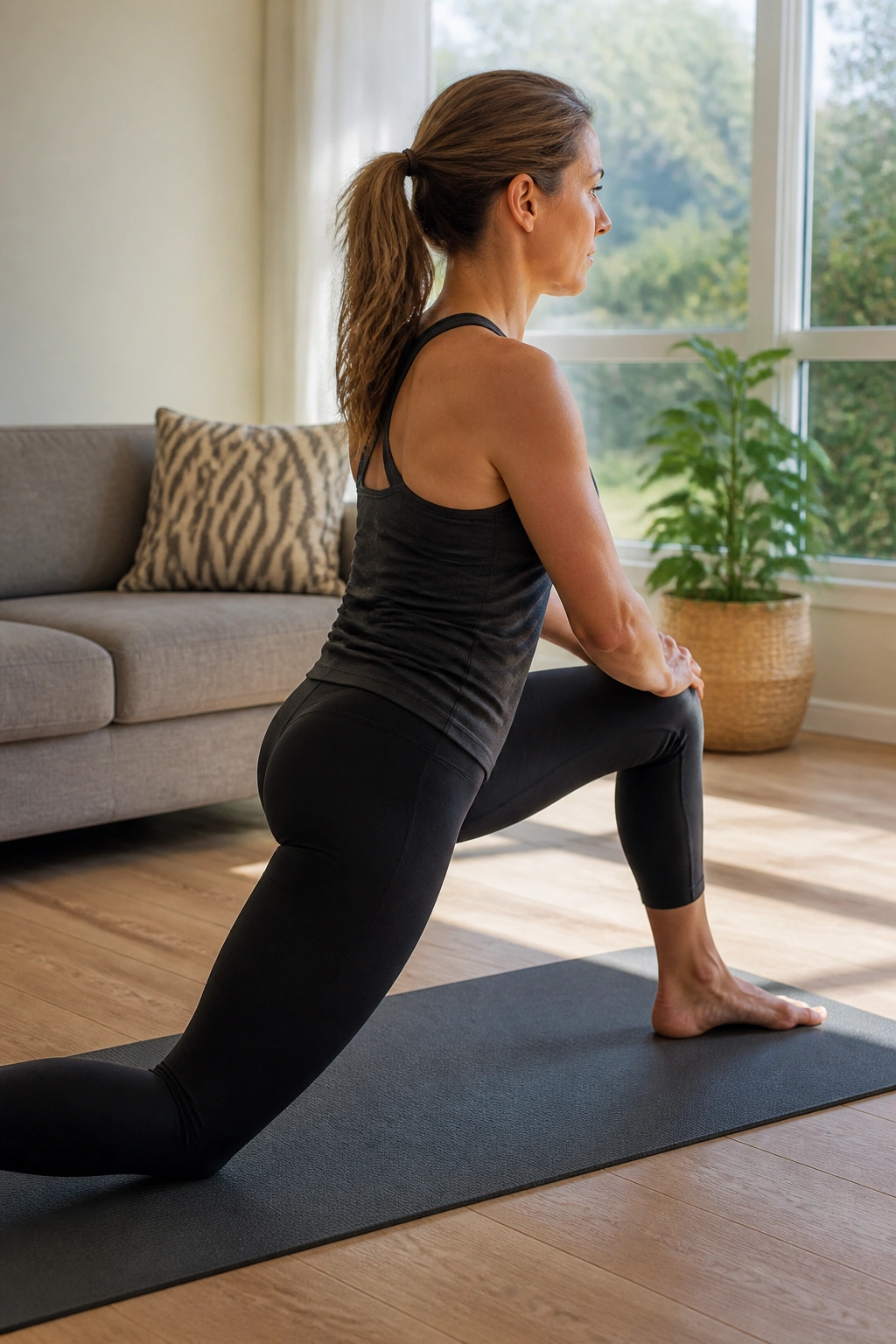
When hips feel sticky after a long drive or a long workday, rock-backs are often a better start than long holds. They let the joint move in and out of stretch without forcing the issue. That makes them useful when the front of the hip feels more cranky than tight.
Drop into a low lunge with the back knee on a pad. From there, shift the hips back a few inches, then glide them forward again until you feel a mild stretch at the front of the hip. Rock in and out for 6 to 10 slow reps on each side.
Keep the movement smooth. If you sink into the low back or collapse on the front knee, shorten the range. The point is to wake the hip up, not pin it to the floor.
6. Prone Quad Stretch With a Strap
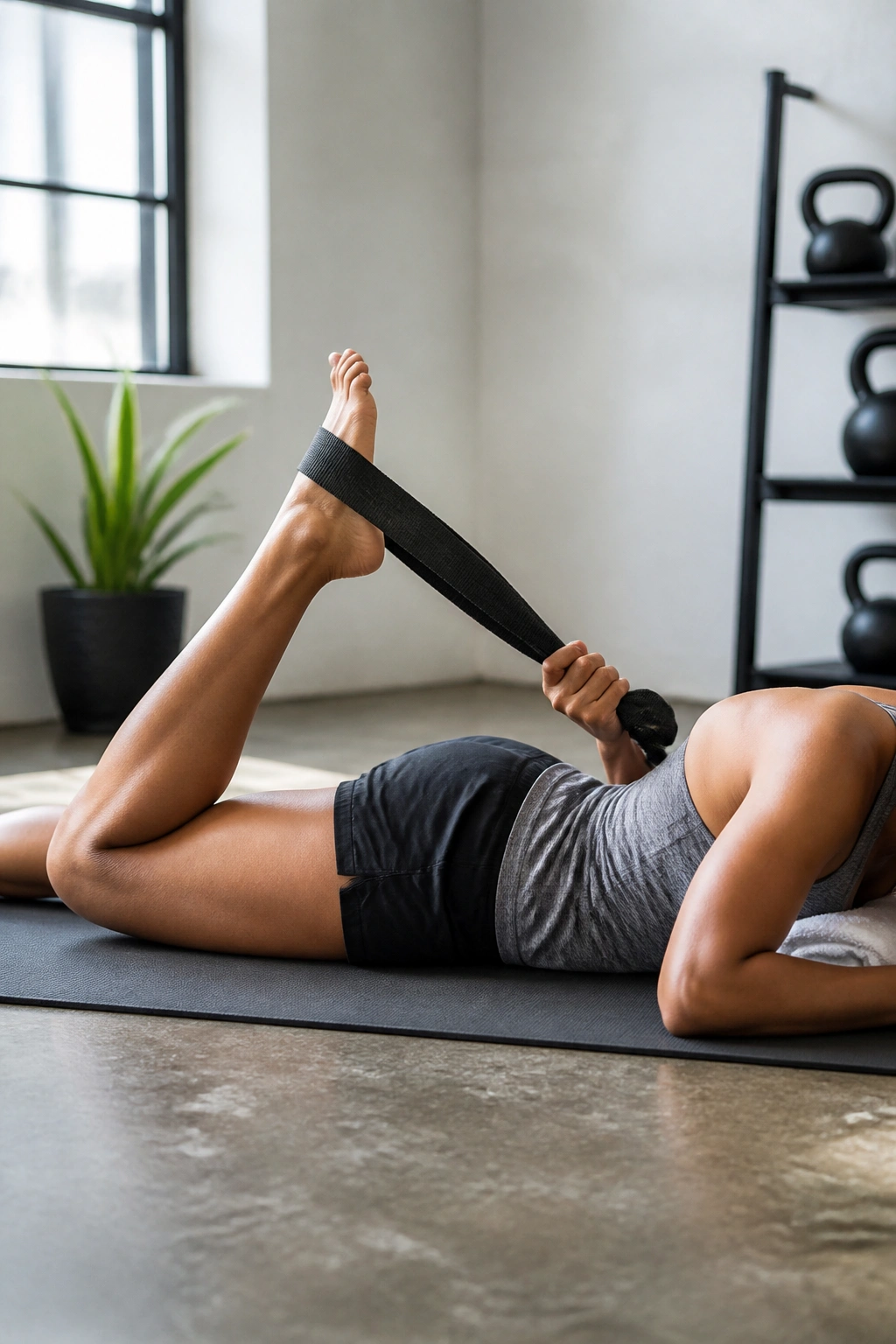
This one feels different from the kneeling stretch because the pelvis stays more neutral. Lying face down makes it harder to cheat by arching the back, which is exactly why I use it when the front of the thigh feels involved too.
Loop a strap or towel around one ankle, lie face down, and draw the heel toward the glute. Keep the thighs close together and press the front of the hip gently into the floor. If the back starts to arch, lighten the pull immediately. You want the stretch in the quad and hip flexor, not in the lumbar spine.
Hold for 20 to 30 seconds per side. A towel under the forehead helps. So does breathing out slowly while you hold. If the knee is touchy, don’t jam the heel in. Bend only as far as you can keep the position clean.
7. Dead Bug Heel Taps
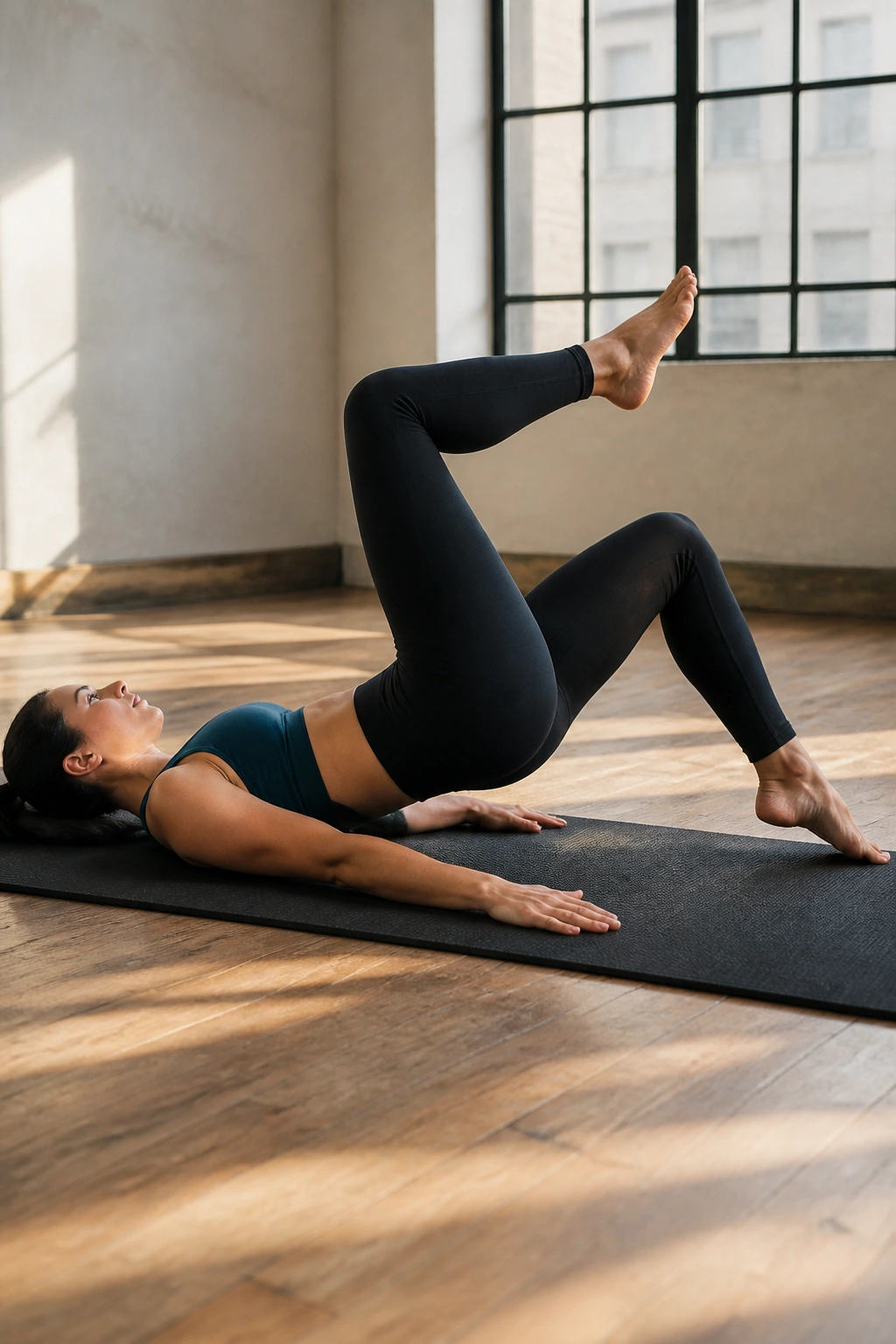
What does your core have to do with hip flexors? More than most people think. If your abs are asleep, the hip flexors often pick up the slack during walking, running, and even basic leg lifts. Dead bugs teach the trunk to stay quiet while the legs move.
Lie on your back with hips and knees at 90 degrees. Press the low back into the floor, then lower one heel to tap the ground while the opposite leg stays still. Exhale as the heel reaches down. Bring it back with control. That slow exhale keeps the ribs from flaring.
Do 6 to 10 taps per side. If your back pops off the floor, shorten the range. No shame there. A smaller, cleaner tap does more good than a bigger sloppy one.
8. 90/90 Hip Switches
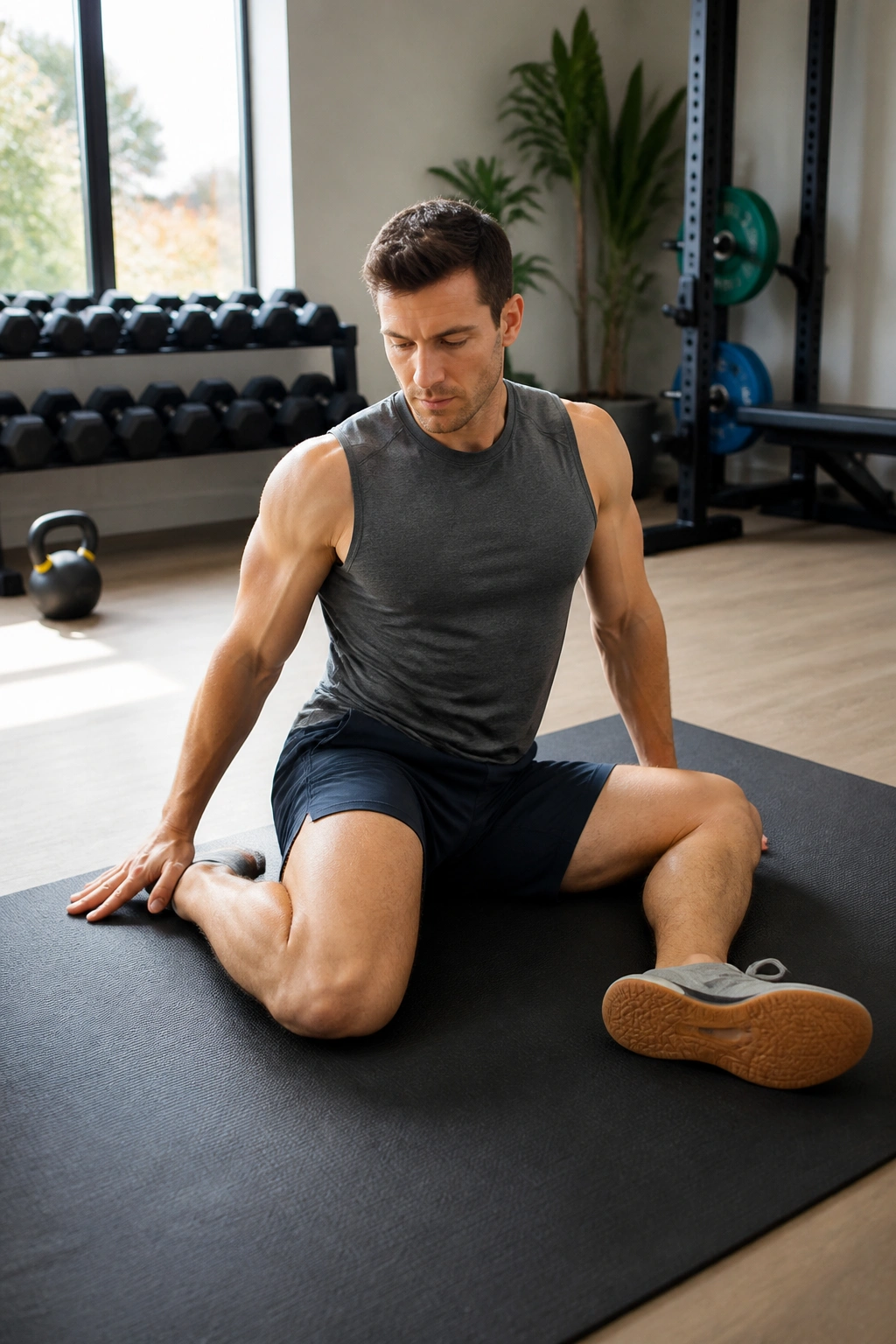
If your hips hate rotation, the front of the hip often pays the price. 90/90 switches are one of the best ways to clean that up because they ask the hips to rotate without forcing a big stretch right away. That usually feels better than hanging out in one deep position.
Sit with both knees bent at roughly 90 degrees, one leg in front and one out to the side. Rotate the knees to the other side with control, then sit tall and repeat. Use your hands if needed at first, then make the transition smoother over time.
What Makes Them Useful
- They improve hip rotation.
- They wake up the outer hip and glute.
- They reduce the “locked” feeling before squats or runs.
- They teach control, not just range.
Do 6 to 10 switches at a steady pace. If the movement feels jammed, don’t force the knees down. Stay tall, keep the spine long, and work within the range you can own.
9. World’s Greatest Stretch
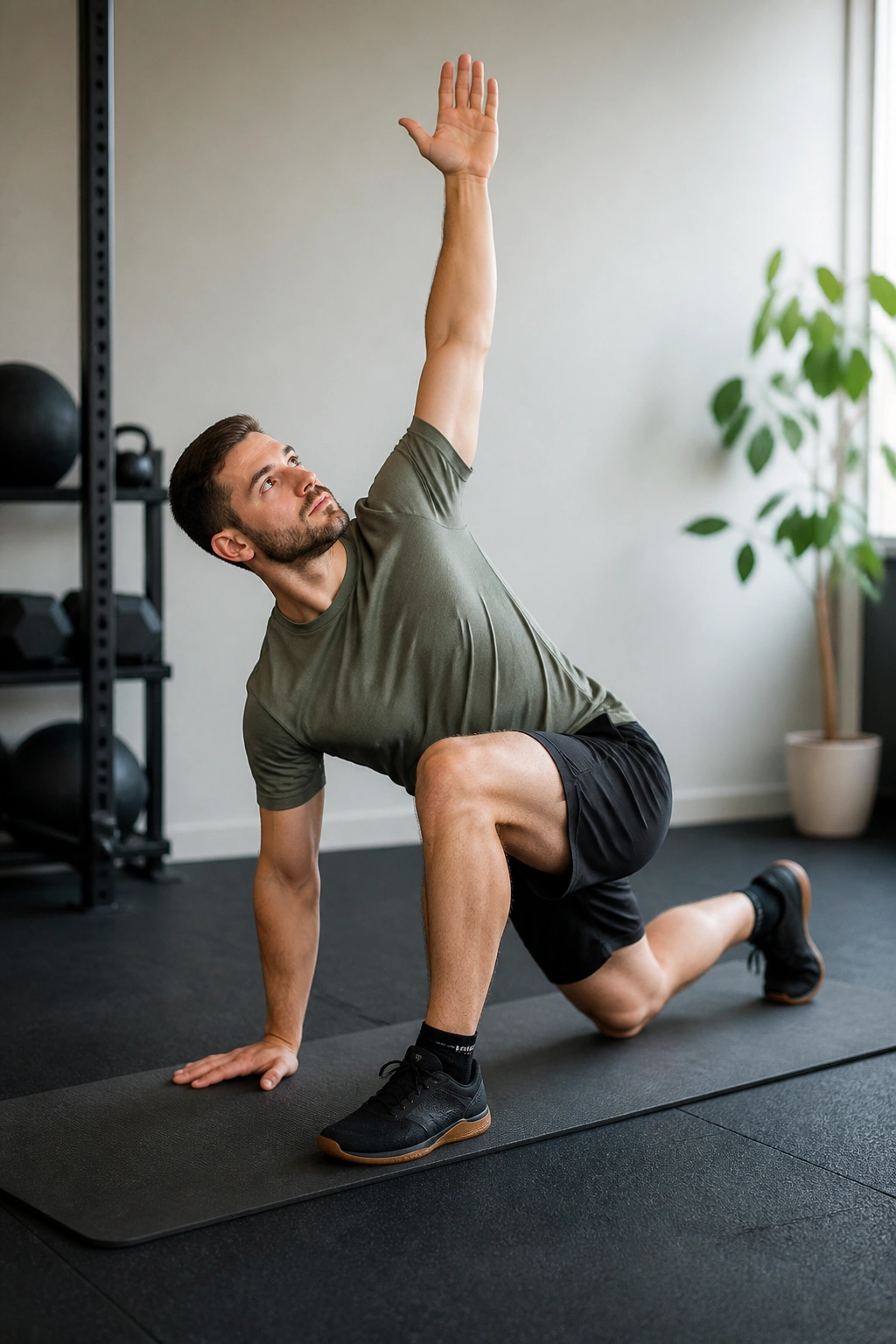
A lot of people treat this like a magic pose. It isn’t magic. It’s just useful because it layers a lunge, a hip opener, a thoracic rotation, and a little hamstring length in one smooth sequence. Before a run or a lower-body session, that’s a nice bundle.
Step one foot outside your hand, drop the back knee if needed, and settle into a lunge. Then bring the elbow toward the inside of the front foot, and rotate the same-side arm up toward the ceiling. Hold each side for a couple of breaths, then flow out and repeat.
Don’t rush the bottom position. If you dump into the front hip too hard, the front knee may take the load and the back hip may barely notice the work. Keep the movement controlled and use 3 to 5 reps per side.
10. Split Squat Iso Hold
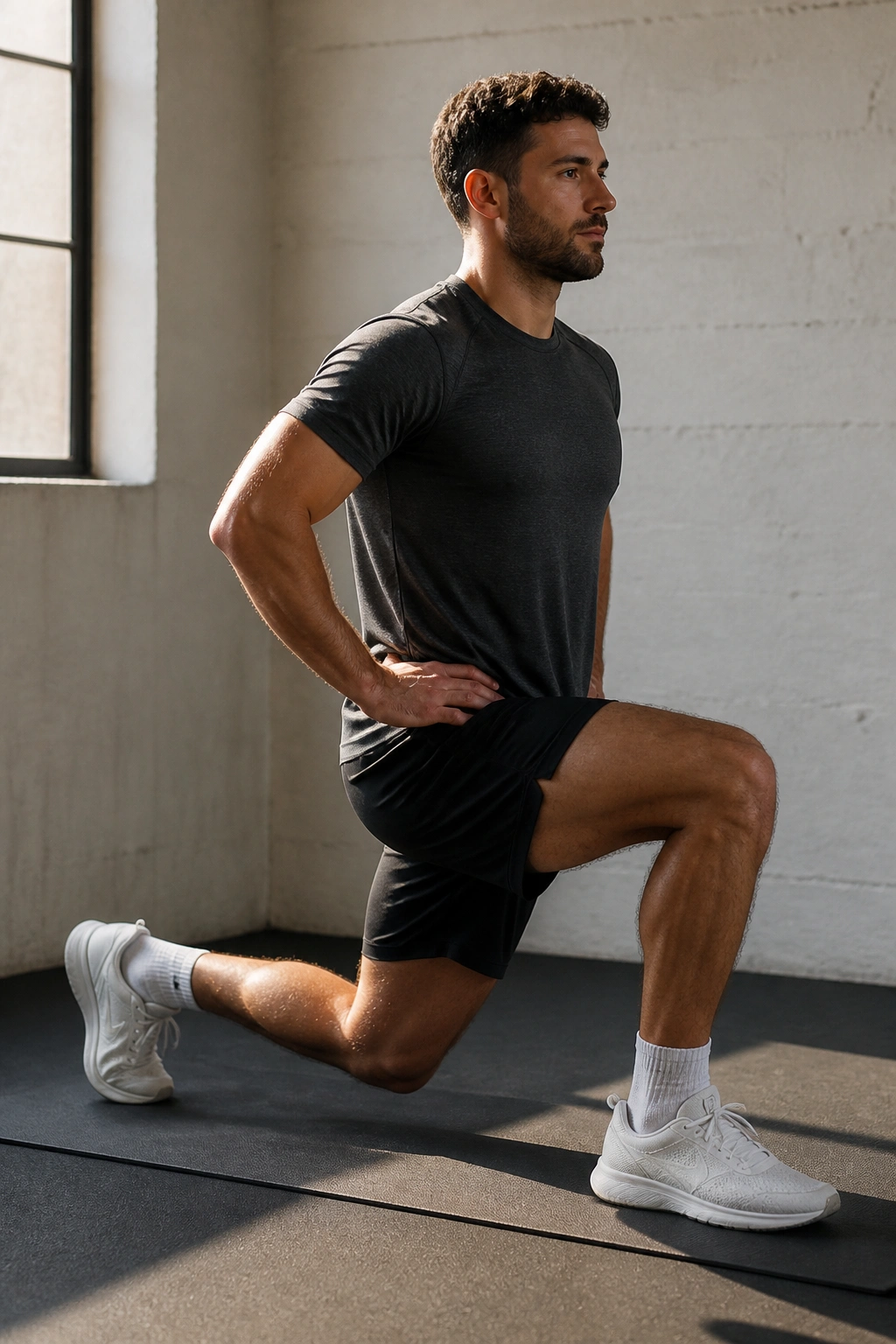
A split squat hold is not glamorous, which is why it works. It puts the hip flexors under load while the rest of the body has to stay organized. You’re not just lengthening the front of the hip — you’re teaching it to stay calm under effort.
Take a split stance and lower halfway down, with the back heel lifted. Hold the bottom position for 15 to 30 seconds. Keep the front foot planted, the ribs stacked, and the glute on the back leg switched on. If you feel your lower back arching, shorten the stance a touch.
I like this one for runners and lifters because it bridges the gap between stretching and strength. That’s the point. Tight hips often need both. If your front knee gets cranky, hold onto a rack or wall and make the stance slightly shorter.
11. Banded Hip Flexor Lift-Off
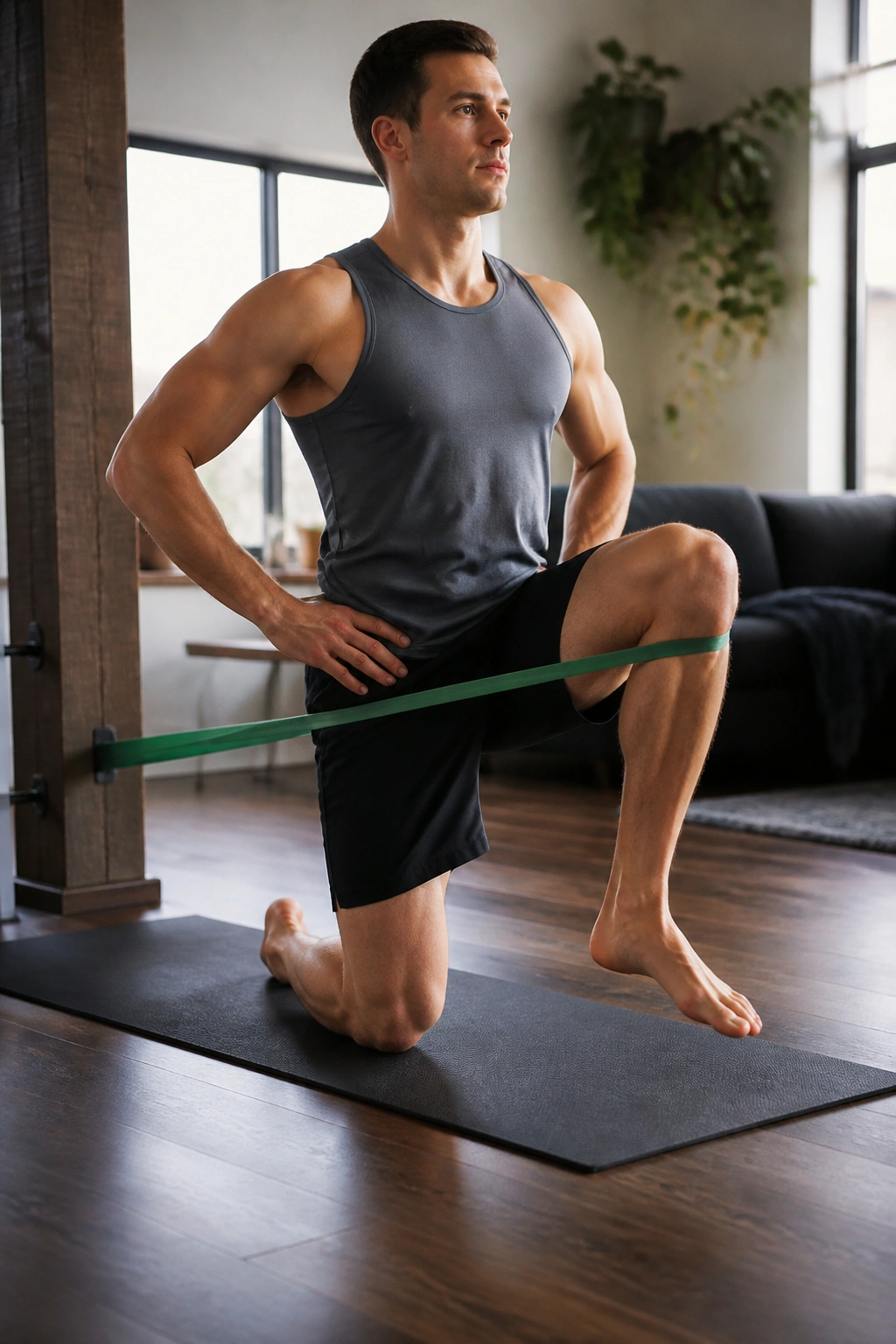
Can you train the hip flexors instead of only stretching them? Yes, and this is a good way to do it. The band adds a little resistance so the lift becomes more honest, and honest is what most tight hips need.
Anchor a light band low behind you, loop it around the working foot, and set up in a half-kneeling position. Drive the knee up against the band until the thigh reaches about hip height, pause for a beat, then lower slowly. The movement should feel sharp and clean, not jerky.
Setup Cues
- Keep the torso tall.
- Don’t lean back to cheat the lift.
- Pause for 1 second at the top.
- Use 6 to 8 reps per side.
If the band setup feels annoying, use a cable machine instead. Same idea. Same finish. And if you feel the front of the hip cramping, the resistance is probably too heavy.
12. Bear Crawl Hold
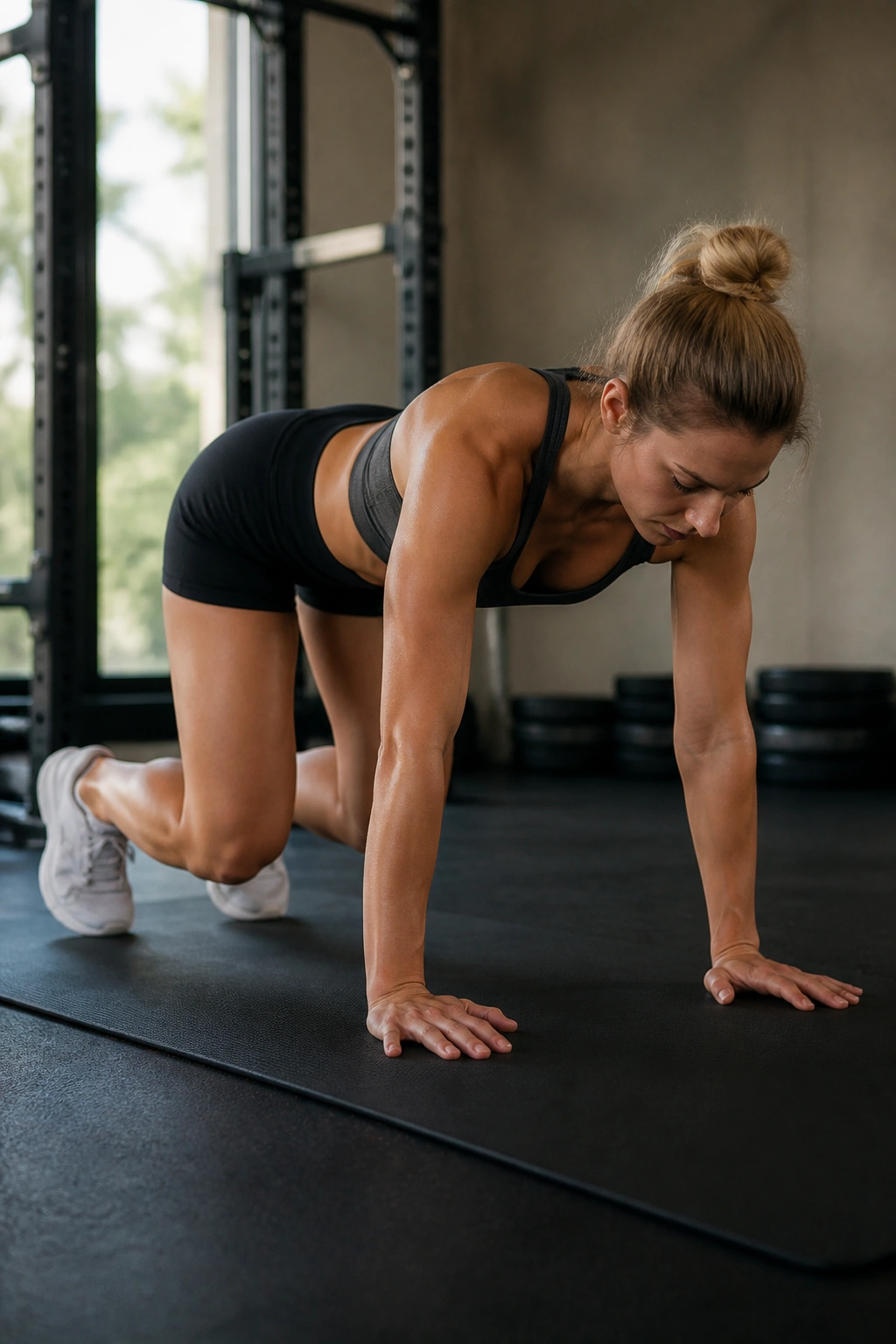
The bear crawl hold is one of those exercises that exposes everything. If your core can’t hold a clean position, the hip flexors end up doing weird extra work. If the shoulder line collapses, the hips usually follow. Ugly in the best possible way.
Start on hands and knees, then lift the knees just 1 to 2 inches off the floor. Keep the back flat, the ribs quiet, and the neck long. Hold for 10 to 20 seconds, rest, then repeat for 3 rounds.
What to Notice
- The abs should feel switched on.
- The front of the hips should feel active, not pinchy.
- Your breathing should stay steady.
- Your knees should stay low, not crawl upward.
This is more of a control drill than a stretch. That’s useful. Tight hip flexors often get less angry when the trunk and pelvis learn to share the job.
13. Foam Roller Rectus Femoris Sweep
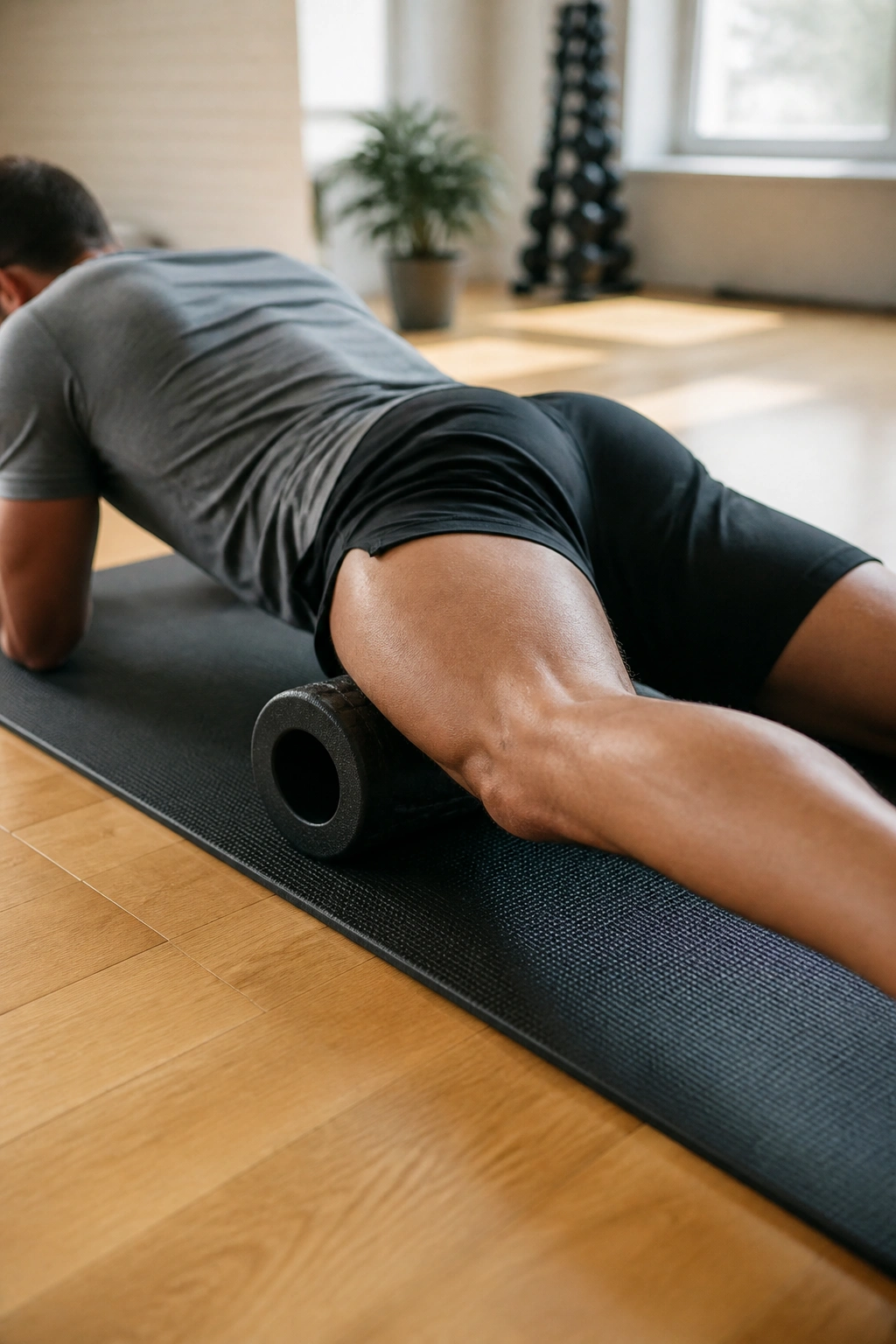
The foam roller isn’t glamorous, but the rectus femoris often needs a little help before it will let go. This muscle runs straight down the front of the thigh, and it can get stubborn after sprinting, kicking, climbing, or repeated squatting.
Lie face down with the roller under one thigh, just below the hip crease. Roll slowly toward the knee, then back up toward the top of the thigh. Spend 30 to 60 seconds per side and pause on any tender spots for a breath or two. Do not roll directly on the kneecap.
Tender is fine. Bruising yourself is not. If the area feels too sensitive, switch to a softer surface or use your hands and a massage ball instead. I almost always pair this with one of the longer stretches that comes later in the list, because the release work tends to land better when the tissue is warm.
14. Reverse Lunge to Knee Drive
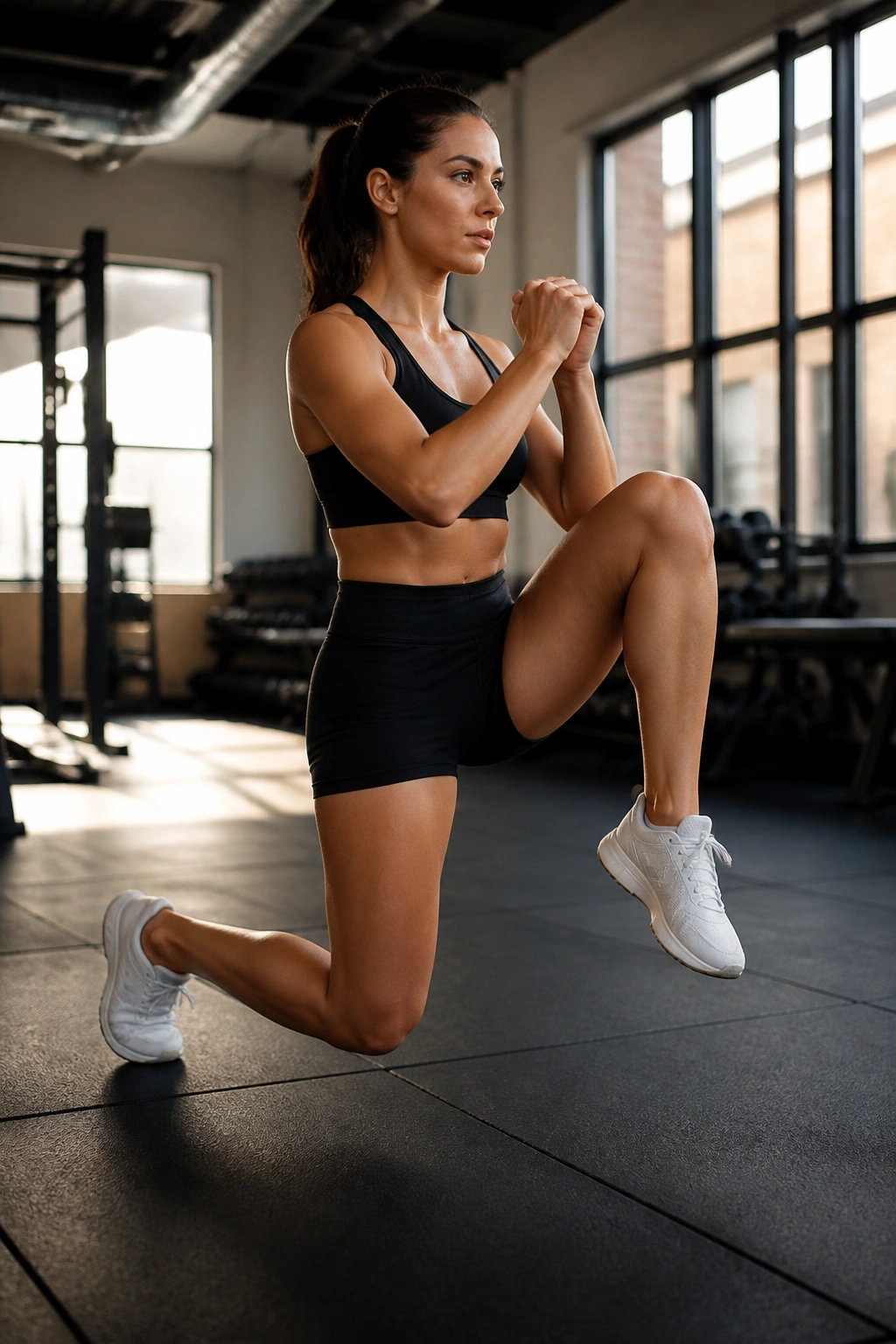
This one earns its place because it asks the hip to move through a clean range instead of sitting passively in one spot. The reverse lunge lengthens the front of the hip on the back leg, and the knee drive teaches that same side to come back up with control.
Step back into a lunge, lower until both knees bend comfortably, then push through the front foot and drive the back knee forward and up. Finish tall, with the pelvis level. Do 6 to 8 reps per side.
Why It Helps
- It links hip extension and hip flexion.
- It gives the glutes a turn.
- It’s useful before running or leg day.
- It feels better than endless static holds for a lot of people.
Add light dumbbells if the bodyweight version feels too easy. Skip the weight if the movement gets sloppy. The knee drive should look crisp, not flung.
15. Seated March With a Band
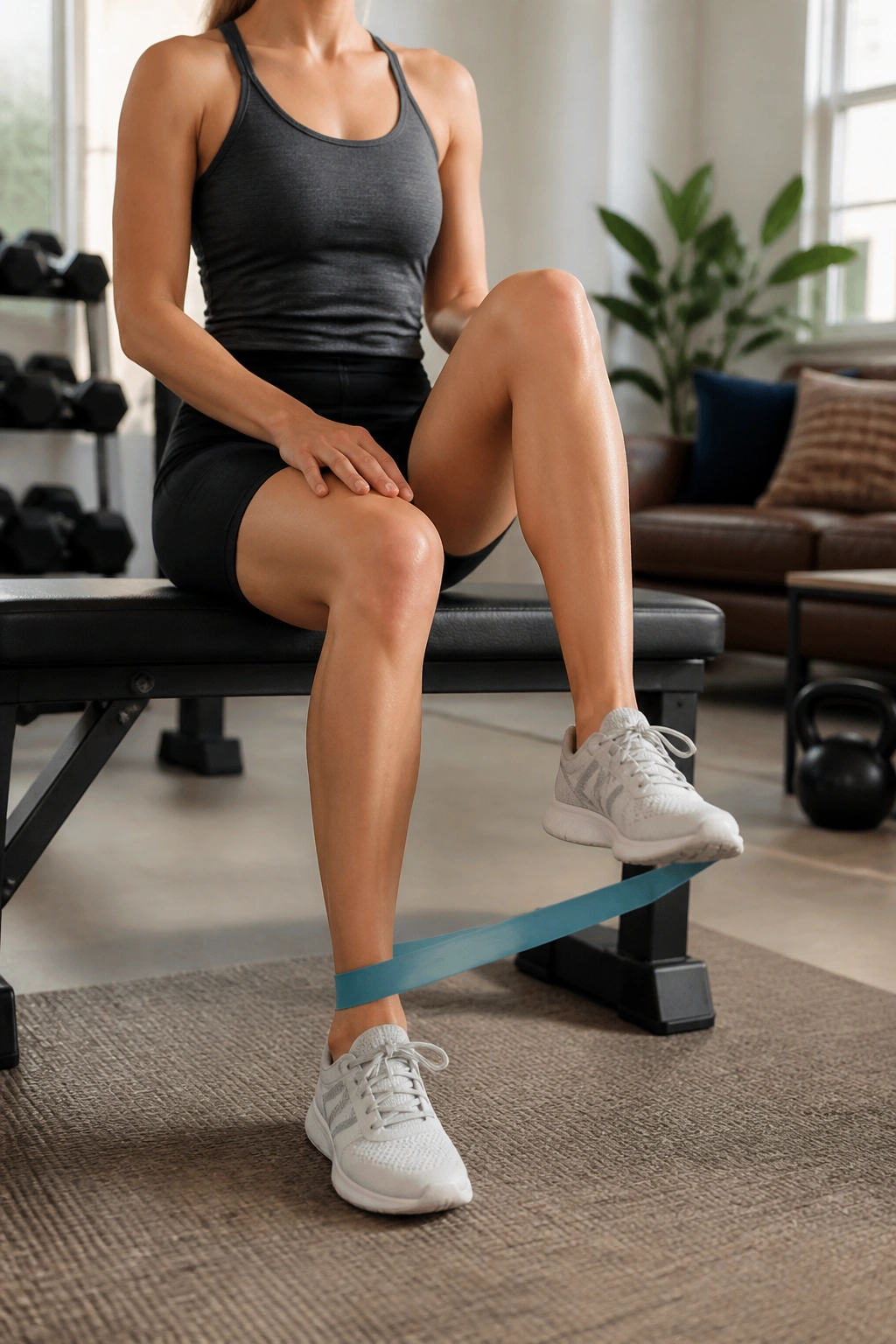
The seated march strips out balance and makes the hip flexor work harder in a sneaky way. That’s handy if standing drills feel too easy or if your balance gets in the way of clean movement.
Sit tall on a bench or sturdy chair with a light band around the feet or just above the knees. Lift one knee slowly, hold it for a second, then lower with control. Keep the chest stacked over the pelvis. No leaning back. No rocking side to side.
Do 8 to 12 lifts per side. This is a nice desk break, too, because it reminds the hip flexors how to lift without the rest of the body collapsing into the floor. If the band makes the motion ugly, use no band for a week and rebuild the pattern first.
16. Step-Through Lunge Stretch
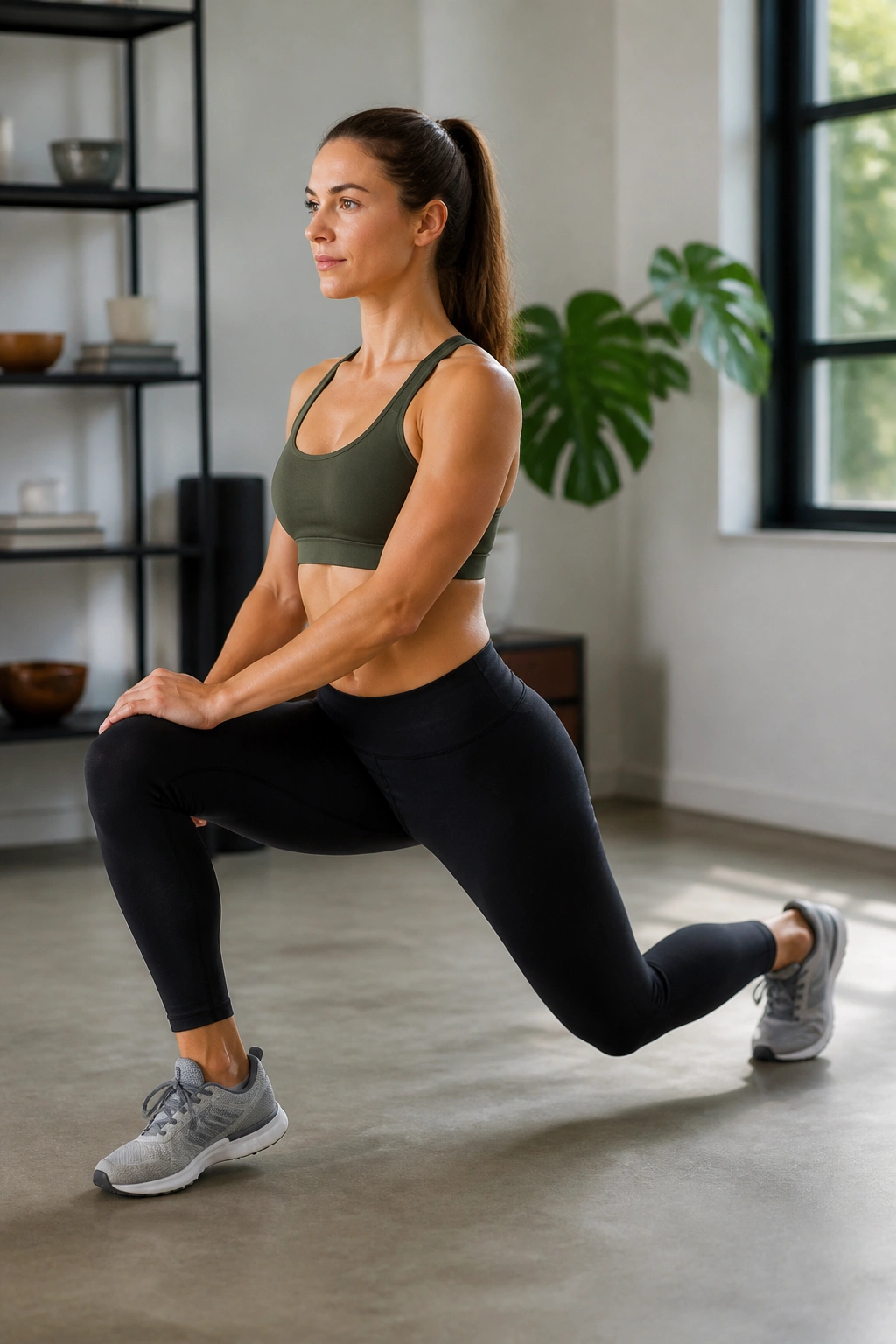
A step-through lunge stretch is smoother than holding one position forever. That matters when the front of the hip feels stiff but not angry. Moving through the stretch often works better than parking in it, especially before sport.
Start in a half-kneeling lunge. Shift forward into a mild hip-flexor stretch, then step the back leg forward and through as you rise, switching sides in one fluid motion. Think of it as a walking lunge with a pause at the front of the hip. Do 5 slow passes per side.
The key is control. If you throw yourself from side to side, the stretch turns into a balance drill and the hip never really opens. Keep the movement smooth, keep the torso tall, and let the front hip get a real breath between sides.
17. Hip CARs
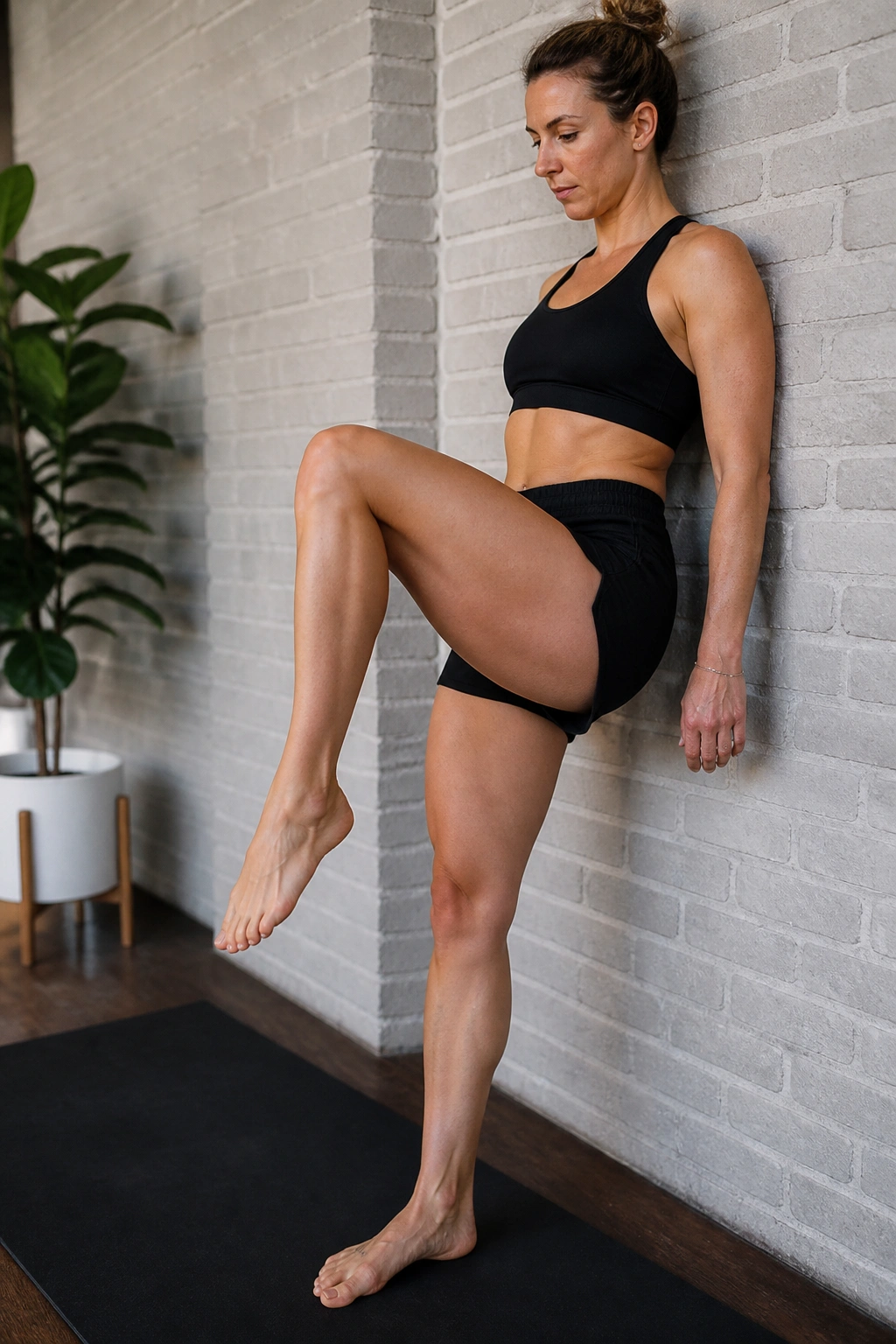
Hip CARs — controlled articular rotations — sound complicated, but the idea is simple: move the hip through its whole range slowly enough that your brain notices every inch of it. That can make a bigger difference than people expect, especially when the hips feel stiff but not injured.
Stand next to a wall or hold onto a post. Lift one knee, open the hip out to the side, then slowly circle it back and around without moving the pelvis much. Think small, smooth, and deliberate. Three to five circles each direction is plenty.
What to Watch For
- The torso should stay quiet.
- The circle should be slow.
- The lower back should not twist to fake range.
- The knee should move under control, not swing.
This drill is not about forcing more motion. It’s about owning the motion you already have. That difference matters.
18. Frog Rock-Back
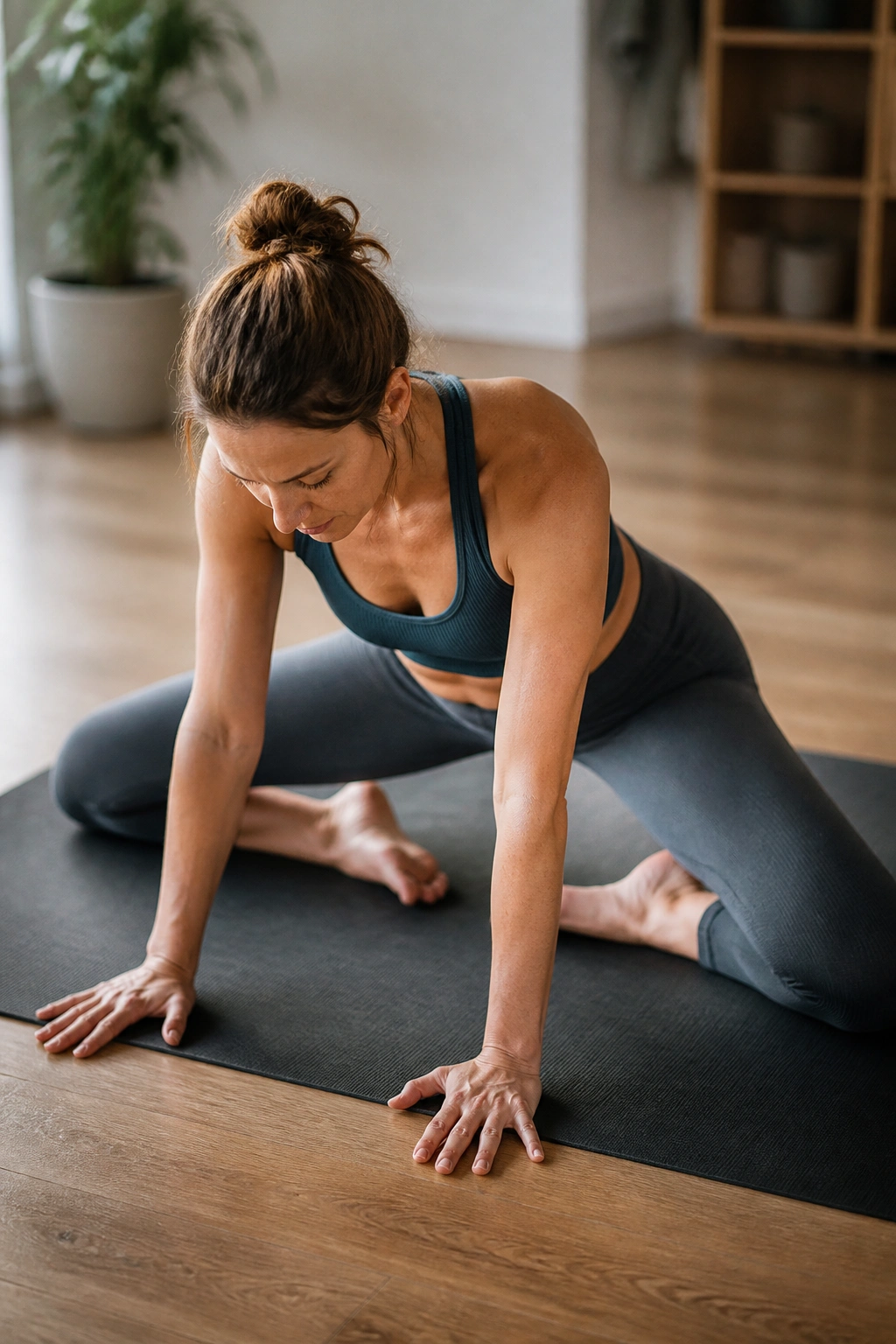
This one is not just about the groin. Frog rock-backs often help when the inner thighs are tugging on the pelvis and making the front of the hips feel jammed. Once the adductors calm down a bit, the hip flexors usually stop shouting so loudly.
Set the knees wide with the feet in line and the lower legs turned out slightly. Rock the hips back toward your heels, then return to center without dumping the low back. Move slowly for 8 to 10 reps.
Keep the spine long and the pressure gentle. If the knees hate the wide position, narrow the stance a little. A lot of people try to go too deep here and end up folding into the floor. Don’t. You want a loose, opened feeling, not a face-first collapse.
19. Half-Kneeling Overhead Reach With Side Bend
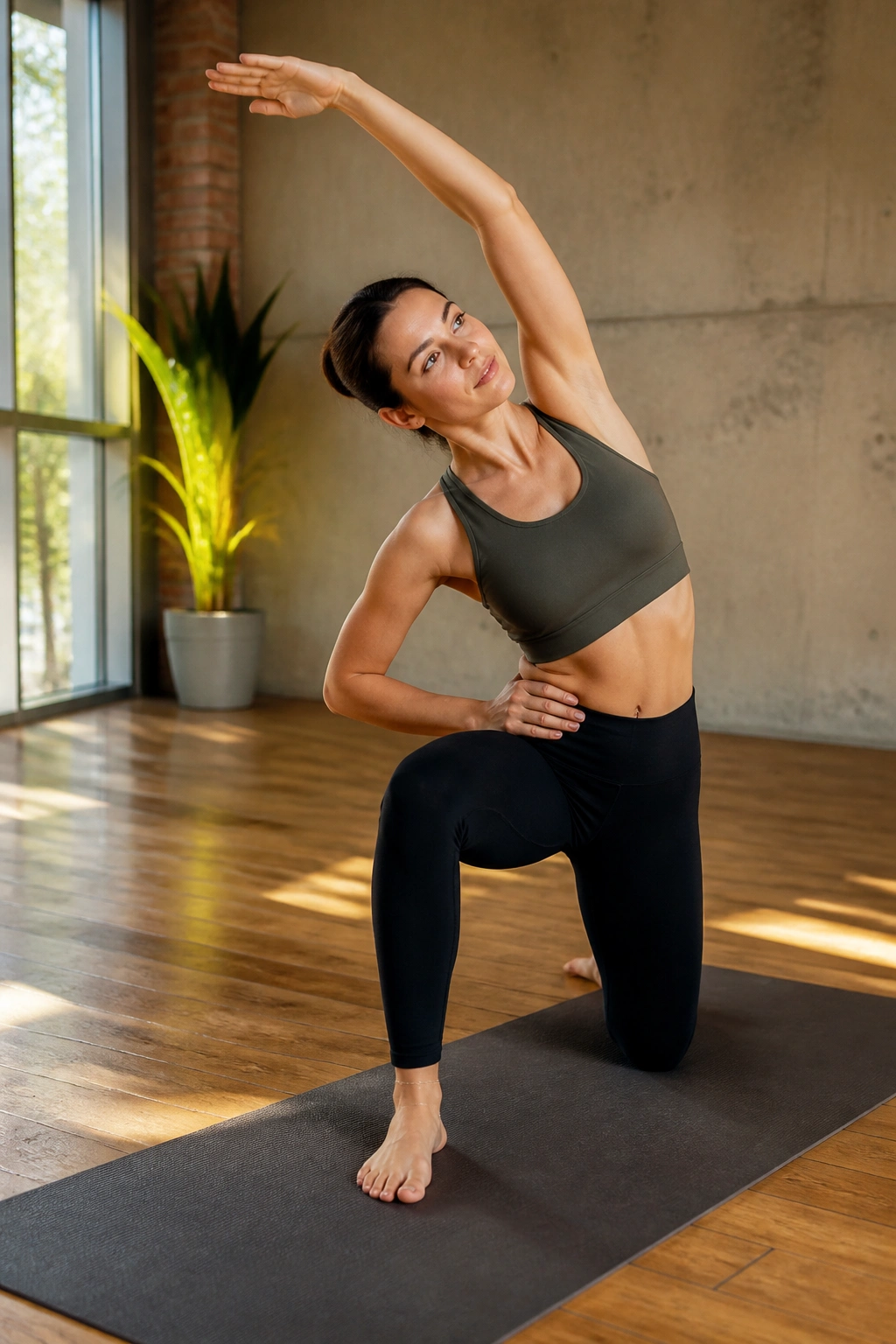
A straight lunge stretch helps, but this angle reaches the side of the torso too, which is where some of the stubborn tension hides. The psoas and the muscles around it don’t live in a vacuum. They’re tied into the ribs, the pelvis, and the side body all at once.
Set up in a half-kneeling position, squeeze the glute on the back leg, then reach the arm on that side overhead. Add a small side bend away from the kneeling side and hold for 15 to 20 seconds. Keep the movement light. This is not a dramatic lean.
I like this one when someone says the front of the hip feels tight but the usual stretch doesn’t change much. The side-bend angle often gets into the line people miss. Different angle, different result. Try it both before and after a workout, and notice which time feels cleaner.
20. 90/90 Hip Lift With Reach
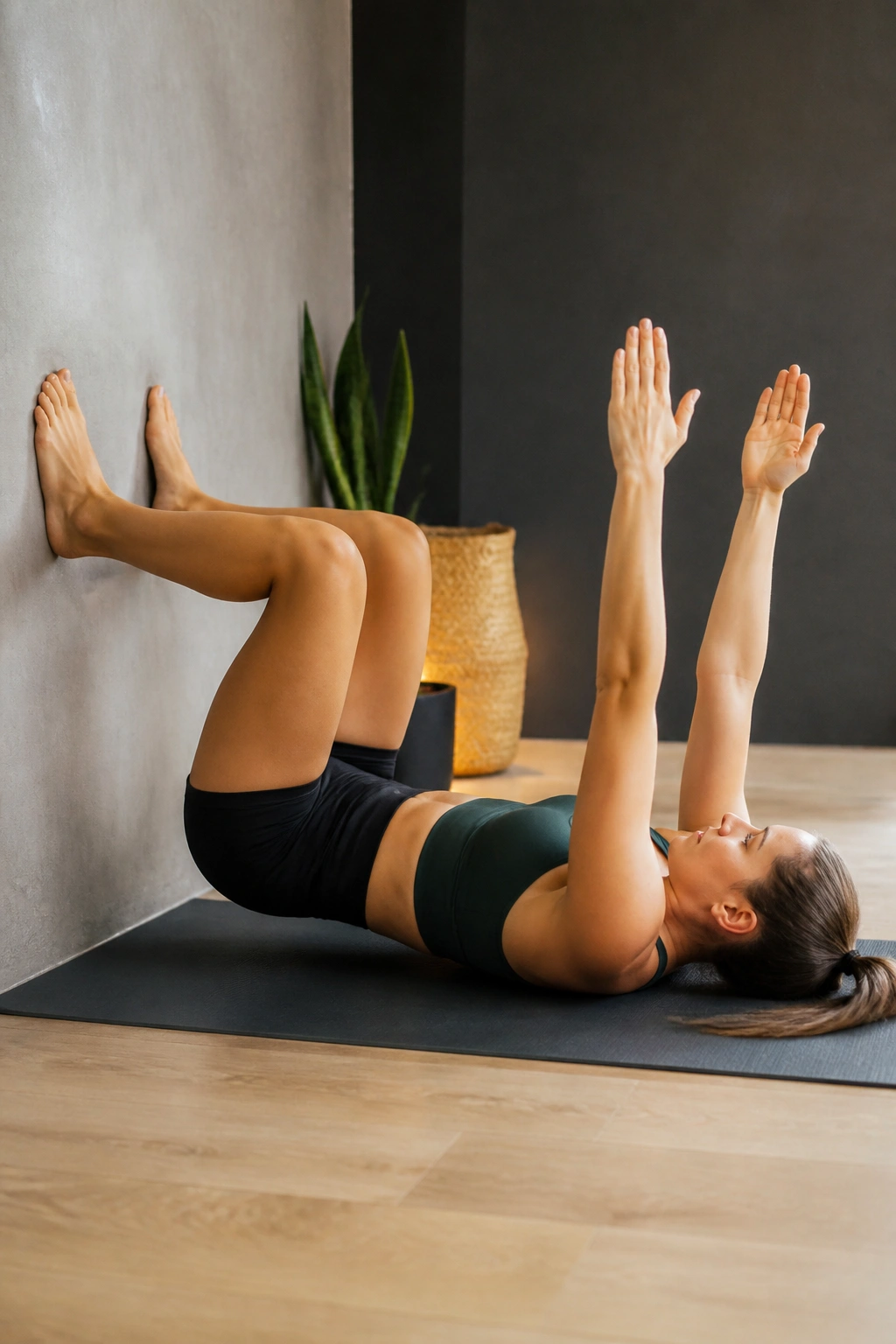
The 90/90 hip lift with reach is the finisher I reach for when the hips feel wound up and the low back is doing too much. It teaches the ribs to settle, the pelvis to tuck a little, and the hips to share the load instead of hanging all day in a forward tilt.
Lie on your back with your feet on a wall, hips and knees bent to 90 degrees. Exhale fully, tilt the pelvis slightly so the low back gets heavy on the floor, then lift the hips just 1 to 2 inches. Reach the arms toward the ceiling and hold for 4 to 6 slow breaths. Keep the neck loose.
That small exhale matters. It takes the tension out of the front of the body and gives the hip flexors a break they can actually feel. If you only have time for one or two moves after training, make it this and one longer stretch. It tends to quiet the front of the hips without yanking on them, and that’s the whole game with tight, tense hips.
