



The mirror doesn’t lie. You walk past a shop window or glance at your reflection in a dark screen, and there it is—that subtle, persistent curve in your upper back. It happens to the best of us. We spend hours hunched over keyboards, squinting at smartphone screens, or just defaulting to a comfortable, albeit slumped, position on the sofa. Over time, that “comfortable” slouch becomes your body’s new baseline. It isn’t just about looking less confident; it’s about the silent aches that accumulate in your shoulders, the tightness in your neck, and the way your lower back protests after just twenty minutes of standing.
Fixing your posture isn’t about wearing a stiff brace or constantly reminding yourself to “sit up straight.” If you have to consciously force your shoulders back all day, you are going to burn out by noon. True posture correction is about retraining the muscles that have forgotten their jobs. You need to stretch the tight, overactive muscles—like your chest and hip flexors—and strengthen the weak, lazy ones, specifically the retractors between your shoulder blades and your deep core stabilizers.
This process is surprisingly straightforward when you commit to it. You don’t need a gym membership or expensive equipment. Your own body weight, maybe a towel, and a few minutes of daily intent are all that’s required. Think of these exercises as a conversation with your musculoskeletal system. You are telling your body where it should be, and eventually, it starts to listen. The goal is to move from a state of constant compensation to one of effortless, balanced alignment.
1. Wall Angels
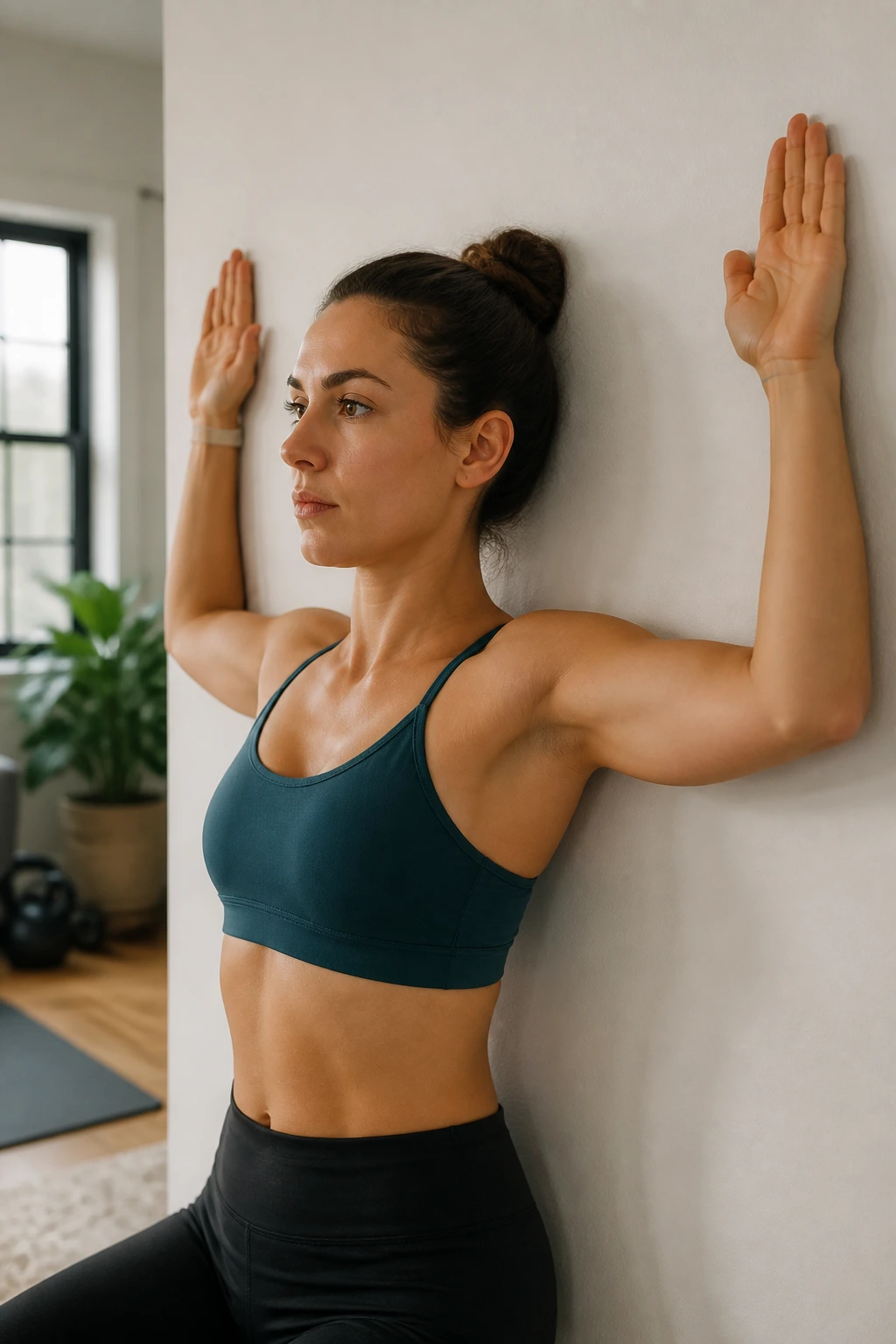
The wall angel is the ultimate test of shoulder mobility and the gold standard for opening up a tight chest. Stand with your back flat against a wall, feet about six inches away. Place your arms against the wall in a “goalpost” position—elbows at shoulder height, bent at ninety degrees. The challenge is to keep your elbows, wrists, and entire spine in contact with the wall as you slowly slide your arms upward.
The Mechanics of the Move
It is deceptively difficult. Most people will find their hands lifting off the wall the moment they try to reach overhead. That gap represents the exact restriction you need to address. Move slowly. Do not force the range of motion. If you feel your lower back arching off the wall, stop at that point, hold for a breath, and then return to the start. Over time, that stickiness will vanish.
- Keep your chin tucked slightly.
- Focus on the squeeze between your shoulder blades at the bottom of the movement.
- Perform 10 repetitions, focusing on control, not speed.
2. Cat-Cow Stretch
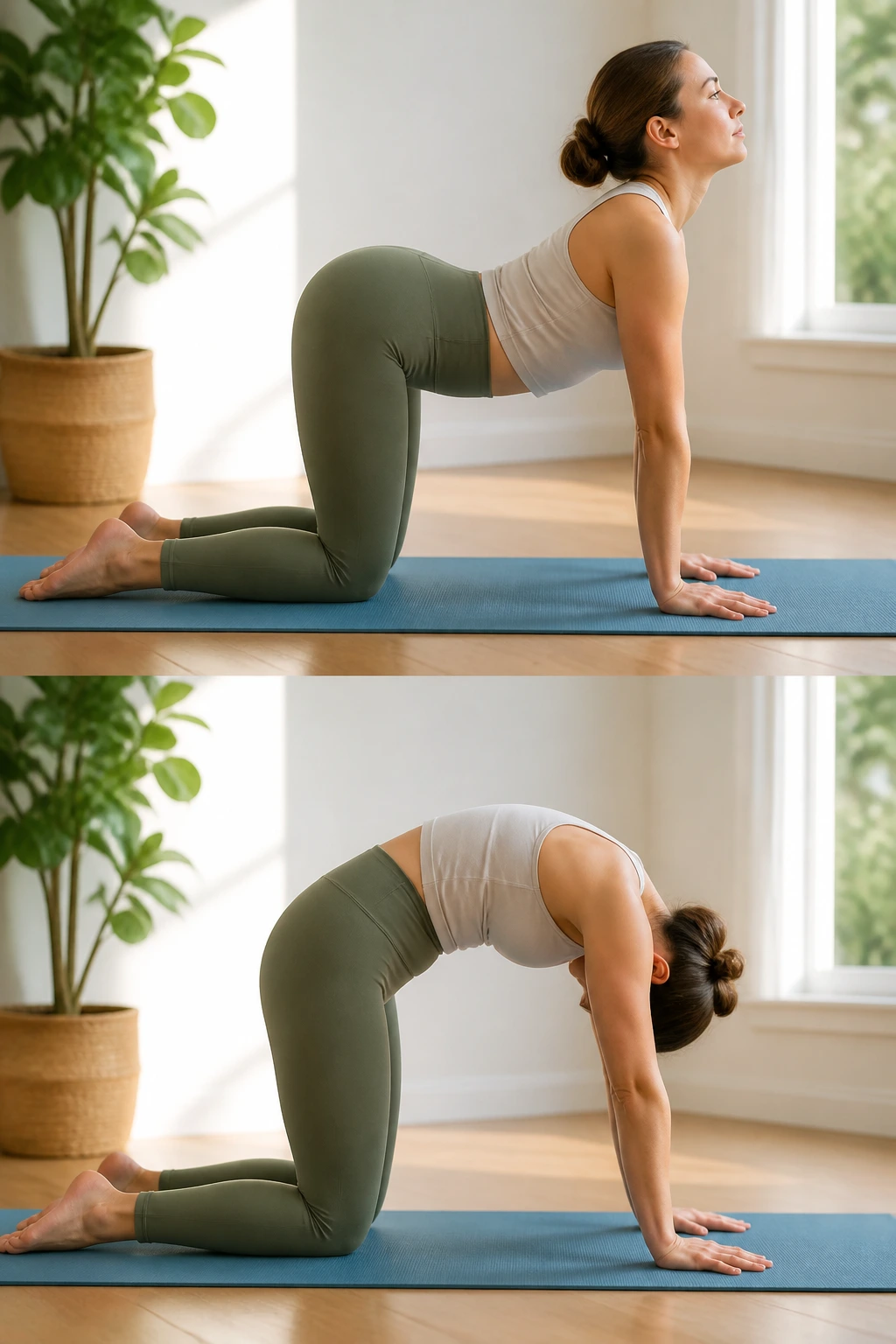
This classic yoga move is vital for spine health, acting like a gentle massage for the vertebrae. Start on your hands and knees in a tabletop position, wrists directly under your shoulders and knees under your hips. As you inhale, drop your belly toward the floor, lift your chin and chest, and look up toward the ceiling. This is the Cow pose.
Transitioning to Cat
Exhale deeply, tuck your chin toward your chest, and arch your back toward the ceiling, just like a cat stretching. The secret here is not just the movement, but the conscious articulation of every single vertebra. Do not just move your neck and hips; imagine pulling your spine apart, segment by segment. This creates space in the stiffest areas of your thoracic spine.
Key Tips for Success
- Keep your movements fluid.
- Match your breath to the movement.
- Avoid crunching your neck during the Cow phase; think of lengthening, not just bending.
3. Bird-Dog
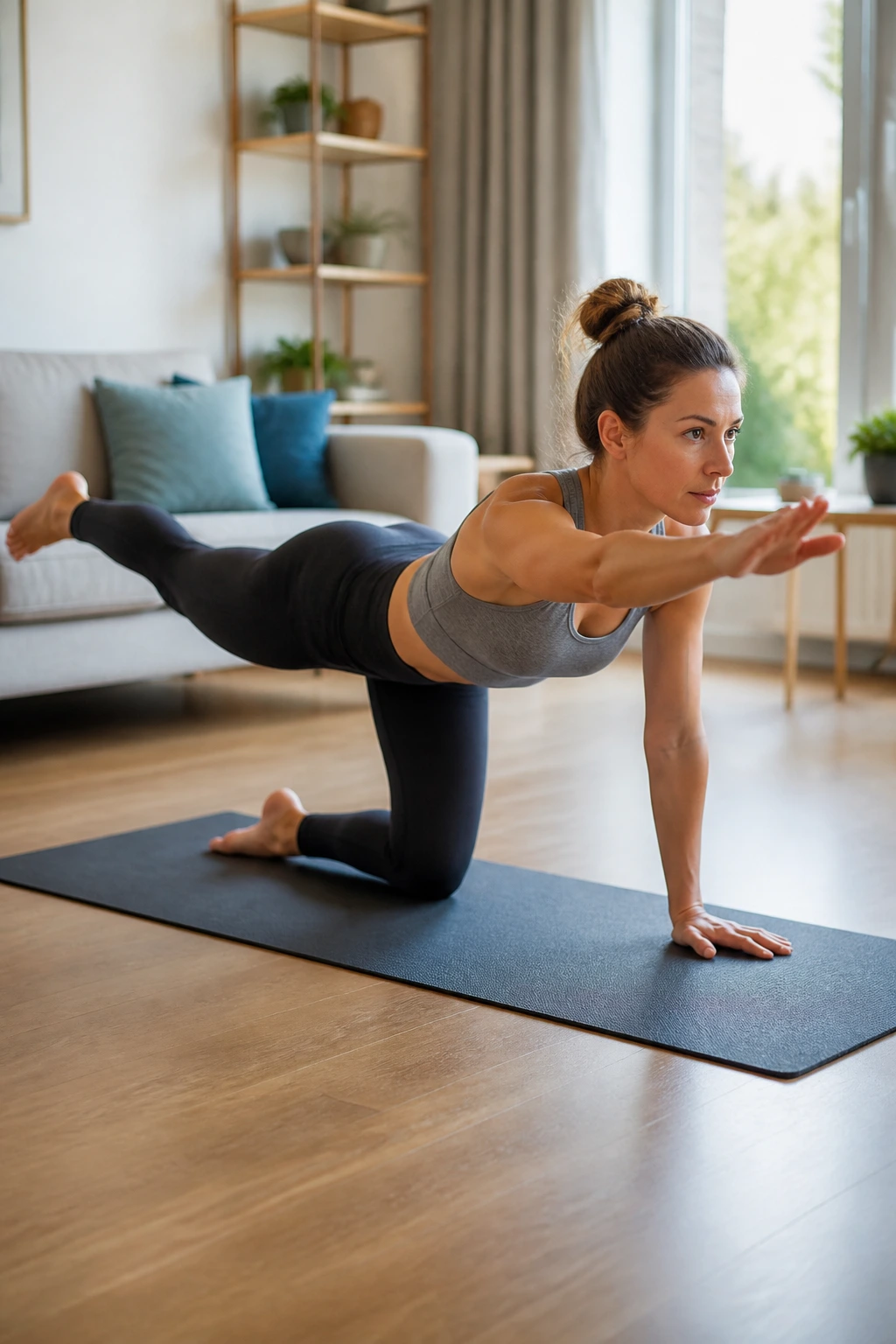
Stability is the foundation of good posture. If your core is weak, your spine collapses, no matter how much you stretch your chest. The bird-dog exercise forces you to stabilize your torso while moving your limbs, which is exactly what your body needs to do when walking or reaching for something on a shelf.
Start on all fours. Simultaneously extend your right arm forward and your left leg backward. Keep your hips square to the floor. If you wobble or rotate your hips, you lose the benefit of the core engagement. Imagine balancing a glass of water on your lower back. If you tilt, the water spills. Hold the extension for three seconds, feeling the tension in your glutes and core, then return to center and switch sides. Do ten total reps on each side. It is harder than it looks.
4. Plank
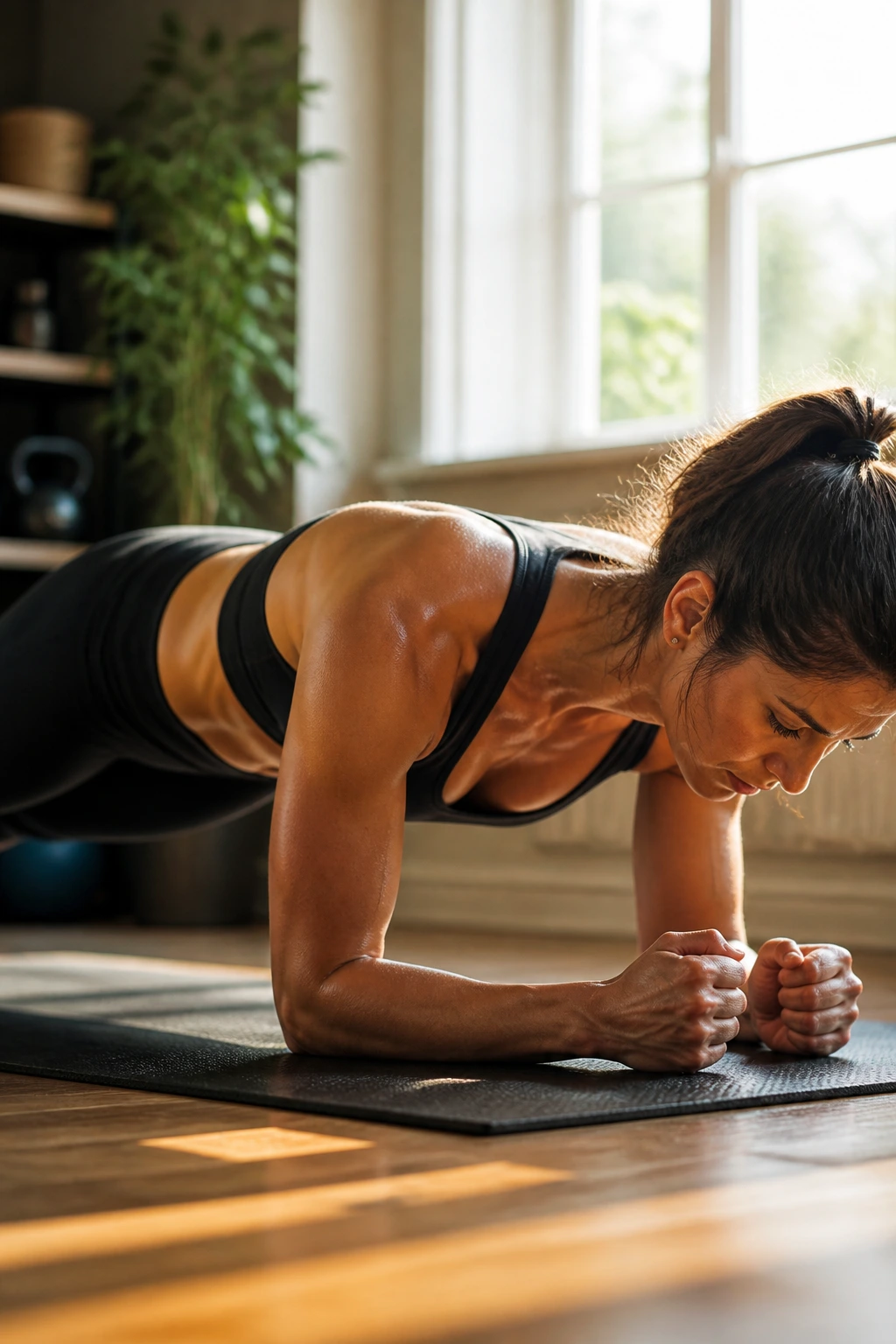
The plank is misunderstood. It is not just an abdominal exercise; it is a full-body engagement tool that trains your body to resist gravity. When you slump, you are letting gravity win. The plank teaches you to hold a rigid, upright posture even when your muscles start to fatigue.
Get into a forearm plank position. Your elbows should be tucked under your shoulders. Squeeze your glutes, pull your belly button toward your spine, and imagine you are trying to drag your elbows toward your toes. Do not let your hips sag. If your back starts to arch, you are done. It is better to hold a perfect 30-second plank than a sloppy one-minute version where your lower back takes the load. Consistency with form creates the results, not the duration.
5. Doorway Chest Stretch
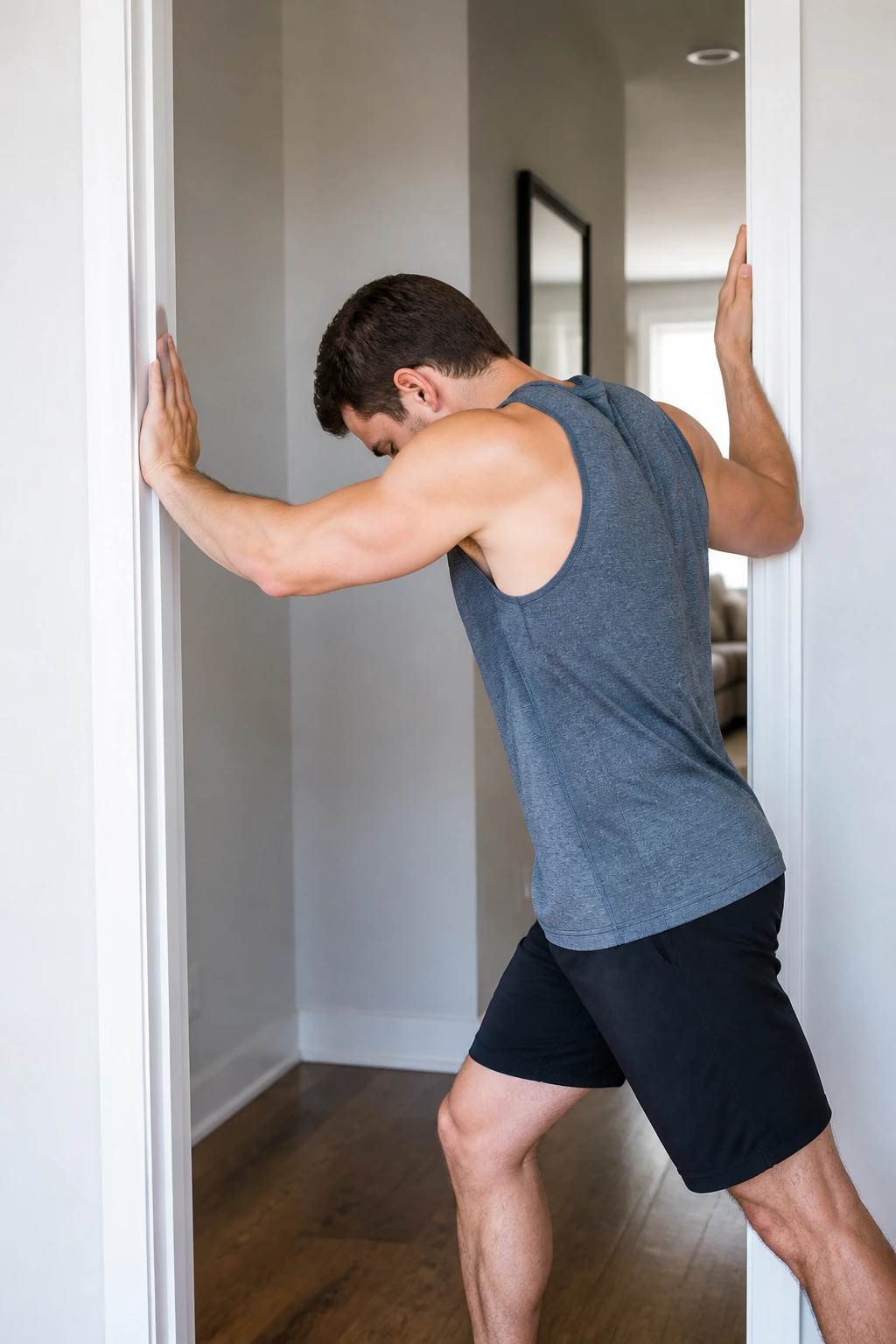
Your chest muscles, specifically the pectoralis minor, get incredibly tight from sitting at desks. When these muscles are short, they literally pull your shoulders forward, creating that hunched look. The doorway stretch is the most effective way to reverse this pull.
Find an open doorway. Place your forearms on the door frame, elbows at shoulder height, forming a ninety-degree angle. Step one foot through the doorway, letting your body weight lean forward. You should feel a deep, satisfying stretch across your chest and the front of your shoulders. Hold this for thirty to forty-five seconds. Take deep breaths. If you do not feel the stretch, adjust your elbow height—higher usually increases the intensity significantly. It feels incredibly good after a long day.
6. Child’s Pose
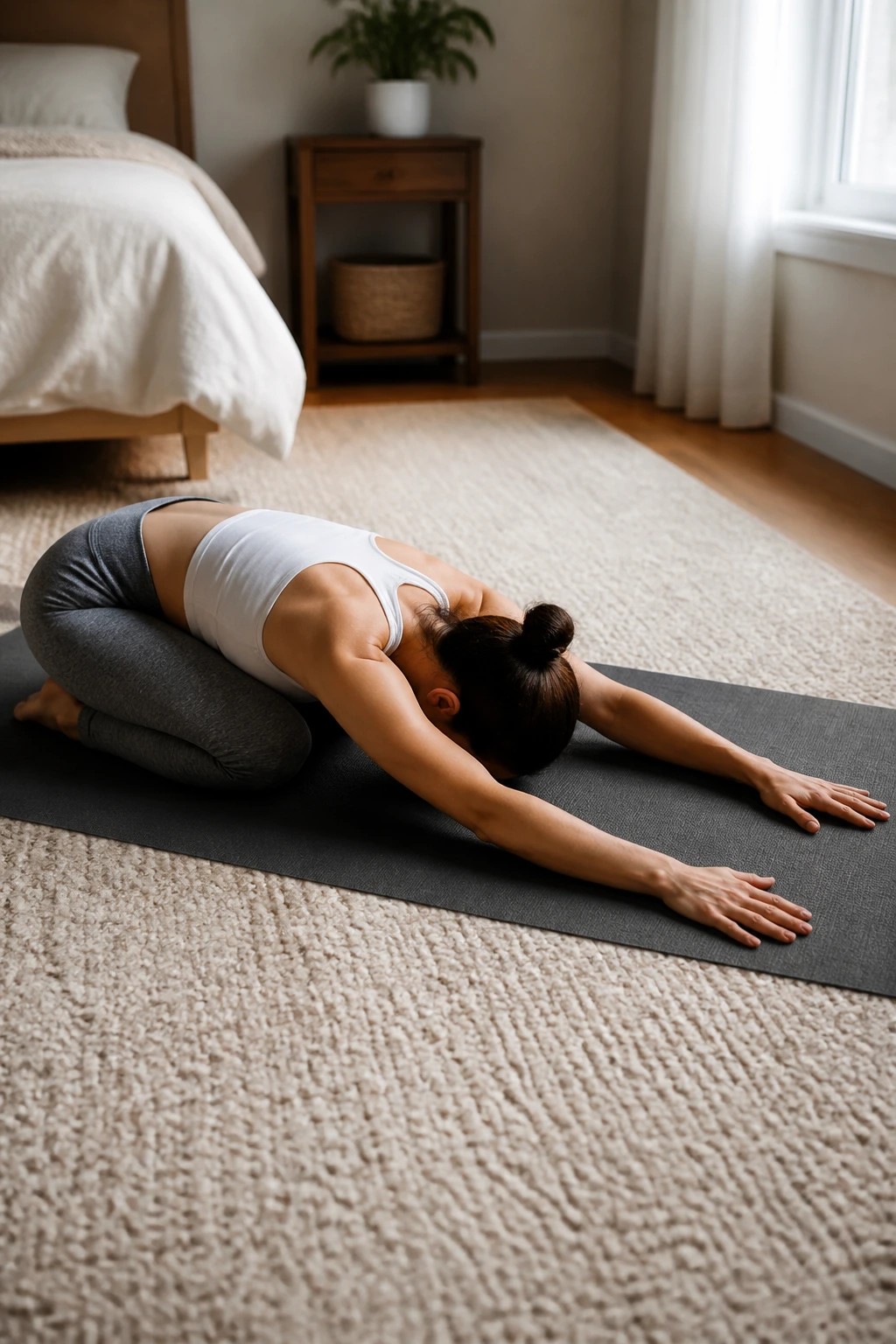
This is your resting point, but it’s also an active stretch for the lats and the lower back. Kneel on the floor, toes together, knees spread wide. Reach your arms as far forward as you can, palms pressing into the floor, while you sink your hips back toward your heels.
You want to feel a stretch all the way down the sides of your torso. Walk your hands to the right for a side-body stretch, then to the left. This decompresses the spine and allows the muscles around the shoulder blades to release their grip. Stay here for a minute. Let your head rest on the mat or the floor. It is about letting go of the tension you didn’t even realize you were holding.
7. Thoracic Extension with Foam Roller
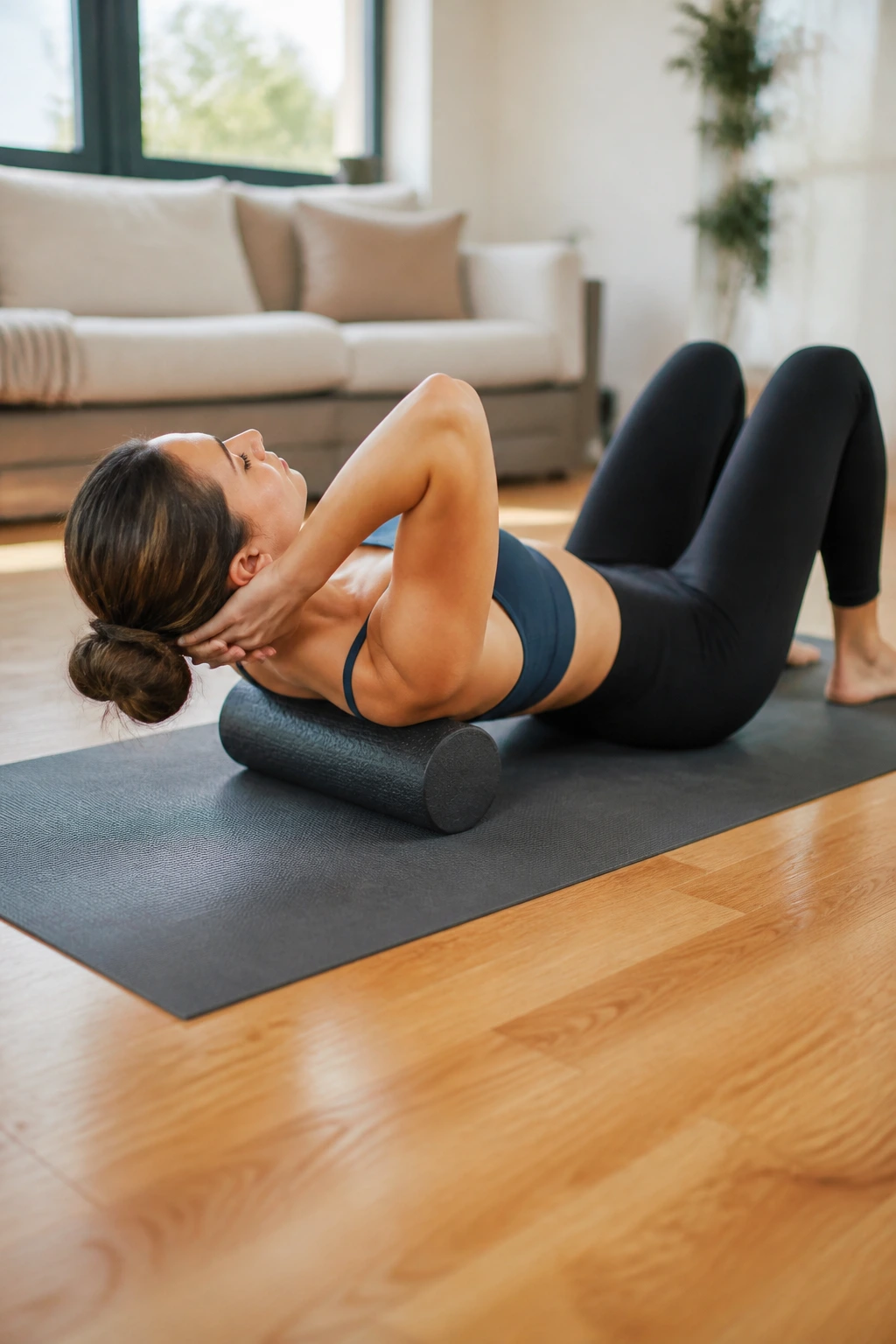
If you have a foam roller, use it to target the stiffest part of your back: the thoracic spine, right between the shoulder blades. Lie on your back with the foam roller placed horizontally across your mid-back. Support your head with your hands, keeping your elbows narrow.
Why It Works
By arching your upper back over the roller, you are physically forcing your spine into the extension it desperately lacks from sitting slumped all day. Keep your butt on the floor. Don’t let your lower back do the work; isolate the movement to the upper back. Roll slowly from the base of your shoulder blades up to the top, but never roll onto your neck. It’s like doing a controlled backbend without the fear of falling.
8. Prone Cobra
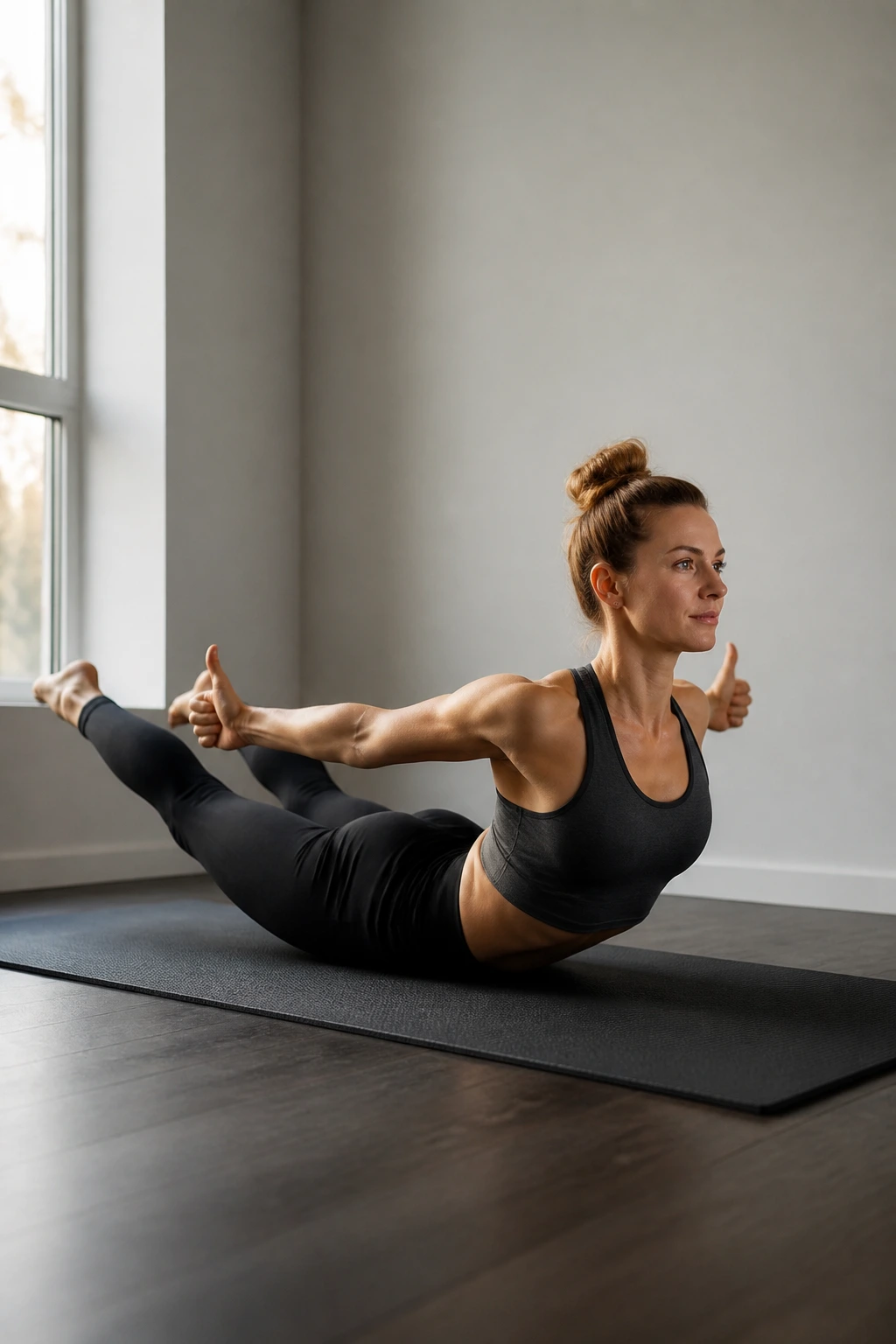
This is a small, quiet, and incredibly effective move for strengthening the rear deltoids and the muscles between your shoulder blades. Lie face down on a flat surface, arms at your sides, palms facing the floor.
The Execution
Lift your chest, arms, and legs off the ground simultaneously. Your body should look like a flying bird. As you lift, rotate your thumbs outward toward the ceiling. Squeeze your shoulder blades together. Think of pinching a pencil between them. Hold for five seconds, then lower. This is about building the endurance of the postural muscles. If you can do three sets of ten, you are on your way to stopping that forward-shoulder roll for good.
9. Scapular Retractions

You can do these standing, sitting, or even waiting in line for coffee. It is the most discreet way to correct your posture throughout the day. Simply imagine you are trying to pull your shoulder blades down and back, toward your back pockets.
Do not lift your shoulders toward your ears; keep them low and relaxed. The movement is subtle—it’s just a squeeze. Hold the retraction for a five-count, then release. This exercise wakes up your rhomboids and trapezius, the muscles that hold your upper body upright. If you find yourself slouching while working, perform ten of these, and notice how your chest instantly feels more open.
10. Chin Tucks
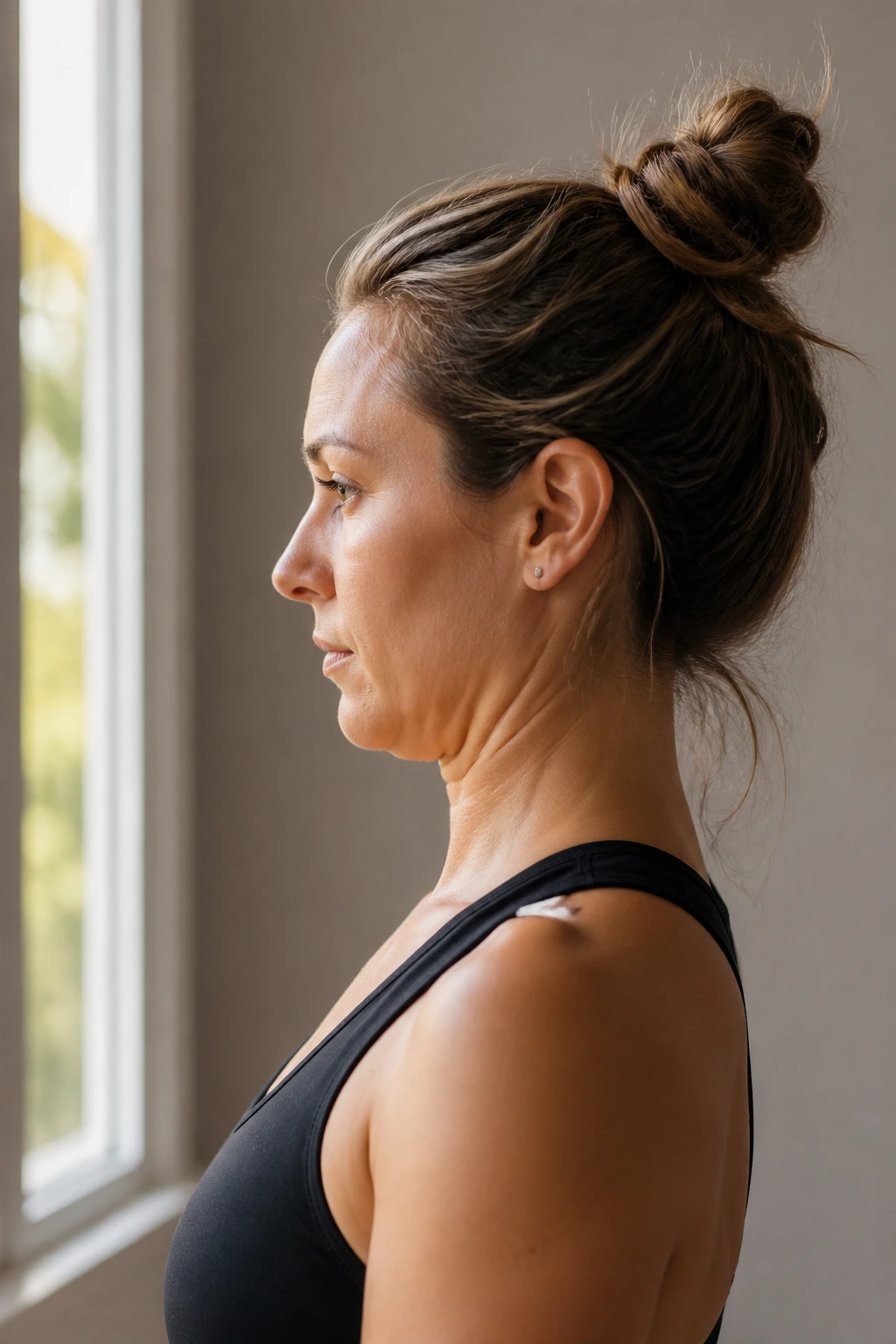
Text neck is real, and it’s likely the reason your neck feels stiff by the end of the day. A chin tuck resets the position of your head over your shoulders. Stand tall, looking straight ahead.
Without tilting your head up or down, pull your chin straight back as if you are trying to make a double chin. You should feel a stretch at the base of your skull. Hold for three seconds, then release. This movement strengthens the deep neck flexors that are often neglected. It is a tiny motion, but it fixes the structural issue of your head drifting forward toward your screen. Repeat this ten times whenever you catch yourself slouching.
11. Glute Bridges
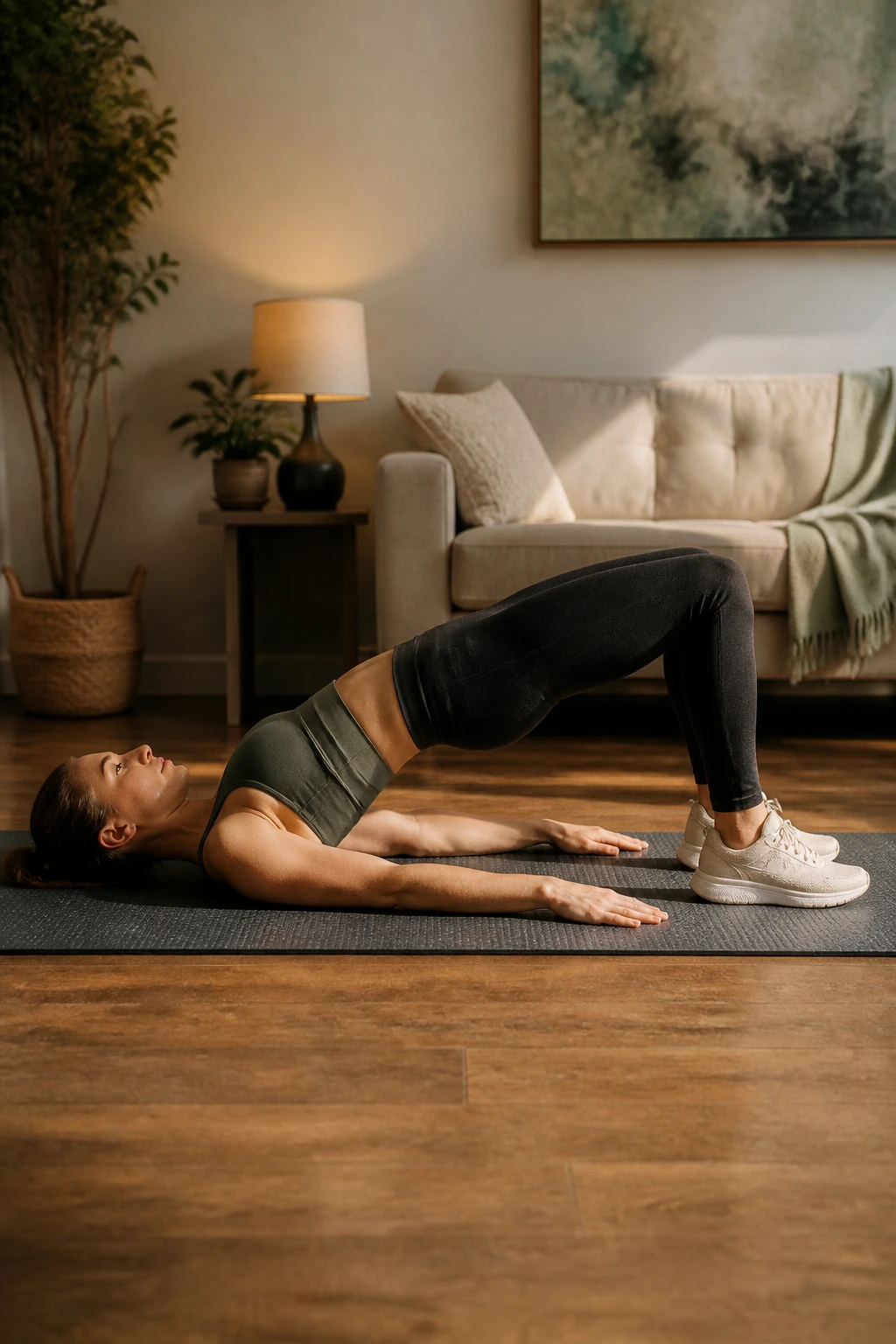
Wait, why are we talking about glutes for posture? Because your posterior chain—which includes your glutes and lower back—is a connected system. If your glutes are weak, your pelvis tilts forward, which forces your lower back to arch excessively, causing pain.
Lie on your back, knees bent, feet flat on the floor. Drive through your heels to lift your hips toward the ceiling, squeezing your glutes at the top. Keep your ribs tucked down. Do not hyper-extend your lower back at the top. You want a straight line from your knees to your shoulders. This movement forces your pelvis into a neutral position, which is the starting point for a healthy, pain-free spine.
12. Dead Bug
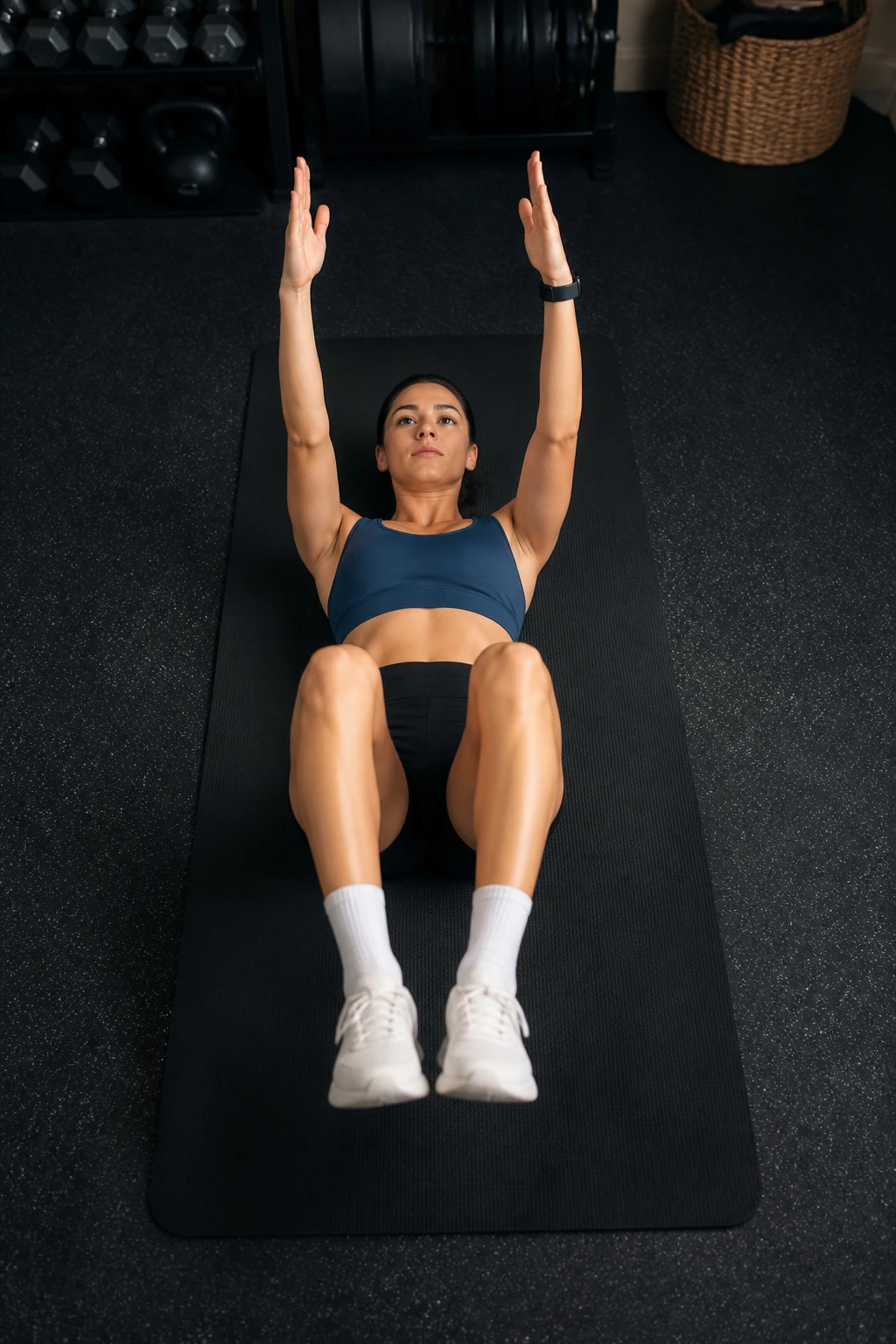
The dead bug is the most honest core exercise because it leaves nowhere to hide. Lie on your back with arms extended toward the ceiling and legs in the air, knees bent at ninety degrees. This is the starting position.
The Technique
Press your lower back firmly into the floor. This is non-negotiable. Slowly lower your right arm behind your head and extend your left leg forward, keeping them just an inch above the floor. Return to start, then switch. If your lower back lifts off the floor while you move, you are moving too far or too fast. Slow down. This exercise teaches your body to maintain a neutral spine while your limbs are moving, which is the exact skill you need to stop slouching when you reach for things.
13. Superman
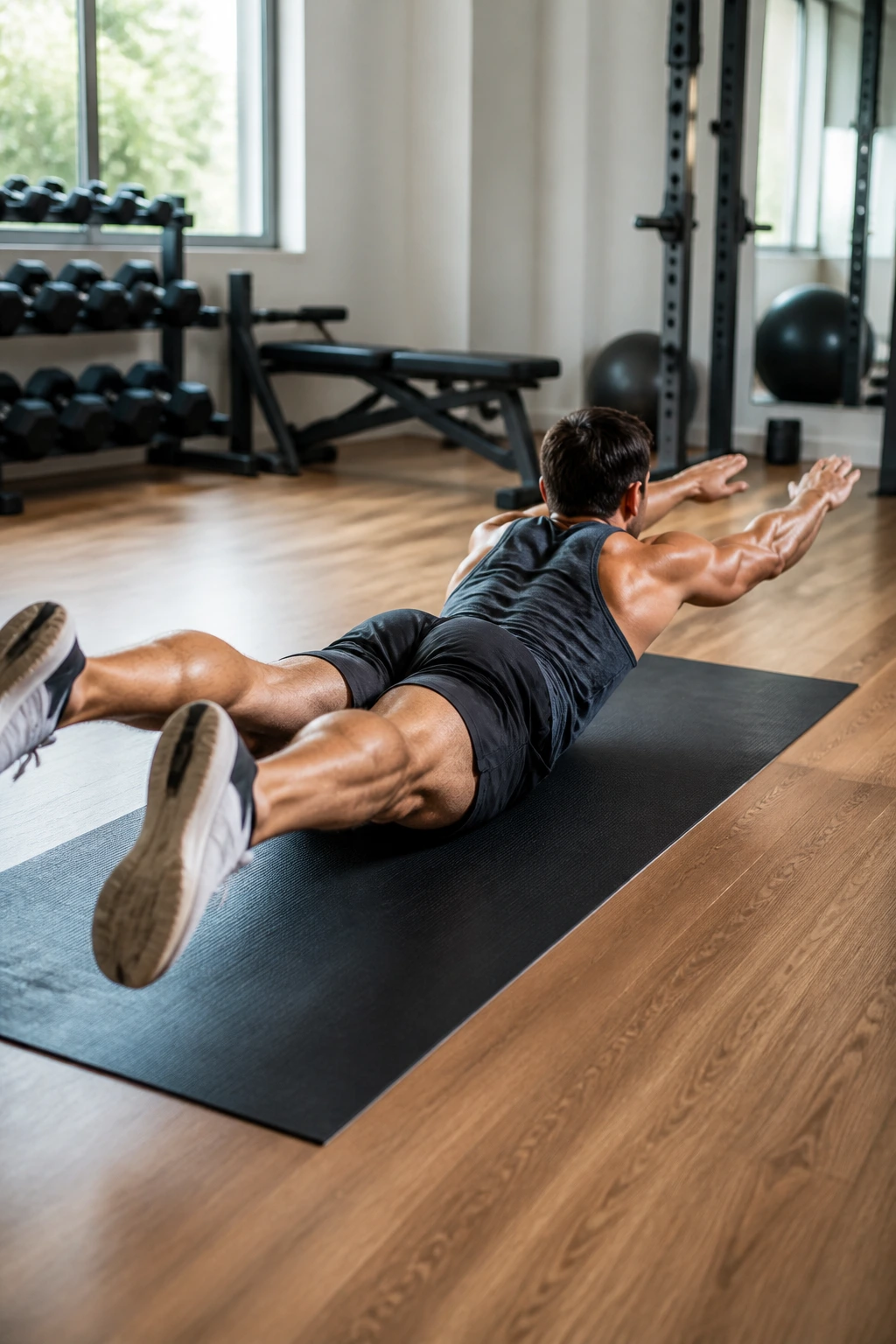
This is the Prone Cobra’s big brother. It’s excellent for full-body posterior chain activation. Lie on your stomach, arms and legs fully extended. Simultaneously lift your arms, chest, and legs off the ground.
The key is not how high you go, but the length you create. Reach your fingertips to one wall and your toes to the other. You are working your glutes, your entire back, and your shoulders. Hold for a moment, feeling the tension across your whole back side, then lower with control. It is a full-body postural reset.
14. Y-Raises
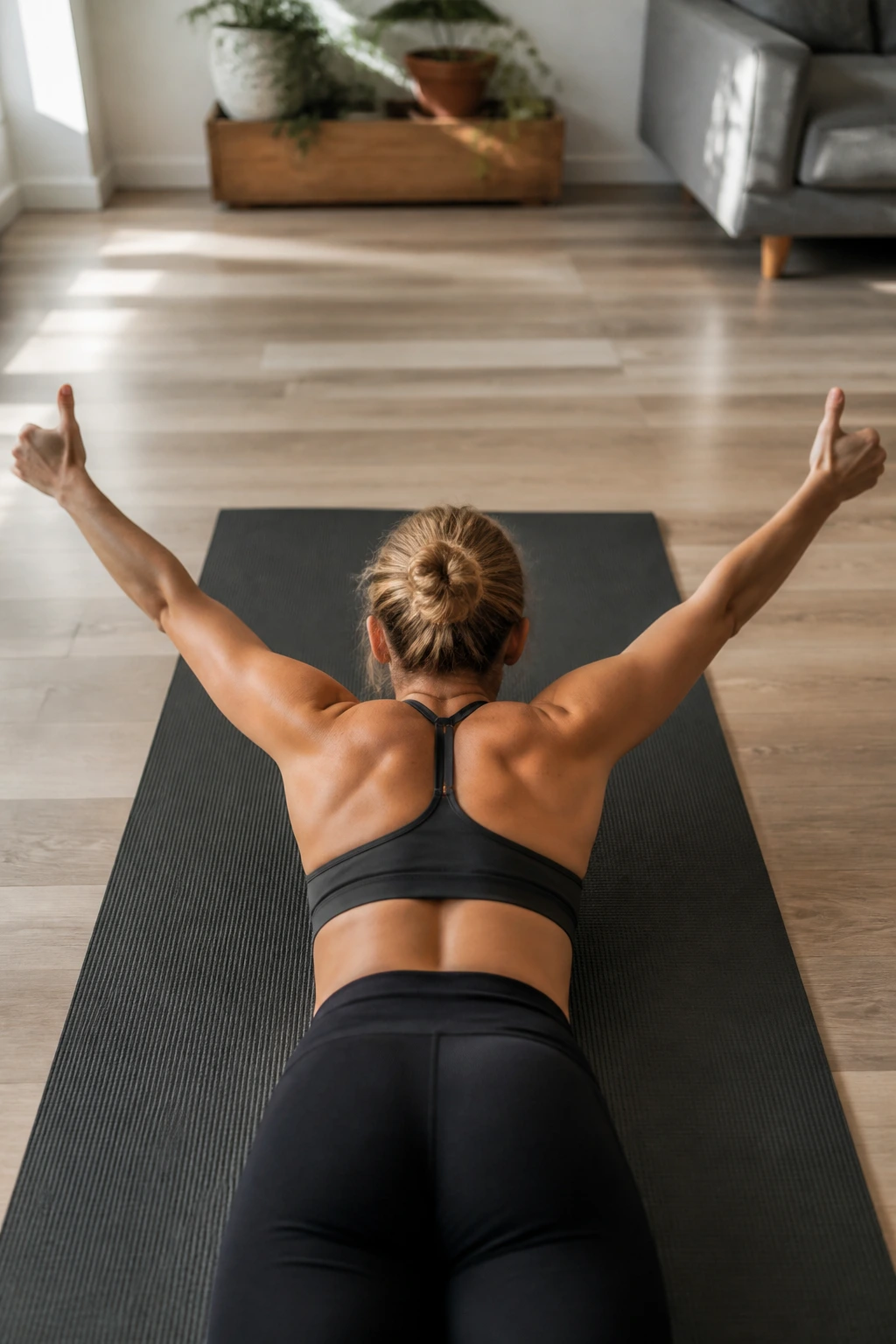
If you have access to a light pair of dumbbells or even just water bottles, use them. If not, body weight works perfectly well. Lie face down on an incline bench or just on the floor, and raise your arms out to the sides in a “Y” shape.
Why the “Y” Matters
This specific angle targets the lower trapezius, which is often weak in people who have chronically rounded shoulders. By lifting at this angle, you are strengthening the muscles that help you keep your chest proud and your shoulders down. Keep your thumbs pointing toward the ceiling. Move with intent. Do not swing your arms; lift them with the muscles of your upper back.
15. Side Lying Thoracic Rotation
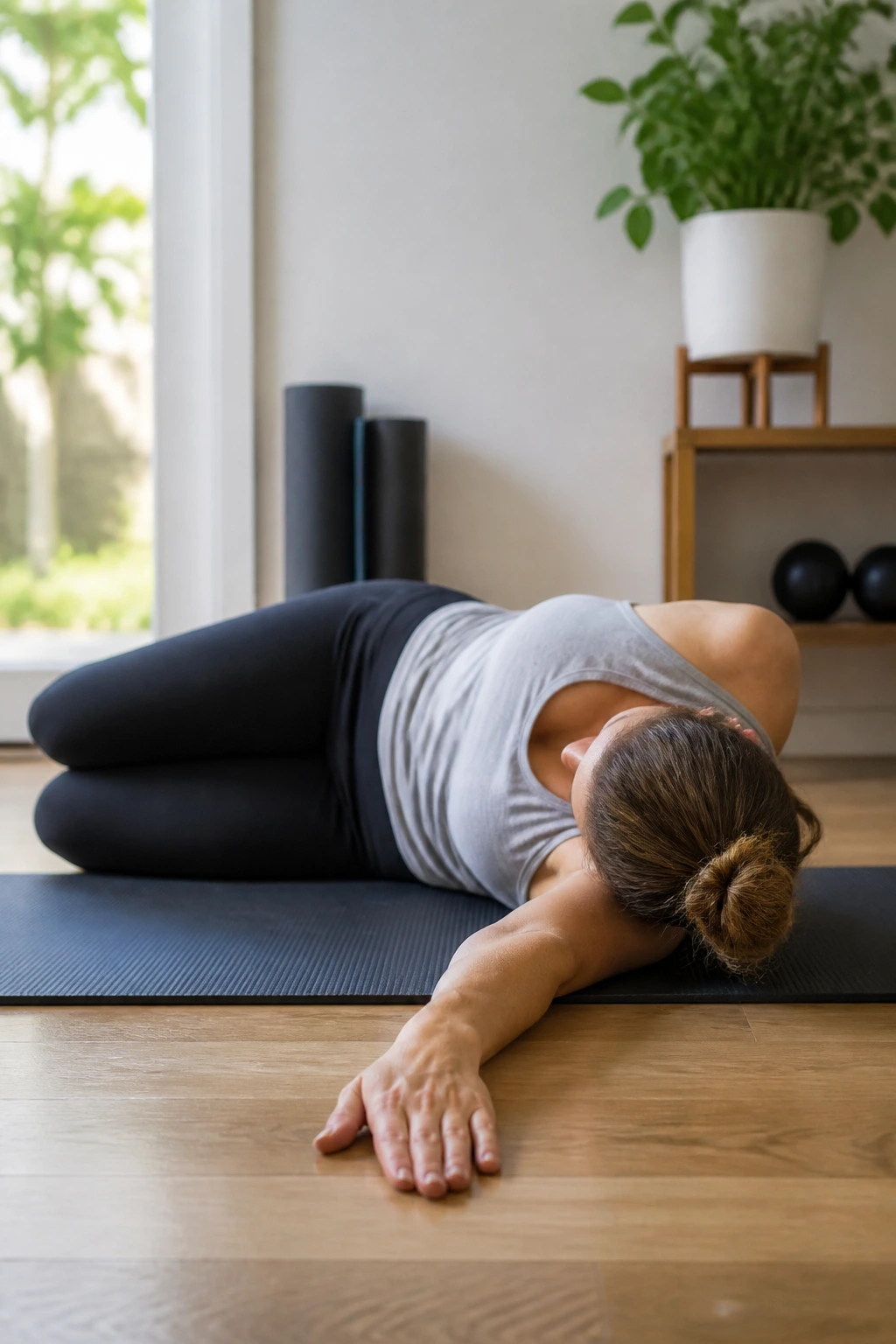
This is a mobility drill that feels incredible for anyone who sits a lot. Lie on your side, knees bent at ninety degrees, arms stretched out in front of you, palms together.
The Rotation
Keeping your knees glued to the floor, rotate your top arm up and over, following your hand with your eyes until it touches the floor on the other side. This creates a massive rotation in your thoracic spine. It is the perfect antidote to the rigidity caused by sitting at a desk. Take a deep breath when your arm is open, feeling your ribcage expand. It is about mobility, not intensity.
16. Resistance Band Pull-Aparts
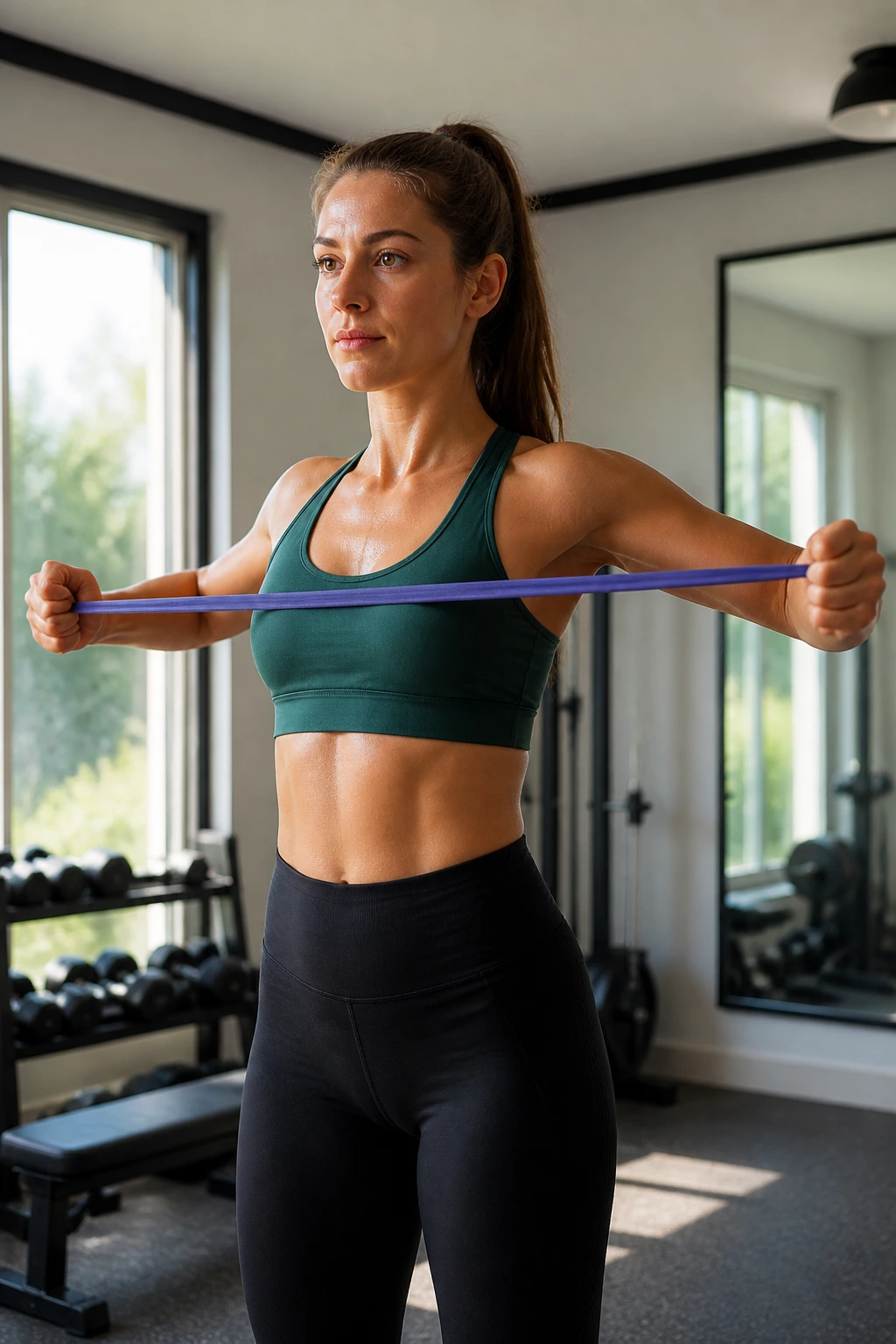
This is the gold standard for shoulder health. Take a resistance band, hold it in front of you with both hands, arms straight. Keeping your arms straight, pull the band apart, bringing your hands out to the sides until the band touches your chest.
The Squeeze
Focus entirely on the squeeze between your shoulder blades. Do not let your shoulders shrug up. Keep them depressed. This exercise directly strengthens the muscles that keep your shoulders from rounding forward. Three sets of fifteen, and your posture will feel noticeably more “set” and stable. It’s a game-changer for shoulder tension.
17. Reverse Flys
If you are at the gym, grab light dumbbells. At home? Use soup cans. Bend forward at the hips, keeping your back flat, almost parallel to the floor. With a slight bend in your elbows, lift your arms out to the sides, squeezing your shoulder blades together.
It is easy to use momentum here, but avoid that. Control the weight on the way down. The eccentric (lowering) portion of the move is where the muscle-building happens. This targets the rear deltoids, which act as the brakes for your shoulders, keeping them pulled back in their proper socket rather than rolling forward toward your screen.
18. Sitting Spinal Twist
Sometimes you need to address the rotation of the spine. Sit on the floor with your legs extended. Cross your right leg over your left, placing your right foot on the outside of your left knee. Hug your right knee with your left arm, and twist your torso to the right, looking behind you.
Sit tall. Do not slouch into the twist. The goal is to grow taller with every inhale and twist deeper with every exhale. This stretches the obliques and the deep spinal stabilizers. It feels great to get that rotational range of motion back, especially when you spend your day facing one direction.
19. Forward Fold
Stand with feet hip-width apart, knees slightly bent. Hinge at your hips and fold forward, letting your head and arms hang heavy. This is a gentle way to decompress the entire spine.
Don’t worry about touching your toes. Focus on the feeling of your spine lengthening from your tailbone to your crown. If you have tight hamstrings, the pull will be intense, so keep those knees bent as much as you need. This is a passive stretch. Let gravity do the work. It is the perfect move to do after a long period of sitting to reset the nervous system and the spine.
20. Sphinx Pose
This is a gentle backbend, ideal if you are new to the idea of extending your spine. Lie on your stomach, legs long. Place your elbows under your shoulders, forearms on the floor, palms down.
Gently press through your forearms to lift your chest off the floor. Keep your shoulders away from your ears. Look forward. This creates a nice, controlled arch in your mid-back. If you feel any pinching in your lower back, lower your chest slightly. The goal is to stretch the front of the abdomen and open the chest, not to crunch the lower vertebrae.
21. Seated Posture Correction with Towel
This is a simple trick to use while you are at your desk. Take a small towel or a rolled-up sweater. Place it horizontally behind your mid-back, right at the level of your shoulder blades, between you and the back of your chair.
The Feedback Loop
This provides constant physical feedback. Every time you start to slouch, the towel shifts, and you become aware of it. It is not forcing you into a position; it is reminding your body where you want to be. It encourages a natural upright posture without the exhaustion of trying to “hold” it. It is a quiet, effective way to hack your environment.
22. Shoulder Rolls with Awareness
This sounds trivial, but most people do it wrong. When you roll your shoulders, most people just go up and down. That does nothing for posture.
The Correct Way
Bring your shoulders forward, then way up to your ears, then rotate them back, and finally, push them down as far as they will go. That final “down” position is where you want them to live. Do this in a smooth, continuous circle. This resets the shoulder girdle. If you catch yourself tense at the desk, do five of these rolls, emphasizing that deep downward push at the end. It instantly creates space in the neck.
23. Downward Dog
Downward dog is the classic full-body reset. Start on all fours, tuck your toes, and lift your hips high, creating an inverted “V” shape. Spread your fingers wide and press through your palms.
This exercise is amazing for the entire back line of the body—from your heels, up through your calves and hamstrings, into your glutes, all the way to your mid-back. Pedal your feet to stretch out your calves. Push your chest toward your thighs to open your shoulders. It is a powerful stretch for the postural muscles that get locked up during a day of sedentary work.
24. The W-Raise
Stand against a wall, heels, hips, and upper back touching it. Raise your arms to create a “W” shape, elbows bent and tucked in by your ribs.
The Movement
Push your elbows and wrists into the wall as you slide your arms up into a “Y” and back down to the “W.” Keep constant contact with the wall. This is a harder variation of the wall angel, and it is brutally effective at engaging the lower traps and the rotator cuff. It forces you to maintain external rotation, which is the exact opposite of the internal rotation posture that leads to the desk hunch.
25. Standing Pelvic Tilt
You can do this anywhere. Stand tall. Find your hip bones with your fingers. Gently tuck your tailbone underneath you, as if you are trying to zip up a tight pair of jeans. You will feel your lower abdominal muscles engage.
The Shift
This movement rotates your pelvis back into a neutral alignment. Most of us walk around with an anterior pelvic tilt—a swayback—which throws the rest of our spine out of alignment. By practicing the pelvic tilt, you learn what a “neutral spine” actually feels like. Once you know that feeling, you can replicate it while standing, walking, and even sitting. It is the foundation of all good posture.
Final Thoughts
Correcting your posture is not a sprint; it is a lifestyle adjustment. You spent years training your body to sit in a slump, so it is only fair that it takes some time to teach it a better way. The most effective approach is to stop looking for a “magic fix” and start incorporating these movements into the small gaps in your day.
You don’t need to do all twenty-five exercises at once. Pick three or four that feel the most restorative for your specific tight spots and commit to doing them daily. Awareness is the biggest part of the battle. The moment you catch yourself drifting into a hunch—and you will—simply take a breath, perform a few shoulder rolls, reset your pelvis, and continue on. Consistency beats intensity every single time. Your body is incredibly adaptive; give it the right cues, and it will eventually hold itself with the grace and alignment you are working toward.
