



You walk into the gym or step into your home workout space, and the instinct is often to head straight for the weights or jump right into your main cardio session. That is a mistake. Your muscles are like stiff rubber bands that have been sitting in the freezer overnight. Trying to force them into high-intensity movement without a proper wake-up call is a recipe for micro-tears, joint stiffness, and an exercise session that never truly hits its stride.
Static stretching—holding a pose while standing still—has its place, but that place is after the workout, when your muscles are already warm and pliable. Before you train, you need dynamic movement. You need to tell your nervous system that it is time to perform. Dynamic stretching increases blood flow, raises your core body temperature, and prepares your joints for the specific range of motion they are about to experience. It’s not just about limbering up; it is about performance priming.
If you have ever felt like the Tin Man during your first set, you are probably skipping your warm-up or doing it wrong. The following twenty movements are designed to move you through multiple planes of motion, lubricate your joints with synovial fluid, and sharpen your neuromuscular connection. Treat these not as chores to check off, but as the first set of the day.
1. Arm Circles

This is the foundational movement for shoulder mobility. The shoulder is a complex, ball-and-socket joint that relies entirely on surrounding muscle and connective tissue for stability. Without proper activation, you risk pinching nerves or straining the rotator cuff during pushing or pulling exercises.
How to execute for maximum benefit
Stand with your feet shoulder-width apart and extend your arms straight out to your sides, parallel to the floor. Imagine your fingertips are tracing the outline of a giant clock face on the wall beside you. Start with small, controlled forward circles, gradually increasing the size until you are moving your full arms in wide, sweeping arcs.
- Perform 15 seconds of forward circles.
- Switch direction and perform 15 seconds of backward circles.
- Keep your core braced so your back doesn’t arch to compensate for limited shoulder mobility.
Pro tip: Do not rush this. The goal is controlled rotation, not flailing your limbs around. If you feel a “clicking” sensation in your shoulder, reduce the range of motion immediately and focus on moving through a smaller, pain-free arc.
2. Front-to-Back Leg Swings
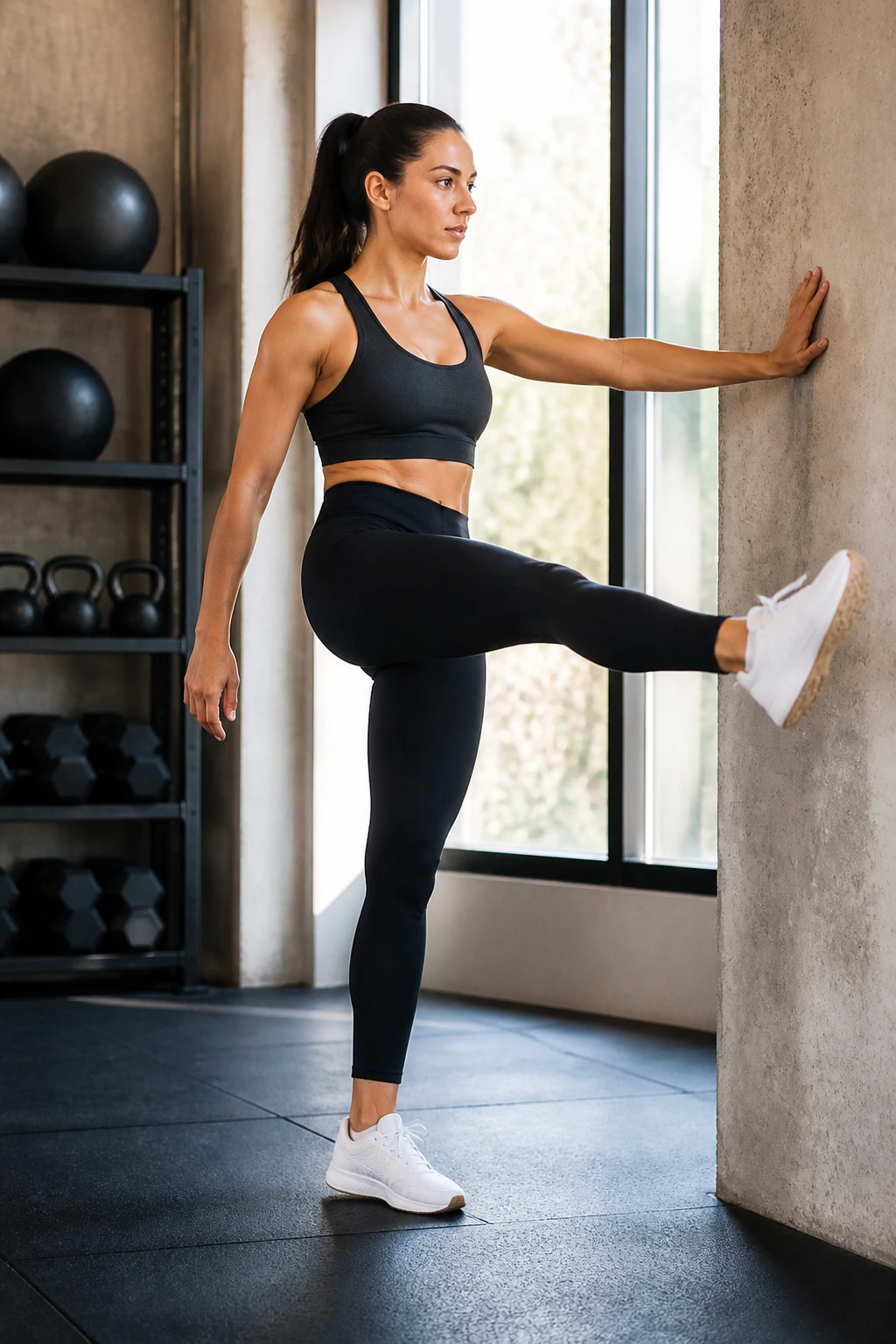
Your hips are the bridge between your upper and lower body. When they are tight, your lower back often picks up the slack, leading to that nagging ache many people assume is just “part of training.” This move opens up the hip flexors and the hamstrings in a coordinated rhythmic motion.
You need something to hold onto for this. Find a wall, a squat rack, or a sturdy chair. Stand on your left leg and swing your right leg forward and backward like a pendulum. Let the movement come from the hip joint, not the lower back. If you arch your back to get your leg higher, you’ve lost the point of the exercise.
Why this works
This is a reciprocal inhibition drill. As your leg swings forward, the hamstring stretches. As it swings backward, the hip flexor gets a dynamic stretch. You are teaching your muscles to release tension as they move. Do 15 swings per leg, then switch. By the time you finish, your hips should feel noticeably more fluid.
3. Side-to-Side Leg Swings
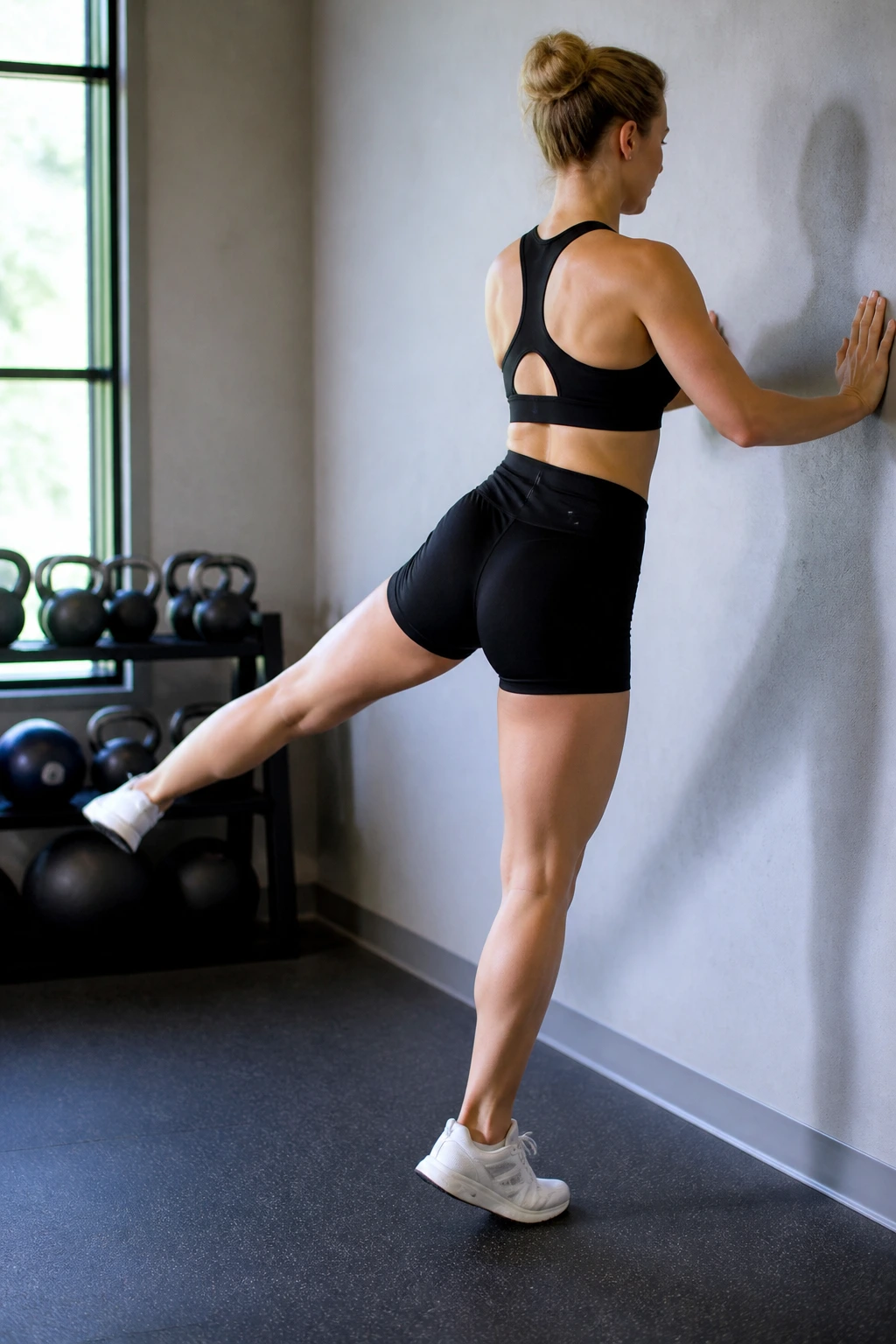
While front-to-back swings target your sagittal plane (forward and back), side-to-side swings address the frontal plane (lateral movement). Most people train primarily forward and backward, which causes the inner and outer thigh muscles to become neglected and tight.
Stand facing your support, holding on with both hands. Shift your weight onto your left leg and swing your right leg across your body and then out to the side. You are effectively trying to “gate” your leg across your midline.
Watch for:
- Keeping the chest upright throughout the movement.
- Avoid twisting the torso; keep your hips square to the support structure.
- Don’t force the height. This isn’t a high kick contest. It is about waking up the adductors (inner thighs) and abductors (outer thighs).
4. Torso Twists
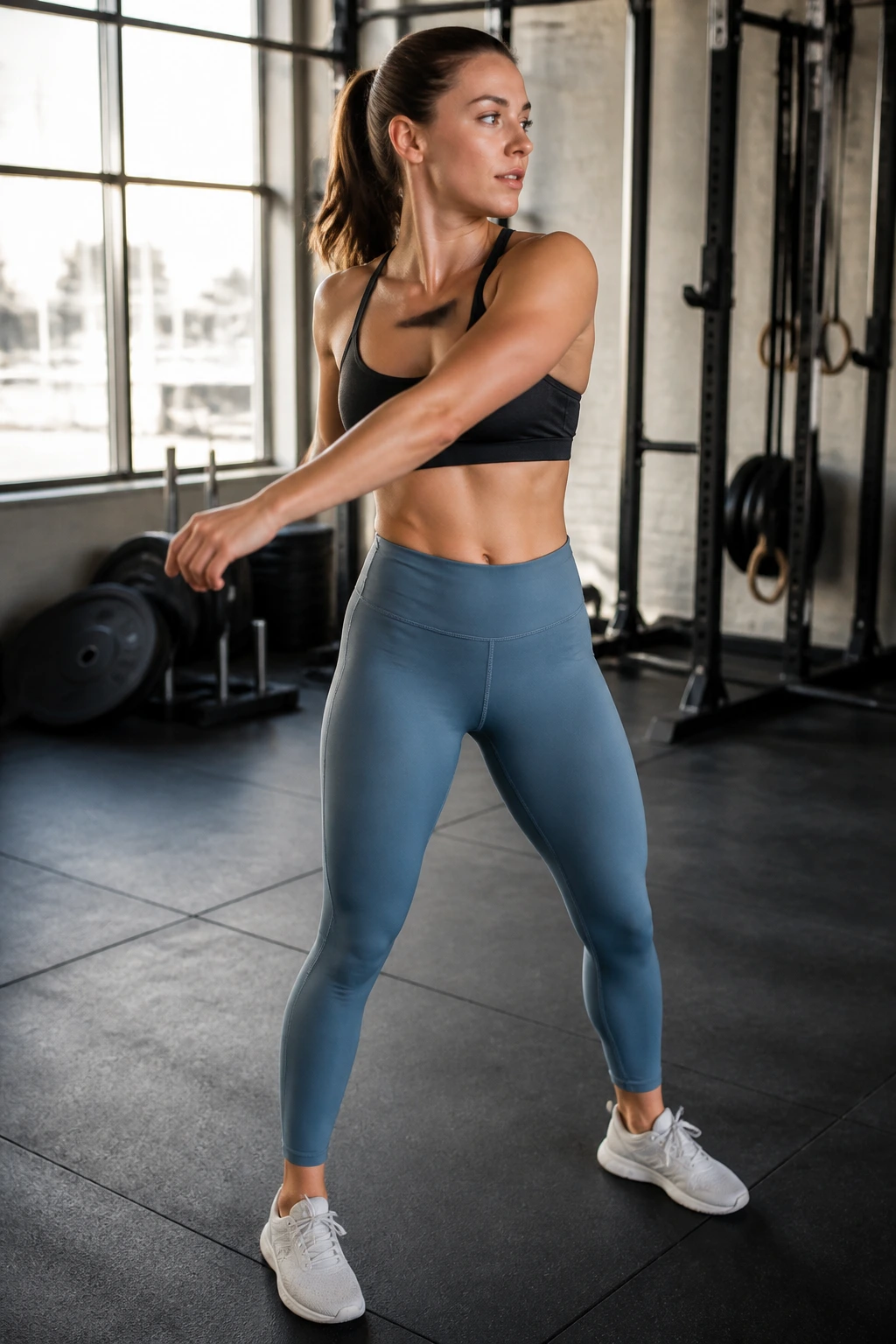
Spinal mobility is often overlooked until the moment a disc complains. Your thoracic spine—the mid-back—is designed for rotation, while your lumbar spine—the lower back—is designed for stability. If your thoracic spine is locked up, your lower back will try to take over, which is a fast track to injury.
Stand with feet wider than hip-width, knees slightly bent, and arms loose at your sides. Twist your torso from side to side, letting your arms swing naturally with the momentum. Pivot on the ball of the trailing foot as you twist. This prevents your knees from absorbing the torque and keeps the rotation focused where it belongs: in the mid-back.
Do this for 30 to 45 seconds. It feels great to get the “creaks” out of your spine before you start picking up heavy objects.
5. Walking Lunges
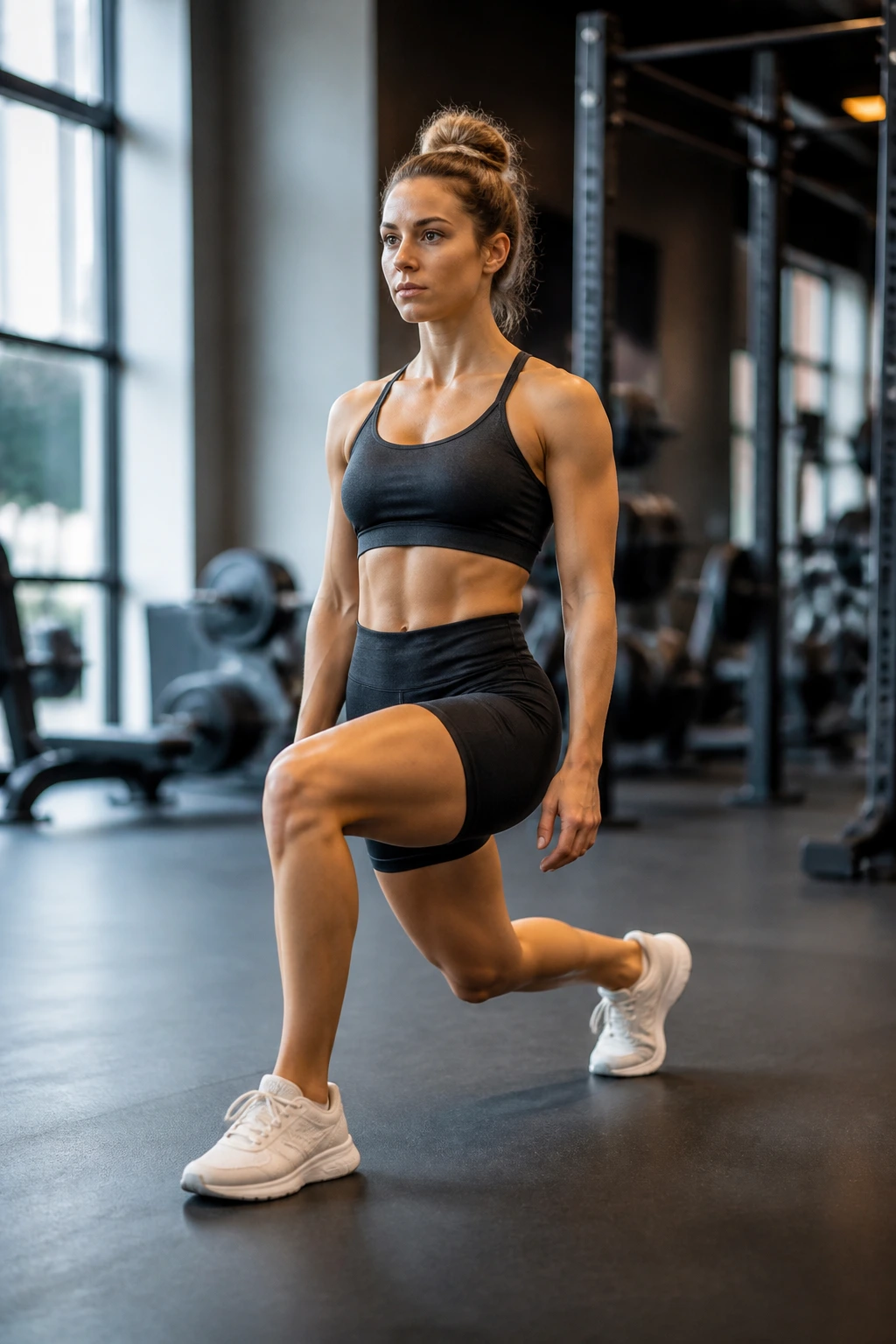
This is a dynamic functional movement that bridges the gap between stretching and strength. Walking lunges activate the glutes, quads, and hamstrings while forcing you to balance and stabilize your core.
Take a step forward with your right leg, dropping your back knee toward the floor. Keep your front knee aligned with your ankle—don’t let it cave inward. As you push off the front foot to bring your left leg forward, engage your core.
Critical form notes
- Torso positioning: Keep it vertical. If you lean forward, you place unnecessary strain on your lower back.
- The step: Do not over-stride. If you step too far, you compromise your hip alignment.
- The depth: You do not need to touch your knee to the ground if it causes pain. Just go deep enough to feel the stretch in your trailing hip flexor.
6. Inchworms
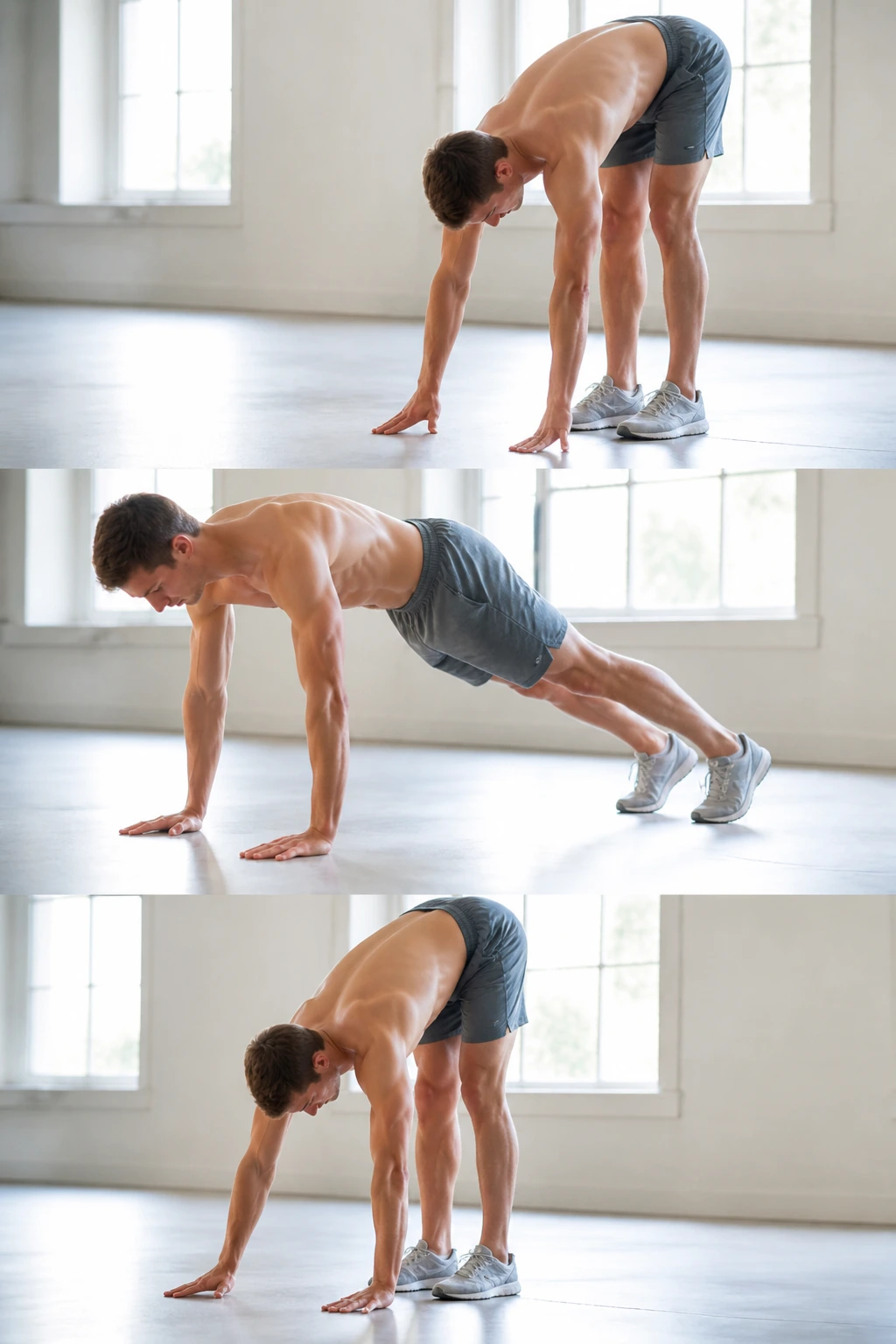
If you want a full-body dynamic stretch that hits your hamstrings, shoulders, and core, this is it. It’s a favorite among athletes for a reason—it forces you to own your range of motion.
Start standing, then hinge at the hips to place your hands on the floor. If you have to bend your knees significantly to reach, that’s fine. “Walk” your hands out on the floor until you reach a high plank position. Hold for one second, feeling your core engage. Then, walk your feet toward your hands, keeping your legs as straight as possible to deepen that hamstring stretch.
Perform 8 to 10 repetitions. By the third rep, you will notice your hamstrings have loosened up enough to allow you to walk your feet closer to your hands.
7. High Knees
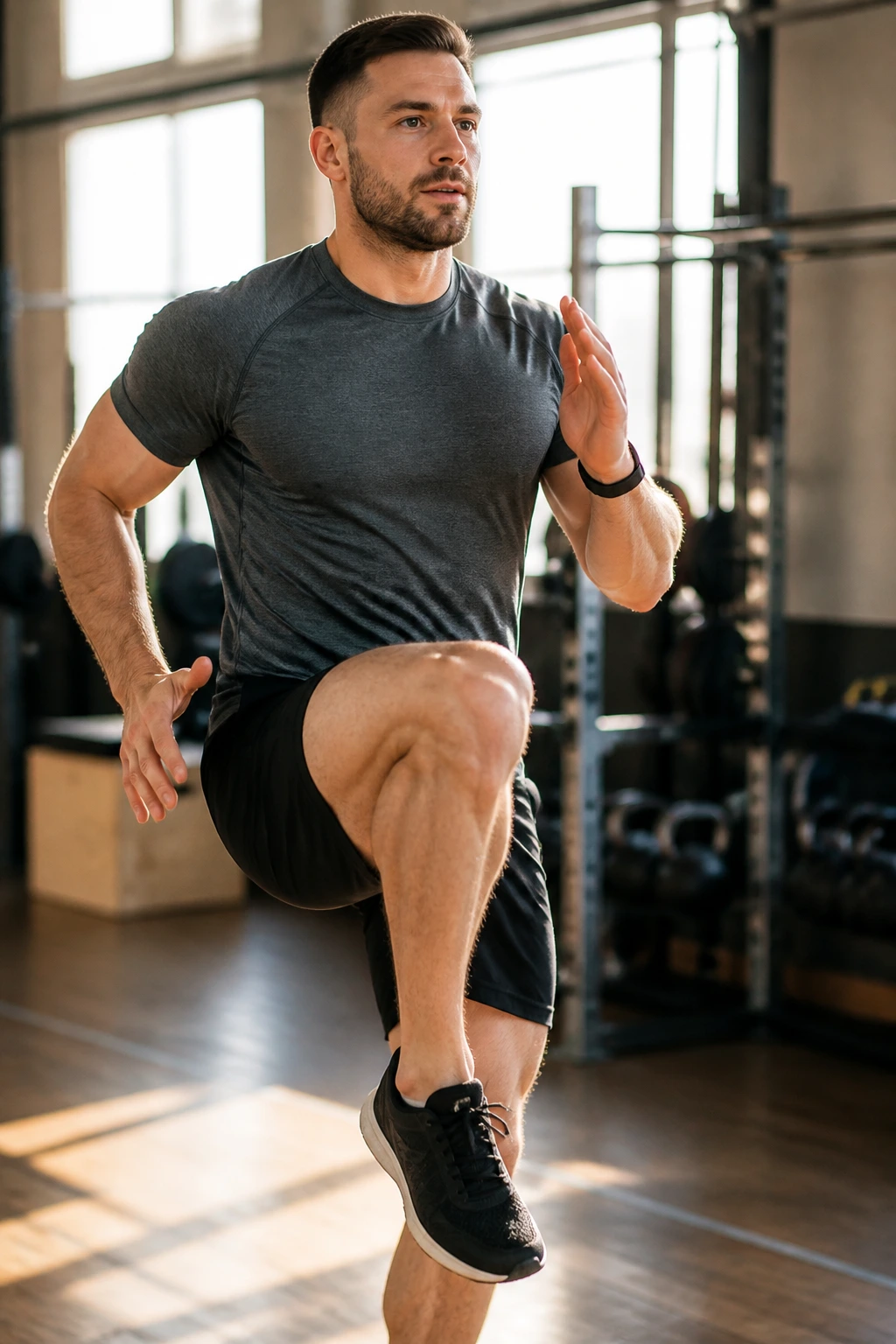
This move raises your heart rate and primes your nervous system for explosive movement. It is as much a warm-up for your cardiovascular system as it is for your lower body.
Run in place, but focus on driving your knees up toward your chest. Keep your torso upright and land lightly on the balls of your feet. Do not stomp. The contact with the floor should be rhythmic and quiet. If you are making a lot of noise, you are not engaging your calves or core effectively.
Variation: If you want to increase the intensity, you can add an arm drive, pumping your arms in sync with your knees, just like a sprinter. 30 seconds of this will ensure you are ready to sweat.
8. Butt Kicks

This is the counterpart to high knees. While high knees work your hip flexors and abs, butt kicks focus on hamstring engagement and knee flexion.
Jog in place, but snap your heels toward your glutes with each step. Keep your knees pointed straight down toward the floor—do not let them drift forward. You should feel a slight stretch in the front of your thigh as your heel comes up. This movement helps counteract the sedentary position of sitting, where hip flexors are chronically tight and hamstrings are often dormant.
9. Arm Cross Swings

Your chest and front deltoids take a beating in most training programs. Before you press, you need to open up that frontal tension.
Stand tall and swing your arms out wide to the sides, palms facing forward. Then, swing them across your chest, hugging yourself. Alternate which arm is on top for each swing. This is a rhythmic, rapid movement. It’s meant to lubricate the shoulder joint and prepare the chest muscles for the eccentric phase of any pressing movement. Don’t pull too hard; just let the momentum create the stretch.
10. Hip Circles
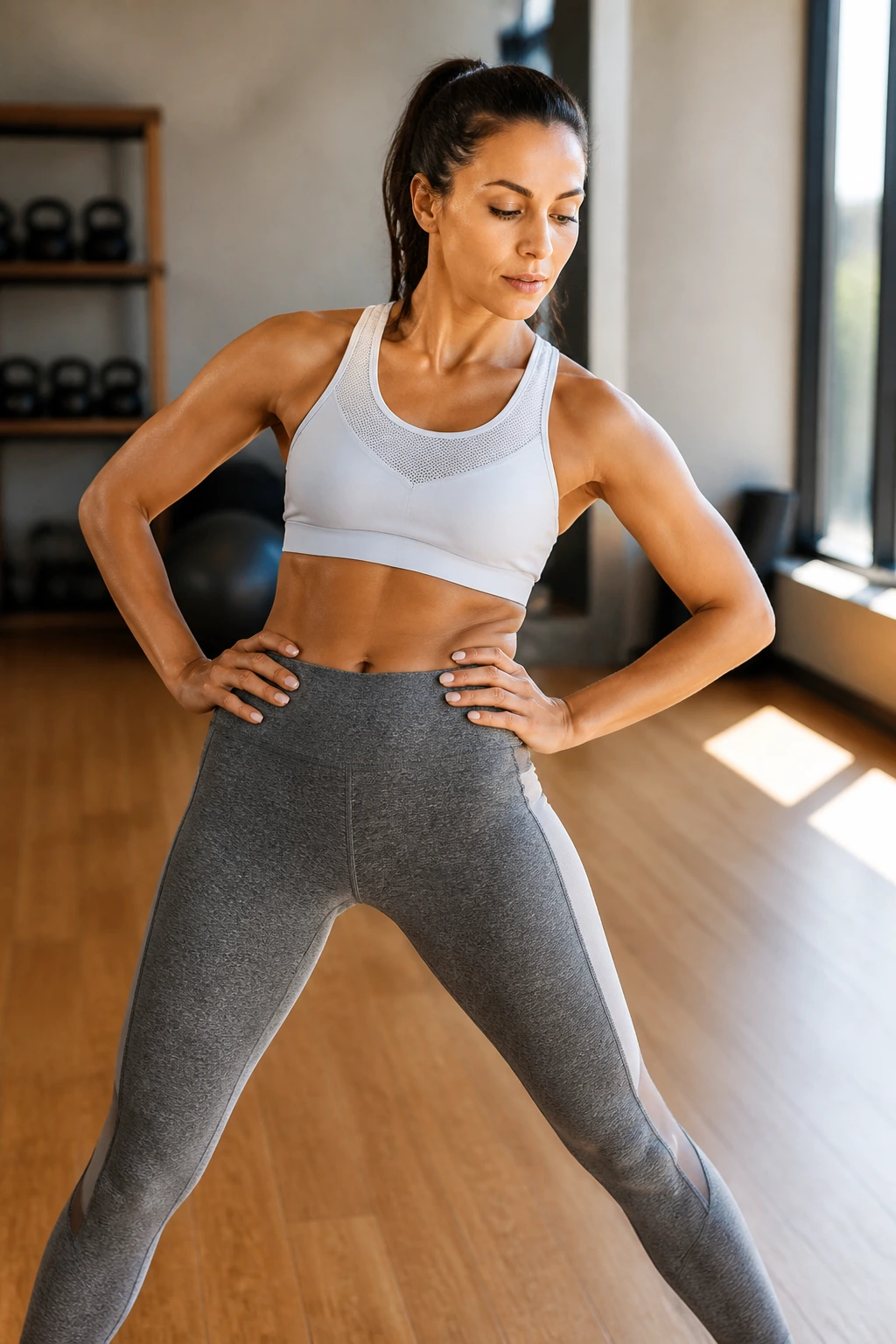
We hold a tremendous amount of stress in our hips. Sitting for long hours tightens the hip capsule, which can lead to limited squat depth and lower back pain. Hip circles are a simple way to regain that lost fluidity.
Stand with feet wider than shoulder-width. Place your hands on your hips. Begin by tracing a large, exaggerated circle with your hips, as if you are hula-hooping with a heavy hoop. Move clockwise for 10 repetitions, then counter-clockwise for 10.
Why this matters: This movement works the pelvic floor and the lumbar-pelvic rhythm. You aren’t just moving the bone; you are asking the surrounding soft tissue to relax and cooperate with the movement.
11. Cat-Cow Dynamic Stretch
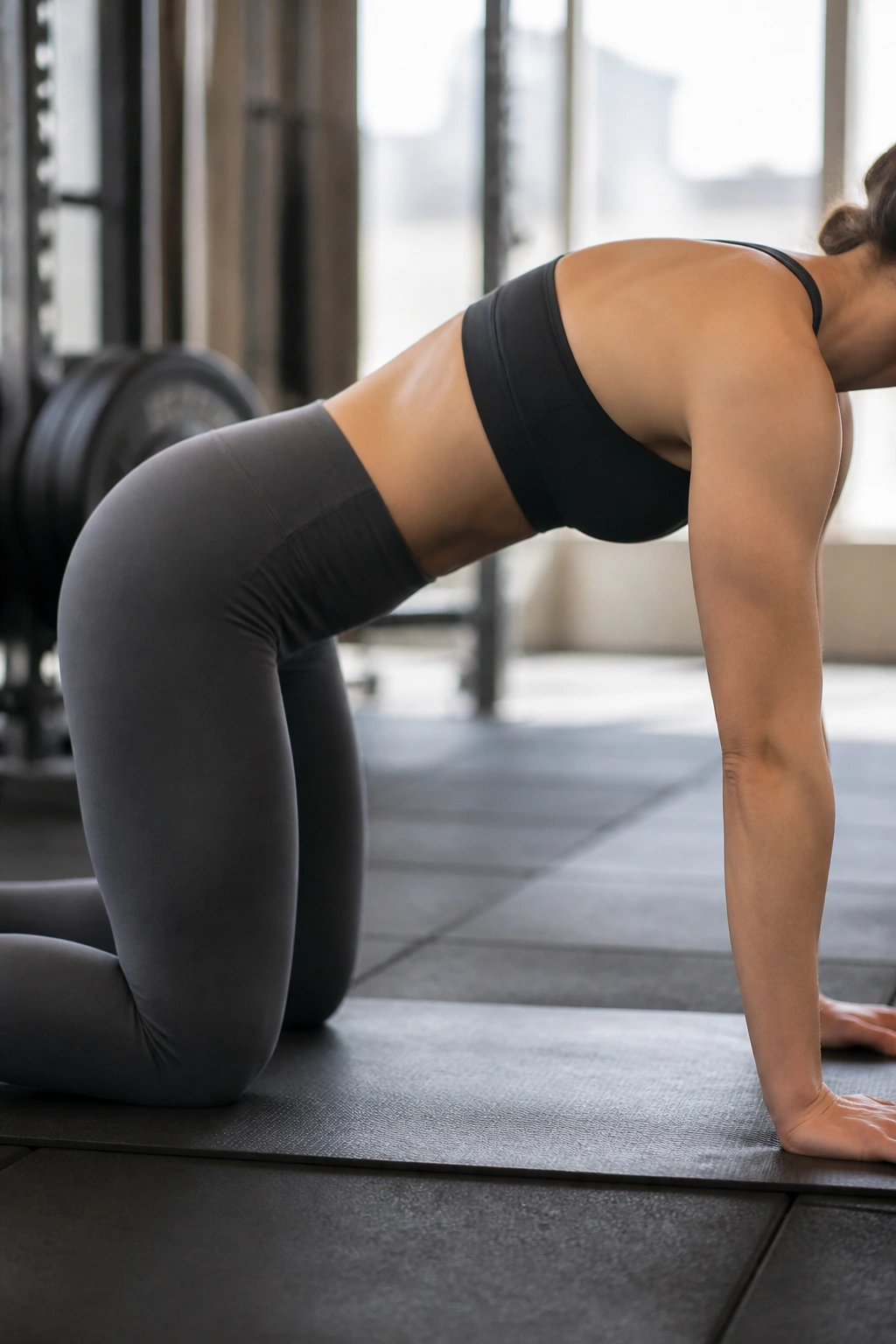
This is the best way to introduce spinal articulation. Often done on the floor, you can adapt this for a standing warm-up if you are at a gym with limited floor space.
If on the floor: Get on all fours. As you inhale, drop your belly toward the floor, lift your chin, and look up (Cow). As you exhale, tuck your chin to your chest and arch your spine toward the ceiling like an angry cat (Cat).
The key is synchronization. Do not just jerk into the positions. Move with your breath. Let the breath dictate the speed. This connects your diaphragm to your spine, preparing you to brace correctly for heavy lifting.
12. Prisoner Squats

The squat is a movement pattern, not just an exercise. A prisoner squat keeps the chest open and prevents the slouching that many people default to when they fatigue.
Place your hands behind your head with elbows wide. This forces your thoracic spine into extension. Lower yourself into a squat, keeping your chest tall and your elbows back. Go only as deep as your form allows. If your heels start to lift, stop and reset.
Why the “prisoner” position? It stops you from using your arms as a counterbalance. You have to use your glutes, core, and thoracic mobility to stay upright. If you can perform 15 of these with perfect form, your hips and spine are ready for the main workout.
13. Ankle Circles
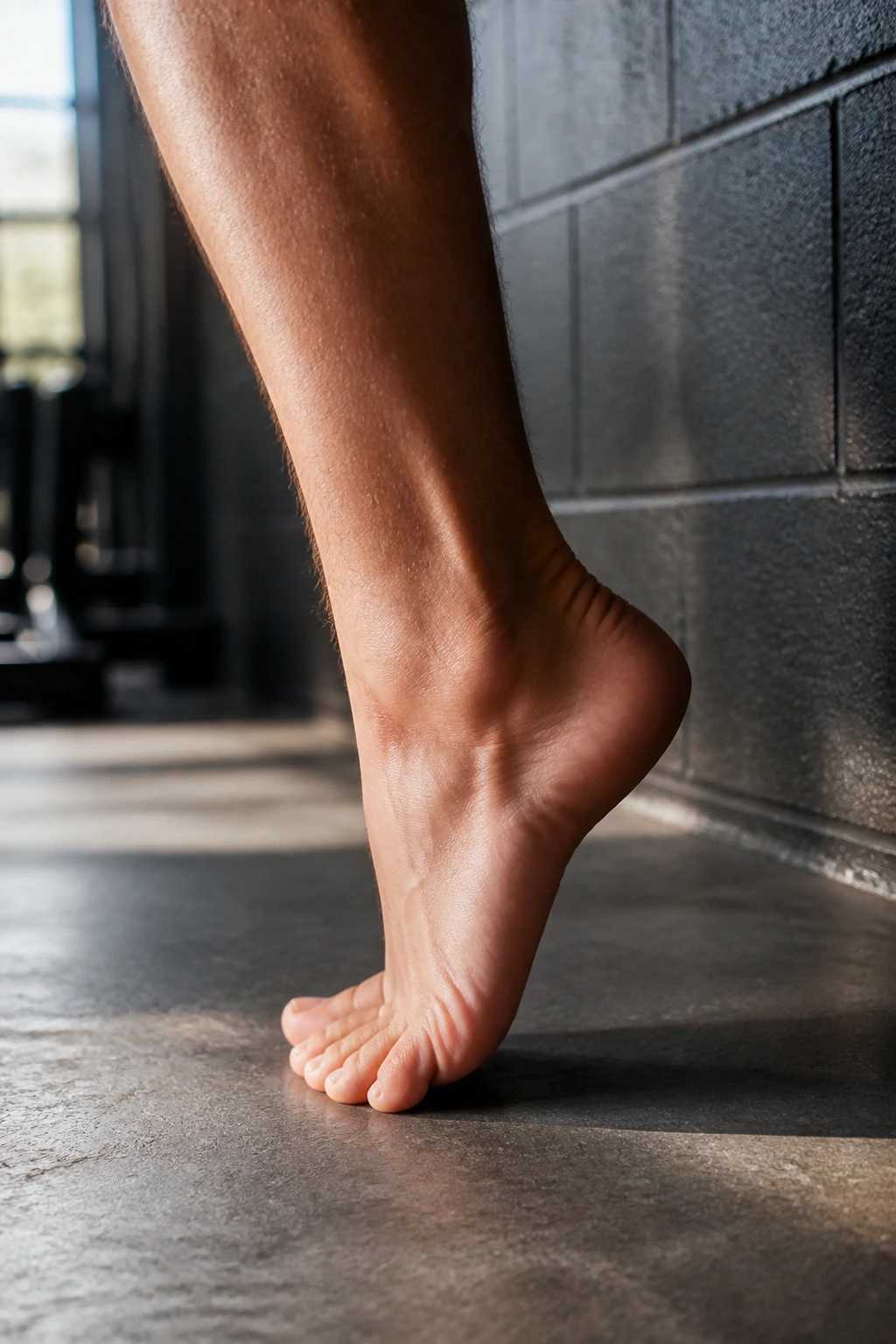
You might think your ankles don’t need warming up, but they are the first point of contact with the ground. If your ankles are stiff, your squat will be shallow, and your balance will be compromised.
While standing (you can hold a wall for balance), lift one foot slightly off the ground. Rotate your ankle in a circle. Make sure you are moving the ankle joint itself, not just wiggling your toes.
- Do 10 circles clockwise.
- Do 10 circles counter-clockwise.
- Repeat on the other side.
This is a subtle movement, but it helps prevent that “stuck” feeling when you try to hit depth in a deep lunge or squat.
14. Shoulder Rolls

We carry our stress in our traps. Most people walk into the gym with their shoulders hunched up toward their ears. You cannot have good mechanics if your shoulders are elevated and your neck is tense.
Stand with arms relaxed by your sides. Shrug your shoulders up toward your ears, then roll them back and down, pinching your shoulder blades together. Do this in a continuous, smooth motion. You should feel a release in the upper traps and a feeling of “opening” the chest.
Perform this for 20 seconds. It is a simple physical cue that signals to your body: “It is time to work, not time to stress.”
15. Neck Tilts and Rotations
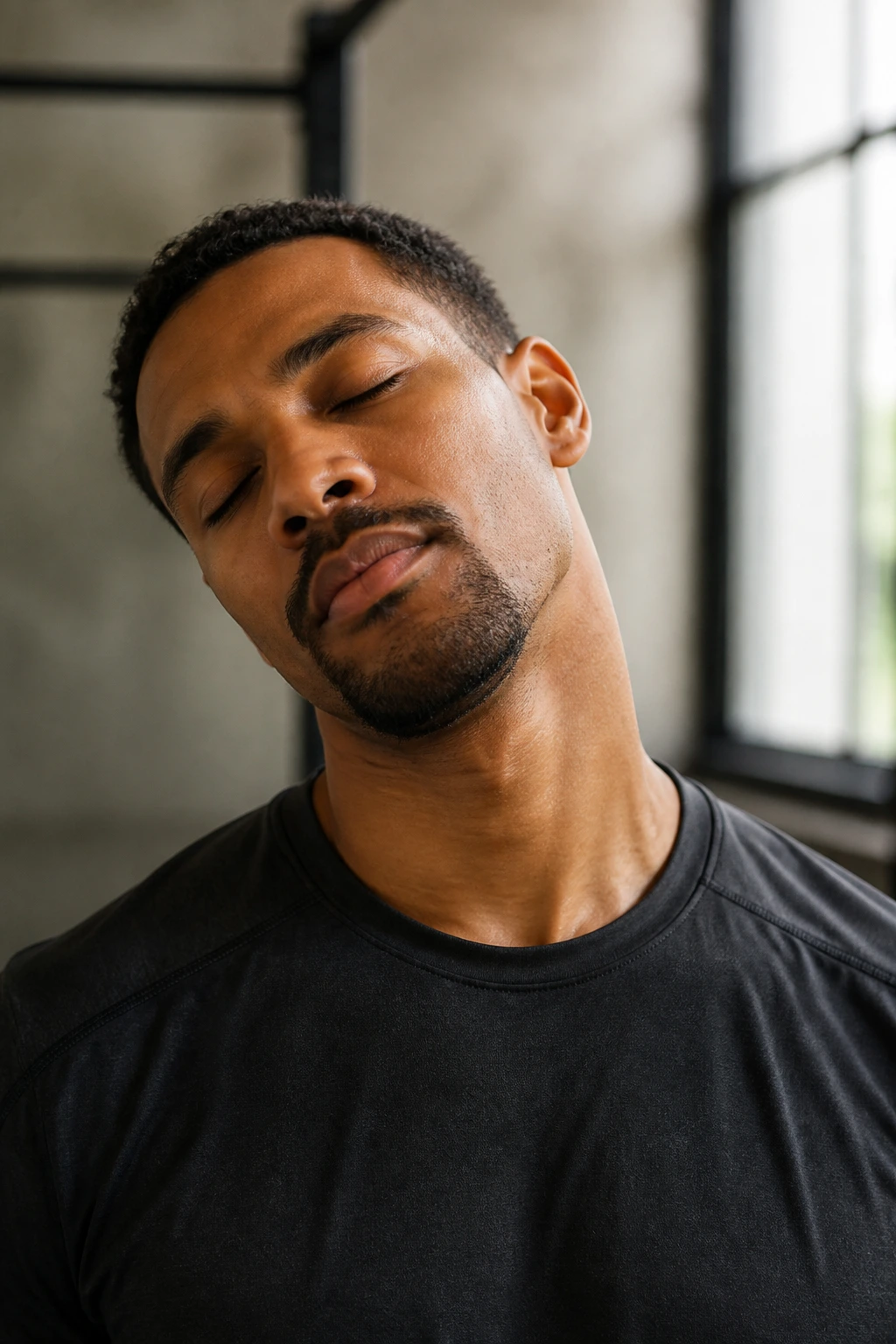
Do not ignore the cervical spine. While you aren’t lifting with your neck, your head position dictates your spinal alignment. A forward-head posture—the classic “tech neck”—will compromise your form on overhead presses and rows.
Gently tilt your head to the right, trying to bring your ear toward your shoulder. Don’t force it. Then, rotate your head slowly to look over your right shoulder, then the left. Keep the movements slow and controlled. Any fast or jerky movement here is unnecessary and risky. This isn’t about stretching to the limit; it’s about checking for range of motion and tension.
16. Gate Openers
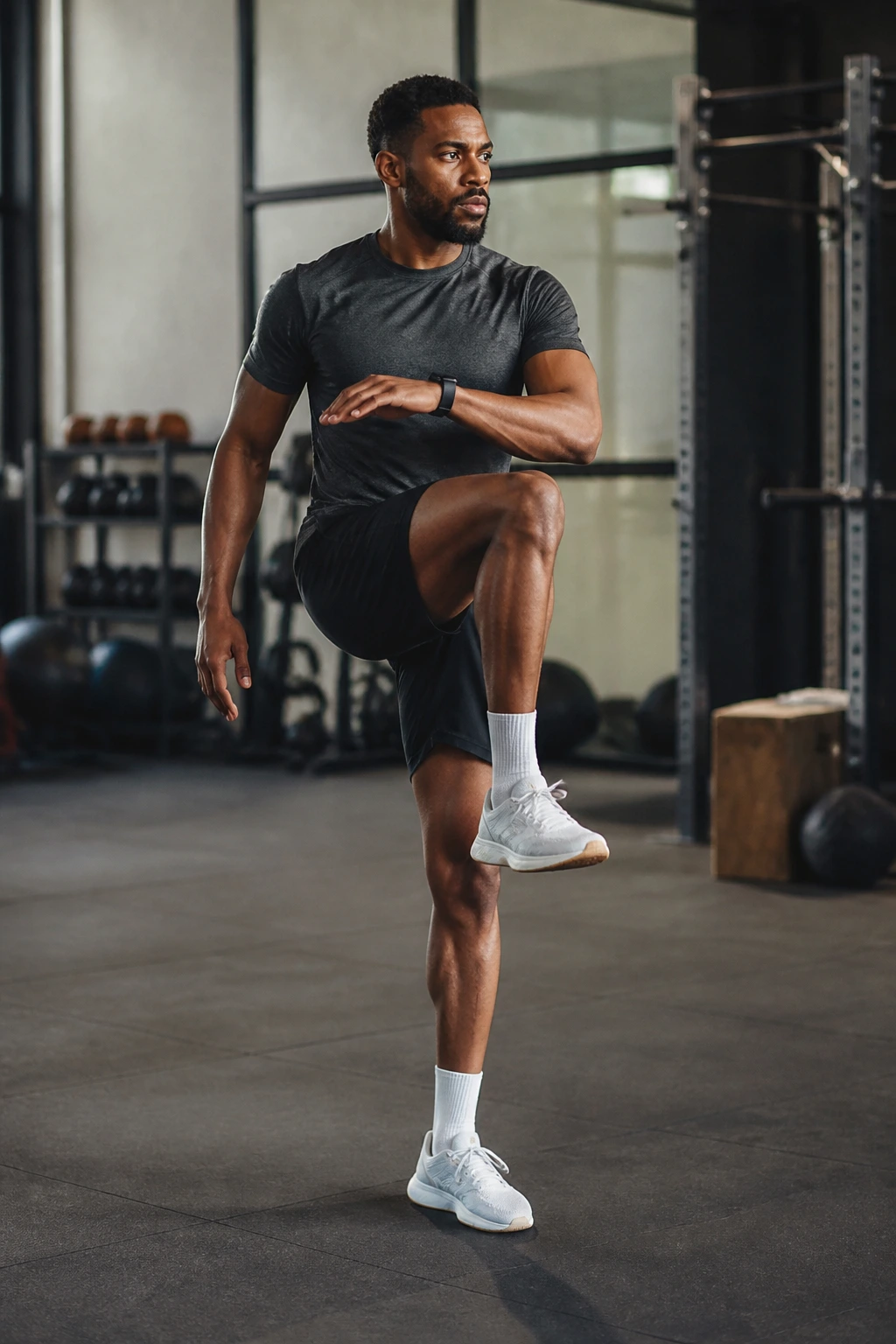
This is a dynamic move specifically for the hips, often used by athletes to prepare for agility work. It opens the hip joint and activates the muscles surrounding the pelvis.
Stand tall. Lift your right knee up toward your chest, then rotate it out to the side in a wide arc, like you are stepping over a gate. Place your foot back down and repeat with the left leg.
Watch for:
- Stability. If you are wobbling, slow the movement down.
- Range. If you can’t lift high, don’t worry. The rotation is what matters.
- Consistency. Keep the alternating pattern going for 10-12 repetitions.
17. Lateral Lunges
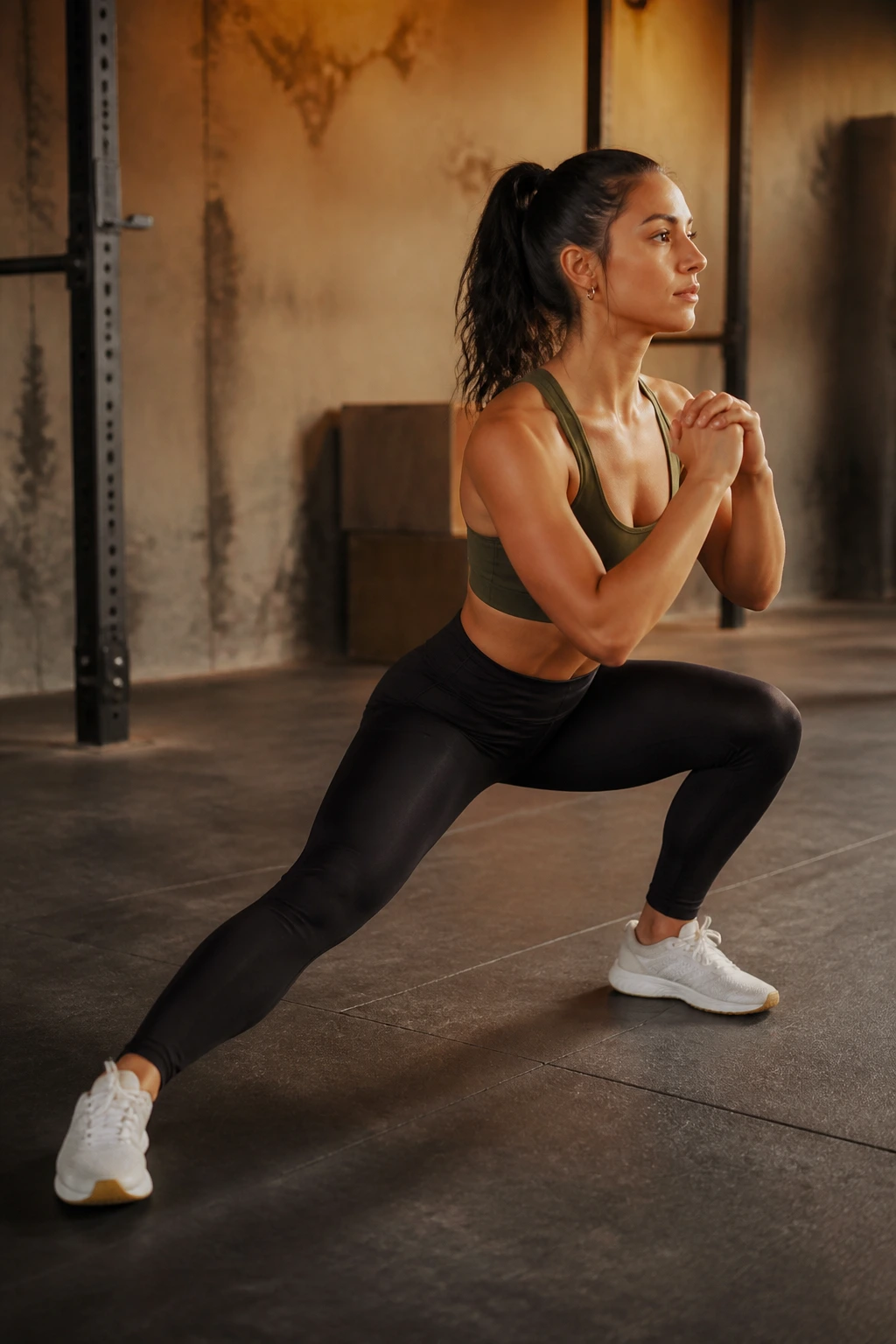
Your daily life and most gym programs are dominated by forward movement. Lateral lunges force you to move in the frontal plane, which is essential for hip and knee health.
Step out to the side with your right leg, keeping your left leg straight. Sink your hips back and down, as if you are trying to sit on a chair placed behind your right heel. Keep your chest up. Push off the right foot to return to the starting position.
Why this is a must: It stretches the groin and challenges the stabilizers of your knee. If you have ever had knee pain during squats, lateral lunges help build the lateral stability that keeps the knee tracking correctly.
18. Skater Hops
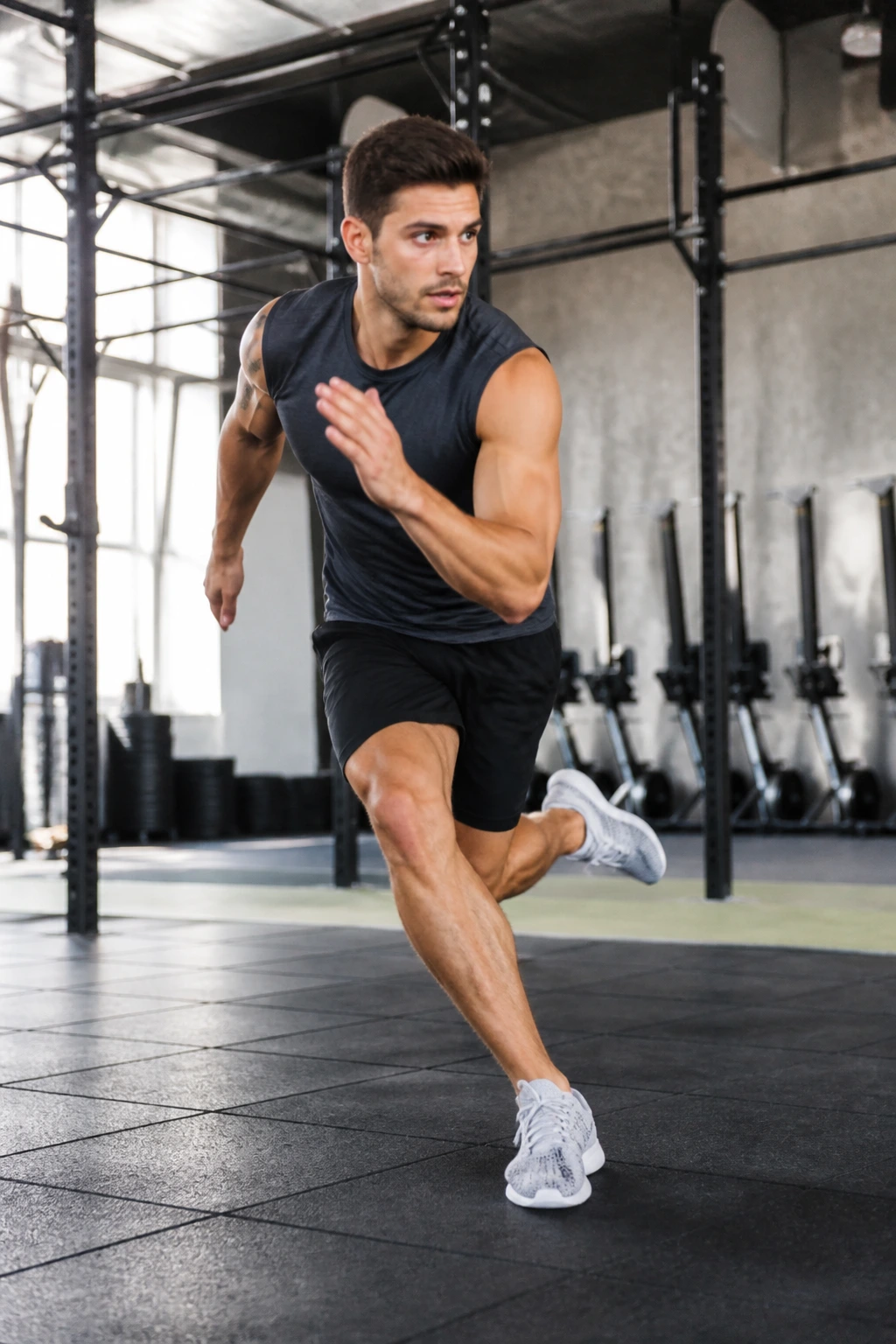
This is the most dynamic move on this list. It is about lateral power and balance. It gets the blood pumping and fires up the glute medius—a muscle often ignored but critical for stable hips.
Start standing. Leap to the right, landing on your right foot while sweeping your left leg behind you. Then, push off the right foot and leap to the left, landing on your left foot. It looks like you are ice skating.
The landing matters: Land softly on the ball of your foot, then roll to the heel. Do not let your knee cave inward upon landing. That is the exact movement you want to avoid in training. Keep it controlled.
19. Frankenstein Walk (Toe Touches)
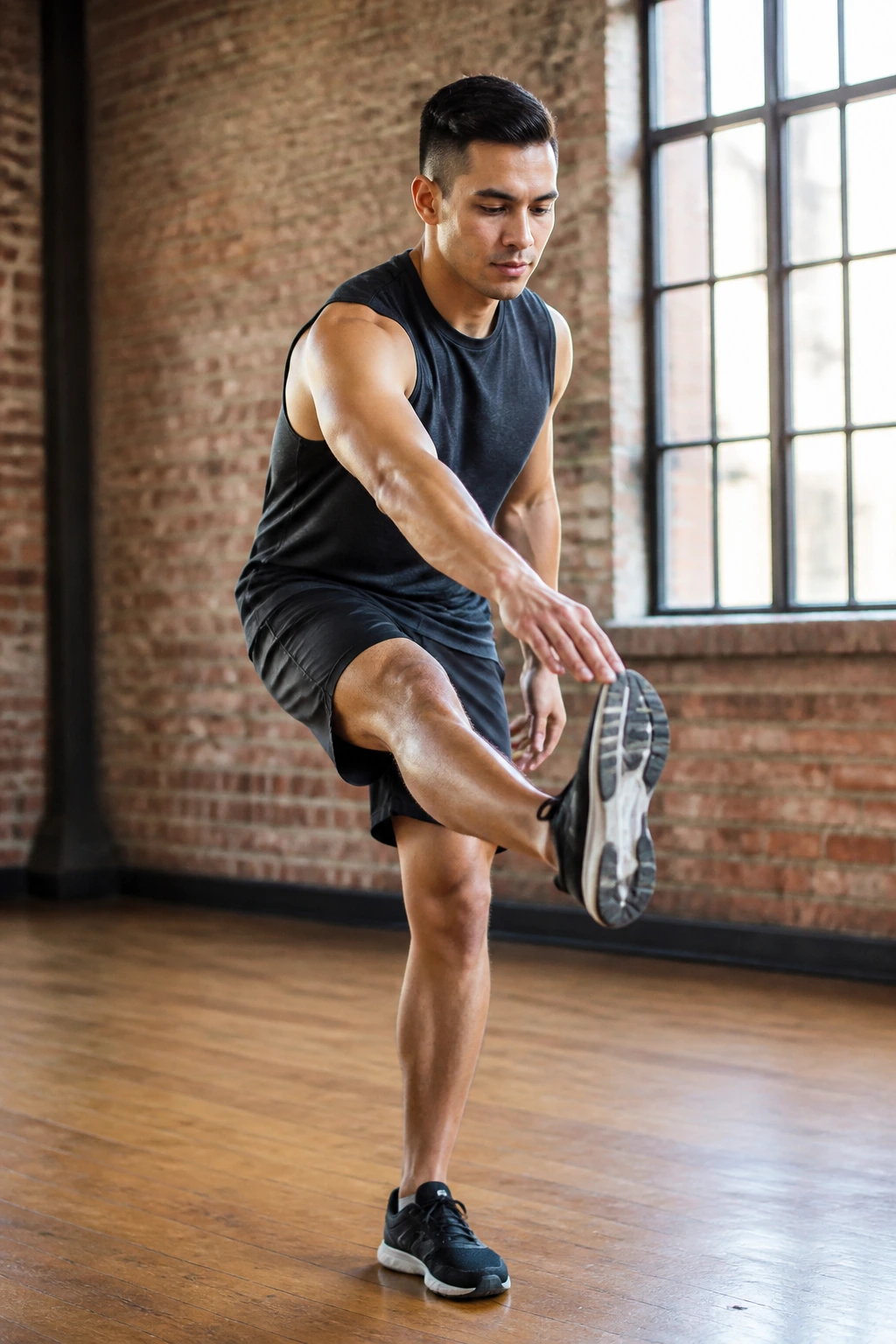
This move looks silly, but it is one of the most effective ways to dynamically stretch the hamstrings and calves.
Walk forward, but with each step, kick your right leg straight out in front of you, trying to touch your left hand to your right toe. Keep your back straight. Do not collapse forward to reach your toe; if you can’t reach, just aim for your shin.
The benefit: You are getting a stretch while moving, which creates a better response than holding a static stretch. The hamstring is being lengthened under control, and the opposite arm swing helps loosen the shoulder.
20. The World’s Greatest Stretch
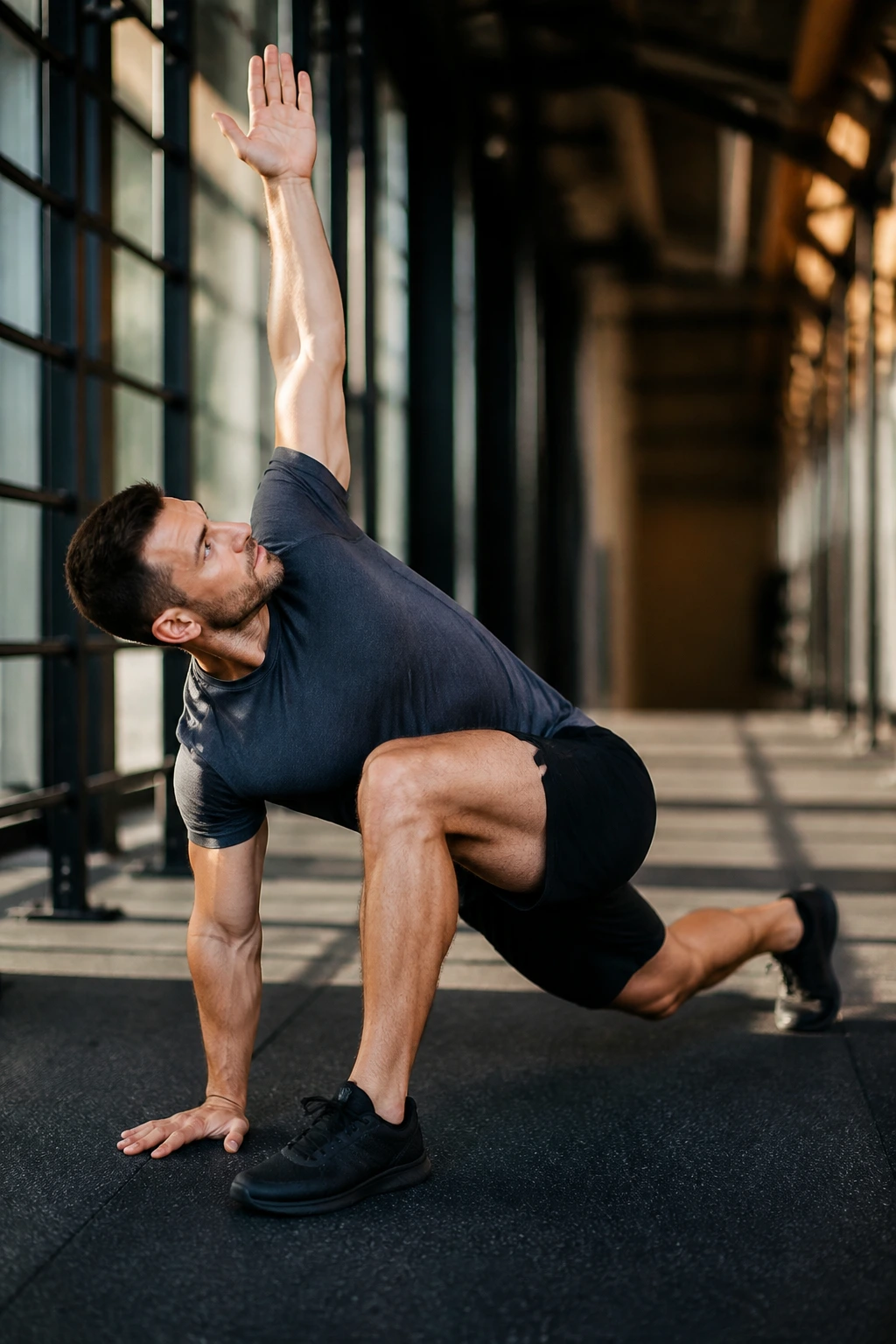
This is the grand finale. It is called that for a reason. It hits everything: the hips, hamstrings, thoracic spine, and chest. It is a multi-joint masterpiece.
Start in a deep lunge with your right leg forward. Place your left hand on the floor inside your right foot. Take your right hand and reach it toward the ceiling, twisting your torso to follow your hand. Hold for a brief second. Then, place your right hand back down, straighten your right leg to deepen the hamstring stretch, and sink your hips.
Step back and switch legs. Repeat 5 times per side. This movement is the ultimate “reset” button for the body, ensuring every major hinge and joint has been addressed before you touch a weight.
Final Thoughts
The most common excuse for skipping a warm-up is that it takes too much time. Let’s be realistic: a proper dynamic warm-up takes less than ten minutes. If you have an hour to train, you have ten minutes to ensure your body is actually capable of performing that training safely.
Dynamic stretching isn’t just about avoiding injury, although that is a massive benefit. It’s about performance. You are literally lubricating your joints and prepping your nervous system to fire more efficiently. When you start your first heavy set already warm, your coordination is sharper, your range of motion is wider, and your intensity is higher.
Don’t treat these movements as a checklist. Treat them as a ritual. Over time, you will find that these movements become second nature, and you will start to notice which areas—like your hips or shoulders—feel tighter on specific days. Listen to that feedback. Use the warm-up to adjust your training plan based on how your body is feeling right now, not how you think it should feel. Move well, lift with intent, and you will see better results.
