



Evening yoga flows do not have to mean long holds, sore hamstrings, and the weird little inner bargain of “I’ll suffer through this for my health.” If you hate stretching, good. You’re the exact person this kind of movement should work for.
The trick is to stop treating nighttime yoga like a test of flexibility. The best late-day sequences feel more like turning down a dimmer switch: a little spinal motion, a few easy twists, some gentle weight shifts, then out. No dramatic grimacing. No chasing your toes like they owe you money.
That matters more than it sounds. People who dislike stretching often aren’t lazy; they’re tired, impatient, or sick of being told to hold a shape until it stops feeling like a shape and starts feeling like punishment. A good evening flow respects that. It uses motion first, then stillness only when your body’s already softened a bit.
So the goal here is not to become bendy by bedtime. The goal is to feel less welded together, breathe a little lower in the ribs, and stop carrying the whole day in your neck and hips. Start with the easiest one.
1. The Two-Minute Cat-Cow Evening Yoga Flow
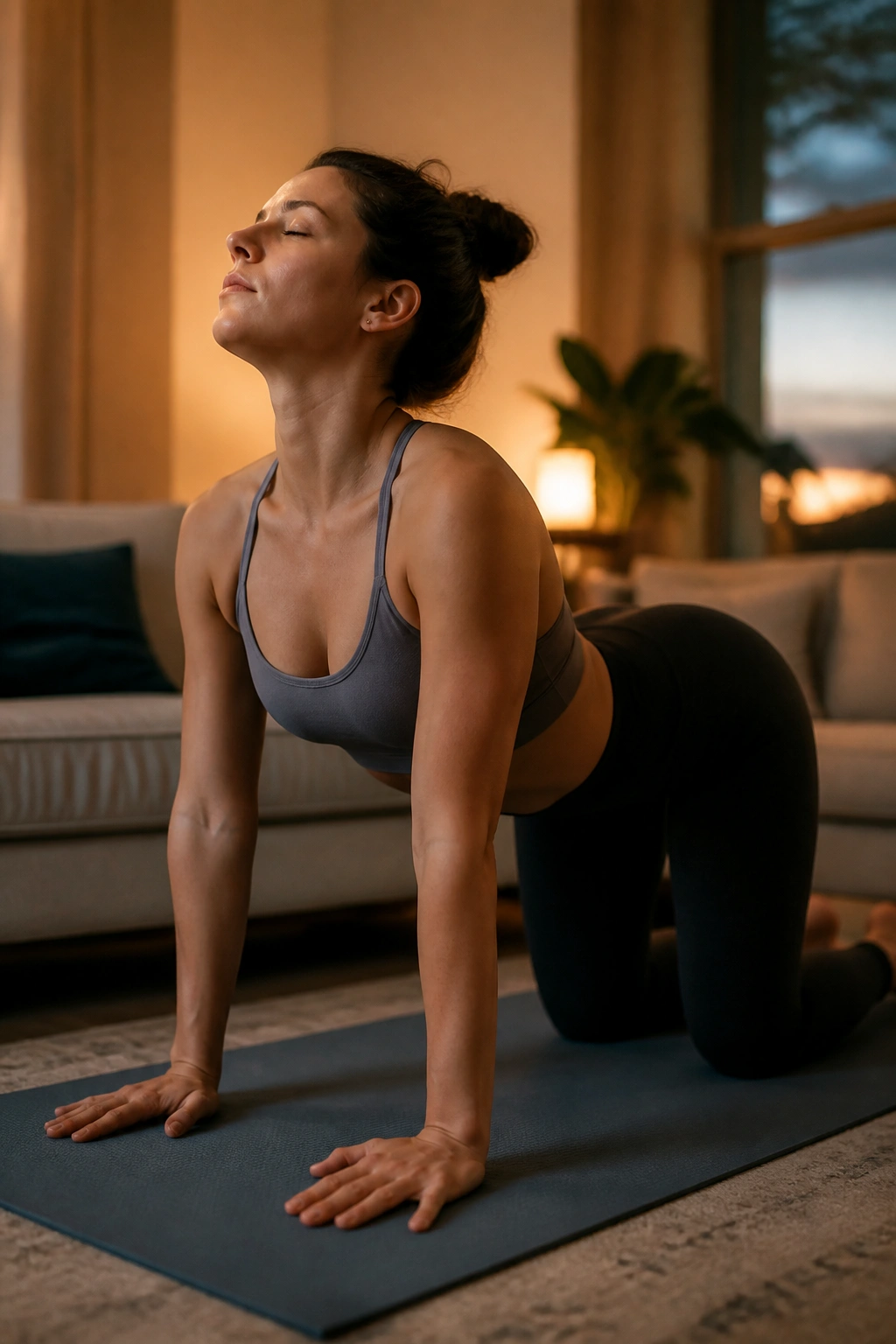
Cat-cow earns its place because it doesn’t ask for courage. It asks for motion, and that’s a different thing. If your back feels stiff after sitting, a few rounds on hands and knees can do more for you than a long, preachy stretch ever will.
Why It Works When You Hate Stretching
Cat-cow moves the spine in small waves instead of pinning it in one position. That matters. Stiff backs often feel worse when you force them to “open” all at once, but they usually ease up when they get a chance to glide a little.
Set up with your wrists under your shoulders and knees under your hips. Inhale into a soft cow shape, exhale into cat, and keep the movement small enough that it feels smooth instead of theatrical. You’re trying to loosen the gears, not bend in half.
- 4 slow cat-cows with your breath matched to the movement
- 2 tiny circles through the hips after the fourth round
- 1 child’s pose breath if your lower back wants a pause
- Finish with 3 neutral breaths and a long exhale
Tip: If your wrists complain, make fists or come down onto forearms. No one gets bonus points for wrist pain.
2. Knees-to-Chest Rocking That Feels Like a Back Massage
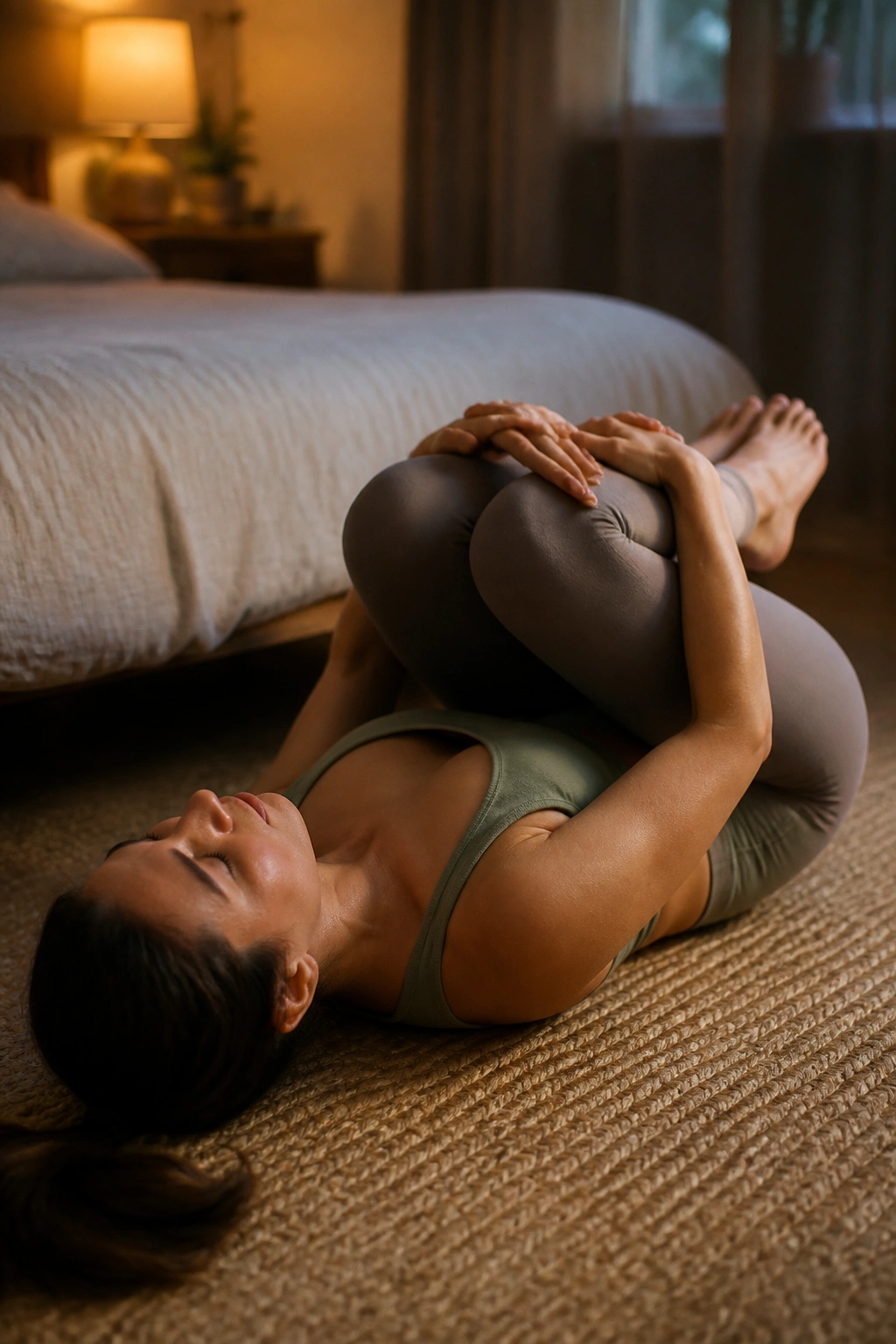
Why does a simple rocking hug feel better than a long hamstring hold? Because your lower back usually wants relief, not a lecture. Knees-to-chest works like a gentle reset button, especially after a day of sitting, driving, or standing in one place too long.
Lie on your back and pull one knee in first. Then bring both knees in, let your tailbone get heavy, and rock a little side to side. Keep it soft. The motion should feel like a slow cradle, not a core workout.
How to Use It
After a few rocks, take one shin in each hand and widen the knees slightly. If that feels too much, keep the feet on the floor and simply hug one knee at a time. A tiny motion is enough when your body is defensive and tired.
The nice part is that this works in bed, on a rug, or on a folded blanket. No fancy setup. No commitment issues either.
If you want a little more release, extend one leg along the floor for three breaths, then switch. That tiny lengthening is often enough. More isn’t always better here.
3. Supine Figure-Four Without the Fight
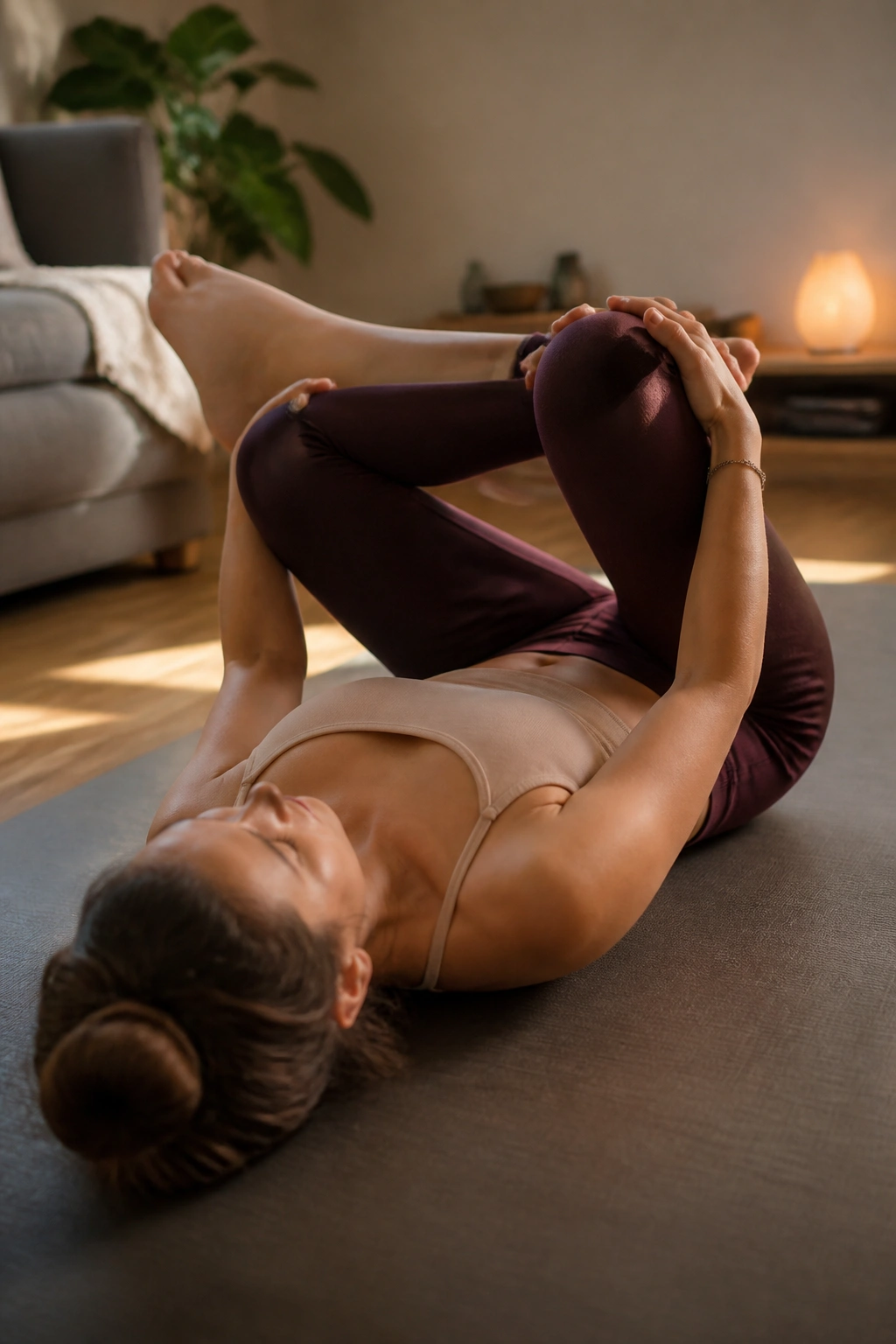
If pigeon pose makes you feel trapped, stay on your back and let the hips calm down without a protest. Supine figure-four gives you the same outer-hip release in a much friendlier package, and it’s easier to control.
Picture this: you’re lying down after work, one ankle crossed over the opposite thigh, and you draw the legs toward you only until the stretch feels honest. That’s the whole trick. Not far. Just enough.
What To Watch For
- Keep the crossed foot flexed to protect the knee.
- Pull the bottom thigh in, not the shin.
- Hold for 4 to 6 breaths on each side.
- If your hips are extra cranky, leave the bottom foot on the floor and just keep the shape loose.
The best version of this pose feels like space arriving, not force. I like it because it rewards patience without demanding it.
Closing thought: If your knee talks back, back off immediately. Hips should soften. Knees should not complain.
4. Thread-the-Needle for Shoulders That Live Near Your Ears
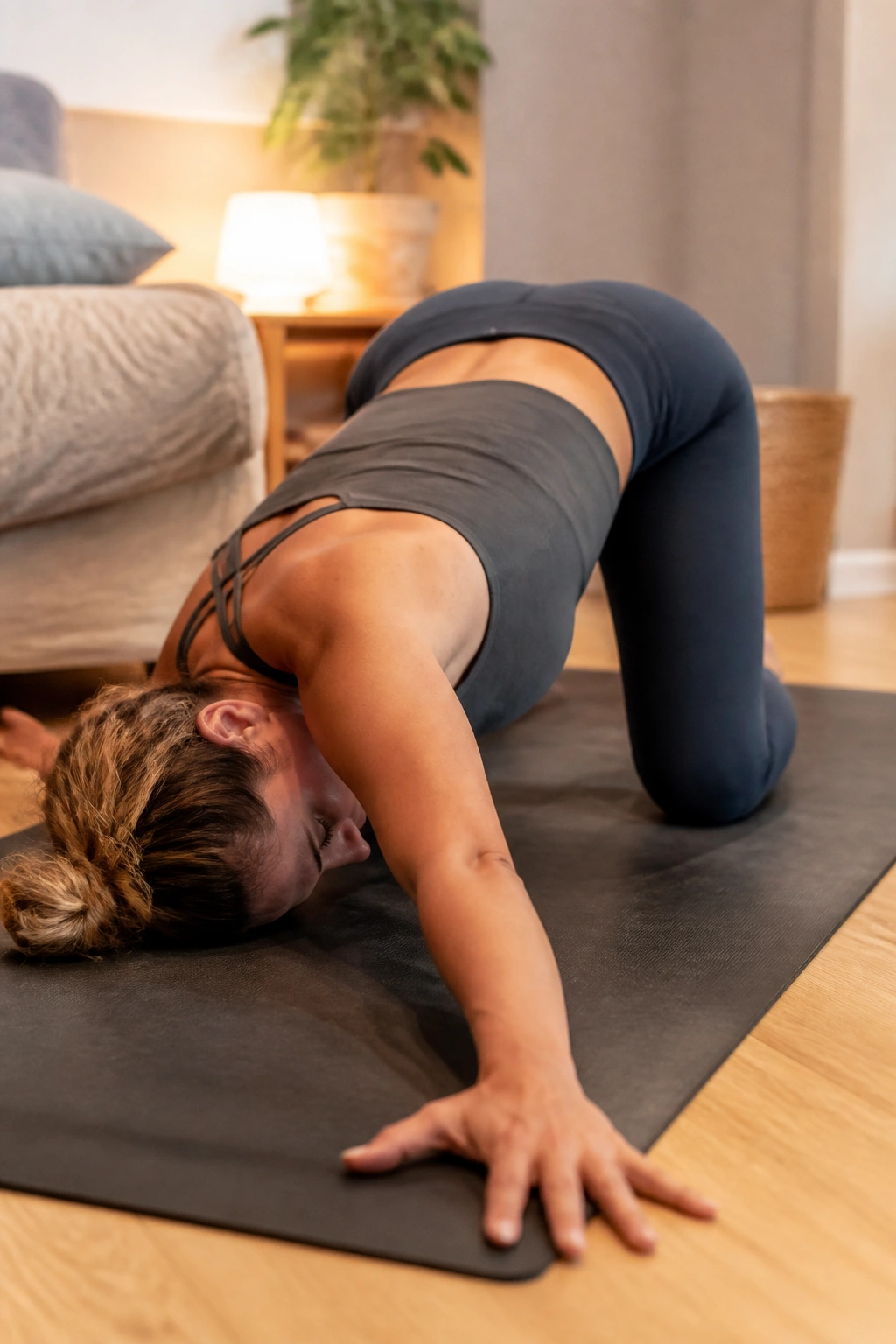
Shoulders hold a ridiculous amount of tension, and they love to fake “tight” when what they really mean is “tired.” Thread-the-needle is one of those rare floor shapes that gives your upper back a break without asking you to stay miserable for long.
Come onto hands and knees, slide one arm under the other, and let the shoulder and side of the head settle down. Keep your hips stacked over your knees if that feels better, or sit them back toward your heels if you want a gentler version. Don’t crank the twist. The point is to let gravity do most of the work.
I especially like this one after carrying a bag, using a laptop for too long, or doing anything that turns the upper back into a brick. The breath gets easier here. Your ribs widen on the top side, and that odd clenched feeling across the shoulder blades often starts to fade.
Come out slowly and switch sides. One side is usually fussier than the other. That’s normal, and it’s useful information.
5. Half-Sun Salutes That Never Feel Like Cardio
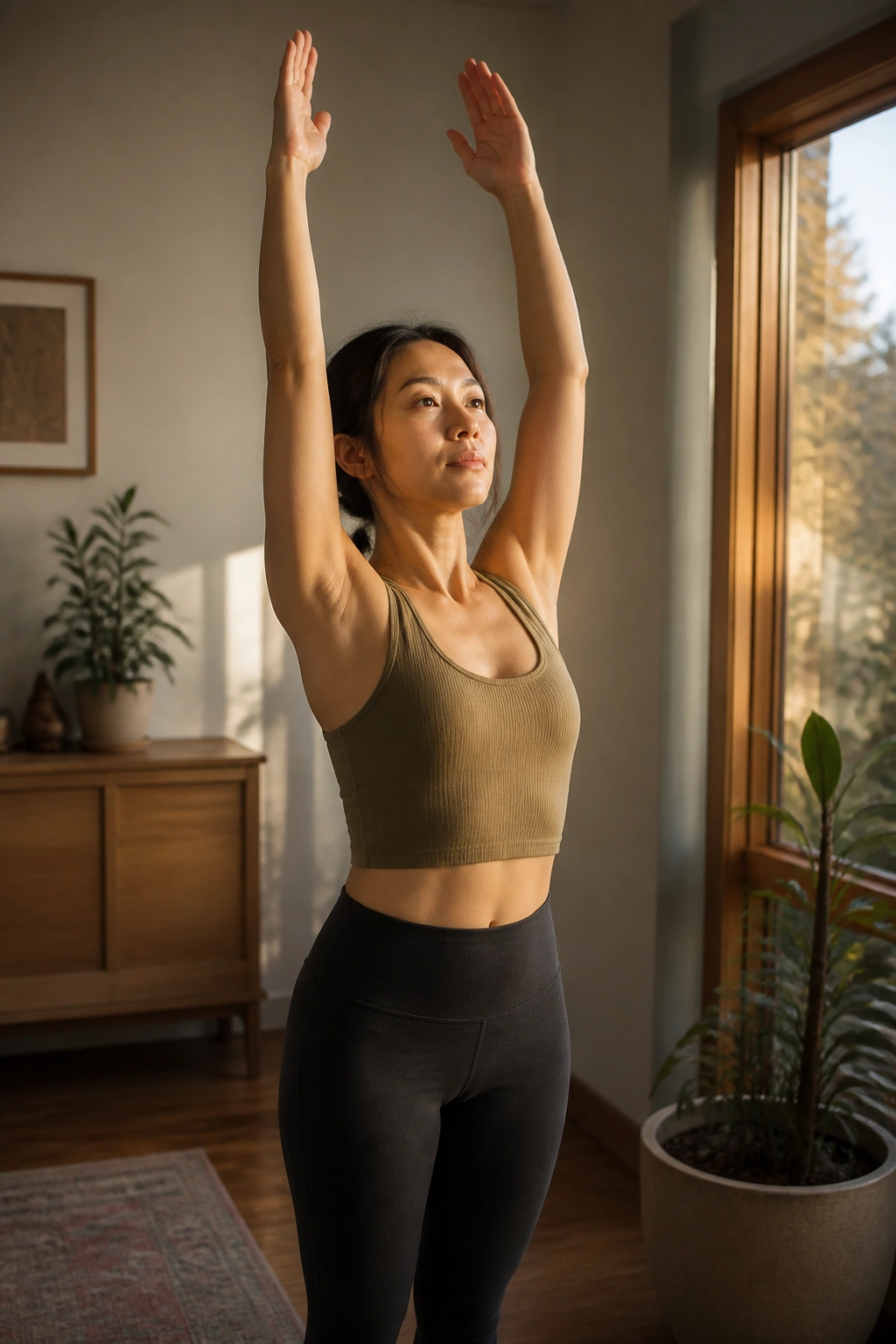
Full sun salutations can be too much at night. Half-sun salutes keep the body moving without turning your wind-down into a workout in disguise, which is exactly why they work for people who hate stretching.
Think of them as a polite conversation with your joints. Reach up, fold halfway, step or walk back only if you feel like it, then come forward again with control. No jumping. No speed. No drama.
What Makes It Different
Unlike a fast vinyasa, this version stays low enough to keep your nervous system from waking up. You’re using rhythm, not intensity. That’s the sweet spot for evening work.
Try 3 slow rounds:
- Inhale and reach overhead.
- Exhale and fold with bent knees.
- Inhale to a flat back.
- Exhale, step back or stay standing, then return.
If you want less floor time, keep it all upright. If you want more release, finish with a ragdoll fold and let your head hang for two or three breaths.
Best for: people who want motion but not sweat.
6. Low Lunge Pulses for Desk-Hips
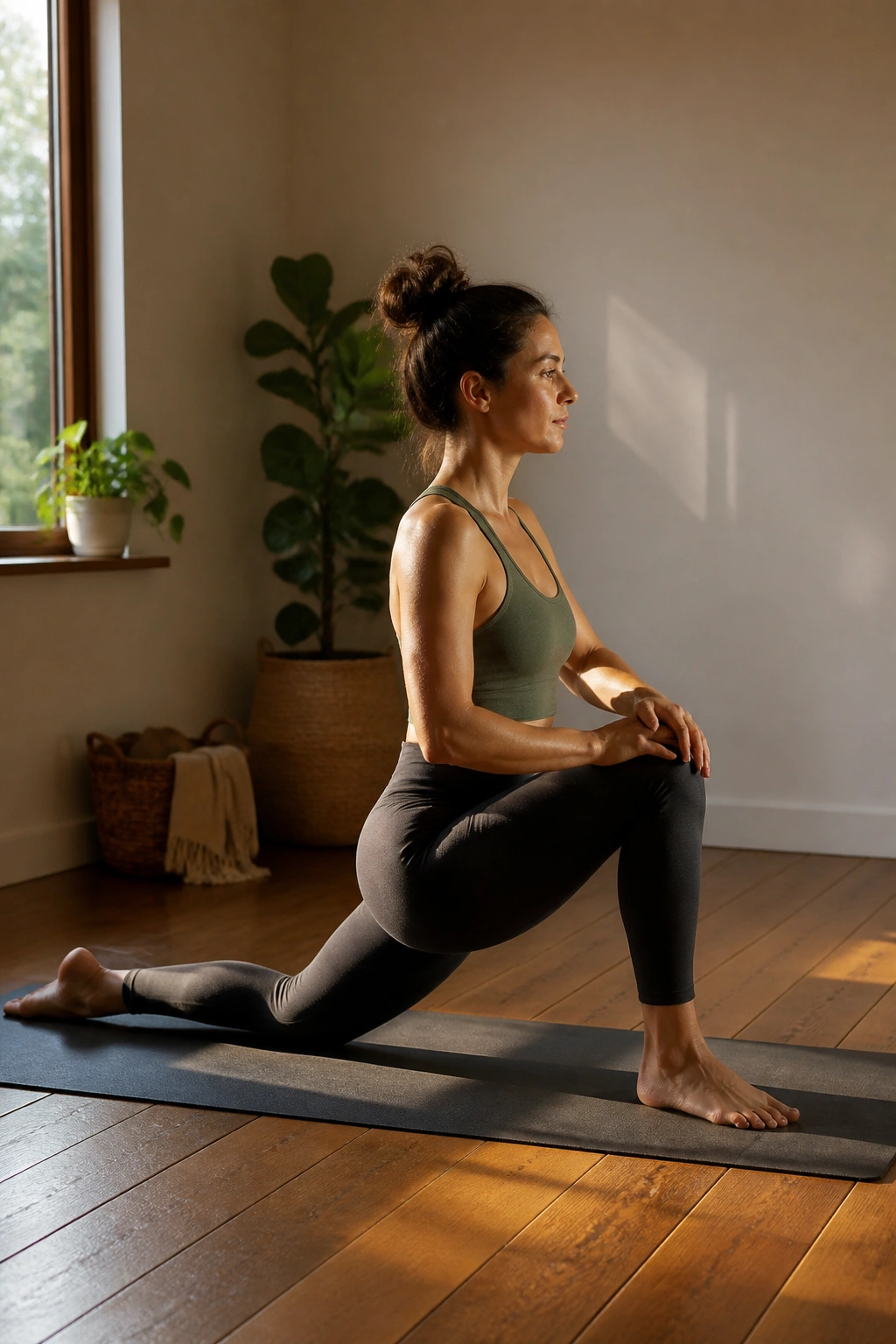
Why do tiny lunge pulses help more than forcing a deep hip opener? Because hips often unlock better when they get movement first. A one-inch pulse wakes up the front of the hip without making you brace.
Start in a low lunge with the back knee down and a folded blanket under it if the floor feels unforgiving. Shift forward and back an inch or two, almost like you’re testing the edge of a doorway. Keep your torso tall enough to breathe.
How to Do It
- Move forward on the exhale.
- Pull back on the inhale.
- Keep the front heel grounded.
- Do 5 to 8 pulses before holding still for 3 breaths.
- Add an overhead reach if your ribs feel open.
This one works well after sitting all day because it reminds the hip flexors they are not under attack. They usually loosen faster when they aren’t being shoved.
If your balance feels wobbly, place one hand on a wall or chair. That little bit of support makes the whole thing calmer.
7. Sphinx to Seal for a Stiff Front Body
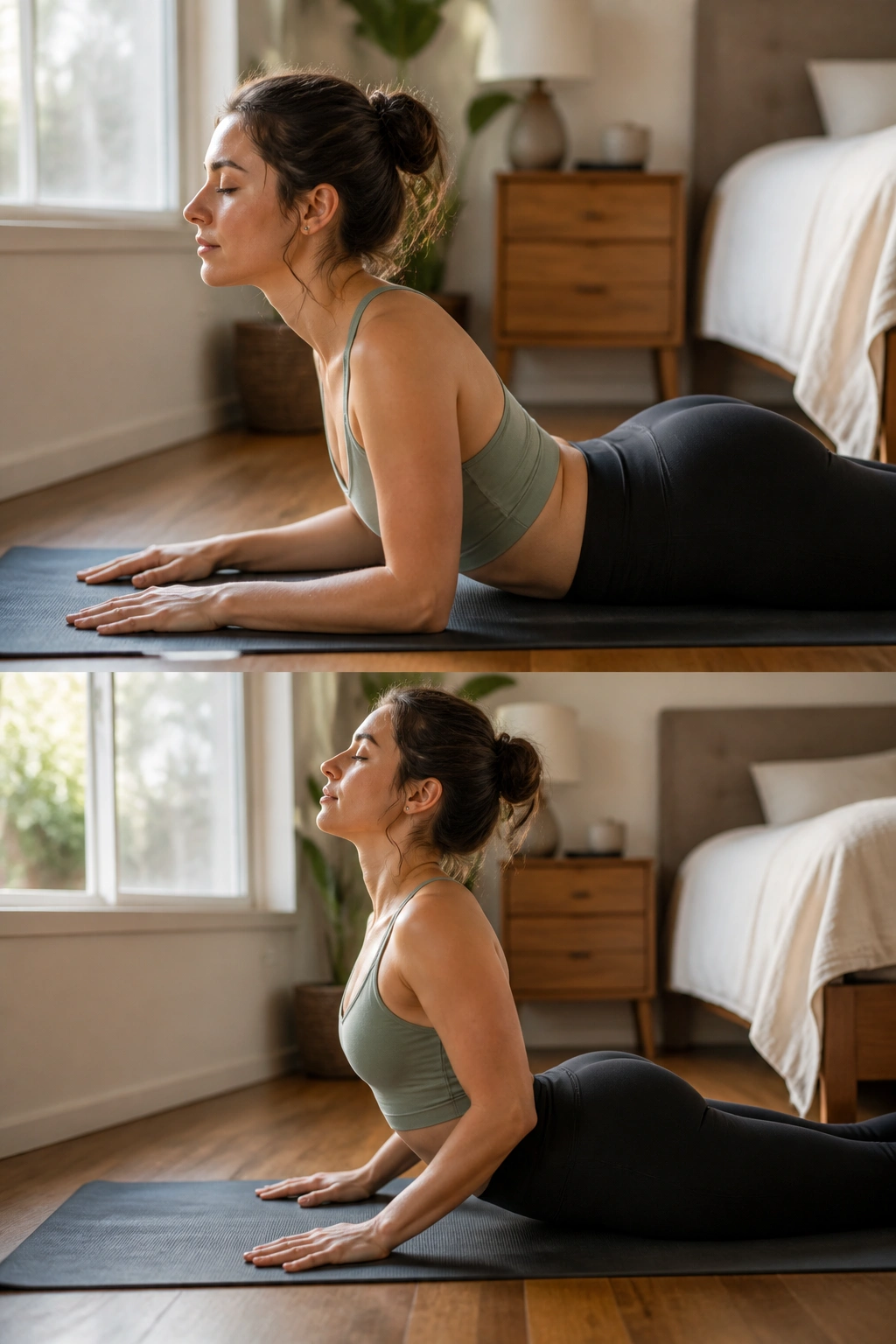
A lot of people who hate stretching also hate backbends, which is fair. Big backbends can feel bossy. Sphinx and seal are the opposite: low, slow, and easy to bail out of if your lower back says no.
Lie on your belly, prop onto your forearms for sphinx, and let the chest melt forward a little. If that feels fine, press into your palms and lift into seal only a few inches. Then come back down. The movement is gentle enough to feel like a pulse instead of a pose.
The front of the hips and belly usually get shortchanged all day. Sitting closes them off. So does slouching. A tiny bit of extension can make your breathing feel larger, which is one reason this flow works so well before bed.
Keep it short. Two or three rounds is enough. If you feel pinching in the lower back, stay in sphinx or come out entirely.
A pillow under the ribs can make this feel less intense. I use that trick more than I’d like to admit.
8. Bent-Knee Forward Fold With a Side-to-Side Sway
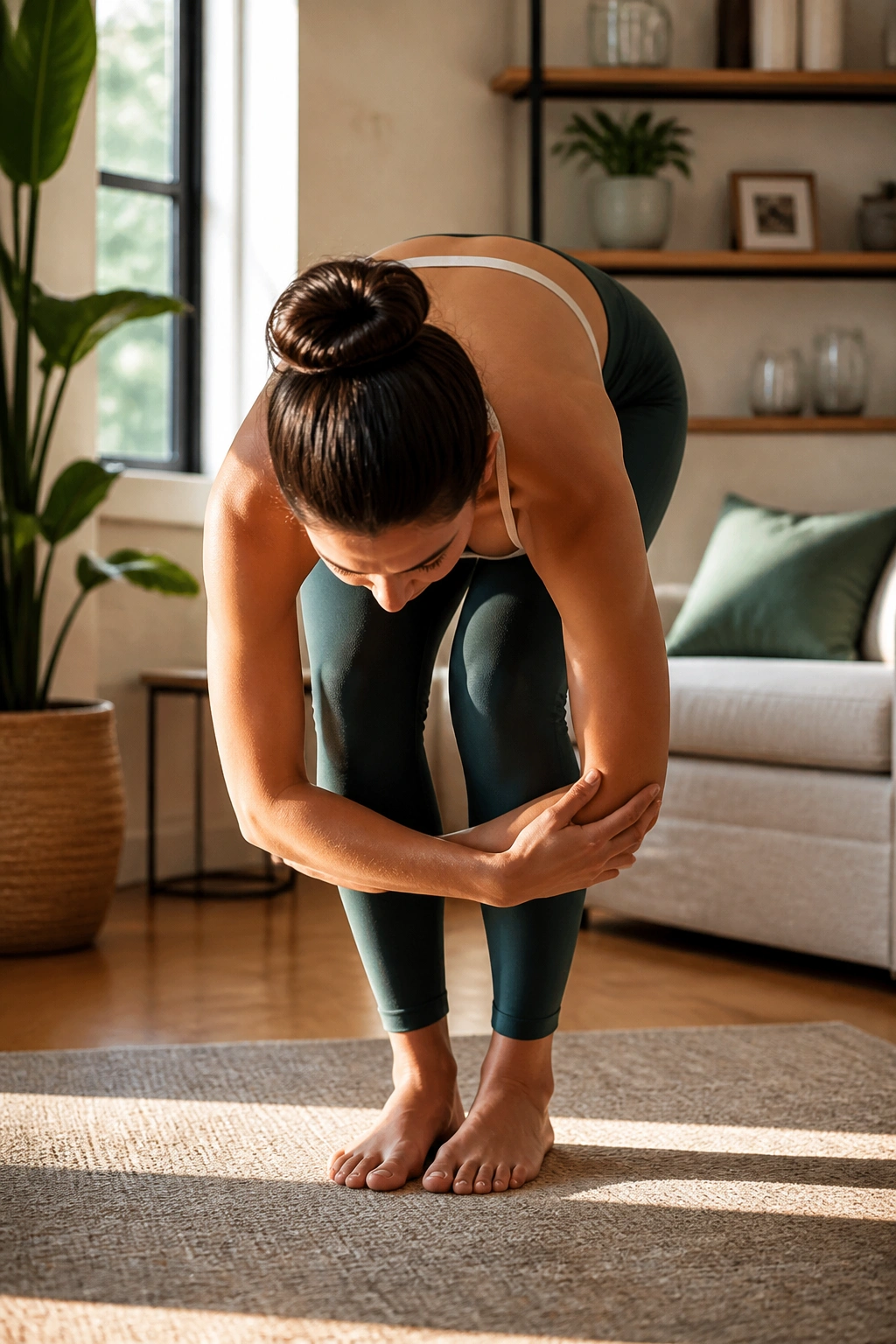
A straight-leg forward fold is not the goal here. Honestly, it’s often the problem. Bending the knees turns the fold from a hamstring showdown into a much kinder release for the back of the body.
Stand with feet about hip-width apart, knees soft, and fold forward until your torso can hang. Then sway a little from side to side, almost like you’re shaking out a heavy coat. Keep the neck loose. The head doesn’t need to lead this dance.
Quick Shape Check
- Knees bent enough to breathe.
- Weight spread across the whole foot.
- Hands on shins, floor, or opposite elbows.
- Sway for 5 slow breaths.
This is useful for people who hate stretching because it gives them proof that movement can be enough. You do not need to nail the deepest version to get the benefit.
If the fold feels too intense, place your hands on a countertop or the back of a chair. That slightly elevated version is still a forward fold, and it’s often better for tired backs.
9. Reclined Twist Ladder for a Busy Nervous System
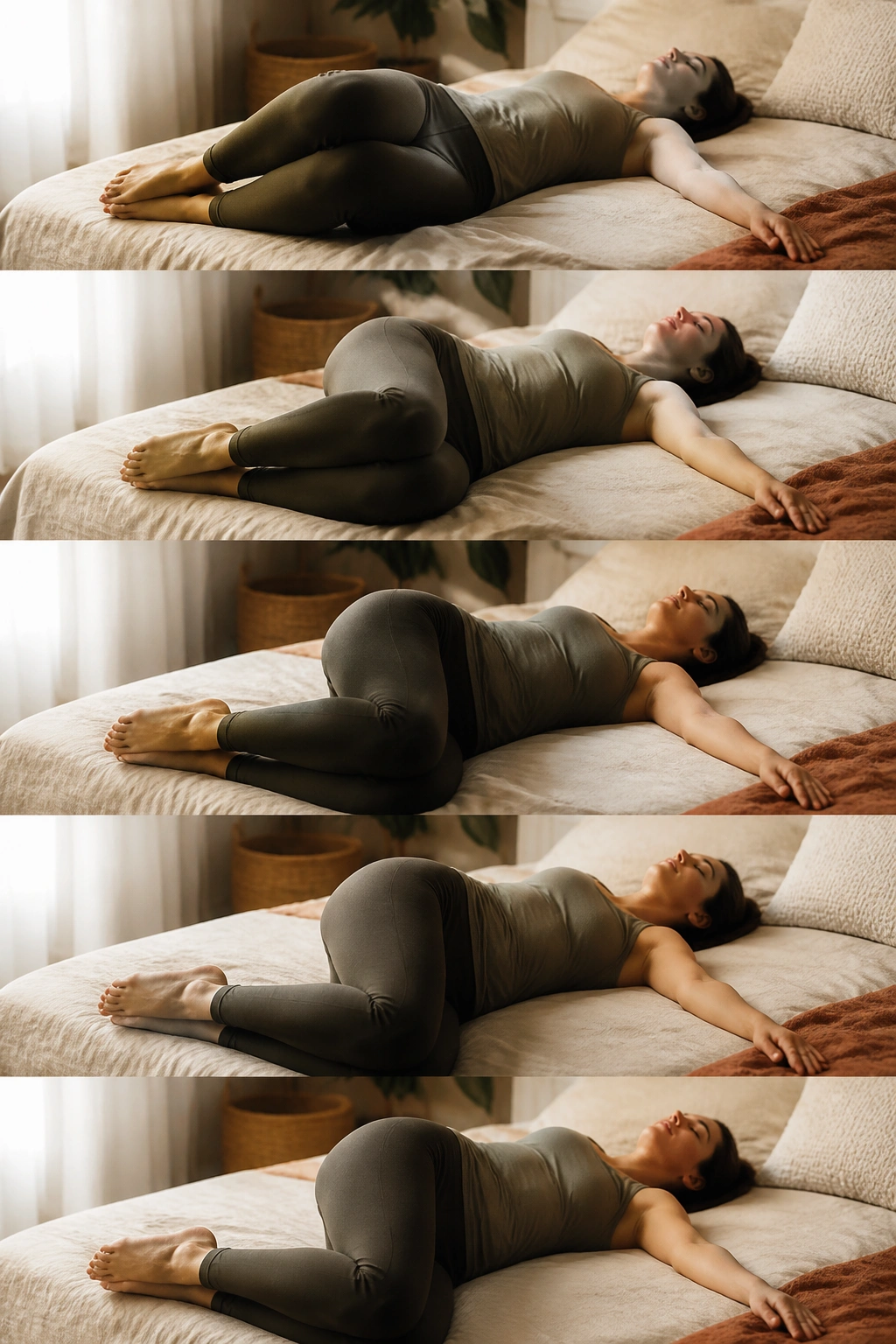
A good reclined twist does a strange but welcome thing: it lets the body exhale first. The shoulders drop, the belly softens, and the lower back gets a little rotational space without any aggressive pulling.
Lie on your back, knees bent, and drop them to one side. Stay there for a few breaths. Then bring the knees back through center, maybe straighten one leg for a second, and go to the other side. That little “ladder” between positions keeps the flow from feeling static.
Do not wrench the knees to the floor. Let them stop wherever they stop. The more you push, the less relaxing it tends to be. People who dislike stretching usually dislike that exact feeling of being held hostage by their own range of motion.
I like to stack this after bridge or cat-cow, but it stands on its own. If your lower back is touchy, put a pillow between the knees or under them.
Slow exhale. Easy twist. Done.
10. Wall Legs and Ankle Circles for an Evening Yoga Flow That Actually Calms Your Feet
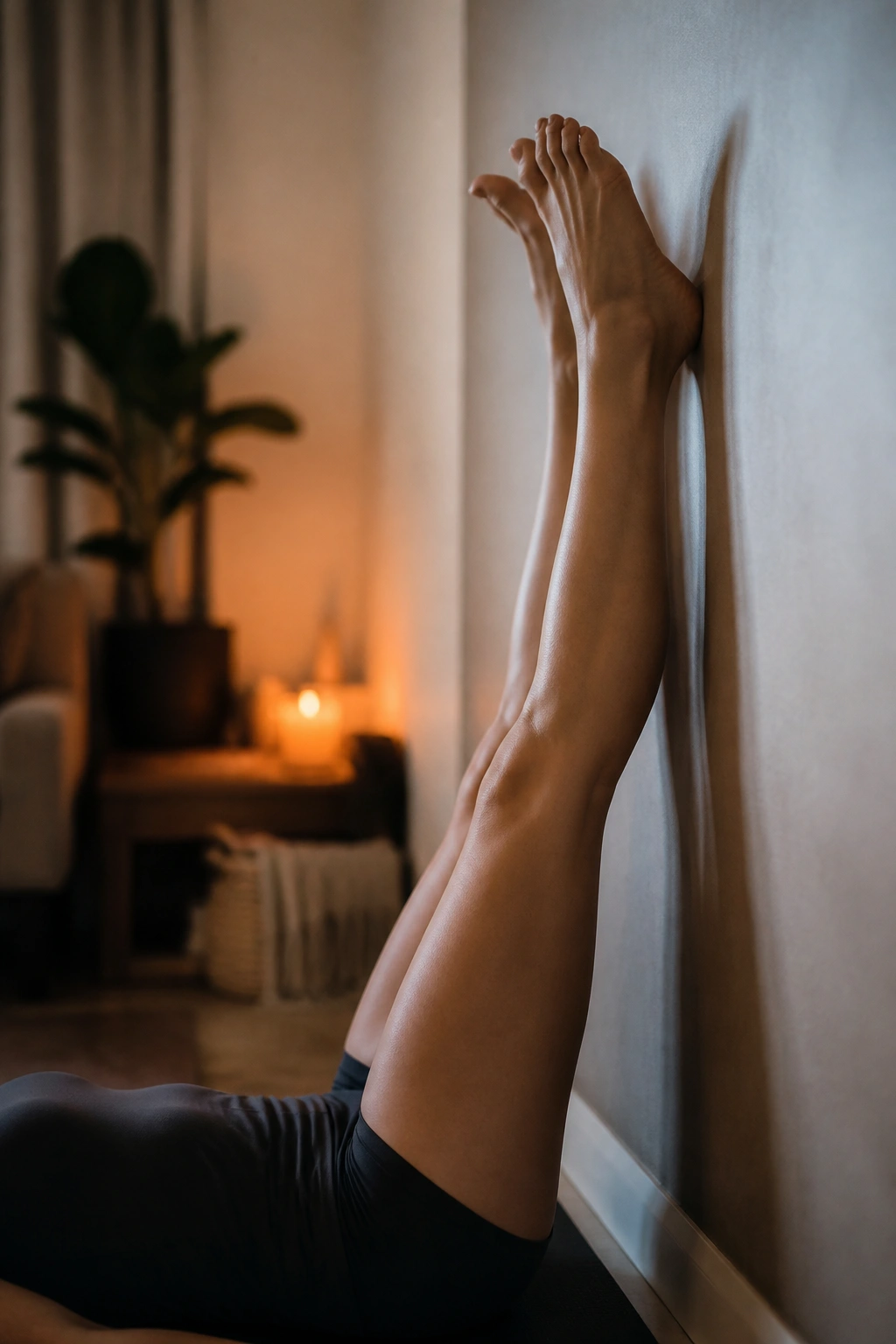
Standing all day? Your feet know it before your brain does. Wall legs is one of the most honest recovery positions around, and it barely feels like yoga until you notice your calves stop shouting at you.
Scoot your hips close to a wall and put your legs up. That’s enough. If your hamstrings complain, move your hips farther away from the wall or bend the knees slightly. Then circle the ankles, flex and point the feet, and let the blood shift around a little.
Who Needs This Most
- People with puffy feet
- Runners after a long day
- Anyone who wears unsupportive shoes for hours
- Folks who want a low-effort cooldown before bed
A folded blanket under the hips can feel nice, but it isn’t required. The real payoff comes from staying there long enough for your breathing to slow down. Try 5 minutes if you’re impatient. Try 10 if you’re not.
This is one of the few positions that asks almost nothing and still pays off. I’m fond of that kind of honesty.
11. Chair Pose to Fold to Stand Without the Burn
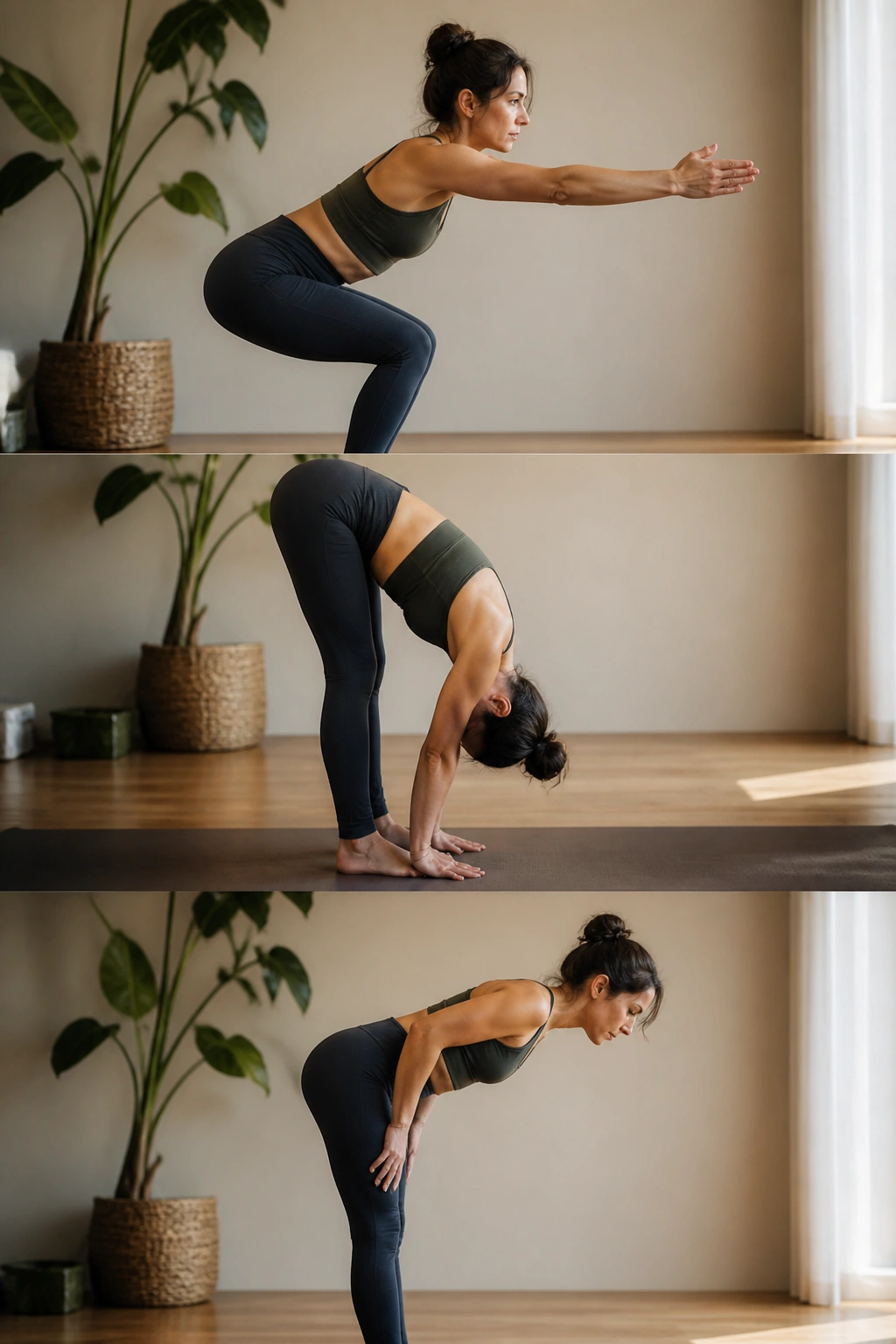
A tiny chair-to-fold sequence gives you just enough load to feel grounded, then sends you right back into release. That’s a good trade at night, especially if you hate any flow that turns sweaty.
Stand tall, sit back into a shallow chair pose for 2 breaths, then fold forward and let the torso drape. Rise only halfway, then stand again. That’s it. No repeats until your thighs start talking. The point is to wake up the legs a little, not punish them.
What To Notice
Chair pose here should feel like a small squat, not a gym finisher. Keep the knees tracking over the toes and the spine long. On the fold, bend the knees enough to let the back release instead of clamping.
If you want to make it softer, keep your hands on your thighs the whole time. If you want a little more rhythm, add a heel lift on the rise.
This is a good bridge between “I’ve been sitting too long” and “I am ready to stop moving.” The transition matters.
12. Happy Baby With a Sanity Check
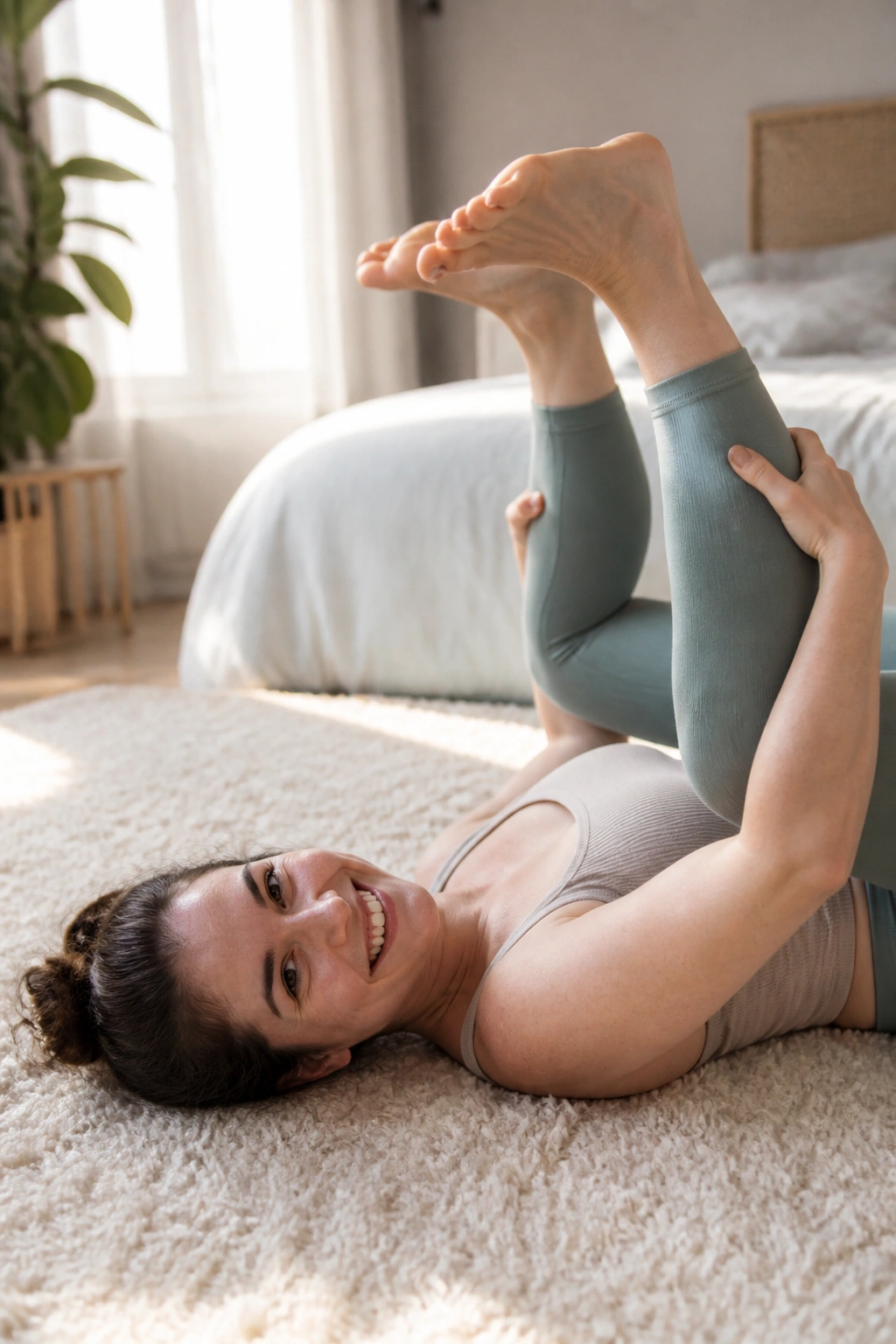
Happy baby can be lovely, and it can also become a knee-wrestling match if you grab too hard. The version worth keeping is the one that leaves your hips open and your face unpinched.
Lie on your back, bring the knees toward the ribs, and hold the backs of the thighs or shins rather than yanking the feet. Let the knees drift apart a little. Then rock gently from side to side, if that feels good.
How to Keep It Kind
- Hold the thighs if the feet feel too far away.
- Keep the tailbone heavy.
- Rock only a few inches.
- Stay for 3 to 5 breaths.
If your low back is sensitive, keep one foot on the floor and work one side at a time. That version sounds less glamorous, but it often feels better.
Happy baby is a little goofy, which may be part of why it works. The body tends to let go faster when it stops taking itself so seriously.
13. Side-Lying Windshield Wipers for When You Are Half Asleep Already
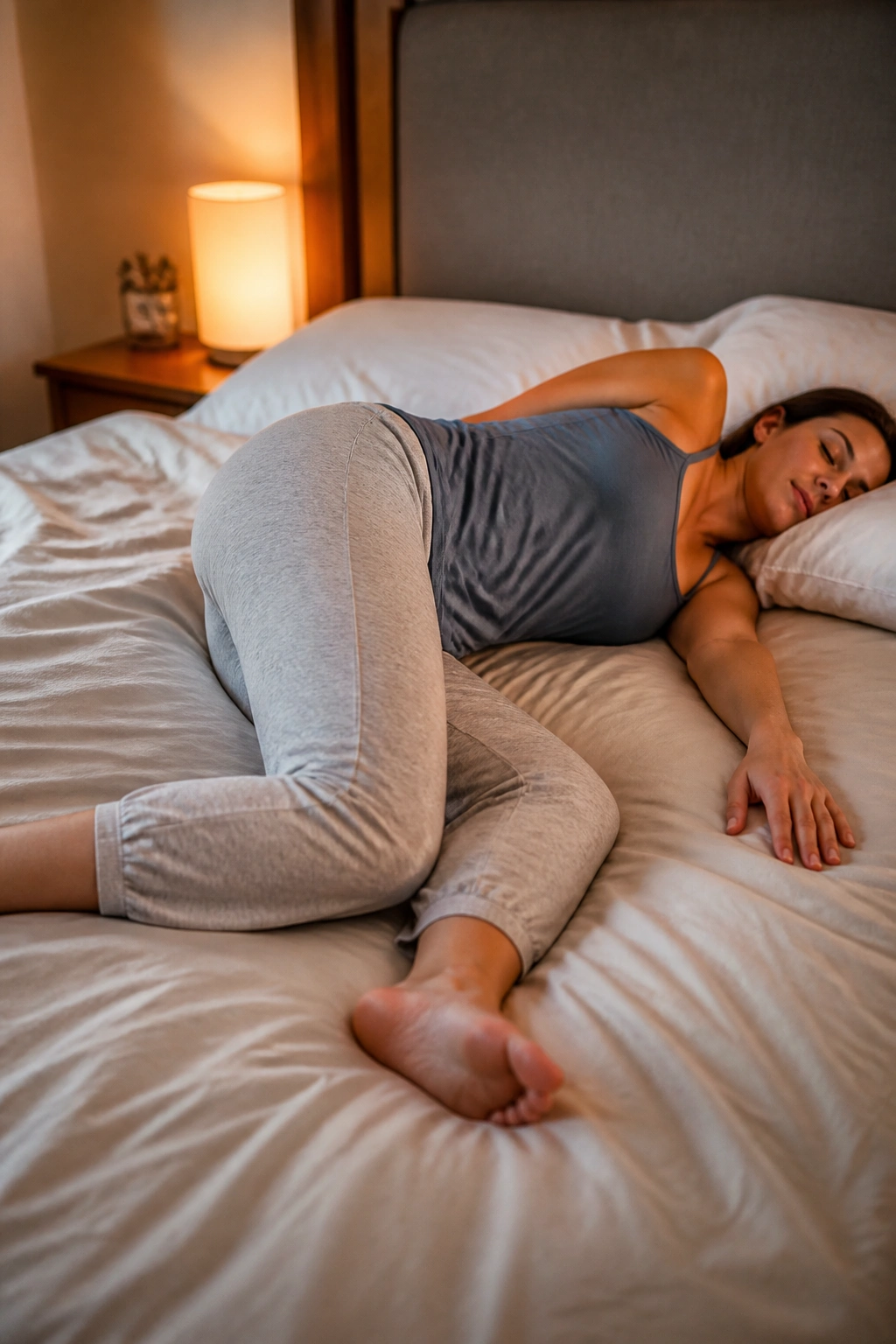
Some nights, sitting upright feels like too much effort. Side-lying windshield wipers are for those nights. They’re tiny, low-energy, and excellent when you want your spine and hips to move without asking your shoulders to do any work.
Lie on one side with knees bent and stacked. Open the top knee forward, then close it again, like a slow windshield wiper. Add a small arm opening if you want a little chest release, or keep the top hand on the floor for support.
A lot of people miss how useful this shape is because it looks almost too easy. That’s the point. The body often settles faster when the movement is small enough to feel safe.
- 8 to 10 slow reps on each side
- Keep the pelvis mostly still
- Move in a range that feels smooth
- Stop if the lower back starts pinching
This is a nice one for nights when you want to do something without really doing much.
14. Seated Spine Waves on the Edge of the Couch
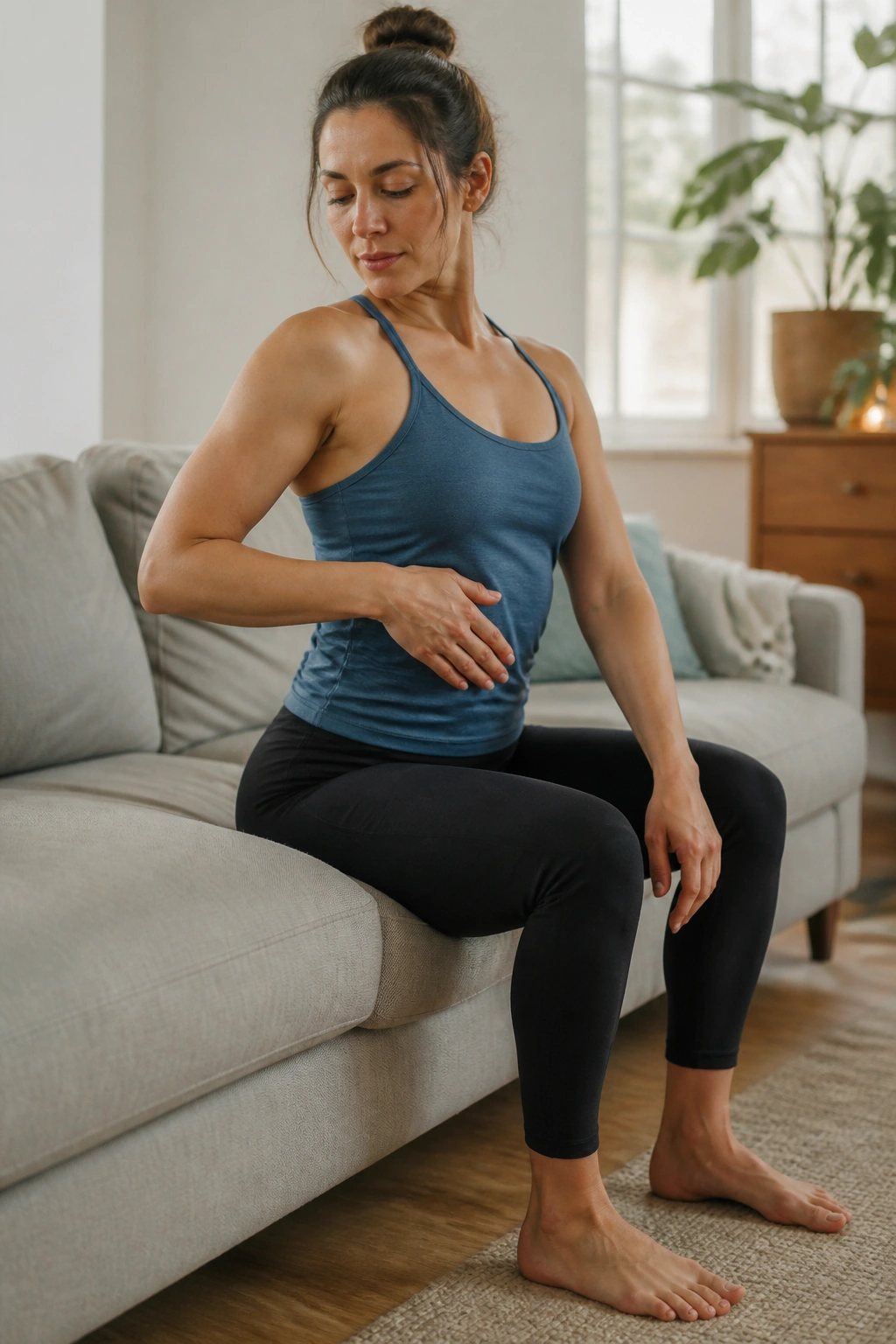
You do not need the floor for this one. The couch edge works fine, and sometimes that matters more than the pose itself. Seated spine waves are a quiet way to unwind the back without asking the hips to sit cross-legged and behave.
Sit near the front of a cushion or couch, feet planted. Tuck and untuck the pelvis a few times, then let the ribs follow. After that, add a small side bend and a gentle twist to each side. Keep the motions linked, like a chain, not separate events.
A lot of evening tightness lives in the places between positions. That sounds vague until you try this and realize how often your body gets locked in one shape for hours. The wave lets everything move in order.
I like to think of this as the “I’m too tired for floor yoga” flow. It still counts. It may count more, honestly, because you’ll actually do it.
If your lower back likes support, sit on a folded towel to tilt the pelvis slightly forward.
15. Crescent Lunge and Prayer Twist for Tight Hips and a Restless Mind
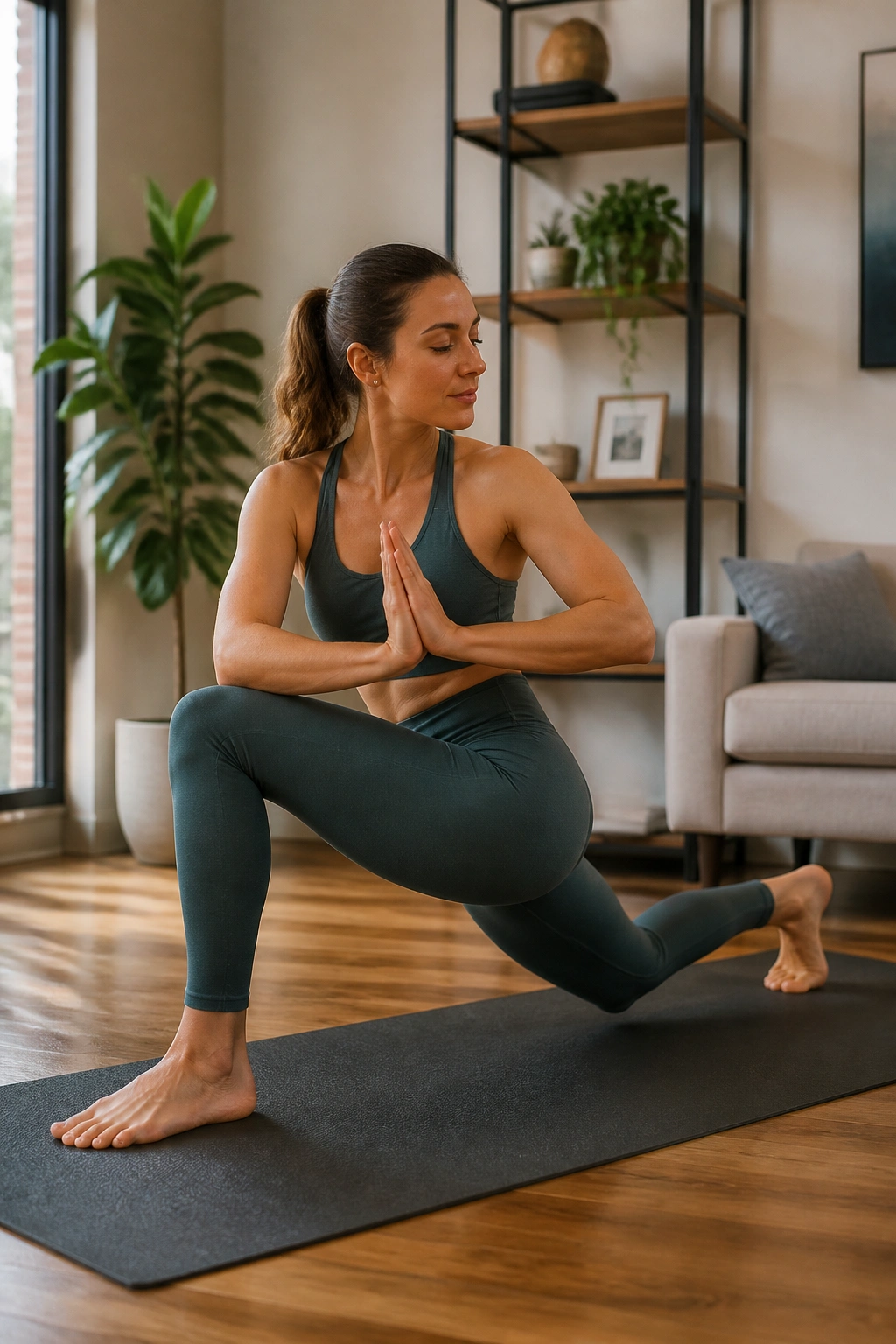
This flow sits in a useful middle ground. It gives your legs something to do, but it does not feel like cardio, and it gives your torso enough rotation to make your evening breathing feel less shallow.
Step into a low crescent lunge with the back heel lifted and the torso upright. Hold for a breath or two. Then bring the hands to prayer at the chest and rotate gently toward the front leg. Come back to center, lower the hands, and switch sides.
Best For
- Runners who need hip flexor release
- Desk workers whose hip joints feel rusty
- Anyone who wants standing balance without speed
- People who dislike lying on the floor right after dinner
Keep the front knee stacked over the ankle and shorten the stance if your balance is shaky. If your back knee wants a blanket, give it one. Small adjustments make this flow much more usable.
It’s a nice choice when you feel physically tired but mentally buzzy. The legs have work to do, which can help the brain stop spinning for a minute.
16. Bridge Pose With a Slow March
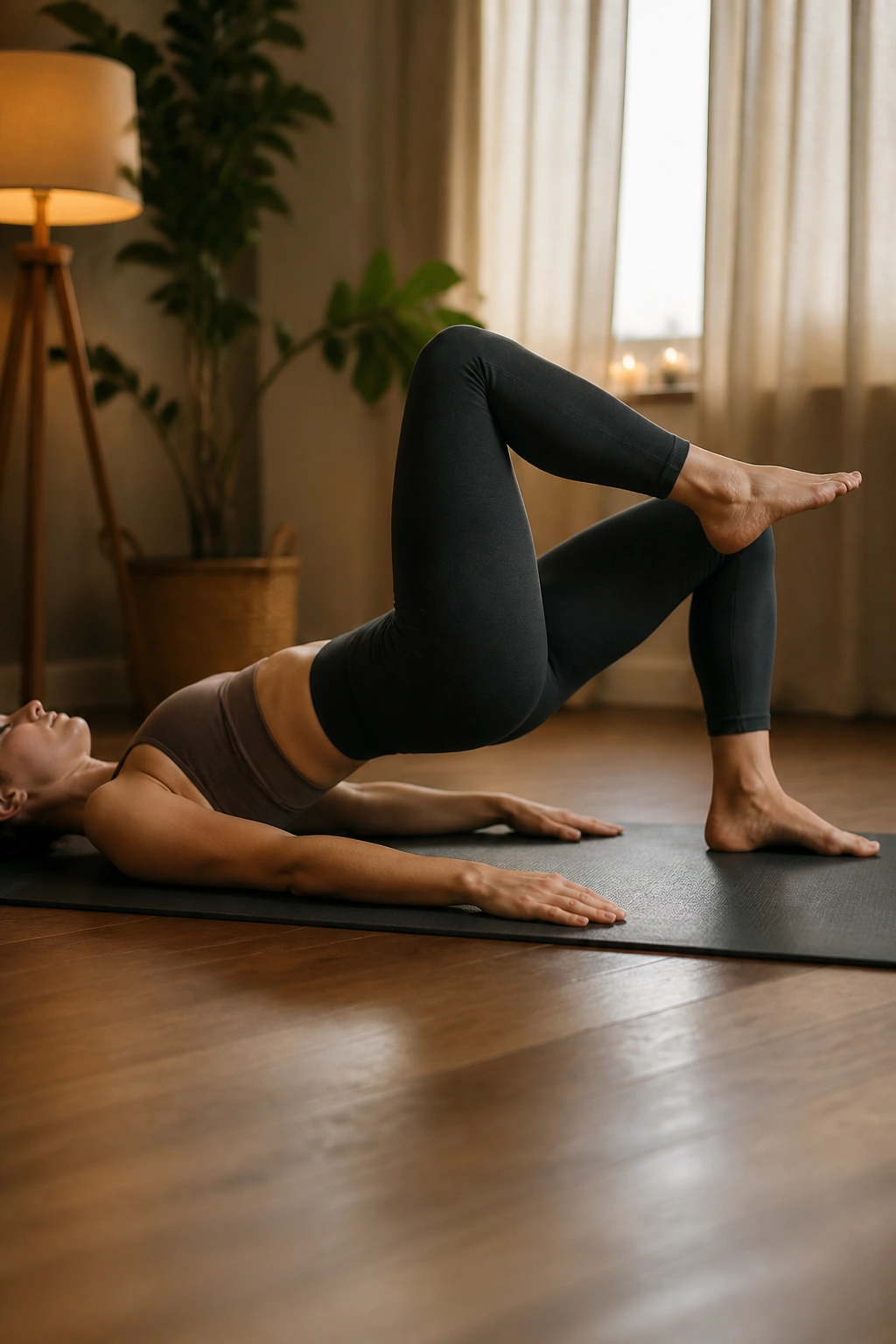
Bridge pose is one of my favorites for people who dislike stretching because it does a sneaky thing: it wakes up the glutes while giving the front of the hips a little space. Add a slow march, and it becomes even better.
Lie on your back, feet planted, and lift the hips into bridge. Hold for a breath. Then pick one foot up an inch, set it down, and switch sides. The hips should stay mostly level. If they wobble wildly, make the movement smaller.
How to Use It
- Start with 2 static breaths
- March 4 to 6 times total
- Lower down slowly
- Rest for one breath before repeating
This is not about making the bridge huge. A smaller lift often feels cleaner, especially at night when the lower back is already tired.
The nice part is the mix of strength and release. Your body feels supported, not yanked open. That’s a better bargain than a long passive stretch for a lot of people.
17. Wide-Knee Child’s Pose With a Pillow Under the Chest
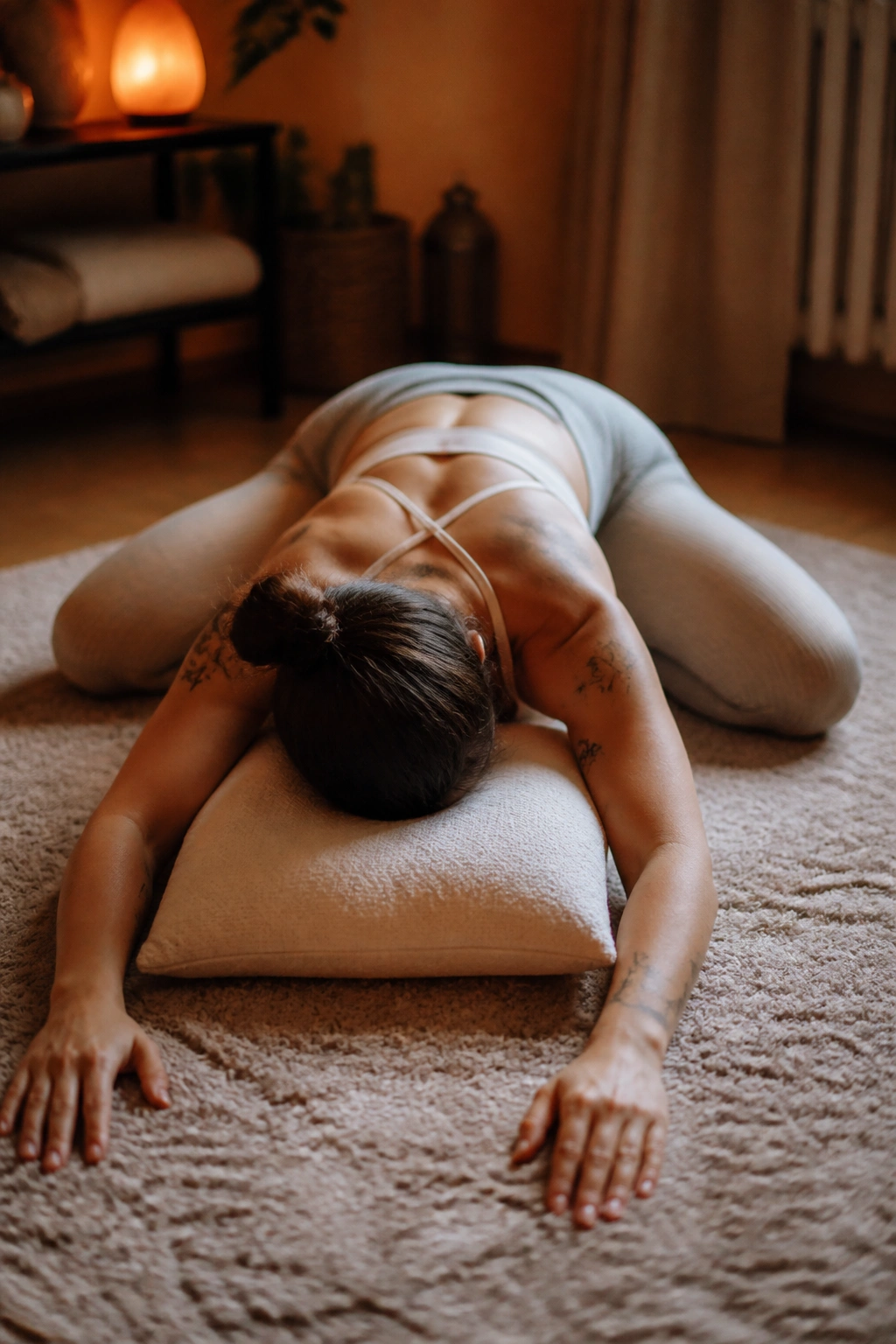
Child’s pose can feel too collapsed for some people, which is fair. Wide knees and a pillow change the whole thing. Suddenly it becomes a supported pause instead of a surrender.
Come to kneeling, spread the knees wider than hips, and lay a pillow or folded blanket under your chest and head. Let the arms stretch forward or drape alongside your body. Then walk the hands a little to one side so you feel the ribs and flank open, and switch.
The point here is not depth. The point is ease. If the knees dislike wide angles, slide a blanket under them or come to a version with the knees closer together.
Small Details That Matter
- Keep the breath low and slow
- Let the belly rest on support if it needs it
- Hold each side for 3 breaths
- Come out by pressing up slowly, not by snapping upright
This is one of those positions that earns its keep after a long day because it asks for almost no effort from the neck or shoulders.
18. Standing Figure-Eights for Hips That Need Motion More Than Stretch
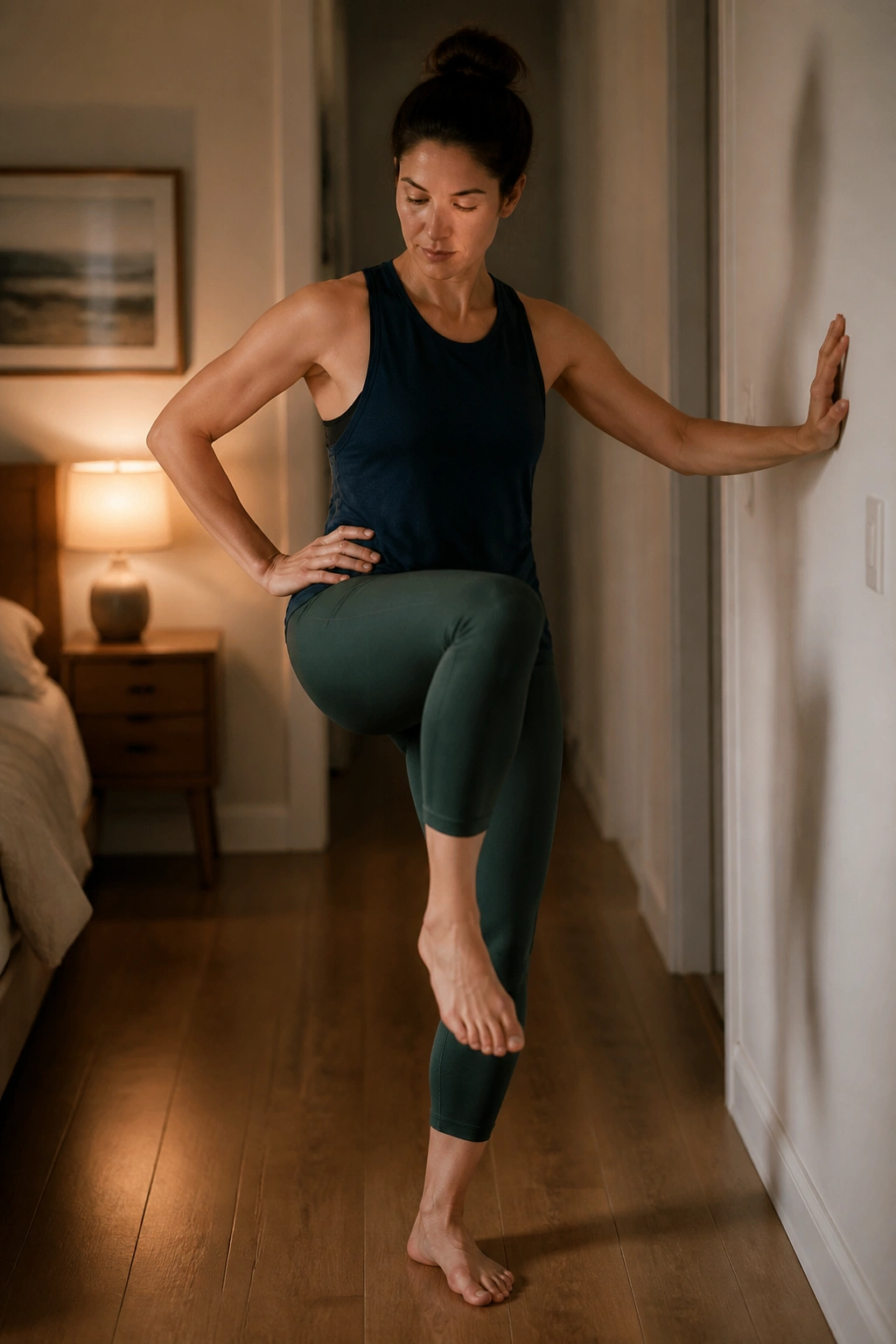
If floor work feels like too much after a long day, stay upright. Standing figure-eights move the hips without turning the evening into a formal stretch session, and I think that’s why they stick.
Stand with one hand on a wall or dresser and draw a slow figure-eight with one knee. Then switch sides. Keep the standing leg soft and the movement smooth. If you want more, add a tiny hip circle before the figure-eight pattern.
What Makes It Different
This is not a yoga pose in the strict, photo-ready sense. It’s better than that for a lot of people because it fits real life. You can do it in socks on a bedroom floor or beside the bed while the tea steeps.
- Use a wall if balance is shaky
- Keep the circles small
- Move for 30 to 45 seconds each side
- Finish with both feet grounded and one slow inhale
The body often relaxes faster when it gets to stay upright and keep its bearings. That’s the whole reason this one works so well for people who hate stretching.
19. Legs-Up-the-Wall With Slow Counting Breath
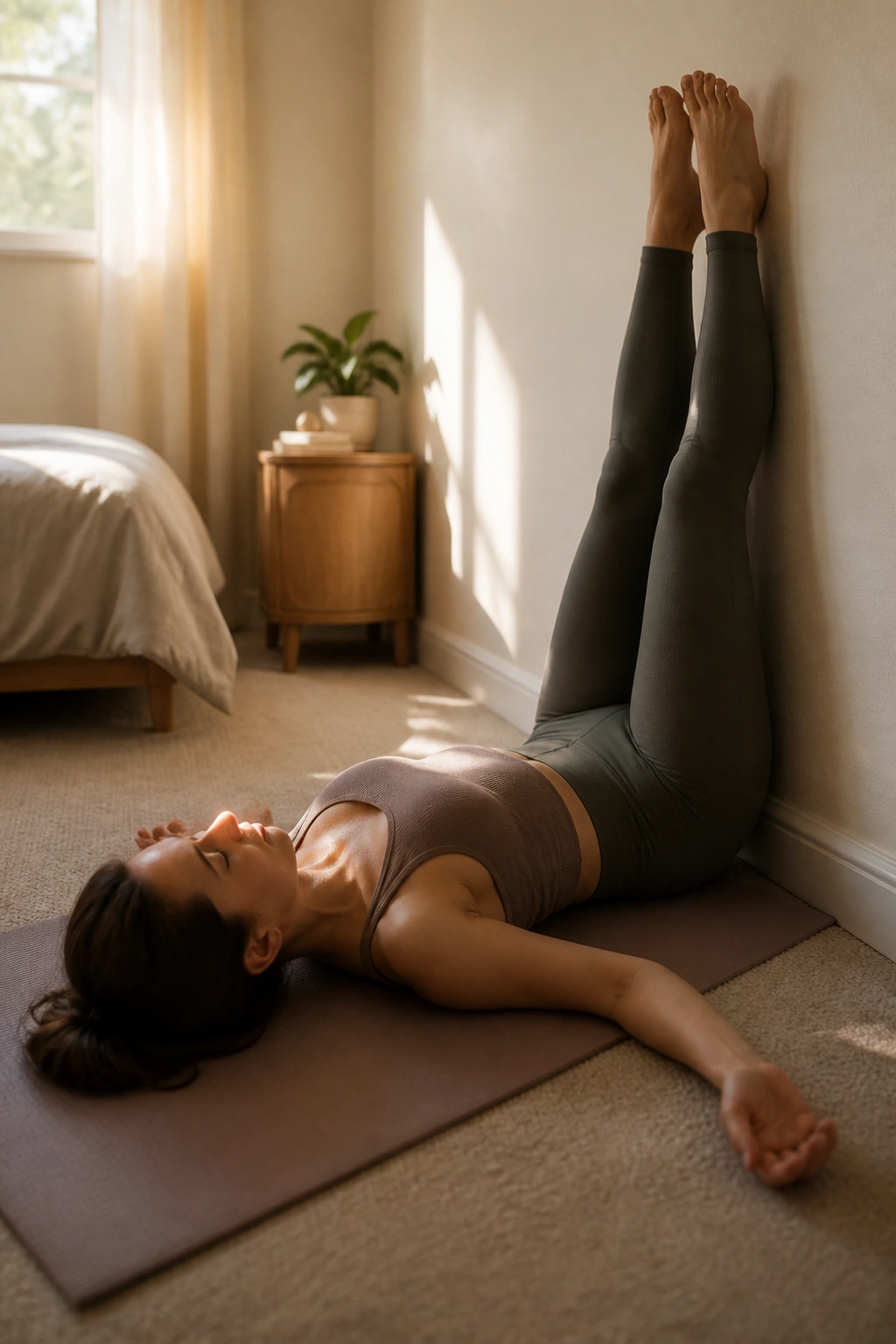
Legs-up-the-wall is the closest thing yoga has to a ceasefire. It asks almost nothing from your muscles, but it changes the whole tone of the room. Feet get lighter. The low back stops gripping so hard. Breathing gets easier in the ribs and belly.
Lie down, place the legs on a wall, and let the arms fall where they want. Count a slow breath in for four, out for six, or just soften the exhale until it gets long on its own. You can stay here for 5 minutes or linger longer if your mind is still buzzing.
Add little ankle movements if your calves feel cranky. Open and close the toes. Bend the knees if the hamstrings protest. There is no prize for keeping the legs perfectly straight.
This is the one I’d choose after a stressful day. It’s boring in the best way. The whole point is that nothing needs to happen except settling.
If you only do one evening flow on a rough night, this is a strong candidate.
20. The Five-Pose Lights-Out Evening Yoga Flow
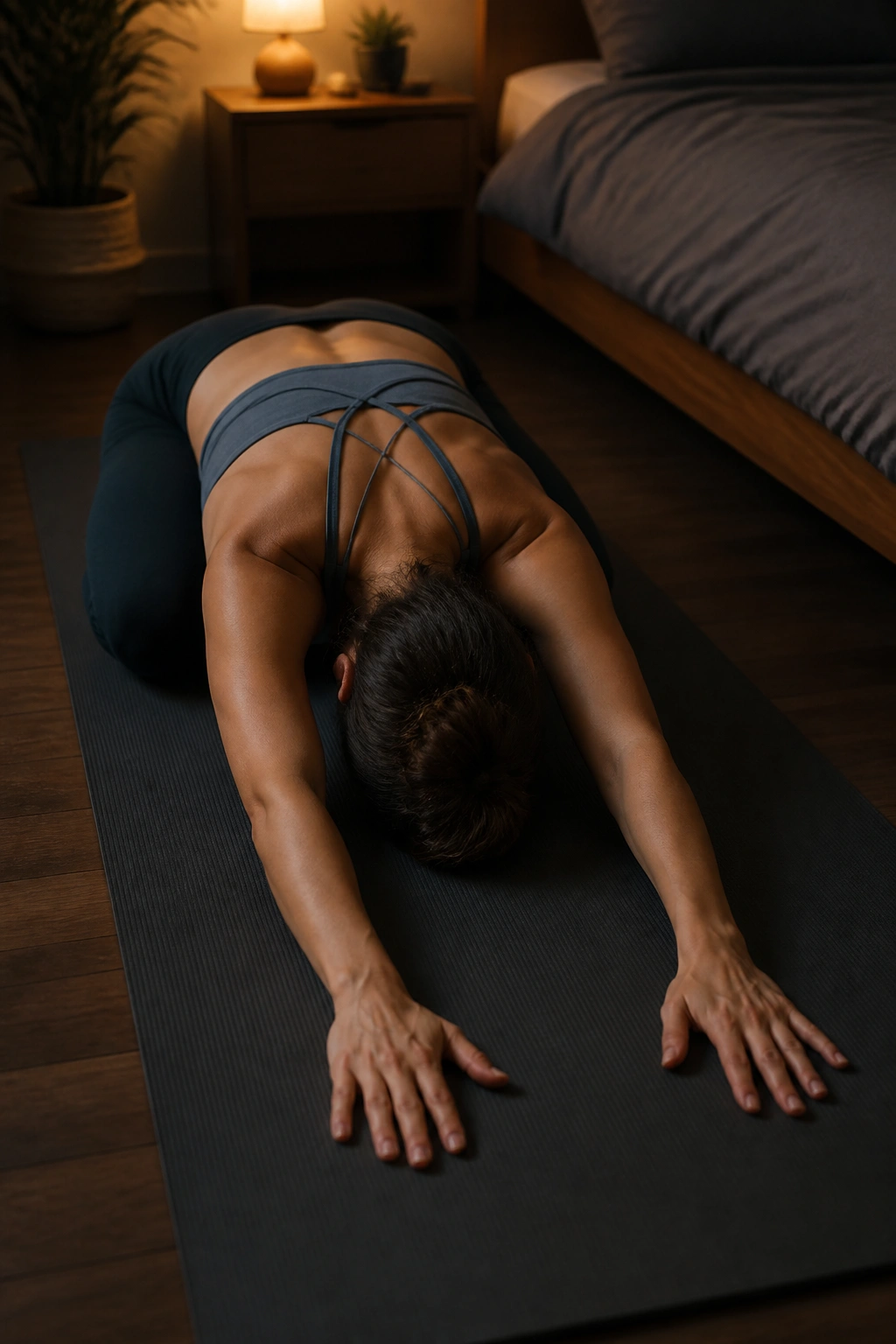
If you want one short sequence that ties the whole night together, keep it here. This flow is for the person who wants relief, not a performance. Five shapes. Ten minutes, maybe less. Done cleanly, it can feel like you’ve finally stepped out of the day instead of dragging it into bed.
Start in child’s pose with your forehead supported. Move to cat-cow for a few easy rounds. Come onto your back for a supine twist, then shift into figure-four on both sides. Finish with legs up the wall or calves resting on the bed if the wall is inconvenient.
A Clean Order Helps
- Child’s pose for 3 breaths
- Cat-cow for 4 rounds
- Supine twist for 4 breaths each side
- Figure-four for 4 breaths each side
- Legs up the wall for 5 minutes
That’s enough. Really. Most people do better with a short flow they’ll repeat than a long one they quit halfway through. The body remembers consistency, not heroics.
If you hate stretching, this is the quiet win: movement first, stillness last, lights low, mat rolled away. Tomorrow’s body usually notices.
