



A warm-up that works should make your joints feel easier to move, your breathing settle, and your first working set feel less rude. If you start a lifting session, a run, or a field workout with stiff shoulders and cold hips, the body tends to answer back with sloppy movement, nagging tightness, or that weird feeling that everything is on a delay. A few smart pre workout stretches can change that fast.
The trick is not to sit in a hamstring stretch for a minute and call it preparation. That’s a common mistake. Before exercise, you want dynamic movement, short holds only when they serve a purpose, and a progression that wakes up the whole body instead of yanking on one joint at a time.
I like warm-ups that move from neck to ankles, because that keeps the session organized and makes it easier to spot what feels sticky. Some days the shoulders need more love. Other days the hips feel like old hinges. A good full body warm up handles both without wasting time.
1. Neck Nods and Gentle Turns
A lot of people skip the neck because it feels too small to matter. Then they get under a barbell, start looking for a mirror, or check their running form, and suddenly the whole upper body feels jammed up. Gentle neck nods and turns are a simple way to clear that stiffness without cranking on the joints.
Keep the movement small
Sit or stand tall. Nod your chin down a few inches, then bring it back to neutral. After that, turn your head left and right in a slow, easy range. Do not force full circles if your neck feels crunchy or tight; clean, controlled nods and turns are the safer choice.
A good pattern is 5 nods, then 5 turns each side. The goal is not to stretch hard. The goal is to wake up the small muscles around the neck and upper traps so your shoulders do not do all the work later.
If you spend your day at a desk, this one matters more than you think. The neck often feels fine until you ask it to support heavier work, and then it reminds you it has opinions.
2. Arm Circles That Start Small and Grow
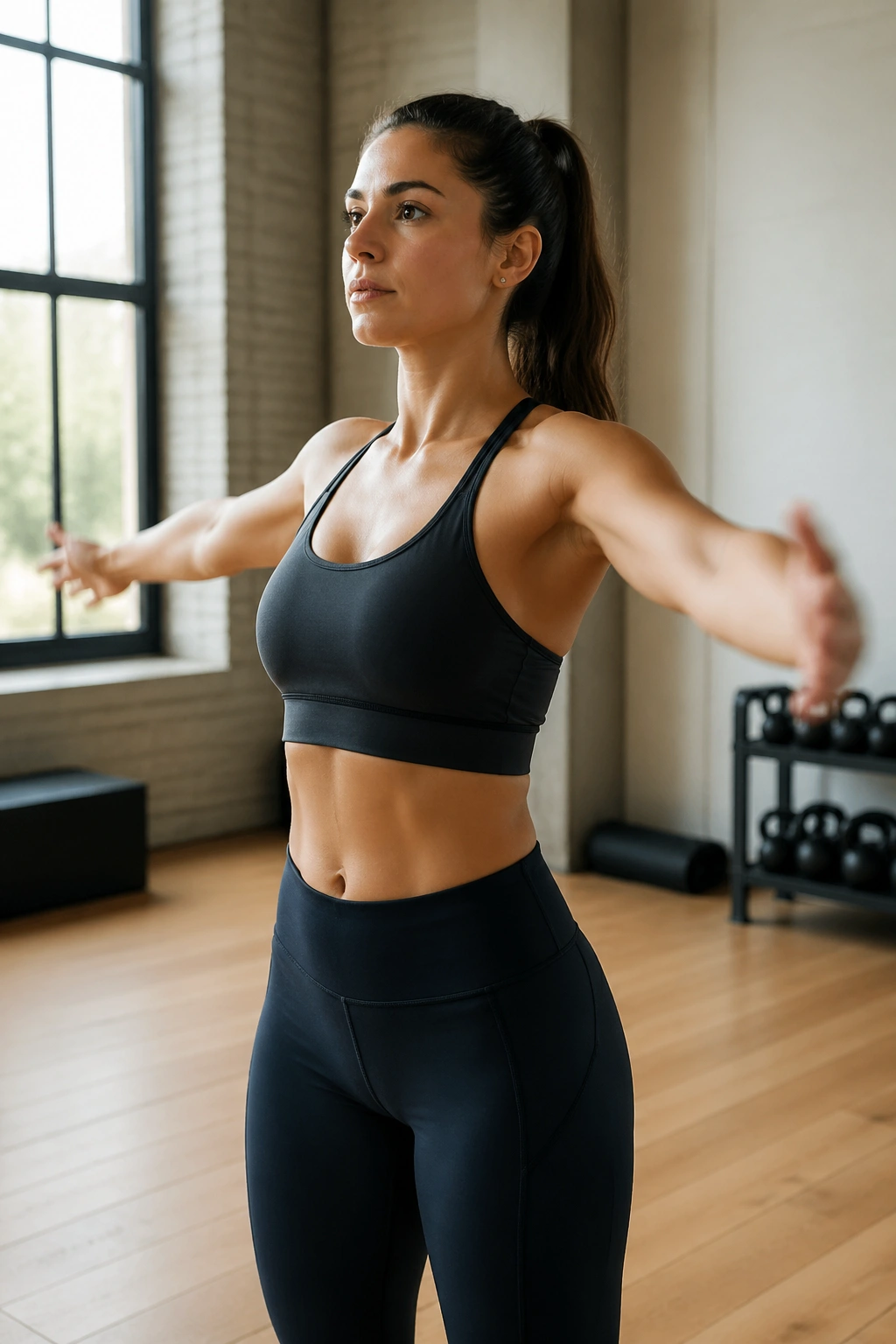
Shoulders love motion. Big, sloppy arm circles before you are warm do not help much, and they can feel weird fast. Small-to-large arm circles, though, are one of the easiest pre workout stretches for full body warm ups because they loosen the shoulder joint without needing any gear.
Why the size matters
Start with circles about the size of a dinner plate. Make 10 forward, then 10 backward. After that, widen the circle a little and repeat. You should feel the upper back and shoulders start to warm, not pinch.
A lot of people swing their arms so fast they turn the drill into flailing. That misses the point. Keep your ribs down, soften your elbows, and move with control. Smooth beats fast here, every time.
If you’re getting ready for pressing, pull-ups, overhead work, or even a hard run, this is a nice bridge between standing still and moving hard. It also pairs well with chest and upper-back activation, which is handy when your shoulders like to roll forward.
3. Shoulder Blade Squeezes for Posture and Pulling Power

Strong shoulder blades make a huge difference. They help your arms move better, they support pressing, and they keep your upper back from feeling like a bent coat hanger by the end of a workout. Shoulder blade squeezes are basic, but basic does not mean pointless.
Stand tall with your arms at your sides. Pull your shoulder blades back and down as if you were trying to slide them into your back pockets. Hold for 2 seconds, then relax. Repeat 10 to 15 times. You should feel the middle of your upper back work, not your neck.
What to avoid
Do not shrug up toward your ears. That’s the fast way to turn a simple warm-up into tension. Keep the motion clean and small. If you want, you can add a light resistance band later, but bodyweight is enough for most warm-ups.
This drill is especially useful before rows, bench press, deadlifts, or any session where your upper back needs to stay organized. It’s not flashy. It just works.
4. Cat-Cow to Wake Up the Spine
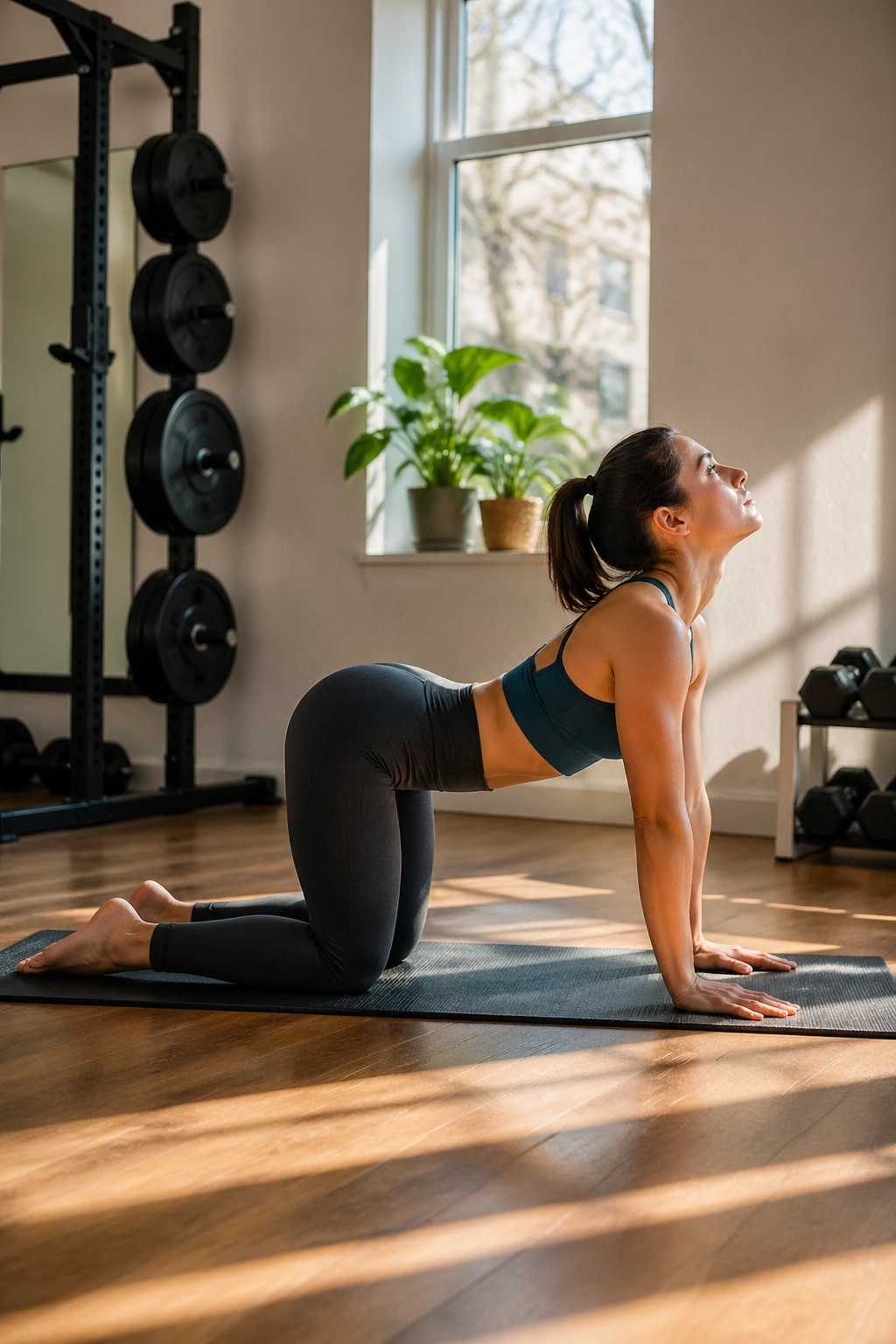
The spine likes movement in both directions. Cat-cow gives you a gentle flexion and extension pattern that feels great when your back has been parked in one shape for too long. It’s one of those pre workout stretches that sounds almost too easy, then turns out to be exactly what your body wanted.
How to do it well
Start on hands and knees. Inhale as you let your belly drop, lift your chest, and gently look forward. Exhale as you round your back, tuck your pelvis, and press the floor away. Move through 8 to 12 slow reps.
The best cat-cow feels like a smooth wave through the whole trunk. If it turns into a neck crank or a lower-back collapse, shorten the range and slow down. Controlled breathing helps more than trying to move big.
This is especially useful before squats, deadlifts, overhead work, or any day where your lower back tends to take over. It also gives you a second to notice how your body feels before you start loading it.
5. Thread the Needle for Mid-Back Rotation
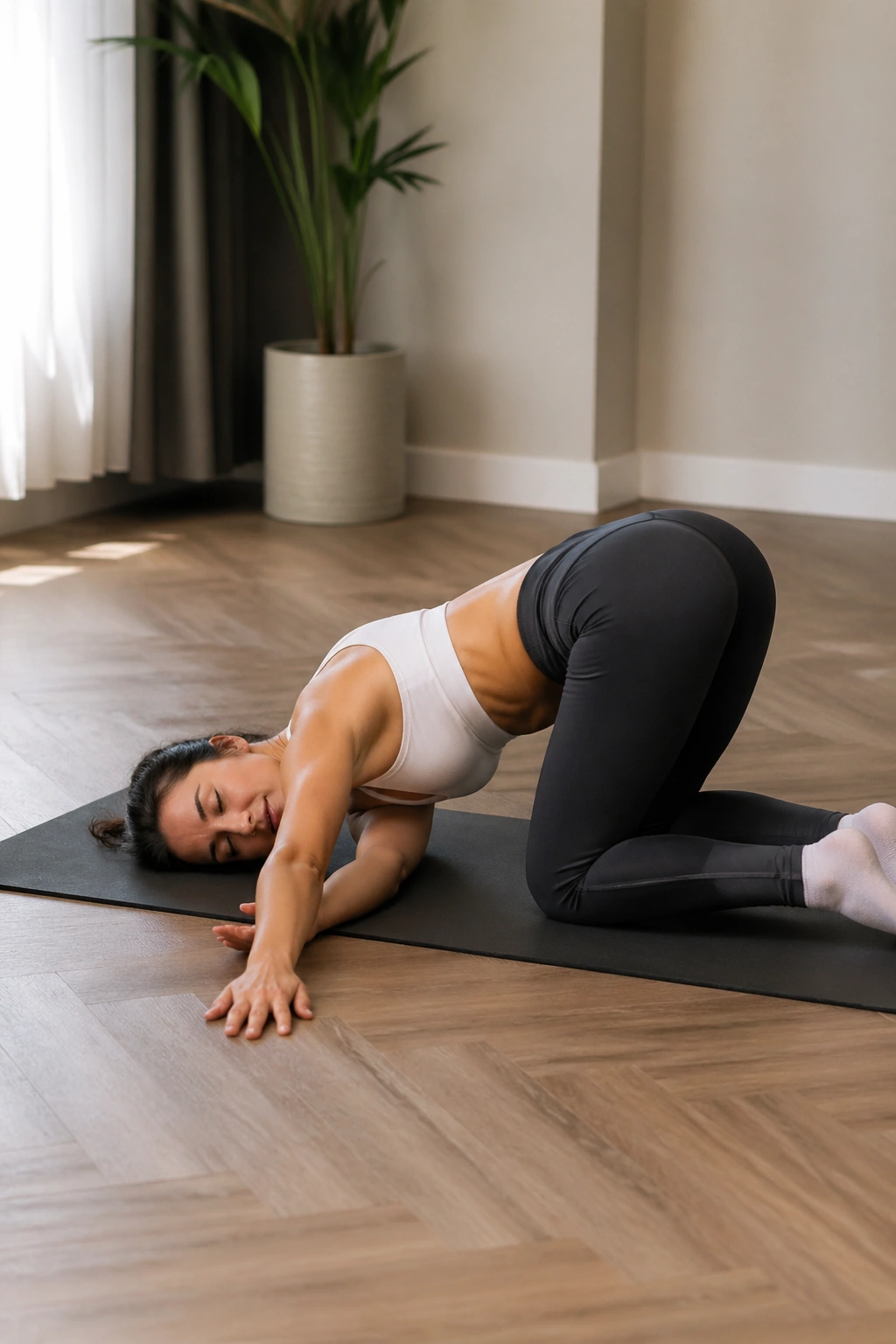
The upper back needs rotation. Not a little. A decent amount. Thread the needle opens the thoracic spine and loosens the muscles between the shoulder blades, which is handy for pressing, throwing, swinging, and just not feeling welded together.
Start on hands and knees. Slide one arm under the other and rest your shoulder and head toward the floor. Hold for 1 to 2 breaths, then return and open that same arm up toward the ceiling. Do 5 reps per side, slow enough that you can actually feel the twist.
Why this one earns its place
Most people think their shoulders are tight when the real issue sits a bit lower, in the upper back. This move helps tease that area open without forcing the lower back to twist too much. That distinction matters.
If your workout includes pressing, rowing, swimming, or rotational work, keep this one near the front of the warm-up. It feels especially nice after a long day of sitting, when your chest is closed and your upper back is acting stubborn.
6. The World’s Greatest Stretch, Minus the Drama
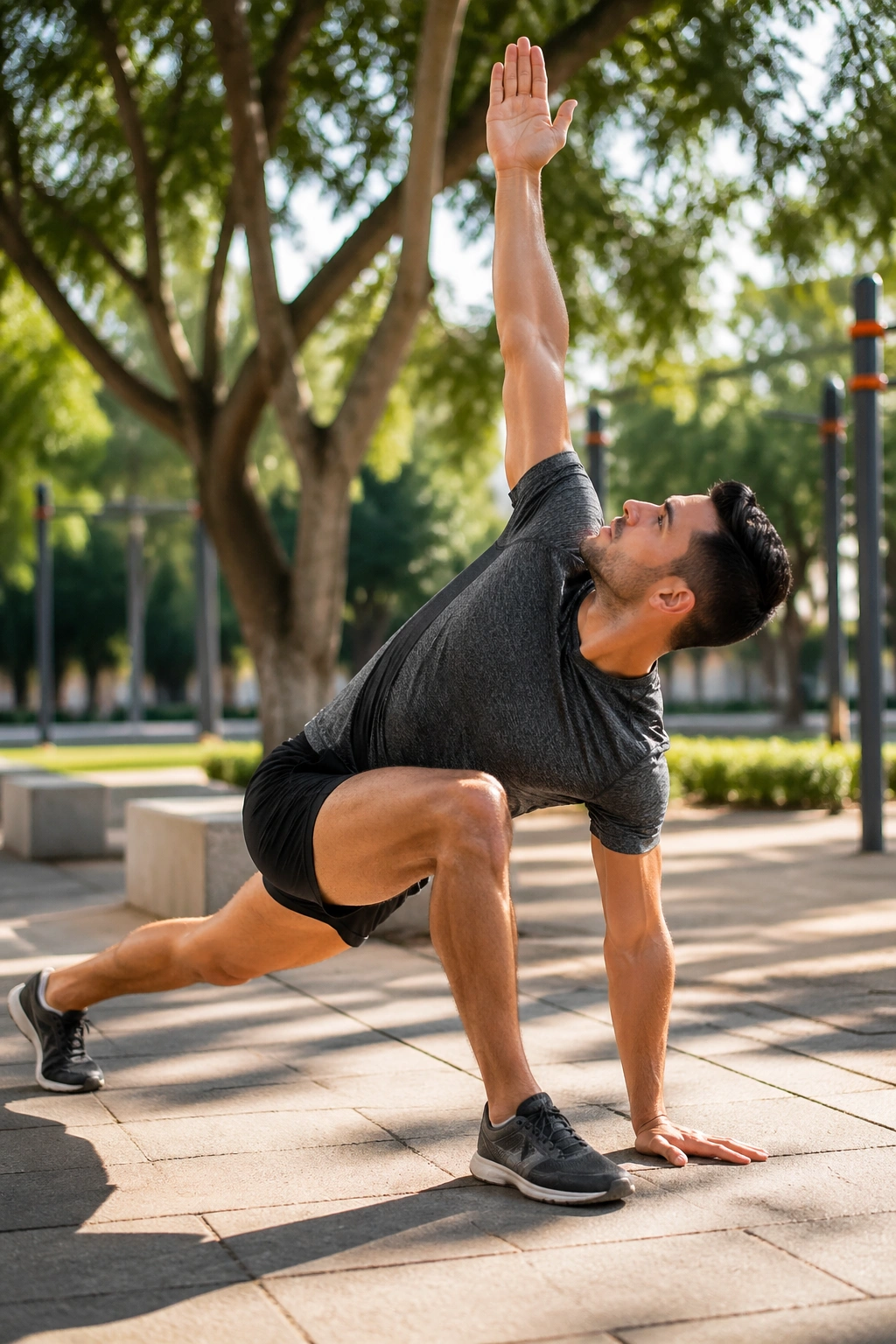
The name sounds exaggerated. The movement earns it. This is one of the best full body warm up drills because it hits the hips, hamstrings, thoracic spine, and ankles in one sequence. It’s efficient, and I like that.
Step one foot forward into a low lunge. Keep the back leg long, bring both hands to the floor or the inside of the front foot, and let the hips sink gently. Then rotate the upper body and reach one arm toward the ceiling. Switch sides after 3 to 5 slow reps.
What makes it so useful
You get a hip flexor stretch, a little hamstring lengthening, and a clean spinal rotation all in one motion. That’s a lot of useful work for a single drill. If you’re short on time, this is one of the first stretches I’d keep.
Don’t force your heel down if your ankle is stiff. Don’t dump into the front knee either. Stay organized, breathe, and let the range open gradually. If the lunge feels shaky, shorten the stance.
7. Hip Circles to Loosen the Pelvis
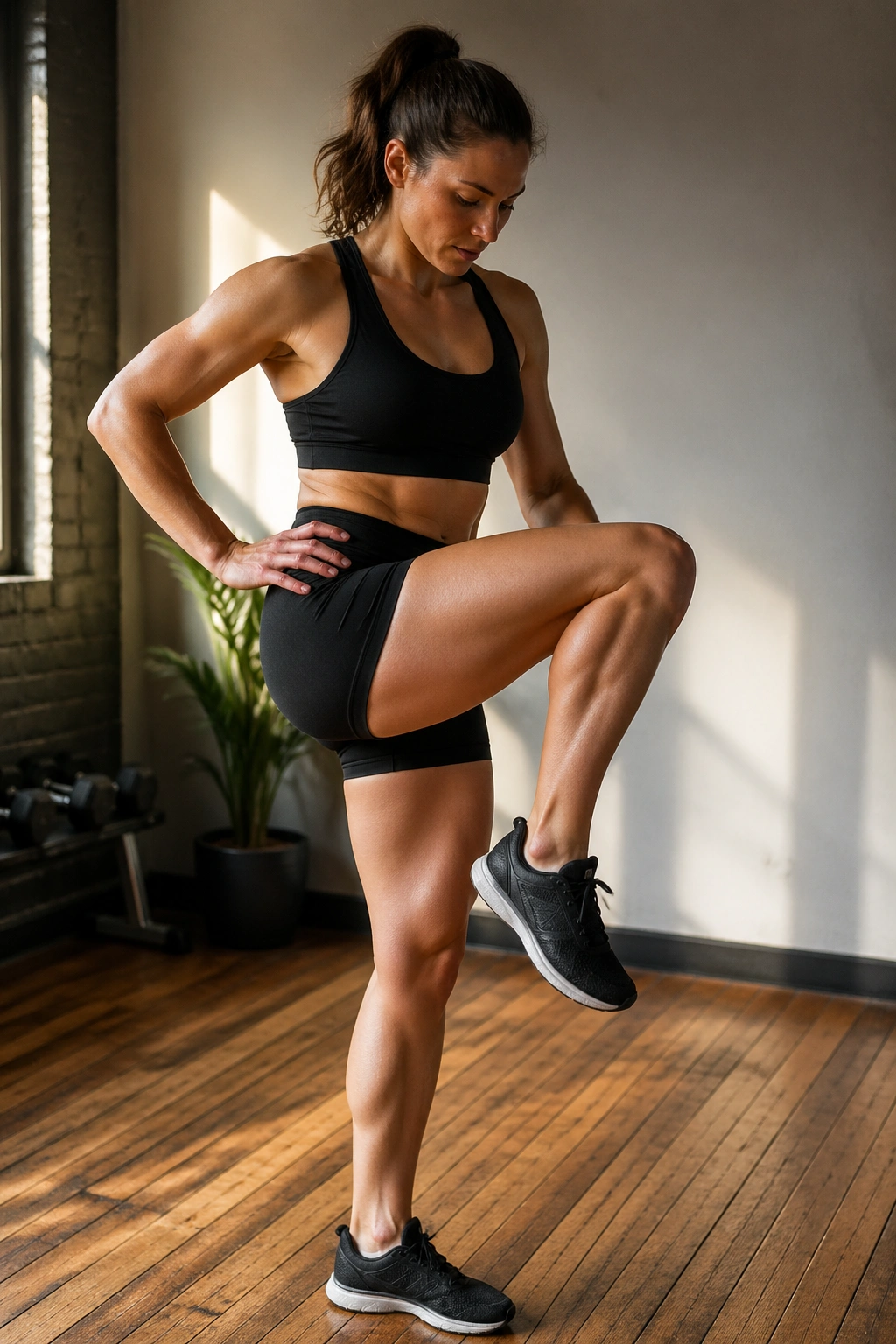
Hip circles look simple because they are simple. That’s part of the appeal. They help the pelvis move through controlled arcs, which can make squats, lunges, and running feel cleaner before you pile on load.
Stand on one leg with a hand on a wall if you need balance. Lift the other knee slightly and draw a circle with the knee, not just the foot. Make 5 to 8 circles in each direction, then switch sides.
The movement should feel smooth around the hip joint, not wobbly in the low back. Keep your torso as steady as you can. If the body is swaying all over the place, slow down and make the circle smaller.
This drill is useful before lower-body training, field sports, or even a brisk walk if your hips tend to feel pinched after sitting. It’s a small move with a useful payoff.
8. Front-to-Back Leg Swings for Hamstrings and Hip Flexors
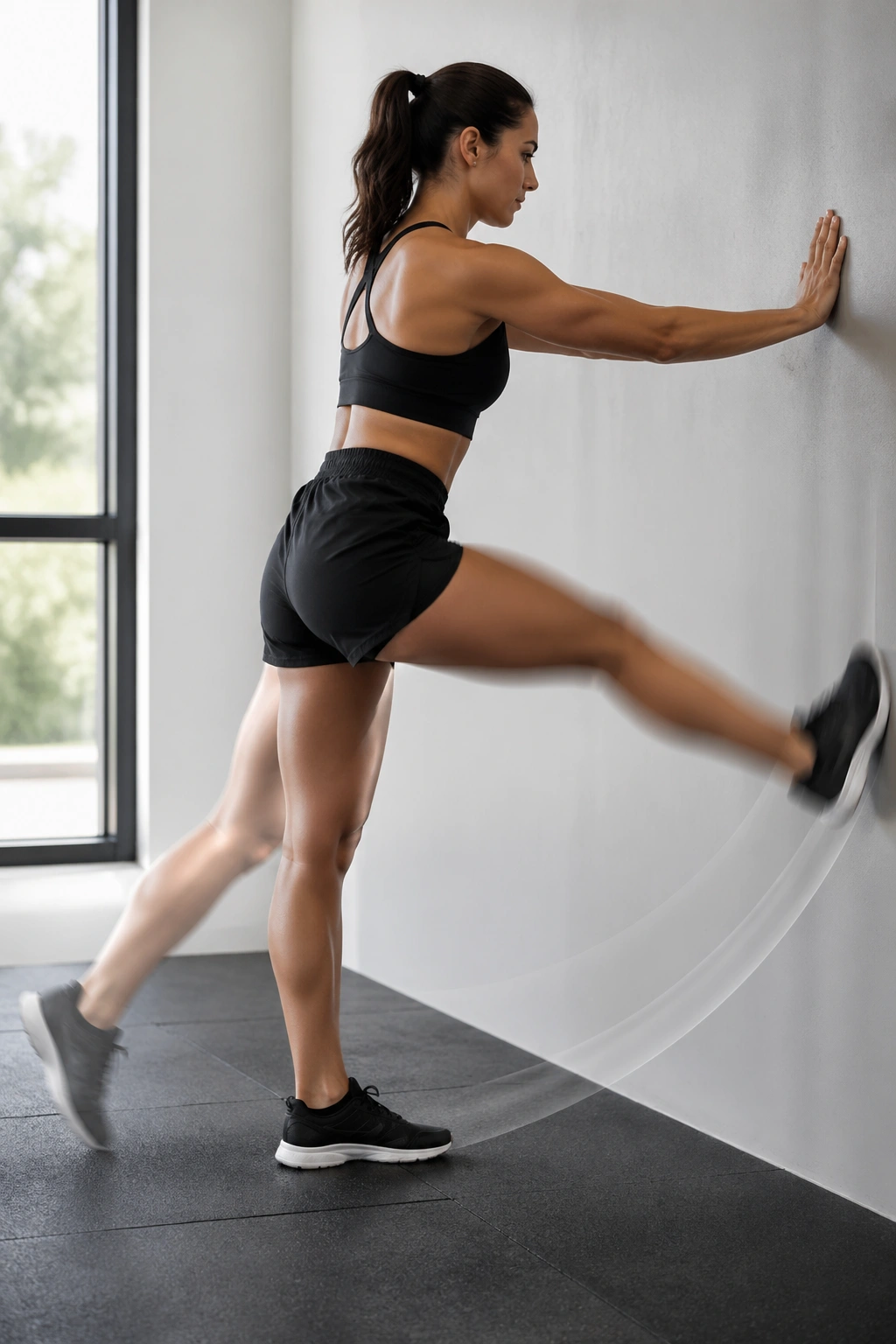
If your legs feel stiff at the start of a workout, leg swings are a cleaner choice than a long static hamstring stretch. They take the leg through a real range of motion and gently wake up the hamstrings, hip flexors, and glutes without hanging out at end range.
Hold onto a wall, rack, or post. Swing one leg forward and back like a relaxed pendulum. Keep the motion controlled, about 10 to 15 swings per side. The swing should build a little height as you warm up, not start huge and sloppy.
A small but important detail
Keep your standing leg soft, not locked out. That helps your pelvis stay steady. If you feel a tug in the lower back, your swing is probably too big or too fast.
This one is excellent before running, jumping, deadlifts, or any workout where the hips need to snap open and close with a little spring. It’s one of those drills that looks boring and then saves the first mile or the first set.
9. Side-to-Side Leg Swings for the Inner Thighs
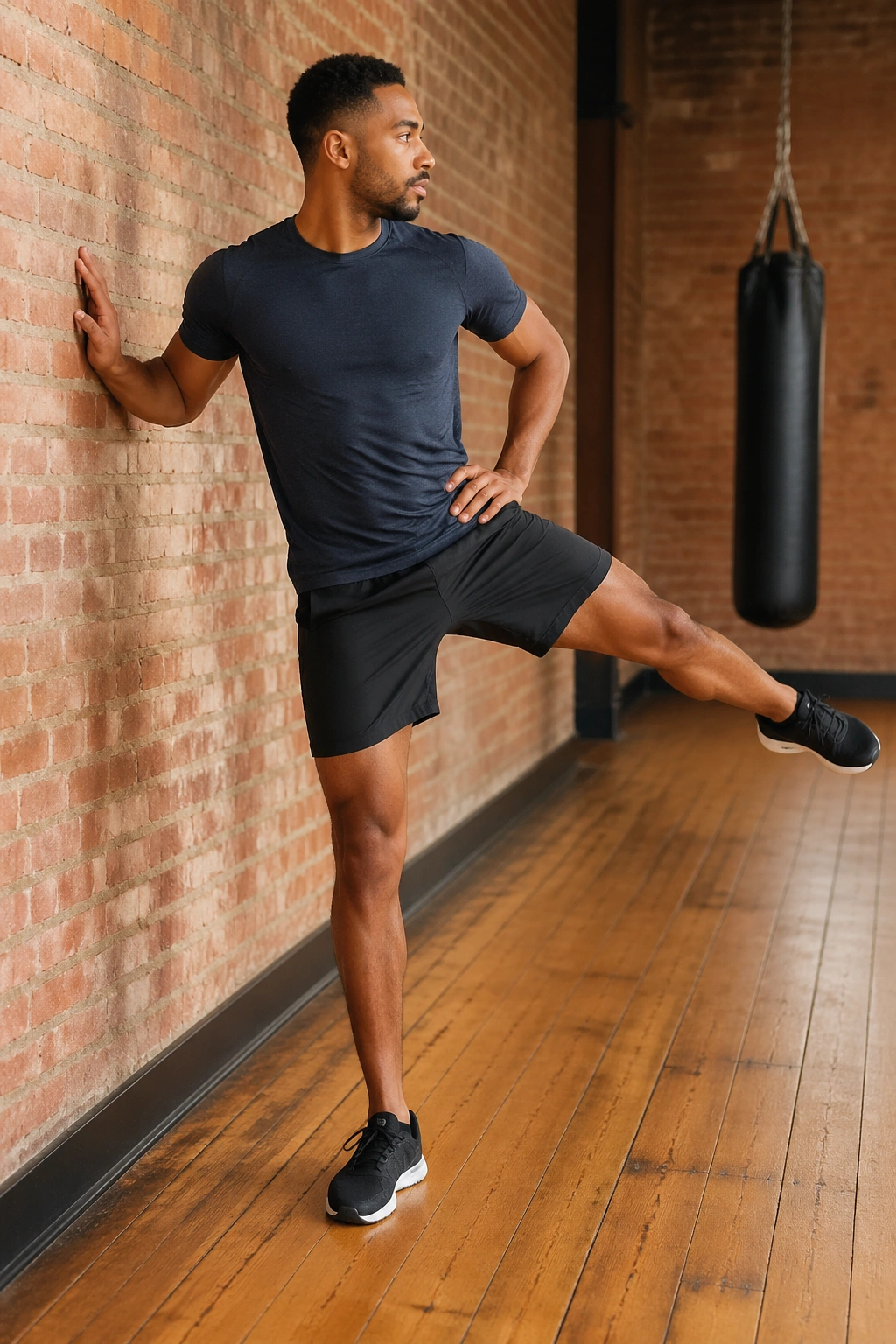
This version gets the adductors involved, and they’re often forgotten until they complain. Side-to-side leg swings help the hips move in the frontal plane, which matters for cutting, squatting, lunging, and staying balanced when you move in a hurry.
Face a wall and swing one leg across the body, then away from it. Keep the movement controlled and the torso mostly still. Aim for 10 to 12 swings each direction, then switch legs.
You’ll probably feel this more on the inside of the thigh than you expected. Good. That means the tissue is waking up. If the swing feels sharp or pinchy, reduce the range and slow down. A warm-up should feel useful, not aggressive.
This pairs well with front-to-back leg swings. Together, the two drills give the hips a more complete prep than either one alone.
10. Bodyweight Good Mornings for the Hips and Hamstrings
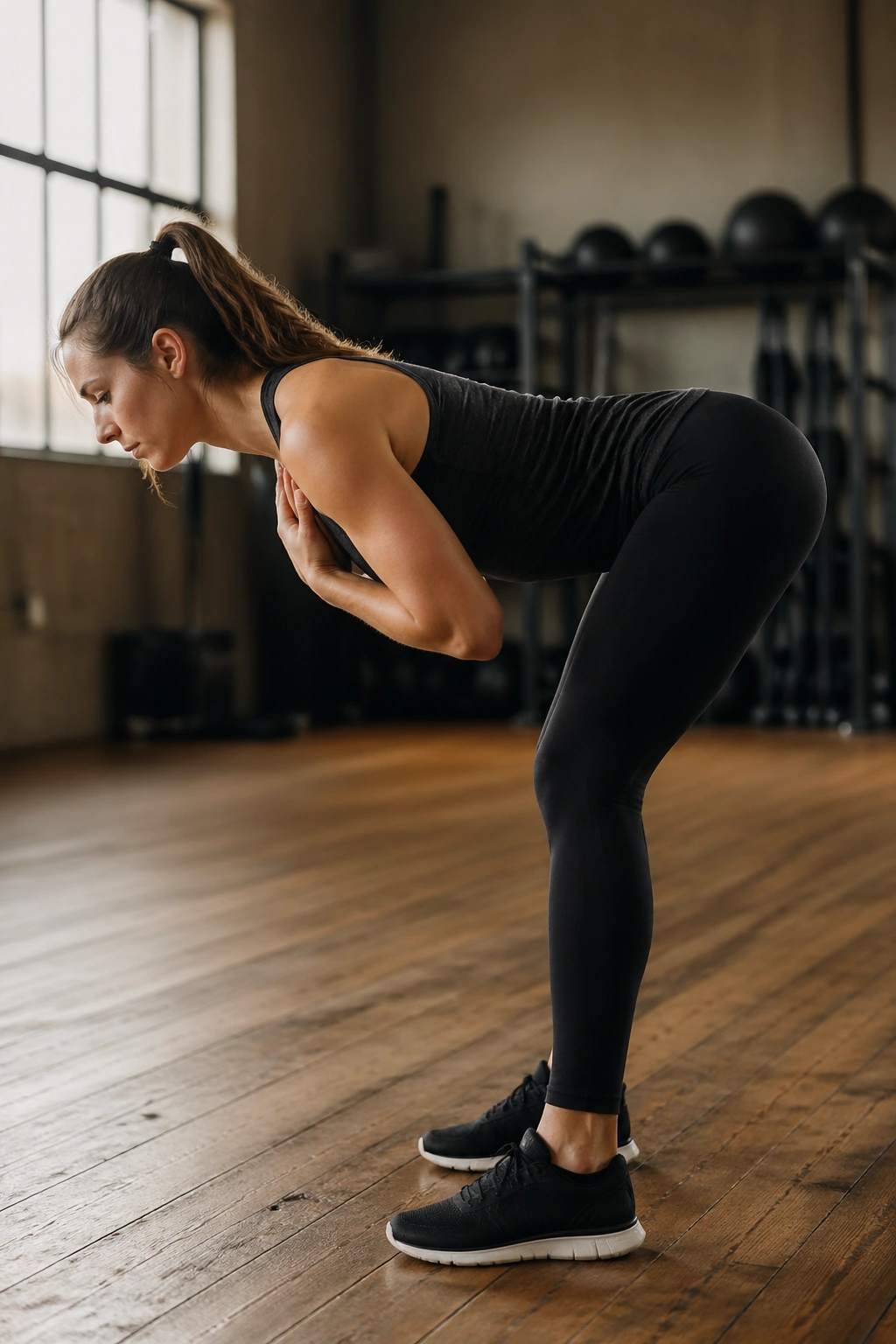
Bodyweight good mornings are one of my favorite pre workout stretches because they teach a hinge pattern while gently opening the back of the legs. If you lift, sprint, or jump, this pattern matters. A lot.
Stand with feet about hip-width apart and hands crossed over your chest or lightly behind your head. Push your hips back, keep a soft bend in the knees, and lower your torso until you feel the hamstrings stretch. Stand back up by squeezing the glutes. Try 8 to 12 reps.
What to feel
You should feel tension along the hamstrings and glutes, not a rounded lower back. If your back rounds first, stop the descent earlier. The range does not need to be deep for this to work.
This drill is especially good before deadlifts, kettlebell swings, box jumps, or any session where hip drive matters. It wakes up the posterior chain and reminds you how to move from the hips instead of folding through the spine.
11. Walking Lunges With an Overhead Reach

Walking lunges are already useful. Add a reach and you get more hip opening, more trunk work, and a bit of balance thrown in for free. That combination makes them a strong full body warm up choice before lower-body training or any session that needs coordination.
Step forward into a lunge, keep the front knee tracking over the toes, and reach both arms overhead or reach the arm opposite the front leg toward the ceiling. Push through the front foot to stand, then step into the next rep. Do 6 to 10 reps per side.
Keep the reach honest
If your low back arches every time your arms go up, lower the reach to shoulder height. That’s still useful. The point is to open the front of the hip and connect it to the ribs, not to perform a circus move.
Walking lunges also help raise body temperature fast, which is useful when you feel stiff and flat. They’re a little more demanding than some of the other drills here, so place them after a few gentler moves.
12. Inchworms to Plank
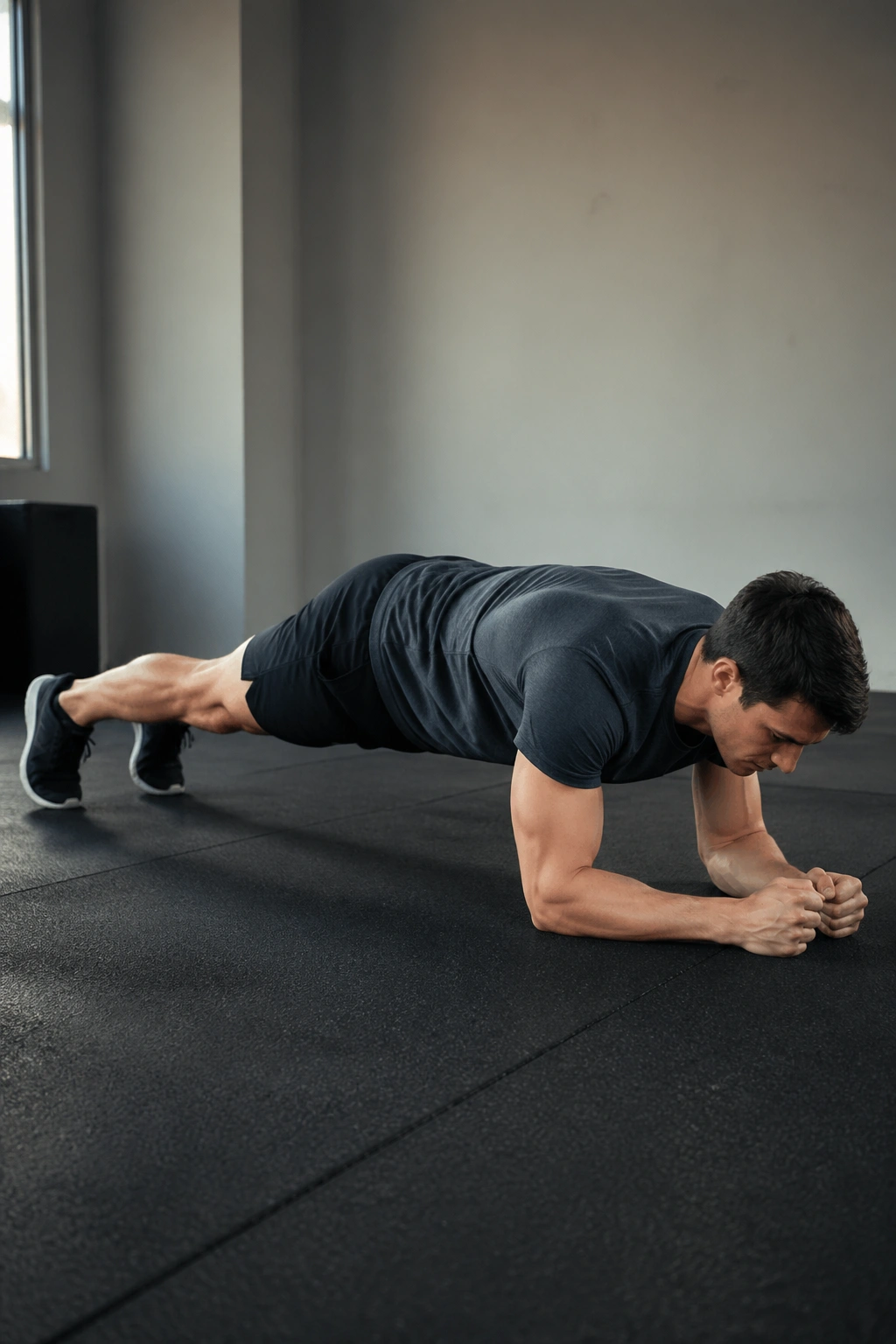
Inchworms are one of the best pre workout stretches if you want to involve the shoulders, core, hamstrings, and calves all at once. They feel like a full-body reset in about three moves.
Stand tall, fold at the hips, and place your hands on the floor. Walk your hands out until you reach a plank, hold for a second, then walk your hands back and stand up. Repeat 5 to 8 times.
The real value
The hamstrings lengthen on the way down, the shoulders warm up in the plank, and the core has to keep everything from wobbling. That’s a lot from a simple drill. If your hamstrings are tight, bend the knees a little on the fold. No prize is given for straightening the legs aggressively.
You can add a push-up in the plank if you want more upper-body prep, but only if your form stays clean. Otherwise, keep it basic and smooth.
13. Deep Squat Pry to Open the Hips and Ankles
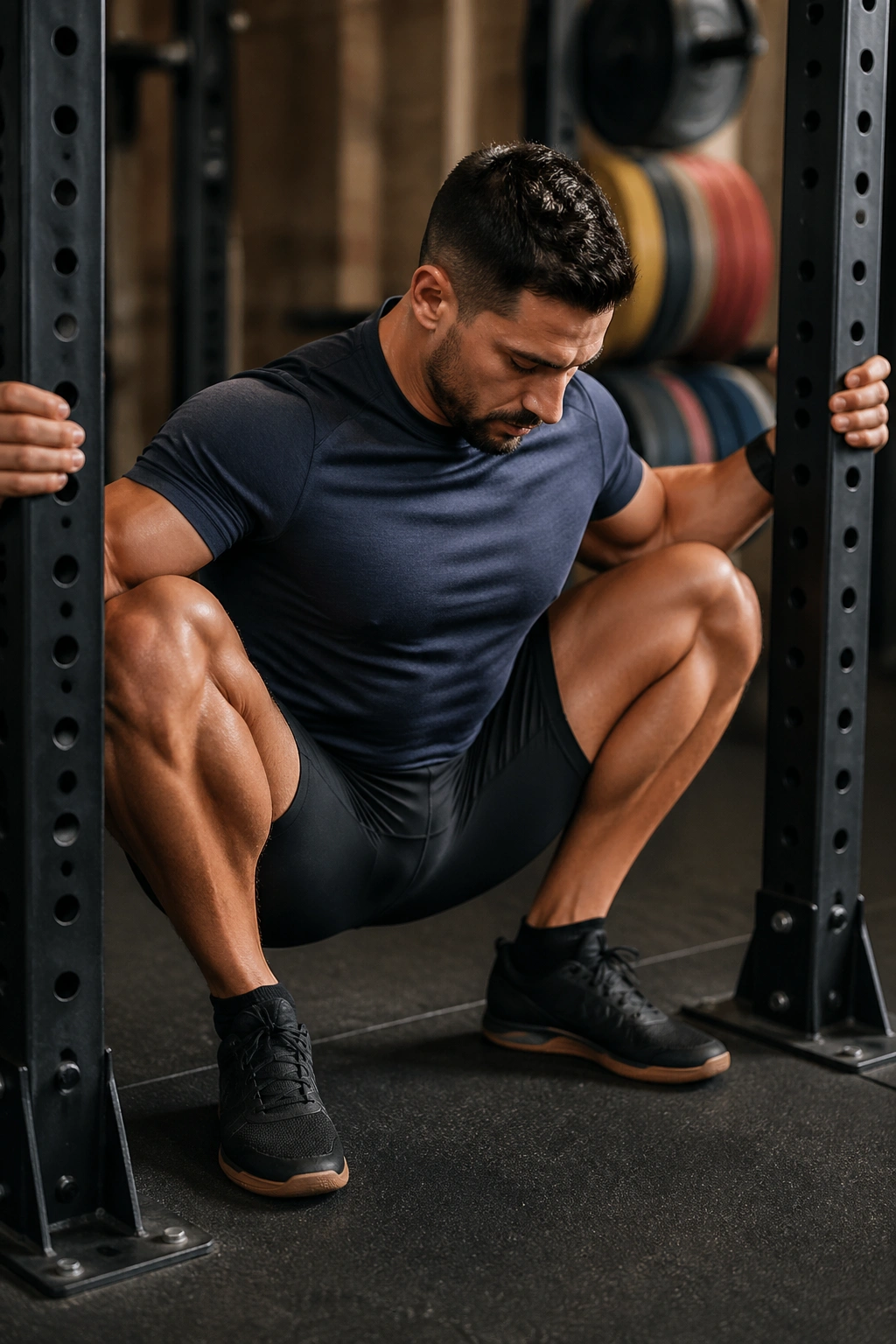
This one looks almost too relaxed to count. It counts. The deep squat pry opens the hips, ankles, and groin while letting your body sink into a useful bottom position. For people who squat, clean, jump, or just feel stiff after sitting, it’s gold.
Drop into a deep squat with your heels down if possible. Hold onto a post or rack if you need support. Gently shift side to side, pry one knee open with your elbow, then the other. Stay for 20 to 30 seconds, breathing the whole time.
Why it helps more than a quick squat
You’re teaching the body to own the bottom position instead of panic in it. That matters when you’re about to do loaded squats or any movement that needs hip depth. If your heels lift, place a small plate under them and keep the movement controlled.
This is one of the few pre workout stretches I’d keep a little slower and more settled. It gives the joints time to settle into the position instead of rushing through it.
14. Glute Bridges to Wake Up the Back Side
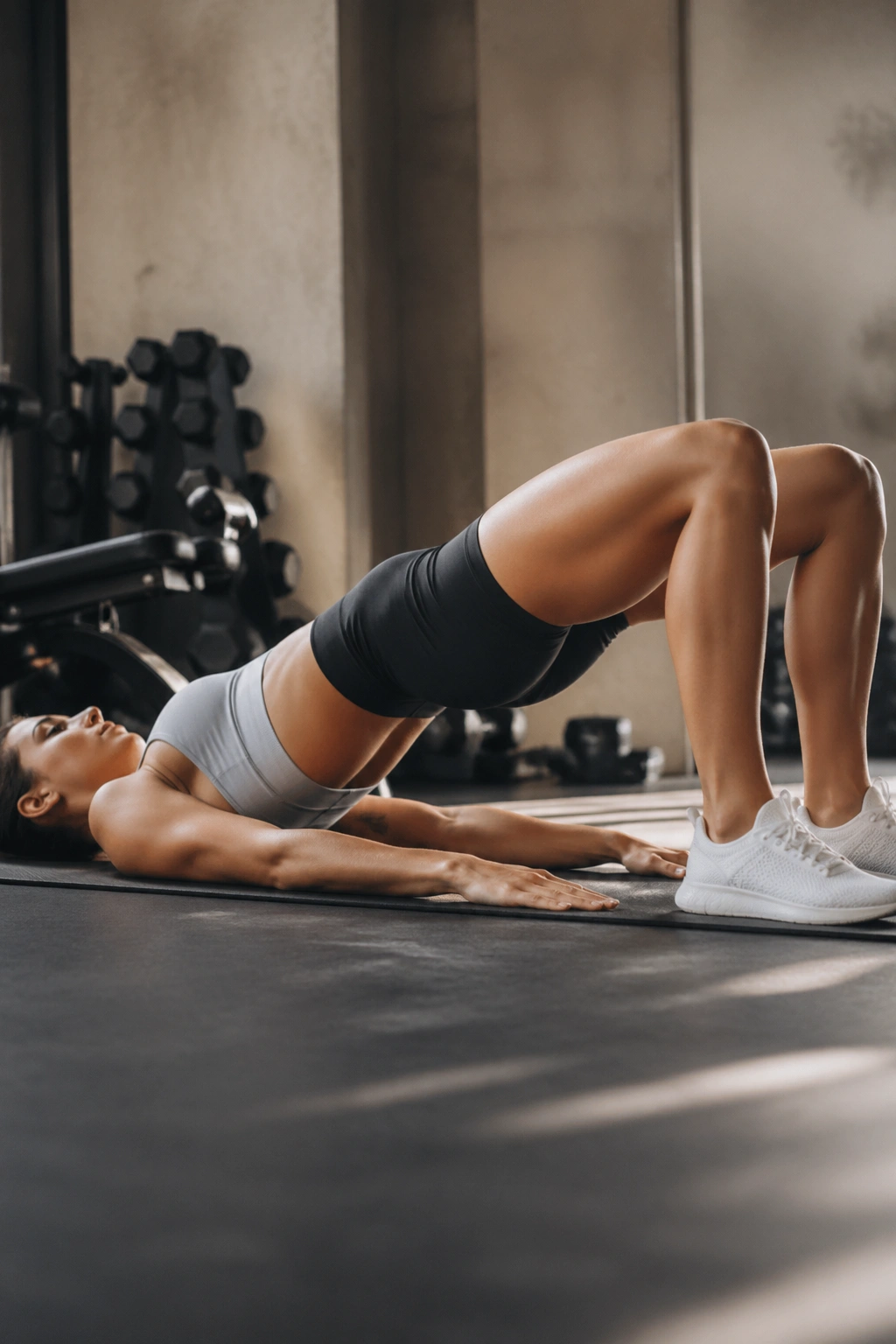
Glute bridges are not flashy, and that’s a good thing. They turn on the glutes, warm the hips, and help take some pressure off the lower back before you start moving hard. If your backside feels sleepy, this is a smart fix.
Lie on your back with knees bent and feet flat. Press through the heels, squeeze the glutes, and lift the hips until your body forms a straight line from shoulders to knees. Hold for 1 to 2 seconds, then lower under control. Do 10 to 15 reps.
The important part is the squeeze at the top. If you feel the move in the lower back more than the glutes, tuck the pelvis slightly and bring the feet a little closer. Don’t turn it into a backbend.
This works well before squats, deadlifts, sprinting, and even long walks if your glutes tend to stay asleep all day. It’s simple, but simple often wins.
15. Ankle Rocks and Calf Warm-Ups
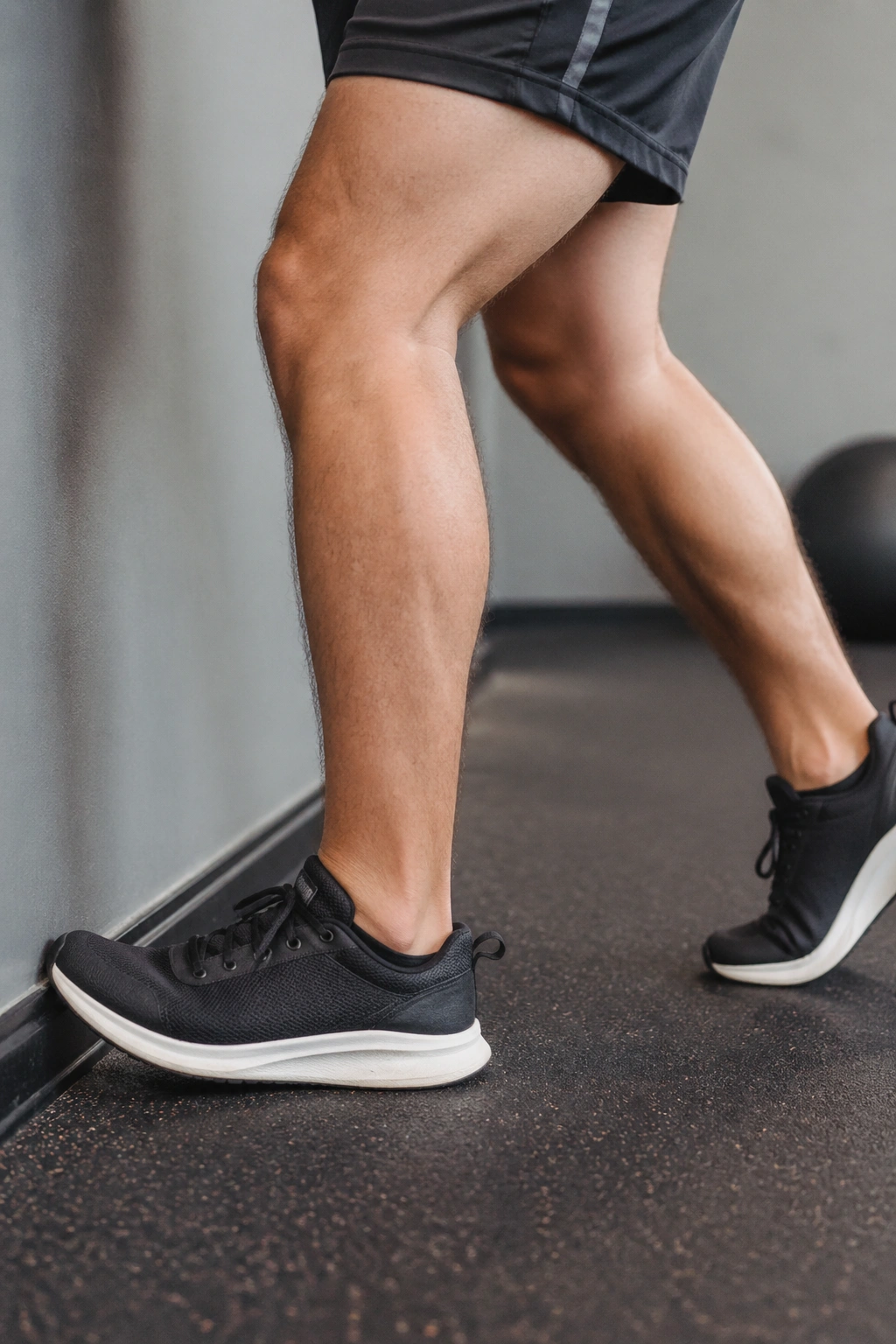
Bad ankles make the rest of the body cheat. Squats get shallower, strides get choppier, and landings feel less clean. Ankle rocks are a quick fix for that stiffness, and they’re worth doing even when they feel too small to matter.
Stand in a split stance near a wall. Keep the heel of the front foot down and drive the knee forward over the toes, then back off. Do 10 to 15 rocks per side. You can also add slow calf raises for 10 to 15 reps to wake up the lower leg.
What to watch for
The heel should stay planted on the rock. If it pops up right away, move the foot a little closer to the wall and shorten the range. You want smooth forward travel, not a forced stretch.
This is especially useful before running, jumping, squatting, or any workout where foot pressure matters. A stiff ankle can mess with the whole chain above it, and this tiny drill helps stop that cascade.
16. Lateral Lunges for Side-to-Side Mobility
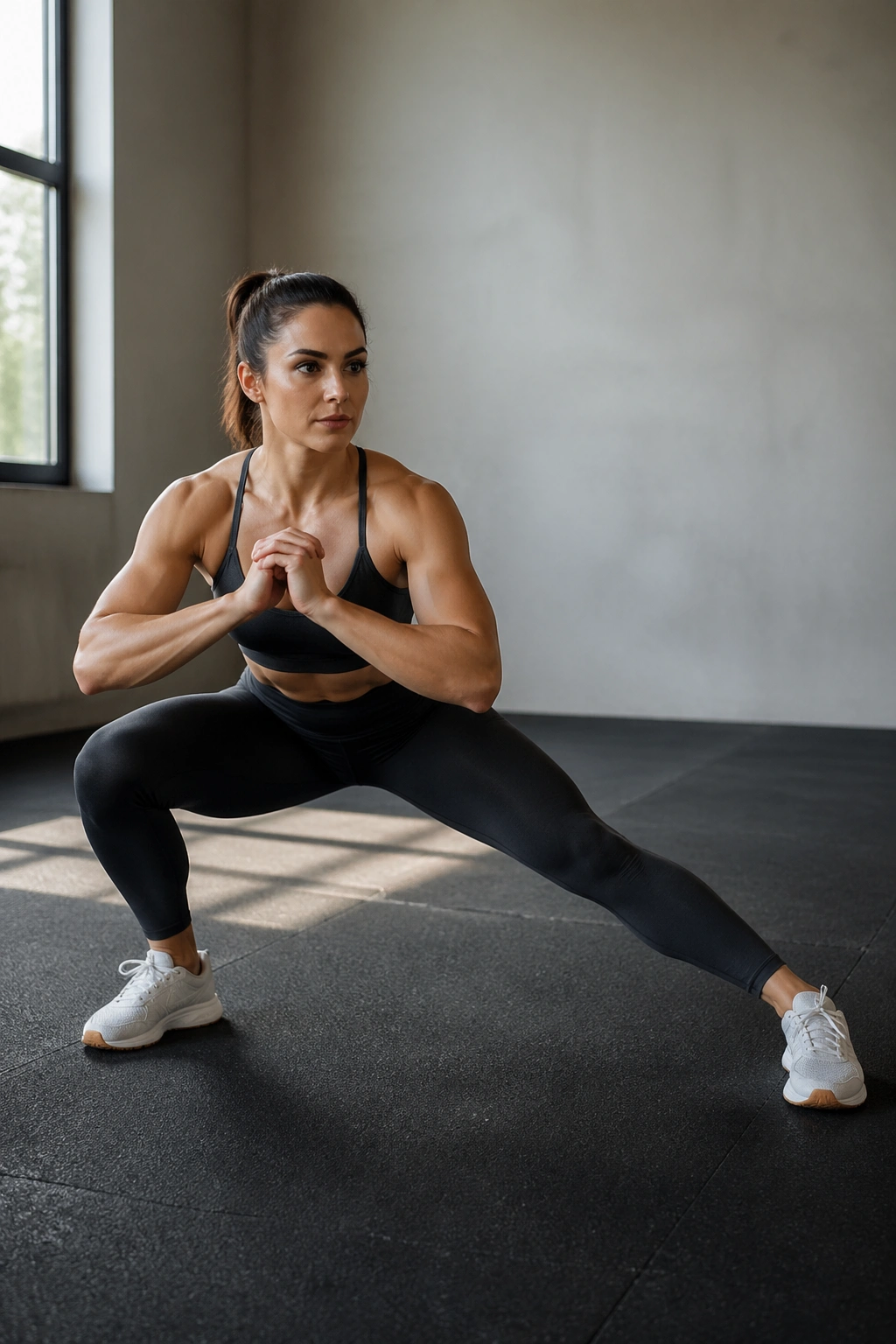
Most workouts live in forward and backward motion. Your body still needs to move side to side. Lateral lunges help the inner thighs, glutes, and hips get ready for that work, and they also expose stiffness you might not notice in regular squats.
Step wide to one side, sit the hips back, and keep the other leg long. Push back to center and repeat on the other side. Aim for 6 to 8 reps per side, moving slowly enough to keep your feet grounded.
Why they belong in a full warm-up
This drill trains the body in the frontal plane, which helps with cutting, shuffling, skating, field sports, and stable squat mechanics. If your knees cave inward during the descent, shorten the step and keep the chest a little taller.
Lateral lunges can feel awkward at first. That’s normal. The shape is unfamiliar for a lot of people, and unfamiliar does not mean bad. It usually means useful.
17. Toy Soldiers for the Hamstrings and Core
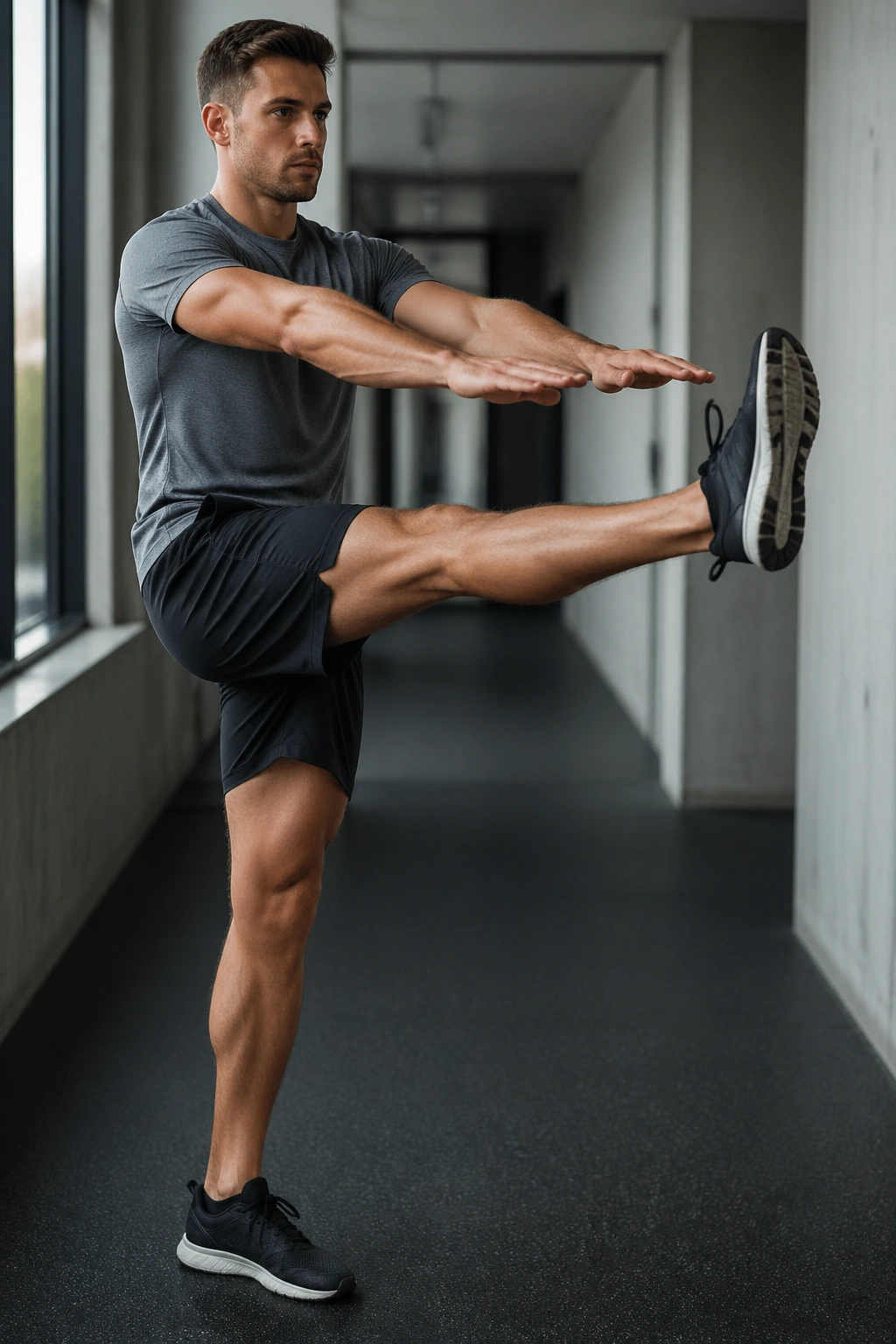
Toy soldiers, sometimes called straight-leg kicks, are a nice wake-up drill when you want the hamstrings to lengthen dynamically without hanging around in a static stretch. They also ask the core to stay honest, which is half the battle.
Stand tall and swing one leg forward while reaching the opposite hand toward the toe. Keep the leg as straight as is comfortable, but don’t snap it up. Alternate sides for 10 to 12 reps per leg.
The best version feels rhythmic and controlled. If you’re jerking the leg upward, the hamstring is probably not getting the clean, gentle tension you want. Smooth leg height beats high leg height.
This works well before running, deadlifting, or any explosive lower-body work. It’s a small drill, but it connects the posterior chain in a way that’s easy to feel.
18. High-Knee March to a Light Jog

A high-knee march is a good bridge between static standing and real cardio. It wakes the hips, flexors, calves, and core without shocking the system. If your workout is about to get fast, this is a smart middle step.
March in place with deliberate knee drive. After 20 to 30 seconds, turn the march into a light jog for another 20 to 30 seconds if the workout calls for it. Keep the arms active and the foot strike soft.
Why start with a march
A march is easier to control than full-speed running in place. You can feel the hip lift, check your posture, and keep the ribs stacked over the pelvis. That makes the transition into harder work smoother.
This drill is especially useful before sprinting, interval training, circuit work, or any session where you need to turn the engine on without spiking it too hard too soon. Fast doesn’t need to mean sloppy.
19. Scapular Push-Ups for the Shoulders and Chest
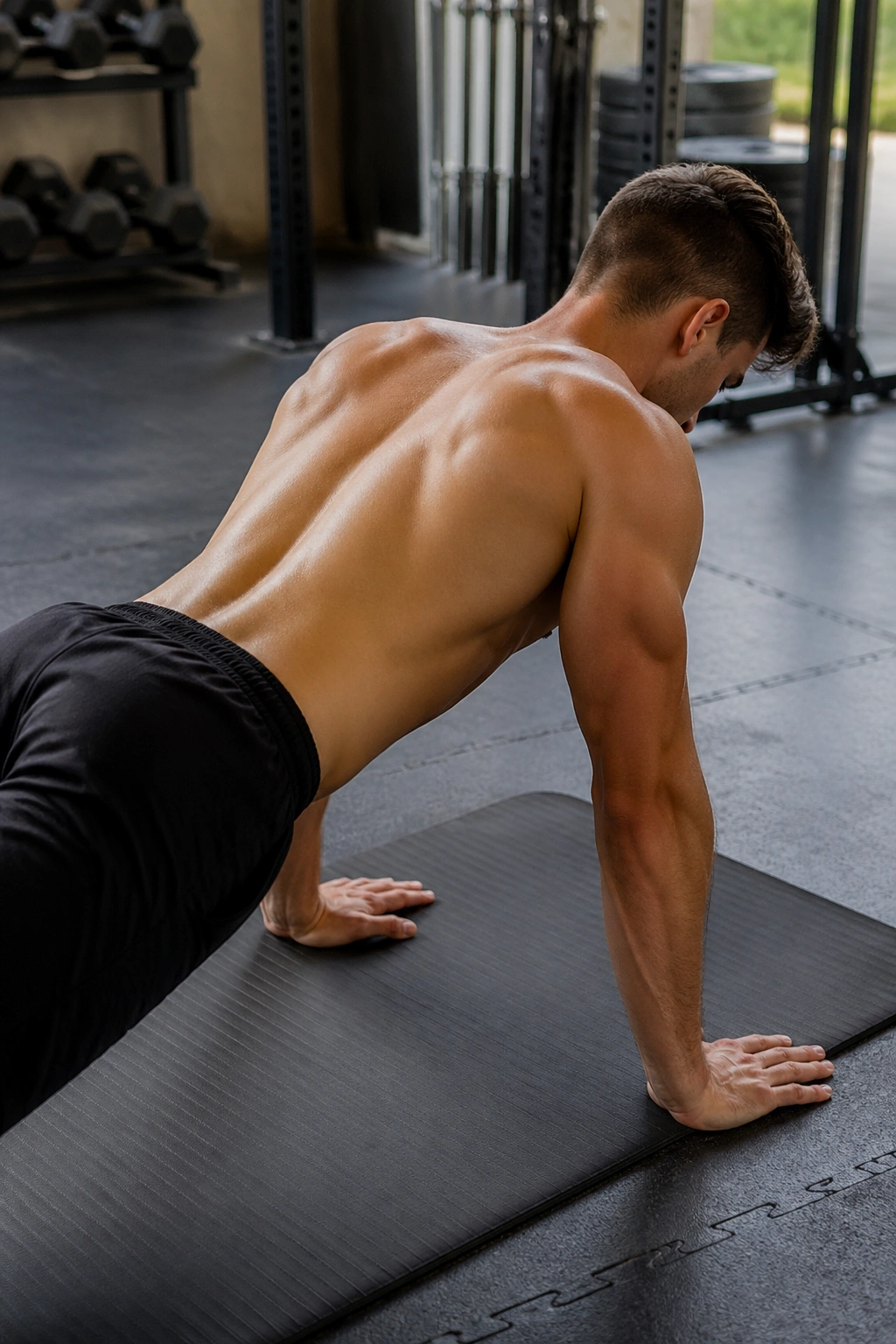
Scapular push-ups are one of the best ways to warm up the shoulder blades without tiring out the arms. They teach the scapulae to glide forward and back, which helps with pressing, planks, climbing, and even holding a strong running posture.
Get into a high plank with straight arms. Let the chest sink a little between the shoulder blades, then press the floor away and spread the shoulder blades apart. Keep the elbows locked or nearly locked the whole time. Do 8 to 12 reps.
The detail that matters
If you bend the elbows a lot, you turn it into a regular push-up. That’s not the goal here. The goal is shoulder blade movement, not arm strength. Stay long through the neck and keep the core tight enough that your hips do not sag.
This is a good pairing with arm circles or cat-cow. Together, they prep the entire upper body for pushing, bracing, and reaching.
20. Standing Knee Hugs to Calf Raise
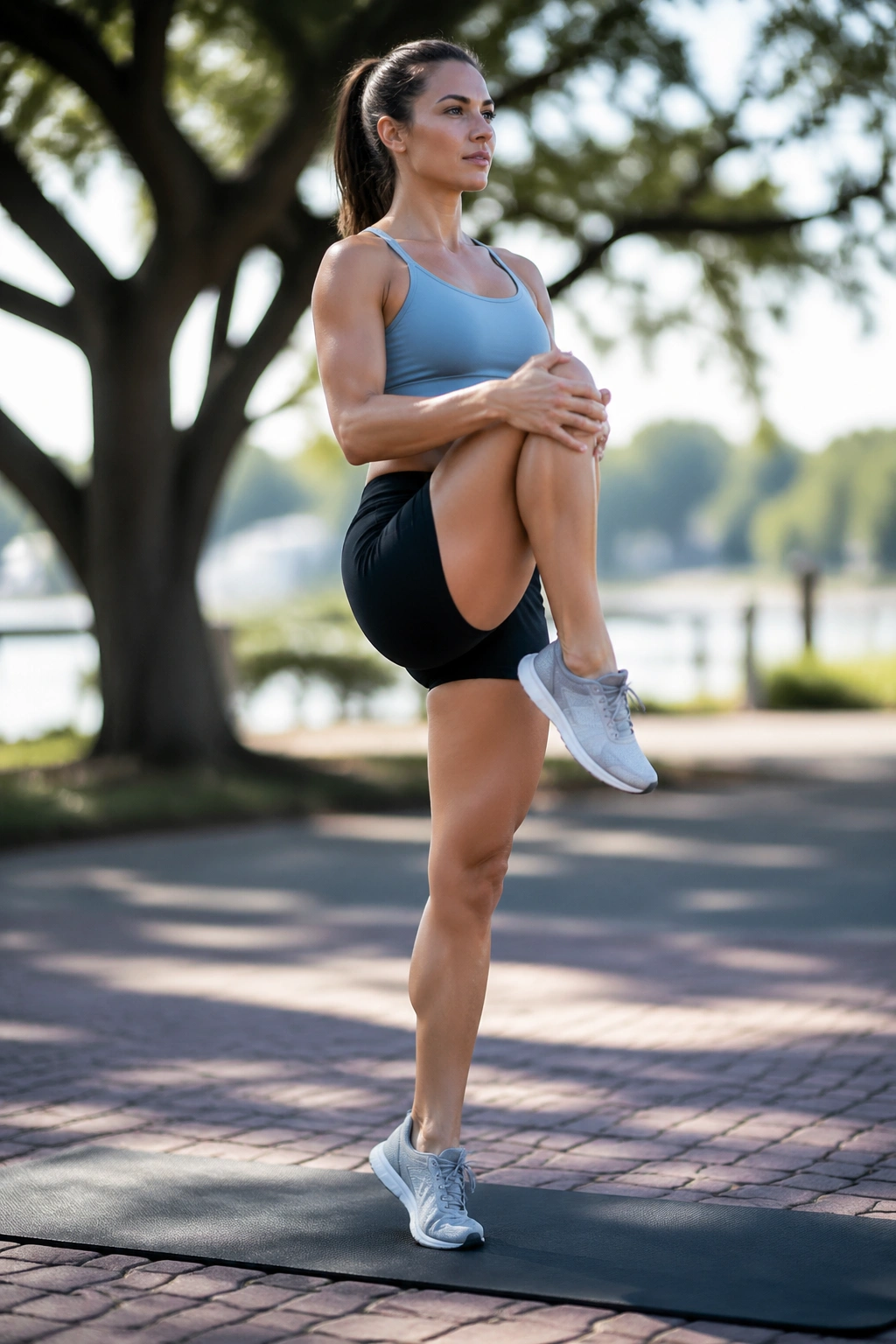
This last one ties the whole lower body together. A knee hug opens the glute and hip, and the calf raise adds ankle work and balance. It’s a neat little combo for days when you want one move that covers a lot of ground.
Pull one knee toward your chest, pause for a second, then set the foot down and rise onto the toes for a calf raise. Switch sides and keep alternating for 8 to 10 reps per leg. Stay tall, and avoid leaning backward as the knee comes up.
A lot of warm-ups stop at the hip and forget the foot. That’s a mistake. The foot and ankle matter more than most people want to admit, especially before running, jumping, squatting, or long sets of standing work.
If you want a low-drama finish to your pre workout stretches, this is a nice one. It opens the front of the hip, wakes the glutes, and reminds the calves to do their part.
Final Thoughts

A full body warm up does not need to be long, but it should be thoughtful. A few minutes of dynamic pre workout stretches can change the way your first set feels, and more importantly, the way your body moves when the pace picks up.
If you’re short on time, pick one move from the neck and shoulders, one from the spine, two from the hips, one from the hamstrings, and one from the ankles. That gives you a decent spread without turning warm-up into a second workout.
The best routine is the one you’ll actually do. Keep it simple, keep it moving, and pay attention to the joints that complain first. Those are the ones sending you the message before the workout even starts.
