



Your body can be tired and still wired.
That is the annoying part.
Evening yoga routines for better sleep work best when they quiet the noisy parts of the body: jaw, hips, low back, and breath. A hard workout, a long commute, or an afternoon spent hunched over a laptop can leave all four feeling louder than the mattress.
The point is not to stretch harder. It is to downshift. Five to twelve minutes of slow movement, a few longer exhales, and a room dim enough to make you squint can change the tone of the whole evening.
Some nights call for legs-up-the-wall. Others need a twist, a prop, or nothing more than a long exhale and a blanket under your knees. The routines below stay gentle on purpose, because bedtime is not the place for athletic ambition.
How to Pick the Right Routine for Tonight
Pick the part of your body that is making the most noise.
If your legs feel heavy after standing, walking, or training, start with an inverted rest like legs-up-the-wall. If your shoulders feel jammed up toward your ears, a floor-based sequence for the upper back will usually settle things faster than a deeper hamstring stretch. Tight hips often need a low lunge, butterfly, or a reclined figure-four, not another round of sitting still and hoping for magic.
The other clue is mental, not physical. If your thoughts are sprinting, choose something that gives your brain a simple job: breathing counts, a supported hold, or a quiet pose you can stay in for 1 to 3 minutes. If you feel both restless and stiff, keep the routine short and steady. A small bedtime yoga sequence that you actually repeat beats a fancy one you never finish.
- Heavy legs or puffy calves: try legs-up-the-wall or supported bridge.
- Tight hips or low back: use a reclined twist, low lunge, or wall butterfly.
- Upper-back crunch from sitting: go for cat-cow, child’s pose, or sphinx.
- Racing mind: alternate nostril breathing or a prop-heavy savasana works well.
There is no prize for doing the most. The best routine is the one that makes your breathing slower and your face less tense by the time you reach the bed.
1. Legs-Up-the-Wall for Heavy Legs
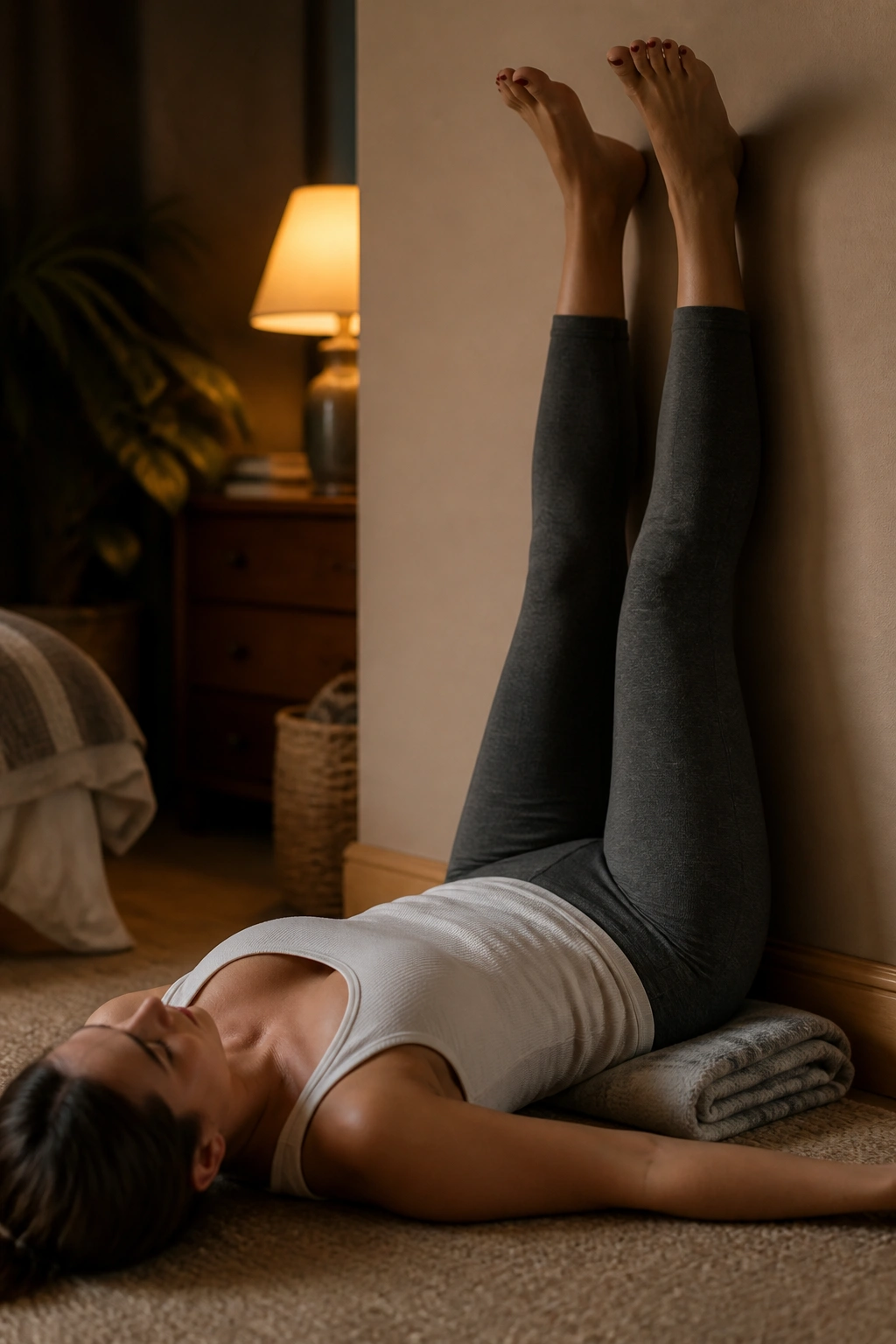
If your legs feel like concrete, start here.
This is the routine I reach for after a long day on my feet or a lower-body workout that left my calves barking. Legs-up-the-wall looks almost too easy, which is exactly why it works at night. You stop asking the body to do more, and that shift matters.
Lie on your back with your hips close to a wall and your legs resting straight up it. If your hamstrings complain, scoot a few inches away from the wall or slide a folded blanket under your hips. Stay for 3 to 5 minutes and keep the exhale longer than the inhale. Do not force your low back flat if that makes you tense. Comfort wins.
The sensation should be simple: heavy legs, soft belly, quieter breath. I like this one because it feels like taking a bag off your shoulder that you forgot you were carrying. If your feet tingle or your lower back starts to arch hard, move out a little sooner or add more support.
One small detail matters here. Turn the lights down before you get into position. This routine works best when your eyes, not just your muscles, get the message that the day is over.
2. Cat-Cow to Thread-the-Needle
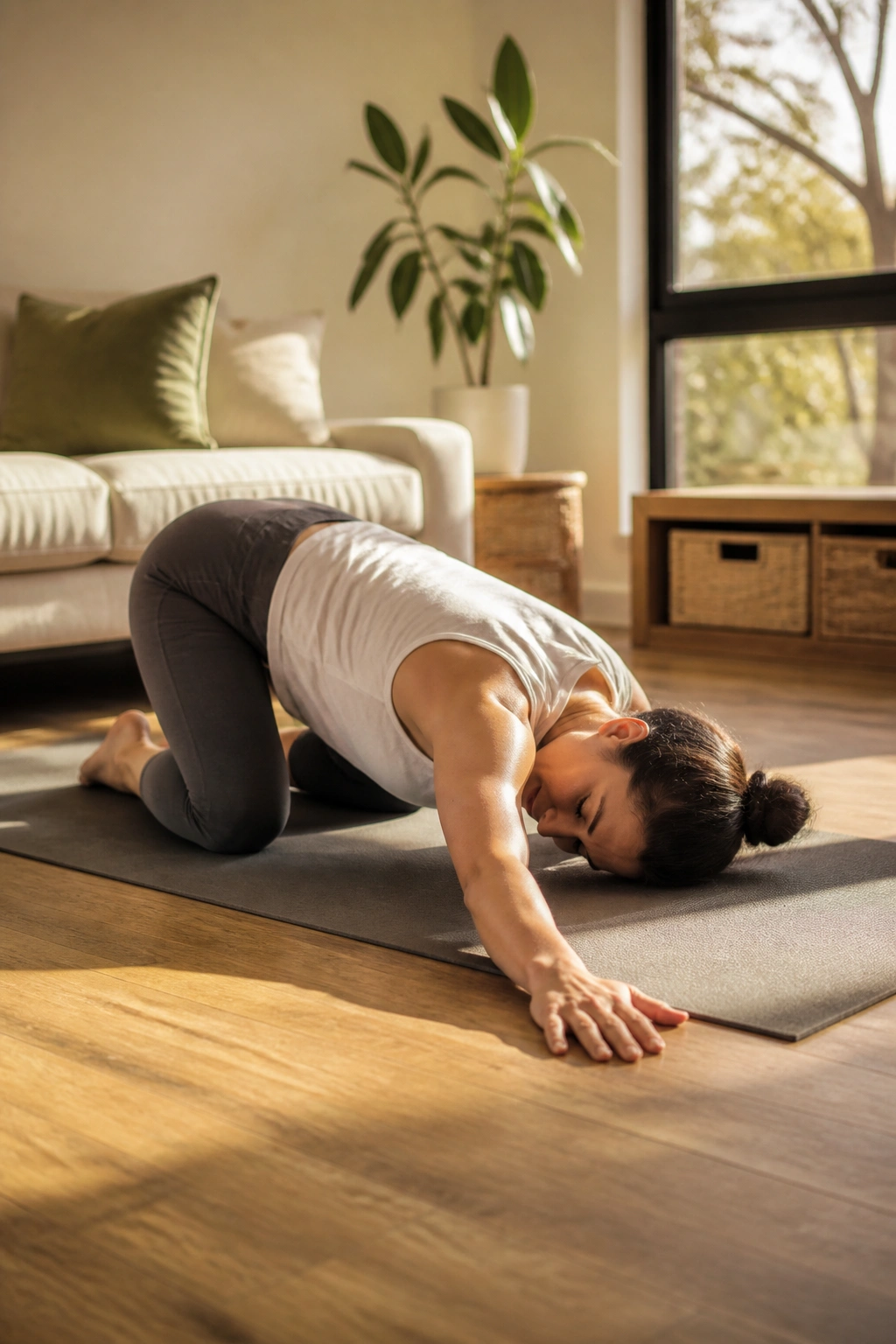
Cat-Cow is boring. That is the point.
Your spine does not need a dramatic backbend before bed. It needs movement that feels safe enough to let go. Cat-Cow gives the whole back a slow rinse, and thread-the-needle takes care of the upper-back spots that tend to lock up after typing, driving, or carrying kids around all day.
Why It Helps
Move through 4 to 6 rounds of Cat-Cow on hands and knees. Inhale as the belly drops and the chest opens. Exhale as the back rounds and the chin softens toward the chest. Then slide one arm under the other for thread-the-needle and hold for 3 to 5 breaths on each side.
- Keep your wrists under your shoulders.
- Move slowly enough that the breath leads.
- Let the shoulder of the reaching arm stay relaxed.
- Stop before the lower back starts to feel pinchy.
A slower exhale matters more than a deeper twist. That sounds almost too simple, but it is often the difference between a body that settles and a body that gets more alert.
I like this routine after a day of sitting because it takes the upper spine from locked to loose without turning into a workout. The floor is doing most of the work for you. Good. That is what you want at night.
3. Seated Forward Fold with Bent Knees
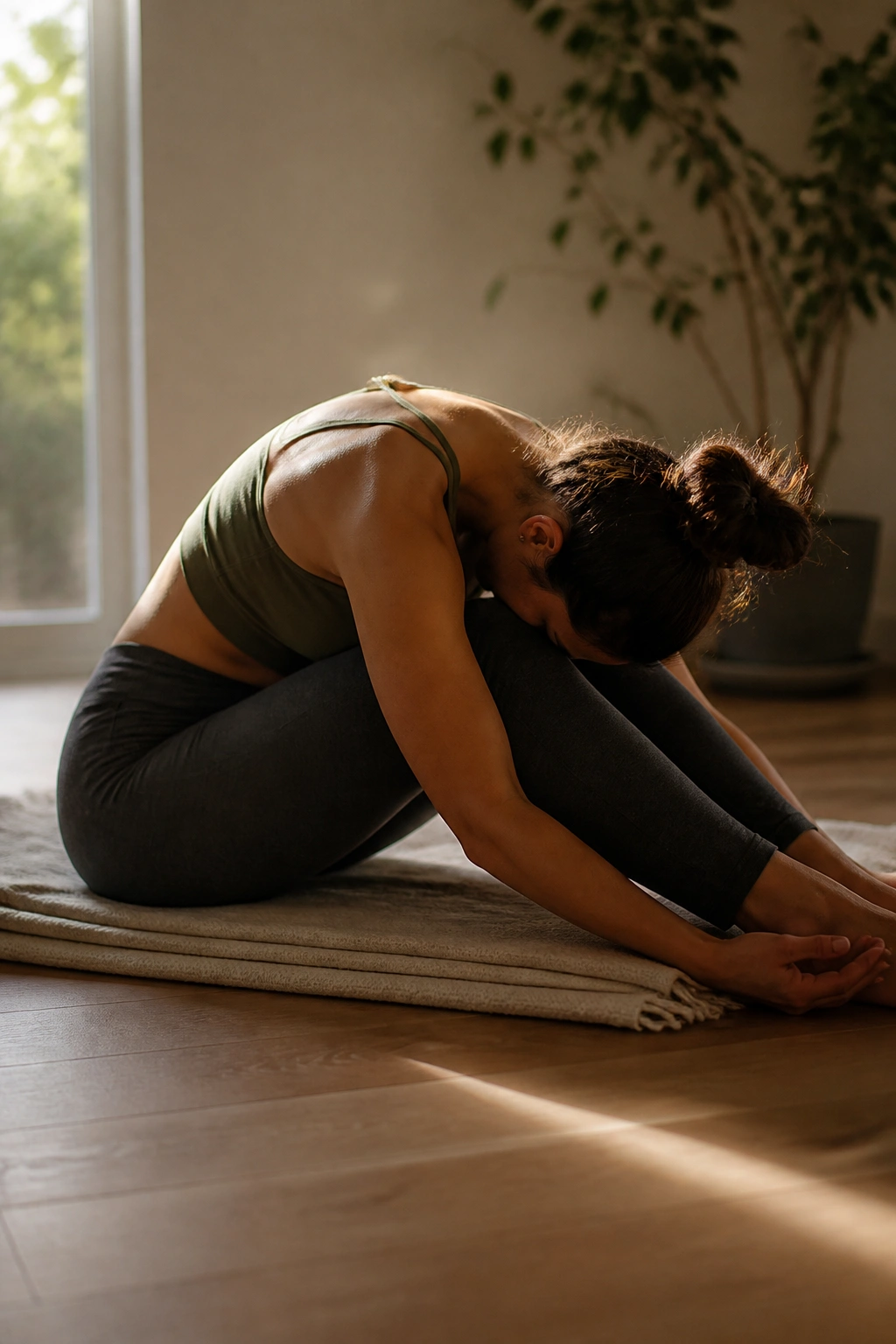
Why does a forward fold feel so calming when your mind will not shut up?
Because it gives you something physical and tidy to focus on. The shape itself is not magic. The way you enter it matters more. Bend your knees, sit on a folded blanket if your hips are tight, and think about lengthening the front of your torso before you fold forward.
Hold the fold for 45 to 90 seconds. Keep enough bend in the knees that your lower back feels long instead of strained. If your hamstrings are grumbling, that is your cue to back off a bit, not push through. A sleepy evening stretch should feel warm and mellow, never sharp.
How to Use It Tonight
- Sit on the edge of a folded blanket.
- Reach forward on an inhale and fold slightly on the exhale.
- Keep the neck loose.
- Let the hands rest on shins, ankles, or the floor.
This is one of those shapes that looks plain and still earns its place. It is especially good if you trained legs earlier in the day and everything feels a little shortened. The win is not the deepest fold. The win is that your breathing slows down while your body stays out of a fight with itself.
4. Reclined Figure-Four and Gentle Twist
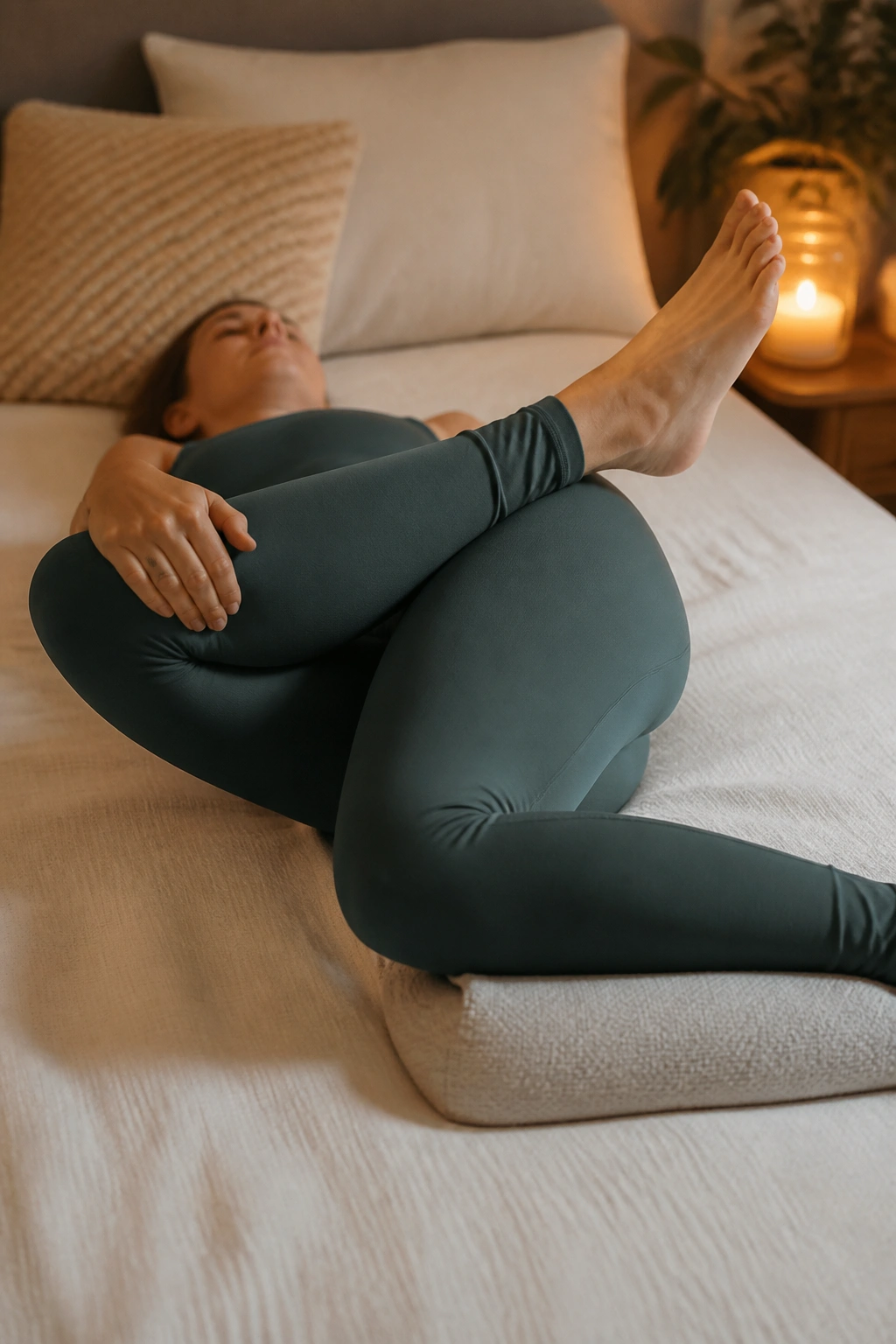
After leg day, the hips can feel welded shut.
That is where this pair earns its keep. A reclined figure-four opens the outer hip and glute without making you brace, and a gentle supine twist gives the lower back a break from carrying the whole day. Together, they feel like a small reset rather than a big stretch.
Lie on your back, cross one ankle over the opposite thigh, and draw the bottom leg in until you feel a steady stretch in the outer hip. Hold for 30 to 45 seconds on each side. Then extend the same leg across your body for a supported twist, keeping both shoulders heavy and both knees easy.
- Keep the figure-four side relaxed through the jaw.
- Use a block or pillow under the bottom foot if needed.
- In the twist, the goal is release, not rotation for its own sake.
- If your knee feels strained, back out.
A lot of people try to win a hip opener before bed. Bad idea. You do not need to prove anything to your glutes at 10 p.m. You need them to stop guarding. This routine gets you there without turning the whole thing into a wrestling match.
5. Child’s Pose with Side Reach
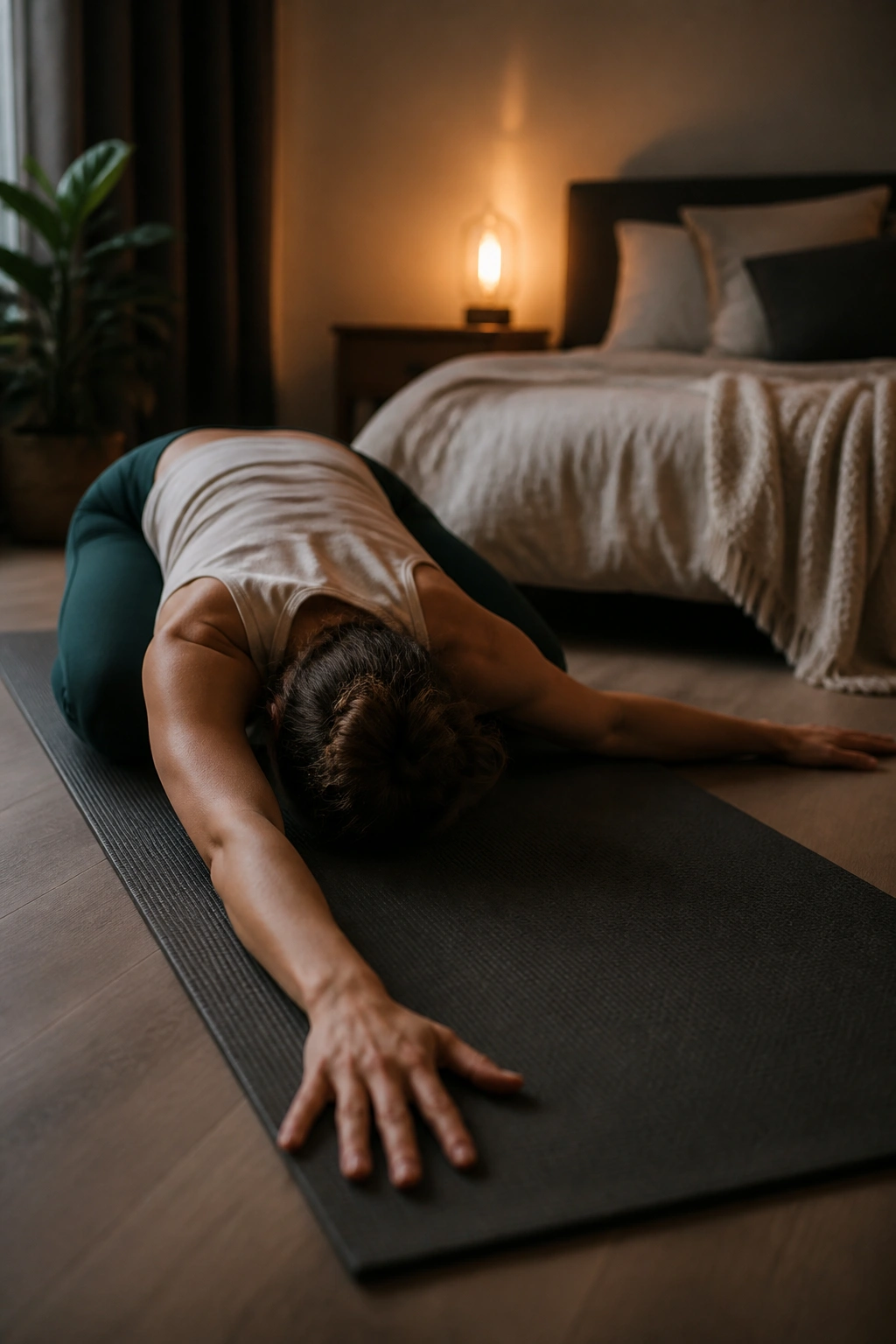
Child’s Pose makes the room feel smaller, and that is part of the appeal.
When the lights are low and the breath is slow, this shape has a nice way of taking the edge off a busy evening. It is especially useful after a day of carrying bags, lifting weights, or hunching over a desk, because it gives the lats and side body somewhere to go. Those muscles get overlooked all the time.
Start in Child’s Pose with the knees as wide or as narrow as feels good. Reach both arms forward for a few breaths, then walk the hands to the right to lengthen the left side body. Stay there for 3 to 5 breaths. Switch sides. The stretch should feel roomy along the ribs, not jammed in the shoulders.
If your knees dislike the floor, put a pillow under your chest or keep your hips higher. You can even stay in a tabletop version and slide back only halfway. A bedtime routine should be easy enough that you stop negotiating with it.
I also like this one for people who feel emotionally fried. There is something about the low shape, the side-to-side reach, and the slow breath that seems to take the volume down a notch. No drama. No extra gear. Just a floor and a few breaths.
6. Low Lunge for Tight Hip Flexors
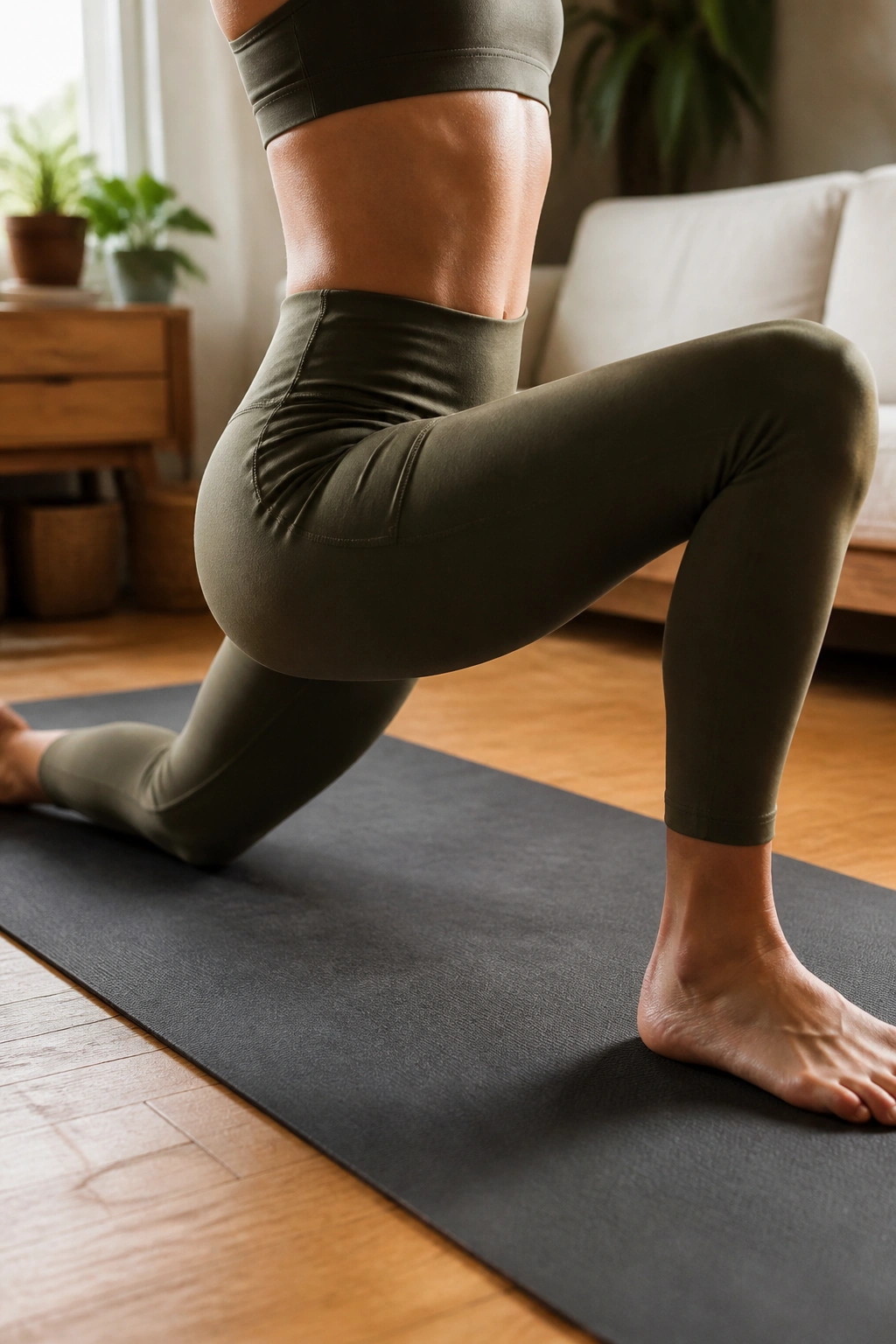
Unlike a deep runner’s lunge, this one stays tame.
That matters, because bedtime is not the hour for forcing your front hip open until you grimace. A low lunge gives the hip flexors a steady stretch without pulling your whole body into a fight. It is one of the better post-workout yoga options if you spent the day running, cycling, or sitting too long.
Step one foot forward with the back knee on a folded blanket or mat. Tuck the back toes under if that feels better, or leave the top of the foot down. Gently tip the pelvis forward until you feel a line through the front of the hip on the back leg. Hold for 30 to 45 seconds, then switch sides.
What to Feel For
- A warm stretch in the front of the hip, not a pinch.
- A relaxed belly.
- A back glute that is awake but not clenched.
- A front knee that stays over the ankle.
The best version of this pose is not the deepest one. It is the one where your front hip stops yelling. If your lower back starts doing all the work, shorten the stance and ease up. Tiny adjustments make a bigger difference here than brute force ever will.
7. Supported Bridge on a Block
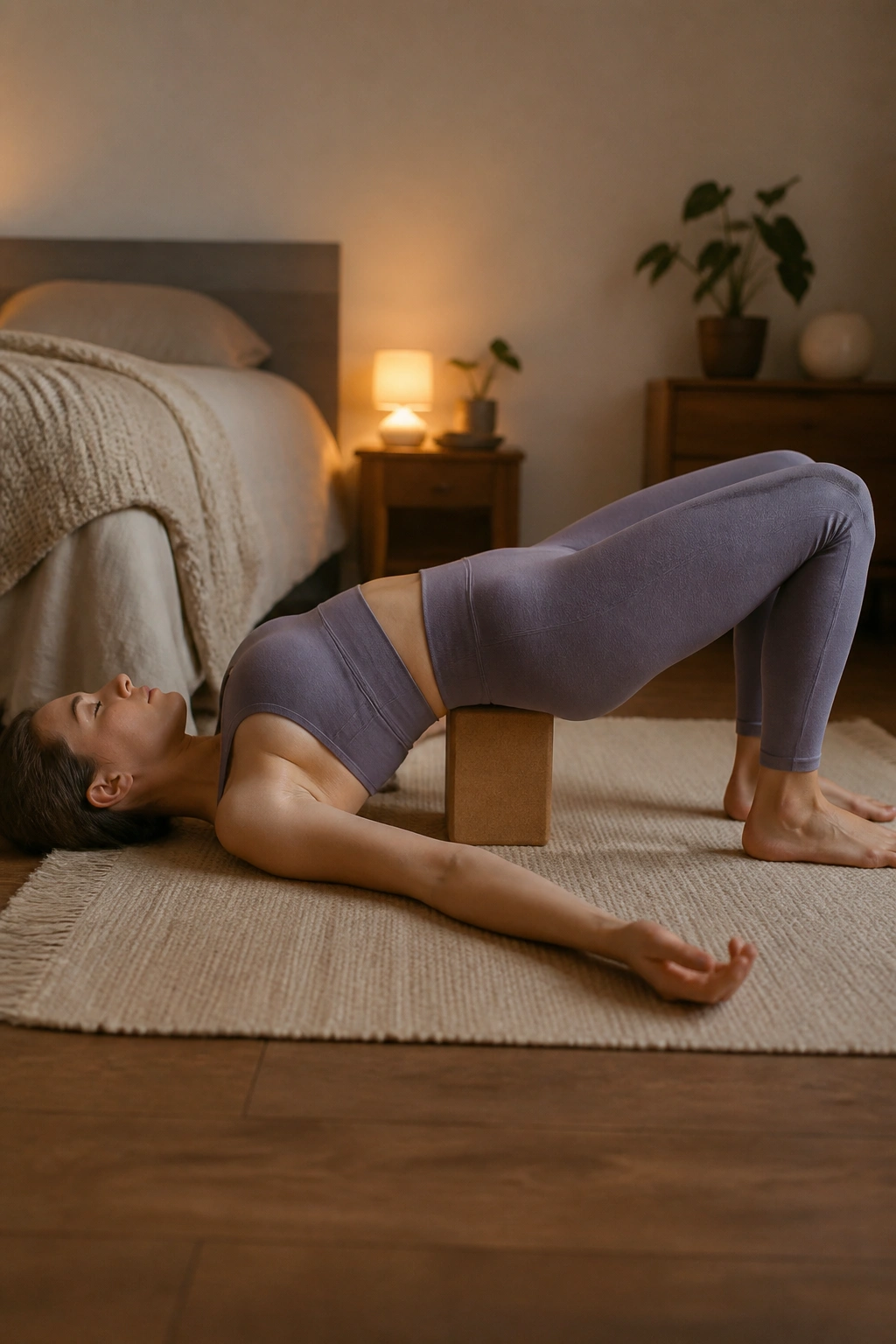
Supported bridge looks like almost nothing, and that is exactly why it works.
If your lower back feels compressed from standing, lifting, or sitting all day, this one can be a relief. The block holds you in a mild backbend without asking you to stay active. Your chest opens a little, the front of the hips lengthen a little, and the breath has more room.
How to Set It Up
Lie on your back with your knees bent and feet hip-width apart. Lift your hips just enough to slide a yoga block, firm pillow, or stack of folded blankets under the sacrum, not the lower ribs. Let your weight settle there for 1 to 3 minutes.
- Use the lowest block height first.
- Keep the neck long.
- Let the glutes soften.
- If your back feels pinchy, lower the support or skip it.
This is one of my favorites for people who spend the day slumped forward. It gives back a little openness without demanding a full bridge hold, which can be too much at night. The body feels held, not worked. That is a nice place to land before sleep.
8. Happy Baby into Wind-Relieving Pose
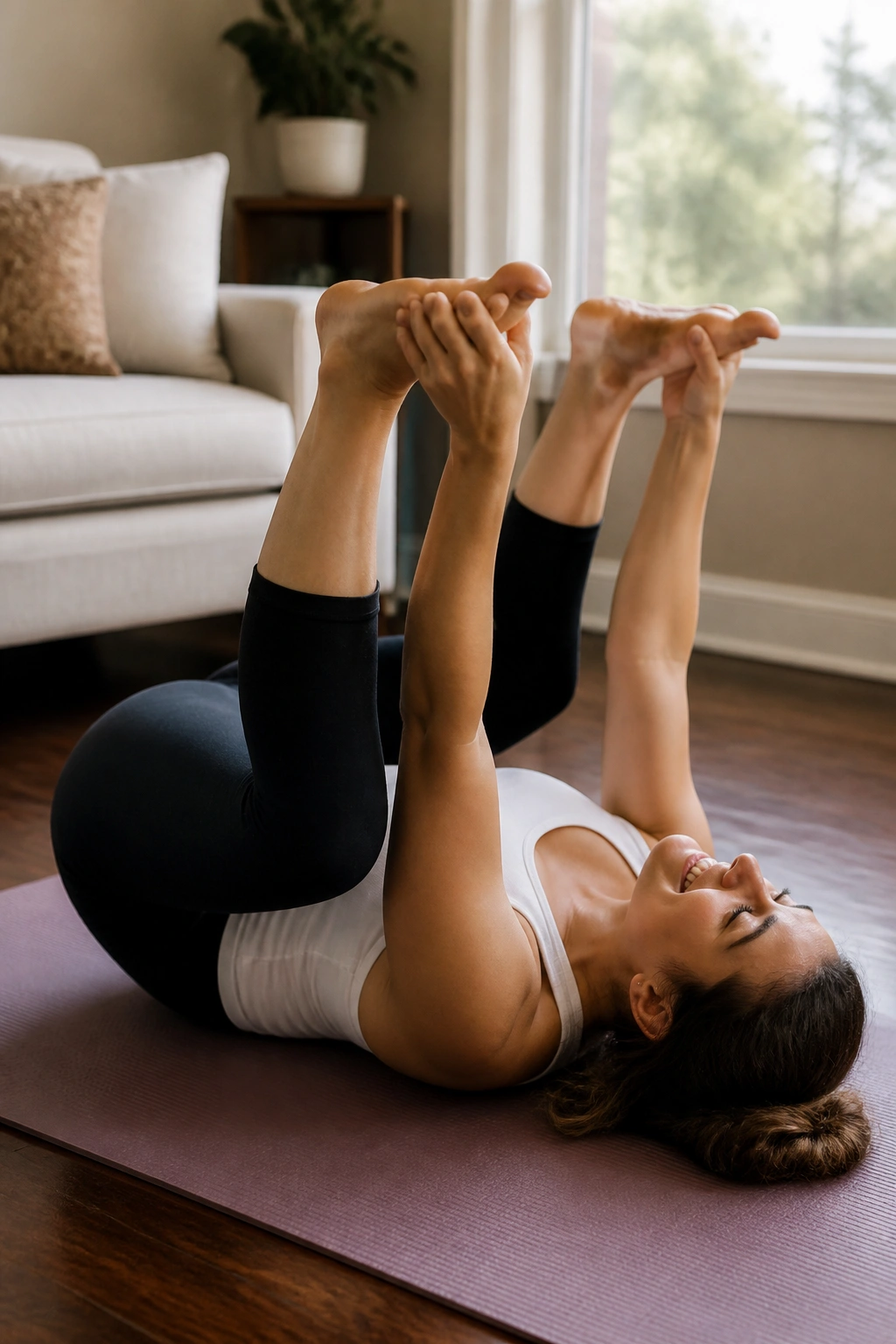
Happy Baby looks goofy. Use it anyway.
There is a reason so many people find it oddly soothing. The pose reduces the pressure through the low back and gives the hips a chance to open while the spine stays supported on the floor. Follow it with Wind-Relieving Pose if your lower abdomen or lower back likes a little compression after a long day.
Lie on your back, draw the knees toward your armpits, and hold the outer edges of the feet or shins. Stay for 3 to 5 breaths. Then hug one knee in at a time, or both knees together, and rest for a few breaths in Wind-Relieving Pose. The whole thing can take 1 to 2 minutes.
The key is not to yank the legs down. Keep the shoulders soft and the tailbone heavy. If your neck feels strained, release one foot and stay with a single-knee version. That is plenty.
This combo is especially nice after a long drive or after lifting, when the low back feels crowded. It gives you a way to decompress without needing a big range of motion. Small, friendly, and oddly effective.
9. Wall Butterfly for Inner Thigh Release
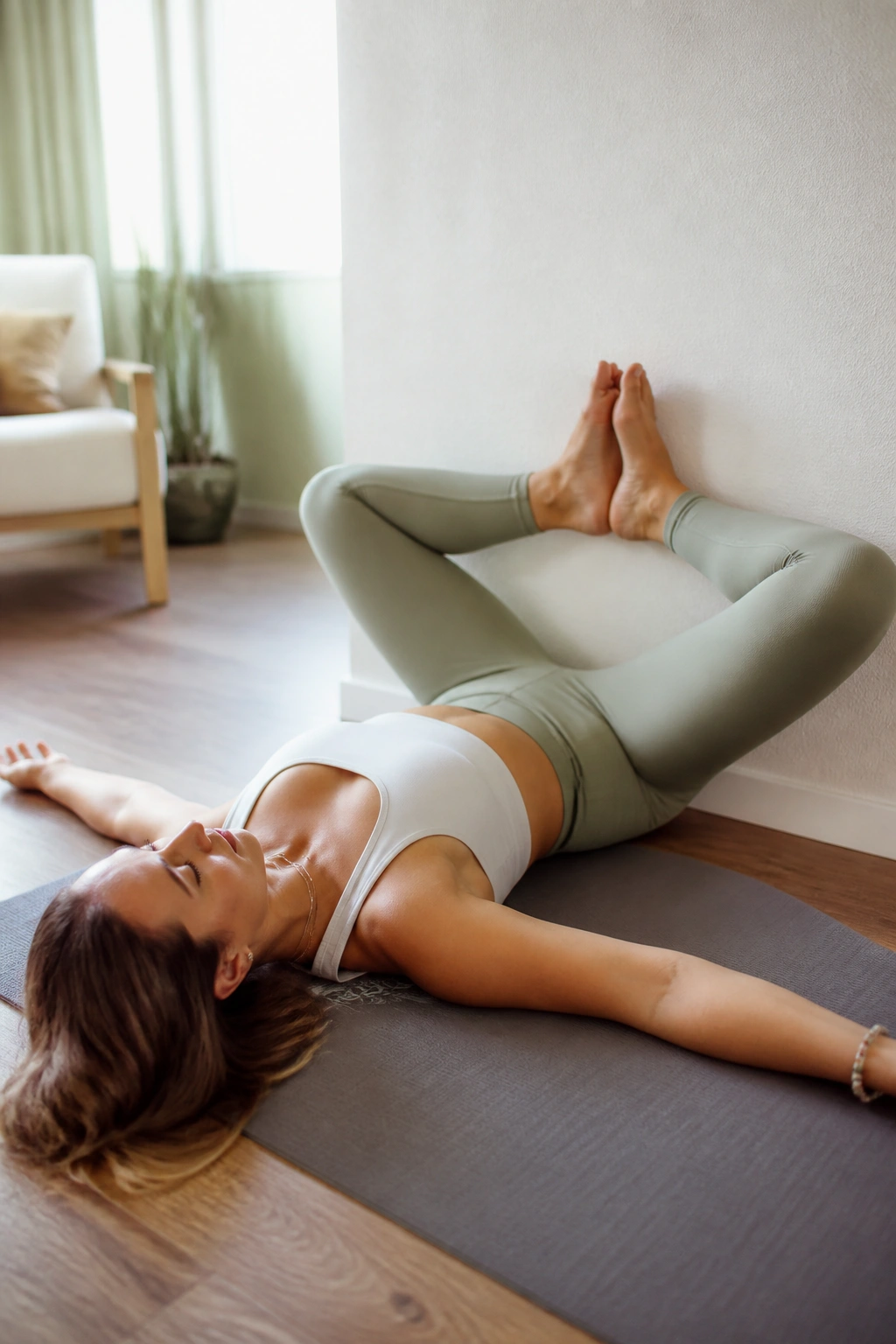
What makes butterfly pose so useful at night?
Support. Plain support. When you put the legs up the wall and let the soles of the feet meet, the hips can open without you having to hold much at all. The inner thighs get a gentle stretch, and the lower back often feels less defensive by the time you have been there for a minute or two.
Sit close to a wall, lie back, and bring the soles of the feet together. Let the knees fall open as far as feels calm. Hold for 2 to 4 minutes if it feels good. If the groin feels too intense, move the feet farther from the pelvis or place cushions under the thighs.
How to Get the Most From It
- Keep the breath even.
- Rest one hand on the belly.
- Let the neck be heavy.
- Use pillows, not willpower, to make it comfortable.
I like this one for people who sit cross-legged all the time and then wonder why their hips feel angry. It answers that complaint without making a scene. The wall does the heavy lifting, and you get to lie there and breathe. That arrangement has a certain appeal.
10. Standing Forward Fold Roll-Down
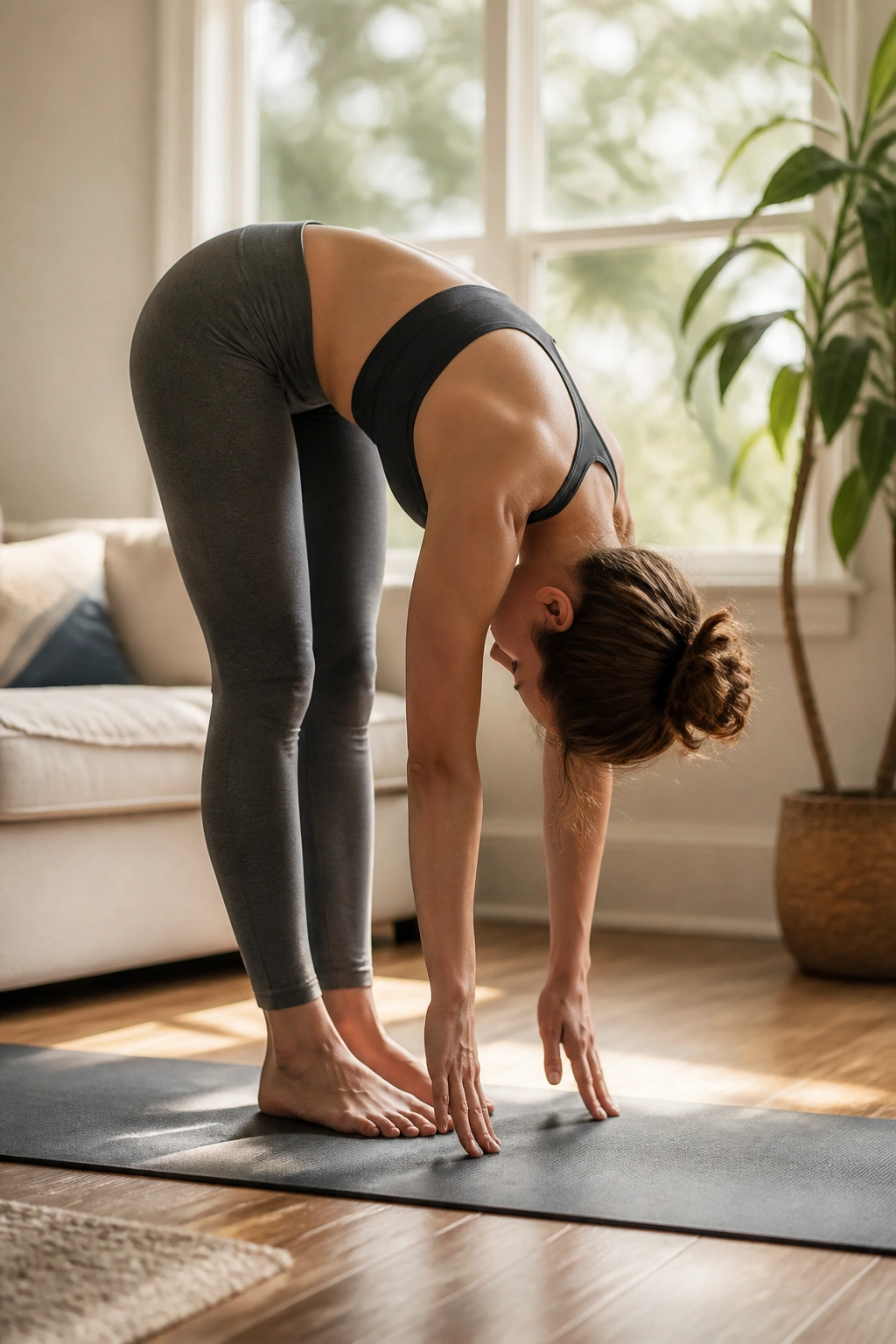
The moment you start rolling down from standing, the evening slows.
That tiny descent matters. A standing forward fold roll-down works well as a bridge between the business of the day and the floor-based routines that come next. It is also a nice choice if you feel too amped up to drop straight into the mat.
Stand with your feet hip-width apart, knees soft, and chin tucked slightly. Roll the spine down one piece at a time until your hands or fingertips hang toward the floor. Stay for a breath or two, then bend the knees more if the back of the legs pull too hard. Roll back up slowly. Repeat 2 or 3 times.
- Keep the knees bent if your hamstrings are tight.
- Let the head hang heavy.
- Move slower than feels necessary.
- If dizziness shows up, stop and sit down.
I like this one because it is a clean transition. No fuss. No floor sprawl right away. It lets you notice how much tension is living in the neck and back before you settle into the rest of your bedtime yoga routine.
11. Sphinx Pose for a Gentle Front-Body Open
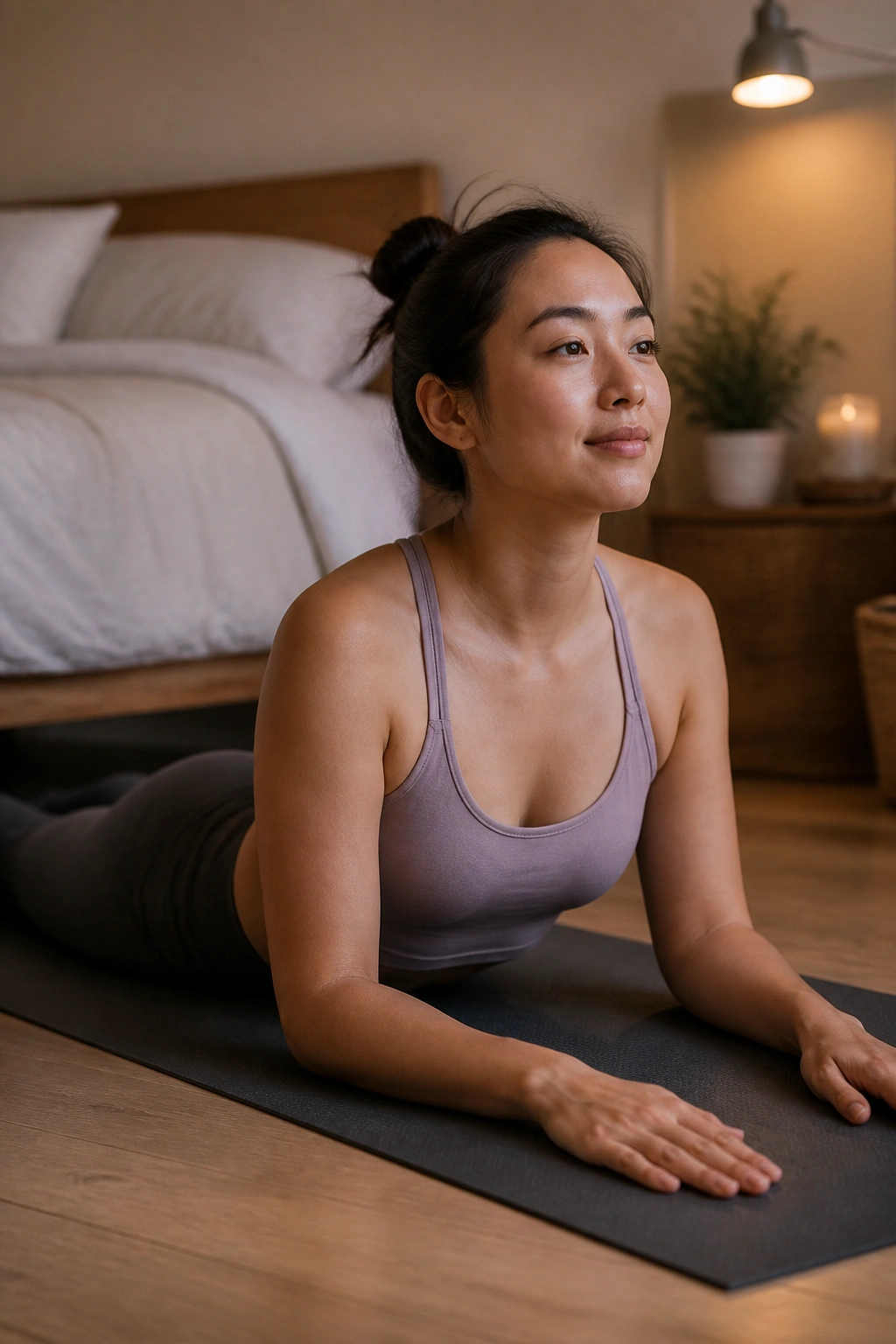
Sphinx is the rare backbend that does not act like one.
That is why it belongs in a bedtime sequence. It opens the front of the body, especially the chest and belly, without demanding the effort of a bigger pose. If you spend most of the day rounded over a keyboard or steering wheel, this can feel like your ribs finally getting room to breathe.
Lie on your stomach and prop up on your forearms with elbows under the shoulders or slightly in front of them. Keep the legs long and the glutes soft. Stay for 30 to 60 seconds, breathing into the front ribs. If the lower back feels pinchy, lower down a little or place a folded blanket under the hips.
A lot of people think all backbends are energizing. Not true. Sphinx is slower than that. It is more like opening a window than throwing the door wide. That calmer version is exactly what you want before sleep.
If you have had a day full of screens and slouching, this pose can be the missing piece. It feels especially good after a warm shower, when the muscles are a bit easier to persuade. Not a bad way to end the day.
12. Alternate Nostril Breathing in Easy Seat
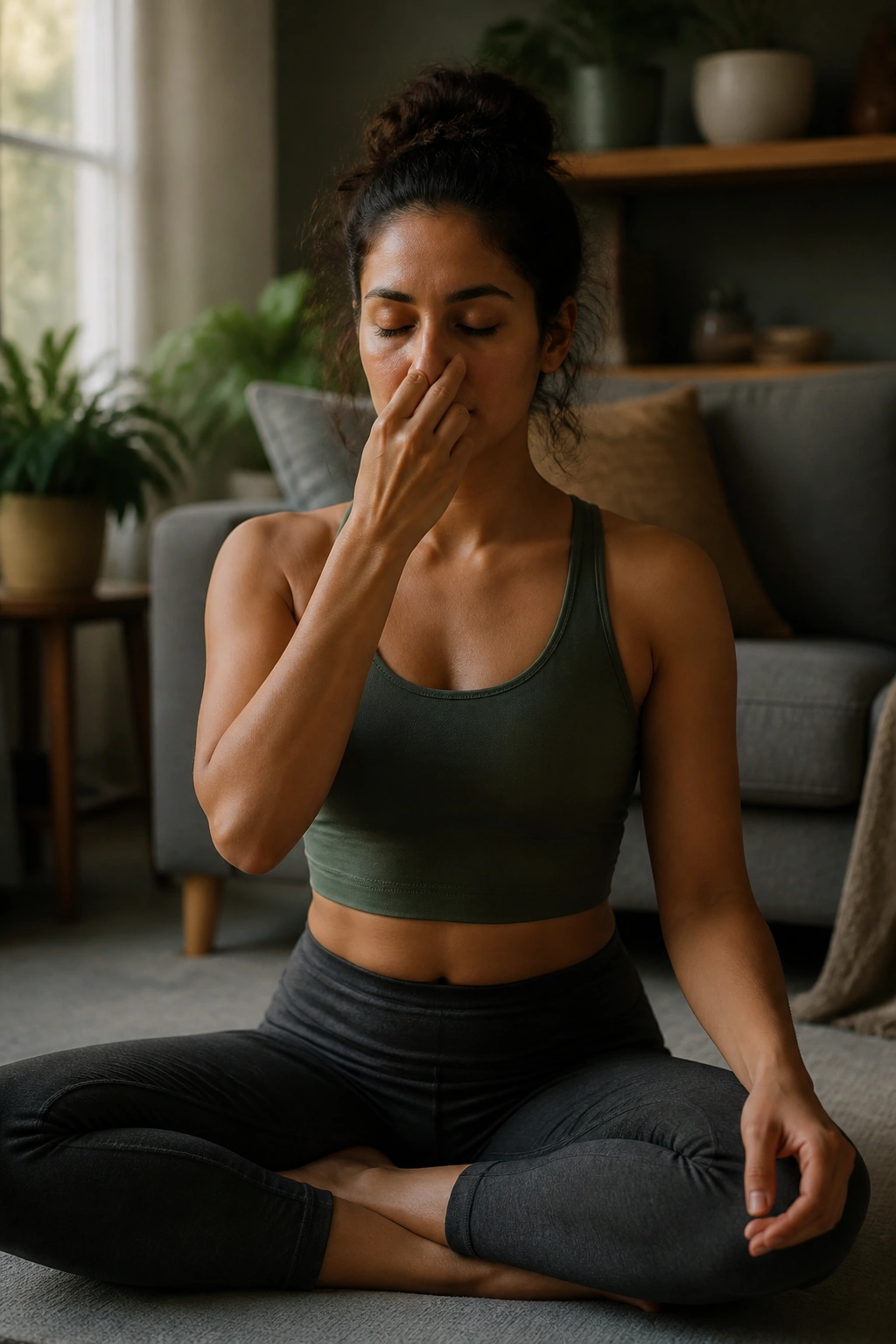
Alternate nostril breathing is not flashy.
Good. It does not need to be. This is the routine I reach for when the mind is busy but the body is already tired, because it gives the brain a simple pattern to follow without asking for much physical effort. If you want to pair yoga for sleep with something that feels almost meditative, this is the one.
Sit cross-legged or on a chair with your spine tall but not stiff. Use the thumb and ring finger of one hand to gently close each nostril in turn. A basic version is four slow rounds, breathing in through one side, out through the other, then reversing. Keep the breaths smooth. No gasping.
Best Used When
- Your thoughts keep looping.
- Your body is too tired for more movement.
- You want a quieter finish after stretching.
- Your nose is clear enough to breathe through.
If your nose is blocked, skip this and use simple nose breathing with a longer exhale instead. No need to wrestle with it. The main point is a steady pattern that lowers the noise level in your head. That is often all the bedtime routine needs.
13. Neck, Jaw, and Shoulder Melt Sequence
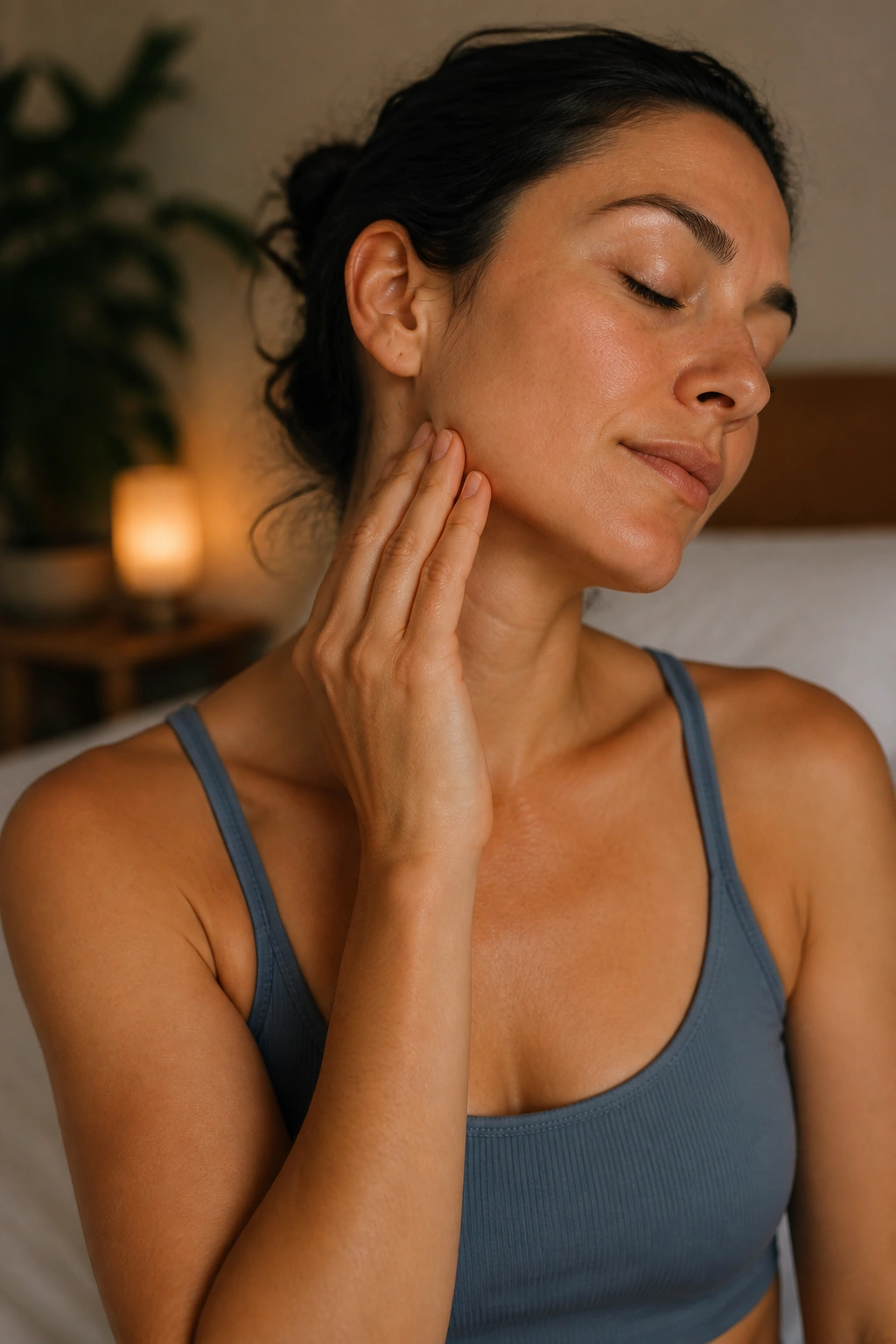
Neck tension hides in small places.
That is what makes it annoying. You can do a lot of hip work and still lie in bed with your shoulders up by your ears if the jaw and neck never got the memo. This short sequence gives attention to the places that tend to hold stress for no good reason.
Start by dropping the shoulders down and back once or twice, slowly. Then tip one ear toward one shoulder for 3 breaths, switch sides, and finally place your fingertips along the jaw hinge and gently massage in tiny circles. Add a slow head turn left and right only if it feels smooth. Skip big neck rolls if you feel dizzy or cranky in the cervical spine.
What to Loosen First
- The jaw, especially if you clench at night.
- The top of the shoulders.
- The base of the skull.
- The front of the throat, with a long exhale.
You can do the whole thing in under 2 minutes, which is useful on nights when you are too tired for a real sequence but still need to get the kinks out. I like it as a final check before bed. If the shoulders drop even half an inch, that counts.
14. Prop-Heavy Savasana
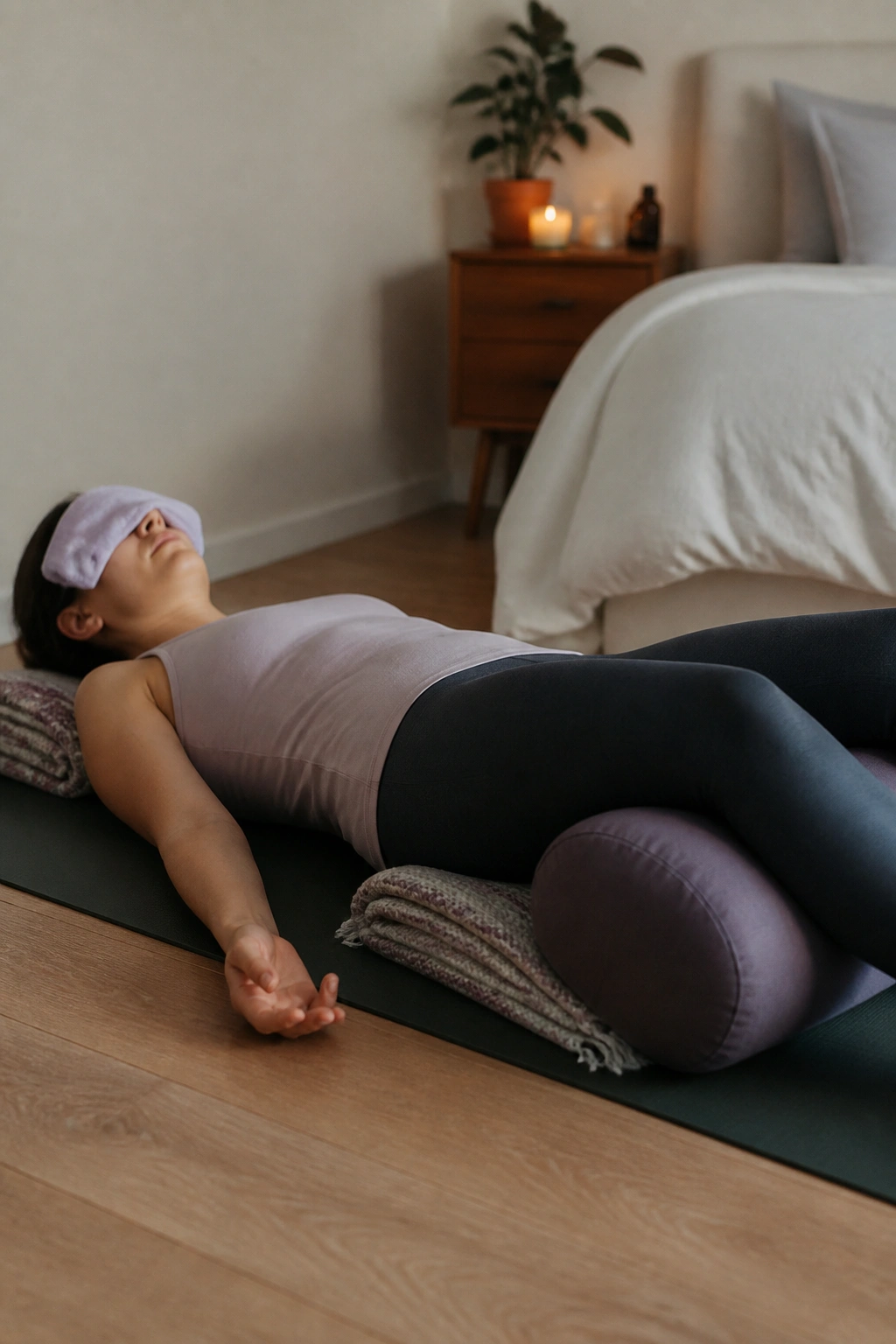
Savasana sounds easy until you try it with a bright ceiling and a buzzing phone nearby.
A proper bedtime version changes the setup. Use props so your body does not have to hold itself together anymore. A folded blanket under the knees, a bolster or pillow under the calves, and a light cloth over the eyes can make a bigger difference than another stretch ever could. This is not laziness. It is smart.
Lie flat or with the knees supported, palms facing up, and let the feet fall open. Stay for 5 to 10 minutes if you have the time. Keep the room quiet and the temperature a little cool. If you tend to wake up with a stiff lower back, the knee support is the part I would not skip.
The goal is to reduce the amount of input coming at you. Less light. Less noise. Less decision-making. When the nervous system does not have to process much, it usually gets easier to drift off. That does not sound dramatic, but it is one of the main reasons bedtime yoga can help.
I also like this one after a more active evening sequence, because it gives your body a clean landing. No rushing. No extra reps. Just a long exhale and a chance to stop doing things.
15. A 10-Minute Full Bedtime Flow
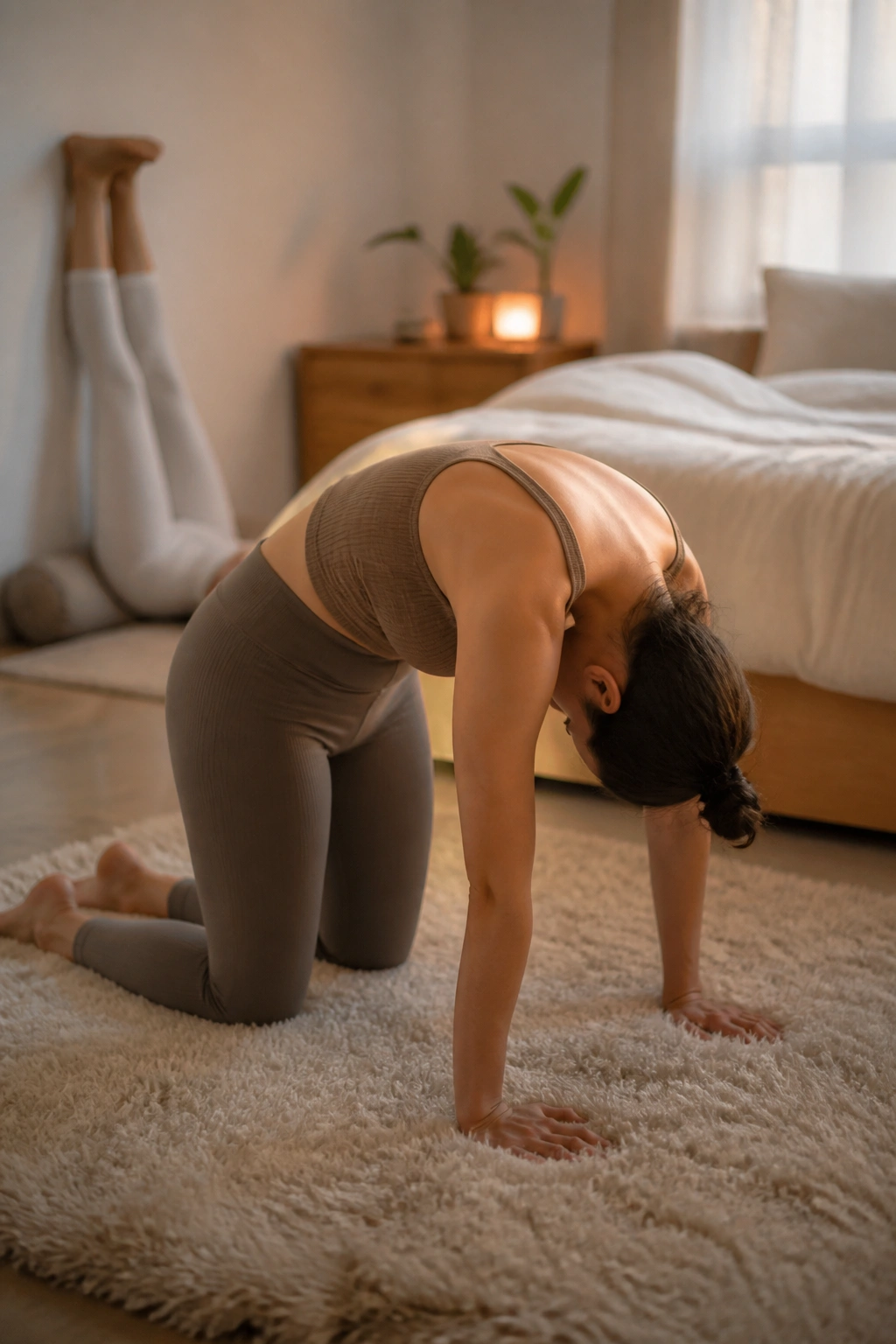
A tiny script beats improvisation on nights when you are tired.
That is why this last routine exists. If you do not want to think, string together a short sequence and repeat it the same way for a few nights in a row. The body starts to recognize the pattern, and that familiarity can be half the battle.
A Simple 10-Minute Sequence
- 4 rounds of Cat-Cow.
- 30 seconds of Low Lunge on each side.
- 45 seconds of Reclined Figure-Four on each side.
- 2 minutes of Legs-Up-the-Wall.
- 2 minutes of Prop-Heavy Savasana.
You can trim it to 5 minutes by skipping the lunge and keeping the rest. Or you can stretch it to 12 minutes by adding Sphinx before the final rest. The point is to keep the pace steady and gentle. No part of this should feel like training.
This is the best choice when you want a real bedtime yoga routine but do not want to spend half the night deciding what comes next. I use it on evenings when my body is tired, my head is busy, and I know that too much variety will make me quit. Familiarity helps here. So does having a clear finish.
Final Thoughts

The most useful evening yoga routines for better sleep are the ones that lower effort, not raise it. That sounds obvious, but people keep missing it. They do a flow that is too energetic, stretch too hard, and then wonder why their body feels more alert than before.
Pick one routine, keep it short, and repeat it until it feels ordinary. Ordinary is good at bedtime. Ordinary is what lets your shoulders unclench, your breathing slow down, and your brain stop treating the ceiling like a problem to solve.
If one move keeps working for you, keep that one. The rest can stay on the shelf until another night needs them.
