



You know that moment midway through a set when your vision starts to narrow, your heart hammers against your ribcage like a trapped bird, and the weight suddenly feels like it’s gained ten pounds? Most people blame the muscles. They assume the failure is in their biceps, their quads, or their glutes. Often, the failure is actually in the air intake system. We treat oxygen as an afterthought, something that just happens automatically while we focus on our form or our pacing. The reality is that your breathing is the throttle for your nervous system. If you aren’t controlling it, your body defaults to a panicked, inefficient state that burns through your energy reserves faster than you can replenish them.
Learning to manipulate your breath is not some esoteric yogic secret reserved for meditation halls. It is a fundamental athletic skill, just like squatting properly or running with a neutral spine. Whether you are prepping your nervous system to explode into a personal record, maintaining cadence during a long run, or calming your heart rate down during a rest period, the way you breathe determines your output. If you treat your lungs as a tool rather than a passive organ, you change your entire workout capacity.
1. Diaphragmatic Breathing
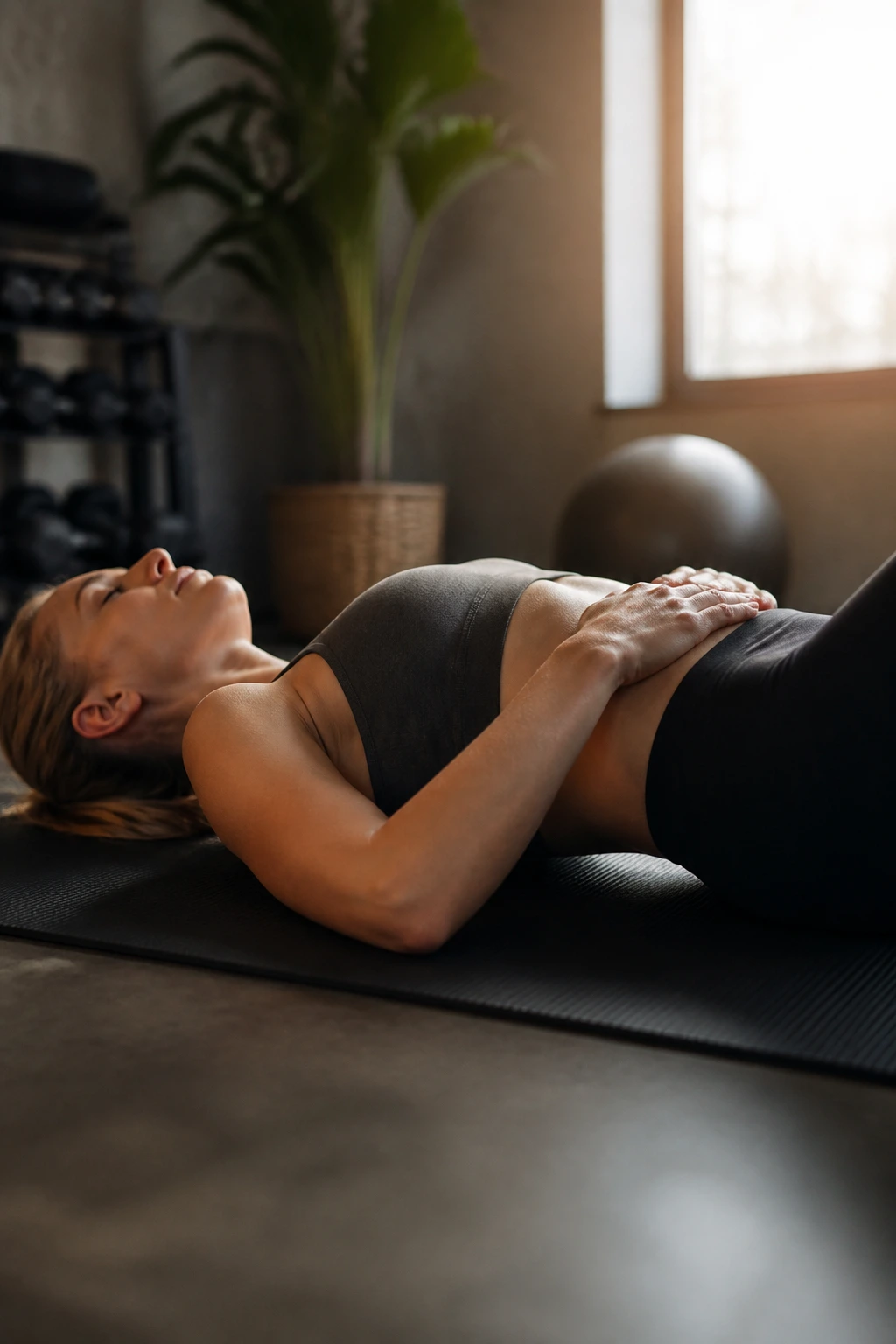
This is the foundational pattern that every athlete must master before anything else. Most people spend their lives breathing shallowly into their chest, using the small accessory muscles in their neck and shoulders. When you move to the gym, that habit follows you, creating tension where you need relaxation. Diaphragmatic breathing—often called belly breathing—forces your primary respiratory muscle to do the work.
How to Practice It
- Lie on your back with one hand on your chest and one on your belly.
- Inhale slowly through your nose, aiming to make only the hand on your belly rise.
- Keep the chest-hand completely still.
- Exhale through pursed lips, feeling your stomach contract and flatten.
The Benefit: By using your diaphragm, you lower your heart rate and increase the efficiency of every breath. When you are under load, this prevents the rapid, shallow panting that leads to premature fatigue. It turns your torso into a stable cylinder, which is essential for spine health under a heavy bar.
2. Box Breathing

If you need to enter a gym, look at a heavy barbell, and feel a surge of anxiety, box breathing is your tactical reset. This technique is widely used by tactical athletes and elite operators to bring the autonomic nervous system back into balance when adrenaline threatens to ruin their focus. It creates a rhythm that demands mental presence.
The Mechanism of Action
The beauty of box breathing is in the count. You inhale, hold, exhale, and hold again for equal amounts of time. This four-phase cycle acts like a metronome for your heart rate. When you force your body to hold a breath—either full or empty—you are teaching your nervous system to stay calm under the rising pressure of CO2 buildup.
How to Execute
- Inhale through your nose for a count of 4.
- Hold the air in your lungs for a count of 4.
- Exhale slowly through your mouth for a count of 4.
- Hold the lungs empty for a count of 4.
- Repeat for 5 to 10 cycles before starting your set.
3. Nasal Dilator Prep

Before you even start your warm-up, you have to ensure your airways are actually open. Many people suffer from restricted nasal passages without realizing it, which forces them into mouth breathing from the first minute. While mouth breathing has its place during near-max efforts, starting your workout that way is a recipe for hyperventilation.
Why the Nose Matters
Your nose is a filter, a heater, and a humidifier for the air you take in. It also produces nitric oxide, a molecule that helps dilate your blood vessels and improve oxygen delivery to your working muscles. If you start your workout with blocked sinuses or congested nasal passages, you are effectively cutting off your most efficient supply line.
Practical Application
Before you hit the gym floor, spend two minutes performing “nasal clearing” breaths. Take a normal breath in through your nose, breathe out through your nose, and then hold your nose shut. Nod your head up and down or walk while holding that breath until you feel a strong urge to breathe. This mild air hunger stimulates the release of nitric oxide and clears nasal congestion, priming your system for better airflow throughout the session.
4. Pursed-Lip Breathing

This is a recovery-focused technique often used in pulmonary rehabilitation, but it is incredibly effective for athletes trying to bring their heart rate down between high-intensity intervals. When you finish a sprint or a heavy set and feel like you are gasping, you are actually trapping air in your lungs. Pursed-lip breathing helps you empty them completely.
The Technique
- Inhale deeply through your nose for 2 seconds.
- Purse your lips as if you were whistling or blowing out a candle.
- Exhale through those pursed lips for a count of 4 to 6 seconds.
Why it works: The resistance created by your lips creates a small amount of backpressure in your airways. This keeps your airways open longer during exhalation, allowing you to get rid of the stale, carbon-dioxide-rich air that is sitting at the bottom of your lungs. This reduces the feeling of breathlessness and allows you to recover faster.
5. 4-7-8 Breathing

Sometimes the hardest part of a workout is just getting into the right headspace. If you have had a stressful day and feel frantic when you arrive at the gym, your sympathetic nervous system is stuck in “fight or flight” mode. You need to flip the switch to “rest and digest” so you can channel that energy into your training.
The Protocol
- Inhale through your nose for 4 seconds.
- Hold the breath for 7 seconds.
- Exhale audibly through your mouth for 8 seconds.
The Impact: That long, slow exhalation is the key. When you extend your exhale, you stimulate the vagus nerve, which tells your heart to slow down and your muscles to relax. Do this for four cycles before you pick up your first weight. It is the quickest way to dump mental clutter and focus purely on the task at hand.
6. Wim Hof Method (Controlled Hyperventilation)

Warning: Only perform this while seated or lying down, never while standing or operating machinery. This is a high-arousal technique. It is excellent for pre-workout, but it is not for the faint of heart. It involves rapid, controlled breathing that temporarily alters your blood chemistry.
The Procedure
- Take 30 to 40 deep, rapid breaths—inhale fully, exhale passively.
- On the last exhale, hold your breath for as long as you comfortably can.
- Once you feel the urge to breathe, take a deep recovery breath and hold for 15 seconds.
The Use Case: This creates a temporary, controlled stress response that increases adrenaline and alertness. It is like an organic version of a pre-workout stimulant. Use this before a maximum effort lift or a sprint workout to wake up your nervous system, but do not use it to calm down.
7. Resonance Breathing

Resonance frequency breathing is the “sweet spot” of respiration. For most people, this occurs at a rate of about 5.5 to 6 breaths per minute. When you breathe at this specific rate, your heart rate variability (HRV) and your blood pressure rhythms align, creating a state of physiological coherence.
How to Find Your Rhythm
- Aim for a 5-second inhale and a 5-second exhale.
- Ignore the pauses; keep the breath flowing like a smooth wave.
- Use a metronome app if you need to, but try to develop a feel for this pace naturally.
Why it matters: Research has shown that resonance breathing improves cardiac efficiency. By training your body to operate at this frequency during lower-intensity warm-ups or steady-state cardio, you are teaching your heart and lungs to communicate more effectively, which translates to better stamina over long sessions.
8. Alternate Nostril Breathing

This technique, known in yoga as Nadi Shodhana, is surprisingly effective for mental recalibration before complex lifting sessions that require coordination and focus. By breathing through one nostril at a time, you are thought to balance the activity between the two hemispheres of the brain.
How to Do It
- Close your right nostril with your thumb and inhale through the left.
- Close the left nostril with your ring finger and exhale through the right.
- Inhale through the right, close it, and exhale through the left.
- Continue alternating sides for 3 to 5 minutes.
Why it works: It forces you to slow down and pay attention to the airflow. It is impossible to rush this breath. If you find yourself fidgeting or losing focus between sets, take 60 seconds to perform this. It centers your attention and lowers your heart rate without making you drowsy.
9. Buteyko Method (CO2 Tolerance)
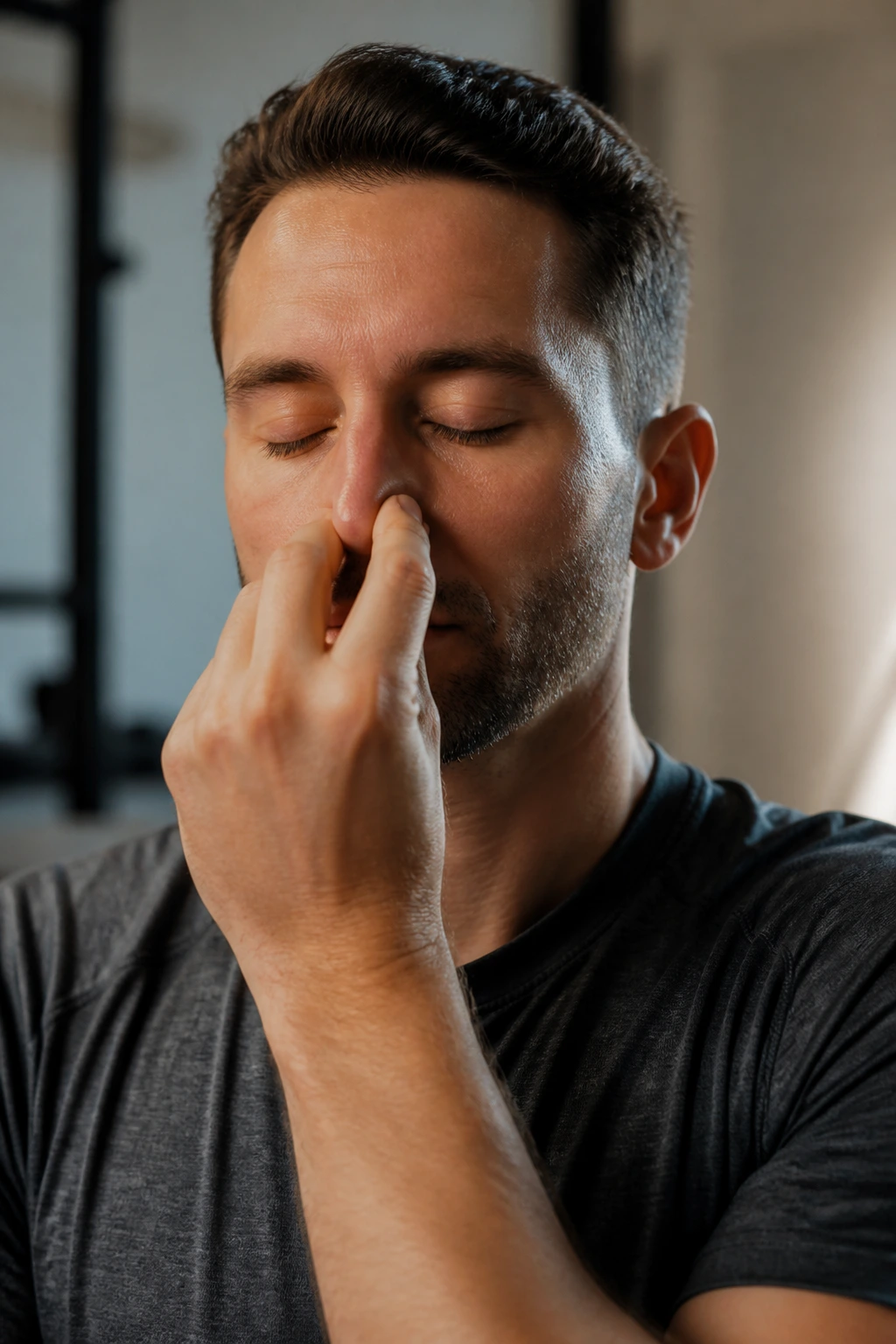
Most athletes train like oxygen is the goal, but CO2 tolerance is actually the performance limiter. When you build up carbon dioxide, your body signals the need to breathe. If you can train your body to be comfortable with higher levels of CO2, you will be able to push harder and longer before that suffocating sensation takes over.
The “Control Pause”
- Take a normal breath in and a normal breath out.
- Pinch your nose.
- Count the seconds until you feel the first involuntary contraction of your diaphragm.
- Resume breathing through your nose immediately.
The Application: Do this throughout the day or during your warm-up. By regularly exposing yourself to mild “air hunger,” you condition your brain to ignore the panic signal that tells you to gasp for air. This is the secret to maintaining composure during those agonizing final reps of a set.
10. The Valsalva Maneuver
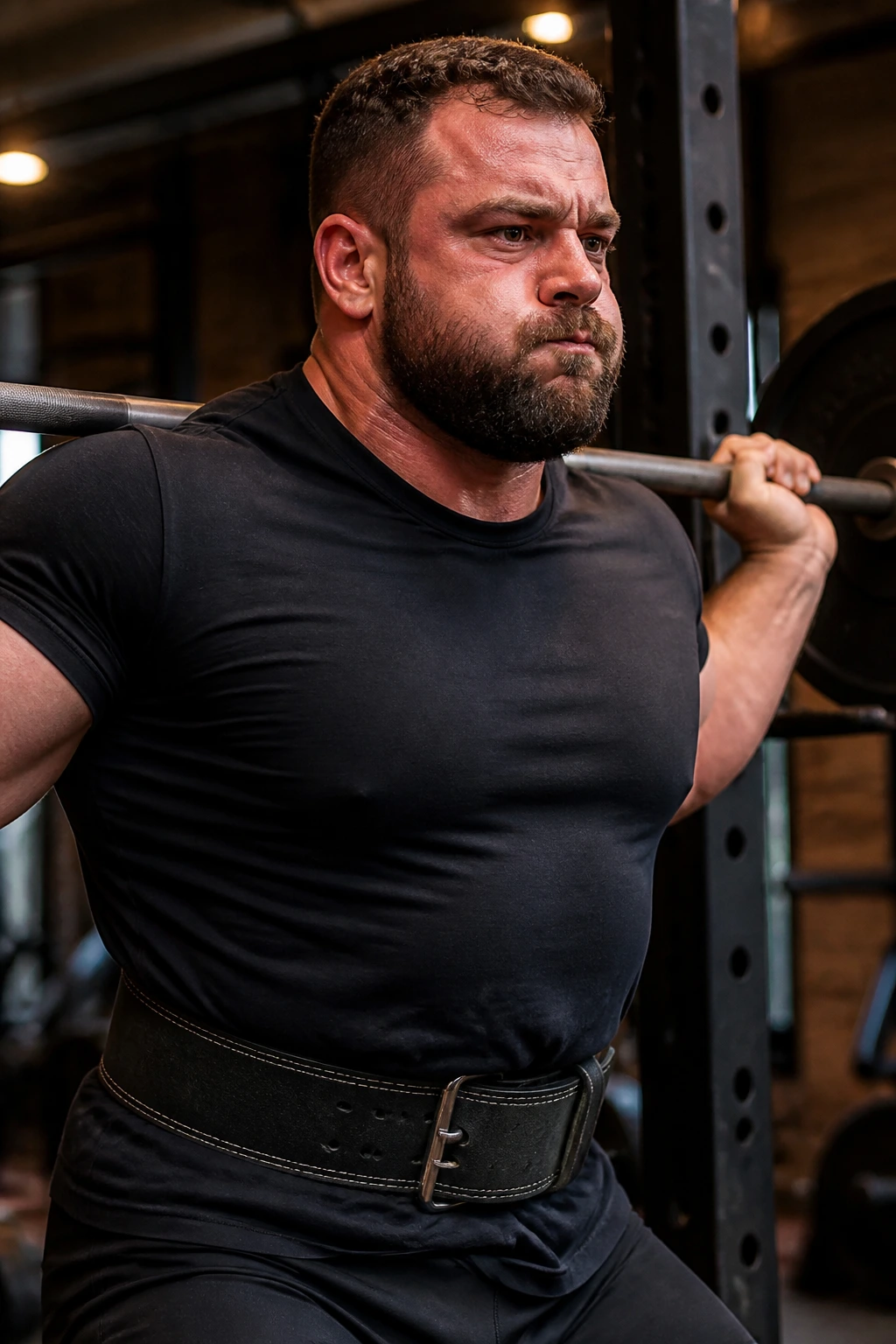
This is not a breathing exercise for relaxation; it is a mechanical necessity for heavy lifting. When you are going for a heavy squat or deadlift, simply “taking a breath” is not enough. You need to create intra-abdominal pressure to protect your spine.
The Technique
- Take a deep breath into your belly, not your chest.
- Hold that breath and brace your core as if you are about to be punched in the stomach.
- Maintain this rigid, pressurized state throughout the entire eccentric and concentric portion of the lift.
- Exhale only when you have passed the sticking point.
The Safety Warning: This creates significant temporary spikes in blood pressure. It is essential for spinal stability during maximal efforts, but it is not meant to be held for long durations. Brace, lift, complete the rep, and exhale.
11. Explosive Exhale

Sometimes you need speed and power, not stability. In explosive movements like box jumps, kettlebell swings, or medicine ball slams, your breath should match the intensity of the movement. A long, slow breath is inappropriate when you need to generate maximum force in a fraction of a second.
The Technique
- As you initiate the explosive part of the movement, expel the air sharply through your mouth.
- Think “hiss” or “shhh”—it should be a forceful, audible sound.
- This sharp exhale engages your abdominal muscles instantly, providing the core bracing needed for explosive power.
Why it works: By coupling the exhale with the movement, you maximize the speed of your muscle contractions. It is the same principle as a tennis player grunting when they hit the ball. The vocalization and the breath ensure that your core is engaged exactly when your extremities are moving.
12. Rhythmic Cadence Breathing

If you are a runner, a rower, or a cyclist, you have probably experienced the “stitch” in your side. This is often caused by shallow breathing that doesn’t sync with your limb movement. Rhythmic breathing solves this by creating a pattern that links your footstrikes or pedal strokes to your breath.
The Ratios
- Easy pace: Try a 3:3 rhythm (3 steps while inhaling, 3 steps while exhaling).
- Moderate pace: Move to a 2:2 rhythm.
- Hard effort: You might drop to a 1:1 rhythm, but be careful not to let the breaths become too shallow.
The Benefit: This forces you to focus on your breathing rather than just the pain of the movement. It ensures that you are fully exhaling, which prevents that side-stitch pain. It also turns your breathing into a metronome, helping you maintain a consistent pace rather than yo-yoing your intensity.
13. Lateral Ribcage Expansion

Many people breathe strictly “front-to-back,” moving the belly and the chest. However, your lungs extend into the sides of your ribcage. To maximize lung capacity and improve thoracic mobility, you need to learn to breathe laterally, pushing your ribs out to the sides.
How to Practice
- Stand or sit tall, wrap your hands around your lower ribcage, fingers meeting in the front.
- Inhale deeply, focusing on pushing your ribs out into your hands.
- You should feel your hands moving apart, not forward.
- Keep your shoulders relaxed and down—do not let them shrug up to your ears.
The Benefit: This is vital for upper body lifting and overhead pressing. It creates thoracic expansion, which allows for better movement of the shoulder blades. If you have “tight” lats or shoulders, better lateral ribcage breathing can often act as a dynamic mobility drill.
14. The Physiological Sigh

This is a specific breathing pattern that has gained popularity because of its rapid ability to offload CO2 and reset the nervous system. It is arguably the most efficient way to reduce stress in real-time, whether you are at the gym or in the middle of a frantic workday.
The Pattern
- Take a deep inhale through your nose.
- Before you exhale, take a second, shorter inhale through your nose to fully inflate the lungs.
- Exhale slowly and fully through your mouth.
Why it works: The double-inhale pops open the tiny air sacs (alveoli) in your lungs that may have collapsed, allowing for a much larger surface area for gas exchange. The long exhale then dumps a massive amount of carbon dioxide. It is the fastest way to “offload” the stress of a heavy set.
15. Belly-to-Chest Wave
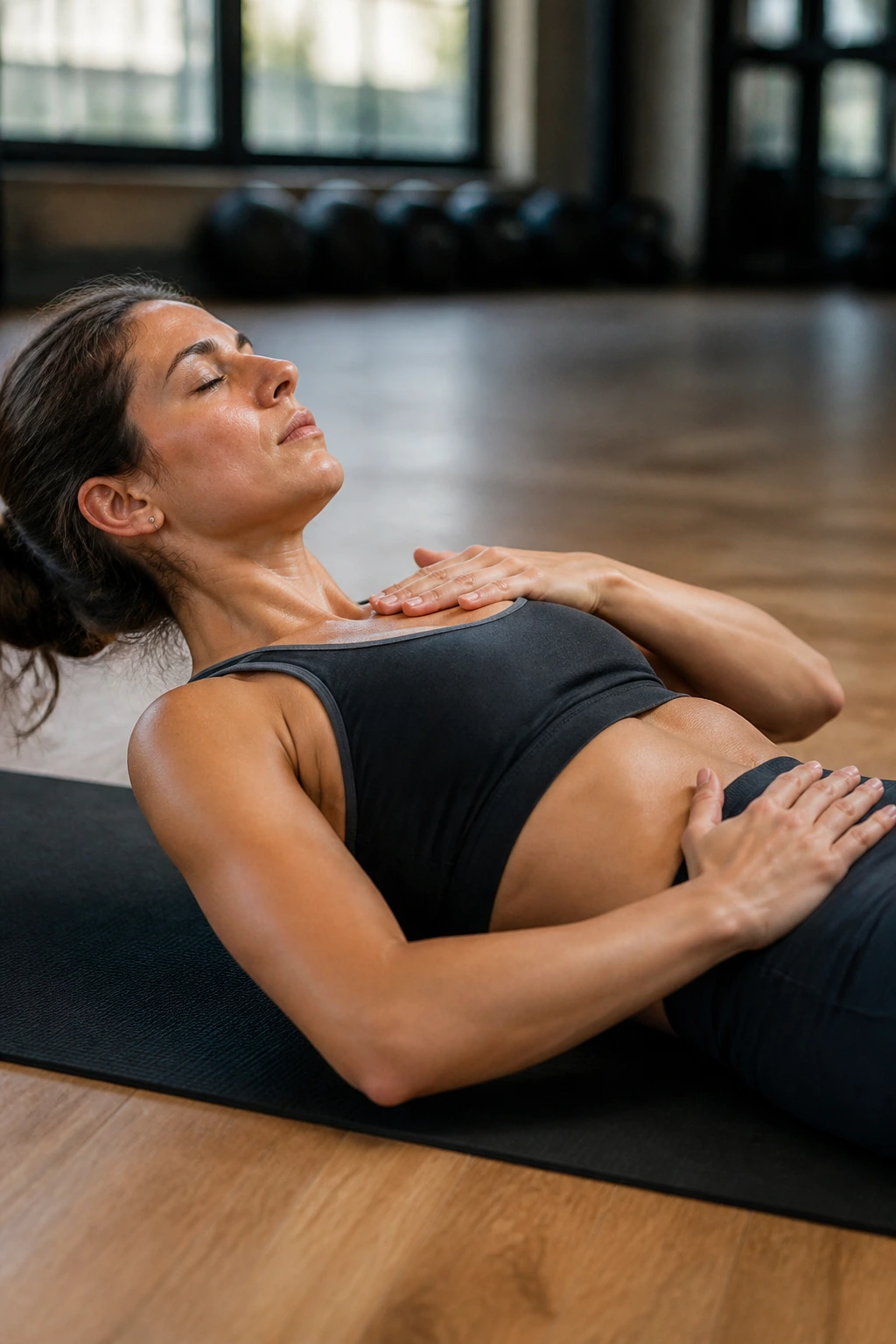
This is a mobility drill disguised as a breathing exercise. It teaches you to articulate your spine while controlling your breath. It is excellent for a warm-up, especially before spinal-heavy exercises like deadlifts or heavy rows.
The Motion
- Start with diaphragmatic breathing.
- As you inhale, start the breath in the belly, then move the sensation of the air upward into the ribcage, and finally into the upper chest.
- Exhale in the reverse order: chest, ribs, then belly.
- It should feel like a wave rolling up and down your torso.
The Benefit: This improves your awareness of your spine and your ability to control your core musculature. It helps you distinguish between diaphragmatic stability and chest expansion, giving you better control over your bracing mechanics during technical lifts.
16. Controlled Hyperventilation for PRs

This is not for everyday use. This is a specific tool for “arousal control” immediately before a one-rep max attempt. When you are going for a heavy lift, you need a high level of nervous system activation.
The Method
- Stand at the bar.
- Take 5 to 10 short, sharp, rapid inhalations through the nose, accompanied by quick, snappy exhales.
- This creates a slight tingling sensation and a surge of adrenaline.
- Immediately transition into your heavy bracing breath (Valsalva) and execute the lift.
The Context: Only do this if you need to “rev the engine.” If you are already jittery or nervous, this will push you over the edge into panic. This is for the athlete who feels “flat” and needs a sudden spike in intensity to move heavy weight.
17. Humming Breath (Bhramari)

The physical vibration of humming has been shown to increase the release of nitric oxide in the sinuses. It is also an excellent tool for quieting the mind between intense sets.
How to Execute
- Inhale deeply.
- As you exhale, keep your mouth closed and make a low, steady humming sound.
- Feel the vibration in your throat, chest, and nasal cavity.
- Focus entirely on the sound and the vibration.
The Result: The vibration has a calming effect on the vagus nerve. If your gym environment is noisy and chaotic, the hum creates a “sound bubble” that isolates you and helps you maintain focus. It’s a great way to signal to your body that even if the room is loud, you are in control of your own internal environment.
18. Crocodile Breathing
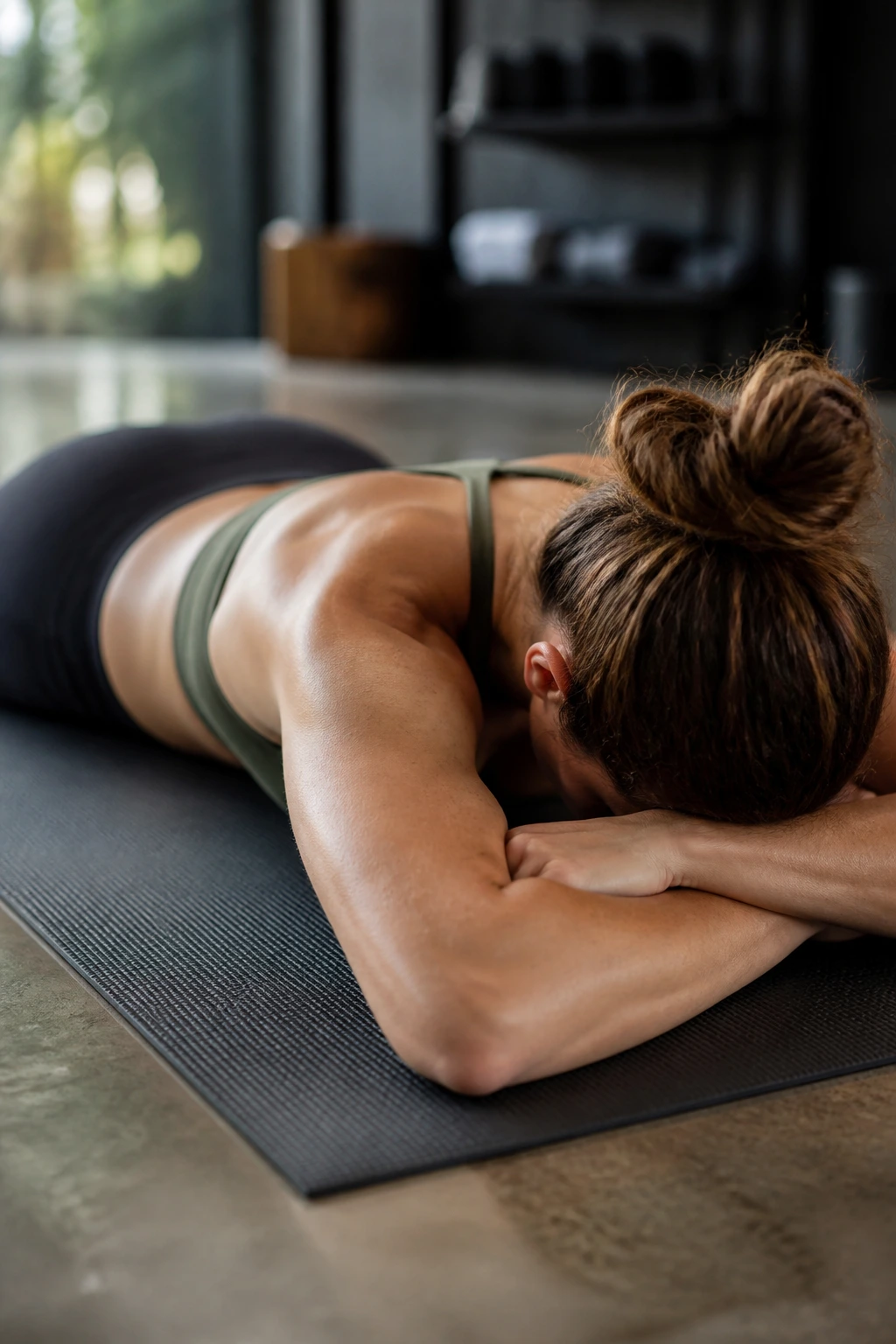
This is the ultimate recovery position. When you have finished a brutal workout and just want to collapse, do it with intent. This position relaxes the lower back and encourages optimal diaphragmatic breathing.
The Technique
- Lie facedown on the floor.
- Fold your arms and rest your forehead on your hands.
- Inhale deeply, focusing on pushing your belly into the floor.
- You should feel your lower back rise as you inhale.
- Relax completely on the exhale.
The Benefit: This is essentially a manual reset for your nervous system. The floor provides physical feedback, confirming that you are breathing into your belly. It helps to deactivate the overactive muscles in your back and neck that have been compensating during the workout.
19. Lengthened Exhale

Sometimes you just need to slow the machine down. If you find your heart rate is redlining and you can’t seem to get it down during rest periods, simply prioritize the exhale. The exhale is the “brake” of the autonomic nervous system.
How to Use It
- Whatever length your inhale is, make your exhale twice as long.
- If you inhale for a count of 3, exhale for a count of 6.
- If you can manage a 4-second inhale, take 8 seconds to exhale.
Why it works: You are literally forcing your heart to slow down. This is particularly useful for people who hold their breath during exercise and then start “panting” during the rest. You are teaching your body to dissipate the metabolic byproduct of the exercise efficiently, rather than just panicking and gasping.
20. Box-Breathing with Isometric Hold
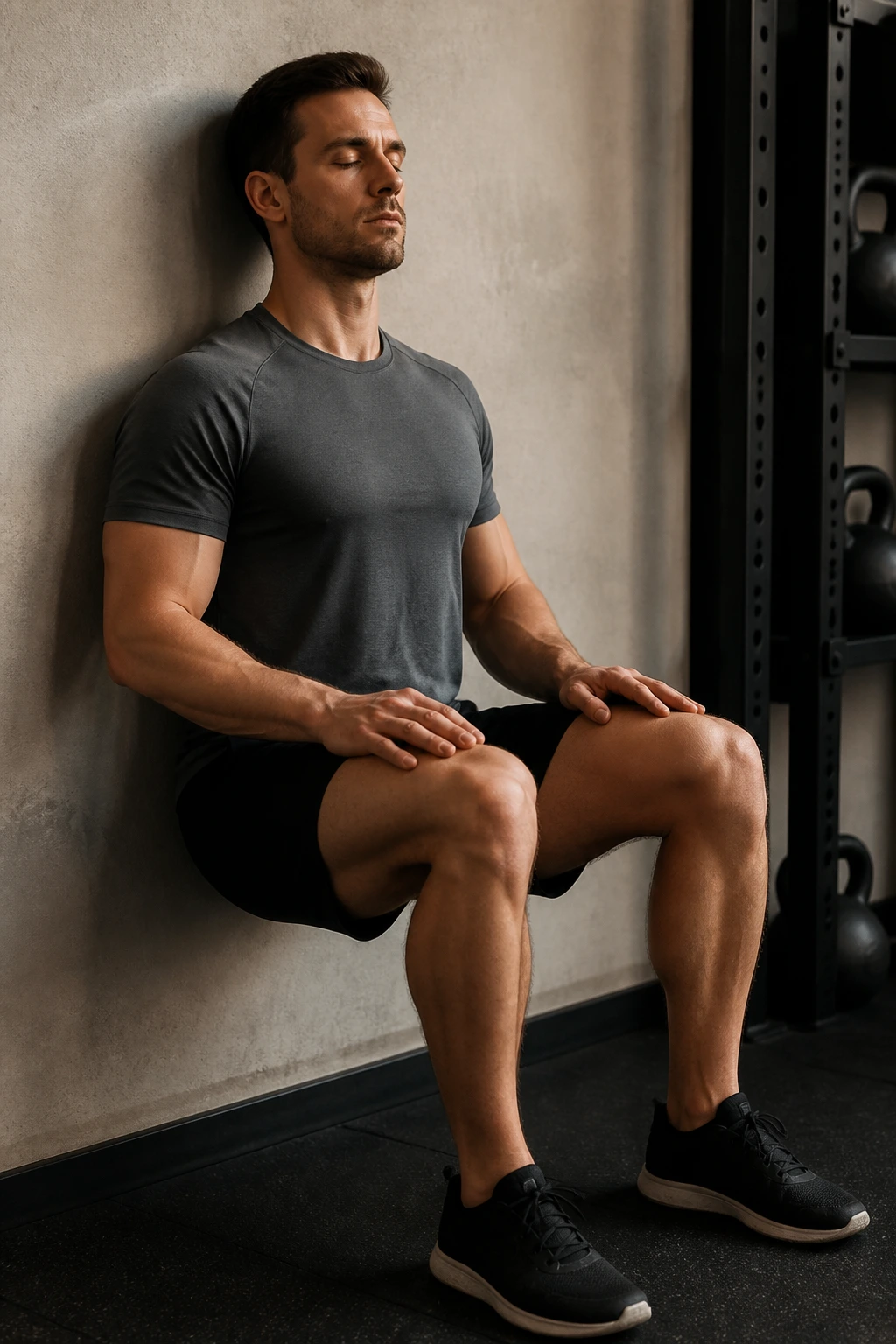
This combines the discipline of box breathing with the physical demand of isometric tension. It is a mental grit exercise that teaches you to stay calm when your muscles are screaming.
The Challenge
- Get into a wall-sit or a plank position.
- Hold that position while performing box breathing (4s inhale, 4s hold, 4s exhale, 4s hold).
- Try to complete 5 cycles without breaking your posture or losing your rhythm.
The Takeaway: This bridges the gap between static breathing drills and exercise. It forces you to maintain diaphragmatic control while your muscles are under load. If you can master this, you will find that you can maintain composure in almost any other athletic scenario, from a heavy set of squats to a final sprint on a track.
Final Thoughts
Breathing is often the missing variable in athletic performance. We track our macros, our sleep, and our training volume with obsessive detail, yet we ignore the most immediate source of energy we have. These twenty exercises offer a spectrum of tools—some for arousal, some for recovery, some for stability, and some for pure mental focus.
Do not try to master all twenty at once. Pick two or three that address your current weak points. If you struggle with anxiety before a set, start with the 4-7-8 breathing or box breathing. If you are a lifter who lacks spinal stability, focus on the Valsalva maneuver and diaphragmatic control. If you are an endurance athlete, focus on rhythmic cadence and CO2 tolerance.
Experiment with these techniques during your next few sessions. You will likely notice that the “burn” in your muscles feels different when your breathing is controlled; it becomes a manageable signal of exertion rather than a panic-inducing alarm. Your body is a machine, but you are the operator. Take your hands off the steering wheel, and the machine will drive itself into the ditch. Grab hold of the breath, and you can steer that machine anywhere you want it to go.
