



That heavy thud of your feet against the treadmill belt is a sound that makes many women cringe. If you find running absolutely miserable, you are not lazy, and you are certainly not failing at fitness. You simply have a body that doesn’t respond well to the repetitive, high-impact grind of pavement pounding, or perhaps you just find the monotony of staring at a wall for forty minutes to be a special kind of mental torture. Whatever your reason, the good news is that cardiovascular health and fat loss do not require you to lace up sneakers for a jog.
The human body is an adaptable machine. It responds to intensity, duration, and movement patterns—not specifically to running. If your goal is to reduce body fat or build cardiovascular endurance, the most effective tool in your kit is the one you will actually use consistently. A workout that you hate is a workout you will quit by week three. Instead of forcing yourself into a mold that doesn’t fit, it is time to look at the wide range of movement options that elevate your heart rate, burn calories, and build strength without forcing you to suffer through a single mile.
1. Brisk Incline Walking
Most people treat walking like a leisurely stroll through the park, but when you manipulate the terrain, it becomes a serious cardiovascular challenge. Walking on a flat surface is fine for recovery, but setting the treadmill to an incline of 8% to 12% changes the biomechanics entirely. You are no longer just strolling; you are climbing.
Why It Works for Fat Loss
By adding an incline, you force your glutes, hamstrings, and calves to work significantly harder to propel your body upward against gravity. This increases the metabolic demand of the exercise without the high-impact jarring of running. You can keep your heart rate in that “fat-burning zone”—typically defined as 60-70% of your maximum heart rate—for a much longer duration than you could sustain during a high-intensity run.
The Right Form
Do not hunch over the console or grip the handrails for dear life. If you have to lean forward to stay upright, your incline is too steep, or your speed is too fast. Stand tall, engage your core, and let your arms swing naturally. Using the handrails negates the work your lower body is doing and reduces the calorie burn.
Pro tip: Keep your speed moderate—between 2.5 and 3.5 miles per hour—and focus on the push from your toes as you step.
2. Competitive-Style Swimming

If you have access to a pool, you have the ultimate, low-impact fat-burning environment. Swimming is often overlooked because it is difficult to quantify progress compared to tracking mileage on a watch, but the resistance of water is roughly 800 times denser than air. Every movement you make requires muscular effort from your entire body.
Breaking Down the Benefits
Because water supports your weight, there is zero impact on your joints. This makes it an ideal option if you have had knee, ankle, or hip issues that prevent you from high-impact activities. You can go longer and harder without the systemic fatigue that comes from hitting concrete.
How to Structure Your Swim
Avoid just floating back and forth. You need intervals to keep the intensity high. Try this structure:
- Swim 2 laps at a steady, moderate pace.
- Rest for 30 seconds.
- Swim 1 lap as fast as you can.
- Rest for 30 seconds.
- Repeat for 20 to 30 minutes.
This interval-based approach keeps your heart rate elevated and forces your muscles to recover quickly, which is excellent for metabolic conditioning.
3. Rowing Machine Intervals

The rowing machine, or ergometer, is the gold standard for full-body cardiovascular work. Unlike running, which is almost entirely lower-body dominant, rowing engages your legs, glutes, core, back, and arms in a single, fluid motion. It is deceptively simple but incredibly demanding.
The Mechanics of the Stroke
Many people use the rower incorrectly, turning it into an arm-heavy workout. The power comes from your legs. Think of it as a leg press that you perform while seated. Push with your legs first, lean your torso back slightly, and then pull with your arms. On the return, do it in reverse: arms forward, torso forward, legs release.
Why It Targets Belly Fat
Because rowing recruits almost every major muscle group in the body, it creates a massive demand for oxygen and energy. This “full-body engagement” forces your heart to pump blood to both your upper and lower body simultaneously, which creates a higher cardiovascular load than almost any other gym machine. It is high-efficiency training at its finest.
4. Cycling for Endurance
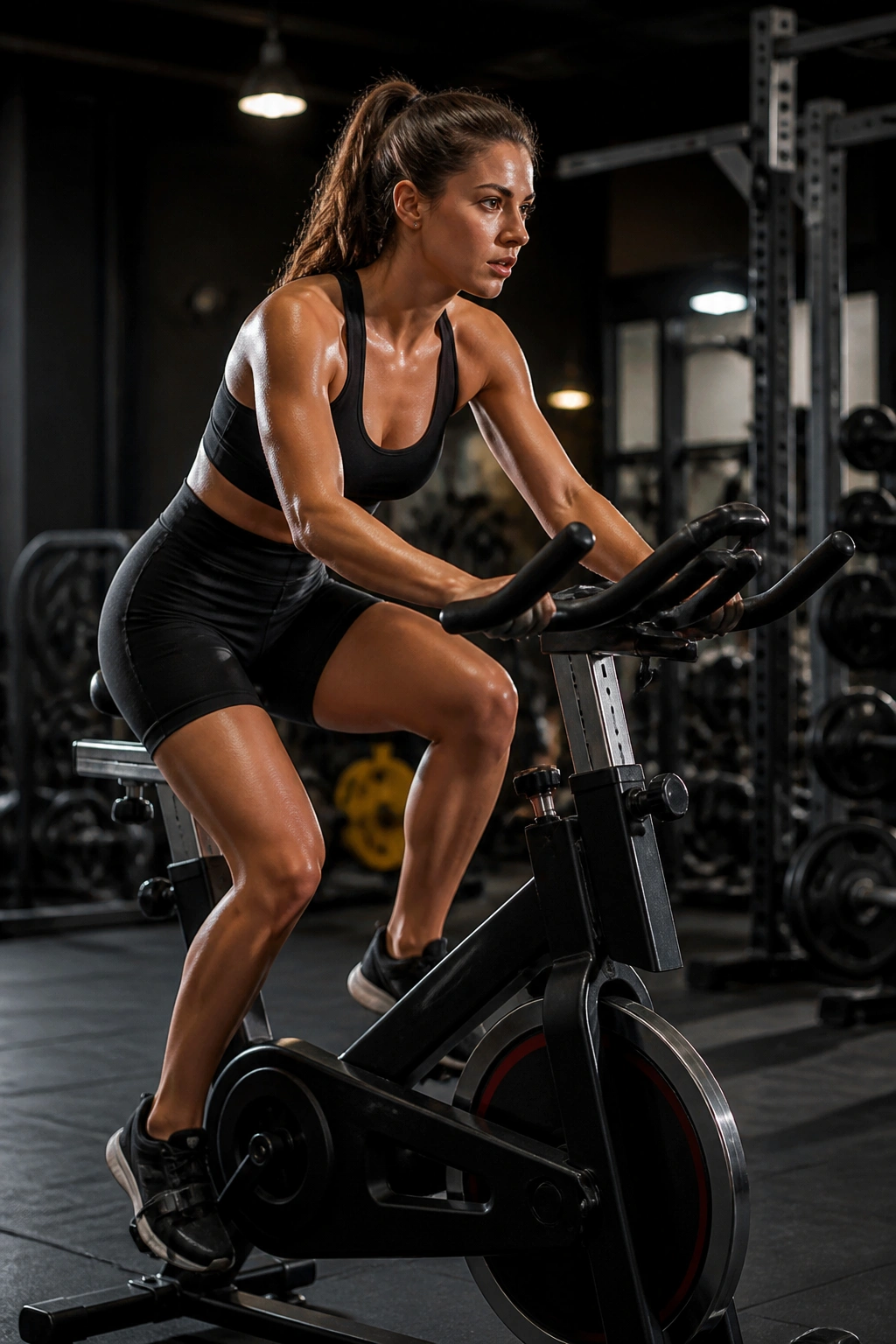
Whether you are on a spin bike at the gym or a road bike outside, cycling allows you to traverse distance without the bone-jarring impact of running. The key here is resistance. If you spin your legs at high speed with zero resistance, you are essentially just moving air and won’t see much change in body composition.
Finding the Right Intensity
You should feel a distinct “push” against the pedals. When you encounter a hill—or dial up the tension on a stationary bike—that is where the real work happens. Focus on the pull-up phase of the pedal stroke as well; think about scraping mud off the bottom of your shoe at the bottom of the rotation. This engages the hamstrings and helps even out the workload.
The Mental Advantage
Cycling is excellent because you can do it while listening to a podcast, watching a show, or simply zoning out to music. Because you are seated, your brain doesn’t have to focus on balance or impact, allowing you to settle into a rhythm that can be sustained for an hour or more, burning a significant number of calories in the process.
5. Jump Rope Circuits
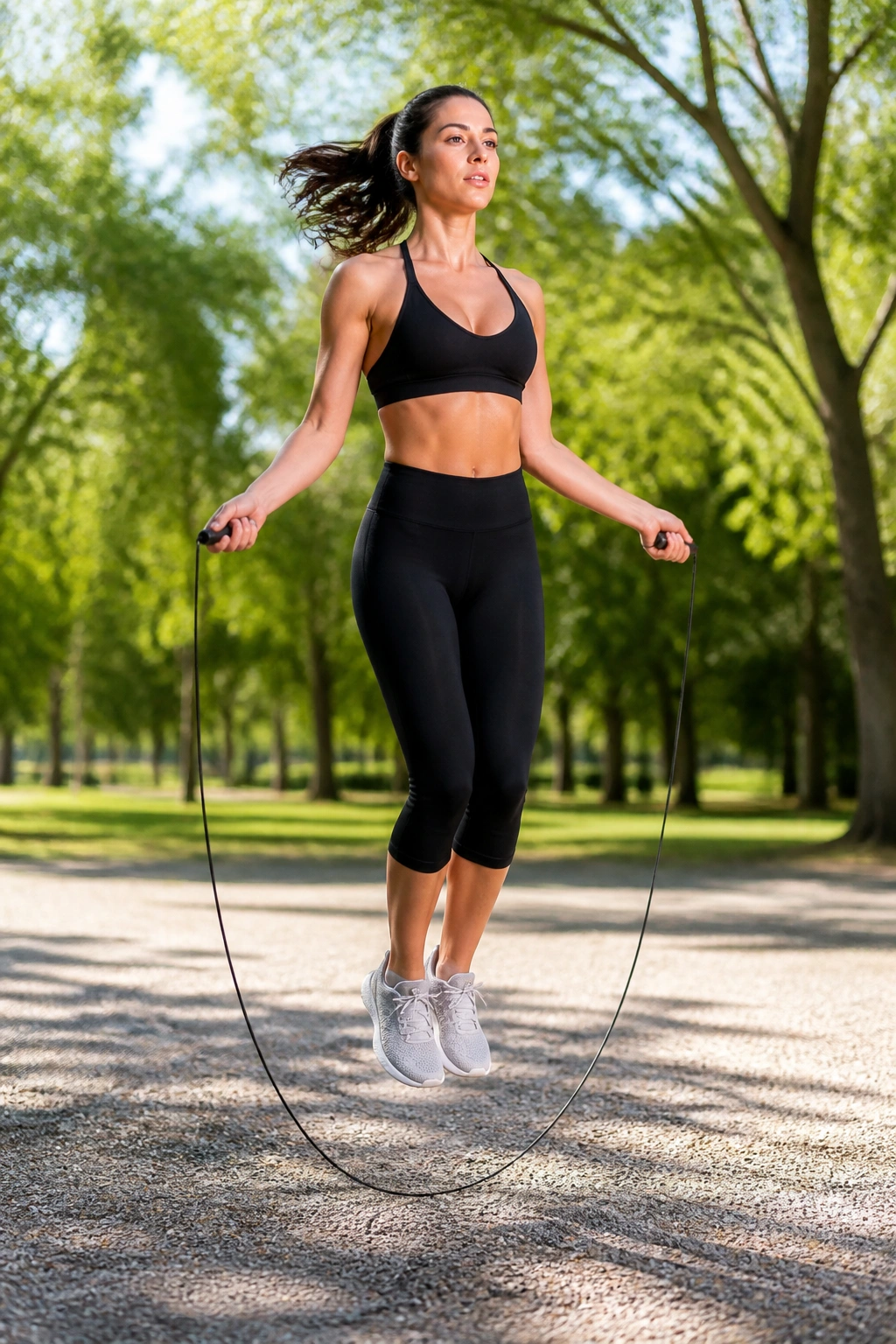
It sounds like a playground game, but jumping rope is a favorite tool of professional athletes for a reason. It is incredibly efficient. Ten minutes of jumping rope can be roughly equivalent to thirty minutes of jogging in terms of cardiovascular benefit. It is compact, requires almost no equipment, and hits your core stability hard.
Technique Matters
Do not jump high. You only need to clear the rope by an inch or two. Keep your elbows tucked in close to your ribs and use your wrists to flick the rope, not your whole arm. If you land with a loud thud, you are jumping too high and likely putting too much stress on your joints. Aim for a soft, rhythmic bounce.
Simple Circuit Ideas
- Jump for 60 seconds.
- Rest for 30 seconds.
- Perform 15 bodyweight squats.
- Rest for 30 seconds.
- Repeat 10 times.
This breaks up the monotony and keeps your heart rate spiked through the entire session.
6. High-Intensity Interval Training (HIIT)
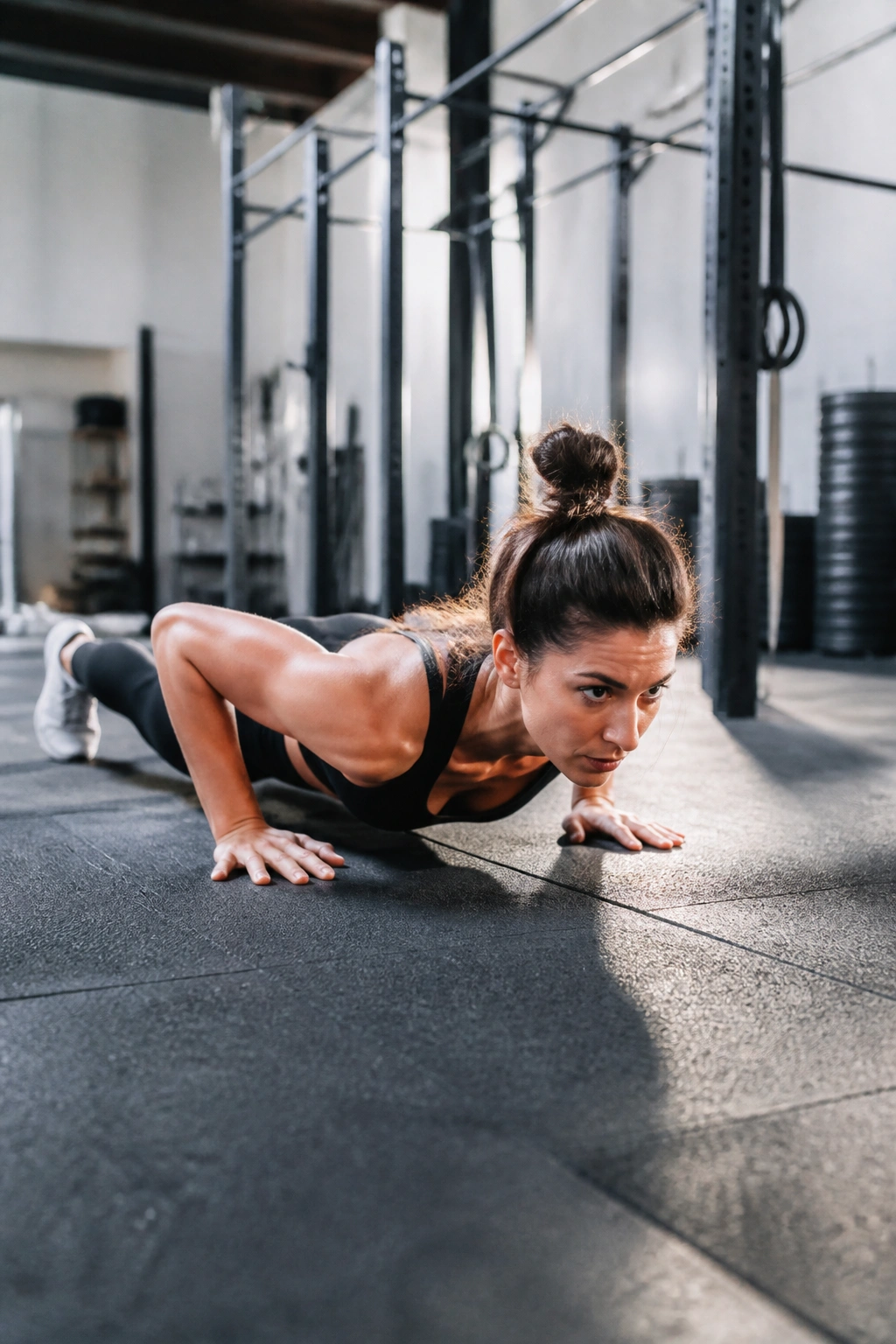
HIIT isn’t a specific exercise, but a method of training. It involves short bursts of near-maximum effort followed by brief periods of rest. The logic is that by pushing your heart rate into the red zone, you create an “oxygen debt” that your body spends the next few hours recovering from, keeping your metabolism elevated even after you leave the gym.
The Bodyweight Advantage
You do not need fancy equipment. A simple routine of burpees, mountain climbers, high knees, and jumping jacks is sufficient. The key is the intensity. If you can talk comfortably during your “work” interval, you aren’t working hard enough.
A Sample Protocol
Try the Tabata method: 20 seconds of all-out effort (as many reps as possible) followed by 10 seconds of rest. Do this for 8 rounds. It will feel like the longest four minutes of your life, but it is one of the most effective ways to trigger physiological change in a very short window.
7. Dance Cardio Classes
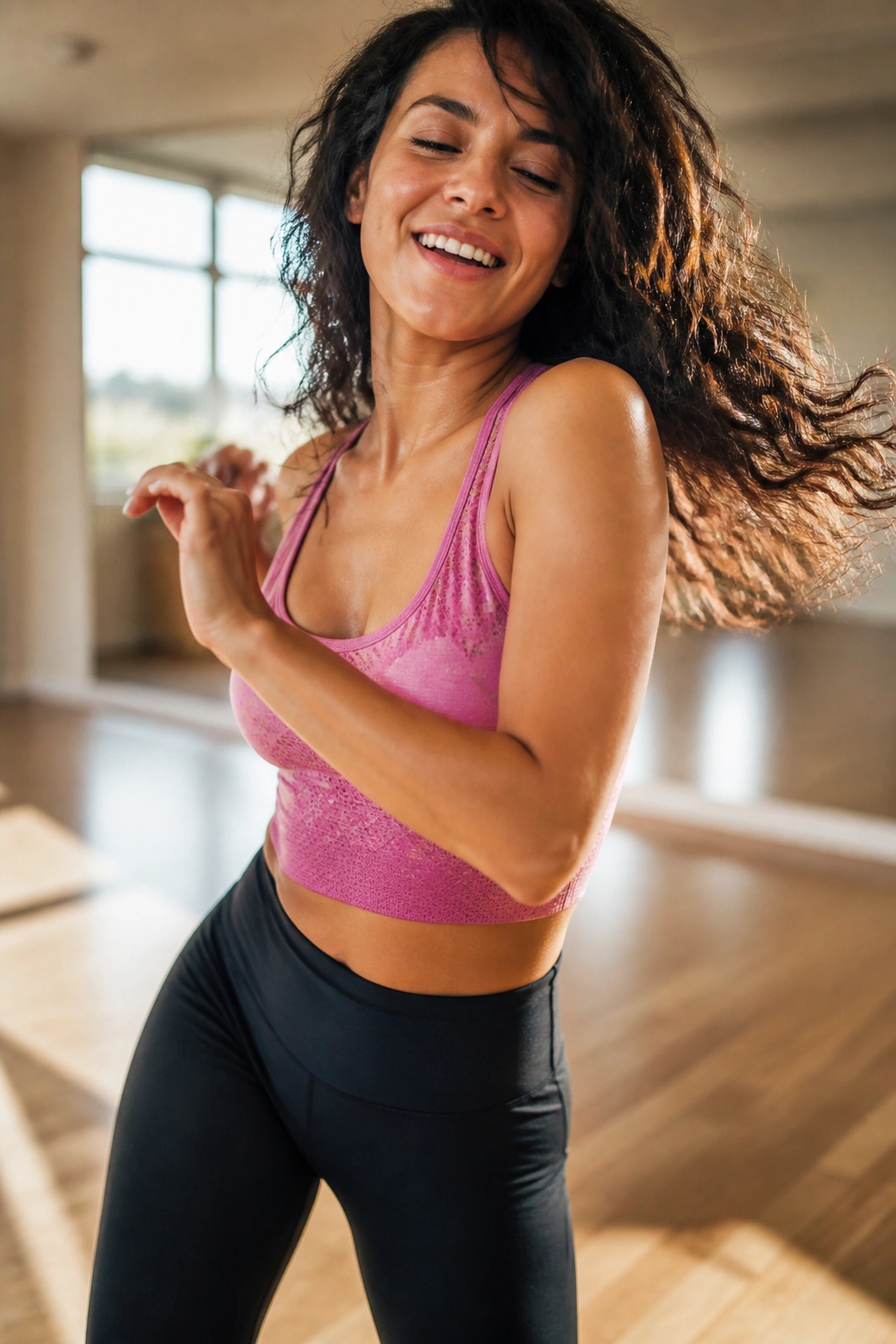
For many, exercise feels like a chore because it feels like exercise. Dance cardio removes the “workout” vibe and replaces it with movement, music, and rhythm. Whether it is Zumba, a hip-hop class, or just following a choreographed video at home, the goal is constant movement.
Why It Sustains Consistency
The best exercise is the one you actually do. If you genuinely enjoy the music and the movement, you are going to show up to class. Dance cardio provides a sneaky cardiovascular workout because you are so distracted by learning the steps and listening to the beat that you forget you are working. You will likely find yourself sweating profusely without the psychological fatigue that treadmill running brings.
The Core Engagement
Dancing requires constant stabilization. You are twisting, reaching, jumping, and shifting your weight. This engages the obliques and transverse abdominals far more than a steady-state run ever will.
8. Kettlebell Complexes

Kettlebells are a unique tool because they combine strength training and cardio into a single session. When you use them for high-repetition circuits, you are effectively performing cardio with weights. The kettlebell swing, for instance, is a massive posterior chain exercise that hits the glutes, hamstrings, and lower back while simultaneously spiking your heart rate.
Building a Complex
A “complex” is a series of movements performed back-to-back without putting the weight down. For example:
- 10 kettlebell swings
- 10 goblet squats
- 10 overhead presses
- 10 lunges
- Rest for 90 seconds.
- Repeat 5 times.
By moving from one exercise to the next, you force your heart to pump blood rapidly to shifting muscle groups, which creates a powerful metabolic effect.
9. Hiking with Purpose

Hiking is often viewed as a leisurely weekend activity, but it can be a powerhouse of a workout if you treat it as such. The uneven terrain requires constant stabilization from your ankles, knees, and core, which burns more calories than walking on a paved, flat trail.
Elevating the Intensity
To turn a hike into a cardio workout, look for trails with significant elevation gain. If you are climbing, your heart rate will climb with you. Carry a light pack with some water and gear to add a little extra resistance. The added weight forces your body to work harder to overcome gravity.
The Mental Reset
There is something about the change of scenery that makes time pass much faster. You aren’t watching a clock. You are navigating roots, rocks, and switchbacks. By the time you reach the summit or the turnaround point, you’ve put in significant work without the “gym dread” that usually accompanies cardio.
10. Stair Climbing
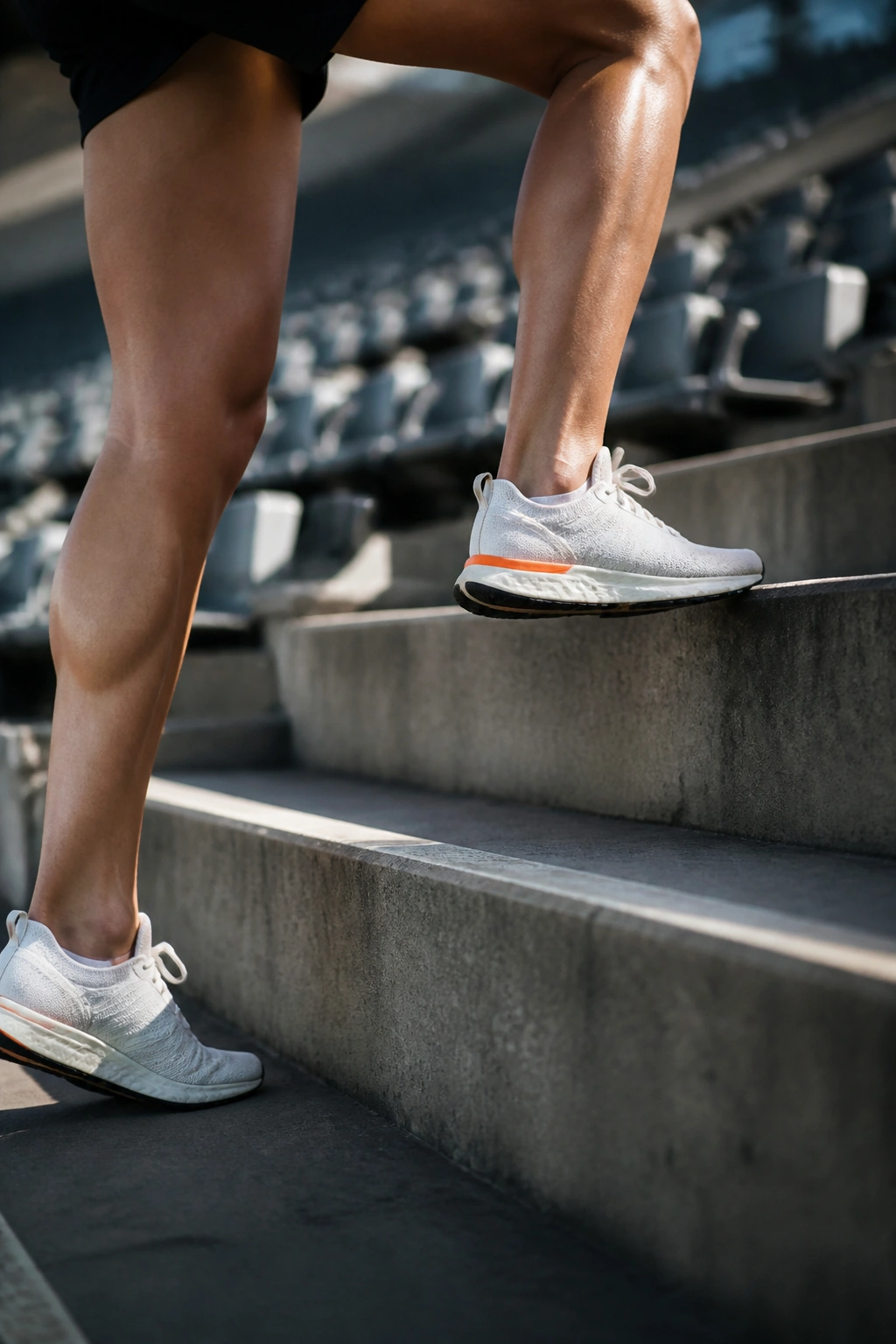
If you want to focus on your glutes and hamstrings while torching calories, the stairs are your best friend. Stair climbing is a vertical lunging exercise. Every step requires you to lift your entire body weight against gravity.
The Technique
Use the stair-climbing machine at the gym, or find a set of stadium bleachers or a local park with a long flight of stairs. Avoid leaning heavily on the handrails. Your legs should be doing the lifting, not your arms. If you find yourself holding on so tightly that your knuckles turn white, you need to slow down your pace.
Why It Changes Your Shape
Stair climbing is excellent for targeting the glutes. Because you are essentially performing a single-leg squat with every step, you are creating a high amount of tension in the glute muscles. Over time, this helps build strength and shape in the lower body while keeping your heart rate in the high aerobic zone.
11. The Elliptical Glide
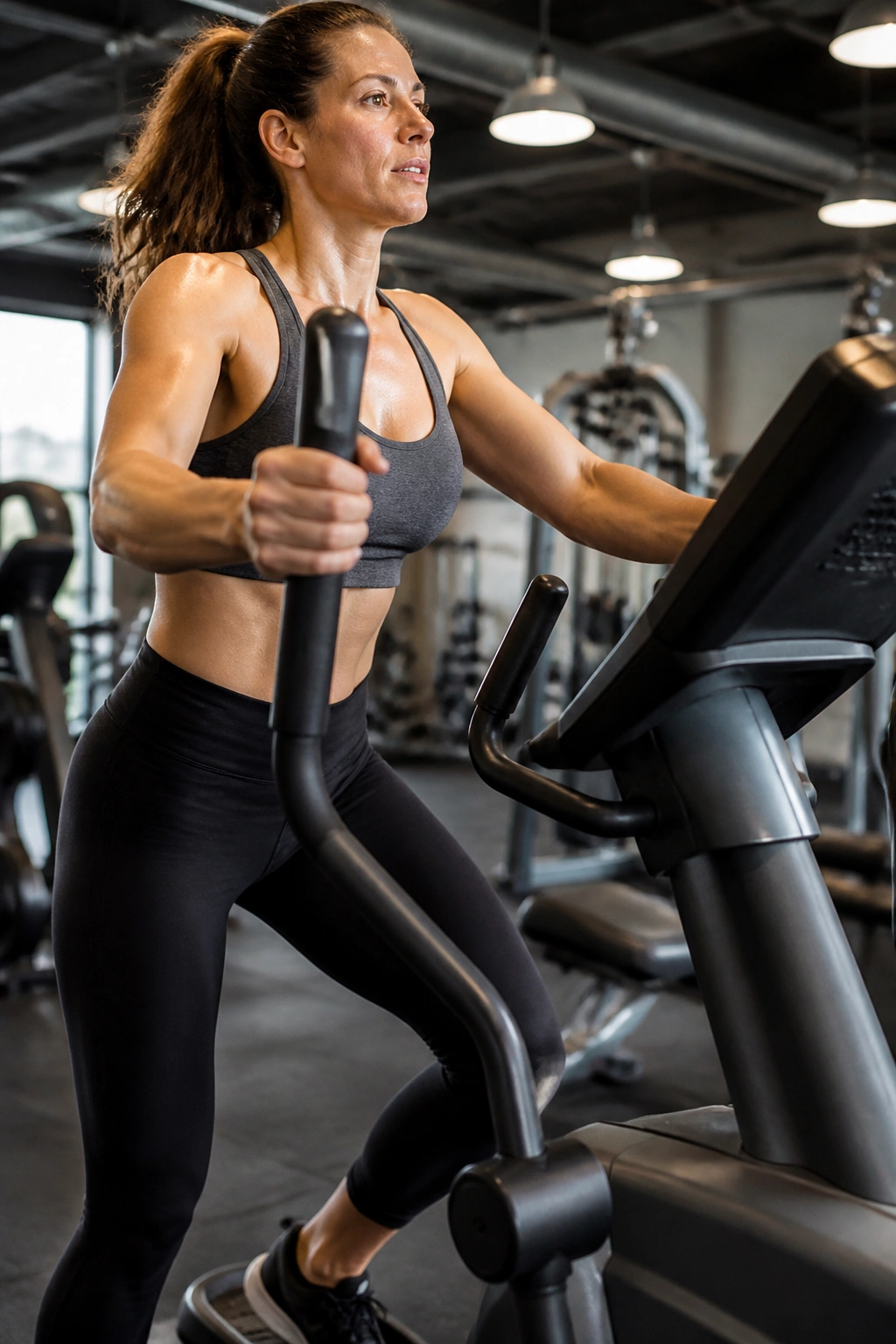
The elliptical often gets a bad reputation as the “easy” machine, but that is only because people use it with low resistance. If you crank up the incline and the resistance level, it becomes an incredibly demanding full-body workout.
How to Use It Correctly
Focus on using your arms to push and pull the handles. Many people just let their legs do the work while their arms hang on for balance. Actively pushing and pulling engages the back and chest, turning this into a full-body engagement. If you are just swaying your hips, you are missing the point.
The Versatile Machine
The elliptical is great for interval training. Try a pyramid: 1 minute at moderate resistance, 1 minute at high resistance, 1 minute at max resistance, then work your way back down. This prevents the boredom that sets in during long, steady sessions and keeps your heart rate shifting constantly.
12. Boxing and Kickboxing

Boxing is arguably the best stress-relief exercise in existence. It requires intense focus, coordination, and explosive power. You cannot box with a “checked out” mind. You have to be present, watching your stance, your guard, and your target.
The Cardio Component
Even if you aren’t sparring against an opponent, hitting a heavy bag or shadowboxing creates an incredible cardiovascular demand. You are moving your feet, rotating your core for power, and keeping your arms in the air. A solid 30-minute boxing session will leave you drenched in sweat and feeling surprisingly exhausted.
Why It Helps with Belly Fat
The rotational movement required to throw a proper punch originates in the core. Every time you twist to deliver a hook or an uppercut, you are firing your oblique muscles. This creates a functional, athletic midsection that constant sit-ups never achieve.
13. Battle Ropes
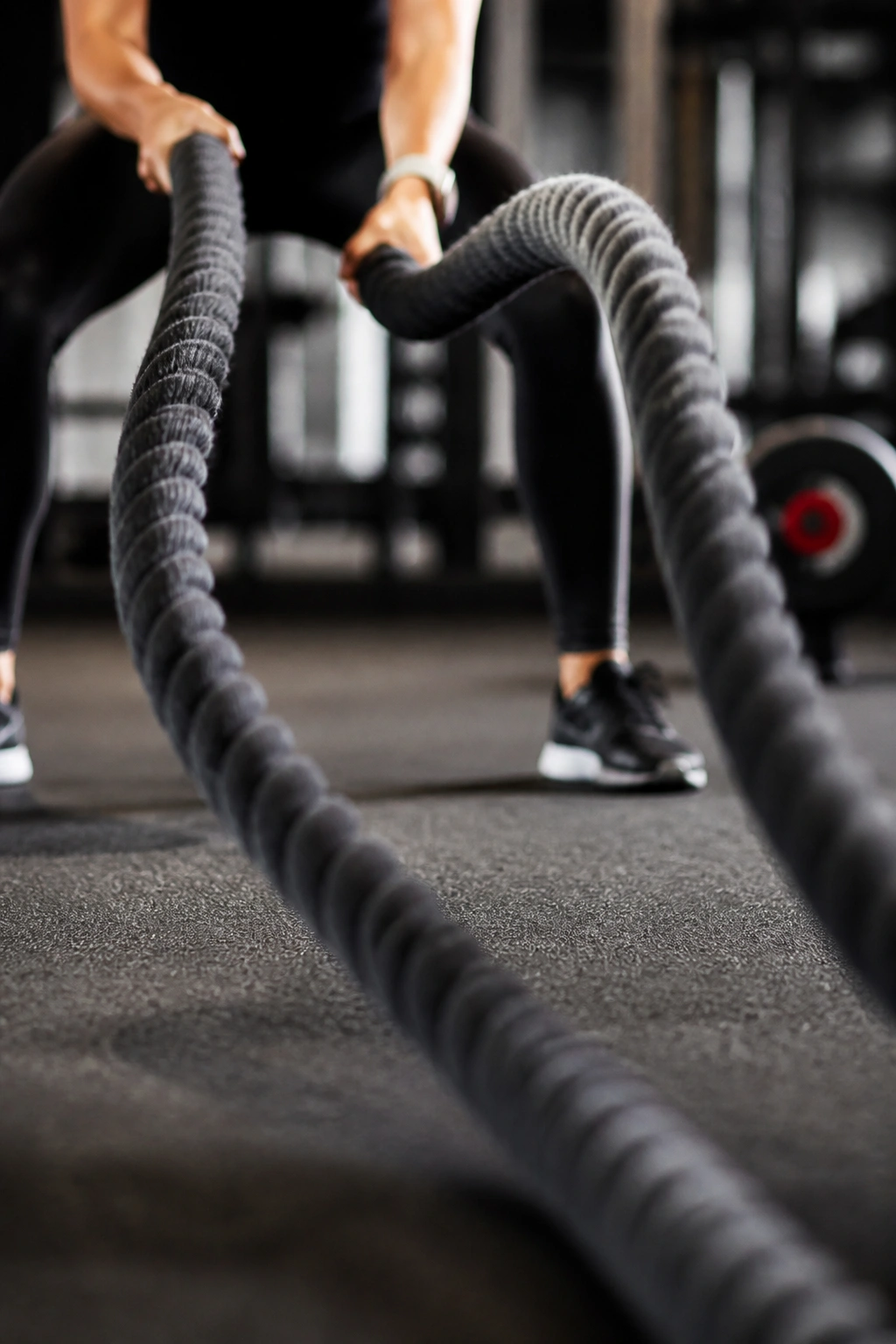
Battle ropes are intimidating, but they are highly effective. These thick, heavy ropes require you to move your arms in waves or slams, which creates an explosive surge of energy that travels through your entire body.
The “Core” of the Ropes
You cannot perform battle ropes without a rock-solid core. Your abs must stay braced to prevent your torso from flopping around as the waves go down the ropes. It is essentially a standing plank that you are performing while moving your arms violently.
Timing Your Intervals
Battle ropes are rarely done for long periods. They are built for bursts. Try 30 seconds of high-intensity slams followed by 30 seconds of rest. Even 10 minutes of this protocol will push your cardiovascular system to its limit and leave your shoulders burning.
14. Pilates and Barre Fusion
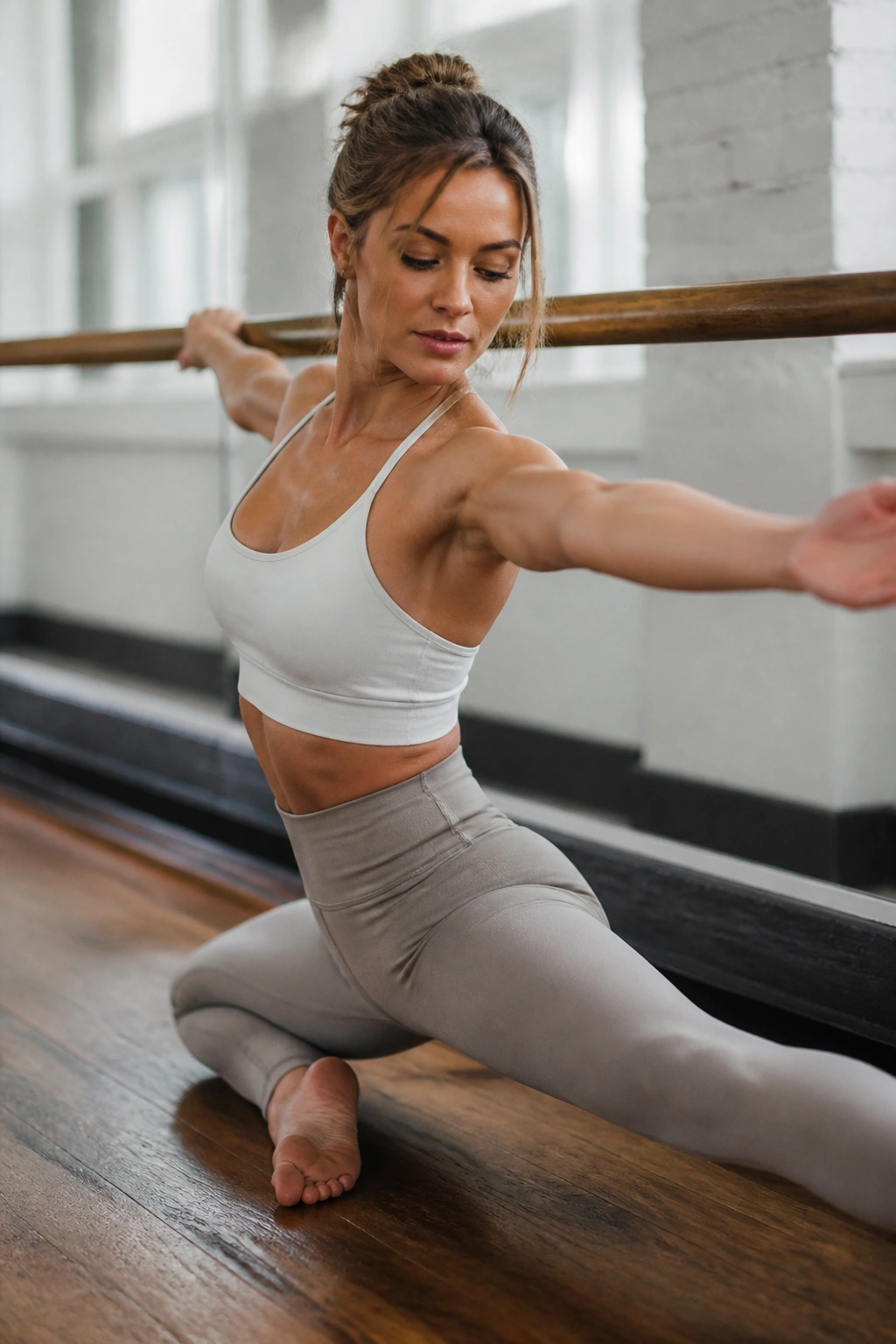
While these are often categorized as “toning” workouts, don’t underestimate their ability to get your heart rate up when performed in a circuit format. When you move through a series of Pilates or Barre movements with very little rest between sets, you are effectively performing endurance training.
The Mind-Body Connection
These workouts focus on small, isometric contractions—holding a position while continuing to move. This creates a deep “burn” in the muscles. When you string these movements together without stopping, your heart has to work hard to keep up with the constant, sustained tension in your muscles.
Why It’s Different
It’s not “sweat-dripping-off-your-nose” cardio, but it is high-demand endurance work. If you struggle with joint pain or are recovering from injury, this is a sophisticated way to train your heart and your musculature simultaneously.
15. Rebounding (Mini-Trampoline)
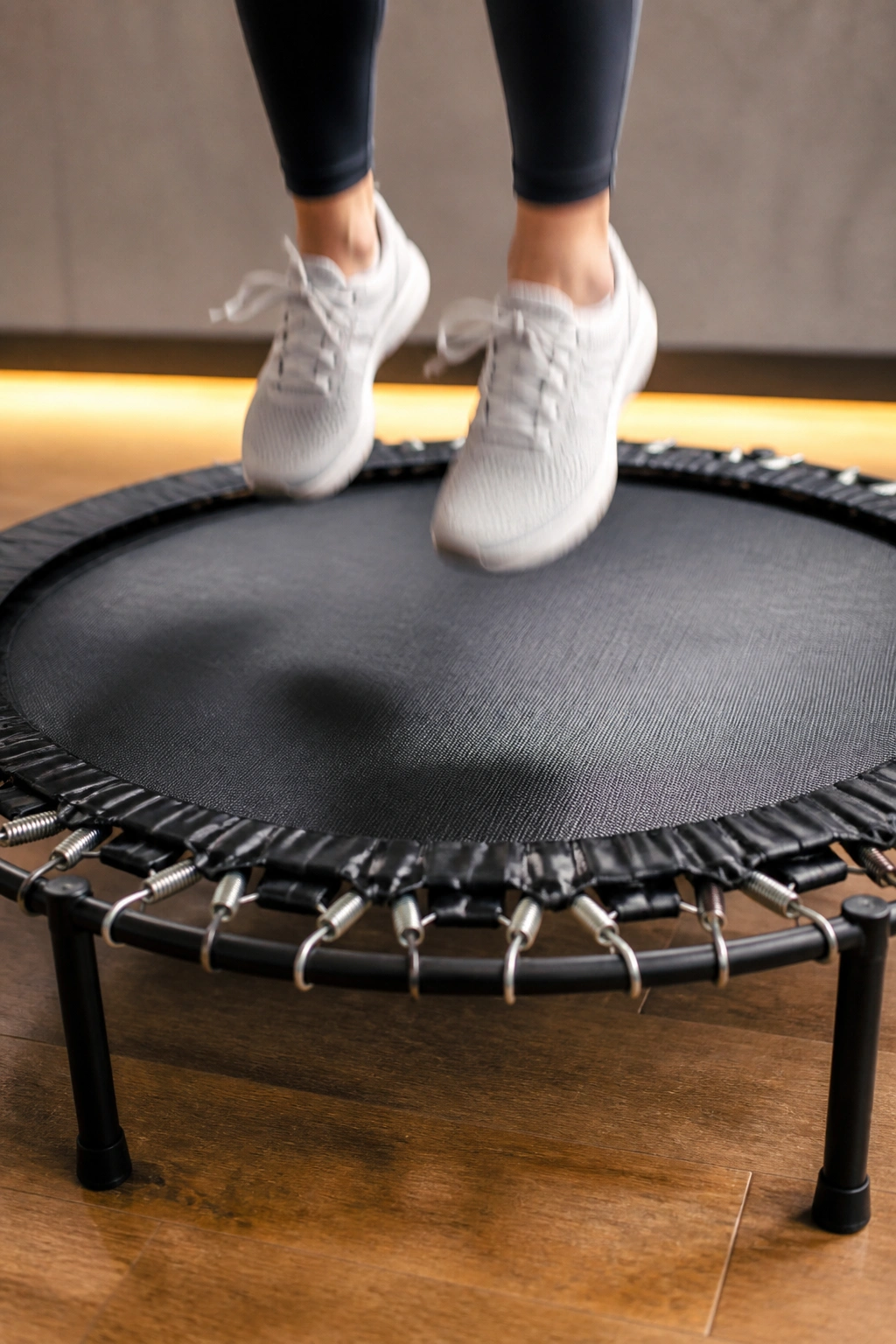
Rebounding is simply jumping on a small, personal trampoline. It is notoriously low-impact because the mat absorbs the shock of your landing, but the instability of the surface forces your core and stabilizer muscles to work overtime.
The “Fun” Factor
It is very difficult to be in a bad mood while jumping on a trampoline. It feels playful, even though it is physically taxing. Because the surface is unstable, you have to engage your core constantly to maintain your balance. This is essentially core training disguised as cardio.
Getting a Good Workout
You don’t need fancy moves. Just bouncing firmly, jogging in place on the mat, or doing jumping jacks is enough to get your heart rate up very quickly. Because it is so low-impact, you can keep the intensity higher for longer than you could on solid ground.
16. Kickboxing Circuits

Similar to boxing, kickboxing adds the lower body into the mix. You aren’t just punching; you are throwing knees and kicks. This requires significant flexibility and hip mobility, which is something most cardio machines completely ignore.
The Power of the Kick
Throwing a kick requires you to stabilize your body on one leg while rapidly firing the other. This is a massive test of balance and core strength. By engaging the large muscles of your legs to power the kicks, you increase the caloric burn significantly compared to boxing alone.
The Rhythm
Use a “shadow kickboxing” approach. Imagine an opponent in front of you. Punch, punch, knee, kick. Punch, punch, duck, kick. Creating a combination that you repeat helps you get into a flow state, which makes the time pass much faster than just repeating single movements.
17. Bodyweight EMOM (Every Minute on the Minute)

EMOM is a fantastic way to structure a workout so you don’t have to think. You set a timer for a specific duration—let’s say 20 minutes. At the start of every minute, you perform a specific number of repetitions of an exercise.
How to Calculate It
If you want to do 15 burpees, you start the timer. You perform the 15 burpees. If it takes you 40 seconds, you have 20 seconds of rest before the next minute starts. If you are too slow and it takes 55 seconds, you only get 5 seconds of rest.
The Built-in Accountability
This forces you to work at a specific pace. It prevents the “I’m tired so I’ll slow down” mentality. If you want rest, you have to earn it by working faster. It is an incredibly effective way to build conditioning and burn fat because it minimizes downtime.
18. Ski Erg Workouts
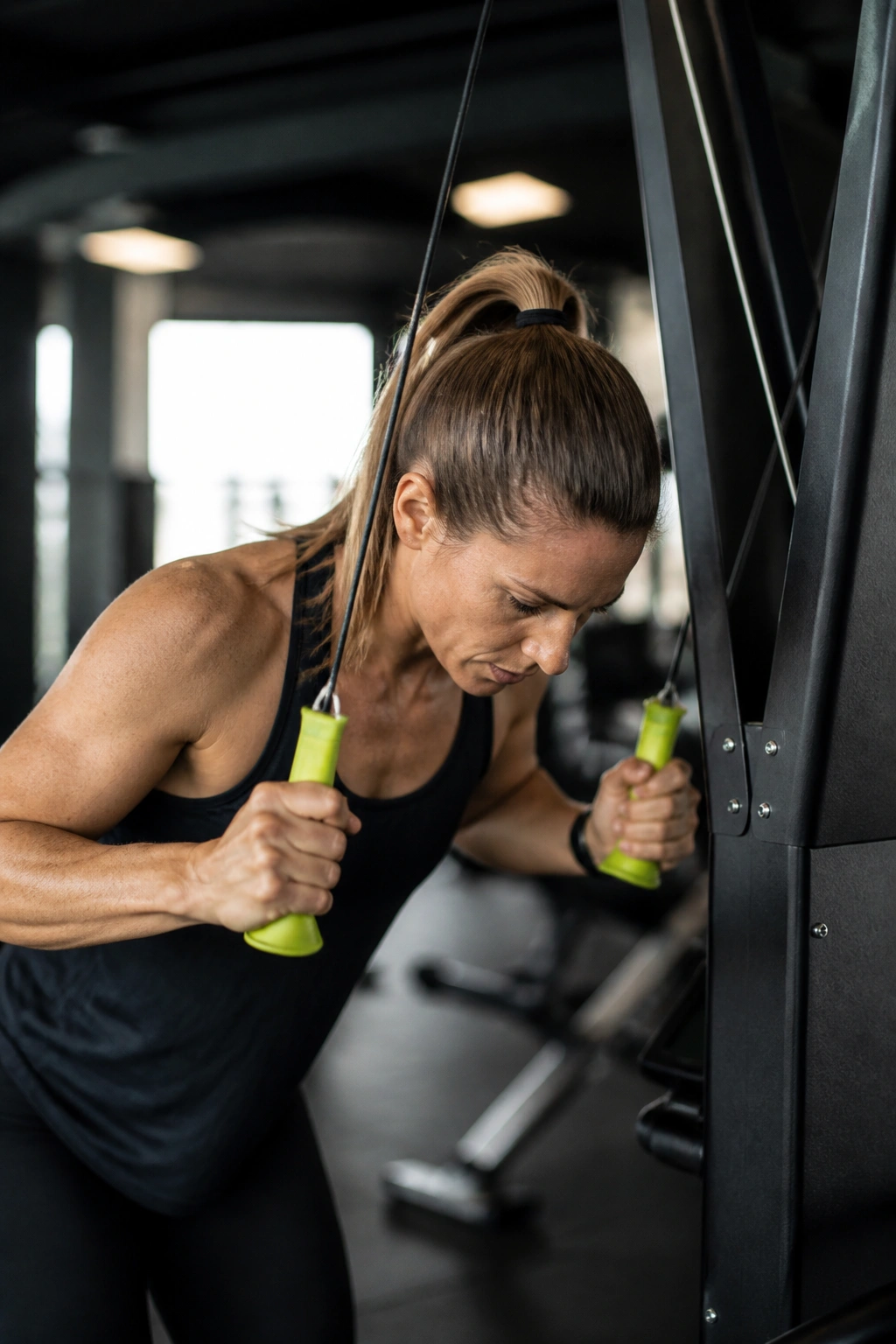
If you want a workout that mimics the cardiovascular intensity of a full-body sprint without leaving the gym, the Ski Erg is your machine. It simulates cross-country skiing, requiring you to use your arms, core, and legs to pull down on the handles.
The Full-Body Engagement
This is not an arm workout. It is a core and leg workout. You should be driving your hips backward as you pull down, using your entire body weight to generate the force. It’s an incredible tool for building a strong, conditioned back and core.
Keeping the Intensity High
Because the Ski Erg is so physically demanding, it is excellent for intervals. Try 400 meters at a hard pace, followed by 90 seconds of rest. Repeat this 5 to 6 times. You will be shocked at how exhausted you are after just 10 or 15 minutes of work.
19. Plyometric Circuits

Plyometrics are explosive movements—think jump squats, box jumps, and skaters. These are “fast-twitch” movements that train your body to produce power. They are intense, and they are excellent for fat loss because they are so metabolically demanding.
A Safety Warning
Because plyometrics are high-impact, they are not for everyone, particularly if you have joint issues. However, if you are healthy, they are the fastest way to get your heart rate up. Start with “low impact” plyos, like skaters, where you jump side-to-side without fully leaving the ground, before moving to full jump squats.
The Metabolic Effect
Explosive movements recruit more muscle fibers than slow movements. By doing a circuit of 10 jump squats, 10 lateral skaters, and 10 broad jumps, you are putting your body through a massive amount of physical work in a very short timeframe.
20. Medicine Ball Circuits

Medicine balls allow you to add explosive power to your movements. You can slam them, toss them, and use them as weighted resistance during your exercises. A simple medicine ball slam—throwing the ball into the floor with maximum force—is a fantastic way to train your core and upper body while burning calories.
The Slam Technique
Stand with feet shoulder-width apart. Raise the ball overhead, extending fully. Use your core to slam it down into the ground, exhaling forcefully as you do. Squat down to pick it back up, and repeat. Do this for 30 seconds, then move to 30 seconds of jumping jacks.
Why It Works
It’s not just about the slam; it’s about the recovery. The movement of picking the ball back up after the slam forces your heart rate to stay up. It turns a simple strength move into a metabolic powerhouse.
The Bottom Line

You do not need to run to be healthy, fit, or lean. The “cardio” world is vast, and most of it has nothing to do with jogging. The best workout is the one that fits your body, respects your joints, and aligns with what you actually enjoy doing.
If you hate running, stop doing it today. Your body will not miss it, and your results will not suffer. Choose an activity that feels like a challenge you want to conquer rather than a punishment you have to endure. Consistency is the secret ingredient to long-term health; when you remove the dread, consistency becomes infinitely easier to maintain.
