



Bulking at home gets messy fast when your appetite is small, your workouts are improvised, and every extra bite feels like a guess.
The best bulking tips for beginners at home are not flashy. They’re boring in the best way: eat a little more, train hard enough to force growth, and keep a close eye on whether the scale and waist are moving together or fighting each other.
A backpack full of books can do more for you than a drawer full of powder if you use it with a plan. So can a bowl of oats with peanut butter, a few extra eggs, and a notebook with honest numbers in it.
The trick is keeping the surplus modest and the training hard enough that the extra food has somewhere to go. Get that balance wrong and you either stay the same or gain a layer you did not ask for.
1. Eat in a Small Calorie Surplus
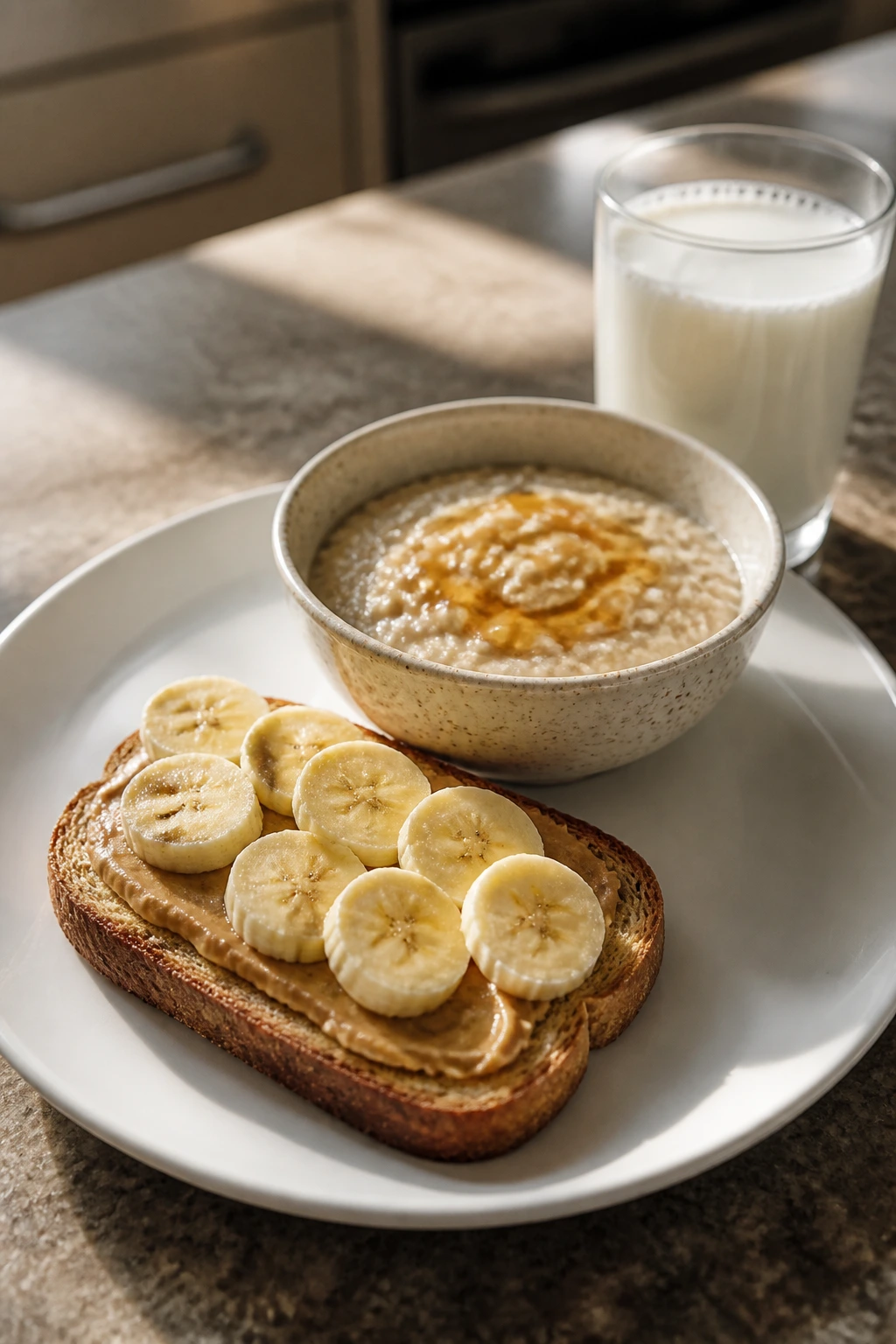
If your bodyweight isn’t rising, you are not in a bulk. That’s the plain version, and it saves a lot of wasted effort.
A good starting point is 250 to 500 extra calories per day. That sounds small because it is small, and that’s the point. Beginners often overeat for four days, under-eat for three, then wonder why nothing changes. A modest surplus gives you room to build muscle without turning every meal into a stomach ache.
What That Looks Like at Home
- 2 slices of toast with 2 tablespoons of peanut butter and a banana
- 1 cup of cooked rice with 1 tablespoon of olive oil
- 500 ml of whole milk with a meal or shake
- A bowl of oats topped with honey and nuts
Start small, not heroic. If your weight average does not move after about 2 weeks, add another 150 to 200 calories and check again.
A lot of beginners make the same mistake here: they chase a huge surplus because they want faster muscle gain. The problem is that your body does not need a food flood. It needs enough extra fuel to support training, recovery, and a little growth without making the waistline blow up.
2. Put Protein on the Plate First
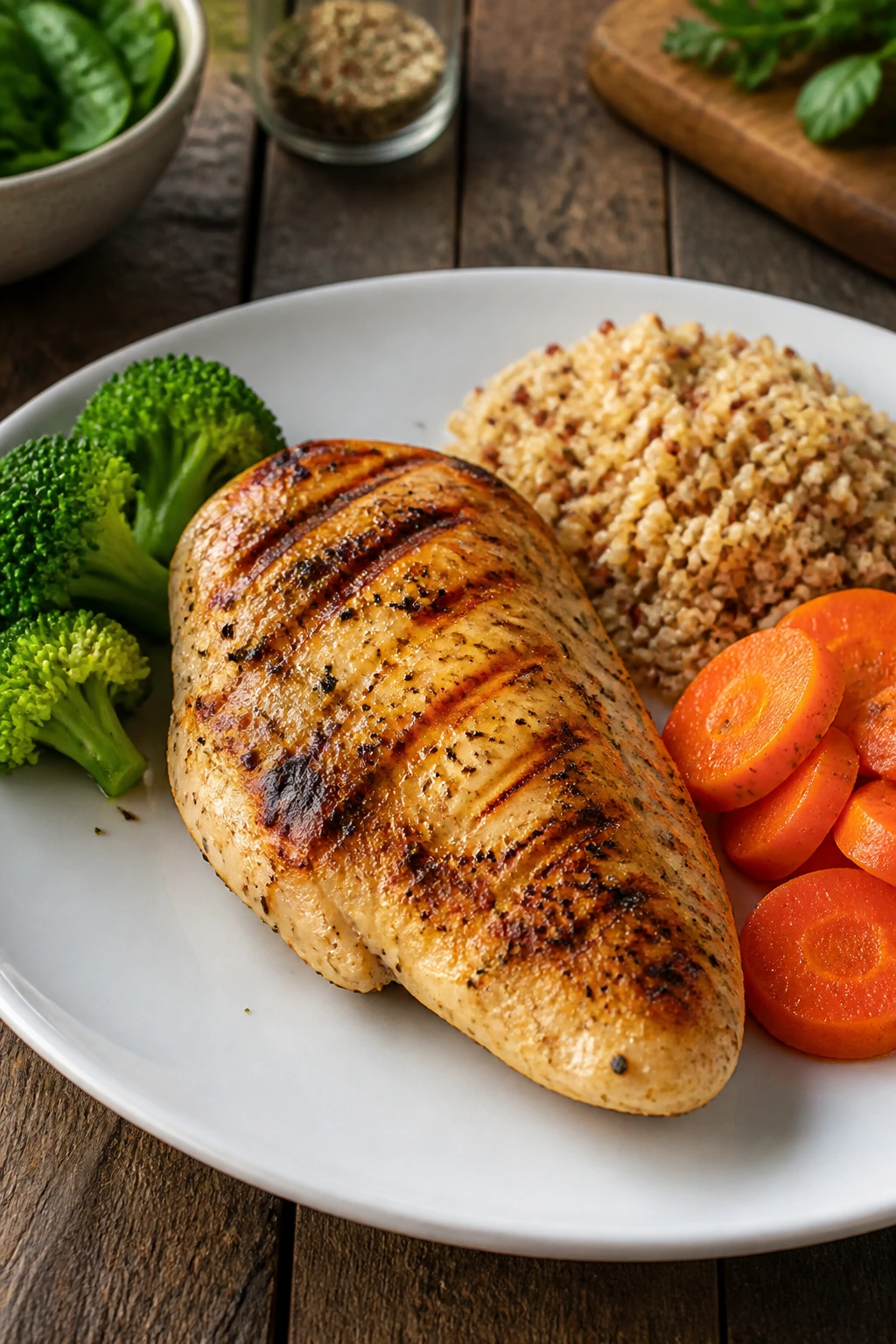
Protein is the part of bulking that people try to hand-wave away. Bad move.
A sensible target is 1.6 to 2.2 grams of protein per kilogram of bodyweight per day. If you weigh 70 kg, that means roughly 110 to 150 grams daily. You do not need to hit that number with precision every single day, but you do need to stay near it most of the time.
What 30 Grams of Protein Actually Looks Like
- 4 large eggs plus a cup of Greek yogurt
- 1 can of tuna with bread or rice
- 150 to 200 grams of chicken breast
- 250 grams of tofu with noodles or rice
- 1 scoop of whey mixed into milk, then paired with food
The easiest way to think about it: build each meal around a protein source first, then add carbs and fats around it. That keeps the bulk cleaner and makes your meals more filling in a useful way.
Breakfast matters more than many beginners want to admit. If you start the day with coffee and one dry biscuit, you’re spending the morning trying to catch up. Start with eggs, yogurt, milk, or a shake, and the rest of the day gets easier.
3. Use a Simple Meal Template You Can Repeat
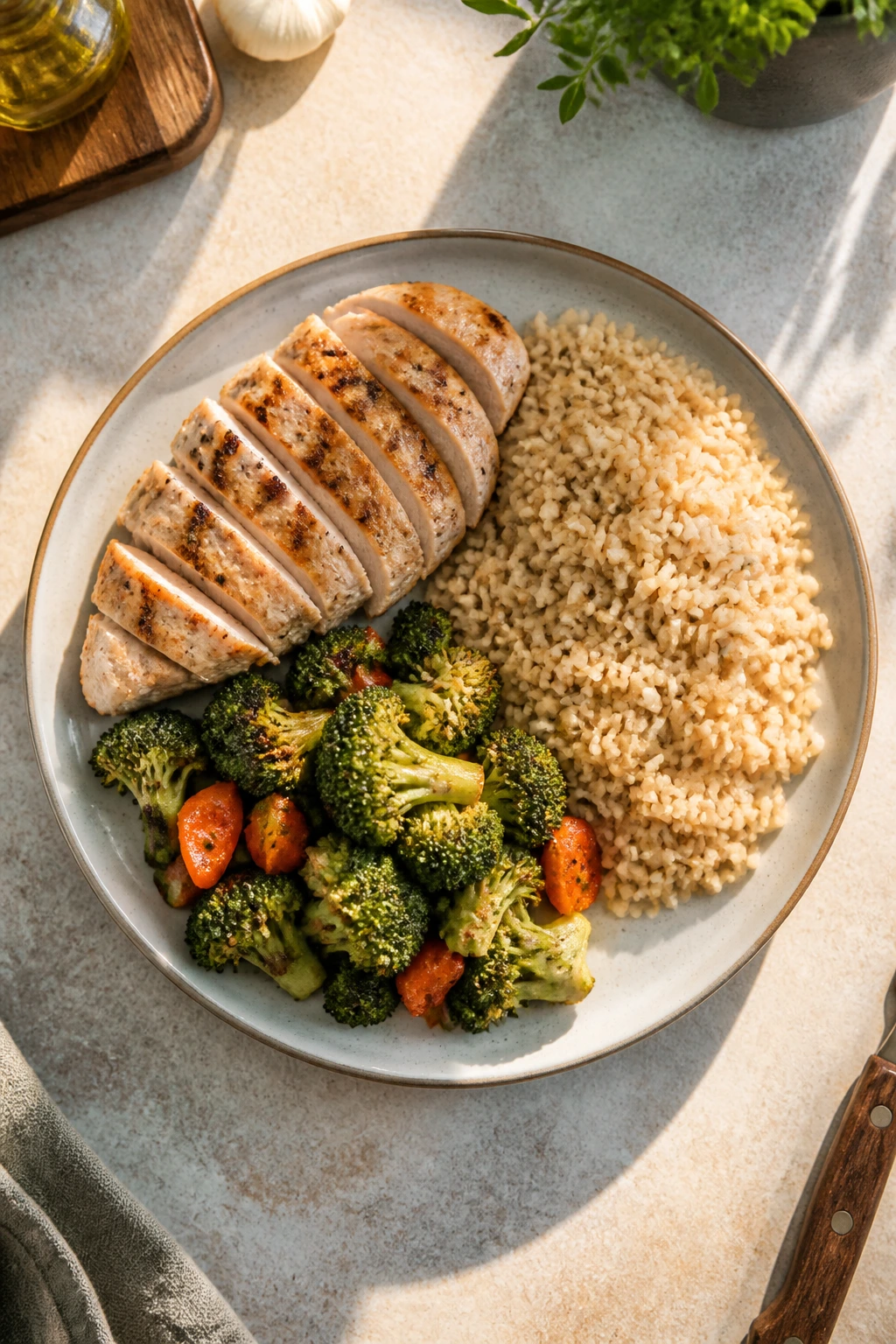
Repetition is not boring here. Repetition is the whole point.
If you keep changing meals every day, you end up guessing at calories, guessing at protein, and guessing at whether you even ate enough. A simple template gives you fewer decisions and more consistency, which is what most home bulking plans are missing.
A Basic Day of Eating That Works
- Breakfast: oats, milk, peanut butter, banana, and 3 eggs
- Lunch: rice, chicken, vegetables, and olive oil
- Snack: Greek yogurt, granola, and fruit
- Dinner: pasta, beef or tofu, sauce, and cheese
- Optional shake: milk, oats, whey, and a spoon of peanut butter
You can rotate the foods, but keep the structure. One protein-heavy breakfast. One solid lunch. One snack that actually counts. One dinner that doesn’t leave you scraping the plate wondering where the meal went.
That kind of template is dull in a good way. Dull means repeatable. Repeatable means you’ll still be eating it when motivation gets cranky and your kitchen feels empty.
4. Weigh Yourself the Same Way Every Morning

Bodyweight is noisy. Water, salt, carb intake, late-night food, and bathroom timing can all swing the number around.
That’s why the daily weigh-in only works if you do it the same way each time. Step on the scale after using the bathroom, before eating or drinking, and with no clothes or the same light clothes. Use the same scale, on the same flat floor, in the same spot. Little details matter more than people think.
A single day means almost nothing. A 7-day average tells you what’s actually happening.
- Weigh daily
- Write the number down
- Compare weekly averages, not random single readings
- If the average hasn’t moved in 14 days, raise calories by 150 to 200
- If weight is climbing fast and your waist is jumping, pull calories back a bit
That process feels almost too plain, but plain is useful. You do not need drama. You need a number you can trust.
5. Build a Home Pantry Around Cheap Bulk Foods
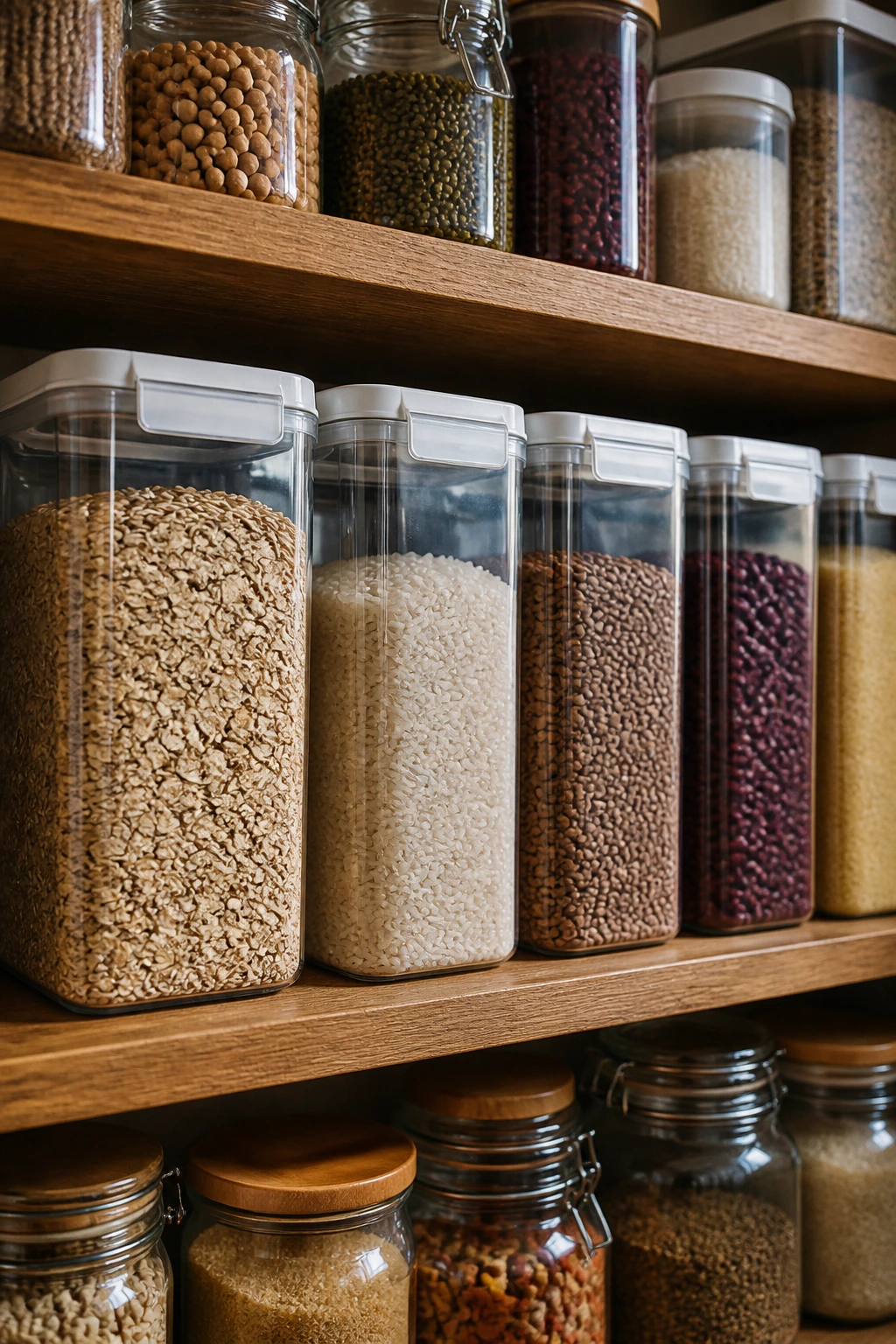
A home bulk gets much easier when the food is already there.
Empty fridge, empty bulk. It’s that simple.
Keep a base of foods that are cheap, calorie-dense, and easy to combine into real meals. Oats, rice, pasta, potatoes, bread, peanut butter, olive oil, milk, eggs, beans, frozen fruit, and canned fish cover a lot of ground. Frozen vegetables deserve a place too. They won’t turn your meal into a feast, but they keep the food from becoming a beige mess.
The best pantry foods do two jobs at once: they give you calories and they don’t ruin your appetite. A giant greasy meal can backfire if you feel sluggish and skip the next one. Rice with eggs and vegetables usually goes down easier than a random pile of snacks.
Keep at least one emergency meal option around. A can of tuna, bread, fruit, and milk can save a day when you get busy and forget to cook. That happens. More than once.
6. Train With Progressive Overload at Home
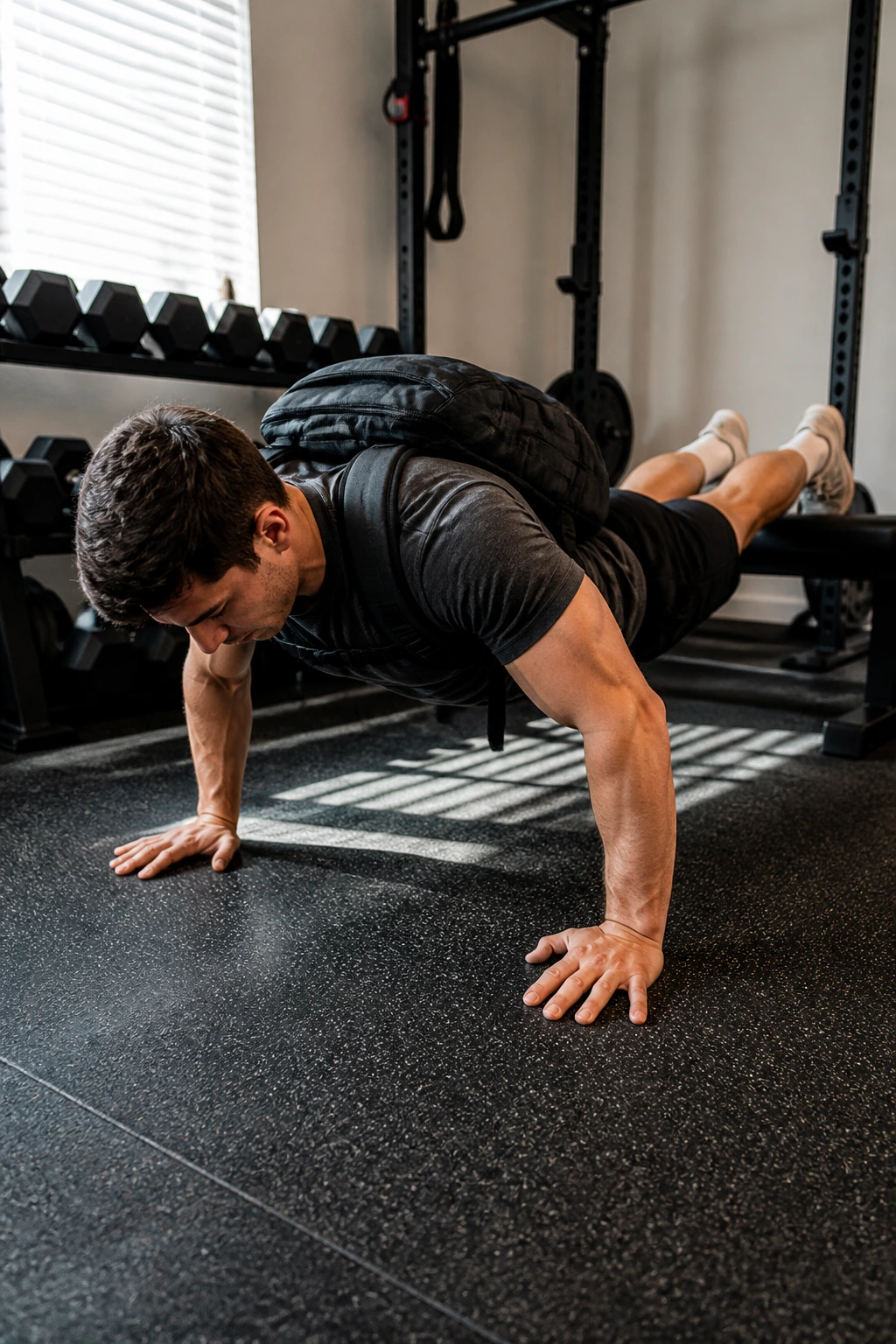
Muscle does not care that you trained “kind of hard.” It responds to gradually harder work.
Progressive overload means making your exercises a little harder over time. Add a rep, add a set, add a little weight, slow the lowering phase, or shorten rest times. Home training works fine if you track the work and push it forward on purpose.
Ways to Make a Set Harder Without a Gym
- Add 1 to 2 reps next session
- Put 2.5 to 5 kg more in a backpack
- Slow the lowering phase to 3 seconds
- Add a set once the current number feels too easy
- Use a harder variation, like feet-elevated pushups or Bulgarian split squats
If you can’t write it down, you’re guessing. That’s the honest version.
A notebook, phone note, or spreadsheet is enough. The main thing is that you know what you did last time. Beginners at home often stay busy, sweat a lot, and still repeat the same work for weeks. That feels productive. It isn’t.
7. Make Compound Moves the Main Event

A handful of big movements will do more for you than fifteen random exercises.
Think pushups, rows, squats, lunges, split squats, hip hinges, overhead presses, and pull-ups if you have a bar. These are the lifts that let you use more muscles at once, which means more growth signal per minute spent training. For a beginner at home, that matters.
A simple session can look like this:
- Pushup variation
- Row variation with a band, table, or backpack
- Squat or split squat
- Hip hinge like a Romanian deadlift with a backpack
- Overhead press or pike pushup
Keep the list short. Three to five exercises is enough for most home sessions. If every workout feels like a scavenger hunt, you probably have too much going on.
Do the basics hard. Fancy variations can wait until the basics stop challenging you. Most beginners are nowhere near that point.
8. Take Sets Close Enough to Failure

If every set ends with a smile and plenty of gas left in the tank, the workout probably wasn’t hard enough.
That doesn’t mean you should grind every rep until your form turns ugly. It means stopping when you have 1 or 2 good reps left. People often call that “reps in reserve,” which sounds fancier than it is. The idea is simple: finish a set when the next rep would be slow, ugly, or risky.
The Ugly Rep Rule
Stop the set when you notice:
- Your lower back starts to round
- Your hips twist on one side
- Your pushup turns into a snake crawl
- Your shoulders shrug up toward your ears
- The rep speed drops and the movement gets sloppy
Some exercises can handle a bit more grind than others. Curls, lateral raises, and pushups can usually go closer to the edge. Squats, hinges, and any movement where your lower back is involved deserve a little more respect.
Grinding forever is not a badge of honor. It’s just a good way to make a home setup feel unsafe.
9. Sleep More Than You Think You Need

Poor sleep makes bulking harder in two directions at once: you train worse and you eat worse.
Aiming for 7.5 to 9 hours is a smart target for a beginner trying to grow. A regular wake time helps too. Your body likes rhythm more than chaos, and appetite tends to behave better when your sleep does not wobble around.
A few habits help a lot:
- Keep the room dark and cool
- Stop caffeine at least 8 hours before bed
- Put the phone away 30 minutes before sleep
- Eat a solid dinner with carbs and protein
- Use the same bedtime most nights
One lousy night won’t wreck your progress. Three or four in a row can make everything feel harder than it should. The gym effort is only half the story. Recovery is the other half, and it’s the part people ignore because it’s less exciting than training.
10. Drink Calories When Solid Food Feels Like Too Much
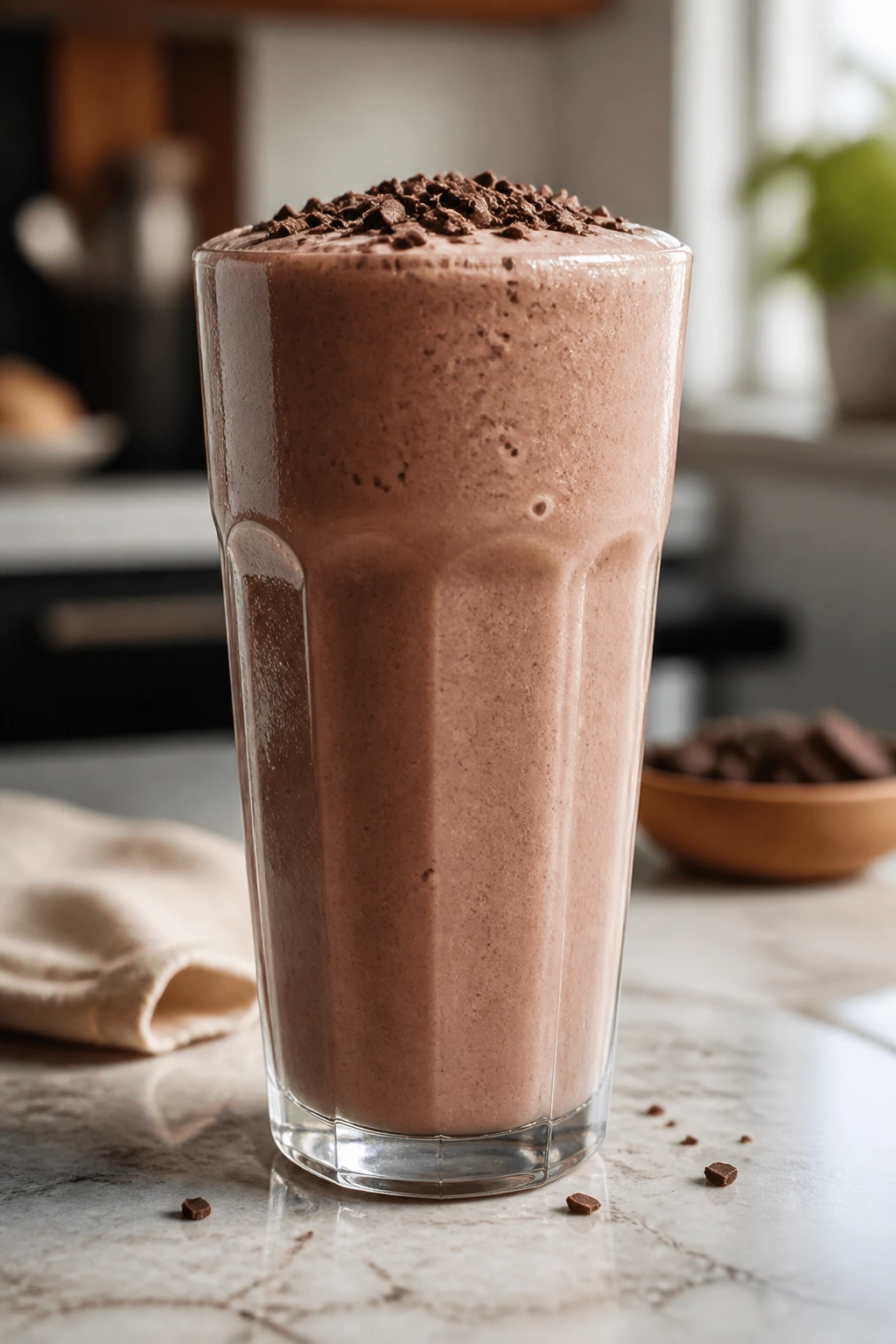
Some people hit appetite walls early. That’s normal.
When chewing one more bite feels annoying, liquid calories can save the day. A shake goes down faster than a plate of food and can quietly add 400 to 800 calories without making you sit at the table forever. That makes it useful for breakfast, post-workout, or the late afternoon slump when real food sounds tiring.
A Simple Home Bulk Shake
- 500 ml whole milk
- 1 banana
- 60 g oats
- 1 scoop whey protein
- 2 tablespoons peanut butter
- Ice and cinnamon, if you like it
Blend until smooth. If it’s too thick, add more milk. If it’s too thin, add a bit more oats. That’s the kind of adjustment you can make without turning it into a project.
Shakes help, but don’t let them replace every meal. Chewing food still matters for satiety, and too many liquid calories can make your day feel strangely unbalanced. One or two a day is plenty for most beginners.
11. Turn One Meal Into a Calorie Anchor
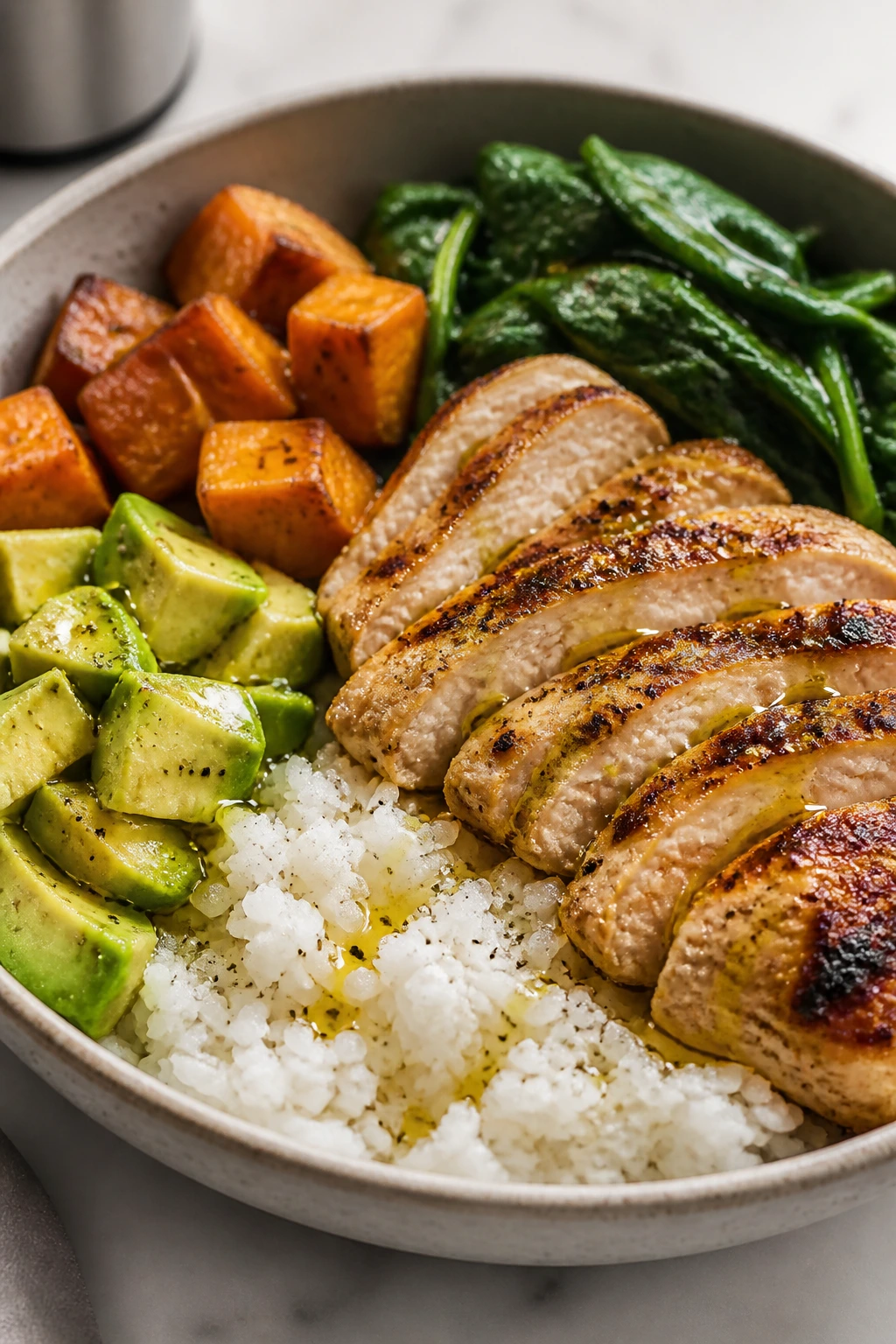
Every bulk needs one meal you can count on.
I like the idea of a calorie anchor: one meal that is big, predictable, and easy to repeat. It takes the pressure off the rest of the day. If lunch is always solid, you can survive a weird breakfast or a slightly off dinner and still stay on track.
A good anchor meal has four parts:
- A carb base: rice, pasta, potatoes, or bread
- A protein source: chicken, beef, fish, tofu, or eggs
- A fat source: olive oil, cheese, avocado, or nuts
- Something green or fruity so the plate doesn’t feel heavy and dead
A rice bowl with 2 cups cooked rice, 150 to 200 grams of chicken, vegetables, and a spoon of olive oil is a good example. So is pasta with meat sauce and parmesan. The meal doesn’t need to be glamorous. It needs to show up every day without a fight.
One solid meal can save the whole day. That’s not exaggeration. It’s just how home bulking works.
12. Prep Food Before You Get Hungry
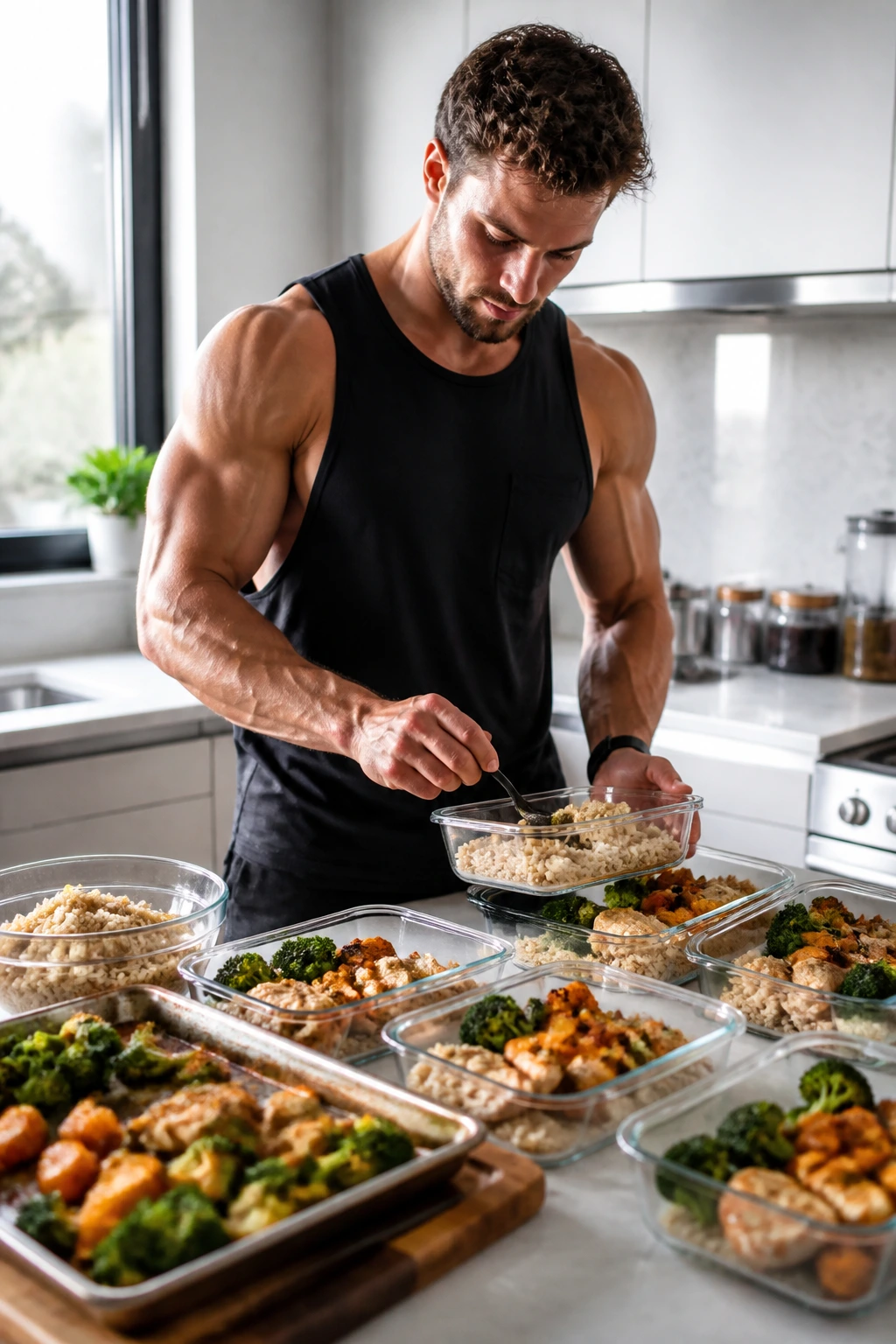
Cooking when you’re already starving is a gamble.
You start reaching for whatever is closest, which is usually the least useful thing in the house. Meal prep fixes that by putting ready food in the fridge before hunger gets bossy. You do not need to spend Sunday turning your kitchen into a factory. Ninety minutes twice a week is enough for most beginners.
A practical prep session might look like this:
- Cook a large pot of rice or pasta
- Roast a tray of potatoes or vegetables
- Pan-cook chicken, beef, or tofu
- Boil a half-dozen eggs
- Portion food into containers for 2 to 3 days
Use clear containers if you can. Seeing the food matters. A hidden container tends to become forgotten food.
Prep also helps with consistency. You’re less likely to skip a meal when all you have to do is reheat something. That tiny friction difference can decide whether you hit your calorie target or quietly miss it by 400 calories.
13. Use Backpack, Bands, and a Pull-Up Bar Wisely
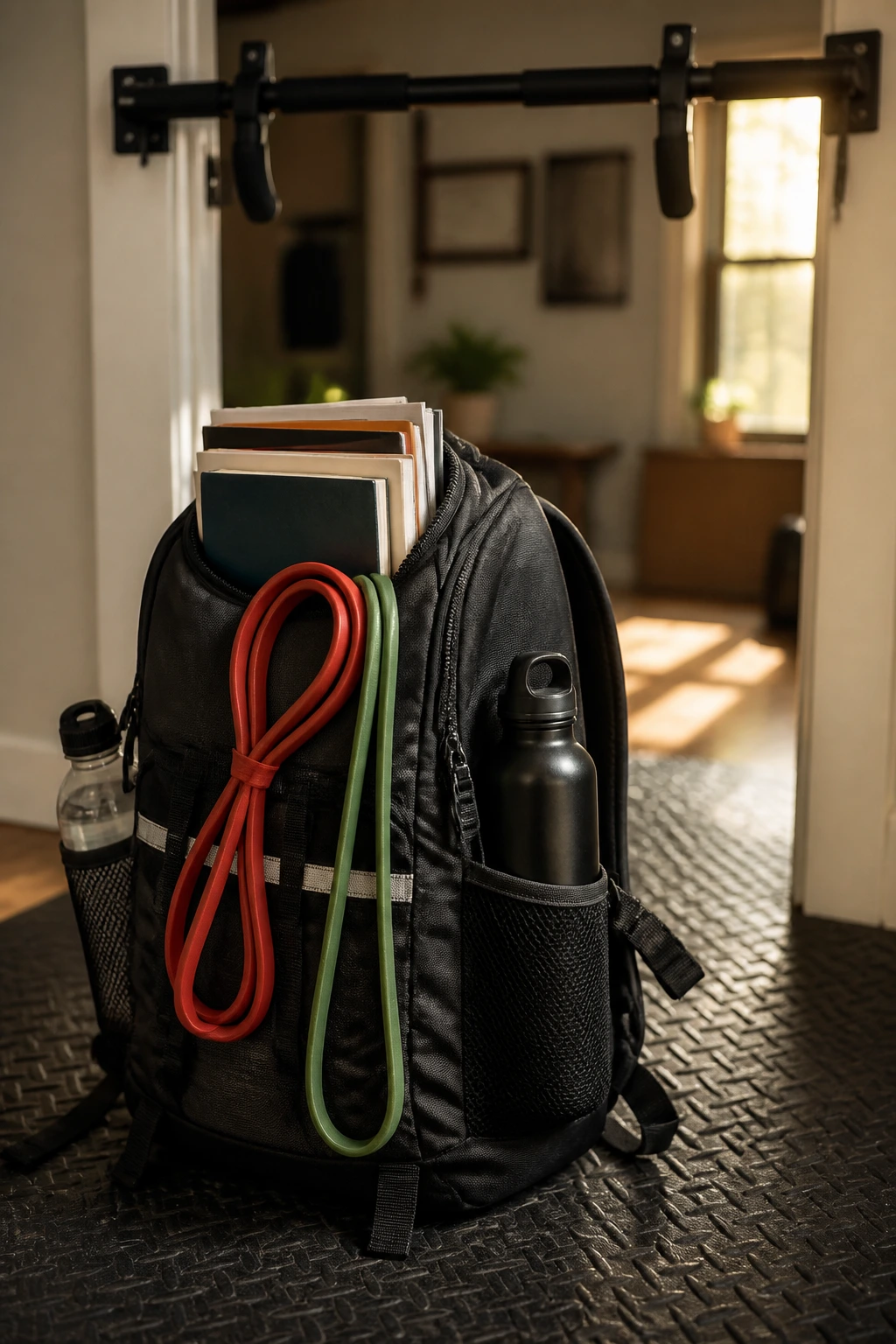
Home equipment does not need to be fancy to be useful.
A sturdy backpack loaded with books, rice bags, or water bottles can become a decent adjustable weight. Resistance bands are cheap, light, and annoyingly useful. A pull-up bar, if you have a safe place to use one, opens up rows, hangs, and pull-ups without taking up floor space.
A Good Starter Setup
- Backpack: squats, rows, lunges, curls, and weighted pushups
- Resistance bands: rows, presses, pull-aparts, face pulls
- Pull-up bar: pull-ups, hangs, knee raises
- Adjustable dumbbells: if budget allows, they’re easier than swapping books in and out of a bag
Do not get creative in a dangerous way. A wobbly chair is not a bench. A flimsy door frame is not a pull-up station. If the setup feels sketchy, skip it.
A smart home setup beats a crowded one. You only need a few tools if you use them hard and keep them progressing.
14. Keep Cardio Small, Not Zero

You do not need to become a runner while bulking. You also do not need to turn into a statue.
A little cardio helps keep your heart happy, your legs moving, and your appetite from getting weird. Walking 20 to 30 minutes a few times a week is enough for most beginners. Easy cycling or a light home circuit can work too, as long as it doesn’t wreck the next training session.
Long, hard cardio has a cost when food intake is already a challenge. It can make you hungrier in a messy way or leave you too tired to train hard. On the flip side, zero movement can make you feel sluggish and flatten your appetite.
If you have a physically active job, that counts. You may need more calories than the guy sitting at a desk all day. That part gets missed a lot.
15. Time Carbs Around Your Workout Window
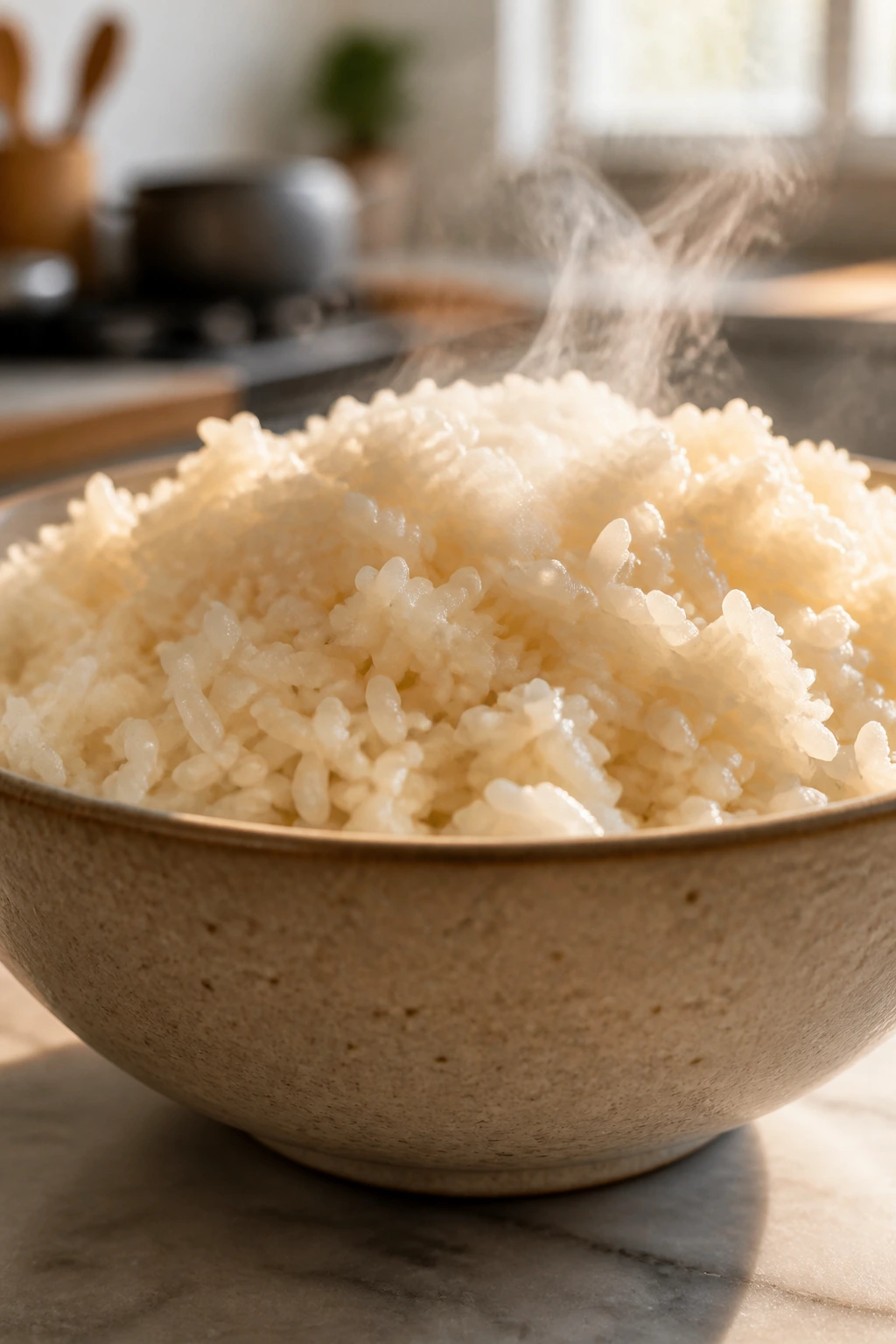
Carbs are not magic, but they do make training feel less like a slog.
A meal with carbs 1 to 3 hours before training can give you better energy than showing up under-fueled. Think oats, rice, potatoes, fruit, toast, or a bagel with a bit of protein. After training, carbs help you refill and make the next meal easier to eat.
Easy Timing Ideas
- Before training: banana, toast with jam, oats with milk
- After training: rice bowl, pasta, potatoes, or a shake plus a meal
- If you train early: keep breakfast light but carb-heavy
- If you train late: don’t skip dinner just because the workout is done
No one needs a dramatic ritual here. You’re not trying to solve a chemistry problem. You’re trying to train with enough energy and then eat enough food to recover.
A lot of beginners train fine but under-eat around the session. That’s a sneaky mistake. Put some carbs near the workout and the whole bulk tends to run smoother.
16. Eat More Often if Big Meals Stall You
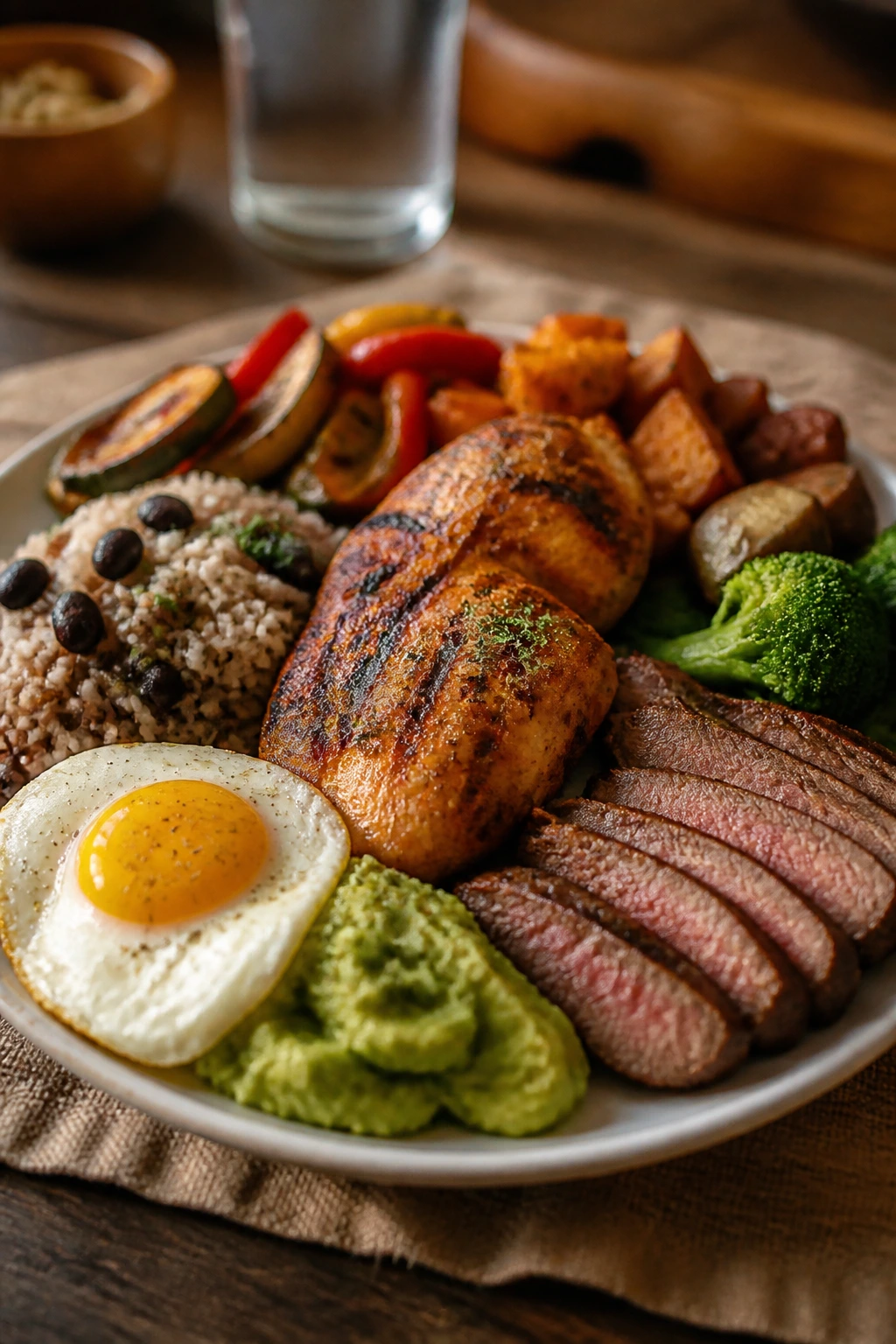
Some people can crush three huge meals. Others stare at a full plate and lose the will to live.
If large meals shut you down, switch to 4 or 5 smaller feedings. That keeps your stomach happier and makes the calorie target feel less obnoxious. Set alarms if you need to. Hunger is unreliable when your day gets busy.
Snack ideas that actually help:
- Greek yogurt with granola
- Trail mix and fruit
- Cheese and crackers
- Peanut butter on toast
- Milk and a banana
- Tuna sandwich
Don’t turn the day into nonstop nibbling without a plan. Snacking only works when you know roughly how much you’re eating. A handful of nuts can help. A “handful” of nuts every 20 minutes is how people accidentally drift into chaos.
Smaller meals can be the difference between staying consistent and dreading every plate.
17. Watch Your Waist and Strength, Not Just the Scale

A rising scale number is not enough on its own.
If the waist is growing fast and your lifts are flat, the surplus is probably too big or the training is too soft. If the scale barely moves and the lifts stall, you’re probably under-eating or recovering poorly. You need both sides of the picture.
A Simple Progress Check
- Scale: daily weigh-ins, weekly average
- Waist: once a week at the navel, same time of day
- Strength: reps, load, or harder variations
- Energy: how you feel during training and the rest of the day
Keep the tape measure gentle. Pull it snug, not tight. Measure the same spot each time, and don’t obsess over a millimeter difference after a salty dinner.
This is where beginners get calmer if they stop guessing. A bodyweight gain of a few hundred grams per week with better training numbers is a fine sign. A big jump in waist size without performance changes is a warning. Easy enough.
18. Recover Your Joints and Lower Back

Home training can sneak up on your joints.
People at home often do too many pushups, too much sitting, and not enough warm-up. Then the wrists bark, the shoulders feel cranky, and the lower back takes over on every hinge movement. That’s not a bulking problem. It’s a recovery problem.
A quick warm-up can save you a lot of irritation:
- 10 bodyweight squats
- 10 hip hinges
- 10 scapular pushups
- 20 arm circles each direction
- 15 band pull-aparts or a light row variation
- 20 to 30 seconds of a dead hang, if you have a bar
Sore muscles are fine. Stabby pain is not. If a joint hurts in a sharp, bad way, stop and adjust the movement. A good bulk is not the same as a stubborn one.
Rest days matter too. You do not need to crush every day to grow. You need enough work to force adaptation and enough recovery to actually use it.
19. Stay Consistent Through the Boring Weeks

Bulking is a patience game dressed up as a food and training plan.
The first few days feel exciting. Then the routine shows up. Same oats. Same pushup variation. Same backpack. Same scale. That’s where people drift. Not because the plan failed, but because the plan got ordinary.
You need a way to keep showing up when the shine wears off. A checklist helps. So does setting out workout clothes the night before. So does making the same breakfast three or four days a week without overthinking it.
Motivation is a poor meal plan. Use habits instead.
Give your process enough time to work. A few missed meals or workouts won’t matter much. The real damage comes from quitting the pattern every time the week gets awkward. That’s the part to fight.
20. Adjust One Variable at a Time
When progress stalls, do not rip the whole plan apart.
Change one thing, wait, then check the result. If bodyweight is flat for 2 weeks, add 150 to 200 calories. If the waist is climbing too fast, trim that much. If training is stalled, add a set or improve sleep before you start slashing food. If appetite is the problem, swap one solid meal for a shake.
A Good Fix Order
- Check your weekly weight average
- Check protein intake
- Check sleep and training effort
- Check whether you’re missing meals
- Change calories only after the basics are honest
That order saves you from random tinkering. Most beginners do the opposite. They change everything, get confused, then blame the wrong thing.
One variable at a time is how you learn what works. It’s slower on paper and faster in real life because you can actually tell what made the difference.
Final Thoughts
Bulking at home works when you stop expecting it to be complicated. You need enough food, enough protein, and enough training pressure to make that food useful. Nothing magical. Nothing hidden.
The best move is usually the plain one: pick a meal template, set your calories a little higher, track your weight, and train hard with the equipment you have. A backpack, a pair of dumbbells, or even just bodyweight can go a long way if you keep making it harder over time.
If you want a simple place to begin, choose three meals, three lifts, and one weekly check-in on your waist and scale. That alone puts you in a much better spot than guessing your way through the month.
