



A good prep day saves decisions.
That is the real payoff of weekly meal prep ideas, not the Instagram-friendly row of containers. It’s the half-asleep Tuesday lunch, the 6 p.m. moment when you would normally start poking around the fridge, and the quiet relief of already having something solid waiting. One chopped onion, one tray of vegetables, one pot of grains — those little moves buy back time all week.
The mistake people make is trying to prep a week’s worth of identical meals that taste tired by day three. I’d rather build a few flexible components that can be mixed, reheated, or assembled fast. That way, the food does not feel like punishment. It feels like a shortcut that actually works.
And yes, food safety matters here. Cooked chicken, chili, grains, and pasta salad all need to be cooled properly and stored in shallow containers so they chill fast. That boring part is what keeps the shiny part usable. Skip it, and your “time saver” turns into a sad, risky cleanup job.
1. Sheet-Pan Chicken and Vegetables for Weekly Meal Prep
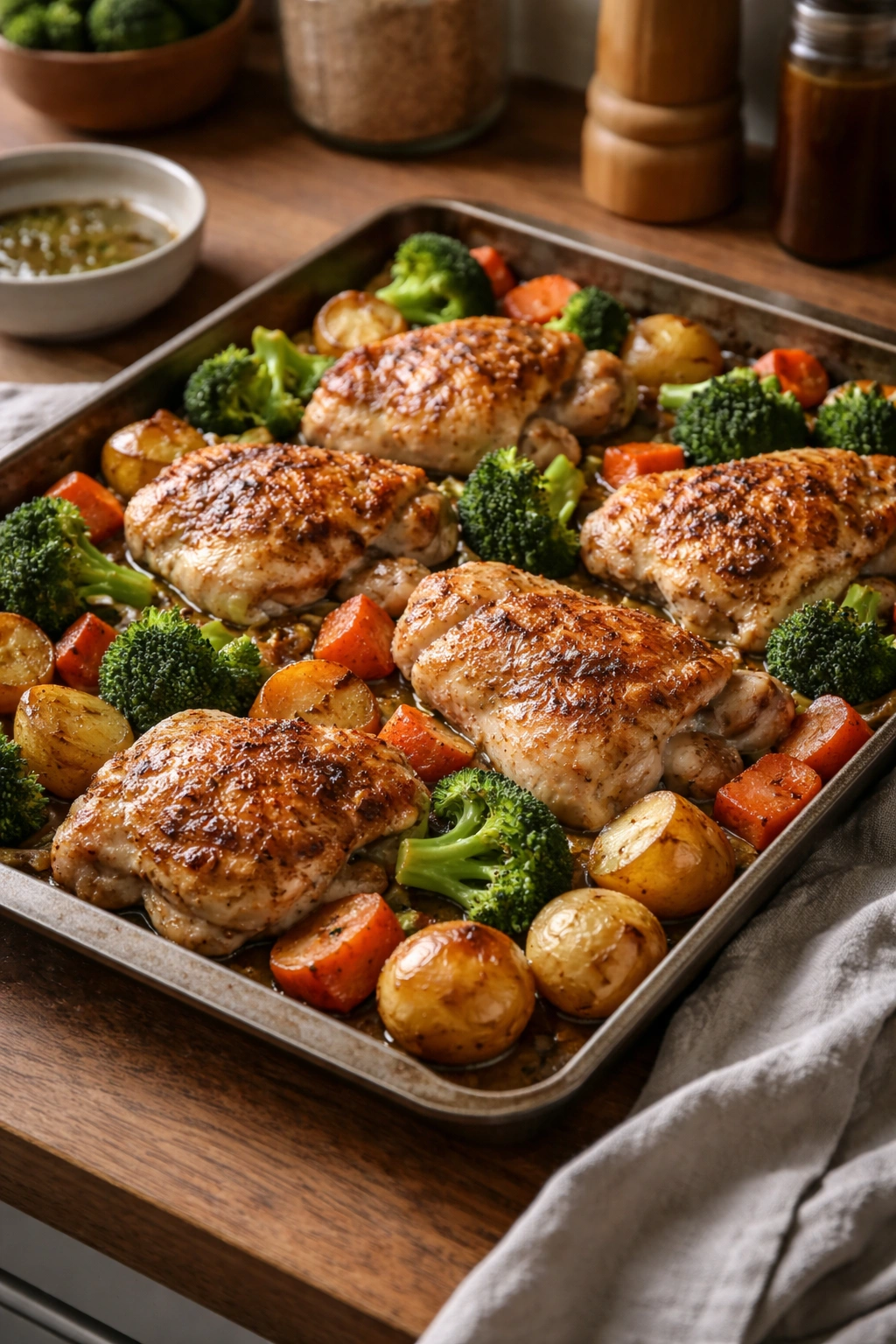
Sheet-pan chicken is the meal prep move I reach for when I want one cook session to cover lunch and dinner. You get protein, vegetables, and a hot meal without standing over the stove, and the oven does most of the work while you clean up the cutting board.
Why It Saves Time
A tray of chicken thighs, broccoli, carrots, and potatoes handles a lot of jobs at once. You can eat it as-is, tuck it into a wrap, or pile it over rice with a spoonful of yogurt sauce. Chicken thighs stay juicy through reheating, which is a small thing that matters a lot on day three.
The smartest version uses ingredients that roast at about the same pace. Broccoli takes well to high heat. Carrots and potato wedges do too. Zucchini and cherry tomatoes can work, but they release more water, so I add them late or keep them off the same pan.
A Simple Setup That Works
- 2 to 3 pounds bone-in or boneless chicken thighs
- 4 cups chopped vegetables
- 2 tablespoons olive oil
- 1 teaspoon salt, plus more to taste
- 1 teaspoon garlic powder
- 1 teaspoon paprika
- 425°F oven, 25 to 35 minutes, depending on cut size
My one hard rule: keep the sauce separate. A lemony tahini drizzle, chimichurri, or plain Greek yogurt keeps the chicken and vegetables from tasting dry after reheating.
If you want the easiest version, make one tray plain and one tray seasoned. That gives you two different lunches without doing any extra work. Nice little trick.
2. Grain Bowls Built From One Base
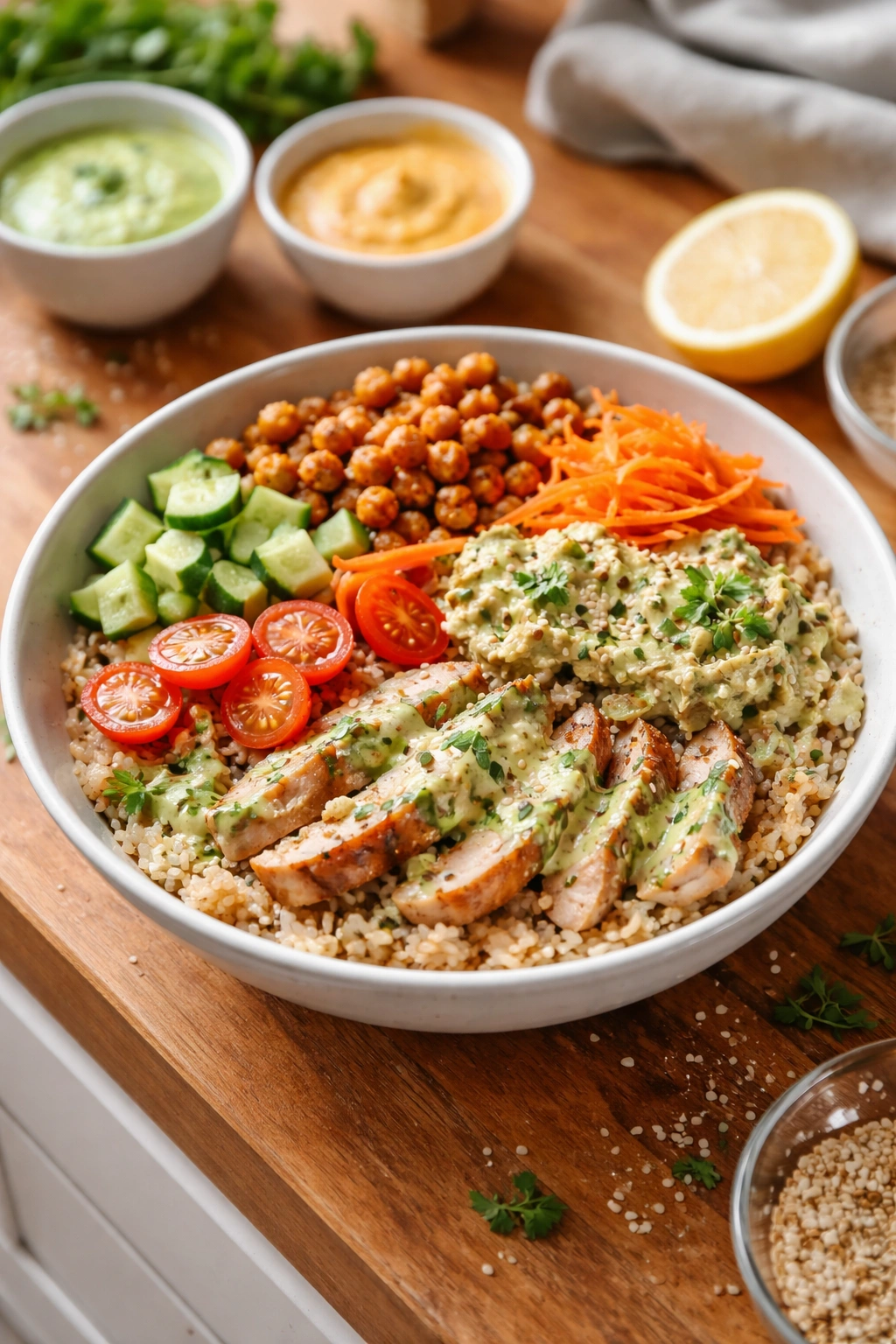
A grain bowl stops feeling repetitive when you stop treating the grain like a side dish. The base can be brown rice, farro, quinoa, or even barley, and the rest of the bowl changes depending on what sauce and protein you want that day.
The time saver is boring in the best way: cook 2 cups dry grain once, then use it in four or five meals. Brown rice gives you a soft, familiar base. Farro has more chew, which I like when the toppings are soft, like roasted squash or shredded chicken. Quinoa cooks faster, so it wins when the week is already messy and you need food on the table without thinking.
The move that makes grain bowls feel fresh is keeping two sauces in the fridge. One can be creamy, like tahini-lemon. The other can be sharp and bright, like salsa verde or a mustard vinaigrette. That single choice changes the whole bowl.
I also like to prep one crunchy thing and one tender thing. Think cucumbers and roasted sweet potato, or cabbage slaw and black beans. The texture mix does the heavy lifting, so you do not need a complicated recipe. You need a base, a protein, and a sauce that has some personality.
Cook the grain plain. Cool it fast. Then portion it into containers with whatever leftovers are hanging around. It sounds almost too plain to matter. It works anyway.
3. Slow Cooker Shredded Chicken for Tacos, Wraps, and Rice Bowls
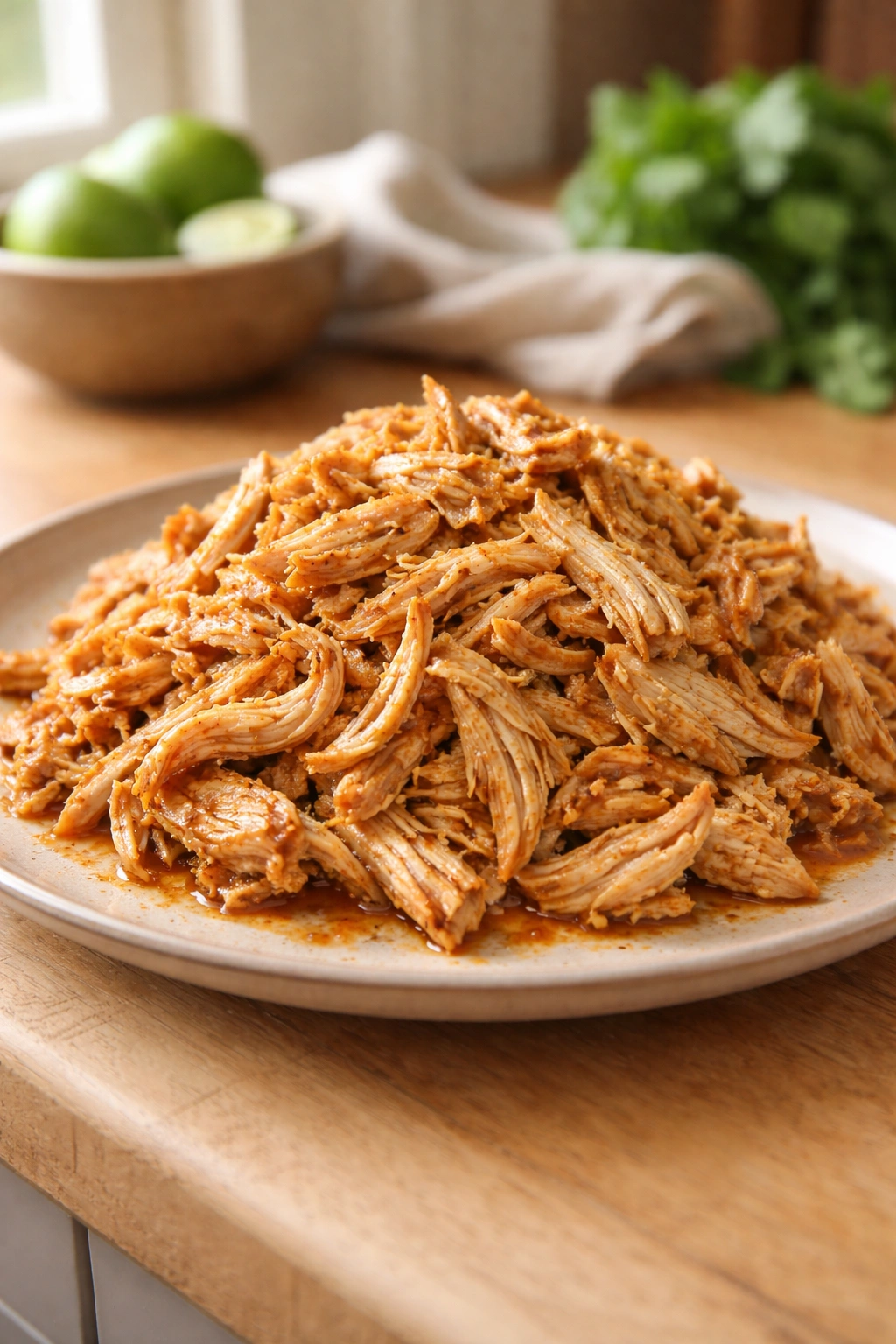
Why does shredded chicken show up in so many good meal prep containers? Because it behaves. You can put it in a slow cooker in the morning, walk away, and come back to meat that pulls apart with a fork and works in three or four different meals.
The best part is the texture. Chicken breast gives you a cleaner shred, while thighs stay richer and a little softer after reheating. I usually lean toward thighs if I know the chicken will sit in the fridge for a few days. A little broth, salsa, or seasoned tomato sauce keeps it from drying out, and that moisture matters more than people think.
How to Use It
- Tacos with slaw and lime
- Rice bowls with beans and avocado
- Wraps with lettuce and hot sauce
- Baked sweet potatoes topped with cheese
- Soup, if you add stock and vegetables
You can season the chicken before it cooks, but I prefer keeping the base simple. Salt, cumin, garlic, onion powder, and a little broth are enough. Then the flavor changes at serving time. One night it becomes tacos. The next, it goes into a quesadilla. Same chicken. Different dinner.
If you like freezer meals, portion the shredded chicken in 1 to 2 cup bags and flatten them before freezing. They thaw faster that way. Small habit. Big payoff.
4. Big-Batch Turkey Chili That Improves Overnight
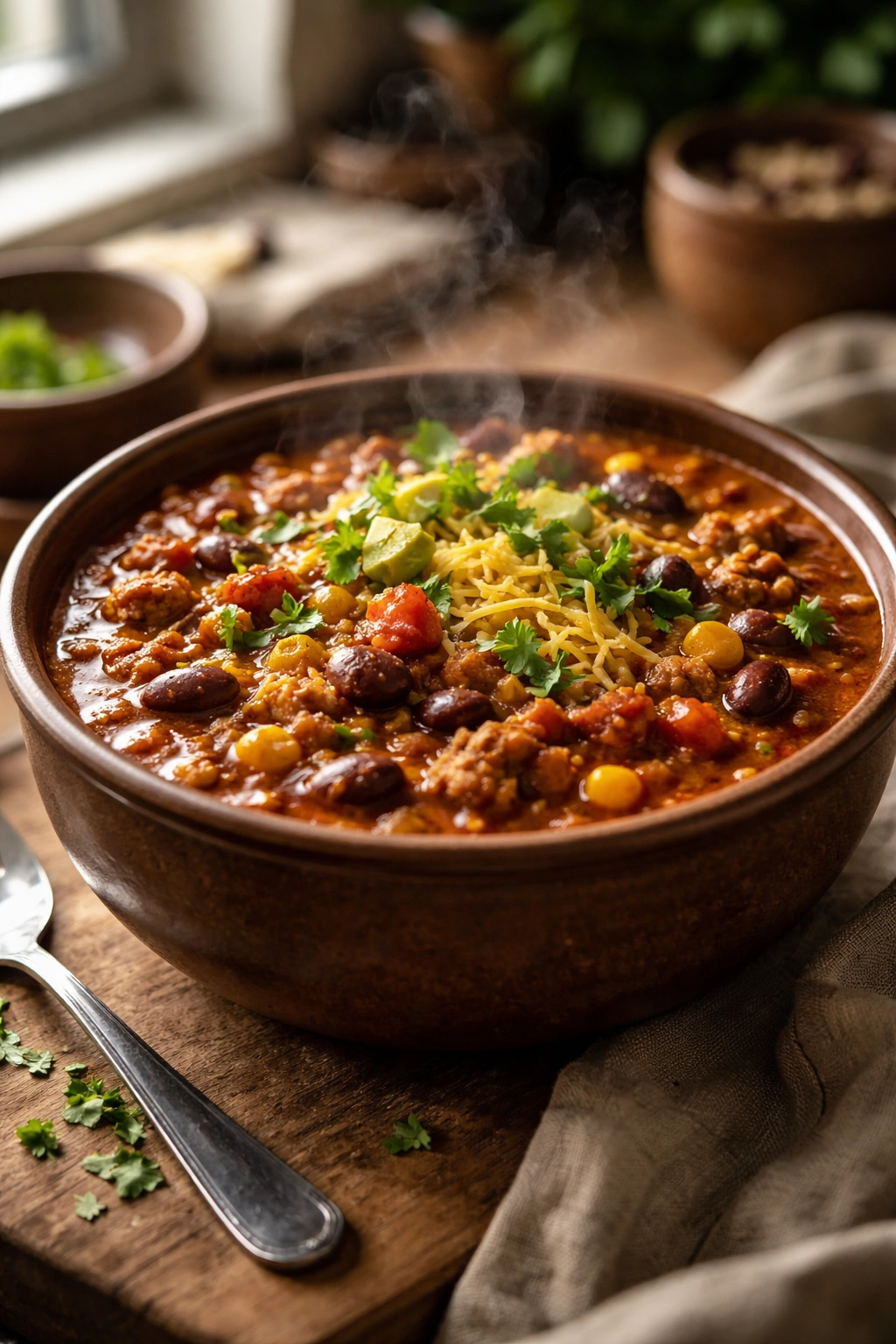
A cold container of chili on a busy night feels like a favor you did for yourself earlier in the week. That’s the magic here. Chili is cheap to scale, easy to portion, and forgiving enough that a slightly imperfect onion chop or a heavy hand with the cumin doesn’t ruin anything.
Ground turkey keeps it lighter than beef, but the real reason it works for meal prep is the thickness. Soupy meals get awkward in lunch containers. Chili holds together. It reheats in the microwave without separating, and it freezes in neat 2-cup portions if you pack it into shallow containers first.
What Makes It Useful
- Beans stretch the batch without much extra work
- Tomatoes and broth give you enough moisture for reheating
- One pot means fewer dishes
- It tastes deeper after a night in the fridge
I like chili for the same reason I like good stew: the second serving is often better than the first. The beans soften, the spices settle, and everything tastes less sharp after a rest. That is not marketing. That is lunch.
Top it with shredded cheddar, plain yogurt, or chopped scallions. Serve it with rice if you want it to go farther, or scoop it with crackers if the fridge is looking bare. Either way, it’s one of the cleanest meal prep wins around.
5. Mason Jar Salads That Stay Crisp
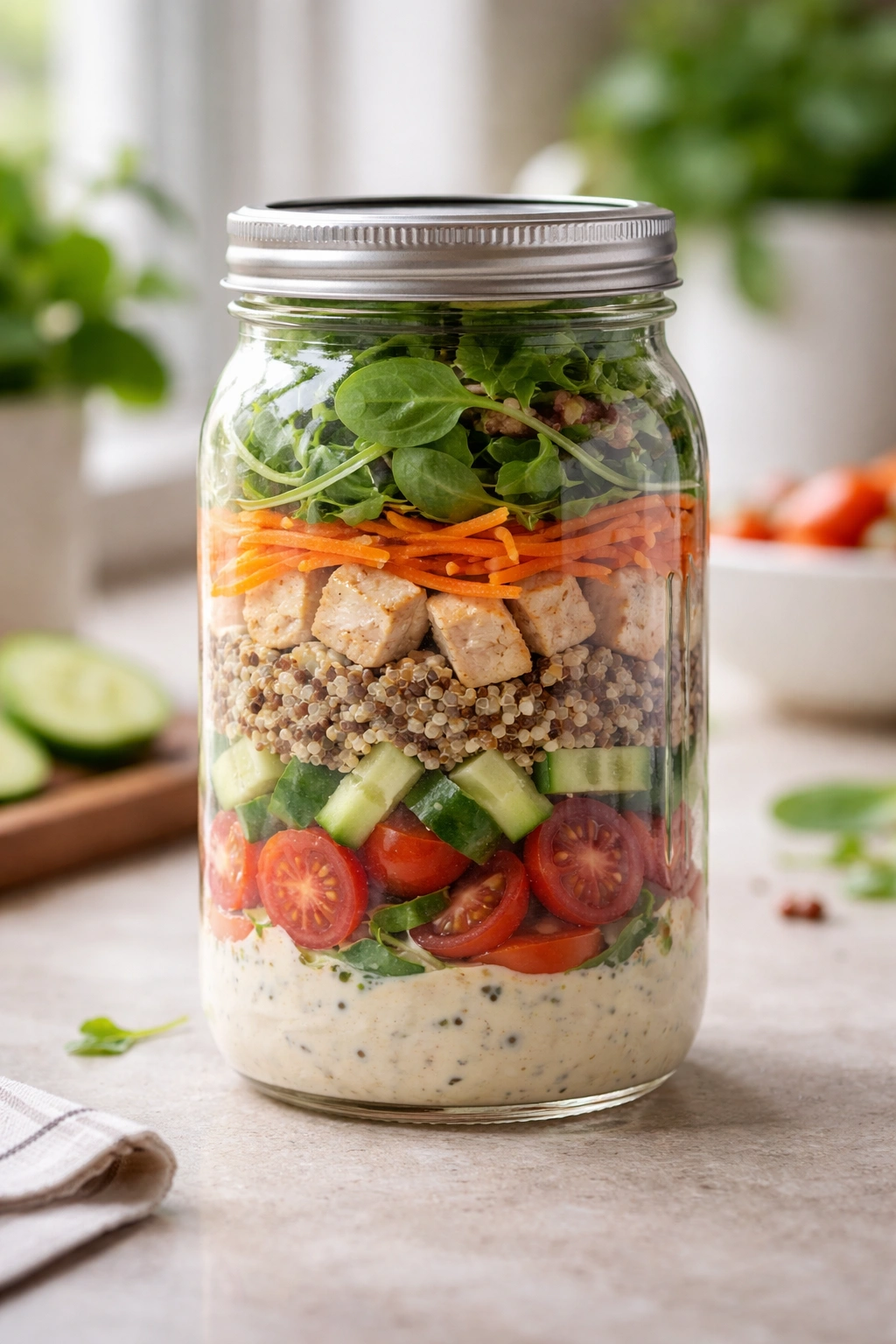
A good mason jar salad should look layered, not soggy. That sounds obvious, but the order matters more than people expect, and the wrong order gives you limp lettuce and a dressing puddle by day two. I prefer 32-ounce jars because they hold enough volume for a real lunch without making the greens miserable.
The trick is to put the dressing on the bottom, then the hard vegetables, then grains or beans, then protein, and the greens right at the top. That keeps the leaves away from the acidic stuff until you shake the jar or pour the whole thing into a bowl. If you toss everything together the night before, the salad pays for it by lunch.
I skip watery ingredients unless they are handled carefully. Tomatoes can work if they’re halved and patted dry. Cucumbers are fine if they’re seeded. Avocado is tricky — add it right before eating or use a squeeze of lemon and a tight layer of plastic wrap to slow the browning. It still won’t be perfect, so I usually leave it out and add seeds instead.
The best mason jar salads also have some weight to them. Chickpeas, chicken, quinoa, farro, roasted sweet potatoes — those are the ingredients that make a salad feel like lunch and not a side dish. Thin little greens alone will not carry you very far.
I like to keep two or three jars in the fridge at once. That’s enough to feel prepared without eating the same bowl for a week straight. Shake, pour, eat. Clean, fast, done.
6. Overnight Oats With Different Flavor Paths
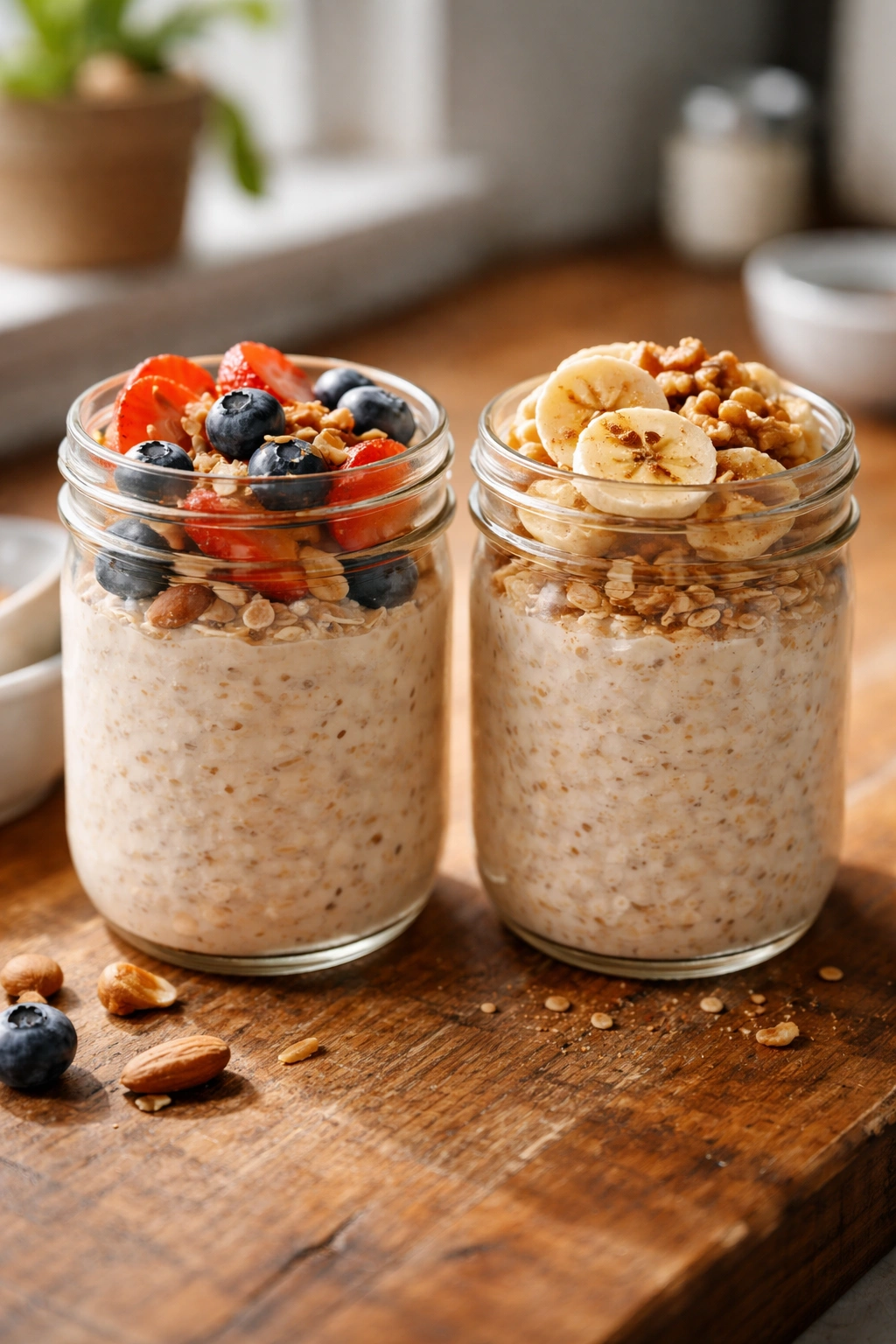
Unlike hot oatmeal, overnight oats ask nothing from you before coffee. That’s the appeal. You mix them the night before, leave them in the fridge, and wake up to breakfast that is already waiting, no stove, no stirring, no pot to wash while you’re half-awake.
The basic ratio is easy to remember: 1/2 cup rolled oats, 1/2 cup milk, and 2 tablespoons yogurt if you want a thicker spoonable texture. Chia seeds help too, but you do not need much — a teaspoon or two thickens the jar without turning it into cement. Quick oats can get mushy, so I stick with rolled oats unless I want a softer texture on purpose.
What makes overnight oats useful for meal prep is the way you can split the flavor. One jar can have banana and peanut butter. Another can lean tart with berries and a spoonful of maple syrup. Cocoa powder, shredded coconut, chopped apples, and cinnamon all work without making the prep harder.
These are best for people who need breakfast to be portable. Office day. School run. Early commute. Same idea. Pack them in a jar or lidded cup, and they travel well enough to survive a backpack or tote bag.
If you make them in batches, keep the fruit separate when it gets watery. Strawberries, for instance, are better added the morning you eat them. The oats stay fresher, and the texture doesn’t slide into mush. Tiny fix. Big difference.
7. Egg Muffins and Breakfast Wraps
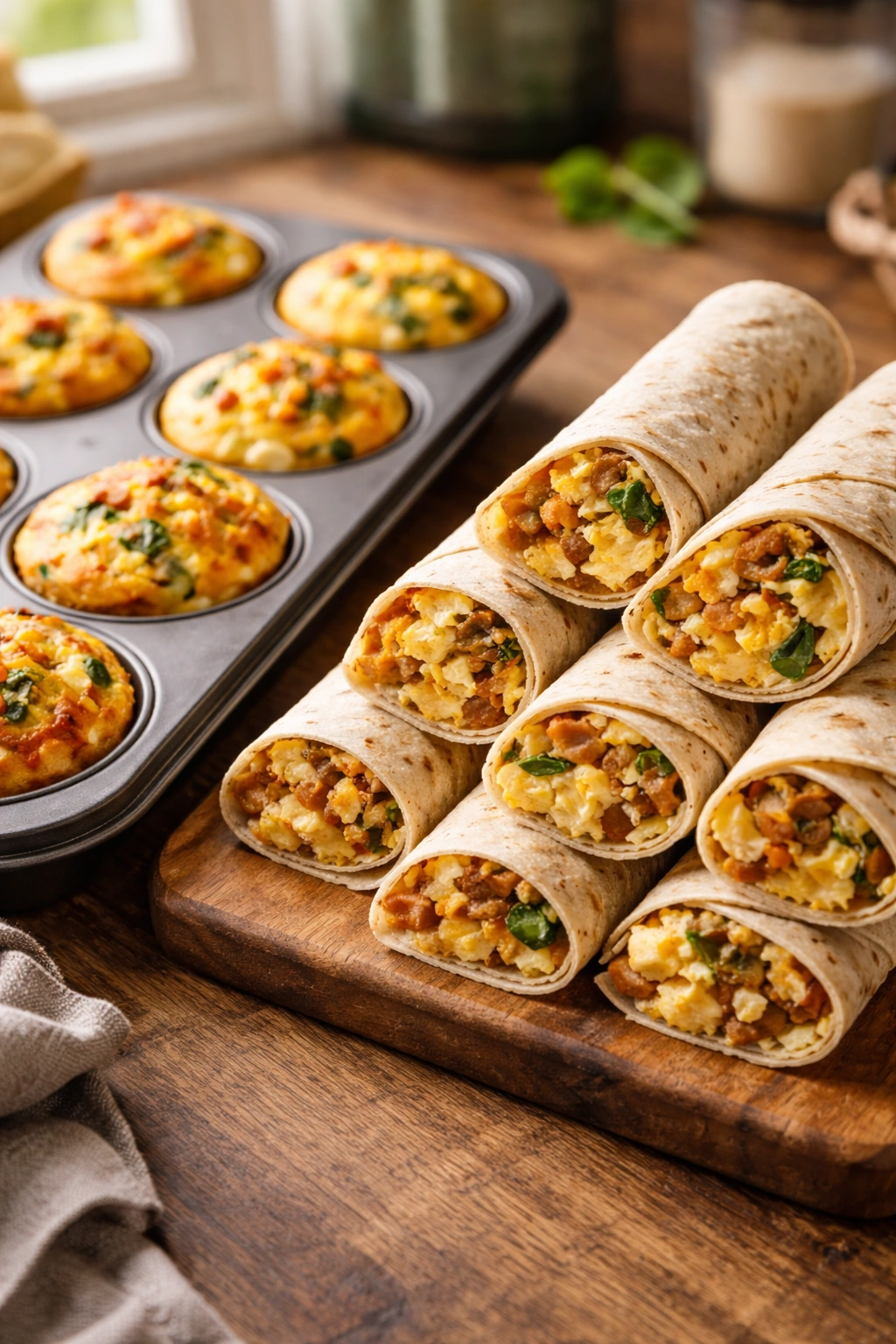
Egg muffins are one of those meal prep ideas that looks almost too plain until you realize how much time they save. You whisk eggs, pour them into a muffin tin, and bake a batch that becomes breakfast for several mornings in a row. They’re portable, they reheat fast, and they solve the “I need protein now” problem without much drama.
Why They Work
A dozen eggs makes a lot more food than people expect. Add diced peppers, spinach, onion, and cheese, and you get little handheld bites that hold up in the fridge for three to four days. Spinach needs to be squeezed dry if it was frozen. Fresh spinach can go straight in, but watery vegetables make the muffins weep a little in the pan.
For a batch, I like this shape:
- 10 to 12 eggs
- 1 cup chopped vegetables
- 1 cup shredded cheese
- Salt and pepper
- 350°F oven for about 18 to 22 minutes
Breakfast wraps are the second half of the same idea. Scramble eggs once, then tuck them into tortillas with a bit of cheese, salsa, and maybe a spoonful of beans. Wrap them tightly in foil and freeze them flat. On a rushed morning, they reheat fast in the microwave and crisp up nicely in a skillet if you have an extra minute.
Let the egg muffins cool completely before storing them. If you trap steam in the container, the tops go rubbery. Nobody needs that.
8. Stir-Fry Kits That Turn into Dinner in Ten Minutes
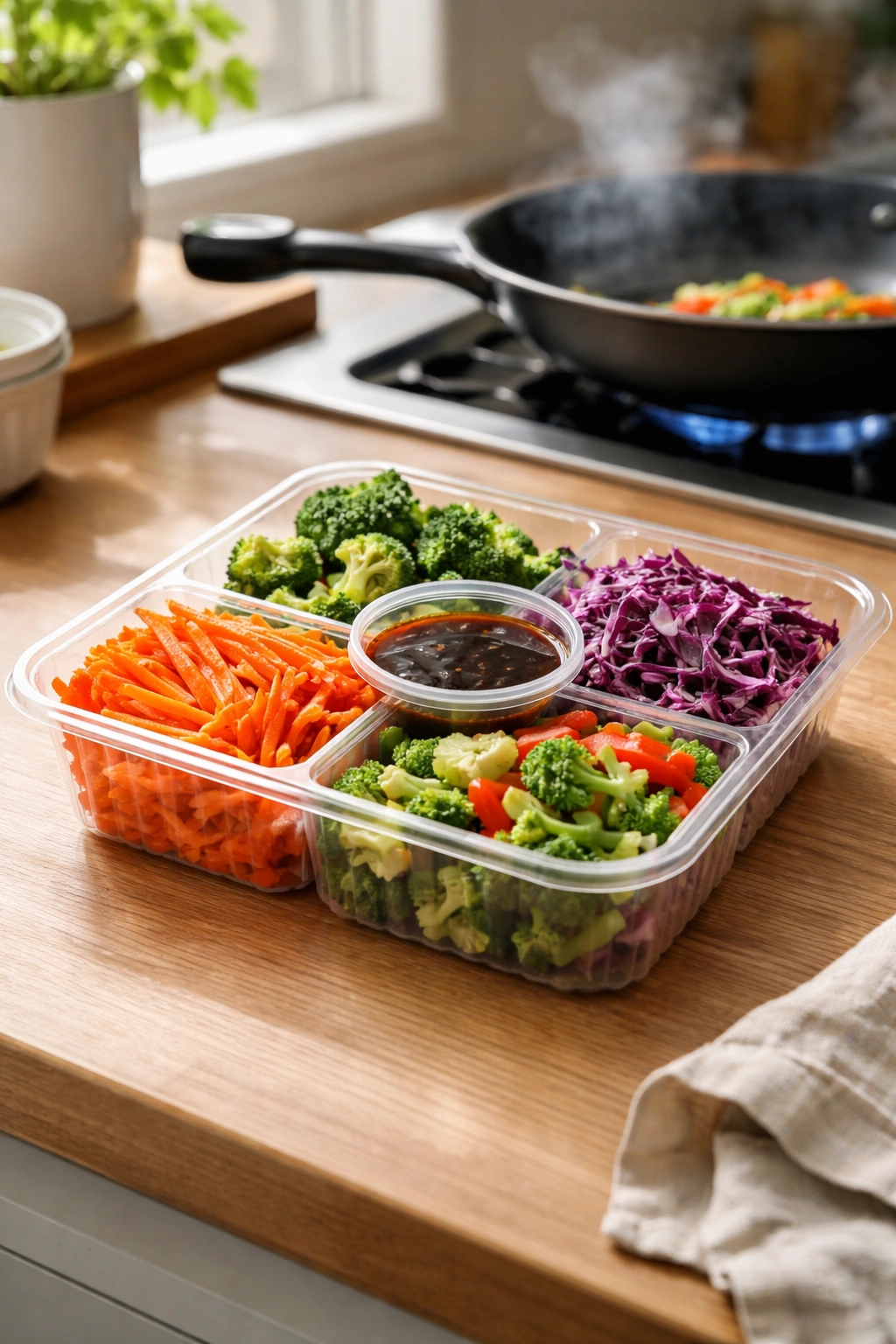
A stir-fry kit is not a recipe. It is a rescue plan.
That’s why I like it. You spend one prep session slicing bell peppers, carrots, mushrooms, onion, and maybe broccoli, then tuck the vegetables into a container with a small jar of sauce. When dinner time shows up and your patience is thin, the meal is already 80 percent done. You just need a hot pan and a little oil.
The smart move is to keep the sauce separate until you cook. Soy sauce, ginger, garlic, sesame oil, a bit of honey, and rice vinegar make a good base, and the whole thing takes less time than scrolling for takeout. If you want to add protein, chicken, tofu, shrimp, or thinly sliced beef all work. Cook the rice or noodles ahead too, and the entire meal turns into a fast reheat rather than a start-from-scratch project.
I like stir-fry kits because they handle awkward produce well. Half a bag of snap peas. The last two carrots in the drawer. A lonely red pepper. Chop them, cook them, and the week gets easier.
The one thing I skip is overly wet vegetables that dump water into the pan. Zucchini can work, but it needs high heat and a short cook time. Otherwise, the stir-fry gets slippery. Crisp edges matter here. They give the whole dish shape.
9. Pasta Salad That Actually Holds Up
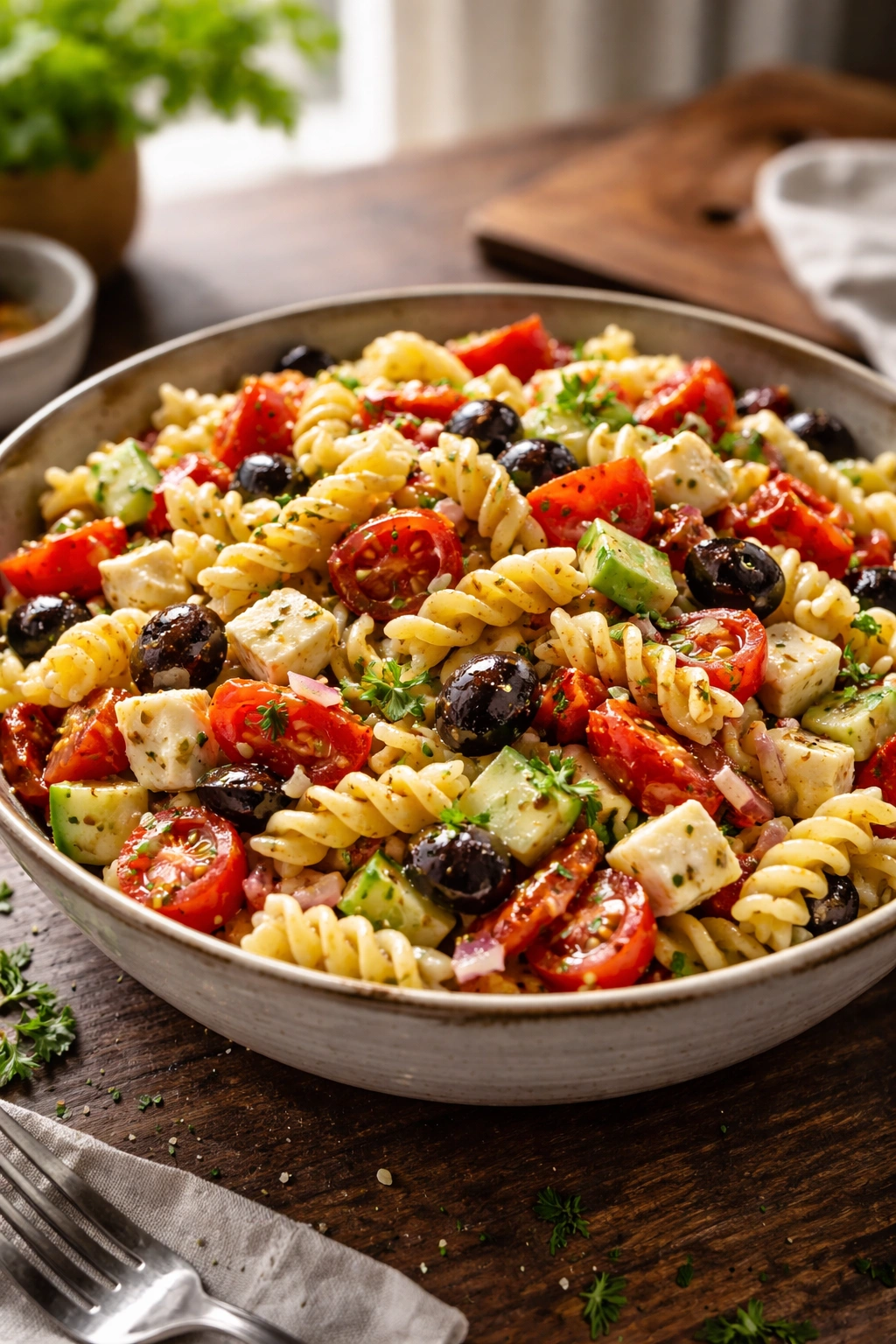
Why does some pasta salad taste dull by day two? Usually because the pasta was cooked too soft, the dressing was too heavy, or the mix-ins were too delicate to survive the fridge. A good pasta salad needs sturdier ingredients and a little restraint.
Short shapes are the best bet. Rotini, bow ties, shells, and penne hold onto dressing better than long noodles. I cook them until just tender, then rinse briefly with cool water so they stop cooking. After that, I toss in a spoonful of olive oil or a little dressing while the pasta is still warm. That first coat keeps everything from clumping into one cold brick.
How to Keep It From Going Soft
- Use beans, roasted vegetables, or salami for heft
- Add soft herbs right before serving
- Keep mozzarella pearls and fresh greens modest
- Save extra dressing for the last toss
Pasta salad does well with ingredients that bring their own texture. Chickpeas, roasted peppers, chopped olives, cucumber that has been seeded, and cubes of cheese all keep their shape. Basil and arugula are better added later so they do not wilt into nothing.
I also like pasta salad because it eats cold without complaint. That means it works for office lunches, park lunches, and those weird days when reheating food feels like too much effort. It is not a glamorous lunch. It is a reliable one.
10. Freezer Burritos for Busy Days
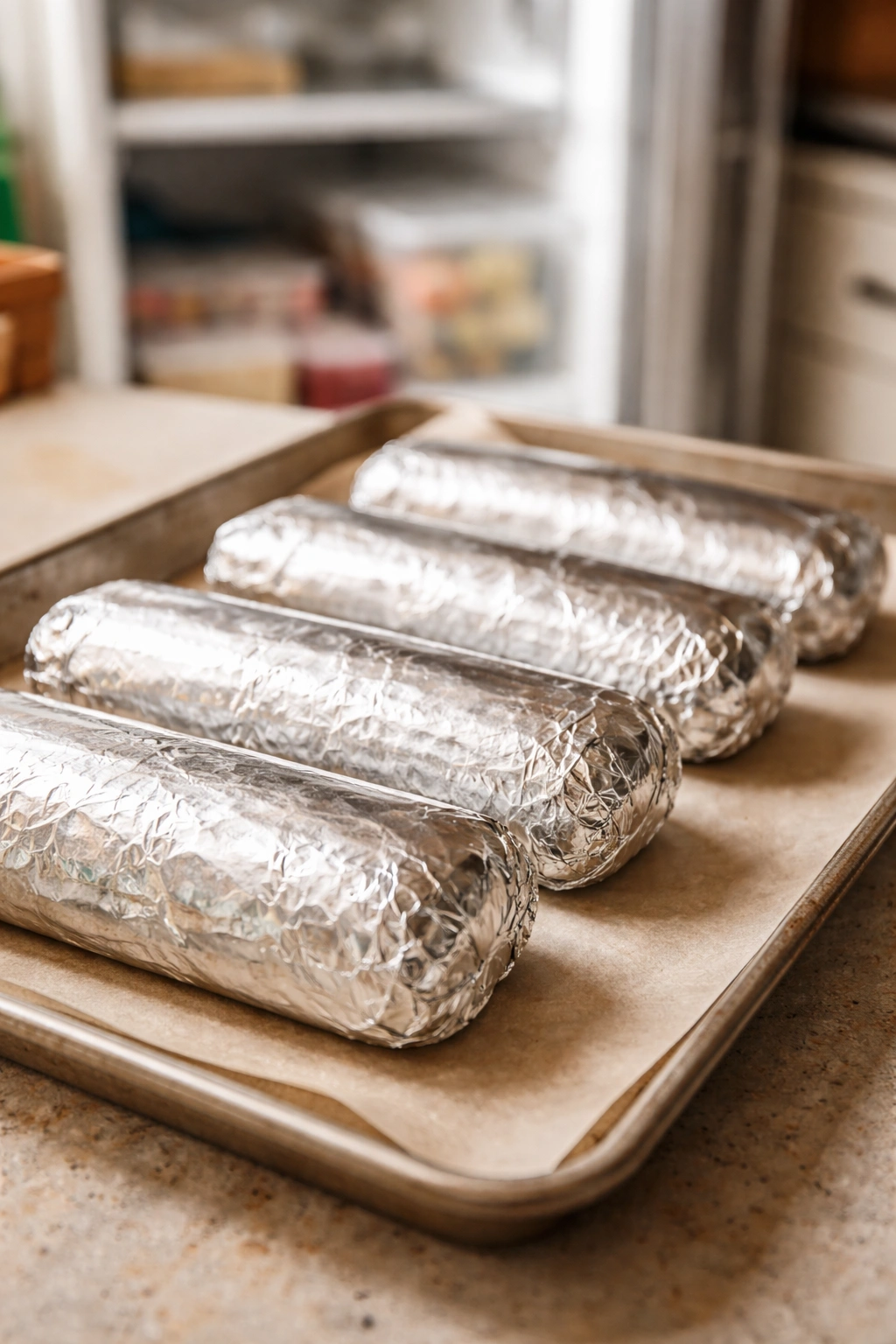
If you’ve ever grabbed a frozen burrito on the way out the door, you already know why this works. Homemade freezer burritos give you the same convenience with better filling and less mystery. You make a batch once, wrap them well, and stash them in the freezer for the kind of day where lunch is chaos.
The filling needs to be hearty and not too wet. Rice, beans, scrambled eggs, shredded chicken, potatoes, cheese, and sautéed peppers all freeze well. Salsa is fine in a small amount, but too much liquid turns the tortilla soggy. I usually keep salsa on the side or add it after reheating.
Wrapping matters more than people think. Let the filling cool first, roll the burrito tightly, then wrap it in parchment or foil before freezing it flat. That keeps the shape tidy and makes it easier to stack. If you’re doing a dozen at once, write the filling on the outside with a marker. Future-you will appreciate that little bit of memory you left behind.
A Fast Reheat Plan
- Microwave one burrito for 2 to 3 minutes
- Flip halfway through
- Crisp in a dry skillet for 1 to 2 minutes per side if you want a better tortilla
They work for breakfast, lunch, and late-night backup food. Not fancy. Very practical. Exactly the point.
11. Soup or Stew Base You Can Stretch Two Ways
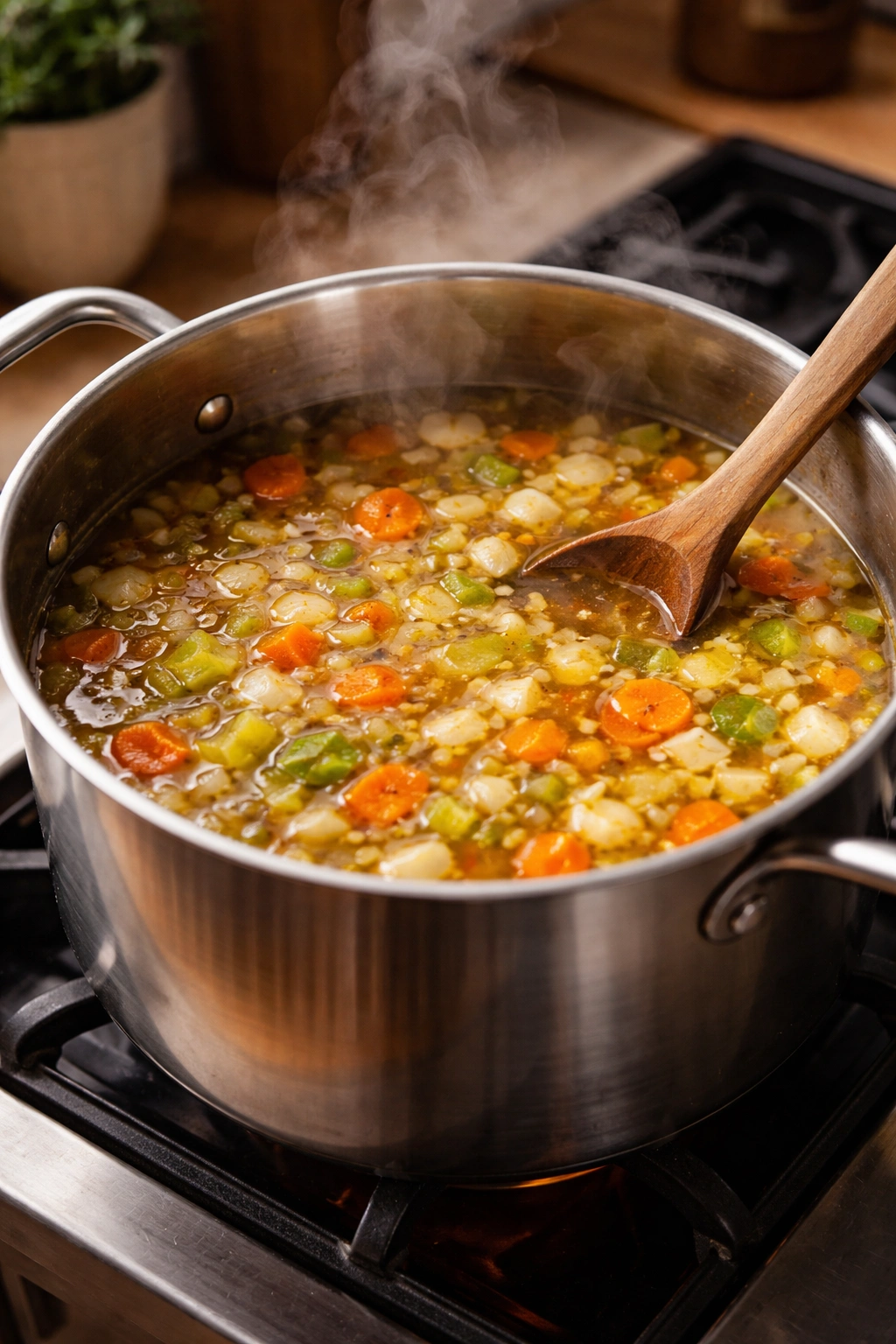
Soup is one of the smartest meal prep foods because it does not mind waiting. A pot of lentil soup, vegetable stew, or chicken soup base can sit in the fridge for a few days and still taste steady when you heat it up. It also freezes cleanly in 1- or 2-cup containers, which is a nice way to build a stash without making an entire freezer drawer unusable.
I like soups that start with a simple base: onion, carrot, celery, garlic, broth, and one main protein or bean. From there, you can stretch the pot in different directions. Add pasta on one day. Add kale or spinach on another. Stir in leftover rice, or crack in a little lemon juice right before serving to wake it up. That kind of flexibility is why soup keeps earning a place in meal prep.
The other benefit is that soups hide small amounts of leftovers well. Half a zucchini. A few mushrooms. The last handful of parsley. If you’re careful with salt, almost anything can go in and improve the pot. Not everything belongs, though. Soft herbs and quick-cooking greens should go in near the end. They lose too much if they simmer for an hour.
A soup base is one of those meals that feels low-effort without being low-value. It is warm, filling, and easy to portion. On a week with too many moving parts, that matters.
12. Snack Boxes and Protein Packs for Weekly Meal Prep
Unlike a full lunch, a snack box is about damage control. It solves the 3 p.m. crash, the long gap between meetings, and the kind of day when dinner is still hours away but you need something steadier than a granola bar.
The best part is how little thought it takes once you have a pattern. I like one protein, one fruit, one crunchy thing, and one dip. That might be cheese cubes, grapes, almonds, and hummus. Or hard-boiled eggs, apple slices, pretzels, and peanut butter. Turkey roll-ups work too, and they hold up better than people expect if you keep them cold.
The box does not need to be fancy. It needs to be useful. A small divided container, a lidded bento box, or even a couple of reusable cups inside a lunch bag will do the job. Cut fruit in the morning if you are picky about texture, or prep it all at once if you want the fastest grab-and-go option. Apples and carrots keep better than melon, which is why I reach for them more often in meal prep.
I like snack boxes for people who do not want another full meal but also do not want to end up hangry and staring at a vending machine. A five-minute box can save the whole afternoon. That is a trade I’ll take every time.
