



Your quads can feel like they were stuffed with wet cement after a hard squat session. Arms can do the same after a heavy press day, and the weird part is how ordinary the soreness feels while you’re living through it.
That’s where active recovery workouts for sore muscles earn their keep. Not by punishing you. Not by replacing rest. By keeping you moving just enough to loosen the stiffness, restore a little range of motion, and take the edge off that heavy, stale feeling that shows up when you sit still too long.
The sweet spot is light. You should be able to talk in full sentences, keep your breathing calm, and finish feeling better than when you started—not smoked, not sweaty to the point of regret, and definitely not sore in a new place.
One more thing matters. Sharp pain, swelling, or a joint that feels unstable is a different problem entirely. Ordinary muscle soreness can usually tolerate gentle movement. A cranky tendon, a tweaked back, or a swollen knee needs a much more cautious approach.
1. A Brisk Walk That Keeps the Joints Moving
A walk sounds almost too easy to count, which is exactly why people skip it. Then they try it after a hard leg day and realize their hips, calves, and lower back were begging for ten minutes of simple motion.
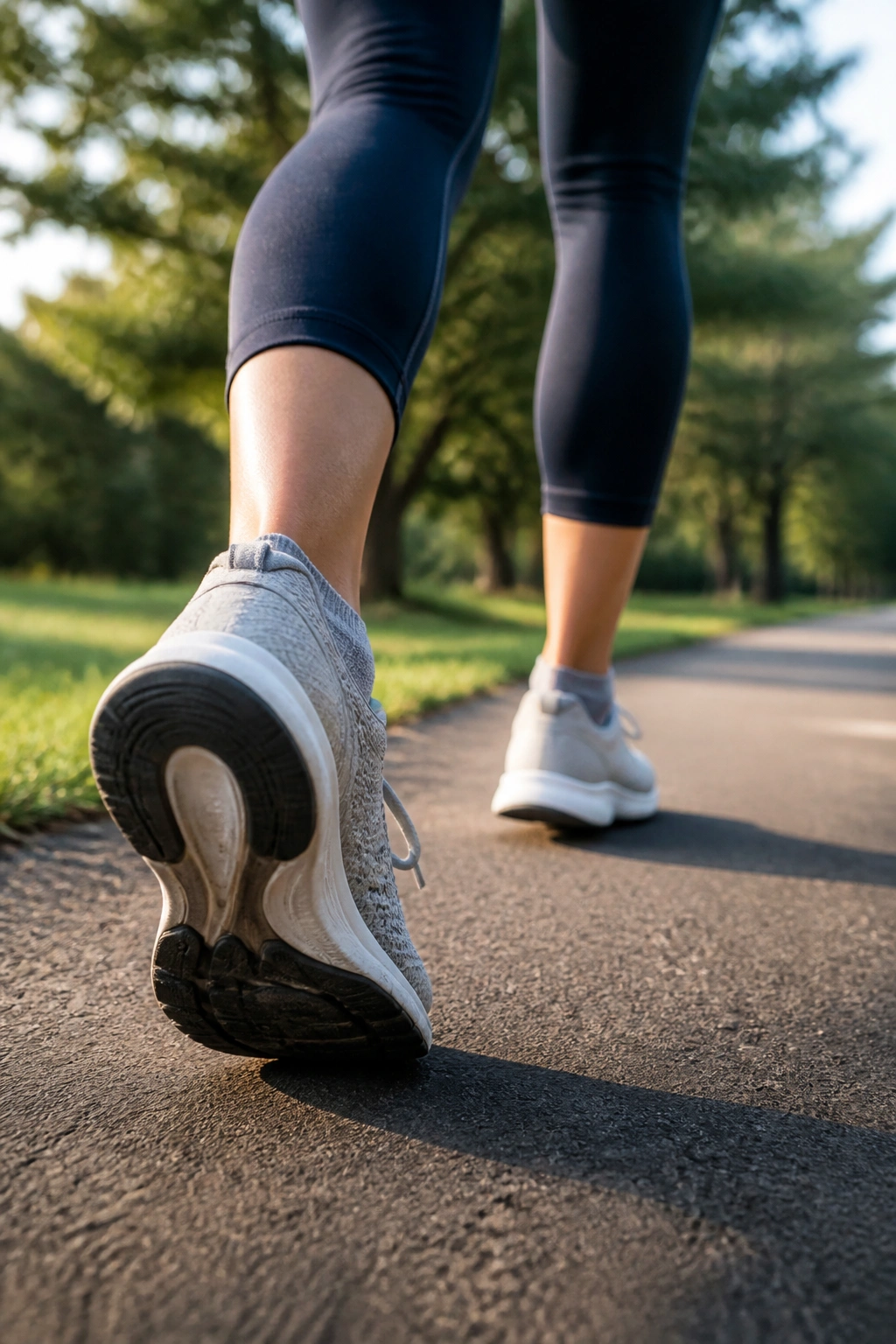
A 15- to 25-minute walk on flat ground is one of the cleanest active recovery workouts for sore muscles because it warms tissue without adding impact or load. Keep your stride natural. Don’t power-walk like you’re late for a train. You want the kind of pace where your arms swing a little, your breathing stays easy, and your feet feel like they’re rolling instead of slamming.
How to keep it restorative
- Stay on a flat route or a treadmill with 0 to 1% incline.
- Wear shoes that feel cushioned but stable.
- Keep the pace at conversation speed.
- Stop before your calves start to tighten or your lower back starts to arch.
A lot of people try to “make” walking count by turning it into a workout. That misses the point. The value is in the looseness, the rhythm, the way your body feels less welded together by the end.
Not fancy. Very effective.
2. Easy Stationary Bike Spins
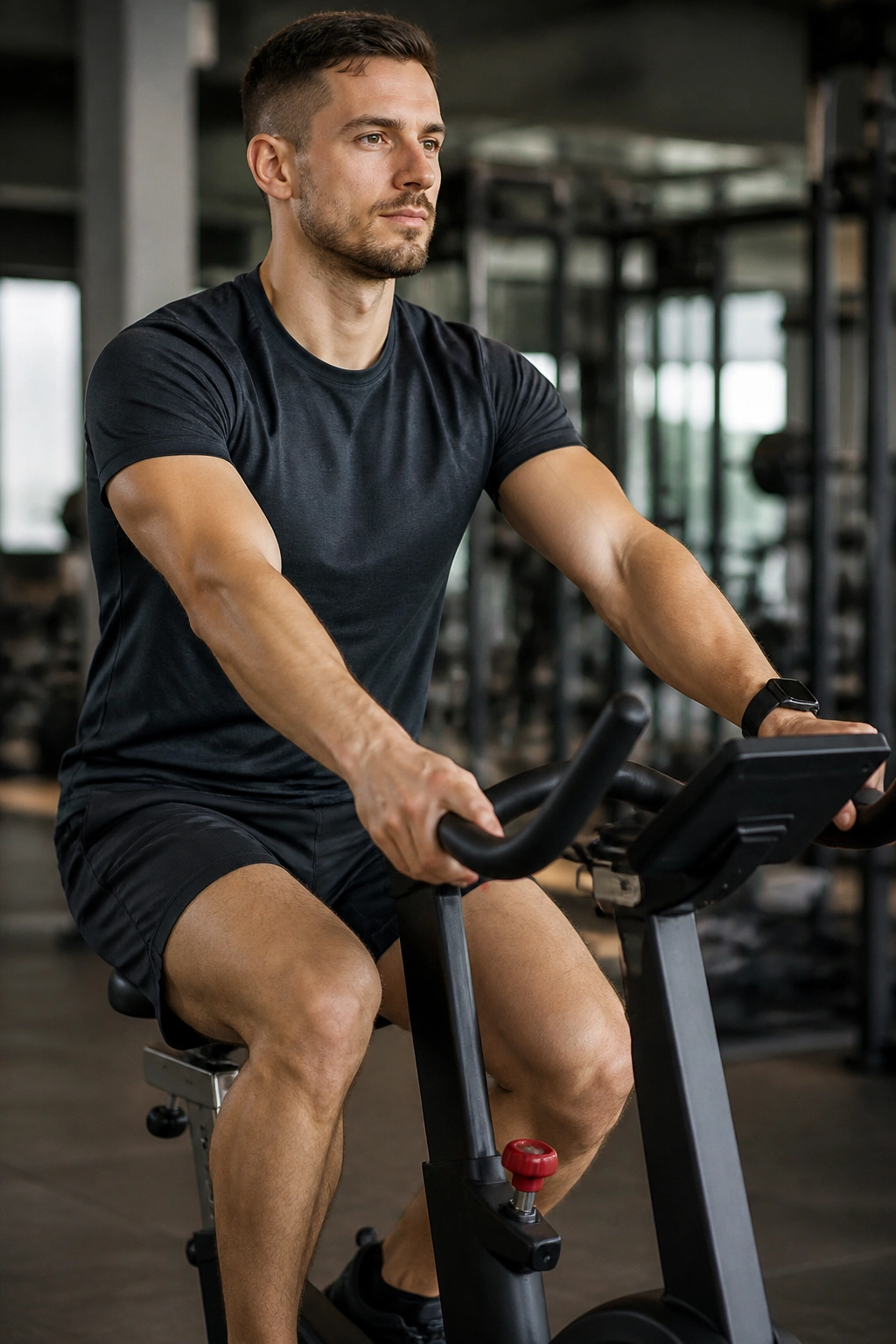
The bike is sneaky good because it can wake up sore legs without beating them up. No impact. No pounding. Just smooth circles and a little heat.
Keep the resistance low and the cadence somewhere around 70 to 90 revolutions per minute. If your quads are cooked, high resistance is the wrong move. So is standing up on the pedals. Sit tall, relax your shoulders, and keep the pedal stroke even from top to bottom. A seat that’s too low will make your knees feel boxed in, so adjust it until the bottom of the stroke leaves a slight bend in the knee.
What I like about cycling for recovery is how controllable it is. You can do 8 minutes if you’re beat up, or stretch it to 20 minutes if you’re just a little stiff and want more blood flow. Either way, the effort should feel light enough that you could read a text message mid-ride without sounding winded.
If your legs are fried from running, cycling often feels better than another run because it keeps the joints moving in a smoother pattern. If your lower back is the sore spot, stay upright and resist the urge to hunch over the handlebars. Small detail. Big difference.
3. Pool Walking and Water Jogging
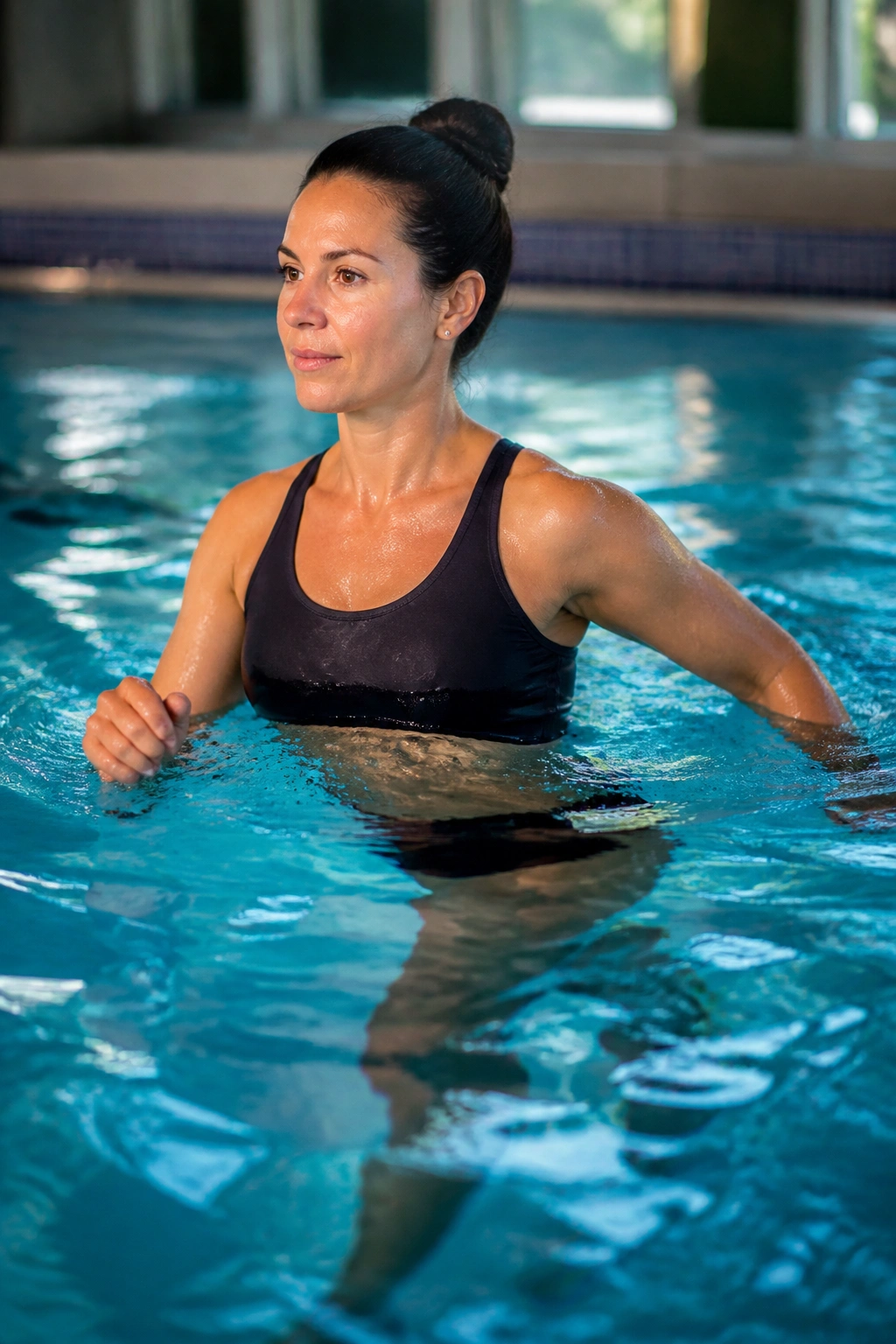
Why does the pool feel so good on sore legs? Because water does two useful things at once. It takes some of your body weight off the joints, and it gives every movement a little resistance without a hard landing.
Chest-deep water is enough. Walk forward for a minute, then backward for a minute, then side-step along the pool wall. Or turn it into a water jog if that feels better. 10 to 15 minutes is plenty for most people, and the effort should stay so light that your shoulders never creep up toward your ears.
What water changes
- It softens impact on knees, ankles, and hips.
- It makes each step a little slower and more controlled.
- It keeps the body cooler, which helps if you get flushed fast.
- It lets you move even when land-based cardio feels too sharp.
This is one of those sessions that looks almost silly from the deck. Fine. A recovery workout does not need to impress anyone.
If your calves feel tight, the backward walking piece is often the part that helps most. If your knees are sensitive, keep the steps short and avoid big, forceful pushes off the wall. Let the water do the work. You’re just steering.
4. Gentle Swimming Laps
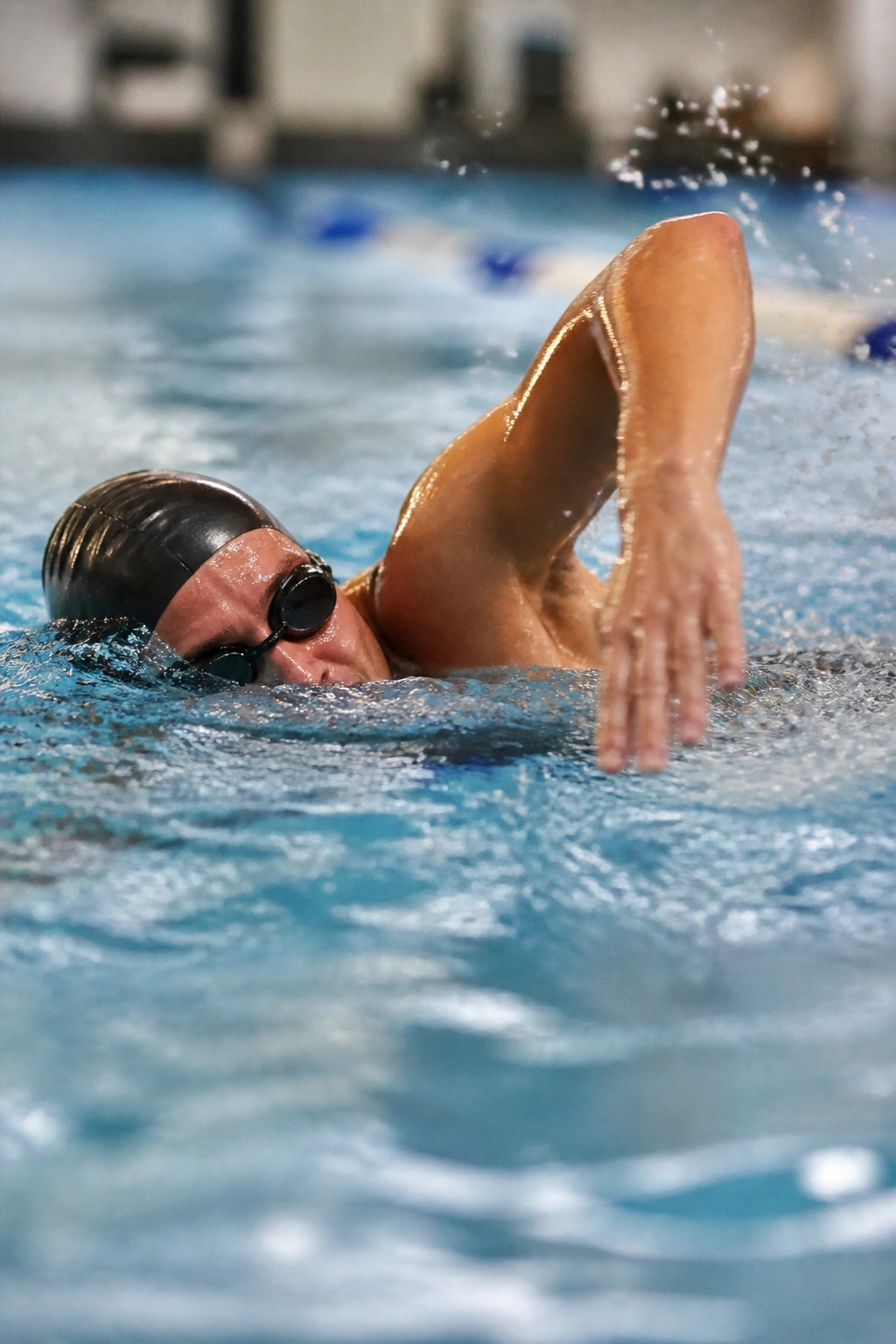
If you can swim without turning it into a race, the pool can be one of the best places to recover. The glide feels good. The pressure from the water feels steady. And the stroke pattern gives your body a chance to move without the sharp, repetitive jolt of land exercise.
Freestyle and backstroke tend to be the easiest choices for sore muscles because they’re smooth and predictable. Keep the pace calm, take a break every one or two lengths, and stop well before your breathing starts to gasp. A recovery swim should feel like flowing through the water, not chasing a timer.
If your shoulders are sore from pressing or pull-ups, keep the stroke short and relaxed. Overreaching on every catch can make the front of the shoulder angry. Breaststroke can be fine, but it can also bother knees that are already tender after a lower-body session. That’s one of those details people learn the hard way.
A simple rule helps here: if your stroke starts to look messy, you’re working too hard. Smooth first. Distance second. Speed doesn’t belong anywhere near this session.
5. A Mobility Flow for Hips and Spine
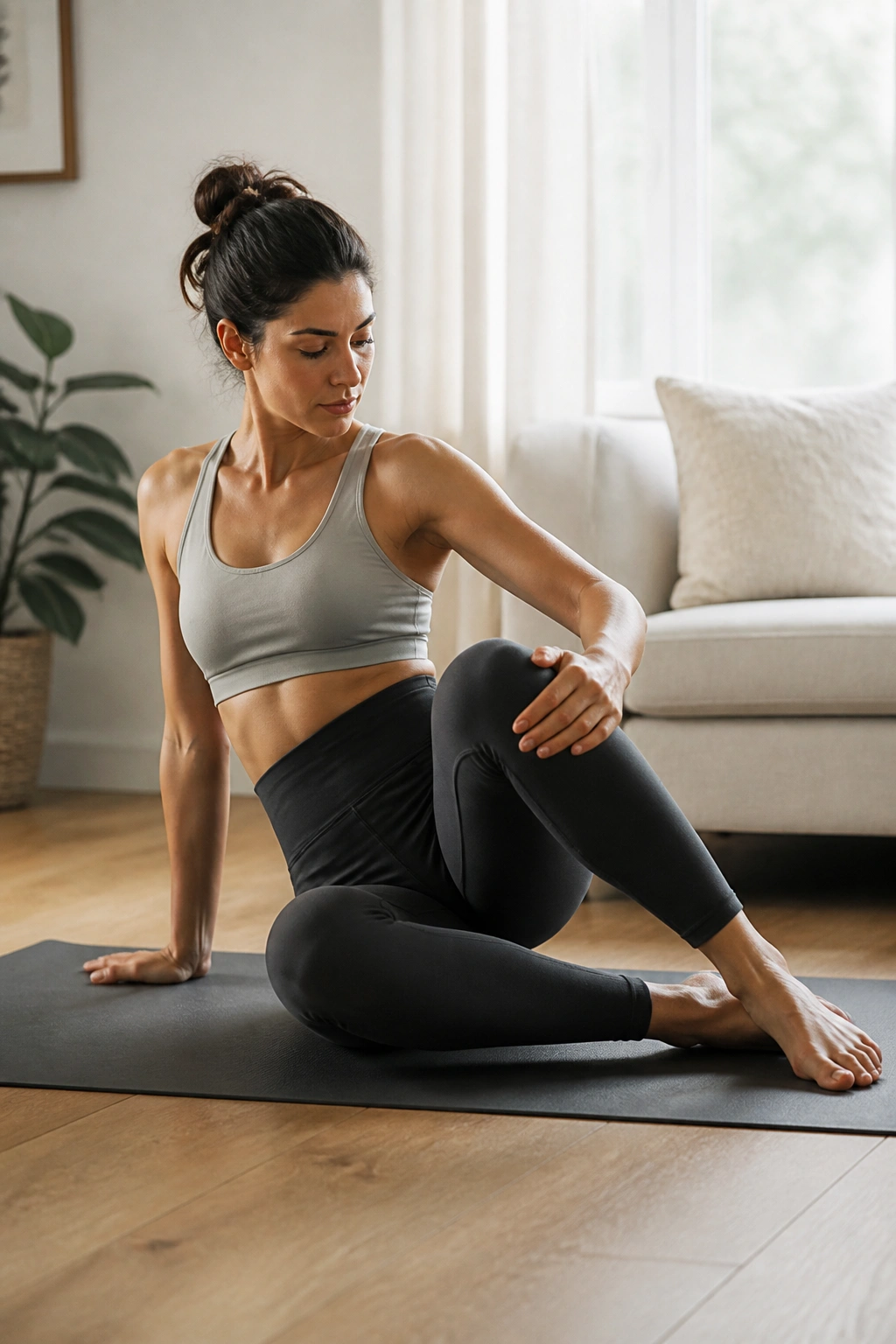
Mobility work gets dismissed because it doesn’t look dramatic. That’s a mistake. When your hips feel glued shut or your lower back is stiff from deadlifts, a slow, thoughtful mobility flow can change how the next few hours feel.
Try a short sequence of cat-cow, hip circles, 90/90 switches, ankle rocks, and thoracic rotations. Move each one for 5 to 8 slow reps, not as a test of flexibility but as a way to remind the joints they still have options. Keep the motions small at first. Bigger is not better if your body is protesting.
A good mobility flow feels almost boring in the best possible way. Nothing burns. Nothing shakes. You’re opening space, not hunting for a stretch that makes you wince.
And don’t rush the transitions. Standing up from the floor and moving to the next drill is part of the session. A tiny pause to reset your breathing often does more than one extra rep.
6. Recovery Yoga Without the Power Poses
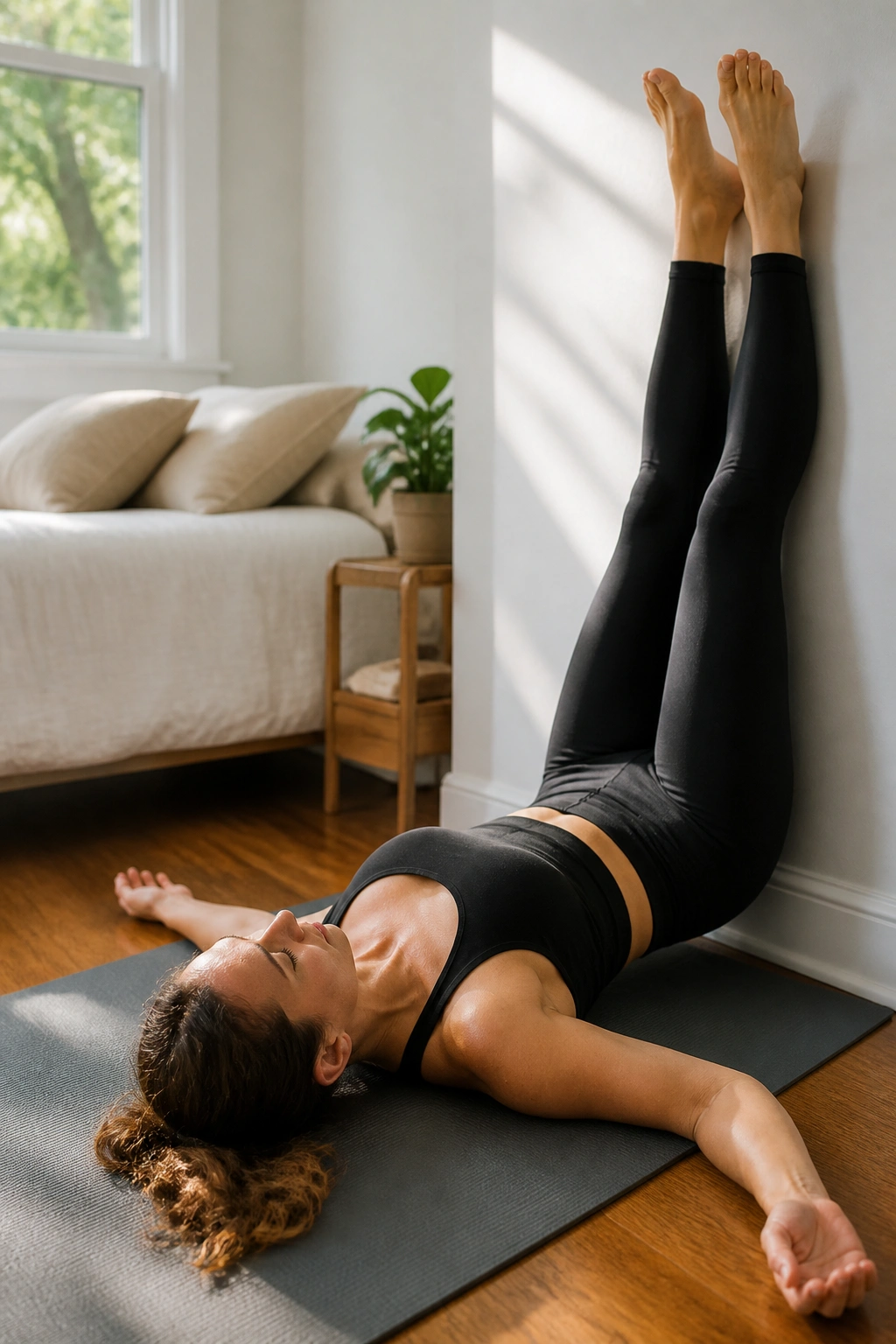
Recovery yoga is a different animal from the sweaty, fast-moving classes that leave you dripping. This version stays slow, grounded, and unshowy. Think support, not performance.
The poses that earn their spot are the ones that ease tension without asking for a fight: child’s pose, low lunge, supported pigeon, legs-up-the-wall, and a gentle supine twist. Hold each position for 20 to 45 seconds, and breathe normally. If a stretch makes you clench your jaw, that’s not a winning stretch. Back off a little.
Choose positions that feel like relief
- Bend the front knee in low lunge if the hamstring is pulling hard.
- Put a folded towel under the hips in pigeon if the floor feels too sharp.
- Keep legs bent in the twist if your lower back is cranky.
- Stay off the wrists if your shoulders are tired.
Yoga helps because it asks for long exhalations, small adjustments, and patience. That combination is surprisingly useful after a hard workout, especially when the soreness feels spread out instead of located in one obvious spot.
Power yoga can wait. This is the softer lane.
7. Foam Rolling and Easy Mobility
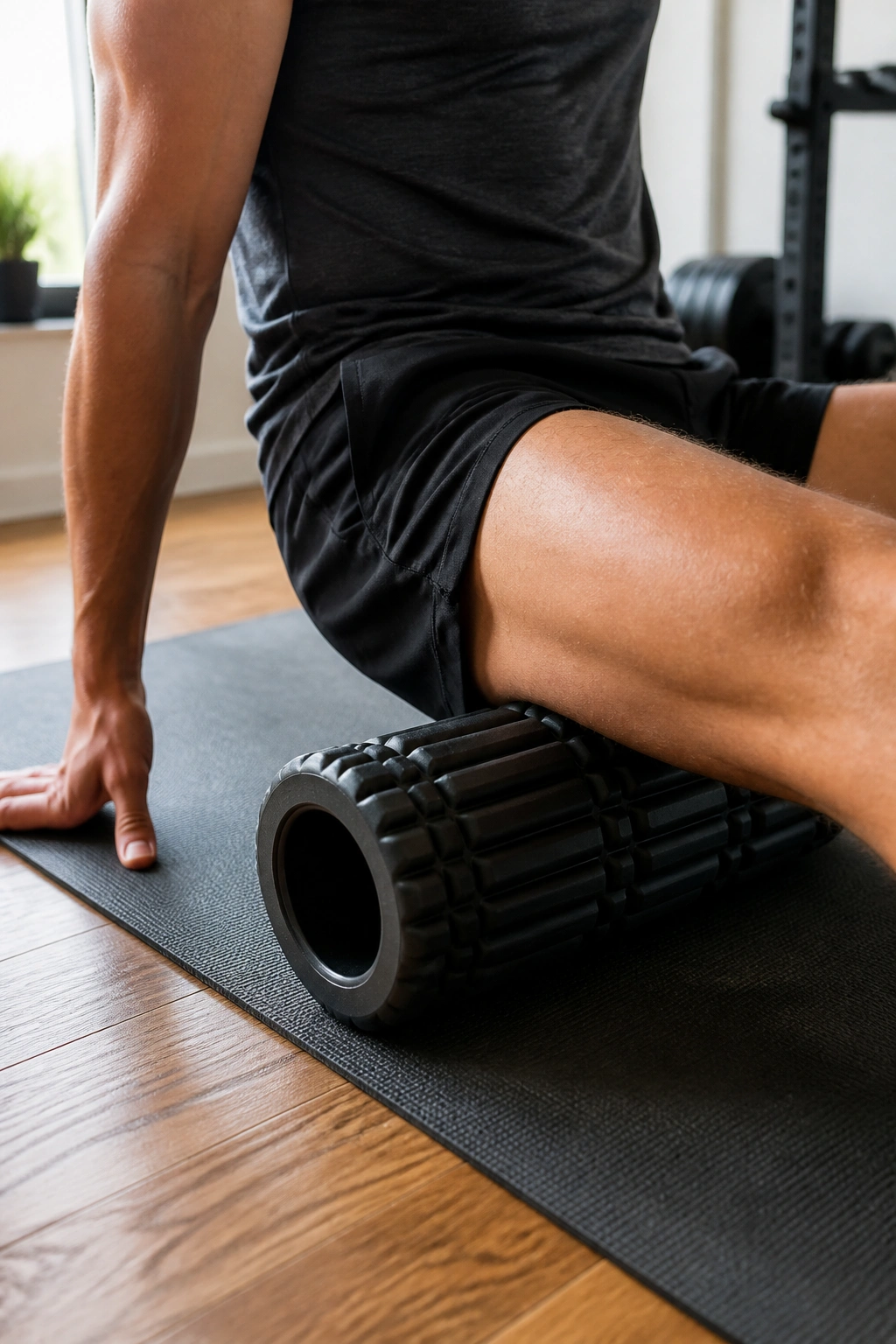
Foam rolling gets talked about like magic, and that’s nonsense. It doesn’t erase soreness. It doesn’t “break up” tissue in some dramatic way either. What it can do is make movement feel less sticky for a while, which is enough to make a recovery day worth it.
Roll the big areas first: calves, quads, glutes, upper back, and lats. Spend about 20 to 30 seconds on each spot. If you find a tender point, pause there and breathe for a few seconds, but do not mash it until your face goes white. That just turns a recovery tool into a bruise generator.
A better order than most people use
- Roll the area lightly.
- Do 5 to 8 easy reps of a movement that uses that area.
- Check whether the range of motion feels better.
- Move on before the session turns into a pain contest.
That pairing matters. Rolling alone can feel unfinished. Rolling plus movement feels like the whole point. After a few minutes, the area often feels warmer, less rigid, and easier to use in the rest of your day.
If you want the honest version, foam rolling is a little boring. It still earns its place.
8. An Easy Rowing Session
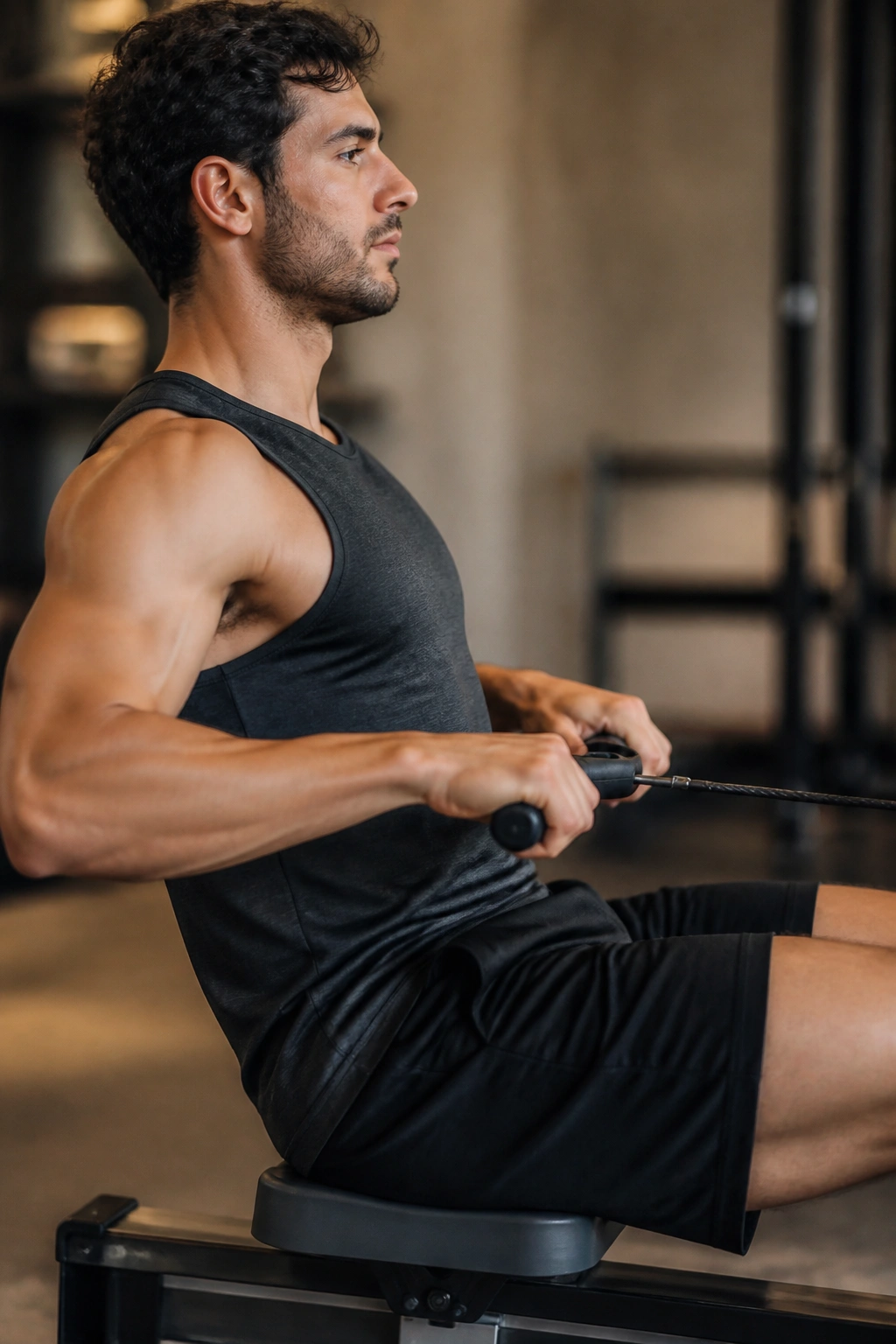
The rower can be a beautiful recovery tool if you keep your ego out of it. That’s the part people mess up. They jump on, yank the handle like they’re racing, and then wonder why their back and hamstrings feel worse.
Set the damper low, keep the stroke rate around 18 to 22 strokes per minute, and make each drive smooth. The legs push first, the torso follows, and the arms finish the pull. Then reverse the sequence on the way back. If the machine starts to slap or the handle jerks, you’re moving too hard.
The sound of a good recovery row is quiet. A soft flywheel hum. A steady slide on the rail. Breathing that stays under control.
This one works nicely when your whole body feels stiff, not just one area. It uses the legs, trunk, and upper back without impact, and it can loosen the feeling of being “stuck” after a long day of sitting. Keep it to 10 to 15 minutes unless you’re genuinely fresh.
9. Elliptical Work at Conversation Pace
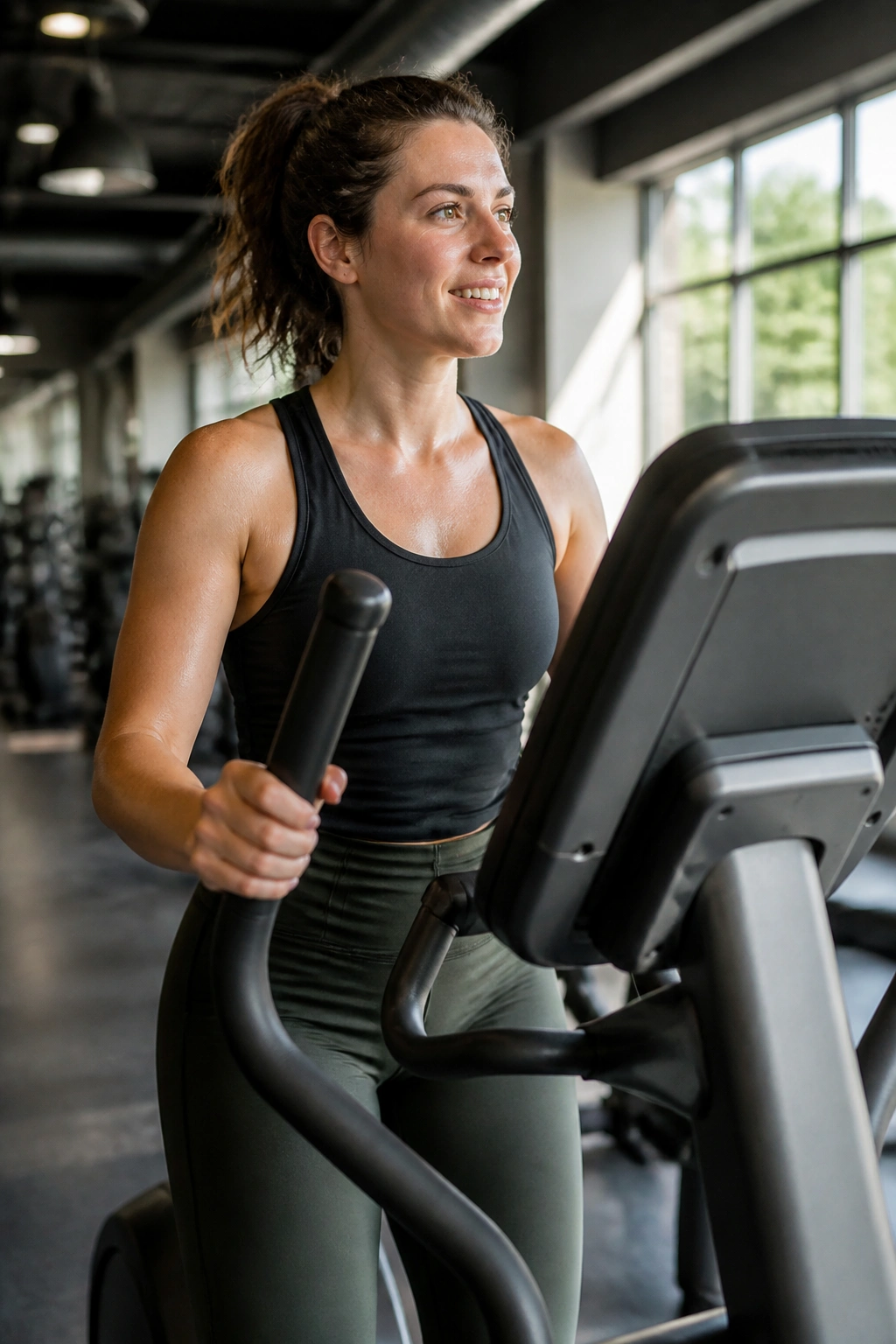
The elliptical is not exciting. That’s the point.
It gives you a closed-chain, low-impact way to move the legs and arms without the pounding of running. If your feet, shins, or knees are annoyed, the machine can feel like a relief because the motion stays smooth and the feet never leave the pedals.
Keep the resistance low, stay upright, and let the machine do most of the work. You should be able to talk without catching your breath. If you’re gripping the handles hard enough to whiten your knuckles, the session has drifted away from recovery.
A lot of people try to make the elliptical feel “worth it” by jacking up the resistance or chasing a calorie target. Bad idea. That turns an easy session into a clumsy one. 10 to 20 minutes is enough if the goal is to loosen muscles and bring a little circulation back.
It’s a simple machine. Use it simply.
10. Light Resistance Band Circuits
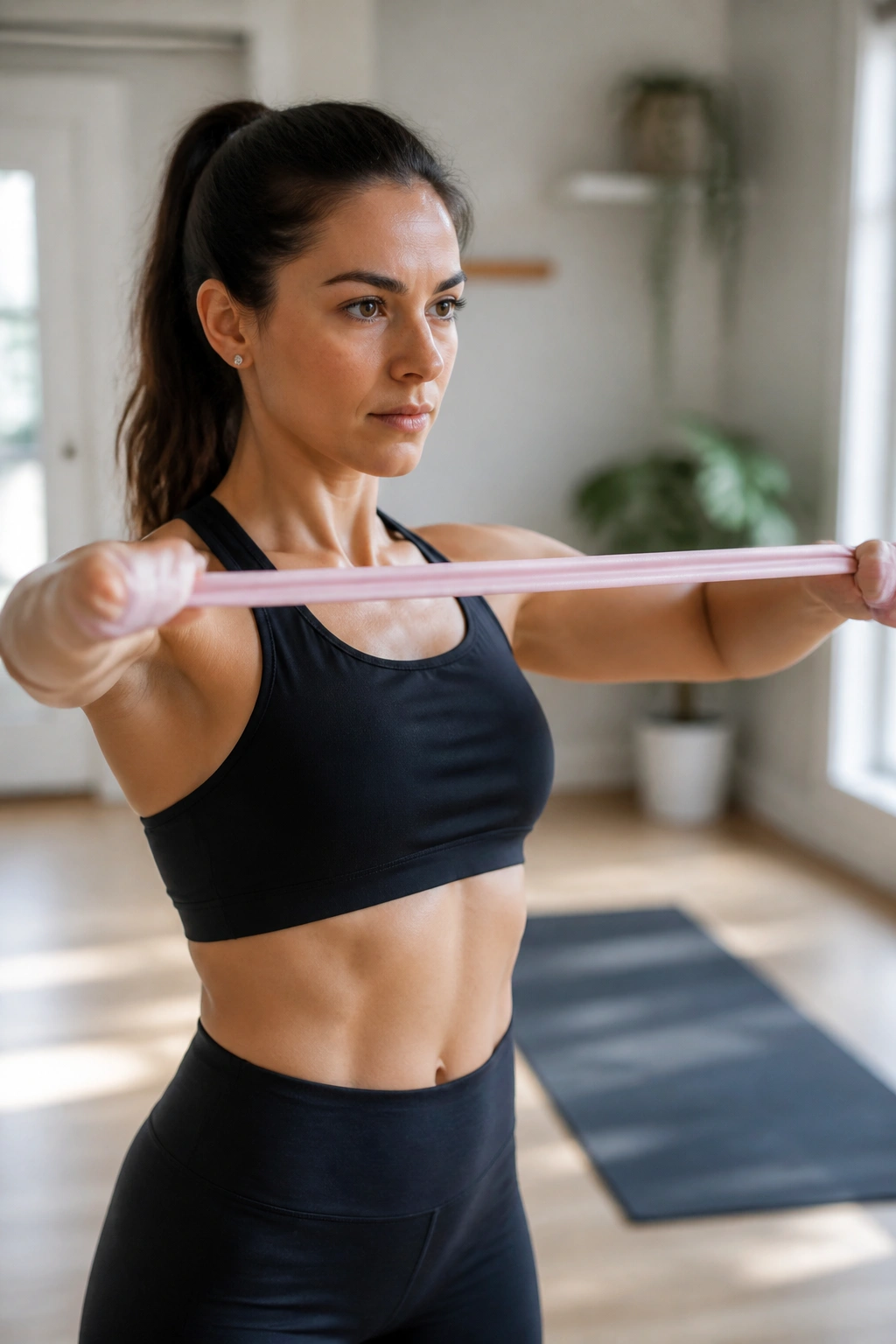
Some soreness responds well to movement that looks a little more like activation than cardio. Light resistance bands are perfect for that. The load is small, the control is high, and the joints usually feel better when the session ends than when it starts.
Pick 2 or 3 moves and keep them easy: band pull-aparts, glute bridges with a mini-band, lateral steps, face pulls, or banded good mornings. One or two rounds is enough. Ten to twelve reps per move is plenty if the resistance stays light. If you have to brace hard or cheat the range, the band is too heavy.
Where bands help most
- They wake up sleepy glutes after sitting.
- They open the upper back without pounding the shoulders.
- They give sore knees a gentle way to track better.
- They add heat without heavy loading.
The best band sessions feel almost underwhelming while you’re doing them. Then you stand up, walk around, and notice the stiffness has dropped a notch.
That little change matters.
11. Pilates-Style Core Reset
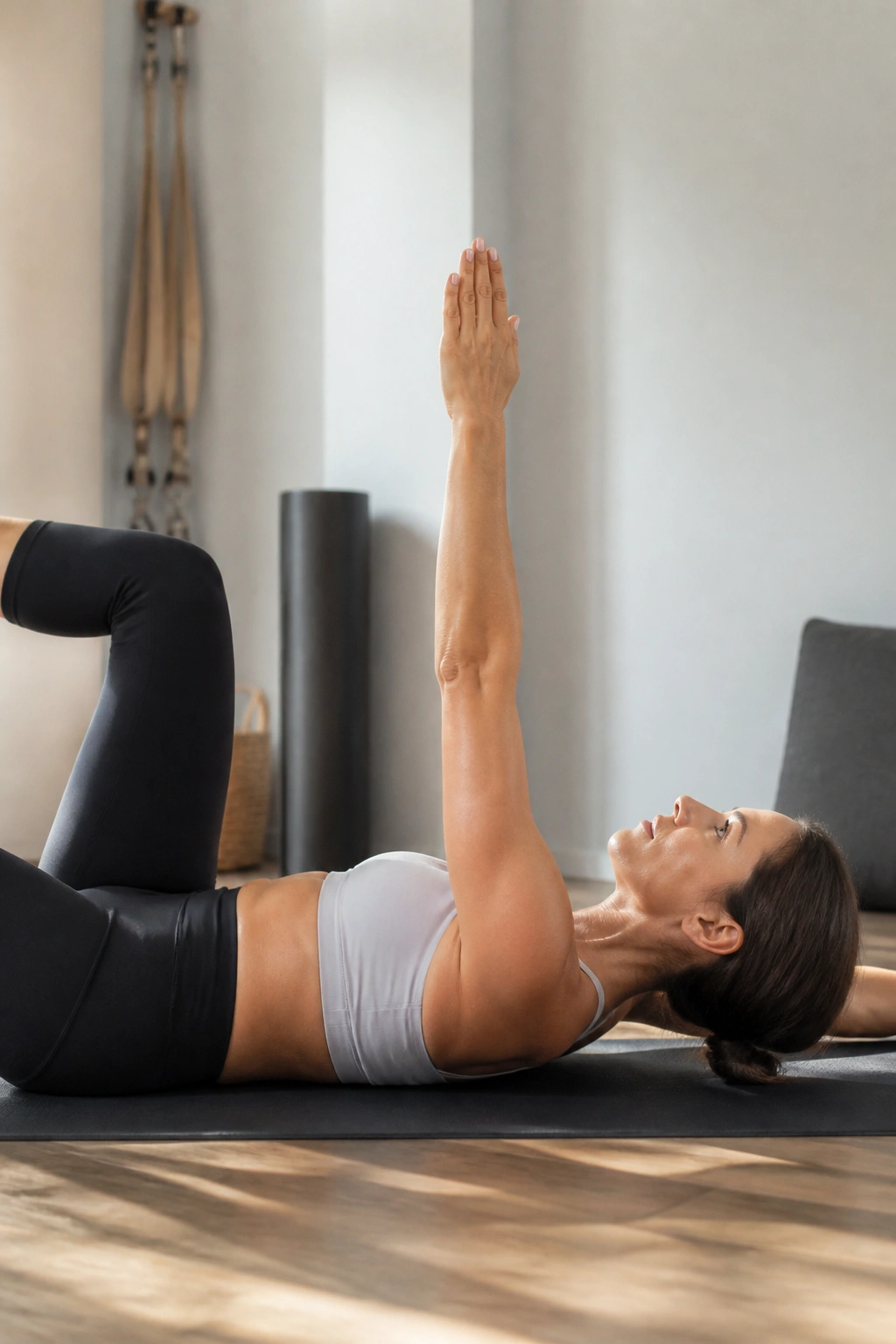
A short Pilates-style session can feel cleaner than a stretch when your body is sore but not injured. The reason is simple: it asks for control. Not force.
Dead bugs, toe taps, side-lying leg lifts, bird dogs, and pelvic tilts are all fair game. Keep the reps slow, the exhale steady, and the movement small enough that you never lose shape. If your lower back is tired, reduce the range. If your neck starts working harder than your abs, your setup needs adjusting.
One of the nice things about this style of recovery work is how it ties the core to the hips and shoulders without loading them. After a long run or a heavy lower-body day, that connection can feel loose in a bad way. A few controlled sets bring it back.
A simple pairing works well: 30 seconds of breathing or bracing drill, then 6 to 8 slow reps of one movement, then a short reset. Keep it quiet. Keep it neat. There’s no prize for speed here.
12. Dynamic Stretching Between Hard Days
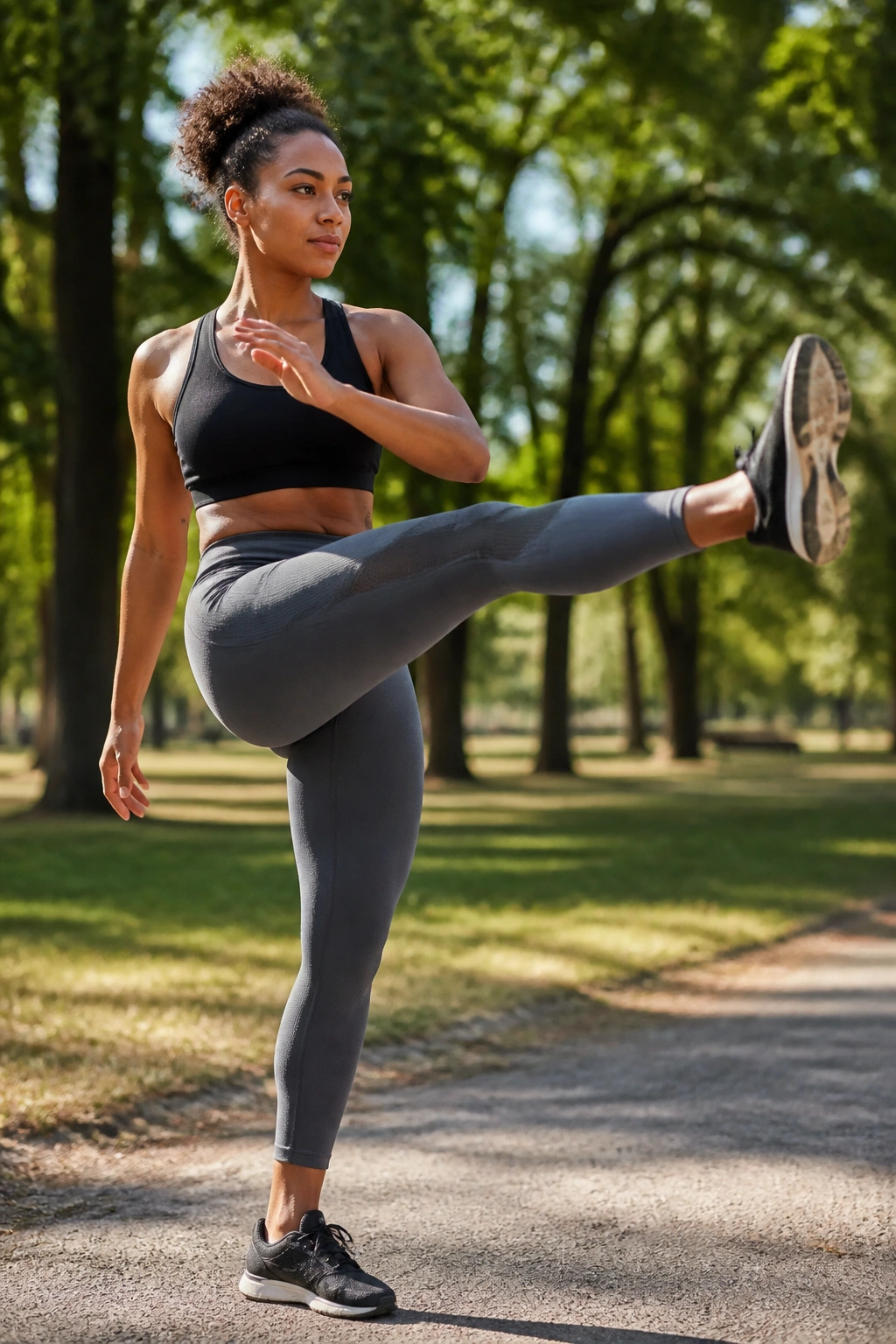
Static stretching gets all the attention, but dynamic stretching has a better personality for active recovery. It moves. It wakes things up. It doesn’t ask you to fold yourself into a shape and stay there while your body resents the effort.
Think leg swings, arm circles, walking lunges with a small reach, inchworms with soft knees, and ankle circles. Do 5 to 8 reps per movement, or about 20 to 30 seconds each, and keep the pace smooth. The goal is easy motion through a range you can control—not a deep stretch that sends you reaching for furniture.
A good dynamic circuit is short enough to feel doable and long enough to change how you move. Five minutes can be enough. Ten minutes is plenty. Past that, you’re probably slipping into a workout.
I like this option when soreness is spread around the body and I don’t want to pick one area to baby. It wakes the whole system up without making any one muscle group feel trapped in a long hold.
13. Flat-Trail Hiking
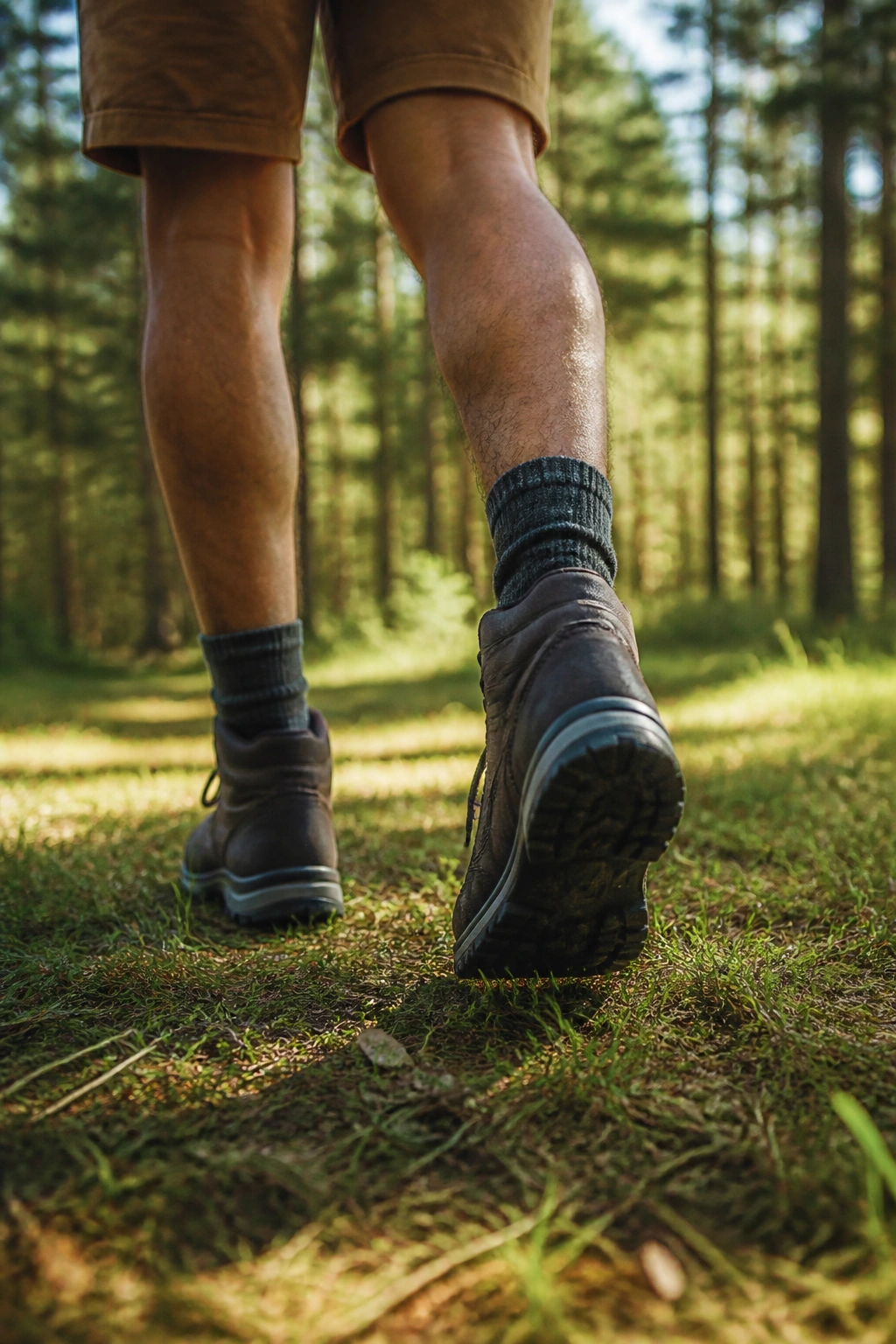
A flat trail can do more for recovery than a treadmill because the ground feels alive under your feet. Grass, packed dirt, gravel—those surfaces ask your ankles and feet to work a little differently than pavement does.
Keep the hike easy. No steep climbs. No heavy pack. Just 20 to 40 minutes of steady walking on a route that lets you enjoy the movement without turning it into a cardio event. If the quads are the sore spot, a flatter path is kinder. If the calves are tight, softer ground often feels better than concrete.
How to keep a hike easy
- Choose a route with minimal hills.
- Carry water, but skip the weighted vest.
- Keep strides short on uneven ground.
- Stop if your gait starts getting clumsy.
There’s also a mental side to hiking that people underrate. The rhythm of stepping forward, looking up, and not staring at a wall can make a sore body feel less annoying. That doesn’t sound technical, but it matters.
Sometimes a plain walk in a decent place does more than a fancy gadget.
14. Low-Impact Dance Cardio
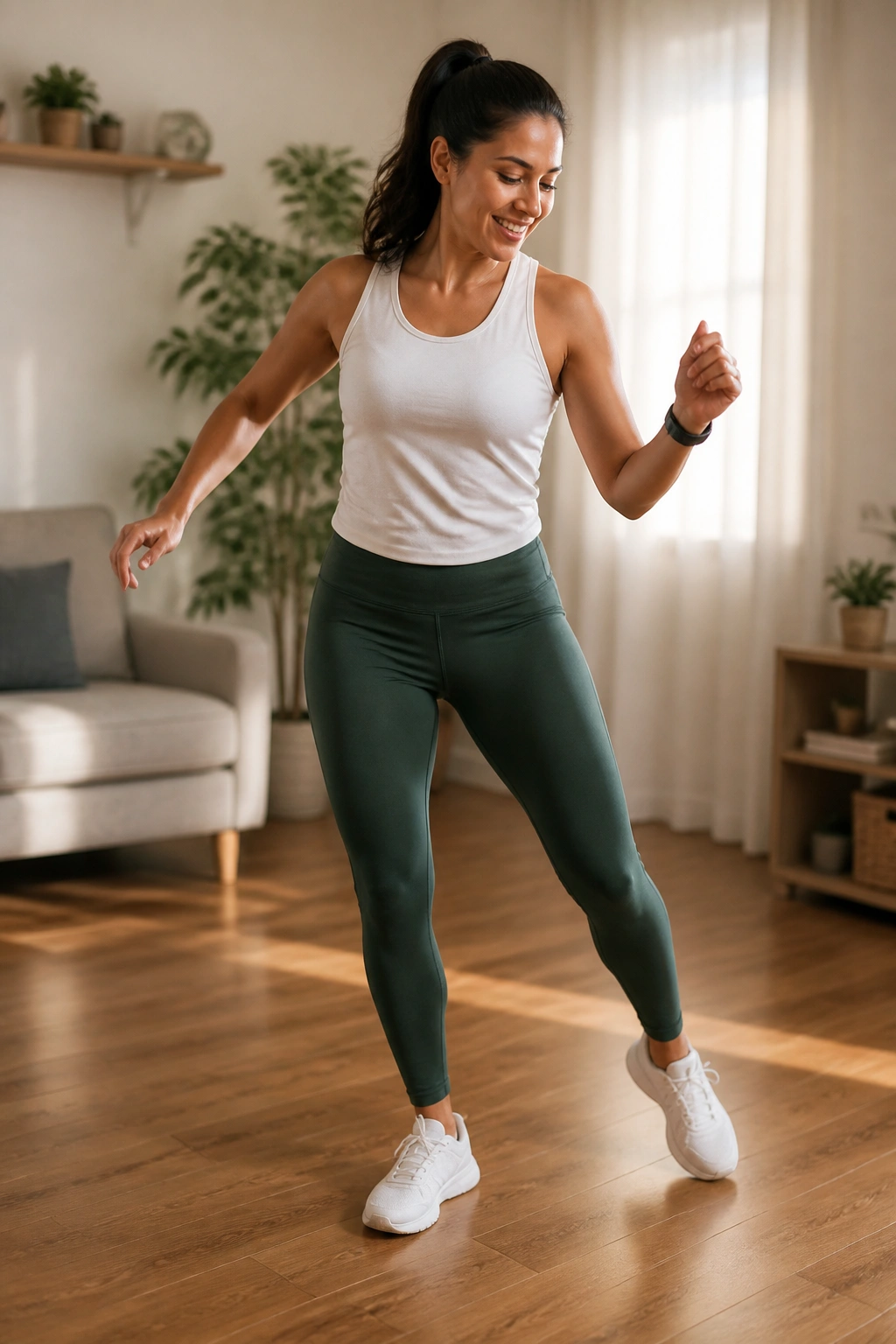
Dance cardio works when you strip out the bounce and keep the rhythm. No jumps. No sprints. Just side steps, grapevines, toe taps, arm reaches, and light turns that make the body feel loose instead of pinned down.
Pick 3 to 5 songs and keep your effort easy enough that you can still sing a line if you want to. If your shoulders are sore, lower the arm work. If your knees are cranky, stay grounded and keep the feet gliding instead of hopping. It should feel playful, not performative.
And yes, it can feel a little ridiculous in a quiet room. Good. That’s part of why it works.
What makes this a smart recovery choice is the way it mixes coordination with light movement. You’re not hammering one muscle group over and over. You’re shifting weight, opening the hips, and getting a little circulation everywhere at once.
If you hate the idea of “cardio” on a sore day, this is the loophole that doesn’t feel like cheating.
15. Shadowboxing and Footwork Drills

Shadowboxing can be recovery, but only if you remove the ego first. Throwing fast, hard combinations is not the goal. Staying loose is.
Use short rounds of 1 to 2 minutes, then rest for about 45 to 60 seconds. Keep the punches light, the shoulders dropped, and the knees soft. Footwork matters more than power here: small pivots, easy steps forward and back, gentle slips, a little weight shift from side to side. If your hips feel stiff after a lower-body session, this can wake them up fast.
The nice thing about shadowboxing is how much of the body it touches without loading it heavily. The trunk rotates. The feet stay active. The arms move, but they don’t have to carry any impact. That makes it a solid choice when you want to move but don’t want the pounding of running or jumping.
If your shoulders are the sore part, keep the hand work shorter and use the session for footwork only. That’s not a downgrade. It’s smart.
16. Tai Chi or Qigong Flows
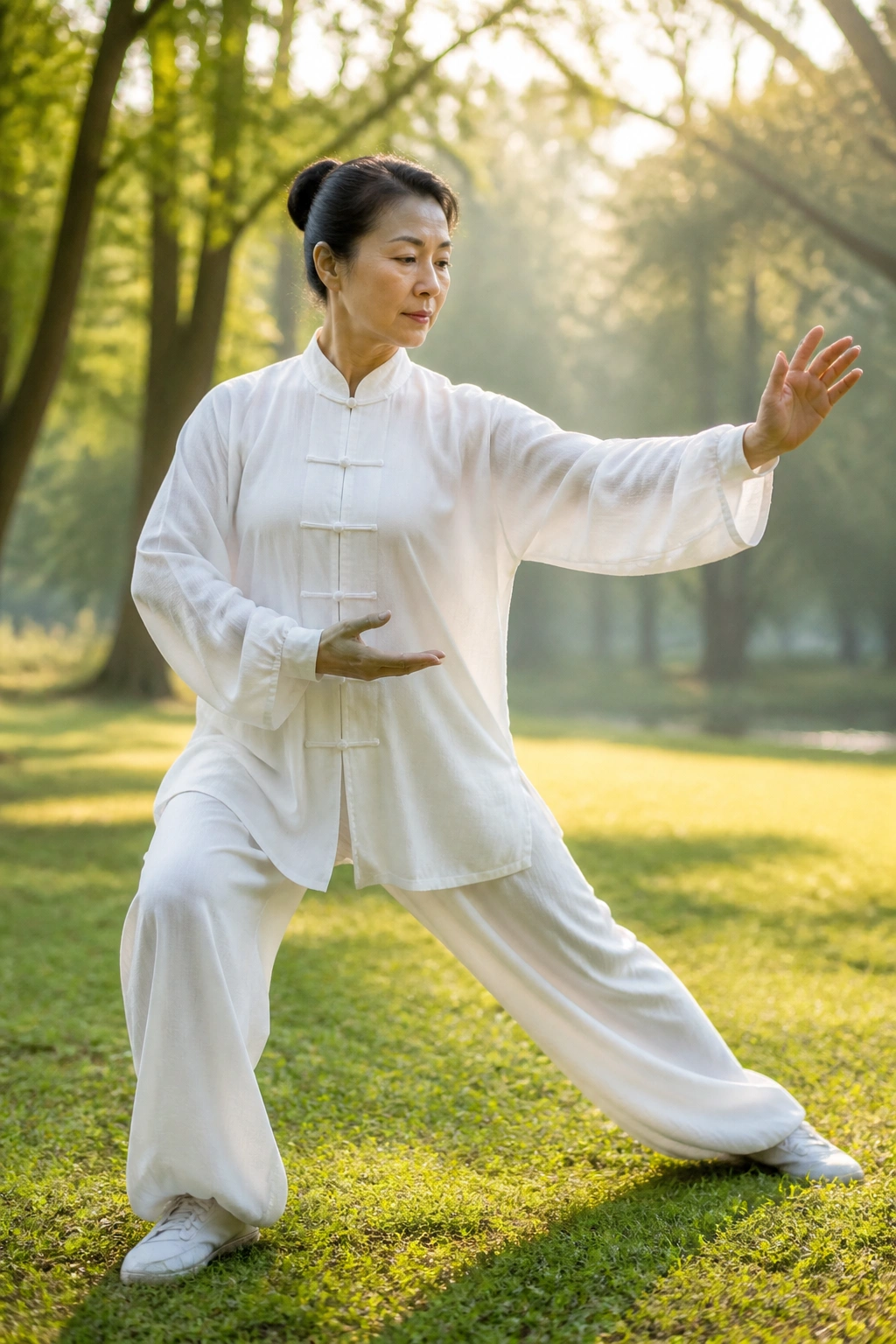
Slow wins here.
Tai chi and qigong are easy to underestimate because they look almost too calm to count as exercise. Then you do ten minutes and realize your hips, ankles, and upper back have been moving in ways they never do during a normal day.
The pace is deliberate. Weight shifts from one foot to the other. Arms arc through the air. The knees stay soft. Breathing stays quiet. That combination makes these flows useful on days when your soreness is everywhere and you don’t want a session that pokes the same tired spot over and over.
A short flow of 10 to 20 minutes is enough. Keep the stance narrow if the legs are sore. Keep the range small if the shoulders are tired. You’re not trying to look elegant. You’re trying to move smoothly.
People often skip this because it feels too gentle to matter. I think that’s backward. Gentle is the reason it works.
17. Backward Walking and Light Sled Drags
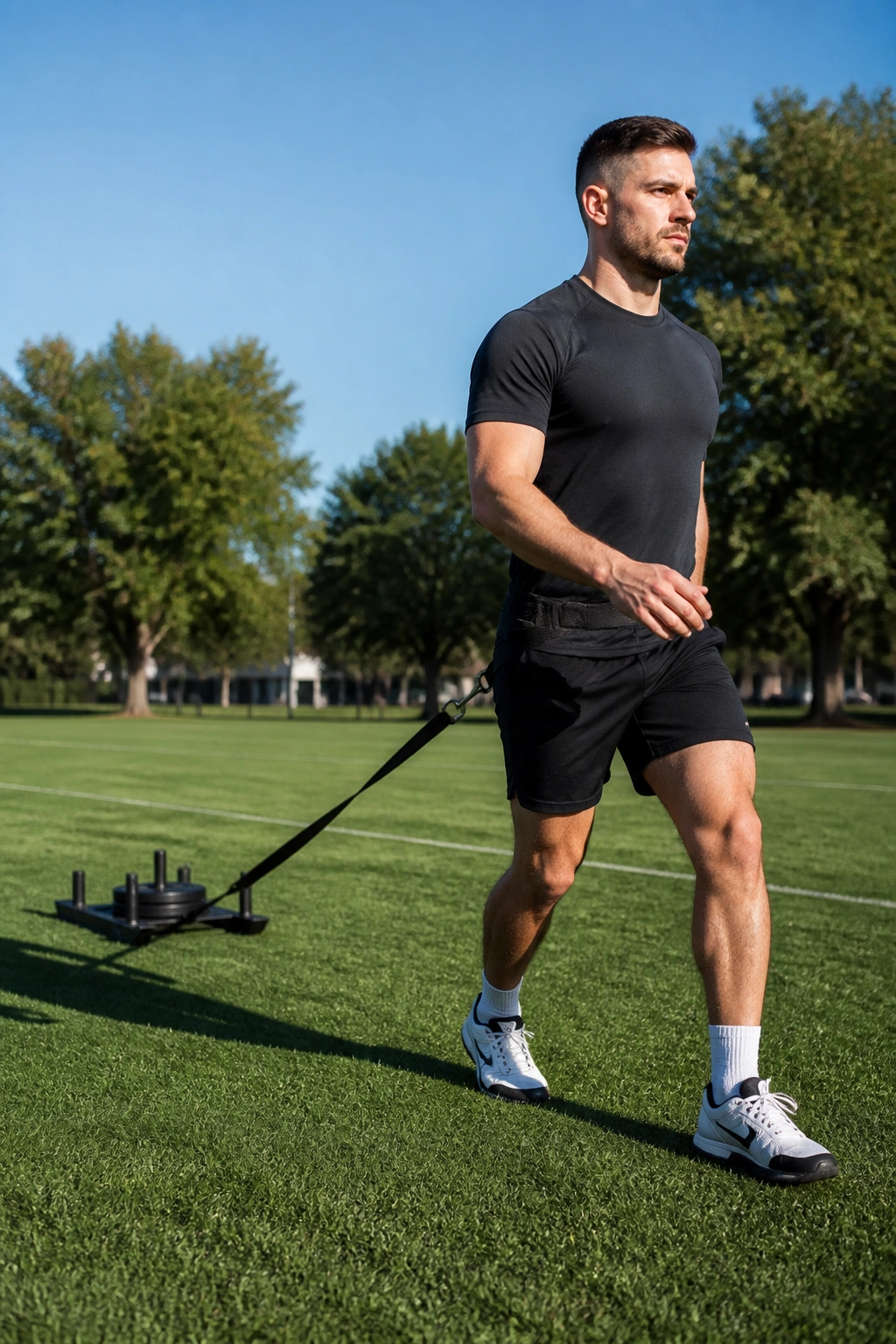
This is the odd one, and I mean that in a good way. Backward walking can feel amazing after quad-heavy work because it shifts the load in a new direction and asks the legs to control motion instead of absorbing it.
If you’re in a gym, light sled drags are the cleanest version. Use a load that feels almost too easy and take 10 to 15 yards per trip for 4 to 6 passes. Keep the steps short, the torso tall, and the effort low. If the sled starts turning your breathing hard, it’s too heavy for recovery.
No sled? Backward walking on a clear turf strip or flat path works too. Just watch your footing. This is one of the few recovery moves where safety matters more than style, because walking backward in a crowded space is a dumb way to meet a chair leg.
What makes this useful is the way it wakes the quads without the same soreness pattern you get from squats or lunges. The movement is controlled, the impact is tiny, and the muscles get a fresh angle of work.
18. A 20-Minute Recovery Combo
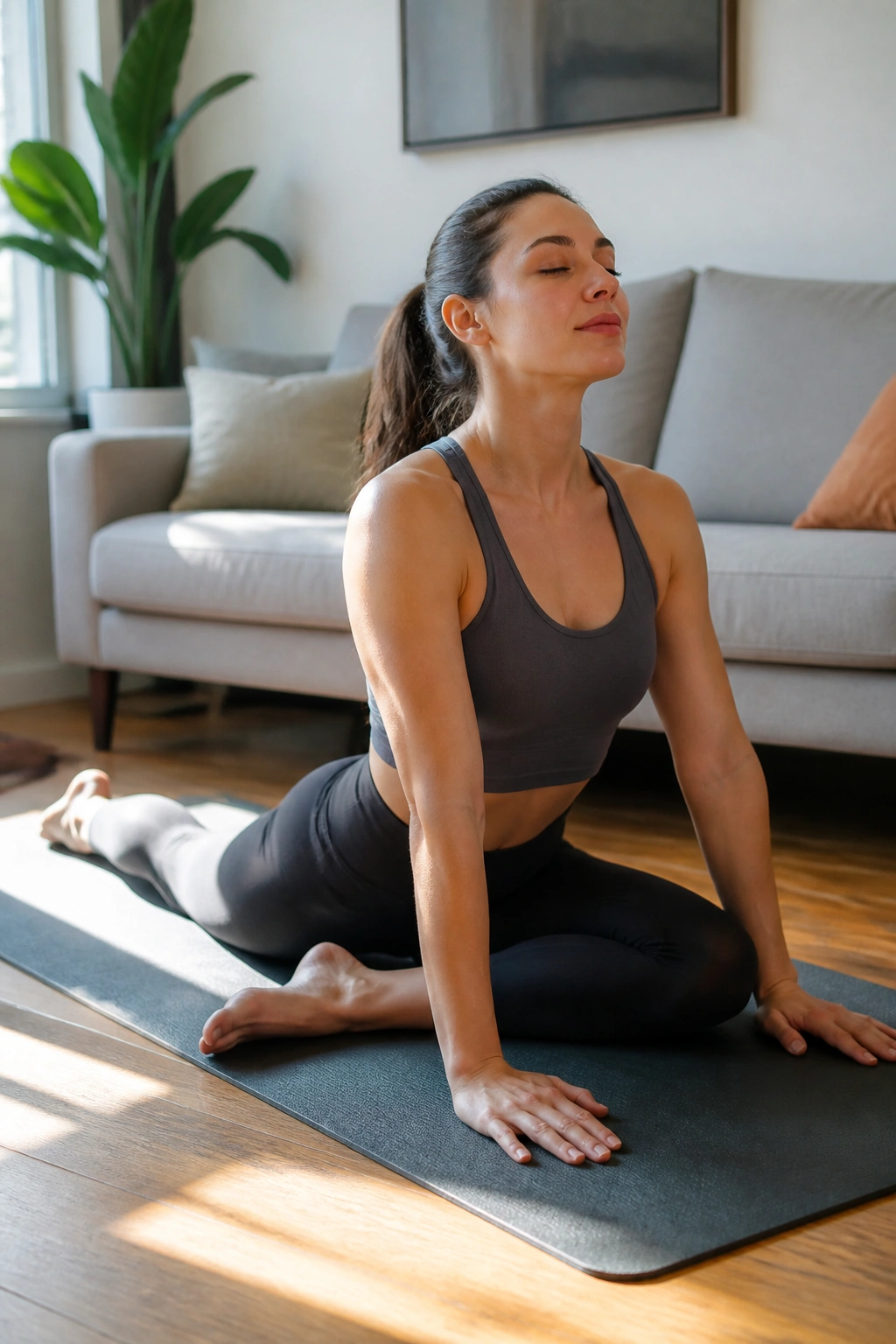
If you don’t want to think too hard, build a short combo and stop there. That’s often the smartest choice.
Use one piece of easy cardio, one mobility block, and one calming finish. Something like 5 minutes of walking, 5 minutes of hip and spine mobility, 5 minutes of bike or elliptical, then 5 slow minutes of breathing or floor work. The total stays short, the body gets multiple kinds of movement, and none of the pieces are long enough to turn miserable.
A simple recovery template
- 5 minutes: brisk walk or easy bike
- 5 minutes: cat-cow, hip circles, ankle rocks
- 5 minutes: pool walking, elliptical, or rowing at very low effort
- 5 minutes: legs-up-the-wall, slow nasal breathing, or a gentle twist
That kind of session works well when the soreness feels general rather than local. It also helps on days when you don’t want to make a decision. Pick four small pieces, keep them light, and leave while the body still feels cooperative.
If your soreness comes with limping, swelling, or sharp pain, skip the combo and rest. Recovery movement is helpful. It is not a patch for an actual injury.
Final Thoughts
The best active recovery workouts for sore muscles are the ones that feel a little too easy while you’re doing them. That’s not a flaw. That’s the whole design.
A walk, a light bike spin, a few minutes in the pool, or a slow mobility circuit can take the edge off stiffness without asking tired muscles to carry a real training load. Keep the effort gentle. Keep the session short. Leave some energy on the floor.
And if a recovery day starts feeling like a secret hard workout, cut it back. That small act of restraint often does more for tomorrow’s training than pushing through another sweaty round ever will.
