



Some mornings, the body wakes up before the brain has agreed to join the meeting. The neck feels welded, the low back has opinions, and the hips act like they spent the night in storage. That is exactly where gentle yoga flows for slow stretchy mornings make sense: not to chase sweat, but to unstick the places sleep tends to tighten.
A good morning practice should feel like opening a window, not hauling furniture. A few slow breaths, a couple of spinal motions, and one or two easy holds can change the whole tone of the day. The trick is staying small enough that you’ll actually do it before coffee, or at least while the coffee is dripping.
I like morning movement that starts on the floor and stays honest. If a pose asks for balance, it should be the kind you can do with one hand on the wall and half an eye still closed. The best stretch is the one that makes you sigh, not brace.
Start with the neck and shoulders. They usually complain first.
1. Neck-and-Shoulder Morning Unwind
If your shoulders live somewhere near your ears before breakfast, begin here. This is the kind of gentle yoga flow that pays rent fast, because it targets the stiff upper traps, the jaw, and the little muscles that hold your head up all day.
A seated start keeps things simple. Sit cross-legged on the floor, on a folded blanket, or on the edge of the bed, then let the ribs settle and the hands rest on the thighs.
- Roll the shoulders forward 3 times, then back 3 times.
- Tilt the right ear toward the right shoulder for 3 slow breaths, then switch sides.
- Interlace the fingers behind your head and let the elbows widen, then soften the jaw.
- Cross the right arm across the chest and hold above the elbow for 3 breaths; repeat on the other side.
- Finish with 5 slow shoulder shrugs, lifting on the inhale and dropping on the exhale.
Skip the urge to pull on your head. Let the neck release by itself. If the jaw is clenched, press the tongue gently to the roof of the mouth and exhale longer than you inhale. That one tiny change matters more than people think.
2. Cat-Cow to Thread-the-Needle Flow
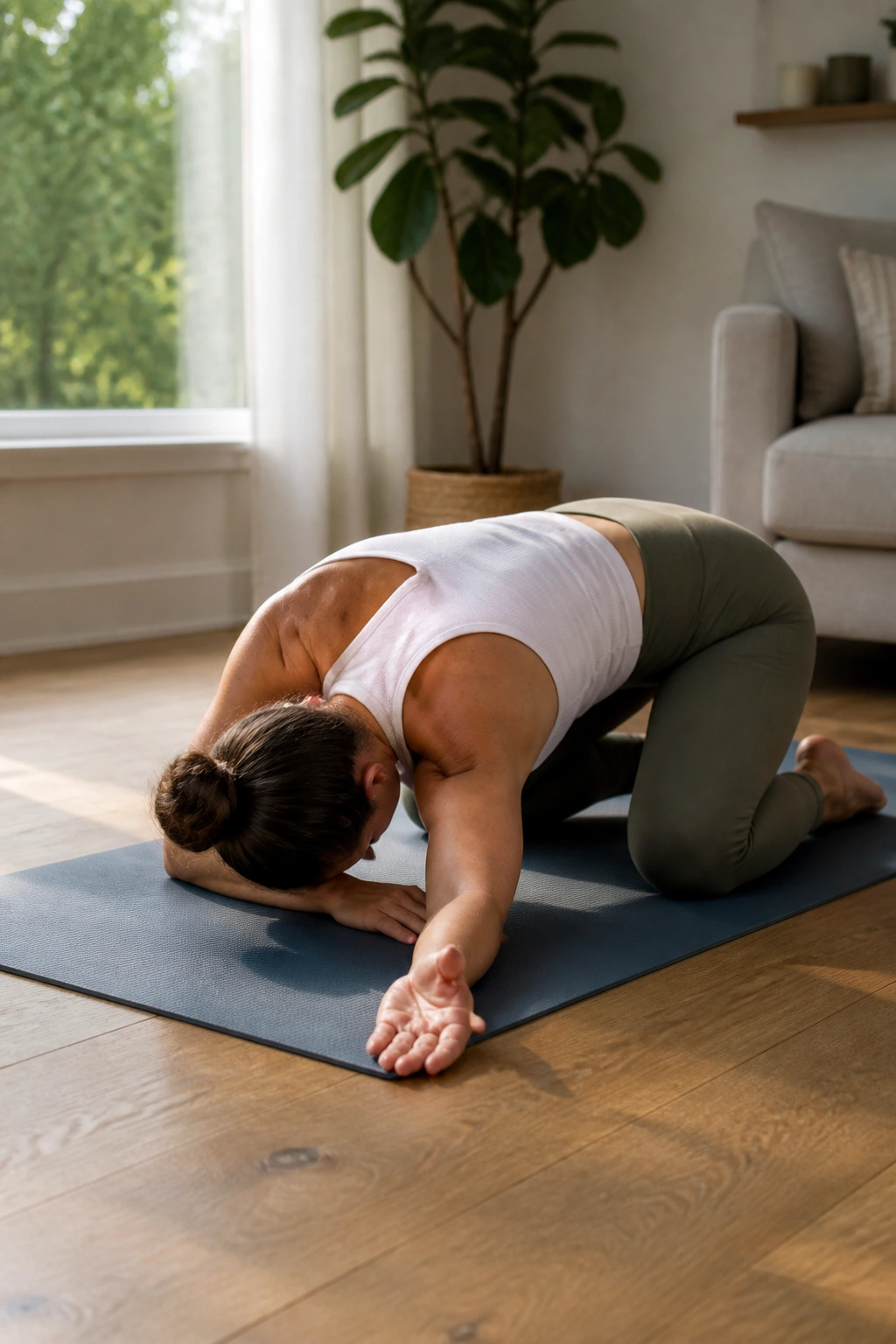
Why does cat-cow feel so good first thing in the morning? Because it wakes the spine in both directions instead of forcing it to choose one. The flexion, extension, and gentle rotation give the back a chance to move like a back, not a board.
Why it helps
Come to tabletop with hands under shoulders and knees under hips. Inhale into cow, with the chest broad and the tailbone lifting; exhale into cat, with the belly drawing up and the chin nodding slightly.
After 5 to 8 rounds, slide one arm under the other for thread-the-needle. Keep the hips high or lower the shoulder and ear to the floor if that feels good. Hold for 3 breaths each side, then come back to tabletop and take a slow, neutral breath.
How to keep it easy
- Put a folded blanket under the knees if the floor feels hard.
- Keep the movement small; the point is circulation, not maximum range.
- If your wrists are cranky, come down onto forearms for a few cat-cow rounds.
One smooth breath here can do more than a rushed minute of stretching. Slow wins.
3. Child’s Pose to Sphinx Spine Reset
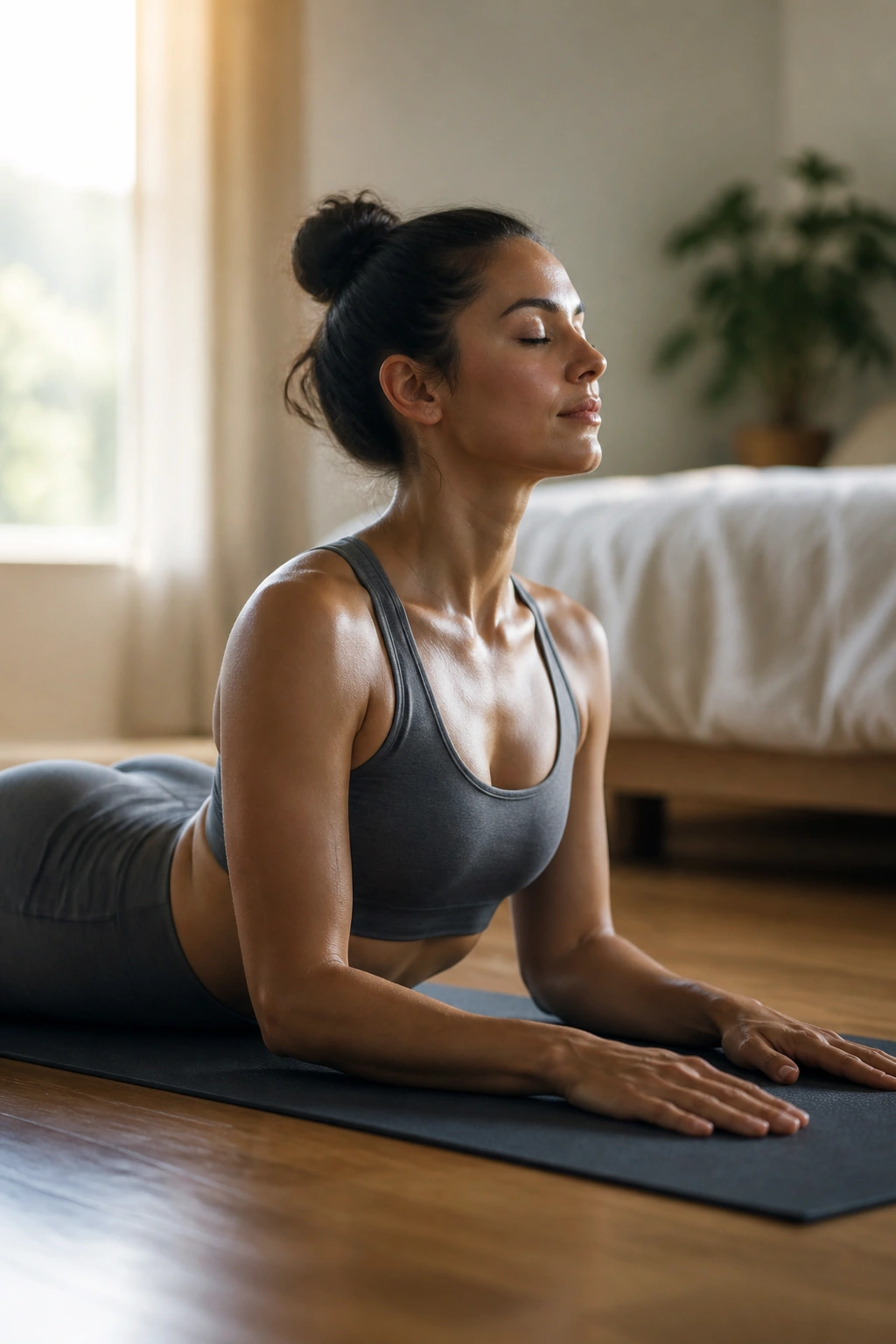
Child’s pose is not lazy. It is the pause that lets the lower back stop guarding every inch of itself.
Sink the hips back toward the heels, walk the hands forward, and let the forehead hover on a block or rest on the mat. Breathe into the back ribs for 4 slow breaths, then glide forward into sphinx by coming onto the forearms. The belly stays soft, the collarbones stay wide, and the glutes do not need to squeeze like crazy.
I keep coming back to this little back-and-forth because it works on both ends of the spine. One shape rounds the back line and widens the ribs; the other opens the front of the body without the drama of a big backbend. If the neck feels pinchy in sphinx, move the elbows farther in front of the shoulders and let the gaze drop.
Slowly rock between the two shapes 2 or 3 times. That rhythm is enough.
4. Seated Side-Bend and Gentle Twist Flow
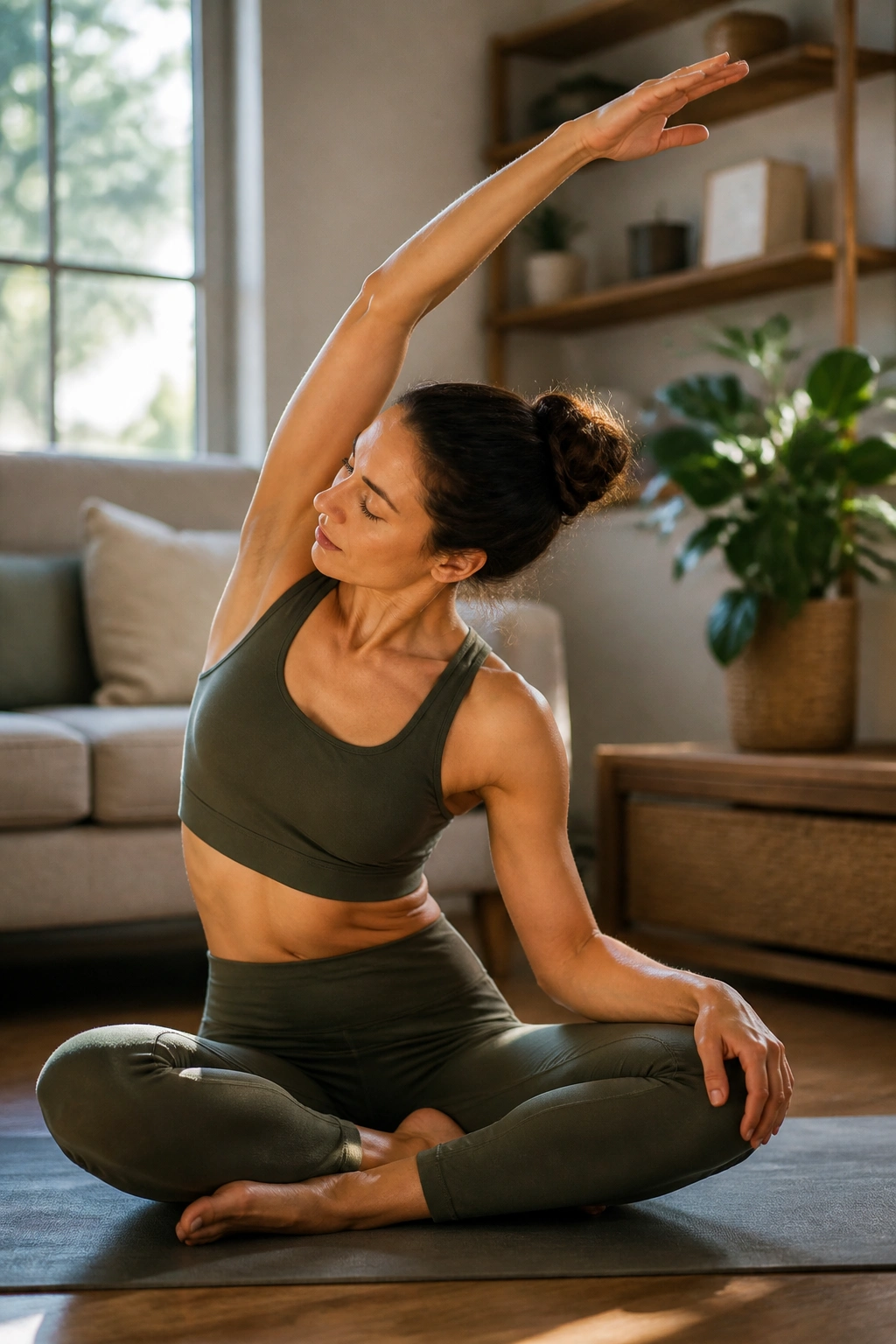
Ever wake up with the side of your torso feeling shorter on one side? That’s the sign to move sideways before you move hard. A gentle side bend wakes the obliques, the ribs, and the muscles along the waist without asking the hips to do all the work.
What makes this flow different
Sit tall, cross-legged or in staff pose, and lift one arm up on an inhale. Lean just enough to feel a line from the outer hip to the fingertips, then keep both sit bones heavy. Hold for 3 breaths, switch sides, and follow it with a small seated twist.
How to use it
- Side bend right and left, 3 breaths each.
- Twist gently from the ribs, not the lower back.
- Keep the chin level if turning the head feels too sharp.
- Exhale to rotate; inhale to lengthen.
A tiny twist is enough in the morning. If you chase depth too early, the low back usually votes no.
5. Low Lunge Hip-Opener Flow
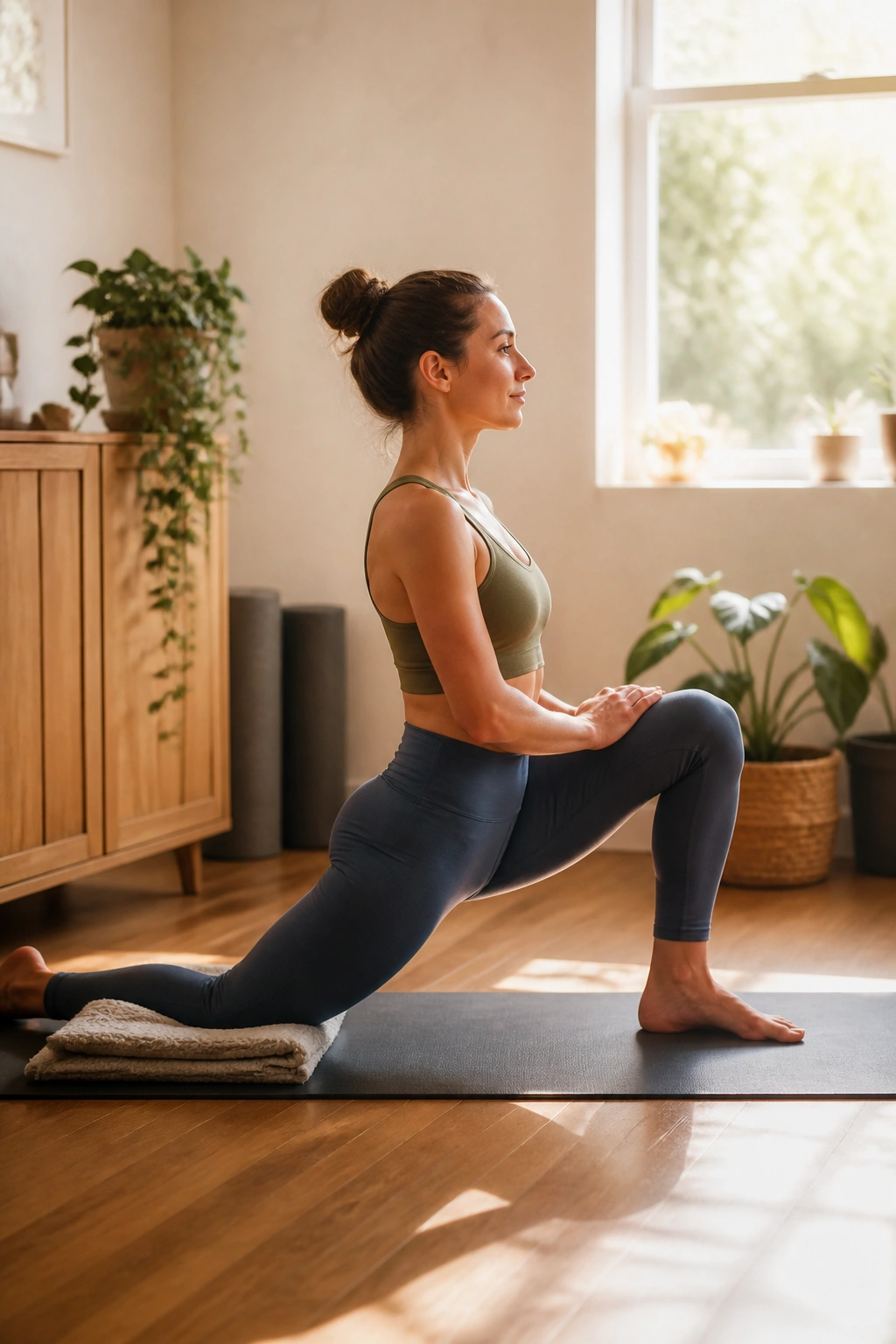
Unlike a deep standing lunge, a low lunge keeps the back knee on the floor and gives the hip flexors a quieter start. That matters if you sit a lot, run, cycle, or wake up with the front of one hip feeling glued shut.
Step the right foot forward between the hands, drop the back knee, and slide the pelvis forward only until the stretch is felt along the front of the back leg. Keep the ribs from flaring. A folded blanket under the back knee changes everything if the floor is unforgiving.
You can stay upright with hands on the front thigh, or lift the arms once the breath feels steady. If the lower back arches too much, tuck the tailbone slightly and bring the front foot a little farther out. That small adjustment usually makes the stretch cleaner.
This is one of those yoga flows for mornings where the hips are the real story. They usually are.
6. Half Split Hamstring Reset
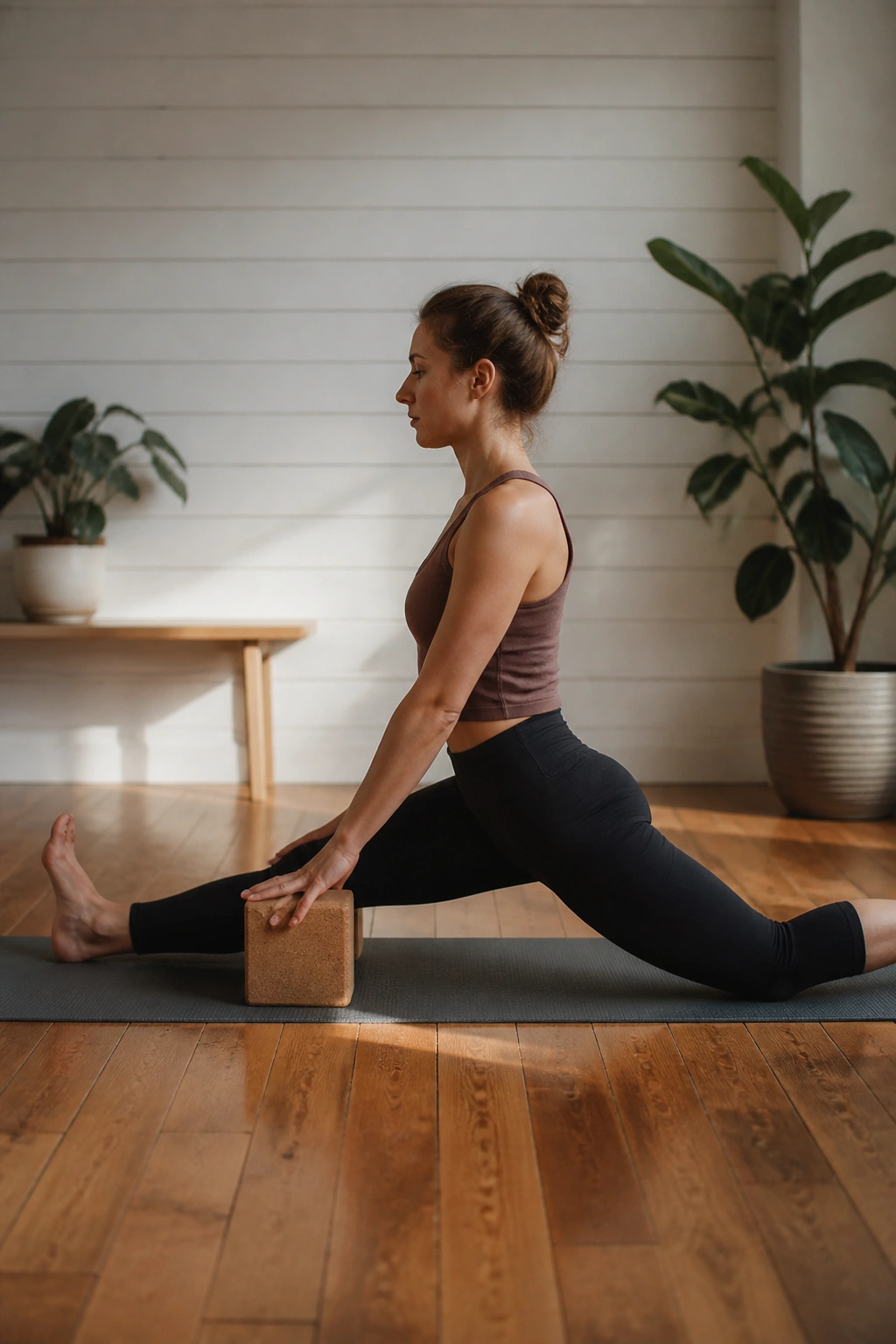
A half split feels better when you stop chasing the toe. That’s the whole secret, and it saves a lot of grumpy hamstrings.
From low lunge, shift the hips back and straighten the front leg only as much as the back can stay long. Flex the front foot, hinge from the hips, and let the hands rest on blocks, the floor, or the shin. The knee can stay softly bent. It should stay softly bent if the hamstrings are sharp.
The goal is a long line through the spine, not a dramatic fold. I’d rather see a smaller shape with a steady breath than a deep fold with the face tightening. If the hamstring grabs, back off 2 inches and breathe there. Usually that’s the right spot.
Hold for 3 to 5 breaths, then bend the knee and return to low lunge. Simple. Useful. No bragging rights needed.
7. Down Dog Pedal and Walkout Flow
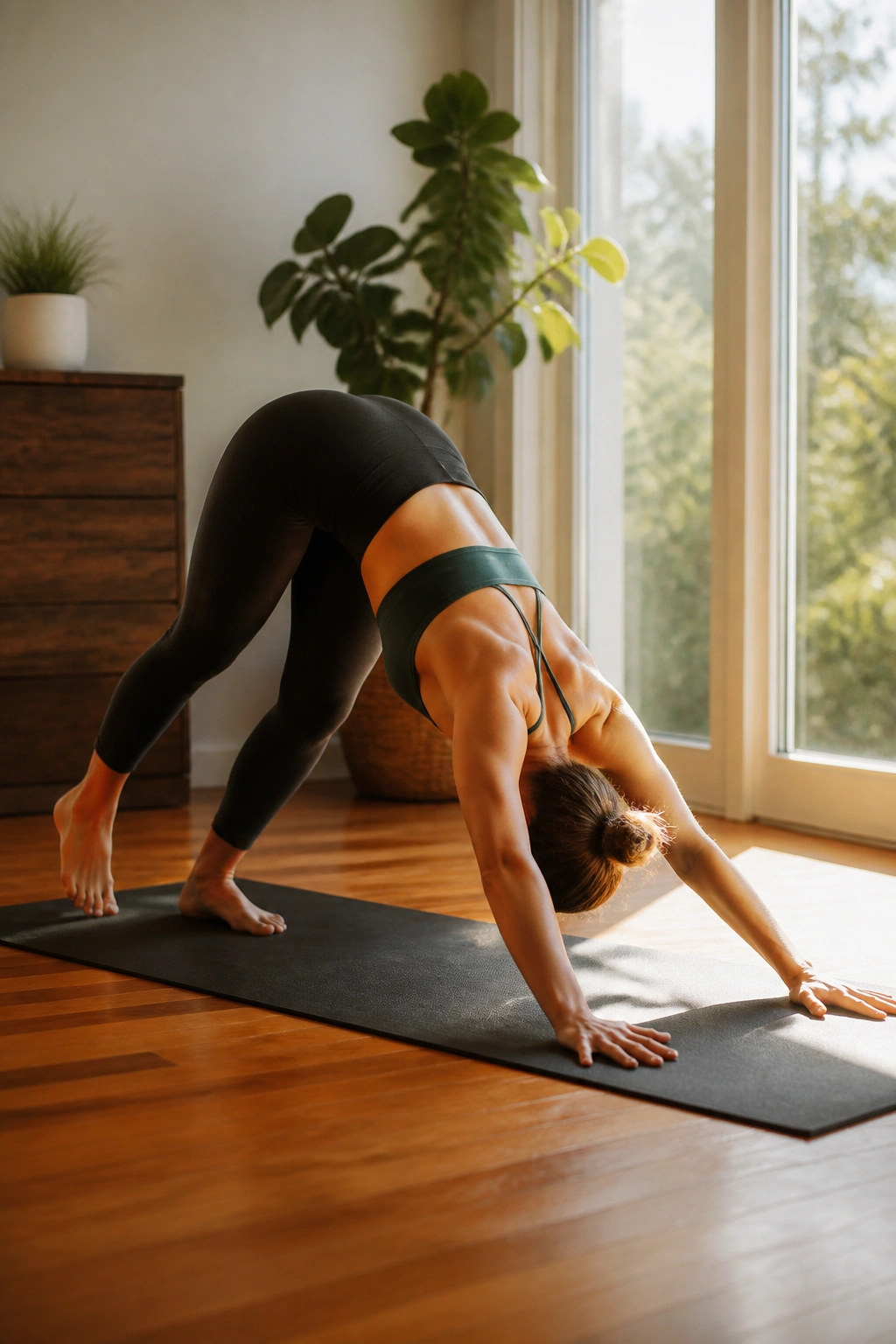
A slow walkout from standing to down dog can feel like wringing stiffness out of the whole backside. It’s a nice bridge between the quiet floor work and anything more active later in the day.
Start in a soft standing forward fold, fingertips to the floor or shins. Walk the hands forward to a high plank only if that feels clean, then push the hips back into downward-facing dog with bent knees and a long spine. Pedal the feet, one heel then the other, for 5 to 8 rounds.
If the wrists dislike this, keep the knees bent and the hands a little wider than shoulder-width. A block under the heels does nothing here; the point is not to force the heels down. The point is to wake the calves, hamstrings, shoulders, and spine in one slow sweep.
- Walk the hands out slowly.
- Bend one knee, then the other.
- Keep the neck loose.
- Breathe until the shape feels less foreign.
No rush. Never rush the first down dog.
8. Standing Rag Doll Forward Fold
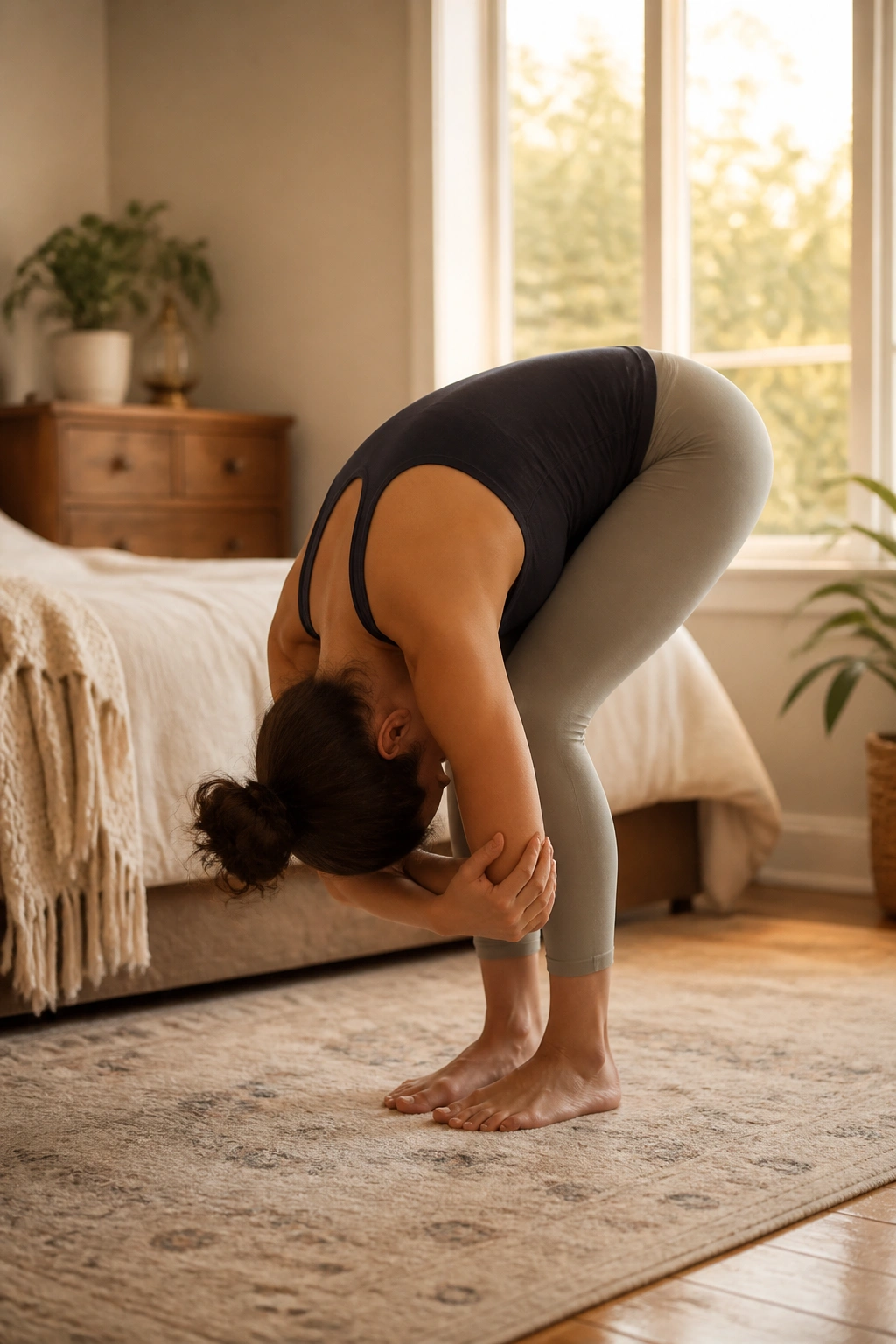
Forward folds are better when they feel like hanging laundry instead of performing a trick. Rag doll does that beautifully, because it asks the head, neck, and back line to soften all at once.
Stand with feet hip-width apart, bend the knees generously, and drape the torso over the thighs. Hold opposite elbows and sway side to side. The knees can bend more than you think; the hamstrings do not get extra points for suffering.
I like this shape after sleep because it gives the spine a break from being upright. The weight of the head can traction the neck a little, and the little sway often smooths out the low back. If dizziness shows up, keep the eyes looking down and come up slowly, one vertebra at a time.
Stay for 5 breaths. Then release the hands, halfway lift, and stand again like a person who has remembered where their joints are.
9. Crescent Lunge to Warrior II Morning Yoga Flow
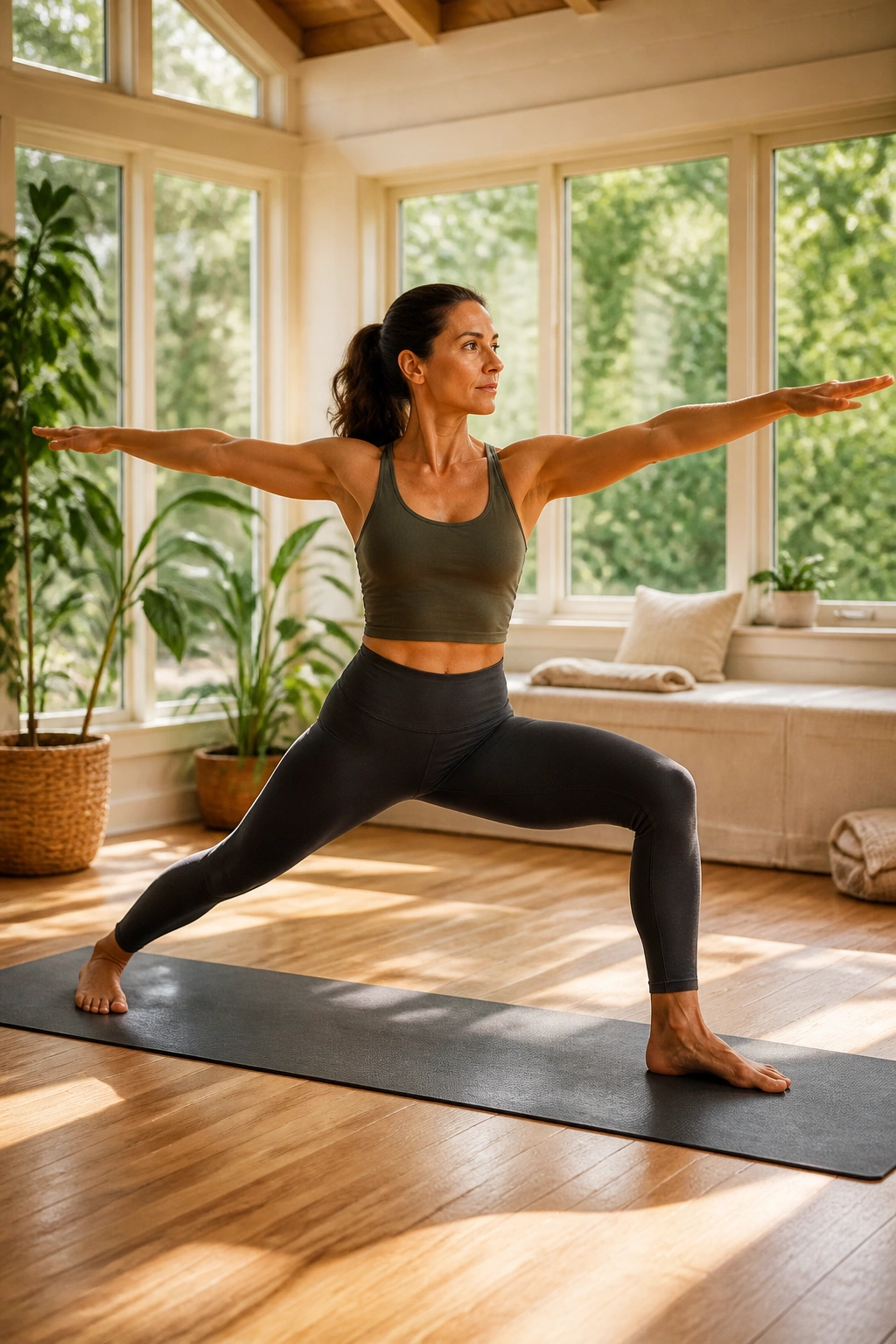
Need a little more heat without jumping straight into a workout? This is the flow for that. Crescent lunge to Warrior II gives the legs something to do while the upper body stays calm.
The shape of it
Step the right foot forward, lift the torso, and rise into a high crescent lunge with the back heel lifted. Take one breath there, then open the left arm back and the right arm forward into Warrior II. Keep the stance short enough that you can still breathe through the nose without feeling hunted.
How to keep it gentle
- Keep the front knee stacked over the ankle.
- Shorten the stance if the hips tilt forward.
- Drop the back knee for a lower-intensity version.
- Let the gaze stay soft, not intense.
The difference between useful and irritating is usually 2 inches of stance length. If the front thigh shakes a little, fine. If the breath becomes ragged, come out sooner. The body does not need to be convinced; it needs to be listened to.
10. Reclined Figure-Four Hip Release
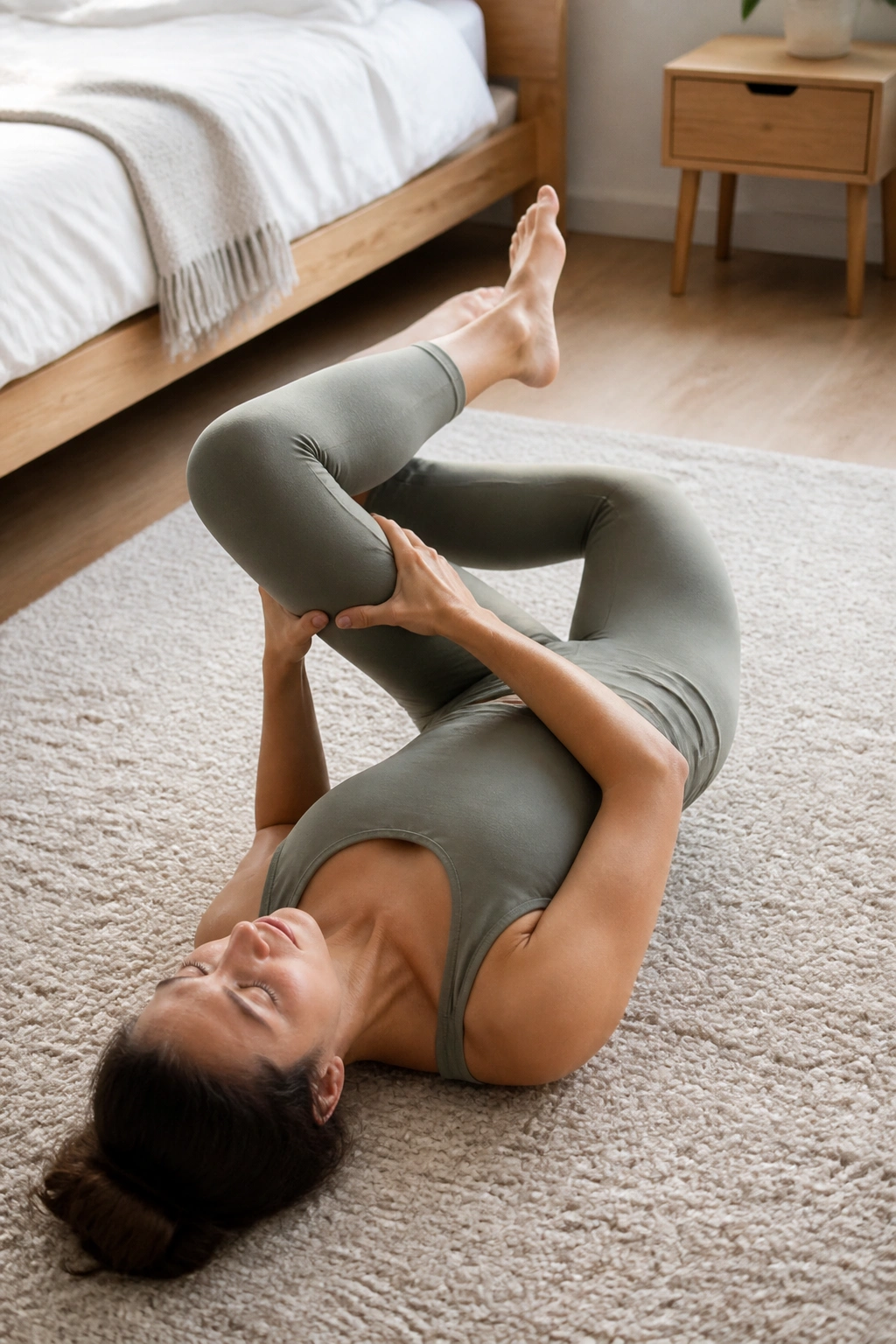
If you sat in a car, at a desk, or on a couch the night before, this one often lands well. Reclined figure-four hits the outer hip and the glute without demanding balance or floor strength.
Lie on your back, cross the right ankle over the left thigh, and keep the right foot flexed. Thread the hands behind the left thigh and draw it in until the stretch is clear but manageable. Some people feel it deep in the back pocket of the hip; that’s the point.
A wall under the supporting foot changes the whole tone if your hamstrings are tight. So does keeping the lower leg on the floor instead of lifting it. The shape should stay smooth, not strained.
Hold for 4 to 6 breaths, then switch sides. If the knee feels cranky, back out and keep the crossed ankle farther down the thigh. That small change often makes the difference.
11. Supine Twist and Happy Baby Flow
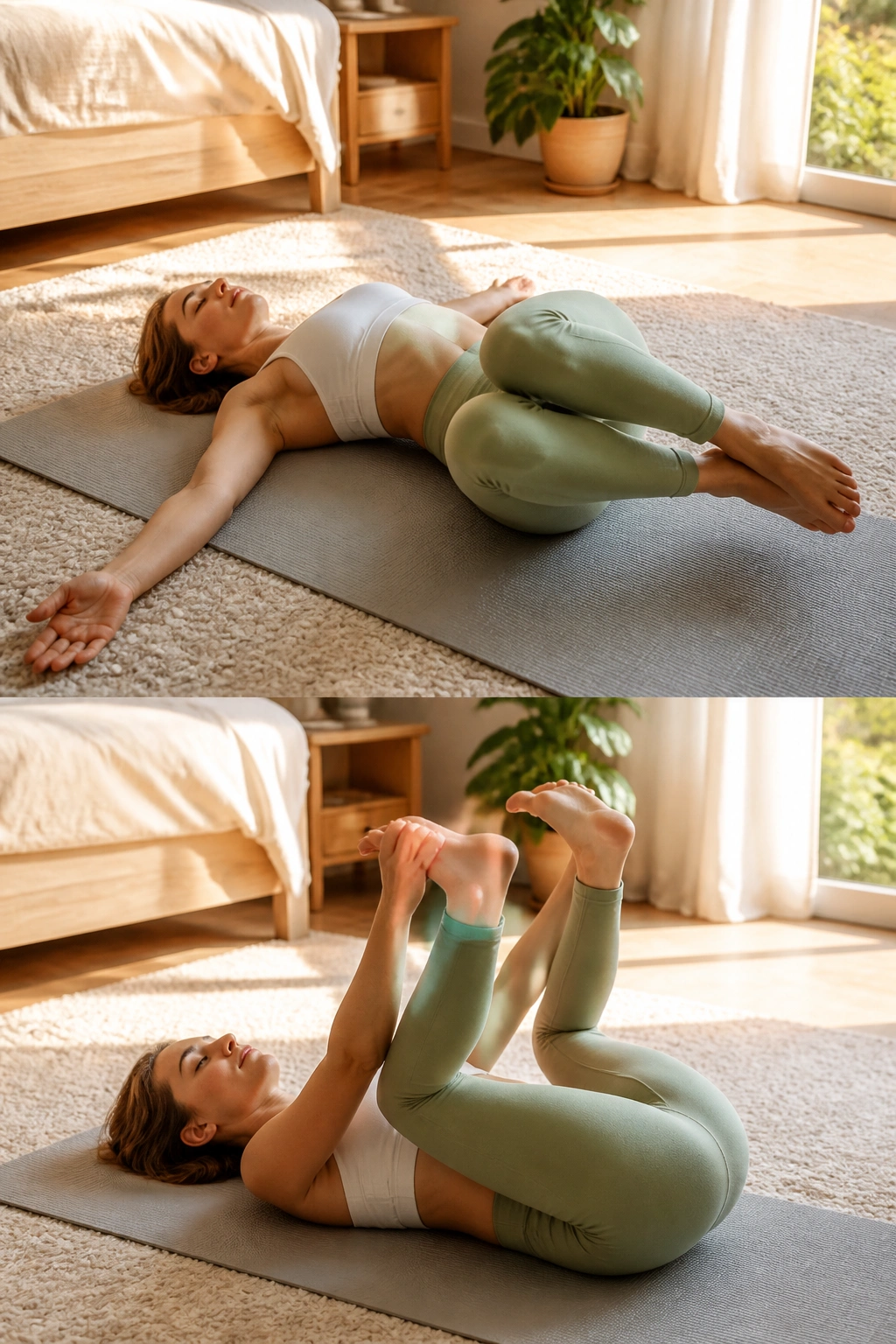
A floor twist can feel like pressing the reset button on a cramped morning back. Add happy baby after it, and you get a gentle release through the hips, the low spine, and the inner thighs.
Lie on your back and draw both knees in. Drop them to the right for a twist, with arms open like goalposts if that feels comfortable. Keep the left shoulder heavy. After 3 to 5 breaths, come back to center and take happy baby with one foot in each hand, or one leg at a time if that’s kinder.
The breath matters here more than the shape. If the belly stays soft and the exhale stays long, the lower back usually gives up some of its grip. That’s the whole bargain.
No need to force the knees toward the floor in either pose. Let the floor come to you.
12. Supported Bridge and Chest Opener Flow
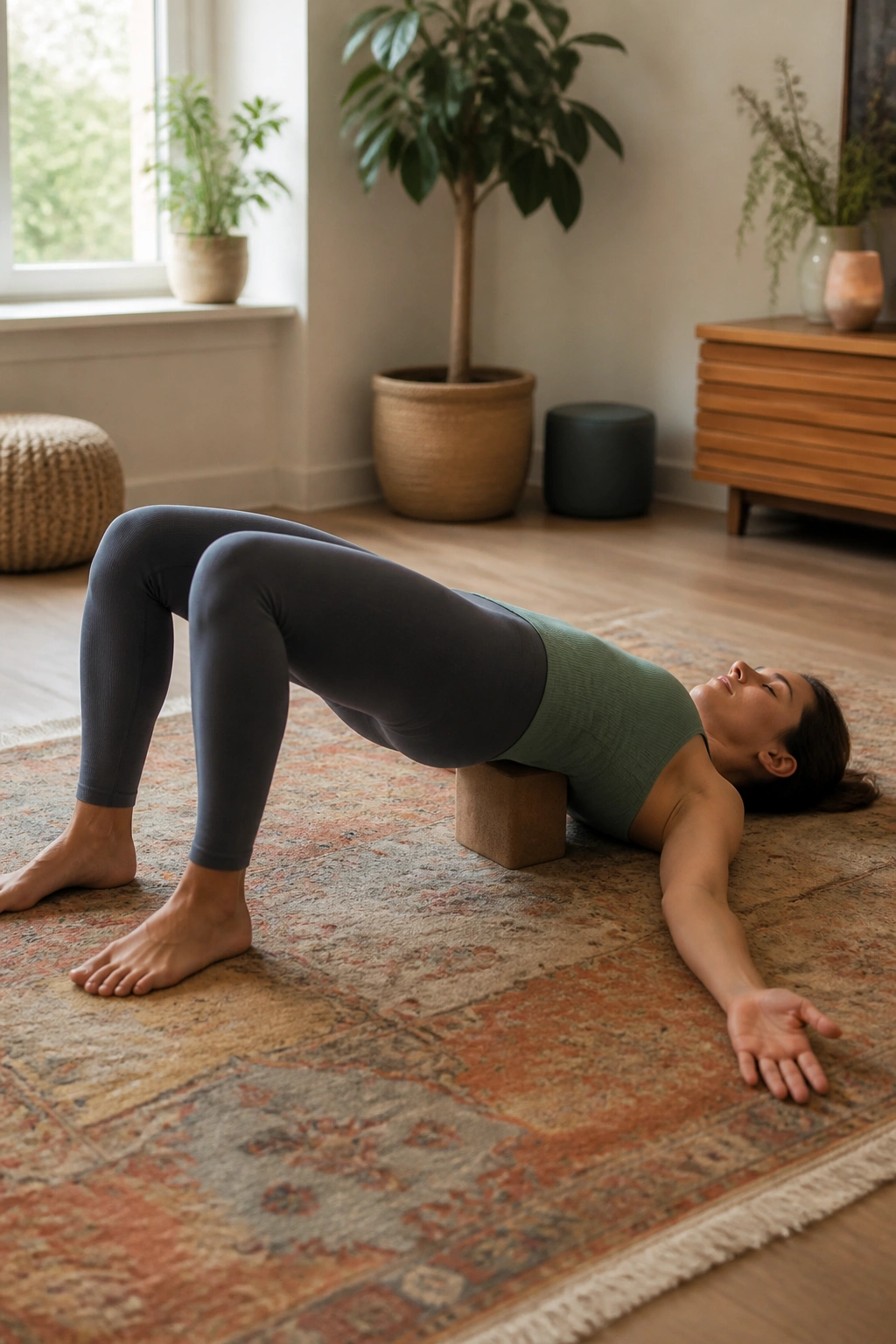
A supported bridge gives you chest opening without the drama of wheel pose. That alone makes it worth keeping around for slow mornings.
Lie on your back, bend the knees, and plant the feet hip-width apart. Lift the hips a few inches, slide a block or firm cushion under the sacrum, and let the weight settle. The front of the hips, the lower belly, and the chest all get a quiet stretch while the glutes can relax instead of working overtime.
Why I like this one
- It opens the front body without much effort.
- It gives the back a break from rounding.
- It feels stable enough for a sleepy start.
If your neck is sensitive, keep the chin slightly tucked and avoid turning the head. A block set at the lowest or medium height is usually enough. More height is not better here. Better is the setup that lets you breathe steadily for 5 or 6 breaths without fidgeting.
13. Ankles, Calves, and Feet Wake-Up Flow
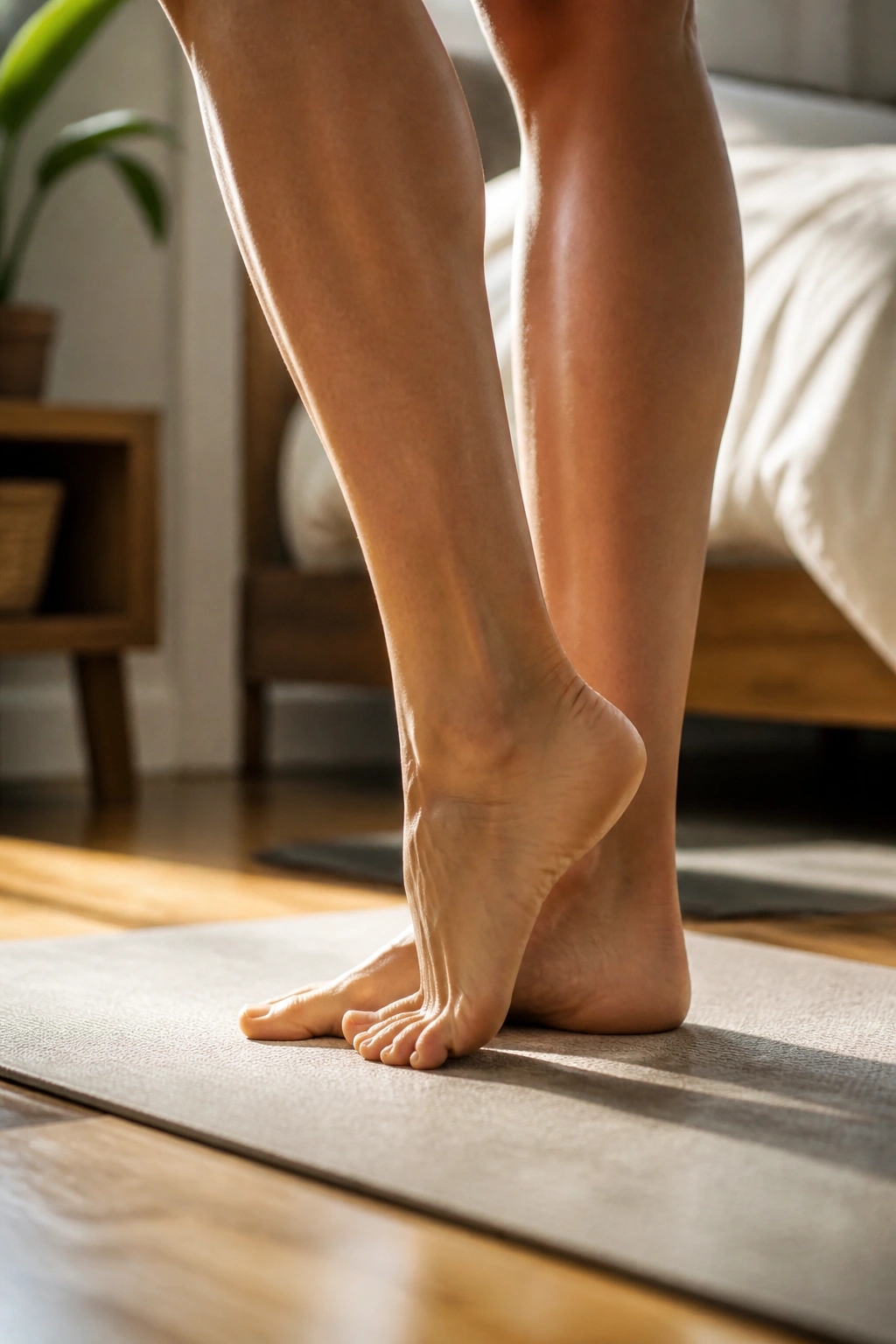
Feet are ignored all the time, and then people act surprised when standing yoga feels wobbly. The ankles and calves deserve a minute before anything fancy.
Why feet matter in the morning
They spend the whole night parked in one position. A few circles and stretches bring back the little bit of spring you need for walking, lunges, and balance poses.
A simple sequence
- Circle the ankles 5 times each direction.
- Spread the toes wide, then press them down.
- Rock up onto the balls of the feet and back to the heels 8 times.
- Come into a calf stretch at the wall for 3 breaths per side.
- Tuck the toes in tabletop for a gentle plantar stretch.
If you want one more step, squat down with heels lifted and hold onto a chair. That last shape can feel awkward the first time. It also wakes up the feet fast.
14. Wrist and Forearm Care Flow
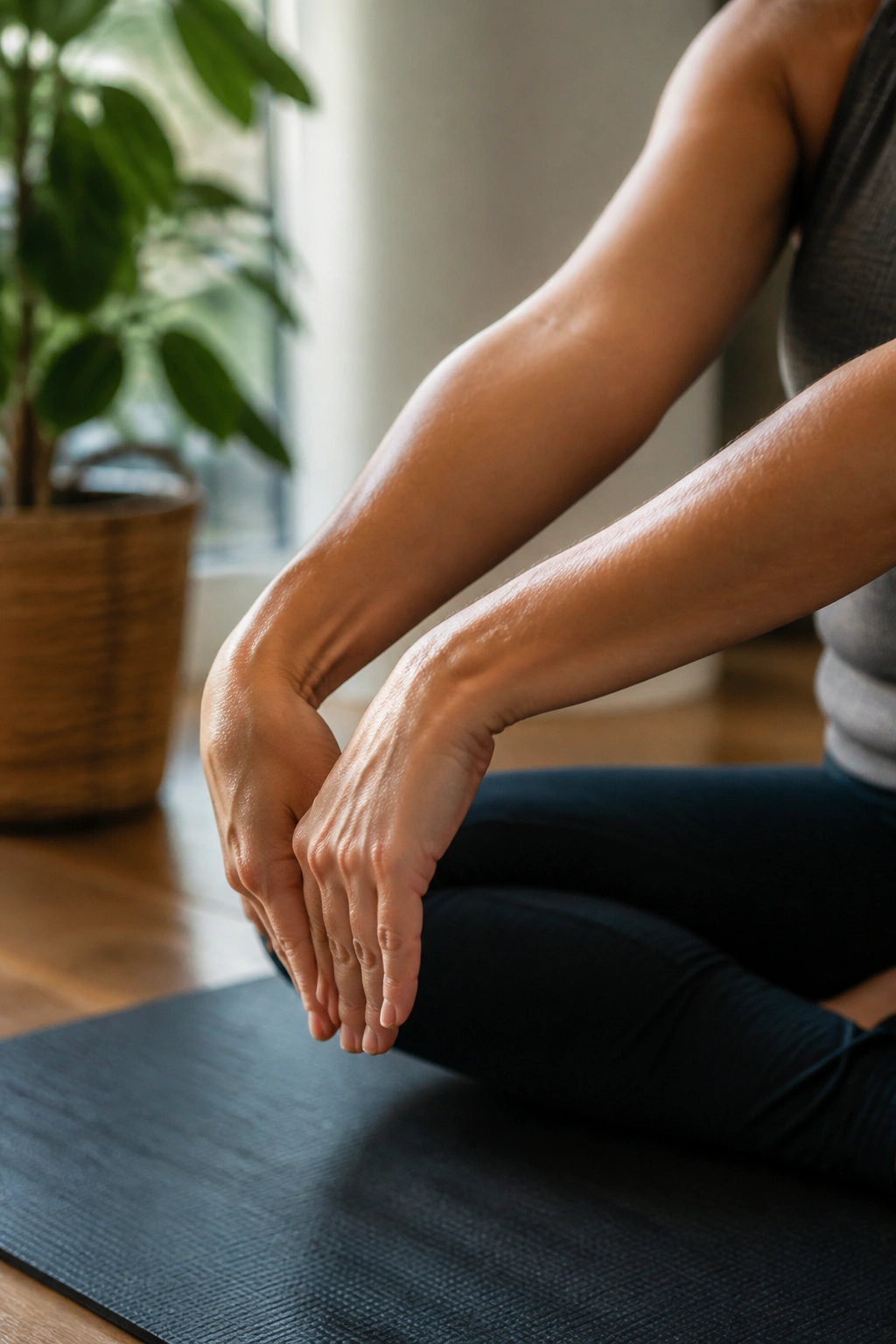
If your wrists ache before you even start, can you still do morning yoga? Yes, and you should probably start with the wrists themselves.
Come to all fours or sit with the hands in your lap. Circle the wrists slowly, then press the fingertips into the floor and rock the weight forward and back. Turn the hands over, fingers pointing toward the knees if that feels okay, and ease the heel of the hand down for a mild stretch. Keep the pressure tiny.
Keep the pressure light
- Use fists instead of flat palms if extension hurts.
- Take weight out of the wrists by coming to forearms.
- Put the hands on a wall at chest height for a standing version.
- Stop if you feel sharp pain or tingling.
A lot of people push through wrist discomfort because they think the pose is supposed to hurt there. It isn’t. The wrist should feel warm, not angry. The forearm stretch should feel like a clean line, not a stab.
15. Wide-Knee Child’s Pose to Puppy Pose
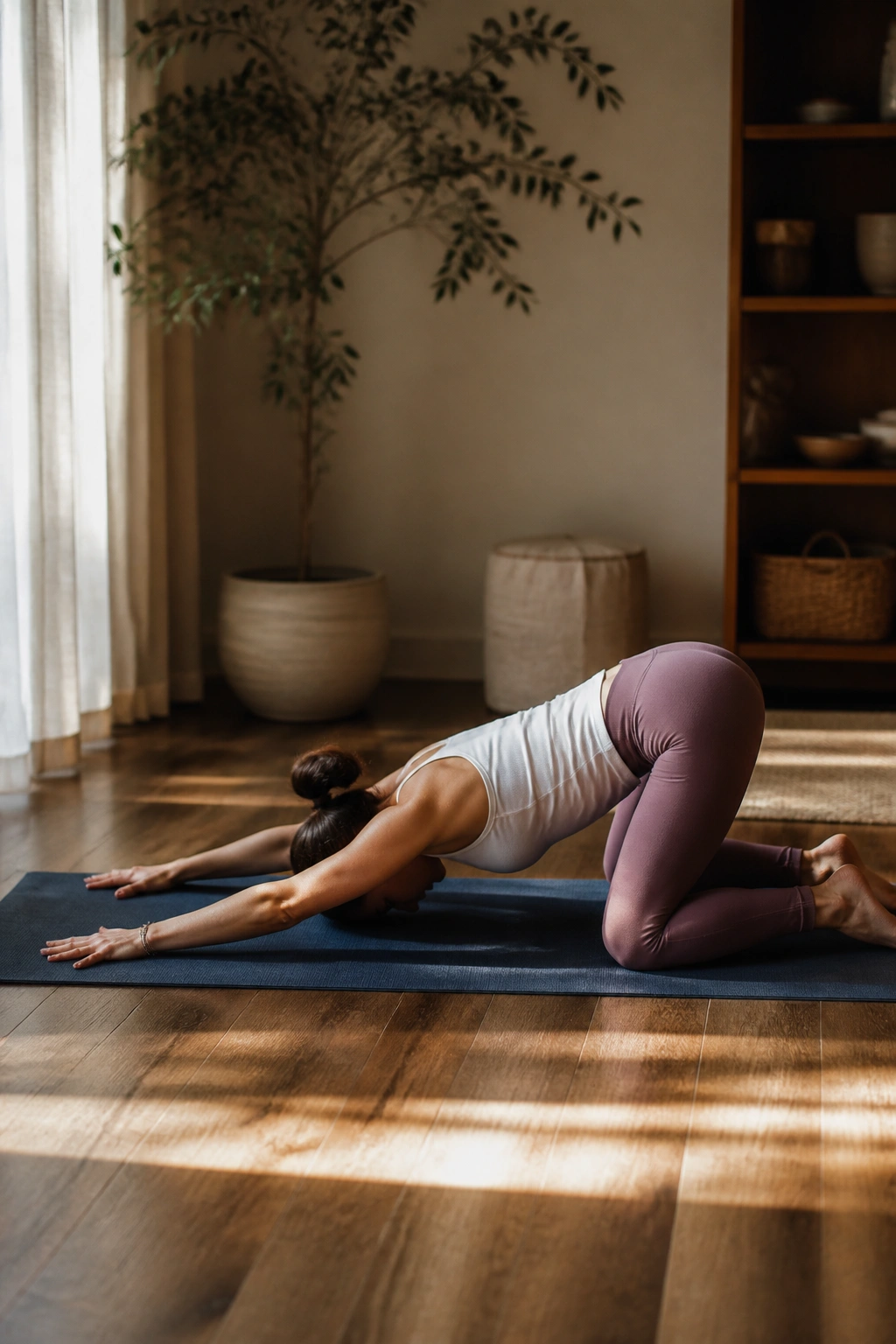
This is the best two-pose combo for a sleepy chest and tight shoulders. Wide-knee child’s pose lets the back ribs open, and puppy pose reaches into the lats and upper back without needing a big backbend.
Begin in child’s pose with the knees spread wider than usual and the big toes touching. Walk the hands forward, then lower the forehead or chin. Stay there for 3 breaths. Slide forward into puppy pose by keeping the hips high and the arms long, with the chest dropping toward the floor or a block.
If the shoulders complain, bring the hands closer and keep the ribs lighter. If the neck hates the floor, stack the forehead on a block or blanket. No pinching in the front of the shoulders. That is the line.
This pairing works especially well when the day ahead is packed with sitting, typing, driving, or carrying a bag on one shoulder. The front body needs a little space before it gets trapped in the same old position again.
16. Tree Pose and Breath Balance Flow
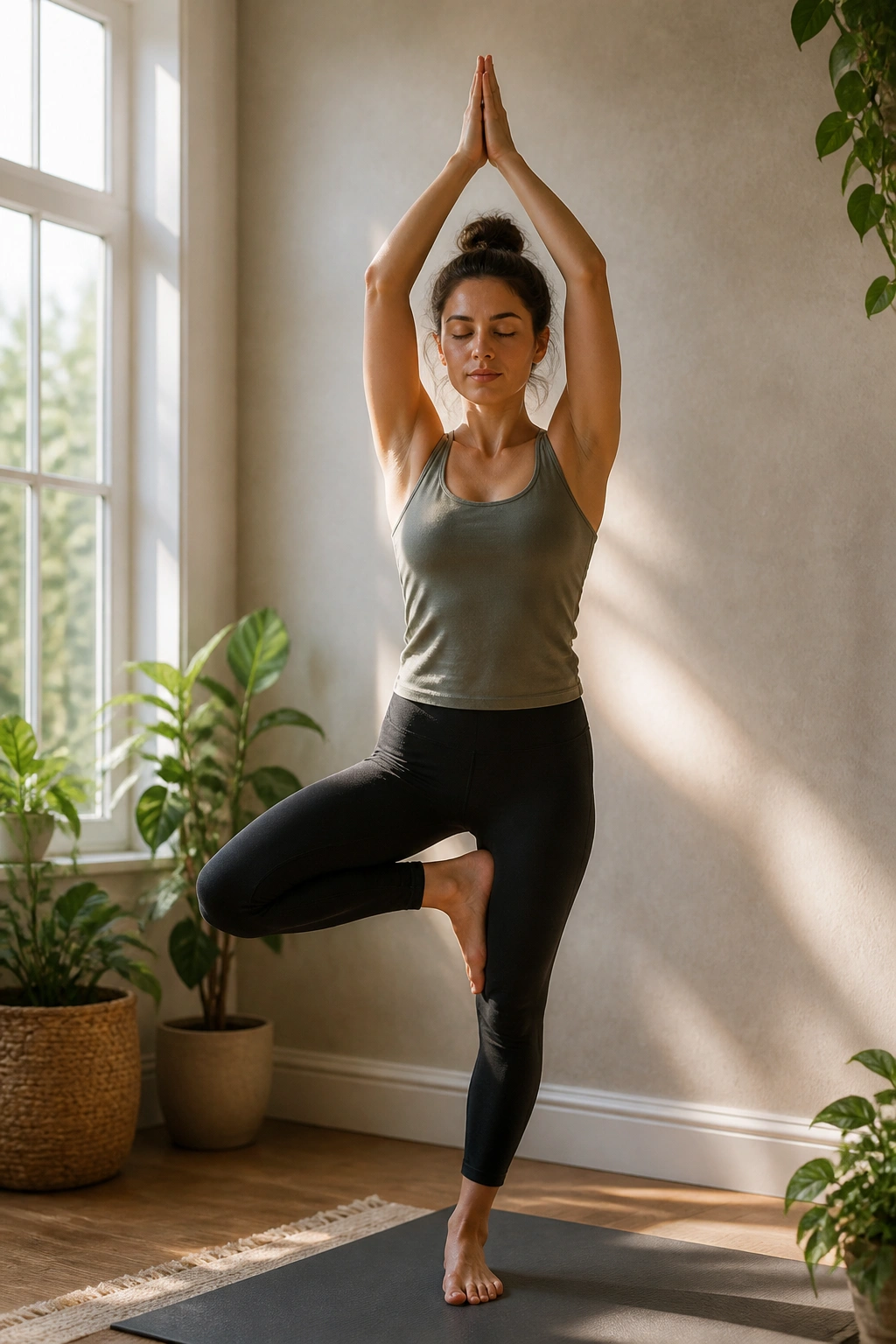
Tree pose does more than test balance. It gives the brain one simple job, which is surprisingly useful on a sleepy morning.
Stand near a wall with weight in the left foot. Let the right toes stay on the floor or place the sole on the inner calf or inner thigh, never on the knee. Bring the hands to the chest, then lift them overhead if that feels steady. Keep the gaze soft and the standing knee slightly bent.
I like pairing tree with a slow count of 4 in, 6 out. The longer exhale makes the pose feel less like a stunt and more like a conversation with the floor. If the standing side gets noisy, bring the lifted foot lower. That is not cheating.
Hold 3 breaths, switch sides, and keep the shoulders quiet. Balance wakes up fast when the breath gets calm.
17. Half Sun Salutation for Slow Morning Yoga
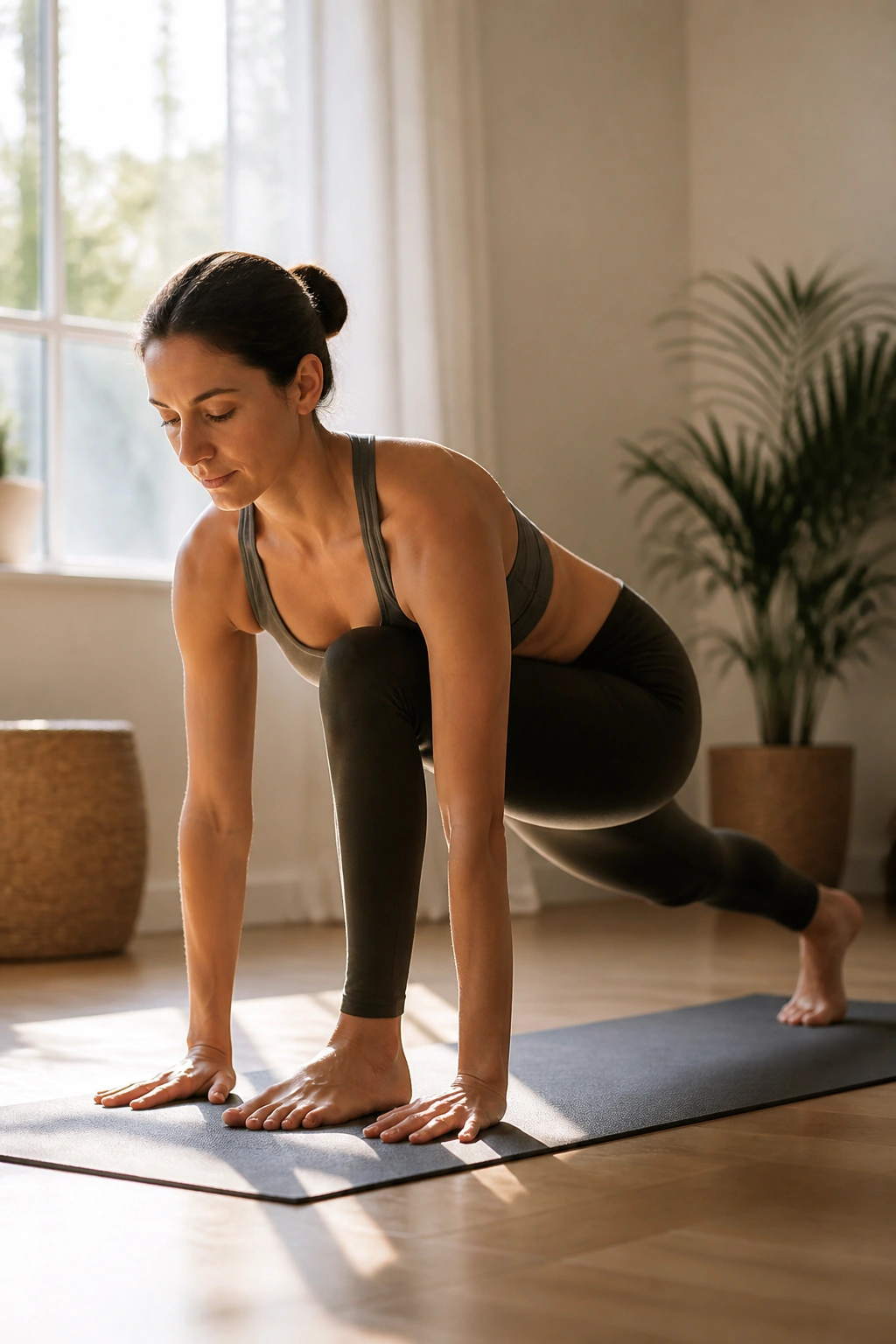
A full sun salutation can feel like too much when the first thing you need is warmth, not speed. A half version keeps the spine moving and the legs awake without turning breakfast into boot camp.
What changes in the half version
- Skip the chaturanga.
- Keep the movement slow from standing fold to half lift.
- Step back one leg at a time instead of jumping.
- Add a low lunge instead of rushing through a long sequence.
A simple route
Stand tall, fold, half lift, step the right foot back, lower the knee, step back to fold, and rise. That’s enough. You can repeat it on the other side or keep it as a one-sided wake-up if time is short.
What makes this flow work is restraint. The morning body often wants motion before intensity, and this gives it exactly that. If you feel good after two rounds, great. If one round is plenty, stop there and enjoy the fact that you didn’t overdo it before the day started.
18. Floor-Based Full-Body Flow for Lazy Days
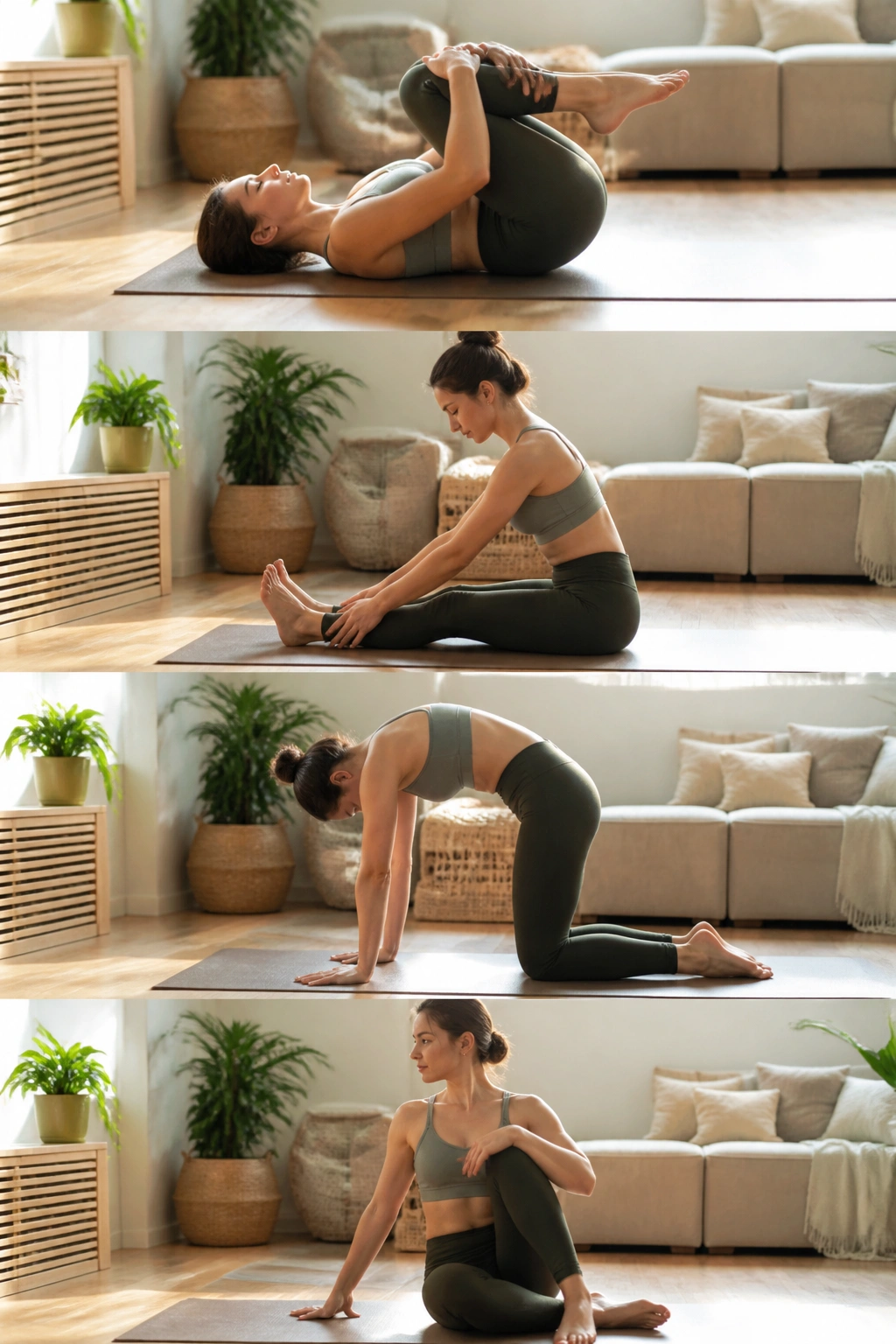
Some mornings the floor is the whole workout. That’s fine. A full-body floor flow lets you keep the practice soft while still touching the spine, hips, chest, and shoulders.
Start on your back with knees bent and feet on the floor. Wind the knees side to side 3 times, then hug them in and rock gently. Roll to one side for a seated position, then move into cat-cow, a low lunge, and a simple twist. Come back down for a reclined figure-four or a supine twist if the body wants to stay low.
The nice part is that nothing here asks for big energy all at once. You can build it like a playlist—one track at a time. A slow practice can still be complete.
If you’re tempted to skip the last two minutes, don’t. The cool-down is where the nervous system often catches up. That’s when the whole thing starts to feel worth it.
19. Bedside Yoga Flow Without a Mat
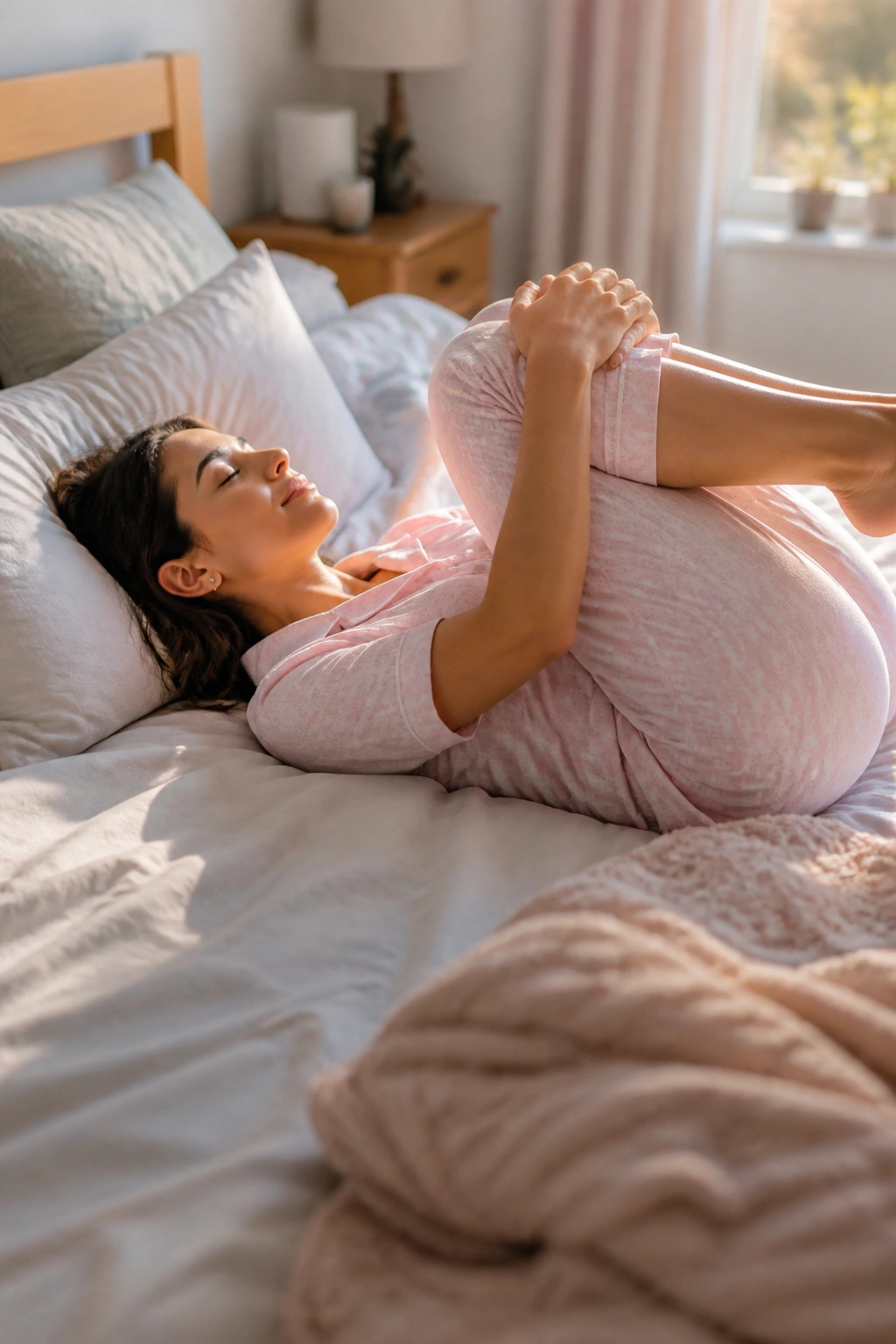
No mat? No problem. A bedside yoga flow works in pajamas, socks, and a room that still looks half asleep.
Can you do yoga from the bed? Yes, with a few limits. The mattress is softer and less stable, so keep the shapes simple and skip anything that needs sharp footing or strong balance.
Three moves that work in pajamas
- Knees-to-chest holds for 3 breaths.
- Seated side bends with one hand on the bed.
- Supine twists with a pillow under the knees.
A folded blanket behind the hips can help if sitting upright feels stiff. Keep the movements slow enough that the bed doesn’t bounce you out of alignment. This is not the place for heroic range.
I like this option for travel mornings, cold rooms, or days when the floor is still too far away. It removes the excuse that you need a perfect setup before you can move.
20. Ten-Minute Morning Reset Flow for Slow Stretchy Mornings
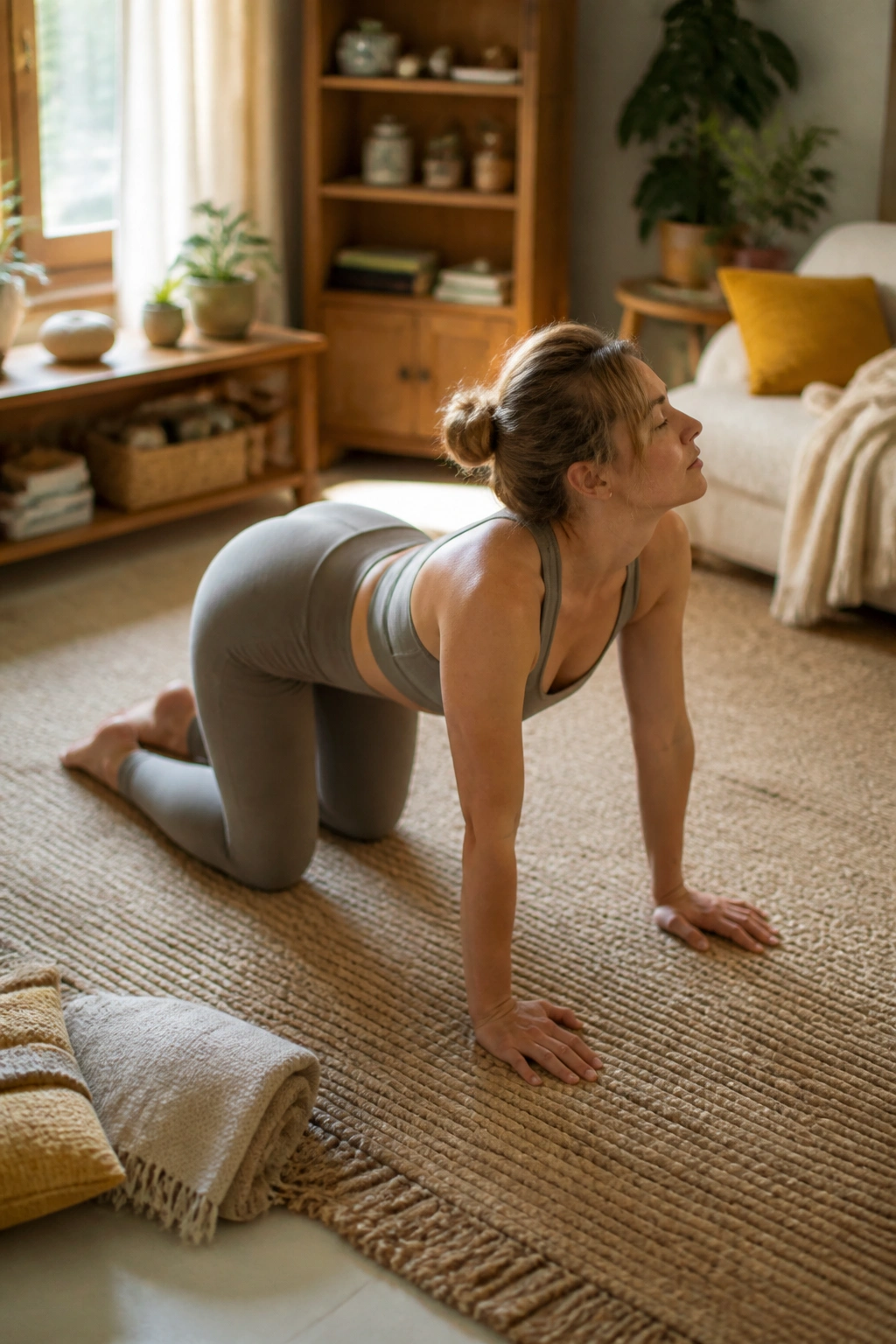
If you only have ten minutes, use them well. A short morning yoga flow works best when it covers one bit of spine motion, one hip opener, one fold, and one quiet finish.
Minute-by-minute flow
- 0:00–1:00 — Sit or kneel and breathe in through the nose for 4 counts, out for 6.
- 1:00–3:00 — Move through cat-cow for 6 rounds, keeping the movement smooth and small.
- 3:00–5:00 — Step into a low lunge on the tighter side first, holding for 4 breaths per side.
- 5:00–7:00 — Fold forward in rag doll or standing half fold, with knees bent.
- 7:00–9:00 — Lie down for supine twist, 3 breaths each side.
- 9:00–10:00 — Finish in child’s pose or seated stillness, letting the exhale get a little longer.
This is the flow I’d choose on a morning that feels scattered. It touches enough of the body to make a difference without turning into a project. Keep a blanket nearby, keep the breath slow, and stop one minute before you think you need to.
Final Thoughts
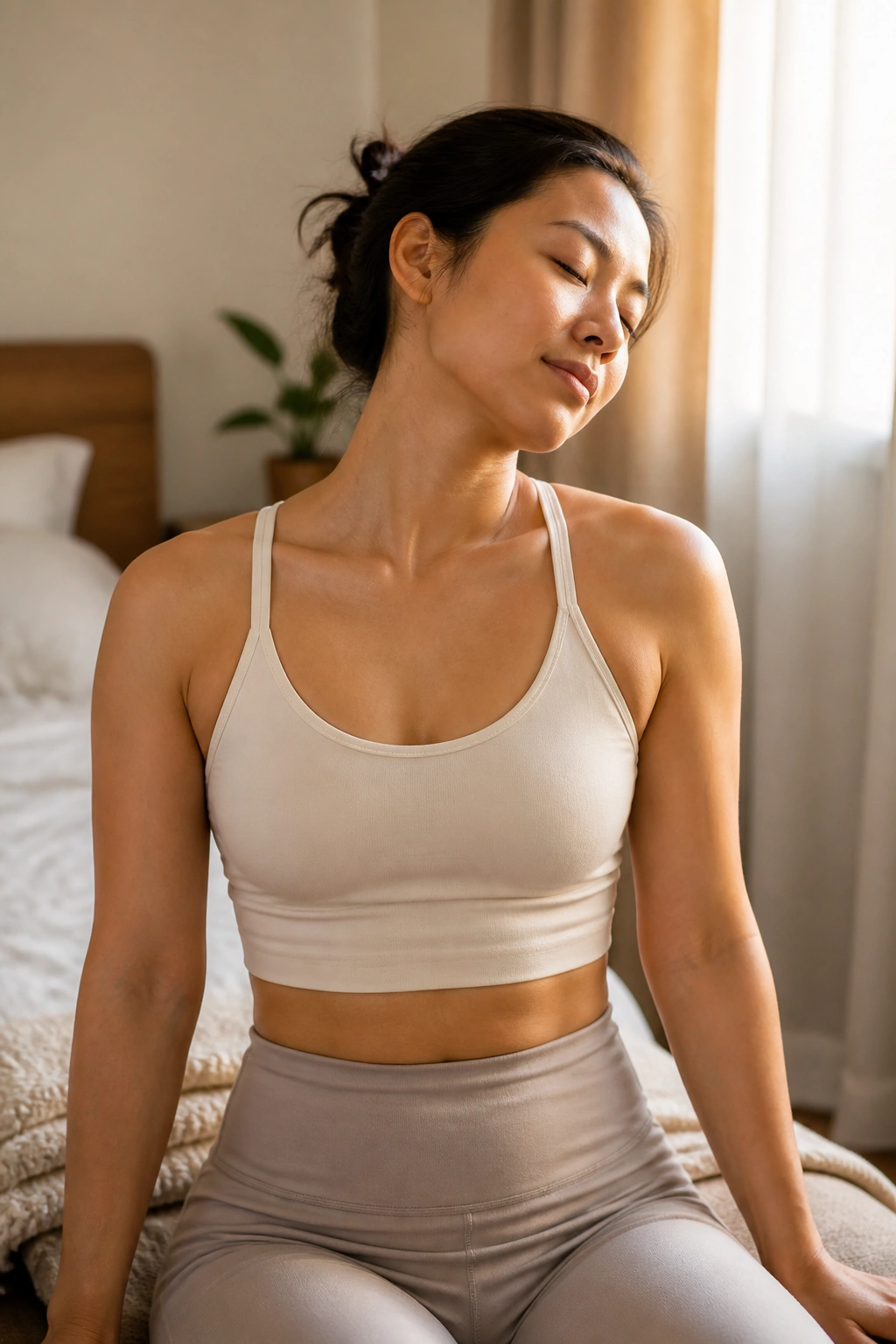
A slow morning practice does not need to look fancy to work. The best gentle yoga flows are the ones you can do with stiff shoulders, sleepy eyes, and a little skepticism still in your system.
Pick the shape that matches the complaint. Neck tight? Start there. Hips grumpy? Give them the first move. If the whole body feels rusty, keep the sequence on the floor and stay with the breath longer than you think you need to.
And if you only remember one thing, make it this: small, steady movement beats a forced stretch every time. The body usually answers kindness faster than force, especially before breakfast.
