



Knees have a way of running the whole workout. One deep bend, one fast twist, and suddenly every move has to negotiate with the joint that hurts.
That is why workouts for bad knees work best when they look modest: floor work, chair work, slow standing drills, a little marching, a little boxing. The goal is not to impress anybody. It is to keep the quads, glutes, calves, and core doing their share so the knee does not have to carry the whole load.
Not every sore knee is the same. Some hate impact, some hate deep flexion, some swell after too much standing, and some just feel stiff after sitting too long. If a knee is hot, locked, or giving way, that is a different conversation and deserves a professional look.
I like routines that need almost nothing: a chair, a wall, a mat, maybe a loop band. Keep the motion smooth, keep the range small at first, and let the muscles earn their place back. Start with the quiet moves — they do more than they look like.
1. Seated Quad Sets
If your knee hates bending, seated quad sets are where I’d start. They look almost too plain to count as a workout, but that’s the point: you tighten the front thigh without asking the knee to absorb a lot of motion or weight.
Sit tall on a chair, straighten one leg, and press the back of the knee gently toward the seat or a rolled towel. Hold for 5 to 10 seconds, then relax fully. You should feel the quad firm up hard, almost like a small cramp that you control, not a sharp tug inside the joint.
How It Should Feel
- The thigh tightens before the knee moves.
- The knee stays nearly straight.
- The hip and ankle stay relaxed.
- The effort sits in the muscle, not the joint.
Best use: I like this as a warm-up before any of the other knee-friendly home workouts, or as a quick reset after a long stretch of sitting. If you can do 10 slow holds on each leg without pain, you’re already doing useful work.
2. Straight-Leg Raises
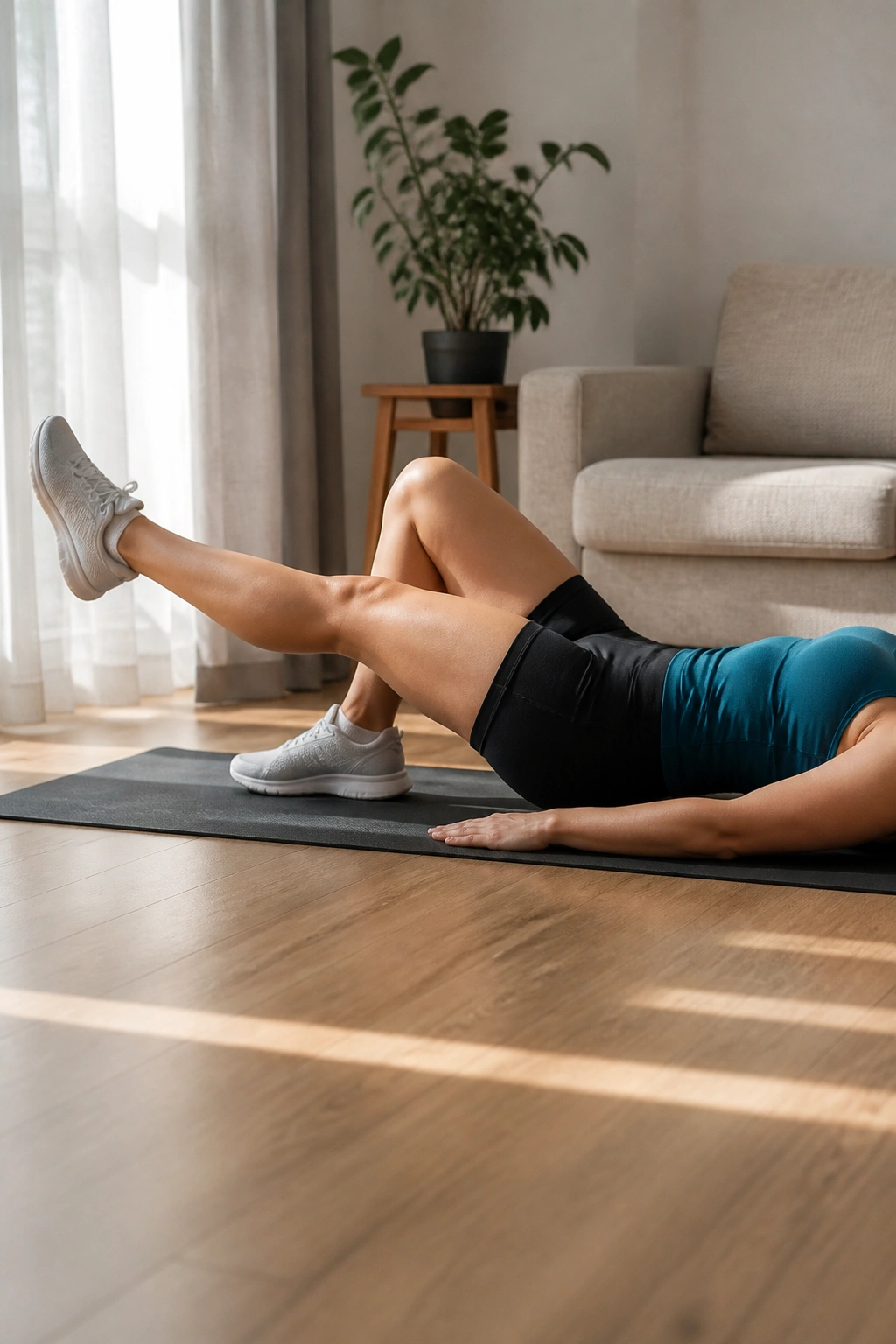
Why do straight-leg raises show up in so many knee-friendly routines? Because they train the quad and hip flexors while the knee stays mostly still, which is exactly what a cranky joint likes on rough days.
Lie on your back, bend one knee with the foot flat, and keep the other leg straight. Tighten the front thigh of the straight leg, then lift it 6 to 12 inches off the floor. Lower it slowly. No swinging. No rush. The leg should feel like it’s moving on rails.
How to Do It
Keep your toes pointed up, not flopped outward. If your lower back starts to arch, the lift is too high or the rep is moving too fast. A small, clean raise is better than a big sloppy one.
A good starting dose: 8 to 12 reps per side, 2 rounds, with about 30 to 45 seconds of rest. If you want more challenge, add a 2-second pause at the top. If the hip starts to pinch, shorten the range and slow down.
3. Glute Bridges
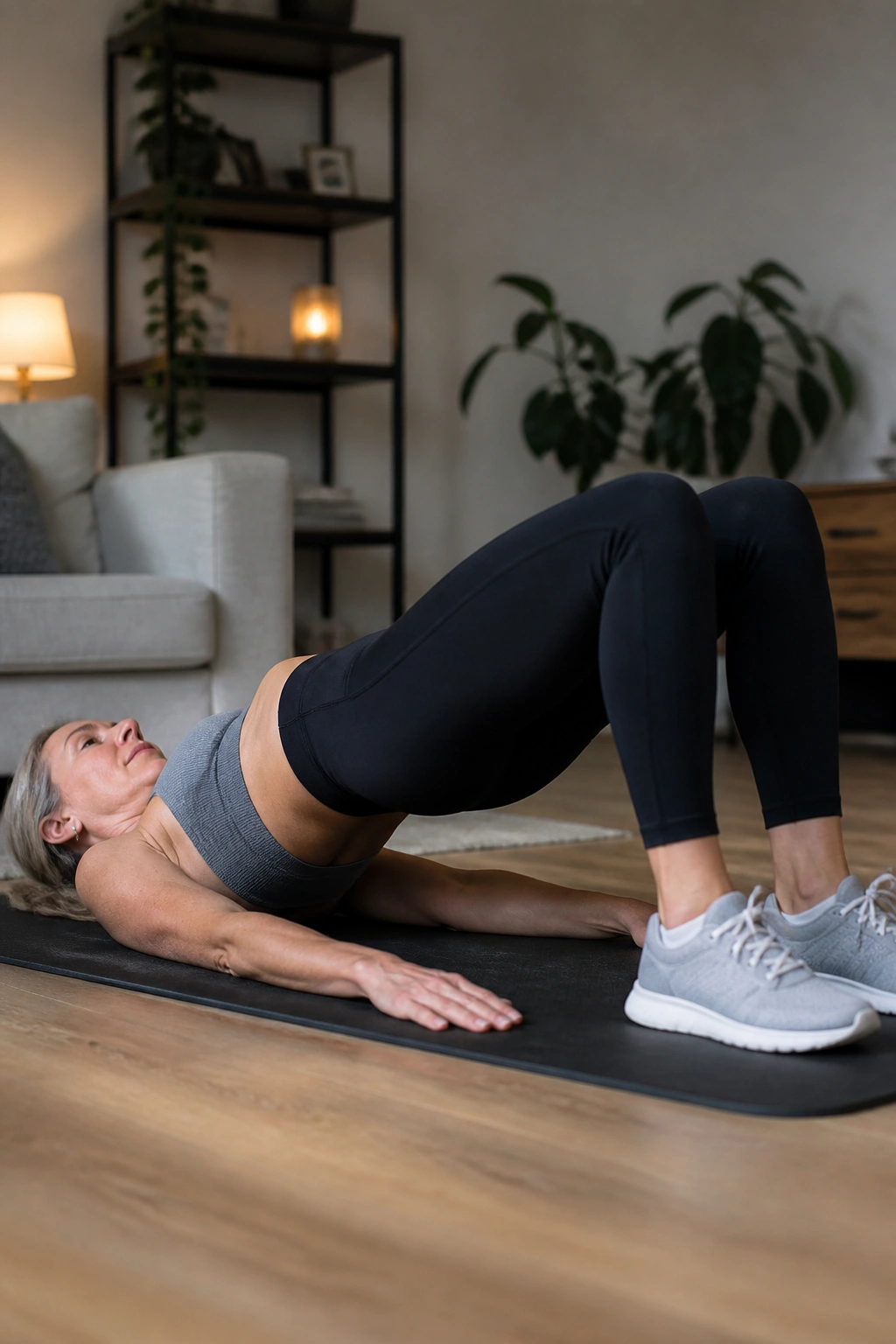
A bridge can feel like a strange choice if your knees are upset. It isn’t. Most people need more glutes, not more squat depth, and bridges let you train them on the floor with less joint drama.
Lie on your back with your knees bent and feet flat, about hip-width apart. Brace lightly through your belly, press through the heels, and lift your hips until your body makes a straight line from shoulders to knees. Hold for 1 to 2 seconds, then lower under control. The backside should work hard. The knees should mostly feel like passengers.
What to Watch For
- Feet too close to the hips can cram the knees.
- Feet too far away can turn the hamstrings into the star of the show.
- A little squeeze at the top is good.
- Lowering too fast tends to make the knees grumpy.
Try 8 to 15 reps, or hold the top for 15 to 20 seconds if you prefer isometric work. If a bridge feels better with a cushion under your head or a mini band around the thighs, use it. No prize is given for suffering.
4. Clamshells
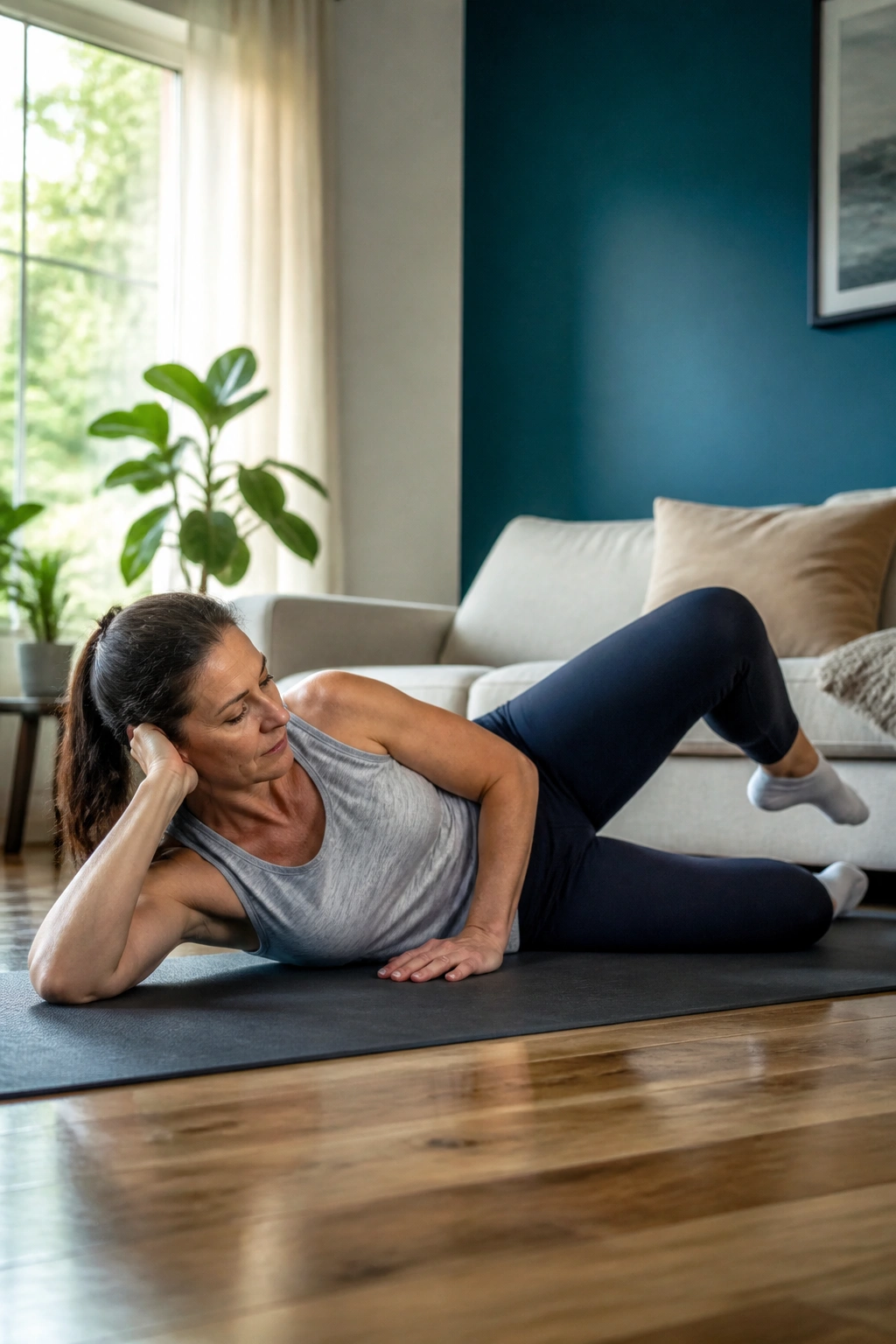
Clamshells are one of the fastest ways to spot weak hips. They look tiny, and that is exactly why they matter. When the hip muscles stop doing their job, the knee often ends up wobbling inward during standing work, stairs, or even a simple walk to the kitchen.
Lie on your side with knees bent and feet stacked. Keep the feet together, then open the top knee 4 to 6 inches without rolling your pelvis backward. Slow down on the way down. If you fling the knee open, you miss the whole point.
A mini band above the knees makes this harder fast, but don’t start there if your hips already feel shaky. Do 12 to 20 reps per side, and keep the motion smooth enough that you could have a conversation while doing it. That’s the sweet spot. If the lower back starts helping, you’ve gone too far.
5. Heel Slides
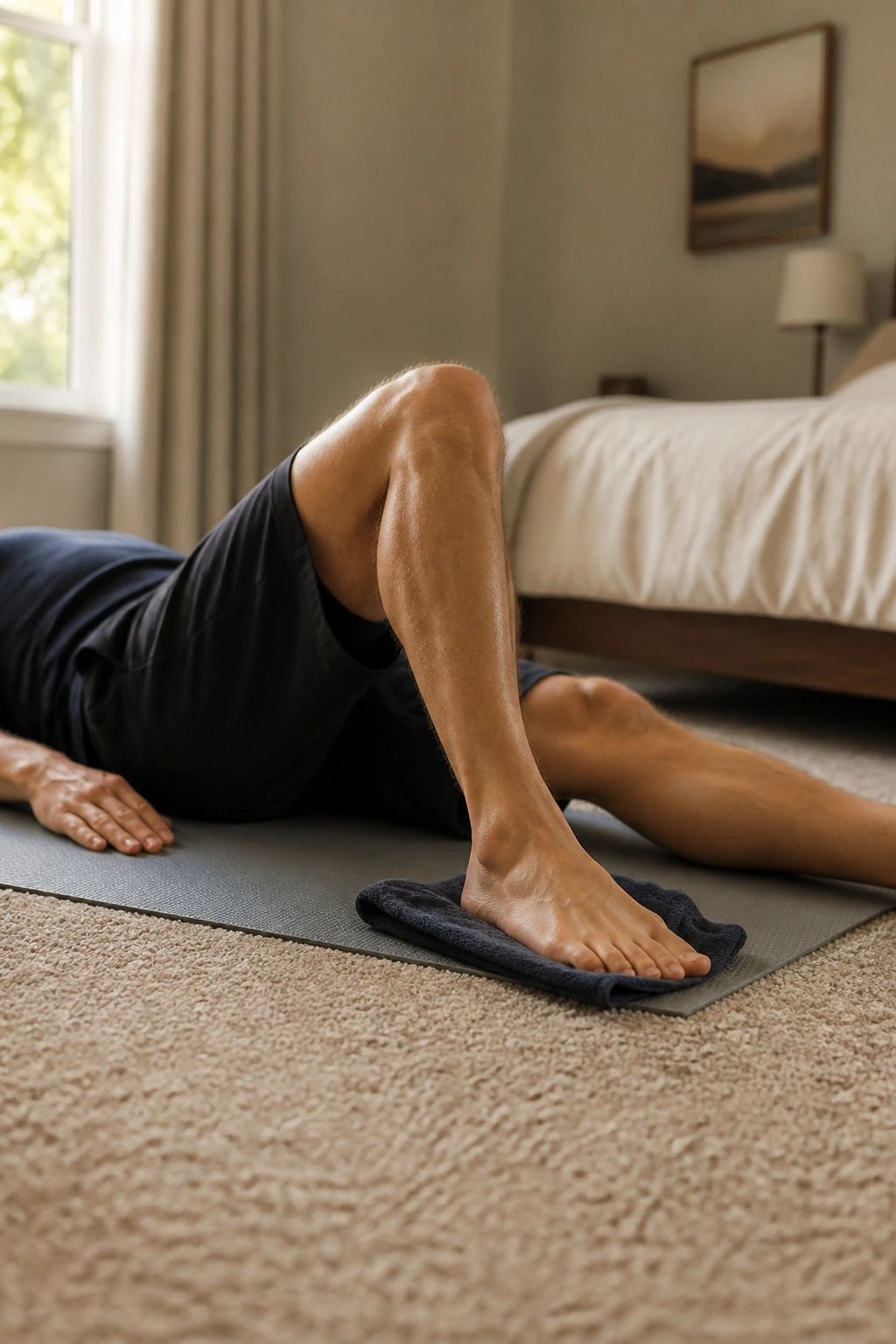
Heel slides look tiny. They are.
Lie on your back with both legs straight. Bend one knee by sliding the heel toward your butt, then slide it back out again. The motion should feel smooth and loose, not forced. If the knee is stiff from sitting, this is a nice way to get it moving without asking for full weight-bearing work.
The trick is not depth. It is ease. You want motion through a comfortable range, especially on days when the joint feels stiff, puffy, or a little rusty in the morning. A towel under the heel can help if the floor is sticky. Breathe out as the heel slides in, breathe in as it returns.
That’s enough. Really.
A set of 10 to 15 slides per side is plenty. If one side feels better than the other, do not yank the tight side farther just to “match” it. Let the range improve over time. Pushing a swollen knee into a deep bend is a fast way to make the next hour annoying.
6. Sit-to-Stand From a High Chair
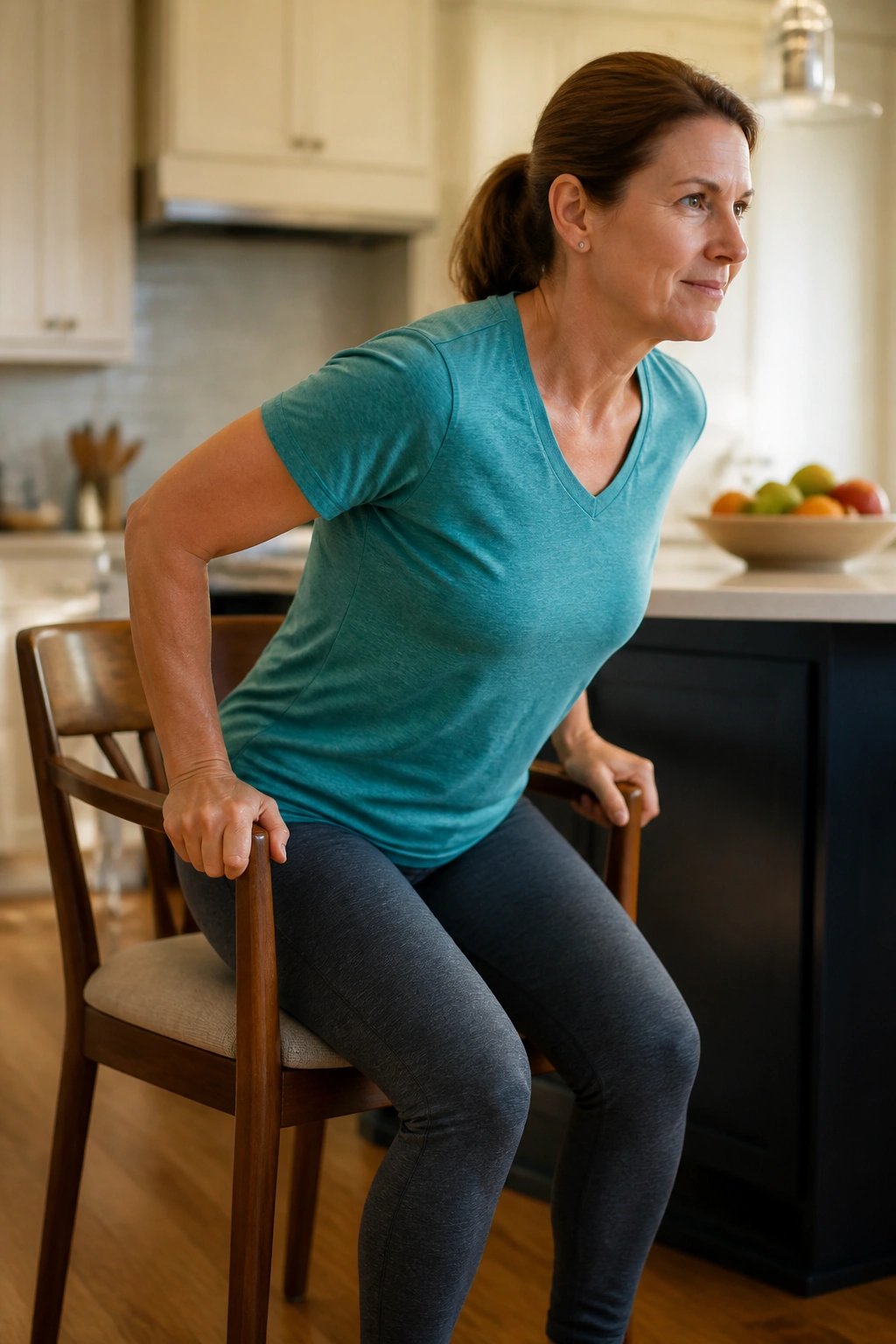
A chair rise beats a deep squat when your knees are touchy. The reason is simple: you control the depth, the speed, and the load. That makes sit-to-stand one of the most practical strength drills for bad knees at home.
Use a sturdy chair with a seat that sits a little higher than your knees if possible. Place your feet under your knees, lean your chest forward just a touch, and stand without throwing your weight into your toes. Sit back down slowly. If needed, use your hands on the chair arms or on your thighs for the first few reps.
Who It Suits Best
This one is ideal for anyone who wants to get up from sofas, beds, toilets, or kitchen chairs without that ugly knee ache on the way up. It also teaches a cleaner hip hinge, which tends to take pressure off the front of the knee.
Start with 5 to 8 reps, 2 to 3 sets. A cushion on the seat makes the move easier; removing it later makes the move harder. Keep the knees tracking over the middle toes — not caving inward — and stop the rep if the joint pinches on the way down.
7. Standing Calf Raises
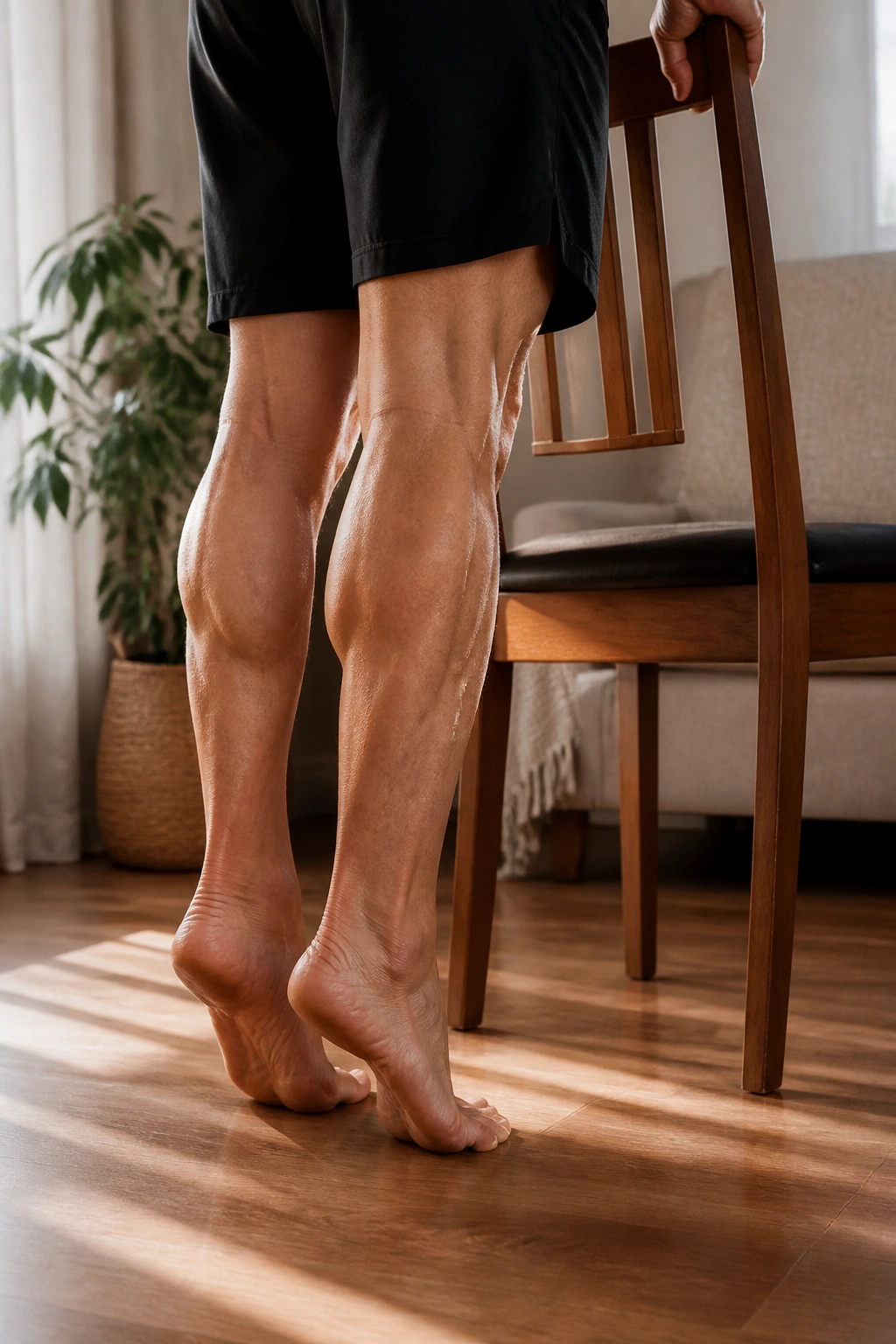
Calf raises look too easy until you slow them down. Then they get honest fast.
Stand behind a chair or near a wall and lift both heels off the floor, rising onto the balls of your feet. Pause for 1 second at the top, then lower your heels under control. The ankles should work, yes, but the knees often benefit too because better calf strength helps with stair climbing, walking, and the little balance corrections that happen all day.
Quick Facts
- Use 10 to 20 reps per set.
- Keep pressure over the big toe and second toe.
- Hold the chair only lightly.
- Add a 3-second lower if the move feels too easy.
If two-leg calf raises feel comfortable, try one leg at a time while still keeping one hand near a wall. The key is clean up-and-down motion, not bouncing. A bouncy calf raise turns into a sloppy ankle hop, and your knees do not need that.
Pro tip: Do these barefoot on a flat floor if your feet tolerate it. You’ll feel the arches and ankles wake up, which often makes the whole lower body feel more organized.
8. Marching in Place
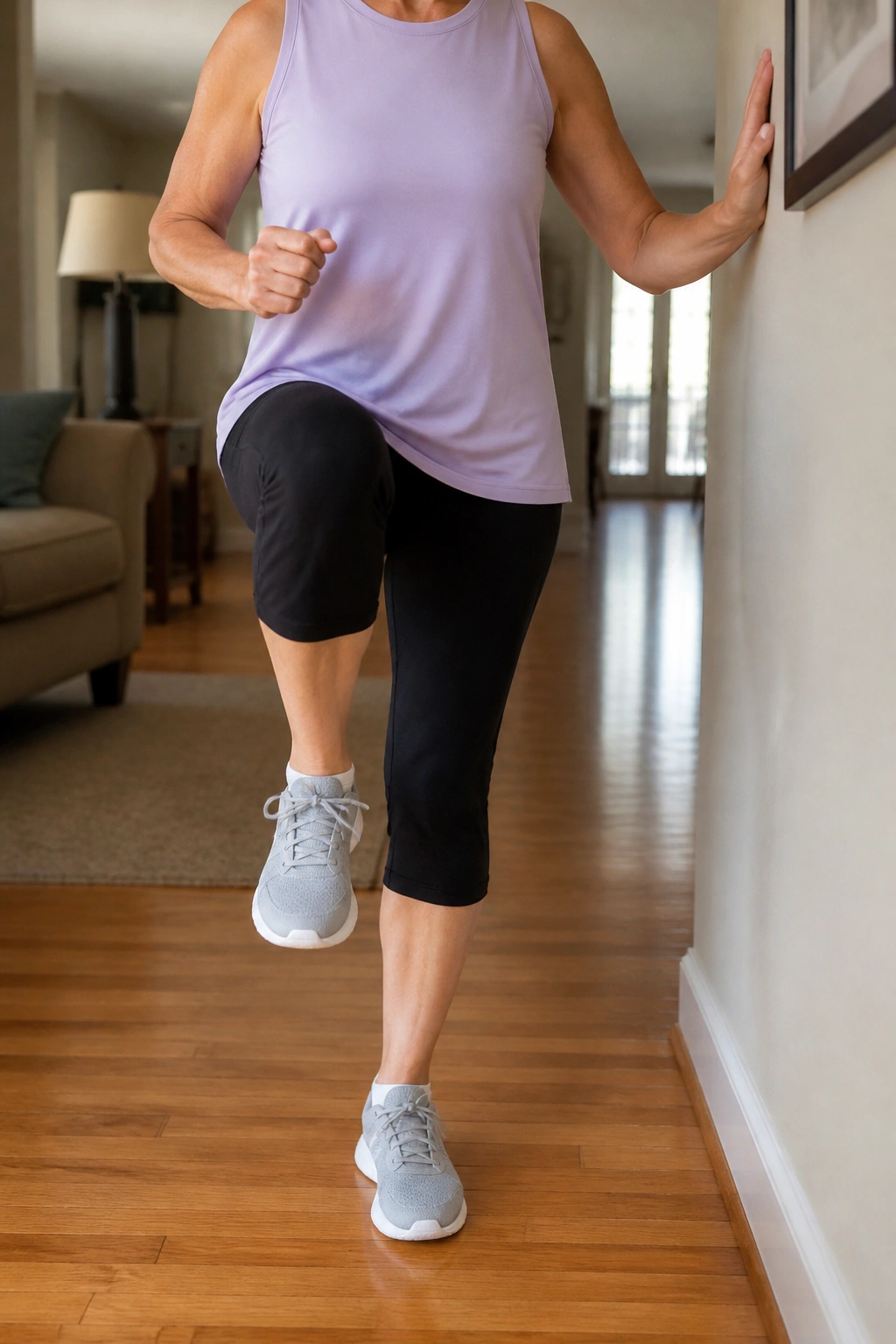
Marching in place is what I hand people when they need a little heart rate without jumpy knees. It is simple, low-cost, and easy to scale up or down depending on how the joint feels that day.
Stand tall and lift one knee only a few inches, then switch sides. Add an easy arm swing if your shoulders like it. If balance is shaky, keep one hand near the wall or kitchen counter. The goal is soft, rhythmic steps — not a forced high-knee drill.
The beauty of marching is that it gives you a cardio bump without the pounding. A 30-second round can wake you up. A 60-second round can start to warm the body. Two or three rounds can be enough for a whole mini-workout if you pair them with bridges or chair rises.
No bouncing. No stomping. That matters.
If the knee likes motion but hates loading, keep the knees low and quick. If the knee prefers a little more work, lift the thighs a bit higher and slow the steps down. Both versions count. The exercise only needs to fit the joint, not punish it.
9. Side-Lying Leg Lifts
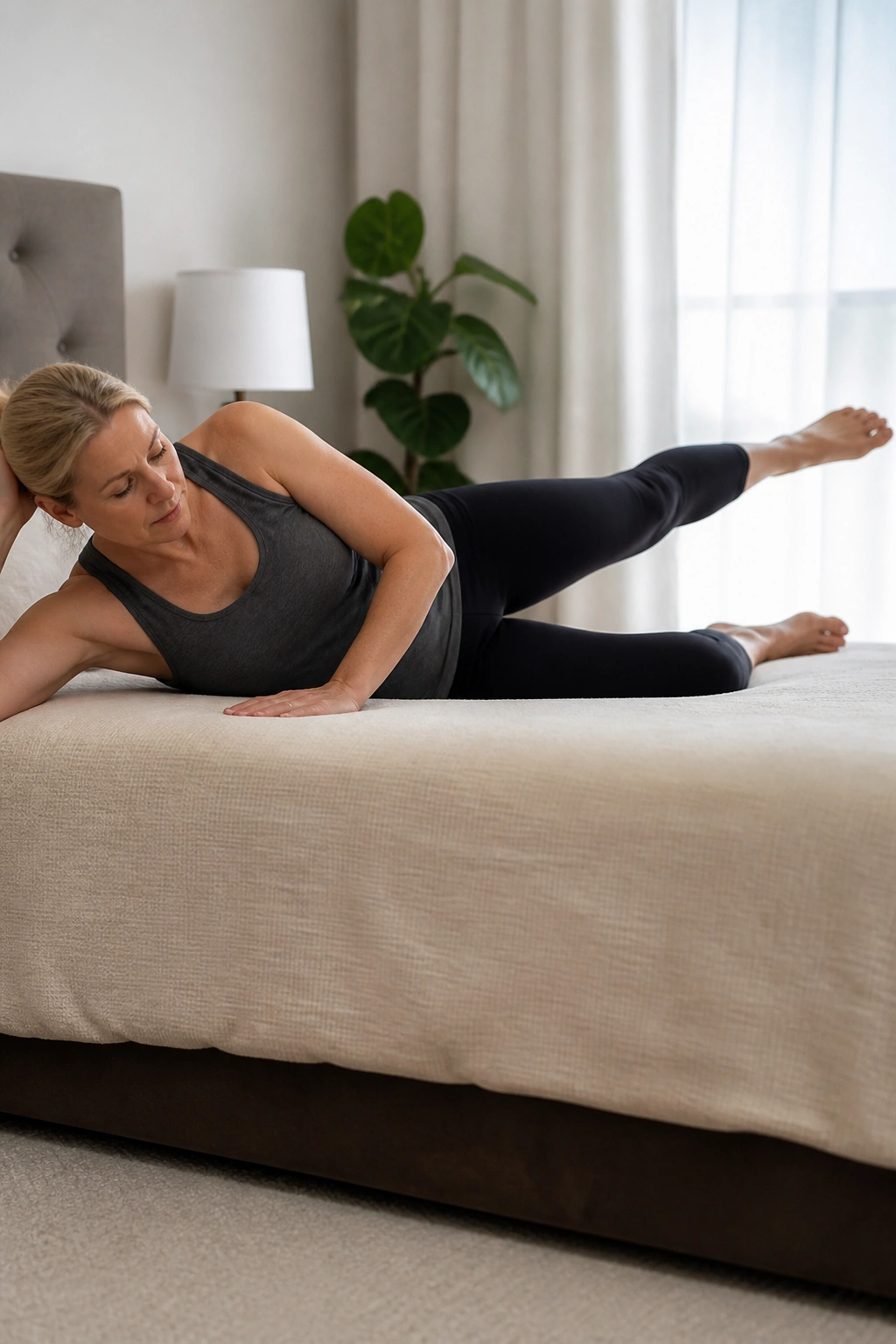
Side-lying leg lifts get ignored because they do not feel heroic. That is also why they work so well. These moves train the outer hip, and that muscle group matters more for knee alignment than most people realize.
Lie on your side, stack your hips, and keep the bottom leg bent for support if that feels steadier. Lift the top leg slowly, just 8 to 12 inches, then lower it with control. Turn the toe slightly down if you feel the hip flexor taking over. The lift should land in the side of the hip, not in the low back.
Common Mistakes
- Rolling the top hip backward.
- Lifting too high.
- Pointing the toe straight up.
- Racing through the lowering phase.
Use 10 to 15 reps per side and keep the motion boring on purpose. If the knee feels cranky during standing work, a stronger outer hip often helps the lower body move with less wobble. Small movement. Real payoff.
10. Bird Dog
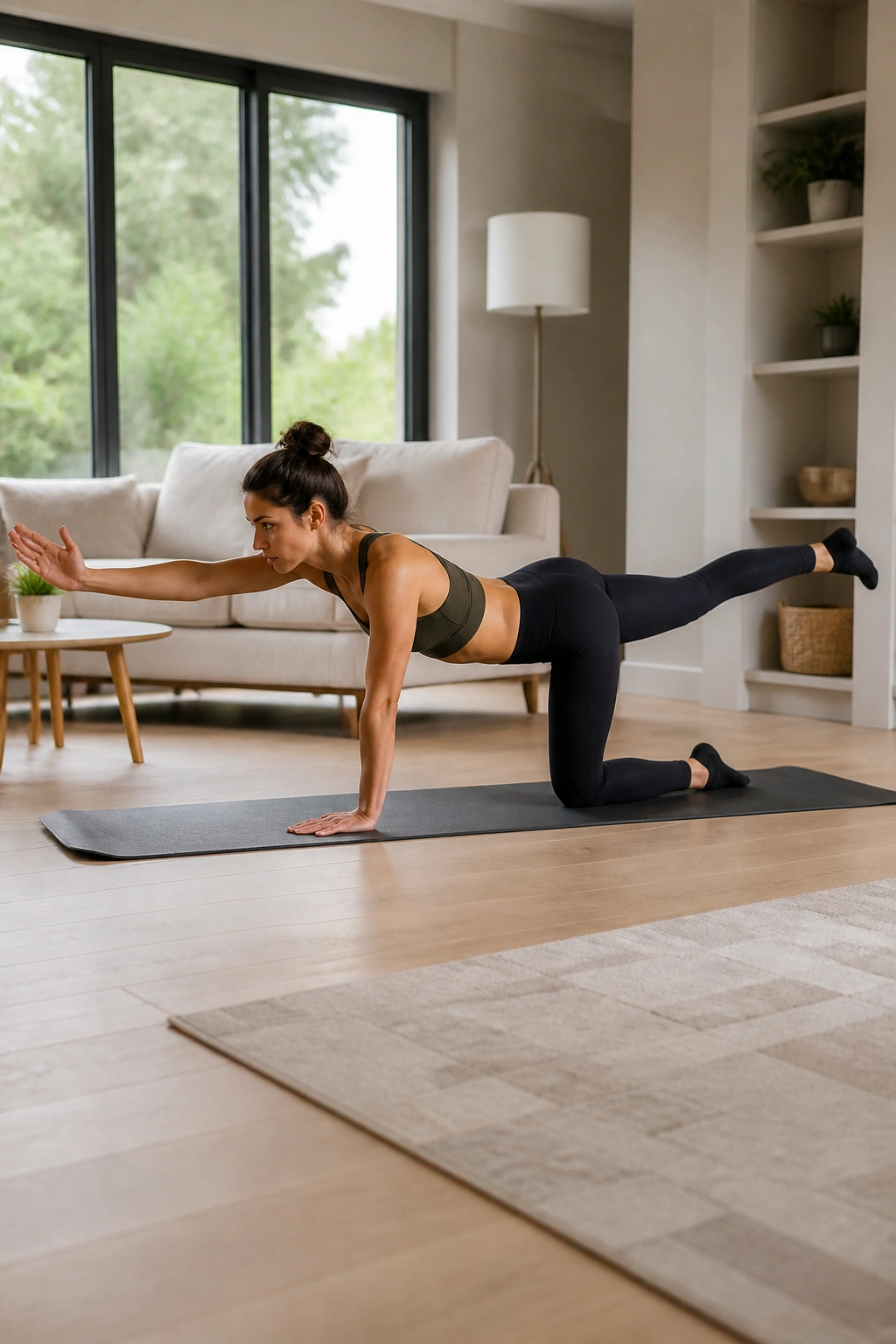
How do you train balance without loading the knee much? Bird dog.
Get on hands and knees, with a folded towel or mat under the kneecaps if the floor feels sharp. Reach one leg straight back while the opposite arm reaches forward. Hold for 2 to 3 seconds, then return to the start without shifting your hips from side to side. The body should look quiet. That’s the whole point.
How to Make It Easier
If full bird dogs bother the wrists or knees, keep the range tiny and just extend the leg, or just the arm. You can also do it with your hands on a bench or sofa seat so you’re not on the floor as much. A steady spine matters more than a big reach.
Do 6 to 10 reps per side. Move slowly enough that you can feel what the trunk is doing. If the low back sways, shorten the reach. Bird dog is a control drill, not a yoga pose audition.
11. Dead Bug
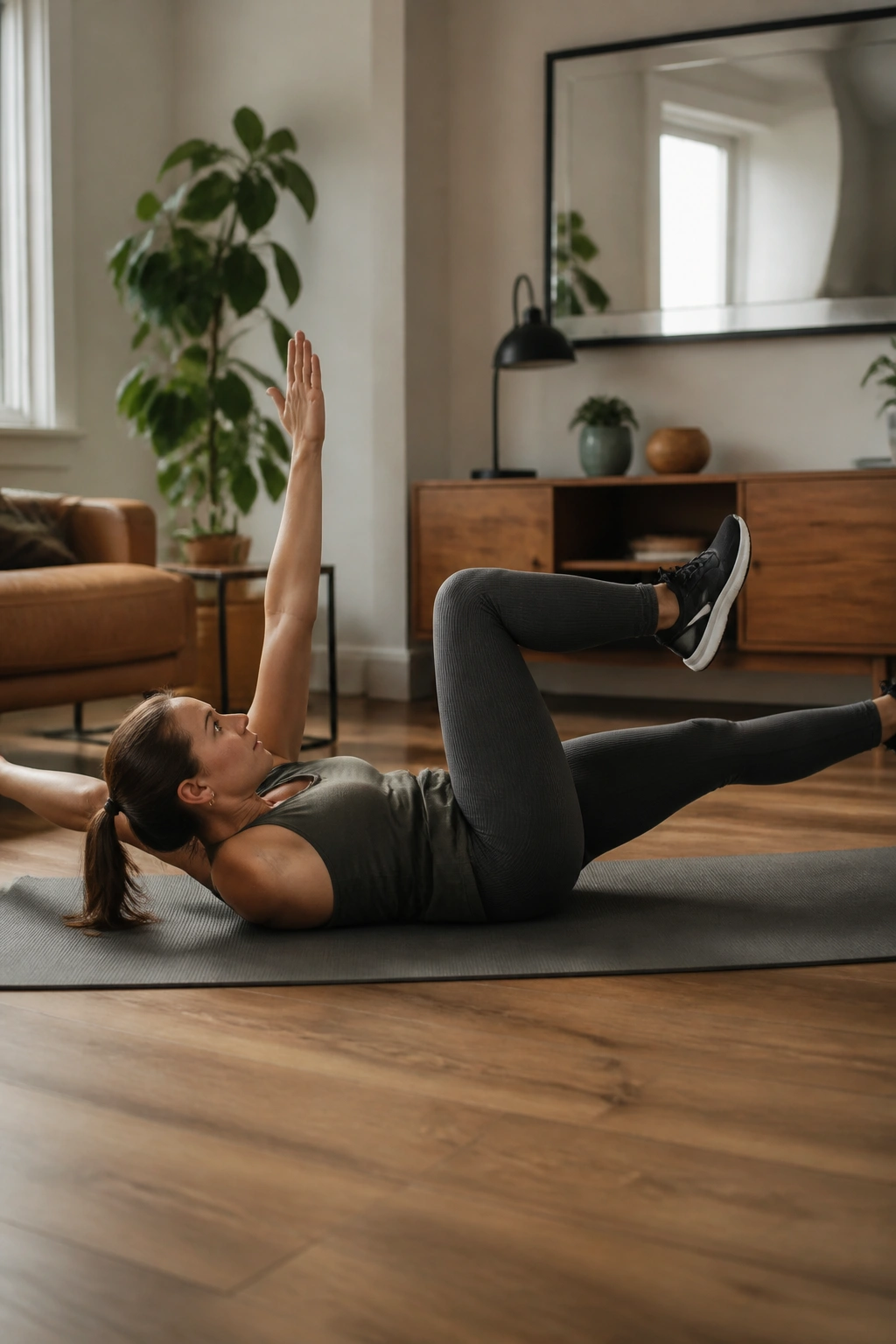
A stronger core takes wobble out of the knee chain. That sounds like a fancy idea, but it shows up in real life every time you stand up from a chair or walk downstairs without twisting.
Lie on your back with hips and knees bent to about 90 degrees, arms reaching toward the ceiling. Lower the opposite arm and leg away from each other while keeping the lower back gently pressed into the floor. Come back to center, then switch sides. The movement should stay slow enough that you can stop it instantly if the back starts to arch.
If the hip flexors cramp, make the leg reach smaller. If the neck tightens, rest the head on a folded towel. A dead bug only works when the trunk stays quiet.
Do 6 to 10 reps per side and exhale as the arm and leg extend. That little breath cue helps the ribs stay down and keeps the movement cleaner. The knees do not move much here, which is part of the appeal — you get control work without a lot of joint load.
12. Seated Shadow Boxing

A few minutes of seated shadow boxing can warm your whole upper body while leaving the knees alone. That makes it one of my favorite low-impact cardio picks for days when standing moves feel like too much.
Sit on a firm chair with both feet planted. Throw light punches forward, then add cross-body reaches, hooks, or short uppercuts. Keep your wrist straight and your shoulders loose. If you want more work, sit farther from the chair back so your core has to help hold you upright.
You can run it like intervals: 30 seconds on, 30 seconds off, for 5 to 8 rounds. Or keep it smooth for 3 to 5 minutes if you want a longer warm-up. The hands move fast; the legs stay calm. That contrast is useful.
A little torso twist is fine if it feels good, but do not yank through the low back. Keep the feet down and let the ribcage rotate a bit. It’s a simple way to get sweaty without asking a sore knee to absorb impact.
13. Mini Step-Touches
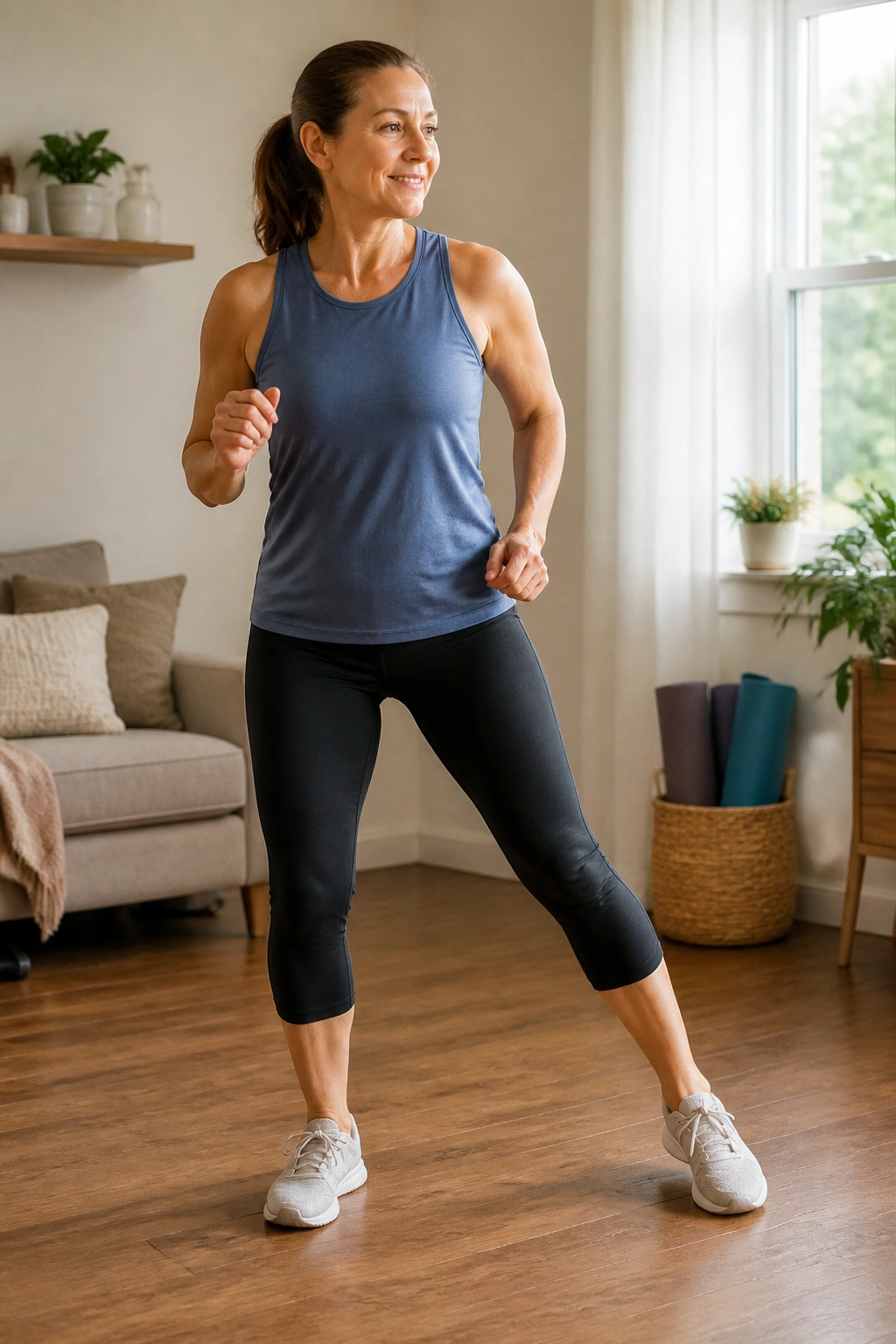
Need a little sweat without full marching? Mini step-touches do the job. They are side-to-side moves with a very small knee bend, which makes them a nice bridge between strength drills and real cardio.
Step one foot out to the side, bring the other foot in to touch, and repeat the other way. Keep the movement light and low. No hop. No deep squat at the bottom. If your knees prefer tiny movements, tiny is fine.
How to Use It
- Do 20 to 40 seconds at a time.
- Keep the feet low and quiet.
- Hold onto a counter if balance feels off.
- Add easy arm swings only if the knees stay happy.
This move can be a warm-up, a middle-of-the-workout cardio burst, or a cooldown if you keep it slow. If lateral motion bothers one knee, shorten the step and make the touch more like a tap. The smaller version still counts. No need to force a bigger range just because the room allows it.
14. Supported Hamstring Curls
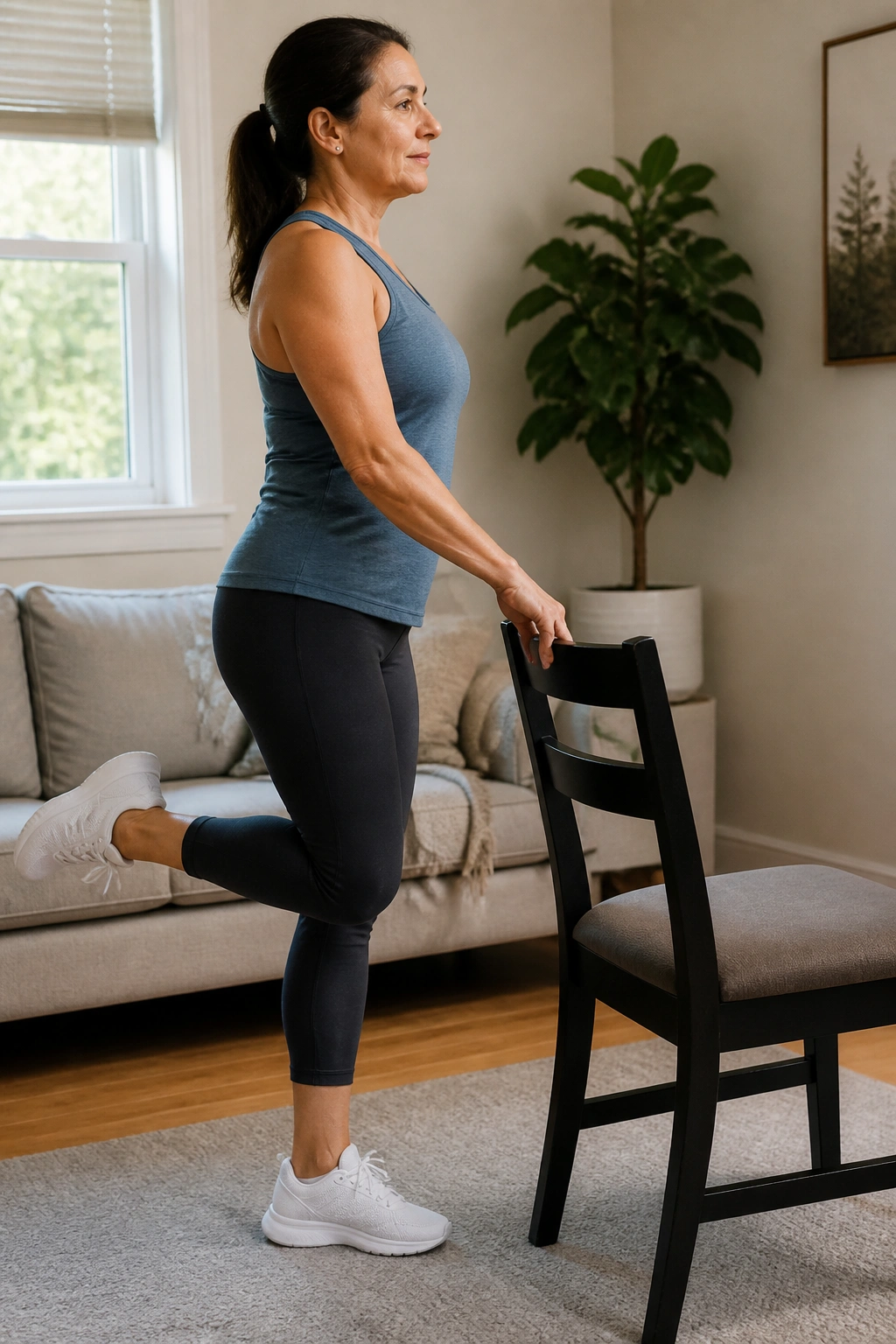
A simple heel curl can wake up the back of the thigh without asking much from the front of the knee. That matters because strong hamstrings help steady the joint when you walk, rise, and stop short.
Stand beside a chair or counter and hold it lightly. Bend one knee, bringing the heel toward the butt in a controlled arc. Keep the thighs lined up and avoid swinging the leg backward. Lower slowly, then switch sides. The movement should feel like the hamstring is doing the lifting, not the lower back.
What to Keep in Mind
- Keep the torso upright.
- Do not let the knee drift forward.
- Stop before the front of the knee pinches.
- Use a 1- to 3-pound ankle weight only after bodyweight feels easy.
Try 10 to 15 reps per leg. If both knees are touchy, keep the curl small and slow. A gentle curl is still useful. A jerked curl is just noise.
15. Low Step Taps
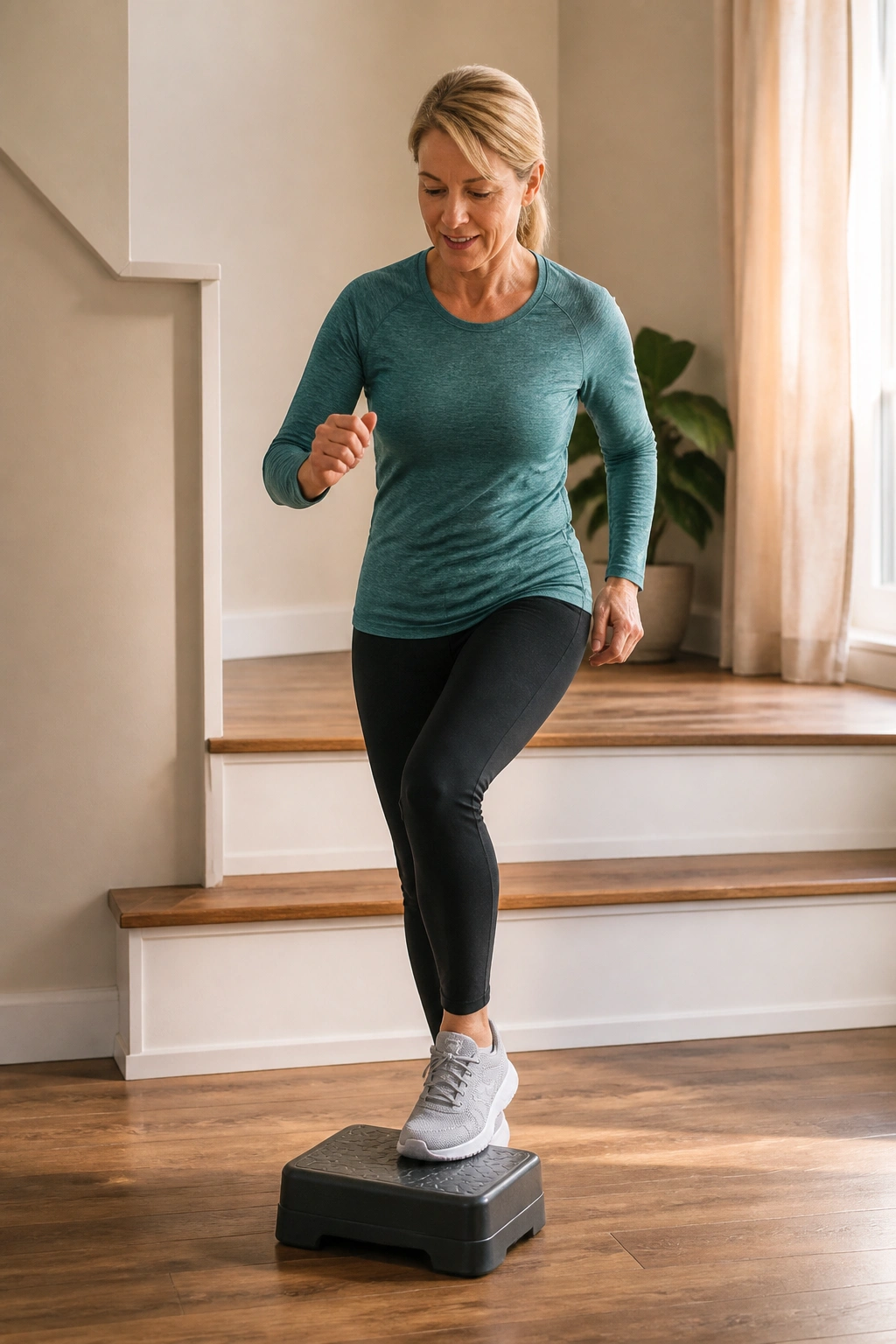
Step taps are not step-ups, and that difference matters. A tap lets you practice single-leg balance and a little knee bend without committing your full body weight to the step.
Use the bottom stair, a sturdy platform, or a very low aerobic step — think 2 to 6 inches, not a towering box. Tap one foot up, return it to the floor, then alternate sides. The standing leg does the work while the tap leg stays light. If the knee feels steady, let the arms swing naturally.
This is a smart place to stop if you are rebuilding confidence. It gives you some of the rhythm of stair work without the full load. It also pairs nicely with marching or shadow boxing when you want a short home circuit that feels like exercise instead of rehab homework.
Do 10 to 20 taps per side and keep the motion crisp. If the knee complains, shorten the step and slow the pace. Control matters more than height, every time.
Final Thoughts
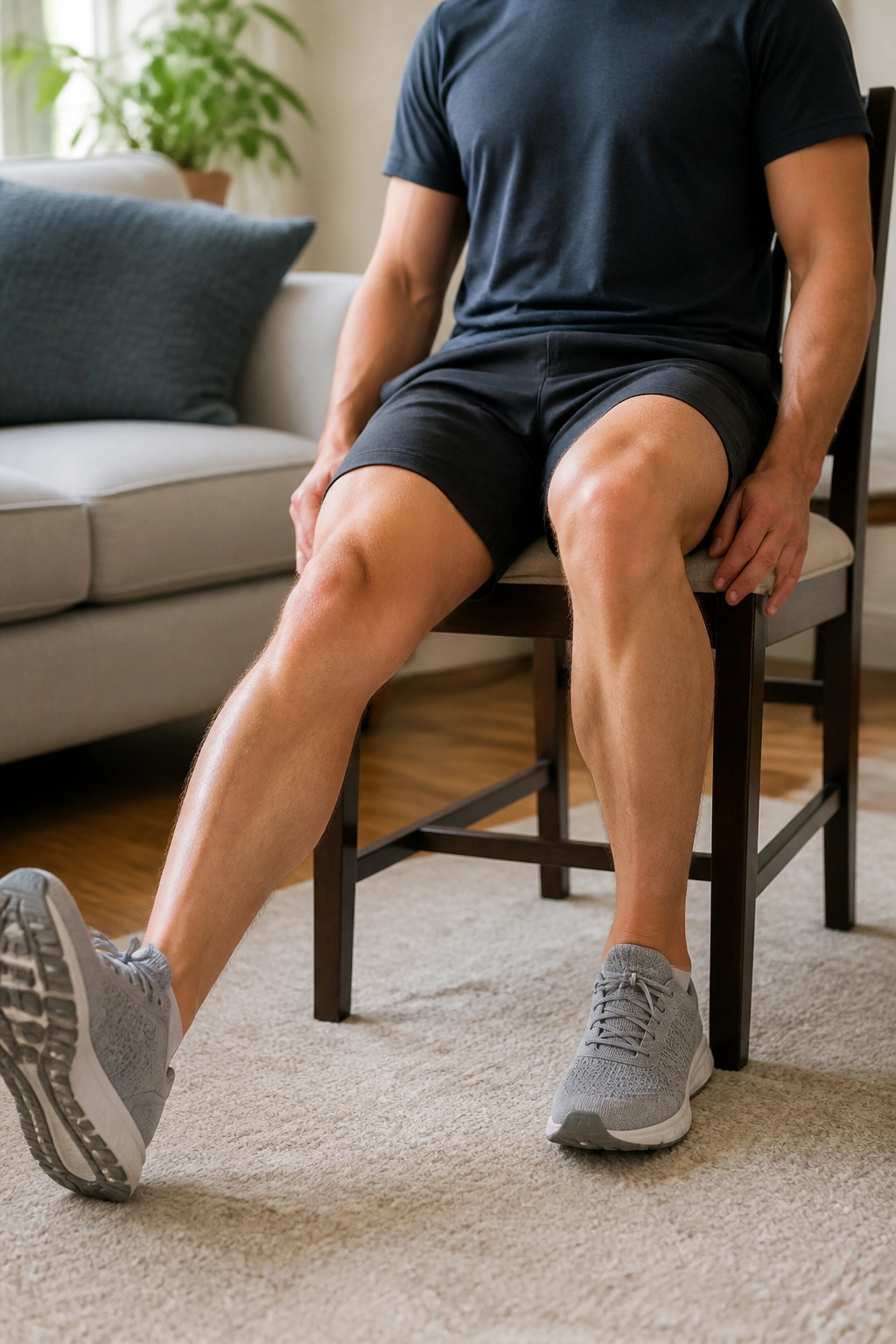
The smartest knee-friendly home routine is usually a mix of one floor move, one standing strength move, and one light cardio drill. That might mean quad sets, bridges, and shadow boxing on one day; or sit-to-stand, calf raises, and marching on another. Small choices, but they add up.
A lot of people make the mistake of waiting for their knees to feel perfect before they move. That rarely works. Better to keep the joint warm, keep the surrounding muscles honest, and stay inside a range that does not leave you paying for it later.
If a move causes sharp pain, catching, or swelling that lingers after you stop, drop it and get the knee checked. Otherwise, keep the work quiet, consistent, and a little boring. Boring knees are usually happier knees.
