



After a run, your core is already awake, which is exactly why post-run ab workouts can feel cleaner than the same moves done cold. Your breathing is up, your hips are warm, and the floor work that usually feels awkward starts to make a little more sense.
The catch is that runners often turn “abs” into a pile of fast crunches. Bad trade. What tends to matter more is the boring stuff: keeping your ribs from flaring, stopping your low back from arching, and making your trunk stay steady while your legs move around it.
A good home core session after running should be short, sharp, and honest. If you can’t keep form for 20 seconds, you picked the wrong drill or you’re too cooked from the run. No shame in that. It just means you need a smarter move.
These twelve exercises lean toward stability, control, and enough burn to feel useful without wrecking you after a mile-heavy day. Start with the move that matches how your body feels, not the one that looks hardest on a phone screen. Then keep the reps clean.
1. Dead Bug Marches for Quiet Ribs
If your lower back likes to arch, start here. Dead bug marches are one of the cleanest post-run core moves because they force your legs to move while your torso stays quiet. The motion looks simple. It isn’t.
Lie on your back with your arms pointed straight up and your knees bent over your hips. Press your low back gently into the floor, then lower one heel toward the mat while the opposite arm stays still. Come back up before the back peels away. Slow is the whole point.
Why It Works
Dead bug marches train anti-extension, which means your core resists the urge to arch when your legs move. That matters after running, because tired runners love to dump effort into the low back and hip flexors. This drill catches that pattern fast.
It also gives you a clean way to check breathing. If you can exhale as the heel lowers and keep your ribs from popping up, you’re doing the job right.
- Do 6 to 10 reps per side.
- Keep your low back heavy on the floor.
- Move one leg at a time if both legs together feels sloppy.
- Pause for 1 second at the bottom of each rep.
Pro tip: If you feel this mostly in your hip flexors, shorten the range. A smaller, cleaner rep beats a long, messy one every time.
2. Forearm Plank Holds That Don’t Sag
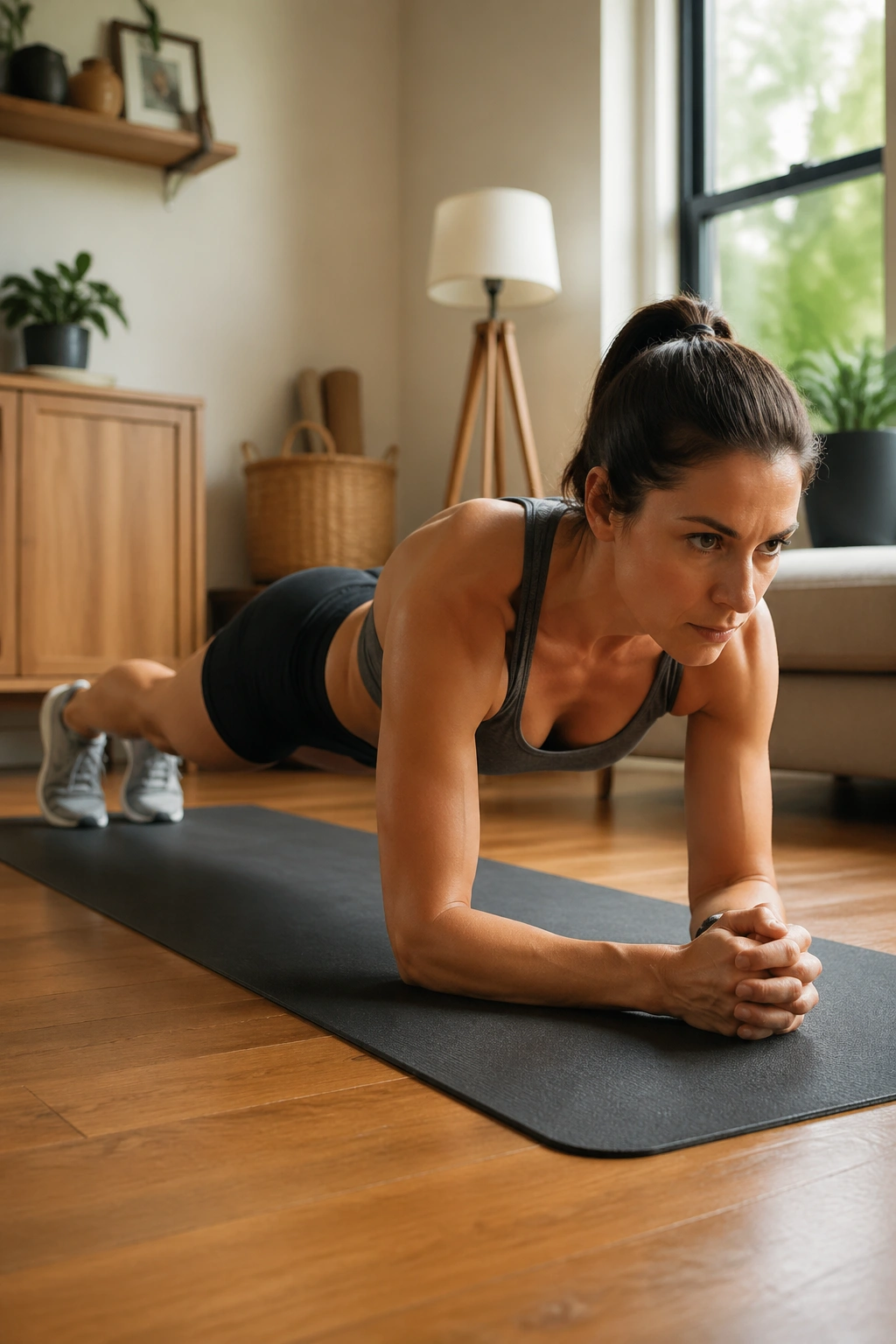
A plank only works if it stays honest. A droopy plank is just a tired lower back pretending to be core work.
Set your forearms on the floor, elbows under shoulders, and walk your feet back until your body makes one straight line. Squeeze your glutes a little, pull your ribs down, and imagine dragging your elbows toward your toes without actually moving. That tiny sense of tension is what keeps the middle from collapsing.
What Makes This One Worth Doing
Forearm planks hit the whole front side of your body without a single crunch. That matters after a run, when your trunk can be a bit sloppy and you need to rebuild that “stacked” feeling from shoulders to hips. The move is plain, but plain is not a bad word here.
Hold for 20 to 40 seconds if you’re fresh. If your form starts wobbling at 18 seconds, stop at 18. The clock is not the boss; your shape is.
Do not let your head hang. Do not let your hips creep up either. Somewhere in the middle is the good spot, and you’ll know it because your abs, shoulders, and glutes all have a job to do at once.
A lot of runners rush planks because they seem basic. They’re not basic when they’re done well.
3. Side Plank Hip Lifts for Oblique Work
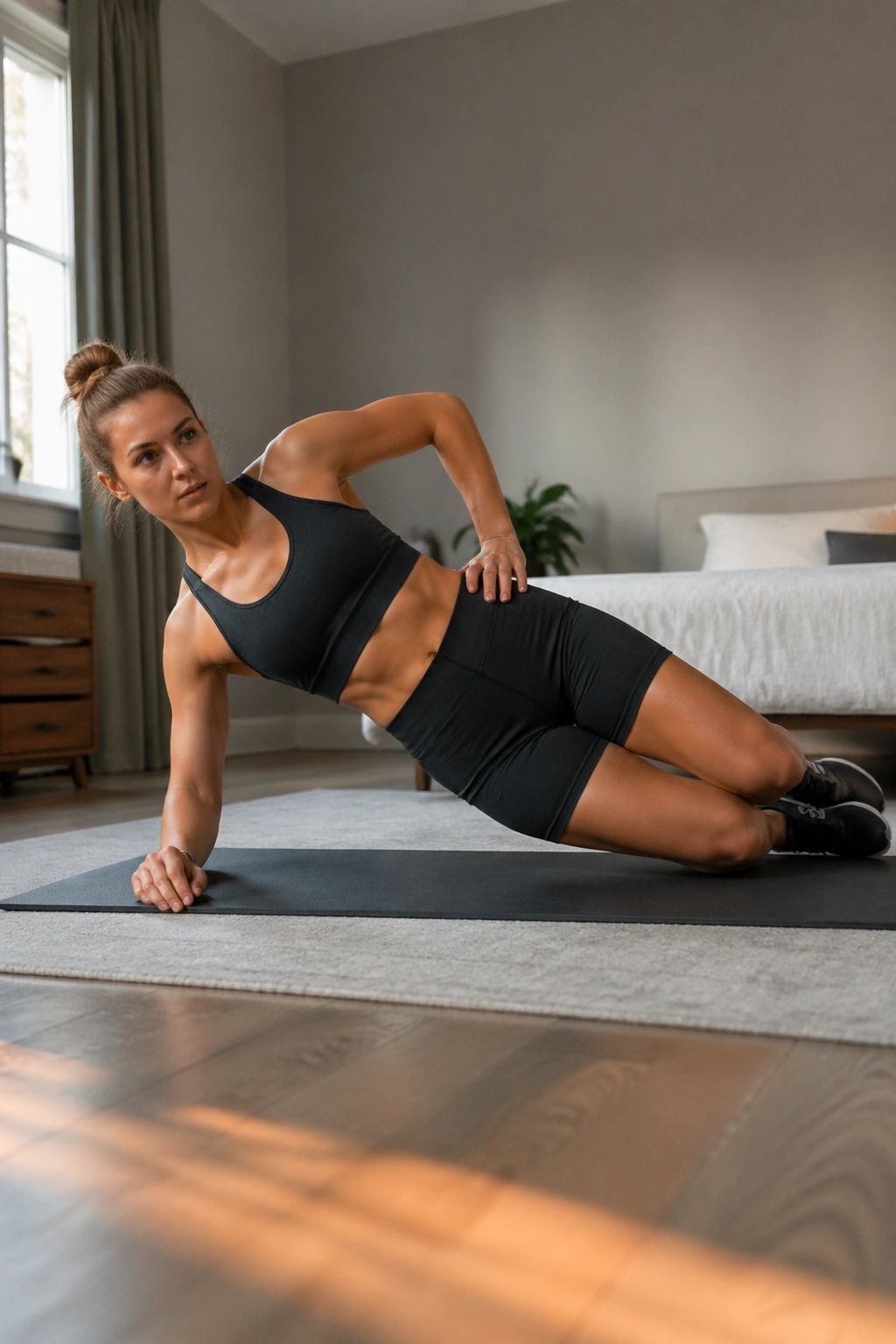
Why does side plank work so well after a run? Because running is a side-to-side challenge disguised as a forward motion. Every stride asks one side of your trunk to stay long and strong while the other side moves.
Set your elbow under your shoulder, stack your feet, and lift your hips until your body forms a straight line. From there, lower the hips a few inches and press them back up. Keep the movement small. If you sink too far, you’ll cheat with momentum.
How to Use It
Use 2 sets of 6 to 10 lifts per side if you want a little burn, or hold the top position for 20 to 30 seconds if you want a steadier challenge. Knees bent is fine. Actually, for a lot of runners, it’s the smarter choice on tired days.
What To Watch For
- Shoulders stacked, not rolled forward.
- Hips lifted, not drifting behind you.
- Neck long, chin slightly tucked.
- Bottom waistline pulling away from the floor.
One clean cue: press the floor away. That little push tends to wake up the side of the body that needs work most.
If full side planks feel shaky, drop the bottom knee and keep the same line from shoulder to knee. You’ll still get the job done. The form is easier to control, which is the part that matters after a run.
4. Reverse Crunches Without Yanking Your Neck
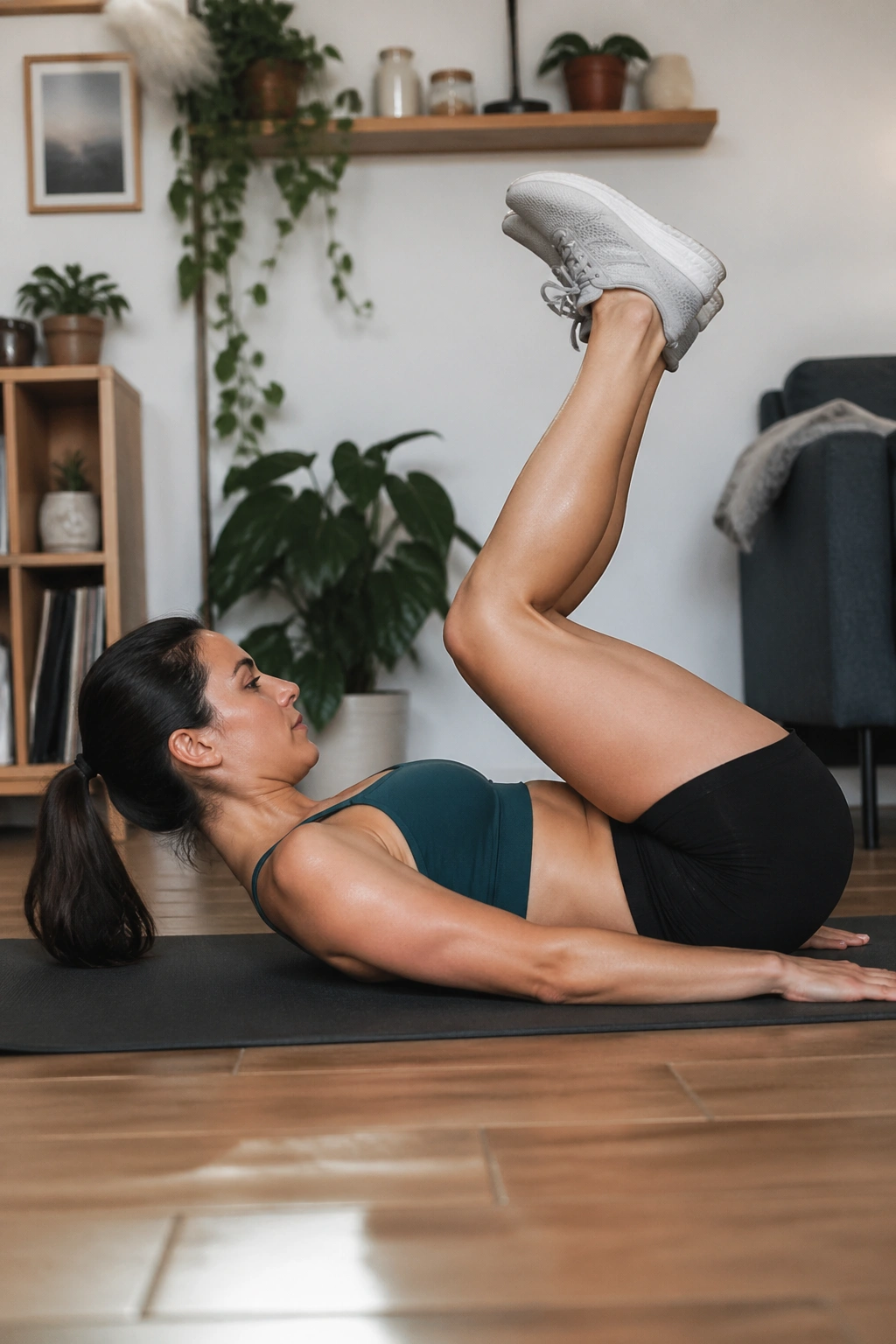
The reverse crunch is the move I wish more people would take seriously. It looks small. It does not feel small when you keep it strict.
Lie on your back with your knees bent and thighs angled up. Curl your pelvis toward your ribs so your tailbone lifts a few inches off the floor, then lower with control. The motion comes from the abs rolling the pelvis, not from swinging the legs.
One clean rep is enough to make the difference.
If you’ve ever felt sit-ups mostly in your hip flexors, reverse crunches are a nicer answer. They let you keep the upper body quiet while the lower abs do the lifting, which is exactly the sort of control runners need after mileage.
A useful rhythm is 8 to 12 reps, paused for a beat at the top. If you can’t stop your legs from rocking, bend the knees more and shorten the lift. Do not yank with momentum. That turns the move into a sloppy swing and your low back pays the price.
Some people lift too high and lose the curl. Others barely move at all and call it a rep. You want the middle road: small, crisp, and controlled.
5. Hollow Body Holds for a Tight Midline
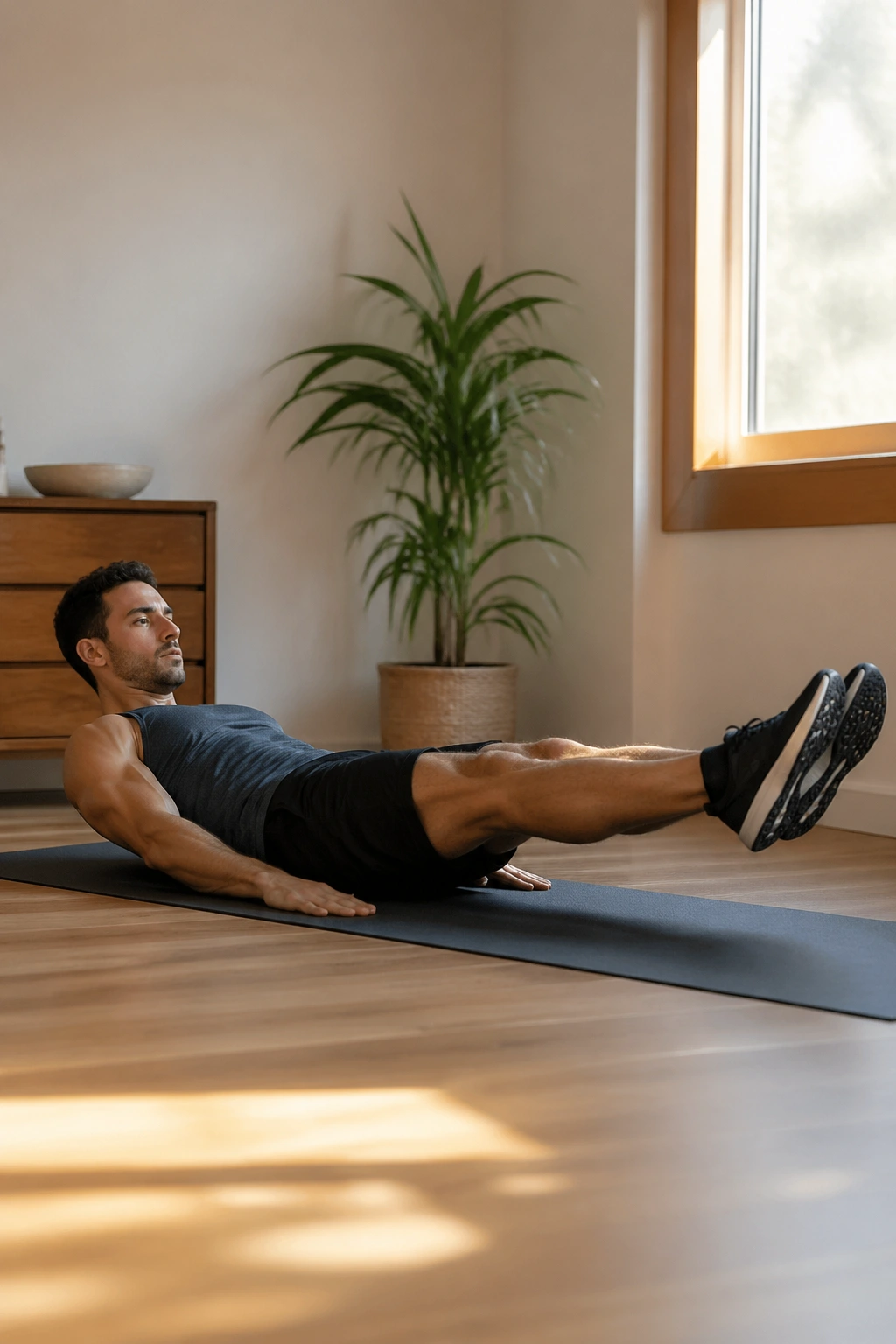
Hollow holds are brutal in a quiet way. They don’t look dramatic, and they can make your abs shake inside 10 seconds if you’re not used to them. That’s a good sign, not a bad one.
Lie on your back, press your lower back into the floor, and lift your shoulders, arms, and legs just off the mat. The lower back must stay down. If it arches, the hold is over or the shape needs to get easier. You can bend your knees, keep your arms by your sides, or raise them overhead depending on your level.
The point is not to show off. The point is to create a long, firm shape and hold it while your breathing stays under control. That body position carries over into running more than people expect, because a stable midsection helps keep your stride from leaking force.
Start with 10 to 20 seconds. Rest, then repeat for 3 rounds. If you’re newer to it, tuck the knees and keep the arms alongside the body. That version still lights up the front line without turning your face red in five seconds.
Short version: if your back arches, you’ve gone too far. Pull the shape back in.
6. Bird Dog Reaches for Cross-Body Control
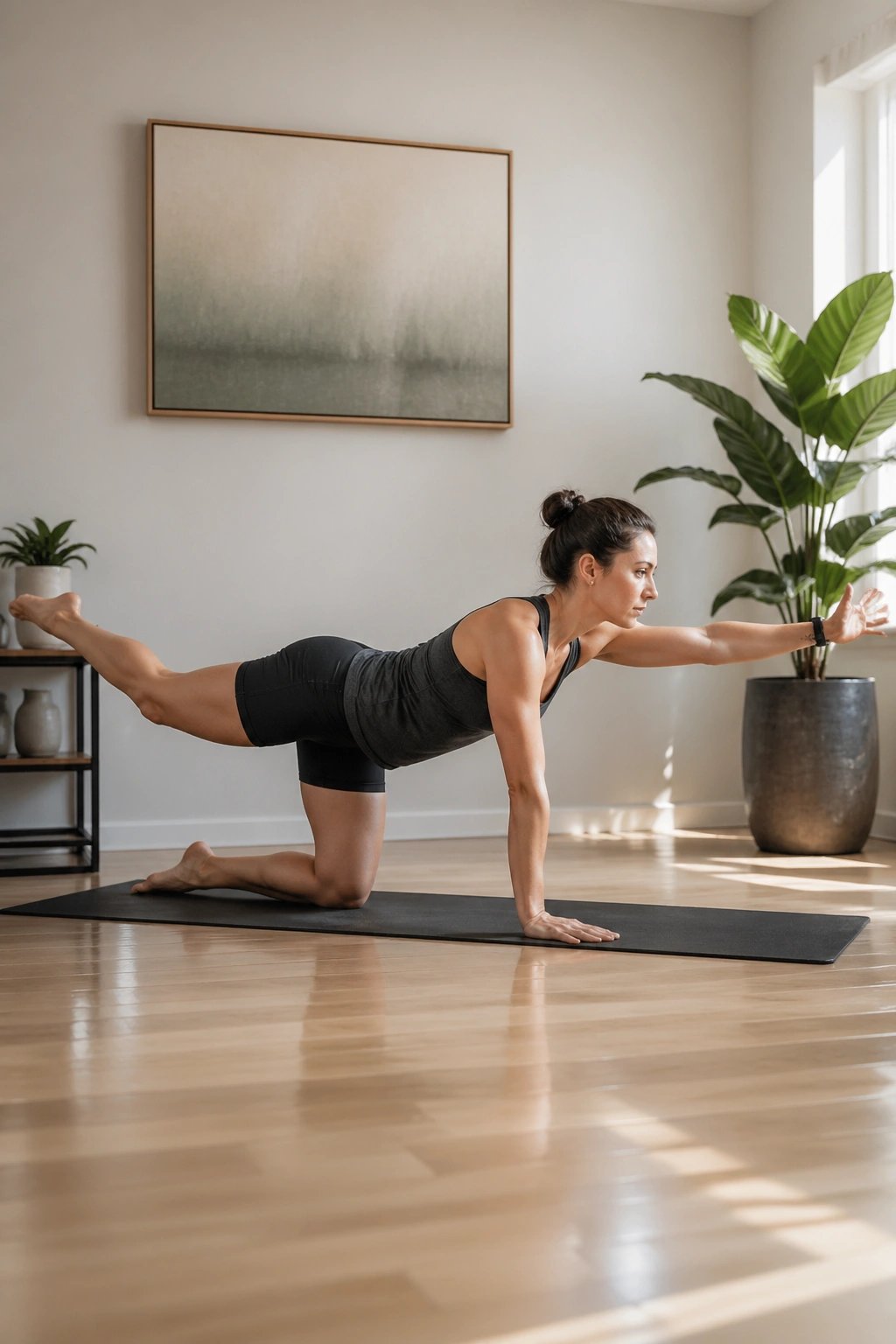
Bird dog is the anti-chaos move. It looks calm, and that’s why I like it after a run.
Get on hands and knees, hands under shoulders and knees under hips. Reach one arm forward and the opposite leg back until both are long, then pause. Bring them back in with control and switch sides. Keep your hips level. That’s the whole game.
What Makes It Different
Unlike crunch-style work, bird dog asks your trunk to resist twisting while your limbs move in opposite directions. That pattern matters for runners because your arms and legs are always talking to each other. If the middle is sloppy, the stride gets sloppy too.
How to Get the Most From It
- Reach long enough to feel the back line engage.
- Pause 2 seconds on each rep.
- Keep the neck in line with the spine.
- Use 6 to 8 reps per side.
If you want a little more challenge, touch your elbow and knee under your body before reaching back out. If that feels like too much movement after a hard run, skip the knee touch. The cleaner version is usually the better one anyway.
Bird dog is also one of the few core drills that leaves you feeling better instead of more beaten up. I like that. A lot.
7. Slow Bicycle Crunches for Rotational Strength
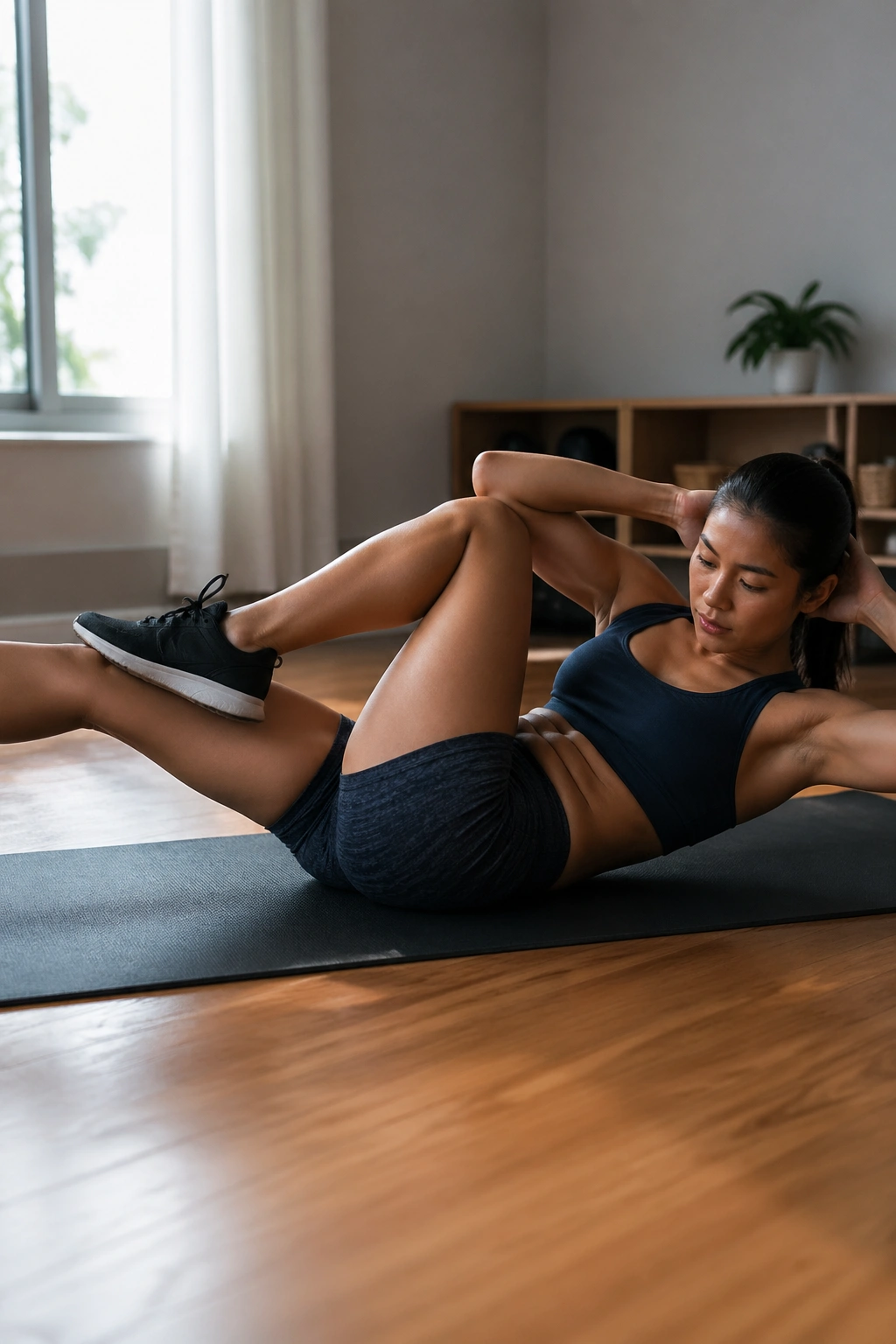
Fast bicycle crunches are a mess. Slow bicycle crunches are a different animal.
Lie on your back, hands lightly behind your head, and bring one knee in as the opposite elbow rotates toward it. Then switch sides without rushing. The key is to turn through the ribs, not just shove the elbow around. If you’re pulling on your neck, the rep is already gone.
The Tempo Matters
A slow tempo keeps the movement honest and lets the obliques do actual work instead of handing everything to momentum. Try 3 seconds across, 1 second back. That rhythm gives you enough control to feel each side and enough time under tension to make the set matter.
What To Feel
- Front shoulder blade lifts, not the whole chest flinging up.
- Elbow stays wide.
- The opposite leg reaches long instead of snapping.
- Low back stays quiet.
This version is useful when you want a more active ab drill but don’t want a lot of floor pounding. It also pairs well after easy runs when you have a little energy left and want something more athletic than a static hold.
Keep the set short. 8 to 12 total reps per side is enough. If your neck starts grumbling, drop your hands and cross your arms over your chest. The movement still works.
8. Plank Shoulder Taps for Anti-Rotation
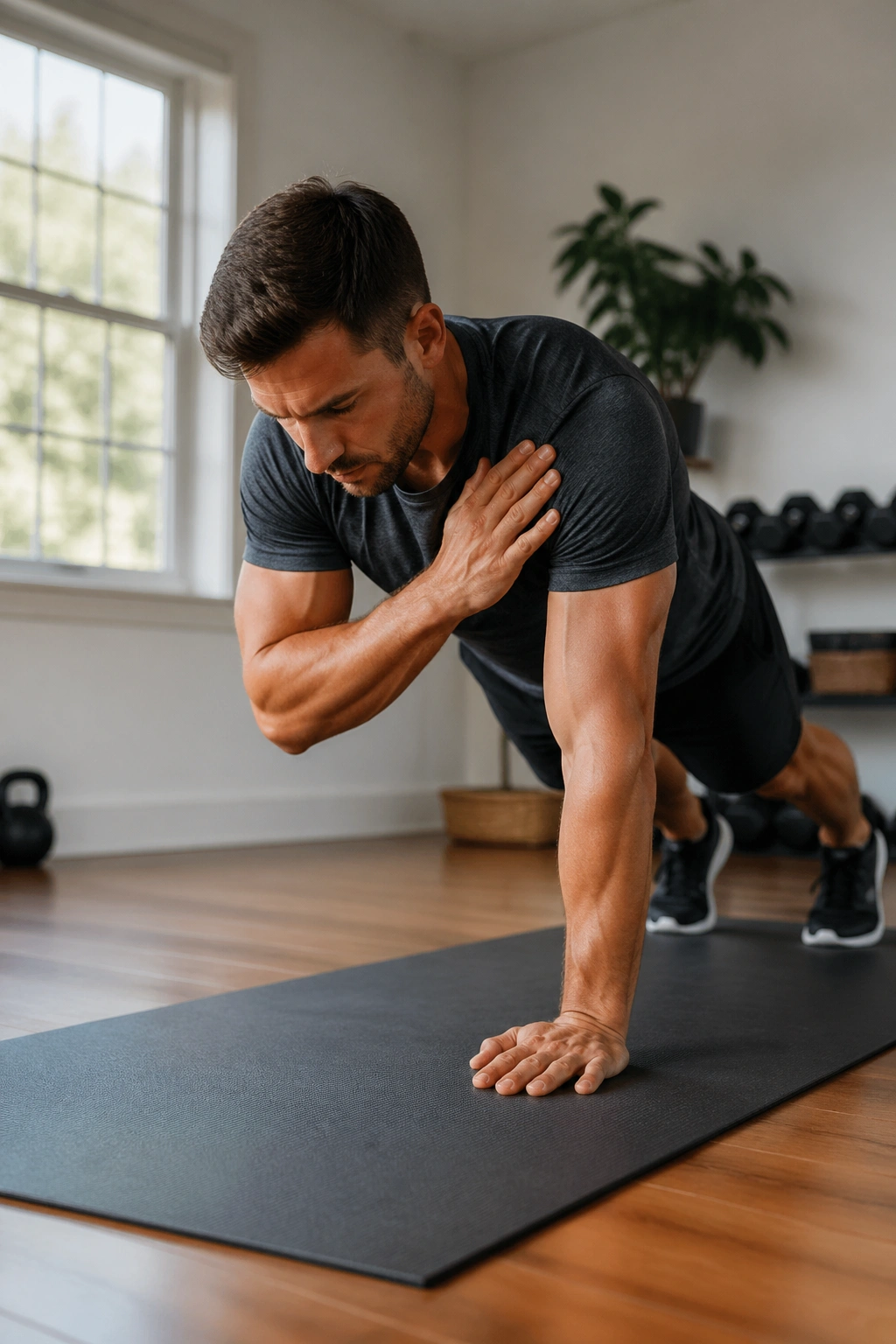
A plank with shoulder taps feels athletic because it is athletic. Your body wants to sway. Your job is to stop it.
Set up in a high plank with wrists under shoulders, feet a little wider than hip-width, then lift one hand to tap the opposite shoulder. Put it down and switch sides. Keep the hips as still as you can. A tiny shift is normal. A big wobble means the core has quit.
This is one of those drills that exposes how tired you are after a run. Fresh, it feels manageable. Tired, it becomes a wobble test. That’s useful feedback.
Try 10 to 16 total taps for a round. If your shoulders are burning before your abs show up, widen your feet. If your low back dips, lower the pace and shorten the tap. The goal is not speed. The goal is to stop the trunk from twisting while the arms move.
A neat bonus: plank shoulder taps wake up the shoulders and serratus along with the abs, so the whole front line feels switched on. Good before a strength session. Good after an easy run too.
9. Mountain Climbers With a Controlled Tempo
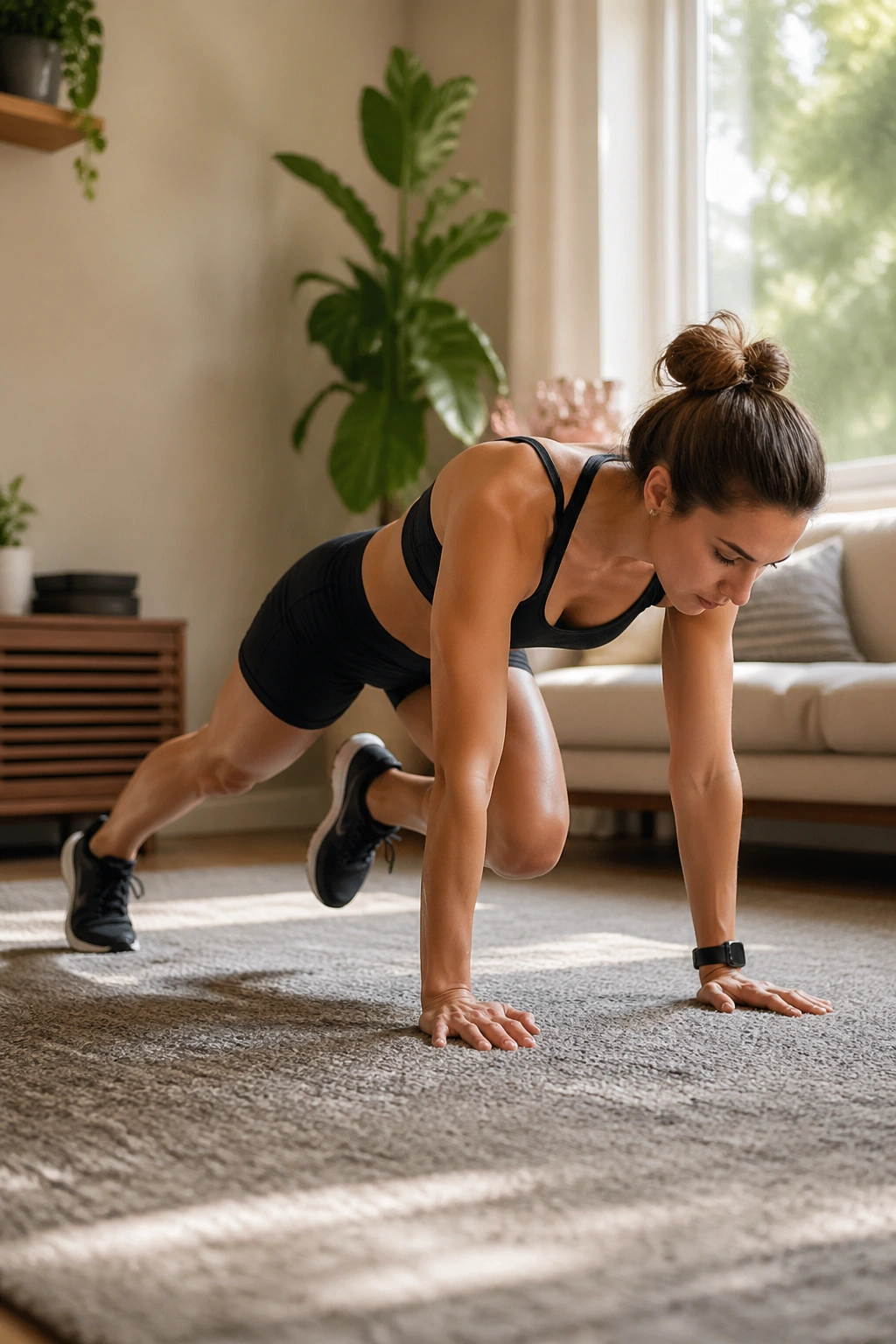
Mountain climbers can turn into cardio theater if you let them. Keep them controlled, and they become a sharp core drill instead of a frantic knee shuffle.
Start in a high plank. Drive one knee toward your chest, place it back, then switch sides. Keep your shoulders stacked over your hands and your hips level. If the hips shoot up and down, the abs lose the job and the movement turns into a bounce.
A controlled tempo works better than the fast version for post-run work because you’re already warm and a little tired. You don’t need more chaos. You need cleaner force.
Use 20 to 30 seconds of steady reps, or count 10 to 12 each side. Keep the steps quiet. If your feet sound like they’re slapping the floor, slow it down and shorten the drive. The cleaner the rep, the more the core has to hold the line.
A Simple Rule
If you can’t pause for a split second with each knee in, you’re going too fast.
That tiny pause makes the abs work instead of the momentum. It also keeps your shoulders from getting bullied by the drill, which is a nice side effect on days when your upper body already feels tight from arm swing.
10. Tabletop Toe Taps for Low-Back Friendly Work
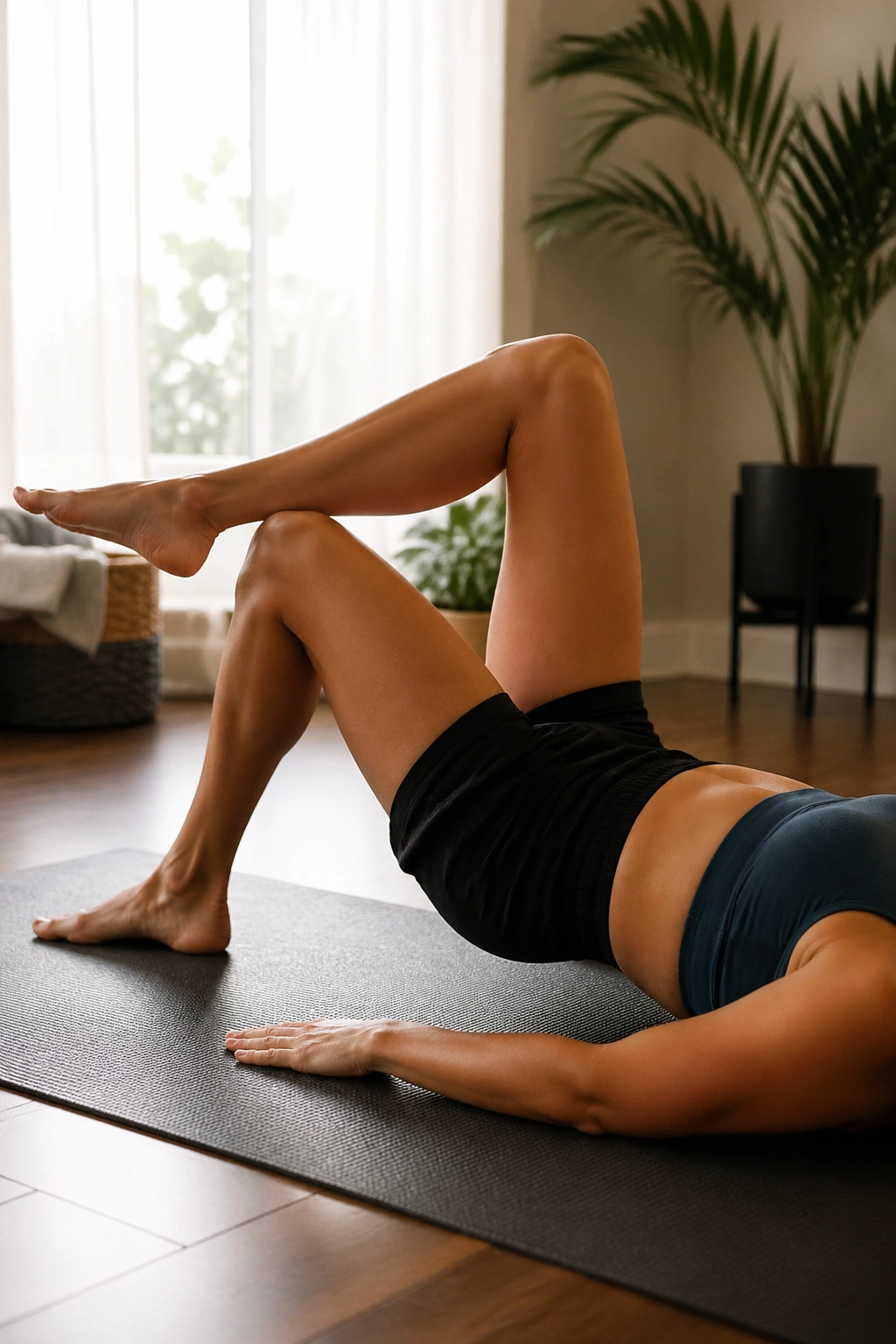
Toe taps from tabletop are one of the friendliest ways to train the lower abs without a ton of drama.
Lie on your back with your legs in tabletop, knees over hips and shins parallel to the floor. Lower one toe to lightly tap the ground, bring it back, and alternate sides. Keep your low back heavy on the mat. If it arches, bring the knees higher or shorten the range.
How To Keep Your Back Quiet
The trick is not the tap. The trick is the brace before the tap. Exhale first, pull the ribs down, then move one leg. That sequence helps the trunk stay still while the hip moves.
- Tap the floor softly.
- Keep the knee bent at about 90 degrees.
- Move slowly enough to stop the pelvis from rocking.
- Aim for 8 to 12 reps per side.
This one is a good fit when you want something less intense than hollow holds but more specific than random crunches. It works well after medium runs, easy recovery runs, or any day when your hips feel a little cranky and you want to stay on the floor for only a few minutes.
If both legs together feels too hard, alternate one at a time. That’s not cheating. That’s smart training.
11. Bear Plank Knee Hovers for a Harder Finish
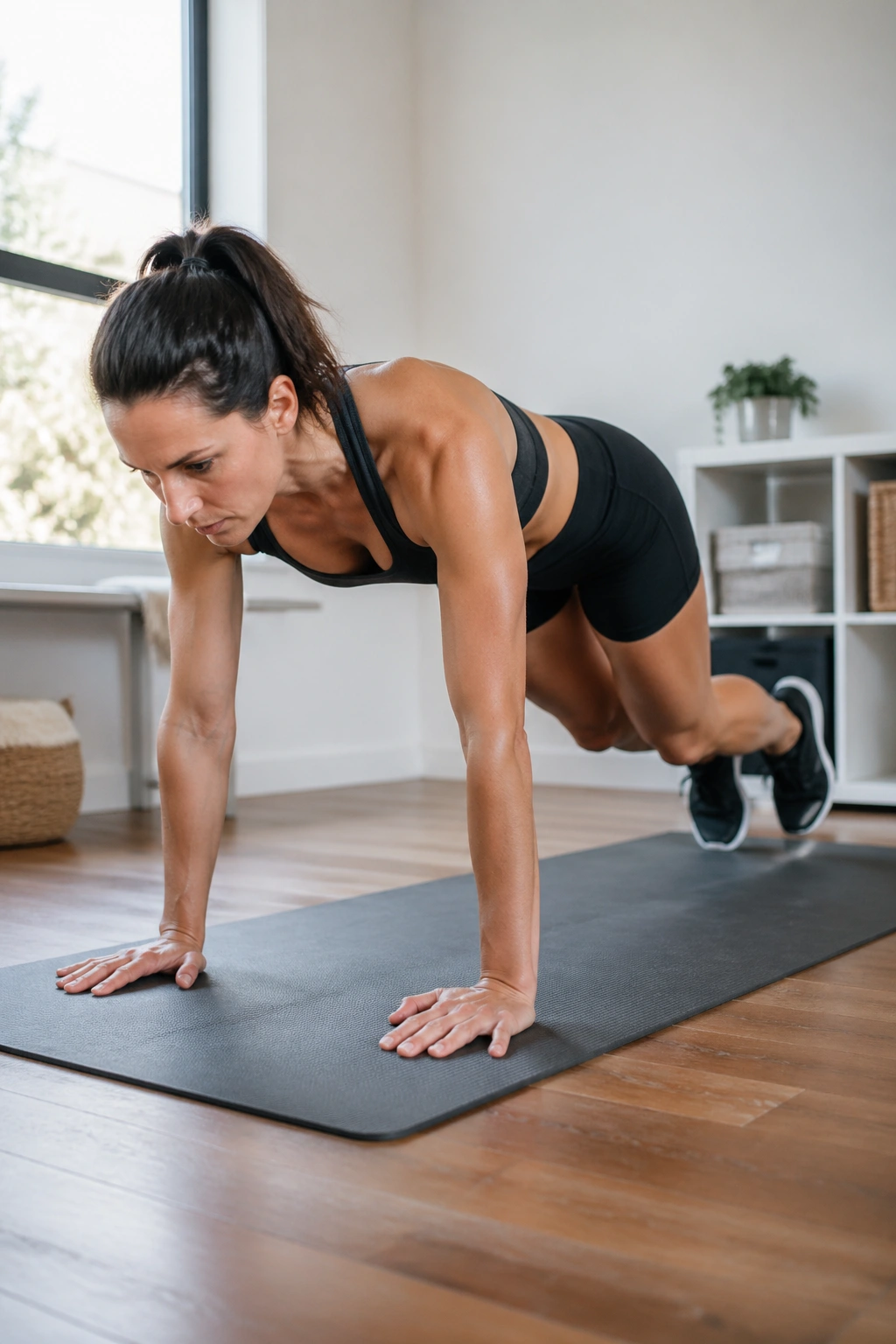
Bear plank is what I reach for when a runner wants a tougher core drill without going full circus.
Get on hands and knees, tuck your toes, and lift your knees an inch or two off the floor. Hold that hover, or add a gentle knee tap to the ground and lift again. The back stays flat. The knees stay low. The whole body has to brace.
This move is sneaky because it looks small. Then five breaths later, your abs are on fire and your shoulders are reminding you that they matter too.
Bear plank is a good finishing drill when you still have some gas left after the run and you want a firm, athletic challenge. It’s also useful if you tend to leak energy through the middle during faster runs, because the position demands a lot of torso control.
Use 10 to 20 seconds to start. Rest, then repeat 3 times. If your low back sags or your knees lift too high, back off. A low hover is enough. Chasing a bigger position usually makes the shape worse.
Who Should Pick It
- Runners who want a harder core finisher.
- People who get bored with long planks.
- Anyone who likes feeling the whole trunk work at once.
Keep it crisp. No sagging. No bouncing.
12. Standing Cross-Body Knee Drives for a No-Mat Finisher
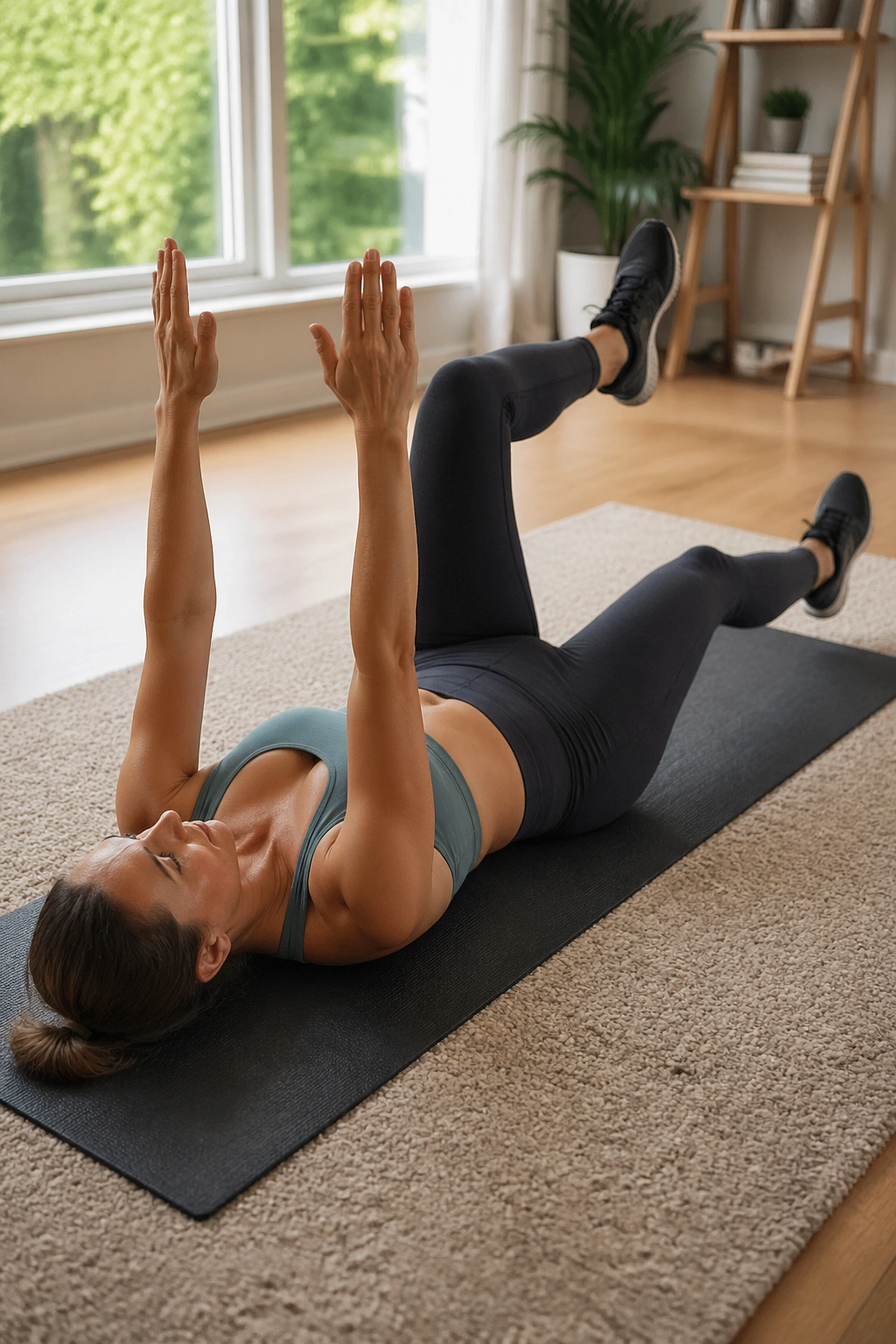
Sometimes you do not want to lie on the floor after a run. Fair.
Standing cross-body knee drives give you a clean, low-impact way to finish the session without crawling onto a mat. Stand tall, brace your midsection, and drive one knee up toward the opposite elbow while the upper body stays quiet. Lower it with control and switch sides. You can add a light twist through the ribs, but the movement should still feel controlled, not wild.
This drill is a good match for runners who want core work that feels more like coordination and less like punishment. It also plays nicely after treadmill runs, easy outdoor miles, or those days when your legs feel good but your stomach is not thrilled about floor work.
A Short Finisher You Can Repeat
Try this once through:
- 20 seconds of cross-body knee drives.
- 10 seconds of standing march hold, one knee lifted.
- 20 seconds of slow alternating knee drives.
- Rest for 30 seconds.
- Repeat 2 rounds.
Keep the torso stacked. If you lean back to fake the knee height, you’ve lost the point. Lift the knee only as high as you can without popping the ribs up.
A lot of people skip standing core work because it feels too easy. Then they try it with clean form and realize it’s not easy at all. That little twist-and-brace pattern shows up in running more than a lot of floor drills, which is why I like ending with it.
A simple post-run core routine does not need to be long to matter. Pick 2 or 3 of these moves, keep the reps slow, and stop before your form starts falling apart. That’s enough to build a stronger middle without dragging the whole workout into junk territory.
If you want the shortest possible version, pair one anti-extension move like dead bug marches with one side move like side plank hip lifts and finish with a standing drill. Clean, quick, done. And your next run tends to feel a little more stable because of it.
