



A knee injury can make even a short workout feel like a negotiation.
Deep squats, twisting pivots, jumps, and fast direction changes are the obvious troublemakers. The less obvious problem is fatigue: once the quads and hips get tired, the knee starts stealing extra work, and that is usually when the ache gets louder.
The safest knee injury workouts tend to look plain on paper. No heroics. No bouncing. No forced depth. A lot of them are isometrics, slow controlled strength work, bike work, water work, or simple floor drills that keep the joint moving without asking it to absorb a ton of load.
A useful rule: mild effort is fine, sharp pain is not. If the knee swells more later in the day or feels worse the next morning, the session was too much. If it locks, buckles, or refuses to bear weight, that is not a “push through it” moment. Start with the boring stuff. It earns its keep fast.
1. Quad Sets on a Rolled Towel
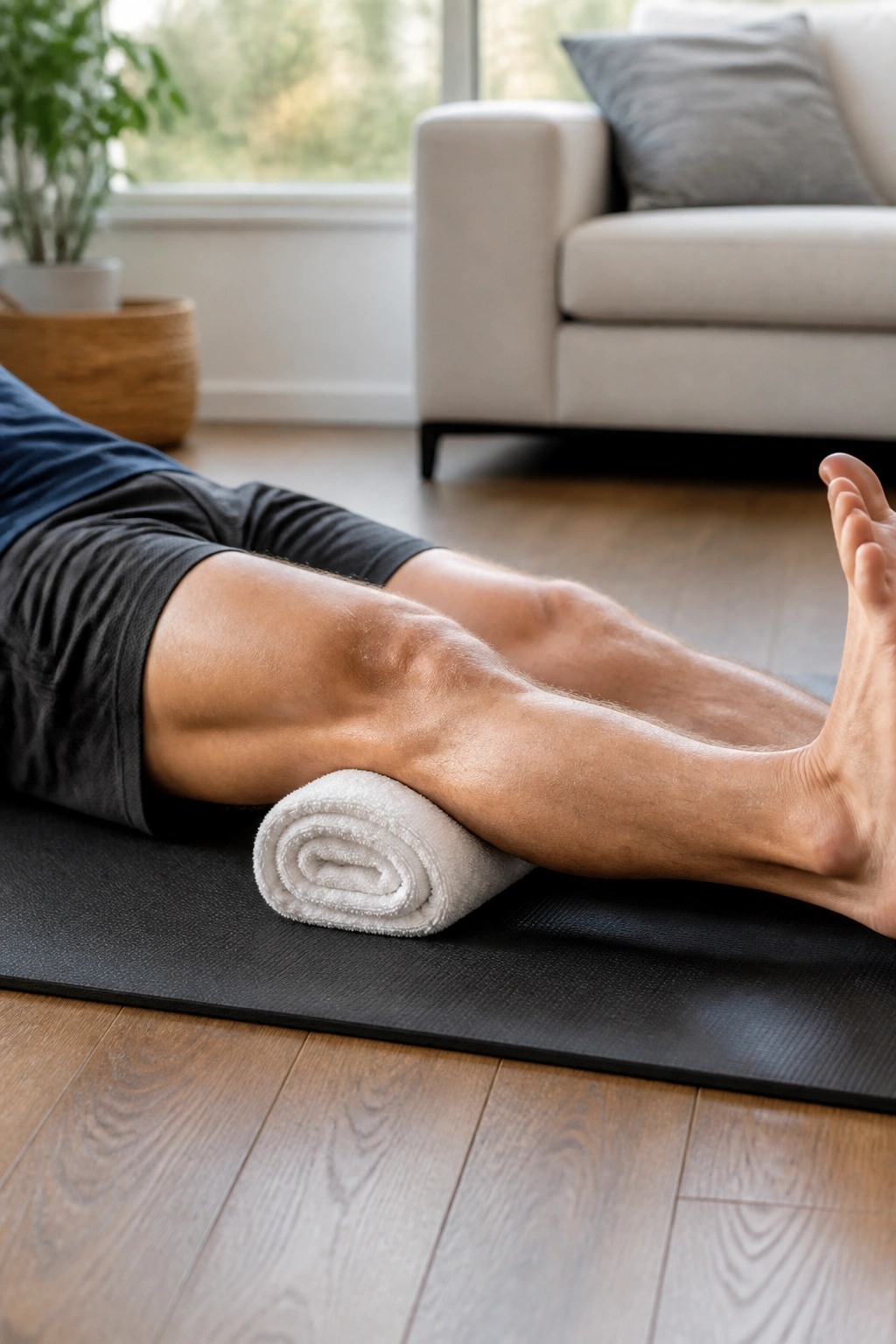
Quad sets look boring. They are. That is also why they work so well when a knee is irritable. You are asking the front of the thigh to contract without moving the joint through a big range, which makes this one of the cleanest early-stage knee injury workouts around.
Lie on your back or sit with your leg straight, then place a small rolled towel or thin pillow under the knee. Press the back of the knee gently into the towel and tighten the thigh as if you are trying to pull the kneecap upward. Hold for 5 to 10 seconds, then relax fully.
A good rep feels like a firm, localized squeeze in the quadriceps. It should not feel like a stab inside the joint. If the hamstrings cramp, back off a little and focus on the front thigh instead.
- Do 10 to 20 reps per set.
- Use 2 to 4 sets spread through the day.
- Keep the ankle relaxed and the toes pointed up.
- If the knee is swollen, this is a smart place to start.
My favorite cue: make the thigh work harder than the knee does. That is the whole point.
2. Straight-Leg Raises Without Bending the Knee
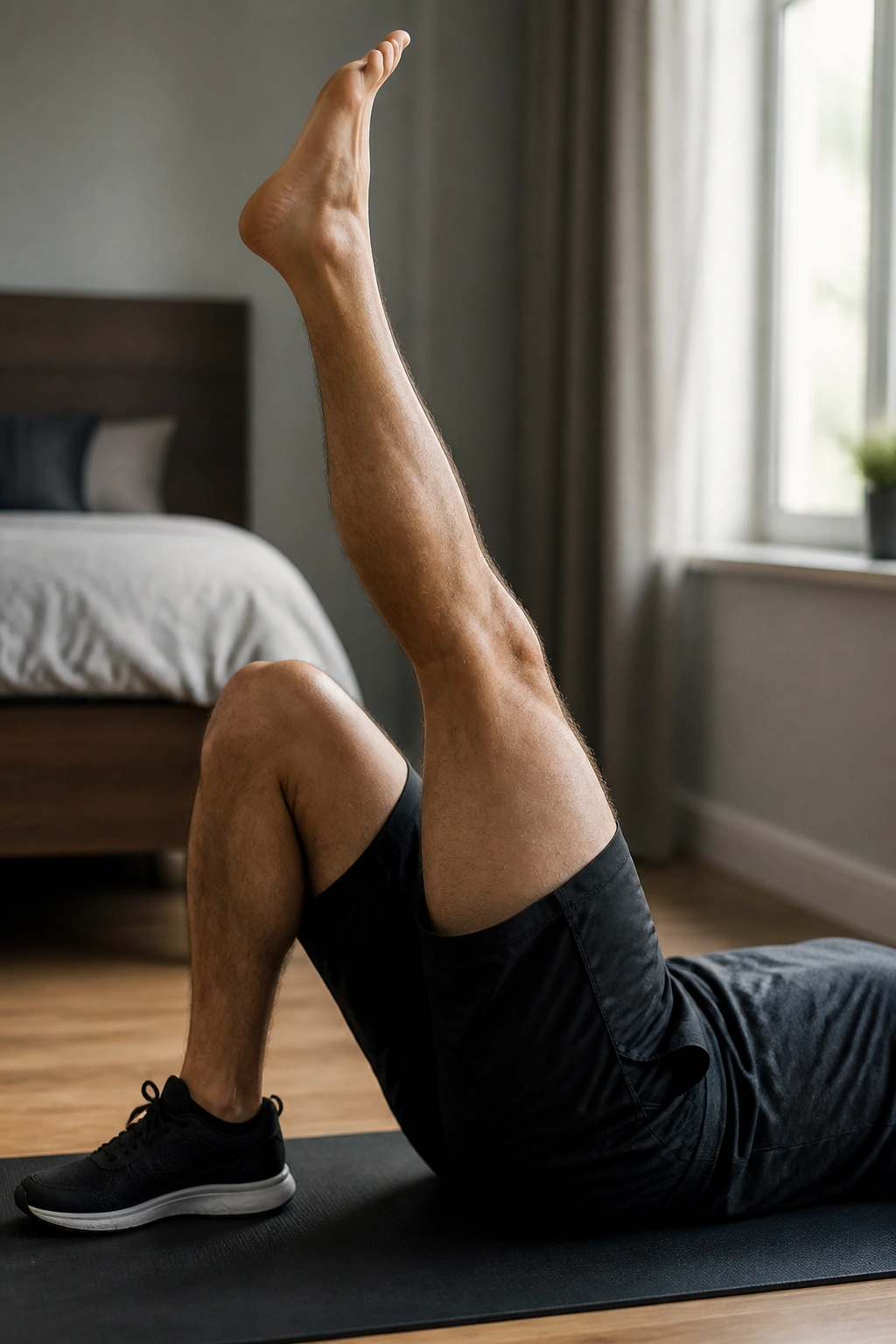
Can you lift the leg without bending the knee much? Good. That is exactly the skill this exercise wants. Straight-leg raises build quad strength while keeping joint motion controlled, which makes them a staple when a bent knee feels cranky or unstable.
Lie on your back, bend the uninjured knee if that helps your lower back, and keep the working leg long and straight. Tighten the thigh first, then lift the leg 12 to 18 inches off the floor. Pause for a second, lower slowly, and keep the knee locked in a straight line the whole way down.
What you should feel
The front of the thigh should do the heavy lifting. If the hip flexor starts grabbing at the top of the pelvis, the leg may be coming up too high or too fast. Lower the range a little and slow the tempo.
- Aim for 8 to 12 reps per side.
- Try 2 to 3 sets.
- Keep the toes pointed toward the ceiling if you want to keep the quad honest.
- Stop if the knee wobbles or the leg can’t stay straight.
A small bend at the knee turns this into a different drill. Keep it long.
3. Glute Bridges From the Floor or Bed
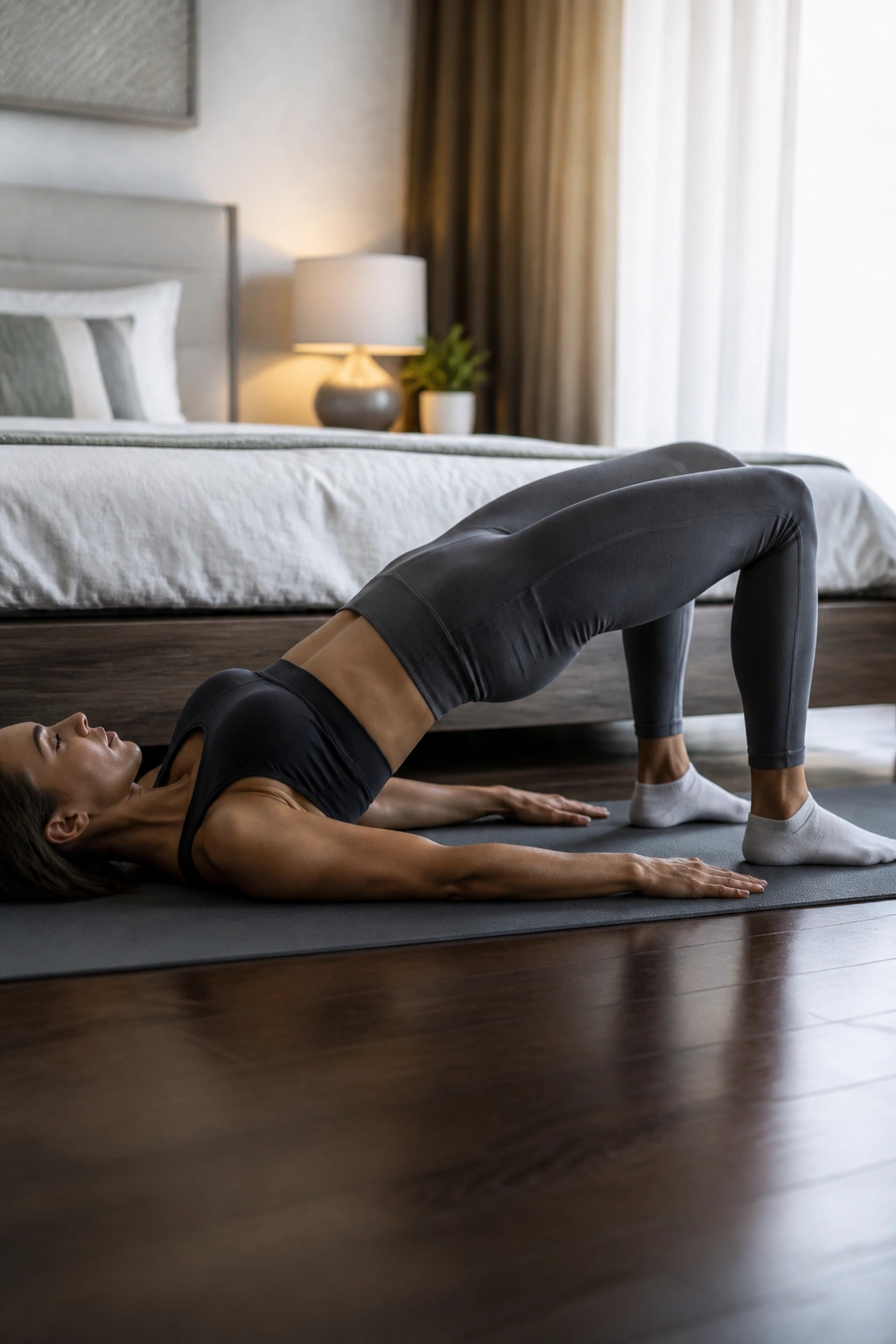
Feet flat. Knees bent. Hips up. That simple pattern shifts work into the glutes and hamstrings, which can take pressure off a cranky knee by improving the way the whole leg shares the load.
Bridge work is useful because it trains hip extension without a ton of impact. If the knee tolerates it, the bridge also helps remind the body that the hips belong in the conversation, not just the joint that hurts.
Set your feet about hip-width apart and position them so your shins are roughly vertical at the top. Press through the heels, lift the hips until the body makes a straight line from shoulders to knees, then lower under control. Don’t fling the hips up. That buys you nothing.
- Do 8 to 15 reps.
- Hold the top position for 2 to 3 seconds.
- Use a mini-band above the knees only if it does not make the knee angry.
- If hamstrings cramp, move the feet a little closer and slow down.
The rep should feel smooth and solid. If the low back takes over, the hips are rising too high.
4. Clamshells With a Light Band
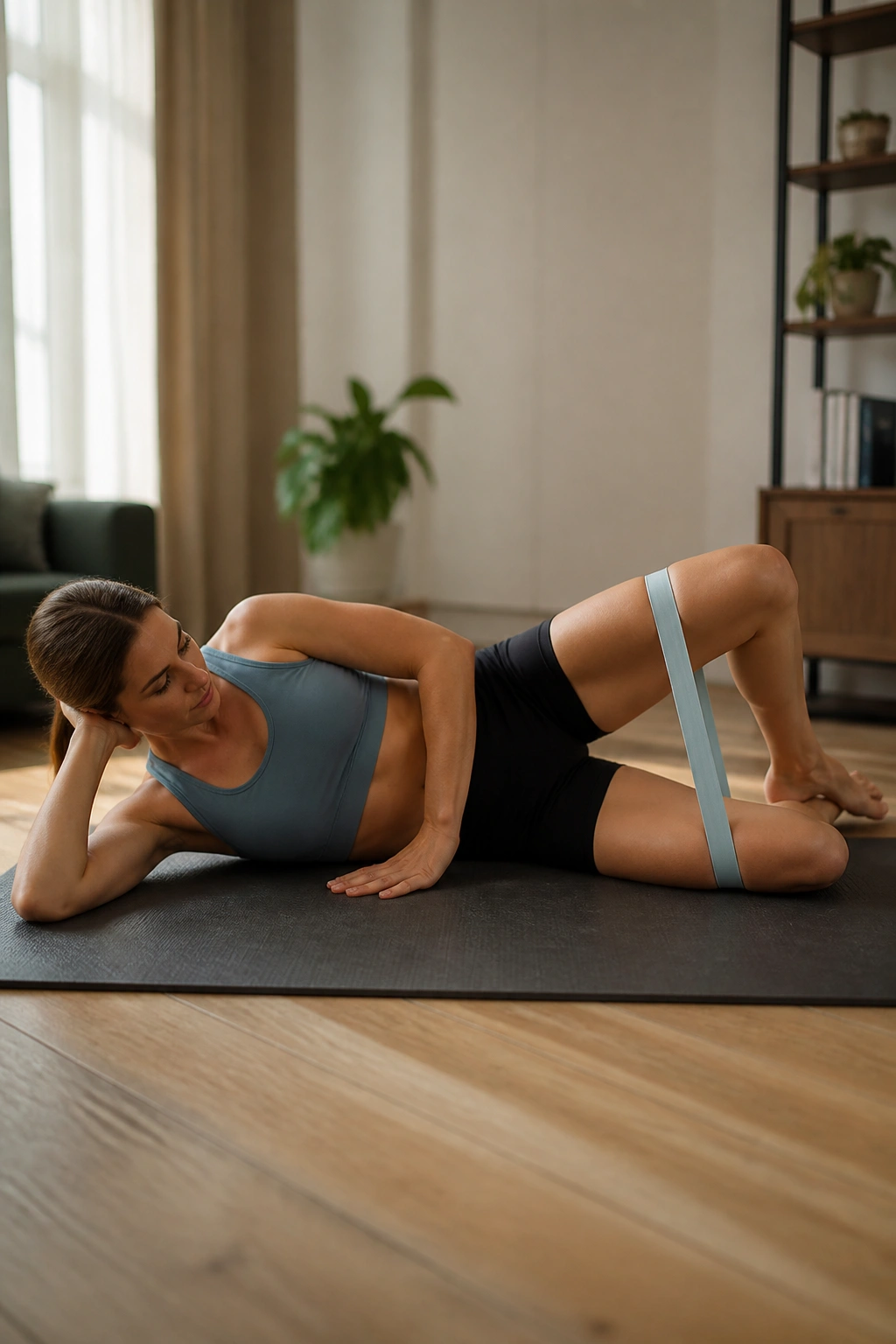
Small hip muscles can matter more than the knee itself for a while, and clamshells are a clean way to train them. They target the glute medius, which helps control the thigh as you walk, climb stairs, and stand back up from a chair.
Lie on your side with hips stacked, knees bent about 45 degrees, and feet together. Keep your pelvis still, then open the top knee like a clamshell while the feet stay touching. A light resistance band above the knees adds work, but don’t reach for a heavy one just because you can.
The movement is tiny. That’s fine. Bigger is not better here. If the pelvis rolls backward, the hips are cheating and the exercise loses most of its value.
What to watch for
- The side of the hip should do the work.
- The low back should stay quiet.
- The knee should open only as far as you can control.
- A burn in the outer hip is a good sign.
Try 12 to 20 reps per side. Slow down the return. That eccentric part is where a lot of the benefit lives.
5. Side-Lying Hip Abduction
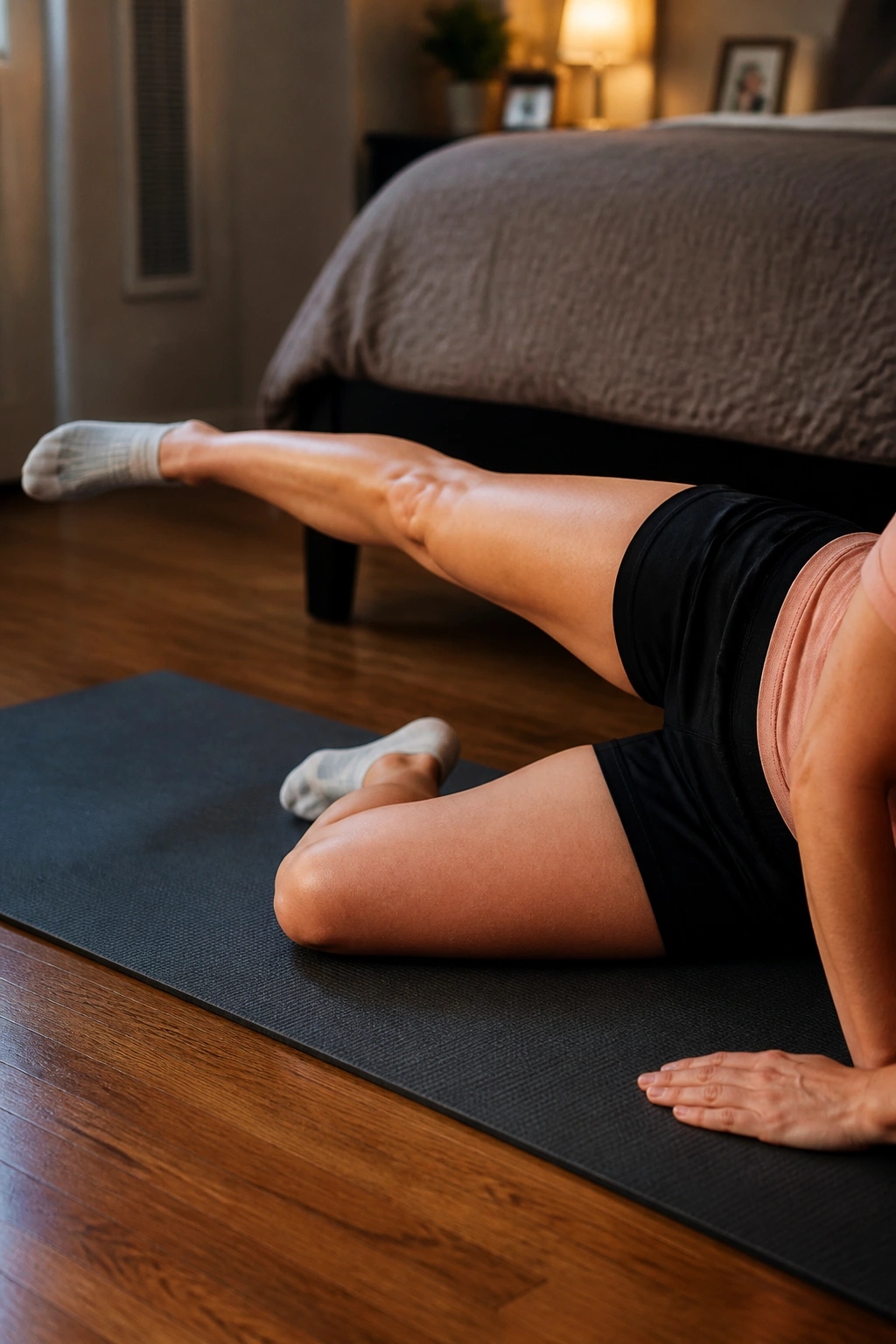
Side-lying leg raises are the cleaner, straighter cousin of clamshells. They hit the outer hip in a slightly different way, and that matters because knee pain often shows up when the hip is underdoing its job.
Lie on your side, bottom leg bent for balance, top leg straight. Keep the toes angled a little down instead of turned up to the ceiling; that tiny adjustment stops the hip flexors from taking over. Lift the top leg 6 to 12 inches, hold briefly, then lower slowly.
This one is not about height. People always over-lift. A modest range with control beats a dramatic swing every time.
Why I like it when the knee feels wobbly
The knee itself is not moving much, but the leg is learning to stay aligned. That can matter a lot when walking still feels awkward or stairs make the knee feel unreliable. Strong hips often make the knee feel quieter.
- Use 10 to 15 reps on each side.
- Keep the torso still.
- Pause for 1 second at the top.
- If you feel the front of the hip pinching, lower the leg a bit and reset.
If clamshells feel too easy, this usually gives a better challenge.
6. Heel Slides for Stiff, Sore Knees
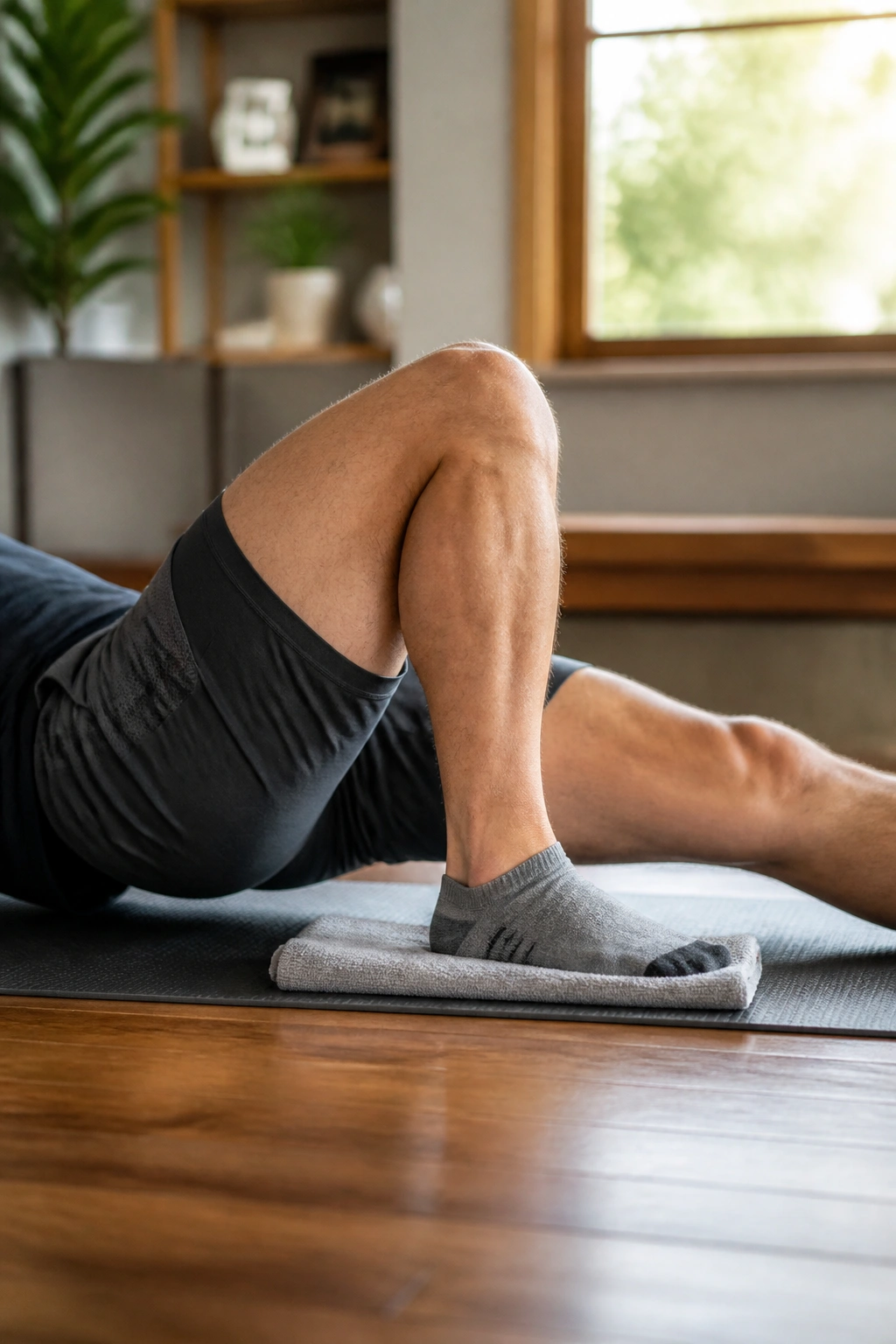
Need motion more than strength? Heel slides are the polite way to keep a stiff knee moving. They are gentle, low load, and useful when the joint feels rusty in the morning or after sitting too long.
Lie on your back with both legs straight. Slide the heel of the injured side toward your butt until you feel a mild stretch or a soft bend in the knee. Then slide it back out again. If the heel sticks on the floor, use a towel under the foot or a strap around the foot to make the glide smoother.
The goal is controlled motion, not a big bend at all costs. You should feel a stretch, maybe a little pressure, but not a sharp pinch under the kneecap or deep inside the joint.
- Work for 10 to 15 slow reps.
- Hold the bent position for 2 to 3 seconds.
- Use a shorter range on irritated days.
- Breathe out as the knee bends; people forget to do that and end up bracing too hard.
This is a good move between harder exercises, too. The joint often likes a little motion before it likes load.
7. Terminal Knee Extensions With a Resistance Band
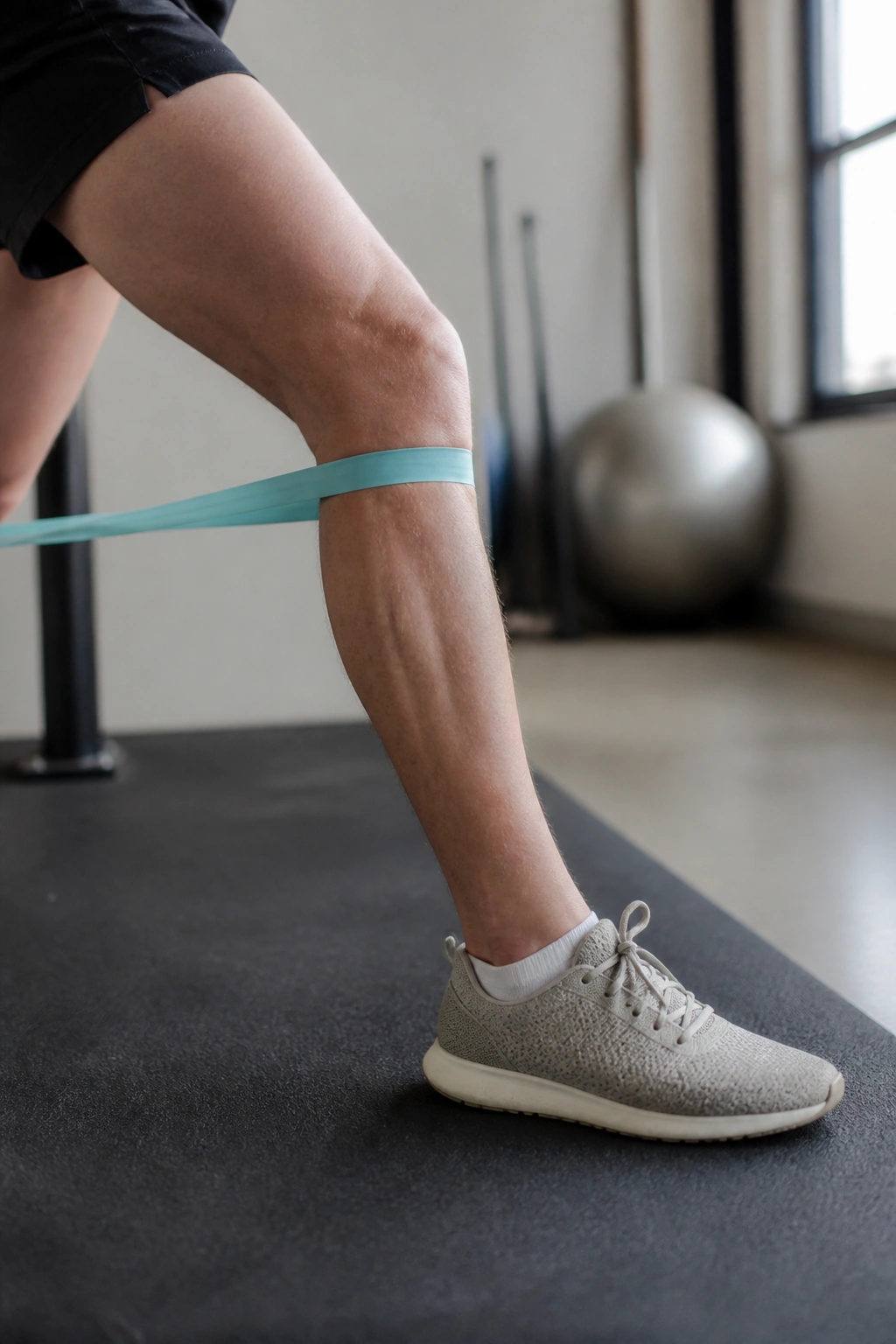
Terminal knee extensions are one of the cleanest ways to wake up a sleepy quad. The movement finishes in the last part of knee straightening, which is exactly where some knees need help after injury or after a stretch of guarding.
Anchor a light band behind the knee at about shin height. Step back until there is a gentle pull on the knee, then start with a slightly bent leg. Press the knee back into full extension while keeping the heel grounded, squeeze the thigh, and pause for a second before easing forward again.
How to get the most from it
- Use a light band first. Heavy is not better here.
- Keep the foot planted.
- Finish with the thigh tight and the kneecap feeling lifted.
- Do 12 to 20 reps for 2 to 4 sets.
The best version feels crisp. You’ll feel the quad switch on hard at the end range, but the knee itself should not feel slammed backward or jammed. If it does, reduce the band tension and shorten the motion.
This is especially handy when standing from a chair still feels weak. The quad learns to do its job again, one clean rep at a time.
8. Stationary or Recumbent Bike
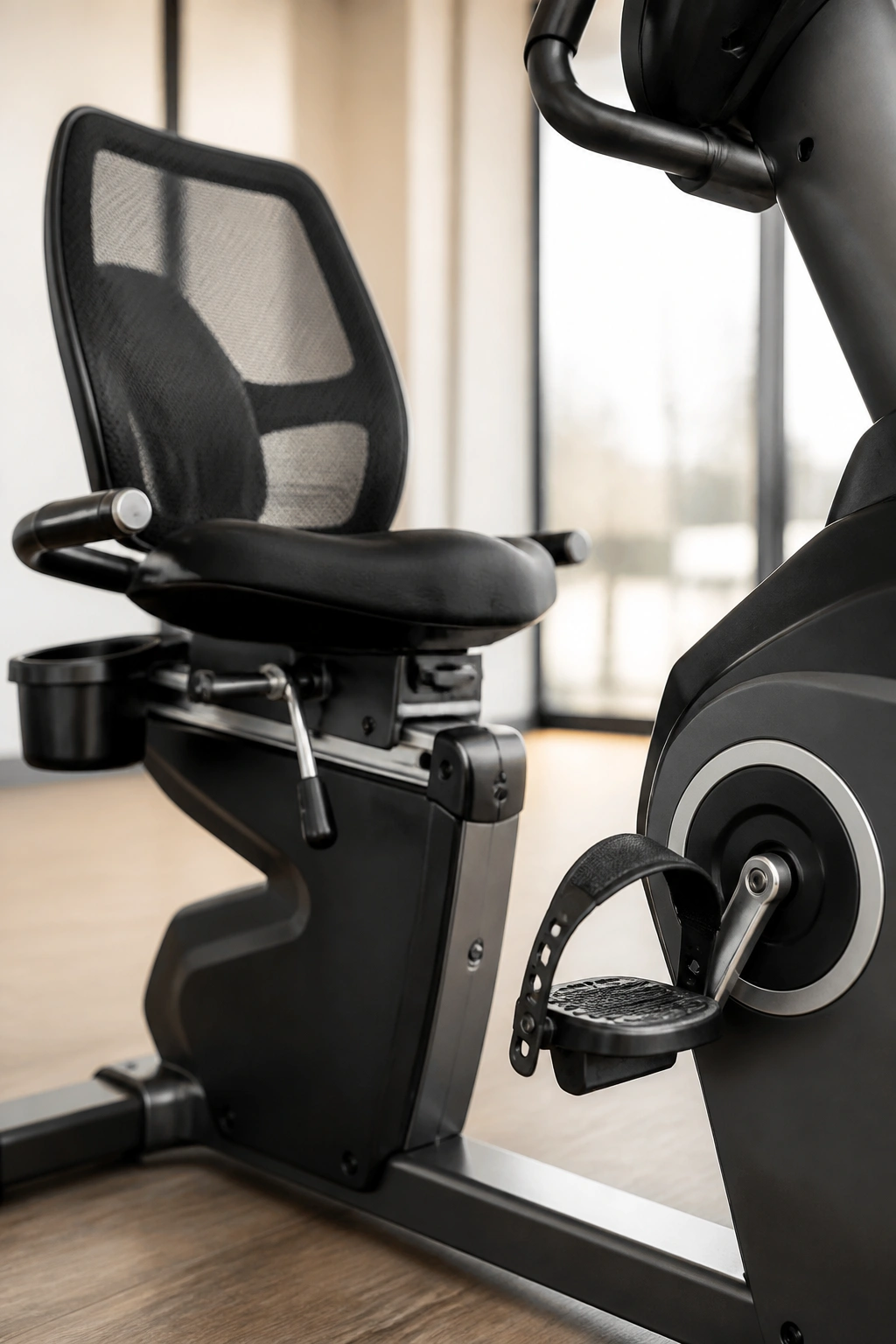
A bike seat set too low will make even a gentle pedal stroke complain. Set it right, though, and cycling becomes one of the friendliest knee injury workouts for building blood flow and keeping the joint moving without pounding it.
Start with the seat high enough that the knee stays slightly bent at the bottom of the pedal stroke, not deeply folded. Use low resistance and a smooth cadence. If the front of the knee pinches on an upright bike, a recumbent bike often feels better because it opens the hip angle and takes some pressure off the front of the joint.
A few minutes is enough to start. Then build only if the knee stays calm.
- Begin with 5 to 10 minutes.
- Work toward 15 to 30 minutes if the knee tolerates it.
- Keep resistance low for the first few sessions.
- If forward pedaling feels awkward, try a few slow backward revolutions.
The right bike session should leave the knee warm and looser, not puffier or sore. That difference matters.
9. Pool Walking and Aqua Jogging
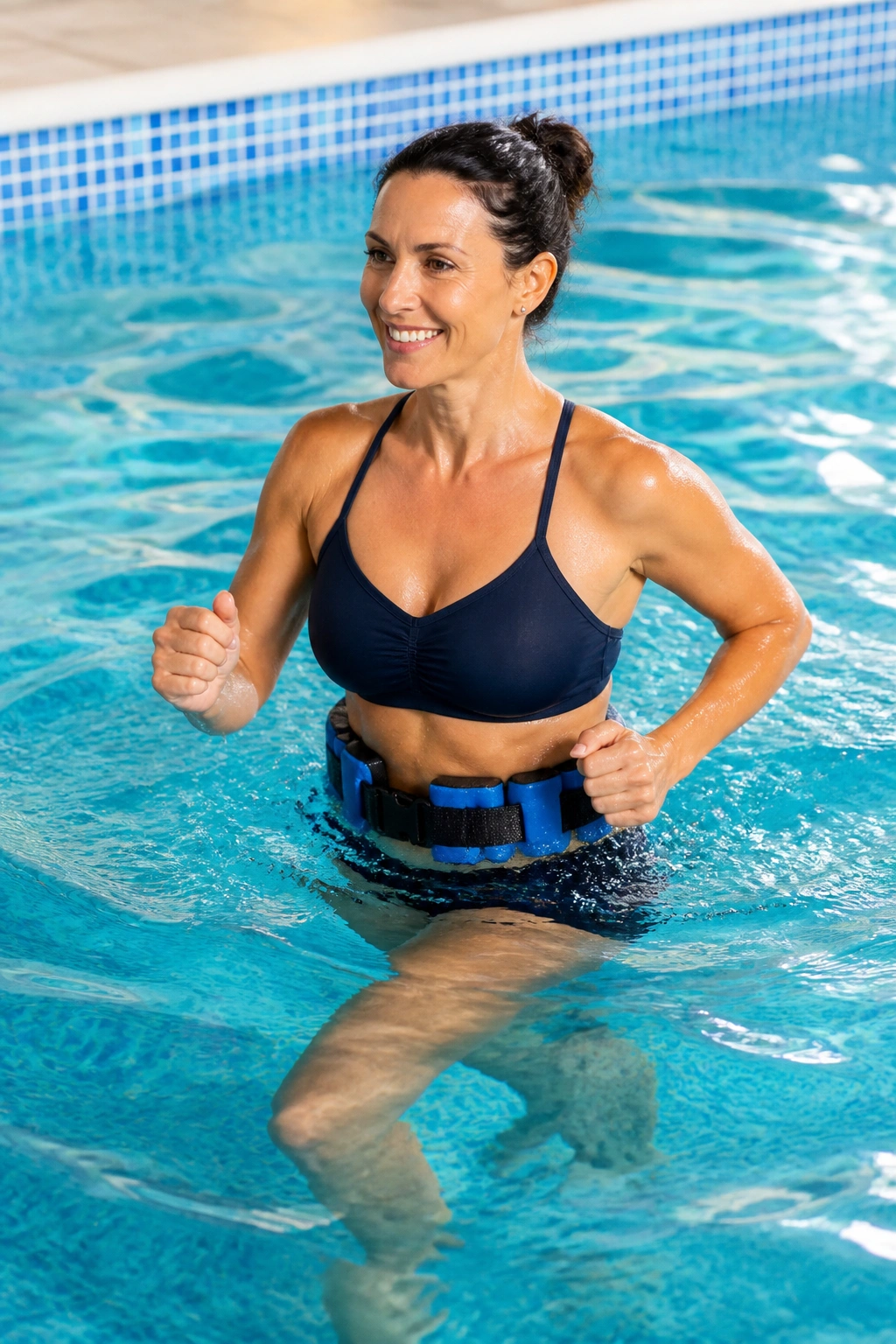
Water changes everything. The buoyancy takes load off the knee, but the water still gives you resistance, so you can build endurance without the hard landing that comes with running or jumping.
Chest-deep water reduces body weight a lot; waist-deep water still helps, though not as much. Start with forward walking, then add backward walking and side steps. If the pool allows it and the knee feels steady, aqua jogging with a flotation belt can give you a true cardio session with very little joint impact.
A simple pool session
- Walk forward for 2 minutes.
- Walk backward for 1 minute.
- Side-step for 1 minute each direction.
- Repeat for 10 to 20 minutes.
A pool can trick you, though. Because the movement feels easy, people overdo the volume and leave with a grumpy knee later. Keep the pace moderate and the stride short. You are training the joint, not auditioning for a sprint.
This is one of the best options when swelling is part of the picture and land work feels like too much.
10. Short-Arc Quad Extensions
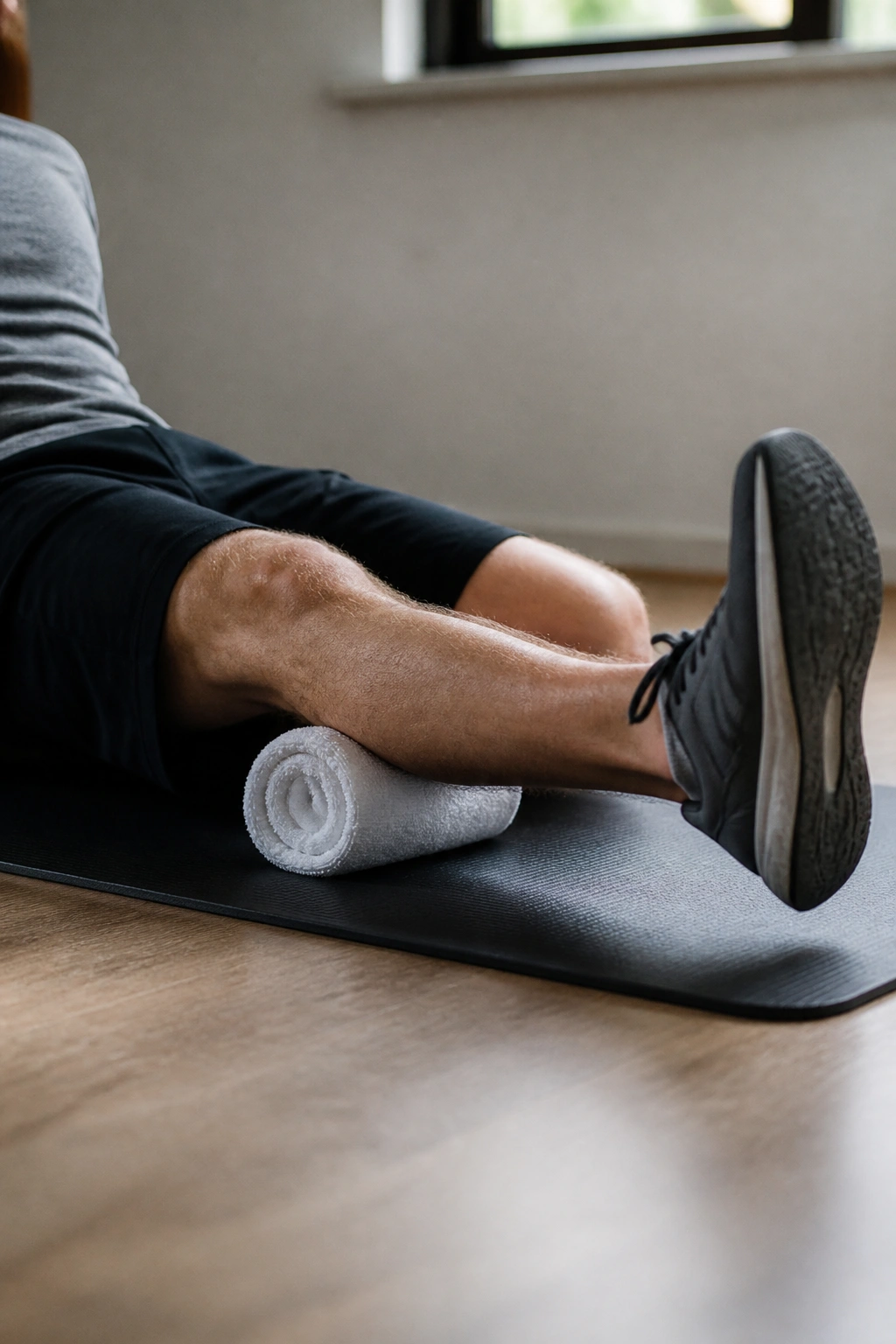
Short-arc quads are not the same as a heavy leg extension machine, and that matters. The range is smaller, the control is better, and the knee usually gets a more manageable dose of work.
Place a rolled towel or foam roll under the knee so it stays slightly bent. Tighten the thigh and straighten the lower leg until the knee reaches full extension or close to it, then lower slowly back to the towel. The movement is short, but the quad has to fire hard to make it happen.
Why the small range matters
A lot of irritated knees dislike deep bending before they’re ready. This drill works in a friendlier part of the range and can be a bridge between heel slides and more loaded work. It is a smart middle step when full squats are still off the menu.
- Try 10 to 15 reps.
- Hold the straightened position for 1 to 2 seconds.
- Keep the movement smooth, not snappy.
- If the knee feels jammed, reduce the range.
The front of the thigh should light up. The joint itself should feel supported, not irritated.
11. Calf Raises at a Counter or Rail
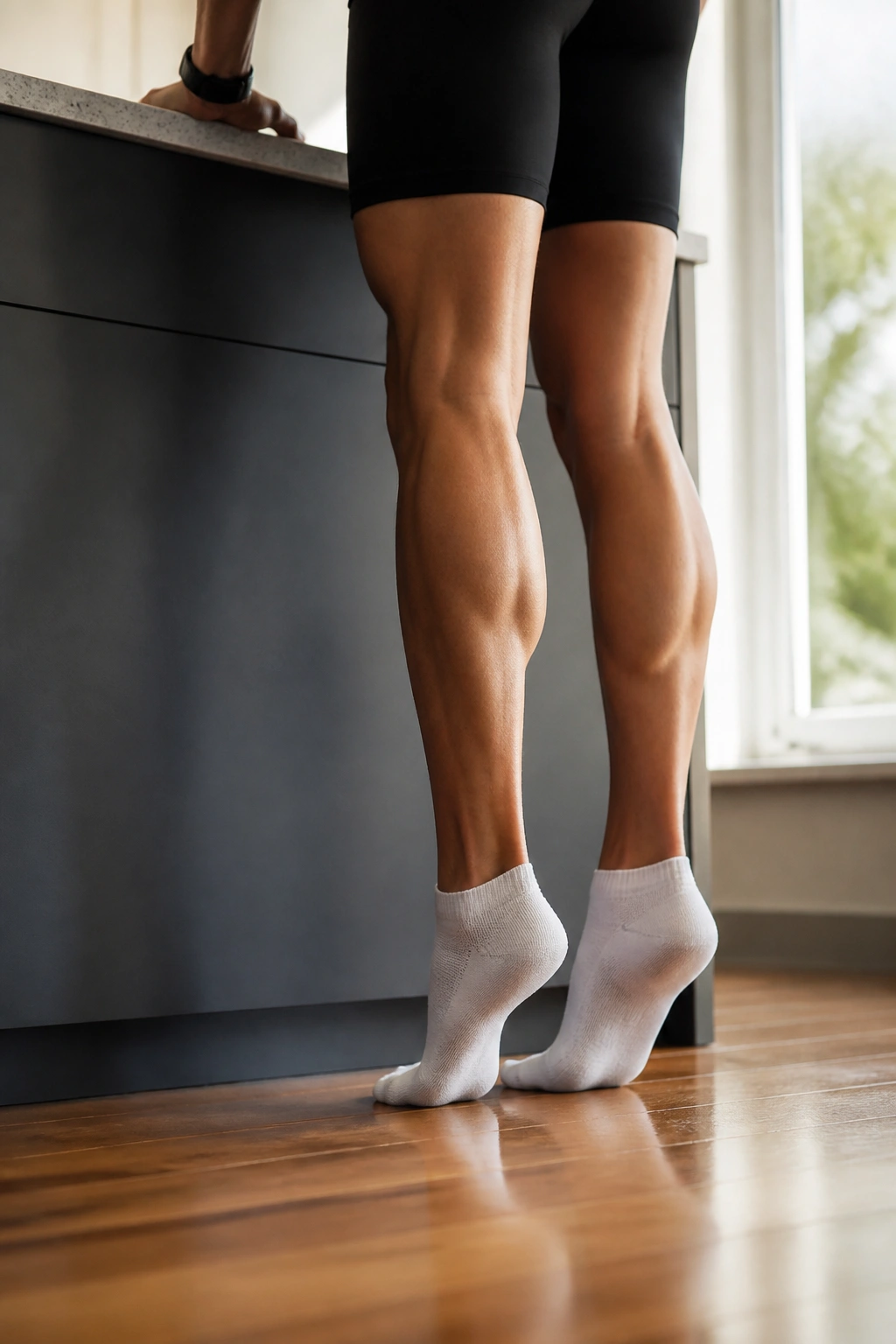
Calf raises look like an ankle exercise until you feel how much they steady your whole leg. The calves help with push-off, balance, and the way force travels up the chain when you walk. That can matter more than people expect during knee recovery.
Stand tall with one or both hands on a counter. Rise onto the balls of your feet, pause at the top, and lower slowly until the heels hover just above the floor. Keep the weight centered over the second and third toes so the ankles do not roll out.
A slow lowering phase is the part most people skip. That’s where control gets built.
- Use 12 to 20 reps.
- Start with double-leg if balance is shaky.
- Move to single-leg when the easy version feels clean.
- If the knee complains during standing, shorten the range and hold the counter more lightly.
The move should feel like the calves and the lower leg are working together. If the knee caves inward, reset the foot position and slow down.
12. Bird Dog With a Padded Mat or Bench
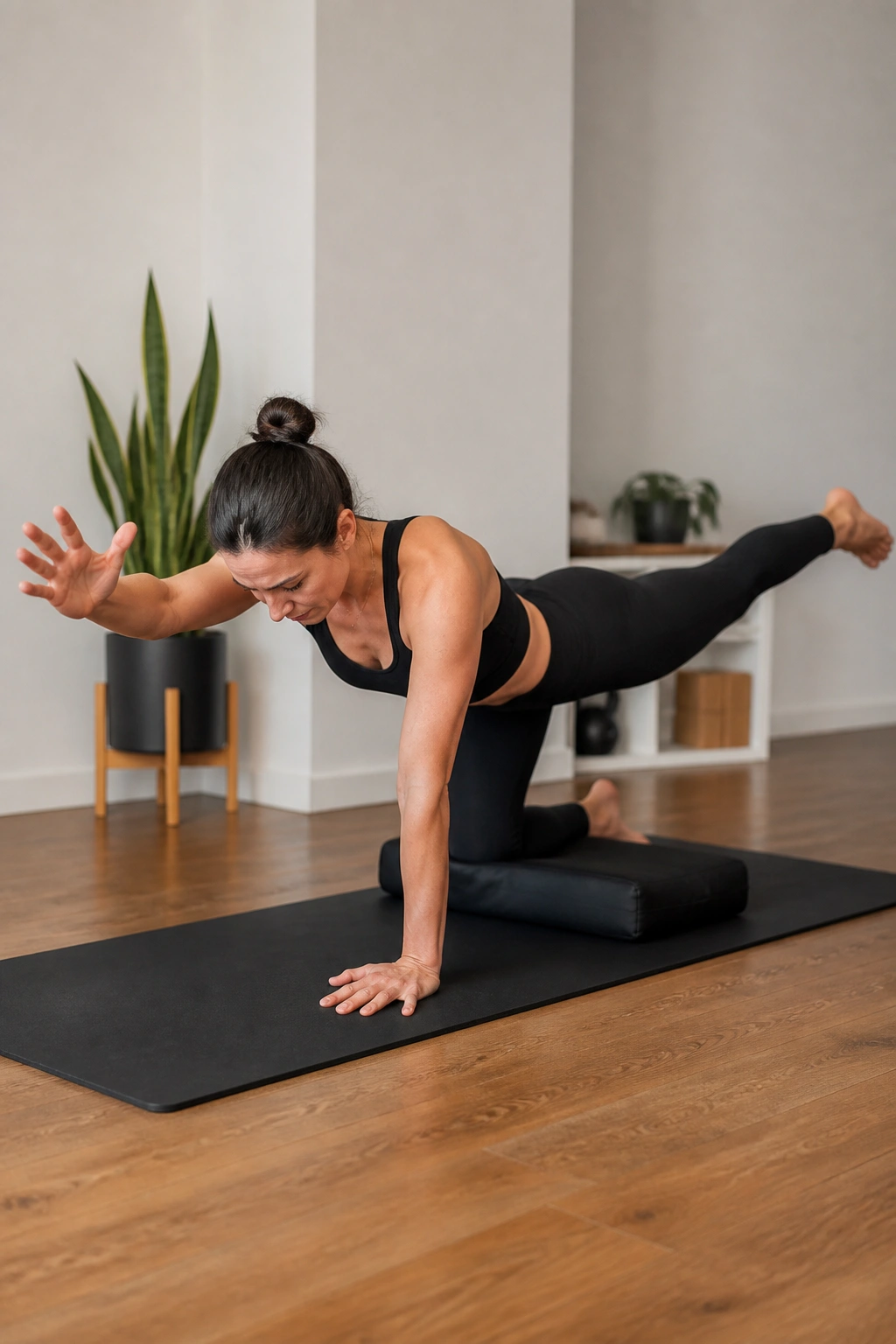
On the days when kneeling on the floor feels annoying, a bird dog still earns its place if you set it up well. The point is trunk stability and hip control, not suffering through a hard surface.
Start on hands and knees over a thick mat. If the knee dislikes that position, put your hands on a bench or sturdy table and keep the knees off the floor, then extend one leg back while the opposite arm reaches forward. Hold the spine steady, avoid twisting the hips, and return with control.
What the right rep feels like
Your torso should feel quiet. The leg and opposite arm do the moving. If the low back arches hard or the pelvis wobbles, the reach is too big.
- Hold each rep for 2 to 3 seconds.
- Do 6 to 10 reps per side.
- Use padding under the knees if needed.
- If kneeling hurts, switch to the bench version.
I like bird dogs because they train the body to stay organized. That matters when a knee injury has made everything else feel a little out of sync.
13. Dead Bug for Core Work Without Knee Load
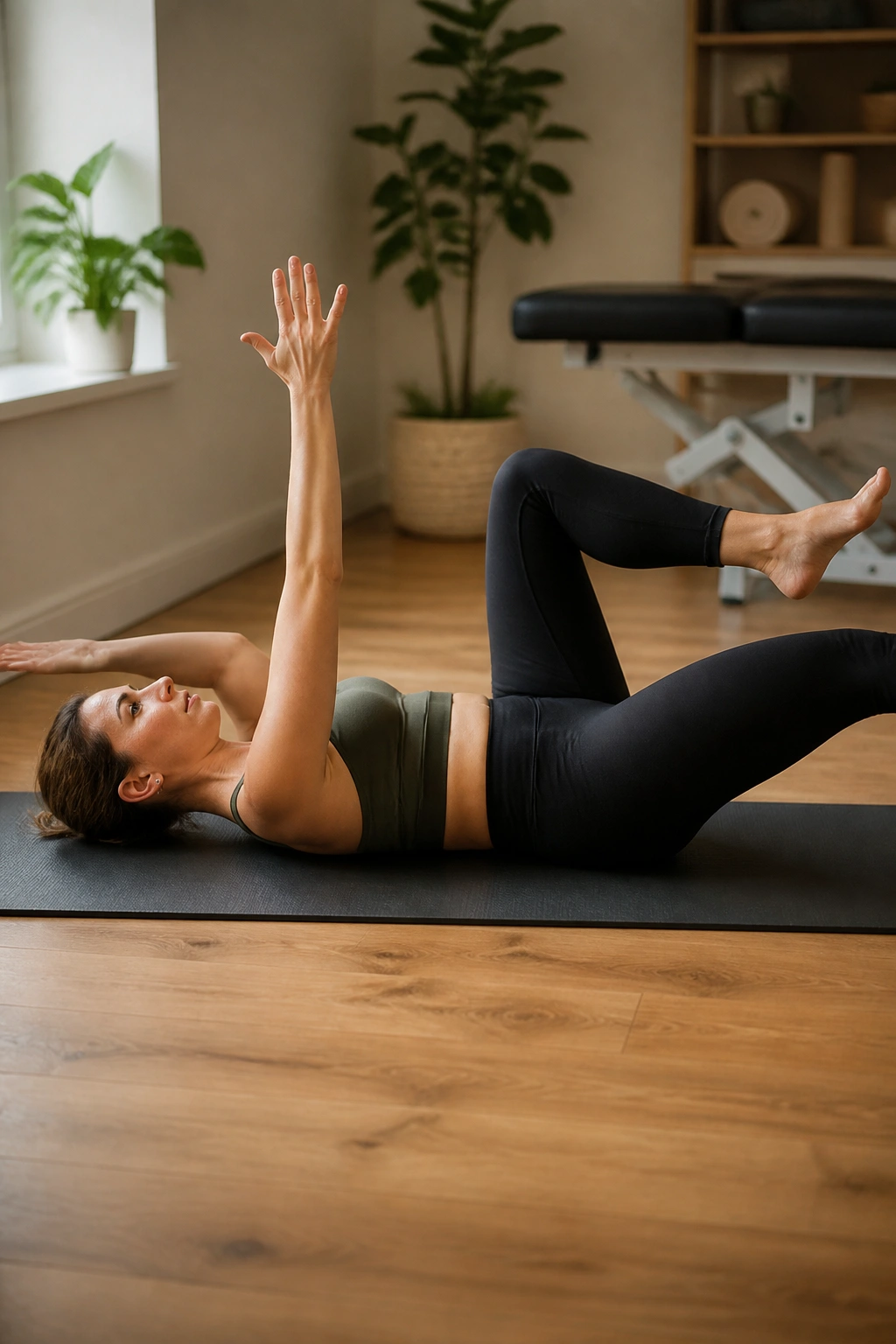
Why does dead bug show up in rehab plans so often? Because it builds trunk control without asking the knee to bear much at all. When the core is doing its job, the hips and legs usually move with less garbage motion, and the knee catches a break.
Lie on your back with arms pointed toward the ceiling. Bring the hips and knees up so the legs make a tabletop position, or keep the feet on the floor if that feels steadier. Lower one arm and the opposite leg slowly, then return and switch sides. Keep the low back pressed gently into the floor the whole time.
How to keep the low back honest
- Move only as far as you can without arching.
- Exhale as the arm and leg lower.
- Use a slow tempo, about 3 seconds down and 3 seconds back.
- Do 6 to 10 reps each side.
If the knee gets bothered by the tabletop position, keep the feet on the floor and work the arms with one heel slide at a time. Same idea. Less load.
This one is quiet work, but it matters. The body feels steadier when the trunk stops flopping around.
14. High Chair Sit-to-Stand
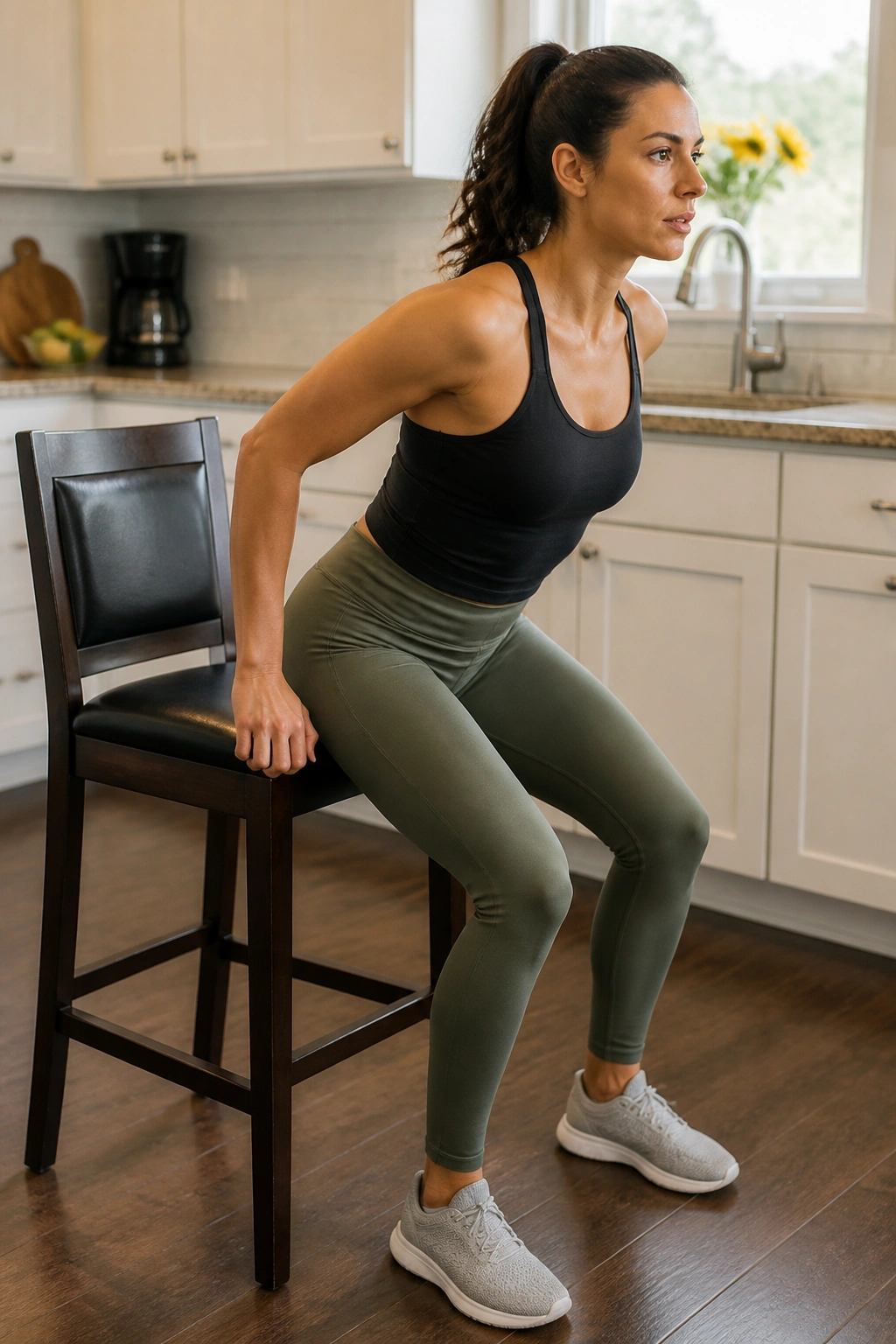
A tall chair, a box, or a high bench can save a cranky knee. Sit-to-stand is one of the best bridges back toward real-life movement because it asks the hips and quads to work together in a closed-chain pattern, but the height keeps the load tolerable.
Sit near the front edge with your feet about hip-width apart. Lean the torso slightly forward, press through the whole foot, and stand up without collapsing the knees inward. Then sit back down slowly. If the knee pinches, the seat is probably too low or the descent is too fast.
A few practical fixes
- Raise the seat with cushions if needed.
- Hold a countertop lightly for balance.
- Keep the knees tracking over the toes.
- Try 5 to 10 reps for 2 to 3 sets.
The lowering phase matters a lot here. A slow sit builds control, while a sloppy drop tends to irritate things.
This is one of those exercises that looks plain until you try it after a knee injury. Then it suddenly feels like real life.
15. Seated Boxing and Upper-Body Ergometer Intervals

Sometimes the smartest cardio is the stuff that never asks the knee to load at all. On days when walking feels like too much, seated boxing, arm-bike work, or other upper-body interval training keeps the heart rate up and lets the knee stay calm.
Set a timer for short rounds. Punching combinations from a chair are enough: jab-cross, hooks, uppercuts, then a brief rest. If you have an arm ergometer, keep the resistance moderate and the stroke smooth. The shoulders and arms should work hard while the knee sits out the argument.
A simple interval format
- Work for 20 to 30 seconds.
- Rest for 30 to 60 seconds.
- Repeat for 8 to 12 rounds.
- Keep the feet planted and the torso tall.
If you want a little more heat, add light shadow boxing while seated and finish with slow breathing for two minutes. That keeps the workout feeling like a workout, not a consolation prize.
And honestly, there are days when that is exactly the right call. The knee gets a break, the lungs still get trained, and you leave the session with something left in the tank.
