



Cold shoulders make a dumbbell press feel heavier than it is. So do tight elbows, stiff forearms, and wrists that never got the memo that training is about to start.
That’s why the best arm stretches to do before your workout are not long, sleepy holds. They’re small, controlled movements that wake up the shoulder joint, loosen the muscles around the upper arm, and get blood moving through the forearms without making you feel floppy. You want motion. You want heat. You do not want to spend five minutes hanging out in a deep stretch and then wonder why your first set feels weird.
A lot of people skip this part because their workout plan looks fine on paper. Then the first overhead press feels pinchy, the first push-up feels sticky, and the first pull-up feels like it’s happening in someone else’s body. That usually isn’t a strength problem. It’s a warm-up problem.
The good news is that you can fix that with a short sequence. Start with easy circles, move through the shoulders and chest, then work down into the forearms and wrists. By the time you reach your main lifts, your arms should feel awake, not forced.
1. Forward Arm Circles
Forward arm circles are the simplest place to begin because they ask almost nothing from the body and still do a lot of useful work. Stand tall, lift your arms out to shoulder height, and make small circles first. Your goal is smooth motion, not speed.
How to get the angle right
Keep your shoulders down away from your ears. That matters more than how big the circles look. If you shrug through the whole movement, you’re feeding tension into the exact area you’re trying to loosen.
Start with 8 small circles, then 8 medium circles, then 8 larger circles. Your arms should feel warm by the end, and the front of the shoulders may start to wake up first. That’s normal.
Don’t force a giant range right away. Big, sloppy circles tend to pull the ribs open and steal work from the shoulder joint. Small and smooth wins here.
A lot of people rush this one. Bad idea. If your first few circles feel awkward, slow down even more. The movement should look almost boring. That usually means it’s doing its job.
2. Backward Arm Circles

Backward arm circles are where the shoulder blades start to join the party. If forward circles feel like a gentle wake-up, backward circles feel like turning the lights on in the upper back.
The backward direction matters because many workouts are heavy on pressing, reaching, and rounding forward. Pulling the arms back helps open the front of the shoulders and gets the rear delts moving before they get trapped under a barbell or a pair of dumbbells. I prefer these before push day, but they’re useful on pull day too.
What changes when you go backward
- The chest stops feeling glued shut.
- The back of the shoulder starts to loosen.
- The upper traps stop doing all the work.
- Your posture tends to stack up a little better.
Keep the circles controlled and even. 8 to 10 reps backward is enough for most people. If your shoulders creak a little, shrink the circles and smooth them out rather than muscling through.
There’s a quiet benefit here too: backward circles often reveal where one shoulder feels tighter than the other. That asymmetry is worth noticing before training, not after.
3. Cross-Body Arm Swings
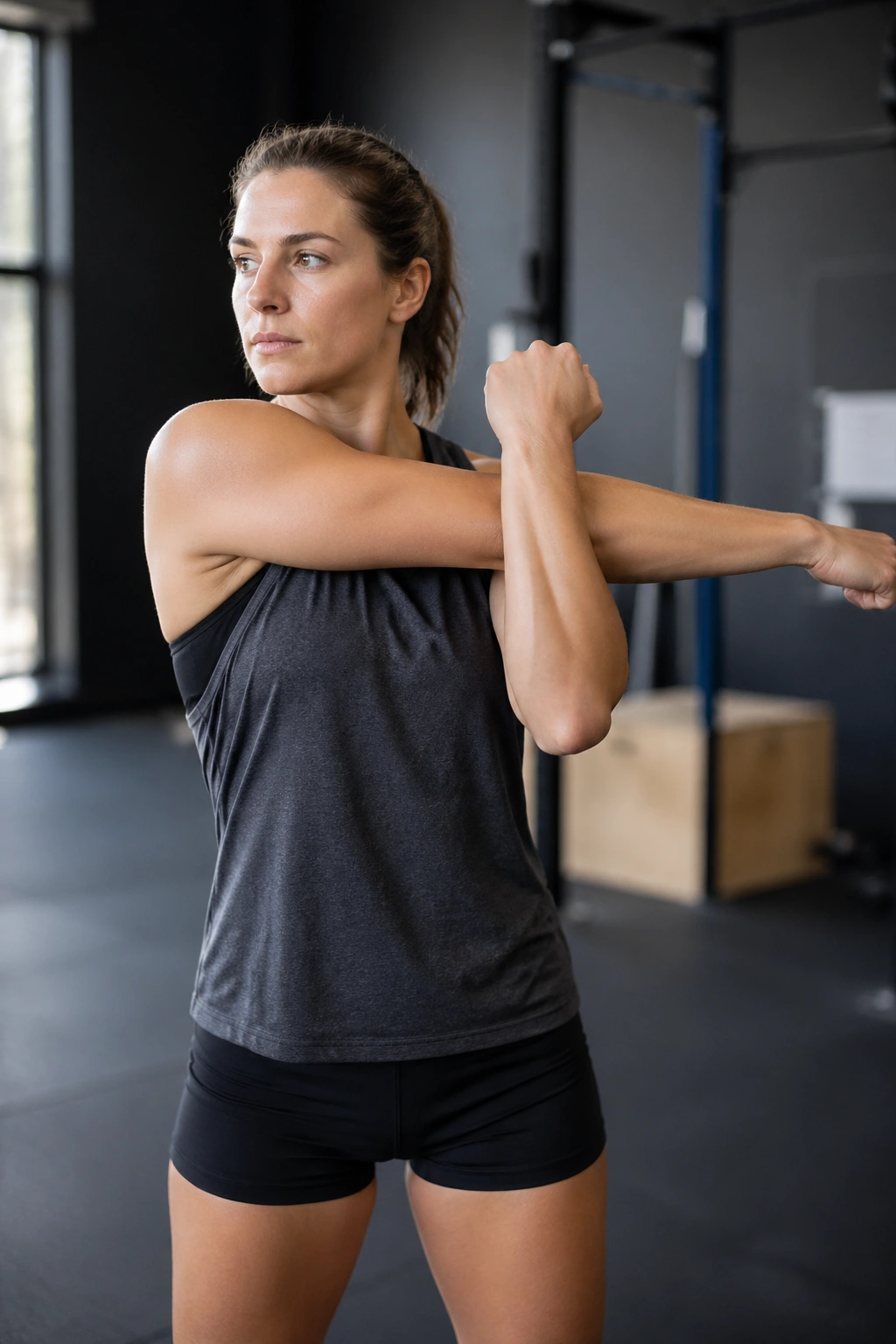
Cross-body arm swings feel like a simple motion, but they hit a bunch of small places at once. Swing one arm across your chest, then open it wide again. Alternate sides or do a set on each arm.
What you should feel
- A light stretch in the back of the shoulder.
- A little opening across the upper chest.
- Less stiffness around the shoulder blade.
- A smoother swing through the arm, not a jerk.
The trick is not to yank your arm across your body. Let the swing come from the shoulder joint and the upper back, not from a hard pull with the other hand. You’re aiming for rhythm, not force.
This one is especially useful before workouts that include bench pressing, push-ups, rowing, or any move where your arms travel across your midline. Six to eight swings per side is enough for a warm-up. If you make the movement too big, the torso starts twisting and the stretch turns into a mess.
Fast, light, controlled. That’s the sweet spot.
4. Overhead Triceps Reach

Why does a triceps stretch help your shoulders? Because the triceps does more than straighten the elbow. One part of it crosses the shoulder joint, which means a tight triceps can make overhead work feel cramped.
Reach one arm overhead, bend the elbow, and let your hand slide down the middle of your upper back. Use the opposite hand to guide the elbow only if it feels comfortable. If it doesn’t, leave the hand alone and let gravity do most of the work.
The stretch should land somewhere between the back of the upper arm and the side of the rib cage. If you feel a pinch in the elbow or a sharp tug in the shoulder, ease off. Ten to 15 seconds per side is plenty before training.
A useful cue: keep the ribs stacked over the hips. If you flare the chest hard to fake more range, the stretch moves out of the triceps and into the low back. Not helpful.
Do this one before overhead pressing, triceps work, or even swimming. It takes almost no time and often makes the first rep feel less jammed.
5. Triceps Sweep

The triceps sweep is a little more active than the overhead reach, and that makes it a nice bridge between stretching and moving. Raise one arm overhead, bend the elbow, then gently sweep the elbow a few inches backward and forward in a short, smooth arc.
That tiny shift changes the feel a lot. Instead of sitting in one position, you’re teaching the shoulder to move while the triceps stays on line. It’s a small thing. It matters.
Try 5 to 8 slow sweeps per side. Keep the neck long and the jaw loose. If the shoulder feels pinchy when the elbow drifts behind the head, shorten the range and keep the motion more vertical.
The little mistake to avoid
People love to crank this stretch by arching the low back and leaning sideways. That usually turns it into a body-compensation contest. Don’t do that. Stay tall, breathe out as the elbow drops, and keep the movement contained.
I like this one before push presses, overhead dumbbell work, and any session where the triceps will take a beating. It’s also a good reminder that a warm-up does not need to be dramatic to be useful.
6. Wall Chest Opener

A tight chest can make your arms feel shorter. That sounds dramatic, but it’s true in practice. When the pecs are stiff, the shoulders get pulled forward, and suddenly your pressing mechanics feel off before the workout has even started.
Stand beside a wall, place your forearm against it with the elbow roughly at shoulder height, and turn your torso away until you feel a gentle stretch across the front of the chest and shoulder. Keep the pressure light. This should feel like opening a door, not forcing it.
If the front of your shoulder pinches, move your hand a little lower and reduce the turn. A good chest opener should feel broad across the pec, not sharp in the joint. Fifteen seconds per side is enough for a warm-up.
This is one of those moves that pairs well with arm circles because it changes the shoulder from both sides — moving forward, then opening back up. That balance matters before benching, push-ups, dips, or any workout where the arms spend a lot of time in front of the body.
7. Scapular Squeezes

Scapular squeezes look almost too easy to count as a stretch, but they’re one of the fastest ways to wake up the upper back. Stand tall, let your arms hang naturally, and gently pull your shoulder blades back and slightly down. Hold for a count of two, then relax.
What to feel, and what to skip
- The squeeze should land between the shoulder blades.
- The neck should stay relaxed.
- The ribs should not flare forward.
- The motion should be small and clean.
Do 10 slow squeezes before your workout. If you feel the upper traps taking over, lighten the effort. This is not a shrug in disguise.
I like this drill because it makes the back feel organized. That’s the best word for it. Pressing gets cleaner, rows feel more stable, and even arm swings tend to look less sloppy after a few reps.
If your posture tends to collapse forward during the day, this move can feel almost shocking the first time you do it. Good. That means you probably needed it.
8. Wall Angels
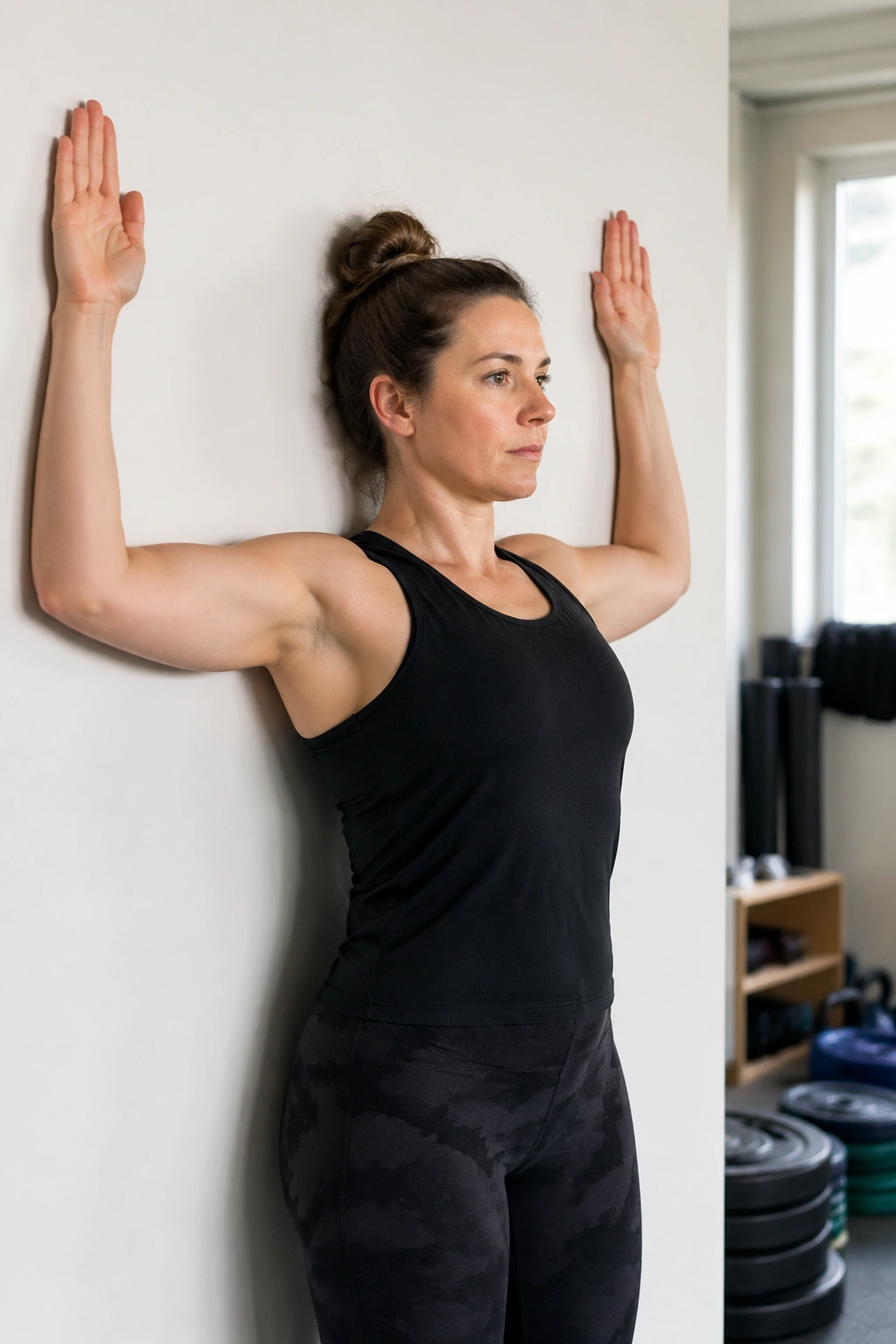
Wall angels are a little fussy at first, and then they start making sense. Stand with your back against a wall, feet a few inches forward, ribs down, and arms in a goalpost shape with elbows bent. From there, slide the arms upward and downward as smoothly as you can.
The goal is to keep the back of the head, upper back, and tailbone as close to the wall as possible without turning the movement into a stiff contest. If your wrists don’t touch the wall, that’s fine. Work with your current range. Don’t fake it.
What makes this drill useful before a workout is the combination of shoulder mobility and upper-back control. You’re not only opening the front of the chest; you’re also teaching the shoulders to glide while the ribs stay where they belong.
A cue that helps
Think about reaching the elbows up the wall, not pinning the hands flat. That shift tends to reduce strain and makes the motion smoother.
Do 6 to 8 slow reps. If it feels awkward, good. Awkward usually means you found a tight spot worth addressing before loading it.
9. Thread the Needle
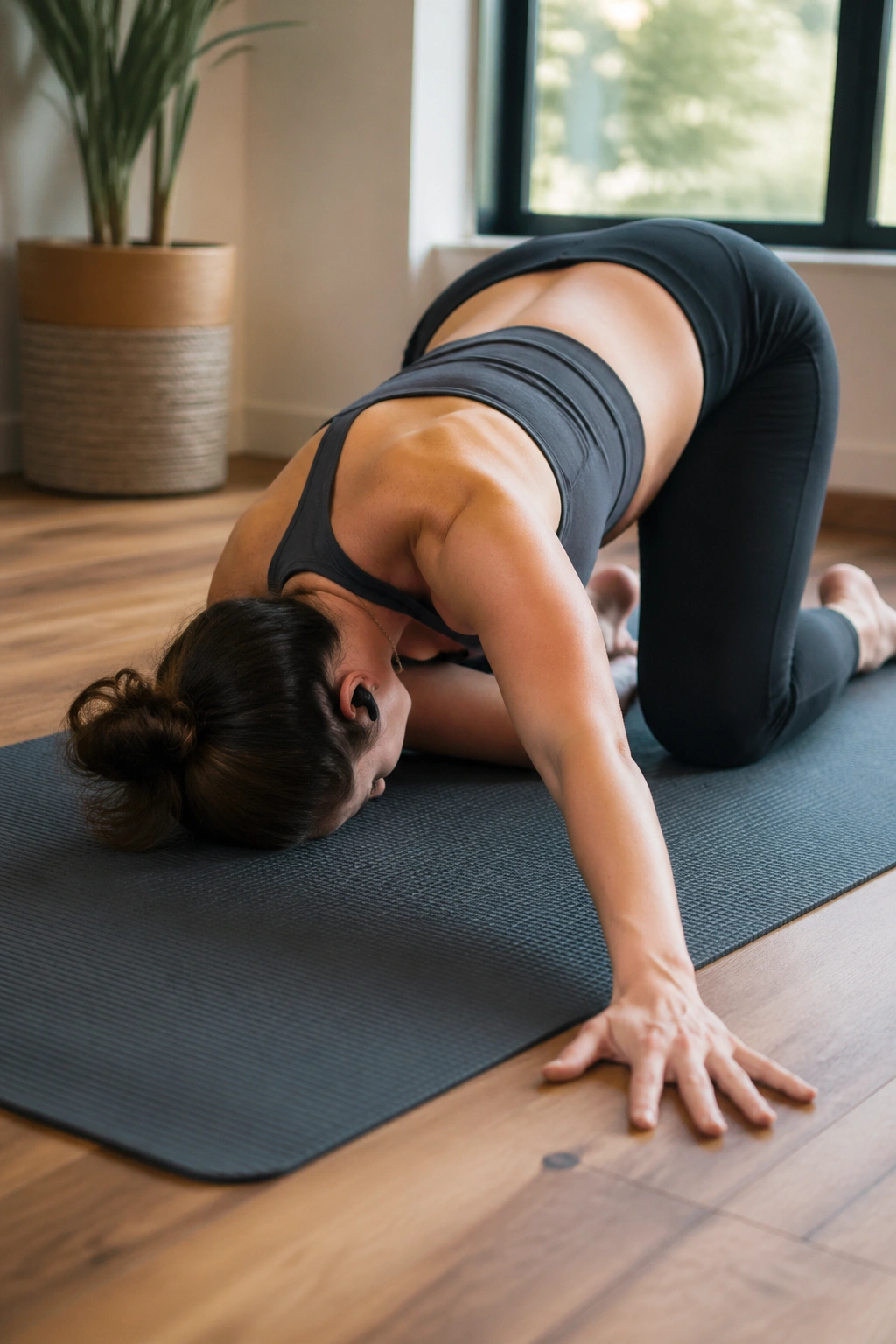
Thread the needle is a strong choice when your shoulders feel locked up and your upper back feels like it has been sitting at a desk for three days straight. Start on all fours, slide one arm under the other, and let the shoulder and side of the head come close to the floor.
The stretch should run through the rear shoulder, upper back, and sometimes the side of the rib cage. Don’t collapse into it. Keep a little control as you slide through. A slow exhale helps the shoulder settle.
Make it smooth
- Slide the arm under with control.
- Let the chest rotate, but not wildly.
- Keep the neck soft.
- Come back up without snapping the arm out.
This one works well before pulling sessions, overhead work, or anything that asks the thoracic spine to move. If you spend a lot of time hunched over a keyboard, thread the needle often feels better than another chest opener because it clears space between the shoulder blade and the upper back.
Do 4 to 6 reps per side rather than a long hold. That keeps it in warm-up territory instead of turning it into a recovery stretch.
10. Biceps Wall Stretch
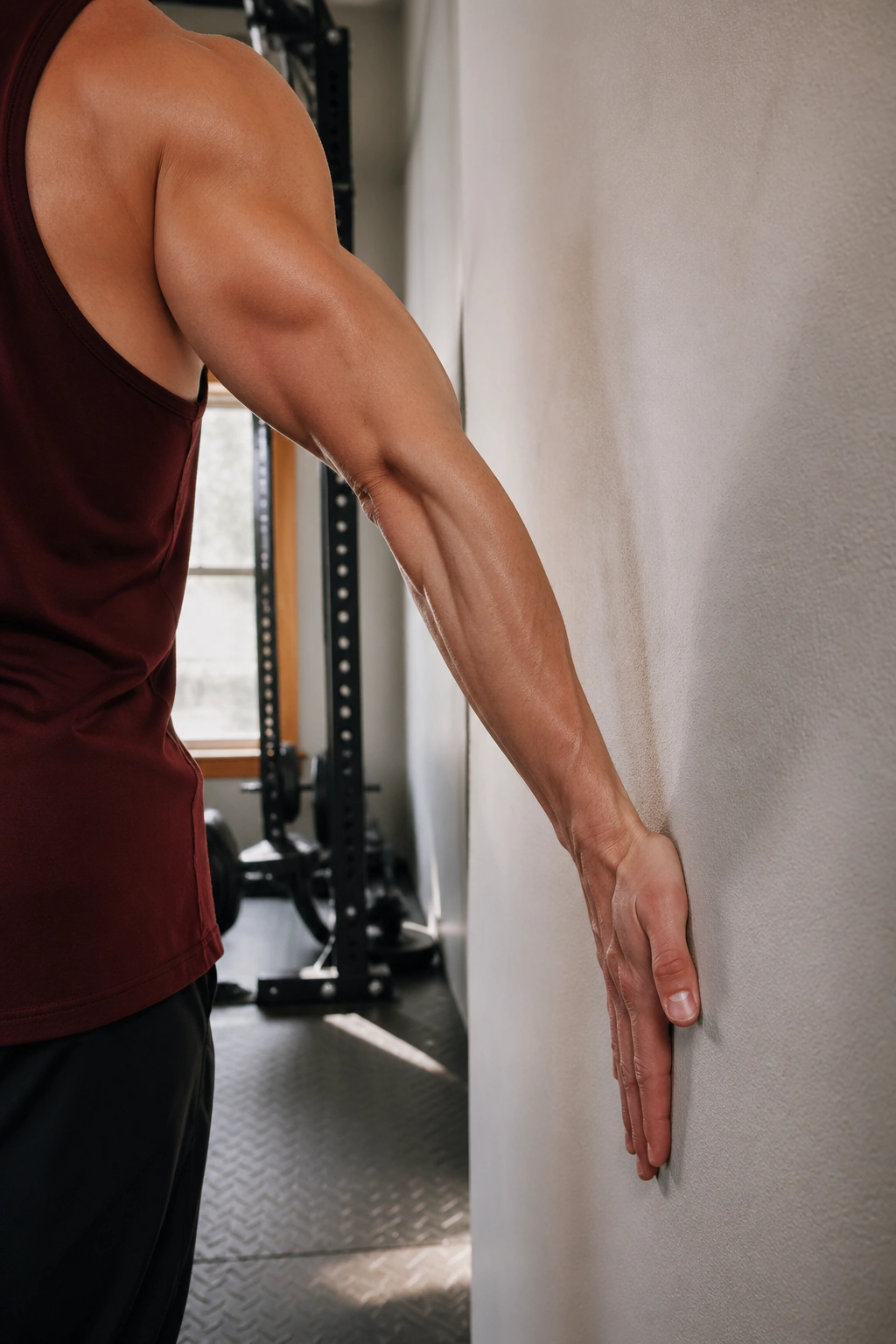
Most people think of biceps stretches as a weird afterthought, but the biceps matter before a workout more than you’d think. A tight biceps can make the front of the shoulder feel bound up, especially if you’re about to pull, curl, climb, or hang from a bar.
Place your palm on a wall with the fingers pointing down or slightly back, then gently rotate away from the wall until the front of the upper arm opens. Keep the elbow straight but not locked hard. The stretch should feel long and clean, not sharp.
This one is a little intense for some people, so I’d keep it light before training. Ten seconds is enough if you feel a strong pull. You are not trying to win anything here.
The biceps stretch is also useful because it reminds you how much the arm and shoulder work together. If the front of the arm is glued down, the rest of the chain often compensates. That’s why a tiny stretch can change the feel of a whole workout.
11. Wrist Circles

Wrist circles are the kind of warm-up people skip right up until their wrists complain during push-ups, front rack holds, cleans, or any exercise where the hands have to bear weight. Open the hands, make slow circles at the wrists, then reverse direction.
Keep the circles small at first. Big wrist circles can look busy without actually solving stiffness. You want lubrication, not theatrics.
A good wrist warm-up mix
- 10 circles each direction
- 5 gentle palm flexes and extensions
- Open and close the hands 10 times
- Light shakes between rounds
If your wrists feel especially stiff, spend a little more time with palm presses on a bench or wall. Just lean forward until you feel a mild stretch through the forearm. No need to grind into it.
This is one of the few moves on the list that can pay off immediately in the very first set. Your hands may feel more planted, and your grip can feel less clumsy. That matters on push day, but it matters even more for kettlebells, handstands, and barbell front rack positions.
12. Prayer Stretch
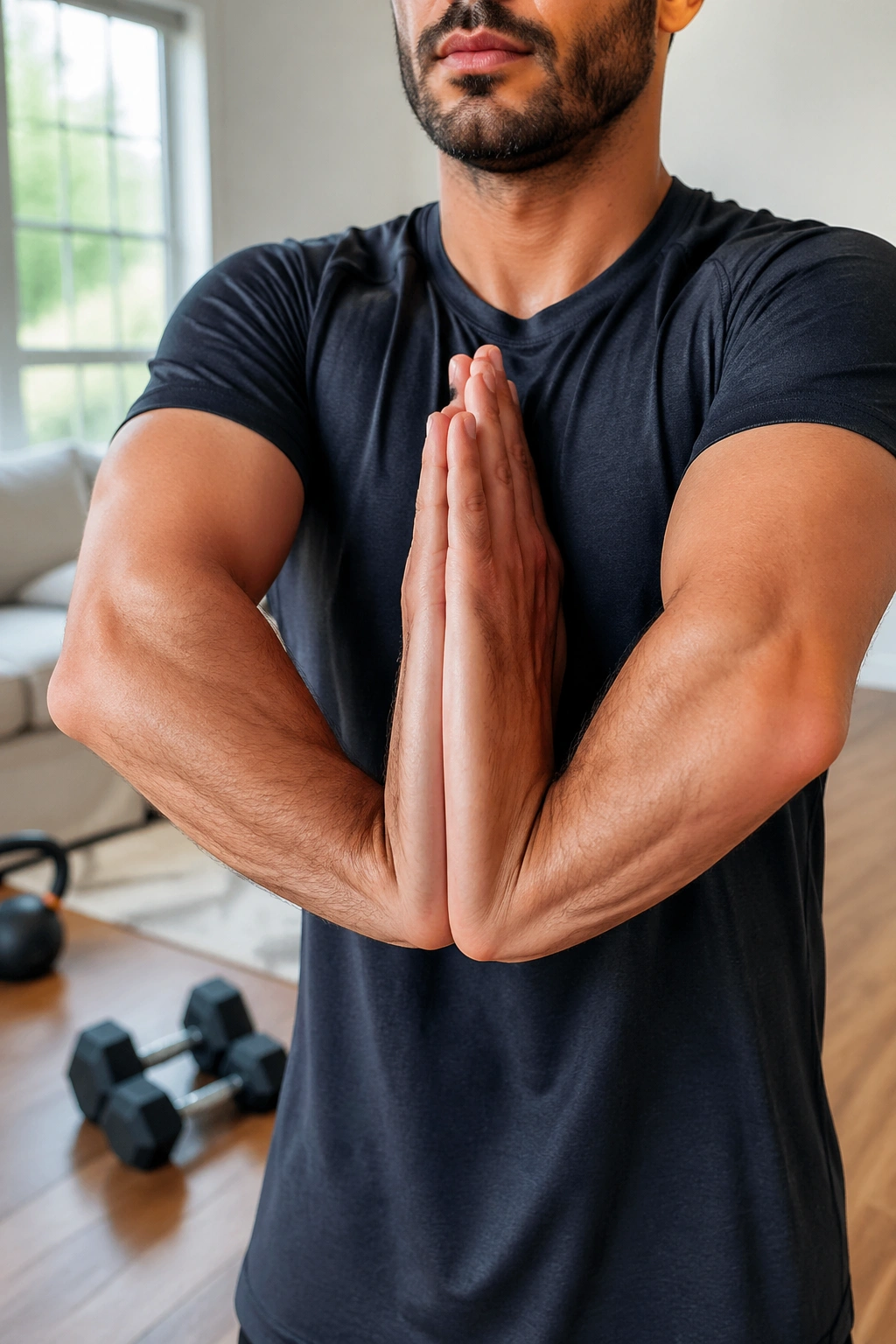
The prayer stretch is a nice companion to wrist circles because it targets the front side of the forearm in a more direct way. Bring your palms together in front of your chest, then lower your hands a few inches while keeping the palms pressed and the elbows lifted slightly.
You should feel the stretch along the forearms and into the wrists. If the elbows drop too much, the angle gets weird and the stretch loses focus. Keep the movement controlled and small.
People who type a lot or grip heavy dumbbells tend to love this one. The forearm muscles get tight in a sneaky way, and then the wrist feels like the problem when the forearm is the actual bottleneck.
Do 2 rounds of 10 to 15 seconds. If you want a little more movement, pulse the hands down and up by an inch or two instead of sitting completely still. That keeps the tissue warm, which is the point before training.
13. Reverse Prayer Stretch
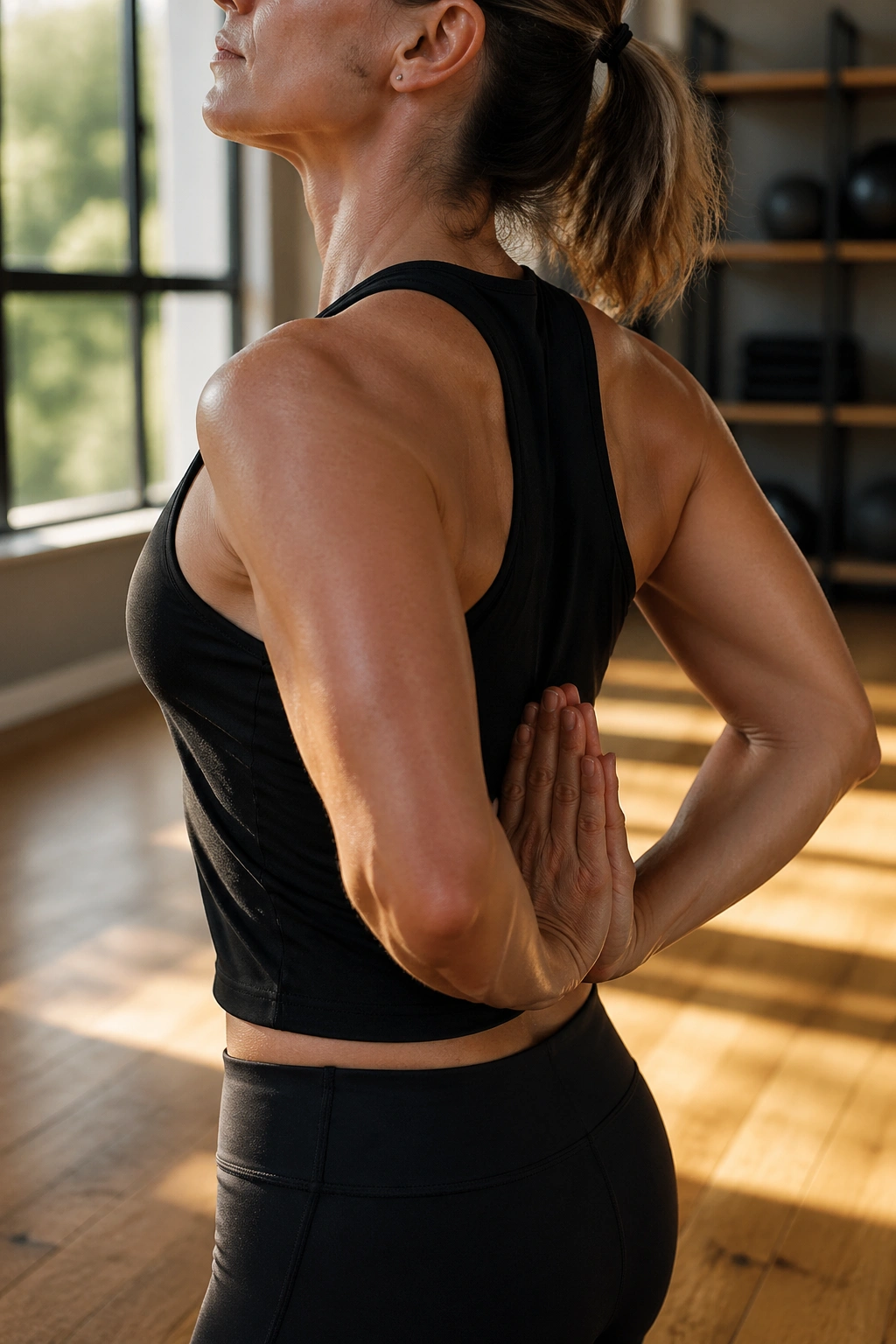
Reverse prayer is the stretch people either adore or avoid. There is not much middle ground. Bring the backs of your hands together behind your lower back if that’s available, or keep it simpler by placing the backs of the hands against the sacrum and opening the chest gently.
The target is the front of the shoulders, the wrists, and sometimes the upper chest. It can feel oddly satisfying after a lot of gripping or desk work, but it can also feel intense fast. So keep it modest.
If the full hand-to-hand version is too much, use a softer setup. Fingers can point downward, and the hands do not need to press hard. A light shape is enough. Five to 10 seconds may be all you need before a workout.
What to watch for
- Sharp wrist pain means back off.
- Shoulder pinching means reduce the range.
- Breath-holding means you’re pushing too hard.
- A smooth stretch across the front line is the target.
I like this one before upper-body training because it balances all the forward rounding that happens in daily life. It opens the hands, wrists, and front shoulders at the same time, which is rare and useful.
14. Overhead Lat Reach

Why does the lat matter in an arm warm-up? Because the lat attaches into the upper arm and controls a lot of what happens when you reach overhead. Tight lats can make your shoulder feel stuck, even if the shoulder itself is fine.
Stand tall, raise one arm overhead, and lean gently away from that side. Keep the hips mostly square. The stretch should run from the armpit down the side of the torso. If you feel it mostly in the low back, you’ve leaned too far.
A better cue than “reach”
Think “grow tall, then tip.” That tiny sequence keeps the rib cage from flaring and usually makes the stretch cleaner. Hold it for 10 to 15 seconds per side.
This one shows up on a lot of warm-up lists for a reason. It helps before pressing, climbing, swimming, and anything else that asks for long overhead reach. If your arms feel fine but the top of the shoulder feels trapped, the lat is often the place to check first.
Do not yank the arm upward. The best version feels steady, long, and quiet.
15. Self-Hug Shoulder Opener

A self-hug sounds almost too simple, which is exactly why it works. Wrap both arms around yourself, grab the shoulders or upper arms, and give yourself a gentle squeeze while letting the shoulder blades spread apart. Then open the arms wide on the next breath.
That little round-trip motion wakes up the rear shoulders and upper back while giving the chest a soft stretch. It is especially handy before workouts that start with pressing or rowing because it makes the shoulders move through both directions instead of staying stuck in one shape.
You can hold the hug for 5 to 10 seconds, then open for another few seconds. Repeat 3 to 5 times. Keep the neck relaxed and the ribs down. If you crunch forward hard, the stretch turns sloppy fast.
This is the one I’d keep in the rotation on days when the shoulders feel plain old stiff. It’s calm, it’s quick, and it usually leaves the upper body feeling ready rather than overstimulated. If you only have time for a short upper-body warm-up, pair the self-hug with arm circles, cross-body swings, wrist circles, and one overhead stretch. That’s enough to make the first working set feel far more cooperative.
