



A stiff hip can make the whole morning feel rusty. If your hips feel glued together after sleep, or after a long day at a desk, the answer is rarely one heroic stretch. These morning stretches routines for tight hips work better when you stop treating the problem like a single muscle and start moving the joint through a few clean positions.
The hips are sneaky. They’re a ball-and-socket joint, which sounds simple enough, but the stiffness people feel often comes from the hip flexors, adductors, glutes, and even the lower back sharing the load in a bad way. Sit too long, sleep curled up, train hard the day before, and the whole area can wake up grumpy. Stretching should feel like a firm pull or a steady opening. It should not feel like a jab in the front of the hip or a sting in the groin.
A better morning sequence usually starts on the floor, then moves to kneeling, then standing. That order matters more than most people think. You get less friction at the start, more control in the middle, and more honest feedback once you’re upright. Also, if you lift, run, bike, or just spend too much of the day parked in a chair, a short hip routine can make the rest of the day feel easier.
Start gently. Stay honest. The hips will tell you when you’re forcing it.
1. Supine Pelvic Tilts and Knee Hugs for a Quiet Hip Reset
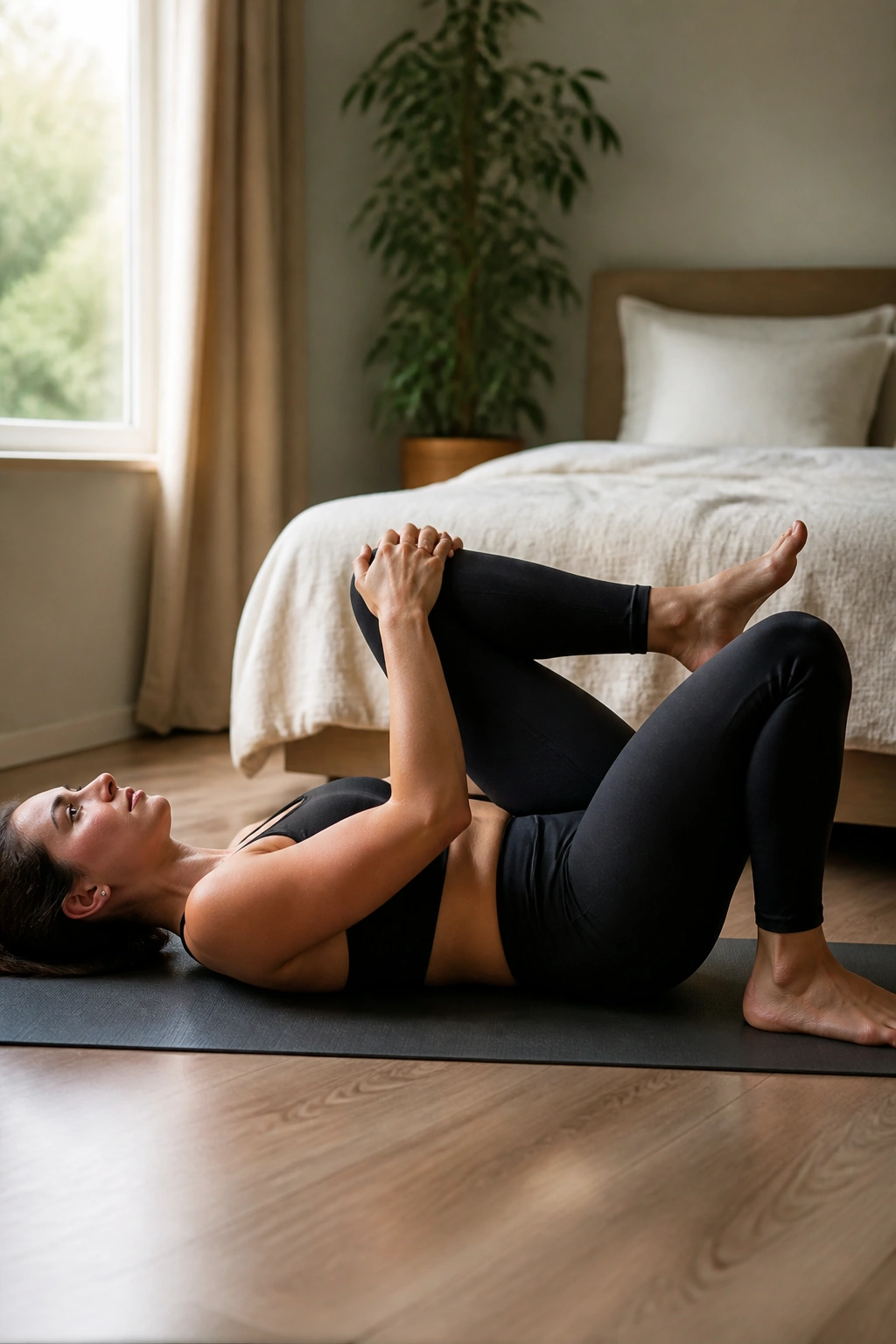
This is the easiest place to begin when your hips feel boxed in. You’re on your back, there’s no balance issue, and the floor does half the work for you. Pelvic tilts and knee hugs don’t look dramatic, which is part of why people skip them. They’re boring in the best possible way.
Why It Belongs at the Front of the Routine
The first goal in the morning is not depth. It’s motion. Pelvic tilts wake up the relationship between your pelvis, low back, and hip joints so the later stretches don’t feel like a rude surprise. Knee hugs add a little flexion through the hip without yanking on the front of the joint.
If you jump straight into a deep lunge when you’re stiff, the low back often takes over. That’s a fast path to a stretch that feels loud but doesn’t help much. A few slow reps on your back smooth that out.
How to Do It
- Lie on your back with both knees bent and feet flat.
- Exhale and gently press your lower back toward the floor, tipping the pelvis so the tailbone tucks slightly.
- Inhale and let the low back return to neutral.
- Repeat that 6 to 8 times, slowly.
- Then bring one knee toward your chest, hold it with both hands for 15 to 20 seconds, and switch sides.
The cue that matters most: your belly should soften as you exhale. If you’re bracing hard, you’re missing the point.
Do not force the knee tight into your chest. A snug pull is enough. If both knees are bothering the low back, keep the second leg bent with the foot on the floor rather than lifting it. That tiny change often makes the stretch feel cleaner.
2. Half-Kneeling Hip Flexor Stretch With a Glute Squeeze
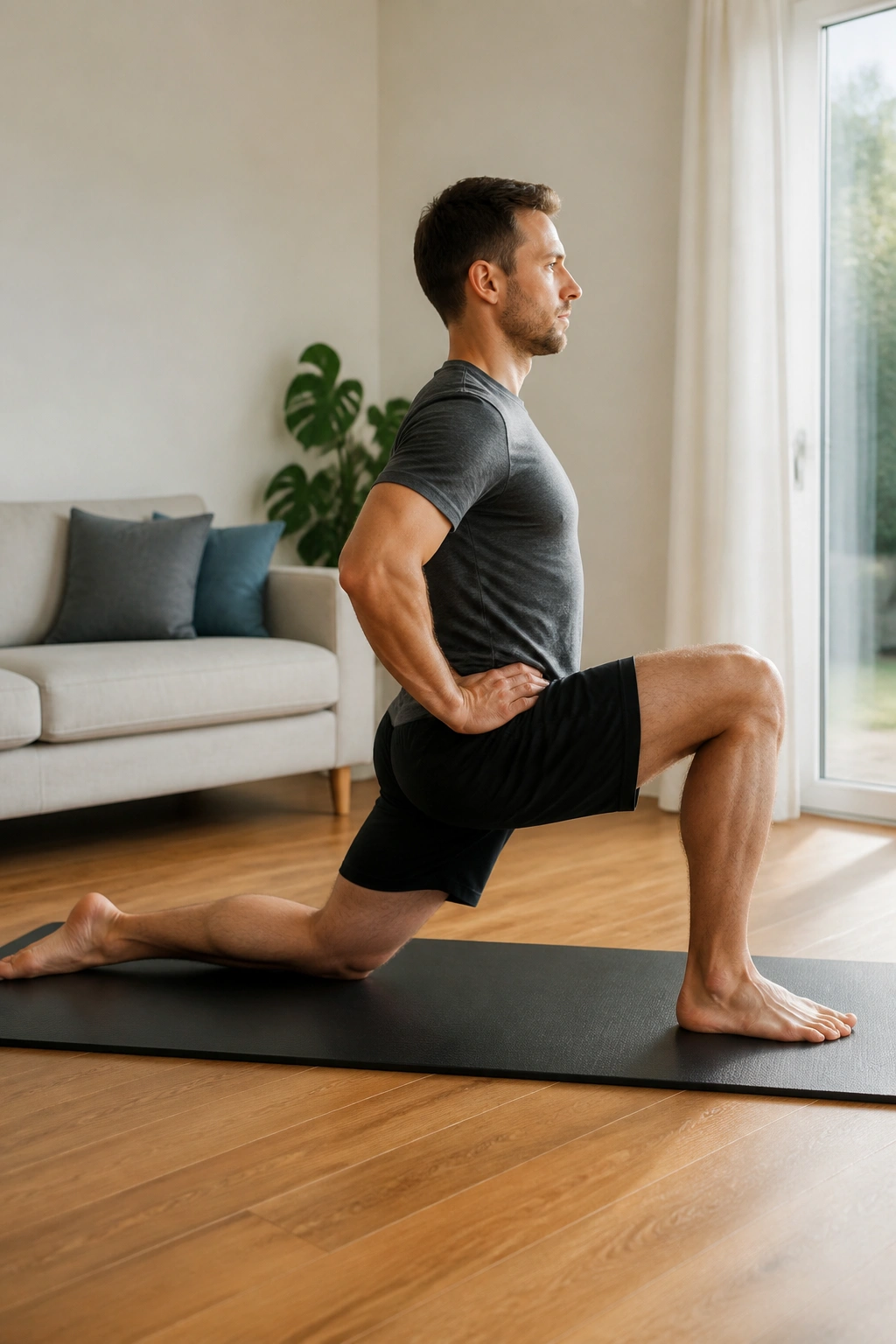
A hip flexor stretch without a glute squeeze is half a job. That’s the part most people skip, then wonder why the front of the hip still feels locked up. The kneeling setup lets you control the pelvis instead of hanging into the lower back like a tired coat.
Half-kneeling opens the front line of the hip, especially after sleep or sitting. But the real trick is the back-leg glute. When you lightly squeeze that side, the pelvis shifts into a better position and the stretch moves away from the lumbar spine. That’s what you want.
Set one knee on a cushion or folded towel, place the other foot in front, and keep the front shin roughly vertical. Tuck the tailbone a little, squeeze the glute on the kneeling side for 5 seconds, then relax without losing the tuck. Hold the whole position for 20 to 30 seconds, breathe normally, and repeat 2 rounds per side.
If the stretch turns into a pinchy feeling in the front of the hip, shorten the stance. Usually that fixes it. A lot of people lunge too far forward and call it “tightness” when the joint is actually getting jammed.
You can also add a small overhead reach on the side of the kneeling leg if the front of the hip likes that line of tension. Keep the ribs from flaring. Easy does it.
3. 90/90 Hip Switches to Open Both Sides of the Joint
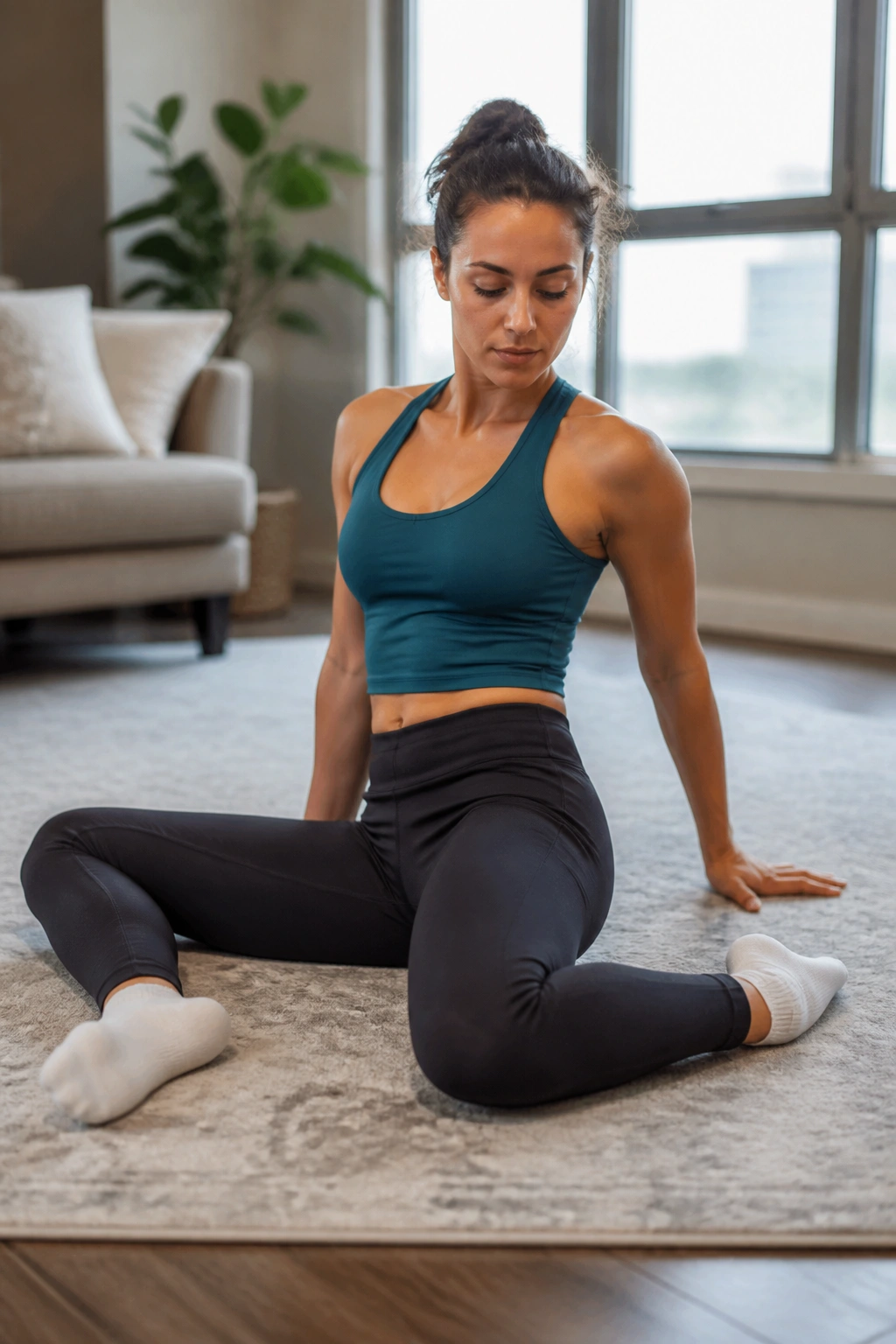
Why do so many people feel better after 90/90 switches than after one long stretch? Because the hips rarely need one direction only. They need rotation. Internal rotation, external rotation, and a smooth transition between the two.
What Makes It Different
The 90/90 position puts one leg in front and the other behind, both bent at about 90 degrees. That arrangement asks the hip joint to move without much cheating from the spine. It also shows you something useful: one side often feels sticky on the way in, while the other side feels sticky on the way out. That difference matters.
You don’t need to sit perfectly upright at first. Most people can’t. Lean on your hands behind you if you need help, and keep the movement slow enough that you can feel the rough spots. The point is to make the hips talk, not to win a posture contest.
How to Use It
Switch from one side to the other 6 to 10 times. Let both knees stay bent and avoid dragging the feet with force. Think of the movement as a controlled windshield-wiper motion through the hips.
A useful cue: keep both sit bones as honest as possible on the floor. If one side pops up every time, that’s fine for now. Don’t chase a perfect picture. Chase smoothness.
This is one of the best morning moves if you squat, deadlift, or run. It’s also a smart pre-workout choice because it wakes up the hips without tiring them out.
4. Frog Rockbacks for Inner-Thigh Tightness
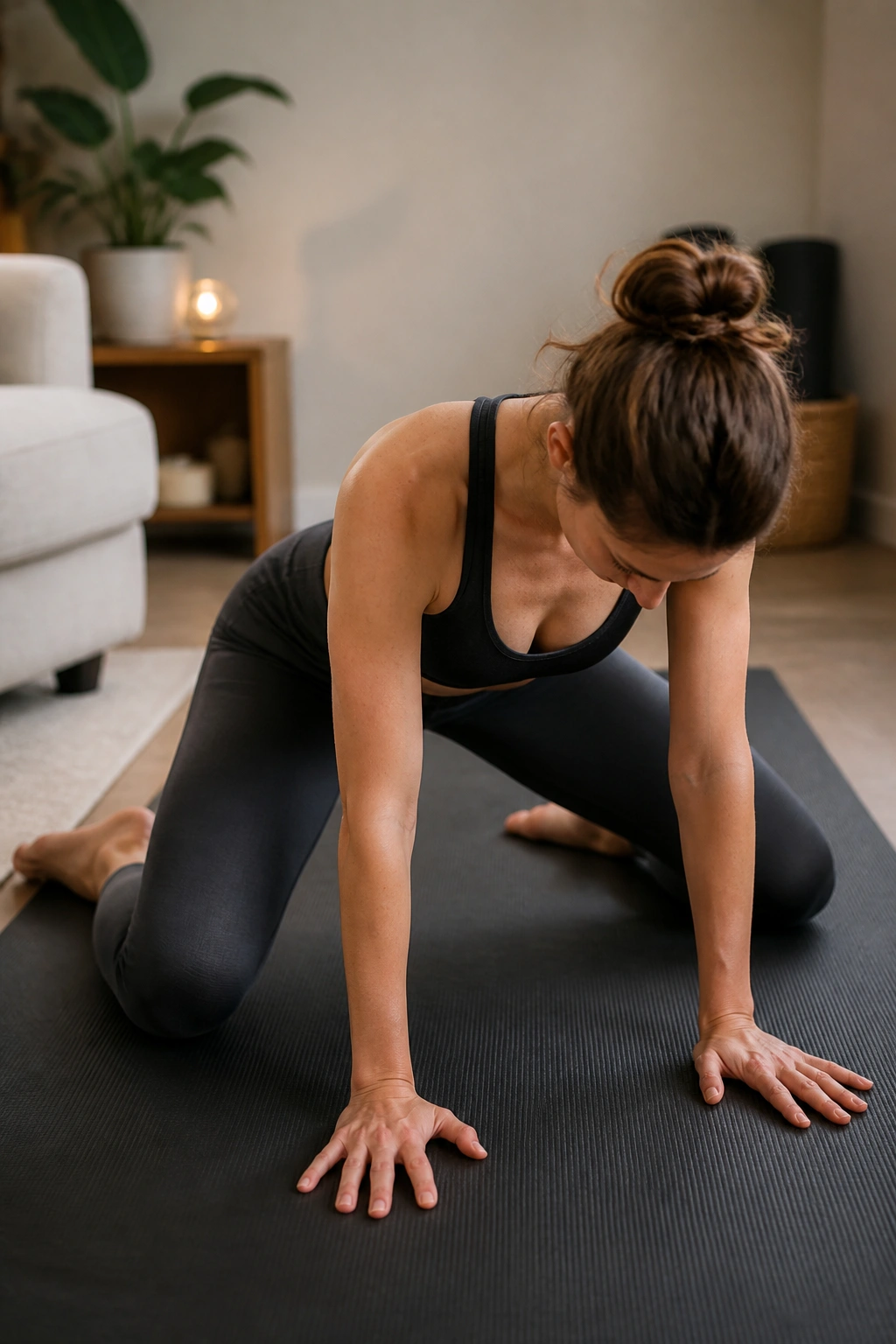
The first time someone does frog rockbacks properly, they usually laugh a little. The inner thighs light up fast. Not in a sharp, ugly way — more like a deep, spreading pull through the adductors that many people didn’t realize was sitting there.
Frog rockbacks are one of the cleanest ways to work the inner thighs and the inside of the hips without loading the knees much. Start on all fours, then slide your knees wide apart while keeping your feet in line with your knees and the insides of the feet resting on the floor. From there, gently push your hips back toward your heels and return forward again.
A good starting dose is 8 to 12 slow rockbacks. Each rep should be smooth, not bouncy. If the stretch gets too much, narrow the knees a little. If the knees hate the floor, fold a blanket under them. That small comfort change matters more than people admit.
- Keep the spine long as you rock back.
- Stop before the stretch turns sharp.
- Breathe out as you sink back.
- Keep the toes relaxed, not clawed into the floor.
The useful part here is the controlled glide. A lot of inner-thigh tightness shows up because the adductors are stiff, sure, but also because they don’t get much gentle motion. This gives them a wake-up without drama.
5. Figure-Four Stretch on the Floor for the Back of the Hip
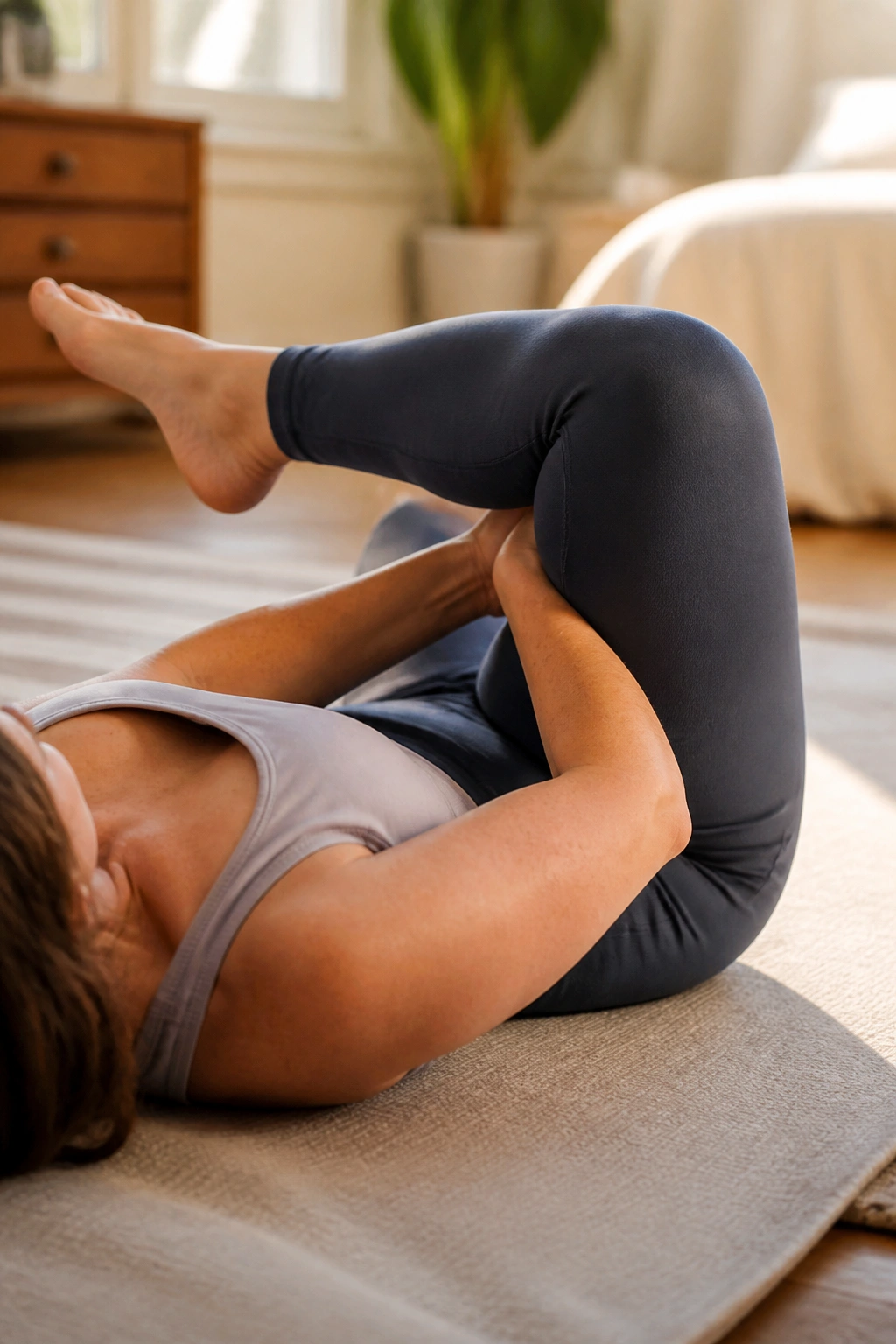
The figure-four stretch is one of those old reliable moves that stays in rotation because it works. Done well, it opens the back of the hip and gives the glutes a chance to soften. Done badly, it becomes a tug-of-war with the knee.
Lie on your back, cross one ankle over the opposite thigh just above the knee, and keep the foot on the floor if that already gives you enough sensation. If you want more, thread your hands behind the supporting thigh and draw it in slowly. You should feel the stretch in the outer hip or deep in the glute, not a strain in the knee joint.
Hold for 30 to 45 seconds and breathe into the back of the ribs. If the supporting leg is straight, keep the foot flexed to protect the knee line. If you feel the low back arching, bend the bottom leg instead. That often calms the whole shape down.
What I like about this stretch is the honesty. There’s no pretending. You either feel a clean pull in the backside of the hip, or you don’t. If you don’t, adjust the angle before you pull harder. Pulling harder is usually the wrong answer here.
A little side note: if your hips feel cranky after squats or deadlifts, this is usually better after the workout than before it. Morning is fine too, just keep it gentle.
6. World’s Greatest Stretch With a Thoracic Reach
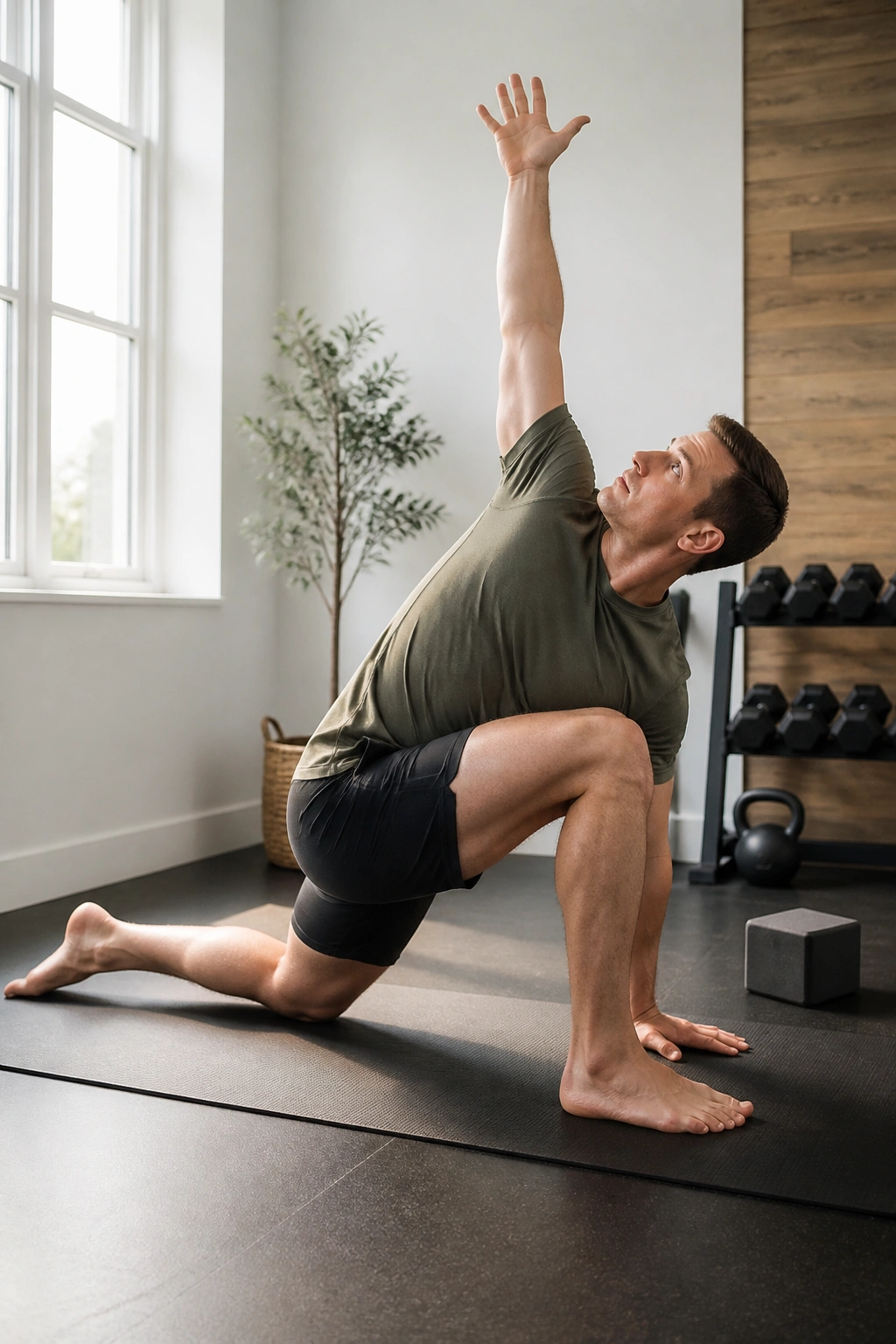
Unlike a single static stretch, this one asks the body to coordinate. That’s why it earns its place in a hip routine. You’re not only opening the front of the hip; you’re also reaching through the upper back, which keeps the torso from collapsing into the stretch.
Drop into a low lunge with the back knee down, front foot outside the hand if space allows, then place the hand on the floor or a block. From there, rotate the chest toward the front leg and reach the top arm toward the ceiling. The front hip gets extension. The upper body gets rotation. The whole pattern wakes up at once.
Why It Beats Staying on the Mat
If you only stretch on your back, you may feel looser but still stand up and move like a cardboard cutout. Standing and kneeling patterns teach the hips how to work with the ribs and shoulders, which matters if you’re about to train or walk a long stretch of the day.
Do 3 slow reps per side, holding each reach for 2 full breaths. Keep the front knee tracking over the middle toes and don’t let the low back dump forward. That mistake is common, and it steals the stretch from the hip.
This is one of the best choices before a workout because it blends mobility with control. It’s not flashy. It just covers a lot of ground in one move.
7. Deep Squat Hold With Heel Support
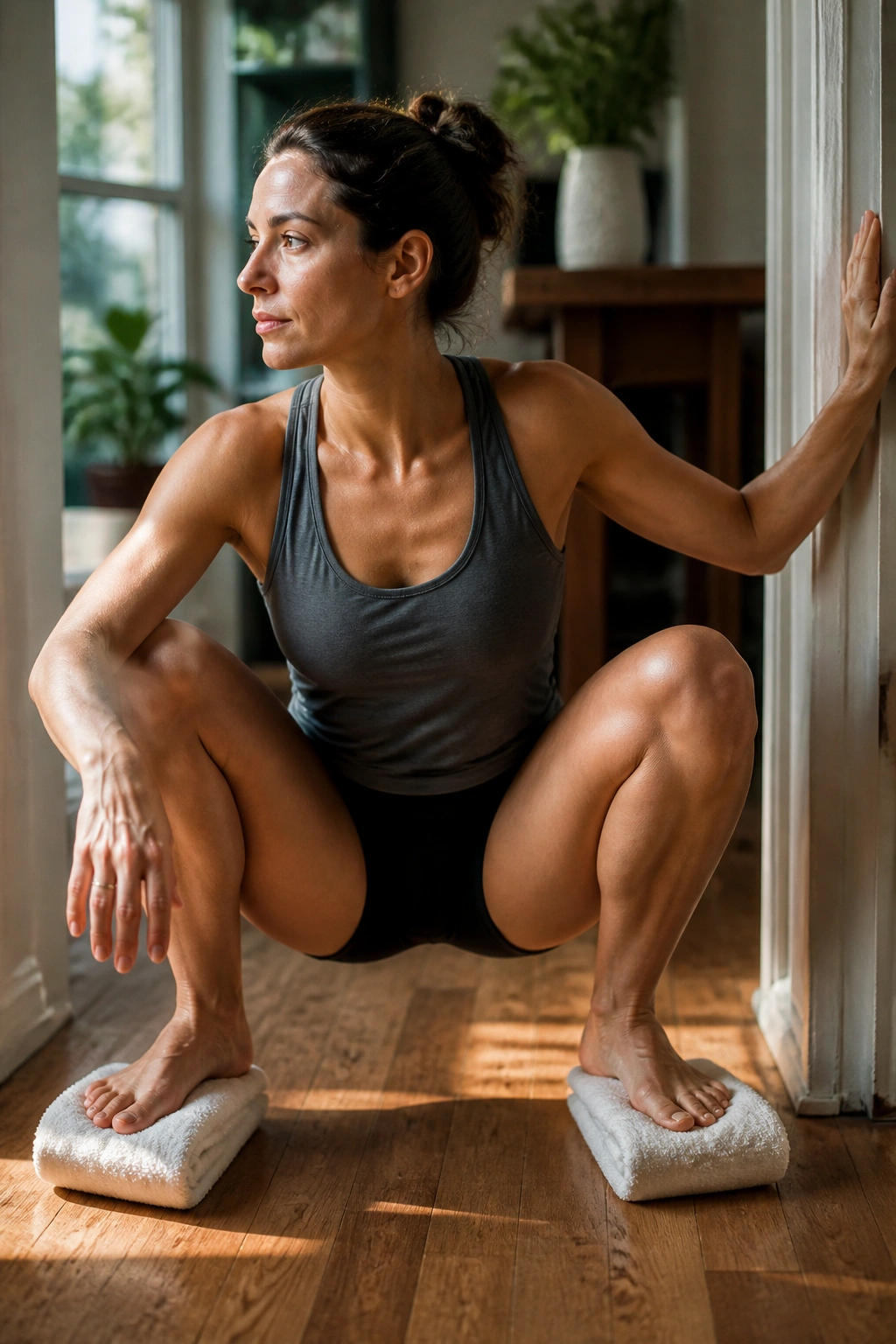
A deep squat can tell you a lot about your hips in about ten seconds. If the knees cave, the heels lift, or the torso folds like a lawn chair, something upstream is limiting the position. Usually it’s not just one thing. Ankles, adductors, and hips often share the blame.
The clean version starts with a squat you can actually own. Stand with feet a little wider than hip width, drop into a comfortable squat, and hold on to a doorframe, counter, or sturdy post if you need help. If your heels pop up, slide a rolled towel or small wedge under them. That’s not cheating. It’s information.
Hold the position for 20 to 40 seconds while gently pressing the knees out with the elbows. Keep the chest tall enough that you can breathe. If your back rounds like a scared cat, come up a little.
Why the Heels Matter
Heels on support can change the whole conversation. When the ankle stops fighting for attention, the hips can ease into more depth. That matters more than forcing flat feet and pretending it’s fine. It isn’t.
A good squat hold should feel like an opening through the hips and groin, not a panic in the knees. If the knees hurt, shorten the depth. If the feet feel numb, stand up and shake out before trying again.
This one is best after your first two or three gentler floor stretches. It’s a deeper position, and the body usually likes it more once it has already had a few minutes to wake up.
8. Adductor Rockbacks for the Inside Line of the Hips
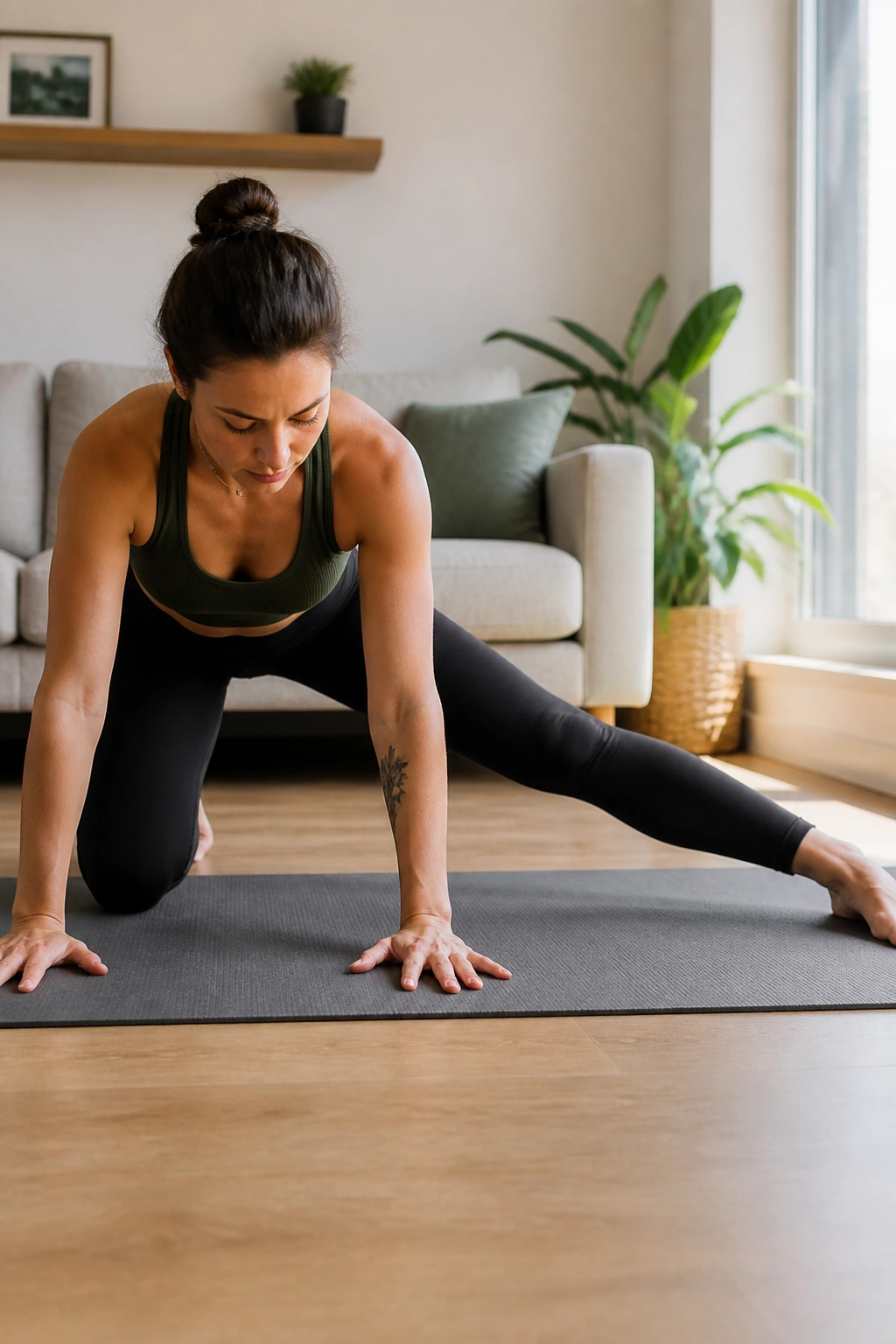
If the inner thighs feel like violin strings in the morning, adductor rockbacks are the cleaner fix. They hit the inside line of the leg without asking you to hold a long, awkward squat. And that makes them easier to repeat.
Get on all fours and extend one leg out to the side with the foot flat and toes pointing forward or slightly up. Keep the other knee under your hip. From there, rock your hips back toward the heel of the bent leg, then glide forward again. You should feel the stretch along the inner thigh of the straight leg.
Use 6 to 10 slow rocks per side. If you want more, pause for a breath at the back of the motion. If the stretch turns into a groin pinch, reduce the distance and make the rocks smaller. Bigger is not better here.
- Keep the spine long.
- Keep both hands planted.
- Let the straight leg stay active without locking the knee.
- Pad the bent knee if the floor feels too hard.
A lot of people think tight hips mean they need more hip flexor work. Sometimes yes. But often the adductors are the noisy ones, especially after running, side lunges, skating, or hard squat sessions. This stretch gives them room without a fight.
9. Glute Bridge With a Slow March
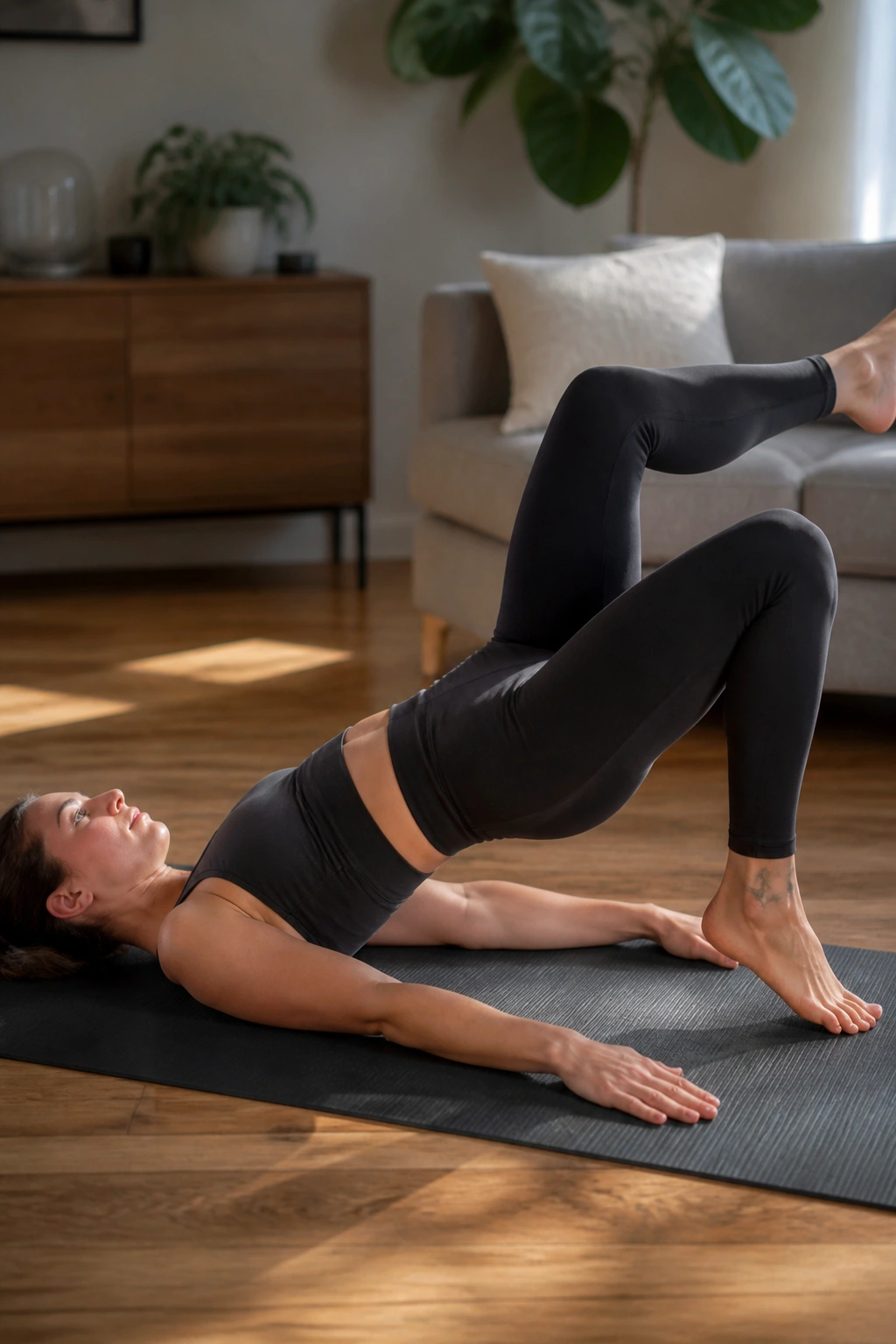
A bridge is not a classic stretch in the usual sense, but it absolutely belongs in a morning hip routine. Why? Because a lot of tight-hip feeling comes from glutes that are too lazy to help. When the glutes don’t do their share, the front of the hip and low back pick up the slack.
Lie on your back with knees bent and feet flat, then lift your hips until your body makes a straight line from shoulders to knees. Pause there and squeeze the glutes for a second. Then, if you can keep the pelvis steady, lift one foot an inch or two off the floor and place it back down. Alternate sides.
Do 6 to 8 marches per side. The goal is not height. The goal is a level pelvis. If one side drops hard every time, make the movement smaller. Small and clean beats big and sloppy.
Why a Strength Move Helps a Stiff Hip
This is the part people miss. Sometimes the hips feel tight because they’re guarding. A little bridge work tells the body, “You can trust these muscles.” That message often makes the standing stretches feel easier.
If cramping shows up in the hamstrings, walk the feet a touch farther away from the hips. If the low back arches, lower the hips and reset. Both are common fixes.
10. Seated Butterfly With a Forward Hinge
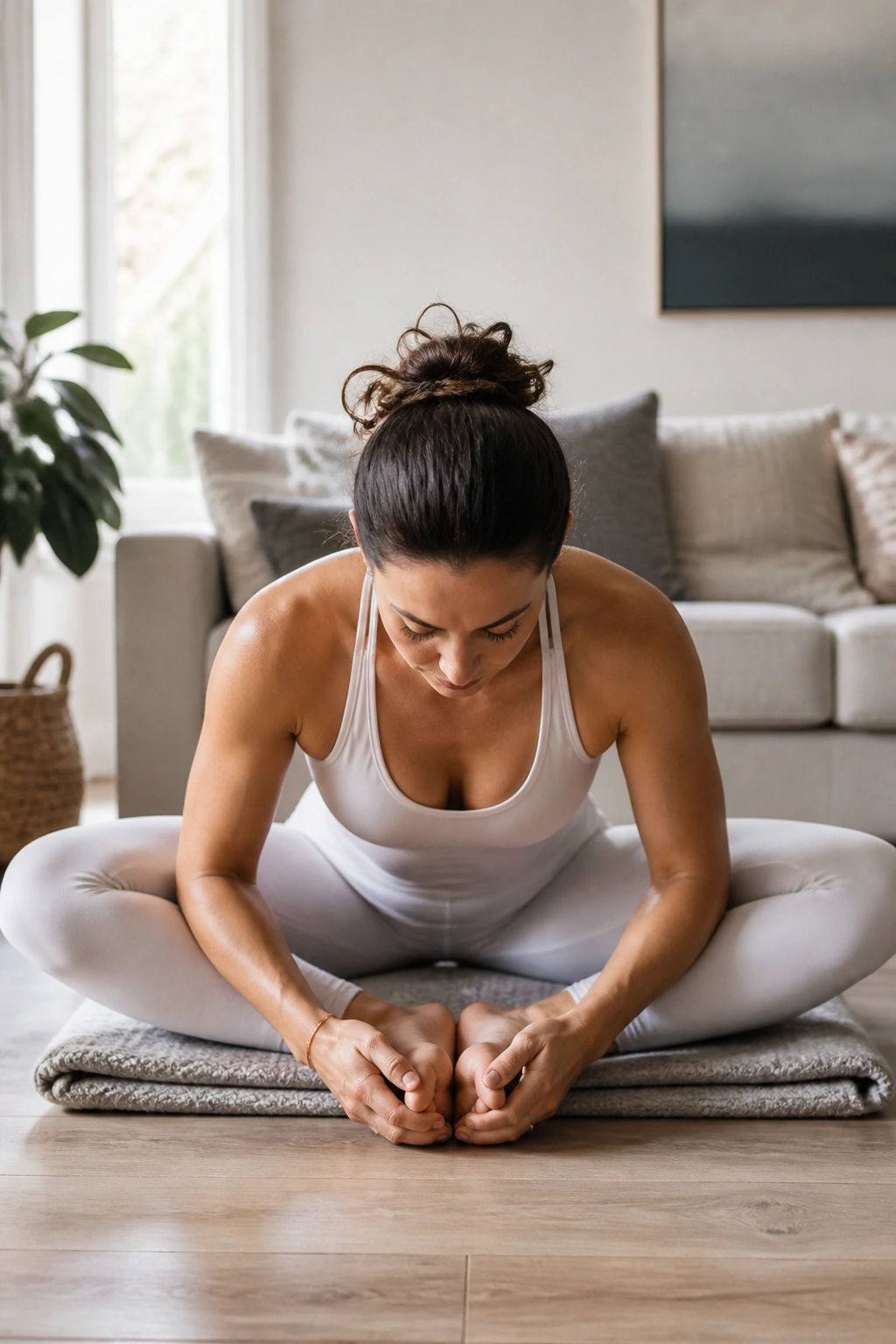
Seated butterfly looks soft, but it can be brutally honest. You sit with the soles of the feet together, let the knees fall open, and then hinge forward from the hips. Done well, it opens the inner thighs and can quiet that deep groin stiffness that shows up after sleep or long sitting.
The important part is the hinge. Do not round your whole spine and fold like a paper towel. Sit on a folded blanket if your pelvis needs help tilting forward. That small lift makes the posture easier to own and usually gives a cleaner stretch.
Hold for 20 to 30 seconds, then come back up, reset the spine, and repeat once or twice. If the knees hover high off the floor, leave them there. Forcing them down is a waste of time and can irritate the groin. The stretch is still doing its job.
A lot of people get impatient with this one because it looks gentle. Gentle doesn’t mean useless. A well-set butterfly stretch can shift the inside of the hips in a way that standing work sometimes misses. It’s one of those moves that rewards patience instead of bravado.
If your hips are cranky first thing in the morning, use this later in the routine, not as the opener. The body tends to accept it better once you’ve already done a bit of rocking, marching, or switching.
11. Standing Hip Circles at the Counter
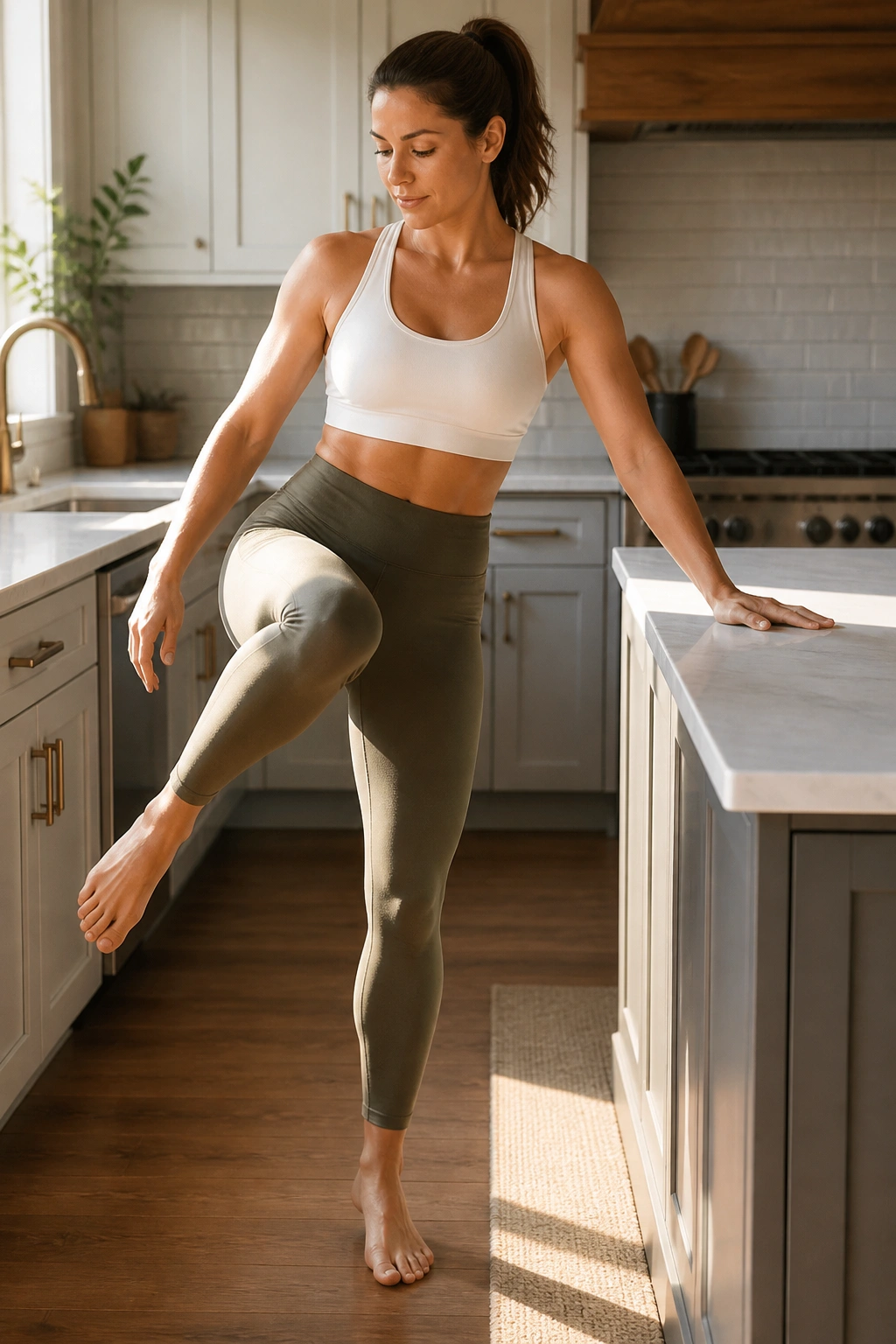
Why stand up so early? Because standing circles tell you whether the hips can organize themselves under load. That matters. A stretch on the floor is useful, but standing is where you live.
Hold a counter lightly for balance and lift one knee in front of you. From there, make a slow circle with the knee, drawing a small loop through the hip joint. Keep the pelvis level and the torso tall. Then reverse the direction. Do 5 circles each way per leg.
How to Get the Most From It
- Make the circles small enough to stay smooth.
- Keep the standing foot planted.
- Don’t swing the whole body.
- Move slowly enough that the hip does the work, not the lower back.
The beauty of this drill is that it can expose asymmetry without making a fuss about it. One side will usually feel smooth. The other side will feel crunchy, stuck, or vague. That’s useful information. It tells you where to spend an extra rep or two.
This is also a good warm-up before a walk, a lift, or a day that starts with a lot of standing. It doesn’t fatigue you. It just wakes up the joint and reminds it how to move in a circle instead of only forward and back.
12. Lateral Lunge Shift for Side-to-Side Opening
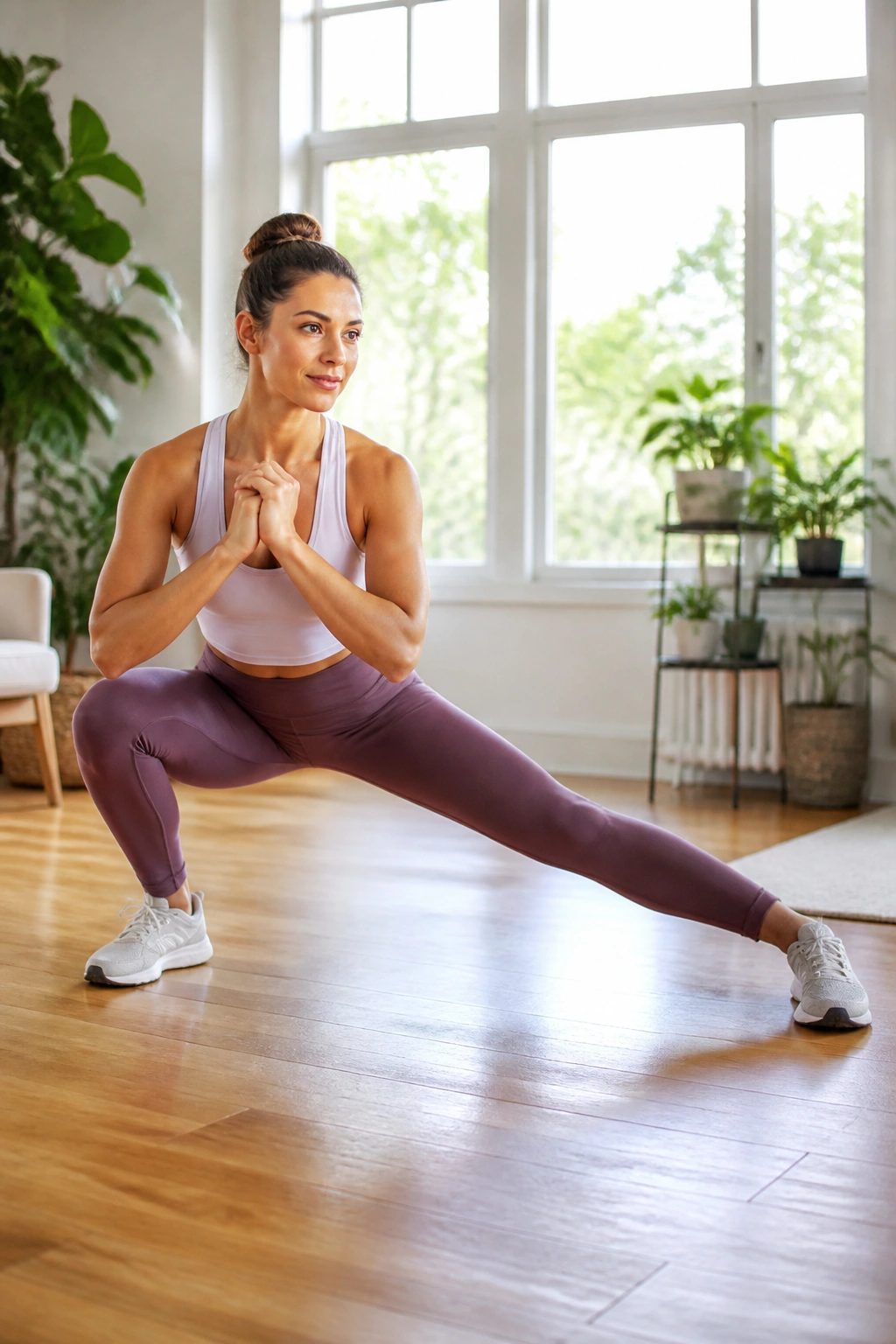
A side lunge is not just a leg exercise. It’s one of the best ways to stretch the adductors while teaching the hips to accept weight from one side to the other. That side-to-side load is missing from most morning routines, which is a shame.
Stand with feet fairly wide, then shift your hips toward one side while bending that knee and keeping the other leg straight. The straight leg should stay planted. The bent knee tracks over the foot. Pause for a breath, then return to center and go the other way. Keep the chest up and the spine long.
Do 5 to 6 slow shifts per side. If you can only go halfway down, that’s fine. Depth is not the metric. Smooth weight transfer is.
The most common mistake is dropping into the bottom and bouncing there. That turns a useful stretch into a sloppy habit. Move in, breathe, move out. Clean reps help the hips more than a dramatic hold with bad form.
This one earns its place because it bridges mobility and real movement. You’re not just relaxing tissue. You’re asking the hips to support body weight while opening the inside line. That’s closer to life than most floor stretches ever get.
13. Low Lunge With a Side Bend
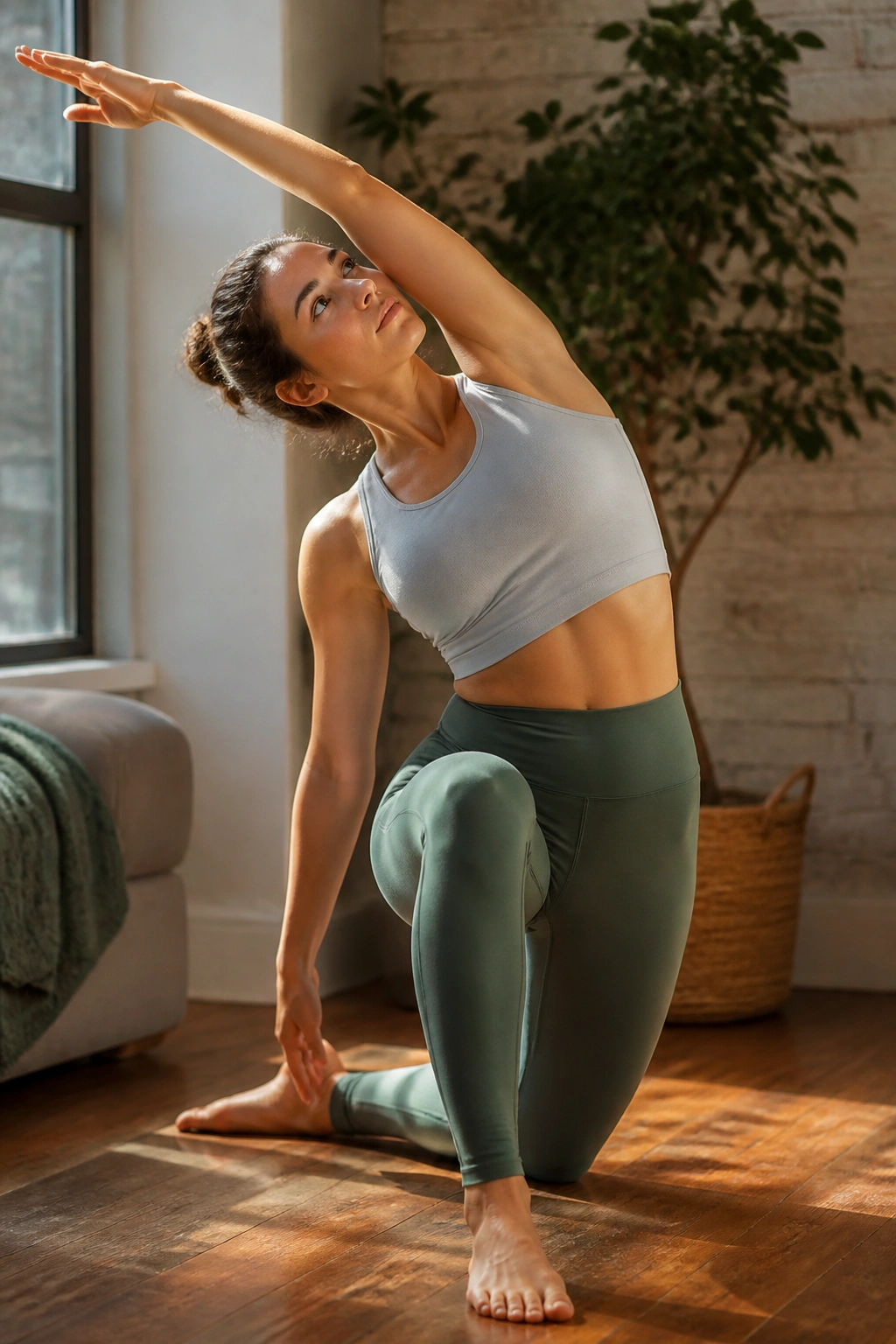
The stretch should feel long from the front of the hip to the ribs, not like a crank in your spine. That’s the sweet spot here. A low lunge with a side bend reaches into the hip flexors and the side body at the same time, which makes it one of the better “morning feels tight everywhere” options.
Set up in a kneeling lunge with the back knee down and the front foot planted. Squeeze the back-side glute lightly, then reach the arm on that side overhead and lean gently away from the back leg. You should feel the stretch lengthen through the front of the hip and the side waist.
Hold for 20 to 30 seconds and breathe into the lower ribs. If the low back arches hard, shorten the stance and tuck the pelvis a little more. If the kneeling side complains, put a cushion under it. No prize is given for suffering on a bare floor.
The Part Most People Skip
They lean the torso away and forget the pelvis. That usually turns the stretch into a lower-back problem. Keep the ribs stacked more or less over the hips, then add the side bend from there. The result is cleaner.
This stretch is especially good if your body feels compressed after sleep. The side bend gives the torso some room, and the lunge takes the front of the hip out of its usual shortened position. It’s a nice combination.
14. Happy Baby With a Gentle Side-to-Side Rock
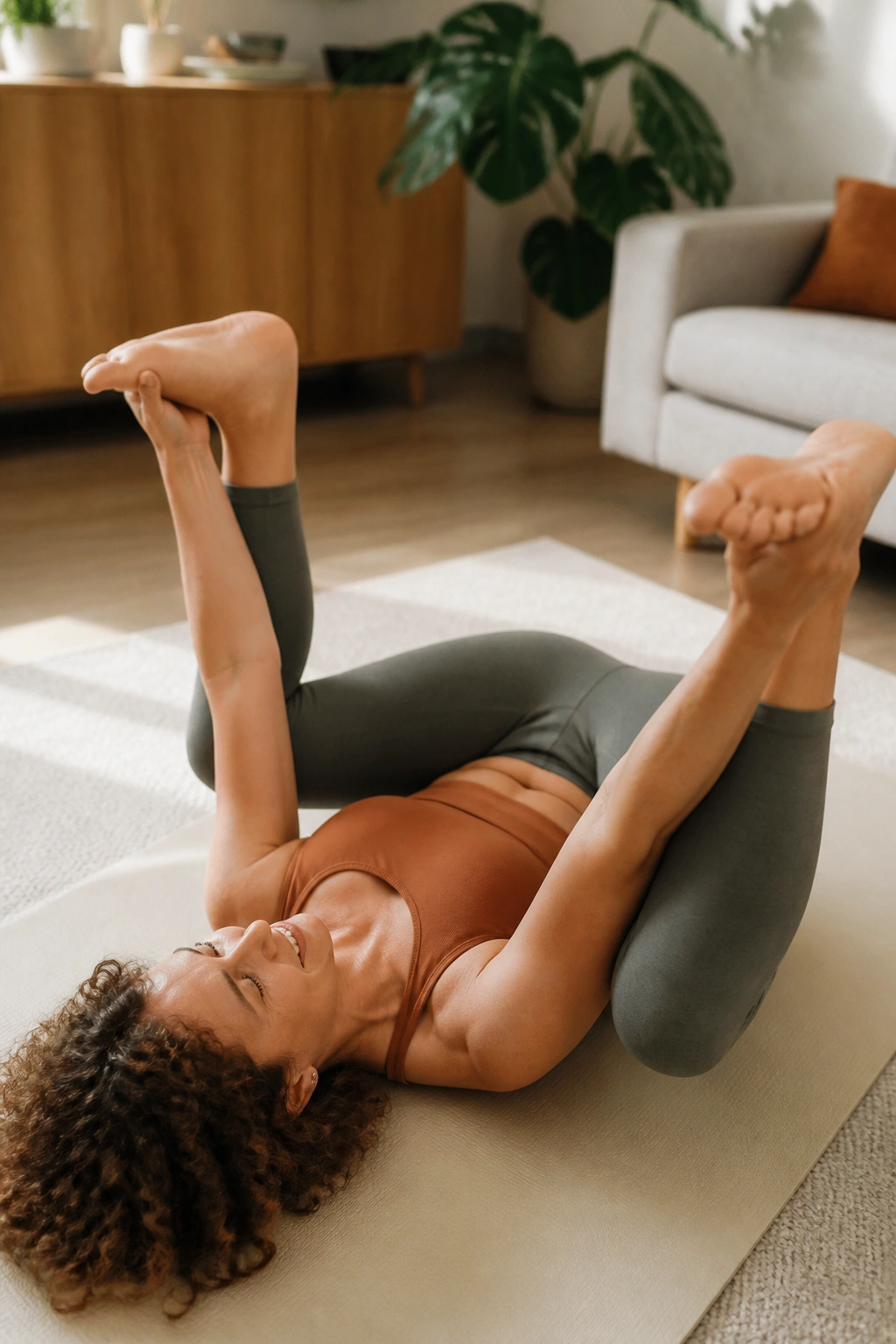
Why does this pose calm the hips so fast? Because it hits the adductors, the low back, and the outer hips without asking for strength or balance. You’re on your back again, which means the body can finally stop guarding a little.
Pull the knees toward the armpits, hold the feet or shins, and let the knees open wider than the torso. If grabbing the feet feels awkward, hold behind the thighs instead. From there, rock gently side to side for 20 to 30 seconds. Keep the movement small. You’re coaxing, not wrestling.
The hips often relax here because the position removes the need to stabilize. The legs are supported, the spine is grounded, and the groin gets a stretch from a very different angle than the kneeling work. That difference matters. Tight hips respond better when they’re shown more than one shape.
If the neck feels strained, rest the head on the mat. If the knees don’t like being pulled wide, bring them in a little. There is no medal for maximum spread. Comfort keeps the stretch sustainable.
This is one of my favorite end-of-routine moves because it leaves the body with a softer, looser feeling rather than a sharp “worked” sensation. That matters in the morning, when you still have a whole day ahead of you.
15. Couch Stretch Finish With Slow Breathing
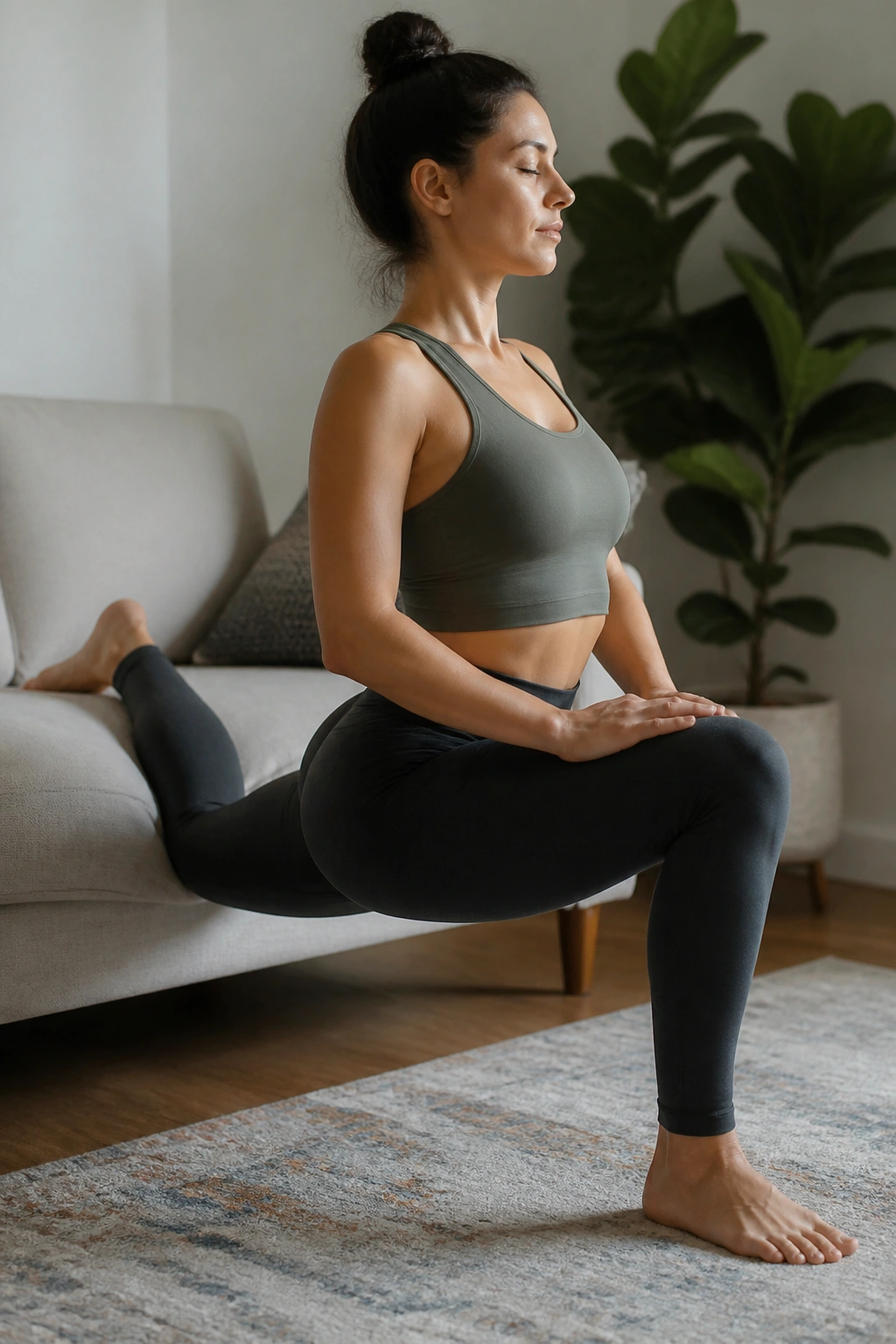
The couch stretch has a reputation, and honestly, it earns it. Done with care, it can reach the front of the thigh and hip in a way that almost nothing else does. Done recklessly, it can feel like a fight with your own body. So start small.
Place one knee on a cushion near a wall or couch, bring the other foot in front, and slide the back shin up the support if you can. Keep the torso tall at first. Then tuck the pelvis slightly and squeeze the back glute. You should feel a strong stretch along the front of the back leg, not a pinch in the low back.
Hold for 20 to 30 seconds on each side, breathing slowly. If it feels too intense, move the front foot farther away from the wall and lower the back shin. If the front of the knee complains, stop and choose a gentler lunge instead.
A Better Way to Finish the Morning
This is the stretch I’d save for the end of a morning routine, after you’ve already done pelvic tilts, hip switches, or a few rockbacks. The tissue is warmer, the joint is less stubborn, and the whole position tends to land better.
You can build a solid 5- to 8-minute routine from the first four or five moves and keep the couch stretch as the final test. If the hips feel open by then, great. If they still feel cranky, that’s useful too. It tells you the stiffness may be coming from more than one place, which means the answer is usually a better sequence, not a harder stretch.
Pick three or four of these and do them every morning for a week. Then change one piece and notice what shifts. That’s how tight hips start to loosen for real.
