



Stopping cold after a hard workout feels efficient. Your lungs, calves, and pounding pulse usually vote no.
The best post workout cool down routines at home do three jobs fast: they bring your heart rate down in stages, ease tension in the muscles you just worked hard, and tell your nervous system that the hard part is over. That last piece gets ignored a lot. When you train at home, there is no walk across a parking lot, no stroll to the locker room, no built-in slow fade between effort and rest.
You can feel the difference the next morning. Quads stay tight after squats, calves grab after jump rope, shoulders ride high after push-ups and presses. A cool-down will not erase soreness—nothing honest can promise that—but it often leaves you less stiff, less wired, and more ready for your next session.
Static stretching before hard exercise has a mixed reputation and usually belongs later, not sooner. After training, though, slower breathing, easy movement, and a few well-aimed holds make a lot of sense. A cool-down does not need 20 minutes. It needs a plan.
What Effective Post Workout Cool Down Routines at Home Actually Need
A home cool-down does not need fancy gear, a foam roller the size of a fire log, or a playlist that sounds like a spa lobby. It needs a short drop in intensity, then mobility or stretching that matches what you actually trained.
Sports medicine guidance has long leaned toward a gradual return toward resting heart rate after exercise rather than a hard stop. That advice holds up well in a living room, garage, spare bedroom, or hallway. Your body responds better when you shift down through the gears instead of slamming on the brakes.
A useful cool-down usually covers these three pieces:
- 60 to 120 seconds of easy movement to let breathing and heart rate settle.
- 2 to 5 targeted stretches or mobility drills for the muscles and joints that took the most load.
- 4 to 8 slow breaths with a longer exhale than inhale, which helps nudge your body toward recovery mode.
That is enough.
One more thing, because this gets mixed up all the time: mobility and stretching are not the same job. Mobility work keeps a joint moving through range with control—hip circles, thoracic rotations, ankle rocks. Stretching asks a muscle to relax into a position and stay there for 20 to 45 seconds. A smart cool-down often uses both.
Sharp pain is a stop sign. Normal post-workout tightness feels dull, tuggy, maybe a bit hot. A stabbing pinch in the front of the hip or a sudden pull behind the knee is not the kind of “good stretch” you should push through.
How to Choose Post Workout Cool Down Routines at Home Based on Your Session
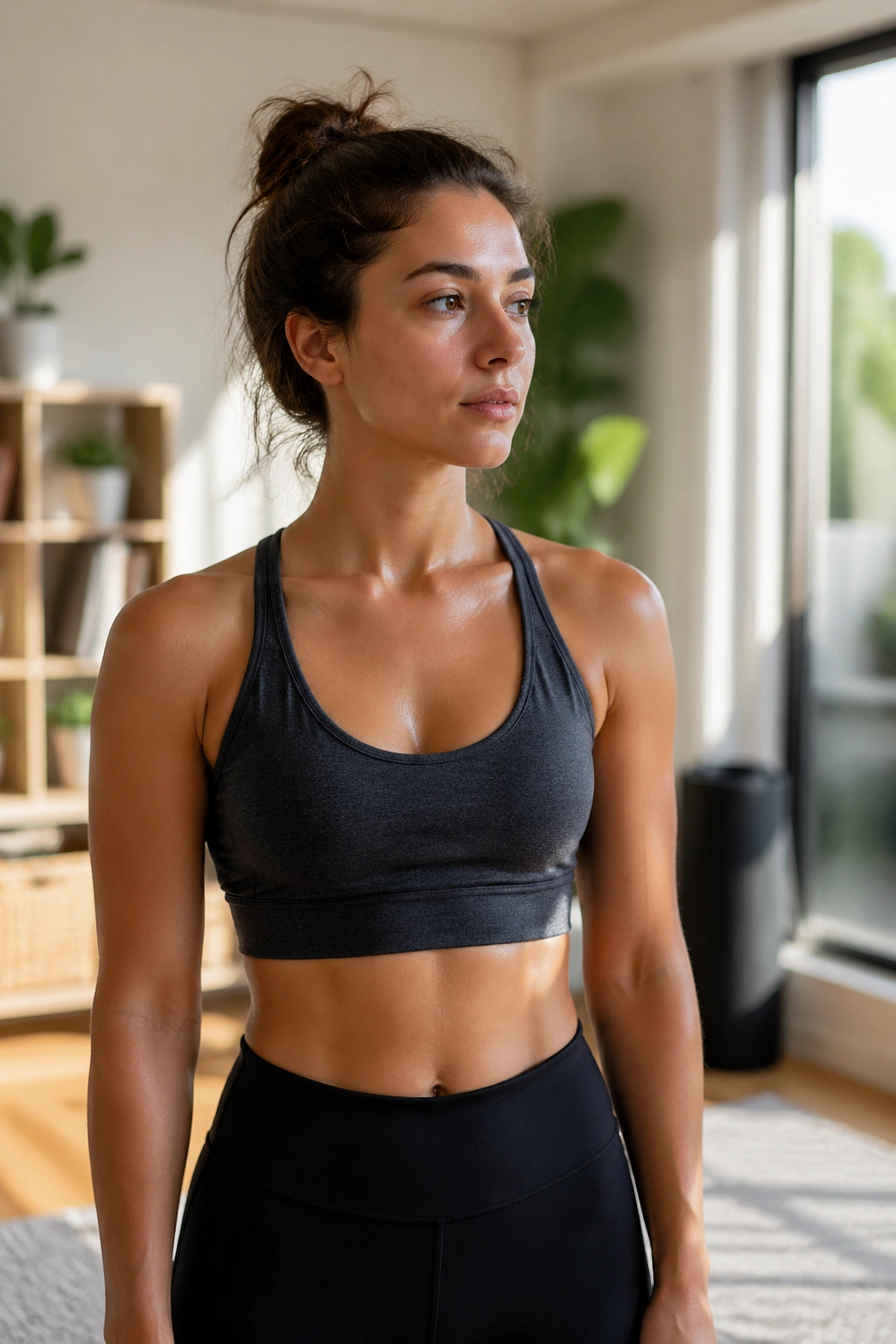
Match the routine to the workout you finished, not the one you wish you had done.
After a lower-body strength session, your hips, quads, hamstrings, glutes, and calves usually need the most attention. After upper-body work, chest, lats, triceps, wrists, and the back of the shoulders tend to complain first. HIIT sessions are different again; they leave people breathless and tight at the same time, so the first minute should focus on calming the system before you fold yourself into stretches.
Here is the shortcut I use:
- Leg day or running: choose routines with hip flexor, calf, hamstring, and glute work.
- Push-ups, presses, or rowing: choose shoulder, chest, lat, and wrist openers.
- Jump-heavy cardio or HIIT: start with walking and breathing, then add gentle hip and calf work.
- No floor space, no time, low energy: go with a standing or wall-based sequence.
And if you only remember one rule, make it this one: cool down the muscles you used most, not the muscles that feel easiest to stretch. People love a quick forward fold because it feels familiar. Trouble is, a forward fold after push-ups does almost nothing for a locked-up chest or overworked triceps. Aim better.
1. The Two-Minute March and Long-Exhale Reset
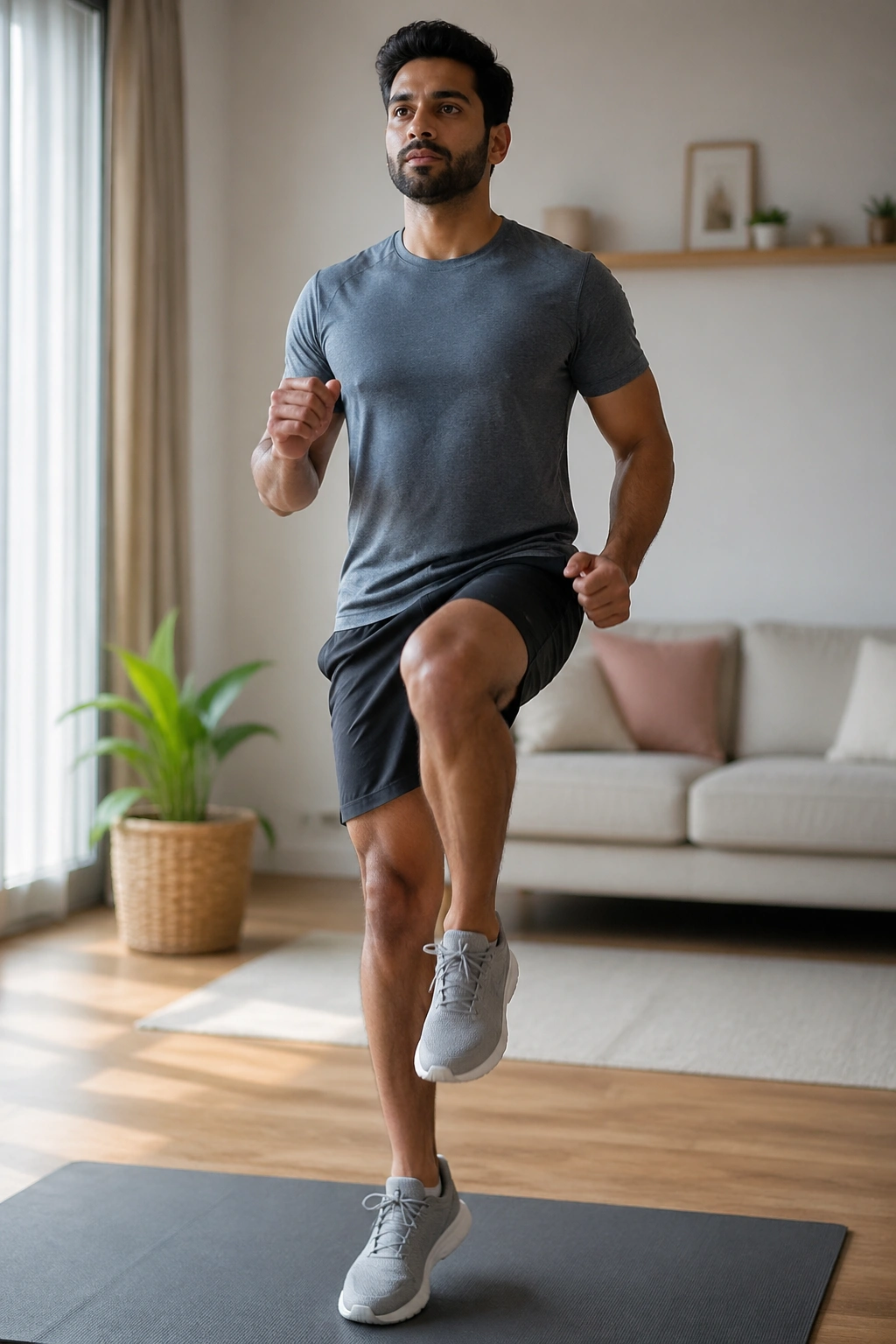
If your workout ends with your heart thumping in your neck, start here.
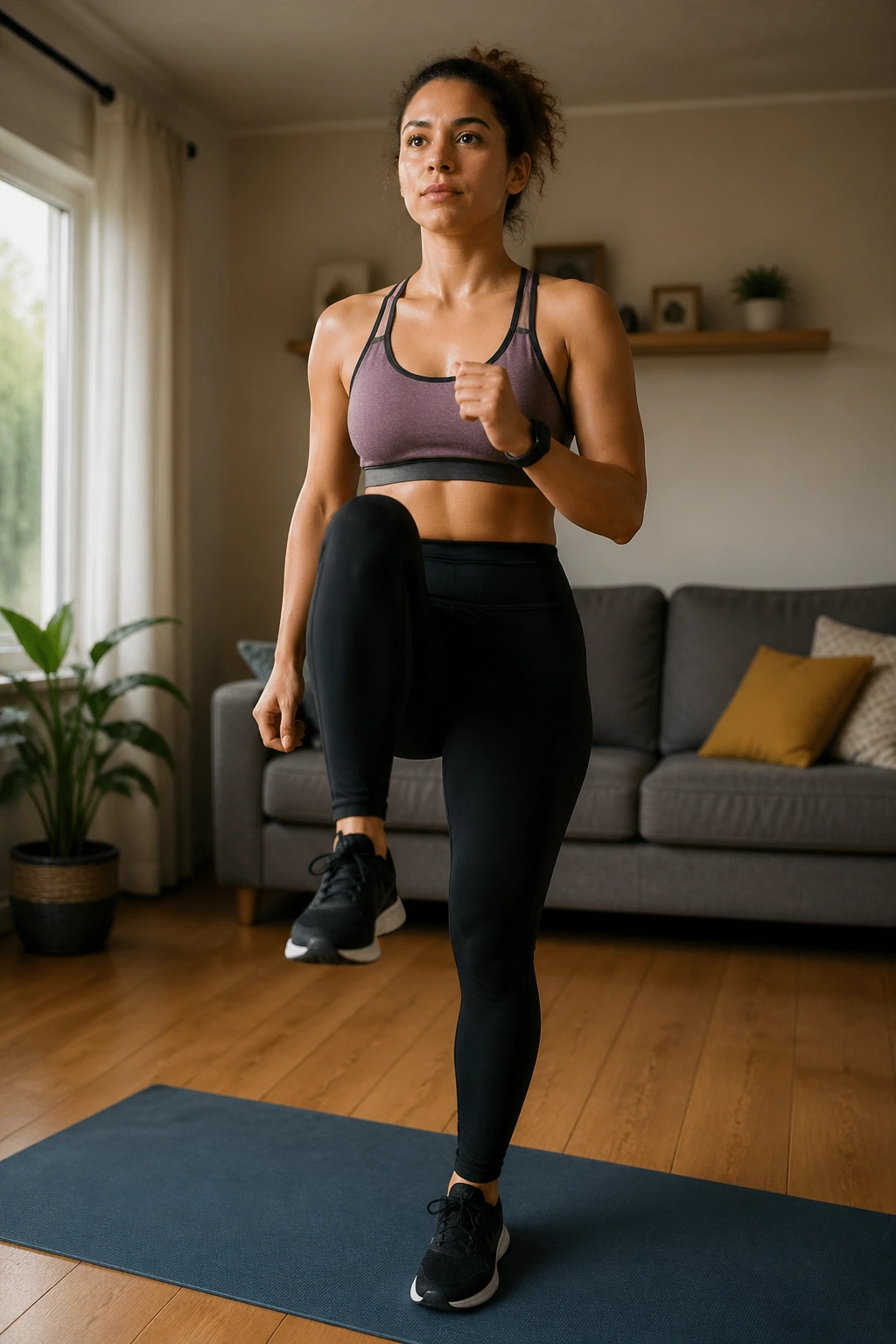
This routine looks almost too plain to matter, which is why people skip it. Bad move. A minute or two of easy marching gives your circulation time to settle, and the longer exhale helps downshift the nervous system so you do not go from burpees to couch collapse in one jump.
Why it works
When you breathe out for longer than you breathe in, your body often responds by easing the stress signal a notch. Pair that with light movement and you get a cooler, calmer landing after hard intervals, circuits, jump rope, stair climbing, or shadowboxing.
Quick sequence
- March in place for 45 seconds, swinging your arms low and loose.
- Switch to side steps for 30 seconds, letting your breathing slow.
- Stand tall, place one hand on your ribs and one on your belly, and inhale through your nose for 4 seconds.
- Exhale through your mouth for 6 seconds. Repeat 5 breaths.
- Roll your shoulders back 8 times, then forward 8 times.
- Finish with a gentle calf stretch against a wall, 20 seconds per side.
Best use: right after HIIT, kettlebell swings, bodyweight circuits, or any session where you feel a little scrambled.
2. The Leg-Day Quad, Hamstring, and Glute Stretch Ladder
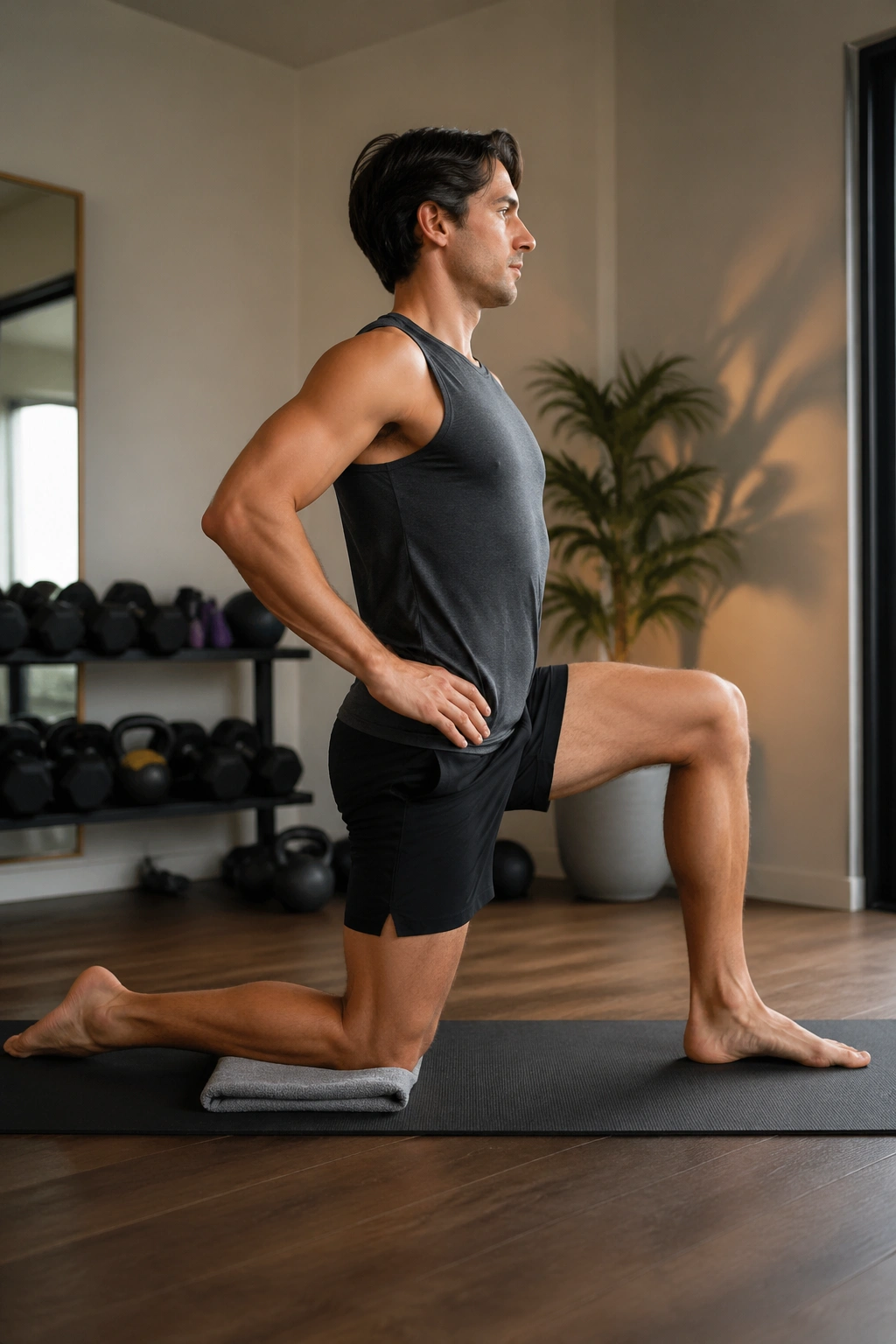
Heavy lower-body training leaves one predictable mess behind: hips that feel glued shut and quads that grip when you try to walk downstairs. This ladder deals with that better than random toe touching ever will.
Start with a half-kneeling hip flexor stretch. Put your right knee on a folded towel, left foot forward, and tuck your pelvis slightly so your low back stays quiet. Hold for 30 seconds, then lift the right arm overhead and lean a few inches left for another 15 seconds. You should feel the front of the hip, not a crunch in your spine.
Shift into a half split from the same position—hips move back, front leg straightens, toes point up. Keep your chest long and sit back until the stretch lands in the upper hamstring. Stay there for 25 to 30 seconds. Then sit down for a figure-four glute stretch, crossing one ankle over the opposite knee and pulling the legs in for 30 seconds each side.
Last step: lie on your back and hug one knee to your chest while the other leg stays long on the floor. Hold 20 seconds, switch, then pull both knees in for 3 slow breaths. That final piece sounds small. It is not. It helps your lower back let go after squats, split squats, lunges, or deadlifts.
Use this ladder after any leg session with squatting, hinging, or step-up work. If your quads are shaking, stay closer to 40 seconds on the hip flexor stretch.
3. The Doorway Chest Opener and Shoulder Sweep Series
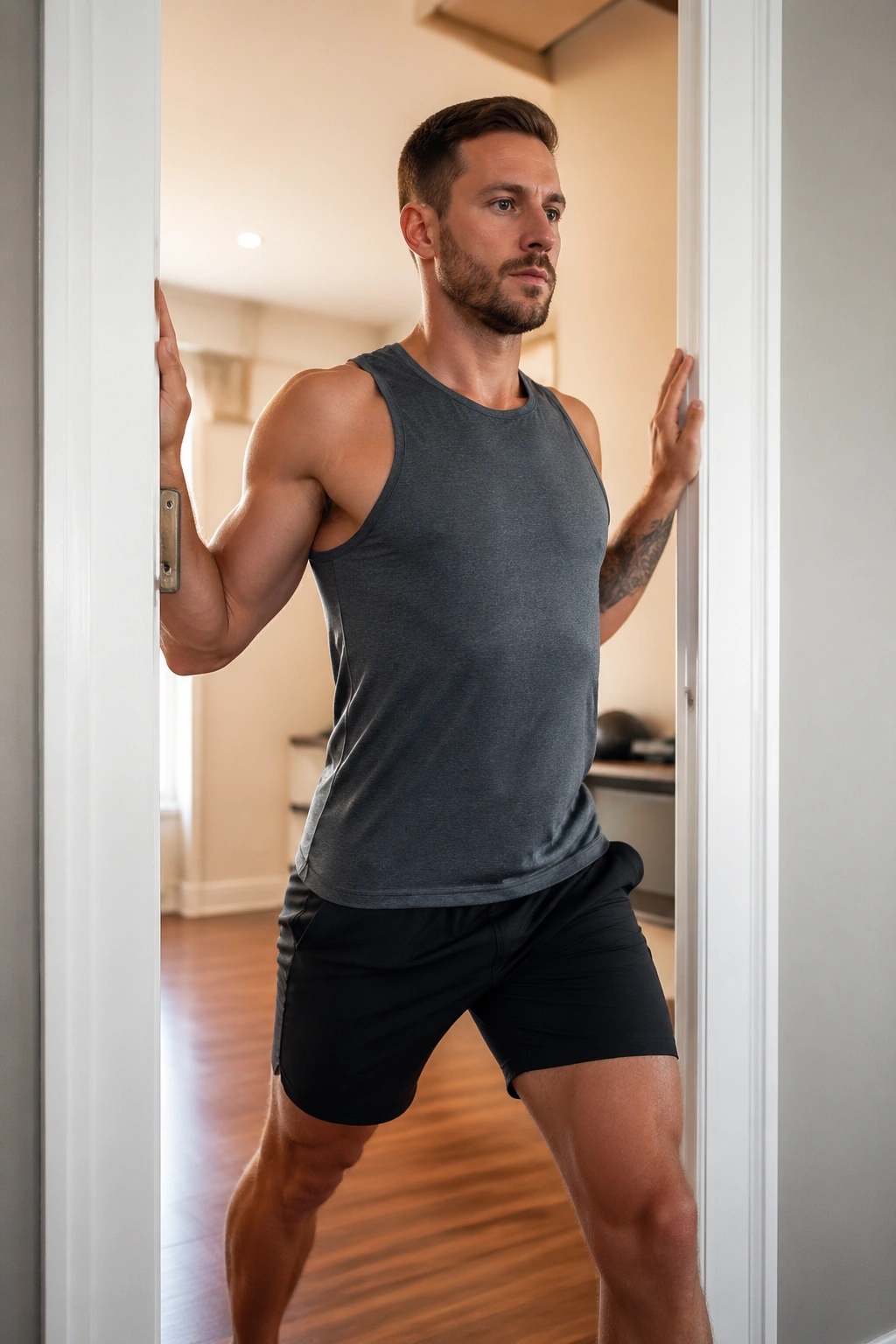
Why do push-ups and dumbbell presses leave your upper body feeling shorter, tighter, and oddly hunched?
Because they load the front side hard. Chest, front shoulders, triceps—they all help drive the press, and they often finish the session in a shortened position. If you cool down with nothing but a forward fold, your shoulders keep that rounded, cramped feeling long after the workout ends.
How to do it
Start with a doorway stretch. Place your forearms on the doorframe, elbows a little below shoulder height, and step one foot through until you feel the stretch across the chest. Hold 25 seconds. Move the elbows slightly higher and repeat for 20 seconds to hit a different angle.
Then step away from the doorway and do 10 slow shoulder sweeps per arm. Lift one arm in a big circle from your side to overhead and back down behind you, staying inside a pain-free range. Small circle first, larger as the joint loosens.
Finish on all fours with 6 thread-the-needle reps per side. Reach one arm under your body, let the shoulder and upper back rotate, pause, then return.
What to watch for
- Do not crank the doorway stretch until your fingers tingle.
- Keep the ribs down so the stretch lands in the chest, not your low back.
- Move slowly on the shoulder circles; speed turns them into flailing.
This series earns its keep after push-ups, bench variations, overhead pressing, and long plank sessions.
4. The HIIT Floor Flow for Hips and Lower Back
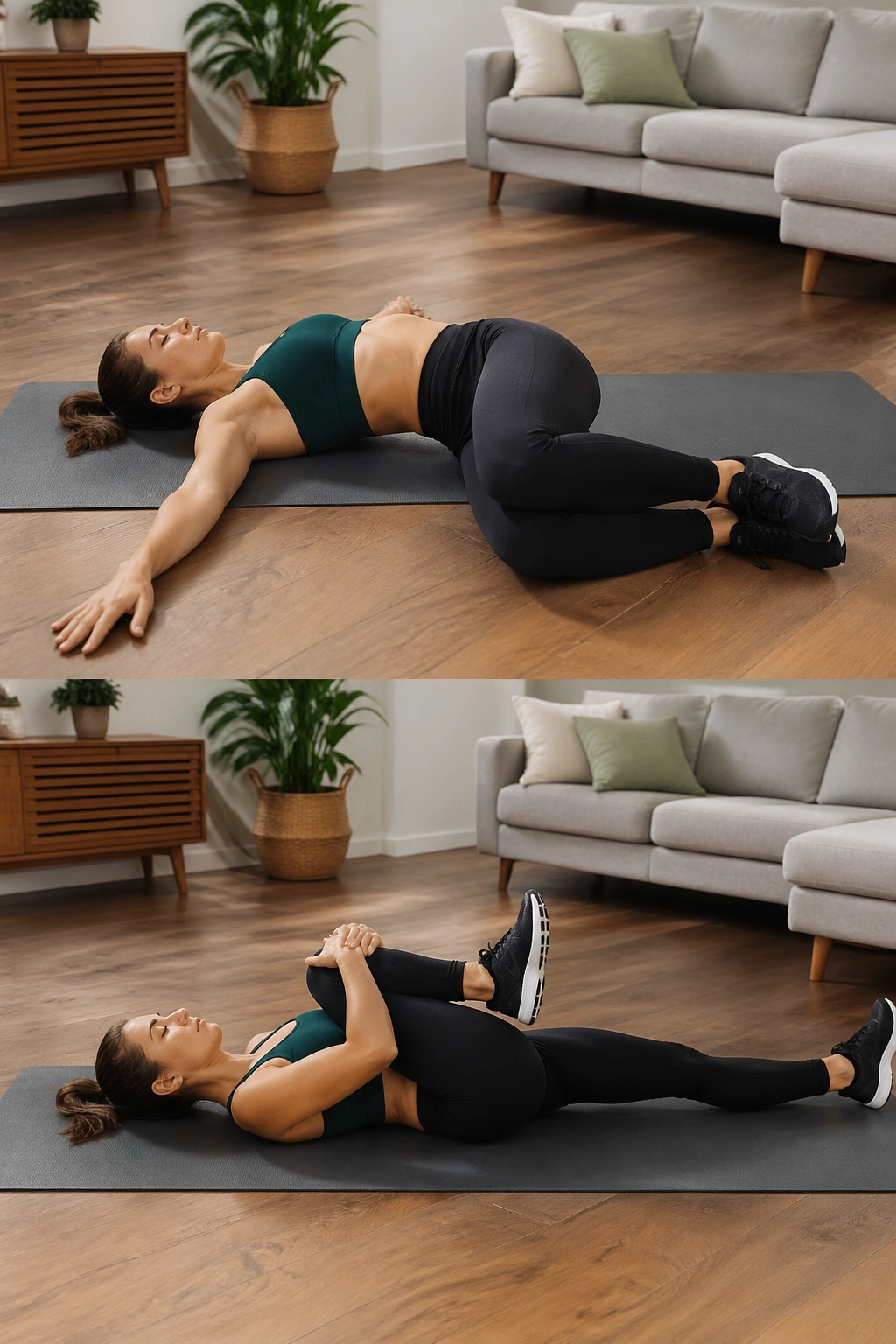
Picture the end of a hard home circuit: jump squats, mountain climbers, skaters, high knees. You stop the timer, bend over with your hands on your thighs, and your whole midsection feels braced like it forgot the workout is over.
That is the moment for a floor flow, not a deep stretch contest.
The goal here is to unwind the hips and low back without yanking on cold tissue. Start by lying on your back with both feet flat and knees bent. Let the knees fall side to side like windshield wipers for 8 slow reps each way. Then hug one knee to your chest for 20 seconds, switch, and pull both knees in for 2 breaths.
From there, move into a low lunge. Right foot forward, left knee down, hands on the floor or on yoga blocks if you have them. Hold 25 seconds, then shift your hips back into a half split for 20 seconds. Repeat on the other side.
Finish in child’s pose for 5 deep breaths, reaching your hands long and letting your ribs expand into your thighs.
A quick version looks like this:
- Windshield wipers
- Single knee hug
- Low lunge
- Half split
- Child’s pose
Short. Calm. Effective.
5. The Full-Body Yoga Cool Down for General Recovery
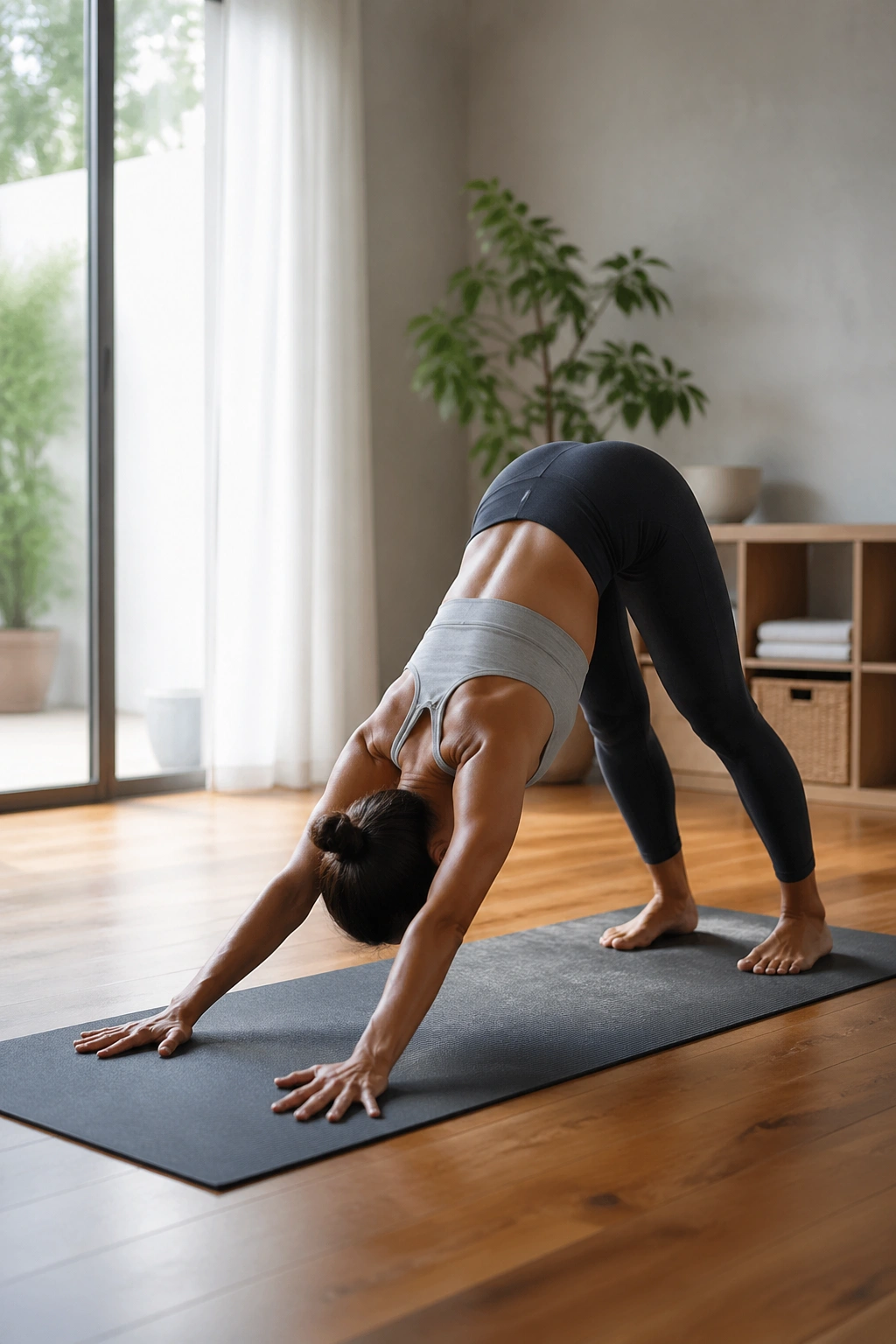
Some workouts leave no single trouble spot. You feel a little cooked everywhere—legs heavy, shoulders tense, breathing still a bit sharp. On those days, a full-body yoga-style flow makes more sense than targeting one muscle group.
Start in child’s pose and stay there for 5 breaths. Let your forehead rest on the mat, floor, or a folded towel. Reach long through the fingers and feel the sides of your rib cage widen as you inhale. That side-rib expansion matters more than people think; it helps pull you out of the shallow chest breathing that hard intervals often leave behind.
Move into a low lunge, then shift back into half split. Stay in each position for 20 to 30 seconds per side. From half split, step back to downward dog and pedal the heels for 20 seconds. No need to force your heels down. Most people do not need that fight.
Lower to your belly for a gentle sphinx pose, forearms on the floor, chest open, glutes soft. Hold 20 seconds. Push back, then bring one shin forward for pigeon pose or a reclined figure-four on your back if pigeon feels too aggressive on the knee. Stay for 30 seconds per side.
Close with a supine twist and 6 slow breaths. When a cool-down ends with your face unclenched and your shoulders a few inches lower, you picked the right one.
6. The Runner’s Calf, Achilles, and Hip Flexor Sequence
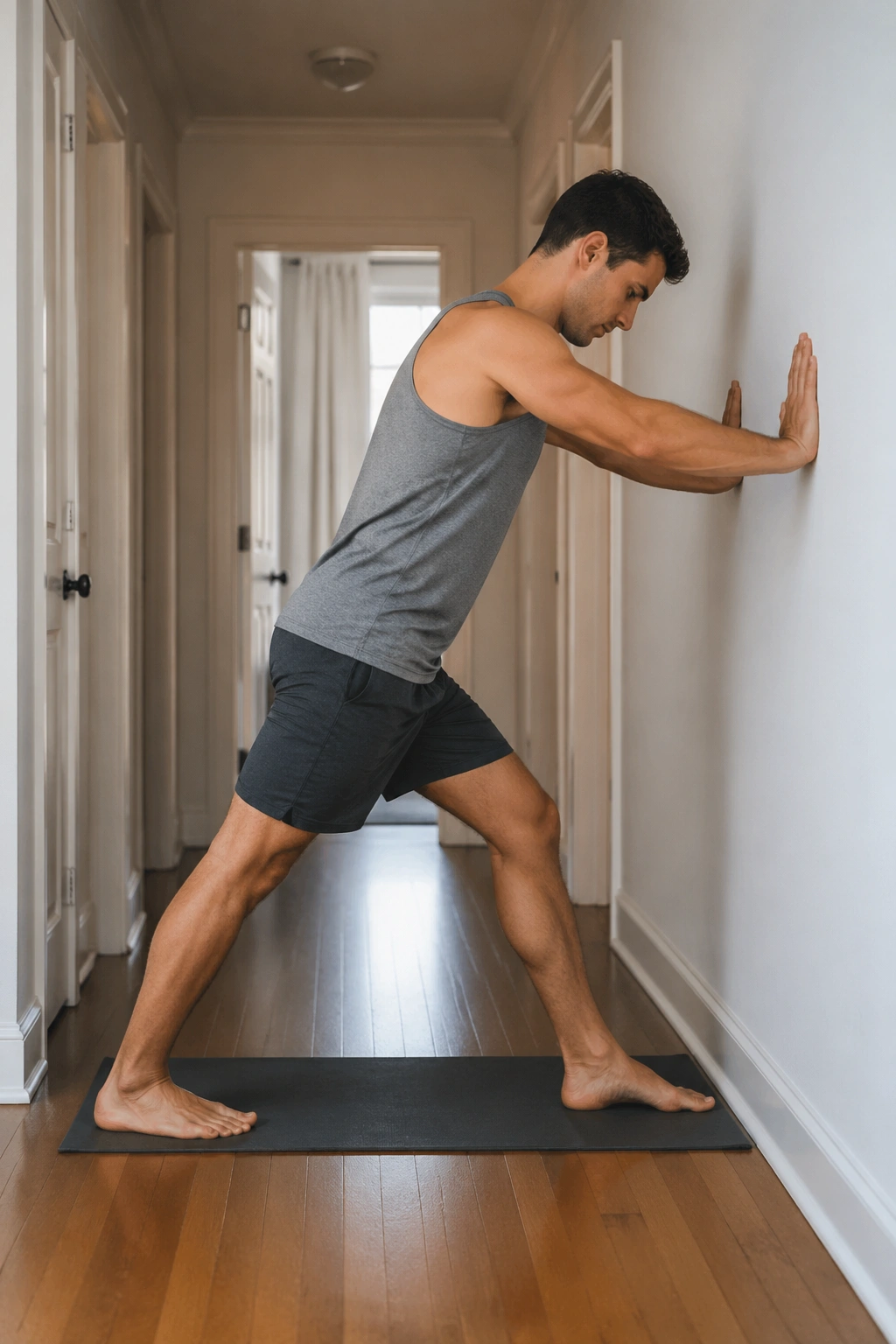
Unlike a post-lifting stretch, a runner’s cool-down has to deal with repeated impact and repeated forward motion. That combo loads the calves, Achilles tendon, hip flexors, and feet in a way that sneaks up on you. The workout can feel clean, then the next morning your first few steps say otherwise.
Begin with a wall calf stretch for the straight-leg side of the lower leg. Hands on the wall, one foot back, heel planted, back knee straight. Hold 30 seconds. Bend the back knee without lifting the heel and hold 20 more seconds; that second angle often reaches the deeper soleus muscle, which runners miss all the time.
Then go to a half-kneeling hip flexor stretch for 30 seconds per side. Keep the pelvis tucked a touch and avoid leaning forward too far. You are aiming for the front of the hip, not a dramatic pose.
Finish standing with one foot on a book or low step and hinge at the hips for a 20-second hamstring stretch, then roll the soles of the feet over a tennis ball for 30 seconds each if you have one nearby.
This one is best after treadmill runs, indoor jogs in place, stair repeats, and longer cardio sessions that rack up foot strikes. If your Achilles gets grumpy, keep the stretches gentle and spend a little longer on the bent-knee calf hold.
7. The Cyclist’s Spine and Glute Release Routine
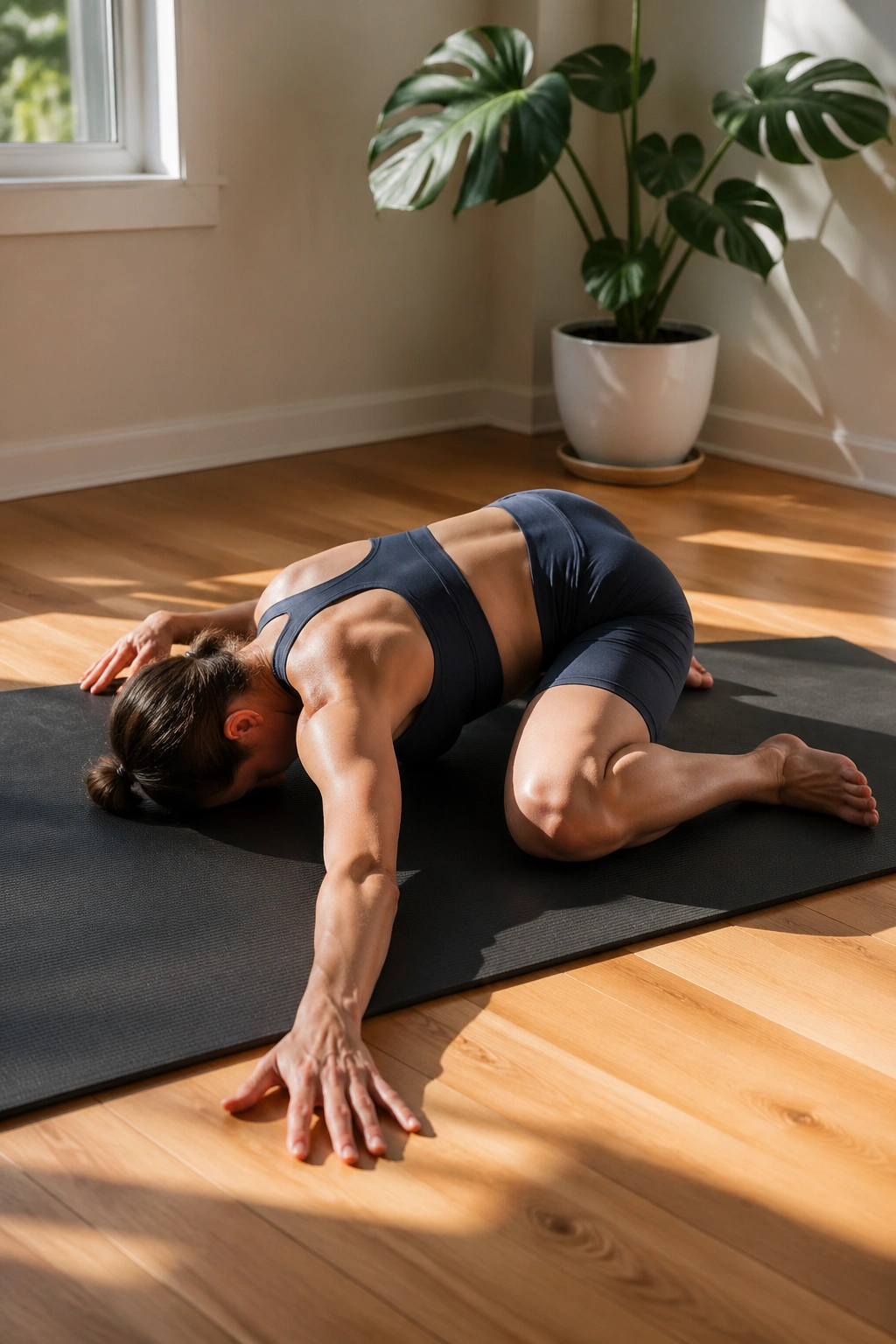
Cycling—whether it is an indoor bike, a stationary trainer, or a brutal air bike finisher—tends to close the front of the body and load the glutes in a narrow groove. Your upper back can feel stiff, your neck creeps forward, and your hips act like they have been folded in half for an hour.
Start by opening the front of the hips
Take a low lunge with the back knee down and hold 30 seconds. Lift the arm on the kneeling side overhead and reach slightly away from that hip. That small side bend changes the stretch a lot.
Then unwind the upper back
Get into a tall kneeling or seated position and place one hand behind your head. Rotate your chest toward that elbow, then open the elbow toward the ceiling. Do 6 slow reps per side. After that, move into thread-the-needle for 20 seconds per side.
Finish with glute work
Lie on your back for a figure-four stretch, 30 seconds each side, then pull both knees in and rock gently for 15 seconds.
This routine works well after bike intervals because it hits the positions cycling tends to shorten: front hips, chest, neck line, upper back. Skip the temptation to fold hard at the waist right away. Most cyclists already have enough flexion.
8. The Small-Space Standing Cool Down for Apartment Workouts
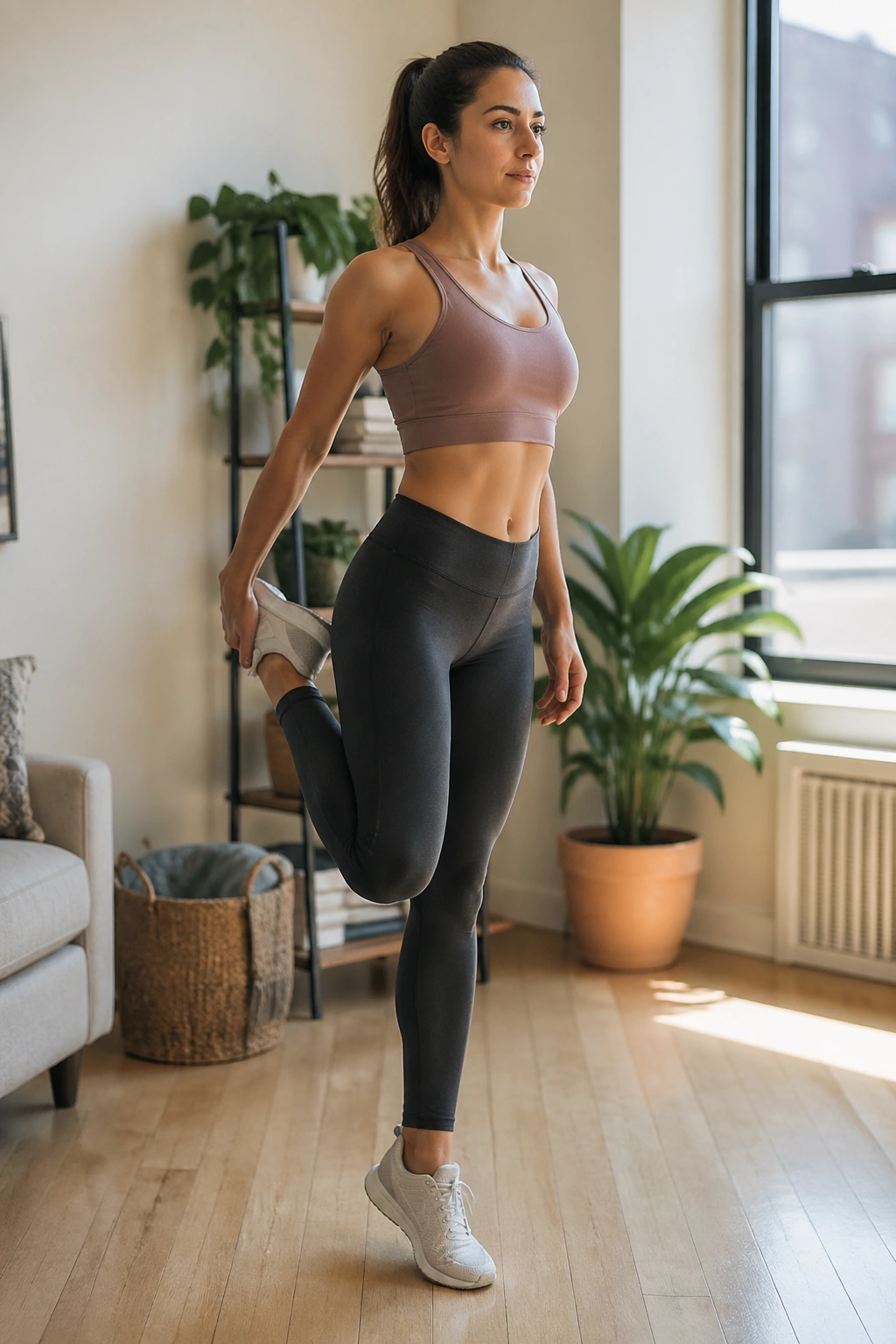
No mat? No floor space? Dog asleep in the only open corner of the room? Fine. You can still cool down well while standing.
Start with 60 seconds of slow walking in place. Keep your steps quiet. Then do 10 heel raises followed by 10 toe raises, using a wall or chair back if balance feels shaky. That wakes up the ankle through both directions instead of leaving the calves locked short.
Shift into a standing quad stretch for 20 seconds per side. Hold a wall with one hand, grab your ankle with the other, and keep the knees close. From there, place one ankle over the opposite knee and sit back into a standing figure-four stretch for 20 to 25 seconds.
Finish with a wall lat stretch: place both hands on the wall at chest height, step back, and sink your chest between the arms for 25 seconds. It feels especially good after bodyweight circuits, rowing, battle rope work, or anything with overhead reaching.
A quick standing cool-down sequence:
- Walk in place
- Heel raises and toe raises
- Standing quad stretch
- Standing figure-four
- Wall lat stretch
- Three slow breaths with arms down by your sides
This routine is for the days when your excuse is space. Fair enough. Now you do not have one.
9. The Wall-Supported Lower-Body Flush
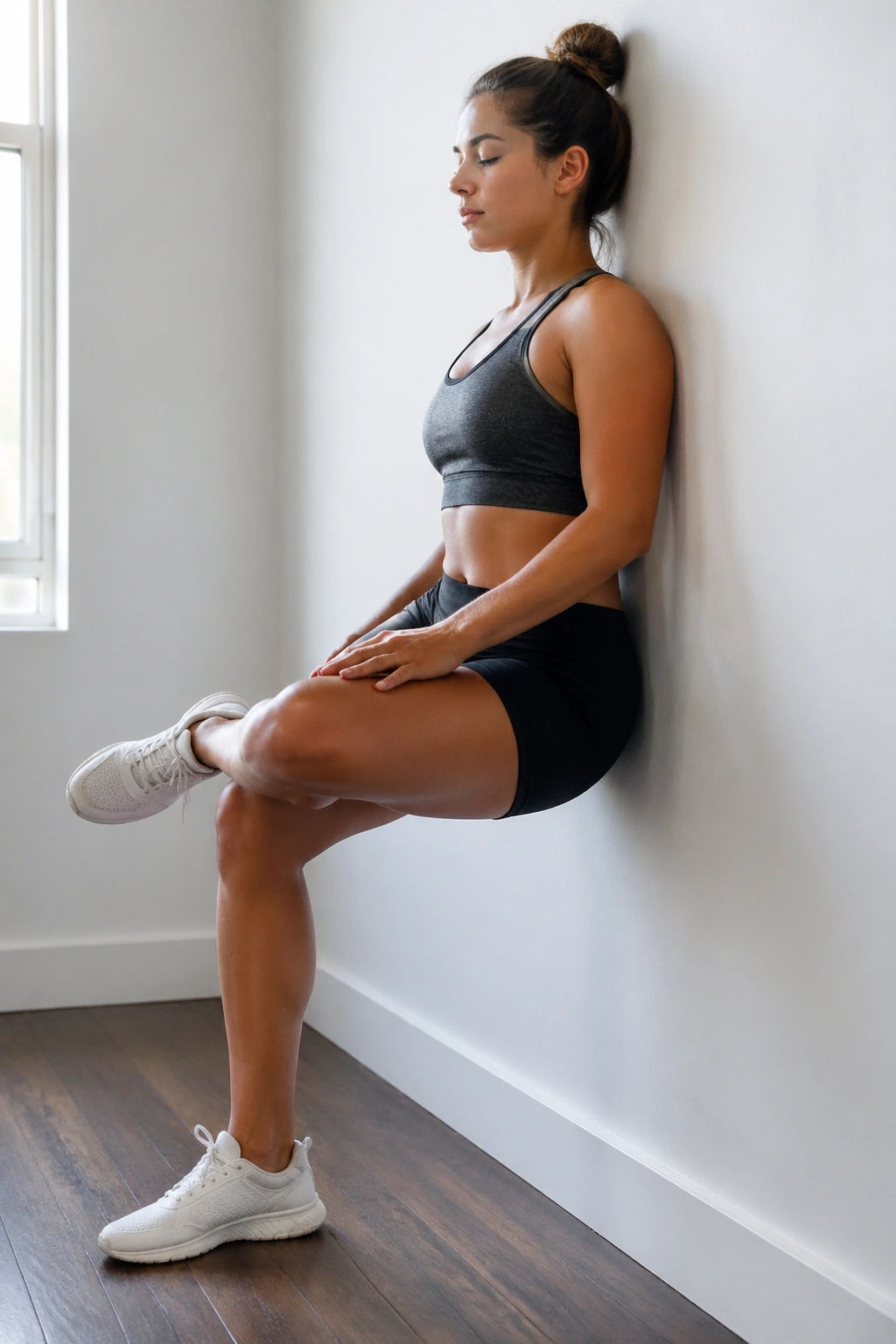
One wall. That is enough.
Wall work makes a post-workout cool-down more controlled because the wall gives you feedback. You know where your hips are, where your ribs are, and whether you are twisting to fake range you do not actually have.
Start with a calf stretch against the wall for 25 seconds per side. Then face the wall, place one heel on it at a low height—bottom stair height works too—and hinge forward gently for a hamstring stretch, 20 seconds each side. Keep the standing knee soft, not locked.
Next, turn around and place your back against the wall for a standing figure-four sit-back. Hold 20 to 30 seconds per side. The wall keeps you upright so the stretch lands more in the glute and less in your low back. After that, slide down into a light wall squat hold for 15 seconds, rise, and repeat once. That hold acts less like strength work and more like a circulation flush when kept short.
Finish lying on your back with your calves on the seat of a chair or your heels up the wall for 1 to 2 minutes. Breathe slowly. Let your lower back flatten into the floor.
This is a strong pick after squats, treadmill incline walks, step workouts, and long standing sessions where the lower body feels heavy rather than sharply tight.
10. The Tennis Ball Foot and Glute Release Circuit
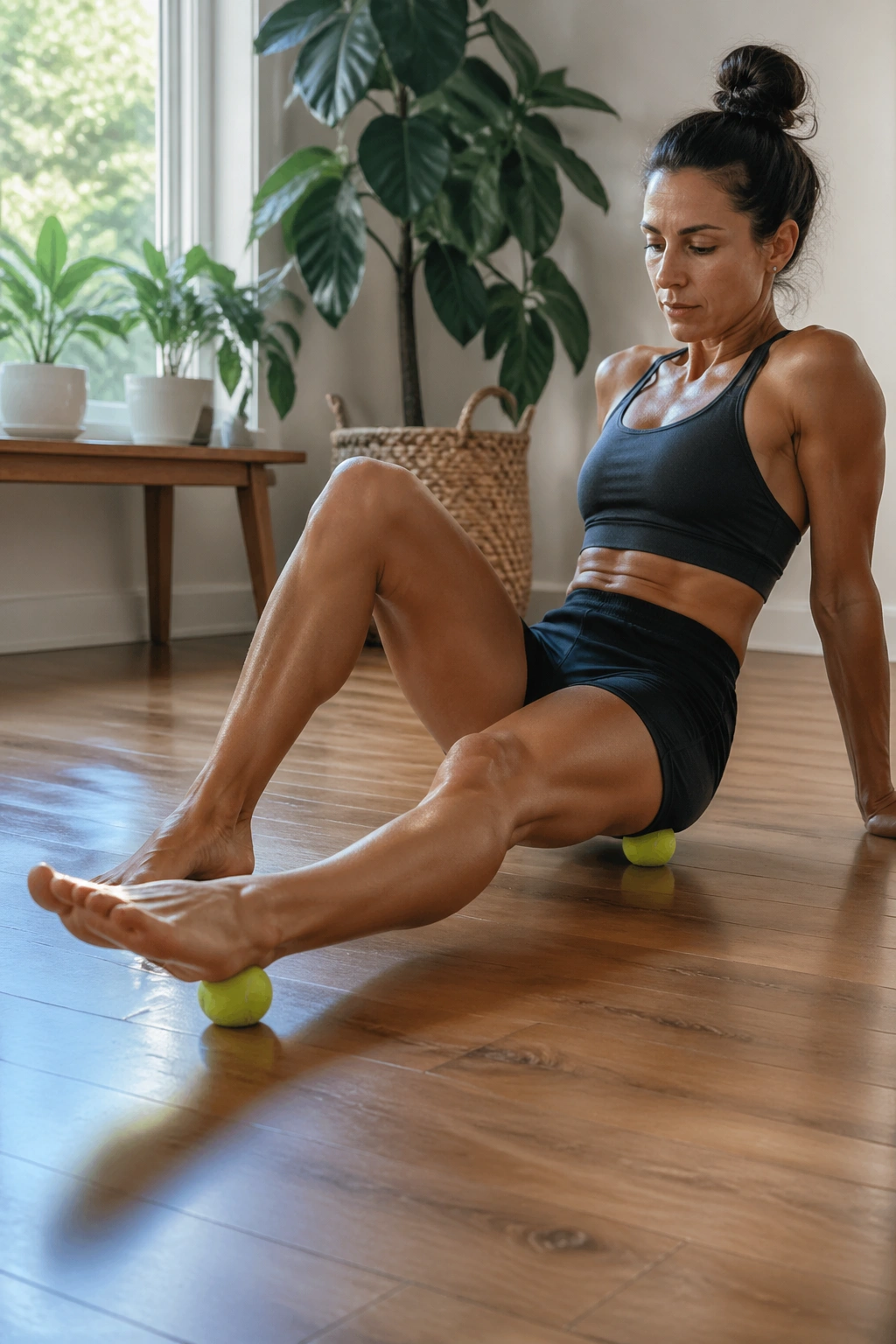
A tennis ball is not magic. It is still useful.
If your arches feel cooked after jump rope, running in place, or high-volume cardio, rolling the foot over a ball can soften that cramped, packed-in feeling fast. Pair it with glute release and you get a short self-massage circuit that covers two spots many people ignore until they bark.
Try this circuit in bare feet:
- Roll the tennis ball under the arch of your right foot for 30 seconds, pausing on tender spots for 5 seconds instead of grinding over them.
- Move to the ball of the foot for 15 seconds.
- Switch feet.
- Sit on the floor and place the ball under the right glute, slightly off center—avoid sitting directly on the tailbone.
- Lean into the ball and hold on one tender area for 20 to 30 seconds, then shift an inch and repeat.
- Switch sides.
Pressure should feel strong, not electric. If you get numbness, tingling, or a sharp zinger down the leg, move the ball.
This circuit is not the first thing I would do after a breathless HIIT session. Use walking and breathing first. It shines later, once your pulse has settled and you want to clean up those stubborn hot spots in the feet and hips.
11. The Three-Minute Micro Cool Down for Busy Days
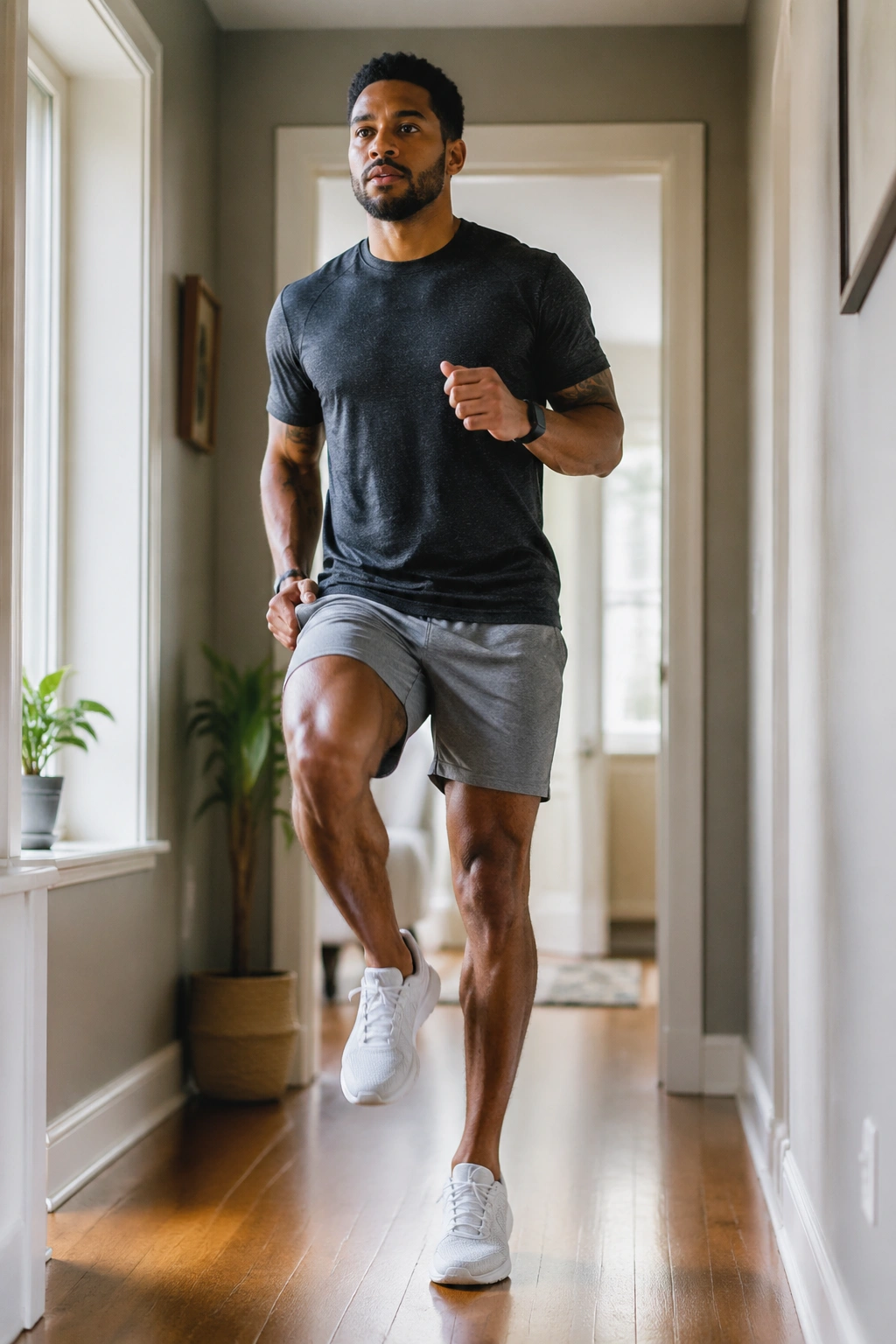
Pressed for time? Then you need a routine small enough that you will actually do it.
Here is the whole thing. Walk in place for 60 seconds. Stretch the calves against a wall for 20 seconds per side. Drop into a half-kneeling hip flexor stretch for 20 seconds per side. Stand up, inhale through the nose for 4 seconds, exhale for 6 seconds, and take 4 breaths.
Done.
The trick is not making this longer. People turn a three-minute plan into a twelve-minute project, then stop doing it because life gets in the way. A short cool-down that happens after every workout beats a longer one that lives in your good intentions.
Use this after moderate cardio, short strength circuits, lunch-break sessions, or any workout where time is the limiting factor. If you trained upper body hard, swap the hip flexor stretch for a doorway chest stretch. Same structure, different target.
12. The Legs-Up-the-Wall Breathing Routine
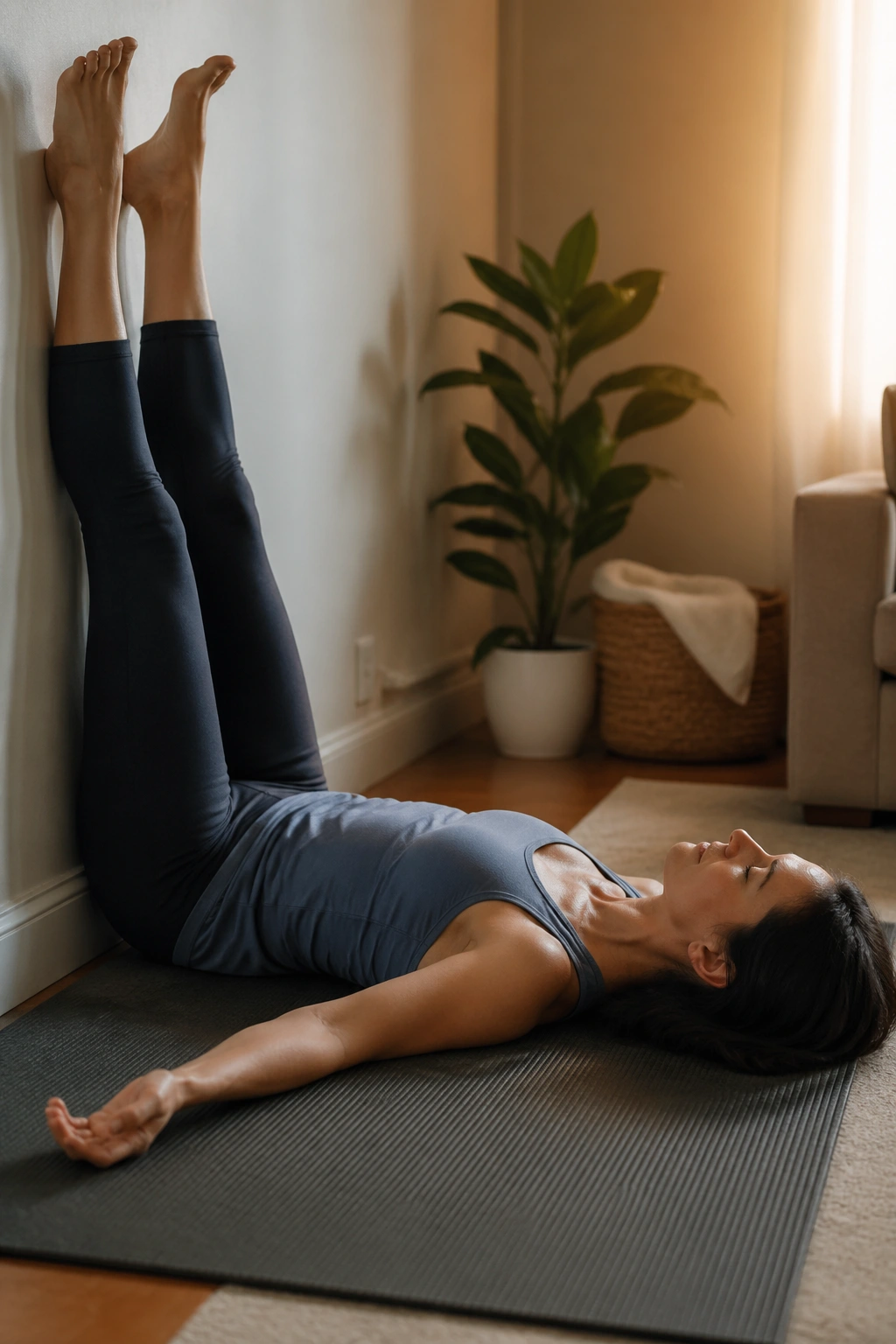
Some sessions leave your body buzzing even after the work ends. Your heart rate is dropping, yet you still feel switched on—skin warm, mind racing, shoulders high. That is when legs-up-the-wall earns its place.
Lie on your back with your hips a few inches from the wall and extend your legs up it. They do not need to be perfectly straight. A soft bend in the knees is fine, and for tight hamstrings it is often better. Rest your arms out to the sides or on your ribs.
Stay there for 2 to 5 minutes and breathe through your nose if you can. Try an inhale of 4 seconds and an exhale of 6 to 8 seconds. If that pace feels forced, shorten it. The point is a smooth breath, not a contest.
This position can help the lower body feel less heavy after running, cycling, long circuits, or step workouts. It also gives the low back a chance to settle—provided you are not jamming yourself too close to the wall. Scoot farther away if your hamstrings tug hard.
Skip this one if being flat on your back makes you lightheaded or uncomfortable. In that case, put your calves on a chair instead. Same idea, less pull.
13. The Upper-Body Strength Day Release for Lats, Triceps, and Wrists
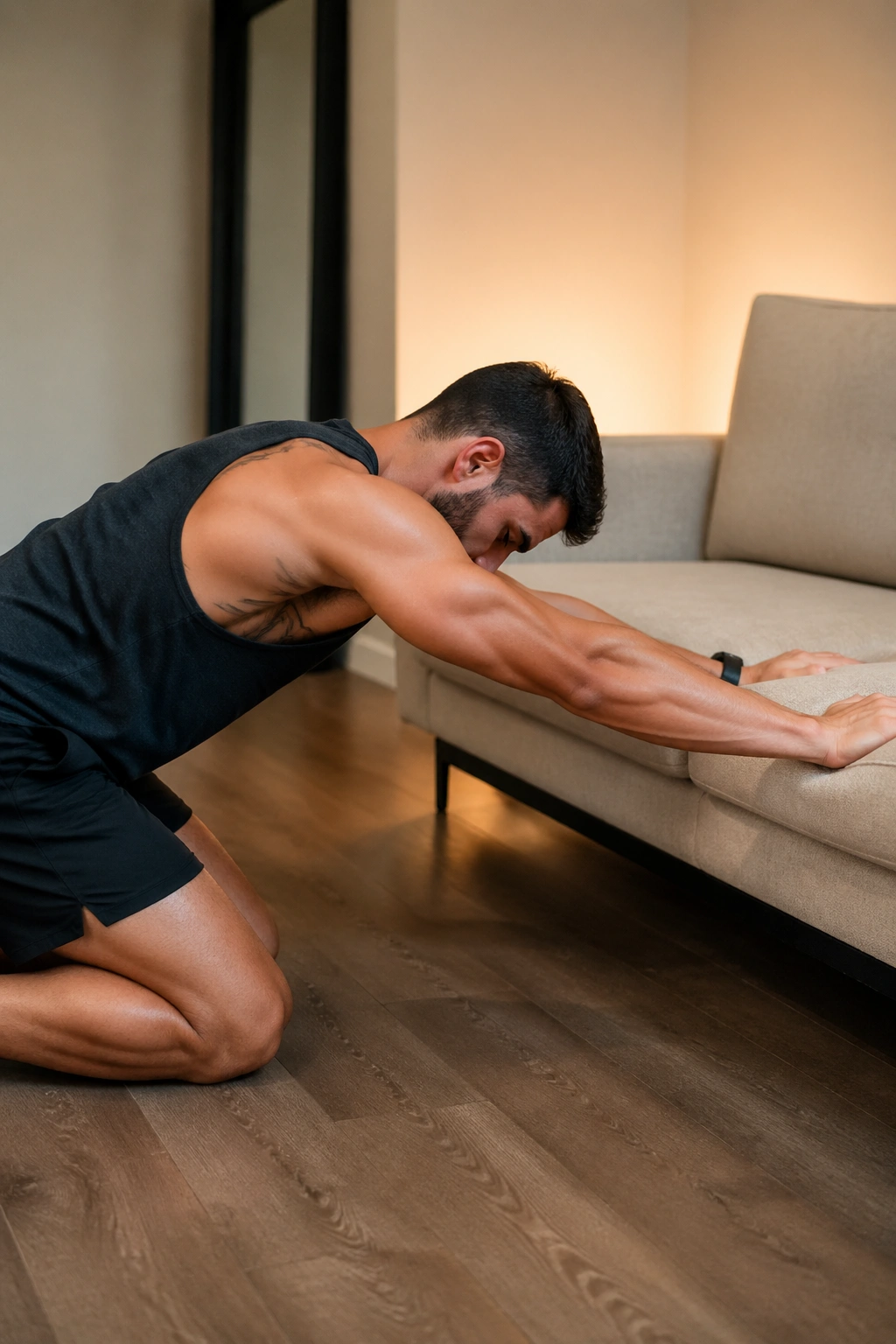
Pull-ups, rows, push-ups, presses, floor work—upper-body days can leave tension in places people do not expect. Everyone stretches the chest. Fewer people cool down the lats, triceps, and wrists, even though those spots often tighten first.
Open the lats
Kneel in front of a chair or sofa, place your elbows on the seat, and bring your palms together. Sink your chest down for 25 to 30 seconds. You should feel a stretch along the sides of the torso and maybe behind the arms.
Lengthen the triceps
Raise one arm overhead, bend the elbow, and use the other hand to guide it gently back for 20 seconds each side. Do not yank. A soft pull works better.
Give the wrists a break
Come to hands and knees with your fingers facing forward and rock gently back and forth 8 times. Then turn the fingers outward and repeat. If you spent a session in push-up position, bear crawls, or plank variations, this part feels almost unfairly good.
Finish by clasping your hands behind your back—or holding a towel if your shoulders are tight—and lift them a few inches away from your body for 15 seconds. Keep the neck loose.
This release works after bodyweight upper-body sessions, dumbbell work, resistance bands, and home boxing drills.
14. The Landing Recovery Routine for Ankles, Shins, and Knees
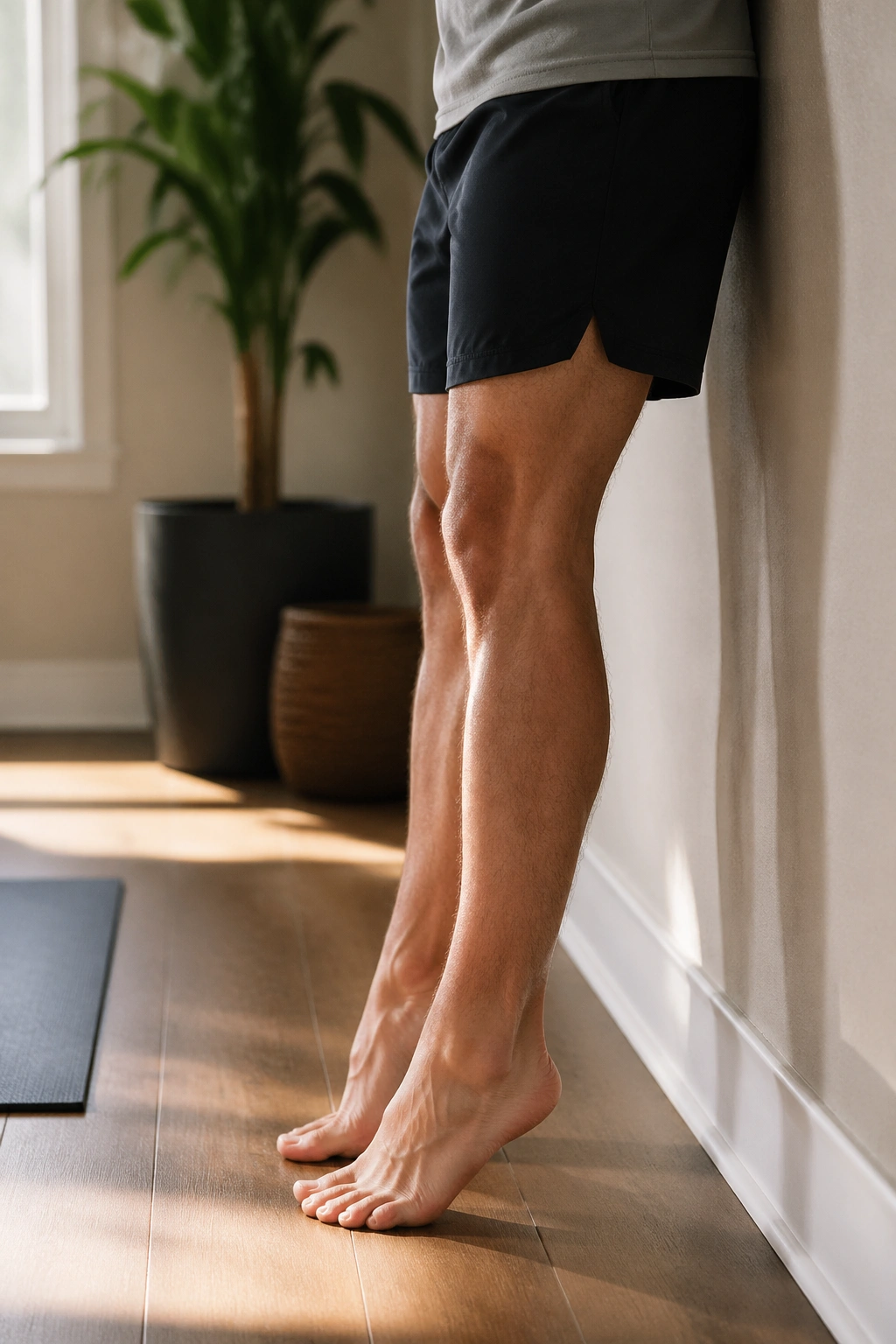
Jump-heavy training is hard on the lower leg in a different way than squats or running. It loads the ankles, feet, calves, and the muscles along the front of the shin with repeated landings. If you finish plyometrics and ignore those areas, the next walk to the kitchen can feel weirdly stiff.
Start with 10 ankle circles each direction per side. Slow circles, not lazy wiggles. Then stand with your back against a wall, heels about 6 inches from it, and lift your toes toward your shins for 12 tibialis raises. That front-of-shin work balances out the calf-dominant part of jumping.
Drop into a half-kneeling ankle rock: front foot flat, knee traveling over the toes while the heel stays planted. Do 8 slow reps each side, pausing for a second at the front. You are looking for ankle motion, not a collapse inward.
Follow that with a bent-knee calf stretch against the wall for 25 seconds per side. Finish standing and do 30 seconds of quiet pogo-free marching, letting the feet roll from heel to toe.
A few key details:
- Keep the knee lined up over the second or third toe on ankle rocks.
- If the shin burns hard on tibialis raises, stop at 8 reps.
- Use a wall or chair for balance if landing work left you shaky.
This routine fits jump rope, box step jumps, squat jumps, skaters, and any home workout with repeated hopping.
15. The Slow Evening Floor Stretch Before Shower or Bed
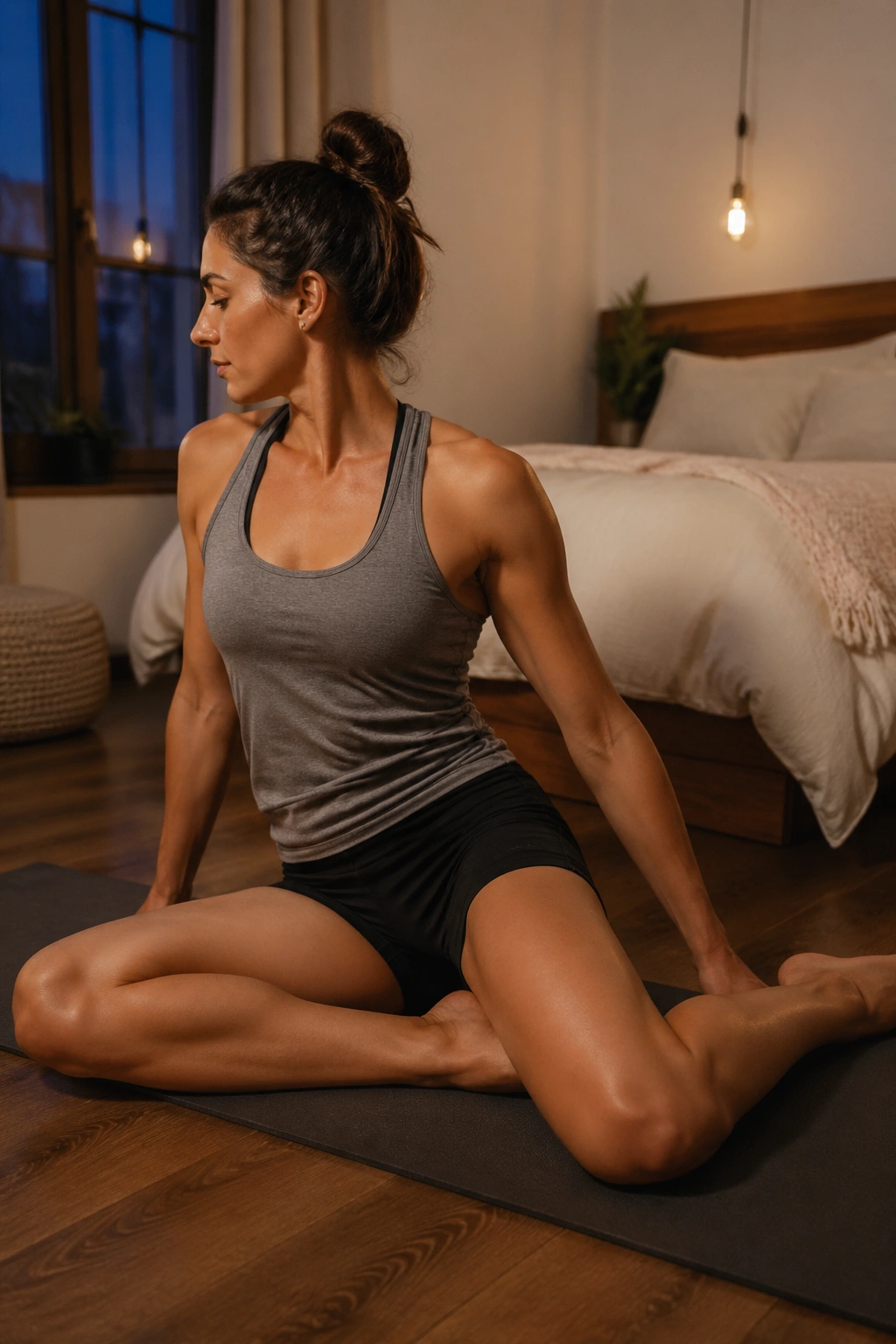
Some post-workout cool-downs need to happen right away. This one can start right after training or slide into the hour that follows, when the house is quieter and you have enough floor space to move without stepping over dumbbells.
Begin seated with 90/90 hip switches for 6 slow reps. Let both knees drop side to side, pausing when the hips feel sticky. Stay on one side for 20 seconds, leaning slightly over the front shin. Then fold into butterfly stretch for 30 seconds, holding your feet and keeping the spine long instead of rounded like a question mark.
Lie down for a reclined hamstring stretch with a towel behind one thigh or calf—25 seconds each side. Go easy. Pulling hard on a tired hamstring is a classic bad decision. From there, move into a supine twist for 3 breaths per side, then end with one hand on your chest and one on your belly for 6 slow breaths.
I like this routine after strength workouts done late in the day, especially when the goal is less “bounce back fast” and more “stop carrying the session around in your body.” It feels slow because it is slow. That is the point.
If you are the kind of person who always says you will stretch later and never do, leave the mat open before you shower. Tiny bit of staging. Big difference.
Final Thoughts
A cool-down earns its place when it is short enough to repeat and specific enough to help. That is the standard. Not fancy. Not long. Not performative.
Start with the workout you actually did, give your breathing a minute to settle, then spend a few targeted holds where your body took the load. Legs after squats. Chest and wrists after push-ups. Ankles after jump rope. Simple choices, but they add up.
You do not need all 15 routines memorized. Pick three: one for cardio, one for upper body, one for lower body. Put those on autopilot, and the end of your workout will stop feeling abrupt—instead, it will feel finished.
