



If your first squat rep feels like your hips are arguing with your knees, the problem usually isn’t effort. It’s preparation.
Good lower body stretches before leg day do one thing well: they get the right joints moving without turning your legs into rubber. That matters more than people admit. Before squats, lunges, deadlifts, split squats, or leg press, you want ankles, hips, adductors, hamstrings, and quads to open up enough that the movement feels smooth — but not so much that you lose the tension that helps you lift.
Long static holds have their place. Right before training, though, I like brief holds, active mobility, and controlled motion much more. Your body wants a warm-up that tells it, “We’re going to work now,” not a nap.
These 12 lower body stretches before leg day cover the spots that most often get tight: calves, ankles, hips, groin, hamstrings, glutes, and hip flexors. Start with a few minutes of easy walking or cycling, then move through the list in order if you want a clean, no-drama warm-up.
1. Ankle Rocks Against the Wall
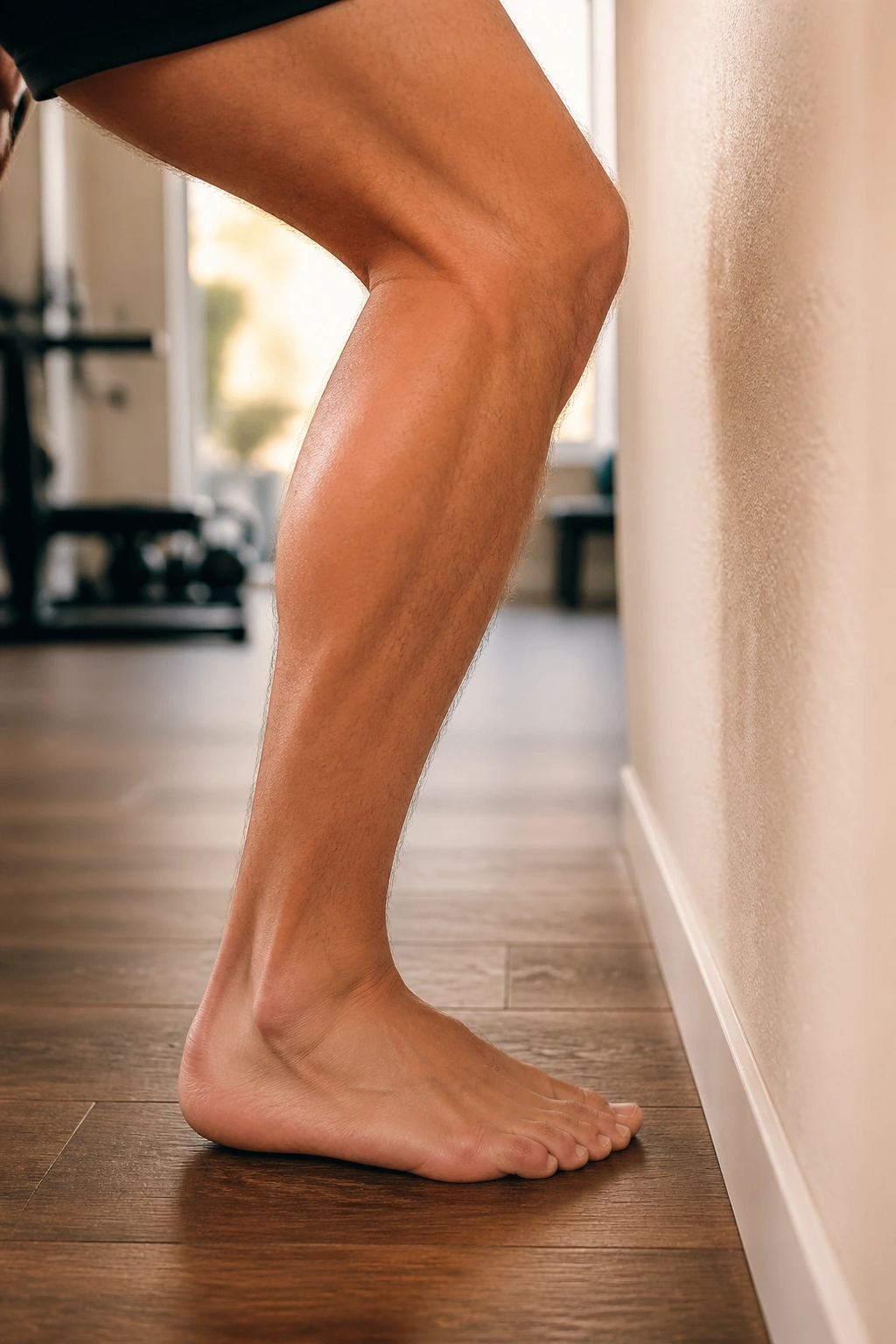
Stiff ankles make good squat mechanics feel awkward fast. If your heels pop up, your knees cave in a little, or you feel jammed before you even reach parallel, ankle mobility deserves attention before anything else.
I like ankle rocks because they’re simple and honest. You’ll know within a few reps whether one side is tighter, and you don’t need fancy equipment — just a wall, a curb, or a sturdy box. Keep the heel flat, drive the knee forward over the middle toes, and let the ankle flex without collapsing the arch.
How to do it
Stand facing a wall with one foot about 2 to 4 inches away. Keep that heel glued down and bend the knee toward the wall. If your knee touches easily, step the foot back a little farther. If the heel lifts, move the foot a bit closer.
Do 8 to 10 smooth rocks per side. The motion should feel controlled, not bouncy. You’re aiming for a stretch along the front of the ankle and a little work in the calf, not a pinchy jolt in the joint.
- Keep the toes pointing straight ahead.
- Press the big toe mound into the floor.
- Pause for one second at the end range.
- Switch sides and compare how each ankle feels.
Watch for this: if your knee caves inward, shorten the range and slow down. Better to do a clean half-rep than a sloppy full one.
2. Bent-Knee Calf Stretch
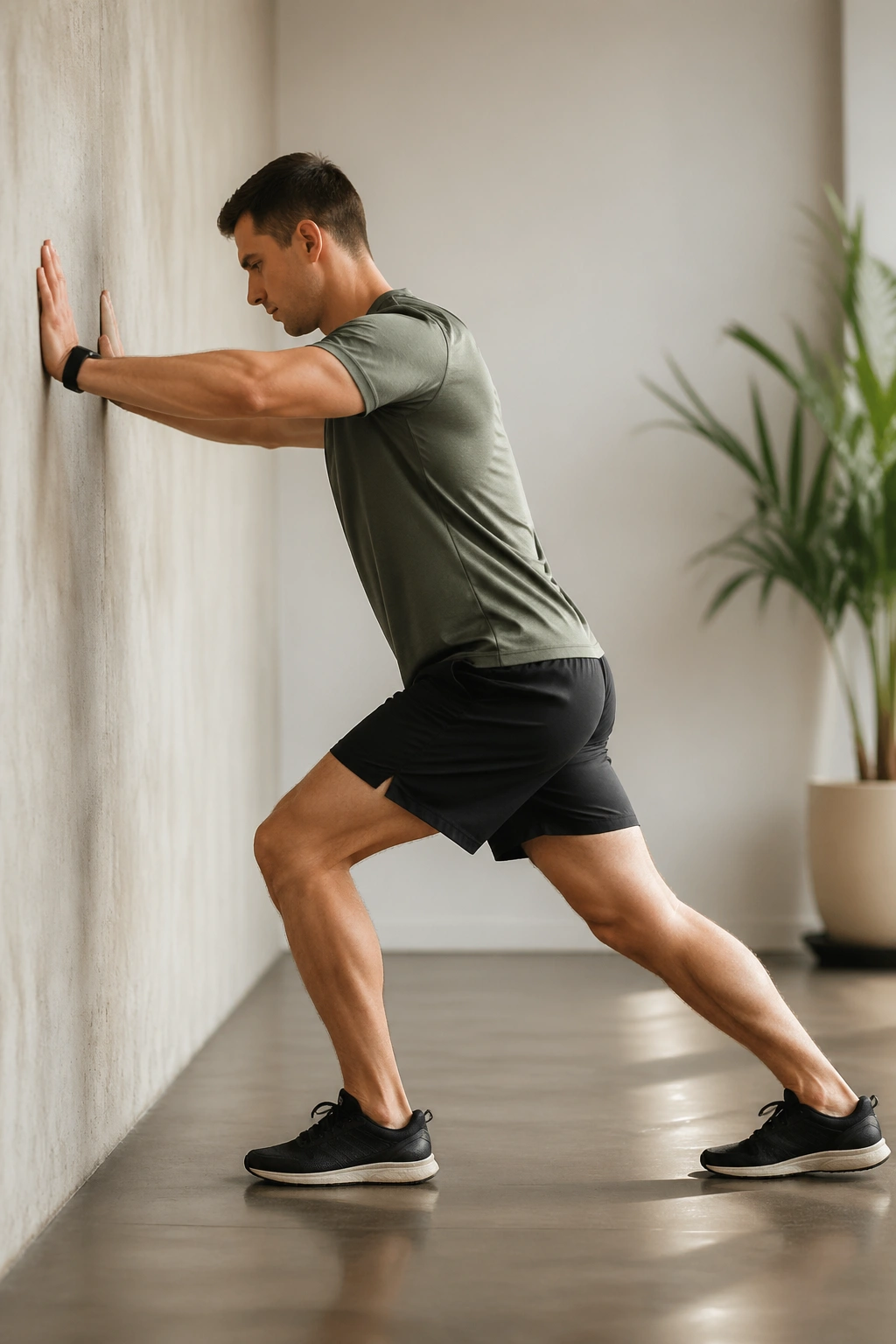
A bent-knee calf stretch hits the soleus, the deeper calf muscle that people skip because it doesn’t scream for attention like the upper calf does. Then they wonder why their ankles still feel blocked on leg day. Funny how that works.
The bent knee changes the line of pull, which makes this one more useful than a straight-leg calf stretch before squats or lunges. You’ll usually feel it lower down, near the Achilles and the back of the lower leg, not high in the calf belly. That’s the good stuff.
Put your hands on a wall, step one leg back, and bend both knees slightly while keeping the back heel heavy. Hold 15 to 25 seconds per side. If you feel a hard pinch, ease off a little. There’s no prize for cranking on the tendon.
One short hold is usually enough before training. You’re trying to loosen the ankle a bit, not spend three minutes sinking into the stretch like you’re recovering from a marathon.
I like this one right after ankle rocks because it finishes the job. One wakes up the ankle joint; the other frees the lower calf that can quietly limit dorsiflexion.
3. Front-to-Back Leg Swings
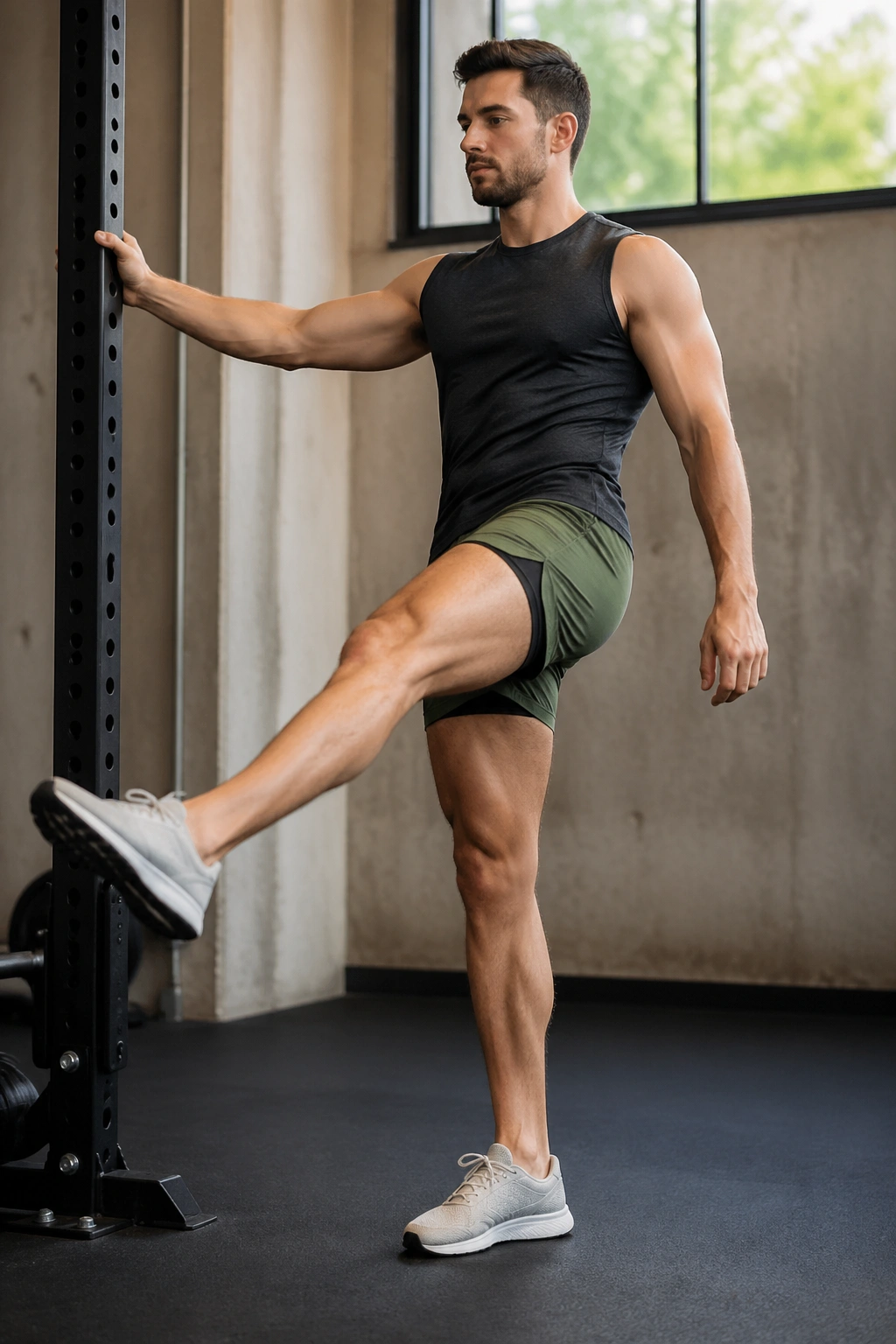
Why do front-to-back leg swings show up in so many warm-ups? Because they do a lot of useful work in a tiny amount of time.
They help wake up the hip flexors, hamstrings, and glutes while keeping the movement active. That matters before leg day. A standing toe touch can make you feel looser for a moment, but leg swings train your body to move through range with control, which is more useful once the bar gets on your back.
Hold onto a rack or wall, keep your torso tall, and swing one leg forward and back like a pendulum. The motion should come from the hip, not from flinging your low back around. Start small. Let the range open up only after the first few swings feel smooth.
How to use it
Do 10 to 12 swings per leg. Each swing should feel a little more fluid than the one before it. If the movement turns into a kick, you’ve gone too far.
- Keep the standing leg soft, not locked.
- Brace your midsection lightly.
- Stop the swing under control on both ends.
- Don’t let your lower back arch as the leg goes back.
The best cue is boring but useful: swing, don’t whip. A controlled pendulum wakes the legs up. A wild kick just wastes energy.
4. Side-to-Side Leg Swings
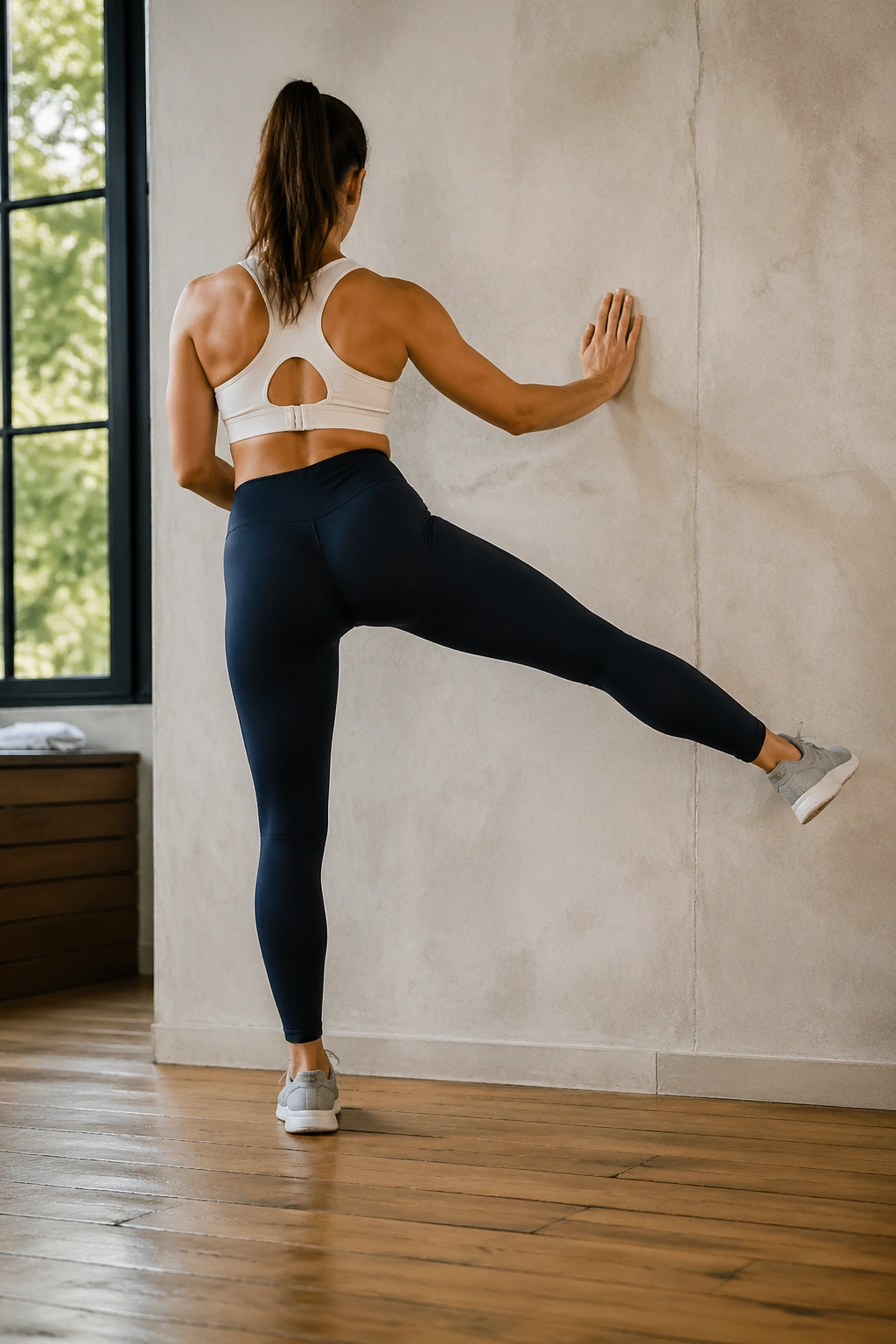
If your groin feels tight on squats, side lunges, or sumo work, this is the one you want. Side-to-side leg swings open the adductors and ask the hips to move in a plane most people neglect all day.
A lot of lifters only move forward and back. Then the first lateral rep shows them exactly how rusty they are. Not a disaster. Just annoying.
Face a wall, hold on lightly, and swing one leg across the body and then out to the side in a smooth arc. Keep the torso tall and the standing foot planted. The range can be modest at first. You’re looking for easy motion, not a huge sweep.
Do 8 to 10 swings per side. If the inner thigh grabs hard on the first couple of reps, shorten the arc and keep going. The tissue usually eases once the area gets warm.
A clean rep should feel like the leg is gliding through space, not like you’re wrestling it into position. That small difference matters more than it sounds.
- Start low and build range gradually.
- Keep toes facing mostly forward.
- Use the hip, not momentum from the upper body.
- Switch sides and compare how open each groin feels.
5. 90/90 Hip Switches
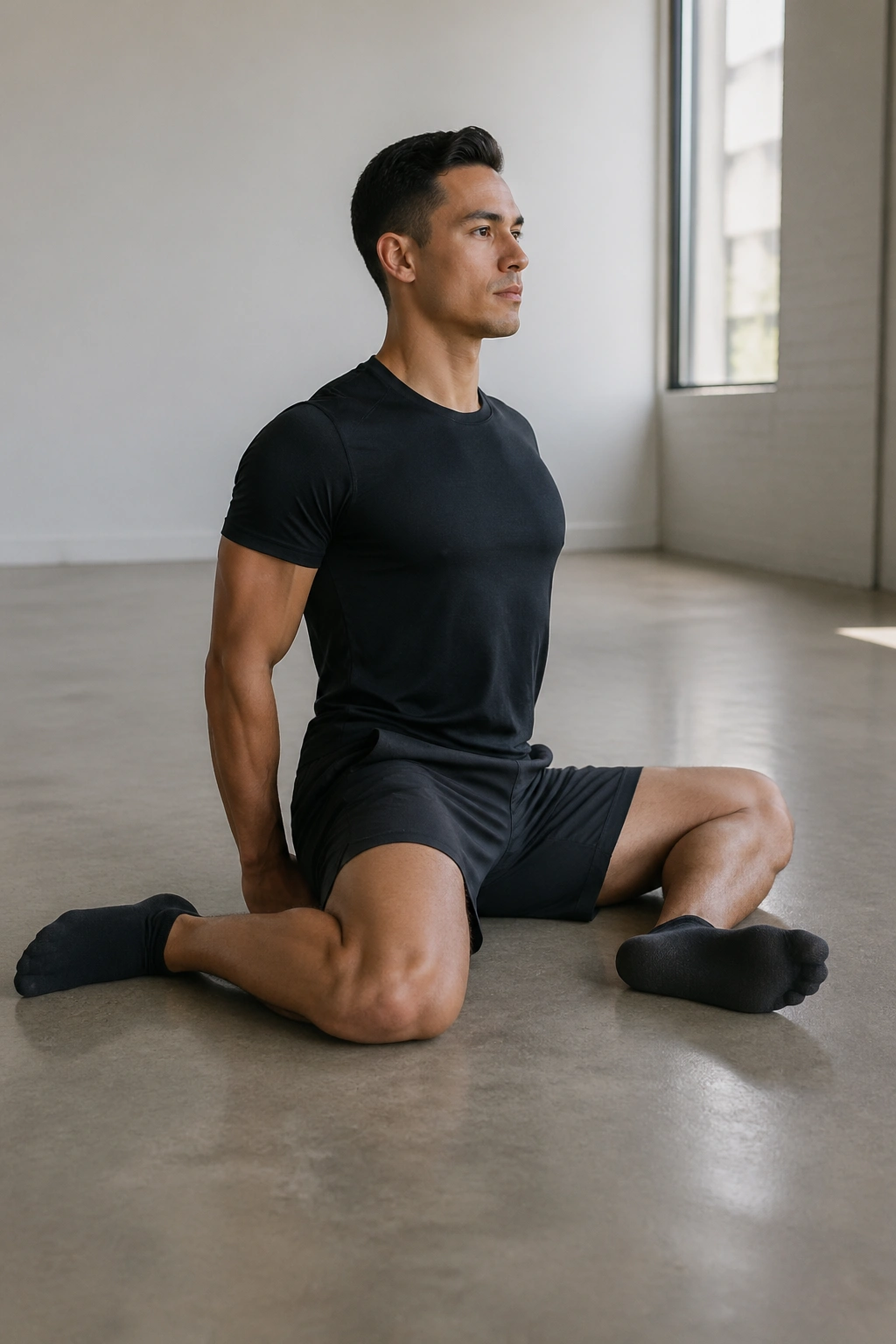
90/90 hip switches are one of the best ways to wake up stiff hips before leg day. They don’t look dramatic, which is part of why they work. You’re moving the hip through internal and external rotation, and that’s a huge piece of clean squat mechanics.
Sit on the floor with both knees bent around 90 degrees, one in front of you and one out to the side. Without using your hands to cheat the motion, rotate both knees over to the other side. Keep the movement smooth. If the hips fight you, slow down and make the switch smaller.
The cue that changes everything
Try to stay tall through the chest. People collapse forward in this drill all the time, and then the stretch ends up in the low back instead of the hips. That’s not the point.
The useful feeling is in the outside of the hip, the deep glute, and sometimes the front of the opposite hip as you rotate. You may feel a side side that’s clearly tighter. Good. That tells you where to spend your time.
Do 6 to 8 switches per side, pausing for a second or two in each position. If one side is much rougher, add one extra round there.
Best use: before squats, lunges, and anything that asks your hips to open and close under load.
6. World’s Greatest Stretch
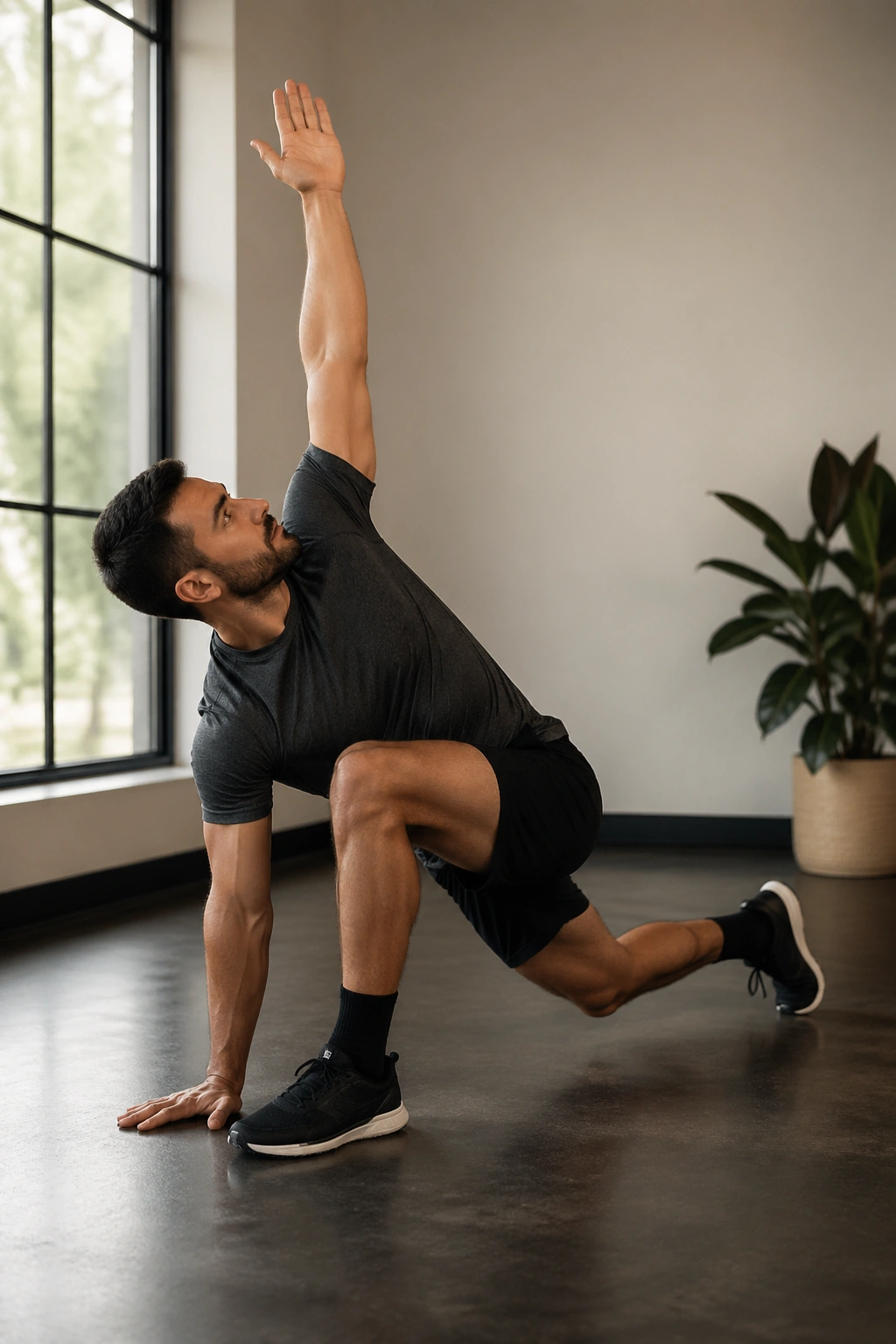
The world’s greatest stretch gets overused, and that’s exactly why it belongs here. People rush it, turn it into a scramble, and then act surprised when it feels useless. Done slowly, it’s a sharp combo of hip flexor stretch, hamstring reach, adductor opening, and a little upper-body rotation.
Start in a long lunge. Put both hands inside the front foot, drop the back knee if you want more control, and let the front hip sink forward a bit. From there, rotate the torso and reach one arm up toward the ceiling. Some people like to bring the elbow toward the instep first. That’s fine if your body likes it. If not, skip the extra flourish.
A long stride makes this feel better for most people. A tiny stance tends to jam the front knee and steal the stretch from the hip. That’s the mistake I see most often.
Do 4 to 6 reps per side, holding each lunge position for a couple of breaths. Keep the pressure light. This is a warm-up, not a showdown.
The nice part is how much this one gives back. One move, several jobs.
7. Adductor Rockbacks
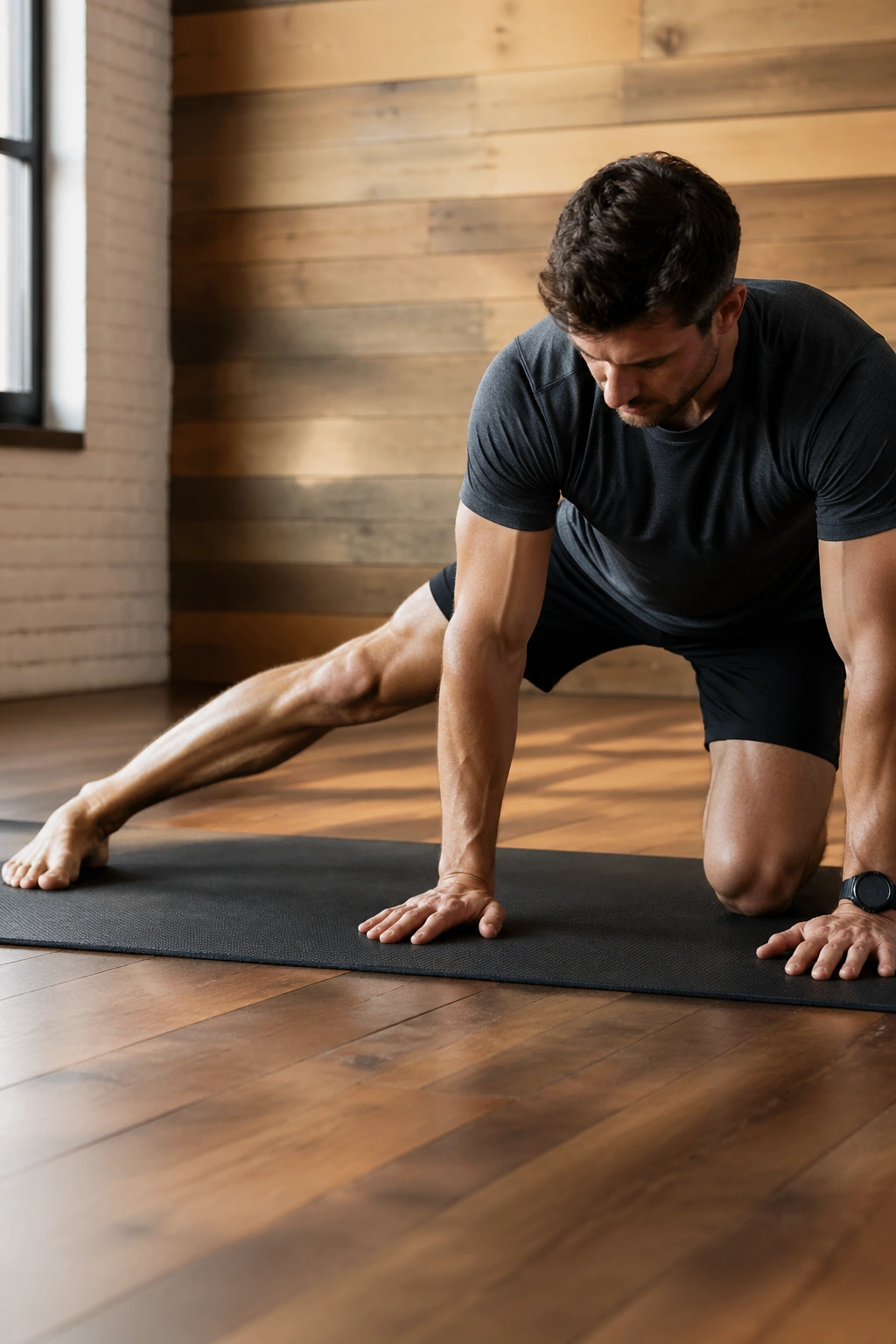
On all fours, adductor rockbacks look almost too simple. That’s usually the sign that they’re worth doing.
Set one leg straight out to the side with the foot flat and the toes pointing forward or slightly up. Keep the other knee under your hip. Then rock your hips back toward your heel until you feel the inner thigh of the straight leg lengthen. Rock forward again, and repeat.
This one is gold before squats that need groin freedom, especially if your stance is wide or your knees tend to drift inward when the load gets heavy. It also pairs well with sumo deadlifts, lateral lunges, and any movement where the inner thigh has to stay calm under tension.
What to feel
You should feel a stretch along the inner thigh, not a crank in the knee. If the knee complains, put a pad under it or shorten the range.
Do 8 to 10 slow rockbacks per side. Exhale as you sit back. Inhale as you return to the start. That rhythm keeps the motion smooth and keeps you from muscling through the stretch.
A useful detail: keep the straight leg active. Press the foot into the floor instead of letting it flop around. That small bit of engagement helps the adductors open without feeling sloppy.
8. Deep Squat Pry
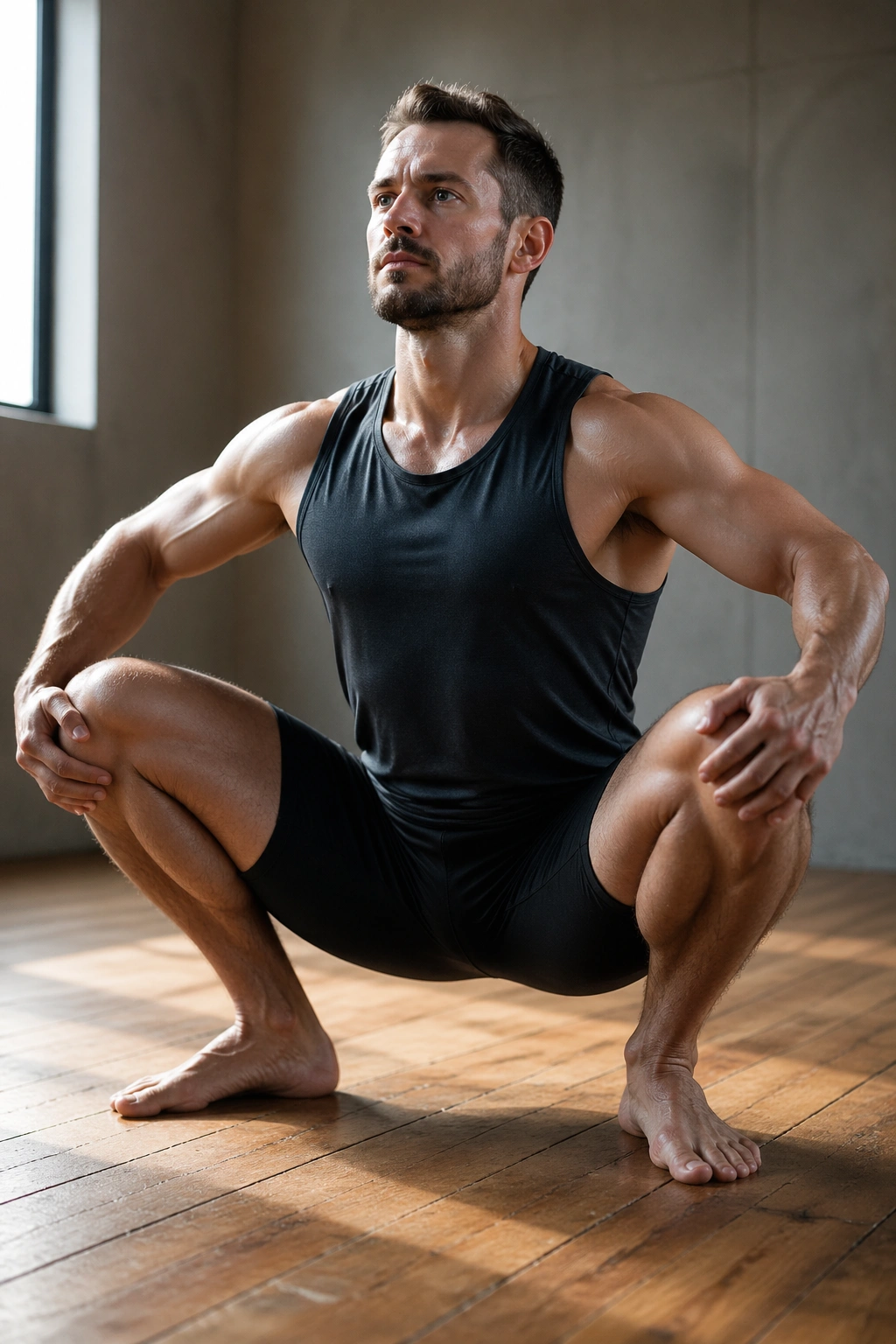
A deep squat pry is one of those stretches that looks like “just sitting there,” but it does a lot. It opens the ankles, hips, and adductors at the same time, which is why it feels so good before leg day if you’ve been sitting too much.
Drop into your deepest comfortable squat. Keep your heels down if you can. If not, place a small wedge or a pair of plates under the heels so you can still stay upright. Once you’re in the bottom, gently push the knees out with the elbows and shift your weight side to side.
How long should you hold it? 20 to 40 seconds is plenty. I don’t love marathon holds before heavy lower-body work. You want to wake the pattern up, not drain it.
When this works best
- Before barbell squats
- Before goblet squats
- Before kettlebell work
- Before any session where the bottom position usually feels sticky
If your low back rounds hard at the bottom, don’t force the depth. Stay in the range where you can breathe and keep the chest reasonably tall. A little grind is fine. A collapse is not.
One good squat pry can change how the first working set feels. Two can make a bad mobility day usable.
9. Half-Kneeling Hip Flexor Stretch with Reach
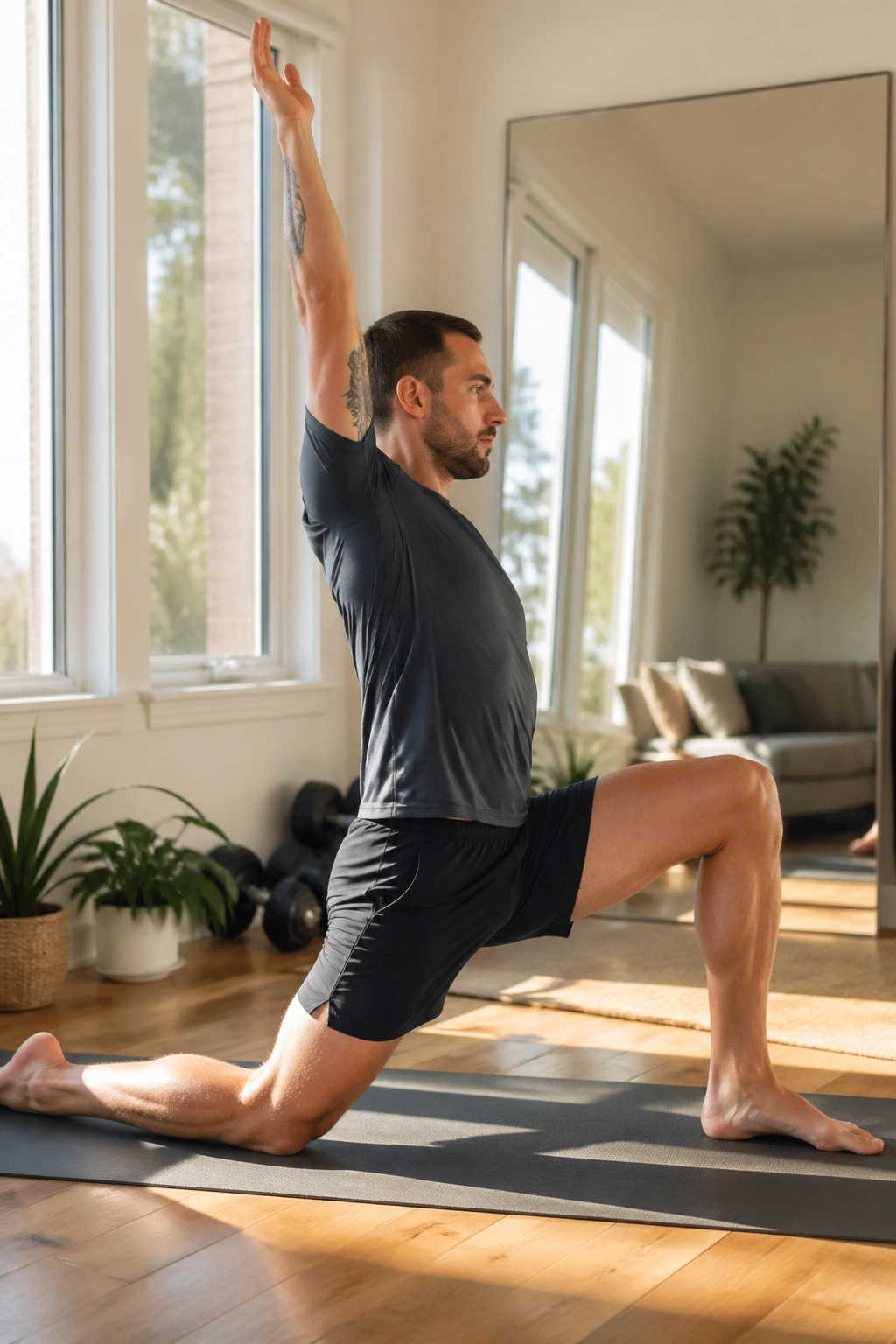
The half-kneeling hip flexor stretch only works when you stop cheating. That sounds blunt because it’s true.
A lot of people lean forward and call it a hip flexor stretch. What they’re actually doing is arching the lower back. The real move is more specific: kneel with one knee down, tuck the pelvis slightly, squeeze the glute on the kneeling side, and shift forward a touch until you feel the stretch at the front of the hip.
Add an overhead reach with the arm on the kneeling side if you want a little more length through the side body. That makes the stretch feel more complete, and it often takes pressure out of the low back.
Hold 20 to 30 seconds per side. If you feel the stretch mostly in the spine, reset the pelvis and try again. When it lands correctly, the front of the hip can feel almost stubborn at first, then it lets go a little as you breathe.
What you should feel
A clean stretch runs through the front of the hip and maybe the upper quad. That’s the target. No pinching in the low back. No yanking at the knee.
This one matters a lot if you sit for long stretches, because tight hip flexors can make squats feel cramped and keep your pelvis from moving well.
10. Couch Stretch
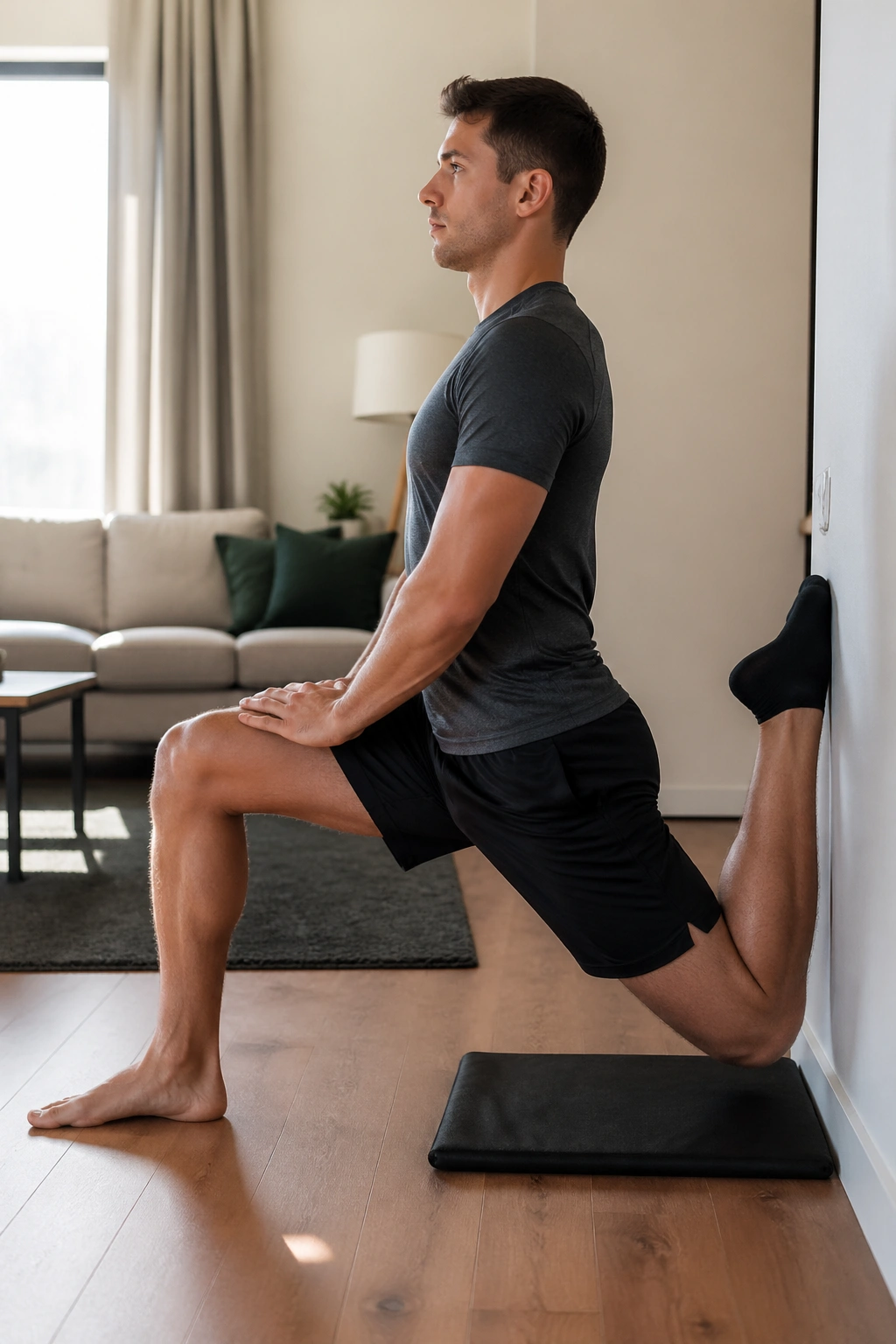
The couch stretch is the one people either love or hate, usually for the same reason: it’s intense. It hits the quads and hip flexors hard, and before leg day that can be useful — if you keep the dose sane.
Set one shin against a wall, bench, or couch with the knee on a pad. Bring the other foot forward into a half-kneeling position. Stay tall, tuck the pelvis a little, and squeeze the glute on the back leg. If you lean too far forward, you’ll turn it into a low-back stretch. That’s not what you want.
I’d keep this one short before a heavy session. 15 to 20 seconds per side is enough for most people. If you hold it much longer and then expect explosive squats, you may feel flatter than you’d like.
- Best for tight quads and hip flexors
- Use a pad under the back knee
- Keep the torso upright
- Back off if the front of the knee feels sharp
This stretch is better for people who know their quads are the bottleneck. If that’s you, it can be a game-changer for depth and comfort. If your legs already feel loose, don’t overdo it just because it’s famous.
11. Standing Hamstring Sweep
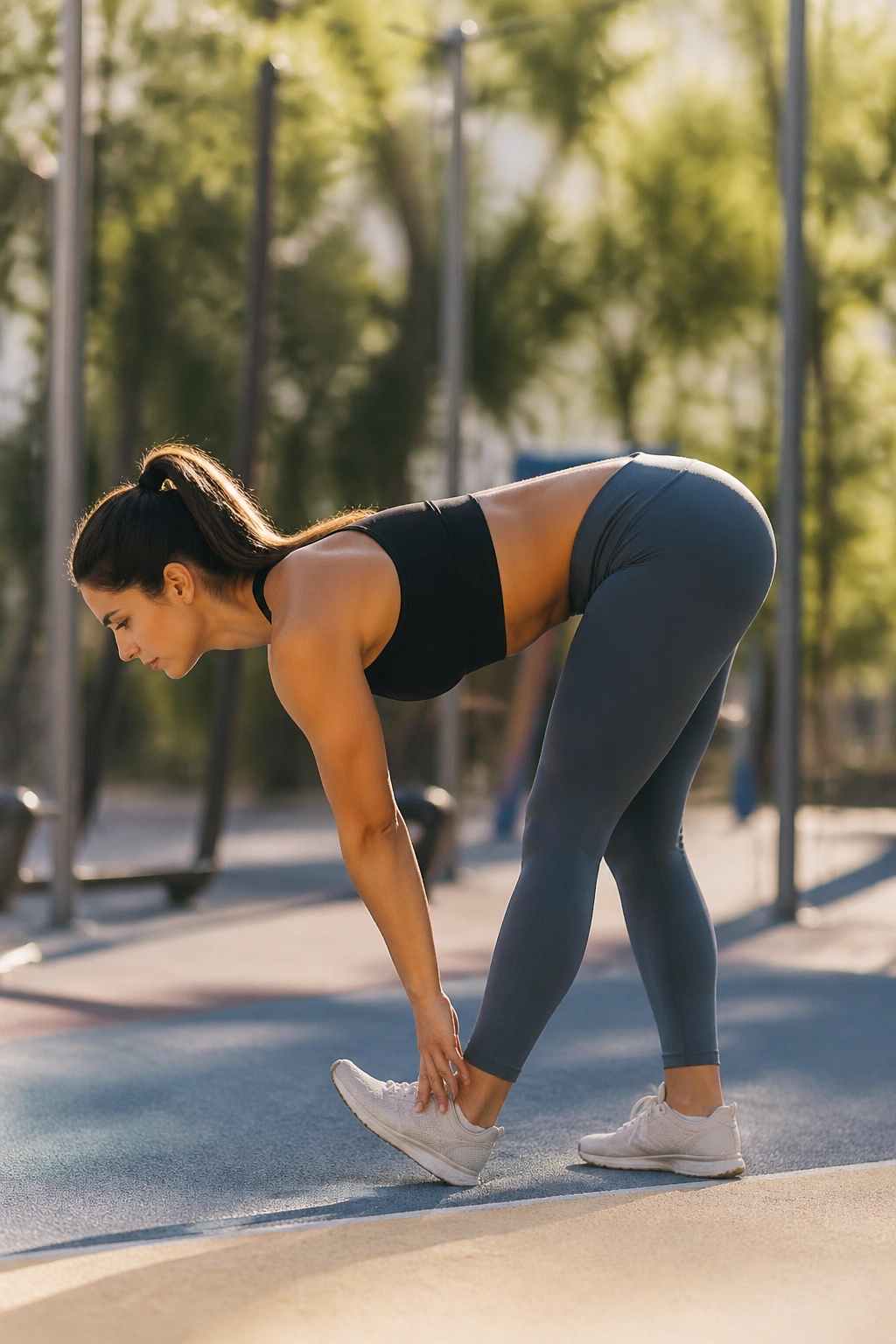
Standing hamstring sweeps beat lazy toe touches every time. Toe touches can turn into a rounded-back hang, and that doesn’t teach your body much before leg day. A sweep keeps the hips active and the hamstrings on notice.
Stand tall, extend one heel forward with the toes up, and hinge at the hips while reaching both hands toward the shin or ankle. Then rise and sweep the arms back as you come upright. The whole movement should feel like a fluid hinge, not a desperate grab for the floor.
I like this one because it gives you a hamstring stretch without stealing all your tension. That matters before deadlifts and squats. You want length, yes, but you also want to keep some spring in the system.
Do 8 to 10 reps per side. Keep the spine long, the standing knee soft, and the motion controlled. If you round aggressively to reach lower, shorten the range and try again.
One useful cue: push the hips back, not the chest down. That keeps the stretch where it belongs.
12. Figure-Four Glute Stretch
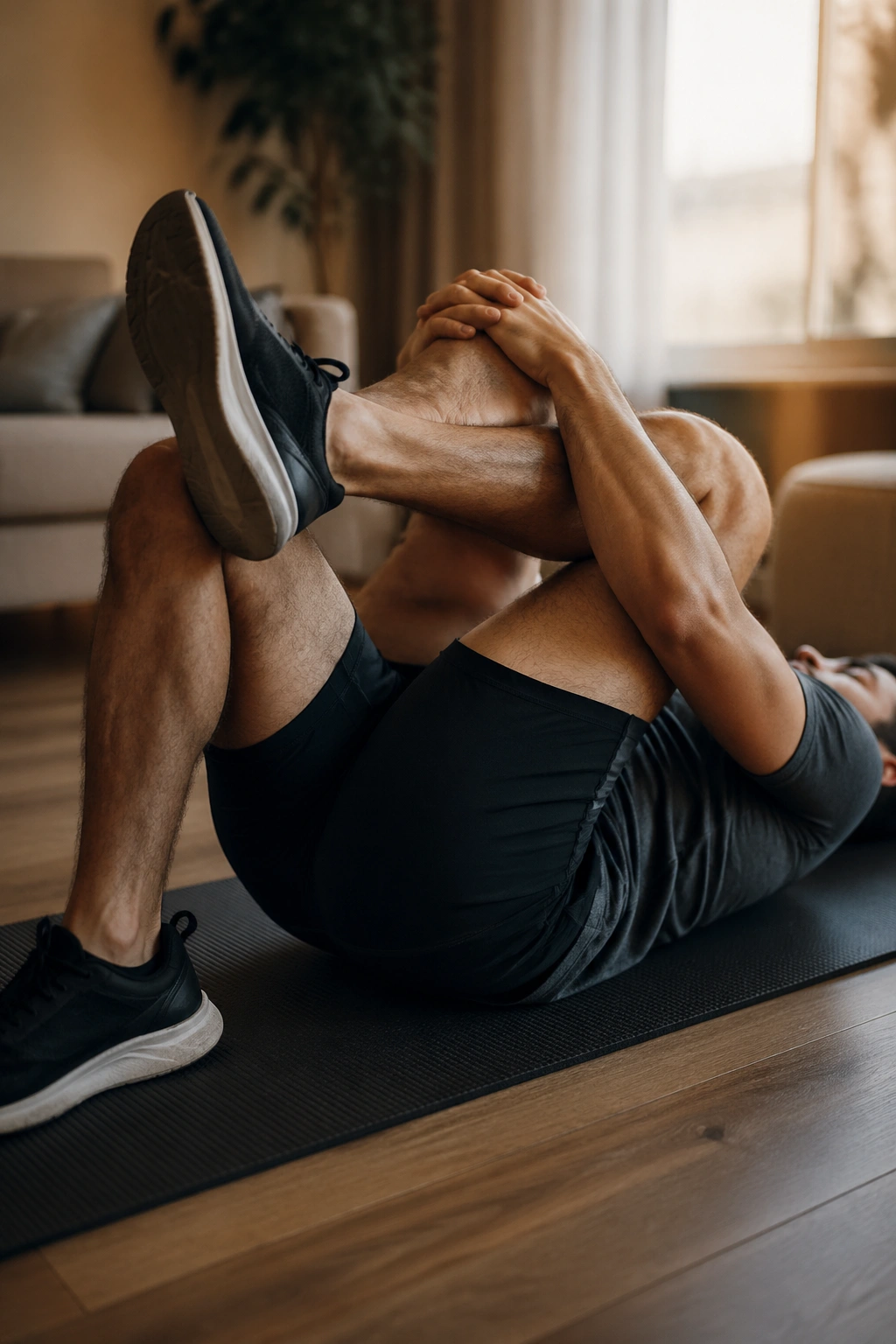
Unlike pigeon pose, the figure-four stretch stays easy to control before heavy lower-body work. That’s why I like it more for a leg-day warm-up. It gets after the glutes and outer hips without demanding a big floor setup or a long recovery from the position.
You can do it lying on your back or seated on a bench. Cross one ankle over the opposite knee, then either pull the uncrossed leg toward you or sit back until you feel the stretch in the outer hip and glute. Keep both feet flexed if you’re lying down. That tends to protect the knee a little better.
Who benefits most
- Lifters whose knees cave inward on squats
- People who feel tight in the deep glute area
- Anyone whose hips feel grumpy after sitting
- Folks who prefer a more controlled stretch than pigeon pose
Hold 20 to 30 seconds per side and breathe normally. You should feel the stretch in the glute, not a sharp line through the knee. If the knee complains, back off the angle or switch to the lying version.
This one closes the warm-up nicely because it addresses the back side of the hip after all the ankle and adductor work. That’s the spot that often needs a little extra attention before heavy leg training.
The Bottom Line
A good leg-day warm-up should make your body feel ready, not emptied out. That’s the line I keep coming back to, because it matters. You want joints that move, tissues that feel warm, and enough tension left in the system to handle the first hard set.
If you only have time for a few lower body stretches before leg day, I’d reach for ankle rocks, 90/90 hip switches, adductor rockbacks, half-kneeling hip flexor work, and leg swings. That gives you a clean mix of ankle mobility, hip rotation, groin opening, and active control. Solid coverage. No fluff.
And if one area always feels tight, don’t be shy about giving it an extra round. Stiff calves and sticky hips usually tell on themselves pretty fast. Listen to that feedback, and leg day starts to feel a lot less like a fight.
