



You finish the final mile of your run, and the adrenaline starts to dissipate. That is when the reality of the workout sets in. Your calves feel like they have been replaced by two heavy blocks of wood, your lower back is tighter than a piano wire, and your hips are locked in a permanent state of flexion. This is the physiological tax that high-impact training demands. While the run itself is the work, the recovery is what allows you to come back the next day without feeling like you are fighting against your own biology.
Many runners fall into the trap of thinking that stretching means doing a few standing quad pulls against a tree and calling it done. True recovery requires more nuance. It requires accessing the deep tissues, releasing the connective fascia that binds muscles together, and calming the nervous system after a period of intense sympathetic stimulation. Yoga provides the perfect framework for this. It isn’t just about flexibility; it is about balance, alignment, and resetting your body’s baseline after the repetitive trauma of the pavement.
Integrating specific shapes into your routine changes how your muscles hold tension. When you hold these positions, you are not just lengthening tissue; you are encouraging your body to dump the waste products that accumulate during high-intensity sessions. It helps to clear the mental clutter, too. If you are rigid and guarded after a run, your body remains in a defensive state. These movements signal that it is time to shift gears from performance to repair.
1. Downward-Facing Dog
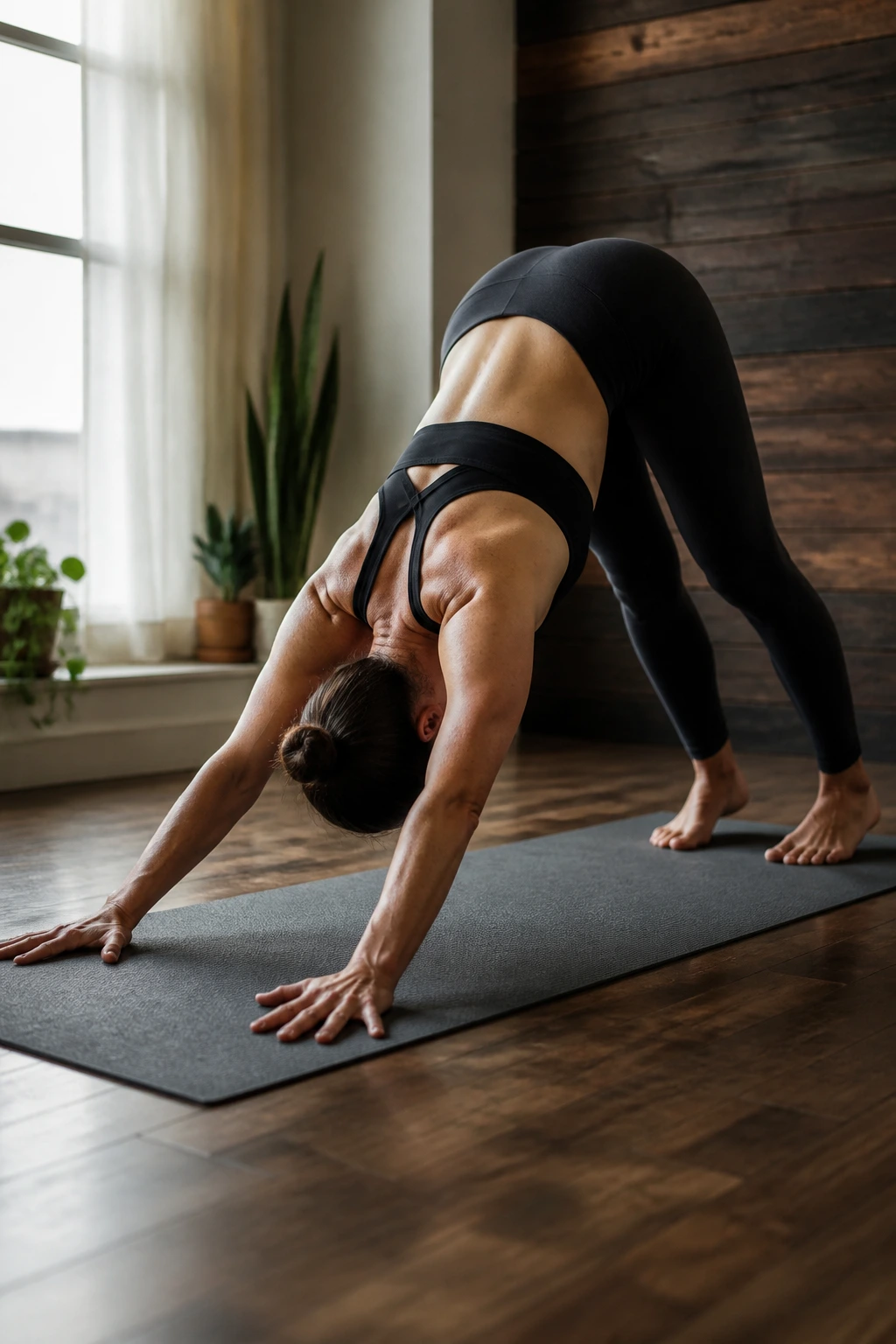
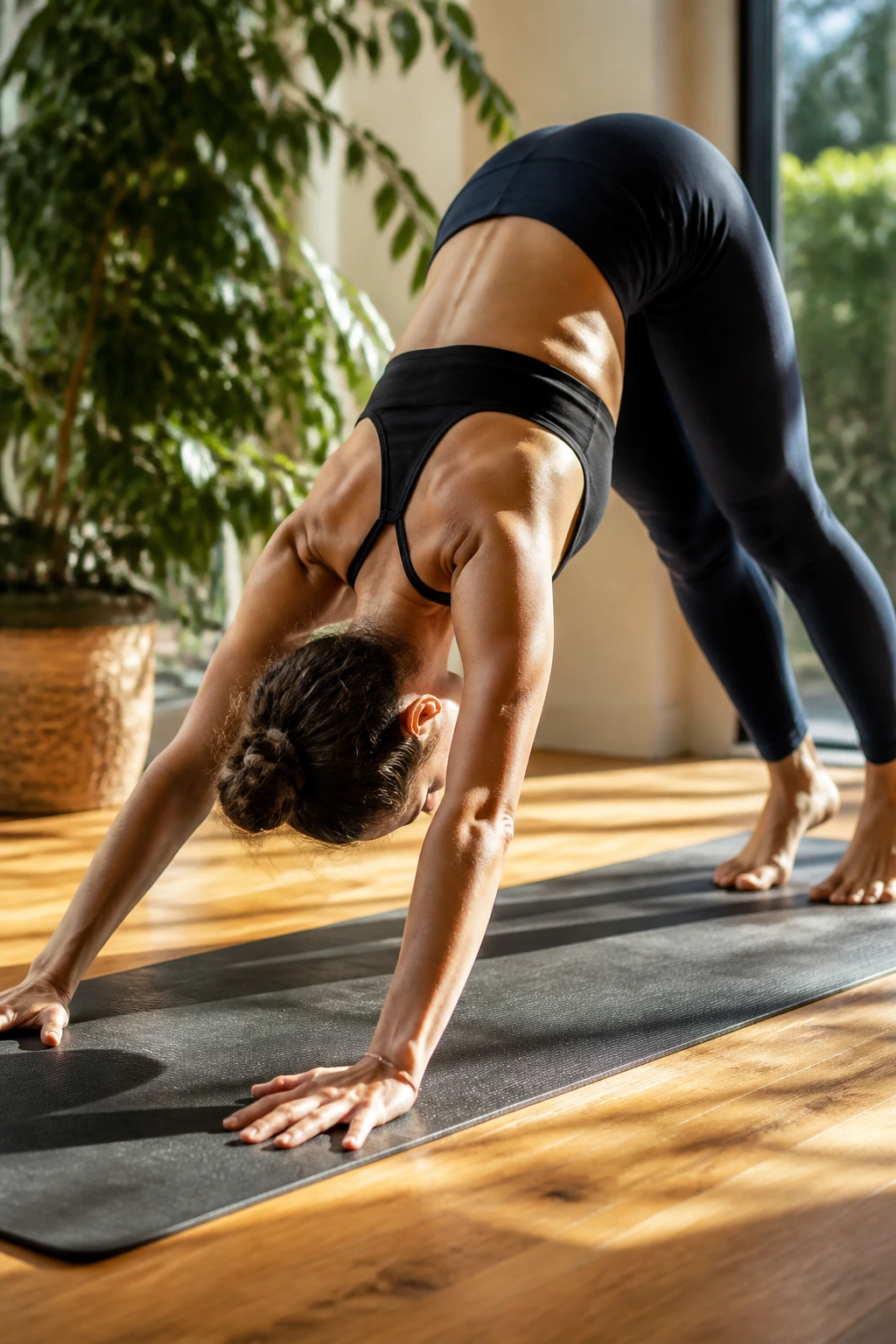
The most iconic pose in yoga is arguably the most necessary one for anyone who spends time on their feet. When you kick back into Downward-Facing Dog, you are targeting the entire posterior chain, specifically the calves and the hamstrings. Runners are notorious for chronically tight calves, which can lead to Achilles tendon issues or plantar fasciitis if left unaddressed.
How to do it properly
Start on your hands and knees, then lift your hips toward the ceiling to create an inverted “V” shape. Don’t worry if your heels do not touch the floor. It matters far more that your spine is long. Push the floor away with your palms. Pedal your feet—bend one knee deeply while trying to press the opposite heel toward the ground—to work into those stubborn calf muscles.
Pro tip: Spread your fingers wide and distribute the weight through your entire hand, not just your wrists. If your shoulders feel crunched, bend your knees more; this takes the pressure off the upper body and allows you to prioritize the stretch in your legs and the extension of your spine.
2. Child’s Pose
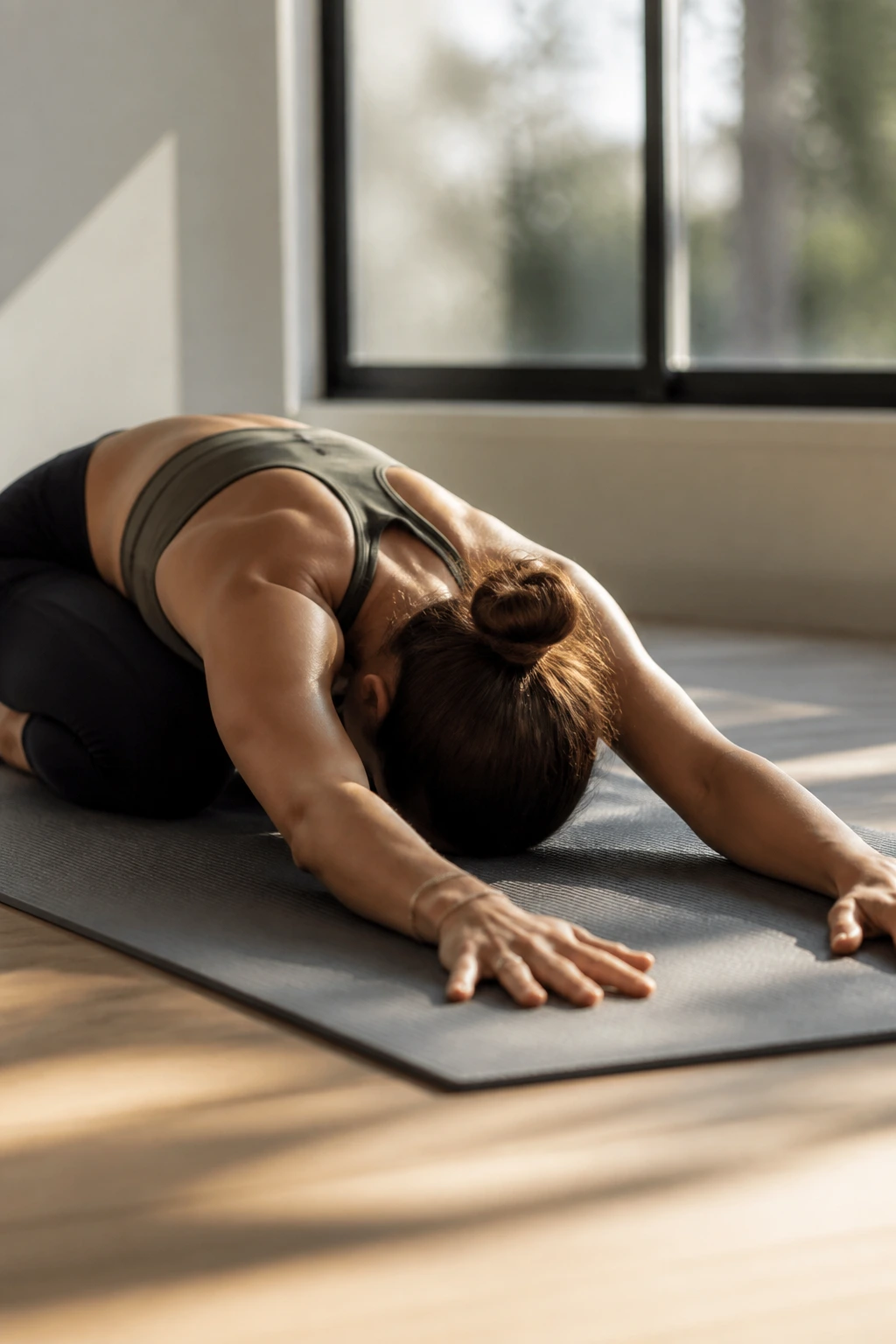
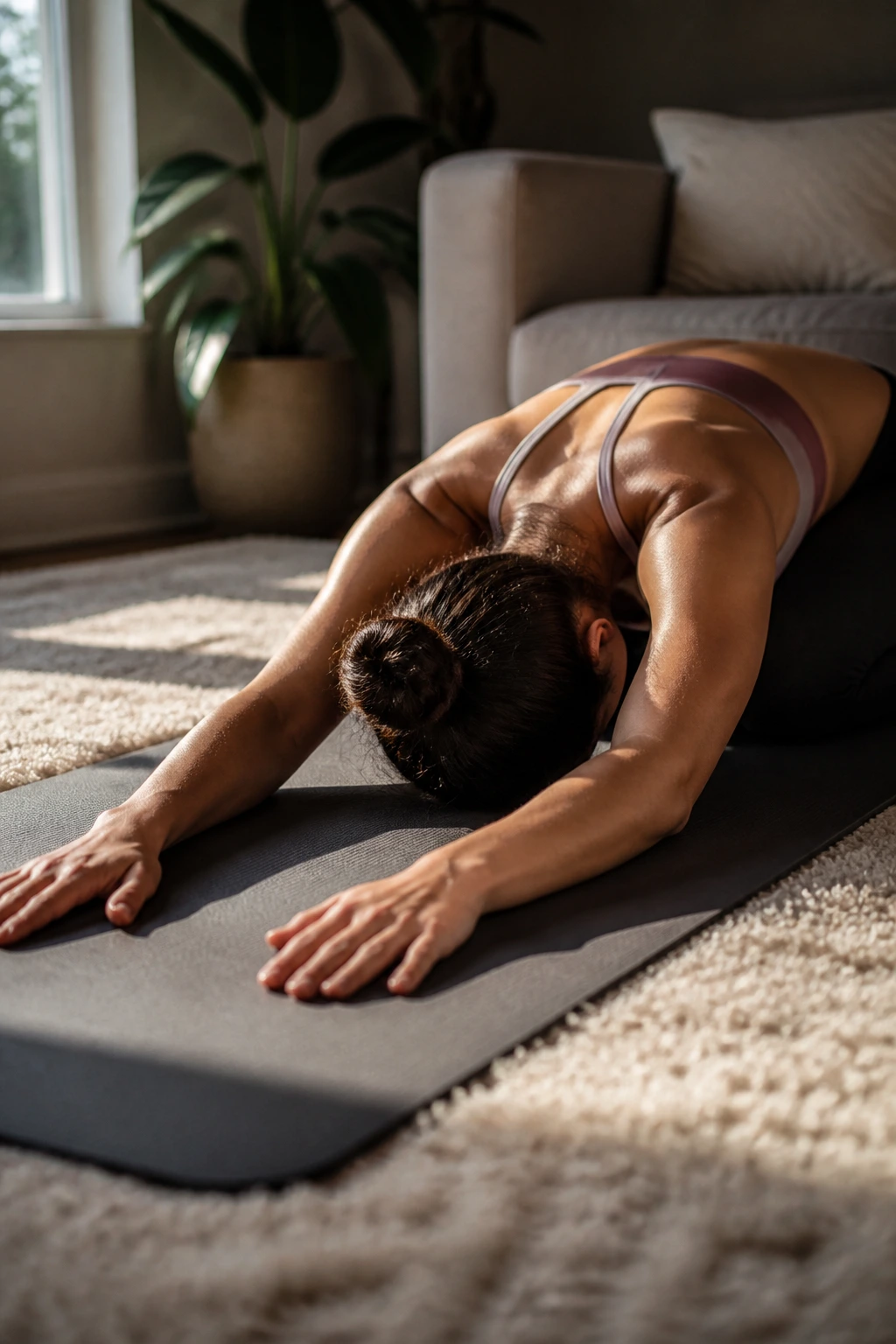
After a hard run, your lower back often feels compressed. Child’s Pose is the antidote to that compressive force. It allows your spine to decompress and creates space between the vertebrae that take a beating when you are pounding the pavement. It is also an incredibly restorative pose for the nervous system, helping your heart rate return to resting levels much faster.
The mechanics of release
Kneel on the floor, touch your big toes together, and separate your knees as wide as you feel comfortable. Fold forward, draping your torso between your thighs. Rest your forehead on the ground or a block. Imagine your breath moving into your lower back, physically expanding that space with every inhale.
What to watch for: If your hips feel tight, put a folded blanket between your calves and your thighs. You should feel a gentle stretch, not sharp pain. If you cannot reach your forehead to the ground, use a yoga block. Never force the head down if it strains your neck.
3. Runner’s Lunge
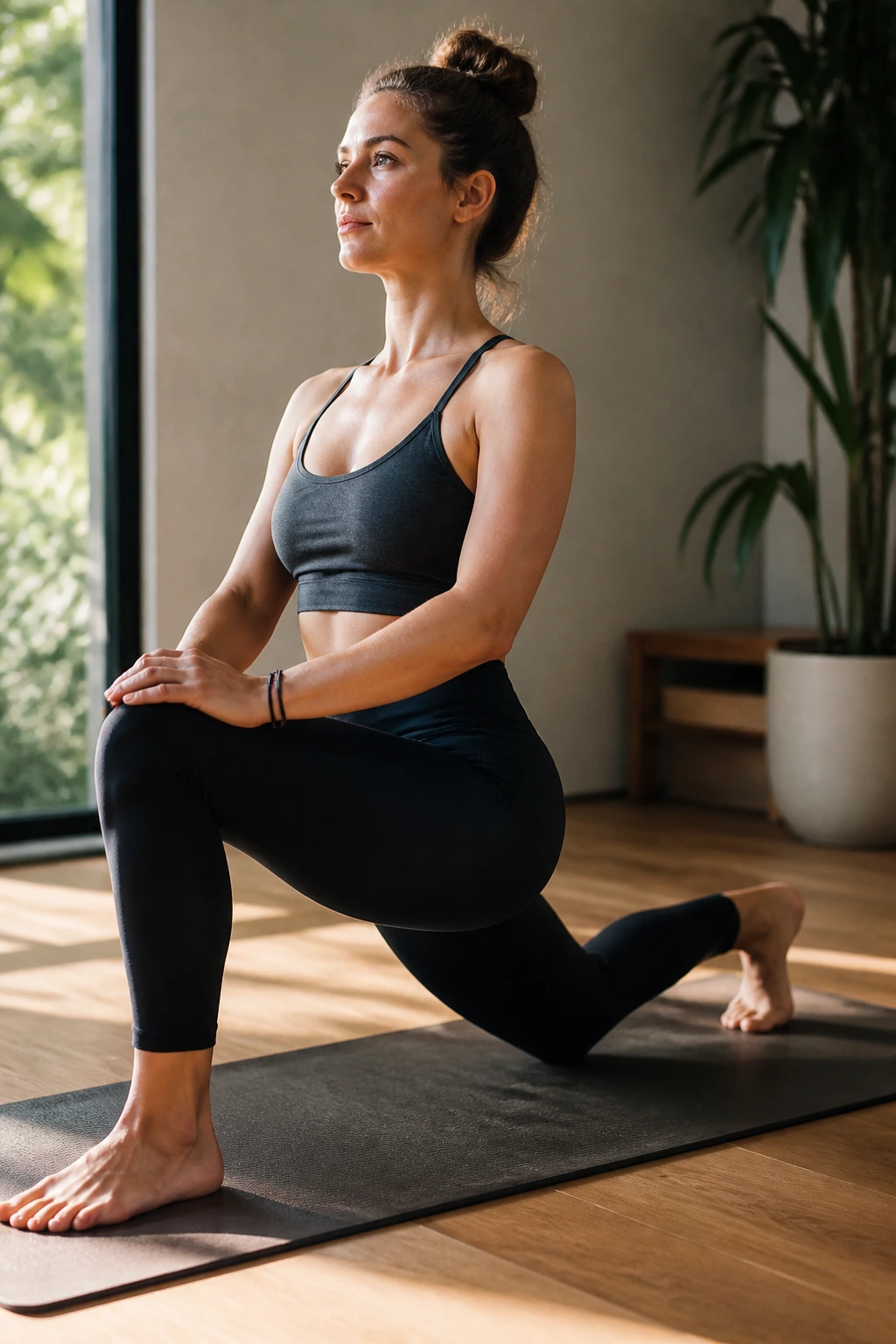
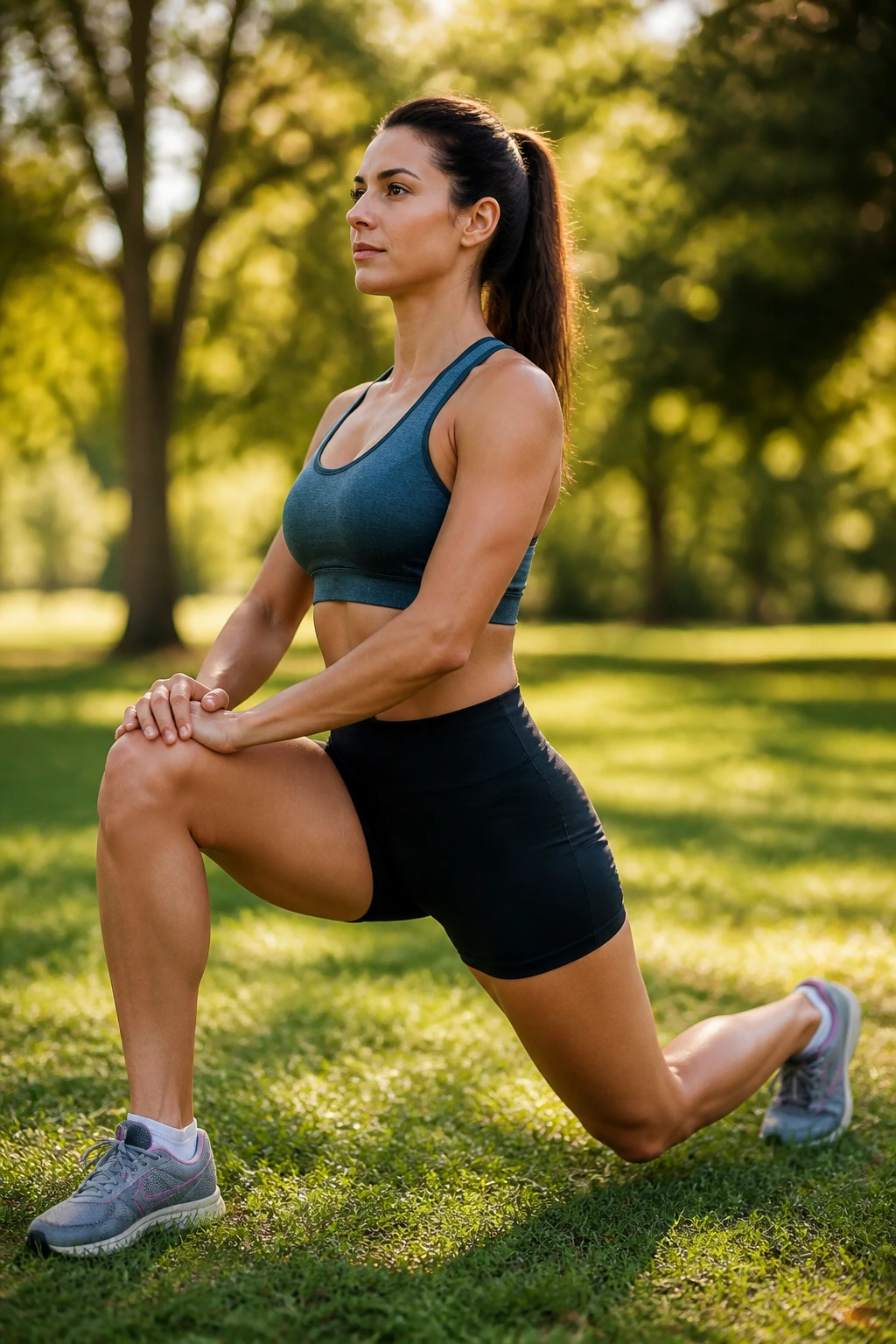
It is right there in the name. This pose is a deep hip flexor release. Running keeps your hips in a shortened, flexed position for hours on end, which is why tight hip flexors are often the root cause of lower back pain in endurance athletes. This pose opens the front of the hip of your back leg.
Getting the most out of it
Step one foot forward between your hands and drop your back knee to the floor. Keep your front knee directly over your front ankle. As you sink your hips down and forward, try to keep your chest lifted. You want to feel a deep stretch in the front of the back hip. If you want more intensity, tuck your back toes and lift the back knee off the floor, but keep the hip sinking low.
Why this works
It lengthens the psoas muscle, which connects your legs to your spine. A tight psoas is a common culprit for runner’s knee and lower back discomfort. Hold this for at least ten deep breaths, and you will notice a significant shift in your gait’s range of motion by the time you stand up.
4. Pigeon Pose
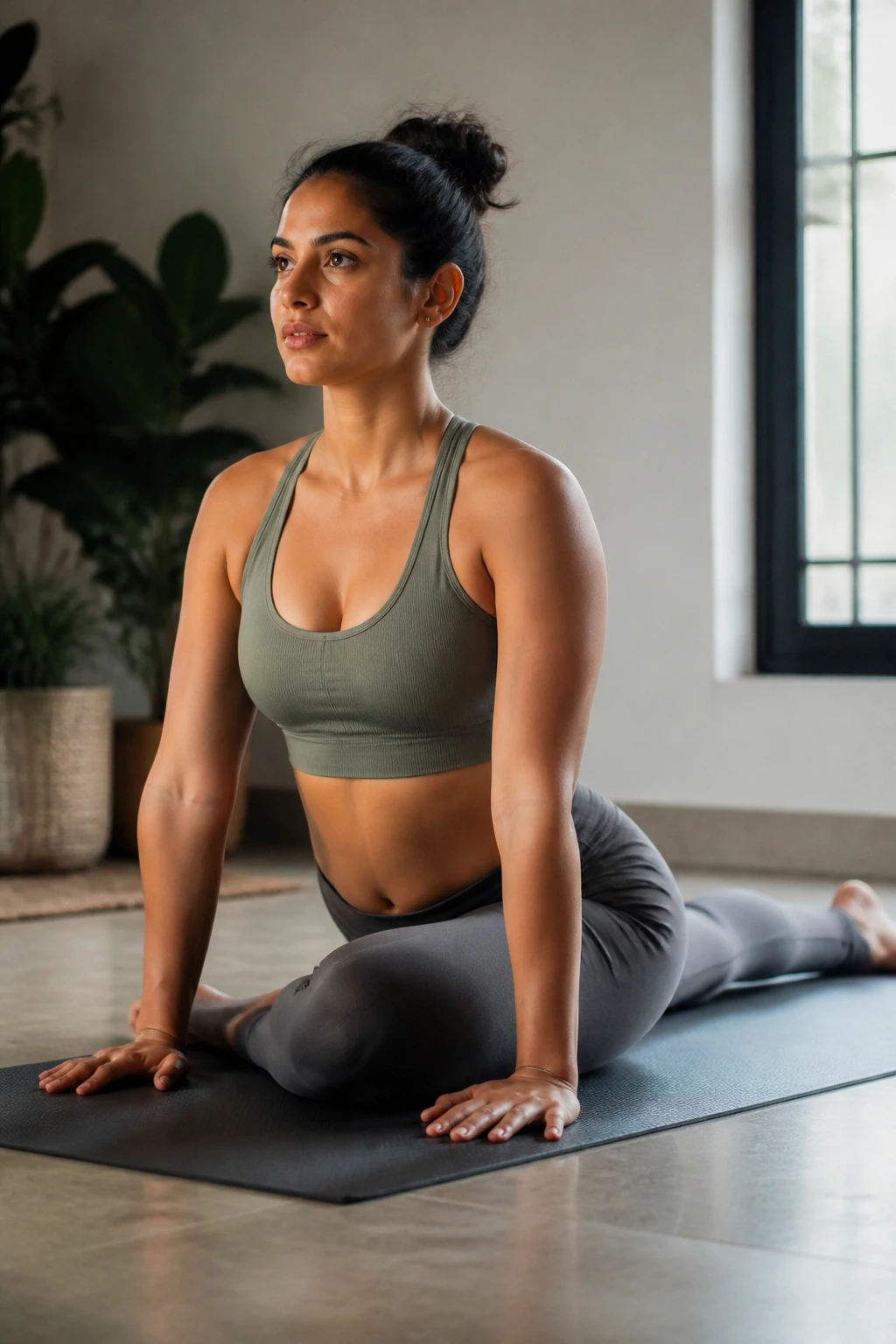
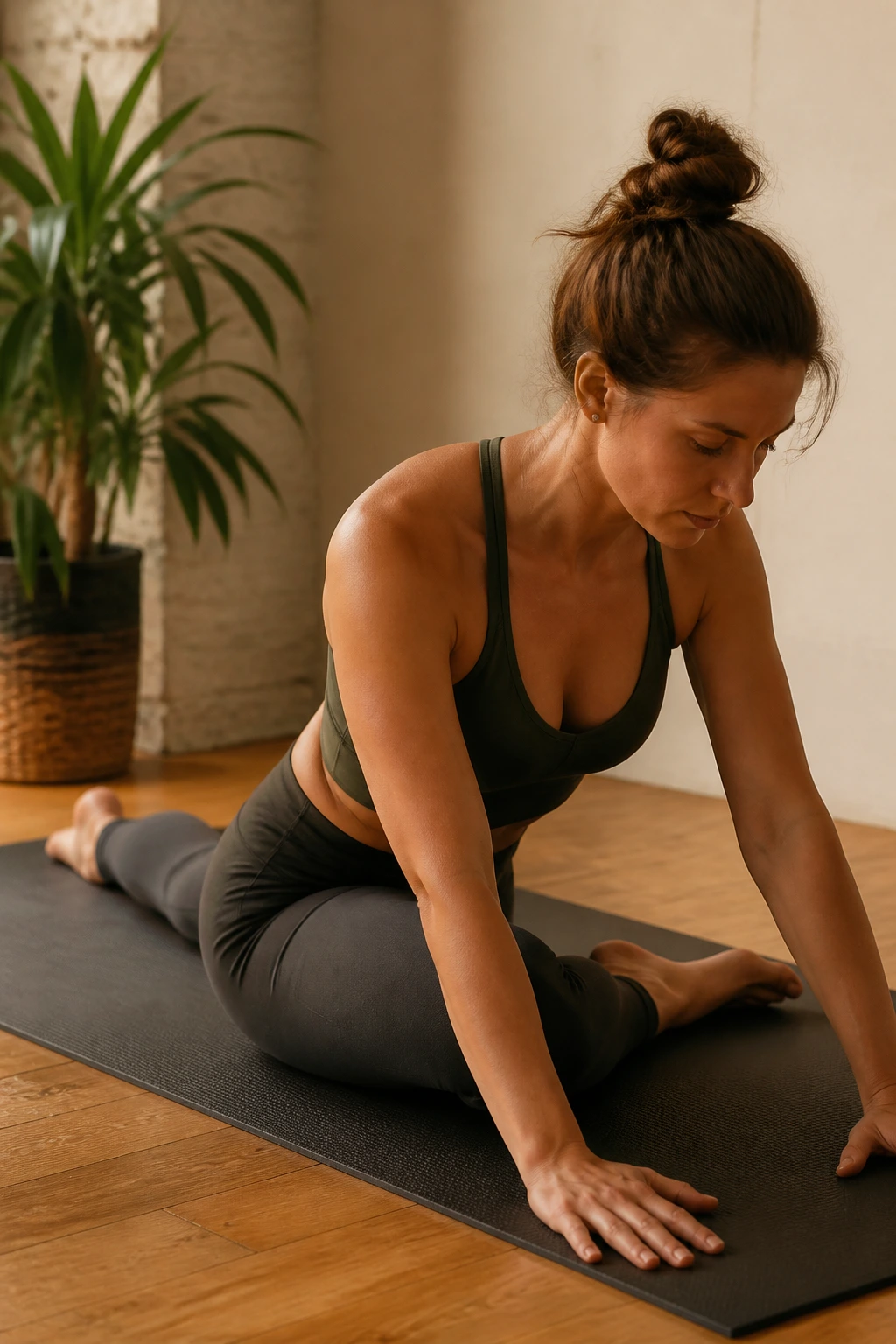
If you have ever felt like your glutes are permanently seized up after a long effort, Pigeon Pose is your best friend. It targets the external rotators of the hip, specifically the piriformis muscle. When the piriformis gets tight, it can press against the sciatic nerve, which causes that radiating ache that many runners mistake for back pain.
Accessing the deep tissue
Bring your right knee forward toward your right wrist, angling your right shin toward the left side of the mat. Extend your left leg straight back. Make sure your hips are square to the front of the mat; don’t lean heavily onto one side. Walk your hands forward and fold over your front leg.
Critical warning: If this pose hurts your knee, do not force it. Instead, try the “Figure-Four” stretch while lying on your back. The goal is hip opening, not knee destruction. Respect the anatomy of your joints.
5. Butterfly Pose
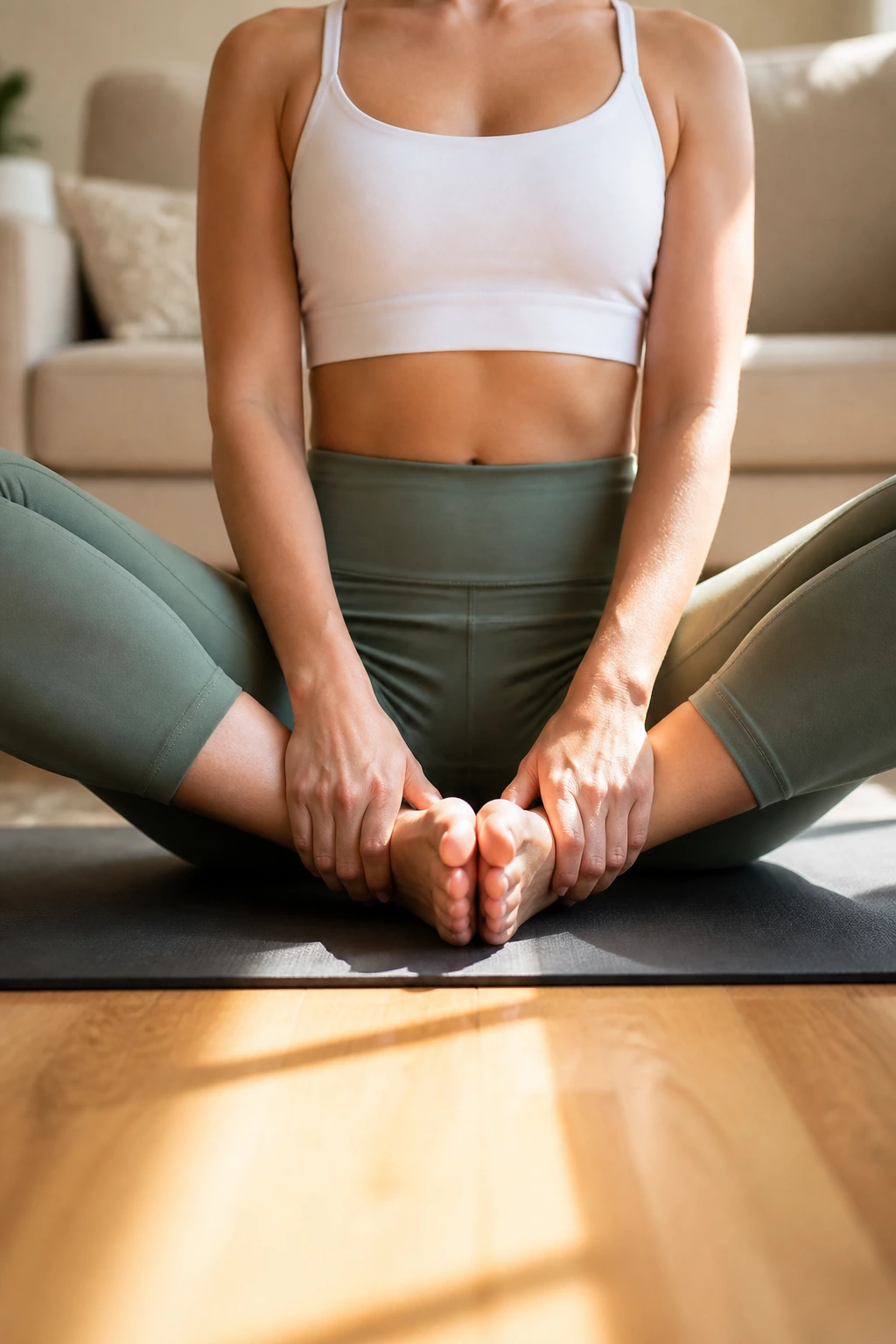
This is a gentle way to open the adductors, or the inner thighs, which can become overworked when you are trying to stabilize your pelvis during a run. The adductors are often neglected because they aren’t the primary movers, but they act as critical stabilizers.
Creating space in the groin
Sit on your mat with the soles of your feet touching and your knees falling open to the sides. Hold your ankles and sit tall. You do not need to pull your feet into your groin; keep them a comfortable distance away to create a diamond shape with your legs. Gently hinge forward from your hips, keeping your back flat.
Why it matters: Tight inner thighs can pull on the pelvis and contribute to alignment issues throughout the entire kinetic chain. This is a passive stretch. Let gravity do the work for you; avoid bouncing your knees, which can actually cause the muscles to tighten up in response to the aggressive movement.
6. Standing Forward Fold
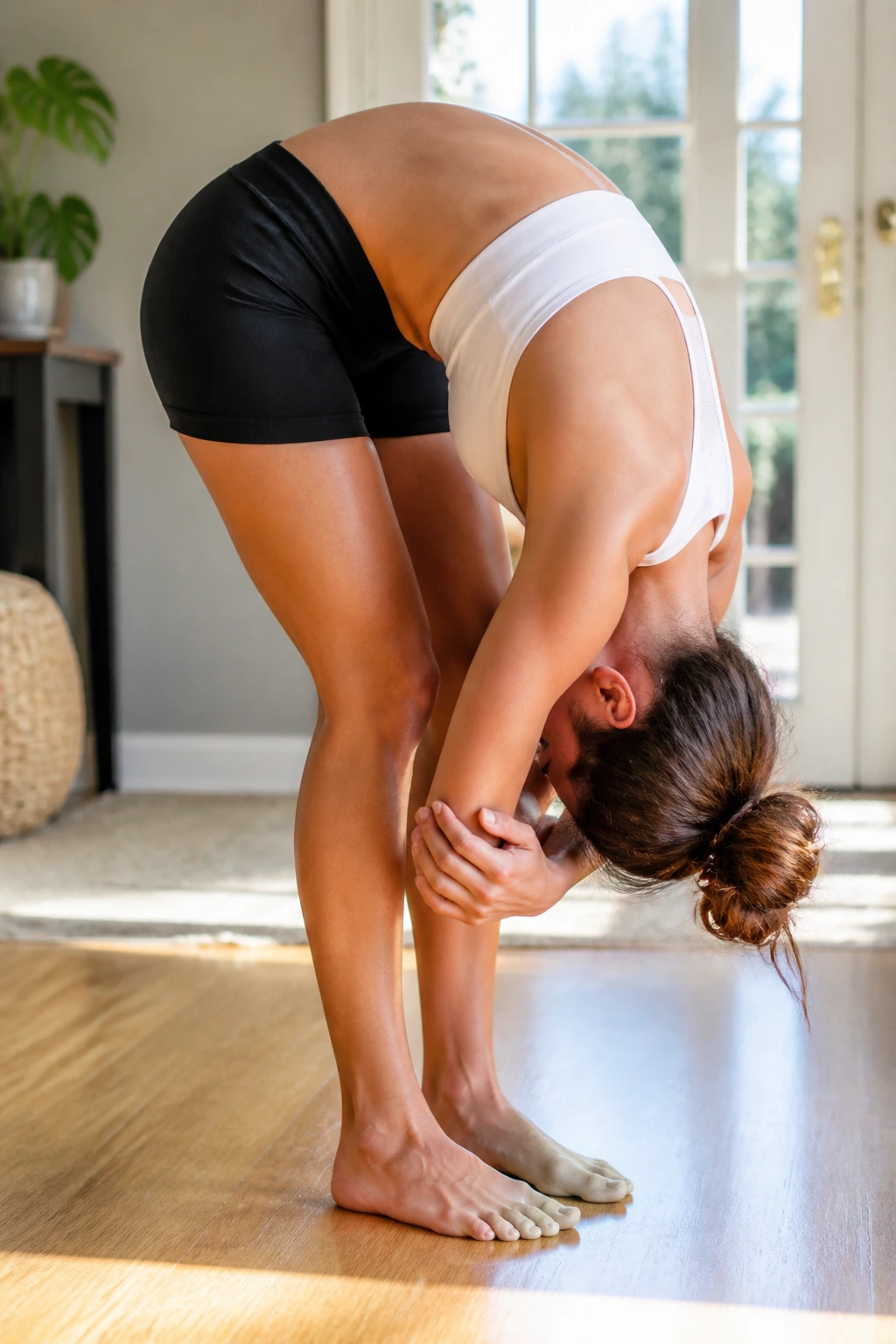
Sometimes, simplicity wins. This pose is a direct, no-nonsense stretch for the hamstrings. After a run, your hamstrings act like tight rubber bands, pulling your pelvis into an anterior tilt. This fold reverses that tension.
The technique
Stand with your feet hip-width apart. Bend your knees—yes, bend them—and hinge at your hips to fold forward. Let your head hang heavy, completely releasing the neck. If you have tight hamstrings, you can hold onto your opposite elbows (Ragdoll pose) and let the weight of your upper body act as a traction device for your spine.
Why it works
The bend in the knees is the secret sauce. By keeping the knees soft, you prevent your hamstrings from going into a “guarding” mode. This allows the connective tissue to actually lengthen rather than just fighting against the pull. You should feel the stretch in the belly of the muscle, not behind the knee.
7. Lizard Pose
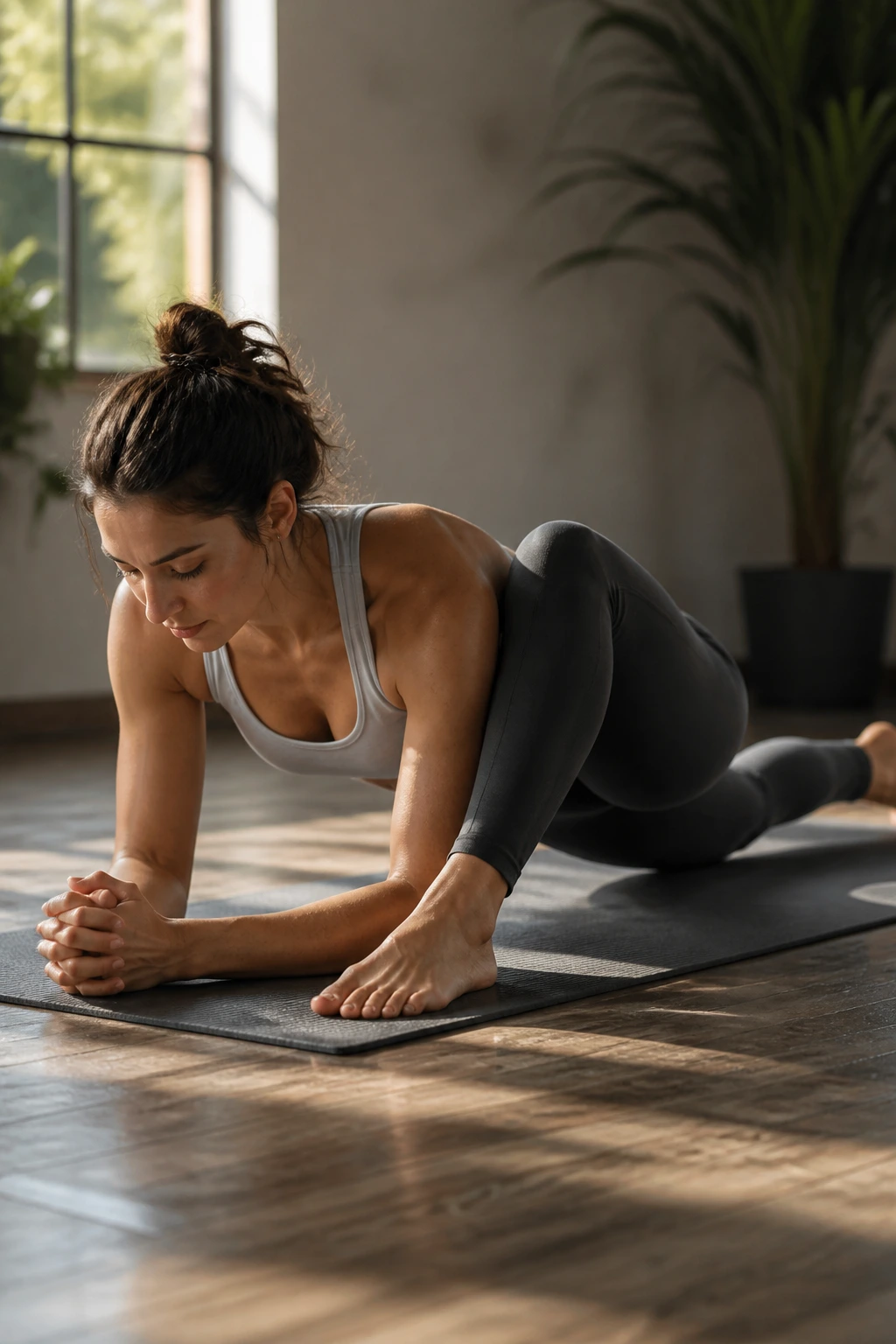
Lizard Pose takes the standard lunge and turns it up a notch. It targets the hip flexors, the quads, and the outer hips all at once. It is a more aggressive pose, so it is perfect for when you feel like you have truly locked-up hips that aren’t responding to lighter stretches.
How to enter
Start in a low lunge with your right foot forward. Bring both hands to the inside of your right foot. You can stay up on your palms, or if you have the flexibility, lower down onto your forearms. Keep your front foot flat on the floor; don’t let it roll onto the outer edge unless you are intentionally trying to stretch the outer hip.
What to look for: This pose can be intense. Breathe through the sensation of tightness. If you find yourself holding your breath, back out of the depth slightly. The nervous system will not allow the muscles to release if it perceives the stretch as a threat.
8. Happy Baby
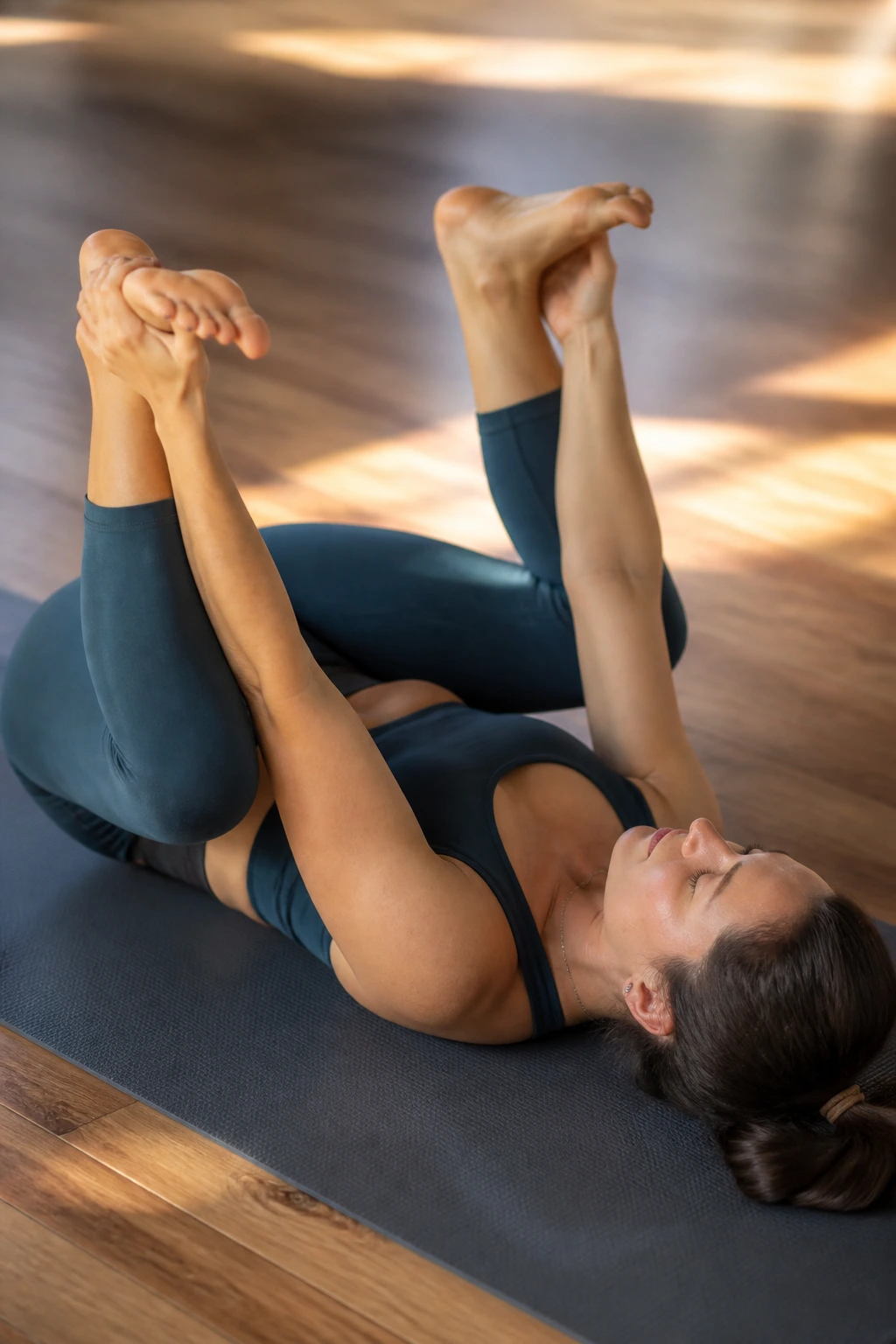
Running is a high-intensity, “yang” activity. Happy Baby is the ultimate “yin” counter-move. It opens the hips, releases the lower back, and forces you to slow down. It is particularly effective after a long, pounding run because it requires you to be on your back, completely off your feet.
The execution
Lie on your back, pull your knees into your chest, and reach for the outsides of your feet with your hands. Flex your feet so your soles face the ceiling. Pull your knees toward your armpits. Keep your tailbone pressing down toward the mat.
Why it’s a runner’s staple: This pose gently flattens the lumbar spine against the floor, acting like a massage for the lower back muscles. You can rock gently side to side, which adds a bit of lateral movement that running—a linear sport—strictly prohibits.
9. Legs Up the Wall
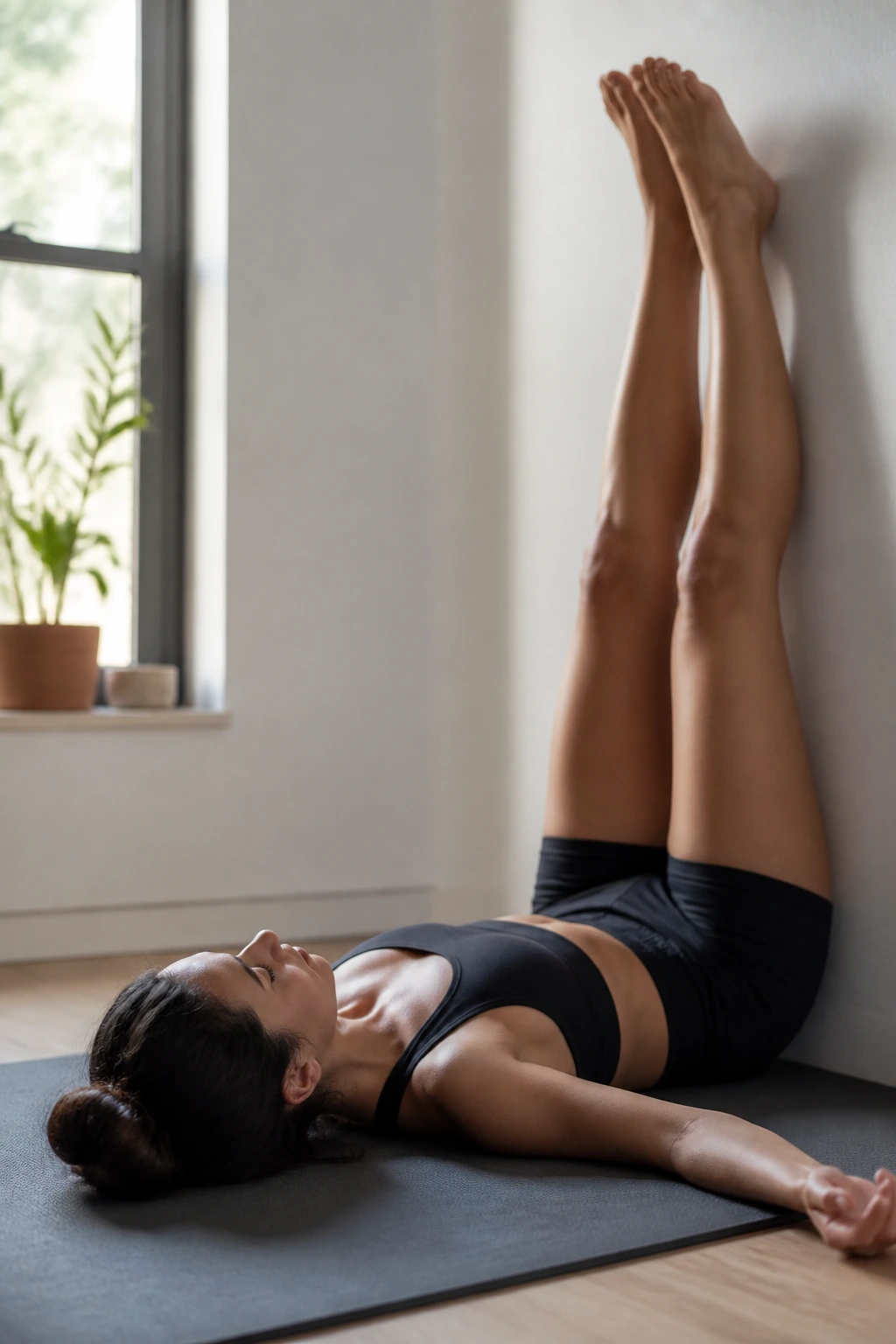
This is less of a “stretch” and more of a “reset.” If you have ever felt heavy, swollen legs after a long race, this is the remedy. It utilizes gravity to encourage venous return, helping to flush out the metabolic waste that pools in your lower extremities.
The setup
Find a clear patch of wall. Sit with one hip as close to the wall as possible. Swing your legs up the wall as you lie back. Your butt should be right against the wall, or an inch or two away if your hamstrings are very tight. That is it. Stay there.
The benefits: It signals the parasympathetic nervous system to take over. This is when the real muscle repair begins—when you shift from the “fight or flight” mode of running to the “rest and digest” mode of recovery. Stay in this position for at least five to ten minutes.
10. Cat-Cow Stretch
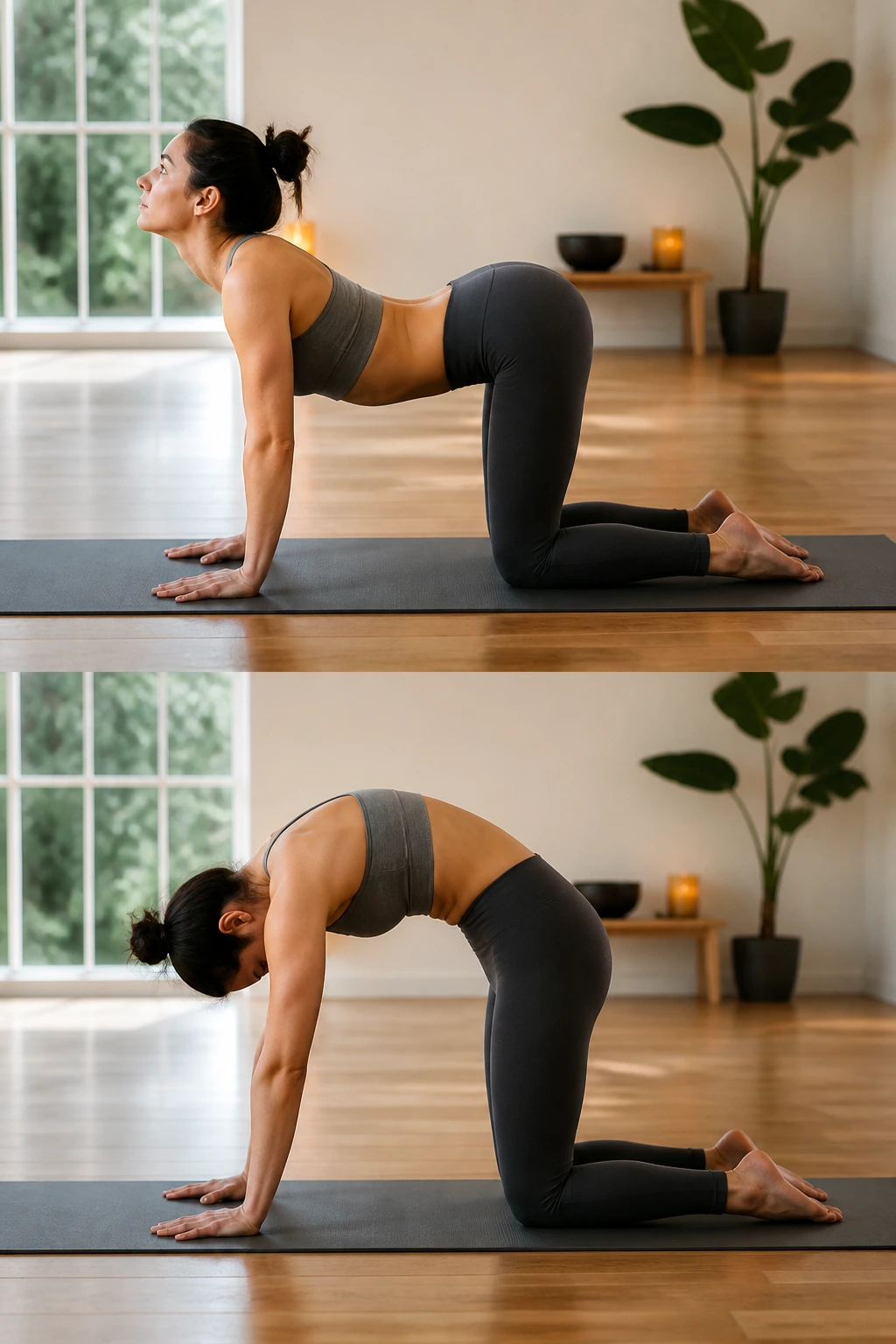
The spine needs movement in all directions, not just the front-to-back repetitive motion of running. Cat-Cow provides that necessary spinal articulation. It helps to mobilize the entire vertebral column, which can get stiff when you are trying to maintain an upright, stable running posture for miles.
Synchronizing breath and movement
Start on all fours. As you inhale, drop your belly toward the floor, lift your chin and chest, and look up (Cow). As you exhale, round your spine toward the ceiling, tuck your chin to your chest, and press the floor away (Cat). Repeat this cycle ten times.
Why it matters: It acts as a lubricant for the spinal discs. Think of it as flossing for your spine. It encourages blood flow to the muscles surrounding the vertebrae, which helps alleviate the stiffness that often sets in after a long, endurance-focused effort.
11. Reclined Hand-to-Big-Toe
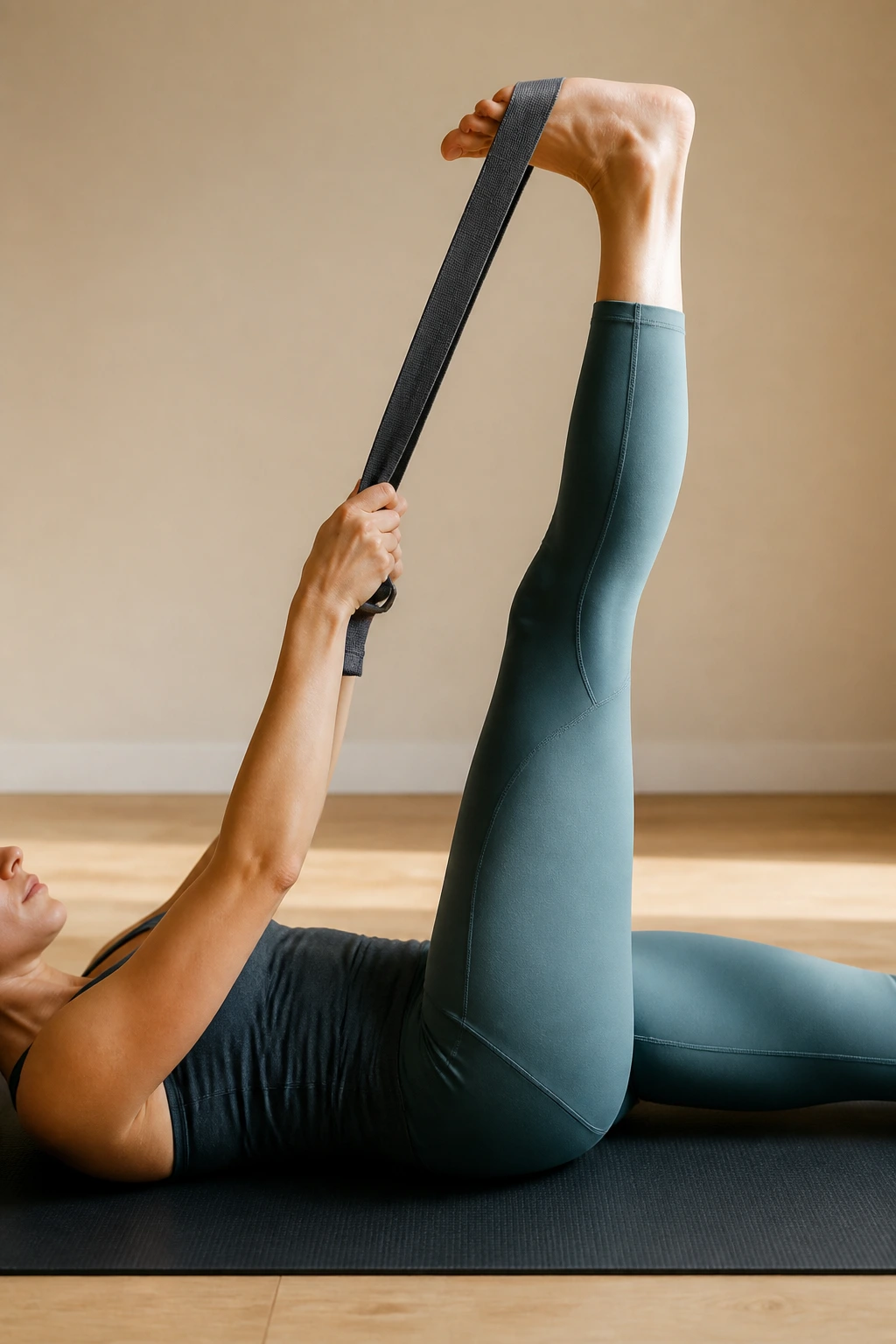
This is the safest way to stretch your hamstrings while protecting your lower back. By doing this lying on your back, you take your core stability out of the equation, allowing you to isolate the leg muscles entirely.
Performing the stretch
Lie on your back. Extend your legs straight out. Lift your right leg and loop a strap (or a towel, or your hands) around the ball of your foot. Keep your leg as straight as possible and gently pull it toward your torso. Keep your left leg pressing firmly into the mat.
The nuance: Many people think “more is better” and yank the leg toward their face. Don’t do that. Keep your leg straight, but only bring it as close as you can while keeping your lower back pressed to the floor. If your back arches, you have gone too far.
12. Thread the Needle
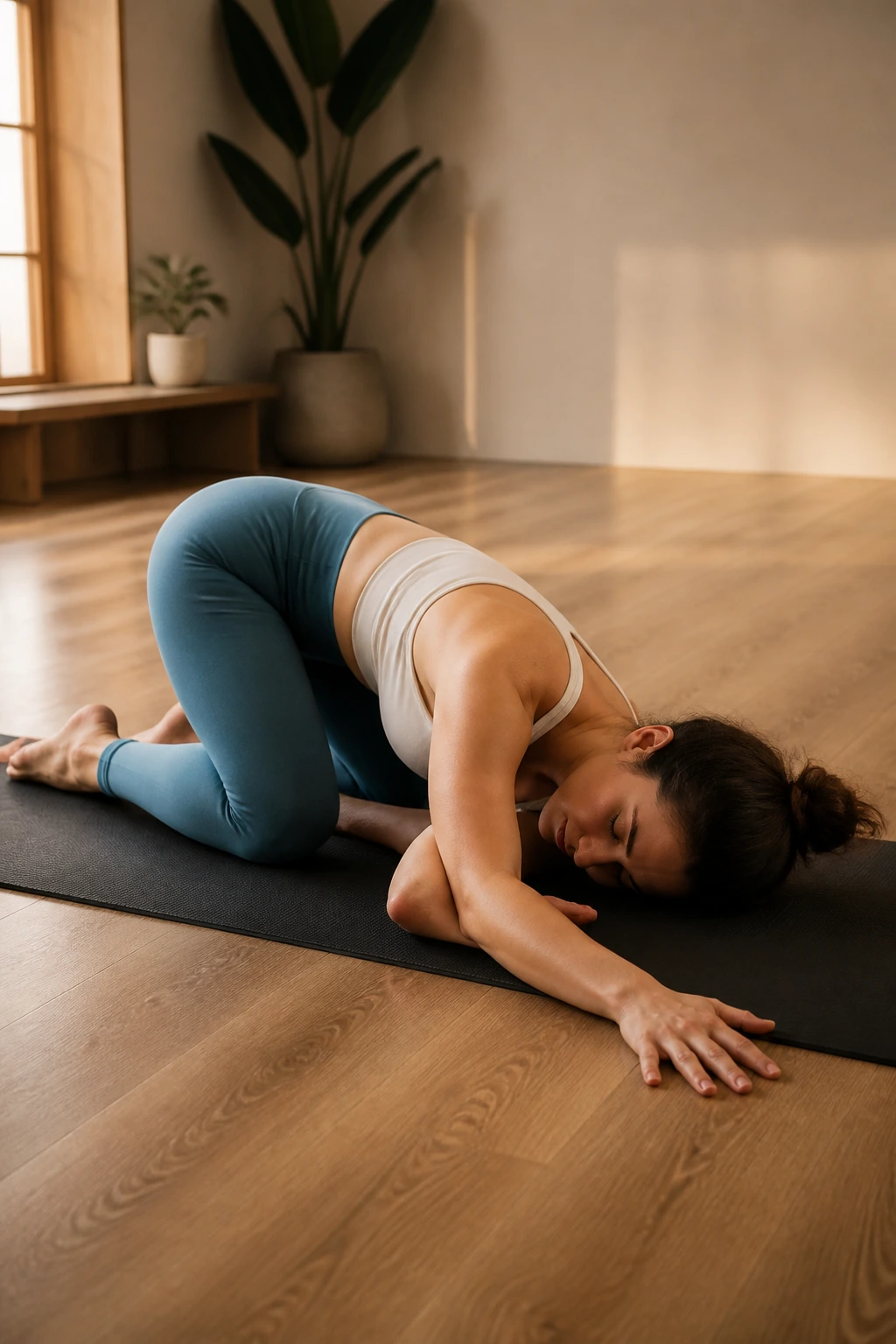
If you are struggling with a tight upper back or shoulders—which happens when we get tired and start rounding our posture mid-run—Thread the Needle is a game changer. It releases the muscles between the shoulder blades and the rotators of the upper spine.
Getting into position
Start in a tabletop position on all fours. Thread your right arm underneath your left arm, resting your right shoulder and the right side of your face on the mat. Press into your left hand to deepen the twist if you want more intensity.
Why this is essential
Running requires you to hold your torso upright, often resulting in gripping through the upper traps and neck. This pose forces a release in that area, helping to alleviate that “stiff neck” feeling that comes after a windy or difficult run. It also helps with thoracic mobility, which is crucial for optimal breathing mechanics.
13. Seated Forward Fold
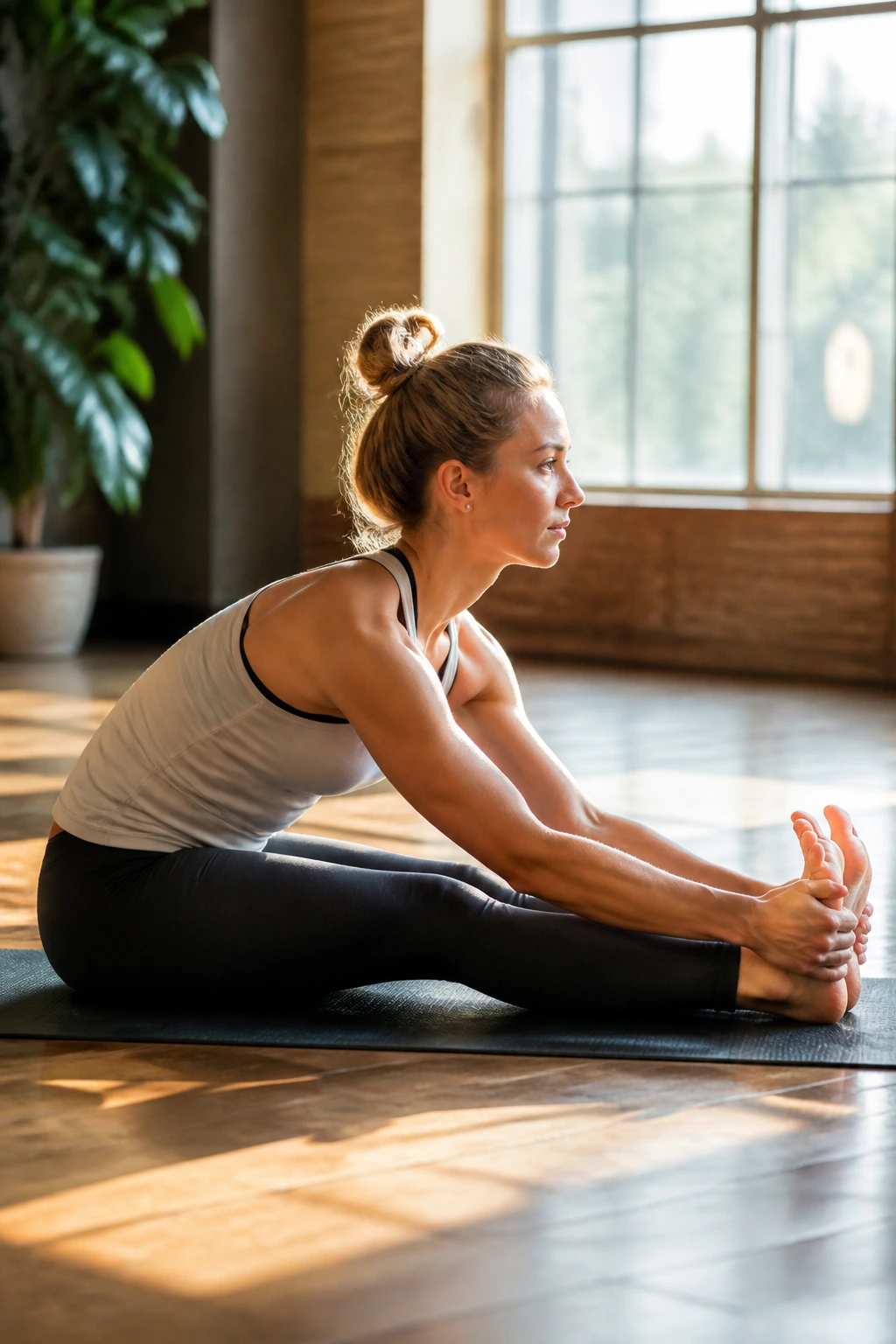
This is a classic for a reason. It is a deep, comprehensive stretch for the entire back of the body, from the heels up to the neck. It is particularly effective for lengthening the hamstrings and the calf muscles, both of which are under constant tension during running.
The technique
Sit with your legs extended straight in front of you. Sit up tall on your sit bones. On an exhale, hinge forward from your hips, not your waist. Reach for your shins, ankles, or feet. Keep your chest open—do not try to touch your nose to your knees by rounding your back.
The secret: The goal is to get your belly to your thighs, not your head to your knees. If you find your back rounding excessively, bend your knees slightly. A straight spine is far more effective for hamstring lengthening than a rounded, forced stretch.
14. Bridge Pose
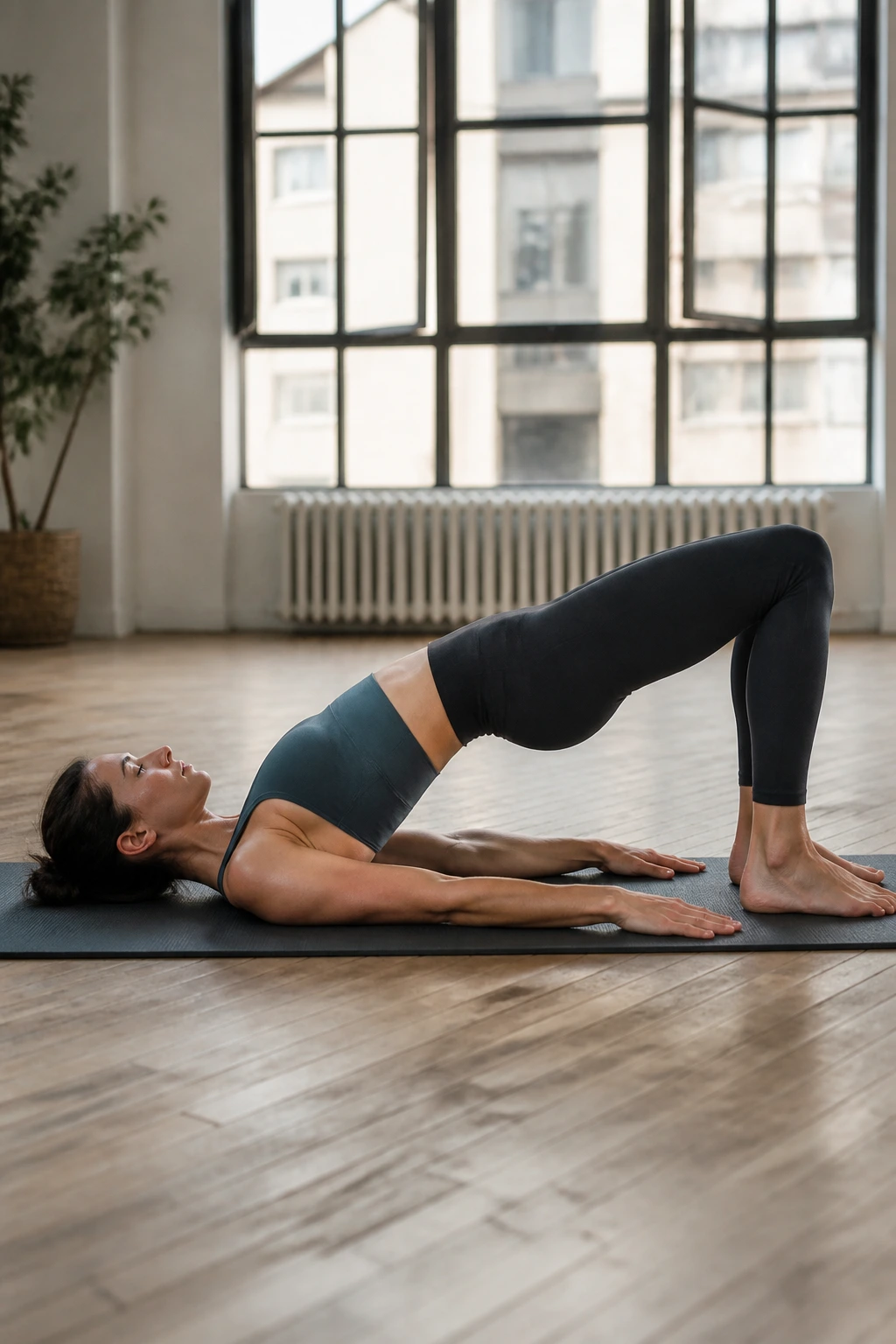
Runners often develop weak glutes because the quads and hamstrings take over the work. Bridge Pose helps to counteract this by engaging the gluteus maximus, which is essential for stabilizing the pelvis. It is a gentle backbend that opens the chest and the front of the hips, both of which shorten significantly during a run.
Proper alignment
Lie on your back, knees bent, feet flat on the floor, hip-width apart. Press into your feet and lift your hips toward the ceiling. Clasp your hands under your back if you want to help open your chest further. Keep your knees from splaying outward; imagine you are squeezing a block between them.
Why it matters: It promotes glute activation without the high-impact stress of lunges or squats. It is a fantastic way to wake up the posterior chain and ensure that you aren’t just relying on your quads to do all the work in your next training cycle.
15. Cow Face Pose
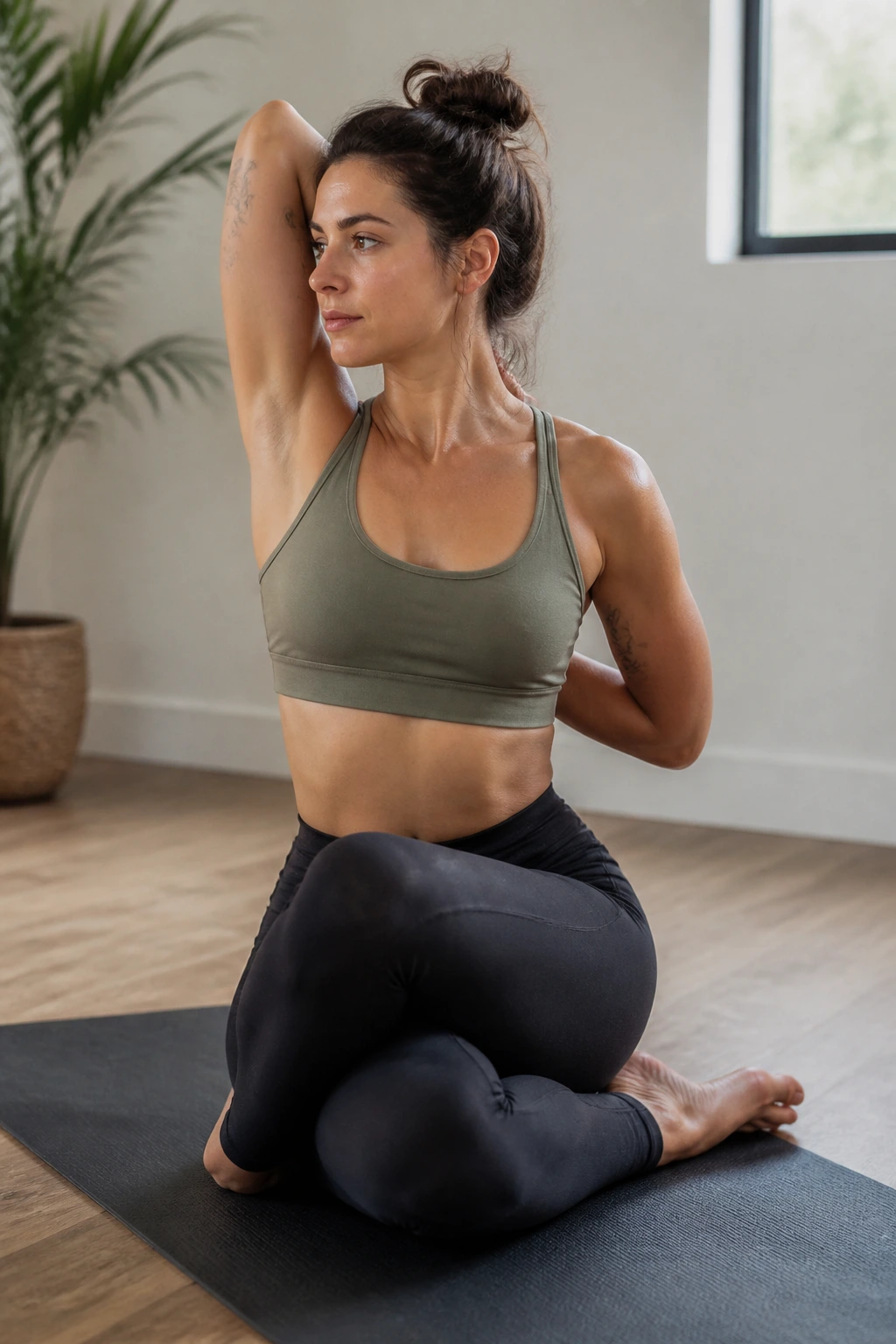
This pose targets the hips and the shoulders simultaneously, making it an incredibly efficient move for post-run recovery. It stretches the outer hips, which helps to loosen up the IT band area, and opens the chest and shoulders, countering the “hunched” posture of fatigue.
The pose
Sit with your knees stacked on top of each other, feet by your hips. Reach your right arm up and back, and your left arm down and around behind your back, trying to clasp your fingers. If you cannot reach your hands, hold a strap or a towel between them.
Key note: This is intense. Do not rush into it. The stacking of the knees is the hardest part for most runners. If you cannot get them stacked, cross your legs in a simple seated position and focus on the arm stretch first. The hip flexibility will come with time and consistency.
16. Wide-Legged Forward Fold
This pose provides a massive stretch for the inner thighs, the hamstrings, and the spine. It is less intense on the lower back than a seated forward fold because the weight of the legs helps to anchor the pelvis.
Executing the move
Stand with your feet very wide apart, toes pointing forward or slightly inward. Hinge at your hips and fold forward. Let your hands come to the floor, a block, or your ankles. Keep a micro-bend in your knees to protect the joints. Let the crown of your head reach toward the floor.
The benefit
By opening the stance, you access the adductor magnus, a huge muscle that acts as an extensor of the hip. When this is tight, it limits your stride length. Opening this area is one of the quickest ways to feel “loose” again after a long, stiffening run.
17. Reclined Spinal Twist
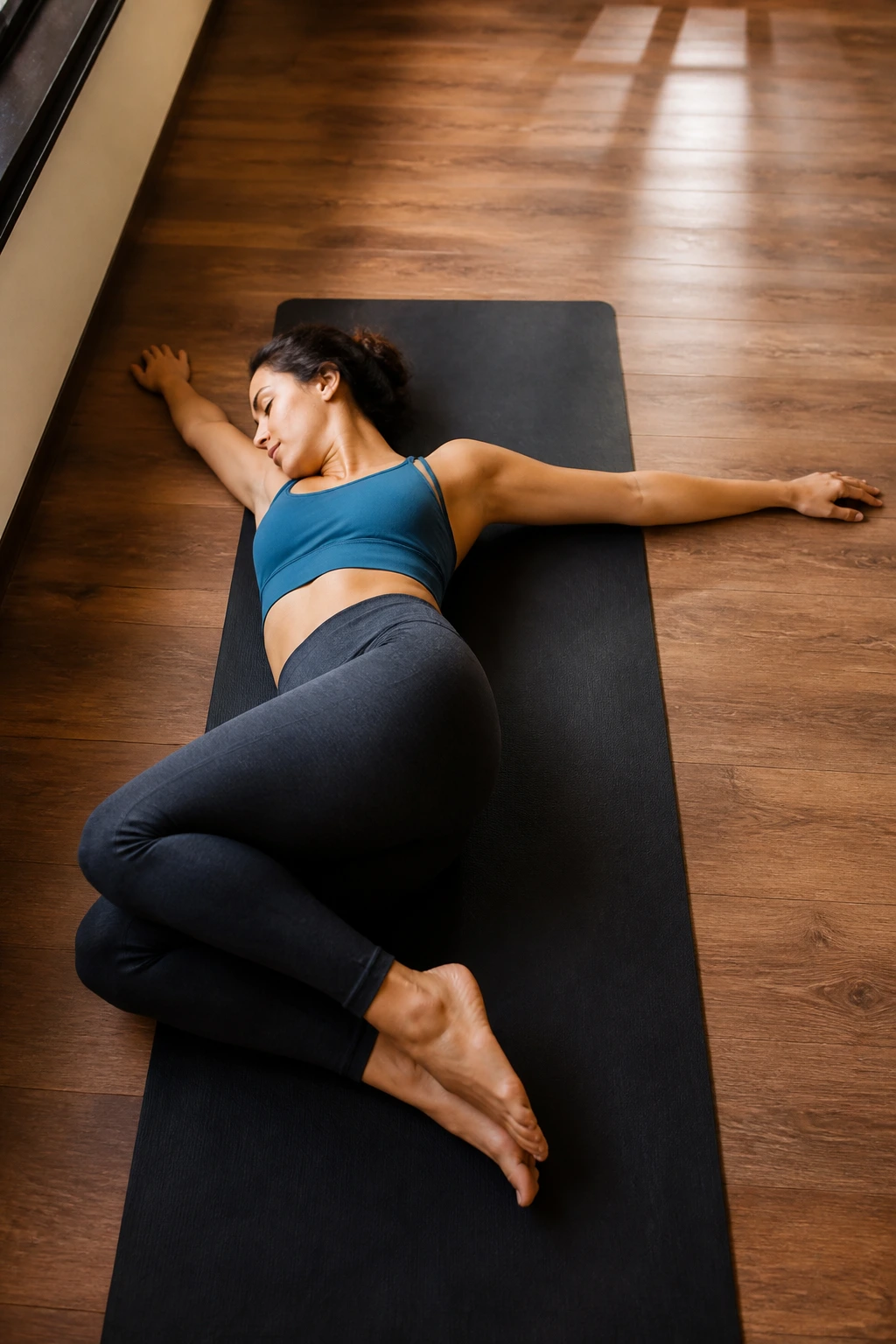
Running is entirely linear. Everything moves forward and backward. The body rarely gets a chance to rotate, which means the obliques and the muscles of the mid-back can become rigid. This twist brings back that vital rotational mobility.
The gentle twist
Lie on your back. Pull your right knee into your chest. Using your left hand, guide that right knee across your body toward the floor on the left side. Extend your right arm out to the side and look toward your right hand. Keep both shoulders glued to the mat.
Why it matters: It releases tension in the lower back and encourages the thoracic spine to rotate. It acts like a wringing out of a sponge, potentially helping to flush stagnant blood from the muscles of the torso and spine.
18. Hero’s Pose
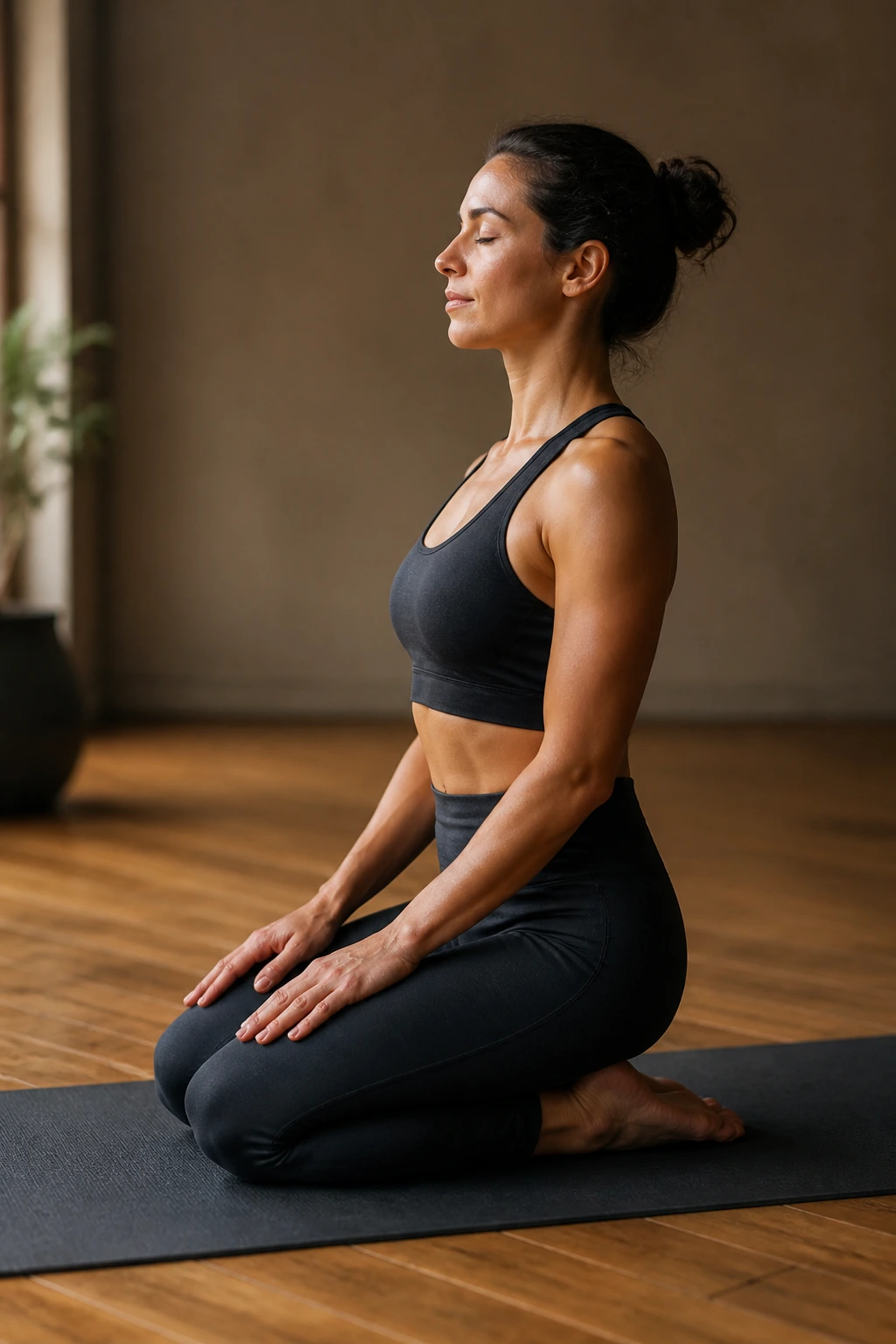
Hero’s Pose is a deep stretch for the quadriceps and the ankles. Most runners have extremely tight quads, and the connective tissue around the ankles gets stiff from the repeated impact of landing. This pose addresses both.
How to do it
Kneel on the mat with your knees together. Spread your feet slightly wider than your hips and sit your butt down between your heels. If your butt doesn’t reach the floor, place a block under it. Sit tall. If you want more, you can lean back onto your hands or your forearms, but do not sacrifice knee safety for depth.
Critical note: If you feel sharp pain in your knees, stop immediately. This is not a stretch for the knee joint itself, but for the surrounding tissues. If it doesn’t feel right, revert to a simple kneeling position.
19. Pyramid Pose
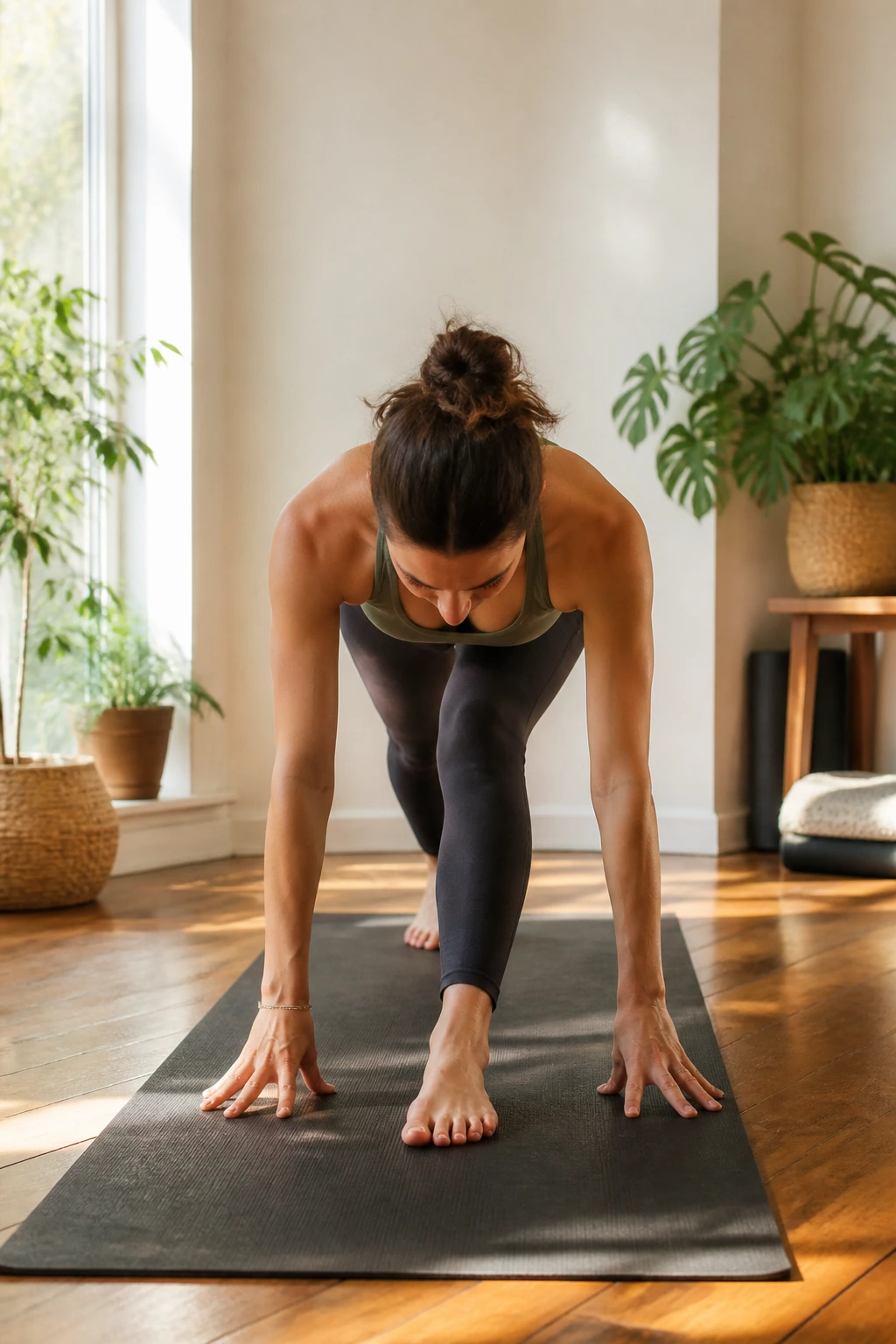
Pyramid Pose is arguably the most effective hamstring stretch for runners. It focuses on isolating one leg at a time, which allows you to target the specific side that might be tighter than the other (and almost everyone has an imbalance).
The alignment
Stand with one foot about three feet in front of the other. Square your hips to the front of the room—this is the most important part. Fold forward over your front leg, keeping the spine long. Use blocks under your hands if you cannot reach the floor without rounding your back.
Why it works
It forces the hamstrings to lengthen while the hips remain stable. Because it is a balancing pose, it also forces your stabilizing muscles in the ankle and hip to work, which provides a nice secondary benefit for overall running stability.
20. Toe Squat
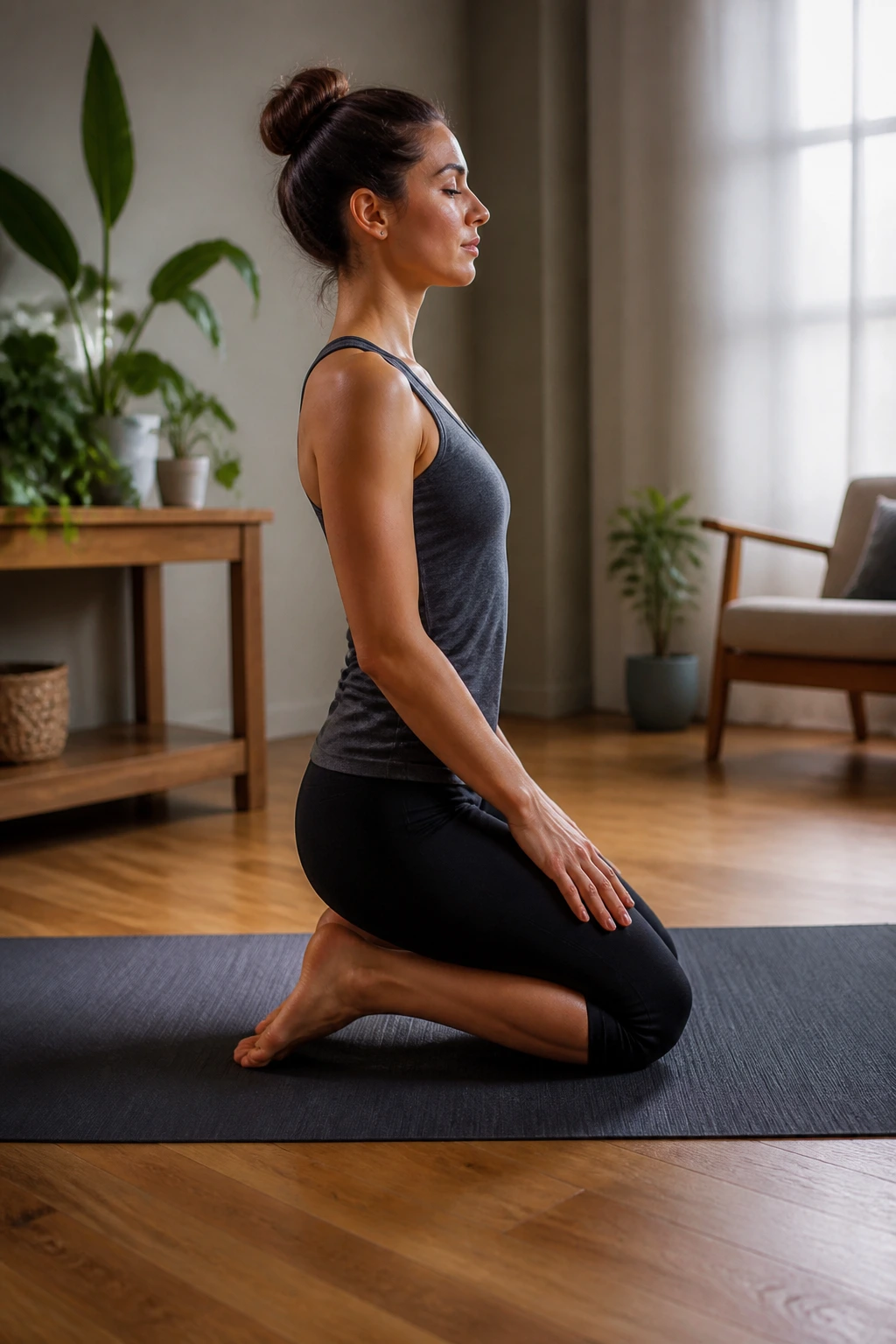
We ignore our feet far too often, yet they are the point of contact for every single step. The muscles and fascia of the feet take a beating. Toe Squat stretches the plantar fascia and the muscles on the soles of the feet.
The stretch
Kneel on the floor. Tuck your toes under, ensuring your pinky toes are also tucked. Sit your weight back onto your heels. It will feel intense immediately. Stay for a few breaths.
The reality: It is uncomfortable, but it is necessary. If you suffer from tight arches or have ever dealt with foot pain, this simple move can be transformative. It opens the tissues on the bottom of the feet that become brittle from the repetitive impact of running shoes.
21. Cobra Pose
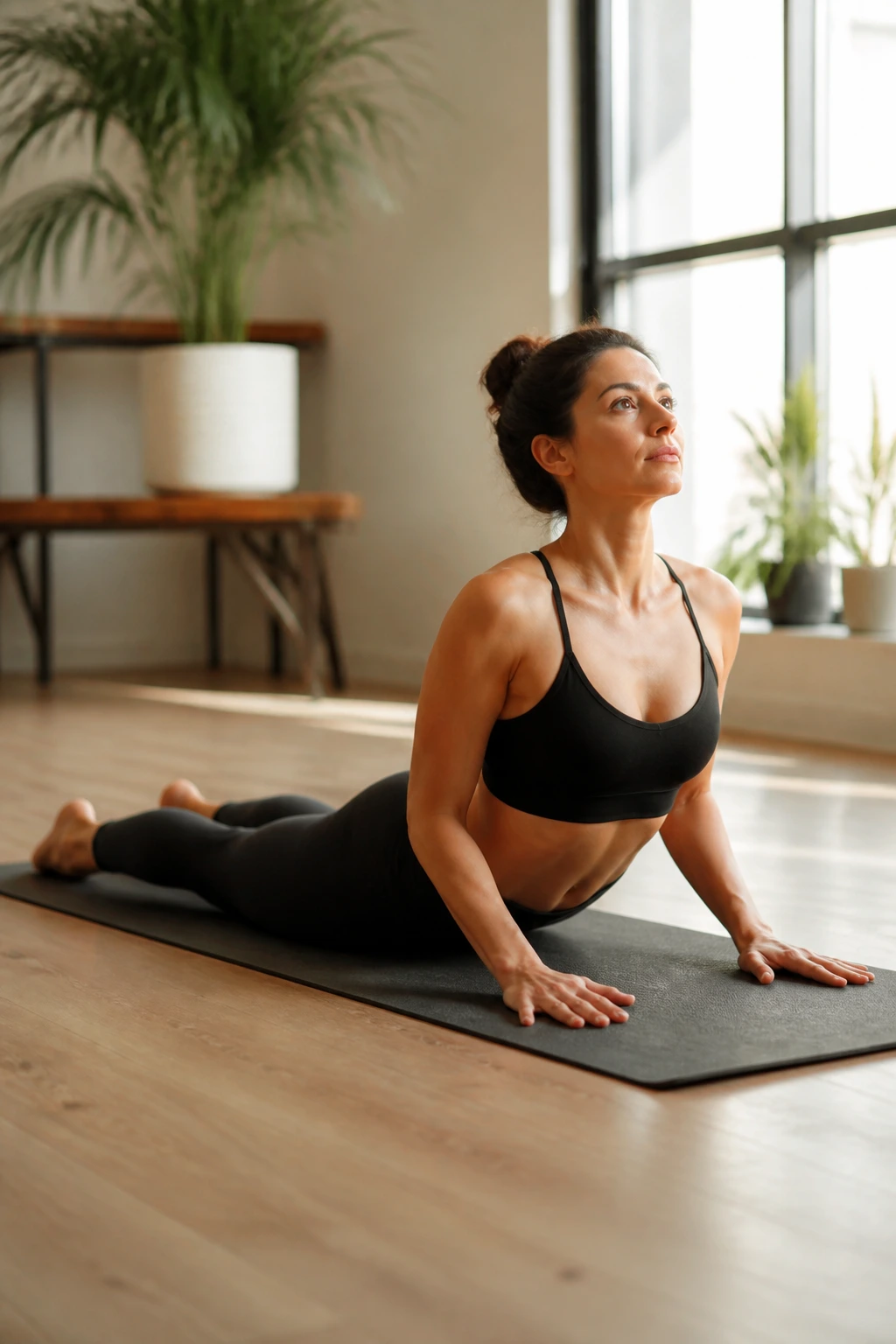
Running can cause the hip flexors to pull the pelvis forward, which puts the lower back into a shortened, stressed position. Cobra Pose is a gentle backbend that stretches the abdominal wall and the front of the hips, helping to counteract that forward-leaning posture.
Executing the lift
Lie on your stomach. Place your hands under your shoulders. Keep your elbows tucked in close to your ribs. Press into your hands and lift your chest off the floor, using the strength of your back muscles more than your arms. Keep your pelvis grounded.
Why it is effective
It lengthens the rectus abdominis, the long muscle at the front of your core. When this muscle is tight, it prevents you from standing up straight. By lengthening it, you allow your body to reset into a neutral, upright position, which improves your running economy and breathing capacity.
22. Gate Pose
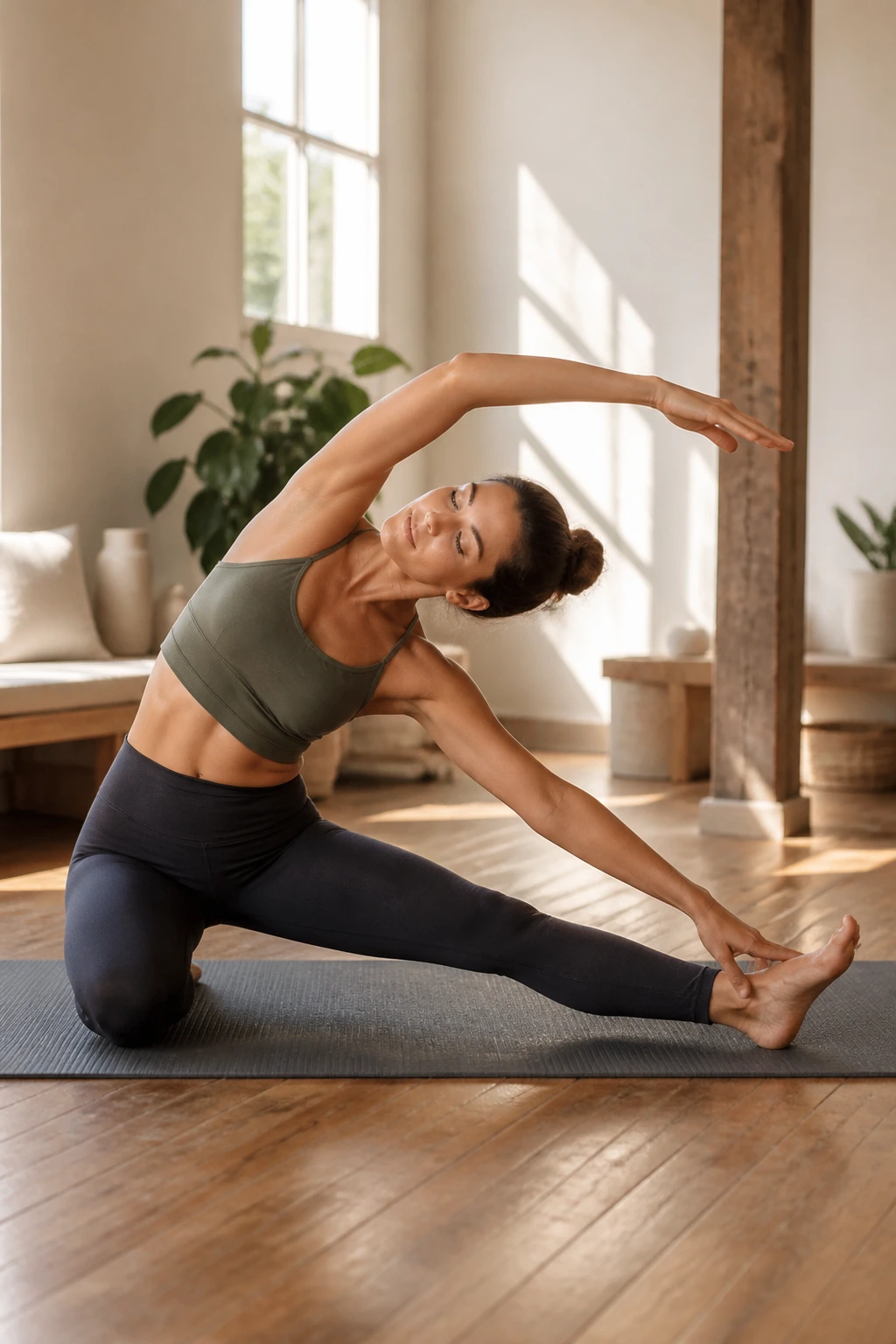
Gate Pose provides a lateral stretch, opening up the side body—specifically the obliques, the lats, and the spaces between the ribs. Runners often forget that we need side-to-side mobility to breathe efficiently and maintain good posture.
The movement
Kneel on your mat. Extend your right leg straight out to the side. Inhale, and reach your left arm up and over toward your right foot. Keep your chest open; don’t let your shoulder roll forward. You should feel a deep, delicious stretch from your hip all the way to your fingertips.
The payoff: This opens the intercostal muscles between your ribs. Tight ribs can restrict your lung expansion. By releasing these muscles, you are literally making it easier for your lungs to expand fully during your next run.
23. Thunderbolt Pose
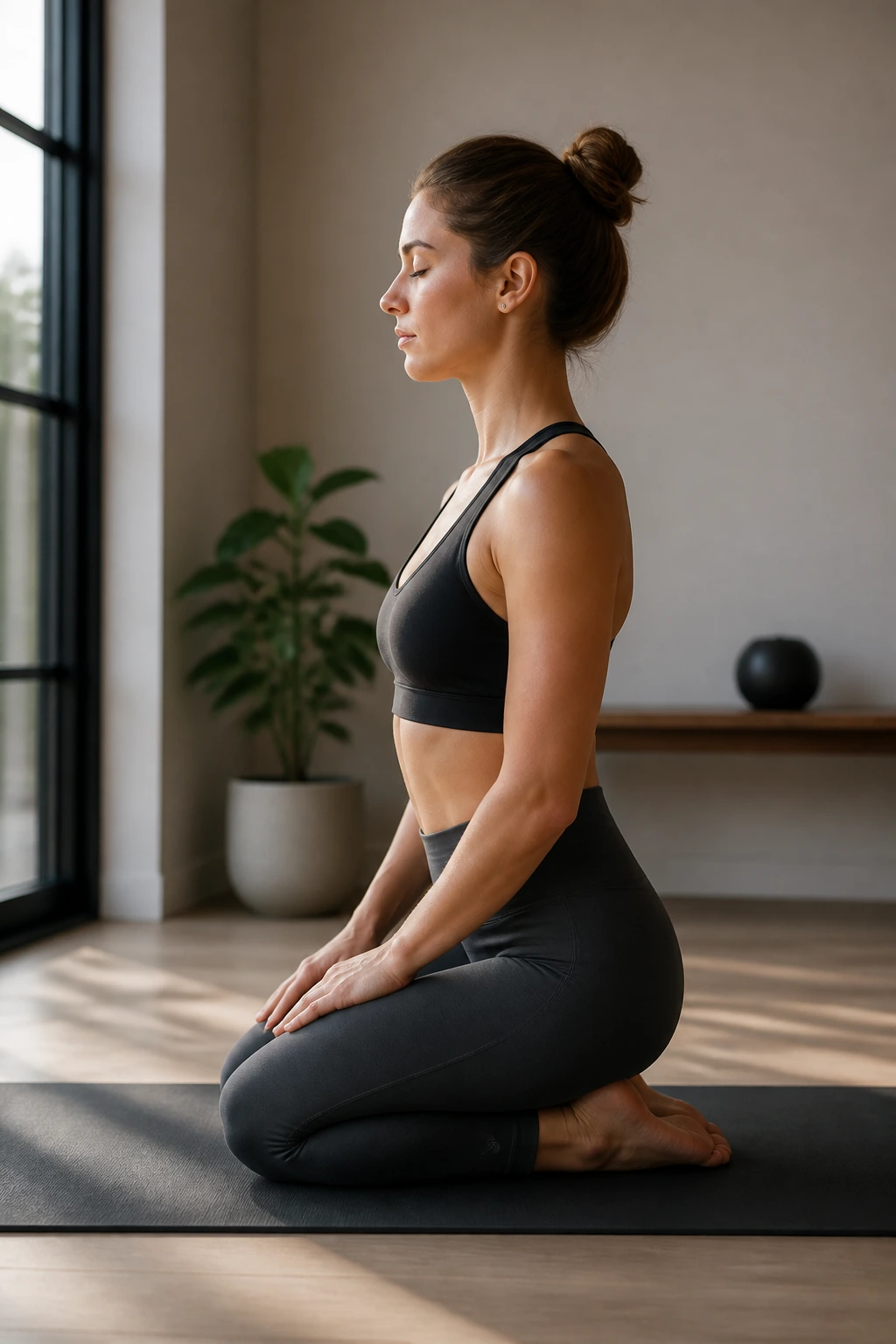
This is a simple, meditative pose that helps stretch the ankles and the tops of the feet. It is an excellent way to calm the breath after a session and allows you to check in with how your legs are feeling.
The position
Kneel on your mat, bringing your feet and knees together. Sit your hips back onto your heels. Keep your back straight, head aligned over your heart. Breathe deeply into your belly.
Why it works: It requires no effort to hold, making it perfect for the end of a long recovery session. It also encourages blood flow to the lower legs and ankles, which helps with the recovery of those smaller, often-overlooked muscles that work overtime to stabilize your run.
24. Supine Butterfly
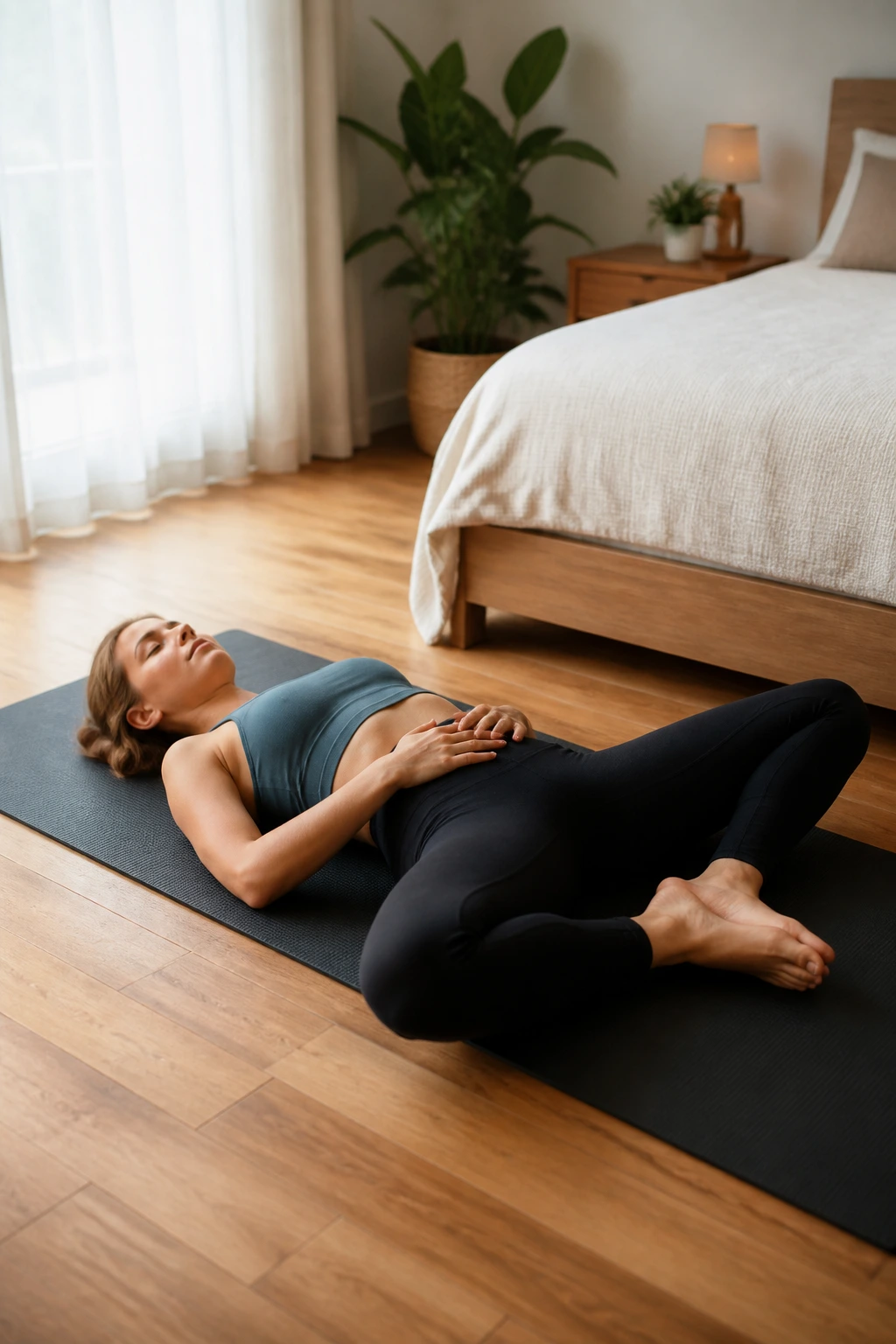
This is the restorative version of the seated Butterfly Pose. By lying on your back, you remove the effort of holding your torso upright, which allows your hips to open more passively and safely.
The setup
Lie on your back. Bring the soles of your feet together and let your knees fall open. If your hips feel tight, place blocks or pillows under your knees for support. Let your hands rest on your belly.
The impact: Because you are fully supported by the floor, your hip muscles can let go of their “guarding” reflex. This allows for a deeper release of the adductors and the pelvic floor muscles, which are crucial for hip stability.
25. Savasana
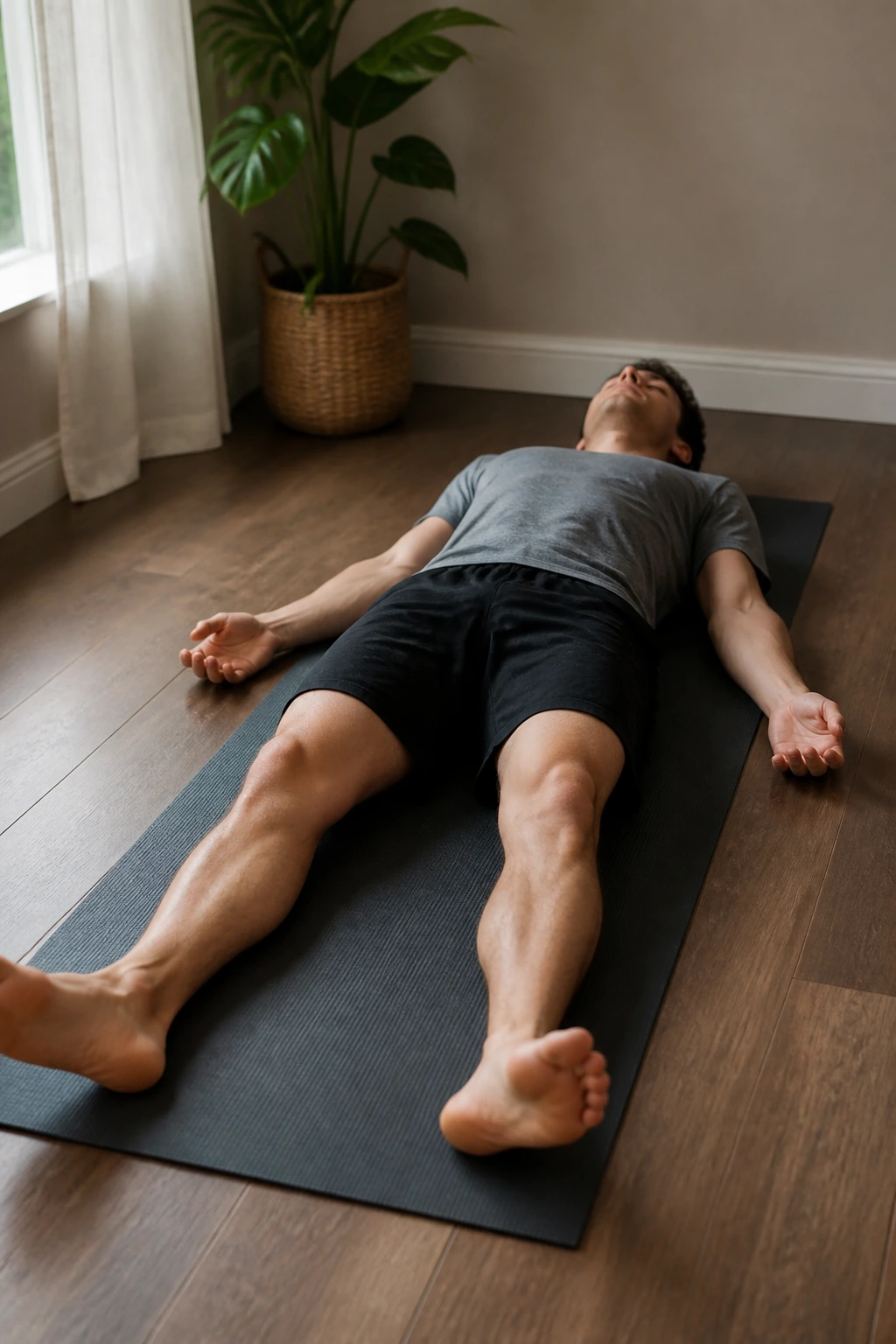
Do not skip this. It is the most important part of the entire practice. After the stress of running and the work of stretching, your body needs a period of complete, unadulterated stillness to absorb the benefits of the movement and reset the nervous system.
The final rest
Lie flat on your back. Let your feet flop open to the sides. Let your arms rest by your sides, palms facing up. Close your eyes. Soften your jaw. Let go of any controlled breathing and just allow your body to be heavy, supported entirely by the floor.
Why it matters: Savasana is where the transition from “work” to “repair” completes. It is the silence between the notes. Without it, you are just moving from one stressor to another. Give yourself five minutes of doing absolutely nothing. Your body will thank you when you head out the door for your next run.
Final Thoughts
Recovery is a discipline just as much as training is. If you treat yoga as a “bonus” you only do when you have free time, you are missing the point. These movements are maintenance for the most expensive piece of equipment you own: your body. By consistently incorporating these shapes, you are not just making yourself more flexible; you are actively undoing the micro-trauma of the run and preparing your muscles to handle more load in the future.
Listen to your body. Some days, your hamstrings will feel like steel cables; other days, they might feel supple. Adjust your effort accordingly. You do not need to push into pain to get results. In fact, the most effective recovery happens when you find the “sweet spot” of sensation, where the muscle is being stretched but the mind remains calm. Stay consistent, stay patient, and the miles will feel a whole lot easier.
